

University of the Cumberlands Student Newspaper
Crisis Temporarily Averted
Congress Temporarily Prevents Shutdown of Federal Government
Many government departments were scheduled to be shut down on Oct. 1. However, due to the late-night actions of Congress, the funding of these departments was extended through Nov. 18. The government shutdown was a result of Congress failing to enact 12 annual appropriation bills. In the United States Congress, appropriation bills are laws to appropriate, or assign, funds to specific federal government departments and organizations. Regular appropriations bills are passed annually, running through the government’s fiscal year which begins on Oct. 1 and runs through Sept. 30.
2.1 million federal workers would have delayed paychecks while around 4 million federal contract workers would go without pay. Nutrition and food assistance programs like WIC and SNAP as well as healthcare coverage could be paused for millions of individuals. Federal law enforcement efforts would be affected, 1.3 million active-duty United States service members would work without pay, and National Parks would be expected to close.
BY: ALLY KENNEDY STAFF WRITER
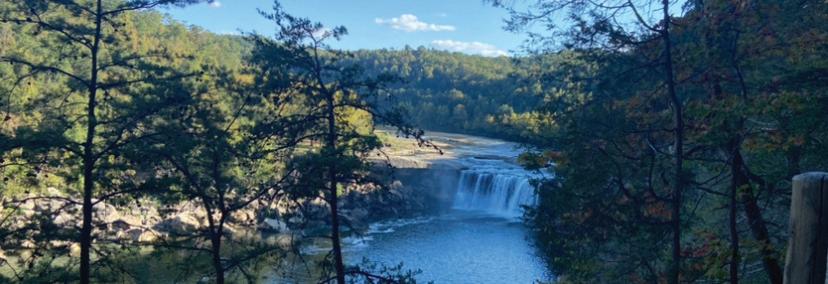
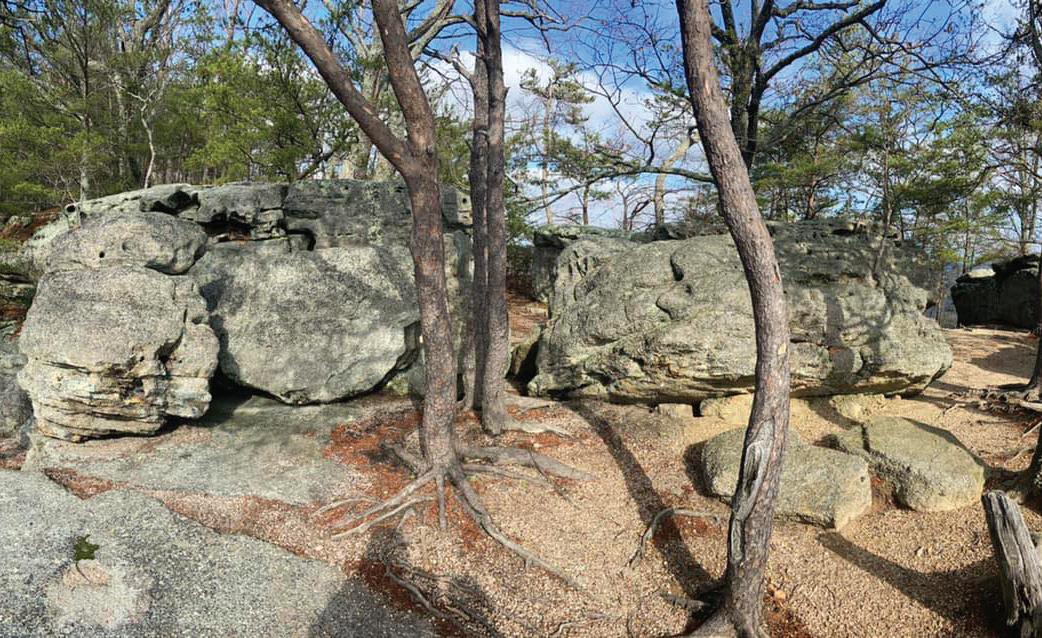
There are over 400 national park sites in the United States. NBC News Science Reporter, Evan Bush, says that closing the national parks “would spoil vacation plans for tens of thousands of people and put some gateway towns in an economic chokehold as long as the impasse in Congress lasts.” A senior Interior Department official said that the National Park Service planned to restrict the public’s access to parks as much as possible. This would include closing visitor centers and locking gates and bathrooms. Some more difficult park areas to close, like the National Mall, would remain open to the public, but trash collection and emergency response services could not be guaranteed.
In a government shutdown, the federal government must cease all non-essential functions. The United States government does not consider the National Park system as vital and, therefore, would close the parks in the event of a shutdown. Yet, the national parks contribute to the livelihood of many individuals working in or near the parks. Beyond National Park Conservation Association workers, much of the gateway community’s populations rely on national park tourism to keep hotels, campgrounds, restaurants, gift shops, gas stations, and tour compa-
nies alive. Gateway towns could lose as much as $70 million every day that national parks are closed in October. Thousands of park staff could be put in an unstable financial position.
Theresa Pierno, President, and CEO of the National Parks Conservation Association states “The clock is running out. It [is] time for Congress to come together and quickly pass a spending agreement so [that] our parks can remain adequately funded, staffed, and open. Our national parks are more popular than ever before. Congress must make funding decisions that invest more in these special places, not less.”
As the Nov. 18 deadline approaches, many individuals wonder if the government will be able to avert the impending shutdown and keep the national parks open for the public to enjoy. Yet, whether the government shuts down or not, it is important to understand the role that the national parks play in the livelihoods of people across the nation. Remember to treat the national parks and the people who work there with respect, as the tourism generated by the parks has a profound impact on the local and national economy.
General Education Requirements
Are These Classes Needed?

When students arrive at college, many are overjoyed that they get to take classes that align with their future careers. However, some are unaware that there are general education courses that they are required to complete in order to successfully graduate. Many start their college careers by first completing their general education requirements and then proceeding to take courses directly affiliated with their majors. At the University of the Cumberlands, general education requirements consist of Christian Faith, writing competence, mathematics, sci-
ence, history and cultural understanding, aesthetic appreciation, and social and professional awareness classes. These classes are designed to give students a well-rounded education, something that several people believe is crucial in today’s evolving world. The general education requirements at the University of the Cumberlands consist of around 30 credit hours of a student’s degree.
Across campus, there are differing opinions on the importance of general education courses. While many students find them pointless, others find these classes to be helpful. These classes may help a student choose a major, find a hidden passion, or even decide on a different life path. Some people have a more difficult time making serious decisions, especially decisions that can affect one’s entire life. Students may find that classes in mathematics, English, and the sciences are similar to the classes they took in high school and, therefore, may seem redundant. However, these classes both strengthen a student’s writing and critical thinking skills as well as allow them to interact with professors
who are passionate about their field of study. These interactions give students a chance to better understand a field of study and determine whether to pursue a career in that field. Several students, however, see the time, money, and energy spent taking general education classes as useless. When asked about her opinion on general education classes, student Kylie Monhollen explains that “[these classes] will not help me pick a major because I essentially took all these classes in high school.” To graduate from high school, students are required to take many classes that they must take again in college. Due to this, many students find that taking these classes again is a waste of money and time. Students interested in art or English see taking classes in Biology and Chemistry as useless. Most students wish to focus on their major field of study instead of taking classes in various departments across campus.
College is an already expensive educational investment, so taking classes that do not deal with a student’s field of study makes students spend money on unnecessary
PHOTOS BY SUMMER MILLS
BY: SYDNEY SCHWENKE STAFF WRITER
PHOTO COURTESY OF UNSEEN STUDIO
Letter From the Editor in Chief
Hello everyone!
I cannot believe that Halloween has already passed. You know what that means: it is time for the Christmas season. Everyone knows that the best holiday starts as soon as Halloween is over. We stop celebrating for one day for Thanksgiving and then return to the festivities. There is nothing better than getting to be a part of the action of the holiday. I love everything from decorating drinking hot chocolate, and baking goods. This time is perfect for being around friends and family and taking the time to slow down. We are all so busy during the year, and since we have a break from school, it is good to take that break and utilize the time we have. Since winter is approaching, the annual Fall National Media Convention hosted by the Associated College Press (ACP) and College Media Association (CMA) occurred in Atlanta. Some of The Patriot staff returned from the convention less than a week ago. We had the best time in Atlanta, going to the Georgia Aquarium, the Fernbank Museum of Natural Center, and the World of Coke. Our group also saw many unique places like Ponce City Market, which is inside a beautiful old building and hosts many restaurants and shops. Many of them are small businesses, and it felt great for us to visit them as a means of support.
On our trip, we also placed in many categories at the conference. A staff graphic designer from last year, Hannah Mae Sizemore, got third place in the CMA Pinnacles for Photo Illustration. Lacie DeGough and I won first place in the CMA Pinnacles for Best Video Entertainment Program. Then, the newspaper overall got an honorable mention at the CMA Pinnacles. We are all so grateful for these recognitions and cannot wait to work even harder to place in more categories. This goal has been one of ours because we want to continue growing the newspaper and showcase all the communication arts students at the Cumberlands.
In this issue, you will find articles focusing on fall topics because of the transition from the fall to the upcoming winter season. Many people enjoy hiking during the cooler months, and the national parks are great places to do that. However, funding for the parks was necessary to do that. Many of our staff advocate for our beautiful land and wildlife, so we included an article about the recent decision to continue funding the parks. After this, we also have a great piece on everyone’s favorite pop star, Taylor Swift. With this collection of pieces, you will be well-informed on critical national issues and the best local and country entertainment.
Sincerely, Summer
Mills
educational instruction. As much as students may want general education requirements relieved that cannot necessarily happen. The university is required by SACSCOCS to issue a set amount of general education classes in order to fulfill a standard. Colleges are able to determine exactly how many classes they offer and require for a degree. Many colleges set the general education requirements to be anywhere from a third to half of the courses needed.
Faculty Advisor
Jeremiah Massengale
Editor- in- Chief
Summer Mills
Staff
Print Managing Editor
Cage Grubb
Digital Managing Editor
Emilia Martínez Morales
Staff Writers
Ally Kennedy
Kamryn Keith
Shayra Calderon
Sydney Schwenke
Staff Photographers
Brittany Smith
Khebrion Puchoon
Every college has to follow the requirements that is set by their accrediting organization. The university may not be able to get rid of all the required classes that students think are unnecessary but may be able to help lighten the load in some way. Overall, the classes help in every pathway that people take.
BY: SHAYRA CALDERON STAFF WRITER
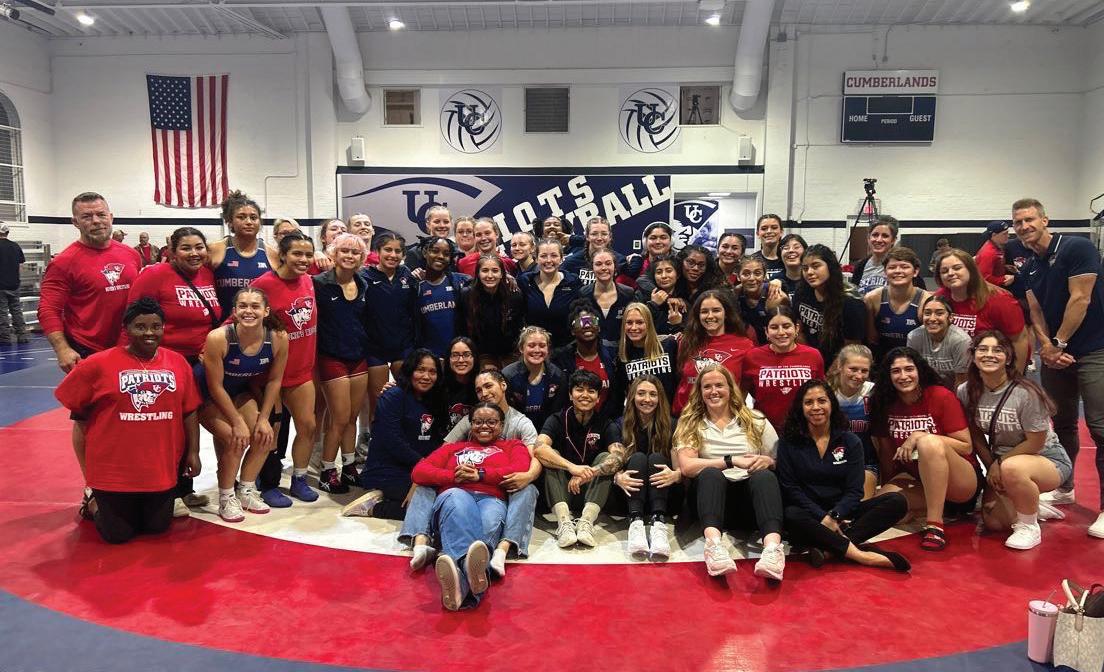
Red Versus Blue UC Women’s Wrestling Team Showcases Skills
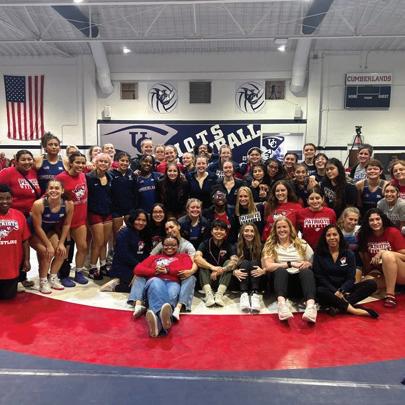
On Oct. 26, 2023, the University of the Cumberlands Women’s Wrestling team held their yearly Red vs. Blue duel. This duel showcases the girls and their talents to both the students and the community. These young ladies and the coaching staff have worked hard over the past few months and want to show off their skills and prowess.
Preparation of the duel began days before the event took place. Locating and placing down the mats were the most important tasks for the team. Beyond the physical preparation of the event, the wrestlers spent time strengthening their skills, identifying their weaknesses, and becoming stronger. For these girls, weeks of training, practicing, and rest went into these weeks of planning.
The Red vs. Blue event is important to each wrestler on the team because it allows them to get the first of the season jitters out and provides the opportunity for the season’s first weigh-in. During the event, the team was split into two teams: The red team and the blue team. These teams com-
peted against one another, allowing the girls to assess what their strengths and weaknesses are, as well as showcasing the hard work they have been putting in over the past few months. Not only is this event important for the development of skills and sportsmanship between the girls on the team but also allows other teams and organizations to support the women’s wrestling team. Students from various clubs and organizations, athletes from other teams, and members of the community all came together to show their support for the women’s wrestling team. These fans provided a great atmosphere for the women to compete in, as there were crowds of individuals cheering and shouting words of encouragement. The comradery between the various sports teams, clubs, and other organizations on campus is a relationship that is held deep in the community at UC. So, the wrestlers were grateful for the individuals who showed up to the event.
While the team only showed a sneak peek of the season to come, the event was still a huge suc-
The Power of Music
The Success and Impact of Taylor Swift
cess. Head coach Sarah says, “Overall it was a great event and all of us coaches are looking forward to watching the girls continue to compete on the mat”. The support from both the student body and community inspired and encouraged the coaching staff and wrestlers alike. Many of them are even more excited for the beginning of the season. Because women’s wrestling is still a growing sport at the university, the support at the Red vs. Blue duel was encouraging. The support from the community and students alike helped make this event a success. Many of the wrestlers hope to see the support continue throughout their season and further showcase events.
On Dec. 1 and 2, the women’s wrestling team will be hosting the Patriot Duels to further showcase the growth of skills and comradery. With the recent unveiling of the preseason ranking placing the Patriots at 11th, the team is excited for the upcoming 2023-24 season. Be sure to support the Patriots at the Patriot Duels and throughout their season.
BY: ALLY KENNEDY STAFF WRITER
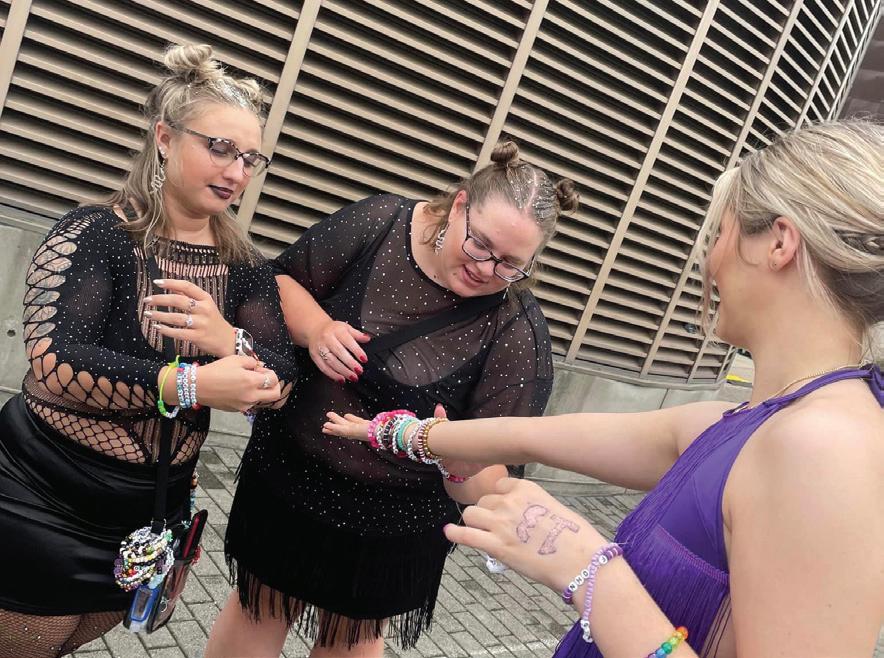
In 2023, Taylor Swift is known as one of the world’s most recognizable singers. However, that was not always the case. Her musical journey began in 2006 at the early age of sixteen. While she was young when her career first took off, she began the pursuit of music much earlier. At fourteen, she moved to Nashville, Tennessee, hoping to find her place in the music industry. Two years later, Big Machine Records signed her to their label, and her song “Tim McGraw” from her country debut album “Taylor Swift” became an instant hit. After the success of her first album in 2008, she released the Grammy-award-winning Album of the Year, “Fearless.” After releasing this album, she won a VMA award for her music video to the song “You Belong with Me.” While Swift was still considered a country artist for her next album, “Speak Now,” her fourth album, “Red,” displayed her transition into the pop genre. However, it was not until the album “1989” that she fully transitioned into pop
music. She remained in the pop era for her following two albums “Reputation,” and “Lover.” The sound of her albums again shifted with the release of “Folklore” and “Evermore.” These albums showcased Swift’s exploration of the folk genre, while still holding true to the pop genre. However, with her latest album, “Midnights,” she returned to the pop genre.
In 2019, news broke that Big Machine Records was sold to Scooter Braun. Taylor had released six albums at this point, and they were now all owned by Braun. Taylor claimed that she was subjected to extensive bullying while working with Braun. Despite an offer to buy the masters of her first six albums, Braun decided not to sell Swift the masters. Instead, Braun sold the masters to someone else.
To counter the sale of her first six albums, Swift began the journey of rerecording these albums. These albums were distinguished from the originals through the incorporation of “(Taylor’s Version)” next to the album title. As of Nov. 2023, Swift has released the rerecordings of four albums. These albums have been met with worldwide success and acclaim, with many of Swift’s fans deciding to only listen to Taylor’s Version of the album.
Since the beginning of her career, Taylor Swift has collected millions of fans. So naturally, when Taylor Swift announced the Eras Tour in November of 2022, it was no surprise that the world was excited.
During ticket sales, Ticketmaster crashed several times due to how many people
were attempting to purchase tickets. Swift’s fans from around the world were able to at

tend the concert, make and trade friendship bracelets, and even dress up as their favorite “era,” or their favorite album. Swift has since released a film based on her tour and has announced that the Eras Tour will return in 2024. Throughout her entire career, Taylor Swift has accomplished so many incredible things. She has won hundreds of awards, gained millions of fans, and become one of the most well-known celebrities of the twenty-first century. Although it has not always been easy for her, Taylor Swift has become one of the most legendary artists ever.
PHOTO COURTESY OF WOMEN’S WRESTLING TEAM
PHOTO COURTESY OF ABIGAIL SHARP
PHOTO BY SUMMER MILLS
Fall Festival at the Cumberlands
Halloween Harvest
BY: ALLY KENNEDY STAFF WRITER
On Tuesday, Oct. 31, 2023, the University of the Cumberlands held its annual Fall Festival. Since it was hosted on Halloween, students were encouraged to dress up and wear their Halloween costumes. Upon arrival at the Wellness Center lawn, there were several games and activities set up for students to participate in. There was a DJ set up who was very open to suggestions from students. Throughout the night, he played fun and festive songs like “Thriller,” “Spooky Scary Skeletons,” and “Monster Mash,” while also incorporating regular pop music that most students were familiar with. As one walked around the lawn, tables were lined up with people serving students with all kinds of fall treats. On one side, people were handing out tote bags with the word ‘Cumberlands’ on them so that students could collect candy from the following two tables. Students from candy across the world in celebration of Diversity Week, which was hosted by Campus Ministries.
As the students continued around the lawn, there were stations to pick up popcorn, candy apples, corn-on-the-cob, hot chocolate, apple cider, and smores supplies. Students were supplied with Ghirardelli chocolates for their smores. There were four small fireplaces open where students could roast their marshmallows, surround themselves with the warmth of the fire, and
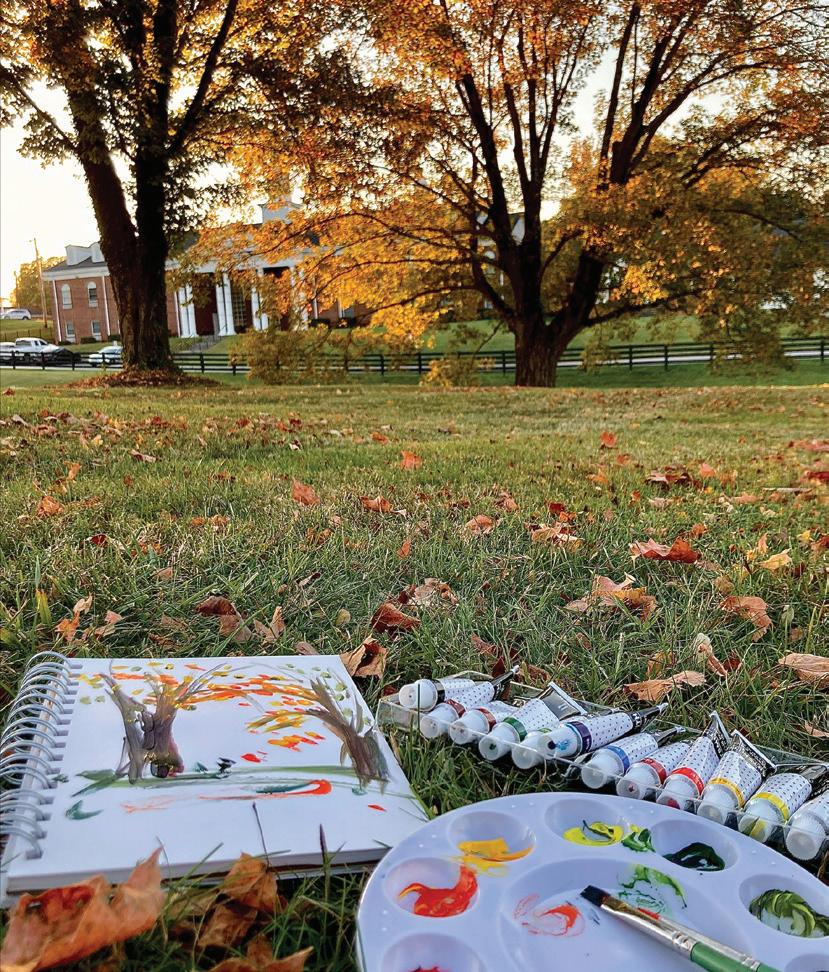
chat with friends. In the middle of the lawn, there was another table set up with pumpkins so that students could paint and carve them. There was also a portable photo booth where students could pose with their friends and receive their photos through text messages. This photo booth allowed students to make memories to look back on for years.
Next to the lawn, in the parking lot, there was a walk-in petting zoo set up. They had a Cow, two Alpacas, multiple lively Goats, and a beautiful curly-haired Sheep. When walking through, there
Fall Awakening Campus Ministries Hosts a Three-Night Worship Event
BY: SYDNEY SCHWENKE STAFF WRITER
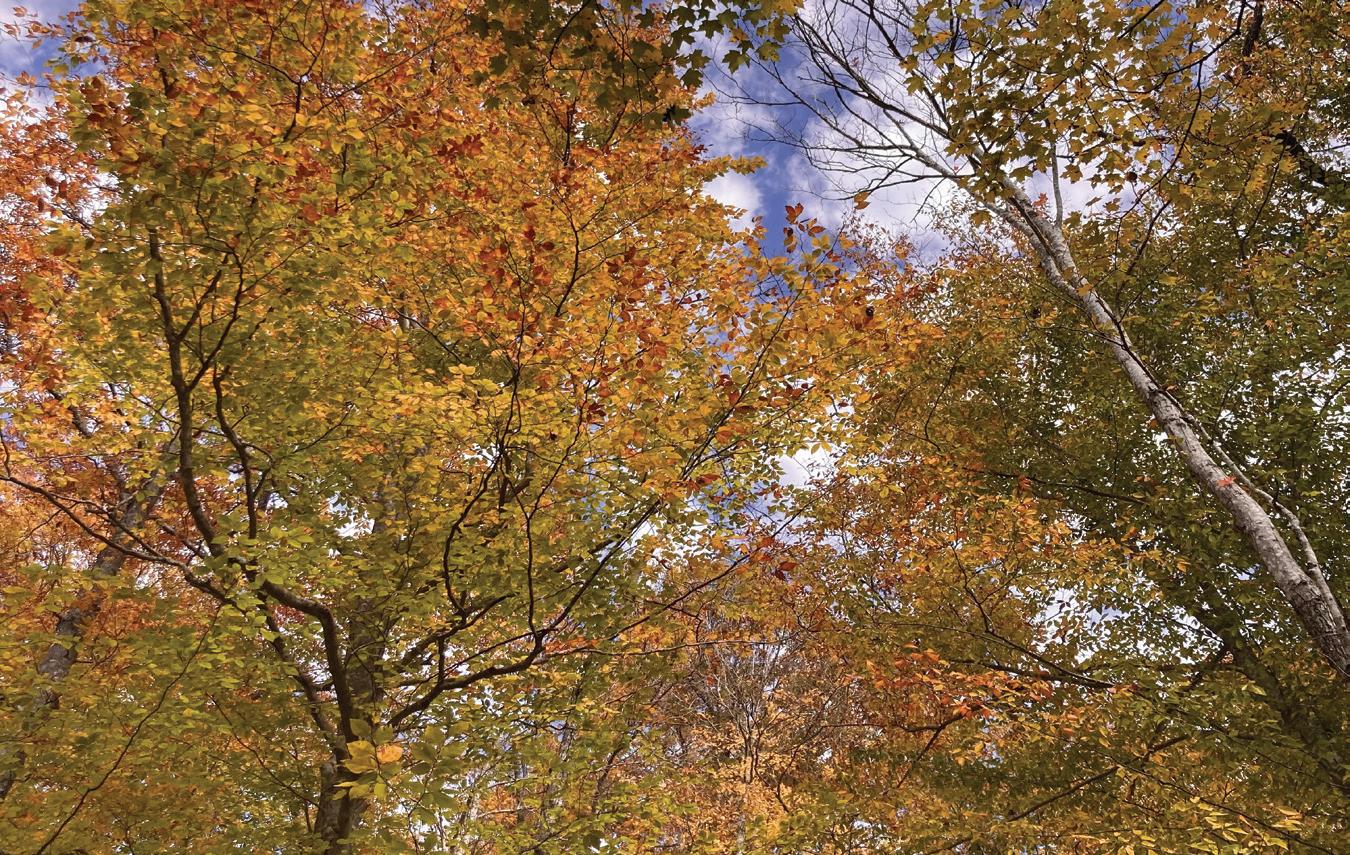
Fall Awakening hosted by the University of the Cumberland’s Campus Ministries was a sweet time of fellowship, worship, and reflection. This three-night event celebrated the beginning of the second bi-term. Each night included student-led worship, followed by a message from guest speakers David Worcester and Caleb McDonald. Before the event, Campus Ministries offered fun opportunities to socialize with lawn games and themed snacks in front of Gatliff chapel.
During the event’s first two nights, David Worcester, who is the lead pastor and planter of Compass Church in San Diego, preached. Worcester’s night one message was on serving Jesus wholeheartedly by seeking to glorify God first and making personal sacrifices. Worcester claimed that “the cost of following Jesus is high, but the cost of not following Jesus is much higher.” During the second night of the event, Worcester spoke on Luke 10:38-42 and challenged Christians to make the best use of their time by serving purposefully in a few ways instead of saying “yes” to every good opportunity. He also emphasized the importance of doing ministry and encouraged Christians who are not serving to get plugged into a ministry.
UC student, Abigail Sparkman, said, “I think [David Worcester] really understood college life. Especially where you [are] running yourself too thin or are only taking care of yourself and not getting involved. He reminded me that you do [not] always have to pour yourself out to others. Fill your cup first, then you can pour it out to others because you can [not] pour from an empty cup.”
The last night of Fall Awakening was led by Caleb McDonald, who is a Children’s ministry director at Port City Community Church in Wilmington, North Carolina. He is also a University of the Cumberlands 2015 alumni. McDonald preached on John 1:35-39. He stated that “Jesus doesn’t have time for fluff, he wants us to follow him and to follow him closely.” McDonald made a point of mentioning that Jesus is much more powerful and patient than we make him out to be.
Some key takeaways from Fall Awakening are shared by Sienna Romano who stated, “I really liked the J.O.Y acronym that [David Worcester] shared. It stands for Jesus, others, and then yourself.”
Campus Minister, Jacob Ratliff, explained, “For me, the biggest takeaway from all three nights is the consistent theme of the reality that we need to continue growing in choosing Jesus and to not get used to him but never lose the joy of growing in the knowledge and love of him.”
Fall Awakening is one of several events hosted by Campus Ministries throughout the semester. Monthly worship nights and collaboration with other groups on campus are just a few of the events planned by Campus Ministries. But, for many students, their involvement with Campus Ministries does not stop at attending events. This campus-wide organization constantly serves the local community and nearby counties. For students looking to get involved in Campus Ministries and share their love for, and relationship with Jesus, please contact Jacob Ratliff or any of the Campus Ministries leadership and staff.
was food that students could put in their hands to feed the animals. If they did not want to feed them, they were still encouraged to interact with the animals. The animals were excited when students went, so many would try to reach the students beyond their fences. Many students lined up throughout the night to enjoy this fun-filled petting zoo. Although it was the coldest night of the month, everyone still enjoyed riding on the hayride, which was the main attraction of the event. Students lined up for the ride all night long. When it would return from one ride, it was immediately filled with as many people as it could hold. The hosts had a man sitting in the middle of the trailer telling corny ghost stories, which many people found humorous. Despite the frigid air, many students enjoyed riding around campus and listening to these spooky stories. While the cold weather was very much present, people still showed up and had a fantastic night of fun Halloween tricks and treats. Students dressed up, ate delicious treats, drank hot chocolate and cider, carved pumpkins, pet adorable farm animals, and partook on the journey of the chilling hayride. Overall, the night was a complete success, and everyone seemed to have an enjoyable Halloween night.
Poetry Corner
So, What Are You Doing Next?
BY: SHAYRA CALDERON STAFF WRITER
I look and stare into a blank space
As I see the future coming in at a rapid pace
I don’t see why in five seconds
I need my plans out on a platter
Just so other people can tell me it’s a disaster
I’m not sure what path I’ll take
But I’m not scared to make mistakes
They want me to answer to the many
Yet I’m not even twenty
I see others my age going in different directions
Some married, some with children, some divorced
There are many places your life can take you
Which is why I’m not striving for perfection
Again, I’m asked the same question
“What are you doing next?”
This time I answer
My decisions aren’t clear
I cannot tell you where I will be or what’s behind my door
I can however tell you I have happiness in store
My life will not be defined for me
And you will not display my future poorly
I do not have a finite answer
But it is not your life, so it doesn’t matter
PHOTO BY SYDNEY SCHWENKE
PHOTO BY SYDNEY SCHWENKE