
GU Students Decry Federal Immigration Enforcement, Violence in Minneapolis
Noah de Haan and Nico Abreu Campus Life Desk and Senior News
Editor
Georgetown University students are denouncing the tactics used by federal immigration enforcement agencies in Minneapolis following the deaths of two protestors.
Amid countrywide demonstrations following the deaths of Renée Nicole Good and Alex Pretti, two Minneapolis residents who were fatally shot by federal agents in January, Georgetown students have grown anxious from increased federal presence in the Washington, D.C., area and across the country. Expressing concern for their state, Minnesotan students have contributed to humanitarian organizations, contacted legislators and attended protests against the deployment of U.S. Immigration and Customs Enforcement (ICE) officials across the United States.
Alana McGrath (SOH ’27), a student from Minnesota who knows
people impacted by ICE, said she is grateful to be away from home and is focusing on spreading awareness about the ongoing protests.
“I think in order to show up for your community, you do have to show up for yourself,” McGrath told The Hoya. “I feel really privileged and lucky to be at Georgetown and from the Midwest and from Minneapolis, so I just think it’s about showing up here — in my academic spaces, in my classes and in my communities — talking about it, encouraging other people to talk about it and watch the videos, and engage in what’s going on and sharing resources.”
The Jan. 7 shooting of Good by an ICE agent sparked national outrage against federal law enforcement, prompting vigils and a 15,600-person strike, according to organizers, in Minnesota. Tensions later grew after Pretti was shot by a border patrol officer during a Jan. 24 confrontation, See MINNESOTA, A7
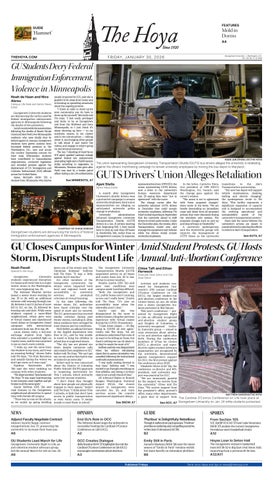
COURTESY OF CHASE DOBSON Georgetown students are denouncing the tactics of federal immigration enforcement agencies in Minneapolis.

GUTS Drivers’ Union Alleges Retaliation
Ajani Stella Senior News Editor
A month after Georgetown University’s shuttle drivers won a protracted campaign to remain university employees, their union representatives are alleging an anticipated university policy change is retaliatory.
University administrators informed Georgetown University Transportation Shuttle (GUTS) drivers in a Jan. 21 private meeting that, beginning Feb. 1, they would have to pick up and drop of buses in Hyattsville, Md., rather than on Georgetown’s campus. In response,
GU Closes Campus for Winter Storm, Disrupts Student Life
Noah Pavell
Special to the Hoya
Georgetown University students experienced disruption to classes and travel due to a major winter storm in the Washington, D.C. area beginning Jan. 25.
The National Weather Service issued a severe storm warning for Jan. 25 to 26, with an additional extreme cold warning through Jan. 28. Between 5 and 11 inches of snow fell in D.C. on Jan. 25, followed by freezing rain and sleet. While some students enjoyed a snow-flled neighborhood, others grew wary of virtual classes and experienced travel delays as Georgetown closed campuses with instructional continuity from Jan. 25 to Jan. 29.
Lucas Alonso Zafra, a full-year exchange student from Spain who attended a snowball fght on Copley Lawn, said he was surprised to see so much snow outside.
“I woke up, saw the snow from the window in my room, and it was an amazing feeling,” Alonso Zafra told The Hoya. “I’m from Barcelona and usually during the winter we don’t get snow, so it was crazy.”
Sophina Boychenko (SFS ’28) said she went sledding on campus with other students.
“We all got involved,” Boychenko told The Hoya. “It was super heartwarming to see everyone come together and get bruises in all the same spots.”
Joanie Sullivan (SFS ’26) said road closures in the Georgetown neighborhood allowed her to spend time with friends of campus.
“There was no one on the streets, so we ended up going sledding
down one of the streets near the Ukrainian Embassy,” Sullivan told The Hoya. “It was a little intense, but it was fun.”
For other members of the Georgetown community, the winter storm impacted both local and regional travel and accessibility to university services, and prompted criticism of virtual learning.
In the days following the winter storm, D.C. authorities have faced criticism over the speed of snow and ice removal.
The D.C. government has received similar criticism during past winter storms, including in 2016, when residents were outraged by road closures and icy conditions.
Nick Seifert, an adjunct lecturer in the English department who lives in D.C., said he was unable to travel or bring his children to school due to unplowed streets.
“The city has not plowed our street, despite numerous calls and emails from neighbors to 311,”
Seifert told The Hoya. “We can’t get our car out, and so they had to stay at home for an extra day.”
Seifert said he was concerned about the District of Columbia Public Schools’ (DCPS) approach to reopening, particularly for Title I schools, which primarily serve low-income students.
“I don’t think they thought about how people are physically trapped in their spaces,” Seifert told The Hoya. “I think about Title I schools, or kids that don’t have access to public transportation or even warm coats. It seems unsafe to send them to school.”
The Georgetown University Transportation Shuttle (GUTS) suspended service on all buses and routes from Jan. 25 to Jan. 29 due to severe weather.
Natalie Gustin (SFS ’26) said poor road conditions near campus made traveling dificult.
“Both the Georgetown and D.C. public buses aren’t running, so you can’t really leave,” Gustin told The Hoya. “It’s also an accessibility issue when the sidewalks aren’t clear.”
Gustin said she was disappointed by the move to online classes, citing her previous experience with virtual classes during the COVID-19 pandemic.
“I hate Zoom classes — it’s like being in COVID all over again,” Gustin told The Hoya. “All my professors understand that none of us want to be sitting on Zoom, but there’s nothing we can do about it, so they’ve made the most of it.”
Sullivan said she was disappointed when her military role-playing class’s first in-person simulation was cancelled following the instructional continuity announcement.
“I was really looking forward to that class,” Sullivan said. “I was excited to go through everything on that syllabus, and losing a 2.5-hour class is not a small chunk of time.”
All inbound fights to Ronald Reagan Washington National Airport (DCA), the closest airport to Georgetown, were canceled Jan. 26, and train services across the country experienced signifcant delays.
See SNOW, A7
representatives from 1199 SEIU, the union representing GUTS drivers, sent a letter to the university’s human resources department Jan. 23 saying they were “not in agreement” with the move.
The change comes after the university informed GUTS drivers in December they could remain university employees, following The Hoya’s initial reporting in September that the university aimed to shift drivers to a third-party vendor. Under the December plan, the vendor, Abe’s Transportation, would own and manage the equipment and vehicles while the drivers would remain university employees.
In the letter, Carrietta Hiers, vice president of 1199 SEIU’s Washington, D.C. branch, said the change goes against the union’s wishes.
“The union is not in agreement with these proposed changes,” Hiers wrote in the letter. “We are hereby demanding an immediate cease and desist from all proposed actions that were discussed during the members only session. The proposed changes such as pick up and drop of buses in Hyattsville.”
A university spokesperson said the Hyattsville garage will improve the management of GUTS buses as the university
transitions to the Abe’s Transportation partnership. “The new bus depot will support vehicle maintenance, cleaning, fueling and electric charging,” the spokesperson wrote to The Hoya. “This facility represents a signifcant expansion of capacity and is designed to accommodate the evolving operational and sustainability needs of the university’s transportation system.” Hiers said the union believes the university’s actions are meant to punish drivers for
Amid Student Protests, GU Hosts Annual Anti-Abortion Conference
Chloe Taft and Ethan Herweck Graduate Desk Editor and City Desk Editor
Activists and students convened for Georgetown University’s 27th annual Cardinal O’Connor Conference on Life (OCC), the largest student-run anti-abortion conference in the United States, on Jan. 24, while over a dozen Georgetown students protested in Red Square.
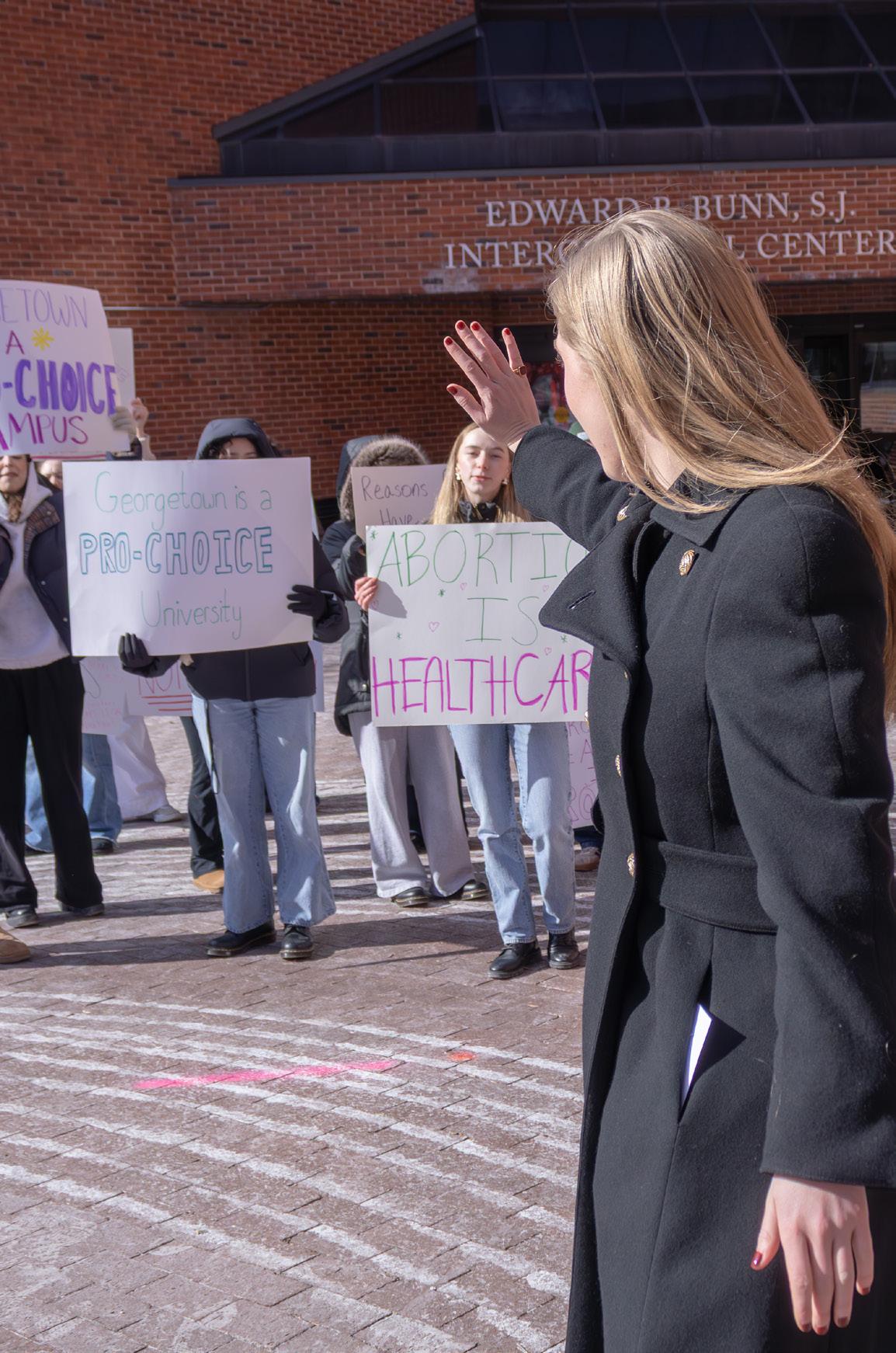
This year’s conference — presented by Georgetown Right to Life, an oficially recognized anti-abortion student group, and Knights of Columbus, a university-recognized Catholic fraternity group — aimed to raise awareness about advocacy for anti-abortion rights after birth. During the conference, members of H*yas for Choice (HFC), a abortion- and reproductive-rights student advocacy organization not recognized by the university, demonstrated against Georgetown’s support for OCC, the frst protest against the conference since 2023.
Elizabeth Oliver (CAS ’26), the conference co-director and RTL president, said university support was essential for OCC.
“We are immensely grateful for the support we receive from the university,” Oliver told The Hoya. “We receive support from the president’s ofice, provost’s ofice, many other departments, a great deal of support from
See OCC, A7
remains stylish but leans heavily on redundant plotlines.
HAAN JUN (RYAN) LEE/THE HOYA
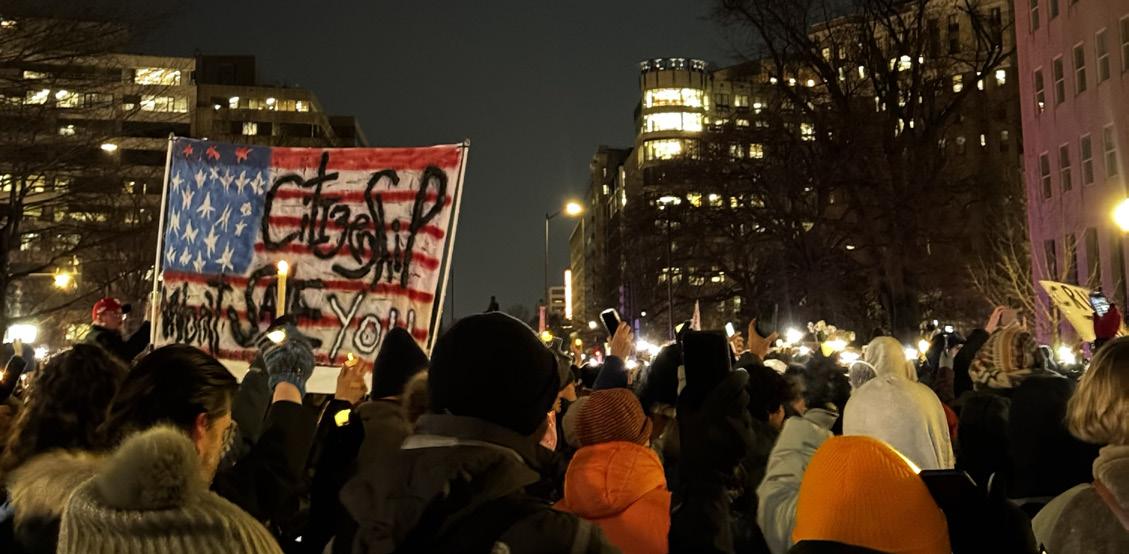
The union representing Georgetown University Transportation Shuttle (GUTS) bus drivers alleged the university is retaliating against the drivers’ monthslong campaign to remain university employees by moving the bus depot to Maryland.
MATTHEW GASSOSO/THE HOYA
The Cardinal O’Connor Conference on Life took place at Georgetown University on Jan. 24 while students protested.
From Section 105 S.H. Ratlif III (CAS ’27) and Luke Neumann (MSB ’27) analyze the current GeorgetownProvidence men’s basketball rivalry.
Hoyas Lose to Seton Hall The Georgetown women’s basketball team fell 58-52 to Big East rival Seton Hall, improving from a previous 81-36 loss.
OPINION: e OCC Edition
End GU’s Anti-Abortion Conference
Each January, Georgetown University students walk underneath a sizable banner in Red Square advertising the Cardinal O’Connor Conference on Life (OCC).
As an event drawing over 600 attendees annually for the past 27 years, the OCC plays a role in campus conversation. As seen through the many students who proudly help organize the conference and the large number of protestors who line up each year to oppose it, this event is deeply divisive. In its current form, the Editorial Board believes Georgetown’s hosting of the conference promotes harmful and divisive ideology. Accordingly, we ask the university to reconsider hosting the event altogether. However, we recognize the conference will likely continue to be held on our campus due to its Jesuit roots. If this is the inevitable reality, we strongly urge the university to substantially reform the conference to ensure it both aligns with the Georgetown community’s shared values and does not alienate a signifcant portion of the student body. Georgetown frequently emphasizes its commitment to supporting diversity of thought, bringing in guests from across the ideological spectrum to speak on campus. In this context, the OCC is sometimes framed as simply highlighting the anti-abortion perspective. However, Georgetown simultaneously refuses to formally recognize H*yas for Choice, an abortion-rights student advocacy organization working toward reproductive justice for all students on campus. No matter the reasoning, the failure to recognize or fund this organization makes the university’s claim of supporting diverse views ring hollow.
We acknowledge the Catholic Church prevents the university from oficially recognizing pro-abortion rights student groups. Yet beyond simply recognizing sides of a debate, Georgetown actively promotes the anti-abortion voice on a national stage by hosting the largest anti-abortion conference in the country. This is what we, the Editorial Board, take issue with.
Shae McInnis (CAS ’28), a sophomore involved with the development of this year’s conference, said the conference elevates the perspective against abortion rights.
“The purpose of the conference is to facilitate discourse regarding the sanctity of human life, helping to educate and enrich people’s perspectives and change hearts and minds on pro-life issues,” McInnis wrote to The Hoya A university spokesperson said Georgetown is dedicated to upholding Jesuit values through the OCC.
“Georgetown is firmly committed to the Catholic Church’s teachings and values, including those about the sanctity and dignity of life, and we strongly support a climate that continues to provide students with new and deeper contexts for engaging with our Catholic tradition and Jesuit identity,” the spokesperson wrote to The Hoya
While Jesuit values undoubtedly guide the university’s decision-making, this identity does not compel Georgetown to hold a national conference that highlights a single, divisive perspective. This choice to host the OCC is ultimately one made autonomously. There are several
HOYA HISTORY
other ways for our university to embrace our Jesuit values in ways that uplift the whole community rather than alienating a substantial proportion of the student body.
If the university is committed to embodying “cura personalis,” or care for the whole person, then hosting this conference contradicts this mission. Hosting a conference whose past speakers have been blatantly anti-LGBTQ+ and hostile to the lived experiences of students does not embody caring for the whole person. In fact, the university should not glorify Cardinal O’Connor, the conference’s namesake, who historically opposed the advancement of LGBTQ+ rights and AIDS education and compared abortion to the Holocaust.
Importantly, there is a diference between allowing the OCC to take place on campus and actively endorsing it. Currently, the university goes far beyond merely hosting the event — it elevates the conference’s signifcance. Several Georgetown administrative ofices promote the event, including the Institute of Politics and Public Service, the ofice of the provost and the offce of student afairs. This university-wide support of the OCC implies support for its teachings, which can alienate members of the student body who may fear the campus will not advocate for their sexual health.
These fears are fairly well-founded. Beyond university organizations that explicitly support the OCC, MedStar Georgetown University Hospital forbids procedures that directly cause the termination of a pregnancy, meaning the hospital is not permitted to perform abortion procedures unless there is a danger to the physical health of the parent. In addition, university employees cannot refer students to abortion clinics, and the School of Medicine also does not offer abortion training in its curriculum.
These reasons lead the Editorial Board to call on Georgetown to stop hosting the OCC. Recognizing that this is unlikely to happen, there are ways the university can reform the conference to better align it with the university’s Jesuit values. The conference should bring the campus together, not divide it.
The conference can establish clear guidelines that prevent the platforming of hate speech or discrimination. It can create opportunities not just for dialogue, but for rebuttal to further understanding. It can ensure marginalized community voices are centered in any discussions that directly impact them. It can choose not to name itself after a cardinal who perpetuated hate. Rather, the conference should center on a mission of health advocacy for all.
Recognizing the controversial nature of the OCC, we decided to create an Opinion special edition dedicated to the discourse surrounding the conference. We are grateful for the nuanced viewpoints we received, which provided us with a spectrum of perspectives to reiterate our call for encouraging dialogue.
The Hoya’s Editorial Board is composed of six students and is haired y the opinion editors. Editorials refe t only the beliefs of a majority of the board and are not representative of The Hoya or any individual member of the board.
rich history, allowing readers to appreciate the evolution of college journalism.
GU Conference Calls For End to Abortion
January 23, 2001
Over 400 students descended on Georgetown this Sunday to participate in the Cardinal O’Connor Conference on Life, a series of speeches and discussions that culminated in the annual arch For Life on Monday. Held in Gaston Hall, the three keynote speakers, each representing a diferent attitude toward the anti-abortion rights movement, shared their experiences with students who had come from schools as far as Xavier University in Ohio and Notre Dame in Indiana.
Rev. Frank Pavone, national director of Priest for Life, began the conference by calling abortion a form of sanctioned violence against women, and expressed clear support for the newly-elected administration’s position on abortion. Pavone was followed by Cathleen Cleaver, the chief spokesperson on anti-abortion rights issues for the Catholic Bishops of the United States. Cleaver, who received a law degree from Georgetown, delivered a message that the chiefly anti-abortion audience would consider optimistic: “We are winning this war,” she explained. “Abortions are down.”
Encouraging the students to disseminate relevant information, she added “get the numbers out there; 80 percent of abortions are for reasons of birth control.”
Slated to give the fnal speech, Representative Chris Smith (R-N.J.) canceled his appearance due to food poisoning. He was replaced by Representative Joseph Pitts (R-Pa.), another staunchly anti-abortion rights congressman. Calling abortion the “greatest civil rights issue of our generation,” Pitts called the controversial partial-birth abortion “pre-term delivery that results in infanticide.” Pitts ofered insight into the legislative action currently under construction and spoke at length of his own bill, “The Women and Children Resources Act.” Placing the blame for abortions on poor health care funding rather than women themselves, Pitts called his act “an $85 million bill to fund anti-abortion alternatives like adoption as well as to provide resources to pregnant women.” Pitts was optimistic about his bill, but conceded that “We have to be realists. We can set the agenda, but we won’t always have the votes.”
Following nearly four hours of speeches, students broke of into discussion groups to refect on what they had just heard.
Jef Huebon, a junior from Vanderbilt University, claimed he felt “rejuvenated to see that there are other people fghting this fght.” However, Nick Tarraska, also a Vanderbilt student, claimed to be “surprised by how
many students were pro-life but had no reason to be – they had no knowledge of fetal development, the acts of congress or the history of the movement.”
The formal conference ended Sunday evening, and was followed by the annual March for Life, which commerated the Supreme Court’s 1973 landmark Roe v. Wade decision to legalize abortion. Jennifer Bradley (COL ’03), outreach service chair of GU Right to Life, said she was “delighted with the way the conference went; it far exceeded my expectations, and I was so happy to see Gaston flled with students.”
The conference, which took place last year as well, was sponsored by a number of organizations, including GU Right to Life, Faculty for Life, The Knights of Columbus and Compass, a Catholic group composed of college students. According to Elizabeth Brown (COL ’02), an executive board member of GU Right to Life, “the conference was designed to celebrate the life of [the late] Cardinal O’Connor, who had been the loudest voice of pro-life support in this country.” According to Brown, Compass and GU Right to Life took the lead in choosing the three speakers. “We thought that a lawyer, a legislator and a priest would ofer diferent perspectives on the issue,” she said.
Kerry Howl
There are several other ways for our university to embrace our Jesuit values in ways that uplift the whole community rather than alienating a substantial proportion of the student body.”
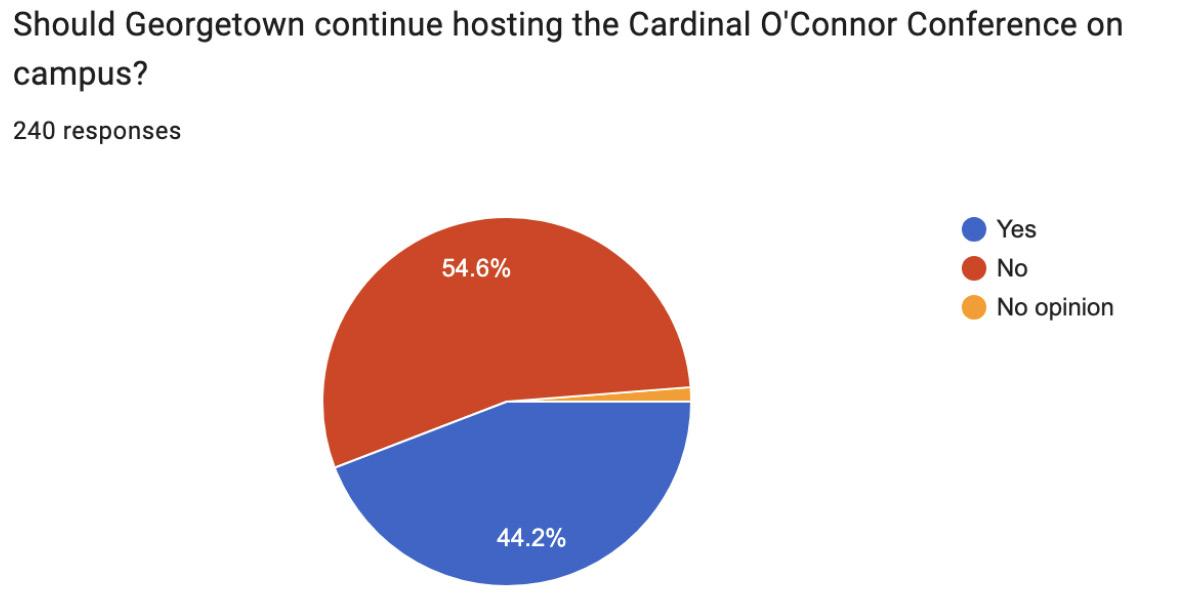
Every January, Georgetown University hosts the Cardinal O’Connor Conference on Life (OCC), the largest student-led anti-abortion conference in the nation. Some Georgetown students play an active role in organizing the OCC, suggesting it upholds the university’s Jesuit values. However, others op-
pose Georgetown’s continued hosting of the event, arguing it promotes harmful ideology.
In order to gauge student opinion, students were asked if Georgetown should continue hosting the OCC on campus. Of the 240 respondents, 54.6% said no, 44.2%

Founded January 14, 1920
Maren Fagan, Editor in Chief
Ruth Abramovitz, Aamir Jamil and Nora Toscano, Executive Editors
Nico Abreu, News Editor
Ajani Stella, News Editor
Paulina Inglima, Managing Editor
Opal Kendall, Features Editor
Saroja Ramchandren, Features Editor
Annikah Mishra, Opinion Editor
Ella O’Connor, Opinion Editor
Isabelle Cialone, Guide Editor
Tanvi Gorripati, Guide Editor
Nate Seidenstein, Sports Editor
Madeline Wang, Sports Editor
Angela Lekan, Science Editor
Eva Siminiceanu, Science Editor
Avelyn Bailey, Design Editor
Lucy Jung, Design Editor
Grace Bauer, Copy Chief
Jackson Roberts, Copy Chief
Shira Oz, Blog Editor
Fallon Wolfley, Blog Editor
Kate Hwang, Multimedia Editor
Michael Scime, Multimedia Editor
Matthew Gassoso, Photo Editor
Caroline Woodward, Audience Editor
Board of Directors
Patrick Clapsaddle, Chair
Bethe Bogrette, Julia Butler, Amber Cherry, Madeline
Grabow, Mia Streitberger
Peter Sloniewsky, General Manager
Olivia Zhang, Director of Business Operations
Rosie Garner, Director of Logistics
Connor Manrique-Johnson, Director of Outreach
Jackson Roberts, Technology Director
Since its first issue in 1920, The Hoya has served to inform Georgetown’s campus dialogue. The following article is a glimpse into The Hoya’s
OPINION: e OCC
VIEWPOINT • SAMSON, KRAUT, HALTER
Call for Reproductive Justice
Since 2000, Georgetown University has hosted and sponsored the Cardinal O’Connor Conference on Life (OCC), the largest pro-life conference in the nation. OCC features speakers that align with the conference’s supposed mission to stand for life, including Jennie Bradley Lichter, the president of the March for Life Education and Defense Fund, and Christina Bennett, a news correspondent at Live Action.
Despite Georgetown’s institutional support of the prolife movement, H*yas for Choice (HFC) resists the narrative that Georgetown is a pro-life university. For the week leading up to the Conference, HFC planned advocacy events such as round tables on reproductive rights and fyering to ensure pro-choice voices do not go unheard. This Saturday, our members gathered in belowfreezing temperatures to protest the conference and make our message clear: This conference is not welcomed by Georgetown students. While HFC frmly disagrees with Georgetown’s anti-abortion position, there could still exist a common ground between university administration and pro-choice students. Reproductive justice is an intersectional issue, and HFC calls on the university to stop sending tuition dollars to the OCC; it should instead practice its pro-life stance by advocating for the sanctity of life beyond the womb.
The origins and implications of OCC aren’t purely anti-abortion: Its namesake, Cardinal O’Connor, was against the distribution of condoms to prevent HIV and AIDS. The keynote speaker just last year denied that same-sex marriage was true marriage and described same-sex sexual behavior as dangerous. Georgetown’s open embrace of this rhetoric creates a hostile environment for students on campus. Moreover, Georgetown’s support for the conference could promote a culture of shame among students at Georgetown. There are likely students at Georgetown who have had abortions, and even more who have utilized emergency contraception (or any contraception at all). The presence of such a large event that considers these people immoral, and even deems them perpetrators of a “genocide,” could cause unfair guilt about reproductive health choices. In the face of OCC’s harmful history and positions, we believe there are other ways for Georgetown to uphold life that do not involve attacks on abortion. While many
VIEWPOINT • TROY
believe reproductive justice is mostly about this single medical procedure, it encompasses various issues. HFC does not accept that Catholicism must be inherently anti-choice: Several members of our board are Catholic, and we have often partnered with Catholics for Choice, an organization dedicated to promoting pro-choice Catholicism. While we acknowledge the Georgetown administration disagrees with this viewpoint, the university could still uphold reproductive justice in other ways. The key tenets of reproductive justice include the right to parent children in safe and sustainable environments.
Georgetown should focus on being truly pro-life by focusing on maternal morbidity, access to childcare and investments to improve the foster care system. These forms of activism would both promote the sanctity of life, which Georgetown remains committed to, without promoting views that directly disregard the identities and health of many of their students.
Georgetown’s value of “cura personalis,” or care for the whole person, is a high standard that the university aspires to. While this care for the whole person succeeds in some areas, the university fails to care for sexual health: Providing contraceptives and access to information about sexual health resources is the bare minimum that Georgetown continues to reject. The university could address another key aspect of reproductive justice by focusing on improving quality of life and reproductive health within traditional Catholic teachings. Rather than supporting their student body in a way that refects their needs and values, which overwhelmingly align with our reproductive justice focus, the university focuses on its “prolife” stance solely by being antichoice, anti-woman and antiautonomy. HFC demands the end of the use of our tuition dollars towards the conference, which is why we continue to stand in protest against OCC every year. We will not stop advocating until Georgetown respects and recognizes the demands of our pro-choice majority.
Sophia Samson is a junior in the School of Health, Jade Kraut is a sophomore in the School of Foreign Service and Maria Halter is a junior in the College of Arts & Sciences.

Engage With Discourse on Sanctity of Human Life
Tension over abortion permeates our school’s atmosphere. Although I entered my frst year opposed to abortion, I hesitated to say so publicly. I was aware of the accusations attached to the label “pro-life”: hostility toward women, indiference to children after birth or imposition of hollow religious doctrines. Yet after three years volunteering for Georgetown University’s student-led pro-life conference, my conviction on abortion has profoundly deepened. At a campus where abortion discourse is often reduced to slogans and chalk battles, the Cardinal O’Connor Conference on Life (OCC) serves a vital role by providing a comprehensive, Jesuit-rooted forum for engaging with abortion as a moral question. The OCC aims to encourage thoughtful discourse on the sanctity of human life. Our students hold wide-ranging beliefs and fervor about abortion — the Conference ofers a rare opportunity to ask questions, engage with people and learn about eforts to protect every human from violence, neglect and dehumanization. At a university committed to intellectual growth and critical thinking, the OCC fosters meaningful dialogue about abortion and human rights.
The Conference’s most crucial contribution is uplifting voices
Work to Resist GU’s OCC Sponsorship
In a prerecorded video for the annual March for Life on Friday, President Donald Trump proclaimed that his administration had made great strides to protect innocent life and support the institution of the family. The very next morning, U.S. Immigration and Customs Enforcement (ICE) agents under Trump’s orders pinned down and executed an intensive care unit (ICU) nurse, Alex Pretti, in Minneapolis. The Trump administration has made it abundantly clear that it views the anti-abortion cause as inextricably linked with the Make America Great Again (MAGA) movement — the same MAGA movement that spurs and cheers on the deaths of Pretti, Good and countless others. Let me be clear — embracing the anti-abortion cause gives the Trump administration, and its brand of politics, power at a time where all American people and institutions, especially Georgetown University, ought to be resisting them at every turn. Since the Dobbs v. Jackson Women’s Health Organization decision in 2022, the dramatic rollback of fundamental human rights to bodily autonomy has somewhat faded from daily political conversation. Yet we cannot afford to forget the scale of this erosion of rights.
As a proud resident of Republicandominated Indiana, I have seen the closures of health care clinics across my state while state officials attack doctors and OB-GYNs. Many of my own friends who live there have confided in me that they did not want to attend in-state universities for fear of what would happen should they need an abortion.
While abortion remains legal in Washington, D.C., this could presumably change with an act from a Republican-controlled Congress.
On the Hilltop, MedStar Georgetown University Hospital refuses to perform abortions. Neither MedStar nor the Student Health Center can refer students to abortion providers due to the university’s viewpoints on the procedure.
Birth control and condoms are also not allowed to be sold on campus by the bookstore or the Corp locations. These restrictions hinder the Georgetown community’s options for reproductive health access at a time when that access is under fre across the nation.
In this context, I believe that Georgetown’s continued sponsorship of the Cardinal O’Connor Conference (OCC) is very offensive. How can this conference, so tightly associated with the increasingly MAGA-centric March for Life, be held at and receive institutional support from one of the key universities of power in this country? Year after year, Georgetown students demonstrate that they are a clearly pro-choice campus, most notably through the work of H*yas for Choice and other affiliated organizations. Year after year, we protest the OCC and its legacy.
While I write today as co-chair of the Georgetown University College Democrats (GUCD), I also feel the need to note that I, too, personally believe in God and the Christian faith. Perhaps similarly to my Republican peers, it forms the basis for much of my politics. I find it incomprehensible how the God I know — one of love, forgiveness and respecting the dignity of all human beings — would support this movement and the negative effects it has had on American women. I find it even more absurd that people like Trump evoke the name of God while they wreak havoc on marginalized communities. I’ve personally found great comfort in Georgetown’s religious life, but for a campus that strives to provide “care
of the whole person” and seeks to embody Jesuit values in its decisionmaking, endangering the lives of its own students for the sake of pursuing a political, anti-abortion agenda is simply wrong. Aggressively promoting and funding a conference — with students’ own tuition dollars — that seeks to roll back the clock on women’s constitutional rights in tandem with the extremists in the White House is the complete opposite of “care of the whole person.” In 2026, there should be no room for the OCC on Georgetown’s campus.
Any movement that claims to be “prolife” while simultaneously wrapping itself in the arms of an authoritarian president, one that has invaded American cities and begun killing peaceful protestors in cold blood, is not remotely close to deserving of that label. Any movement whose members advocate for the death or arrest of young women for the “crime” of controlling their own bodies is deeply immoral and un-American. All Georgetown students, and the university itself, need to reject this dangerous ideology and condemn Trump’s extremist agenda at large.
Students: Now is the time to demand change from Georgetown’s administration on its reproductive healthcare policies, to join and stay active with H*yas for Choice, the American Civil Liberties Union, GUCD, Free DC or some of the many other campus organizations working to stand against Trump’s extremism. Become involved in your local politics, especially if from a competitive or Republican-leaning state. The last few years have been rough for our country and our campus community. Now, more than ever, we have to stand up and believe that our communities can be better than they are today.
Braedon Troy is a junior in the College of Arts & Sciences.
that students rarely encounter. At an OCC, one may come across Dr. Kathi Aultman’s experience performing 500+ abortions, Joyce McCauley-Benner’s story of victory over violence after becoming pregnant in college from rape or survivor Melissa Ohden’s journey of healing after discovering she was born from a coerced saline abortion. Listening to real people share their stories is crucial in a culture prone to regarding persons as abstractions. The same logic that strips personhood based on disability, race, legal status, gender or socioeconomic circumstances manifests in the dehumanization of unborn human beings based on their smallness, dependency and developmental stage. This further obscures the vulnerability of pregnant women, who often face motherhood without support. The OCC brings in knowledge and testimonies that Georgetown students might otherwise not have the opportunity to engage with. Furthermore, the OCC highlights the often-ignored diversity of the contemporary pro-life movement. Organizations like Democrats for Life of America, Feminists for Life of America, Secular Pro-Life, Rehumanize International and the Progressive Anti-Abortion Uprising have historically sponsored the Conference — their passionate defense of human dignity exposed where I’d been desensitized by a culture that demeans human life.
As one of many pro-life students who is neither Republican nor politically conservative, I fnd this emphasis on ideological breadth crucial. We difer on much, yet agree that abortion is a human rights injustice that harms women and our whole society. We fnd common ground in advocating for paid family leave, reduced maternal mortality, authentic healthcare and increased governmental support for women, children and families. We recognize that defending the voiceless victims of abortion impels the defense of all people. The OCC’s rejection of political polarization is essential in building a holistically pro-life culture rooted in upholding inherent human dignity.
The OCC’s commitment to human dignity especially matters at a Catholic, Jesuit university. While strong secular and philosophical arguments against abortion exist, the Catholic tradition brings this matter back to its moral roots. Rooted in Christ’s sacrificial love for all, the Catholic Church is explicit about protecting human life from the first moment of existence, since every human is fully known and loved by God. In choosing a Catholic university, all students are invited to engage with these Catholic values regardless of background. The OCC provides a forum for this, enabling Georgetown students to learn why Catholics must work for justice and stand against the dehumanization of all without exception. This call applies beyond those who identify as Catholic.
All students should consider their role in the mission embodied by the OCC: proclaiming the truth of human dignity and expressing this in action. Being at the OCC reignites my passion for seeking the full picture of this issue — I urge you to do the same. Be educated about abortion procedures from former abortion providers, view the embryonic development of those at the heart of our conversations, learn about those seeking justice for fve late-term infants discovered in Washington, D.C., and support our local resources for women (the Northwest Center and Capitol Hill Pregnancy Center). Most of all, even if you fnd the pro-life stance confusing or vexing, consider attending our next Conference on Life. You are a critical part of the dialogue our community needs on abortion. As our campus grapples with moral issues, we need students to participate in the discussions the OCC cultivates. Many of us are neither Catholic nor pro-life, and our diversity becomes most fruitful through in-person conversations and encounters. People’s convictions on abortion often stem from personal experiences and exposure to this issue — most of us wholeheartedly want a world where every person is protected and valued. Bella Kondrat is a junior in the Berkley School of Nursing.
Continue Building GU’s Culture of Life
The Cardinal O’Connor Conference (OCC) is the nation’s largest student-led pro-life conference, held annually in Georgetown University’s Healy Hall. This year, the conference enters its 27th year and centers on the theme “The ProLife Mission After-Birth: A Lifelong Devotion.”
This theme invites attendees to engage in meaningful discussions about many prolife topics. The conference goes beyond abortion and emphasizes the sanctity of human life at all stages, thus embodying the Jesuit value of care for the whole person.
The Georgetown community should take the OCC as an invitation to practice “cura personalis” by recognizing the dignity of all human life and committing to care for the whole person in classrooms, dorms and in everyday interactions.
The Jesuit value of “cura personalis,” care for the whole person, is a slogan that most Georgetown students hear on repeat. Whether it is during the Jesuit values panel at New Student Orientation or simply while wandering through campus, the phrase seemingly appears everywhere. The university’s website says that “cura personalis” places emphasis on appreciating each individual’s own talents and on providing care and attention to each individual no matter their circumstance. Put simply, giving attention to each individual no matter what stage of life they are in and recognizing their unique gifts is essential to cura personalis, and it is exactly what this year’s OCC embodies.
This commitment is refected clearly in this year’s
programming. Guests included clergy and pro-life advocates who spoke on a variety of prolife topics other than abortion.
Andrew Kubick, who specializes in bioethics, hosted a discussion on physician-assisted suicide.
Louis Brown, the executive director of the Catholic prolife nonproft Christ Medicus Foundation, discussed the necessity of a pro-life healthcare system. Other topics included in vitro fertilization (IVF), the death penalty and the foster care system.
Including topics like IVF that afect children before they are even conceived, as well as endof-life issues like physicianassisted suicide, shows that the OCC truly is committed to the care of the whole person.
Georgetown, just like many other college campuses across the nation, is in need of a greater commitment to caring for each individual now more than ever. Shortly after conservative leader Charlie Kirk was shot and killed at a September rally, members of the Georgetown community encountered two waves of posters with hateful rhetoric aimed at conservatives in Red Square.
The frst posters mocked the phrase on one of the bullet casings found following Kirk’s shooting, “Hey fascist, catch!” The second wave included a large poster that told conservative community members to “follow your leader.”
While federal officials haven’t determined whether the posters came from a campus community member, the posters demonstrate a larger issue of disregard for individuals with differing
viewpoints, which is a serious crisis on our campus. The OCC addresses this crisis by offering a place that champions the message that all life is valuable and deserving of protection. With the conference’s promotion of caring for the whole person, we can remember to both embrace and prioritize our shared humanity. It is unrealistic to think that all students will appreciate and support the pro-life position that the OCC and the university itself uphold. Even though the OCC shows clear alignment with Jesuit values, the conference does not go unchallenged, facing criticism from some on-campus groups. H*yas for Choice (HFC) organized activities to protest this year’s conference and recently called on students to help demonstrate that Georgetown is a pro-choice campus. However, all Georgetown community members can and should play a part in the OCC’s mission to promote a culture of life both on campus and in the broader community. Building a culture of life goes beyond just advocating to protect the unborn. At its core, it means that we must see the inherent value in all people, regardless of their demographics or viewpoints. As Georgetown students, this calls us to practice “cura personalis” in both academic and everyday settings by engaging thoughtfully with ideas we may not share, treating one another with dignity and approaching even the most dificult conversations with care and respect.
Katie Rankin is a sophomore in the College of Arts & Sciences.
RAY TIAN/THE HOYA
VIEWPOINT • RANKIN
VIEWPOINT

GU Students Criticize University Response To Mold, Microbial Growth in Campus Dorms
Amid concerns about suspected microbial growth in university buildings, students cite issues with repeated accomodation delays and communication gaps.
Ezri Rohatgi Features Staff Writer
Meher Jain (SFS ’29) expected a typical college move-in experience when she arrived at Georgetown University. Instead, she found the closet door of her Copley Hall room covered in mildew.
Jain, who believed the microbial growth was mold, said facing facilities issues so early in the year was particularly irritating.
“We were just all so frustrated about how this could have possibly been missed,” Jain told The Hoya. “Why weren’t these rooms inspected? What else could be wrong with a dorm? Where else could there be mold in this room?
Because they clearly hadn’t looked at it at all before they let us in.”
Jain said facilities personnel told her the room was unsafe to live in and necessary cleaning could take up to two weeks. Jain and her roommate were temporarily relocated to Village C East (VCE), which is traditionally a sophomore dorm, while the department addressed the issues.
Devika Mathur (SFS ’29), Jain’s roommate, said the pair lost out on formative social experiences.
“The frst week of freshman year is when you can bond with your foor and you’re trying to make friends,” Mathur told The Hoya
“We were just trying to adjust to college, and we were isolated in the sophomore dorm, where we didn’t really know anybody,” Mathur added.
Students and parents across the Georgetown community have expressed concerns about the prevalence of mold in campus facilities, raising broader issues about dorm inspections, maintenance timelines and university communications.
A university spokesperson said Georgetown is committed to ensuring a safe living and learning environment for all students.
“The safety, health and well-being of our students is our highest priority,” the spokesperson wrote to The Hoya. “We work through every request as diligently and expeditiously as possible.”
Georgetown’s Ofice of Environmental Health & Safety (EHS) assesses reports of suspect microbial growth (SMG), the university’s designation for potential mold or fungal colonization, and dispatches trained staf to remediate the issue accordingly. Mathur said university resources for SMG-related problems were insuficient to address her concerns.
“It was just really slow,” Mathur said. “You put us in a moldy dorm and you didn’t check it or anything before we moved in. You’re not giving us anything.”
Mold School Like other higher education institutions with older facilities, Georgetown is predisposed to SMG issues.
Lucy Zipf, an environment and international afairs professor, said Washington, D.C.’s humid climate also makes the university more susceptible to mold issues.
“We are in quite a warm, moist climate, especially during the summer,” Zipf told The Hoya. “There are yearround things we can think about for indoor mold growth. All fungi love a moist, warm environment.”
“If there is a mold issue, it needs to be fully removed and addressed, because mold can reproduce with spores, which are these tiny reproductive structures,” Zipf added. “Making sure that there’s not any foothold that a new mold community has in a habitat is important.”
While mold spores are always present in the air, exposure to high concentrations can lead to a stufy nose, a sore throat, coughing, wheezing, burning eyes and skin rash, according to the Centers for Disease Control and Prevention (CDC). For immune-compromised individuals, reactions can be more severe.
Felicity Goudie (CAS ’29), who discovered suspected mold in her Harbin Hall air conditioning (AC) unit in October, said she developed a persistent cough after fnding the SMG, which cleared up after cleaning.
“We had been living there for a little over a month,” Goudie told The Hoya. “I sent a text to my parents that said, ‘Found mold in AC vents over the weekend in my room, probably the cause of my persistent sickness and coughing, got it cleaned today.’”
Ginny Marshall (CAS ’29) said she developed an illness just before discovering SMG in her Darnall Hall AC unit.
“I developed a pretty productive cough, and it persisted for over three months. It’s still lingering a little bit right now,” Marshall told The Hoya. “I used to wake up every morning coughing. It would take an hour for me to clear out my lungs every morning, and then I would really start my day.”
Marshall said she had to seek medical attention and receive university approval for a new housing placement in New South Hall.
“My doctor recommended that I seek out a new environment in order to try and mitigate the cough a little bit and try and suppress it a little bit,” Marshall said.
“It defnitely took a while,” Marshall added. “I had to go through medical accommodations, and that took a considerable amount of time.”
Gabrielle Ellis — an adjunct lecturer at Georgetown’s Earth Commons Institute, an initiative promoting the study of sustainability and environmental stewardship — said the university must improve ventilation maintenance to efectively reduce the SMG recurrences.
“This is a key environment for bacteria to grow,” Ellis told The Hoya. “There’s also quite a lot of older buildings that don’t have the best circulation structures to deal with this climate, to reduce the humidity inside buildings.”
“It just demonstrates that the circulation systems that Georgetown is using are not necessarily up to date or functioning optimally,” Ellis added.
A university spokesperson said EHS’s inspection process involves an evaluation of the affected area’s envi-
ronmental conditions, in addition to more immediate remediation.
“The on-site assessment includes a visual inspection for the presence of SMG, and also includes the monitoring of space temperature and relative humidity to ensure that those building conditions are not contributing to mold formation,” the spokesperson wrote. “Finally, the space is reviewed to determine if moisture has entered the space, and related repairs are scheduled as necessary.”
It is not standard university practice to test or further identify SMG species, and the CDC does not recommend routine sampling. Instead, EHS suggests students consult a physician if they experience SMG-related symptoms.
Goudie said when facilities personnel came to address her work ticket, they put on personal protective equipment (PPE) before cleaning.
“When he came, he put a mask on before he entered our room, which was kind of crazy because we had been living there the whole time with no masks, no PPE, nothing,” Goudie said.
Ellis said protective clothing can be helpful when dealing with unidentifed SMGs.
“If a worker should wear a mask, probably a student living in the space should wear a mask,” Ellis said.
Marshall said other students shouldn’t have to deal with the same health issues she experienced.
“I wouldn’t want to be living in those same conditions and have to restart this whole process of trying to heal my lungs again,” Marshall said.
Breaking the Mold
Students said university communication regarding SMG issues was not straightforward, citing delayed responses and follow-through.
Mathur said she did not receive updates from the university while facilities addressed her room’s issues.
“There was quite literally no communication during those two weeks about any updates to our dorm,” Mathur said. “Whenever we wanted updates, we would have to ask our friends, or go into the dorm itself to see how things were going. We had to be very proactive about that, and the university was not transparent with us at all.”
While the university originally agreed to help her and Jain move back into their dorm after repairs were completed, Mathur said they moved themselves back in after struggling to get in contact with Residential Living.
“It was very performative,” Mathur said. “On the frst day, they were like ‘We’re gonna do everything in our power,’ but then it seemed like they forgot about it.”
Jain said she was surprised by the delays and poor communication, given the number of administrators she spoke with to resolve the issue.
“I defnitely think the school has a really big problem with their ad-
ministration and their bureaucracy,” Jain said. “We had so many different people that we had to talk to.”
“How do you have all these people in administration and nobody could respond to our email?” Jain added. “Who’s supposed to do that?”
Mona Sze, whose daughter lived in New South in 2023, said she struggled to reach the correct administrators when her daughter’s work tickets reporting SMG issues went unresolved.
“It took repeated calls and emails to the housing department to get someone to come and look at it, and in the end, all they did was paint over it,” Sze told The Hoya
“The only reason I found it was on some Facebook page where everyone was talking about mold,” Sze added. “People were like, ‘Who do I respond to? Nobody gets back to me’ and then somebody posted this one contact.”
James Baust (MSB ’27), who found SMG in his frst-year dorm in 2023, said submitting a single work order did little to elicit a response from EHS, which conducts initial SMG assessments within two business days, according to university policy.
“Originally, we submitted one, and nothing really happened,” Baust told The Hoya. “So we made a couple more, and eventually they came out, which is standard for the beginning of the year, because they’re so backlogged.”
Norah Yang (MSB ’29), who found SMG in her AC unit and on her chair in Harbin this past fall, said she was concerned the removal of SMG was not thorough enough.
“I called maintenance, and they came in. They looked at it, they took a Clorox wipe, they wiped it of and they told me that I would be fne,” Yang told The Hoya. “I, personally, did not agree with that.”
Yang said, in addition to the limited cleaning process, the lack of communication from facilities left her unsure about the response timeline.
“I don’t want to be living with mold spores in my room,” Yang said. “Now, I feel so much more terrifed
than I felt before. I didn’t know when they were coming back.”
“It was a lot of uncertainty,” Yang added.
Sze also said the SMG in her daughter’s dorm was inadequately treated.
“They came in and painted it, which is not really treating the old issue,” Sze said. “It’s just hiding it.”
Yang said the university should be responsible for removing SMG and ensuring the quality and upkeep of student dorms.
“I feel like it was the school’s responsibility over the summer to make sure that the dorms are prepared for the first-years or the students that are moving into them,” Yang said.
Jain similarly said the university should be more proactive about addressing issues with SMG.
“I hope that in the future, for their sake, something changes,” Jain said. “I hope things like this don’t happen to other students. In the event that it does, it is often on the student to be extremely proactive in reaching out to the university constantly, which really sucks.” Out with the Mold, In with the New Students say they were impacted by SMG issues beyond their immediate health and displacement consequences.
Mathur said she struggled to build friendships on her foor after moving in two weeks into the semester.
“It did impact the potential of making closer bonds with people on our foor,” Mathur said. “It kind of sucks because that’s a common initial friend group.”
“A lot of my foormates are really close with each other, and there is that little bit of disconnect,” Mathur added.
Baust said SMG in his dorm impacted his academics and strained his lifestyle.
“That impacts school work, for sure,” Baust said. “It defnitely impacted my roommates’ sleep, and mine as well. I couldn’t go to sleep while he was coughing.”
“It was really brutal, because it would cause a lot of issues with energy levels and waking up actually refreshed,” Baust added. After their experiences with SMG and mold, some students say they do not plan on relying on the university to address future issues.
Jain said her experience eroded her faith in housing and facilities.
“We know that we can’t really rely on housing going forward,” Jain said. “We’re gonna have our own mold cleaners.”
Yang said she thinks the university should have taken more proactive action.
“I wish the university knew that there were problems and that they could have resolved them before we moved in,” Yang said. “I think the dorms for next year are probably going to be more of the same.”
“It puts stress on the students when it’s really the school’s responsibility to get it done ahead of time,” Yang added.
Baust said SMG prevention should be a priority for the university, especially considering the high cost of housing, which ranged from $12,082 to $20,500 for the 2025-26 academic year.
“We pay so much for just housing in general,” Baust said. “Health and safety is a core need.”
“If you aren’t really having that fulflled as a student paying $90,000 to a school, then it’s not a good look on facilities or housing in general for Georgetown,” Baust added.
Jain said clean and safe housing is a fundamental part of the student experience, and the university must improve its response.
“More than just the educational aspect of Georgetown, the living situation, the food situation, all of these fundamental parts of living on a four-year college campus are just as important,” Jain said.
“I hope in the future that the university is better at communicating with students and resolving issues in a timely manner, because it’s extremely important,” Jain added. “It can make all the diference.”
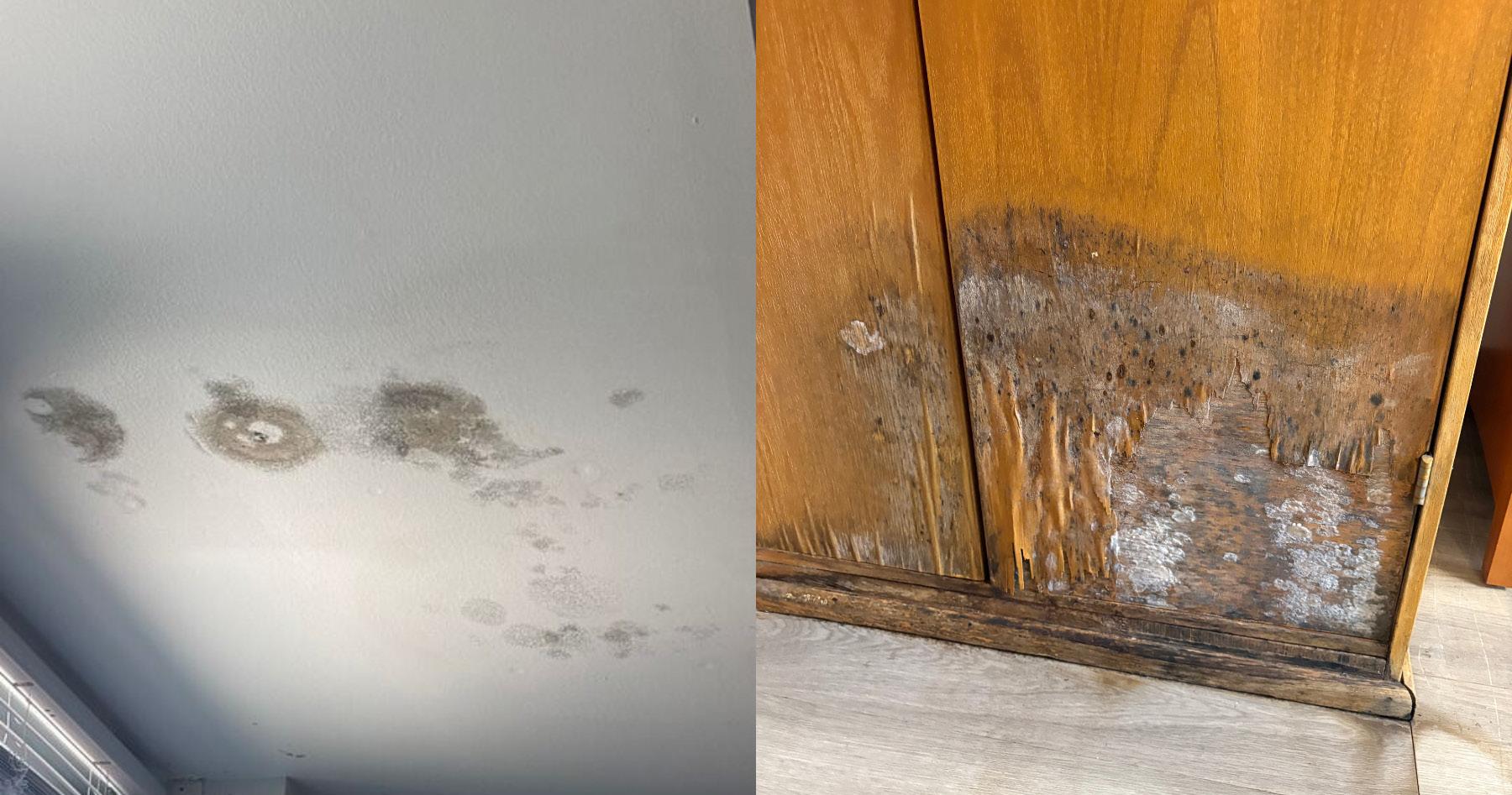
ILLUSTRATION
COURTESTY OF DEVIKA MATHUR AND SARA HOLLER
Students asked the university to take proactive steps, such as more thorough inspections of campus housing, to prevent microbial growth and support student wellbeing.
Former United Nations Assistant Secretary-General Reflects on Public Health, Future Policy Possibilities
Sasha Ahmad Deputy Editor
The former assistant secretary-general of the United Nations encouraged students to see the links between public health and policy at a Georgetown University event Jan. 27.
Dr. Shannon Hader joined Georgetown University’s Global Health Institute to discuss personal stories from Hader’s longtime leadership in the global HIV/ AIDS response. In a conversation moderated by John Monahan, a lawyer and senior advisor at the Global Health Institute, Hader framed her career with several moments that motivated her lifelong interest in public service, from volunteering in a Taiwanese orphanage to directing the Centers for Disease Control and Prevention’s (CDC) HIV programs in Zimbabwe.
Hader said her frst exposure to the struggles of public health came during her gap year after college, when she witnessed how deteriorating U.S.-Taiwan relationships harmed Hepatitis B immunization campaigns for youth in the 1980s.
“I was staring into the faces of children whose health had been
afected for life by geopolitical forces that had nothing to do with their disease,” Hader said at the event. “That was my frst real introduction to public health.”
Hader also discussed her work in Washington, D.C., saying she led the city’s HIV/AIDS response during a period of widespread stigma and political stagnation.
“We turned around the data systems, got the evidence out and showed that there was a very large HIV epidemic here in the nation’s capital,” she said.
“For HIV and AIDS, we were then able to increase diagnosis by 50%, decrease mortality by 30%, eliminate mother-tochild transmission and get the frst-ever D.C.-funded needle exchange and comprehensive harm reduction program in place — 200,000 needles of the street in the very frst year.”
Monahan said Hader displays versatility in diferent areas of public health, as well as her mentorship of future community leaders.
“Dr. Shannon Hader has made a career of improving health outcomes through her work at CDC, across Africa, with the United Nations and at the D.C. Department of Health,” Monah-
an wrote to The Hoya. “She challenged students to commit to improving health and to remain fexible and open to unexpected opportunities at the global, national and local levels and across the public, private, nonproft and faith sectors.”
Hader described implementing approaches during the worldwide HIV campaigns, like rapid testing and opt-out screening, which she said were often adopted abroad before gaining prominence in the United States.
“What surprised people was that we weren’t bringing innovation from D.C. to the world,” Hader said during the discussion. “We were bringing lessons from Zimbabwe back to D.C.”
Mikayla Friedman (SOH ’27), who attended the event, said she particularly enjoyed glimpsing into Hader’s legacy of working in underserved public health crises.
“I really enjoyed hearing Dr. Hader’s refections on efective public health leadership over her impressive career,” Friedman wrote to The Hoya. “I was especially interested in the time she spent working at the D.C. Department of Health to improve access to HIV/AIDS treatment,
testing, and harm reduction care for people in the District.”
Monahan said the discussion with Hader, part of a seminar series titled “Conversations in Health: Global to Local,” was a critical moment for students in his class.
“Conversations in Health: Global to Local is designed to do exactly this,” Monahan wrote to The Hoya. “The course engages Georgetown students with prominent health leaders who share their personal career journeys and refect on the urgent health challenges of the day.”
During the talk, Hader repeatedly returned to the link between public health and policy, saying that health leaders must engage with the public without compromising scientifc integrity.
“Public health has always been political,” Hader said. “That’s the ‘public’ in public health. What it hasn’t always been about is partisanship.”
Hader added that despite the growing partisan biases afecting public health, she has found that collaborating with political opponents who share ideals can be integral for bettering the health outcomes.
NASA Roman Space Telescope to Launch is Year
Eva Siminiceanu Senior Science Editor
The National Aeronautics and Space Administration (NASA) announced the completion of a telescope designed to investigate exoplanets and dark matter in photos released Dec. 4, 2025.
The Nancy Grace Roman Space Telescope, named after NASA’s frst chief astronomer and located in Greenbelt, Md., could begin collecting data as early as the end of 2026. The telescope features a powerful camera called a wide feld instrument (WFI), which is capable of capturing high-quality images near the edge of the observable universe and gathering data quickly.
The telescope is also ftted with a coronograph instrument, which can block the glare from nearby stars to capture images of the planets in their orbit. These instruments will allow the telescope to obtain enormous amounts of data; within fve years of launch, NASA expects to discover billions of galaxies, hundreds of thousands of exoplanets beyond our solar system and hundreds of forming planetary systems.
The Roman Telescope’s data is expected to accelerate a wide range of scientifc discoveries. Shiva Ranganathan (SOH ’27), a teaching assistant for an introductory physics course, believes the telescope’s instrumentation will allow scientists to answer longstanding questions in the feld.
“In my eyes, the wide feld instrument (WFI) and coronograph that the Roman uses are game changing for astrophysicists, because they’ll give us insight into our origins as a species,” Ranganathan wrote to The Hoya.
Full Disclosure: Shiva Ranganathan currently serves as a science columnist for The Hoya.
The telescope’s ability to capture a large amount of the Milky Way galaxy is crucial for the discovery of exoplanets, as the primary method of fnding them relies on seeing random spikes in light signals across the galaxy.
Ranganathan said he believes the telescope’s ability to capture large amounts of data can provide insight into fascinating questions tied to human origins by looking into the past and probing the conditions necessary for life.
“The universe has been expanding since its birth, and because of a combination of more powerful discernment (the cornograph) and larger feld of vision (the WFI), I can see the Roman answering questions scientists have had for a long time,” Ranganathan wrote.
Anish Patel (CAS ’28), a student in “Principles of Physics II,” said he is excited by the prospect of answering longstanding astronomic mysteries and the progress made in the construction of telescopes.
“NASA’s James Webb Telescope from a few years ago is able to track and calculate the phases of our universe, from creation to now, allowing us to see if life exists elsewhere. This new telescope will allow scientists to better understand our universe, which I think is vital in understanding just how small we as a species are in the realm of the universe,” Patel wrote to The Hoya.
Patel also said scientifc funding is crucial to the construction and innovation of tools like the Roman Telescope that help understand the universe.
“Space funding is crucial in understanding the making of the universe and the history behind

WIKIMEDIA COMMONS
NASA’s newly built Roman Space Telescope is set to launch this fall, probing fundamental issues in the field of astrophysics.
our galaxy and simply how our planets were made. I think that funding for telescopes is vital because science is all about curiosity and the largest area to explore for us is space,” Patel wrote.
Ranganathan said the construction of the telescope is a
remarkable scientifc achievement because it will likely pave the way for future discoveries and scientifc insights.
“I can see the Roman inspiring future tech that tells us the full story about our creation,” Ranganathan wrote.
Congress Pushes Back on Federal Science Funding Cuts
Oh-Jak Kwon Special to The Hoya
Congress moved to undo proposed cuts to federal scientifc and public health research funding Jan. 9, which may increase Georgetown University students’ access to community-based health initiatives that give them hands-on experience in public health and medicine.
The move occurred amid bipartisan pushback and concern over the potential impacts cuts would have on research, innovation and public health. The Trump administration’s proposed budget reductions targeted agencies like the National Institutes of Health (NIH) and programs tied to equity, public health and pandemic responses.
Matthew Kavanagh, director of Georgetown’s Center for Global Health Policy & Politics, said Congress’ resistance to the proposed cuts reveals a deeper political struggle over science funding rather than a retreat from global health investment.
“Congress has never been fully on board with the cuts to entities like NIH or pandemic preparedness or HIV/AIDS funding,” Kavanagh wrote to The Hoya. “What is really going on is not an end of
U.S. global health funding but an intra-branch struggle over global health and science funding.”
Wide-ranging health funding debates in the past year have led to congressional cuts to Medicaid and federal NIH staf cuts.
Kavanagh said that despite congressional intervention, the damage caused by funding instability may have already weakened the nation’s ability to respond to future public health crises.
“Because of the cuts and halt to funding enacted by the Trump administration, the world is less prepared to fght the next pandemic than we were at the start of COVID-19,” Kavanagh wrote.
Samuel Yin (SOH ’28), a Georgetown pre-medical student, said that, despite the refund, previous budget cuts have already reshaped research and opportunities on campus. Yin was preparing to work on an observational research project examining nutrition, diet and adverse health outcomes in Washington, D.C.’s Wards 7 and 8, communities that have historically faced disinvestment and health disparities.
Yin said he intended to apply for NIH funding early in the semester for the project, which
was being developed with faculty in the School of Health.
Yin said the proposal never made it through the approval process.
“After they didn’t give a response, it became very apparent that the budget had signifcant impacts,” Yin told The Hoya Yin said his research team pivoted to a smaller private grant instead, forcing them to scale back their original plans.
“The grant is a smaller amount, so we kind of had to adjust the plans,” Yin said. “It took time to fnd diferent avenues in terms of where we could get money from.”
Although Congress has since pushed back against the proposed cuts, Yin said the efects are unlikely to be reversed immediately for students already afected.
“Labs not getting funding leads to people not getting positions,” Yin said. “And that leads to students not being able to work in those environments.”
Charlotte Phillips (CAS ’28), a biology of global health student, said scientifc research has guided her academic experience.
“My experience with research has been very important to me,” Phillips wrote to The Hoya. “Funding is essential to keep our lab running and for sourcing reagents and materials.”

“I think it’s way more exciting and sometimes efective to seek out those I don’t know, who aren’t my friends, who might actually align on part of the ‘what needs to be done,’” Hader said. “Then, we can broker over the ‘how it needs to be done,’ which we might not agree on.
Looking for those strange bedfellows has been where breakthrough successes in policy often happen.”
ON THE PERIPHERY
At the end of the event, when Monahan asked what gave Hader hope amongst a dificult time for science, Hader said that current instability is not a referendum on the future of public health.
“I’m hopeful that because all of you are here, developing your skills, your values and your vision, that the future doesn’t have to look like the past,” Hader said.
DC’s ‘F’ in Premature Births Shows Health Disparities
A baby arrives early, small enough to ft in the crook of an elbow. Silent and blue-lipped, the medical team quickly transfers her to the neonatal intensive care unit — a tiny breathing mask ftted around her head — and prepares her for a long period of incubation and monitoring before she is ready to go home.
High rates of premature births are not unexpected. They are the consequences of a system that forces expecting mothers to take several buses to get to care appointments, tells women their water breaking is “just urination” and punishes pregnancy with unpaid leave and unforgiving labor policy.
Washington, D.C., earned a failing grade on premature births in November 2025 from the March of Dimes, a nonprofit organization founded in 1938 by President Franklin D. Roosevelt to improve the health outcomes of mothers and babies throughout the United States. Known as “preemies,” premature babies are typically born before 37 weeks gestation, just shy of the 40 week full-term.
The timing of birth is more than a clinical threshold; it is a strong indicator of health care inequity. Babies born too soon are at greater risk for low birth weight, long-term health problems, developmental disabilities and infant death. D.C. has a high premature birth rate within the United States, with Black infants being born prematurely at almost twice the national average. In a city dense with hospitals and health policy experts, this is no fluke. This is a referendum on a long history of medical inequity, with Black mothers and infants shouldering the greatest costs.
for your actual age — to lifetimes of sustained exposure to racism and chronic stress. Weathering overlaps with systemically unequal access, or lack thereof, to high-quality medical care and safe living conditions. The United States has a preterm birth rate that falls well behind peer nations — with approximately one out of every 10 babies born in the United States before 37 weeks gestation. D.C. health data illustrates how structural racism is a national and global inheritance. Redlining, segregation and other forms of institutional discrimination have undermined maternal care outcomes, especially in communities east of the Anacostia River. For example, the 2017 closures of labor and delivery units at the United Medical Center in Southeast D.C. have effectively created “maternal care deserts” in Black-majority neighborhoods that prompt mothers to travel across the D.C.-Maryland-Virginia (DMV) area to receive care. D.C. has made progress in the past several years, with its 2025 Perinatal Health and Infant Mortality Report highlighting meaningful government partnership with clinics, providers and nongovernmental organizations to enhance evidence-based strategy, innovative care intervention and direct access to necessary maternal healthcare for disinvested communities. In 2014, the D.C. government passed the Protecting Pregnant Workers Fairness Act (PPWFA) to combat discrimination against pregnant workers and to require employers to make reasonable workplace accommodations for expecting and breastfeeding mothers.
Kavanagh said aside from impacting researchers, cuts to science funding disproportionately harm marginalized communities while leaving wealthier populations insulated.
“Reducing funding for cutting-edge science and global health programs only makes inequality worse,” Kavanagh wrote. “The wealthiest among us can simply exit from health problems like pandemics.”
Kavanaugh added that the disruption extends beyond public health emergencies to research on chronic conditions including cancer, diabetes and heart disease.
Despite congressional pushback, Kavanagh said the disruption caused by the proposed cuts should motivate researchers to advocate for continuous funding.
“Standing by and watching this happen is simply irresponsible,” Kavanagh wrote. “Scientists and academic leaders have a responsibility to speak up.”
Yin said the funding uncertainty has not diminished his commitment to public health, but it has underscored how fragile research pathways can be.
“Public health is a necessity,” Yin said. “But when the government neglects it, it’s easy for people to think they should too.”
It is important to recognize that preterm birth is not random, and has trends that can be predicted. When I was in training to be an emergency medical technician, our curriculum emphasized the need to prepare for neonatal resuscitation if the mother has not received adequate prenatal care and diagnostics. The fact that we learn to anticipate these emergencies based on care access suggests that premature birth and other neonatal complications follow patterns — ones that demand explanation.
While genetics, lifestyle and comorbidities undeniably play a role, social factors upstream of the delivery room often distinguish regions with higher rates of preterm birth and infant mortality.
Local journalists covering the March of Dimes report card have further magnifed the pattern. Almost a quarter of women in D.C. do not receive adequate prenatal care, and that number jumps to almost a third for Black mothers. In political narratives, it can be simple to attribute these trends to “poor health choices” and “statistical error.” However, more recent studies point to weathering, a public health concept that connects accelerated biological aging — the “wearing down” of the body’s cells and tissues faster than expected
D.C. Health reported a 23.6% decline in infant mortality rate from 2019 to 2023, but this data point masks the uneven distribution of that decline. A city can improve its average outcomes while certain neighborhoods remain in crisis. If our government wants to truly achieve horizontal equity for the most marginalized mothers, the perspective must widen beyond the patients and to the systems. Some policy recommendations include aggressive management of disease burdens like preeclampsia and anemia in Black women, provider training to eradicate clinical bias and expanded doula and midwifery support for skilled birth attendance (SBA). Taken together, these interventions can improve continuity of care, the quality of clinical encounters and the health of all babies in D.C.
D.C.’s “F” grade unravels a story about how the DMV region, and the United States at large, neglects the minority pregnancy experience. It is a story about the cumulative efects of intergenerational trauma, socioeconomic deprivation and the chronic psychological stresses of racism on both mother and child. Decreasing rates of preterm births is achievable for D.C., but only if lawmakers and community members stay accountable for closing disparity gaps that stretch well beyond the delivery room.
Sasha Ahmad Science Columnist
WIKIMEDIA COMMONS
Dr. Shannon Hader commented on public health and policy during a Jan. 27 event at Georgetown University.

IN FOCUS
DHS Investigated Khan Suri’s Academic Speech
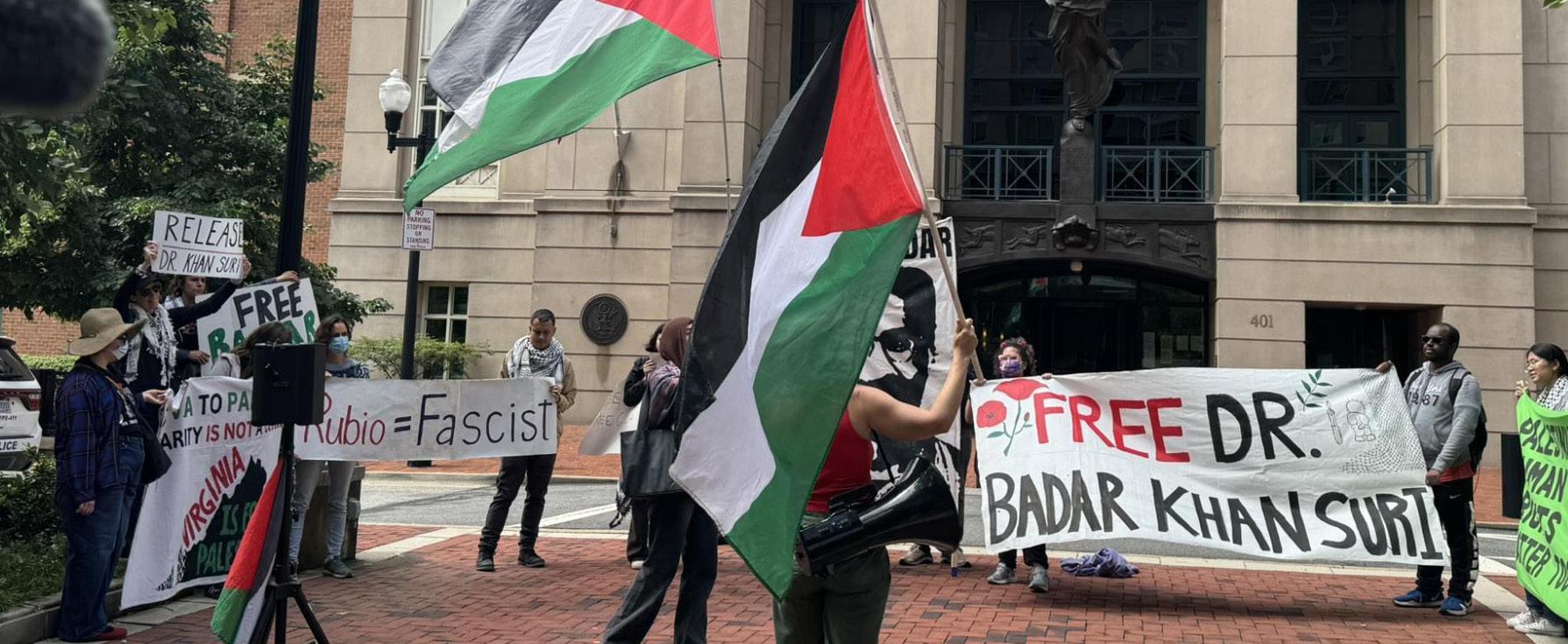
The federal government’s reasoning for detaining
his academic speech, political posts and research, according to newly unsealed government documents.
Adjunct Faculty Aim for Compensation
Increase in New Contract Negotiations
Ajani Stella Senior News Editor
Adjunct faculty members have reopened contract negotiations with Georgetown University to modify compensation, benefts and cancellation rules.
The adjunct faculty bargaining team, represented by the union SEIU Local 500, met with university officials Jan. 27 in their first bargaining session since April 2025. The faculty members requested a 25% base compensation increase commensurate with inflation, clarification regarding course cancellation fees and payment for non-curricular activities.
The university will now consider the adjunct faculty’s initial requests and respond at a later meeting.
Theodora Danylevich, an adjunct English professor who serves on the bargaining team, said the session aimed to demonstrate to the university that adjunct faculty are powerful.
“We hope they understand that we’re a force to be reckoned with,” Danylevich told The Hoya. “I really hope that they come to understand — given our organization leveling up and having people present and having very clear demands and rationales that we presented — that the way that adjuncts are paid and treated is really a stain on Georgetown’s reputation.”
A university spokesperson said adjunct faculty are crucial.
“We deeply appreciate the contributions that adjunct faculty make to the Georgetown community,” the spokesperson wrote to The Hoya. “We are also grateful for the leadership and collaboration shown by SEIU Local 500. Georgetown is committed to respecting the dignity of all members of our community.”
Adjuncts are part-time faculty who are paid per course and by semester, compared to full-time faculty who are paid annually. The
collective bargaining agreement defnes adjunct faculty’s compensation and eligibility for benefts, as well as outlining rules for how the university interacts with them.
The current contract that governs adjunct faculty, which went into effect June 15, 2021, was scheduled to expire June 30, 2024. However, the union faced organizational challenges that made scheduling negotiation sessions difficult, according to two adjunct faculty members on the bargaining team.
Union representatives then agreed to extend the contract indefinitely when a new contract was not agreed upon.
The university spokesperson said Georgetown respects and collaborates with unions and is committed to bargaining with adjunct faculty.
“The university entered into an agreement with SEIU Local 500 to extend the collective bargaining agreement until we negotiate a new agreement,” the spokesperson wrote to The Hoya. “The negotiations provide a forum for Union and University representatives to come together and discuss issues of mutual interest and concern.”
“The university continues to communicate in good faith directly with SEIU Local 500 and we look forward to continuing this engagement,” the spokesperson added.
The president of SEIU Local 500 and the representative for Georgetown’s adjunct faculty did not respond to requests for comment.
Alan Wang, a School of Continuing Studies adjunct lecturer who also serves on the bargaining team, said inflation since 2021 prompted adjunct faculty to request the 25% pay increase. Inflation rose by 19% from June 2021 to December 2025, according to the U.S. Bureau of Labor Statistics.
“The biggest thing is everyone wants to have increasing compensation,” Wang told The Hoya “What we have now is a 2021 stan-
dard and since then, there are a lot of cost of living increases, so that’s not really increasing pay; it’s just to match the cost of increase.”
Adjunct faculty also asked the university to adjust the contract to clarify “insuficient enrollment” leading to course cancellations, standardize pay related to extracurricular activities like thesis advising and oral interviews, and redefne eligibility for retirement savings plans.
Danylevich said the bargaining team narrowed its goals in the Jan. 27 meeting to present the university with clear demands.
“We decided to only focus on four articles out of the rest of it in order to address the biggest problems — those being pay-related, given the contract being so out of date,” Danylevich said. The current contract allows adjunct faculty members who work 50% to 74% of the time full-time faculty do to participate in the university’s retirement savings plan. Union members are seeking to redefne eligibility as any faculty member teaching at least two courses.
Danylevich said she was inspired by the presence of around 20 to 30 additional adjunct faculty alongside the bargaining team at the meeting.
“We had a really solid representation of our members as observers in the bargaining session on Zoom, which we never had before,” Danylevich said. “And I feel really good about that because that, I think, can really make a diference.”
Still, Danylevich said she is worried the university will not accept the union’s demands.
“I’m concerned that they will reject everything that we’ve proposed,” Danylevich said. “While we showed up strong, I think it’s going to be a struggle to actually make headway, which is why I’m hoping that the community can rally around us a little bit this time around.”
GU Anti-Abortion Group Leads
Noah De Haan Campus Life Desk Editor
Over 50 members of a Georgetown University anti-abortion rights student group led the national March for Life, the largest annually held anti-abortion mobilization in the United States, on Jan. 23. Georgetown University Right to Life (RTL), the university’s oficially recognized anti-abortion student advocacy group, announced in October 2025 that it would lead the rally and hold its oficial banner, an opportunity often given to student groups at Catholic universities. The march’s 2026 theme was “Life is a Gift,” drawing attention to organizers’ belief in life at conception and the immorality of abortions.
Elizabeth Oliver (CAS ’26), the RTL president, said she appreciates the opportunity for RTL to lead the march.
“The high points start at the beginning — the fact that Georgetown was invited to lead the National March for Life, which entails holding the oficial March for Life banner,” Oliver told The Hoya. “For me, I had the honor of speaking on stage today, which was an incredible experience to represent Georgetown and specifcally our Right to Life club.”
The March for Life — which has occurred annually since 1974 and originated in response to Roe v. Wade, the U.S. Supreme Court
decision that legalized abortion nationwide — aims to change the political culture surrounding abortion, according to organizers.
The rally featured several prominent political fgures, including Vice President J.D. Vance, Speaker of the U.S. House of Representatives Mike Johnson (R-La.) and President Donald Trump, who delivered a pre-recorded statement. Vance, who spoke at the rally, said the Trump administration wants to protect life and for American families to have children.
“Our vision is simple: We want life to thrive in the United States of America,” Vance said at the rally. “We want Americans — every American from all walks of life — to have happy, healthy children. We want them to raise those kids with confdence that their kids are going to do well and will grow up in safety and prosperity.”
Bella Kondrat (SON ’27), a RTL member who attended the march, said the March for Life unites viewpoints across the anti-abortion movement under the common goal of ending abortions.
“The march is so important because it brings together the diversity of the pro-life movement,” Kondrat told The Hoya
“There are people here who disagree with each other on a lot, but what we’re united on is that abortion is one of the greatest
abuses of human rights happening in our generation.”
Tony Lauinger (CAS ’67), a Georgetown graduate who joined RTL at the march and currently serves as the national organization’s vice president, said he is glad a group of Georgetown students are taking a leading stance against abortion.
“I think it’s a great honor for Georgetown,” Lauinger told The Hoya. “It’s very heartening for me, as a long-ago alum, that the young Georgetown students of today are strongly pro-life and are stepping out in a leadership role defending the unborn child.”
Avery Hedden (SFS ’27), a RTL member who attended the march, said she thinks that as a Catholic university, Georgetown has a responsibility to represent anti-abortion values.
“I believe that all human life has dignity,” Hedden told The Hoya “Georgetown is the nation’s oldest Catholic institution, and representing Catholic values is super important and needs great honor.”
The day after the march, Georgetown hosted the annual Cardinal O’Connor Conference on Life. Named after Catholic cardinal and anti-abortion advocate John O’Connor (GRD ’70), the conference was founded by Georgetown students in 2000 and is the largest student-run anti-abortion conference in the United States.
Your news — from every corner of The Hoya
WHAT’S NEW IN BLOG?

Deedee Alpert Special to The Hoya
A new legislative and economic policy lab based on social policy will open at Georgetown University’s McCourt School of Public Policy, the school announced Jan. 21.
Gene Sperling, a former senior economic advisor to three U.S. presidents, founded the Economic Dignity Lab, the university’s newest research center, to develop policy proposals based on research from his 2020 book, “Economic Dignity,” which argues that the primary goal of economic policy should be economic dignity, rather than growing the gross domestic product (GDP). The titular concept reenvisions economic success as one’s ability to live with security, purpose and respect.
The Economic Dignity Lab will be the McCourt School’s ninth social-policy related research initiative.
Sperling said he plans to gear his policy expertise toward addressing current economic issues, such as limited employment opportunities, economic revitalization in rural areas and policies to reduce child poverty.
“As somebody so privileged to be sitting at the highest level White House policy tables for so many years, it still struck me how little time there is to step back and ask, ‘What is your ultimate end goal for benefting human wellbeing?’” Sperling told
The Hoya. “Many people in economics answer that question by fnding a metric that they think is better or refects growth and wages more equitably than GDP.”
“I felt that to really have a north star when making eco-
Jim Hagan, a former Georgetown campus minister who attended the march with RTL, said the Catholic Church should continue to oppose abortion.
“I think that what it means to be human is the issue for the church and for our culture today,” Hagan told The Hoya. “We need to honor what it means to be made in the image of God, and that starts at the conception of life.”
Though Georgetown is a Jesuit institution, it has had a complicated history with the debate over abortion rights. In 1991, the university oficially recognized an abortion-rights student group but removed its status the following year. Currently, Georgetown’s School of Medicine does not teach pre-clinical students specifc miscarriage, birth control and abortion content recommended by the Association of Professors of Gynecology and Obstetrics, and the university hospital does not provide elective abortions.
Many Georgetown students have supported abortion rights for decades, including through H*yas for Choice, an unafiliated abortion- and reproductive-rights student advocacy group.
Oliver said she marched for Georgetown’s Jesuit heritage, including the value of “cura personalis,” or caring for the whole person.
“I marched today for the lives of all the unborn babies who have
nomic policy, you have to have a sense of what matters most in people’s lives, what about their economic lives would they feel on their deathbed was most important to them,” Sperling added.
Sperling said economic dignity is related to an individual’s ability to care for their family, fnd purpose in their job and feel respected at work.
“To not only work, but to be able to pursue purpose and potential,” Sperling said. “And to be able to work with respect, free from domination and humiliation. These to me combined to the larger defnition of economic dignity that I believe is rich in the aspirations of our country and in what has often driven us towards progress.”
Sperling said he chose to bring the lab to Georgetown because of the university’s location in Washington, D.C.
“Firstly, it’s a great school with truly policy-oriented faculty and students,” Sperling said. “Secondly, it has a more real-world impact with proximity to policymakers and top policy advocates.”
Carole Gresenz, dean of the McCourt School, said Sperling’s lab will support the school’s mission of introducing students to real-world policy questions.
“Gene brings unparalleled experience from nearly ffteen years at the White House, combined with a deeply human-centered vision for economic policy,” Gresenz wrote to The Hoya. “The Lab’s approach — developing rigorous, actionable economic policy proposals and fostering debate across the political spectrum — exemplifes our school’s commitment to serious and sustained dialogue across diferences. This initia-
been lost to abortion,” Oliver said.
“I march for Georgetown and its Catholic identity, for ‘cura personalis’ begins in the womb. Georgetown is a pro-life university. Georgetown is a Catholic university. The Catholic Church upholds the dignity of every human life from conception to natural death, and that is a message that I was proud to champion today.”
tive will enrich our community and provide an array of opportunities for our graduate and undergraduate students.”
Sperling said the Economic Dignity Lab embodies the Georgetown value of “cura personalis,” or to care for the whole person.
“The new dean of the McCourt School emphasized to me how much the frame of economic dignity matches the deeper values of Georgetown in terms of seeing economics through the dignity of the full person,” Sperling said. Sperling said he plans to explore how artifcial intelligence impacts well-being as well as economic growth.
“You can’t simply say, ‘no worries, it will raise growth and productivity’ because that is not the ultimate goal,” Sperling said. “The ultimate goal is ensuring that growth and productivity actually beneft the dignity and well-being of people.”
Alaina Crichton (CAS ’28), who is studying biology and economics, said economists need a new way of measuring well-being.
“I agree that there should be a diferent metric for measuring a country’s economic well-being across all household income brackets,” Crichton told The Hoya “I am excited to see the conclusions that the lab brings to campus and potentially to policy.”
Sperling said the Economic Dignity Lab will be a reminder that policy work should be in the pursuit of well-being.
“It really does matter,” Sperling said. “In the midst of the current crisis and economic debate and diferences over economic numbers, it is really easy for even top policymakers in Washington to forget what is the ultimate goal for people.”
Kondrat said the march advocates for the rights of all people.
“Our number-one goal is the legal protection of unborn children,” Kondrat said. “Our rights stem from that, and it doesn’t end at birth, obviously. When we’re here, we’re fighting for the dignity of all people and ending the dehumanization of any person.”
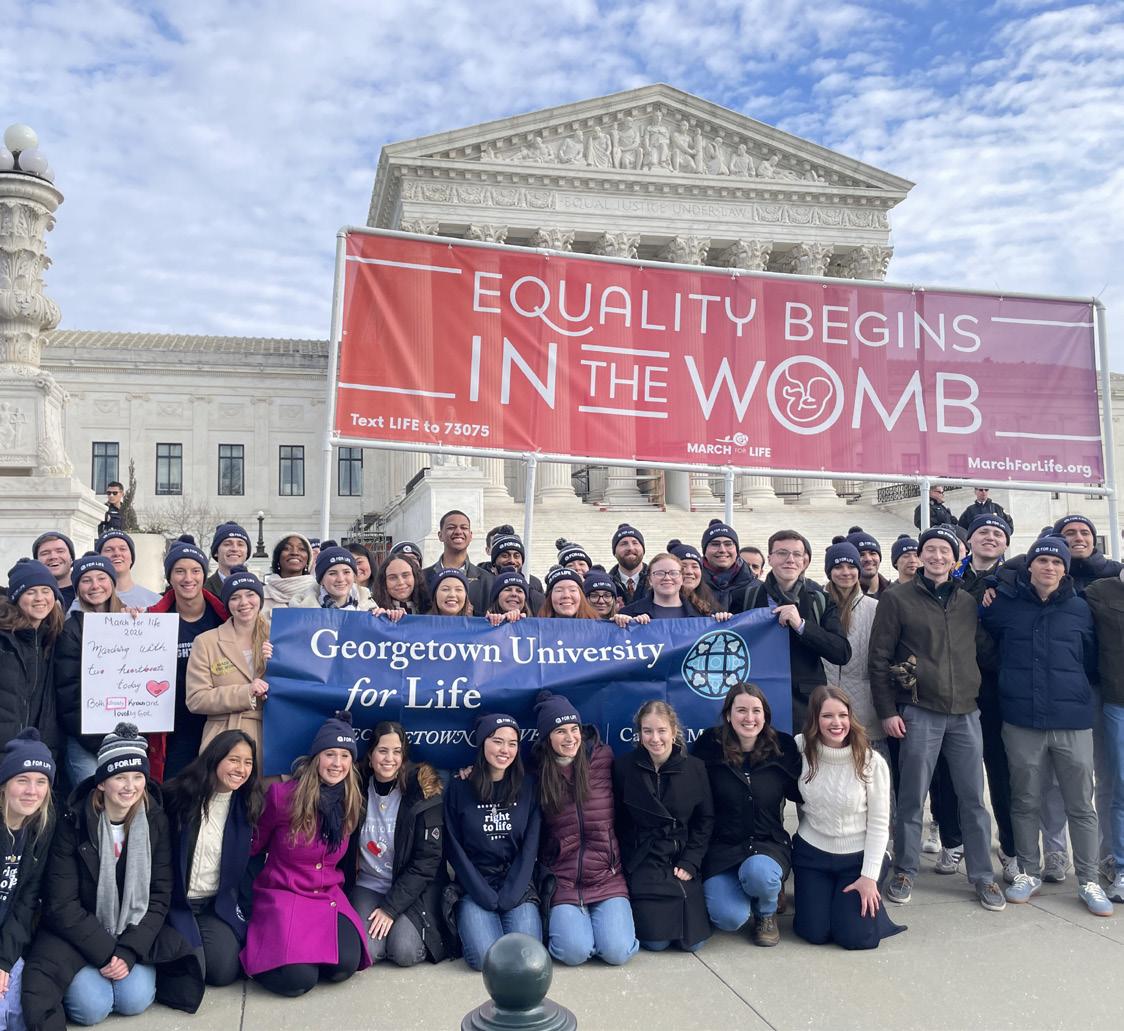
MAREN FAGAN/THE HOYA
Badar Khan Suri rested primarily on
Cold Hands, Warm Croissants: Winter in Paris
Check out Blog as Isabelle Cialone, one of The Hoya’s senior guide editors, recounts her trip to Paris over winter break. She documents her time visiting local artisanal booths, Christmas markets and delicious food. All Blog articles are available on The Hoya’s website, thehoya.com.
NOAH DE HAAN/THE HOYA
Over 50 members of Georgetown University Right to Life led the national March for Life and held its official banner.
GU Students With Minnesota Ties
Condemn Violence in Minneapolis
MINNESOTA, from A1 leading politicians to call for ICE’s removal from Minneapolis.
Maya Mor (SFS ’27), a student from a Minneapolis suburb, said the university community should come together to denounce the recent shootings.
“I frmly believe that a majority of the Georgetown community, if not everybody, should agree that what is happening is wrong,” Mor told The Hoya. “We probably will disagree on what the best course of action is, how to address it and whether certain people are making the right and wrong decisions, and that’s fne, but at its core, what’s happening is wrong and everybody should agree.”
Gillian Anderson (MSB ’27), a student from the Minneapolis area, said she has felt separated from her home community in recent weeks.
“I honestly wish I was back in Minnesota right now,” Anderson told The Hoya. “I know that sounds crazy because everything is so chaotic and violent there, but I want to be there to support my neighbors and my community, and I feel very isolated from the community.”
With thousands of residents taking to the streets in protest, the Jan. 23 strike in Minnesota aimed to slow economic activity and pressure the federal government to withdraw ICE and other federal agents from the state. Tom Homan, the Trump-appointed “border czar,” announced Thursday that federal agents could be withdrawn from Minnesota if local and state governments were to make adequate concessions.
John Kirchner (CAS ’29), another Minnesotan student, said he has contacted legislators since the shootings to request they vote against proposed spending bills and push for changes to the U.S. Department of Homeland Security (DHS).
Ahead of New Policy Changes, GUTS Union Claims University Retaliation
“I think the ultimate goal is just trying to convince our senators not to increase ICE funding,” Kirchner added.
On Jan. 29, the U.S. Senate rejected a six-bill spending package that included funding for DHS and ICE. Democrats have attempted to limit the $190 billion granted to DHS over the next four years during the 2025 government shutdown. Senators reached a deal for a two-week extension to DHS funding, but passed the six-bill spending package without establishing a budget for the department.
Anna Holk (CAS ’27), a student from Minneapolis who is supporting humanitarian eforts in the city, said she has found resources and local organizations to help on the ground.
“I’m using my voice how I can by making donations — especially to organizations that are helping immigrants in Minnesota and supplying food shelves especially,” Holk told The Hoya
“Having friends and family in Minnesota, it’s pretty easy to make those connections as far as ‘oh, this organization is doing a lot of good work on the ground and right now you should support them,’ and fnding local GoFundMes, as well as organizations like Second Harvest Heartland and other mutual aid networks in Minneapolis that are really doing a lot of good work,” Holk added. Georgetown students have also taken direct action against DHS and its perceived ties to the university.
Earlier this month, Georgetown University Law Center students petitioned the university to remove DHS and ICE from a Jan. 23 public service career fair. Although the university declined to remove both agencies from the fair, a Law Center spokesperson confrmed to The Hoya on Jan. 23
“My mom and my dad were both at some protests, and I myself have gotten politically engaged,” Kirchner told The Hoya. “I’ve emailed both of my senators.”
that ICE’s Ofice of the Principal Legal Advisor withdrew itself from the fair. Only ICE’s Human Rights Violators and War Crimes Center participated.
Chase Dobson (CAS ’27), who attended a Jan. 24 protest at ICE headquarters, said he believes students not impacted by the ongoing turmoil are complacent.
“We are kind of in this really upsetting state of apathy right now, where we’re watching this play out from our phones and watching it play out on our TV screens and through hashtags, and it’s one thousand trillion miles away in our heads because of that,” Dobson told The Hoya. “But if this was happening in our communities, if this was happening to our friends, we would have been screaming it from the mountaintops yesterday.”
Holk said standing with those afected by ICE and speaking up about the protests are the best ways for students to show support.
“Anytime students are standing up and using their voices, it makes me feel really proud and glad to be a part of that community,” Holk said. “Especially seeing people stand up to protest in the wake of ICE’s execution of Alex Pretti, I think it’s really comforting to know that people are paying attention to what’s happening in Minnesota and in the community. Solidarity is something that’s really important right now.”
Mor said while she is grateful for the solidarity, the Minneapolis community is unjustly facing disruption and violence.
“The outpour of support that you’re seeing is really hopeful and inspiring, but we shouldn’t have to be resilient,” Mor said. “We shouldn’t have to be hopeful because people are going out into the street and disagreeing with the violence, the terror and the violation of law. We’re applauding people for thinking that this is wrong, but this should have never happened to begin with.”
GU Students Enjoy Snow Days, See Disruption After Classes Go Virtual
SNOW, from A1
Giulia Pacifci (MSB, SFS ’27) said her train from New Haven, Conn., to D.C. was canceled on Jan. 25, and she had to rebook for Jan. 26.
to eat before her morning classes.
“I’m an early riser, and usually wake up around 7:00 or 7:30,” Johnson told The Hoya. “With the dining hall being closed until 9:00, I ended up eating sardines and peanut butter for breakfast.”
“Sunday afternoon, everything was canceled,” Pacifici told The Hoya. “Flights, trains, everything — honestly, I’m glad they did it preemptively. My train on Monday was running fine. It took seven hours instead of five, but otherwise all good.”
Linsey Brookfield (CAS ’26) said the icy conditions outside and Yates’ closure meant she had not been able to exercise over the past week.
Full Disclosure: Linsey Brookfield formerly served as an assistant design editor from Fall 2024 to Fall 2025.
Georgetown reduced dining hall hours and locations and closed nonessential facilities from Jan. 25 to Jan. 29, including Yates Field House. Asia Johnson (SFS ’29) said the dining hall’s reduced hours meant that she did not have time
“I’m a pretty habitual gymgoer. I usually go four to fve times per week,” Brookfeld told The Hoya. “I usually also go for outdoor runs, even in the cold, but it’s a little bit treacherous with ice right now.”
The winter storm also caused the cancellation of student activities and performances through Jan. 29.
Almitra Guart (SFS ’27), who was supposed to perform in a musical this week as part of the Conjuring the Caribbean colloquium, said their entire four-night run at the Gonda Theater was canceled.
“I was supposed to be in a musical for the frst time,” Guart told The Hoya. “We’ve been rehearsing so hard, so I was really disappointed.”
Alonso Zafra said that despite the disruption, he looks forward to future snow days.
“It was my frst big snow day here in D.C.,” Alonso Zafra said. “I hope that there are more to come, but not too many.”
GUTS, from A1
“This is unacceptable and was not discussed with the union,” Hiers wrote. “We believe these actions to be in retaliation of the unwillingness to become ABE employees.”
The university spokesperson said the changes comply with the union agreement, rejecting claims of retaliation.
“Georgetown policies prohibit retaliation and harassment of any kind,” the spokesperson wrote. “The university is in full compliance with the collective bargaining agreement.”
GUTS drivers campaigned against the university’s initial proposal alongside the Georgetown Coalition for Workers’ Rights (GCWR), a student group advocating for labor issues on campus. The university ultimately decided to retain GUTS drivers as employees in December after months of student and worker advocacy, including a petition, protests and a sit-in.
Roy Linton, a GUTS driver of 14 years, said the proposed change to the Hyattsville bus depot felt contrary to the plan the university announced in December.
“Right away, that was a surprise for us, because we were told that we’re going to be Georgetown employees, and they’re going to keep us as employees, and nothing is going to change,” Linton told The Hoya. “So now for us to be leaving our houses to go somewhere else to pick up our buses, that’s a change. A lot of drivers were not up for that.”
When informing the drivers of the fnal plan in December, Donna Poillucci, assistant vice president of facilities and residential services, said GUTS drivers “will continue with their current job duties.”
Leyla Adali, a spokesperson for 1199 SEIU, said Georgetown has violated its commitment to GUTS drivers.
“1199’s position is that this is an inconvenience and should not be required, and that ABE should not be able to unilaterally impose these changes on our workers,” Adali wrote to The Hoya. “GUTS drivers are employees of Georgetown University, not ABE, and as
their employer, GU should protect them from this kind of capricious change.”
“The union is hoping for this policy to be reversed, and we are currently in communication with the university,” Adali added.
Elinor Clark (CAS ’27), GCWR’s facilities team lead, said the change goes against what Poillucci told drivers in December.
“GUTS drivers were told that the only thing that would be changing per the new agreement was the buses themselves, and the fact that they’re just now being told that they have to go and pick up the buses at Abe’s, they have to clock in, clock out at Abe’s, those are really frustrating job changes and Georgetown was not really upfront about them,” Clark told The Hoya University oficials in the chief operating oficer’s ofice also met with members of the Georgetown University Student Association (GUSA) on Jan. 23.
GUSA President Darius Wagner (CAS ’27), who attended the meeting, said the university must collaborate with GUTS drivers when developing policy.
“If we’re changing where workers are starting their day, we’re afecting their hours, their commute, the time they have with their family, the time to have their recreation, that is defnitely concerning to me particularly,” Wagner told The Hoya. “We want to be ensured that the workers will have a say in something as big as changing the starting location of their job.”
Wagner also said the union’s cease-and-desist letter suggests the university has not been honest with drivers.
“If the university is trying to present the case that the Abe’s contract is fair, but falling back on the fact that they’re working with the unions — and the unions are saying that the university is not engaging and is actually retaliating — what is clear here is that the university is lying,” Wagner said. “It’s lying to the students that care about the GUTS bus workers, and it’s lying to the workers that keep our campus running.” Linton said many drivers will have longer commute times as a result of the move to Hyattsville.
“This new location is going to be far for some drivers coming
from Virginia,” Linton said. “For me personally, it’s an additional six miles of driving.”
“Some drivers who’re coming in from Virginia, it’s gonna be more for them,” Linton added. At the Jan. 21 meeting, university oficials also informed GUTS drivers that the new Abe’s Transportation buses would be diesel-run, rather than gasoline or electric. When justifying the transition to Abe’s Transportation, the university has cited a D.C. law requiring private bus feets to be 50% low-or-zero-emission by 2030 and 75% low-or-zeroemission by 2035.
The university spokesperson said the diesel buses are an interim solution before Abe’s Transportation acquires electric vehicles as part of their bus feet.
“Current production timelines for fully electric transit buses range from approximately 18 to 24 months; these buses will be incorporated into the feet over the next several years,” the spokesperson wrote. “To ensure continuity of service during this interim period before the 2030 and 2035 deadlines, newer biodiesel-powered vehicles will be used to service Georgetown routes while we await delivery of electric vehicles.”
Clark said the university’s actions, in the context of the December decision, are disheartening for GUTS drivers.
“Everybody was so hopeful when Georgetown agreed to keep them on as employees,” Clark said. “For Georgetown to continue their behavior of making changes, making decisions without telling the GUTS bus drivers is really frustrating.”
Linton said he felt betrayed by the university, highlighting the promises made in the university’s December plan.
“I’m really disappointed with the university,” Linton said. “‘There won’t be any change’ — that’s what we were told in December. ‘There’s not gonna be any change. You’re gonna remain Georgetown employees.’ Only thing was we’re going to be driving Abe’s buses. So they’re making changes, they’re just doing it in a sneaky way.”

GUTS drivers and student advocates said the location change
plan, when the university agreed to allow drivers
Annual Anti-Abortion Conference Faces Renewed Student Protest
OCC, from A1
Campus Ministry and Catholic life. So we really couldn’t do this conference without them and Georgetown.”
The conference, titled “The Pro-Life Mission After-Birth: A Lifelong Devotion,” included a keynote address from Jennie Bradley Lichter, the president of the March for Life Education and Defense Fund, which organizes the annual anti-abortion March for Life in Washington, D.C., and breakout sessions with anti-abortion rights activists and scholars.
Lichter said despite the rise of restrictions on abortion nationwide, anti-abortion rights activists still contend with increasing medication abortion and celebrity support of abortion rights.
“We shouldn’t kid ourselves that everything is rosy and we shouldn’t be too quick to pat ourselves on the back,” Lichter said in her speech. “Abortion rates have actually been rising with the rise of the chemical abortion pill and how easily it’s accessed. Our culture is still deeply unprecedented. Every time we turn around, there’s another actress saying that she owes her acting career to her abortion, or a pop star singing that her friends with kids look like they’re in hell.”
Interim University President Robert M. Groves also present-
ed the University of Mary Collegiates for Life, a student group from the Catholic university in Bismarck, N.D., with the Rev. Thomas King, S.J., Award, which recognizes an anti-abortion college group with $1,000.
A university spokesperson said the conference is student-run and refects an exchange of ideas from all perspectives.
“Georgetown University is proud to be a university that deeply values our faith tradition and that encourages the free and open exchange of ideas,” the spokesperson wrote to The Hoya
“We are committed to being an inclusive campus and community that welcomes people of all faiths, races, ethnicities, sexualities, gender identities, abilities and backgrounds. The University works to engage with the plurality of voices that exist among our students, faculty and staf.”
Outside of the conference, about 15 HFC protesters gathered in Red Square around 11 a.m. with signs that displayed slogans such as “Abortion is healthcare” and “Georgetown is a pro-choice campus.”
Ava Lewis (CAS ’28), one of the protesters, said the Georgetown community supports abortion rights, despite the university hosting the conference.
“We’re showing up to show that Georgetown is a pro-choice cam-
pus and to show that we don’t agree with the harmful rhetoric that the Cardinal O’Connor Conference stands for,” Lewis told The Hoya. “And to show our support for people who might feel targeted by the rhetoric from the conference, because there are probably students who have had to seek out abortion care before, and this could be a trigger for them.”
Though the protest largely avoided confict, protesters and OCC organizers engaged in multiple verbal confrontations outside of the Intercultural Center. RTL members commented on the size of HFC’s group and invited demonstrators — who responded with chants, including “Not your body, not your choice” and “Keep your rosaries of my ovaries” — inside the conference.
Sydney Hudson (CAS ’26), an HFC member, said the group protested outside the conference to exercise their right to free speech and show support for pro-abortion students.
“The reason we try to organize is just because it feels helpless for students because one side is so supported by the university and funded by our tuition money and everything,” Hudson told The Hoya Oliver, who spoke with the protesters, criticized HFC turnout, saying it was proof that the Georgetown community does not support abortion rights.
“I do think they are realizing that Georgetown is a very pro-life school,” Oliver said. “We have a great deal of attendance, a lot of student volunteers. We are fully student-run. This is the 27th annual year, and when they see a small group of protesters, I think it proves our point that we are still a Catholic school, as much as some people like to deny it.”
While specific data about Georgetown students’ support for abortion rights is unavailable, the Pew Research Center found in 2024 that 76% of adults aged 18 to 29 believe abortion should be legal in all or most cases. The same study found that support increases among college-educated adults, and a majority of Catholics support access to abortion.
Sophie Samson (SOH ’27), HFC’s co-director of advocacy and organizing, who also attended the protest, said HFC members avoid interacting with conference attendees.
“We were just doing our chants, exercising our right to free speech, and they tried to say something back to us, but we choose not to engage because we choose not to make abortion a debate,” Samson told The Hoya
Shae McInnis (CAS ’28), a volunteer coordinator for OCC, said the conference represents Georgetown’s founding values.
“Georgetown University has always stood for the values that
it was founded upon,” McInnis told The Hoya. “Which are values rooted in the Catholic religion and the Jesuit order protecting the human dignity of all people has always been core, and so from conception to natural death, it’s encouraging that Georgetown will always stand for the same.”
The university spokesperson said Georgetown respects its Jesuit tradition.
“Georgetown is frmly committed to the Catholic Church’s teachings and values, including those about the sanctity and dignity of life, and we strongly support a climate that continues to provide students with new and deeper contexts for engaging with our Catholic tradition and Jesuit identity,” the spokesperson wrote.
Lewis said Georgetown’s position on abortion rights is discouraging to students, especially female students.
“They defnitely privilege the pro-life side, and I feel like supporting that side makes it seem like you don’t support women in general,” Lewis said. “And considering the majority of the student body is women, that’s disheartening as a student.”
The university oficially recognized HFC in 1991 as GU Choice, over a year after the organization was founded as Hoyas for Choice. A year later, the university re-
scinded that recognition, and HFC has not received funding or oficial support from Georgetown since, prompting their name change to H*yas for Choice. Jade Kraut (SFS ’28), HFC’s co-director of advocacy and organizing who organized a week of events for HFC leading up to the protest, said the group plans to continue advocating for reproductive rights at Georgetown, including tabling in Red Square and the Leavey Center.
“The fact that you can see a table that says ‘H*yas for Choice’ every single day in Leavey and here in Red Square, that’s so important to us,” Kraut told The Hoya. “We just are very, very happy that we can have this amazing community and that, even if Georgetown will not recognize us, we don’t really care.”
McInnis said it is important for Georgetown to take a frm stance on abortion.
“We’re in our nation’s capital,” McInnis said. “This is where all the laws, all the policies, are made, and for us, our school, to take such an active stance in this issue that’s so important to so many of our students here, important to the Catholic and Jesuit values that our institution is built on, and the fact that we can take such a prominent role in that is really wholesome and really inspiring.”
HAAN JUN (RYAN) LEE/THE HOYA
is contrary to the December
to remain university employees.
Dining Out for DC’s Restaurant Week, GU Students Enjoy A ordability
Andrew
Jiang Hoya Staff Writer
Georgetown University students dined at restaurants across Washington, D.C., during the Restaurant Association Metropolitan Washington’s (RAMW) Winter Restaurant Week from Jan. 19 to Feb. 1.
Brasserie Liberté, The Sovereign and Alara are among the restaurants in the Georgetown neighborhood that participated in the event. RAMW, which politically advocates for restaurants, required participating restaurants to ofer price-fxed menus to patrons for brunch, lunch and dinner, ofering more afordable fne-dining options for college students who wish to dine out.
Claire Oglesbee, a host and server at The Sovereign, said Restaurant Week is a good opportunity for local restaurants to increase foot trafic.
“Typically after the holidays is our slowest season, so it’s a really great time for restaurants, especially like The Sovereign, to bring in some extra business,” Oglesbee told The Hoya Farid Azouri, co-founder of River Club DC, a participating restaurant in Washington Harbour, said the initiative mostly brings in new customers.
“It is a good initiative,” Azouri told The Hoya. “It brings a lot of people. Most of the guests that come during Restaurant Week are actually frst timers.”
Shivansh Bansal (MSB ’29), who dined at three restaurants, said Restaurant Week discounts made more food options accessible to him.
“Restaurant week exponentially increased my options,” Bansal wrote to The Hoya. “It took restaurants like the ones I picked but also
others like 1789 into my price range, into something afordable rather than something that would get me to walk out after seeing the prices. For a college student, it made all the diference in the world.”
Emma Chin (MSB ’29) — who dined at The Bombay Club, Blue Duck Tavern and Rania — said attending Georgetown made Restaurant Week convenient.
“Being in Georgetown made D.C. Restaurant Week very accessible,” Chin wrote to The Hoya “Washington, D.C., is a leading city for food entrepreneurship and features a wide variety of cuisines, making it easy to fnd new and exciting dining options.”
Chin said that although she enjoyed the restaurants she visited, some items remained expensive despite the discounts.
“My experiences at all of my picks were great! Good service, good atmosphere and most importantly, good food,” Chin wrote. “If you do the research, the food is always worth the hype! I love interesting, experimental and fancy food, and my picks were delicious. However, the prices aren’t always justifiable, even during restaurant week. In my opinion, restaurants offering lunchtime RW menus are definitely worth the price.”
Bansal said that despite related clubs such as Georgetown University Eating Society (GUES) advertising Restaurant Week, he did not believe local restaurants effectively promoted it to Georgetown students.
“Most people I talked to didn’t know that it was going on,” Bansal wrote. “I think that it has a long way to go before it truly gets to effective marketing at Georgetown — maybe GUES collaboration, blasts, flyering
Financial Policy, Market Development Experts Become Psaros Advisers
Milan Varma Features Staff Writer
Two experts in fnancial policy and market development will join the advisory board of the Georgetown University Psaros Center for Financial Markets and Policy, a nonpartisan fnance and policy research group, the center announced Jan. 21. The Psaros Center, which is housed in Georgetown’s McDonough School of Business, hired Samara Cohen — the global head of market development at BlackRock, a leading investment frm — and Adrienne Harris (COL ’03), former superintendent of the New York State Department of Financial Services. The advisory board brings industry leaders in fnance and policy to strategize for the future of the center and provide leadership for its research.
Reena Aggarwal, the Psaros Center’s director, said the advisory board is crucial in developing the center’s strategy and creating opportunities for student engagement.
“They help us think through strategic issues,” Aggarwal told The Hoya. “‘What are the issues that the Psaros Center should be focused on, and where should we be providing thought leadership?’ They help us reach out to people as speakers. For me, that is extremely helpful in brainstorming about things.”
The Psaros Center facilitates discussion forums, conducts research and engages students in modern-day solutions for finance and policy. Through research and conferences, it aims to provide advice to industry leaders and shape global finance. Aggarwal said the board will be pivotal in determining the future of the Psaros Center, which received an $11 million donation in 2022 from Michael (GSB ’89) and Robin Psaros.
“At this point, we are starting to think about where we go from here,” Aggarwal said. “We’ve made tremendous progress in the last three, four years with the gift from Mike Psaros and his family, and now we’re ready to take the Psaros Center to a whole new level. The advisory board will play a critical role in helping us come up with a decision and strategy for the next couple of years.” Cohen, who specializes in investment and financial innovations, said the Psaros Center needs to focus on digital assets and cryptocurrency.
“I think that’s the big global challenge ahead of us, and in my experience, it’s when technology and creativity create innovation, and academics and policymakers who help set the guardrails, and how those two things come together that create a system that really works, that people can trust,” Co-
or something else that brings it to the attention of the GTown community.”
On Jan. 23, RAMW announced that Restaurant Week, which originally was slated to end Jan. 25, was extended to Feb. 1 due to Winter Storm Fern.
“The response has been overwhelming, and the reservations have been moving fast,” the RAMW wrote on its website.
“We’re not ready to dim the lights on Winter Restaurant Week just yet. We are oficially extending the celebration through February 1.”
Chin said Winter Storm Fern, which brought fve to 12 inches of snow around the D.C.-Maryland-Virginia (DMV) area from Jan. 24 to Jan. 25, forced her to change her weekend plans.
“Unfortunately, one of the restaurants I booked, Onggi, canceled my reservation due to the inclement weather,” Chin wrote. “Luckily, restaurant week was extended an additional week, and I was able to rebook for next week.”
Ryan Cheung (CAS ’29) said he wants to try more restaurants since RAMW extended discounts to Feb. 1.
“I just saw the news that D.C. restaurant week has been extended to Feb. 1, and now that I know about D.C. restaurant week, I am defnitely making more plans to get out into the city and explore,” Cheung wrote to The Hoya Chin said she is looking forward to trying more restaurants with her friends.
“As a frst year, there are so many places I have yet to try,” Chin wrote.
“I hope by the end of my time on the Hilltop, I will have had a lot of amazing bites and turned all my friends into foodies!”

GU Law Center Professor Argues for Reparations
For Black Americans, Posits Historical Precedent
Joshua Lou Hoya Staff Writer
hen said. “I think, at its core, that’s what I see the Psaros Center doing.”
Aggarwal said the Psaros Center’s advisory board also provides career opportunities to students.
“I’m also interested in fnding more and more possibilities for internships, both in the policy world and also in companies,”
Aggarwal said. “Because we have these amazing people engaged with us, they’re willing to talk with our students and do a cofee chat with them. So the advisory board helps the center, but really helps Georgetown students in many diferent ways.”
Harris said she will bring her regulatory public sector experience to the advisory board.
“To have been a principal at a large and infuential regulator, certainly in a place like New York, right in the fnancial capital, you learn a lot about how organizations should be run, about what works and what doesn’t work in regulation, about balancing consumer protection and market protection and market protection with economic development and thriving industry,” Harris told The Hoya. “And I don’t think you necessarily get that in all public policy or regulatory roles. So I hope I can leverage that experience to add value in this role with the center.”
Aggarwal said the advisory board aims to balance various approaches to financial markets and policy.
“Our advisory board is made up of very senior leaders from the private sector and also very senior leaders from the policy world,” Aggarwal said. “And Samara and Adrienne are perfect. Samara has held leadership roles and holds now at BlackRock, and Adrienne has been on the policy side, and both of them are sort of addressing cutting edge issues.” Cohen said she is cautiously optimistic about the future of markets and policy.
“We are at a really pivotal moment in financial markets,” Cohen said. “There are real risks to how you onboard these technologies into connected, functioning systems. And this work that the Psaros Center does to bring together thinking and innovation with policymakers, like people who are advising the policy community, brings in a lot of sitting policymakers and academics who are doing the work and assessing the data.”
“Bringing those three things together in a way that instructs not just policy and rules, but also industry practices — to me, that’s what makes me optimistic that we will be able to successfully consume and deploy these new technologies in ways that create a better fnancial system,” Cohen added.
A Georgetown University Law Center professor argued there is a historical precedent for paying reparations for the United States’ long history of enslaving Black people in a new book published Jan. 20.
Dorothy Brown (LAW ’83), taxation professor and Martin D. Ginsburg Chair in Taxation at Georgetown Law, posits that the United States has dismissed paying reparations for Black Americans despite being able to. The book, titled “Getting to Reparations: How Building a Different America Requires a Reckoning With Our Past,” outlines Brown’s journey from skepticism to active advocacy for reparations for Black Americans.
Brown said a conversation with a former colleague from Emory University initiated her switch from skepticism to curiosity, referencing the government compensating for the lynching of 11 Italian immigrants in New Orleans in 1891.
“She mentioned that the federal government paid reparations to Italy on behalf of Italian immigrants who were lynched in Louisiana,” Brown told The Hoya. “And I said, ‘Wait a minute. We paid them, but we never paid Black Americans, even though they were the disproportionate percentage of those who were lynched.’”
Brown said after conducting further research, she found many other instances of the U.S. government compensating groups who were wronged, such as an 1862 bill that ended slavery in Washington, D.C., and paid enslavers up to $300 per freed person.
“The next thing I found was that the federal government paid white enslavers in D.C. following the passing of the 1862 Compensated Emancipation Act,” Brown said. “Then I found out we paid tribal nations for economic exploitation and land theft. And fnally, we paid Japanese Americans for mass incarcerations.”
“So the federal government paid to all of these diferent groups, but not Black Americans who experienced each of these harms,” Brown added. “I was no longer a skeptic.”
Although reparations in the United States remain a polarizing issue, it has gradually gained support. From 2000 to 2022, the percentage of Black people in the United States who supported reparations increased from 67% to 77%, while support from white people grew from 4% to 18%.
Brown said she hopes to change skeptics’ minds by exposing them to the history that often goes untaught, pushing back against the Trump administration’s erasure of Black history.
“This is the perfect time to talk about this, because the Trump administration wants to erase race from
history,” Brown said. “Working with a political strategy firm, we learned that if you tell people about the history of what happened to Black Americans after slavery ended — ‘separate but equal’ and sharecropping — they realize it wasn’t fair. There are a lot of people that just don’t know.”
Brad Snyder, professor of constitutional law at Georgetown Law, said he believes Brown’s work is important to understanding the need for reparations in the United States’ historical context, citing “The Whiteness of Wealth,” Brown’s previous book, which contends that tax law is racially biased.
“Brown is a pathbreaking scholar whose books ‘Whiteness of Wealth’ and ‘Getting to Reparations’ accomplish the rare feat of speaking to fellow academics, policymakers, and the American people,” Snyder wrote to The Hoya. “‘Whiteness of Wealth’ remade the feld of tax law by viewing it through the lens of race. ‘Getting to Reparations’ will have a similar impact.”
Brown said changing minds on the issue of reparations requires telling concrete stories of U.S. history.
“You need to accessibly talk about ideas and catch people’s hearts, not just come up with 10-point plans,” Brown said. “If you tell people there have been four instances where the government paid cash to remedy harms, and those exact four harms
happened to Black Americans, but they’ve never been paid, people feel the unfairness.”
Nick Monocchio (LAW ’26), a third-year student at Georgetown Law who took Brown’s course on critical race theory, said Brown is a top-tier professor who is wellequipped to change people’s hearts.
“You’re not going to take her critical race theory class and come out of it agreeing with everything you thought before,” Monocchio told The Hoya. “It wasn’t just like a leftist cabal; we actually were doing real legal analysis. She makes you think about uncomfortable things in a way where you learn and you grow from it.”
In “Getting to Reparations,” Brown outlines the groundwork for policy change, arguing for the creation of a federal commission dedicated to researching historical harm against the Black community. Brown said this commission would be the frst tangible step by the government in achieving reparations for Black Americans.
“We don’t know what the cost would be because we’ve never studied it, and the plunderer who took our wealth didn’t keep good records on purpose either,” Brown said. “We absolutely need to study all of the various ways that harm has occurred and impacted the Black community.”
Music Matchmaking Social App to Launch at GU
Joshua Lou Hoya
Staff Writer
A Georgetown University graduate will release a new social discovery app centered around music tastes in late February to Georgetown students.
The app, Ligo, matches students with similar music tastes based on location, aiming to foster connections among college students. Georgetown graduate Micah McNeil (CAS ’22) co-founded Ligo based on his experience at Georgetown during the COVID-19 pandemic and hopes to distinguish from other social media apps’ tendency to sell data and maximize engagement for proft.
McNeil said Ligo was inspired by what he sees as insincerity on current social connection platforms.
“They’re incentivized for engagement, not connection,” McNeil told The Hoya. “Endless swiping and curated profles ultimately increase the pressure to perform to be someone who you’re not. With Ligo, the goal was to eliminate friction from initial human interactions and make them more natural and less intimidating — and we realized that music was the perfect thing.”
The app will launch for the frst time at Georgetown, partnering with local businesses to provide discounts to Georgetown students and to attract more users, according to McNeil.
McNeil said following Ligo’s release, Georgetown students will be able to connect their music streaming app — such as Spotify or Apple Music — and Ligo will match students with peers who present similar music tastes, encouraging them to interact.
“We’ve partnered with local businesses around the Georgetown area,” McNeil said. “When three people near that business are musically compatible, they’ll get a push notifcation of a discount that the business is ofering, basically inviting them there. Once you get to the location, you scan a QR code that checks you in and allows you to redeem the discount. Then, you’ll enter an experience that shows you other people who received the same invite.”
Elliot Anderson (CAS ’28), the executive editor of arts and culture magazine The Georgetown Independent, said he believes in Ligo’s mission and is excited for its release at Georgetown.
“I guarantee that there are people who would get a ton of beneft out
of this app,” Anderson told The Hoya
“There are a lot of great channels to meet people in real life with similar music tastes. But it’s not as immediately obvious. When I was coming into Georgetown and didn’t know how to get into the music scene, this would have been an amazing tool.”
Ryan Hofman, the other Ligo co-founder, said he joined McNeil to build Ligo as a reaction to modern social media and to combine software with human interaction.
“I’m raising kids in a world that feels completely different from the one I grew up in, where digital connection often replaces human connection,” Hofman wrote to The Hoya “I joined because I believe we can turn that tide. We can use technology not to isolate people, but to bring them together. That’s the kind of thing worth dedicating yourself to.”
Social media platforms like Instagram often share user data with advertisers and businesses for targeted advertising. While directly selling data to third parties is legally frowned upon, platforms can leverage user data to maximize revenue for vendors and advertisers.
McNeil said Ligo will not share user data.
“I kind of gravitate towards music because it’s just so easy to talk about,” Ross told The Hoya. “Most people — one way or another — enjoy music, and it’s really fun when two people can enjoy it together, whether it’s a special song or a band or an artist.” McNeil said he hopes Ligo will grow from its initial launch at Georgetown into a much broader platform, starting with college campuses and eventually expanding to cities. “One day, we want to be this big oak tree, but right now, we’re a little acorn,” McNeil said. “I want every single user to feel like this project is theirs as well. I want everyone’s opinion on how we can refne it and improve it, because a society without human connection is a society that is fragile — and nobody wants that.”
“User data on Ligo is private, encrypted and controlled by the user,” McNeil said. “Ligo collects the minimum data required for the experience. And we will never, never share your personal data with third parties. Money is not the goal, but the byproduct of creating something great.” Quinn Ross (CAS ’29), social media manager at The Georgetown Independent, said he sees music as the perfect socializer.
MAREK SLUSARCZYK/THE HOYA
Georgetown University students participated in the Washington, D.C. winter restaurant week from Jan. 19 to Feb. 1 by dining at restaurants offering discounts.
GUSA Senate Approves Bills on WiFi, Communal Bathrooms, GOCard Entry
Sofia Thomas GUSA Desk Editor
The Georgetown University Student Association (GUSA) Senate unanimously passed four bills at its Jan. 25 meeting that call on the university to extend building access, address issues with campus WiFi and improve maintenance in communal bathrooms.
One of the bills asks the university’s planning and facilities management department to regularly check shower heads and curtains in communal dorm bathrooms and submit work orders for broken shower heads and curtains. Another bill requests that the university expand GOCard access to the Rafk B. Hariri Building after 10 p.m. for students not enrolled in the McDonough School of Business (MSB), while a third calls on the university to publicize its eforts to improve campus WiFi.
Senator Sam Baghdadchi (CAS ʼ29), who introduced the communal bathrooms bill, said the bill augments facilities workers’ current system, in which they inspect shower curtains at the beginning of the school year.
“Shower heads are not checked out by custodial staf when they’re doing daily cleaning and shower curtains often need replacement,” Baghdadchi said at the meeting.
“Shower curtains are looked at and replaced at the beginning of each school year, but this act is to work with the department of facilities and management to develop a system, where midway through each semester, they will also be checked, just to make sure that we’re keeping things clean, maintained and there’s an actual system.”
The GUSA Senate also passed a bill calling on the university to expand the number of guest swipes available to students who purchase the unlimited meal plan.
The WiFi legislation calls on the university to announce a plan to improve SaxaNet and other guest WiFi networks on campus.
Sienna Lipton (CAS ʼ27), who introduced the bill, said the university has acknowledged issues with the WiFi and will begin replacing routers in most afected areas.
“There isn’t an exact instance that can be pointed to for why WiFi has gone so dramatically downhill this semester, but from my understanding, the university is aware that the WiFi is not up to par, so they’re working on replacements,” Lipton said at the meeting. “Right now, they talked about the frst 12 places that are the worst. They’re working on replacing the routers to the next WiFi system.”
On Jan. 20, the university announced a partnership with Cisco, a multinational technology corporation, to deploy WiFi 7 on both the Hilltop and Capitol campuses. The plan will gradually implement the newest generation of wireless network technology over the next six years.
The senate also announced that Irene Kang (CAS ʼ29), Leah Abraham (SFS ʼ27) and Storm Dalberry (MSB ʼ29) will serve as legislative aides and assist with graphic design, technology and the Financial Appropriations committee, which allocates money to student organizations, respectively.
Senator Cameran Lane (CAS ʼ28) said he formed a new senate committee to begin working on advocating for the university to formally recognize Greek fraternities and sororities on campus.
“A select committee for Greek recognition has been formed,” Lane said. “If you were here in the last PAC meeting, it calls on the university to recognize some of our Greek organizations.”
GUSA President Darius Wagner (CAS ʼ27) said the door to the Intercultural Center (ICC), located next to the Jesuit Community Center Cemetery, will be open to students until 8 p.m. on the weekends, following a meeting with the university’s vice president of public safety.
“The ICC cemetery door will be open Saturday and Sunday through 8 a.m. to 8 p.m. after our meeting with the VP of safety,” Wagner said at the meeting.
Wagner said his administration is working with the university amid the Aramark contract negotiations to allow the Georgetown University Grilling Society (GUGS), a student group that sells grilled food, to accept Flex dollars.
“They had mentioned that there are also food safety, business verifcation terms that come with the Flex, because Flex is involved in our Aramark contract,” Wagner said. “And so that’s something that’s also been discussed in the new negotiations, but also that’s the current barrier to actually getting GUGS involved in Flex, because there’s no current technological system that we can use there.”
Lane said additional guest swipes will allow students to bring family members to campus more often.
“I think we deserve more,” Lane said. “Georgetown claims to care very much about our families, and families being here on the Hilltop and being able to eat is a big factor, so I think this bill is relatively self-explanatory.”
GU to Overhaul WiFi System, Partner With Cisco for Broad Network Upgrades
HAAN JUN (RYAN) LEE/THE HOYA Georgetown University will partner with the multinational technology company Cisco to upgrade the university’s network infrastructure and wireless connectivity.
Luke O’Connor Special to The Hoya
Georgetown University an-
nounced a plan Jan. 20 to upgrade the university’s network infrastructure and wireless connectivity on the Hilltop and Capitol campuses.
The university, partnering with multinational technology corporation Cisco, plans to gradually deploy WiFi 7, the newest generation of wireless network technology, throughout both campuses over the next six years. The partnership marks one of the frst implementations of next-generation WiFi on a university campus, according to the press release.
Douglas Little, Georgetown’s chief information oficer, said the network upgrade will address connectivity issues in high-trafic areas such as classrooms and residence halls.
“Georgetown’s new network will deploy the latest WiFi 7 technology, which provides faster speeds, lower network latency, and the ability to service more devices on GU’s WiFi system,” Little wrote to The Hoya “These attributes are especially important in high-density areas such as classrooms, residence halls and common gathering places. Part of the project also enhances WiFi in outdoor gathering spaces.”
Gary DePreta, senior vice president of Cisco’s U.S. public sector organization, said the Georgetown community will feel the change universally.
“For students, faculty and staf, this means seamless, high-speed connectivity — supporting everything from streaming lectures to groundbreaking research handling massive datasets with ease,” DePreta wrote to The Hoya. “With WiFi 7 and the expanded 6 GHz spectrum,
everyone on campus will beneft from faster speeds, lower latency and more reliable connections.”
WiFi 7 is more than three times faster than WiFi 6, the previous iteration, and is supported by modern cellphones and computers.
Blake Mahoney (SFS ’29), who has experienced dificulties with university WiFi, said that inconsistent wireless connection inficts unnecessary stress on students.
“It adds to the frustrations that I have,” Mahoney told The Hoya “And, even though it’s a little thing, it pushes me over the edge, and we, as students at an already rigorous university, don’t need that.”
Tristan Faillace (SFS ’29), who has faced issues in classes due to WiFi, said he is excited by a faster network infrastructure coming to Georgetown.
“I’m happy that we’re gonna have this new, powerful, stronger version of WiFi,” Faillace told The Hoya. “Among the student body, complaints are often directed at Georgetown’s facilities, so I am sure this change, if efective, will be well-received.”
Faillace also said the current system is signifcantly worse in certain areas of campus, like the Intercultural Center (ICC).
“On the frst foor of the ICC, I can never get a reliable WiFi connection,” Faillace said. “I feel that this issue contributes to a lot of annoyance because it afects my teacher’s ability to broadcast slides, and my ability to take notes in class.”
Little said each building at the university has its own network to accommodate user movement.
“When users move around, the wireless access points automatically change their confgurations to accommodate that trafic,” Little wrote.
McCourt’s Fifth Cohort of Tech & Public Policy Fellows Brings Professional Expertise
Chloe Taft Graduate Desk Editor
Georgetown University’s McCourt School of Public Policy announced its ffth cohort of Tech & Public Policy (TPP) fellows, who aim to bring professional experience in the technology sector to the Capitol Campus, on Jan. 20.
The fellows include Megan Shahi, the director of technology policy at the Center for American Progress, a think tank; Kris Rose (GRD ’18), who currently leads artifcial intelligence (AI) initiatives at IBM and formerly worked at Meta and the Central Intelligence Agency; and Sydney Saubestre, who works at the think tank New America’s Open Technology Institute on issues surrounding data and privacy.
The spring cohort, through a series of events and discussion groups featuring teams of student leaders, will focus their work on social media, artifcial intelligence and digital governance, according to TPP program director Michael Bailey.
Bailey, who joined the TPP program as director Jan. 1, said the fellowship is an opportunity for Georgetown students to engage in meaningful conversations about technology and public policy.
“One of the goals of the tech and public policy programs is for us to be a hub for high-end experts, and for students and others to really engage in the hard questions about how tech and public policy intersect,” Bailey told The Hoya. “The fellowship is one of our fagship programs.”
Bailey said the fellows support the McCourt school’s eforts to keep up with current policy challenges, such as the rise of AI.
“They are a really important part of our eforts to connect to ‘real policy world,’ which, by the way, is moving so fast,” Bailey said. “We have a lot of faculty who do these kinds of things, but you’ve got to be on the ground to keep up.”
Shahi, who will lead the discussion group “Designing Values-Based Regulation: Navigating Trade-Ofs in Tech Policy,” said she was interested in the TPP program because it emphasizes practical learning.
“I was drawn to the program because it sits right at the intersection of theory and practice,” Shahi wrote to The Hoya. “Students often know the issues well, but what’s harder to learn is how to navigate competing values when there’s no perfect answer.”
Rose said his discussion group, “Developing a Holistic AI Governance Ecosystem,” will focus on regulating emerging technologies in both the private and public sectors.
“A lot of what I’ll be focusing on is, how are we creating the systems of governance? And determining who makes what decisions, because these platforms are unprecedented in their impact on society and their scale across diferent boundaries and borders, and not one government can necessarily control them,” Rose told The Hoya. “What does a new governance ecosystem look like to manage these technologies?”
Rose, who received his master’s degree in public policy from McCourt, said he wanted to become a fellow to support current students.
“What excites me the most, and what I hope to bring back through the fellowship, is hopefully support to the student body, because I felt so supported as a student when I was study-
ing and loved the access to policy practitioners,” Rose said. Shahi said she hopes to help students gain confdence in making policy decisions, a skill they can bring into their careers.
“Tech policy is full of gray areas, and it’s easy to feel like there has to be a ‘right’ answer or that otherwise it’s not worth advocating for, which is definitely not the case,” Shahi wrote.
“I also hope that McCourt students learn how to develop frameworks they can carry into their careers, offering ways of thinking through problems when values collide and the stakes are real and pressing, whether in tech policy or elsewhere.” Bailey said universities such as Georgetown play an important role in shaping ongoing conversations about tech and public policy.
“We’re not going to be perfectly objective or anything, but we don’t have fnancial incentives on one thing or the other for any answer to any given question,” Bailey said.
“We can worry about the truth and we may not achieve it, I don’t think that we have some exclusive access to it, but our incentives are for us to be a really good place to have some really good conversations.” Rose said he is excited to learn from the other fellows, as well as students, in Spring 2026.
“I’m super excited to learn from the other fellows,” Rose said. “We might not necessarily always be doing events on the same day and we might be in and out, but I think that one of the really cool things about the fellowship is that it’s a cohort model, and so Georgetown is not only bringing together fellows to support the students, but the fellows themselves can learn from one another.”
Lombardi Lab Advances Pancreatic Cancer Treatment in New Research
“Each building has its own independent network and coordinates handofs of client trafic between buildings when trafic demand changes and when people move from one building or foor to another.”
Currently, Georgetown’s campuses contain over 6,000 wireless access points and 50,000 active devices, all of which dynamically adjust their channel, power and bandwidth confgurations to accommodate trafic, according to Little.
Little said much of the problem lies in the university’s outdated infrastructure.
“We have seen a steady increase in the number of devices and the bandwidth needed to accommodate more video trafic than ever before,” Little wrote.
“Some buildings have very old WiFi, while newer locations have more modern, powerful equipment. This project will replace all WiFi over the next six years to meet increasing demand.”
Little said the new technology will improve connectivity and network speeds.
“The new WiFi access points will be able to handle more device connections and higher upload and download speeds per wireless access point,” Little wrote.
Little added that the new system gives Georgetown a unique advantage as academia increases its technological demands, including through artifcial intelligence (AI).
“Cisco has AI natively built into the network management tools to simplify operations and ensure network health,” Little wrote. “This optimizes performance and helps to prevent congestion and ensure consistent performance in high-density areas — like a university campus.”
Jacqueline Gordon Academics Desk Editor
A team of researchers at the Georgetown University Lombardi Comprehensive Cancer Center published new research exploring causes and potential treatment methods for pancreatic cancer, Lombardi announced Jan. 20.
Amrita Cheema, a Georgetown oncology professor who was the senior author of the study, led a team of 16 researchers to examine how specifc molecules alter the behavior of pancreatic immune cells, stopping them from suppressing tumor growth. The researchers found that pancreatic cancer cells reprogram immune cells to grow tumors, revealing a new avenue for treatment.
Cheema said the lab’s first challenge was shifting from a focus on radiation biology, cancer and neurodegenerative disease to immunology.
“We know pancreatic tumors are resistant to therapy in part because they just sort of build this fort around them, the tumor microenvironment, and most clinical trials focus on killing cancer cells,” Cheema told The Hoya. “But our thought was we need to attack the microenvironment so that the drugs can get through and reach the tumor.”
“So I thought that the scientifc path that we were taking was novel, was very interesting, but it was very challenging, mostly because my lab was not set up for immunology studies,” Cheema added.
Cheema’s team discovered that when extracellular vesicles — nanoparticles that facilitate
communication between cells — in pancreatic cancer cells release specifc immune cells, known as microRNA macrophages, they end up exacerbating the tumor.
Targeting that behavior, the researchers concluded, is key to treating pancreatic cancer.
Baldev Singh, a staf scientist at Lombardi named as a co-inventor on the corresponding patent application, said the study provides a strong foundation for future research in combating pancreatic tumors.
“With this study we have found out certain targets for the future prospects, we have to validate those targets, we have to go a little bit deeper and more focused, and maybe some combinational therapy,” Singh told
The Hoya. “We have to try to get better results, but these studies just laid a basic foundation, where we can say, ‘Okay, if we modulate the immune microenvironment of the microRNA, that could really help in mitigating the disease.’ It could be really benefcial.”
Cheema said her team is proud of the results of the study and is looking forward to continuing their research despite funding concerns.
“I think we are on the right track, but we just would like to put as much efort into thinking out of the box and going after these novel delivery systems and targeting the tumor,” Cheema said. “Of course, the biggest challenge in the coming years would be getting funding — research and science is in peril right now. So I hope that we can overcome this hurdle, but that’s the goal of our lab.”
The study received some funding from the National Institutes of Health (NIH), the U.S. medical research agency, which supported the research and experimental development. The Trump administration has cut cancer research by 31%, following a $2.7 billion funding cut for the NIH. Virginia Marshall (CAS ’29), a pre-medical student studying biology, said she felt inspired by the work of Cheema’s lab.
“This discovery is both frightening and fascinating,” Marshall wrote to The Hoya. “Understanding the particulars of cancer pathogenesis is so essential to drug development, so this discovery deserves our full attention. I’m proud that Georgetown is moving the needle forward for pancreatic cancer research and I hope that they can use this momentum to inform their next steps in the lab and have tangible impact on real patients.” Cheema said the next phase of the study would target diferent microRNA particles that act similar to the one they studied, hoping that blocking multiple tumor-promoting particles simultaneously could reverse the particles’ efects on immune cells.
“We think that that could have synergistic efects,” Cheema said. “We’ve seen very encouraging results with just inhibiting this particular microRNA, but we think that we can do better. The idea would be, going forward, to test the combination of these other target molecules and try to take a multi-pronged approach.”
“Our idea is to combine the strengths and then target this pancreatic tumor so that we can treat the tumor better,” Cheema added.
GEORGETOWN UNIVERSITY
Georgetown University’s McCourt School of Public Policy welcomed its fifth cohort of Tech & Public Policy fellows, who bring their professional expertise to Georgetown students.
MEN’S BASKETBALL
With an Impossible Comeback Against Friars, Cooley Wins His Homecoming
Nate
Senior Sports Editor
For the frst 27 minutes of the Georgetown University men’s basketball team’s game against the Providence College Friars, the Hoyas seemed absentminded and uncompetitive. With 13 minutes left, trailing by 20 points, something shifted within the Amica Mutual Pavillion. Georgetown hit one shot and then another, and just like that the Hoyas found themselves back in the game.
Georgetown (10-10, 2-7 Big East) trailed by 20 points with 13 minutes left, but fought all the way back to defeat Providence 81-78 and silence a hostile crowd Jan. 24. For the last three years, there has been a special buzz at the Amica Mutual Pavillion when Georgetown men’s basketball visits Providence College. The students and city of Providence, R.I., have not forgiven Head Coach Ed Cooley’s defection to join the Hoyas in March 2023.
Even before tipof, the full student sections lobbed boos and profane chants at the former Friar coach. Prior to today’s game, the Hoyas had yet to win at Amica Mutual under Cooley.
On the court, after Georgetown delivered the opening punch on a putback from sophomore center Julius Halaifonua, Providence responded, breaking out to an early 13-8 lead at the under-16 timeout.
From there, the Friars dominated the frst half. The Hoyas struggled defensively — Providence only had 1 frst-half turnover and shot 50% from the feld — and ofensively, as Georgetown shot 35.5% and struggled to generate many quality looks. As the half progressed, the game looked to be in the early stages of a blowout.
At halftime, the Friars held a commanding 43-25 lead as the Hoyas appeared mentally and physically absent.
After the break, Georgetown started to establish a promising rhythm, going on a quick run
FROM SECTION 105
to cut the defcit to 48-34 in 3 minutes, but Providence quickly responded. The lead grew back to 20 points, and Providence guard Jaylin Sellers punctuated that run with a slam that forced Cooley to take a timeout with 13 minutes left as the Hoyas trailed 59-39.
But just when all seemed lost for the Hoyas, something shifted. First, sophomore guard Kayvaun Mulready converted an and-1 layup. Then, Mulready hit another layup in transition before senior center Vince Iwuchukwu and junior guard KJ Lewis each added 5 unanswered points of their own.
Lewis fnished the game with 26 points, 21 of which came in the second half. After the game, Lewis said Cooley’s halftime speech sparked that explosion, which carried his dominance through the end of the game.
“The halftime speech is, being in the locker room with all the guys and coaching staf, staying calm and steady; believing in our game plan,” Lewis told The Hoya
“It was really on us to execute. I give full credit to my teammates.”
“We stayed calm and we brought a lot of energy to the second half,” Lewis added.
“It was just more going on. I think the fow of the game was diferent in the second half than it was in the frst. I think we just played with a little bit more edge in the second half.”
With under six minutes to go, Georgetown found themselves down only 67-63, and Cooley called a timeout to set up his defense. Providence, however, extended the lead back to 6, before Lewis nailed a 3-pointer to cut it back down to 71-69 with 4:19 left. Cooley again called a timeout, using his last opportunity to talk the game over with his team well before the fnal stretch of the game.
After the game, Cooley said he felt confdent letting his squad play out the fnal minutes.
“Did that shit work?” Cooley told The Hoya. “There’s your answer.”
The Hoyas fnally took the lead with just under three minutes to play of a drained 3-pointer from sophomore forward Caleb
Williams, setting the scoreline at 72-71. As Providence Head Coach Kim English called timeout, the fans’ ire — which had been trained on Cooley — shifted to their own team as a chorus of boos rained down.
The lead continued to swing back and forth until Iwuchukwu sank a fadeaway shoulder jumper — a play that Cooley called “the shot of the game” — to extend Georgetown’s advantage to 78-75 with 1:21 remaining. The Friars got the ball to guard Stefan Vaaks at the arc, but Vaaks’ efort missed and Williams secured the rebound.
The ball found Lewis wide open and he drilled the dagger to give Georgetown a 6-point advantage with the shot clock disabled.
While Providence got 3 back on an and-1, they were unable to get the fnal shot of to tie the game, and the Hoyas secured a comeback that stunned the entire arena.
After the game, Iwuchukwu said the Hoyas toughened up defensively to deny the Friars many of the interior attempts they had exploited in the frst half.
“Just grit,” Iwuchukwu told The Hoya. “Again, frst half woes. I didn’t come out there and do my job in the frst half. I had to come back out there and do my job and give us the best opportunity to win.”
Cooley concurred with Iwuchukwu’s assessment, saying Iwuchukwu’s return to action after missing over a month solidifed the squad’s defensive identity.
“It’s been an up-and-down season for us, honestly, and I still believe we can be better defensively,” Cooley told The Hoya “Vince makes a big diference. Vince being gone for 10 games impacted our identity. I think bringing him back allows us to play a little bit more aggressive, guard the rim a little bit.”
“It was our mindset of relentless preparation that we’ve had all season,” Cooley added. “This was the players’ game, and they deserve all the credit.”
The Hoyas returned home to host the DePaul University Blue Demons (11-8, 3-5 Big East) on Jan. 28 at 8:30 p.m.
Hoyas Score One in War of Attrition
S.H. Ratliff III and Luke Neumann
When news broke that Georgetown University was hiring longtime Providence College men’s basketball coach Ed Cooley in March 2023, it sent shock waves across the Big East Conference.
A long-standing, unspoken rule discouraged inter-conference moves for decades, but this rule appears to have been tossed to the wayside in the Name, Image, Likeness (NIL) era, as money now trumps loyalty to one’s school, and the vitriol surrounding Cooley’s move went beyond any understanding of polite conduct.
Cooley was a prodigy in Providence. The Providence native was at the school for 12 seasons, won the 2022 Naismith National Coach of the Year award and led the Friars to seven NCAA tournament appearances, including a Sweet 16 appearance in 2022. The move to Georgetown was entirely unexpected, leading to a pervasive, bitter hatred for Cooley among the Providence fan base.
Each time Cooley’s Hoyas have ventured to Providence, R.I., to face Head Coach Kim English’s Friars since, including the Hoyas’ Jan. 24th comeback win in Amica Mutual Pavilion, has been surrounded with intense hostility, including profane chants directed at Cooley.
Almost three years removed from Cooley’s arrival on the Hilltop, the question remains who, if anyone, has gained from this saga?
At the beginning of Cooley’s tenure at Georgetown, in March 2023, he promised he would lead the Hoyas back to prominence, but suggested the path from the bottom of the Big East to national contender would not be an easy one. Cooley has yet to deliver on the frst promise, but the second has borne out. In Cooley’s time on the Hilltop, he has compiled a 37-49 record (11-31 in Big East
play), which is a far cry from his .613 winning percentage with the Friars. Cooley also has a paltry 2-3 record against Providence. However, Cooley’s tenure has also had signifcant highlights, including Georgetown’s frst two NBA draft selections since 2013 — Thomas Sorber and Micah Peavy in 2025. Cooley has also retained his recruiting prowess, drawing signifcant players from the transfer portal and highly-touted high school talent, including fve-star forward Alex Constanza. While Cooley has not fulflled his promise to bring Georgetown back to the spotlight as quickly as many had hoped, the jury is still out on the legacy he will leave in Washington, D.C.
A star college player at the University of Missouri from 2008 to 2012, English led the Tigers to two Big 12 tournament titles and was named the Big 12 tournament MVP in 2012, followed by three years of professional play. English, the former George Mason University head coach who once wrote he would have “crawled backwards from Baltimore to be a Hoya,” was named the Friars’ head coach to replace Cooley after his departure. In the 2022-23 season, English led George Mason to the Patriots’ frst 20-win season in six years. However, English’s tenure in Friartown has been largely unsuccessful. He inherited a talented roster headlined by future NBA frst-round pick Devin Carter and current St. John’s forward Bryce Hopkins, and he has brought in signifcant recruits, including six four-stars.
Despite having talented rosters and momentum, English has failed to make the NCAA tournament since his tenure began and holds a mere .477 win percentage.
Following Georgetown’s improbable comeback, English’s fate at Providence appears sealed, and the Friars will likely have a new man at the helm for the 2026-27 season. And it’s not without cause. Saturday’s
MEN’S GOLF
Tommy Hunter, In 41st Year as GU Golf Coach, Is Ready to Compete
In his 41st season at the helm, Georgetown University men’s golf Head Coach Tommy Hunter has learned that patience is a virtue. It has been eight years since the team won a Big East title, and entering the 2025-26 season, they had won only one event since the beginning of the 2018-19 season. The Hoyas face a series of challenging invitationals and tournaments, which begin after the weather starts to warm.
Despite this, Hunter said he remains optimistic about his team and its motivation each year.
“We get lucky in education,”
Hunter told The Hoya. “We get to start over every year. You can put the bad years behind you and you can savor the good years behind you, but you have to stay focused on the task at hand. That’s what really drives the engine.”
The team saw a lackluster start to the season in September, placing no higher than seventh at its frst three events.
Hunter said it takes a lot for a program like Georgetown to have a shot at the NCAA tournament.
“The computer is funny, where it doesn’t really tell you the story, just the numbers,” Hunter said. “We’ve got to play reach tournaments, where we rub elbows with the big boys.”
“Life as a mid-major is really hard, because you’ve got to show up all the time,” he added. And show up they eventually did over the course of the fall portion of the season. The team followed up a 10th-place fnish out of 11 teams at the Hamptons Intercollegiate Oct. 6-7 with a win at the Georgetown Intercollegiate
Oct. 13-14. Junior Barnes Blake
captured his frst individual win in dramatic fashion. The team then placed second out of 16 teams in the Old Dominion University/ Outer Banks Intercollegiate.
Hunter said the Georgetown Intercollegiate, hosted at Echo Lake Country Club in Westfeld, N.J., was weather-shortened, and a strong second round gave Blake the win.
“Mother Nature intruded at Echo Lake, so we could only play 36,” Hunter said. “He didn’t have a good opening round, and that’s his home course, so I know he put a little pressure on himself to win.”
Blake shot a 76 in the opening round, then followed it with a feldlow of 67 to force a tiebreaker, which he won. Hunter has relied on Blake all season to deliver such performances thanks to his calmness.
“He’s very flatline, in a positive way,” Hunter said. “Nothing really gets in his way.”
Hunter said Blake is a strong leader on the young team, which rosters four underclassmen who saw signifcant playing time in the fall.
“He’s a quiet leader. He leads by example,” Hunter said. “The guys want to be like Barnes. It’s his incredible work ethic. They want to be like Barnes as a player, as a person and as a leader.”
Now, Coach Hunter and the team have their sights set on the spring season. The team begins play with the Babygrande Ross Collegiate Classic at Mid Pines on March 9-11, then the Golden Horseshoe Intercollegiate on March 23-24. A new event this year, the Wildcat Spring Invitational hosted by Villanova University, will be played at Galloway National Golf Club in Galloway, N.J., Apr. 6-7. The team then plays the Princeton
WOMEN’S BASKETBALL
Early-Morning Hoyas
loss, in which Providence had, at one point, a greater than 99% chance of winning according to ESPN, can be entirely blamed on English, who made a litany of strange personnel decisions and game-management mistakes.
Most notably, he sat his best player, guard Jamier Jones, for an extended period in the second half. When confronted about his decision to sit Jones in the post-game presser, English confusingly cited Jones making “freshmen mistakes,” despite fellow frst-year Stevan Vaaks’ playing and turning the ball over in that same period. It’s a trend this year as the Friars have now dropped fve improbable losses — four in overtime to Virginia Tech, Butler University, the University of Connecticut and Marquette University, plus the blown lead to Georgetown.
The answer to who won this heavily scrutinized ordeal is likely unsatisfying and nuanced.
The Friars have regressed under English’s guidance, while Georgetown remains a bottomdweller in the Big East. We are sure that many college basketball fans, ourselves included, hoped both teams would rise to the top and a marquee rivalry would be born with Cooley’s move. However, the inverse appears to be true. There will likely be no love lost between English and the Friar fanbase if he’s replaced, especially after a home loss to the Hoyas, but Cooley has certainly not escaped the hot seat either. This story appears to be one of a fall from grace and a young star snufed out on the biggest stage. Cooley likely still has time to right the ship, but his leash is growing ever shorter despite what was likely his crowning win this past weekend.
S.H. Ratlif III and Luke Neumann are juniors. This is the frst installment of their olumn “From Se tion 105,” overing everything a out Georgetown men’s asket all from a student perspe tive.
Invitational before the Big East Championship.
Hunter said the unique course conditions in the wet spring season make play more challenging. “Spring golf is really hard, it really is,” Hunter said. “It can play hard because it’s rough around the edges because it’s not grown in yet. You never know what you’re going to get.” These dificult courses and conditions should serve as strong tests to prepare the team for the Big East Championship, where winning the title would secure an automatic bid to the NCAA Tournament, likely the team’s most realistic path to qualifcation.
Hunter said he prepares his team for every season the same way.
“The goal is to go down to the Big East Conference Championship, not just to look pretty in uniform, but try to win it because that gets the automatic bid,” Hunter said. “The only time we mention it is in our frst meeting in the fall before we start the season, and then we don’t talk about it anymore because we don’t want to add that stress.”
The team will use the upcoming months to refne specifc parts of each player’s game, visualizing the courses and understanding what skills are necessary to succeed. Hunter said he and his team are eager to build on the success at the end of the fall season and chase an NCAA Tournament bid. “These guys are hungry,” Hunter said. “We’re not worried about a ranking. We’re not worried about anything but being ready to go when that time comes.” The Hoyas play their first event of the spring season at the Babygrande Ross Collegiate Classic in Southern Pines, N.C., on March 9-11.
Take Down
Xavier, Commanding Second Half
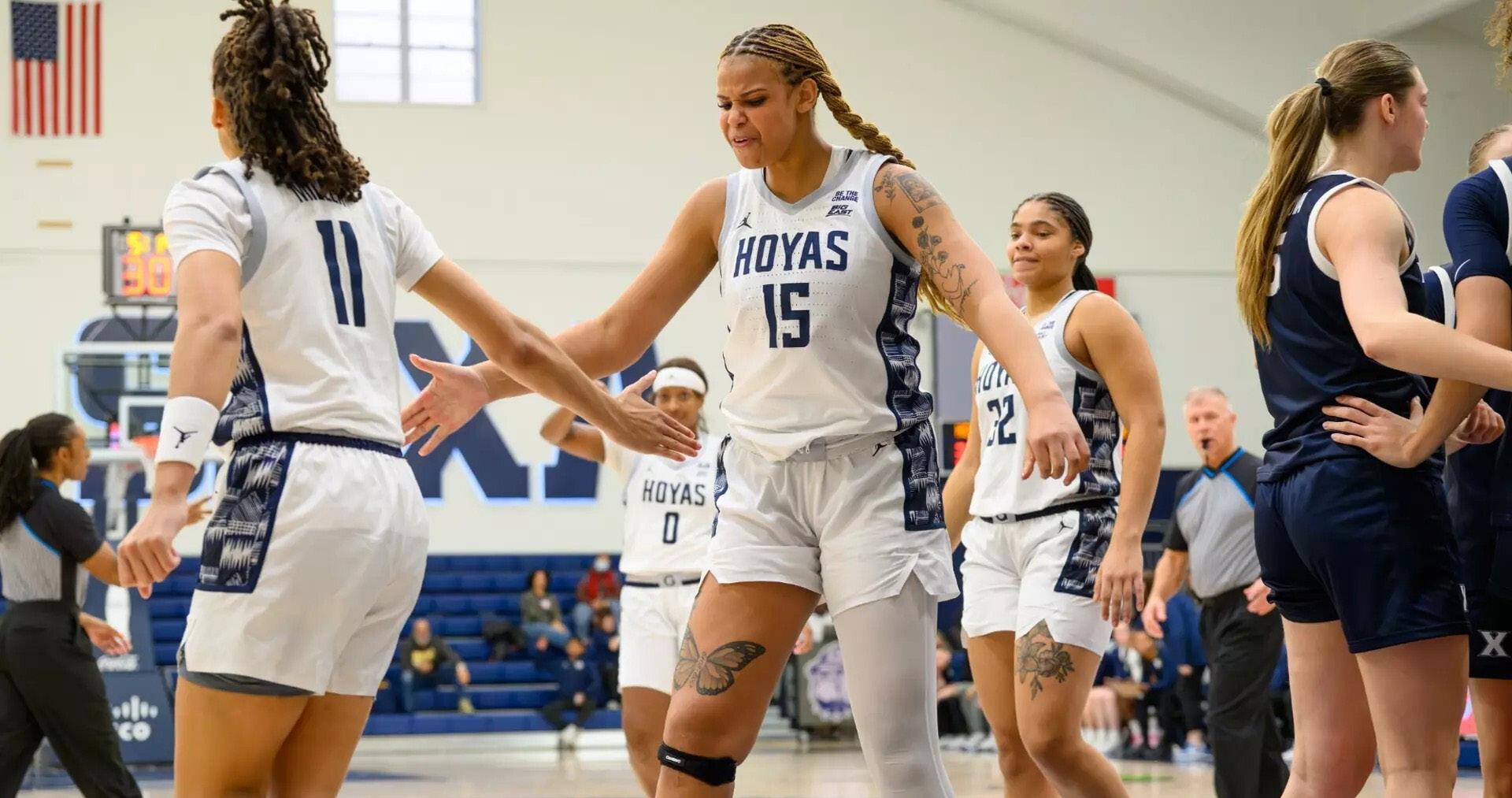
An early start didn’t slow down the Hoyas on Jan. 24, as the Georgetown University women’s basketball team defeated the Xavier Musketeers 65-52 in Big East action at Cintas Center in Cincinnati.
After some early back-andforth action, the Hoyas (12-8, 5-6 Big East) took a commanding lead in the third quarter and never looked back, taking down the Musketeers (10-10, 3-8 Big East) to avenge a Jan. 4 January 52-51 home loss where Georgetown faltered in the fnal seconds.
The impending severe winter storm over the eastern United States pushed the tip-of into the morning, at 9:30 a.m. EST.
The opening quarter featured early competition and buckettrading, as both teams settled in ofensively. The Musketeers struck frst, but the Hoyas quickly responded. Georgetown graduate forward Brianna Scott converted an early layup, and junior forward Brianna Byars ignited the game midway through the quarter with a shot-clock-beating 3-pointer.
Georgetown took a 19-14 lead at the end of the first quarter thanks to a 13-2 Hoya run over 3 minutes sparked by steals and transition opportunities.
Georgetown increased their advantage early in the second quarter as sophomore guard Destiny Agubuta made a longrange 3-pointer. Xavier responded with a persistent efort, going on an 11-0 run over 4 minutes to
momentarily reclaim the lead as Georgetown struggled ofensively.
Junior guard Khia Miller stabilized the Hoyas with consecutive 3-pointers, halting the Musketeers’ momentum to regain control. Georgetown led 30-27 at the half despite a buzzer-beater from Xavier guard Vivien Nejašmić.
The Hoyas played their best stretch of the game in the third quarter, coming out of the break with a sense of urgency. Inside, Scott grabbed control and drove in a layup, kicking off a 10-0 run to start the half. Scott secured 5 of those 10 points.
On that run, Georgetown kept up their defensive pressure, limiting second-chance opportunities and forcing mistakes. The Hoyas had a 49-37 lead going into the fourth quarter thanks to 2 timely 3-pointers from graduate guard Laila Jewett and Scott’s continued work on both ends.
Xavier made one fnal attempt to rally in the fourth quarter, cutting the defcit to 8 early on in the period and generating energy through defensive pressure. Yet Georgetown didn’t lose their cool.
The Hoyas performed well from the free-throw line in the game’s closing minutes, with Scott drawing two fouls and making all four free throws. The Musketeers were unable to close the gap due to the Hoyas’ strong defensive coverage and controlled tempo, securing the Georgetown win.
Georgetown Head Coach Darnell Haney emphasized the team’s preparation, saying his
squad efectively responded after halftime to seal the win.
“This adversity just teaches us we’ve got to be ready to go at any time, and I felt like we were extremely ready to go this morning,” Haney told Georgetown Athletics after the game. “We had some mishaps in the frst half that we had to fx, and then we kind of came on in the second half. I’m proud of Brianna Scott for her performance today, she showed up and this was one of her best games.”
“Also, Khia Miller had a good game, she’s getting more consistent,” Haney added. “We’re going to celebrate this today, bundle up for the cold and move on to the next one.”
For the second straight game, Scott topped the team with a season-high 21 points and a gameleading 8 rebounds. She shot a fawless 7-for-7 from the free throw line and contributed 3 assists, 3 steals and 2 blocks. Miller, who contributed crucial perimeter scoring, joined Scott in double digits with 17 points and 3 steals. Georgetown’s feld goal percentage was 42.3% (22-for-52), whereas Xavier’s was 37.5% (21for-56). Both teams ended with 32 rebounds; the Hoyas recorded 17 steals and caused 23 turnovers from the Musketeers. Georgetown returns home Jan. 29 to play Seton Hall University (14-6, 8-3 Big East) in the yearly school day game, inviting area K-12 students to McDonough Arena at 11 a.m.
Liv Villella Deputy Sports Editor
Teddy Gerkin Hoya Staff Writer
Seidenstein
Sports Columnists
GEORGETOWN ATHLETICS
The Georgetown women’s basketball team tipped off at 9:30 a.m. EST against Xavier because of the impending winter storm, but the early start did not seem to affect the Hoyas.
Hall of Fame Committee Allows Too Many Honorees
HERMAN, from A12
participation trophy. Carelessly handing the highest honor in the sport to undeserving players dulls the shine of the award itself.
Still, a number of talented players on this year’s ballot were undeserving for reasons beyond their statistics. The Hall directly asks voters to consider players’ “integrity, sportsmanship, character and contributions to the team” when evaluating their candidacy. This “character clause” doomed a number of 2026 candidates that would have otherwise been shoo-ins. Manny Ramírez and Álex Rodríguez were suspended during their careers for taking performance-enhancing drugs. Andy Pettitte admitted to the same misdeeds, although he escaped suspension. Omar Vizquel has been accused of sexual harassment and domestic violence, both of which he has denied. None have been elected.
Given the Hall of Fame’s many constraints, it is easy to forget about its most basic threshold: actually being excellent — not just good — at baseball.
The Hall’s Era Committee offers what has, too often, become a workaround to that requirement: a second chance on the ballot.
To be more accurate, an 11th chance. Or a 12th one. Or a 13th. Or 14th. Keep counting, I won’t stop you. In the world of Hall of Fame voting, “no” is not a final answer. Since 2001, every player — barring those on MLB’s ineligible list (such as, formerly, Pete Rose) — with 10 years of MLB experience who “has not been active in the previous 20 years” is eligible for re-consideration by the committee after failing to get elected by the BBWAA.
Of the 281 players in the Hall, 118 got there by Committee.
The committee is responsible for admitting the owners of many of the Hall’s most lackluster resumes. Contemporary-era inductees such as Bill Mazeroski (42.3%), Red Schoendienst (42.6%) and, most egregiously, Harold Baines (6.1%) failed to gather even close to the required 75%.
In what appears to be an attempt to course-correct, the Hall has recently decided that the limit does exist.
Starting March 2025, players may only appear on a committee ballot three times. Three chances is noticeably fewer than infnity, so the new rule will hopefully create some much-needed guardrails on the Hall’s overinclusiveness.
But the Hall has already opened its doors too wide — closing them will be significantly harder. Now, whenever a good-but-not-excellent player appears on the ballot, fans will point to history.
My misguided Philadelphia Phillies-fan editor, for one, would surely argue that if Baines is in the Hall of Fame, voters must let in Philadelphia’s paradigmatic “Hall of Very Good” power-hitting second baseman Chase Utley. The problem is he would not necessarily be wrong.
Utley amassed 64.6 wins above replacement to Baines’ 38.8 and he did so in almost 1,000 fewer games. Utley was better than Baines, with little room for debate.
Neither is deserving of baseball’s highest honor. But Baines cannot be uninducted. The bar has already been lowered, and raising it to an appropriate level would be unfair to modern-era players. Pandora’s box, once opened, might never be closed.
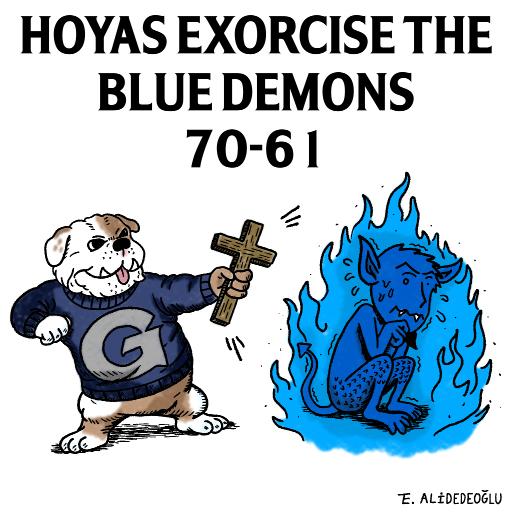

MEN’S BASKETBALL
Hoyas Finally Get First Home Conference Win
DEPAUL, from A12
The Hoyas were able to fight adversity and rally back after the second under-16 timeout. The squad picked up their defensive intensity, especially in the paint, which allowed the team to get out and run. A transition 24-foot 3-point shot from sophomore forward Caleb Williams revitalized the energy exhibited by the Hoyas in the first half; Georgetown now led 39-32 with 16:51 to go.
Although Georgetown maintained relative control throughout, DePaul continued to make pushes, led by Maclin’s crafty guard skills. The veteran guard continuously found his way to the paint, using a change of pace and a variety of pump fakes to get defenders in the air. Maclin had 16 of his 19 points in the second half, shooting 53% from the field on the game. This production was needed for the Blue Demons as guard CJ Gunn was held to just 4 points on 1-8 shooting due to the smothering defense of Lewis and graduate guard Jeremiah Williams.
Coming out of a timeout at the 14:47 mark, the Hoyas were only up by 5, leading 41-36. Just when it seemed DePaul was geared up for yet another run, Lewis pitched it ahead to sophomore guard Kayvaun Mulready for a go-ahead 3-pointer that extended the lead to double digits with 14:08 left on the clock.
Once there was less than 10 minutes remaining in the contest, Halaifonua and sophomore forward Isaiah Abraham showed aggression in the paint to extend the Hoyas lead. At the 9:45 and 8:53 marks, Halaifonua took advantage
MEN’S ROWING
of mismatches and got to the hoop for a layup and a two-handed dunk. Moreover, Abraham continuously put pressure on the defense by muscling his way to the free-throw line. After Abraham converted on his second free throw with 9:22 left in the game, the Hoyas were up 55-42, their largest lead of the game.
Nonetheless, just when the Hoyas seemed to have secured the win, DePaul rallied back as Gunn and Smith hit back-to-back long-range 3-point miracles to cut the lead to 57-51 with 7:39 remaining. Furthermore, after two successful drives from Maclin, it certainly looked like the Blue Demons had more left in the tank, as they trailed 61-55 with 3:36 left in the contest.
However, just as the game was getting close, Mulready made a hard cut across the baseline and nailed an off-balance 3-point shot as he was leaning out of bounds, snatching the hearts of DePaul fans as Georgetown went up 64-55 with just three minutes to go. During the final minutes of the game, Mack was able to convert on various trips to the free-throw line, which sealed the game for the Hoyas.
Cooley said Mulready’s impact and dedication to the team were essential to the Hoyas’ win.
“He’s shown a consistent habit of getting in early, getting up shots, working on his body, being in shape and being one of the better defenders on the foor,” Cooley said in a post-game conference.
“Defense gets you on the foor.”
The Hoyas will next embark on a short road trip into a hostile environment as they face Butler University (13-8, 4-6 Big East) on Jan. 31 at 12:00 p.m. in Indianapolis.
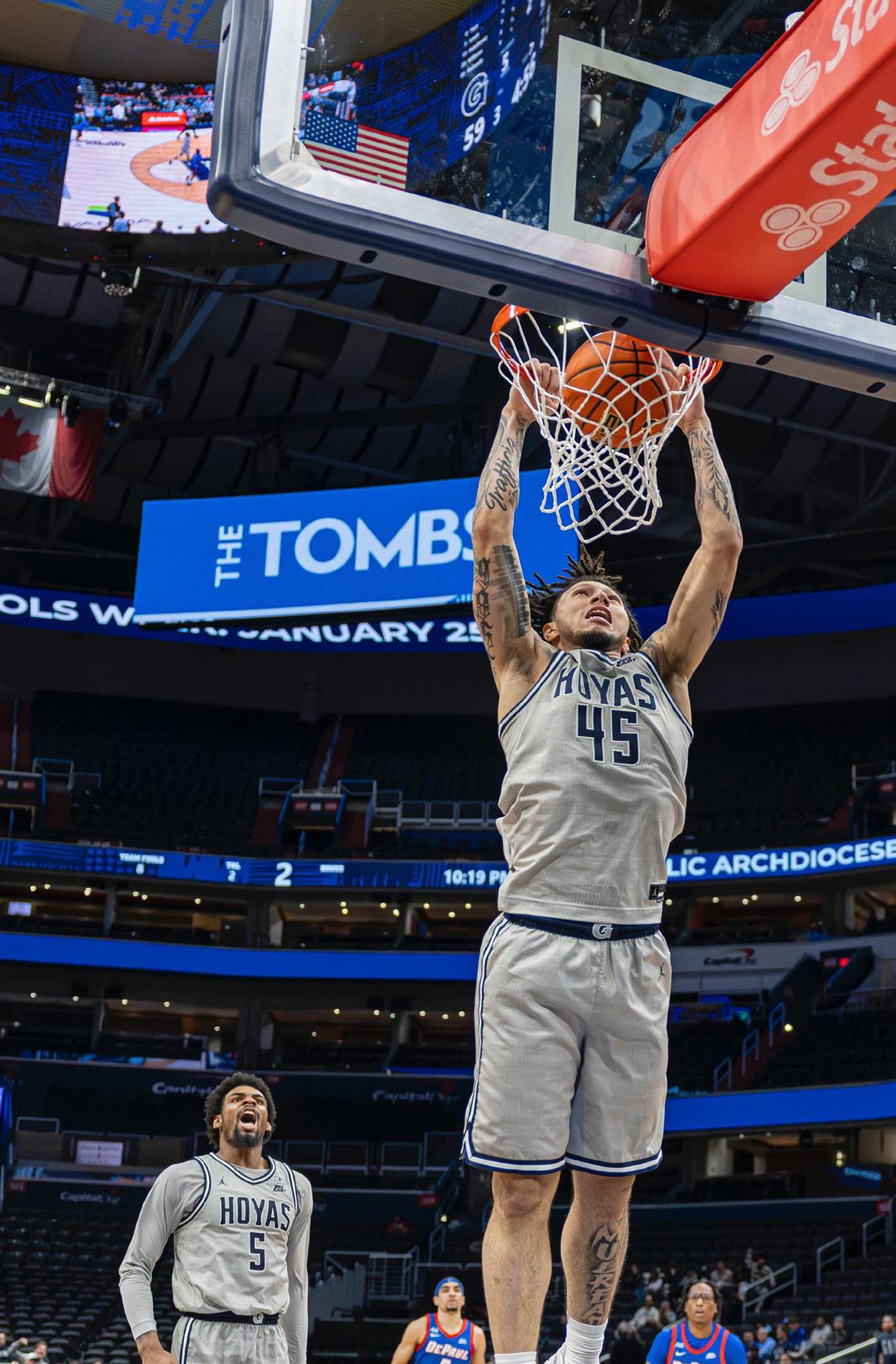
New Training Program, National Invites for GU
ROWING, from A12
have been invited to the national team camp during Granger’s four-year tenure, are promising for the program.
“This was a great moment for those two and the team as a whole,” Granger wrote to The Hoya. “We’re hopeful that they will receive invites this summer for selection to the U.S. team that competes at the World Championships.”
The December camp is designed to develop the top athletes 22 years old or younger on Dec. 31 of the championship year through a rigorous training program and environment. The camp is also used to evaluate an athlete’s readiness for international competitions, such as the Summer Olympics, and to expose the young athletes to the standards and culture of the national team.
In addition to the two U.S. national team invitees, Granger said sophomore heavyweight rower Teddy Mangan is another up-andcoming member of the team.
“He’s having a great year so far and will most likely be a big part of our top boat,” Granger wrote.
While Georgetown’s top heavyweight crew has enjoyed success in recent years, that performance has not been replicated consistently throughout the rest of the lineup. However, Granger said
the resolve of this year’s group and the strong frst-year class can make a diference.
“Our depth has been an issue the last couple of years, but with numbers and talent in the freshman class, we should be moving in a better direction,” Granger wrote.
During the fall, the Hoyas competed in multiple regattas, which consist of a series of sprints, shorter races focused on speed with the frst boat to fnish winning, and head races that have staggered starts and are more endurance-focused as they often feature multiple turns. Men’s rowing remained competitive at the fall events, highlighted by Georgetown heavyweight boat A — the frst varsity boat — capturing 6th place at the Princeton Chase on Nov. 2nd in the men’s 8+ event to close out the heavyweight fall racing season.
After a few unseasonably warm winters, which allowed them to use the Potomac River year-round, the men’s rowing team moved of the water during January and February to a dryland conditioning program this year. Granger said the new program will better beneft the team and make for an exciting spring.
“We have some ftness targets in mind that place us in a better position than our team has been the last few years,” Granger
WOMEN’S BASKETBALL
wrote. “If we are able to execute and perpetuate that standard, we are in for a fun and rewarding season.”
The Hoyas will kick of the season Mar. 28 with men’s lightweight rowing traveling to the National Collegiate Lightweight Invitational in Overpeck, N.J., and the heavyweights journeying to Princeton, N.J., for a sprint competition against Princeton University, Temple University and La Salle University. The 2026 IRA National Championship, the culmination of the 2025-2026 season, will be held at Lake Natoma in Gold River, Calif., beginning May 29 and running through May 31.

Hoyas Keep It Close, but Fall Just Short to Pirates
SETON HALL, from A12
Scott said she did not agree with the foul call, but acknowledged that the team had to move on without her.
“I didn’t think it was a foul, but you know, it’s out of my control, whether they call that or not,” Scott told The Hoya after the game. “I thought I had it clean, but I mean, obviously it was a huge impact.”
Upon Scott’s departure from the court, the Pirates went on a 9-0 run to take a 50-42 lead. The Hoyas went over six minutes without scoring until graduate forward Chetanna Nweke put in a layup for Georgetown’s frst points of the quarter.
Down 8 with just over three minutes remaining, Georgetown continued to fght. With 32 seconds on the clock, Agubata hit a 3-pointer to cut the defcit to 5. After 2 Hoya fouls, the Pirates converted 4 free throws to extend their lead to 9 with 17
seconds to play. Jewett responded with a deep 3-pointer with 10 seconds remaining to bring the score to 58-52, but the Hoyas were unable to score again before the fnal buzzer.
Agubata, Scott and Miller led the way for Georgetown with 12, 11 and 10 points, respectively. The trio also added 3, 2 and 4 rebounds, while Miller contributed 3 steals.
Pirates forward Mariana Valenzuela and guard Savannah Catalon were dificult for the Hoyas to contain, notching 19 and 17 points, respectively.
Haney said there is a narrow margin for error in Big East games.
“It’s a battle,” Haney said postgame. “Every time you come to play here in the Big East, especially this year, it’s a battle. And to beat a good team, you need everybody to show up.”
The Hoyas will look to show up in their next Big East battle against the Marquette University Golden Eagles (14-7, 8-4 Big East) on Feb. 1 at home.
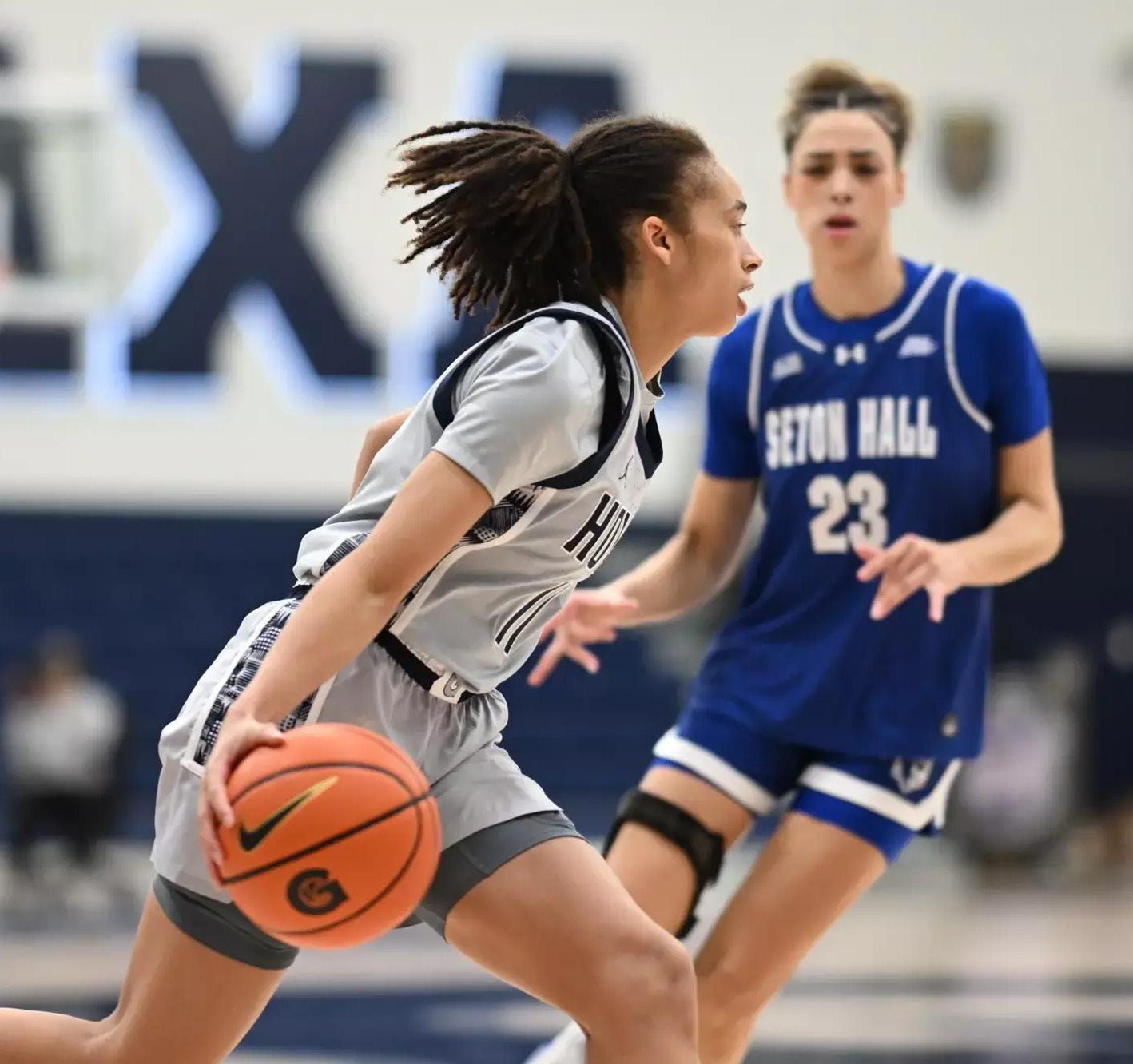
HAAN JUN (RYAN) LEE/THE HOYA Sophomore guard Kayvaun Mulready excelled off the bench, playing 27 minutes, scoring 8 points and grabbing 6 rebounds.
GEORGETOWN
Two Georgetown rowers were invited to a U.S. national team training camp, a first under Head Coach Jim Granger.
RAFAEL SUANES/GEORGETOWN
Junior guard Khia Miller (left) racked up a statline of 10 points, 4 rebounds, 3 assists and 3 blocks as a leader for the Hoyas.
SPORTS CARTOON by Ege Alidedeoglu
MEN’S BASKETBALL

FRIDAY, JANUARY 30, 2026
TALKING POINTS

The Hoyas came back from down by 20 points with 13 minutes left to defeat Providence College, stunning the Friars.
Cooperstown Has Forgotten How to Tell Players ‘No’
Sometimes, the hardest word to say is “no.”
The National Baseball Hall of Fame would know. Cooperstown has become overinclusive: The Hall of Fame is well on its way to becoming a “Hall of Very Good.”
Every year, approximately 400 journalists from the Baseball Writers’ Association of America (BBWAA) cast a Hall of Fame ballot. To be inducted, a player must be listed on 75% of ballots. So long as a player earns at least 5% of the vote, they remain on the ballot the following year until they are elected or fail 10 times. A player becomes eligible for the Hall of Fame ballot 5 years after they step of the feld for the fnal time after playing at least 10 seasons in MLB. Typically, between 25 and 35 players appear on a given ballot. Voters may select up to 10 candidates, but do not have to select any at all. The strength of the ballot varies from year to year. In more crowded years, candidates who are on the bubble receive fewer votes. In years with weaker ballots, however, voters tend to select borderline candidates more often.
This year, the prospective class was particularly weak. I would have proudly submitted a blank ballot, and indeed, the 2026 ballot saw the highest number of blank ballots since 2011. Yet only 11 of the 425 voters selected zero candidates.
Evidently, voters hesitate to be overly selective. But I will say about the Hall of Fame what I previously said about the MVP award — it is not a
See HERMAN, A11
Georgetown vs. Marquette
Feb. 1 @ 5 p.m.
McDonough Arena
NUMBERS GAME See A10
It’s a battle. Every time you come play here in the Big East, especially this year, it’s a battle.
WBB Head Coach Darnell Haney
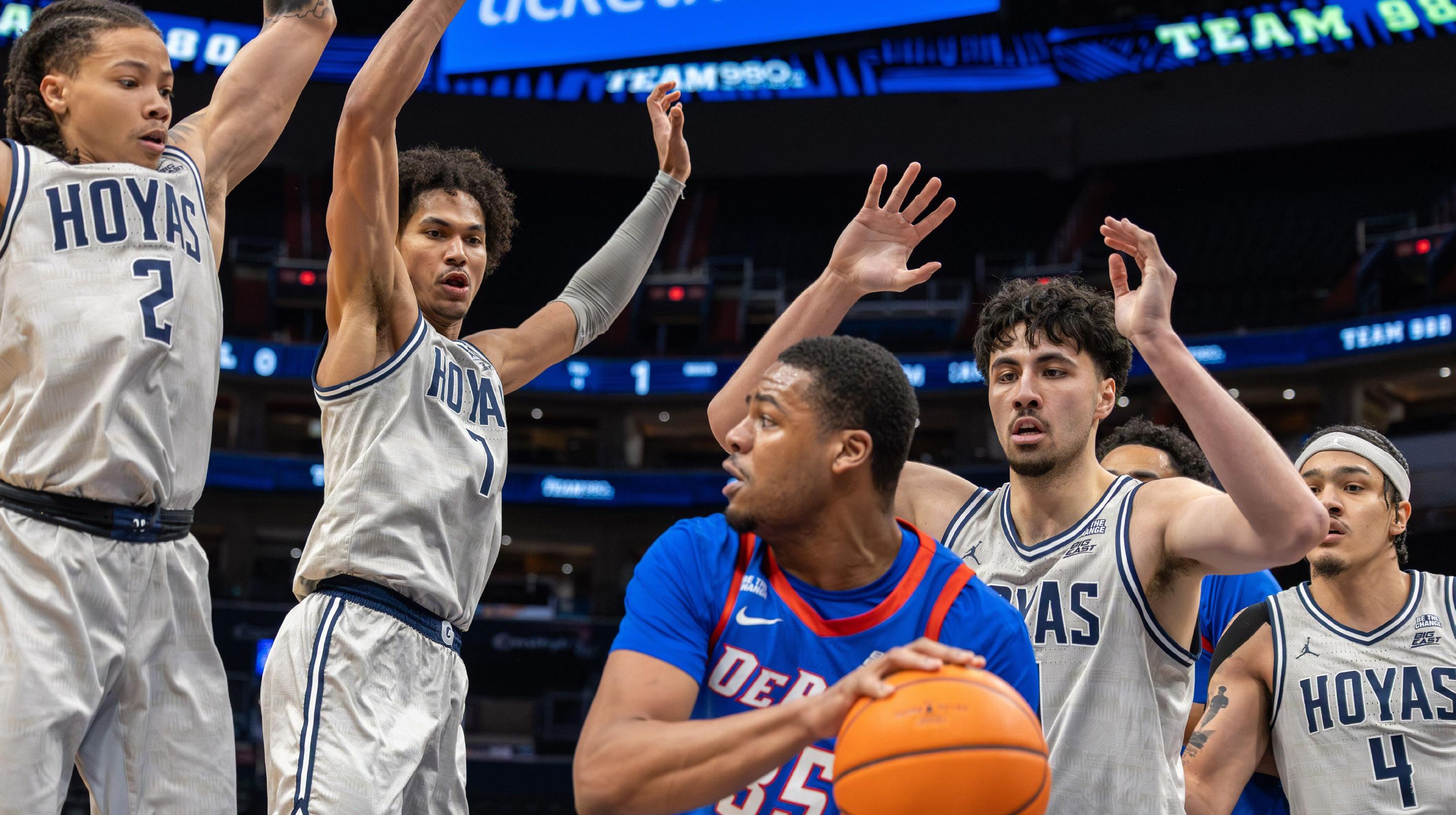
Georgetown
Hoyas End DePaul Curse Behind Strong Defense
Alex Smetana Hoya Staff Writer
The Georgetown University men’s basketball team furthered its momentum by defeating the DePaul University Blue Demons 7061 at Capital One Arena on Jan. 28 following a heroic comeback against Providence on Jan. 24. The Hoyas secured their first Big East home victory in Capital One Arena and their first win over DePaul (12-9, 4-6 Big East) under Head Coach Ed Cooley. Georgetown (11-10, 3-7 Big East) started the game off strong, winning the opening tip which led to junior
guard Malik Mack scoring a layup in traffic for the Hoyas first possession of the game. This momentum carried through the first five minutes of the game, as the Hoyas created successful opportunities from the pick and roll. In particular, sophomore center Julius Halaifonua did an excellent job finishing these plays off the short roll. At the 18:28 mark, Halaifonua converted a 10-foot jumper off an assist from Mack. Then, just a few possessions later, Halaifonua made an impressive read to a cutting junior guard KJ Lewis for a layup, and then sank another short jump shot after running yet another pick and roll on
the following offensive play. The Hoyas led 8-3 at the 15:18 mark in the first. However, coming out of the under-16 timeout, the Blue Demons responded by running a combination of their own screen actions, allowing them to play twoon-one basketball for much of the frst half. At the 10:52 mark, senior center Vince Iwuchukwu was forced to collapse on a drive from DePaul guard Brandon Maclin, leaving center Fabián Flores wide open for an alley-oop under the basket. This play cut Georgetown’s lead down to 2, with the scoreboard at 14-12 going into the under-12 timeout.
Seton Hall Narrowly Takes Down Hoyas
Maddie Taylor
Deputy Sports Editor
The last time the Georgetown University women’s basketball team faced Seton Hall University a little over a month ago, they fell 81-36 to the Pirates. While the outcome of the second regular-season matchup also ended in Seton Hall’s favor, the Hoyas looked like a diferent team, cutting the Pirates’ win margin to just 6 points. Georgetown (12-9, 5-7 Big East) picked up its 5th consecutive loss to Seton Hall (15-6, 9-3 Big East), falling 58-52 on Jan. 29 at McDonough Arena. Georgetown Head Coach Darnell Haney said the diference between the games played less than a month apart was the team’s staying true to its identity. “I thought it was less of a technical piece and more of being who we were, right?” Haney told The Hoya after the game. “So going into this, we just prepared like we prepared for any game, but that wasn’t my team that showed up in New Jersey, and we needed to be ready to come out here and kind of take care of business this game.” Seton Hall opened the game by winning the tip-of and then taking the frst points 14 seconds in. Yet the Hoyas didn’t let the Pirates run away early, and the frst quarter’s scoring went back-and-forth. With just over 2 minutes remaining in the quarter, graduate center Brianna Scott and sophomore guard Destiny Agubata combined for the Hoyas’ frst 14 points, helping Georgetown hold a brief
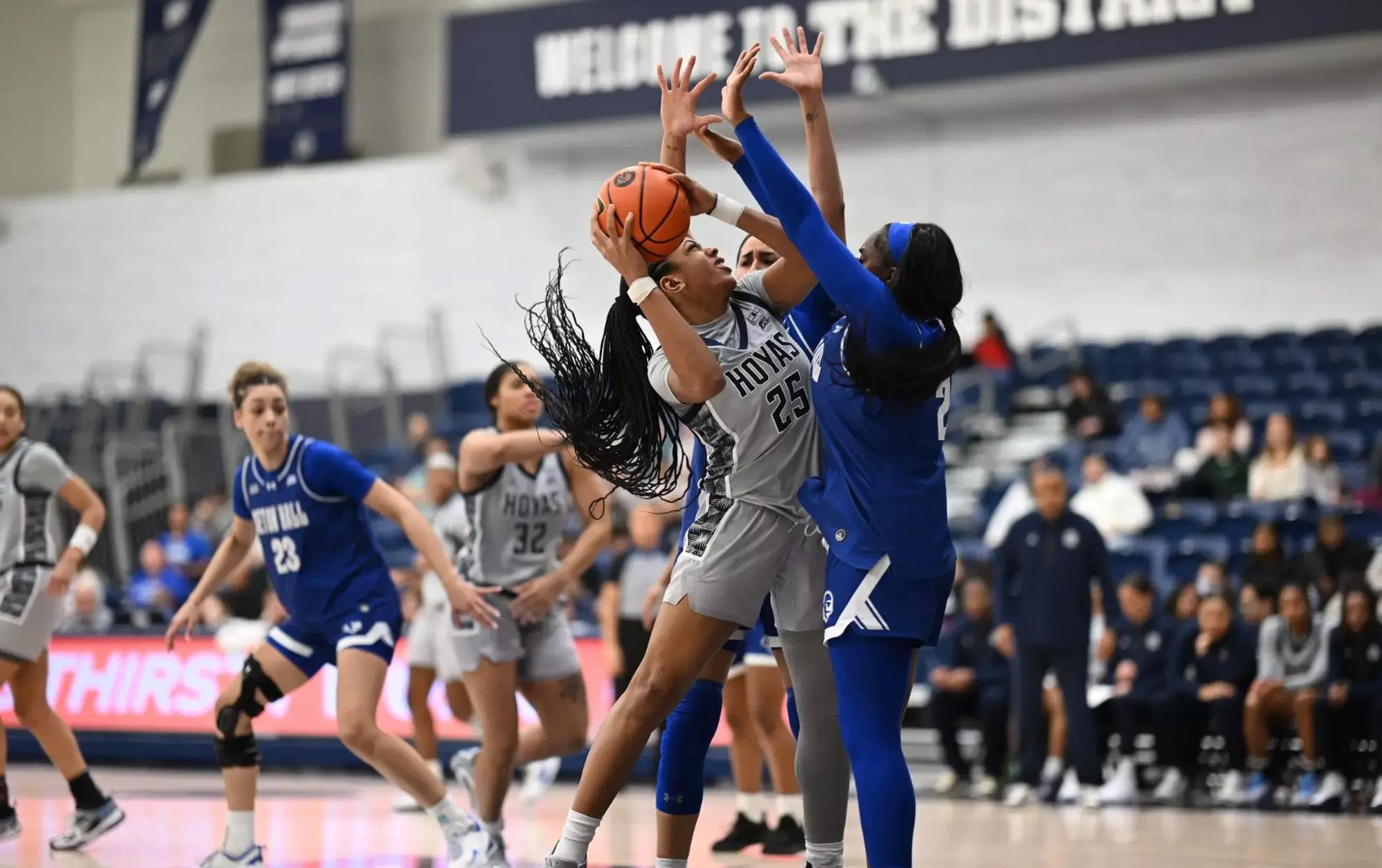
1-point lead. Seton Hall responded with a 9-2 run to fnish the quarter, putting Georgetown behind 22-16. The second quarter saw a slower pace than the frst. Sophomore guard Summer Davis hit a 3-pointer a minute in, bringing the Hoyas back within one possession. After that, both teams struggled from the feld, with the only points coming from the free throw line for four and a half minutes until a 3-pointer from junior guard Khia Miller broke the drought and tied up the game at 24 with 4:27 left in the half.
In a similar fashion to the end of the 1st quarter, the Pirates went on a 7-2 run to end the 2nd and take a 31-26 lead into the break. Out of halftime, the third quarter proved to be Georgetown’s best of the game, outscoring Seton Hall 16-10. Just under halfway through the 3rd, a 3-pointer from Davis followed by a jumper from graduate guard Laila Jewett put the Hoyas up 3534. While the lead was passed back and forth over the remainder of the quarter, with under a second remaining on the clock, sophomore
guard Khadee Hession attempted a 3-pointer. Scott grabbed the rebound and put it back at the buzzer, sending the Hoyas into the fourth up 42-41 as the crowd erupted. The Hoyas dominated the glass throughout the game, outrebounding Seton Hall 35-26. Entering the fnal quarter, Scott had 3 personal fouls, but quickly racked up her 4th and 5th within the frst minute of play after a controversial call on a block, fouling out with over nine minutes left in regulation.
Much of the same continued for both squads as the first half dwindled down, with the guards for each team getting two feet in the paint and making the appropriate out to wing shooters or finding the roll man in stride. Despite an intense back-andforth stretch, the Hoyas were able to close out the half on a short 7-3 run that was jumpstarted by a nolook pass to sophomore forward Jayden Fort for a layup under the rim with 2:04 remaining in the frst. Georgetown’s last feld goal of the half was a crowd-popping 3-point shot at the top of the key from
Halaifonua. The Hoyas headed to the locker room up 34-24 with 20 minutes of basketball left to play. However, the second half started incredibly shakily for the Hoyas, as the Blue Demons went on an 8-0 run that began with a step-back 3-point shot from DePaul guard RJ Smith less than a minute in. Following this dificult make, DePaul converted on a layup and a long-range jumpshot to rally back within 2, Georgetown still with the 34-32 lead.
Jacob Nolan Special to The Hoya
After a fall racing season and a winter of training and refecting on last spring, the Georgetown men’s heavyweight and lightweight rowing teams enter 2026 with a fresh look towards the national championship, which is set for the last weekend of May in California. Georgetown’s 2025 spring season was certainly one of ups and downs. The Hoyas posted mixed results at the National Collegiate Lightweight Invitational in Princeton, N.J., on March 29, with the highlight coming from a first-place finish in the second varsity lightweight boat race. At the Schuylkill Invitational on April 12, Georgetown’s heavyweight team tallied 3 first-place finishes across 8 different races. However, at the Lake Morey Invite, hosted by Dartmouth College on April 26, the men’s heavyweight rowing team only picked up one first-place finish.
The season ultimately came to an end with a 19th-place fnish out of 24 teams for the heavyweights at the Intercollegiate Rowing Association (IRA) National Championship. The lightweights fared somewhat better, placing 7th out of 9 teams, though coming away with a frst-place fnish in the Varsity 4+ (boat of 4 rowers), after they failed to qualify their frst varsity 8+ (boat of 8 rowers) to the fnal.
The Hoyas are looking to maintain consistency throughout the
season. Head Coach Jim Granger refected on their disappointing 19thplace fnish at the 2025 Intercollegiate Rowing Association National Championship, saying his squad was capable of advancing further.
“While we had a strong start to the season last spring, we lost momentum going into the championship season,” Granger wrote to The Hoya. “One of our main goals this year is to take steps to ensure we are moving in the right direction as a team. Our schedule continues to get better, which keeps the group focused.” Men’s rowing is split into two classifcations: lightweight and heavyweight. Lightweight rowers must adhere to strict weight restrictions, with the crew’s average weight unable to exceed 155 lbs. and an individual rower’s weight not allowed to exceed 160 lbs. This weight cap is meant to shift away from a reliance on brute force, instead emphasizing eficiency, precision and coordination amongst the team. There is no similar weight restriction on heavyweight rowers, meaning that the crew is able to maximize raw size and strength.
Junior heavyweight rower Thomas Segrera and sophomore heavyweight rower Michael Ruschmann were both honored with invitations to the U.S. under-23 national team camp in December. Granger said these invitations, the frst time Georgetown rowers
Hunter
Eilat Herman Sports Columnist
HAAN JUN (RYAN) LEE/THE HOYA
The
University men’s basketball team’s strong defensive performance spurred a 70-61 victory over the DePaul University Blue Demons less than a week after the Hoyas decisive comeback victory against the Providence College Friars.