



Photograph by Lucas Day
ON THE COVER
Senior Morgan Jacobson prepares to launch off the new backstroke devices. These will help with smoother starts during meets.
A CRUSHING OBSESSION
The Hoofbeat staff will publish six issues of the paper at Millard North High School (1010 South 144th Street, Omaha, NE). Type is set with the use of Macintosh and HP computers. Printing is done by White Wolf Printing, Sheldon IA. The Hoofbeat is a member of the Nebraska High School Press Association and JEA. The Hoofbeat exists for the express purpose of student information and learning.
Advertising: Advertising will be sold at $7 per column inch or by special quarter, half, or full page rates. Information can be obtained by calling 402-715-1404.
Responding to the Hoofbeat: Letters to the editor may be submitted to Room 1105 or sent to sacrotzer@mpsomaha.org. Names will be published. Letters must not contain attacks against an individual and may be edited for clarity.
Co-Editors-in-Chief
Argyrenia Pipinos
Mira Mukherjee
Front Page Editors
Grace Evert
Sarah Robey
News Editor
Katelyn Judd
Opinions Editors
Lucas Day
Teja Sridher
In-Depth Editor
Mira Mukherjee
Lifestyle Editor
Argyrenia Pipinos
Sports Editor
Lydia Harlow
Online Editor
Sarah Robey
Cartoonists
Nadirah Johnson
Rosie Scherbarth
Artist
Nadirah Johnson
Rosie Scherbarth
Photographers
Lydia Harlow
Lucas Day
Staff Writers
Jayden Maple
Matthew Um
Miley Huynh
Nathan Ye
Parker Neville Adviser
Sarah Crotzer
Principal
Aaron Bearinger



Students launch Feed Forward food drive to support peers and local families facing food
ARGYRENIA PIPINOS
Co-Editor-in-Chief
Tables sit ready in the hallways, waiting for do nations that will soon transform them into towers of canned goods, boxes of pasta, and other nonperish ables. Flyers line the walls, volunteers or sign-up sheets, and the school buzzes with anticipation for the first-ever Feed For ward food drive.
The effort from these students promises more than just groceries -it’s a chance for students and staff to come together, support each other, and make a real impact on families facing food insecurity in Nebraska.
“I have always been concerned with the plight of people who are less fortunate than I am, and am always willing to do what I can to encourage others to do what they can to help,” Betzold said.

seen, supported, and part of a community that actively helps each other. Even small contributions — a single box of cereal or a can of soup — make a differ-
“There is strength in community,” Banwo said. “When we come together, even in small ways, we can make a real difference in people’s lives. Every donation, every hour spent volunteering, adds up, and seeing everyone work toward the same goal reminds me that no one has to face struggles alone.”
In2024,aboutpeople2.3billionexperiorencemoderate insecurity.severefood
For many students, the drive is a firsthand lesson in the realities of food insecurity. Organizers said it encourages peers to think beyond themselves and see the impact of collective effort. Volunteers also said the process of sorting, tracking, and delivering donations helps build leadership and organizational skills that extend beyond the classroom.
Those who face food insecurity are more likely to experience malnutrition and health conditions like diabetes and heart disease.
When we come together, even in small ways, we can make a real difference in people’s lives.
Feed Forward, a student-led initiative started as part of senior Harmony Banwo’s IB CAS project, will begin by stocking the school’s food pantry before sending extra donations to the Food Bank for the Heartland.
“Just being part of this, even in a small way, makes you realize how much you can contribute when everyone works together,” Epstein said.
SENIOR “ “
Feed Forward leaders Banwo and Epstein said the project also gives students an opportunity to learn about local organizations and systems that support families. From coordinating with the food bank to understanding how items are distributed, students gain insight into the broader community network that fights hunger.
The drive aims to help MNHS students who struggle with access to meals while also reaching families in the wider community. According to community coun selor Samantha Naser, 145 students and seven homeless families at MNHS reported food inse curity this year.
“They [Food Bank for the Heartland] serve most people in our community and are reputable and established,” Betzold said.
The volunteer team spans grades and interests, taking on roles from sorting and inventory to orga nizing pickup and delivery routes. Senior vice pres ident Tyler Epstein is coordinating logistics, making sure every donation is tracked and reaches its desti nation efficiently.
“We wanted this drive to show students that support is already here for them, not something they have to go searching for,” Epstein said.
Students hope the project teaches more than just the importance of donating. They want peers to feel
Source: Feeding America Source:UNICEF
Food insecurity can harm people’s mental health. It can result in stress, anxiety, and depression.
Betzold said the students’ leadership has been the most rewarding part of the project. For her, success isn’t measured by the number of items collected but by the awareness, empathy, and engagement the drive inspires.
“Even one nonperishable item is one more than we had before the drive, so it is a success already,”

As Feed Forward prepares to officially launch, volunteers are ready to collect, sort, and deliver donations. The drive represents a tangible way for MNHS students to step up and make a difference -- and it’s just the beginning.
Organizers hope this initiative will grow into a lasting tradition of service, showing how a single school community can help countless families in need.
Lacking basic needs such as food and shelter can result in social isolation, stigma, and shame.
Due to a lack of food, people may experience low energy, difficulty concentrating, or miss school and work because of illness.
Boys Town’s groundbreaking reveals their construction plan to expand their national hospital and better treat patients
LUCAS DAY
Co-Opinions Editor
rom the school lot, just a notch west, students can see the trees as they fall to the ground, kicking dirt up into the air. They can watch cars veer from orange cones lining the lanes, clogging traffic up and down the street. They can even hear the drills from their own class as workers break through the soil.
For thousands of families, the Boys Town National Research Hospital is a source of hope, aid, and guidance. It’s a spring of unwavering support from revered doctors and researchers alike. Now, shovels dig into Boys Town soil as they unveil the construction on the facility, working to serve families better nationwide.

By the time of the ceremony, construction had already begun just across the street. As reported by the “Boys Town Blog”, the project will cost nearly $300 million and add 254,000 square feet to the hospital. They aim to create a new, revolutionary research facility along with more space for efficient medical care.
Omaha’s Mayor John Ewing attends the Boys Town groundbreaking ceremony. on Nov. 12 Nebraska Senator Deb Fischer was also in attendence for the commemoration.
According to the Boys Town Hospital, the establishment began in 1977 as an opportunity to help Omaha’s youth through medical struggles. Over the decades, the hospital has blossomed into a nationally-recognized institution, treating thousands of families each year.
On Nov. 12, Boys Town held a groundbreaking ceremony to reveal their plans to expand the hospital wing. Delegates from across the nation came to witness the event, with Boys Town and US dignitaries speaking at podiums and disclosing the project to the public.

For many, this construction is not just an expansion of the hospital but a symbol of hope, trust, and relief. Families nationwide have undergone the unimaginable –watching their child struggle with depression, waking up to their child having a seizure, or not being able to communicate with their child at all. To turn to the Boys Town Hospital in times of need requires an unthinkable level of faith and certainty.
Throughout the decades, the hospital has helped countless teens through mental struggles like depression, anxiety, and even suicide. Moreover, they’ve broken numerous barriers in neurological discoveries, pioneering epilepsy research in the

region and assisting children with brain tumors and nerve disorders.
“In 2024, Boys Town worked with more than 192,000 children and families in all 50 states…we stopped 436 suicides in progress, and handled almost 100,000 contacts to our crisis center,” Boys Town CEO Rod Kempkes said.
Boys Town’s mission to aid the community has helped so many families in their moments of difficulty. Now, with the expansion of their hospital, they hope to treat even more children in health emergencies.
“This expansion will help countless patients and children across Nebraska and beyond. It is a powerful reminder of what dedication, compassion, and vision can accomplish,” U.S. Senator Deb Fischer said.
Projected to be completed in 2027, the development will work to quicken treatment and research for patients. With researchers and doctors collaborating side-by-side in this expanded wing, medical discoveries will be used to potentially cure patients within months.
In desperation, families across the country turn to the Boys Town Hospital for guidance, looking for any possible way to help their child. Boys Town offers millions of children a passage to safety and normalcy, and with this new addition, it will save even more children, and continue its mission to serve the community for decades to come.

Digging a Dynasty
Boys Town CEO and other groundbreakers stand confident as they get ready to break the soil. The groundbreaking signifies the beginning o

dents.
“It provides an incentive for students to get to class on time and a motivation for them to try their hardest and
MN’s Good Standing policy allows for end-of-semester raffle

Students are considered “in good standing” if they have no tardies and are passing all classes
If in good standing, students are entered into a raffle to win any of the grand prizes:
A VIP Parking Spot for second semester, a free MN yearbook, and a pair of BEATS headphones
dents passing classes.”
As Friday finally arrives and study hall commences, seniors and juniors alike can walk out together to enjoy their leisure time. Instead of rushing to be the first car out, they can walk out of school calm and relaxed, with their time in their control.
A shooting at the L Street Quiktrip leaves four police officers injured and a suspect dead
An atmopsheric river storm causes heavy rains and major flood warnings across the Pacific Northwest
A plane crash-lands on top of a car on Florida Freeway after engine trouble (Dec.8)
Australia passes law to ban social media for all kids under the age of 16 (Dec. 10)
A 7.5 Magnitude earthquake rocks Japan and brings a tsunami alert with it (Dec. 8)
With the rise of AI, the amount of power used to support it has started to take a toll on the environment THE HOOFBEAT
Staff Editorial to run constantly? The answer comes from something rather simple: water.
t feels innocent enough to go to ChatGPT or Gemini and ask for help with a difficult math equation or a confusing English passage. One search on its own is relatively harmless. But when our society craves more and more from AI, it starts to leave a dangerous footprint on the physical world, one of which we aren’t fully aware of.
We’ve all seen the AI chatbot websites: the monochromatic screen with little more than a prompt box and a simple message encouraging you to ask it anything that may be on your mind. But when we look at this simple webpage, what we don’t see are the massive data centers, each housing tens of thousands of servers that allow this page to function.
These data centers are the physical components that allow the internet to exist. When demand for AI started to grow, companies started to build more and more of these centers at a rapid pace, and each one built will require clearing land and disrupting local ecosystems to make space.
But what makes these data centers significant is the amount of power they consume. In Aug. 2025, Google revealed that the average Gemini text prompt consumed 0.24 watt-hours of energy, equivalent to the amount of power needed to run a TV for about nine seconds. This may seem small on its own, but it adds up fast when accounting for the fact that hundreds of millions of these prompts are processed every day.
This enormous amount of energy causes these servers to heat up, potentially damaging them. So how can they be kept at a safe temperature when they need
AJ Chinyoka
Student
Speak

How do you feel about juniors being able to leave for study hall on Fridays?
The majority of data centers pump cool water into tubes that run past the servers. This lowers the temperature of the equipment before the water is released back into the body it came from, clean and unpolluted. Or at least, that’s what appears to be the case.
Behind the scenes, returning this water back into the environment actually causes an unusual yet dangerous type of pollution: thermal pollution.
When water is used to cool these centers, it is released back at a higher temperature than it was before, slowly raising the temperature of the water body. And when the water gets warmer, it can’t hold as much dissolved oxygen as it could before, putting more strain on the organisms that live in it.
Returning the water in this way can’t be easily avoided either. Since the water is exposed to so much heat in these cooling tubes, recycling water in the facility will cause evaporation over time. This method can also cause corrosion in the equipment, making it much more costly and inefficient than using freshwater.
But what does this use of water mean? In October 2025, the “New York Times” published a story about an AI data center opened by Microsoft in central Mexico. With the new tech complex taking in freshwater from nearby towns, drought conditions worsened, sometimes even lasting weeks.
Communities were forced to adapt, with many people selling large storage drums to keep supplies of clean water. While that made it easier for people to survive, it didn’t eliminate the dangers of a water outage. For one village, La Esperanza, a lack of running water
I really enjoy it because I get to go out with my friends and have some food. I like going to Cane’s and Taco Bell.

Carson Hickenbottom “

I think it’s pretty cool to get that opportunity as juniors. It’s rewarding for the kids that are doing what they’re supposed to be doing.
meant that people couldn’t keep themselves clean, allowing for a hepatitis outbreak to spread rapidly.
Now, none of these are new problems. Thermal pollution and strained water supplies have been the cost of cooling facilities long before AI. However, with how suddenly AI has boomed, the scale of these issues has been growing even faster, so it’s best that we start taking action soon.
So, where should we start as a society? While it may sound like an easy solution, stopping the use and development of AI is ineffective in mitigating the issue. After all, it’s still a tool that can be used for good, and we can’t just tear down the existing data centers.
The real root of this issue comes from the companies that choose to expand their data centers for profit over practicing sustainability. If we want to see change, then we need more steadfast legislation against it.
There have already been attempts to pass laws against AI data centers. According to “Tech Policy Press,” Oregon state representative Pam Marsh proposed a bill stating that data centers within the state run on clean energy by 2040.
The law was a step in the right direction, but it was shut down when corporations pushed against it. Yet with more lawmakers supporting similar bills, the odds of getting a law passed against it are only getting higher. In the meantime, it’s best for us to spread awareness of the issue.
It’s important to keep in mind that AI hasn’t fully destroyed our environments: in fact, it’s still quite far from that. But we need to remember that there’s more to AI than what’s on our screens, because that’s where its real costs lie.
It gives me time to visit with my friends. I go to Chipotle with my friend every week, and it’s a lot of
Ruby Beeler-Streff

I think it’s very exciting and fun, and one time I had time to go to Chipotle and they gave me $10 off my meal.

For Veteran’s Day, the History Club banded together to give veterans a special tribute
PARKER NEVILLE Staff Writer
S. Army veteran John L. Smith served in Operation Desert Storm during the Gulf War, and now his grandson, freshman Logan Smith, chose to tell his story in a special Veterans Day celebration. But it’s not just Smith who helped with this: through the History Club, 46 veterans were featured in a Wall of Honor commemorating the people who served for our country.
History Club meets once a month, with history-focused activities ranging from trivia to escape rooms. But with an important holiday with ties to history occurring early in November, History Club sponsor Emily Ruda brought a new type of activity to the club, one that involved the whole school.
“I wanted the kids to do something where they could connect history to the people who are actually in the building, like our teachers who are veterans. So what I did was I collected from all the teachers and students any veterans who are a part of their life, whether it be friends or family,” Ruda said.
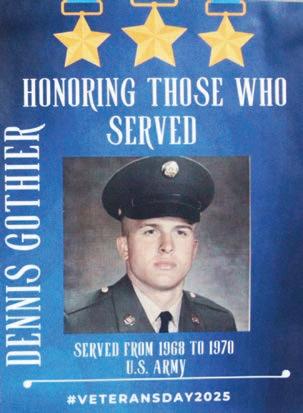
Each individual, whether they’re a member of the History Club, like Smith, or someone outside, could make one or more small posters, which were all posted together by the Mustang Mart on Veterans Day.

“On your little poster, you choose a veteran, and they can be a family member, or somebody you found online, and you just say some stuff about them. It can be a paragraph, or you can just say the basics of when they were born,” Smith said.
Many of the veterans featured on the wall were relatives of the people who worked on it, but everyone chose someone important to them. This meant that the activity could be more than just another project for its participants: it was a way to thank a veteran who had impacted their lives.
“I’m hoping that it will get people to realize how personal Veterans Day can be to everybody, and how much veterans have shaped our school. We have teachers who are on display who kids probably didn’t know are veterans, or family members, just to realize there are veterans all around us when we probably don’t realize it,” Ruda said.
One veteran at MN is physics teacher Brian Yueill, who came from a family full of veterans, and would always listen to the stories from their service. Growing up hearing about what military life was like is part of what led to his decision to serve, as well as helping him find the branch he wanted to join.
“[I joined] the Navy because I wanted to be on sub-
marines, and that was because my dad had been on an anti-submarine airplane. He would tell me stories about how hard it was to find submarines, and finding Russian submarines in the Puget Sound, or they’d been tracking what they thought was a submarine that turned out to be a whale. And it just fascinated me that we had these machines that could do that,” Yueill said.
Yueill was featured on the Wall of Honor, which he found very meaningful, as he has experienced the various ways veterans are celebrated over the years since he left.
“Even compared to when I served and when I first got out, I think we do a much better job as a society recognizing the service and sacrifice that the service members and their families have made. So I’m very appreciative of what the greater society and the Millard North family does to recognize veterans,” Yueill said.
Even though the Wall of Honor was only up for one day, the display still inspired many people within the school. Because of the stories behind every poster on the wall, the
“I got a lot of great feedback about how much this touched people,” Ruda said. “And I think in the future, I would like to maybe take it a step further and try to include other people and grow a bigger wall next year.”


Ihad always thought of gratitude as nothing more than the warm feeling that appeared when things were going well.
However, a special experience in my life showed me that it was much more than that. Our family hadjust moved from Atlanta to Omaha, and I was adjusting to a new school and environment. We wanted to get involved in the community and started serving meals at “Open Door Mission”.
My brothers and I would help with setup, and afterwards we would serve food and drinks to people as they went through the line. They were always thankful and smiled back at us as we served them.
For months, we would see the same familiar faces. It was eye-opening to see some of the struggles that the people in our community were going through. Even through their difficult circumstances, many still showed gratitude.

Seeing these people show resilience and gratitude through their toughest times made me aware of the








small things in my life that I often overlooked or took for granted. I realized that gratitude is not based on the varying circumstances of our lives, but something we choose to practice.
According to “4word Women”, gratitude is deeper than a feeling. Gratitude is a mindset and skill you can develop. For too many, the momentary thankfulness we express fades with trials in our lives.
Instead of acknowledging it as a fleeting emotion in our lives, we can strive to practice expressing thanks in any circumstance.
Although the troubles in our lives can burden us with anxiety and can be overwhelming, they provide an opportunity to cultivate gratitude, not merely as a feeling but as a life skill.
For instance, struggling in a tough class can make us appreciate the teachers and peers who support us. Similarly, it can be the encouragement from family during preparation for a sports event or performance, making you more appreciative of their support.
Practicing gratitude regularly has been proven to have enormous benefits. As reported by a “New York Times” article, research from numerous studies has shown that performing types of activities demonstrating thankfulness has led to many mental health benefits.
Practices such as writing “thank you” letters or recording a list of positive things in life can help to reduce depression and anxiety and boost contentment in daily
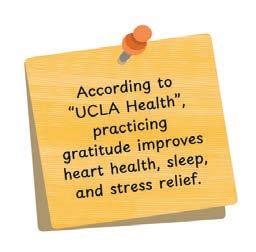




life. These simple exercises are things that anyone can do to develop gratitude as a skill, and have more positive effects than people think.
Furthermore, engaging frequently in gratitude exercises has also been shown to benefit individuals physically.
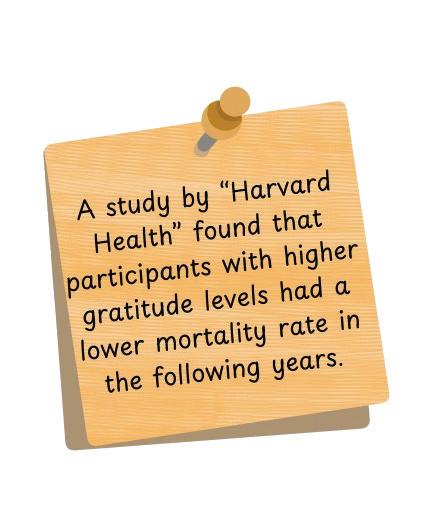
A study by the “National Library of Medicine found that when participants engaged in gratitude-based exercises, such as journaling or writing letters of thanks, they actually improved in sleep quality, immune responses, and blood pressure regulation.
As a society, we often forget how blessed we are. We have to open our eyes to the blessings we have in our lives. Having a roof over our heads, food to eat, and a bed to sleep on are all reasons to give thanks. We should not continue to ignore these necessities, but instead celebrate them with intention.
So how can we move beyond temporary moments of thankfulness and experience the gift of gratitude to the fullest?
We can begin today. Start developing the skill of gratitude by helping a classmate study, picking up trash when no one is looking, and showing up on time for teammates or coaches. These actions help you notice and value the people and opportunities in your life.



See how gratitude changes your attitude and outlook, and how it can lift up others. In the end, gratitude is more than just an emotion, but a skill we can cultivate to better our perspectives of the world.



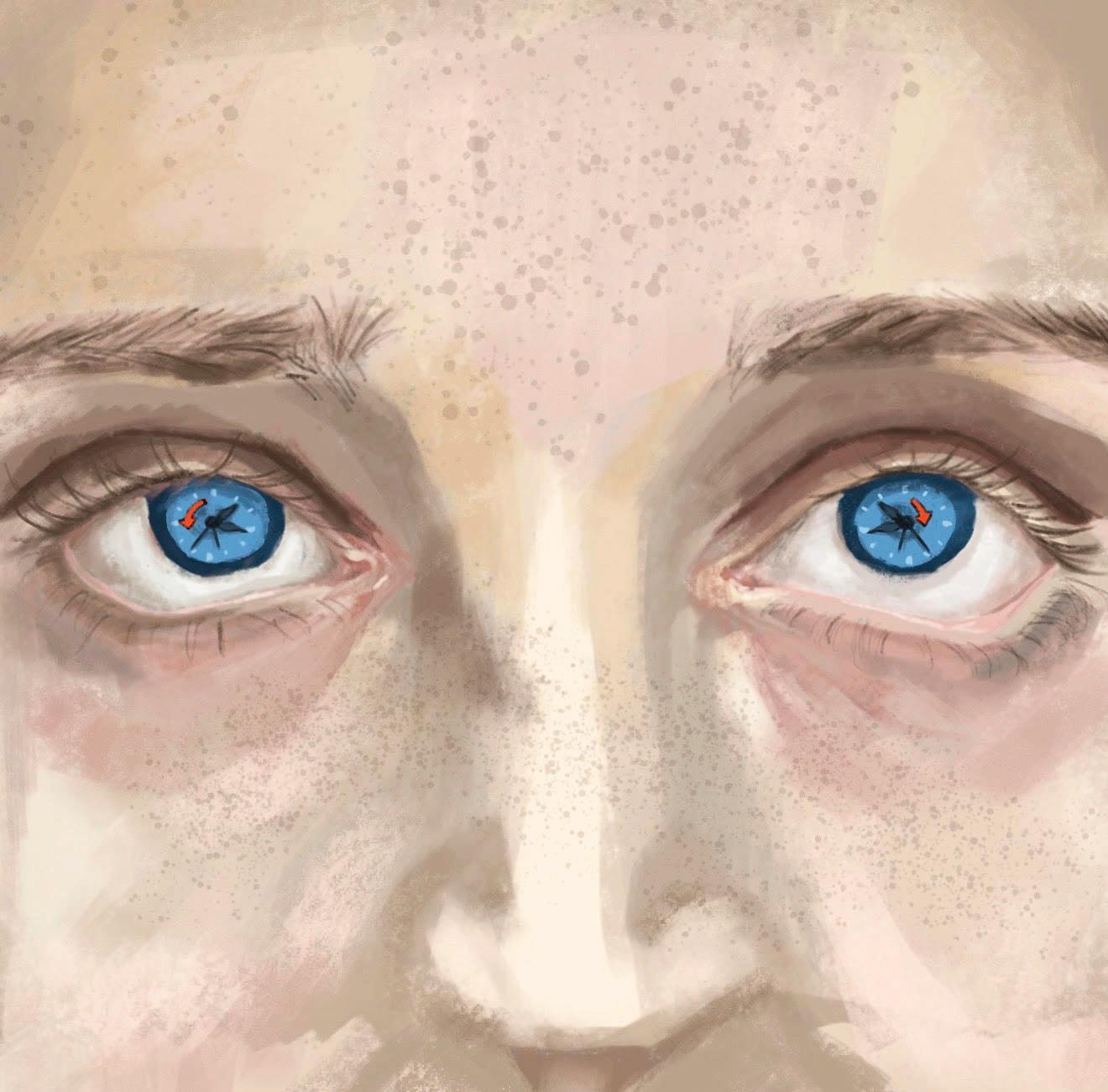
Exploring the origins of daylight savings time and its impact on a mental and physical level.
The history of daylight saving time and how age-old arguments have contributed to this debate
all, the time for leaves falling, night becoming longer, and pumpkin-spiced everything at every store. It’s also the time of year when the time changes, when people get an extra hour of sleep, and everyone’s lives are thrown out of place for a little while. Sleep patterns are disrupted, daylight is being reduced, and the temperatures are dropping as you ponder on why we have to do this twice a year.
This concept of “springing forward” an hour each spring and “falling back” an hour every fall is known as daylight saving time. Observed in much of the Northern Hemisphere, with many countries, including those in the US and Canada, as well as in Europe, Egypt, Israel, Palestine, and Lebanon in the Northern hemisphere, with Chile, New Zealand, and some parts of Australia having the tradition of moving the clocks back and forth every spring and fall.
The concept originated in 1916 in Germany, during World War I, to conserve energy and distribute it to factories and machinery. However, when the US implemented DST in 1918, the reasoning shifted from conserving energy on the front lines to supporting agriculture at home.
“Daylight savings time had to be started out to give farmers enough daylight to tend to their crops,” biology teacher Joy Rooney said. This led to many countries implementing DST as a means of helping farmers produce crops, increasing production.
These arguments have kept DST in place in much of the world, helping many farmers grow the food we eat. However, because of technological advancements and a reduced number of farmers, the concept of DST has been dying down. Much of the world has now eliminated daylight saving time, including the US state of Arizona.
Along with the arguments that tech has advanced with time, a lot of people experience health problems with the changing time. This is due to the change in circadian rhythm, the body’s internal clock. According to Cedars-Sinai Medical Center, rates of seasonal depression usually spike during this time because of the reduced daylight and energy.
Because of these reasons, there have been arguments to remove daylight savings time for a year-round permanent daylight savings time or to get rid of DST altogether. 19 states, including Nebraska, have supported implementing a system of time where permanent DST is observed. Still, because of federal regulations that prevent such a change, however, with the success in such legislation in Arizona and Hawaii, much of the country has been in support of changing the time system.
The current legislation that has been causing this argument, the Uniform Time Act, allows for each state to opt out of DST but not to permanently implement it, which has led to more arguments by state legislatures and in Congress to reform the Act to allow states to implement permanent DST.
JAYDEN MAPLE Staff Writer
The overall argument of permanently implementing or removing DST in the US has been how much control the states have over time zones, rather than the federal government controlling time for all 50 states. States’ rights have been something that has been debated ever since the Constitution was implemented, and have led to much conflict and arguments on issues that affect our country today.
In a sense, the argument for or against DST has been and will be a topic of discussion this time around. As we look, the overarching question of the power of the states, health effects, and agriculture, and how DST can affect that, has been leading these arguments forward through the legislative process. With the complex, overall arguments that have been affecting this country for centuries has been the forefront of the politics of America, it doesn’t seem that change will be coming in the near future. The fight about the time will be a part of a whole mess of things that’s been too much to handle, but there has been some progress for legislation to be pushed, public opinion has increased, and the overall sense of things can force governments to change. But for now, we can only hope and wait for that change to happen.
For now, turning back time is the norm around here, and from the looks of it, they don’t seem they want to change that, but with the progress made and how our country is divided on that topic, times are changing, and we should see how it can change ourselves, for better or for worse.
Hydration can help remedy sleepiness or headaches that can result from the changein sleep.It can also provide asource of energyand regulate sleep cycles.
Extra naps, likely dueto less sunlight,can impedeon sleep quality. Trying toadheretoa sleep schedule can lesson daytime sleepiness.
Helpful tips the end of daylight time.
Restrictcaffeine,especiallyintheafternoonand evening,reducesdisruptionsincircadian rhythmandhelpsthe bodywinddown. back,Whentheclocksgo makesureto bedtime.sticktoaconsistent Oversleepinghaveorundersleepingcan dailydrasticeffectson functioning.
beforeEventakingfiveminutes somebedtimetopractice mindfulmeditationcanimprovesleep quality.Popularapps includeCalmand Headspace.
tips for navigating daylight savings time.
The impact of daylight savings time on mental, emotional, and physical well-being
GRACE EVERT Co-Front Page Editor
Movie theaters, plane rides, power point lectures, and daylight savings time. Despite how different these experiences may seem, they all have one thing in common: they expose us to the effects of darkness.
Almost everyone has nodded off in an anticlimactic movie, or fallen asleep under dimmed cabin lights, but why does a simple hour change on our alarm clocks have the same effect?
“When it is dark outside in the early evening, our brain still responds by releasing melatonin, which can lead to a lack of energy as a result. So, less sunlight hours due to daylight savings can often mean less energy for us overall,” Hewitt said.
Even without an understanding of the science behind the brain and its response to early darkness, it is easy to notice the effects in our bodies.
“It gives me the sense that the day is done early. People typically associate nighttime with being asleep, so it definitely gives a feeling that the day is short,” freshman Charline Dunlop said.
Maintaininga consistent meal schedule witha balance of fiber, carbs, and protein regulatingaidsin the bodyto the time change.
Regularmovementimproves mood and boosts endorphins, which can help mitigate the effectsof less daylight.
Settingyour environment by dimminglightsand puttingawayelectronicdevicesatleast30 minutesbeforebedcan helpeasethebodyintoa stateofrelaxation.restand
“When it gets dark out, our brain assumes that we are nearing the time to go to sleep. Our brain responds to the dark by releasing a hormone called melatonin in the brain, which makes us drowsy. So, the time of day that we feel sleepy is greatly affected by the daylight we are exposed to,” psychology teacher Mark Hewitt said. Although the true difference during daylight savings time is only an hour, the time of sunset experiences a more jarring jump. From an average sunset at 9 p.m. in the summer to sunsets around 5 p.m, in the winter, it’s not unusual to feel like the night flies by during the holiday season.
For students with jobs, athletics, and other commitments after school, the transition can be even more unsettling.
“I definitely don’t like that it’s dark earlier because some days I don’t see the sun in the afternoon because of my activities, but I do like that the sun rises earlier,” senior Dylan Lee said.
In addition to disturbing circadian rhythms (the body’s internal 24-hour clock that regulates cycles of sleepiness and alertness), daylight savings time can also cause a condition called Seasonal Affective Disorder (SAD).
“There is absolutely a higher percentage of people who suffer from Seasonal Affective Disorder in the winter months. Symptoms usually include a lack of energy and motivation, oversleeping when possible, sadness, difficulty concentrating, and even a desire for more food and carbs,” Hewitt said.
An article by Ellipsis Iowa states that adults are statistically more prone to SAD, but teenagers can also be vulnerable to developing the condition.
“Teenagers already have a tendency to both fall asleep and stay asleep later, and add on top of that the fact that teens are typically getting less sleep than many other age groups. I notice a bit more drowsiness and low energy with students entering the room during the winter months, so I’m sure daylight savings time plays at least some role,” Hewitt said.
Although the time change is not the only cause for a winter slump, it adds to other factors that make the cold months increasingly challenging. Despite how abrupt these changes may feel, there are many ways to keep balance in the face of daylight savings time.
“One thing that helps is to try not scrolling on a phone or laptop before bed. The light from your devices acts like daylight in the sense that it blocks the release of melatonin, often meaning it will take longer for you to fall asleep and you will not get the rest you need. So, ideally students maximize their time during the day in sunlight, but minimize their exposure to light before going to sleep,” Hewitt said.
So, with winter months fast approaching, an easy way to boost our physical and mental health is to go outside and seek what we all are lacking: daylight.
COUNTRIES THAT OBSERVE DAYLIGHT SAVINGS TIME
• Only a third of the total countries in the world practice daylight savings time.
• Countries include the United States of America (except Arizona and Hawaii), Egypt, the majority of Europe, and parts of Canada, Latin America, and the Caribbean.
COUNTRIES THAT DON’T OBSERVE DAYLIGHT SAVINGS TIME
• Armenia, Azerbaijan, Belarus, Georgia, Iceland, Russia, and Turkey do not practice Daylight Savings Time
• China, Japan, India, the majority of Africa, and many countries near the equator also do not practice Daylight Savings Time.
Sometimes,timezones havebeenaltereddue topoliticaloreconomicalreasons.For example,Venezuela abolishedtheprior timezonesin2016 duetoelectrical consumptionconcerns.
Half of the countries that usedto practice daylight savings no longer do. Iran, Jordan, Turkey, Uruguay,and Mexico haveall made changes within the last 10 years.
TICKING TIME ZONES
Although daylight savings time is a widely recongized topic, there are still other factors to the overall subject of time zones.
TheU.S.isoneofthe onlycountriesthat zoneshasmultipletime (nine).FrancehaveandRussiaalso zones,multipletime respectively.13and11, Some countries only observe daylight savingsin partsofthecountry, like the U.S., Canada, and Australia, and Brazil.
Source: Pew Research Center

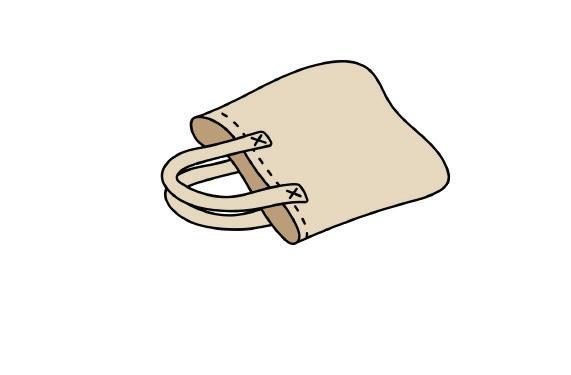
he performative male comes with a unique taste – he’s different, he’s fashionable, and he’s interested in all the same things as you. However, he’s dangerous, and carries with him the same toxicity he seems to oppose. The concept of being performative is a product of the internet feed. Men online became painted in emerald matcha, old literature, and a distinct style of widelegged trousers and canvas tote bags.
Now, performativeness has spread across the globe, infecting people like viruses exuding from TikTok screens.
At first, a performative male seems like someone who meets all romantic standards. He’s the enemy of toxic masculinity, he’s vulnerable, and he checks all the boxes. He’s the ideal partner – the knight in shining armor.
However, he’s not what he seems.
Being performative is just that: being performative. It’s a facade meant to gain attention. A person adapts to the environment around them, adopting certain aesthetics and hobbies that draw in views online.
They like matcha not because of taste but popularity (or they at least tolerate it enough to buy it every Starbucks trip). They don’t read literature for the words

on the page but for words of praise. It’s a circus of disguises, pretending to be someone they’re not.
Being performative has become an internet storm, sweeping people away in the winds. It’s a social media trend that values certain aesthetics, encouraging men to adopt them because they think it’s “popular”.
However, by conforming to this trend, people suppress what they actually enjoy. They abandon their true interests for books they don’t read and tea they don’t drink.
Yet being performative isn’t just adopting cool clothes and drinks but completely changing your values (or at least just on the outside).
In order to mix with the net hive mind, performative men even change their morals to blend with the crowd. They start advocating for rights and equality, throwing a flag or two in their bios and reposting videos online.
But most of the time, they never attempt to make any real change. And even more often, their true values don’t align with the sides they follow.
It all seems to be a costume for praise. They want comments, they want to turn heads, and they want attention. And primarily, performative men become performative for a very specific type of attention – girls.
They adopt the traits they do because they think that’s what girls look for in men. They think of the female gaze and attempt to replicate it. In their mind, matcha equals girls.
But this raises red flags across the board. When finding a perfect partner, genuinity and sincerity are imperative traits. It allows people to connect on a deeper, more personal level and form life-long relationships.
By being performative, people hide an important aspect of themselves. Their
true colors are masked behind the aesthetics, and they only let the things they think people will like shine





The consequences of the increasing protein obsession on a socioeconomic level protein-rich diets? One of the main macronutrients — along with carbohydrates and fats — protein is highly praised in the health and fitness industry for its role in muscle building and overall satiety.

Co-Editor-in-Chief
stared in dismay, yet I was unsurprised at Starbucks’ latest advertisement on their new protein coffees and cold foams. Boasting a whopping 36 grams of protein per Grande serving, these protein-infused drinks are a current example of the permeation of protein in the food industry.
Now, I’ve noticed a growing trend of protein in not just supplements and drinks but also general food products. Every time I go to the grocery store, almost every food product has a high-protein alternative. Mac and cheese with 30 grams of protein, cereals boasting 20 grams of protein — the addition of protein emblazoned on almost every food label has become overbearing and overwhelming. Why this fast-growing trend of
People
At a biological level, according to “Harvard Health Publishing”, protein powers essential biochemical reactions of cells, aids in structural support, and supports the growth and repair of the body’s tissues.
We all know protein is essential. Without it, our bodies could not perform the necessary reactions and routines needed for daily functioning.
But even though carbohydrates and fats are equally as important as proteins, they are not as emphasized in the media and consumer culture as protein. Fiber aids in digestion, mitigates blood sugar spikes, and inadequate consumption is correlated with certain cancers; carbohydrates are essential to brain functioning and daily energy levels.
But this obsession surrounding protein has dimmed the importance of other invaluable nutrients; the marketing of protein has catapulted far beyond the macronutrient’s basic functionality. From spurring on “clean” and “guilt-free” food mentalities to aiding in increased monetization for food companies, protein has slowly morphed into something far beyond its original intent.
Although protein’s premise of satiety, weight-loss, and overall health benefits is appealing, this is a veneer for a more incentivizing result: money.
The recommended protein intake per day is around 56 grams and 46 grams for men and women, respectively. Data from the Centers for Disease Control and

Prevention show that the actual average daily intake is around 82 grams.
This uptick — an article published by “BBC Science Focus” states that in the past ten years the amount of high-protein products sold has quadrupled — in food products ladled with protein has an ulterior motive in the food industry: companies are able to pickpocket more money from consumers.
While excess protein intake isn’t necessarily linked to catastrophic health consequences, depending on the protein, this overall trajectory in the emphasis of protein is a direct result of the food industry’s capitalization of consumers.
Additionally, the social connotation of high-protein foods only seeks to further instill unhealthy mentalities surrounding food, as these high-protein foods tend to advertise “guilt-free” eating (which also continues the cycle of incentivization from the food industry).
While it is encouraged to build and maintain a well-balanced diet, food has no morality. Deeming a certain food “good” or “bad” only reaffirms diet culture practices and unrealistic expectations.
The key is sustainability; believing you have to meet a certain protein goal every single day to meet your health or fitness goals and exclusively eating high-protein alternatives can work and be a preferred lifestyle for some individuals, but it is important to find what works for you and strike up the right balance.
A healthy diet is one you will be able to maintain for the long run, and encompasses far more than just one macronutrient.


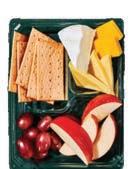

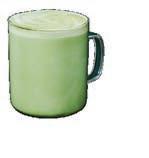

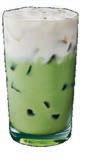

Starbucks has added new artifical protein options to their menu at an increasing rate. The overconsumption of artificial protein sources can lead to kidney and liver damage
Source: NIH
Harmless interest in a celebrity can spiral into something darker
LYDIA HARLOW Sports Editor
e can learn everything about celebrities. Their pets’ names, their hobbies, and everyone they’ve ever dated.
With information all around us and access to it so readily available, all the details you could want rest at your fingertips. It’s easy to learn about a celebrity’s life in three-dimensional detail; you can discover so much, it feels as if you’re best friends. Except for one thing: they have no clue you exist.
Watching their lives through a screen, going through every experience as if alongside them… it’s almost easy to believe that you are connected, that they’re your friend, that you truly know and understand them. But in reality? You’ve never met. They don’t know your name or anything about you.
“I think it can make people delusional and obsessive… they think they are a part of [the celebrity’s] lives, and they know everything about that person, and I know there are crazy people out there who go and stalk them,” senior Norah Galligan said.
Taking an interest in a celebrity can be fun and harmless when it’s just a source of entertainment.

Watching reality TV shows, interviews with ce lebrities, or clips of them on social media can allow you to learn more about them and even allow feelings of connection without any of the complications of real two-sided relation ships.
“When Fandom Goes Too Far”, an article by the University of Texas, explains this, saying, “Heroes, imaginary or otherwise, are a source of inspiration and motivation. For example, ce lebrities offer a way for teens to connect with someone without the risk of rejection while they learn to make and maintain connections with their peers”.
Celebrity culture can be fun and light hearted; it can be a way to relate to someone outside of your immediate circle, a talking point, or a thing to joke about with friends. Hear-me-out cakes (a trend where people put pictures of their celebrity or fictional crushes or ‘hear-me-outs’ on a cake), arguing about who is cuter: Conrad or Jeremiah, or discussing celebri-
Watching interviews, clips, reality shows
Buying merch, fan art, social media likes/follows
Following fan pages, remembering personal details shared publicly
Searching for private information, trying to track personal life
Showing up at personal locations, harassment


“My friend and I both really like this actor, Walker Scobell. For me, it was because Percy Jackson was like
celebrity’s life can turn to stalker-like obsession.
“I think it gets creepy when you’re looking up super personal information about them, like going out of your way to find it. It’s different if you are like watching an interview with them, and they share something and you remember it, but it’s creepier when you go out of your way to search up information about them,” Galli-

We all too often tend to forget that celebrities are real people too, that they too have feelings and personalities and real, human friends. And obsessively watching every video? That does not mean that you are one of
“I think that some people can take it too far, and take it from being like ‘oh I like their work’ or like ‘I admire them’ and take it to like ‘I know them’ and like ‘I am in love with them’. That [mentality is] crazy, because you can’t truly know them, they are basically a strang-
Influencers feed into these beliefs because the way they make money is through raising fan interactions. The face-to-face feel often gives the illusion of friendship and intimate conversations, despite being broad-

Yet these interactions have been expertly curated, and don’t always depict reality. They don’t truly reveal what the celebrity is like, and the one-sided relationships fans form based on the celebrity’s persona aren’t even with a real person, but rather an idealised, and often even sexualised, version of them.
“I think it can be genuinely concerning. It’s a level of delusion that’s scary, almost. These celebrities are real people, like using the Walker Scobell example, he is really just a teenage boy. It’s really scary that people have that sort of mindset around him and other teenag-
MIRA MUKHERJEE
Co-Editor-in-Chief

he cheese stretches in long ribbons as I take a huge bite of the pizza slice, the warm, crusty dough enveloping me in a blanket of warmth. The salty, tangy cheese cuts through the ripe tomato sauce, red and white combining to create the perfect balance of savory and sweet.
Pizza — a favorite for many due to its versatility, customizability, and convenience. I’m personally always up for a slice of pizza, whether it’s a classic Chicago-style deep dish, an indulgent calzone, or even a cauliflower crust.
Now, while pizza is a solid choice for most due to its wide variety of options, the classic cheese pizza is always a safe bet, and I was eager to try some local spots in Omaha. My main criteria for the pizzas were presentability, price, and, of course, flavor.
Neapolitan (Italy):
Soft, thin crust, simple tomato & mozzarella

Detroit-Style (USA):
Thick, rec caramelized cheese

First up, Oscar’s Pizza and Wings Carry Out. Located on 162nd and Maple Street, Oscar’s was very convenient as they did car-



Classic, fresh basil, simple and savory
ry-out orders. I ordered a medium cheese pizza, which costs $15.99.
At first glance, the pizza was packaged nicely and looked like a standard, classic cheese pizza; the cheese bubbles and puffy crust made my mouth water. But the first bite was honestly underwhelming. While the crust was nice and soft, the cheese was a bit stretchy for my liking and easily slid off.
The tomato sauce, although promising, was quite scarce, and I couldn’t really taste it. I believe that if I had ordered the “Extra Sauce” option, I would have been able to taste the sauce better, and it would have helped enhance the overall flavor profile.
I rated the pizza as a 6/10 because it is a nice, simple pizza, especially for those who want a lighter option, but I found the overall flavor to be lacking.
My next stop was Timber Wood Fire Bistro, a typical sit-down restaurant located on 87th and Pacific Street that is known for their wood-fired pizzas. They have a wide selection, from the more adventurous red wine poached pear to the timeless Margherita.
I ordered the Quatro Formaggio, which cost $19. Crafted with four different cheeses — scamorza, ricotta, mozzarella, and Romano — fresh herbs, and a delicate drizzle of honey, my stomach was rumbling from the mere description of the pizza.
I was very impressed with the presentation of the pizza. The gooey, creamy cheese paired with the pillow-soft, thin-crust pizza made it easy to grab a slice from the plate. Structurally, the crust held its ground, not sagging from the weight of the four cheeses.
The first bite was pure heaven. Although there was no tomato sauce, the rich mix of cheeses created an immense depth of flavor. Combined with the sweet, lingering effects of the honey drizzle, this pizza was outstanding and unlike any cheese pizza I’ve ever tasted. I rated this pizza as a 9.5/10 because although it ticked all the boxes in the flavor department, it was on the more expensive side and may be too rich for some

Japanese Mayo & Corn Pizza (Japan): Sweet corn, mayo, and gooey cheese

My last destination was specifically for deep-dish pizza: Pizzeria Davlo. Located just off 144th and Fort Street, I was pleasantly surprised by their comforting, friendly atmosphere. I ordered their Chicago-style
the size, it was the most costly of the three pizza locations I visited.
But honestly, it was completely worth it. When I first saw the pizza, I immediately grabbed a fork and knife. The 3-inch deep, fluffy crust ensconcing the pool of creamy, thick tomato sauce looked abso lutely delectable.
The first bite completely lived up to my ex pectations; the soft, melty cheese perfectly enhanced the rich tomato sauce, the crust providing the perfect crunch. Before I knew it, I had already devoured my slice and ea gerly reached for a second. I rated this pizza as a 10/10. As someone who is not typically a deep-dish pizza fan, this pizza completely changed my opinion. Overall, while Oscar’s is a good choice for a classic piz za lover and Quattro Formag gio for an epicure, Pizzeria Davlo was my favorite due to its appearance and superb flavor pro file. Pizzeria Davlo has converted this former thincrust lover into a die-hard deep-dish pizza fan.

Myth 1: “Deep-dish is always the most calor -ic slice.” →
Busted: A thin-crust with extra cheese can pack just as many calories!
Myth 2: “Thin crust means less flavor.” →
Busted: Sauce and quality cheese can make thin crust taste amazing.

Myth 3: “Extra cheese = too rich for everyone.
Busted: The right balance of cheese and toppings makes it indulgent but not overwhelming.

Insight into the progress that MN senior, Nahed Hudson, has made in the ice skating community
TEJA SRIDHER
Co-Opinion Editor
The arena lights slowly fade, the glass-like rink glimmers from the reflection of her costume, and the music begins to pump loudly, heard throughout the entire audience. Finally, the months of training, late-night practices, and precision in detail will pay off.
While most teenagers yearn to spend their weekends off, senior Nahed Hudson is out at the ice skating rink, flawlessly twirling on the ice while rehearsing her footwork dozens of times for her upcoming competitions.
Hudson, beginning this journey at 14 years old, wanted to join ice skating after admiring the sport in the Olympics. Her fascination with ice skating led to her eventually competing and coaching others.
pline needed for this sport.
“I go to the ice rink around twice a week because I have a very full schedule, but I stay there for a couple of hours because I also coach. I will be starting three times a week again because I will be doing Off Ice Academy and On Ice Academy, which are group lessons, and there are a variety of workouts included with them.”

Polar Poise
Senior Nahed Hudson holds a long spiral as she glides down the ice. This shot was taken at the Moylan Ice Skating Complex for her senior photos.
Photograph contributed by Nahed Hudson
“I started the Learn to Skate program at Moylan Iceplex, and then when I got in, I had a coach get very interested in me and took me under his wing, and that’s how I started,” Hudson said.
Balancing her high school classes, other extracurricular activities, and ice skating has been challenging at times, yet she understands the sacrifice and disci-


Another way Hudson got inspired to do ice skating was through her friend, senior Eden Venema. Venema, who was just seven years old when she started skating, has helped Hudson at the start of her journey.
“We skate at the same time on Saturday mornings, and I am a level above her, so whenever she needs help learning new moves that I already learned, it’s easier for me to show her than our coach. Our coach is getting older, and it’s harder for her to show the moves. I also take videos of [Hudson] doing spins and jumps so that she can watch them back and see if she is doing them right or wrong,” Venema said.
Aside from helping Hudson with new tricks, Venema tries to attend most of her performances, too.
“I also go to all of her

cheer her on constantly, making sure that she is in the best mindset and doing the best that she can do, always being there for her when she needs it.”
Hudson has many support systems rooting her on while she skates, with one of her biggest supporters being her mother, Maha Amoura.
“When she first started, I came to every practice, sat in the bleachers, watched her go, and cheered in the background. I was the mom who was standing there with the camera, taking videos of her, and standing at the exit waiting for a big hug, so that she could always know that her mom is there to support her,” Amoura said.
Hudson has won several awards, one being runner-up at Excel III pre-preliminary freeskate in the 2024 Spring Fling. Despite her skating career only beginning freshman year, she plans to continue this activity for the remainder of high school; she also has plans for after.
“I do plan on continuing after high school, and I do plan on coaching as well. I really want to stay here because of my skating, as it would definitely be hard to find a new coach and a new club. I dow have a goal by the end of the school year to pass my pre-bronze skating skills and to work on my bronze skating skills, so I have a long way to go because I just passed my last skating skills test about a month ago.”

Crystal Curve


Hudson has found this activity to be one of the highlights of her high school experience, and aspires to keep her passion going. Behind the frustrations, sacrifices, and endurance she has had to invest in this activity, she wouldn’t have it any other way.
Senior Nahed Hudson holds a controlled spiral with her back leg extended behind her. She’s skating to “Burn” by Phillipa Soo from Hamilton.
Photograph contributed by Nahed Hudson
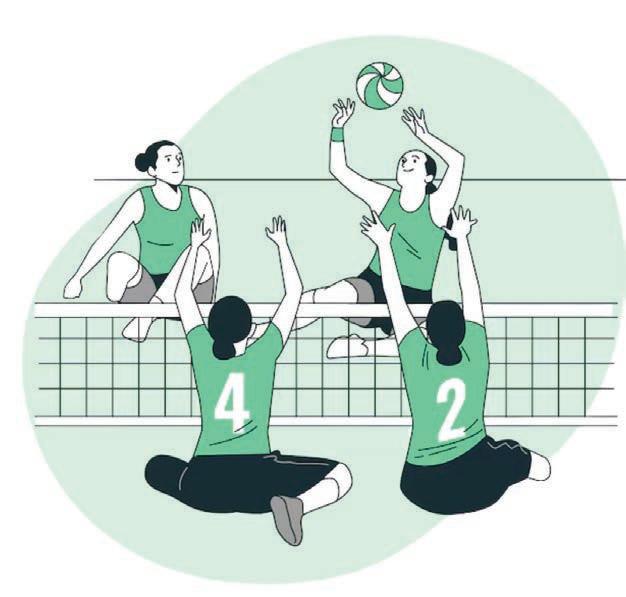
Players position is determined by where they are seated instead of foot placement.
As long as they’re seated behind the line, limbs may cross into the court while serving or onto the opponents side (as long as they don’t interfere with play).
The net is lowered to 1.05 meters for women or 1.15 for men, as opposed to the traditional height of 2.24 meters for women or 2.43 for men.
Senior Hannah Ehrenberg’s experience
KATELYN JUDD News Editor
n life, a single moment can define who you are and what path you follow. A simple “yes” or “no” can be transformative in what an individual is meant to do with their life. For senior Hannah Ehrenberg, it was coaching Paralympic volleyball.
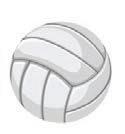
Sitting volleyball, also known as Paralympic volleyball, officially became a sport in 1976 and first competed in the Arnhem Paralympics in 1980.
The sport has been included in the Paralympics for the past 40 years and has only grown in popularity ever since. The success of a sport isn’t completely dependent on its athletes; a behind-the-scenes component is just as important: the coaches.
Ehrenberg, who plays club volleyball at Premier Nebraska, discovered the Paralympic team through her coach, Braden Hall, whose friend is disabled and coaches the USA team. Her club team volunteered during practices with the national team.
Ehrenberg found coaching challenging, but she knew she had a passion for it and became more comfortable as she gained more experience.
“I felt really out of my comfort zone, but it was re-
The main court is 10m x 6m, which is roughly 1/3 the size of a traditional volleyball court, and around this is the free space, which is increased based on the player’s mobility.
It is legal to block the serve in paralympic volleyball, but not in traditional.
Teams additionally may counter-block, leading to teams preparing a block while their own team is serving.
The main difference with paralympic vs. regular volleyball is that they are seated at all times while playing, and only short losses of contact are allowed.
coaching Paralympic Volleyball and how it led to her future career
ally cool to see how people were able to play despite their disabilities,” Ehrenberg said. “The most rewarding part of coaching has been seeing other people succeed. In sports, and volleyball especially, it’s very technical, and it can be really hard to master a skill. Seeing people succeed just makes you really happy”.
In both club and school volleyball, senior Addy Farrell has played alongside Ehrenberg for her high school years and has full faith in Ehrenberg as a coach.
“Hannah would be good for coaching because she has so much love for this sport, and it definitely shows on the court. She will put everything she has on the court,” Farrell said.
Millard North volleyball coach Lindsay Grant has worked with Ehrenberg for years and did not doubt that she would bring the right energy.
“Hannah is a great leader. She leads by example and is always the first person to speak up if something is going wrong,” Grant said. “She’s always fueling the team regardless of whether she’s on the bench or not. Hannah’s go-to saying is ‘positivity is key.’”
Leading the National Paralympic team brought along fun moments as well, some of which Ehrenberg still reminisces about, even months after coaching. She focused on what realization the instances brought.
“My favorite memory coaching was when we were on the court scrimmaging, and there was a ball going out of bounds. I tried going for it, but I forgot I could use my legs. So I just fell over, but it made me realize how difficult [Paralympic volleyball] is,” Ehrenberg said. “I think Paralympic volleyball is so much harder than regular volleyball.”
Reflecting on her experience, the most important part of coaching to Ehrenberg wasn’t quite what she expected.
“The relationship comes first. Your relationship with the people you’re coaching and other coaches is really important, and that’s how you build a good team,” Ehrenberg said. “You can build a skill, but you can’t build character.”
Through these leadership opportunities, Ehrenberg realized that coaching was a profession she seriously considered. She is committed to Kansas Wesleyan University to play volleyball and hopes to one day become a coach.
“I want to change lives. I know I’ve had a few coaches who have changed my life and really helped me through tough times… so I have a good perspective on what it means to be a good coach,” Ehrenberg said. “I want to be that for somebody else.”
approved backstroke ledges become a game-changer for MN
SARAH ROBEY
Co-Front Page Editor
t is the beginning of your race. The cool water engulfs you as you jump into the pool, your swim cap and goggles tight against your head. You grip onto the handlebars and carefully place your feet onto the wall as you wait for the sound of the buzzer. Beep! You explode backwards, but your feet lose their grip on the slippery wall. You struggle to regain the lost distance, costing you several places at the finish.
This situation is common for backstroke swimmers and can often make or break a race. Now, there is a way to combat this challenge directly.
This year, the National Federation of High School Sports (NFHS) and Nebraska School Activities Association (NSAA) approved the use of backstroke ledges for the 2025-26 school year. MN is one of the first high schools to adopt these and will begin using them at the start of the season.
Prior to this development, these ledges have been used since 2013 at the international level, including the Olympics, World Championships, and USA Swimming National Championships.
A backstroke ledge, also known as a backstroke device, is a small ledge with a grippy texture that the backstroker puts their feet on to push off of. There are two main types: the auto-retractable ledges and the manual ledges.
For the auto-retractable devices, the pressure exerted by the swimmers causes the device to be lifted out of the water by itself after the swimmer starts. For a manual device, a person has to pull it out of the water once the swimmer begins and reset it manually.
“It is a ledge to place your feet to be able to have a better directional force for the way that we want them to be racing,” head swim coach Andrew Cunningham said.
While these devices have been used for many years at higher levels of swimming, there have been safety concerns about adopting them at the high school level.
cause at the international level and collegiate level, those facilities are different from what we have at a lot of high schools across the country,” Cunningham said.
The backstroke is the only swimming stroke where swimmers start in the water instead of diving in. Before these new devices, swimmers had to place their feet on a wall or touch pad, which did not have enough texture to grip onto for their start, creating challenges with slipping.
“It’s really hard to get a great quality start when touch pads aren’t equal, facilities aren’t equal, or it’s just the painted wall,” Cunningham said.
Now with the introduction of these devices, swimmers will be able to start off their races with a better, more consistent push and reduce the risk of slipping.
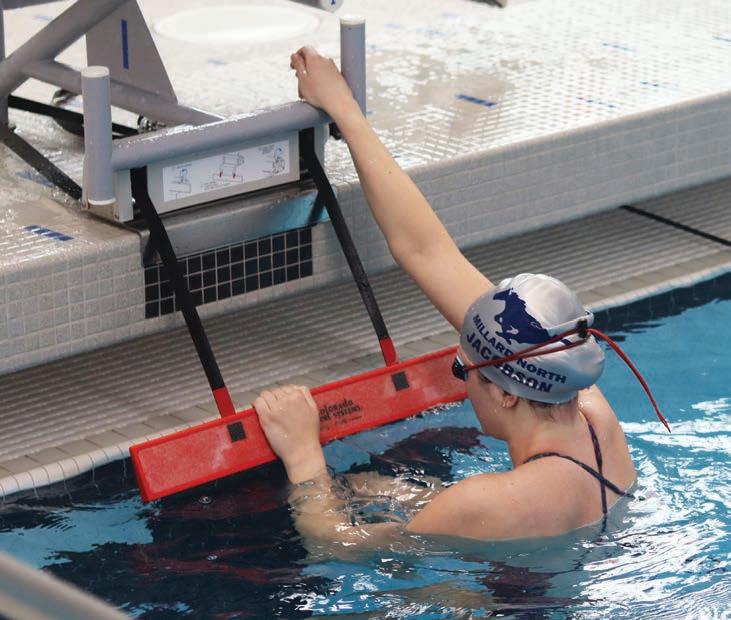
Senior backstroke swimmer Morgan Jacobson sets up the backstroke ledge, submerging it in the water to provide a grip for her feet. After taking off, the ledges automatically retract up, easing the set-up for the swimmers.
Photograph by Lydia Harlow
“It really sets the tone for your race. It is really important to have a good start, because if you mess up your start, it is awful,” backstroke swimmer senior Morgan Jacobson said.
It really sets the tone for your race. It is really important to have a good start, because if you mess up your start, it is awful.
“When it comes to starts, the biggest concern is the head, neck, and back injuries because of a collision with the bottom of the pool. Adding in something that athletes can more or less jump off of, they had to figure out what guidelines can safely implement it, be-
MORGAN JACOBSON SENIOR “ “
With other things running through a swimmer’s thoughts at the start of the meet, the easier start can relieve some of that pre-race stress.
“It is eliminating that fear in the back of your mind. You’re thinking about it like ‘Oh gosh, I better not slip,’ so it helps eliminate that overthinking of your start,” Jacobson said.
In addition to MN, Westside High School is the only other school who will be getting these devices. While these devices will be used for practices and several meets, they will not be at the NSAA State Swimming & Diving Championships due to the inadequate pool depth at the Bob Devaney Sports Center Natarium, where it is held. In order to cover the high costs of these devices, the swim team held a fundraiser.
“We reached out to the booster club, and they were very generous in giving us money to purchase the ledges. In addition, we did a fundraiser that helped raise some money as well to purchase the ledges,” Activities Director Keith Maly said.
MN has a six-lane pool and therefore decided to buy eight of the auto-retractable ledges, which allow for two extras in case of malfunctions or damage.
“Number-wise, we run a meet equivalent to our conference-level meet and the state-level meet, so having that technical equipment is really necessary,” Cunningham said.
This meet, called the Millard North Invite, will be hosted in January. Last year, over 500 swimmers and 18 teams participated in this meet.
“It’s really exciting that we will be able to use them for our MN Invite, which we get really excited for. It’s a really good opportunity to get better times and get better backstroke starts,” Jacobson said.
With the season just beginning, the swim team looks ahead to an exciting season ahead with these new additions, making them feel confident and ready.
MATTHEW
UM Staff Writer
t’s an old saying, “Records are made to be broken”. For senior Coriahnn Gallatin, sinking 98 three-pointers to break the All Classes Nebraska State Record for the most three-point shots scored was the culmination of everything he’s been working towards since he picked up the game.
“I’ve been playing basketball since I was two years old,” Gallatin said. “My dad played basketball since he was a little kid, so he was the one who got me into basketball at a really young age.”
Gallatin was invested, with basketball becoming a constant throughout his youth.
“It’s really fun growing up around the game. I just find joy being around teammates and just working hard,” Gallatin said.
While holding the Nebraska record is undeniably impressive, Gallatin, a team player, continually emphasises that there’s more to his game than the final product shows. Behind the scenes, a lot more happens than what is seen on the surface.
“It’s cool that all the hard work that I’ve put in has paid off, but I need to give credit to my teammates for being able to find me, [and the] coaching staff for being able to [give] me the confidence to shoot,” Gallatin said.
I was coaching an AAU team,” Etzelmiller said. “He was playing up on the eighth-grade team. I knew right from the gate that he was a great talent”.
After this experience, Etzelmiller was part of Gallatin’s decision to move to Millard North from Fremont after his sophomore year.
to get better every single day,” Gallatin said. There’s more to Gallatin’s game than his team, however. Gallatin credits his father, a basketball player in his own right, for making him the great player that he is today.
Boys Basketball Head Coach Michael Etzelmiller recognizes Gallatin’s unselfish outlook as being instrumental in his success.
“I’m super proud, but you wouldn’t know it talking to him,” Etzelmiller said. “He doesn’t gloat about it or talk about it much. He lets his play speak for how good he is.”
Etzelmiller and Gallatin have a special bond, one that formed before Gallatin even entered high school.
“I first met him when he was a seventh grader, and
Chase Morris
Jock Talk
What keeps you motivated and consistent in the off-season?
“With my dad, just going to the gym every night, working on my shot, working on my 3-point shot,” Gallatin said. “He’s the only person who’s ever trained me, so everything I know is from him. I credit a lot of my game to him.”
Gallatin’s father, Cody Gallatin, is also an accomplished basketball player. He currently holds Fremont High School’s assists records at 245 and had previously held the school’s record for most 3-pointers in a single season with 61 - until his son broke it his freshman year with 98.
“Basketball isn’t his identity! It is just something he does and not who he is,” C. Gallatin said. “He makes the right play most of the time, which makes him extremely hard to stop. And most importantly, he just wants to win for his team!”
Crossing Over
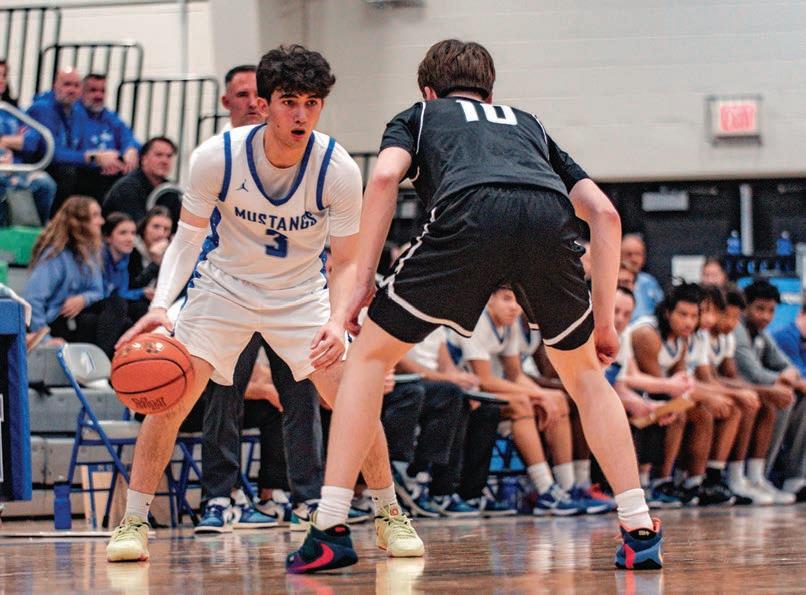
Senior Coriahnn Gallatin takes the ball down the court during the Dec. 5th game against Millard West. Mustangs were up the majority of the game, sealing their lead with a final score of 58-40.
Photograph by Sebastian Cacho-Aviles
“There were some coaching changes, so he decided to look for a new school. We already kind of had that connection, so that’s why he chose Millard North,” Etzelmiller said.
It didn’t take long for Gallatin to mesh with the team, becoming an immediate contributor. His love for the team, coupled with the competitive atmosphere and spirit, drives him to continue to succeed and leave his best out on the court.
“I love how competitive we are. We all want to win, we all have like-minded goals. We just push each other
Phoebe Meade
Senior

“ I kept in mind my one goal of working towards state... and making small goals at the same time, like making it through practice.

Sophomore “ “ The reward during season of getting on a better team and playing at a higher level.
C. Gallatin ended up passing the game down to his son, not just through the tips and tricks, but the mental approach as well.
“I trained him the way I trained. More importantly, I tried to train his mind on how to play the game from a point guard perspective but with the ability to score,” the elder Gallatin said. “I knew he wasn’t going to be 6 ‘3 so I trained him to be the most skilled and to have high IQ and to be tough and to back down from no one.”
As Gallatin begins his senior season, the records and accolades tell only part of his story. His play on the court is defined by the work in the empty gyms, the lessons he’s learned, and the team he supports. As he continues to cement his place in the Millard North and Nebraska record books, it’s clear that he’s far from finished.
William Ehrenberg Freshman “ “ I want to get better at the sport I love doing and see progress.

Addison Phillips
Junior “ “ I want to continue to better myself, better my times, and potentially make state this year.
