U.S.-Israeli strikes risk war in Iran and reveal imperial ambitions masked as freedom.
+ OPINION, PAGE 6
Thursday, March 5, 2026
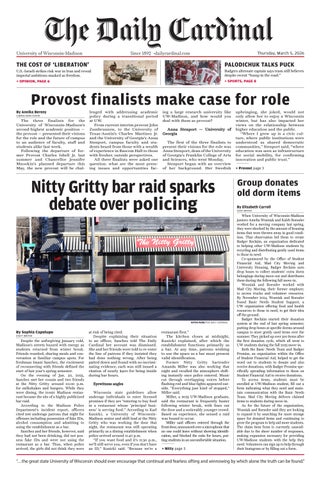
Badgers alternate captain says team still believes despite recent “bump in the road.”
+ SPORTS, PAGE 8
Provost finalists make case for role
By Annika Bereny CAMPUS NEWS EDITOR
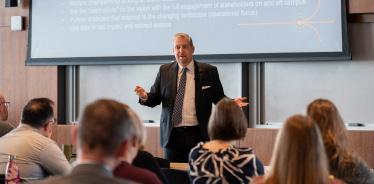
The three finalists for the University of Wisconsin-Madison’s second-highest academic position — the provost — presented their visions for the role and the future of campus to an audience of faculty, staff and students alike last week.
Following the departure of former Provost Charles Isbell Jr. last summer and Chancellor Jennifer Mnookin’s planned departure this May, the new provost will be chal -
lenged with addressing academic policy during a transitional period at UW.
From current interim provost John Zumbrunnen, to the University of Texas-Austin’s Charles Martinez Jr. and the University of Georgia’s Anna Stenport, campus faculty and students heard from those with a wealth of experience in Bascom Hall to those with fresher, outside perspectives.
All three finalists were asked one question: what are the most pressing issues and opportunities fac -
ing a large research university like UW-Madison, and how would you deal with them as provost?
Anna Stenport — University of Georgia
The first of the three finalists to present their visions for the role was Anna Stenport, dean of the University of Georgia’s Franklin College of Arts and Sciences, who went Monday. Stenport began with an overview of her background. Her Swedish
Nitty Gritty bar raid sparks debate over policing
By Sophia Capolupo STAFF WRITER
Despite the unforgiving January cold, Madison’s streets buzzed with energy as students returned from winter break. Friends reunited, sharing meals and conversation at familiar campus spots. For freshman Imani Sanchez, the excitement of reconnecting with friends defined the start of last year’s spring semester.
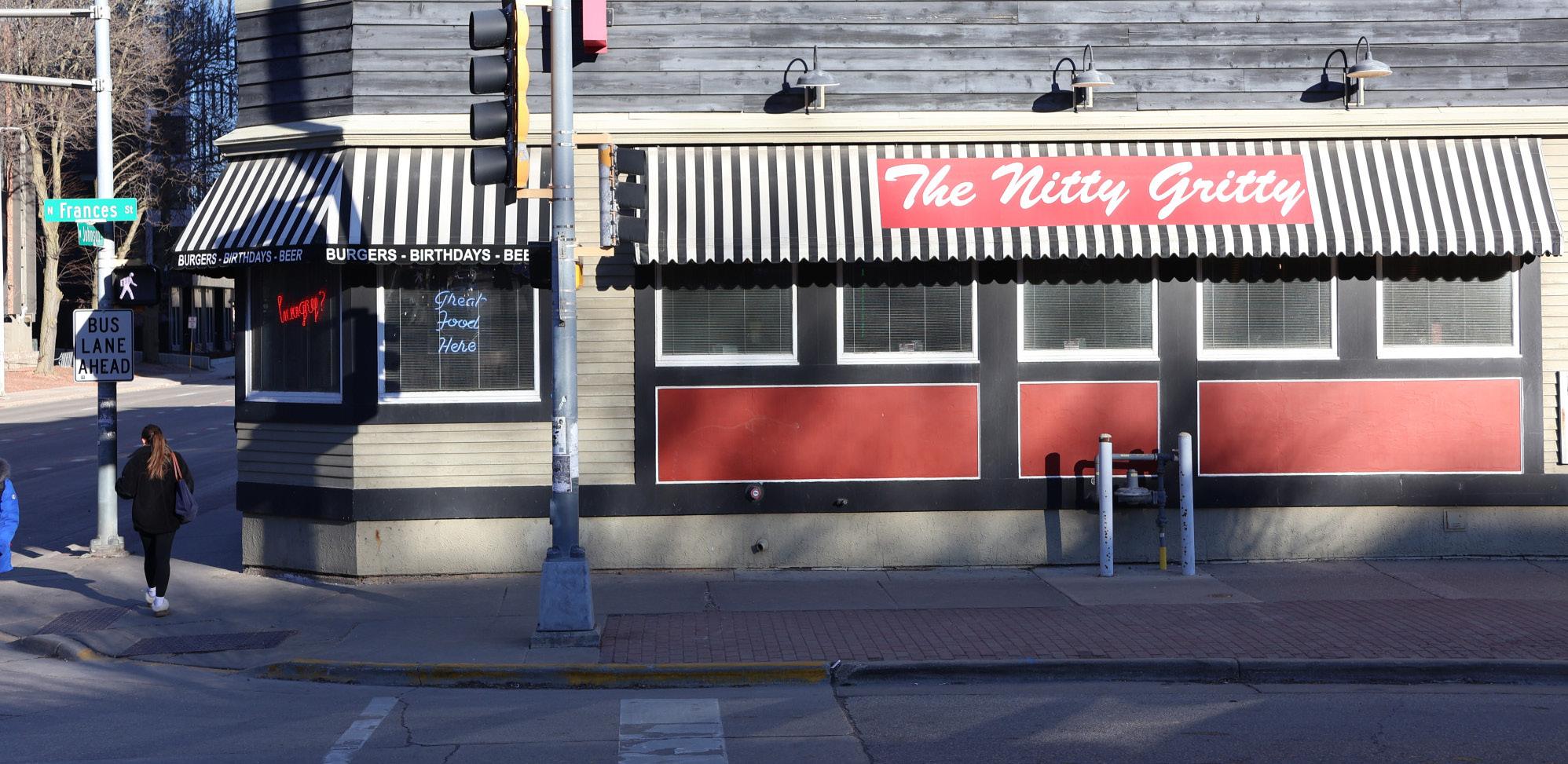
On the evening of Jan. 30, 2025, Sanchez met her cousin and two friends at the Nitty Gritty around 10:00 p.m. for milkshakes and burgers. While they were dining, the iconic Madison restaurant became the site of a highly publicized bar raid.
According to the Madison Police Department’s incident report, officers cited 206 underage patrons that night for offenses including possession of fake IDs, alcohol consumption and admitting to using the establishment as a bar.
Sanchez and her friends, however, said they had not been drinking, did not possess fake IDs and were not using the restaurant as a bar. Thus, when police arrived, the girls did not think they were
at risk of being cited.
Despite explaining their situation to an officer, Sanchez told The Daily Cardinal her account was dismissed. She and her friends were told to re-enter the line of patrons if they insisted they had done nothing wrong. After being patted down and found with no incriminating evidence, each was still issued a citation of nearly $400 for being inside during bar hours.
Eyewitness angles
Wisconsin state guidelines allow underage individuals to enter licensed premises if they are “entering to buy food in a restaurant whose ‘principal business’ is serving food.” According to Karl Kunicki, a University of WisconsinMadison senior and shift lead at the Nitty Gritty who was working the door that night, the restaurant was still operating primarily as a dining establishment when police arrived around 11:40 p.m.
“If you want food and it’s 11:30 p.m., we’ll still serve you, even if you don’t have an ID,” Kunicki said. “Because we’re a
restaurant first.”
The kitchen closes at midnight, Kunicki explained, after which the establishment functions primarily as a bar. At any time, patrons wishing to use the space as a bar must present valid identification.
Former Nitty Gritty bartender Amanda Miller was also working that night and recalled the atmosphere shifting instantly once police entered. Music cut through overlapping voices before flashing red and blue lights appeared outside. “Everything just kind of stopped,” Miller said.
Miller, a 2025 UW-Madison graduate, said the restaurant is frequently busier following winter break, with lines out the door and a noticeably younger crowd. Based on experience, she sensed a raid was bound to occur.
Miller said officers entered through the front door, announced over a microphone that no one could leave without showing identification, and blocked the exits for hours, putting students in an uncomfortable situation.
+ Nitty page 3
upbringing, she joked, would not only allow her to enjoy a Wisconsin winter, but has also impacted her views on the relationship between higher education and the public.
“Where I grew up is a civic culture, where public institutions were understood as shared democratic communities,” Stenport said, “where education was seen as infrastructure for social mobility, for confirming innovation and public trust.”
+ Provost page 3
Group donates old dorm items
By Elisabeth Carroll STAFF WRITER
When University of Wisconsin-Madison juniors Amelia Wozniak and Kaleb Roessler worked for a moving company last spring, they were shocked by the amount of housing items that were thrown away in good condition. That observation led them to create Badger Reclaim, an organization dedicated to helping other UW-Madison students by recycling and distributing gently used items to those in need.
Co-sponsored by the Office of Student Financial Aid, Mad City Moving and University Housing, Badger Reclaim uses drop boxes to collect students’ extra dorm belongings during move-out and distributes them during the following fall move-in.
Wozniak and Roessler worked with Mad City Moving, their former employer, to access trucks and volunteer resources. By November 2024, Wozniak and Roessler found Basic Needs Student Support, a UW organization offering food and health resources to those in need, to get their idea off the ground.
Badger Reclaim started their donation system at the end of last spring semester, putting drop boxes at specific dorms around campus to store gently used items over the summer. They picked up over 300 items after the first donation cycle, which all went to UW students during the fall 2025 move-in.
Both the Basic Needs Team and Badger Promise, an organization within the Office of Student Financial Aid, helped to get the word out to students to donate and also receive donations, with Badger Promise specifically spreading information to those on Student Financial Aid to receive donations.
To access items, students must be enrolled at UW-Madison student, fill out a form indicating what they need and maintain communication with the Basic Needs Team. Mad City Moving delivers claimed items to students during move-in.
As for the future of the organization, Wozniak and Roessler said they are looking to expand it by searching for more storage space for donated items and continuing to grow the program to help aid more students. The claim item form is currently unavailable due to the sheer number of responses, making expansion necessary for providing UW-Madison students with the help they need. Volunteers can sign up to help through their Instagram or by filling out a form.
KEVIN PARK/THE DAILY CARDINAL
WSUM a haven for alternative music on campus
By Alexa Cattouse STAFF WRITER
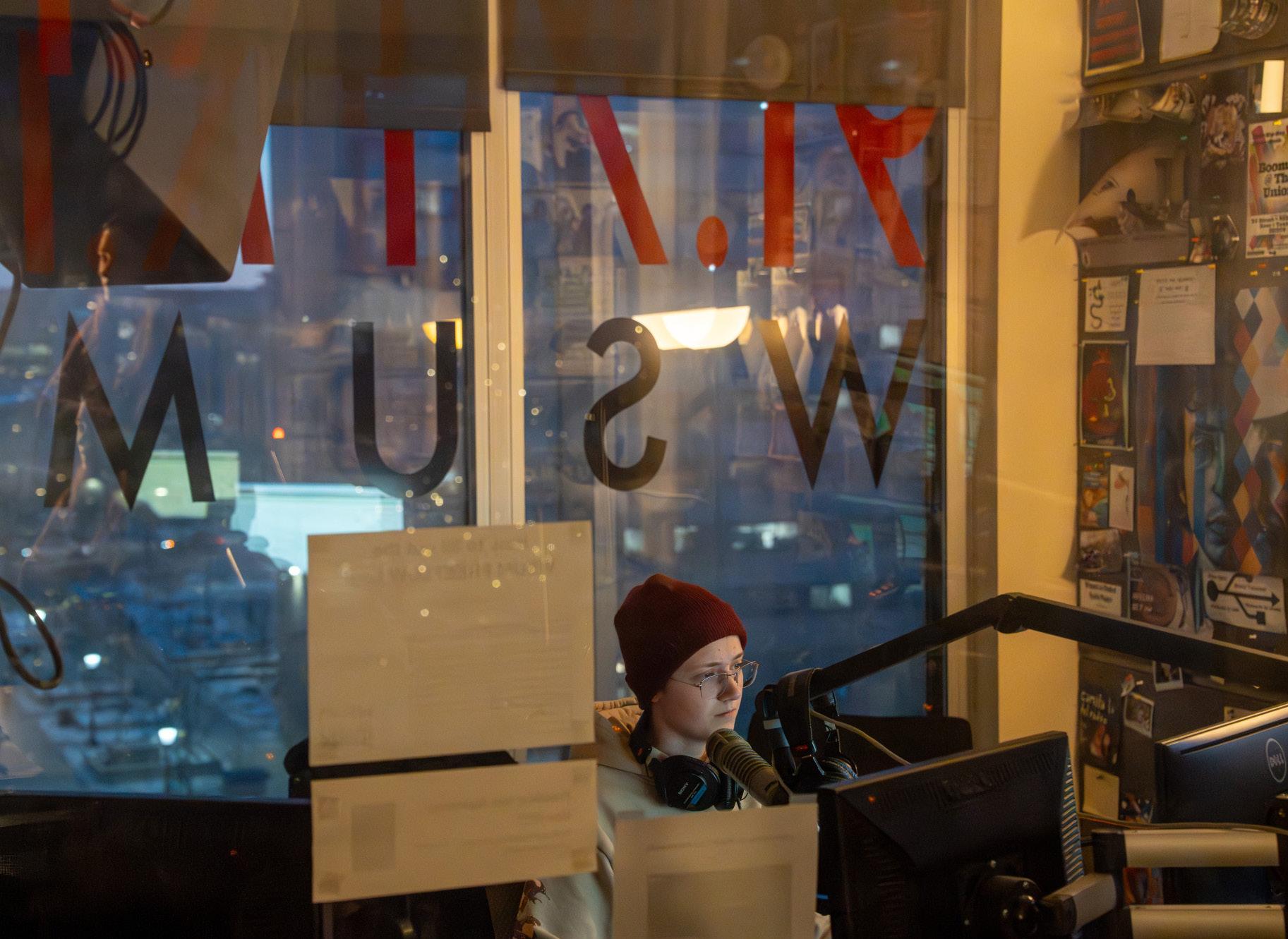
When tuning into WSUM 91.7 FM, the University of WisconsinMadison’s student-run radio station, listeners get transported into a musical ecosystem. With over 200 members and dozens of unique shows, the best college radio station in the nation reaches the greater Madison area, introducing their audiences to alternative sources of music, UW-Madison sports and news coverage.
The station recently received four awards, including Best Sports Play-byPlay, Best News Interview, Best Mobile App and Best College/University Station (More Than 10,000 Students) at the Intercollegiate Broadcasting System Media Awards in New York City on Feb 21.
WSUM began broadcasting from Vilas Hall on Feb. 22, 2002 before calling the Student Activity Center home in 2009. WSUM hosts unique shows such as their weekly Snake Sessions, inviting local Madison bands to play live at the station, and its annual Snake on the Lake music festival. Last semester, WSUM hosted more than 10 local Madison groups in their conference room.
WSUM has three missions: to act in a service and outreach capacity for UW-Madison students and the Dane County community, provide valuable hands-on experience for students and provide an alternative source of information and entertainment to their listeners.
Student leadership says the success of the station can be attributed to the strong community they’ve built.
Sssupportive community
Because WSUM is entirely student-run, members say the community in the radio station is encouraging and thrives on peer-on-peer connection. Whether DJs just come in to do their show and leave or sit down on the couch laughing with their peers, the radio station welcomes all.
Hesprich first joined WSUM freshman year in search of a community after he felt “pretty late” on finding friends. His mom suggested he join a church, but when he found WSUM, he knew he was in the right environment.
“I’ve met all my close friends and even though the people who used to be at the station when I was a freshman have graduated. It’s almost like Theseus’ ship is here — in the sense that the soul in the community has remained that as people are gone, there’s awesome people right there that take their place,” Hesprich said.
Kelsey Brannan, director of radio and general manager, joined WSUM from 2010-2014 during her time as a UW-Madison undergraduate to find people who shared her passion for music. Seeing from both perspectives as a former WSUM member and her current role, Brannan is able to see the dedication and tireless work ethic that the WSUM members have to run the radio station independently.
“I love working with college students in particular because they’re so passionate about everything they do. There’s creativity that you wouldn’t get at industry necessarily,” Brannan said. “I think once you become a broadcast professional, you still have big ideas but I think surrounded by
more self-consciousness. And I think students have this incredible drive to just kind of try things to see if they’ll work and experiment with different creative outlets.”
Brannan recalled a time when she first started working at WSUM where a band had to cancel their Snake Session at the last minute. DJs jumped into gear and subbed the live performance with a spur of the moment WSUM talent show. What stuck out to Brannan was the students’ commitment.
“The show itself was cool, but that’s not really the memory that I’m describing here. It’s more the enthusiasm around it and just the energy,” Brannan said. “It was probably April Fools Day, and the first warm day of the year. The sun was out, and everyone was in a good mood. Towards the end of it, I popped my head out of my office and down the hallway there were students who were literally tumbling and doing gymnastics down the hallway.”
Brannan said many of the students want to work professionally in radio after graduating, making WSUM the perfect place to prepare them for the real world.
“As a listener, [you hear] stories from a student perspective, which I think is unique instead of turning to national media or even local media here in Madison. Hearing from a student perspective is really important,” Brannan said.
Hands-on experiences for students
Every DJ must complete a nearly semester-long training program before being considered for a show. By the end of their six-week training, members are able to operate the soundboard, source their own music and confidently broadcast on air.
Nathan Jahn, a sophomore and current WSUM news director, joined the radio station at the start of his freshman year. He was introduced to the WSUM by his sister who, at the time, had her own music show before the two collaborated for their sports show: Making Racket.
As the news director, Jahn has the final say over the stories that are
aired but allows his anchors to report on stories they find impactful to the Madison community. During “On Wisconsin,” a weekly 1-hour news show, he had the opportunity to interview professors, candidates for governor and other influential individuals from around Madison.
Jahn said he feels he can contribute more to the journalistic ideal from the station than in his classes.
“Learning in all of the classes about what journalists do is super cool but you don’t really feel like you’re doing it in class and you’re just doing assignments,” Jahn said. “At the radio station, it was just always cool [to contribute] even when the news isn’t always happy or fun news. You still get to feel like you are part of it by writing stories and contributing to campus.”
Vincent Hesprich, WSUM’s sports director and a first year graduate student, found his love for sports radio listening to sportscaster Matt Lepay with his grandfather. Hesprich immersed himself in sports journalism in high school, but it wasn’t until college when he decided to give sports broadcasting a shot.
Hesprich broadcasts Badger games of over nine different teams, including football and men’s and women’s basketball.
Since joining WSUM, Hesprich has had the opportunity to travel to March Madness, connect with the athletic department through Big Ten Plus, a live broadcasting platform for college sports teams and call the first two rounds of the NCAA National Championship that was aired on ESPN+.
“It felt like a dream come true,” Hesprich said.
Inside the snake-filled station (and more decor)
As you step into the radio station, you are surrounded with posters of past and current radio shows, local bands and festivals. The longer you admire the collages of posters, painted on CDs, zines and polaroid photos of staff and various local bands, the more hidden gems you find — such as small plastic snakes or artwork of snakes, a homage to their mascot, Syd
the Snake.
“I feel that’s definitely a big part of the station too, it makes it feel homey,” WSUM Music Director Allison Lukas said. She said the posters on the wall idea was a big project done by the traffic desk before she started working at the radio station.
The radio station has two onair studios: the FM studio which reaches the greater Madison area and gets staticky around Rockford, Illinois, and the Free Flow studio that airs exclusively online. Both stations are sound-proof and equipped with soundboards the DJs use to control their music, underwritings — unpaid promotions — public service announcements and the BSI, WSUM’s automated music system.
WSUM invites DJs to explore their music taste with any of their over 1,000 CDs and vinyl records in their CD library. Most of the CDs are sent in by up-and-coming artists’ record labels.
Music ecosystem
Ranging from genres like bossa nova jazz to indie alternative, WSUM implores students to find new types of music and local artists. Through Snake Sessions, DJs have an opportunity to film, interview and experience live, alternative music. Most recently, garage emo band Aergo and alternative rock band Yolk, both local Madison acts, performed in the studio.
Snake Sessions brings not only local Madison artists but also artists from Minneapolis, Milwaukee, Chicago and throughout the Midwest. Lukas, who coordinates the Snake Sessions, tries to make each episode diverse.
“I think it makes it more engaging for listeners.” Lukas told the Cardinal. “Maybe one week it’s jazz and the next is rock and the next is an independent, solo musician.”
In September, WSUM and WUD Music collaborate together annually for Snake on the Lake, a free outdoor music festival on Memorial Union Terrace.
The radio station has over sixty shows ranging from music, talk and sports that run 24/7.
New immigration process stresses faculty
By Jake Kilander SENIOR STAFF WRITER
The University of WisconsinMadison and other employers across the United States face new federal guidelines for highly-specialized H-1B international visa sponsorship that prioritize higher-paying positions and, in some cases, require a $100,000 fee, following changes made by the Trump Administration last fall.
An H-1B visa is used for prospective international employees that have a bachelor’s degree or higher in a specialty related to the role. UW-Madison is a top employer for H-1B visas in Wisconsin, sponsoring 235 visas in 2025. The new federal requirements join others on a list of the Trump administration’s crackdown on immigration, heightening worries among some international faculty.
“It feels like you’re never really safe in this process,” Al Kovaleski, an assistant professor in the Plant and Agroecosystem Sciences
Provost
Continued from page 1
department, said. H-1B visas are used for positions like Kovaleski’s. He applied for, and received, an H-1B visa for a position at UW-Madison in 2021.
“The visa itself is all handled by the university,” Kovaleski said. “When you apply for a job as an international person, it says whether the organization sponsors a visa or not. For a lot of people, that means they would sponsor a H-1B visa.”
Originally from Brazil, Kovaleski highlighted what international workers bring to UW-Madison.
“You’re putting together very different perspectives of life,” he said. “You try to bring your culture with you. That’s what we bring into what is the Wisconsin Idea.”
Individuals can hold H-1B status for a maximum of six years, and petitions are completed by a U.S. employer on behalf of an applicant.
Congress has a limit of 85,000
Stenport, a communications and global studies scholar, said she has spent her career looking into the “intersection between technology, human experience and social transformation.”
Her vision focused heavily on the idea of the ‘ampersand’ and bringing different disciplines together. At Georgia, she said there had been a perceived fragmentation across the more than 50 departments that made up Franklin College. Throughout her tenure, she worked with the community to reframe the College’s identity and launched the Office of Academic Innovation, where students could develop multidisciplinary degree programs, as well as explore online master’s degrees.
“The ampersand symbolizes conjunction rather than consolidation or competition, chemistry and ethics, geology and art, computing and plant biology, health sciences and humanities,” she said. “Some initially feared [groups would be excluded] through this process, instead, we gained clarity and strengthened identity as a comprehensive college, the engine of the university.”
At UW-Madison, she hopes to do the same. She mentioned plans to integrate AI — she currently co-leads Georgia’s new school of computing with their dean of engineering — and applied computing into the academic fabric of the university, as well as following a ‘one health’ approach with research, working “from the molecular and genomic to the societal.” This, she said, will be vital in ensuring that Wisconsinites and Americans can all benefit from UW-Madison’s health research.
Of the three candidates, Stenport spoke the most about graduate students, calling them the “intellectual glue” of UW-Madison’s ecosystem.
“They drive discovery, support undergrad instruction, strengthen [research and development], public intellectual engagement and industry as they take on leadership roles across sectors,” she said.
UW-Madison’s new graduate student enrollment dropped by 9% last year amid budget challenges and reduced openings.
Stenport finished by circling back to the ampersand and the idea of connectivity and collaboration she would emphasize as provost.
“The strengths of a comprehensive flagship lies in the ampersand,” she said. “The Wisconsin idea is in itself an ampersand of excellence and service.”
John Zumbrunnen — University of Wisconsin-Madison
Current UW-Madison interim Provost
John Zumbrunnen was the second provost
H-1B visas per fiscal year, 65,000 under the regular cap and 20,000 for those with a U.S. master’s degree or higher. Universities are exempt from the cap and can submit applications any time during the year, not just during the fiscal year limit.
“UW-Madison continues to monitor changes associated with the H-1B proclamation as well as other changes to immigration regulations. Changes to immigration rules and regulations do not alter UW-Madison’s hiring practices. The university will continue to comply with state and federal laws applicable to its hiring practices,” UW-Madison spokesperson John Lucas told The Daily Cardinal in a statement.
In fiscal year 2026, U.S. Citizenship and Immigration Services received 358,737 registrations. To address these demands, USCIS has used a random lottery system to determine what applicants
finalist to present.
Zumbrunnen mentioned his Missouri upbringing, where he said the University of Missouri meant a lot to his family.
“There was a kind of reverence for it and what it meant to the state of Missouri and the world,” he recalled.
Zumbrunnen studied political theory at Missouri State University before moving on to the University of Minnesota for his PhD in the same discipline. After a brief stint teaching political science at Union College in New York, he arrived at UW-Madison in 2008 “through a stroke of outrageous fortune.”
Zumbrunnen is the only finalist already working for UW-Madison, a fact he used to crack jokes about shared frustrations while in a room of familiar faces.
“This place has given me so much,” he said. “It has literally given me the world.”
In the past few years alone, Zumbrunnen has witnessed UW-Madison climb in the rankings and in national and international relevance. But, he argued, the university should always be looking to do more.
“Never be content” was the theme of Zumbrunnen’s vision, stemming from former Chancellor Charles Van Hise’s 1905 statement of the Wisconsin Idea, where he said he would “never be content until the beneficent influence of the University reaches every family of the state.”
“Those words, to me, suggest that the Wisconsin Idea is not just a principle. It’s not just a pride. It is a challenge to us,” Zumbrunnen said. “It is a challenge to us to do everything we can to have UW-Madison be a force for good in the world that will never be content.”
These goals will not be achieved instantaneously and should instead be looked at with a long-term vision, he said, instead asking “what can we do by 2031?”
In terms of undergraduate education, Zumbrunnen recognized UW-Madison as a “hot school,” though he said UW should not become complacent.
“It’s not about ‘will we attract 8,500 students here?’ It’s about what students do we want to attract here, and what experience do we want them to have?” he said. “That question of whether we want 8,500 or 9,000 incoming students is partly dependent on whether we get a residence hall at some point or not.”
Zumbrunnen did reference funding struggles with the state legislature that have prevented UW-Madison from receiving bonding authority for a new residence hall and led to unpopular deals that have frozen DEI positions and created new workload requirements for faculty.
“It is absolutely true that there are political actors out there who are pursuing agendas that raise really deep, sometimes existential questions from higher education, and we have
would be selected for an H-1B visa.
The Department of Homeland Security announced a final rule in December that replaces the random lottery with a wage-based system for fiscal year 2027. Under the new rule, registrations are ranked based on the Department of Labor’s wage level for the offered position, ranging from Level I, entry-level, to Level IV, expert. Level IV registrations will receive four entries in the selection pool, while Level III receives three, Level II receives two and Level I receives one.
Additionally, Trump’s September proclamation, “Restriction on Entry of Certain Nonimmigrant Workers,” introduced a $100,000 fee for new H-1B petitions filed from candidates outside of the U.S. to be submitted with their employer-sponsored petitions. The fee does not typically apply to candidates like F-1 students, or others already in the U.S. who can change their status domestically.
The proclamation says H-1B visas have been used to exploit and replace American workers with “lower-paid, lower-skilled labor.” It also cited increased unemployment rates amongst U.S. college graduates, saying “it is therefore necessary to impose higher costs on companies seeking to use the H-1B program in order to address the abuse of that program while still permitting companies to hire the best of the best temporary foreign workers.”
The new system and fee are not the only changes affecting H-1B visa applications. In December, the Department of State expanded their social media screening process to require H-1B applicants and their dependents — F-1, M-1 or J-1 non-immigrant visas — to turn their social media privacy to public to allow officers to investigate their online presence.
continue reading @dailycardinal. com
to stand up for our values and our sense of mission and purpose,” he said. “There is a thorough absence of trust with a variety of stakeholders outside of the university. In the long term, we’ve got to look for places to build relationships of trust as well as disagreement.”
Those funding struggles have notably impacted graduate and professional programs, where the Trump administration terminated $27 million in federal research grants to the university.
“We have long been a leading producer of PhDs,” Zumbrunnen said. “At this moment in time, it’s worth asking whether more is necessarily better… can we momentarily decouple their role as students from their role as employees, and ask what our strategy is for PhD education in the professional space.”
Having served in the role for nine months, Zumbrunnen has more hands-on experience at UW-Madison than the other two candidates. He is handling UW-Madison’s response to new faculty workload requirements and the dissolution of the diversity division, spoke to shared governance groups and helped lead the creation of UW-Madison’s new AI-focused college. If selected, he would likely begin serving immediately.
“Part of what I love about the provost role is it is this wonderful mix of strategy and operations,” he said. “On the strategic level, the provost doesn’t have all the answers. Isn’t supposed to have all the answers. If you had a Provost who said I know all the strategic answers, you should run from them. The job of the provost is to make sure that campus is asking the right strategic questions, and then to convene and facilitate and help guide a shared sense, a shared search on the operational level.”
Charles Martinez Jr. — University of TexasAustin
The final candidate of the three was Charles Martinez Jr., the current dean of Education at the University of Texas-Austin. He began by recounting the story of his family’s immigra-
tion to the United States from Mexico and the work they did to build their lives in California. Martinez said he was the first in his family to attend college, and his father worked three jobs to raise him and his siblings.
“I know what [universities] are here to do,” he said. “They are door-openers, not gate-keepers.” With that, he hopes to uphold a UW-Madison that serves the state, just as the Wisconsin Idea pictured.
“We can’t just sit on campus,” Martinez said. “We can’t just write papers that ten people read. We can’t just get grants to get more funding to do more work. At the end of the day, that potential is realized in what we deliver, in the dissemination of that work in service to our states, in service to the region, our country and the future.”
Martinez highlighted his time in Texas, a majority-Republican state, and the feedback he’s received about a declining trust in higher education institutions.
“The reasons for the lost trust in higher ed are actually malleable,” he said. “They’re not fixed, they’re things we can do something about.”
Martinez argued that affordability, rather than perceived liberal indoctrination, is the biggest reason many are straying from higher education. Worries over whether degrees are worth their price tags, whether students are being developed into helpful members of society and whether they will be able to graduate in four years are at the forefront of why so many parents may be straying away from college.
“Being good at those three things and remaining good at them becomes the most important thing we can do,” Martinez said.
Ultimately, Martinez said he saw an opportunity to capitalize on the specificity of excellence at UW-Madison, asking what UW can do that no one else can.
“The opportunity here is to channel that momentum into places that can really live up to the Wisconsin idea and some of the niches you already have,” he said. “Focus on impact tied to the Wisconsin Idea; changing the world starts in Wisconsin.”
JAKE PIPER/THE DAILY CARDINAL
Wisconsin bets big on nuclear through university-state partnership
By Sonia Bendre SCIENCE EDITOR
The University of WisconsinMadison Nuclear Engineering and Engineering Physics study will receive $2 million from the state, Gov. Tony Evers announced Feb. 17 at his State of the State address.
The investment marks a renewed investment in Wisconsin’s nuclear energy infrastructure and research with the state aiming to produce 100% carbon-free electricity by 2050. Currently, less than 30% of the state’s electricity comes from nuclear energy or renewable sources.
This new legislation supports Evers’ desire for Wisconsin to become a “national hub for commercializing fusion energy.”
Nuclear siting study
The siting study, led by nuclear engineering professor and department Chair Paul Wilson, aims to identify new locations for nuclear reactors in Wisconsin before 2027.
The Point Beach Unit 1 reactor in Two Rivers is the only operational nuclear reactor in Wisconsin, providing 15% of Wisconsin’s electricity. Utility companies WEC Energy Group and EnergySolutions plan to recommission the Kewaunee Power Station, a nuclear power plant originally shut down in 2013.
“The siting study includes looking at nuclear energy systems, anything from similar to today’s reactors that are operating to a variety of advanced reactor concepts, including microreactors and other smaller reactors, as well as fusion energy
systems in the future,” Wilson told The Daily Cardinal.
The study’s “fundamental approach” involves projecting data onto a map of Wisconsin to identify key sites for nuclear power using Geographic Information System technology.
Factors considered include Nuclear Regulatory Commission technical and regulatory placement requirements, distance from population centers and access to roadways for transportation, nearby transmission lines for grid connection and water for cooling purposes.
Wilson said part of the study will respond to residents’ concerns and wants for nuclear energy.
The study will involve collaboration across campus and with national laboratories. There are no preliminary sites selected, nor are there limits on how many sites can eventually be identified.
Why nuclear power?
“Nuclear energy is the largest source of clean power in our country, and it’s a safe, reliable, carbon-free option to power our homes and businesses,” Evers said in his address.
Unlike coal or natural gas plants, nuclear power plants do not emit gases into the environment while operating.
“There’s no carbon emissions that cause greenhouse gases, there’s no sulfur and nitrous and oxide emissions that cause acid rain, there’s no particulate emissions,” Wilson said.
All modern-day nuclear reactors use nuclear fission, which generates
energy by shooting a small particle called a neutron into a heavy element, usually uranium, splitting its nuclei apart. The highly energized halves of the original nuclei release heat into a vat of water, vaporizing the water into steam that turns a turbine and powers a generator, creating electricity.
Nuclear energy distinguishes itself from other carbon-free energy sources, like wind and solar, in its reliability.
Based on difficult-to-predict weather conditions, wind turbines and solar panels produce variable amounts of energy that can make sizing transmission lines and routing power challenging. Nuclear power plants, meanwhile, provide a load of energy that is almost always the same — which American grid infrastructure is best suited for.
“Nuclear power plants today will operate at full power levels for eighteen months at a time without shutting down,” Wilson said. “Some of them [operate] two years at a time without shutting down. [Power] is always available regardless of what else is going on, even through severe storms and weather events.”
Additionally, nuclear power ultimately requires less land to produce the same amount of energy as wind or solar plants. But upfront costs are often tens of billions of dollars, with around a five-year wait time before energy can be produced, Wilson said.
“That upfront cost results in still pretty cheap electricity, because the [plant] will operate for eighty or a hundred years, so you can spread the cost over that time,” Wilson said. “But as a company that wants to build one, being able
UW-Madison professors talk impact, legality of Trump’s tariffs
By Katherine Strangberg STAFF WRITER
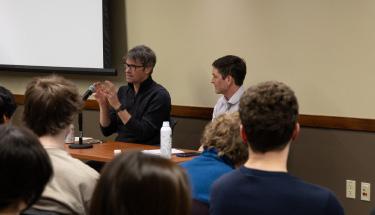
Political science professors Jon Pevehouse and finance professor Scott Baker analyzed the potential impact of President Donald Trump’s tariff policies and the subsequent U.S. Supreme Court ruling which blocked them, at a Wisconsin Union Directorate Society and Politics Committee event Monday.
The conversation began with common misconceptions on tariffs. Pevehouse —whose research deals with international relations and state-level trade agreements — said people are often confused about who pays for tariffs.
“Tariffs are paid by the recipient country and by the firm importing the good,” he explained. “This is not something other countries pay.”
This means U.S. manufacturers and their consumers, not foreign countries, are facing higher costs. He went on to explain the concept of tariff pass-through, the rate at which firms pass down the costs of import taxes onto consumers, pointing out that consumers with lower incomes are hurt the most.
“The bottom line is, tariffs are [an] aggressive tax’’ Pevehouse said.
“They affect people who are on the lower socioeconomic strata even more than they affect wealthy people.”
The discussion turned to how tariffs have become an executive weapon under the Trump administration.
At the beginning of his second term, Trump imposed increased tariffs on all global trading partners. The power to tariff is delegated to Congress, yet Trump cited the International
to accumulate all that money at the front can be really challenging.”
The reaction used to produce energy in nuclear fission plants creates a small amount of radioactive waste that is difficult to safely dispose of.
“We know how to manage [waste] on the timescale of a human life. We don’t know how to manage it on the timescales that it needs to be managed, which is hundreds of thousands of years,” Wilson said.
Wilson said he was excited about the level of bipartisan support and public interest in nuclear energy.
“I’ve been a professor now for about 25 years, and there’s been steadily growing public interest, but in the last six or seven years it has become much more bipartisan [and] stronger across the political spectrum and across demographics,” he said.
Ignite Wisconsin grant
The Wisconsin Economic Development Corporation (WEDC) also awarded a $778,000 Ignite Wisconsin grant to the Wisconsin Fusion Energy Coalition, a local fusion consortium.
Nuclear fusion creates energy by combining two atoms together, not breaking them apart like fission. Though the Department of Energy plans to build grid-connected fusion plants by the 2030s, currently there are none.
John W. Miller, secretary and CEO of WEDC, told the Cardinal the grant benefits “manufacturers, skilled workers, educators and researchers and communities across Wisconsin” in addition to fusion companies.
Nitty Gritty
Continued from page 1
Emergency Economic Powers Act, along with others, in order to obtain the power to regulate trade while in a “national emergency.”
“There’s always been tariffs that have been imposed, but they’ve usually been relatively limited,” Baker said. “There hasn’t really been in many decades this kind of very widespread imposition of a tariff, kind of across the board.”
When aggressive tariffs are placed on other countries, the process to put them into place is usually long and involves intense litigation. Usually, “the presumption is free trade,” Pevehouse said.
Baker added, “free traders default to the idea that…trade across nations, just like trade across U.S., states should be relatively unburdened by [regulation] and tariff barriers and the U.S. has been one of the biggest proponents.”
When the U.S. strays from the norm of free trade and escalates the usage of taxes against friends and enemies, uncertainty rises and trust in the U.S. weakens.
“Historically, the U.S. has been a country pushing for more open markets and more open trade,” Pevehouse said. “[The tariffs have] countries feeling like the grounds are shifting under their feet.”
Continue reading @dailycardinal.com
“People tried to run out the door through the kitchen,” Miller said. “I heard later that people were hiding in closets upstairs all night.”
Beyond the citation
Following Sanchez’s citation, her virtual court appearance lasted less than five minutes. The judge dismissed the case due to a lack of evidence.
Sanchez later received an email from the UW Office of Student Conduct and Community Standards incorrectly stating she had been charged with underage alcohol consumption and possession of a fake ID.
When she contacted the office, she was told nothing could be done to amend her student record at that time, even though her case had been legally dismissed.
Both Miller and Kunicki questioned the effectiveness and equity of bar raids as a method of reducing underage drinking. Kunicki argued such raids often push underage drinking into less supervised environments, increasing safety risks. Miller emphasized the disproportionate impact on students with fewer financial resources.
“People who can afford fake IDs and nights at bars
“In the great tradition of the Wisconsin Idea, the fusion energy industry combines our state’s lead in research, advanced manufacturing and technology to advance carbonfree, sustainable energy innovations that can change the world,” Miller said in an email statement.
The 19-member consortium, led by Midwest nonprofit 5 Lakes Institute, includes the UW-Madison College of Engineering and Wisconsin Alumni Research Foundation (WARF) as partners along with industry members.
Evers said investing in the fusion energy coalition will help make Wisconsin a “national hub for commercializing fusion energy.” The fusion industry is expected to reach $3 trillion by 2050, according to WEDC.
The funding will be used to create a Fusion Early Entrepreneur in Residence position at UW-Madison, in addition to three pre-existing specialized EEIR programs in Biotechnology, Materials and energy offered by the Badger Tech Foundry.
The Wisconsin Fusion Energy Coalition will also create two fellowships paying for post-doctoral students or students with technical backgrounds to work in entrepreneurial roles in fusion companies. This new funding reflects Wisconsin’s push to become a key player in both nuclear fission and fusion energy. The state legislature previously declared its commitment to “fusion energy and nuclear power” in a joint resolution this session, formally making nuclear energy a state priority and establishing a fusion summit at UW-Madison on May 5.
can probably afford a ticket,” Miller said. “But for people on scholarship or working jobs, one citation can cost them their job, their license or thousands of dollars.”
Efforts to curb underage drinking in Madison have existed for decades, from education initiatives to ordinances like the city’s 2012 nuisance party law.
Incidents related to underage drinking are an ongoing battle for local law enforcement. Law enforcement has recently moved away from issuing excessive citations when conducting bar checks, instead emphasizing “line checks.”
Yet student and local perspectives remain divided. Students at UW-Madison have viewed the university’s drinking culture as a defining, not uniquely harmful, aspect of campus life, arguing resources would be better spent on education and harm reduction.
Miller also questioned why off-campus citations appear on student conduct records, especially given that underage drinking has been decriminalized in Madison. Sanchez echoed this frustration, noting that people who were not drinking or using fake IDs were still ticketed. “It kind of defeats the whole purpose of what they’re trying to do,” she said.
Black History Month celebrated under the ‘Moonshine’
By Britta Sevcik STAFF WRITER
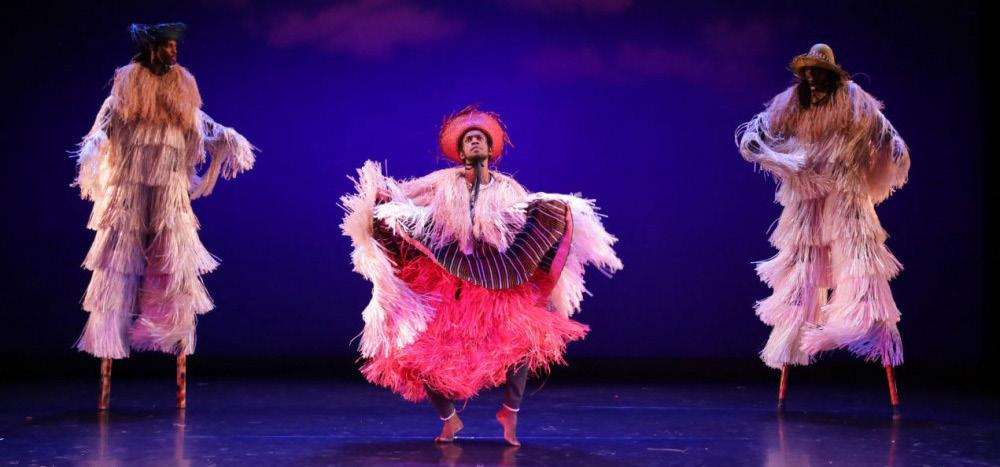
The University of Wisconsin Dance Department performed “Moonshine,” a multimedia celebration of Black History Month featuring hip-hop, tap, jazz and spokenword poetry as a love letter to black culture and the arts, on Feb. 27.
Professor Chris Walker set the tone for the program to come as the audience settled into their seats. He explained the idea of “Moonshine” and its origins while leading the audience in a traditional African call-and-response song, one of many instances of audience participation throughout the production.
“Romeo & Julia,” the opening number choreographed by Nicole Nelson, Max Saron and AJ Juarez, was a hip-hop retelling of “Romeo and Juliet” set to a medley of different Queen songs. The flashy costumes, paired with each dancer’s impressive
precision, made for a strong start to a strong production.
Up next was a showing of faculty member Omair “Motion” Carter’s short film “Don’t Play with L(Kn) ives.” Set in the U.K., this film depicted true stories of knife crime with dance as the medium. Through images of dance-fighting set to both powerful poetry and violin music, the film emphasizes how you must “write your own story” to end a cycle.
Before the second act, Walker once again took the stage to lead the audience through some simple clapping rhythms in preparation for the following half of the show.
The remainder of the production was a mixture of different solo and small group performances.
One such performance was “For: Sojourner,” a beautiful tap solo performed by Sojourner Croom.
“This piece is a gift to its creator,” Croom said in the program descrip-
tion. “There are times when I get too caught up in everything I’m not. Not enough for who I am, and not enough for who I want to be. This piece takes a step back to remind me that who I am is okay; there is no reason to change because I am who I am meant to be.”
Jordan Waters and Octavia Ikard displayed a powerful performance of excerpts from their poetry work “everything still.” A poem that “explores themes of lineage, presence and history’s role in Black Diasporic storytelling.”
Rounding out the showcase was “Hitterz Moonshine EXP,” another small group hip-hop performance, and “Two Bros and Unc,” an interpretative dance performed by Walker and Guy Thorne with live music by Hanah Jon Taylor, an internationally known flutist and jazz saxophone player.
One standout moment was “Reverance: A Return to Self,” performed by Stacy Letrice, the depart-
ment’s dancer in residence this semester. With over 20 years of experience in African and Caribbean dance, Letrice brought her expertise to the classroom this semester, with her “Moonshine” performance serving as the culmination of her residency.
“This movement prayer moves through Soca, West African dance, Afrobeats, Dancehall and heels, to access joy, ancestry, praise, sensuality and self-love,” Letrice said in the
program description. “Rooted in Caribbean and African diasporic forms and informed by dance/movement therapy, the body becomes the altar, returning home through worship to reclaim what belongs.”
Following the final number, Walker invited the audience on stage for a dance party. In the end, the performance ended the way that it started, with a rich sense of community and culture.
Q&A: Indie artist Sadie Jean talks love for new music
By Ryan Kim ARTS EDITOR
Through heartbreaking lyrics and raw emotions, Sadie Jean, 23, gained massive popularity in 2021 with her debut single “WYD Now?”
After leaving NYU and releasing her viral song, Jean has released more music, including the album “Early Twenties Torture,” released on Oct. 25, which features soft, alternative pop with vulnerable, relatable lyrics that resonate with young adulthood.
As she prepares to open for Lauren Spencer-Smith at Madison’s Sylvee on March 4, Jean spoke with The Daily Cardinal about her inspirations, tips and her excitement about the show.
This interview has been edited for clarityandbrevity.
How do you feel about opening for Lauren Spencer Smith?
I’m so stoked about it. I love her so much. We’ve been internet friends for years. We started following each other in 2020, so it’s been super fun to watch her grow and to finally have this really fun full-circle moment of opening for her on tour. It’s super fun. She’s amazing.
What’s one of your favorite songs that you’ve performed or created?
My favorite song I’ve created so far is called “Somebody’s Everything.” It’s my favorite song right now, and it has been for a few months because it just sits every time I get to perform it. It’s such an emotional release every night. So I’ve been super into that one from my new album, so I’m excited about it.
What was the process of creating ‘Somebody’s Everything’ like for you?
I had this idea for a few weeks, and then I had a session. And the idea just came to me…that I want it to feel like that feeling after a breakup, where you’re out at a bar and you’re dancing with your friends in your single era. And it’s a situation that should be fun, but then it kind of hits you that you’re newly single and just that really specific moment of being on the dance floor and realizing you don’t have someone to go home to anymore, which sounds
super depressing. I wanted it to be super depressing and to be the saddest song ever.
It sounds like so much fun being able to write these songs, because it’s such a creative process. What’s your writing process?
It’s a special way to get things off your chest in a musical way. And that’s sort of how I’ve always done it. Instead of journaling when I was really young in elementary school, I would write songs. I didn’t think much about it until I became a fan of music and was excited about the idea of being an artist, but it’s just always been the way I like to process my emotions. I think I’m a very easily overwhelmed person, and writing songs takes so much focus that it helps me escape. I’m not overthinking all the things in my life… and it’s super helpful for me.
If you were a tea, what would you be?
If I were a tea, I would definitely be chamomile tea because I feel like I’m a very chill vibe, like laid back and calm, and I’ve had people in my life describe me as a calming presence, which is how I feel when I drink chamomile tea.
What’s something that people wouldn’t know about you?
I think because my music is really sad, people might expect my personality not to be very fun. They’re like, “Oh, you’re more enthusiastic than your music leads you on to be.” But I feel like I am, generally, a really happy person.
What do you hope the audience takes away from your opening?
I hope that people discover new music. I think that’s the best part about opening instead of headlining, is that people might not know who I am, so maybe they get to find another song that they love, they didn’t know before. And that’s always fun for me as a music lover: finding a new song that I really connect with and getting to listen to it a bunch of times. And so, I hope that people find a new song that they love and relate to and they feel validated in their emotions.
What’s the best advice you’ve been given about performing live?
People just want to see fun. I think that’s just a good piece of advice in general. Even with the Olympics going on right now, everyone is so drawn to [Alyssa Liu], and I’m so drawn to her. I watch her videos all the time because she’s having so much fun, and she’s not stressed out about being in the Olympics. She’s just genuinely enjoying what she does and doing what she loves. And I think that goes with performing as well, as people just want to see you in your element and doing what makes you happy.
How did you decide the songs to play on your setlist for your opening?
That was tough because I only get 30 minutes…and it was so hard. It felt
like choosing my favorite children, but I went with “WYD Now?”... I’ve got my songs that aren’t from my new album, “Early Twenties Torture,” because I just want people to hear those songs… Then everything else is like my favorite songs from the new album that I thought would be fun live. So it’s like the other songs, “Slow Burn,” “See you on Sundays” and “She’s dating my boyfriend.” But it was tough.
What do you want to say to fans who are going to see the concert?
Be prepared. Have fun with some of the songs, and I’m so grateful and happy that you’re coming to listen to some music. You’re gonna love Lauren as well, because she’s insane and her show is amazing. It’s just really great music, and I’m super excited.
DARLINE MORALES/DAILY CARDINAL
opinion
Trump threatenairstrikes Middle Eastern stability
By Safa Razvi
OPINION EDITOR
The Islamic Republic of Iran was created shortly after the revolution in 1979 overthrew the country’s monarchy. Not only did this cause a seismic political shift, but it led to the creation of a theocracy. The fusion of religion with government reshaped every aspect of Iranian life. Under Ayatollah Ali Khamenei, women’s rights were stripped and protests were met with force. The regime entrenched what many have called gender apartheid into law by classifying women as second-hand citizens and limiting their rights in divorce, inheritance, child custody and education.
Criticizing this regime is not controversial. It is necessary.
However, the Iranian government is not equivalent with Islam, nor does it represent the beliefs of all Muslims.
Reducing a 1,400 year old faith practiced by almost two billion people to the actions of one nation is not only misleading, but dangerous. The Islamic Republic does not own Islam nor define it, and it definitely does not speak for all Iranian’s.
In the wake of the joint U.S.-Israel airstrikes that killed Khamenei, that distinction has been lost.
President Donald Trump called these strikes an act of liberation. He called Khamenei’s death “the single greatest chance for the Iranian people to take back their country,” urging citizens to seize the opportunity created by him and Israeli Prime Minister Benjamin Netanyahu. And people have done just that, celebrating all over the world.
But in reality, everything is political. Trump did not carry out these strikes with the sole intention of freeing Iran. Salvation doesn’t come from foreign bombs or at the cost of dozens of school-age children killed in the process. The very way this “freedom” was delivered exposes the hypocrisy of such claims.
While some Iranian’s are celebrating the fall of a dictator, something much greater is at risk. This operation has opened the door for greater escalation, with cities like Dubai and Abu Dhabi taking fire in retaliation.
Oil prices have skyrocketed. Fear is growing, and Abu Dhabi, Dubai and Tehran are now symbols of potential catastrophes. The Middle East is once again, the chessboard for global dominance.
In a post on X, activist and lawyer Jibran Nasir said the U.S.-Israeli strikes were carried out “under the pretense of liberating the individual.”
Jason Hickel, an economist, went further, calling the U.S. and Israel “the single greatest threat to humanity,” with the world being forced to live in a nightmare they created. There is a growing global exhaustion over Western intervention and power politics that are framed as humanitarian concern. Here is where imperialism enters the conversation. For decades, U.S. foreign policy in the Middle East has operated under ideals of democracy and stability while pursuing strategic dominance. Rich in oil, Iran has been a target of many Western nations hoping to contain and control them. Removing Khamenei destabilizes the regime, but it also disrupts the region, creating
There’s no such thing as choosing the wrong major
By Aneri Prashant Mehta STAFF WRITER
Since kindergarten I have been asked one question every year: “What do you want to be when you grow up?” Over the years my responses have changed from mermaid, architect, astronaut and now, genetic counselor (even that might change).
openings for influence and potential economic gain.
Trump’s record makes it incredibly difficult to accept his claims of liberation as true. A president facing his own controversies positioning himself as a savior of Iranian women rings hollow. The idea that women suffering under gender apartheid is a concern of this administration is far-fetched.
None of this absolves the Islamic Republic of its crimes. This regime has brutalized its own citizens, controlled women’s bodies, silenced journalists and jailed those who opposed them. Iranian’s have every right to despise their government.
But it’s important to think of the bigger picture. Foreign intervention isn’t a neutral act and rarely ever selfless. When the United States partnered with Israel to carry out air strikes under the pretense of freedom, they needed to question the motive.
With 43% percent of Americans disapproving of Trump’s war with Iran, it adds to the concerns over international law violations and potential for a world war.
A fallen dictator can feel like justice, but the possibility of a greater war, economic exploitation and loss of life begs the question: was it liberation after all?
Iran deserves freedom from authoritarianism. Its people deserve dignity, self-autonomy and safety. However, real freedom cannot be delivered through imperial ambition. It cannot be engineered by foreign powers who have their own interests at heart.
The Islamic Republic is not Islam, and Trump and Netanyahu are not saviors. War, no matter how it is branded, always comes at a greater cost.
Today, I like to think about the other fields I wanted to pursue. What if I majored in architecture or became an interior designer? What if I got an engineering degree and became an astronaut? As each semester ends, all these paths flow in front of my eyes. The same is true for many other students.
The National Center for Education Statistics estimates 1 in 10 students change their major more than once within three years of enrollment. The major reason students change their major is because of newly developed interests. According to the Student Research Group, many students pick a major that interests them but end up finding that their major was not “what they envisioned or they don’t want to pursue that career path.”
As one of the top public universities in the United States, the University of Wisconsin–Madison offers 600 undergraduate and graduate majors and a total of 9,000 courses. It is completely normal to have a change of interest after being exposed to different courses. In fact, a study published by the Atlantic Marketing Journal found that while many students pick their first major based on initial interest, their second major often aligns with their personality and overall wellbeing. This shows that exploring different majors isn’t a sign of uncertainty, but it’s a healthy part of learning and self discovery.
One of the main reasons for switching majors is the rigor of the class. According to the National Center of Education Statistics, 35% of students that declared STEM as their major ended up switching to a liberal arts major. This shows that changing your major and pursuing new passions is not uncom-
mon. The fear of taking that first step is common, but changing your mind is often a sign of growth, not failure.
For many students, choosing a major feels like signing a lifelong contract. The fear of disappointing parents, wasting tuition money or “falling behind” can make even small decisions feel overwhelming. We scroll through LinkedIn or hear friends landing internships and start questioning our own path. The pressure to seem confident often hides the truth: most of us are quietly terrified of choosing wrong.
In reality, a major doesn’t lock you into one career path, and many have proven that. Cole Sprouse, who starred in The Suite Life of Zach and Cody and Riverdale, has a degree in archeology. Before becoming a model, Cindy Crawford studied chemical engineering. Ken Jeong, creator and star of the sitcom Dr. Ken went to medical school at Duke University and was a full time practicing physician before getting into acting. We idealize people who always knew what they wanted to do, but most of us, like these celebrities, are still trying to figure it out.
So if you’re in a career identity crisis, being scared not just of failing, but of not becoming the right version of yourself, know that you’re not the only one. The fear of waking up one day and hating the career you picked is a threat that hangs above all of us. But what if we looked at our major as the first step in discovering how we think and what we care about?
College is meant to be a place of discovery, not a fixed roadmap. Taking classes outside your comfort zone can reveal hidden interests and talents. Sometimes the “wrong” major can actually be the one that leads you to the right questions about yourself. Maybe there isn’t a single right path, just the courage to keep walking forward, even when our destination changes. Our majors don’t define who we are. Our curiosity and willingness to grow do. So instead of fearing the wrong choice, perhaps we should celebrate the chance to explore.
COURTESY OF CPL SAM SHEPERD
DANI NISBET/THE DAILY CARDINAL
& style
Wintertime at the Dane County Farmer’s Market
By Jake Piper SENIOR STAFF WRITER
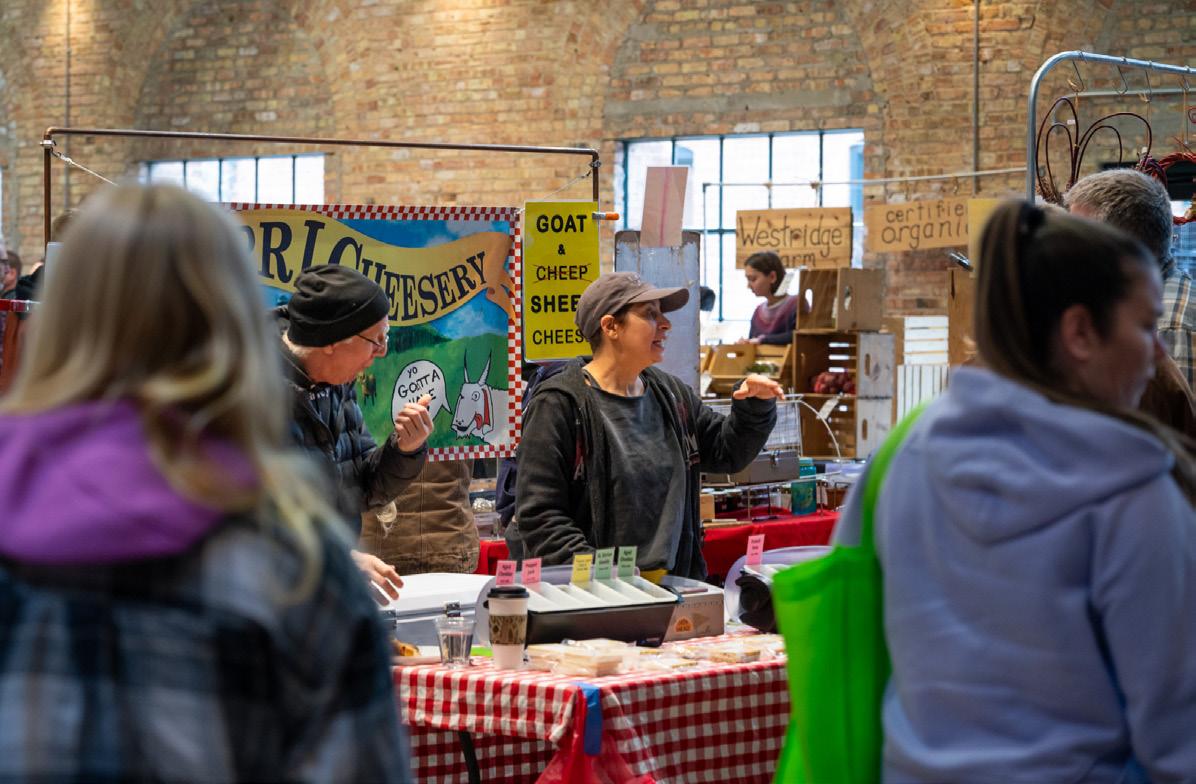
Tucked away on a quiet road on Madison’s east side, Garver Feed Mill, once host to a sugar processing plant, now acts as a venue to all things Madison. On any given day, the former factory holds everything from Ian’s Pizza to coffee shops and art studios. But every Saturday from Jan. 3 to April 4, it’s also home to one of Madison’s most well-known traditions: the farmer’s market.
While much smaller in scope and capacity than Capitol Square’s farmer’s market, the winter market offers a cozy atmosphere for patrons and farmers alike — giving market-goers the chance to not only take a reprieve from the cold, but build relationships with their favorite vendors and get fresh produce year-round.
When it originally opened at Garver Feed Mill in 2020, the Winter Farmers’ Market had to face
an uphill battle. As the COVID-19 pandemic and lockdown forced residents indoors, the market slowed.
But since then, stall owners and patrons alike said the Winter Farmers’ Market has come into its own, especially due to the availability of fresh produce.
With help and funding from the Natural Resources Conservation Service, Cliff Gonyer, co-owner of Rockwell Ridge Farm, said local farmers have been able to grow more in the winter and draw in even more shoppers as a result.
“[Having produce] really helps us out,” Gonyer said. “I always tell [people] ‘look, without the greens, people aren’t coming here to buy my cookies.’”
When Gonyer talks about people at the market, he doesn’t just mean shoppers. In his ten years of working the farmer’s market — which he said still makes him a “rookie”
— regulars from all across Madison flock to his stand, and some of them he even considers friends.
For him, one of the best parts of the indoor market is its low-key tempo, which offers a larger opportunity for socializing, even at the cost of selling less.
“We get more time to socialize with our customers, our friends and our neighboring farmers,” Kingfisher Farm owner Caleb Swift said. “So [The Winter Farmers’ Market] is nice and cozy in that way.”
Building those connections was a common theme at the Winter Farmers’ Market, with owners regularly talking to enthused shoppers about everything from product sales to their kids and local news, all to the background hum of conversation.
“There are just more people in the summertime — especially tourists,” second-generation Land of O’s owner Alyda Oosterwyk said. “But
State Street shop feeds into NeeDoh fever
By Haellie Opp SENIOR STAFF WRITER
Bombarded with calls from college students waiting to get their hands on the viral fidget, local eclectic shop Little Luxuries is trying to supply enough NeeDohs to support the growing demand in Madison.
“We received 800 of the tiny [NeeDohs] on Thursday, and we were sold out the following Friday,” Rachel Brightman, a Little Luxuries store associate, said about the new trend.
Fidget toys have long taken the grip of Gen Z. In 2017, the fidget spinner craze took over the lives of high schoolers. Marketed as a stress relief product, fidget spinners were used in classrooms as an engagement assistance tool. But their popularity quickly dwindled, and by early 2018, fidget toy talk died down.
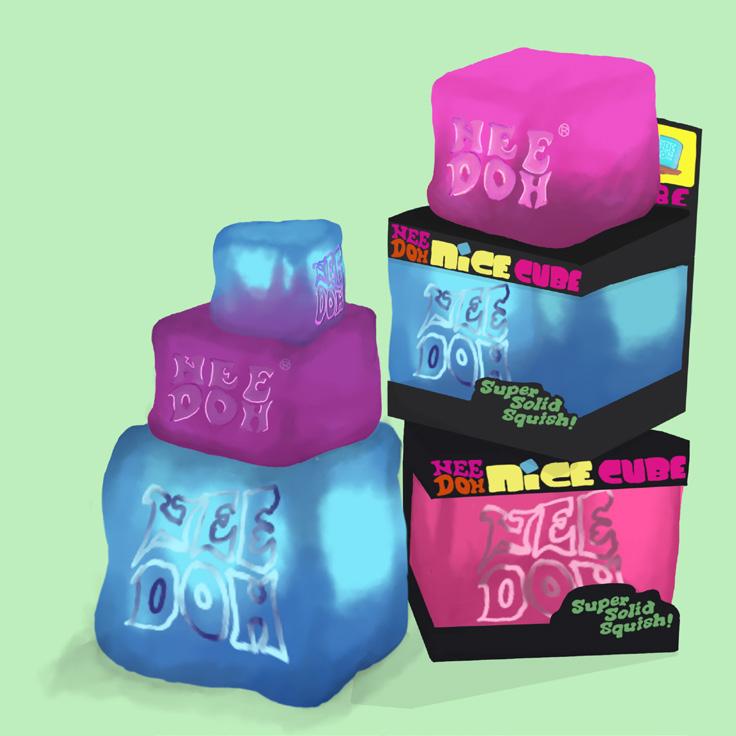
But the 2010’s fad is now taking a new form — this time as a squishy silicone cube. Today, college students have circled back to their high school fidget toys trend. NeeDohs are popping up across campus and are infiltrating TikTok For You pages as influencers rave about the stretchy dough toys.
Launched by toy brand Schylling in 2010, NeeDohs were created to relieve stress and anxiety, while also promoting mindfulness.
University of Wisconsin-Madison junior Jasmine Meinholz has been using NeeDohs for four years, saying she’s always loved having something to fidget with.
Similar to stress balls, NeeDoh’s can relieve anxiety. Meinholz said she doesn’t notice her NeeDoh having a major impact on her mental health, but she does think it helps calm her stress.
“It can help maintain my focus during homework, specifically reading,” Meinholz said. She was first exposed to NeeDohs at a toy mart in Tennessee.
NeeDohs aren’t just for stress relief. Studies showed fidget toys increased attention for students with ADHD and could be used as a tool to assist with their learning.
UW-Madison sophomore Emma Brooks said she first saw NeeDohs on social media. Brooks previously used stress balls in the past but recently purchased a small purple NeeDoh two weeks ago.
“It gives my hands something to do when I’m reading or working on an assignment,” Brooks said. “It helps me focus.”
Brooks purchased her NeeDoh at a small business in the heart of downtown Madison. Advertising “eclectic gifts” and “trendy
accessories,” Little Luxuries has been in business for over 30 years.
The small shop near the Capitol sells these fidget toys in spades. Meinholz said she gets a majority of her NeeDohs from the shop.
The store sells a minimum of 40 NeeDohs each day to a customer base of college students, adults and children. Another Little Luxuries associate said they receive daily calls asking if the store has NeeDohs in stock.
“We initially had another type of NeeDoh, which was squishier. [And we’ve only had] the firmer squishes since March last year,” Brightman said.
Similar to the feeling of slime, Needohs come in different colors, shapes, sizes and textures, but NeeDohs are a mess-free fidget that are easily transported and can be used anywhere.
When Little Luxuries bought them in March, they sold out of all 48 on the shelf within a day. Store associates were told they would have to order around 700 a week to keep up with the demand.
Brightman said they can’t always keep up their supply because the store is a small business, but they recently made a $10,000 purchase on top of the $5,000 purchase they made last week.
While many students rave about the benefits of NeeDohs, UW-Madison sophomore Ashley Bryfczynski said having one in her hands distracts her.
“I feel like I focus on playing with it, instead [of using it as a study tool]. That’s why I don’t have one,” Bryfczynski said.
Whether the popularity of the cube squishies is justified, college students in Madison are still very much enamoured with the fidget. Academic and mental health benefits aside, NeeDohs fever isn’t ending any time soon.
we have a really strong local market here, so I have lots of regulars.”
With over 50 vendors, the market offers everything from homemade pastries and jams to freshly harvested vegetables, meat and even mushroom coffee.
“It’s like the perfect microcosm of the [Capitol Square] farmer’s market,” University of WisconsinMadison sophomore Liz Geier said. “The fact that I can still buy kimchi and a bundle of flowers in the middle of February is honestly beautiful.”
Hulu series has UW-Madison students falling in love with the Carolyn Bessette Kennedy look
By Yareli Gutierrez STAFF WRITER
Leilani Rivera, a University of WisconsinMadison sophomore, first discovered Carolyn Bessette Kennedy on social media. After watching TikTok slideshows titled “How to dress like Carolyn Bessette Kennedy,” and “The Carolyn Bessette Kennedy Effect,” Rivera was drawn to Hulu’s new series “Love Story,” which stars Bessette as the female lead in a dramatic retelling of her rocky, front-page relationship with John F. Kennedy Jr.
“I did not know about her before the show,” Rivera said. She was especially drawn to Bessette’s ability to make businesswear look chic. The show inspired Rivera to recreate the Bessette look with the clothes she had in her own closet.
Rivera’s own style mixes streetwear and businesswear. She enjoys ballet-inspired looks, including capris, Mary Janes, simple heels and crisp, white button-ups. A lot of her looks are inspired from TikTok, Pinterest and ‘90s movie stars.
For her, Bessette Kennedy embodies the chic look she loves. Rivera isn’t the only college student in 2026 looking to bring back the iconic Basette look of the ’90s.
“Love Story” follows the relationship between John F. Kennedy Jr. and Carolyn Bessette Kennedy. The Hulu show retells their love story and brings Bessette’s dark denim, simple silhouettes and neutral colors back into the spotlight for a generation that knew her only, if at all, through old photos online.
Bessette worked as a fashion publicist for Calvin Klein until she married Kennedy in 1996. Since the show aired, her most iconic looks and outfit clips have been everywhere
on social media. Her style has been called “timeless” and “quiet luxury.”
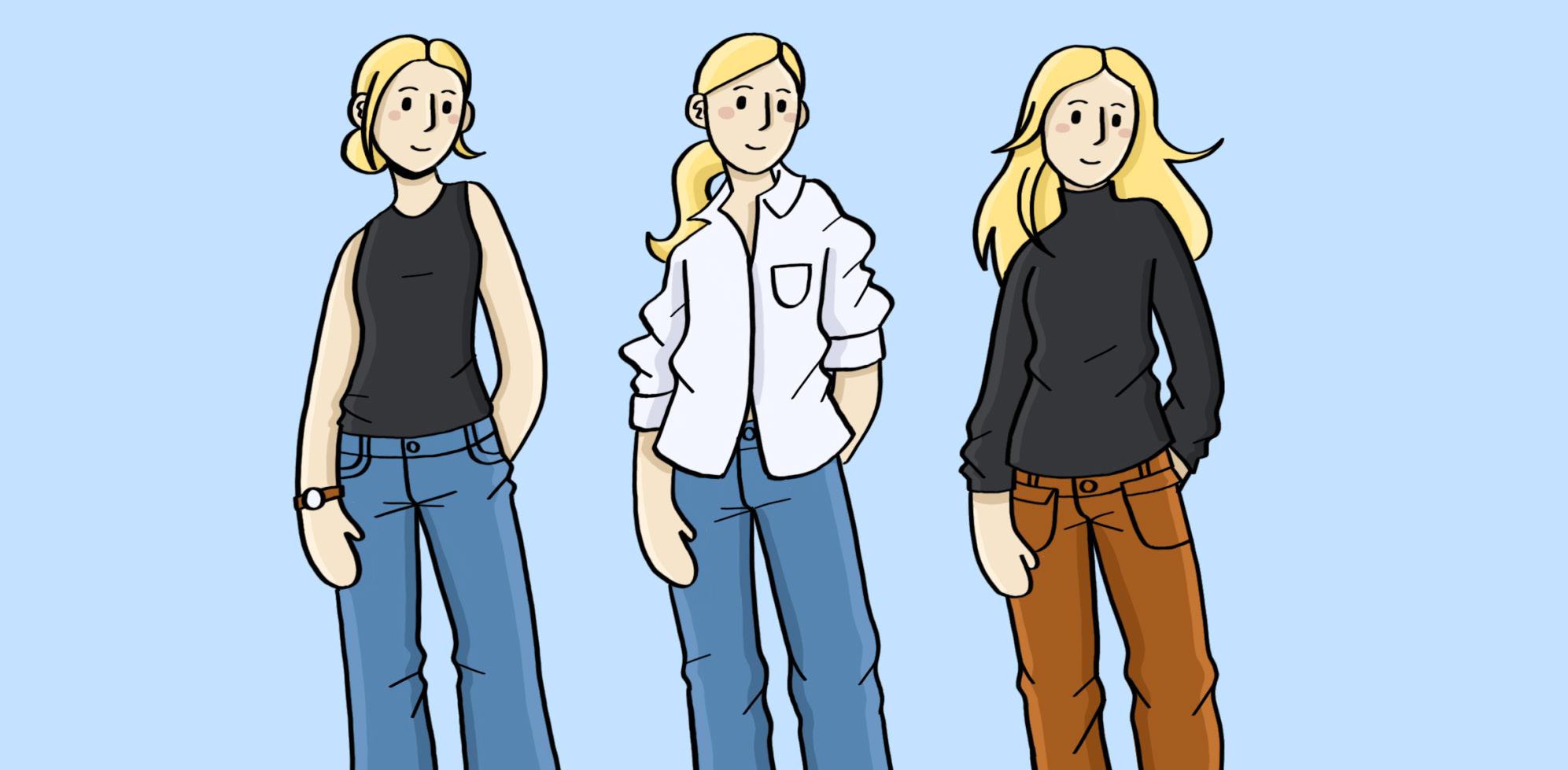
As winter finally turns to spring, minimalist styles are popping up all over campus. Many students wear long, black coats over white t-shirts and dark, straight-leg jeans. Some pair these simple outfits with red or black ballet flats. Others walk down State Street in denim and black kitten heels. Most stick to black, white and blue when creating their looks.
For UW-Madison sophomore Alexis Frazer, Besset’s influence first captured her eye online. She first heard of Bessette briefly through online stories and social media before deciding to watch “Love Story,” herself.
“I’m watching it on Hulu now. I love it. What stood out most was how her outfits feel comfy but still business-like and fashionable,’’ Frazer said, describing her aesthetic as both effortless and timeless, something she hopes to replicate. Frazer described her own style as comfy, casual and chic. Denim and sweat sets are her go-to pieces. They are easy to wear around campus, but still make her feel put together.
“Especially as I’m maturing, I’m finding what I like, and I am not caring about what other people think as long as it makes me feel confident,’’ Frazer said.
Even if most UW-Madison students aren’t trying to directly copy Bessette’s exact style, many still emulate her iconic look in simple ways. Her influence shines through in long coats, dark jeans and minimal accessories like headbands. Whether inspired by the show directly or by social media trends, UW-Madison students are making the minimalist look their own. And with new episodes airing each week, there’s bound to be new outfit inspiration coming soon.
JAKE PIPER/THE DAILY CARDINAL
ELOISE GUTH/THE DAILY CARDINAL
LIZZI MCGANN/THE DAILY CARDINAL
sports
Badgers believe despite ‘bump in the road’
By Aanya Agrawal STAFF WRITER
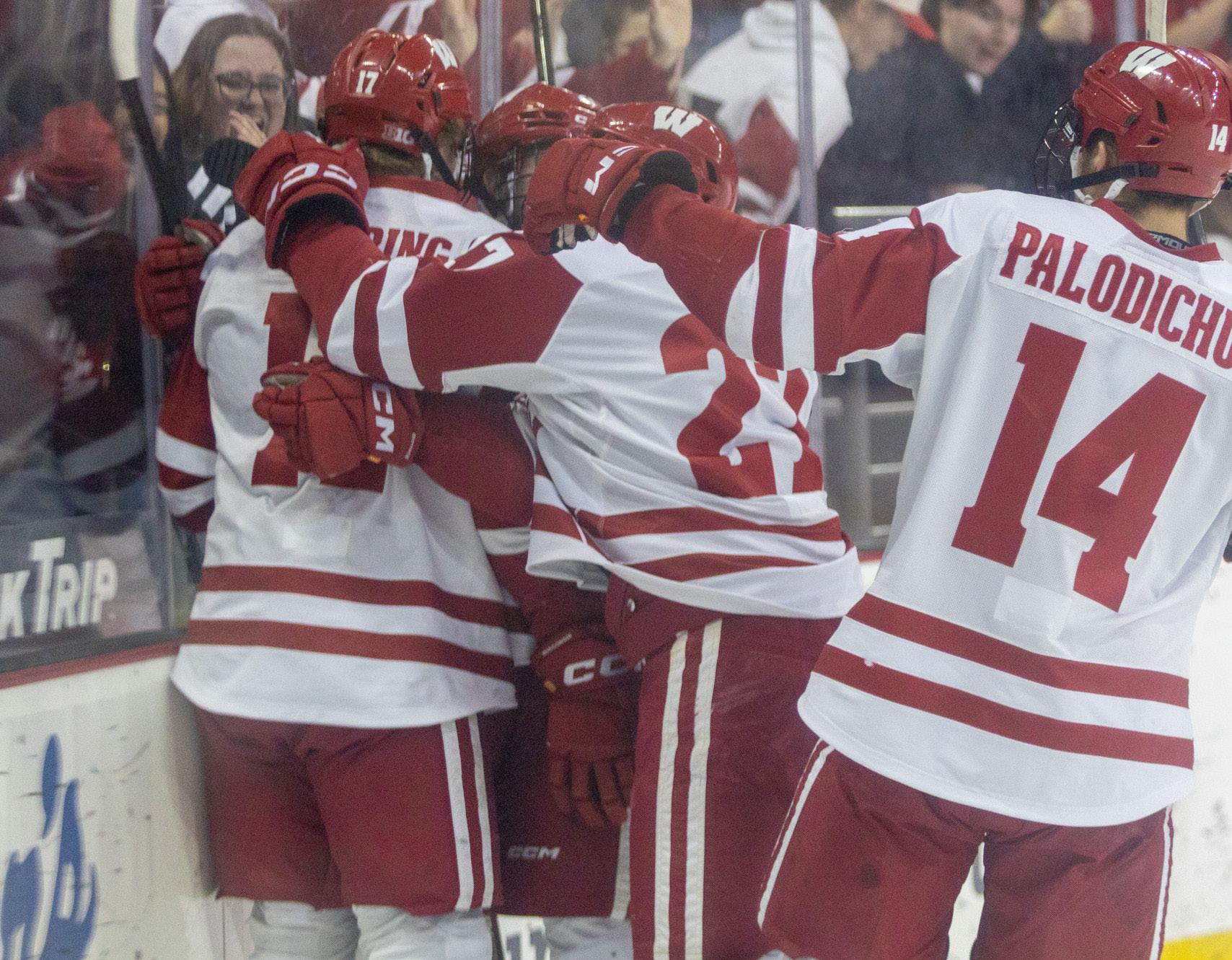
Since starting the season 13-3-2, the Wisconsin Badgers have lost eight of their last 14 games, at one point enduring a six-game losing streak that hurled the Badgers from No. 2 in the country to No. 13 and threatened to derail their season. But despite the adversity, junior defenseman and alternate captain Joe Palodichuk told The Daily Cardinal the culture within his locker room has remained steady.
“I know it sucks for our record and our standing, but I think every good team goes through little bumps, and that was our little bump in the road,” Palodichuk said regarding their losing streak.
He described Wisconsin as a “self-aware team,” saying everyone reflects over their performance and knows where they did well and where they faltered.
“I don’t think much needs to come from us unless we really think it does,” Palodichuk said. Palodichuk said that level of accountability extended beyond just the core leadership. “If anyone outside the leadership group has something to say, it’s almost as important. Everyone matters,” he said.
Palodichuk attributes much of that bond to the time the team spent together training in the summer leading up to this season.
“In the summer throughout our eight week training program, and going through horrible workouts and the pain and the skates early in the morning, I think that just brought our group so tight,” Palodichuk said.
The trust and bonds built that summer found its way into the locker room as the team voted to select their leaders.
For Palodichuk, earning the “A” on his sweater has not changed who he is as a player.
“Your peers vote for you. They trust you. That’s why you have a letter on your chest,” he said. “We have four people on our team that wear letters, and every single person leads in their own way.”
Senior defenseman Ben Dexheimer is second on the team in assists and leads the Badgers in points by a defensemen. He also shoulders the majority of the blue line minutes and is the “quarterback,” as described by head coach Mike Hastings, of his power play unit.
“[Dexheimer] is really good at getting a pulse on the whole group and does a good job connecting with everyone,” Palodichuk said about Dexheimer’s role as captain.
“He competes so hard every day, and I think that’s what sets the tone for us.”
Hastings echoed the same sentiment at a press conference on Feb. 17 after their series against Ohio State.
“[Dexheimer] has earned a little bit of my blind trust, just because of the actions that he has had from the beginning of the summer to where we are right now,” he said.
While junior defensemen Zach Schulz hasn’t been in the line up since his injury back in December against Notre Dame, his presence has been crucial in bringing the team together.
“Zach is the same [as Dexheimer]. He is very good at binding us together and keeping us connected,” Palodichuk said.
As for sophomore Gavin Morrissey, Palodichuk said his leadership style is reflected in his play on the ice. “He’s a great player. I think it’s easy for guys to kind of watch him and learn from him,” he said.
Morrissey leads Wisconsin
in both points and assists, with 29 points in 29 games played. He’s accounted for six of the Badgers’ goals this season and has assisted on 23.
Even with the abundance of players on the team capable of leading, Paldodichuk sticks out with his direct encouragement of his teammates.
“I think I am probably more of a vocal leader. I push the guys on the ice and in the games, and a big thing for me is pushing them outside the rink and in the weight room,” Palodichuk said.
In his 29 games played, Palodichuk has tallied a total of 14 points. He set a career high in goals scored in a single game in December against Notre Dame with two.
Amid Wisconsin’s rough stretch, questions started to surround the team, as the Badgers were determined to return to their early season form. Hastings never lost faith, citing his team’s resilience.
“I like the direction that we are moving in even though the results have not been that way,” Hastings said after Wisconsin’s home series loss to Penn State in January, after which they extended their losing streak to four games.
“There is a lot of belief in the locker room. There is a lot of belief from our staff of what’s in that locker room and in each other,” Hastings said.
Wisconsin will close out the regular season with a road series against Penn State this weekend. After navigating a late season slump, the Badgers will look to build momentum before heading into postseason play.
“I think we are a really good team,” Palodichuk said. “When you can get 15,511 people in attendance, it shows that people want to come and watch us. I think that shows a lot about our group and what we are capable of.”
Badgers advance to WCHA Final Faceoff with overtime winner
By Hannah Sarnoff STAFF WRITER
In an action packed weekend at LaBahn Arena for the first round of the WCHA playoffs, Wisconsin clinched a spot in the WCHA Final Faceoff with a 7-0 win Friday and a 3-2 overtime thriller Saturday against Bemidji State. The weekend also saw the return of the five Badger Olympians for the first time since January.
The starting lineup for the Badgers was the same as it has been for the last couple weeks, with the exception of captain Caroline Harvey making her way back to the lineup and Laney Potter dropping back to the second unit.
Friday
Bemidji State pushed Wisconsin out of the zone to start the first period. It wasn’t until defender Vivian Jungles hit Bemidji State goalie Kaitlin Groess directly in the chest that Wisconsin got their first shot on goal.
Even with limited shots on goal in the first four minutes of play, Wisconsin showed clear dominance of the puck. Just under 15 minutes to go, Wisconsin got their first advantage as Beaver Morgan Smith was sent to the box for tripping.
On Wisconsin’s first line change, Potter found herself on a one-on-one. She drove down the right side, sweeping the puck between Groess’s legs to get the first goal of the game.
It didn’t take long for the Badgers to find themselves in the net again, as co-captain Lacey Eden lodged the puck up to Cassie Hall right at the blue line, giving her a one-onone battle with Groess where she found the top of the net.
Following the two goals, the Badgers kept control in the Beaver’s zone. With 10 minutes left to play, Bemidji State had only managed to get one shot on goal.
With 4:41 left in the period, Bemidji got their second penalty, giving the Badgers the power play. Twenty seconds into the power play, Adéla Šapovalivová hit the puck from behind off the skate of a Bemidji State player, netting Wisconsin’s third goal.
The second period was just as aggressive as the first. In the beginning of the period, Bemidji State came out strong and drove down the rink hitting Badger goalie Ava McNaughton right in the glove.
Shortly after, forward Kirsten Simms found herself on a breakaway and danced around Bemidji’s defense for the goal.
Just over a minute later, Maggie Scannell bounced the puck over Groess to put the Badgers up 5-0. For the next few minutes, the puck bounced from zone to zone as neither team could fully settle.
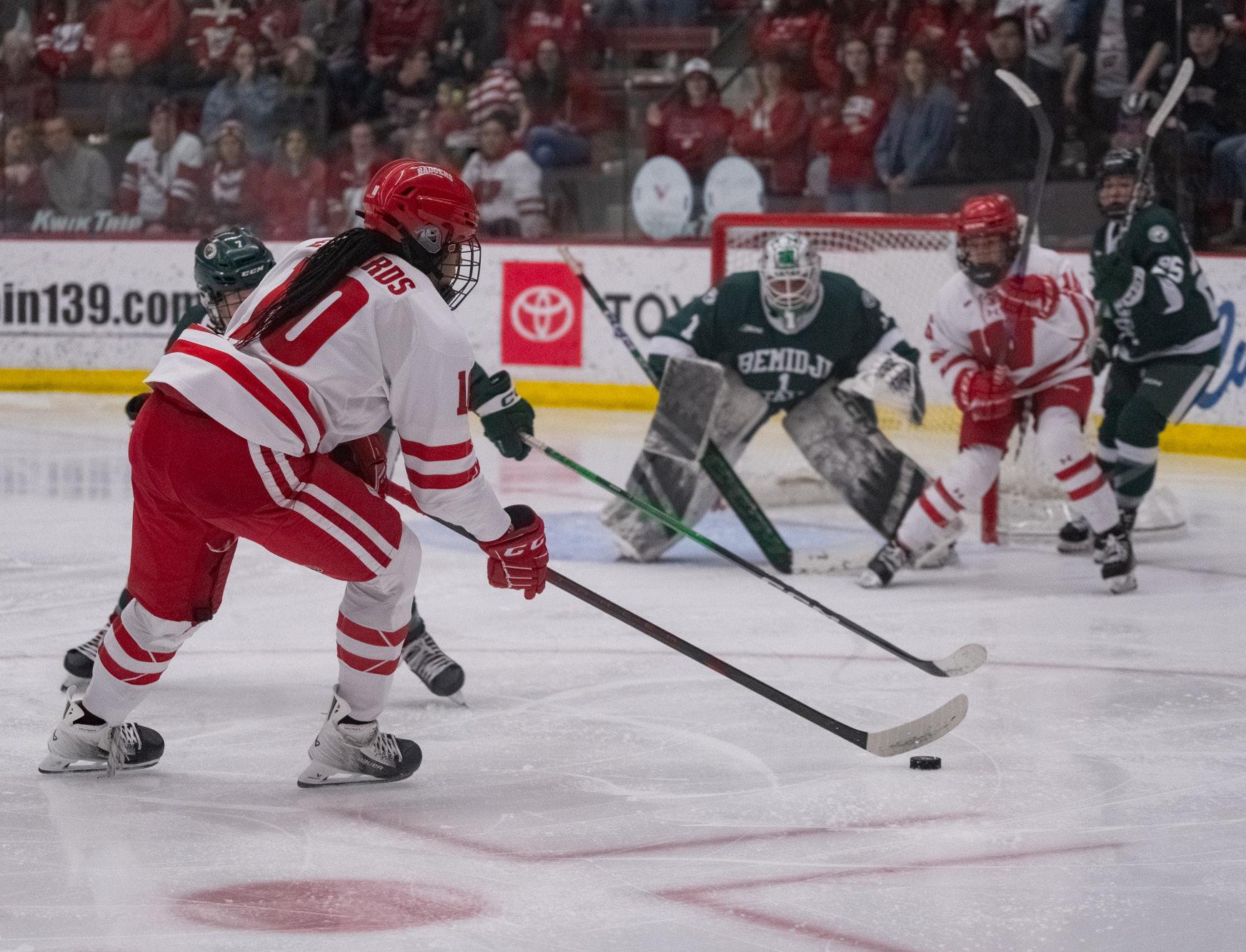
To continue the scoring, Šapovalivová received a pass from Laila Edwards and sniped the puck to the top of the net.
For a good seven minutes, Bemidji played aggressively, not giving the Badgers much time in their zone. McNaughton held her own, not letting any pucks through.
With 5:22 left in the second period, Kelly Gorbatenko made her way to the box for interference. Wisconsin, having penalty killing success all season long, maintained composure and didn’t allow the Beavers to capitalize on the advantage. Edwards made a vital block, stopping a rocketing puck with her forearm.
With 1:30 left, Beaver forward Hailey Armstrong broke away, but McNaughton stopped the one-on-one opportunity and kept Bemidji State scoreless.
A few seconds later, Jungles got called for hooking, giving Bemidji State a penalty shot. Armstrong had another chance to get Bemidji on the board but McNaughton made the pad save.
“I’m just glad I could come up with the save and kind of let our team breathe a little and make sure it wasn’t a big deal,” McNaughton said.
The Badgers were not done scoring in the second period, as with six seconds to go, Edwards centered a shot to give Wisconsin a commanding 7-0 lead heading into the final period of play.
The third period had a slower, more controlled pace. Bemidji State found themselves sitting in Wisconsin’s zone but couldn’t get any power behind their shots.