

By Avery Chheda FEATURES EDITOR
Amid two consecutive years of graduate student admission drops and funding uncertainty, graduate students at the University of WisconsinMadison are staring down a precarious future in both their roles as researchers and undergraduate educators.
UW-Madison admitted 12% fewer graduate students in fall 2025 amid a 17% decline in federal research funding, campus departments implementing 5% budget reductions and possible student visa changes.
The university admitted 12% more undergraduate students in fall 2025 than the previous year, but total enrollment has gone down 0.5%.
“We have long been a leading producer of PhDs. At this moment in time, it’s worth asking whether more is necessarily better,” Provost John Zumbrunnen said in his public pitch to become UW-Madison’s academic leader in March.
“There are big questions about PhD education to ask.”
Zumbrunnen said the university needed to step back and figure out the best path forward for graduate education.
“There are really important questions for us to ask, especially given the changing federal research funding landscape, about what the role of our students is, as students, as scholars, as employees in the research enterprise and as employees in the instructional enterprise,” Zumbrunnen said. “Can we step back? Can we momentarily decouple their role as students from their role as employees and ask what our strategy is for PhD education in the professional space?”
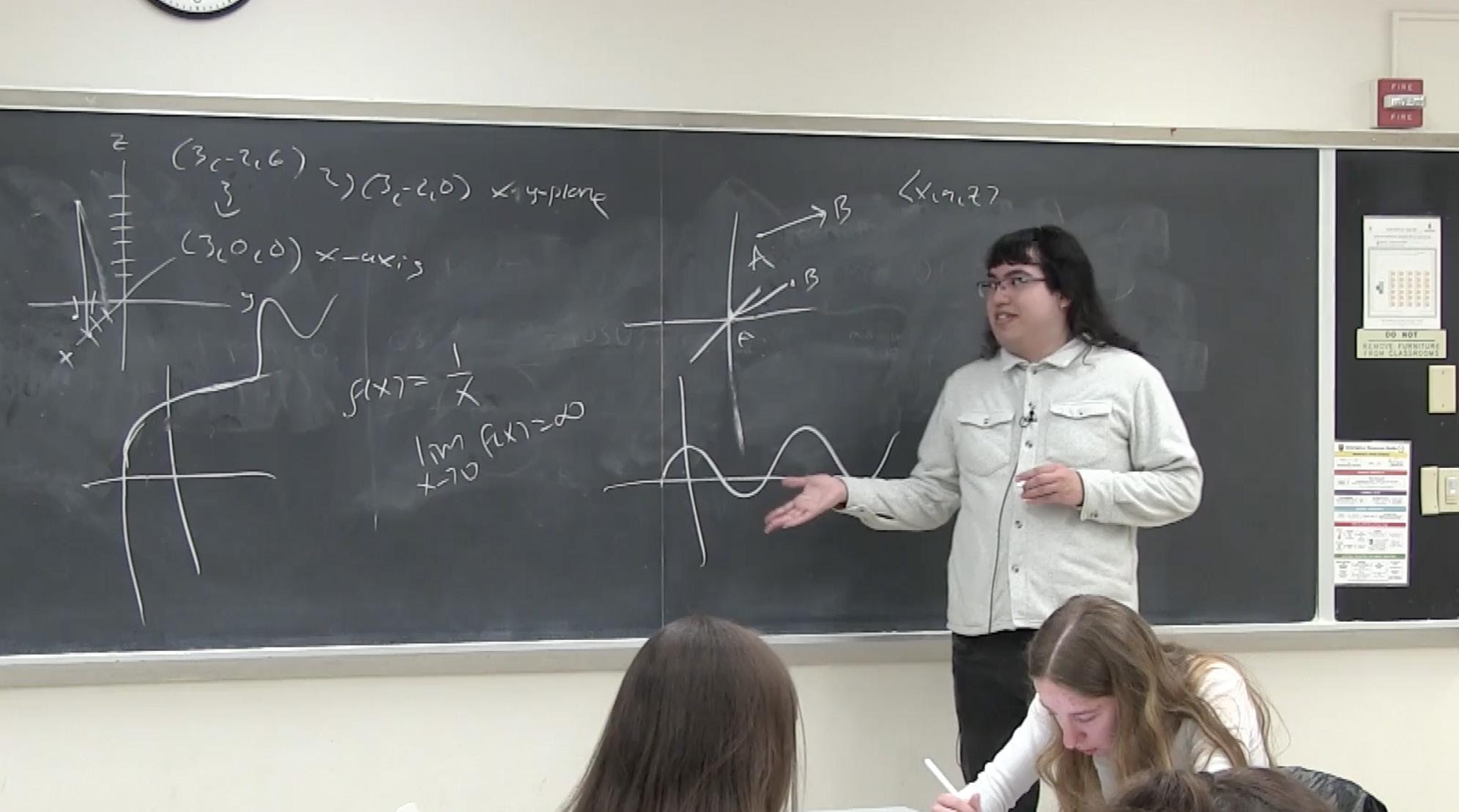
Gisel Flores, a math department TA and co-president of the Teaching Assistants Association (TAA), said budget cuts have hit the math department especially hard.
She said the department is working to avoid increasing class sizes, but other parts of the department are suffering from budget cuts — notably the Math Learning Center.
“Last semester, for the first time in recent memory, the Math Learning Center had to reduce its own hours, and this was because our institutional fund started to dry up, and there was just not enough money to support its hours,” Flores said.
“Next year, the math department is expecting to get rid of most, if not all, of its hourly graders and also some of the undergraduate roles that sustain the Math
Learning Center are going to be replaced by PhD students.”
The math department’s masters program utilizes a Service-Based Pricing model where the tuition students pay towards the graduate program goes directly back into the program’s Fund 131, which covers operational costs and program reinvestment.
As fewer students enroll and less money goes toward the fund, programs are left with a financial gap and could be forced to cut courses, TA positions and student services. As decreasing enrollment intersects with budget cuts, departments are expected to reduce spending without the additional cushion of tuition.
“Because international students are not enrolling as [consistently] as prior years, that means that this fund is literally drying up and because of that, a direct response to this [is] our department is no longer hiring postdocs,” Flores told the Cardinal.
As less teaching assistants are expected to step into more responsibilities, the impact will be felt in heavier workloads and larger discussion sections.
For some School of Journalism and Mass Communication courses, one TA is responsible for approximately 100 students across multiple discussion sections. When serving as a TA last year, one SJMC graduate student told The Daily Cardinal they weren’t able to go home for Thanksgiving thanks to their “onerous workload.”
“I fear those types of anecdotes will become more and more common as there are less TAs per student,” they said.
“there’s less money available for that, which makes it harder not only to recruit really good students but also pay them for their time and work.”
International enrollment has declined as the Trump administration changed how long visa holders can stay in the U.S. In [year], international students experienced more than three times the amount of visa delays as previous years and potential changes to F and J-1 visas.
Along with shorter visa terms, it’s becoming harder for graduate students to secure funding past their fifth year.
Prior to the budget cuts, departments could only guarantee a certain number of years of funding, but they could also make stronger off-paper guarantees to help students secure additional funding. Flores told the Cardinal that a political science graduate student she met with told her all fifth-years were recently told funding was unstable.
“[The email basically said] ‘hey, we can’t guarantee you funding, you should look into ways of getting other sources of funding if possible,” Flores said.
On top of that, Flores said all academic department funding relies partly on undergraduate enrollment. With an incentive to get as many students in the classroom as possible, graduate students will be the ones to bear the brunt of the additional burden.
of undergraduate tuition will continue to be dispersed that way, and the remaining 40% will be circulated back into the department of an individual’s major. Flores said for general education heavy departments like math, this puts a further strain on their budget.
“Math 112, college algebra, [for example], is a course that is primarily taken by nursing students. And so the tuition that these students generate for our department, these are the things that pay for our Math Learning Center. 40% of that is going to go to the nursing school instead of the math department,” Flores said. “Since these are the funds that sustain [things like] the Math Learning Center, we’re expecting a huge hit to what we can offer there.”
For other departments heavy with general education courses like Communication Arts and biology, Flores said the story is similar.
As UW-Madison implements the new framework, central campus will do a oneyear hold harmless to compare its productivity against the current budget policy.
As graduate students face these budgetary challenges, the impacts are felt beyond the academic world. Flores said job security and health care are directly connected to budget cuts.
“These things are intrinsically linked, right? [Graduate student] job security is entirely dependent on whether our departments can uphold their funding guarantees,” Flores said. “The fact that we get health insurance at all when we have appointments like that [is great, but] contingent on us having an appointment to begin with.” 2
Eric Hoyt, a professor in the SJMC, told the Cardinal the university’s appointments for graduate students are as teaching assistants, and right now
One major change prompted by the budget cuts will be how UW-Madison decides to disperse undergraduate tuition. Currently, undergraduate tuition is dispersed through a cost-follows-instruction model that sends 100% of undergraduate tuition money generated by a course directly back into that courses’ department. Starting this summer, only 60%
By Zoey Jiang ASSOCIATE NEWS EDITOR
“Is the Mosse Humanities building a historical building?” student government Rep. Amelia Alvarez asked at a March meeting where representatives debated symbolic legislation aimed at saving a building the University of Wisconsin-Madison has been trying to demolish for at least two decades. “It depends. Up to personal interpretation,” the legislation’s co-sponsor, Rep. Amitabha Shatdal, replied.
The Mosse Humanities Building, a Brutalist structure that has anchored the UW-Madison campus since 1969, is not technically a historical landmark, but it is many other things. To university administrators, it’s a financial drain — deteriorating, inaccessible and unsafe, with an estimated $292 million price tag to demolish and replace. To students who navigate its maze-like hallways daily, it can be a difficult yet necessary part of their routine.
But to others, the concrete hulk has earned a quiet affection, enough that the Associated Students of Madison recently considered — and eventually voted down — legislation urging the university to consider renovation over demolition.
Robert Bruegmann, a historian and Distinguished Professor Emeritus
one roof. In many ways, it was an act of compromise: The building committee was forced to alter the design in order to reduce expenses because just one contractor submitted a bid, and that bid was $1.9 million over their budget. As a result, the finished building using architect Henry Weese’s approach reflects budget-driven compromises rather than the original vision.
It was renamed after George L. Mosse in 2000, honoring the distinguished history professor who died the year before.
Over the years, the Brutalist building has shown significant signs of deterioration.
Lori Wilson, spokesperson for UW Facilities Planning and Management, said the humanities building is “well past its expected useful life.”
“Several practical concerns exist with its condition, suitability for today’s learning and research and difficulty in renovating the facility,” Wilson said.
In a video published by UW-Madison Campus Connection in 2022, Letters & Science Dean Eric Wilcots and Assistant Dean for Facilities Christopher Bruhn tour Mosse Humanities, pointing out its many weaknesses.
The building had an in-floor radiant heating system when it was first
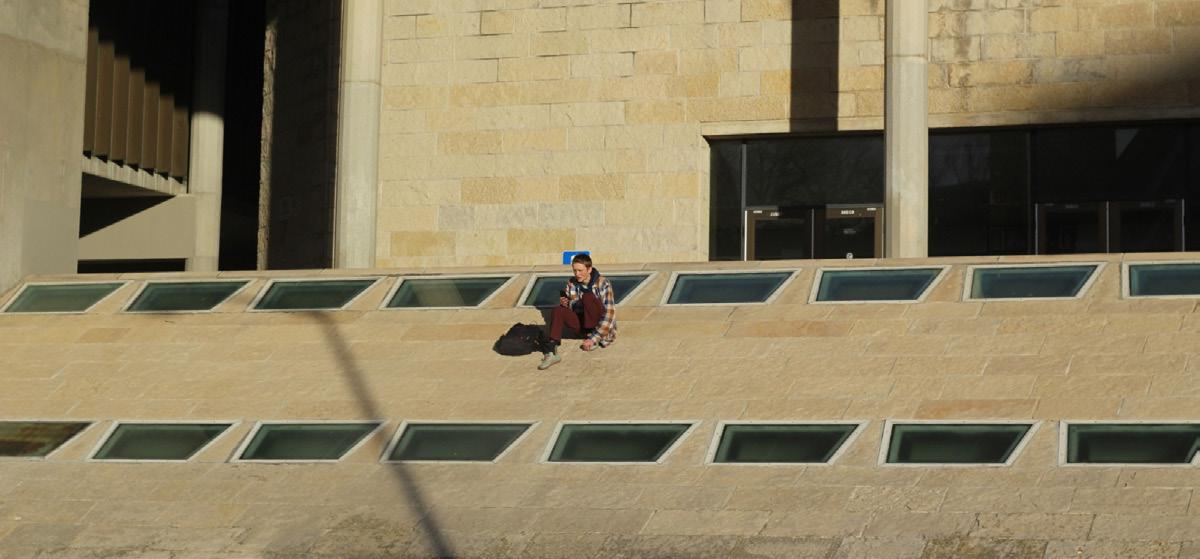
of Art History, Architecture and Urban Planning, spoke about Mosse Humanities in an online lecture about Brutalism and Brutalist architecture.
“This building is a perfect test case for which view of Brutalism will win out: Is this building an example of Brutalism meaning one that merits protection and rehabilitation, or is it an example of Brutalism meaning an overly large, aggressive and raw building that should be demolished and replaced by something more acceptable to current taste?” he said.
Bruegmann said he believes the majority opinion has shifted, and people in the architecture and preservation communities are “now mostly in favor of saving this building and many Brutalist structures.”
A storied history
In the 1960s, the university prepared plans for new buildings to hold its music, art and history departments. At that point, the Department of History was located in Bascom Hall, where 23 professors and 34 teaching assistants shared 16 offices.
The music, art and history departments were originally supposed to be housed in three separate buildings, but in 1962, the building committee suggested all three structures be built together.
Mosse Humanities was the result.
Built over the course of three years, the Humanities Building opened in 1969, bringing all three departments under
Wilson said university facilities fix leaks, falling tiles, odors and complete mold remediation as they are discovered and reported.
“The elevators and mechanical systems are often down for repairs and the building has major humidification, heating and cooling control issues,” she said.
The building’s demolition has been a long-anticipated project, with UW officials floating it since 2003, long before most current UW students were even born, much less stepped on campus. In the last state budget, the university asked the state for $292 million in support and private contributions to demolish the building. The state provided just $5 million in planning funds in return, which the university decided to allocate to relocating departments in Mosse, rather than its demolition.
Wilson said next steps for the building are deconstruction, which is estimated at $16.8 million.
“Humanities costs $2.26 a square foot to maintain, or about $753,400 a year,” Wilson said. Other campus buildings constructed around the same time such as Helen C. White, Van Hise and Vilas halls cost $1.37 to $2 per square foot annually.
These numbers do not include capital renewal projects. “Money spent on preventative maintenance and regular repairs doesn’t include the $88 million in deferred capital renewal costs — or what it would cost to bring the Humanities Building and its systems back from the end of their life cycles,” Wilson said.
Wilson added that even if the university spent $88 million toward the building, Moose Humanities would still not be fully renovated or support today’s changing programmatic, teaching and space needs.
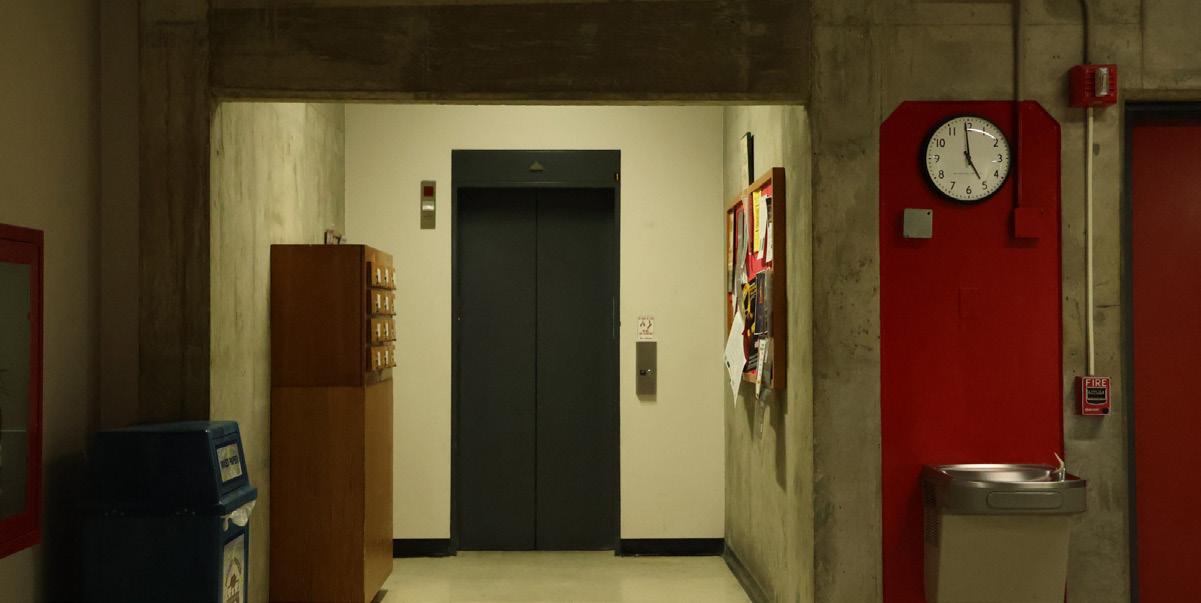
ago, urging the university to choose renovation as a more environmentally responsible option. The council ultimately rejected the proposal.
Shatdal put forth the legislation after hearing from his friends.
“They sort of appreciate the building,” Shatdal said. “But also I do know there’s a lot of people who really don’t like the Brutalist architecture.”
Camila Smith, a first-year undergraduate, is in Mosse almost every day for classes and acapella practice.
“The lack of windows in every single room is extremely depressing and creates a space that is not ideal for learning,” Smith said.
Shatdal doesn’t have a strong opinion on the building himself, but he thought it was a good topic to put forward in debate.
“At least there could be some students who come forward and voice their opinions. I guess that’s how I usually treat legislation: less of ‘this is my opinion’ and more of ‘this would be cool to talk about,’” he said.
The legislation requested the university commission make and publicize an independent comparative analysis of the full life-cycle costs of a Mosse Humanities deep renovation, versus the proposed demolition-andrebuild plan.
in state support. Over half of the building’s construction costs came through private gifts, including a $20 million contribution from UW-Madison alumni Jeff and Marv Levy.
The cost to demolish Mosse Humanities is estimated at $292.6 million after the over $70 million worth of deferred maintenance needed to fix the building’s current limitations.
A big issue is Mosse’s complicated design layout of non-contiguous floors, unused open plazas and disconnected hallways that create navigation issues, especially for disabled students.
To bring the building to ADA standards, it would cost $12 million, including installing more elevators and seating for disabled students.
Wilson said the building doesn’t meet all ADA requirements due to when it was constructed and infeasibility caused by structural barriers, but it is compliant.
constructed, but the system failed within a year of opening and is unable to be fixed.
The fixed seating in all the lecture halls makes it difficult for an active learning environment and raises safety concerns. In many classrooms, installing technology to keep up with modern instruction is nearly unachievable because of the high probability of water damage to the equipment. Wilson added because the building is constructed of concrete, installing wires and conduit would be difficult.
There is also an open exhaust air duct in the middle of a hallway in violation of state building code. If there was a fire in any of the classrooms, Wilcots and Bruhn said those ducts would draw fumes and smoke from the classrooms and into the hallway, making safe evacuation that much harder.
In addition to everything else, Wilcots and Bruhn stressed the building’s continual water leaks, falling ceiling tiles, and odor issues. In 2016, the estimated cost to repair deferred maintenance and design problems was $62 million.
Wilson said instructional spaces are damaged from regular water leaks from the plumbing and drainage system. “Condensation from single-pane windows and a lack of vapor barrier have compromised musical instruments, art equipment and materials, acoustical wall treatments, floors and drywall,” she said.
Another Brutalist building, Master Hall, an apartment complex on Gilman Street, was considered for demolition earlier this year, but The Madison Trust for Historic Preservation nominated the building for preservation in early March.
John Rolling wrote the nomination for Master Hall and spoke in opposition to demolishing it.
“Perhaps the single most telling characteristic is implied by the style’s name itself — a ‘brutal’ or commanding presence on the site and the unapologetic presentation of the building’s structure and its service elements,” he said in his nomination.
Heather Bailey, City of Madison preservation planner, said Brutalist architecture is one of the hardest styles to love. “It’s not cute or quaint. It is monumental architecture that conveys hulking mass [and] power, and it tends to dominate its environment.”
Because of these characteristics, Brutalist buildings are usually public or civic buildings. “They symbolize power,” Bailey said.
Rolling said Master Hall is one of Madison’s most unique buildings. “It is a cardinal example of the Brutalist style. There are other Brutalist buildings in Madison — the most significant of these is the Mosse Humanities Building,” he said.
Brutalism debate meets campus
ASM debated legislation opposing Mosse Humanities’ demolition at a Wednesday meeting three weeks
The legislation said this analysis should be carried out by an institution not previously involved in the demolition proposal and should include embodied carbon, demolition waste and displacement impacts. They asked that the study be published before any demolition happens.
“The idea is, you have two options here. We can either remodel the building and pay some amount of money, which, according to a lot of people out there, they estimate it to be a lot less than the cost to destroy the building and then build a whole new building there,” Shatdal said.
The university is already building a new Humanities Hub, Irving and Dorothy Levy Hall, which will act as the new home for the College of Letters & Science. The history department, along with eight other humanities departments, are already set to move there when it opens this summer.
Gov. Tony Evers and the state legislature included Levy Hall in the 20212023 state budget, granting $60 million
“Accessibility improvements have been made per code during every major alteration, and alternate locations in the building have been identified for restrooms, classrooms and offices,” Wilson said. “Facilities Planning and Management works closely with the McBurney Center and Office of Compliance to address accommodation requests.”
Although Smith herself hasn’t faced accessibility issues, she “noticed the extreme lack of accessibility in the majority of the classrooms.” She added that her roommate struggles to get around the building.
Misha Beggs, another first-year undergraduate, has musculoskeletal issues in one of her legs that requires her to use a cane to walk.
“It’s such a nightmare to navigate, accessibility-wise,” Beggs said. “The accessible routes feel maze-like, and they’re often harder to find or take significantly longer to get through.”
Shatdal emphasized the need for student participation in deciding how UW-Madison handles academic buildings.
“I would say it’s more on the student’s role than the university’s,” he said. “The university has to be open to students to be involved. A lot of the time, I think, students participate on things that are hot button issues but for smaller things, there’s less interest and it’s harder to garner student interest.”
l By Jake Kilander SENIOR STAFF WRITER
University of Wisconsin-Madison sophomore Marcel Jenson is living the typical “work hard, play hard” college experience with one exception: he never drinks alcohol.
“I just don’t feel like there’s a good reason to drink,” Jenson told The Daily Cardinal. “I don’t know, it’s just never really happened.”
Jenson is part of a larger trend of young non-drinkers. Nationwide, Generation Z is consuming less alcohol than previous generations. A 2023 Gallup poll found that 38% of U.S. adults aged 18-34 say they abstain from alcohol completely.
UW-Madison students are no different, with approximately one in five undergraduate students reporting that they don’t drink alcohol.
Kaeden Meuer, a manager at State Street Brats, told the Cardinal the bar has adapted to the changing Gen Z drinking habits by implementing THC-infused drinks for those who don’t enjoy the effects of alcohol. The bar also held regular “Love Island” watch parties during the most recent season, opening the sports bar to a broader audience.
Brats’ most popular promotion is Bottomless Thursdays, a weekly $15 all you can drink deal on certain items.
“There’s a deal and an excuse to drink for every night of the week,” Molly Kelly, a bartender at Brats, said. “We’ve made a fan base [at Brats], I guess you could say. When I work on Thursday nights, I see the same faces every week.”
Other campus bars have started their own regular drink promotions. The Double U and Church Key also have a bottomless Thursday deal, and Whiskey Jack’s Saloon starts Thursday nights at 25 cent drinks before gradually working up to $3 everything after 10 p.m. UW-Madison junior Mark said he appreciates the promotions and drink deals from campus-area bars.
“It definitely makes the night seem a lot more enticing to go out,” he told the Cardinal. “At the nicer bars on campus and near campus, the drinks are more expensive, and it’s not as fun to
spend that much more money.”
For those students who do drink, it’s increasingly in moderation, with 22% of Gen Z individuals who drink saying they sometimes drink more than they should, down from 28% of Millennials in 2013. Additionally, Gen Z drinkers reported they drink an average of 3.6 drinks a week, down from 4.5.
In a 2025 University Health Services survey, 37% of students said they had participated in high-risk drinking — consuming four drinks in one sitting for women or five in one sitting for men — within the last two weeks. While UW-Madison still sits 15 points above the national average for college students, the proportion of students is decreasing on campus.
“More and more students are coming to campus that aren’t drinking or aren’t highrisk drinking,” Jenny Damask, UHS assistant director of high-risk drinking prevention, told the Cardinal.
According to Damask, high-risk drinking at UW-Madison goes up as students turn 21, with over 50% of upperclassmen reporting high-risk drinking.
For Jenson, he doesn’t see himself joining this percentage.
Jenson said he’ll try alcohol when he turns 21, but he sees himself “maybe drinking once a week, very lightly, twice a month, something like that.”
There’s no one reason for the decline in Gen Z drinking. A University of Michigan study found that motivations to not drink are often internal, with students citing a lack of desire to drink. External factors that were highly cited were school or work commitments and the desire to save money, finding that 72% of participants said they needed money for something other than alcohol.
However, Damask said financial stress is not one of the top reasons most UW-Madison students abstain.
“Usually what we find is most people aren’t too financially stressed,” Damask said. “Our mean — which isn’t everybody — is pretty high income.”
Jenson noted his peers have been supportive

of his decision not to drink, and said he has found friends who also don’t drink, something he was unsure about coming from California, given UW-Madison’s strong drinking culture.
Jenson, however, said bars as a hangout spot aren’t appealing to him.
“I don’t usually like to be the only one not drinking because I kind of feel, not left out, but just outside of it,” he said.
As more non-drinking students like Jenson choose UW-Madison, Damask says the university is looking to offer more alcohol-free options to still find community on campus.
“We need to think about a sense of belonging and what it means to be on this campus as a non-drinker or a person in recovery,” she said. “We need to have things in the environment, events that are friendly, just an environment that’s really welcoming.”
Damask highlighted the Wisconsin Union’s partnership with UHS’ alcohol-free initiative, Late Night Grants, which sponsors student organizations hosting alcoholfree events. University Housing also has Wisconsin Late Night — weekly events they call “Alcohol Alternative Programming.”
Survey data from UHS shows non-drinkers at UW-Madison may struggle to feel like they belong on campus.
One factor in that discrepancy is that, at a predominantly white institution, students of color and international students were more likely to abstain from drinking than white students.
In UHS’ 2023 “Color of Drinking Survey,” many students said they would like to see more spaces that don’t involve the use of alcohol. Damask says UHS has been working with the Wisconsin Union to bring more fun, alcohol-free spaces to campus.
Mark, who does choose to drink, said he has no issue connecting with those that don’t. “I do have friends that don’t drink, and they still come out with us sometimes. We obviously don’t have any peer pressure, whether it’s for personal or religious reasons or anything,” he said.
For the campus bars looking to still thrive amid changing student demographics, Meuer says adaptability is key.
“You have to be willing to be consistently changing, but also stay the same at the same time,” he said. “It’s a funny game that we all play in the bar scene.”
By Alaina Walsh CITY EDITOR
A new housing report is intensifying debate over whether the University of Wisconsin-Madison needs to build another dorm.
The report, put together by Maxfield Research and commissioned by the Greater Madison Housing Consortium, examines rental housing within one mile of Bascom Hall and argues that thousands of new beds built, under construction or proposed near campus will be enough to meet undergraduate demand in the coming years. University officials see the state of campus-area housing differently.
Madison’s housing crunch drew national attention in October 2023, when UW-Madison students camped overnight to secure off-campus leases. Since then, private developers have brought forward a wave of new projects near campus, helping reshape the local student housing market.
University Housing is currently operating above capacity, with 8,987 residents this fall — more than 115% of its designed capacity of 7,749 beds — requiring the use of expanded spaces such as converted triples and repurposed study areas.
The analysis counted 40,555 existing beds in the region as of January 2025 and projected another 8,055 beds by the end of 2029, bringing the total to 48,735,
according to materials summarizing the report given to The Daily Cardinal by MGR Govindarajan.
But Kurt Paulsen, a professor in the UW-Madison Department of Planning and Landscape Architecture who participated in broader city-university conversations about student housing, said the numbers do not fully settle the question of whether UW-Madison needs more universityowned dorm space.
“The truth is this was a kind of perfect storm that no one could have predicted,” Paulsen told the Cardinal, pointing to postpandemic rental demand, Dane County job growth and growing enrollment pressure at the university.
The consortium’s report concluded UW-Madison does not need another dorm. The university, meanwhile, has requested funding for a new dorm in several budget cycles. In its last request, UW-Madison indicated plans to build a dorm without state funding, instead seeking approval from the state before they could take out a loan. The request to build a dorm was removed by the Legislature’s budget-writing committee.
UW-Madison spokesperson John Lucas told the Cardinal the university maintains that additional residence hall space is necessary, particularly for first-year students.
“UW-Madison has a responsibility
and an obligation to offer first-year students the opportunity to live on campus in University Housing,” Lucas said in a statement. “Students and parents consistently tell us that they want the on-campus experience, convenience, support and programming of living in the residence halls.”
Lucas also criticized the Maxfield report, saying it undercounts first-year students — the primary users of residence halls — and does not fully account for competition from young professionals in the downtown rental market.
Paulsen said the 2023 crisis was worsened by tight vacancy rates — which hovered between 2.5% to 3.6%.
“If you added 1,000 students to UW-Madison when vacancy rates downtown are normal, 5%, it’s not a big deal,” Paulsen said. “But if you add 1,000 students when vacancy rates are 2%, it is a big deal.”
The report focused on a walkable, student-dense area near campus with a high concentration of multifamily rentals and excluded owner-occupied single-family homes. It also identified a pipeline of projects expected to add more than 8,000 beds between 2025 and 2029.
Paulsen said one major limitation of that approach is that it measures housing availability for students without fully accounting for nonstudents who also want
to live downtown.
“It will tell you the number of available beds within a mile of campus, but it does not tell you what is the demand from nonstudents to also live downtown,” Paulsen said.
That distinction matters because many of the new developments are purposebuilt student housing: projects with smaller bedrooms, shared common areas and leases signed by the bed rather than by the unit.
Those buildings may appeal strongly to students while being less attractive to workers, families and older tenants.
In that sense, Paulsen said, Madison may be facing two related but separate housing issues at once: a private market that is increasingly supplying off-campus student apartments and a continuing shortawge of more traditional downtown housing for workers and families.
The report reached a similar conclusion, arguing that while Dane County and Madison still need workforce and market-rate housing, student needs near UW-Madison are increasingly being met by the private market.
That conclusion, however, does not necessarily resolve the first-year housing question.
Continue reading @dailycardinal. com
By Jake Kilander SENIOR STAFF WRITER
For years, students have moved away from humanities majors as job prospects grew less predictable. Now, degrees once seen as safe — including some of the fastest growing majors at the University of Wisconsin-Madison — no longer offer the same sense of security, as artificial intelligence reshapes the job market.
STEM degrees have historically been seen as a near guaranteed path to a well-paying job. Engineering or Computer Science majors in 2024 could expect an entry-level salary above $75,000. For the class of 2026, projections look less rosy.
The National Association of Colleges and Employers’ (NACE) job outlook report for the class of 2026 said employers project just a 1.6% increase in entry-level hiring, down from 7.3% in 2025. According to the report, the job market for new graduates is the worst it has been since the 2021, at the height of the COVID19 pandemic.
“Many students who are in this tough market feel that this promise is broken and it’s unfair. It’s very misaligned expectations with the actual outcome,” said Kyungjin JangTucci, a UW-Madison researcher focused on the transition from college to the workforce.
One reason the market is breaking down is uncertainty caused by AI. In helping seniors find jobs in computer science and computer engineering, Jang-Tucci saw those impacts first hand.
“The job prospects in those majors are really diminishing with AI-related shocks,” Jang-Tucci said.
Kevin Carroll, a senior computer and information science student, is currently on the job hunt.
“I’ve applied for over 20 positions so far,” he said. “Between multi-round interviews, I’ve probably had about five interviews in the past year.”
Carroll said because AI can do much of the work of an entry-level
programmer, he’s had to look for jobs that are not best suited to his degree in areas like information technology, database management and cybersecurity.
Part of the reason Carroll chose computer science was the promise of a good paying job waiting for him down the line. Now he says if he was given a re-do, he wouldn’t go down the same path. “I would go into IT or business management, something like that.”
Just 10 years ago, web developer, software engineer and other similar roles were some of the most highly sought after positions. In 2025, computer engineering and computer science are in the top five for highest unemployment rates by major nationwide.
“Many students who are graduating right now got into this program when there was still a promise of if you code well, if you get this degree, you will get a job and you will get a good salary after college,” Jang-Tucci said.
However, some degree programs may see new opportunities in the world of AI. Graham Gasper, a current Electrical Engineering graduate student, said he’ll be entering the workforce at the perfect time — as AI data centers continue to crop up across the country.
“I want to focus on large scale power distribution,” Gasper said.
“There is so much AI growth that we need so much more power demand and so many more electrical engineers going into that field.”
Gasper will complete his graduate program at the end of the semester, and he already has a job lined up. “I had a couple offers and honestly, I didn’t put that much effort into searching,” he said.
If a computer science major can find work in this market, the income prospects are still there. A 2024 report from the Center for Research on the Wisconsin Economy found that Computer and Information Science majors at UW-Madison not only had the highest starting wages out of college, but also the highest lifetime returns.
For non-STEM majors, AI’s effects are less clear. Liberal Arts majors have an unemployment rate of 3.8%, below the national average of 4.4% and well below the 5.6% average for recent graduates in December 2025. Still, some of the issues for Humanities or Social Sciences majors remain the same.
“There’s just not many jobs that pay well,” Jang-Tucci said.
Supported by the CROWE report, humanities majors such as Literature, History or Cultural/Gender studies had some of the worst returns on investment for students.
Employers are increasingly utilizing skills-based hiring — emphasizing a candidate’s demonstrated abilities and skills — over a traditional system favoring educational attainment and work experience. Skills-based processes typically want applicants to be able to describe instances when they applied a relevant skill that yielded a positive outcome.
According to NACE, the top skills companies want to see are “soft skills.”
Problem-solving, teamwork, communication skills and initiative are all toward the top of what employers want to see on a resume.
“Employers are looking at a set of skills instead of the piece of paper that students have,” said Danielle Marriner, an assistant director at the UW Office of Academic and Career Success.
In her position, Marriner interfacts with career advisors across UW-Madison to determine what students need to do to prepare for the job market. She said companies especially love internships or jobs where students can demonstrate relevant, transferable skills in a workplace setting. According to Marriner, there are definite benefits to this approach for students.
“I think it’s more equitable,” Marriner said. “It’s looking at the
skills and not where you went to college or something like that. It’s a really good move.”
For those searching for where they fit in the current market, skills-based hiring gives them the opportunity to still build their resume. “You do not have to know where you want to go to have really valuable experiences and build up skills that are going to be really meaningful to a future employer,” said Michelle Jackson, director of the Career Exploration Center.
Jackson echoed Marriner’s point, saying companies are looking for applicants who can demonstrate their abilities.
“We can’t predict for the future,” Jackson said. “What we can do is build up our skill sets around working with people, being a problem solver, being thoughtful and building transferable skills.”
Jackson also said those skills can be built in ways students may not expect. “It doesn’t have to be a perfect experience,” she said. “It has to be collecting experiences that give you exposure to either that exact work, or to that industry or to people who have done that work.”
Building and honing strong interpersonal or networking skills is something typically associated with majors outside the STEM realm.
“Humanities and social science major students are more pressured to have something on top of what their degree is,” Jang-Tucci said.
Now, in a job market that is harder to break into with credentials alone, Jang-Tucci said some STEM majors may regret pursuing their degree.
“I heard some students say, ‘Oh I initially wanted to do theater, or social science, or sociology then I chose computer science because of the income prospects,’” Jang-Tucci said.
Gasper agreed that if money was no object, he likely would have chosen a different career path. “I think teaching would be so much fun, except unbelievably underpaid, as everyone knows.”
By Audrey Lopez-Stane SENIOR STAFF WRITER
Wisconsin Technical College System enrollment has risen 18% since 2020. While University of Wisconsin System enrollment remains largely unchanged, more high school students are opting for the two-year hands-on experience that technical schools offer.
WTCS President Layla Merrifield said she is combating the stigma against technical colleges.
“We are really trying to rethink higher education,” Merrifield told The Daily Cardinal. As a less expensive and shorter alternative to four-year institutions, she said WTCS is “determined to no longer be Wisconsin’s best kept secret.”
Technical college students told the Cardinal there are many reasons why they are choosing them, including affordability, dual enrollment and their supportive community.
Careers like dental hygiene, law enforcement and firefighting are driven by technical colleges across the state, Merrifield said. Many Wisconsin technical schools have specialized academies for training and hands-
on learning that Merrifield said isn’t found anywhere else.
“We are sometimes less understood and less well known, particularly by folks who were educated through the four-year system,” Merrifield said. “The rigor and very high quality of our academics might be a surprise.”
Affordability and job market
In-state tuition for WTCS is currently $4,585 per year, whereas the least expensive University of Wisconsin System school, University of Wisconsin-Parkside, costs $8,658 each year.
Unlike UW System universities, technical colleges are able to tap into local taxes for funding. It’s a funding wrinkle that makes the state unique and is one reason technical colleges spend more per pupil than their four-year counterparts.
In 2021, this meant technical colleges operated with $17,153 per pupil, the fifth-highest mark in the nation, while UW System universities amassed just $15,079 per pupil, good enough for 43rd nationally.
Afton LaMere said he opted to attend Northeast Wisconsin Technical College so he could pay for his associate degree out-ofpocket while staying home and working parttime before he transferred to University of Wisconsin-Madison.
“If you’re unsure about college, [technical schools] are a great place to start because of just how cheap it can be,” LaMere said.
Merrifield said the financial benefits remain even after students graduate. According to WTCS, 92% of graduates are employed within 6 months of graduation, with a median salary of $60,003.
“That’s really appealing for folks who have deep roots in this state, whose families are here, who want to stay in Wisconsin.” Merrifield said. “We are an excellent option at an affordable price.”
Continuereading@dailycardinal.com
By Addison Balogh STAFF WRITER
With spring break fast approaching, many students are anxiously checking their bank accounts to finance their travel plans. When University of Wisconsin-Madison freshman Haley Vindel-Mejia planned a trip to Hawaii, a new opportunity caught her attention.
“I had multiple people explain to me that they get a lot of money when donating plasma,” she said. “A lot of the people I know who donate plasma often use that money to pay for groceries or just buy the things they want.”
Vindel-Mejia donates plasma at BioLife Plasma Services once a month, sitting in a chair while a machine separates plasma from the blood donated. She said each donation pays out roughly $100, but when donating regularly, the gig can bring in up to $800 per month.
But Vindel-Mejia isn’t the only student hoping to make extra income as a full-time student. As tuition and rent continue to climb, many UW-Madison students are finding new and creative ways to offset costs through unusual side gigs.
For some students, these side hustles help cover everyday expenses, such as groceries, rent and transporta-
tion. Others use the money to fund hobbies, travel or social activities.
UW-Madison freshman Sienna Kenney runs a small nail business offering gel polish, acrylic nails and detailed nail art. She has her own nail page on Instagram where people reach out to set up appointments in her dorm.
“My mom first taught me to paint my nails when I was in elementary school,” Kenney said. “Once my friends started to recognize my talent and ask me to do theirs, I had the idea of making some profit off of it.”
Kenney’s prices range from $30 to $45 depending on the design and length of nails. While she initially started the business to pay for fun activities in high school, the income now helps cover everyday expenses in college.
“This side hustle helps me pay for groceries, medicine, transportation from and to home and occasionally for fun items or events,” Kenney said.
Other students have taken their side gig search digital.
UW-Madison junior Leah Repenshek sells clothes she no longer wears on the resale app Depop.
“I take clothes out of my closet that I don’t tend to wear anymore and put pictures up and descriptions of them
online to sell,” she said.
Repenshek said the reselling process is simple and easy to manage alongside school because it can be done entirely from her phone.
“It gives me some extra cash, which is helpful as a college student,” Repenshek said.
Some students leverage their academic and career interests to earn money.
UW-Madison junior Henry Gassen works as an independent personal trainer, guiding clients through personalized workout programs at either the Bakke Recreation & Wellbeing Center or Nicholas Recreation Center. He said the job provides both income and valuable professional experience.
“RecWell offered a course on personal training, and I thought it would be good experience for my career as I am studying kinesiology right now,” Gassen said.
He said his schedule and income varies depending on his clients’ availability, but he enjoys the flexibility and tries to be adaptable with his clients.
“I make around $30 per session,” Gassen said. “I’m trying to pay for rent and groceries.”
Balancing side gigs and school can sometimes be challenging, but Gassen said the experience has helped him
By Kaelana Faessler STAFF WRITER
Eating takeout is a regular part of University of Wisconsin-Madison sophomore Nora Klaers’ daily routine. Between a packed class and extracurricular schedule, cooking and planning meals everyday is not the first thing on her plate.
And she’s not alone. Between classwork, student activities, jobs and finding the time to spend with friends, eating a full, nutritious meal is often the last thing on a college student’s mind. Many UW-Madison students are dependent on quick and cheap options, such as frozen meals and takeout.
According to Alicia Bosscher, a Clinical Dietitian Nutritionist at UW’s University Health Services, college is an especially difficult time for people and their nutrition habits.
“It’s one of the most challenging times because maybe for most of your life so far, you had other people take care of that part of your day for you,” Bosscher said. “And now all of a sudden that’s all on you.”
Meal prepping is one popular strategy for students hoping to eat healthier and more affordably, which includes preparing and cooking a meal and portioning it out into several servings to eat in the following days. This trend has surged online and on social media, where people prioritize creating simple meals with whole ingredients.
But Klaers said even meal prep can be hard to balance in an already full college student schedule.
For her, this means spending more on eating out instead of buying groceries. On an average week, Klaers said she eats takeout at least five days out of the week, if not at least once a day.
“I would love to spend less money and cook all of my meals for the week myself,” Klaers said. “It’s healthier. It’s a good skill to have.”
Cooking ability is one of the biggest barriers for students to meal prepping and eating nutritious meals. “I’ve never really learned how to cook, and every time I try to cook it always turns out horrible,” Klaers said.
She said her frustration with cooking is amplified by the prices of groceries.
Grocery prices nationwide continue to rise year after year. Food-at-home prices have seen
an increase every year since 2020. In the past year alone, an index measuring grocery prices for American consumers rose by 2.1%, according to data from the U.S. Department of Agriculture.
Grocery stores in the Madison area suffer from the same rising prices and often have vastly different prices for groceries.
Fresh Madison Market, located on University Avenue, is a popular spot for students to purchase groceries. Despite its convenient location, food is priced much higher than at other Madison grocery stores, such as Aldi, which is roughly five miles off campus.
For example, the “sweet potato beef bowl” is a simple meal that has taken over social media. Made with just sweet potatoes, ground beef, cottage cheese and avocados drizzled in hot honey, viral bowls like this are fueling the meal prepping movement and emphasizing consuming whole foods.
For a student at UW-Madison looking to make this meal, a pound of lean ground beef, one avocado, one pound of sweet potatoes and a 24 ounce tub of cottage cheese comes to a total of $17.46 at Fresh Madison Market. At Aldi, those same ingredients cost just $12.51.
“Cooking is time consuming, and it’s annoying to spend a lot of money on groceries because
develop time management skills.
“There are more important things than just school, and getting real life experience is just as important, if not more important, to your success,” he said.
These nontraditional income sources can sometimes come with unanticipated drawbacks. For example, experts caution against donating plasma as a primary and consistent source of income.
According to the FDA, plasma donation is regulated to protect donor safety, as donors are not allowed to donate “more frequently than once in a 2-day (48 hours) period or twice in a 7-day period,” due to potential side effects, including fatigue, dehydration and dizziness.
As students take on more side gigs, financial aid experts said their growing popularity reflects the financial pressure many students face.
“Students are increasingly forced to juggle the costs of higher education, such as tuition, fees and course materials, alongside rising living expenses,” said Kasie Strahl, assistant director for student engagement at the Office of Student Financial Aid. “As housing prices climb in Madison and the cost of basic necessities continues to inflate, many students are experienc-
ing heightened financial pressures.”
Strahl said more than 11,000 students currently hold part-time jobs at UW-Madison.
While side gigs can provide valuable additional income, Strahl encouraged students to consider sustainable work options and campus resources.
“If students are eligible for Federal Work Study, we encourage them to take advantage of that first by working in any on-campus job or with one of our many off-campus work study community partners,” Strahl said.
Despite these opportunities, many students believe side hustles provide flexibility and independence that traditional jobs might lack.
“Through my nail business, I am able to make my own schedule and get steady income all while maintaining my social life and overall freedom,” Kenney said. “I’m sure that’s the reason why there are many nail businesses being run out of people’s homes in Madison.”
For Kenney, turning a creative hobby into a source of income has been both financially beneficial and personally rewarding.
“In my opinion, if there is something you are passionate about and talented at, it is completely worth it to pursue,” she said.
groceries are expensive,” Klaers said. “To spend a lot of money on groceries for you to cook a meal that turns out bad, or not the way you wanted, is frustrating.”
One of the most common nutrition mistakes Bosscher sees from students trying to balance busy schedules is eating smaller meals early in the day in order to “save up calories” for the evening.
Bosscher said this calorie banking strategy can have significant effects on students’ physical and cognitive functioning. “You’re not gonna die if you do it that way, but are you going to be functioning at your best? No,” Bosscher said.
UW-Madison sophomore Margo Keefe said she has found a way to fit meal prepping into her incredibly busy schedule to avoid these common mistakes.
“It makes it easier later in the week when I have food prepared for my meals, and I have other things to do,” Keefe said. “I always feel better about myself, even a little proud, when I meal prep and stick to my plan for the week.”
Keefe said she prioritizes simple meals “to keep the bill low.” The recipes Keefe uses often come from social media websites, especially Pinterest.
Social media trends like “What I Eat In a

Day” TikToks provide many students with recipes and inspirations for eating habits, but Bosscher warns these videos can be unrealistic and unhealthy.
“There’s conflicting advice,” she said. “Those kinds of myths and unhelpful advice get muddled up in a student’s idea of how they should feed themselves.”
The UHS website gives students resources for free consultations from dietitians who can provide them with helpful tips for meal planning. Bosscher’s top tips for those looking to start meal prepping include finding one or two recipes you are familiar with, making ingredient lists based on these recipes and grocery shopping on a different day than you plan to cook. For those looking to begin, she said it’s all about “being flexible, giving yourself permission [to not prep every meal right away] and not expecting 100% coverage.”
Bosscher suggested the meal-planning app Mealime could be a helpful tool in that process. With countless recipes to choose from, users can choose healthy meals, create grocery lists and plan out what to eat for the week.
Slow Food UW is another option available to UW-Madison students. The organization is part of a broader nationwide movement dedicated to providing quality food to communities at affordable prices, with an emphasis on supporting sustainable food production, according to their website. They provide a three-course meal service on Monday nights and a Wednesday cafe meal at The Crossing on University Avenue.
“It is not common for people to have access to a $7 or $8 full balanced meal,” Steven Mose, an intern and volunteer with Slow Food, said. “Every week so far this semester, and most weeks last semester, we have had to turn people away. One time we served over 100 people at a meal service.”
Slow Food UW provides healthy meals to students looking to change their eating habits, but Mose said the organization also helps create a community for people who care about sustainable and affordable eating.
“The other people in Slow Food are proud to see people coming back every week, and it means that they like the food, and they appreciate the community that we build,” Mose said.

By Haellie Opp SENIOR STAFF WRITER
When name, image, likeness emerged under NCAA rules in July 2021, Wisconsin was already behind.
Now as UW Athletics evaluates the health of its programs amid multiple disappointing football seasons, Wisconsin’s evolution — or lack thereof — to the NIL-era of college athletics is back under a microscope.
Wisconsin athletic director Chris McIntosh released a letter in October 2025 expressing his “disappointment” with the football season, writing that UW Athletics is “committed to elevating the investment” in football and the “tools necessary to succeed.”
This offseason, they put that plan to work. UW Athletics introduced more funding, NILcentered positions and legislation to support NIL efforts. The next few seasons on the football field and around the university will show just how successful those efforts are.
But Wisconsin’s investments are already late, especially as their NIL strategy was slow to evolve with national powerhouse programs like UCLA, USC, Oregon and Washington joining the Big Ten.
A study from the Center for Re search on the Wisconsin Economy estimated Ohio State and Michigan are the biggest NIL football spenders in the Big Ten, with Wisconsin estimated to be near the bottom with less than $9 million in NIL spending. No other Big Ten schools are within the top 10 spenders nationally.
It took until June 2022 to establish The Varsity Collective, which was launched as the “first and only donor and alumni led NIL collective” at the University of Wisconsin-Madison. The collective was created to create pathways for its studentathletes to maximize their NIL potential, while fortifying the Badgers brand through emotional and financial support from its unique fanbase, UW Athletics said.
Before, McIntosh said student athletes had generated
over six figures in NIL revenue through a licensing agreement with Fanatics that allowed the company to sell jerseys with their names to earn royalty per sale, according to the Athletic.
In an interview with the Athletic in 2022, Rob Master, a 1993 UW-Madison graduate, said the collective’s mission is not limited to assisting athletes with maximizing their NIL opportunities, but also connecting them with mentors in Wisconsin’s alumni network.
“[The collective is] a uniquely Wisconsin experience about giving access, giving education, giving true partnerships with brands,” Joe Thomas, former Wisconsin offensive lineman, told the Athletic.
In November 2022, McIntosh said the university needs fan commitment emotionally and financially in supporting programs and student athletes.
The collective was a new step in Wisconsin’s NIL future, and McIntosh said it was part of contributing to the success of student athletes.
In February 2024, after the introduction of the collective, Wisconsin Athletics announced a partnership with an in-house NIL Partner Services Manager (PSM) through an expanded collaboration with Altius Sports Partners (ASP).
After arriving on campus in August 2023, ASP has overseen recruitment, training and management of the PSM for support of Wisconsin sports. This partnership expanded resources and counseling in NIL for student athletes.
Fickell’s fault or NIL lag?
The 2025 Badgers football team went 4-8 and were shut out by Iowa and Ohio State in back-to-back games midseason.
To explain the Badgers’ woes, UW Athletics and donors have pointed to a lack of NIL investment and funding instead of firing head coach Luke Fickell despite fans shouting “Fire Fickell” during games.
The university did not extend his contract at the end of the season, at Fickell’s request. He
is currently on a six-year contract that ends in 2032, with two extensions in 2024 and 2025.
Ted Kellner, a large UW-Madison donor, told Badger Notes the concern is not with head coach Luke Fickell, but Wisconsin’s ability to compete in NIL.
Kellner said Wisconsin was in the bottom third of the Big Ten in financial resources, but that a jump was coming — sticking with the coaching staff and deciding where to allocate money is where success will come from.
Large donors, financial support and strategic offseason moves are funding Wisconsin’s rebuild to compete with the growing Big Ten.
Amidst the growing angst, Wisconsin Athletics launched Badger Athlete Partners, an NIL initiative in December 2025. Badger Athlete Partners was designed to enhance, support and streamline NIL revenue generation for Wisconsin student athletes.
Adding five NIL dedicated positions, UW Athletics said Badger Athlete Partners support athletes through deal facilitation and management, content creation and storytelling.
Shielding NIL concerns
Two months after the announcement of Badger Athlete Partners, a bill was introduced to shield University of Wisconsin System NIL contracts from Wisconsin’s public records law. NIL records are protected under the Family Educational Rights and Privacy Act, but the bipartisan bill would deny requests for those records, a move the university — and key lawmakers — said is necessary to maintain a competitive advantage.
“We’re just trying to make sure that we’re protecting student athletes’ privacy rights. We’re protecting our strategy when we’re recruiting other students, so that other colleges wouldn’t come in and understand what we’re trying to do and take them away from us,” Rep. Alex Dallman, R-Markesan, told The Daily Cardinal.
Dallman said 32 other states have put a similar NIL structure into law and Wisconsin was falling behind.
“Someone like Michigan could come in and ask for all the information of who students were talking to, what contracts they’re under, person-identifiable information of who we’re all talking to, where they’re coming from, and be able to get all that information,” he said.
Some open government advocates have criticied the bill, citing it’s language as too broad. States who have similar laws in place have used NIL laws to justify concealing other transparency obligations.
With legal protections in place, Wisconsin would no longer worry about records requests, private athlete information being released or agreements becoming available to other institutions.
“We want to be in line with the federal government, [but] we also want to make sure that students have their primary rights,” Dallman said. “So there’s a huge competitive nature.”
Dallman said NIL spending is not “going to go away,” making it that much more important as college sports turn into a “semi-pro environment.”
McIntosh and Wisconsin volleyball head coach Kelly Sheffield testified alongside UW-Madison Vice Chancellor for Legal Affairs Nancy Lynch on Feb. 11 in favor of the bill. Dallman said McIntosh is trying to get within the top five of NIL funding in the Big Ten.
The law includes additional NIL requirements, with student athletes unable to enter agreements not aligned with Board of Regents policies. Student athletes would also have to disclose any third-party contracts before entering additional agreements.
The senate passed the Republican-led legislation Mar. 17 with support from five Democrats. Gov. Tony Evers told the Cardinal he plans to sign the bill, despite objections from some in the Senate GOP caucus.
Senate Majority Leader Devin LeMahieu has drawn criticism for passing the bill,
with some Senate Republicans opposing the move over its use of $14.6 million in state funds annually to maintain athletic facilities. UW Athletics said this money is needed to allocate more stable funding to NIL. McIntosh told the Wisconsin State Journal that without the bill, “everything is on the table” to increase revenue and cut costs. He said the university would have to reevaluate expectations for success and opportunities provided, and did not rule out cutting sports.
UW-Madison Chancellor Jennifer Mnookin expressed support for the bill, but said clarity and stronger guardrails are important.
As players enter the transfer portal and extend their college athletic careers beyond the traditional four-year university stay, NIL money has become central to recruiting the country’s top athletes Wisconsin’s football rebuild will be no different.
Indiana’s rapid rise from a Big Ten bottom feeder to defending national champions was done in no small part through a dedication and commitment to prioritizing NIL spending, exemplifying that with the right tools, Wisconsin has the potential to reach new heights despite its current losing ways.
Over 30 new transfers joined Wisconsin football this offseason after Fickell and UW Athletics out-bid other teams.
Building a new $285 million practice facility cements the physical performance of those athletes. Dedication to high-end facilities through state and taxpayer funding will retain talented athletes, but Wisconsin needs a strong coaching base to lead the Badgers through a winning season.
Not extending Fickell’s contract and the departure of offensive lineman coach AJ Blazek is the beginning of what could be a clean house if money does not prove success next season. With goals to be top five in spending, Wisconsin has a long way to go.
By Isabella Barajas LIFE & STYLE EDITOR
When University of Wisconsin-Madison stu-
dent Ella Stoltz was considering signing a lease with her friends just a few months into her freshman year, she was faced with several options she said were unaffordable. That fall, Stoltz applied for a House Fellow position instead, a decision she made with housing at the front of her mind.
“I think if I was going to a university that had lower tuition and more housing prices, I wouldn’t be a House Fellow,” Stoltz said.
Today, Stoltz is in her third semester as a House Fellow at Dejope Residence Hall. She lives in a single room and doesn’t pay a single cent in rent.
House Fellows, better known as resident assistants, live and work in university dorms, enforcing policy and building community with their residents. UW-Madison employs about 210 House Fellows across campus every year.
For Stoltz, becoming a House Fellow was a useful alternative to navigating a Madison housing market that “never fails to enrage” her, while also receiving valuable professional development.
While Madison’s housing supply has grown rapidly in the past decade, rent has also been on the rise, according to the city’s biannual housing report. Since 2015, median monthly rent increased from $939 to $1,364 in 2025, and renter housing costs rose by 41% between 2015 and 2023.
Most UW-Madison undergrads sign leases for the next year by October or November of the previous year.
This year, about 530 students applied to become House Fellows. University Housing hired just 55 of them, according to statistics from University Housing spokesperson Brendon Dybdahl.
“It continues to be a very popular, com-
petitive position,” Dybdahl said. Because over 70% of current House Fellows chose to keep their position for next year, Dybdahl said University Housing was limited in how many new applicants they could bring in.
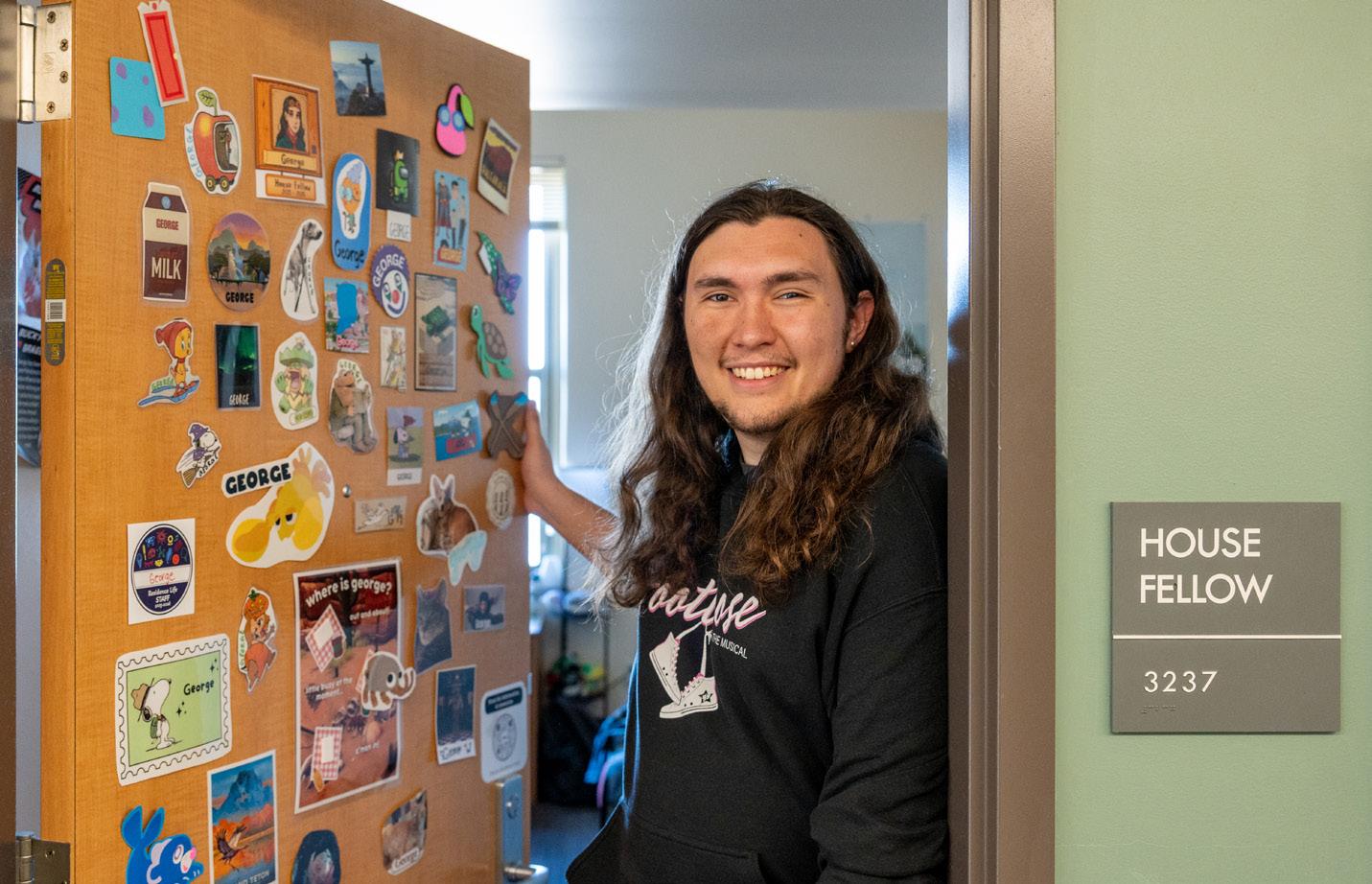
George Whitney, another DeJope House Fellow, called the selection process “brutal.”
He was rejected on his first House Fellow application in 2023. “You see a ton of really good, qualified people just slip through the cracks,” Whitney said.
Selected students are expected to work about 20 hours a week, live by university rules and take only 15 nights away from
the dorms per semester, with a nightly curfew of 2:30 a.m.
As compensation for these responsibilities, they receive free housing — almost always a single room — as well as a free meal plan and a yearly stipend of $3744.40, which increases to $3926.10 after nine months in the position.
Stoltz reflected on losing out on some of the “spontaneity” her peers have, such as going on weekend trips or staying the night at a friend’s apartment, because of the limited nights away she receives.
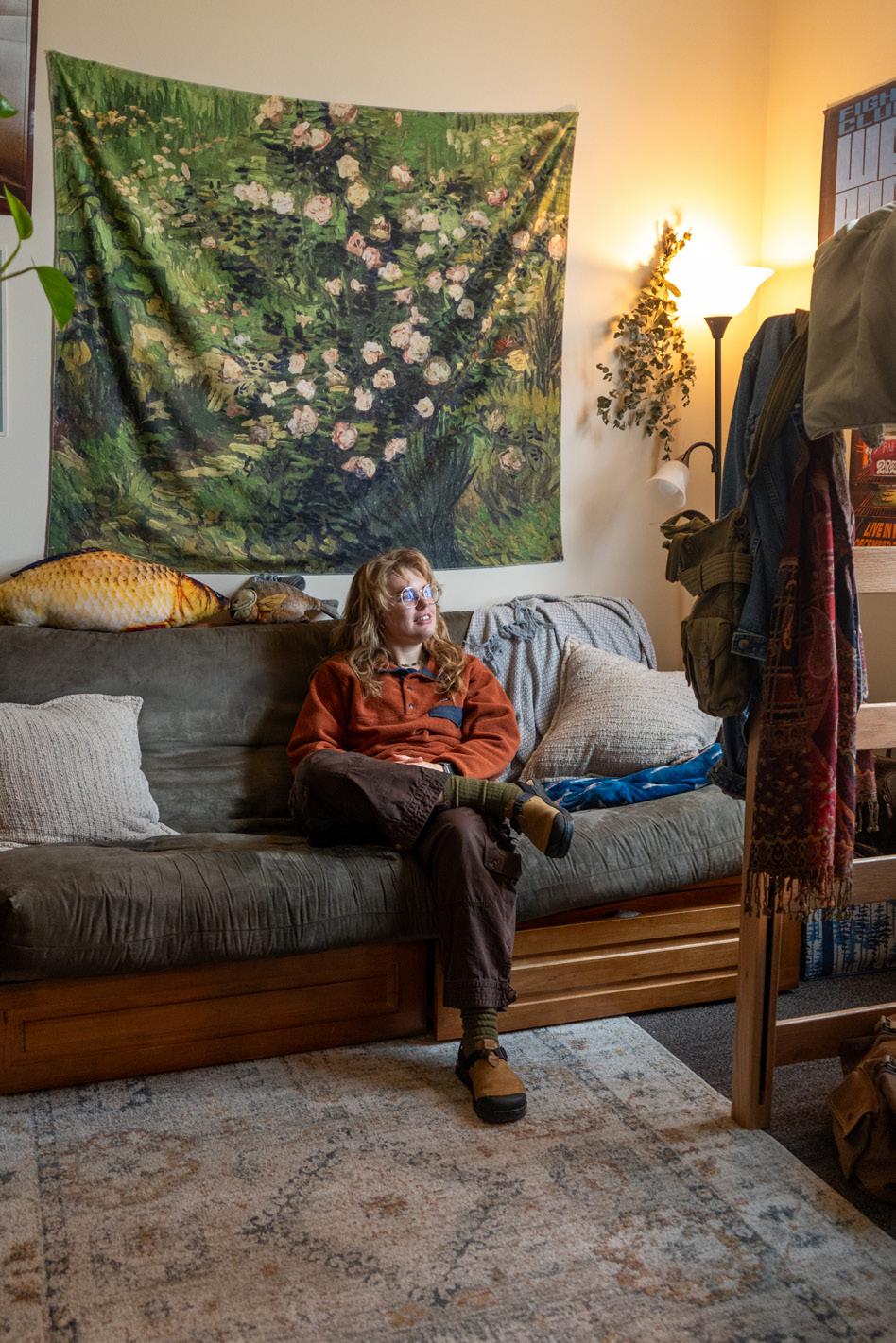
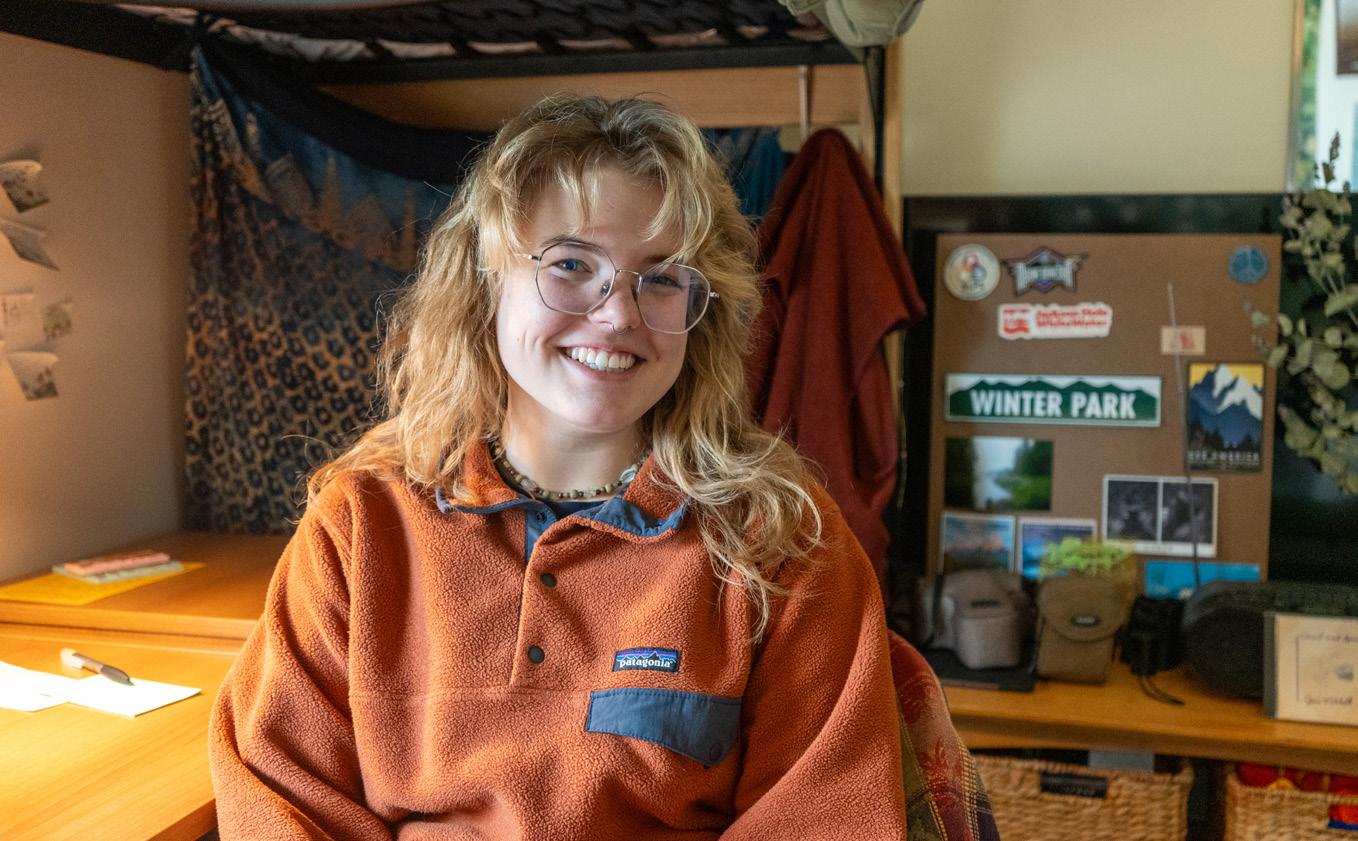


“You have to be okay with this being your job as well as your housing,” Stoltz said.
Students return to the dorms
For students who want the familiarity and benefits of living in the dorms, but not the responsibilities and restrictions of becoming a House Fellow, returning to the dorms as a resident is another popular option.
UW-Madison sophomore Yazmin Pagan and her two roommates chose to return to Smith Residence Hall after their freshman year.
“We were basically still babies, freshmen…We were here for not even a full two months yet,” Pagan said. “We saw that we could live in a dorm, and we were not ready to live in an apartment. We were not grown.”
Pagan and her roommates signed up to return to the dorms the first day the applications opened in the fall. But returning to the dorms after freshman year isn’t as simple as filling out a notice of intent.

Prospective returning students are entered into a lottery system for the chance to receive a contract offer, a process that takes place in late October and November. The number of returners is capped at about 1,000 each year, with each new freshman class falling at around 8,000 students.
“The space for returners is limited to ensure that we have space to accommodate all incoming first-year students who choose to live in the residence halls, which is our main focus,” Dybdahl said.
This year, about 2,000 residents indicated interest in returning to the dorms, according to statistics from Dybdahl. He clarified that some of the selected students ultimately choose to live off-campus, opening their spots for additional students on the waitlist. This process continued until
University Housing reached their capacity for returners.
Pagan said her main reasons for return ing to Smith were its convenient location on campus, access to resources like House Fellows and dining halls and, of course, cost. She receives a financial aid package through the university that pays for her dorm hous ing.
Even for students without a financial aid package, living in the dorms only comes with a nine-month lease, which can be a cost-saver compared to the typical 12-month leases at apartments and houses.
Greek life
One of the most popular housing alter natives for sophomores at UW-Madison is living in fraternity or sorority houses.
sorority housing substantially cheaper than apartment living, she said the conveniences made the experience worth it.
Draheim said she paid about $850 per month for room and board last year, which included utilities and three meals a day prepared by a chef Monday through Friday, with brunch and dinner offered on Sunday. The
Community Cooperative. Schwiesow lives in Zoe Bayliss, an MCC co-op specifically for women and non-binary students.
“I was looking for someone to be room mates with anywhere for my senior year,”

waiting to be filled.
“I don’t think many people know about [co-ops],” Schwiesow said. While Schwiesow loves Zoe Bayliss as an affordable housing option, one of her biggest draws was the community in the co-op house, which she shares with about 40 other girls and non-binary students.

While there are 60+ Greek organizations on campus, only 25 fraternities and 18 sororities actively offer housing, accommodating approximately 1,500 students.
UW-Madison junior Ava Draheim lived in the Alpha Chi Omega house all of last year. Like many UW students interested in Greek Life, Draheim came to Madison her freshman year already planning to join a sorority. Community was her biggest draw.
“You’re just living with a group of like 60 of your friends, which is a lot of fun,” Draheim said.
Once she gained enough “House Points” with AXO through sorority-run events and activities to be guaranteed a spot in the sorority house for the coming year, Draheim didn’t have to worry about rushing to find housing or roommates.
Although Draheim doesn’t consider

But Draheim said only a little over half of the freshmen in her AXO class were given a spot in the house for their soph omore year due to limited availability.
Co-operatives
For students who might not be interested in Greek life, UW-Madison senior Claudia Schwiesow believes one underrated affordable housing option in Madison is living in a Housing Cooperative, where residents collectively own and manage their own building.
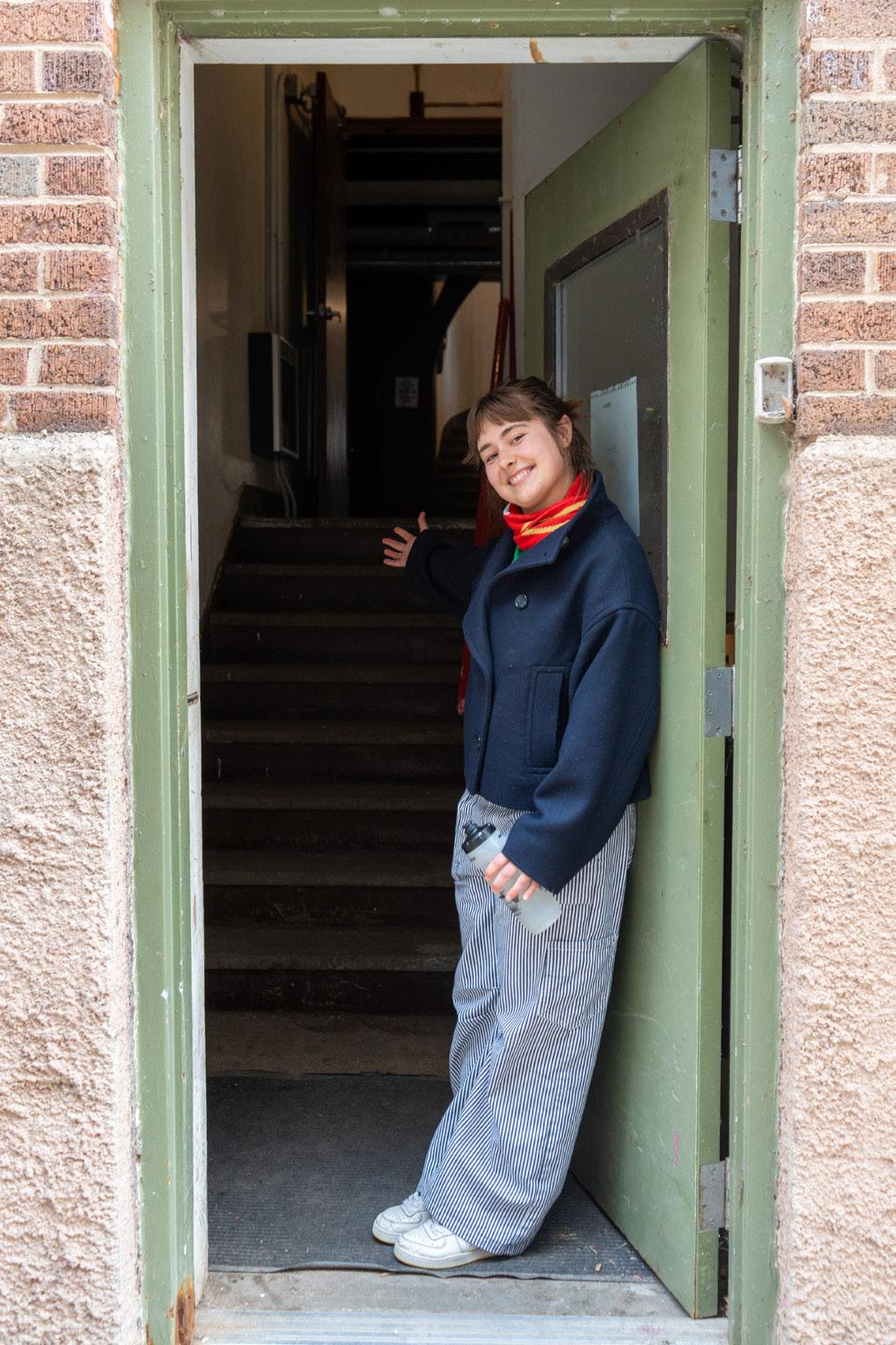
Left: Claudia Schwiesow, a resident of the Zoe Bayliss co-op, stands in front of its entrance and gestures to the inside
Schwiesow said. “I got in touch with a friend of a friend…and she was like, ‘Well, I can’t really beat paying $295 a month.’ And I was like, ‘Wait, where are you living?’”
There are 11 primary housing co-ops in Madison, all housed under the Madison
At Zoe Bayliss, Schwiesow month in rent for a double room and utilities and laundry, in addition to a $1,300 food fee every semester for meals from the co-op’s chef, served Monday through Friday. Schwiesow said the application process, which opens in January, was not competitive at all. She said there are currently at least eight open spaces in their building
“I think it’s really cool to see something so communal in action and then be a part of it,” Schwiesow said. Residents at Zoe Bayliss are expected to help with the upkeep of the house through assigned chores once a week, from cleaning floors to cleaning dishes after communal meals. These duties are enforced and organized by a student leadership board at the co-op.
While Schwiesow loves living in Zoe Bayliss, she said one possible drawback is a lack of abundant funding for the house’s upkeep, such as pest control or repairing small holes in the old building.
“If you’re looking for the most pristine, clean place to live, it might not be here,” Schwiesow said. But to her, the positives far outweigh the drawbacks. Like Schwiesow, Dybdahl emphasized the importance of students prioritizing “needs” over “wants” in the housing search, such as settling for a building with shared laundry facilities rather than an in-unit washer and dryer. At UW-Madison, Off-Campus Housing Services works directly with students as they navigate the off-campus housing market, including helping them consider factors impacting rental costs and ways to potentially save money, according to Dybdahl. They also provide online tools and resources for students to utilize in their housing search, including the Rental Resource Guide. Some students say it isn’t enough. “It is getting harder to find housing here. There is still not enough room for all of us,” Pagan said. “Maybe one day.”

Thursday, March 26, 2026
By Lauren Eno STAFF WRITER
For biomedical and public health researchers at institutions like the University of Wisconsin-Madison, funding unpredictability has come to define the past year. Delays in grant dispersal and looming threats to the National Institutes of Health budget, the U.S’s largest funder of biomedical research, have left many wondering what is next.
“The primary challenge is uncertainty, which makes it harder to plan research projects, retain personnel and manage labs efficiently,” said Anjon Audhya, a dean at the UW-Madison School of Medicine and Public Health. “Delays and unpredictability increase administrative burden and slow scientific progress, threatening the nation’s position as global research leader.”
Funding preserved, but not delivered
Congress ultimately rejected the Trump administration’s proposal to cut $18 billion from the NIH budget, but UW-Madison Vice Chancellor of Research Dorota Brzezinska said funding delays have already stalled projects and affected hiring decisions for staff and graduate students.
“Congress’s recent decision to protect core federal research funding has added critical stability,” Brzezinska said in a statement to The Daily Cardinal. “Yet challenges and uncertainty remain… that money isn’t yet making it into the hands of researchers.”
The NIH is still months behind on grant review meetings and dispersing money to 2026 grantees.
“Some researchers have experienced delays at various stages of the NIH funding process, which can extend
research timelines and complicate lab operations as well as cause uncertainty and anxiety,” Audhya said, noting that UW-Madison has bridge funding to mitigate short-term disruptions.
Brzezinska added that compressed timelines may strain labs with multiyear grants. She said many programs may be pushed into the next fiscal year.
“With the number of grant awards dropping, funding is uncertain for the foreseeable future. If an apportionment does arrive, the NIH will need to obligate a large amount of funding before the Sept. 30 deadline,” she said.
Research at risk
Federal grants are foundational to maintaining UW-Madison’s top research rankings. Nearly half of its $1.93 billion in research expenditures come from federal sources, with NIH support making up nearly $400 million.
According to Audhya, about 75% of UW-Madison’s NIH funding goes to the School of Medicine and Public Health.
“At a time when global competitors are accelerating their investments in biomedical research, America cannot afford to fall behind,” Brzezinska said.
Every dollar from the NIH generated $2.56 of economic activity in the 2024 fiscal year.
NIH grants have enabled breakthroughs at UW-Madison, including the first 3-D printed functional brain and use of nanoparticles to correct a gene causing blindness.
They’re also “the biggest part of what supports cancer research at almost every academic institution,” said Zachary Morris, associate professor and chair of the Department of Human Oncology. “[NIH funding] is the critical driver of innovation and progress across all kinds
of health research.”
Even when funding amounts are maintained, securing grants is increasingly difficult.
“Every grant is carefully scrutinized by multiple expert reviewers, and the vast majority of proposals, even good ones, don’t get funded,” Morris said. “It’s not just the great ideas that get funded. It’s the great ones that are also lucky.”
The number of researchers receiving R01 grants, the oldest and largest NIH grant mechanism, fell from 7,720 in 2024 to 5,885 in 2025. Funding rates also dropped, from 26% to 19% for early-career investigators and from 27% to 20% for established researchers, between 2024 and 2025.
This pressure is reshaping career expectations in medical science.
“There used to be this promise that if you were a contributor in your field and you did really great research, you would have some level of comfort,” said Jenson Aaron, a senior at UW-Madison working in the NIHfunded Glukhov Lab. “I don’t really think that’s the case anymore.”
Some disruptions go beyond increasing competition. A policy ending the use of human fetal tissue in NIH-supported research forced Dr. Anita Bhattacharyya, associate professor of cell and regenerative biology, to immediately halt experiments.
“We had to stop any experiments that were in progress on tissue. We also had to identify alternate funding sources to continue the experiments,” Bhattacharyya said. “We have received no information from NIH to know whether we can use NIH funding to analyze data that was generated from fetal tissue.”
Bhattacharyya said fetal tissue research provides insights other methods cannot, and there are established
ethical and legal frameworks for its use.
“In some cases, fetal tissue is the best science and is needed to validate other experimental models,” Bhattacharyya said.
Graduate students in Bhattarcharyya’s lab are unsure how to proceed.
“They are not sure if they can include data from fetal tissue in their theses, or how to plan additional experiments, until we have more information or alternative funding. The policy creates stress and uncertainty,” Bhattacharyya said.
And at the undergraduate level, research opportunities are shrinking.
“Now is the worst time to be an undergraduate who wants to go into research,” said Aaron, who is also the founder of the Mu Epsilon Delta medical fraternity. “Tons of undergrads are no longer able to be in their labs because their labs got shut down, or they had to restructure due to a lack of funding.”
For Aaron, working in the Glukhov lab has offered hands-on experience with research techniques, presentations at internationally renowned conferences and coauthorship on a paper pending publication in the American Journal of Physiology.
“No matter where I end up in medicine, I know that I want to prioritize research,” he said.
Morris said NIH funding uncertainty is turning students away from medical research. While projects can resume when funding returns, he said it is much harder to reverse a loss of talent in the field.
“The workforce, the career paths and the people we turn away from science, who could have been the talented, brilliant person to make this discovery… it’s harder to reverse the course of that. The
longer that we throttle back, the longer that impact will be,” he said.
In response, UW-Madison encourages funding diversification.
“UW-Madison is encouraging researchers to pursue non-federal funding, including support from foundations, nonprofit organizations and industry research partners,” Audhya said. “The school shares information sources each week highlighting these opportunities.”
Audhya noted that while private funding helps, it “cannot fully replace sustained federal investment, particularly for early-career investigators.”
“NIH has been the foundation of our nation’s biomedical innovation ecosystem,” Brzezinska said.
In such a critical area of science, researchers say the stakes extend far beyond universities.
“We’ve made great strides in cancer treatment… All of that progress has happened because of investments in research,” Morris said.
Aaron said NIH funding enables essential experimental trials that could save lives.
“When you have a loved one that is sick, the question that’s asked is: ‘Isn’t there anything that you can do?’” Aaron said. “The answer depends on the research that has already been done… Without basic science research, there’s no clinical trials as a last-resort or life saving measure.”
Scientific breakthroughs generated by NIH-supported research are behind many of the gains the U.S. has enjoyed over the last century, including gains in average life expectancy and drops in cancer deaths.
“Disease doesn’t care what someone’s politics are,” Morris said. “We all want better treatments and fewer side effects, and research is how we get there.”

By Liset Zacker STAFF WRITER
The state of Wisconsin ranks third-to-last in the nation in funding for the arts, according to the National Assembly of State Arts Agencies. The state spends 18 cents per capita on arts funding, while neighboring Minnesota spends $7.85 per capita and ranks first in arts funding.
Despite this, the Madison arts community hasn’t stopped supporting the arts.
Brenda Baker and Bird Ross are the founders of the Women Artists Forward Fund, an organization dedicated to recognizing women artists and providing support to address gender disparities in the arts. Through the Forward Art Prize, they provide financial support by awarding two Dane County-based female artists $10,000 each year.
The idea for the fund came during the pair’s creation of “Being Forward,” a photographic collection honoring women artists and philanthropists in celebration of the Wisconsin State Capitol’s 100th anniversary. After completing the project, Baker and Ross wanted to do more.
“We were highlighting … a deficiency, but what we really needed to do is do something about the deficiency,” Ross said.
The Women Artists Forward Fund awarded its first prizes in 2019, hoping to help offset the lack of state funding. Since then, multiple University of WisconsinMadison alumni have received
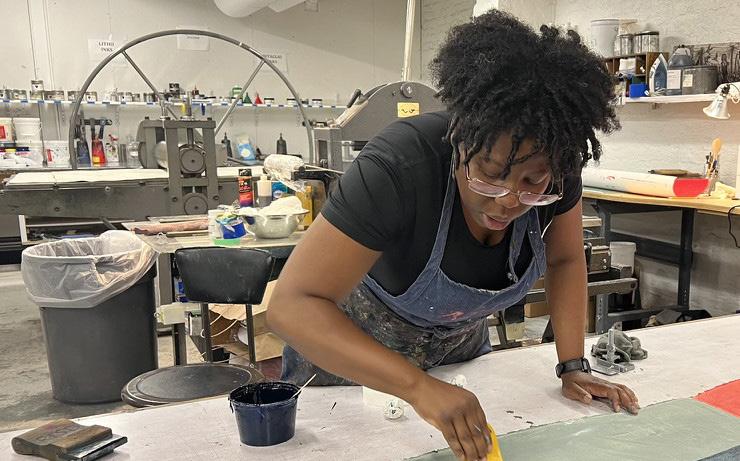
the award.
“It’s important to the community,” Ross said. “It’s important to the survival of women artists staying in Madison.”
In 2024, UW-Madison Master of Fine Arts alum Rebecca Kautz received the prize after applying for six consecutive years. Every year, her portfolio and application got stronger. She received the news that she had won by phone from Baker.
“Beyond the financial, it’s having a committee of your peers, arts professionals, that look at a lot of work and say, ‘this is worthy,’” Kautz said. “This recognition is just tremendous.”
Along with applying for grants and other funding sources, Kautz runs her own studio practice. Her art spans a variety of mediums, including painting, drawing and performance art. She has always been passionate about art, and she draws inspiration primarily from what’s happening in her head.
“I think that my work is still very much connected to this sort of therapeutic process,” Kautz said. “It’s just how I talk, it’s just how I breathe, it’s just what I do.”
Arts economy
As if minimal funding wasn’t a big enough threat, there is also an increased conversation about the value of arts degrees and the profitability of human art. A rise in digitization, an unstable economy and job losses have led to this sentiment, among other factors.
22-year-old Nola Bantle-Felt found art at a young age and followed that passion through high school. Bantle-Felt is a current UW-Madison senior pursuing a Bachelor of Fine Arts degree, despite entering her freshman year as a Wildlife Ecology major.
“I just really missed making art, and I gave myself no time or priority to do it,” Bantle-Felt said. “I felt
like something was missing.”
Although she acknowledges the potential struggles of the art field, for her, an art degree is invaluable. After finishing her undergraduate degree, Bantle-Felt hopes to pursue a graduate degree and become a professor.
“It proves that I’ve done the work,” Bantle-Felt said. “It shows a level of commitment.”
Kautz echoed this statement and believes the cost of an arts degree is worth the return.
“I’m paying for the time to devote to actually establishing some kind of a practice,” she said.
UW-Madison Master of Fine Arts alumna Tyanna Buie is living proof of Bantle-Felt’s statement. Buie is an associate professor and graduate program director at the Rhode Island School of Design.
Buie was commissioned to create a large-scale screen-printed piece for the Obama Presidential Center in June 2024. The piece is titled “Be the Change!” and it will be her biggest and most viewed piece to date. She credits this achievement to her growth during her academic career.
“I knew in undergrad, I was just scratching the surface of where I could go,” Buie said. “With Madison being a three-year MFA program, I got to do everything I needed to do to get my art to a place where I felt confident after I graduated.”
Along with growth in technique, Buie highlighted that for artists, an art degree expands their network, provides access to resources and
teaches artists how to present their work. Buie acknowledged that it’s hard for art students coming out of college, but that their struggles post-graduation aren’t unique to the field.
“We still honor degrees in this country,” Buie said. “We still value college at a very high place, yet we are telling poor people that it’s not worth it to send your kid to art school.”
Although the value of a degree varies by artist, Buie, Kautz and Bantle-Felt share the same goal of creating, having an outlet and highlighting the importance of art.
“[Art is] so important not only for the artists themselves but also just for the world at large,” BantleFelt said. “Art influences so much, and it moves with the social and political movements.”
Along with a degree, funders like Baker and Ross are invaluable to the arts community. They open opportunities for artists and increase access.
“We should care about funding art because it allows artists to follow their passions and to create these important artistic works,” Bantle-Felt said. “It allows art to be for everyone.”
Amid a challenging arts environment, those in the field are optimistic, encouraging artists to keep pursuing their passion.
“If you are a real artist and you love art making, you’ll always find a way to make the work,” Kautz said. “No matter if you decide to drop out or to continue with your degree, you will find a way.”
By Andrew Holton STAFF WRITER
The financial pressure of being a college student can leave students feeling priced out of recreational and creative activities. But due to the work of student leaders, whether you are a cinephile, artist, gamer or learning chef, the University of Wisconsin-Madison has many free resources for students to step back from academics and indulge in a hobby without breaking the bank.
WUD Film shows free movies every weekend, Cinemadison provides space for student filmmaking, WUD Cuisine teaches about the culinary arts and College Library distributes resources like sewing machines, games and more — all thanks to the student leaders who manage these programs.
Beyond making the arts more accessible, UW-Madison arts leaders say these organizations go further to cultivate community.
WUD Film
WUD Film is the perfect spot for diehard cinephiles or casual moviegoers. Located in Union South, the student organization is responsible for programming and hosting films at the Marquee Theater.
The biggest part of WUD Film’s weekly meetings is voting on what movies to screen next.
“We try to cater to every movie opinion on this campus,” WUD Film Director Emma Weishaar said. “We’re trying to be a movie theater for every student.”
Weishaar said she values the committee’s
community aspect most.
“A lot of people come to the meetings and they do like movies, but they’re also just looking for a group of people,” she said.
Weishaar also noted that the community extends beyond committee members.
“Folks that aren’t in the committee, but attend screenings regularly, also stay and chat afterward or they’ll talk to us around campus,” Weishaar said.
Ultimately, the people are what make it worth it for Weishaar.
“Watching something alone seems solitary,” Weishaar said. “But when you’re in an auditorium watching and experiencing something with a bunch of people, that’s where the movie magic is.”
WUD Film Committee members meet on Mondays from 7-8 p.m. at Union South. More information on screenings can be found here or on their Instagram page @wudfilm.
Cinemadison
If you’re more interested in creating a film rather than watching it, Cinemadison brings student filmmaking to campus. A typical meeting includes discussing production, editing scripts, helping members with their projects and even creating impromptu oneminute films.
Vice President Stuart Frohna helps run meetings and oversees semester-long short film production. Frohna highlighted that members don’t have to be experts in film creation.
“Most of our members come in with little to no knowledge or experience with filmmaking,
which is fine and we encourage that,” Frohna said. “We help people through workshops, and we get them active roles on sets.”
Frohna holds the stories that Cinemadison students tell through film close to his heart.
“Filmmaking is one of the best ways to tell stories. I’ve always been encapsulated by the stories told by the big screen and how they’ve affected changes in my own life and in the world,” Frohna said.
Similar to Weishaar, Frohna said it’s the people that bring life to student filmmaking.
“What I really try to go hard on is the collaborative process of filmmaking. You’re not just telling your story, you’re telling the story of everyone involved in it,” Frohna said. “Being able to see that and also interact with those people and build relationships with them has been my favorite part.”
Cinemadison meets on Wednesdays from 7-8 p.m. in Sterling Hall. More information can be found on their Instagram page @cinemadisonofficial.
College Library
College Library has the game-oriented students covered. The library provides a recreation collection of Playstation, Xbox and board games for students to rent, just like they would for a book.
Ian Benton, the user experience coordinator for Undergraduate Library Services, said college is not one-dimensional, and nonscholarly resources can be just as important as traditional ones.
“The experience of being a college student
is not just academics,” Benton said. “We have a bunch of things that [influence] the complex existence of the average student and recreation is an important part of that. It ties into health, emotional wellbeing and just being able to have fun.”
In addition to the free rental games, College Library offers a tool library. Although they are not limited to design tools, the tool library features things like a glass cutter, wood carving tools and a popular sewing machine.
“Students need tools to do a lot of different things, but don’t necessarily have the money or space to have a big tool collection. The library brings equity of access to fill existing needs that aren’t being met in another place,” Benton said. Benton recognized that students drive the changes and additions to the collections.
“College Library wants to hear from you,” Benton said. “We absolutely want your purchase requests for all these collections.”
WUD Cuisine
Regardless of a student’s current cooking ability, WUD Cuisine teaches students valuable lifelong cooking skills. The organization creates culinary experiences and workshops for students to enhance their understanding of food.
Associate Director for Cooking Demonstrations Hailey Stubler works to contact and recruit professional chefs to cook a recipe or specialty for students to observe. WUD Cuisine focuses on cultural immersion by finding a variety of chefs with different backgrounds to teach skills.
Continuereading@dailycardinal.com
By Brady Ahler STAFF WRITER
When my parents attended the University of Wisconsin-Madison in the early 2000s, it was a golden age for Badgers. Back-to-back Rose Bowl wins, a Final Four run and a housing market that hadn’t yet declared war on students.
My dad lived in an apartment on Regent Street with five other guys and paid $500 a month for his own bedroom in 2000, which would be about $970 today. By 2024, the average market rent for a single bedroom near campus had climbed to $1,273, while new or recently renovated properties averaged $1,575 a month. The rent prices Badgers currently face are among the highest in the Big Ten.
Back in my parents’ day, high-rise apartments had not yet dominated the skyline. University Avenue is nearly unrecognizable from what it was 20 years ago, with new luxury fortresses seeming to pop up every year.
The idea of a rooftop pool or pilates studio in a college apartment would’ve been absurd. The humble charm of college housing is fading as we funnel into concrete palaces with stainless steel appliances, trendy amenities and all the personality of a chain hotel. These luxury developments are not just changing the look of Madison, but are contributing to high rent prices around campus and redefining student housing as a luxury rather than a necessity. As students struggle to afford tuition and groceries, landlords are shaking us by the ankles for whatever we have left.
This recent trend of luxury, highrise apartments in college towns is known as Purpose-Built Student Accommodations (PBSA). These developments are specifically designed for students, unlike traditional college housing that adapts to student demand. PBSA developments are located central to college campus-
es, include communal amenities such as gyms and study lounges and charge much higher rent than traditional student housing. This type of housing now accounts for around one-third of college housing in the country.
The explosion of PBSA in Madison is a result of a number of overlapping economic and political factors that, in the end, harm the pockets of ordinary students. One of these factors is Madison’s housing shortage. A 2024 study co-commissioned by the city and university found that rentals near campus have a 98% occupancy rate. One would think that a simple remedy to this would be to build more dorms. If only the state legislature let us have it that easy.
In the last budget proposal, Gov. Tony Evers and university leaders hoped to secure authority to bond $293.4 million in state funding, which would be supplemented by UW Housing revenue, for dorm construction. After working its way through the Republican-controlled Legislature, $0 was approved for such a project.
In fact, of the $856 million funding increase Evers requested for the UW System, the Legislature approved just $256 million, further contributing to UW-Madison’s financial struggles.
It feels important to note here that Assembly Speaker Robin Vos, R-Rochester, receives a substantial amount of money from the real estate industry. In 2024, real estate was the second largest industry he received funds from, and his third largest contributor was the National Association of Realtors. Vos is also a college-town landlord himself, owning and managing 23 properties at the University of Wisconsin-Whitewater through his company Ladwig & Vos, which former tenants have described as “terrible landlords.”
This disappointment for the university and its students comes at a time where freshmen enrollment has
grown by 34% since the construction of the last dorm in 2013, and dorms are functioning at 115% of their designed capacity, converting doubles into triples and study lounges into quads.
Faced with this lack of funding, the university has turned to other sources of revenue. This includes higher tuition and dorm costs, larger freshman classes and an increased proportion of out-of-state and international students. Students that can afford higher costs, especially those from outside Wisconsin, are typically wealthier and more willing to pay high rent prices offered by luxury apartments. This pushes Wisconsin students seeking an affordable and quality education further off-campus, or even out of the university.
Another reason PBSA has become so dominant in Madison is the rising land and construction costs surrounding the campus. Since 2015, the city’s land costs have shot up by 77%, and the Construction Cost Index has jumped by 65%, nearly double the rate of inflation. This makes it much harder for small, local landlords to build new properties close to campus. Thus, large, corporate real estate developers and management companies have controlled new construction and ownership.
The new Hub Bassett, set to open in 2027, is owned by Core Spaces, a Chicago-based company that also owns the Rive, Oliv and the Hub, whose current luxury “On Campus” location towers over one of the most active corners of State Street. Core Spaces owns and operates 81 luxury student apartments across the country. The James is owned by American Campus Communities, a Texas-based company that owns hundreds of college housing properties nationwide. Palisade Property, based in Madison, owns Palisade Apartments, Waterfront Apartments, 700 East Apartments and recently
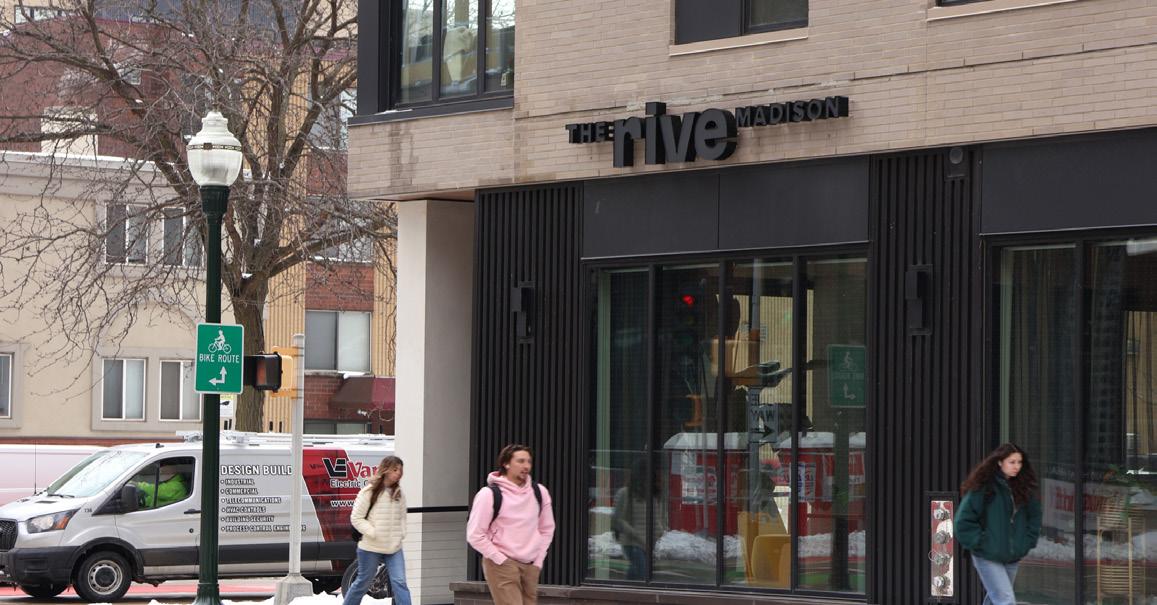
acquired The Aberdeen. A small number of large, wealthy corporations are increasingly consolidating power over Madison’s housing market, increasing barriers to entry for smaller landlords and developers and tightening their grip on student housing prices.
Some argue PBSAs are signs of growth and modernization on college campuses. But ultimately, students do not benefit from housing that treats basic shelter like a boutique lifestyle product. As apartments with RitzCarlton-level amenities become the norm, so do the prices that come along with them. Even students who aren’t interested in these amenities still end up paying for them, whether directly in new buildings or indirectly as smaller landlords raise rents to match the market rate.
Developers see students as a vein of gold and Madison the boomtown where they can mine it. To these corporate landlords, students are not tenants, but captive dollar signs with nowhere else to go. With business models designed for temporary relationships and high turnover, they show little regard for the economic wellbeing or even the humanity of students. As these monoliths grow in power and leverage, students shrink. The result is not simply nicer apartments, but a housing system that prioritizes returns to investors over the students they claim to serve.
For many students, higher rent does not mean just paying more. It means working more hours, taking on more debt, spending more time commuting to class as ordinary students are pushed off campus and sacrificing money that would otherwise go towards groceries and textbooks. College is meant to be a time of learning and community-building. Instead, it is becoming one of financial survival.
How can the Wisconsin Idea — the foundation of our university which promises that the university’s research and knowledge should directly serve and improve the lives of everyone in the state — be true as our housing system grows increasingly exclusionary, catering towards the wealthy rather than ordinary Wisconsinites?
Madison doesn’t need any more rooftop pools or private hot tubs. We need a housing system that sees students as people to be housed rather than profit margins to be maximized. Extractive developers flourish among the political and economic factors that allowed them to take root in the first place, and these problems don’t appear to be getting any better. UW-Madison’s identity is at stake. Are we a campus where ordinary students can afford to belong, or one polished into luxury until its character and accessibility are priced out of reach?
By Sungyun Jung
OPINION EDITOR
At the beginning of every semester, an email from the University of Wisconsin-Madison arrives in students’ inboxes reminding them that tuition payments are due. For many students, it is simply another administrative notice buried among Canvas announcements and club newsletters. For others, it marks the beginning of careful calculations of rent, textbooks, groceries and financial aid.
These are the official costs of college, the ones that appear clearly on university websites and financial aid statements. They dominate public conversations about affordability and student debt. But the most difficult calculations rarely appear on those bills.
They happen later, in quieter moments: when a club meeting ends and someone suggests grabbing dinner on State Street, when friends plan a weekend trip during spring break or when a networking event slyly moves to a bar afterward. In these moments, the cost of college is no longer tuition. It is participation.
A $20 club fee. A $15 drink. A rideshare home after midnight. Individually, these expenses seem small, almost trivial within the broader price of higher education. But over time, they accumulate into informal expectations that shape who is able to fully participate in campus life.
Universities frequently emphasize that learning extends beyond the classroom.
Student organizations, networking events and social gatherings are framed as essential parts of the college experience. These spaces are where friendships are built, leadership skills are developed and professional connections begin.
Yet participation in many of these spaces requires money. Most student organizations charge membership dues, ranging from modest to substantial. Greek life can cost thousands of dollars per year. Professional clubs may require fees for conferences or networking events. Even informal participation like dinners after meetings, coffee between classes or nights out with friends carry a price.
For many students, these expenses are just another part of the rhythm of college life. A few drinks on State Street or a late-night food run after studying may feel like ordinary moments of campus culture. But for students with limited financial resources, each of these moments can require careful planning. Attending dinner with friends might mean sacrificing grocery money later in the week. Going out after a networking event might mean spending money that was meant for transportation or textbooks. Over time, the easiest decision is to opt out.
These choices are rarely visible. When a student declines an invitation or skips a social gathering, the reason is often assumed to be a lack of interest or time. Financial constraints are rarely discussed openly, even though they shape who shows up and who does not.
As a result, students’ college experiences
begin to diverge. Some spend their evenings attending club meetings, building connections with alumni or socializing with classmates. Others spend those same hours working shifts at dining halls, libraries or off-campus jobs to cover basic living expenses. For students who must work to support themselves, attending a meeting or event is not simply a matter of scheduling. It is a choice between opportunity and income.
Sociologist Pierre Bourdieu once argued that social life is shaped not only by money but by forms of “cultural capital” — the tastes, habits and social practices that signal belonging within particular groups. In many ways, campus life operates similarly. Knowing where to go after meetings, what social spaces matter and how to participate in them becomes part of the informal culture of college. But participating in that culture often requires financial flexibility.
The result is that economic inequality subtly structures social life on campus. The most valuable parts of the college experience — the friendships, networks and opportunities that develop outside the classroom — often emerge in spaces where spending money is expected.
For students who cannot afford these costs, the challenge is not just financial but social. Repeatedly turning down invitations can create distance from peers who may not understand the reasons behind the decision. Over time, this can lead to a quiet form of
exclusion, not because students are unwelcome, but because participation itself carries a price.
This dynamic is rarely discussed in conversations about college affordability. Public debates tend to focus on tuition and student loan debt, both undeniably important. Yet the informal costs embedded in campus culture also shape students’ experiences in meaningful ways.
Addressing these disparities does not mean eliminating every expense from campus life. But it does require acknowledging that they exist. Student organizations and universities can take steps to reduce barriers by offering fee waivers, subsidizing events or being transparent about costs. More importantly, campus communities must recognize that the ability to participate in college life is not equally distributed.
The promise of college is that it offers a space for exploration, connection and opportunity. But those opportunities often emerge in social spaces that require money to enter. For many students, the invisible costs of college never appear on a tuition statement. They are felt instead in the invitations declined, the organizations never joined and the experiences left out of reach.
If universities are serious about equity and inclusion, they must look beyond tuition bills and consider the true invisible costs of belonging.
By Dominic Violante BEET EDITOR
All articles featured in The Beet are creative, satirical and/or entirely fictional pieces. They are fully intended as such and should not be taken seriously as news.
Following last week’s Associated Students of Madison elections, many students reading this might be asking themselves, ‘what is ASM?’ It’s come to my attention that, despite ASM’s enormous influence over how students’ segregated fees are spent, many students have no idea it even exists, so I’ve put the following timeline together. Hopefully it will give you an idea of ASM, its history and its purpose.
1922: Former Secretary of the Interior Albert B. Fall, who would later be convicted as a result of his role in the Teapot Dome Scandal, lobbied the University of MadisonWisconsin to create a student government as a false front in order to facilitate the oil industry’s bribery of various cabinet officials in the Harding administration. This was the start of ASM.
1961: President Dwight D. Eisenhower first brought ASM to national attention during his farewell address where he warned against the “student-governmentindustrial complex” and its immense potential for corruption and political manipulation.
1963: In October 1963, President John F. Kennedy reportedly made
plans to “tear the ASM into a thousand pieces and scatter it into the wind” following its role in the disastrous 1961 Bay of Pigs Invasion, in which ASM used student segregated fees to pay for bus passes used by anti-Castro militia men in their failed coup attempt.
Less than a month later, on that fateful November day in Houston when Kennedy was assassinated, ASM had an outsized presence in the city, according to emails from ASM leadership obtained by The Beet.
Lee Harvey Oswald, who is thought to have pulled the trigger on Kennedy, was also a low-ranking member of ASM, according to open records requests by The Beet, and the rifle he supposedly used was purchased using UW-Madison student segregated fees.
1972: Nixon hired ASM staffers to break into the Watergate hotel to spy on their mutual enemy, anti-war Democrats. This is a widely known fact — a shame the lame stream media doesn’t tell you about it. In fact, as a side note, it was Nixon who ordered the creation of the misinformation super spreader now known as The Badger Herald.
1985-1990: While on trial in 1988, former ASM council member Oliver North confessed to using over $985,241 in UW-Madison segregated fees to purchase $985,241 worth of arms, then sold $985,241 worth of arms to Iran who then sent $985,241 to the Contras to fund their fight against communism in Nicaragua.
While on trial, ASM administrative heads said they had no knowledge of North’s use of the segregated fees and expressed disappointment in his actions. Congress stated “if ASM didn’t know of North’s actions, it should have,” in its official report on the scandal.
1992: Despite numerous campaign scandals, ASM backed the election of Bill Clinton, then-governor of Arkansas and close pal to disgraced New York financier Jeffery Epstein. He was propelled into the White House, in part through, you guessed it, student segregated fees. Sensing a pattern here? We know of ASM’s involvement in the 1992 election because of records obtained from rabid ASM supporter, the “Ragin’ Cajun” himself, James “Jimmy” Carville.
2003: On Feb. 5, 2003 ASM Secretary of the Student Services Finance Committee (SSFC) Chris Powers gave a Google Slides presentation to the U.N. Security Council that ASM possessed intel proving Iraq developed chemical weapons of mass destruction and was involved with terrorism, violating U.N. Security Resolution 1441. ASM then assisted in the U.S.-led 2003 invasion of Iraq by raising UW-Madison segregated fees by 275% while cutting University Health Services.
2011-2019: From his taking office in 2011 to his departure in 2019, former Wisconsin Gov. Scott Walker reigned terror over the state of Wisconsin, with ASM at his side
By Dominic Violante BEET EDITOR
All articles featured in The Beet are creative, satirical and/or entirely fictional pieces. They are fully intended as such and should not be taken seriously as news.
Madison Mayor Satya Roads-Carway announced the city’s plan to begin construction on all Madison roads perpetually in order to add even more bike lanes at a press conference yesterday afternoon.
“I love the smell of freshly poured asphalt in the morning. Smells like, smells like victory.” Roads-Carway said at a construction site while wearing a U.S. Cavalry-style Stetson hat.
The plan will cost approximately $947,510,038 and continue perpetually until the end of time, or the destruction of Earth in an estimated 7.5 billion years.
During that time, every road in Madison will be placed under construction to be made more “pedestrian friendly” by adding 20 new bike lanes to every road, reducing Regent Street to a controversial “two-way, one-lane” traffic flow and making all parking lots downtown cost $60 an hour even though no one will be able to drive to them because all the roads will be under construction until the end of time.
The construction project may have a large impact on students. While cars will become obsolete, saving car owning students some money, the cost of bikes, bike parts and bike maintenance are expected to skyrocket. Also, without roads, how will students be able to mindlessly walk into the middle of traffic while mindlessly scrolling on Tik-Tok or drive their stupid little 15 mph stand-up scooters alongside 50 mph traffic?
The idea was originally thought up by the Madison Common Council as a way to frivolously spend your hard earned paychecks on something experts call, “dumb.”
“As the city of Madison becomes more and
more expensive for its residents, and the university in my district becomes out of reach for many because of its rising costs, we’ve concocted just the fix. Ignore it and faff all the tax money away on endless construction projects!” District 8 Alder MGR Govindarajan told The Beet.
Govindarajan has been accused of taking donations from the controversial Bike-Madison Public Affairs Committee (BMPAC), so much so, some experts have claimed his association with the group is the leading reason his approval ratings plummeted this past year, and he chose not to seek reelection this April.
District 2 Alder Will Billedmor-Biklans is also supportive of the bill. His policy platform is getting rid of all parking places downtown and replacing them with bike lanes.
“The fact that we spent $10,000 in taxes on a bike lane a block and a half away isn’t a good reason to not spend $10,000 in taxes on a bike lane here,” Billedmor-Biklans said. “It’s a better reason.”
While some have called the local government out of touch for ignoring the affordability crisis and the awful downtown traffic caused by confusing car lanes and a lack of parking, polling done by the Beet shows 95% of construction contractors support the decision.
However, because of a Flock surveillance tower, construction on roads near campus may be halted. The surveillance tower, designed to bring about the futuristic world of George Orwell’s “1984,” is legally on city property and must be torn down for the city to go through with its construction plans. But because it’s near a university building, UW-Madison Chancellor Jennifer Mnookin argues it should stay up.
“How else are we supposed to sift and winnow this hallowed institution into a surveillance state if not for the surveillance towers?” said Mnookin, who has issued statements saying she’ll chain herself to the tower if the construction plans go through.

all eight years. While ASM officials publicly decried Walker’s desecration of Robert M. La Follete’s legacy, they expressed immense support for his actions according to private messages obtained by The Beet.
ASM also played a role in Walker’s 2010, 2012 and 2014 election victories, where over $750,000 was transferred from an ASM slush fund to the Walker campaign according to financial records obtained by The Beet.
2024: ASM created the Madison Federalist as a way to attack The Daily Cardinal’s truth speech, and promote neoliberalist globalism.
2025: Did ASM send condoms to Ayotttolah Khamenei through the
Sex Out Loud student organization? YUP! This was proven by DOGE. Also, wanna guess how many times ASM was mentioned in the Epstein files? Over 50 million!
2026: Now, for the real reason I wrote this article. How in the world can ASM soak up so much of my tuition, only for them to not get the chest fly machine at the Nick fixed?! Whenever I go there to hit chest, whether it’s 7 a.m. or 11 p.m., one of the machines is always broken and the other two are being hogged by a bunch of morons crowded around it on their phones, barely using it! Come on man! If ASM wants to make me go into debt through all their segregated fees, they should at least buy another chest fly machine (maybe several) for the Nick!
By Dominic Violante BEET EDITOR
All articles featured in The Beet are creative, satirical and/or entirely fictional pieces. They are fully intended as such and should not be taken seriously as news.
Soon to be former University of Wisconsin-Madison Chancellor Jennifer Mnookin announced her plan to give herself a historic, never-beforeseen $1 trillion farewell bonus following her plans to exit the chancellor’s office this spring, at a press conference yesterday afternoon.
This controversial plan would not only make Mnookin the world’s first trillionaire, but also hike UW-Madison tuition by 847% and put UW-Madison roughly $500 billion in debt.
“After sifting and winnowing on my time here, at this pluralistic hallowed institution of free speech marketplace idealism, I’ve decided my tireless work deserves a reward. While you all might have to make some sacrifices, and get a bit uncomfortable in the process, such is the nature of modern higher education,” Mnookin said.
Mnookin was asked several questions about how this might affect students’ financial wellbeing and the future of UW-Madison. Mnookin ignored the questions and continued her tirade.
“Now, some might say I’m just a coastal elite who came here with no understanding of Wisconsin or the Wisconsin Idea, and my quick departure to Columbia is proof I was just using this university as a stepping stone in my career without regard for enriching the young minds com-
ing here to learn and grow,” Mnookin said, before bowing and walking away from the press conference.
While some experts have criticized the plan, students seem to love it based on the like two or three interviews I did before writing this.
“Mnookin deserves it. Through her pluralistic leadership she has sifted this hallowed university into winnowing success,” said Mennifer Jnookin, a self-proclaimed UW-Madison student with long curly red hair planning on transferring to Columbia.
Jnookin wasn’t the only student who reached out to The Beet to express their support.
“Yeah, it’s pretty cool. As a student who goes here, I think she’s done such a good job, and I’m glad she’s rewarding herself, although I do think part of her farewell package should be a raise for whoever that cool, handsome guy is coaching the Badger football team,” wrote Fuke Lickell, a UW-Madison freshman with the beard of a 52-yearold, in an email to The Beet.
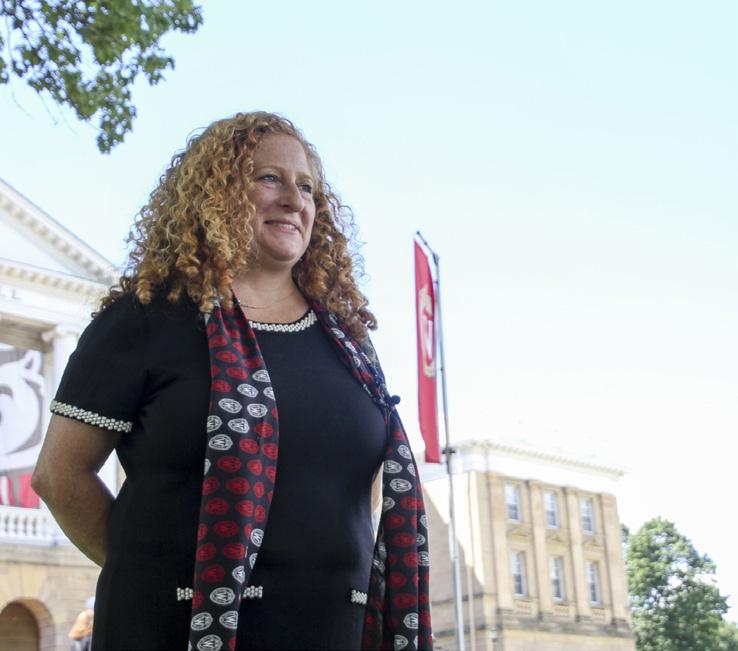

As a kid, I used to read all the time under my covers after scouring the Scholastic Book Fair or my local library. Now, reading is a good form of stress release. It still feels like traveling for free!