
By Ty Javier SENIOR STAFF WRITER
A series of federal and campus funding cuts have plunged the University of Wisconsin-Madison’s foreign language programs into financial uncertainty.
Last spring, UW-Madison regularly offered 31 different foreign languages through the fourth semester level, but now, the future of many lessertaught languages are in limbo after the Trump administration withheld federal funding and university-ordered campus-wide budget cuts.
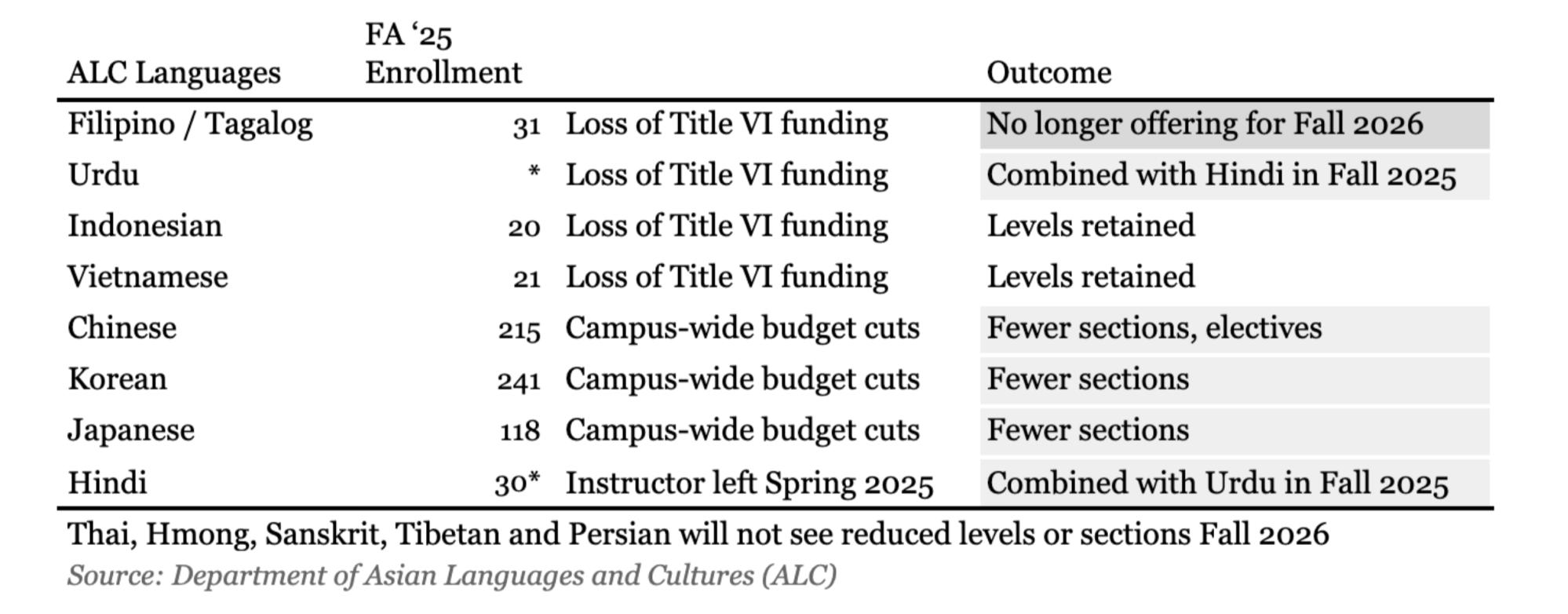
Indonesian and Vietnamese have struggled to regain their lost funding, the university combined Hindi with Urdu, and Filipino is expected to be cut entirely as a language offering starting next fall, according to Department of Asian Languages and Cultures (ALC) Administrator Jennifer Hekman.
The Trump administration dismantled the Department of Education’s office of International and Foreign Language Education in March which administered funding for these language programs.
UW-Madison is home to eight previously federally funded National Resource Centers (NRCs), which contain academic programs on world regions of interest to national security like Latin American, Caribbean and Iberian Studies and The Center for Southeast Asian Studies (CSEAS).
These centers, originally administered through the Department of Defense during the Cold War, aimed to build foreign language and area studies programs at universities like UW-Madison through Title VI of the 1958 National Defense Education Act.
CSEAS previously received Title VI funding for the first four semesters of Indonesian, Vietnamese and Filipino language instruction, the center’s Associate Director Michael Cullinane told The Daily Cardinal.
ALC provided one-time funds to bridge what Title VI would typically cover to keep the language programs funded for the 2025-2026 school year, Hekman told the Cardinal. The funds fully support the Filipino program this year and share costs for Indonesian and Vietnamese with CSEAS.
Not including fringe benefits, Filipino language instruction lost $32,074 in federal funding, according to documents obtained by the Cardinal. Vietnamese and Indonesian instruction lost $42,997 and $35,721, respectively.
As the university also faces campus-wide budget cuts, ALC reduced overall spending on the 13 languages the department administers while attempting to preserve foreign languages for next fall that previously
relied on federal funding.
Hekman said ALC and private grants from CSEAS will support Vietnamese and Indonesian for next school year, but this funding is not guaranteed in future years and will need to be annually evaluated by the department.
ALC will not renew the contract of one of two Indonesian instructors at the end of spring 2026 and will increase the load of the remaining instructor to continue teaching all levels currently offered.
Hekman said a committee of university faculty, staff and graduate students made the decision to stop supporting Filipino after weighing undergraduate enrollments, ALC programs and faculty research.
Cullinane said he finds the loss of Filipino language instruction devastating, both professionally as someone who runs the Southeast Asia program and personally because he studies the Philippines.
“We’re losing the opportunity to [teach] Filipino, which is the largest enrollment in the Southeast Asia language program,” he said. “So it’s a big loss, both for the Center, for ALC, as well as for the community of people who are interested in studying the Philippines.”
The Filipino program currently enrolls 31 students, not including those from other Big Ten schools like Minnesota, Iowa and Rutgers. Multiple Big Ten schools that formerly taught Filipino stopped instruction for this current school year after losing Title VI funding and have instead enrolled their students virtually in UW-Madison’s Filipino program through the Big Ten Academic Alliance ‘CourseShare’ program.
Hekman and Cullinane said they hope UW-Madison and other Big Ten students enrolled in the program can continue learning Filipino through the CourseShare program at another university.
Due to campus-wide cuts, Chinese, Korean and Japanese reduced section offerings this fall while retaining all levels of instruction. ALC expects to keep those reductions in place next fall.
Hekman acknowledged the impact fewer sections and larger class sizes
can have on learning outcomes.
“The larger [the class] is, the harder it is to provide the attention that each student needs and to individualize work,” Hekman told the Cardinal.
“We are doing everything we can to minimize the impact on student learning, but I don’t see how it can’t eventually hurt students or negatively affect student learning.”
In Spring 2025, UW’s Hindi instructor left and Urdu lost its Title VI funding. While Hindi, an official language of India, and Urdu, the national language of Pakistan, are separate languages with different writing systems, they are ‘mutually intelligible.’
To preserve both, ALC created a combined Hindi-Urdu program taught by the former Urdu instructor and supported by nonfederal Hindi funding in fall 2025. This arrangement is expected to continue through fall 2026.
When the programs were separate in 2024, Hindi and Urdu had an enrollment of 23 and 21, respectively. Now, the enrollment has fallen to a combined 30 students this fall.
Other language offerings remain uncertain
Instruction in Yoruba, an official language of Nigeria and widely spoken in Togo, Benin and Sierra Leone, also lost Title VI funding at UW-Madison.
The Department of African Cultural Studies is discussing restructuring its annual courses and offerings, but sources close to the situation say no determinations have been made on whether Yoruba instruction will continue in fall 2026.
The Department of German, Nordic, and Slavic+ is home to 14 foreign languages from Danish to Turkish to Kazakh. Some of these languages lost Title VI funding, according to a staff member in the department who did not specify which languages lost funding. No determinations on whether these languages will continue in fall 2026 have been made.
The future of foreign languages at UW-Madison
According to sources familiar with foreign language funding, some
within these departments remain hopeful that Title VI funding may return in a few years, while others fear federal funding for these programs, and NRCs more broadly, are permanently gone.
“It’s my job to plan on the worst case scenario,” Hekman told the Cardinal. “We’ve been able to navigate the federal cuts and the campus cuts. When I do budget projections, I am not seeing a need to make any changes to our programming, but at the same time, [we] don’t know what’s coming.”
What remains unknown is how UW-Madison’s new budget model, set to roll out in fiscal year 2027, will affect foreign language offerings. The UW Office of Finance and Administration plans to allocate undergraduate tuition revenue to schools based on credit hours and student headcount, or how many students call that school home.
With many students taking foreign languages as a second major or not seeking a language degree at all, changes in base budget and tuition revenue allocations under a new model could impact offerings for lesser-taught languages and foreign language instruction.
“UW-Madison believes Title VI programs are critical to U.S. security, diplomacy, economic competitiveness and the language and cultural expertise that is needed across all sectors,” university spokesperson John Lucas told the Cardinal. “Both the department and the administration are continuing to explore other funding sources, including foundations and private philanthropy, to support this critical department.”
Cullinane told the Cardinal that he and other advocates for Filipino language instruction, like members of the Filipinx American Student Organization (FASO) at UW, are exploring non-traditional funding options in hopes of preserving the language at Madison.
The loss of federal support for these languages and NRCs has made the future of foreign language and area studies — once considered essential to national defense — uncertain at UW-Madison and universities across the country.
By Annika Bereny CAMPUS NEWS EDITOR
The University of WisconsinMadison wants to separate the school’s largest and fastest growing majors into a new college focused on Artificial Intelligence and computing.
The University of Wisconsin System Board of Regents will vote Thursday on the creation of a new College of Computing and Artificial Intelligence at UW-Madison, meeting materials show.
If approved, the Departments of Computer Science, Statistics and the Information School will all be reorganized from the College of Letters and Science to this new college. In the six years since 2019, enrollment in Computer, Data and Information Sciences (CDIS) degree programs has doubled, according to the meeting materials. A working group of experts first suggested the change in 2023.
“This is a reorganization of existing units that will raise the stature of exist-
ing cutting-edge research and education in computer, data and information sciences and help the university continue to attract the top faculty and students in these disciplines,” Chancellor Jennifer Mnookin and Interim Provost John Zumbrunnen wrote in an Oct. 21 letter to UW System Senior Vice President for Academic and Student Affairs Johannes Britz. Mumblings of this move had been prevalent on campus all semester. At the ribbon-cut-
ting ceremony for CDIS’ new headquarters, Morgridge Hall, Mnookin told The Daily Cardinal it was a “serious possibility” that the university would divorce CDIS from L&S.
Zumbrunnen also discussed this change at an October Faculty Senate meeting, though Senators raised concerns about staffing and resources, especially amid budget pressures.
Continuereading@dailycardinal.com
By Ella Hanley & Alexa Cattouse
COLLEGE NEWS EDITOR & STAFF WRITER
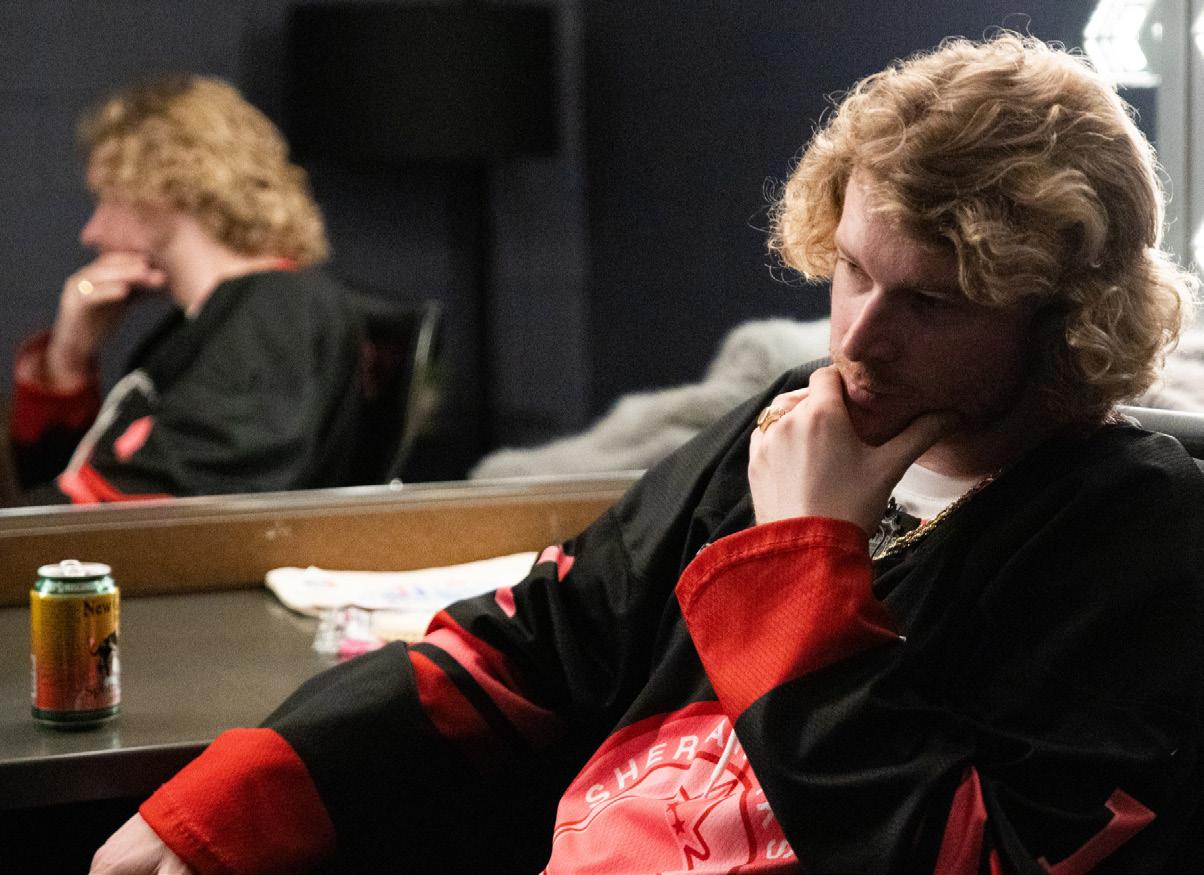
Yung Gravy, rapper and University of WisconsinMadison alum, returned to Madison during his nationwide tour for a show at The Sylvee on Nov. 25.
The venue was filled with energy and excitement as Gravy, wearing UW-Madison merch, performed hit songs including “Betty (Get Money),” “oops!” and his latest release “Debbie.”
“We hear his music so often it somehow gets stuck in our heads…I feel like we’ll end up knowing more songs than we [realize],” Julia Henckels, a UW-Madison freshman who attended the concert with a friend, told The Daily Cardinal ahead of the show. “From the videos of his concerts, It’s gonna be a really good time.”
Gravy started rapping during his sophomore year at UW-Madison, releasing his debut single “Mr. Clean” on SoundCloud in 2016. The music video, filmed in fall 2017, features Gravy dancing in a bathrobe in various locations around Madison, including the State Capitol building, local laundromats and a jetski in Lake Mendota.
The song took off after the video’s release, and Gravy signed with Republic Records in November 2017, a month before graduating from UW-Madison with a marketing degree.
Since then, he’s traveled worldwide, releasing viral hits that blend trap beats with vintage music samples. He is known for his playful lyrics and smooth, flirtatious persona.
Gravy said he tries to make an effort to stop in Madison on tour and for events. Last year, he participated in a Party to the Polls event, encouraging UW-Madison students to vote early during the 2024 presidential election with a free concert and meet-and-greet at Memorial Union.
Before Tuesday’s show, The Cardinal spoke with Gravy about his time as a
UW-Madison student.
The following interview has beeneditedforclarityandbrevity.
How does it feel to be back in Madison?
It feels really good. I’ve been back a few times this year already, but it feels good to actually do a show this time. It’s always fun. When I came back for the first time [after graduating] I did a show on the Capitol block and it was insane. Like 12,000 people showed up, and [the organizers] didn’t expect that, so I was on the smaller stage. It was a free show…that was pretty cool. I’ve done like six or maybe seven shows here since I graduated.
Have you checked out any of the new spots here?
We just walked on State Street, so there were a lot of new things that we saw. I kind of brought [my team] all to the classic stuff. We also went to Single Stitch. I have never been there before. It’s pretty cool — new-ish, I think.
You’ve previously mentioned Nitty Gritty, State Street Brats and The Ivory Room Piano Bar as some of your favorite spots in Madison. Do you have any fond memories from those places and will you be going back anytime soon?
I’d love to. We saw [today] they’re all still there. I saw they closed 107 State, which is sad. It was a bar with pasta and stuff. We used to go there a lot. We walked by the Ivory Room, but that was closed. Kind of makes sense — weekday, early. Also walked by State Street Brats, but it was a little too early for that too. I also would love to go to Nitty Gritty. The last time I was here, I think we went to all three of those because we had more time and spent three days here for this Venmo shoot.
How much do you think Madison has changed since you were a student?
A lot. Walking down State Street, there’s a ton of new restaurants and stuff and new stores every block. Places that I used to work and a few spots that I frequented are gone. The [UW] SERF where I used to work out is a brand-new, boujee building now. They did that a while ago, after I graduated. The on-campus workout space next to Gordon’s, The Nick, used to be the SERF. It was a good, shitty vibe. It smelled like iron and nasty but it was also lit. And then it became really fancy right after I left. If I was a student now, I think it would probably be just as fun, but I miss the nostalgia of those things.
Did you have a fake I.D.?
I had like five. I got one taken at Fresh Market. The first one that got taken away was my South Carolina one, and then the KK took one too. Plus I lost one… I think they’re all gone forever now.
How were you able to balance making music while attending classes?
I was hella motivated, you know, I would go to my classes. I think I did 18 credits most of the semesters when I was actually doing music. I would just come home after class every day, and it was fun. I wanted to be a rapper, so I was going hard on it after class. I think it was just a year and a half, maybe two years, that I was here and actually working on music, and by the end of that, you know.
Did you find the 18 credits challenging?
Yeah. I was doing finance and marketing, so at that time I was pretty much just in the business school — Grainger. By the end of it, though, I did have a
little bit of a hack, because I was picking digital marketing classes where a lot of the projects would be things I had already done because I was making music. So it’d be like ‘create a website, create a shop online’, all stuff I’d already done. So I had a little bit of cheat code there. But if you are learning something you’re interested in, it’s never that hard.
Would you ever make another music video on campus or in Madison again like the “Mr. Clean” music video?
Maybe I could do a remake of the original one in some creative way. Or if it was an actual school-related music video, it could be inspired by the Back to School movie, but with a flip on that. I wouldn’t want to just come here and shoot a random one, but maybe a flip on either of those concepts could be cool.
Do you remember the process of making that music video?
I was partying at a house on Mifflin, talking to these guys who I didn’t know at the time, and one of them recognized my voice. He was like ‘you’ve got to be Yung Gravy, dude.’ I had never revealed my face before, and he just guessed, like he’d heard my
music. I wasn’t even big at all, but big enough, I guess. I was like ‘wow.’ It was the first time anyone ever recognized my voice. And he had this group called Rooftop Studios, a kid named Charlie Hartwell, and we just bonded over that. And then the next day we met up and planned the Mr. Clean video, and then he came on tour as my videographer for three years. I said I don’t really want to spend money. I want to make it look lit and fun. So let’s get a horse and a jet ski and go to a car wash. We spent like 70 bucks total for the whole video, because they had the equipment already. And then we edited the whole video at the College Library.
Do you have any advice to current UW students about navigating college life while pursuing your dreams?
There’s just so much shit going on [in Madison]. It’s like the coolest place ever. I still come back 10 years later and freak out about it and show my girlfriend everything in the town, so you’re in that cool of a place, take advantage of everything while you’re here. I was working 20 hours a week doing 18 credits and making rap, and I would stay up late. If you care about something a lot, it doesn’t really matter. You can find the time for it.
By Joseph Panzer SENIOR STAFF WRITER
Following the Trump Administration’s crackdown on higher education, University of Wisconsin-Madison administrators, student and faculty groups alike have stepped up lobbying efforts.
Lobbying reports from OpenSecrets show UW-Madison has spent $831,000 on lobbying since the beginning of the year, but information from the last quarter of the year has not been reported yet. During all of 2024, UW-Madison spent $807,000. UW-Madison is currently implementing major cuts to its research programs and graduate student enrollment as reductions in federal research funding draw the university into legal battles with
the federal government.
UW-Madison’s research expenditures total $1.7 billion in the past year, placing them sixth among all other American universities. But UW-Madison spokesperson Victoria Comella told The Daily Cardinal this situation could change.
“This year, the university is navigating an unusually dynamic federal funding environment,” Comella said. “Agencies have shifted priorities, some awards have been amended or halted and long-reliable funding streams have been contracted.”
Comella clarified that both the Departments of Defense and Energy, the National Science Foundation (NSF) and the National Institutes of Health
(NIH) have concentrated funding into five key concentrations:
• Artificial Intelligence
• Quantum Science
• Cybersecurity
• Biomedical Research with National Security Relevance
• Fusion and Energy Security Comella singled out AI as the “top national R&D priority” in federal funding.
AI research at UW-Madison has also been named the first priority of the university’s RISE (Research, Innovation and Scholarly Excellence) initiative.
UW-Madison currently has $221.3 million in active funding from DOD grants, according to a lawsuit filed by the Association of American Universities.
Comella said DOD’s Critical Technology Areas “have significant alignment with UW areas of expertise,” yet funding remains a hard procurement.
Beyond AI research, Comella mentioned one of UW-Madison’s key research priorities is the Pegasus-III Experiment in plasma technology, which seeks to “reduce the cost and complexity of future fusion power plants” and is sponsored by the Energy Department.
The Energy Department terminated 223 projects on Oct. 2, targeting projects seen as not economically viable, although Pegasus-III was not one of the terminated projects.
By Addison Balogh STAFF WRITER
Winter’s arrival in Madison brings early sunsets, quieter sidewalks and for many State Street businesses a noticeable shift in customer demographics and slower sales. While each shop experiences winter differently, most owners describe winter as a time of restructuring rather than stagnation, adapting with reduced hours, boosted online sales and long-term planning as students and tourists clear out.
Laura Komai, co-owner of craft and gift shop Anthology, told The Daily Cardinal cold seasons always bring a significant reduction in-store traffic.
“The first quarter is our slowest quarter of the year, about 16% of our annual sales, as opposed to the fourth quarter, which is about 30%,” Komai said. “People
are definitely not out during the coldest weather.”
Even with fewer customers, Komai said winter is far from restful behind the counter.
“It’s actually a very busy time of year because we have to do store inventory, and I have to get all the files ready for year-end taxes,” she said.
Across the street, Cheese Mart experiences a similar slowdown.
“Our customer base is mostly tourists and farmers’ market shoppers, so business slows down quite a bit in the winter months,” Store manager Ian Adcock told the Cardinal. “We cut back on staffing during the winter season to save on labor costs and usually close a couple of days during the week.”
Despite this shift in business, State Street’s efficient snow removal and its residential stu-
dent population help keep the store up and running.
Wisconsin Design Team (WDT), a student-focused apparel shop, experiences some of the most dramatic seasonal shifts due to university breaks, according to store manager Madelyn Lawrence.
“Our main customer demographic is students in school, and with them going home for the majority of the winter, we lose a bit of foot traffic,” Lawrence told the Cardinal.
Instead of being held back by fewer customers, WDT shifts its energy towards online platforms.
“As winter approaches [each year], we increase our presence online to cater to those who are out of state for break,” Lawrence said. “We plan our collection releases early to hit all
By Zoey Jiang SENIOR STAFF WRITER
The While Southern Wisconsinites were shoveling driveways, small shop owners had another concerns on their minds: The major snowstorm stifling Dane County’s Small Business Saturday on Nov. 29, resulting in a ‘v2’ redo event scheduled for Dec. 9.
Small Business Saturday typically falls on the Saturday after Thanksgiving and is dedicated to consumer engagement at small and local businesses across the country.
Small Business Saturday v2 is not a rescheduling or postponement, Colin Murray, owner of local Middleton shop Kylee’s Gift Cottage, said in a press release. “We are simply offering an additional opportunity for shoppers to support local businesses,” he said.
American Express created Small Business Saturday in 2010 to drive consumer spending at small businesses. Since its founding, customers across the United States have spent a total of over $210 billion at small businesses on this day.
American Express Small Shop Map allows an individual to see what small businesses are near them. As of 2025, small businesses comprised 99.4% of Wisconsin businesses, according to the U.S. Small Business Administration, a Small Business Saturday cosponsor.
Wisconsin Gov. Tony Evers released a press release on Dec. 1 encouraging residents to participate in “Shop Small Wisconsin,” a period of time stretching from Small Business Saturday until the end of December.
“From retail and art to restaurants and coffee shops, small businesses are the hearts of our main streets, supporting Wisconsin families, creating community spaces and bringing unique products and services to every corner of our state,” Evers said.
Dollars spent at local businesses recirculate through economies two to four times more than at chains or national retailers.
Murray told the Cardinal his shop receives 35% of total revenue between November and December. “A snowstorm hurts businesses like us,” he said. “Local businesses still rely heavily on holiday support.”
It would take more than a snowstorm to halt local celebrations. Retailers are already preparing festive displays and promotions for the December repeat. Monroe Street in particular is having a Holiday Glow promotion for Small Business Saturday v2 featuring new activities, including caroling and a Santa sighting for Madisonians.
“Many of our businesses closed early or didn’t open at all last Saturday, which was a great disappointment,” Carol Schroeder with the Monroe Street Merchants Association said. “But we hope that people will come out to shop small during Holiday Glow this weekend.”
Small Business Saturday v2 is a way of turning a setback into something positive, Murray said. “We hope shoppers will join us next weekend to show their support and enjoy discovering all the amazing local businesses Dane County has to offer,” he said.

of the important holiday dates in retail.”
Even with colder temperatures and shortened days, she said the store’s expenses stay relatively stable.
“Our expenses increase a bit to make sure our store is warm for customers,” Lawrence said.
“Outside of that, there isn’t a vast difference in costs from season to season.”
‘Dairy state’ lawmakers want to mandate butter in school lunches
By Madison Moris LIFE & STYLE EDITOR
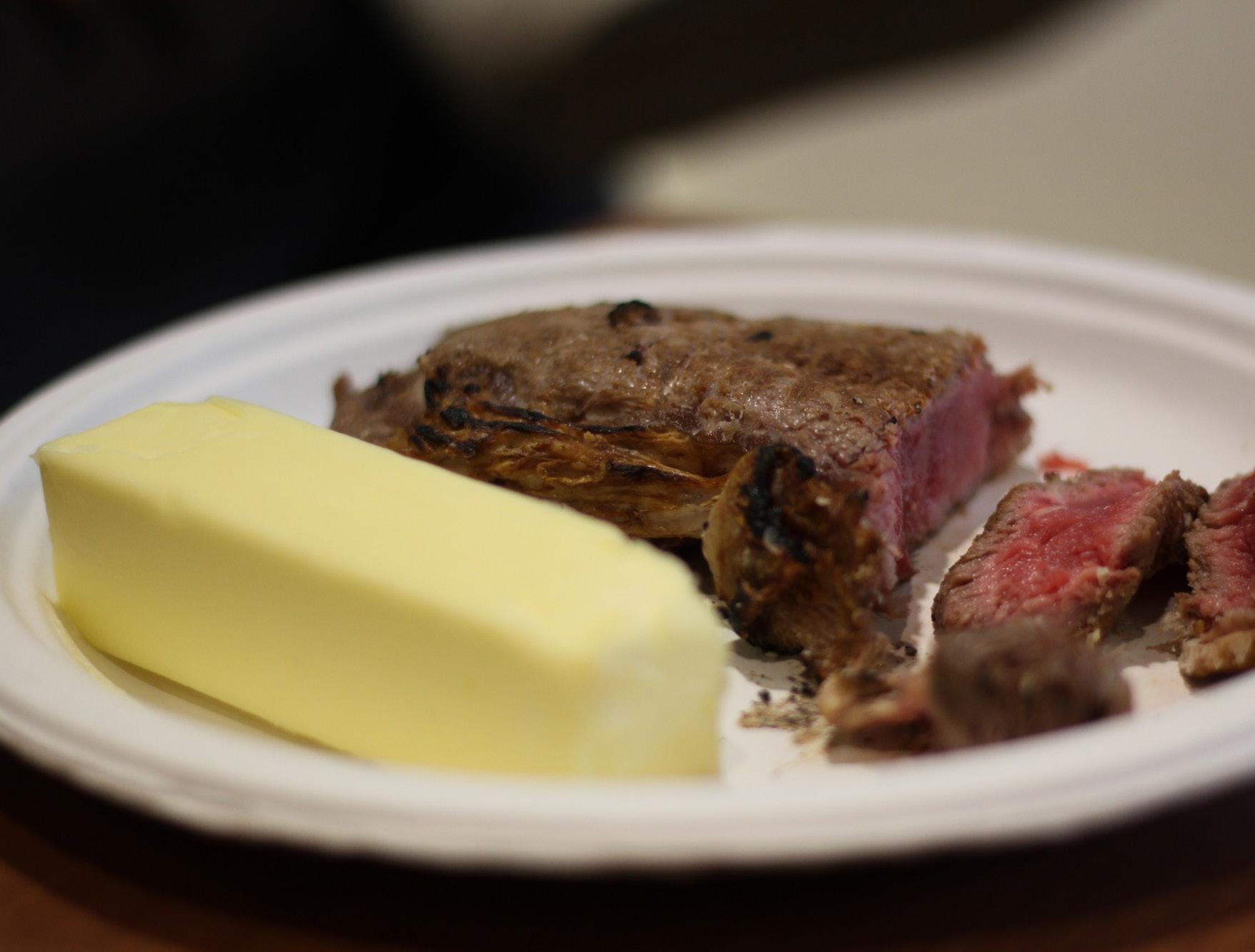
Wisconsin lawmakers introduced bipartisan legislation to prohibit all schools in the dairy state from serving margarine instead of butter in school lunches.
Co-authors Rep. Todd Novak, R-Dodgeville, and Sen. Howard Marklein, R-Spring Green, who both grew up on Wisconsin farms, argued schools should use butter to support local farms and the state’s dairy industry.
“After attending a local Farm Bureau meeting, I was shocked to hear a local school was no longer serving butter with lunches, but instead an artificial alternative with a long list of ingredients,” Novak said in a statement.
The legislation would give farmers another market to sell their products. Markelin said serving margarine is unacceptable considering Wisconsin’s long history of supporting the dairy industry.
“This common-sense legislation recognizes the hard work of our farmers and aligns our school districts with this provision in state law,” Marklein said in a statement.
Butter is made with milk or cream while margarine is a mixture of vari-
ous oils, water and skimmed milk. Margarine has a higher unsaturated fat content compared to butter. Replacing saturated fat with unsaturated fat may lower the risk of cardiovascular disease.
The legislation is similar to an existing statute that prohibits substituting margarine for table butter to students or inmates and patients in a state institution. It also outlaws the substitution in restaurants, unless a customer requests it.
Parents and guardians would need to provide a doctor’s note to exempt their child from the policy under the current proposal.
University of Wisconsin-Madison sophomore Nathan Jahn from Menomonee Falls has lactose intolerant family members, so he grew up eating margarine. He thinks families shouldn’t have to prove dairy intolerance.
“I don’t think you should have to provide documentation, that is overinvolvement from the government,” Jahn said.
The bill was referred to the committee on Licensing, Regulatory Reform, State and Federal Affairs on Nov. 14 and is now awaiting a public hearing
Continued from page 3
To lobby for increased funding, UW-Madison’s federal relations team coordinates with agencies and congressional staff and recently spoke at a panel before Congress calling for greater NIH funding. The university also works with government relations firms Lewis-Burke Associates and BGR Group to achieve these goals.
“The vice chancellor for research and the new director of national security initiatives coordinate campuswide efforts, supported by the Office of Federal Relations and national associations like the [Association of Public and Land-Grant Universities] and AAU,” Comella said. “Faculty regularly engage federal agencies, attend national summits and meet with decision-makers to align research proposals with federal needs.”
The federal government hasn’t been the only cause of funding reductions, though.
At the state level, funding for the University of Wisconsin System has been rocky as Republicans proposed an $80 million funding cut for universities in the biennial budget last summer, before approving a $256 million increase. This is still a far cry from Gov. Evers’ proposed $856 million that the system requested.
UW-Madison faculty lobbying group, the Public Organization of the Faculty Senate (PROFS) and the Associated Students of Madison (ASM) — the university’s student government — also carry out lobbying efforts at the state level, along with UW’s Office of State Relations, which advocates for the university with the Legislature.
ASM Legislative Affairs
Chair Megan Mladucky said ASM participates in a yearly collaboration with other Big Ten schools for federal lobbying.
“Lobbying efforts have included advocating for bills related to basic needs and increased accommodations for disabled students,” Mladucky said. “Our goal with these efforts is to elevate student questions and concerns with the legislature to overall create a better campus environment for all students.”
Additionally, ASM engages in state lobbying efforts on behalf of students. Mladucky identified Act 15 as their current concern and the main piece of ASM’s state lobbying efforts.
Act 15 is a law that requires all schools in the UW System to change transfer credit policies and general education in addition to instructor workload requirements.
New general education requirements passed unanimously on Nov. 19 during a
By Alaina Walsh ASSOCIATE NEWS EDITOR
The UW Forestry Club will revive its Christmas tree sale this December, selling 300 trees after a six-year hiatus due to a pause in club membership and the COVID-19 pandemic.
Despite not being officially registered as a student organization, the club serves as a student-run professional development organization for forestry and natural resource majors. It provides handson skills training, certifications and industry networking opportunities and represents the student chapter of Society of American Foresters in Madison.
Recent club activities include chainsaw certification courses and support for students to attend state and national organization conferences. Those experiences, club President Emma James said, are crucial in a field where handson training and specialized credentials
are often expected before graduation.
“Natural resource jobs expect you to have certain certifications,” James said.
“[The sale’s] funds help us make sure students can get those trainings and network with professionals. It’s basically setting us up for the future.”
James hopes bringing the sale back will increase knowledge and strengthen the ties between the forestry program and the greater Madison community.
“Our major is really small — my graduating class only has about 10 people,” she said. “This sale bridges our club with the community and reminds people we’re here. It helps with outreach and visibility.”
The entirely student-run sale will sell trees from Solin Tree Farm in Stevens Point and take place Dec. 5-7 from 8 a.m. to 8 p.m. at UW-Madison’s Stock Pavilion. Trees will be available while supplies last.

l
December 4th, 2024 5
special meeting of the Board of Regents. ASM’s Legislative Affairs committee will host a shared Student
By Haellie Opp SENIOR STAFF WRITER
Nessa Bleill sits in her sophomore-year bedroom with posters taped to the yellow walls and pop music playing softly in the background.
On the desk is a photo of a curly-haired dog named Mac and a round dish holding jewelry. Stacked on top of the jewelry is a red pin with “survivor” printed in bold, white letters.
Bleill was 16 when she survived the 2022 Independence Day Parade mass shooting in Highland Park, Illinois.
“My whole family was there. It’s a parade that we would go to every single year, something I held very close to my heart, so it [was] always something that I looked forward to in the summers. And after that happened, I was kind of in a state of shock, and I didn’t really know what to do, but I knew that this was a moment that was 100% going to change my life,” Bleill told The Daily Cardinal.
Bleill and her family were in attendance for the July 4 parade when a man opened fire, killing six people and wounding at least 30. The Bleill family was not physically harmed during the shooting, but they live with the effects today.
Later, her mother became involved with Moms Demand Action, which inspired Bleill to start a chapter at her high school.
Bleill founded the University of WisconsinMadison chapter of Students Demand Action in the fall semester of her freshman year. Now a sophomore studying political science and communication arts, Bleill heads gun control advocacy at UW-Madison.
At first, she was hesitant to bring SDA to UW-Madison.
“I wasn’t going to do it initially because I was a freshman ,and I was like, ‘who’s going to listen to me?’ But I went home for winter break and the next morning I woke up to news of the Abundant Life shooting here in Madison.” Bleill said. “I immediately created an Instagram account that day [and] was filling out the paperwork. That was my action point.”
Emma Donohue, events lead for SDA at UW-Madison, said has been inspired by Bleill. The pair serve on SDA’s executive board together and have grown as friends. Donohue noted that Bleill saw something wrong in the world and wanted to make a change.
“Instead of just continuing on, she really took it upon herself to really take action, and not only change her community, [but also] change other people’s communities,” Donohue said.
Bleill said knew she had the “tools neces-
sary” to be able to start SDA at UW-Madison. She noticed a rise in comments online and those of people in her life wondering what they could do and how they could help in the wake of the Abundant Life Christian School shooting in December 2024.
She noted the proximity to the Wisconsin Capitol as a large part of her motivation to start SDA at UW-Madison. Bleill serves as an intern at the Capitol working with constituent communications for Rep. Russell Goodwin, D-Milwaukee.
Bleill spoke at the Wisconsin Capitol Oct. 21 to “urge elected officials to support a new raft of gun violence prevention bills aimed at gun trafficking.” She’s been speaking in front of large crowds and crowds involving legislatures since the Highland Park shooting.
Bleill said she is “deeply affected” by gun violence and “doesn’t want it to happen to anyone else.”
Bleill previously worked with Sen. Kelda Roys, D-Madison. Roys spoke at a UW-Madison SDA meeting on Oct. 8 and spoke at the same news conference as Bleill in August alongside Rep. Brienne Brown, D-Whitewater.
“Nessa’s courage in speaking out against gun violence is exactly the kind of leadership we need. Her organizing work will help make a better, safer world for all of us,” Roys said in a statement.
Bleill, Brown and Roys also announced proposed legislation in August to prohibit firearms on college and university campuses in the state of Wisconsin.
Donohue wanted others to know the drive behind Bleill’s leadership, saying that Bleill is “just that motivated.”
“Nessa thought she was going into college and she was going to be a chemistry major. Then she was like, ‘no there’s so much action and so many things that I know I can do.’ Then she changed to political science,” Donohue said. “So I think the fact that she’s just so inspiring and her drive and her effort to make a change is really inspiring.”
Bleill is looking forward to getting [others out to] vote this next election to flip the senate towards Democratic representatives and get gun violence prevention bills passed. She hopes to continue her gun violence prevention advocacy the rest of her life.
After sharing the next steps in her advocacy journey, Bleill paused and put her hands into her lap.
“However, I hope it’s not my life,” Bleill said. “I hope we fix this issue by then.”
By Yadiel Chavez SPORTS EDITOR
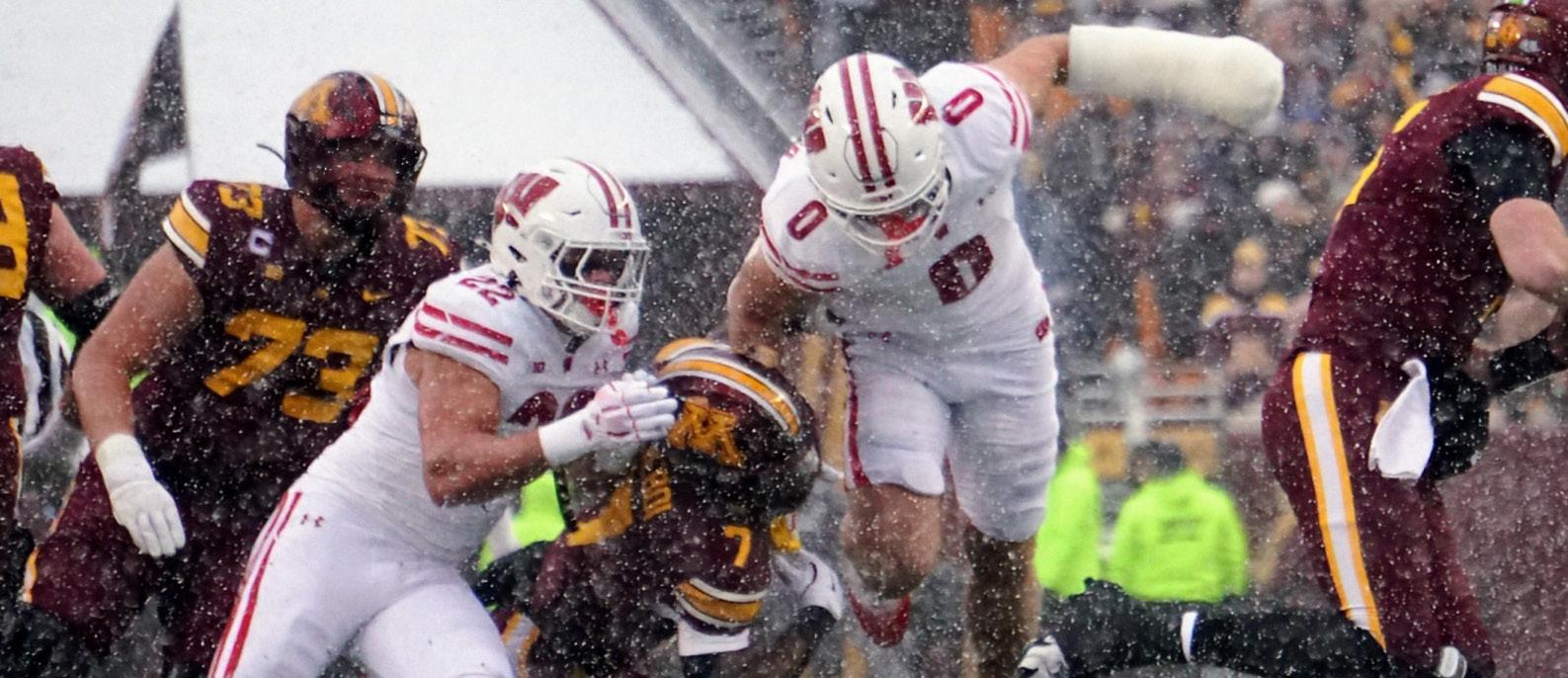
The Wisconsin Badgers’ (4-8, 2-7) offensive woes were on full display in their 17-7 loss to the Minnesota Golden Gophers (7-5, 5-4) Saturday at Huntington Bank Stadium. Minnesota retained the coveted Paul Bunyan’s Axe with the win, their second straight over Wisconsin and fourth in the last five seasons.
The Badgers end their season failing to gain bowl game eligibility for the second straight year under Fickell and posting a losing record in consecutive seasons for the first time since 1992.
The Badgers mustered just seven points against a Minnesota defense that allowed 38 points against Northwestern last week, a testament to the chaos surrounding the quarterback position that has defined the season for Fickell and Wisconsin.
The conditions on the field defined the first quarter, as both teams struggled to sustain drives amidst the snowfall.
Minnesota started the game with possession, breaking into Wisconsin territory with freshman quarterback Drake Lindlsy leading the attack through the air. The Badgers recovered quickly however, containing junior running back Darius Taylor and forcing a pass attempt on thirdand-8, which resulted in a Lindsly incompletion and a Minnesota punt.
Wisconsin looked to establish the run on their first drive, using both sophomore running back Darrion Dupree and true freshman quarterback Carter Smith on the ground. But a botched snap brought the drive to a screeching halt five plays in. Smith called for the snap as senior wide receiver Vinny Anthony II motioned across the formation, resulting in the snap bouncing right off Anthony. Minnesota defensive back John Nestor recovered the fumble, giving the Gophers prime field position at the Wisconsin 22-yard line.
Minnesota failed to capitalize on the opportunity, trotting out their field goal unit for a 38-yard attempt after only gaining two yards on the drive. Badger defensive lineman Ben Barton blocked the field goal to keep the game scoreless. It was Barton’s second blocked kick of the season, the first coming against Washington in Week 11.
The Gophers forced Wisconsin into a three-and-out on the ensuing drive, with the Badgers passing game practically non-existent. Smith only attempted one pass in the first quarter — a 3-yard completion to senior tight end Lance Mason. Minnesota drove down the field
with a well-orchestrated mixture of pass and run plays, putting themselves into third and manageable situations that resulted in first downs thanks to the gritty efforts of Taylor.
The Gophers ended the first quarter on the Wisconsin 37-yard line after a third-and-2 conversion from running back Fame Ijeboi.
With the Gophers in Wisconsin territory, the Badger defense once again rose to the occasion. On the first play of the second quarter, Wisconsin linebacker Christian Alligero sacked Lindlsy for a loss of four. Back-toback two-yard runs from Taylor forced Minnesota to punt. Punter Tom Weston pinned Wisconsin at their own two yard-line.
After another Badger threeand-out, freshman punter Sean West took the fourth down snap from the end zone. His punt didn’t help the Badgers’ cause, going just 30 yards and once again giving the Gophers possession in Wisconsin territory.
Wisconsin’s defense held strong — only giving up 20 yards in seven plays — but the Gophers connected on a 33-yard field goal to go up 3-0 with 6:32 remaining in the half.
Wisconsin again couldn’t get their offense going, with Minnesota forcing Smith to beat them through the air and Dupree having minimal success on the ground.
Another botched punt from West — this time only getting the ball in the air for 11-yards before going out of bounds — put Minnesota at midfield.
Minnesota took advantage of a worn-out Badger defense, as Taylor broke through for a 49-yard touchdown on third-and-4, going up 10-0 on Wisconsin at the 2:45 mark.
Needing a spark for his offense, Fickell put quarterback Hunter Simmons in for Smith at the 2:45 mark. Fickell has used Simmons in these two-minute situations before, like when Simmons entered on the last drive of the first half against Illinois.
Simmons answered the call immediately, hitting Anthony II in stride for a 67-yard pass on third-and-7 that put the Badgers in business, five yards out from the Minnesota end zone.
Even with the fresh set of downs and only needing five yards for the touchdown, it took everything from the Wisconsin offense to score. Smith re-entered as quarterback, as his mobility has proven useful in goal line situations this season.
After three plays, Wisconsin was on the 1-yard line. Fickell kept the offense on the snow-covered field for fourth down. With momentum
By Jacob Szczap SPORTS EDITOR
After a November where the Wisconsin Badgers changed the narrative of their 2025 season, they had an opportunity to onceand-for-all flip a disastrous season on its head and ride into a crucial offseason with positive momentum. With exhilarating home victories over then-CFP Top 25 foes Washington and Illinois, Wisconsin proved they were capable of winning and salvaged what was left of their remaining season.
hanging in the balance, Smith was forced out of the pocket, rolled to his right and threw a bullet to senior tight end Jackson Acker, who despite being tightly covered, came down with the ball.
Initially ruled incomplete on the field, a lengthy review concluded that Acker managed to get a foot down in bounds and maintained possession going to the ground, a remarkable catch that brought the game to 10-7 going into halftime.
“We wanted to be aggressive, you know, I felt like the energy and momentum going into halftime was going to be really, really key.” Fickell said when questioned on the decision to go for it on fourth down rather than kick a field goal.
Wisconsin came out of the locker room with possession and the chance to either tie the game or take the lead. Fickell elected to play Simmons — not Smith — at quarterback in the second half.
“It’s nothing against Carter [Smith], it’s just the way that [the Minnesota defense] were playing and we thought that going into halftime and coming back out that, it gave us the chance to loosen things up,” Fickell said postgame.
With the more experienced quarterback in the game, Wisconsin looked to gain yardage through the air. After a seven-yard pass to move the chains, Simmons was intercepted by Nestor on a deflection that put the Badger defense in a sudden change situation.
Wisconsin’s defense stiffened after the turnover, forcing a threeand-out that gave them new life. Senior outside linebacker Darryl Peterson made an impact after his dominant three-sack performance against Illinois, hurrying Lindsly on third down and forcing him to throw the ball away.
In their most methodical drive of the game, the Badgers unlocked the pass game. A sequence that included a 26-yard dime from Simmons to Mason right over the hands of a Gopher defender set up Wisconsin right outside the redzone.
After a five-yard run from Dupree that made it third-and-7 at the Minnesota 20 yard-line, Simmons threw his second consecutive interception to Nestor, who returned it for 68 yards to the Wisconsin 16 yardline. Nestor stayed with the pass all the way, tightly guarding wide receiver Trech Kekahuna and deflating the nearly six minute drive from the Badgers.
Continuereading@dailycardinal. com
But as Saturday’s 17-7 loss to Minnesota became the last memory of a season many would like to forget, Wisconsin’s feel-good victories have been diminished, instead swapped with the all-toofamiliar taste of defeat.
Now, Wisconsin head coach Luke Fickell heads into his most important offseason with a team unable to fully get over the hump, and a fanbase that, while less restless than a month ago, is still weary of the job he is doing.
“It’s very, very difficult and tough to swallow,” Fickell said after the Minnesota game. “I know that the locker room feels as bad as you possibly could, and I wanted nothing more than to end this thing for the seniors in a way that they could be proud of.”
No matter the result against Minnesota, Wisconsin’s victories over Washington and Illinois granted the Badgers a level of offseason breathing room that seemed impossible in October.
The Badgers began the season 2-6 and hardly looked competitive against Alabama, Maryland, Iowa and Ohio State.
Wisconsin should feel good knowing that after being embarrassed at home by Maryland and Iowa earlier in the year, they found the will and ability to knock down quality opponents and compete at the Big Ten level later in the season.
The wins were Wisconsin’s
first against Top 25 opponents under Fickell. In 2023 against No. 3 Ohio State, and in 2024 against No. 3 Penn State and No. 1 Oregon, Wisconsin fought against highly ranked foes for three quarters, but did not have the stamina to finish with wins.
This season, albeit against different caliber teams, Wisconsin was able to close out victories and produce the signature wins that had previously been so elusive under Fickell. Finishing strong against Washington and Illinois proves there is growth within the program and serves as a testament to the players buying into Fickell’s style.
Still, losing to Minnesota, who Wisconsin has fallen to in four of their last five meetings, is a stark reminder that despite the progress the Badgers have made in recent weeks, there is still a long way to go in climbing the metaphorical “mountain” Fickell speaks of almost weekly.
“Like any last game, in particular at the end of the season, a rivalry game, all the things that build up to this — we weren’t able to get the job done,” Fickell said. “There are a lot of reasons why we didn’t get the job done today.”
The most glaring reason Wisconsin faltered against Minnesota was their quarterback situation, an issue that has plagued the Badgers throughout Fickell’s tenure and continues to plague them into the offseason.
In recent weeks, Wisconsin’s ever-fluctuating quarterback depth chart led to true freshman Carter Smith taking the reins.
Under Smith, Wisconsin hasn’t been a pass-first offense, and that continued against Minnesota as snow blanketed the field. Smith, taking a backseat to the run game, completed five-of-eight passes for 20 yards and a touchdown, while rushing for 16 yards.
Continuereading@dailycardinal. com
By Madison Moris
LIFE & STYLE EDITOR
The fall semester may be wrapping up, but that doesn’t mean fun in Madison has to as well. There are plenty of events and activities to check out as courses end and winter break begins.
Saturday’s on the Square may be over, but the Dane County Farmers’ Market offerings are not. The Holiday Farmers’ Market features over 60 vendors at Monona Terrace and local holiday food needs.
The market is open Dec. 6, 13 and 20 from 7 a.m. to noon. On Dec. 6, the market will be open until 1 p.m. so customers have more time to visit the Fair Trade Holiday Festival next door.
The Winter Farmers’ Market runs each Saturday from Jan. 3 to April 4 at the Garver Feed Mill. Many familiar vendors from the DCFM attend offering fresh produce, meats and baked goods. The DCFM only offers locallyproduced agriculture items, making it a great way to shop locally over break.
The 29th annual Fair Trade Holiday Festival will feature unique and socially responsible handmade gifts on Dec. 6 at Monona Terrace from 8 a.m. to 3 p.m. There will be hundreds of fairly-traded, international products for sale.
Over 40 vendors will offer fair trade clothing, foods, jewelry, books, cards, ornaments, baskets and more. The festival attracts over 4,000 guests every year.
University of WisconsinMadison RecWell has skate sessions at the Sub-Zero Ice Center located in the Baake. Open hockey, free style and public skating opportunities are available over break.
UW-Madison students and RecWell members can get a discounted rate for rink fees and skate rentals with their ID or membership card.
Madison Parks also offer skating opportunities Wednesday through Sunday. Olbrich, Warner and Westmorland Parks have free-
to-use skates in limited sizes and quantities.
UW Athletics offers discounted student tickets for hockey, basketball and wrestling matches over break. It’s an especially great time to catch the eight time, defending national champion women’s and six time national champion men’s hockey teams, who are ranked No. 1 and No. 2 in the nation, respectively.
Each year, the Capitol Holiday Tree is decorated with handmade ornaments from students and families from around the state. Student ornaments this year reflect what Wisconsin’s educators mean to them.
In 2024, the fir tree was nominated by USA TODAY 10BEST Readers’ Choice Awards for Best Public Holiday Lights Display. The Capitol is open 8 a.m. to 6 p.m. Monday through Saturday and 8 a.m. to 4 p.m. on weekends and holidays.



By Sophia Han & Nick Bumgardner STAFF WRITER & MANAGING EDITOR
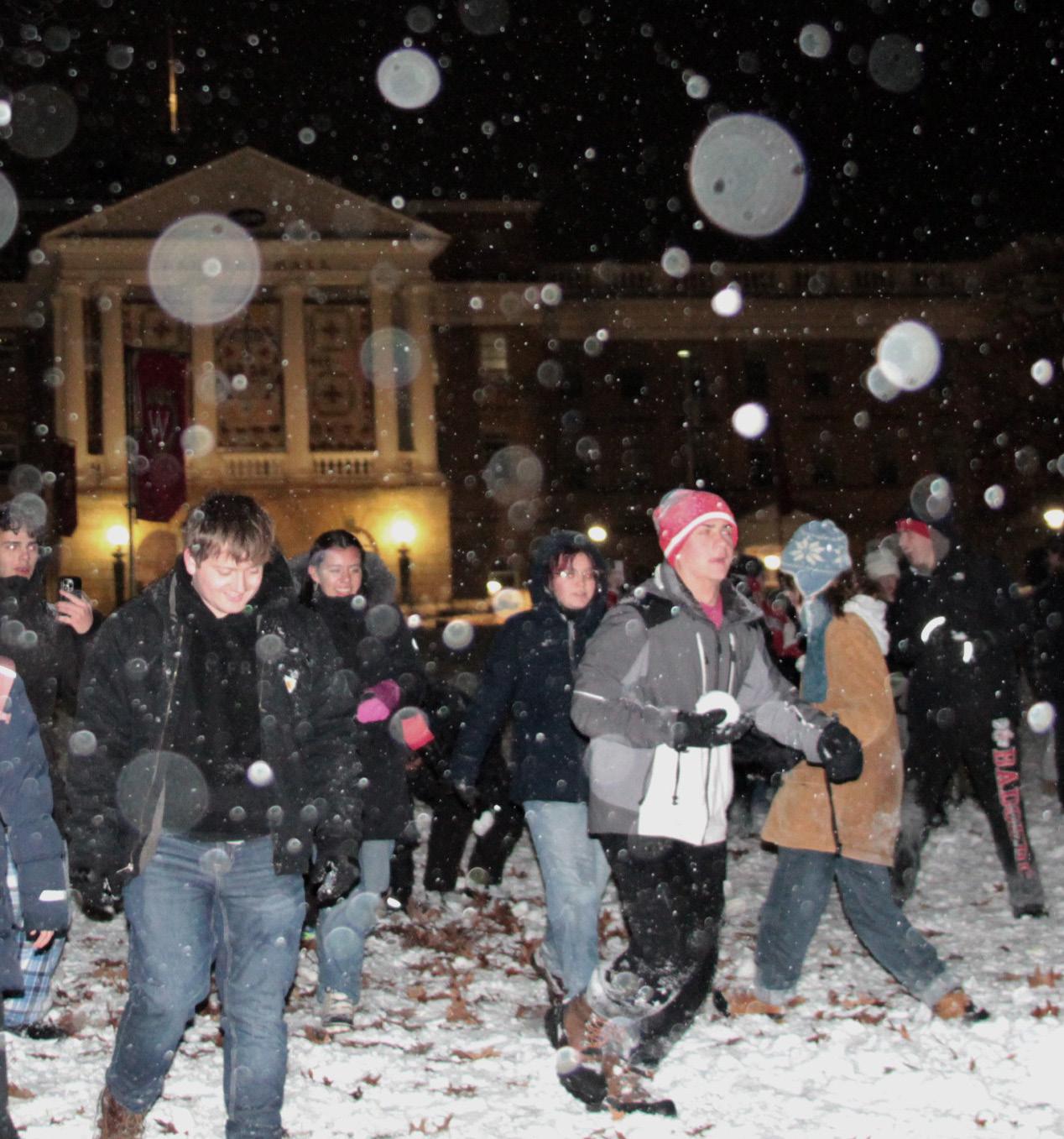
The University of Wisconsin-Madison’s Bascom Hill turned into a warzone Monday night as a few hundred students duked it out at the annual Lakeshore vs. Southeast snowball fight — aka The Battle for Bascom.
Braving fierce wind and icy temperatures, the Lakeshore dorms made it out victorious as students sent snowballs hurdling across the battlefield.
This brutal battle started formally on Dec. 9, 2009 as an attempt to break the unofficial world record for biggest snowball fight. It was organized over Facebook, before more popular forums like YikYak, Snapchat college stories and Instagram were as popular as they are today.
Monday’s installment drew blood — literally. With the snowball fight taking place in the dark, sneak attacks were common. One student ended
up bleeding from her eyebrow after being struck by an icy snowball, and numerous other students on Yik Yak confessed to other injuries such as broken noses and eye infections from dirty icicles thrown.
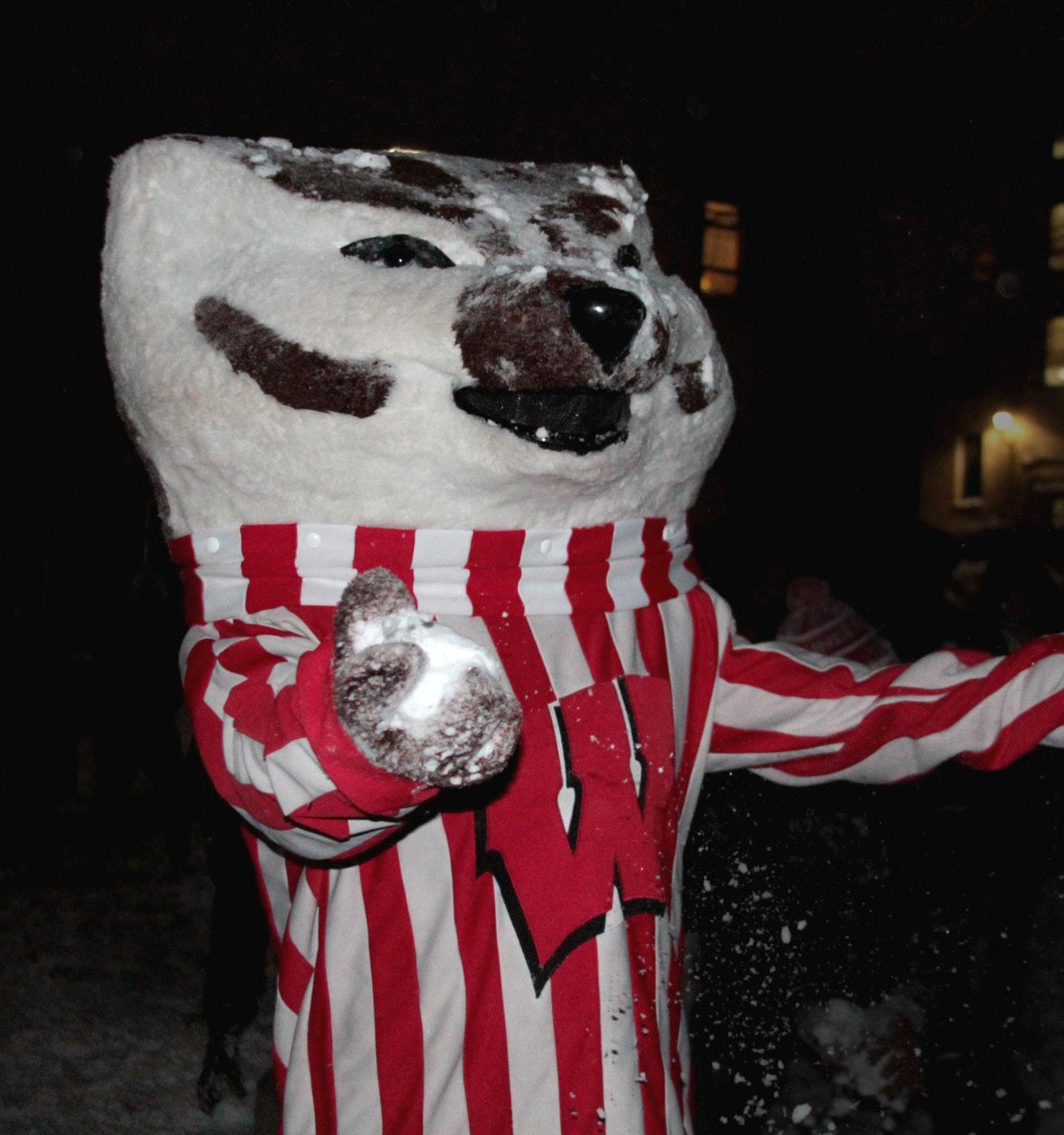
As history recounts, Lakeshore has a track record of winning these battles. At one point, Southeast residents broke into chants of “Lakeshore sucks,” and Bucky Badger even made an appearance, dodging salvos from both sides.
In the end, Lakeshore showed up, passionately defended their end of the hill and won, according to the amount of Lakeshore residents present and the lack of casualties on their end. The aftermath was solemn, as numerous students were mildly injured and the temperature was freezing.
Like Southeast residents say every year, ‘We’ll get ‘em next time’ (Just like a win against Minnesota).
By Emma Schieffer













By Safa Razvi OPINION EDITOR
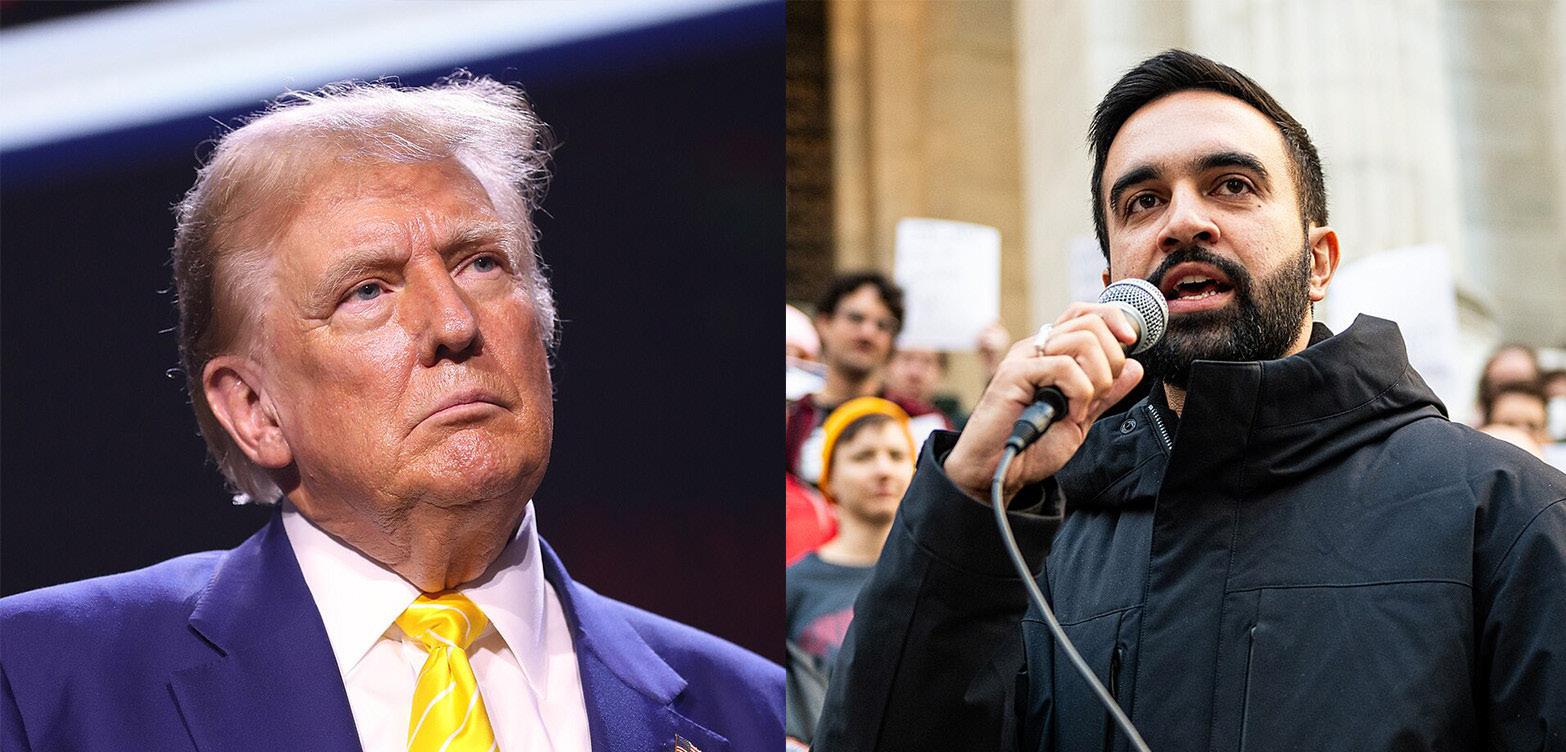
Zohran Mamdani beat out former Gov. Andrew Cuomo in his campaign for mayor of New York City with purpose and precision. His campaign highlighted three main goals: fast and free buses, free child care and freezing rent — ideas that would completely transform the life of an average New Yorker.
In an upset victory, Mamdani was elected in hopes of making good on these promises, with millions of residents ecstatic over this monumental win. Toppling a political dynasty put forth by the Cuomo family, Mamdani’s win highlighted a new era for New Yorkers. A time for personal freedom to take charge. However, President Donald Trump’s threats still loom over the city he once called home.
For many of the minority communities, African Americans, Latino/Hispanic, South Asian, Muslim, immigrant and undocumented New Yorkers, Trump’s threats echo years of targeted attacks and discrimination. From promises of expanding ICE patrol in the city and threatening to send in the National Guard, Trump has sparked fear in the minds of residents that will not be easily forgotten from one mere moment of peace between him and the mayor-elect.
Shortly after his election,
Mamdani was invited as mayorelect to visit President Trump at the White House. For much of his campaign, Mamdani fought against the power of New York’s elite — a demographic Trump has protected and is proudly a part of as a renowned businessman — with Mamdani even committing himself to increasing their taxes.
Furthermore, Trump’s relationship with Israeli Prime Minister Benjamin Netanyahu has been a hot topic as Mamdani unquestionably condemns the war in Gaza. This meeting was highly anticipated and remarked throughout the press in the days leading up to it.
While an unconventional “friendship” seemingly arose from this meeting, it’s anything but genuine. It’s a media-crafted illusion — a calculated effort by Mamdani to put personal grievances with Trump aside and secure tangible gains to benefit the lives of New Yorkers.
After months of labeling Mamdani as a threat to the country’s largest city, Trump seemed charmed by their conversation. In the press conference, he allowed Mamdani to call him a “fascist” — saying it was “easier than explaining it” — and stressed the need for cordiality, much unlike his meltdowns toward other politicians.
The president went as far to say they “had more in common than
he would have thought,” looking up at him with a sweet smile, and said he’d feel “very, very comfortable” in Mamdani’s New York.
But despite this meeting, the nearly 6 million ethnic and racial minorities in NYC still live in fear of Trump’s regime. Even this week, Mamdani highlighted the recent disappearance of six-year-old Yuanxin, who was separated from his father by ICE after a “routine check-in.”
Although he has Trump in his corner, fear still lingers.
While many on social media have joked that Trump is quite taken by the future mayor, it’s important to see the relationship for what it is: a hopeful, political gain.
When asked if he stands
by earlier claims that Trump is a despot and an attack on our democracy, Mamdani took the opportunity to stand by his earlier message, showing New Yorkers that while they can have a seemingly productive working relationship, his thoughts on the core values of the Trump administration have not deviated.
Trump’s earlier claims only amplify the anxiety these communities have felt since he re-gained the presidency. Mamdani’s presence is not a safety blanket, but it is a ray of hope. The threats still stand, the questions of their rights are still being asked and their sense of belonging remains unstable.
But with Mamdani at the helm, New Yorkers are putting their
trust in him.
Even his latest call with Trump on Dec. 1, an extension of their surprisingly warm November meeting, makes clear just how thin the line is. Mamdani may cooperate where it benefits New Yorkers, but his view on Trump’s authoritarian tendencies still stands. In the months ahead, New Yorkers must stay vigilant and continue to protect the communities most vulnerable from federal overreach. In many ways, it’s an interesting test case: two politicians who couldn’t be further apart on the political spectrum, leaning into a political gambit that seems less about shared ideology and more about what each can extract from each other.
By Paul O’Gorman
OPINION EDITOR
Defense Secretary Pete Hegseth approved a missile strike on a Venezuelan vessel suspected of carrying ‘narcoterrorists’ and a large supply of narcotics on Sept. 2. Alarming footage of the boat strike sparked outrage from members of Congress and the public alike, with concerns rising as strikes have increased in recent months.
With new information that
Hegseth approved a second strike intended to kill survivors of the initial Sept. 2 attack, members of Congress have begun to call for a hearing on the boat strikes. If these actions by the administration and the military are proven to be true, this behavior stands in direct opposition to the internationally recognized laws of armed conflict and signals a disturbing future for U.S. military operations and foreign relations.
Operations conducted to
intercept drug trafficking into the U.S. are typically handled by the U.S. Coast Guard and Drug Enforcement Agency, while the boat strike on Sept. 2 was carried out by SEAL Team 6, a departure from the norm that raises questions and concerns.
Concrete information on the status of the people on board the ship, and any credible footage of the strike, has yet to be released by The Pentagon or the president, instead using the blanket

term ‘designated terrorist organization’ to legitimize the strikes.
If the ship contained innocent civilians, and if the second strike designated to kill survivors truly occurred, these actions would be in violation of international humanitarian law and should serve as a warning for the future of foreign policy throughout the remainder of President Trump’s term.
According to the United Nations’ High Commissioner for Human Rights Volker Türk, “the intentional use of lethal force is only permissible as a last resort against individuals who pose an imminent threat to life,” but based on what little information the administration and The Pentagon have provided, these actions cannot be justified.
This marked a change in military operations, along with the withholding of information and undoctored footage by the administration, leaving the future of the U.S. military’s adherence to the provisions of the laws of armed conflict uncertain.
As the White House remains confident in the legality and necessity of these strikes to ensure national security, a further investigation into the strictures of international human rights is required. According
to military lawyers and leading Democrats, “there is no U.S. law that explicitly authorizes the U.S. Navy to attack or sink ships at sea outside of a congressionally authorized war or valid self-defense situation.”
This overstep of sovereignty and legal military intervention by the Trump administration should come as disturbing, as Trump’s consolidation of power in the executive has now allowed for the breaching of U.S. domestic law and internationally recognized human rights.
As a founding member of the UN and co-creator of the laws of armed conflict as we now understand them, the United States should serve as the vanguard for global adherence to international humanitarian law, not as criminals. As Congress seeks transparency on the events that occurred during the Venezuelan boat strikes, they should work to redress any violations of human rights and reorient the laws of armed conflict as the central foundations upon which all U.S. military action should be based. If the current administration’s clouded perception of legality regarding the laws of armed conflict continues, irrevocable damage may be done across the international community.
By Sophia Han STAFF WRITER
T he University of WisconsinMadison partnered with biotechnology company TAE Life Sciences to launch the first clinical site for Neutron Capture Therapy (NCT) in the United States, positioning the university as a national leader in cancer innovation.
Led by Dr. Zachary Morris, chair of the Department of Human Oncology, the initiative introduces a treatment that Morris says is faster, more precise and less invasive than traditional cancer therapies.
NCT is a targeted treatment that begins by generating a neutron beam using a particle accelerator. The patient is first given a drug containing atoms like boron-10, which accumulate in the tumor cells. When
the neutron beam is directed at the tumor, the neutrons are absorbed by these atoms, triggering a reaction that releases high-energy particles. These particles then destroy nearby cancer cells with minimal damage to surrounding healthy tissue.
“When a neutron hits certain atoms, it can actually combine with that atom in a highenergy nuclear fusion reaction,” Morris said. NCT combines two advanced approaches: theranostics, which merges diagnostics and therapy and uses radioactive drugs that selectively bind to cancer cells, as well as particle beam radiation.
The process begins with the intravenous injection of a non-radioactive pre-drug containing boron-10, a stable isotope, that then accumulates in tumor cells. When the neutron beam
is applied to the tumor, it interacts with the boron atoms, triggering a localized burst of radiation that destroys cancer cells while sparing healthy tissue.
“That’s what makes this so interesting,” Morris said. “You can take a small amount of radiation with a neutron beam, and when it hits a drug that might be concentrated in a cancer cell, it can emit a lot of additional radiation.”
Boron-10 is central to the therapy’s success
“Boron has what’s considered a fairly large cross section for a neutron,” Morris said. “As a neutron is traveling through material, certain atoms appear very small and the neutron’s going to miss them. But other atoms have a big cross section, which allows them to absorb a neu-
By Lindsay Pfeiffer
SCIENCE EDITOR EMERITUS
Invasive sea lampreys, grotesque parasites with rows of teeth inside their circular mouths that drain the blood of fish, infiltrated the Great Lakes in the 19th century. They have long been managed by a team at the Great Lakes Fishery Commission (GLFC), whose efforts have stopped the lampreys from multiplying and causing severe damage to native fish populations.
The invasive, parasitic species from the Atlantic Ocean have been in Lake Ontario since 1835. They remained confined to Lake Ontario because they couldn’t pass Niagara Falls — until improvements to the Welland Canal created an opening from Lake Ontario to the rest of the Great Lakes, bypassing the falls. By 1938, invasive sea lampreys were in all of the lakes.
An Oct. 28 newsletter from GLFC said the government shutdown added stress to their federal partners whose employees it contracts for their sea lamprey program, including the U.S. Fish and Wildlife Service (USFWS) and the U.S. Geological Survey (USGS). Though USFWS has continued sea lamprey control unaffected, many USGS Hammond Bay staff were furloughed during the shutdown. There is no public information about the employees’ return on the USGS website. Seilheimer said lamprey control is currently going on as usual, but threats of funding cuts and the government shutdown have contributed to uncertainty in the coming years.
How long have sea lampreys been around?
Tim Campbell, the Wisconsin Sea Grant Invasive Species program manager and specialist, said the biggest problem with sea lampreys is their size. They’re larger than native Great Lakes lampreys, so when they attach to native fish such as lake trout, they often kill them.
There are four native lamprey species in the Great Lakes region, two of which are also parasitic. But sea lamprey evolved to attach to larger fish in the Atlantic Ocean, and therefore suck native fish of their resources. According to Campbell, fish like lake trout are relatively slow-growing fish, so sea lampreys have a devastating effect. In Lake Superior, the lake trout population declined 95% from sea lamprey and overfishing and was only declared recovered in 2024.
“When you get a bunch of sea lamprey killing slow-growing fish, it can crash the population,” Campbell said.
A population crash of native Great Lakes fish would significantly impact fishery earnings. The Great Lakes fishery is currently
worth $5.1 billion annually and supports 75,000 jobs. Before sea lamprey control, sea lampreys killed 100 million pounds of fish annually and predation of native fish by sea lampreys significantly contributed to both ecosystem and economic collapse in the Great Lakes region.
In 1958, the United States and Canadian governments formed the GLFC, which established a sea lamprey control program. This funding for this program is contributed 69% by the U.S. and 31% by Canada, and the program contracts employees from federal agencies such as the USFWS and USGS. GLFC’s control program has reduced sea lamprey populations by 90% in most areas of the Great Lakes.
How does the GLFC control sea lampreys?
According to Seilheimer, two main lampricides are used for lamprey control: TFM and Bayluscide. TFM is more commonly used and works by disrupting the energy metabolism of sea lamprey larvae. Other species are not harmed by TFM or Bayluscide because they metabolize them fast enough that the chemicals don’t do damage, Seilheimer said.
Campbell said the streams where the larvae spawn only need to be treated every 3-5 years, following the sea lamprey adult life cycle. Treatments are often scheduled for the spring, when the adults reproduce.
Barriers and traps are also a large part of the GLFC control program. Barriers like dams are used to block adult lampreys from going upstream to spawning areas, or juvenile lamprey from getting to the open lake. Traps are used similarly and can be paired with a barrier, Seilheimer said.
Sea lamprey control is essential to keeping the population down. Campbell said when people weren’t doing collaborative field work and there were fewer treatments during the COVID-19 pandemic, the sea lamprey population skyrocketed.
“If we’re not doing the work, then their [sea lamprey] populations rebound,” Campbell said.

tron more [commonly].”
He added, “Boron’s the one where we have the most clinical experience to date because of its cross section and its availability, and we can use it to label drugs using chemistry that is generally straightforward.”
Unlike chemotherapy or traditional radiation, NCT offers a targeted approach with minimal side effects. “With neutron capture therapy, boron is not radioactive — it’s not a chemotherapy,” Morris said. “So the drug will still go to those places, but it won’t cause damage in the kidney or the liver, because the drug only gets activated where the beam hits.”
This precision allows for a streamlined treatment experience. Once clinical trials are underway, patients can receive the boron-labeled drug and undergo neutron beam therapy within hours, completing the entire course in
just one or two sessions.
“We could have a very effective drug at all these tumor sites without hitting the spots where the drug would normally cause side effects,” Morris said. “Because it’s a pre-drug when administered, and then when the beam activates it, it becomes a drug.”
With plans to install a new Alphabeam accelerator system small enough to be housed in a hospital setting, UW-Madison’s Midwest location and proximity to an airport make it a highly accessible destination for patients nationwide.
Now, with the university’s partnership with TAE Life Sciences, Morris said they are a giant leap closer to bringing this technology into Madison. The key steps left are funding, construction and receiving FDA approval for using the beam in clinical trials.
By Madison Moris LIFE & STYLE EDITOR
QTS Data Centers announced a $1.5 million partnership with the University of Wisconsin-Madison for research advancing sustainable infrastructure development in the Nelson Institute for Environmental Studies and various departments across campus.
Madison Williams, Chief Investment Officer at QTS, said the partnership will have benefits beyond the company and university.
“[UW] is all about sustainability for better data centers,” Williams told The Daily Cardinal. “They want to contribute to the greater good of development.”
Supported research projects will focus on grid stability, renewable fuels, environmental impacts of data centers and other key factors. Nelson Institute Dean Paul Robbins said in a statement he is “excited to partner with leading industries to create more sustainable outcomes.”
“Our focus in this collaboration is providing objective, science-based insights that can benefit both industry and communities in Wisconsin and beyond,”
Diane Stojanovich, Distinguished Associate Dean for Communications at the Nelson Institute, said in an email to the Cardinal.
She said the partnership began after
QTS reached out to UW-Madison’s Office of Business Engagement and the Nelson Institute Enterprise.
But QTS, based in Ashburn, Virginia, has received scrutiny from local residents. DeForest resident Mary Sanderson said in an email, “How much consideration was given before accepting blood money from QTS?”
QTS moved its plants to DeForest after the Town of Vienna voted against an agreement following widespread community opposition.
North Central States Regional Council of Carpenters representative Andrew Disch is supportive of the data center. He said, “If your answer is ‘don’t build it’, then what’s your solution? Because as a society, we rely on the modern day conveniences that data centers are providing.”
The Building Trades Council of South Central Wisconsin, composed of 17 local building trades unions, announced a recent partnership with QTS to build the $12 billion data center.
“Projects like these will help stabilize our local construction workforce, [creating] predictable employment and supporting long term career growth,” said Tracy Griffith, an Executive Director for the trades council.
QTS plans to submit a zoning application to the DeForest Village Board in November.

By Dominic Violante
BEET EDITOR
All articles featured in The Beet are creative, satirical and/or entirely fictional pieces. They are fully intended as such and should not be taken seriously as news.
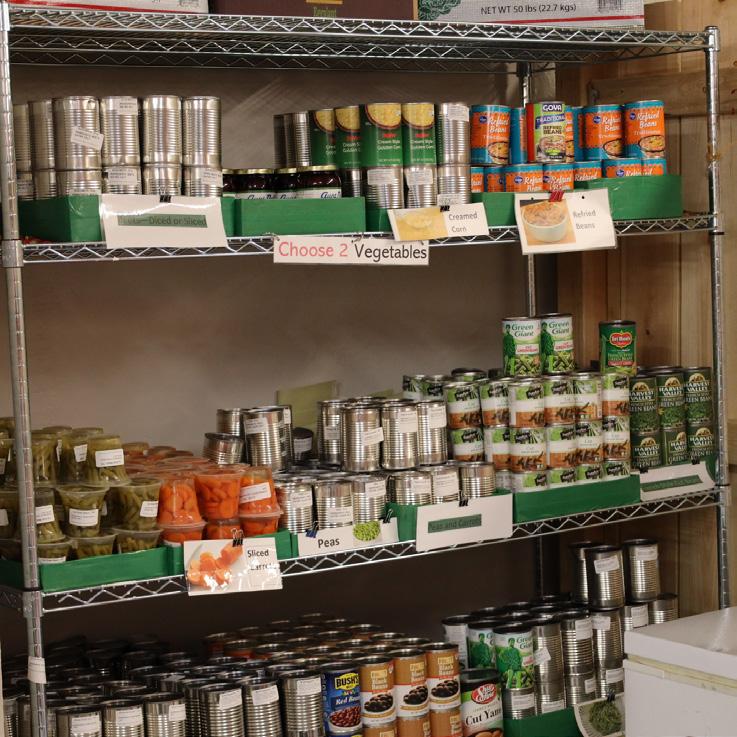
As the UW-Madison funded food pantry runs out of food, our “democratically elected representatives” in ASM (our student government for the 98% of you who didn’t vote in their previous election) have argued they don’t have enough funding to keep it operating. What they’re not telling you is that they’ve spent nearly $40,000 on top-of-the-line sex toys (devices meant for intercoursal pleasures of the flesh) for the “Sex Out Loud” student organization.
As a nonpartisan journalist and editor, I don’t always feel comfortable giving my opinion on hot button issues like this, but as the students of UW go hungry while the establishment elites fund sex parties, I feel like it’s time for me to speak truth to power.
Below is a letter from me, Dominic Violante, Chief Ethicist of The Daily Cardinal. Dear ASM,
No, funding sex parties is not as important as funding food pantries. Tens of thousands of dollars worth of
extremely exaggerated models of human genitalia meant for momentary enjoyment and in many cases the goal of assisting the user in reaching a climax of the sexual variety just isn’t necessary for the students of this university to sift and winnow properly.
Yes, I’ve seen the statement from the Chair of the ASM saying “vibrators are the key to student success” and a similar statement from UW Chancellor Jennifer Mnookin saying “pluralism can’t exist without a couple of fake wangs in every dorm on campus,” but I still think we should be filling the student body with food, not silicon.
By Dominic Violante
BEET EDITOR
All articles featured in The Beet are creative, satirical and/or entirely fictional pieces. They are fully intended as such and should not be taken seriously as news.
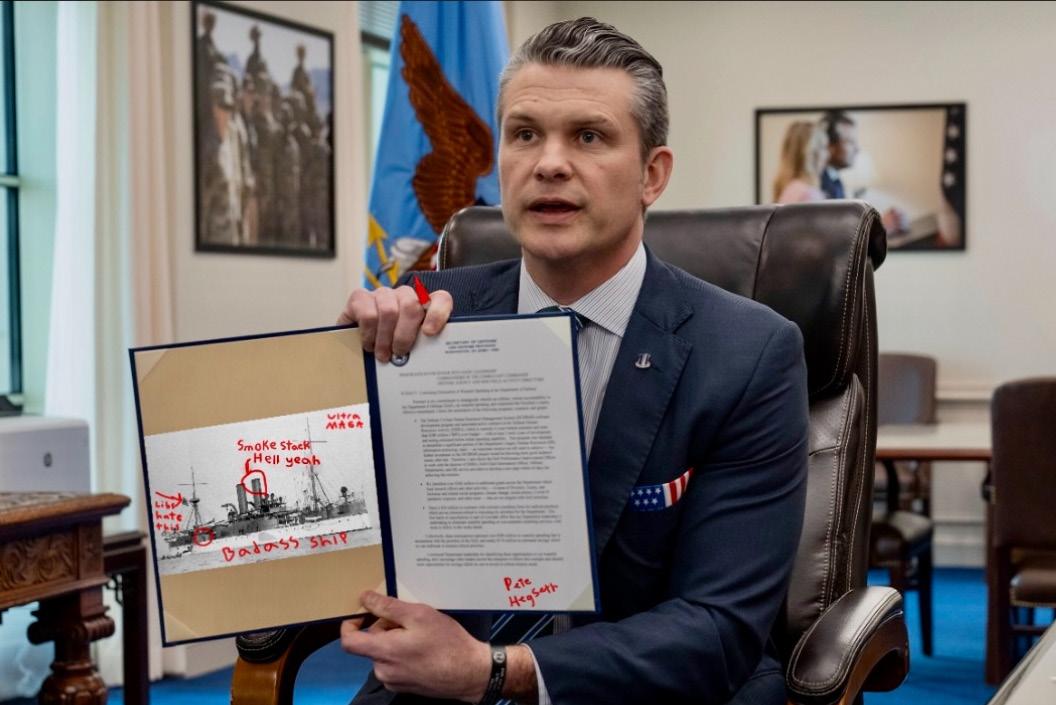
The USS Maine, a warship destroyed in 1899, sparking the Spanish-American War, is being rebuilt by the US Department of War for a “humanitarian mission” off the coast of Venezuela, US Secretary of War Pete Hegseth said at a press conference earlier today.
“I am proud to announce that we are making America’s Navy great once again with the return of the USS Maine. Its first mission will be a totally peaceful humanitarian trip to
Venezuela’s coast, where we hope it will not get blown up again, cause that would force us to invade Venezuela, do regime change, and take over all of their oil production which would totally suck and we’d most def hate doing,” Hegseth said.
The recommissioned warship will also transport over 500 tons of TNT for an unrelated training exercise.
“I sure hope nothing bad happens to the USS Maine, or as they’d say in Venezuela, Señor Maduro, por favor, ataquen el USS Maine para darnos un pretexto para invadir su país,” Hegseth said.
The USS Maddox, known for its role in the Gulf of Tonkin Incident, will join the USS Maine on the mission, which is set for next week.
By Dominic Violante BEET EDITOR
AllarticlesfeaturedinTheBeetarecreative, satiricaland/orentirelyfictionalpieces.Theyare fullyintendedassuchandshouldnotbetaken seriouslyasnews.
University of Wisconsin-Madison Chancellor Jennifer Mnookin sent an email to all UW students and staff at 12:18 a.m. Saturday morning. The email was one long, profanity-laden rant which ended in the statement, “This joint ain’t gonna sunset itself”.
In a statement released this morning, Mnookin acknowledged this was a mistake, but she stopped short of apologizing for the email and refused to unsend it.
“While I understand some members of our community may be upset with the email, and I do regret sending it, as I was under the influence of several dozen Trulys, I will not apologize as that would be in direct opposition to our ideals of pluralism,” Mnookin said.
A Daily Cardinal analysis shows the email violated the university’s own “statement on statements” by containing overtly political undertones. Many are asking, is this institution still neutral?
The email’s subject line was “Sifting and winnowing through another baggie” which, while it hasn’t been confirmed, Daily Cardinal experts believe is a reference to ingesting a “baggie” of cocaine, which is a central nervous system stimulant and tropane alkaloid derived from the South American coca plant.
The email contains several other possible drug references.
While some have been offended by the
The
contents of the email, especially the persistent mentions of a conspiracy theory alleging that COVID-19 is “snake venom created by the deep state” and that French Prime Minister Emmanuel Macron’s wife is “actually an Italian man named Sergio”, a majority of students have applauded it, crediting it with changing their perspective of Chancellor Mnookin.
“I used to think she was boring and out of touch, but after reading that email, I kind of love her now, I’d kill to have her in the blunt rotation,” one anonymous student told me, the Cardinal.
“I didn’t even know who Mnookin was till I got that email. Honestly, I still don’t, but the fact that she was bragging about getting cross-faded with my engineering professor while anonymously sending hate tweets to various members of the Gopher football team was pretty based and red-pilled,” another anonymous student said.
By Dominic Violante, Nick Bumgardner, & Oliver Gerharz
BEET EDITOR, MANAGING EDITOR, & ARTS EDITOR
All articles featured in The Beet are creative, satirical and/or entirely fictional pieces. They are fully intended as such and should not be taken seriously as news.
The city of Madison is something of a drinker’s paradise, but here at The Daily Cardinal, we believe underage drinking shouldn’t have to be confined to dorms, college slums or bars like [redacted].
Follow this quick guide the next time you’re craving a picturesque pint in one of Madison’s many breathtaking urban parks.
HM: James Madison Park
Simply too good. The peoples’ republic’s namesake. No notes.
Drink Pairing: Sauvignon Blanc, or a tasteful Rosé, tucked away in a picnic basket
5. Olbrich Park
Who doesn’t love Olbrich park? It’s a beachside classic with a perfect view. The location is peak, right by the bike path, Olbrich Botanical Gardens and everyone’s favorite cool abandoned factory turned unbearable millennial-hipster warehouse (Garver Feedmill).
But there are also many problems. Being on the beach, the smell of goose crap is pungent, and it has high windchills. Also, it’s way too popular and has frequent stops by MPD.
Drink Pairing: Miller High Life
4. Door Creek Park
It’s big, it’s beautiful, it’s a great place to drink underage if you’re a lover of the outdoors. It’s on the edge of the city and has fields, forests, rivers and a pretty nice bench; the best Wisconsin has to offer. However, its distance from campus — and that one time a buddy of mine and I encountered a weirdo who seemed like an
undercover cop — sends this park toward the bottom of the list.
Drink Pairing: Fat Squirrel
3. Ed Klief park
Location, location, location. This grimy, big-city park is a stone’s throw from campus, just steps from the bustle of Regent St — home to some of Madison’s most freshmen-friendly bars.
Klief has probably never made a top 5 list ever, but it has all the trappings of an underage drinker’s paradise: accessibility, plenty of playground equipment to hurt yourself on and fewer streetlights than most.
Pair that with its close proximity to liquor stores, and Klief makes an interesting case. Still, its small size and relative openness keeps it in the three slot.
Drink Pairing: Captain Morgan
2. Henry Vilas Park
Vilas Park epitomizes everything a great boozin’ park should be: rolling hills, wide open grass spaces, spinning everything and more than its fair share of water.
However, the non-zero chance of getting mauled by a lion at the neighboring zoo keeps this park from taking the No. 1 spot
Drink Pairing: Spotted Cow
1. Tenney Park
The lagoons and ponds that crowd the interior of Tenney Park make for plenty of little shores and covered corners to glug grog in. Sure it’s scenic, but the size of the park gives all the privacy you could ever ask for. It’s the perfect place to enjoy Uber Eats, promo code: DailyCardinal-BoughtAnd-Paid-For.
The only possible downside is the risk of falling in, which often becomes a real danger as the night runs on and on and on… Drink Pairing: Cherry Kool-Aid BORG
By Iain Chang DIGITAL EDITOR
Grab your tissues — “Wicked: For Good” is an emotional cyclone that trades the first film’s fun characters and upbeat songs for a darker plot packed with distressed protagonists and gutwrenching ballads.
While the first film is an upbeat musical about friendship in the Land of Oz, the second is a more depressing movie about Oz’s descent into fascism. This begs the question: with both films now released, did “Wicked” really need a twopart film adaptation?
On one hand, the two-part structure gave Director Jon M. Chu the time to flesh out his vision of Oz and give the complex character dynamics time to marinate. On the other hand, Wicked’s second act is generally regarded as the show’s lackluster half, making a weaker second film inevitable.
Having seen the original Broadway show, ‘For Good’ takes more creative liberties when adapting the stage show’s second act than it did with the first. The film adds a myriad of new scenes that highlight Oz’s horrific atrocities against animals and better underscores the contrasting agendas of the film’s characters. Unfortunately, these additions were not enough to recreate the grandeur of the first movie.
If you are anticipating a “Defying Gravity”-level moment in this film, you will
be disappointed. While the first Wicked contained a spectacle of flashy musical numbers, the songs in this movie are more character-centered and toned down in scope, similar to the stage production.
That is not to say the film’s musical elements aren’t good — because they are, but stripping down the grandiose songand-dance sequences that made the first film so beloved might be a surprise for some audiences. This is especially true for those unfamiliar with the Broadway show.
Cynthia Erivo and Ariana Grande’s stellar performances as protagonists Elphaba and Glinda alone make this film worth seeing.
Erivo is magnificent. Her electrifying voice carried her vocal performances, and her acting beautifully portrayed Elphaba’s vulnerability and anger as events in the film unfold. We truly see her transformation into wickedness, and it is glorious.
And while the first “Wicked” was largely centered around Elphaba’s story, ‘For Good’ is Glinda’s movie. The first film already showed that Grande can deliver on Glinda’s perky mannerisms and upbeat personality, but here she also perfectly captures the character’s most vulnerable moments of emotional dissonance. But as strong as these actresses are on their own, the film truly shines when Erivo and Grande are side by side on the big screen.
These two have undeniable chemistry. There’s a certain shot of them at the end involving a closed doorway that was absolutely heart-shattering.
Jonathan Bailey is also back and better than ever as Fieyro. At this point in the story, the character is stripped of his happy-go-lucky charm. But Bailey is more central to the plot here and is unfathomably enchanting as the movie’s central heartthrob.
Unfortunately, Michelle Yeoh had the weakest performance in her portrayal of Madame Morrible. Yeoh was strong in the first movie as Elphaba’s stern yet compassionate mentor. But here, her performance as the film’s antagonist is much weaker. Most of her line deliveries were stereotypical and uninteresting. She also had more singing lines in this movie, making her inability to sing more distracting.
There are also two new original songs not featured in the stage show: “No Place Like Home,” performed by Erivo’s Elphaba, and “Girl in the Bubble,” performed by Grande’s Glinda.
While it’s always a joy hearing Erivo sing, her new song didn’t add much to the film’s narrative. On the other hand, Grande’s new song was a welcome addition, fleshing out a pivotal moment for the character.
So while “Wicked: For Good” isn’t as strong of a standalone film as the first, it doesn’t need to be. Chances

are, if you’re watching this film, you’ve seen the first one. The second part provides enough to engage fans and deliver a satisfying conclusion for Elphaba and Glinda.
Much like the films’ two
female protagonists, “Wicked” and “Wicked: For Good” are drastically different, but paired together, they tell a thrilling and heartfelt story that will truly change you for the better.
By Jacob Szczap SPORTS EDITOR
Pigeons Playing Ping Pong, a four-piece Baltimore-based jam-funk band formed in 2009 delivered a nearly two-and-a-half hour dance party Nov. 20 at the Majestic Theatre, unleashing endless waves of funky grooves to a crowd that couldn’t get enough.
Playing a fast-paced, dance-centric style of psychedelic jam music, the band’s energylevel was at full throttle nearly all night, turning a packed Majestic Theatre into a ball of bouncing energy.
Anchored by the core element of funk, PPPP peppered in a variety of genres throughout the night, including hard-rock, blues and even a hiphop drum beat. Through it all, a layer of positive vibrancy engulfed the Majestic, carrying the listener along through a bevy of jams.
After a magnificent opening from Dizgo, a jamtronica band from Indiana, PPPP stumbled on stage with a mischievous look. Ormont addressed the crowd, expressing the band’s excitement to be back in Madison for the first time since 2017, and got right into it.
All it took was Ormont’s first few chords for the mood of the night to be set, as the crowd went into a simultaneous head-bob upon hearing the first sounds of “Bad For You.” After a long and groovy buildup, PPPP would suddenly etch back into Ormont’s isolated guitar riff before getting right back into their jam. Bolstered by bassists, particularly Ben Carrey’s repeating bassline, “Bad For You” was a well-executed opener.
PPPP’s next song was “Dawn A New Day,” a happy-go-lucky pop song that evoked visions of summer. Guitarist Jeremy Schon fixated on jumping between three-chords before the band pranced into a jam that would last into “Hell Yeah.”
Off of PPPP’s 2025 album “Feed The Fire,” “Hell Yeah” started slow before the melody quickly ramped up. With each member of the band delivering their own version of funkiness, drummer Alex Petropulos’ occasional outbursts were signals for the group to unlock a new threshold. They were promoted to keep moving up in pitch to an eventual climax.
PPPP kept the summer vibes going by abruptly transitioning into Caribbean-mode with “Yo Soy Fiesta,” a darting Latin song punctuated by a steel drum drumbeat.
The band then delivered a wrinkle that kept fans on their toes. In the midst of a cycling rendition of “Offshoot,” PPPP seamlessly segued into Daft Punk’s iconic, “One More Time,” before getting back into “Offshoot.”
With PPPP now in the meat of their show, their boundless joy was contagious. Ormont and Schon, who formed the band after dorm room jam sessions, wore smiles on their faces throughout the entire set. As one would expect out of a duo that has played over a thousand shows together, the two guitarists’ chemistry was evident, and multiple times throughout the night the two locked eyes, connecting their two guitars into one cohesive groove-unit.
As Schon took the lead on a bounding gui-
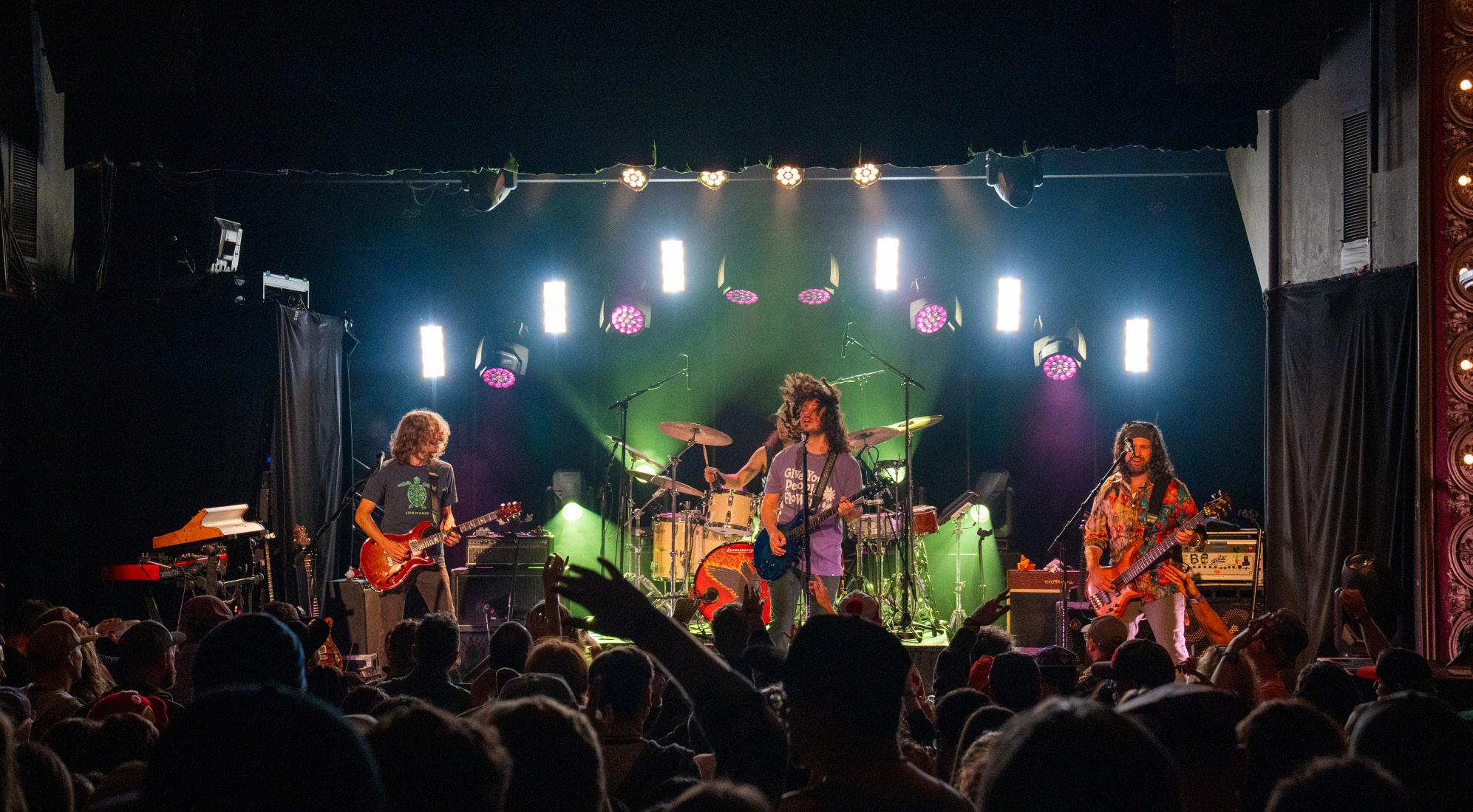
tar solo on “Whoopie,” he was backed up by Petropulos on the drums. The band repeatedly built toward a signature drumbeat from Petropulos, resetting and building back up each him the momentous peak hit
Next the band brought on Dizgo lead guitarist Andrew Pickel for an epic “Lightning.” Playing off a bouncy guitar reverb and boogying baseline, Pickel guided the band, scaling his way up and down his guitar towards an ecstatic finish.
Later on, PPPP brought out Dizgo keyboardist Jake Evett for “Sunny Day,” for the most loaded song of the night. The song started with a rock-and-roll riff before
Evett dug into a techno sound that sent waves over his rollicking keys and Schon’s bluesy guitar runs. Eventually, the group crescendoed into the melody, with Ormont eerily singing “It’s a sunny day, sunny day, and my life has gone astray” in a way that evoked Led Zeppelin.
Just a few minutes later that vision was fulfilled as Ormont belted out the lyrics to Zeppelin’s famous “Immigrant Song” in the midst of the concert’s closing song “Fun In Funk.” As he did so, he seemed to be letting off the steam that comes with hours of intense performance. matic and precise horsemanship acts, made for an entertaining final event.