

Hello again everyone and welcome to issue 6 of volume 67! Only a few little updates this time around: for information on our Board of Directors meetings, please reach out to infotayef@gmail.com or ziyang@carillonregina. com; our next Editorial Board meeting will be next Monday, Nov 4 from 4 p.m. to 5 p.m., so please come visit if you have anything you want to chat with the editors about.
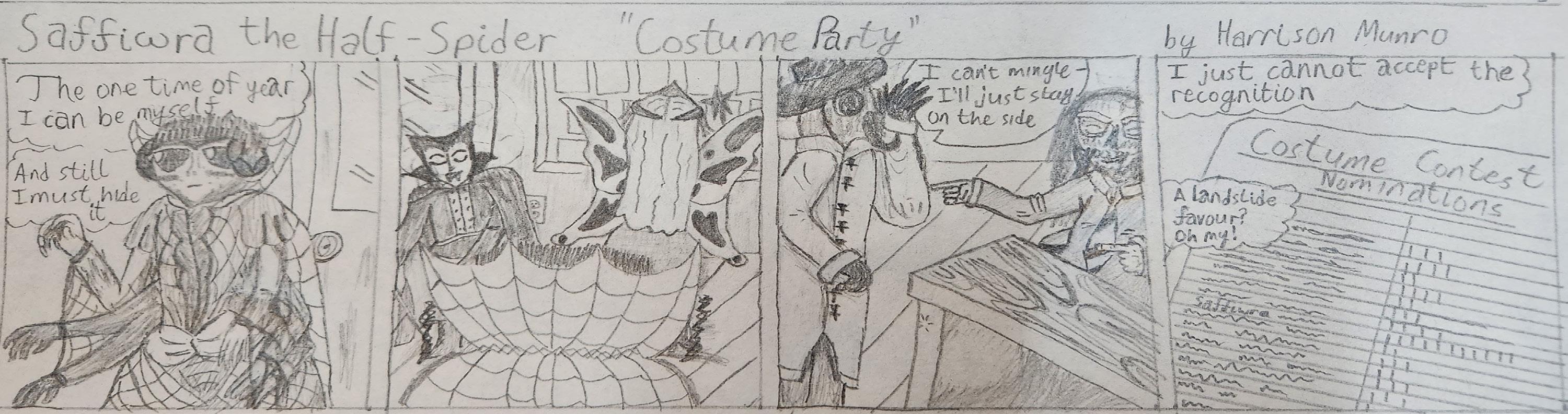
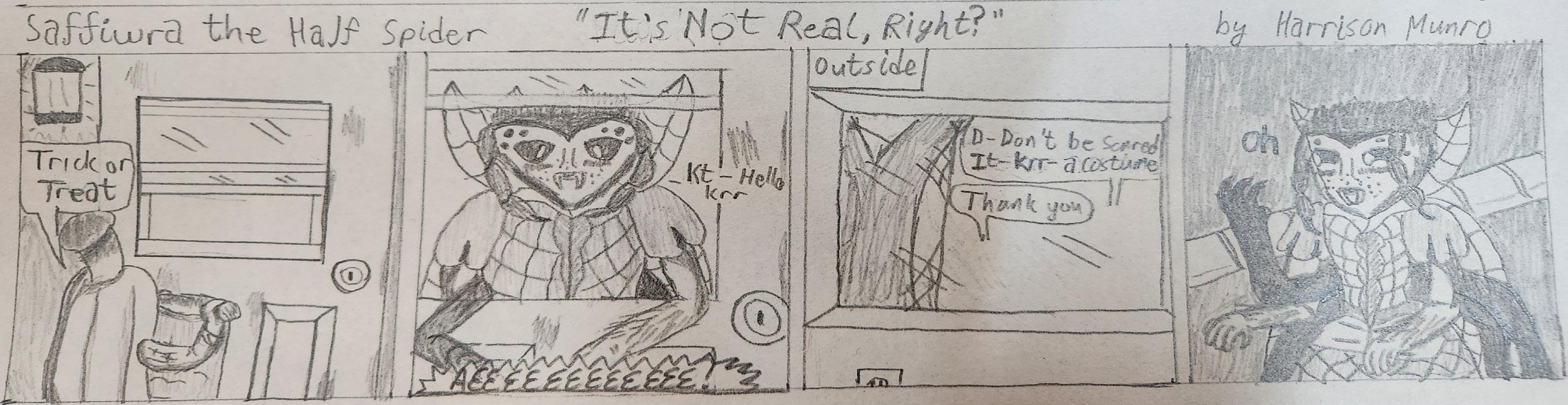
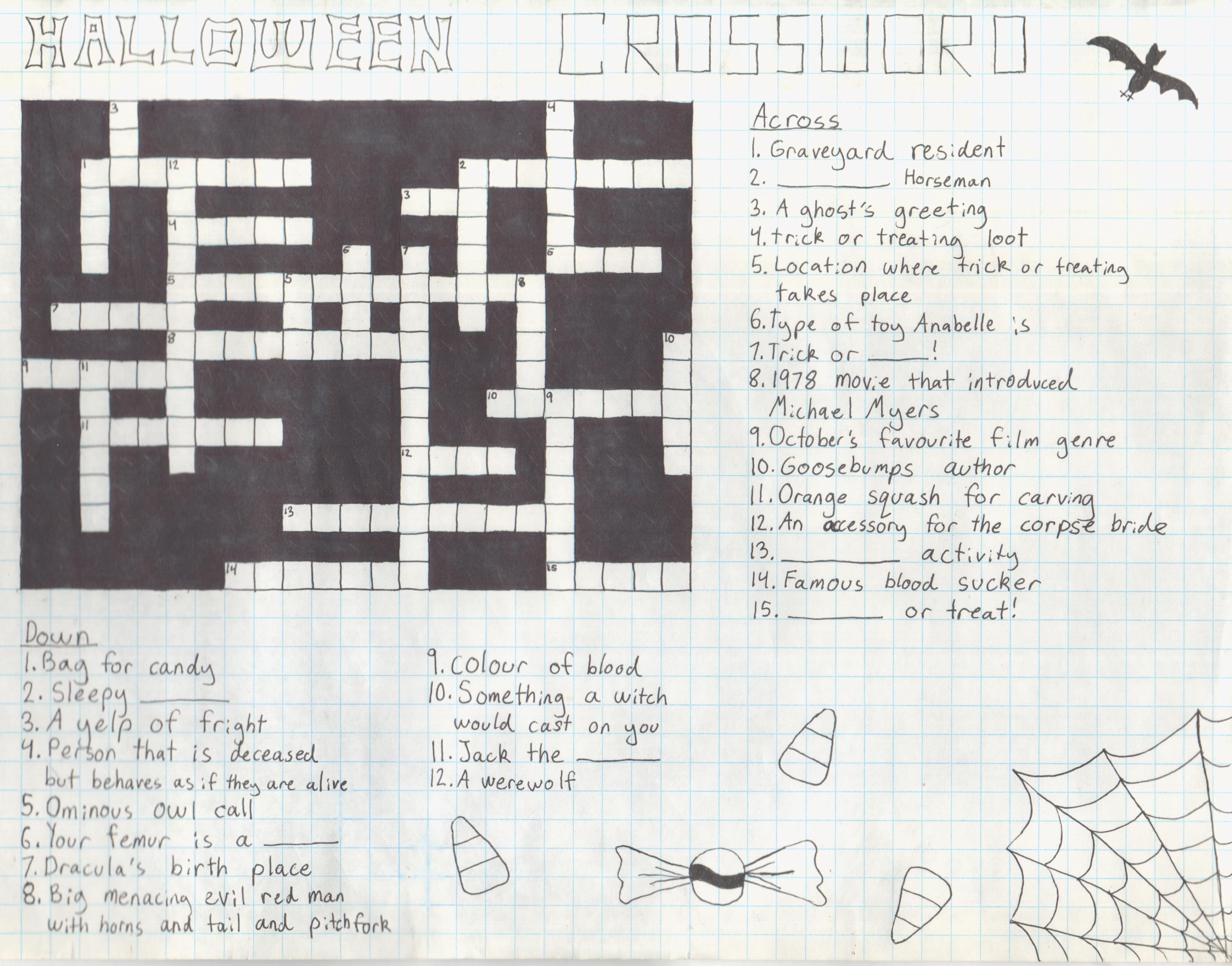
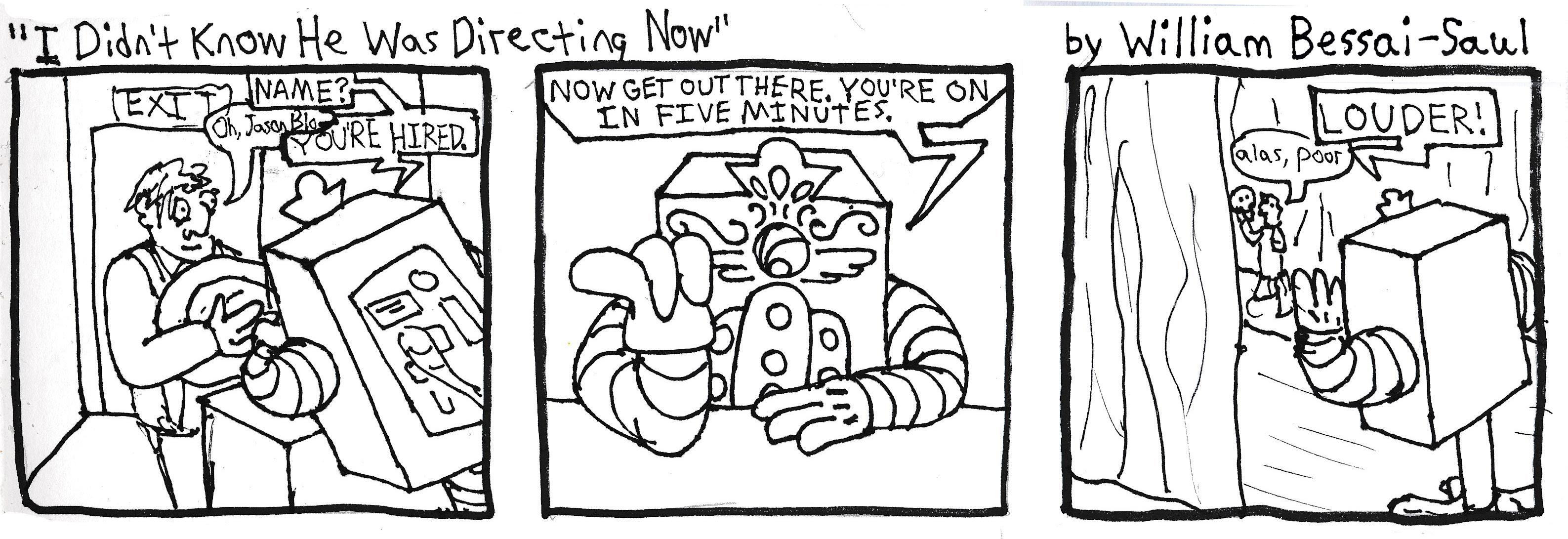
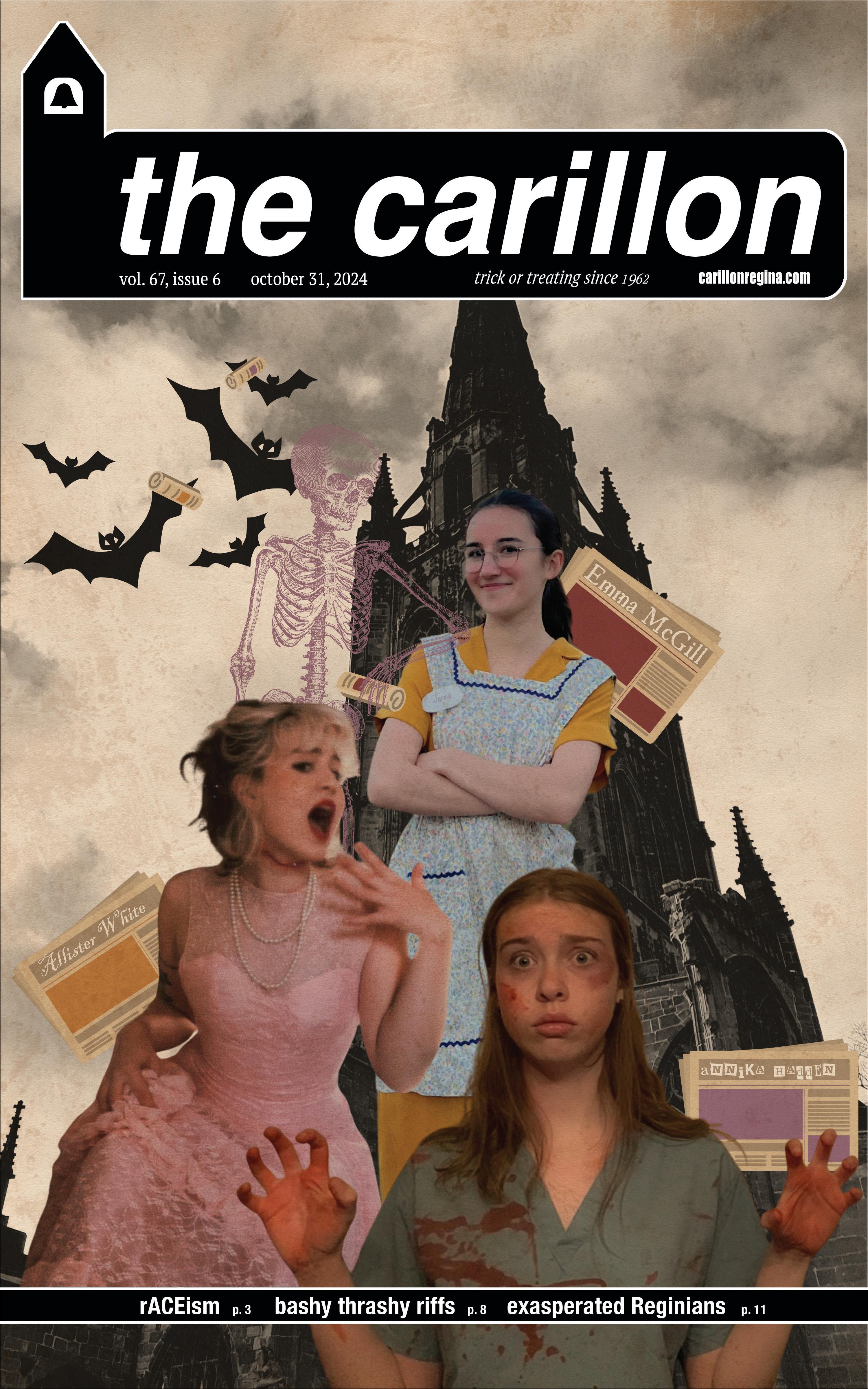
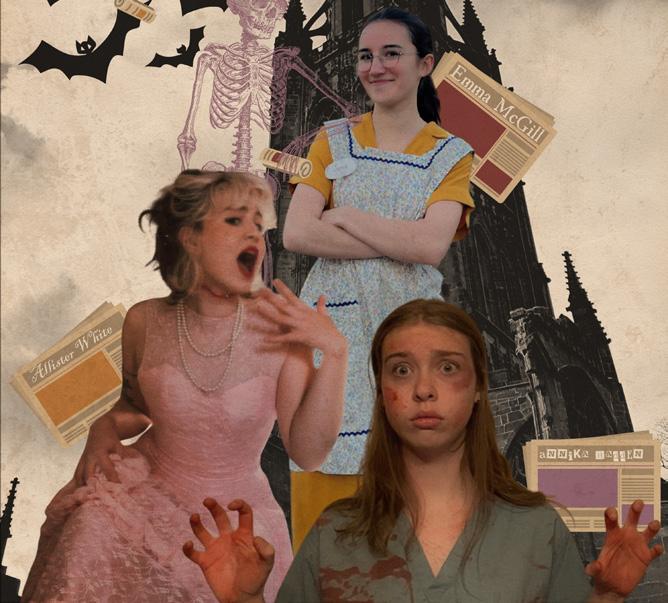
In other news, this issue includes many topics, and I’m certain there’s a little something here for everyone, and a big thank you to those who were able to participate in making this Halloween themed cover possible, I think it came out wonderfully! We will hold Editorial Board meetings bi-weekly at the same time as listed above for the rest of the semester until (and including) Dec 2, so if you have any thoughts on our sections, feel free to come let us know. We’re your student newspaper, and in theory, it’s mostly your fees paying the bills, much like how your fees pay URSU’s bills. If you celebrate, I hope you have a happy Halloween!
Illegitimi non carborundum, mikayla tallon
editor-in-chief
the staff
editor-in-chief mikayla tallon editor@carillonregina.com
executive director ziyang li business@carillonregina.com
production coordinator annika hadden production@carillonregina.com
web technician jebrael muhammad web@carillonregina.com
news editor allister white news@carillonregina.com
community editor kimberley kaufman community@carillonregina.com
op-ed editor hammad ali op-ed@carillonregina.com
staff writer amina salah
staff writer emma mcgill news writer nazeemah noorally news writer shivangi sharma community writer pall agarwal
contributors jackson rennebohm, harrison munro, william bessai-saul, & ava gelsinger
board of directors muhammad zuhruf muhammad zarooq, mohammad akib hossain, tayef ahmed, austin stadnyk, jeremy beam
the paper
227 Riddell Centre @ the University of Regina 3737 Wascana Parkway, Regina, SK, Canada S4S 0A2 www.carillonregina.com | (306) 586 8867
Printed by Star Press Inc, Wainwright, AB
The Carillon welcomes contributions.
Opinions expressed in the pages of the Carillon are entirely those of the author, and do not necessarily reflect those of The Carillon Newspaper Inc. Opinions expressed in advertisements appearing in the Carillon are those of the advertisers, and not necessarily of The Carillon Newspaper Inc. or its staff.
The Carillon is published no less than 11 times each semester during the fall and winter semesters and periodically throughout the summer. The Carillon is published by the Carillon Newspaper Inc., a non-profit organization.
land acknowledgement
The Carillon is written on Treaty 4 territory. As such, staff recognize that we are living, working, and telling stories on and of Indigenous lands. We recognize that we are on the traditional homelands of the Cree, Saulteaux, Nakota, Lakota, and Dakota peoples, along with the homeland of the Métis nation. The Carillon understands that it is pointless to acknowledge the land on which we work without demonstrating our commitment to telling stories and prioritizing voices that further the return of this land to its sacred place. the manifesto
In keeping with our reckless, devil-may-care image, our office has absolutely no concrete information on the Carillon’s formative years readily available. What follows is the story that’s been passed down from editor to editor for over sixty years.
In the late 1950s, the University of Regina planned the construction of several new buildings on the campus grounds. One of these proposed buildlings was a belltower on the academic green. If you look out on the academic green today, the first thing you’ll notice is that it has absolutely nothing resembling a belltower.
The University never got a belltower, but what it did get was the Carillon, a newspaper that serves as a symbolic bell tower on campus, a loud and clear voice belonging to each and every student. the people’s friend; the tyrant’s foe









with Dan Florizone, a prominent figure in the industry.


You might be wondering “Am I eligible?” or “How and where can I vote” “When?” We’ve got the important answers.
nazeemah noorally news writer
Regina residents and those who own property within the city will be heading to the polls on Nov 13 to elect a Mayor, Councillors, and School Board Trustees. The mayoral and council election will determine who will oversee key decisions affecting the city’s services such as water, roads, public transit, parks, and safety.
School Board Trustees, meanwhile, play an important role in influencing the educational experiences for students across the city. Jim Nicol, an election official, provided insight into the election process, especially for first-time voters.
“For those who are voting for the first time, the process is straightforward,” Nicol said. Voters must be Canadian citizens, at least 18-years-old, and either residents of Regina or owners of assessable land in the city for at least three months. Nicol emphasized the importance of knowing where to vote, which can be easily found online on Regina’s website using the “My Voter Info” tool.
What’s most important for the U of R student body is that the three-month residency requirement is waived for students in the city. Voters must still be Canadian citizens and at least 18-years-old, but do not have to have resided in the city for a full three months.
This year marks a shift in voting procedures to make the process faster and more efficient. Voters were, for the first time, able to “register online ahead of time to make voting quicker,” Nicol explained. “It takes just three-four minutes to preregister,” he said. Though the online registration deadline was October 22, voters can still register in person on Election Day at the polling stations.
The Elections Regina website also announced their switch “to digital Voter Information Cards. Voters who provided their email address when registering or updating their voter information online will receive their Voter Information Card by email in mid-late October,” the website explains.
Despite this development, voters are not required to have a card in order to vote, though it can streamline the process at the polls, and paper Voter Information Cards
are still offered upon request.
“For returning voters, we’re sharing a voters’ list with Elections Saskatchewan,” Nicol added, “which ensures more efficiency during the voting process.” This new system aims to streamline the experience for voters, reducing wait times and potential confusion at polling stations.
Voters are required to bring either one piece of government-issued photo ID showing their name, address, and photo, or two pieces of ID that show their name, with at least one displaying their address.
Voter turnout has fluctuated over the years, and Nicol commented on the challenges faced in increasing turnout. “The turnout has been around 26 per cent,” meaning only a little over a quarter of eligible voters voted in the last cycle. “Sometimes people get overwhelmed, especially when a provincial election is happening around the same time.”
Nicol noted that Regina lobbied for the Saskatchewan government to change the date of their election to reduce the chance of overwhelming or confusing voters, for example, with an abundance of yard signs and advertising for more than one important election at a time.
Nicol stressed that efforts are being made to simplify the process and make it more accessible, particularly for those with disabilities. “In November, we know there’s always a chance of snowy or icy sidewalks, which can be a hindrance for everyone, especially those using mobility aids such as wheelchairs,” he said.
To address this, mail-in ballots are available. “You can apply for mail-in ballots up until [Nov 13], but it’s best to do it seven-ten days before Election Day,” Nicol advised. Other options include mobile polls and special polls in hospitals and senior centers, ensuring that everyone has the opportunity to participate in the democratic process.
Nicol also emphasized the importance of advance voting options. “There are four days of advance polls, starting on Nov 1,” he explained, offering more flexibility to voters who may find it difficult to vote on Election Day itself. Advance polls provide an important opportunity for those with commitments or scheduling conflicts on the actual voting day.
Regular polls will be open on Election Day from 9 a.m. to 8 p.m., and Elections

Regina’s website states that “the City will be offering free transit on Election Day” in an attempt to reduce cost barriers to voting. Advance polls, available from Nov 1-4, provide additional flexibility, including a drive-through polling option at City Hall.
Mobile polls will be available for those with mobility issues from Nov 1-13, and special polls are set up in hospitals, senior care centers, and other facilities. Just over 50 special poll locations are listed on the Elections Regina webpage.
Nicol also stressed the significance of voting, especially for younger residents. As there are multiple ways to vote and various accommodations in place, Nicol encouraged all eligible voters to make their voices heard in this election, and various advertisement campaigns marked “Regina Votes” across the city do the same.
The city’s website explains the process of voting at a poll, stating that “once you arrive at the poll, an election worker will ensure you are on the voter list, verify your ID… and confirm whether you require a public or separate school ballot.” Voters
are given both a ballot and a secrecy sleeve, and then their name is “struck from the list to indicate that [they] have voted.”
Once the ballot is filled out, voters are instructed to “first place it in the secrecy sleeve…to ensure all votes are confidential, then insert it into the vote tabulating machine.”
As Election Day approaches, voters are reminded to check their registration, find their polling location, and prepare their IDs. With efforts in place to enhance accessibility and streamline the voting process, eligible residents of Regina have the opportunity to shape their community for the next four years.
Information about candidates and their platforms can be found at regina.ca/ elections/whos-running and a recording of a mayoral candidate forum hosted by the Cathedral Villiage Community Association where seven of the current eleven candidates can be accessed on their YouTube channel.
“ Regular polls will be open on Election Day from 9 a.m. to 8 p.m., and Elections Regina’s website states that ‘the City will be offering free transit on Election Day’ in an attempt to reduce cost barriers to voting. Advance polls, available from Nov 1-4, provide additional flexibility, including a drive-through polling option at City Hall.” Nazeemah Noorally

Welcome to the Carillon’s “Finance with Pall,” a news finance column covering important economic and financial news from Canada and around the world, focusing on explaining what that news means for students. From tuition costs to job markets, we’ll break down how these changes affect you, making finance easy to understand and relevant to your life. If you have a request for a topic or you’d like for me to look at highlighting a stock price – shoot me an email at pall@carillonregina.com.
Disclaimer: The information in this column is intended for educational purposes and is not financial advice. For personalized financial guidance, please consult a licensed professional.
Terms of the week:
Minimum payment: The minimum payment is the smallest amount of money that one pays each month to keep their account in good standing. If the minimum payment is not paid off, there can be late fees and penalties.
Despite avoiding late fees, even if you only make minimum payments for your credit card, in-
terest costs are increased by not paying off the entirety of your balance, a situation that can leave you stuck in a debt cycle that is difficult to get out of.
According to CNBC, “It’s important to make at least the minimum payment so your account stays current and you don’t incur late fees, penalty APRs or hurt your credit. Even if you dutifully make your minimum payment, it’s not ideal to carry a balance from month to month, because you’ll rack up interest charges.”
In simple terms, it’s like
WEDNESDAY
THURSDAY
Daebak! (repeat) 5 – 7 am The Mystic Voyage
–
am – 12:30
– 9 am The Book Show 9 – 9:30 am (spoken-word) WINGS 9:30 - 10 am (spoken-word) Raising women’s voices through radio Principal Prairie (repeat)
paying just the tip of an iceberg – your debt below the surface will be there and keep growing if you’re only able to make the “minimum payment.”
Cost of attendance: Cost of attendance is the total cost that a student incurs to go to school for one year. Put simply, it is the total amount of money it takes to attend school, going beyond just the cost of tuition. This includes books, courses, materials, cost of housing and food, transportation expenses, loan fees, costs related to disability, and other miscellaneous expenses.
Costs of attendance vary significantly across institutions and even for different students at the same school, depending on factors like living arrangements, and citizenship/residency status. For example, a student living at home with family members and paying no or reduced rent will have a lower cost of attendance than a student living in residence.
Students can plan for their cost of attendance using a budgeting tool like the University of Regina’s (U of R) Undergraduate Budget Calculator, which is tailored to specific costs at the U of R and can help estimate yearly costs. The U of R Undergraduate Budget Calculator is useful because it assists in calculating a student’s cost of attendance with specificity that a generalized budget calculator may not, offering options for U of R parking passes, meal plans, and courses. It is also
FRIDAY
SATURDAY
faculty-specific.
You can access the calculator at uregina.ca/admissions/calculator.html.
News of the week:
Recently, SpaceX caught the giant Starship booster with ‘chopstick’ on their historic flight five rocket launch. This event changed the standard for space exploration, effectively raising the bar. On the investment side of things, stock prices increased from 110 to 115. This reflects the investors’s sentiments and the positive and optimistic view of the company.
In less optimistic news, the Financial Post reported that Canada’s “labour market remains soft” and that “the unemployment rate was at 6.5 per cent in September,” in part because of the way population growth continues to expand the Canadian labour force.
What does this mean? According to the Financial Post, the unemployment rate combined with a growing population and “modest” hiring has “particularly affected young people and newcomers to Canada,” making finding work more daunting for younger demographics and people who are new to the country.
pall agarwal staff writer
U of R REB was given incomplete information, did not flag as concerning
jackson rennebohm contributor
On June 10, CBC News published an article written by Geoff Leo titled “Inside the Brain School.” Leo’s article details experiments conducted on Saskatchewan children by an American company called the Biocybernaut Institute.
These experiments, conducted on Indigenous youth from Prince Albert and area, were fully approved by the University of Regina (U of R) Research Ethics Board (REB) in 2013. The experiments have since ceased, but Leo uncovered troublesome and exploitative elements of the study.
The Biocybernaut Institute is based out of Sedona, Arizona and was founded in 1983 by Dr. James Hardt. Biocybernaut specializes in the research of neuroscience as well as providing seven-day training programs, which purport to “teach clients how to control their own brainwaves” via a technology known as neurofeedback.
Neurofeedback technology enables users to hear and or see their own brainwaves, which supposedly allows patients to “detect and fix faulty thought patterns.”
The goal of the experiments conducted on Indigenous youth in Saskatchewan was to test the effectiveness of Biocybernaut’s seven-day treatment programs in regards to trauma. Sometime in 2013, the Saskatchewan Rivers Public School Division began to promote the project (known internally as the Prince Albert School Study [PASS]) to students in six schools after the study received approval by the U of R’s REB.
“Change your brainwaves; change your life!” was the slogan apparently used on the school’s promotional brochures. CBC News reported that “according to Hardt, 60 children aged 12 to 15 participated, along with one parent or guardian each.”
The experiments took place at a facility in Victoria, British Columbia, with funding for the participants’ trips provided by the Pure North S’Energy Foundation. Pure North, a non-profit started by Alberta oil billionaire Allan Markin, was a vitamin and supplement provider which CBC also investigated before the NPO’s shutdown.
According to CBC, another “aim of [Biocybernaut’s] project was to test the benefits of Markin’s vitamins and supplements.”
In their investigation of Markin’s organization, CBC found that Pure North’s program “was not accurately supported by science… couldn’t prove the health and economic outcomes it claimed… [and] distributed high doses of vitamin D and
“

It
a
other nutrients in a way that could pose a health risk.” At one point, Pure North offered its program to thousands of Alberta seniors.
According to participants, the details of the experiments were not made clear in advance. Alma Stonestand and her daughter, Chyna Gallernault, members of the James Smith Cree Nation, participated in the experiment. Gallernault was 12 at the time.
In preparation for the experiment, the two “were ushered into a room where Biocybernaut staff began attaching electrodes to their heads,” and were then separated, and placed in rooms Hardt called “chambers” that were described by CBC as “small [and] dark.”
Technicians remained in a separate room, observing the participants by video. According to Gallernault, for the majority of the seven-day program, she was alone “in a dark room for more than half the day, listening to scary trumpets.” These “scary trumpets” were produced by the neurofeedback technology, which translated Gallernault’s brainwave activity into audio. Gallernault witnessed another participant, a grandmother, having “a panic attack from claustrophobia from being in the room.”
By the third day of the study, Gallernault and Stonestand both wished to leave Victoria, but were unable due to their financial situation. “We were poor. We were given a free trip. We had no choice but to stay, because we had no way back,” Stonestand told CBC
According to Stonestand, the consent form she signed “didn’t mention electrodes, dark rooms or strange sounds.”
CBC acquired a copy of the study’s ethics application approved by the REB, and found that the application also failed to mention the same crucial details, reporting that “Electrodes being attached to people’s heads… subjects being placed alone in dark rooms for hours a day… [and] detailed discussion of trauma” were not mentioned in the application, despite all being major parts of the experiment.
Amanda LaVallee, is an assistant professor of social work who experienced Biocybernaut’s brain training program, and was close to becoming part of the research team for the Prince Albert School Study. When Leo contacted her, she provided a potential theory as to why the REB approved the study despite the neglect of crucial information.
Carrie Bourassa, former First Nations University professor, “was the study’s principal investigator, along with James Hardt,” according to CBC. LaVallee believes Bourassa’s popularity a decade ago may have influenced the ethics board’s decision. Bourassa, at the time, “was considered to be a leading Indigenous scholar and a rising star in academia,” leading LaVallee to believe the study was approved by the U of R to avoid potential claims of racism if it were denied.
Bourassa, for years claimed to be of Metis and Anishinaabe ancestry, but a 2021 CBC investigation found her to be “of entirely European descent.” Shortly after-
wards, she was removed from her position as director of the Institute of Aboriginal Peoples’ Health at the Canadian Institutes of Health Research.
The Executive Director of Communications and Marketing at the U of R, Linsay Rabyj, claimed that “the University of Regina is committed to responsible, respectful, ethical, and safe research” and that their “current review processes have evolved to become…broader.” Rabyj went on to say that “if the same proposal was brought forward today, the review process would be more robust.” Rabyj did not explicitly state that the experiment would not be approved by the REB.
In 2021, the office of the Vice President Research initiated an external investigation. According to a statement released by the VP Research office, “all recommendations from the extensive external review have been implemented.” Recommendations include the addition of two Compliance Specialists.
Part of the Compliance Specialists’ responsibilities are to flag “regulatory issues such as conflict of interest, missing information, etc.” The REB also instated “community member representation on the board,” which they claim means that “[four] members can provide the Indigenous community perspective on the current board besides the Co-Chair (Indigenous Research).”
By the third day of the study, Gallernault and Stonestand both wished to leave Victoria, but were unable due to their financial situation. ‘We were poor. We were given a free trip. We had no choice but to stay, because we had no way back,’”
Jackson Rennebohm
Keenan Cummings hopes to walk with others engaging in reconciliation
shivangi sharma news writer
In the weeks following the National Day for Truth and Reconciliation, it’s important to note that Truth and reconciliation is an effort that goes beyond Sept 30. Keenan Cummings, the Transition Co-ordinator at the ta-tawâw Centre at the University of Regina spoke to the Carillon about what truth and reconciliation means on a dayto-day basis and how settlers can work towards improved relations.
Cummings’ mother came from Fishing Lake First Nation and his father from Guyana. “As an Indigenous person…with the Indigenous peoples is where I feel most connected. And that’s the path I choose to walk right now,” he said.
Cummings believes that reconciliation is about continuous learning, rather than an end goal that needs to be achieved. “So many people I feel want to reconcile right away. Some reserves don’t have access to clean drinking water,” Cummings pointed out.
“‘Well, I can’t take out drinking water every week so what do you want me to do?’” Cummings considered a question that some might ask. His answer? “I want you to continue to just learn.”
Cummings doesn’t feel reconciliation is possible without the truth being told constantly. “Sometimes those truths are going to be hard and may seem unfair. The Residential Schools, the Indian Act, Sixties Scoop, none of us created those documents or those institutions, but we all inherited them,” he said.
“When we learn about them, we learn…about some of those hardships that Indigenous people have faced…. If you also take time to view the beauty [and vibrance in] the culture, [you have the opportunity to] see how Indigenous people can thrive and still be successful while they’re still imagining [how to] cope with some of the pain that previous institutions and policies put in place,” Cummings explained.
Cummings also discussed what a lack of initiative he sees when it comes to learning, saying that, often, people “don’t want to take the initiative to go and learn.” Other times, “they may not feel always welcomed…sometimes, if a non-Indigenous person comes into an Indigenous setting to learn about things, they’re the minority and that makes them feel uncomfortable.”
This feeling of discomfort is important though, Cummings explains, as it puts peo-
ple in the shoes of an Indigenous person, as they are sometimes the minority in other institutions. As Cummings explains, “some people aren’t ready to feel that uncomfortableness and…move forward and…work on themselves.”
In terms of efforts already made towards truth and reconciliation, Cummings spoke of what he’s seen on campus. “At a student level, I’m proud of some of [the] students now taking in that knowledge of where they fit into this effort and trying to learn.”
Institutionally, Cummings says, “as organizations or institutions, we can’t check that many [calls to action are completed]. But that’s not fair to say that there aren’t people in those institutions doing things.”
Cummings also believes that reconciliation is a path that can be walked together so that the future is better and kinder to the coming generations. “My hope is to walk with people who are wanting to engage [in] reconciliation right now, teach them things: some of those hardships, but also the beautiful virtues in the culture, and that my children don’t have to go through life…being treated how I was…. for me, my priority is doing this for our next generation.”
Talking about day-to-day efforts he said, “I think the best daily thing to do is if you see an Indigenous person that is maybe struggling with houselessness, addictions, do your best not to judge them. We don’t know what hardships they had to go through or their family.” He also said that they may not have had the chance to fully heal and that could be impacting them negatively.
In regard to what is important for society to learn, Cummings said, “It’s not to judge one another, but to love and be kind, and educate yourself daily. Don’t be scared to learn and take opportunities to engage in ceremonies or teachings.”
He continued, “as much as you’re uncomfortable…usually if you go to a space for a ceremony or something…[someone] might ask you why you’re there, and if you say you’re there to learn, I’ll be guaranteeing you the next couple of things that person will say is come sit…because as Indigenous peoples, that’s who we are, we’re giving.”
“We like to help one another and be kind to one another. So, take opportunities, if…you have questions, and want to come learn, come to ta-tawâw. Don’t be scared to go in and learn,” Cummings concluded.
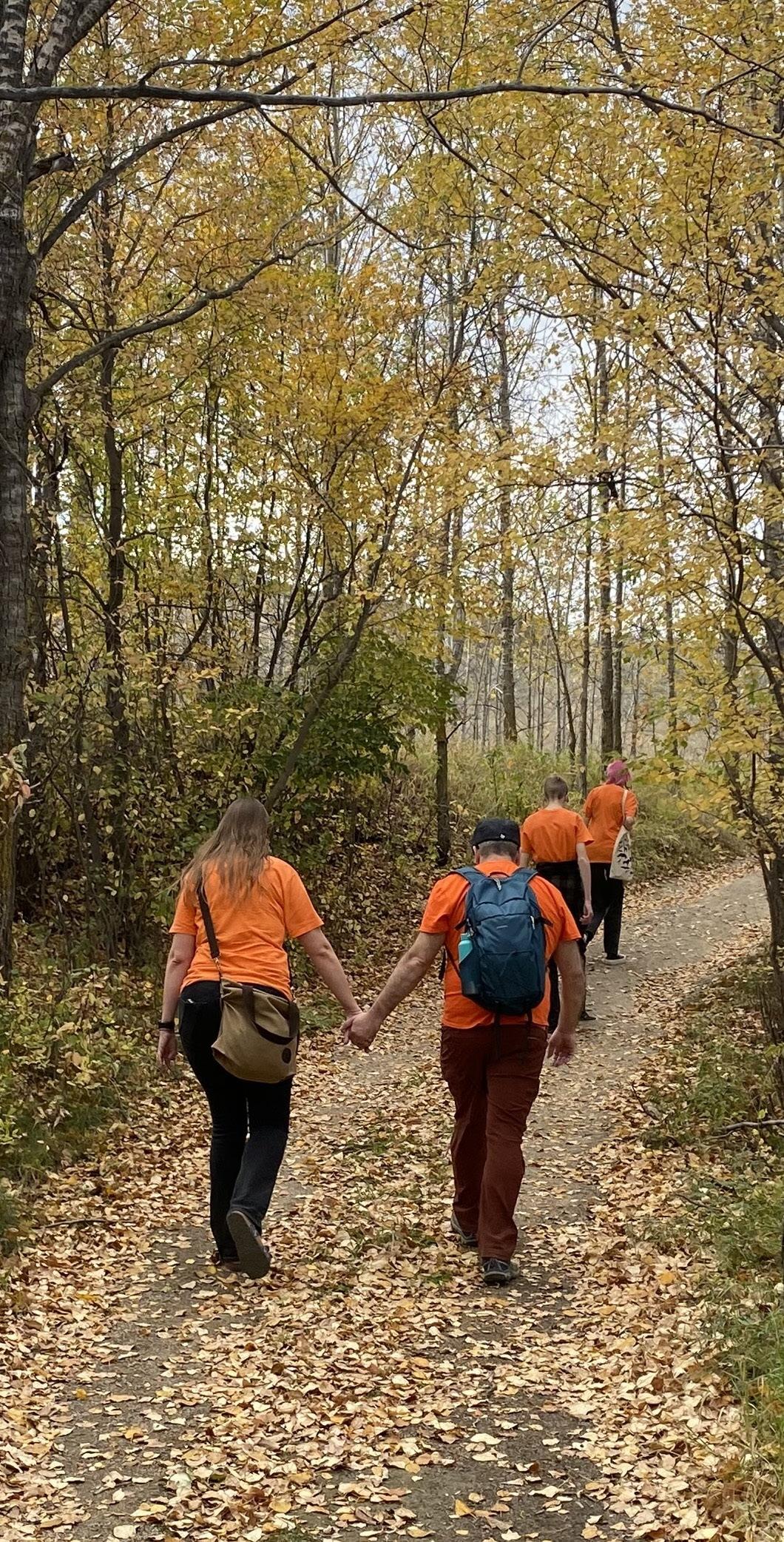
“ My hope is to walk with people who are wanting to engage reconciliation right now, teach them things some of those hardships but also the beautiful virtues in the culture and that my children don’t have to go through life…being treated how I was treated as being an Indigenous person…for me, my priority is doing this for our next generation.”
Keenan Cummings
The Carillon asks some people in-the-know, read on to see what they said.
pall agarwal community writer
In April 2024, the final report of research regarding the condition of healthcare in rural Saskatchewan, conducted by the Saskatchewan Population Health and Evaluation Research Unit (SPHERU) in partnership with the University of Regina, was published.
As per the report that is publicly available, health facilities in CUPE local 5430 regions experienced 533 service disruptions, for a total duration of 2,932 days or the equivalent of 8 years of disruptions across all facilities between Aug 2019 and July 2023. These disruptions occurred once every three days and lasted for an average of 5.5 days. Their data also shows that the number of disruptive episodes increased consistently each year.
Issues of shortages of healthcare staff and low morale amongst healthcare workers have also been frequently reported on. In her conversation with Regina Leader Post, Suzanne Kuchinka, mayor of the village of Macoun in southeast Saskatchewan, mentioned how the rural areas are “dying for doctors” and that it has been difficult to keep family doctors who either choose to retire or move elsewhere.
The issue was also highlighted during the provincial election campaigning recently when Saskatchewan New Democratic Party (NDP) leader Carla Beck held a media conference in August to raise concerns about the mismanagement of the healthcare system by the present government and issues with the Administrative Information Management System (AIMS) payment processing system.
As per the report by Saskatoon Star Phoenix that covered the event, Beck talked about a leaked memo the NDP received which revealed that healthcare workers in the province are not being paid on time.
“Stuff like this are reasons
“
why we have some of the worst retention rates for health care workers in the entire country,” she said in the conference. Beck also announced in the official release of her platform for the provincial elections that the party aims to hire around 800 healthcare workers and improve the condition of healthcare services in the province.
To better understand the scope of the crisis in the healthcare system of Saskatchewan as well as possible remedies for the same, the Carillon spoke to Dan Florizone, Executive-in-Residence and Professional Affiliate at the Johnson Shoyama Graduate School of Public Policy and former President and CEO of the Saskatoon Health Region.
Florizone points out that the province is facing shortages of staff going beyond doctors and nurses in ERs and hospitals. “We’re seeing a whole host of shortages from paramedics to other first responders to the technicians and technologists that might do your x-ray or conduct lab services.”
He continues, “We’re also seeing [shortages] in the areas of the non-formal regulatory professions where we have challenges hiring people to do basic housekeeping and maintenance and those types of services. Now, historically they haven’t created huge disruptions, but it’s starting to emerge as an issue.”
Speaking about the reason behind such shortages, Florizone mentions that the demand of the healthcare services shifted in the province and the country, and the supply has not caught up. “In the system, we see an aging population, we see needs that have emerged in areas like mental health and addictions.”
He then emphasizes the impacts of an aging population, “You’ve got this bolus of seniors that is coming through the system. And on the demand side, when we think about how we’re serving them, what’s really lacking is a lot of the community-based services. What we supply right now in terms of services
are centered on episodic care […] this episodic care is being outstripped by long-term chronic disease.”
He believes that more emphasis needs to be put on hiring family physicians. “Canadian Institute of Health Information just in the last week published a report that said just over 5 million Canadians don’t have access to a primary care physician. That’s a big number and that represents a major factor in overwhelming an already stretched health system.”
Florizone also emphasized that the state of morale for the existing healthcare staff has consistently been low, especially after the pandemic. “For years we’ve been forecasting a bolus of staff retirements and those really didn’t happen according to our projections until now. So, if someone was kind of on the fence of whether they should retire or not, it seems like COVID and that pandemic pushed them over to the point that some of the staff are declaring ‘I’m not up for this. I don’t want to continue to do this.’”
He continues, “So, it’s been a bit demoralizing in the system. It’s hard to work. That work is very, very difficult and if someone can retire, they seem to be off and that sort of exasperates the problem that we already have in terms of shortage of healthcare workers.”
He also highlights the safety risks of working as a healthcare professional and how that furthers the problem of staff shortages, “We also have an all-time high of sick time. We are less safe than any industry in Canada. Healthcare injures more workers than any other sector.”
He acknowledges that there’s been significant improvements with workplace safety in the province, but also says, “the exception is healthcare. It actually continues to injure at a high rate. It continues to put staff off and those staff that are often to be replaced. So, we have high

illness, sick time, high injury, disability, and we have increasing challenges around replacing people who are not there.”
The crisis however is not just predictable up to significant accuracy but also manageable because it is predictable, Florizone points out. “We can actually predict demand a year in advance […] There’s no guarantee that that’s going to be the future, but it certainly is a very effective tool in trying to understand the shifts that are occurring and the emphasis that needs to be placed on the system.”
Continuing, he says, “I think what we need to do is… focus not only on recruitment, but also retention and possibly working on
projection based on science. So, we forecast out what we need and then we develop a team approach to deliver care. We strategically understand what we’re going to shore up and how we’re going to deliver that care.”
Talking on healthcare strategy, Florizone says, “We make more investments in the community to prevent people from becoming ill and in crisis that require hospital stays in the first place […] It’s not that it’s a simple prediction, but this is entirely predictable. So, if you can predict it, then all you need to do is really plan towards it,” he finished.
“So, if someone was kind of on the fence of whether they should retire or not, it seems like COVID and that pandemic pushed them over to the point that some of the staff are declaring ‘I’m not up for this. I don’t want to continue to do this.’”
Dan Florizone
For everyone’s safety, maybe I’ll get jabbed…
pall agarwal staff writer
Influenza, commonly known as the flu, is a highly contagious virus that spreads through coughing, sneezing, and direct contact. It can lead to severe health complications, and common symptoms for this include fever, cough, chills, muscle aches, headache, and a runny nose.
The influenza “season” typically ranges between late fall and early winter (November to April), and all across Canada experts are urging people to be proactive and take steps to help prevent the flu. According to Gerald Evans, an infectious disease specialist at Queen’s University in Kingston, Ontario, “the dominant strain this year is expected to be influenza H3N2, with some H1N1, and influenza B circulating as well, though not in excessive amounts.”
Based on patterns observed in the southern hemisphere, Evans said this year’s flu season will be “average,” with a potential peak in flu cases around late December and January.
The National Advisory Committee on Immunization recommends annual vaccination for individuals six months and older unless receiving a vaccine could be harmful, like for “[p]eople who have had an anaphylac-
tic reaction to a specific influenza vaccine, or to any of the components of a specific influenza vaccine, with the exception of egg.”
The Centers for Disease Control and Prevention lists those with a higher risk of developing serious complications from the flu and for whom vaccination is especially important. These people include but are not limited to, adults 65 and older, pregnant people and people whose pregnancies recently ended (within two weeks), children younger than two, those with chronic illnesses, compromised immune systems, and more.
In addition to vaccines, other protective measures can help prevent illness. These include regular handwashing, staying home when sick, wearing masks in crowded indoor spaces, and covering the mouth when coughing or sneezing.
The aftereffects of the vaccine are typically mild, such as soreness at the injection site or mild flu-like symptoms. In Regina, flu vaccines are widely available and free for residents aged six months and older. The Saskatchewan Health Authority (SHA) provides various locations for people to access these vaccines.
If you go for a vaccine, remember to bring your health card, give yourself at least fifteen minutes for the observation pe-
riod after receiving it, and wear shorter-sleeved tops since the vaccine is given in the upper arm.
Locations to get your vaccine include pharmacies located in Regina like London Drugs and Pharmasave on University Park Drive. Various walk-in clinics in Regina are offering influenza vaccinations without the need for an appointment, and the Regina Central Library has influenza vaccines available for people. The Northgate Mall and South Public Health at 3621 Pasqua St. are also on the list of places where people can go get their vaccines to help prevent themselves from catching the flu.
The University of Regina runs on-campus flu shot clinics for students, staff, faculty, and immediate family members. Their latest walk-in clinic was on Oct 28 from 9 a.m. to 3 p.m. at the Research and Innovation Centre Atrium for the influenza and COVID-19 Pfizer Comirnaty® (Pfizer) vaccine. The University’s website states that if there are leftover doses of the Pfizer vaccine or if more doses become available, another on-campus vaccination clinic will be offered.
Additionally, the SHA offers detailed information about respiratory illness and vaccination services throughout the region. Utilizing these resources can help protect oneself during this peak

flu season, especially for university students stressing about midterm exams and upcoming assignments. Whether one is a student at the University of Regina or a community member, getting vaccinated is one of the most effective ways to protect oneself and the community. Regina has many convenient locations offering flu shots this season, so check places
like your closest pharmacy, walkin clinic, and the university for clinic times and dates.
Beyond personal health and staying informed, taking preventive measures and prioritizing one’s health this season is crucial. The earlier one gets vaccinated, the better the chances of avoiding severe illness and helping others do the same.
On Oct 10, an unusually warm Thursday night, friends and fans gathered at the Artesian to welcome Regina-based musician Marissa Burwell home after her nine-show tour across western Canada.
Joining Burwell on this tour through the prairies and mountains was indie pop musician Deer Anna hailing from Hamburg, Germany. According to
Burwell, she met Anna in Germany for the Reeperbahn Festival. The two were piled in a car together and found they got along very well, and ended up planning for this tour.
Though Anna went through a series of unfortunate events shortly before catching her flight to Canada, including getting COVID-19, everything worked out, and their plans came to fruition.
Together, Burwell and Anna visited beloved venues of Edmonton, Red Deer, Calgary, Rossland,


Vancouver, Kelowna, Fernie, and Winnipeg. This tour was Anna’s first time in Canada, and she opened the last show of their tour with lullaby-like tunes that could take one out of their body as they listened.
She started her set with her song “Flowers On Your Floor” and moved between some of her newer discography, like her newly released single, “Many Little Things,” and the very first song she ever released, “Dawn.” Her set also included a cover of Sufjan Stevens’ “Mystery of Love,” made wellknown to many by the film Call Me By Your Name.
The audience was further mesmerized by Anna’s musicianship when she added an accompaniment to her set: her cassette tape player. As she switched the tapes in and out between songs and made sure her guitar was tuned, the player offered subtle and smooth percussive backing tracks into the mic hovering just above it.
Over the course of the tour, Burwell and Anna played a game where Burwell recommended Canadian goodies that Anna would taste test. As reported during her Artesian set, Anna’s favourites were Maynards Fuzzy Peaches and Sour Patch Kids.
Apparently, Regina gave a bigger cheer for the Fuzzy Peaches while the other cities on tour seemed to prefer Sour Patch Kids. After Anna joined Burwell
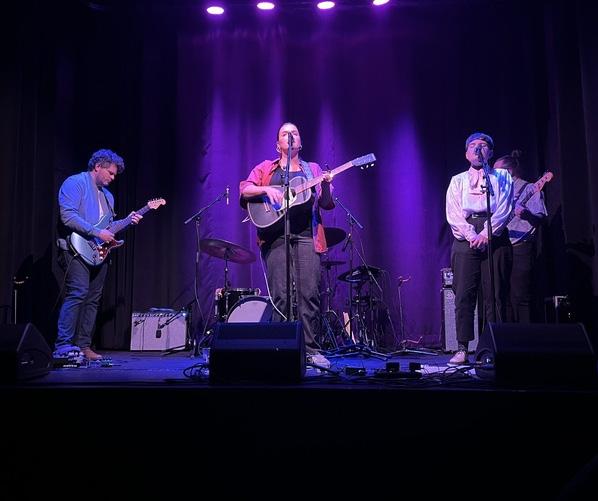
on stage for a duet, the band presented her with the biggest thing she had yet to try, a float. Burwell’s set kicked off with “Coward,” a song from her recent EP. More than anything else, though, she played newly written songs. Backed by drummer Chris Dimas, guitarist Darnell Stewart, and bassist Dana Rempel for this hometown show, she did still play a handful of well-loved released songs, including “Francis” from her debut album, Bittersweet, and her latest single, “Catch and Release.”
Over the past five years, Burwell has released two EPs alongside her album and a single, “Scaredy Cat,” which she brought out for this show. Her en-
ergy on stage was inviting, charismatic, and warm.
Known by fans for her bows and black Gretsch Gin Rickey Parlor Guitar, she enchanted the crowd with her honest and touching lyrics like, “I’ll wait for the sun or the rain, either way” and “I can still feel the ground moving away while the soles of my shoes are searching for you.”
All in all, attending any Burwell show guarantees a charming time, whether you’re being soothed by her vocals or intrigued by her catchy indie folk arrangements on guitar and drums. This excellence was displayed especially well on this Thursday evening alongside the talented Deer Anna.
Not all just black, white, and read
Why you should cherish your student newspaper
pall agarwal community writer
Over the past several years, the news industry has undergone many changes. With social media and the fast-paced information in the palms of our hands and in front of us at all times, it’s difficult to see any alternatives over the screen.
As we are all well aware, this media content and fast-paced information that we consume is thoroughly over-saturated, making it difficult to process and slow down with everything you’re sifting through when you open your phone. Whether it’s news content, social media pages, brand advertisements, or simply entertainment content, it’s all among billions of pieces of information that come at us so fast we don’t even register most of it.
One particular alternative is incredibly accessible to the students at the University of Regina; the newspapers that you see on the stands around campus give you a chance to engage with information in a way that social media can’t replicate.
First of all, you’re holding paper rather than looking at a screen – something is entirely different there, in the physical sense.
The intention behind the consumption is also different; you have to walk to the stand and pick up your copy, to unfold and turn each page. With this, you can slow down and take in the information which has been carefully curated for you. The words are right there, in ink, just for you!
These newspapers don’t just appear, though. Each issue of your student newspaper has a whole team of staff behind it who work hard to create and publish stories pertaining to the student world and important issues surrounding us.
They are constantly keeping an eye and ear out for ideas, conducting research and interviews, and writing and editing the stories that fill the pages of the Carillon This is a team that is passionate about what they do and know the importance of keeping newspapers and newsrooms alive. What a wonderful reason to support your student newspaper!
By participating in readership, you are engaging with this team and their process and becoming a part of a conversation and the communications circuit, whether it is led by others or meant to be carried forth by you as the reader. You uplift a community of writers and readers who care not only for this medium but for the freedom of quality information to reach you.
Of course, Regina has other newspapers, like the Leader Post, but there is something extra special in having a student newspaper. It is by students, for students, documenting the university world in a manner meant to be understood by this widely diverse group of peers. The newspaper gives a unique voice to students for holding authority accountable and understanding important world issues through the lens of a generation.
Not only do student newspapers carry news in a way that fastpaced media can’t quite capture, but they are also constantly documenting the history of student body activity. In having spent quite a bit of time in the Carillon’s archives, I’ve been able to watch, through ink and paper, how our university and student body have changed over the decades since our founding.
I’ve been entertained by reporting on events I would never have thought would happen, and I’ve seen how students’ lives have been immortalized in these pages among stories of the changing world. There are things found in
these archives that nobody would be able to tell you about today were it not for the medium, times people may have forgotten about.
This medium, of course, is an art form. The printing press, many years ago, revolutionized the way we think and communicate in society. Literacy rates skyrocketed, literature became accessible to everyone, and democracy obtained a new strength.
Though technology has since advanced, the business of creating and sharing newspapers is a way to honour this revolution and the people that made it happen. In this sense, alongside printmakers of every kind, we keep an art alive within the print news cycle.
Having worked on my local newspaper for two years, the one that I have read my whole life with my family and friends, I saw the way in which the news staff there, too, were dedicated to showing up for the community and documenting special events: town traditions, charity events, celebrations of local accomplishments, birthday wishes, obituaries, and much more over many years. The town’s history is folded up neatly in these pages.
As children, my friends and I would look for our pictures in the newspaper after any big event we’d been a part of: school green day clean-ups, Christmas concerts, school theatre productions, band concerts, and sporting events. Now these accomplishments are documented in the online archives; a Google search of any of our names would almost certainly take you to an issue of the newspaper from around 2010 and onwards.
While the Carillon works a little bit differently, I know I look forward to picking up each new issue at the stand on the Thursday that it’s published, and sitting down with it to find out what I can learn about my community and my fellow students that week,
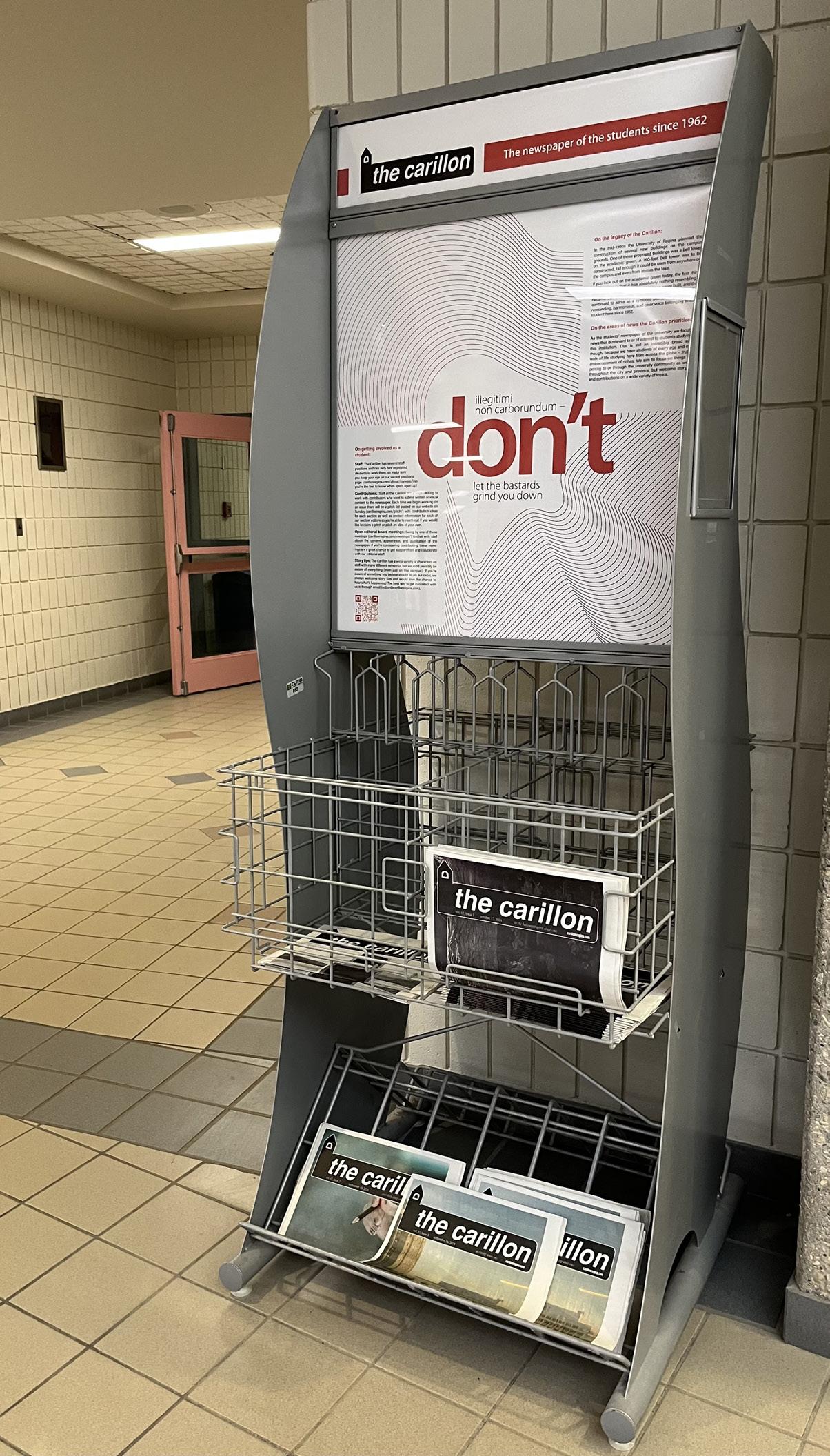
to see who has written and if any of my friends are featured, and to admire each new cover and graphics and cutlines. In fact, it’s one of the reasons I chose to come to school here.
Access to a student newspaper is a privilege and great amenity offered to you as a student at the University of Regina. Read it! Talk to your friends about it!
Laugh together! Talk local politics and music together. Get out and to the stands. Get your copy of the newest issue now (or every issue you can find). Contribute! Also, let the Carillon know what we can do to make this newspaper more for the students!
“Not only do student newspapers carry news in a way that fast-paced media can’t quite capture, but they are also constantly documenting the history of student body activity.”
Emma McGill
amina salah staff writer
CTRL is a 2024 Indian film directed by Vikramaditya Motwane. The film premiered on Netflix at the start of October. Following Nella and Joe, a famous social media influencer couple, on the way to surprise Joe during his birthday, Nella catches Joe cheating on her.
This is all caught on camera as thousands of people watch the livestream. Embarrassed by the entire situation, Nella decides to use an AI called Control to remove Joe’s digital footprint.
Control is an AI software that is owned by a powerful corporation. Control dubs itself a personal assistant and is able to remove digital footprints of civilians, but also speak to the consumer, manage their meetings, and give them advice.
Throughout this process, Nella forms a bond with her AI assistant, whom she names Allen, her name spelled backwards. As Nella’s relationship with Allen grows, strange things start happening around her.
For starters, Joe disappears. As the film progresses, we see that the AI has been secretly controlling her data, her life, and invading her privacy.
The film is shot through a
point-of-view style. Furthermore, it utilizes the screen-life filming technique, a visual story-telling technique whereby events are shown through a computer or a phone.
CTRL’s focus on AI dependency is an interesting facet. With the rise of AI, our ability to critically think, analyse things, and use our creativity is at risk.
There is an implicit focus on addiction in the film. Social media addiction is often overlooked and downplayed. Our entire lives are starting to be lived or already are livable online.
We cannot go for a second without using a social media platform. In some way, we’ve become slaves to social media, much like Nella and Joe as influencers. Their lives are online. They rely on social media for everything.
However, when things take a darker turn, Nella realizes much too late that her entire life is in the hands of an AI assistant software.
The film does a pristine job of depicting meme culture as well as bandwagon culture. It is an accurate reflection of our world.
CTRL is a gripping and creepy film about AI. There is a disturbing element in the AI assistant, and it was exhilarating to watch.
Allen steals Nella’s data, infringing on her rights and privacy.
Many people today depend on social media and AI tools,

owned by multi-billion-dollar corporations who do not care about our happiness, health, or well-being. We are blinded by the glitz and glamour of these functions, forgetting that when we sign up, we lose certain parts of ourselves, and at times, we lose our most important rights.
This reminds me of the on-going lawsuit by Jeffrey Picco-
lo and Kanokporn Tangsuan, a couple who ate a meal at a Disney world restaurant. They made sure to relay the woman’s peanut allergy to the staff, so that her food would be prepared safely. She went through a fatal allergic reaction, and as her husband sued Disney for wrongful death, Disney stated that because they had signed up for a free Disney+ sub-

From Love Island to The Bachelor to Love is Blind, dating shows have taken the world by storm. For the longest time, I have wondered what this says about us.
I personally believe that love and romance are dying. Our obsession with dating shows have left us in a world where the mere concept of love is a spectacle.
Netflix’s current dating show Love is Blind proves this to be true.
Love is Blind is a show where people are invited to test out the theory that love is blind, by dating and perhaps falling in love without being able to see each other physically. Additionally, both parties have around a month to get married. During this time, they are able to date, get engaged, go on a vacation together, move in together, and eventually end up at the altar to decide whether they
want to marry the person that they chose or not.
Throughout this process, we as the viewers are exposed to drama, arguments, fights, and the worst aspects of relationships. This show has managed to turn the entire concept of love and marriage into entertainment, rather than a personal, private experience.
We are able to see everything
a couple is thinking as they think it. We are exposed to their most private arguments and fights, some that are often traumatizing. Additionally, these types of shows portray an unrealistic expectation of love.
This makes me wonder, are we drawn to the fantasy of love as opposed to the reality? Are we in love with the idea of love, rather than the reality of unconditionally loving someone?
These shows portray love to be fast-paced, dramatic, hot and cold, thereby sensationalizing relationships. In some instances, contestants are put in dangerous situations with people who are not safe for their well-being, and, as the audience, there is nothing left to do but criticize it whilst simultaneously consuming this form of catastrophic content.
Dating shows portray a curated version of love. One that is fast-paced, commodified, transactional, and problematic in nature. It almost seems that dating shows love bomb the audience.
We are quick to love a couple and despise another. We view romance as an essence that is now or never. It must be consuming, fast-paced, and happen the way that we want it to, rather than allowing it to happen naturally.
My view of love has always been that true love is slow. It takes time to build. It takes time to grow. And as it grows, it chang-
scription, they had revoked their rights to sue Disney.
It feels as though we are living in a dystopian society, as though life has become a terrifying Black Mirror episode that is never going to end. CTRL shows us the reality of what happens when we trust billion-dollar corporations who value profit over people.
es and transforms through each stage.
Moreover, these shows portray an inauthentic version of love. One with people who are often there to promote their social media accounts.
It is also important to note that many of these shows feature situations where contestants are being taken advantage of and abused emotionally or verbally. There is a lack of counselling available to contestants.
And after these shows air, contestants are expected to deal with the aftermath on their own, with no form of assistance whatsoever. Contestants become puppets of shows that do not prioritize their emotional well-being nor their mental health.
All in all, dating shows are optimistic in nature. We tune in because at our core, we all want to experience love, and more than that, we enjoy watching other people experience love. Deep down, we are cheering for happy endings, even in situations where it is unlikely.
amina salah staff writer