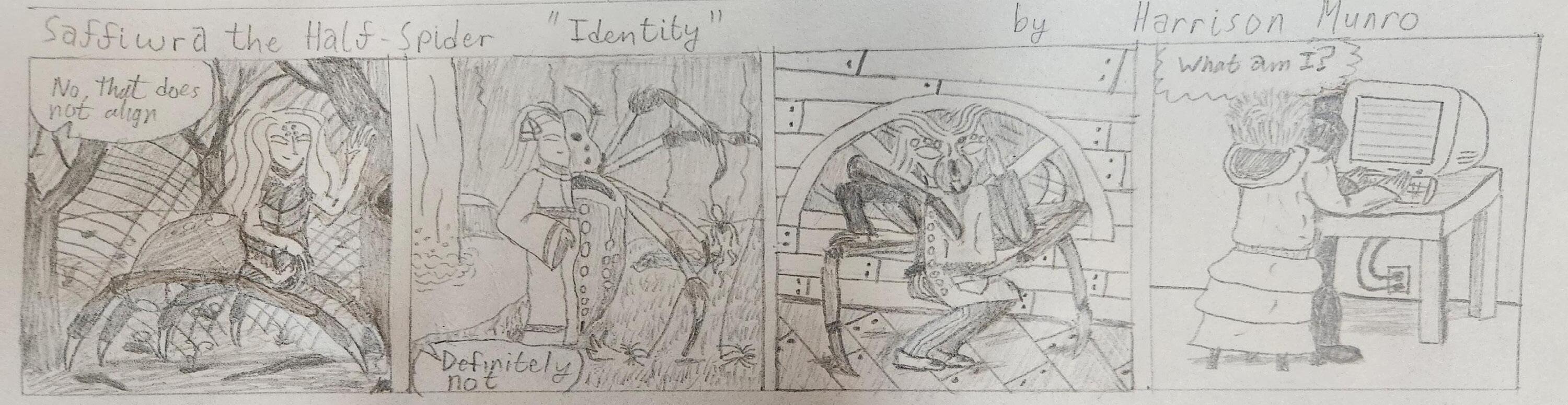




Welcome to issue 4! We’ve got a wide selection of topics to read this issue, so I hope you enjoy. Be sure to check out our website, as there is an online exclusive article written by Amina Salah, one of our amazing staff writers!
Our next open ed-board meeting is Oct 7 from 4 p.m. to 5 p.m., so come hang out with us in Room 227 of the Riddell Centre to chat about anything and everything related to the Carillon. To attend the next Board of Directors meeting, please reach out to ziyang@carillonregina.com or infotayef@ gmail.com to inquire about the date and time and Zoom link. We here at the Carillon are looking forward to your pitches for issue 5, and can’t wait to read your articles when you’ve finished them, so thank you to all our contributors past, present, and future!
Illegitimi non carborundum, mikayla tallon editor-in-chief
the staff
editor-in-chief mikayla tallon editor@carillonregina.com
executive director ziyang li business@carillonregina.com
production coordinator annika hadden production@carillonregina.com
web technician jebrael muhammad web@carillonregina.com
news editor allister white news@carillonregina.com
community editor kimberley kaufman community@carillonregina.com
op-ed editor hammad ali op-ed@carillonregina.com
staff writer amina salah
staff writer emma mcgill news writer nazeemah noorally news writer shivangi sharma community writer pall agarwal
contributors zinia jaswal, harrison munro, & william bessai-saul
board of directors muhammad zuhruf muhammad zarooq, mohammad akib hossain, tayef ahmed, austin stadnyk, jeremy beam
the paper
227 Riddell Centre @ the University of Regina 3737 Wascana Parkway, Regina, SK, Canada S4S 0A2 www.carillonregina.com | (306) 586 8867
Printed by Star Press Inc, Wainwright, AB
The Carillon welcomes contributions.
Opinions expressed in the pages of the Carillon are entirely those of the author, and do not necessarily reflect those of The Carillon Newspaper Inc. Opinions expressed in advertisements appearing in the Carillon are those of the advertisers, and not necessarily of The Carillon Newspaper Inc. or its staff.
The Carillon is published no less than 11 times each semester during the fall and winter semesters and periodically throughout the summer. The Carillon is published by the Carillon Newspaper Inc., a non-profit organization.
land acknowledgement
The Carillon is written on Treaty 4 territory. As such, staff recognize that we are living, working, and telling stories on and of Indigenous lands. We recognize that we are on the traditional homelands of the Cree, Saulteaux, Nakota, Lakota, and Dakota peoples, along with the homeland of the Métis nation. The Carillon understands that it is pointless to acknowledge the land on which we work without demonstrating our commitment to telling stories and prioritizing voices that further the return of this land to its sacred place.
the manifesto
In keeping with our reckless, devil-may-care image, our office has absolutely no concrete information on the Carillon’s formative years readily available. What follows is the story that’s been passed down from editor to editor for over sixty years.
In the late 1950s, the University of Regina planned the construction of several new buildings on the campus grounds. One of these proposed buildlings was a belltower on the academic green. If you look out on the academic green today, the first thing you’ll notice is that it has absolutely nothing resembling a belltower.
The University never got a belltower, but what it did get was the Carillon, a newspaper that serves as a symbolic bell tower on campus, a loud and clear voice belonging to each and every student. the people’s friend; the tyrant’s foe


Have you ever heard of SAMS? No? No worries, because you can read all about it in this article by Nazeemah Noorally, one of our news writers.





Nazeemah



With the start of the fall semester growing farther and farther behind us, the University of Regina (U of R) is alive with energy. New students are familiarizing themselves with the campus and their courses and returning students are diving into their academic commitments.
Among the plethora of lectures, club sign-ups, and campus activities, there is one pressing issue for many students: the cost of tuition. Balancing academic life with the financial burden of university often requires students to juggle part-time work alongside their studies.
SAMS, the U of R’s Student Awards Management System, is designed to cater to a broad range of students, offering awards based on various criteria including academic excellence, community involvement, and financial need. This approach helps students from all backgrounds and disciplines sift through awards opportunities.
SAMS showcases a variety of awards with a variety of deadlines, so this is meant to raise awareness of this resource within the student body. Through SAMS, students can apply for scholarships such as entrance scholarships for new students, continuing awards based on academic merit for returning students, and bursaries that focus on financial need. In addition, the system provides financial aid opportunities for students with disabilities and student-athletes participating in U Sports competitions.
Unlike student loans, with bursaries and grants students don’t need to pay back the money they are given. After winning an award through SAMS, that money is for the student to spend as they need it in relation to their studies.
Beyond the awards directly available through SAMS, students enrolled in one of U of R’s federated colleges – Campion College, Luther College, or First Nations University – have access to additional opportunities. These federated colleges offer additional scholarships and bursaries that are specific to their institutions. The awards offered by these colleges often have separate timelines and application processes.
Applying for scholarships and bursaries through SAMS is designed to be user-friendly, though it does require attention to detail.
The first step for any student is to create an account by visiting the Student Awards and Financial Aid (SAFA) website. Once registered, students receive a temporary password via email to activate and log into their account. From there, they can navigate to the “Awards currently accepting applications” section. The system allows students to filter through available scholarships based on their eligibility.
The actual application process requires preparation. Some scholarships require detailed forms and supporting documents, such as personal statements, financial disclosures, and references to be provided. Incomplete submissions can lead to disqualification.
One helpful tip for managing this pro-
TUESDAY
WEDNESDAY
Red Barn Radio
9 am Living Planet
– 9:30 am (spoken-word) Environmental stories from around the globe
Science Unscripted 9:30 – 10 am (spoken-word) Chinese Connection 10 – 11 am (spoken-word)
Get Chatty With Kathy 11 – 11:30 am (spoken-word) A mixed bag of topics
pm (spoken-word)
– 7 pm (spoken-word)
Muzyka Ukraine 11:30 am – 12:30 pm WINGS 12:30 – 1 pm (spoken-word) Raising women’s voices through
cess is for students to keep all essential documents – such as resumes, financial forms, and academic records – organized in a single folder.
The deadline for most scholarships this year is October 2. To assist students, the SAFA Office, located in the Administration Humanities Building (Room 108), offers workshops and one-on-one sessions to help guide students through the application process. These workshops cover topics such as how to write an effective personal statement and how to provide compelling references.
Despite its many advantages, the SAMS system is not without its challenges. Some students have expressed concerns over the time-consuming nature of the application process.
SAMS provides access to applications for a broad array of financial aid options, helping students from diverse backgrounds and with different needs apply for scholarships and bursaries. Applying early, staying organized, and taking advantage of the resources available through the SAFA Office can help students throughout the application process.

THURSDAY
FRIDAY
SATURDAY
6 am (spoken-word)
nazeemah noorally news writer
In a world where technology is constantly evolving and our everyday lives are reliant on it, cybersecurity is important. With the rise of cyber threats and the growing reliance on digital systems, safeguarding personal and organizational data is at the forefront of many people’s minds.
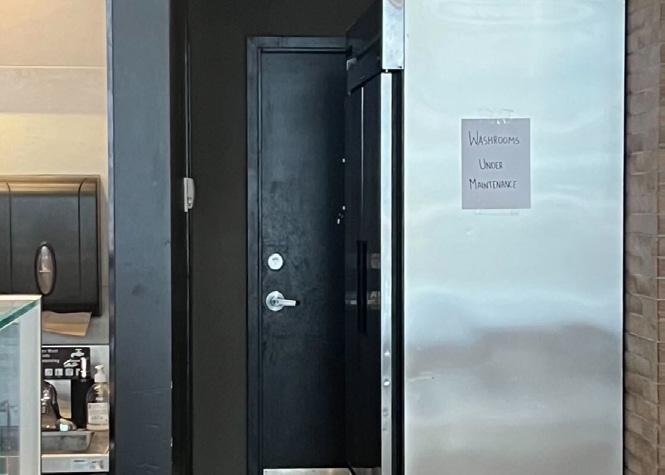
These concerns are reflected in the University of Regina’s Cybersecurity Club (UR Cybersecurity Club), which was founded by Andrew Petrie in 2023.
Petrie, also the current president of the UR Cybersecurity Club, explained the organization’s mission: “Our goals, as a student-led club, are to raise the general understanding of cybersecurity and improve general cybersecurity hygiene within the province of Saskatchewan.
“In order to do so, we must help future computer scientists and software engineers become aware of the threats posed by modern-day threat actors, as well as guide those who want to make a career in cybersecurity to have the best advice, resources, and information to begin their path.”
The club is achieving their goals by actively helping aspiring computer scientists and software engineers recognize the threats posed by modern-day cybercriminals. By providing guidance, resources, and information, the club aims to prepare students for successful careers in cybersecurity.
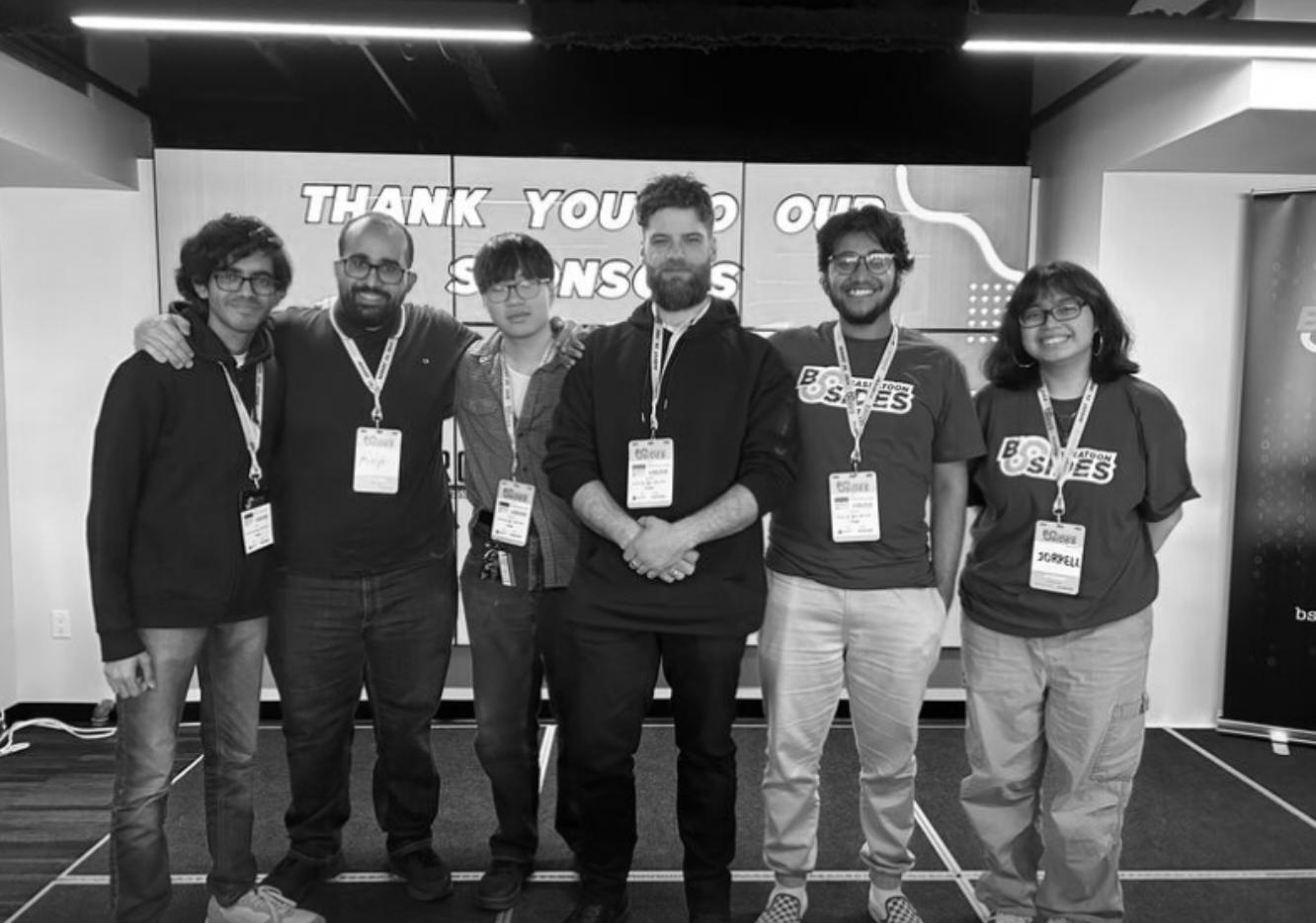
Recently, the UR Cybersecurity Club celebrated winning both the BSides Regina and BSides Saskatoon Capture the Flag (CTF) competitions – a series of hacking
challenges designed to test participants’ skills.
“Winning these competitions demonstrates that there are enough students interested in cybersecurity and that we can achieve great things together,” Petrie explained, going on to say that his team is “ecstatic with this victory.”
“It was an extremely close competition between our team and the University of Saskatchewan’s Cybersecurity club. The fact that the two sister clubs of Saskatchewan placed first and second during the largest CTF event hosted in the province gives me hope for the future of Saskatchewan’s cybersecurity,” Petrie also stated.
The CTF competition is an event in the cybersecurity community where teams compete by solving challenges that involve hacking and exploiting vulnerabilities.
Petrie explained that the CTF that the UR Cybersecurity Club competed in “is called a ‘Jeopardy’ CTF” and “there are challenges that require intimate knowledge in hacking and network/data infrastructure in order to uncover the ‘flag.’ Once the flag is uncovered and submitted, points are assigned to the team who uncovered it.”
Petrie explained that “during the CTF, [the club] faced challenges that required us to think creatively and apply our knowledge under pressure.”
The answer to these challenges? Petrie says “it’s about finding solutions to problems quickly” and recognizing “the importance of teamwork and adaptability.”
The club plans to participate in the Cybersci CTF competition in Calgary, a prestigious event drawing top teams from Canadian universities. “Our plans to at-
A look at Regina news, in brief

Illustration: Annet Debar manipulated by Allister White Who knew you could go to a newspaper for instant gratification?
`Nail-biter of a race ahead for NDP, Sask. Party
On Sept 25, CTV News published new polling data. The data was collected with the help of Insightrix research, and gives Saskatchewan residents a new look at the upcoming provincial election.
Decided voters have been “neck and neck” since July, CTV News reported. The September data shows 49 per cent of decided voters claiming they intend to vote for the Saskatchewan NDP. According to CTV News and Insightrix, 48 per cent of decided voters will “support the incumbent Saskatchewan Party,” and “four per cent say they’ll support a different party.”
Lang McGlip, one of Insightrix’s research directors explained that 33 per cent of surveyed voters fall into the “un-
tend the Cybersci CTF competition reflect our ambition to not only compete at a national level but also to gain recognition for the talent we have here at the University of Regina,” Petrie stated.
Looking ahead, the Cybersecurity Club envisions a future with initiatives aimed at refining students’ cybersecurity skills. Petrie outlined, “We have both social and technical events planned for the future, including our own CTF event which will be open to all students to participate in. We also plan to work closely with many leading organizations in Saskatchewan who provide cybersecurity as a service to try and raise the readiness of cybersecurity in our province.”
The club will host a meet-and-greet event on October 4 to welcome new members and foster connections among students. “We encourage students to get involved, whether through our events or simply by joining the conversation on our Discord,” Petrie emphasized. “We have a lot of exciting initiatives planned for the academic year,” he added.
For students considering a career in cybersecurity, hands-on experience is crucial. Petrie advises, “Hands-on experience is paramount. Getting involved and doing your homework will help tremendously. There are so many resources on the internet to help you get started, and the sooner you start, the better.”
decided” category. McGlip claimed that this number is higher than usual, and says that undecided voters will be engaging more as our provincial election nears and “listening to what both parties have to say.”
Insightrix also found that 55 per cent of those polled feel that it is time for the province to undergo a change in government.
According to Elections SK’s website, Saskatchewan’s general election is scheduled for Oct 28, 2024. To vote in the election, one must be a Canadian citizen, 18 years of age or older on the final day of voting, and, in Elections SK’s terms, “ordinarily a Saskatchewan resident.” Eligible voters can register online to streamline the voting process. Voters can also apply to vote by mail.
$400,000 in funding announced for warming shelter
Carmichael Outreach is a local charity that provides services to folks in the community experiencing poverty or homelessness. Carmichael Outreach’s mission statement stresses their “vision is to see the END of poverty and homelessness” and that “we all need to come together to do our parts, however big or small.” The charity has been active in the Regina community as a registered charity since 1994.
On Sept 20, CBC News reported that Carmichael Outreach will open a warm-
ing centre this winter “no later than Nov 1.” The shelter plans to have space for 80 people. The city of Regina has committed $100,000 in funding, with the provincial government contributing the rest of the funding through a one-time grant of $300,000.
CBC News also reported that, last winter, the centre did not open until January “due to funding.” As a result, a warming bus was offered in early January 2024. The bus offered warmth for twelve hours a day – from 9 p.m. to 9 a.m. and was located in front of Carmichael outreach.
This year, funding has come in time to ensure a warming centre is available to help work towards ensuring vulnerable people have a warm place to go during Saskatchewan’s life-threateningly cold months.
Still, the Saskatchewan Crop Insurance Corporation (SCIC) has a “First Fall Frost Map” which predicts frost dates across the province. The dates “may vary by as much as 15 days,” according to SCIC. Dates range from Aug 28 to Sept 25, meaning that Saskatchewan will likely see frost by Oct 9, representing a potential gap between the onset of cold nights and the opening of the warming shelter.
Cathedral Community Fridge fire “unites” community
Between the hours of three and four in the morning on Saturday, Sept 21, the Cathedral Community Fridge, a free food resource in the city working to combat food insecurity in the community was “badly burned,” Bree Kroner, an organizer told CBC News
According to a video posted to the community fridge’s Instagram, the fridge
was set on fire, but the organization is “yet to independently confirm” whether or not the fire was set intentionally.
Despite the fire, the Cathedral Community Fridge organizers haven’t been discouraged. “The fridge may have been physically destroyed, but the fire only unites us as a community even more,” one volunteer stated in a video posted shortly after the fire.
Rebuilding began on Sept 22, and Monday-Thursday food and hamper deliveries continued throughout the week in spite of newfound challenges.
While the fridge is being repaired, those with donations are being asked to “place donations on a clean surface on the fridge deck, or hand them directly to folks at the fridge.”
allister white news editor
NCCM: Empowering Canadian Muslims Through Advocacy and Leadership
For over two decades, the National Council of Canadian Muslims (NCCM) has advocated for the rights of Canadian Muslims. Founded in 2000, NCCM has grown into the country’s largest Muslim advocacy organization, championing human rights, combating Islamophobia, and tackling discrimination head-on.
NCCM’s work includes public advocacy, engaging with the media, and fighting against Quebec’s discriminatory Bill 21.
In line with its mission to empower Canadian Muslims, NCCM hosted its very first Youth Leadership Summit this year on Aug 23 and 24, 2024, at the Toronto Metropolitan University. The summit drew over 200 students from across the country, coming from over 60 cities, and offered a unique space for young Muslim leaders to come together and share their experiences.
Over two days, participants engaged in a variety of workshops and activities. From media training to advocacy workshops, students gained hands-on skills and insights from veteran advocates, leaders, and long-time community engagement experts.
For many, the summit offered more than just training sessions –it was a space where future leaders could network, collaborate, and strategize on how to address challenges faced by Muslims in Canada.
The Carillon spoke with Omar Khamissa, NCCM’s Chief Operating Officer (COO), to get his take on the event’s impact, the organization’s ongoing efforts, and what lies ahead for Muslim youth eager to make a difference in Canada.
Born and raised in Aurora, Ontario, Omar Khamissa has been active in the Muslim community from a young age. With a degree in Economics from the University of Waterloo, he built a career in sales before dedicating his time to community engagement. Previously NCCM’s Community Engagement Officer for the GTA and Director of Community Engagement, Omar now serves as the organization’s COO.
The following interview has been edited for length and clarity.
NCCM has been a key voice
in advocating for the rights of Muslims in Canada. Can you walk us through the organization’s history, its core mission and some of its milestones over the years?
NCCM was created in 2000, and it has grown significantly since then. We’ve worked on many cases, and every single one has been at the center of fighting Islamophobia. I think that’s what the core of NCCM is… NCCM is about fighting Islamophobia, fighting discrimination, standing for Muslim civil liberties, and making sure that Canada is a better place for all. Our vision is that Canada becomes a country where Muslims are free to practice their faith and feel safe doing so.
[People of Muslim faith] shouldn’t have to look over their shoulder when for example, wearing a hijab. We want them to be part of society without feeling different because of how they look or dress. NCCM is Canada’s largest Muslim advocacy organization, and we continuously fight for the rights of Muslims.
Some of the most significant moments in NCCM’s history include the tragic Quebec Mosque Shooting and the London attack on the Afzaal family, where members were run over in a targeted act of hate.
NCCM has addressed countless cases of discrimination faced by Muslim students, hijabi individuals, and others who have been treated unfairly. Through our efforts, we strive to ensure that Muslims can practice their faith openly and feel that they are a part of… society.
What are some of the primary programs and initiatives that NCCM currently offers to promote human rights and civil liberties?
NCCM has different [branches] working together. We have an education program that collaborates with school boards and universities across the country... we also have the proactive side, working with students and businesses to help them know their rights as students and employees. The advocacy program handles legal cases like Bill 21 and addresses numerous other Islamophobic incidents across Canada.

We also have a media arm that deals with marketing and communications, ensuring we’re always present in the community, in masajids (mosques), and in organizations. Our goal is to stay grassroots, to be in the community, and hear directly from Muslims about the issues they’re facing. Our biggest goal is to make tomorrow better than today for everyone.
Do you want to elaborate on NCCM’s social media presence and how it engages the community and campuses across Canada to encourage broad participation?
We’re active on social media and comment on current events, but there’s still a long way to go. NCCM tries to be at the forefront of conversations, whether on Twitter or Instagram, with a community focus. There are 1.8 million Muslims in Canada and the challenge is reaching all of them across Canada. How do you ensure that when you advocate, you’re speaking for all of them?
Social media helps, but it’s tough when NCCM is just a team of 35 people. Representing 1.8 million people is a huge task.
We’ve seen a 1300 per cent spike in Islamophobia since Oct 7 just from October to December and to put this into perspective of what that 1300 per cent increase looks like is that every hour, 3 people will call us for an Islamophobic attack, and seeing that happen is crazy.
Schools alone have seen an 800 per cent increase. This is where social media comes in, to show that people are not alone. Recently, NCCM organized the Youth Leadership Summit for students across Canada. How was it for you as COO to see over 200 students come together for this inaugural summit?
Honestly, it was beautiful. Seeing students who are so engaged and empowered to do advocacy work and shape their communities was inspiring. I always say, ‘Be the voice of the voiceless.’
When someone experiences Islamophobia, they feel disempowered, and they feel like there’s no one to help them. But seeing these 200 students – both from high schools and universities –stand up for what’s right gave me a lot of hope for the future. For a long time, this kind of work has been done by older people in the community, but now we’re seeing younger people taking charge. That gives me hope that, in 10 or 20 years, we won’t see the same levels of Islamophobia.
Editor’s note: Space restrictions necessitated cutting this article short in print. An extended form of this article is available online at carillonregina.com
nazeemah noorally news writer
“
[People of Muslim faith] shouldn’t have to look over their shoulder when for example, wearing a hijab. We want them to be part of society without feeling different because of how they look or dress. NCCM is Canada’s largest Muslim advocacy organization, and we continuously fight for the rights of Muslims.” Omar Khamissa
No matter what you do tonight, do it safely
pall agarwal community writer
As the sun dips down below the horizon, people often associate that setting with a calm scenario where they can go for long evening walks, drives, or strolls. Driving at this time can feel exhilarating, offering a calm, almost serene atmosphere.
The roads seem quieter. Everyone has already rushed to return to their homes and enjoy a peaceful evening and night with their loved ones after a day full of hustle and bustle. However, with the onset of nighttime, visibility declines, and reaction times are reduced. With this, the risk of accidents involving drivers and pedestrians increases.
According to the Children’s Hospital of Philadelphia Research Institute, “more pedestrian fatalities from motor vehicles crashes occurred in the dark (78 per cent) than in daylight (19 per cent), dusk (2 per cent), and dawn (2 per cent) in 2022.”
The numbers increase over the years. According to the Government of Canada, “in 2022, the number of motor vehicle fatalities was 1,931; up 6 per cent from 2021 and was the second highest count in the last 10 years.”
The federal, provincial, and territorial governments in Canada continue to improve road safety to reduce the number of these fatalities, making it a safer place for pedestrians and drivers to have a safe road to walk by and drive on.
There are a lot of resources on the internet to understand more about nighttime safety, especially for drivers. One should make the best use of their surrounding resources and not jump into anything they are unprepared for. After all, humans do not come prepared with night vision to be properly equipped to drive at night. Instead, we made headlights and high-visibility shirts to prevent accidents when we do.
Experts have a lot of directions for navigating this. Some of these are detailed here.
According to Saskatchewan Government Insurance, one should not forget to use highbeam headlights while driving on a road not lit by streetlamps or other lighting devices. However, it is recommended that headlights are always on.
Studies show that vehicles that are driven with their lights on are less likely to be involved in a collision of any kind. There are detailed procedures on when to dim headlights and when to keep them on depending on which kind of road one is driving on.
Some procedures include:
Headlights must be dimmed at least 200 m in advance of oncoming vehicles and keep them dim until the vehicle has passed.
When behind another vehicle, one must keep their headlights on low beam until the other vehicle is at least 100 m away.
On a divided highway where the distance between the roadways is 22 m or more, one does not need to dim their headlights.
It is usually recommended that if one goes for a long drive, remember to get in a good night’s sleep to avoid falling asleep while driving or share the drive with someone else. Driving while tired is not advised as it impairs one’s ability to react quickly and make sound judgments on the road, making it more likely for accidents.
Driving on Saskatchewan roads or any wildlife-heavy places involves looking out for wildlife, which is essential. Some animals are more likely to come out at night, so one should keep an eye out for them at the side of the
“
road
Staying alert and being aware of one’s surroundings during nighttime always goes a long way. Driving within the posted limit is better than racing at night.
Even taking breaks when it feels too overwhelming or tiring to drive for too long is better than powering through with no energy, as it could reduce one’s ability to be more alert and aware of their surroundings while on the road. One should also remember to slow down before entering an exit or entrance ramp, as drivers usually misjudge the sharpness of the ramp curve and enter at an excessive speed, leading to rollovers.
It is also recommended by experts from TD Insurance that carrying an emergency kit for any nighttime driving is always a good idea. Must-include items are flashlights and candles that could come in handy to figure out any car troubles at night, especially on those roads with no streetlamps or light
resources.
Other items include a first aid kit, blankets, or any source of warmth in case the car breaks down, spare tire and tire repair kits, and duct tape for quick fixes. Check out the Red Cross website to find out what should go into a car or home first aid kid.
It is also advised to have reflective triangles and road flares to make the vehicle more visible to other drivers during a breakdown and should always be placed at the back of the car.
With heavy winters in places like Saskatchewan, Manitoba, and Alberta, it is always advised to adjust speed according to weather conditions like rain and snow. Driving too fast in unsafe conditions could lead to hydroplaning, sliding, or crashes by even the most experienced drivers.
According to Nationwide Mutual Insurance Company, “the Federal Motor Carrier Safety Administration recommends reducing speed by one-third during rainy
weather and one-half for snow.”
One should always watch out for their speed while approaching a vehicle already going slower than themselves.
For pedestrians to be more visible to drivers driving at night, they should wear reflective clothing, carry flashlights and cross streets at designated crosswalks. If nighttime walks are done while listening to music, keep one ear free to listen to stay aware of your surroundings. Going out with a friend could make the nighttime walk more enjoyable and provide company and security. Driving at night requires extra caution and, as always, adherence to traffic laws and safety practices. By following some of the expert advice given by folks with experience, old and new drivers can drive safer on roads, making it safe for pedestrians to walk by and for other drivers to drive on the same road.
Driving within the posted limit is better than racing at night.” Pall Agarwal

emma mcgill staff writer
“Take the leap, because it’s likely going to be a really fun experience,” said Veronica Exner, President of the University of Regina’s English Student’s Association (ESA) when asked what advice she would give to students who are on the edge about submitting academic and creative work to the organization’s events and publications.
The first of these publications is the ESA’s creative writing magazine, [SPACE]. The magazine was relaunched in the spring of 2024 under the ESA presidency of Nicole Hamblin, after the magazine took a short hiatus for a few years until this year.
In presenting a wonderful opportunity for students of any faculty to have their work published, [SPACE] magazine welcomes any poetry, fiction, playwriting, etc., of up to 3,000 words for consideration. Submissions are being accepted until Dec 6, 2024 and will be published in February, accompanied by a gala to celebrate the magazine and the students’ creative works.
It is also likely that a keynote speaker will be presenting at the next gala. Last gala, on Mar 23, 2024, local poet Tea Gerbeza gave a speech and shared some of her original work.
In other exciting [SPACE] Magazine news, the Archer Li-
brary is going to be adding copies of last year’s magazine and editions going forward to their collection.
“It’s not just something to put on your CV or your resume, but it’s really a chance to build relationships and get a sense of what it’s like to be a part of a wider academic community,” said Exner. “You get a chance to meet with like-minded individuals and talk about your work on a higher level. It’s such a great chance to celebrate your work.”
The other infamous ESA event to be held in the spring is Trash Talkin’, the literary conference. Students from any faculty can submit by Jan 10, 2025 to present their work on a panel where they can answer questions and connect with other students.
The Trash Talkin’ theme is always popular culture. Original creative writing, analysis of film or TV and classic literature, and academic papers are all welcome, allowing for plenty of submission options. Trash Talkin’ is your oyster!
“I had a really positive experience presenting,” shared Exner, who presented at Trash Talkin’ 2023, her first conference experience. “I enjoy public speaking but being on a panel like that was a little nerve-wracking, but the teachers who were involved were really supportive.”
Exner continued, “The students that I was presenting with

were great. Everyone asked really respectful questions. It was really like everyone wanted you to succeed and I felt that.”
Trash Talkin’ also features a group gathering, usually a dinner, with a keynote speaker to celebrate the panelists and their hard work. This usually takes place in
March and the ESA works hard to organize these events. They do it all, from catering and posters to reaching out for sponsorships and start planning extra early to make these experiences as rewarding as possible for everyone involved.
“It’s always a lot of work but it’s a lot of fun and very reward-
We love our pets, but do backyard breeders?

imals.
These health issues could be lifelong and cause an extreme and unfair financial burden on the pet’s new owners. One needs to be more mindful of one’s surroundings as the implications of these practices become more apparent to society.
According to PAWS, puppy mills are commercial breeding facilities that produce dogs in large quantities, which are then sold to customers through advertisements over the internet and flyers. Retailers take their word for happy and healthy dogs, but the reality is usually different.
Animals in puppy mills are usually treated poorly. They are kept in cages, left to themselves. They are not provided healthy and hygienic food and water, leading to malnutrition and other health effects. Some of them are not given enough veterinary care whenever required.
Dogs coming out of these puppy mills and backyard breeders may seem healthy but then gradually, health issues like congenital eye and hip defects, parasites, or even deadly Parvovirus may spring up. According to some animal support organizations like PAWS, “continuously breeding dogs for years to produce litters for a profit still jeopardizes the animals’ welfare.”
on the an-
Animals who are mature
enough to breed are continuously put under the process of breeding until they reach their highest capacity and have nothing more to produce, at which point they are then killed or left to fend for themselves.
Regina is still in the developmental stages of advocating for animals’ rights and laws. Groups such as Animal Justice and the Regina Humane Society play an important role in advocating for combating unethical breeding practices.
The Criminal Code of Canada’s section 445.1 states that “Every one commits an offence who (a) wilfully causes or, being the owner, wilfully permits to be caused unnecessary pain, suffering or injury to an animal or a bird.”
Section 446 (1) states an offence is committed when “(b) being the owner or the person having the custody or control of a domestic animal or a bird or an animal or a bird wild by nature that is in captivity, abandons it in distress or wilfully neglects or fails to provide suitable and adequate food, water, shelter and care for it.”
The Regina Humane Society also highlights some of the City of Regina Animal Bylaws. According to the Humane Society, the “City of Regina Bylaw #2009-44 regulates offenses with-
ing,” said Exner. “We start planning months in advance. It’s a process of a lot of minds coming together. The ESA works together to try and create an event that is going to really mean something for students.”
in the City of Regina, including animals-at-large, defecation complaints, dangerous animals, the types of animals that can be kept, and pet licensing.”
Every province has their own animal welfare laws. For example, in Ontario, the Preventing Unethical Puppy Sales Act has been enacted to combat puppy mills. The law prohibits inbreeding, breeding female dogs more than three times in a two-year period, and breeding female dogs younger than a year old. The law, however, does not require licensing for dog breeders, making enforcement challenging.
The responsibilities of pet owners are an issue of animal rights and their welfare. People may dislike having laws that impact their pet ownership, but when it comes to animal safety and well-being, the discomfort of humans should not be a factor. Laws and legislation that keep animals safe still have a long way to go, in Regina, in Saskatchewan, and in Canada.
pall agarwal community writer


A fan looks back fondly on a beloved show
amina salah staff writer
Set in Miami, Florida, The Golden Girls is a sitcom that aired from 1985 to 1992. It acquired 68 Emmy nominations, winning 11 throughout its run. Created by Susan Harris, the show focused on a demographic that is not often shown on TV, that of older women.
Aging is often scrubbed out of TV. It is the elephant in the room that must be ignored, often treated like a curse. In an era where older women are erased from TV, The Golden Girls is a refreshing sitcom about older women who live together.
The iconic characters of this show are Dorothy Zbornak, Rose Nylund, Blanche Devereaux, and Sophia Petrillo.
Played by Bea Arthur, Dorothy is a sarcastic modern thinker who works as a substitute teacher. Then we have the sweet Rose, played by the beloved Betty White, may she rest in eternal peace.
But the show would not be complete without the iconic, vibrant and vivacious Blanche, brought to life by the breathtaking Rue Mclanahan. Lastly, we have the glue of the show, a loving mother to Dorothy and friend to our leading ladies, Sophia, played by the fabulous Estelle Getty.
The Golden Girls rose to popularity because, despite its premise, it gained a fan base of people across all backgrounds and ages. The first time I watched the show, I was still a newcomer in Canada.
It was a show that aired every single day, and I would find myself intrigued by it. I was twelve years old; I didn’t really understand a lot of the jokes at the time, but the show brought me a lot of comfort growing up and navigating the complexities of being a young girl.
The Golden Girls is a stunning show because it does a fantastic job at tackling many different topics that were taboo at the time (and are still somewhat of a taboo to this day). These included mental health struggles, suicide, depression, racism, the HIV-Aids crisis, hoouselessness, menopause, sexuality, divorce, infidelity, addiction, and plastic surgery, among others.
The Golden Girls and its leading ladies were understanding and willing to unlearn biases they personally held, but most importantly, they were unapologetic about who they are.

The Golden Girls teaches us that life does not end just because you reach a certain age. Aging is a blessing. It is a gift to be grateful for. Life does not stop. Life goes on, and as such, you must go on with it.
There is no point in trying to hold on to our youth. These are merely fleeting moments. Letting go of them does not mean we forget them, but rather that we learn to acclimate to the stage of life we are currently in.
Additionally, The Golden Girls reminds us that although we cannot choose the family we are born into, we can create our own family of people who love us, care about us, and are always there for us. We have our entire lives to forge unbreakable bonds.
Susan Harris explains in an interview from 2010, “I think everybody – including younger people – when they reach an age when they feel alienated, the thought of being alone and spending your life alone is terrifying. These women were at an age where they were alone and were likely to stay alone until they found each other.
“Then they constructed a family that really, really worked. They encouraged each other and had a life together. It showed that you didn’t need the custom-
ary, traditional relationship to be happy. It paints a picture of all the possibilities for family. I also think young people like Sophia because she says whatever pops into her head!”
When I was younger, I found myself feeling afraid of growing up and getting older. However, the older I get, the more I realize how fabulous it is to get older. You become more confident, more comfortable with yourself. I like to say that it allows you to settle into yourself. The Golden Girls highlights this beautifully.
The show is also beloved due to its theme song “Thank You for Being a Friend.” The song was originally a single by Andrew Gold, however it was covered by Cynthia Fee for the purpose of the show.
The show additionally paved the way for other writers involved in the process such as Marc Cherry, the creator of the hit TV show Desperate Housewives. I think the concept of The Golden Girls is what ultimately changed television. Other shows that we have come to adore such as Sex and the City, Desperate Housewives, Hot in Cleveland, to name a few, would not have existed today without influence from The Golden Girls Ultimately, the reason why I always go
back to The Golden Girls is because it deals with the subject of grief throughout the show. All of our girls on the cast have experienced grief. Sophia has lost her husband and her son. Dorothy has lost her brother. Blanche has lost both of her parents, and Rose has lost her husband.
The ladies help each other through their grief. When you reach a certain age, you might find that you have lost some of your loved ones. Grief has no timeline and it does not discriminate. Grief is something we all have in common. It is the essence of life, and the essence of humanity. We have all experienced grief in our own ways.
When life beats you down in such a gruesome manner, it is difficult to believe that there is light at the end of the tunnel. It is difficult to believe that you will be able to smile, laugh, or be happy again. The Golden Girls remembers that life does not stop with grief, rather, you learn to live with the grief. You make room for grief in the depths of your heart, and you make room for your remaining loved ones to carry you through it.
“Grief has no timeline and it does not discriminate. Grief is something we all have in common.”
Amina Salah
student ponders all the consequences of new IRCC
zinia jaswal contributor
In a recent announcement that raises eyebrows and concerns alike, Prime Minister Justin Trudeau revealed through social media that Canada will be cutting international student permits by 35 per cent, with an additional 10 per cent reduction expected the following year.
This dramatic policy shift suggests a combined decrease of over 40 per cent in just two years, prompting discussions about its implications on Canada’s economy, housing, job markets, and, importantly, its reputation as a welcoming destination for international students.
Trudeau’s decision appears to be motivated by claims of “bad actors” abusing the international student visa system, pointing toward a need for tighter regulations to preserve the integrity of the program.
While concerns over misuse should not be dismissively brushed aside, the sweeping nature of this decision seems disproportionate. It penalizes a larger cohort of genuine students – the very individuals that contribute significantly to Canadian society, both during their studies and in their subsequent careers.
International students typically contribute billions to the Canadian economy through tuition fees, housing, and living expenses. According to a report from the Canadian Bureau for International Education, international students contributed approximately $37.3 billion to the economy in 2022.
A reduction in study permits directly threatens this financial influx, potentially leading to budget shortfalls in universities and reduced job opportunities in sectors that rely on international students.
Additionally, universities share the burden of risk by investing in infrastructure and resources for international students,
which translates into additional job opportunities for Canadians. Fewer international students means less demand for educational services, leading to potential layoffs and stagnant job growth in both academic institutions and surrounding businesses that rely on the student population.
The housing market is another critical area impacted by this decision. International students typically seek rental accommodations that greatly affect urban housing demand. In many Canadian cities, the influx of students contributes to a diverse and vibrant community and provides a stream of rental income for landlords.

By drastically reducing the number of international students, the housing market may indeed see some temporary relief in terms of rental prices, but this would be in direct opposition to the overarching goal of a flourishing, diversified Canadian economy.
Housing stability is intricately linked to population growth, and if fewer international students pursue education in Canada, an already shrinking rental market will encounter increasing volatility, potentially disadvantaging those who depend on stable housing solutions.
As various industries face labor shortages, international students significantly contribute to filling gaps in the job market. Often, these students bring skills and experience that align with Canadian employers’ needs, creating a synergistic relationship that fuels economic growth.
With the cuts in international student permits, the availability of skilled labor will potentially diminish, causing frustration for
employers who may struggle to fill vital roles in healthcare, technology, hospitality, and more. This could lead to a stagnation in growth for these sectors, effectively undermining the broader ambitions of Canada to remain competitive in an increasingly globalized economy.
Trudeau’s announcement signals a shift in Canada’s broader narrative about international students.
Historically, Canada has forged a reputation as a welcoming and inclusive destination for students. This recent decision might invoke feelings of unease and mistrust among current and prospective international students. It raises questions about how Canada values and prioritizes these individuals who bring diversity, cultural enrichment, and, often, long-term contributions to the Canadian workforce.
The perception that genuine students are being scapegoated for the actions of a few undermines Canada’s image as a destination of choice for higher education. Students across the globe have choices when it comes
“The perception that genuine students are being scapegoated for the actions of a few undermines Canada’s image as a destination of choice for higher education.”
Zinia Jaswal
to their educational pursuits, and an increasingly cautious and volatile Canadian immigration policy might deter them from viewing Canada as an attractive option.
For many international students, Canada becomes a second home – a sanctuary where diverse cultures coexist and academic aspirations flourish. However, these students often carry the weight of global crises on their shoulders, from the turmoil in Palestine and Lebanon to the devastating floods in Pakistan, to name a few.
The emotional toll of being far from loved ones during such chaotic times can significantly impact their academic performance and mental well-being. While the vibrant environment of Canadian universities offers a semblance of refuge, the realities of their homes remain an ever-present concern.
The pain and uncertainty stemming from geopolitical conflicts and natural disasters can overshadow the students’ educational experiences, leaving them to grapple with both the joy of learning and the anxiety of distant troubles.
Recognizing the need for comprehensive support, it is essential that universities adopt more pragmatic approaches beyond moral support. While counseling and emotional resources are invaluable, international students require tangible solutions: accessible financial aid for those affected by crises, academic flexibility for those facing disruptions at home, and inclusive community programs that foster connections among students from conflict-affected regions.
By engaging with international students directly and understanding their unique challenges, universities can create a more supportive environment that acknowledges their struggles while providing practical resources to help them thrive. Ultimately, a holistic approach that combines emotional and tangible support will empower international stu-
dents to fully embrace their academic journeys while navigating the complexities of their global realities.
The arbitrary changes to the study permit policy, masked under the guise of addressing abuse, suggests a precarious future for incoming international students. Decreasing permits coupled with unpredictable immigration regulations, prospective students may evaluate their options more carefully and may be less likely to choose Canada as their destination of choice in the coming years.
What message does this send? At a time when countries compete fiercely for global talent, Canada risks losing its foothold. Moreover, this may create a generational shift in which potential international students prioritize countries with more predictable and benign educational immigration policies.
The recent cuts to international student permits may be attributed to concerns over misuse but reflect larger systemic issues. This decision carries far-reaching consequences for the Canadian economy, housing landscape, job market, and international reputation.
Canada must reconsider how it balances the need for regulations to prevent abuse with its long-standing tradition of welcoming students from around the world. The broader implications of this decision should prompt a national conversation about the value of international students. Ultimately, Canada must reaffirm its commitment to being a leader in global education and find a proactive approach that fosters inclusivity and values global talent for the long-term prosperity of Canada. The future of the Canadian educational landscape, its economy, and its multicultural identity largely hinge on how it chooses to engage with international students now.
The start of fall semester means a campus swarming with students who haven’t yet decided it’s time to skip classes. It’s busy enough to make you sick. My answer to start-of-semester bouts of crowd sickness? Packing my backpack and heading to downtown Regina.
Downtown Regina is home
to countless cafes and lunch spots. Most of these are pricey and cater to crowds donning business-casual garb, toting briefcases that probably cost something close to a semester’s tuition. The neighborhood, spanning from Albert to Broad Street, encompassing everything north of Victoria Avenue to just north of Dewdney, is home to The Green Spot, Bone
& Broth, Good Earth, a seasonal weekly farmers market, and so much more.
Downtown Regina is also home to a Starbucks, open from 7 a.m. to 7 p.m. Monday to Friday and reduced hours on weekends. Located at 2020 11th Ave, this Starbucks became Regina’s first standalone iteration of the popular coffee chain in late-September 2017. According to the Leader Post, the store is owned by the operator of Proven Foods, Scott Love.
On paper, the 11th Avenue Starbucks is a prime studying spot. The drinks are quite good, and unlike other cafes in the area that close early, at Starbucks you get your money’s worth of time.
The crowd is interesting and varied, and if you use the location as a ‘coffice’ long enough, you’ll begin to recognize your fellow regulars and their orders. As Joe Fox wrote to Kathleen Kelly in You’ve Got Mail, “people who don’t know what the hell they’re doing or who on earth they are can, for only $2.95, get not just a cup of coffee, but an absolutely defining sense of self: Tall. Decaf. Cappuccino.”
The reality of the 11th Avenue Starbucks is far from this on-paper, idealized version. Sure, those office workers toting briefcases are still attempting to pay for an “absolutely defining sense of self,” and sure, you can sit inside on cushy leather chairs for up
to twelve hours, but you’re going to be confronted with reality at some point or another.
The 11th Avenue Starbucks has all the usual makings of a bad spot to get a coffee from: I’ve been handed still-frozen sandwiches, my sister was once given a spoon to ‘drink’ a frappuccino with, and as of mid-September, they had a disgusting number of flies everywhere inside.
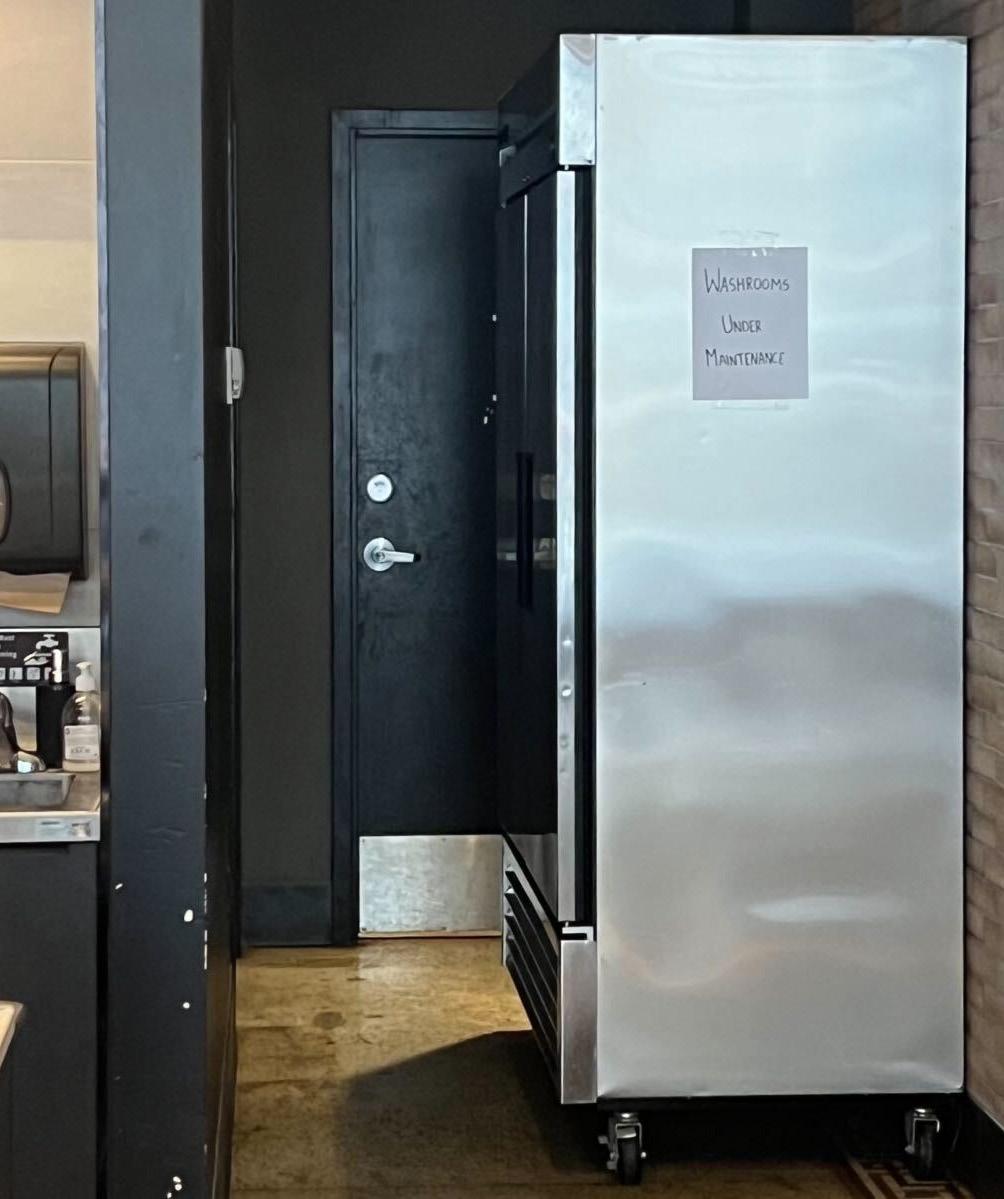
It gets worse. On Sept 4, I noticed a fridge half-heartedly shoved in front of the already-locked washrooms inside the cafe. Mildly annoyed at having made a 30-minute walk to a cafe that couldn’t even put in the effort to fake ‘maintenance’ with some degree of plausibility, I ordered a drink anyways, and sat down to work.
A few hours in, in the clueless voice I reserve for acting like I believe a lie with my entire heart and soul, I ask the barista when he thinks the ‘maintenance’ will be finished.
He looks at me, shocked, and for some reason, he told me the truth: “the washrooms aren’t actually under maintenance.”
He went on to tell me that staff are lying because houseless people have been buying coffee, and then using the washrooms. I don’t know who made the decision to push a fridge in front of the doors, but this kid told me, in a few short sentences, exactly why the decision was made.
In the mind of whoever decided to shove a fridge in front of those doors, houseless people don’t deserve even a scrap of dignity, not even when they pay for it.
Starbucks violated both conditions.
Starbucks is known by dog owners, for their (often) completely free “pup cups,” so they have no problem giving animals a cup of whipped cream, but all the problem in the world letting paying customers use their restrooms.
Why was my yorkie deserving of more respect than a human being? Living in harmony with our more-than-human relatives is important, yes, but treating each other with respect, dignity, and care, should take precedent.
The failings of this city to provide access to affordable housing, supports for people to recover from addiction, the human dignity everybody deserves are made glaringly obvious by Proven Foods’ 11th Avenue Starbucks. Starbucks has since moved the fridge, and reopened washrooms, but for some reason, I doubt they did so willingly.
allister white news editor
Saskatchewan’s Public Eating Establishment Standards states that “public washrooms shall be provided,” and that, “public washrooms must be conveniently located so that access does not require passage through areas where food is stored and prepared.”