


Hello again everyone and welcome to Issue 2!
This issue has a fair amount of articles that are related to the ongoing genocide on Palestine, but it also has an article on a U of R student’s experience attending the National Council of Canadian Muslim’s professional development conference in Toronto, so there is a wide variety of articles to choose to read.
Our next editorial board meeting will be Monday, Sept 23, at 4 p.m. until 5 p.m. in Room 227 of the Riddell Centre. Our next Board of Directors meeting will be the last Wednesday of the month, Sept 25 at 7 p.m. and is attendable through Zoom. For the link, please reach out to infotayef@gmail.com. We are your student newspaper, and we want to engage with you, so please, if you have any questions or ideas, please reach out to us! We are students too, we won’t bite (hard).
Illegitimi non carborundum, mikayla tallon editor-in-chief
the staff
editor-in-chief mikayla tallon editor@carillonregina.com
executive director ziyang lee business@carillonregina.com
production coordinator annika hadden production@carillonregina.com
web technician jebrael muhammad web@carillonregina.com
news editor allister white news@carillonregina.com
community editor kimberley kaufman community@carillonregina.com
op-ed editor hammad ali op-ed@carillonregina.com
staff writer amina salah
staff writer emma mcgill
news writer nazeemah noorally
news writer shivangi sharma community writer pall agarwal
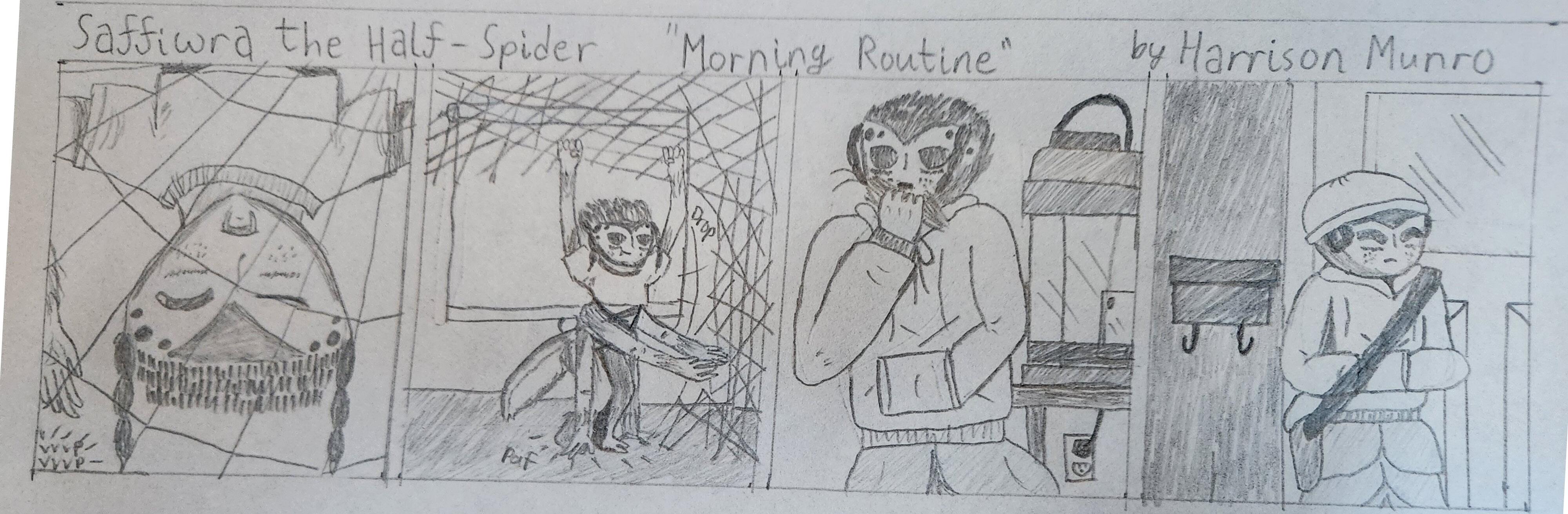
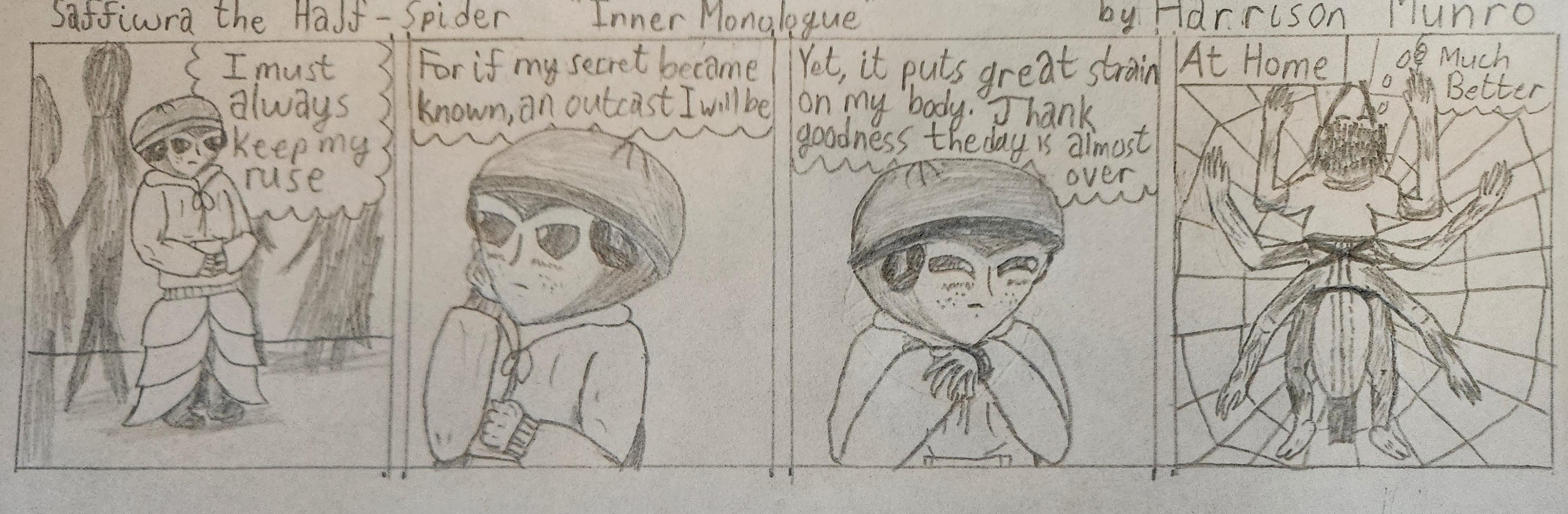
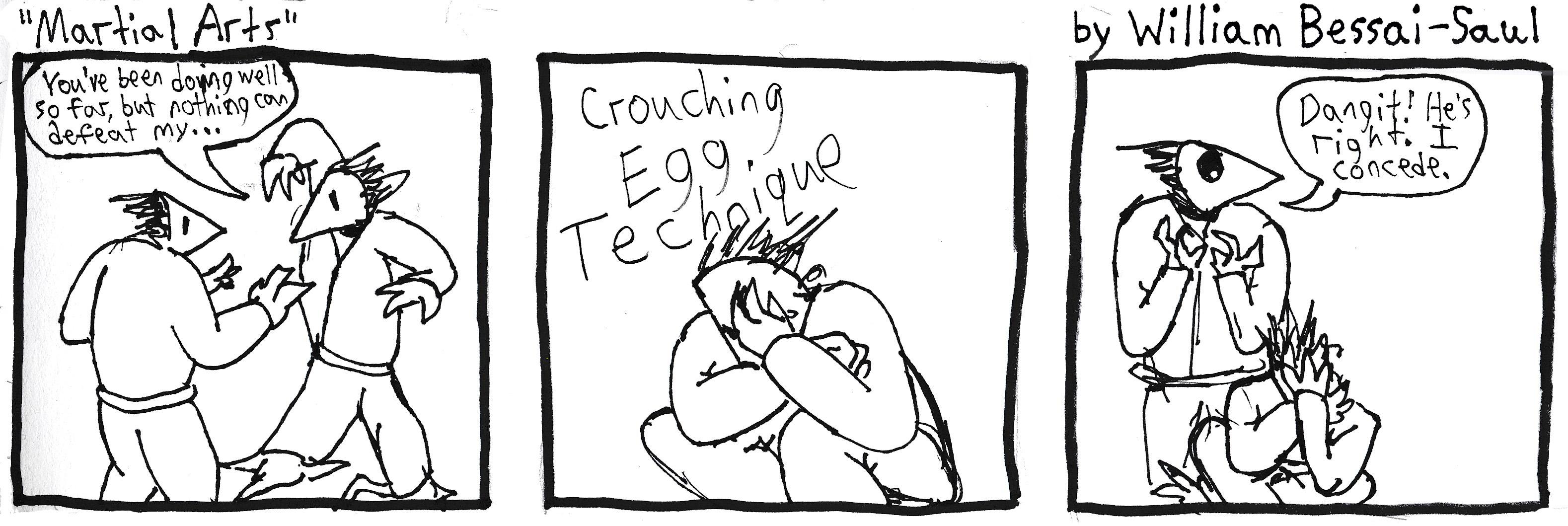
contributors jackson rennebohm, harrison munro, & william bessai-saul
board of directors muhammad zuhruf muhammad zarooq, mohammad akib hossain, tayef ahmed, austin stadnyk, jeremy beam
the paper
227 Riddell Centre @ the University of Regina 3737 Wascana Parkway, Regina, SK, Canada S4S 0A2 www.carillonregina.com | (306) 586 8867
Printed by Star Press Inc, Wainwright, AB
The Carillon welcomes contributions.
Opinions expressed in the pages of the Carillon are entirely those of the author, and do not necessarily reflect those of The Carillon Newspaper Inc. Opinions expressed in advertisements appearing in the Carillon are those of the advertisers, and not necessarily of The Carillon Newspaper Inc. or its staff.
The Carillon is published no less than 11 times each semester during the fall and winter semesters and periodically throughout the summer. The Carillon is published by the Carillon Newspaper Inc., a non-profit organization.
land acknowledgement
The Carillon is written on Treaty 4 territory. As such, staff recognize that we are living, working, and telling stories on and of Indigenous lands. We recognize that we are on the traditional homelands of the Cree, Saulteaux, Nakota, Lakota, and Dakota peoples, along with the homeland of the Métis nation. The Carillon understands that it is pointless to acknowledge the land on which we work without demonstrating our commitment to telling stories and prioritizing voices that further the return of this land to its sacred place. the manifesto
In keeping with our reckless, devil-may-care image, our office has absolutely no concrete information on the Carillon’s formative years readily available. What follows is the story that’s been passed down from editor to editor for over sixty years.
In the late 1950s, the University of Regina planned the construction of several new buildings on the campus grounds. One of these proposed buildlings was a belltower on the academic green. If you look out on the academic green today, the first thing you’ll notice is that it has absolutely nothing resembling a belltower.
The University never got a belltower, but what it did get was the Carillon, a newspaper that serves as a symbolic bell tower on campus, a loud and clear voice belonging to each and every student. the people’s friend; the tyrant’s foe









Personnel claim they’re only a “rubber stamp” for ‘Lavender’
cludes names, photos, home addresses, family members, associates, and social media accounts of Palestinians.
On April 3, +972 Magazine (+972), published by a registered non-profit founded by both Israeli and Palestinian journalists, released an article titled “‘Lavender’: The AI machine directing Israel’s bombing spree in Gaza.” This article detailed an AI tool known as ‘Lavender,’ developed and used by the Israeli Defence Force (IDF).
‘Pegasus,’ an Israeli-made and sold spyware can be implanted into both Android and Apple phones to tap calls, record device activity, and track locations.
+972’s sources state that the AI is programmed to detect potential “enemy militants” in the Wolf Pack database. Lavender pulls names from the database and assigns a rating for the person (from
“ The army on several occasions authorized the killing of more than 100 civilians in the assassination of a single commander.” Jackson Rennebohm
Yuval Abraham, an Israeli journalist detailed the magazine’s correspondence with six sources in the IDF. The magazine’s six sources, all purported IDF intelligence officers, shared information both on the program itself and their use of it.
Lavender, according to +972’s sources, is an AI tool that’s played a part in choosing Israel’s targets.
Lavender works alongside a ‘Wolf Pack’ system, which, according to +972 and Amnesty International, generates and stores profiles for every Palestinian in the West Bank. The existence of the ‘Wolf Pack’ system relies on the IDF’s mass surveillance of Palestinians.
A former IDF solider claimed that the
1 to 100) based on level of confidence that the person is a militant.
The IDF then chooses a rating threshold, and anyone in the database with a higher rating than said threshold is, with almost no further IDF investigation, confirmed as an enemy militant and put on an assassination list.

sible to kill up to 15 or 20 civilians.” For senior Hamas officials “the army on several occasions authorized the killing of more than 100 civilians in the assassination of a single commander.”
The fact that, according to +972, Lavender is accurate only 90 per cent of the time did not discourage its usage.
ince of Saskatchewan.
The Euro-Mediterranean Human Rights Monitor, a Swiss non-profit organization, estimates that “at least 131,200 housing units in the Gaza strip have been completely destroyed, and another 281,000 units have been partially destroyed.”
The rating threshold to be marked as target by Lavender was frequently lowered to generate an increased number of targets for bombing. When the threshold was lowered, a source says, “the machine started bringing us all kinds of civil defense personnel [and] police officers.”
Another of the sources also claims some civilians were in the dataset used to train the AI to identify Hamas and PIJ militants. Children and youth were not exempt from Lavender’s lists, according to +972’s source.
Furthermore, most of the bombs used
The total number of units destroyed, 412,200, quadruples the number of private dwellings in the city of Regina. The Human Rights Monitor also estimates the IDF have unleashed 70,000 tons of their American-provided explosives upon the Gaza Strip, nearly 6 times the amount of explosives dropped on London during the entire second world war.
Gaza’s Ministry of Health confirmed numbers that have since been reported by the UN and the Save the Children Foundation. The statistics report that over 14,000 Palestinian children have been killed by the IDF, with 21,000 more missing “estimated
“ Are civilians being killed simply for alleged association with people who AI programs allege are militants, or is their only crime being born Palestinian?” Jackson Rennebohm
military have been relying on the ‘Wolf Pack’ system for facial recognition programs used at their checkpoints and on their soldiers’ smartphones. The two systems are called ‘Red Wolf’ and ‘Blue Wolf’ respectively.
The Washington Post corroborates this, stating that “to build the database used by Blue Wolf, [in 2020] soldiers competed… in photographing Palestinians, including children and the elderly, with prizes for the most pictures collected by each unit.”
The IDF have been actively growing their surveillance operations, and with them, their ‘Wolf Pack’ database which, according to Amnesty International, in-
One of +972’s sources claimed that intelligence officers serve as “rubber stamp[s]” for the AI’s results, and were told to treat said results “as if it were a human decision,” allocating only “20 seconds” to investigating each alleged enemy militant, using that time to confirm that the target was male before permitting their assassination.
The six intelligence officers go on to contend that, earlier in the war, the IDF’s mode of assassinating Lavender’s chosen targets was by employing another automated system of their creation with the name “Where’s Daddy?”
As soon as a target on Lavender’s list entered his place of residence, the “Where’s Daddy?” system automatically alerted the IDF that a target was now home and marked said home for an airstrike.
Claims from +972’s sources go on to state that “for every junior Hamas operative that Lavender marked, it was permis-
by the IDF to eliminate junior militants were unguided “dumb” bombs, less expensive than “smart” bombs, and known for causing large amounts of collateral damage. Potential civilian collateral damage was also calculated by an automated system. The IDF sources admitted to attacking “almost without considering collateral damage” during the week following Oct 7.
Claims made by the IDF to +972 deny and contradict many of the six sources’ claims. Regardless, the United Nations estimates that nearly the entire population of Gaza, 1.9 million, have been displaced from their homes by the IDF. That number is nearly double the population of the prov-
to be lost, disappeared, detained, buried under the rubble or in mass graves.”
We have no reason to believe that +972’s sources are anything other than legitimate, and while part of the blame rests on genocidal AI programs, AI did not kill 35,000 innocent children by itself, the IDF did.
This leaves us asking: are civilians being killed simply for alleged association with people who AI programs allege are militants, or is their only crime being born Palestinian?
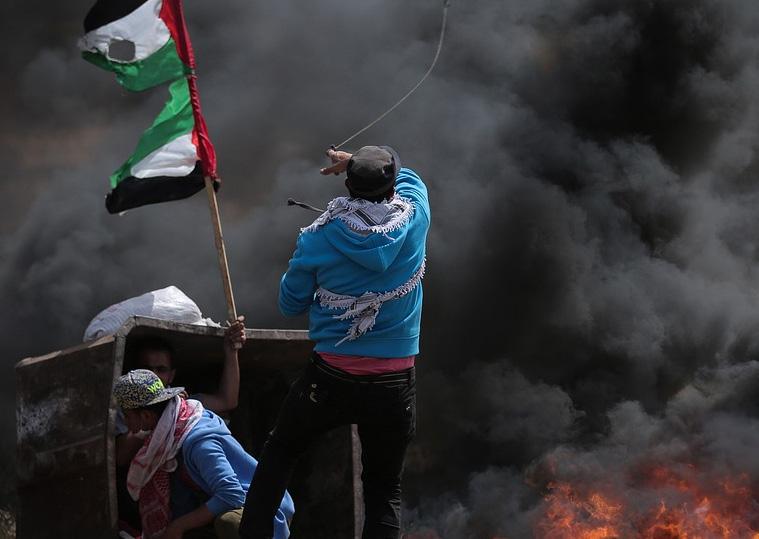
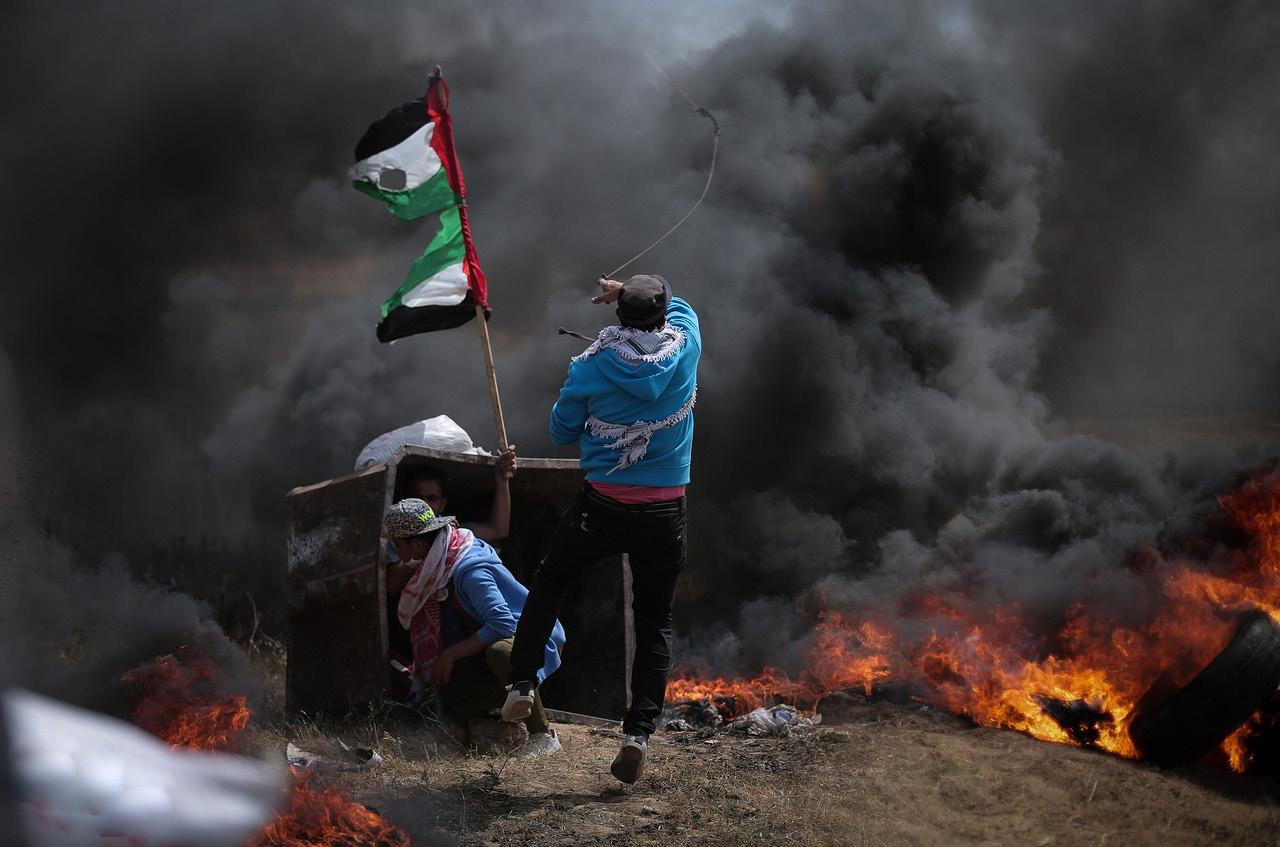
The most recent Israeli-Hamas conflict began in October 2023. Since then, near-unfathomable horrors have been reported, including the IDF’s use of genocidal AI tech (read more on page 3), and the destruction of hundreds of thousands of homes in Gaza. According to the United Nations, more than 41,000 Palestinians have been killed since the beginning of last October.
Reports of the IDF brutally abusing Palestinian prisoners have also circulated.
According to data released by The Is-
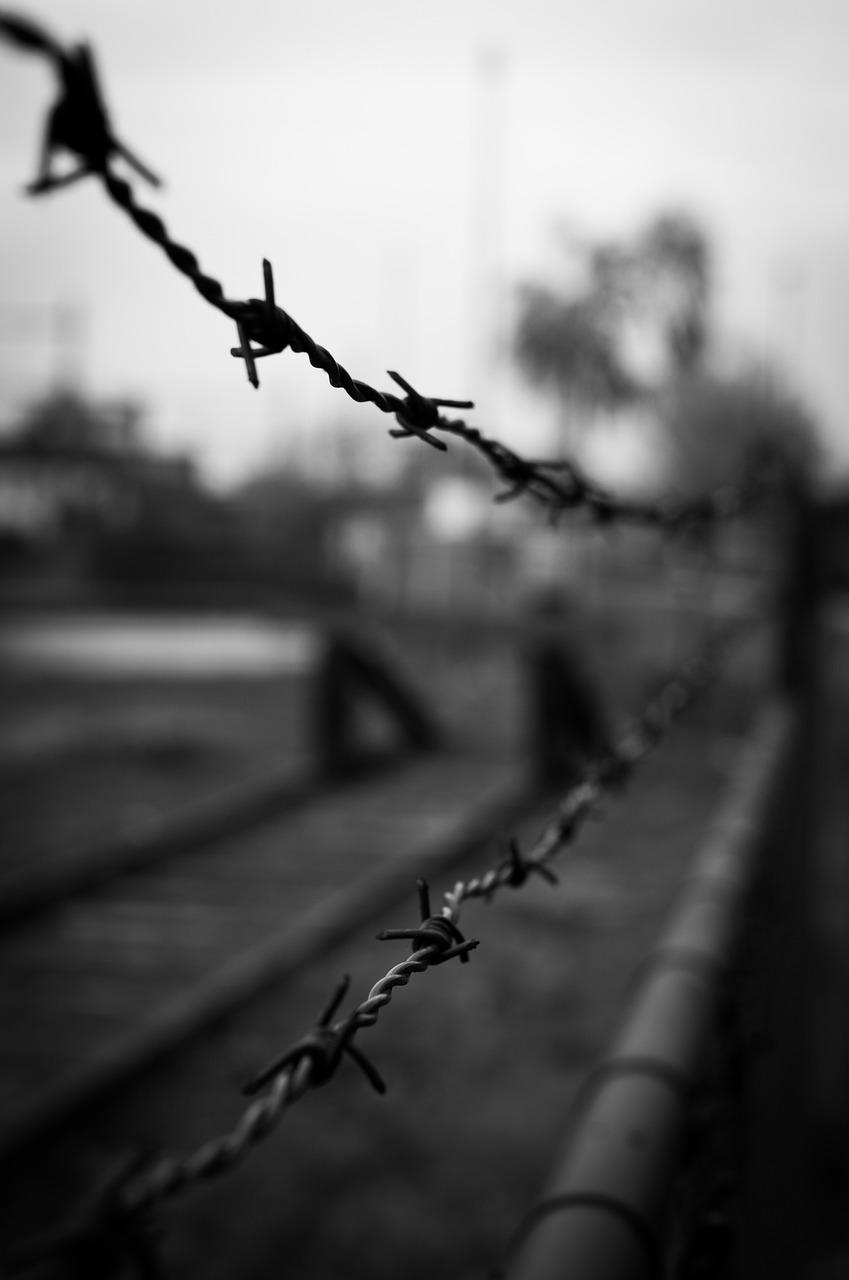
raeli Information Centre of Human Rights in the Occupied Territories (B’Tselem),“at the end of June 2024, the Israel Prison Service (IPS) was holding 9,440 Palestinians in detention or in prison on what it defined ‘security’ grounds, including 1,761 from the Gaza Strip.” Furthermore, B’Tselem reports that 1,526 Palestinians are being held for “being in Israel illegally.”
B’Tselem also reports that Palestinians are, on occasion, held in “military facilities” which release figures with “significant” time delays and do not share details about the legal standing of Palestinian inmates at the facilities.
B’Tselem’s website claims to be working towards a future where “the Israeli occupation and apartheid regime end.”
An article published by the Guardian discusses a months long investigation carried out by B’Tselem wherein 5 former Palestinian prisoners were interviewed. The five prisoners were kept in centers run by the Israel Defence Forces (IDF), and detail the treatment of prisoners by the IDF.
Yuli Novak, B’Tselem’s executive director claimed to have expected to find sporadic cases of extreme treatment. Novak told the Guardian that the emerging accounts were far from the sporadic cases expected.
“We were shocked by the scale of what we heard. It is uncomfortable as an Israeli-Palestinian organisation to say Israel is running torture camps. But we realized that is what we are looking at,” Novak states.
B’Tselem suggested that the systemic torture should be classed as an IDF policy of “institutionalized abuse.”
In an article published by the Associated Press in August 2024, released prisoners recounted how the conditions in prisons have worsened since October 7, 2023, and spoke of lasting trauma.
“At night, he hallucinates and stands in the middle of the house, in shock or remembering the torment and pain he went through,” said Aya Abayat, speaking about his cousin, former prisoner Muazzaz Abayat. Muazzaz could only muster the strength to say that he was regularly beaten.
Earlier in July, reports of nine Israeli soldiers being detained for sodomizing a Palestinian prisoner in the desert base of Sde Teiman was also released by the Associated Press
Five of the nine Israeli soldiers have been released and deny all charges.
The IDF claims that it “rejects outright allegations concerning systematic abuse of detainees in detention facilities” and acts “in accordance with Israeli law and international law.”
The Israeli National Security Minister, Itamar Ben Gvir, according to the Associated Press,“boast[s] that prisons will no longer be ‘summer campus’ under his watch.”
The testimonies of former prisoners tell an entirely different story: one where
A former prisoner interviewed by B’Tselem spoke about prolific mistreatment that included “severe beatings and sexual violence” as well as “starvation rations, refusal of medical care, and deprivation of basic needs including water, daylight, electricity and sanitation, including soap and sanitary pads for women.”
nazeemah noorally
It’s been nearly 11 months since October 7, 2023, the onset of the current humanitarian crisis in Gaza. Bombings and airstrikes have led to extensive loss of life, injuries, and the destruction of infrastructure. Civilians, including children, have borne the brunt of these attacks, as schools, homes, and hospitals have become targets.
The impact of this crisis ex-
tends far beyond the physical damage. Stories from the ground reveal the psychological trauma inflicted on the population.
This stark reality, and the countless testimonies referencing it, is echoed in a statement by Nour Hammad, one of the World Food Programme’s Communications Officers.
Hammad left Alzahra last November due to the war and now lives in Central Gaza with her siblings. Despite severe shortages of water and electricity, she considers herself fortunate to have a roof over her head.
At one point, she says “I love Gaza, but I’ve always seen it like a tiny prison. These last 10 months feel like 10 years. It sometimes feels like a hangman’s noose is around your neck. Some days, the noose is so tight you can barely take a breath. But other days I feel capable, cheerful, ready to persevere.”
While global headlines celebrate “Back to School,” Gaza’s children face a dire reality. There is no back-to-school for these children. The walls of schools and universities are crumbled by constant attacks and bombings. The lack of safety, compounded by the block-
Israeli prisons are inhumane, the stuff of nightmares.
Munthir Amira’s testimony to the Associated Press shared that 13 people shared a single, sparsely furnished cell, with limited blankets and only six beds. During the winter, Amira said the cell was freezing.
Prisoners “were handcuffed and bent over” to use the washroom, the Associated Press reports. The brutality of IDF guards drove prisoners to suicide, according to Amira’s testimony. He recounted a situation to the Associated Press where another inmate attempted suicide “by jumping off a high fence.”
Amira and his cellmates watched through their window, and when they attempted to signal for help, “soldiers with two large dogs entered their cell, bound their hands, lined them up in the corridor, and beat them, including on their genitals.”
Many prisoners could not even speak of the abuse they endured. An unnamed prisoner told the Associated Press, “I just spent two months in prison… I don’t want to go back.”
shivangi sharma & allister white news writer & news editor
ade, means that Gaza’s children are deprived of the fundamental right to education.
The Associated Press explains that 625,000 school-aged children in Gaza have lost an entire year of education. Now, they’re entering a second school year with schools shut down and in ruin.
The United Nations Human Rights office of the High Commissioner’s April 18 press release stated that “after six months of military assault, more than 5,479 students, 261 teachers, and 95 university professors have been killed in Gaza.” Those figures have grown in recent months.
In response, Islamic Relief Canada (IRC) organized a bus campaign in Toronto in collaboration with Save the Children (STC) to create a campaign featuring buses driving through downtown Toronto. According to a press release by STC, “The buses…represent the staggering reality that over 200 school buses would be required to transport the number of Palestinian children who have lost their lives in the past 11 months.”
According to a recent UNICEF report, at least 45,000 first graders in Gaza are unable to start school due to the ongoing genocide. “Children in the Gaza Strip have lost their homes, family members, friends, safety, and routine,” said
Adele Khodr, UNICEF’s Regional Director for the Middle East and North Africa. “They have also lost the sanctuary and stimulation provided by school, putting their bright futures at risk.”
According to UNICEF’s report, schools in Gaza have been closed since October 2023. This unprecedented interruption has left 39,000 students unable to complete their final year and take crucial exams.
Students in the West Bank and East Jerusalem are also affected by violence and restrictions on movement. To address the crisis, UNICEF and partners have set up 39 Temporary Learning Spaces in Gaza, serving over 12,400 students and providing emergency learning kits and mental health support.
“Children remain eager to learn. Every time I meet with children… they ask when they can go back to school,” writes UNICEF’s Jane Courtney. Amidst the turmoil, the international community can help by rallying to provide humanitarian aid but also to push for a lasting ceasefire that works towards a comprehensive solution addressing the immediate and long-term needs of the population affected.
As Nelson Mandela states: “We know too well that our freedom is incomplete without the freedom of the Palestinians.”
Experiences, perspectives on this summer’s student movement
shivangi sharma
news writer
The Carillon recently spoke to Bangladeshi students on campus who shared perspectives on the recent Bangladeshi student movement and protests against Sheikh Hasina’s former government.
Fariya Jahan, a fourth year international Bangladeshi student pursuing a bachelor’s degree in Biology described the time during a 4-G blackout enacted by Sheikh Hasina’s government as a “horrible nightmare.” “In two words –horrible nightmare – only I was
students,” said Nur Fatima Mim, a fourth year international student from Bangladesh studying Software Systems Development.
Students also spoke at length about a history of oppression.
“Historically, many protests have occurred in Bangladesh over [the] last 5 decades driven by a mix of political, social, and economic issues… student protests in July were initially started by dissatisfaction with a government quota system that reserved a significant portion of government jobs for special categories… This system was viewed as a way to ensure jobs for the ruling party Bangladesh Awami League’s (BAL)
es in Bangladesh during the protests in conversation with the Carillon. “I was there during the protest […] the situation was so adverse that I thought that I wouldn’t be able to make it to Canada and I thought that I should drop this semester,” Hanin shared. “There [was] killing, looting and [a] massacre going on. There was no internet connection for seven days.”
Despite this, Hanin stressed that “the students kept protesting because their human rights were abused by the then government.”
Hanin also spoke about Sheikh Hasina, labeling her “an autocratic ruler.” Hanin spoke about past perceptions of Hasina.
ly a detention center… used to make people disappear. Many important people were killed like that.”
Hanin also mentioned that there were a lot of talented people in the country without jobs and there was poverty and people suffering all while Hasina used public funds to sponsor her indulgences and personal agendas.
Hanin and her family members took part in the protests. Hanin spoke about their participation with an air of pride. “My brother [and] I… went there for the protest and my sister and my cousins, a lot of friends of mine also participated.”
students all over the world. “They have supported [us] a lot during the protests because as I told you that we didn’t have the internet connection at that time for almost one week.” Those posting information online made Hanin feel “really proud.”
“These students proved that young minds can achieve great things when put for a noble cause. After Hasina’s resignation, it was the students who came forward to help the BD army to minimize disorders in the country,” reflected Jahan.
“I feel I am actually a citizen of a free country, where I can speak my mind… this is the first
“ We would be so scared when any of our family members went outside... our parents were also scared but they… supported [us] a lot. There were lockdowns and curfews all over and students were being forced to leave but they were so brave…one of my friends even passed away.”
Faiza Hanin

actually living it. Without even a single warning, the whole country’s network was completely cut off.
“I remember I called my sister that morning and said I will call her back later. And the next time I could talk to her was 5 days later as I wasn’t able to contact anyone from Bangladesh. I was tense, scared, and anxious, so were all the people I know who are living abroad away from family,” said Jahan.
“This blackout was also intended to conceal their human rights violations, terrorist activities, and the killing of innocent students…. There were additional reports of night attacks on institutions and hostiles targeting
loyalists and exploit the system, which angered many young people who saw it as discriminatory and corrupt,” explained Jahan.
“The government announced that 56 per cent of the most lucrative government jobs would be allocated by a quota system… these reserved jobs are believed to benefit a small group affiliated with the ruling party, the Awami League,” added Fatima Mim.
The Carillon also spoke to Faiza Hanin, a first year international student in computer science, who participated in the protests in Bangladesh.
Hanin, who recently arrived in Regina, recalled her experienc-
“She [would] abuse people but [do so] in a way that she [would use] to show that she is doing everything for the people, for uplifting the people and for the well-being of the people.”
Hanin says this isn’t the truth, “basically she was just looting money from the people and misusing it. She used to kidnap her political rivals… one of the notorious sites regarding this protest is linked with the ‘Ayana Ghar,’ which is also known as House of Mirrors, where Hasina used to keep political rivals of the government.”
Hanin explained that the House of Mirrors, “was basical-
Fear was a prevalent emotion during the protests, according to Hanin, who stated that “we would be so scared when any of our family members went outside… our parents were also scared but they… supported [us] a lot. There were lockdowns and curfews all over and students were being forced to leave but they were so brave… one of my friends even passed away,” shared Hanin.
“She was not a close friend but I knew her and we later found out that she was killed in the protest.”
Hanin was also aware of the movements of solidarity that were carried out by Bangladeshi
time I am seeing people from all ages, social status and educational backgrounds coming together for the betterment of the country… take the protests of Bangladesh as an inspiration to fight against tyranny… As soon as you sense injustice … you mustn’t stay quiet… remember the quote by Martin Luther King Jr. ‘Injustice anywhere is a threat to justice everywhere,’” Jahan stressed.
nazeemah noorally news writer
The 2024 Summer Olympics in Paris, held from July 26 to August 11, grabbed the world’s attention with its focus on elite sports and international camaraderie. According to history.com, the first modern Olympic Games were held in 1896 in Athens, Greece.
Since then, they have become a major global event, high-
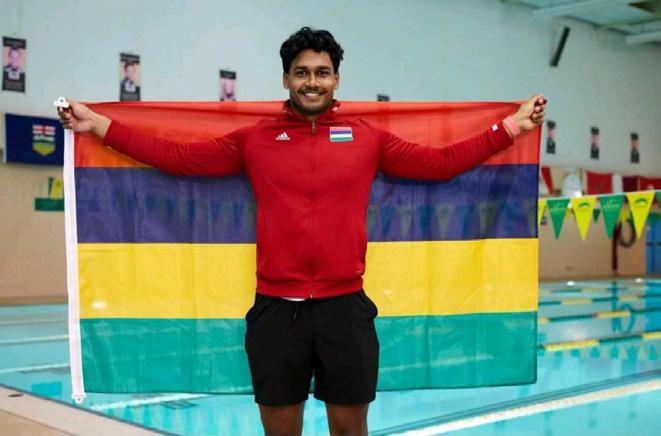
Games, Mauritius’s 11th Olympic participation, underscores the country’s enduring commitment to sports on the world stage, with previous appearances spanning from Los Angeles 1984 to Tokyo 2021.
“Competing in the Olympics was a dream come true and a memory I will cherish forever,” Purahoo said. His journey to the Olympics has been marked by impressive achievements and the support of his community. Last
at the Olympic Time Trials in Toronto, where he clocked a previously mentioned personal best of 52.25 seconds in the 100-metre freestyle, Purahoo described the moment as “surreal.”
He admitted, “I wish I had taken more time to fully appreciate the experience. However, I was more focused on the fact that I could have performed better if I had executed my race differently.” This personal best was a significant achievement that paved
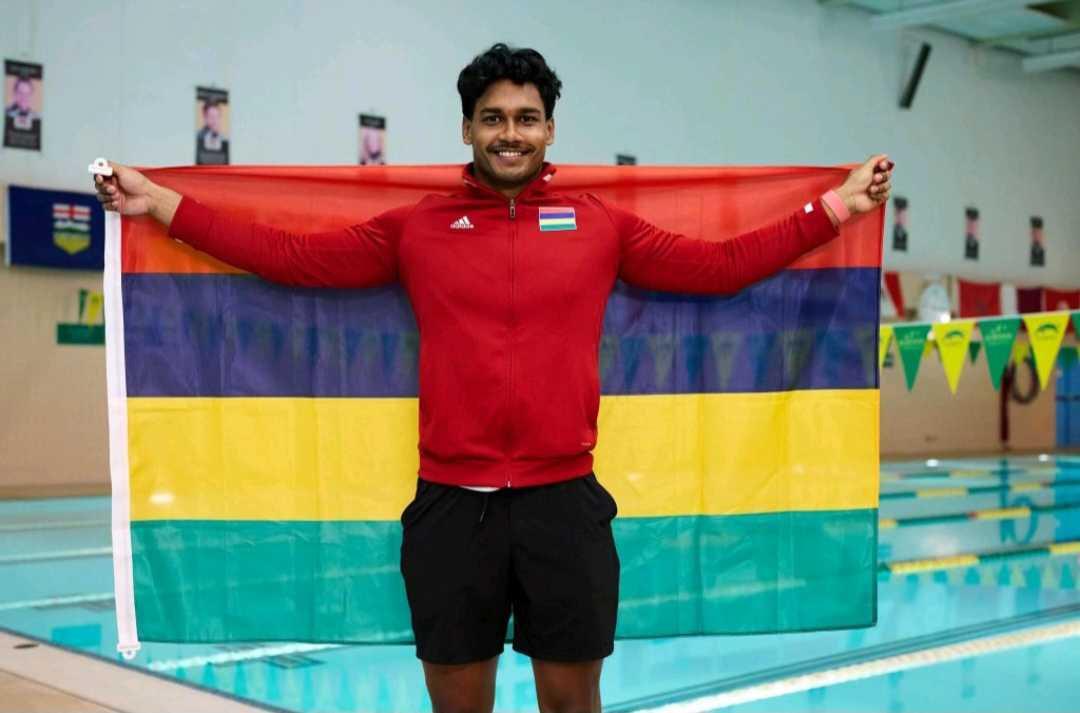
lighting the best in athletic performance and sportsmanship. This year’s 2024 Paris Games brought athletes from around the globe to compete.
Among this year’s participants was Ovesh Purahoo, a fourth-year Kinesiology and Health Studies student at the
His
year, Purahoo excelled at the Fall Breakout event, securing victories in the 50-metre freestyle, 100-metre freestyle, and 50-metre breaststroke.
His Olympic qualification was solidified by a personal best of 52.25 seconds in the 100-metre freestyle at the Olympic Time Trials in Toronto. He followed
the way for his Olympic debut, setting the stage for his competition in Paris.
Purahoo’s success at the University of Regina also played a crucial role in his journey. Having excelled in collegiate competitions like the 50-metre and 100-metre freestyle at the Fall Breakout, Purahoo acknowledges
his training and preparation for the international arena. He said, “Competing against top swimmers in Canada at events like the Canada West and U Sports conference meets was an incredible experience. These high-level competitions were crucial in getting me ready for the international arena.”
Coming from Mare d’Albert, Mauritius – a small tropical island in the Indian Ocean off the eastern coast of Madagascar – Purahoo arrived in Regina in 2021. He was drawn to the University of Regina’s renowned Kinesiology program and the opportunity to receive an Academic All-Candian scholarship.
When this scholarship was discontinued the following year, Purahoo faced significant challenges, but his resolve remained strong. “It takes a tremendous amount of hard work and resilience,” he said. “My parents have sacrificed so much for me to be here in Canada. I owe it to them to make the most of this opportunity.”
Purahoo’s success can be attributed to the strong support system he has found at the University of Regina. His athletic scholarship, which offered him domestic tuition rates, alleviated some financial pressure.
“Although I was an international student, I was charged domestic tuition, which provided a significant financial aid benefit,” he noted. “It also allowed me to work fewer hours, which was especially helpful.”
Purahoo also highlighted the support he received from his teammates and coaches, which was instrumental in his academic and athletic journey. He appreci-
a training plan that helped me qualify for the Olympics, for which I am deeply grateful,” he shared.
“It’s with great pride that I represent my island. I’ve always dreamed of doing so since I was a child. I am grateful and feel privileged to be in this position, recognizing the many people who coached, supported, and helped me get here. I am doing this for them,” he added.
When discussing his experience of representing Mauritius at the Olympics and carrying the Mauritian flag on the global stage, Purahoo responded, “Staying in touch with friends and family regularly helped me feel connected to them, even from afar. It has been an honour for me, and I am truly grateful for the support I’ve received.”
Purahoo hoped his story would inspire young athletes from small countries like Mauritius, saying, “I hope people understand that despite the struggles, there is always light at the end of the tunnel. We each have the power to write our own stories.”
Regarding advice for other student-athletes aiming for academic and athletic success, Purahoo shared, “Take the time to truly get to know yourself – how your mind works, your strengths, and your weaknesses. Strive to be 1 per cent better every day.”
Looking ahead, Ovesh Purahoo has ambitious plans. “I have the World Championships coming up in December, followed by the Commonwealth Games in 2026. As for the next Olympics, I’ll keep that part a secret for now. As a student, I also wish to pursue medical or chiropractic school.”
From the shores of Mauri-
appearance at the Paris Games, Mauritius’s 11th Olympic participation, underscores the country’s enduring commitment to sports on the world stage, with previous appearances spanning from Los Angeles 1984 to Tokyo 2021.”
Nazeemah Noorally
University of Regina (U of R). Representing his home country of Mauritius, Purahoo finished first in the 100-metre freestyle swim, marking a significant moment in his athletic career and bringing pride to the U of R and his home country Mauritius.
His appearance at the Paris
that up with 52.40 seconds in the same event at a meet in Vancouver – securing his place on his country’s Olympic squad. Purahoo attributes much of his readiness for the world stage to his experience with the University of Regina Cougars.
Reflecting on his experience
the differences between local and international events. “The competitions here in Regina are not on the same level as those at the Canadian national or world stage, so it’s difficult to compare them,” he noted.
However, he credits these collegiate meets with shaping
ates the efforts of his teammates, who drove him to practice, and the guidance of his coaches, who crafted training plans tailored to help him qualify for the Olympics.
“My teammates would drive me to practice every day during the winter. My coaches designed
tius to the prairies of Saskatchewan and the Eiffel Tower in Paris, Ovesh Purahoo’s journey shows that no dream is impossible to achieve with hard work and heart. Together, we can go far, U of R!
emma mcgill staff writer
As the weather changes and everyone works to get back into the swing of things –school, work, social lives – it can get tricky to keep up with events around the city.
“
surely put on a captivating show.
Showcased alongside DJ Verbal, this themed night is sure to display Forrest’s funk sound and provide a night of disco-inspired fun. Check out Shannon’s Facebook page for the poster, but remember to dress for the occasion (or decade)! There is no cover cost, but this night is 19+ and
Pop over to the Mackenzie Art Gallery and catch this fiery exhibition before it leaves at the end of September. Curated by Tak Pham, Audie Murray’s work uses smoke as a medium and combines contemporary ideas and Indigenous practices.
Other exhibits at the Mackenzie this fall include a vault tour-
worked in many roles with the Canadian Opera Company and many other contemporary opera companies.
The second of the performers is pianist Michael Angell, who has worked as both a clinician, entertainer, and researcher. He currently works as a lecturer in the University of Regina’s MAP
from Sunday to Thursday and 1 p.m. to 10 p.m. on Friday and Saturday.
The Cure Kitchen and Bar Open Mic Night
For every Monday in September and October, with the exception of the Thanksgiving holidays, the Cure will host their
At Moonlight Movies in the Golden Mile Mall, Regina’s discount movie theatre, admission is $1.99 every Tuesday throughout the afternoon and evening. On other days, second-run movies are only $4.99!”
Emma McGill

Here are some noteworthy suggestions that you may want to mark down on your calendar and check out.
Ella Forrest and the Great Pines
Celebrate the night made famous by the critically acclaimed 70s funk band Earth, Wind & Fire by attending a 70s and 80s-themed show at Shannon’s Pub & Grill on Saturday, Sept. 21.
Regina locals Ella Forrest and the Great Pines will perform; a five-piece funk and jazz band led by singer and songwriter Ella Forrest, who released her debut Extended Play (EP) just last year. No matter the venue, set list, or band arrangement, the Great Pines will
starts at 9 p.m..
Pass the Hat: Stand-Up Comedy
Regularly hosted at the Exchange, Pass the Hat is a night for featured stand-up comedians and audience members alike to laugh, embrace creativity, and get out on the town. Fittingly, this show is Regina’s longest-running standup comedy show hosted in Regina’s oldest live music venue.
Catch the next series of performances by local comedians on Friday, Sept 27. Doors are at 7:30 p.m., and the show starts at 8 p.m.. Attending costs $10 in advance or $15 at the door. All ages are welcome!
Audie Murray’s To Make Smoke Exhibition
style exhibition celebrating Timothy Long’s 35 years at the gallery and a film taking on the natural world and the discovery of Uranium called Into the Ether.
Adult admission for the Mackenzie is just $12.
Art Songs of Saskatchewan
For those looking to experience local talent in the form of classical musicianship, Regina’s Darke Hall is hosting three musicians trained in orchestra and concert performance for an evening showcasing Saskatchewan Art Songs.
The first musician is mezzo-soprano vocalist Andrea Ludwig, a Regina local and frequent concert performer. She has
department.
Last but not least will be Rudolph Sternadel, a violinist and musical scholar from Prague. Among the positions he holds is the head of the String Department at the University of Regina Conservatory of Performing Arts.
This showcase will take place on Sunday, Sept 29, at 3 p.m.. Tickets can be purchased through the Darke Hall website or at the door.
Antique and Vintage Market
Having taken place at the Caledonian Curling Club on Sept 13 and 14, the Queen City Antique and Vintage Market is a gem among Regina’s events. A recent market featured vintage clothing, collectables, other rare memorabilia, hand-crafted home decor, and many other precious items. Even if you don’t buy anything, visiting the market is similar to a museum experience; you can witness the material past and learn something in the process.
Though this market has passed, it’s a good idea for antique lovers to keep an eye out for the next Queen City market or any rummage sales that might be taking place around town!
A night at the movies with friends is almost always guaranteed fun, but today’s theatre prices make the whole experience much less appealing. At Moonlight Movies in the Golden Mile Mall, Regina’s discount movie theatre, admission is $1.99 every Tuesday throughout the afternoon and evening. On other days, second-run movies are only $4.99!
Movies screened recently have included Borderlands, Harold and the Purple Crayon, Garfield: The Movie, Blink Twice, and Across the River and Into the Trees. Movie times are all displayed on their website. The lobby and concessions are open from 1 p.m. to 7:30 p.m.
frequent open mic nights. This is a great place to either witness local talent coming to life as performers try out new material or get up on stage and share your own talent. Poets, musicians, and comedians are all welcome to snag a spot and share their work in a free, supportive space. For those who want to get out and see some live music, the Cure also hosts live music on a weekly basis. See their website for more details!
I Have No Idea: A Play
Written by Nathan Coppens and directed by Traci Foster, I Have No Idea is a new play that showcases the struggles of living with ADHD as an adult. According to its poster, it tells “a story about neurodiversity, the power of music, the importance of friendship, and how coffee makes everything better.”
Immerse yourself in local theatre by attending one of the six performances of the play throughout September at the Artesian: Sept 25 from 7:30 p.m. to 9:30 p.m., Sept 26 from 1 p.m. to 3 p.m. and 7:30 p.m. to 9:30 p.m., Sept 27 at 1 p.m. and 3 p.m. and 7:30 p.m. to 9:30 p.m., and on Sept 29 from 2 p.m. to 4 p.m.
Tickets are $25 for students and artists, and $30 for adults. More information and tickets can be found on the Artesian website. Get Outside
A great way to embrace what Regina has to offer without spending any money: peruse a park or two! Take a friend or three! Take a walk around Wascana, starting at the trail right next to the University of Regina campus. Whether the events you’re attending are marked on a community calendar or you just want to spend some leisure time with your friends out and about before the prairies freeze over, there are plenty of ways to explore the city.
pall
agarwal community writer
The Olympics has always been a premier place for athletes to showcase their athletic talent and push the boundaries of human potential. The 2024 Summer Olympics held in Paris brought together a cumulation of not only traditional sports but some new additions. From breaking (also known as breakdancing) to artistic swimming, boxing, and kayak cross, these new sports brought a fresh wave of excitement and diversity to the Olympics.
With much debate, people questioned the place of breakdancing as a sport to be included in the Olympics. The breaking competition included solo battles where athletes were judged on creativity, personality, technique, versatility, performance skills, and musicality.
All the reviews were mixed. Some appreciated the new addition as a form of a newer twist to the narration of the Olympics and traditional sports while some criticized its credibility as a sport.
While artistic swimming is not entirely new to the Olympics, it has been praised for its artistic precision and physical demands. While a visually appealing sport, artistic swimming requires many technical skills to perform, like the ability to tread water for an entire routine.
It also requires the swimming skills to gracefully maneuver underwater, the ability to hold your breath for long periods, and staying in sync with a team even when you are underwater. The Olympics website wrote that the People’s Republic of China’s artistic swimming team came out on top and won gold with the high score of 996.1389 points.
These new additions have brought in solid TV ratings this year, as people previously uninterested in traditional sports watched to see how the new additions trialed.
In an opinion article from the Washington Post, Daniel Pink states: “But as the International Olympic Committee, the 200-plus participating nations[,] and all of us sports fans ponder the 2028 Games in Los Angeles, we have a chance to think bigger — to bring this quadrennial spectacle more fully into the 21st century.”
There is a hope that the future Olympics will see a newer perspective and challenge everyone to think beyond what we know of it. There is a possibility of different narration to take over the current story of challenging resilience, durability, and potential.
Kayak cross came with positive feedback in the viewership of the Olympics as Olympians navigated obstacles and hurdles down a whitewater course. People praised the sport, and overall, the

reaction was very positive, likely due to its chaotic and thrilling nature.
With water being splashed all over and teams paddling through the rough waters and overcoming potential challenges, it just doubles down on the traditional values of a sport, especially those that have historically qualified for the Olympics.
The debut of this sport was a pure success, with people cheering and anticipating it as a contin-
Skip the groceries — the Luther Cafeteria takes the stress out of cooking!
You don’t need to be a Luther student or have a meal plan to dine in our cafeteria. Order single items off the menu or indulge in our all-you-care-to-eat style buffet, seven days a week.
Students love gathering for homestyle meals like the weekend brunch buffet, lasagna, ribs, and Sunday family-style dinners.
ued addition in the future due to its unpredictability and exciting nature. Its ability to refresh the program and inspire a new generation of athletes in a sport like that was well taken.
It’s never too late to talk about the Olympics, especially with a broader shift in the view of athletics this year. The Olympics are no longer just a showcase of physical endurance, strength, and resilience but also the launchpad for artistic expression, cultural
creativity, and global diversity.
The newer additions not only enriched the program experience but also opened doors for new athletes and fans to broaden their horizons, thinking bigger and better.
and à la carte dining
seven days a week LEARN ABOUT MEAL PLANS
Anyone can purchase a Luther Cafeteria meal plan or declining balance meal card.

A summit in the bustling city
nazeemah
noorally news writer
This August, before the fall semester began, I had the opportunity to visit Toronto, a city that effortlessly blends the energy of urban life with the calm of nature. The trip wasn’t just a chance for me to explore the bustling city, but also to attend the National Council of Canadian Muslims (NCCM) Student Leadership Summit, a two-day event (which was very much worth it).
Originating from within the Canadian Muslim community, the NCCM is a leading voice for Muslim civic engagement and the promotion of human rights. On August 23 and 24, the NCCM held the first-ever student leadership summit which gathered over 200 students from different provinces to gain hands-on experience from veteran advocates, leaders, and opportunity engagement experts.
My adventure began at Union Station, the heart of Toronto’s bustling downtown. As soon as I stepped off the train, I was struck by the grand architecture of the station, a blend of old-world charm and modern efficiency. The soaring ceilings and the constant flow of travelers from all walks of life created an atmosphere that was both historic and vibrant.
Venturing out into the city, I quickly realized that Toronto is a place of contrasts. Skyscrapers towered above me, casting shadows over quaint cafes and historic buildings. The streets were alive with the sounds of different languages, reflecting the city’s multicultural fabric.
I made my way to the iconic CN Tower, a must-see for any visitor to Toronto. Standing 553 meters tall, the tower dominates the skyline, and I couldn’t resist the urge to take the elevator ride to the top.
The ascent to the observation deck was an experience in itself. As the elevator raced upward, I watched the city shrink below me. From the top, Toronto sprawled out in all directions, with Lake Ontario shimmering in the distance. The glass floor allowed me to look straight down to the bustling streets far below.
After the excitement of the CN Tower, I was ready to experience a different side of Toronto. I headed east to the Scarborough Bluffs, a natural wonder that feels worlds away from the city’s hustle and bustle. The Bluffs, with their towering cliffs and serene beaches, offered a peaceful retreat. Walking along the trails, I was struck by the contrast between the rugged cliffs and the calm waters of Lake Ontario. The Bluffs are definitely a must add to one’s bucket list for any nature lover.
The natural beauty of the Bluffs was
a reminder of the importance of preserving such spaces, even in a bustling metropolis. The peacefulness of the area, combined with the stunning views, provided a much-needed moment of reflection before the busy days ahead.
The main purpose of my trip to Toronto was to attend the NCCM Student Leadership Summit, a two-day event designed to empower young Muslim leaders across Canada. The summit was held at the Toronto Metropolitan University and as I arrived, I was greeted by a diverse group of students, all eager to engage and learn. The atmosphere was charged with a sense of purpose and camaraderie, as we all shared a common goal: to become more effective leaders within our communities.
The first day of the summit focused on identity and leadership. We participated in workshops that encouraged us to reflect on our roles as leaders and how our personal identities shape our leadership styles.
This discussion was particularly meaningful to me, as it resonated with my own experiences as a student and a member of the Muslim community in Canada. It was empowering to share my story with others and hear about the diverse experiences of fellow participants as well as prominent guest speakers. The workshop emphasized the importance of recognizing and embracing our unique identities as a source of strength in our leadership journeys.
The evening session featured speeches by prominent Muslim leaders who spoke about the challenges and opportunities facing Muslim communities in Canada today. The speech was both inspiring and thought-provoking, highlighting the importance of resilience, unity, and proactive engagement in addressing these challenges. It was a powerful reminder that leadership is not just about taking charge but also about serving others and standing up for justice and equality.
The second day of the summit was dedicated to advocacy and activism. We delved into the practical aspects of civic engagement, learning how to effectively mobilize our communities for positive change. One of the sessions focused on grassroots organizing, teaching us how to build coalitions, plan campaigns, and use social media as a tool for advocacy. It was an eye-opening experience that provided me with valuable skills that I plan to apply in my own advocacy work.
A highlight of the second day was a panel discussion featuring seasoned activists and community leaders. Their stories of resilience and determination were incredibly inspiring. They spoke about the

importance of persistence in the face of adversity, the power of collective action, and the need to remain hopeful even when progress seems slow. These lessons resonated deeply with me, reinforcing my commitment to social justice and community empowerment.
One of the key takeaways from the summit was the importance of building strong networks. The connections I made with fellow students and mentors were invaluable. We shared experiences, exchanged ideas, and supported each other in our leadership journeys.
I left the event feeling more confident in my ability to contribute to the betterment of my community and more connected to a broader network of like-minded individuals who are equally passionate about making a difference.
As I prepare to return to university, the experiences I had in Toronto will undoubtedly influence my approach to both my studies and my extracurricular activities. The city itself, with its vibrant culture and diverse communities, reminded me of the importance of embracing different perspectives. Toronto’s ability to blend modernity with natural beauty taught me the value of balance in life – how to pursue ambition while also taking time to reflect and recharge.
The NCCM Student Leadership Summit, on the other hand, reinforced my commitment to social justice and equipped me with the tools to be a more effective leader. The knowledge and skills I gained, combined with the inspiration from the stories of others, have piqued my interest to engage more deeply with issues that affect our society, both locally and nationally. Toronto’s blend of urban and natural beauty provided the perfect backdrop for this journey of exploration and growth. Whether it was standing atop the CN Tower, gazing out at the Scarborough Bluffs, or engaging in thought-provoking discussions at the summit, each experience contributed to a deeper understanding of myself and my place in the world.
This experience has motivated me to share what I have learned with others, starting with my circle of connections at the university. This trip has been an eye-opener on how one becomes a leader and changemaker not only in name but also by actively contributing to the creation of policies and initiatives that promote equity and justice. Moving forward, I hope to apply the knowledge and lessons learned both on an academic and personal level.
“Toronto’s ability to blend modernity with natural beauty taught me the value of balance in life – how to pursue ambition while also taking time to reflect and recharge.” Nazeemah Noorally
In the world of jaw dropping cinema, beautiful cinematography, and empowering story-telling, nothing beats a simple reality TV show. From Netflix’s Love Is Blind franchise, to TLC’s 90-day Fiancé franchise, reality TV shows have one thing in common, how they showcase the good, the bad, and the downright shocking.
It’s my guilty pleasure. It has become a part of my night-time routine. Picture getting back home after a long day, taking a nice shower, doing your night-time skincare routine, only to watch some good reality TV and munch on some snacks. It is the perfect way to end the day. With all of its chaos, reality TV shows somehow calm my mind. It is over-stimulating but calming at the same time. It’s a dopamine rush.
The reality TV show that is near and dear to me happens to be the entirety of the 90-day Fiancé franchise by TLC. It is a chaotic mess, but it is an entertaining chaotic mess.
90-day Fiancé has many shows within. It is a universe. There are shows within shows, within shows. It primarily focuses on couples who fall in love with people from across the world, and the journey they take to get to the path of marriage, and the journey of getting to America on the fiancé visa.
The typical cast features the
TUESDAY
WEDNESDAY
THURSDAY
FRIDAY
SATURDAY
stereotypical American who believes the rest of the world should be exactly like America, the ignorant westerner who travels to other countries in hopes to take advantage of someone who lacks resources, and the melodramatic person who screams and yells if anything does not go their way.
I first started watching 90-day Fiancé in 2016. I enjoyed being able to learn about different parts of the world and their customs, and the way these customs make their way into relationships. Relationships are already complicated enough. Throw in cultural norms, diverse beliefs, and long distance, and the end result is a relationship that has different circumstances from that which society perceives as a ‘traditional’ relationship.
What stands out to me about 90-day Fiancé is the focus on dysfunctional relationships. It is sad to see TV producers taking advantage of people who would benefit from time away from the limelight and some much needed therapy.

Part of me also feels guilty for watching dysfunction and drama and chaos. It should not be marketed as entertainment. Unfortunately, money makes the world go around. Chaos sells. Drama sells. And as awful as it is to type this out, toxicity sells.
It is the reason why people (including myself) enjoy watching reality shows such as Love is Blind, where people are thrown into a situation where they fall in love with someone without seeing them, and end up marrying them. Only for them to navigate dysfunction once they are able to see each other in real life and try to develop some semblance of a relationship.
Reality TV shows promote
unhealthy dynamics and unhealthy relationships. On the other side, although rare, they can portray some positivity within all the drama. What makes reality TV shows even more interesting now, is that for the first time, we have the ability to watch reality TV shows from different parts of the world thanks to subscription services ranging from Disney+ to Netflix. We have access to
just from our screens. Although reality TV has many pitfalls and shortcomings, it is also a way of understanding how people lead different and unique lives in this little old planet that we all share.
This year, keep yourself safe
amina salah staff writer
Picture it. The University of Regina in 2024. You are minding your business, going to your next class on campus. Suddenly, you see someone approaching you. They compliment your shoes. Or your hair. Or your outfit. You are flattered, so you decide to engage. They seem really nice. They are warm and friendly. You’ve had a difficult semester. You feel lonely. You are having a difficult time making friends.
With each conversation, you lower your guard. Before you know it, you exchange phone numbers with this friendly person, and you have been invited to an exciting event where there is free food and refreshments in a secluded location. Like many of us, food is a soft spot for you, so of course, you decide it wouldn’t hurt to go to this event and potentially meet other people and make some friends.
When you go there, you have fun. However, each time you go, a trap is being set for you, and months down the line, you might find out that this event is about some ideology you might not know enough about, and you might find yourself being pressured into doing things you do not want to engage in.
This is one of the common ways people get trapped in cults. Unfortunately, university campuses are a main target for cults and their recruiters, scoping out the scene for new victims.
As a student, you are vulnerable because you are trying to find a place where you fit in. Cults are well aware of this, and what better place for them to lure unassuming people than a campus bustling with students roaming around and nobody physically there to watch out for the safety of these students?
Cults do not have your best interest at heart, although they might seem like they do. It is all a façade. It is a trap meant to push you into their world.
Cults know that most students often do not have much life experience. They are aware that many students wish they could make new friends. Additionally, many students move away from home to go to school.
Thus, separation from friends and family creates a sense of loneliness. This separation creates a gap for students. This is where cults enter the scene as they swoop in to fill this gap.
Being in university can be lonely and crippling. We are surrounded by hundreds, if not thousands of students, but the presence of community on campus is dying. Students do not feel protected. Students do not have people to look out for their safe-

ty and security. Students do not have anyone to look out for their emotional and mental well-being.
As your fellow student, I encourage you to go out of your way to talk to people you see daily. A kind word can do so much for someone’s day. If not, a simple
smile can go a long way. We do not know what the many faces we see every day are going through.
It is our duty to create an environment where people feel safe, they feel seen, and they can thrive rather than just survive. This is how we bring back community; by looking out for each other. In the end, this is how we protect ourselves and our friends from cults roaming around campus looking for vulnerable people to recruit.