

the staff editor-in-chief holly funk editor@carillonregina.com
executive director thomas czinkota business@carillonregina.com
production manager shae sackman production@carillonregina.com
communications amin malakootikhah comms@carillonregina.com
web + advertising manager jaedyn whittal web@carillonregina.com
graphics editor lee lim graphics@carillonregina.com
copy editor emilie wren copyeditor@carillonregina.com
news editor mindy gregory news@carillonregina.com
a&c editor mikayla tallon arts@carillonregina.com
s&h editor vacant sports@carillonregina.com
op-ed editor hammad ali op-ed@carillonregina.com
distribution manager sun sidhu distribution@carillonregina.com
staff writer victoria baht
staff writer nazeemah noorally
staff writer maren savarese knopf
news writer shivangi sharma
a&c writer will bright s&h writer pall agarwal
contributors
wiliam bessai-saul, allister white board of directors thomas czinkota, holly funk, tayef ahmed, harnisha bhatt, diya patel, mishree patel, ghanshyam pravinbhai savaliya, rishi thakkar, mikayla tallon, and sun sidhu
the paper
227 Riddell Centre @ the University of Regina 3737 Wascana Parkway, Regina, SK, Canada S4S 0A2 www.carillonregina.com | (306) 586 8867
Printed by Star Press Inc, Wainwright, AB
The Carillon welcomes contributions.
Opinions expressed in the pages of the Carillon are entirely those of the author, and do not necessarily reflect those of The Carillon Newspaper Inc. Opinions expressed in advertisements appearing in the Carillon are those of the advertisers, and not necessarily of The Carillon Newspaper Inc. or its staff
The Carillon is published no less than 11 times each semester during the fall and winter semesters and periodically throughout the summer. The Carillon is published by the Carillon Newspaper Inc., a non-profit organization.
land acknowledgement
The Carillon is written on Treaty 4 territory. As such, staff recognize that we are living, working, and telling stories on and of Indigenous lands. We recognize that we are on the traditional homelands of the Cree, Saulteaux, Nakota, Lakota, and Dakota peoples, along with the homeland of the Métis nation. The Carillon understands that it is pointless to acknowledge the land on which we work without demonstrating our commitment to telling stories and prioritizing voices that further the return of this land to its sacred place. the manifesto
In keeping with our reckless, devil-may-care image, our office has absolutely no concrete information on the Carillon’s formative years readily available. What follows is the story that’s been passed down from editor to editor for over sixty years.
In the late 1950s, the University of Regina planned the construction of several new buildings on the campus grounds. One of these proposed buildlings was a belltower on the academic green. If you look out on the academic green today, the first thing you’ll notice is that it has absolutely nothing resembling a belltower.
The University never got a belltower, but what it did get was the Carillon, a newspaper that serves as a symbolic bell tower on campus, a loud and clear voice belonging to each and every student. the people’s friend; the tyrant’s foe

Once again, we’re proud to feature both the work of staff and contributors who put their heart and soul into their
Once again, we welcome you to read through the words of those who aren’t just the










editor: mindy gregory news@carillonregina.com the carillon | october 5, 2023
A relatively modern term for an identity that has always existed, and always will
shivangi sharma news writer
In Kelly Geraldine Malone’s article “Journey of Indigenous Gender Identity,” Jack Saddleback, a Two-Spirit transgender man who was raised on the Samson Cree Nation in Maskwacis, Alberta, talks about how he was ‘exorcized’ when a medicine man believed that he had another spirit inside his body, deceiving him to think he was a man. It was in that moment that he realized how much colonization had permeated its way into First Nations cultures and traditions.
As people all over the world try to break their way out of the Eurocentric gender binary identities, more and more Indigenous people are coming out as Two-Spirit. Lori Campbell, Associate Vice-President of Indigenous Engagement at the University of Regina who identifies as a Two-Spirit individual, spoke to the Carillon about Two-Spirit identity and what it represents for her community. Campbell emphasizes that it can mean different things to different people and communities. It is important to recognize that there are different interpretations.
“Different people understand it a little differently. For me, the Elders, and the community I belong to, I think about it in a way that in Indigenous cultures people are often defined by their roles and responsibilities, so we don’t even have pronouns in the same way as ‘he’ and ‘she,’” she said.
Campbell mentions that Two-Spirit identity has always existed in Indigenous culture and communities even though the specific term was coined only recently. Members were defined by their roles in the community, and languages were not based on binary gender rules. Remembering her years growing up, she says, “When I used to listen to my old aunty speak who was a Cree language speaker and didn’t speak as much English, she’d be talking about somebody and she’d be saying, ‘oh your uncle, he did this, and then she went and did this.’ So, she switched the pronouns because you understood who they were talking about by the context and how they were talking”.
“And for me, Two-Spirit people were also people who played a role within community and were recognized in that way. It was a different identified role. It is difficult to explain, but I think that we always existed and there were terms that identified us in a different way than a gender binary in most of our languages. But it was also defined by our roles, like there were terms for someone who did a role that was not quite their common role. It is a culturally-specific term that is also a modern term because it was developed in the 1990s as a kind of a common term for us to identify ourselves as Indigenous.”
Campbell also emphasizes that Two-Spirit identity goes beyond an individual sexual identity and that it has broader implica-

“It is more than speaking about our sexuality, it is speaking about how we exist and identify and conduct ourselves in our role in the broader community.”
Lori Campbell
tions. “It is more than speaking about our sexuality, it is speaking about how we exist and identify and conduct ourselves in our role in the broader community. So,
when I say I’m Two-Spirit I am also speaking about my cultural commitment and responsibilities as a person from that community.”
and address the same. We understand more and more about the dire impacts of colonization the more we learn about Indigenous communities, their history, languages, and cultures, none of which found its way in history from the colonizers’ point of view. It is essential to educate ourselves about the actual history of these communities lest they should be erased through negligence as well as violence. Moreso for the younger Indigenous people who struggle as it is due to intergenerational trauma and the challenges that they must overcome to break out of the same.
Campbell recognizes the importance of awareness and representation especially as a Two-Spirit individual in a leadership role. “As I have gotten older, I have recognized how important it is to be recognized and validated for younger Two-Spirit Indigenous people. So, as a Two-Spirit person of a certain age who gets to have the privilege of holding a leadership role in a mainstream organization, I want to make it known that I am Two-Spirit because I want, for one, for Two-Spirit people to see that we can exist and thrive in all spaces and all spaces are for us and we deserve to be in all spaces.”
She also mentions that it is important for her non-Indigenous, non-queer colleagues to understand Two-Spirit identity so that a more inclusive and respectful environment can be created overall. “For my straight colleagues, I also want them to learn as well. I want to be visible in that way so that they know that we’ve kind of been erased just by erasure, like no mention of us, which can make you feel very invisible. So, I do make it known. My Zoom will say ‘Lori Campbell (Two-Spirit)’ whether I am meeting with the government, deputy commissioner, the president, or the students. And I do take that very seriously and I also try to make sure in all our conversations and policy discussions that those types of things are considered in how we’re making decisions so that we don’t directly cause harm or accidentally cause harm”, she said.
Be it Campbell, Saddleback, or the thousands of other Indigenous people who have and are coming out and identifying as Two-Spirit people, an aim of all has been that for recognition. This journey is still far from reaching its conclusion and a lot needs to be done and addressed still. It therefore becomes an individual responsibility for each and every one of us to actively educate ourselves and endeavour to understand gender identity from a non-European standpoint. If we cannot affect any good we must at least try to not do any harm, accidentally or otherwise.
Campbell’s comments speak volumes about how restrictive the English language is for Indigenous communities, and that no efforts were made to recognize
Experienced local activist talks about the past, present, and future of activism
mindy gregory news editor
The Carillon asked Florence Stratton, a retired English professor at the University of Regina: is activism futile?
“Of course not!” was the emphatic reply of an individual with decades of experience advocating for peace and justice. “Those of us engaged in the struggle for peace and justice don’t always win. But we do sometimes.”
In conversation with Stratton on the past, present, and future of activism, the Carillon considered the University of Regina’s Vision Statement. What communities might we live in if students embodied the first step and sought to reflect the world in which we want to live – a world that values empowered citizens? That is the world that Stratton strives for. In her words, “There is no other option.”
What is an empowered citizen? Duncan Green, Professor in Practice in International Development at the London School of Economics, described the earliest stage of empowerment as discovering the power within our self. It takes place in the hearts and minds of citizens who ask and answer questions: ‘Do I have rights? Am I a fit person to express a view? Am I willing and able to speak up, and what will happen if I do?’
At university, students explore unanswered questions, including those of the self. The values of the university are there to guide investigation and reflection. One may not always be aware of the internal process and find themself arriving “accidentally,” as Stratton did, in a situation that requires some of those questions answered.
Stratton was a graduate student at the University of Wisconsin during the time of the Vietnam War. She was aware but hadn’t been taking part in any of the ongoing activism against the war. On exiting class one day, she stepped outside and noticed that students around her were crying. “Oh, these emotional Americans. They’re always crying about something!” Then Stratton realized that she too was crying.
It wasn’t emotion. Protesting students had occupied a Dow Chemical building on campus. The company’s products included napalm, a chemical compound used in the war with devasting collateral damages to communities and citizens. The university called the police that day, who deployed tear gas on the students. Stratton recalled being infuriated as she saw students coming out of the occupied building knocked to the ground by police with clubs “bashing them on their heads.”
Green explained that after finding the power within comes the process through which people engage with each other, and with decision-makers, to come together and create improvements. Engagement can be peaceful, such as
in the day-to-day exercise of the social contract between citizen and government, but it may also involve disagreement and conflict, especially when power must be surrendered by the powerful to empower those beneath them.
In Stratton’s case, conflict had arrived, and looking around she saw a group of students pushing a police car into Lake Mendota. “I just went and joined them. It wasn’t easy but we got it in and then I thought about my student visa. I didn’t want to get deported, so I got out of there”.
A university that values em-
powered citizens is one that is preparing its members to use their expertise to serve each other. How we do so will vary, just as we vary as individuals. For Stratton, her experience at university and later teaching in Sierra Leone started her on a journey of decolonization that she is “still learning” about today, recognizing that colonialism in Canada is ongoing.
The Carillon asked Stratton to describe her experience with activism in terms of maintaining a positive outlook. “When I am feeling really low, I remember the ones we have won,” she replied.
Some of the local wins include: ‘Friends of Regina Libraries’ saving the Connaught library from demolition and keeping the Dunlop Art Gallery and Prairie History Room in operation in 2003, Regina peace groups succeeding in keeping military training out of high schools in 2016, and ‘No Business in The Park’ succeeding in keeping large business development out of Wascana Park in 2022. “Sometimes we are really loud and strategic.”
Green agreed that the activism of empowered citizens doesn’t always lead to victory
“There is no other option.”
Florence Stratton

but there are common elements that play a role when they do. These include the importance of democratic space; diverse, nationally grounded coalitions; alliances between civil society organizations; and “contentiousness politics for contentious issues.”
Further, effective and accountable governments can empower citizens through everything from promoting norms of inclusion and non-discrimination to ensuring their own transparency and accountability. But governments are increasingly doing the opposite and repressing rather than empowering. Freedom House, an independent watchdog organization, published a Special Report in 2020 that found the condition of democracy and human rights had grown worse in 80 countries since the beginning of the COVID-19 pandemic.
In a global decline of democracy, citizens must increasingly ally with one another and at times, as Green said, participate in “contentiousness politics.” For example, the City of Regina was recently in national news for the repression of empowered citizenship. The Toronto Star reported on the forcible takedown of the City Hall tent encampment on July 28, 2023 under the title “People taken into custody as police dismantle encampment in front of Regina City Hall.” Experienced activist, Stratton, was one of the people taken into custody as police forced dozens of houseless individuals to leave the encampment.
Stratton shared with the Carillon the reasons why she chose to be arrested for the first time that day, after decades of activism for peace and justice. “For two reasons: Houselessness is the injustice that outrages me more than any other, and I had just seen the police pull an Indigenous man out of his wheelchair and drag him along the ground.”
Activists like Stratton are increasingly needed. Green described the nightmare of power holders as waking one morning to find that thousands of ordinary citizens had gathered in the main square of the capital demanding justice, vowing not to go home until they got it.
Stratton sees growth in local activism. There have been two large rallies at the Saskatchewan Legislative building this year: the ‘Rally for Public Education’ and the rally ‘Show Up for Saskatchewan’s Trans Youth.’ “Sometimes in the past, there have only been 3-20 people at events like these.”
Exercising democratic rights to deter governments from repressing the long-term building blocks of citizen empowerment like education and personal safety is a goal of activism. Activism can be the expression of our desire to reflect the world in which we want to live. As for the future? Stratton hopes to see some change: “I hope that it will look different because there are more and more of us out there.”
victoria baht staff writer
Over the last several fall semesters, the Fall Break took place in November. This year it has been moved forward to October.
For example, according to the academic schedule, in 2022 the break started on November 7 and went until November 12. This year, our Fall Break is now taking place starting October 9 and ending October 15. Some students have opinions about this change, and we want to share some of those opinions.
The Carillon went on the move to try and figure out what some student opinions were. On Tuesday last week right around lunch hour, I headed down to the Riddell Centre and the Education building to go and talk to some students. I chatted with three different people, all from different years of studies, and all from different faculties. Quite honestly, they also all had different opinions on the Fall Break and when it should take place.
Jazlyn Gill, a third-year student studying for a Bachelor of Kinesiology and a Major in Human Kinetics stated: “I think it is good and beneficial as you
get to spend more time with your family. You get a nicer break before the midterm. I don’t know about every course, but at least in Kinesiology, we have a lot of notes and lots of readings that tend to pile up. Especially when you are working part- or full-time, and you have other commitments like sports and extracurriculars. I think that having the break so close to the start of the semester is nice. This way you can catch up on your readings if you tend to fall behind in the semester. […] It is beneficial for students like me who fall behind, and this way before a midterm I can read, catch up, and make notes. This way their midterm is in October, and we are all set for our busy lives.”
Justine Wolf is in their fifthyear of study in Anthropology and History. They had a similar opinion to Gill, stating: “I honestly like the change. I do not mind starting a little bit earlier, […] It is the perfect time as you start to feel overwhelmed, and it starts to give you a bit of a break to get organized and relax then set you up for the final stretch of the semester. I don’t mind it.” Good to hear that some students are looking forward to having the Fall Break right around the corner.
it is a help

Can’t deny its convenience, but for some students it’s all about
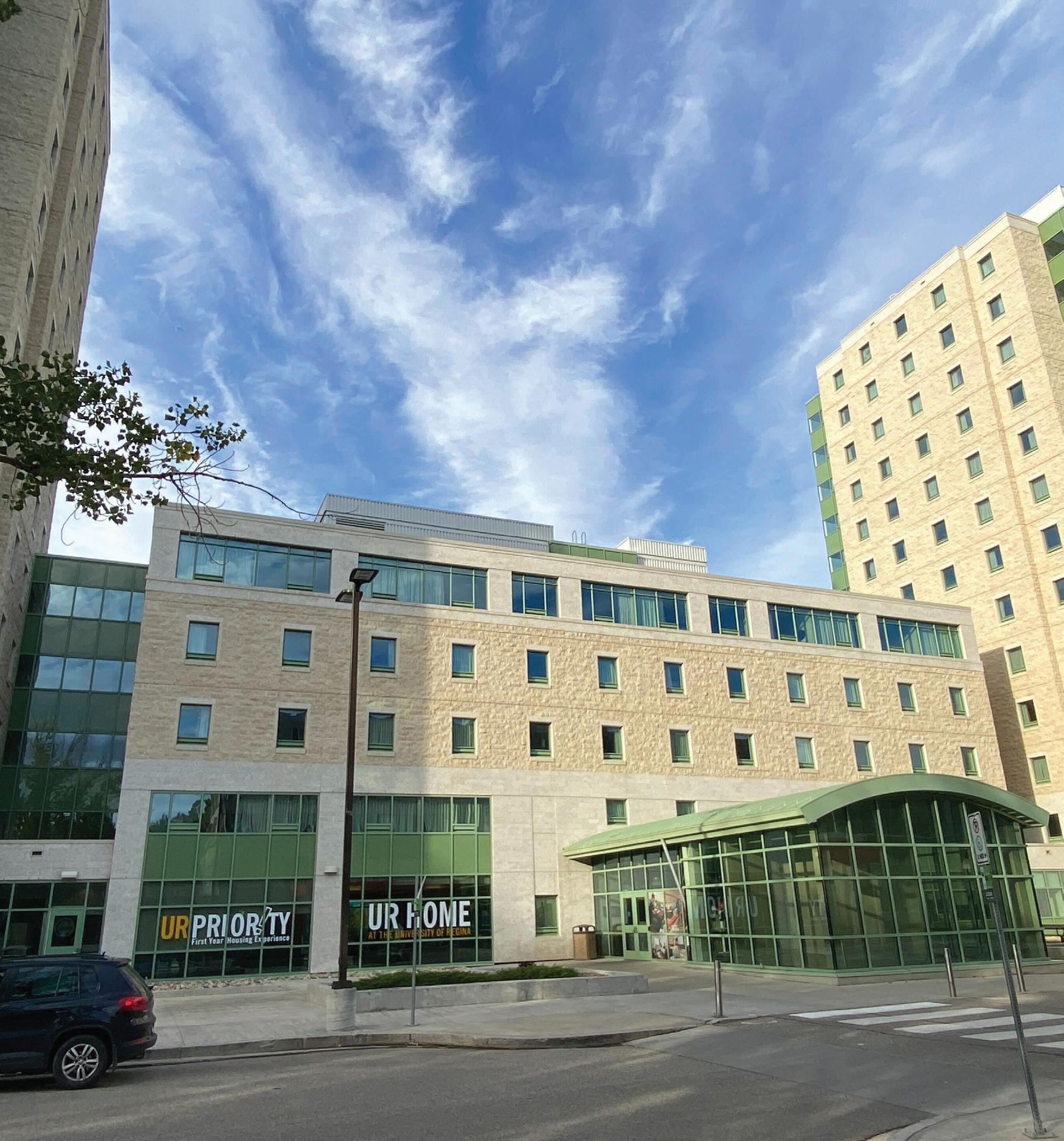
The University of Regina (U of R) hosts many national and international students every year. A lot of the students seek housing on or near campus. U of R Housing Services provide a wide variety of options for residence on campus. The Carillon discusses some housing options available for students in this article and shares the experience of some students who have availed these facilities.
Housing on campus can be very convenient for students, especially for international students who already must travel far away from not only their homes but also their countries. Living only a few minutes’ walk away from your classes and other university amenities certainly lessens some of the added stress that moving away from home may cause. The staff members at Housing Services are committed to make this transition smooth and easy to navigate. Members of their team are available on-site 24 hours a day, 7 days a week to assist and support students. If students are away from campus and have questions, the staff members can also be contacted through email at housing.services@uregina.ca.
Residence is available in Kīšik Towers, Paskwāw and Wakpá Towers, La Cité, College West, and Luther College. There are a variety of choices for dorms. Students can share the dorm with other students or opt for private rooms for themselves. Along with being a home during schooling, on-campus housing also becomes home to people from many
However, that is not the case for everyone. The last person I talked to was Emily Geddes, a second-year student studying Education. “I think it is quite early to have a break and I think we are not quite ready to have midterms and all that stuff. Now they are placing the midterms before the new break and the November break would have been a lot better. […] It is kind of hard as some classes may be having two midterms now, as it is too much information for the final. Because the midterm is so early.” Are some classes adding on a second midterm because it is so early in the term, or are they adding it on just because that is how the class is set up? That may be a question for a follow-up Carillon on the Move article.
There are some student opinions on the Fall Break changing from November to October. What are your thoughts? This may be your first chance to reflect and think about what you prefer, and it may put the break into a different perspective.
different backgrounds where a wide variety of people with different interests and perspectives live and learn together. Students get to share their experiences,
ideas, and interests with others while listening to what they have to say as well. It’s a rewarding opportunity to learn about other cultures and backgrounds
while sharing their own. Getting to know people from various backgrounds is an important part of university experience.
Patel, a final-year
Business student at the U of R, believes that living on campus was the best decision she made. “I am about to graduate and the friends and connections I have made while living on campus are some that I will carry through my life,” she said.
The application process is straightforward as well. “I have been living on campus for about two months and it has been a great experience. The application process was very simple and the staff was very helpful with the application,” said Adam Wood, a second-year Philosophy, Politics, and Economics student. Applications can be made online on the Housing Services website and are available for U of R undergraduate and graduate students, English as a Second Language students, exchange students, international students, Saskatchewan Polytechnic students, and University of Saskatchewan students in partnered programs, as well as all other Saskatchewan postsecondary students.
Housing Services offers housing scholarships as well for both international and domestic students. Meal plans are also available to choose from. All in all, U of R appears to have a lot to offer in terms of accommodations on campus for both new and continuing students.
It may be challenging to balance the needs of your children with your own
victoria baht staff writer
Over the last few weeks, the Carillon has been on the move highlighting available resources that may make students’ lives a little easier and safer on campus. Our series has focused on the University of Regina (U of R) Student Success Centre, Centre for Experiential and Service Learning, Campus Security, and the Student Awards Management System.
In this issue, we switch gears a bit to investigate resources
“
could allow for getting children to and from care and you to and from classes.
Licenced, or regulated, childcare refers to care that is monitored by the Government of Saskatchewan, Ministry of Education. Regulated homes and centres meet and maintain specific standards stated in The Child Care Act, 2014 and The Child Care Regulations, 2015. Staff in regulated Child Care Centres are Early Childhood Educators or are receiving training to be such. A parent using a regulated service can apply and may be eligible for a Child Care Subsidy to help
keep continually involved in their children’s daycare experience and in the success of the centre as well. Families pay a $5 membership fee to join and must commit at least two hours of their time per month to the daycare centre. Do not panic if you are on a tight schedule as there are many flexible options on how this time is spent.
Options include volunteering to assist with field trips, cleaning, yard maintenance, helping with fundraising initiatives, and contributing supplies. The directors of the centre also encourage parents and caregivers
mandates two hours of parental volunteerism per month, or an opt-out fee for the year. Awasis Child Care Co-operative may be contacted at 306-585-5322.
A parent might also struggle with keeping their little ones occupied while they study. Getting your children involved in their own ‘studies’ or activities may help. For example, the Regina Public Library (RPL) branches have much to offer. You can sit down and study while your children also sit down and read a book, make a craft, or play a board game. The Carillon made a trip to the Regent Place Branch
older and is attending school, you may just need some more afterschool time to study while they are occupied. A program like “STEAM Lab” for children aged 8-12 years old that encourages exploration of science, math, and art is one option to consider. While your child is involved in the STEAM Lab, you can grab a seat at the library and get to work. They also have Chess and Lego Club for younger ones. Check out the RPL website for details on all future programs at their various locations at reginalibrary.ca.
Maybe libraries are not your child’s vibe, but you still
U of R students are a diverse group, and if you are a caregiver for children, you may be challenged to balance their needs with your own needs as a person and a student.”
Victoria Baht

available to students with children, or with children in their extended families and communities. U of R students are a diverse group, and if you are a caregiver for children, you may be challenged to balance their needs with your own needs as a person and a student. The Carillon has done some of the initial footwork for you and gathered some beneficial options offered both on campus and elsewhere in the City of Regina.
Let’s start with the resources on campus. Two licensed daycare services are housed right at the university. They operate from 7:30 a.m.-5:30 p.m. Monday through Friday. The on-campus locations and hours accommodate student needs considering that the earliest morning classes generally start at 8:30 am and afternoon classes end at 5:15 pm. This time frame
them meet costs.
The first of the two daycare options is the Wascana Daycare Co-operative. The Wascana Daycare is located on campus grounds at 3809 Wibazuką Road near the College West Building. A benefit of this regulated daycare is that it is affiliated with the university and so at least half of the children attending must be children of full-time university students. They follow a model of childcare that encourages children to spend time in mixedage groups where they can learn from each other and create a family-like atmosphere. Ages of children attending average between 18 months up to 12 years old.
This daycare is unique because it follows a co-operative model and hours to help parents
to pitch their own creative ideas on how they can get involved with their children and the daycare community. While the daycare is currently full, University of Regina students may still have their name added to a wait list. More details are available at wascanadaycare.com.
The second daycare on campus is Awasis Child Care Cooperative located in Kīšik Towers. They offer similar hours of operation and can accommodate the needs of children aged 6 weeks up to 12 years old, including children with specific individual needs. This regulated daycare prioritizes the enrollment of children of students, faculty, and staff at the University of Regina and the First Nations University of Canada. They also follow a co-operative model that
and found some great options for supervised kids to enjoy. Not only does the library offer books to borrow, but it also offers board games, as well as computer stations and a study area.
The library also offers several programs that can benefit you and your children. Depending on the age of your children, some programs involve the child and the parents, and some involve just the child. For example, “Stay and Play” is a program for children under five years of age where you can socialize, read, and play with your child. “Family Story-time” is where you spend some time reading with your child. These programs can help get your children used to the area and the surroundings for future study sessions.
Now, if your child is a little
need some time after school hours to get your studying done. Some community centres in Regina offer a free “After School Program” that takes place in the afternoon hours following the end of the school day. These are designed for children from kindergarten to Grade 8. There are open gym times in some neighborhoods for various ages. For early evenings there are free Youth Evening Programs for children ages 11-15 years old. Find the details at regina.ca.
The Carillon hopes that some of these resources are beneficial to students in addressing childcare needs during university class hours, as well as thinking creatively about how to blend family and study time in ways that support wellbeing.
Did you miss the festival? No worries, we’ve got you covered
maren savarese knopf staff writer
Earlier in the month of September, the Regina Public Library hosted the Feast Your Eyes: Foodie Film Festival. The festival paired film and food through a full course of screenings, performances, discussions, dinners, and workshops.
Film line-ups included titles like Spirited Away, Killer Tomatoes Eat France, and Ratatouille. Of the films available, The Lunch Box, directed by Ritesha Batra, was standalone. The Lunch Box is set in Mumbai, India and follows the protagonist Ila. The storyline revolves around a mistake in the dabbawallas (lunchbox delivery service) that Ila sends to her husband daily. Instead, another man, Saajan, who is close to retirement, receives Ila’s lunchboxes.
However, when Ila confronts the dabbawalla, he shakes his head and tells her the mistake is impossible and, moreover, their system was studied by Harvard University. Which is true, in 2015 the Harvard Business School released a study on Mumbai’s dabbawallah delivery service. Despite the mistake, Ila and the man who mistakenly receives
her husband’s lunch begin exchanging notes through the daily lunchboxes. The film is a fantastic exploration of the culinary and pen pal worlds that serve as mediums for human connection. Filled with humour, subtle themes of loss, longing, aging, and connection, the film serves as a reminder that intimacy and love may take many forms.
The screening was paired with food by Métis chef Jenni Lessard. Lessard opened the evening by introducing herself, the food she prepared, and her personal connection to the film. Lessard was raised in Northern Saskatchewan. Growing up she recalled having no reception or TV for many years. When she eventually got a TV, she would receive movies once a month from the closest public library and would watch them adamantly. The Lunch Box, according to Lessard, has a special place in her heart, as she met her now-husband in India when she was exploring the culinary arts with her nowmother-in-law. For the film screening she prepared a take on samosas, chutney, a prairie cherry chocolate, and cherry splash to drink. All of the ingredients were sourced from and/or grown in Saskatchewan.

In 2019 Lessard became the first female and Métis Executive Chef at the Wanuskewin Heritage Park, a world-renowned Indigenous interpretative centre. Lessard is passionate about the fusions of Indigenous flavours, Saskatchewan-sourced ingredients, and culinary experiences. She says that despite misconceptions, Indigenous peoples in Canada, even just in Northern Saskatchewan, have rich and diverse herbs used to
years
If you liked CollegeHumor, know the fun isn’t over yet
Do you remember being a kid and watching CollegeHumor videos? Feeling like you’re definitely too young to be watching comedy skits aimed at college age kids, but enjoying them anyways? Popular videos like “The Six Girls You’ll Date in College,” “If Google Was a Guy,” or “The Problem With Jeggings.” Those videos were all made over a decade ago, but CollegeHumor isn’t gone, they’ve just changed.
They’ve dropped out of college. And now they’re Dropout.
Dropout celebrated its fifth anniversary on September 26 in a momentous move for the brand. Dropout launched as a streaming service in 2018, and they’ve been providing original content ever since. It’s my only must-have streaming service. But, I can tell you about the brand, or I can tell you about their content.
Dimension 20 is probably Dropout’s most popular show. Any fans of Dungeons & Dragons’ actual play shows have at least heard of Dimension 20. They currently have 18 seasons of Dimension 20, which equals to hours and hours of content. Brennan Lee Mulligan, who DMs most seasons, is an incredible dungeon master (DM). He’s a brilliant storyteller and worldbuilder. He’s the DM I most aspire to be like when I run games, and it’s not hard to tell why.
Most people start off with “Fantasy High” because it’s the first season they did. But, my favorite is the Seven, which is a spin-off of “Fantasy High.” I also
adore “Misfits and Magic,” run by Aabria Iyengar, for just how fun it is, and the theme of found family. They just finished a season called “Mentopolis,” which is like

Inside Out, but in a TTRPG, and they’re currently airing a season called “Burrow’s End,” run by Iyengar, about a family of stoats.
The Dropout show you’ve probably seen the most clips of is Game Changer, because it goes viral on TikTok often enough. It’s hard to describe Game Changer, because the game changes every time. With a rotating cast of players, and Sam Reich as the host, there’s never a dull moment. Every episode brings something new and fun to the table and is worth watching. But, binge a few TikTok clips to get an idea of what you’re getting into.
They’ve made several spinoff shows based on episodes of Game Changer. My favorite is Make Some Noise. It’s an improv extravaganza where players are given a basic idea of a scene, and they just have to make it work to get a certain number of points. It’s silly, it’s light-hearted, and it’ll make you laugh. Sometimes, when what I need is something fun and just to laugh for a while, my go-to is Game Changer
Another spin-off is Play It By Ear, from the “Official Cast Recording” episode. It’s all completely improvised musicals. They get a small task, music they’ve never heard, and they just have to figure it out. The original “Official Cast Recording” is available on Spotify and it was in my top 10
flavour and season foods. Many of which, including juniper and wild mint, were showcased through her cooking for the festival
in my Spotify Wrapped last year which should give you an idea of just how talented Zach and Jess (who are in every episode) are. One show that only had one season and I miss dearly is Where in the Eff is Sarah Cincinatti? It’s inspired by Where in the World is Carmen Sandiego? but with more of a boozy party girl twist. It’s one that I’ve watched over and over again, and will continue to watch over and over again because they haven’t announced more episodes. Although CollegeHumor has largely become known as Dropout, two other branches of the original company, Dorkly and Drawfee, continue to exist separately from Dropout. Drawfee even celebrated it’s own third anniversary of independence back in July.
If you feel tired of the streaming services you have, or like you have nothing to watch, Dropout is there for you, with the same laughs as CollegeHumor 10 years ago. Its fifth anniversary is a great opportunity to check out the streaming platform and see if there’s anything you like. will bright a&c writer
emilie wren
copy editor
A new season of anime is about to kick off. But with the countless new adaptations, new seasons, and other brand-new shows, knowing what to watch can be a daunting task. The Carillon is here with some recommendations for new, returning, and even some downright weird series kicking off this October.
First, some new adaptations are hitting the scene that have a boatload of hype behind them. Frieren: Beyond Journey’s End is one such series. This story follows an
coming from a popular light novel and manga is The Apothecary Diaries. Set in a certain Eastern country, a peculiar girl called Maomao is kidnapped to work as a servant in the Imperial Court. She is not overly bothered by her situation but harbours a deep interest in medicine that helps her secretly save the lives of the emperor’s ill infant children and concubines. Content to move on anonymously, her efforts are in vain after Jinshi, an important staffer of the inner court, takes an interest in her talents. The themes of mystery and the antics of the ever-eccentric Maomao are sure to draw viewers in.
Spy x Family is heading into its second season of the Forgers’ fake-family chaos. After all, when a spy, an assassin, and a young telepath band together for each of their own goals, what else could ensue? A fan favourite, it was only a matter of time before this second season would hit the airwaves. On a mission to prevent all-out war, the spy Twilight, now under the codename Loid Forger, takes in telepath Anya to attend a prestigious school to get in contact with his target. But unsuspecting heteronormative families also need a mother, bringing the assassin Yor into the fray. Each has their own, secret
however, he must start from the very beginning to build the world back up with his abundance of scientific knowledge alone. It’s even educational in a Bill Nye the Science Guy kind of way! Truly an amazingly fun series that is definitely worth getting into.
Rounding these recommendations out, however, are some… oddballs to say the very least. With anime, weird shows are bound to show up, some better than others. But with weirdness often comes something different to check out for those who want something a bit more out there.
Hypnosis Mic: Division Rap
rap groups composed of three members each, representing distinct regions in Japan. A wild concept, yes, but a lot of the music to come out of this series are absolute bangers from all different genres, not just hip-hop. While the first season’s animation was… not the best, the budget has seemingly been increased for this second season, making it something worth trying out. Finally, another oddball worth checking out is I’m in Love with the Villainess. This zany spin on the usual isekai story has a woman reincarnate into her favourite otome game – a type of game with a typically all-male

“And honestly, what’s not to enjoy about a lesbian freely pursuing her ladylove and snubbing the men she was ‘supposed’ to go for?”
Emilie Wren
elf, the titular Frieren, and her hero party going their separate ways after defeating the demon king. Her companions, however, are not elves and slowly but surely begin passing away. Might sound a bit sad just from that, but Frieren soon embarks on a new journey with a fresh young apprentice by her side, helping the elf form new bonds and develop newfound appreciation for her former companions. Presenting a different angle to the typical hero’s journey in a fantasy world, Frieren: Beyond Journey’s End is definitely going to be worth a try.
Another new adaptation
Plenty of beloved anime are also getting new seasons this fall. The popular Tokyo Revengers is receiving its third season. Following a regret-riddled man named Takemichi Hanagaki, he stumbles (quite literally) 12 years into the past, landing him back in high school. He’s still dating Hinata, a girl who, in his time, had just been killed by the Tokyo Manji Gang. He joins the ranks of that same gang in an attempt to rewrite the future and save Hinata, with the help of her younger brother. Time travel often brings an interesting story to the table and Tokyo Revengers so far has definitely fit the bill.
goals for becoming the Forger family, but the first season alone is a true comedic delight.
Dr. Stone is also airing the second part of its third season following a brief hiatus. Why it isn’t simply a fourth season, who’s to say, but this sci-fi series is a true crowd-pleaser from its action to its depictions of science of all types. After humanity has been petrified for thousands of years, the Earth has been taken back by nature. However, young scientist Senkuu breaks free of his petrification and immediately sets out to restore humanity’s most important scientific achievements. In this stone world,
Battle: Rhyme Anima is one of those strange but oddly enjoyable series that is receiving a second season this fall. Following a Third World War, the Japanese government is overthrown by the Party of Words, a group whose political leaning could best be described as a matriarchal dictatorship. Under their rule, weapons are banned and replaced by Hypnosis Mics, microphones with the ability to turn raps into weapons for those still seeking a fight.
Originally based on a multimedia franchise with music, drama tracks, stage shows, manga, and even a cellphone game, the series follows six
cast of characters to romance –however, our protagonist is far more interested in romancing the villainess, Claire Francois. And honestly, what’s not to enjoy about a lesbian freely pursuing her ladylove and snubbing the men she was “supposed” to go for?
This article could go on for days, but we’ll end off here with some last-minute titles getting new seasons or adaptations to check out this fall anime season: Dead Mount Death Play, The Saint’s Magic Power is Omnipotent, The Ancient Magus’ Bride, Undead Unluck, and finally Ragna Crimson
Never played RPG or D&D? Here are some basics, now roll for initiative
will bright a&c writer
Baldur’s Gate 3 is already shaping to be one of the – if not the –biggest games of this year. And there’s a reason for that: it’s a great game. It’s like Dungeons & Dragons (D&D) in a video game. But, not all gamers play D&D. If that’s you, here’s a basic guide to D&D for Baldur’s Gate
how strong you are. Dexterity is similar, it’s how fast you are, how nimble you are. I always describe constitution as how well you can hold your liquor. Intelligence is book smarts and wisdom, comparably, is street smarts. Charisma is whether or not you can make your own doctor’s appointments. Certain classes benefit from having higher scores in specific areas.
Bards, sorcerers, and warlocks are all charisma-based spellcasters, and it should be their highest score.
of damage. At higher levels, she’ll be able to hit twice in one turn, making her damage output even higher.
disengage away so he doesn’t get hurt.
In Baldur’s Gate 3, you can’t just do stuff. You have to roll to do stuff. A d20 to be exact. It’s a 20-sided die with two main caveats. A natural 20, or a 20 on the die, is considered a critical success outside of combat, and a critical hit during combat. A critical hit means you double the damage that you do to your enemy. On the other end is the natural one, or a one on the die. A natural one is a critical failure. No matter how much you add to the dice roll based on your stats, you’ll always fail. They call it a critical miss in combat, but there’s no penalties other than just missing.
Classes with strength as their highest score should be barbarians and fighters. They hit hard and they need the strength to do it.
Classes with dexterity as their highest score should be monks, rogues, and rangers. Their attacks are dexterity-based. Personal tip, if you want to hit the
“ You can be proficient in an ability based on your class and background, and proficiency gives you another number to add to your rolls.” Will Bright
If only all rolls landed like this, but sometimes failing is more entertaining.
Illustration: DarkAthena via Pixabay, manipulated by lee lim
hardest and do the most damage, go for the monk class.
Constitution shouldn’t usually be your highest because there’s no one class that is based on it, but the higher the constitution, the higher your health, so don’t let it be too low.
When it comes to building your party, you’ll meet companions along the way that will travel with you on your adventures. Parties max out at four, so you can only keep three companions with you at a time, which means you need to have a rough idea of their strengths and weaknesses to determine which party set-up is best for you.
If you’re me, you like a double-cleric situation. I play as a cleric and I always keep a second cleric in the party; one tank, and one squishy but with high damage. That’s just my playstyle. If you’re someone like my dad
Shadowheart’s my girl. She’s a forever companion for me, always in my party. She’s a half-elf cleric, with the trickery domain as her default. Say it with me everyone: “Clerics are not just for healing.” With spells like guiding bolt and inflict wounds, Shadowheart can do up to 30 damage in one hit at level one. Clerics are hard hitters, they can do a lot of damage. The biggest stop to them is that they only have so many spell slots. But, they have cantrips, and those can be used over and over again, and they only get stronger as you level up.
Clerics have a high armor class
Speaking of squishy, Gale, our wizard friend. Wizards are known to be high-risk, highreward characters. Their spells allow them to do a lot of damage, but there’s only so many spell slots, and they might miss. Wizards also have a lower armor class and can only use light armor. At level one, Gale has an AC of 10 and 8 hit points. A hard hit can take him down ASAP, but he can do the same pretty easily to your enemies. But, he’s a pretty fun guy and I like his commentary.
Last of our origin companions I’ve found is Wyll, the human warlock. Warlocks have what is considered the best cantrip in the game: eldritch

I mentioned adding to your dice roll, and that’s based on your ability modifiers. When you’re in character creation, you add to six main stats: strength, dexterity, constitution, wisdom, intelligence, and charisma. Those numbers will then go into your abilities. You can be proficient in an ability based on your class and background, and proficiency gives you another number to add to your rolls.
Strength is basic. It’s just
Wisdom should be the highest for druids, clerics, and paladins because it’s their spellcasting ability. Monks and rangers should have their second highest score in wisdom because it affects their spell save difficulty class (DC) and their other abilities.
Wizards should have intelligence as their highest because it’s their spellcasting ability. It’s not a bad choice if you want your character to be smart, but the only class that really needs it are wizards.
(and we’ve had arguments over this), you don’t have a cleric at all and you survive on healing potions. He plays a barbarian and runs a double barbarian set-up with the intent of ‘hit hard and hit fast’ as a way to mow through enemies.
Starting with Lae’zel, she’s a githyanki fighter. She’s a tank. You want her at your front lines, taking the heavy hits, and doling them back out. If you like lots of combat in your gameplay, or you like to play on harder difficulties, Lae’zel’s your girl. She can also do some magic because she’s a githyanki, but a lot of her spells are more mobility-based instead
(AC), and combined with a high constitution, clerics can act as tanks if you play your cards right.
It’s the fan favorite, Astarion. He’s an elven rogue. Astarion is a squishy character. That means he doesn’t have a high AC or a lot of hit points. But, rogues are known for one thing: sneak attack damage. At higher levels, sneak attack damage does a lot. If you choose the assassin subclass for Astarion, he’ll do critical hits on his sneak attack damage, which can easily knock out a lot of hit points. Keep him out of the front lines, let him flank with another party member for advantage, get his sneak attack, and then
blast. It does a lot of damage and it can be upgraded through eldritch invocations. As a balance, he has a lot less spell slots than other magic users. The spell slots are only available for the higher level of spells he has available. So, when you do cast damage spells, they’ll hit as hard as they can. But, his spell slots become available again after a short rest, in comparison to every other spellcaster who has to wait for a long rest.
Good luck on your travels, fellow adventurers, I’ll see you on the other side.
will bright a&c writer
Say goodbye to summer and hello to fall! October has arrived, and with it a whole new roster of events, performances, and things to do in Regina. From theatre performances to interactive gameplay, all the way to alcohol and science, there’s lots to do in Regina this spooky season.
Music of the Night - a Celebration of Andrew Lloyd Webber
Calling all theatre fans, on October 6 an Andrew Lloyd Webber tribute concert will be playing at the Conexus Arts Center. Music of the Night celebrates the 75th birthday of legendary theatre composer Andrew Lloyd Webber. The performers are all theatre professionals who have performed in shows like Dogfight, Les Misérables, Fiddler of the Roof, Grease, Into the Woods, and more. Even if you were slightly traumatized by Cats (2019), you can’t deny the beauty of Phantom of the Opera, and if you love musical theatre, this is a can’tmiss event.
Piff the Magic Dragon
Do you like magic? Do you like live magic? Do you like seeing live magic performed by people you saw do magic on TV? Then, I’ve got a show for you. On
October 12 at Casino Regina, Piff the Magic Dragon will be playing a show. He’s bringing online his magic chihuahua too. You’ve likely seen Piff on America’s Got Talent, and the people that I know who have seen him during his Vegas residency say that it’s an incredible show featuring an incredible performer. You don’t want to miss this act. If you’re not convinced, proof is just a YouTube search away.
The Ultimate Robin Williams Experience
I miss Robin Williams. Do you? Do you want to experience just a little bit of that magic Robin Williams carried with him? Now you can, right here in Regina. On October 21, catch Roger Kabler, an incredible impressionist, for his show “The Ultimate Robin Williams Experience” for the closest thing to Robin Williams out there today. It’ll be at the Casino Regina Show Lounge and it’ll be an experience unlike any other if you choose to go.
AgToberfest Adult Science Night
Have you ever been to the science center with your friends and enjoyed it, but felt like it was geared more towards children than for you? Then I’ve got the event for you: an Adults Only Science Night at the Science Center. For those 19 and above, you can go to the Saskatchewan

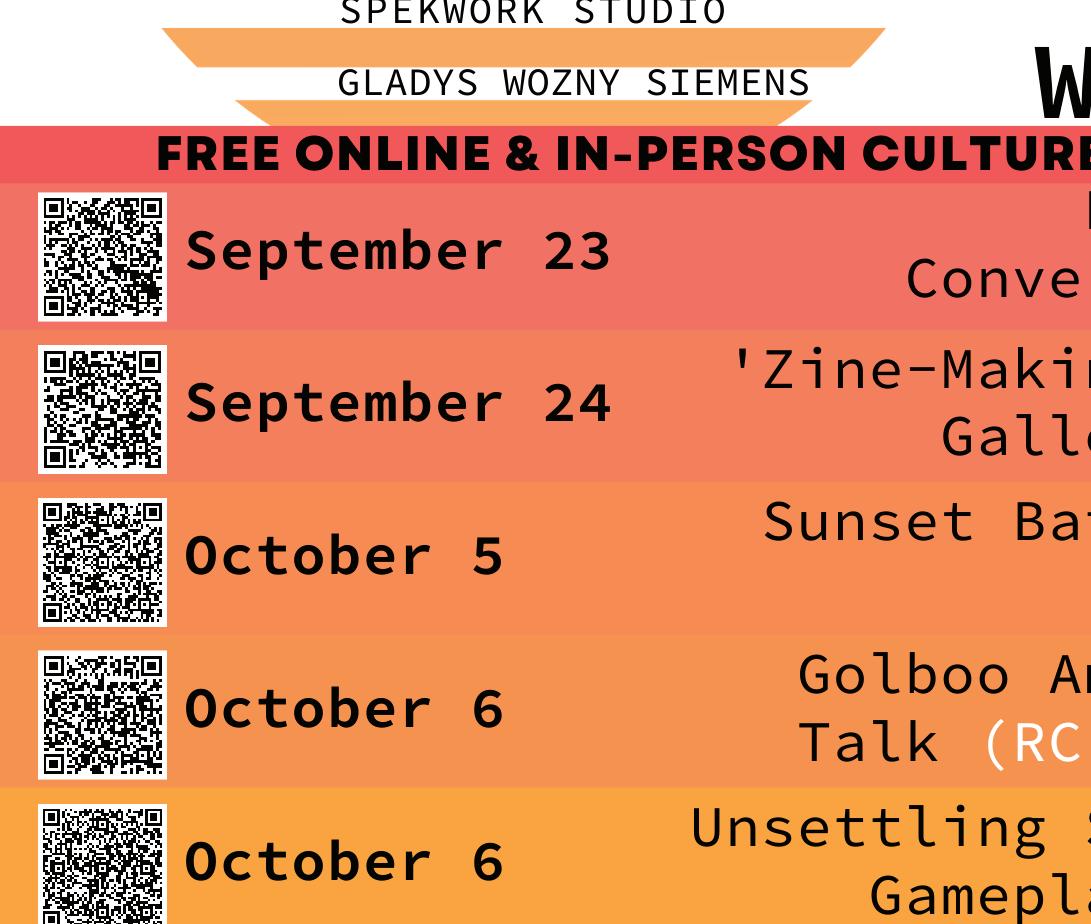

A crowded calendar is always exciting, maybe some more events will fit on yours! Image: Clker-Free-Vector-Images via Pixabay and clary2014 via Pixabay, manipulated by lee lim
Science Center on October 26 for AgToberfest. It’s an agricultural themed night for adults, including alcohol, snacks, and new programming you won’t see on a regular day at the science center. Imagine the bubble activity where

you try to get a bubble around you, but when you’re drunk. Doesn’t that sound fun? If it sounds fun to you, then don’t miss this event.
I love the board game Clue. And I love those cold case file games. Do you know what combines both of those? “A Killer Party” hosted by the Globe Theatre on October 28 at the Delta Hotels which steps into the game of Clue in real life for a murder mystery party. Themed at Studio 54, the infamous club in New York City, sit with your table, dish on some appetizers, and dish on the details of the murder you watch take place. If you’re lucky, you’ll figure out who did it. And if you’re extra lucky, you’ll make sure you get tickets to the event.
When I started writing for the Carillon, I wrote about a Broadway show called “Jagged Little Pill.” Now, “Jagged Little Pill” is making its way to Regina. It’ll be playing at Conexus Arts Center on October 9, October 10, and October 11. It was nominated for 15 awards at the 74th Tony Awards. If you remember that article, I talked about the character Jo being originally portrayed as non-binary, and that changing.
Well, in this production, the actor playing Jo is non-binary. Plus, there’s an iconic Elphaba actress, Julie Reiber, in one of the main roles. Bonus point, it’s a jukebox musical featuring the stylings of Alannis Morissette –what’s not to like about that? If you don’t see “Jagged Little Pill,”
you’re missing out.
Rocky Horror Show
October means Halloween season. And Halloween season in Regina means one thing: Sterling Productions’ Rocky Horror Show. It’s returning again this year at the Conexus Arts Center on October 26, October 27, and October 28. It’s always a hit every year, and it’s a Regina Halloween tradition. This year will be no different, so celebrate Halloween the right way and don’t miss out on this great show.
It’s not a surprise to anyone who knows me that I like Dungeons & Dragons. If you’re like me and you’re a fan of the iconic TTRPG, you’ll be missing out if you aren’t at Dinner & Dragons on October 14 at Birmingham’s Vodka and Ale House. This will be the 7th year of the event which promotes the local tabletop gaming community. It’s also a charity event, with a portion of the proceeds going to Lulu’s Lodge to help 2SLGBTQIA+ youth in Regina facing homelessness. If you’ve never played D&D before, don’t worry, it’s a newcomer friendly event and they’ll have everything you need. But, it is a 19+ event, so adults only. Roll some dice, help raise money for a good cause, and go to Dinner & Dragons.
This isn’t an exhaustive list, and there’s lots else to do and see in Regina. For this spooky season, venture out, have fun, and maybe check out a few things from this list.





Email pictures of your creations to graphics@carillonregina.com for the chance to have them featured in issue 8 (due date: October 14), issue 9 (due date: October 21), or issue 10 (due date: November 4) of the Carillon. Whether you get through them all or only a few, we can’t wait to see what you‘ll do!



pall agarwal s&h writer
Sports is often seen as a life confined in the field, but University of Regina’s Varsity Sport defines it beyond that. On September 6, they observed their 13th annual edition of “An Evening in Support of Varsity Sport” at the Conexus Arts Centre.
“The event is two-fold. It kicks off our season, […] [and is an] opportunity for us to bring our community together. Our students, families, coaches, and alumni together. It’s our major fundraiser – collective fundraiser as a group where all our teams contribute to selling tickets, sponsorships, and then our
extent, and the rest is to be taken care of by the team themselves as they do not take care of assisting coaches, nonconference travels, or other similar items, and this fundraiser is a way to support these teams for those expenses. To switch up things, the organizers decided to set up the event in the evening in contrast to how things were before pandemic – breakfasts only. “We made it an evening event where it was sort of a reception, […] it was more of a networking connection event,” said Robertson.
Special guest speakers were Sarah Colonna, standup comedian, actor, and New York Times best-selling author; and Jon Ryan, alumni of Rams football and kicker of several NFL and CFL teams – a married
tickets.” The new format of doing it in the evening was also a switchup since last time. “It was really from scratch. The nice thing is that next year we know what we want to do different, what we want to do better, but in general the event was extremely successful both in raising money and people enjoying themselves… in fact people wanted more time to mingle.”
This tradition was introduced by Vianne Timmons, former University of Regina President, as different Universities across the nation started the same in their respective athletic spaces to help match the scholarship and support the Varsity Sports for their operations. Jeff Keshen, current President of University of Regina, decided to continue
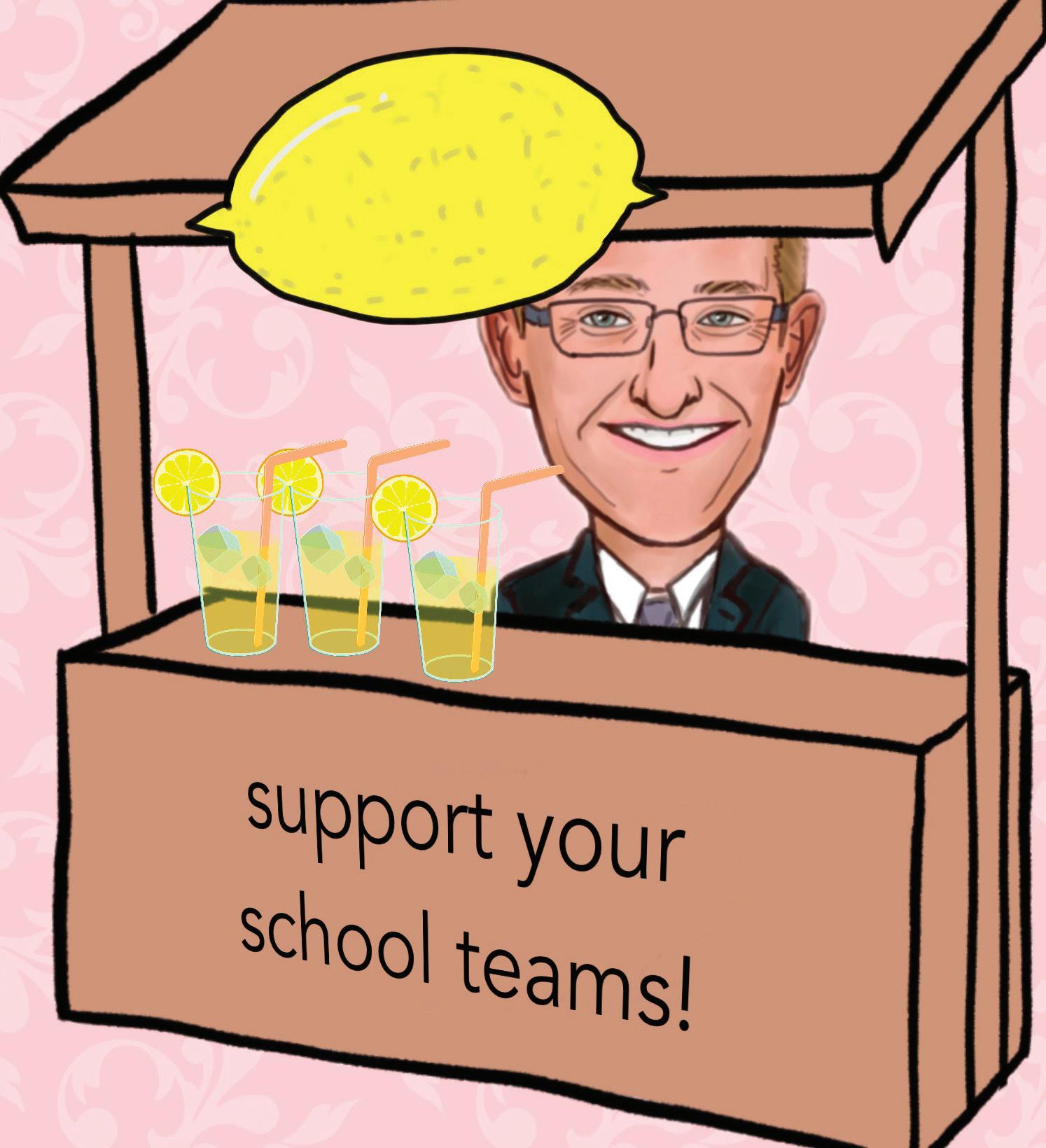
Now if only we could fundraise so that tuition did not go up every single year...
Image: OpenClipart-Vectors via Pixabay and Michaela Aguilar, manipulated by lee lim
President’s Office matches up to $150,000 of the tickets sold. It’s an event that allows our teams to fundraise to help support pieces of sport that we don’t have budget to support,” explained Lisa Robertson, Director of Sport, Community Engagement & Athlete Development.
This fundraiser is held to support varsity sports like basketball, volleyball, hockey, football, soccer, swimming, and track and field. The athletics office supports only to a certain
couple. “They came in and did a bit of a skit for us. Entertained us. And then back out in the lobby for more mixing, mingling, and seeing each other,” said Robertson.
Transitioning from virtual to in-person was perceived as being challenging as the uncertainty of people turning up to was a huge factor. “The biggest challenge was not knowing if people were going to come, and whether we would be able to sell tickets, but we did. We ended up selling 570
they got. They plan to set higher targets for the next year, such as aiming to sell 700 tickets. As the stakeholders and sponsors got to know about this tradition, the organizers intend to maintain this communication and build on this relationship. To include more people in this setting, the Athletics department envisions creating the ability for more people to donate if they are not able to attend the event.
The Athletics department is always on the lookout for volunteers for their events. “If students are interested to get involved in that event or other events that we do, Andrew Hamilton [andrew.hamilton@ uregina.ca] is our coordinator for marketing and student engagement and he is the person they should reach out to,” said
an opportunity to connect with people they hadn’t seen in a long time and connect with our student athletes. Lots of our student athletes attended as well,” said Robertson. She felt that the overall ambience of the evening was filled to the brim with energy, passion, and love for the community of sports and sportsmanship.
“Come out to games. It is free with your student ID. It is very fun. This year in the gym, in the volleyball and basketball [games], for every game there is going to be a section called the Cougar Country where it’s sponsored by the Baller’s and the environment in there will be extremely fun. It is very good entertainment value. And it is right here on-campus,” continued Roberston.
“Being a part of your
“ The biggest challenge was not knowing if people were going to come, and whether we would be able to sell tickets, but we did.”
Lisa Robertson
this tradition and increased the matching from $100,000 to $150,000. “It evolved and survived through the pandemic is the big thing,” said Robertson. The organizers were thrilled to have exceeded their goal of selling 500 tickets that filled them with the energy of going beyond their expectations. With the community engagement regaining normalcy, the organizers decided to rebrand and change the look of the event, based on the feedback
Robertson on discussing different opportunities in a volunteering capacity within Varsity Sport. The department prefers keeping the athletes up front in these events so that they gain exposure and meet people in this community with shared passion, experiences, and goals, but are always open to newer people to join and assist in their events in the required capacity.
“People went away feeling great about the Cougars and the Rams, feeling like they had
campus and athletics is a huge part where you can create such great memories. […] These are the best years of your life. Take in the culture of what’s happening in your campus.” The sport community continues to impact students and bring value to the community. With this spectacular kick-off to the season, Varsity Sport is set out to succeed.
maren savarese knopf staff writer
“Power anywhere where there’s people.” – Fred Hampton, 1969 Community members gathered behind the doors of the Hampton Hub for a bustling and vibrant Teach in Tuesday to discuss harm reduction in Regina. Teach in Tuesday is an ongoing series of speakers invited to discuss prominent social justice issues within Queen City and beyond.
The hub itself is named after Fred Hampton, the former deputy chairman of the national Black Panther Party (BPP) in the United States. There is a distinctly Saskatchewan connection. In November of 1969, Hampton and two other Black Panthers visited the University of Regina campus. In Regina, Hampton spoke about the deep-rooted systemic racism prevalent in the criminal justice system and the BPP’s revolutionary agenda and community initiatives.
The impact of Hampton’s visit on Queen City has been commemorated in the now lively Hampton Hub that continues to serve up transformative and community engaged initiatives. Trio Mthembu, with his brother Thabo Mthembu, told the Regina Leader Post he started the Teach in Tuesdays because, “It’s just so fun and engaging to have different perspectives and [to] have a community leader or expert of a certain topic have a shared discussion with the whole room.”
The latest Teach in Tuesday was led by Brittany Cook and Dustin Kimball to discuss the impending winter season and the lack of a clear plan to address housing, substance use, and mental health crises.
Harm reduction is an evidence-based approach that seeks to reduce the health and social harms associated with substance use. A harm reduction approach views substance use as a facet of human society and does not require people who use substance (PWUS) to abstain from or stop substance use. Central to a harm reduction approach is that it provides PWUS a choice in how to minimize harms through non-judgemental practices.
There are eight commonly cited pillars of harm reduction. These include: accepting that illicit and licit substance use is a part of our world, understanding substance use as a complex and multifaceted phenomenon, establishing and prioritizing the quality of individual and community life and wellbeing, non-judgement, ensuring PWUS are involved in the creation of policies and programs to serve them, affirming that PWUS are agents in reducing harms, recognizing the interconnected nature of structural systems and their impacts on substance use, and not minimizing or ignoring the harm associated with substance use.
In discussion, Cook and
“There is no junkie, there is no homeless-crazywhatever. The only thing there is, is a lack of resources, and a lack of compassion that a community has.”
Brittany Cook

Kimball repeated the importance of looking at people ‘on the streets’ from eye level. “Anyone of us can be that ‘junkie,’” said Cook. This sentiment is captured within the principle of “meeting people where they are at.” To do so means to put aside our desires for a person, in this case a PWUS, in favour of understanding where they are in their journey. This requires us to listen without judgement, to ask questions, and first and foremost the recognition and upholding of the fact that they are human.
Moreover, Cook pointed to lack of resources as codifying and driving the current housing and substance use crisis, stating: “There is no junkie, there is no homeless-crazy-whatever. The only thing there is, is a lack of resources, and a lack of compassion that a community has.”
A community member from the discussion period following Cook and Kimball’s talk pointed to the historical and ongoing traumas of settler colonialism, calling on us to ‘connect the dots’ between colonialism and the housing and substance use crisis. The same community member asked us, “How would our treatment of people who use substances change if we saw everyone as all our relations?”
The teach in concluded by identifying existing resources in community, and expressed the shared responsibility of addressing the interconnections between the housing and substance use crises. Identified strategies included carrying naloxone and other supplies to distribute as needed, writing to MPs and city councillors, and supporting local ‘boots on the ground’ organizations providing harm reduction services.
Teach in Tuesdays are planned to continue throughout the year at the Hampton Hub and interested folks are encouraged to stay up to date with announcements. It is recommended that seats be booked in advance as they fill up quickly.
Of course, given the actions of the Saskatchewan government, we have no reason to feel they want to save lives.
Photo: Maren Savarese Knopf
Coach Yadav brings a lot of experience to the new job
victoria
staff writer
With the fall season and school year now in full swing, the Cougars sports teams are signing new players, getting them onto the roster, and welcoming them to the team. The women’s volleyball team has signed Halle Schutz, Eve Chipperfield, Reese Evjen, Samantha Krausher, and Makenna Giesbrecht. They are now joining the Regina Cougars Volleyball team for their first season. Welcome and congratulations!
at 19 and they were 16-year-old boys, so not a big age difference at the time. Fast track 10 years, I was given the opportunity to take over the women’s side at the Pakmen Volleyball Club. When I started on the women’s side, […] the men’s side was the best in the country by far. So, the goal was to bring the women’s side to the same caliber. Again, fast forward eight years, and I
the country at this level. So, when it came my way, I had to bounce on it!”
It sounds like the Cougars are in good hands. We could tell that he is passionate about the sport and that it means a lot to him. Yadav has already started working with the team, especially with the tournament that they had just partaken in. “I am beyond excited,” he said about
Yadav felt welcomed by the team and the department, because he has come such a long way to follow his passion. It appears everyone has really adapted and worked hard so early in the season to get to know each other, bond, and create a relationship. That is important at the start of the season.
We asked what the team is hoping to see regarding this

Welcoming new players onto the volleyball team is not the only exciting news for the team. The women’s volleyball team has also appointed and welcomed a new head coach, Prateek Yadav;
had coached over 14 teams as head coach, mentor coach, and assistant coach depending on which team needed help. My rep there was accommodated. So, I started to get involved with Team Ontario. Out of that I started to help the University of Guelph. This was a great opportunity, kind of opening my mind up for the next level of volleyball. […] So, then about two years ago I
the season ahead. “First, I have to say right away this team is so respectful. I have had a culture change coming from Toronto to Regina. Not having any friends, previous relationships, or even family, I have been here by myself but it hasn’t felt like that. The big factor too is that the Kinesiology staff made me feel very welcomed, all the coaches in the department, but more so by the team. They
season coming up. “We have adapted a different philosophy when it comes to looking at the games. I have asked the team to go to every game not wanting to beat any team but wanting to win. This creates a separation in the mentality where you are capping yourself to the opponent you are playing, and you are capping to your own ability.”
That is a good message to come across and seems like a good goal
as I always have, but I did need information before I started planning how the practices were going to go. […] As the season started, I did a meeting with each student-athlete and we spoke about their previous experience, not so much the rookies but the vets that have been a part of this program. So, with the vets, I wanted to know what it was about the past they liked, and what they would have preferred from or wanted more of from the coaching staff. This gave me an idea of how they learn and how they would like to develop. My strength is that I can cater my coaching to the type of team I have. I have never coached two teams the exact same way. It’s always trying to figure out what the team needs, what our end goals are going to be, and how one can get to that point most
“The big factor too is that the Kinesiology staff made me feel very welcomed, all the coaches in the department, but more so by the team.”
Prateek Yadav
welcome and congratulations to him as well. Yadav’s arrival marks a perfect opportunity to learn a bit more about the new coach and his plans for the team.
According to Yadav, “I was actually at a phase where I had thought I completed youth volleyball, because I have been coaching since I was 15. I coached my first rec team as a head coach
had to make a decision. Do I want to continue volleyball as a pathway, or do I want to focus on my business? So, I took some time off, and the mentor coaches had said to me, ‘Throw yourself out there, shoot your shot and see what happens!’ So, that’s what I did, and an opportunity like this does not come all the time, there are only 40 available positions in
have been so caring, respectful, and their eyes are wide open. It puts a different level of strength behind what you are doing and why you are doing it. Going into practices I am always excited, because they are going to be ready to just take in, learn, and develop from there. They are very open-minded.”
It was good to hear that
for the team. The team has been working hard and we are sure they will continue to do so as the pre-season continues and the full season comes into place. With any new coach, there are bound to be some adjustments that need to happen, but it seems everything has been smooth sailing so far. “With practice specifically I went into it
efficiently.”
Yadav said in the past he has coached over 14 teams at just one club, not counting everywhere else. He has coached for a long time, and no two teams have been the same. After all that information from the new coach, we are looking forward to the regular season!
allister white contributor
In September 2022, Wade Huber was suspended from his duties as the head coach of the University of Regina Cougars Track and Field and Cross-Country teams. Huber’s employment was terminated the following month following what Paul Dederick explained was an “internal investigation.”
In total, athletes interviewed by Athletics Canada put forward six allegations against Huber. According to Hugh Fraser’s re-
explained to the Carillon. Huber spoke in lengthy calls after hours with some athletes, crossing boundaries, while being nearly unreachable for others. Fraser stated, “By creating dissension within the team by giving preferential treatment to certain athletes, […] [Huber] has violated the 2015 Athletics Canada Code of Conduct and Ethics.” Kilgour’s experiences emailing the former coach serve as further evidence that Huber demonstrated preferential treatment to the detriment of the entire team.
As coach, Huber also took an inappropriate photograph of
may cover only a small portion of Huber’s inappropriate conduct. Reluctance to speak on the matter is prevalent. When asked about the impact Huber’s behaviour had on her coaching, current Track and Field head coach Sabrina Nettey said, “I’d actually prefer not to speak on that topic,” instead urging me to contact the program’s athletic director. Paul Dedrick, the university spokesperson on the matter’s self-description as a “strategically minded communications specialist” who can “influence outcomes” does not diffuse questions about the University’s administrative
port for Athletics Canada, these included “massaging female athletes at practice when experienced trainers were available to perform that task,” and commenting on the fit of a female athlete’s bra. Fraser’s report as Commissioner of Athletics Canada detailed that “the Whistleblower’s complaint also mentioned incidents that they had not personally witnessed but had been made aware of which resulted in multiple female athletes formally complaining to the University’s Athletic Director about [Huber’s] conduct.”
Also mentioned in the report was the allegation that Huber had shown preferential treatment towards a group of female athletes and his relationships with those athletes blurred the lines between what was acceptable and what was not. Huber also had “latenight lengthy phone calls” with a group of female athletes. His treatment of these athletes is contrary to the treatment that Morgan Kilgour, another athlete on the team at the time experienced.
“[Huber] was really slow at answering emails,” Kilgour
one of the female athletes. Fraser explained in his report that “the witness who discovered this photo did not harbour […] resentment, […] but was nevertheless upset about what she had […] stumbled upon on his phone,” and that, on the balance of probabilities, Huber engaged in the misconduct described. By engaging in this conduct, Huber violated the Athletics Canada 2021 Code of Conduct. Huber’s conduct violated far more than just that, however. Survivors of sexual abuse have had their sense of self undermined by abusers. Wade Huber objectified and dehumanized athletes, violating their boundaries, sense of self, and right to safety and respect.
For a total of more than seven years (June 2015 to October 2022), Huber was employed by the University of Regina. It’s unknown the full extent that Huber abused his power and authority over that time. The information deficiencies are in part because only fourteen athletes were interviewed by the Athletics Canada investigator, and what’s available
a cross country and track athlete said, “[Nettey] has a lot of energy,” and that the team has “a lot more team meetings.”
“We’re getting closer to each other [and are] encouraged to […] show up and be a part of the team,” Kilgour said.
In terms of safety, Nettey said that to instill feelings of security team-wide she makes sure to talk with athletes, “which sometimes can be difficult at the track, because [they’re] often […] trying to get work done.” In response to this difficulty, Nettey has set up office hours twice a week. “I make myself super available to chat,” she explains.
Awareness Week “goes beyond campuses” and invites everyone to have “thoughtful, affirming, intersectional, and age-appropriate conversations about consent,” Courage To Act is federally funded and helps campuses across Canada prevent gender-based violence. They assert that having informed and thoughtful conversations about consent is one of the best ways to educate individuals so that they may build healthy relationships and be protected from harm when they are vulnerable. The ability to understand what is okay and what is not is crucial, especially in situations like the ones Huber created.
“It’s unknown the full extent that Huber abused his power and authority over those seven years.”
Allister White
transparency. His statements to CBC News on the matter worsen existing concerns about transparency.
While the team has a difficult past, its culture and energy have improved with Sabrina Nettey as head coach. Nettey, having graduated with a bachelor’s degree in psychology is “very interested in the ability to get to work with people and [understand] how people operate.” Nettey credits this ability as an attribute to her work as a coach. “Yes I love the sport, but realistically, I love being in a position where I am able to help support and guide people through situations whether it’s related to sports, school, [or] life,” Sabrina explains.
Nettey tries her best “to create as many opportunities as possible for interactions.” She is often present for training sessions with athletes even when she’s not directly coaching, and explains that she does this in order to establish a positive rapport with her athletes. Nettey wants athletes to know that she genuinely wishes to support them. Kilgour, who is
Nettey makes herself available in an appropriate and equal way to all athletes. According to Kilgour, the team has “become a lot more […] fun and dynamic” as a result of Nettey’s coaching. All in all, Nettey’s actions serve as practical evidence in support of Athletics Canada’s assertion that, “One can be a caring, effective, and successful coach without crossing any boundaries.”
Athletics Canada’s finding that Wade Huber’s conduct crossed boundaries makes clear the importance of understanding consent. It also illuminates the importance of acknowledging what constitutes appropriate and inappropriate behaviour. One way to ensure students at universities understand consent is through Consent Week. Consent Week takes place annually throughout the third week of September and is a nationally recognized event. Courage To Act considers it to be a “part of a national dialogue” surrounding issues of consent and sexual assault. According to Courage To Act, less than 50 per cent of Canadians fully understand what giving consent means. Consent
According to Athletics Canada’s Code of Conduct, grooming is a “slow, gradual and escalating process.” Because of this, recognizing the actions of individuals who behave the way Huber did as grossly inappropriate abuses of trust, power, and authority is key to ensuring personal safety and well-being across campus.
In the conclusion of his report, Fraser determined that Huber would be suspended for an “indefinite period of time.” Huber has now been suspended “until further notice, from participation, in any capacity, in any program, practice, activity, event, or competition organized or sanctioned by Athletics Canada.” He is also barred from applying for his membership to be re-instated until September 13, 2030, at which point the “rehabilitative steps” taken by Huber will be considered and it will be determined whether or not his future participation in sport is appropriate.
A copy of Hugh Fraser’s executive summary of decision for Athletics Canada can be viewed at wadehuberexecutivesummary. tiiny.site/
The soccer team has had a good start to the season
pall agarwal s&h writer
Sports at the University of Regina is a unique space for all. It binds hearts and people together. Carrying a long legacy, the University of Regina women’s soccer team has come far since their inception. They have undergone a major evolution defeating stereotypes and proving societal norms wrong. The team represents unity. Players from different provinces, families, and backgrounds come together for one purpose, one goal: to further the University of Regina women’s soccer team.
The 2023 Fall term saw an eventful beginning for this Cougars team with a score of 1-1 with both University of Alberta and University of Winnipeg. The players are continuing to put in the work and are keeping the sportsmanship for future games to succeed. Remaining grateful to coach Astrid Baecker and the all-female staff for the continued support, Cassidy Fedoruk, goalkeeper, said: “It’s really cool to have the female empowerment and the way she [Baecker] talks to us with respect. […] Her coaching style works really well.” Fedoruk has been associated with sports since a very young
age, playing games like hockey, volleyball, lacrosse, and ultimate frisbee, though she loved soccer the most and “stuck with it.”
Getting into the Cougars soccer team was a journey of
and makes everything worth all the hard work. Playing soccer all the time is obviously a huge bonus but just the environment that the team has, […] is just amazing” said Fedoruk.
highlights of the team is the unity displayed without the presence of status and hierarchy among players from different years in the university.
The Cougars women’s soccer

connecting with the coaches through emails when she had seen them playing against the University of Manitoba. She had also connected with one of the coaches when she had gone out to play in the Westerns and eventually became a part of the team. “The team is so welcoming
“The team culture is very connected. We like being around each other,” she continued. “You’ll see us hanging out outside of soccer. […] We’re always there for each other, […] just one big team. Everyone gets along and genuinely enjoys being around each other.” One of the
team has been an excellent example of a for-the-community club sport through their different acknowledgements of National Day for Truth and Reconciliation on September 30, Breast Cancer Awareness on October 1, and so on. With this approach, the team is all set out to be one of the finest
students weigh in on how they think about consent
Consent, while spoken about widely, is still a topic filled with misunderstandings and poor intentions. Many have taken up the mantle of ensuring that consent is boldly spoken on to make people more comfortable with the topic, while others have shied away, labeling this issue that impacts everyone as ‘controversial.’
The Carillon wanted to get a better look at how students con-
ceptualize consent, so we asked a few. First-year Statistics and Economics student Matthew Thibeault put his ideas on consent simply: “I think of a ‘yes’ or a ‘no,’ and if it’s a no then move on, and that’s that.”
When asked what some individuals might misunderstand about consent, Thibeault provided some insight. “I think they just misunderstand the respect piece
of it, and that if someone tells you ‘no’ you have to respect their decision. And each person is their own and you can’t make up a decision for someone else, and that’s probably what they’re missing. They’re too controlling.”
Madison Hautz, a Kinesiology student in her final year, echoed Thibeault’s sentiment on respect but took things deeper to address how conversations on

clubs on campus.
The sport involves competitiveness, and the nature of agility that it comes with requires the team to continue the camaraderie and have each other’s back and help each other learn. “I love working for something and having an end goal. Show up on time, get my physical activity in, […] all those things push me to keep playing,” said Fedoruk.
Fedoruk finds her inspiration and role model in Jeff Seney, Fedoruk’s previous goalkeeping coach, who told her: “You don’t need to make every save. You just have to make one more than the other goalie.” She finds her support from family and friends, especially her mom, who has been with her throughout that has kept her going. Besides the sport inclination, players could find it difficult to juggle sport and academia. Fedoruk balances it all through rigorous planning and effective time management giving her adequate time to practice and study.
Sports enables individuals to overcome challenges, break barriers, and inspire each other. University of Regina’s women’s soccer team is a place where one can check off those boxes and nourish their enduring spirit.
consent can be received. “I think they [people attempting conversations] are scared that that person might get defensive about consent in the first place. Even though they might just be asking for a comfort reason or whatever, I think it’s just something that’s not, there’s a stigma around it a little bit I think.”
Bansari Patel, a first-year in the Health Studies diploma program, noted that some people willfully misunderstand even when educated. “Some people, they take [it] in a wrong way, and I think that [misunderstandings] happen in every place. Not only in university or in study places but in every place, like workplaces.”
Patel was also clear in explaining that while she feels comfortable speaking on consent with some people, gender does play a part. “I am also shy or ashamed whenever I’m talking with my opposite gender, like a man or something, I will definitely be shy or ashamed. But with teachers, like a girl or a woman, I will be not.”
When it comes to bettering education on consent, Patel advocated for instructors in their courses to boldly speak at length on the topic. “In studies, whenever we heard that word ‘consent,’ they have to focus, I think, one whole lecture on this. Like 45-50 minutes on that so that students can understand about that, and they will not take them in a wrong
way, and they can understand.”
Hautz also spoke to the benefit of education, noting that proactive efforts to educate will benefit everyone more than reactive measures after consent violations have occurred. “I’ve definitely seen posters about consent and more ads on social media and that kind of stuff which helps because I think even if you get a glimpse of it, you’re thinking about it, and you’re thinking about ‘Maybe next time I’m with this person I should talk to them about consent.’ But yeah, I think it’s just something that needs to be understood from a younger age compared to letting them make a mistake and having to learn about it, I think it needs to be learned first.”Each interview subject was asked at the end of the interview whether they had any additional thoughts on consent, and all appeared to struggle to articulate their thoughts. Thibeault perhaps put it most succinctly when he briefly summed: “This is a deep topic.”
Consent truly is a deep topic, with implications reaching all. As such, and as these students have noted, efforts to educate and understand must be championed by all.
holly funk editor-in-chief
read, and the powers that be had to take note
mindy gregory news editor
April 7, 2017, was a day of protest in Saskatchewan. Readers across the province gathered in groups outside their local MLA offices. The Saskatchewan government had cut $4.8 million in funding to libraries in the 2017 provincial budget, which included a $1.3 million cut to Regina and Saskatoon public libraries. In response, Saskatchewan libraries announced that they would be unable to continue the “One Province, One Library Card” interlibrary loan (ILL) program that allowed regional libraries to loan books back and forth between locations.
lack of other resources in her community – no bookstore or school – she described the library as the community hub of their town. “And it isn’t just our town, it’s towns like this all across Saskatchewan.”
Freethy was correct. From my own experience, libraries are a lifeline. Living in Melfort, SK at the time of the protest, the ILL system allowed me to engage with my curiosity and love of learning. Reading up on gardening practices sustained me through the winters and there was rarely a time that I could not borrow a book that I made note of whether fiction or non-fiction. It would be impossible for me to access that potential through my own resources, even today, and I was never limited by my rural location. The
Christine Freethy, a volunteer board member for the library in her village, understood how impactful the news was. The ILL system allowed library members at all locations in the province access to the full collection of provincial library materials regardless of the branch the materials were housed in. That meant that whether you lived in a village like Freethy did or in the city, if there was a book that you wanted to read located in a collection somewhere in the province, you could order and pick it up at your local branch once it was available to borrow. Besides the loss of the ILL system, the funding cuts were going to impact libraries in other ways as well, including staff layoffs and reduction of services.
On April 26, 2017, Freethy spoke with As It Happens, CBC Radio host, Carol Off. Explaining why she got involved in trying to reverse the government budget cuts, Freethy said, “I live in a town of 127 people. We can’t get the internet at our house. The library is absolutely […] crucial to our lives out here.” Noting the
local library provided a secure space for my children to visit and access their own materials. They participated in many library events that created lasting memories for them, even inspiring them to volunteer at those same events when they got older so that younger people could have positive experiences too. To this day, I smile at the memory of my teenage son operating the “wall” of a “trash compactor” at a library Star Wars event as tiny Jedis squealed their way through the slowly decreasing space.
What happened in response to the Saskatchewan library budget cuts completely reversed my outlook on activism being something I couldn’t do. Freethy noted that a lot of people were talking about the budget cuts on Facebook, but there wasn’t a central space to have those discussions. So, Freethy, together with Sarah Morden, started a group called Save Saskatchewan Libraries and began inviting other regional library volunteers.
The response was immediate, Freethy recalled, “Within a day, we had 1500 people. In 10 days, […] 5,000 members.” I was one of those members. I recall
my sense of helplessness sparking into hope. There was a plan now, campaigns. Doing our individual parts and posting our comments and progress on the social media group built a sense of unity and togetherness. Freethy and Morden set up a website so that people could directly email the government. They organized a similar letter-writing campaign that saw an estimated 1,000 letters produced and mailed in one week. A petition called “Vote to Save Saskatchewan Libraries” received more than 14,000 signatures. Next, we prepared for the biggest step of all: the mass April 7 demonstration “Drop Everything and Read” (D.E.A.R.).
The idea for D.E.A.R. comes from a uniquely literary source: the Ramona
“
Melfort, that meant we were assembled inside our shopping mall near the entrance of our busy Co-op Food Store. I was not alone. That day, there were people who came out who like me had never protested publicly. Freethy said, “We had people who actually had to watch YouTube videos of what happens at a protest when they were organizing their own, because they’d never been to one or seen one in real life”.
Following the protest, the Saskatchewan government announced that Premier Brad Wall had asked the Minister of Education, Don Morgan, to review the budget cuts. When Morgan announced that the government had “made a mistake” and was restoring the $4.8 million to the library budget, I bawled. As Freethy said in
What happened in response to the Saskatchewan library budget cuts completely reversed my outlook on activism being something I couldn’t do.”
books written by children’s author, Beverly Cleary. Drop Everything and Read time was featured in books starring the fictional character, Ramona Quimby. Borrowing the strategy as a form of protest was suited to the situation, but I wasn’t thinking of that at the time. I was scared.
I knew that I worked and lived in a close-knit conservative community. It was difficult to imagine other people I knew feeling strongly enough to come out and participate, or to anticipate how others might view my participation. In the end, what strengthened my resolve was that I knew there would be people participating across the province, and even if there were only a few in my area, I would not be truly alone. And I had no choice. I understood that I was protesting an action that was going to harm the well-being of people and communities across the province in a profound way. It wasn’t just me.
At noon on April 7, at least 5,000 people from approximately 86 Saskatchewan communities gathered in front of their MLA offices and read a book of their choice for 15 minutes. In
Mindy Greogory
the CBC Radio interview referenced earlier, “I’m not an important person. […] to know that like 7,000 other people, pretty much like me, who are kind of a little apolitical and stuff, […] didn’t just whine about it, didn’t just accept that the government would do this. We believed that we could change it and we did”.
Activism is something that people like you and I can do, and it can create change. Yet, I don’t pretend that the change by government that day was made for the same reasons that people were motivated to protest those budget cuts. That is why activism is ongoing.
For example, budgets are set every year for libraries, so they are always vulnerable. Freethy understood this too. In a CBC News interview with Stefani Langenegger on April 24, 2017, she said, “We know there will be continued review of the Library Act and of library functioning, and we’re not about to stop advocating for our libraries but, for now, this is a victory.”
hammad ali op-ed editor
In February 2022, Russia attacked Ukraine, and the world around us changed forever. While no one is suffering the consequences of this madness more than the people of Ukraine, no one can deny that the whole world is feeling the fallout and the consequences.
This could be in the form of rising prices, changing geopolitics, and at least far away in the back of our minds, the possibility of nuclear war. Many feel we are on the brink of a Third World War; this time everyone has the bomb, and it is not clear anyone has a proper enough understanding of the destruction it would cause to not use it.
From the very beginning of the war,
not thinking about politics.
A little over a week ago, Ukrainian President Volodymyr Zelenskyy visited the Canadian Parliament. After speeches by Zelenskyy and the Prime Minister, the Speaker of the House of Commons, Anthony Rota, decided to call upon the house to honour a man in the guest gallery. Yaroslav Hunka, a 98-year-old UkrainianCanadian, was hailed as a Ukrainian hero and a Canadian hero, and clearly enjoyed and responded to the applause. It was mentioned that he was a Second World War veteran, but to the best of my knowledge, no other information was mentioned on Friday, September 22, the day of the visit.
Less than a day later, JewishCanadians, including some who are Members of Parliament, were surprised and horrified to hear that Yaroslav Hunka was indeed a Second World War
and honoured in the nation’s parliament.
But there is no point in feeling righteous anger. Instead, I want to take the opportunity to speak to some of the conversations that have been happening about this incident. I want to acknowledge that the Speaker of the House has already owned up to having made a mistake and has stepped down from his position. I also believe that the Prime Minister should at least acknowledge that someone in his staff dropped the ball, because it is hard for me to believe that one can simply head on over to the parliament without any vetting. I mean, people with a name like mine can hardly go to the bank without at least two IDs and three references. How can it be that a former Nazi can just be invited to the parliament without the simple question – “which side were you fighting for?”
Assuming they did know he fought against Russia, all that does is make me
who did not join in saluting the Fuhrer, to the German families that sheltered their Jewish neighbors, the Second World War is filled with stories of the simple bravery by ordinary humans.
Hunka does not get a pass for having made some tough choice, when the choice he made was to side with the army that was executing the Final Solution for Europe’s Jewish Problem. Your moral compass needs to be completely haywire to try and pass that off as a difficult choice. Many died for their defiance of the SS. Hunka lives on, 98 years old, because he chose to become one of them. Hunka is honored, in Canada’s parliament, in what is an insult to Canada’s veterans and the Canadian Jewish community.

“
Hunka does not get a pass for having made some tough choice, when the choice he made was to side with the army that was executing the Final Solution for Europe’s Jewish Problem.”
Hammad Ali
NATO countries have been keen to help Ukraine through proxy. Russia is facing unprecedented sanctions, but clearly pushing back by trying to form their own power bloc in the world with China, India, Brazil, and South Africa. There are theories about how the recent deterioration in relation between India and Canada has more to do with the latter’s cooperation with Russia than anything else. As always, the United States is believed to be the puppet masters controlling the other NATO members as well as non-members who want to ever again do business with the largest consumer market in the world.
But all of that is, and I do not mean this in a disparaging way, politics. It is a full-time job, it takes years of experience, and more often than not, an ability to suppress every rational impulse and enter collaborations with people you promised never to interact with last election season. As the saying goes, politics makes for strange bedfellows. Today, though, I am
veteran. He fought against Russia, having volunteered for the 14th Waffen Grenadier Division, a military unit that was a part of the SS. In layman’s terms, Hunka fought for, and I am going to insist was, a Nazi. What might be worse, the unit was formed using those who volunteered to join the SS. In other words, they were not, as some claim about the German SS soldiers, “just following orders.”
Not that simply following the order to lead your fellow man into cattle cars and gas chambers is a great defense, but I find it important to emphasize, Hunka’s division consisted of people who chose, and were not commanded. Most of this information came to light on September 23, a day before Yom Kippur, the Jewish Day of Atonement, a day that calls for soulsearching and true repentance. That was a little harder this year, with the feeling of being wronged when someone who chose to side with Nazis was being applauded
wonder if people know so little history these days, or care so little for the truth. Sure, today Russia is the “bad guy.” But during the Second World War, for at least a brief period, the former Soviet Union stepped up to help the Allied Forces overcome the evil of the Third Reich. We are at a point in time where most Holocaust survivors are in their 90s. In another decade, maybe fifteen years, there will be no survivors left. If we are already forgetting who was on what side, the future does not seem too promising. Forgetting about the last Holocaust is the seemingly harmless first step to letting the next one happen.
Then there are those that are claiming Hunka just made a choice to protect his homeland from the Nazis. Maybe I am wrong here. Maybe I am driven by either emotion, or the benefit of hindsight, but there are many who made that extremely hard choice, and chose not to help the Nazis. From the nameless German man
Nor is this the first time a problematic incident like this has happened. In January 2023, there was celebration in the streets of Ukraine to mark the 114th birthday of Ukrainian ultranationalist Stepan Bandera. The same Bandera who led a radical organization called Organization of Ukrainian Nationalists, a group accused of having helped the Nazis make the Holocaust happen. It does make one wonder why great national heroes of a nation seem to be Nazis.
The Jewish people live with the trauma of the Holocaust. They mark their holy days by saying a prayer of mourning for the six million, many of whom have no living family to say it for them. The Jewish people respect Ukraine’s struggle for Independence, and do not want to see a world where might makes right. But when Nazis are celebrated, when Nazis live a quaint life somewhere in Ontario and are invited to the parliament, the Jewish people also feel wronged, and wonder whether these are all omens of a darker future.