

the staff
editor-in-chief holly funk editor@carillonregina.com
executive director thomas czinkota business@carillonregina.com
production manager shae sackman production@carillonregina.com
communications amin malakootikhah comms@carillonregina.com
web + advertising manager jaedyn whittal web@carillonregina.com
graphics editor lee lim graphics@carillonregina.com
copy editor emilie wren copyeditor@carillonregina.com
news editor vacant news@carillonregina.com
a&c editor mikayla tallon arts@carillonregina.com
s&h editor vacant sports@carillonregina.com
op-ed editor hammad ali op-ed@carillonregina.com
distribution manager sun sidhu distribution@carillonregina.com
staff writer victoria baht
staff writer nazeemah noorally
staff writer maren savarese knopf
news writer shivangi sharma
a&c writer will bright s&h writer pall agarwal
contributors aurel dumont, ciara trapp, alistair vigier
board of directors thomas czinkota, holly funk, tayef ahmed, harnisha bhatt, diya patel, mishree patel, ghanshyam pravinbhai savaliya, rishi thakkar, mikayla tallon, and sun sidhu
the paper
227 Riddell Centre @ the University of Regina 3737 Wascana Parkway, Regina, SK, Canada S4S 0A2 www.carillonregina.com | (306) 586 8867
Printed by Star Press Inc, Wainwright, AB
The Carillon welcomes contributions.
Opinions expressed in the pages of the Carillon are entirely those of the author, and do not necessarily reflect those of The Carillon Newspaper Inc. Opinions expressed in advertisements appearing in the Carillon are those of the advertisers, and not necessarily of The Carillon Newspaper Inc. or its staff.
The Carillon is published no less than 11 times each semester during the fall and winter semesters and periodically throughout the summer. The Carillon is published by the Carillon Newspaper Inc., a non-profit organization.
land acknowledgement
The Carillon is written on Treaty 4 territory. As such, staff recognize that we are living, working, and telling stories on and of Indigenous lands. We recognize that we are on the traditional homelands of the Cree, Saulteaux, Nakota, Lakota, and Dakota peoples, along with the homeland of the Métis nation. The Carillon understands that it is pointless to acknowledge the land on which we work without demonstrating our commitment to telling stories and prioritizing voices that further the return of this land to its sacred place. the manifesto
In keeping with our reckless, devil-may-care image, our office has absolutely no concrete information on the Carillon’s formative years readily available. What follows is the story that’s been passed down from editor to editor for over sixty years.
In the late 1950s, the University of Regina planned the construction of several new buildings on the campus grounds. One of these proposed buildlings was a beltower on the academic green. If you look out on the academic green today, the first thing you’ll notice is that it has absolutely nothing resembling a belltower.
The University never got a belltower, but what it did get was the Carillon, a newspaper that serves as a symbolic bell tower on campus, a loud and clear voice belonging to each and every student. the people’s friend; the tyrant’s foe

For those of you who haven’t read the Carillon in a while or have maybe never picked up a copy, I’m proud to say this issue of the paper is one of the best examples of exactly what the Carillon stands for. Across these pages you will find writing from students and alumni that champions justice, integrity, anti-oppression, community, innovation, and courage. You will find your peers unafraid to speak truth to power, unabashedly laying out tragic realities while boldly proclaiming hope in the same breath, and doing everything they can to share resources, support, and joy with each of you who pick up an issue.
holly funk


Renting



not as widely known of in Canada, the nation has seen its fair share of attempts to ban literature from the





nazeemah noorally staff writer
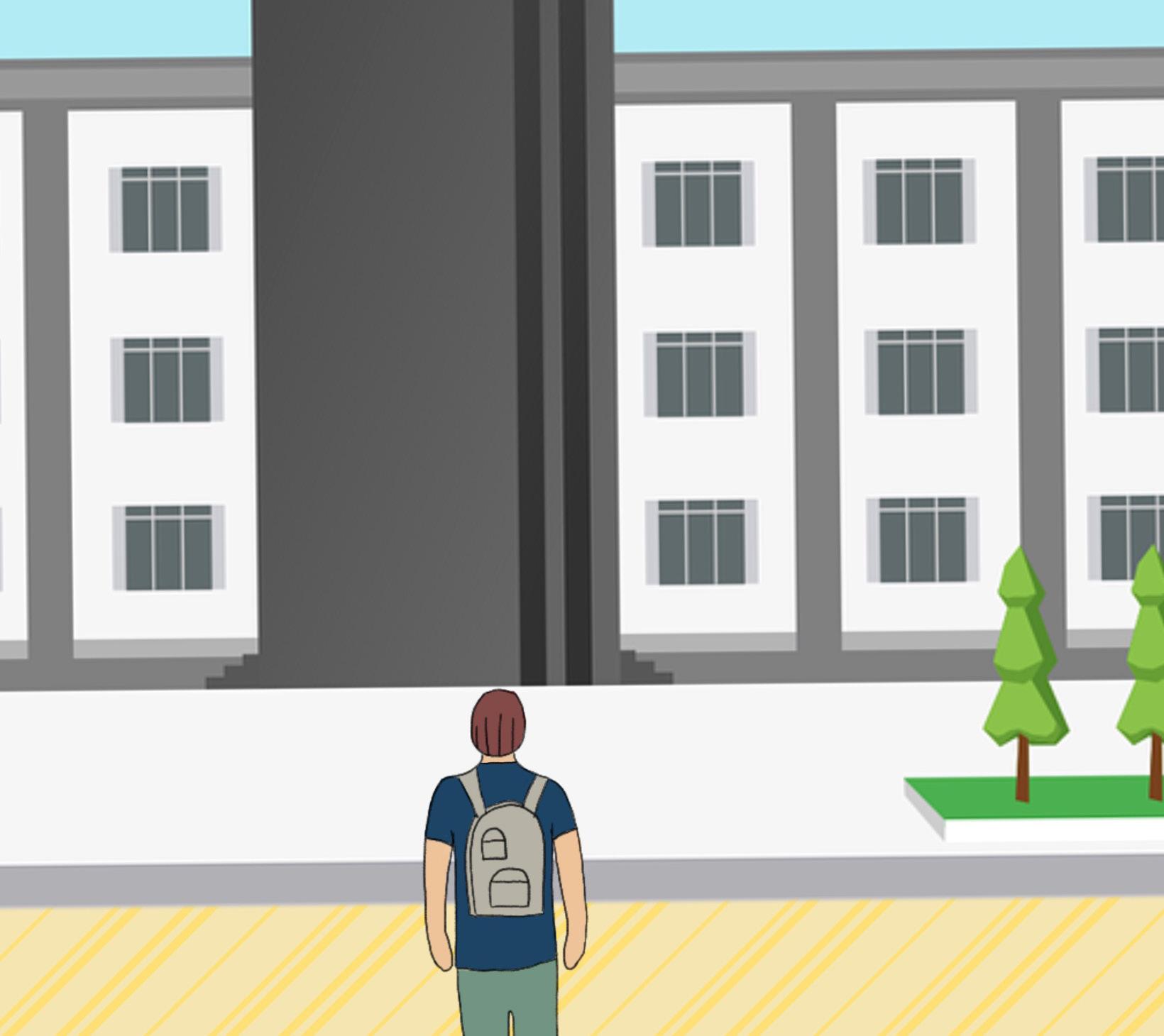
The University of Regina once again gears up to welcome a new wave of students, each with unique aspirations and academic goals. Pause for a moment and ask yourself: just how prepared are you for this new academic year?
Are first-year students even aware of the different resources available to them? Do current students leverage these resources well enough to equip themselves for the upcoming higher-level courses? Most importantly, are students truly making the most of what is at their disposal? If you’re thinking “Maybe not…” then press on, for this article is poised to steer you through the various on-campus resources aimed to set you up for success.
For the eager faces stepping onto campus this fall semester, it’s likely that you have already selected your degree path. But what’s next? One crucial step that many students miss out on is reaching out to your academic advisor and embarking on early registeration for classes.
In the words of Lindsay Eastman, a highly experienced academic advisor at the University of Regina’s Hill School of Business who has worked with the faculty
schedule available (as classes fill up quickly as the spring and summer progresses), and a sense of what to expect in their first year which all work to dispel some of the anxiety that a first-year student may be feeling.”
As noted, registering early on – even months before the semester starts – greatly impacts student engagement and preparedness. It is more than just securing classes before they fill up, it is a bridge to creating valuable connections with one’s faculty advisor and a shield against first-year jitters. Eastman continues: “For existing students, early registration is even more important to ensure they are getting the required courses they need for their majors, and discussing any upcoming program plans or opportunities that require advance planning and organization.”
Moreover, there are various opportunities that the UofR provides to help students prepare for their studies prior to starting even their first semester. As Eastman highlights, these opportunities encompass programs tailored to specific needs of students such as the High School Accelerated program which caters to students in grades 11 and 12, allowing them to earn university credit while still in high school.
Additionally, the UR Course
accepted in the fall semester who wish to gain a head start through an introductory university course. It facilitates the completion of ENGL (English) 100 – Critical Reading and Writing I, and includes skill-building workshops addressing challenges commonly faced by first-year students.
When considering the registration process, it is equally vital to be mindful of the registration time ticket which outlines the specific times students can start enrolling in their classes. Adding or dropping classes after certain deadlines can result in non-refundable fees or notation like “NP” (Not Passed) appearing on one’s transcript. For this semester, the end of the grade of “W” drop date is November 15, while the end of the 100 per cent refund on tuition period if a class is dropped is September 13.
Such information is easily accessible on the official website of the UofR, and can be accessed by searching things like “uregina student registrar resources” online. As Eastman says, “I would advise students to research their program requirements as soon as they have been admitted and revisit the requirements every semester.” She adds that “students can search all program requirements in the University of Regina Academic Calendar or on UR
for over 20 years, “Early registration provides students with the opportunity to meet and engage with a faculty advisor early on after admission. I find it provides valuable information at an early stage after being admitted which encourages student engagement, curiosity, the best possible class
Registration Days, in collaboration with Enrolment Services, the Student Success Centre, and participating faculties offer newly admitted students essential introductions to university support services, expectations, and success strategies. The Summer Bridge program is designed for students
versity. Amongst its features, it showcases how past, current, and planned courses align with selected programs. It even includes a GPA calculator function to estimate averages. Using such a comprehensive approach with one’s faculty advisor can serve as a basis for wisely registering for introductory courses and ensuring that students meet prerequisites for their higher-level degree courses. At the same time, it facilitates selecting electives that can contribute to receiving a concurrent program alongside one’s major such as receiving a certificate alongside a four-year bachelor’s degree – all while adhering to one’s set target degree timeline. This shows the crux of the matter: academic advising empowers students to make well-informed decisions about their education which, unfortunately, many domestic and international students often admit to not fully utilizing, leading to last-minute panic and rushed decisions.
Eastman testifies: “As an advisor who has worked with the faculty for over 20 years, I am seeing an increasing trend of not prioritizing registration or planning in advance. As a result, students are likely to not secure an appointment as immediately as they wish, and perhaps not securing the courses they need [or] desire because they are already
demic journeys, Eastman highlights the value of making use of available resources. “Students can often quickly find the information they need by simply searching the website or the Undergraduate Academic Calendar or Course Catalog to determine information about various inquiries they may have, i.e. Co-op Education information, program requirements, important dates, prerequisites, contact information, online transfers, scholarships... A lot of student email inquiries could very efficiently be answered through a quick search of the website.”
She further says: “I feel bad when they have had to wait a few days for a response when they could have easily just searched the website on their own. I try to encourage independence as much as possible, because general information like that can be so easily attained.”
Self-Service using the ‘Academic Advising and Program Planning - Advisor’ (Degree Audit) tool available.”
Degree Audit is an unofficial yet effective tool that enables students to explore the requirements of various degrees, diplomas, and certificates offered by the uni-
“ I am seeing an increasing trend of not prioritizing registration or planning in advance. As a result, students are likely to not secure an appointment as immediately as they wish.”
– Lindsay Eastman, Advisor
full.” The urgency of advanced planning is echoed: “We care about our students and their academic success deeply, but unfortunately if a student doesn’t book to see us well in advance of their registration time ticket, they could have to wait several days for an appointment, […] as our services are in very high demand.”
To streamline students’ aca-
When asked about which academic approaches have been shown to make the most impact on students’ success in their academic journey, Eastman noted: “I would say that organization and advance planning are key to making their programs a smooth and successful journey. Academic success entails that students are present, prepared, organized, put in the adequate time required into reviewing notes, studying, completing assignments, and planning accordingly.”
To conclude, university is not just about attending lectures, but it’s also about harnessing resources that the university has to offer and, when in doubt, reaching out! It’s not enough for resources to just exist; they are of course most useful when they are actively used.
Whether you currently rent a living space or not, it’s always the right time to brush up on your rights
ciara trapp contributor
This article serves as information and is not a substitute for legal advice.
Whether you seek out rentals on Facebook Marketplace, VarageSale, Kijiji, or other rental advertising websites, you may have noticed the skyrocket in both the cost and availability of rental housing. While suites for rent are posted and almost immediately leased and removed, finding and securing safe and affordable rental housing can be challenging, let alone as a student subject to time-sensitive pressure. In this unforgiving market where prospective tenants are often under the microscope for vetting, students and new renters alike can often overlook the screening of landlords.
That said, we bring you this article today to ensure university students in Regina are empowered to make informed decisions now and avoid tricky tenancy situations down the line.
We’re fortunate to live in a time where technology can work in our favour, and Gen-Z minds make for excellent internet sleuths. When viewing apart-
When reviewing these hearing outcomes, using your best judgment is essential. Hearings through the Office of Residential Tenancies do not factor in potential disagreements or frustrations between a tenant and landlord, which may have contributed to an application for a hearing. Hearing officers tend to stick to the root cause of the specific hearing rather than discussing all potential frustrations or grouping multiple hearings into one. In addition to the considerations made by hearing officers based
“
consider such as the information included in a lease agreement and security deposit regulations. The Residential Tenancies Act 2006 requires the following of all tenancy agreements:
-Include the legal names of the landlord and tenant(s).
-Indicate the address of the rental property.
-Specify the responsibility for the payment of utilities.
-Indicate the facilities or services provided in the rent.
-Clarify the rent amount, the date it is due, and whether the rent
after the date you move in.
-Provide a copy of the Standard Conditions.
-Include the commencement date of the tenancy. The tenancy agreement must also indicate the end date if it’s a fixed-term contract where a definite lease end date has been agreed upon. If the contract does not include the end date, then the lease should be considered to run monthly.
-Specify the telephone number and address of service for the tenant and the landlord or the agent acting on
The rule of thumb is to always ask questions if you may require clarification!
As a tip for students, if it is not explicitly mentioned, ask your landlord if you can opt for a lease term that covers you until the end of the school year if you plan to move back home over the summer.
After everyone involved has signed a tenancy agreement, tenants have responsibilities to abide by and rights that must be adhered to by landlords. Responsibilities include the payment of
A lesser-known residential tenancy goldmine, the Canadian Legal Information Institute (CANLII), can yield information on past applications filed by or against a landlord. Hearings can include anything from security deposit disputes to failing to maintain a rental property and many other scenarios.”
– Ciara Trapp

ments and meeting potential landlords, it certainly doesn’t hurt to take to Google, Reddit, or other sites you frequent for a quick search for any apparent red flags. A lesser-known residential tenancy goldmine, the Canadian Legal Information Institute (CANLII), can yield information on past applications filed by or against a landlord. Hearings can include anything from security deposit disputes to failing to maintain a rental property and many other scenarios.
on precedent hearings, The Residential Tenancies Act 2006 sets the standard for all residential tenancy matters, including the outcomes of residential tenancy hearings, the creation of tenancy agreements, the process of evictions, and – equally as importantly – the rights and obligations of tenants and landlords.
After vetting your potential landlord, if both parties decide to proceed with the formalities of entering into a tenancy agreement, there are essential details to
varies based on the number of people living in the space.
-Indicate the rental term (oneyear, six-month, or other period of time).
-Indicate the security deposit amount and when it is required to be paid.
As a tip for students, if a security deposit equals one month’s rent, up to 50 per cent of the total deposit could be required before you move in but the remaining 50 per cent of the security deposit may be paid within two months
behalf of the landlord.
-Indicate the emergency contacts for both the tenant and landlord. Tenancy agreements, like all contracts, are legally binding. Before signing it, you must ensure that you understand and agree to all terms and conditions. Ensure you thoroughly read and understand any penalties should you break the lease, who is responsible for which utilities, which facilities are included in the rent, how much needs to be paid for the security deposit, or other clauses.
rent and utilities (if applicable as per the tenancy agreement), abiding by all terms of the tenancy agreement, reporting maintenance issues at their earliest convenience, maintaining the rental unit and premises in clean and sanitary conditions, repairing or paying for damages caused, and adequately notifying the landlord when they intend to move out. Regardless of all else, tenants have the right to quiet peace and enjoyment of their rental property; the right to live in a property that adheres to Saskatchewan safety, health, and building codes; the right to access their rental unit without prohibition from their landlord; and the right to display election signage during applicable election periods. The landlord’s rights and responsibilities in Saskatchewan can be found within The Residential Tenancies Act, 2006.
This article does not scratch the surface of how tricky the world of residential tenancies can be. If I can leave you with any further advice, it would be to document all of your interactions with your landlord, especially if they are verbal or otherwise not in a written format. In addition, as a tenant, your security deposit ultimately belongs to you, and the landlord cannot benefit from the security deposit after you move out. Instead, the landlord can only mitigate their loss and return the remainder of the deposit. Further, because I can’t stress it enough, read and understand your lease agreement! Taking a proactive and informed approach to residential tenancies allows for peace of mind and the confidence to advocate for yourself as a tenant in Saskatchewan.
shivangi sharma news writer
September is just around the corner and students, new and continuing, are preparing to go back to school after the summer break; the campus is preparing too. With Welcome Week activities coming up, the campus staff, faculty members, and instructors have hardly been unoccupied.
Even though classes are offered throughout spring and summer, many students prefer to take the summer off and return for fall or winter. Such being the case, campus is usually more abuzz with crowds during the fall and winter semesters. The University of Regina prides itself for having a diverse and all-inclusive campus which hosts students from all over the world. An essential part of having a campus for all is ensuring the safety of all those who are present on campus. To facilitate this, Campus Security has a number of resources that can be accessed by all students.
A detailed account of all the services offered by security services is usually given during orientation. This article aims to provide
similar information for those who miss orientation, were unable to attend, or who have already been studying for a few years and may not remember every detail of the orientation messages.
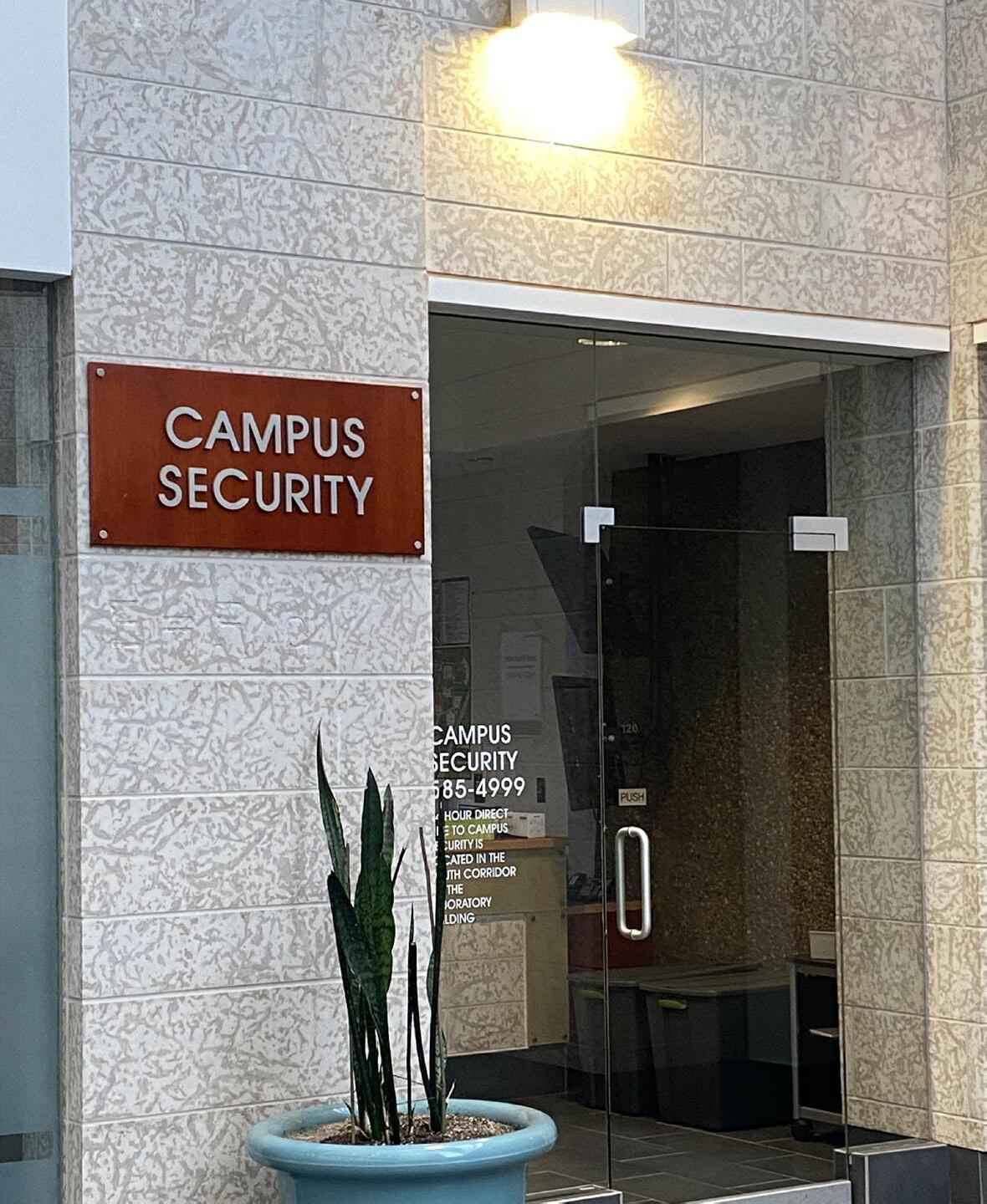
All information can be found on the university’s website for Campus Security. As also mentioned on the website, security personnel are present on campus 24 hours a day, 365 days a year, and provide proactive patrols and call responses to both the main campus and College Avenue campus should you be taking courses there. Security services also have emergency (306-585-4999) and non-emergency (306-585-4407) phone numbers which are monitored consistently.
Security can be contacted for emergency events, or something as simple as a student studying on campus late at night who wants an escort to their vehicle or bus stop so they don’t have to walk alone when campus is fairly empty. Myself and many of my acquaintances have made use of this Walk Along Program, and have found it helpful especially during evenings.
The university also has a Sexual Violence Prevention and Re-
by telephone, or by
email. More information can be found online at uregina.ca/sexual-violence/. If you are seeking appointments for counseling, you
The Premier and Minister of Education proclaim parental rights as justification
According to the Government of Saskatchewan’s webpage on Child Abuse and Neglect, child abuse includes neglect – not providing children with things like adequate food, health care, or shelter – and emotional maltreatment which includes “expecting a child to be able to do things he or she cannot do, embarrassing or insulting a child…”
On August 22, 2023, the Government of Saskatchewan announced a new Parental Inclusion and Consent policy for all 27 school divisions in the province which essentially says that parents have the right to refuse to consent to their child receiving sexual health education in school, and that parents must consent if a child under 16 would like to be referred to by a name or pronouns at school other than what they were assigned at birth.
Saskatchewan’s Minister of Education, Dustin Duncan, was interviewed by Stefani Langenegger the next day on “The Morning Edition” of CBC News, and spoke mainly on parental rights as justification for the policy. “Well, we’ve heard from parents who want to be more involved in their children’s education, especially around issues that I think everyone can acknowledge that are sensitive or in some cases controversial for some people, and so this is a move to ensure that we have province-wide alignment in terms of how parents are informed, when and how sex ed is being taught, what resources are being used.”
Langenegger was not shy in inquiring about how/whether the
can book through email by contacting lynn.thera@uregina.ca or sexual.violence.response@uregina.ca. Any questions regarding these practices or the programs may also be directed here.
A very important piece of information that needs to be mentioned here is that your identity will remain completely anonymous, and any information you may share will remain strictly confidential providing it does not violate ethical reasons for a counselor to disclose information (e.g. a child’s safety is at risk). One major reason why many victims of abuse never speak up has to do with their identity being revealed, which is why it is essential to mention that anonymity is ensured through the process.
Many other resources are also available through Campus Security, and several will be addressed in follow-up articles through future issues of the Carillon. Meanwhile, we hope you have a splendid beginning to your semester, and that you remember to use the resources available to you as a student to keep you safe through your semester.
policy will make trans kids safer in the province, stating “You know that some parents kick their kids out when they find out they’re gay or trans?” This prac-
do something they cannot do: expressing a gender or existing with a sexual orientation they do not possess.

tice of forcing children out from homes directly meets the qualifications for child abuse as outlined by the Government of Saskatchewan, as the parents fully neglect to provide for the child’s needs while also expecting the child to
Rather than addressing the danger trans and gender-nonconforming kids will be put under due to these new policies, Duncan saw this as an opportunity to pitch the stance opposite his own as “How do we keep this [a child’s gender identity] from parents?”
Langenegger quickly reframed the issue by saying “‘What’s best for the child’ I thought was the default position, not ‘How do we hide this from parents?’”
A similar policy was introduced in New Brunswick early in June of this year with Policy 713, which also requires that schools ‘out’ gender-diverse students to their parents. Kelly Lamrock, Child and Youth Advocate for New Brunswick, was quoted in an article by The Canadian Press on August 15 saying that the policy violates children’s rights as protected under the Human Rights Act and the Charter of Rights and Freedoms
“The parent has a right to teach their values to a child,” Lamrock is quoted to state, followed by this clarification: “The parent does not have the right to a state apparatus to force the child to live by their values.” Harini Sivalingam, Equality Program Director at the Canadian Civil Liberties Association, has already condemned New Brunswick’s policy as discriminatory and in an interview with CBC News said the same of Saskatchewan’s.
“Our read of the policy is that it is specifically targeting trans and gender-diverse students. That is the discriminatory aspect, is that it only applies to them.”
Langenegger asked Duncan about this distinction, using the example that “If Nicholas prefers Nick or Robert prefers Bobby, will the school need to check with parents on that?” Duncan responded by saying “I think that what we’re talking about is when children are looking to change their name
associated with a change in their gender. [...] obviously, if a child prefers to go by a shortened version of what their given name is, I think that that’s different than what this policy is speaking to.”
Shortly after the policy announcement, Saskatchewan Premier Scott Moe on X (Twitter) posted saying “I’ve been asked what experts we consulted in creating the Parental Inclusion and Consent Policy. I believe the leading experts in children’s upbringing are their parents.”
Lisa Broda, Saskatchewan’s Advocate for Children & Youth – who was not consulted prior to the announcement of this policy – was interviewed by Amanda Short for the Star Phoenix in 2020 on a significant increase in parental abuse toward children and youth in Saskatchewan. ”Year to year, violent acts against children and youth have been behind a large proportion of death and critical injury notifications the advocate’s office receives.”
At that time, incidents of violence against children and youth reported to police in Saskatchewan amounted to 519 of every 100,000, a stark increase from the national average of 273. Noting the pandemic’s exacerbation of existing service gaps, Broda said three years ago that vulnerable groups were increasingly experiencing violence, and commented “I can imagine we’re going to see the fallout to that once we return to some sort of state of normal.”
Rather than making budget room to aid the houseless, Regina’s officers disband the camp that offered them support
shivangi sharma news writer
Regina Police and the Fire Department took down the houseless encampment outside Regina’s city hall on July 28, 2023, stating that it posed an “imminent risk” to the security of its residents. The encampment began in part to commemorate the one-year anniversary of Regina’s city council voting unanimously to set aside funds to end homelessness in the upcoming municipal budget. Before the disbanding, there were 80-some tents housing approximately 70 people.
Donations were made by community members which a host of volunteers coordinated alongside immediate, on-the-ground support. Naloxone-trained volunteers were also present to perform regular wellness checks and prevent potential overdoses. Al-
Protective Services department.
Residents of the encampment were given a deadline of 1:30 p.m. on July 28 to clear off the grounds. The decision was not received well by residents or volunteers. Some residents left, but more stood their ground with many volunteers who’d worked with them also standing alongside. Resistance was shown in the form of makeshift barricades made using chairs as police officers moved forward.
The police threatened to use pepper spray if they deemed it necessary, and tore down tarps and tents – damaging some – and volunteers helped residents gather their belongings while sharing tears and hugs. All in all, the clear-out took about three hours, with the police making 11 arrests in that time. Both residents and volunteers were in this group, including Mandla and Thabo Mthembu, two long-time volun-
“I’m worried about my grandchildren’s future because of people like Mayor Masters.” – Spotted Horse
protecting this broken system? Or, are you joining us and coming with peace, love, laughter, and drums, and giving out food? That’s all we’re doing! That’s all we’re doing, providing safety, security, protection, a safe place to sleep.”
City hall’s front lawn is now entirely fenced off with “no trespassing” signs hung frequently to deter anyone from setting up camp again. When asked about the fences, city manager Niki Anderson says that although the lawn was cleaned after residents left, it requires roughly $60,000 of repairs to restore which cannot be found in this year’s budget. Seeing as this has been made a budget issue, the fence may remain up until 2024.
The encampment, which had grown rapidly, had formed into a community, and was a safe haven for the residents there. Many
camp that “It’s a community here, we’ve built a family.” Concerning the disbanding, Mitton later said, “I’m lost. I don’t know what to do. It’s just panic. Panic, panic, panic.” Mitton was the individual who made the “MAKE POVERTY HISTORY” sign hanging in front of city hall, which police also tore down on July 28. With winter quickly approaching, volunteer and resident worries are on the rise. Although the camp would not have been close to a solution during the brutal Saskatchewan winter, the strength in relationships and resources that come from being a part of a community rather than alone may well have helped. Many volunteers also believe that the fire that broke out was used as an excuse by the fire department to take down the camp.
The council has been split about this crisis for a long while.
for their lawsuit, and the legal action ultimately failed, but it did draw better attention to the crisis at hand.
Houselessness is a serious humanitarian crisis and only the ones who live through it understand the horrors involved in having no shelter. With the number of houseless individuals in this city increasing every passing day, this issue requires a well-planned approach carried out with a sense of urgency. Although it’s fair to say that a project like this is easier spoken about than done, having no plan or budget line item to address the issue exposes a lack of attention on this crisis or solutions for it.
Mayor Masters continues to be adamant in her decision to not let any similar camps crop up elsewhere in the city either, but the tearing down of the city hall encampment has essentially dis-
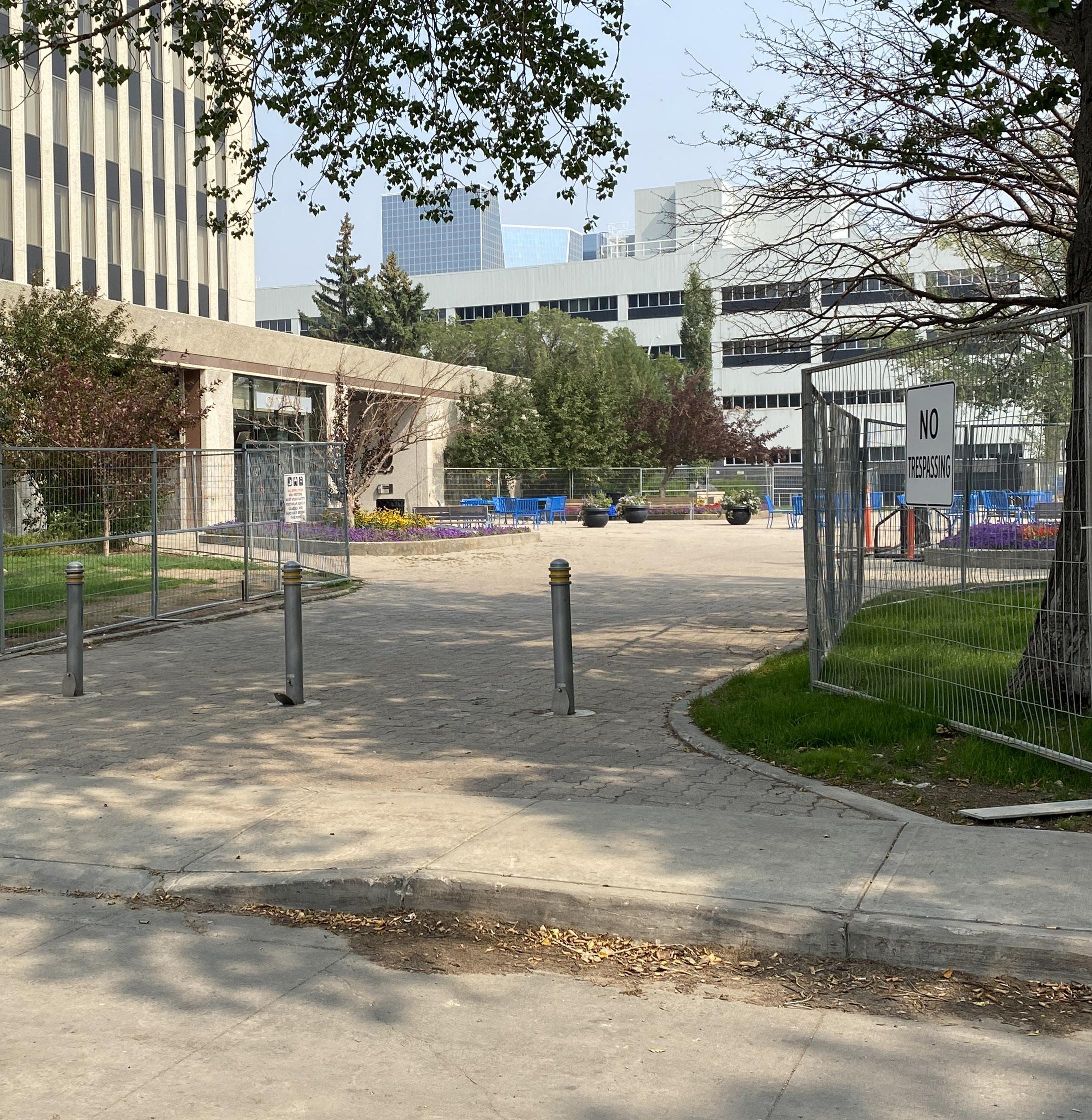
though incredibly well-organized and peaceful, the camp witnessed three fires. The decision to decommission the encampment was credited to the first that broke out. No injuries were reported, but Regina Fire and Protective Services Chief Layne Jackson said it was “a close call,” and as a result he utilized the Fire Safety Act to order the encampment taken down. When asked about her stance, Regina mayor Sandra Masters said that while she thinks that the tearing down of the encampment is unfortunate, she was full in support of the Fire and
teers at the camp, and local activist Florence Stratton.
“I ask, for the people at home, that if someone came to where you were living and you had to leave and you had nowhere to go… I just think, imagine if that was you,” Mandla Mthembu said at a gathering at city hall on July 28 shortly before police disbanded the camp.
At that same gathering a volunteer spokesperson directly addressed the approaching officers, saying “Are you guys enacting the will of the man that keeps
mentioned feeling more safe in the camp than anywhere else. The tearing down of this encampment will only create problems for its residents, as they still require a place to make shelter and largely must now achieve this alone. Several residents have also been reported dead following the camp takedown, a stark contrast to the number of reversed overdoses that were possible because of Naloxone-equipped volunteers while the camp ran.
Pynk Mitton, a resident who had three tents set up, said of the
A lawsuit was filed earlier this year by Ward 6 councilor Dan LeBlanc and Ward 3 councilor Andrew Stevens concerning the call on city manager Anderson’s office to include in the 2023 city budget a line item describing the cost of ending homelessness. LeBlanc and Stevens believed this had been unanimously supported by council in a motion in June 2022. They gained much support from protestors who had been barred from city hall during the council meeting. Both members faced criticism but no penalties
persed the individuals facing the problem of houselessness rather than attempting to stand with them and help.
“I’m worried about my grandchildren’s future because of people like Mayor Masters,” said a man named Spotted Horse during the pre-disbanding rally on July 28 in front of city hall. At the end, a volunteer spokesperson boldly condemned those involved by reading the Bible verse Mark 8:36: “What does it profit a man to gain the world, and lose his soul?”
maren savarese knopf staff writer
Book banning is often associated with the United States. Unbeknownst to many Canadians, there are a plethora of books that have been challenged right here at home. In fact, Canada has a nationwide “Freedom to Read Week” in February that seeks to encourage Canadians to think about and reaffirm their right to read as parcel to intellectual freedom, one guaranteed by the Canadian Charter of Rights and Freedoms. The Canadian Federation of Library Associations makes clear its stance on censorship by stating, “Libraries provide, defend, and promote equitable access to the widest possible variety of expressive content and resist calls for censorship and the adoption of systems that deny or restrict access to resources.”
While similar data is currently unavailable in Canada, book bannings have been on the rise in the United States. According to the American Library Association Offices of Intellectual Freedom, the number of challenged titles was up nearly 40 per cent in 2022 compared to the previous year.
PEN America, a non-profit tracking book banning data, found clear patterns amongst banned books. From July 2021 to June 2022, 40 per cent of all banned books featured protagonists or prominent characters of colour, 21 per cent dealt with themes of race and racism, while another 41 per cent included 2SLGBTQIA+ content. The most banned book according to PEN America, is Gender Queer by Maia Kobabe, whose graphic memoir follows the author’s exploration into their own gender and queer identity.
Canadians have a long and often unknown history of trying to remove books and magazines that are deemed offensive or inappropriate. Some challenged titles in Canada include Underground to Canada, In the Heat of the Night, To Kill a Mockingbird, Of Mice and Men, and Such Is My Beloved Underground to Canada by Barbara Smucker was challenged in 2002 along with In the Heat of the Night and To Kill a Mockingbird in the Tri-Country District Board of Nova Scotia with objections to the depiction of Black people in anti-racist works. The challenge called for the removal of the titles in N.S. classrooms. Ultimately the school board rejected this request.
Of Mice and Men by John Steinbeck was challenged in the mid-90s and a petition circulated asking the book to be removed from Alberta school curriculum.
Such Is My Beloved by Morely Callaghan was challenged in 1972 in Huntsville, Ontario based on
terms of [a] novel anyway, pretty much exclusively a single-authored thing, it’s kind of easier to challenge and get a single work taken down by an individual.”
Dr. Horacki researches and teaches about written propaganda centred between the two World

the depiction of sex work and the use of ‘strong language.” Challengers asked that this title be removed from local high schools.
In discussing why books remain targets of challenges and bans, Dr. Micheal Horacki of the Department of English at the University of Regina said that “approaching [book banning], in
Wars. He says that following the First World War there was a rise in propaganda “and [propaganda] start[ed] being used by broad swaths of people. [...] as much as we think of propaganda as people sort of writing lies and publishing those lies as facts, propaganda is really all about controlling narrative. And the two halves of con-
trolling narrative are putting your narrative out there and stopping other narratives from being published.”
Horacki points to the lengthy and meticulous process involved in writing books and suggests that since books are “very, very carefully constructed articulations by people who have thought a lot about individual subjects, make them maybe the most dangerous things ideologically, when you don’t agree with the position. So, it might be almost from… a propaganda perspective, almost most urgent, to have a book taken down.”
According to Horacki, it’s important to begin thinking more broadly about book banning, which might include “all other forms of censorship. So, I’m really interested in thinking about banning as part of this larger constellation of propaganda.”
Dr. Horacki is teaching English 110-001 “Mass Media and Misinformation” this fall. The class deals with themes of propaganda and censorship and explores a variety of texts that include George Orwell’s writing, of whom it is well known that some of his written work has been banned.

If you’re frequently online and you like pop culture, you’ve probably seen information online about the Writer’s Guild of America (WGA) striking and the Screen Actors Guild (SAG-AFTRA) striking, also known as the WGA and SAG-AFTRA strike. But, what exactly is going on that’s making them strike, and what’s being affected?
The WGA started prepping for a walkout in February and started negotiating with the Alliance of Motion Picture and Television Producers (AMPTP) in late March. The WGA writers are striking because, with the rise of streaming, there has also been a lowering of their paychecks. They’re asking for a high minimum wage for their work, higher residuals for already completed work, more compensa-
tion throughout the production period, and better insurance plans. The strike itself started on May 1 after WGA and AMPTP could not reach an agreement. SAG-AFTRA announced they were joining the strike on July 13 by President Fran Drescher through a speech. By the time the strike hit 100 days in early August, the movie industry had mostly slowed to a halt. 171,500 people were on strike.
Very recently, on August 22, the WGA went back in for negotiations with some very important people: Bob Iger, CEO of Disney; David Zaslav, CEO of Discovery; Ted Sarandos, co-CEO of Netflix; and Donna Langley, CEO of NBC Universal. During the meeting, the group of CEOs wanted to make it clear that they were only
offering this one counter-deal.
The meeting lasted two hours. The counter-offer included, according to the WGA’s statement, no weekly pay, few writings being covered, no regulation for using WGA members’ work to train artificial intelligence, and six WGA staff were given permission to study streaming data for information about more residuals for writers. WGA asked for contracts to be a minimum of 13 weeks guaranteed, and at least six writers per writing room. The AMPTP offered ten weeks and two writers.
In this deal, the WGA would need Disney to offer 0.088 per cent of their revenue, Netflix to offer 0.206 per cent, Warner Bros. Discovery to offer 0.104 per cent, Paramount to offer 0.143 per cent, NBC Universal to offer
0.027 per cent, Amazon to offer 0.006 per cent, Sony to offer 0.027 per cent, and Apple to offer the lowest, at 0.004 per cent of revenue.
The biggest issue that’s been spread online with the AMPTP in regards to the strike is how much actors and writers get paid for streaming residuals on platforms like Netflix and Disney+. Some actors and writers have shared that they make less than a dollar per episode through these streaming platforms. Their previous work now gets them less than a dollar a month, when many of these writers and actors rely on residuals to live. What shows and movies exactly are we missing out on because of the strike?
Abbott Elementary on ABC, American Dad on Fox, American
doing
Horror Story on FX, Cobra Kai on Netflix, Daredevil: Born Again on Disney+, Emily in Paris on Netflix, Family Guy on Fox, Grey’s Anatomy on ABC, The Last of Us on HBO, The Sex Lives of College Girls on Max, Stranger Things on Netflix, The Summer I Turned Pretty on Prime Video, and Yellowjackets on Showtime have all paused due to the strike. For movies, Deadpool 3, Beetlejuice 2, Gladiator 2, Wicked, and Venom 3 have all ceased production due to the strikes. Meanwhile, Dune: Part Two, The Lord of the Rings: The War of the Rohirrim, Ghostbusters: Afterlife, and Godzilla x Kong: The New Empire have all had their release dates extended due to the strikes.
Death metal bands to start listening to, if you haven’t already!
aurel dumont contributor
Do your ears hurt? Do you want them to? Then read on, fellow knucklehead, because I have some recommendations for the newest and gnarliest caveman tunes to go deaf to.
The first band I have to talk about is one of the most notable upcoming acts in death metal. Their name is hard to say, and their logo is impossible to read – I’m talking about Sanguisugabogg. I have to admit that I actually didn’t like Sanguisugabogg when I first heard them. I thought they were just another try-hard old-school death metal revival band using terrible production quality to seem authentic. But the more I listened to them – especially their latest album, Homicidal Ecstasy – I began to think my initial appraisal was wrong.
I had the pleasure of seeing Sanguisugabogg live in Saskatoon recently and that confirmed my changed opinion: they’re as real as it gets. Each member is admirable in their own right, and together they make a band that feels like Cannibal Corpse in their prime – a death metal sensation. I feel like one day I’ll be able to brag about seeing them when they were still so new.
Sticking mainly to traditional low death metal gutturals, he still employs the odd fry scream or inhale growl for dramatic effect – a remnant from their first album, Tortured Whole
Guitarists Cedrik Davis and Drew Arnold lay down some of the meanest and simultaneously grooviest riffs I’ve heard in a long time. Look no further than track two, “Face Ripped Off.” The tempo change at the beginning of the song still gets stuck in my head after months of listening to it. The groove continues through
and catchy guitar and groovy machine-gun drumming – but their vocalist, Seven Kane, performs exclusively inhaled vocals. This vocal style isn’t for many, due to its medically disgusting timbre and inability to articulate words, leaving the lyrics sounding like burps, frogs, or pig squeals. I will say that Seven’s inhales are some of the best I’ve heard – and the lyrics he writes, if you can find them, are genuinely hilarious and memorable. I’ve found stupid enjoyment in their first album, Smoke, released July 7.
form with their debut album, Split the Fuck Open, released July 21. Split the Fuck Open is 6 songs and just over 11 minutes long, getting in and out quick, while causing as much damage as possible. Three of the four members do vocals, and they make truly haunting harmonies to accompany their crackling riffs. This album feels like having a nightmare in a frying pan, making it a strong first full-length for the band. “Kadaver Kush” is one of the hardest songs I’ve ever heard, and “Hash Driveway” is a Trailer
spectively give a dimensionality and variety that elevates each of their performances. The punk clearly shines through at times on Revenge, but the overall chord that Bashed In strikes is one of lumbering lethality.
Lastly, I’ll mention some bands with material set to release later this year. 200 Stab Wounds, probably the best proper oldschool death metal band performing on the planet right now, is set to release their highly anticipated sophomore album sometime this year, following up their
“ Sanguisugabogg didn’t do it for me a first, but I get it now. […] I drank the Sanguisuga-aid and I’m loving it.”
– Aurel Dumont
the first half of the album with songs like “Pissed” and “Testicular Rot,” then “Skin Cushion” and “Hungry For Your Insides” transition into the more serious death metal compositions in the latter half while still being catchy and concise. The second half of the album has longer, more com-
Yes, the inhaled vocals might turn you away. But I can promise you this: Snuffed on Sight sounds like no other band out there. Smoke is a weed-fueled sonic assault of the catchiest, hardest riffs dominated by inhuman growls and nuclear drumming. At only 15 minutes long with 8 songs,
Park Boys-inspired explosion. The last act on my list is Bashed In. I’ve only recently started listening to them, but they’ve made a strong impression in that short time. Describing themselves as “homicidal slamming beatdown,” Bashed In lives up to those words with their sec-
debut, Slave to the Scalpel, which released in 2021. You can check out their recent two-song EP Masters of Morbidity in the meanwhile.
Moving onto more modern styles, Cell just released the single “Incarcerated by Flesh,” and if it’s a sign of things to come, I’ll be checking for more

Homicidal Ecstasy is Sanguisugabogg’s second album, released on February 3. The first thing you’ll notice if you listen to this album is that it sounds... different. Sanguisugabogg has no bass player; they have 2 guitar players, and one mixes their sound to be only low-end. Oh, and they tune very, very low. But another thing you’ll notice is Cody Davidson’s captivating drumming. He’s one of the most creative, expressive, and skilled drummers out there. He’s also the guitarist for another band I love, Volcano, and has a one-manband side project called Putrid Stu. Talk about an overachiever.
Vocalist Devin Swank has a commanding presence on stage and you can hear it on this album.
plex songs like “Mortal Admonishment” and the closing track “Feening for Bloodshed” that really showcase the musical prowess they’re capable of.
Homicidal Ecstasy has quickly become one of my favourite albums. Sanguisugabogg didn’t do it for me a first, but I get it now. I get the weird pitch-shifted guitar tone. I get the “ping” snare drum. I drank the Sanguisuga-aid and I’m loving it. The sound production of this album might not be for everyone, but the musicianship and creativity on display are undeniable. Another band that I didn’t like at first is Snuffed on Sight. Their instrumentation does hit all my preferences – tight, low, fast,
this is ADHD run through a distortion pedal. I dare you to listen to the album’s first single, “Time 2 Dip,” and tell me I’m wrong. Other songs from this album, like “Slippin’,” “Dummy,” and the title track, remain some of my most commonly rotated songs. It also helps that they seem like funny guys, if their Instagram is anything to go by.
Up next is one of my new favourite bands, 10 to the Chest. When I first heard their 2022 single “Toxic Orphan,” I immediately kept my eye on this band. Their sound is sheer crunch. I don’t know if I’ve ever heard a band with so much distortion and volume. The affronting violence of 10 to the Chest reaches its full
ond EP, Revenge, released April 14. Bashed In is the music your scary older brother listens to. “Oh, you listen to Slayer? That’s cute. I listen to actual murder.” 4 songs and 11 minutes is all Bashed In needs to leave their mark of brutality. The opening track, “Grevious Bodily Harm,” starts with a slow and menacing slam riff before breaking into a classic hardcore punk groove – albeit an octave lower than usual –covered by toilet bowl vocals. But vocalist Evan mostly employs his powerful, full-bodied gutturals to great effect on Revenge, and guest vocal spots from Cell’s Skyler Conder and Peelingflesh’s Damonteal Harris on the songs “My Revenge” and “God of Pain” re-
singles from them every morning. An album hasn’t officially been announced, but guitarist and master slamster Mychal Soto has hinted that fans can expect new material soon.
Speaking of Mychal Soto, his other band, Peelingflesh, is set to drop Slamaholics Vol. 2 September 8. The album’s first single, “211/187,” dropped a couple of weeks ago, and I think I’ve listened to it at least once a day since. It starts with an audio sample of Ice T as Mack Daddy in Leprechaun 5: In the Hood. How can you not love that?
With so much on the horizon, keep your eye on the a&c section for future ungu-bungacore recommendations.
will bright a&c writer
We all know Lizzo as the sassy, body-positive, fun musician known for hit songs like “Truth Hurts,” “Good as Hell,” and “Pink” from the new Barbie movie. She dances, she plays the flute, and she’s confident.
But is this image she’s presenting the truth?
In August 2023, a lawsuit was brought against Lizzo and her production company, Big Grrrl Big Touring Inc., for harassment, discrimination, assault, false imprisonment, and for the hostile work environment Lizzo allegedly created. In addition, with the same charges, Lizzo’s dance captain, Shirlene Quigley, is involved in the lawsuit.
The plaintiffs of the case are Crystal Williams, Arianna Davis, and Noelle Rodriguez, former dancers for Lizzo. The case is being tried in California, where all three plaintiffs, Lizzo, and Quigley live. Big Grrrl Touring Company (BGTC) is based in Delaware, but can still be involved in the lawsuit.
Rodriguez was first hired by Lizzo in May 2021 to film a music video and by July 2021 she was booked for several music festival performances.
Davis and Williams first met Lizzo in March of 2021. They were on the Amazon Prime show “Watch Out for the Big Grrrls” (WOFTBG) which was a competition reality show where the winner received a job as a back-up for Lizzo. Davis claims that she had
“ley is religious and her website states her mission as: “Being a woman of God and a leader in the entertainment industry, she hopes to use the gifts God has given her to inspire, motivate, and build other great leaders to step into their dance dreams and purpose.” Quigley frequently spoke about religion with Davis and brought up Davis’ virginity status
yond Quigley’s actions, there was a compulsory engagement for the dance team to pray together before rehearsals and performances. Rodriguez felt pressured and judged for not wanting to lead the prayer when it was her turn.
According to the plaintiffs, Lizzo frequently hosted after-party events for her shows. They were not required to go to these events,
tion for their roles in April 2023 after a scheduled eight-hour rehearsal was extended to 12 hours ,and Lizzo accused the dance cast of drinking and not performing at the expected level. During these re-auditions, dancers did not get a break, to the point that Davis soiled herself during a runthrough and still had to continue. The only available clothes for her
The Plaintiffs were supported by Sophia Nahli Allison, a filmmaker who left a Lizzo documentary due to treatment from Lizzo. Allison claims that Lizzo is “arrogant, self-centered, and unkind.”
On August 3, Lizzo responded to the news of the lawsuit on her social media. She claimed the allegations were false, outrageous,

frequently, including in interviews and on social media, without Davis’ permission. By the time WOFTBG finished filming in September 2021, Davis and Williams were chosen to be backup dancers for Lizzo and joined Rodriguez for festival performances from September 2021 to April 2022.
but if they did, they allegedly got more performances and higher job security. One such night in February 2023 was in Amsterdam, where Lizzo took them out to the Red-Light District, to a club named Bananenbar. At Bananenbar, Lizzo allegedly pressured Davis to touch one of
to change into was a transparent pair of shorts, leading her to wear the shorts with no underwear in front of coworkers.
Williams was fired in late April 2023. The reason was budget cuts, or at least that’s what she was told. Davis was fired in early May 2023 because she re-
In August 2023, a lawsuit was brought against Lizzo and her production company, Big Grrrl Big Touring Inc., for harassment, discrimination, assault, false imprisonment, and for the hostile work environment Lizzo allegedly created. In addition, with the same charges, Lizzo’s dance captain, Shirlene Quigley, is involved in the lawsuit.
to complete a psychological examination to make sure she could handle the “strain.” Part of the examination was signing a “Waiver of Privilege of Confidentiality and Consent to Evaluation” which stated that information given during the examination would only be given to Lizzo and those involved in the production of the show if the doctor who performed the evaluation believed it was necessary. Davis has stated that she believes her mental struggles were told to Lizzo and BGTC.
Shirlene Quigley was a judge of WOFTBG, and that’s how Davis and Williams met her. Quig-
Quigley’s religious comments continued during rehearsals for Lizzo’s “The Special Tour.” Quigley made negative comments about premarital sex, imitated oral sex on a banana, and talked about herself masturbating. Quigley had so many sexually charged comments that many, if not all, of the dancers knew of her sexual fantasies. Quigley preached frequently to the dancers, wanted to make sure Davis remained a virgin, and targeted Rodriguez with her ministering. She is allegedly quoted as saying “No job and no one will stop me from talking about the Lord.” Be-
the nude performers, which was allowed at the club, even going to the point of chanting at Davis. Davis stated multiple times loudly that she did not want to, but the chanting did not cease, and she gave in, touching a performer’s breasts. That same night, Lizzo pressured a security guard to go on the stage, where his pants were pulled down.
A similar experience occurred in March 2023 in Paris at a nude cabaret bar called Crazy Horse, but the Plaintiffs were not informed it was a nude cabaret bar.
The dancers had to re-audi-
corded a meeting so she could review performance notes. Lizzo allegedly found out about the recording and furiously berated the dancers. When she found out it was Davis, Davis was fired on the spot. Rodriguez resigned shortly after because she felt disrespected by Lizzo’s actions. Allegedly, “Lizzo aggressively approached Ms. Rodriguez, cracking her knuckles, balling her fists, and exclaiming, ‘You’re lucky. You’re so fucking lucky!’” When Rodriguez went back to her hotel room, she was escorted by other dancers because she feared for her safety from Lizzo.
unbelievable and sensationalized. Quigley also responded, saying that the allegations were baseless, false, and hurtful. Some in the comments of the post have stated how Lizzo never denied anything in the statement.
Lizzo’s lawyer, Martin Singer, shared a statement on August 23 saying that Lizzo was going to sue the Plaintiffs for malicious prosecution. He stated that after the Paris incident at the Crazy Horse, all three of the Plaintiffs returned to the tour to continue work, which makes them appear contradictory to their suit. Singer also represented Bill Cosby, Chris Brown, and Johnny Depp, among other celebrities.
Many people have been showing their support for either the dancers or for Lizzo. Lizzo’s former creative director sided with the dancers and shared support for them on Instagram. Jameela Jamil, Rich Lux, Perez Hilton, Marc Jacobs, Kristen Vangsness, and Kristen Chenoweth all shared their support for Lizzo on her Instagram. Beyoncé stated that she loves Lizzo while on stage at a performance for her Renaissance Tour. Singer Grimes tweeted her support of Lizzo and defended her. The Plaintiff’s attorneys have confirmed to media outlet Page Six that there were added complaints from six people at minimum reminiscent of the Plaintiff’s stories.
Lizzo has had previous controversies for supporting Chris Brown, making sexually charged comments about Chris Evans, and accusing a Postmates driver of stealing her food.
All registered students, alumni, faculty, and support staff are welcome to pitch written and visual content to contribute to the Carillon throughout each publishing year. Each time we begin working on an issue there will be a pitch list posted on our website on Sunday with contribution ideas for each section (carillonregina.com/pitch/), as well as contact information for each of our section editors so you’re able to reach out if you would like to claim a suggested pitch or pitch an idea of your own
Our current sections are news, arts & culture, sports & health, op-ed, and graphics, though we also accept comic strips through our op-ed section and poetry as well as short fiction stories through graphics. Head to the contribute page of our website (carillonregina.com/contribute/) to access guides written to simplify the contribution process
Staff hiring
Since the Carillon is only able to hire currently registered students to fill vacant positions, it’s important that as many students as possible are made aware of vacant positions as they appear. Most of the positions at the Carillon have part time, flexible, able-to-do-remotely sorts of work, and we are incredibly fortunate to have a large staff which means plenty of extra hands to help coach and guide as people come into positions that are new to them. Make sure you keep an eye on our website (carillonregina.com/about/careers/) this year so you have the chance to jump on job opportunities, and feel free to reach out to our editor-in-chief (editor@carillonregina.com) or executive director (carillonbusinessmanager@gmail.com) with any questions on positions or applications.

While the Carillon is a newspaper publication, it is governed by The Carillon Newspaper Inc.’s Board of Directors as a non-profit organization in Saskatchewan. While editorial staff are responsible for the content, appearance, and production of the publication, the board is involved in matters of financial management, strategic direction, HR-related responsibilities, and more generally making sure that we as staff are held accountable to students as the members of this non-profit. Only currently registered students are able to sit on our board and there are currently six students-at-large seats filled, but elections for next year’s board will happen through the winter semester so you’ll have a shot to get involved then! If you’re curious about the board and don’t want to wait for winter to get involved, consider attending one of our board’s monthly Zoom meetings (carillonregina.com/meetings/) as a student to stay in the loop with what’s happening at and through the Carillon!
Open Editorial Board meetings are a new addition to the newspaper’s student engagement efforts, and are an opportunity for any students to chat with available editorial staff about contributing to the newspaper by writing articles, submitting photography, or designing graphic elements or comic strips. Students will also be welcome to chat with staff about the content, appearance, and production of the paper, or to offer story tips if there are issues or events you believe we should have on our radar. All of these meetings will be held in our office (Riddell Centre room 227), though we will also have a Zoom link available (carillonregina.com/meetings/) for anyone who is unable to attend on campus.

September 10 (Sunday) from 2-3 p.m., October 6 (Friday) from 7-8 p.m., November 12 (Sunday) from 2-3 p.m., and December 1 (Friday) from 7 p.m
September 12 (Tuesday) from 7-8 p.m., September 23 (Saturday) from 4-5 p.m., October 5 (Thursday) from 7-8 p.m., October 27 (Friday) from 6-7 p.m., November 9 (Thursday) from 1-2 p.m., and November 21 (Tuesday) from 7-8 p.m.
each issue is between 12 - 20 pages all contributed by the university community.
Contribution suggestions from our section editors go live on our website:
Contact our editors anytime with questions on contributing or the newspaper, or if you’re not sure who to contact you can reach out to our editor-inchief who will do all they can to point you in a helpful direction!
OUR EDITORS:
holly funk – editor@carillonregina.com mindy gregory – news@carillonregina.com mikayla tallon – arts@carillonregina.com sports&health – sports@carillonregina.com hammad ali – op-ed@carillonregina.com lee lim -graphics@carillonregina.com
We have 23 newsstands on campus and one each in Campion College, Luther College, and the First Nations University of Canada.
We also currently have five distribution locations off campus which include: Stone’s Throw Coffee Collective, Elle’s Cafe, The Paper Umbrella, Aware House Books, and Victoria Square Shopping Centre.
Our team beautifully jigsaws the issue of the newspaper together, and it publishes Thursday morning the week after the pitch list for that issue went live.











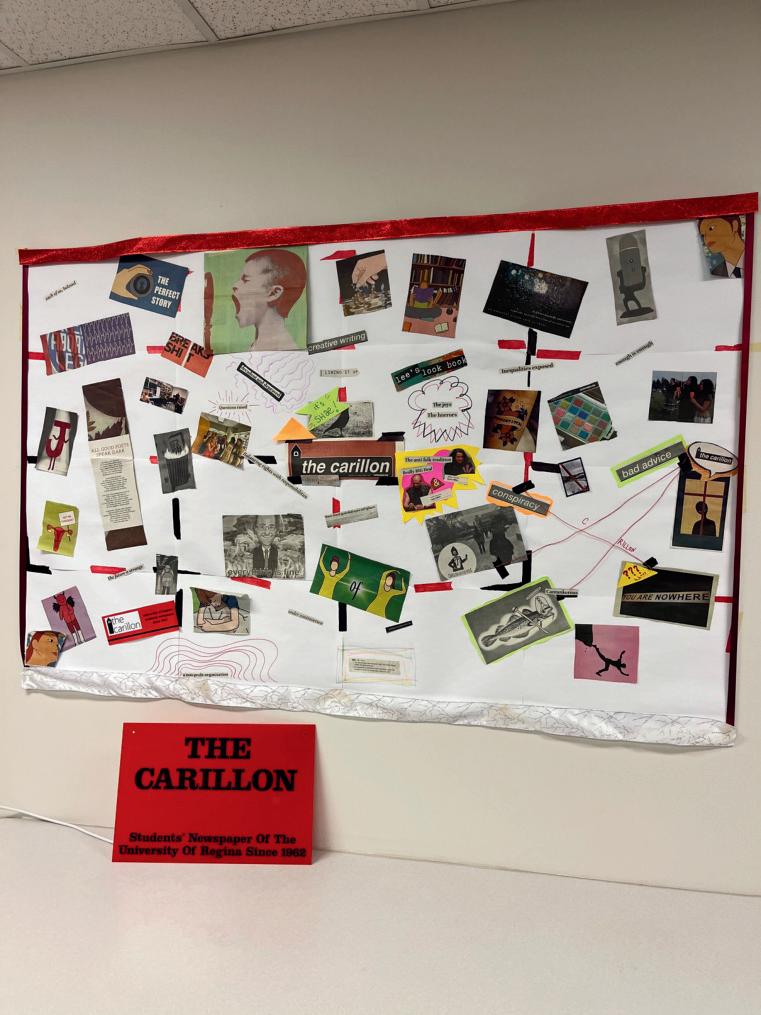

Housing and accommodations are on the minds of many students as they return to school for the start of the fall semester. Students seeking housing are increasingly faced with bleak circumstances while cost of living prices continue to rise in Canada.
In July, the Canadian Centre for Policy Alternatives (CCPA) released a report titled “Can’t Afford Rent” on the minimum wage and weekly hours at that wage needed to make rent (rental wage) in provinces across Canada. According to the report the necessary rental wage is considerably higher than minimum wage in every province across the country. Additionally, instances in which one-bedroom rental wages are lower than current minimum wage exist only in three municipalities, all located in Quebec.
Currently, there are approximately 828,000 single incomes households and 1,134,000 people in two-people income households living off of minimum wage. Together, this is approximately 5
per cent of the Canadian population. In Saskatchewan, people in one-person households with the income equal to or below a full-time minimum wage job represent 21 per cent of the population.
The report shows that in every province west of Quebec, the average minimum hours required to make rent is at least 80 hours a week. Saskatchewan’s current minimum wage rests at $13 per hour, while the wage necessary for a one-bedroom rental wage is calculated at $18.62 and $22.27 for a two-bedroom apartment.
Regina was not included in the study, but Saskatchewan’s largest city, Saskatoon, was. Findings within the report show that to afford rent in Saskatoon you would need to make $24.31 per hour for a two bedroom, or work 97 hours per week at the $13 minimum wage. A rental market report released by Canada Mortgage and Housing Corporation (CMHC) shows that the average two-bedroom rent in Regina rose by 3.3 per cent to $1,186 in 2022. In comparison, the average student housing accommodations at the university of Regina per semester is $3,884 for a two-bed-
room apartment.
Housing and income are well-established social determinants of health (SDoH). The Canadian government defines SDoHs as “the broad range of personal, social, economic and environmental factors that determine individual and population health.”
Health Researchers Juha Mikkonen and Dennis Raphael contend that, contrary to the popular belief held by Canadians that we have personal control over health factors, characteristics that influence living conditions are set by the quality of multiple factors. Communities, housing situations, work settings, health and social service agencies, and educational institutions are all included as influences.
Lacking housing or poor-quality housing have consistently been linked to negative health and well-being outcomes. Likewise, income is claimed to be one of the more important SDoH with implications for all others. In general, Canadians experience better health outcomes than our neighbours in the United Sates, but do not compare as well to other nations who have

fully developed public policies supporting SDoH. Moreover, the World Health Organization (WHO) sees health inequities as “a toxic combination of poor social policies and programmes, unfair economic arrangements, and bad politics.”
In his book The Tenant Class, Ottawa-based author, political economist, and researcher at the
trade unions. According to Trajan, many of the gains made by tenants have been won through organizing in this way.
ACORN Canada is an independent national organization made up of low income and moderate-income people across nine Canadian cities. The organization has been fighting corporate landlords and their investors
“ Lacking housing or poorquality housing have consistently been linked to negative health and wellbeing outcomes.”
– Maren Savarese Knopf
Canadian Center for Policy Alternatives, Ricardo Trajan says “there is no housing crisis.” Rather, Trajan describes a “poorly regulated market that extracts income from working-class people and channels it to higher-income segments of Canadian society.”
In what Trajan admits is a somewhat provocative statement, he calls readers to “pick a side.” Correspondingly, Statistics Canada shows that real estate and rental leasing is Canada’s largest contributor to Gross Domestic Product (GDP) followed by manufacturing. Taken together with results from CCPA’s report and the WHO’s explanation of health inequities, we come to see the housing climate in Canada as more accurately understood not as a supply and demand issue, but the result of a socio-economic and governmental environment that prioritizes profits over housing security.
When minimum wages no longer meet the wages required to afford rental prices, we must ask, what is their purpose? The Canadian government claims that Canada is one of the healthiest countries in the world. Yet, what does this mean when many Canadians cannot secure affordable housing, a critical and established SDoH? We must ask if the government’s claim of health is still true today.
Trajan commits a lengthy exploration in his book to the history of tenant organizing in Canada, and calls renters to arms to bargain with one voice - much like
since 2004 with many wins under their belt, which include stopped displacements, won protections, and successful lobbying for stricter rent controls. However, the organization claims that recent phenomenon like the financialization of housing compounded with lack of full rental controls and increasingly weakened tenant protections continue to put low-moderate income tenants at a disadvantage.
ACORN would like to see the creation of tenants’ unions and has made the following list of demands for action: mandate full rental controls across all provinces; stop financialized landlords form buying more affordable housing; the creation of an acquisition fund that enables non-profits, co-ops, and land trusts to purchase at-risk rental buildings; and building a minimum of 1.2 million units of social housing and affordable housing in the next decade.
According to most recent data from Statistics Canada, there are just under 2.2 million students attending postsecondary schooling. Many of these students are renters or working minimum wage jobs. Because of this, students are well positioned with the potential to act as a powerful voice in the struggle for affordable housing. Moreover, students and young people represent the hope for change, progress, and a more just future, and therefore have a unique position in placing themselves in Canada’s housing crisis.
The team welcomed this challenge of shooting hoops against new groups
victoria baht staff writer
The University of Regina women’s basketball team has recently returned from playing in Greece. The team participated in a fivegame exhibition opportunity where they played against other teams in the National Collegiate Athletic Association (NCAA). They had the opportunity to play against five teams and overall, it sounds like the team had a great time overseas. Now, with the team back in Saskatchewan, the players are getting settled and ready for the season to continue.
We spoke to Brenna Metz, who plays in the position of Wing and is a part of the Cougars women’s basketball team, about the team’s time in Greece. Right from the beginning, Metz shared that the team had an overall great experience on the trip and there were no disappointments. “It was a really good experience all around,” she said. “Playing in Greece was cool. Playing against those teams and seeing how we compete against them is amazing. […] Being able to see how we compare against those top athletes was a great experience to see and have.” Playing against those teams was a challenge, but the athletes viewed this as a positive opportunity. The team had
a great time in Greece, as they heard about the tour quite early in the year and were well prepared. Metz stated that they “first heard about in February […] and we laid down the expectations of the summer. Starting May 1, we had practice four times a week. Two of them being scrimmages/shoot camps, and workout camps twice a week. It was a long stretch.”
in height. All those girls were tall and that is not the case for our team. […] Reflecting back, the only skill difference that we could physically see in the teams was the fact they played more together and trained differently. […] Compared to us we had an advantage where we are short and fast. We were constantly running and moving compared to more con-
cially considering it was such a high-level competition. […] We also got time to enjoy ourselves. Considering the fact it was a hard summer of practicing and that it was stressful at times, […] but in the end, it all came together, and I was happy with the overall experience.” It was good to hear that the hard work paid off in the end. Now, even though the team went
“Being able to see how we compare against those top athletes was a great experience to see and have.”
– Brenna Metz
But after all that preparation by the Cougars, did it help prepare the team for the exhibition?
According to Metz, the preparation did help, but the actions involved were different. “The sport was very fast and more playmaking against other teams. Playing against these teams was more one-on-one focused. They were very talented one-on-one. Personally, the team had a disadvantage
trolled plays.” It is good to hear that the team had some advantages and did their best. Hearing that there were two different setups during the game would have made it very interesting to watch and probably even more to play. Next we talked about off-thecourt time and the overall benefits of the trip. Metz found it was “good for our rookies coming in. Great bonding experience. Espe-
there for basketball and to play in the exhibition, the athletes also got to have quite a bit of fun. “We spent most of our time down in Athens and downtown. We spent time in Plaka which was shopping, and we got to do a boat tour where we got to see three different islands. It was so beautiful and probably my favourite part. We got to see the water, go swimming on the beaches, and see different
parts of Greece. It was so nice to relax, get to dance to music, and chat on the boat. We even got the chance to learn traditional Greek dancing and overall had a lot of fun!”
Maybe we can catch the Cougars team using those Greek dance moves in a cheer celebration at a game or in the introductions. That would surely be something unique, different, and memorable for the crowd.
The team trained hard all summer, got to travel to another country, play against challenging teams, and explore together. Having spent all that time together, does the team feel better prepared to take on the remainder of the season? Metz said she’s “excited for the upcoming season. Our rookies are coming in very strong; it was good to get the first game jitters out of the way, we all like each other and I am just excited to have another great year!”
It was wonderful that Metz and the Cougars basketball team had a good time and a fantastic opportunity in Greece. The team members went from working hard in the home gym to flying, to exploring and playing in another country. It is also exciting that the team is now ready for the season coming up. We are looking forward to seeing another awesome season from the women’s Cougars basketball team!

After a long career of challenging herself, Jill Fast takes on a new challenge
Canada’s football space was recently blessed with one of the most dynamic coaches, Jill Fast. She has been appointed as the national coach for Canada’s U18 Indigenous women’s football team and is all geared towards bringing out the best in all her athletes. The team is thrilled to have someone like Fast leading them and Fast has nothing but success laid out in her plans and goals for the girls.
continues to infuse these values in her team.
On discussing about the diverse backgrounds of Indigenous football players in Canada, Fast said, “It’s really amazing that we can bring these athletes from all across Canada to play for team Indigenous, and it’s exciting at the same time and the logistics that we are navigating,” Starting the pre-camp from Ottawa, she mentioned how the players
mistakes” and move ahead with a new mindset. This also applies to the limitations that women could potentially face due the physical tenacity of this sport. “This is one of the most inclusive sports and a lot of people say that there is a position for everyone,” said Fast, emphasizing how different athletes are better suited for different categories in sports.
She mentions identifying the core strengths in their play and
is what exploring what one likes is all about. “Get a good sample of variety,” recommended Fast, “and [find] which of those do you gravitate towards and then what other sports are similar to the ones that you are gravitating towards. Start with variety and narrow it down and explore other sports in those branches.” Finding the right fit in sports can be difficult, but exploring and learning what works for each individual through
she played in the boy’s hockey team till grade 7. “That’s why I keep telling the kids I am coaching that take it all in and appreciate that there is a U18 Women’s National Football tournament now and that’s amazing!”
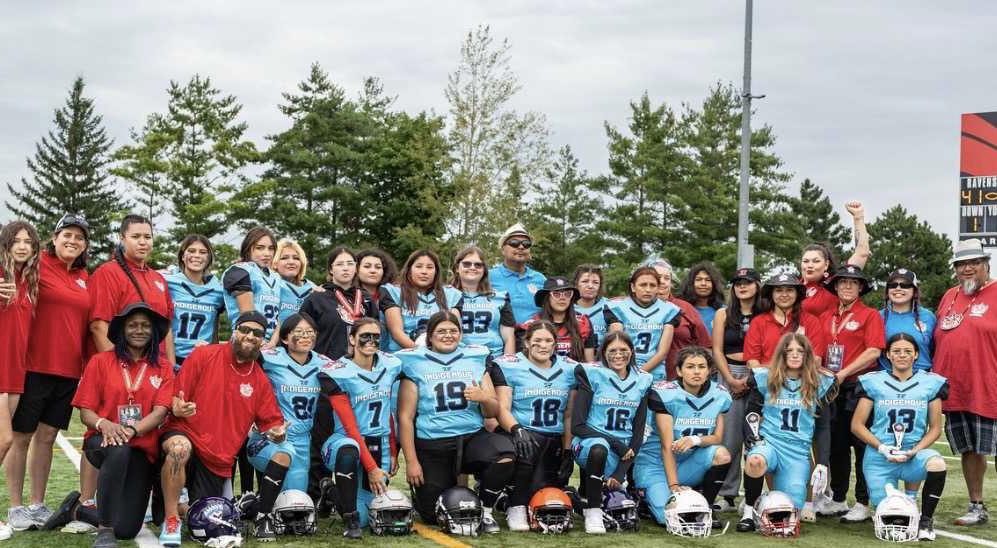
“My plan going into the tournament was to get to know all the different people that are part of this team; everyone from the President of Indigenous Football Canada to the team’s general manager and the coaching team,”
connect from every coast of the nation coming together for a common cause and uplifting each other.
They all share many similar stories and backgrounds that connect to their value systems, and
positioning in the sport. “You have good hands, so you can catch the ball. You have a good arm, so you can throw the ball. You have good defense instincts so you could tackle people.” With Football Canada, they have a Safe
a journey of self-discovery is easiest by putting oneself out there to try different things.
Taking the first step and joining a team could be nerve-racking but the ease of access has made it simpler for people to get involved. Every province has a provincial
As the women’s football space continues to grow, Fast thinks on a similar pathway of its expansion. She believes that the space is still competitive and aims to win, finding no difference in the mindset between men and women when it comes to sports as it’s all about the collaborative effort to make it till the end. “We’re gonna play with heart and passion and just try our best and be there for each other and play together as a team and have each other’s backs,”
“We’re gonna play with heart and passion and just try our best and be there for each other.”
– Jill Fast
said Fast. As she embarks on this journey of shaping the future of this team of youthful women, it is evident that there is a lot that they will get to discover about themselves; “I wanted the girls to have a positive experience at this tournament.”
Fast believes in true “team effort to contribute in” to the success of what they aim to represent and achieve. “I wanted to impart the spirit and essence of team sports – coming together for teamwork, team camaraderie and the team aspect of having each other’s backs,” said Fast as she
Fast connects to theirs too. Identifying as Métis from her mother’s side acts as a “grounding connection between everyone.” The values of team sports and Indigenous perspectives align well with the overall team’s views that add to their goals.
Despite the similarity of values and alignment, there will be challenges and limitations, especially for a program like the U-18 all Indigenous women’s team. Transitioning to a new space and connecting with so many people could be difficult, yet Fast encourages to “learn from your
Contact Program which coaches students on playing the sport as safely as possible. As she continues coaching the students, she believes the door is open to all and that coaching correctly could help them work their way up on the ladder of their sports career.
Panning out in different sports, Fast comes with a variety of experience from playing hockey, soccer, football to basketball, and volleyball but ultimately found her true calling in football. Some find aggressive tenacity as their calling card and choose a sport that fits accordingly, and this
football organization and people interested could reach out to them for advice and enrollment requirements through their websites and social media channels, or even phone and e-mail them. There it is possible to learn about the schedule, age groups, and to address any concerns or suggestions.
Fast started playing football at the age of 25 and wishes she had started playing when she was a teenager. Unfortunately, due to non-existent women’s football, she was spending her teens playing other sports like hockey where
reiterated Fast with her players, empowering them to adopt those values internally and build their confidence.
The U18 Indigenous Women’s football team seems to be all set up and ready to roll with their new Head Coach. As Canada wishes them to embark on a newer path and to take in perspective from Jill Fast, there is nothing but moving forward from here.
Policies that pander to bigots hurt everyone (yes, even the bigots)
holly funk editor-in-chief
Almost exactly two years ago I was putting the finishing touches to an article for Sask Dispatch called “Saskatchewan’s shameful sex ed.” I interviewed several sexual health educators in Regina and Saskatoon to get their perspective on the province’s curriculum and the health outcomes people in the province experience.
Sexual health outcomes in our province have been abysmal for years, and with the provincial government’s new policy of Parental Inclusion and Consent, there is no doubt those numbers will worsen at more dramatic rates. For those of you who keep up with things like STI rates in Saskatchewan you’ll know why that’s concerning, but for those of you who haven’t, let’s go over some numbers.
At the time I wrote the Sask Dispatch article, the most recent data in large part was coming from 2019. The national average for HIV infections at that time was 6.9 people per 100,000, which Saskatchewan doubled with an average of 14.9. The Public Health Agency of Canada has since published more recent information through their HIV in Canada: 2021 Surveillance Highlights report which shows the national average for HIV has actually gone down from 6.9 to 3.8 – great news!
Unfortunately, Saskatchewan didn’t follow that trend, and instead by 2021 HIV rates were sitting at 20.3 people per every 100,000, the highest in the country. For reference points, the runner up in this report was Manitoba with a rate of 10.5, while the lowest was Atlantic provinces with 1.5 per 100,000.
To quickly skim over a few other sexually transmitted infections (STIs) of note we’ll breeze through some data from the Public Health Agency’s Report on sexually transmitted infection surveillance in Canada, 2019 which compares 2010 statistics with 2019. Infectious syphilis was reported in 33.7 of every 100,000 Saskatchewanians yet only 24.6 of every 100,000 Canadians. Saskatchewan reported 155.4 of each 100,000 tested positive for gonorrhea – the second-highest rate across all provinces – where the national average is 94.3. Another second-place rank comes with chlamydia, where the province sits at 512.6 compared to the national average of 370.8 per 100,000.
The sexual health curriculum Saskatchewan has at present has not been updated since 2010, and promotes abstinence-based approaches which Natalya Mason of Saskatoon Sexual Health critiqued heavily in the Sask Dispatch coverage. “If you look at the research, abstinence-only approaches have actually never proven
to be effective – there has never been a research study that confirmed that they were successful in delaying sexual debut, which is the first time someone has sex, or lowering the risk of things like pregnancy or sexually transmitted infections.”
“So just across the board,” Mason continued, “we’re pretty aware of the fact that they don’t do what they claim to do, and that they straight up don’t work.” Judging by our sexual health outcomes compared to national outcomes – or even without the comparison – the existing sexual health curriculum is setting people up for failure, and has been since 2010.
In addition to the woefully inadequate abstinence-only approach, the province’s sexual health curriculum does not include information about consent at any grade level. I don’t believe it’s any sort of coincidence that, given that gap in education, Saskatchewan has the second-highest rate of sexual assaults across provinces. Obviously, if that’s our reality, the abstinence approach isn’t taking.
Adequate, comprehensive sexual health education that actually reflects the reality of youth and adults’ lives is what is needed in this province, not giving parents the ability to decide their children don’t need the education whatsoever. Minister of Education Dustin Duncan has spoken at length about how the Parental Inclusion and Consent policy is meant to respect parental rights and allow them the opportunity to be more involved in their children’s education. I worry that the actual outcome will be more and more parents deciding to avoid the topic in their household altogether, and we will see Saskatchewan’s already climbing negative health outcomes skyrocket.
What’s actually needed is an updated curriculum that reflects the real needs of the people it’s offered to, that outlines how to be safe in sexual interactions as well as how to go about having interactions you want and enjoy. What’s needed is sexual health education that goes beyond ‘reproductive health’ or ‘family planning’ and talks about sex as exactly what it is – an intimate act between people that, when done right, brings connection, joy, and pleasure. What’s actually needed is a deep-dive into consent, and clear and blunt discussions on how to receive rejection.
Sexual harassment, gawks, and gropes aside, I’ve been sexually assaulted here in Saskatchewan six times in my life and I’m not even three decades old. I believe some of those occurred because the people who assaulted me were never properly taught how to accept when someone says “no,” they were never taught about consent. They were taught instead that people who present as women will always say no, at least at first, and that if they keep pushing they can wear a person down until they’re

coerced into the sexual interaction. To be blunt, others had no interest in having sex with me, they just wanted something (yes, thing) to fuck, and I was convenient.
Want to know the part I’m actually the most angry about here? I am the most angry about all of those interactions because not only was I violated, not only did someone see me as an object or resource to be used as a tool for their benefit, but it wasn’t even really for their benefit.
I’m the most angry because really, truly, people who sexually assault are robbing themselves of some of the most beautiful moments of connection you can have with another person. They are robbing themself of the chance at intimacy,
of true mutual excitement and passion and pleasure, and because our sexual health education comes from a place that stigmatizes the perspective that sex is for pleasure, most people don’t get the chance to realize that. I am angry because people like Duncan who could actually be pushing for policies that would better sexual health outcomes in our province and reduce sexual assaults – something damaging for everyone involved, even those assaulting – are instead caving to right-wing pressure imported from south of the border and are pandering for votes when they could be pushing for change.
“What’s needed is sexual health education that goes beyond ‘reproductive health’ or ‘family planning’ and talks about sex as exactly what it is – an intimate act between people that, when done right, brings connection and joy and pleasure. What’s actually needed is a deep-dive into consent, and clear and blunt discussions on how to receive rejection.
Holly Funk
In the realm of policy shifts, every new implementation is a double-edged sword, instantly drawing a line between critics and proponents alike. Such is the case with the off-campus work policy for international students across Canada.
Until last year, the rules were clear: International students, having a valid study permit, could dedicate up to 20 hours a week to off-campus work. This was complemented with the freedom to work without restriction on campus. Later, a significant announcement emerged, declaring the removal of all work hour limits for international students until December 2023. While many students embraced the notion, an underlying concern lingered because full-time enrollment remained mandatory. This policy’s implications thus unfolded amidst a variety of mixed reactions on part of the student body at large.
This interim measure was meant to redefine the boundaries and opportunities for international students and sought to benefit Canadian employers. It would also give international students the opportunity to gain more Canadian work experience through off campus work, which is especially important if their long-term goal is to gain permanent residency. This policy is applicable to all international students who applied for their study permit before October 7, 2022.
Former immigration minister and current housing, infrastructure and communities minister Sean Fraser encapsulated the essence of this policy change in the recent housing market crisis interview with CBC News: “The International Student Pro-
gram makes extraordinary economic and social contributions to Canada. It contributes tens of billions of dollars to our GDP annually.” He goes on to say that lifting the cap on the number of hours worked off-campus helped students to “contribute to the labour shortage at that time and bet-
To gain more insights on this issue, I spoke to several students at the University of Regina. A senior in the Faculty of Business expressed enthusiasm about the prospect of extended work hours. They shared that, “The ability to work more hours off-campus provides me with a means to

ter equip themselves with what they need to take care of themselves in the community.”
Certainly, most students, driven by the pressing reality of heightened costs, living expenses, rent, and tuition fees gravitated to maximizing the number of hours they dedicated to off-campus employment.
cover my expenses more comfortably. It’s a practical step towards self-sufficiency.”
In contrast, a third-year political science student sounded a note of caution. “While the freedom to work more hours is appealing, I’ve seen friends who are spreading themselves thin. Juggling academics and longer work hours isn’t as
Imagine this: you are now entering your first year of post-secondary at the University of Regina and you have no idea what to expect or where to start for your first year. Well, here is my opinion on how you should spend your first week in university to ensure you are prepared for classes, starting them off right, making friends, and making memories.
Let’s start with how you should prepare for classes. The first thing you should do to get ready for your classes is log onto UR SelfService, the website that you used to register for classes. Now, the information you want to find on the website is where and how your classes are located. There are a number of class formats that you can partake in.
You can take in in-person classes which are just normal classes like you have taken in high school. There are remote classes which typically take place over Zoom. Online classes tend to follow a “teach yourself” style of class. Finally, hybrid classes combine the formats of in-person, online, and/or remote classes to allow students a more flexible learning experience. Based on my personal reflection as I am going into my last year of university, my favourite types of classes are either in-person or remote. I like being able to head into class and listen to my professors, meet them and meet my classmates, and enjoy the class structure. My second choice is the online version where you get more freedom and take the class how you would like to.
Your syllabus is the outline of the class and it will tell you all the details that you
need to know about the class. It will tell you about which textbooks are needed, what assignments are expected and their due dates, the details of the class, how to contact your professor, class policies, and much more.
off and make it into your own schedule version. That way you know what all is in it and what is expected of you. You can highlight it in different colours, grab a calendar and colour code it, or you can write on your laptop or phone calendar. What-
Once you have all this information, the next thing I would do is get it printed
ever you do, make sure you have access to the syllabus at all times because you never
seamless as it sounds.” They added that, “It’s essential that we don’t lose sight of the essence of our education.” It’s evident that if a student focuses 30-40 hours a week, it’s difficult to give a definite answer whether they will be able to maintain the pre-requisites of a study permit, which boils down to maintaining full-time students’ status.
The potential scenario where students can no longer uphold a full-time course load or are compelled to withdraw from their studies due to the overwhelming demands of extended off-campus work holds significant implications. This unintended consequence, if realized, threatens to reverse the initial intentions of this policy as it might inadvertently curtail students’ ability to fully engage in their academic journey.
We thus once again come face to face with this pivotal query: are the benefits derived from prolonged work hours worth it if they come at the cost of students’ ability to wholeheartedly pursue their education? While this is a multifaceted issue, it is important to openly talk about the prospects and challenges that it brings along.
The resounding answer should be a rallying cry for a balanced approach. It’s not just recognizing the freedoms that this policy brings, but also acknowledging the responsibilities it places on students’ shoulders. The onus is on academic institutions as well to support students’ well-being and holistic education.
nazeemah noorally staff writer
know when you’ll need it. So, you know what kind of classes you are attending, and you know what is expected of you. What is your next step? My next advice to you is to assure the fact that you are staying up with your readings for your class, be it textbook readings, presentations, PDF files, or online articles. With all of that in mind, you should be feeling prepared for the classes part of your first week.
Let’s move on to the fun part. How should you spend your first week of school outside classes? Well, the University of Regna has a great deal of events happening on campus to get you moving, active, meeting others, and having fun. Every year they run an event called Welcome Week where the University of Regina Students’ Union runs a great deal of activities. This year Welcome Week will be taking place August 30-September 1.
Now, why they call it Welcome Week when it’s only a few days long beats me, but you can find events like a club fair where you can talk around the greens and join and see all the different clubs/societies/ associations that take place on campus. I absolutely recommend you try and join your faculty’s student society as this is usually a place where you can meet people, get learning opportunities, and have more chances for fun throughout the school year. You can as well partake in beadwork, gym time, yoga, coffee, socializing, and countless other activities!
Welcome Week is a great way to start the year and sometimes has some of the best events on campus. Start your university experience off right being prepared for class, going out, socializing, making friends, and creating memories.
katlyn richardson contributor
The Government of Saskatchewan has declared that students under the age of 16 need a parent’s permission to change the name and pronouns they use in school. The argument was to give parents more choice in regard to their children’s education.
The reality is this phrase is nothing more than an alt-right dog whistle for attacking 2SLGBTQIA+ kids with a false concern for the kids. The actual reality is that there’s typically a very good reason a trans kid isn’t out to their parents: their parents are not someone safe for these kids to be open with. A lot of parents would toss their kid on the street to fight for themself which is exactly what these kinds of policy allow and even promote.
Not only are teachers, who are already overworked, expected to teach sexual health with little to no supports from organizations that dedicate themselves to doing so, they now have to put a child’s safety in danger because the conservatives in this country could never fathom the idea that a child is a person and not some sex trophy to be controlled.
I truly do fear for the future generations of kids in the province. Saskatchewan tries to claim it is a very welcoming place
to be, but the second you are not of this perfect cookie cutter mold of a nuclear white cisgender heterosexual family is the
wing cronies are consistently making this province a worse place to live, to the point I genuinely do not want to be a parent

It should always be a red flag when children’s rights are threatened as part of a political gamble.
same moment you are looked at differently and, more often than not, made to feel unwelcome. The Sask. Party and their right-
here because of the policy decisions being made.
I barely feel safe, and my relationship
Amidst the recent devastation in Lahaina, Maui, coupled with evacuation directives in Yellowknife and Kelowna, one can’t help but wonder: will Kelowna still stand a decade from now?
First and foremost, my deepest sympathies extend to those impacted by these wildfires. However, as an avid enthusiast of data and statistics, I’m compelled to delve into potential future scenarios. What’s happening in Kelowna isn’t an isolated incident.
The world watched as Lahaina, Maui was destroyed. Climate change and its undeniable influence on these catastrophic events compound the urgency. Global warming-intensified wildfires not only devastate our lush forests but also consume homes and businesses, spewing a lethal cocktail of toxins into the air we all share.
Kelowna is a beautiful place, but as recent years have shown that serenity is under threat, primarily from the unyielding force of wildfires. There have been 1964 fires this year in BC, with 388 still active as of August 28, 2023.
If we assess the patterns, the alarming increase in their frequency and intensity suggests that Kelowna may not be here in just a decade. It’s a bold claim to make, but one that we must confront.
Kelowna’s days may be numbered amid rising wildfire threats
It’s no secret that wildfires have always been a part of Kelowna’s reality, but there’s a tangible shift.
The B.C. Wildfire Service has said that the current blaze, initially measured at 1,100 hectares on the evening of August 24, has now expanded to a staggering 6,800 hectares.
These fires are no longer rare occurrences or minor annoyances; they have become massive events that leave destruction in their wake. Every summer, the skies turn
at first glance seems like a cisgender heterosexual one. I fear for my friends who have kids, about the world their kids will grow up in because it’s becoming very clear to me that it will not be the future I had thought might happen in the coming years where kids get to figure themselves out while lovingly supported by their families and peers. Now the world I see is a world where kids are too scared to be open or even figure out who they are.
The policies like the ones the Sask. Party has put in place come from a place of hatred and aim to fan the flames of hate. The government of this province has decided to take their hatred out on the children who do not get a say on who runs their curriculum, what rules protect (or in this case, harm) them get put in effect, and get treated as an extension of their parents. Children are typically pretty good at judging if a person is safe for them to interact with and have limited error in doing so unless instructed to ignore what their instincts are telling them.
The Sask. Party is not here to do what is right for you and your family. They are only here to serve the rich with their hands in their pockets and their fascist pals. If supporting fascists is okay for you because one party closed a single hospital over twenty years ago, you are a fascist and now the innocent kids of this province are suffering because of your choices.
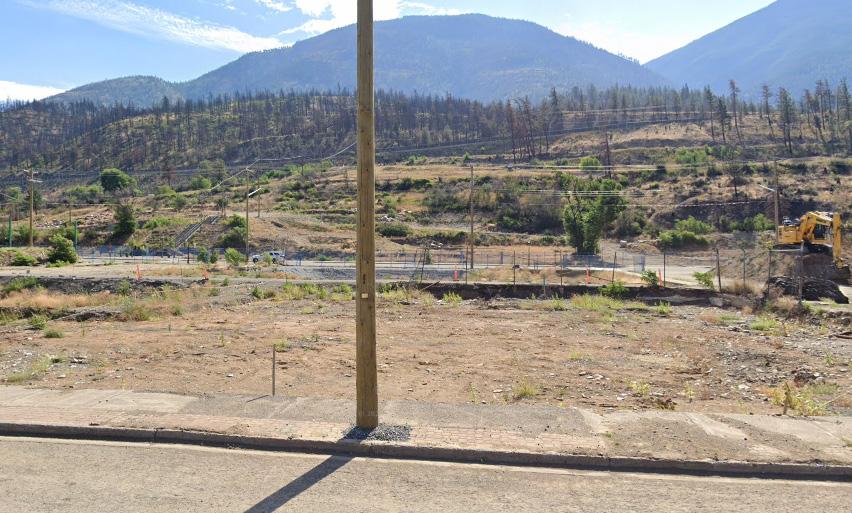
an eerie orange, residents anxiously track fire maps, and countless homes are lost. The air, thick with smoke, serves as a constant reminder of the impending threat.
While these fires rage, a lurking danger compounds the risks – winds. A combination of high winds and wildfires would spell disaster for Kelowna. Imagine a day when powerful gusts carry embers across large distances, allowing fires to jump barriers and ignite new areas almost instantly.
Firefighters, as dedicated and skilled as they are, can only do so much against such an unpredictable and fast-moving enemy. Even with firefighters coming to help Canada from around the world, it’s no match for mother nature – this summer has demonstrated that clearly.
Why this hypothetical situation is growing in probability
All it takes is one event of the wind and fire mixing together, and Kelowna could be gone within 24 hours. Let’s not forget what happened in 2021 in Lytton, B.C.; it’s no longer there.
In the past, policies focused on rapidly extinguishing wildfires. While well-intentioned and initially impactful, this approach allowed underbrush to accumulate, creating a dense layer of potential fuel. When fires do ignite, they burn hotter and spread faster.
We’ve seen the devastating impact of wind-driven fires elsewhere. Towns like La-
haina have been practically wiped off the map overnight, with residents having mere minutes to evacuate. The parallels between Kelowna’s situation and that of Yellowknife, Lytton, and Maui are hard to ignore.
Predicting the exact fate of any city is an inexact science. But if the last few years have taught us anything, it’s that we must prepare for the worst. Denial or hoping for the best is no longer an option. It’s time for a hard, collective introspection. My heart goes out to the victims of wildfires.

Michèle Cook
Drought. Wildfires. Flash floods. The climate crisis has been causing chaos across Canada this summer. And who’s making a killing while the rest of us suffer? The oil and gas companies that created this mess. Enough is enough. It’s time for our federal government to stop appeasing the fossil fuel industry and start holding them accountable. We need to see a real turning point when Parliament returns in September. Our future depends on it. Real action on the climate emergency starts with three things: end the flow of public money to the fossil fuel industry, stop letting Big Oil influence our politics, and make polluters pay for the damage they’ve already done. I want my MP to know this is my number one issue, and I’ll be watching closely this fall to make sure our elected officials deliver. While Michael Kram is unlikely to vote in favour of anything causing the oil and gas industry to stop profiting from the public purse, he should know that some of us understand the reality that the planet is on the fast track to destruction and don’t want to help this industry take us down.
How many more “once in a lifetime” extreme weather events do I have to live through before our political leaders get serious about the climate emergency? Canada is only halfway through our worst wildfire season on record, historic flooding has devastated communities in Nova Scotia, and droughts are wrecking crops across the country. Meanwhile, our federal government still won’t stand up to the fossil fuel industry driving the climate crisis.The climate science is clear, no matter what Big Oil wants you to think. We can only prevent a future of ever-worsening fires, floods and droughts if we rapidly phase out fossil fuels. We have all the technology to start doing that today, but we need politicians to find some courage to make polluters pay. I will ask my MP to put people and the planet first.
Aaron Piel
Thousands of wildfires have burned over 13 million hectares of land across Canada. Unprecedented droughts are destroying farmlands, while Nova Scotians struggle to recover from torrential flooding. Meanwhile, the fossil fuel companies responsible for these crises continue raking in obscene profits. Enough is enough. It’s time to stop the fossil fuel industry from making this crisis worse. Time for our government to step in and stop fossil fuel subsidies, prevent these companies from weakening critical climate legislation, and tax Big Oil. We cannot afford more delays. To tackle the climate emergency, the world needs to rapidly phase out fossil fuels and make polluters pay. The global shift to cheaper, more reliable clean energy is accelerating, no matter what Big Oil says. Canada’s choice isn’t between a just transition and no transition. It’s between a just transition and an unjust one.
Larry Neufeld
Subsidizing or expanding fossil fuel infrastructure in 2023 is a death wish. We’re already paying the price for these companies’ reckless pursuit of profit at the expense of people and the planet. This summer should make it clear that our futures depend on phasing out fossil fuels. We must make polluters pay for a transition to a 100% renewable power system. It will be more affordable, reliable, and resilient – and help us turn the tide of climate chaos before it’s too late. It is also an opportunity to do things differently like give communities control over their own energy systems, respect Indigenous sovereignty, and serve the public interest while generating hundreds of thousands of unionized jobs. It will not only help us avoid catastrophic climate change, but also pave the way for a more equitable future for all people in Canada.
Megan Marie Gares
More than 13 million hectares of land have burned across Canada. And we’re barely halfway through wildfire season. My heart breaks to think of the devastation these fires have caused for people across the country. People from coast to coast to coast have felt the impact. We’ve been breathing in toxic wildfire smoke, thousands have been evacuated from their communities, and four firefighters have lost their lives fighting these flames. The fossil fuel industry is to blame for the unthinkable tragedies caused by climate disasters in Canada and around the world. Enough is enough. We have to act now to ensure our political leaders stop subsidizing polluters and letting these dangerous companies slow action on the climate emergency. Most importantly, we need to make polluters pay off their debt to people hit hardest by climate disasters
Dominic Jones
This summer, millions of people across Canada have faced the dire impacts of climate change: forest fires, flash floods, unbreathable air, and more. This chaos is not natural or inevitable, and it isn’t going to stop unless we change course. While the country burns, the federal government is giving our money to Big Oil to enable them to torch our planet for profit. The only way out of this crisis is to break from fossil fuels once and for all: stop fossil fuel subsidies, prohibit fossil fuel expansion, and tax fossil fuel profits! Instead of betting our futures on unproven false solutions, the government must invest in a renewable energy grid that can provide clean, affordable, and resilient power to communities across the country. We can afford this if we make polluters pay.
Chao Yang
I can’t stop thinking about the photos and videos of the wildfires from Hawaii. It was sobering to see the Coast Guard rescue people who were forced to swim out to sea to escape the flames. Back here in Canada, over 13 million hectares have burned from record breaking wildfires.The scale of the climate emergency is well beyond anything I thought I would see in my lifetime. It’s infuriating that Big Oil CEOs continue to pocket billions of dollars even though they are the ones to blame for the crisis we’re in. It’s time for Canadian political leaders to cut ties with the fossil fuel industry. Make polluters pay for the damage they’ve caused and don’t let them sabotage our plans to build a clean energy future.
Chris Wermie
It’s been a terrifying summer. If you’re scared too, know that you’re not alone. Polling shows that the vast majority of us are concerned about the climate crisis. But I’m still hopeful, because I know we have all the solutions necessary to change course and avoid future disasters. The only thing stopping us is the fossil fuel industry, which is doing everything in its power to block action. Enough is enough. This moment must be a wake up call for our government to finally stop appeasing Big Oil and start putting our communities first. So far, Parliament has talked the talk, but they’re still propping up fossil fuel companies with subsidies and support for false climate solutions. It’s time for an all-out push to make polluters pay and get fossil fuels off our power grid and out of our politics!
Gabor
Jerkovits
More than 13 million hectares of land have burned across Canada. And we’re barely halfway through wildfire season. My heart breaks to think of the devastation these fires have caused for people across the country. People from coast to coast to coast have felt the impact. We’ve been breathing in toxic wildfire smoke, thousands have been evacuated from their communities, and four firefighters have lost their lives fighting these flames. The fossil fuel industry is to blame for the unthinkable tragedies caused by climate disasters in Canada and around the world. Enough is enough. We have to act now to ensure our political leaders stop subsidizing polluters and letting these dangerous companies slow action on the climate emergency. Most importantly, we need to make polluters pay off their debt to people hit hardest by climate disasters.
Thousands of wildfires have burned over 13 million hectares of land across Canada. Unprecedented droughts are destroying farmlands, while Nova Scotians struggle to recover from torrential flooding. Meanwhile, the fossil fuel companies responsible for these crises continue raking in obscene profits. Enough is enough. It’s time to stop the fossil fuel industry from making this crisis worse. Time for our government to step in and stop fossil fuel subsidies, prevent these companies from weakening critical climate legislation, and tax Big Oil. We cannot afford more delays. To tackle the climate emergency, the world needs to rapidly phase out fossil fuels and make polluters pay.The global shift to cheaper, more reliable clean energy is accelerating, no matter what Big Oil says. Canada’s choice isn’t between a just transition and no transition. It’s between a just transition and an unjust one.