

the staff
editor-in-chief holly funk editor@carillonregina.com
executive director vacant business@carillonregina.com
production manager shae sackman production@carillonregina.com
communications amin malakootikhah comms@carillonregina.com
web + advertising manager jaedyn whittal web@carillonregina.com
graphics editor lee lim graphics@carillonregina.com
copy editor emilie wren copyeditor@carillonregina.com
news editor mindy gregory news@carillonregina.com
a&c editor mikayla tallon arts@carillonregina.com
s&h editor kim kaufman sports@carillonregina.com
op-ed editor hammad ali op-ed@carillonregina.com
distribution manager amin malakootikhah distribution@carillonregina.com
staff writer victoria baht
staff writer nazeemah noorally
staff writer maren savarese knopf
news writer shivangi sharma
a&c writer will bright
s&h writer pall agarwal
contributors william bessai-saul, allister white.
board of directors holly funk, tayef ahmed, harnisha bhatt, diya patel, mishree patel, and mikayla tallon.
the paper
227 Riddell Centre @ the University of Regina 3737 Wascana Parkway, Regina, SK, Canada S4S 0A2 www.carillonregina.com | (306) 586 8867
Printed by Star Press Inc, Wainwright, AB
The Carillon welcomes contributions.
Opinions expressed in the pages of the Carillon are entirely those of the author, and do not necessarily reflect those of The Carillon Newspaper Inc. Opinions expressed in advertisements appearing in the Carillon are those of the advertisers, and not necessarily of The Carillon Newspaper Inc. or its staff.
The Carillon is published no less than 11 times each semester during the fall and winter semesters and periodically throughout the summer. The Carillon is published by the Carillon Newspaper Inc., a non-profit organization.
land acknowledgement
The Carillon is written on Treaty 4 territory. As such, staff recognize that we are living, working, and telling stories on and of Indigenous lands. We recognize that we are on the traditional homelands of the Cree, Saulteaux, Nakota, Lakota, and Dakota peoples, along with the homeland of the Métis nation. The Carillon understands that it is pointless to acknowledge the land on which we work without demonstrating our commitment to telling stories and prioritizing voices that further the return of this land to its sacred place. the manifesto
In keeping with our reckless, devil-may-care image, our office has absolutely no concrete information on the Carillon’s formative years readily available. What follows is the story that’s been passed down from editor to editor for over sixty years.
In the late 1950s, the University of Regina planned the construction of several new buildings on the campus grounds. One of these proposed buildlings was a belltower on the academic green. If you look out on the academic green today, the first thing you’ll notice is that it has absolutely nothing resembling a belltower.
The University never got a belltower, but what it did get was the Carillon, a newspaper that serves as a symbolic bell tower on campus, a loud and clear voice belonging to each and every student. the people’s friend; the tyrant’s foe


The Carillon Newspaper Inc.’s Special General Meeting is approaching fast, and we’re looking forward to seeing you all there! Meet us on November 20 at 3 p.m. in the Riddell Centre’s Multipurpose room (RC128) to hear all about what staff and directors have been up to, and to have your say in the governance of your student newspaper.
If you’re looking to get more involved with the paper, consider contributing your work to our pages! Watch carillonregina.com/ pitch/ to stay up-to-date with the sorts of content the editors of our sections are hoping to receive. The pitch list will next be updated in the afternoon on November 19 (issue 12), and the final pitch list of the semester will be posted November 26 (issue 13). We also have two students-at-large seats open on our Board of Directors, and at carillonregina.com/board-of-directors/ you can find direction for how to express interest in filling one of them.
Illegitimi non carborundum holly funk editor-in-chief








Students and faculty join global community in calling for humanitarian justice
shivangi sharma news writer
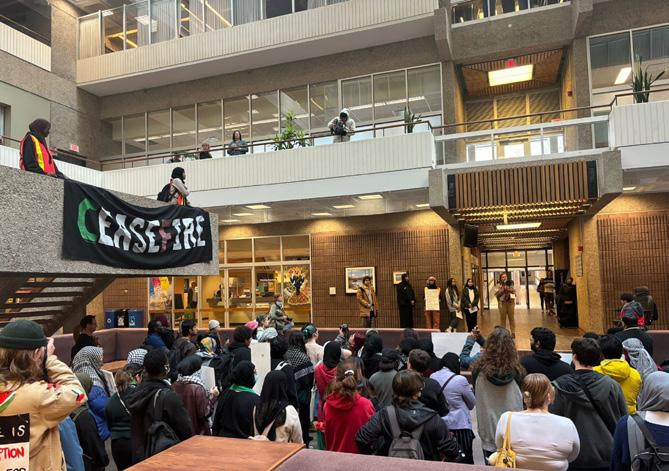
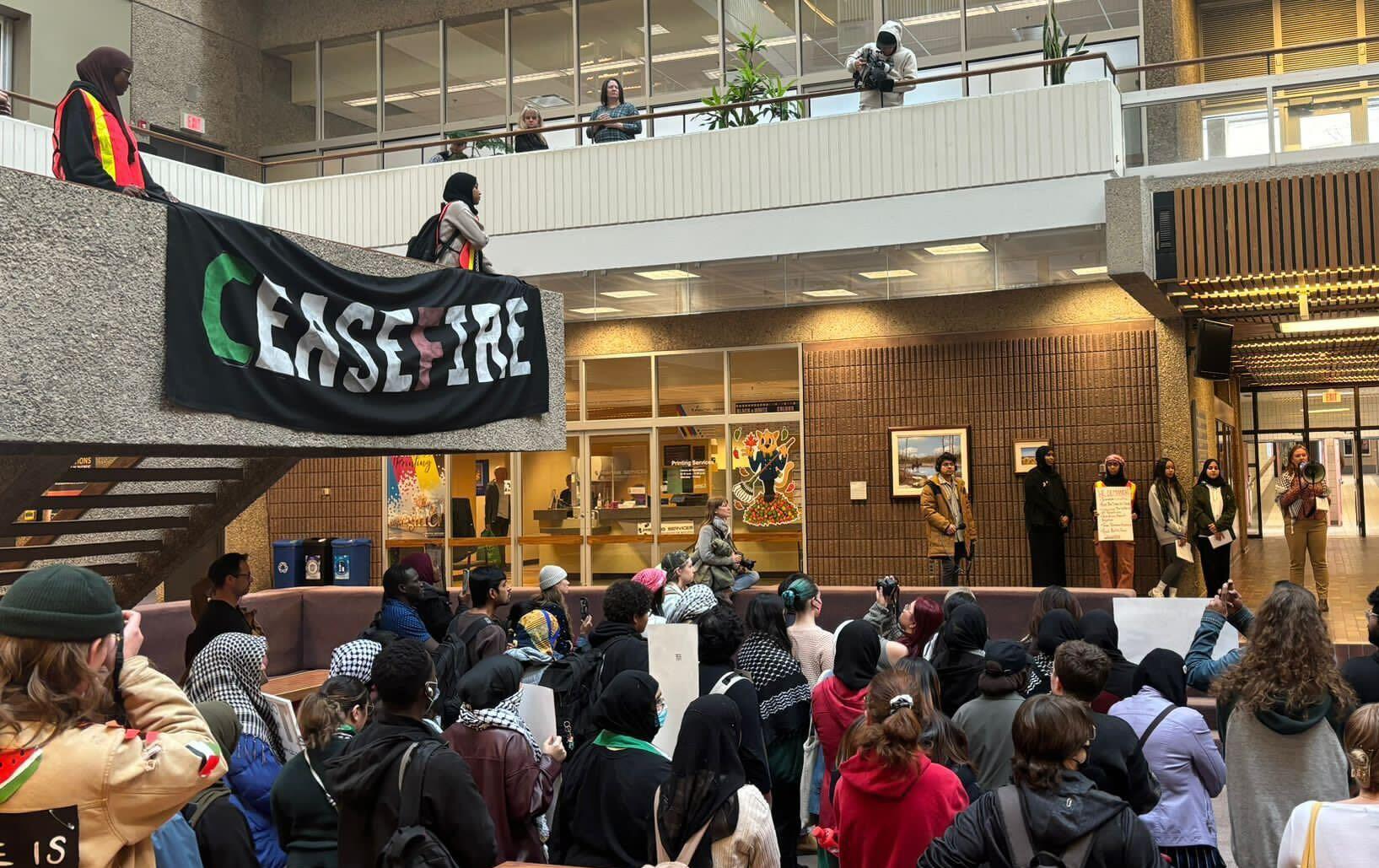
The University of Regina Students for Justice in Palestine club organized a peaceful walkout for Gaza on Thursday, November 2. Protestors demanded an immediate ceasefire and an end to the blockade of humanitarian aid into Gaza.
The Israeli-Hamas war has become the ground for ugly, heartbreaking scenes of suffering; civilians are caught in the middle of the conflict. As per CNBC’s November 6 report, according to the Hamas-operated Palestinian Health Ministry, more than 10,000 people have been killed in Gaza. In Israel, over 1,400 people have been killed, the majority in the Hamas terror attack of October 7.
Israel’s retaliation of bombings of schools, hospitals, universities, camps, and ambulances on Palestinian lands are claimed to be justified by the Israeli state which believes these are hiding places for the members of Hamas. In the Globe and Mail on November 1, former president of the Supreme Court of Israel, Aharon Barak, stated that he saw no evidence to date that his country had violated international humanitarian law despite warnings of war crimes received from multiple international organizations including the Office of the United Nations High Commissioner for Human Rights. Israel acknowledges their duty to minimize citizen casualties, but claims that their tactics are covered by the rules of collateral damage.
This has been met with protests and uprising across the world. Protests were organized in major cities around the globe including London, Berlin, Paris, Rome, Bucharest, and Ottawa. November 4 was an organized national day of demonstrations in Canada and protests supporting Palestinian civilians were held across the country, including Regina. CBC reported on November 6 that even as far as the northern territories of Canada, people marched in the streets calling for an immediate ceasefire in Gaza and demanding that governments support an end to the conflict.
The walkout at University of Regina on November 2 began at the Administrative Humanities Building with students and faculty members addressing the participants. Andrew Stevens, Business Administration faculty, said, “You’ve recognized that the
“What makes me really happy today is to see how many students are out and that the movement is growing, and you’re standing beside hundreds of thousands of people the world over. “
People originating from many different parts of the world
was noted by a representative of the University of Regina Muslim Students Association (UR MSA) who is working closely with the University of Regina Students for Justice in Palestine to organize more such events. “We had to gauge how we’re able to give a
of the geographical location and that’s something that UR MSA will be looking to provide the resource for.”
“Going forward, we will focus on making more and more people aware and dispelling misinformation and organizing more
forced displacement of thousands of civilians is an atrocity as is the cutting off of water, electricity, and communications in Gaza.”
“You’ve recognized that we must listen to the call of Palestinian people to demand a ceasefire, which in very normal circumstances is a very simple and humane request, but somehow that very simple call for peace has been compromised.”
“You’ve recognized this injustice and you’re willing to speak out for that, and being a member of the faculty here at the University of Regina, I am very proud of what you’re doing. Keep it up.”
Emily Eaton, Geography and Environmental Studies faculty, also participated in the event and addressed the audience.
showed up at the event with fliers and slogans in support of the people of Palestine. From the Administrative Humanities Building, participants walked to the John Archer Library through the Education Building, circling to the Riddell Centre and ending the march outside the Riddell Centre along Wascana Parkway and Kramer Boulevard. Participants chanted “End the Genocide” and “Free Palestine” among other rallying cries as they walked the hallways.
People stood together despite ethnic, racial, and religious differences, demonstrating that what has been termed quite often as a community-specific crisis is in fact a humanitarian crisis.
The diversity of participants
voice to the students who are affected by the conflict, and not just the Palestinian or the Muslim students, because what is occurring in Palestine right now is a humanitarian issue. As seen, there was a vast diversity of students present at the protest.”
“What these protests achieve is that more and more people are made aware, and we are able to give a collective voice to all those who stand for the cause.”
Speaking about the next steps needed following the walkout, they told the Carillon, “At a university level, we’re looking at how we can operate with what resources are available. The first steps in terms of what students can do on- and off- campus is to start with first learning the history
“What makes me really happy today is to see how many students are out and that the movement is growing, and you’re standing beside hundreds of thousands of people the world over.”
Emily Eaton
such events where our voices can be heard.”
It has been said time and time again that nothing new ever happens under the sun, and that history repeats itself. History is rife with instances of unwarranted atrocities committed against innocent lives. However, there is a difference this time. The world is watching, and a global community of citizens see the injustice and inhumanity occurring. What began as a right to retaliation against a terrorist attack has started to look a lot like a directed apartheid and wipeout of an entire nation under the veil of self-defence. Protests like the campus walkout for Gaza show that the world is not watching in silence anymore.
In the National Post, Amer Marwan El-Samman, spokesperson for the November 4 rally in Fredericton, NB, stated that he is hopeful about the future despite the long and complex history of the conflict between the Israelis and the Palestinians.
“It might be next year, it might be two years. You never know how things can change,” he said. ”The next generation, the youth shows me a little bit more promise. […] So we’ll see.”
For University of Regina students affected by the terrible suffering that we are witnessing, the Carillon encourages you to follow advice from Student Affairs and reach out to Student Counselling or contact the staff at UR International who have a toll-free emergency help line at 1-(855)874-1700.
allister white contributor
“10,000 DEAD & MORE INJURED. WHEN WILL YOU CARE?” In a university-wide walkout on November 2, demonstrators carried signs in support of civilians in Gaza.
Posters and social media posts leading up to the walkout shared the message, “Stop the Siege.” This message was highlighted in speeches made to begin the event. Delivered by leaders of the student group, University of Regina Students for Justice in Palestine (UR Students for Justice in Palestine), speeches demanded an immediate ceasefire.
Speakers also called for the University of Regina (U of R) to acknowledge the suffering of Palestinians, offer students protection from acts of prejudice, and to end any university investments, direct or indirect, in companies that profit from the Israeli occupation of Palestine.
Walkout organizers focused on the ongoing communications shutdown, and lack of food, water, medical supplies, and electricity for civilians in the Gaza Strip. They cited the primary motivation for the walkout as the targeting of Palestinian civilians. Ad Hika, an organizer, explained that the event was about spreading awareness and “pressuring leaders to take action.”
Since October 9, Israel has
enforced a complete siege on Gaza, affecting more than two million people.
Since 1948, Palestinians have been oppressed and displaced from their homes by various means, as outlined by author Simha Flapan in “The Palestinian Exodus of 1948.”
Closely following the beginning of the October 9 siege, Israel issued an order for over one million people living in the northern siege area of the Gaza Strip to evacuate south. The order has been impossible to comply with.
A press release from United Nations on October 30, 2023, reiterated that while under relentless bombardment from Israel Defense Forces (IDF) “no place is safe in Gaza.”
Many signs at the walkout pointed to genocide. “Half of Gaza is Children and 40% of them have been KILLED. It doesn’t affect you?” urged one, while another stated, “War, Conflict, Apartheid, Genocide.”
The United Nations press release stated that 3,200 children were killed in Gaza within three weeks, which “exceeds the total number of children killed in conflicts in each of the last four years worldwide.”
The UR Students for Justice in Palestine was created to stand in solidarity with civilians in Palestine, and the group fully invested itself in planning for the student walkout. Anzel Omar, an organizer, explained that the student-led initiative received

planning assistance from both the Regina Public Interest Research Group (RPIRG) and faculty members at the university.
“In terms of support, it’s been pretty good,” said Omar, and “communication played a big role” in the group’s ability to plan the walkout.
Support for the walkout came in different forms. Students and faculty participated by walking, chanting, and attending the speeches held in the Administration-Humanities building. Some
carried signs and banners, while others bore handmade pins.
Guest speakers included Emily Eaton, Geography and Environmental Studies faculty member at the U of R, and Andrew Stevens, Business Administration faculty member and City of Regina councillor.
Stevens emphasized that “what you are doing [as demonstrators] is important.” He added that participants in the walkout “recognize the injustice of settler violence committed against Pales-
tinians in the West Bank,” where “there is no Hamas,” stressing the distinction between the Hamas, a Palestinian militant organization, and Palestinian civilians.
Speakers to the United Nations Security Council on October 30 also emphasized that civilians in Gaza must not be collectively punished for atrocities committed by Hamas, urging a ceasefire.
Further, Stevens discussed the “refreshing” history of robust activism in the student and faculty bodies of the U of R, which he called alive and well. “These are also institutions that should empower students to challenge the world as it is,” he said. Stevens believes that the university ought to “create spaces in which to […] demonstrate against injustices, here and abroad.”
Stevens added that student activism does not end with the university. “You need to take aim at a political establishment here in Saskatchewan […] that is effectively giving a green light to the [IDF] brutal assault on Palestinian people,” he told protesters, reminding them that “political parties in opposition and in government have dodged important questions about Palestinian human rights.”
On November 4, UR Students for Justice in Palestine took their activism a step further with a second protest in support of a ceasefire held at Speaker’s Corner in Regina.
The university academic journey is a unique experience for each student. It is a transformative period that goes beyond the confines of textbooks and lecture halls. It’s also a challenging path, especially for students with unique needs.
Located at College West 139 beside the Campus Store, the Brad Hornung Accommodations Test Centre (ATC) at the University of Regina is a resource that plays a vital role in ensuring that every student, regardless of their accommodation needs, gets the support they need to succeed.
The ATC offers a centralized location for students to write their quizzes, midterms, final exams, and deferred exams for on-campus, for-credit courses. The ATC creates a supportive environment for students by tailoring the experience to their specific needs.
Accommodations include extra time, writing scribes, ergonomic workstations, easy-to-access to washrooms, and designated spaces to allow students to sit for their exams with minimal distractions. Private rooms are also available for those who require reading, writing, or hearing scribes, thus enhancing the accessibility of the centre for all students.
In total, there are 11 private exam rooms and 11 shared exam rooms available. The invigilator is not physically present in the examination room to ensure privacy, but camera surveillance is used to uphold fairness and integrity. It is worth noting that the ATC is available not only for accom-
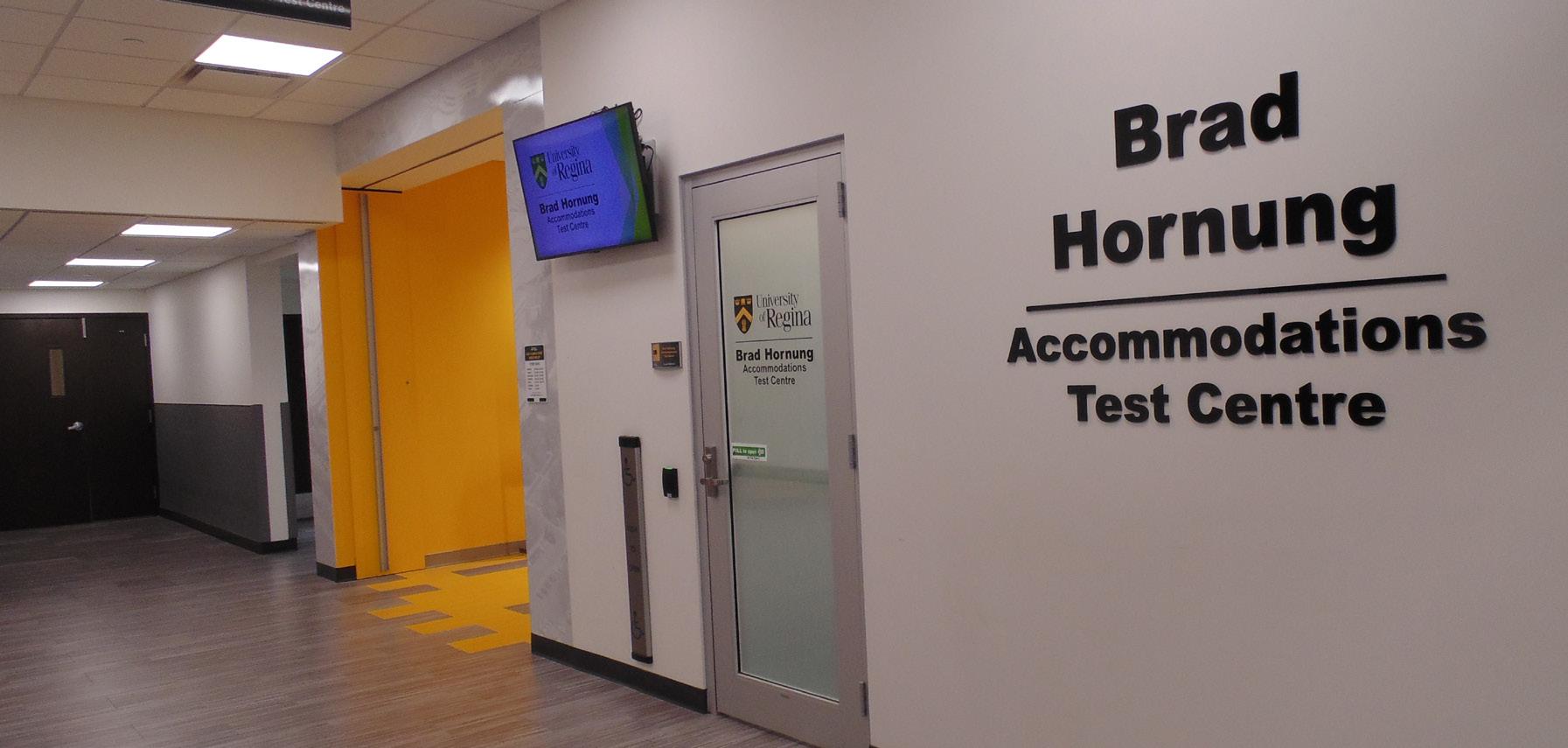
modated students registered with Student Accessibility, but it can also be used for students taking Proctortrack exams who lack the proper equipment or space.
To access the ATC’s services, the process begins with Student Accessibility, which supports students based on different needs as mandated under the Saskatchewan Human Rights legislation and the duty to accommodate. Simply visit uregina-accommodate.symplicity.com/public_accommodation/to register with Student Accessibility. You can also contact Student Accessibility by email at accessibility@uregina. ca to make an appointment with an Accessibility Officer.
Once registered, a medical officer will evaluate the student’s condition and after the accom-
modation is approved, the latter will be contacted to complete any necessary documentation to finalize the accommodations. An approved letter will be sent to the student that explains the approved accommodations in detail.
Next, the student will be familiarized with the “UR Accommodate” website where students are able to submit their letter request to their course professors, ensuring they are aware of the student’s accommodations. It is important to note that the student is responsible for submitting the letter each term, as it is not automatically renewed. Exams should be booked at least seven days in advance to ensure that a spot is secured. On the actual day of the exam at the Brad Hornung ATC, it is advis-
able to arrive 15 minutes prior to the scheduled exam time. Your student ID should be presented, and your belongings are securely stored in a locker. When it’s time for the examination, the student is called from the waiting area and taken to a private room. The ATC staff usually monitor all the exam spaces to ensure that questions are answered in a timely manner and that academic integrity is upheld.
Student accommodations are confidential. Classmates are not made aware that a student in their class is using ATC. For this reason, the Carillon spoke with several students who preferred to maintain their personal anonymity when sharing their experiences with accommodations.
A Psychology major who has
used the ATC since their first year shared their impression. “The ATC has been a game changer in my academic journey. It’s not just about accommodating my medical needs but it’s also about creating an equitable space for success.” In addition, a Finance graduate student revealed, “As a student with ADHD, maintaining focus during exams can be challenging. The private room and minimized distractions at the ATC have greatly helped to improve my performance.”
While the ATC offers equitable opportunities for those with different learning and medical needs, some students believe that there are areas where further improvements can be made. A Business Administration student suggested, “It could be more convenient if the renewal of accommodation letters could be automated, reducing the administrative burden on students.”
Proactively encouraging a more inclusive atmosphere on campus by making it easier for students to seek help and openly communicate their requirements is a suggestion offered by a Kinesiology student. “Outreach efforts should be taken by the university that prompt students to take the initiative to seek accommodation when needed, rather than them waiting for assistance to come to them.”
nazeemah noorally staff writer
A
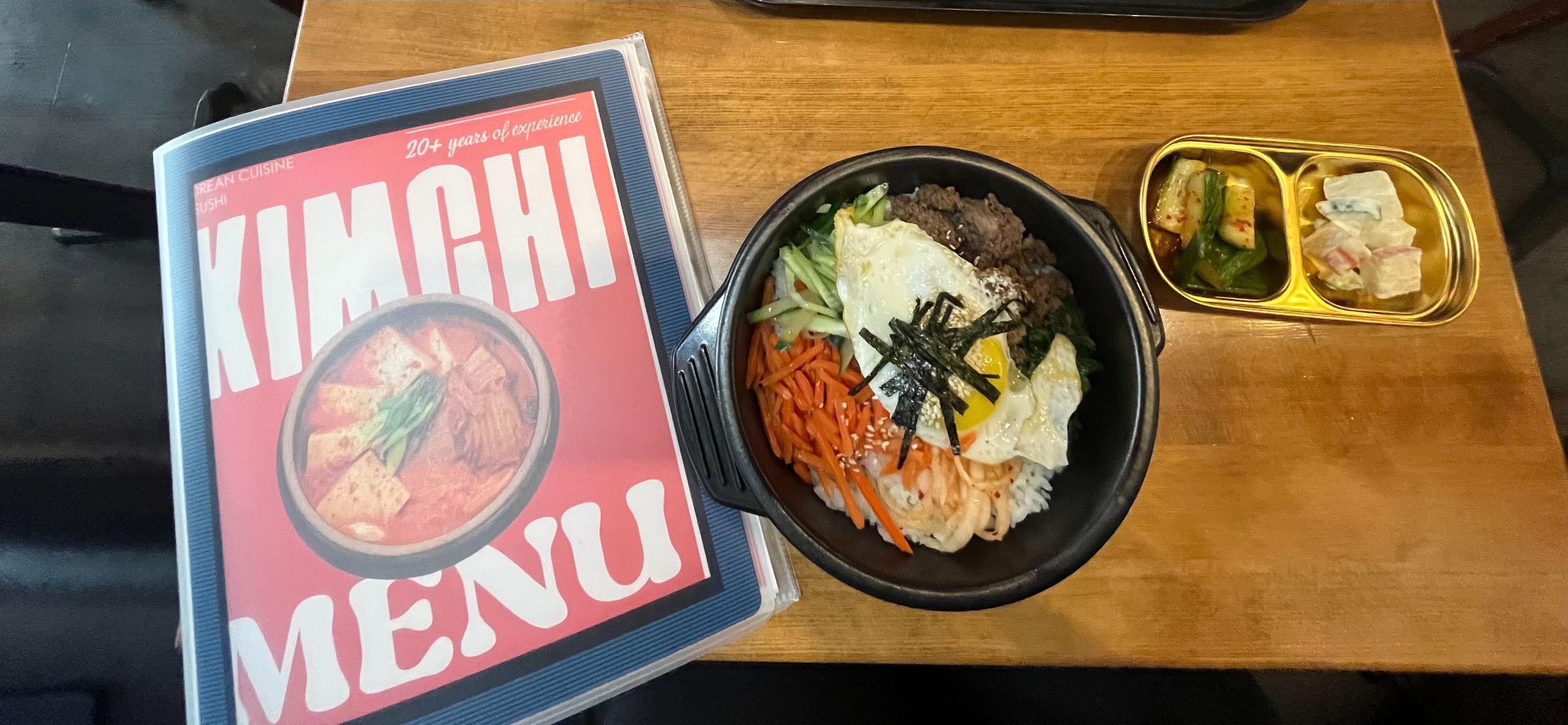
Kimchi is a traditional Korean restaurant that has recently opened here in Regina, Saskatchewan. They are located at 1834 Scarth Street and have been around since their soft opening on September 26. They will be holding their grand opening in a few weeks. Read on for a review of the restaurant’s history, the restaurant’s food, and the restaurant’s menu, all as I experienced. Plus, I got to hold an interview with the chef, Chris Park, who is a co-owner of the restaurant with his wife, Celine Park.
Currently, the menu features options like Kimchi-Jjigae,
Banchan is a collection of small side dishes served with your meal in Korean cuisine. This dish is unique for someone who has not had much Korean-like food in her life, and it is very good.
Banchan comes with a base of rice, along with veggies such as cucumber, spinach, onions, and carrots. These are all cooked to perfection, and the dish comes with meat – also cooked to perfection. In my dish, the meat was sweet and tender at the same time, with a very good taste. All of this is then topped with an egg and some seaweed. All very good types of food separately, all very good when mixed, and all very good for you.
I love finding restaurants that give healthy, nutritious options,
more of a savoury sauce and the apples in more of a sweet sauce. The perfect mix, sweet and sour!
The vibes and the culture of the restaurant are very welcoming. You walk in from the heart of Downtown Regina and are welcomed into quite a large area. You have the option to pick up your food as takeout and go somewhere else to eat or sit down and eat. Either way, you would be welcomed by Korean culture.
Their welcoming atmosphere is clear with their always-playing Korean music, their very nice wallpaper with Korean letters and messages, as well as the menu being written in both English and Korean. All in all, it’s a very welcoming atmosphere that just makes you want to stay! In the
pandemic years they had to close the business, but this did not stop Chris and Celine Park from wanting to re-realize their dream.
Now that they have been open for a few months, Chris stated that, “It is a good time to [be] open. The Korean culture is getting rich; […] Korean music, and Korean food, Korean Drama. People are finding an interest in it, so this is a good time to open a restaurant in Regina now.”
As for the preparation of the food, Chris has been making sushi for over 20 years and his wife Celine makes the Korean dishes, which she prepares from her mother’s recipes. Chris said, “She is a Korean chef in Calgary. She originally made Korean food and people love it. So, all the recipes
lunch special focuses on Korean barbeque and Korean-like dishes with rice, salad, and traditional noodles all together. The lunch special is $12.99 and is only available until 2:30 p.m.
As for the restaurant’s name, Kimchi is a traditional Korean dish that is commonly served and quite popular. Chris stated, “Kimchi is a very famous Korean dish. You mostly have it along with your meal or side dish. It [fermented vegetables] is marinated with salt, washed, made with spices and sauce, and mixed all together.” That is a unique dish which appears to be quite desired in this restaurant, so be sure to try it out when you go!
Kimchi appears to be a restaurant that is unique and spe-
“The Korean culture is getting rich; […] Korean music, and Korean food, Korean Drama. People are finding an interest in it, so this is a good time to open a restaurant in Regina now.”
Chris Park
Bibimbap, Beef Kibmap, and Udon. They also serve sushi rolls like Rocky Mountain Jumbo and Queen City Jumbo Uramaki. Their online menu has a lot more options.
I tried out the Dolsot Bibimbap, which is a main dish served in a hot stone bowl. Most of the main dishes on the menu come with a complimentary side called banchan.
and Kimchi’s offerings definitely fill that niche. Banchan also comes with a spicy sauce on the side that you can spread around the dish. To me, the sauce is not that spicy, but you also do not need to put it on your food if spice is not your forte.
On the side I had some cucumbers and apples, and both were covered in their own sauces. The cucumbers were covered in
summer, they plan to open the patio and play some music out there too, which is sure to be a good time. I, for one, plan to come back for that.
Chris Park, co-owner of Kimchi, has been living in Regina, Saskatchewan for 23 years and he started his restaurant business back in 2004. Before, they used to work and run a restaurant known as Wasabi. Over the
and learning skills are from her.” So, the food you taste down here at the restaurant has a unique history and cultural background. This location also looks to make foods in a humbling style and to look favourable for the population and community of downtown Regina.
Chris mentioned their Lunch Special Box that is quite popular, being ordered very often. The
cial in downtown Regina. They have a unique story, tasty and varied food options, a great culture, and a very welcoming environment. Now that you know the history of Kimchi, you know some common dishes, side dishes, and a lunch special to get, why not go down and try some of them out? You will be sure to have a great meal and a great time!
Missed the
No worries, we’ve got you covered!
will bright a&c writer
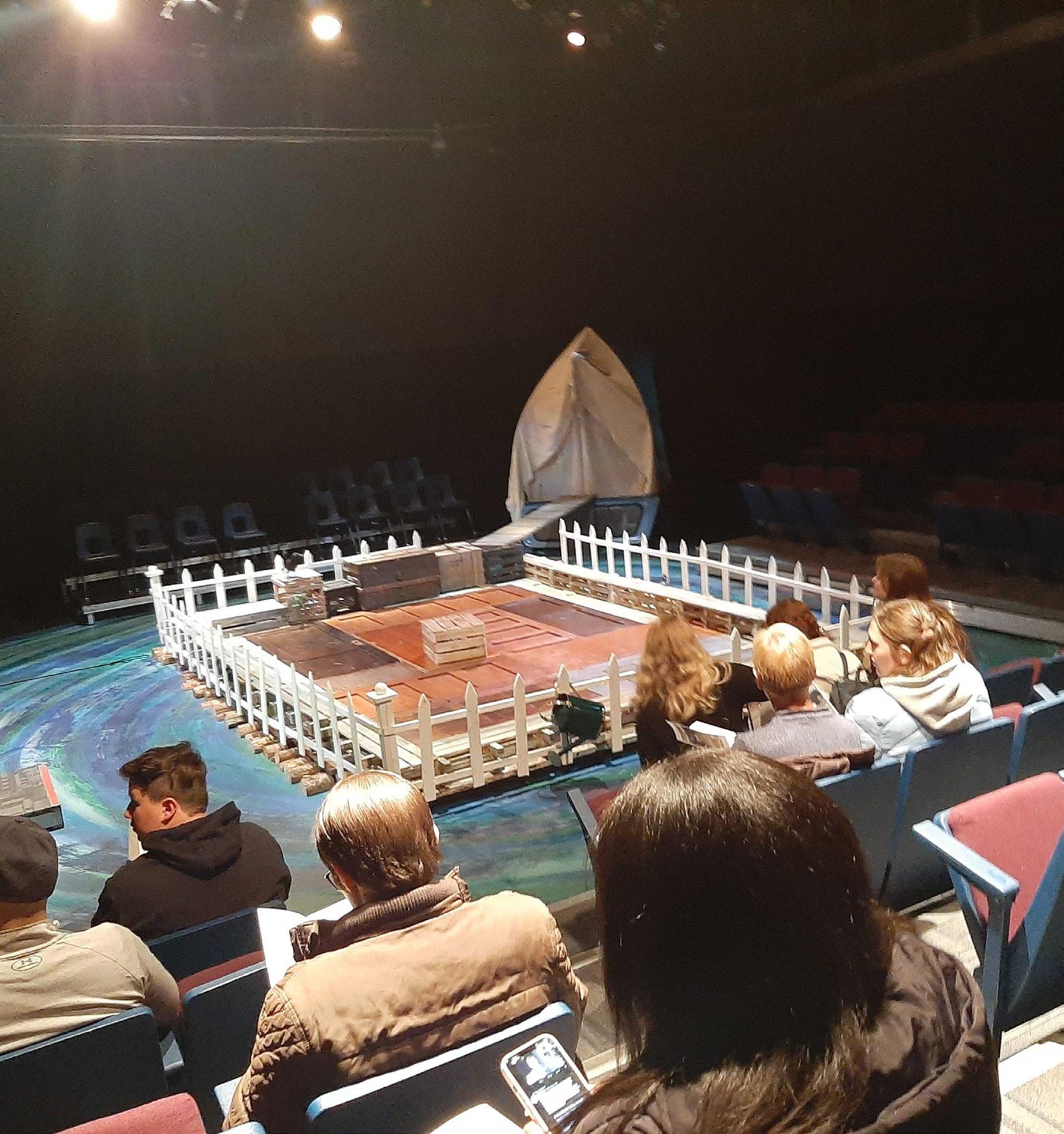
All Good Things Must Begin was a play directed by Jennifer Brewin that played at the Shu-Box Theatre at the University of Regina (U of R) from November 1 to 4.
Like the last two shows I saw at the U of R put on by the Theatre Department (reviews of which are both available at carillonregina.com), All Good Things Must Begin was a series of several smaller plays put into one big show.
Unlike the last two, I enjoyed the story behind this show. The other two felt jagged, like too many pieces of too many different puzzles trying to be put together. This was one cohesive piece.
It was easy to identify different characters across different mini-plays. There was always a costume or a prop there to differentiate them. It felt like an experiment, a successful one.
One complaint that I have about the mini-plays themselves is how they’re ordered in the program; they aren’t in order. They’re categorized by the last name of the playwright, which makes sense, but when I was watching the show, I was trying to look in the program to find the name for the sake of writing this article, and I got confused.
Since I don’t remember the order of the mini-plays from the show itself, I’ll talk about a few of them in the order they show up in the program.
Starting with Undertow, Joseph Derksen and Amy Krause as the siblings were a great pair. They had realistic sibling energy, which is something a lot of authors fail to capture. I could’ve believed that they really were siblings having a spat. But, the title doesn’t make a lot of sense. I don’t connect the word ‘undertow’ to a discussion between two siblings about how they’re making changes in their lives to ward off climate change.
The Polar Bears was such a fun time. It was silly and goofy, and a great offset from the intense opening since it was one of the first few mini-plays to be performed. It was engaging as an audience member to feel like I was being talked to, and maybe I was going to get eaten. It felt like the actors were having fun being silly little polar bears just wanting their pizza because climate change took away the seals.
It wasn’t in your face about climate change either. It had all the messages you hear all the time about writing letters and calling your representatives, but it didn’t feel like I was being scolded. It felt encouraging. Sophie Cerys Budd was an inspiring polar bear and it made me excited to see what else she was going to do in the show.
At one point while I was watching the mini-play Inferno, I leaned over to my friend next to me and said, “He is so good at playing a gaslighter,” in reference to Carter Lown as Charlie. And
he is. It’s not the only mini-play where we see him flex his fake gaslighting, and it’s always brilliant.
It feels like a lot of modern media has men as gaslighters, and Lown’s performance is one of the best I’ve ever seen. Sorensen, playing Lola opposite him, had a
that, one who yells and screams, because it can often come out as one note. Croft’s portrayal had levels that made it more engaging to watch. As an actor, he reminds me of David Tennant, with his ease in portraying multiple characters and the highs and lows he brings to each one.
who sank the Titanic. Every time he told the audience that he sank the Titanic, it was different, which kept it from feeling repetitive. Cerys Budd as Ariel was also great. She was recognizable enough as the Disney character but brought a new life to it. It was her own Ariel, she wasn’t trying
“It was the perfect performance to bridge the gap between us as people in the audience experiencing climate change and the people in the mini-plays experiencing climate change.”
great flow and the pair had surprisingly good chemistry. I loved mirror mirror. While everyone was fantastic, the highlight was Jack Croft, who’s listed as “male voice” in the program but was called “the 1 per cent” in the mini-play itself. It can be difficult to play a character like
catching.
I Had To See felt so unbelievably silly. Silly in a play with a serious topic, like climate change, is so necessary. That sense of silliness and fun was missing in the last play about climate change. Being silly lets the audience have fun. Once again, Croft was a stand-out as Marty the Iceberg
cated his actions and motives with his body language and physical actions.
The best mini-play was Transmission featuring Jun Lei. Breaking the fourth wall is hard, especially in live theatre, but Lei did it perfectly. It was the perfect performance to bridge the gap between us as people in the audience experiencing climate change and the people in the mini-plays experiencing climate change. It was needed in the show and I think the show wouldn’t have worked without it.
Lei moved around the set enough to reach all corners of the round and connect with the entire audience. He was Kevin, but he was also himself in a blend that can only be described as extraordinary and wouldn’t have been possible without the performance of Lei.
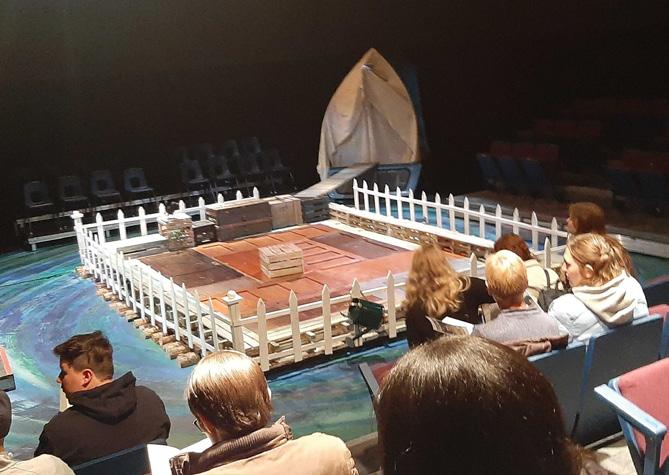
The set didn’t make a lot of sense at times. At first, it seems like a boat, but then it’s not a boat. It was constructed very well. The allowance for props to be hidden inside was a brilliant idea and worked seamlessly for most of the show. Sometimes the actors got a little bit stuck on the sheet that led from backstage to onstage which was distracting.
At first, I was a little disappointed in the costumes. The plain pants and sweaters felt lackluster to some of the other costumes I had seen. But, that was only the beginning. Once they started donning their ponchos and jackets, slowly, one by one as they played their parts, the costumes were great.
They connected the characters to each other which made the play feel more well-rounded. That, in addition to the props that were able to distinguish characters from one another, made me love the costumes by the end. I loved how each person seemed to have slightly different colours. Does anyone remember when Into the Woods had their 2022 revival on Broadway and there was this incredible puppet for Milky White that drove the internet insane? That’s how I felt when Emily Sorenson walked out from behind the curtain with that chicken puppet. I will never get the image of that chicken out of my head, I have been thinking about it for days. It was so beautifully done and so easily maneuvered.
to copy Halle Bailey or Jodi Benson, and it showed. I can’t not mention Joseph Derksen as Bigfoot. Roles where the character doesn’t speak clearly are often relegated to comedic side characters, but Derksen didn’t do that. He was clear in what he did say and communi-
In the program, Jennifer Brewin says that All Good Things Must Begin was a “little bit of chaos.” But, the story was the least chaotic I had seen from the Theatre Department. It felt cohesive, it made sense as a whole, and maybe that’s because of the mini-plays chosen, or maybe it’s because of the actors in the show. Either way, it was a good and fun chaos that still pushed the idea of climate change across well.

On November 4, I had the honour of visiting the Ukrainian National Federation Regina Christmas Market at the Ukrainian National Federation Hall on St. John Street in Regina.
where they were from, and this felt like a small celebration of that in a way, even in just a Christmas market. People were talking to each other like they had known each other all their lives, and maybe they did. But even for me, as someone who had never been there before, walking in felt like a warm hug.
The building itself is beautiful and easily distinguishable. As I walked up the street to the Federation Hall, I knew where it was as soon as I saw it. I didn’t need to see the UNF letters above the door, I just knew (which is a big deal for me, considering I’ll get lost trying to go down the block). It felt like a beacon of something comforting in the neighbourhood, like the north star in the night sky. There was a sign on the door and outside to let me know that I was in the right place for the market.
day, but I walked out with a pound of pelmeni with pork, a food I had never heard of, but the vendor described it to me as being similar to a dumpling. In the Ukraine, store-bought pelmeni is the equivalent of ramen for university students (fitting), but homemade is healthier and heartier. They are usually boiled, but they can also be fried and the filling is not pre-cooked.
One of the most important things about small Christmas markets like this one is that they’re local and, when you go, you’re supporting local. The money you spend doesn’t go back into a corporation, it goes to people in your community. It goes to support families who need it. It goes to people who want to continue working on their craft so they can sell more, or just people trying to put dinner on the table like all of us.
The Ukrainian National Federation of Canada Regina Branch is an incredible place. A beautiful building with people giving back to their community. They run events throughout the year about food making (like the pelmeni that I bought), but also perogies and cabbage rolls. The people there are kind and excited to see you.
This was the opposite. They knew who they were,
To start, the energy in the space was like nothing I had ever experienced before. My family background is overwhelmingly British and we weren’t the type to celebrate our British heritage or culture, so I really had no strong ties to any culture.
One thing that they advertised was food, and there was food, but it sold out fast. The market opened at 10 a.m., I arrived around 10:20 a.m., and half of their food stock was already sold out. I wasn’t sure if they were going to get more food vendors later in the
The main area of the market was kind of like a craft fair, or at least that’s the closest equivalent I can think of. There were hand-made goods like spice blends, soaps, woodburnings, and sewing. They advertised it as “Many vendors to come and see. Get your Christmas shopping done in all one place,” on their Facebook event, which was accurate. There were lots of things that I saw that I thought people in my life would enjoy and the array of different items was great. I walked out with a tiny 3-D printed triceratops who is now my best friend and lives on my desk. It’s meant to be used as a fidget toy, but I think it’s too cute for that and it should just be on display.
A continuation of the culture series using Canada as a case study
mikayla tallon a&c editor
Previously, the topic of abortions was used to explain the transition from religious or personal opinion to politics and the transition from politics to culture. Now it is time to consider how a history of racism has shaped cultural norms and persists even in today’s society.
Canada as a country has been around for a while, being 156 years old, but in the grand scheme of things – and North American history alone – that’s not very long at all. Compared to the various Indigenous populations that span Turtle Island, there are a lot of families and settlements that have been here for a fraction of time. In that fraction of time, some families have seen the creation of provinces around them, the creation of a country and the colonization of Turtle Island.
Canada is based on settler-colonial ideas. Denying that would be to deny fact, as the colonization of North and South America is based on the Doctrine of Discovery. According to The Indigenous Foundation, the Doctrine of Discovery is the claim that land is vacant if Christians do not occupy the land.
The Indigenous Founda-
tion proves Canada’s Supreme Court’s hypocrisy, as despite saying that Canada was not built off this doctrine, there are still court rulings, land disputes, and the conversion of wilderness to parks that are clearly influenced by the Doctrine of Discovery. As the land is deemed unoccupied, it is seized and used however the government deems fit.
However, the land that is taken is almost always of great importance to Indigenous peoples. Some examples of court cases that have been influenced by this doctrine include St. Catherine’s Milling and Lumber Company v. The Queen and Tsilhqot’in Nation v. British Columbia, according to The Indigenous Foundation.
As the basis of Canada and other countries on Turtle Island are based on the Doctrine of Discovery, a racist and colonialist doctrine, it is no surprise that there has been a long history of anti-Indigenous laws and practices throughout Turtle Island. Canada alone has had its fair share of structural racism, where racist policies and practices are built into the system that continue to this day.
Examples include the implementation of residential and day schools, the last of which closed in 1996 in Punnichy, Saskatchewan; the Sixties Scoop, which took place between 1951 and 1984,
according to the Canadian Encyclopedia; the Indian Act; “Indian” hospitals, segregated hospitals which treated everything from the common cold to tuberculosis while operating with less support from the government since they only treated Indigenous people; and discriminatory voting policies
meant to discourage Indigenous people from voting and to further assimilate Indigenous people who did wish to vote, which were in effect until 1960.
These historical events concluded only very recently, but the effects are still being felt today. Add in starlight tours; the missing

I wish them all the best with future Christmas markets since this was their first, and I hope this one was a huge success.
will bright a&c writer
and murdered Indigenous women, girls, and Two-Spirit crisis; the use of excessive force on unceded lands to detain and quiet Indigenous protestors and land defenders; and the disproportionate representation of Indigenous peoples within the criminal justice system and the foster care system, and it is clear there is an ongoing problem with structural racism in Canada.
And not only is there structural racism left to be dealt with, but the normalization of racist language and beliefs persists as they have a historic basis that some use to justify them. Indigenous peoples are still referred to by many as “Indians,” and many Non-Indigenous Canadians are desensitized or ignorant to the experiences of Indigenous people.
Non-Indigenous Canadians might ask, “Why can’t they just get over it? It’s in the past,” but cannot recognize that “the past” is a short one-to-four generations from the young Indigenous people of today, or that Indigenous people continue to experience racism in their everyday lives.
Healing intergenerational trauma can take up to seven generations. Seven generations, if being extremely generous, is 126 years. To the question, “Why can’t they just get over it?” I ask: “has it been 126 years since 1951? 1996? Since yesterday?”
If you’ve never played it, here’s what you should know
will bright a&c writer
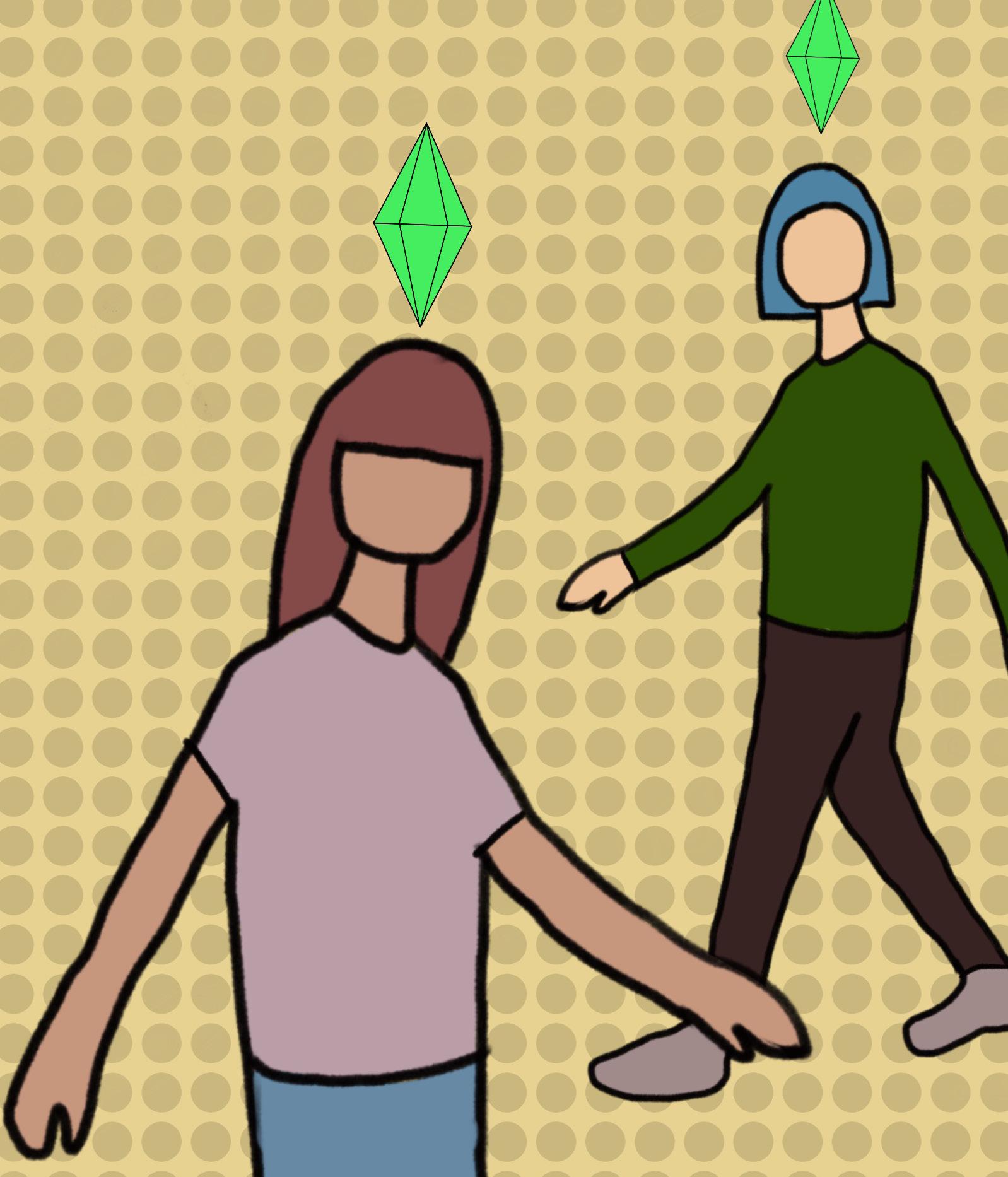
The Sims 4 was released in September 2014, and with nearly 10 years of The Sims 4, there’s a lot to know for beginners.
First of all, the three game modes. Create-a-Sim is where you make the character, or characters, you’ll play in-game. Unlike previous games which used sliders to change facial features, The Sims 4 has a detail mode to change small facial details. You can do that, or
thing you need to build whatever you want.
Live mode takes what you did in Create-a-Sim and what you did in build mode and lets you explore with it. You play as your character, or characters, and you start at the home that you made, or decorated, or just moved into. You can choose their job, start working on their skills, and start building relationships with other sims.
Currently, The Sims 4 is free on Steam and the EA Play app. Expansion packs are $50 CAD,
“Before you start going crazy buying Sims packs, remember that your computer needs to be able to run it.”
Bright
choose from one of the many premade options. You can dress your sim for different occasions, choosing clothes, hair, makeup, accessories, pretty much everything.
You also decide their traits, which will influence gameplay, while most clothing options don’t. Traits make up who your Sim is and what they like doing, which can affect their job or their relationships. You pick their lifetime aspiration, which is the big goal your Sim is working towards. You pick their voice, and even the way they walk. With newer updates, you can pick your Sim’s pronouns, their gender identity, and their sexual orientations.
Build mode lets you create houses or other lots, like businesses or parks. The Sims comes with pre-made houses and lots within every world (of which there are 24, including two vacation-only worlds) as well as empty lots where you can build. The build mode catalog comes with every-
new apartments, “Eco Lifestyle” for build/buy objects, and “Cottage Living” for more dynamic landscapes. The game pack
“Dream Home Decorator” is a builder’s best friend because of its vast amount of different options for the same item, which allows for more customizable builds. “Tiny Living” is the must-have stuff pack. The items are smaller and more compact which allow for a greater variety of builds. “Paranormal” and “Home Chef Hustle” both come with some re-
and “Get Together” for the club gameplay. You can try the game packs “Outdoor Retreat” and “Jungle Adventure” for vacation gameplay.
Now that it’s mostly fixed, “My Wedding Stories” is a great option for fun wedding gameplay. “Home Chef Hustle” is a great stuff pack because your Sims are going to spend more time in the kitchen than you expect. “Movie Hangout” is a great stuff pack to have fun events for your Sims, if you can manage to get them
in the game - dust bunnies).
Packs to avoid: number one is “Dine Out.” It’s a great game pack, except it’s broken. It takes forever to get your food, forever to eat, and forever to leave. Number two is “Journey to Batuu,” the Star Wars pack. Odds are, you’ll go to Batuu once and never again, but someone is going to tell you to go to Batuu every time you make a new save. Number three, “Luxury Party” stuff pack. It’s not all that bad, it was just the first one and doesn’t hold up against
game packs are $30 CAD, stuff packs are $15 CAD, and kits are $7 CAD. There are 14 expansion packs, 12 game packs, 19 stuff packs, and 25 kits.
One of the biggest questions is always, “What pack do I get?” and you’ll get mixed answers, depending on who you’re talking to and what your gaming style is.
If you like family gameplay, the two expansion packs you should get are “Growing Together,” a family-based pack, and “High School Years,” which lets you explore teen gameplay in a deeper manner. The “Parenthood” game pack is a complete necessity for family gameplay.
“Toddler Stuff,” “Kids Room,” “Backyard Stuff,” and “Laundry Day” are all stuff packs that add just a little oomph to family gameplay. It adds more interactable items for kids, and one of the joys of adulting for parents: laundry.
If you just like building, I recommend “City Living” for the
ally nice-looking build/buy items.
If you like to play with occult sims, servos AKA robots are from “Discover University,” aliens are from “Get to Work,” spellcasters are from “Realm of Magic,” mermaids are from “Island Living,” vampires are from “Vampires,” and werewolves are from “Werewolves.” If you play on PC and you like to use occult sims in your gameplay, get the “Stand Still in Create-a-Sim” mod. You’ll thank me later, because it gets really frustrating when they do the same motion every two seconds and you can’t actually make the Sims. In my opinion, the most developed occults are vampires, werewolves, and spellcasters, providing a lot more gameplay options.
If you like gameplay, but not one specific style, you should start off with “Seasons” for the variety of the weather, “Cats and Dogs” to add another element to your sims’ lives, “Discover University” for higher level career paths,
to all sit down. “Tiny Living” is fantastic, especially for single starter Sims because of the bonuses available from living in tiny homes.
The best worlds to live in are Chestnut Ridge from “Horse Ranch,” Henford-on-Bagley from “Cottage Living,” Windenburg from “Get Together,” Brindleton Bay from “Cats and Dogs,” San Myshuno from “City Living,” San Sequoia from “Growing Together,” and Moonwood Mill from “Werewolves.” Recommending kits is difficult because they each feel so niche to one person’s style. If you like to build, you should get some clutter kits, like “Bathroom Clutter” and “Everyday Clutter.” If you want something for your kid sims, there’s options like “First Fits” and “Little Campers.” If you want an actual impact on your gameplay, get “Bust the Dust” for vacuuming (and one of the best ways to earn quick cash
the newer packs. Finally, there’s “My First Pet Stuff.” To use this pack, you need to have “Cats and Dogs.” It’s downloadable content (DLC) for DLC. It’s just not worth $65 CAD total.
Before you start going crazy buying Sims packs, remember your computer needs to be able to run it. At minimum, you need an Intel Core i3-3220 or AMD Ryzen 3 1200 processor; NVIDIA GeForce 6600, ATI Radeon X1300, Intel GMA X4500 graphics card, or better if you have one; 4GB of RAM; 25 GB for the base game; and Windows 10. A regular laptop might not be enough to run the game, and it’s certainly not if you load your game full of mods like I do. Make sure your computer has what it needs to run The Sims 4 before spending money on DLCs.
Once you have your computer, the base game, and your desired DLC, you’re ready to start Simming!
Get involved with the Carillon
Special General Meeting - November 20 at 3 p.m.
Meet us in the Riddell Centre’s Multipurpose room (RC128) to learn about your student paper, and to participate in its governance process. Your perspective is important! Limited catering from 13th Avenue Coffee House will be available. Contribute to the newspaper
Check out carillonregina.com/contribute/ for information on publishing your work in the students’ newspaper, and carillonregina.com/pitch/ for contribution inspiration!
Open Editorial Board meetings
Come chat with editorial staff about the newspaper at our office in RC227. Remaining fall meetings are November 9 from 1-2 p.m. and November 21 from 7-8 p.m.
Become a director on our board
Head to carillonregina.com/board-of-directors/ for information on how to express interest in one of the two vacant student-at-large seats on our Board of Directors!
Mindfulness has a place in every aspect of life
pall agarwall s&h writer
Oftentimes, mindfulness is viewed as a space where one detaches oneself from the world for a time to immerse themselves in yoga and other meditative practices to learn more about themselves. But there is so much more to it than just yoga and physical practices.
According to the American Psychological Association, “Mindfulness is awareness of one’s internal states and surroundings.”
When mindfulness is seen as just a recreational practice we neglect to practice it in our daily lives, especially at work. However, times are changing. Companies
CEO of Twello, this organisation has grown and flourished even when nobody was talking about mindfulness and mental health. While there were few other organizations normalizing and integrating corporate mindfulness, Baum took the initiative and launched her venture to invite others into a mindful space.
“It started with her doing workshops, and keynotes, […] in Regina. It kind of started to pick up and we started focusing on more topics and how you can relate mindfulness to it. Mindfulness for work-life balance, for focus, for all different types of categories that employees can relate to,” said Kaitlyn Stricker, a Senior Wellness Consultant at Twello.
Twello is a local startup that
“It is really just like being aware of the present moment and where a lot of the stress comes from for the employees. They are focusing on the past, […] they are stressed out,” Stricker said. “We just really try to teach employees about being present, being in the moment… that’s kind of the concept of mindfulness, which I am still learning a lot about, […] and trying to apply to my life.
“Beginner meditators, they don’t even have the time [to] sit in silence for five minutes. I think it’s when they [try to] for the first time in their life, there is no silence,” said Stricker. “I am thinking of a million things all the time and on [the] go, […] and I think also, aside from just taking care of your mental health and stress, the other thing is like a loss of pro-
“Personally, I definitely do want to get better at practicing [mindfulness] because I don’t think I do enough, and I am seeing how beneficial it can be,” added Stricker. Working with Twello has expanded her knowledge of mental health and made her more aware of the tools and resources available to the public.
Twello is a platform that can help employees become more connected with themselves even with the challenges and hustle and bustle of work. Twello, and its mindfulness practices, also have the capacity to increase the productivity and efficiency of a workplace. Companies like Hello Fresh, Netflix, and Microsoft use Twello’s services for their employees.
Some of Twello’s discus-
Stricker describes the boundaries and mindful practices that CEO Baum has in place. Baum not only encourages mindfulness to the world, but within the team as well.
“She has created a lot of work-life boundaries for us, and it’s little things. […] take a step back from work, go for a walk around the park, even just choosing [a] start time and end time. Little things, like [a] mental health day,” said Stricker.
Allowing its employees to take a mental health day speaks a lot about the culture and work lifestyle that Twello promotes. With this notion, mindfulness can be about helping people get through tough times.

and organizations are switching their structure and making themselves more inclusive and humane. Mindfulness is becoming a lifestyle.
Twello is one organization working to bring forth corporate mindfulness in workplaces, and is giving employees the opportunity to practice and integrate it into their work lifestyle. Twello has normalized the notion of practicing mindfulness in the workplace and evolving with the practice.
Started by Kayla Baum, the
has grown and flourished to become an internationally recognized organization. It has broken societal barriers about mindfulness at work and brought to attention the different tools and resources that employees can use to find a work-life balance.
Stricker learned more about mindfulness on the job and it grew from there. Twello gave her clarity about her mental health, which has extended to helping her learn how to guide others on this journey.
ductivity.”
Stricker shared one main reason for people losing productivity as simply losing focus on the task at hand. Due to a consistent state of chaos in people’s lives, they might find themselves thinking of something else while working on a separate, specific task. “They are not putting all of their effort into the task that they are actually doing,” said Stricker. Mindfulness and short breaks can be used to extract oneself from the constant hustle.
sions include yoga, mindful eating, meditation, improving sleep, mindfulness for stress reduction, resilience training, gratitude journaling, work-from-home wellness, and breathwork basics. Twello has an array of tools and resources for employees in the workplace. These resources and tools are always improving however, as innovation brings forth new ideas and new ways to incorporate mindfulness in the workplace.
In Twello’s workplace, mindfulness is especially important.
Stricker also discusses how mindfulness impacts her daily life. Mindfulness allows Stricker to focus on the important things in life, without being distracted by work. Taking time for family and building lasting memories are important without having your focus lost on something else like work stress. Practicing mindfulness can prevent people from missing out on important events or memories. Twello and mindfulness are a step back in life to get two steps forwards to efficiency, productivity, and a healthy life.
“It is really just like being aware of the present moment and where a lot of the stress comes from for the employees. They are focusing on the past, […] they are stressed out.”
Kaitlyn Stricker
pall agarwall s&h writer
Open education resources are generally viewed as exceptionally valuable tools that reflect the need for information to be widely available across all borders and fields.
Jennifer Kong, a faculty member of the Department of Basic Health Sciences at British Columbia Institute of Technology (BCIT) in Burnaby, saw a need to make knowledge about anatomy, physiology, and pathology accessible to everyone.
“That helps them guard against misinformation, and be better able to understand what a symptom might represent, what causes disease, and how it’s likely to play out,” explained Kong in an interview with BCIT News.
After pitching her idea to Helen Dyck, the manager of the University of British Columbia and David F. Hardwick, Pathology Learning Centre in Vancouver, Kong worked alongside Dyck and Zoë Soon to make people more aware of their bodies and how they function. The result was the open education pathology textbook Pathology: From the Tissue Level to Clinical Manifestations and Inter-professional Care.
The book was written and published to educate and inspire a diverse audience. The target audience is first-year post-secondary students, but a curious reader could use the textbook to fill gaps in their knowledge.
The textbook is written sim-
ply, and begins by explaining what the field of pathology is and what a pathologist does. The simplistic style of writing sets a tone that sparks curiosity for the rest of the textbook, and hints at the
ter “Video lessons on Histology,” there is a video lesson describing what a tissue looks like to a histologist. The language used is simple and clear, and the visuals are clear and high-quality. Visuals found in
to take away. For post-secondary students, these learning objectives would help to structure notes for better knowledge retention. For the most curious of readers, the objectives summarize the chap-

That’s a blood cell?!
thorough detail it goes into in later chapters.
The format in which the information is presented is also simple and effective. The chapters are a mixture of written and visual content, with integrated video lessons. For instance, in the chap-
other chapters are of equal quality, and seem just as engaging. Each section of the textbook focuses on a specific disease. At the beginning of each chapter are ‘Learning Objectives’ that guide the reader in determining what information is the most important
More than just good fun
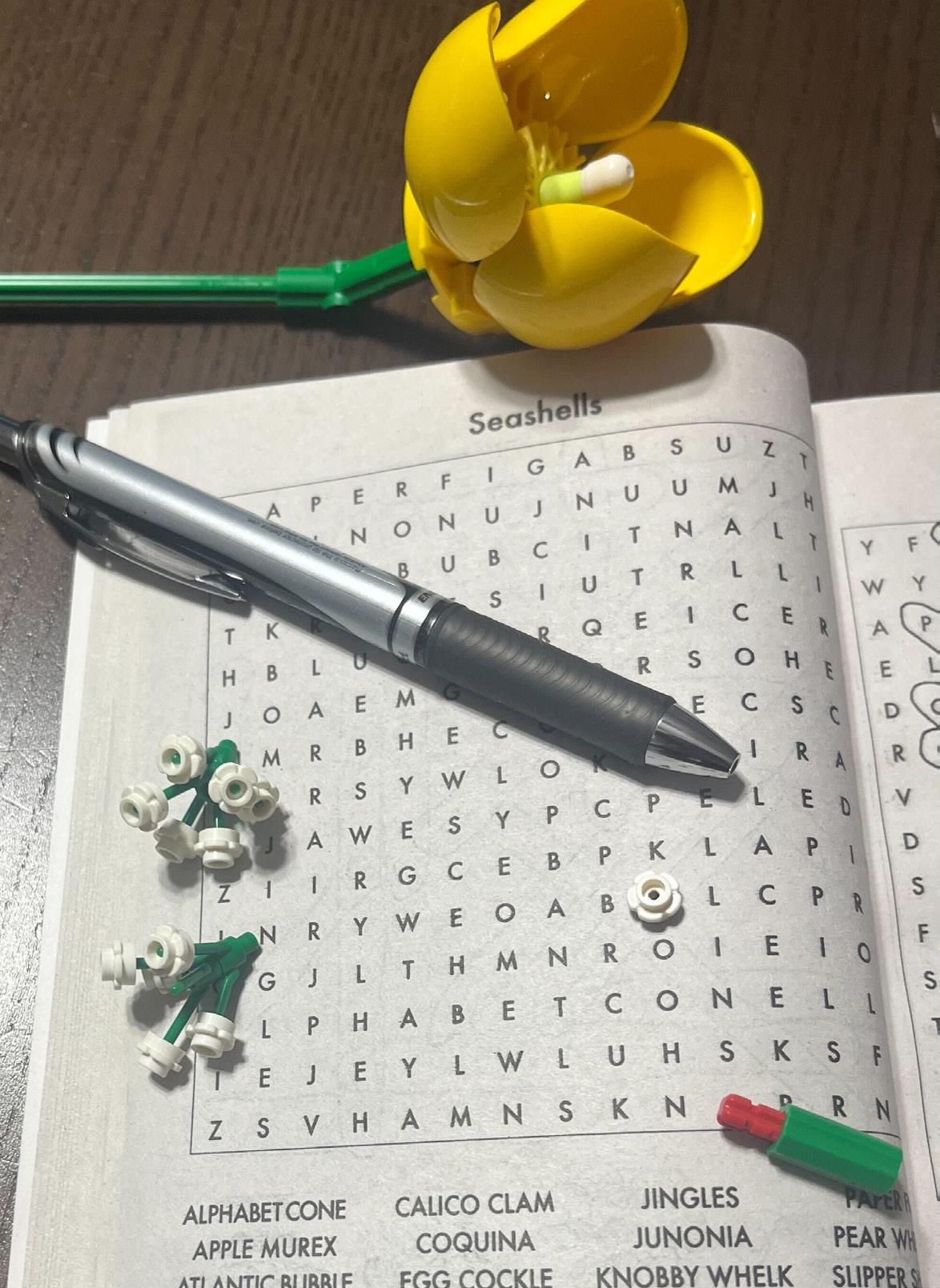
Puzzles are a great way to spend time, work your brain, and improve your mental health. This activity even has some amazing benefits such as improving memory, attention to detail, decreasing stress levels, and increasing mood.
As you work on a puzzle, no matter the way or form, you are encouraging your brain to think on the spot. Then, once you solve a puzzle, the brain releases a hormone known as dopamine. You are encouraging your brain cells to “connect.”
But what is classified as a puzzle? When you think of a puzzle, you may think of little pieces of cardboard that have different shapes and sizes that fit together to create a picture. Well, that is a classic form of a puzzle.
However, there are many different hobbies that can be classified as a puzzle. If you spend time partaking in activities like Sudoku, Xs and Os, crosswords, or word searches, then you are solving puzzles.
baileyspuzzles.com is a website with a great list of all sorts of different kinds of puzzles from across the globe. On the home page, there are a
gina, acute kidney injuries, cirrhosis, anemia, and leukemia.
For example, the chapter “Blood, Anemia, Leukemia, and Blood Tests” provides a comprehensive look at the anatomy of blood components, the functions of blood in transportation and defence, the maintenance of homeostasis, and the pathological changes that can be seen when the blood is diseased.
The blood chapter also has a video tour of LifeLabs, the largest processor of blood tests in western Canada. Being online, free, and accessible to all, post-secondary students could make the best use of this in their academic journey of understanding and learning more about pathology.
The section on the treatment of anemia talks about the different ways it could be cured. Anemia is a disease that can be caused by multiple things, with different types named differently. For instance, sickle-cell anemia is given its name from the “sickle-” shaped red blood cells. Sickle cells are more fragile and prone to destruction. Blood cells that die faster than they regenerate can result in “anemia due to RBC loss or destruction,” a condition for which treatment is described in the textbook.
ter’s contents into broad categories.
The textbook covers a wide variety of diseases and the science behind them. These diseases include heart failure, metastatic cancer, emphysema, pneumonia, pulmonary edema, diabetes, an-
Overall, this is an interesting and useful resource for people of all ages and backgrounds. This open-source textbook may even be the beginning of many more similar open education textbooks.
bunch of different kinds of puzzles with all the necessary details, instructions on how to play, free downloadable puzzles, and plenty more.
When you do a puzzle, you focus on what you need to do to fill that blank spot. Do you need a certain letter, a number, or a colour? It all depends on the type of puzzle.
But, as your brain is trying to figure out the correct answer, you are encouraging your brain cells to connect. This means you are stimulating your brain. As your brain is working to find the correct answer, your body releases dopamine.
Dopamine is a chemical that is released in response to success and achievement, and anticipation of progress. For example, when you complete a puzzle. Dopamine helps regulate your mood, and improve your concentration.
Progress Lifeline’s article “The benefit of puzzles for the brain” details many other benefits of doing puzzles.
If doing a traditional puzzle isn’t your vibe, try Lego. Building and creating with Lego can have many of the same benefits as doing a puzzle, since they activate
similar parts of the brain. Brain Tree Games’ article “Lego vs. Jigsaw Puzzle: Which is the Better Activity for Kids and Adults?” describes the benefits of building with Legos and solving jigsaw puzzles. Both Lego and jigsaw puzzles improve problem-solving skills, attention to detail, and sequencing skills that help children learn to follow instructions.
Now that we know what kinds of puzzles are out there and the benefits of doing puzzles, where can you find puzzles in Regina? There are a few locations where you can find puzzles or jigsaw-like puzzle books like Zippity Zoom Toys, ABCD Gift, and Paper Umbrella. There are plenty of free downloadable puzzles across the web too, and hundreds of puzzle apps available for your phone. You can also visit a Regina Public Library location to sit down and enjoy some puzzling there.
Can our public health system really afford to go on like this?
kim kaufman s&h editor
Moose Jaw’s South Saskatchewan Heart Clinic opted out of public funding on October 2, 2023. Since then, the clinic has offered private services paid for by their clients and their third-party insurance. Private essential health services are uncommon in Canada since healthcare is usually publicly funded. This is the first private cardiology clinic in Saskatchewan.
This switch from public to private service provides insight into how Canada’s universal healthcare system affects service providers. For example, inadequate funding and non-negotiable fee-for-service rates. Privatizing this essential health service also offers a look into the benefits and detriments of a private
ditions of the heart and blood vessels” and can specialize further in areas such as “interventional cardiology” which is the use of mechanical treatment methods, such as angioplasty, or specific population demographics.
Of the numerous cardiology clinics in Saskatchewan, only Dr. Wilkinson’s clinic is private. According to the Saskatchewan Medical Care Insurance Act, health care providers can opt out of offering insured services as long as notice has been given to the Minister of Health. With that, they can offer uninsured services, privatizing their health care services.
The South Saskatchewan Heart Clinic released a statement on October 13, 2023. In it are the details of why the clinic chose to privatize. “Over the last five years, being a specialist clinic in Moose Jaw has been operationally and
er, it varies between provinces. As expected, lower rates mean less money to cover clinic expenses.
The statement described these rates, emphasizing the large gap between provinces. “Presently, the rates the Saskatchewan Ministry of Health pays for common cardiac procedures are 20 to 45 per cent lower than either Manitoba or Alberta. […] For example, an electrocardiogram, or ECG, is paid at $34.33 per test in Alberta. In Saskatchewan, ECG is paid at $18.90 per test.”
The clinic chose privatization to continue to provide quality care to its clients and keep itself afloat. However, this was not the first option. As mentioned in the clinic’s written statement, “Our office reached out to both local MLAs – Tim McLeod and Greg Lawrence, […] Dr. Wilkinson also reached out to the Saskatchewan Medical Association and

“Money, money, money” - the mantra of the clinic
Image: Clker-Free-Vector-Images via Pixabay, manipulated by lee lim
healthcare system for the patients.
Dr. Jeffrey Wilkinson’s South Saskatchewan Heart Clinic, established in 2018, specializes in “outpatient evaluation and the management of cardiovascular health,” according to their website. This means their primary demographic is non-hospitalized people concerned about their heart health.
According to the Saskatchewan Health Authority, a cardiologist specializes in the “diagnosis and treatment of diseases or con-
financially difficult,” it said.
Among the difficulties was a lack of competitive funding provided by the Ministry of Health. “We had a number of resignations due to the inability to pay competitive salaries and provide benefits,” wrote the clinic. Publicly funded services like the cardiology clinic rely on a “fee-for-service” rate, according to Discover Moose Jaw.
The Ministry of Health determines this rate and pays clinics for every test performed. Howev-
in and outside healthcare, accept personal insurance. The South Saskatchewan Heart Clinic accepts third-party insurance. The limitation of this, however, is the coverage the insurance company provides.
The South Saskatchewan Heart Clinic’s website provides several benefits of private patient services. The website notes that private services offer shorter wait times and faster diagnoses. The clinic also has a cardiologist onsite, so “you don’t need to travel to see a qualified specialist,” and any tests done can be planned so the patient receives their test results immediately.
A downside to this, however, is the costs. The clinic’s website mentions that the consultation, which includes an ECG, is $350 and is only “sometimes […] covered by third party [sic] health insurance. Other cardiac diagnostic testing is charged separately.” So,
and the procedures that were needing to be done that day.”
Meili also noted that this patient had not been contacted about this change before the appointment. “She chose to go elsewhere, and now she has to wait.”
From the complicated situation of a cardiology clinic pushed into private services, a need for reformation in public healthcare appears. If a clinic cannot survive on public funding, revisions to the public funding system should be considered. While the current situation provides no solution, perhaps one can be found in a mixture of public and privately funded services.
Perhaps it would be beneficial to implement a system where the government partially subsidizes costs. A system like this could help clinics that cannot survive on public funding alone and clients who cannot afford expensive diagnoses.
“ If a clinic cannot survive on public funding, revisions to the public funding system should be considered.”
met with the president and CEO in early 2023. Finally, on April 3, 2023, Dr. Wilkinson met directly with Premier Moe and [former Health] Minister Merriman.”
However, despite these meetings, with no foreseeable change to the fee-for-service rates, the South Saskatchewan Heart Clinic decided to go private.
So, although the clinic now offers its services privately, that does not mean all costs must be paid out-of-pocket by the client. Many private service providers,
while insurance may cover some initial costs, it will often not cover further testing.
This already proves to be a significant barrier to healthcare.
CBC’s Garth Materie spoke over the phone with Ryan Meili, a family doctor and former NDP leader. In this conversation, Meili described a situation where a former patient had to change clinics because of the cost. She had gone in for an appointment and was “presented with the option of paying $700 to have the exam
Kimberley Kaufman
The South Saskatchewan Heart Clinic claims to have privatized its services to preserve its standard of care and fulfill its financial needs in a competitive field. Although the switch seems to work for the clinic, the costs of the services have become a significant barrier to timely healthcare for former, current, and potential patients. A better solution, one that does not so clearly distinguish between public and privately funded services, seems to be in order.
nazeemah noorally staff writer
Can you recall a moment when the weight of the world seemed to rest on your shoulders? To get a bit more specific, as a student, have you been dealing with the anxiety of a looming assignment deadline and striving to maintain that good GPA while juggling the financial pressures of paying tuition fees and rent?
On a more serious note, everyone has felt the impact of the COVID-19 pandemic as it wreaked havoc across the globe, creating uncertainty about the future. And what of the ongoing humanitarian crises that continually leave us questioning the state of the world? The importance of mental health has never been higher, and we cannot lose our focus on mental wellbeing at this point in time.
According to a national survey published in The Globe and Mail in 2016 on colleges and universities, approximately one-fifth of Canadian post-secondary students deal with depression, anxiety, or other mental health challenges. The survey shows an alarming increase in the number of students reporting distress compared to three years prior, and conditions have not improved since. This issue extends to the general population, and many must wait to get the care they need while others do not get any care, or the care they do get is insufficient.
Much like other universities across Canada, the University of Regina (U of R) seeks to equip students with tools to safeguard their mental health. One such
instance is the reassurance email that President Jeff Keshen recently sent to the U of R community in light of the unfolding Israeli-Palestinian humanitarian crisis. In it, he reassured students that the U of R is strongly committed to peace, justice, and human rights for everyone and that anything contrary to those principles will not be tolerated on campus.
At the forefront of the university’s efforts is the Student Mental Health department which provides accessible, evidence-based, and inclusive psychological services to the diverse student community. The clinicians at Student Mental Health are registered psychologists with extensive experience in treating a wide range of concerns. They adhere to the principles outlined in the Canadian Code of Ethics for Psychologists, ensuring ethical and professional care.
Any information shared during treatment sessions is confidential, including the fact that a student has accessed these services. The first session at Student Mental Health is focused on addressing the student’s current pressing situational stressor in a time-responsive and solution-focused manner. During the session, the student collaborates with the clinician to develop insight, explore options, and find feasible solutions.
This collaborative effort may involve psychoeducation, therapeutic strategies, skill development, and recommended resources for ongoing support. Follow-up sessions will offer a brief and change-oriented approach. While there is no strict cap on the number of sessions, they claim
desired outcomes are often achieved within three to eight sessions. The sessions are available both in person and virtually via Zoom, scheduled by appointment during regular office hours from Monday to Friday. To access this service, simply go to uregina.ca/student/counselling/forms/ online-consent.html and fill out the application form if you want to see a mental health counsellor.
In addition to the services offered by Student Mental Health, the U of R’s commitment to the health and safety of its students, faculty, and staff on its campus is palpable. The university’s Health and Safety team is dedicated to providing a safe and secure environment. They offer different resources to ensure the well-being of everyone on campus, including online safety courses and instructions on reporting incidents or safety concerns.
The “2023 Monthly Safety Shares” page on their official website uregina.ca/hr/hs/ provides helpful information on various safety topics, reinforcing a positive safety awareness whether you are on campus or at home.
Certainly, in trying times, each person has their own struggle. Whether these challenges are related to financial pressure, academic pursuits, strained relationships, or other setbacks, it’s in these times that we come to realize that a sound mental and emotional wellbeing is a something that cannot be overlooked. After all, mental health is not just a solitary endeavor but also a collective responsibility, as proven by the University of Regina through its various mental health resources.
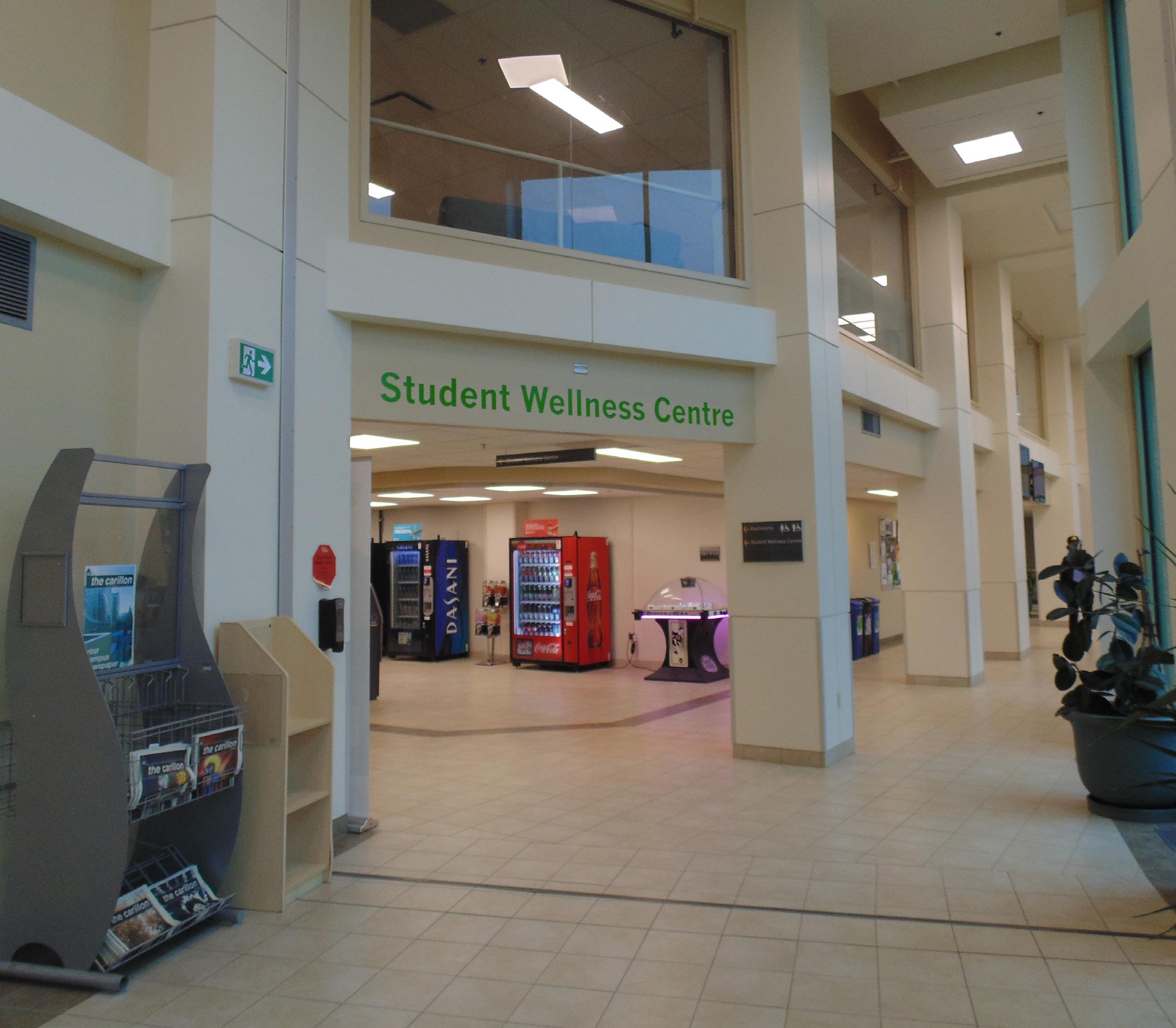
If you require immediate urgent support, you can contact the following services:
• 911 for an emergency
• 811 for health-related concerns or go to your nearest urgent healthcare facility
• Campus Security: 306-585-4999
• Regina Mobile Crisis Services: 306757-0127
• Regina Crisis Line: 306-525-5333
• Regina Sexual Assault Line: 306-3520434
• Canada Crisis Text Line: Text ”UofR” to 686868 or phone 1-800-668-6868
• Talk Suicide Canada: 1-833-456-4566 or talksuicide.ca
• For immediate assistance for Indigenous peoples across Canada: 1-855-242-3310
“ After all, mental health is not just a solitary endeavor but also a collective responsibility, as proven by the University of Regina through its various mental health resources.”
In this class there is something for anyone who has to work with people
victoria baht staff writer
It is that time of the year again when you get to start choosing which classes you are going to take for the next semester. Are you set up for a term of all required classes or are there some electives in the mix?
One of the nice things about being university students is how we get some freedom to choose when, and which, classes to take. For those studying topics like Education, Kinesiology and Health Studies, Psychology, or Social Work, a class that I would highly recommend is Introduction to Recreation for Persons with Disabilities, listed as SRS 120 and KIN 120 in the University of Regina course catalogue.
One of the main reasons for my recommendation here is that if you are involved with any of those programs, it is likely that you will get involved with individuals living with a disability in some way or form. Maybe you will be teaching a class, or helping someone gain some structure or assistance, or even just supporting them in their daily life. I think it is crucial for students who are studying these topics in particular as it would enable them to be much more effective in their professions. However, my recommendation extends to people in other programs as well.
Individuals living with a disability are often put into a stereotype-filled category, and not everyone knows how to help individuals with a disability or what it entails. In my opinion, taking a class like this would help minimize ‘othering’ as well as help our society know what is involved in working with individuals living with disabilities.

This three-credit hour class focuses on the diagnosis, characteristics, and paradigms that are involved with individuals with physical, intellectual, and developmental disabilities. This class teaches students how to think critically, and adapt and engage with children who have a disability. As you take the class you are required to exercise what you have learned in real-life
TUESDAY
WEDNESDAY
applications to help children with their skills so they’re better able to achieve their own success.
I am a fifth-year student finishing my four-year Bachelor’s degree in Social Work, and I must say that taking this elective gave me a completely new perspective. Not only did I get to understand and look into the philosophy around disabilities, but I also
THURSDAY
FRIDAY
got to use what I was learning in life experience.
In class we talked about topics such as different levels of a disability, different models or ways of thinking of individuals with disabilities, how to help and adapt with those who have a disability, and so much more. The history and the depth of knowledge in this class are just outstanding and super beneficial. Not only did you get to learn the knowledge, it wasn’t just a theories class, you had to put it to the test.
When I took this class, I had the benefit of putting my knowledge to the test out in the real world in a practicum setting. We had school children who were living with a physical or intellectual disabilities come to us for a physical education class. This gave us the opportunity to help these children by partaking in different activities. It challenged us to critically think and to use the skills in real life. This was done by getting involved with activities one-on-one or in groups, being challenged to break down the tasks into a simple form, or improvising on the spot to make things work with each individual’s needs.
In a world built for able-bodied neurotypical people, it is important to take every chance you get to acknowledge and challenge that fact. This class helps students who might not otherwise take the time to recognize the rigid and potentially harmful structures that our world is built on. By looking at things from a different perspective, of any kind, we as students can help to make the world a better place for everyone.