
Mnemonic Wanderings
Through the Hallways of Helen Bush-Parkside School
1955-1967









The first edition of this memoir was published in two copies, which the preface will explain. This edition is inspired by my class's fortieth reunion, the Class of '67. This, classmates, is how the Helen Bush-Parkside School looked to me. Best wishes for your ongoing enjoyment of the great education which I felt we were all afforded.


The inspiration for this literary piece is twofold. The first is in celebration and honor of an invitation to a farewell luncheon for departing Headmaster Dr. Timothy Burns and his wife, hosted by Sis Pease, a pillar of support to the Bush School over so many years as student, mother, teacher, administrator, college coordinator, board member and alumna extraordinaire of the Helen Bush-Parkside School. The other inspiration for this literary piece is the recent publication of The Bush School; The First 75 Years, by Anne M. Will, upon the occasion of the 75th Anniversary of the School.The time frame covered in this memoir is September, 1955, through June, 1967. The place is Seattle, Washington , USA. Although this began as a description of my school, it has naturally unfolded to be a meeting and joining of my school and me, in my passage through it.

Two weeks after school started, my father looked up from the morning newspaper and asked, 'How does The Baby like school?' My mother answered, 'She's not in school.' I can only suspect my father had been out of town all this time, and therefore did not know I had not been enrolled. My father edicted, 'Put the girl in school, to stay in line with the others' (my brother and three sisters were in the four consecutive grades ahead of me).
And so I was plucked suddenly out of the complacency and familiarity of my nest at age 5 and 3/4 years to begin my academic career. Everybody in my class (12 boys and 13 girls, including me) knew each other's names and had a coat locker. Woe was me, I could boast of neither.
Betsy Sander said, 'Virginia, I will share my locker with you, and I will be your friend.' And so, as a result of the human kindness of another, my coat found a hook, and my integration into the flock was begun.
Although this was a help, it did not solve all my problems. At recess, I was so forlorn, that I sat on the steps to Harrison Street and cried (I got hives across my stomach from nerves). Ethel, the beautiful black lady who helped my mother raise us all, and who, I suspect, was having her own issues of adjustment and separation, as we were constant companions, drove by to check on me, and saw me sitting there, with all my welts and tears.
She stopped the car and gave me a bag of butterscotch candies. She said, 'After recess, ask the teacher if you can pass these out to your class'. As I walked around the room passing out the candy, they all said, 'Thank you, Virginia', and so my integration into scholasticism was greatly propelled.
To add to my troubles of adjustment, I was afraid of the teacher, Mrs. Grieder. She had little patience for my lingering discomfort, and so I was allowed to go to the Second Grade , and sit between my sister Helen and her friend Simon Kreielsheimer. I felt wonderfully secure there between the two of them. Mrs. Dickson, the Second Grade teacher, seemed to enjoy having me there, because she never urged me to return to my proper class.
After many weeks, Mrs. Grieder caught me tiptoeing by. She lurched out and grabbed my arm and said, 'She's coming with me!' My sister Dee, who has proven to be no one to tangle with at any age, grabbed my other arm and said, 'She's coming with me!' There proceeded a tug of war with me literally in the middle. I realized then that it was time for me to assume my appointed position. So about two months late , I began my scholastic career in the First Grade, with all that that entailed.











The first word I learned to read was 'here'. In a small reading group, Mrs. Grieder said, 'Does anyone know what this word is?' I knew that it looked familiar, and I remembered that it didn't sound the way it was spelled because we had already talked about it. Yearning for acknowledgment and a success, I racked my brain, and realized it was 'here' . So I said, 'Here', although it was partly a guess. Later on, I was also the person who 'sounded out' 'picnic'. After these two victories, I was off and running with the English language, a particular favorite of my mother, and I have never looked back.


Remembering is something I had to learn for school in the First Grade! I had taken some flash cards home to study. Until I brought them back, I couldn't advance in reading class . Every day I would run upstairs after breakfast, grab my sweater, and tear down the hall to head for school. One morning in my mad dash I stopped at my bedroom door and said to myself, 'Wait, aren't I supposed to be taking something back to school?' So I finally remembered to pick up the flash cards and get them back to school. One more discipline in my repertoire. Leaming is maybe a long progression of small steps.




Only while I was in First Grade, did we have art class in the Art Shack. In the remodel which was completed in 1957 (following the fire in the upper school in 1949), the Art Shack was tom down, or removed. It was located in the play yard, which later became the location of the Livengood Library. There was sawdust on the ground, a wonderful jungle gym on the east side, and a small free standing one-room building called the Art Shack on the west side of the yard.
Our art teacher that year was Guy Anderson, a now very prominent Northwest artist, and recently deceased. There is a large piece of his work, donated by John and Anne Hauberg, hanging in the Benaroya Theatre.
I remember that the room was full of little easels with a place to sit down facing them. Mr. Anderson asked us to bring an old shirt of our fathers to class to cover our clothes while we did fmger painting. As my father stood 6' 3" tall, his shirt came down to my ankles, so I was well sheathed. I remember the room full of colorful swirls on paper, the work of my classmates. Actually, Mr. Anderson's art work seems reminiscent of fmger painting as well.
Mr. Anderson was a handsome and kind man. As an adult I was able to remind him of our academic encounter. He also knew my mother, a kind and beautiful woman, and a collector of fine art. Very recently I purchased a photograph of him from the photography studio of Art Hupy in La Conner, a commercial photographer, and in the early '70's, a photography teacher at Bush. Mr. Anderson lived to reach his nineties.















Music class was a constant from First Grade all the way through Eighth, and for me, all the way through Twelfth. Mrs. Turner (Helen Turner) was the teacher, and we had her for all six years of Lower School. We sang wonderful songs; I still know the words to several of them: The Fisher Sails Away, The American Eagle, Oh Suzanna , My Old Kentucky Home, Froggie Went a-Courtin ', The Fox Went out on a Chilly Night, The Ash Grove, Polly Oliver, and many others, including wonderful Spirituals like Oh, Mary, Don ' t You Weep, Don't You Mourn, We are Climbing Jacob's Ladder, and of course Swing ,,, Low, Sweet Chariot. We probably learned about 10 to 15 new songs every year.
I used to sing them on the chair lift at Snoqualmie Pass, then Crystal Mountain to pass the time until we reached the top of the hill. My skiing partner, Kirby Torrance, was particularly fond of Froggie Went a-Courtin' and adored to tease me for knowing the words, and singing it with such relish. Another song whi.ch came in quite handy on very cold chair lift rides, was from Shakespeare's A Midsummer Night's Dream: "Blow, blow, thou Winter wind/Thou art not so unkind/ Thou art not so unkind as Man's ingratitude .. . "; and second verse: "Freeze, freeze, thou Bitter Sky/Thou art not so unkind as benefits forgot ... " This was a great song for making the cold seem less cold.



We didn't have too much to do with Mrs. Turner after grade school, other than seeing her in the hall, but when I was in the Twelfth Grade, she played the piano for our Senior Play. The play was The Wizard of Oz, and I was the Cowardly Lion. I had to sing a solo, "If I Only Had the Nerve." Although she and I hadn't spoken for years, she finallysaid to me, 'Virginia, would you please pick a tempo for your song? I speed up and slow down to match your pace, but I can't always hear what you are doing!' I answered, 'Yes , Mrs. Turner, I'll try.'
Beyond Music Class which was singing, the School provided Piano Lessons. My sister Chi-Chi had Mrs. Jackson as a teacher (Dorothea Jackson), and my sister Helen had Miss Evans (Margaret Evans). There used to be Piano Recitals in Reed Hall.
One fine spring night, my family went to School after dinner to hear Helen perform in the recital. It was such a nice evening, a few of us decided to walk. When we got to school, there were some tough boys from the neighborhood whom we encountered on Harrison Street who taunted and bullied us a little. No one was harmed, but Mrs. Livengood was angry when she heard about it, I think because her turf and her charges were not secure.
The recital went fine, but when my sister Helen started up her piece, my father rolled his eyes, because we had all had to hear it so many times while she practiced it, and so l burst out laughing. Much to her credit, Helen didn't pause, but got through her piece. That was pretty much the end of the piano career of my sisters. No more lessons, no more practicing, no more recitals.
My sister Dee took voice lessons in High School. I always wondered if it was because her voice was good, or bad! I think I've asked, but I can never remember the answer.
I took recorder lessons . I can't remember who the teacher was (I thought I remembered everything!), although I am now wondering if her name wasn't Mrs. Gould, a serious lady with a long brown pony tail. Anyway, I became proficient at playing The Irish Washerwoman; Wayfaring Strange; Jesu, Joy of Man's Desiring; and Joy to the World. The record~r is a lot of fun because it so portable. Every now and then I run across it, and play it to see what I can still accomplish. I once went downtown to 5th & Pine and played Joy to the World, to be a part of the general Christmas cheer.

Because I had already had a month with Mrs. Dickson while I was in the First Grade, I was something of a 'Teacher's Pet' in the Second. As my family had developed a reputation for being good spellers, I fell in with my siblings , and enjoyed the Spelling Bees at school. At home, there were some words which we learned to spell, which came in handy at the Spelling Bees to eradicate the competition. These words were'hieroglyphics' and 'perpendicular'. Every now and then, we would throw in 'Shenandoah' (the name of the street on which we lived) to keep the variety up, although technically, I don't think it was fair, as it is a proper name.
In the Third Grade, I felt I was on my way to making Spelling History, and admission to the Spelling Hall of Fame: I was standing in front of the whole class with Amy Kusian in the final round of a Spelling Bee, and Mrs. Matthews asked me to spell 'Ought'. I thought, 'Ought, I don't know that word.' I forgot that I could ask to have the word used in its context. So, knowing it was wrong, I said, 'O-t'. Frustration replaced fame and glory, and Amy Kusian maintained her reputation as being the First Student in Everything.





Every two grades had recess together. Consequently, we had recess with the grade ahead of us and behind us in alternating years.
I loved to play on the teeter totters. I liked to ride it by myself; standing on the top straddling both sides, and leaning first with one foot, then the other. The teeter totter would clomp to the ground and make a wonderful noise; I also enjoyed the rhythm of it.
Jump rope was always popular. I will never forget Kathy Topp, a year behind me. At about 7 or 8 years old, she had black curls which seemed to stick right up out of the top of her head. She would get to be in the middle, with her friends swinging the rope. Whenever she missed the timing and caught the rope, she would yell out in a very nasal voice, "But I didn't say 'ovah' !"
Hopscotch wasn't very popular, but when Elsa Parrington joined us in the Third Grade, she brought a game from Denmark, where her family had been, which was played with a round glass disc which one kicked by swiveling one foot, with the other foot off the ground; the markings on the ground were somewhat similar to Hopscotch, and the goal was to kick the disc into the proper area. It was called Hinkerstink; anyway, that is how we pronounced it, although I am now a little suspicious of the final 'k'. Sometimes a good kick would send the disc scuttling into the bushes, and one of us would have to follow it there. I think the ultimate fate of this game was that we lost the disc, but it was a good game for coordination, and fun.
The school swings were very long and made quite an arc. Nobody could make them go as high as Kathy Little in the Fifth and Sixth Grades. She could make the swing go parallel to the ground, and easily see what was going on in the Gym through the high windows. It scared me to go that high because there was always a little snap of the chain on each return to Earth .
I enjoyed the monkey bars in the Lower Field throughout the years, although only occasionally. Although I was never a very good'monkey', (swinging and lifting my weight and acrobatjcs), I enjoyed sitting on top of them for a nice chat in good weather; the perch provided a good view of Capitol Hill to the West and Washington Park to the East.












When I was standing in the hallway, just outside the door to my Third Grade classroom, I learned that the Russians had successfully sent a space ship into Outer Space. I spent more time considering the notion of Mankind in Outer Space at that time than I did 12 years later when the Americans landed on the Moon! At that time, July, 1969, I was watching the landing on a television in a small pub in the countryside of south Wales . And mostly we were fielding dark comments about those crazy Americans, before the locals figured out that that band of youth in the doorway was also American!




Reaching the Fourth Grade means that a student has come around the first bend in the hallway. Truly, one walks in one door at the Bush School, and if one perseveres, can, many years later, walk out another door, as an Educated Person. The Lower School library was located between the Third and the Fourth Grade classrooms. Coming around the bend put one into the sight of the years and wonders ahead.


















Ann Lyda and I had been best friends, and I used to go over to her house in Laurelhurst on Saturday afternoons to play. Her mother would fix our lunch, and we would walk to the Laurelhurst Playfield, a wonderful park. Somehow we got involved in cliques, and taking sides, and next thing, people were either my friend or hers. One day it seemed apparent that it was time to resolve this. Just before the bell rang to end recess, we squared off down in the lower field, and had a real hitting, slapping, scratching fight. Fortunately, the bell provided an excuse for us to stop, although I certainly didn't see it that way at the time. [I now wonder what it was I wanted to do.] Fighting seemed to clear the air, and we were all able to move on. That was in the Fourth Grade. That was my only experience at violence ever.



Our teacher was Mrs. Hager; I spoke to her only the other day for the first time in many years. She is 90 years old and lives in downtown Seattle ; she attends many of the school's events, including the recent celebration of the school's 75th Anniversary.
I saw her in the lobby of the Seattle Art Museum before attending a lecture by a Masai Warrior. Her friend said ' Wyman , Wyman ... What was your father's name?' I answered , 'David.' She said , 'Your father lived next door to me on Bainbridge Island! Where were you?' I answered, 'It was 26 years before I was born! '
Seattle , like the Bush School , feels like a small community, because many people stay here , and so , history feels rich because one runs into it, similar to the above encounter, from time to time . It is the opposite of being anonymous .





Euphoric, just by definition; Sixth Grade is the pinnacle of Lower School. Everybody loved Mr. Dickson, the Sixth Grade Teacher, as well as Lower School Principal; he was so cool. So Sixth Graders were sitting pretty before they ever even got started.
Mr. Dickson taught Science. We spent forever, it seemed, on the Phylum Protozoa and the rest of it; I was bored silly. However, another class which Mr. Dickson taught, and which I found to be ever so much more rewarding, was Reading. It was really our introduction to Literature. There was a book of short stories called New Trails. They were for the most part classics, and all very wonderful. Particular favorites were The Fire on the Mountain, the works of 0. Henry, and a wonderful tale about a pair of metal charms, a male and a female, which were parted by a careless youngster, and throughstorm drain, and fire, were united again. I was reminded of this story about a year ago when a pair of antique porcelain birds, parrots, were broken, but separately and only about 5 minutes apart. They had had all their existence together, and so it was also in their demise. I cannot remember the name of the story, but I hope to run across it again some day.
We had an extraordinary teacher from the Upper School named Barbara Chesnutt who taught us Social Studies . She also taught French and English in the Upper School. All year long, we studied different countries, one at a time. She was a merciless grader. I got some 'F's' , but I always treasured my 'A+'. The country was Russia. I was fascinated by the sounds of the names of the cities: Vladivostok, Urkutsk, Mermansk, Tashkent. When I received a hound dog puppy for my 21st Birthday, I named him 'Tashkent'. When the Mayor of Tashkent came to Seattle a few years later, I wanted the hound Tashkent to bay for the Mayor Tashkent, but my father didn't think it was a very good idea (he was not in favor of publicity). Mrs. Chesnutt commented and graded with a red pen (most teachers used red pencil); she had very distinctive handwriting, and I remember pondering her comments. A stiletto pen; a great mind.












Our last Science project of the year was Botany. We studied seeds and germinating in the springtime. Among our experiments was to plant pumpkin seeds in milk cartons. Mine was doing particularly well when school got out so I brought it home. Where to put it? Ethel put it right in the middle of the rose garden; lots of room, water, and great light. By fall, we had 16 pumpkins off that pumpkin seed. My mother always acted put out about it, but I couldn't understand why; it was a very beautiful, healthy, and prolific pumpkin vine running up and down the rose garden right on the driveway.
On Graduation night, my father took us all out to dinner in the boat to Kirkland, to a restaurant on the water called The Flame. After going through all the 'oh, I'll never see them again' sentiments of the day, who was there but Mr. Dickson!








Upper School meant uniforms , no boys , and being the younge st again , instead of the oldest. There was one class in the Seventh Grade which I enjoyed very much , and bears mentioning.
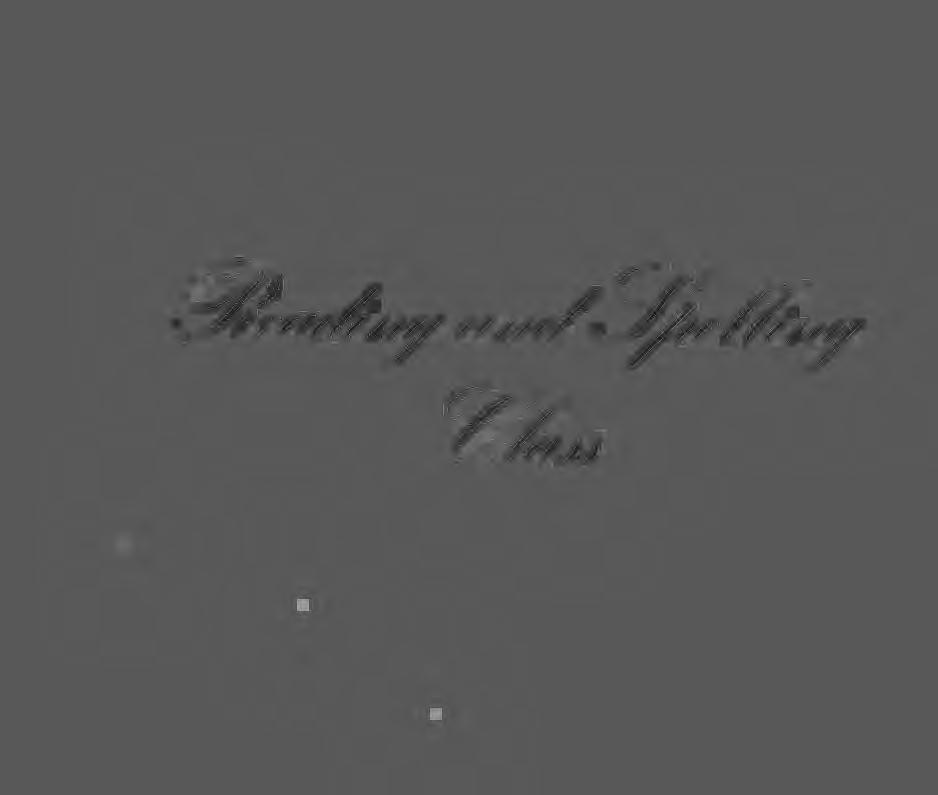
Mrs . Livengood was the teacher! The class was Reading and Spelling , and the intention was to learn good reading and spelling skills . She adored both , and was a great teacher of it. The class was Seventh Period, last class of the day. One November day was very dark and rainy and cold outside, and we were all so dry and warm and safe , that it felt very intimate ; I had a wonderful feeling of centeredness, that All is As it Should be. I will always remember the utter completeness of the moment.
Although a lot of the class was about Reading with rapidity , I preferred the part about Spelling. I remember Mrs. Livengood talking about double R ' s , and saying , "You will be embarrassed if you misspell 'embarrass ' ''. She rolled her r ' s as she said it; she liked to be dramatic and funny.








The first time I got into trouble was in the third grade. Stan Borish was chasing me down the hall right before school started. It must have been a Wednesday because the Upper School was coming down the hall for Chapel. I ran right smack into Mrs. Livengood! She sent both Stan and me to the principal's office. I was very scared, and wondered what terrible plight may befall us there. Mr. Dickson came in and gave us some line about the best way to stay out of trouble was not to disobey the rules in the first place. That advice sounded too easy to be profound to me at that time.
In the seventh grade, passing notes was very big. One day in seventh grade study hall (we had it in the classroom, not the library), instead of passing my note, I thought I would deliver it. So I slid off my chair, and was somehow able to crawl half way across the room, across about four rows of desks, without being detected by whoever was sitting at the front supervising us. When I had accomplished this, I wondered how I would get back to my seat, and then saw the folly of the whole endeavor. I hope I stood up and walked back, but now I don't remember.
In eighth grade drama class, we would read plays out loud with Mrs. Miller as the teacher. One day I was goofmg off in the back with my friend, and we got to laughing, and she asked me to read her part because she said she was laughing too hard. So she pointed to a place and said, 'Read here.' I started reading the part out loud, but everyone in the class turned around to stare at me. I wondered why, and finally someone said that I was reading from the wrong place!
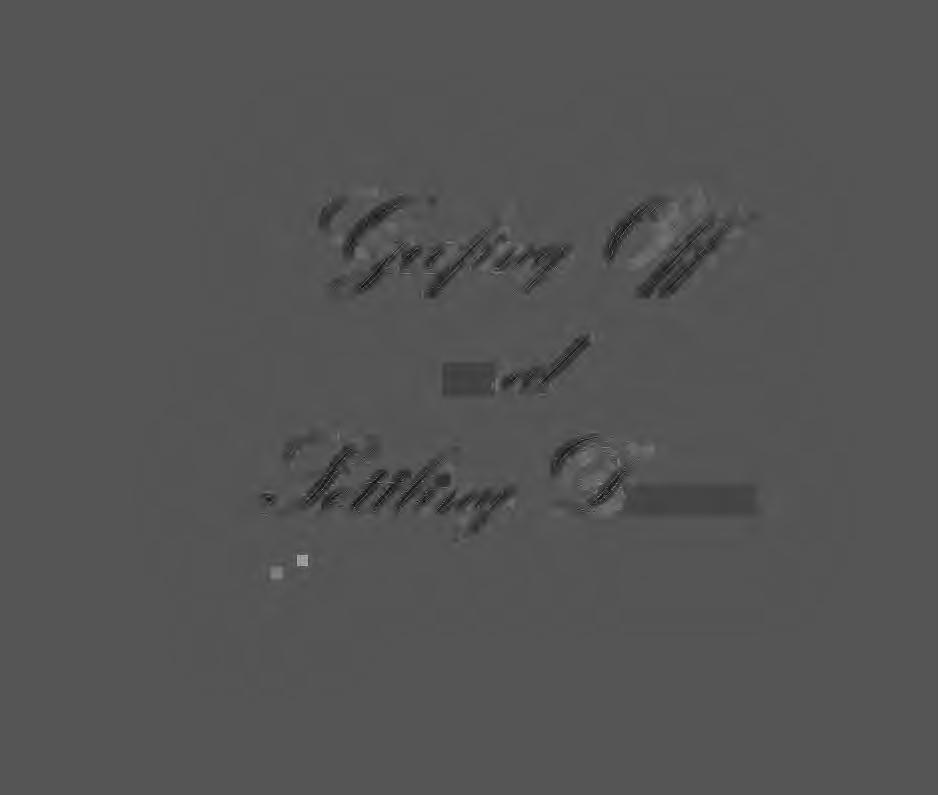
Feeling duped, I took a long look at Goofing Off, and how it made me look not only to my teachers, but to my peers, and so I gave serious thought to Settling Down.




Margaret McCall was a phenomenon. How could anyone know so much about a dead language, and the culture that accompanied it 2,000 years ago! And now I learn from the recent history, The Bush School; The First 75 Years, that, "Over the next twenty-seven years, she taught English, science, mathematics, current events, and the school' s first study of atomic energy. However, she is remembered by most as the Latin teacher."
On the first day of class in the eighth grade I was lured into the fascination of etymology by learning that agricola was the word for 'farmer' in Latin. "Hmmm, 'Agriculture'," I thought. Like learning to read, I was ready for more the next day, and never looked back.
Reading the literature of the ancient Romans in their original language was a privilege and an honor. Virgil's description of the beauty of the Elysian Fields when Aeneas goes to visit his father in the Underworld is one of the most beautiful passages of literature that I have ever read. And to translate it from Latin oneself is a privileged and rewarding exercise.
Marshal's epigrams were a lot of fun, because they were easy to translate (only 2 lines each), and they were usually a joke. There was one about a man who didn't dine out much, but it was really a reference to his being frugal: if he wasn't invited out, he didn't eat! It was amazing to think of people cracking jokes 2,000 years ago, and our being able to read and comprehend them.
Also mentionable is the amazing economy of Latin; the same words meaning different things based on their placement in the sentence. Mrs. McCall's favorite example of this was 'Malo malo malo malo,' which means, 'I'd rather be an apple tree/ Than a bad man in adversity'.
The other thing that Latin did for me was immediately to clarify English grammar. One cannot understand a grammatical component in Latin if one does not understand its function in English! If only I had a nickel for every time I have answered the question, 'How have you done so well in foreign languages?' [French, Spanish, a little German, and a sukoshi Japanese]. My response has been, '4 years of Latin'. Truth to tell, I love to talk to people, bother them, get their attention , and learn from them; so in this effort, no hurdle seems too great.
Gair Hemphill and I had Mrs. McCall all to ourselves for Latin III and IV. When we were Seniors, we each memorized and recited one stanza of a two stanza poem. We recited them on stage at a school performance, all dressed up in cap and gown to resemble Roman Statesmen. I never came across the poem again, and always felt glad that I could remember my stanza ('O Fortuna/Velut luna/Statu variabilis/Semper crescit/Aut descrescit/Vita detestabilis./Nunc obdurat/Et tune curat/Ludo mentis aciem/Egestatem/ Potestatem/ Dissolvit ut glaciem. '); then not long ago, I picked up a Seattle Symphony program, and there in the text for Carmina Burana was the poem! I wonder if Gair still remembers her verse.
Mrs. McCall said 'Good bye' in a distinctive and wonderful way. We had Latin III and IV in the little alcove adj~cent to the area where we enjoyed Jolly Joe doughnuts on Wednesday mornings. Gair and I would set her up to see how good a 'Good bye' we could get: we would wait until she had started down the hallway, and we would say, "Good bye, Mrs. McCall!" "Guud Biiiii", she would answer.

It was rumored that Mrs. Livengood put Glee Club right across the hall from her office in the AV (audio-visual) Room, so she could hear us sing. [Now it occurs to me that that is where the AV Room was located!] Anyway, Music was Very Serious Business at the Bush School.
By quite lucky happenstance, a wonderful young woman came to us just out of Music School from the University of Washington. Her name was Joan Catoni. Poised, refined, calm, and dignified, she was a wonderful model for the Bush students. Particularly myself, I felt the opposite of all four of these traits. Mrs. Livengood was able to see the quality of her abilities, and Joan was hired for the Fall of 1962

I felt lucky to have her for Eighth Grade Music, and the next year I joined Glee Club, at that point elective, to maintain the experience. A fringe benefit was that all my sisters were in Glee Club too. We were all Altos, except Dee who was a Soprano. That Spring, we sang Benjamin Britten's Te Deum in C. It is a marvelous piece of music, and we performed it on risers in the Gymnasium for an audience of parents and students (it was the Annual Meeting for the Board of Trustees). Miss Catoni selected a Fifth Grader, Jonathan Sobel, to sing the solo. He sang like an angel, and looked like one too. He wore leiderhosen shorts for the performance, as I recall. I still know every word of this magnificent piece, and when I hear it on the radio (only a few times now, over the last 44 years), I stop whatever I am doing to listen . Susan Youell found a recording somewhere, so I have not been entirely bereft.
We also performed Buxtehude's Magnificat Anima Mea,· A Ceremony of Carols, also by Benjamin Britten; we did a collaboration with the Lakeside Glee Club under the direction of Peter Siebert, performing Vivaldi's Gloria; we sang a poem by Gerard Manley Hopkins, entitled "Heaven Haven". We sang How Lovely is thy Dwelling Place in both English and German. When I attended a memorial concert in the early '80's in honor of our Seattle Symphony conductor, Rainier Meidel, who died very young of cancer, this work was among the pieces played. The man behind me burst out crying when it started, because the song is all about Heaven; people around him looked at him strangely because they didn't know what he was responding to, but I knew exactly.
We sang a bizarre composition called Uber Allen Gipfeln. I believe it was a world premiere performance. The composer came for the occasion from out of town, and the Glee Club invited him out on apicnic; he pitched the baseball behind him (he was pitching underhand, and he didn't let go of the ball soon enough)! He was obviously a better composer than baseball player, and we all went into stitches about that, although we tried to keep a straight face in front of him . I believe we were out at Carkeek Park. Madrigals was separate from Glee Club, and met Wednesdays after school. Those were also wonderful songs, and there were some good voices in the group .
Every year at graduation, the Glee Club sang Panis Angelicus . Since we performed it every year, diction, timing, and crescendo were executed with Rocket Science precision. "Panis angelicus/Fit panis hominum/Dat panis coelicus/ Figuris terminum/O res mirabilis/Man ducat Dominum/ Pauper, pauper/Servus et humilis.
Joan departed the school in the Spring of 1966, when she was lured back to the Music School at the University. She took a doctorate in Choral Conducting, taught in the Music School for some time, and is now at the University of Colorado in Boulder. She spent two years in India studying ancient Indian music. She has recently been invited with her choral group there to perform next Spring in China!
We were of course very lucky to have her.



The first poem I memorized was Barbara Frietchie, by John Greenleaf Whittier. It begins, 'Up from the meadows rich with corn/ Clear in the cool September morn/The clustered spires of Frederick stand/Green-walled by the hills of Maryland/ ... ' It is about the Civil War and commemorates a deed of patriotism for the Union. I liked the cadence of it, and I believe I was in the Fifth Grade when I memorized it.
I also liked the rhythm of John Masefield, and dappled with Sea Fever, and 0 Captain, My Captain, in about the Seventh Grade.
Mrs. Welgan in Ninth Grade was the first teacher to have us memorize a passage from Shakespeare. Lucky me, I had already been my sister Dee's prompter 2 years before (I got to sit on her chaise and act like God, because I had the script), polished up on my sister Helen the next year, so with a little dusting off of the commas, I was all ready to reel off Shakespeare's Julius Caesar: "Wherefore rejoice? What conquest brings he home?/ What tributaries follow him to Rome to grace in captive bond his chariot wheels? ... " This is a speech by Marullus chastising the Commoners for heralding Caesar, in defeat of their recent hero Pompey; it is about loyalty vs. fickleness.
The next year we read The Merchant of Venice with Marjorie Grove, and I memorized both "The quality of mercy is not strained/It droppeth as the gentle rain from Heaven upon the place beneath/It is twice blessed ... "; and "Senior Antonio, many a time and oft in the Rialto/ Hath you rated me about my moneys and my usances/Still have I borne it with a patient shrug/For suffrance is the badge of all our Tribe/You call me misbeliever, cutthroat, dog/And spat upon my Jewish gabardine/And all for use of that which is mine own ... "; also "To bait fish withal/ ... Hath not a Jew eyes, hath not a Jew hands ... ?/If you poke us, do we not bleed? ... ", Shylock's speech about how the Jews were berated for being money lenders, and were not treated by the Christians as the Christians treated themselves. Marvelous words to describe the human capability to discriminate against another race or culture .
I saw Mrs. Welgan last May for the first time since High School. When I assumed she had left school to retire, she went on with a few other educators to found another private school in Seattle called University Preparatory Academy. In our recent encounter, she brought up her "Five Paragraph Essay", and I reminded her of its byline, "A Five Paragraph Essay is like a lady's skirt: short enough to be interesting, but long enough to cover the subject." I have been carrying that for all these years, and she had forgotten it!



As I said to a woman I met in Paris last year in a restaurant, who introduced herself to me as a friend of Marjorie, I remarked [all apologies to my mother], 'She is the reason I am smart'. She taught us to think, to learn, and to write; exactly, precisely, and correctly. She was a phenomenon for stretching one's intellect, and capabilities. 'Anything is possible, there is nothing you cannot achieve; only you have to work at it, and usually very very hard. So put your excuses aside, there is a lot to learn, and the time to do it is now.'
She receives mention in The Bush School; The First 75 Years as early as page 9. The author describes the book's copy editor as being scrupulous, with the added compliment, " ... of whom even Miss Grove would approve." Such was her reputation for attention to detail of every aspect of English grammar and syntax, of which we had no idea there were so many, until we landed in her classroom.
We read, besides Shakespeare's The Merchant of Venice, Silas Marner, by George Eliot, The House of Mirth, by Edith Wharton, The Song of Roland, and Charles Dickens' A Tale of Two Cities, and many wonderful poems from Louis Untermeyer's edited The Book of Living Verse,· I recall the works of William Blake, Andrew Marvel, John Keats, and T.S. Eliot from that book.
I stretched my imagination to further dimensions of Life's comprehensibilities, learned to take a quantum leap, and, again, never looked back.
After Bush, Miss Grove continued her teaching career at the University of Washington. She taught at the Center for Capable Youth, a division of the University where very bright high school students were able to start the University while they were still of high school age. What a marvelous fit for an exceptional teacher to be paired with exceptional students.
I see her now from time to time. Her house is only about 10 blocks south of the cemetery where my sister and now my mother are buried. Last time I visited the cemetery, Miss Grove was mowing her lawn as I drove by, and so I stopped and had a quick visit.






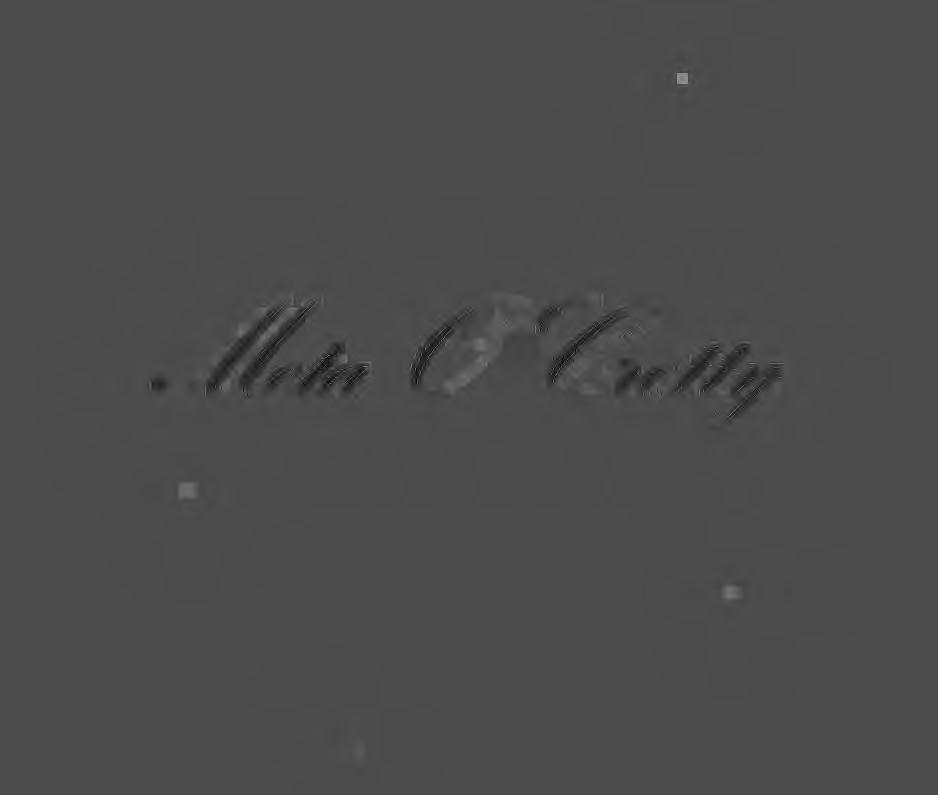

The Wonder of Literature and Words , and the Amazement of Ourselves. At her memorial service at the school , I spoke of the vocabulary lessons she gave from words we had read in our assignments; marvelous words which we learned to know , to use , and to spell: words like adjacent , avariciou s, precarious, and misanthrop e; delicious words to use and enjoy.
In the Seventh Grade we read Daniel Defoe's Robinson Crusoe , Robert Louis Stevenson ' s Treasure Island, and Chaucher ' s Canterbury Tales, which is written in dialogue form, and we read out loud in class. We also worked all year with Warriner ' s Englis h Grammar and Composition , a clear and concise hand book about the mechanics of the English language, and S.I. Hayakawa's Language in Thought and Action , about the use and philology of language . I was much more comfortable with the mechanics than I was with the philology of language! Mrs. O ' Crotty was forever referring to Hayakawa, and his text was her Bible . Again with Mrs . O'Crotty in the Eleventh Grade, we read The Mill on the Floss , also by George Eliot , and Doestoyevsky's Brothers Karamazov. A very favorite of hers for reading out loud, besides Charlotte 's Web , was The Sword in the Stone, a part of The Once and Future King, by E.B. White. Her favorite part was reading to us about young Arthur's adventures , learning at the side of his tutor , the magician Merlyn, and the wonderful influence he made on Arthur's young life. Now I think she was thinking of her students and herself.

Dorothy Miller, the Drama teacher , was a dream. An unusual dream , but nonetheless , a dream: willing to inspire the love of Theatre in the most hopeless of us heathens, she succeeded. Slipping in a day of spring skiing at Crystal Mountain before an afternoon rehearsal for the Senior play, she gave her own theatrical production in chewing me out for being 20 minutes late , and how many minutes that was multiplied by everyone' s time , and I am not the only person to be considered, and so on; although it was a great day on the hill, I got the message. Although at 50 years of age, I am still sometimes late , I have only to hearken to Mrs. Miller's lecture to understand Why I Shouldn't Be.
Going backwards , I was the Cowardly Lion in the Senior play , The Wiz ard of Oz; Charles the Wrestler in A Midsummer Night 's Dream in the Ninth Grade; and the Judge in The Devil and Daniel Webster in the Eighth. The latter play was performed in Reed Hall , and was slightly dry , as I recall . My lines ran, "Motion denied." " Motion abstained." " Motion denied ." But things really picked up when our tiny classmate Kate Burleson disappeared in the middle of delivering her lines; the last we saw of her was the bottoms of her feet! She had fallen over backwards off the piano bench which was on top of the risers! She reappeared from somewhere , some time later, and so the play continued. Random laughter from both sides of the 'foot lights ' for the rest of the play probably improved the quality of the production.


Although the younger grades were much about rubber balls, my first real love in sports was baseball. I think we started playing it in about the Fourth Grade. I truly enjoy the theatre of it, and how connected to the forefront anyone may become at any given time , if the ball suddenly comes anywhere near one ' s bailiwick. And I must mention the satisfying and gratifying smack of the ball meeting the bat. Although never a great player, I had enormous enthusiasm for the game and my team. ,.,.
Volleyball was ubiquitous throughout the years of upper school gym class . It is a great game for team spirit and camaraderie . No one could serve like Rody Lea ; it was forceful , deep , and consistent. She could sometimes ace a game for her team! She served overhand .
I enjoyed basketball for the energy of it , but I seemed not to understand the rules, because I remember Marianne Bailey as referee fouling me out so many times , I had to leave the game. Being a year behind me , she was embarrassed, and felt bad about having to throw me out of the game.
I wasn't wild about Calisthenics , and Exercises ; but I will always associate them with Mrs. McNutt, who felt that these exercises were Important for Us to Know.










Assembly was the vehicle by which the whole upper school could get together for any school business or presentation , or to hear any speakers from outside the school. I believe it replaced 4th period on Fridays , and was right before lunch. Assemblies were varied and usually very interesting. The offerings included speakers, movies , slide presentations , or sometimes it was a vehicle for school administrative business , like graduation marching practice, or any large subject which needed presenting or discussing. Chapel was Wednesday morning at the beginning of school. Uniform jackets were required (we usually lounged in our school sweaters the rest of the time) , and tardiness was not tolerated.
Variety of spiritual representation was the norm. My favorite speaker, who returned almost every year, was Rabbi Jacob Singer. I liked him because he was very handsome, and very very bright. He was also an engaging speaker, and enjoyed talking about William Shakespeare. He came from Temple De Hirsch, very near to the school. This was the temple to which the Topp family belonged. Cindy was in my class , and I used to like to interview her more about him. He moved to a new temple in Mercer Island, and died very young, of cancer. It was a great loss to our city, and the world.
The Seniors used to introduce the speakers , probably as a way to begin the sometimes bumpy road of public speaking. One Wednesday morning it was my sister Chi-Chi ' s tum to introduce the speaker. She had memorized her introduction, but the speaker at the last minute was unable to appear. I saw her in the hall , and she was practicing to introduce the substitute speaker, Reverend Harold Actopiss, the bus driver , without l aughing!

Everywhere.
I think of Mrs. Ostrom in her Business Office. Immaculate; as neat as a stage set. Mr. Kearney, 900 years old for all 12 years I was at the school, kept the whole facility working with, seemingly, only a hammer, a wrench, and a pair of pliers. His 'office' was a wonderful little underground room off Harrison Street, also neat as a pin . In my mnemonic wanderings of the hallways, the linoleum floors were always clean, and 'magically' waxed fresh of a Monday morning and we never had to hear the waxing machine. Between home and school, I never saw a dust ball in my life until I rented a house in Madison Park with Mary Youell at the age of 21, and found out that houses don't clean themselves up!
Before I close, let me conjure the smell of fresh cut grass in the springtime in the courtyard. That was Mr. Simpson with the lawn mower. That scent is still a joy to me.






My father woke us up every morning by standing at the head of the hallway, and whistling as a wake-up call. He would keep whistling until someone answered him that we were awake. When we were younger, this was at 7:00 A.M., but as we got older, and wanted our sleep, we negotiated him up to 7:30.
At 8:00 every morning, Ethel would have our breakfast ready. This was on time and without fail. Fresh fruit would be sitting at our place when we arrived at the dining room table, and when we had eaten that, we would take our plate to the kitchen, and Ethel would prepare a plate with eggs, bacon and toast, or whatever she was serving.
Although she had only been educated through the Eighth Grade, Ethel was very committed to our education. At the time of fmal examinations in the springtime, she would serve fried smelt for breakfast, because she said, fish is good food for the brain.
Let's see, over the 16 academic years, from 1951 through 1967, at 180 days per school year, that makes 2,880 breakfasts, and an even 20,000 servings! I list these statistics here because her steadfastness and commitment to her part of our education was part of our experience. Ethel is still a part of our family, and I hope she will enjoy this acknowledgment.
At 8:30 every morning, our father would drive us to school, and drop us off, on his way to work. School began at 8:40 in the Lower School, and 8:45 in the Upper School, and this is the pattern we followed for years and years.
When I was younger, I used to like to get my hair braided for school, but it was problematic. Ethel didn't get finished serving breakfast until about 8:20 or 8:25; after breakfast I would run upstairs and brush my teeth, get my coat, and get back down to the kitchen with my comb and brush. If everyone got out to the car and it was time to go and someone was late, my father would honk the horn, and that person being honked for would certainly hustle. But there I would be in the kitchen getting my hair braided, which seemed to take a long time, particularly with the horn honking. I didn't get my hair braided too often, but I thought it was worth it.



Christmas Plays, Thanksgiving Assemblies, Dads' Night, Book Night, all wonderful, all special, each individually planned, each class participating in its own way. Everyone working and participating together to make the Whole. Oftentimes the celebrations were just at the beginning of a vacation, and so they felt even more special. My father brought his parents, my grandparents, to the Senior play, and Mrs. Livengood stood up when she saw them come in, and put 3 chairs in front of the front row. I happened to be watching from backstage to see it happen. My mother, arriving later, stood in the back row next to Tom Youell (Mary was the star, Dorothy), and wept. I will close with Graduation. The Lower School had Graduation every year. My mother always sent my sisters and me in white organdy dresses. Auld Lange Syne was sung every year. Each class would participate separately, usually with singing. Graduation was in Reed Hall.
Upper School Graduation was in the Courtyard, weather permitting; otherwise in the Gymnasium. Most times it was outside. One year I remember that graduation was delayed because the weather became inclement; Mr. Kearney and Mr. Simpson had to move all the chairs from the Courtyard into the Gym.
When it was time to graduate, my class chose me to be Class Speaker. I talked about how wonderful and safe and caring and enriching it had been to be educated at the Bush School; and what a wonderful job Marjorie Livengood had done in running the school.
Sis Pease helped me prepare my speech. She felt I should be able to deliver it from notes, even though Mrs. Livengood's tradition was for the student to memorize her speech, and deliver it without notes. I had a lot of fun working with Sis on that project, as she loved Marjorie as well, and understood what I was trying to say. My mother told me that she overheard a man near her say after my speech, 'I'd hate to have to follow her.'




The frosting on the cake of this remarkable education was the opening up of Marjorie Livengood as a warm and personable human being. One day we happened to be walking down the hall at the same time, and she showed me a rock through the window in the garden which she told me the Board of Trustees had placed there with a bronze marker on it saying 'Archie Chandler', in honor of her father who had died. I felt very honored that she had shared this with me.
I think that when my sister Helen died, she was broken hearted, to the point that she couldn't even come to our house to call. She sent Dr. Norris, the Biology and Chemistry teacher in her place. I remember sitting on the living room sofa in my sister Chi- Chi's lap with a cast on my leg. Dee was there too, and although it felt a touch stiff, I think we all had a nice visit. After that, Mrs. Livengood had no barriers with me. My brother had started at Bush three years after she arrived, and she and I departed together. She had watched all my family grow up. My parents were all responsibility about presenting us, and she was all responsibility about receiving us, and preparing us for the wonders and possibilities of the world around us which we would inherit upon maturity. I wonder, is this a plausible definition of Education?
A school such as Bush is its Faculty. I had wonderful gym teachers, art teachers, math and history teachers whom I have not mentioned. Emily Morse, another recognized local artist, in Art; Florence Halegua and Miss Van Bibber in Algebra; Mary Campbell in Geometry; Madame Harberts in French; Elizabeth Kennan and Sis Pease who both taught History with a flair; and Mary Bonamy gave us a good tour of Greek Mythology, with the text of Edith Hamilton. Although the school had only one scholarship student at a time, and one foreign exchange student per year, the diversity we experienced was also within the Faculty.
Although almost anyone could say it because it was their time, mine was a great time to be at Bush. I stay away from the school now because I see how much Life there is to be lived; but I also see by writing this piece that the school is very much a part of me, and I a part of it. And so a quiet symbiosis is identified and acknowledged at this particular moment in time.



I see that the educational experiences I had at the Bush School have strongly influenced my intellectual life.
My books are my tools, my trade is ideas; the discovery, the nurturing, and the investigation of ideas all thrill me, and I am able to do it, I feel, because I have been given the confidence to believe in myself and my capabilities.
A Bush education is a jewel with which one may live every day of one's life, without fear of losing. We may appear slightly precocious at times, but that is because we are not afraid to speak up, even if our thoughts are different from the crowd's. Who is to say why this particular chemistry is so. I do not venture a guess, as I have little to compare it to, since Bush is the only college preparatory school I know. I only feel gratitude on a regular basis that this is the experience I had.
Virginia Wyman July, 2000