
fifty Years
The Bush School


The Bush home at I 33 Dorffel Drive, Seattle.

BACKGROUND TO THE HISTORY OF THE BUSH SCHOOL
This history began in 1968 as a project of Denise Farwell and Margaret McCall. After contacting alumnae and friends, they enlisted the aid of Dorothy Miller and a group of students headed by Maren Ericksen and Vinny Dunn. Many others contributed to the work of this first group . . Unfortunately, illness prevented Mrs . Farwell from completing the project. Mrs. Miller died and the history drifted through the hands of several people until the fall of 1974.
This previous work has been the inspiration for the completed project. Mrs. McCall has been most generous in helping with her own memories and suggestions. There are few written records of the school prior to the 1949 fire. Alumnae, parents, students, board members, faculty and neighbors have been most patient and helpful in answering questions. We particularly appreciate the assistance of Marjorie Chandler Livengood, Mary H. Pease, Eleanor Bush Drew, Kenyon T . Bush, William W. Hoppin, Jr., Jane Baxter, Gen. Coburn Smith, Gregg Deering and Terry L. Egnor (photography), and the support of Leslie I. Larsen, Jr.
Our own connection with Bush is recent. We have relied on interviews, personal reports, newspapers, Ramblers, Tykoes, the minutes of the Board of Trustees and the Mothers Club, and letters. This material concerns the delicate memories of many childhoods. Because what we say may not be exactly what you remember does not make your memory invalid .
Susan T. Egnor
Helen L. Runstein, Editor




INTRODUCTION
In 1924, Helen Taylor Bush began a school in the playroom of her Denny Blaine Park home in Seattle. She was 44 years old and had a long-standing interest in children and education. During her lifetime, her school became an outstanding example of progressive education in the Northwest and is today an ongoing tribute to the beliefs and vision of its founder.
Guided by Helen Bush's vision, Marjorie Chandler Livengood became principal in 1948. During her 19-year career as principal, she had not only carried on Mrs . Bush's vision, she had also developed the school into a complex organization of students, faculty, and alumnae, a symbol of quality education.
In 1967 Helen Bush/Parkside appointed its first headmaster, John B. Grant, Jr. In 1972 John Grant was replaced by Leslie I. Larsen, Jr. Mr. Larsen's administration is guiding the school in its stimulating involvement with the community while enhancing the school's traditional combined focus: academic excellence and individual growth.
OPENING A SCHOOL
Born August 20, 1880, Helen Taylor grew up in Bloomington, Illinois, the daughter of Dr. James Branch Taylor, descendant of an early Virginia family related to George Washington. She graduated Phi Beta Kappa from the University of Illinois. A post-graduation trip to Denver introduced her to another recent Illinois graduate, John K . Bush whom she married in the Presbyterian Church in Bloomington, October 11, 1908. They lived first in Joliette, Illinois. Eleanor, their first child was born in 1909. In 1912 they came to Seattle, where John Bush was the Head Cashier for the American Bank and Trust Company. In 1916 they bought a large house in the Denny Blaine section of Seattle's east side at 133 Dorfel Drive. Their son, Kenyon, was born shortly after this move.
Helen Bush continued her interest in education and the natural sciences as she raised her family, participated in Audubon Society expeditions and developed a thriving garden. A neighbor describes her as modest about her own abilities and achievements.
At one point, she was called to the principal's office at young Kenyon's school as a result of some mischief on the boy's part. Described as a somewhat stuffy sort, the principal had a Phi Beta Kappa key on his watch chain which he twirled as he said, "I don't suppose you know what this is?"


"Oh, ye s , I do," s aid Helen Bu sh in her soft voice , "but I keep mine home in m y dre ss er drawer.''
Circum s tance s in the Bu sh family combined to pu sh her into developing her own potential, in s ome way s, much a s s he later urged her student s to do.
John Bu s h s uddenly lo st mo st of hi s hearing. Kenyon Bu s h remembers hi s father wa s given s ix month s to live . He and hi s s is ter s tayed with neighbor s while hi s parent s went to the already famou s Mayo Clinic in Rochester, Minne sota. The original diagno s is proved entirely wrong. John Bu sh never did regain hi s hearing, but he lived to become an active participant in the tran s formation of hi s home and hi s wife' s life. He wa s a man of great, if subtle humor and man y abilitie s which he contributed to the new venture.
Helen Bu s h' s neighbor s had long noticed that she wa s one of tho se people who "have a way with children. " Children liked being around her, perhap s bec a u se the y were never bored but rather con stantly s timulated , made welcome and made aware of the world around them . Her ne x t door neighbor, Ward Beecher (a grand son of Henr y Ward Beecher, the great abolitioni st), c redit s Helen Bu sh w ith hi s life-long intere s t in bird-watching, even though he onl y went to the s chool it self a s a kindergartener. "When you were with Mr s . Bu s h , you were in school. She would explain about natural thing s. She made you look and realize the order of thing s in nature, the kind s of bird s, the virtue s of bug s .''
There wer e no independent sc hool s nearby for young children . When John Bu s h had to give up banking , Helen Bu sh li stened to her neighbors who had young children and who were searching for a forward-looking education a l e xperience for their c hildr e n .
The fir s t cla ss room wa s the fir st floor pla yroom. The fir s t teacher was Mr s. Bu sh. Si x bo ys a nd girl s , some only 4 year s old, came to the opening of "school. " Two of tho se fir st s ix stayed on to become member s of the first high school graduating c la ss in 1935: Ro semar y O s trander and Phylli s Ros s . Th e ex traordinar y development of the school which the y e x perien ced has continued a nd still provide s innovative education for s tudent s in 1975 .
CURRICULUM
Helen Bu sh made s cience the foundation of the school's intellectual structure . 1 The 1928 catalog say s,
Nature study mak es a univer sal appeal to children . They enter 4


Bobby Arnold in 1936 picked up baby "Admiral Byrd" on the way to school - and his classmates adopted the abandoned bird. Robert Morris Arnold today is the husband of Nancy Tarbuck ('61).
school equipped with an inquisitive intelligence, and the objects of their keenest interest are people, animals, plants, with their relationships .... They learn to observe, to make their own deductions and to appreciate some of the wonders of nature - in other words, they create their own world upon the foundation of laws and truths of the universe.
A member of that first kindergarten class, Phyllis Ross Waller recalls that Eleanor Goff took classes up the street to the fountain pond at Denny Blaine Lake Park for study.
In addition to emphasis on science, experiences in the fine arts were an important part of Helen Bush's "enrichment" program. She searched for talented artists and performers who could also be teachers "with a way with children." After school came dancing, for many years with Virginia Nachant, an alumna of the Cornish School. Helen Bush believed in giving each child opportunities for self-expression in all media to develop the full range of his or her abilities.
Mrs. Bush's emphasis on such non-traditional aspects of her curriculum 5'


raised the eyebrows of some more conservative members of society. She promoted child-centered education, not social "finishing . " Billie Sloan Neill declared, "I was in the third graduating class of the Helen Bush School. In those days Bush was the greatest thing that could have happened to a child. We used to study the Daily Worker in school. I was always bringing home socialist agitators to meet my father." 2
As the school enlarged, Helen Bush continued to teach algebra, trigonometry and science. Although she disapproved of standardized competitive testing, she felt obligated to do her best to insure her students did well on College Board examinations. She herself conducted a "famous" review of mathematics for seniors, even when convalescing from a hospital stay in 1947. After her death, the school's curriculum retained its emphasis on the humanities and the fine arts, with natural sciences getting special attention in the lower grades.
In May, 1962, the Pacific Northwest Association of Independent Schools conducted one of its periodic evaluations of Helen Bush/Parkside. While recommending various procedural refinements, the committee concluded, '' It was quite evident that the basic philosophy of the founder of the school, 'that education should be stimulating, ''fun'',' was being achieved.''
In meeting concerns of the late 1950' s for better science and mathematics programs, Bush adopted the School Mathematics Study Guide in 1959. Year by year, the series and later refinements were introduced in the higher grades . Mathematics department chairman Mary Campbell had done experimental graduate work in commutative properties of numbers and was well prepared to work with the "new" system. She says new math "uses ideas that good math teachers have always presented. It provides more variety and fun for the average student." In 1970, the Mothers Club gave a boost to the advanced math program by purchasing a set of WANG calculators. These "mini-computers" permitted students to perform computations quickly, freeing them to pursue more advanced mathematical studies in high school.
The Mothers Club also supported the addition of physics to the curriculum. Some faculty and Board members argued that Bush should continue the more traditional emphasis on humanities and fine arts. Extensive discussions during the mid-sixties concluded that the addition of physics would not dilute the tradition but would, in fact, enrich the curriculum. As a measure of its "enthusiastic support for the physics program , " the Mothers Club donated $3000 for equipment to implement the program. 3 The Mothers Club had also encouraged an expanded science

program in the lower grades by donating a portable science table and other equipment which permitted more varied demonstrations and experiments.
The ongoing debate on reading instruction ("look-see" vs. phonics) yielded new programs with impressive results. In 1964, Parkside was the first school on the West Coast to use the Initial Teaching Alphabet (ITA) which has one symbol for every English sound. The students at Parkside improved significantly in word recognition and creative compositionthey would write stories as soon as they learned the alphabet. In January 1965, the school held an ITA workshop for Northwest area schools . As experience with IT A increased, however, it was found that "nobody could spell," as Mrs . Livengood put it. With further research, the program evolved into the linguistics approach now used.
Independent Study
In 1967 John Grant announced the Independent Study program for the last six weeks of the senior year. Seniors may choose independent work and substitute it for a class related to the topic. Projects have included everything from the fine arts, through flying, to zoology, often with a Bush faculty member as advisor.
PNAIS Evaluation
In 1969, a fifteen-member committee from the PNAIS conducted a threeday evaluation of Helen Bush / Parkside. The school continues to use as guidelines long-range suggestions from the evaluation report: direct administration of the lower school, with attention to particular needs of elementary children and more recent developments in education; greater unity of purpose and contact between division faculties; a K-12 approach to learning, along with more advanced science and mathematics, more independent study, higher teachers' salaries, more scholarships and an endowment fund .
In 1969, Parkside acquired its first director since 1964 - and the first in memory not burdened with a full teaching load. Before Elsa McPhee Bowman (' 51 ') came to the position, Parkside had been run by an administrative assistant and, at a distance, by the head of the school. A Phi Beta Kappa graduate of Pomona with an M.A. from Yale, Mrs. Bowman planned with her faculty to strengthen the Parkside program.
Pre-school Director Margaret Beyer had already developed a mixed-age learning program for nursery thr:qugh second grade which began that fall. This "new" approach echoed Helen Bush's view of education as an ongoing process related to the real world as much as possible. Her first class



Elsa McPhee Bowman, Head of Lower School, and students.
had four, five and six-year-olds learning together. Mrs. Beyer's program evolved into an integrated day primary class . Developed on the British "Leicestershire" open-classroom model, the program currently has 45 firstand-second graders with three teachers in one large room. It is always a bright, exciting place, as children move from making pickles, perhaps, to quiet reading in a loft, to exploring mathematics games.
In 1973, Leslie Larsen opened the city as a classroom with two urban programs. Students may submerge themselves totally for a trimester in a working situation in the city to learn about a job or profession; or, as urban interns, they may carry a modified class load over a longer period and still gain working experience.
Another addition to the curriculum which makes the world a classroom is the Wilderness Program under Rob Corkran. Begun as a "mini-course" in hiking and camping in 1972, the expanded program has had an enthusiastic response from students and faculty . Bush has become a wilderness library center for the Seattle area. Wilderness experiences range from geological and botanical exploration to rock and mountain climbing, cross-country skiing and survival on one's own resources.
In 1973, the school installed a computer terminal on a time-sharing basis with Seattle Pacific College and added BASIC, a computer language, to the curriculum . The computer allows students to develop individually in many



directions. One student works so effectively with the computer that he has developed special programs now used by the French department, 6th grade geology, and population dynamics students.
Since 1971, modular scheduling in the upper school has allowed teachers to have students for varying periods of time on different days, thus adding more flexibility to the school program.
THE TEACHERS
Helen Bush was especially gifted in choosing - finding - for her school many superior educators. "The most important factor in any school is the TEACHER," Helen Bush insisted.
The first requisite of creative education is a real teacher. She must know when to furnish a stimulus, when and how to obliterate herself while the child forges ahead. She must have understanding, personality, character. Without her, any amount of equipment is dead. 4
She interviewed prospective faculty members very carefully, of course. Marjorie Livengood recalls overhearing from her office next door as Mrs. Bush asked the crucial questions: "Do you like children?" No applicant ever said no. "Well, then, do children like you?" Those who searched for an answer did not find a job. Some applicants so impressed Mrs . Bush she hired them even when the right job was already filled.


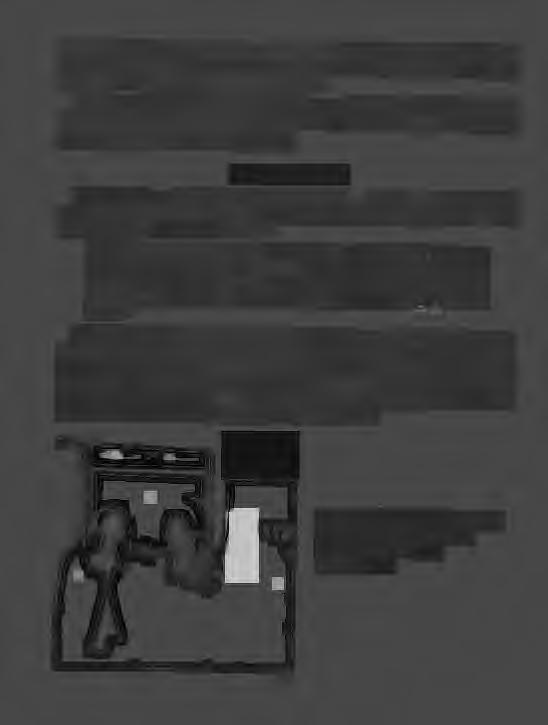
Margaret McCall with History Committee Co-Chainnen
Maren Ericksen and Vinny Dunn

Margaret McCall was one of the se. Although she had been a high school principal, at Helen Bu s h Mrs . McCall first taught basketball and such to Park si der s in 1943. Then one winter day the third grade teacher quit and Mrs. Bu sh called Mr s. McCall up from the gym to take over the class. When she retired in 1970 , Margaret McCall had also taught fifth grade, English, sc ience, mathematic s, current events, and especially Latin. Her Latin classes were s pecial occa si on s. Student s serenaded her at home with Latin •Christmas carols. Her student s remember her because she made them want to learn, a singular gift. The 1962 Tykoe dedication says, "She still finds time to enjoy our fun as much as we do and her enthusiasm equals our own ." In 1969, the evaluation report of the Pacific Northwest Association of Independent School s pronounced her Latin program "one of the best in the s tate."
Zalia Jenck s Gailey , a young woman with a Yale Ph. D . , was the first chemistry teacher. Life with Dr. Gailey wa s not easy. She was a good teacher, recall s a former student, but she was very demanding.
Betina Coffey Hoyt ('39) remember s her teachers vividly:
Madame Virginia Che ss ex' helping me cram two years of French into one to meet college requirements, Mr s . Elsie Gall's patience with me as an art major in her sc ience class, Bonnie Bird's " This will wake you up" approach to modern dance [her accompanist was John Cage]. One of my favorite faculty member s was Mrs .
Wil Pree Tyler "brought English and thinking alive."








Wil Tyler who brought thinking and English alive simultaneously . .. . Mrs. Bush herself always amazed me by being able to substitute teach almost any class when the occasion demanded.
Other students of the early years remember Wil Pree Tyler. Betty Evans of the class of 1938 attributes her love of English literature to her classes with Mrs . Tyler. Her classes for seniors were really college level courses and paved the way for successful freshman English for many Bush graduates.
One of Mrs. Bush's more unusual finds was William LaGrille. While visiting her brothers in Pacific Grove, California, she noticed a swimming instructor who seemed to have a special rapport with his students. When she learned he was a struggling artist, she hired him. He got off the train in Seattle, recalls Mrs. Livengood, with all his worldly goods in a pillow case. Yet his art classes stimulated students of the late thirties and early forties to great experimentation. His interest in free expression led to younger children throwing paint and clay at the walls . "Works well in clay," said his report cards . The Parkside boys had fun peeking through the art shack's locked doors while professional nude models posed (with Mrs. Bush's permission).
Dorothy Miller and wardrobe mistress Luella Bodman with 2 characters from Moliere: Merrily Hatch and Mattie Robbins.


Denise Farwell, too, Mrs. Bush hired on "intuition." After a year in the pre-school, Mrs . Farwell received funds from Mrs. Bush and Margaret Isaacs, then director of the pre-school, for training in early education at Mills College. The "intuition" was born out as Mrs. Farwell developed an outstanding pre-school - alive with natural science, music, and the joyful stimulation of creativity .
Dorothy Spencer Miller was already in her sixties when she went to work as a receptionist at Bush in 1952 to "fill in some time." Soon she was viceprincipal of the school. She taught journalism, advised the Rambler staff, and later taught speech and drama . As a director, she saw her educational role much along lines Helen Bush would have encouraged.
When we cast our plays, we never ask which girl is the best actress, but which girl needs confidence or will benefit from the experience . .. . Each person has untouched talents that can be developed. Give a girl confidence and these latent talents take over.
Although students selected the plays to be performed, faculty members had the final word. No trivia was to be put on at Helen Bush. "Familiarity with the finest brings great reward. Familiarity with lesser works brings boredom." 5 At the Bush School, great playwrights such as Shakespeare still bring great rewards: in 1974 the sixth graders triumphed in Macbeth and in 1975 the Upper School produced a smashing Midsummer Night's Dream.
From 1949 to 1967 Verna Ostrum was the school's Business Manager. Mrs. Livengood worked very closely with Mrs. Ostrum and the accuracy of their estimates of income and expenses each year amazed the Board of Trustees. With such astute management, the school was able to pay off its 1950 mortgage in less than four years.
In these years Emily Morse taught art at Helen Bush / Parkside. One year, she recalls, the fourth grade boys were fooling around, mushing up paint and feeling pleased with their mischief. They and Mrs. Morse were surprised when their three dimensional "messes" turned out to be quite attractive . She was very supportive of her pupils. Each year students participated in the city-wide high school art exhibition at the Seattle Art Museum . In 1962, when all the schools did a special exhibition for the World's Fair, Mrs. Morse arranged a special show for her students at the Art Museum because she felt their work that year was exceptional.
Meta Johnson O'Crotty is remembered , vividly, by students of the early



fifties and by those who have gone to Bush since 1960 . As Miss Johnson, she brought in local poets to discuss writing. The girls admired her style, still distinctly unique, and appreciated her friendship and understanding. After 8 years off, she returned in 1960 more determined than ever to wake up her students, to get them involved in what was happening. She took her philosophy class to Leavenworth in a Greyhound bus in the middle of winter. She remembers they had to wash their dishes in the shower (they had brought along cheese fondue to the motel) . There was a minimum of philosophy, but the students "allowed me to read to them, at least." A member of the class of 1965 (and other classes) recalls her reading Charlotte 's Web on Fridays, her "Plum Days . " She stays at Bush because "these are the people who can make a difference in this world; and the quality of one's colleagues is outstanding. I can't find that anywhere else."
Victoria Livingston came to Helen Bush in 1957 to teach history and contemporary affairs . The students at the time seemed "extraordinarily unaware" of what was happening in the world around them. She felt an obligation to awaken their interest and awareness and appreciated Mrs . Livengood's policy of classroom freedom for teachers. A woman who greatly enjoys teaching, Mrs. Livingston believed in offering real intellectual stimulus to her students. To some of her students she was a "holy terror"; to others, entertaining and personable; and to all, demanding and memorable. "She pushed us so. She made you think."
Dr. Anna Norris also had high standards and integrity. Often a favorite class advisor, she was an "old school," traditional-style teacher whose warmth and concern for her students were always in evidence. Dr. Norris taught chemistry and biology for fourteen years but her "kindly interest and dignified humor" reached beyond the laboratory to befriend many non-science students as well .
Students also remember warmly staff members who were not teachers, the supporters who kept the whole school going. Berniece Matthews, the school's librarian for twenty-two years, was one of these. Students loved her for her "staunch support" in times of crises and always for her "gay wit.'' She knows who painted the toilet seats with glue one senior sneak, but is n't telling.
Millie Abellera worked in the kitchen for many years, very much her own person, but with a warm heart for favorite students. In 1968 when the school wanted to dispose of some surplus books and equipment, it was to Millie they turned to arrange for various Seattle charities to receive these items.


Beginning in I 947, Frank Pidge drove Bush students to and from school in Bus No. 7. He never had an accident and always took extra care to see that students made the bus, or know why they were missing. Although he had no children of his own, his "family" of Bush children spanned 26 years at his retirement in 1973.
The ladies who sit behind the reception desk at the front door set the tone of the school for visitors and become special friends to many students. Nancy Jackson sat behind the reception desk from 1962 until her retirement in 1968. Vinny Dunn, of the class of 1969, wrote of Mrs. Jackson: "She devoted more than time to her duties as school receptionist. She was a special friend .... She was always there to give me some confidence, or to scold me if I needed it." Mrs. Jackson's death only a few months after her retirement was a great shock to many at the school.
Today, Anita Ostling's unfailing concern for the well-being of the students, unflappable handling of all sorts of crises, as well as her "charm, humor, and sparkle are important ingredients to the success of Bush." 6 No problem is too small for this lady whose special talent is making all feel important.
Through good fortune and determination, Bush has been able to attract many more skilled and dedicated teachers than this history can include. In addition to believing, as Mrs. Bush did, that a good teacher creates outstanding classroom experiences, Leslie Larsen is developing a faculty involved in and committed to the growth of the school and its goals .. The PFSA has aided faculty growth with its support of the faculty professional enrichment program - this year with almost $6000.
THE SCHOOLHOUSES
There were constant changes in the Bush home as the school grew from room to room. Kenyon Bush recalls,
Within a few years, the living room, dining room and den yielded their space to school tables. The front porch was enclosed and the garage was floored and heated for classrooms .... Finally the entire second floor was taken over and the family retreated to the third floor.
When the school outgrew her home, Helen Bush rented the former Lakeside School buildings a few blocks away. She had a number of changes made to allow more light and air to circulate within the school. Lakeside, as 14




landlord , wa s hard put to keep the heating system going . They had constructed the building to be warm, not light and airy . Finally, "by taking off all the regulating device s on the radiators (the children con stantly manipulated them and interfered with the circulation of hot water), the radiator s were set "to keep the place warm enough. 7
With the new facilitie s, Mrs . Bush continued to hold academic cla sses for the upper school (grade s 7-12) in her home in the morning. Afternoons, the girl s went "down the hill" to the new campus, which houses the lower school , for lunch, chemi s tr y and non-academic subjects . The "chemistry shack" wa s a separate building acros s the open court yard from the main ac ademic building . In 1936 , the s chool completed arrangements for purcha sing the property from Lake side and immediately set out to plan the future . Architect John T . Jacob sen made a long-range architectural plan for the school. Hi s plan s generally guided construction project s for the school over the next thirt y- five year s . (In fact , one item on the original pl a ns , the green hou se in the courtyard , has just been installed with a donation from the PFSA .)
The Helen Bush School in 1939, from the corner of Harrison Street and 36th Ave. The building is gone, but the tree , now 3 stories high, has become a favorite play "hide out."



In the beginning students helped with school construction and maintenance projects: they worked with John Bush, chief carpenter, to make simple primary furniture. Phyllis Ross Waller ('35) remembers painting classrooms a pale blue - and the senior bathroom black, Chinese red and gold, the students' choice. Virginia Gall Morrow remembered that on the way back down to the lower school after this project, "some clever person put her foot in a can of paint." 8
In 1947, Gracemont, Mrs. John T . Heffernan's lovely mansion at 36th Avenue and Lake Washington Boulevard, became the dormitory for underclass boarders. On Mrs. Heffernan's death, her family had generously offered the building to Mrs. Bush at a price favorable to the school.
In the spring of 1948, Mrs. Bush reported to the alumnae: Last summer the school added two beautiful first grade rooms, large, colorful, and sunny, with the whole southern wall just glass. Mrs. Mildred Isaacs planned the color combinations . Then this fall we added the lower school gym with ample locker rooms and office space. [The Reed family had donated funds for this building in memory of three Reed children who had been killed in a tragic fire.]
Catastrophe Disarmed
When Mrs. Livengood became principal, all the school's financial arrangements were reviewed. In the fall of 1948, the fire insurance coverage on the main building was increased to $45,000 from $11,000.
Early in the morning of Monday, April 18, 1949, the Bush upper school caught fire and burned. No one was ever sure what caused the fire; speculation has centered on an earthquake a few days before having misaligned the furnace connections. The administrative offices, almost every written record of any kind, the gym, and several classrooms were destroyed. It was the end of spring vacation and no one was in the building at the time. In fact, the first alarm was turned in by a neighbor across the street. He also called Mrs. Livengood who rushed into military fatigues and came down from the Taylor Hall carriage house. The only injury was smoke inhalation by one fireman .
Adjacent to the main building was the Parkside Dormitory , Dorothy Allen Hall . Dormitory manager Mrs. Norah Whiton and her young charges, just returned from vacation, were asleep. As the telephone in the




main office began to short circuit from the heat of the fire, the telephone by "Mrs . Whiton's bed began to buzz, waking her. Realizing what was happening, she got the fifteen pajamaed youngsters out of the building before the firemen even arrived . Although the fire burned fiercely, the firemen had it under control in less than 20 minutes and the children were back in their own beds by 6 a.m. - but who went to sleep?
Mr s. Livengood closed school only for the day of the fire. Students helped clear away enough rubble to lay down planks as paths through the debris to those classrooms that were still usable. Classes resumed, more or less as usual, on Tuesday. For Mrs. Livengood's students in lckPea (Introduction to Current Problems), the fire may have been a blessing. All their term papers had burned along with other papers in the Principal's office. Rather than have them re-written, she gave them grades based on , as she put it, "how they probably would have done" with the benefit of the doubt added.
By summer vacation, contractors had cleared away all the rubble and work was well under way on the new buildings which were finished after Christmas vacation, 1949. A "sneak preview" by Pat Gilbert in the Rambler, December, 1949, described,
. .. an architect's dream of how a school should look in this day and age ... . The rooms are spacious, with much window space ... and nice wide doorways. The library has one whole wall of windows with a high, high ceiling .
At the 1950 Bush Corporation meeting, Board President Harry Henke, Jr., praised Donald Yates' management of the project as building committee chairman. It would have been possible to repair less damaged portions and reconstruct the building. The Trustees felt it much more sensible to raze the unburned portion and start from scratch. Although the insurance policy provided only for replacement and repair, Mr. Yates, Hamilton Rolfe and others persuaded the insurance company to pay the full amount of the policy. In reporting this outcome, Mr. Yates noted, "Such consideration spoke well for the school's standing in the community." 9


In 1954, the school began planning a building to complete those envisaged by Mrs. Bush . It would replace Dorothy Allen Hall which had included the kitchen and dining room as well as the Parkside boarding quarters. The Parkside residence program would be eliminated. The new building was to have a modern kitchen and dining hall, conference, music

and art rooms and a science laboratory. At the 1956 Corporation meeting, a slide presentation of the existing antiquated kitchen and dining facilities was particularly effective in persuading the Corporation to authorize construction . Mrs. Livengood remarked that Elsa Johnson and her staff had performed heroically in preparing 80,000 meals per year under such conditions. Construction was to begin in June, even though in January the money for it was nowhere in sight.
The Board was becoming more sophisticated in financial matters and hired William Speidel as a professional consultant for the Building Fund drive . It was amazingly successful and reflected substantial widespread support for the school. Construction began as scheduled in June. February 24, 1957, just a year after authorizing its construction, the Bush Corporation held its annual meeting in the completed new building.
In June 1961, when it appeared Taylor Hall would not have a full complement of boarders the following year, the school sold that building and purchased a smaller, Spanish-style home across from the upper school to house the remaining upper class boarders. This building has subsequently become the home for the head of the school.
In October, 1965, Mrs. Livengood reviewed the cramped situation in the school itself, partly a result of the expanding science program. In March, 1966, the Board authorized construction of a building in the courtyard to house music, art, and learning activities as well as conference rooms for students and teachers. Completed that fall, the building has brick columns which provide a backdrop for Bush graduation ceremonies. In 1974, the building was dedicated as the Marjorie C. Livengood Learning Center.
In 1968, the school bought the house directly across from its front door, moved the art studios into it, and remodeled the former art studios into a language laboratory and study hall. The school then owned all the property on both sides of 36th Avenue East between East Harrison and East • Republican streets. In 1971, after canvassing the neighbors and finding no objections, the school had the city vacate that portion of the street. With 36th Avenue closed off, there is more "campus" area - the art building lawn has become a favorite warm weather gathering place .
With the decision to remain on the urban site, the school began its continuing effort to raise money to improve the physical plant. In 1971, the Reed Hall ceiling was lowered and the upper level made a bright, airy classroom for the integrated day primary program . In 1972, the Middle School became a separate unit as the kitchen, dining room and business


office were turned into ciassrooms. A physics laboratory was added in the basement. Reed Hall became the lunch room (for simple catered soupsandwich and milk service). Lower school classrooms were enlarged and the courtyard building became a Leaming Center housing the Middle and Lower School libraries and extensive audio-visual equipment. Three studios were added to the art building. In 1973 the computer terminal was installed in a room in the Learning Center.
Another addition has been the much-used Jeri Lee Cunningham House for the Performing Arts . Formerly the Gracemont carriage house, the building was transformed in 1973 into a small theatre through donations to a fund established by Jeri's parents in memory of this member of the class of 1971 who had been Student Body President and active in the dance program and many phases of school life.
As part of the ongoing program to expand athletic facilities, new locker rooms and play space are under construction at the end of Miller Hall next to the gym.
FINANCIAL ASSISTANCE
From the beginning of the school, Mrs. Bush was interested in scholarships and grants-in-aid. Although there was no separate formal program, grants were made from the general funds of the school. For 193132, out of a student body of 110, there were 10 students on full or partial scholarship, about 10%. In May, 1948, Mrs . Bush and the Board of Trustees announced the Helen Bush Scholarship, established for one year through an anonymous donation from a friend of the school. After she died, Jenness Summers Brewer of the class of 1939 wrote in the Rambler;
Some people have plaques erected in honor of their goodness and generosity. I don't think this would do at all for Mrs. Bush. Let's start a Helen Taylor Bush Scholarship, something that's alive, that's real.
In March, 1952, Mrs. Livengood reported that Elsie Child Turner, then a senior, had been the recipient from 1948 to 1952 of the Helen Bush Memorial Scholarship . 10 In 1953, the Board of Trustees, the Alumnae Association and the Mothers Club joined to fund a new, permanent competitive scholarship open to all high school freshmen as a continuing memorial to Helen Bush . The school continued its policies on grants-in-aid until the late 1960's . When Mrs. Livengood retired in 1967, alumnae and friends donated a total of $20,000 to endow a scholarship in her name.
Then the school began increasing its participation in the life of its Central Area neighborhood. Through an expanded scholarship program, Bush was al5le to attract a more diverse student body that reflected more accurately the society in which its students would live and work. In the fall of 1970, John Grant recommended increasing scholarships to allow ten to twenty per cent of the student body to receive assistance . The Board and other friends of the school strongly supported the expanded scholarship program . 11

The Mothers Club and its successor, the Parent-Faculty-Student Association, have been staunch supporters of the scholarship program. In 1967, the Mothers Club provided three full scholarships, including the foreign exchange student. Currently, the PFSA contributes several thousand dollars each year directly to the scholarship fund.
ORGANIZATION
When Helen Bush's school began to outgrow her home, she sought the advice of friends in the business world and of the parents of her students, many themselves lawyers , bankers , and professional people. In November, 1929, she arranged to incorporate the s chool as a non-profit organization with all the parents as members of a corporation electing a Board of Trustees with legal responsibility for the school's operation. Members of the first board were Charles F . Clise, Horton Force, Dorothy Gould, T. R. Hyde, Mrs. H. H. Judson, Mr s. Philip Marion, Harry F. Ostrander , Andrew Price and Dean Willis L. Uhl of the University of Washington School of Education. Mr. Hyde was Headmaster of Lakeside School. The others were all parents of students at Bush. 1 2
The Bush School Board of Trustees today includes 24 members, 8 elected each year for three-year terms. In 1971, the Board added two faculty members and three students to each working committee of trustees . Although this experiment has had mixed participation by students, the 20





opportunity for wide participation remains.
When Helen Bush took title to the Lakeside property in March, 1930, she leased the property with an option to purchase, on terms favorable to both parties. She consolidated her primary classes with Lakeside's lower grades. A joint advisory board was to supervise the combined school, the BushLakeside Primary School. The higher grades of Mrs. Bush's Private School for Girls became The Helen Bush School. 13
As part of the arrangement, Mrs. Bush promised not to admit boys in the upper school (and thus not compete with Lakeside). At the beginning of the depression, when independent schools were struggling to find enough pupils to continue operating, such a market division seemed sensible. Helen Bush, however, continued her strong belief in co-education. She had established her school to provide a real-life environment" and ultimately found this agreement frustrating. After the depression, when more families were able to afford independent education, she sought to admit boys; but Lakeside held her to the original agreement. 14
Pre-school
Mrs . Bush had included four-year-olds in her first kindergarten and in 1934 established a pre-school with nursery and kindergarten classes. There was a half-day class for three- and four-year-olds and two kindergartens, one for half-day and one for a full day. First located in one of the extra houses on the school property, the pre-school later was moved to Gracemont. The pre-school was a vital part of Helen Bush's school until 1972. Faced with declining pre-school enrollment and needing space for Middle and Upper School activities, however, the Board temporarily suspended the pre-school and added kindergarten to the lower school.
Mrs. Bush's Lower School remained coeducational, grades 1 through six; but the boys did not want to be identified with a girls' school. They put suggested names in a hat and chose to become Parkside, a separate entity in name at least. The school was Helen Bush/Parkside until 1971 when coeducation through grade 12 brought a new name for the whole school: The Bush School.
Legally, the school is managed by the Board of Trustees. Its members have made extraordinary contributions to the school's development. The negotiations with the insurance company after the 1949 fire are but one example. A reading of the minutes since the 1949 fire emphasizes again and again how much work, dedication, expertise and often brilliance these men and women have given to the school.




It is easy for prep school administrators to close themselves in, to succumb to the multitudinous problems of coping with immediate needs. The trick is to relate what one is doing to great emphasis on the preparation for the next step . l 5
It is remarkable and to the great good fortune of this school that it has con s istently had the services of people willing to invest their considerable talent s so whole-heartedly not only in the seemingly endless, repetitive da yto-da y tedium of equipment needs , salaries, tuitions, but also to the farther reaching complexities of curriculum planning, building goals, fund-raising , real es tate tran saction s and philo sophical evalautions .
In March, I 968, the Board began considering coeducation for Bush becau se there wa s then an obviou s need in Seattle for more independent school place s for boys. In January, I 970, the school held an open meeting for parent s , alumnae and faculty to di scuss the propo sed change. Those favoring continuing the upper school with girl s only argued the benefit s of the lack of social di straction, difference s in maturation and achievement rate s and the greater opportunity for leader ship experience. Coeducation would be e xpen sive. Meta O ' Crotty recently put their argument thi s way : "I believe there is a need for a time once in one' s life to find out what one' s own group can do . '' Proponent s of coeducation argued that it would reflect the world a s it is , furni sh a richer en v ironment and ea se adjustment to life in soci e t y . Mr s . O ' Crotty say s, " The boy s have been great! " The con sen s u s of all th e di scu ss ion s wa s that the quality of education at the school wa s the mo s t important factor, although ever y one recognized the physical facilitie s would have to be expanded to include the boy s . In September, 1970, the Board voted to begin coeducation by accepting boy s in the seventh and ei g hth grade s in large number s a s well a s s ome in the upper s chool for the 1971-72 school year. The fir s t boy graduated from the Bu sh School in 1972. The Upper School (now grade s 9-12) is forty-five per cent boy s in the c urr e nt s chool year. After all the intervening years, Helen Bu s h' s belief in . coeducation ha s been born out in her own school.

The change to c oeducation wa s indeed co s tly and made hard problem s for the admini stration . In the fir s t year of coeducation, the Bu s h upper sc hool (gr a de s 7-12) lo s t 32 of it s projected 180 student s to Lake s ide , al s o in it s fir st year of co education . Thi s wa s a s tunning financial blow , di scovered onl y a f te r Bu s h admi ss ion s deci s ion s had been made and facult y contract s s ig ned . F ace d with a potentiall y c rippling budget deficit (the third s traight d e fi c it ca u sed by s ub s tantiall y over-projected enrollment), John Grant call ed th e fa c ulty to a s ummer meeting. He s ugge sted the y take a s alary rolln.





back to their 1970- 71 level rather than the ten per cent increase included in their already signed contracts. He made clear this would be optional, but urged the faculty to consider the effect of the deficit on the budget for the 1972- 73 school year: cutting programs and courses, possibly cutting the entire high school, or as many as twenty-five faculty positions. Board President Peter Eising told the faculty the Board felt strongly about supporting the faculty, that salaries were still too low and the Board was sincerely distressed at having to contemplate this roll-back. He emphasized, however, that the deficit, even with only a five per cent roll-back, would, within one year, seriously jeopardize the school's stability . On an individual basis, ninety-five per cent of the faculty accepted the roll-back and thus materially supported the very survival of the Bush School. Since 1972, energetic fund-raising and the success of coeducation have substantially improved the school's financial position. !6
Boarding Program Phased Out
In the wake of rising costs and declining interest, the school decided to phase out the boarding program with the class of 1970. It had become too difficult to attract enough resident students to justify the ever-increasing costs of maintaining a dormitory.



Middle School head
Mike Douglas and students.

Middle School
To facilitate the change to coeducation, the school established the Middle School as a separate unit for grades 6, 7, and 8 in 1971. Two of the three classes were substantially coeducational from the beginning. Michael Douglas has been Director of the Middle School from the beginning . With a B.A. in education and fine arts from Washington State University and graduate work at the University of Washington, Mike Douglas teaches science and, in the words of a parent, "has a special affinity for children in that age group . " As a school unto itself, the Middle School can deal more effectively with the special problems of students whose intellectual and physical growth rates vary over such an enormous range.
Development Office
Rosemary Ballinger's 1964 report recommended a more permanent fundraising organization. Although the Board had appointed a separate Fund Raising Director, it was still a volunteer function. In 1973, however, after consulting a professional fund-raising firm, the Board established a fulltime Development Office . Combining the work of the over-worked alumnae secretary Carolyn Scott with responsibilities for fund-raising and general public relations, the Development Office under William W. Hoppin, Jr., has become a focus for expanding support for the school. Its main responsibility, of course, is raising money.
The decisions to remain in Seattle and to become coeducational continue to challenge the school's resources . The current Capital Fund Drive will support exciting changes on campus. But if Bush is to maintain quality in an urban setting, it recongizes it will always need a full-time Development Officer.
STUDENT LIFE - EXTRA-CURRICULAR - TRADITIONS
In addition to academic buildings, the former Lakeside property acquired in 1930 also had a dormitory. Soon, therefore, Helen Bush began receiving students from all over the Northwest. Mrs . G. Alston Hole was the dormitory manager, an awesome responsibility as the boarders ranged in age from 6 to 16! In 1930, Mrs. Bush reported to parents, "Table manners are steadily improving under Mrs. Hole's kindly but watchful eye." As the one dormitory was soon outgrown, Helen Bush turned to her friends.
Generously, Mrs. Harry F. Ostrander, then President of the Board of Trustees, offered her magnificent home on the shores of Lake Washington to the school. Thus Rosemary Hall (named for that little girl in the first
Anne Gould, Phyllis Ross, Marie Moore and Rosemary Ballinger danced at the June Fete for 6th grade graduation in 1930.

class who was to graduate in 1935) was home for two years of antics, gay times and studying, too. Barbara Small Keever, of the class of 1937, recalls.
I remember the many times Mr. Bush would drive us in the old bus to the Lakeside dances, the formals at the Olympic [Hotel] and stage shows. We used to hate to file out of the Bush bus right in front of the Olympic, all dressed in our formals. So some of us asked Mr. Bush to let us out on a corner so we wouldn't look like we came from a boarding school. He was great. He would sit in that crazy bus on the corner and wait to see that we were all safely inside before he drove away.
As an addition to the school's facilities, Helen Bush bought land in Snoqualmie Pass in the nearby Cascade Mountains in 1933. Working with Carl F. Gould, Sr., a distinguished Seattle architect and father of Anne, then a sophomore, Mrs. Bush designed a simple ski lodge - an "A"-frame with an upstairs loft where skiers spread their sleeping bags and one large common room below. An avid skier herself, Helen Bush went on skis to places, such as Longmire on Mt. Rainier, many had never been in winter and skied until she was more than 60 years old . Although the lodge was immensely popular with the students, the school sold it in the early I 940's. Its upkeep became too much of a financial drain on the school and war-time gas rationing made ski-trips unmanageable. The absence of such a facility


would be lament e d in later year s when the wild e rne ss program and crosscountry s kiing became important part s of school life .
Student Govennent

Mr s. Bu s h encouraged student self-government and a ss umption of r es pon s ibilit y. Student officer s were elected twice each year to give a s man y as po ss ible ex peri e n c e in leader ship . The fir s t s tudent bod y pre sident s wer e Ph ylli s Ro ss and M a rijo Jame s . In the early l 940' s, the s tudent s de veloped a mor e formal sys tem . At a ss emblie s with no faculty pre sent, the y worked out the go vernment the y wanted. Pierce Haight, hi story tea c her, "hou se father ," and a lawyer by training, helped with the language and Jean O s borne did a lot of the work. The sys tem included elected and appointed member s in a Council and a Court, the legi slative and judicial branche s, to make regulation s and deal with infraction s. Some infraction s were gum chewing and tardine ss. Major offen s es were s moking, lying, c heating , cutting cla ss, and "inexcu sable in s ubordination. " The mo s t common penalties were stacking benche s, cleaning room s, clearing lun c h di she s, e t c . Fa c ulty member s served a s ad vis or s to both Council and Court, whi c h in 1946 had 3 s tudent s s u spended for a week for multiple major offen se s.

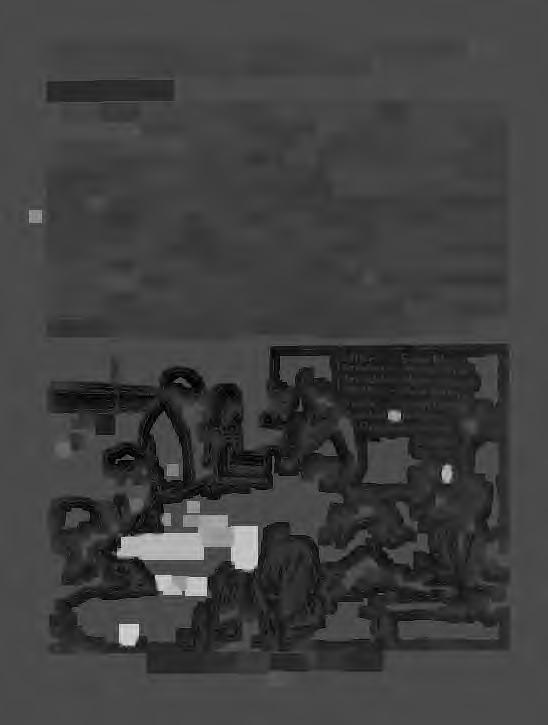
Parkside Post ''city room'' circa 1940.


Responsibility for producing the first school paper, the Bush Bugle, quickly devolved upon the ten elementary students. They learned how to • run the mimeograph machines and the typewriter as well as to gather and write up the news. As the school grew, the upper school paper was the Bush News, the lower school paper, the Parkside Post. With the advent of a printed paper, the upper school publication became The Rambler.
Residence Halls





Helen Bush was the only girls school in the area with boarding facilities and students came from Walla Walla, Spokane, and Alaska. The school needed more permanent dormitory space as eventually Mrs. Ostrander would return to her home. In 1937, the school purchased the home of Dr. Henry V. Wordemann, a half-block up the hill at 333 37th Avenue North. This building became Taylor Hall and the residence for upper school students. Mary "Sis" Haight Pease ('41) remembers her time in Taylor Hall when Mrs. Edna Shannon was the housemother, an "absolutely aweinspiring woman." Sis' cousin, Nancy Earling, had a terrible problem about being on time - she seldom was for anything . Mrs. Shannon was strict about seeing that the girls got their rest; lights out was at 9 p.m. sharp. Sometimes Nancy found herself still in the bath tub as Mrs. Shannon came around to check on the "sleeping beauties." The girls acted as lookouts for Nancy and told her when it was safe to splash. In that same group was Betty Schafer who was a Sherlock Holmes fan. Alas, that radio program came on at 9 p.m. - so Betty and her roommate would hide in the closet to listen, which, of course, made the adventures with Professor Moriarity and Dr. Watson even scarier to a pair of teen-age girls.
Dorothy Allen Hall
Mary Haight's parents, Mr. and Mrs. Gilbert Pierce Haight, were in charge of the junior dorm, Dorothy Allen Hall (named for an early, beloved housemother) in the late I 930's . Ruth Haight recalls those years fondly. "It was quite a scramble to get fifteen boys and girls, ranging from 6 to 12 years, all cleaned up and ready for dinner - especially with only one big bathroom." Mrs. Bush, she reports, hated to turn down any boarders and one 6-year-old boy came all the way from Alaska. Mr. Haight was an asset as house father, especially with discipline problems. Nonetheless, as the 1940 Tykoe quotes the junior boarders, "You might call Mr. Haight our "house father"; but we call him "Uncle Pierce."
Traditions
Mrs. Bush wrote a school song, based on her ideals for the school: Truth, 27







Beauty, and Purpose. Marjorie Livengood set the words to music. The three ideals became part of all life at the school - from social relations to political speeches to the classroom.
In 1938, Liz Gall designed and produced a terracotta fountain with three c erubic figures on a triangular base to represent the three ideals. Mrs. Pratt encouraged this enterprise. Betty Evans helped quite a bit, along with Jean Kelly, Lesley Hampton, Adele Clemmer and Sally Paine. Everyone held her breath as they maneuvered it downtown to the kiln and back - in one piece. The statue was the gift of the class of 1938 to the school, and, although never installed as a fountain, it still decorates the Courtyard.
Ellen Dudgeon of the class of 1936 developed the symbolism for the first yearbook, Tykoe, a Native American word meaning "young tree." ("Tykoe" was the closest the girls could come to "bush.") Its theme was "the goal towards which the Helen Bush School is heading: the encouragement of individual development by means of an education that is truly progressive.''
The mid-year changing of student officers became the prelude to another Helen Bush tradition - the Smorgasbord. Nineteen thirty-seven was the year of the first of Elsa Johnson's great Swedish feasts during which new student government officers were inducted. After consuming as much as they could from the vast, beautiful array of salads, meats, fish, hot dishes, hot breads, Swedish cookies and assorted cheeses, the whole school went down to the gym where the faculty and students, by class, entertained with fantastic, humorous skits of great inventiveness. Often as not, the faculty's skit (with Mrs. Bush, too) included take-offs on various students. Traditionally, only the junior and senior class skits included turnabouts directed at the faculty.
Christmas
For the students, a focal point of the long, wet Seattle winter was the medieval manor Christmas at Bush. As a trustee said, "Mrs. Bush goes ahead and does things that other people always plan to do but think are too much work." Mildred Isaacs and later Berneice Matthews were in charge of these banquets. From colored cellophane, Virginia Pratt's art students produced stained glass windows and with pastel and cloth made large "tapestries." Mrs. Matthews, for many years a librarian, recalled, "Right after Thanksgiving the biology laboratory would become a work room and the teachers (whether they liked it or not) made streamers of greens a hundred feet long." It was a fitting setting for the Lord and Lady of the



Manor and their guests. From Virginia Boren's detailed account in the Seattle Times, we can picture Jong tables set with fruit bowls garlanded with holly and lit by brass candelabra . Parents were the Lord and Lady - in 1936 Laurence M. Arnold and Mrs. Paul Pigott - each in period costume. The ceremonies began with bringing in and "lighting" the Yule log . Then, with fanfare, came the boar's head, peacock pie, roast beef, the Wassail bowl, and plum pudding. There were three hundred people present, including all the students, each of whom had a part in the program. As herald, Pamela Harrah announced the events which included Old English games, 12th century carols, dances, and a Nativity play. Some of the younger students were asleep as their parents carried them out at the end of the evening. Elsa McPhee Bowman ('51), now head of the lower school, recalls, "Mrs. Bush and later Mrs . Livengood felt strongly that everyone should be a part of the programs. Logistically, and as a teacher, I know the problems of just getting all those bodies into the act - but for a child it makes the experience come alive.''
A special part of Christmas for the younger boarders, of course, was a visit from St. Nicholas. The night before vacation, recalls Ruth Haight, Mr. Bush would play Santa Claus. He'd get up on the roof with a huge sack of toys and drop it at the door. When the children heard sleigh bells, they would rush out and bring in the sack of toys. Santa would come and distribute them. John Bush loved every chance to do something like that.
JohnK. Bush holding a friend, young Debbie Allen





But the great Christmas banquet at Bush became less opulent as the sc hool moved with the country into the Second World War. The decoration s , pre served from year to year (until the 1949 fire), continued to be magnificent, and the music, the dances and the short plays were memorable .
Early Commencement


In I 939, the traditional commencement play was Euripides' Alkestis, recalls Effie Hinman Church. It had been raining and the gym roof had leaked badly. The play began, and so did the rain. The then Mrs . Hinman and other teachers brought large pans to catch the water; but the resulting ping of the drip s was so distracting, the men in the audience offered their handkerchiefs to dull the sound. Mrs. Bush, meanwhile, watched with an amused smile, and the play went on in spite of the downpour .

Extra-Curricular


For the summer of 1939, Helen Bush and Marjorie Livengood chaperoned a group of students on a European trip. Mrs. Livengood set out by car with the s tudents and Mrs . Bush was to follow by plane to meet them in New York . The automobile, an old Sterns, got as far as Pendleton, Oregon, where it came apart. When Mr s. Livengood called Mrs. Bush with news of thi s di sa s ter, she merely said, "Well, Marjorie Livengood, I guess you will ju s t have to get another." The rest of the journey proceeded without incident and August found the group in Fontainbleau, outside of Paris. They all lived in different pensions, studied at the Ecole des Beaux Arts, and toured. Then came news war was imminent. The two ladies were concerned with getting their charges out of France quickly and safely . They drove all night from Fontainbleau to Le Havre, left the car on the dock and hoped it would get on the ship (it did) . Along with thousands of others crammed into the city, they searched for lodging. Mrs. Bush later sometimes said, "I don't think I would have taken the girls to the place we finally stayed had it not been for our great need." No one has ever publicly admitted the exact nature of thi s "disreputable establishment." It remains a mystery. The next day, Augu s t 29, the group sailed from LeHavre on a ship jammed to capacity with refugee pa ss enger s . People slept on floors of cabins and in the public room s . They heard the declaration of war over the ship's radio two day s before arriving in New York . As the ship zigzagged the rest of the voyage with darkened porthole s and radio silence, all had in mind the reported torpedoing of another liner. Their s hip, however, arrived safely. l 7





Mrs . Bush and Pamela Harrah on a"ival in Seattle , September 1939.


l?arkside

From 1936 to 1943, the lower school under Faith Voorhees King was a fascinating place. In addition to the newspaper, they had their own court, the ''Court of Friendly Relations'' where they learned basic selfgovernment. The children were encouraged to reason out things that were best for them to do.
Mrs. King had a little dog named Kuddle Boots, a miniature bulldog who "owned" the school. Every year on his birthday, Elsa Johnson baked a huge cake for Kuddle Boots . He shared his birthday with the junior dormitory boarders whose birthdays came during the summer, and the entire Lower School had a party. There was a Kuddle Boots daily bulletin, news of Lower School activities.
One year students planned and built a small house, complete with window curtains, furniture, and rugs woven on small looms. A construction project for today's third graders is an Indian long house, currently going up in the Courtyard.
Honor Award
Helen Bush always believed that a student who really tried was "with honor" and that each should be encouraged to set goals for herself and to do her own best. Mrs. Bush valued each student and saw much that was praiseworthy in every one. There were, therefore, no prizes for the best student, athlete, actress, or poet. Nor has the school ever bowed to college demands for rank-in-class designations. Helen Bush just didn't believe in it; you are judged against your own standards, not against others. Mrs. Bush did want, however, to recognize students who had made solid contributions to the school as a whole. Faculty and students together voted on which senior had best exemplified the spirit of an Alexander Pope quotation, "In action faithful, and in Honour clear." 18 In 1943 Sylvia Clise was the first recipient of the plaque award. For several years the plaque was not awarded because students felt the process had become meaningless. A new group of students have come to feel it is appropriate to recognize overall service to the school. In 1974, the plaque was awarded for the first time since 1970 and each year students will decide anew how appropriate such recognition is for themselves .
Post-war Student Life
The school newspaper, Rambler, had become a combination social conscience and humorous gossip center. The October 1947 issue carried a



reminder of the Standards for the Helen Bush student:
I come to Helen Bush with an open mind. I will ever keep before me these standards, to achieve them for myself and my school:
I . to respect my teachers, my class officers and my fellow students, even as I expect them to respect me.
2. to keep my appearance generally attractive and my uniform fresh.
3. to be alert and attentive in class.
4. to have regard for the buildings, grounds, and equipment, not to mar or destroy them in any way, but to make them more beautiful, that teachers and pupils may enjoy working here together.
5. to be honest with myself and others .
The dress code was particularly detailed - the kind of shoes, colors of blouses, socks, and sweaters, jewelry, hair ribbons, etc . Mrs. Bush believed uniforms lessened displays of economic differences . Fashions for teen-agers were more formal then: keeping the girls in uniform played down differences. Students enforced the uniform code and violations brought housekeeping duties or similar penalties.
Commencement 1948
In good weather, commencements were all-school affairs held outdoors in the courtyard. Kindergarteners led the procession and the seniors in light blue gowns carried pink flowers. In June, 1948, it rained for commencement. The girls were heartbroken as the ceremonies moved into the gym. After many pleas failed to calm them, the senior class advisor, Mary Haight, finally settled them by telling them it would be much better for Mrs. Bush to be indoors. At that point, few students had realized she was seriously ill. The graduation exercises went on as scheduled. Mrs. Bush was placed to one side on a chaise longue. Student speakers were Mary Ellen (Meg) Greenfield, Susan Curtis, Noan Brook Woody, and Mimi Macfarlane. Although Mrs. Livengood and other faculty members were concerned about her ability to handle the strain of the occasion, Helen Bush was able to stand and to give a clear statement of benediction and hope for the graduating seniors, and, without saying so, for the school. It was clear this would be her last commencement and the only dry eyes in the house were her own.

Twenty-five Years

Although saddened by Mrs. Bush's death in the fall of 1948, in 1949, the school celebrated its 25th anniversary. Student activities were chief among anniversary projects. Windsor Utley, then the art teacher, had been another of Helen Bush's "faculty finds." A conscientious objector during World War II, he found a job at Bush when other employers would not consider him. Under his direction, a group of fourth, fifth, and sixth grade students depicted the development of the school in a large mural painting now mounted over the stairs leading to Reed Hall.




In 1950, Meta John son, with Elizabeth Brintnall, Effie Hinman Church and Diana Sick Sheehan ('40) guided production of the school's first literary magazine . Literary talent had alway s found outlets at Bush on the 3 4




Meta Johnson O'Crotty and Flight Staff -1971 version.
Flight

literary pages of Tykoe. Flight was to provide more space for creative writing.
Meta Johnson O'Crotty looks back on that time as one of outstanding literary productivity. In 1948 each s ophomore wrote a full-length novel for Sylvia Gowan-Hender s on' s English class . Nobody will say how good these novels really were ; but all were impressed by the experience . El se McPhee Bowman remembers that Mary Lockwood and other s wrote book and music for two operas - Mary Poppins and The Little Prince .
Rambler "Scoop"
Rambler Editor Judy King, Cathy McCall, and Maxine Mills of the Rambler s taff beat professional news reporters by obtaining an interview with General Douglas MacArthur, closely guarded by security police on his Seattle Centennial vi sit. Judy had alway s admired General MacArthur and wa s determined to get the "impo ssible" interview . She obtained one pres s pa ss for the three of them. They managed to get to the speaker's platform in the Port of Embarkation. While Maxine s poke to the mayor to distract him, Judy and Cathy reached and interviewed the delighted general, leaving other reporter s with the story of how they had been outmaneuvered .
Chapel
Beginning in 1948, for twenty year s Chapel was a regular part of school life . Chapel programs were non- sectarian. In addition to out s ide s peaker s , each girl wa s required to conduct at least one chapel program before graduation. To s ome the chapel program, a s Doroth y Miller noted, "loomed a s a greater ordeal than an algebra exam ."
Student Life
In 1955, Phoebe Matthew s and Jane Phillip s were the Bu s h s eniors cho sen to take the fir s t N a tional Merit Scholar s hip qualify ing te s t, along with 4,000 other s acro ss the country. They both made the final s, an outstanding s howing in the face of s uch competition .


In 1958, the s chool added a new dimen s ion to s tudent experience with participation in the American Field Service student exchange program . The fir s t exchange s tudent wa s Edith A s trup from Norwa y . Student s formed an AFS committee to rai s e fund s and the Mother s ' Club contributed tuition. Mrs. Livengood later served a s Seattle Chairman for the Experiment in Int e rnation a l Living through which many s tudent s of other nation s have studied at Bu s h and many s tudent s from Bu s h have gone abroad . .1.'i





One student of that time recalls enjoying the ordered life in which she lived. "You had to study." Seniors were looked up to; because they assumed leadership responsibilities, they had a number of privileges. They presided at tables at meals, a chore they did not particularly relish, but which gave them a certain status in the eyes of the lower classes . Underclass girls stood when seniors (or adults) entered the room; they opened doors for seniors; they were not to step into senior court.
Some girls went to Helen Bush because their parents felt they should. They seemed, according to one student, more concerned with social activities . Other students resented what they felt was the unbending rigidity of social and academic standards. But few challenged the system then. Many students flowered with the intellectual stimulation and began to appreciate scholarly excellence. Always the faculty encouraged each student to reach for her own potential. As Marjorie Livengood said to one notorious underachiever, "What are you saving yourself for, my dear?" Some students were more receptive than others to the demands of academic discipline. Most benefited.
Student Change

In the late 1960's , the Free Speech Movement surfaced at Bush. In Rambler, students challenged smoking regulations, study rules, the curriculum, traditions, student government, the administration. The initial outburst of discontent was so intense that a number of alumnae and longtime friends of the school cut their ties completely. In March, 1969, Margaret McCall wrote in the Rambler:
Discontent can be a healthy feeling, stimulating a person to examine ordinary procedures, customary attitudes, the environment and one's self. ... Let us continue to look for areas in which to improve .... Let us try not to state a position too aggressively .... Let us work and plan together with sincere respect for different points of view.
Faculty, administration, and students responded to the expressions of discontent in a long constructive dialog on the quality of life at the Bush School that continues today .
Although it must have seemed to students that change took forever, it did come . Students were invited to express their opinions on the long-range decisions being made for the school. They wanted Open Campus and by 1972, the seniors had it. Later even underclassmen were permitted to sign out for an hour in the middle of the day if they had no classes.

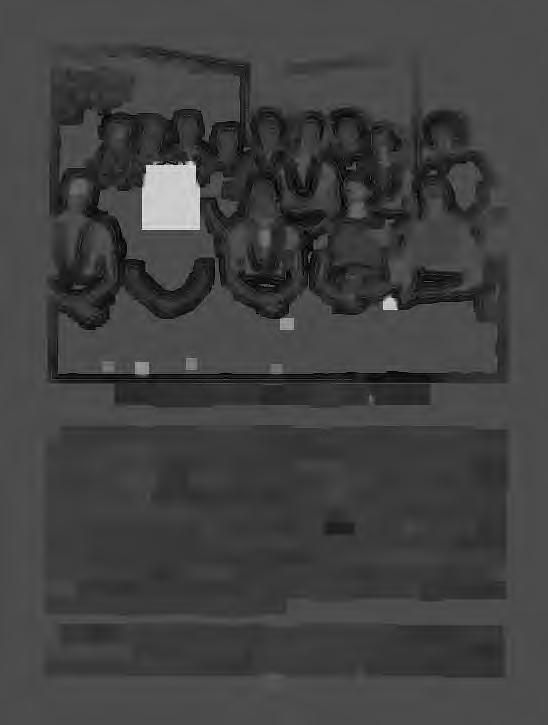
In addition to Open Campus, there was a great deal of agitation over uniforms. Every girl who ever went to Helen Bush remembers the uniforms. "The first class wore white middies (sweets to the shapeless), blue regulation skirts, and ties - red for upper school, blue for seventh and eighth graders." In 1938 came the blue wool suit and white blouse, which, with variations, stayed. The best part for the old timers was the two weeks before graduation when they could wear their own clothes! 19 Still, girls and parents appreciated the convenience of the uniform. Those who did not grow too much could even wear the same thing for five years! As styles became shorter and the dress code continued to read "below the knee," girls were seen at the door each afternoon rolling their skirts up to a more fashionable length before stepping out.
By 1969 students wanted to do away with uniforms . In March 1970, sev enty-seven per cent voted for a free dress proposal. Although Mrs . Bush had believed uniforms were an economic leveler, in the 1970 proposal
Mme. Virginia Chessex and class /or 1937. TYKOE








students argued, "If the school is going to help people become individuals, then each person should have the right to wear what she wants, when she wants to." Dress is peripheral to learning; too much time was being spent on petty uniform infringements. Because parents buy the clothes, the administration turned the decision over to the Mothers Club. Student Body President Sharon Stephens and representatives of each class presented the proposal to the club's executive council. Sharon had an outdoor field trip that day and was dressed for climbing around in the mud when she tried to convince the mothers that casual dress was not necessarily messy. The mothers did agree to a year's trial of free dress - "neat, clean, and shod." The experiment was a success and the system has become permanent.
The whole student government system changed. The new system is much more informal than its predecessor, the constitution more generalized. Officers are still elected twice a year. They run the Town Meeting, a committee of the whole where faculty and students together meet to discuss and decide issues affecting the school. Each class has a President. In the Middle School there are governing representatives from the advisory groups which consider questions of common interest.
Thus, the student body of 1975 not only includes many elements of society not present in 1924, it looks different: students may wear bib overalls and waffle stompers or old blue jeans. Seniors are regular people now, no longer honored by special doors or courts but distinguished as people, recognized for their experience.
ADMINISTRATORS
Outwardly, Helen Bush seemed to thrive on the growth of her school. But all was not easy. Kenyon Bush recalls some of the hard times at the beginning. As a newcomer to school administration, Mrs. Bush was vulnerable to charges that her building was inadequate, that she had not the proper training . Some neighbors feared the school's presence might lower property values and signed a petition to prohibit schools in the area. Kenyon Bush writes,
That is the only time I can remember seeing my mother cry .. . . l remember her in one evening - grading papers, calling lawyers, cooking dinner, interviewing complaining teachers, writing upset parents who thought their children should be smarter, following up on unpaid tuitions, studying extension courses in pursuit of a graduate degree, and trying to get me to wash my neck. I can remember her borrowing money at the end of the school year in

order to meet teachers' salaries.
Helen Bush was always modest about her own accomplishments; she had vision and talent and worked unceasingly. She was a demanding inspiration; she never asked anyone to anything she would not do herselfand there was little she would not do for the school. To get her to stop sweeping the stage before a play or ceremony, Effie Hinman Church recalls, "We had to take the broom out of her hand" and send her home to get herself ready.
The pressures of running the school must have been enormous. The period of growth and consolidation for her school came during America's Great Depression, an astonishing survival indeed. Funds were scarce and she was supporting herself, her husband and two children with the leftovers from the school budget. Yet she never compromised by accepting "financially needed applications from those students who did not meet her standards." 20 Outwardly unflappable and always confident of her direction, Helen Bush did not remain immune to the effects of these pressures . She had persistent insomnia and, as Gertrude Stein once said, "there is no peace where there is calm, calm." But neither the insomnia nor the tension ever interfered with her forward direction of the school.

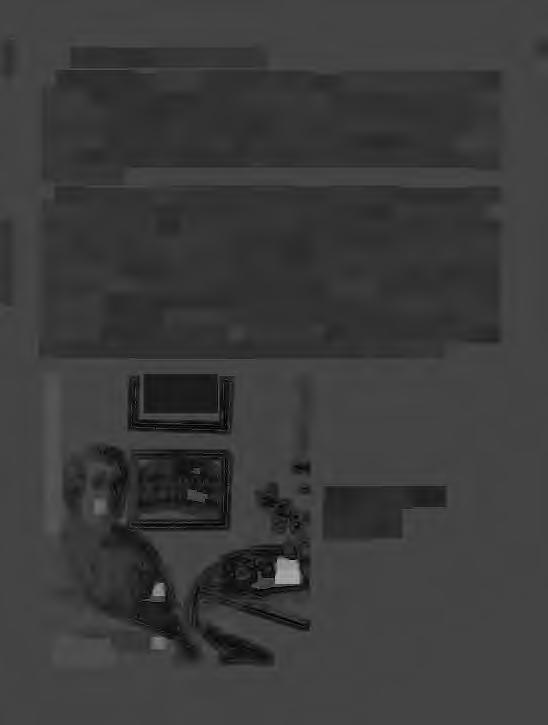
Helen Taylor Bush at her desk, spring 1939

Hamilton Rolfe, a President of the Board of Trustees in the 1940's, recalls his association with the school and Mrs. Bush as "one of the outstanding experiences of my life. Mrs. Bush was one of the most understanding and energetic persons I have ever known. She was always full of constructive ideas which she always consulted on with her associates."
Marjorie Livengood was Mrs . Bush's vice principal and a music teacher. Since 1937, she had lived with the Bush family and had shared the problems and responsibilities of running the school. She had also become, in John Bush's words, "the heir apparent" to Helen Bush. But in 1944, with the country at war, she went to Mrs. Bush and said simply, "Mrs. Bush, I feel I must go to war." Although Mrs. Bush turned very pale, she said only, "Well , Marjorie Livengood, you must do what you feel you must." Shortly thereafter, Helen Bush became seriously ill.
She continued to run the school, however, until Dr. Thomas Pelly wrote for the Board of Trustees to request the Red Cross release Mrs. Livengood as the school was soon to need a new, strong leader.
Despite the coming change in administration, Helen Bush continued work on her vision. Soon , however, her health forced her to withdraw from active participation in school affairs. In June, 1948, she and John Bush formally retired from the school.
Reminiscing in Rambler, she recalled,
The boys and girls we watched develop, those who achieved highly because they put not only brains but also steady perserverance into their work ... latent artistic talent became beautiful reality ... the contented faces of those who learned to work and lead their group.
In September, 1948, at the age of 68, Helen Bush died.
Meg Greenfield, who had been so unhappy to have her 1948 commencement indoors, wrote Mrs. Livengood from Smith College, "I would say that if the student body wishes, it can keep Mrs. Bush from ever really dying .. .. When the girls at Bush live up to her principles of fairness, understanding and magnanimity of spirit, they will be sustaining her life in their own."
Esther D. Strong, then President of the Pacific Northwest Association of Independent Schools which Helen Bush had founded with Robert Adams of Lakeside, wrote of "our appreciation of the outstanding leadership which Mrs. Bush gave this association from the very beginning. Her dynamic and 40
intelligent enthusiasm helped create the association and to sustain its growth.''
In 1968, Betina Coffey Hoyt perhaps put best the special way Helen Taylor Bush had affected those who came to her school: She invested her life in the shaping of human minds only to enjoy the dividends indirectly through the pride of accomplishment of her students . It is a rare experience to touch the life of another whose influence stands out above all others.
The Two Principals
Prior to becoming principal, Marjorie Livengood had been known for her love of music, her sincere and deep interest in the students and for the firm example she set for them in behavior and appearance. She also had a great sense of humor, especially when "out of uniform." All these qualities contributed to her new role as leader, as representative in the community of a very special institution. Perhaps more than she herself ever realized, she had a firm idea of what her image as Principal of Helen Bush should be -a very definite, gracious, forward-looking image with no fuzzy edges. As headmistress, Helen Bush had been less easily defined. She was absentminded about details not directly related to her idea of what the school should be and what kind of education it should provide. She "forgot" about her own appearance - perhaps because she did not think it particularly important. Her hair had a mind of its own - certainly she didn't mind much one way or the other what happened on top of her head. Helen Bush pushed her students, her faculty, her school from behind. Marjorie Livengood got out front and led them. Both women had the same goal: quality education and the development of each student's potential.
When Marjorie Livengood came to Bush in 1936 she had already taught for 12 years. All through her undergraduate years at the University of Washington she had been a part-time teacher of grade school orchestras. She had been head of the music department at Garfield High School. Her music had been the focus of her life. An accomplished violinist, she joined the Seattle Symphony Orchestra during the Second World War to help fill the chairs left by musicians in military service . An early student recalls, " She was stricter than anybody else we had . " Of her work with Mrs. Bush, she says they made a good team, "I was the disciplinarian and she had the vi s ion." Divorced in 1936, she devoted herself to the school in the ensuing years.
When she began, she taught vocal and instrumental music to all twelve

grades. The school ensemble in those days was an all-school enterprise with talented boys and girls from the lower school playing right along with tile older girls.
Betina Coffey Hoyt remembers "the rich music program taught by dear Marjorie Livengood who offered music theory and harmony at a college level, a s I later discovered." Helen Buschman Belvin ('44) particularly valued
a special advanced harmony course for Anne Macfarlane and myself . . . Many great masterworks, such as the Beethoven Appassionata Sonata were introduced to us at one of Mrs . Livengood's informal record-playing sessions. There were many opportunities to perform, both solos and two-piano and other mu s ical combinations.
During her tour in the Pacific with the Red Cross, Mrs . Livengood rose to the rank of captain. She was about to be transferred to Japan after the war when her supervi so r told her of Dr. Pelly's request. Marjorie Livengood enjoyed her life with the Red Cross and felt she would probably have stayed with the organization had not Mrs. Bush become ilJ .
After returning to the sc hool , Mrs. Livengood insisted on earning her administrator's certificate before becoming principal. She was convinced s uch quali Fi cations would aid the school greatly in meeting the rising accreditation requirements. The Board of Tru s tees sent her to Columbia Teacher s College as it offered the shortest available course.

Mrs. Livengood from /967 TYKOE


During Marjorie Livengood's years as principal she supervised the school through two lengthy construction projects: the rebuilding of the school after the 1949 fire and the building of the new dining hall-laboratory in 1956-57.
When Marjorie Livengood had been principal for ten years, the Board of Trustees gave her a leave of absence for several months. She spent it touring the country and renewing contacts with Bush alumnae, visiting other schools and contacting colleges.


After over 40 years of teaching, Marjorie Livengood began to think about leaving Helen Bush/Parkside . In December, 1965, she told the Board, "she realized retirement time comes to everyone and she wished to place on file with the Board her willingness to be replaced by the Board when it finds the right person to succeed her," noting other schools had found such searches lengthy. As no one on the Board wanted to hasten Mrs. Livengood's departure, the Search Committee under John Hauberg began its work with some reluctance. At the May, 1966 Board meeting, however, Mrs. Livengood announced she intended to retire as of July, 1967 .
In the fall, E. Peter Garrett, President of the Board of Trustees, announced publicly that Mrs . Livengood would resign. Speaking at a joint faculty-trustee luncheon, he recognized she had
spent a lifetime guiding children in the most important period of their lives. She has built a school which is a complex organization of students, faculty, parents, and alumnae. We feel a keen sense of regret and a great loss to the school.

A Headmaster for Helen Bush/Parkside
From over 200 names considered in the first round of inquiries, the Search Committee narrowed its list. After telephone conferences and personal interviews around the country, the Board finally announced its choice: John B. Grant, Jr., then Chairman of the History Department at the Old fields School near Baltimore, Maryland.

During the spring of 1967, John Grant, Marjorie Livengood and a transition committee of the Board met several times to insure a smooth change in leadership. In this process, one Board member, Sheffield Phelps, noted "Mrs. Livengood's dedication to a multiplicity of administrative duties far exceeding what we can expect from a new head. Under a new head, we should expect costs and salaries to go up.''



Retirement
In April, 1967, the Seattle Times honored Mrs. Livengood with its Woman of Achievement Award at the Matrix Banquet sponsored by Theta Sigma Phi, the women's journalism and communications fraternity. The citation read,
Under her skillful administration since 1948, the school has become Seattle's largest educational institution. She has come to symbolize quality and imagination in education and her influence and example have reached far beyond the local scene .. . .(she) has a reputation of having maintained academic excellence while introducing scholarship and exchange programs which have brought the school national attention.
Many students had been devoted to Mrs. Livengood. Many classes had dedicated their Tykoes to her. The class of 1967 was the last: The unique character of the Helen Bush School is the product of the devoted efforts of Marjorie Chandler Livengood . . .. Her strong personality is a pervading element of the school. ... while understanding our problems, she still demands our best efforts."
So, in June 1967, Mrs. Livengood "graduated . " She remains in touch with alumnae as always and is actively interested in education and in Bush. Following graduate study at the University of Pennsylvania, she became Dean of the Castilleja School in Palo Alto, California and has been delighted to find more time again for her music.
The Headmaster
John Grant was in his early thirties. A graduate of Bowdoin, he had an M.A . in history of art from the University of Minnesota . Prior to going to Oldfields, he had taught two years at a public school in England. At Oldfields he had also been Admiissions Officer, College Advisor, and Summer Program Director.
The Grants took up residence in the headmaster's house across from the school. They put bookshelves around the living room fireplace and fenced in the back yard to provide play space for their two small children.
As a leader new to the school, John Grant was expected to bring changes with him. Few understood in 1967 the quality and quantity of changes the next five years would bring to the Bush community. Nothing would have remained the same had Marjorie Livengood stayed on, as she herself has recognized. The school was to be in a state of flux about where it would be



John B. Grant, Jr. Headmaster /967-1972

located, whether to become coeducational, curriculum experiments, community pressures, student dissatisfactions and how to finance any changes. These unsettling conditions in a time of high faculty turnover and diminishing tuition revenue (partly because of a regional recession) comb ined to make this a difficult period for the school.
Although his day-to-day contact with students was limited, the students benefited from John Grant's philosophical goals and educational presence. He facilitated their involvement in community service and promoted their interest in independent work. He drew on his own academic background for courses in art history and student assembly programs. In 1969 he shared the PNAIS evaluation process with students and published the results of its student questionnaire in Rambler. The 1968 Tykoe said of John Grant:
A smile and a wink, the aroma of pipe smoke, a casual yet purposeful manner - these characterize the first headmaster in the Bush School's 43-year history.
During his five years at Helen Bush / Parkside, John Grant was particularly concerned that the school choose its long-range goals and begin moving toward them. He could not accomplish this alone; agreement on g oals required a sense of community the school had not yet achieved.
Although the school under John Grant seemed to have trouble coming to grips with itself, it did, moving awkwardly, survive a very difficult time and is now much nearer that sense of community.
In a letter to parents and at a student assembly in January 1972 John Grant announced he had resigned his post, effective in June. Leaving Bush, he returned to the East where he has been teaching in New England.
Dean of Students
Mary Haight "Sis" Pease can be considered one of Helen Bush'1, "finds." A Bush graduate ('41), she majored in Spanish at Smith College . In 1946, Mrs. Bush asked her to teach Spanish, and later history. Miss Haight was surprised to find teaching delighted her. She consulted her father often and recalled ''staying up nights keeping one jump ahead of the history classes ... but was thrilled with every gleam of understanding I ever caught" from the students. 2l

Mary H. Pease on cross-country ski tour.
In 1966, her family returned to Seattle and Mrs . Pease came back to Bush to teach history. In 1967 she was appointed Dean of Students to work with the new headmaster. If there were problems, students were comfortable going to her. She is now head of the Upper School. Students of the late 46



sixties and the seventies also remember her "because she was excited about what she was teaching." A student today says, "Yes, she's strict, but she's always willing to help you. She's just a super good teacher."
"Sis" Pease's affinity for her students has often been returned- in 1968 the seniors kidnapped her for their sneak. The class of 1970, source of ferment and protest against the established order, invited her to be their commencement speaker. Her remarks reflect her feeling for student concerns:
Your generation is demanding restoration now of quality - of love, purity, idealism - to life. You are pleading for the survival of the best in the human spirit. .. .The adult world should encourage you in this pursuit.
Today's Headmaster
The selection of Leslie I. Larsen, Jr. to fill the post vacated by John Grant came after careful deliberation by a search committee headed by Dexter Strong, Headmaster Emeritus of the Lakeside School. 22 Students and faculty as well as Board members interviewed the three finalists before the Board made its decision.
Mr. Larsen came to Bush from the Westridge School in Pasadena where he had been Head of the Upper School. He is an ordained Presbyterian Minister with a bachelor's degree in chemistry from Milliken University and a Master of Divinity degree from the Pacific School of Religion. Leslie Larsen had used his training in a variety of educational experiences relevant to Bush School needs. Having done inner city church work, he later combined this experience with teaching at the Thacher School in Ojai, California . There he directed a program to help minority students expand their opportunities for college and taught chemistry and philosophy .
At Bush, Mr. Larsen has involved himself in many aspects of school life. Teaching one science course, he not only comes in day-to-day contact with students, he also has a first-hand appreciation of teachers' concerns. Outside the classroom, he is known for his culinary expertise. His elegant multi-course dinners have raised over $1500 for the school at three PFSA auctions.
Nancy Larsen, with her own interest in education and in the life of the school, has enriched the Bush community. She not only teaches sixth grade English and coordinates the lunch program, she has also opened the Larsen home in sincere hospitality to all. Young Ingrid and Christian Larsen are 47

Eric Longdon and Mark Lockwood study electricity with Headmaster Larsen.
familiar figures around the school as are two golden retrievers.
LOCATION CONSIDERATIONS
In I 930, right after the move to the 36th Avenue location, the school considered, not for the last time, "Alternative Plans for Bush Schools." From today's viewpoint, at the conclusion of yet another exercise in examining alternatives, it is interesting to see that, even then, the school was not content to seek the easiest way. Alternatives discussed then were:
I . Stay where we are, as we are ... go to no great expense.
2. Develop the town site. Purchase more land; build new building s . Go up to 12 grades.
3 . Develop the town site but stay as Kindergarten to 7th or 8th grade school.
4. Look for a bigger town site.
5 . Move to the country and develop a country day and boarding school for older girls while keeping the present site for K-4. 48


The arguments for staying, expanding, or moving were to become familiar:
A good location with in -town cultural advantages would maintain current parent interest, but was cramped. Moving would provide more room for more ambitious programs but would be very expensive at first and would be far from the more realistic world of city with its cultural benefits.
Obviously, in 1930, the school decided on alternative number 2, as they would again and again.
Hamilton Rolfe described Mrs. Bush as "always alert regarding the growth of the school.'' After World War II, she again considered moving to the country . He remembers, "We looked at a farm between Kenmore and Bothell. After careful examination, we decided to stay where we were.''
In the late 1960's, the school again examined its alternatives as to the use of its present site and the possibility of moving out of the city. In 1967, a group of trustees took an option on 80 acress of rural land in Redmond which they held for school purchase. The 1969 PNAIS evaluation cdticized the inadequacy of physical facilities, especially play space. The debate whether to stay urban or go to the suburbs involved alumnae, friends, parents faculty and students.
Arguments on both sides echoed viewpoints first raised in 1930: the cultural benefits of the city, the advantage of existing buildings versus the "land squeeze" of the urban site, particularly for athletic facilities. By 1971 there were sentimental attachments to the urban site as well as intensified urban pressures not present earlier. In the end, as with coeducation, the school community agreed that location was not as important as the quality of the educational program. A detailed study of the long-range possibilities of the urban site was drawn up by the school architect. Money which would have been spent on moving as well as new construction would be used on creatively improving the urban site . In February 1971, John Grant announced the decision:
The Board of Trustees felt no interest would be served by fleeing to the suburbs and that remaining in the city will enable us to serve the urban community and contribute to a solution of its problems. We are expanding our scholarship program and feel that these scholarships will be more relevant if we remain in the urban center.


COMMUNITY RELATIONS
The school contributed to the community in a variety of ways. It met a need for a certain kind of education in Seattle. During the Second World War, as a service to working mothers, the school added an all-day nursery program .
In 1943, the students formed a Social Service Committee to benefit a variety of causes, including the war effort. The first enterprise was movies and ice cream at the Seattle Children's Home. Students had war stamps for sale in the stock room (book store) and had School War Bond days. There were bandage rolling groups and Red Cross fund drives. In addition, Helen Bush worked with the USO to sponsor dances for soldiers and sailors in Taylor Hall's ballroom.
War-time shortages and rationing became felt in the school's dining room. Resident Parksiders had their own Victory garden. They raised lettuce, onions and radishes. Mrs. Bush organized groups of teachers who went out into the country to pick berries and other fruits to have frozen or canned for the school.
In the 1950's, the Social Service Committee continued supporting the Children's Home. During the Korean War, the committee organized food and clothing drives for Korean children, as it had for European children in the post-World War II years.
In 1964, Rosemary Ostrander Ballinger ('35), by then a member of the Board of Trustees as a parent, raised several important long-range questions. How could the school organize fund-raising efforts more permanently? How could Bush improve the quality and amount of information about the school available to the public? How could the school strengthen the alumnae organization? How could Bush meet its responsibilities as a member of the community?
The Board of Trustees almost immediately acted on three of these four questions. Joseph Danz assumed the newly created post, Director of Fund Raising Activities, a volunteer position which helped free the Board itself from the day-to-day fund-raising tasks . They hired Dee W. Jones as a public relations consultant and she immediately began placing news articles about Bush. With help from Marjorie Ferguson Anderson ('41 and also a Board member), Mrs . Ballinger and others began to organize a more defined alumnae organization . Ultimately .there were representatives for each class, annual functions, an Alumnae Office on the school campus, and active alumnae participation in the life of the school - such as the 1974

book sale in the lunchroom and the annual auctions. The Board took no specific steps to develop a program of community involvement then.
Mrs. Ballinger had stres sed the benefits to the school of becoming involved in the s urrounding community. In 1965 , Mrs. Livengood developed a propo sal with public school officials for an "Experience in the Arts" summer enrichment program for students from the Central Area . The sc hool had always been on the edge of this region of inner-city Seattle, but had remained separate from its concern s. Public school officials responded po s itively to Mrs . Livengood's plan. In her presentation to the Executive Committee of the Board, she stressed the values of the program to disadvantaged young s ters and simultaneous benefits to the Bush student aides through participation in such a community service. The committee, howe ver, decided to table the plan.


Community Involvement
The late l960's were literally explosive time s in US urban society and Seattle was no exception . Fire bombings in the neighborhood of the school, th e death s of Martin Luther King, Jr., Robert Kennedy, and the Executive Dire c tor of the Seattle Urban League, Ed Pratt- all brought society and its problem s to the Bush door step . From the beginning Helen Bush and her sc hool had had some community relations problems. Mrs. Bush moved the sc hool from her home in the wake of neighborhood protest. Since 1940 rumor s periodically reported that the school was going to buy neighboring Harri s on Elementary School, an action Mrs. Bush termed "impossible . " 23 In the late 1960 ' s, as Bu sh began considering its options amid an uncertain n e i g hborhood atmosphere, rumors flared again . The school ha d a serious public relations problem.
In 1964, Mrs . Ballinger had prophetically declared, " .. . a private school cannot remain aloof from the community and still enjoy a friendly and co rdial acceptance by the local citizens . .. .lt must make a positive contr ibution to it s community." In 1967, twenty-four Helen Bush girls volunteered to tutor students at Harri son. In 1968-69, the Social Service Co mmittee under Elaine Daly participated in many community projects . Sev eral girls worked with retarded children; the school aided the Southern Rural Research Project through a skip-lunch program and sending toys, fo od and clothing; students raised $300 for the Central Area Motivation Program (CAMP) which in turn helped the school set up a course in AfroAmerican history . Elaine herself did her independent study project as a teacher's aide. A number of student exchanges with public junior and senior high schools gave Bush students a better picture of other educational en51
vironments. Rambler reporters covered teach-ins, drug awareness seminars, community and national politics, entertainment, the arts - all bringing society and the school closer together .
The Bush School has continued to reach out to involve itself in the community. The Urban Trimester program, in Mr. Larsen's words, is an attempt to relate what goes on in school life much more closely to the city and to utilize it as another educational facility capable of teaching students and faculty something about their own lives .
Mr. Larsen and other staff members have participated in the work of the Harrison Community Council, which, since the fall of 1973, has had a representative on the Long Range Planning Committee for the school.
The Early Education cour se in the upper school gives interested students clas sroom experiences with young children and has included placing several students in classrooms at the Martin Luther King Early Childhood Education Center (formerly the Harrison Elementary School). The
Bush tutor and student.




student s ' Community Involvement Committee this year raised money for medical expen s es for a newly arrived Vietnamese orphan .
Increa s ingly, the school has offered it s facilities to the community . The Girl Scout s meet at Gracemont; the front hall Bush Galler y provides exhibition s pace for a variety of artist s in the Seattle area; this year, the Teacher Learning Center (for sharing cla ssroom techniques and ideas a mong all the teachers from the Seattle area) has been in Gracemont; the Bu s h Community School has offered evening classe s in diverse subjects for a mode st fee. Thi s summer there will be "Summer Excursions in the Arts and Science s ,'' s ummer school open to all on the Bush campus.
The Bush School educates students to make disciplined, meaningful choice s in a world of endles s diversity. The school seeks out today, as Helen Bu s h did in 1924, new opportunities for enriching experiences . Summers at Bu sh now include "Excursions in the Arts and Sciences." The all-year sc hool may also become an expanding academic experience. Outside the cla ss room, the school provides the Wilderne ss Program, a pioneer farm ex perience at the Homestead, independent study, urban internships, urban trime s ter s, and other rich experiences from the world of 1975. The Bush Around-the-World Bike Trip, led by French teacher Robert Ellis, departs Se attle in June. Within the school itself, curriculum innovations and sc heduling adju stments involve students and faculty in an ongoing effort to create fulfilling cla ssroom experiences . By including choice and decisionmaking in the s tudent's life, Bush continues "to promote the growth and competence of the individual. 2 4
PHILOSOPHY
Helen Bu sh wa s determined to foster the growth of individuality:
Social and emotional adju stment for each child is the goalthrough s elf control, self-dependence, a sense of personal re spon s ibility and freedom from fear.
In the pre- school, Mr s. Isaac s and her successors believed that an appreciation and under standing of the beautiful is developed through creative work with variou s opportunitie s for self expression. Children should be expo sed to the beginning s of the arts, but should not be given patterns to copy , nor forced in their creative ability. 2 5
In 1949, Robert Dick s on became the first man to head Parkside. He reported to the Board in 1952 that his administration was concerned with

the "whole child" and tried to treat each child as an individual. He declared,
The teachers of Parkside are trying to give your child a good life, ... opportunity to be treated as human beings, not as diminutive adults; to have many meaningful experiences at every stage of development; to have a life which keeps growing in interests, in powers of expression and in depth and extent of human relationships.
In 1958, Diana Sick lngman, of the class of 1940, perceived the changes in the school during Mrs. Livengood's administration and noted that Mrs. Bush's philosophy continued as the basis for the school:
Inevitably, there are changes. The atmosphere is admittedly more orderly; greater numbers require it. ... The academic standards and expectation of effective performance may startle the Old Girls .. .. The academic philosophy has developed, as everything must, but it has developed, not changed . Books, ideas, teachers are still more important than buildings . The inheritance from Mrs . Bush has been in a very direct line. Marjorie Livengood, who taught music and speech in the early years of the school has, as Principal, effectively realized so many of Mrs. Bush's dreams . 26
Like Helen Bush, Leslie Larsen has a vision of where he would like the school to go -a flexible vision of encouraging people to think creatively and appreciate each other as individuals. He understands the advantages of an open, informal structure within the school community which allows students to mingle much as they might have in a small school house like the Bush home. Seniors rub elbows with kindergarteners at lunch, and faculty (including the headmaster) join students on extra-curricular outings. Like John Grant, Mr. Larsen believes student involvement in the larger community surrounding the school is fundamental to education today. The Bush School is not only training minds but helping individuals develop "to function with degrees of excellence in society." 27






The Courtyard, Spring 1975. Classes in French, Science [around the t elescope mount on the sidewalk}. Against wall of Marjorie Li vengood Learning Center is lumber for third grade long house.

FOOTNOTES
I . 1930 Bulletin of the Helen Bush School.
2. Seattle Times, July 14, 1968.
3. Minutes, Helen Bush / Parkside Board of Trustees, February, 1965.
4 . Mrs . Bush's School, catalog, 1928-29.
5. Seattle Times, February 14, 1965.
6. Rambler , November 15, 1974.
7. C. K. Blis s letter to Reginald H . Parsons, I0 / 20 / 30 .
8 Rambler, April, 1949
9. Minutes, 8/ 9 / 49.
10 Margaret McCall, Denise Farwell, et al., preliminary draft.
11. Scholarship figures based on Minutes of Board of Trustees and its committees.
12. 1930 Bulletin of the Helen Bush School.
13 . Lakeside Country Day School Bulletin, 1930-31.
14. Conversations with Margaret McCall, Marjorie Livengood and others .
15. Betina Coffey Hoyt, letter to Denise Farwell, March, 1968.
16. Minutes, 617171; conversation with Business Manager, Richard Smith.
17. Marjorie Livengood, Eleanor Bush Drew interviews .
18. From Alexander Pope, Moral Essays, Epistle vii, to Mr. Addison. Statesman, yet friend to truth! of soul si ncere, In action faithful, and in honour clear, Who broke no promise, served no private end, Who gained no title and who lost no friend.
I 9. Rambler, April, 1949.
20. Kenyon Bush, letter to Susan Egnor, 3/ 75.
21. Rambler, June, 1949.
22. The committee, according to Mrs. Bowman, included herself and Mrs. O'Crotty, representing the faculty, as well as Board members Mrs. Calloway, Mrs. Temple, and Mssrs. Eising, Helsell, and Phelps.
23. Interview with Dorothy Carlson, Mrs Bush's secretary, 1945-1946
24. Tykoe, 1974 .
25 . 1938 Helen Bush School catalog .
26. Helen Bush Alumnae Bulletin, August, 1958.
27. Leslie Larsen, Jr , quoted in Seattle Times, August 9, 1972