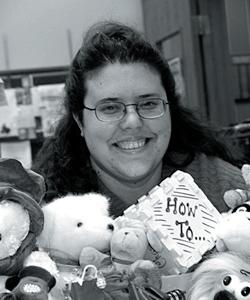
Oklahoma native and pioneering mystery writer Carolyn Hart will speak to students at 3:30 p.m. April 11 in the Learning Resources Center, Room 110.
Hart’s appearance is made possible by the Friends of the RSC Library Club, whose primary goals are to stimulate interest in reading, viewing and evaluating information, as well as to help students learn more about the library and promote literature.
A self-proclaimed “mysterious writer,” Hart won the 2001 Oklahoma Book Award for Fiction with her book “Sugarplum Dead.” Hart is also a member of the Oklahoma Professional Writers Hall of Fame.
In addition to those accolades, Hart’s book “Dead Man’s Island” won the prestigious Agatha Award in 1993 for best novel.
The awards, given annually to mystery writers who adhere to the traditions of legendary mystery writer Agatha Christie, are presented to winners in the following categories: Best Novel, Best First Mystery, Best Short Story, Best NonFiction and Best Children’s/ Young Adult Mystery.
Additionally, Hart is a founding member of Sisters in Crime.
The group’s mission, according to their Web site, is “to combat discrimination against women in the mystery field, educate publish-
see HART, Page 2
Combs crowned Miss Black
Scholarships awarded to top 5 pageant contestants
Shannon Hoverson Assignment Editor
National Anthem and a presentation by the “Little Raiders.”
Then the nine contestants introduced themselves accompanied by whistles and screams from the audience.
Each had designed their own cos-
year
Students prepare campaigns, senate elections planned
Andrew Knittle News Editor
Elections for the student senate executive board will be held during RSC’s Springfest April 19-20.
Students can cast their votes at the Student Activities Desk in the Student Center lobby from 8 a.m.8 p.m. April 19 and from 8 a.m.-6 p.m. April 20.
The executive board, which includes the offices of president, vice president, treasurer and secretary, differ from student senator positions, which are filled at the beginning of the fall semester.
Students who wish to run for office must fill out a candidate application at the Student Activities Desk by April 14.
To be eligible to run for office, the student must be enrolled in at least nine credit hours and have a cumulative GPA of no less than 3.0.
Once the student has completed the application process and is approved to run, they can begin campaigning.
According to President Logan Reynolds, campaigning is of the utmost importance.
“Campaigning is crucial to the elections,” Reynolds said. “You have to get your name out there and make yourself recognizable so when the students are voting they will remember your name on the ballot.”
A candidate debate, to be held April 18 in Student Center, Room 123, will follow the student senate’s weekly meeting.
Anyone may attend the debate, during which the senate hopefuls will promote themselves on the eve of the elections.
According to Student Activities Coordinator Towry Barnard, the student see SENATE, Page 2
tume, which consisted of a white blouse and sequin-covered jeans.
The nine contestants were Jacqueline Allen, Emerald Walker, Antonesha Lewis, Kristen Combs, Jazmin Little, Jennifer Iwvchukwu, Danielle Harris, Kendra Jones and Tiana Booker.
The judges for the pageant were Joncia Johnson; Hoover C. McCoy, Jr.; Vicki Williams; Mario Valcin, Jr. and Rita Brooks.
The Masters of Ceremony were former Miss Black RSC 1998 Nakita Colbert and Miss Black RSC 20042005 Uduak Williams.
Before the contestants came out for the swimsuit competition, Miss Oklahoma Plus America 2005 gave a performance for the audience.
The talent competition followed. The contestants gave a variety of performances, from singing to powerful monologues.
Together, the two competitions accounted for 40 percent of the overall score.
The audience was encouraged to vote for the best performance. The winner, Lewis, was given the People’s Choice Award, which included a $150 cash scholarship and an official plaque.
The last segment of the pageant was the eveningwear competition, which was 10 percent of the overall score. Judges were looking for grace, poise and confidence.
Once contestants had finished, the on-stage question was asked to each on the subject of their individual platforms.
The recipient of the Miss Congeniality Award went to both Iwvchukwu and Jones. The Regent Betty J.C. Wright Business Woman of Tomorrow Award was announced and contestant number one, Allen, received this award.
Virginia Thomas was the director of the pageant for the second year in a row, but she has been active with the
pageant since its inception.
“I truly support this program for what it stands for in the community and [RSC]. Although the winner will have a crown to support their platform missions, I challenge the rest of the contestants to still begin the process to make a difference among our youth and the community.” Thomas said.
As Williams took to the stage in her final walk as Miss Black RSC, the judges tabulated the scores for each contestant.
Fourth runner-up went to contestant number six, Iwvchukwu, who received an official plaque and $400 in scholarships and tuition waivers.
Third runner-up was contestant number nine, Booker, who received a plaque and more than $700 in scholarships and waivers.
Second runner-up went to Allen, contestant number one. She received a plaque and $900 in scholarships and waivers.
First runner-up was contestant number five, Little, who was given a plaque and $1,200 in scholarships and waivers.
Finally, it was time to announce the new Miss Black RSC 2006. Thomas announced that contestant number four, Combs, had won the crown. The audience cheered and clapped as the crown was placed upon Combs’ head.
As the new Miss Black RSC, Combs will recieve an offical plauque and $2,100 in scholarships and tuition waivers.
“I am very thankful to God and I’m very proud,” Combs said. “I’m honored and humbled.” Combs will be competing for Miss Black Oklahoma in June 2006. She will use her title to further awareness of Spina Bifida.
“I would like to see a camp for Spina Bifida kids [at RSC],” Combs said. shoverson@rose.edu
Month celebrates writer creativity
Shannon Hoverson Assignment Editor
April is National Poetry Month and many people across America will be celebrating this by spreading their creative wings and writing or reading poetry.
The Academy of American Poets established April as National Poetry Month in 1996 in order to enhance the public’s awareness to the art of poetry.
They hoped National Poetry Month would achieve an increase in the visibility, presence and accessibility of poetry in our culture.
It has grown since its inception and is now one of the largest literary celebrations in the world according to the Web site of the Academy of American Poets, www.poets.org.
The goals of National Poetry Month are to:
& Highlight the extraordinary legacy and ongoing achievement of American poets.
& Introduce more Americans to the pleasures of reading poetry.
& Bring poets and poetry to the public in immediate and innovative ways.
& Make poetry a more important part of the school curriculum.
& Increase the attention paid to poetry by national and local media.
& Encourage increased publication, distribution and sales of poetry books.
& Increase public and private philanthropic support for poets and poetry.
April was chosen so that schools and students could participate without interfering with other celebrations. As February is Black History Month and March is Women’s Heritage Month, April was the sensible choice.
There will be several events held locally in celebration of National Poetry Month.
The Performing Arts Studio at the Norman Depot, 200 South Jones in Norman at 2 p.m. April 9.
The Ralph Ellison Library will be hosting a Teen Poetry contest running from April 3 to April 22.
Professor Karen Holt’s poetry class will be reading at the Benedict Street Market in Shawnee at 7 p.m. Thursday, April 20.
The event is sponsored by the Independent Artists of Oklahoma. Holt is a poet herself and has had her poems published in several publications, including “Blood and Thunder.”
“I am inspired by the generosity of spirit that surrounds my daily life, by students and their unfaltering struggle to create something of value for their future lives and by the little things – the taste of peach ice cream in July, the wave of a beautiful Monarch in October, the slap of cold in the winter,” Holt
Ways to Celebrate National Poetry Month
1. Read a book of poetry.
2. Memorize a poem.
3. Attend a poetry reading.
4. Read a poem at an open mic event.
5. Put a poem on the pavement.
6. Recite a poem to family and friends.
7. Promote public support for poetry.
8. Submit a poem to a contest.
9. Sign up for a poetry class or workshop.
10. Add verse to an e-mail signature.
*Information courtesy of www.poets.org. said. “I do not write every day, but I try to pay attention every day.” Carl Sennhenn, Honors Program coordinator, has written poetry for the past 30 years and said that he does not have a favorite poet. “I like many. It may be a particular poem – not the author – that I like,” he said. For more information about the Performing Arts studio, visit their Web site at www.thepas.org. For information concerning the Teen Poetry contest, call 424-1437. For more information about National Poetry Month, visit www.poets. org. shoverson@rose.edu
One woman each
wins a crown and scholarships. Uduak Williams, Miss Black RSC 2004-2005, passed her crown to Kristen Combs March 31.
Photo by STACEY McENTIRE
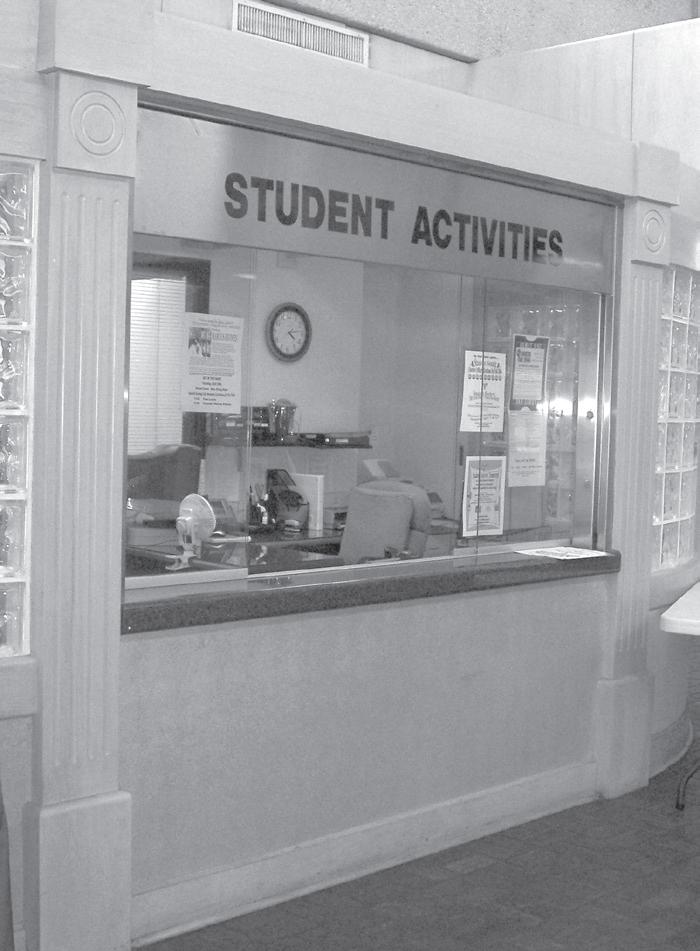
The Student Activities Offi ce, located to the left of the main entrance in the Student Center, offers students a central location to apply to run for senate or to vote once candidates have campaigned.
NEWS/FEATURES
Briefly Speaking
Tinker AFB Presentation
Any students interested in an internship at Tinker Air Force Base are encouraged to attend a special presentation at 9:30 a.m. Tuesday, April 11 in the west end of the Student Center’s Main Dining Room. Carrie Quick, a human resources specialist from TAFB, will be there to present information on the Tinker Internship Program. After the presentation, Quick will have a sign-up sheet for those who are interested in the application process.
Breakfast with the Easter Bunny
The Midwest City Junior Service League will be hosting Breakfast with the Easter Bunny from 9-11 a.m. Saturday, April 15 in the RSC Gymnasium. The event will feature an egg hunt at 10 a.m., photo opportunities with the Easter Bunny and a variety of games and activities. Donuts, coffee and juice will also be available. There will be a fee of $2 per child with an additional $1 for a keepsake photo with the Easter Bunny. For more information, contact Shelly Croak by phone at 818-3326 or by e-mail at shellyc1@cox.net.
Theatre Production of “Papers”
The RSC Theatre department presents “Papers,” a romantic comedy with a twist, written by Allen Stratton. Productions will take place at 7:30 p.m. April 20-22 and 27-29 in the H.B. Atkinson Theatre. The productions are free to RSC students, faculty and seniors. It costs $3 for the general public and $2 for nonRSC students. Call 733-7430 for reservations.
There will be a dinner theatre production at 6 p.m. April 20 in the Student Center’s Main Dining Room. Dinner will include airline chicken, garlic mashed potatoes, tossed salad, Pacific blend vegetables and strawberry shortcake. Cost is $16 for the general public, $14 for RSC students, staff and seniors and $10 for children 12 and under. Reservations and payment by check or money order for the dinner theatre are due by 5 p.m. April 17 and can be made in the Office of Special Events in the Communications Center, Room 104, or by calling Lisa Price at 733-6313.
Scholarship Available
A $1,000 scholarship is available for 2006-2007 for an RSC student enrolled full-time who has completed at least 24 credit hours. Applicants should return a completed application to the Office of Enrollment Management in the Student Services Building, Room 100-H by April 30. Applications are available at www. mwcrotary.org.
Dianetics Workshop
A workshop on L. Ron Hubbard’s “Dianetics, the Modern Science of Mental Health,” will be offered from 1-5 p.m. Saturday, May 6 at the Warr Acres Community Center. Cost for the event and a copy of the book will be $15. Refreshments will be served. The community center is located at 4301 N. Ann Arbor Ave. To reserve a place, send a check for the cost of the event to Janet Stein, P.O. Box 32604, Oklahoma City, OK 73123.
Spotlight On: All-American Towry Barnard
Johnna
Ray Assistant Editor
The spotlight this week has shifted to someone whose name appears on streets in both Norman and Midwest City - Towry Barnard, student activities coordinator.
Barnard, who was born in Midwest City, first held the title of Workforce Investment Act coordinator and later took a position as the coordinator for the GEAR UP program, before moving to her current
position at RSC. Before coming to RSC in 2002, Barnard graduated from the University of Oklahoma with a bachelor of arts degree and worked at the Midwest City Chamber of Commerce as the membership services director for two years. In 2005, she completed her master of education degree in adult education and training at the University of Central Oklahoma. Barnard said that she started her career at RSC because she
Q: What do you enjoy most about RSC, Oklahoma or life in general?
wanted to “make a difference in the lives of others.”
“I want students to know they can do anything they put their minds to,” she said. “Everything in life is a sacrifice, but well worth it. I truly think here at [RSC] we are one big team and I am happy to be part of this wonderful treasure.”
As a child, Barnard enjoyed doing new things daily and never met a stranger - something she said is very similar to what she does in the Student
A: I enjoy the people at [RSC] and feel blessed every day to work in the higher educational system. Life is a blessing and I like to wake up every day with a purpose. If that purpose happens to be planning the best homecoming, making at-risk students in our community understand we care for their future or trying to make the entire student body aware of the importance of attaining leadership skills, I am always on a mission each and every day.
Q: What would you say is the most interesting/exciting thing you have ever done in your life?
A: I would say that my four years in college were pretty fun and exciting, but getting married and traveling to London ranks pretty high on my list.
Q: What hobbies do you have?
A: I love to go to the lake, shop, exercise, bike ride, spend time with husband, family and friends.
Q: What would you say makes you unique?
A: My name is definitely unique which gives me great pride because it is a family name. I am named after my aunt Claudia Jordan who was unable to have children. Her maiden name was Towry and I truly admired her. I have two streets named after me, one here in Midwest City, which is really named after her, and one in Norman.
Q: Who do you find most fascinating or admire most?
A: I admire my parents for teaching me, supporting me and, most of all, loving me.
HART
continued from Page 1
ers and the general public as to inequities in the treatment of female authors, raise the level of awareness of their contributions to the field, and promote the professional advancement of women who write mysteries.”
The group was founded in 1986 and currently has 3,400 members in 48 chapters spanning the globe.
LRC Director Sharon Saulmon believes that any aspiring writers would be well advised to attend Hart’s lecture.
“Students will enjoy meeting an author as well-known as Hart,” Saulmon said. “She will answer questions about where she gets ideas, what were her successes and failures and how she would recommend a new author begin.”
Saulmon added that Hart is “very personable and willing to share her insights into writing.”
Aside from sharing her expertise in the field of writing as a profession, Hart will also be signing copies of her latest book “Dead Days of Summer.”
The book will be available for purchase at the signing courtesy of the Heritage Park Walden Books. For more information, contact the LRC at 733-7322. aknittle@rose.edu
SENATE
continued from Page 1
senate is the “premiere leadership development organization on campus” and represents a valuable opportunity to those elected.
“The skills acquired in the student senate will be useful in the professional world,” Barnard said. “The students learn parliamentary procedures, how to conduct meetings, develop leaderships skills and write legislation.”
Wes LeFlore, assistant Student Activities coordinator, said that planning and executing events on campus is also a major function and learning experience for members of the student senate.
Aside from just “good experience,” serving in the student senate offers some more tangible rewards, including tu-
Columns, commentaries and letters to the editor are personal opinions of the writers and do not necessarily reflect the views of 15th Street News or other students, faculty or administrators of the college. Editorials are written by the editorial staff.
Letters to the editor may be hand delivered to FA110; sent by mail to 15th Street News, Rose State College, 6420 SE 15, Midwest City, 73110; e-mailed to the secretary, [cbenefee@rose.edu] or recorded nights on PhoneMail at 733-7400 between 8 p.m. and 8 a.m. Letters must include the writer’s full name, Social Security Number or ID number and telephone number. Letters will be printed with full name and must be 500 words or less. Editing may be necessary for space, clarity or to avoid obscenity, libel or invasion of privacy, but ideas will not be altered. Publication of all materials is at the discretion of the editor. Anyone having a complaint may call the editor in chief, 733-7400, or the Student Publications Board chairperson, Towry Barnard, 733-7379.
ition waivers, two credit hours and notation on the member’s student activity transcript.
Serving on the senate, however, is not for the faint of heart, according to Reynolds.
“Holding the office of president was very difficult, yet one of the more rewarding experiences I have had in my educational career,” Reynolds said. “It has helped me grow not only as a leader, but as an adult. The experiences that I have had through this office have made me more aware of my strengths and my weaknesses, which is a key element to [being] a good leader.”
For further information, contact the Student Activities Desk at 733-7376. aknittle@rose.edu
15th Street News, a student newspaper serving the Rose State College community, is published weekly, except school holidays, on Fridays during the fall and spring semesters by the Office of Student Publications, 6420 SE 15, Midwest City, OK 73110. 15th Street News is a member of Oklahoma Collegiate Press Association, which has designated this paper top junior college newspaper six years, and Associated Collegiate Press, which has rated it All American 30 semesters. This publication is printed by Edmond Sun, Inc., issued by RSC and authorized by the Coordinator of Student Publications. Cost to the state taxpayers is $301.81 for 4,000 copies per issue and $56.40 for spot color. This paper is recyclable.
RSC, in compliance with Titles VI and VII of the Civil Rights Act of 1964, as amended, Executive Order 11246, as amended, Title IX of the Education Amendments of 1972, Americans with Disabilities Act of 1990 and other federal laws and regulations, does not discriminate on the basis of race, color, sex, age, national origin, religion, disability, sexual orientation or status as a veteran in any of its policies, practices or procedures.
This includes, but is not limited to admissions, employment, financial aid and educational services.
Activities Office.
“From playing with friends, sports, picking on my brother, enjoying school or just passing time with my loved ones, I have always enjoyed people,” she said. “I think people come in and out of our lives for many reasons, but ultimately, building relationships and making people believe and understand their purpose has always given me fulfillment.”
Among the people Barnard enjoys spending time with is her husband and best friend, Adam. The two married a year and a half ago and have a Yorkshire terrier named Diesel and two fish named Fred and Joe Dirt.
And though she does not have children yet - but plans to in the future - she has two nieces, Madison Lee and Emma Kate, who she described as “a bundle full of energy.”
Included in her accomplishments, Barnard listed being the first three-time All-American cheerleader, “according to the Midwest City Sun,” and the first All-State cheerleader from her area, along with another cheerleader, Sarah Ballew.
She was also named Best Defensive Player in basketball two years in a row before entering high school. She competed in many sports during her childhood and teen years, including gymnastics, basketball, track, jazz, tap and ballet, but said cheerleading was her favorite.
“I always try to put my best foot forward and my proudest accomplishments are attaining my educational goals,” Barnard said. “I look forward to attaining more education, but I don’t feel as though I have even scratched the surface of what I am supposed to do in my life.” jray@rose.edu
SIFE, community responses given for business questions
Last week, the RSC chapter of Students in Free Enterprise posed a series of questions to students and the community. Below are the responses from the March 31 SIFE questionnaire:
• Do you believe there is an overall change in business ethics?
Yes: 92% No: 8%
Our business response: Due to cumulative events in the business community, more emphasis is placed on the consequences of turning a blind eye on ethics in the work place. While much of the training and awareness is provided and emphasized at the employee level, it is, unfortunately, at the executive levels within corporations where we are seeing the largest ethical misbehaviors. American corporations must have their employees’ personal and professional needs in their hearts.
ive of your career aspirations?
Yes: 78% No: 22%
Our business response: While the community can invest in these areas of opportunity and provide initiatives to attract companies, support is just a vision or a dream. It is action that separates supporters from providers.
• Do you have the contacts necessary to create your own business?
Yes: 51% No: 49%
Our business response: Local communities do a wonderful job of supporting small business. However, there is not a lot of opportunity to build multi-million dollar businesses. Instead, become acquainted with the movers and shakers in political arenas by reaching beyond local state resources to the federal levels.
• Are there adequate financial resources in your community?
Yes: 36% No: 64%
• Does the education today relate to the needs of the workforce?
Yes: 46% No: 54%
Our business response: It depends on the educational institution. If it is a trade school, a two-year college or a minor four-year university, like Southeastern State University then, “yes.”
However, if it is a major fouryear university, like the University of Oklahoma or an Ivy League school, then “no.”
Major universities and colleges have a much harder time amending curriculum to meet today’s ever-changing technological environment.
They often teach theory and historical information rather than cutting-edge.
• Is your community support-
Our business response: Too often resources available are overloaded with so much red tape it is almost impossible to gain adequate financing to start a business. Thus, it is important to utilize business incubation centers to assist in the proper planning and acquisition of growth resources.
Below is a sampling of student and community responses to the question of what community and business leaders need to do to improve the community.
For a complete list, contact SIFE advisor Dara Hays by calling 733-7486 or e-mailing dhays@rose.edu.
The leaders need to give them a chance to build their expertise and knowledge with the company. It becomes difficult to find a job when the experience needs are at a high level.
Sports Editor Bryan Trude [btrude@rose.edu]
Editor Andrew Knittle [aknittle@rose.edu]
Staff Members
adaniels@rose.edu
2. I think there are definitely resources in the community for starting your own business or finding information for a personal career path. I do believe there could be more opportunities, and more involvement to make the process easier though.
3. I believe that the businesses need to support their employees with more financial reimbursement for education.
Once you get into a position and try to better yourself it is very hard.
Businesses could help out by paying even a part of the cost of education. This, in turn, would give the businesses a better employee.
Our business response: State and local community and business leaders need to invest financially and personally in the development of new Oklahoma business endeavors.
While large corporations are good, a balance in business entities is needed throughout the state.
Age ranges of respondents: 18-25: 28%
1. I believe business leaders need to be aware of how their decisions affect communities and their families. Also, [they] need to remember students often have just graduated and do not have adequate ‘expertise,’ but are willing to learn.
26-35: 30% 36-45: 20% 45-Up: 23%
Fear, respect of tornadoes encouraged
Erin Waltman
Editor in Chief
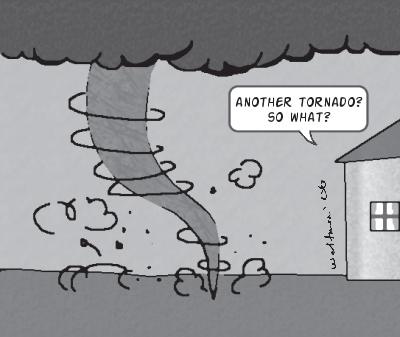
I have noticed a disturbing trend lately: Oklahomans with a very blasé attitude about tornadoes.
While I understand that it can be easy to have an “oh, this again?” attitude about the spring storm season, I have found that a lot of the people with a disinterest in the tornadoes also do not know the first thing about being safe in a tornado.
Do not mistake me – I do not know much outside of “head for the closet and hope” when tornadoes go by (hey, it worked for me on the May 3 tornado). However, I also have a healthy respect and fear of tornadoes.
Maybe understanding tornadoes will help people respect them. So, here for you is a quick and easy guide to tornadoes – what they are, how
they rank, and why you might want to hide from them instead of yawning when Gary England says one is heading toward your county.
Tornadoes are, basically, columns of air that are rotating rapidly and hanging from cumulonimbus clouds. Tornadoes skip along, meaning ground contact usually only lasts a few minutes.
They result from instability in the atmosphere and are usually associated with severe thunderstorms. In Oklahoma, they tend to form most frequently in May and June and will generally occur during the middle and late afternoon, with less chance of formation after 8:30-9 p.m.
Tornadoes are classified on the Fujita scale, a determination of the probable maximum wind speed of the tornado based on damage left behind.
F0 tornadoes have winds from 40-72 mph, meaning they do not do much damage.
Counseling Tip No. 8
F1 tornadoes are 73-112 mph, and F2 tornadoes are 113-157 mph, doing a noticeable amount of damage.
F3 tornadoes are 158-206 mph, meaning they do quite a bit of serious damage.
Finally, F4 tornadoes are 207260 mph and the infamous F5 tornadoes are 261-318 mph. These two, obviously, do an extreme amount of damage.
Tornadoes do not move along a set path. While a lot of central Oklahoma tornadoes seem to follow the same basic route, this does not mean tornadoes cannot veer.
Rather than yawning with boredom the next time the TV interrupts your regularly scheduled half-hour of sitcom-induced brain-death, maybe you will stop and remember that tornadoes can destroy your house. Having a healthy respect for and fear of them can keep you alive.
ewaltman@rose.edu
Stress is highly personal, and no two events impact people the same way. For example, a divorce may not greatly stress someone who has been in a bad marriage, but a co-worker’s daily chattering may drive that same person up the wall.
CAMPUS CHAT
Raider Response
If you or someone you know has problems managing stress, help is available. For more information or for free confidential assistance, contact the RSC counselors at 733-7373.
The results of last week’s Raider Response question will run next week in order to give those who would like to comment ample time to respond. The question and answer will run biweekly until further notice. Remember to send responses or question ideas to jray@rose.edu or hand-deliver to the Fine Arts building, Room 110. The question from March 31 follows.
Raider Response Question 2: What courses would you like offered during the summer sessions that are not already listed?
Daylight-saving time origins, yearly exhaustion ritual explored
Johnna Ray Assistant Editor
Many people are still recovering from the hour of sleep they lost Sunday, April 2 as a result of setting their clocks and watches forward in observance of daylight-saving time, or DST.
Although the adjustment of time for DST is a familiar concept to Oklahomans, they do not always know the reason it is observed or the fact that not all states observe it.
DST’s main objective is to match the hours of daylight available in the day during spring and summer months with the time shown on clocks.
It is hoped that this change eliminates the “wasting” of sunlight caused by sleeping at a time when the sun is still shining.
Also, it is believed that it will allow more time for evening activities due to the increase in natural light during later hours.
The idea of moving time forward an hour was first introduced by Benjamin Franklin in a humorous letter to the Journal of Paris suggesting that people should get up and go to bed earlier.
William Willet introduced a serious proposal to “save” daylight in his “Waste of Daylight” published in 1907.
During World War II, the German government became the first to put the idea into actual use.
was positioned in one zone.
President Ronald Reagan signed into law the Federal Fire Prevention and Control Act of 1986 which changed the start of DST to the first Sunday in April - the currently observed time - beginning in 1987.
The Energy Policy Act of 2005 introduced a change in DST observation that will begin on March 11, 2007, extending the period to include four or five additional weeks. This will allow for studies of how much, if any, energy is saved. However, if no impact is noted in the study, it is likely the 1986 schedule will be reinstated.
Some states, such as Hawaii, do not observe DST. Arizona also does not, although the Navajo Indian Reservation - located in Arizona, Utah and New Mexico - does.
DST was not addressed by federal law in the U.S. during the time spanning from 1945-1966.
However, some states continued to recognize the time change, while others did not, which caused a problem for people traveling from one state to another.
After establishing several time zones, the U.S. Congress made DST official. It was used as a wartime measure, until World War II began to wind down. Then, shortly after the war ended, the law that created it was repealed.
“It was not unheard of to have to reset one’s clock several times during a relatively short trip, e.g., bus drivers operating between Moundsville, W.Va. and Steubenville, Ohio had to reset their watches seven times over 35 miles,” according to the Web site wikipedia.com.
In an effort to create a standard acceptable to all states and eliminate some of the confusion, the federal Uniform Time Act of 1966 made it mandatory that DST begin on the last Sunday of April and end on the last Sunday of October nationwide, beginning in 1967. The law was changed slightly to allow states straddling a time zone to exempt the entire area of that state that
The Hopi Indian Reservation, located entirely in Arizona and surrounded by the Navajo reservation, does not practice the observation of DST. Indiana, divided by two time zones, has experienced a long-divided history on whether to observe DST or not and how to do so. More on this decision can be found by visiting www.mccsc. edu/time.html.
In addition to the adjustment of time during DST, many use the observation as reminder to check and replace batteries in safety products, like smoke and carbon monoxide detectors and fire alarms. jray@rose.edu
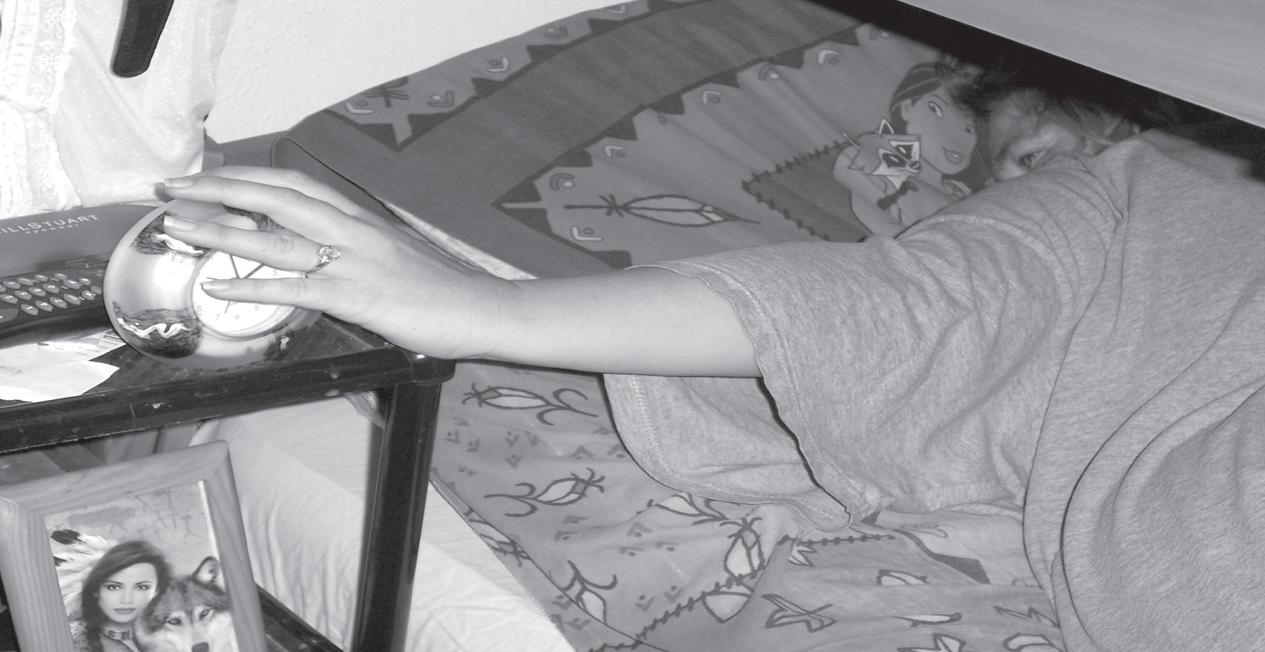
The daylight-saving time change in the spring makes it hard for some people to wake up in the morning. Turning clocks and watches forward an hour might save time in the long run, but many feel they are running behind for
by stacey mcentire and johnna ray
Emil Felarca
Tommy Smith
Dara Hays Katie Opalka
How to...
Simplify financial management
Shannon Hoverson Assignment Editor
Being able to manage your money efficiently is an advantage that will keep the ravenous creditors at bay.
If you are anything like me, money burns a hole in your pocket. As soon as I get some cash, I have the urge to spend, spend, spend.
So, how do you keep the money in the bank and out of your burning pocket?
I looked into this problem, doing exhaustive research for you, my faithful readers, and this is what I found:
$ Analyze where and how you spend your money. Eating out every day at the Rose Café may be nice, but it does add up to a lot of moola by the end of the month.
$ Get a notebook and track every penny you spend for about three weeks. This will show you how much you spend on average. You might be shocked at the amount of money you blow on impulse items. Do
you really need another bobble head doll for your car?
How to...
$ If you are somewhat computer savvy, try starting a spreadsheet to track your money. You can also keep a log if you do not have easy access to a computer with a spreadsheet program.
$ Rank your spending by priority. Start with the basics (food, utilities, rent, medical,
gas, tuition and so on). Sort the rest by “would be nice” (DVDs, CDs, video games, vacations) to luxury items (new car, hightech gadgets, home theatre). Do not forget to include “fun” in your priorities. You can plan to have a night out, in moderation, without throwing off your budget.
$ Factor in any fixed expenses, the stuff you need to have money for each month as well as your annual costs.
$ Pay all bills and fixed expenses first. Put aside a portion of your income in savings for the annual bills.
Then, whatever is left is what you have to live on. Of course, you can always put away some money for your “me” fund. As the saying goes, “All work and no play…”
$ Update your budget regularly, making sure to include emergencies that have arisen since the last month.
Staying on budget does not have to be an unpleasant task.
By following a good, wellthought-out plan, you will be able to handle the pit falls and still have a bit of spending money for your burning pockets. shoverson@rose.edu
Taxpayers given extra time to file, prepare
Johnna Ray Assistant Editor
Americans need not worry about being tarred and feathered if it is necessary for them to file an extension on their 2005 federal income taxes.
As a matter of fact, they will have two extra days to file 1040 forms or a 4868 extension this year and two extra months if an extension is granted.
The annual “Tax Day” originally held a deadline of March 15, but in 1955 it was changed to April 15. However, since this date falls on a Saturday this year, the deadline will be Monday, April 17.
The Internal Revenue Service has traditionally extended tax filing deadlines to the follow-
ing weekday when April 15 falls on a weekend or holiday.
Some states, including Maine and New York, celebrate Patriots’ Day on the third Monday of April each year, and therefore, will receive one additional day to file, extending their deadline to Tuesday, April 18. If an extension is requested and granted, the deadline will be Monday, October 16, allowing an additional six months and one day to file instead of the usual four-month, extended deadline of August 15.
The extra two days are considered valuable by tax preparers and clients alike, as the crowded rush of last-minute taxpayers often causes additional stress to both.
Many of those aware of the later deadline will wait until April 17 to file, allowing more time to pay taxes due or to prepare paperwork necessary for filing. And the burden on preparers will be lighter, as they will not have to work as many clients into their schedules for April 15.
In addition to April 17 being the deadline to file taxes or file for an extension, it is also the last day to contribute to traditional, Roth or Sep IRAs or to open any of these accounts for 2006. It is also the day payments for the first quarter estimated tax are due and the deadline to file estate, trust or partnership tax returns or to request an extension for them. jray@rose.edu
April 15 is known to many Americans as “Tax Day,” but more than tax deadlines make this day notable. Below are a few other ‘special occasions’ that occurred on April 15, as given by www.taxhistory.org and www.historychannel.com.
Ÿ Leonardo da Vinci was born, 1452.
Ÿ President Abraham Lincoln mobilized the Union army, 1861.
Ÿ President Abraham Lincoln was assassinated, 1865.
Ÿ The Titanic sunk into the North Atlantic Ocean, 1912.
Ÿ President Harry Truman signed the official peace treaty with Japan, 1952.
Ÿ Ray Kroc served his first hamburgers at the still young McDonald’s fast food chain, 1955.
Ÿ Fidel Castro began a tour of the U.S. during the Cold War, 1959.
Ÿ The U.S. 1st Infantry Division withdrew from Vietnam, 1970.
Ÿ Leona Helmsley, the “Queen of Mean,” began a four-year prison term* for tax evasion, 1992.
*Helmsley only served 18 months of the term sentenced.
Ÿ Jackie Robinson Day celebrated in all Major League Base ball ballparks, 2004 -current.
Many traditions abound for Easter, from eating chocolate bunnies to decorating eggs in bright colors. But many might not know the origins of these traditions.
The Easter Bunny
Probably the biggest symbol of Easter today is the Easter Bunny. The history of this furry little deliveryman is long and ancient. Believed to have first appeared in Germany in the 1500s, the rabbit was associated with fertility and spring. One folk tale tells the story of a small rabbit that would lay eggs in the garden for children to find the next day.
In the 1800s, when many Germans were
Easter Sweet Facts
immigrating to the U.S., they brought the cute little bunny with them.
Easter Eggs
Decorating eggs has been going on long before it became associated with Easter. Many cultures would decorate eggs with vivid colors to celebrate the coming of spring. In the Ukraine, they apply melted beeswax to the egg, coating the surface. Then, using a brass tool, they would decorate the egg by carving out intricate patterns. After each section had been carved, they would dip the egg into a dye. By the time the artist had finished they had a beautiful work of art.
The Greeks dye their eggs red to symbolize and honor the blood of Christ while
• In 2000, Americans spent nearly $1.9 billion on Easter candy.
• Ninety million chocolate Easter bunnies are produced each year.
those in Austria and Germany dye the eggs green. In the Slavic nations, eggs are decorated with special patterns done in gold and silver. Some decorate a hollow egg with various religious images.
The tradition of hiding the Easter egg has many twists and turns. In America, the eggs are hidden and then the children go on an “Easter Egg Hunt.” But in England, children beg for eggs and other presents on Easter.
Easter Baskets
This tradition originated with the Pennsylvania Dutch. Children would receive “rabbit’s nests” from “Oschter Haws” if they were good. Inside these nests would be brightly colored eggs and sweets. Later,
this evolved into the modern Easter basket with plastic candy filled eggs, chocolate bunnies and stuffed toys.
Easter Chocolate
The Germans are credited with making the first chocolate bunny. This practice continued after they had come to America and later included chocolate eggs. After the civil war, Americans embraced the tradition and by the 1930s the tradition of giving chocolate or other candy for Easter had become the norm.
So this Easter, celebrate the holiday with the Easter Bunny and hunt those Easter eggs. It has become an endearing tradition that will continue to be followed. shoverson@rose.edu
• Chocolate bunnies should be eaten ears first, according to 76 percent of Americans. Five percent said bunnies should be eaten feet first, while 4 percent favored eating the tail first.
• Each Easter season, Americans buy more than 700 million Marshmallow Peeps, shaped like chicks, as well as Marshmallow Bunnies and Marshmallow Eggs, making them the most popular non-chocolate Easter candy.
• Yellow Peeps are the most popular followed by pink, lavender, blue and white.
• Americans consume 16 billion jellybeans at Easter, many of them hidden in baskets. If all the Easter jellybeans were lined end to end, they would circle the globe nearly three times.
• Seventy percent of kids aged 6-11 say they prefer to eat Easter jellybeans one at a time, while 23 percent report eating several at once. Boys (29 percent) were more apt to eat a handful than girls (18 percent).
• Hot cross buns were among the earliest Easter treats, made by European monks and given to the poor during Lent.
• Pretzels were originally associated with Easter. The twists of a pretzel were thought to resemble arms crossed in prayer. Information provided by www.factmonster.com.
Up-coming ”Scary Movie” spoof anticipated
Bryan Trude Sports Editor
There comes a time in every critic’s career when he or she realizes that they are simply out of real ideas. The moment could come innocently, such as on the john, thumbing through the latest issue of Time magazine and realizing just how much of a little twerp Haley Joel Osmont really is. It could come as a thief in the night at the Xbox, as one is “pwning l00zarz” and suddenly
realizing that the possibility of a “Halo” movie could unmake the very fabric of their existence. Or, it could come when one cannot afford the gas to travel to the movie showing at AMC because some Conoco bigwig is tugging on the old purse strings. Regardless, take heart that when there is no movie to review, and no inane cinematic topic to rant about – honestly, I am done talking about anime for the time being – there is always at least one up-coming movie release for me to drool over.
Scary Movie 4
Opening April 14 in theaters everywhere, “Scary Movie 4” is exactly what it says it is: the fourth movie of the “Scary Movie” series.
Continuing the tradition of lampooning the horror movie genre alongside popular culture, “SM4” sees the series protagonist Cindy Campbell (Anna Faris) and her nympho
buddy Brenda Meeks (Regina Hall) battling against the vicious War-of-the-Worlds-esque “Tr-iPods.” I knew Steve Jobs was out to conquer the world, but come on… In addition to the task of saving all humanity from the menacing yet somewhat ergonomically sexy Tr-iPods, Campbell and Meeks are also being
o r o s c o p e s Aries March 21-April 19... “A barking dog does not bite,” but they have to pause to breathe eventually.
by reviewer
haunted by the ghost of a little boy in their house and they mean to discover why it is there.
This time, filling the role of obligatory retarded male interest is Tom Ryan (Craig Bierko), who is Campbell’s next door neighbor and local little old lady care person. If I know scary movies, and I do (get it? Scary movies? “Scary Movie 4?” Oh, I am so witty today!) I would expect much of the same slapstick, risqué comedy that has made the last three so great.
Also, moviegoers get to see NBA legend Shaquille O’Neal – the real Shaquille O’Neal – inadvertently beat the tar out of that smug, self-serving twit Dr. Phil – the real Dr. Phil – and who would not want to see that?
Other stars making appearances in “SM4” include Charlie Sheen, Carmen Electra and Leslie Nielsen. Yes, I am just as surprised as you are that Nielsen is not yet dead. btrude@rose.edu