
THE INDEPENDENT NEWSPAPER SERVING NOTRE DAME, SAINT MARY’S AND HOLY CROSS
WEDNESDAY, SEPTEMBER 17, 2025 | VOL. LX, NO. 10
WEDNESDAY, SEPTEMBER 17, 2025 | VOL. LX, NO. 10
By Observer Editorial Board
The Observer abhors political violence in all its forms, especially as extremists have increasingly relied upon it to silence their opponents. Slaying political figures is repugnant to the most basic principles of democracy.
The assassination of Charlie Kirk was an egregious and monstrous act. Regardless of his political beliefs, which members of this board have varied views on, Kirk advocated for political dialogue on college campuses and was killed engaging in this very activity. People are free to
disagree with Kirk’s politics and even think him a horrible person. But attempting to justify Kirk’s death in any way is wrong.
The Observer has published different perspectives on Kirk’s legacy in the past week. Without endorsing any one of these perspectives, we stand by our columnists’ right to share their opinions. If our readers disagree with any column we have published, we encourage them to write their own response, rather than attacking our decision to publish.
Freedom of expression is a value that has defined this newspaper since its inception and one that we continue to hold to. Our
duty as an independent student newspaper is not necessarily to present our own opinion on every issue, but rather to provide a forum for open debate to take place. We will exercise this right to its fullest, even in the face of criticism or controversy.
With America’s mounting polarization, it can be difficult for some to understand and humanize the political “other.” Like the rest of American society, college campuses have not been immune to this trend, with one study showing 34 percent of college students are open to the use of violence to stop speeches they disagree with.
The Observer finds this troubling, and we seek to protect
By Megan Cornell Associate News Editor
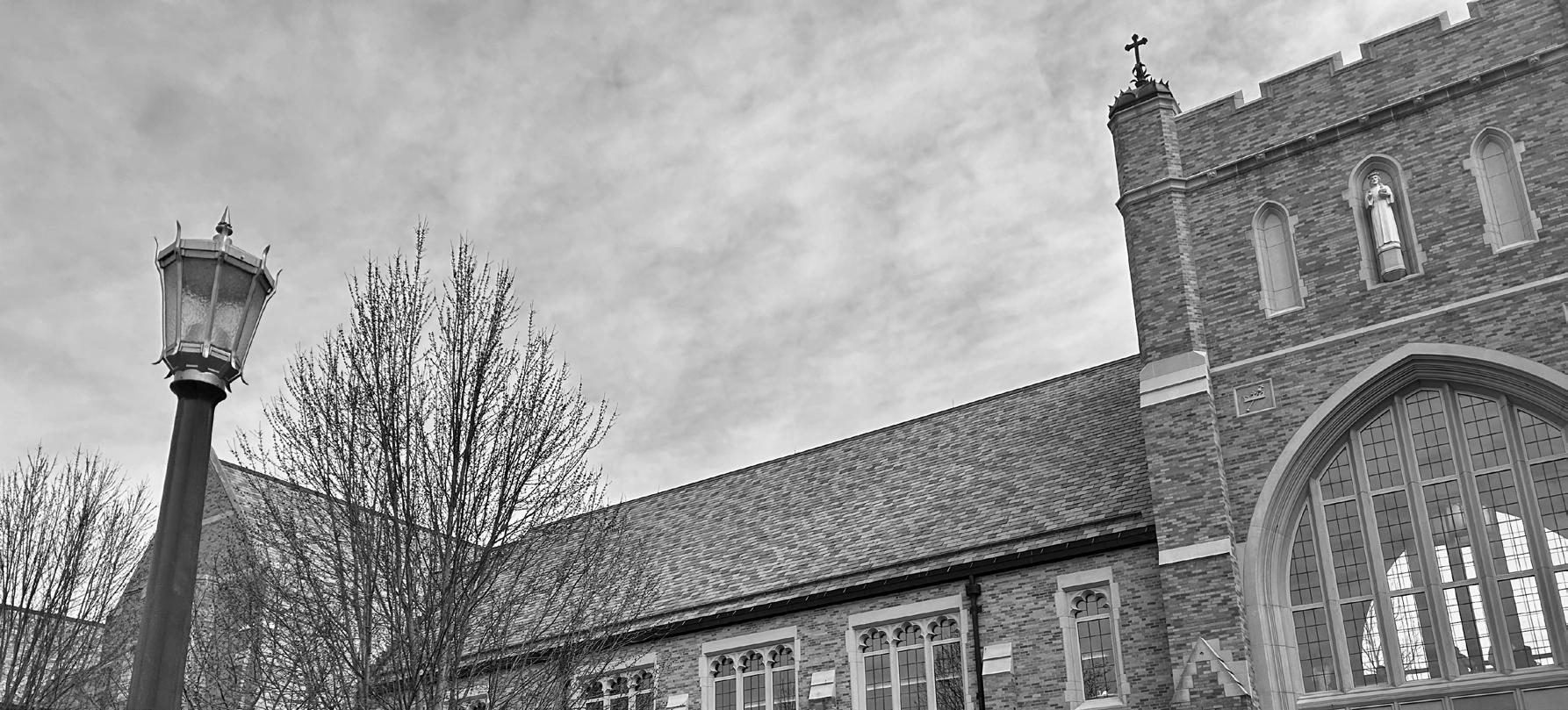
In late April, Notre Dame Law School’s Lindsey and Matt Moroun Religious Liberty Clinic represented St. Isidore of Seville Catholic Virtual School before the United States Supreme Court.
This highly publicized case centered around St. Isidore, a state-funded Catholic virtual charter school in Oklahoma. The Oklahoma Charter Board denied the school’s application, arguing
NEWS | PAGE 4
Mosiac Night at SMC
The Saint Mary’s Student Diversity Board hosted its 10th annual event honoring diversity.
that a Catholic school using state funding violated the Establishment Clause of the First Amendment.
The Religious Liberty Clinic, alongside defense firm Dechert LLP and Notre Dame alumnus Michael McGinley, represented the school in its legal fight against the charter board.
After losing at the Oklahoma Supreme Court, the clinic filed a certiorari petition asking the United States Supreme Court to hear the case. The court accepted the case in March and oral
OPINION | PAGE 5
RIP grad lounge
Columnist Oliver Ortega writes about a study space formerly for graduate students.
arguments began on April 30.
The central issue of the case rested on whether or not charter schools function more like public or private schools. The clinic argued that charter schools are similar to private religious schools that receive publicly funded vouchers, which has been enabled by the Supreme Court’s ruling in “Carson v. Makin.”
The Oklahoma Charter Board disputed this logic,
see “Law” on page 4
SCENE | PAGE 7
Bieber underwhelms
The popstar’s new album, “SWAG IT,” is a bland reinvention.
free speech on this campus, in our pages and beyond. Political violence and the condoning of such have no place in the tri-campus community. In the wake of Kirk’s murder, the assasination of Minnesota legislator Melissa Hortman in June and two assassination attempts on President Donald Trump last year, we must turn down the temperature and find some common ground with our neighbors.
The tri-campus is rich with political diversity and has numerous forums where political beliefs can be discussed. We encourage students to engage actively in these forums and have the courage to disagree
respectfully with others. We must be willing to speak to and learn from others to avoid falling into the bottomless pit of echo chambers and personal narratives.
Political violence corrodes the very foundations of our democracy. No one deserves to be killed for exercising their right to free speech. Although Kirk’s legacy can and will be debated, all should affirm his conviction that college campuses should be places where students should be free to speak their minds and engage in constructive debate. At The Observer, we will continue to be an institution where this important work can take place.
By Mayte D. Mendez News Writer
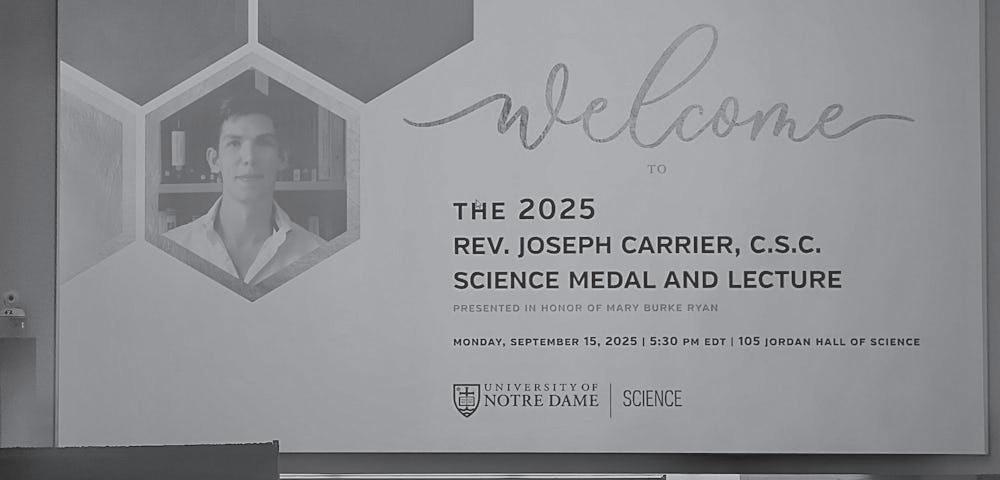
Oxford University’s James A. Maynard, a leading figure in number theory, was honored with the prestigious Carrier Medal at a ceremony held Monday in Jordan Hall of Science from at 5:30 p.m. The Carrier Medal, established by the University of Notre Dame in 2022, recognizes scientists “whose work has transformed their disciplines and whose discoveries inspire future generations.” The Carrier Medal was named in honor of Rev. Joseph Celestine Basile Carrier, C.S.C., who became the first director of the science program at Notre Dame in 1865.
Maynard’s work spans some of the most puzzling unsolved problems in mathematics, including the famous Riemann Hypothesis, which offers a $1 million reward for proof. “I’m motivated by big, famous problems,” Maynard said. “Nobody says, ‘I am going to sit down and solve X Hypothesis.’ It’s a
SPORTS | PAGE 12
Men’s soccer
The Fighting Irish begin their seven-game homestand with a 3-1 win against Omaha.
mixture of working alone and collaborating with colleagues, testing models and different ideas.”
In his lecture, Maynard highlighted how prime numbers, while deeply theoretical, have surprisingly practical applications.
For example, cryptography — the science of encrypting and decrypting information — relies on primes for secure online transactions. Without it, online banking, private communications and digital commerce would be vulnerable to cyberattacks. “While many applications to prime numbers are different, the least theoretical application of prime numbers is buying things online, which affects billions of people daily,” Maynard said. Additionally, Maynard highlighted the importance of “internet security, maintaining that all transactions are kept secure” which in turn is completed through “the encryption of the number so that it is hard for a hacker to
see “Lecture” on page 2
SPORTS | PAGE 12
Women’s soccer
Notre Dame hosts Duke in a top-10 showdown on Thursday in their first ACC home game.

ndsmcobserver.com
“TO UNCOVER THE TRUTH AND REPORT IT ACCURATELY”
900 Hesburgh Library, Notre Dame, IN 46556
Editor-in-Chief
Liam Kelly
Managing Editor Gray Nocjar
Asst. Managing Editor: Aynslee Dellacca
Asst. Managing Editor: Grace Tadajweski
Asst. Managing Editor: Henry Jagodzinski
Notre Dame News Editor: Sophie Hanawalt
SMC News Editor: Berhan Hagezom
Opinion Editor: Redmond Bernhold
Sports Editor: Noah Cahill
Scene Editor: Peter Mikulski
Photo Editor: Mariella Taddonio
Graphics Editor: Isabelle Rutland
Social Media Editor: Duncan Stangel
Ad Design Manager: Isabelle Rutland
Business Manager: Zack Pohlman
Systems Administrator: Jack MapelLentz
Advertising advertising@ndsmcobserver.com
Editor-in-Chief lkelly8@nd.edu
Managing Editor gnocjar@nd.edu
Assistant Managing Editors adellacca01@saintmarys.edu, gtadajwe@nd.edu, hjagodzi@nd.edu
Business Manager zpohlma2@nd.edu
Notre Dame News Desk shanawal@nd.edu
Saint Mary’s News Desk bhagezom01@saintmarys.edu
Opinion Desk rbernho2@nd.edu
Sports Desk
ncahill2@nd.edu
Scene Desk
pmikulsk@nd.edu
Photo Desk mtaddonio01@saintmarys.edu
Systems & Web Administrators webmaster@ndsmcobserver.com
Policies The Observer is the independent, daily newspaper published in print and online by the students of the University of Notre Dame du Lac, Saint Mary’s College and Holy Cross College. Editorial content, including advertisements, is not governed by policies of the administration of any institution. The Observer reserves the right to refuse advertisements based on content.
The news is reported as accurately and objectively as possible. Unsigned editorials represent the opinion of the majority of the Editor-in-Chief, Managing Editor, Assistant Managing Editors and department editors. Commentaries, letters and columns present the views of the authors and not necessarily those of The Observer. Opinion space is available to all readers. The free expression of all opinions through letters is encouraged. Letters to the Editor must be signed and must include contact information.
Questions regarding Observer policies should be directed to Editor-in-Chief Liam Kelly.
Post Office Information The Observer (USPS 599 2-4000) is published Monday through Friday
By Maria Alice Souza Maia News Writer
On Tuesday afternoon, Kellogg Institute Fellow and economics professor Enrique Seira Bejarano gave a lecture at the Hesburgh Center for International Studies as part of the Kellogg Institute seminar program. During the onehour lecture, Bejarano discussed the link between government corruption and trust in democratic values.
Bejarano, who earned his Ph.D. in economics from Stanford University, began his lecture by defining apex corruption as “the use of public office for private gain by high-ranking politicians, bureaucrats and judges.”
He emphasized the consequences of this type of corruption, saying that citizens may stop trusting the institution which apex politicians have control over or perceive these politicians as models or examples.
The remainder of the lecture focused on the central question: “Is apex corruption causally undermining democracy?’’
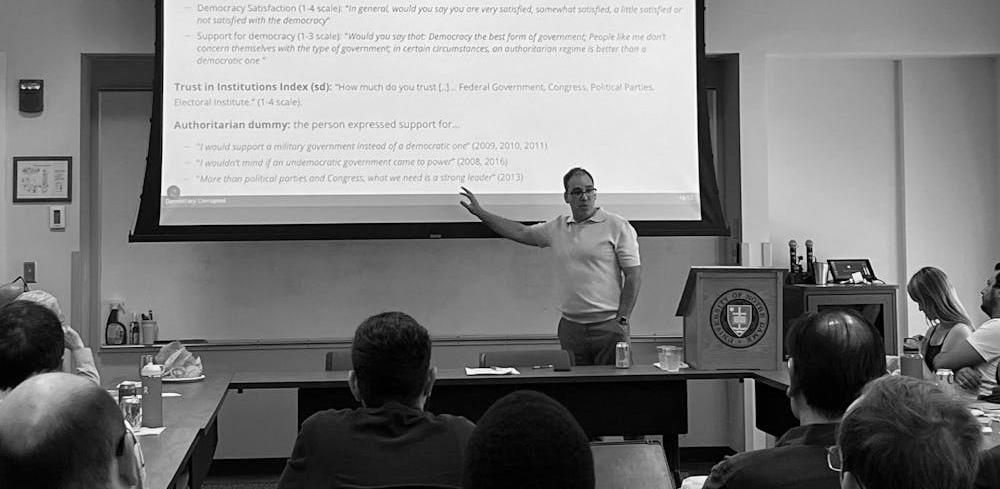
Bejarano used two methods to answer this question. First, he conducted an observational study using data about corruption scandals by high profile politicians from 17 Latin American countries over 10 years. Afterwards, Bejarano and his colleagues ran a randomized controlled trial (RCT) in Mexico to determine whether apex corruption impacted democratic values and associated behaviors.
For the observational study, Bejarano used social media and news archives to
Continued from page 1
build his data set.
“First, we want to know when a corruption scandal happened, the exact dates and where. And we want to know the apex politician was involved. So what we did here was scrape the Twitter accounts for each of the 17 countries for the four main news channels of each of these countries for 10 years, looking for words, critical drive, corruption, etc,” he said. “It was a bit painful, but we ended up with a data set of corruption scandals for very high-level politicians.”
To draw his conclusion, Bejarano compared the data about the timing of corrupt acts with data from the Latinobarometer public opinion survey, which asks participants questions about their perception of corruption and satisfaction with democracy.
Bejarano concluded that after people hear about a corruption scandal, they are more willing to have an authoritarian in power.
“This may be driven by pessimism. People may be pissed off right after seeing the president’s testimony, but it doesn’t
show on other opinions, so they’re not angry across the board. [Their anger] seems to be focused on the political system,” Bejarano said.
Next, Bejarano described the random field experiment he conducted in Mexico. “We expose[d] citizens, just before an election ... to footage of politicians taking statutory action from the incumbent party, from the opposition party,” he said. “Then we can manipulate the content. We can manipulate the timing, randomly, how close to election we expose them to that. And then we can measure, we link this with an incident data of voting. This is not selfreporting data, this is actual voting measured by email.”
The field experiment allowed Bejarano to study the effect of apex corruption on democratic values over time. “What we do in the RCT is we go to homes and revisit them months later.
It’s a better setup to look at persistence. The farther I go here, the less credible the data strategy is. It’s more different people, different neighborhoods. But I, we try to do something on persistence of the RCTs,” he said.
To recreate the experiment for the audience, Bejarano showed the footage of the brother of the president of Mexico, Andrés Manuel López Obrador, taking bribes and counting stacks of cash, as well as videos of senators from the opposition parties taking millions in bribes. “I’m going to show you actual footage of politicians taking statutory action ... this is not uncommon in Latin America,” he said. Bejarano concluded the lecture by emphasizing the consequences of corrupt leadership. “Apex corruption revelations do decrease stated support for democracy and democracy-supporting behaviors like voting and willingness to be electoral observers,” he said. The effects of apex corruption extend beyond democratic values. “They also decrease trust, not only in democratic institutions but in neighbors too, as well as increasing stealing, suggesting beliefs of trustworthiness and internalized norms change,” Bejarano said.
Contact Maria Alice Souza Maia at msouzamai@nd.edu
Corrections
The Observer regards itself as a professional publication and strives for the highest standards of journalism at all times. We do, however, recognize that we will make mistakes. If we have made a mistake, please contact us at editor@ ndsmcobserver.com so we can correct our error.
Maynard told the audience about his favorite prime number — the number 2. “It’s simple, elegant, and foundational,” he said. He also referenced “sexy primes” and discussed the ongoing search for odd perfect numbers, saying he “does not believe one exists.”
A recurring theme in Maynard’s talk was the combination of talent and hard work. He described the process as “interactive,” often confronting false positives in his own work, but emphasized “the joy of small victories.”
“Pure joy comes in unexpected moments,” he said, recalling reading “The Music of the Primes” within the mathematics field as a transformative experience.
Maynard also touched on the more technical and collaborative side of number theory, exploring open problems such as the Riemann Hypothesis, and the interplay of theory with applied mathematics. His research bridges math with other sciences, showing the relevance of primes beyond theory, even in fields such as photography and secure digital commerce.
Maynard also referenced German mathematicians, Leopold Kronecker by stating “God made the whole numbers ... all else is the work of man.”
Friday, September 19
1:00–2:30 p.m.
Leighton Concert Hall, DeBartolo Performing Arts Center
Open to the public.
FEATURING:
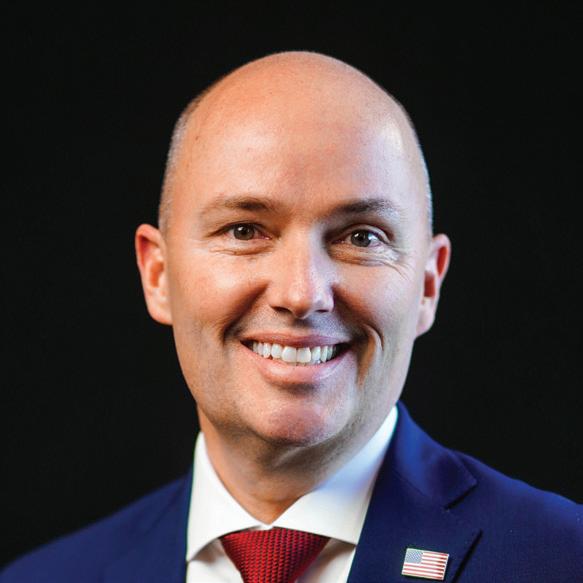

Spencer Cox R-Utah
In a moment of increasing polarization and political violence in the US, join us for a conversation about Western state pragmatism as a model for more constructive engagement. Provost John McGreevy will give opening remarks.

Gov. Michelle Lujan Grisham D-New Mexico
By Berhan Hagezom Saint Mary’s News Editor
The Student Diversity Board (SDB) held their 10th annual Mosaic Night event from 4 p.m. to 6 p.m. Thursday evening in Stapleton Lounge.
Senior Nina Andoh, president of SDB, explained the significance of the event for the Saint Mary’s community. She also described how it is connected to SDB’s mission.
“Mosaic [Night] first started 10 years ago, so in 2015, and it was an event to get to know those around you, get to better know your community, especially for the diverse students, so they felt that there was also a place for them within SMC. That is still the main mission of SDB, to make everyone feel welcome, at home, at peace at Saint Mary’s,” Andoh said, “We do so through fun events like
this, educational programming and other stuff that overall [is] meant to be fun but also meant to be educationally inclusive.”
At the event, students lined up for tickets to use at three different vendors: Krak Boba, Loupa’s Chicken and Tropicana Ice Cream Shop. Students were also able to engage in different arts and crafts activities, view slideshows of former Saint Mary’s students and Mosaic Nights over the years and receive flyers of various resources on campus. Music from different cultures was played in the background. Andoh shared that these events help underrepresented and diverse students feel more included and seen on the campus. In its 10th year, she stated that the popularity of this event shows the importance of its presence in the community and how it
also reflects the growth of the College as a whole.
Discussing how events such as this one are evidence that the College has become more welcoming over the years, Andoh said, “It means that Saint Mary’s as a community has kept growing and evolving to accommodate for more types of students, for how the world has been changing around it and to keep up with the times. So to have an event like this means a lot to absolutely everybody and everybody before us and everybody who will come after us.”
Senior Alaina Motes explained that she attended the event because she felt last year’s rendition of the event brought more community and belonging to the campus.
“It allows people to come together and see different cultures and experience new things. It allows people to feel
more welcome in a community like this,” Motes said.
Freshman Julianna Mader shared that the event was impactful for her due to her ability to meet new students.
“I just met a few other students tonight and I think it’s a good way to get everyone acquainted with each other, because you might not be able to do that in your classes, because you might be a little afraid,” Mader said.
Junior Amelia MacEachern emphasized the importance of events like these for bringing diversity to the College.
“I think it’s important to celebrate diversity especially in the world that we’re in right now with the current economic climate. I think it’s important to celebrate our differences and the history behind being able to do so,” MacEachern said.
Despite a few changes and updates, including the name change to the Division for Belonging from the Division for Equity and Inclusion and less participation from clubs compared to last year, SDB was still able to preserve the event.
“We’ve had the division that we work under’s name change, but that doesn’t really change any of the programming or anything that we’re going to do. Last year, I know we had some other clubs and organizations do it with us. This year, we did it alone … we wanted to promote some of the other spaces on campus, aside from clubs, so all of the spaces and centers, all of the resources for all students,” Andoh said.
Contact Berhan Hagezom at bhagezom01@saintmarys.edu
By Emma Betz News Editor
As higher education continues to reckon with the emergence of AI, the Keough School of Global Affairs recently hired Mohammad Rifat as an assistant professor of tech ethics and global affairs. He is a specialist in AI ethics, human-computer interaction and critical social science.
Rifat earned his doctorate in computer science from the University of Toronto this year. While he primarily works in the Keough
Continued from page 1
contesting that a charter school received state funding and was therefore considered a public school. The state’s brief reads, “The Oklahoma Constitution and the Establishment Clause … both prohibit the State from using public money for the establishment of a religious institution ... Under both state and federal law, the State is not authorized to establish or fund St. Isidore.”
Following oral arguments, the Supreme Court split evenly on the issue.
“When that happens, the lower court’s decision is affirmed by default, with no opinion or legal rule announced by the Supreme Court,” clinic director John Meiser wrote in a statement to The Observer.
“It has essentially the same
School he also holds positions within the Department of Computer Science and Engineering. He also works significantly with the Notre Dame Institute for Ethics and Common Good.
“In Keough, we prioritize values like human development and human dignity, but I also get technical expertise from computer science,” Rifat said, reflecting on his experience within both fields.
Rifat’s research is primarily concerned with the question of how society can
legal effect as if the Court had never chosen to review the case. In our case, that means the Oklahoma Supreme Court’s decision invalidating St. Isidore’s charter-school contract remains in place — and there are no other courts to which that decision can be appealed,” Meiser wrote.
Justice Amy Coney Barrett recused herself from the case, which is why a split decision was possible. Although she gave no official explanation, some speculate that the recusal was because of her close relationship with Notre Dame Law School
Professor Nicole Garnett, who is the godmother of one of Barrett’s children.
“An evenly divided court is rare because in most cases the Court will sit with all nine justices — meaning one side will command a majority of at least 5-4,” Meiser wrote. “In those cases, the Court will nearly always
make AI more inclusive of marginalized communities. Rifat explained how AI and computer systems are designed based on the information accessible to them — which he says is often from the most modernized cultures. Faith-based and traditional communities in the Global South might not be represented in data sets AI systems are trained on, he explained, and therefore people in these communities may not be represented in the content these AI systems produce.
issue a decision that not only decides the particular result for the parties in the case, but which also sets legal precedent that both guides and binds all other courts across the country.”
Because the Supreme Court upheld the earlier court’s ruling, St. Isidore will not be able to open as a charter school.
“We are all disappointed, of course, that St. Isidore was not able to open after years of hard work from Oklahoma’s two dioceses to bring new educational opportunities to families who simply don’t have them. But I deeply admire their resilience and commitment to this mission — and I am so happy to see them find another way to build a virtual schooling option for kids who need it,” Meiser wrote.
Although it cannot establish a religious charter school, the Archdiocese of Oklahoma City is forming a
“AI is modernistic, and it uses the methods and methodologies and techniques and approaches in a way that reflect the institutions and techniques in modern culture, but not traditional cultures, not indigenous or faith-based cultures. The faith-based communities are not strong consumers of modernism,” Rifat said.
Rifat says these communities are being inadvertently marginalized and that it’s his goal to bring their history and life stories out of the
virtual Catholic school with a combination of private funding and the state’s new private school choice tax credit program.
“Just last week, the dioceses announced a new plan to open a statewide virtual school — St. Carlo Acutis Academy — outside of the charter school program,” Meiser wrote.
After the Supreme Court’s decision, the clinic has resumed a variety of other projects, including representing individuals seeking asylum from religious persecution and assisting a variety of religious non-profit groups.
“We’ve just started our new year with 28 law students working on a wide variety of projects … In any given year, our students will work on dozens of projects both in courts and outside of them. I think that the diversity of legal experiences that we are able to offer our students is one of
shadows.
Professor Rifat also spoke on the responsibility scientists should have in a world that has become increasingly AI-dominated.
“As a scientist myself, our responsibility is to steer AI towards the direction where the business interests don’t dictate how AI should serve the community. The deeper questions are human dignity, welfare and safety,” he said.
Contact Emma Betz at ebetz@nd.edu
the most valuable aspects of the Clinic and something we take great care to build,” Meiser wrote.
Law students are an integral part of the clinic’s success, and the clinic’s high profile cases give them opportunity to develop hands-on legal skills.
“[Working with the clinic] has been very enriching and certainly the most practical, hands-on legal training I have received at the Law School,” 2L Cameron Grinnell wrote in a statement to The Observer.
3L student Isabella Fazio echoed Grinnell’s sentiment, writing that her “experience with the Religious Liberty Clinic has been deeply rewarding. I’m grateful that my research will help advance the protection of freedom of religion and conscience worldwide.”
Contact Megan Cornell at mcornell@nd.edu
By Oliver Ortega
At the end of last school year, Hesburgh Library administrators closed the graduate student lounge on the east side of the ninth floor. The space now belongs to The Observer, which was forced out of South Dining Hall due to the ongoing renovations there. Meanwhile, no plans have been announced to replace the lounge in the library. I have an office carrel with a window on the same floor, on the north side. It’s where I do most of my work as a Ph.D. candidate in the English Department. Over the summer, as I worked on my dissertation, penned scholarly articles and lesson-prepped for a class I am currently teaching, I watched an array of workers transform the lounge into a student newsroom. Movers hauled in tables, chairs and large Mac desktops, electricians put in new wiring to accommodate the influx of computers and painters slapped on fresh coats of paint to give the walls new life. Given my journalism background and my habit of reading The Observer, I was pleased to welcome the new neighbors at the start of the academic year. But on the other hand, as a graduate student, I couldn’t help but feel slighted. When we had a lounge, I would use it every day of my work week, Monday through Friday. It was a space
just for graduate students: its existence acknowledged that many of us work out of the library, and that graduate students in other buildings need a place to eat, socialize and recharge before going back to their labs and offices.
Aesthetically, though, the lounge was a janky and depressing space for a number of reasons. The cabinets were dilapidated and sections of the casing covering the bottom of the walls was chipped or missing entirely. The chairs were a mishmash of styles that were probably surplus from other rooms in the library. And there are no windows. Several times, I brought up the need for repairs to building managers and administrators, in writing and verbally. But they ignored me. Eventually, I gave up complaining and accepted the lounge for how it was.
Not long after they announced the closure in late April, an acquaintance of mine, Subhas Yadav, a Ph.D. student in romance languages, expressed to me his frustration with the news. Occasionally, we would bump into each other in the lounge; but most of the time our paths diverged, given that he is a night owl and I am generally a morning person.
In an interview, he told me that the kitchen area was what he liked the most about the lounge.
“If I got food on campus, I could keep it there,” he said. “It was right at the library, so you are not obliged to step
out; you could have lunch or dinner [in the lounge].”
He also noted that it was a good way to meet other graduate students, saying, “You would meet new people from different departments and also parts of the world.”
Yadav wants to spearhead an effort to get library administrators to open up a new space for graduate students — one with a kitchen, a microwave and table seating. The basement, he said, might be a good place to open a new lounge. Last week, he emailed Margaret Meserve, interim dean of Hesburgh Libraries, asking for such a space, or, at the very least, for a microwave and a fridge, maybe next to the vending machines.
In an email to me, Meserve, who is also vice president and associate provost for academic space and support, noted that graduate students have a lounge in Duncan Student Center, on the second floor. Additionally, she highlighted investments by the College of Arts and Letters in graduate student work and lounge spaces in Decio, O’Shaughnessy, Corbett, O’Neill Music and Jenkins Nanovic Halls. She also underscored recent renovations to the first and second floors of the library and the accessibility of the Mahaffey Family Scholars Lounge in front of Au Bon Pain.
“The Library has a master plan to renovate the remaining floors of the tower,” she wrote. “We recognize that
LETTER TO THE EDITOR
some students valued the former lounge on the ninth floor, and as future renovations proceed, we will continue to consult with students and faculty about their needs for amenities on the upper floors.” Since they closed the lounge, I started going to Decio Hall in the morning before starting my workday at the library. I leave my lunch in the English Department’s refrigerator and go back around noon to heat my food in the microwave and eat in the dining area by Decio Café. On a good day, sunlight trickles in through the wall-to-wall windows. I look out and see green lawn, trees and bushes. It’s very scenic. Truthfully, my treks between the library and Decio are refreshing. And the
change in routine makes me feel more integrated into the English Department. In the morning I check in and, in the late afternoon or early evening, I check out. Maybe once the snow, cold and permacloud hit, the change won’t be as enjoyable. But for now, it works. Still, it seems graduate students have been left in the lurch. In the waning days of summer break, when no one was around, I placed my ID on the card reader, just in case I could still get in. But no luck. The light stayed red. The scanner piped its denial at me.
The views expressed in this column are those of the author and not necessarily those of The Observer.
Contact Oliver Ortega at oortega1@nd.edu
What do the most wellknown and celebrated dorm masses on campus have in common: Dillon Milkshake Mass, Baumer Banana Bread Mass and Fisher Ice Cream Mass? They all take place in male dorms. Why? Because, among other reasons, those dorms all have one crucial resource: a priest in residence. In fact, every single men’s dorm at Notre Dame has a priest in residence. This allows for daily or near-daily Mass, consistent spiritual guidance, opportunities for confession and adoration, and a priest who knows the names, faces, and hearts of the students he serves. This is a cornerstone of the Holy Cross model of residential spiritual formation. Now, ask yourself this: if I wanted to go to a dorm Mass on a random Thursday night, where couldn’t I go? Any women’s dorm. Not a single one would be holding Mass that night. Meanwhile, eight male dorms offer Mass on Thursdays.
Let’s look at the numbers.
Male dorms hold Mass an average of 4.2 times per week: eight of the 16 male dorms offer Mass five times a week (Keenan/ Stanford counting as one dorm because they have a shared chapel), no male dorm holds Mass fewer than three times weekly and all male dorms have a priest in residence.
Female dorms hold Mass an average of 2.2 times per week: 13 of the 15 offer Mass only twice a week and over half of female dorms don’t have a priest in residence.
This gap isn’t just a difference. It’s a spiritual disparity that many women on this campus feel and experience.
And yes, technically, we can attend Mass in a men’s dorm and many of us do. But it’s not just about going to Mass. It’s about belonging in a space where spiritual life is cultivated consistently, where the sacraments and relationships with clergy are part of our daily life, where we feel seen, shepherded
and supported. It’s about forming a spiritual home within our dorm communities, not seeking them in other spaces which clearly aren’t our own. Attending Mass in a men’s dorm, where traditions are deeply rooted in brotherhood, is both beautiful and disheartening. It’s inspiring to witness their strong spiritual culture, but it underscores what we lack.
As a resident of Breen-Phillips Hall since freshman year, I know exactly the lackluster spiritual life characteristic to many women’s dorms firsthand. Last year, for the first time ever, BP was assigned and welcomed a priest in residence. He helped to transform the spiritual life of our dorm. Over time, people began forming relationships with him, which contributed to more consistent mass attendance, and what felt like a greater sense of a spiritual community forming. Then our Priest in residence was called away after just one
year. His apartment, newly built and fully outfitted for a priest, has sat empty. The BP community was never told why it hasn’t been filled. Since then, we’ve gone back to a schedule of rotating priests who often don’t know our names, rarely stay after Mass, and sometimes seem to be rehearsing homilies meant for the men’s dorm mass they will say right after ours. This experience is not unique to BP. For the eight women’s halls (1,516 women) who do not have a priest in residence, this is a weekly routine. And it doesn’t stop with Mass. While male students receive emails, flyers, and direct invitations to consider joining Holy Cross, women must seek out religious life on their own. There is no parallel infrastructure for women’s vocational discernm ent at Notre Dame. For male students, it’s visible and accessible, even if you don’t want to encounter it. For women, it’s invisible unless you go digging.
I understand that Holy Cross is a male order. I understand why men at Notre Dame may more readily see paths into religious life and priesthood. But that should not excuse what feels like a disproportionate investment in men’s spiritual formation over women’s. And it should not mean that female students go without access to regular pastoral support in their own dorms. If Notre Dame is truly a place that seeks to form the hearts and minds of all of its students, we have to ask: why is the formation of women’s spiritual lives treated as less of a priority? If we truly believe in the mission of Holy Cross and the promise of residential life as a cornerstone of spiritual development, then it’s time to extend that promise equally to all students, in every dorm.
By Edy McCurrie Columnist, “The Bridge”
Charlie Kirk was assassinated and Iryna Zarutska was murdered. The footage is grotesque and shocking. The aftermath is painful. There is very little to say about these tragedies that has not already been said. Polarization and political violence have been pressing issues for years, capturing and retaining the attention of all those who dare discuss American politics. Organizations like BridgeUSA and Braver Angels have long led the effort to depolarize our nation.
America has been popularly diagnosed with a deteriorating ability to talk across the aisle and, consequently, the solution is framed as talking across the aisle more. And yet, this is what Charlie Kirk was killed for doing. Do we really need another conversation? I do not say this to make the effort seem hopeless, nor to devalue productive discussion, but to take the solution a step further. While violence as a result of political polarization is an inherently political issue, the solution does not have to be a political solution. We chase after the golden ideal of working together despite varying political beliefs, but we stop there. We end up satisfied with the pretty rhetoric of our idyllic solution and smugly decide we are more politically mature than others because we can hold a basic conversation. After all, it is the nature of the individual to believe that they are the exception — that they must not be part of the problem.
By championing the aesthetic ideal of bipartisan collaboration, we do not go far enough. We stop short of acknowledging others’ inherent value as children of God and loving them as such. Instead, we shy away from the enormous difficulty of this task by assigning to ourselves the duty of merely looking past the artificial groupings of political parties. We tell ourselves that if we can have a conversation, if we can simply tolerate one another, we are doing enough. It is not that bipartisan collaboration is not important, it is that we are too weak to push ourselves further past it to address the root of the issue. What we have diagnosed as a national issue is an individual one. This is not an elaborate societal issue. This is a loss of fundamental values and morals on the individual scale. There is little that can be done on a national scale if individuals have not first extensively reexamined themselves. America cannot heal until it identifies the wound. Thus far, we have only been identifying symptoms, briefly hinting at the real issue along the way. We have reduced each other down to what we say and what we do, rather than the fact that we are. Our mere existence is proof of God’s love and our value in Him. There also arises the issue of what we think we deserve. Especially in recent years, there has been a growing trend of entitlement that extends far past what we really do deserve. We are not entitled to silence people or things that offend us. We are not entitled to infringe on the rights of others. We have begun

to expect that others should do for us what we would not do for them. It has become increasingly apparent that we want to be loved without the sacrifice of loving. But do not make the mistake of equating “loving” or “valuing” someone as a child of God to passive acceptance of what they may be wrongfully choosing. Love is often far tougher
than we would like it to be. Disagreement is difficult, and loving a neighbor you disagree with is harder. At the University of Notre Dame, we are offered a daily reminder of our identity as children of God. We have a unique opportunity to take the values embodied here and to live them out wherever we may go, serving as an example for those who do
not have the same privilege. We are blessed to have been given such a weighty responsibility.
The views expressed in this column are those of the author and not necessarily those of The Observer.
Contact Edy McCurrie at emccurri@nd.edu
By Noirin Dempsey Columnist, “Through the Overton Window”
If you’re anything like the average college student, you probably enjoy a good Instagram doomscroll. Call it a guilty pleasure, but there’s something relaxing about mindlessly swiping through posts and seeing what other people our age are wearing, joking about and obsessed with lately. Still, half an hour and 50 reels later, it’s hard not to feel a little less than enough. I love being a woman. In fact, womanhood is one of the greatest gifts in my life, and I know many other women who feel the same way. But it’s often difficult to reconcile the images of flawless makeup, a golden tan and the perfect body — all common features of women on social media — with most of the women in my life, much less the girl I see when I look in the mirror. Logically, we can tell ourselves these accounts are the results of
filters, AI and cosmetic surgeries, but it doesn’t dispel the feelings of inferiority. Inside, many of us are asking ourselves, “How am I supposed to be a real woman?”
Honestly, it’s no wonder that women are more susceptible than men to mental health issues. According to a survey by FHE Health, 51% of women see their bodies as inferior to those on social media, compared to just 37% of men. We compare ourselves to fake women like it’s an Olympic sport, then wonder why we feel so hopeless and unfulfilled. So then, if the images we see on social media are unrealistic representations of femininity, what does it mean to be a real woman?
A true woman is not identifiable only by her body, but also by her soul. Women are deeply empathetic and nurturing human beings. We appreciate beauty, find joy in life’s small details and are good at recognizing and interpreting emotions. Many of us also enjoy
cultivating our appearances — from parading around in flouncy princess dresses as little girls to learning to do our hair, makeup and nails — and hobbies like painting, cooking, scrapbooking, sewing, gardening and planning social events with friends, regardless of our age. While certainly not universally applicable or exclusive to women, it seems all women have at least a few, if not more, of these traits. It’s interesting to me what all these qualities have in common: beauty. Not fake or contrived beauty, but true and natural beauty — beauty that is found in human emotion, appearance, art, nature and loving relationships with others. Fostering our natural feminine inclinations to amplify and add to the beauty in the world around us will similarly enhance our own inner beauty and is the first step towards embracing our own authentic womanhood. Here at Notre Dame, we are fortunate enough to have the
greatest example of authentic womanhood always watching over us. Just look up, and you’ll see Mary standing atop the Golden Dome with her arms outstretched, beckoning us to her and her son. Although she looks peaceful, we know Mary suffered much during her life. Despite her many struggles, however, she still managed to leave us with a perfect example of love, humility and service to others — a gift that has arguably cultivated some of the most beauty in the world. We would do well to rely on Mary in prayer and in example as we strive to embrace our femininity. Recently, a trend has become popular in which women film a progression of their faces as they gradually remove their filters, makeup and elaborate hairdos. At the end, only their natural face and hair are left, and they look surprisingly … human. By highlighting the power of technology and cosmetics to drastically enhance
a woman’s appearance and render her basically unrecognizable, these videos help women realize that obtaining perfection is unrealistic, no matter what they may see on social media. But, to me, the most wholesome part of the trend can be found in the comments sections under each video, where women frequently express their admiration and love for each other’s unfiltered, no makeup looks. This kind of unity among women in support of natural beauty is incredibly beautiful in itself. Love for each other’s God-given beauty, inside and out, is an attitude that needs to be normalized if we have any hope of encouraging women to be unapologetically and authentically themselves.
The views expressed in this column are those of the author and not necessarily those of The Observer.
Contact Noirin Dempsey at ndempsey@nd.edu
By Mackenzie Horton Scene Writer
Justin Bieber is lacking. As someone who would refer to herself as a “Belieber”, I am underwhelmed by Justin Bieber’s musical performance in “SWAG II.” Of course, anything he releases exhibits talent and a seriously impressive set of vocals, but this album is especially subpar. I was expecting to come away from “SWAG II” with multiple great songs to add to my personal playlist, but it was hard for me to even find two that I truly like– or at least like enough to even add to the once-packed Justin Bieber playlist.
“SWAG II” is a new type of sound for Bieber, and maybe that is why it did not land super well for me and many music critics. The last album he released four years ago, “Justice,” was 16 tracks and packed full of hits. Since then, he has hired a new producing team, changing up his “vibe and sound.” This album could have been really good – a cool R&B and indie rock-ish album with collaborators Mk.gee and Dijon adding hints of Michael Jackson elements and a retro sound. But to me, it sounds tired and unfinished, and the catchy

Michael Jackson sound they were trying to capture is not heard. And I’m not the only one who thinks this way. Renowned music magazine Rolling Stone called “SWAG II,” “safe” – not what an artist wants to hear about an album that’s supposed to sound fresh and innovative.
It’s not all mediocrity, though; there is one song I do actually really enjoy. The opening song, “SPEED DEMON”, has to be my favorite from this album. It’s upbeat and fun as Justin Bieber mocks his haters singing, “checking these chickens” and “Is it clocking to you?” (A reference to the infamous video
that has spread around the internet nonstop for the past few months). He keeps things playful with these funky lyrics, freeing the song from the serious or preachy undertone heard on the rest of the album.
Additionally, I like one other song: “EYE CANDY,” the eighth track on the album. This song
seems to serve as a tribute to his wife, Hailey Bieber. Although it has some confusing lyrics, we see Bieber returning to his roots of love songs infused with an easily danceable tempo. Also, I argue that this song isn’t “tired” and “safe” like the others in the album; it easily stands out from the rest.
In all honesty, although I did not love this album, I do support artists trying something new, even if it doesn’t land. One could argue that this album is more raw and faithful to his artistic ambitions, as opposed to forced crowd-pleasing songs that attract the widest audience possible. If that is the case, then maybe he should keep creating music like this? After all, he is already a billionaire; he doesn’t need every album to do extremely well. At this point, he is at liberty to create whatever music he wants and doesn’t have to surrender to commercial pressure – a true artist. So even though my current impression is underwhelming, I will continue listening to “SWAG II” and try to find other songs that I like hidden within the other ... 40 tracks.
Contact Mackenzie Horton at mhorton5@nd.edu
‘Lilo & Stitch’: Pointlessness at its finest
By Sydney Nelson Scene Writer
Having been released in theaters nearly four months ago, I must admit that this “Lilo and Stitch” review is a bit overdue. However, with its long-awaited release on Disney+ earlier this month, the film is reaching a new audience.
In its opening weekend, “Lilo & Stitch” grossed over $300 million worldwide and was the first MPA film of the year to hit $1 billion at the box office. But now that we’re past the initial opening weekend commotion, does Dean Fleischer Camp’s remake of the 2002 classic live up to the hype?
The original “Lilo & Stitch” — and if you haven’t seen it, you’ve been living under a rock — revolves around teenage Nani fighting to keep custody of her sister Lilo after their parents’ death, and the arrival of an alien refugee who Lilo adopts as her dog. Set in Hawaii, the film is famous for its tropical aesthetic. But at the heart of the original “Lilo & Stitch” is a story of family and fighting for the ones you love.
If I’m being completely honest, I was expecting to heavily dislike the remake, seeing it as another unnecessary Disney cash grab. Additionally, I was highly skeptical that the remake could truly capture the same magic as the original. However, I was pleasantly surprised to realize the film isn’t

all bad.
Within the first five minutes of the film, I was greatly impressed by the special effects and use of CGI. The opening scene, in fact, looked like it was directly out of a “Star Wars” movie. The character Stitch, played by the original voice actor and the director of “Lilo & Stitch”, Chris Sanders, was flawlessly brought to life, alongside numerous other alien creatures. I was also pleased by the soundtrack. Having partially expected a modernized version of the original score, I was relieved when I heard the familiar sound of “Hawaiian Roller
Coaster Ride,” a staple feature of the original film. Additionally, the plot stayed faithful to the original for the majority of the movie (unlike many other Disney remakes). Some scenes even perfectly replicated those of the 2002 version. Camp’s edition, however, does alter a few aspects of the film, adding more depth to the story. For instance, more emphasis is placed on Nani and her dream of becoming a marine biologist. Many characters were modified, as well, with some having less prominence than they did in the original. Throughout the past couple
of years, Disney has become notorious for altering the original story in their remakes, resulting in disaster (think “Mulan” or “Snow White”). But, in my opinion, the changes in “Lilo & Stitch” were done relatively well and didn’t weaken the story itself. The overall message, however, is a different matter. While I found this film fairly enjoyable, it lacks the theme of family that the original version delivered so powerfully. The aspect of “Lilo & Stitch” that has always been the most impactful to me is how determined Nani was to keep her family together. As a child, watching Nani fight for
Lilo and Lilo fight for Stitch was inspiring and a large reason why the film was so moving. Camp’s modifications completely omit this theme. Instead, “Lilo & Stitch” focuses more on individual ambition than familial love.
The characters also just didn’t resonate with me as much as they did in the 2002 version. While the acting was satisfactory and the dialogue was humorous, live-action characters simply do not have the same effect as animated ones. Moreover, Lilo and Stitch’s relationship, which is an integral part of the original film, isn’t as compelling in the remake.
Overall, I don’t think this is a bad movie by any means. In fact, I did enjoy many of its features. However, the exclusion of the main theme completely changed the movie for me. The 2025 version of “Lilo & Stitch” further proves that live-action remakes simply cannot capture the magic and nostalgia of their original films. Unfortunately, live-action remakes seem to be the only thing that Disney is capable of producing nowadays. Relative to other Disney remakes, “Lilo & Stitch” is stellar. However, compared to the 2002 version, it proves unnecessary, and you’d simply be better off rewatching the original.
Contact Sydney Nelson at snelson01@saintmarys.edu
By Tyler Reidy Associate Sports Editor
For the second time in four years under Marcus Freeman, Notre Dame football is 0-2. The bad start in 2022, although it included a loss to Marshall, was more understandable given the inevitable growing pains of a new starting quarterback and a first-year head coach.
This year’s 0-2 start, however, is much more puzzling. It’s not that Notre Dame lost the games in the first place. You can live with losses of three points and one point to two teams in play for deep postseason runs. It’s how Notre Dame lost to Miami and Texas A&M, allowing 68 total points, including 41 at home to the Aggies.
At this point, you may not want to hear about the College Football Playoff until Notre Dame fixes its defensive problem — let alone until it wins a game. That’s fair. But for now, the outlook for the season’s final 10 games are very murky. Some are certain that a return to the postseason is out of the question, while others feel that a 10-game Irish win streak would be enough to sneak in.
My belief is that Notre Dame, as currently constructed, will not make the College Football Playoff. How can a team that just gave up 41 at home possibly string together 10 consecutive wins? Then again, in the week following Notre Dame’s loss to Northern Illinois last season, I didn’t have that team reaching the National Championship Game. In reality, everything is still in play. The only question is whether or not the landscape of college football allows the ceiling to be a CFP berth. For a power program like
Notre Dame, going 11-1 will always get you into the Playoff, regardless of whether a highquality win appears in your record. The 2021 Irish team, which lost a single game and beat 9-4 Wisconsin at a neutral site for its best win, ended the year as the fifth-ranked team in the country. Two losses and a mediocre body of wins, however, certainly aren’t enough to instantly punch a ticket to the 12-team dance.
I bring this up because 2025 Notre Dame already has two losses and, for the moment, an unimpressive remaining schedule. At No. 25, USC lines up as the only currently ranked team the Irish will see the rest of the way (the Trojans will come to town on Oct. 18). If you want to see Notre Dame as a Playoff lock with two losses, you’d better root hard for every opponent on Notre Dame’s schedule to drastically improve their own position in the eyes of the committee.
To what extent can Notre Dame’s opponents do that? Let’s start with the two quality losses. At No. 4 in the nation, Miami already appears to be one of college football’s elites. And if they can beat No. 7 Florida State on the road three Saturdays from now, the Hurricanes would guarantee themselves a top-three ranking (barring a major upset) entering the ACC Championship. Texas A&M, meanwhile, has a more complicated road. Three of A&M’s final five games are road tilts against ranked opponents – No. 3 LSU on Oct. 25, No. 23 Missouri on Nov. 8 and No. 8 Texas on Nov. 29. If the Aggies can go 1-2 in that stretch and win every other game they’ll be favored in, they’ll still be a surefire Playoff
team when the season ends.
What about Notre Dame’s upcoming opponents? I would write off Purdue, Boise State, Boston College, Navy and Stanford as probable nonfactors. Only by beating Notre Dame can any of those teams make a serious push for the national top 15, and we already know that one more Irish loss would kill their postseason prospects.
In its 41-35 loss at No. 17 Ole Miss, Arkansas showed some real potential — not only to make a mess of Notre Dame’s porous defense but also to contend with the big boys of the SEC. The Razorbacks will have plenty of chances to do that, playing six of their final seven games against ranked opponents. It’ll be tough, however, as after a loss to Notre Dame, Arkansas would have to at the very least beat two of Tennessee, LSU and Texas on the road to avoid a four-loss season.
NC State could realistically carry only one loss into November, when it’ll face Georgia Tech, Miami and Florida State — three ACC teams all ranked above the Irish. As mentioned before, USC has the highest potential to improve Notre Dame’s schedule quality, but it’ll have to navigate a minefield of road games. Split your four games at No. 9 Illinois, No. 24 Notre Dame, Nebraska and No. 6 Oregon, and we’re definitely talking about the Trojans as a CFP contender — albeit in direct competition with the Irish.
Neither Pittsburgh nor Syracuse look promising after early-season losses, but both will play the likes of Miami and Georgia Tech in the second half, affording the Panthers and Orange a shot at reaching the
SMC GOLF
top 25. What did the College Football Playoff committee think about two-loss teams last year? There certainly were plenty of them, including national champion Ohio State, whose 2024 body of work wasn’t all that different from what 2025 Notre Dame’s could become.
Last year, the Buckeyes went 10-2 in the regular season, losing by a combined four points at Big Ten champion Oregon and at home against Michigan. That sounds a lot like the losses Notre Dame already has this year, although I’d consider the mid-September Texas A&M loss a much “better” result than a late-November loss to Michigan. Ohio State’s wins outclass Notre Dame’s potential victories, though, as the Buckeyes defeated top-10 foes Penn State and Indiana in the final month. Ultimately, despite missing their conference championship game entirely, the 2024 Buckeyes received the No. 8 seed in the College Football Playoff, providing an immediate glimmer of hope for how 10-2 Notre Dame could be viewed come December.
Ohio State’s opponent, Tennessee, also made the Playoff as a 10-2 squad that missed conference championship weekend. The Volunteers didn’t end the season with that strong of a resume at all, beating 6-7 Oklahoma on the road early on and a three-loss Alabama team for their strongest wins while losing at 7-6 Arkansas and SEC champion Georgia. Tennessee still comfortably reached the CFP as the No. 9 seed, though, providing more evidence to support 10-2 Notre Dame.
Now for the 10-2 teams that did not receive an
invitation, Miami and BYU. The Hurricanes did not beat anyone better than 9-4 Louisville and 8-5 Florida, and their losses came in November to nonjuggernauts Georgia Tech and Syracuse. Notre Dame already has 2024 Miami beat simply by the quality and timing of its two losses.
The timing of BYU’s losses also hurt the Cougars, who dropped back-to-back contests against 5-7 Kansas and eventual Big 12 champion Arizona State in the second half of November. BYU did have a high-quality win at SMU very early on but didn’t beat any other notables — Arizona State could have been that second key victory.
The verdict Of course, it’s only midSeptember, and there’s no predicting what the rest of the college football world will look like come Dec. 7. But it is quite obvious that a 10-2 Notre Dame, if one of its future opponents enters the top 20 or if several become ranked, will make the College Football Playoff. However, if teams like Arkansas, NC State or USC face second-half slides — or even if Miami or Texas A&M fade in November — it’s no guarantee that the Irish get in.
Although the season would be over for the Irish with three losses, it’s not done with two. However, Notre Dame has got to play perfect football from here on out and receive some help from both its opponents and from the elites of the Big Ten and SEC, who must make sure that fringe Playoff teams near the Irish cannot win a conference championship.
Contact Tyler Reidy at treidy3@nd.edu
By Harrison Brown Sports Writer
Over the weekend, Saint Mary’s golf traveled to Ironwood Golf Course in Normal, Illinois, to compete in the Illinois Wesleyan Fall Classic. The Belles finished in sixth place out of the 19 teams at the event.
Saint Mary’s best performance at the Classic belonged to Melanie Maier. The sophomore shot 11 over par in the two-round event. In the first round, Maier shot a 79, which placed her 35th on the individual leaderboard. A strong day two performance allowed her to climb 17 spots and finish tied for 18th overall.
Senior Julia Lizak headlined the first round. Lizak shot two birdies on the day, one on a 445-yard par five and one on a
360-yard par four. Ultimately, she finished with a 38 on both the front and back nine, for a total score of 76. However, Lizak did not compete in round two. Overall, the team finished +27 on day one and sat in seventh place on the team leaderboards.
Senior Amanda Melling shot a 36 on the back nine, which propelled her to a total of 78 on the day. Senior Breana Harrington also contributed to the day one score with a total of 82.
Heading into the second round, the Belles were aiming for a solid performance to keep climbing up the team leaderboard. Maier helped them do just that with three birdies and a round total of 76. Her birdies came on a 474-yard par five, a 140-yard par three and a 446yard par five.
Melling (80), Harrington (81) and junior Collen Hand (83) rounded out the day two scorecard for a total of +32. The Belles climbed one spot on the leaderboards to finish in the top six for the event.
Saint Mary’s had multiple notable performances: Maier at T18, Melling at T30, Harrington at T49 and Hand at T76. Additionally, freshman Katharine Swain finished her second collegiate event, shooting a total of 171 over the two rounds. Illinois Wesleyan ended up winning the event on its home course. The Titans had four
players finish within the top 10 on the individual leaderboards and were 19 over par as a team. Sophomore Gigi Zera led the team, carding a 146 for the event. Becky Williams, a senior from DePauw University, topped the individual leaderboard, shooting five under par. In round one, she finished even. Round two was even better for her as a nine-birdie performance, including seven in the back nine, allowed her to be the sole player in the event to finish under par. Her teammate, freshman Daisy Williams, led the leaderboard after round one and finished in
second place after round two. The two’s performances led DePauw to a second-place finish. After their performance at Ironwood and a top two finish earlier in the year, the Belles have high hopes for the remainder of the season. They will next travel to Thornapple Pointe Golf Course in Grand Rapids, Michigan, for their first conference jamboree within the MidAmerica Intercollegiate Athletics Association (MIAA) on Monday, Sept. 22.
Contact Harrison Brown at hbrown23@nd.edu
Have
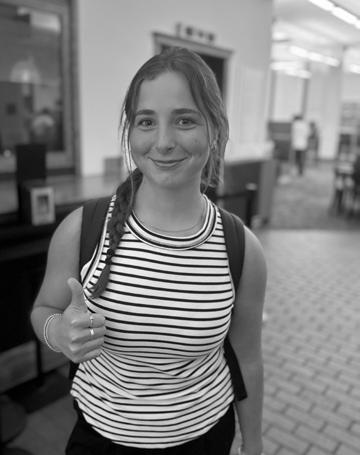
Jessica Toohig sophomore Howard Hall “Espresso.”

Maddy Miceli freshman Lemans Hall “Celsius”
What is your go-to source of caffeine?

Aubrey Rice freshman Holy Cross Hall “Starbucks refresher.”

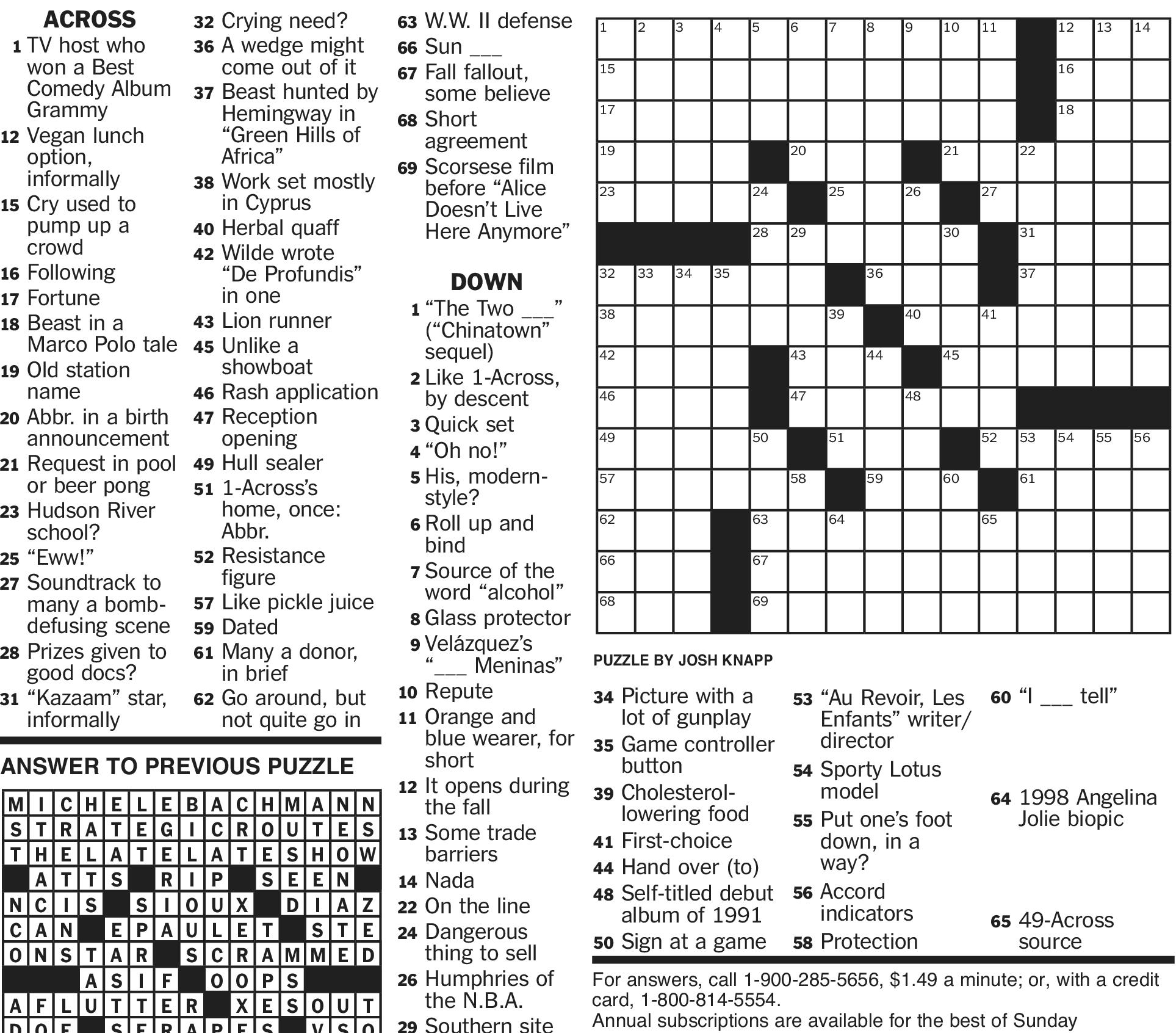
CROSSWORD | WILL SHORTZ

Natalie Wilson freshman Holy Cross Hall “Alani.”

Alexander English junior Keenan Hall
“I don’t use caffine.”
Have an idea for a poll? Email dstangel@nd.edu
When is your first exam?
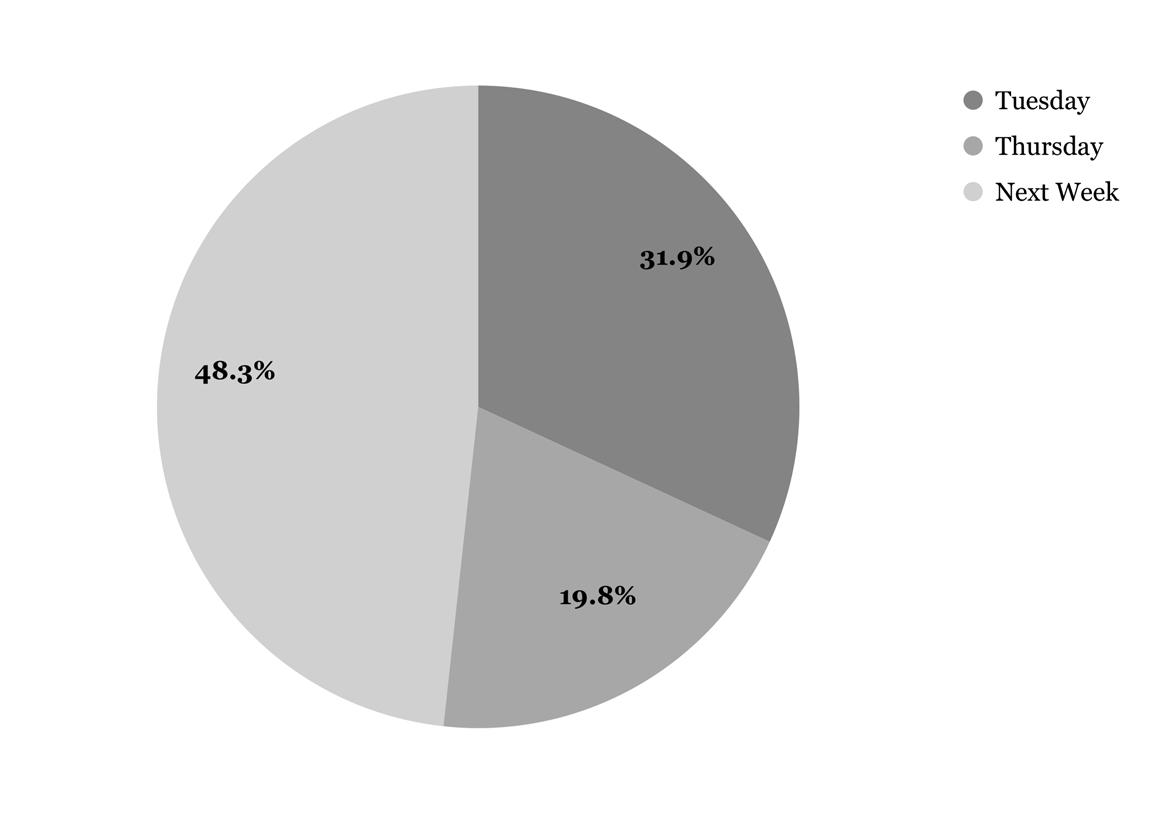
A recent poll conducted by The Observer via Instagram recieved 157 respondents and asked students when their first exam will take place. With 56 votes, 48%, the majority of respondents said their exam would be next week. The next largest group 37 votes, 32%, said their exam would be on Tuesday. The smallest group, at 23 votes, 20%, said their first exam would take place on Thursday.
Want your event included here? Email news@ndsmcobserver.com
Wednesday
Webinar: “Nepal’s Gen Z Uprising” Zoom webinar 10:30 a.m.- 11:30 a.m.
Thursday
Notre Dame Women’s soccer vs. Duke Alumni Stadium 7 p.m.
Friday
Resources for Recovery: Planting Hope Fliedhouse Mall 11 a.m. - 1 p.m.
Saturday
Notre Dame football vs. Purdue Notre Dame Stadium 3:30 p.m.
Sunday
Performance by organist Joanathan Moyer Reyes Organ and Choral Hall 4 p.m. - 5:30 p.m.
By Chris Dailey Sports Writer
The Holy Cross women’s soccer team seeks a crucial Chicagoland Collegiate Athletic Conference (CCAC) win against Judson on Wednesday night. Kickoff is set for 7 p.m.
The Saints sit at 1-4 on the season and have struggled to put the ball in the back of the net. All three of their goals thus far came in their lone win against Goshen on Sept. 3. Junior midfielder Erika Perez netted a brace in that game, while junior forward Miriam Iturriaga-Sanchez chipped in with two assists. Holy Cross outshot the Maple Leafs 25-5.
Holy Cross’ most recent outing, a 1-0 loss to Rochester Christian, followed a similar story. The Saints were once again dominant in the attacking third, outshooting the Warriors 14-5. However, unfortunately for head coach Duma Magagula’s team, none found the back of the net.
The Saints now face a Judson side that has struggled in a similar fashion. The Eagles are 1-3, and the only goal they have scored this season came in their 1-0 win against Indiana Tech on Sept. 6. Sophomore midfielder Liza Von Blumenthal provided the decisive strike.
Holy Cross and Judson have shared some amazing battles over
the years. In 2022, the Eagles won 3-2 in the final 10 minutes of play. In total, the two teams combined for 50 shots. The year prior, Holy Cross reigned victorious 1-0 thanks to a late goal from Katie Garon. That win marks the last time the Saints have defeated Judson.
With both programs enduring rough starts to the season, a win is crucial for both sides. This particularly rings true for Holy Cross, whose next three fixtures are against St. Ambrose, Olivet Nazarene and St. Francis – last season’s top three teams in the final CCAC regular-season table.
While the Eagles’ next slate of matches aren’t as steep of a
challenge, they are far from easy. Judson squares off against St. Francis, followed by a match against Viterbo, who always prove to be a worthy opponent in conference play.
The Saints will look to seek a vital CCAC victory by relying on Iturriaga-Sanchez at the number nine position. Iturriaga-Sanchez is no stranger to causing havoc for opposition backlines. The menacing forward recorded 12 goals and five assists in 2024, tallying a team-high 29 points. Although she showed off her playmaking ability against Goshen with two assists, the Saints need Iturriaga-Sanchez to regain the scoring form that defined her 2024 campaign.
Holy Cross will also search for contributions in the final third from sophomore forward Emma Vono. During her freshman year, Vono assisted six goals – a teamhigh for returning players in 2025. Wednesday night will prove to be a season-defining game in Holy Cross’ young season. A win will get them back on track prior to their toughest stretch of the season. A loss will hurt their chances of returning to the CCAC playoffs. This game is make or break. Streaming for the match can be found on Holy Cross’ athletic website.
Contact Chris Dailey at cdailey2@nd.edu
By Claire Watson Associate Sports Editor
Now a junior in college and in my third year with The Observer, I have done things like interviewing players inperson and over the phone, taking on almost 10 articles a week and now, covering football games. This past semester, I have had the honor of joining the sports department football beat, the team of writers that specifically focus on the Notre Dame football program.
After watching the Miami game during the first week of school, I was nervous about covering the first home game. Lots was expected of me, the stadium was sold out, the teams were rivals and I had to ask myself, how was I going to do it all?
The answer: plenty of studying before the game.
After studying more on the different types of articles and terms I needed to know, I was excited this past Saturday as I was given the opportunity to attend the Notre Dame home opener against Texas A&M. I felt ready as I memorized (for the most part) the key players, schemes and trends for the Aggies and Irish.
Needless to say, I walked into the game extremely overconfident.
As I am across the street as a Saint Mary’s student, I left early to make sure that I was on time to the game and to make sure that I was in the right place. Arriving around 5:45 p.m., I was greeted warmly by other press members who were present for the game which made me feel more comfortable while I was there. As kickoff neared, I looked from above at the entirety of the sold-out stadium, a sea of fans in maroon from Texas A&M and those dressed
in green for Notre Dame. I fed off all of that energy and prepared to write my articles as I was assigned to cover key moments and the Jeremiyah Love player spotlight.
I watched as fireworks filled the sky as the Irish took the field and I saw the student section wave their yellow towels.
To my surprise, I got my first key moment early on in the game as I watched the Irish block the Aggies’ punt on the first possession of the game.
Notre Dame recovered the ball to score the first touchdown of the evening. At that point, sitting high in the press box, I heard the stadium erupt, similar to the Indiana vs. Notre Dame in-state College Football Playoff game. Words can’t describe how loud it was.
At that point, I was certain that Notre Dame was on a roll
and that things were going well for me. But things took a quick turn in the second quarter.
I watched in fear when halfway through the second quarter, a player went down for the Aggies and for the first time in that game, I was unsure what to do. I started asking myself a lot of questions: “Do I write about this?” I decided not to. “How do I respond to this?” I still don’t know the answer. Notre Dame Stadium was dead silent. I had never heard the stadium that silent before. It was a flood of emotions that I didn’t know what to do with so I decided to get up and take a walk.
After finding some coffee and talking a bit with my fellow sports reporters, I walked back to my seat and about ten minutes later we learned
Francis A. McAnaney Humanities
that the injured Aggie, senior Bryce Anderson, was going to be okay. Quickly following that, the stadium was back in full swing as it erupted in cheers to show their support for Anderson and I was ready to jump back into the game.
Due to the injury delay, the third quarter didn’t end until around 10:40 p.m., and at that point, the score was way higher than I had expected it to be. It was tied at 31 and the game just got more intense from there. Luckily, at that point, I had the majority of my writing done, so I just needed to add on a few more notes for my Jeremiyah Love spotlight. I sat there quietly, listening to my partner write quickly as he jotted down notes for his game wrap. I sat and watched during a break in the fourth quarter,
PAID ADVERTISEMENT
Join us for an evening of conversation with Julia Alvarez, best-selling author of How the García Girls Lost Their Accents and In the Time of the Butterflies.
Thursday, September 25 – 7:30 p.m.
Moreau Center for the Arts, O’Laughlin Auditorium Visit saintmarys.edu/events for tickets.

the stadium went dark, music blaring and lights flashing as fireworks blasted off.
Notre Dame pushed ahead late with a touchdown to lead 40-34, but then I watched as a bad PAT snap left the Irish only leading by six. It would come back to bite the Irish, as with less than 20 seconds left in the game, the Aggies scored a touchdown and converted their PAT to take the 41-40 win.
While it was certainly an up and down experience, I would not have wanted any other football game to be my first one. Notre Dame lost, but for me, it was a win. It was an enjoyable experience that kept me on my toes throughout every minute.
Contact Claire Watson at cwatson7@nd.edu

By William Cahill Sports Writer
Saint Mary’s College tennis began its fall season at the Hope College 2025 Fall Invitational in Holland, Michigan this past Friday and Saturday. The invitational was bracket-style, with players competing against competitors from various schools from around the region.
The Belles notched four wins in doubles play. In the B doubles draw, senior Evelyn Demblans-Dechans and junior Sophia Pischalko secured 6-4 wins over Emma Smith
and Felicity Kolb of John Carroll University before they moved to the quarterfinals and took a second 6-4 win over Madison Wei and Mallory Matthews of Hope College.
In the A draw, senior Emma Kealy and sophomore Shannon Dudy defeated Addison Lyons and Daryn Krause of Kalamazoo College 6-2, but fell 2-6 in the quarterfinals. In the C draw, the Belles earned their fourth doubles win, as freshman Mia Graziano and sophomore Odessa Norton prevailed over Rachel Grissom and Alex Vermeulen of Calvin College
7-5. Saint Mary’s totaled 14 wins in singles play, beginning in the C singles draw, where DemblansDechans secured wins over Molly Stevison of Kalamazoo College and Julia Hooker of Calvin College, 8-3 and 8-4, respectively. In the D singles draw, Pischalko notched an 8-5 win over Soussana Kimbouris of Kalamazoo College, followed up in the third round by an 8-4 win over Rachel Grissom of Calvin College. Also at D singles, sophomore Lanie Brant gathered wins over Madelyn Dell of Spring Arbor University and Ava Hovey of
Adrian College, 8-6 and 8-2. In the B draw, two Belles earned wins, as junior Anna Gardner earned a tough win over Maya Lee of Kalamazoo College 8-7 (75) and Dudy secured wins over Calvin College’s Ryan Morey and Roosevelt University’s Milena Novikova, 8-6 and 8-7 (7-5), respectively.
At E singles, Graziano notched a dominant win over Ava Hauser of Adrian College, 8-0. Also in the E draw, Norton earned an 8-2 win over Kaitlyn Schmitt of Spring Arbor and an 8-2 win over Sophia Wallstrom of Spring Arbor.
Finally, in the F draw, freshman Maria Manzella recorded a commanding 8-0 win over Julianne Hindman of Ohio Northern. Additionally, freshman Raelynn Pickup prevailed in a nail-biting match over Alivia Mott of Spring Arbor, 8-7 (7-2).
The Belles have an extended break before they head to Anderson, Indiana on Oct. 10, where they will take on both Indiana University East and Anderson University in a double dual match.
Contact William Cahill at wcahill2@nd.edu
By Payton Dymek Sports Writer
The Saint Mary’s soccer team is currently riding high, opening the season with a perfect record of 5-0 for the first time since 2011. The Belles have outscored their opponents by large margins and have only let two goals be scored on them this season so far, demonstrating their sound execution of offensive and defensive plays. With their upcoming match against Anderson (2-2-1), much is to be expected of the Belles, from key players such as freshman forward
Mia Johnson, sophomore defender Danielle Escobedo and sophomore defender Isabella Kreydich. Johnson is coming off a pivotal match from last week against Concordia University Chicago, where she recorded her first collegiate career hat trick. Johnson has already scored seven goals this season on 11 shots, leading the team with shot-on-goal percentage of .423. Johnson was also named Michigan Intercollegiate Athletic Association (MIAA) player of the week, and as of the morning of Sept. 12, ranks fourth in Division III in goals scored.
Escobedo is an aggressive defender who is able to feed anyone on the team, but is not afraid to take a shot on goal when her team needs her to. As a freshman, she was ranked second on the team for assists, was tied for sixth in total points scored and was named an MIAA Defensive Player of the Week. This year is no different, with Escobedo already having two assists, one goal and helping score five points this season.
Similarly, Kreydich is a force to be reckoned with on the field. Last season, she was ranked second on the team for goals, was tied for
By Payton Dymek Sports Writer
This Saturday, Sept. 20, Notre Dame will face Purdue on the turf for the 89th time since their Battle
for the Shillelagh Trophy began. This trophy has been exchanged between the two since 1957 and is a symbol of the tradition shared between the two Indiana programs.
The fierce rivalry between Notre
Dame and Purdue began in 1896, with a hard-fought Boilermaker victory of 28-22. Soon after, the Irish would go on to dominate the rivalry, not only stringing together wins before Knute Rockne’s arrival, but also winning every single Purdue matchup during his coaching tenure. By the 1930s and ’40s, Notre Dame had firmly established itself as the dominant power in the series, setting the stage for Purdue’s later resurgence.
That reputation earned Purdue a new nickname — the “Spoilermakers.” It was born in 1950 when quarterback Dale Samuels led the Boilermakers, who would finish the year 2-7, past the No. 1 Fighting Irish, snapping Notre Dame’s 39game unbeaten streak. The label stuck not only because of that upset, but because Purdue made a habit of knocking off giants: stunning No. 1 Notre Dame again in 1954, handing new coach Terry Brennan his only loss that year, beating No. 1 Notre Dame behind Bob Griese in 1965, toppling the defending national champions and No. 1 Irish again in 1967 and jumping out to a 24–0 lead in 1974 that once again spoiled No. 2 Notre Dame’s bid to repeat as national champs. The Spoilermakers even extended their reputation nationally, upsetting No. 1 Michigan State in 1957 and No. 1 Minnesota in 1960. For Irish fans, the name still stings
sixth in total points scored and recorded 16 shots with eight shots on goal. This season, she currently has four goals, one assist and a helping score of nine points overall. Together, these two will be a strong combination of defense and scoring power — one that will be difficult for Anderson to find an answer for. Anderson, however, will not be unarmed, with crucial players such as junior forward Kennedy Hurst and senior forward Emily Wilusz leading the Ravens. Hurst already has five shots on goal, two goals and an assist, she’s going to be a hard player for sophomore goalkeeper Keona Caraballo to stop. Wilusz has already helped the team score two points overall. While she doesn’t yet have a goal on the season, she will be hungry to potentially make the first one of her senior year against the Belles. This game is sure to be an aggressive match, with each side bringing players to the field who are fighting for more records and first scores. Kickoff is set for 5 p.m at Anderson University this Wednesday, Sept. 17.
— because time and again, Purdue has been the team to derail championship dreams.
This consistent back-and-forth of momentum carried itself into the 70s. In 1977, Joe Montana entered the game in the fourth quarter with the Irish trailing 24-14 and engineered a legendary comeback that secured an Irish victory and sent Notre Dame toward a national championship. However, only two years later, Mark Herrmann flipped the script and led the Boilermakers to a close win against the Irish, 28-22.
During the Lou Holtz era, Notre Dame seized firm control. From 1986 to 1996, the Irish won every matchup, outscoring Purdue 433–123 across those 11 games. Still, the Boilermakers found ways to make noise — none louder than in 1997, when new head coach Joe Tiller snapped Notre Dame’s 11-game winning streak in the series.
The rivalry games at the turn of the millennium were nothing short of electric, with three editions all coming down to the final possession. In 1998, Irish safety Tony Driver had two late interceptions, the first of which set the Irish up for a gamewinning field goal, before the second slammed the door. The next year, Purdue sacked Notre Dame quarterback Jarious Jackson on the final play, securing the victory. In 2000,
Contact Contact Payton Dymek at pdymek01@saintmarys.edu
kicker Nick Setta drilled a game-winning field goal as time expired to push the score in favor of the Irish, 23-21. The rivalry paused from 20142021, but is now back and scheduled to continue at least through 2028. Most recently in 2024, Notre Dame delivered a historic 66-7 win — the largest margin of victory the Irish have ever had over Purdue, and the largest home loss in Boilermaker history.
Although history favors Notre Dame, Purdue has historically delivered heartbreak when the Irish least expected it. That’s what makes this matchup extra special — no lead is ever permanent. Around campus, Notre Dame fans are riding a wave mixed with despair and hope, the latter because the Purdue roster is currently being rebuilt after losing a significant amount of players from last season. However, many overlook that Notre Dame is in a similar situation. The Irish have a young quarterback and a new configuration on the offensive line that is still trying to find their rhythm. With these factors in mind, this Saturday’s matchup at 3:30 p.m. has potential to be a lot closer than fans expect, especially with a history full of Spoilermaker surprises.
Contact Contact Payton Dymek at pdymek01@saintmarys.edu
By Nikki Stachurski Sports Writer
Notre Dame men’s soccer maintained their momentum from last week and beat the Omaha Mavericks 3-1 in a fast-paced matchup at Alumni Stadium Tuesday evening. The Irish led 1-0 at halftime before doubling the advantage quickly out of the intermission. Omaha fought back by scoring in the 67th-minute, forcing the Irish to establish a greater lead.
The Irish entered hot, coming off an away victory against Atlantic Coast Conference (ACC) opponent Pitt last Friday. The 2-0 win was a major necessity for this Notre Dame team looking to establish dominance early in the season.
The Irish wasted absolutely no time getting started, with a goal by senior forward Wyatt Borso 12 minutes into the first half. The goal, with assists by freshman defender Alex Rosin and senior midfielder KK Baffour, allowed the Irish offense to set the pace early against the Mavericks.
Freshman forward Luke Burton was a powerhouse for Notre Dame’s offense in the first half, contributing to three of the seven Irish shots. His driving attacks on goal made Omaha’s junior goalkeeper Kamy Ndione work even harder in the net. Ndione only allowed one goal in the first half, but made a couple notable saves, especially on Notre Dame’s corner kicks.
Creating shots off corners has been a weakness for the Irish this season, but they produced a valiant shot on their fourth and final corner of the half. Notre Dame maintained possession for the majority of the half, with freshman forward Luke Burton working alongside Rosin and Baffour to generate opportunities on the left side.
Coming straight into the second half, Notre Dame aimed to
continue the pace they were able to set and control the momentum of the game. The second goal for the Irish came from Burton at the 58th-minute mark with an assist once again by Rosin on the left side. Not only did the goal give the Irish some breathing room on offense, but it was the second game in a row where Burton and Borso both scored. Their efforts to replicate the success from the win over Pitt were successful, prompting Omaha to adjust their course of action for the remainder of the second half.
The second goal by the Irish gave the Mavericks the motivation they needed to change the pace of the game and force matters in their favor. The Mavericks began to secure more offensive possession, and only nine minutes later they scored their first goal of the game. Italo Jenkins, the junior transfer from Oregon State, kept the Mavericks in the game with a beautiful oneon-one battle against senior defender Mitch Ferguson before beating Notre Dame’s sophomore goalkeeper Blake Kelly between the posts.
Although the Mavericks were still down one, they grew more confident by the minute, making plays and using smarter strategies to try to tie the Irish late in the second half.
Notre Dame fired back with a goal by graduate defender Martin von Thun. The Holy Cross College transfer padded Notre Dame’s lead with its third goal at the 85thminute mark, assisted with a stylish pass by junior midfielder Nolan Spicer. The battle on offense was fierce, and defensive play proved cunning and explosive.
Notre Dame’s freshman class is a collection of talent from across the nation, and they certainly proved themselves tonight. Freshmen Rosin and Burton both contributed to the Irish score sheet against
Omaha, Rosin with an assist on each of the first two goals and Burton now with goals in consecutive games. They work well alongside upperclassmen like Baffour and Borso, and have undoubtedly been cementing their spot in the lineup.
Speaking after the game, Rosin touched on the team’s next steps. “I think just our confidence and what we do going forward, we know what we need to do, and we have a plan when we are attacking,” he
said. “I think if we just stick to the plan, we should be good.” His confidence in the abilities of this Notre Dame team as a whole was certainly visible tonight and he recognized its extreme potential for greatness as the season progresses.
Similarly, head coach Chad Riley was proud of his team’s communication and the connection they have on and off the pitch. “We try to be a really tight team, I think we are, but I think the guys are really committed to growing from game
to game,” he said.
Tonight’s victory over Omaha gives Notre Dame a boost in confidence before facing No. 6 Louisville at home Friday, Sept. 19. Their ability to experiment with offensive playmaking and display a smart sense of urgency on defense will be necessary in the battle against the Cardinals in this tough upcoming ACC match.
Contact Nikki Stachurski at nstachur@nd.edu

By Harrison Brown Sports Writer
No. 6 Notre Dame women’s soccer has cruised through the beginning of the season, as five straight wins have propelled them to 6-0-1 on the season. After opening conference play with a 2-1 victory over NC State, the Irish turn their sights to a matchup with one of the most talented teams in the nation. No. 3 Duke will head to South Bend Thursday as Notre Dame hosts a top-10 matchup with postseason implications on the line.
The Duke Blue Devils currently hold a 6-1-1 record, with two ranked wins. Their only loss came against now-No. 1 Virginia. Offensively, redshirt junior forward Kat Rader leads Duke with 17 points on the season. Rader
has been an elite playmaker this season, her seven assists tying for fourth-most in the nation.
Notre Dame has also been electric on the attack through the beginning of the season, scoring 3.43 goals per game, placing them within the top five offenses in the nation. Sophomore forward Izzy Engle currently leads the team with seven goals, including three game-winning goals. Fellow sophomore forward Annabelle Chukwu has been equally as impressive, scoring six goals of her own. Chukwu recently earned Atlantic Coast Conference (ACC) Co-Offensive Player of the Week honors and was instrumental in the win against NC State.
Last year, Notre Dame and Duke finished in a high-scoring 3-3 tie. Engle led all players in
the match with two goals scored on her 10 shots. Chukwu was also a key performer with an assist and a goal on her sole shot. The previous season’s match was the 22nd time the two teams have met since 1989. Historically, the Irish lead the series 10-8-4, but they have a losing record over the last 10 matchups.
Anticipation is high for Thursday’s match. A win for either squad would cement them as one of the top teams in the nation and shoot them even higher in the rankings. The Irish are looking to avoid their first loss and acquire their most impressive win of the season. On the other hand, the Blue Devils are searching for a quality win to jumpstart themselves in ACC play after going 1-1-1 in their last three matches.
In addition to the implications in national rankings, the game will also have great consequences within the conference. The ACC is extremely competitive this year, with five teams currently ranked within the top 10 of the United Soccer Coaches national poll, including the entirety of the top 3. Last year, Duke ended the regular season at the top of the standings with no losses within the conference. Nonetheless, if this match slips away from them, it would mark their second conference loss this season. A 1-2-1 conference record at this point in the season could kill the Blue Devils’ hopes of attaining a high seed in the ACC Tournament. On the other hand, Notre Dame is currently 1-0 within the conference and is looking to improve on last season’s sixth-place finish.
Moving to 2-0 would tie the Irish with Florida State, which currently holds the top record. The match with Duke will continue Notre Dame’s “Cheer Her Name” initiative. The program is a celebration throughout the 2025-26 academic year that honors 50 years of women’s varsity athletics at the University. The match will kick off “Cheer Her Name” weekend, which will celebrate former student-athletes and others who have made an impact on Irish women’s athletic programs across multiple social and athletic events, including Friday’s volleyball match against Michigan and as Notre Dame football’s matchup against Purdue.
Contact Harrison Brown at hbrown23@nd.edu