
Our highlights from 2024-25

Our highlights from 2024-25
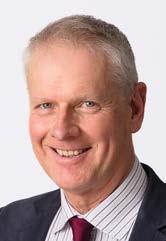
As we look back on 2024–25, I am struck by the extraordinary sense of energy, renewal, and resilience that has shaped this past year for the Association of Commonwealth Universities. Across every corner of our network, from the smallest island states to the largest metropolitan universities, we have seen the power of collaboration in action, and a shared belief in education’s ability to build a fairer, more sustainable future.
This was a year of renewal for the ACU. In June 2025, we launched our refreshed Road to 2030 strategy, a bold and forwardlooking plan that sets out how we will strengthen Commonwealth universities, support sustainable development and connect engaged leaders. It represents not just a roadmap for our organisation, but a collective vision for what higher education can achieve when it works across borders for the common good.
Our mission came vividly to life at the Commonwealth Heads of Government Meeting (CHOGM) in Samoa, where we had the honour of launching the King’s Commonwealth Fellowship Programme (KCFP). Developed by the ACU at the request of His Majesty King Charles III, this landmark initiative opens new
pathways for students and professionals from Small Island Developing States, equipping them to tackle the defining challenges of our time, from climate change to economic resilience. Seeing this programme take shape, with the full support of our partners and the patronage of His Majesty, was a stirring reminder of the Commonwealth’s unique capacity to connect people, ideas, and purpose.
Throughout the year, we worked to ensure that the voice of higher education was heard where it matters most, in ministerial meetings, international forums and policymaking spaces around the world. Our commissioned research with London Economics provided compelling new evidence of the link between higher education and long-term economic growth, reinforcing what we in the sector already know: investing in universities is investing in the future prosperity of nations.
The Association of Commonwealth Universities is a global network of more than 400 universities in over 40 countries with a shared commitment to working together to build a more equitable and sustainable world.
We are accredited by the Commonwealth and incorporated by Royal Charter, and have been fostering international collaboration in higher education since 1913.
As the voice for higher education in the Commonwealth, we support our members, individuals, and partners to collaborate and advance their contribution to sustainable development.
Equally inspiring has been the collaboration within our own network. The ACU Higher Education Taskforce brought together experts from across the Commonwealth to develop recommendations on employability, digital access, inclusion, and research ecosystems, laying the groundwork for policy discussions ahead of CHOGM 2026. Our online platform ACU Connect has flourished, enabling colleagues from around the world to share knowledge, build partnerships and exchange ideas with unprecedented ease.
Our scholarship programmes – from the Commonwealth and Queen Elizabeth Commonwealth Scholarships to the Ocean Country Partnership Programme and now the King’s Commonwealth Fellowship Programme – continue to transform lives, opening doors for those who will go on to lead, to innovate and to serve their communities. The Commonwealth Scholarship Commission’s 65th anniversary was a particularly proud milestone, marking over six decades of nurturing talent and leadership across the globe.
Par tnership has always been at the heart of who we are. This year we deepened collaborations with universities, governments, and global institutions, from our joint work with the European Commission and Horizon Europe to our creation of RESNET with the UN Food and Agriculture Organization. Each partnership reflects the ACU’s belief that together, we can achieve more than any institution or nation can alone.
Today, the ACU is home to 406 member universities in 41 countries, representing a powerful community of shared values and global ambition. As we look ahead, our purpose is clear: to ensure that higher education continues to inform, influence and inspire the solutions our world urgently needs.

Professor Colin Riordan CBE ACU Secretary General and Chief Executive
58 events hosted on ACU Connect

20 VCs from 14 countries on the Higher Education Taskforce
599 applications across seven grant programmes
400+ members in 40+ countries
26 QECS Scholars in 14 countries

10 Climate Cohort Fellows 4 pilot research projects
176 ACU Ambassadors on ACU Connect

2,470 individual members in our thematic networks
73% of members from 38 countries in ACU networks and communities
114 OCPP Scholars from 9 countries
99 applications from 18 SIDS for KCFP PhD Fellowships
1,497 Commonwealth Scholars and Fellows on award from 40 countries

378 media articles generated
65+ member campuses visited across the Commonwealth
750 academics on the ACU Roster of Experts

1,000+ attendees at ACU events and webinars
ACU member universities are a vibrant global community with a shared commitment to building a better world through international collaboration in higher education.
Our unique networks, events, programmes and research opportunities enable our members to strengthen capacity as they connect with, and learn from, their colleagues around the world.
Our grants, fellowships and scholarships enable university staff and students to pursue academic research, build global partnerships, and access life-changing learning opportunities.
This year we continued to lead and manage a range of innovative projects and platforms that connect universities across borders to help meet demand, enable vital research, and strengthen higher education systems across the Commonwealth.

Education is a powerful tool for transformation. For decades, the work of the Association of Commonwealth Universities has exemplified this truth, advancing academic excellence and inclusivity as a catalyst for growth across Commonwealth nations. Partnerships with organisations like the ACU are essential. They enable us to support education as a gateway to empowerment, opportunity and shared prosperity for Commonwealth citizens.
Hon Shirley Botchway Commonwealth Secretary General
In June 2025, we carried out a membership pulse survey with 95 respondents. Key findings included:
• Net Promoter Score of 75% –demonstrating exceptional member satisfaction
• 78.9% of respondents would promote or recommend the ACU
• 16.8% were passive or neutral
• Just 4.2% were detractors
Members highly value our diverse network and want more ways to connect with other members. Grants, fellowships, and other funded opportunities continue to be the most sought-after member benefit.
Since launching our new digital networking platform in September 2024, ACU Connect has become a vital hub for member collaboration:
• 176 ACU Ambassadors signed up by year end (c. 50% of all ACU Ambassadors)
• 58 events and live streams hosted on ACU Connect
• 900+ participants at ACU Connect events
• 298 posts shared with 136 comments
• 439 messages sent between Ambassadors
• 44% of Ambassadors attended at least one event
• 15% attended three or more events
Our Roster of Experts continued to grow, now with around 750 academics registered from across our member universities. Members of the roster have been invited to work with the Commonwealth Secretariat to review the Commonwealth Curriculum Development Framework for Sustainable Development, with five members participating in a two-day workshop. The roster enables us to connect academic expertise with policy development and programme delivery across the Commonwealth.
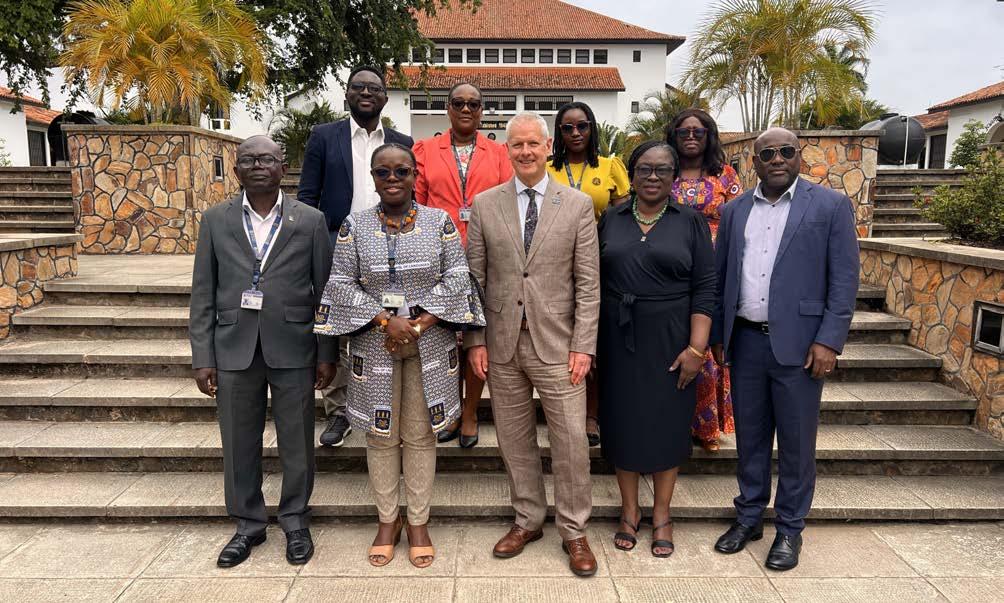
During 2024-25, we visited member universities across Canada (Ontario, Québec, British Columbia, and Alberta), Nigeria, Australia, Samoa, New Zealand, Fiji, Singapore, Sri Lanka, India, Rwanda, Cyprus, South Africa, and Tanzania. We also hosted delegations from members at our London offices, including a special engagement meeting with government officials and the vice-chancellor of the University of The Gambia in May 2025.
ACU Ambassadors supported regional engagement at the Commonwealth Business Summit in Namibia, QS Africa Forum in Zanzibar, Association of African Universities Conference in Morocco, and numerous member-arranged events in the UK and India.
We provided tailored market insight briefings to multiple member universities on opportunities in India and Nigeria, supporting their international strategies and helping them navigate these important markets.

It’s been one year since the launch of ACU Connect, and what an incredible journey it has been! As an ACU Ambassador at the University of Johannesburg, I am proud to be part of a vibrant and growing community across the Commonwealth through this dynamic platform built exclusively for ACU members. The platform has hosted events, the sharing of posts, and the exchange of messages. Thank you for engaging, connecting, and contributing to making ACU Connect a space for meaningful collaboration and opportunity-sharing.
Reneka Panday Marketing & Social Media Manager and ACU Ambassador, University of Johannesburg, South Africa
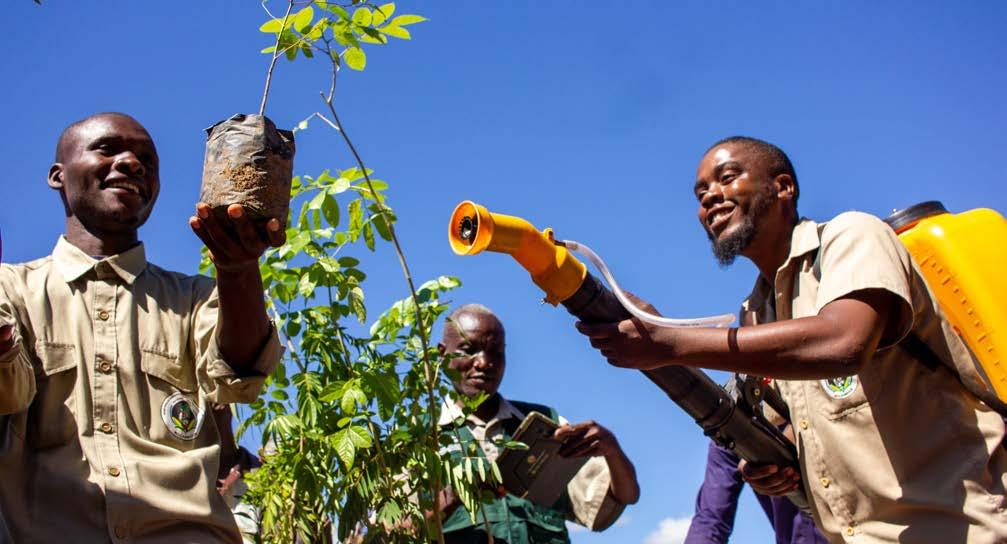
As we face increasing climate concerns, Commonwealth universities are spearheading critical research and technological innovation, facilitating and disseminating essential learning, teaching the next generation of climate experts, supporting wider communities with outreach programmes, protecting vulnerable ecosystems, and more. Together with our partners and members, we manage and support programmes that drive climate action, and strengthen our members’ capacity for education, research, and innovation.

Funded by the British Council, this programme supports a pipeline of early career researchers with capacity to contribute to climate action research.
Highlights from 2024-25:
• 4 pilot research projects funded in the areas of climate law, water security, and urban resilience
• 10 fellows participated, facilitating triangular research collaborations between Ghana-Nigeria-UK, India-Nigeria-South Africa-UK, and Bangladesh-India-Sri Lanka-UK
• Closing and dissemination event held at the University of Lagos, Nigeria in July 2025, in partnership with the University of Lagos and the University of Warwick
• Over 450 individuals attended the hybrid event
This 24-month initiative, funded by the UK’s FCDO and co-funded by Canada’s IDRC, commenced in January 2025. Jointly implemented by the Association of African Universities, the ACU and the Liverpool

The Climate Cohort Fellowship has certainly built my capacity to provide leadership in future climate change and urban adaptation and resilience knowledge generation, advocacy and policy making. While I have had the experience of working on several research projects over the years, I believe that after the end of this programme I am feeling more confident to develop my own research project as principal investigator. The programme provided me with the skills to contribute in the areas of urban adaptation needs and resilience building. Therefore, as an early career researcher, this training was crucial in my journey towards becoming a thought leader on sustainable urban adaptation and resilience in the context of climate-related migration.
Dr Mohammad Rashed Alam Bhuiyan Assistant Professor University of Dhaka, Bangladesh and 2024 Commonwealth Climate Research Cohort Fellow
School of Tropical Medicine, the project aims to strengthen institutional capacity for climate adaptation research across 20 African universities.
Using a living lab approach, the project is co-developing a Climate Change Adaptation Research-Focused Organizational Capacity Assessment Tool (CO-CAT). This participatory method engages researchers, university leaders, professional staff, and non-academic stakeholders to foster collaboration and address climate adaptation challenges.
The Network brings universities together to share practical expertise on building resilience to climate change and natural disasters:
• 535 individual members at 323 member universities as of 31 July 2025
• Applications opened for the 2024–25 cycle of Network Grants, receiving 100
applications for just three grants – the highest level of interest since launch in 2021
This forum for staff directly engaged with the Sustainable Development Goals agenda continued to grow:
• 660 individual members at 205 member universities as of 31 July 2025
• Network members from the University of Manchester reviewed the Commonwealth Curriculum Framework in collaboration with the Commonwealth Secretariat
• In June 2025, members from the University of Victoria in Canada delivered a hybrid talk on Art, Museums and The Imagination, and Knowledge Democracy
• 7 judges selected from the Network for the International Green Gown Awards, representing the UK, New Zealand, Namibia, Canada, and South Africa
This forum for university human resources professionals champions the strategic importance of HR in universities:
• 465 individual members at 176 member universities as of 31 July 2025
• 2 Community grants awarded to the University of Fiji and the University of Ibadan, Nigeria
• The University of Fiji training was featured in a national news media article entitled ‘Human Resource Directors to take proactive measures to ensure growth’
This forum for all staff involved in supporting the research process continued to thrive:
• 810 individual members at 226 member universities as of 31 July 2025
• The Steering Committee served as the Fostering Sustainable and Inclusive Research Ecosystems Working Group under the ACU’s Higher Education Taskforce

• Work completed included the ACU Measures: Malaysia Full Economic Costings (FEC) project in collaboration with the Academy of Sciences Malaysia and endorsement of the INORMS More Than Our Rank initiative
• Training grantees from Kibabii University, Kenya and the Technical University of Kenya invited ACU members to join their online training courses for early career researchers without cost
• Members delivered a session at the 2025 APAIE Conference in India on ‘Cultivating Equitable Partnerships for Global Citizenship in Asia-Pacific and Beyond’
In August 2025, we merged the three former ACU Policy Networks into a new Community of Practice called Higher Education for Sustainable Societies Community of Practice (HESS) and moved all three ACU Communities of Practice to ACU Connect. This responds to long-standing member requests for better networking and direct peer-to-peer messaging opportunities, and reflects findings from the 2024 ACU Networks and Communities review highlighting the need for greater standardisation and interdisciplinary knowledge sharing.

We continued work on this Horizon Europe-funded project bringing together 22 partners from Europe and Africa on food systems transformation. Over the past year, in collaboration with the South African Agricultural Research Council, we have led development and delivery of the project’s monitoring, evaluation, and learning framework, including a detailed performance measurement plan and draft data analysis plan.
Work continued on this project to strengthen evidence-based policy practice for sustainable food systems under the EU-AU Partnership. We developed and began implementing a comprehensive monitoring and evaluation framework, supporting the project’s goal of strengthening policy learning, accountability, and impact analysis across the partnership.
In January 2024, we launched a one-year pilot to develop RESNET – a global research network focused on agri-food system transformation through South-South and Triangular Cooperation in partnership with the UN’s Food and Agriculture Organization (FAO).
Key milestones included:
• 3 stakeholder consultations in spring 2024
• High-level policy dialogue held in November 2024 at ACU’s London headquarters, attended by 16 in-person and 44 online participants from UK, Europe, and Africa
• Representatives from FCDO, BBSRC, UK Research and Innovation, World Bank, ODI, European Commission, and leading universities participated
We are now in discussion with FAO, Vrije Universiteit Amsterdam and RUFORUM on how to continue this work and coordinate tangible activities identified through the consultations.
We are committed to delivering educational opportunities that make a positive and lasting difference. One of the ways we do this is through the management of world-class international scholarship schemes that build enduring international connections and understanding between individuals, institutions, and nations.
In 2024-25, we continued to manage the UK government’s Commonwealth Scholarships, as well as the ACU-led Queen Elizabeth Commonwealth Scholarships and the Ocean Country Partnership Programme Scholarships. We continue to be custodians of the Commonwealth Scholarship and Fellowship Plan (CSFP) and a lead delivery partner in the Turing Scheme. We also launched the King’s Commonwealth Fellowship Programme.
Inspired by The King’s commitment to create opportunity and tackle contemporary challenges including climate change and inequality, this ambitious interdisciplinary three-part initiative offers fellowships for mid-career professionals, undergraduate scholarships, and PhDs. The programme is specifically designed to address urgent development challenges affecting Small Island Developing States (SIDS).
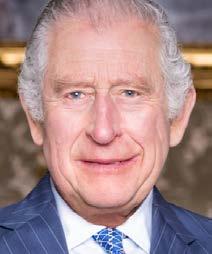
Launching the programme in October 2024, HRH King Charles III said: ‘I am delighted to support this important new initiative. Throughout my life I have believed in the power of education to improve lives and unite communities across the Commonwealth and beyond. There is so much we can learn from one another as we work together within the Commonwealth to tackle the major challenges of our age and, as these fellowships do in Small Island Developing States, to address them where they are felt most acutely.’

For the University of Edinburgh, the KCFP is one of the finest examples of our deep commitment to making lives better. We believe deeply in ‘paying it forward’ - in how good begets good, and how what we do now will have impact tomorrow and the KCFP is designed in just that way, with a forward-thinking model centred on the individual scholar, the partnership between institutions, and the impact on organisations where the scholars work. Moreover, the equality of role between Edinburgh and our partner institutions in the Commonwealth SIDS in the KCFP is a critical element of how this innovative programme is designed. That creates a tremendous opportunity for mutual learning - enriching and enriched by shared ambitions. Ultimately, what the KCFP will lead to is betterment of lives - shared knowledge and understanding, shared commitments to development of the SIDS, and the creation of a cadre of superb talented leaders who will take care of their nations in their future endeavours.
Professor Colm
The PhD pathway launched in February 2025:
• 99 eligible applications were received from 18 SIDS (out of 25 potential countries)
• Applications covered climate change/ environment, education, engineering, and health
• Applicants included academics, government officials, NGO representatives, industry professionals, and public service workers
• Fellows will enrol in their home SIDS alongside working, receiving joint supervision from 23 partner universities in Australia, Canada, New Zealand, or the UK
The programme is generously supported by its Founding Member, the Khalili Foundation, which has spent three decades enabling peacebuilding through art, culture and education. The Sohmen-Pao Foundation donated in support of the PhD Fellowships and Undergraduate Scholarships over the next six years.
Work is underway on the Undergraduate and Professional Fellowship Pathways – the latter was launched in October 2025 – with exceptional engagement in the co-creation process across the regions.
The Commonwealth Scholarship Commission in the UK (CSC), funded by the UK Government and managed by the ACU, has now supported over 31,000 individuals. Highlights from 2024-25 include:
• 648 new scholarships and fellowships funded
• 1,497 scholars and fellows from 40 countries on award, studying at 92 UK universities and 9 UK organisations
• CSC offered scholarships to citizens of all Commonwealth countries
• The CSC’s 65th anniversary was celebrated with a series of events highlighting the impact of scholars and fellows on sustainable development
Adi Talanaivini (Vini) ofa ki Otakon Mafi completed an LLM in Human Rights Law at Queen Mary, University of London with the support of a Commonwealth Master’s Scholarship. Through the scholarship, Vini expanded her knowledge of international and human rights law and developed a global network of professional peers and life-long friends.
Vini has led several key initiatives aimed at improving access to justice in New Zealand and Tonga. She was instrumental in founding Tonga’s first Family Protection Legal Aid Centre, a pioneering initiative that offers safe shelter and legal assistance to survivors of domestic violence. She has also worked to advance legal outcomes for Māori communities in roles at New Zealand’s Ministry of Justice.
By leading government reforms to integrate Māori experience into legislation and consulting closely with Māori groups, she has promoted meaningful dialogue
around systemic injustice and helped shape a more inclusive and responsive justice system in New Zealand.
‘My studies have enabled me to mainstream human rights, children’s rights and indigenous rights into policy work and apply it in public outreach and awareness programmes. By applying what I learned to the realities of the contexts in which I have been fortunate to work, I now have a broadened perspective on life. I also have a heightened appreciation of the inequities that exist around me and how I may use my skills and expertise to make some change to the status quo, no matter how insignificant it may seem to others.’
Source: CSC website https://bit.ly/4r2O69u
As a young and growing university, Fiji National University is deeply grateful for the opportunity to be part of the ACU and participate in the King’s Commonwealth Fellowship Programme. The Fellowship provides vital support in strengthening our academic capacity and expanding the resources needed to serve our nation and region. Through this partnership, we aim to develop highly qualified young academics equipped with strong research skills to address Fiji and the Pacific’s development priorities. We also look forward to fostering impactful international collaboration, encouraging cultural exchange, and nurturing role models of integrity. Ultimately, we aspire to contribute meaningfully to the enduring value of the King’s Commonwealth Fellowship.
Professor Nii-k Plange Dean, Centre for Graduate Studies, Fiji National University

Indigenous knowledge plays a critical role in enabling resilience and facilitating climate change adaptation for coastal communities in Vanuatu. The OCPP Scholarships enable our member countries in the South West Pacific to dig deep into the local level research that touches the hearts of those who are most vulnerable to the impact of climate change.
Allan Rarai OCPP Scholarships South Pacific PhD candidate
In 2024-25, alumni delivered 13 activities in 9 countries across the Commonwealth supported by the Alumni Community Engagement Fund (ACEF). From Kenya to India to Jamaica, activities addressed three themes: Youth for Sustainable Development, Save our Oceans and Disability Inclusion in Institutions. Activities included promoting political rights for people with disability in Nigeria, delivering a multi-school Conference of Parties (COP) in Pakistan, and organising workshops on micro-nanoplastic pollution in India.
The CSC’s 2024-25 Time Limited Programme focused on Entrepreneurship, with the main initiative being the Commonwealth Startup Fellowship – a 6-month accelerator programme for early-stage businesses from across the Commonwealth. Co-delivered by Imperial College London’s Enterprise Lab the programme saw:
• Two cohorts of 20 businesses participating
• A 2-week Bootcamp in Accra, Ghana
• 5 months of online support drawing on a global network of experts
• Capstone week in London in September 2025
Funded through the UK’s Blue Planet Fund, this programme enables students to undertake fully-funded Master’s or PhD programmes in marine science:
• 114 OCPP scholars in total from Solomon Islands & Vanuatu, Ghana, Bangladesh, Sri Lanka, India, the Maldives, Mozambique, Senegal and Belize
• 13 Indian scholars completed their awards in July 2025
• Set-up and delivery spans three languages for students at nine different universities
• We launched a bespoke OCPP online training with INASP, covering effectively engaging with policy and practice, creating knowledge together with communities, and writing winning proposals
‘The scholarship experience enriched my understanding of global interconnectedness and the role of education in fostering development. It also highlighted the potential for mutual learning and collaboration between Kenya and Mauritius, enhancing my commitment to driving educational and technological advancements in my own community [...] One of my main achievements was developing an e-Learning project framework for small-
The QECS offer opportunities to study for a two-year Master’s degree in a low or middle income Commonwealth country. Highlights from 2024-25 include:
• 26 QECS scholars studying across 16 institutions and 14 Commonwealth countries
• Subject areas range from Public Health to Construction Management
• Host countries include Bangladesh, Eswatini, Fiji, Ghana, Jamaica, Kenya, Malaysia, Pakistan, Papua New Guinea, South Africa, Sri Lanka, Tanzania, and Uganda
• Scholars’ home countries include Cameroon, Ghana, Guyana, Kenya, Malawi, Nigeria, Pakistan, Sierra Leone, Sri Lanka, Uganda and Zambia
scale student and non-student farmers in Kenya, which led to my recruitment by the Change.org Foundation as a training coordinator.’
Ajra Mohamed, who hails from Mombasa, Kenya, received a Queen Elizabeth Commonwealth Scholarship to complete a Master’s in Software Project Management at the University of Mauritius
In partnership with the Department for Education, the ACU successfully managed the Application Assessment Hub for the DfE managed Turing Scheme’s T5 cycle from January 2025 to August 2025:
• Record 938 applications (up from 724 in Turing 4) across schools, FE/VET, and HE
• Oversaw rigorous double-blind assessment process using a standardised rubric
• Led the appeals process, conducted moderation, and provided strategic recommendations
• Feedback from assessors was overwhelmingly positive, with high satisfaction in training, support, and portal usability
We provide an influential voice for universities in international policy forums and work to ensure that our members’ needs are at the forefront of education policy and decision-making.
We are the sole body representing higher education at key international forums including the Commonwealth Heads of Government Meeting (CHOGM) and the Conference of Commonwealth Education Ministers (CCEM).
We bring awareness to the needs of universities throughout the Commonwealth and champion the transformative impact that the higher education sector can have on sustainable development.
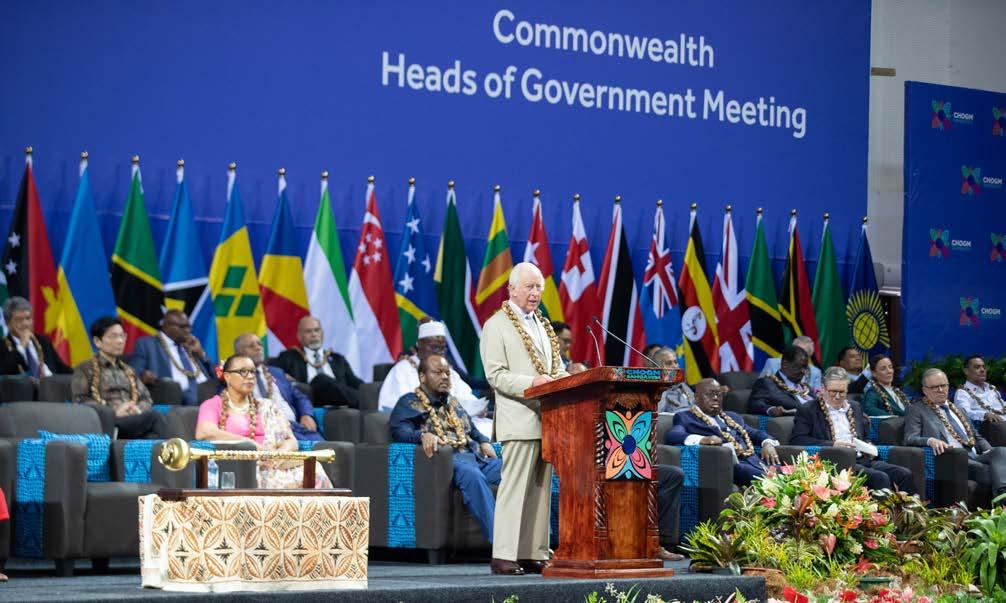
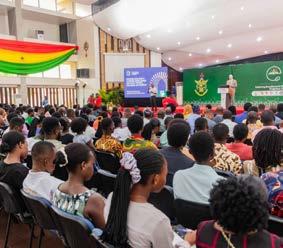
In October 2024, we attended CHOGM in Samoa, a summit of heads of Commonwealth nations which takes place every two years. The highlight was the official launch of The King’s Commonwealth Fellowship Programme, attended by His Majesty King Charles III, who spoke of how proud he was to be the Patron of the ACU. During the official CHOGM opening ceremony, His Majesty formally announced the programme in his inaugural speech as Head of the Commonwealth.
Other highlights included:
• Co-hosting two official side events –one with the Institute of Commonwealth Studies on climate justice, and another on resilient urbanisation building on work from the 2022 CHOGM.
• Major speaking slots across forums – ACU’s Chair of Council Professor Cheryl de la Rey spoke on a plenary on regional skills whilst ACU Secretary General Professor Colin Riordan chaired a roundtable on lifelong learning at the Business Forum.
• Youth Forum participation – Professor Robin Mason, Chair of the Commonwealth Scholarship Commission, represented the ACU on a panel on entrepreneurship and employability.
• Peoples’ Forum session – ACU’s Director of External Affairs Beth Button co-chaired a session on indigenous knowledge, led by Associate Professor Amelia Turagebeci from Fiji National University.
Following its formal mandate from the Commonwealth Education Ministers Action Group, the ACU’s Higher Education Taskforce has developed a structured programme of engagement spanning education, health, finance, trade, and climate portfolios.
Five thematic working groups are driving progress across employability, funding, digital access, inclusion, and research ecosystems. The working groups have produced actionable recommendations being channelled into the lead-up to CHOGM 2026 and the 22nd Conference of Commonwealth Education Ministers.
The ACU Congress in November 2025 will serve as a key policy interface, with closed-door roundtables feeding directly into CCEM and other ministerial briefings.
We developed new Expert Groups to harness the expertise of ACU member universities to advance Commonwealth policy priorities. Deliberately aligned with existing Commonwealth ministerial forums in health, oceans, and climate & environment, these groups were launched in September 2025.
In March 2025, we launched a research engagement survey to identify member universities engaged with government and civil society to advance policy priorities in these thematic areas. The survey received 86 responses from 57 unique institutions in 23 countries, helping to identify examples of institutional good practice and relevant academic contacts.
In July 2025, we held a series of consultation workshops with academic experts from member universities. The workshops engaged 32 universities from 15 countries in facilitated discussions to identify case studies of science-to-policy and community engagement, institutional and policy enablers, typical challenges, and the value add of global networks like the ACU.
Ministerial Forum Theme
Health Health and Care Workforce
Activity Focus
Equitable workforce training and recruitment
Oceans Ocean ConservationCoastal resilience: aligned with Blue Charter Mangroves Ecosystems and Livelihoods Action Group
Climate & Environment Sustainable Urbanisation
Competencies, skills and curricula

We commissioned a new report from London Economics, The Impact of Investment in Higher Education on Economic Growth, which presents compelling new evidence linking higher education expansion with long-term national economic growth.
Key findings:
• A 1 percentage point rise in tertiary attainment is associated with a 0.03 percentage point increase in average annual GDP per capita growth over the following five years.
• Returns are more pronounced in lower-income countries, reflecting the transformative power of upskilling at earlier stages of development.
• If every Commonwealth country increases its tertiary attainment rate by 1 percentage point in 2025, the result would be a collective GDP boost of $28 billion by 2029.
The report calls on governments to prioritise public investment in expanding access to tertiary education, embed higher education in national economic and development strategies, and strengthen data systems to track attainment, spending, and outcomes.
Commonwealth ministerial meetings
We attended multiple Commonwealth ministerial meetings during 2024-25:
• Commonwealth Trade Ministers Meeting and Business Summit (Namibia, June 2025) – we took part in a fireside chat on how universities can help realise the ambition to grow intra-Commonwealth trade to $2tn.
• Commonwealth Health Ministers Meeting (Geneva, May 2025) – afforded an opportunity to consult on the development of the ACU’s new Expert Group on Health.
It is an honour to serve on the ACU’s Higher Education Taskforce and help shape policy across the Commonwealth. We support member states with actionable recommendations, research insights, and proven best practice. As Chair of the Funding and Finance Working Group, I was delighted to commission our first insights report, The Impact of Investment in Higher Education on Economic Growth, and strongly encourage all Commonwealth Education and Finance Ministers to explore its findings.
Dr Kimberley Brooks President and Vice-Chancellor, Dalhousie University, Canada and Chair, ACU Higher Education Taskforce Finance and Funding Working Group
Throughout the year, we held meetings with Commonwealth High Commissioners from Samoa, Fiji, India, Ghana, South Africa, Tanzania, Australia, Pakistan, Belize, Brunei, Rwanda, Antigua and Barbuda, Solomon Islands, St Vincent and Grenadines, Botswana, Maldives, and Sierra Leone.
We also held bilateral meetings with Commonwealth government ministers or their teams from the Bahamas, New Zealand, Malaysia, Rwanda, India, Canada, Ghana, Nigeria, Brunei, The Gambia, Kenya, Samoa, St Kitts and Nevis, Papua New Guinea, Singapore, Cameroon, Namibia and Cyprus.
We were invited to attend high-level events hosted by Buckingham Palace, Commonwealth Secretariat, and Commonwealth partners, including a pre-CHOGM reception hosted by Their Majesties The King and Queen at St. James’s Palace, the Commonwealth Day Service of
Celebration at Westminster Abbey, and a Royal Commonwealth Society International Women’s Day event with HRH The Duchess of Edinburgh.
We secured 378 pieces of positive coverage in the media, with an estimated media reach of over 2 billion (Source: Signal AI). The PR campaign supporting the launch of the King’s Commonwealth Fellowship Programme in October 2024 secured 293 pieces of positive coverage, with a reach of 1.8 billion across media outlets in UK, USA, Australia, New Zealand, Ireland, Sri Lanka, South Africa, Samoa, and Fiji.


Woburn House 20–24 Tavistock Square
London WC1H 9HF United Kingdom
The ACU is registered in England and Wales as a charity, number 314137
VAT registration number: 195 9141 72