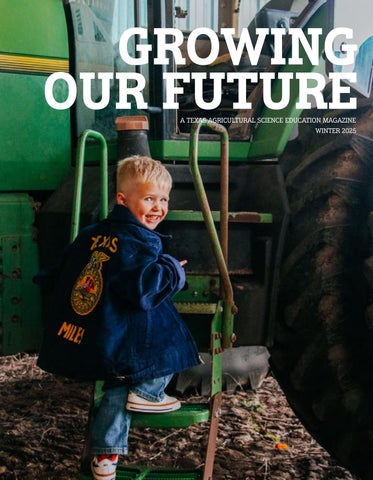
GROWING OUR FUTURE
A TEXAS AGRICULTURAL SCIENCE
THERE CAN’T BE A GAME WON WITHOUT A GAME PLAN
See what Texas FFA students have to say at mytexas a.org
Texas FFA and Texas Farm Bureau Partner AI In The Ag Class Thank You Sponsors
Jr. Teen Miss Agriculture America Of Texas
Star Lone Star Ag Placement
Wildorado Leads The Herd With Cattle Company Star Chapter Agribusiness From Classroom To Community
Greenhand Agriscience
To
The Heart Of The FFA
FROM THE EDITOR

When we hear the phrase "Living to Serve," we often think of volunteer hours, community projects, or lending a hand when it’s needed. But in agricultural education and FFA, this phrase reaches far deeper. It’s about a mindset. A way of life that prioritizes compassion, leadership, and a commitment to something bigger than ourselves.
As you read through this issue, you’ll discover stories of students, advisors, and supporters who embody this principle in remarkable ways. Their actions, big and small, show that "Living to Serve" is not just a motto. It shapes character, strengthens communities, and reminds us all that leadership begins with service.
We hope you enjoy the Winter 2025 issue of Growing Our Future and feel inspired by the incredible individuals who continue to prove that service truly is the heart of agricultural education.
Ashley Dunkerley



A CALL TO LIVE THE MOTTO
BY: JENNIFER JACKSON TEXAS FFA ASSOCIATION EXECUTIVE DIRECTOR
When it was announced that the National FFA Motto would serve as the four themes of this year’s four issues of Growing Our Future magazine, I was really excited and this last one is so meaningful!
The FFA motto is not meant to be recited and forgotten. It is meant to be lived. “Living to Serve” challenges us to orient our lives toward others - not out of obligation, but out of joy.
Imagine what our schools, communities, and industry would look like if we each made service our daily posture. Imagine the ripple effects if every teacher, student, and agricultural leader committed to small acts of kindness every day.
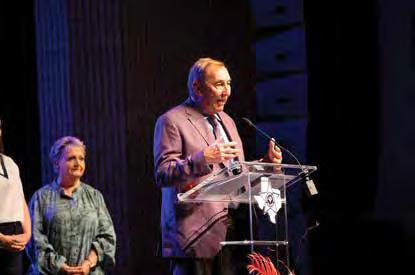
Dan Hunter reminded us of this truth when he accepted the Passion for Agriculture award at the Texas FFA Convention this year: “Do all you can, while you can, and do all you can for those who can’t.”
Zig Ziglar echoed a similar sentiment: “You can have everything in life you want if you will just help enough other people get what they want.”
These words aren’t just motivational, they’re transformational. They invite us to shift our mindset from task management to impact measurement.
So let’s be the change. Let’s Lead the Way, and Live the Motto. Let’s stop counting tasks and start counting lives touched. That’s how we live the motto.
May we, as members of the Texas FFA family, embody that purpose. May we live not just to succeed, but to serve, and in doing so, find joy, fulfillment, and lasting impact.









BY: BRAD BURNETT JACKSBORO ISD SUPERINTENDENT
THE VITAL ROLE OF CAREER AND TECHNICAL EDUCATION (CTE) AND TEXAS FFA IN
STUDENT DEVELOPMENT AND CAREER SUCCESS
Career and Technical Education (CTE) and Career and Technical Student Organizations (CTSOs), such as the Agriculture, Food, and Natural Resources (AFNR) Program of Study and Texas FFA, are crucial components of student development and career preparation in school districts all across Texas. These programs provide students with the technical knowledge, hands-on experience, and leadership skills needed to succeed in a competitive job market. By blending academic instruction with real-world application, CTE and CTSOs empower students to explore career paths, develop industry-specific skills, and cultivate essential life skills.
WHY CTE AND CTSOS ARE ESSENTIAL
Unlike traditional classroom learning, CTE programs emphasize experiential education. Students engage in projects that simulate real-world scenarios, such as managing livestock, operating machinery, or designing
agricultural business plans. CTE programs help students explore different career pathways and make informed decisions about their futures. Through industry-based certifications, internships, and dual-credit courses, students graduate high school with a competitive advantage. Agriculture-based programs require students to care for animals, manage projects, and meet deadlines, instilling responsibility and discipline. Students develop strong work ethics that carry over into their future careers by participating in livestock shows, agriscience research, and other supervised agricultural experiences (SAE). Whether they pursue college degrees or enter the workforce immediately, they are better equipped for success. The hands-on experience from CTE programs makes students more employable and ready to contribute to our state economy.
CTSOs like Texas FFA offer leadership training, teamwork opportunities,
and competitive events that foster confidence and personal growth. Students participate in public speaking contests, officer elections, and networking events that shape them into responsible and articulate leaders. Communicating effectively, managing teams, and thinking critically provides a strong foundation for future career success. Membership in the Texas FFA allows students to access career pathways, internships, scholarships, and networking opportunities that help them transition from high school to higher education or skilled trades.
Agriculture Pathways and FFA encourage students to engage with their local communities through service projects, leadership initiatives, and professional networking. Students frequently work with local businesses, government agencies, and industry leaders, gaining exposure to career opportunities while contributing positively to their communities.
“BY BLENDING ACADEMIC INSTRUCTION WITH REALWORLD APPLICATION, CTE AND CTSOS EMPOWER STUDENTS TO EXPLORE CAREER PATHS, DEVELOP INDUSTRY-SPECIFIC SKILLS, AND CULTIVATE ESSENTIAL LIFE SKILLS."
IMPACT ON LOCAL SCHOOL DISTRICTS
At Jacksboro ISD, agricultural education and FFA have profoundly transformed our students. These programs shape students into responsible, engaged, ambitious, and civic-minded leaders who positively contribute to our community. Our College, Career, and Military Readiness (CCMR) data indicates CTE students are more likely to graduate and pursue higher education or skilled trades.
Jacksboro FFA members frequently take
on leadership and teamwork roles, from serving as chapter officers to competing in statewide Leadership Development (LDE), Career Development (CDE), and Public Speaking competitions. Many of our students have received scholarships and job offers due to their active participation in FFA. FFA members can access industry partnerships and networking opportunities that often open doors for internships, apprenticeships, and full-time careers. Our school district has seen significant involvement from local ranches, businesses, and agricultural professionals who mentor students, provide resources, and offer employment opportunities. This collaboration strengthens both the students' futures and our local agricultural-based economy.
As a former agriculture science teacher, FFA advisor, and now a school superintendent, I have a unique perspective on how vital these programs are to our school and community. I am incredibly proud of our ag department and FFA chapter and grateful for our ag teachers and their tireless efforts to promote premier leadership, personal growth, and career success for our students.
CONCLUSION
The integration of Career and Technical Education and Texas FFA into our school district has been transformative, equipping students with the knowledge, experience, and skills necessary for lifelong success. These programs prepare students for careers in agriculture and related industries and instill leadership qualities, work ethic, and a sense of community responsibility. By supporting and expanding CTE and CTSOs, we invest in the future workforce, ensuring that students are well-prepared to contribute meaningfully to their industries and communities.
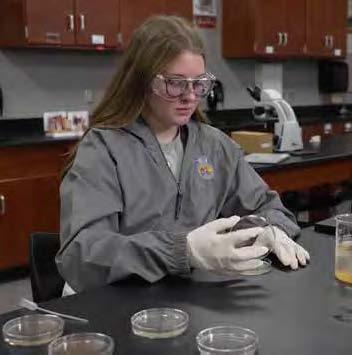
MadisonPerkins’ SAE spans six years of researching water quality and aquatic habitats, including studies on pond biodiversity, algae control, effects of cattle and fertilizer on water, and plant preferences of white-tailed deer.
“In the past 7 years, I have competed in 31 science fairs outside of my school,” said Perkins.
Over time, her roles evolved from relying on advisors and basic data analysis to independently designing experiments, managing multiple pond sites, and conducting international research in Jamaica.
Her greatest challenge was overcoming a fear of venomous snakes in aquatic environments, and while she is still scared of them, she has successfully learned to work safely and
AMERICAN STAR IN AGRISCIENCE FINALIST
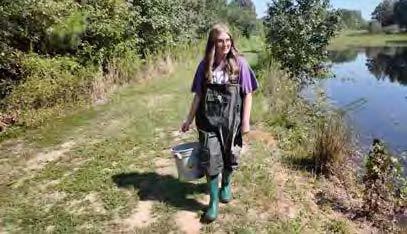
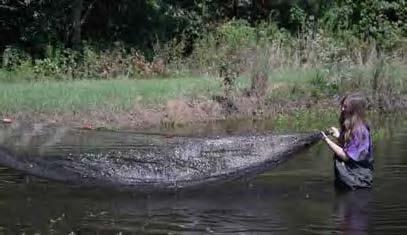
confidently in high-risk settings to advance her research.
“The confidence I have gained from completing long-term research projects and presenting to adults has helped me tackle new challenges in other FFA competitions,” said Perkins.
2026 INDUCTEE NOMINATIONS
WE ARE NOW ACCEPTING NOMINATIONS FOR THE 2026 AGRICULTURE TEACHERS ASSOCIATION OF TEXAS HALL OF FAME
This award exists to recognize and honor agricultural science teachers whose careers, achievements, and contributions stand exemplary. Inductees are known as well-rounded professionals who have proven their success with FFA activities, in the classroom, as well as community involvement. They have proven their desire to provide students with opportunities for premier leadership, personal growth and career success over a signi cant period of time.
TO THE TEXAS AGRICULTURAL SCIENCE EDUCATION FAMILY
FALL 2025 STUDENT TEACHERS
SAM HOUSTON STATE UNIVERSITY
PHYBIE OGLETREE, MARION
JAZMIN VENCES, WACO MIDWAY
LAINIE BODIN, KLEIN OAK
ALICIA MACHUCA, JAMES E. TAYLOR KATY
KYLEIGH MCLOUGHLIN, MADISONVILLE
KYLIE BARTSCH, CALDWELL
ELORA NATH, MADISONVILLE
SCARLETT MCDOWELL, IOLA
KATELYNN CODY, ANDERSON-SHIRO
JORDYN DAVILA, COLUMBUS
MADISON ELLIS, MADISONVILLE
KAYLA TYLER, CALDWELL
KYLEIGH MCLOUGHLIN, MADISONVILLE
ASHLYN ZOLLINGER, A&M CONSOLIDATED
TARLETON STATE UNIVERSITY
NINA GRANITZ, BLUE RIDGE
HARLIE BYNUM, WHITE OAK
REAGAN STAAB, HICO
KALEY LASSMANN, DUBLIN
ADDISON HAERTNER, JOHNSON CITY
SEAAIRRA MCTYRE, INGRAM
JESSICA GREEN, HAMILTON
BROOKLYN CORPUS, GOLIAD
WYATT BLEDSOE, HUNTSVILLE
EMMA BIELAMOWICZ, BARBERS HILL
MAKAYLEE THOMPSON, MIDLOTHIAN
JESSICA RODRIGUEZ, MEDINA VALLEY
ASHLYNN ZORN, RUDDER
JASPER MCCOY, PEASTER
WEST TEXAS A&M UNIVERSITY
TAYLIN ATWOOD, FLOYDADA COLLEGIATE
ZACH RICH, WINK
GRACE MORTENSEN, FARWELL
MAKAYLA MADRID, LUBBOCK COOPER
ALEXIS LOVELL, SAN SABA
NOAH HARRELL, IRA
STEPHEN F. AUSTIN STATE UNIVERSITY
KARA MOORE, HALLSVILLE
KENTLEY NORTHCUTT, MINEOLA
KARA MOORE, HALLSVILLE
KAILEY FALWELL, BUNA
WILL READ, WARREN
MICHAEL HANNAH, NEWTON
THE ROOTS OF A RISING STAR
HUDSON WESTBROOK ON FFA, COMMUNITY, AND HIS COUNTRY MUSIC CAREER
Beforethe packed arenas and chart-topping hits, Texas country music artist Hudson Westbrook was an FFA member from Stephenville, Texas, building the work ethic and confidence that now fuel his career.
“FFA taught me so many life skills,” said Westbrook. “It also taught me how to be a good person. Because of the program I am the person I am today.”
As his career gains momentum across the music scene, Westbrook continues to credit those his blue and gold roots for teaching him how to work hard, serve his community, and step on stage with confidence.
“I did public speaking in FFA which taught me how to be in front of crowds,” he said. “I also learned how to interact with people and be confident in the product
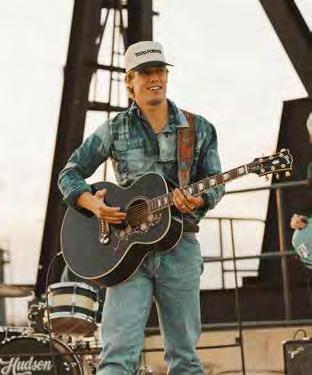

you are selling. In FFA it was my pigs, in my career now it is my songs.”
His career has been driven by ambition, grit, and determination. When asked what advice he would give a current FFA member balancing school, projects, and big dreams, he offered a simple but powerful message.
“Never sacrifice your dreams and never let the people around you work harder than you do.” Westbrook also let us in on the one Texas FFA Convention memory he will never forget. One that might have quietly set the stage for the career he’s living now.
“Watching William Clark Green at the Texas FFA Convention,” he said. “It was my first
“FFA TAUGHT ME SO MANY LIFE SKILLS. IT ALSO TAUGHT ME HOW TO BE A GOOD PERSON. BECAUSE OF THE PROGRAM I AM THE PERSON I AM TODAY.”
country concert ever.”
Now, Westbrook has graced that same stage himself. In 2024, he was featured as a performer for the Texas FFA Convention Kick-off Concert in Houston, creating a true full-circle moment.
With his career now accelerating, Westbrook hasn’t forgotten the people or places that shaped him. In fact, he’s made it a priority to give back to the same community that poured into him as a young FFA member.
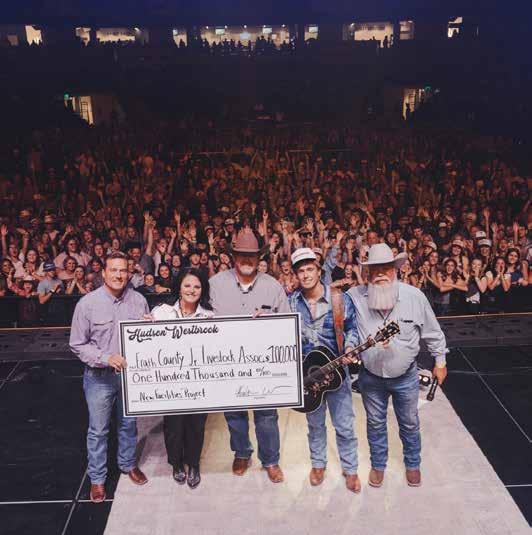
He returned to Stephenville, Texas, on Saturday, November 1, to honor those roots, performing a benefit concert at Tarleton State University’s EECU Event Center and helping raise $100,000 to rebuild the very livestock facilities where his FFA journey began.
“These funds are going to rebuild the same livestock barn I grew up showing my pigs in,” Westbrook said in a statement. “To be able to give back to the community in this way and to have so many people I’ve known all my life show up means everything to me and my crew.”
Standing in the same community that shaped him, Westbrook says his success feels even more meaningful when he can pour it back into others.
“I believe that your upbringing is very important in shaping the person you become as an adult. have been so lucky to have the success I have had and I want to give some of it back to help continue to mold the next generation of leaders.”











Christmas a Merry









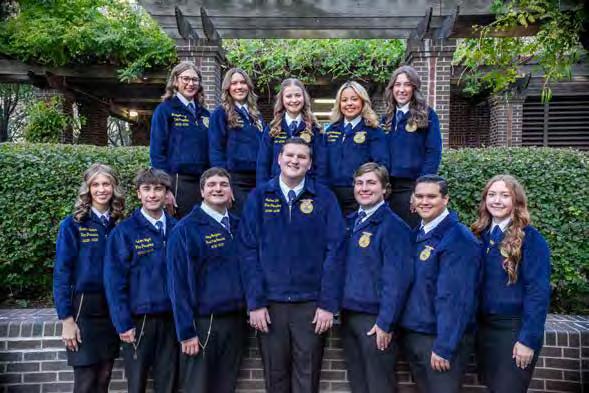
Whena Texas community hurts, Texas FFA Association members, advisors and supporters step up.
“Over the past couple of months, we’ve struggled to understand why tragedies like what we witnessed in the Hill Country happen,” said Jennifer Jackson, Texas FFA Executive Director. “We have prayed over those affected and mourned the loss of precious, innocent lives.”
Yet in the midst of heartbreak, our country also witnessed the very best of what makes Texas so special, communities coming together, neighbors helping neighbors, and people showing up with compassion and strength.
“In these moments, we are reminded that while we may have seen the worst of nature, we are also seeing the very best of humanity,” said Jackson.
STRENGTH IN UNITY: TEXAS
FFA SUPPORTS FLOOD-AFFECTED COMMUNITIES
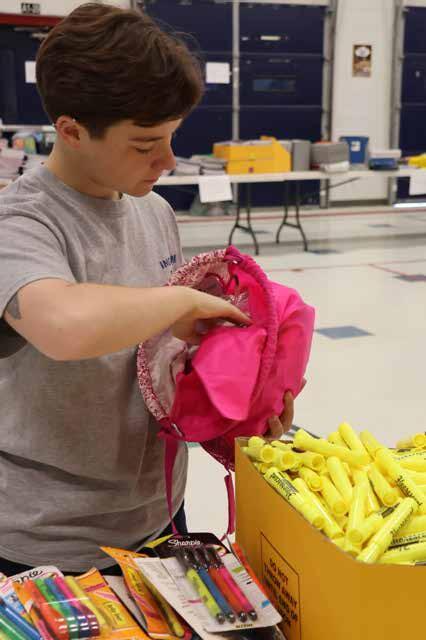
Immediately following the tragic event, the Texas FFA Association was able to work with Hill Country residents, including those with Seitz Fundraising, to assess areas of need. In response, several statewide donation efforts were coordinated.
“To begin, we designed and sold a Texas FFA Flood Relief t-shirt to raise relief funds,” said Jackson. “We promoted the campaign via social media and saw widespread attention.”
The Texas FFA Association is on track to contribute over $50,000 toward flood relief efforts.
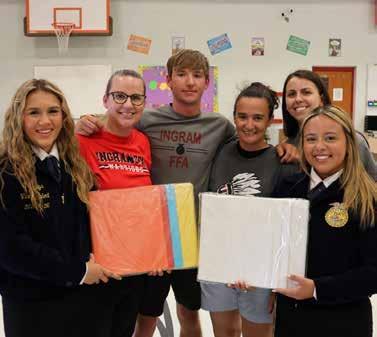
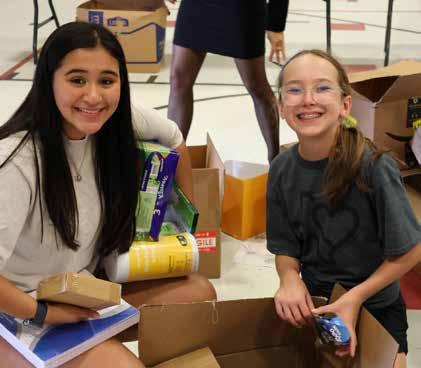
In addition, when there was a clear need for school supplies, the Texas FFA Association launched a supply drive with support from the 2025-2026 State Officers and many area officers across the state. To expand the effort, the association also created an Amazon wish list, which allowed at a distance supporters to contribute.
“Hard times create support, support creates community, and community creates a family,” said Texas FFA State Officer Ciera Hays. “Texas FFA is a true family, and even through this deviation it has been rewarding to be a part of the best family in the world.”
Thanks to this combined effort, more than 700 items were collected, ensuring students had the tools they needed to continue learning. The efforts focused on providing immediate
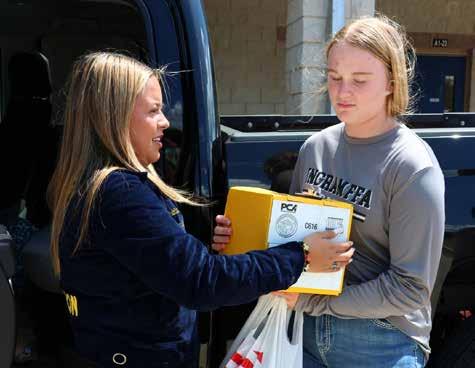
support, including school supplies for most students in affected districts from Pre-K to 6th grade.
The impact of these efforts was magnified thanks to the overwhelming support from more than 40 local FFA chapters across Texas, as well as a few other state associations who stepped in to lend a hand. Their supply drives, gift card collections, and fundraising efforts extended far beyond their own communities, proving that the FFA family stretches across miles and state lines. This outpouring of support reflects the very heart of agricultural education and FFA.
“The compassion not only met immediate needs but also reminded our students and families what true service, unity, and community look like,” said Ingram FFA Advisor Jessica Reeves. “The action reminded us that the FFA jacket stretches far beyond chapter, county, or state lines, it is a family bound by service and love.”
Many communities impacted by the floods were still recovering, with families displaced and schools assessing damages. Funds from T-shirt sales have not yet been fully expensed, as it has been requested to wait to determine the areas of greatest need from local coordinated contacts.
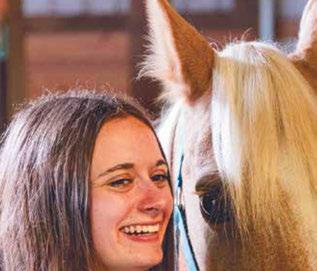
“We were overwhelmed by the generosity of our community, so much so that at times we had to ask donors to temporarily hold contributions due to storage limitations,” said Jackson. “Knowing that so many people are committed to supporting neighbors in need is inspiring, and we remain committed to continuing these efforts as recovery progresses.”
A sincere thank you to each individual, chapter, group and business who contributed to these efforts. As recovery continues, Texas FFA remains committed to walking alongside communities in need, proving that service, compassion, and unity will always rise higher than the floodwaters.





Texas Needs Agricultural Education

» » » FFA Events Industry Certifications Lifelong Success


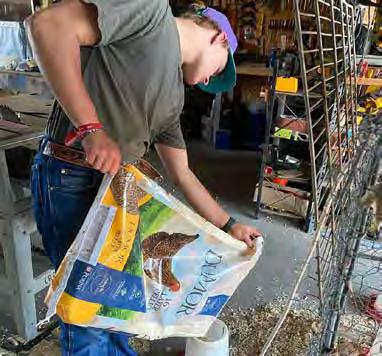
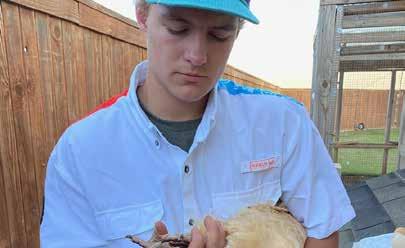
ForGunner Claybrook, what began with just backyard hens has grown into a full-fledged poultry production enterprise. Through dedication, strategy, and a passion, the Frenship FFA member behind Egg Heads Egg Company now manages 392 production-age hens and supplies fresh eggs to customers across his community.
“When we started discussing SAE projects in class, I realized I could use my hens to produce eggs and sell them to customers in my community,” Claybrook said. “That’s really where the idea began.”
Since then, his operation has expanded significantly. Claybrook now holds an Egg License from the Texas Department of Agriculture, allowing him to sell eggs at the Wolfforth Farmers Market and at All Hale Meats. Consistently selling out each week, the business
STAR LONE STAR PRODUCTION
FRENSHIP FFA MEMBER BUILDS THRIVING EGG PRODUCTION
has earned a loyal customer base that values freshness and quality.
“When I started, I had around 15 dozen eggs a week. Now I’m producing about 175 dozen,” Claybrook said. “The workload has grown dramatically. I’m filling feeders more often, cleaning waterers twice a week, and washing and packaging more than ten times the number of eggs.”
Beyond production, one of the FFA member’s favorite parts of the project has been educating others about agriculture.
“I think one of our major goals in the FFA should be to educate the public about agriculture,” Claybrook said. “With my project, I’ve had the opportunity to teach kids where eggs come from and how poultry production works. It’s one of my proudest accomplishments.”
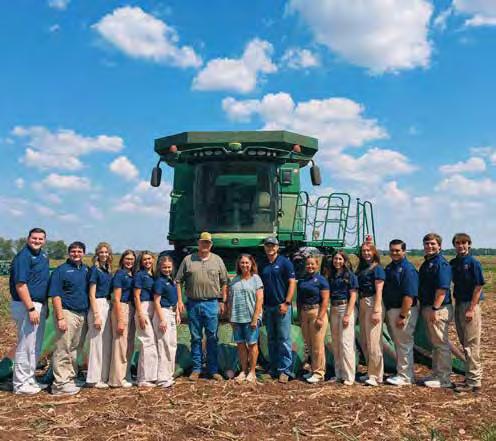
tour and learn from three outstanding agricultural operations. Their first stop was the AgriLife Beef Research Center in McGregor, a 6,372-acre facility featuring native and introduced pastures, approximately 1,000 breeding females, more than 60 herd bulls, a feed yard with a 1,200-head capacity, a 300-head individual feed intake facility, and roughly 1,500 acres of row crops and small grains. They also visited Schmalriede Farms, operated by lifelong farmer and 25-year Texas Farm
TMVP LEADERSHIP SERIES
TEXAS FFA AND TEXAS FARM BUREAU PARTNER FOR
he 2025–2026 Texas FFA State Officer Team officially launched their year of service with the first session of the MVP Leadership Series (Mission, Values, and Purpose), hosted and coordinated by Texas Farm Bureau. This multi-day experience provided officers with extensive leadership and professional development training designed to strengthen their foundation as servant leaders.
The MVP Leadership Series helps officers build on their internal values, pair them with the mission of Texas FFA, and apply them to their work throughout the year. With Texas Farm Bureau’s strong alignment in mission to advocate for agriculture and educate the public, the partnership provided a natural platform for highlighting how values and vision can guide both personal leadership and organizational impact. The officers had the opportunity to
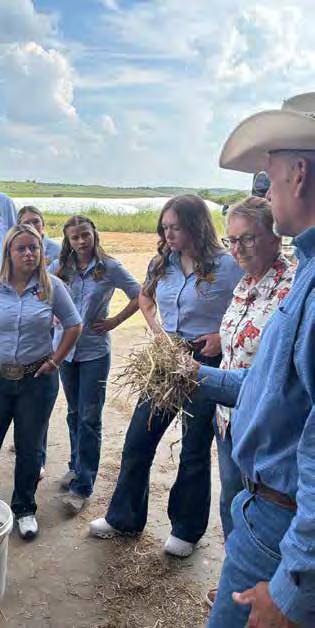
Bureau member Rodney Schmalriede, who raises row crops and supports his community through trucking, food donations, and youth programs while emphasizing sustainability and stewardship of natural resources. The final stop was Bar 7 Ranch, home to first-generation ranchers Cody and Erika Archie and their children, Kylee and Clancy. Located in Gatesville, the family raises beef cattle and Dorper sheep and has built a digital community of more than three million followers who are drawn to their authentic, faith-filled approach to sharing everyday ranch life.
Each visit gave officers insight into different areas of the agricultural industry, reinforcing the diversity of opportunities within the field and the importance of agricultural literacy as they prepare to engage with members and the public.
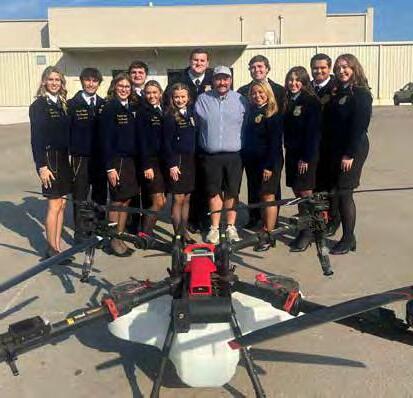
Throughout the experience, the officers engaged with a wide range of Texas Farm Bureau staff and partners who shared their time and expertise. Joe Brown, Development Program Manager, facilitated sessions on personal and team development. Justin Hale of Ignition Land Services introduced the officers to innovative uses of drone technology in agriculture. The Texas Farm Bureau Government Affairs Team, including Billy Howell, Laramie Adams, Charlie Leal, Blake Roach, and Drew Fuller, shared their work at the Texas Legislature and the importance of civic engagement. The Texas Farm Bureau Board of Directors and senior management staff welcomed the officers, provided an overview of the organization’s priorities, and introduced youth and collegiate program opportunities.
Texas FFA extends deep gratitude to all of these leaders for their investment in our officer team. Their insights helped officers understand how advocacy, innovation, and leadership intersect to shape the future of agriculture.
In addition to external learning opportunities, the officers reviewed their strategic
priorities for the year, refined internal goals, and established accountability measures. These steps ensure they remain focused on serving Texas FFA members with excellence while modeling strong leadership rooted in values and purpose.
The MVP Leadership Series is more than just training. It is the foundation that assists in equipping Texas FFA State Officers to succeed in their year ahead. By drawing connections between their personal values, the mission of Texas FFA, and the shared goals of Texas Farm Bureau, the officers are better prepared to advocate, educate, and lead across the state.
Texas FFA is grateful to the entire Texas Farm Bureau team for their partnership,
hospitality, and commitment to building the next generation of leaders in agriculture. Their investment in the MVP Leadership Series ensures that our state officers will serve with knowledge, confidence, and purpose throughout the year.
AI IN THE AG CLASS POSTER PD
AI IS HERE AND IT IS NOT JUST A TOOL IN BREEDING AND GENETICS! THOUGH AI CAN BE NEGATIVELY USED BY OUR STUDENTS IT SURE CAN BE USED IN THE CLASSROOM. USE IT TO PERSONALIZE LEARNING, SUPPORT TEACHERS, AND BOOST STUDENT ENGAGEMENT. UTILIZE IT NOT ONLY TO HELP TAILOR LESSONS TO INDIVIDUAL NEEDS, PROVIDE INSTANT TUTORING OR FEEDBACK, OR CREATING INTERACTIVE ACTIVITIES FOR HANDS-ON LEARNING BUT ALSO TO MAKE YOUR LIFE EASIER.
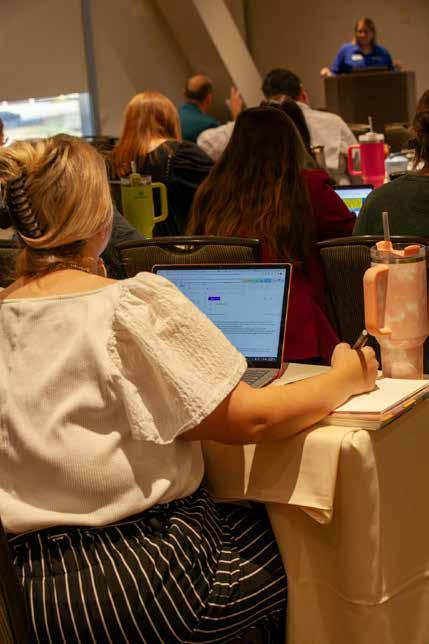
AI TOOLS USES TO MAKE LIFE EFFICIENT
CHATGPT / AI CHATBOTS
USES: QUICKLY GENERATE LESSON PLANS, SUMMARIES, EXPLANATIONS, OR DISCUSSION PROMPTS.
EFFICIENCY: REDUCES PREP TIME, CREATES INSTANT EXAMPLES OR ANALOGIES, DRAFTS EMAILS OR FEEDBACK.
GRAMMARLY / WRITING ASSISTANTS
USES: CHECK GRAMMAR, CLARITY, AND TONE IN STUDENT WORK OR TEACHER COMMUNICATIONS.
EFFICIENCY: SAVES TIME ON EDITING, ENSURES PROFESSIONAL COMMUNICATION, HELPS PROVIDE DETAILED FEEDBACK.
MAGIC SCHOOL AI
USES: MANY SCHOOL BASED TOOLS INCLUDING LESSON PLAN, WORKSHEET MAKER, VIDEO SUMMARIZER, CASE STUDY QUESTION MAKER, RUBRIC MAKER, ETC
EFFICIENCY: REDUCES PREP TIME, CREATES LESSON PLANS, ACTIVITY SAVES TIME MAKING STUDENT MATERIALS AND MORE.
BRISK AI- GOOGLE EXTENSION
USES: CONVERT DOCUMENTS TO SLIDES, GENERATE QUIZES FROM A DOCUMENT OR SLIDE, FEEDBACK GENERATOR, TRANSLATE AND ADJUST TO READING LEVELS.
EFFICIENCY: REDUCES PREP TIME, BETTER ACCOMODATE STUDENTS NEEDS, SAVES TIME.
BREEZY TA
USES: SPECIFICALLY DESIGNED FOR AGRICULTURAL EDUCATORS. INCLUDES AG-FOCUSED TOOLS LIKE: CDE/LDE PREP QUESTIONS & SCENARIOS, SAE CHECKLIST GENERATOR, LIVESTOCK CARE PLANS, GREENHOUSE SCHEDULES & PLANTING, ETC.
EFFICIENCY: SAVES TIME WITH READY-TO-USE, CURRICULUM-ALIGNED CONTENT AND TAILORED TO THE UNIQUE NEEDS OF AG CLASSROOMS— NOT JUST GENERAL EDUCATION














THEN 1950s

AGRICULTURE TEACHERS
ASSOCIATION OF TEXAS

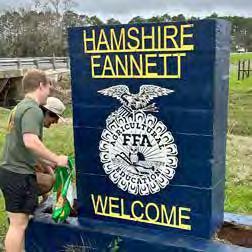
A bit ofTEXAS FFA HISTORY






















THANK YOU
OUR PARTNERS’ GENEROUS SUPPORT HELPS US ENSURE A STRONG FINANCIAL FUTURE FOR TEXAS FFA PROGRAMMING. WE WANT TO SINCERELY THANK THEM FOR THEIR GENEROSITY!
CORPORATE SPONSORS









ACADEMIC SCHOLARSHIP & AWARD SPONSORS





Blue Mountain Equipment SILVER
CONVENTION SPONSORS

DORSETT JOHNSON & CISINEROS


META ALICE KEITH BRATTEN FOUNDATION

BLOOM FOR GOOD DON & LORETTA MARABLE GW PUBLISHING KOEHLER LAW FIRM, PC MCREE FORD SOUTHSIDE BANK


DIXON WATER FOUNDATION TEXAS A&M CORPS OF CADETS TILSON HOMES
SUMMIT CASING EQUIPMENT FNBB TEXAS, J. RILEY KING


AARON ALEJANDRO DAVID & TERRI KREBS FARRAH SMITH JACE & CHANDA ORREN
JM BEEF MOLLY & ANDY CHRISTENSEN T-BAR RANCH
AGRICULTURE TEACHERS ASSOCIATION OF TEXAS
CONFERECE SPONSORS




BLOOM FOR GOOD MULTI-RADIANCE LASERS OPTIWIZE HEALTH
TEXAS VETERINARY MEDICAL ASSOCIATION THE AED FOUNDATION TEXAS DUCKS UNLIMITED



STATE FAIR OF TEXAS TEXAS FFA ALUMNI HOUSTON LIVESTOCK SHOW AND RODEO SAN ANTONIO LIVESTOCK EXPOSITION FORT WORTH LIVESTOCK SHOW AND RODEO SOUTHERN FLORAL COMPANY
North
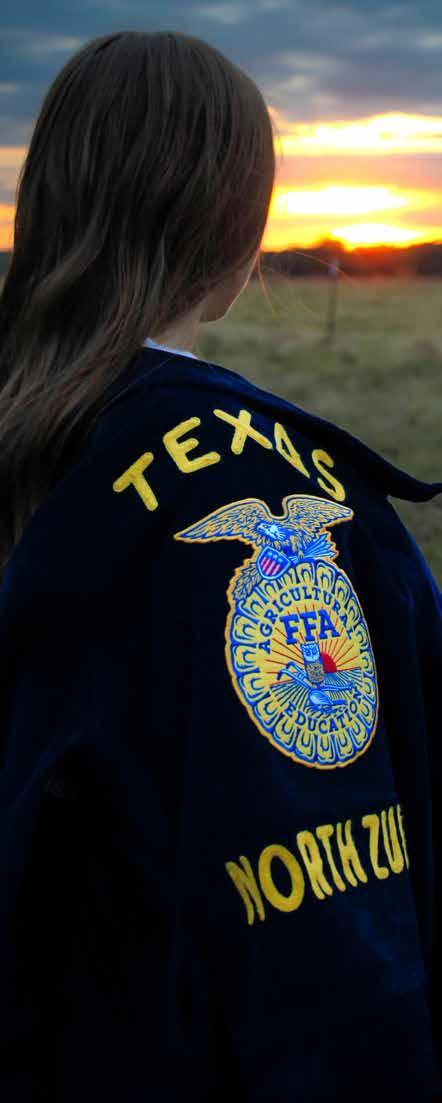
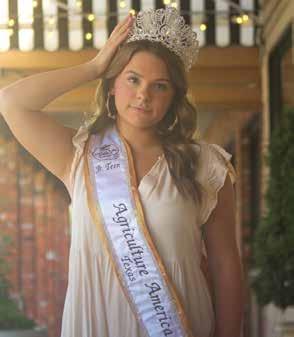
Zulch FFA member, Kelby Cobb, didn't choose agriculture, it chose her. As a fifth-generation Angus cattle rancher, her lifestyle is rooted in agriculture legacy. Her time in the blue corduroy jacket only solidified her path, and provided a sense of belonging along the way.
After being homeschooled for some time, Cobb entered public high school as a freshman, where she quickly got involved in her local FFA chapter.
"It just snapped," Cobb said. After getting involved, FFA felt like a place she could call home.
She now competes on the wool judging team, creed speaking, and quiz teams. Through these experiences, she has discovered her passion for agricultural advocacy, especially advocating for women in agriculture.
In addition to her FFA involvement, Cobb stepped into a statewide leadership role
JR. TEEN MISS AGRICULTURE AMERICA OF TEXAS A NORTH
ZULCH FFA MEMBERS JOURNEY OF ADVOCACY AND LEADERSHIP
BY: MADELYNE EATON
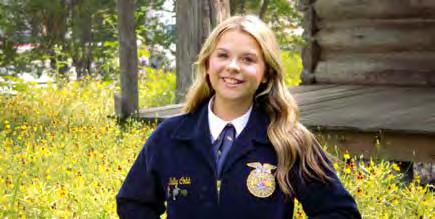
when she ran for and was crowned the Jr. Teen Miss Agriculture America of Texas. Through this platform she has connected with young agriculturalists across the state, using her title to promote the industry she loves and encourage other young women to step into leadership.
She uses her influence to inspire others. One of her favorite ways to advocate is by sharing “FFA Fact Monday” posts on social media, where she educates the public on agriculture and the importance of youth involvement.
Looking ahead, Cobb hopes to empower the next generation of FFA members. She is particularly passionate about helping greenhands, or nervous members, find their footing within the organization. “I want people to know this is an organization you can call home,” Cobb said. “I want to involve everyone in every way I can.”
Cobb’s story is a testament to the power of passion, and purpose. Through her advocacy, leadership, and heart for service, she is helping ensure that every student feels supported, welcomed, and inspired through the world of agriculture.






















These podcasts provide monthly discussions, professional development, association updates, and idea sharing to our members.
AG TEACHER TALK IS NOW A MONTHLY PODCAST! SCAN TO SUGGEST A TOPIC


TIPS FOR AN EFFECTIVE WORKSHOP PROPOSAL
TO INCREASE YOUR CHANCES OF BEING CONSIDERED, PLEASE UTILIZE THE INFORMATION BELOW WHEN SUBMITTING A WORKSHOP PROPOSAL FOR THE ATAT PROFESSIONAL DEVELOPMENT CONFERENCE.
ATAT Workshop Selection Process
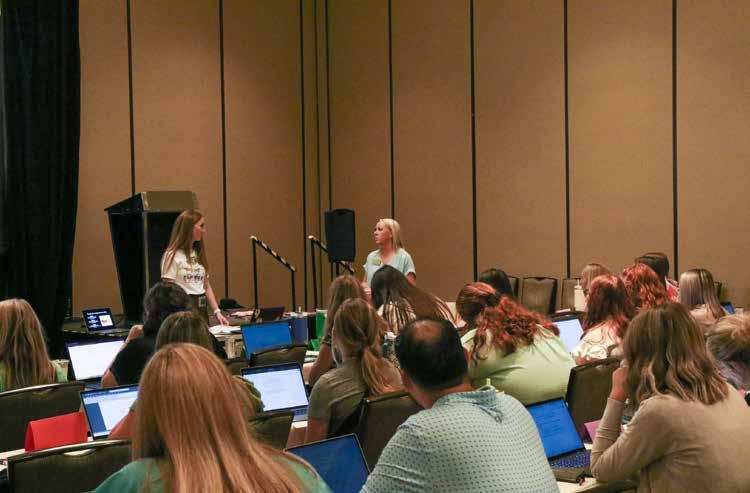
Our conference offers a variety of teacher-led and industry-led workshops, providing tools for use in the classroom throughout the year. After reviewing past professional development conference surveys, a notable takeaway is that attendees are more inclined to attend workshops that include hands-on opportunities, teacher certifications, and more. The conference committee, comprised of ATAT board members and representatives from all areas, selects the conference workshop line-up each year. They review the submitted proposals, collect and review data, and discuss the results. Selection is based on the workshop proposal, category, space requirements, and general interest.
Desired Workshop Topics
Our members most desire workshops that support or improve teachers' classrooms and/or programs, workshops that are relevant to the times, updates to keep abreast of agriculture education, and workshops that provide resources that will serve their classroom and program community.
Components of a Proposal
Your submitted workshop proposal is the documentation the ATAT conference committee reviews. Complete and detailed proposals are highly desired by the committee. Please review the entire proposal breakdown before completing it.
How to Organize a Workshop

Though the proposal is due sometime before the workshop, it is important to have it organized to help make it a stressfree and enjoyable experience. Details you will want to have nailed down would be your title, summary, overall takeaway goal, type of workshop, co-presenters, or an idea of who can join and support your needs, and timeframe. Creating a general outline will help identify these needs. As your outline is complete, you can fine-tune the details, including presentation visuals, teacher takeaway material, etc.
SUBMISSION TIMELINE
August: Workshop Suggestions Open
October: Workshop Proposal Submissions Open
Mid-January: Workshop Suggestions Deadline
January- February: Staff Work to Fulfill Workshop Suggestions
February: Workshop Proposal Deadline
. February- March: Conference Committee Review Proposals and Select Workshops
Mid-March: Committee Proposal Decisions Communicated with Lead Presenter
June: Final Workshops Announced

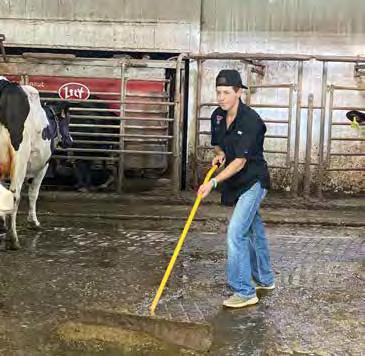
ForSnyder FFA member Jagger Collier, working in the dairy industry is more than a Supervised Agriculture Experience (SAE). As an employee at T&K Dairy, he contributes daily to one of the state’s largest fully closed dairy operations. The dairy milks 3,700 cows each day, raises all replacements on-site, manages 10,000 acres of crops for silage, and maintains a herd of 200 Angus beef cattle.
“I was practically raised in the milking parlor or tractor seat,” Collier said. “From the time I could walk, I helped my parents with anything they were doing.”
By the time he joined FFA, he was already feeding calves, covering silage, checking pivots, and washing parlor rags. Over the past three years, his responsibilities have grown signifi-
STAR LONE STAR AG PLACEMENT
SNYDER FFA MEMBER GAINS HANDS-ON EXPERIENCE AT FAMILY’S DAIRY OPERATION
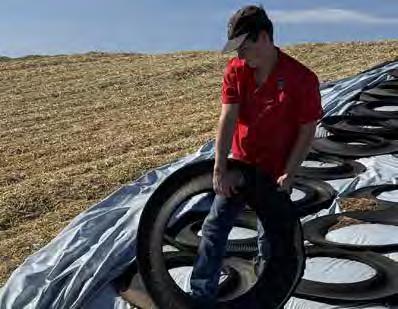
cantly.
“When I started, I only handled a few basic jobs. Now I can complete 100% of the tasks I’m assigned with little supervision,” Collier said. “I’ve worked hard to earn the trust of everyone here, family or not.”
He has also become proficient in operating every machine used on the dairy. All skills he knows are essential to efficient operation. Looking ahead, he hopes to continue building the foundation his family started.
“My plan is to manage the dairy when my parents retire,” Collier said. “This operation raised me, and I’m proud to be part of it.”
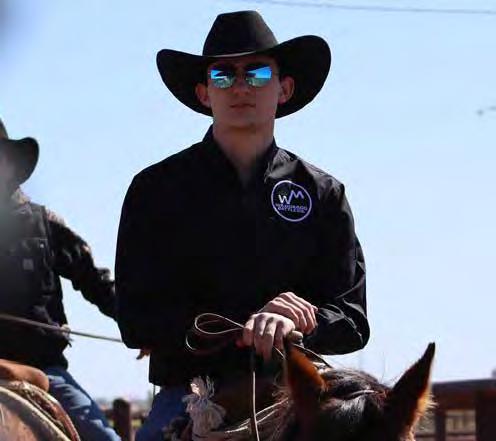
TheWILDORADO LEADS THE HERD WITH CATTLE COMPANY
students carefully studied the seedstock catalog before heading to a sale 30 minutes down the road from Wildorado ISD with a list of six bulls they liked. Five of the breeding cattle were definitely not within their budget. But the students were patient — they had goals and genetic aspirations for the bull they wanted to buy that day. When senior Hollis Albracht’s bid on bull #22 was accepted, all the students cheered.
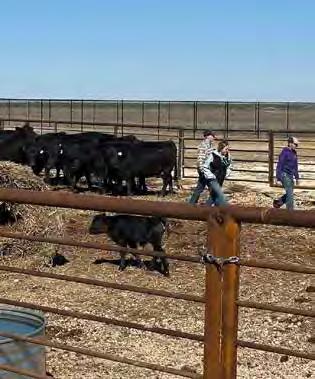
The Wildorado Cattle Co. is a student-run seedstock operation in the 200-student Panhandle district west of Amarillo. This one-of-a-kind career and technology education program imparts a wide variety of skills to the students involved.
“The cattle are simply the tool,” said Brody Russell, the Wildorado ISD agriculture teacher. “We could be raising anything. The key
is getting kids the experience to learn those skills.”
Some of those skills include learning how to communicate with people in the cattle community, marketing the company, and planning an auction held in March each year. Not to mention all the animal science, genetics, and math they are learning along the way.
Russell, a certified teacher from Pampa, knew about the program from consigning his own bulls to be sold through the Wildorado Cattle Co. before joining the district three years ago. He is the second teacher to lead this unique program that started after the district built a high school in 2016.
“The school board had a vision and a heart for the community,” Russell said. “Most small communities, you let the school go and it doesn’t take very long for the
rest of it to go with it. It was very important to keep a school.”
A HIGH SCHOOL RETURNS TO TOWN
Shannon Leavitt was the board president when Wildorado ISD passed a bond by two votes to build a new facility. Previous to that bond, the last class to graduate from Wildorado High School was in 1951.
“I lived in this community my whole life,” said Leavitt. His family, like everyone else in the community, attended school in Wildorado through the fifth grade and then went to neighboring Vega ISD for middle and high school.
Facing the challenges of declining enrollment and passing a deficit budget each year, Leavitt knew from his decades of service on the board that they needed to do something bold. He said the community was split down the middle about building a new school.
“But from the minute we passed that bond, every single member of the community has supported this.” Three of the 1951 alumni attended the 2021 graduation ceremony, the first one in 70 years.
AN IDEA BORN IN AG COUNTRY
The school board knew that just building a new 400-student facility would not be enough to attract students and increase enrollment.
“We had to change the mindset of being a school board with students to being a business that is creating an educational product that customers wanted to come to,” Leavitt said.
The product they decided to focus on was to find the best agriculture CTE teacher and do something no one else in Texas, let alone the nation, was doing — establish a cattle company run entirely by students.
“We’re an ag community and the school sits
in the middle of a wheat field,” he noted.
The cattle company is structured into several student-led departments, including directors of communications, events, finance, and herd management. After an initial investment from the district, the company is now self-funded through the annual bull sale. They sold seven of their own bulls in March and sold an additional 41 consigned bulls.
“The fact that we have consignors come back year after year — myself being one of them — is a testament to the work that these kids put in and how seriously they take it,” said Russell, referring to the stock of bulls owned by others but sold through the Wildorado Cattle Co.
“We’ve invested in genetics this year, and the kids are putting in some embryos,” he said. “I’m really hopeful that we are walking to the end of the diving board to make a splash. They already make a splash everywhere they go.”
Russell has 90 students in the grades 8-12 agricultural program, with about 65 of those students working directly with the cattle company. Some of the courses he teaches include the principles of agricultural, small animal management, equine science, agriculture mechanics, and livestock production with a variety of certifications.
Out of the classroom, Russell and the students have an eye on the future of the company’s reputation in the seedstock community. The Wildorado Cattle Co. has earned industry respect and impressed customers with their dedication and attention to detail. But they want to be known for the quality of their product, not just the novelty of being a student-run operation.
Leavitt and the board wholly support these efforts. “Anything of value, anything of real credibility can never be content where it is today,” he said. “It always has to have the vision of where it’s headed.”
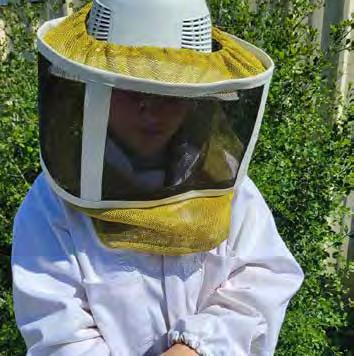
For Canadian FFA member Kenzi Williams, what began with two hives and six pounds of bees in seventh grade has grown into Middle of Nowhere Bee Farms. A thriving student-led business built on hard work, curiosity, and community connections.
“I quickly discovered a passion for the business and began working to expand it,” said Williams.
As word spread, she began receiving calls to remove swarms from homes and trees. She now credits these hands-on opportunities for helping her better understand bee behavior and hive management.
“I’m learning to respond to the bees’ needs more effectively,” Williams said.
She now consults with local producers, practices permaculture to improve forage, and bases management decisions on what the bees
STAR CHAPTER AGRIBUSINESS
CANADIAN FFA MEMBER BUILDS A GROWING APIARY BUSINESS
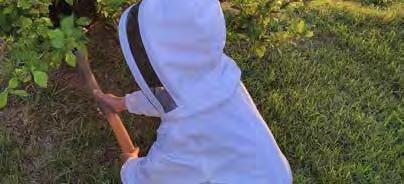
themselves indicate.
Alongside managing her own hives, she purchases honey and beeswax from other local beekeepers. Through a barter system, she trades homemade soaps for beeswax, expanding her product line.
“This non-cash exchange has helped grow my business while building strong connections in the beekeeping community,” Williams said.
The FFA member has increased her hive count and boosted honey sales by 33%. Her next goals include expanding to five hives, adding products like candles, and eventually learning to raise and sell queen bees.
With pollinators supporting one-third of global food production, Williams is proud to contribute.
“It’s an honor to raise bees and support our food system,” Williams said. “This project is helping me build a strong foundation in agriculture and in life.”






CONFERENCE
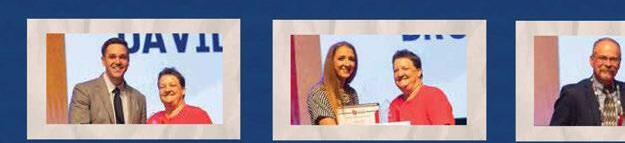
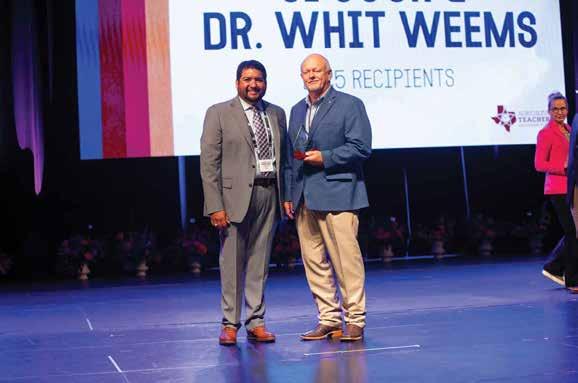




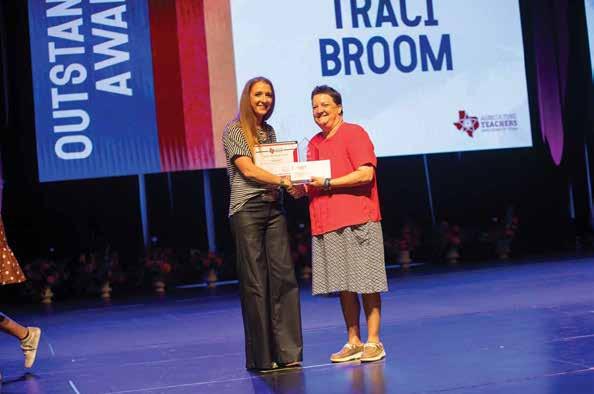









AGRICULTURE TEACHERS
ASSOCIATION OF TEXAS




CORPUS CHRISTI

ATAT CURRICULUM DEVELOPMENT OBJECTIVE
CREATE A COMPLETE SET OF CURRICULUM FOR POPULAR AGRICULTURAL SCIENCE COURSES.
CREATE RESOURCES THAT CAN BE USED TO SUPPLEMENT LESSONS THROUGH SEVERAL AVENUES THAT WILL HELP RELIEVE TEACHER STRESS FROM PLANNING DAILY LESSONS.
CREATE RESOURCES SO THAT NEW AND BEGINNING TEACHERS HAVE A DIVERSE SET OF LESSONS WHEN STARTING IN THE CLASSROOM.
PROVIDE THE OPPORTUNITY FOR TEACHERS TO COLLABORATE WITH FELLOW TEACHERS TO CREATE A STRONG DIVERSE SET OF LESSONS TO FULFILL THE REQUIREMENTS OF THE FOCUSED COURSE.
SMALL ANIMAL MANAGEMENT CURRICULUM DEVELOPMENT TEAM
LANE BAKER, LUBBOCK ISD AGRI-STEM CENTER
AUTUMN HAGEN, RUDDER
ERYNNE JENSCHKE, TOMBALL
RYAN PIENIAZEK, FRENSHIP
AMY PODLEWSKI, BECKVILLE ISD
LILY PRUITT WEST, BAYTOWN LEE
SMALL ANIMAL MANAGEMENT VIEW AND DOWNLOAD THE FULL CURRICULUM

WE WOULD LIKE TO THANK OUR SPONSOR

AGRICULTURE EDUCATION RESOURCES TEACHER RESOURCE
FROM CLASSROOM TO COMMUNITY: SERVICE-LEARNING IN AGRICULTURAL EDUCATION
BY: MICHELLE VASBINDER PROFESSIONAL DEVELOPMENT COORDINATOR AGRICULTURE TEACHERS ASSOCIATION OF TEXAS
We know that the phrase "Living to Serve" is more than just recited at FFA events; it's a philosophy that defines agricultural education at its core. Every ag teacher knows that what happens in the classroom is only part of the story. The other part unfolds in barns, on the road, and within our communities. It is here that students apply what they learn to make a difference. Service-learning bridges our worlds, connecting agricultural science instruction with real-world service that strengthens both students and communities.
WHY SERVICE-LEARNING BELONGS IN AGRICULTURAL EDUCATION
Agricultural education has always emphasized experiential learning. We teach by doing, naturally, but service-learning adds another layer by asking students to apply their knowledge in ways that serve others, fulfill a need, and better the community they are in.
Service-learning transforms academic content into community change. It fosters problem-solving, communication, and collaboration the same 21st-century skills that agricultural careers demand. And for many students, it provides that “aha” moment when science and service intersect with purpose.
Service-learning doesn’t have to begin
with a large, community-wide project. It can start right inside the classroom, where curiosity and compassion meet curriculum. Every lesson from plant science to ag mechanics can spark ideas for how students can apply their knowledge to meet a local need. By connecting these everyday lessons to authentic needs, students see that their classroom learning is relevant.
Classroom Labs with Purpose
Transform labs into experiences that generate information with real-world value. Rather than conducting experiments in isolation, guide students to ask, “Who could use what we’re learning?” Encourage them to connect lab results to local issues. This method helps students recognize that data and experimentation are not only academic tasks but also tools for solving authentic agricultural problems. When students see how their findings could influence school practices, community projects, or local businesses, their motivation and understanding deepen.
Data with Direction
Give classroom experiments a destination beyond the gradebook. Help students understand that scientific data has meaning when it informs decisions or inspires improvement. Incorporate opportunities for students to interpret,
summarize, and present their findings to authentic audiences. By sharing classroom data in purposeful ways, students develop technical communication skills and awareness while reinforcing the scientific process. The focus is not just on collecting data, but on applying it.
Student-Led Project Design
Empower students to take ownership of service-learning by guiding them through structured project planning. Instead of assigning service activities, provide a framework for students to identify a need, propose solutions, and outline measurable goals. Incorporate project management concepts, including timelines, roles, and evaluation checkpoints. When students design and lead their own service-learning initiatives, they strengthen leadership, teamwork, and critical thinking while learning how to connect classroom content with community outcomes.
Collaborative Partnerships and Feedback Loops
Establish a communication cycle between your classroom and community partners. Begin by inviting local experts, agencies, or stakeholders to share current agricultural challenges. Allow students to apply course content toward addressing those challenges, and then share their results or recommendations
for feedback. This process helps students see their work as part of a larger professional dialogue and reinforces the collaborative nature of agricultural science. When partners' feedback informs future class projects, students experience how education and service continually build on one another.
Service-learning also strengthens classroom engagement. When students know their work matters, motivation increases. Lessons feel different when the data will guide improvements in a school garden, or when welding skills will help repair a local animal shelter’s fencing.
LIVING TO SERVE STARTING IN THE CLASSROOM
At its heart, “Living to Serve” begins with learning to think, to ask questions, and to connect knowledge with compassion. Every classroom experiment, lab, or discussion can be a seed for service if it’s rooted in relevance and purpose.
Agricultural educators are uniquely positioned to help students discover that their scientific understanding is a powerful tool for good. Whether the project reaches across the county or just across the hallway, the message remains the same: service begins in the classroom, and from there it grows.

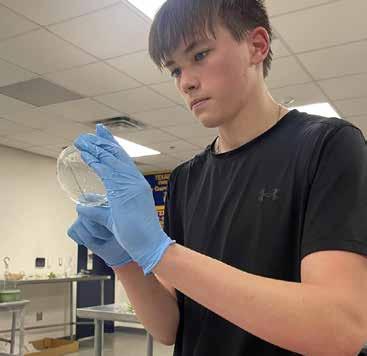
BradyGoodwin is improving home kitchen safety through agriscience research. After discovering that many foodborne illnesses stem from improper cleaning practices, the Stephenville FFA member designed a study to determine which cutting board washing method most effectively reduces bacteria on cutting boards.
“I wanted my project to address a real problem that affects everyday people,” said Goodwin.
The experiment tested wooden and plastic cutting boards exposed to raw chicken, then compared different washing variables: hot vs. cold water, Dawn vs. Palmolive dish soap, and towel drying vs. air drying. Bacteria levels were measured by swabbing the boards, culturing samples on nutrient agar, and counting the resulting
STAR GREENHAND AGRISCIENCE
STEPHENVILLE FFA MEMBER’S RESEARCH REVEALS SAFER CUTTING BOARD CLEANING METHOD
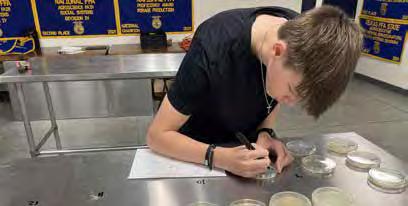
colonies.
One result stood out. Air drying significantly reduced bacterial growth.
“The air-drying method only produced about 12 colonies, compared to 32 with towel drying and 66 with no washing,” Goodwin said. “It was a meaningful difference.”
His project evolved into full-scale scientific investigation. Including controlling variables, tracking data, and conducting statistical analysis.
“I grew from a planner into an analyst and decision-maker,” he shared. “This project showed me how small changes, like choosing to air dry, can make a big impact on kitchen safety.”
Goodwin hopes to continue expanding the research to further improve household sanitation and reduce foodborne illness.
LIVING TO SERVE: THE HEART OF THE FFA MISSION
BY: MARTY RESENDEZ PRESIDENT OF THE AGRICULTURE TEACHERS ASSOCIATION OF TEXAS AND KLEIN COLLINS HIGH SCHOOL AGRICULTURE SCIENCE TEACHER
The final line of the FFA Motto, "Living to Serve," is more than just the ending; it lies at the core of our organization's values. Understanding our motto reveals not only what we want to accomplish but also why service is central to leadership and agricultural life. This affects not only our members but also ourselves, extending beyond the walls of our classrooms, chapter meetings, and convention halls. It is a call to action that defines the spirit of our organization, reminding us that leadership is not measured by titles held or awards won, but by the willingness to uplift others. This single phrase sums up the essence of agricultural education, using knowledge, skills, and compassion to build stronger communities and a brighter future.
"UNDERSTANDING OUR MOTTO REVEALS NOT ONLY WHAT WE WANT TO ACCOMPLISH BUT ALSO WHY SERVICE IS CENTRAL TO LEADERSHIP AND AGRICULTURAL LIFE."
FFA weaves service into its programming in tangible, meaningful ways. Chapter service projects, community events, and leadership activities that encourage students to meet real needs around them. Whether members organize a food drive during the Thanksgiving and Christmas holidays, teach elementary students about agriculture, or volunteer at nursing homes, the goal is always to make a positive difference and to develop the personal qualities that define strong leaders. When students parti-
cipate in service projects, they learn responsibility, empathy, communication, and teamwork, skills that extend far beyond the classroom.
Service is not presented as something to be done occasionally, out of obligation, or simply to fulfill a chapter requirement. Instead, it is woven into daily life. A mindset and a commitment that gradually become part of a person's character. This truth was never more evident than this summer, when the Hill Country was devastated by the destructive flood that swept through over the Fourth of July weekend. In the days and weeks that followed, the spirit of "Living to Serve" came alive in powerful ways.
Agriculture teachers from Ingram stepped forward as leaders in the recovery efforts, offering not just their time and skills, but their compassion and steadiness during a time of crisis. Chapters from across the state joined in, partnering with corporate sponsors to organize donation drives and gather essential supplies. Together, they showed what service looks like when it becomes a way of life—people helping people, communities lifting each other, and FFA members living out the motto with heart and purpose.
"THE MOTTO REMINDS THEM THAT MEANINGFUL SERVICE DOES NOT DEPEND ON AGE OR EXPERIENCE. ANYONE CAN SERVE. ANYONE CAN LEAD."
More importantly, "Living to Serve" helps students recognize the impact they can have at any age. The motto reminds them that meaningful service does not depend on age or experience. Anyone can serve. Anyone can lead. By giving back early, students see themselves as valuable contributors to their communities. They learn leadership by the willingness to step forward when something needs to be done. Perhaps the most remarkable aspect of the motto is its timelessness.
Even as the world shifts rapidly, new technologies are emerging, industries are evolving, and challenges are growing more complex, the call to serve remains unchanged. No matter how advanced our society becomes, there will always be a fundamental need for compassion, generosity, and human connection. We will always require leaders who recognize that their actions carry weight, that their work has profound and lasting consequences, and that true



leadership is measured not by personal achievement but by the positive difference they make in others' lives.
"NO MATTER HOW ADVANCED OUR SOCIETY BECOMES, THERE WILL ALWAYS BE A FUNDAMENTAL NEED FOR COMPASSION, GENEROSITY, AND HUMAN CONNECTION."
By living out this motto, FFA members carry forward a tradition that enriches all of our communities. They become leaders who understand that service is not separate from success, but an essential part of it. Through their actions, they demonstrate that the future of agriculture, and the future of leadership, is brightest when guided by a commitment to serve.











IT'S NOT ABOUT ME
BY: RAY PIENIAZEK AGRICULTURE TEACHERS ASSOCIATION OF TEXAS EXECUTIVE DIRECTOR
As we have now reached the last line of the FFA motto in our series of articles, this might be one of the most valuable lessons we share with our students in agricultural science classes. Living to Serve is such an important lesson to teach our students as we prepare them for the future. Many of the other parts of the motto are lessons for life, as W.E.B. Du Bois stated: "Education must not simply teach work, it must teach life."
As teachers, we know we are influencing our students to help them become productive members of society. In the real world, our students will have to give a little to get more out of life. I know most of our teachers pour their hearts into their students, giving them opportunities to learn what life will be like in the future. We are servants of our students, our community, and our society, and must show them what it is like to give back to the community outside of school.
One lesson we can teach is "A candle loses nothing by lighting another candle," by James Keller. As we saw our agriculture and FFA communities come together in the Hill Country tragedy, we saw them do what they could to brighten the lives of others who needed help. Many of our FFA members saw what others were doing and decided we could do that also. We were doing our best to keep others' candles lit to show them they had support as they rebuilt their lives and communities. Our students only grow when they help others.
Steven Covey stated, "What you do has far greater impact than what you say." The examples we set to serve our students and community should always be visible. Our communities are filled with groups that have aims and purposes to support and help others. We see examples of this in our chapters, such as the Weimar FFA, which ran a community food bank, and the Rusk FFA, which had a week of service.
When I first started as an ag teacher, my main goal was community service, and for the most part, we were the leading group on the campus doing it. I genuinely think our FFA chapters have led the way, encouraging others to do the same. I see more groups, including athletics, posting the community service activities they are doing. We are doing and making an impact in so many ways. We need to always be on the lookout for ways to engage our students in community activities. It will no doubt lead to growth for them and for the community as a whole. We know "doing" is part of our motto, and we have to be the role model for them. As Howard Zinn stated, "Small acts, when multiplied by millions of people, can transform the world."
“It’s not about me. It’s not about you. It’s not even about us. It’s about legacy. It’s about what we choose to leave behind for future generations…to leave behind a brighter future.” - Tony Stark, as Iron Man
FFA FRIDAY TEACHER RESOURCE
Week 1
Week 2
Week 3
Week 4
Week 5
Week 6
Week 7
Week 8
Week 9
Week 10
Week 11
Week 12
Week 13
Week 14
•Discuss the significance of agriculture. (What Does Agriculture Mean?)
•How does FFA contribute to agriculture?
•SAE Show and Tell
•Have experienced members discuss their SAE with classes. Have them bring in animals or items that assist in explaining their SAE.
•Explore the various SAE opportunities.
•AET Profile Set-up, AFNR Courses, and Resume
•Review the Various Types of SAEs
•Non-Traditional SAEs
•Introduce Leadership Development Opportunities
•Setting Up Your Experiences in AET
•Adding Expenses/Income to Your SAE
•Career/Personality Profile
•Students complete modules over SAE For All in order to develop their roadmap.
•Update Record Books
130.2.(c) (4) (5)
130.2.(c) (2) (4) (5)
130.2. (c) (1) (2) (4) (5)
130.2. (c) (1) (2)
130.2. (c) (1) (2)
130.2. (c) (1) (5)
130.2. (c) (1) (5)
130.2. (c) (1) (2)
130.2. (c) (1) (2)
(c) (1) (2)
(c) (1) (2)
•Resume Development 130.2. (c) (1) (2) (6) (9)
A Cover Letter
Interviews
Week 15 •Spee Writing •Update Record Books
Week 16 •S edule a visit to a local elementary classroom to share an agricultural lesson and promote your FFA apter.
Week 17
Spee to Class
Elementary Visit
Week 18 •Present Spee to Class •Update Record Books
Week 19 •Introduce Career Development Events
Week 20 •Update Record Books and Prepare to Submit any Applications130.2.
(c) (1) (2) (6) (9)
FFA FRIDAY ALLOWS TEACHERS TO SATISFY THE SAE/RECORD BOOK REQUIREMENT FOR COURSES WHILE ALSO CREATING LEARNING EXPERIENCES FROM STUDENTS THAT LIE WITHIN THE CORE OF THE 3-COMPONENT MODEL. LISTEN TO THE FFA UNRAVELED PODCAST EP. 7 FOR MORE FFA FRIDAY
LEAD THE WAY, LIVE THE MOTTO
BY: JENNIFER JACKSON TEXAS FFA ASSOCIATION EXECUTIVE DIRECTOR
TheFFA motto concludes with four simple but powerful words: living to serve. While each line of the motto: “Learning to Do, Doing to Learn, Earning to Live…” builds upon the last, it is this final phrase that brings them all into alignment. Knowledge and skills may equip us to succeed, but service shapes the measure of our lives.
When we speak of “Living to Serve,” we often picture large-scale volunteer projects, community service initiatives, or even mission trips. Those are vital expressions of service, but at its core, “Living to Serve” is not about moments; it is about a mindset. It is a way of approaching daily life, relationships, and leadership. It asks us not simply to serve when convenient, but to anchor our lives in service.
"IT ASKS US NOT SIMPLY TO SERVE WHEN CONVENIENT, BUT TO ANCHOR OUR LIVES IN SERVICE."
In agriculture, service is not an addition to our work; it is woven into its fabric. Farmers and ranchers provide food, fiber, and fuel to sustain life. Teachers serve by pouring into students every single day, our FFA chapters across Texas showcase service not as an obligation, but as a way of life. Most of these folks don’t even think about the fact that they are serving others daily, they just do.

LIVING TO SERVE IN ALL ROLES
So, what does “Living to Serve” look like in practical terms? It appears different depending on our perspective, but the heartbeat remains the same: making someone else's life better.
Serving the agricultural community. Across Texas, FFA chapters are stepping up in ways that go far beyond the classroom. From food drives and school supply collections to highway cleanups and park restorations, students are making a visible difference in their communities. These aren’t just projects, they’re lifelines. They meet real needs, build real relationships, and remind us that service doesn’t have to be complicated to be powerful.
Serving the industry. Texas FFA members promote agriculture beyond their hometowns. Chapters create educational booths at fairs, participate in the Commodity Contests, educate and advocate through Leadership Development Events and Speaking Development Events, and share accurate information about farming and ranching on social media. Each effort strengthens agriculture’s reputation and builds public trust.
Serving each other. Service also occurs within our own organization. At the Texas FFA Convention, members from across the state collect thousands of school supplies, jeans, or even seeds each year for the local host city. They clean up parks and beaches and package meals for the less fortunate. On the state officer team, members practice service daily by encouraging one another through long days of travel, speeches, and workshop development.
Serving our families. Many students live out the motto at home by caring for siblings, helping parents with chores, providing guidance or advice for a young showman, or working on the family operations to keep things running. Those acts of service may not be celebrated on a stage, but they are the truest expression of putting others first.
Being good teaching partners.
Agricultural science teachers embody “Living to Serve” in unique ways covering a colleague’s class during emergencies, sharing lesson plans freely, or cheering each other on when contests and conventions stretch everyone thin or even by giving their time to prepare and present a workshop or serve on a committee during the annual Texas FFA Convention or ATAT Conference.
Being good educators. Every lesson taught, every SAE project supervised, and every competition coached is an act of service. Advisors recognize that investing in students’ futures is one of the most profound ways to embody this motto.
SERVICE AS LEADERSHIP
True leadership is not about titles or positions; it is about service. Leadership grounded in service builds trust, credibility, and influence.
Author Simon Sinek captured this well: “Leadership is not about being in charge. It is about taking care of those in your charge.”
When leaders serve, they demonstrate humility, empathy, and vision. In Texas FFA, leadership through service is everywhere. Chapters like Talkington FFA in Lubbock, which partner with food pantries, remind us that leadership looks like meeting community needs. State officers who give up holidays and weekends to serve our members remind us that leadership looks like sacrifice. And teachers who spend nights in ag mechanics shops and long weekends on stock show grounds remind us that leadership looks like investment.
THE RIPPLE EFFECT OF SERVICE
Service is contagious. One act inspires another, creating ripples that stretch farther than we can imagine.
"SERVICE IS CONTAGIOUS. ONE ACT INSPIRES ANOTHER, CREATING RIPPLES THAT STRETCH FARTHER THAN WE CAN IMAGINE."
Think about the last time someone went out of their way for you. Maybe this was just a kind word on a hard day or a helping hand when you were overwhelmed. Chances are that the act not only helped you but also motivated you to pass it on.
Texas FFA members prove this ripple effect every year. When one chapter organizes a blood drive, it sparks another to do the same. When one community garden is planted, it inspires another across the state. When one advisor takes the time to mentor a new teacher, that teacher turns around and mentors someone else.
Living to serve is not just about big projects; it is about creating a culture of kindness and generosity that multiplies.
"LIVING TO SERVE IS NOT JUST ABOUT BIG PROJECTS; IT IS ABOUT CREATING A CULTURE OF KINDNESS AND GENEROSITY THAT MULTIPLIES."
SERVICE ISN’T JUST SENTIMENT, IT’S STRATEGY
Here’s a tip that’s often overlooked: service isn’t just a feel-good philosophy; it’s a strategic advantage.
Teams that serve each other outperform teams that compete internally.
Leaders who serve build loyalty that no title can command.
Organizations that prioritize service attract partners, donors, and talent who want to be part of something meaningful and impactful.
"ASSUME POSITIVE INTENT. INSTEAD OF JUMPING TO CONCLUSIONS OR TAKING THINGS PERSONALLY, CHOOSE TO BELIEVE THAT OTHERS MEAN WELL. MOST PEOPLE ARE DOING THE BEST THEY CAN WITH WHAT THEY HAVE."
Service builds trust, strengthens culture, and fuels long-term success. Consider these bullets above and ask yourself if you’re guilty and if so, consider making small changes, not just for those around you but also for your quality of life. It’s not just the right thing to do, it’s the smart thing to do.
THE DAILY PRACTICE OF SERVICE
While service can take grand forms, it often begins with small, intentional choices. Here are 6 daily practices that can help each of us “live to serve” in practical, meaningful ways:
Express gratitude. A simple “thank you” goes further than we realize. As cheesy as it sounds, I have “write thank you notes” on my calendar every Friday morning, and it starts my day off in a positive way.
Encourage someone. A genuine compliment or word of affirmation can change the trajectory of another person’s day, as much as avoiding judgment.
Help without being asked. Whether stacking chairs after a meeting or noticing a colleague struggling, step in before someone asks.
Mentor generously. Share your experience and advice with those who are newer to the journey.
Offer grace. People will fall short; choose forgiveness and patience over frustration for your sake as much as theirs.
Assume positive intent. Instead of jumping to conclusions or taking things personally, choose to believe that others mean well. Most people are doing the best they can with what they have. When we assume positive intent, we create space for
trust, collaboration, and grace, even when things get messy.
These small acts, repeated consistently, cultivate a life that embodies service.
THE ADVANTAGE OF SHOWING UP
Service isn’t just something nice to do; it’s something that makes us better. Not just better people, but better teammates, better leaders, better thinkers.
Psychologist Martin Seligman, who spent a lot of time studying the theory of person well-being, found that helping others actually helps us. It builds resilience, cuts through negativity, and gives us a clearer sense of purpose. Basically, when we stop focusing on what’s wrong and start looking for ways to help, we get stronger.
And here’s the kicker: it doesn’t take much. You don’t have to start a nonpro-
fit or lead a big project. Just show up. Help out. Pay attention. That’s how you build trust, earn respect, and make a real impact.
Service isn’t soft, it’s solid. It’s the kind of thing that makes people want to work with you, follow you, and believe in what you’re doing.
"SERVICE ISN’T SOFT, IT’S SOLID. IT’S THE KIND OF THING THAT MAKES PEOPLE WANT TO WORK WITH YOU, FOLLOW YOU, AND BELIEVE IN WHAT YOU’RE DOING."


MAKE EM’ COUNT AND NO ONE NEEDS TO KNOW
BY: AARON ALEJANDRO TEXAS FFA FOUNDATION EXECUTIVE DIRECTOR
"Do two nice things for someone every day. If anyone finds out about either thing, that one didn't count." - Dick Wallrath
Mr. Wallrath provides an incredible challenge about serving one another. His simple philosophy is a daily reminder that someone on our path is seeking "hope" and may need "encouragement." While there are many ways we can serve, two basic ingredients are showing up … be present and use your daily "free words" to build people up.
Out of curiosity, I asked the internet, "What does it mean 'living to serve?' Here's what it said:"Living to serve" means making a conscious effort to help others and contribute positively to the world around you, rather than focusing solely on personal gain. It involves actively seeking opportunities to give your time, energy, and skills to benefit your community, family, and even strangers, which can lead to greater personal fulfillment and a more purposeful life. The internet may not always get it right, but that was a pretty good response.
"YOU CAN HAVE EVERYTHING IN LIFE YOU WANT, IF YOU WILL JUST HELP OTHER PEOPLE GET WHAT THEY WANT." - ZIG ZIGLAR
When we serve, we are showing up. We are present and supportive. Since we never know what someone is going

through, always take a position of awareness and be on the lookout to serve a need, provide comfort, respect, validation, hope, and encouragement.
Here are some tips on “serving” what you can do.
STUDENTS
Do you have any friends who are struggling? Home life, relationships, work, or social life? Could you be their hope? You could serve by being someone's hope. Your smile, listening, and encouragement could be their promise that a better future is possible, and better days are ahead.
Have you ever seen a senior citizen's yard that looked like it needed mowing, leaves picked up, or general maintenance? I bet you have, I have. Knock on the door, introduce yourself, and ask them if you could have the privilege of helping them.Find a local nonprofit that could use a volunteer. Ask an elementary teacher if they have any kids struggling to read. Ask if you can help them, read with them, and offer some encouragement along the way. Do it without looking for recognition. Do good things just because.
Other opportunities could include:
Do community beautification project(s).
Get friends to join in and donate clothing, shoes, jewelry, accessories, toys, video games, books, and other items you no longer want.
Mentor a younger student or child. They are often much more receptive to this sort of help from "big kids" than they are from grown-ups. Many religious institutions, nonprofits, schools, and other groups offer these opportunities.
It shouldn't take long to find something of interest.
Volunteer at a charity that meets a local need.
Go to a senior citizen center or identify 10 people over the age of 70 and ask them about the best times of their lives, what life lessons they learned, and what they would share with you.
Encourage someone today. Make it a point to find a fellow student and tell them, "I'm glad you're my friend," "You're awesome," or "You can achieve that goal."
TEACHERS
Do you have a teaching colleague who is struggling? Home life, relationships, work, or social life? Could you be their hope? Serve by being someone's hope. Your smile, listening, and encouragement could be their promise that better days are ahead.
Teachers have a unique opportunity to foster positive relationships, be innovative in their teaching, and coach students toward classroom and career success. Incorporating diverse teaching methods,
and providing regular, constructive feedback. The best teachers build trust, are empathetic, and create a learning environment that competes for students' minds.
Finally, use your classroom to foster a positive culture. Strong affirmations, goal setting, and skill sets to achieve are tools of encouragement that may provide the fuel for a student to excel.
PARENTS
Be an example of hope. Let our children see us resilient and strong. By providing this hope, our students will refuse to be fragile and grow into stronger adults.
Let your children see you being a lifelong learner. Be involved in their school activities, including homework. Here are some examples:
Be involved at the start of the school year and be consistent until the year ends.
Communicate with your child’s teachers.
Be positive about education and its importance.
Encourage reading. Good readers can become good leaders.
Help teach time management and juggling various school activities.
Go to school events and volunteer to help.
Promote the importance of lifelong learning.
You have no idea how important it is for children to hear you encourage them. Make sure it is genuine and consistent from an “atta boy/girl” when they do something good to a “you’ve got this” when they’re not sure or afraid
they’ll come up short.
SPONSORS / STAKEHOLDERS
We need hope in the workplace, too. Creating an environment of hope is a great way to serve your team members.
Celebrate the wins. Small ones and large ones.
Be there when someone stumbles. Failure is an event and not a person.
Create a culture of appreciation and gratitude. Say “thank you” and “good job.”
Create opportunities to collaborate. None of us is as strong as all of us.
Make professional development available and a priority.
Encourage your employees by fostering a supportive environment. Send emails, texts, and words of gratitude and support. You never know when a moment and a few sincere words can have an impact on a life.
While there are many ways you can “live to serve.” There is probably none better than to be a beacon of hope and someone known as an encourager. Have you done two nice things for someone today? It’s never too late to do the right thing. Time to serve.















































































TEXAS FFA ALUMNI ASSOCIATION UPDATES
BY: KELLY WHITE TEXAS FFA ALUMNI PRESIDENT
Iamone of many hunter education instructors who teach Wildlife, Fisheries, and Ecology Management curriculum. In this course, we discuss how a hunter’s attitude and behavior evolve over time. There are six distinct stages of hunter development: the Shooter Stage, Limiting-Out Stage, Trophy Stage, Method Stage, Sportsman Stage, and finally, the Giving Back Stage.
Not every hunter will pass through all six stages, nor will they experience them in the same order. But the final stage, the Giving Back Stage, serves as a powerful reminder of what it means to contribute to something bigger than yourself. This stage is defined by mentoring, conservation, advocacy, and joining with others who share the same values to improve and promote the sport.
For FFA members, this idea aligns beautifully with a principle we hold close: Living to Serve. It’s a question worth asking, “How do you give back to an organization that has given so much to so many?”
Giving back doesn’t always look the same. Perhaps you have been blessed financially and are able to support the organization through monetary gifts. Perhaps your blessing is the gift of teaching, allowing you to shape ag science students and FFA members every day. Perhaps your strength lies in leadership and your ability to guide others who also want to serve the FFA.
Texas FFA is fortunate to have many who truly live to serve. Those who work tirelessly to make this organization great. This includes Team Ag Ed Executive Directors, the Texas FFA Board of Directors, and the dedicated Texas FFA and ATAT staff. I have been blessed to work alongside these individuals, and with the Texas FFA Alumni & Supporters Council, for more than fifteen years. Leaders such as Liz, Wade, Joe, Garrett, Gary, Perry, Jay, and many others have left a lasting impact.
The Texas FFA Alumni & Supporters have embraced a form of giving back that I like to call “sweat equity.” This commitment fuels grants, scholarships, leadership experiences, and financial support for programs across Team Ag Ed. Through strong partnerships, we have even secured Lifetime FFA Alumni & Supporter memberships for several state officers at the conclusion of their year of service.
This sweat equity has made significant growth possible. Today, the alumni proudly budget for:
Ten $500 grants
Five $500 scholarships
Bronze-level sponsorship at the ATAT Conference
Two $500 Washington Leadership Conference scholarships
And more initiatives that directly support Texas agricultural education.
The progress is remarkable. In 2006, financial records show Total Liabilities & Capital of $24,599.35. By August 31, 2025, that number had grown to $180,010.43. A testament to years of dedication and service. We are equally proud to keep these assets within the Vocational Agriculture Teachers Association of Texas Credit Union, supporting an institution aligned with our values.
The Giving Back Stage of hunter development teaches us that true fulfillment comes not from what we take but from what we leave behind.
FFA members, alumni, and supporters live this truth every day. The question remains. Are you Living to Serve?
"For even the Son of Man did not come to be served, but to serve, and to give his life as a ransom for many". Mark 10:45
Alumni
MEMBERSHIP TYPES
Questions





EMAIL MARY EDWARDS AT MARY@TEXASFFA.ORG
YOUNG FARMERS OF TEXAS
UPDATES
Thelink "Living to Serve" is perhaps the most impactful in the FFA Motto. The State Association of Young Farmers was originally formed with this as one of its primary purposes. Serving communities, serving school districts, serving Ag teachers and students.
Young Farmers Chapters would host workshops, allowing ag teachers to meet their annual adult education hours quota. I remember workshops including welding, electrical, plumbing, livestock updates, and of course, the introduction of Coastal Bermuda to the east Texas hay industry. Meeting this quota was part of the school district's funding formula, so the support of the administration and the school board was automatic.
Today, we do our best to serve youth in agriculture by supporting local FFA chapters and the Texas FFA Association. That being said…
You are cordially invited to join us for our Annual Young Farmer Convention, taking place January 8–10, 2026, in Marble Falls, Texas.
To kick off the convention, we will host a workshop by The Oil Tap on Thursday afternoon, followed by a welcome reception that evening at the host hotel
and convention location, LaQuinta Inn and Suites in Marble Falls.
On Friday, attendees will enjoy tours of the Inks Dam National Fisheries Center, the Falls on the Colorado Museum, and the Save the World Brewery. Saturday’s schedule includes a presentation from Berber Ranch on their water conservation practices, our annual Scholarship Auction to raise funds for student scholarships, and an awards banquet to conclude the event.
If you are interested in attending, membership not required, please visit our website at www.txyoungfarmers.com or email us at txyfaes@gmail.com.

















































LOBBYIST WORKING FOR INTEREST INVOLVING AGRICULTURAL SCIENCE EDUCATION AND RELATED TEACHERS
TIMELY LEGISLATIVE UPDATES CONCERNING AGRICULTURAL SCIENCE EDUCATION
ANNUAL PROFESSIONAL DEVELOPMENT CONFERENCE REGISTRATION FEE IS WAIVED
ACCESS TO LEGAL ASSISTANCE
ACCESS TO A $1 MILLION PROFESSIONAL LIABILITY INSURANCE POLICY
YEARLY SUBSCRIPTION TO THE ASSOCIATION’S QUARTERLY MAGAZINE, GROWING OUR FUTURE
ACCESS TO THE ASSOCIATION’S WEBSITE, INCLUDING THE CAREER PAGE
ACCESS TO THE ASSOCIATION’S ONLINE MEMBERSHIP DIRECTORY
ELIGIBILITY TO APPLY FOR THE ASSOCIATION’S STUDENT SCHOLARSHIP (MEMBER’S CHILDREN ONLY)
ELIGIBILITY TO APPLY FOR THE ASSOCIATION’S AWARDS AND RECOGNITION PROGRAM
ELIGIBILITY TO APPLY TO BE A PART OF THE ASSOCIATION’S PROFESSIONAL NEW TEACHER MENTORING PROGRAM
ELIGIBILITY TO PARTAKE IN THE KENNETH HUGHES LIFE INSURANCE PLAN
ACCESS TO THE ASSOCIATION’S AGRICULTURE SCIENCE TEACHERS CRISIS FUND
ACCESS TO THE VATAT CREDIT UNION
ACCESS TO A DISCOUNT AT WYNDHAM HOTELS NATIONWIDE
ACCESS TO THE AGRICULTURAL EDUCATION FORD TEXAS FFA LEADERSHIP CENTER FOR MEETINGS OR SMALL GATHERINGS