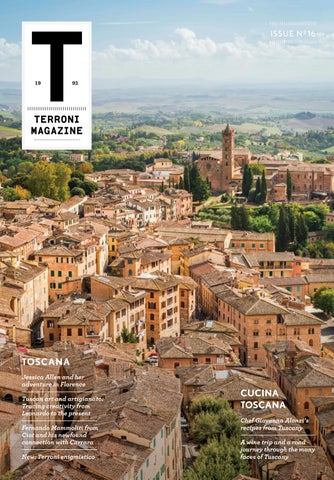
TOSCANA
Jessica Allen and her adventure in Florence
Tuscan art and artigianato: Tracing creativity from Leonardo to the present
Fernando Mammoliti from Ciot and his newfound connection with Carrara
New: Terroni enigmistico
Jessica Allen and her adventure in Florence
Tuscan art and artigianato: Tracing creativity from Leonardo to the present
Fernando Mammoliti from Ciot and his newfound connection with Carrara
New: Terroni enigmistico
Chef Giovanna Alonzi’s recipes from Tuscany
A wine trip and a road journey through the many faces of Tuscany
PUBLISHER
Gruppo Terroni
EDITOR IN CHIEF
Elena di Maria
ART DIRECTOR
Francesco Danilo
Di Leo

I’ve always postponed creating the issue dedicated to Tuscany not because I wasn’t interested, but because this region holds so much. So many stories, traditions and beauty to choose from. What do you include, and what do you let go? Tuscany is rich in every possible way: landscapes, art, history, vineyards, old stone houses and flavours that truly belong to their land. Everything feels timeless, yet somehow still modern.
For this issue, I asked my friend Jessie Allen of The Social to return to her beloved Firenze and share her experience with us. Elisa takes us across the region to show us its beauty, where to stay and what to taste. Alessandra and Andrea curated a wine trip filled with unforgettable stops and experiences.
Danilo brings another layer to this issue: a reminder of Tuscany’s artistic legacy. His piece guides us back to the great Tuscan masters and their iconic works a journey through the art that shaped not just a region, but the way we all look at beauty.
Chef Giovanna shares with us four regional recipes so you can experience a bit of Toscana in your kitchen.
And this year, something special happened: I finally had the chance to include a story on marble written by Francesco and inspired by my brother-in-law Fernando. This collaboration arrived at the perfect moment, especially now that Fernando’s relationship with marble has taken on new depth.
Of course, I could never create an issue on Toscana without celebrating its artisans. Their ancient knowledge, dedication and mastery continue to inspire me. Their work has nothing to do with the frantic rhythm of our time. Instead, it teaches us that beautiful things are made slowly, with intention and care. I’m happy to see craftsmanship experiencing a revival, especially among younger generations who understand its value and how beauty often comes with a commitment to sustainability, social purpose and humanity.
These things energize me. They remind me that beauty and goodness still exist, and maybe we should talk about them more. This is also what led me to write about Paolino Ru ni and his incredible human warmth the way he listens, lifts people up, and makes others feel valued and loved.
I’m so happy to share all these Tuscan stories with you, hoping they inspire you to find beauty wherever you are and maybe even take a trip to this extraordinary region to experience firsthand everything we share in this issue.
Enjoy the read!
PHOTOGRAPHY
Francesco Giorgio
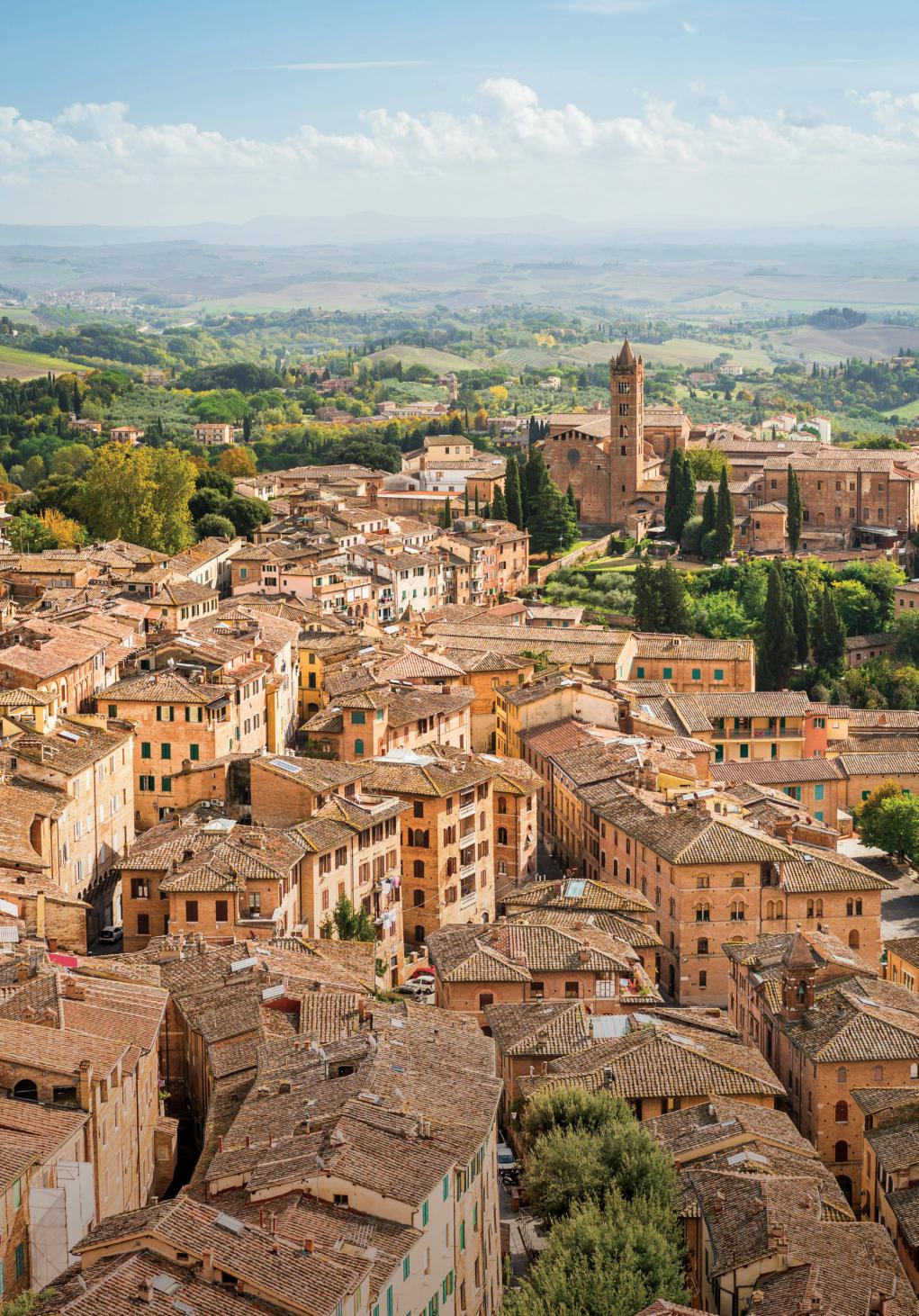
COVER Siena by Patrick Schneider
MANY THANKS TO Karina Watsone
Alex Mambrini
INQUIRIES & ADVERTISING
fgiorgio@terroni.com magazine@terroni.com
T MAGAZINE
HEADQUARTERS
128 Sterling Road, Toronto, ON, M6R 2B7

@terronimagazine @terroni.to @labettola.to @labettoladiterroni @sudforno @spaccio_to @terroni.la @cavinonawine terroni.com
Perlablu Production
Printed in Canada

Giovanna Alonzi
Executive chef, pasta and pizza lover, recipe writer and mamma of two. I keep it real, biking through life and bringing Italian seasonality, humour and heart to every dish.
Cucina Toscana p.28

Jessica Allen
JA is a writer and the correspondent on CTV’s The Social. She used to be an assistant editor at Maclean’s Magazine, a national columnist at Metro, and, most importantly, a dishwasher at Terroni.
Index p.3 Firenze p.4

Andrea Tonicello
Born and raised in Veneto, Andrea is Senior Wine Director for Terroni and Cavinona. Drawn to wine, olive oil, bread, travel, and good company, all essentials in his world.
Tuscan wine p.35

Elisa Gontier
With Filipino and Italian roots and a Canadian upbringing, Elisa’s love of food was shaped by life between cultures. Outside her work with Terroni’s marketing team, she’s usually planning her next trip. What to see in Toscana p.8

Erica Dutra
Erica is a Toronto-based writer and lifelong reader. She loves a good story nearly as much as a perfect plate of pasta (Rigatoni Arcobaleno, every time).
Rooted in place p.18

Francesco Giorgio
Francesco is a proud Terrone from Basilicata and Director of Marketing at Gruppo Terroni. He fell for Terroni after thinking his Nonna was cooking at Queen.
Carrara: where stone and story meet p.26
Terroni News p.43

Francesco Danilo Di Leo
Born in Marche but Pugliese by blood, Danilo is a proud Terrone. He works as Senior Graphic Designer at Gruppo Terroni and loves serving in his church—never without a good espresso.
Toscana's Artistic Legacy p.20 Terroni Enigmistico p.48

Alessandra Magnani
Alessandra hails from the Dolomites, but she’d choose sunshine over snow any day. Now Cavinona’s Business Development Manager, she’s turned her passions into a career and is known for her travel lists!
Tuscan wine p.35
A chat with Jacopo Vagaggini p.39

Manuella Mendoza
Born in Venezuela, Manuella now calls Toronto home. She started at Terroni behind the co ee bar and now brings her passion for design and culture to the marketing team. Instagram p.47

Robby Vrenozi
Robby is the Chief Instigator behind VRN Creative, an experiential marketing & branding design agency. A former part of the Terroni team, now she writes for the magazine, which is fun as well as a great way to continue working with her fave former boss. Where luxury meets legacy p.40
Jessica Allen
Population of Tuscany: 3,660,834
Of Florence, the region’s capital: 367,000
Visitors to Florence’s Galleria dell’Accademia in 2024, where Michelangelo’s David stands: Over 2.1 million
Percentage of Tuscan vineyards planted with Sangiovese: 59
Tuscan wines available at Cavinona: 23
M. PISANINO 1946
Tuscan vermouths available at Cavinona: 1
Tuscan DOCGs: 11
Bottles of Chianti Classico DOCG sold in 2022: 37,000,000
Percentage of those bottles exported: 80
M. RONDINAIO 1964
Oscars won by The English Patient, filmed partly in Arezzo’s Basilica di San Francesco: 9
M A R T I R R E N O
Price in euros to see Piero della Francesca’s frescoes in that basilica: 9
Oscars won by A Room with a View, filmed partly in Florence’s Santa Croce Basilica: 3
Pre-20th-century paintings by women in the U zi (Judith Slaying Holofernes, by Artemisia Gentileschi): 1
Towers still standing in San Gimignano: 12
Towers that stood near the end of the Middle Ages: 72
UNESCO World Heritage Sites in Tuscany: 7
People who gathered outside the U zi in 1913 to glimpse the recovered Mona Lisa, which was stolen two years before from the Louvre and was hidden under a bed in Florence: 30,000
Botanical herbs in the 100 % Sangiovese Vermouth di Radda: 22
Tuscany’s rank in regional Italian wine exports in 2024: 2 (behind Veneto, ahead of Piemonte)
Cost of the most expensive Tuscan wine, a Brunello di Montalcino Riserva: $1,393
Steps to the top of the Leaning Tower of Pisa: 296 (or 294, depending on who’s counting)
Steps to the top of Brunelleschi’s Duomo in Florence: 463
Years since the last Medici— arguably the wealthiest family in history—died out: 282
FALTERONA 1654
M. AMIATA 1738
Lines in Dante Alighieri’s Divine Comedy, the 1321 poem that helped standardize the Tuscan dialect: 14,233
Instagram followers of Dante-reciting, eighth-generation Tuscan butcher Dario Cecchini: 258,000
Cost of the most expensive bistecca alla Fiorentina in Tuscany (as of 2025): $264
Cost in euros of an espresso at Florence’s Ca è Giubbe Rosse, birthplace of Futurism: 5
Age of the first printed recipe for ribollita, the hearty “re-boiled” Tuscan soup: 94
Goals scored by Gabriel Batistuta for Fiorentina: 207
Length in seconds of Siena’s Palio horse race: 90
Number of years it’s been run: 393
Year Tuscany became the first sovereign state in the world to abolish the death penalty: 1786
Tombs inside Santa Croce, including those of Galileo, Michelangelo, and Machiavelli: 276
I was GO
Train–eavesdropping on my way to work when on my way to work when a man, fresh back from a back from Italy, started doling out started out travel advice to his soon-to-be-Italy-bound colleague. “Or go for the “Or for the day,” he added, perhaps he reconsidering the food, food, the art, and David. art, David. “That’s all you need.” need.”
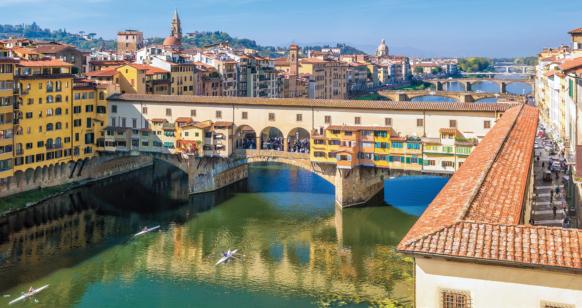
As luck would have it, I was flying to Florence the next day—for five days—and already worried it wouldn’t be enough. This is a city that doesn’t just preserve history; it marinates in it. Even the pigeons seem to strut with context. Seven hundred years on, people still come here to step back in time.
Twenty-three years ago, I worked there as an art history teaching assistant. I was in debt, newly heartbroken, and telling myself that being lost—emotionally, professionally, and often literally—was poetic. I’d wander with my Discman, listening to sad music, pretending someone was filming it. But it was one of the most magical years of my life—because the future felt limitless.
Now I was fifty, flying back for my seventh visit. I could mark the decades of my life by trips to this city. Each time, I’d felt that same
sense of mystery—of who I might become, and who I was. I wondered if I’d feel it again.
Spoiler alert: I did. By the time I reached Piazza della Repubblica, my face hurt from smiling. I was walking where Dante once walked; where the masterminds of the Renaissance—Masaccio, Donatello, Brunelleschi, and Leon Battista Alberti—argued, collaborated, and redefined beauty; and where their patrons—the Medici, Pazzi, Rucellai, Bardi, and Tornabuoni—lived and schemed, some in palaces like the Palazzo Pitti, their names still carved into stone on corners and façades. How could you not be touched by the weight of so much history?
And then I noticed the weight of the Italians’ jackets: they were wearing puffy coats. Meanwhile, the tourists were in shorts or their newly purchased, still-stiff leather
jackets from the market. Actually, I could hear those jackets—they squeaked proudly. It was 27 degrees outside in October. Some things never change.
At the Uffizi Gallery the next morning, I was excited to see old friends: Simone Martini, Piero della Francesca, and that little rascal Botticelli. But it felt less like a reunion and more like trying to catch up with someone on the Ponte Vecchio at sunset—noisy, crowded, and heavy with phones.
I drifted toward Duccio’s Rucellai Madonna, a favourite. For centuries, everyone thought it was by Cimabue, Giotto’s teacher—because Vasari, the father of art history, said so. His story of Italian art depended on that neat line from Giotto to Michelangelo, proving the best artists were Florentine. Then a document surfaced in 1904 showing that the panel was actually by Duccio—a Sienese. I love that: how one discovery can upend the story of art, and how even here, history refuses to stay still.
That afternoon, I walked beyond the old city walls to Trattoria da Ruggero, the kind of place that doesn’t need English menus or Instagram. I ordered tortellini in brodo, insalata mista, arrosto, and white beans. Fresh white beans. One bite and I made a noise that startled even me. A man at the next table gave a knowing nod—the universal sign for “I know.”
As I mopped up my plate—okay, plates—it hit me: this is why Tuscan bread has no salt. When the food sings, you just listen.
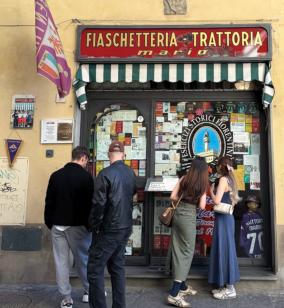
I had another perfect lunch at Trattoria Mario, just 250 metres from where I once worked. It had been a lunchtime staple. There was always a line, but it moved quickly because back then people were there to eat, not document. A bowl of ribollita—Tuscan “reboiled” soup of vegetables and bread—was better than it sounded, and then I remembered. I overheard an owner sigh that tourists only order what they’ve seen online—“steak and salad.” The ribollita, she said, barely
Left Page
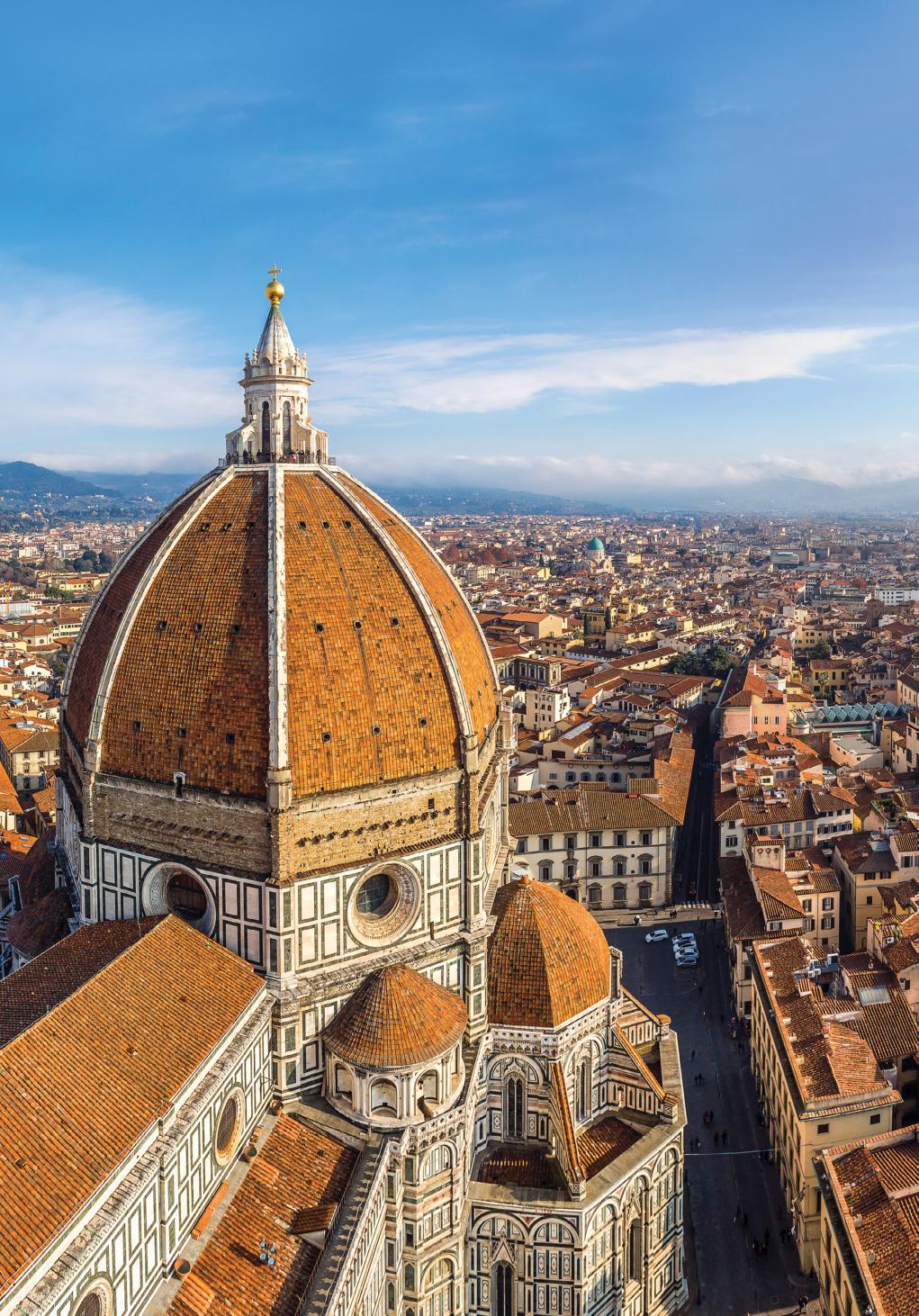
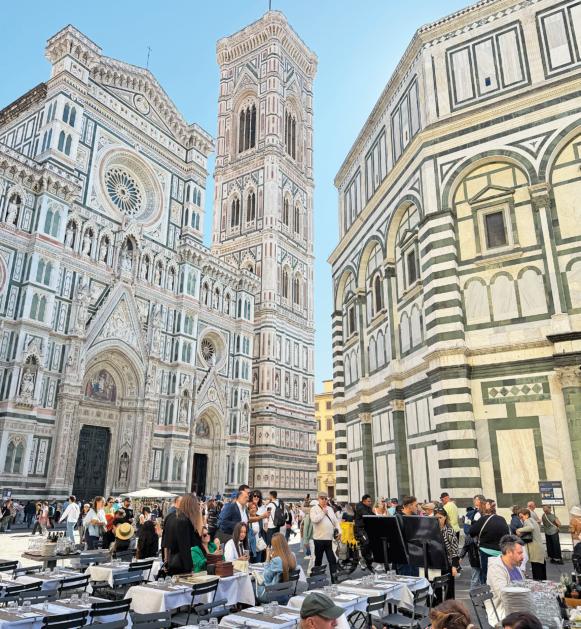
Top left: Cathedral of Santa Maria del Fiore and Baptistery of St. John.
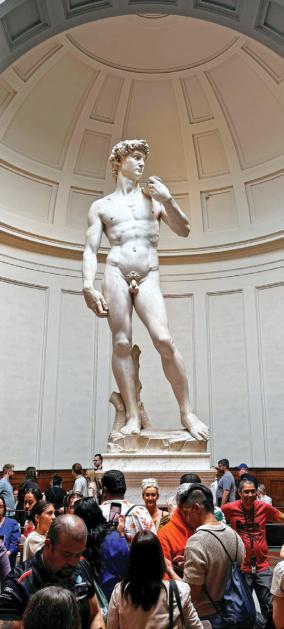
Top right: David of Michelangelo inside the Galleria dell’Accademia.
Center: Trattoria Mario, where Jessie had Ribollita
Right Page
Top left: Uffizi Galleries.
Center: Venere di Botticelli (The Birth of Venus) inside the Uffizi Gallery.
Bottom left: Jesse inside the Uffizi Gallery.
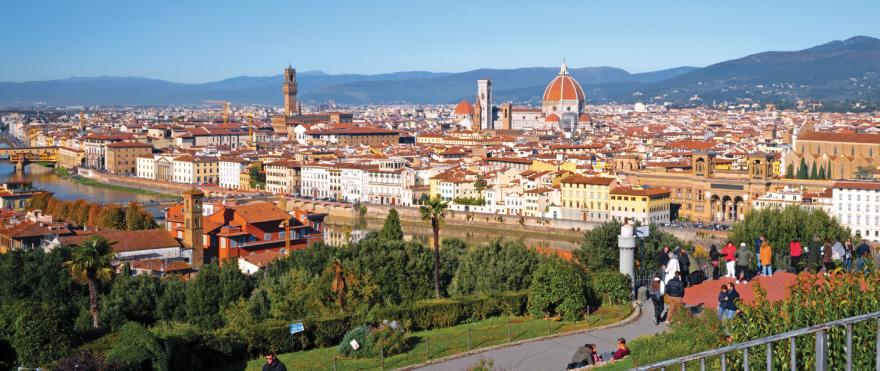
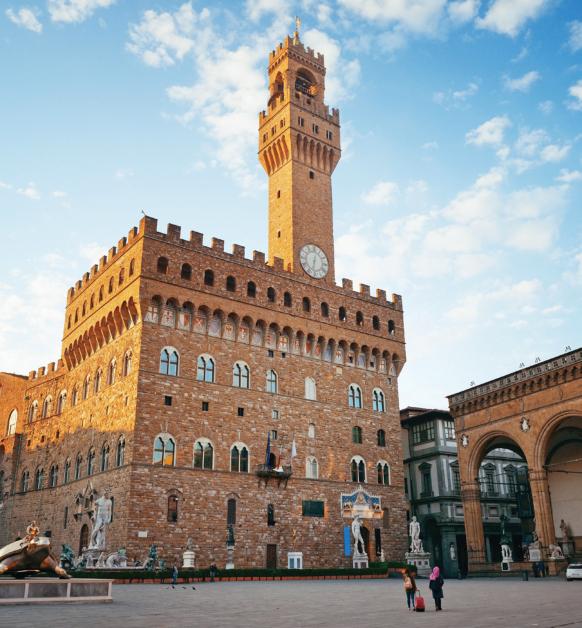
Bottom right: View of Piazza della Signoria.
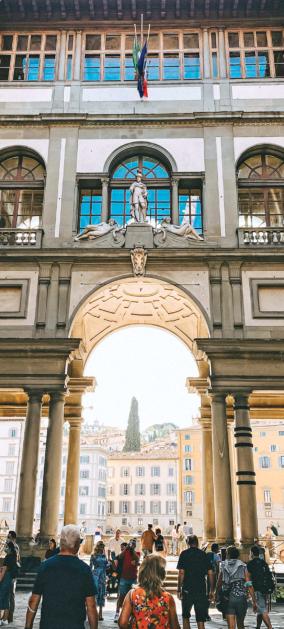
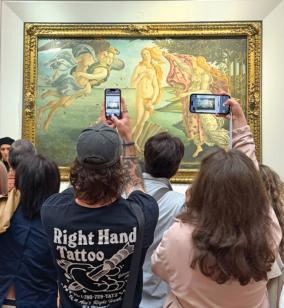
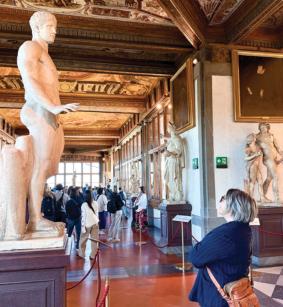
moves anymore. I wanted to raise my hand like a teacher’s pet and whisper, “I had the soup.”
On my final night, I took a long passeggiata at magic hour, just as the pink sky cast a violet filter on the façades lining the Arno. I’d clocked 110,000 steps and seen so much. But I never made it inside the Basilica of San Lorenzo, thwarted by a mix of political rallies and Italy’s unique talent for closing things without explanation; I didn’t set foot inside the Cathedral of Santa Maria del Fiore or the Basilica di Santa Maria Novella, and I never made it to dozens of restaurants on my list. But I wasn’t disappointed. I was relieved. Florence still has secrets— some doors I haven’t opened, others I can’t wait to open again, and some tiny kitchen where the beans manage to be even better.
I passed Palazzo Rucellai, still perfect, still goosebump-inducing. When I was a lonely twenty-something, I’d sit in front of it and write, certain I’d never find love again.
I was wrong about that. (I met my partner Simon—outside Terroni on Queen Street—the year I moved back to Toronto.) And, as it turns out, right about the writing.
Later, at Vivoli, I ordered a small pistachio gelato—exactly as I used to—and carried it to the piazza of the Basilica of Santa Croce. It was as good as I remembered: not better, not worse. Just right.
The city felt quiet then, like it was catching its breath. I thought about how many times I’d said goodbye to Florence, convinced it was the last. Yet somehow, I always return. Florence is always the same, but different. And so am I.
Maybe that’s the real wonder of this city—its ability to hold both who you were and who you’ve become.
I scooped out the last of my gelato. Behind me, young people laughed on the church steps as the bells began to ring. I didn’t turn around. Florence wasn’t mine. But for five days, it let me pretend.
Tuscany holds a special place in the North a in the North American imagination. It’s the Italy we American imagination. It’s the we picture in our minds: romantic, timeless picture in our minds: romantic, timeless and e ortlessly beautiful. and e
Quoting Frances Mayes in Under the Tuscan Sun may be cheesy — but I love a rom-com, and it captures the sentiment perfectly: “My idea of heaven still is to drive the gravel farm roads of Umbria and Tuscany, very pleasantly lost.” For me, the real Tuscany isn’t just Florence or its famous landmarks. It’s quiet hilltop towns, olive groves stumbled upon by accident, a bakery you can’t stop visiting — these are the places that linger long after the trip ends. So when you plan your next visit, rent a car, explore hidden corners, and slow down to discover this special region.
① Val d’Orcia
Close your eyes and picture Tuscany: golden fields, cypress-lined roads, vineyards aglow in the afternoon sun. You’re imagining Val d’Orcia. That landscape — which has inspired painters and poets for centuries — brings an almost uncanny sense of familiarity.
Nestled among its crimson-toned hills lies the boutique agriturismo Casa Newton. Restored by a Swiss architect with local artisans, it mixes art and contemporary luxury. Spend your days unwinding by the Tuscan-tiled pool, playing games of bocce, tasting olive oil, and, of course, exploring the surrounding villages.
Begin with Pienza, the 15th-century “ideal city” of the Renaissance, built by Pope Pius II. Wander its piazzas and palazzos, stroll romance-tinged streets like Via del Bacio and Via dell’Amore. Drop by Enoteca Marusco e Maria for Pecorino di Pienza DOP — one of the world’s oldest sheep-milk cheeses.
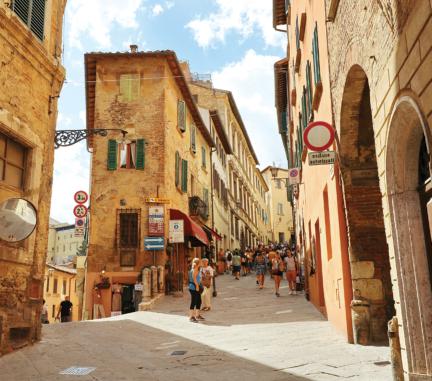
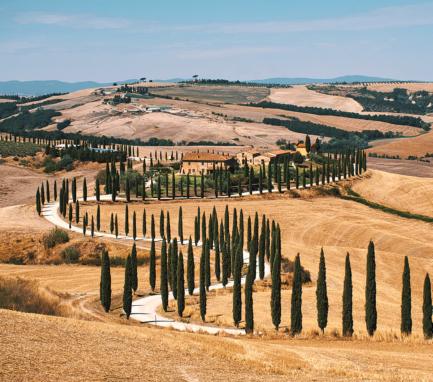
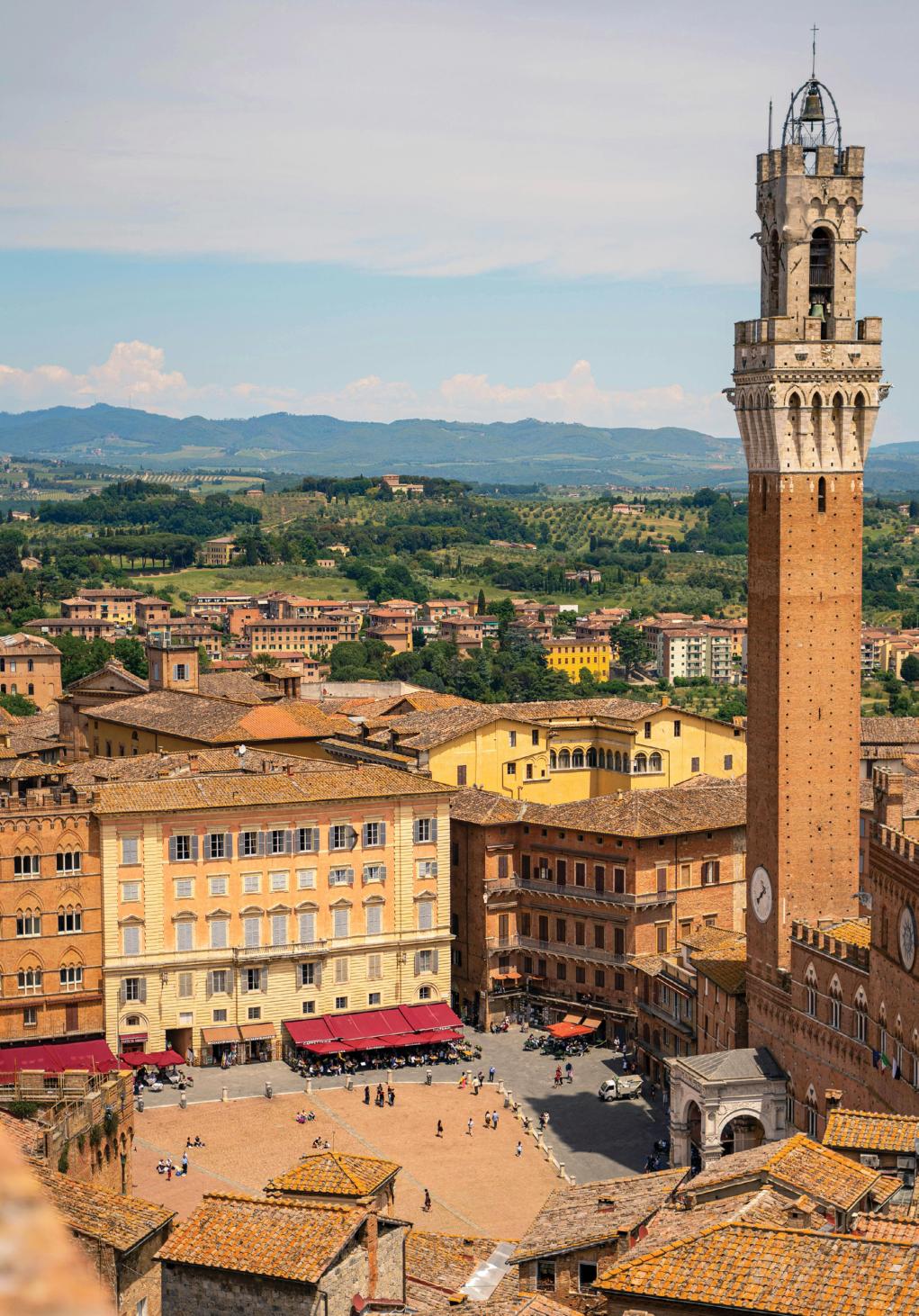
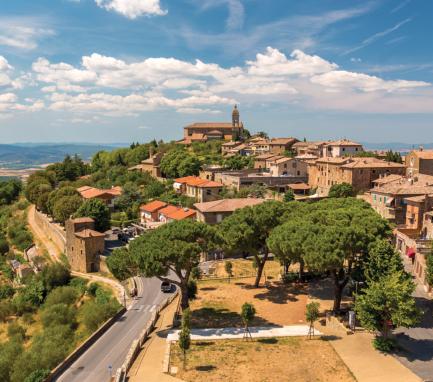
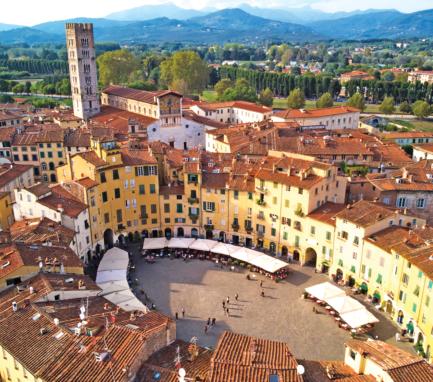
Left page: Piazza del campo, Siena. Right page: At the top Val d'Orcia's golden fields and cypress-line roads. Bottom Left: Streets of Montepulciano. Bottom Right: Panoramic view of Montalcino.
Then head to hill towns like Montepulciano and Montalcino, renowned for Vino Nobile and Brunello. Enjoy sweeping views, medieval stone lanes, and long dinners paired with iconic local wines.
For a wellness day, visit Bagno Vignoni. At Parco dei Mulini, soak in free thermal springs, or treat yourself to a day pass at La Posta, a 1950s post o ce turned spa sanctuary. When you’re done relaxing, take a stroll through Piazza delle Sorgenti, where the pool bubbles and vapour rises from the large natural hot spring where Romans once bathed.
② Siena and San Gimignano
Siena is one of Tuscany’s most beautiful hill towns, with medieval brick alleys spiraling toward the shellshaped Piazza del Campo. After visiting the majestic Cathedral of Santa Maria Assunta, lose yourself in winding streets and drop by Panificio Il Magnifico for
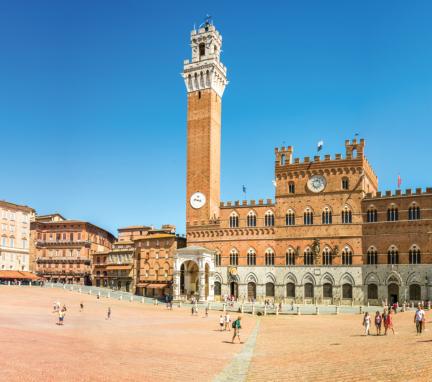
artisanal ricciarelli, cantuccini and panforte.
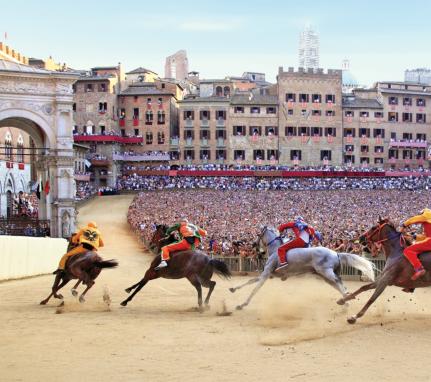
Time your visit for July 2nd or August 16th and you’ll witness the Palio di Siena — a centuries-old bareback horse race between Siena’s contrade (neighbourhoods). The days leading up to it resonate with parades, flag-throwing, and horse blessings. Then, for a few electrifying minutes, ten riders charge around the piazza as thousands cheer from balconies and squares. It’s a breathtaking display of pride, tradition, and community spirit.
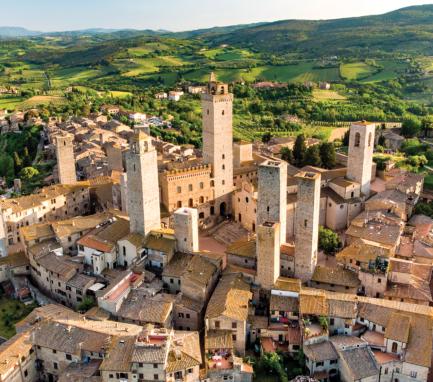
North of Siena lies San Gimignano — often dubbed “medieval Manhattan” for its dramatic stone-tower skyline. Once symbols of noble rivalry, the towers now stand as monuments to a bygone era. A UNESCO World Heritage Site, the town charms with preserved architecture, sa ron-grown hills, and the historic white wine Vernaccia di San Gimignano. For indulgence, try the sa ron-and-pine-nut gelato Crema di Santa Fina at the award-winning Gelateria Dondoli
③ Arezzo and Cortona
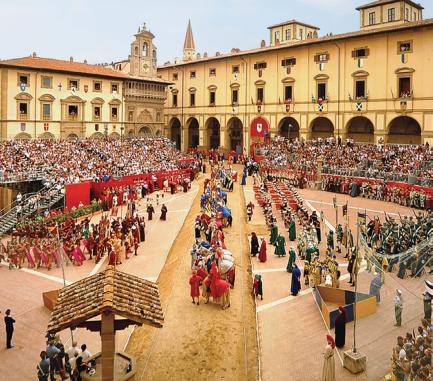
In Arezzo, elegant arches and medieval towers frame
summer jousts at the Giostra del Saracino — a tradition predating even Dante. The town’s historic center is also known for being the setting of the Oscarwinning La vita è bella (Life is Beautiful) by Roberto Benigni. On the first Sunday of each month, the historic center transforms for the huge antique fair La Fiera Antiquaria di Arezzo, where stalls overflow with Renaissance prints, vintage textiles, and furniture Arezzo’s gold-smithing heritage shines through jewelry shops, and inside the Basilica of San Francesco you’ll find the moving masterpiece Legend of the True Cross by Piero della Francesca.
Nearby, Cortona o ers a softer, slower pace. Made famous by the movie Under the Tuscan Sun, its steep lanes open onto sweeping views over Lake Trasimeno. Visit the MAEC Museum and the peaceful sanctuary of Santa Margherita, perched above the valley. Later, enjoy a rustic bowl of ribollita at La Bucaccia For a touch of refined luxury, base yourself at Il Falconiere — a 17th-century villa owned by the Baracchi family, complete with a Michelin-starred restaurant, spa, winery, and bespoke concierge service.
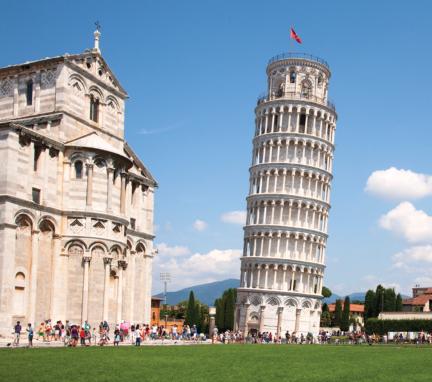
Encircled by Renaissance walls, Lucca invites leisurely discovery. Walk or cycle along the tree-shaded ramparts for views of the city and surrounding hills. Inside, cobblestone streets reveal Romanesque churches, artisan workshops, and the birthplace of composer Puccini. Pop into a bakery like Buccellato Taddeucci for a sweet, anise- and raisin-scented bread called Buccellato — then climb the Guinigi Tower for sweeping views topped by its unique rooftop oak forest.
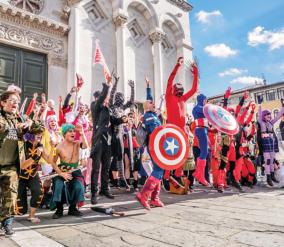
If your timing is right, Lucca becomes a lively hub during Lucca Comics & Games — one of the world’s largest comics and gaming conventions — when historic streets bustle with costumed fans, live performances, and exhibitions.
A short drive away, Pisa has far more to offer than its iconic tower. The Piazza dei Miracoli — a UNESCO World Heritage Site — hosts the famous Leaning Tower, the cathedral, and the baptistery, all excellent examples of Romanesque design. Beyond the piazza, enjoy charming streets lined with cafés, artisan shops,
and student-driven energy. As the sun sets, stroll along the Arno River — historic bridges and colorful façades reflecting on the water — and remember: Pisa’s charm extends well beyond its leaning icon.
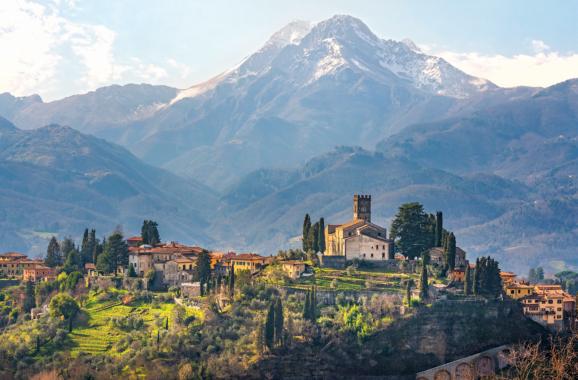
In the north, the region of Garfagnana unfolds with chestnut forests, stone villages, and mountain fortresses among the Apuan Alps and Apennines. This is Tuscany at its most rustic, where you’ll find earthy dishes like farro soup and necci — chestnut-flour crêpes filled with ricotta.
Stay at Villa Ra aelli for its rustic charm and organized trekking options. From the one-hour Via del Bosco Incantato (Path of the Enchanted Forest), where you can even bathe in streams, to multi-day hikes in the Parco Nazionale dell’Appennino Tosco-Emiliano — northern Tuscany invites you to immerse yourself in nature. Its location also makes it a smart base for day trips to Lucca and Forte dei Marmi.
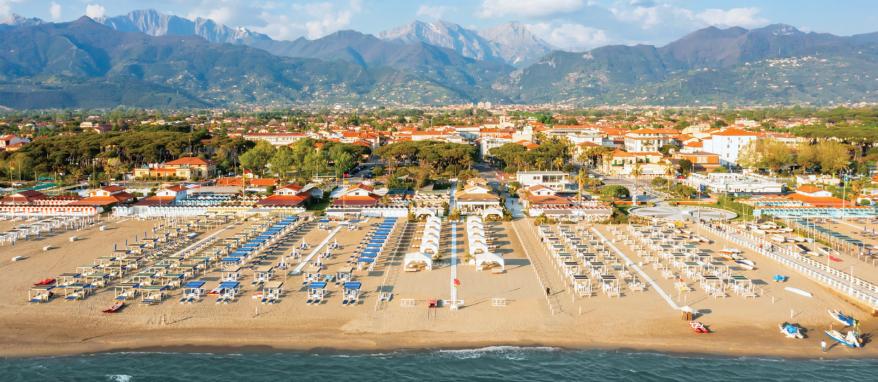
⑥ The Tuscan Coast Stretching for roughly 400–500 km, the Tuscan coastline runs from the Apuan and Versilian Rivieras down to the wild shores of Maremma and the Argentario peninsula. Along these shores lie countless seaside towns and resorts where Italians return summer after summer, Punta Ala, Roccamare and Castiglione della Pescaia just to mention a few. During Ferragosto, beaches, pine forests, and promenades fill with families — some staying by the sea, others heading to nearby historic villages with medieval character. The coast might be famous to locals, but abroad it often remains underrated.
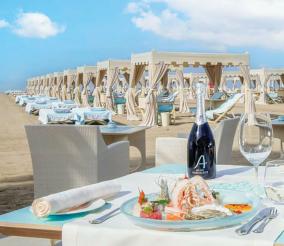
Forte dei Marmi embodies seaside glamour. Once a quiet fishing village and a marble-export hub used even by Michelangelo, it became a retreat for artists, writers, and the Italian elite. Golden beaches backed by the marble peaks of the Apuan Alps, tree-shaded streets with designer boutiques, galleries, and classic beach clubs — it o ers refined relaxation. Rent a sunbed at Alpemare (Andrea Bocelli’s beach club) for a long Tuscan lunch by the sea, and as evening falls,
stroll the pier as the water glitters against mountain silhouettes and the sea breeze brushes your face.
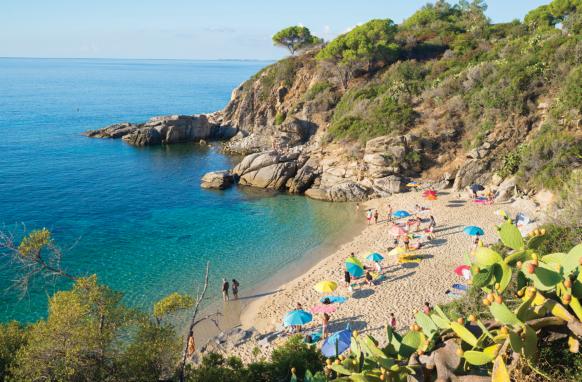
A ferry ride from the mainland brings you to Isola d’Elba — the largest island of the Tuscan Archipelago, rich in history from Etruscan settlements to Roman times to the exile of Napoleon Bonaparte. Its terrain soars to Monte Capanne at 1,019 metres, with villages woven into the hills. On the north, there are pebble beaches and diving cli s; on the south, white-sand stretches that echo the Maldives. Visit Spiaggia di Sansone or Capo Bianco, where fine quartz sand makes the water glimmer. For a spiritual, water-borne experience, dive at Pareti to see the underwater Madonna statue placed by local divers.
Further southwest lies Isola del Giglio — a granite island laced with hiking trails, vineyards, and coves leading to turquoise-blue waters. Between Giglio Porto and Giglio Campese lies the medieval hilltop village of Giglio Castello, where time truly slows down and children still play in the streets, riding their bikes through the piazza while their parents and nonni browse the local markets or catch up with friends
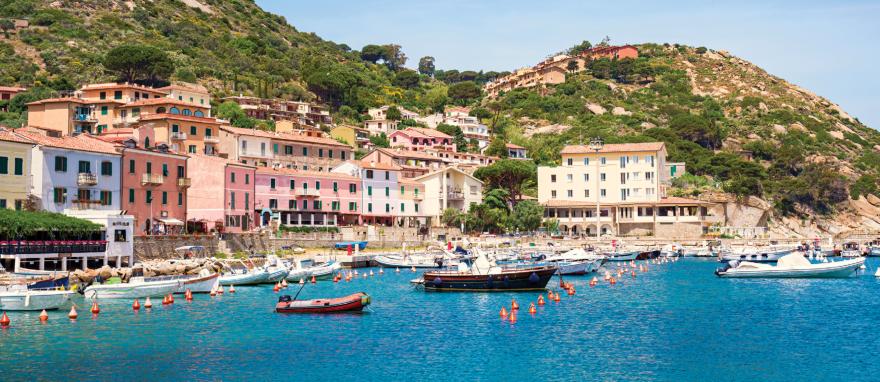
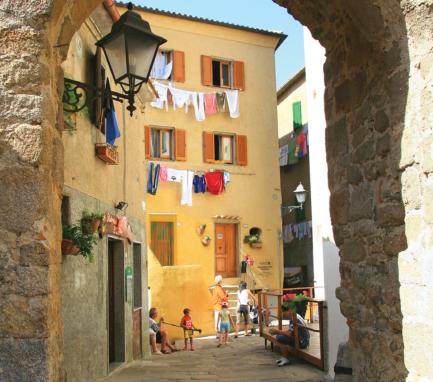
over a relaxing espresso. Stay at Pardini’s Hermitage for some “sole e mare in pace e libertà” (sun and sea in peace and freedom) — the vision that shaped the Pardini summer retreat, opened to the public in 1956. That spirit reflects not just the hotel’s mood, but the island’s heart.
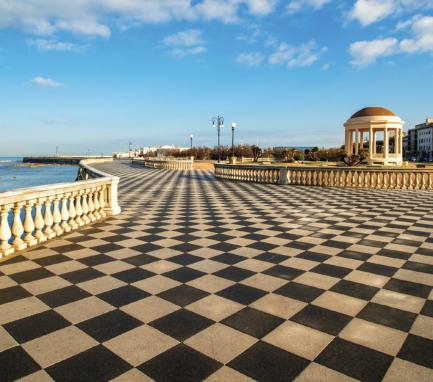
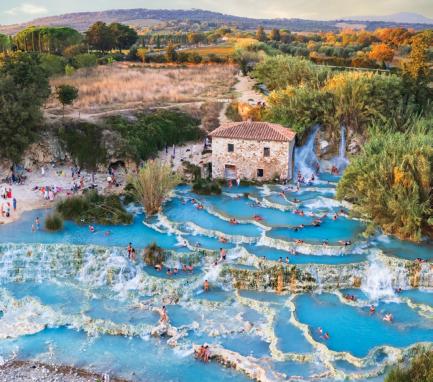
The best way to experience Tuscany is to take your time and travel in sections. Base yourself in an agriturismo for a week or more, immerse yourself in the rhythms of rural life, and let the landscape, local cuisine, and traditions guide your days. There is so much to explore: coastal towns like Viareggio and Livorno, or historic centres like Pistoia, Grosseto and Prato, the magical Terme di Saturnia, and the art of Florence. Wander through vineyards, olive groves, and thermal springs; enjoy long meals with wine in hand, and mix in day trips to nearby towns, hilltops, beaches, and islands. By slowing down and enjoying each moment, Tuscany reveals its true character: timeless, surprising, and endlessly rewarding.
The artisan tradition of Tuscany is one of
The artisan tradition of is one of the region’s truest expressions of identity. the region’s truest of For centuries, this land has been home to For land has been home to master craftsmen guardians of skills master of skills handed down through generations. handed down
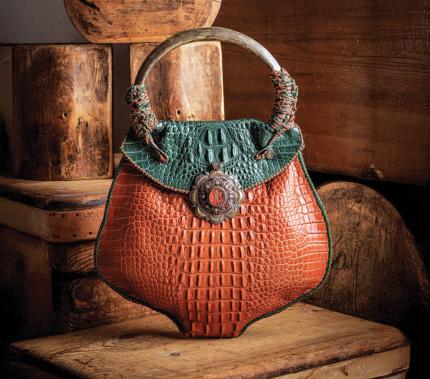
In workshops scattered across its towns and hilltop villages, artisans shape gold, leather, ceramics, marble, and textiles with a balance of ancient technique and contemporary vision.
More than production, Tuscan craftsmanship is a culture of excellence, where every object carries a story of patience, dedication, precision, and enduring beauty. Every gesture, every material, and even every imperfection holds meaning. From the goldsmiths of Arezzo to the leather artisans of Florence and the alabaster carvers of Volterra, this land has always spoken through its hands.
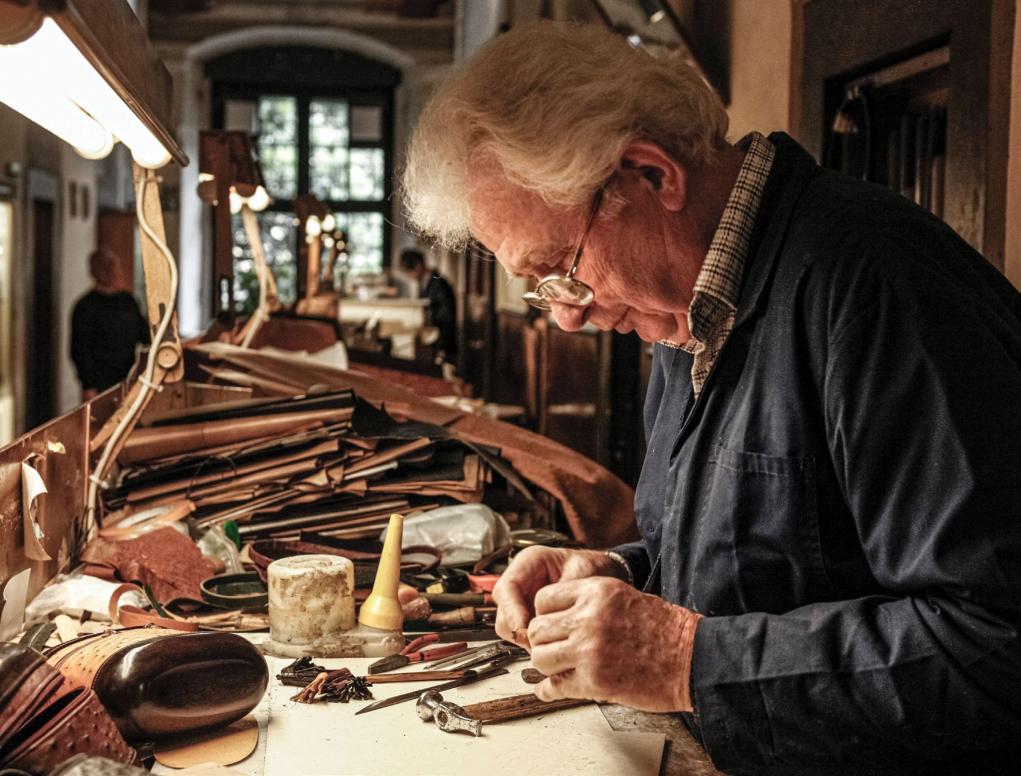
In quiet workshops, light comes through old windows and touches workbenches marked by time. Here, tradition is never still; it changes shape, yet it remains continuous. Tuscany has always believed that beauty is born from skill — from the hands that make it — and every crafted piece carries a fragment of land and life, a reminder of who we are when we take the time to create something that will last.
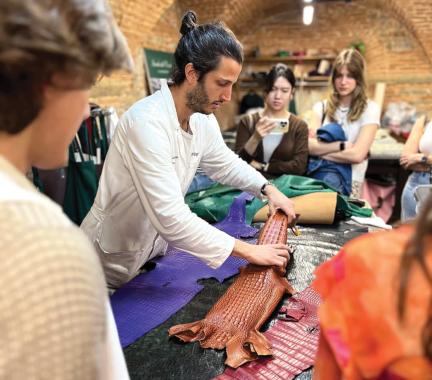
The Santa Croce district has long been a place where leatherworking and tailor-made shoemaking run deep, and here Scuola del Cuoio keeps Florence’s great leather tradition alive.
Founded after the war by the Franciscan friars together with the Gori and Casini families, Florentine leather artisans since the 1930s, the school began with a simple mission: to give war orphans a trade — a way to earn a living with dignity.
The neighborhood still reflects this heritage. The streets around Santa Croce — once home to tanners, dyers, and soap makers — tell the story of a community shaped by craft. It is in this same spirit that the school has always worked: leather as a trade, but also as a means to o er opportunity and dignity, providing people with a way to rebuild their lives through skill.
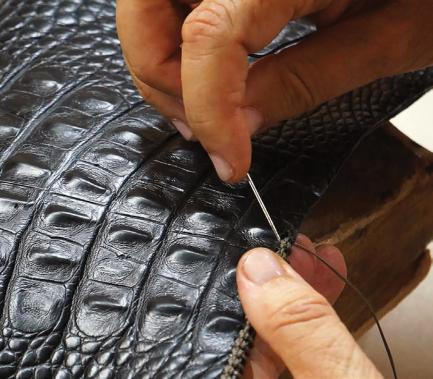
Inside the school, the rhythm has changed very little. The sound of cutting, stitching, and polishing fills the workshops, where apprentices from around the world learn how to select hides, cut patterns, and stitch by hand. Technique matters, but so does intention and dedication, understanding that craftsmanship has always carried a social purpose in this school.
In the 1950s, the then–Mayor of Florence, with sup-
port from the Italian Foreign Ministry, created scholarships for boys from developing countries. By the late 1950s, the school was also o ering classes inside local prisons. For his work in rehabilitation, Marcello Gori received a government medal — a reminder that craftsmanship can change lives.
With its unique location and strong ties to tradition, the school is the largest genuine leather workshop in Florence. Today, the Gori family continues this legacy with the same philosophy, dedication to quality, and personal service.
In 2022 the family founded the Marcello Gori Foundation to support young people with limited opportunities. Each year, six students are trained in technique and the values behind the craft. At the school, craftsmanship is more than a skill. It is a way of living, passed from one generation to the next. scuoladelcuoio.it
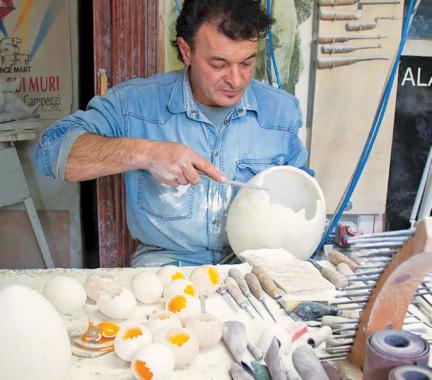
In Volterra, the light feels di erent — softer, almost liquid, shaped by the stone beneath the city. For generations, artisans have carved alabaster, the translucent rock that has become Volterra’s soul. Among them, Marco Ricciardi of Oasi’s Alabastro continues the craft with quiet devotion.
At his workbench, everything begins in silence. Raw stone, white and veined, is cut and shaped entirely by hand. Little by little, bowls, lamps, and sculptures take form — objects that seem to hold light within. “You don’t force alabaster,” Ricciardi says. “You listen to it.” His work is both discipline and dialogue, a patient conversation between hand and stone.
His path reflects a lifetime of dedication. Over the years, Ricciardi has created from delicate sculpted eggs featured in Casa Vogue, to more ambitious works — including a full alabaster reproduction of the Leaning Tower of Pisa, honored by the President of Italy and exhibited in cities such as Moscow, Dubai, San
Francisco, and Tokyo. In his studio, time moves di erently. Each piece is unique, imperfect, alive. Through his hands, the ancient art of Volterra continues to glow — proof that true beauty does not age; it endures. oasisalabastro.com
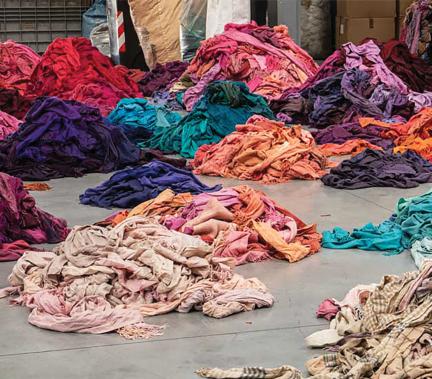
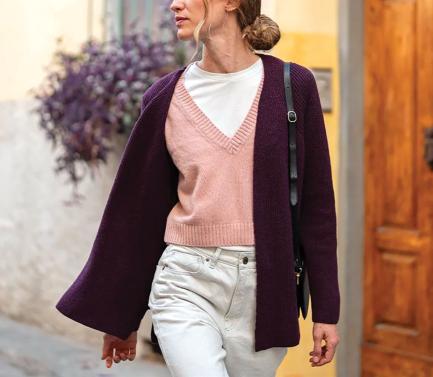
In Prato, the hum of looms still echoes through the textile district. Rifò gives new life to the region’s traditions with a modern conscience. Their philosophy is simple: nothing is wasted, everything can be reborn.
Old garments and fabric scraps are carefully collected, shredded, and re-spun. They are then woven into soft sweaters, jackets, pants, and accessories of modern design, forming Rifò’s high-quality, contemporary collections — all produced within a few kilometres of their origin. It is the work of the cenciaioli (rag sorter) rewritten for today: the same hands, the same precision, but with a new awareness.
Rifò’s impact goes beyond materials. Through Nei Nostri Panni, they collaborate with local social cooperatives to provide training and employment for people at risk of exclusion. Sustainability, for them, is not only environmental — it is also social It is the belief that craft can still create opportunity. rifo-lab.com
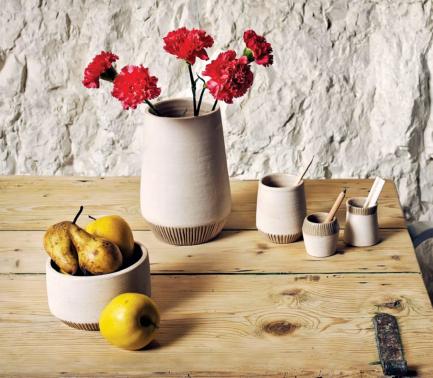
In the marble country of Carrara, Calcarea reimagines a material that Tuscany knows well — and often wastes. Every year, local quarries, stone workshops and factories generate tons of marble residue: a fine powder that is di cult to store, costly to dispose of, and frequently released into streams, causing significant environmental damage.
Developed by Marginal Studio — a collective that combines design practice with education and community workshops — Calcarea was created in collaboration with small Tuscan manufacturers, reusing marble byproducts and blending stone waste with clay, bringing to life a new material, shaped into minimal home objects. In these artisans’ hands, waste becomes value again.
Calcarea shows that craftsmanship today is not only about form. It is also about responsibility — transforming what would be discarded into something that lasts. marginalstudio.com/design/calcarea
Across Tuscany — from the cloisters of Florence to the workshops of Volterra and the mills of Prato — the same belief endures: that the hand, guided by patience and dedication, remains the true measure of beauty. Artigianato Toscano is not only heritage; it is a way forward. Proof that tradition and innovation, when shaped with care, belong to the same creation.
It’s built with expert advice and a plan
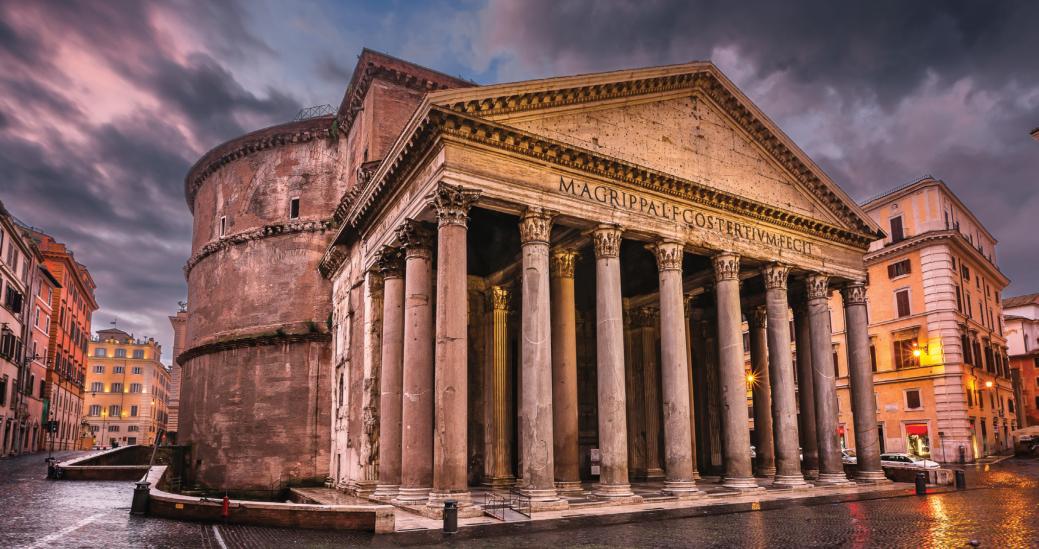
Just as Rome wasn’t built in a day, neither is wealth. To build wealth, you need professional advice – and a comprehensive plan.
For over 20 years, Giancarlo and his team have helped high-net-worth clients reach their concerns, Giancarlo can build you a custom wealth plan that stands the test of time. For complimentary consultation, please contact:
Giancarlo Totino
Senior Portfolio Manager & Investment Advisor The Totino Group of RBC Dominion Securities 416-842-3475 | giancarlo.totino@rbc.com
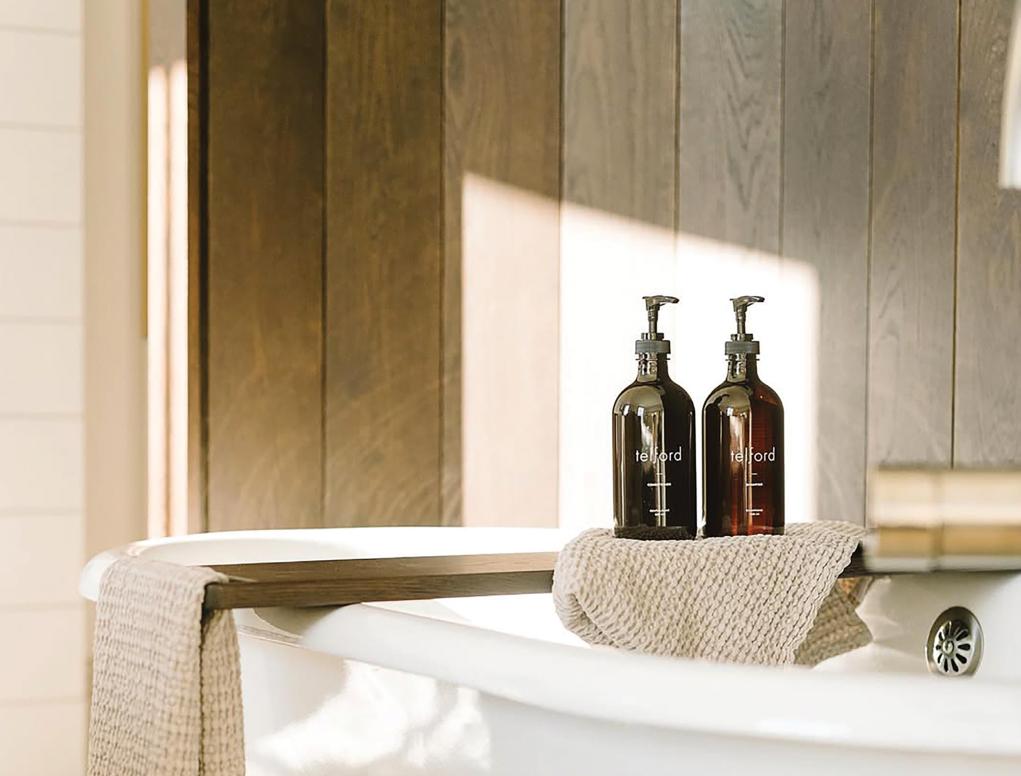
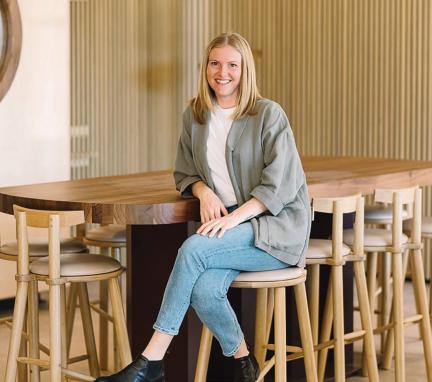
Claire Telford’s journey from clean beauty fan Claire clean to founder, with Telford Basics to Basics
She wanted to take our call outside on her family farm in Prince Edward County, with birds chirping in the background. Life — in the form of a neighbour mowing their lawn — had other plans. But Claire Telford has learned to embrace the unexpected. “I didn’t ever think I was business-minded,” she says, speaking from inside the home she shares with her husband, Nick Sorbara, and their three young children. “Now I know it’s absolutely the path for me. But I did not have a clue.”
Claire grew up near London, Ontario, before she moved to Toronto, where she met her now-husband. Her father was a doctor, and her mother was always interested in alternative medicine. She seems to have followed in each of her parents’ footsteps, pursuing her science degree at the University of Toronto before studying homeopathy after graduation. Having always preferred using clean beauty products (which swap commonly used chemicals for plant-derived ingredients like aloe vera, shea butter, and fruit extracts),
she began making her own lip balms and lotions. Years later — when she was expecting her second child — her mother-in-law, Kate, encouraged her to take that hobby much further.
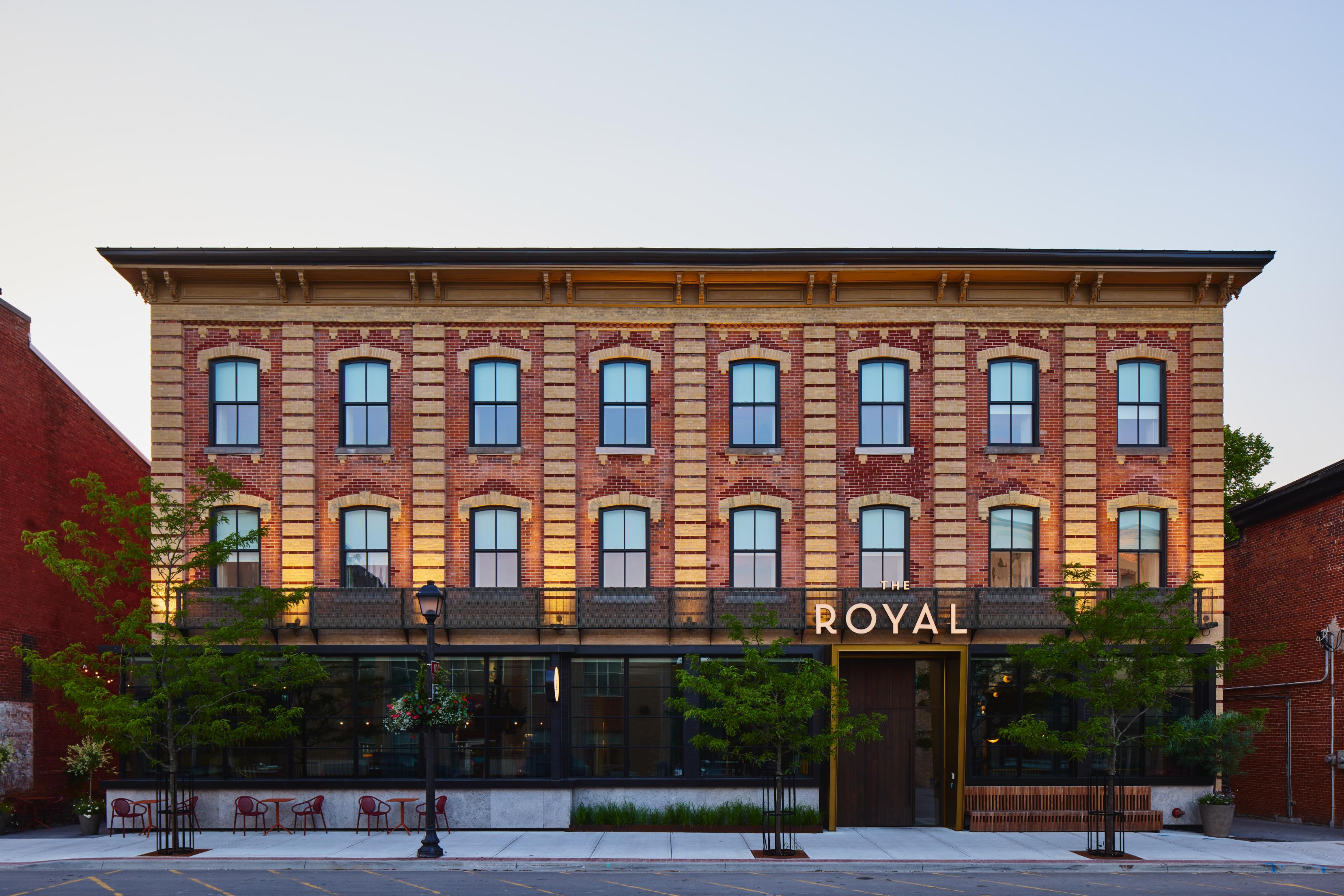
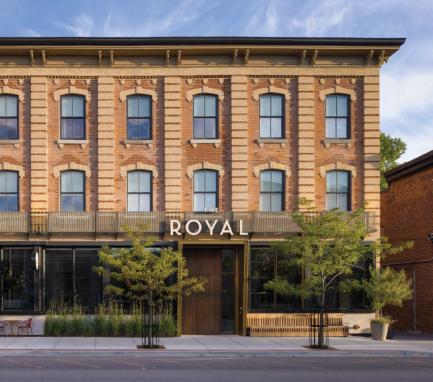
“She was the spark,” says Claire. “I could see in her eyes when she said to me, ‘You’ve got to give this a shot.’” Despite her initial self-doubt, Claire took her mother-in-law’s words to heart. In 2018, Telford Basics was born. She created a line of five products made with functional ingredients and essential oils: shampoo, conditioner, body wash, hand wash, and lotion. Meanwhile, her husband’s family began the multi-year revitalization of The Royal Hotel in Picton, Ontario, which now stocks Telford Basics in every room, as well as in its gift shop. “It took on a life of its own at The Royal,” she says.
Today, you can find Telford Basics in many Prince Edward County vacation homes, at local community events, and in other hotels across Ontario. Claire says
the county and its community of entrepreneurs have become central to her homegrown brand. “I’m most happy working closely with customers and small busi-
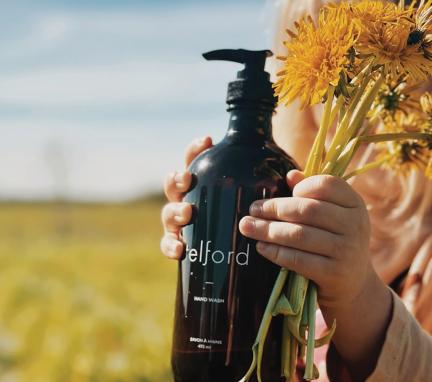
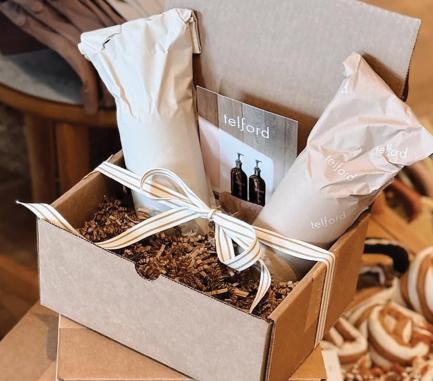
nesses,” she says. “Staying local matters to me.” So does her company’s environmental impact. From day one, she’s operated a refill program so that people can repurchase without accumulating plastic waste. It all goes back to her passion for thoughtfully crafted, gentle products. “Being functional, beautiful, and simple are key,” she says of her line. “For me, less is more.”
As she reflects on her career, Telford says her work has also shaped how she sees herself. “I completely redefined what I think creativity is. I never saw myself as a creative person, and I do now.” Her home life has changed too. Now a mother of three, Claire is grateful to have grown her family and her company simultaneously. “It has helped me have an outlet that’s separate from my family life. But I also get to share this with my kids,” she says. “To envision them helping out one day feels right.”
When asked what’s next, Claire doesn’t hesitate: “Just growing organically from here — from Prince Edward County.”
telfordbasics.com
Growing up in Italy, I had the chance to visit Tuscany many times, and the moment you step into the region, you quickly realize there’s something magical about it. Maybe it’s the sunsets that cast golden light across the countryside, the way cypress trees frame every rolling hill, or the centuriesold towns perched like jewels on the horizon. But beyond the postcard-perfect views, Tuscany has something even more enduring: art. This region not only gave birth to the genius of Dante Alighieri — the visionary author of Divina Commedia, celebrated for helping shape the Tuscan dialect into the foundation of modern Italian — but also witnessed the birth of the Renaissance: it cultivated it, nurtured it, and sent it out to change the world.
Tuscany has a rare combination of things that make it perfect for art:
stunning landscapes, vibrant cities like Florence and Siena, and centuries of wealthy families, like the Medici, alongside powerful religious institutions ready to fund creativity. From the Middle Ages onward, commissioning paintings, sculptures, and buildings became a way for people to show power, piety, and prestige. That created a booming art economy long before the term even existed. The region also had guilds (associations of artisans or merchants) and workshops where young talents could learn the craft. This system allowed new artists to rise, experiment, and transform what art could be.
Tuscany has produced almost every form of art imaginable. During the Renaissance, it led the way in painting, sculpture, architecture, and fresco. Artists began experimenting with perspective, realism, and anatomy, creating works that felt alive in a way the world had never seen. Beyond the famous masterpieces, Tuscany is also a land of ceramics, goldsmithing, mosaics, and
fine textiles. And it’s not all ancient history — contemporary artists still draw deeply from these roots, proving that creativity here is not a relic but a living tradition.
Tuscany is one of the most influential regions in the history of Western art. It was the birthplace of several key art movements, but the biggest and most influential was definitely the Renaissance. Florence was, and still feels like, its uno cial capital. This movement brought art out of medieval flatness into a world where figures had emotion, depth, and realism. Later came Mannerism, which bent those Renaissance ideals into more expressive, sometimes surreal forms. What began as an awakening became a centuries-long conversation about beauty, balance, and human potential. Inside the region that produced Leonardo, Michelangelo, Inside the Leonardo, Donatello — and a legacy that continues to spark creativity today
The region didn’t just produce great art — it gave us the artists who defined greatness itself. Here are the names, and the works, that shaped not only Tuscany but the very language of art.
Leonardo da Vinci (1452–1519) – Born in Vinci Leonardo was more than an artist — he was a genius. Born in a small Tuscan town, he went on to paint The Last Supper and the Mona Lisa — perhaps the most famous painting on earth. His sketches (Vitruvian Man, flying machines, anatomical studies) show a mind obsessed with the harmony of both nature and humanity. His use of sfumato, a soft and smoky shading, made his portraits look more real and mysterious. If you’re planning to visit Tuscany, I highly recommend taking a trip to Leonardo’s hometown of Vinci, just an hour away from Florence. I was there a few years ago, and it was a privilege to see some of his creations and visit the places that inspired his genius.
Michelangelo Buonarroti (1475–1564) – Born in Caprese Michelangelo was a sculptor first, and his David — towering at over 17 feet in Florence — is the ultimate Renaissance symbol of strength and beauty. He also painted the Sistine Chapel ceiling in Rome (yes, lying on his back) and carved the haunting Pietà. His magnificent
art was intense, emotional, and monumental, just like him.
Sandro Botticelli (1445–1510) – Born in Florence
If you’ve seen The Birth of Venus — that stunning image of a mythical figure rising from a shell — you’ve seen Botticelli’s dreamy, decorative style. His Primavera is equally magical, filled with mythological figures dancing through an enchanted garden. Botticelli blended beauty with symbolism, creating paintings that are as mysterious as they are radiant.
Filippo Brunelleschi (1377–1446) – Born in Florence Brunelleschi was an architect, engineer, and problem-solver with a mind centuries ahead of his time. His greatest achievement? The massive dome of Florence’s Cathedral Santa Maria del Fiore — built without scaffolding and still standing strong. At the time, the idea of constructing such a dome without wooden supports seemed insane. Many Florentines looked up at the rising structure and muttered things like “Eh, la viene giù!” (“Eh, it’s going to fall!”). Skepticism ran deep, but Brunelleschi proved them all wrong. He not only built the dome using a revolutionary herringbone brick pattern, but also invented machines to move materials and lift tons of stone. He also fig-
ured out the rules of linear perspective, helping artists create more realistic space in their paintings. Without Brunelleschi, the Renaissance might never have taken off.
Giotto di Bondone (1267–1337) – Born in Vicchio Giotto changed art forever. Before him, figures were flat and lifeless. He gave them emotion, weight, and movement. His frescoes, like those in the Scrovegni Chapel and the Basilica of St. Francis in Assisi, were a
giant leap toward Renaissance realism — even though they were made 100 years before it officially began.
Masaccio (1401–1428) – Born in San Giovanni Valdarno Masaccio’s life was short, but his impact was immense. His frescoes in the Brancacci Chapel, like The Tribute Money, show a revolutionary use of perspective and light. He made biblical scenes feel grounded in the real world. His influence shaped every Renaissance artist who followed.
much of what we know about the Renaissance might have been lost.
Donatello (1386–1466) – Born in Florence Donatello brought sculpture back to life — literally. His figures had emotion, movement, and soul. His bronze David was the first freestanding nude statue since ancient times — sensual, daring, and completely revolutionary. Donatello didn’t just carve bodies; he carved emotion, giving stone and bronze a sense of inner life. His work paved the way for Michelangelo and redefined sculpture for centuries.
Piero della Francesca (1412–1492) – Born in Sansepolcro Piero was a painter-mathematician whosawtheworldinperfectbalance he combined mathematics and art to create calm, harmonious works. In pieces like The Resurrection and The Flagellation of Christ, his precise use of perspective and light left a lasting mark on Renaissance art.
Other essential Tuscan figures, such as Fra Angelico, Cimabue, and Pontormo, also shaped the course of art, adding depth and diversity to the region’s extraordinary legacy.
Chia, and contemporary galleries like Museo Novecento and Palazzo Strozzi, which host cutting-edge exhibitions. Smaller towns also have artist residencies, pop-up shows, and outdoor installations that bring new voices into the spotlight. And Tuscany’s artisans — the ceramicists, leatherworkers, and painters — continue traditions with a modern twist. The region is not a museum; it’s a living, breathing studio.
Benvenuto Cellini (1500–1571) – Born in Florence Cellini was a goldsmith, sculptor, and all-around Renaissance rock star. His statue Perseus with the Head of Medusa in Florence’s Piazza della Signoria is both brutal and beautiful. He also wrote one of the most entertaining autobiographies of his time — full of duels, scandals, and royal drama.
Giorgio Vasari (1511–1574) – Born in Arezzo Vasari wasn’t just a painter and architect (he designed parts of the Uffizi); he was also the first real art historian. His Lives of the Most Excellent Painters, Sculptors, and Architects was the first true art-history book, filled with stories — a bit gossipy, always compelling — about the artists of his time. Without him,
Over the centuries, Tuscan artists have developed a unique way of creating. They often focus on the human figure — idealized, expressive, and full of life — using skillful techniques in perspective, anatomy, and light. Nature is always present, in backgrounds, landscapes, and the mood of their work. Beyond beauty, Tuscan art has purpose, whether in religion, myths, or civic pride. Even as styles changed, these qualities connected generations of artists, creating a tradition that still endures.
While Tuscany will always be about Michelangelo and Botticelli, its modern scene is thriving too thanks to contemporary artists like Roberto Barni and Sandro
What happened in Tuscany centuries ago isn’t just history — it’s daily life. Children sketch beneath Brunelleschi’s dome, and international students crowd Florence’s art academies, drawing from the same light that once inspired the masters. Here, the past doesn’t sit behind glass — it’s a pulse that drives creation forward.
It’s where some of the greatest artists who ever lived found their voice — and gave the world new ways to see itself. Whether you’re admiring David’s mighty form, walking through a sunlit piazza, or discovering a young local painter, you’re stepping into a story that’s still being written, crafted piece by piece, generation by generation.
Francesco Giorgio
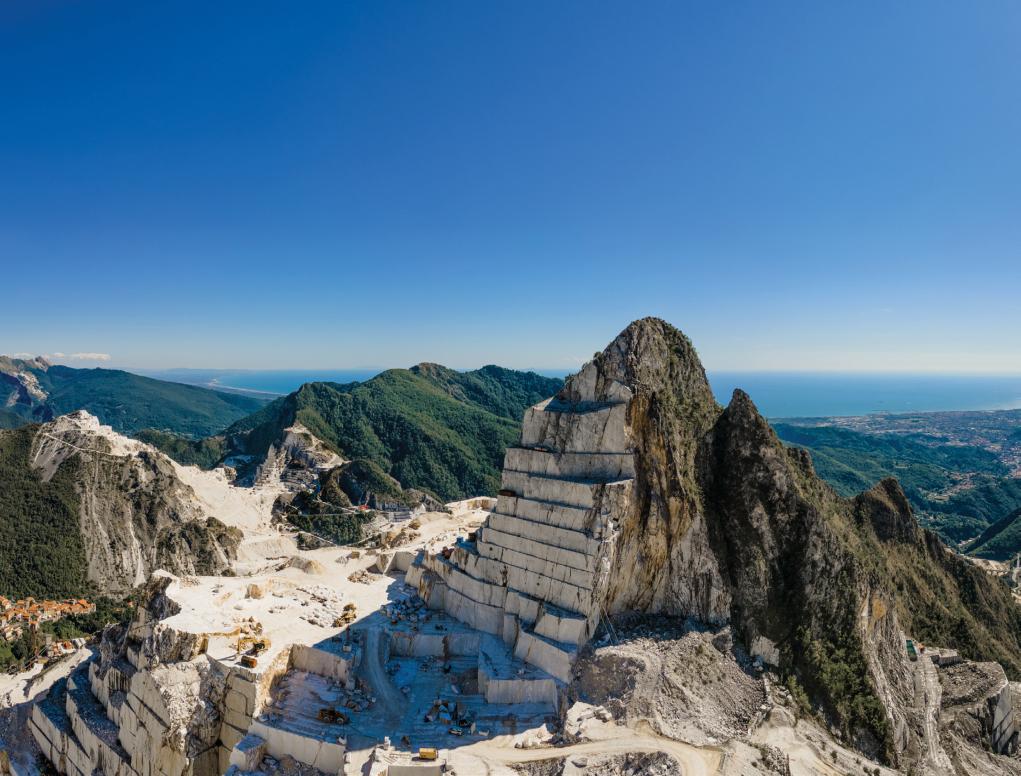
High in the Apuan Alps of Tuscany, there’s there’s a place where mountains shine white under where mountains shine white under the sun. This is Carrara, home to one of the sun. This is to one of Italy’s most famous exports and one of the most famous exports one of the most beautiful stones in the world.
For over 2,000 years, Carrara marble has been quarried from these hills, its luminous surface shaping everything from Roman columns to Michelangelo’s David. It’s a stone that feels alive, cold to the touch yet warm in spirit. Each piece is marked by veins that tell their own story.
Single blocks are carefully cut from the mountain with diamond wire saws, then carried down winding roads that have seen centuries of work. It’s this patience, precision and history that make Carrara marble so prized.
That same human connection inspired Montrealbased artist Stikki Peaches, known for his bold, layered street art that lives on the walls of his city and around the world. Stikki decided to turn one of his earliest pieces, a 2010 gra ti work from Montreal’s Italian
neighbourhood, into something enduring. What began as paint and paper would now live forever in stone.
This vision found the right partner in Fernando Mammoliti, Cosimo’s older brother and Chief Business Development O cer at Ciot, a Montreal-based company that imports and distributes natural stone and marble. With over 25 years of experience, Fernando has built a career around innovation, craft and a deep respect for materials. His work has led to award-winning collaborations with designers around the world, and his passion for marble has taken him countless times into the quarries of Tuscany.
The idea took shape when Fernando reached out to Alan Ganev of Taglialatella Galleries about a new robotic marble-sculpting technology he’d come across in Tuscany, asking if any of his artists might want to experiment with it. Alan immediately thought of Stikki. Together, they travelled to Carrara to hand-pick the marble blocks. While the technology and artisans were in place to help execute the vision, it was up to Stikki to choose the right block, deciding how white it should be, how much veining it should have and which characteristics would best carry his concept from mood board to sculpture.
Eventually, Stikki fell in love with one particular sectionofthequarryandthat’swherehisFUGETABOUTIT sculptures, Darth Vader and a Stormtrooper, were born.
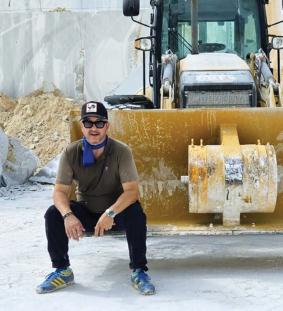
Top Left: Fernando Mammoliti in Carrara.
Top Right: Unveiling of Stikki Peaches’ FUGETABOUTIT sculpture in Toronto. Bottom: Stikki Peaches, Storm Troopers, 2021, exhibited at Taglialatella Gallery in Toronto.
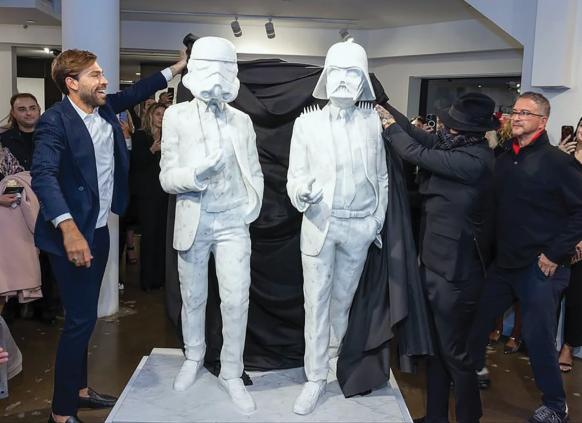
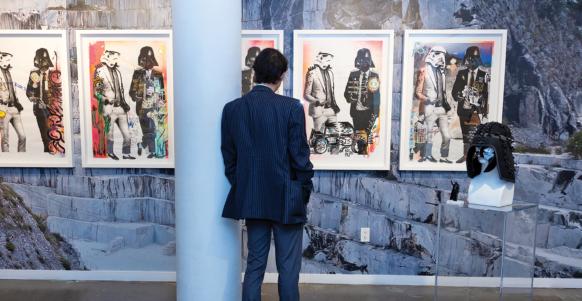
The process was as much art as engineering. The sculptures began as 3D files created with Rodeo FX, an award-winning production studio based in Montreal, who helped translate Stikki’s two-dimensional collage into a full 3D form. Then, in Carrara at Robot City II, an art-engineering company, a robotic arm brought the shapes to life by rough-cutting the marble before Italian artisans spent weeks refining every curve and detail by hand. The shoes alone took eight days to perfect (two days for each shoe). It was a modern-day collaboration rooted in old-world craftsmanship.
For Stikki, the project was also a return to his roots. As a kid, he’d hang out at his family’s tailoring shop inside their small home in Montreal, watching sharply dressed Italian men gesture and talk with their hands. Those movements inspired the expressive poses of his masked characters and their mysterious presence
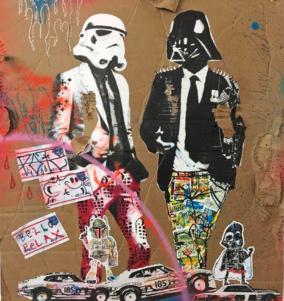
came to symbolize the same ambiguity found behind the Star Wars masks. Bringing them to life in Carrara was like closing a loop, a way for Stikki to reconnect with his Italian roots and, in the process, give his art new permanence.
Three years in the making, FUGETABOUTIT now stands as a bridge between past and present, between the marble masters of the Renaissance and the creative rebels of today. It’s a reminder that heritage and imagination can share the same space and that even the most modern ideas can be of the earth.
From the quarries of Carrara to a gallery in Toronto, this story, like the stone itself, proves that beauty, craft and culture never go out of style.
Explore the full journey from quarry to completion through a short film created alongside the sculptures. Scan the QR code to watch.
Alonzi
My trips to Italy usually mean long
My trips to drives up and down the peninsula with up down with my family. Fabio, my partner of twenty Fabio, my of years, is from Bologna, and my family is years, is and is from Lazio so Tuscany, sitting right in the from Lazio so Tuscany, middle, is always on the route whether we middle, is on the route whether we plan it or not. it or not.
I have many memories of spontaneous, amazing moments. One particular summer in the Maremma sticks with me. It was August, brutally hot — the kind of heat where the cicadas never shut up, and you start questioning why you’re even there. In the middle of a field, under some pine trees, there was a lone food truck. Nothing fancy, just cured meats and bread — exactly what you don’t need at 40 degrees out, but exactly what I wanted. Obviously, I picked the lardo. It was sliced paper-thin and draped over grilled bread with rosemary and olive oil. The fat melted instantly, the salt and herbs made it impossible to stop. Though sweating through my shirt, I knew it was perfect, and that I’d never forget it. That bite sums up Tuscany better than anything else: taking something humble, even inconvenient, and turning it into the thing you’ll never forget.
Food in Tuscany is deeply rooted in its landscapes and seasons, each corner o ering flavours that tell a story — from the mountains of Garfagnana to the
hills of Chianti and the coasts of the Maremma. I remember a cold early spring in San Gimignano with my best pals, when we couldn’t stop eating ribollita: cabbage, beans, vegetables, and stale bread warming us from the damp chill. Tuscany feeds bones and soul. Acqua cotta, “cooked water” enriched with greens and a poached egg, speaks of necessity and home. Pappa al pomodoro and panzanella bring summer to the table, while cacciucco livornese — a hearty seafood stew — evokes salt air and fishermen’s lives.
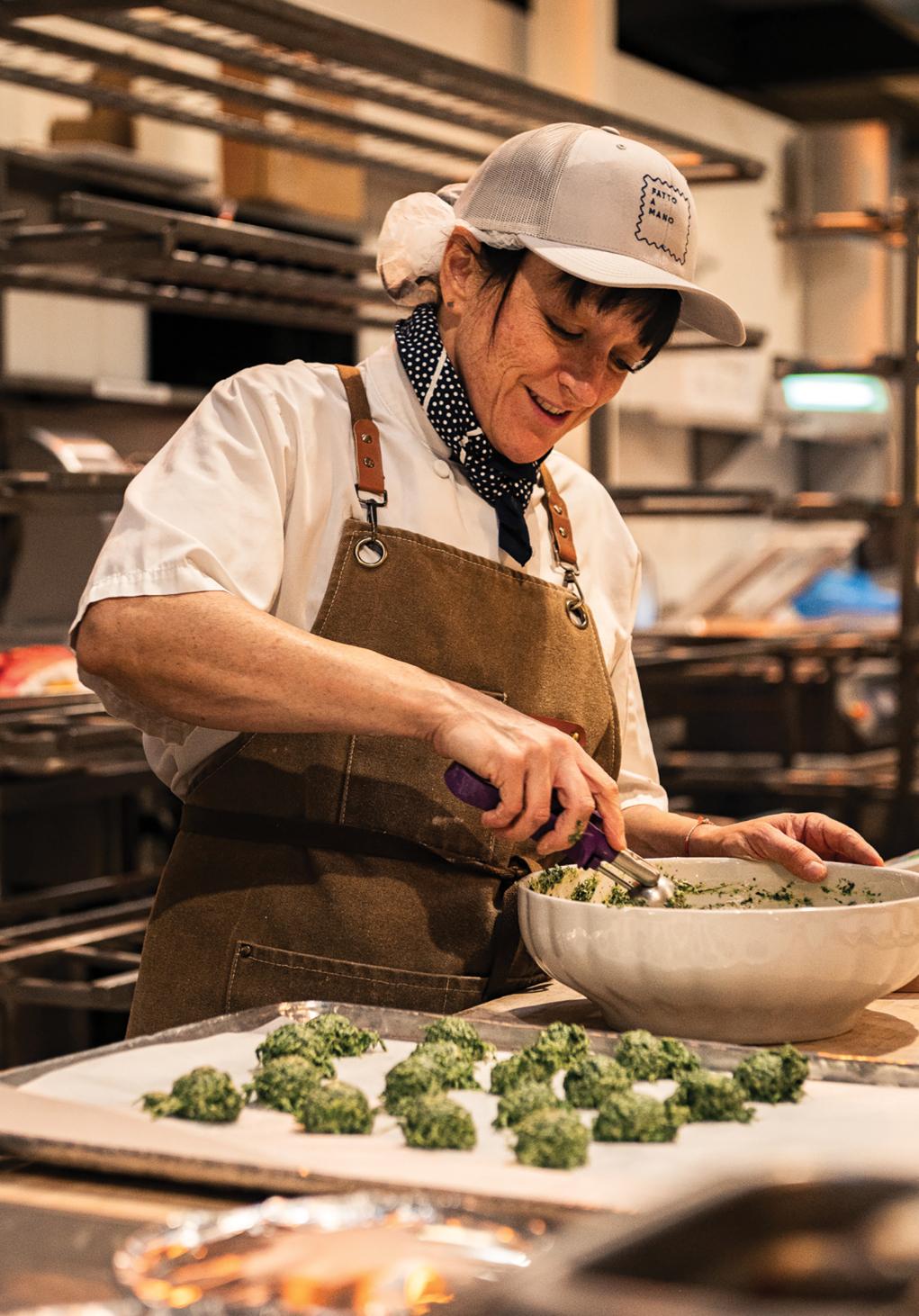
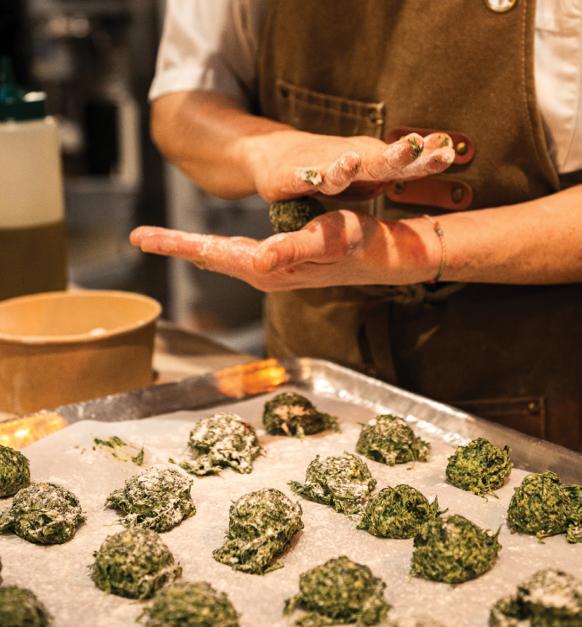
The landscape o ers endless small pleasures. Crostini di fegatini, chicken liver pâté over toast, or schiacciata, the flatbread made savoury with olive oil or sweet with grapes, embody simple joy. Pasta is rustic and generous: thick pici with garlic and tomato or wild boar ragù, wide pappardelle with hare or mushrooms. In the Mugello, tortelli di patate come with butter and sage. Tordelli lucchesi in ragù, gnudi of ricotta and spinach, and even maltagliati, made with fresh pasta scraps, in bean soups show how nothing goes to waste.
Tuscany’s sweets are just as revealing. Castagnaccio, chestnut flour with pine nuts and rosemary, recalls autumn forests. Torta della Nonna — custard topped with pine nuts — is the taste of home. Cantucci dipped in Vin Santo invite slow reflection, while schiacciata all’uva celebrates the harvest with juicy indulgence.
The region’s identity lies not only in its dishes but in its raw materials. Sharp, peppery Tuscan extra vir-
Giovanna Alonzi
gin olive oil defines even plain bread. Beans, chestnuts, pine nuts, and raisins have been staples for centuries. Chianina IGP beef for Bistecca alla Fiorentina, Pecorino Toscano DOP, and Prosciutto Toscano DOP show skill and pride. Sa ron from San Gimignano, Lunigiana chestnuts, and Vin Santo del Chianti reflect the deep link between land and table.
Tuscan food history is inseparable from its landscapes. Medieval farmhouses, once fortified and self-su cient, raised animals, pressed olive oil, and produced wine. Many survive today as agriturismi, restored spaces where visitors can experience Tuscan life firsthand. Stone walls, terracotta roofs, and communal halls recall the past, while gardens and
orchards supply ingredients for lessons, tastings, and meals that honour generations of tradition. Staying in these places o ers a direct connection to the old rhythm of food, family, and land.
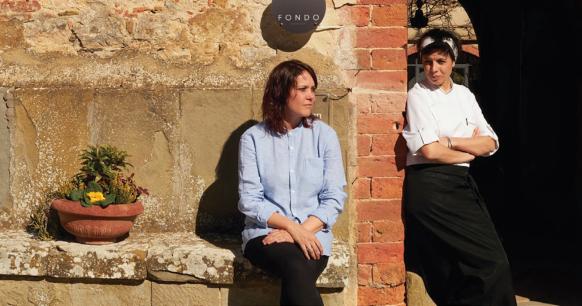
In this continuum of tradition and innovation, Fondo — the restaurant founded by Sara Scaramella and her partner Sabina De Gregori — o ers a contemporary expression of Tuscan hospitality. Seven and a half years ago, they left Rome and renovated an old stable in Trequanda to create a place where food and human connection come first. “We wanted a space that reflected who we are,” Sara says. “Not a concept for Instagram, but a home where food and hospitality matter more than trends.”
At Fondo, bread is a signature: each loaf undergoes a four-day fermentation and careful baking, turning local flours into fragrant loaves. A tortello filled with liver pâté, served with Parmigiano fondue and caramelized onions in raspberry vinegar, shows how Tuscan flavours can be reimagined while honouring technique and terroir. Their Filetto di Melanzana treats eggplant like a steak — pan-browned and tender, enriched with a cream made from its own peels, paired with blackberries infused with Sichuan pepper and cinnamon blossoms, and finished with wilted greens.
Ethics guide their choices. Sara and Sabina work with small producers using sustainable systems. Wine
is fairly priced, menus are simple to encourage curiosity, and dishes invite lingering, sharing, and savouring. Fondo embodies what Tuscany has always celebrated: generosity, conviviality, and respect for land and season. As medieval agriturismi once o ered sustenance to travellers and farmers, Fondo o ers nourishment and connection to all who pass through its doors. And that, perhaps, is Tuscany’s essence: a balance of past and present, humble ingredients and refined technique, tradition and reinvention — all shared with warmth and joy. From a roadside lardo in the Maremma to a dish at Fondo, the story is the same: food is a reason to gather, celebrate, and belong.

Giovanna Alonzi
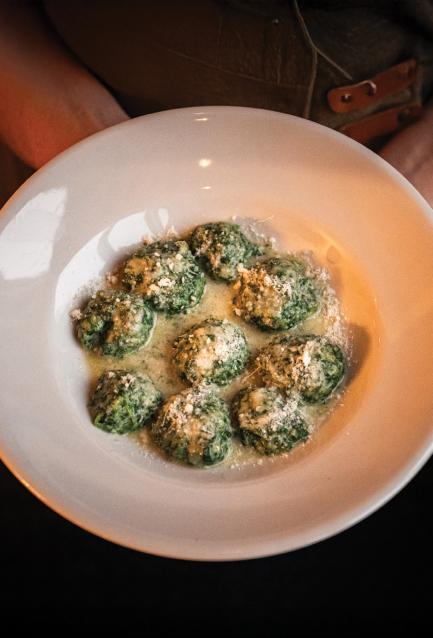
Ingredients
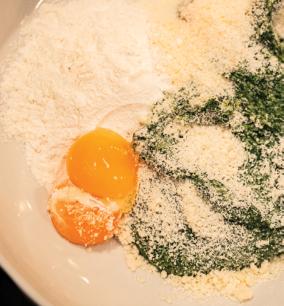
• 350g sheep’s ricotta well drained (use cow’s milk as an alternative),
• 30g butter
• 700g fresh spinach
• 70g grated
Parmigiano Reggiano
• 45g flour, plus more for dusting
• 1 egg
• 100g butter
• Fresh sage
• Parmigiano Reggiano, for serving
• Salt, black pepper, nutmeg
Instructions
1. Drain ricotta in a fine-mesh sieve. Cook spinach in a covered pot with the butter until just wilted, then cool and
squeeze dry. Finely chop or grind in a mixer and transfer to a bowl.
2. Add ricotta, Parmigiano, egg, salt, pepper, and nutmeg. Sprinkle in flour and mix until just combined. Cover and chill 1 hour to firm.
3. Dust a tray with flour. Roll the mixture into small balls (about 18–20g each) and arrange on the tray. Lightly dust again.
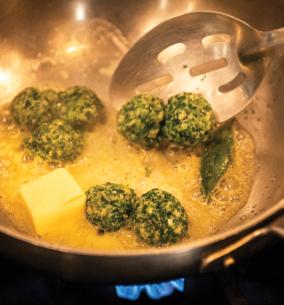
4. Bring a large pot of salted water to a boil. Cook the gnudi until they float. Meanwhile, melt the butter with the sage in a wide skillet. Drain and transfer the gnudi directly to the butter. Toss gently and finish with Parmigiano. Serve hot.
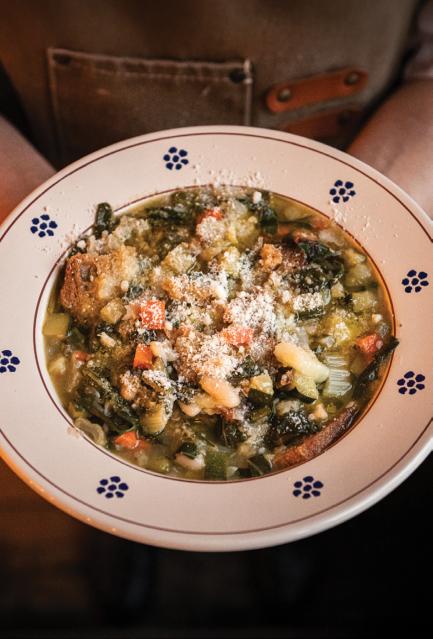
Ingredients
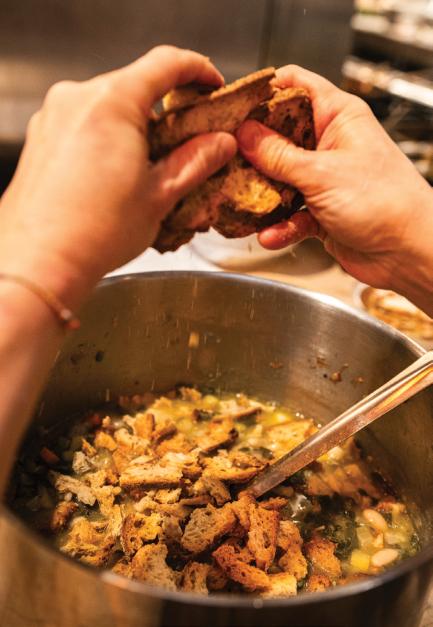
• Stale bread, cut to 1-2 cm slices
• 500g cannellini beans
• 1 bunch Swiss chard
• 1 kale
• 2–3 carrots
• 2 medium potatoes
• 1–2 zucchini
• 1 onion
• 1 celery stalk
• Extra-virgin olive oil
• Salt and pepper
Instructions
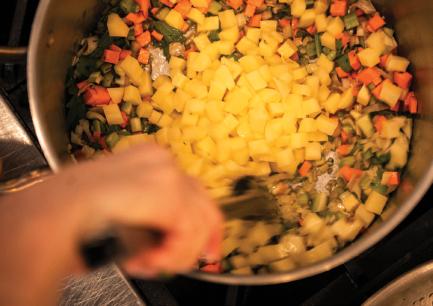
1. Rinse the beans and soak 12 h if using dried. Chop the chard and kale into 4 cm pieces, peel and dice the carrots, potatoes, and zucchini into 2 cm cubes, and finely chop the onion and celery.
2. In a large pot, heat a
drizzle of olive oil over medium heat. Add the onion and celery and cook until soft. Add the carrots, potatoes, and beans, then enough water or stock to cover. Simmer until vegetables are tender and beans cooked, about 1.5–2 h.
3. Meanwhile, toast the bread with olive oil, salt, and rosemary in a 200 °C oven for 4–5 min.
4. Add the chard, cabbage, and zucchini to the pot and cook until just wilted. Tear the toasted bread into bite-sized pieces and stir into the soup to soak up the broth. Season with salt and pepper and drizzle with olive oil before serving.
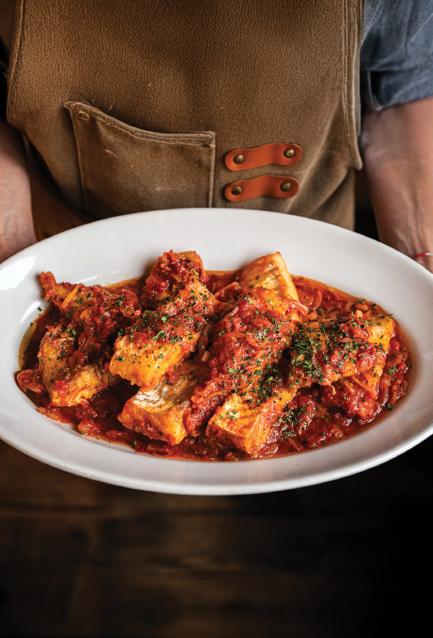
Baccalà alla Maremmana Maremmana
Ingredients
• 800g rehydrated salted cod (Stoccafisso or baccalà – soak in cold water 24–48 h, changing water several times to remove salt and rehydrate before cooking.)
• 4 tbsp flour
• 1 onion
• 300g canned peeled plum tomatoes
• 3 sprigs fresh parsley
• 2 cloves garlic
• Sunflower oil for frying
• 4 tbsp extra-virgin olive oil
• Salt and black pepper, to taste
Instructions
1. Mince the garlic, onion, and parsley together. Heat the olive oil in a skil-
let over medium heat, add garlic, onion and parsley, and sauté until soft.
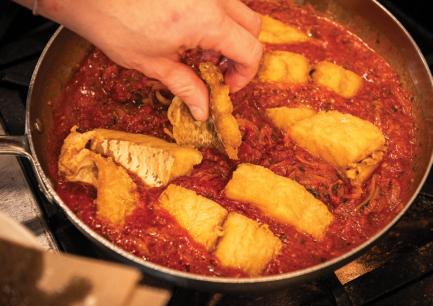
2. Add the peeled tomatoes to the skillet and let the sauce simmer gently. Once they’ve cooked down a bit, crush them with a wooden spoon.
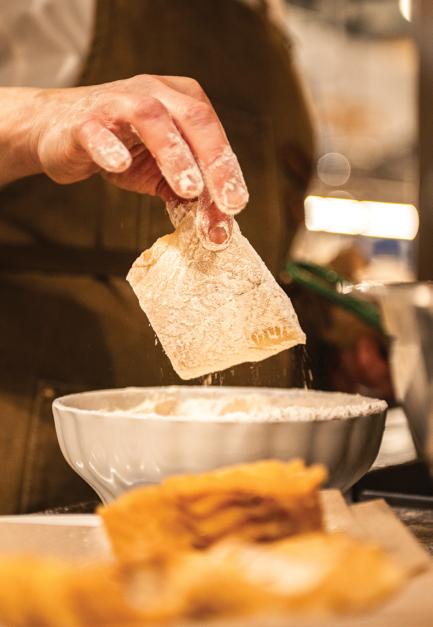
3. In a separate pan, heat the sunflower oil for frying. Pat the cod pieces dry, dust them lightly with flour, and fry until golden and crisp on the outside.
4. Transfer the fried cod into the tomato sauce and let it simmer for 15 more minutes, allowing the flavours to bind. Season with salt and black pepper to taste.
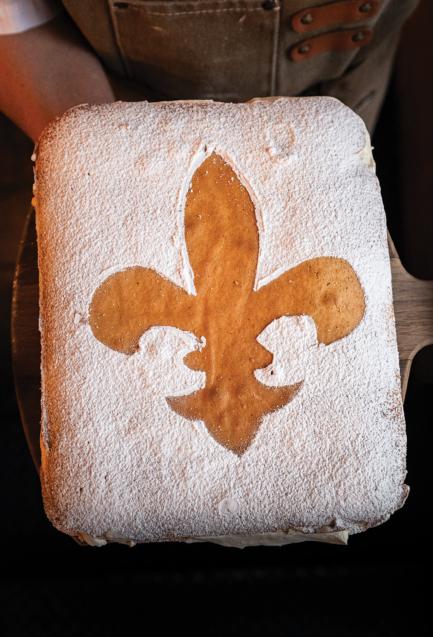
Ingredients
• 360g all-purpose flour
• 3 large eggs
• 100g whole milk
• 225g sugar
• 20g water
• 60g sunflower oil
• Zest of 1 orange
• 1 vanilla pod
• 16g baking powder powdered sugar, for dusting
• Unsweetened cocoa powder, for dusting
For the filling
• 6 egg yolks
• 170g sugar
• 30g corn starch
• 500ml whole milk
• 1 vanilla bean, split and seeds scraped
• Zest of 1 lemon
• 250g heavy cream, whipped
Instructions
1. Preheat oven to 180°C. Butter and flour a 30×24 cm pan.
2. Beat eggs with sugar, then add milk, water, oil, zest, and vanilla. Fold in flour and baking powder. Pour into the pan, bake 25–30 minutes with a water cup, and cool.
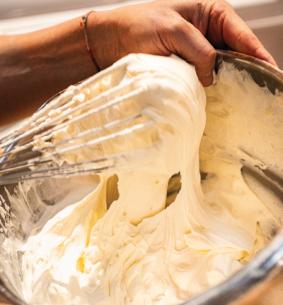
3. Pastry cream: whisk yolks with half the sugar and cornstarch. Heat milk with the rest of the sugar, vanilla, and lemon zest. Temper, cook until thick, strain, cool, and fold in whipped cream.
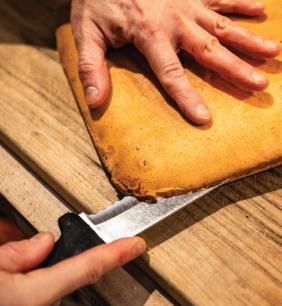
4. Slice cake horizontally, spread pastry cream, top with second layer.
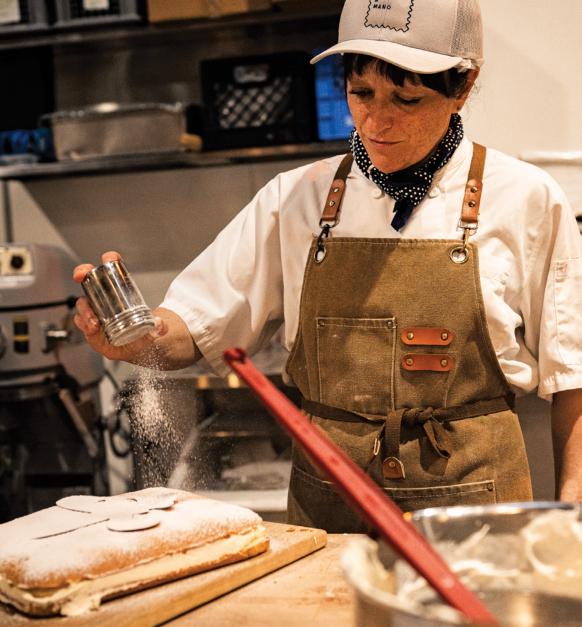
5. Dust with powdered sugar using a cut out fleur-de-lis stencil.

Andrea Tonicello and Alessandra Magnani
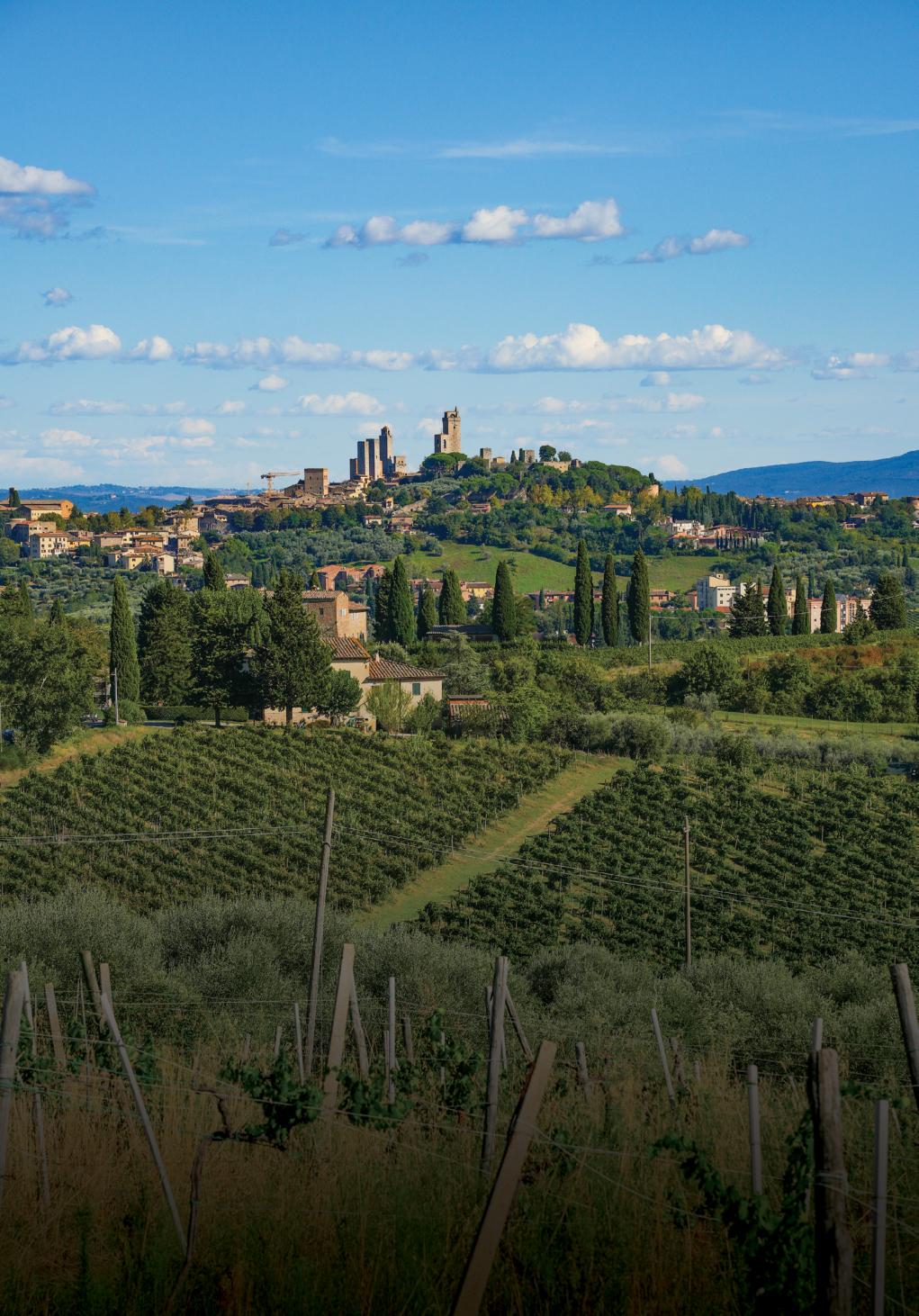
Explore Tuscany’s iconic estates, hidden gems iconic and breathtaking landscapes one sip at a time and one sip at a time
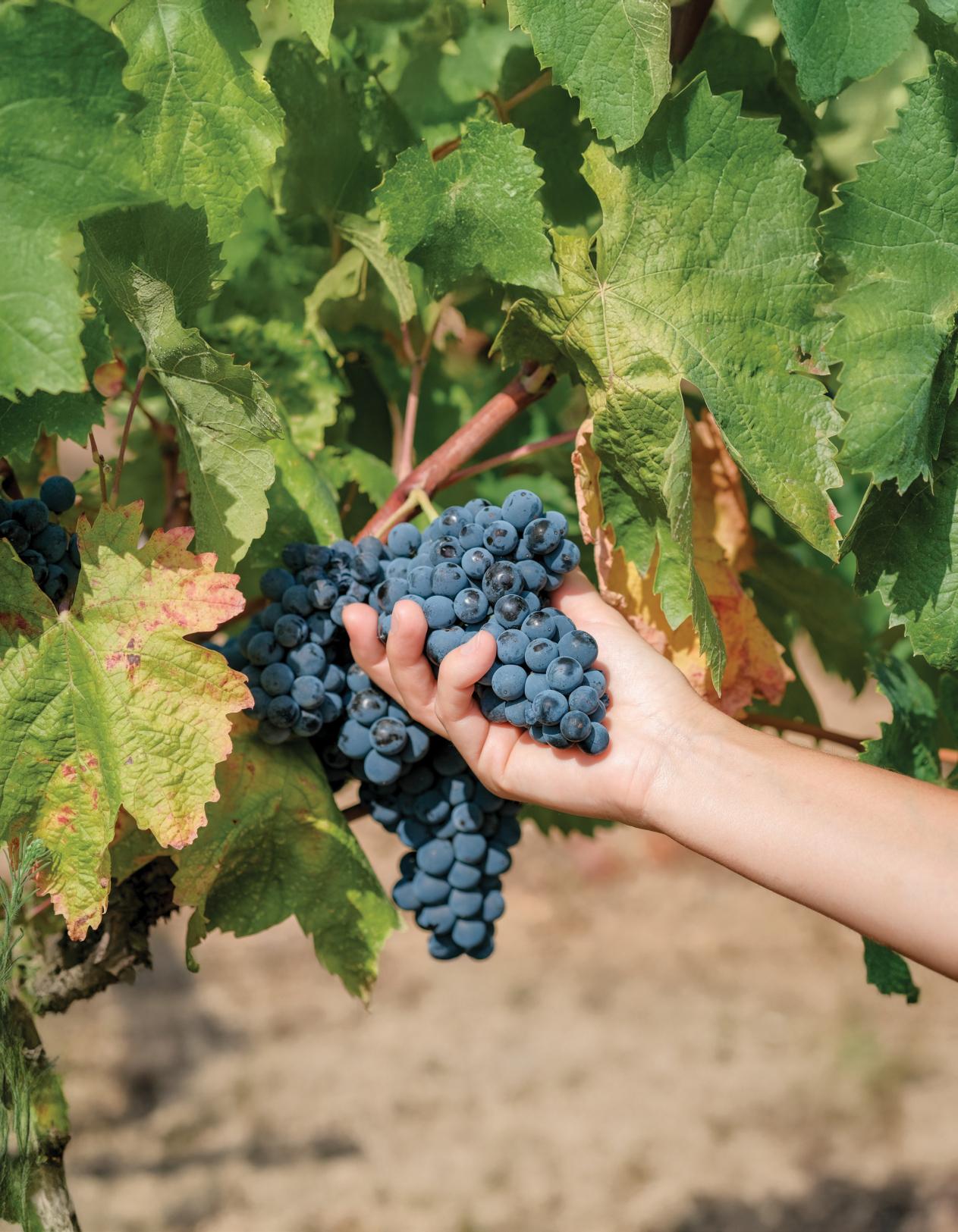
When I think of Tuscany, I don’t just picture rolling When I think of I just picture hills, golden fields, and cypress trees stretching into trees into the horizon. This is the landscape that has inspired the horizon. This is the has poets and writers for centuries, where art, nature, and poets writers for centuries, where art, nature, and everyday life seem to blend seamlessly. Tuscany is seem to blend Tuscany is also about families who have worked these vineyards also about families who have worked these for generations, putting their hearts into the land and generations, hearts into the land the wines it gives back. the wines it back. Every time I go back, I don’t just drink wine—I dis- Every I wine—I dis cover new stories, new flavours, and new friendships. cover new stories, new flavours, and new Even as an Italian, I get emotional standing in front Even as an Italian, I get emotional in front of these views. It feels like watching our history and of these views. It feels like and culture come alive. I studied these places for years in culture come alive. I studied years schoolbooks, yet when you’re actually there, it’s as if yet you’re it’s as you’re stepping back into the most beautiful chapters you’re stepping back into the most beautiful of history and living them for yourself. Wine here isn’t of Wine here just something to pour into a glass; it’s identity, tradi- just to tradition, and passion all in one tion, all in one.
Tuscany has always been one of Italy’s great wine been one of great wine regions, and I love how it manages to keep centuries regions, and I love how it centuries of tradition alive while still embracing innovation. At of tradition alive while still innovation. its centre is Sangiovese, the grape behind Chianti, its centre is behind Brunello, and Vino Nobile, each with its own per- Brunello, and Vino Nobile, each with its per
sonality. I’m still fascinated by the story of Ferruccio I’m still fascinated Biondi Santi, who gave us Brunello, and I always think Biondi gave us I think of Barone Ricasoli when I drive through Chianti—a of Barone Ricasoli when I drive reminder of where it all started. In Montepulciano, reminder of where it all started. In the elegance of Vino Nobile, made from the Prugnolo of Vino Nobile, made from Gentile clone, always leaves an impression. Gentile clone, leaves an impression.
But Tuscany is so much more than the classics. I’ve
But Tuscany is so much more than the classics. I’ve grown especially fond of wines that don’t always get grown of wines that don’t get the spotlight: Vernaccia di San Gimignano, crisp and the di Gimignano, crisp historic; Morellino di Scansano, cheerful and easy to historic; Morellino di Scansano, cheerful and easy to love; and Carmignano, bold enough to blend Caber- love; and bold Caber net with Sangiovese long before the Super Tuscans net with the Super Tuscans became famous. And then there’s Vin Santo One of Vin Santo. One my favourite rituals is sipping it slowly at the end of a my favourite rituals is sipping it at the end a meal, dipping crunchy cantucci cookies into it. meal, cantucci cookies into it.
Of course, Tuscany is also home to Sassicaia Of course, Tuscany is also home to Sassicaia and Ornellaia, names known all over the world. But and known all over the world. But what makes the region truly special is its diversity: what makes the is its 11 DOCGs, 41 DOCs, and landscapes that shift from 11 DOCGs, 41 DOCs, shift from sandy coastlines to forested hills. sandy to forested hills.
Come along with me as I share some of my favou- Come as I share some of favou rite corners of Tuscany the places I love to stay, eat, rite corners of Tuscany—the I love to stay, and, of course, raise a glass. and, of course,
This historic area between Florence and Siena is the soul of Sangiovese. Its wines are bright, balanced, and food-friendly, and I always enjoy wandering through towns like Greve, Radda, and Castellina.
Where to Stay
Farmhouse Corte di Valle in Greve for its sweeping views, La Presura for rustic charm, or Monteraponi for a full winery immersion.
Where to Eat
Cured meats at Antica Macelleria Falorni, or refined Tuscan dishes at Locanda Le Piazze.
Don’t Miss
The vineyards of Castello di Brolio, the magical atmosphere of Greve and Radda, and biking along vineyard-lined roads.
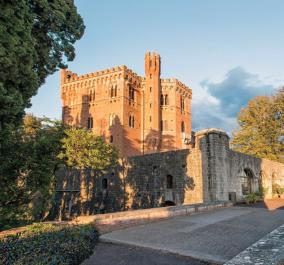
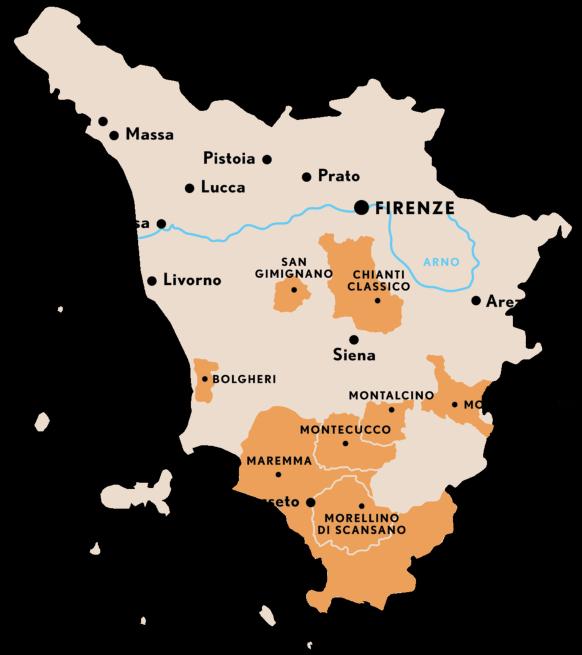
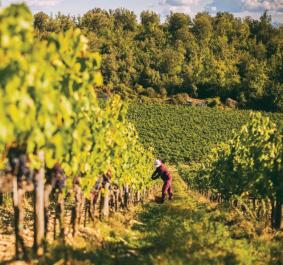
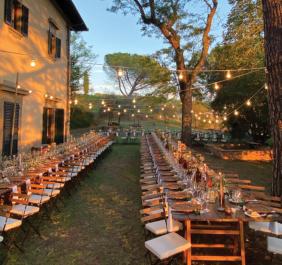
Brunello di Montalcino is Tuscany’s crown jewel, a wine that embodies the region’s depth and tradition. The Biondi Santi estate, where the famous Brunello clone was developed, is a name I immediately associate with Montalcino and its rich winemaking heritage.
Where to Stay
Adler Spa Resort Thermae for an unforgettable combination of food, wine, luxury, and hot springs. For historic charm, Castello di Velona is equally special.
Where to Eat
Enoteca Svanen for traditional dishes, Boccon Divino for a modern take on Tuscan classics.
Don’t Miss
Climbing the Montalcino fortress, driving through the winding roads of Val d’Orcia, and truffle hunting at Castello Tricerchi.
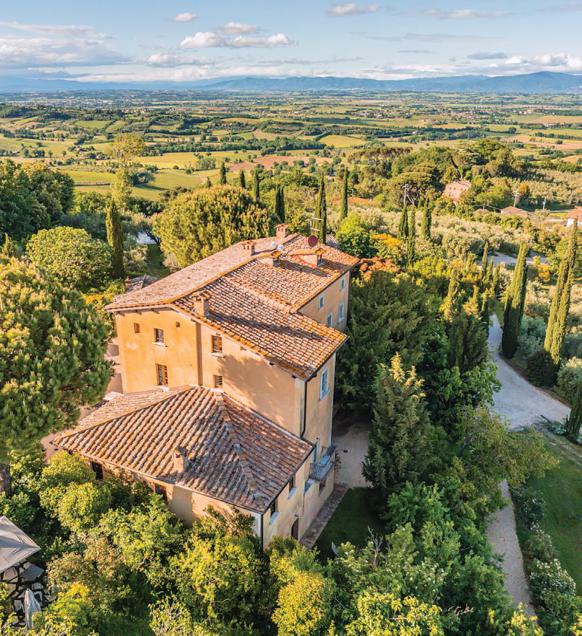
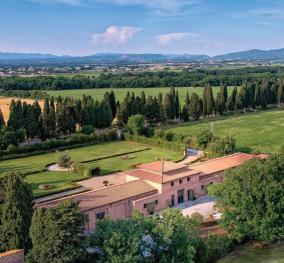
In Maremma I find a wilder Tuscany, shaped by a rugged mix of mountains, forests, and sea, where the landscape still feels raw and untamed. Life moves at a more natural pace here, and the wines capture that sense of place—ranging from crisp, mineral Vermentino along the coast to the bold, sun-soaked depth of Morellino di Scansano, which always manages to surprise me.
Where to Stay
Tenuta del Fontino near Massa Marittima or Locanda Rossa in Capalbio for style and comfort.
Where to Eat
Tullio in Capalbio for traditional home-style cooking, or I Due Cippi for grilled specialties.
Don’t Miss Capalbio’s old town, hiking the trails of Maremma, and horseback riding through the countryside.
Perched dramatically on a hilltop, Montepulciano buzzes with festivals in summer and glows with the warm hues of harvest in the fall.
Where to Stay
Villa Cicolina or Villa Bianca, both surrounded by gardens with sweeping panoramic views.
Where to Eat
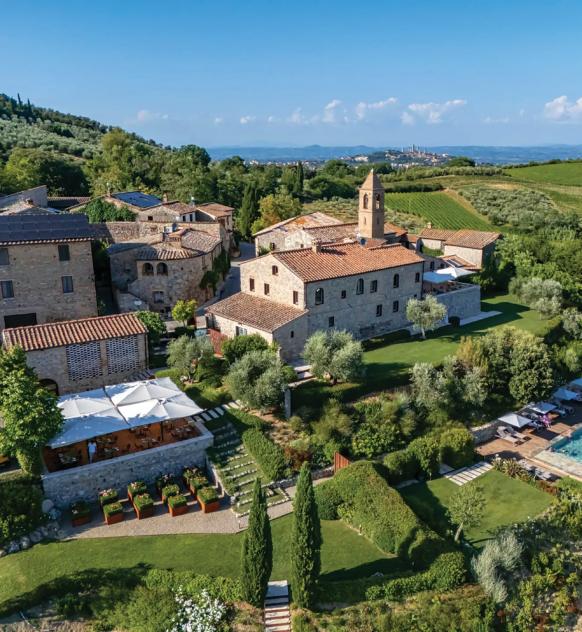
La Grotta, tucked inside a romantic vaulted cave. Osteria La Porta in the charming nearby village of Monticchiello. Le Berne Winery, where Nonna Ada prepares unforgettable “pici al sugo” and piccione arrosto.
Don’t Miss Piazza Grande, Cantina Contucci, and the Festa del Vino Nobile in late August.
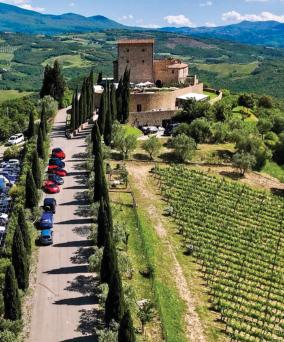
Bolgheri is home to legendary wines like Sassicaia and Ornellaia, names that helped redefine modern Italian winemaking. I can never get enough of approaching the Viale dei Cipressi, the iconic straight road lined with over 2,500 cypress trees, where the road itself feels like a ceremonial entrance into Bolgheri’s past.
Where to Stay
Podere I Melograni in Guardistallo for rustic peace, or Tombolo Talasso Resort for seaside luxury.
Where to Eat
Osteria Magona for its famous grilled meats, or Enoteca Tognoni for a casual wine tasting.
Don’t Miss
Riding your bike along the stunning cypress road, visiting Tenuta San Guido, and cycling along the Tyrrhenian coast.
With its medieval towers, San Gimignano feels like a journey back in time. Vernaccia is a wine celebrated since Dante’s era.
Where to Stay
Locanda Logi, with its stunning views.
Where to Eat
Locanda La Mandragola or Osteria delle Catene for simple, flavourful local cuisine.
Don’t Miss
Climbing the Torre Grossa, tasting Vernaccia at Rocca di Montestaffoli, and exploring nearby Volterra.
Tuscany amazes me every time. Over a plate of pici pasta or a bistecca alla fiorentina, its wine culture feels both timeless and alive, an invitation to experience it for yourself.
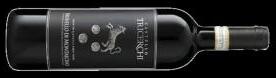
2020 Brunello di Montalcino DOC, Castello Tricerchi, Toscana
Intense ruby in color, with elegant, expressive aromas of ripe cherry, orange peel, chocolate, tobacco, and a range of savoury spices. The palate is vibrant, lifted by pronounced acidity and smooth tannins, leading to a long, juicy finish. Already harmonious, with excellent potential for further development. A natural pairing for game, aged cheeses, or rich pasta dishes.
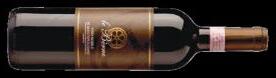
2022 Vino Nobile di Montepulciano DOCG, Le Berne, Toscana
Deep ruby red in colour, offering a rich bouquet of wild berries, ripe plum, and black cherry, with hints of tobacco leaf, vanilla, and a light toasty note. On the palate, it is fullbodied and round, with the aromas beautifully mirrored after the sip. Velvety tannins and balanced acidity lead into a long, persistent finish. Perfect alongside a juicy Chianina steak.
Wines are available by the glass at Terroni, Sud Forno & Spaccio locations and by the bottle at our bottle shops.
Shop by the case online at cavinona.com
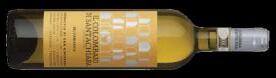
2024 ‘Selvabianca’ Vernaccia di San Gimignano DOCG, Il Colombaio di Santa Chiara, Toscana
Straw yellow with hints of green. The nose reveals vibrant aromas of white peach, nectarine, and unripe pineapple. Medium-bodied and intense on the palate, with a mineral backbone and a long, sapid finish. Pairs well with shellfish, seafood, regional meat dishes, and mediumaged cheeses like finocchiona and Pecorino Toscano.
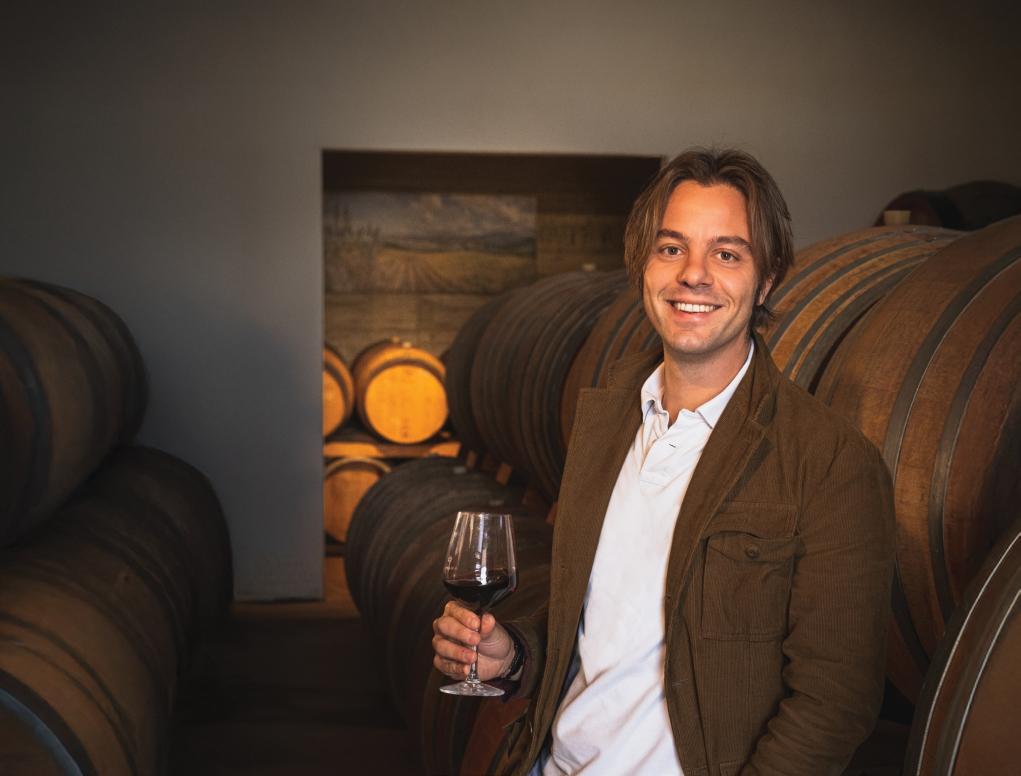
Last November, at one of our Cavinona Last at of our Cavinona events, we had the pleasure of sitting events, we had of down with Jacopo Vagaggini from down with Amantis Winery to talk about Sangiovese Amantis Winery to talk about Sangiovese and what makes this grape so magical and what makes grape so at the table.
A Jacopo, can you introduce yourself?
J I’m Jacopo Vagaggini, enologist at Amantis Winery in Tuscany and a consultant for several wineries across Italy and beyond. Wine is my passion, my art, and my way of sharing the spirit of Italy with the world.
A You’ve known Terroni for a long time, right?
J Yes, many years. Terroni feels like a second home. I travel constantly, but here it feels like being with family. I’ve seen it grow fast, yet it has always stayed true to its soul: bringing authentic Italian food and wine to Canada and the US.
A What brought you to Toronto this year?
J I presented Amantis wines at an exclusive Toscana Wine Club masterclass, and now I’m here for a Taste & Buy event focused on Toscana and Piemonte. The two
events are very di erent, yet both lively, colourful, and full of people eager to meet producers and hear the stories behind each wine. Sharing our work with such engaged audiences is truly inspiring.
A Sangiovese is central to Tuscan winemaking. How do you see this grape?
J Sangiovese is like a brother to me. I know it, I love it, and sometimes I argue with it! It’s the Prince of Tuscany, expressive, elegant, and capable of revealing the soul of every vineyard. Every sip tells an incredible story.
A How should we, wine lovers, approach and pair Sangiovese?
J For freshness and vibrancy with appetizers or pasta, try Montecucco. For something classic, Chianti Classico. For rich meats, opt for the King, Brunello di Montalcino. Cheeses or game pair perfectly with Nobile di Montepulciano. And for dessert, Morellino di Scansano or Bolgheri o er a gentle, refined sweetness that is simply irresistible.
A What makes Sangiovese special at the table?
J Bright acidity, crisp tannins, its signature traits that make the wine vibrant, elegant, and unique. The perfect companion to any meal at Terroni!
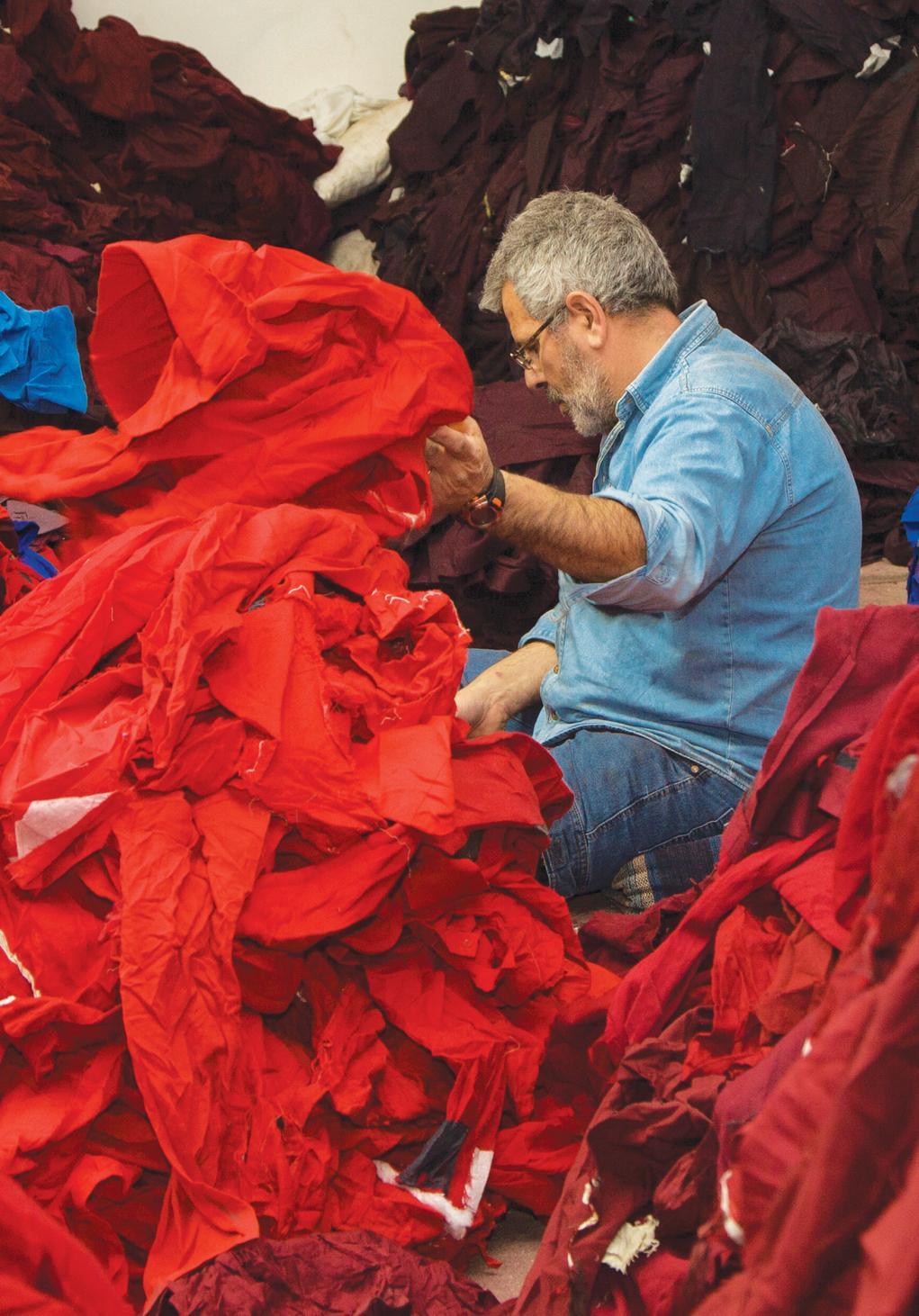
From Prato’s recycled wool to Gucci’s eco-collections— From Prato’s wool to Gucci’s eco-collections— how Tuscany has led circular fashion for centuries how Tuscany has led circular fashion for centuries
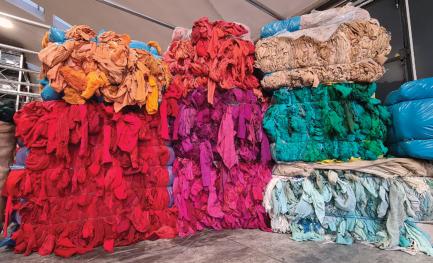
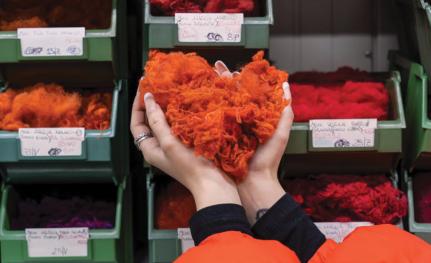
Have you noticed how each year some Have you noticed how some new trend steals the spotlight a crazy new trend steals the new diet, a smart gadget, or the next big sustainability trend?
Today, we're told that circular fashion is the latest star on that stage—our strongest weapon against the disposable culture of fast fashion. But what if I told you there’s a place where this has been the gold standard for centuries?
Tuscany—home to Pitti Uomo, Gucci, Ferragamo, and, by the way, even Dante Alighieri—has been quietly perfecting the art of circular fashion for generations. Its textile districts transformed necessity into mastery, recycling production scraps, garment offcuts, and even used clothing long before sustainability became a global buzzword.
At the heart of this tradition is Prato, a small town north of Florence that has been Europe’s textile capi-
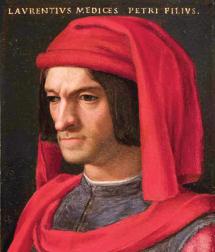
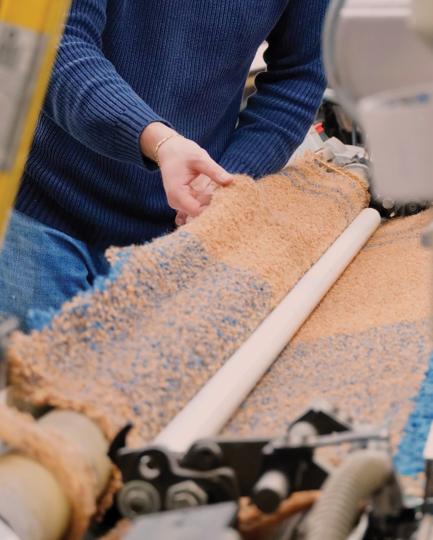
tal since the 12th century. During the Renaissance, the Medici family—rulers of Florence and villains in every Dan Brown novel—weaponized fashion to project authority, turning clothing into both a political tool and a marker of social status. But Prato’s legacy wasn’t built on artistry alone—it was born out of necessity. A law from the Arte della Lana (Wool Guild) codified production standards across Europe and restricted raw wool imports, forcing artisans to innovate. Rather than discarding waste, they began regenerating fibers, creating a recycling system that has endured for centuries.
Today, Prato processes more than 15% of the world’s recycled textiles, transforming discarded wool and natural fibers into high-quality yarns. Skilled workers, known as cenciaioli, meticulously sort, wash, shred, and spin each rag into a new beginning—literally turning the old into the newest trend. And here’s a surprise: brands like Zara, H&M, and Armani all source recycled fabrics from Prato.
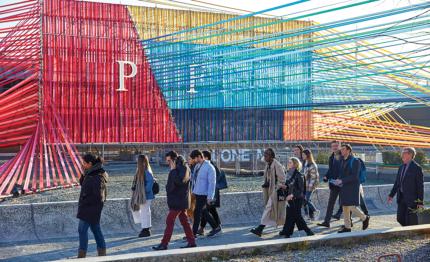
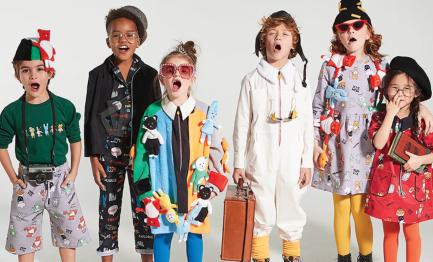
Twice a year, this tradition of reinvention is on full display at the Fortezza da Basso in Florence during Pitti Uomo, Pitti Filati, and Pitti Bimbo. These aren’t just trade fairs—they’re laboratories of creativity and sustainability.
Pitti Uomo, the world-renowned men’s fashion trade show that showcases top designers, trends, and emerging brands, has become the pulse of global menswear—where centuries-old techniques meet daring innovation. Walking through Pitti feels like stepping into an ecosystem of experimentation: recycled yarns from Prato mingle with artisanal silks and modern sustainable designs, as young designers push boundaries and heritage houses honor tradition—while setting the
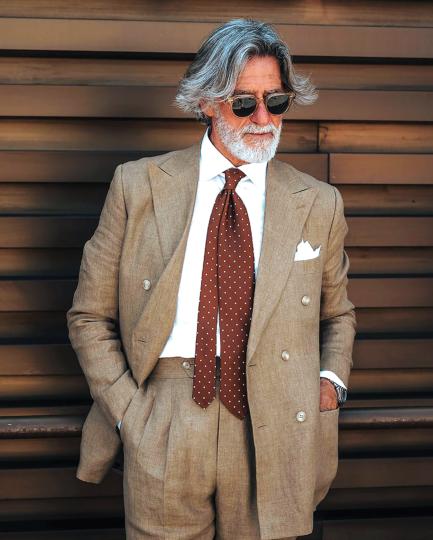
trends the rest of us will inevitably follow.
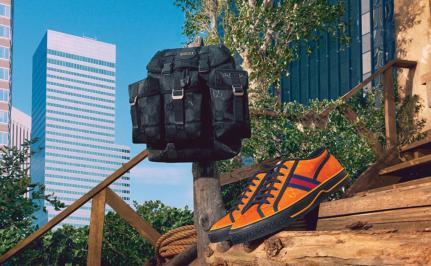
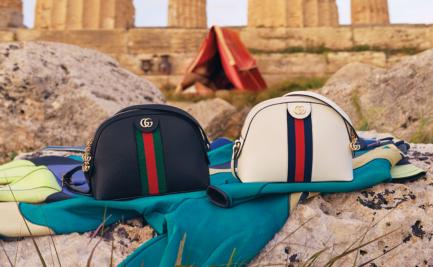
Gucci—founded in Florence in 1921—tells a similar story of evolution. What began as a modest leather workshop grew into a global luxury powerhouse. Today, Gucci demonstrates its commitment to sustainability through collections crafted entirely from recycled, organic, and responsibly sourced materials. The brand has also committed to a decade-long Culture of Purpose initiative, aiming to promote diversity and gender parity, preserve craftsmanship, foster a sustainable workplace, and drive positive social impact throughout its supply chain. We look forward to seeing the many incredible ways Casa Gucci has delivered on these admirable goals.
Ferragamo, the Florentine footwear icon, mirrors this philosophy. Its fame first took off in Hollywood by revolutionizing comfort and design; today, it’s redefining production, sourcing, and distribution in the name of sustainability. Renewable energy powers its facto-
ries, low-impact materials replace traditional ones, and circular design principles—a philosophy of designing each piece with its next life already in mind—guide every collection. The brand’s ethos echoes Prato’s mills: ingenuity born from necessity, elevated into art. Like an architectural masterpiece, each Ferragamo creation is a fusion of technical precision, aesthetic beauty, and human care.
From Renaissance silks to Prato wool, from Pitti runways to Gucci’s eco-forward collections, Tuscany remains a place where clothing is more than clothing— it’s identity, power, beauty, and, above all, tradition. Here, past and future coexist. Circularity, craftsmanship, and innovation aren’t just trends; they’re the fabric of Tuscan life itself.
Expanding our family while honouring the craft, quality and community that have defined us from the beginning have defined us from
This year marks an exciting new chapter for us in Los Angeles with the opening of Terroni Brentwood and Forno di Terroni. At the heart of every Italian table is good bread, and after years of searching for the kind we grew up with, we decided to make it ourselves. That decision led to Sud Forno’s conception in Canada and now Forno di Terroni, our first bakery in the U.S. and a true neighbourhood panificio, the kind of place where days start with warm cornetti and fresh sourdough.
"Forno di Terroni is our first is bakery in the U.S. and a true U.S. and a true neighbourhood panificio"
Alongside the bakery counter, you’ll find pizza stirata by the slice, panini, salads, baked goods and housemade gelato, plus a small market offering fresh pasta, sauces and Italian essentials to take home. Right next door, Terroni Brentwood brings our classic menu to a new community, complete with a welcoming patio and the same spirit that has guided us from day one. Together, the two spaces o er the neighbourhood a warm place to enjoy simplicity and authentic Italian food.
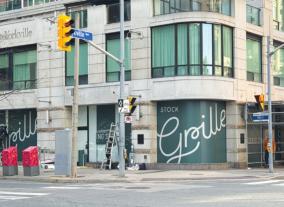
Five years after opening its doors in midtown, STOCK T.C is entering a new chapter with the launch of STOCK Grille, a more intimate,
refined expression of the concept that first took shape inside the historic Postal Station K building at Yonge and Montgomery. This new space, located at the corner of Bay and Yorkville (former Pusateri’s space), carries forward the same spirit that defined the original: a love of good food, a belief in quality ingredients and a desire to create something truly unique in the city. But Yorkville called for something di erent something a little more focused, more intentional and shaped by everything learned over the past five years.
"Stock Grille represents the "Stock Grille the best version of Stock T.C"
As Stephen Alexander of Cumbrae’s and STOCK T.C puts it, the neighbourhood inspired “a different approach,” while our very own Cosimo Mammoliti says that STOCK Grille represents “the best version” of STOCK T.C.
This new concept will feature a 150seatdiningroomwithamorebistrostyle, selective menu and a curated grocer section carrying STOCK’s best-sellers and signature products. Just as the first STOCK blended the butcher, the baker, the café and the dining room into one seamless experience, this new space will continue that vision in a more focused way. It’s not just an expansion; it’s an evolution of the STOCK philosophy. STOCK Grille will open its doors in Yorkville in 2026.
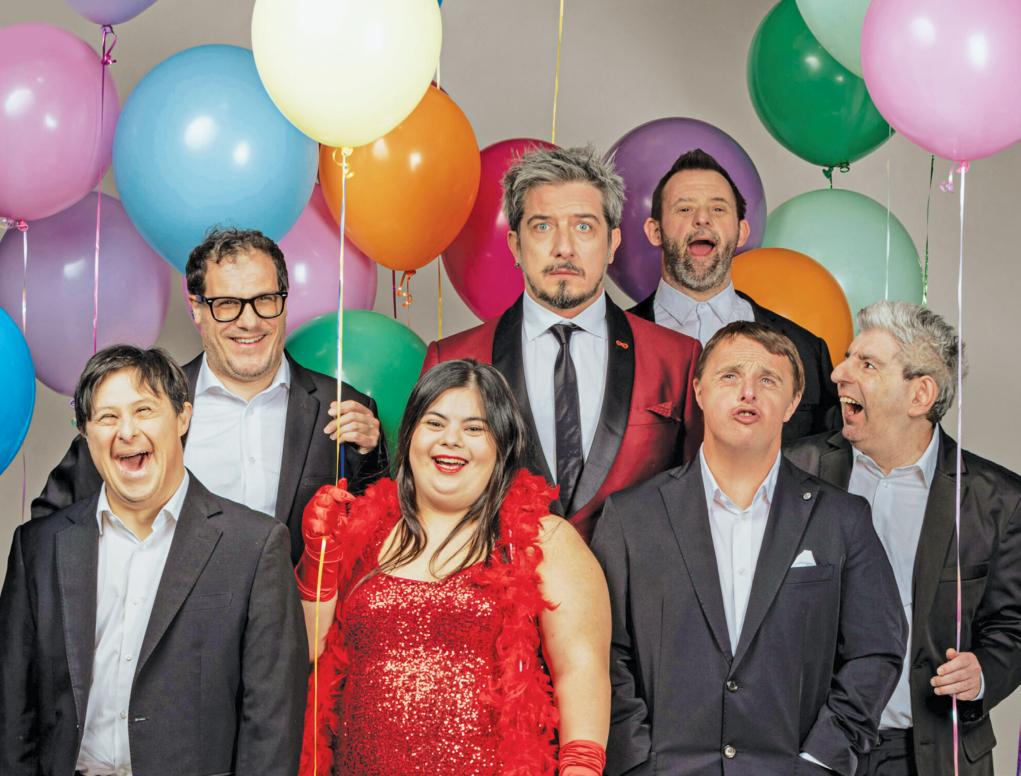
I have always been I have been fascinated by people who fascinated by people who bring something warm and warm and intentional into their work — people who don’t hide don’t hide behind roles, but use their behind use their voice and their presence voice and presence to lift others up. to lift up.
Paolo Ruffini is one of those rare people. I had always known him as an actor, a comedian, a familiar face on Italian television. But everything changed the night I saw him on stage with a company of performers with Down syndrome. In that moment, I understood something essential: Ruffini doesn’t just enter-
tain. He connects. He meets people where they are, and he makes them feel valued, welcomed, and loved. And in return, they think the world of him.
Born in Livorno, with that mix of irony and tenderness typical of people who grow up by the sea, Ru ni built a career across theatre, cinema, and television. But behind the bright lights, he cultivated something deeper: a real gift for relationships.
Today, many of these connections take shape on his YouTube channel, a kind of home where he gathers conversations, reflections, and small moments of truth that express his gentle, human way of looking at the world. He listens
with attention, he laughs with people, and he has that rare ability to make anyone — children, teenagers, elderly people, actors with disabilities — feel safe and important.
This gift became clear early, when he joined Mayor Von Frinzius, a theatre company that includes actors with special needs. Working with them shaped his way of being on stage: open, curious, a ectionate. From that experience came Up & Down, a show that brought inclusion onto the Italian stage with honesty and humour.
The documentary Up & Down – Un film normale captured this bond: real lives, real emotions, real trust. You can see how the actors look at him — with admiration, joy,
|
a ection. He gives them visibility, dignity, and something deeper: a sense of purpose. A feeling that they matter, that their talents have a place in the world.
With Il Babysitter, Ru ni created a tiny world made of spontaneous conversations with children on existential topics, turning comedy into a reflection on life, and the importance of preserving childlike innocence. He doesn’t guide them; he lets them guide him. The children love him because he listens as if their thoughts mattered — because they do. Their honesty surprises him, and his humour helps them open up and be themselves. It is a simple format, full of tenderness. The show now exists also as Il Babysitter Live — When you become little, you will understand, a playful theatrical performance where comedy, improvisation, games, and small poetic moments blend together. Ru ni brings the whole audience back to being a child for one evening, reminding everyone that joy can be a form of truth.

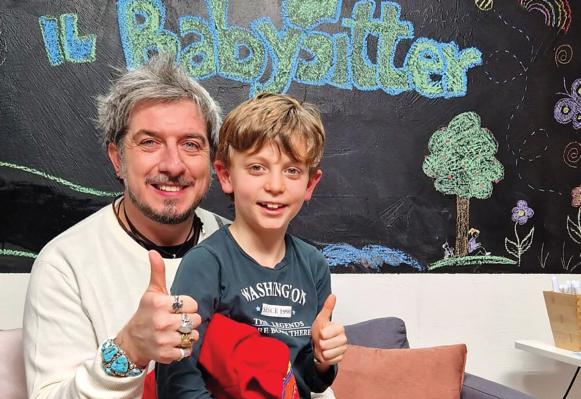
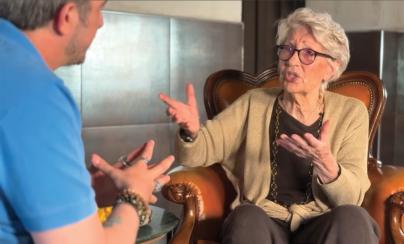
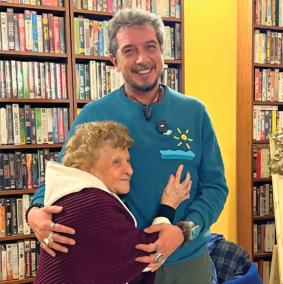
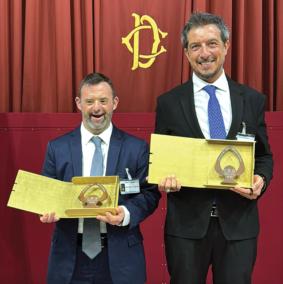
Il Badante (The Caregiver) is softer, almost intimate. Here, Ru ni meets elderly people, listens to their memories, their slow rhythm, their quiet humour. He gives them time — and they give him their stories. They feel respected, not rushed. Valued, not forgotten.
Din Don Down is Paolo Ru ni's most recent theatre project, a comedy that blends improvisation, irony, and tenderness. In the show, he engages directly with people with Down syndrome to explore themes of love, identity, faith, spirituality, and societal notions of "normalcy." By subverting expectations, Din Don Down invites the audience to laugh, reflect, and reconsider
assumptions about di erence, all while celebrating individuality. Ru ni doesn’t speak about the performers—he speaks with them. The result is joyful, authentic, and deeply moving: improvisation brings surprise, irony brings wit, and tenderness gives every moment heart.
Alongside the theatre, Ru ni co-hosts Radio Up & Down with Lorenzo Parlanti, one of the actors from the Mayor Von Frinzius company. On air, the same spirit comes alive: honest conversations, humor, and unfiltered emotion break stereotypes and reinforce the show's philosophy. Whether on stage or radio, Ru ni's work demonstrates that inclusion thrives when it is lived, shared, and celebrated—and that joy, laughter, and tenderness are the best guides along the way.
With Mamme, Paolo opens a warm corner of his world. He sits with mothers — and sometimes with mother and child — and lets them talk freely about life: the challenges, the funny moments, the parts that hurt and those that give strength.
Paolo stays with them with his usual mix of humour and tenderness, creating a space where feelings can come out naturally. Mamme is honest, intimate, and full of heart.
Across these projects — theatre, film, radio, podcast, social formats — one thing never changes: Ru ni’s way of making people feel important. Children, elderly people, actors with disabilities, mothers, young adults — everyone who meets him feels valued, respected, and loved.
He creates relationships that are real. He gives people dignity, purpose, belonging. He o ers humour, and they answer with a ection.
This is why his work feels so necessary today: because it reminds us that kindness can be creative, that inclusion can be joyful, and that seeing each other — really seeing each other — is still the most beautiful form of art.
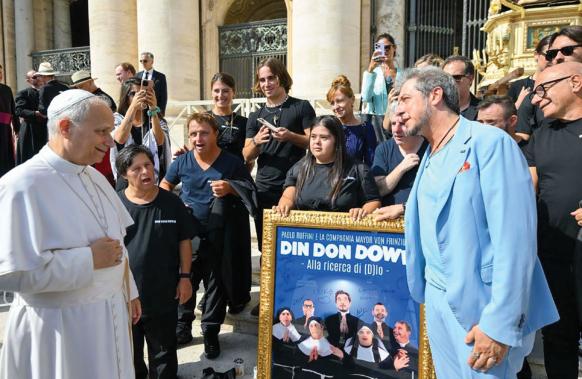
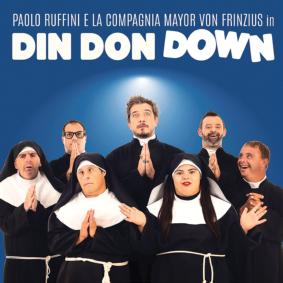

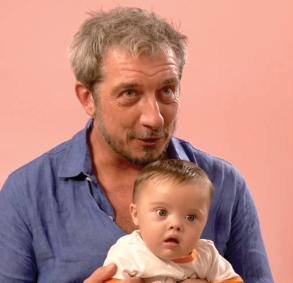

At the top Paolo Ruffini with the Din Don Down cast meeting Pope Leo XIV on September 17, 2025, during the general audience in St. Peter’s Square at the Vatican.
At center, a conversation with Valentina and Gianluigi during Mamme
At the bottom, Paolo Ruffini with his friend Lorenzo Parlanti hosts of Radio Up and Down on Radio 24.
Follow Paolo Ruffini on:
Instagram: @paolinoruffini
Youtube: @paoloruffini
X: @_PaoloRuffini
Facebook: @paolinoruffini

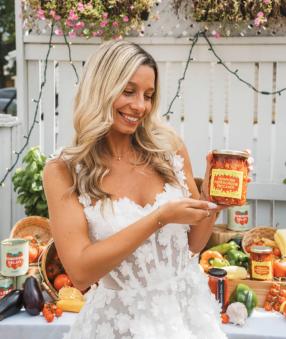
for a better day Gourmet pantry products imported from Italy, found at @terroni.to




spaccio_to
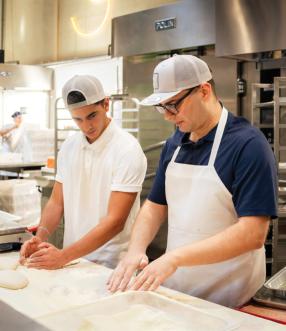
old-out pizza class with our Head Baker Luca and Sud Forno Executive Chef Giovanna
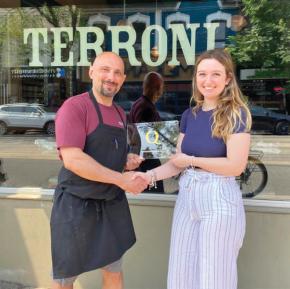
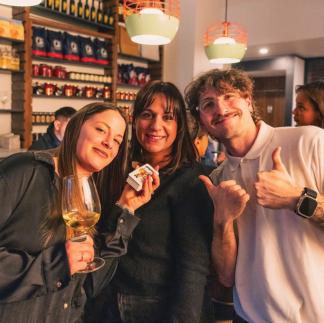
@sudforn

@italchambers Congratulations to the restaurants that received the Marchio Ospitalità Italiana during the ICCO Pentola d’Oro


terroni.to ery
va l'altra - You scratch my back and I scratch yours ✋
edding at Terroni
You can find most of the answers to this crossword in the articles in this magazine and on our Terroni menu.
3. Grape variety reviewed by Jacopo (p. 39)
6. Europe’s textile capital (p. 41)
8. Initials of Telford Basics founder (p. 18)
9. Initials of the philanthropist on page 44
10. New Stock T.C opening in Yorkville (p. 43)
11. Birthplace of Leonardo (p. 21)
12. Initials of the author of the paintings The Birth of Venus and Primavera (p. 21)
13. “... Forno”, Terroni’s bakery with 2 locations in Toronto, on Queen and on Temperance
14. Tuscany has 41 wines with a specific wine classification label (p. 35)
17. Traditional sauce used by Terroni for its Tagliatelle alla Bolognese
18. “... dei Cipressi”, the iconic road lined with over 2,500 cypress trees in Bolgheri (p. 37)
20. “Hi” and "Bye" in Italian
21. Our famous Garganelli dish
26. Initials of the most famous painting on earth, painted by Leonardo da Vinci (p. 21)
27. Apuan mountains in northern part of Tuscany (p. 26)
28. Initials of Cosimo’s older brother (p. 26)
29. Tuscan city that hosts the Palio (p. 10)
33. Andrea Bocelli’s beach club in Forte dei Marmi (p. 12)
37. Terroni’s famous funghi dish
38. Sculpture made by Stikki Peaches (p. 26)
40. “Paper” in Italian
41. Fashion event hosted twice a year at the Fortezza da Basso in Florence (p. 41)
42. Tuscany’s king wine from Montalcino (p. 36)
44. Trattoria where Jessie had Ribollita (p. 6)
46. Michelangelo’s iconic sculpture at the Galleria dell’Accademia in Florence (p. 6)
47. Capital city of Puglia and Elena's hometown
48. Tuscan city that hosts the famous Giostra del Saracino (p. 10)
49. Nonna at Le Berne Winery who prepares pici al sugo and piccione arrosto (p. 37)
51. Classic Terroni pizza topped only with tomato, garlic, basil and herbs
52. Sandro, one of Tuscany’s main artists (p. 21)
1. Name of the Alps in northern Tuscany (p. 26)
2. Initials of our chef and author of the article Cucina Toscana (p. 28)
4. Initials of Vagaggini’s interviewer (p. 39)
5. San Gimignano's wine celebrated since Dante's era (p. 38)
7. “Oil” in Italian
8. Skilled workers in Prato who sort, wash, shred and spin rags into a new beginning (p. 41)
9. Tuscan city with the leaning tower (p. 11)
10. One of Giovanna’s Tuscan recipes (p. 32)
11. “... Man”, Leonardo’s famous drawing (p. 21)
15. Name of the street where the first Terroni opened in 1992
16. Kind of bread served at our restaurants
19. First two letters of the city of one of the largest comics conventions (p. 11)
20. Tall evergreen tree iconic to the Tuscan landscape, especially in Val d’Orcia (p. 9)
22. “Pear” in Italian
23. Leon Battista, one of the Renaissance masterminds (p. 5)
24. Home of Italy’s finest marble (p. 26)
25. Tuscan winery where Jacopo Vagaggini is the enologist (p. 39)
30. Florence’s river (p. 3)
31. Material worked at Scuola del Cuoio (p. 14)
32. Alternative name for the Gnudi dish (p. 32)
34. Telford Basics program that helps customers repurchase avoiding plastic waste (p. 19)
35. Initials of the author of the article What to See in Toscana (p. 8)
36. Sud Forno’s pizza style aka romana
39. Terroni’s white pizza with gorgonzola
40. First name of Terroni’s founder (see photo)
42. “Beer” in Italian
43. “Isola d'...” the largest island of the Tuscan Archipelago (p. 12)
45. “...’s Alabastro”, artisan Marco Ricciardi’s workshop in Volterra (p. 15)
50. Initials of Divina Commedia's author (p. 20)