When Leaders Share Best Practices, Leaders Grow Together
By Michelle Fennick, PhD
As a professor preparing the next generation of school leaders, I know that one of the most powerful professional development opportunities is when leaders present their best practices to other leaders. Leadership is often described as a lonely role, but it does not have to be. When principals, assistant principals, district administrators, and professors share what has worked for them, they give colleagues a chance to learn strategies that are practical, proven, and ready to use. These presentations are not abstract theory. They are real solutions to real challenges, shared peer to peer.
I have experienced this firsthand with my own best practice, hypercalendaring. Several years ago, I began to create a system that allowed me to manage my time by layering calendars for different roles and responsibilities. By color-coding, blocking time for deep work, and synchronizing personal and professional commitments, I created a method that helped
Instructional Coaching: Past, Present, and Future
By Barbara R. Blackburn, PhD and Ronald Williamson, EdD
Gone are the days of the solitary teacher working in isolation with their own set of students. That model has been replaced by a more collaborative environment where teachers are expected to work together to improve instruction, and where that interaction provides some of the richest and most valuable professional development available.
A central feature in many schools is instructional coaching where teachers work with a coach to analyze their instructional practices and develop strategies to enhance and improve their teaching. Instructional coaching has emerged as a powerful tool. One study (Kraft & Blazar,
2018) found teachers who worked with an instructional coach displayed greater effectiveness equivalent to the difference between a novice teacher and a teacher with five to 10 years of experience.
Instructional Coaching: The Past
Where does the concept of instructional coaching come from? Although there have been sporadic, isolated instances of coaches prior to the 1980s, the work of Bruce Joyce and Beverly Showers on peer coaching in the 1980s provided the foundation of what we use as instructional coaching today. In the 1990s funding for literacy coaches through the Reading
Anita Jiles Associate Executive Director for Marketing & Communications
Trae Kendrick Chief Operating Officer
Elizabeth Kernan Membership Services Coordinator
Heather Loomis Events Services Coordinator
Belinda Neal Associate Executive Director for Instruction
Todd Nesloney Director of Culture & Strategic Leadership
Louis Silvas Web Content Specialist
Mark Terry Deputy Executive Director
TEPSA News
Published six times a year by Texas Elementary Principals and Supervisors Association. Subscription is included in TEPSA membership dues. Postage paid at Austin, Texas.
Articles may be reproduced by TEPSA members without written request, provided that duplication is for an educational purpose at a nonprofit institution; copies are available without charge; and each copy includes full citation of the source.
TEPSA 501 East 10th Street Austin, TX 78701 512-478-5268 800-252-3621 Fax: 512-478-1502 www.tepsa.org
Follow on social media @TEPSAtalk
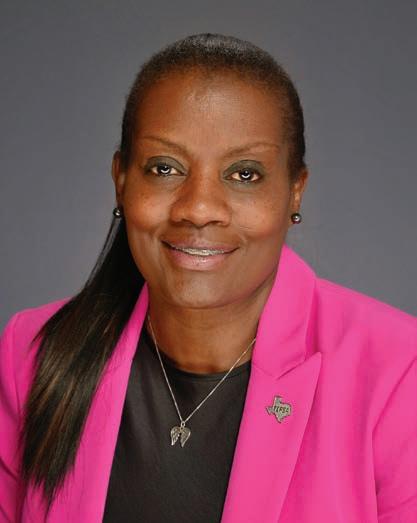
TEPSA President/Dana Harley Boyd
Hello TEPSANs and Happy New Year,
As we enter 2026, I want to begin with a simple truth: legacy doesn’t reset in January—it deepens. What we started last fall wasn’t just another school year; it was the foundation for something enduring. The habits you built, the systems you tightened, the relationships you strengthened—all of those will carry forward as your legacy’s living proof.
January invites us not to reinvent but to refocus. The first weeks after winter break are about recalibrating hearts and habits. Students return needing reassurance that our consistency remains intact, and teachers need to feel that the vision still burns bright. When they see your steadiness, they trust your leadership. When they feel your belief, they rise to it. Leadership that endures isn’t built on intensity; it’s built on intentionality.
This season, recommit to leading with clarity and compassion. Clarity aligns your teams; compassion sustains them. Whether it’s a hallway conversation, a data talk, or a family meeting, remember: your words are deposits in the legacy account you’ve been building all year. Make them count.
Mark your calendars for a moment that fuels this work: TEPSA Summer Conference member registration opens on January 14, 2026. Secure your spot early and bring a colleague. We’re designing sessions that center belonging, instructional leadership, and practical systems you can implement the very next day.
Before spring arrives, set one intentional legacy goal with your team—something that strengthens culture and lasts beyond this school year. Maybe it’s mentoring emerging leaders, reimagining family engagement, or rebuilding joy in the profession.Whatever it is, make it visible, collective, and connected to your “why.”
And finally, take care of yourself. The best leaders aren’t the busiest—they’re the most balanced. Protect your rest, feed your spirit, and remind yourself that your purpose isn’t tied to pace but to impact.
Your legacy continues—not because of a calendar, but because of your courage to keep showing up, leading with heart, and believing that every act of care shapes the future of Texas schools.
Remember our December charge: your legacy is not perfection— it’s faithfulness and courage—choosing people over performance urgency and leaving every space a little more loving and a little more excellent. Let that be the banner over January and February.
With gratitude and forward faith,
Texas Elementary Principals & Supervisors Association
When Leaders Share Best Practices, Leaders Grow Together
me stay ahead of deadlines and protect time for what mattered most. As I shared this system in conference presentations, I realized that presenting not only helped others, but it also sharpened me. Each time I prepared to explain hypercalendaring to leaders, I refined the practice, anticipated questions, and clarified the process.
improvements. While critique can be uncomfortable, it sharpens practice. It forces leaders to see their work from different perspectives and to defend or rethink their choices. This process of reflection is central to continuous improvement. Presenting accelerates that cycle by creating opportunities for leaders to test and refine their thinking in community with others.
...reflection is central to continuous improvement.
Research reinforces the value of leaders sharing practices. Wu and Lee (2021) demonstrated that ethical leadership promotes knowledge sharing by building trust and group identity. When leaders present their best practices, they model openness and cultivate a culture where colleagues are more likely to learn from one another. Moran (2001) argued that trust is essential for leadership success and for creating schools where collaboration thrives. Presentations foster trust when leaders are transparent about what has worked for them and humble enough to acknowledge what they are still learning.
Presenting accelerates that cycle by creating opportunities for leaders to test and refine their thinking in community with others.
Presenting also expands influence. After presenting on hypercalendaring at several conferences, I received followup emails from leaders who tried the system and adapted it to their schools. Some used it to manage campus walkthroughs. Others used it to balance instructional leadership with compliance demands. Hearing how colleagues applied the strategy in different contexts deepened my own understanding and pushed me to continue developing the practice.
Wiseman (2017) described leaders who act as multipliers, those who amplify the intelligence and capability of people around them. Presenting best practices is one way leaders multiply the capacity of the profession. By sharing openly, they give others tools to grow, which in turn strengthens schools and districts. Covey (2004) reminded us that effective leadership requires reflection and intentional growth. Presentations serve as a reflective practice because they require leaders to examine their own work, refine it, and place it in front of others for critique.
One of the most valuable aspects of presenting is the feedback that comes with it. Colleagues may ask challenging questions, raise concerns, or suggest
Finally, presenting creates lasting networks. Conversations often begin in breakout sessions but continue in hallways, phone calls, and emails long after the conference ends. These relationships sustain leaders when challenges arise. They also create opportunities for collaboration that strengthen schools across districts and regions.
As I guide future leaders, I encourage them to seek opportunities to present what they do well. It does not have to be a groundbreaking innovation. It might be a scheduling system, a discipline strategy, or a way of organizing parent engagement nights. Sharing one best practice can spark change for another leader. Preparing to present forces leaders to think deeply about their work, and presenting builds confidence, credibility, and connections. Most importantly, it posi-
tions leaders to receive critique that fosters reflection, making them stronger practitioners in the process.
For me, presenting on hypercalendaring continues to be a professional anchor. Each time I share it, I become more refined in my own leadership and more connected to others in the field. Leaders grow best when they learn from leaders. Presenting our best practices is one of the most powerful ways to strengthen leadership across our schools.
Dr. Michelle Fennick is an Assistant Professor of Educational Leadership and Director of Field Supervision at Lamar University. She is also the CEO of Consult Dr. Michelle, LLC. With more than 30 years of experience as a teacher, coach, principal, district administrator, and professor, she has devoted her career to shaping and supporting future leaders. Dr. Fennick specializes
in leadership development, time management, and empowering women in educational leadership. Her innovative practice of hypercalendaring has been shared at conferences across Texas and nationally, equipping leaders with practical tools to balance their responsibilities while prioritizing what matters most.
References
Covey, S. R. (2004). The 7 Habits of Highly Effective People: Powerful Lessons in Personal Change (Rev. ed.). Free Press. Moran, B. A. (2001). Trust matters: Leadership for successful schools. Jossey-Bass. Wiseman, L. (2017). Multipliers: How the best leaders make everyone smarter (Rev. and updated ed.). Harper Business. Wu, W. L., & Lee, P. C. (2021). How ethical leadership promotes knowledge sharing: The mediating effect of group identification and relational identity. Frontiers in Psychology, 12, 727903. https://doi.org/10.3389/fpsyg.2021.727903
Where's the best place for Texas PK-8 school leaders to share best practices? The TEPSA Summer Conference, of course! See page 6 or visit tepsa.org to join us for three days of dynamic learning, June 9-11 in Round Rock.
I attend the TEPSA Summer Conference because the connections and knowledge I gain directly impact and grow my ability to lead within my building and community. – Amy, Principal
JUNE 9-11, 2026 | ROUND ROCK KALAHARI
The TEPSA Summer Conference is the event of the year for Texas PK-8 school leaders seeking to drive positive change communities.
Whether you’re an aspiring, early career, or seasoned pro, you'll discover a supportive community that understands your challenges and celebrates collaboration and growth. Featuring keynotes by Ron Clark, Jessica Cabeen and Salome Thomas-EL.
LeadWell: The PreCon Experience
June 9 | Limited seats available
Upgrade your conference registration to include our new immersive pre-conference experience where leadership meets growth, wellness, and community. From energizing speakers and exclusive resources to premium swag, maximize your learning and thrive in your role! Learn more at tepsa.org.
Expert-led sessions on trending topics in education
Outstanding opportunities to make meaningful connections and exchange ideas with peers
Vibrant exhibit hall showcasing the newest educational services
Member registration opens January 14. Nonmember registrations opens January 15.
Conference:
Member $599/Nonmember $899
Conference + LeadWell: Member $848/ Nonmember $1198
Brushstrokes of Brilliance: Leading Change and Innovation in Schools
Leading and managing change is one of the most challenging—and rewarding—aspects of school leadership. Ten years ago, I had the extraordinary opportunity to open a public school of choice in Arlington, Texas: Jones Academy of Fine Arts and Dual Language. The previous building had been low-performing and overcrowded, and the community was eager for innovative opportunities at the elementary level in North Arlington. With a new name, mascot, renovated building, curriculum, and vision, we set out to create a school where learning came alive—a place where creativity, language, culture, and the arts were woven into every child’s experience.
From the start, our work was guided by questions beyond “How the heck are we going to do all this?” We asked: What will this look like for our students? What systems and supports do we need to help teachers integrate creativity, language, culture, and the arts into daily instruction while maintaining high academic standards? As our practices evolved, another critical question emerged: How can professional learning, planning structures, and collaborative practices align with our school’s vision? These guiding questions shaped our decisions, strengthened our culture, and reinforced a commitment to purposeful, student-centered innovation. Below are some leadership lessons I’ve learned along the way, along with other tips for school leaders.
1. Identify the Why – Inspire Purpose and Possibility
Change begins with clarity of purpose. Launching Jones Academy meant articulating a bold vision and helping staff and families see what was possible. Our
mission went beyond offering choice; it was about cultivating an environment where creativity, culture, and the arts enhance academic achievement. Purpose fuels persistence, sparks innovation, and inspires teachers and students alike.
2. Embrace Flexibility and Adjustments
Transformation is rarely linear. And it can be messy, especially when building a master schedule that includes piano, general music, two visual arts classes, dance, theater, and a dual language model. Early on, we realized our original two-way dual language model didn’t meet the needs of our students, who were not evenly split between Spanish and English speakers. We transitioned to a dual language immersion model, added a targeted Spanish conversation class, provided scaffolding strategies, and offered intensive teacher training. We eliminated a Chinese class, moved sixth grade to junior high, and continuously refined arts integration to meet instructional goals. Flexibility ensures vision aligns with reality and turns adaptation into a tool for success rather than a setback.
3. Empower Teachers to Take Risks
Innovation thrives when teachers are encouraged to experiment and collaborate. At Jones, we embraced stepping outside comfort zones and “failing forward.” Co-teaching and inclusive practices were extended into the fine arts, so general education teachers now accompany students to fine arts classes at least once a week. Pairing teachers who
Guest column continued from page 7
might not naturally work together fostered collaboration, cross-disciplinary learning, and richer student experiences. Leadership is about driving out fear and fostering safe spaces where experimentation and growth can thrive.
4. Prioritize Professional Learning and Planning
Intentional lesson planning is crucial, especially when instructional minutes are limited. We structured time for teacher collaboration—not only for content planning, but also for language, arts, and cultural integration—while addressing students’ unique learning needs. Professional development was designed to support instructional innovation, reinforce our vision, and celebrate student growth.
5. Tell Your Story – People and Purpose Matter
Effective change requires intentional communication. Sharing successes with parents, staff, and the community, leveraging social media, and maintaining a strong hiring mindset aligned with our vision strengthened school culture. Celebrating achievements—both big and small—reinforces commitment and highlights the human impact of educational transformation. Even setbacks are important: if you don’t tell your story, someone else will.
Leading a school through 10 years of transformation has been a journey of reflection, collaboration, and continuous learning. By aligning purpose, systems, and people, schools can create environments where creativity, culture, and academics flourish side by side. Change is never easy, but with vision, flexibility, and empowered educators, meaningful transformation is possible—and every classroom can become a brushstroke of brilliance.
Katiuska Herrador leads the Jones Academy of Fine Arts and Dual Language in Arlington, Texas, where she guided the school’s transformation and opening in 2015. She has completed leadership programs at the Harvard Graduate School of Education, the Holdsworth Center, the NAESP Leadership Immersion Institute and the Cahn Distinguished Principals Fellowship program. An active TEPSA member for 15 years, Katiuska has served as Region 11 President, Region 10 officer, and on the state Advocacy Standing Committee. She has presented at multiple state conferences and is passionate about multilingual education, arts integration, leadership development and bringing fun to school!
Tricky Communication Issues for You and Your Staff
Communication with Parents
Keeping parents reasonably informed is key. Expectations for students and parents are best defined at the beginning of the school year when each teacher should clearly communicate in writing the rules for success in the class. At the elementary level, each teacher should document the classroom rules and expectations were communicated to parents, including information on how teacher-parent communications will work (e.g., school phone, school email, backpack notes, etc.). If a problem arises during the year, the expectations will become the framework for the conversation. If rules were not communicated to parents or students, school officials will be on their heels when disputes arise.
Your staff must let parents promptly know when their child is underperforming, missing work or has behavior issues. Failing to promptly let parents know when something significant happens to their child will set some parents on a march to central office with complaints about you and your staff.
Use Only School Platforms for Student and Parent Communications
Although proper communication attempts were made, there will be a parent who claims to have never been told about the classroom rules and expectations; never been told the child was missing work; only now
hearing that the child is under performing, etc. The wise teacher/administrator only communicates with parents on the school-approved platforms. This does three important things:
1. It makes the communications easy to retrieve when a dispute arises;
2. It psychologically mitigates against the expectation you and your staff are available 24/7; and
3. It reduces the appearance of improper communications between staff and parents/ students on private phones.
More About Not Being Available 24/7
You and your staff have a right to refuse to give out your personal cell phone numbers to parents and students, and you should refuse.1 Once parents become comfortable reaching school staff on personal cell phones, professional boundaries erode. You should inform parents at the beginning of the year they are expected to contact school staff through school email, campus phones, or other school-approved platforms, and not to expect a reply after school hours. On the other side of the coin, you should inform your staff of their right not to disclose their private phone numbers. You should empower your staff to only contact parents though school platforms and only during school hours, absent extenuating circumstances. You and your staff work enough beyond the school day. Regular parent
communications should not be a part of this. This will boost morale if your staff knows you have their backs.
Disciplinary Communications
Each Texas school campus must have a campus behavior coordinator (CBC), who is primarily responsible for maintaining discipline.2 The CBC can be the principal or another administrator designated by the principal. The name, email address, and phone number of the CBC must be posted on the district’s website.3 The CBC shall:
1. Promptly notify the parent/guardian by telephone and by written notice to the student (for delivery to the parent/guardian) on the day the action is taken, when the student is placed into in-school suspension (ISS), out-of-school suspension (OSS), DAEP, JJAEP, is expelled, or is taken into custody by law enforcement.
2. If the parent/guardian has not been reached by phone by 5 p.m., written notice shall be mailed to the parent/guardian on the next business day.
3. If the campus behavior coordinator is not available to provide these notices, the principal shall do it.
Staff-to-Staff Communications Should Also Be on SchoolApproved Platforms
For efficiency and expediency, principals, APs and teachers routinely use their private cell phones to talk to each other about business before, during, and after school hours so this may be an unrealistic wish. But like parent communications, you should strive to communicate with other staffers only on school platforms when conversing about school business. There is at least one very good reason why you should not discuss school business with fellow staffers on your private cell phone. Stay with me.
Your Texts About School Business on Your Private Phone May Be Public Information
We learned years ago that formal school communications (e.g., memos, documentation, disciplinary reports, evaluations, school emails, etc.) might be disclosable as open records to the public or to relevant parties under the Texas Public Information Act. We know a teacher is entitled to see your documentation and your emails to human resources. We know a parent is entitled to see the child’s grades and all the formal emails and memos shared between educators. Those written communications are professional and usually
squeaky clean. If an angry parent obtained one of these and sent it to the news, you could defend it. This may not be the case with your texts sent on the fly. Those are quick, easy to create and send, and they often contain unvarnished opinions and maybe some snark. Sometimes they are sent after hours between you and your assistant or between two teachers, on private phones, private ISPs, on private time. So, these texts can’t possibly be subject to the Texas Public Information Act, right? Not so fast. If your texts contain school business, there is an argument they are disclosable to the public or to relevant parties. There are also complicated records retention issues which arise if you have school business on your private phone. It is definitely less expeditious, but it is the best practice to limit all your professional communications to school-approved platforms where they can be properly retrieved, retained, and most importantly, where they will instill the aura of professionalism associated with more formal communication modes. In conclusion, follow the Grandmother Rule: Don’t send it if you would be embarrassed to show it to your grandmother.
Kevin Lungwitz practices law in Austin and is a former Chair of the School Law Section of the State Bar of Texas.
Endnotes
1Tex. Educ. Code Sec. 38.027. See policy DH. 2Tex. Educ. Code Sec. 37.0012. See policy FO (Legal) 3Tex. Educ. Code Sec. 26.015
Note: Information from Legal Ease is believed to be correct upon publication but is not warranted and should not be considered legal advice. Please contact TEPSA or your school district attorney before taking any legal action as specific facts or circumstances may cause a different legal outcome.
need…
Instructional Coaching: Past, Present, and Future continued from page 1
Excellence Act broadened interest in coaching. The No Child Left Behind Act (2001) expanded the use of coaching, especially literacy coaching when paired with programs such as Success for All and America’s Choice. Through the 1990s and 2000s, coaching spread to other content areas, especially math and science. Many districts also hired general instructional coaches who worked with multiple subject areas. No matter the subject, the focus was generally on improving student learning through improving teacher practice.
If you need…
Instructional Coaching: The Present
Four Models of Coaching
Technical Coaching
Problem-Solving Coaching
coaching teachers should simply provide feedback rather than morphing into supervision.
Reflective Practice Coaching
Peer Coaching
(Hasbrouck & Michel, 2022)
There are other variations in schools, but these four provide the framework for instructional coaching. How do you know what to use? Consider your teachers and your students, and then choose based on what best meets your needs. See table 1 below.
Choose…
Instructional Coaching: The Future
Individual help for a teacher with an issue. Problem-Solving Coaching
Assistance with teachers’ processing instructional decisions. Reflective Coaching
Now, instructional coaching is a core part of many schools. It has become particularly important with the number of new, substitute, and non-traditional teachers, the increasing social-emotional needs of students, and the continuing academic gaps since COVID.
Implementation of new program.
Technical Coaching Ways for teachers to work together to improve instruction.
Peer Coaching
In the future, schools will likely change in ways we cannot anticipate. The growth of AI, political pressures, changing societal needs, and evolving needs of teachers and students will all impact the future design of instructional coaching. Although we cannot describe what the perfect coaching role will look like in 20 years, there are some skills we believe will be needed by successful coaches.
Let’s look at four common models of coaching.
Four Models of Coaching
Technical Coaching
Problem-Solving Coaching
Reflective Practice Coaching
Peer Coaching
(Hasbrouck & Michel, 2022)
Choose…
Four Key Skills
• Work one-on-one but also have big picture and systematic thinking
• Tech-literacy including AI
• Adaptability and flexibility
• Resilient Guidelines for Using AI
• Use AI as a starting point, not the end.
Four Models of Coaching
Individual help for a teacher with an issue. Problem-Solving Coaching
Assistance with teachers’ processing instructional decisions.
Implementation of new program.
Reflective Coaching
In technical coaching, the coaching process occurs when teachers are implementing a specific plan or program. Coaching activities are focused on how teachers can best utilize the program. Problem-solving coaching focuses on a specific concern that a teacher identified, such as instructional pacing. With reflective coaching, the emphasis shifts to facilitating teachers’ thought processing and decision making. One of the most popular models for this is Cognitive Coaching by Arthur L. Costa and Robert J. Garmston (2015). Peer coaching, a popular choice, was pioneered by Joyce and Showers (2002). They cautioned that during peer
First, although working with teachers one-on-one will remain an important part of the coach’s role, it will be critical for coaches to integrate their work into the big picture of the school and district. Systematic thinking or seeing how all parts of the overall system work together is part of seeing the big picture.
Technical Coaching
• Always review information from AI AI makes mistakes.
• Give credit when you use information.
Problem-Solving Coaching
Technical Coaching for teachers to work together to improve instruction.
Reflective Practice Coaching
• Have a clear policy of ethical use, both for teachers and students.
Table 1
Four Key Skills
If you need…
Peer Coaching
Peer Coaching
(Hasbrouck & Michel, 2022)
Frequently, instructional coaching is implemented with a focus on one specific need like improved reading instruction. Often what occurs is the instructional strategies useful in reading may prove adaptable and useful in other content areas as well. A systemic approach recognizes that effective instruction is not limited. It also recognizes that teachers will have varied
Choose…
Individual help for a teacher with an issue. Problem-Solving Coaching
• Work one-on-one but also have big picture and systematic thinking
• Tech-literacy including AI
Assistance with teachers’ processing instructional decisions.
• Adaptability and flexibility
• Resilient Guidelines for Using AI
Implementation of new program.
Reflective Coaching
Technical Coaching Ways for teachers to work together to improve instruction.
Peer Coaching
• Use AI as a starting point, not the end.
Assistance with teachers’ processing instructional decisions.
Implementation of new program.
Technical Coaching for teachers to work together to improve instruction.
Peer Coaching
needs and thus, the focus will be different for each teacher working with an instructional coach.
Next, coaches must not only use technology but utilize it in ways that enhances their work. This includes artificial intelligence. While AI is continually emerging technology, coaches will need to find effective, ethical ways to use AI to help teachers improve their practice. This might include helping teachers understand that simply pulling lesson plans from AI isn’t best practice. However, helping teachers use AI to generate starting points for lesson planning, while retaining human control by adapting the lessons to best meet students’ needs, is a strong alternative.
Four Key Skills
• Work one-on-one but also have big picture and systematic thinking
• Tech-literacy including AI
• Adaptability and flexibility
• Resilient Guidelines for Using AI
• Use AI as a starting point, not the end.
• Always review information from AI AI makes mistakes.
• Give credit when you use information.
• Have a clear policy of ethical use, both for teachers and students.
Third, coaches must be adaptable and flexible. Education and our knowledge of effective instruction continues to evolve, and instructional coaching must adapt as well. We spoke with one coach whose role has shifted in the last few years. Her school hired several new teachers under emergency certification—teachers not trained in a traditional way. Her coaching knowledge and methods assumed teachers had a base level of knowledge, something which was not true with these new teachers. In what she called “the biggest challenge of my life,” she had to revise her view of teacher preparation to appropriately support her new teachers. Adaptability and flexibility were critical.
Finally, coaches for the future will need to be resilient. They will need to face a myriad of challenges we are unable to anticipate, find ways to address those challenges, and bounce back after any setbacks. The coach we described in the previous section is a testament to resilience. Before she learned to adapt, she faced multiple obstacles: her own viewpoint of teacher preparation, the lack of background knowledge of the emergency teachers, and the different perspective of new teachers. An example demonstrates the importance of resilience. One of her teachers was resistant to small group instruction. The coach explained the importance of groups and helped him develop lesson plans that incorporated groups. The teacher continued to oppose
the idea. Barbara was visiting the school, and met with the teacher. She discovered that, as a former manager in a textile mill, he was used to telling groups what to do. That direct approach didn’t work well with middle school students. He was nervous that if he incorporated small groups he would lose control of his classroom and administrators would think he was a bad teacher. Once I shared this information with the coach, she modified her approach—providing extra help to monitor the groups until he became comfortable with the approach. The coach felt like a failure, but when he thanked her for her help, she realized the need to always adapt and be flexible in her coaching. Resiliency is critical for future success.
A Final Note
Instructional coaching is a proven tool for improving teaching and student learning. As the needs of students and teachers change, the role of instructional coach needs to change. Effective coaches recognize the need to be flexible and adapt their work to specific teachers rather than embrace a “one size fits all” approach. Aligning the approach with the need is critical to success.
Dr. Barbara R. Blackburn, a Top 10 Global Guru, is a best-selling author of more than 30 books, including the bestseller Rigor is NOT a Four-Letter Word, Rigor for Students with Special Needs, Rigor in Your School; 7 Strategies for Improving Your School, and Improving Teacher Morale and Motivation. Learn more at www.barbarablackburnonline.com.
References
Dr. Ronald Williamson is Professor Emeritus of Educational Leadership at Eastern Michigan University. He is a former principal, central office administrator and Executive Director of National Middle School Association (now AMLE).
Costa, A. & Garmston, R. (2002). Cognitive Coaching: A Foundation for Renaissance Schools. New York: Rowan & Littlefield. Hasbrouck, J. & Michel, D. (2022). Student-focused coaching. Baltimore, MD: Paul H. Brookes Publishing. Kraft, M & Blazar, D. (2018). Taking teacher coaching to scale. Education Next, 18(4). Retrieved online July 5, 2025 at https:// www.educationnext.org/taking-teacher-coaching-to-scale-canpersonalized-training-become-standard-practice/ Joyce, B. & Showers, B. (2002). Designing training and peer coaching. Alexandria, VA; ASCD.
Midyear Momentum: Hitting Your Stride Through the Final Stretch
Midyear is when principals start fine-tuning their focus, much like the rest of us reassessing those ambitious New Year’s resolutions. (Gym memberships, anyone?) For principal supervisors, this is the time to celebrate what is working and help leaders zero in on what matters most. Here are a few practical ways to help principals refocus their energy and strengthen instructional work in the months ahead.
Recalibrate Instructional Leadership
Educational researcher Richard Elmore reminds us that “the core work of school leaders is to improve instruction, and everything else is secondary.” By January, principals have five months of data and classroom observations to reflect on. It is a perfect time to help them recalibrate their instructional focus and avoid distractions that pull them away from what matters most.
When everything feels urgent, nothing gets the attention it deserves. Meet with each principal and identify one or two clear instructional priorities for the next 6–8 weeks. Whether the focus is early literacy intervention or improving student discourse, commit coaching time to a single priority that drives impact. Break the work into small, actionable steps, model how to give targeted feedback, and celebrate small wins. Check in regularly to assess progress and adjust
as needed. This keeps both coaching and leadership intentional, ensuring energy is spent where it matters most. I have found the See it, Name it, and Do it model by Bambrick Santoyo to be beneficial when coaching principals on specific action steps.
Turn Data Meetings into Action Plans
By early winter, benchmark data is in, and principals know which students need intervention. But data alone does not drive improvement—structured, meaningful conversations do. You can make a real difference by sitting in at a principal’s data meeting and helping them facilitate productive discussions.
Use a protocol such as Atlas to guide teams through describing what they see, exploring causes, and identifying concrete next steps. If needed, model how to help teams find root causes and craft two to three specific, measurable actions. Then specific monitoring tools should be in place to evaluate progress and drive adjustments. Principals who lead structured data conversations turn teachers from passive consumers of data into active problem-solvers invested in every student’s growth.
Build Mentorship into Your Support System
Not all support must come from supervisors. One of our greatest resources is expert principals who
are currently navigating the challenges others face. Identify strong leaders who can serve as mentors and set clear expectations, such as two meetings per month with guided protocols focused on topics such as instructional leadership, personnel decisions, or strategic planning.
Consider offering mentor training so experienced leaders can refine their coaching skills, especially around listening deeply and asking powerful questions. This builds leadership capacity districtwide, creates sustainable support systems, and reinforces a culture where leaders grow leaders.
The Opportunity Ahead
Midyear offers a chance to pause, refocus, and provide principals with the support that truly matters. Clarifying instructional priorities, using data effectively, and fostering peer connections can make all the difference. When we model authentic leadership and offer both guidance and grace, we create space for
principals to lead with confidence. Investing in these supports now turns the midyear stretch from a grind into meaningful momentum that carries schools to a strong finish.
Dr. Sandy Conklin currently serves as an Area Executive Director for Campus Leadership in Goose Creek CISD. A proud TEPSA member with 28 years of experience in education, he has served as a teacher and principal and was recognized as an H-E-B Excellence in Education Elementary Principal of the Year in 2016. Dr. Conklin is passionate about supporting and developing strong, reflective school leaders who make a lasting impact on students and communities. “For me, leadership has always been about helping others grow into their own potential and watching them become the successful leaders our schools need.”
leadership series principal
Purpose – reconnect to your “why” and guide your campus with vision
People – build capacity, collaboration, and confidence among your teachers
Processes – strengthen routines that support learning and student growth
Join a community of principals across Texas who use our month-by-month roadmap to make every moment count!
Ask us how to get your teachers and students ready for STAAR success!
Lead from the Heart/Todd Nesloney and Ross Braun
3 Ways Principals Can Keep the Focus
on
What Matters Most During Difficult Seasons
Every principal knows there are stretches of the school year that feel heavier than others. Maybe it’s testing season, the discipline referrals seem endless, or everyone, including you, just feels drained. Those moments can make it easy to lose sight of what truly matters.
If we’re not careful, we start reacting instead of leading. We move from conversation to conversation, task to task, and by the end of the day, we’re left wondering if we even made a difference. But the truth is, you still are. You just need some intentional reminders to stay centered when things get tough.
Here are three ways to help you (and your team) keep the focus on what matters most:
1. Return to What Grounds You
When things feel chaotic, go back to the practices and people that steady you.
• Step into a classroom and watch a student light up when they finally “get it.”
• Spend a few minutes laughing with your front office staff.
• Walk the halls during dismissal and remind yourself: this is why I’m here
You don’t need to chase motivation; you just need to reconnect with the heart of your work. Those grounding moments remind you that impact doesn’t always look flashy; sometimes it looks like consistency, kindness, and presence.
�� Think On It: What moments during the day remind me that the work still matters?
2. Celebrate the Ordinary Wins
When the pace is fast, it’s easy to overlook progress that doesn’t make headlines. But celebration fuels perseverance.
• Start staff meetings with “one thing worth celebrating.”
• Highlight a student who showed resilience, not just achievement.
• Send a message to a teacher who’s been quietly holding things together.
The ordinary wins, and not the big wins shared on social media, are often the ones shaping your culture the most.
��Think On It: How can I shine a light on the good that’s already happening around me?
3. Stay Present with Your Staff
When the stress piles up, it’s tempting to hide behind your office door and just “get through” the day. But leadership isn’t about surviving…it’s about showing up.
Check in on your team, not because it’s on your calendar, but because connection is the heartbeat of your school. A quick word in the hallway, a note on a desk, or simply showing up at lunch duty with a smile communicates, I see you.
You don’t have to fix every problem to make an impact. Sometimes your calm presence is the very thing holding others steady.
�� Think On It: Who on my team might need to borrow my calm today?
The hardest seasons of leadership don’t define you; they refine you. Keep leading with steadiness, not
speed. Keep noticing the good. Keep showing up for your staff. Because even when it’s hard to see it, the work you’re doing is changing lives.
Todd Nesloney is TEPSA’s Director of Culture and Strategic Leadership. He is an award-winning educator, author and international speaker.
Ross Braun is a former elementary principal who is passionate about supporting schools and leaders to ensure every child has a safe, loving and engaging learning environment. Ross is now the VP of Positive Education at Spring, Texas-based, School Life.
Give your librarians the connections and support they need to elevate their professional growth and to strengthen library programs for students across Texas.
Inspiring Insights from Expert Guests
Educators from Texas and beyond have shared a wealth of practical tips on the TEPSA Talk podcast. In the episode, "Building Connections: The Role of Discipline," Andre Deshotel, a campus administrator from Louisiana, emphasized the importance of supporting teachers by acknowledging the emotional strain that comes from managing challenging behaviors. He described how teachers on his campus use "strategic retreat" to model emotional regulation and foster a respectful classroom environment. Deshotel also shared how intentionally incorporating time during the school day for both students and teachers to "reset" has positively influenced their school culture.
From strategies for supporting teachers like the ones shared by Deshotel, to integrating literacy and AI, to finding joy in leadership, and more, our expert guests have provided actionable insights on a variety of compelling topics. Visit https://bit.ly/3MyAX4T or scan the QR code to tune in to episodes on Spotify, Apple and YouTube.
Members Approve Bylaws
Revisions
TEPSA members approved the proposed bylaws revisions for each of the 20 TEPSA regions. Thank you to all who reviewed the changes and participated in the voting process! The revised Region Bylaws will go into effect for 2026-2027. Planning details will be shared with the current Region Officers to ensure a smooth transition to the new region governance model.
Grow Your Impact: Volunteer with TEPSA
The beginning of a new year is an excellent opportunity to get involved with our association! Whether you have a creative idea to present or a deep passion for serving your local community by joining your regional board, TEPSA offers a variety of opportunities for you to shine and elevate your leadership skills. Scan the QR code or visit tepsa. org to explore volunteer opportunities and make this the year you become more involved with our #WeLeadTX community.
501 East 10th St
Austin, TX 78701
800-252-3621
www.tepsa.org
U.S. Postage PAID Austin, TX
Permit No. 127
The TEPSA Summer Conference is June 9-11. Member registration opens January 14!
TEPSA Highlights
Scan the QR code to learn more.
Calendar/Deadlines
Applications for the NAESP National Distinguished Principal for Texas award are due January 23.
TEPSA Summer Conference dates:
• Share your best ideas with peers! Submit a topic session proposal by January 12.
• Member registration opens January 14 at 8:30am (CST).
• Nonmember registration opens January 15 at 8:30am (CST).
• See you for three days of dynamic learning, June 9-11 at the Round Rock Kalahari.
Connect with local school leaders in your area at a TEPSA Region Meetup this spring.
Discover leadership tips and insights on the TEPSA Talk podcast available on Spotify, Apple and YouTube.
Boost Teacher Morale: Three Key Findings from Teacher Survey
The 2025 annual survey of teachers by Education Week revealed several critical areas where school leaders can enhance their efforts to boost teacher morale. To ensure your teachers feel valued and supported, consider if there is anything you can do to improve how you:
1. Support teachers with student discipline issues.
2. Advocate for teachers’ needs.
3. Communicate with teachers.
Explore more insights in Education Week's "The State of Teaching" at https:// www.edweek.org/state-of-teaching/.
Source: Kurtz, H. (2025, March 4). "Teachers Say These 5 Factors Could Boost Their Morale." Education Week: The State of Teaching. https://www.edweek.org/state-of-teaching/teachinglearning/teachers-say-these-5-factors-could-boost-their-morale/2025/03
Top 3 improvements school leaders can make to boost teacher morale
1
Enhance support for student discipline issues
2
Increase advocacy for teachers' needs
3
Improve communication with teachers
Source: Kurtz, H. (2025, March 4). “Teachers Say These 5 Factors Could Boost Their Morale.” Education Week. https://www.edweek.org/state-of-teaching/teachinglearning/teachers-say-these-5-factors-could-boost-their-morale/2025/03