
Name:
Class:
School:

Academic Authors: Sneha Sharma, Chandni Bhargava, Bhawna Bisht
Design & Production: Amisha Gupta, Bhavna Tripathi, Satish, Mangal Singh Rana, Vishesh Agarwal
Project Lead: Sneha Sharma
VP, Learning: Abhishek Bhatnagar
All products and brand names used in this book are trademarks, registered trademarks or trade names of their respective owners.
© Uolo EdTech Private Limited
First edition 2025
Second edition 2026
This book is sold subject to the condition that it shall not by way of trade or otherwise, be lent, resold, hired out, or otherwise circulated without the publisher’s prior written consent in any form of binding or cover other than that in which it is published and without a similar condition including this condition being imposed on the subsequent purchaser and without limiting the rights under copyright reserved above, no part of this publication may be reproduced, stored in or introduced into a retrieval system, or transmitted in any form or by any means, electronic, mechanical, photocopying, recording or otherwise, without the prior written permission of both the copyright owner and the above-mentioned publisher of this book.
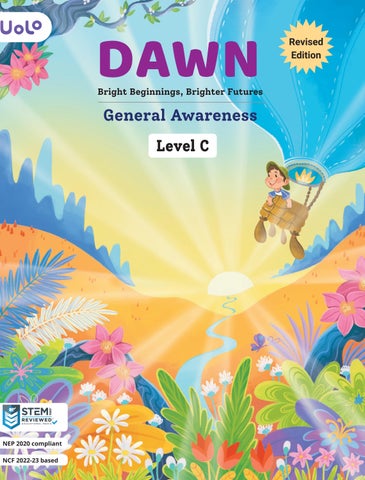
Book Title: Dawn General Awareness Level C
ISBN: 978-93-49697-48-5
Published by Uolo EdTech Private Limited
Corporate Office Address:
91Springboard, 3rd Floor
145, Sector 44, Gurugram, Haryana 122003
CIN: U74999DL2017PTC322986
Printed by: Printpro Solutions
Illustrations and images: www.shutterstock.com, www.stock.adobe.com and www.freepik.com
All suggested use of the internet should be under adult supervision.
elcome to DAWN, our comprehensive series for Early Childhood Education, meticulously crafted to align with the guidelines of the Foundational Stage as outlined in the National Education Policy (NEP) 2020 and the National Curriculum Framework for the Foundational Stage (NCF-FS) 2022.
DAWN offers a rich blend of interactive and activity-based content to support each child’s physical, emotional, intellectual and spiritual growth. Our approach ensures that learning is enjoyable and meaningful, and caters to every child’s interests and abilities.
Inspired by the Panchakosha Framework, DAWN offers a thoughtfully curated curriculum designed to nurture each child’s physical, emotional, intellectual and spiritual growth, and create engaging and meaningful learning experiences for all children and cultivate a lifelong love for learning.
1. Physical Development
Through movement-based activities, action rhymes, gross and fine motor skill, exercises, yoga and simple meditation practices, children enhance their coordination, balance and self-regulation.
2. Social and Emotional Growth
Discussions, role-plays, games, storytelling and collaborative activities encourage empathy, cooperation, self-expression and social awareness.
3. Intellectual Growth
A structured, age-appropriate progression from concrete to abstract concepts builds strong problem-solving, logical thinking and cognitive skills.
4. Spiritual and Moral Development
Stories, rhymes and reflective discussions teach values such as kindness and honesty. Yoga and meditation help children stay calm, focused and happy.
5. Sensory and Experiential Learning
Activities in art and craft, STEM-based explorations, interactive games and fun activities ensure hands-on engagement, creativity and imaginative thinking.
The DAWN curriculum is not merely a series of lessons, but a journey of discovery, growth and joy. The package comes with digital content, provided free of cost, to ensure a seamless and holistic learning experience for children. By providing a nurturing and stimulating environment, DAWN lays the foundation for future success—preparing children not just for school, but for life.

Thank you for embarking on this educational journey with us. Together, we can make the DAWN of early childhood education a bright and promising start for every child.


The table below helps us understand how the Panchakosha elements have been incorporated into the DAWN Curriculum:


The National Education Policy (NEP) 2020 represents a transformative shift in the country’s education system. It aims to establish a more holistic, dynamic and multidisciplinary approach to learning. NEP 2020 emphasises the development of conceptual understanding, skills, values and competencies aligned with the demands of the 21st century, while also honouring India’s rich cultural heritage.
UOLO is fully committed to realising the vision of NEP 2020 by meticulously following its recommendations. Below is the list of icons that are spread across the books to showcase DAWN’s adherance to the values rooted in the NEP and NCF.

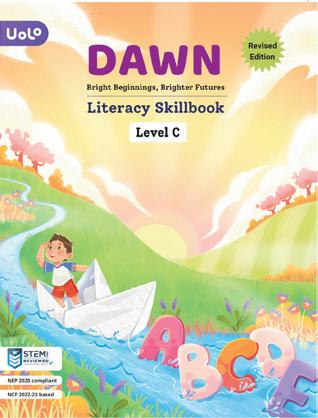
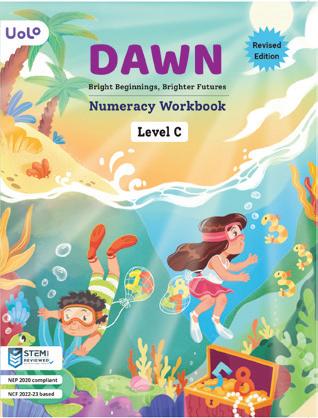
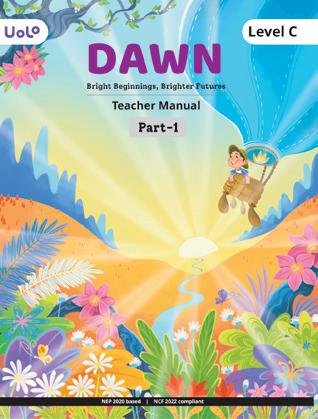
DAWN is an activity-based learning programme covering all areas of Early Childhood Education. It includes textbooks in English, Maths, General Awareness, STEM, Art and Craft, Phonic and Rhymes & Stories, along with lesson plans and resources to support teachers. Digital tools like animated videos, phonics songs and interactive exercises further enrich classroom learning.


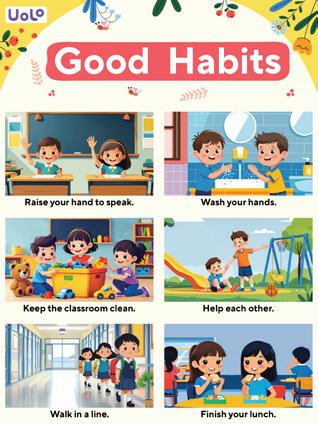

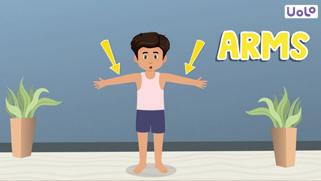




Young children are introduced to the world around them through familiar and meaningful themes such as Myself, My Family, My Friends, My Body, Seasons, Plants, Animals, Community Helpers, Vehicles, Gadgets, Good and Bad touch, Celebrations, My computer and many more.
Let’s Talk provides regular opportunities for children to listen, retell, ask questions and express ideas confidently. Teacher Tip offers helpful guidance to build real-life connections and enhance concept delivery.
Encourage children to talk about what they like doing at school.
How can we be kind to the people who help us in our daily life?


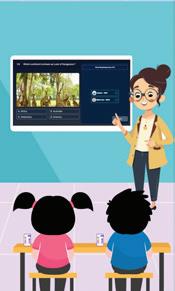
Digitally powered and application based After each concept, the fun begins with the Let’s Do It section—packed with simple and exciting activities to help children recall what they have learned. Plus, they can scan the QR codes to watch friendly concept videos and explore more through digital learning!
The book engages multiple senses through bright visuals, catchy rhymes, simple stories and hands-on activities. Fun Zone tasks such as mazes and puzzles, and sticker activities help build thinking and motor skills in an enjoyable way.

The Learning Outcomes sheet highlights the key skills and concepts covered in the book and helps track each child’s progress. Special icons throughout the book reflect strong alignment with the NEP and NCF, ensuring a well-rounded learning experience.

My name:
My birthday is on:

My favourite
I am years old. food:
colour:


animal: toy:

There are some things that we can do on our own. Let us learn about them.

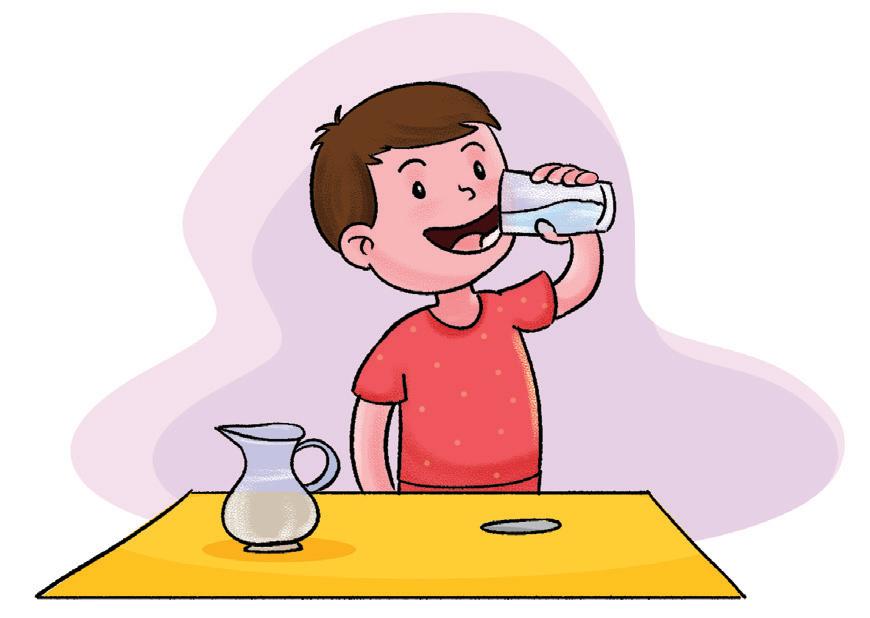
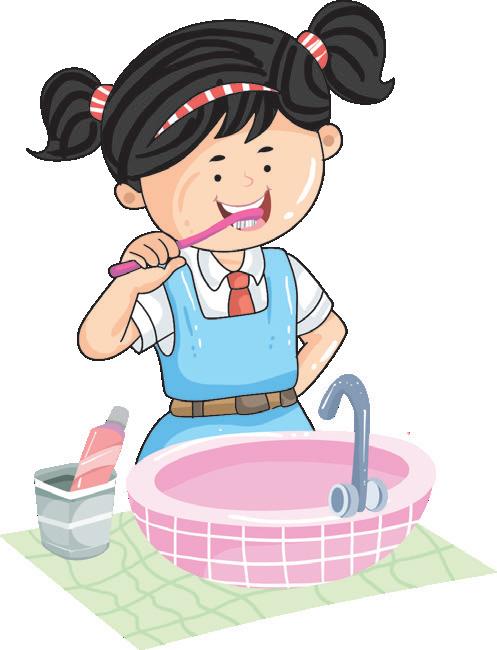
brush teeth
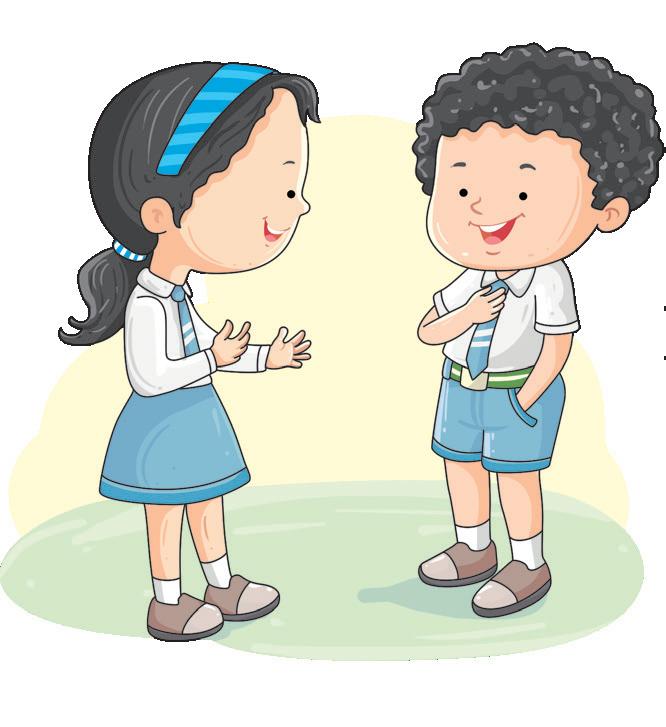
greet others
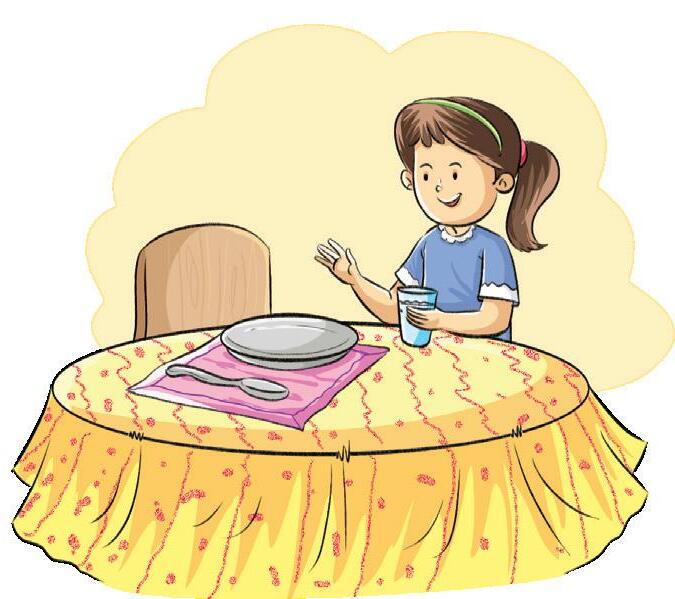
set the table play with toys

Tick (✓) the activities you can do on your own.
Cross (✗) the ones in which you need help.
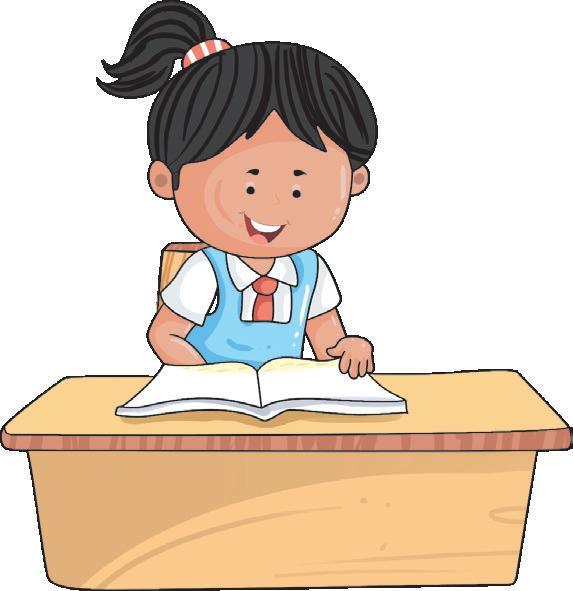
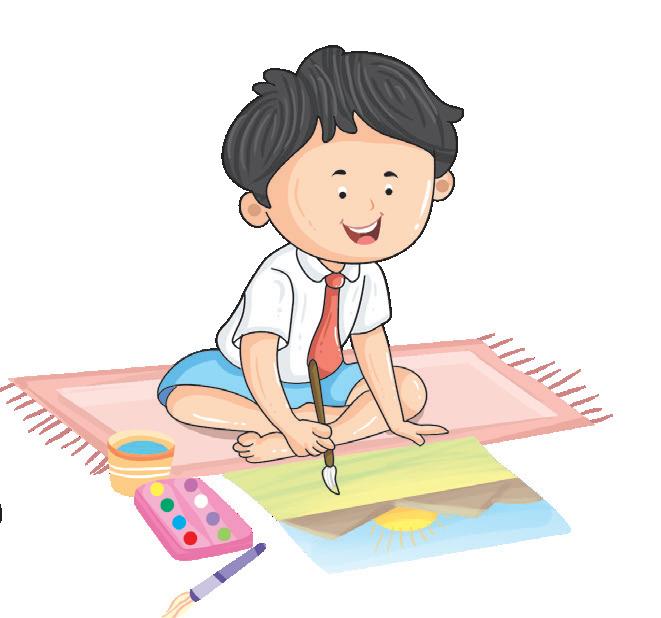
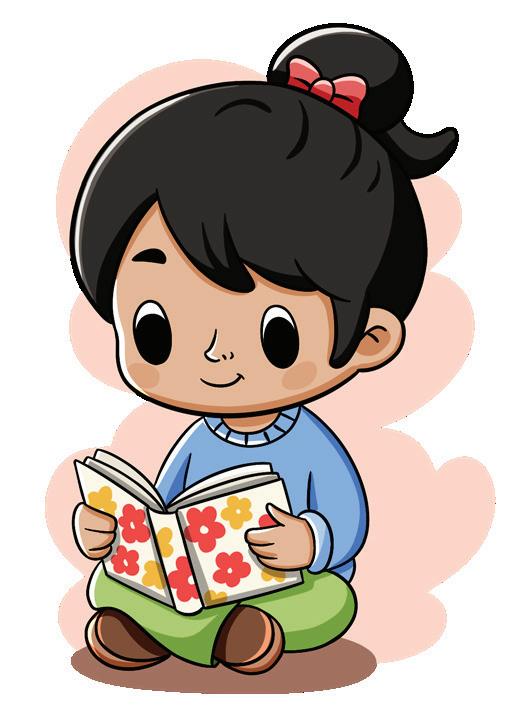
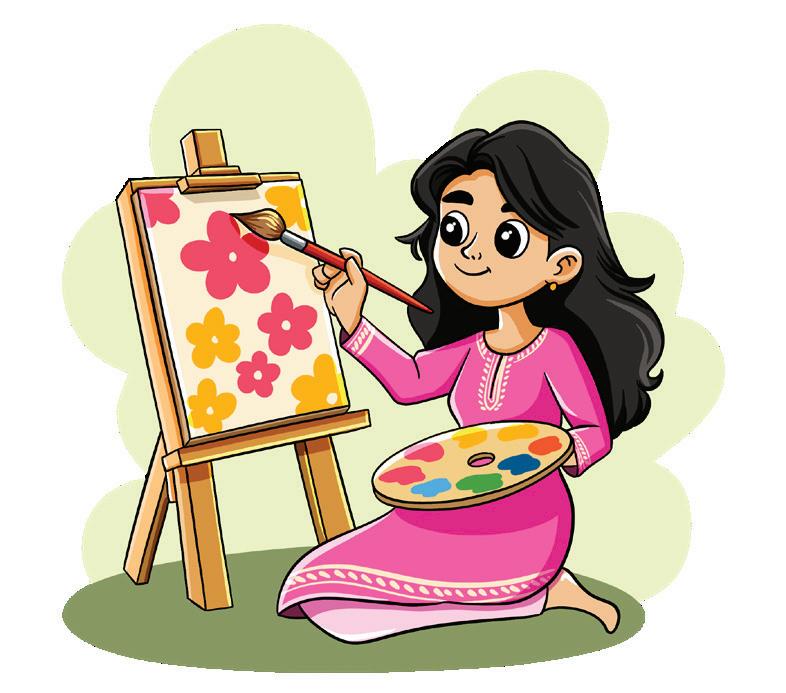
read a book use a paintbrush
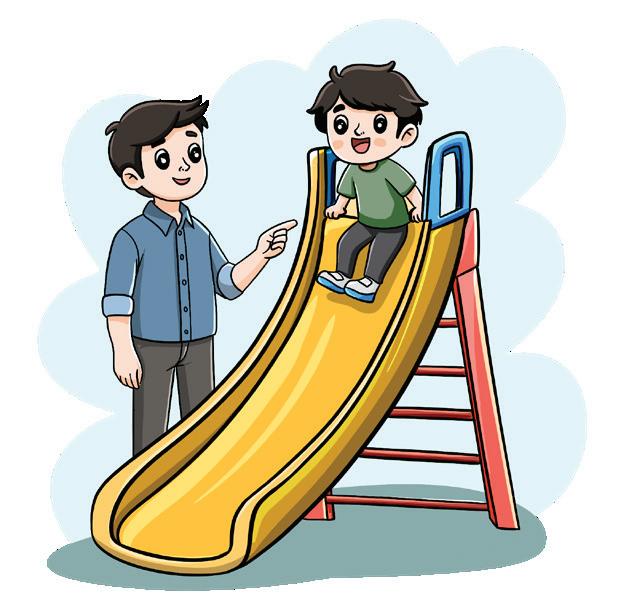
ride a bicycle play on a slide
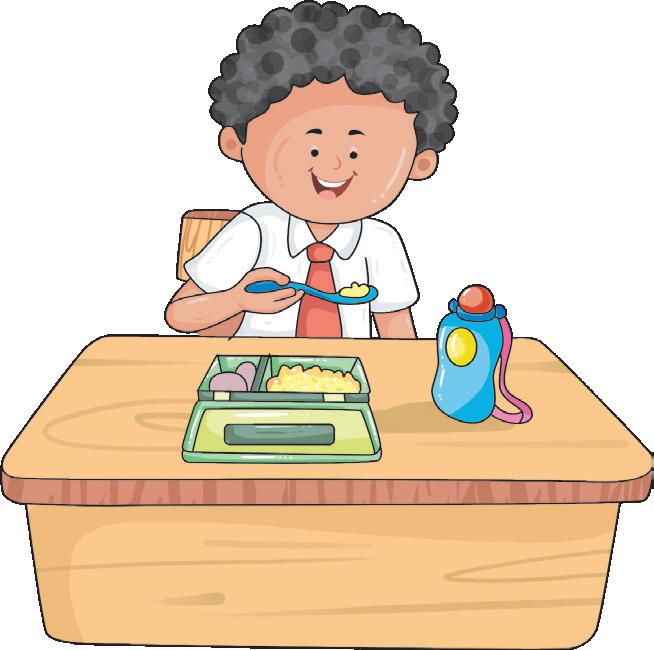
eat with a spoon button my shirt
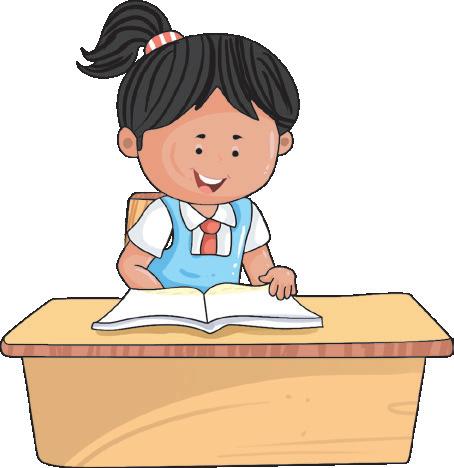
Hobbies are the things we like to do in our free time. They make us happy and help us learn new things. For example:
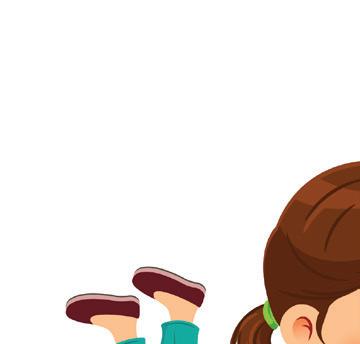
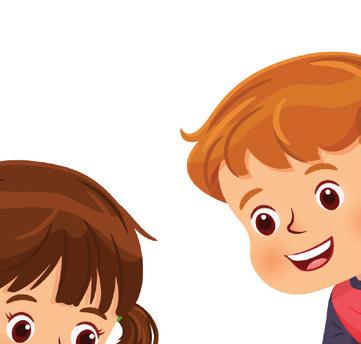
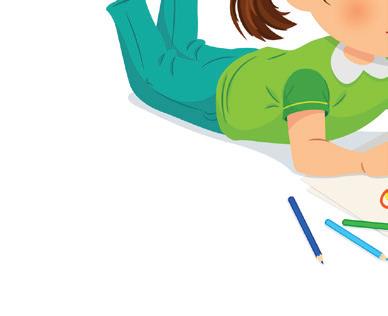
Tick (✓) the things you like to do.
skipping
singing
reading painting
dancing
gardening
Look at the body parts. Say their names aloud.
arm

hand fingers
leg
TEACHER TIP
Guide children to touch each of their body parts as they say its name.
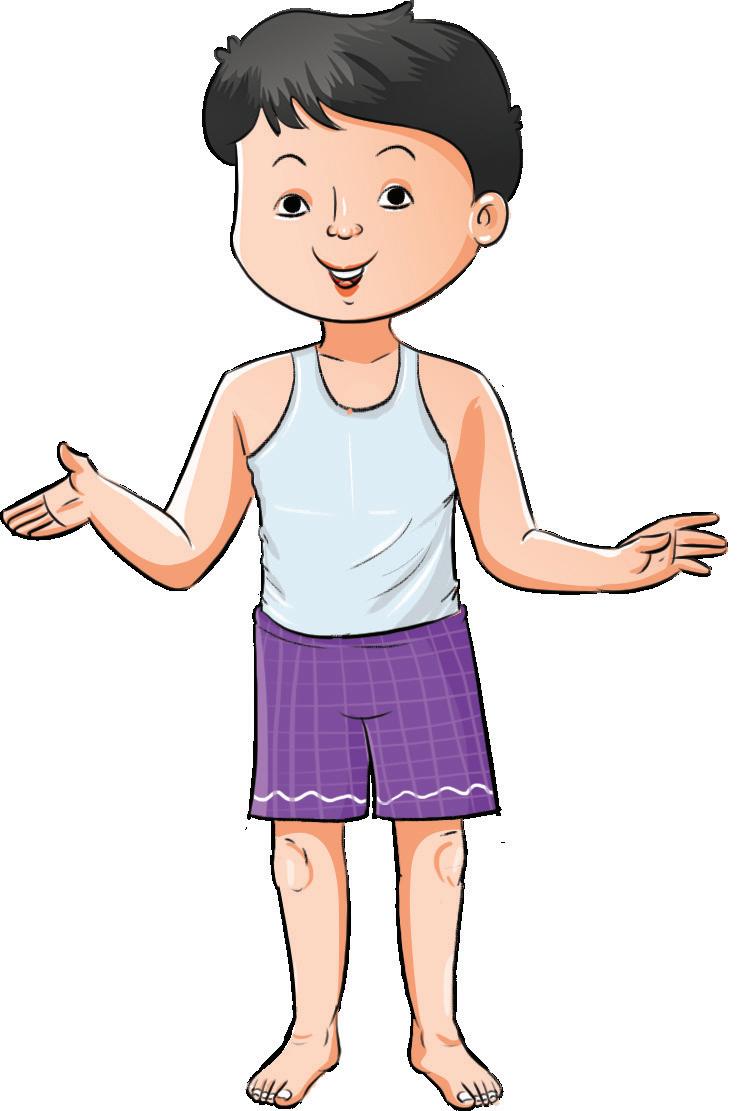
stomach
knee
foot toes

Write the names of the correct body parts from the box.
hair arm nose eye foot chest leg fingers
Eyes to see the sky so blue,
Ears to hear the music too.
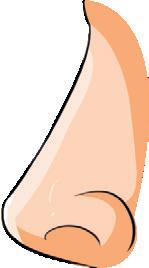
Nose to smell the flowers sweet,
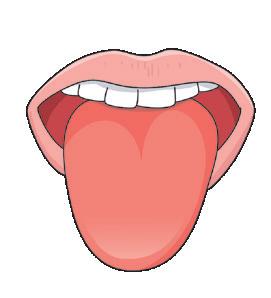
Tongue to taste the yummy treat.
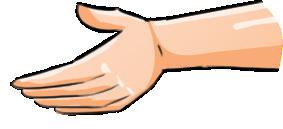
Skin to feel the warm sun’s glow, Five senses help me learn and grow!

Fill in the blanks. 1. I see with my
ears tongue eyes skin nose
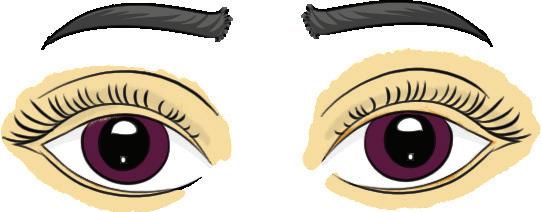
I hear with my
I smell with my
I taste with my
I feel with my
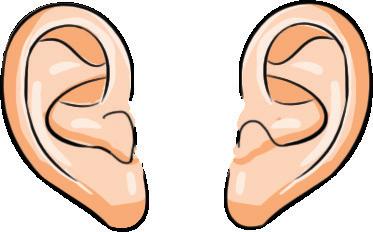

Our eyes help us to see things around us. Look at the pictures carefully. Talk about what you can see in them.
Draw and colour one thing that all three pictures above have in common.
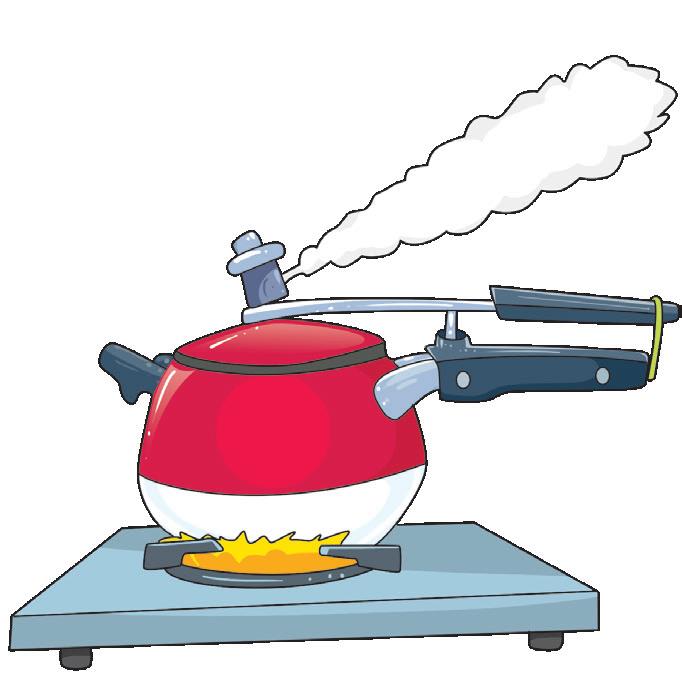
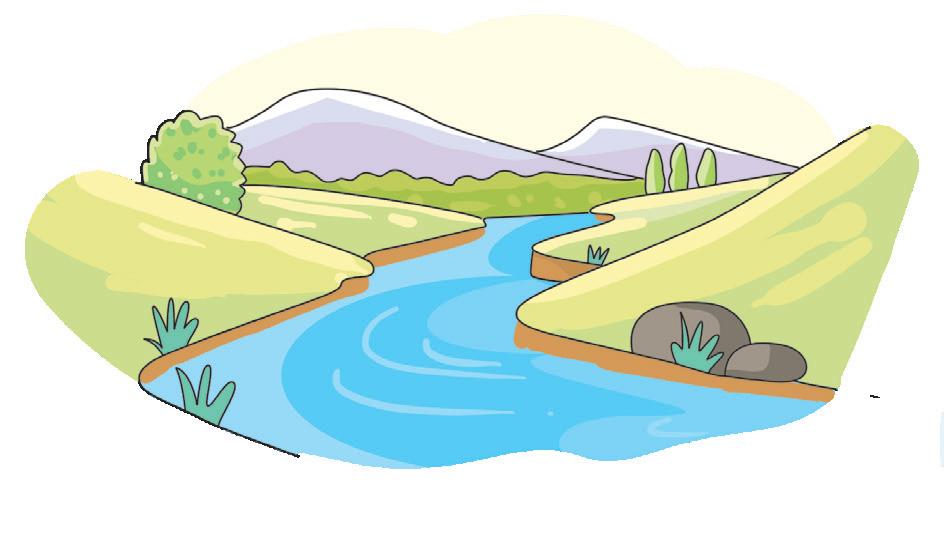
Our ears help us hear sounds around us. Soft sounds are nice, loud sounds are not.
Tick (✓) the sounds that you like to hear.
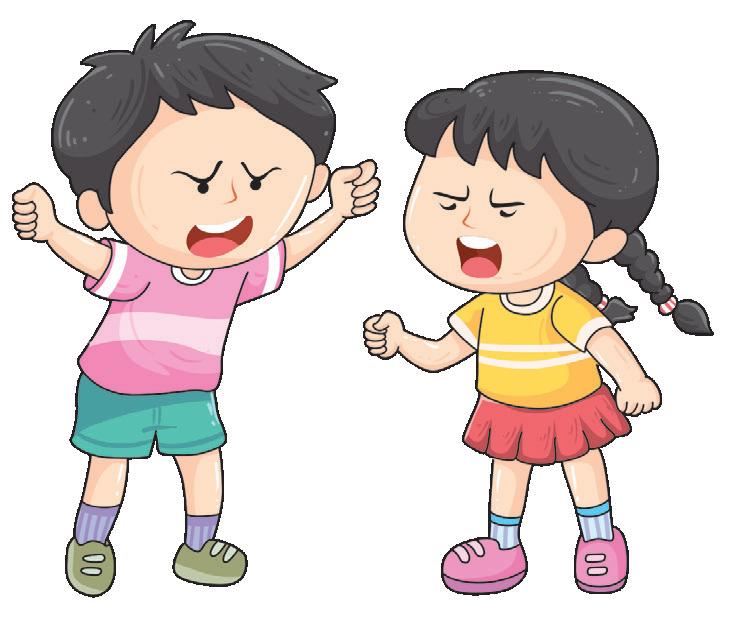
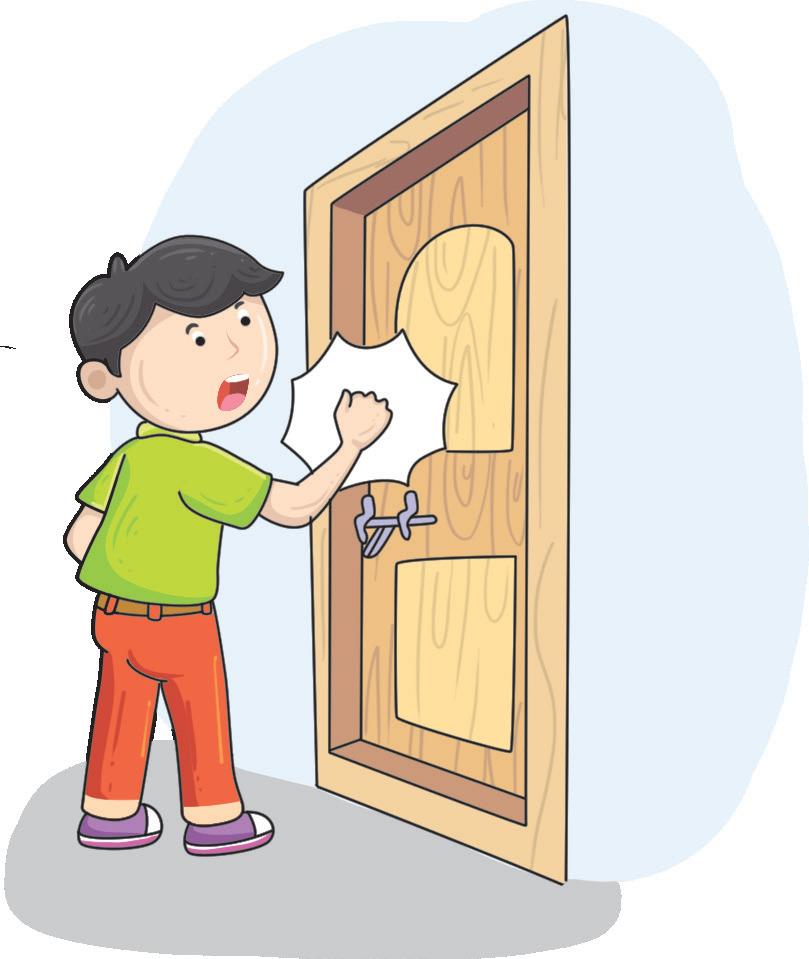
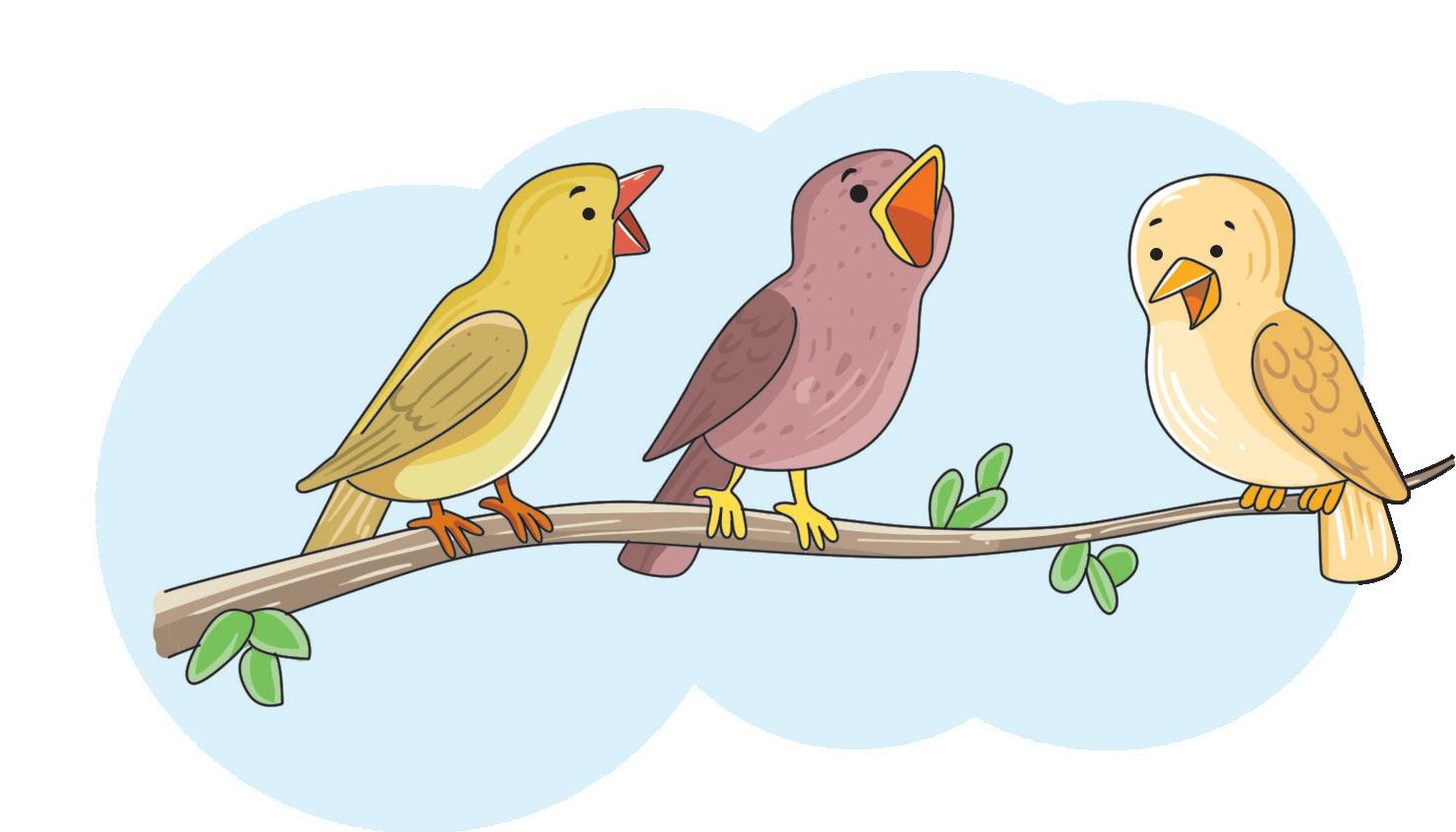
Let the children close their eyes, and listen carefully as you ring a bell, clap, or shake a container. Then, let them share what they hear.
Our tongue helps us taste food and drinks. It tells us if they are sweet, sour, salty, or bitter.
Match the things with the correct baskets. Look at the examples done for you.





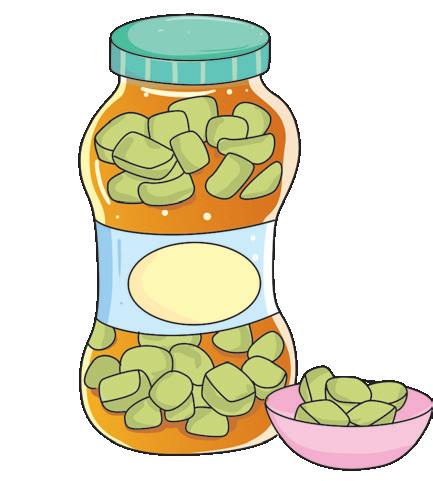
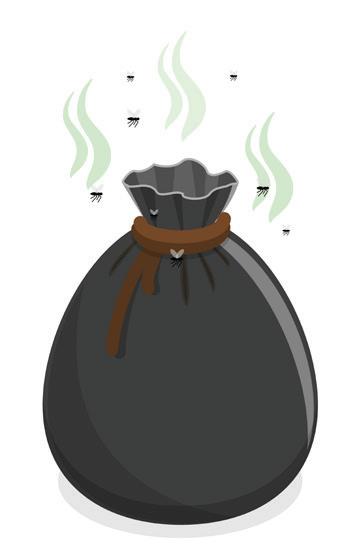
Our nose helps us to smell everything around us. Circle the things with a red crayon if you like its smell.















Our skin helps us touch and feel things. It tells us if something is rough, soft, hot or cold.
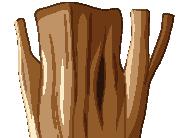

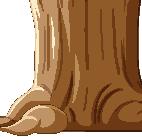


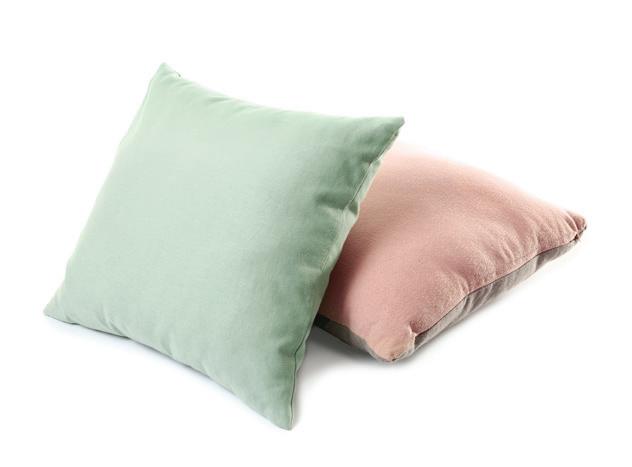

Circle the soft things.





Encourage children to touch safe objects around them and talk about how they feel—rough or soft.

A good touch makes us feel safe and loved. For example, a hug by our parents or a handshake with our friends. However, some touches can make us feel bad and unsafe. This is bad touch. NEVER let anyone touch you on your:
Some touches are good. Some touches are bad. Let us learn about them. If anyone does, follow these steps:
Shout ‘no’ loudly. Move away from that person. Tell your parents lips chest between your legs buttocks
TEACHER TIP
Teach children to say ‘No’ to bad touch, move away, and tell a trusted adult. Remind them their body belongs to them.
We must follow good habits to stay healthy. Let us read the two picture stories.
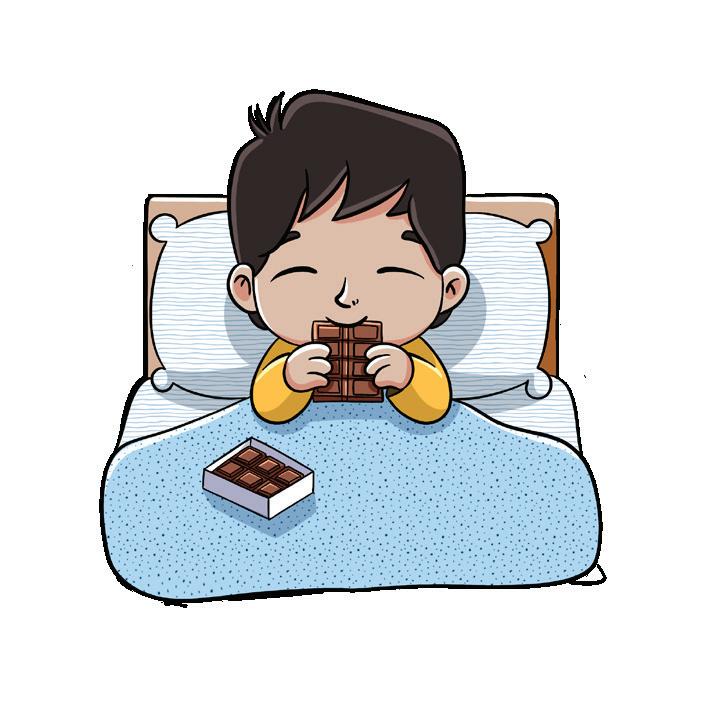
Raman eats chocolate at night.
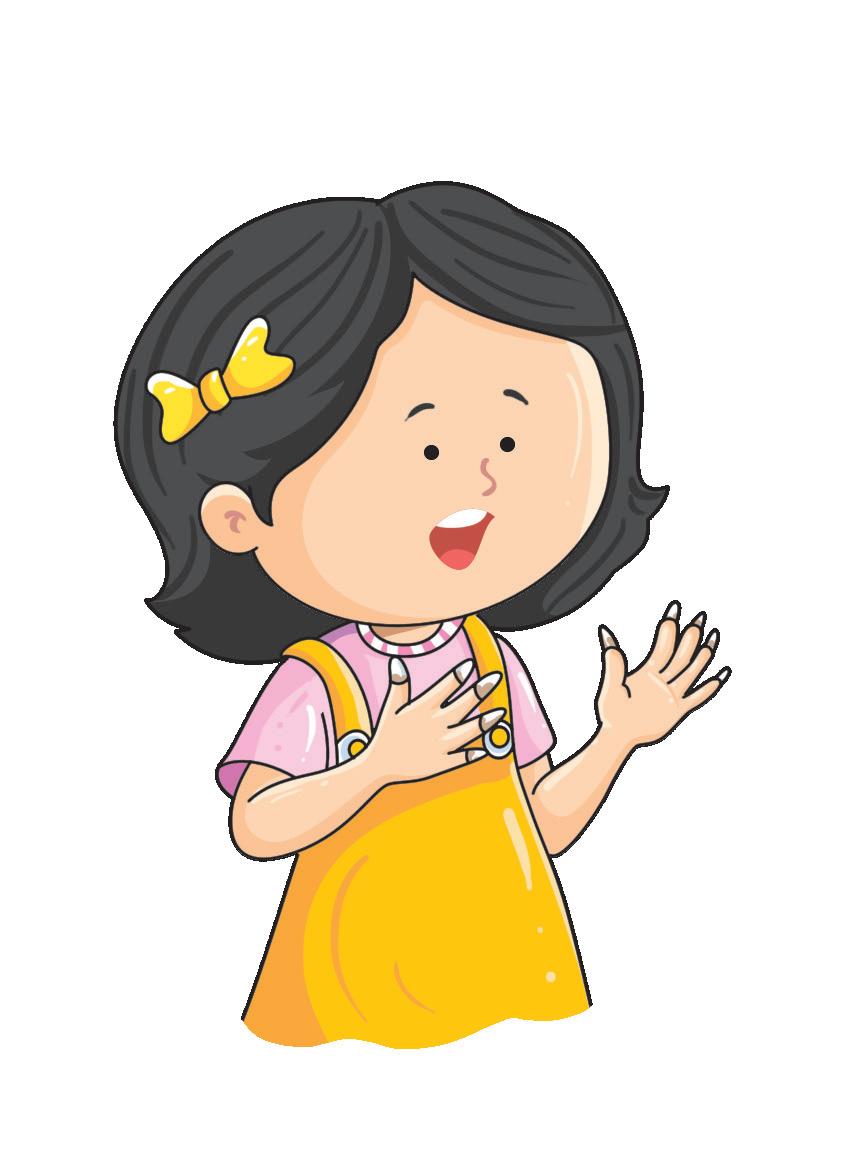
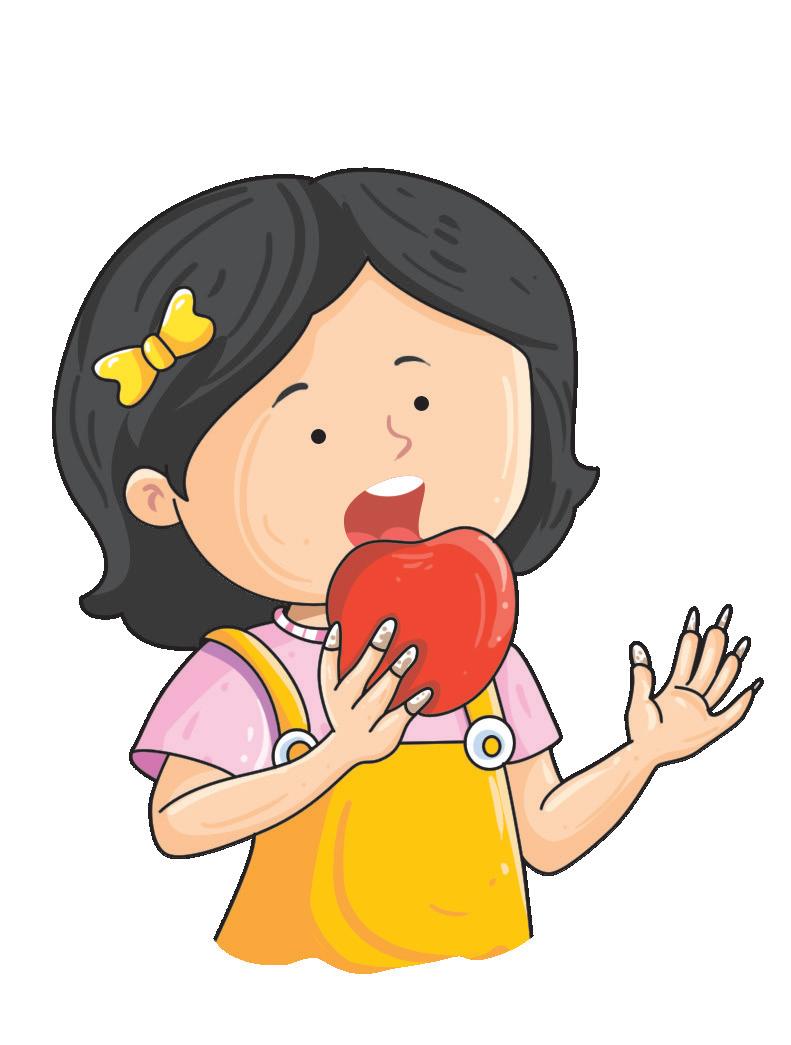
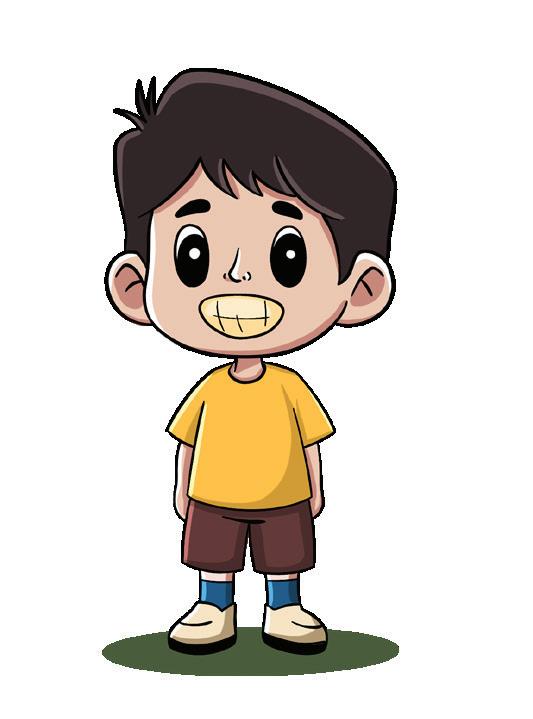
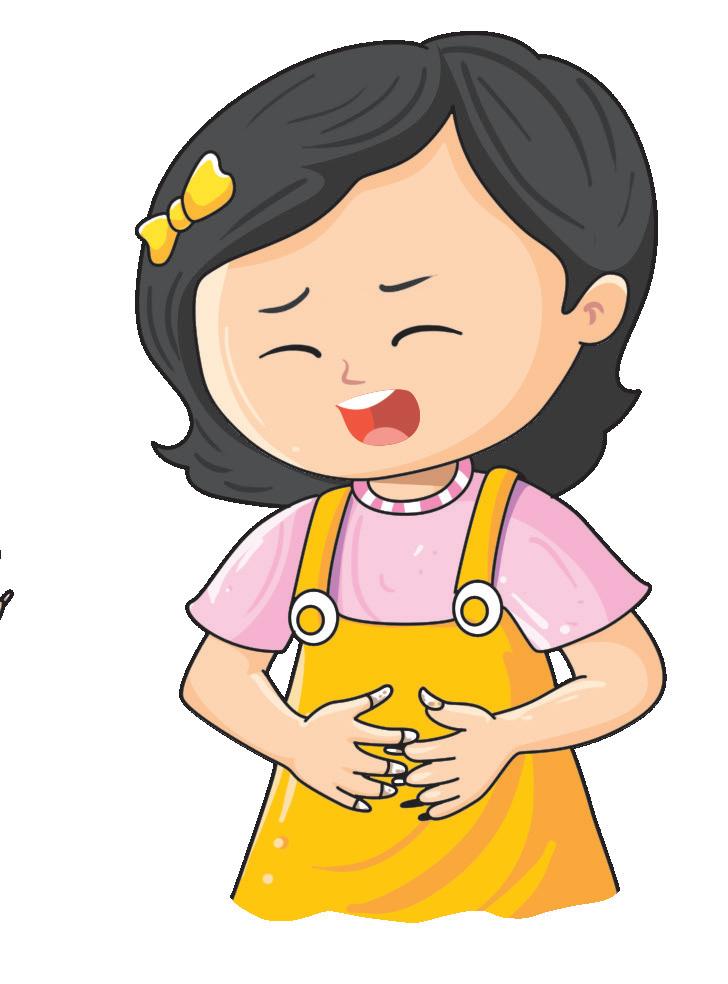
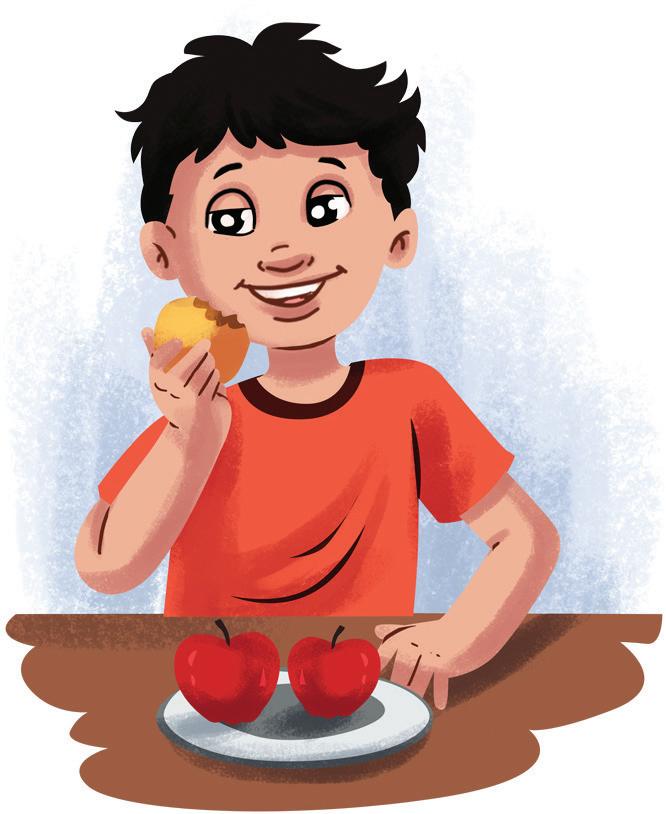
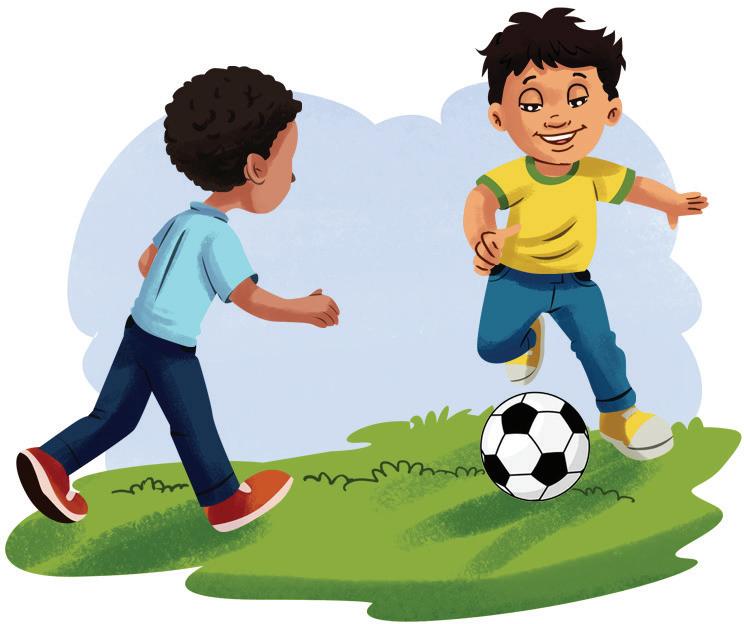
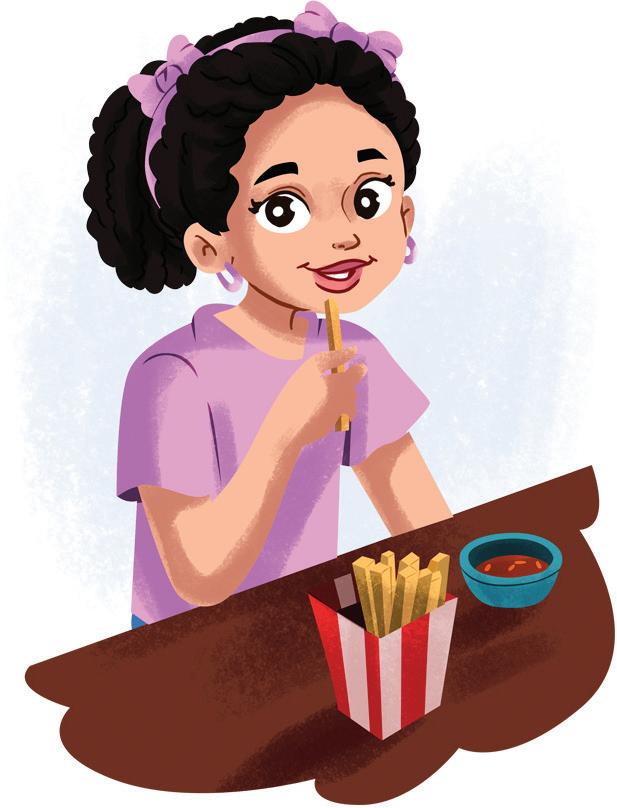
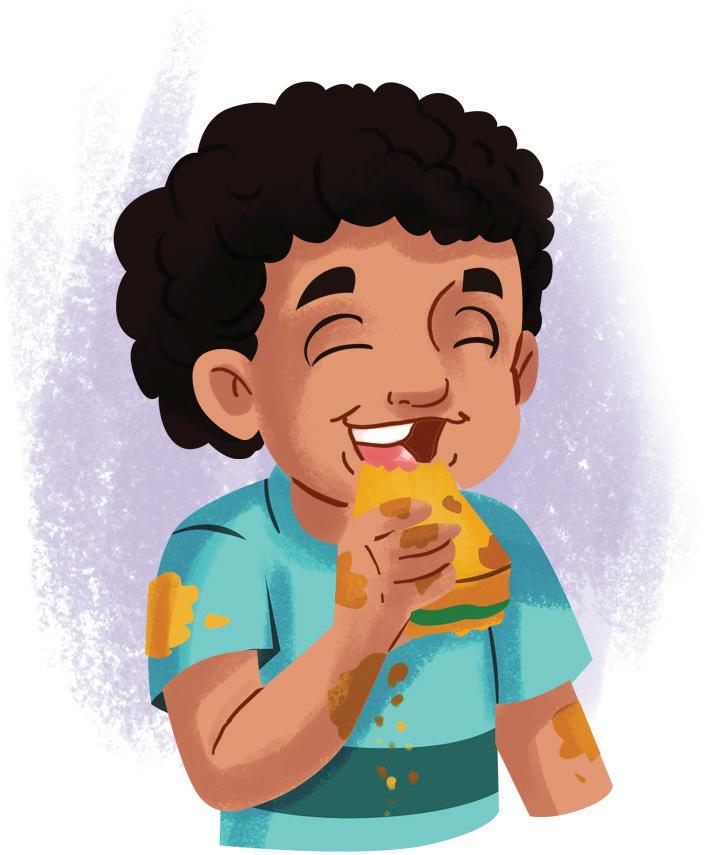
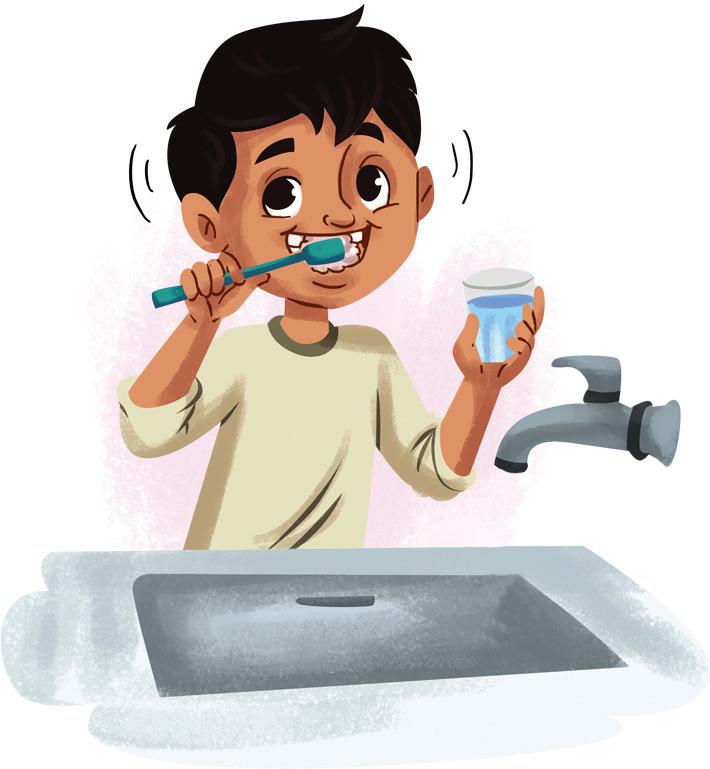
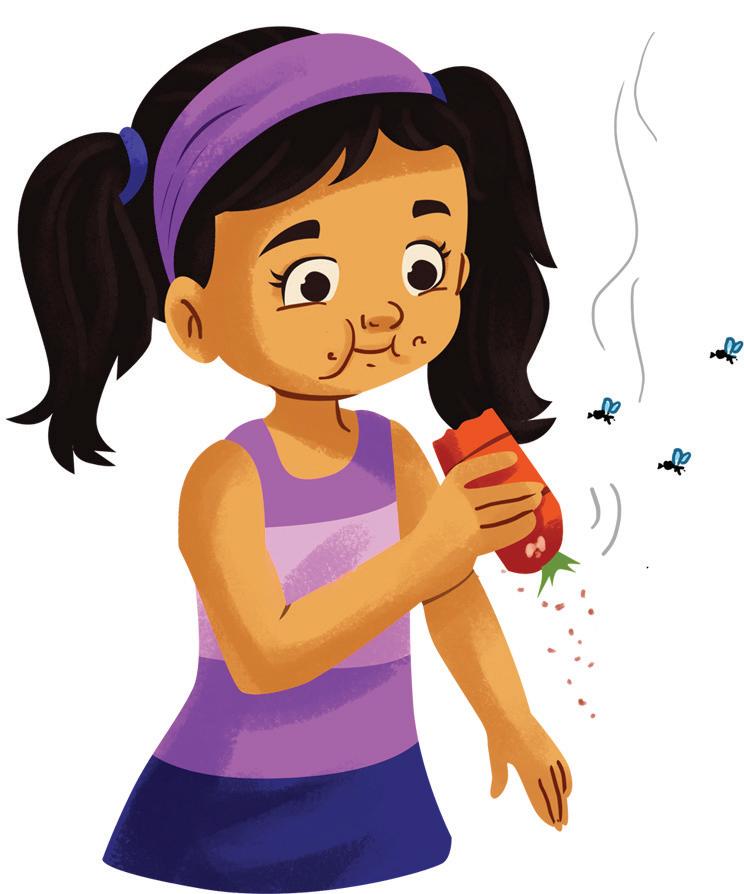
Nafeeza has dirt in her nails. She eats an apple without washing her hands. She has a stomachache. He has a toothache. He does not brush his teeth.
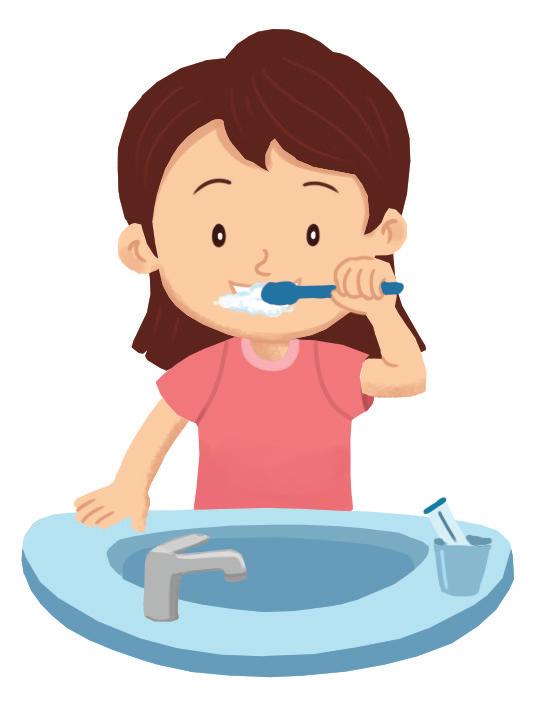
Discuss simple good habits like brushing teeth twice a day, washing hands before and after meals, and keeping nails clean and short.
Look at the pictures. Circle ‘yes’ for the healthy or good habits.

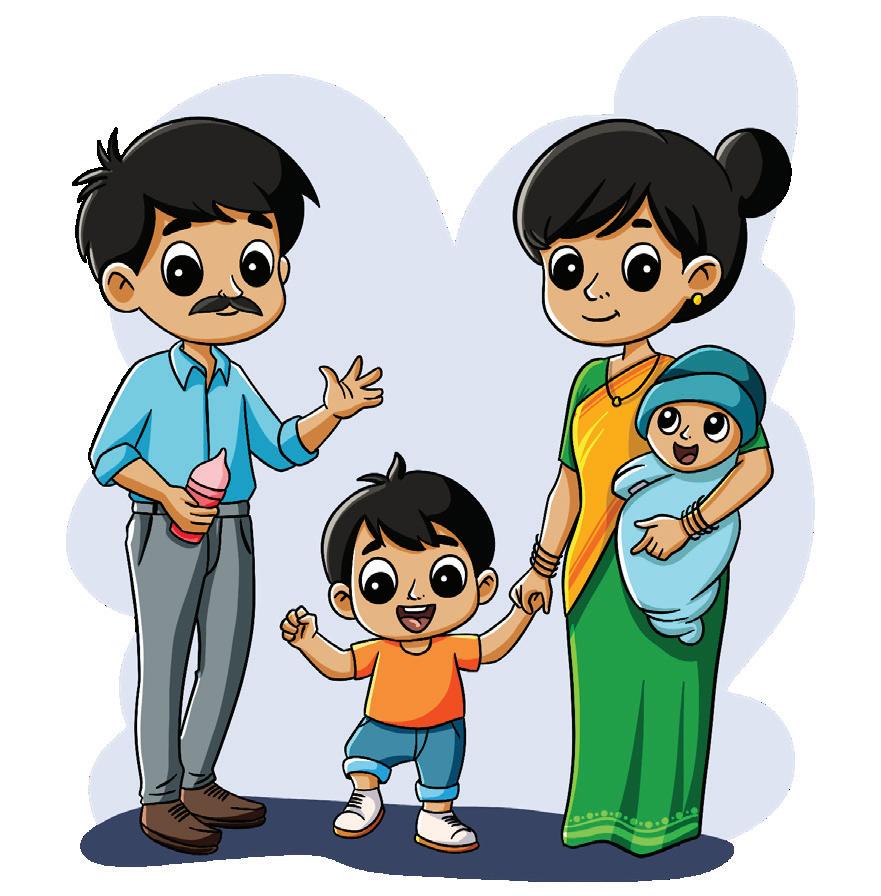
This is Aman’s family. He lives with his father, mother and one sibling. They are a small family.
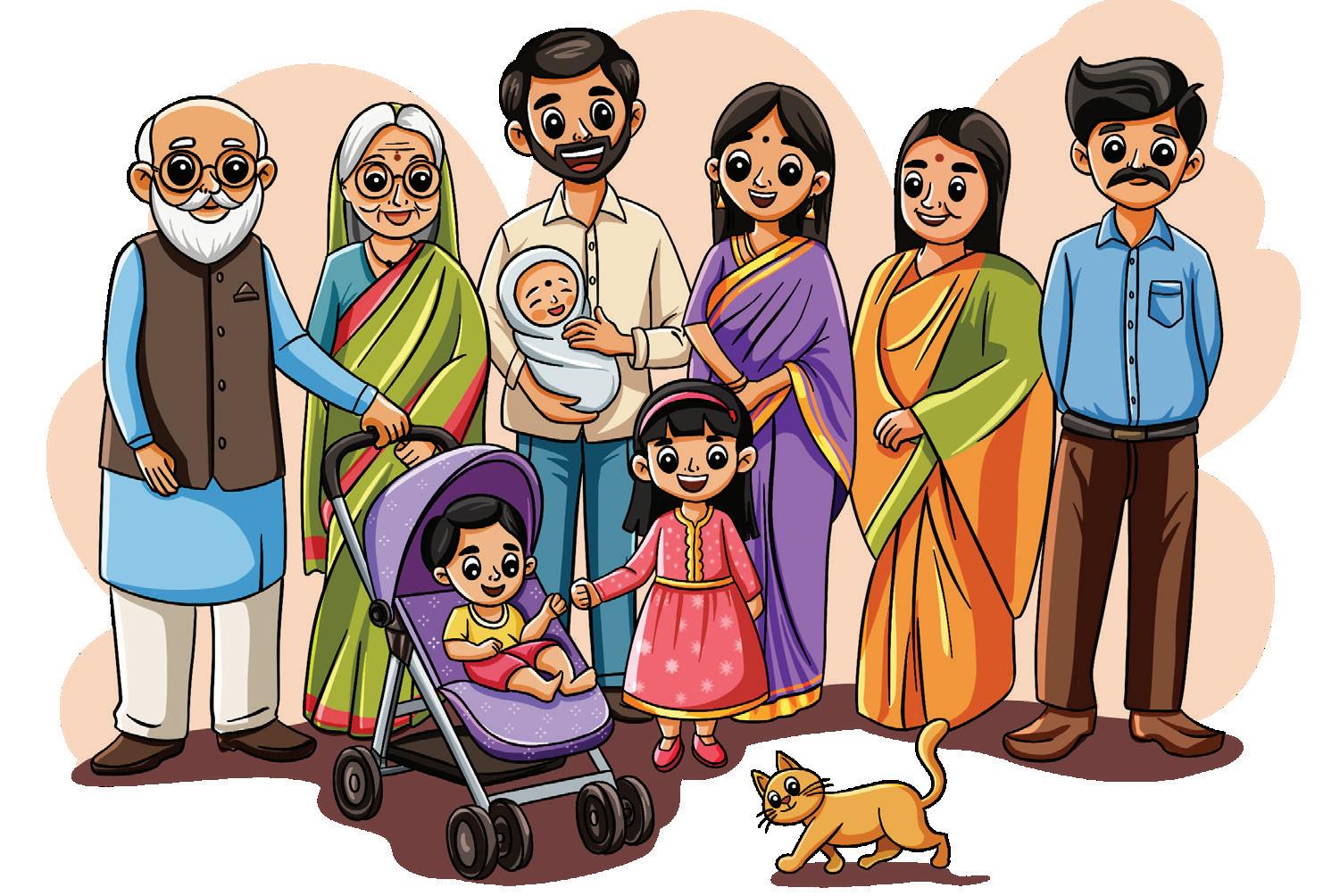
This is Sia’s family. She lives with her father, mother, grandparents, uncle, aunt, and two siblings. They are a big family.
Let's Talk
How many family members do you have? Do you have a small family or a big family?
Tick () the members in your family.
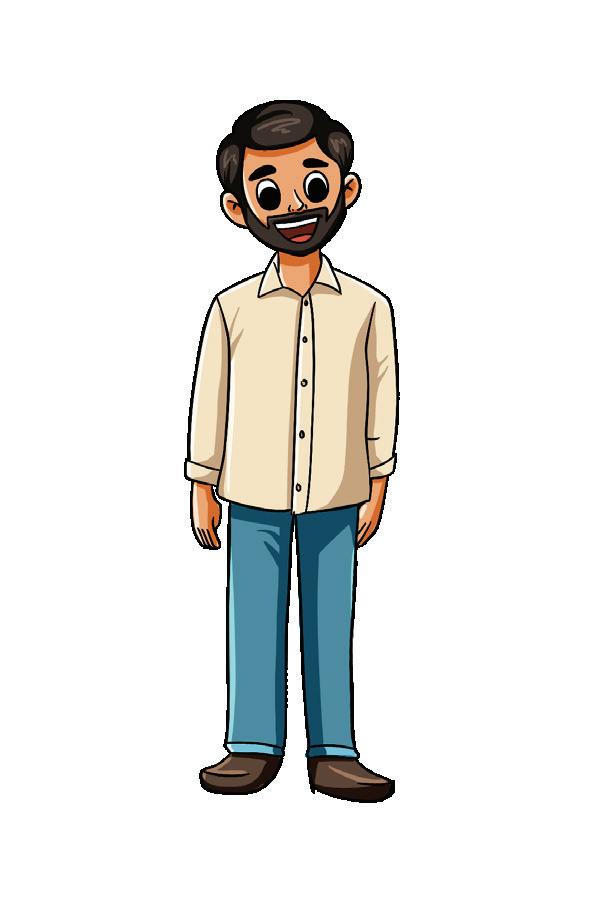
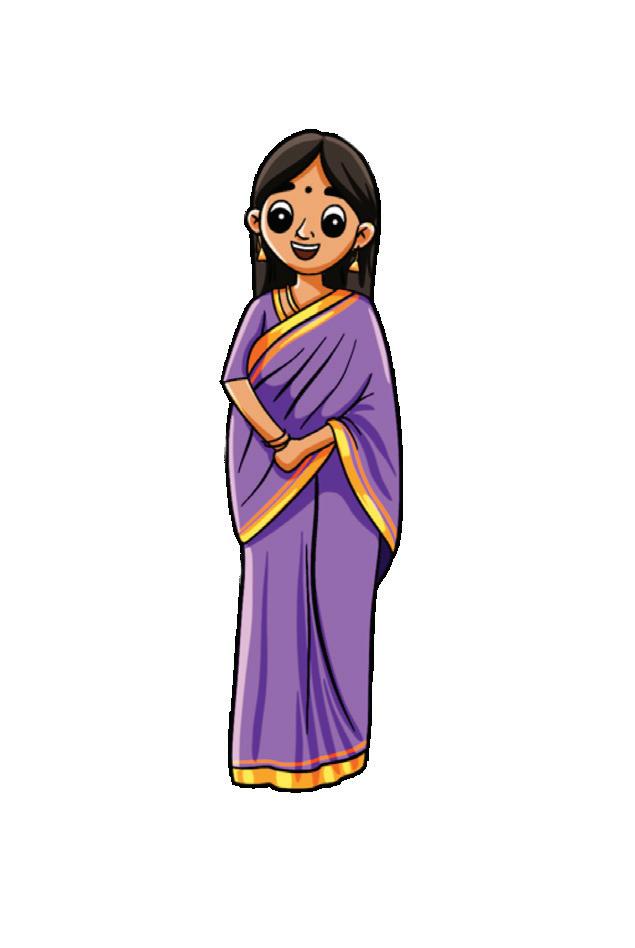
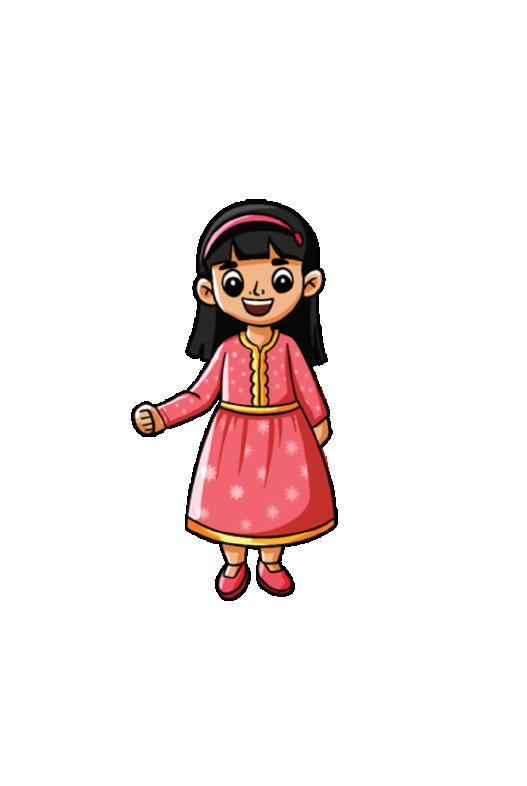
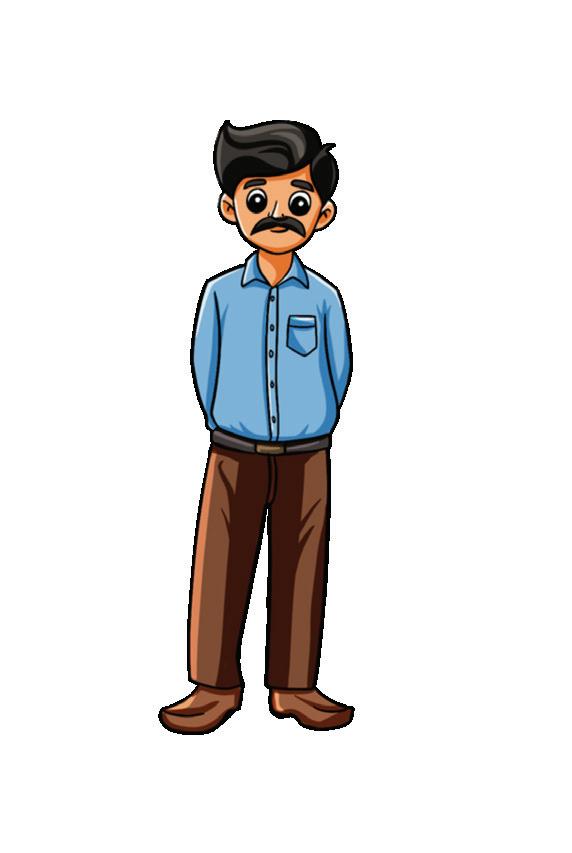
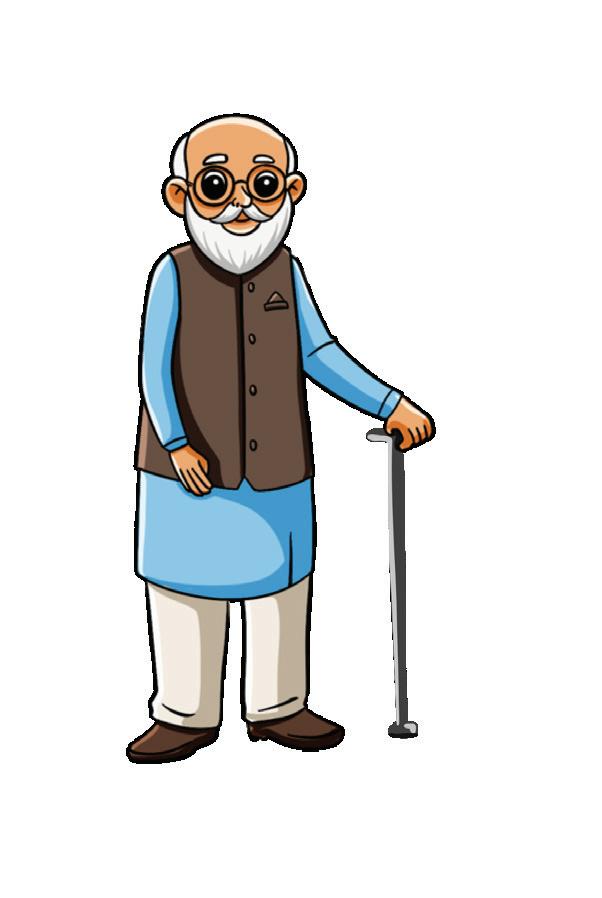
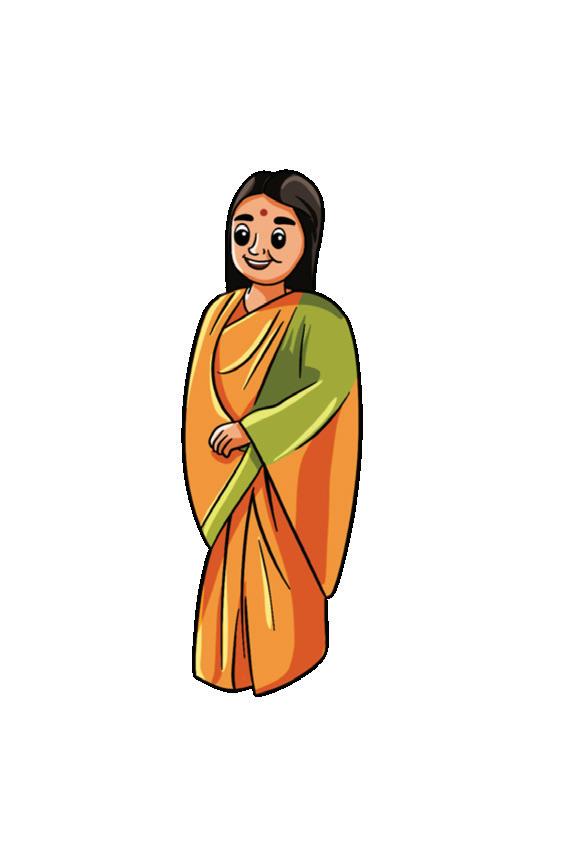
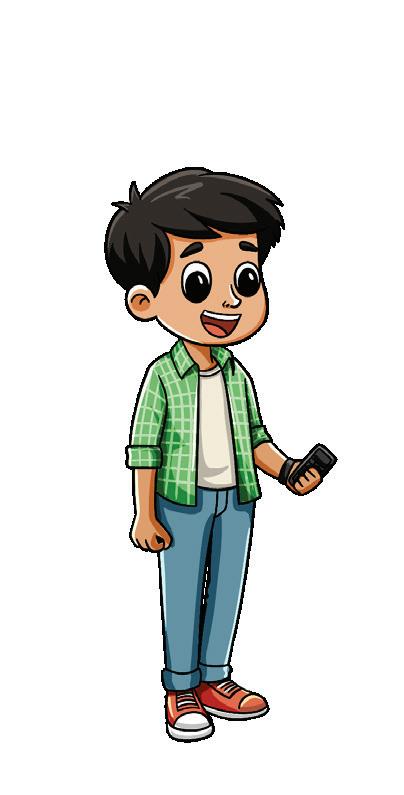
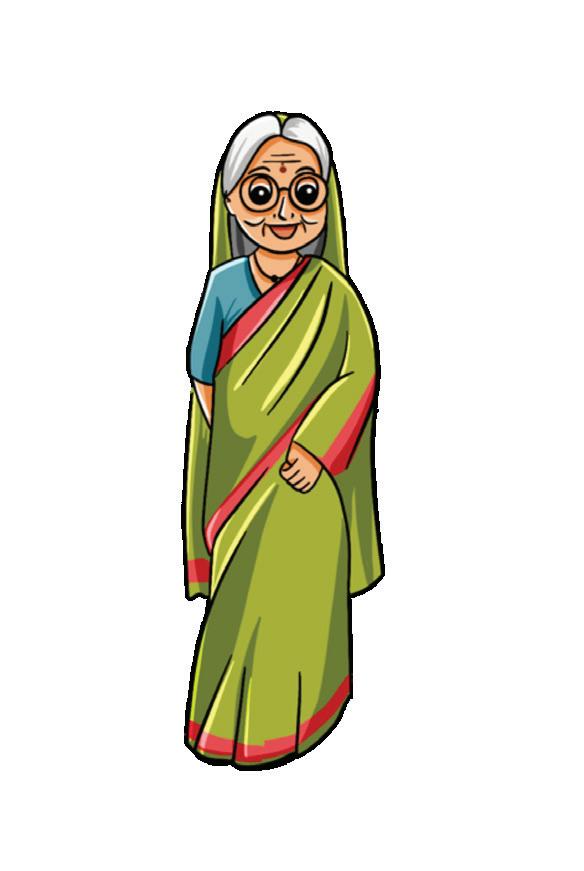
We should help our family. Look at the pictures and talk about them.
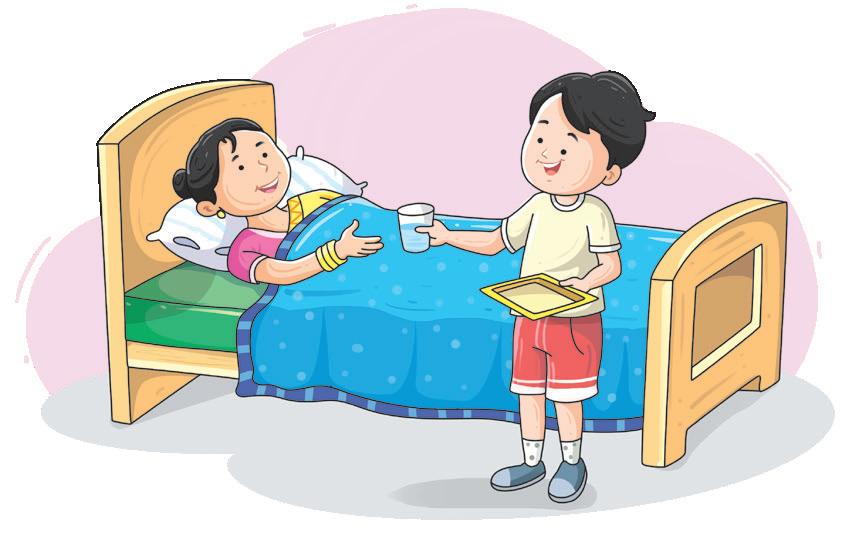

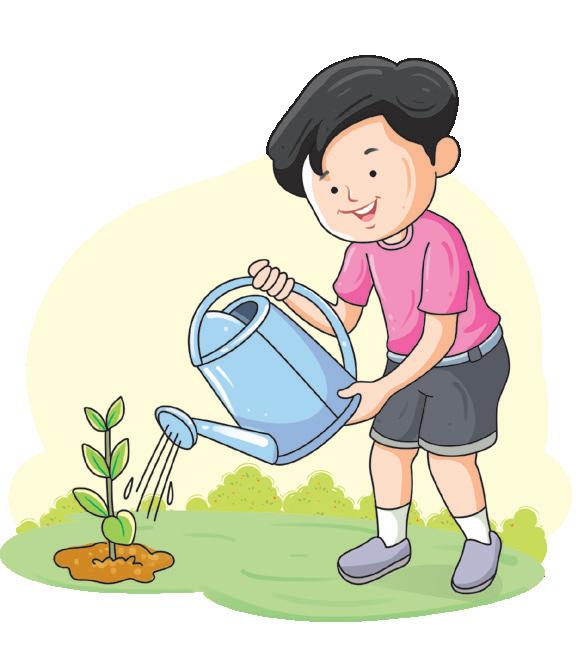
watering plants
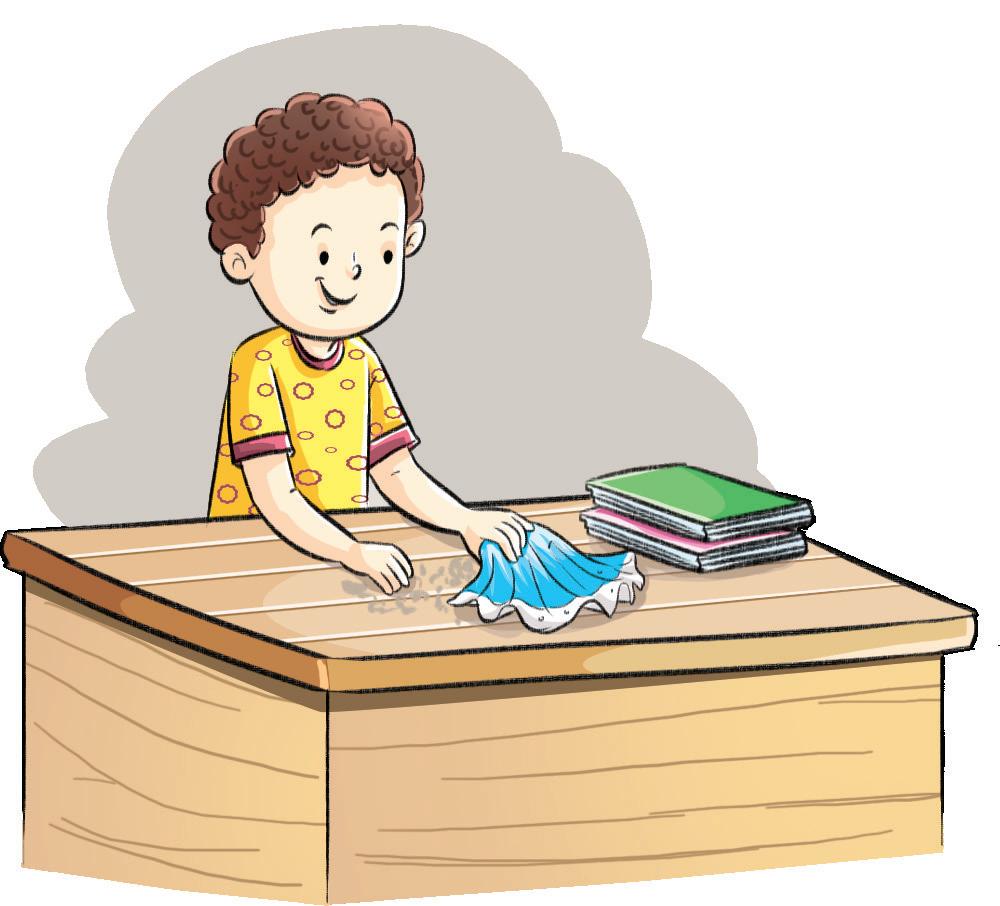
cleaning things
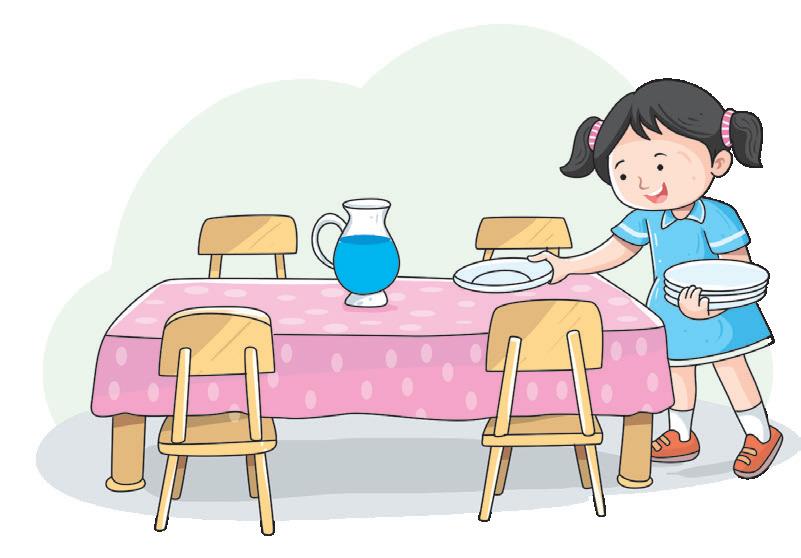
setting the table
taking down clothes giving water bringing objects
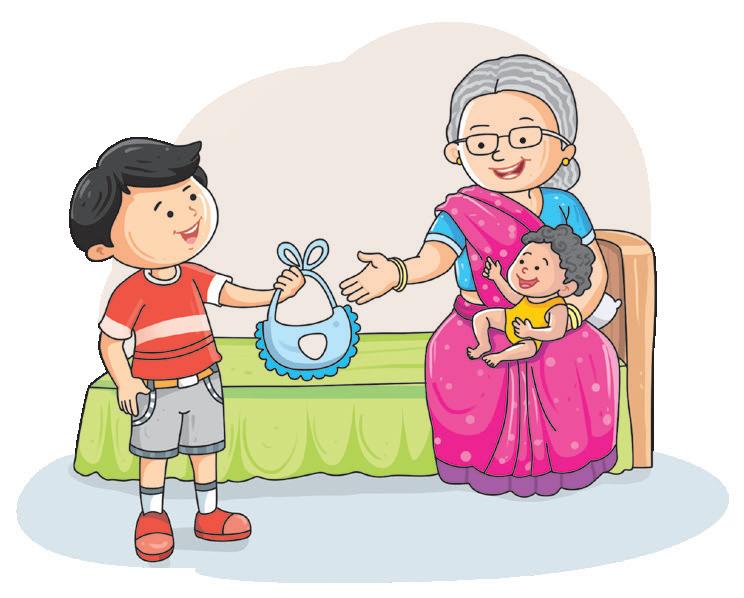
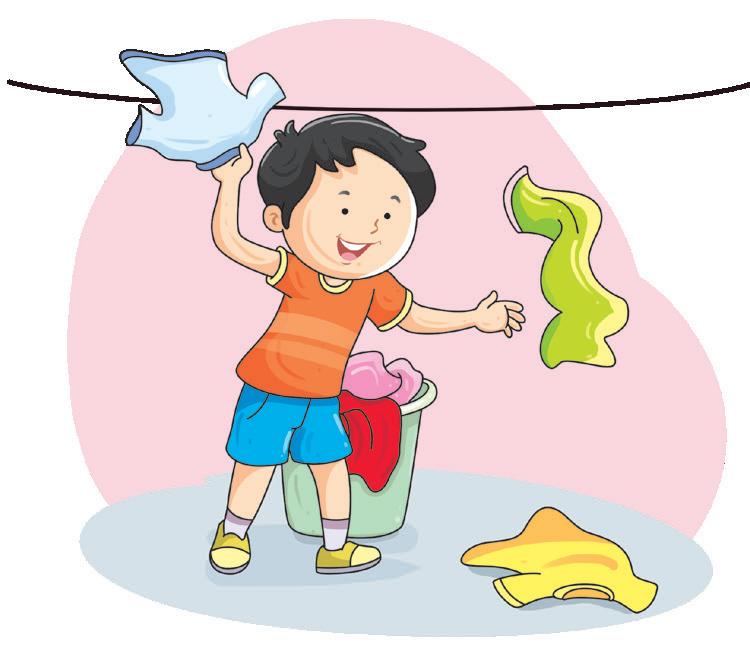
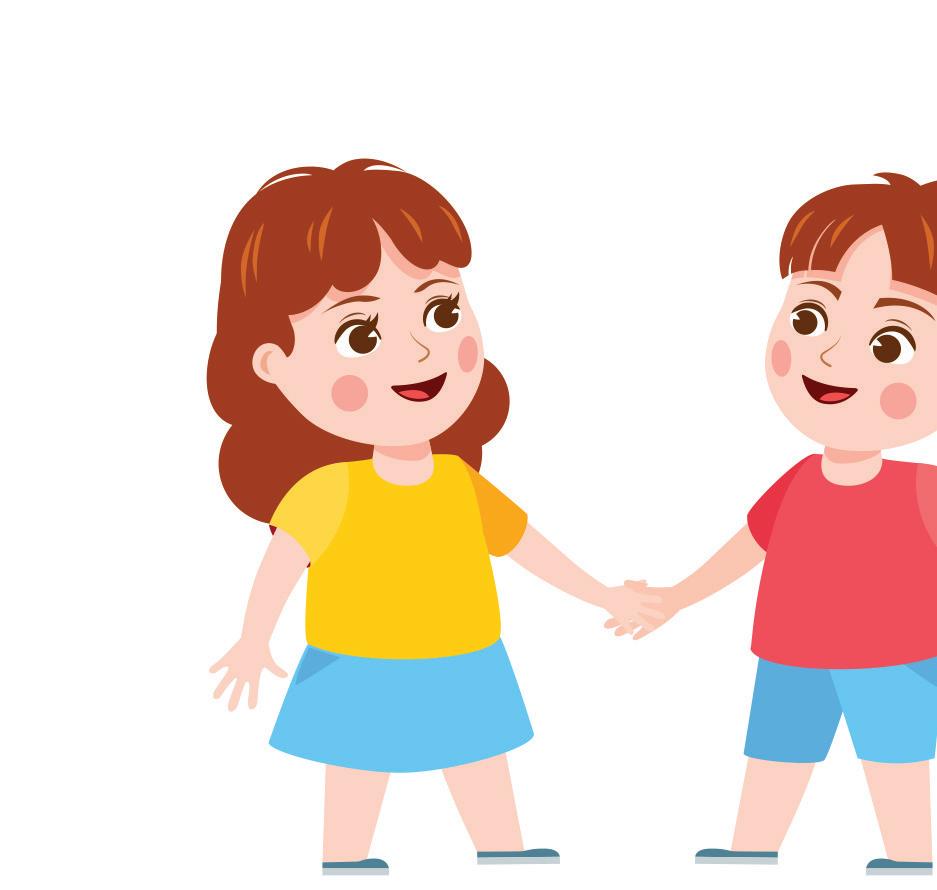
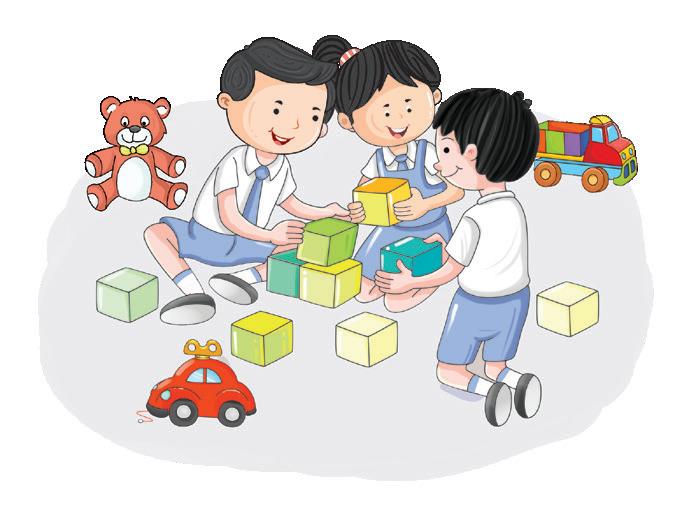
We should be nice to our friends. We should share our toys and food with them. We should not hurt them.
Tick () the pictures that show the right action.
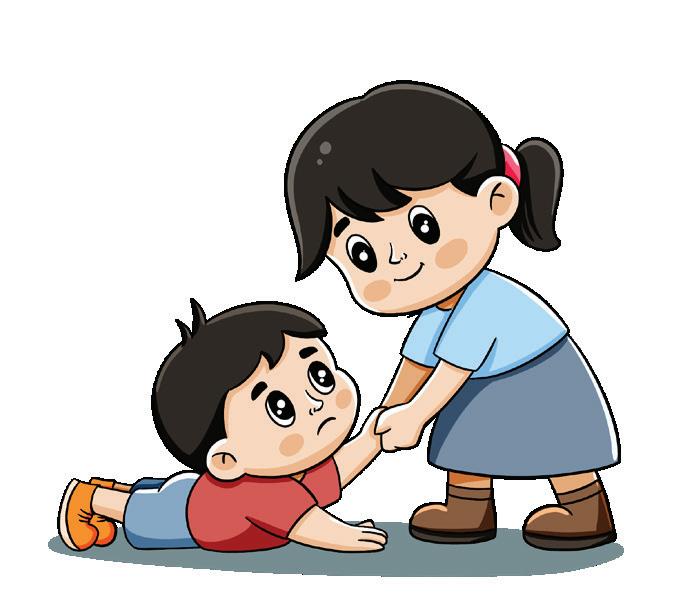
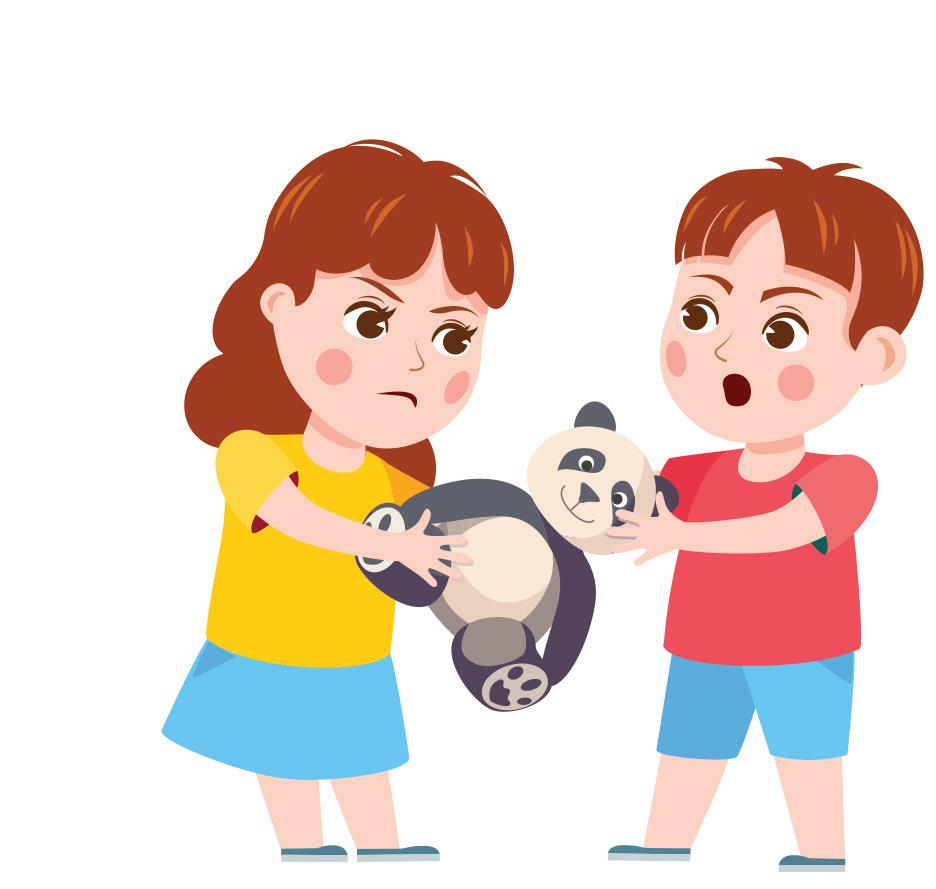
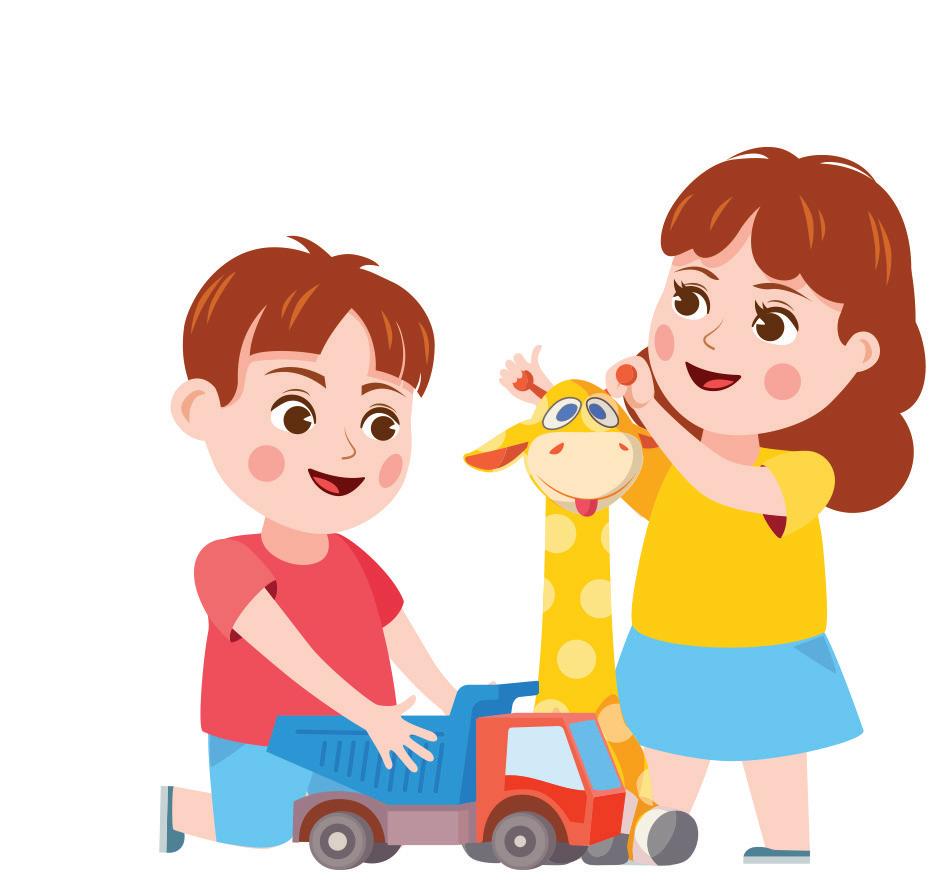
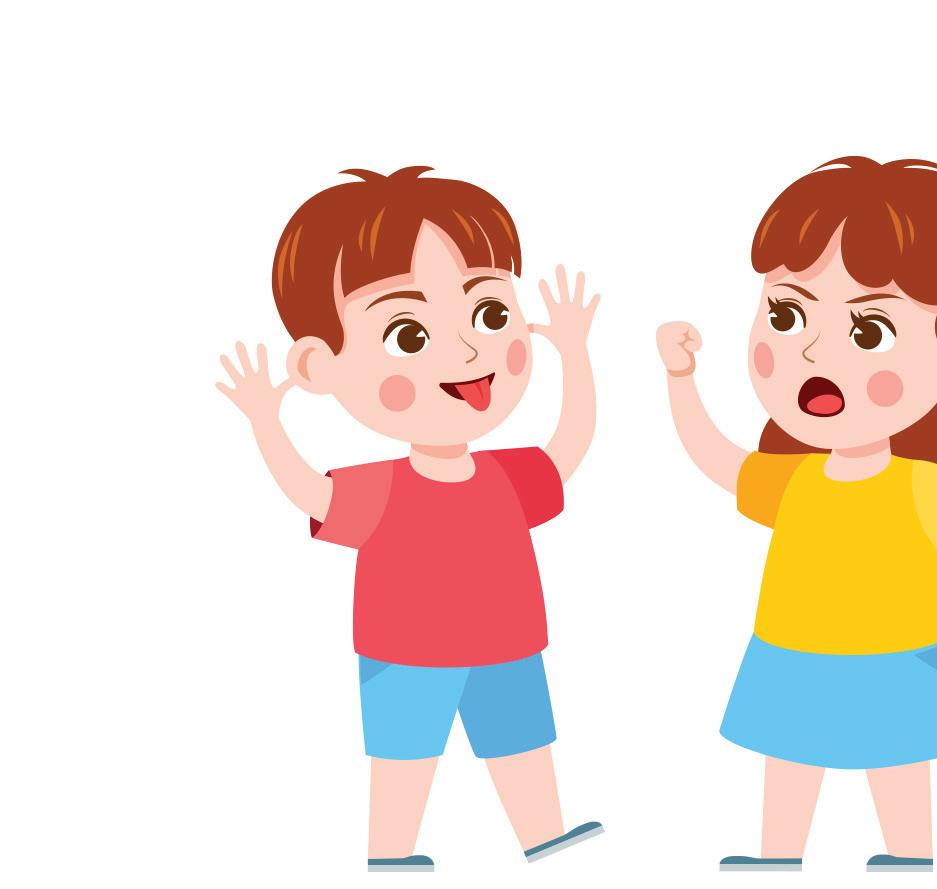
We all need a house to live in. Let us look at the pictures below and learn why we need it.
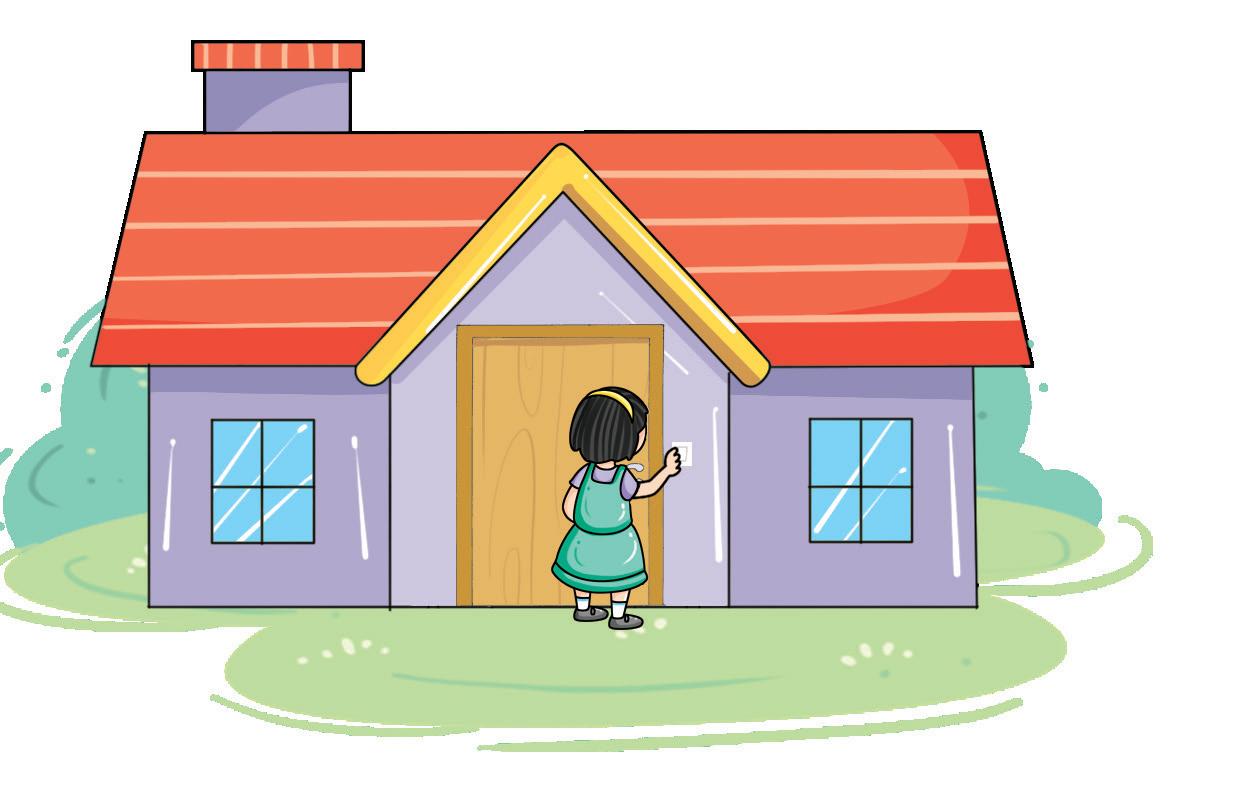
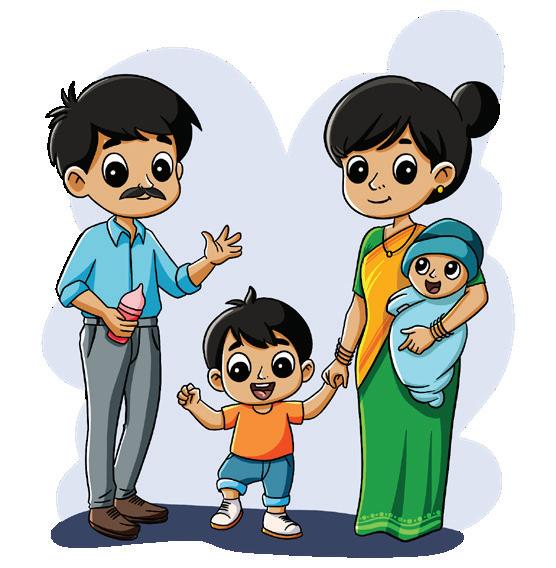
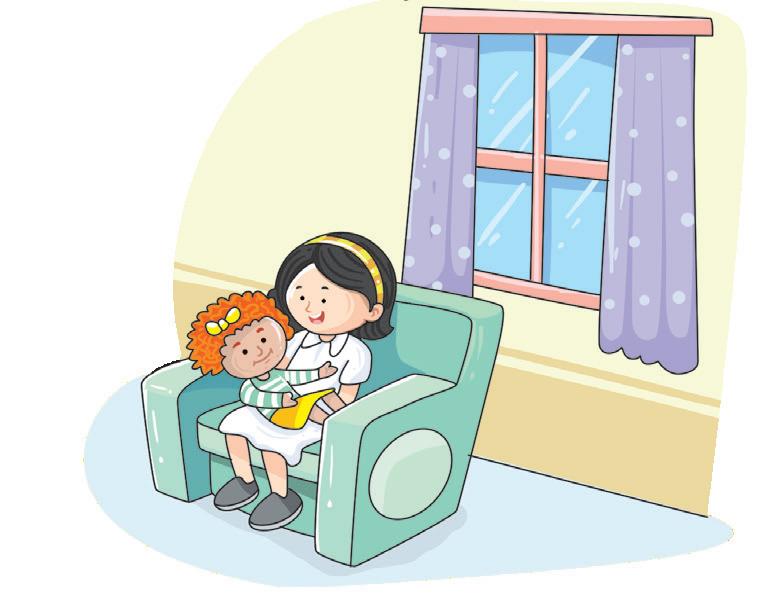
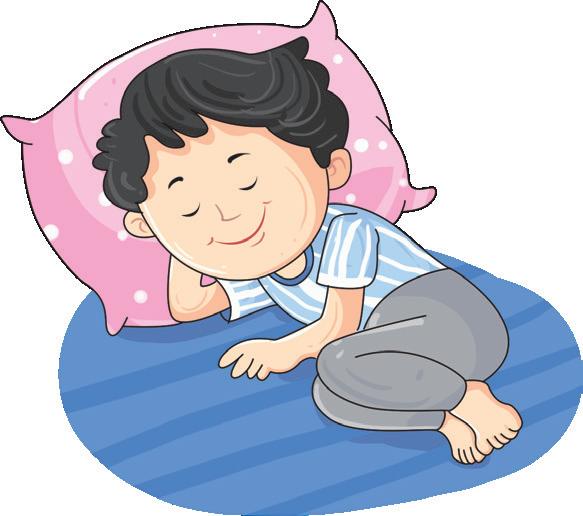
to keep our things safe to protect us from heat, cold and rain to sleep well to be with our family
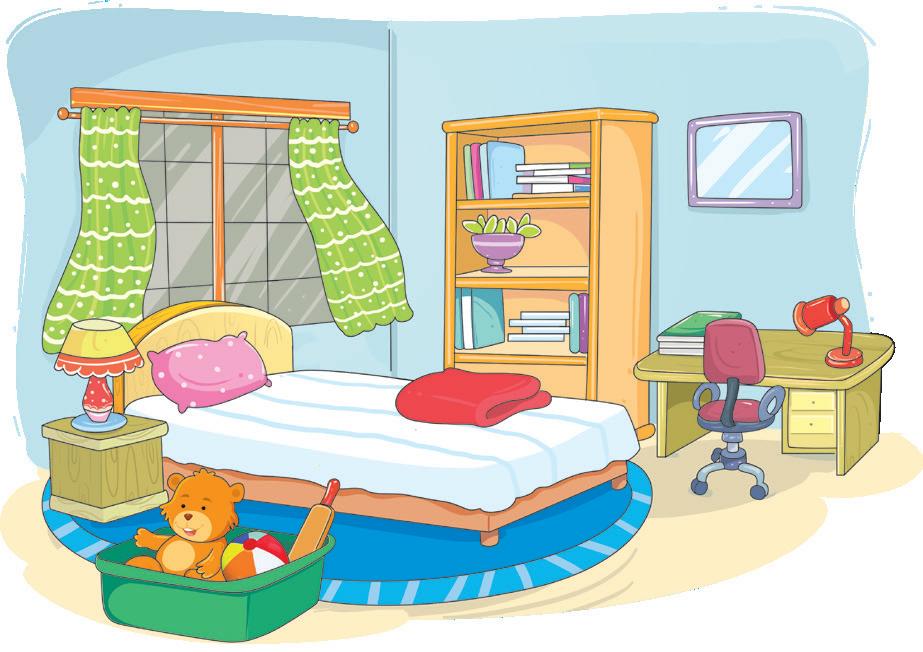
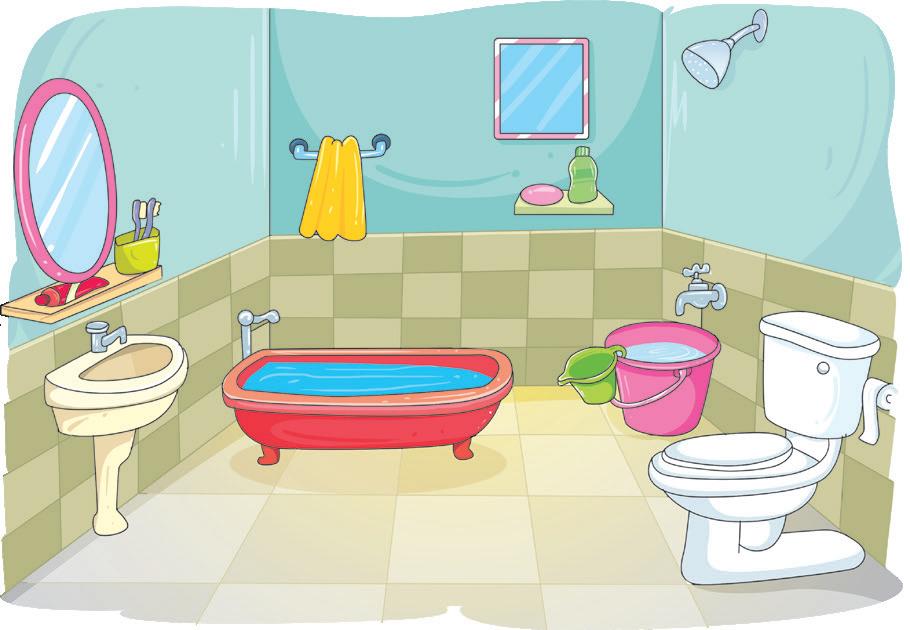
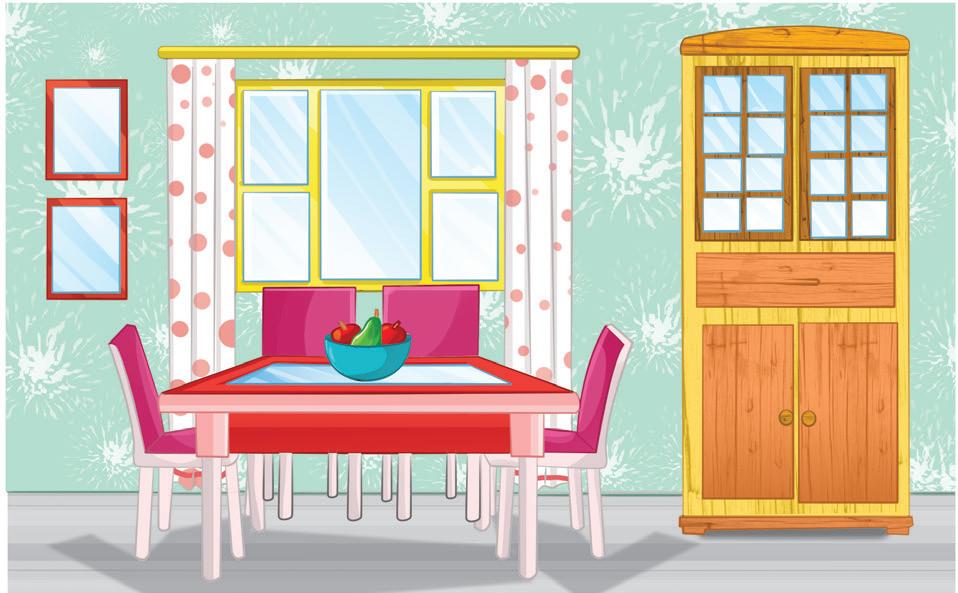
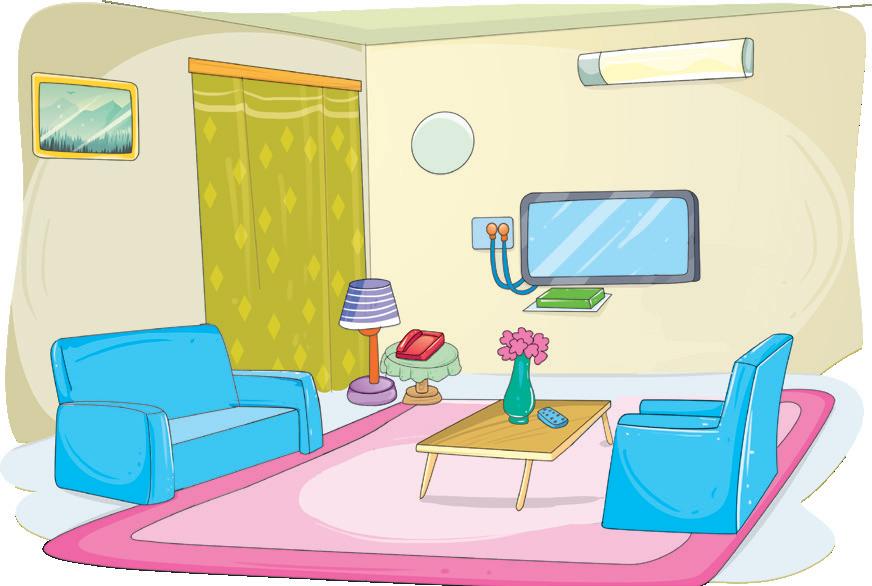
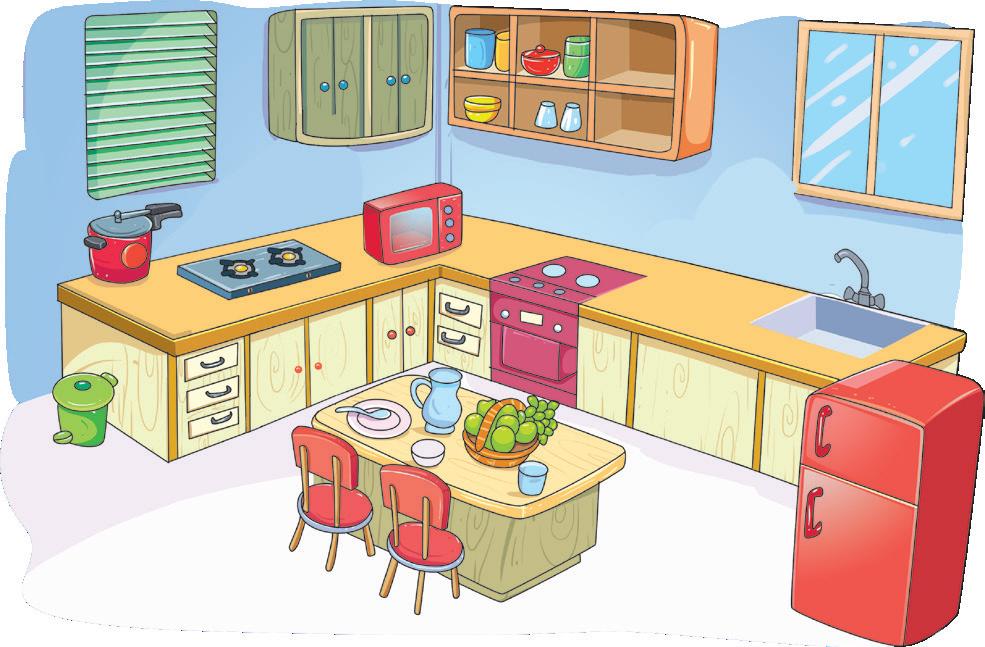
Talk about each room, its purpose, and some common things we see there. Also discuss that all houses are different, and all houses may not have all rooms.
Where do you keep these things? Match with the correct places.
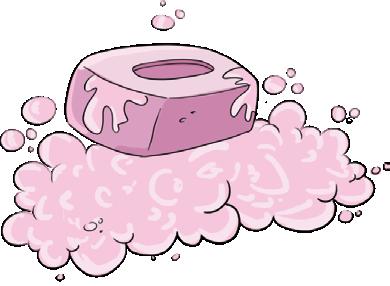
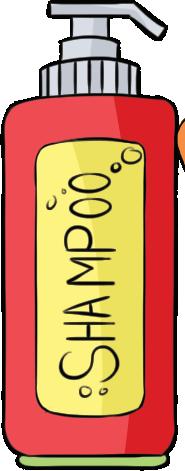
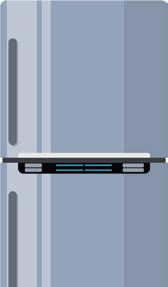
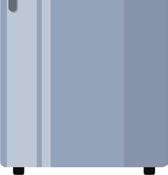
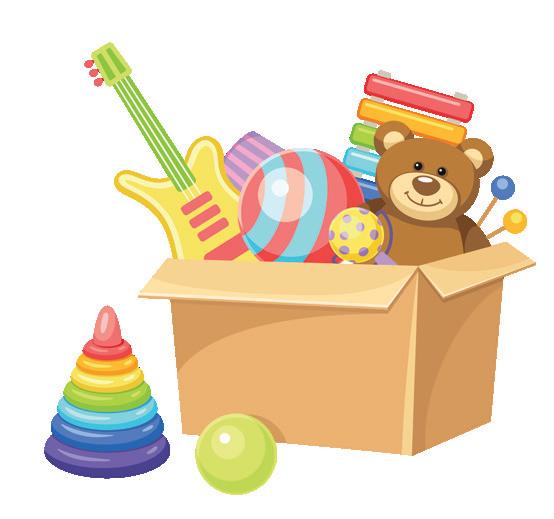



People live in many types of houses. Some are big and some are small, but all keep us safe. Let us learn about the different types of houses people live in.














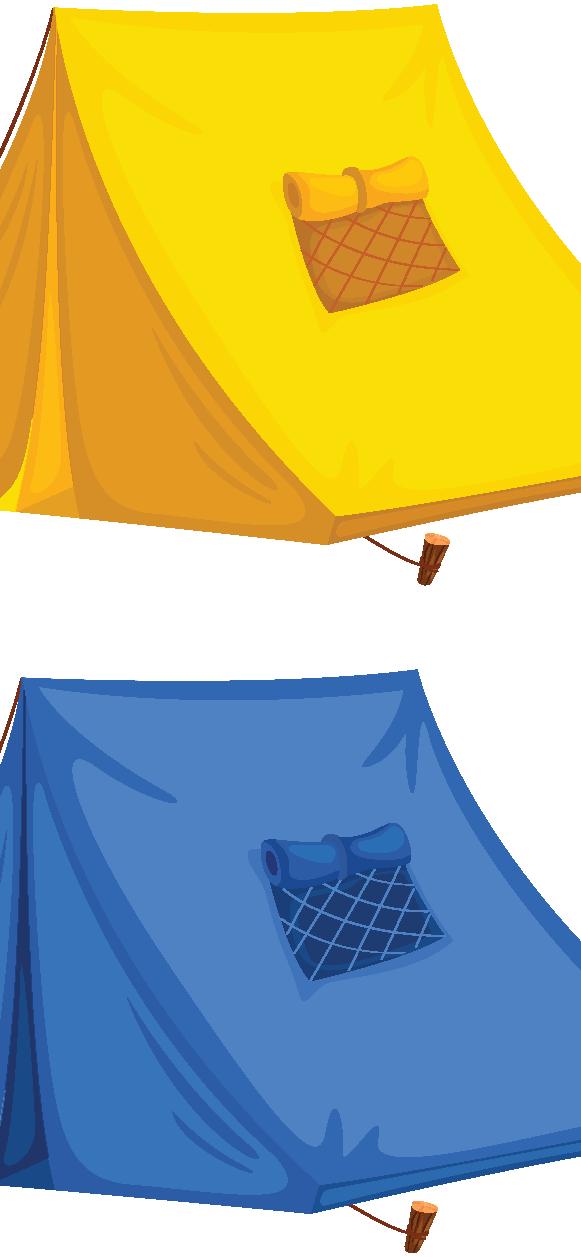

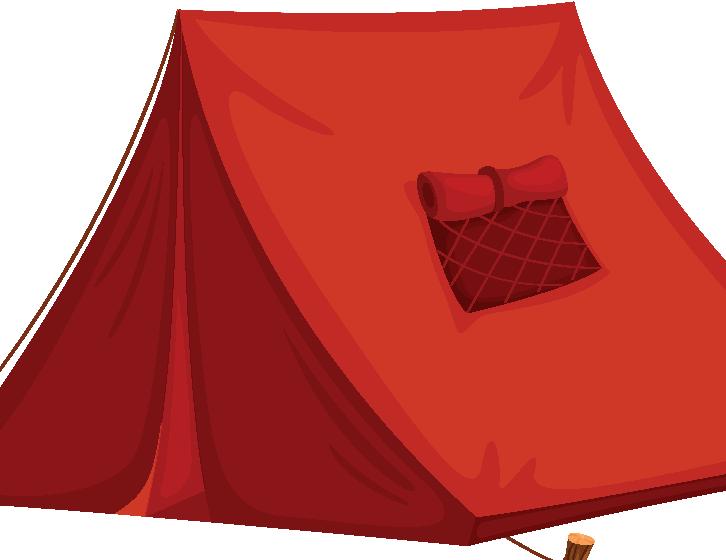
















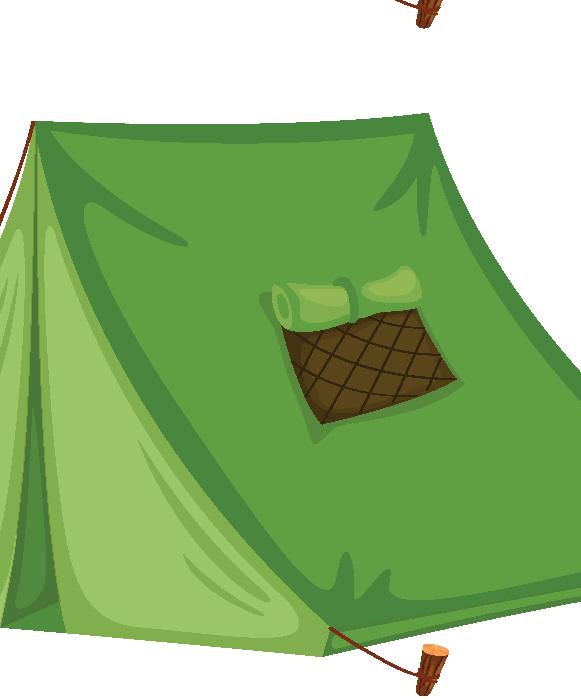






































































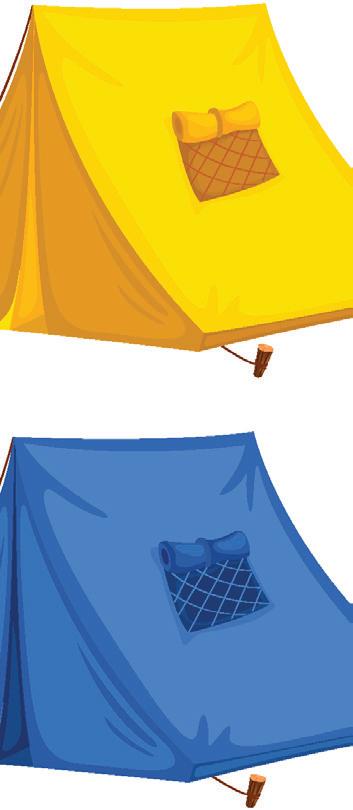
Look at the pictures. Circle the correct word.



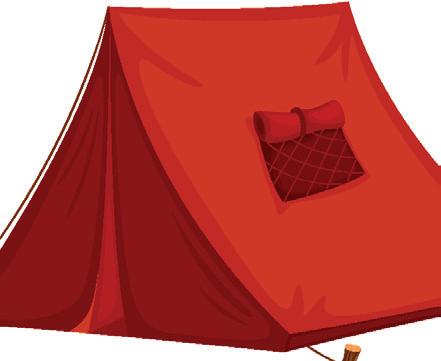


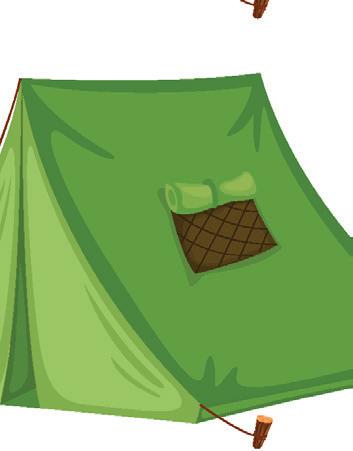


Look at the pictures. These are ways to keep our home clean.
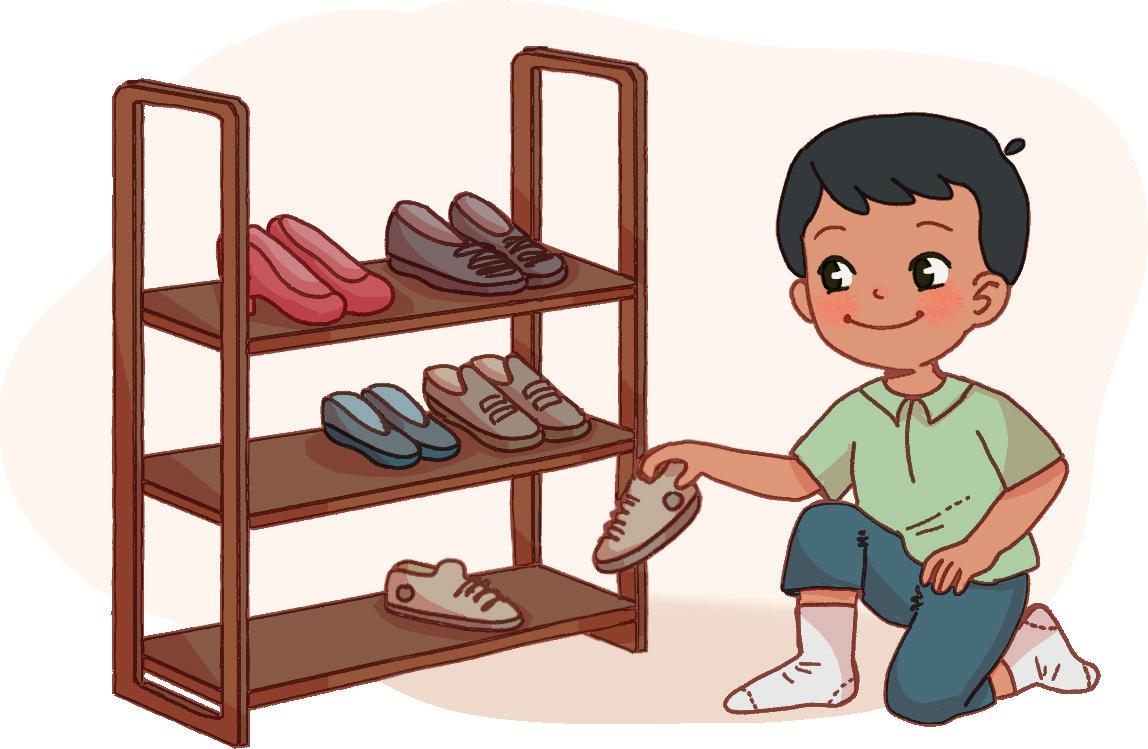
Put shoes in the shoe rack.
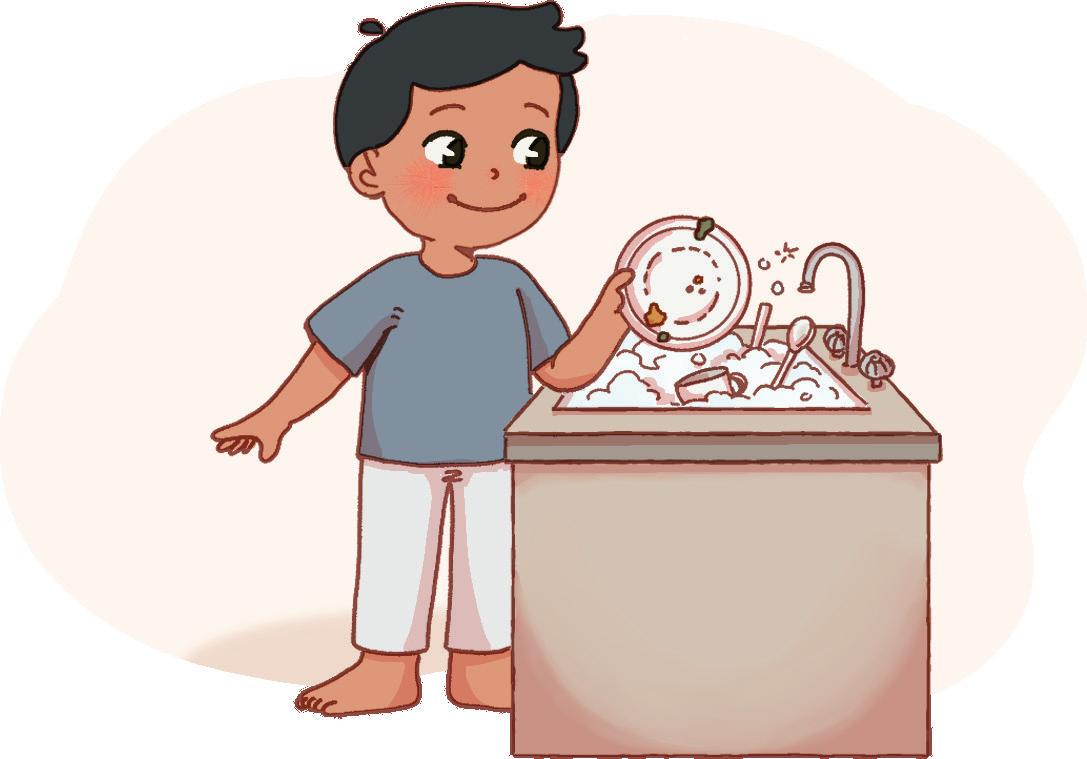
Put used dishes in the sink.
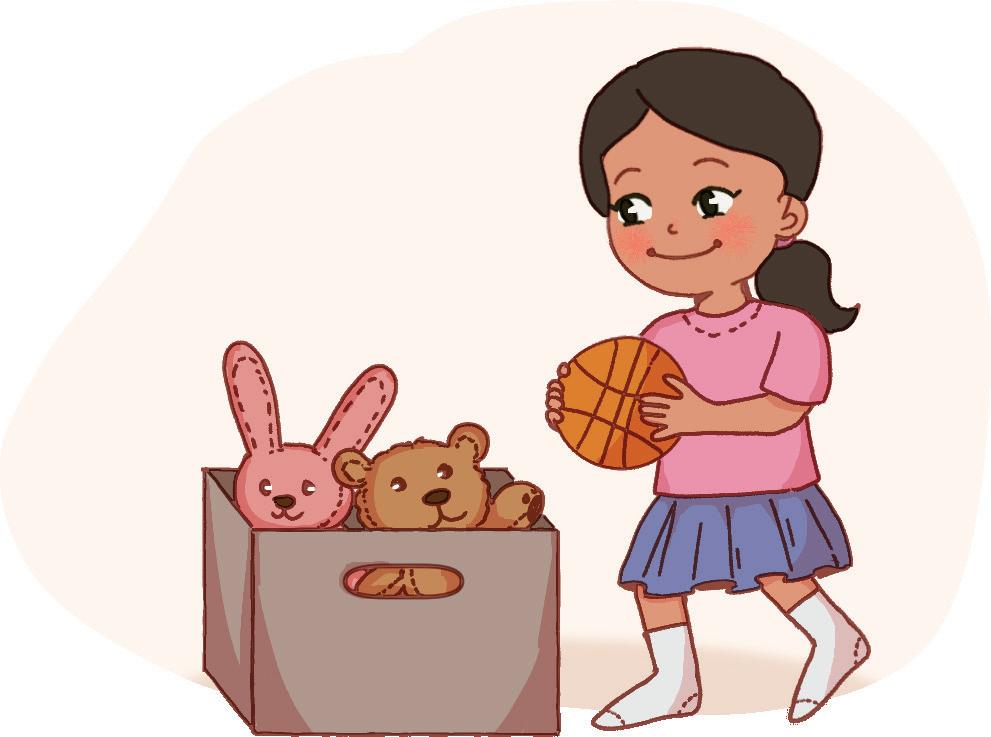
Put the toys back after playing.
Clean the study table.
Look at the pictures. Here are some things that we should keep in mind to keep ourselves safe at home.
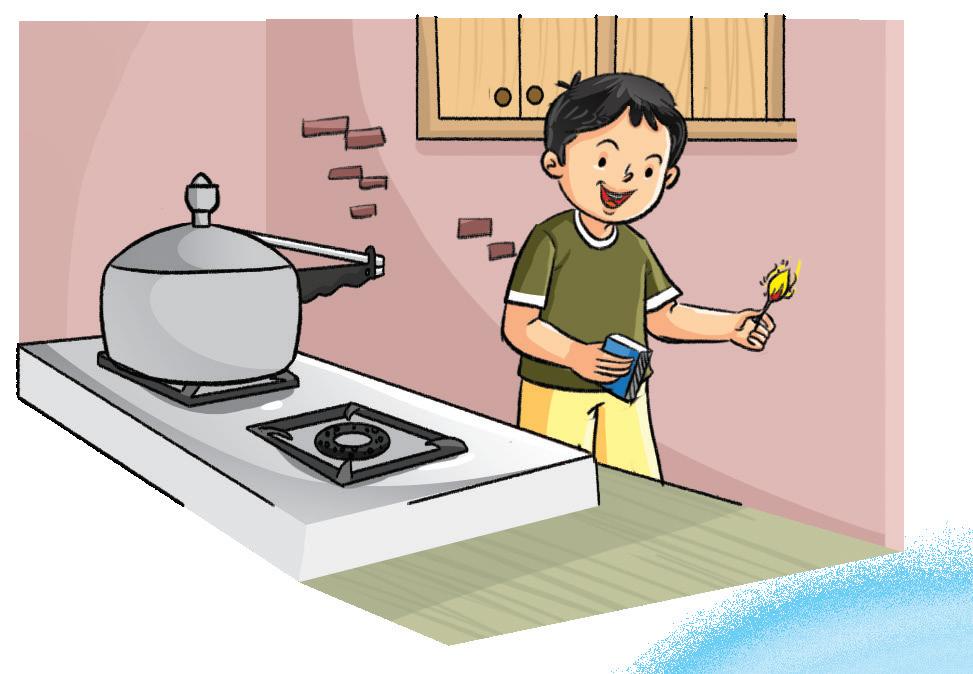
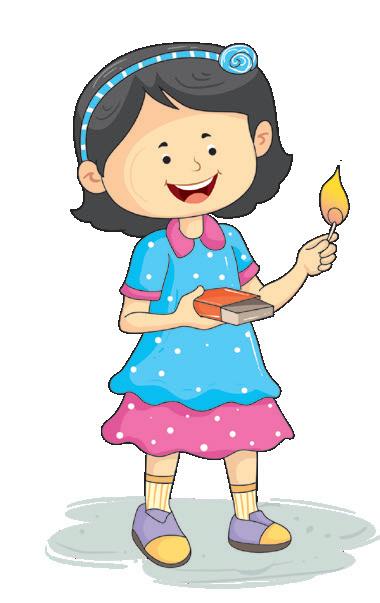
Do not play with matchboxes.
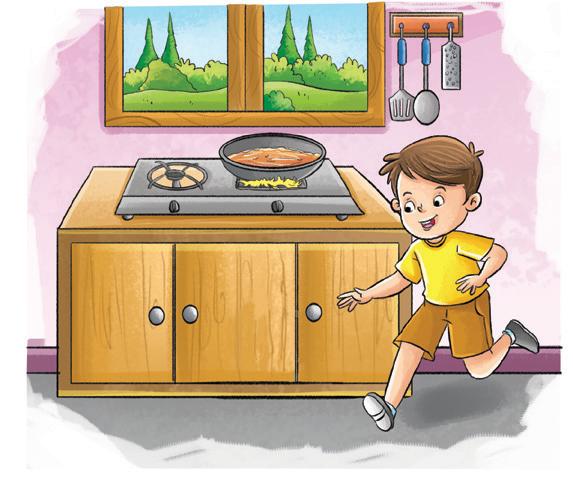
Ask an adult for help in the kitchen.
Do not touch hot surfaces like the iron, stove or oven.
Keep your toys in one place.
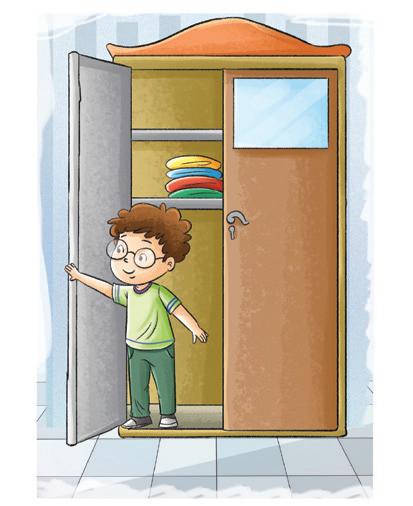
Do not hide in small spaces like closets or cabinets.
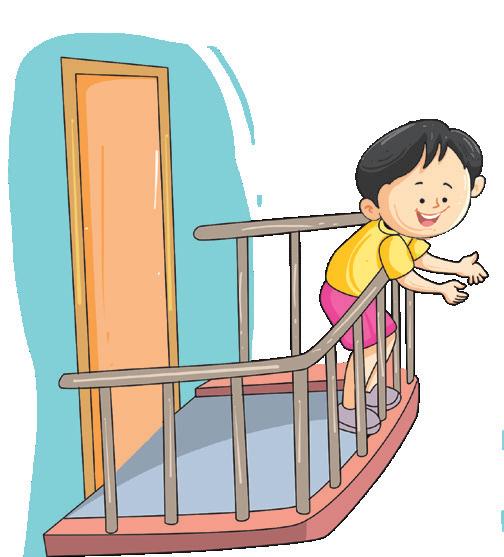
Do not lean over the balcony railing.
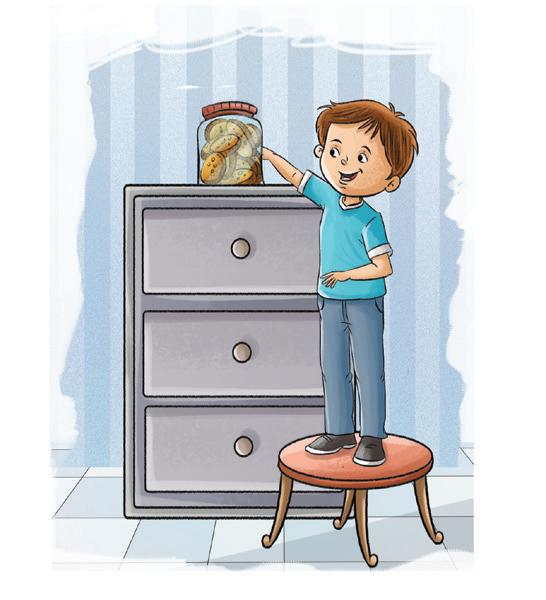
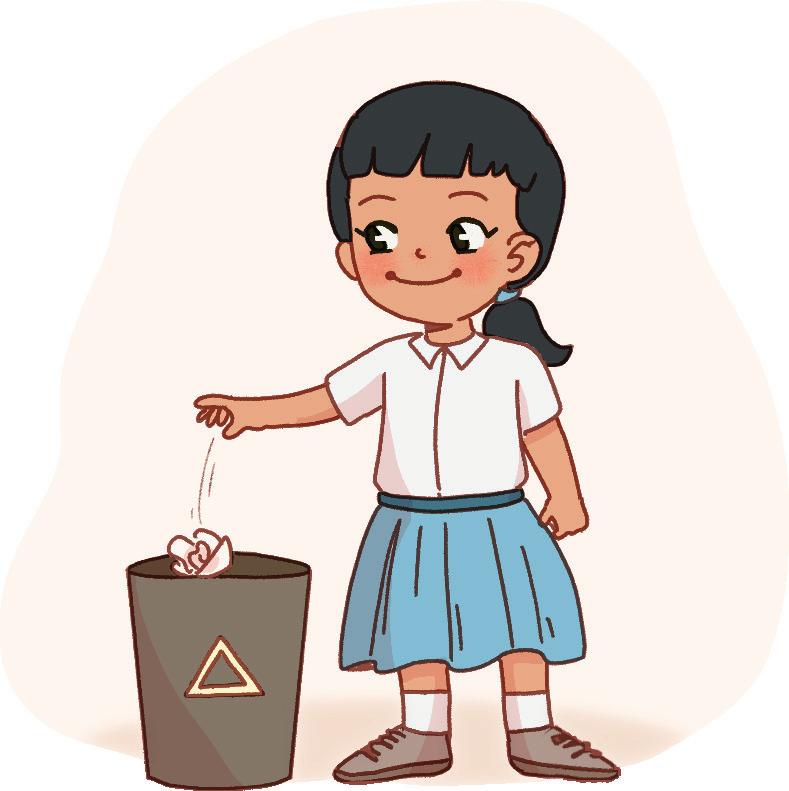
Put a tick () for safe actions. Put a cross () for unsafe actions.
Colours make our world bright and beautiful! Let us learn more about them.
Colours like red , blue and yellow are called primary colours.
Secondary colours are made by mixing two primary colours together. Let us look at some examples. red blue yellow
Write the names of the colours given below.
purple red green yellow blue orange
Write the colours in the correct column.
purple red green yellow blue orange
Primary Colours Secondary Colours
We do many things at school. Let us learn about them.
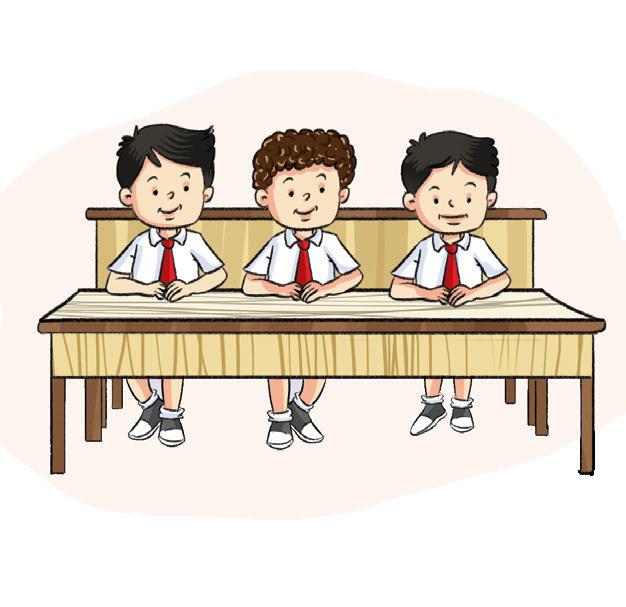
We read and write.
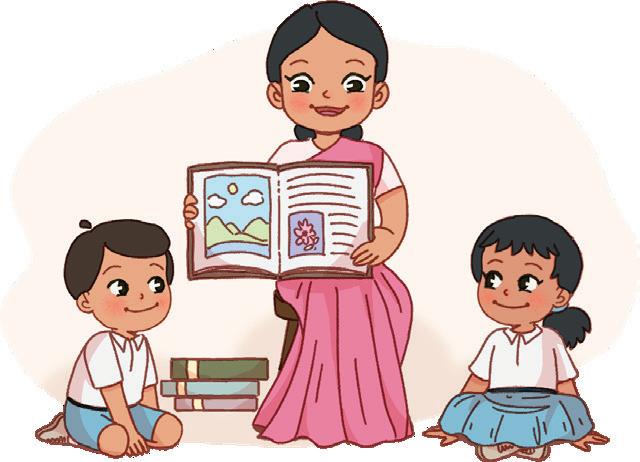
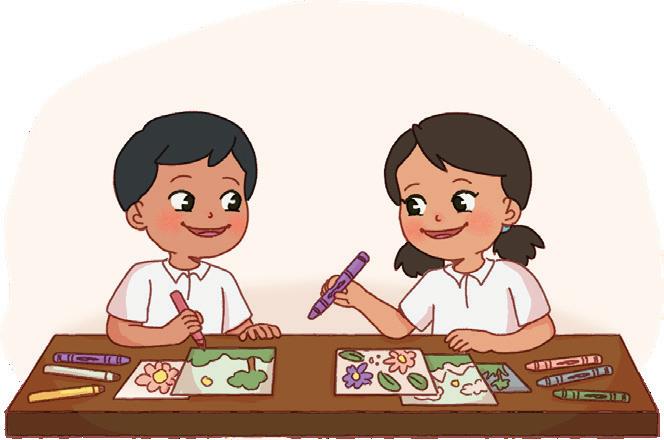
We listen to stories. We draw and colour.
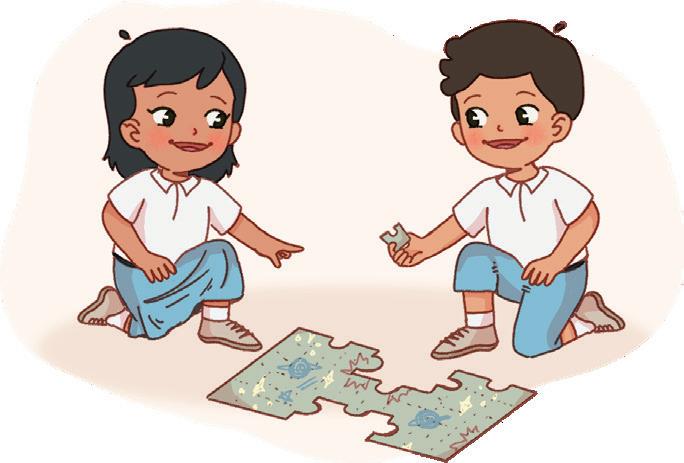
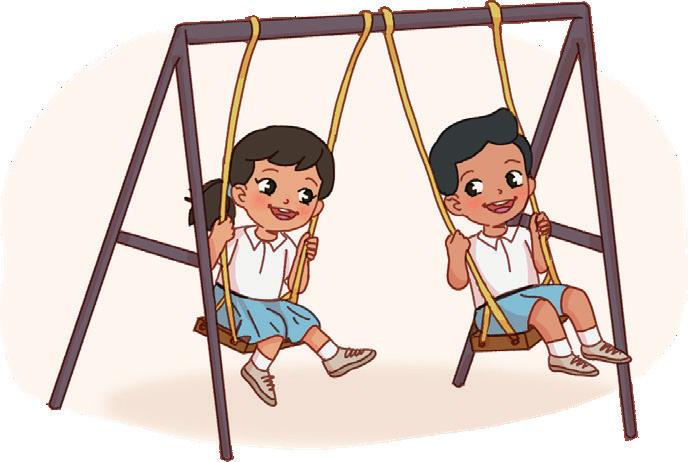
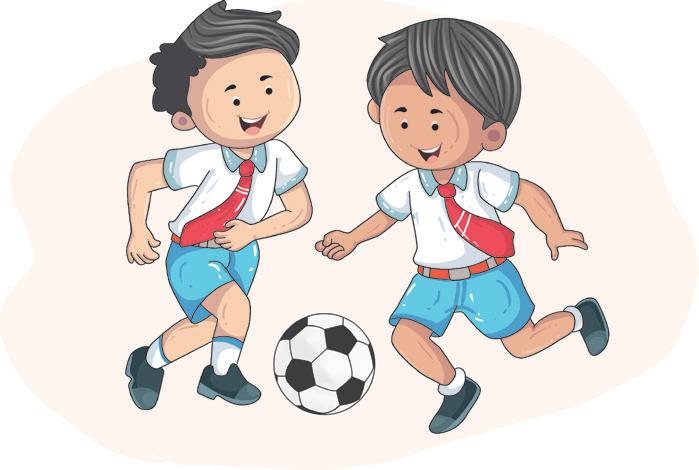
We play football. We solve puzzles. We play on swings.
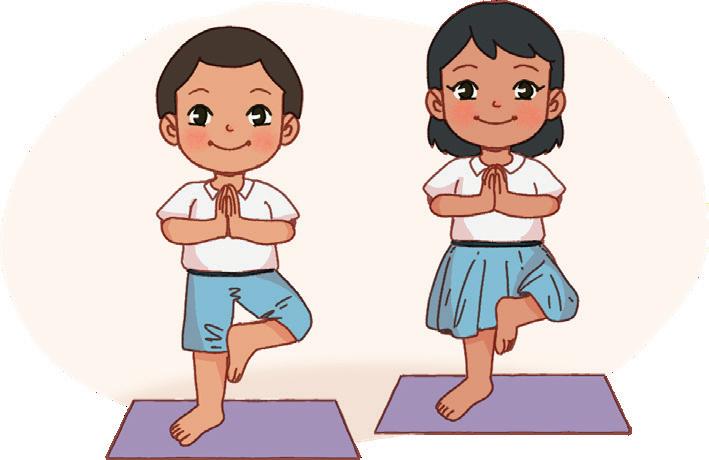
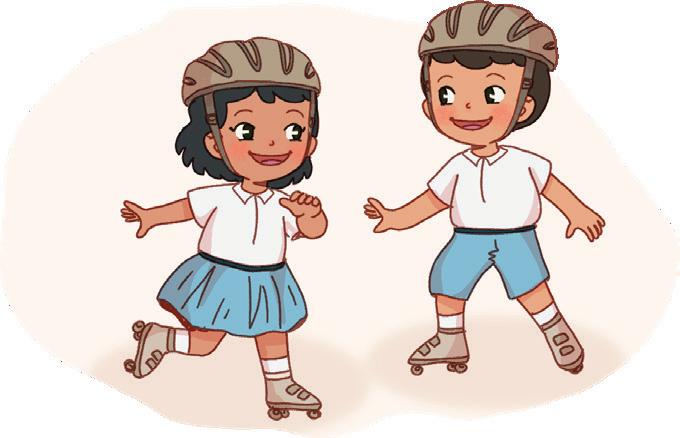
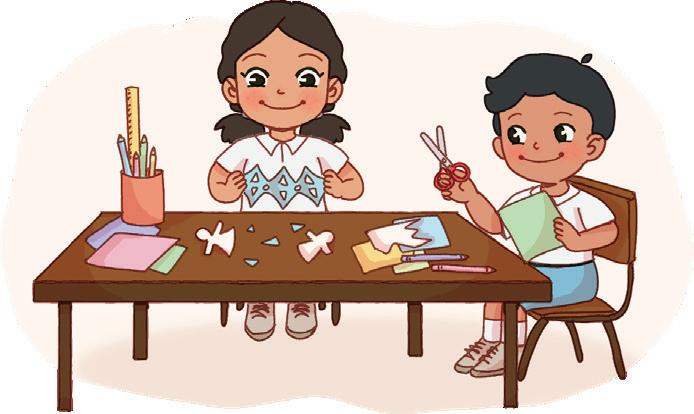
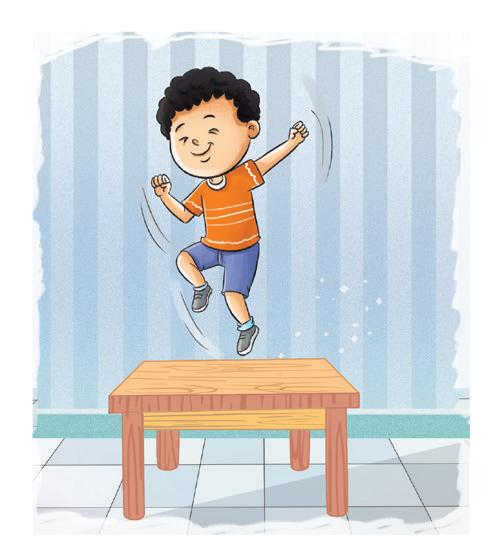
We exercise. We skate. We do art and craft.
Encourage children to talk about what they like doing at school.
Schools have many rooms. Let us learn about them.


music room classroom
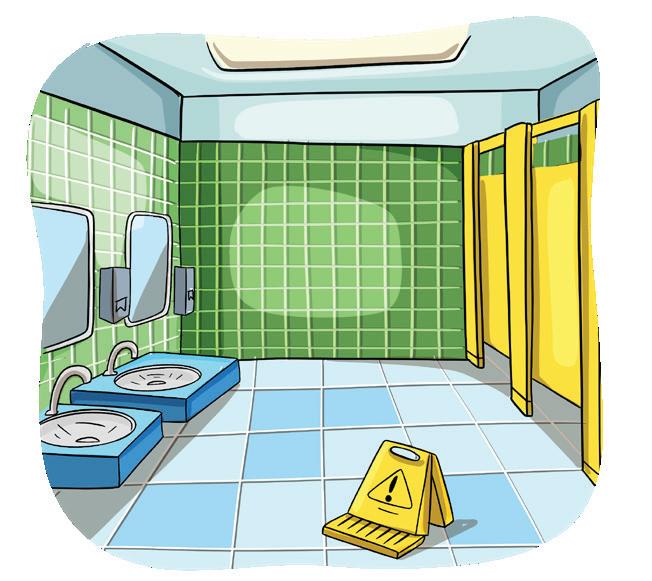
washroom
Let's Talk
1. Name some rooms in your school.
2. Where do you play in the school?
3. What do you do in the classroom?




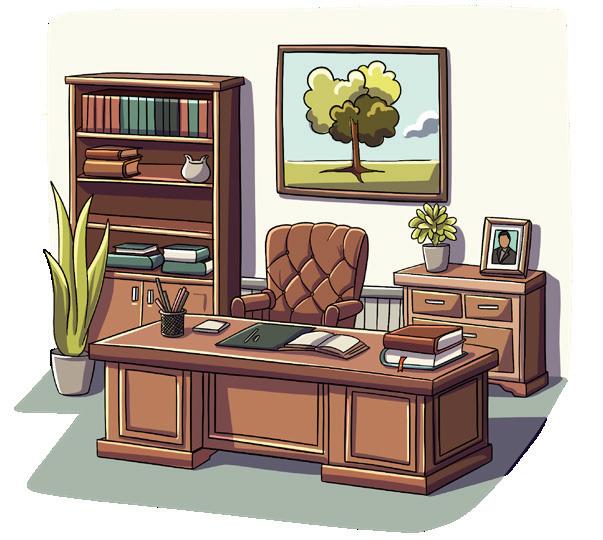
principal’s office library
computer room
Match the pictures of the rooms with their names.

washroom
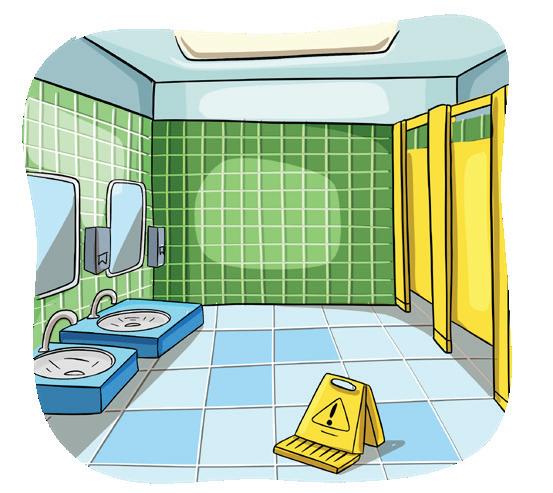
music room
principal's office


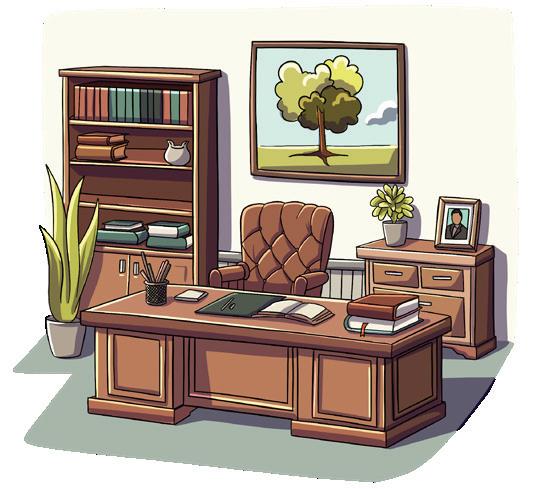
classroom
library
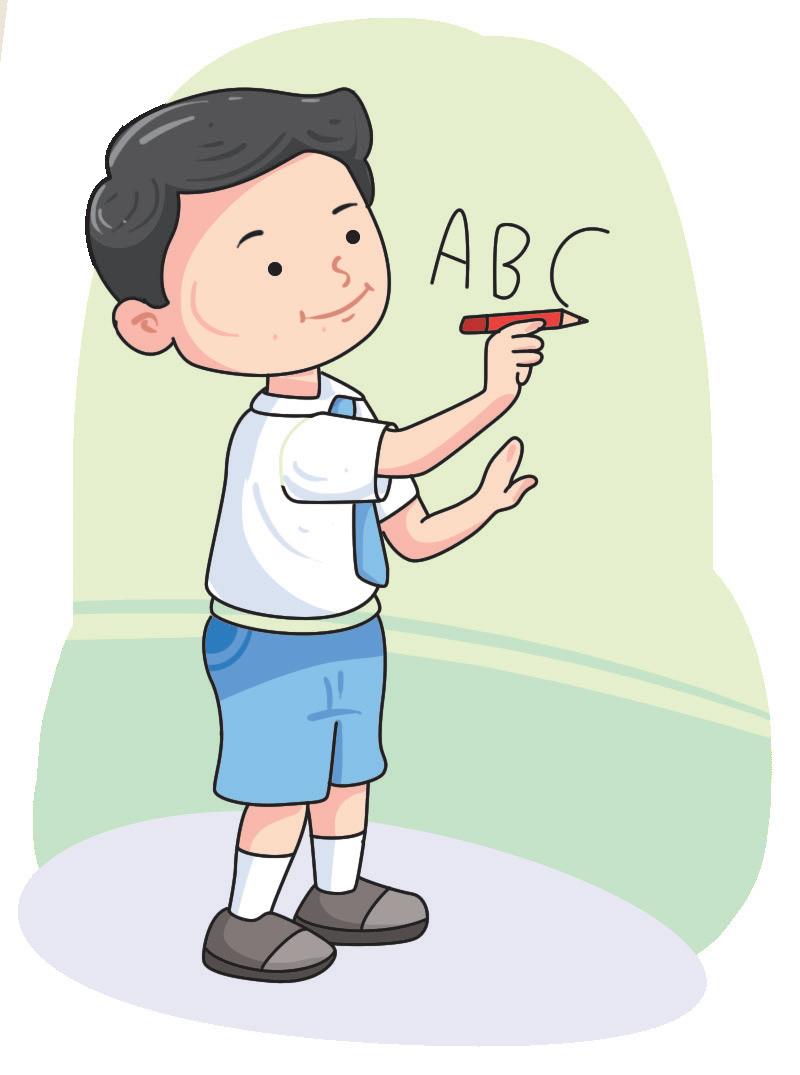
Good habits help us take care of ourselves and others at school. Let us learn about them.
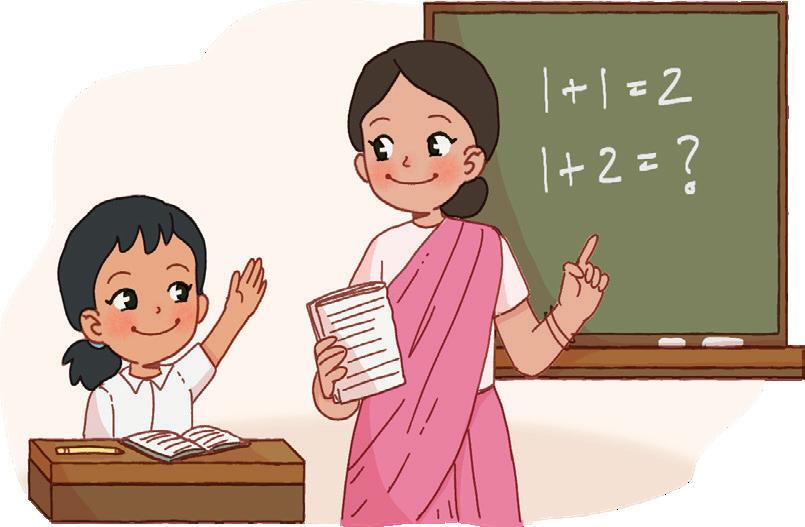
We should listen to our teacher.
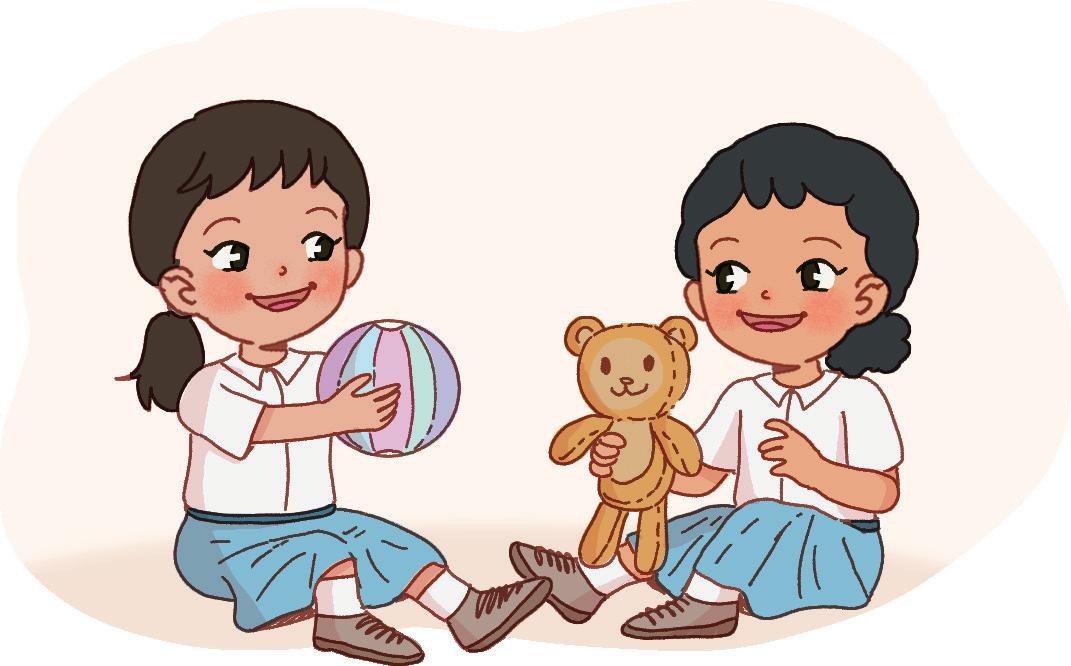
We should share our toys.
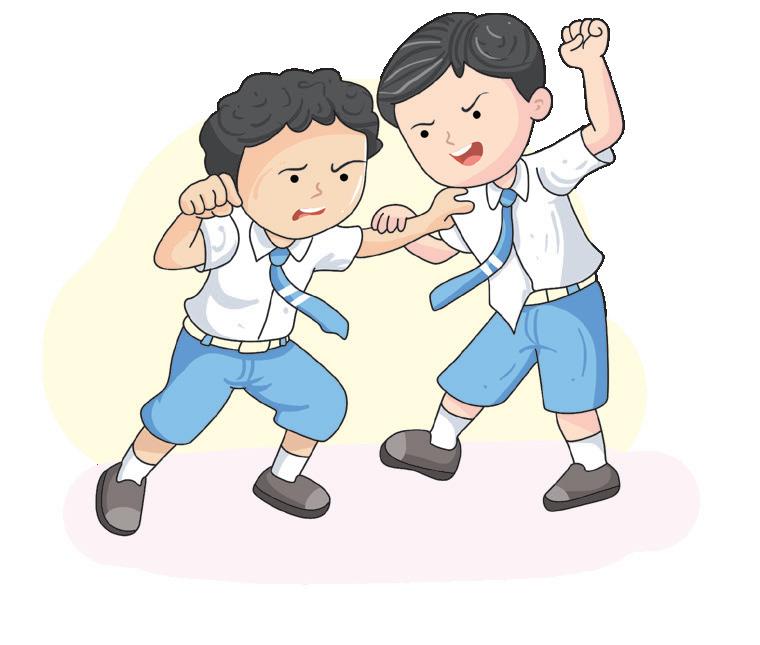
We should not fight with friends.
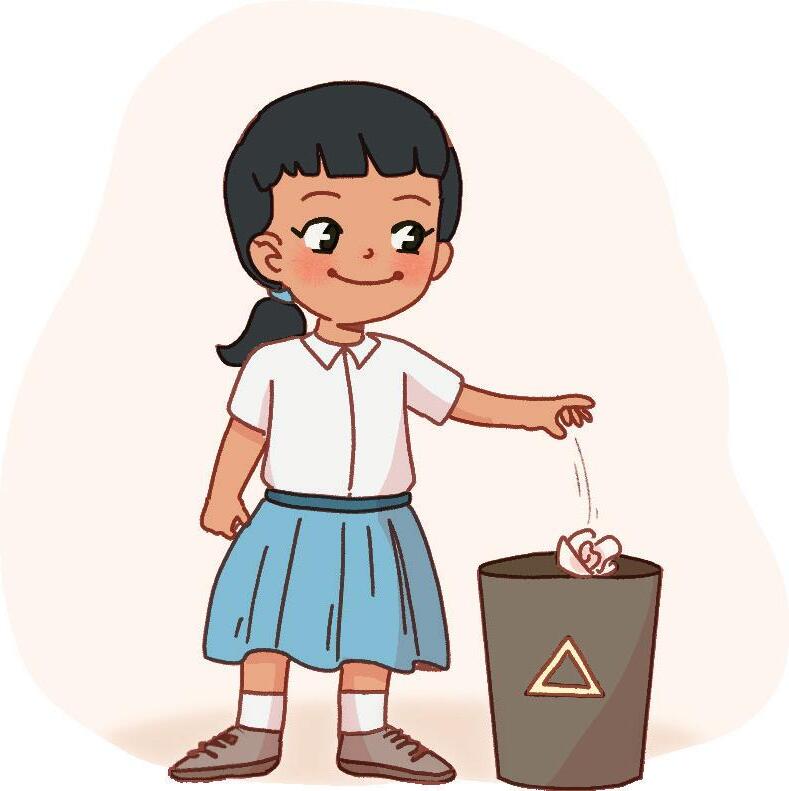
We should throw garbage in the bin.
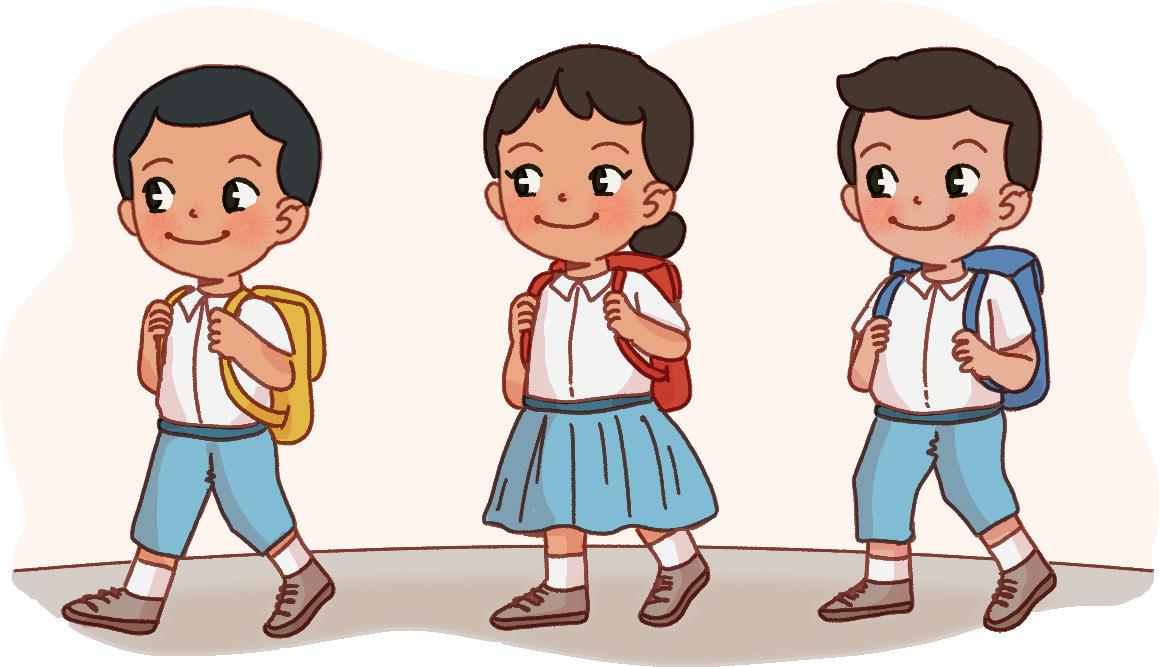
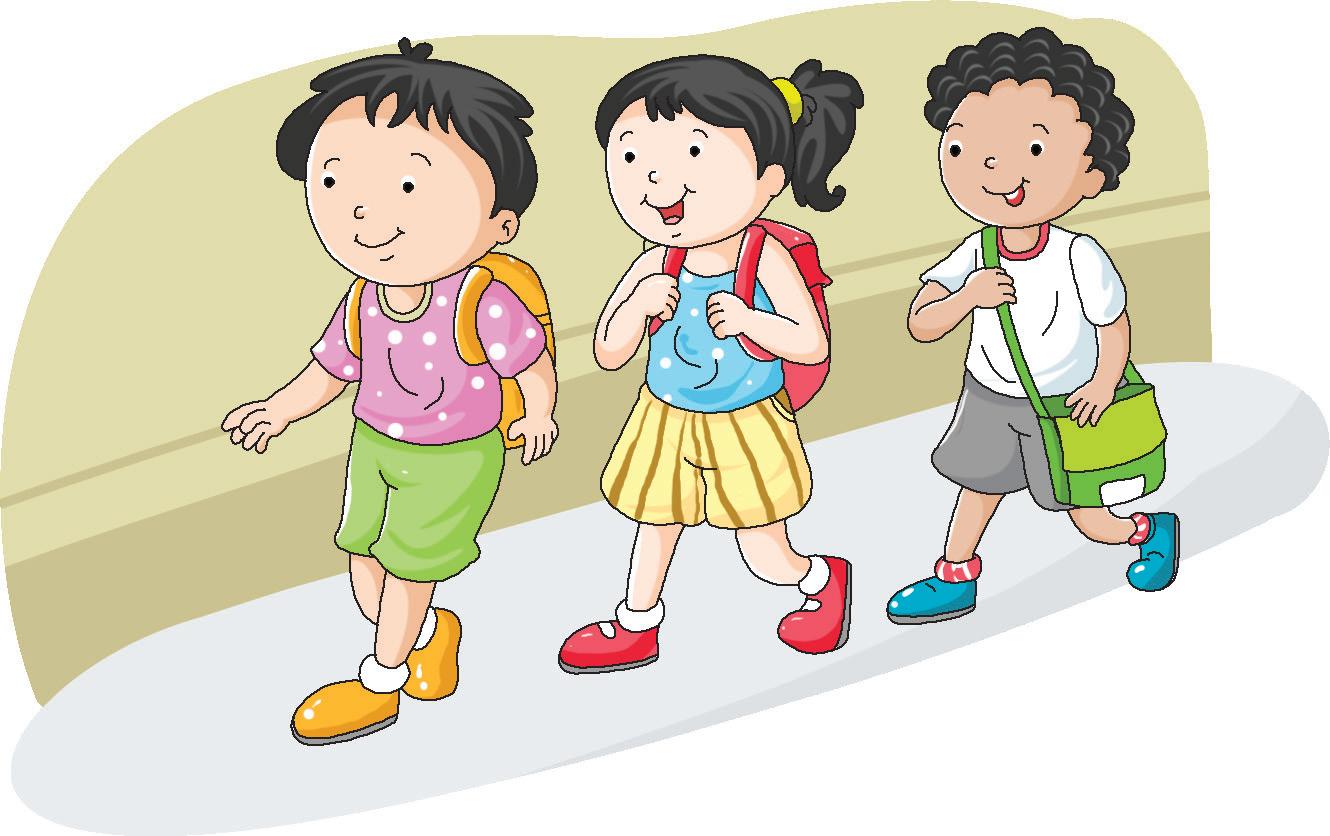
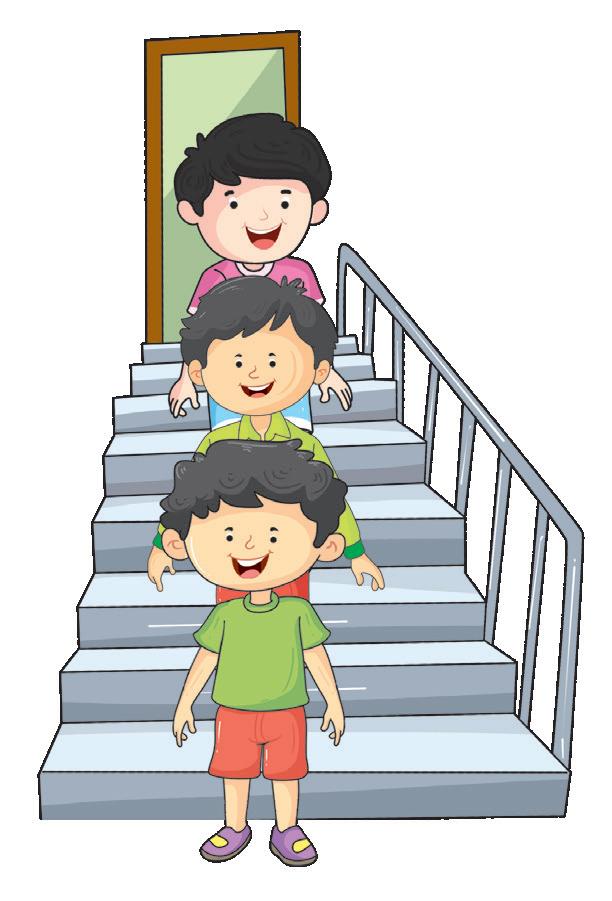
We should always walk in a queue.
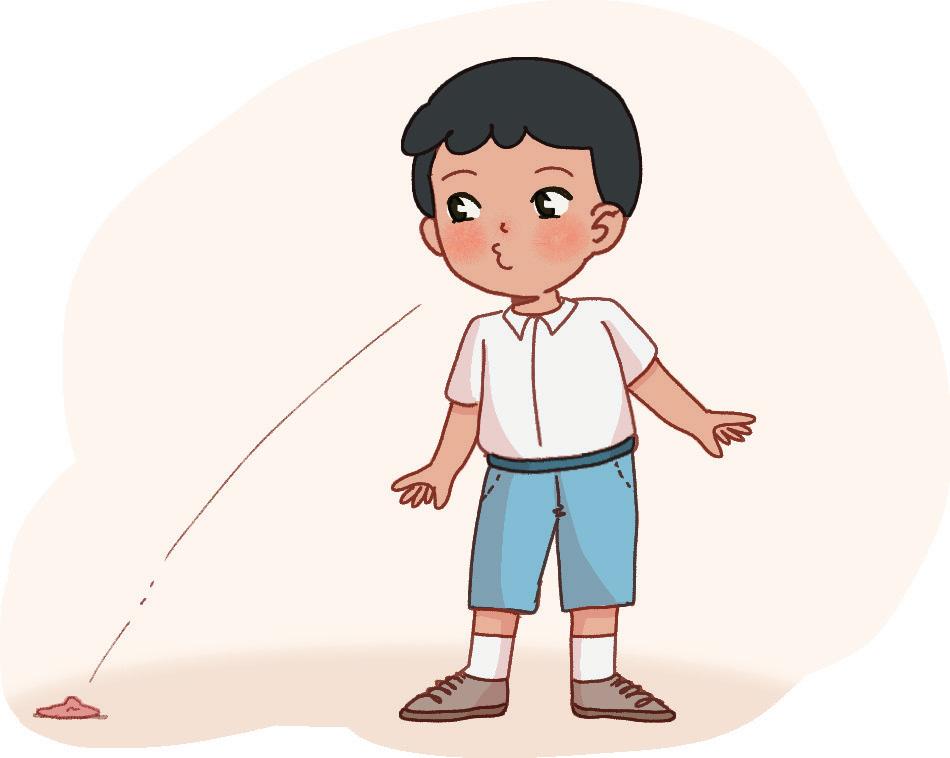
We should not spit on the floor.
Tick () the good habits. Cross () out the bad habits.
We celebrate some important events at our school. Let us learn about them.
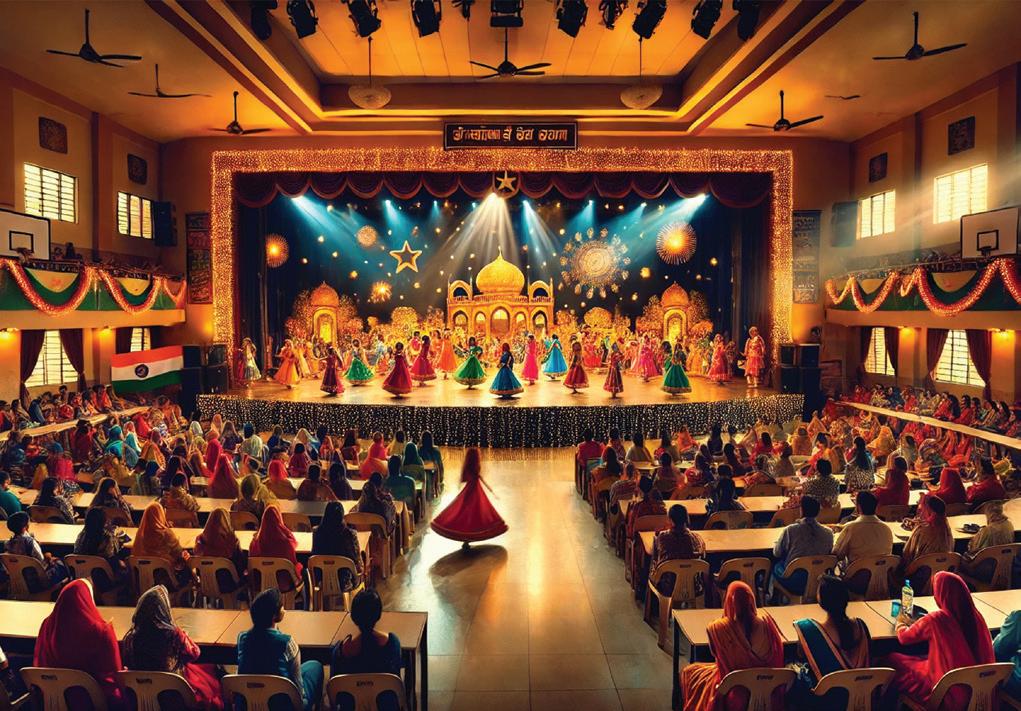
Annual Day
Let's Talk
1. Which other events or festivals do you celebrate at school?
2. Which one is your favourite? Why?
Sports Day
Let us learn about some safety rules at school.
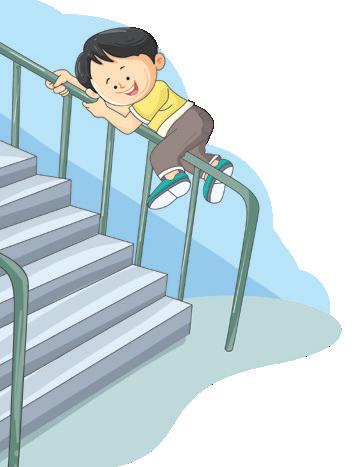
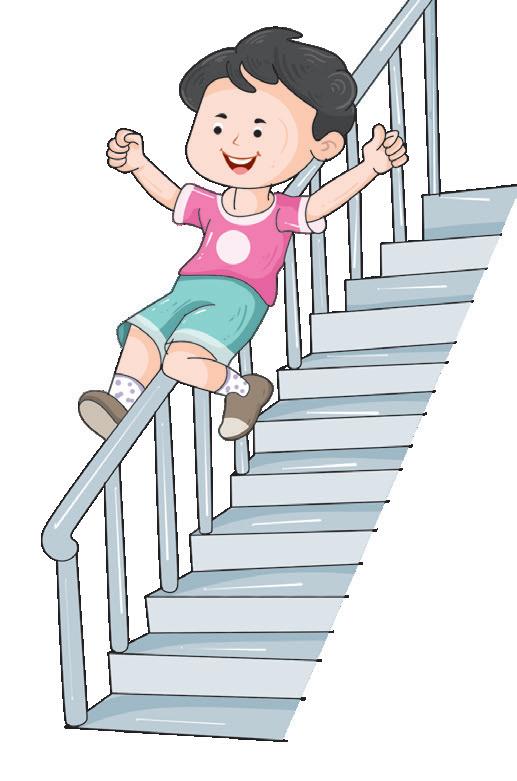
Do not sit or slide on the handrail.
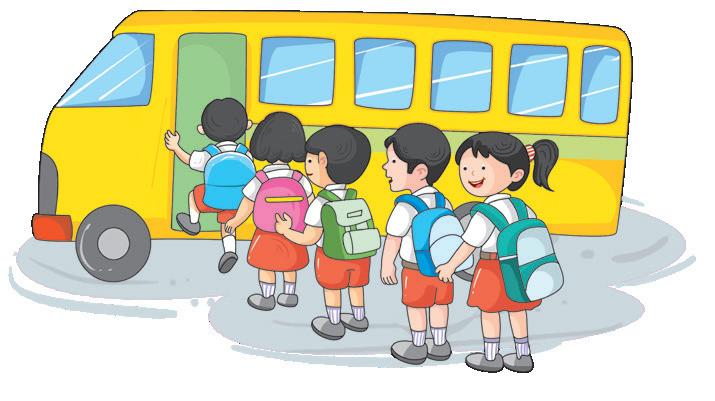
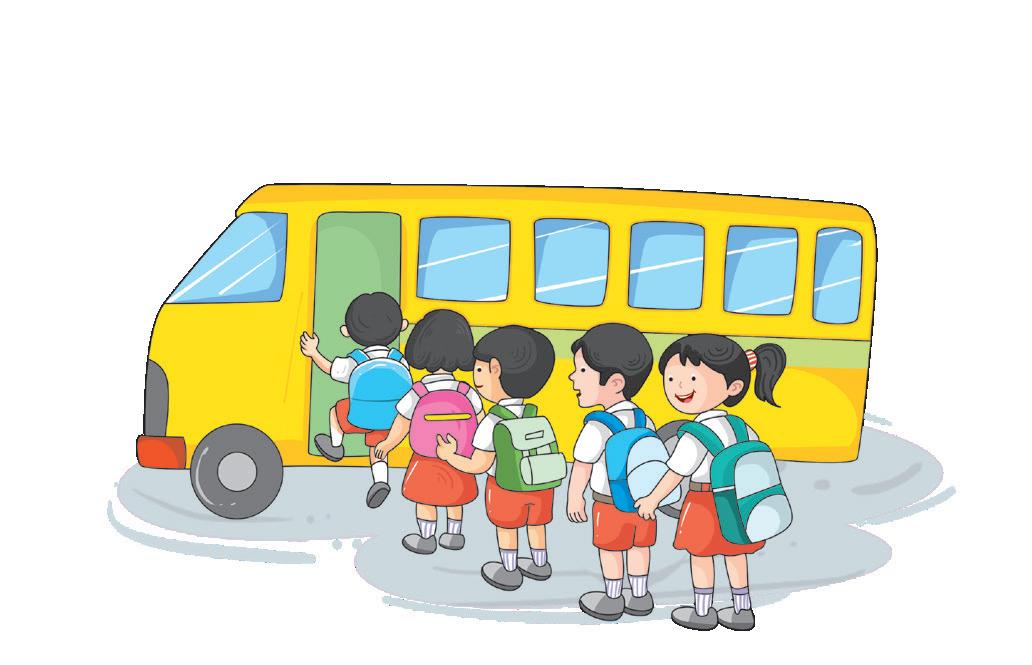
Stand in a queue for the bus.
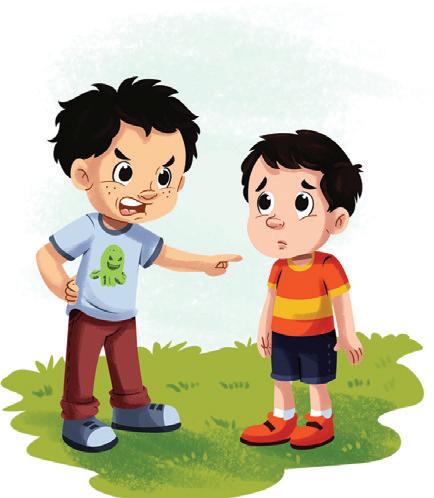
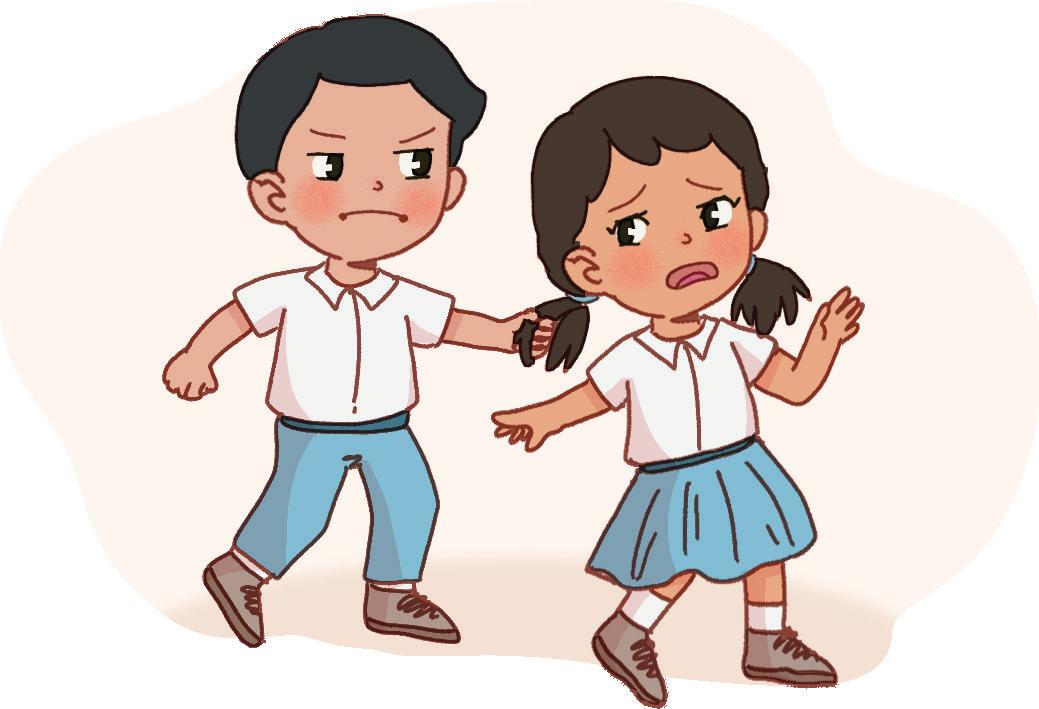
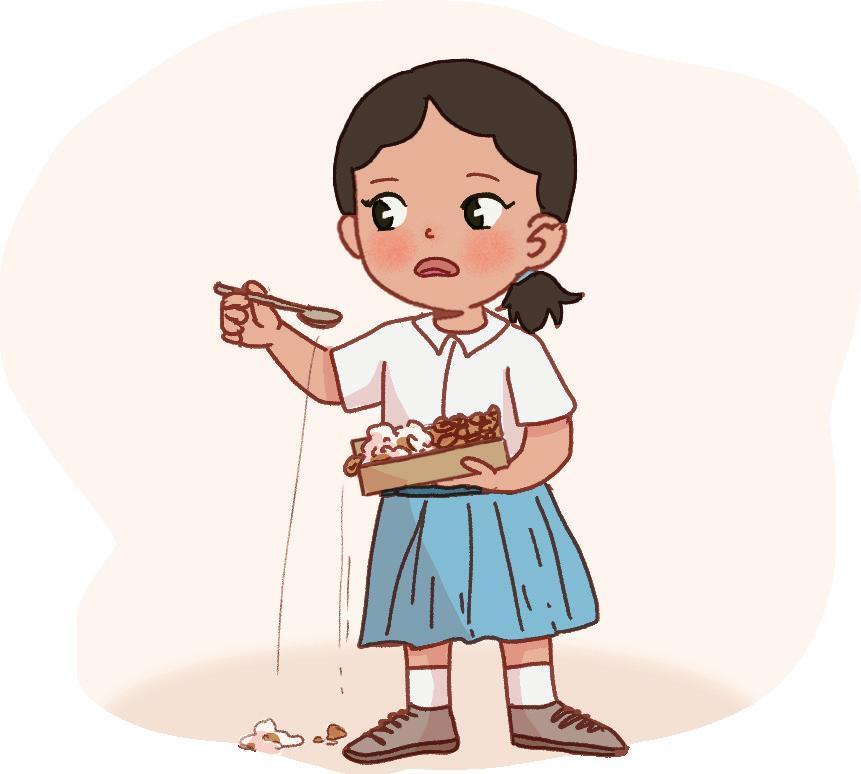
Do not bully each other.
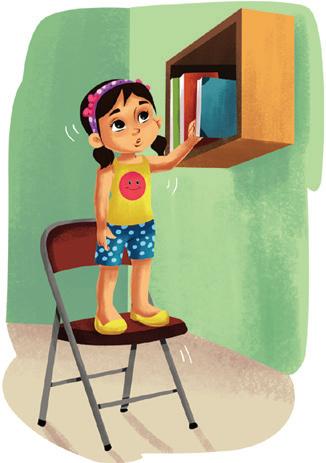
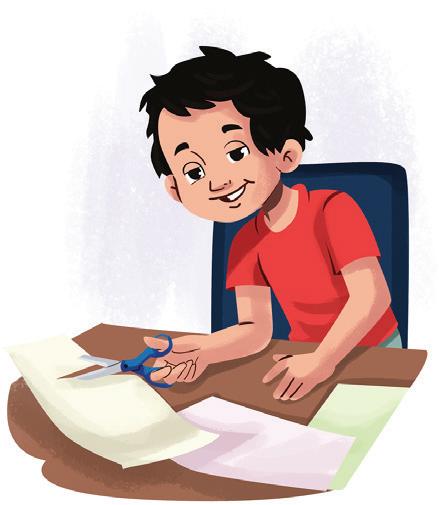
Use scissors safely. Do not stand on a chair.
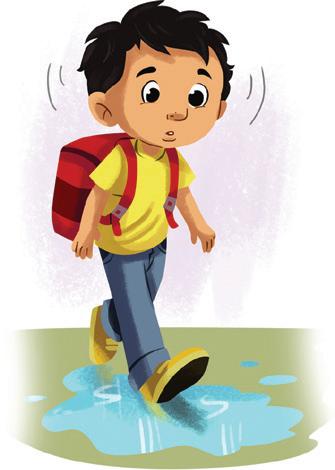
Do not walk on a wet floor.
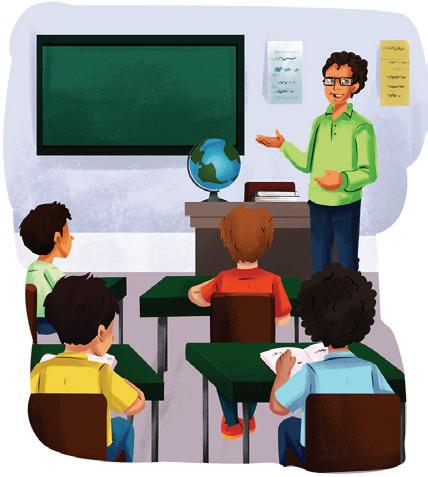
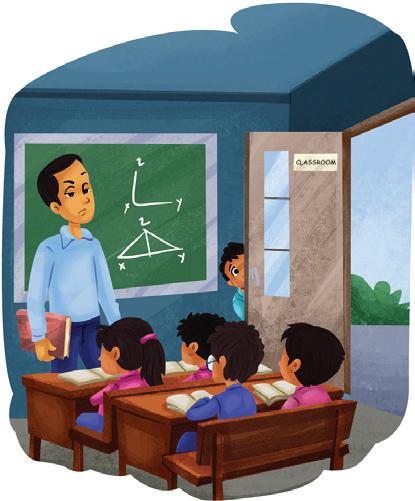
Do not hide behind the classroom door. Listen to your teacher.
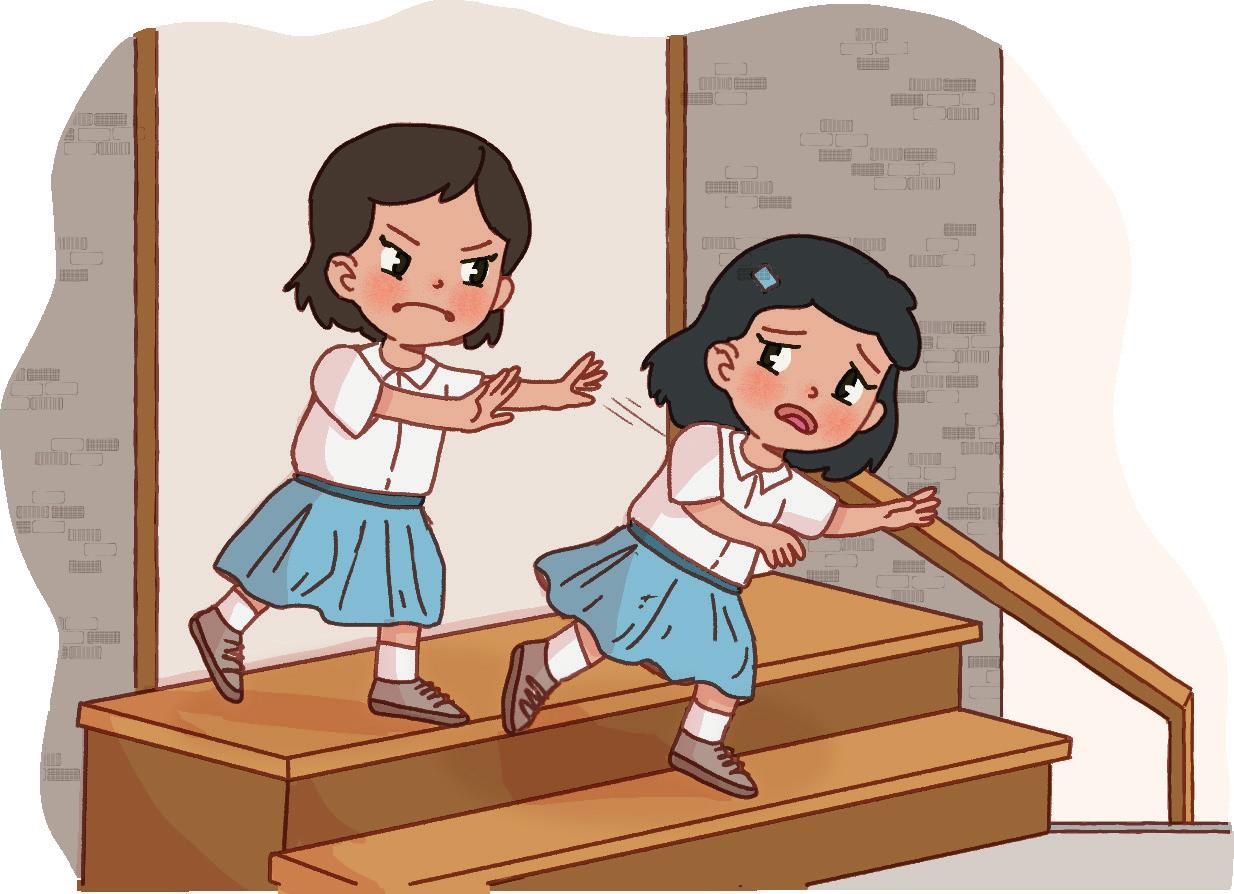
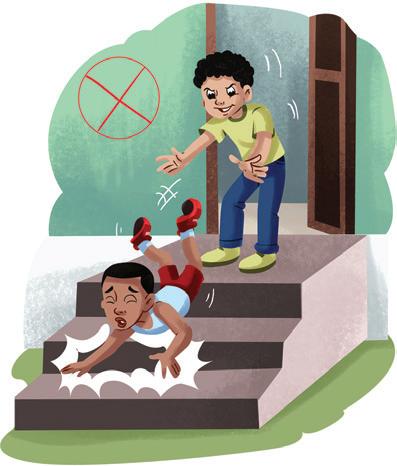
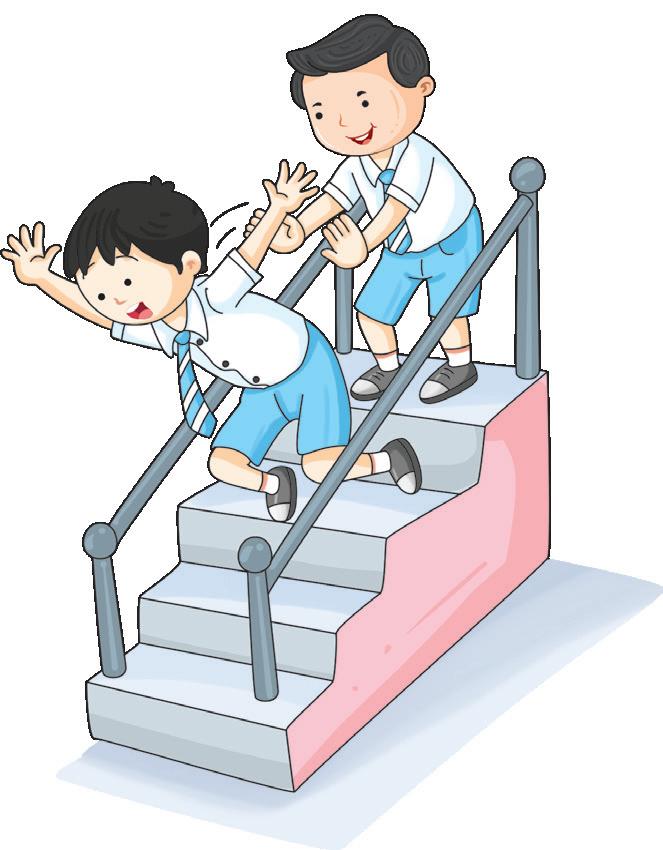
Do not push anybody on the stairs.
Look at the pictures. Cross () the unsafe actions.
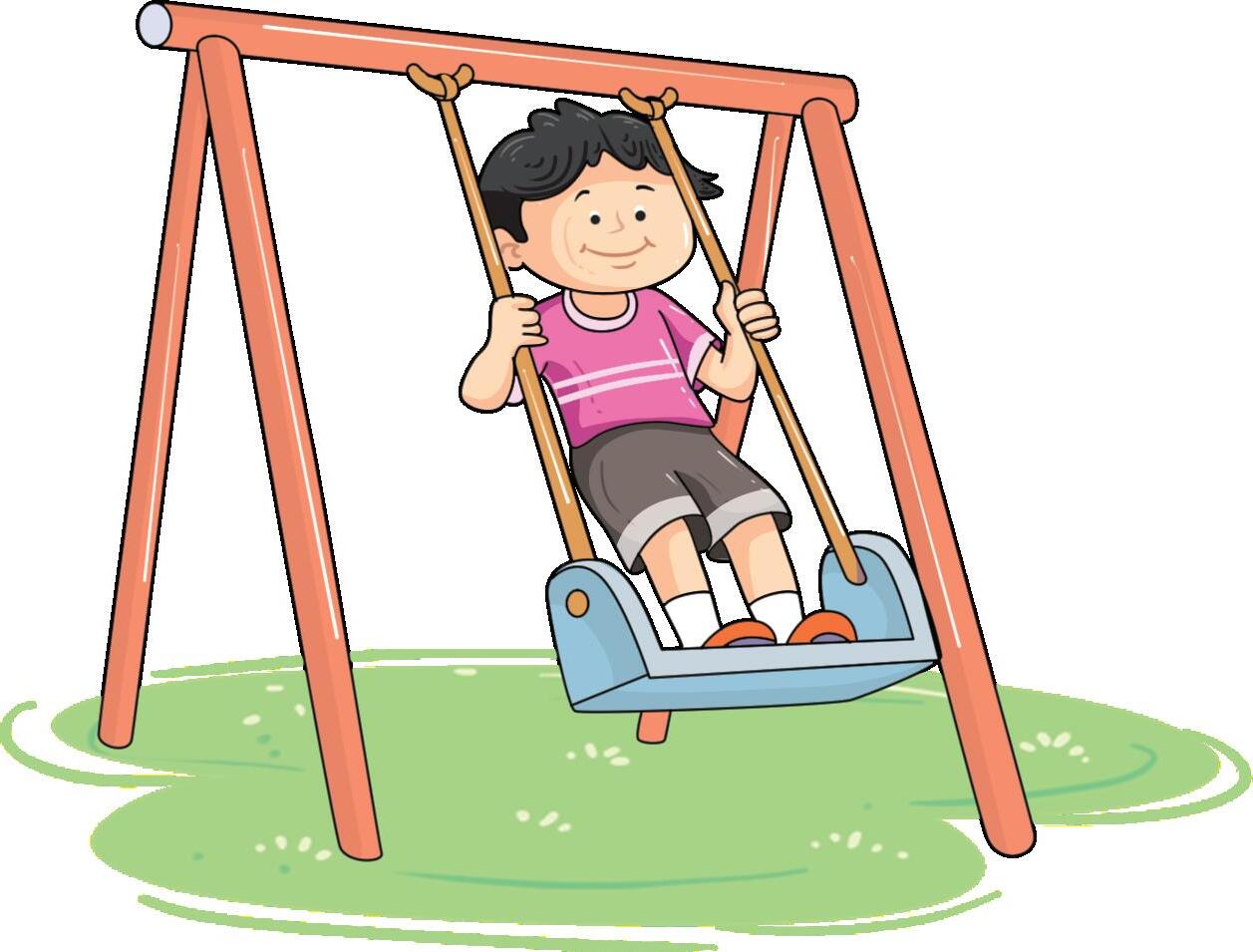
Games keep us strong, healthy and happy. Some games are played indoors and some outdoors. Let us learn about them.

Let children talk about some of their favourite indoor and outdoor games. You can also encourage them to solve some puzzles or play simple indoor games in the class.
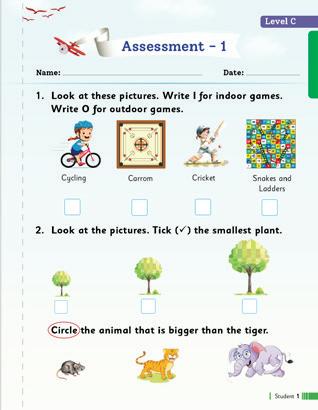
Look at the pictures. Write ‘O’ for the outdoor games and ‘I’ for the indoor games.

Dip earbuds in different colours to make a rainbow. Then colour the clouds.


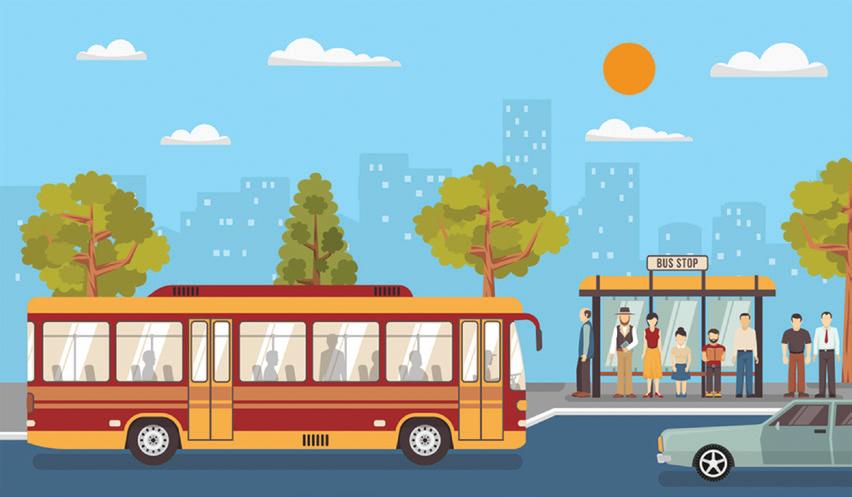
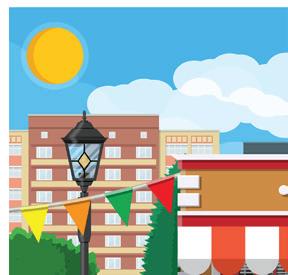
We see many places around us. Let us learn about them.

































airport


































station







































Discuss the various places, their purposes, and how we can keep our surroundings clean.



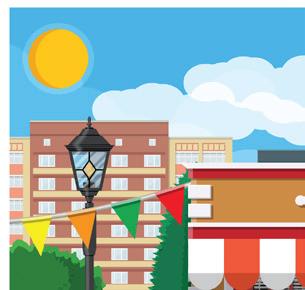
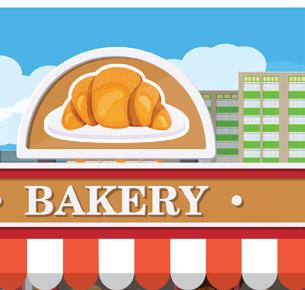
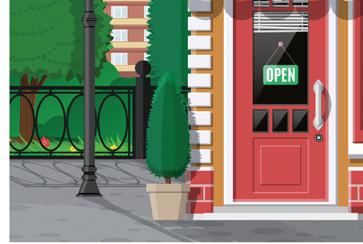
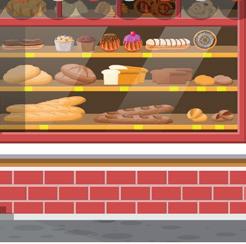
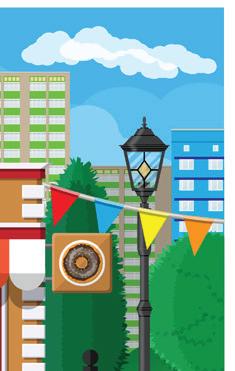
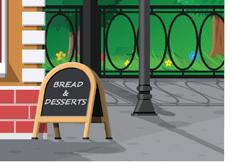












Help each person reach the right place in town. Draw a line through the maze to connect them.
































Look at the pictures. Circle the correct answer.










airport
One day, Vikram the firefighter was at the fire station. Suddenly, the alarm rang loudly. The call said, “Ila’s house is on fire!”
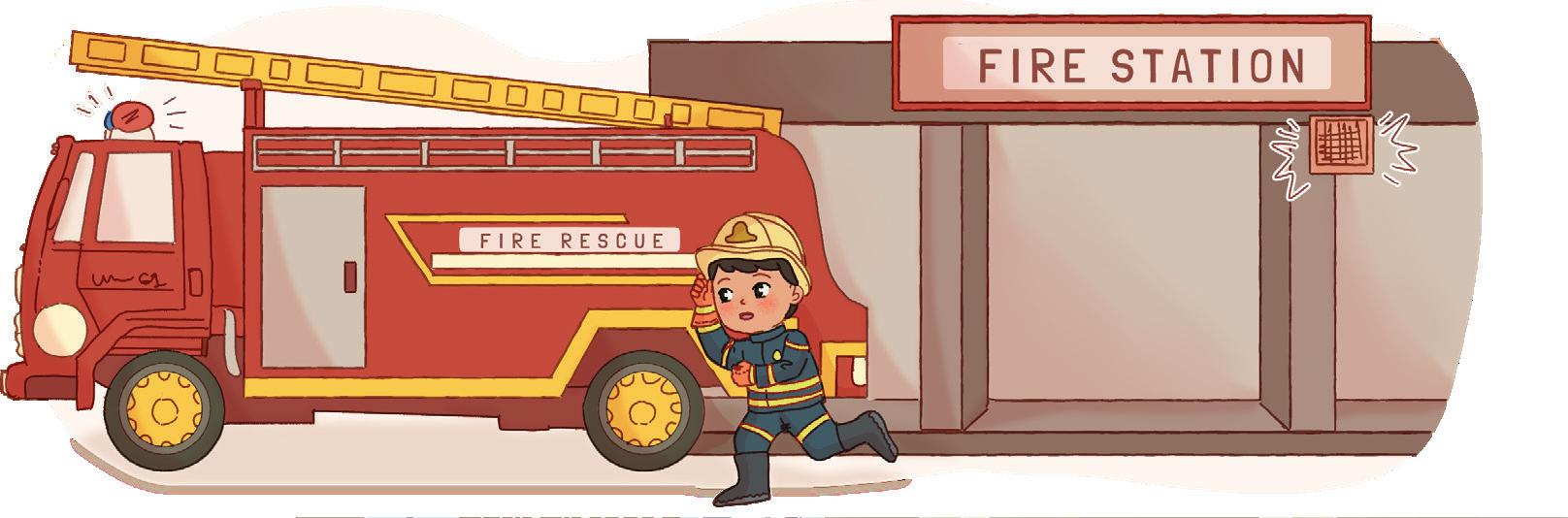
Vikram quickly hopped into the fire engine. The siren went “tang, tang, tang” as they raced to Ila’s house.

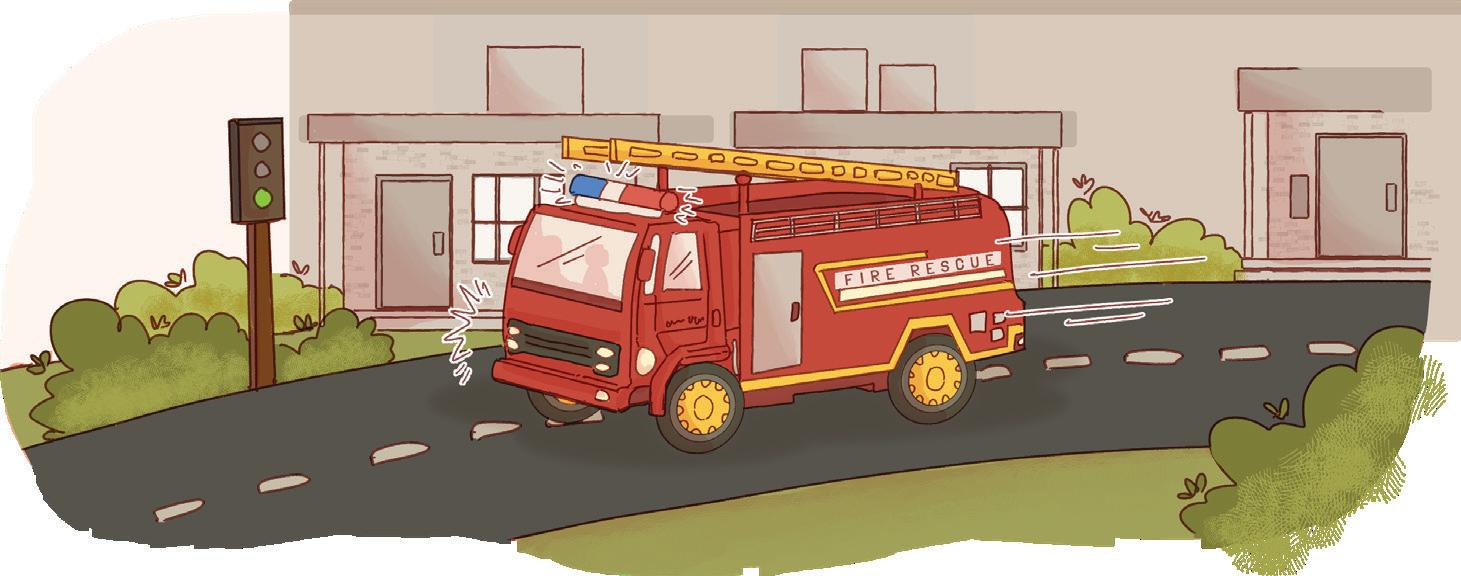
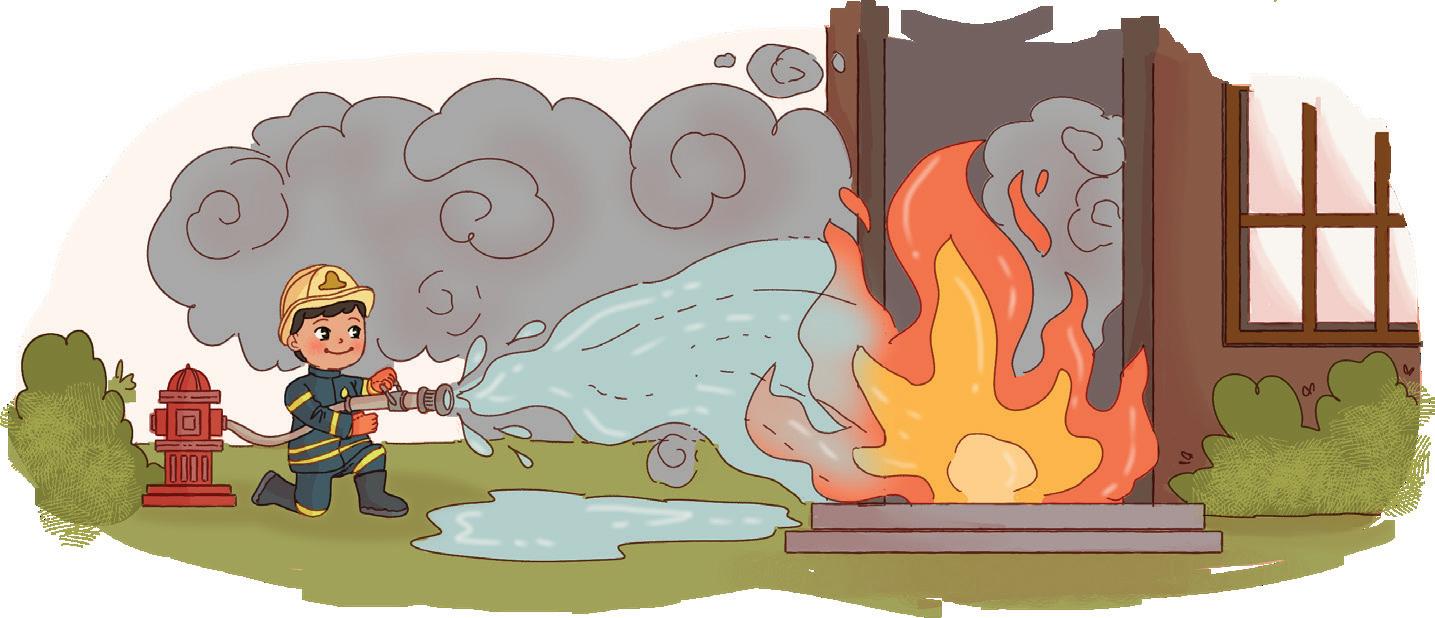
They saw that Ila’s house was on fire. Vikram and his team sprayed water to put out the flames.
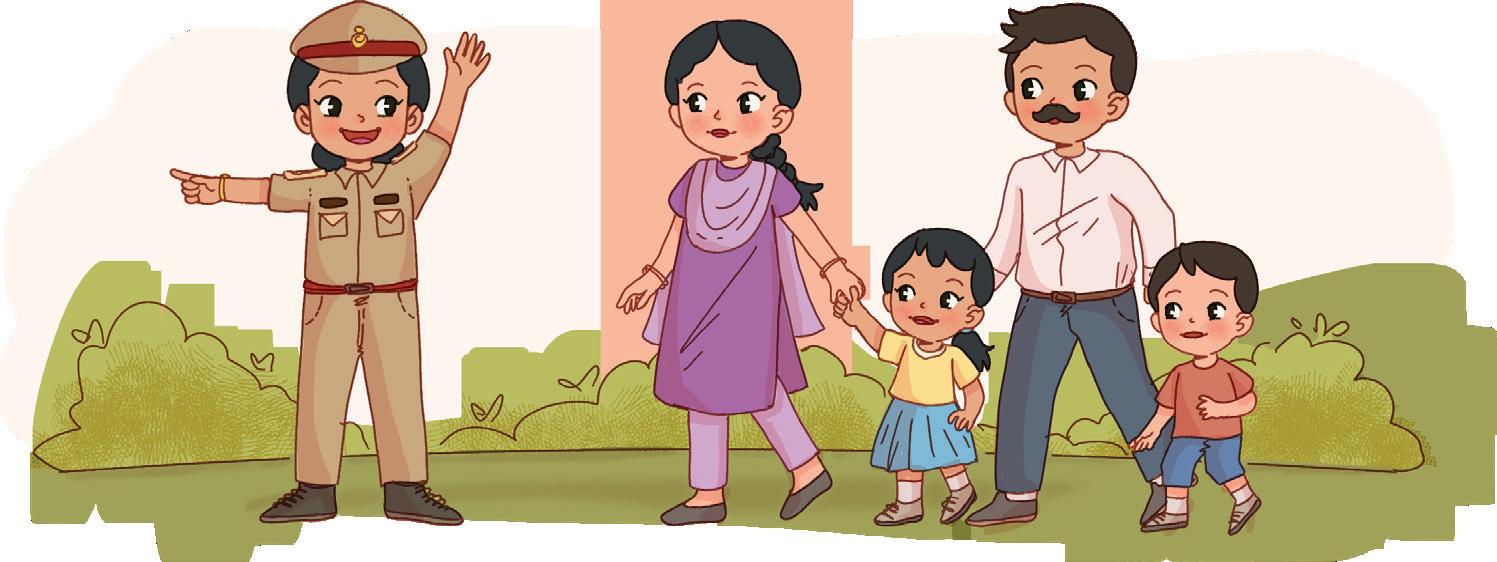
Meanwhile, Police Officer Priya arrived and kept everyone safe and calm. She helped people move away from the fire.
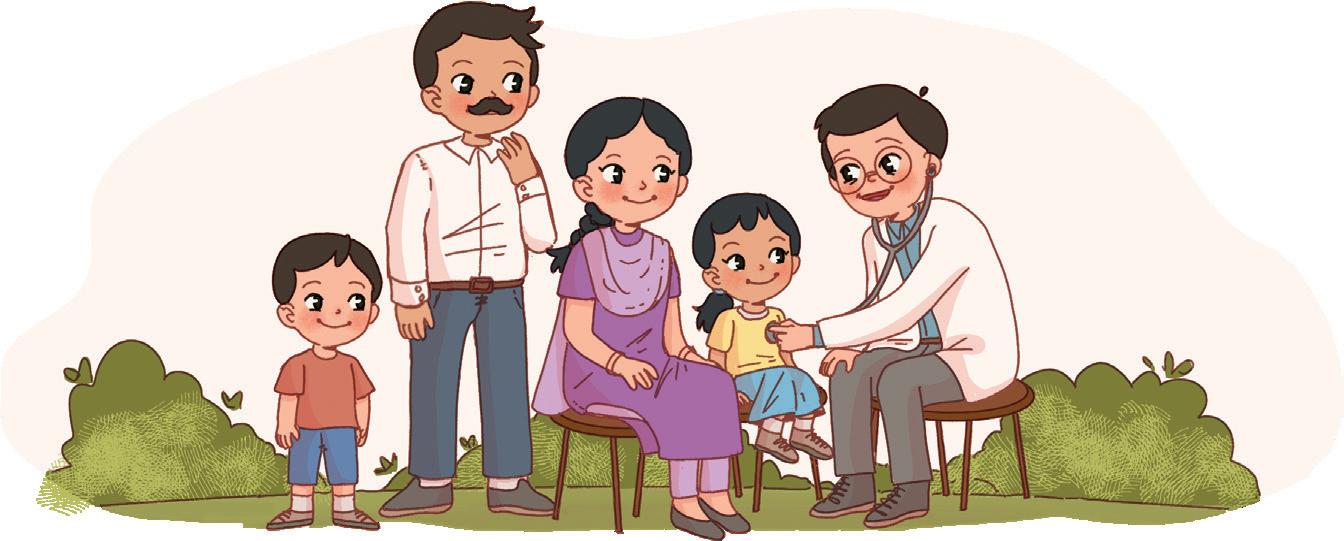
Ila and her family were safe but scared. Dr Rohan arrived to check everyone and make sure they were fine.
With the fire out and everyone safe, Ila’s family thanked Vikram, Officer Priya, and Dr Rohan for their bravery and help.
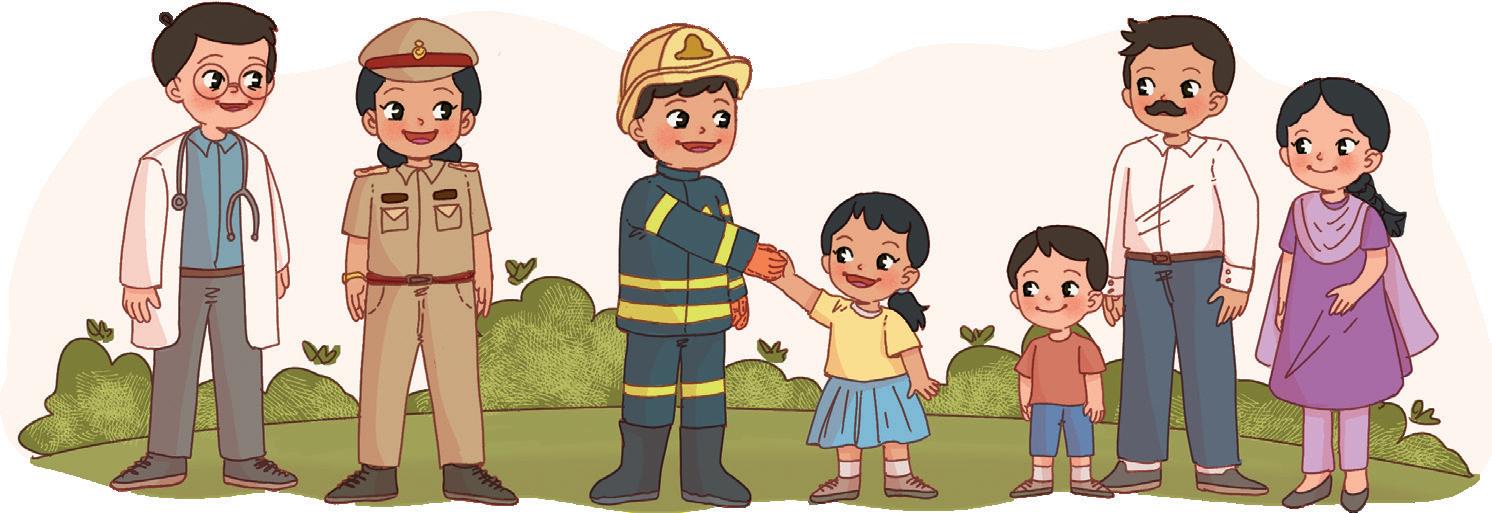
1. How did Vikram help the family?
2. What did the police officer do?
3. How do doctors help us?
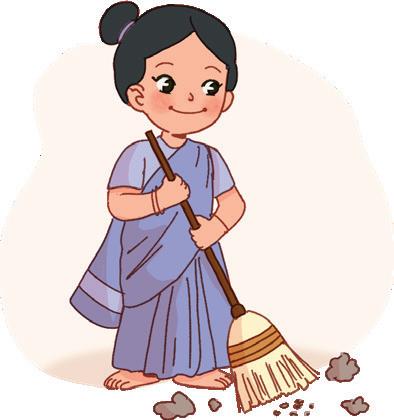
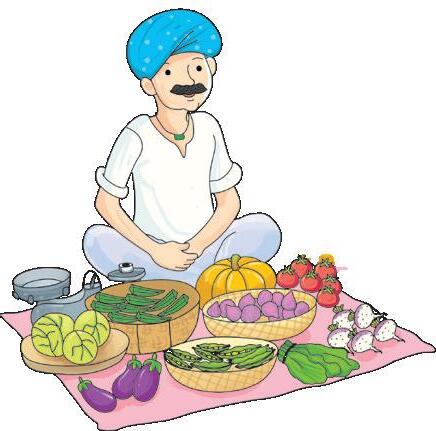
There are many people who help us. Let us learn about them. housemaid
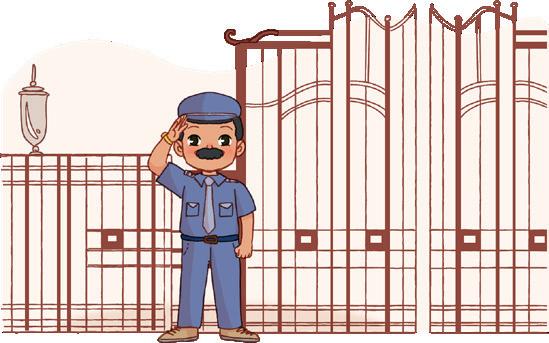
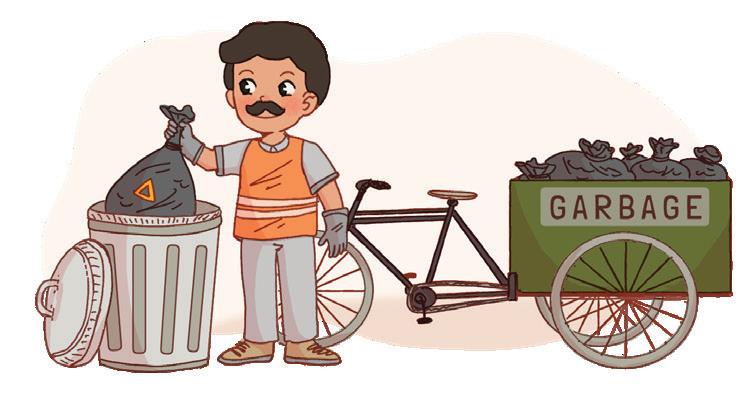
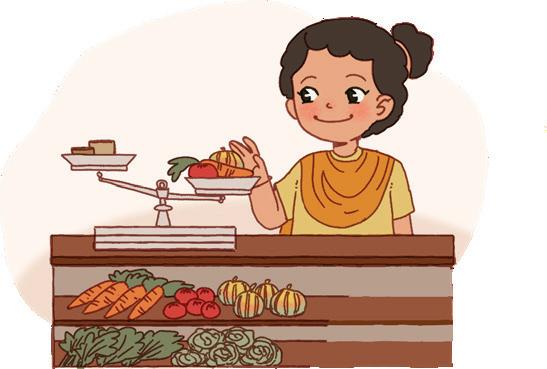
fruit and vegetable seller
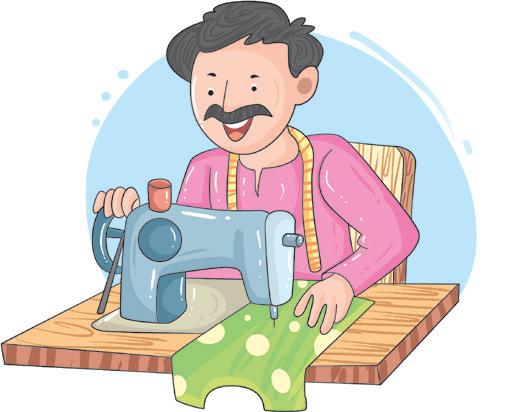
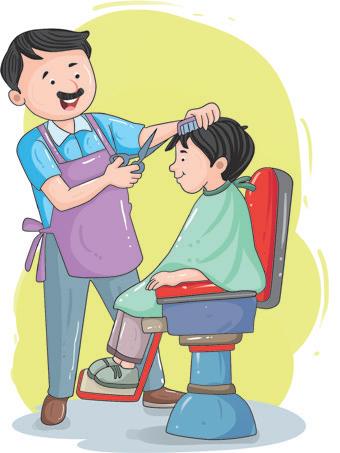
guard garbage collector shopkeeper tailor barber carpenter doctor mechanic
TEACHER TIP
Discuss about the different people who help us every day and the tools they use.
In each set, circle the thing that does NOT belong to the helper.
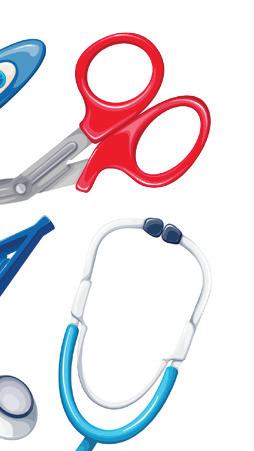
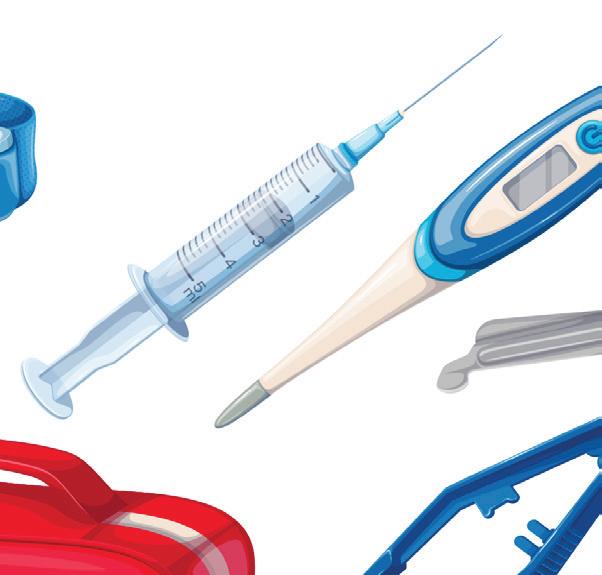

Talk
How can we be kind to the people who help us in our daily life?







Look at the pictures. Tick () the correct name of each community helper.
1. A firefighter / doctor fights fire.
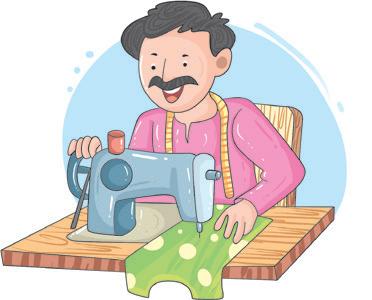
2. A farmer / tailor stitches clothes.
3. A carpenter / guard makes furniture.
4. A barber / mechanic repairs vehicles.
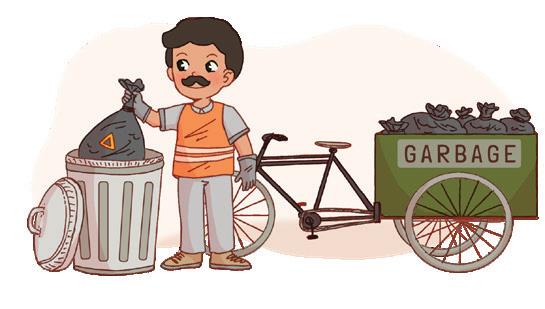
5. A garbage collector / tailor collects garbage from houses.
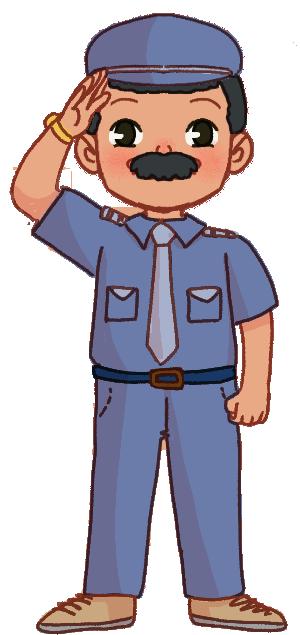
6. A teacher / guard keeps us safe.


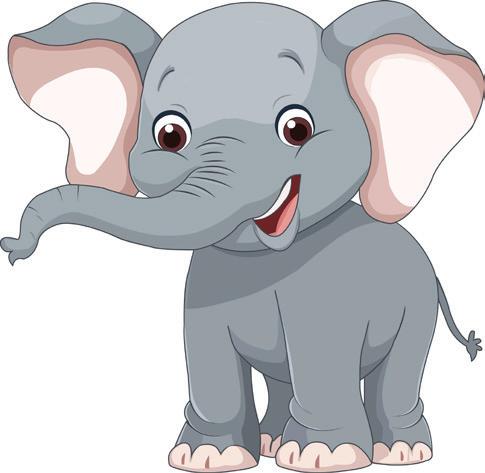
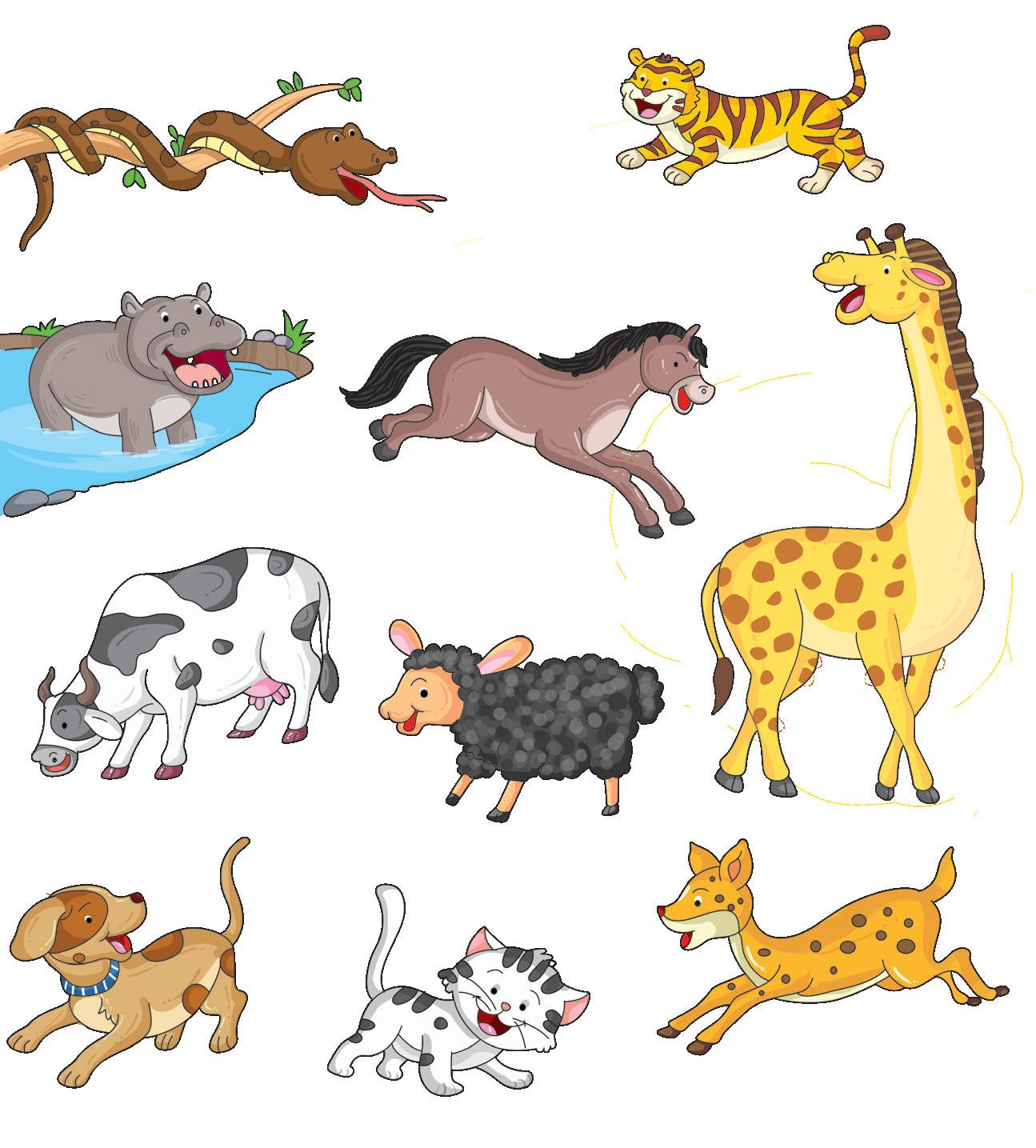
We see many animals around us. Some are big and some are small. Let us learn about them.
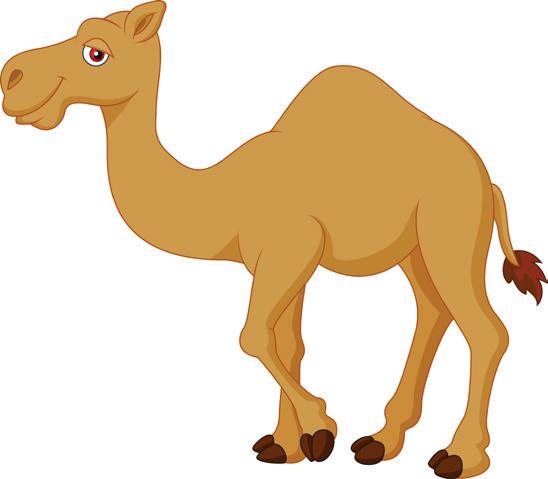

































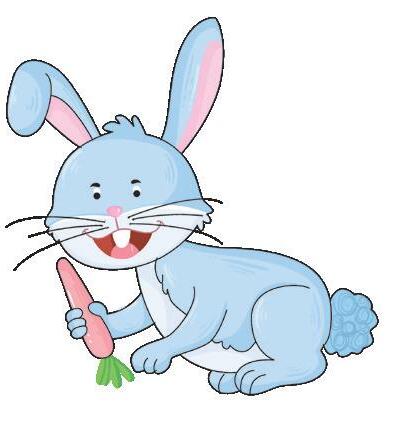




































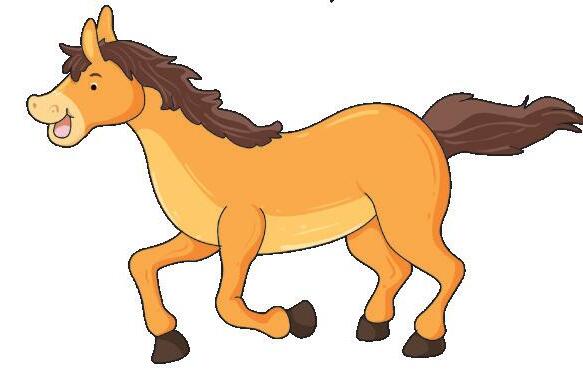
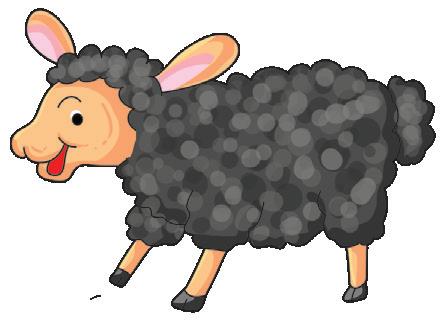
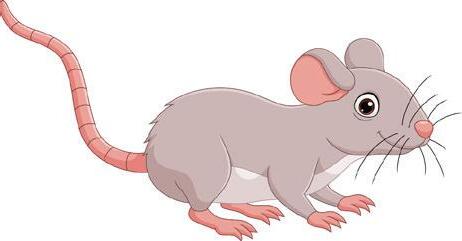
Pet animals are animals we keep at home. Let us read a story about Rohan and his pet dog, Milo.
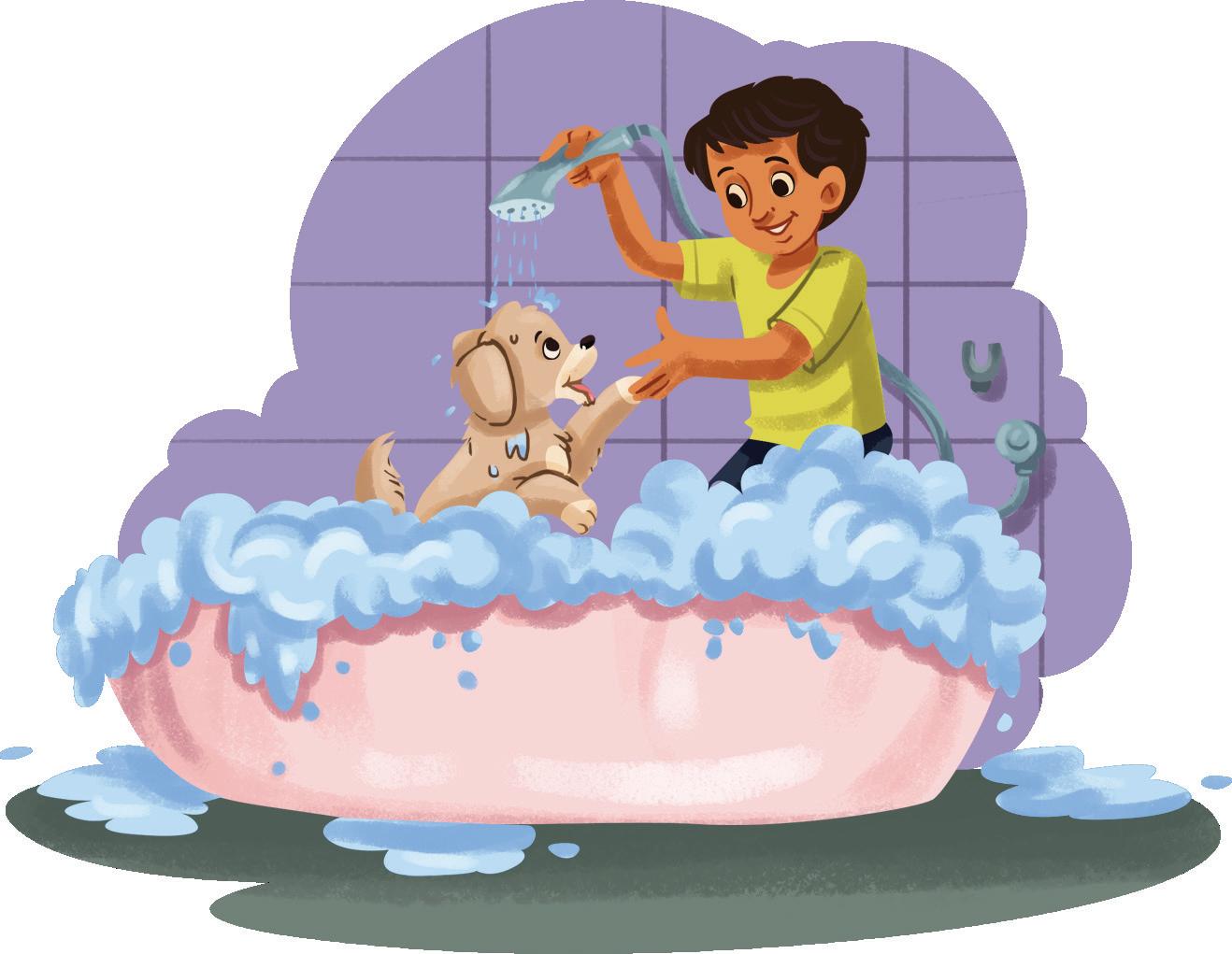
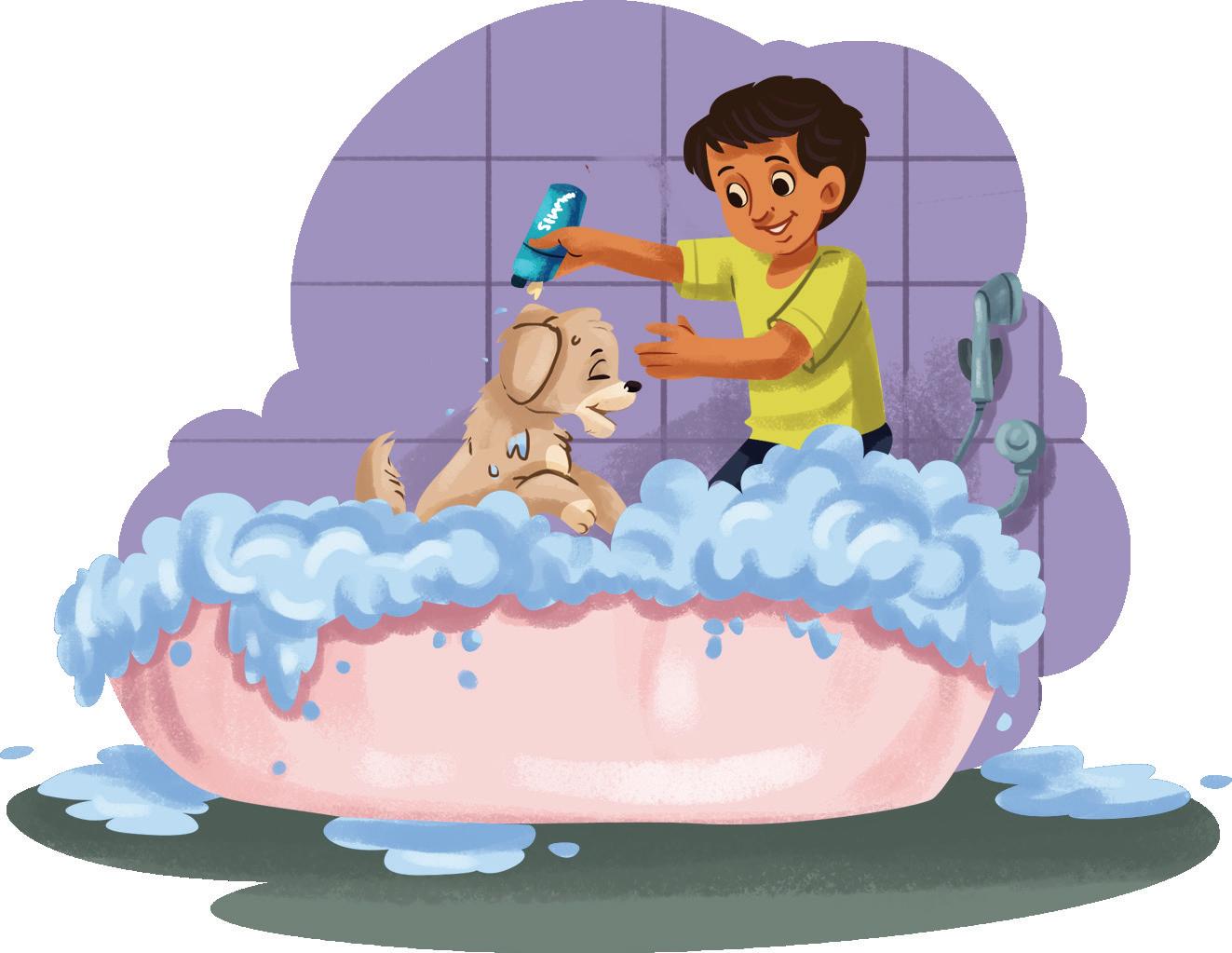
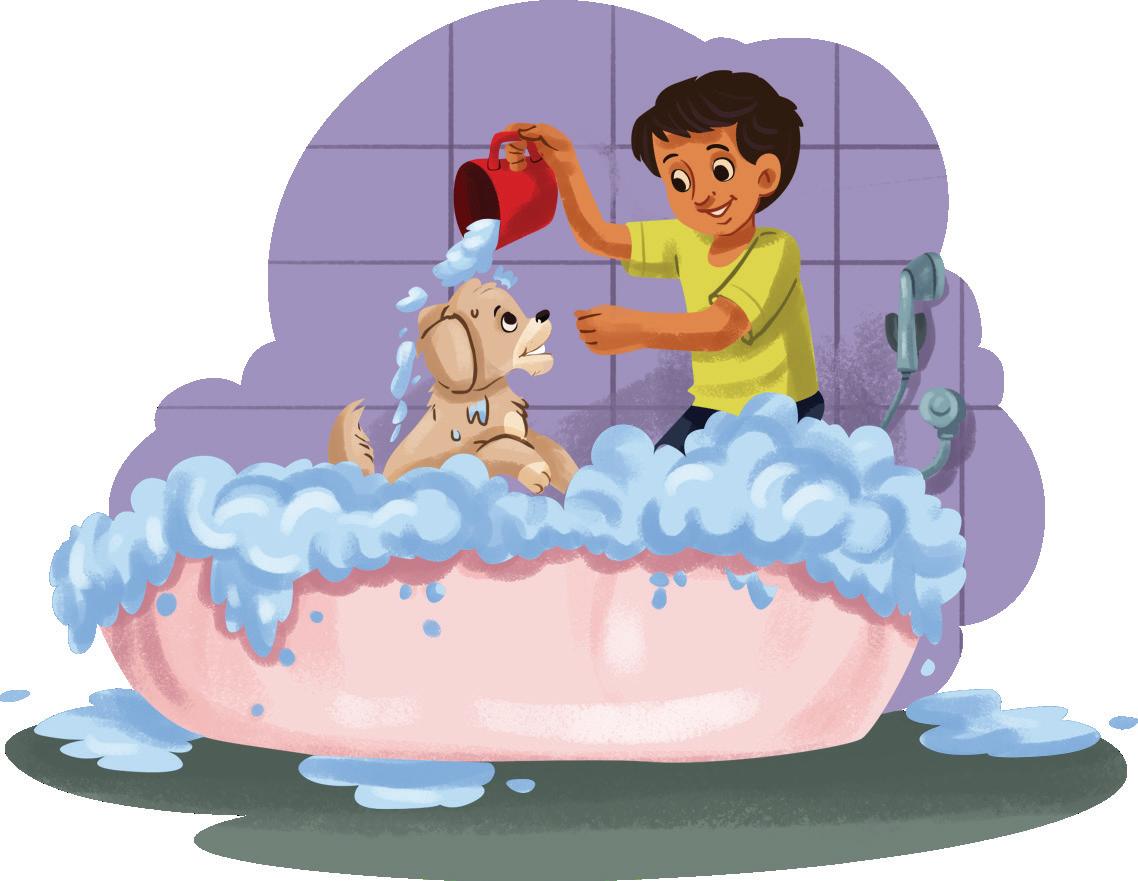
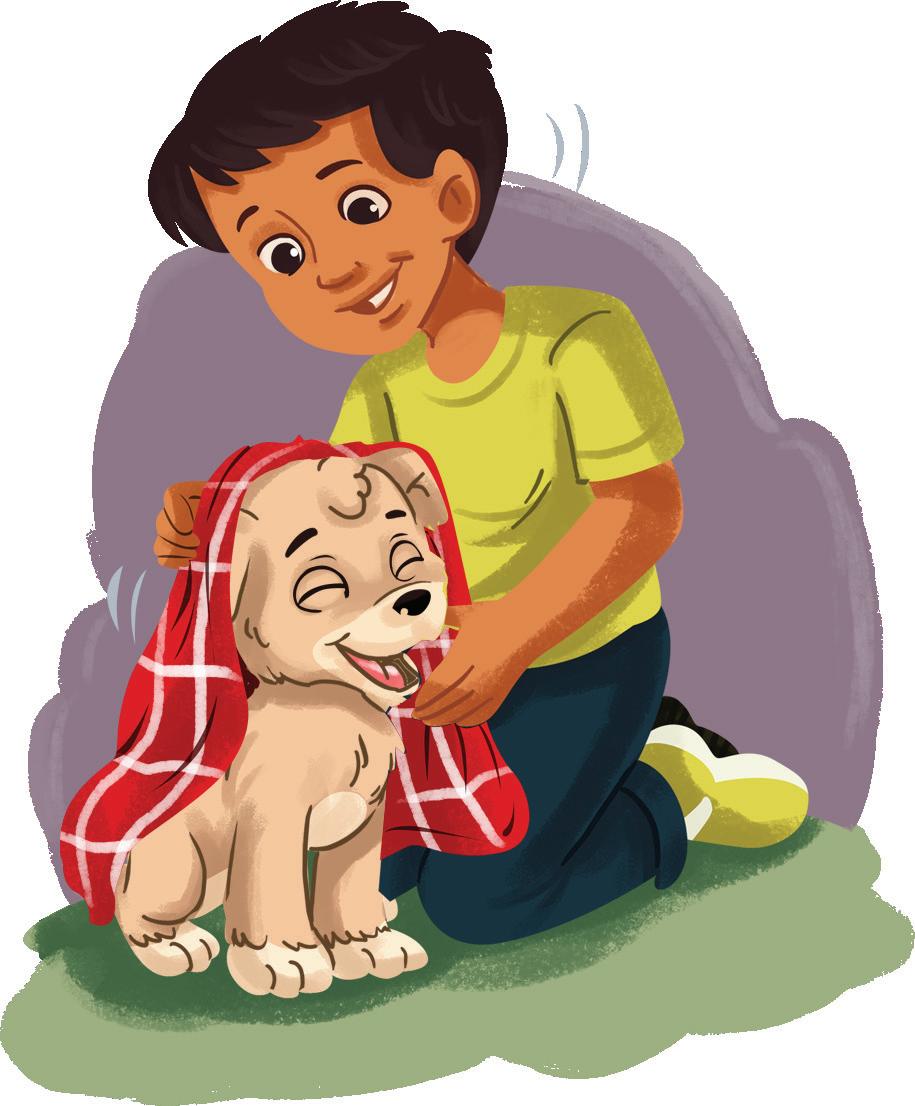
Rohan puts water on Milo. Then, he applies shampoo. He cleans him well.
He pats Milo dry with a towel.
Follow the instructions to create your own fish bowl.
1. Draw and colour two plants in the bowl.
2. Draw and colour three small fish.
3. Finally, draw and colour the water.
There are some animals that live on a farm. See them in the picture given below.
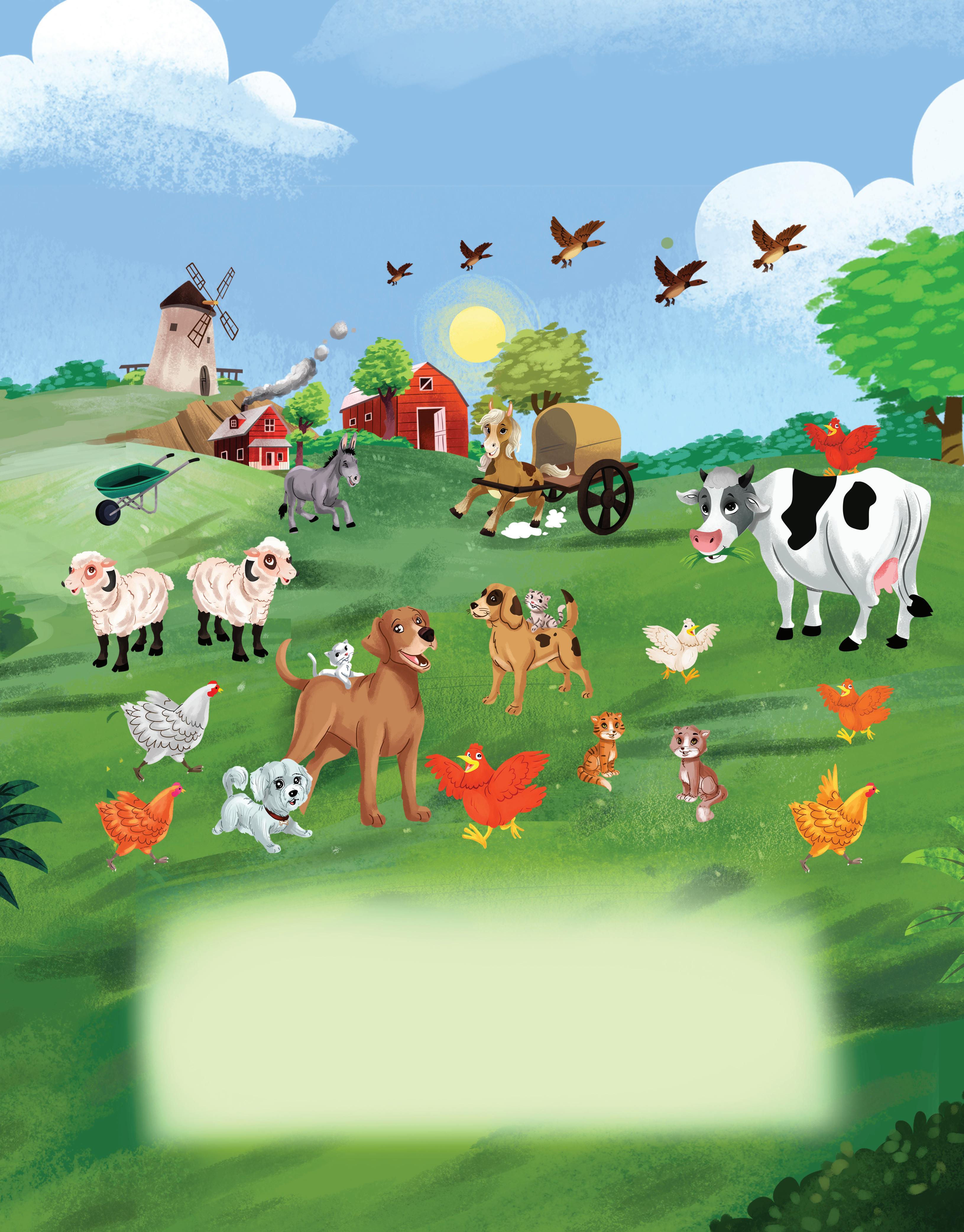
Count and write.
Animals help us in many ways. Here are some things we get from them.
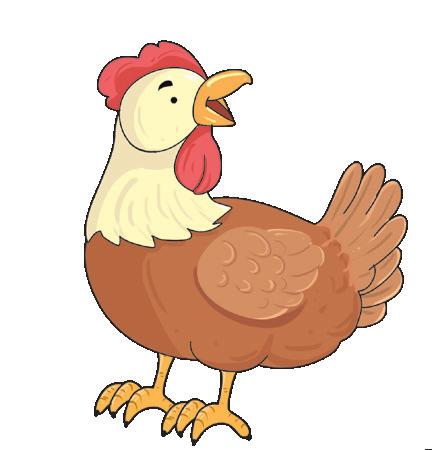
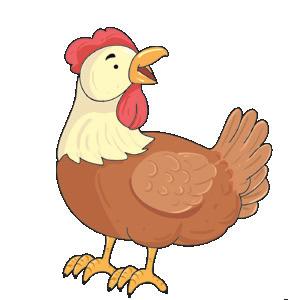
Hens give us eggs.
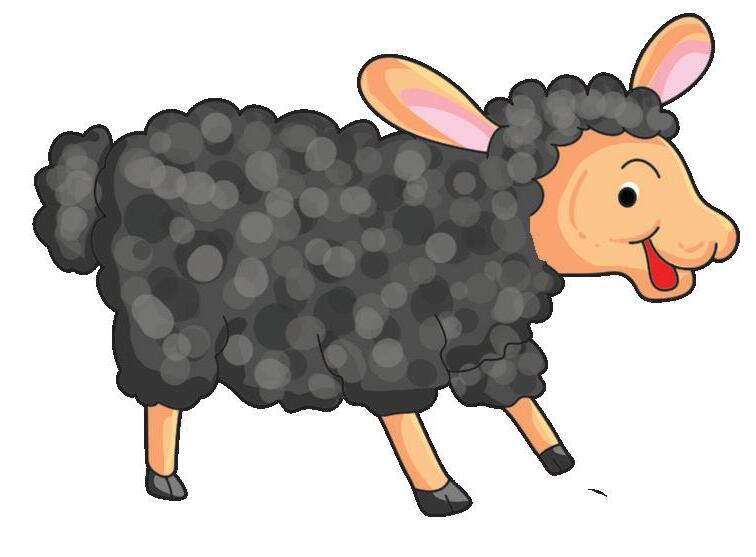
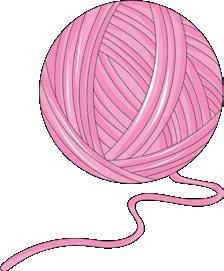
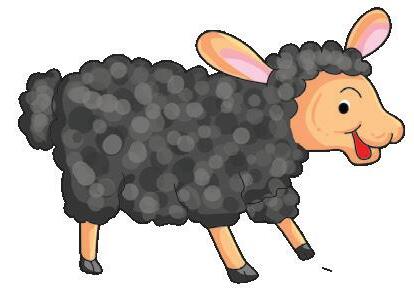
Sheep give us wool.
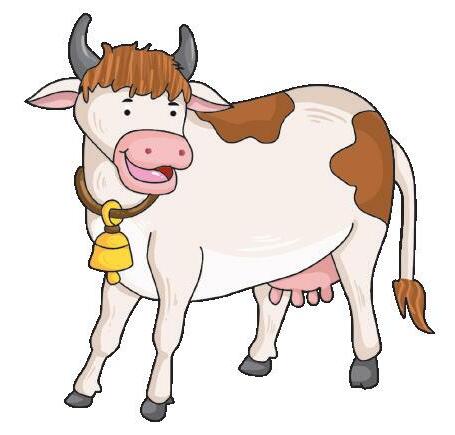
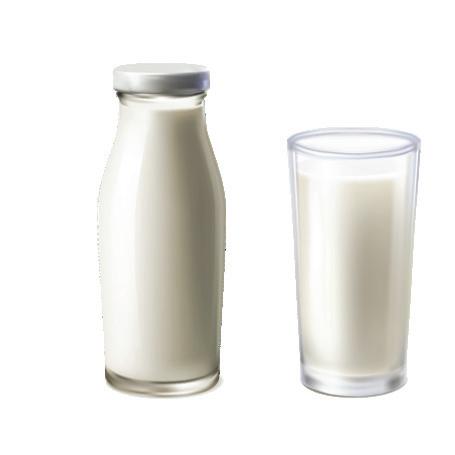
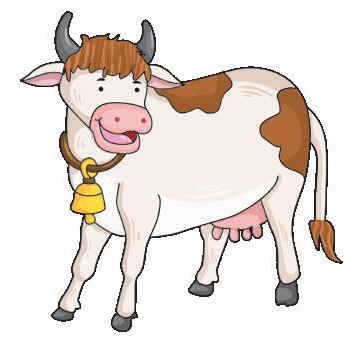
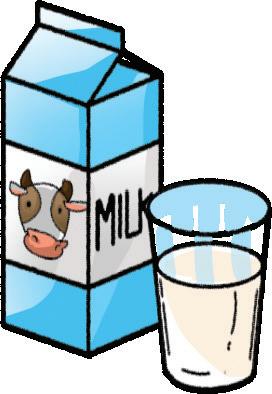
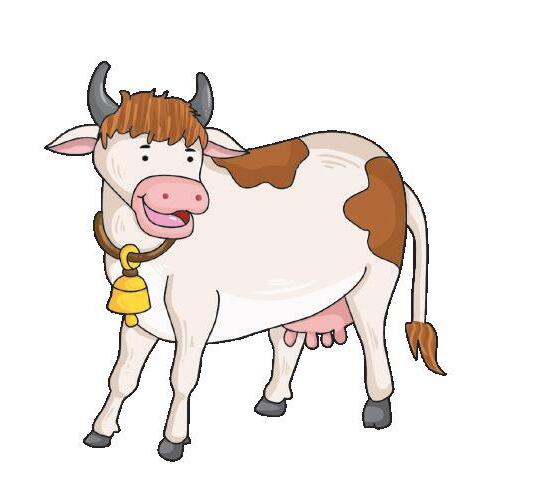
Cows, goats and buffaloes give us milk.
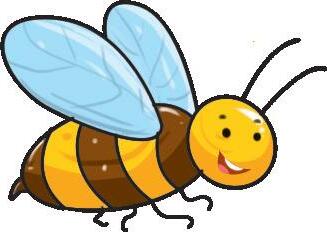
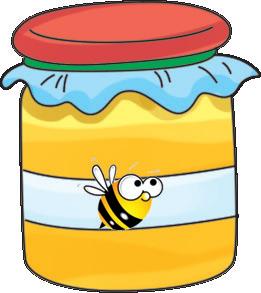
Honeybees give us honey.
Some big animals help us in many ways.
Horses give us rides and pull carts. Donkeys carry heavy loads.
Elephants are very strong and can carry big loads too. Camels live in the desert and carry people and things.
Match the animals to the things we get from them.
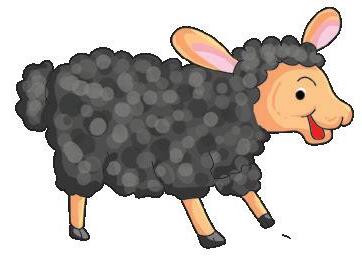
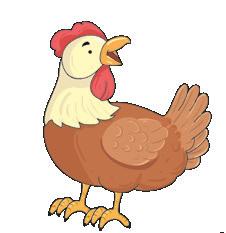
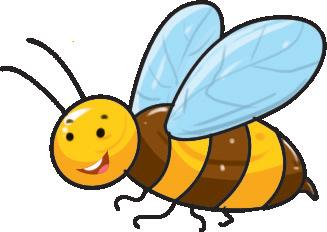
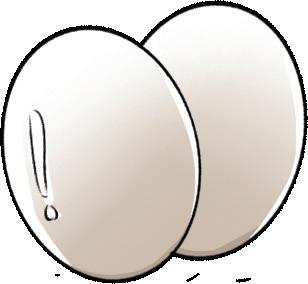
Circle the animals that carry loads for us.
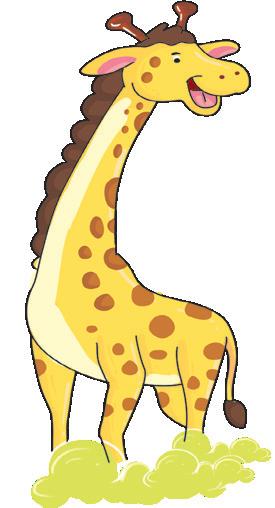
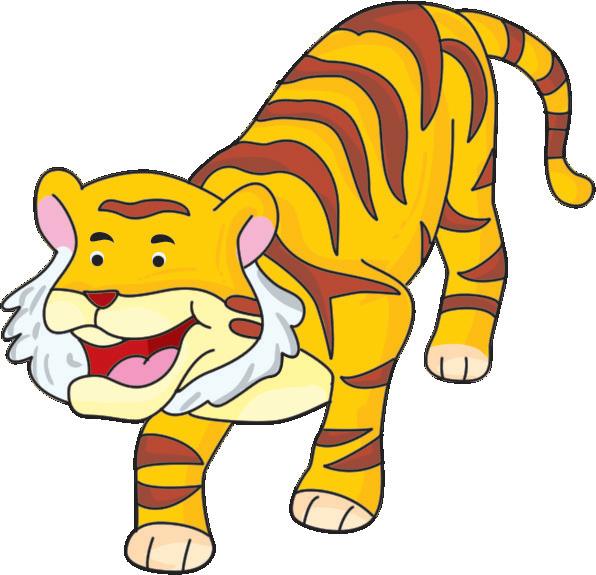
Wild animals live in jungles. Let us look at some of them and read their names aloud.
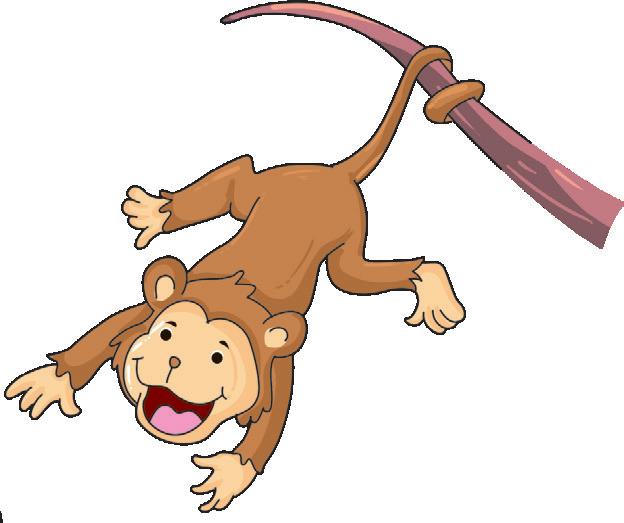


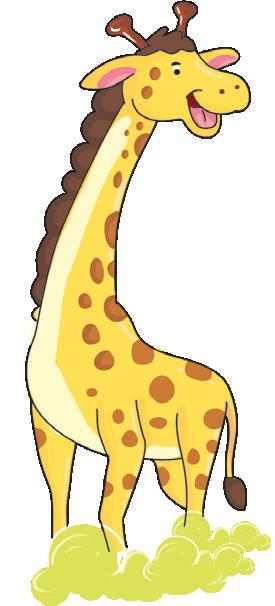
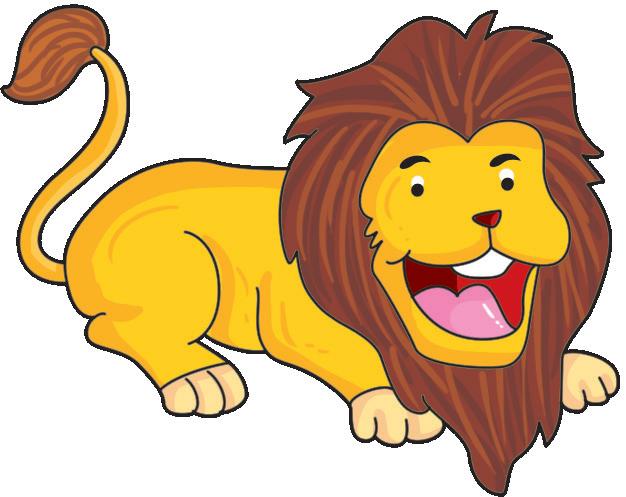
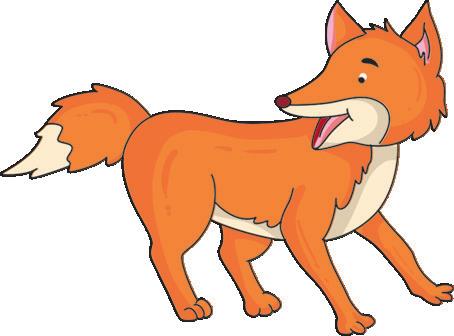











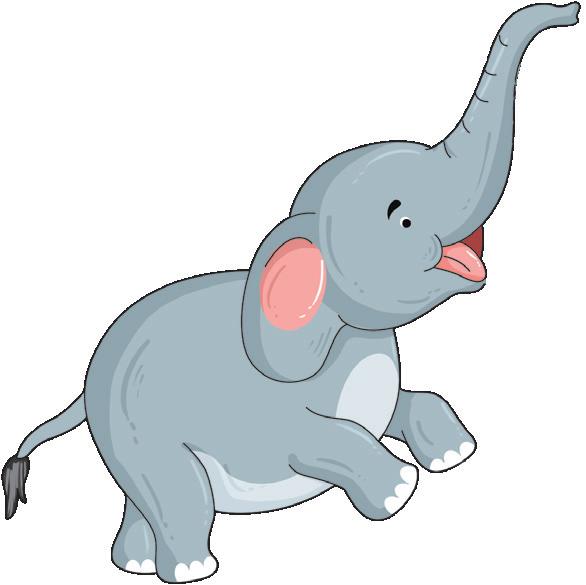
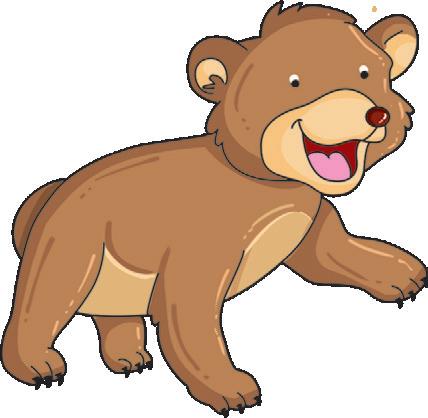
Write the names of these wild animals.
fox lion giraffe bear monkey zebra kangaroo elephant leopard









Just like us, animals also need a home. Different animals live in different homes. Let us look at and learn about some of them.


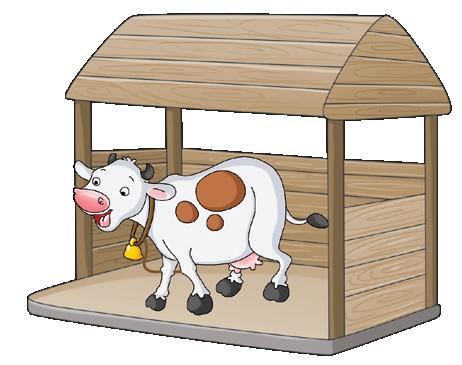

Some animals build their homes. Some live in homes made by nature. Let us learn about both of them.
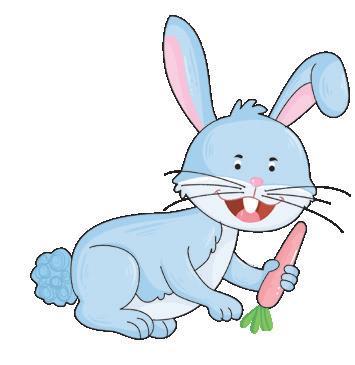
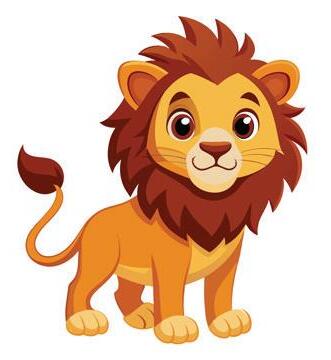
Match the animals with their homes.
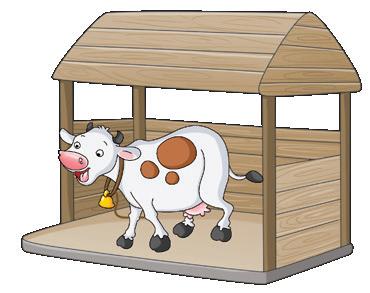
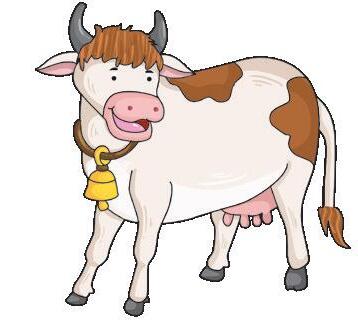
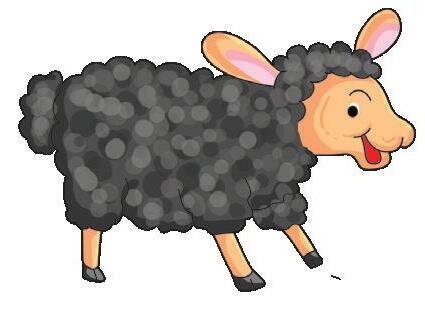
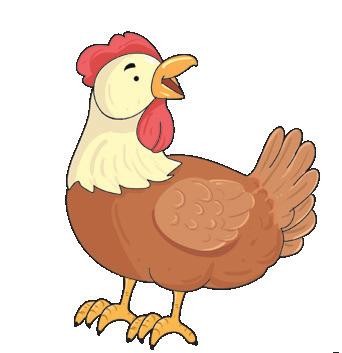

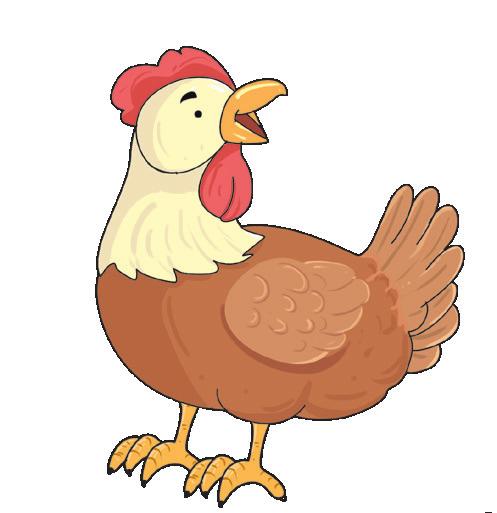
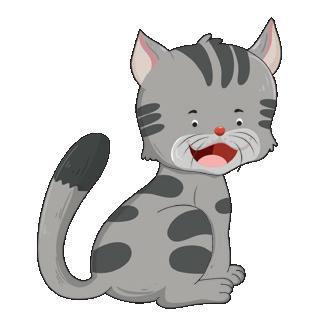
Look at the pictures. Read the names of the animals and their young ones.
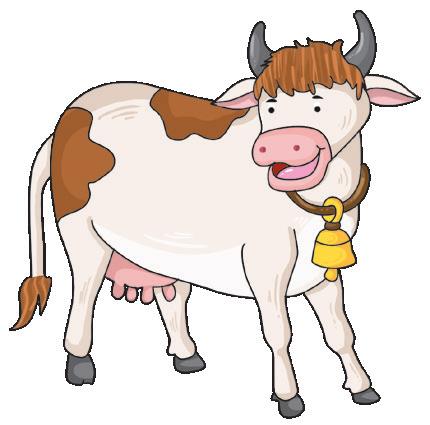
cow and calf
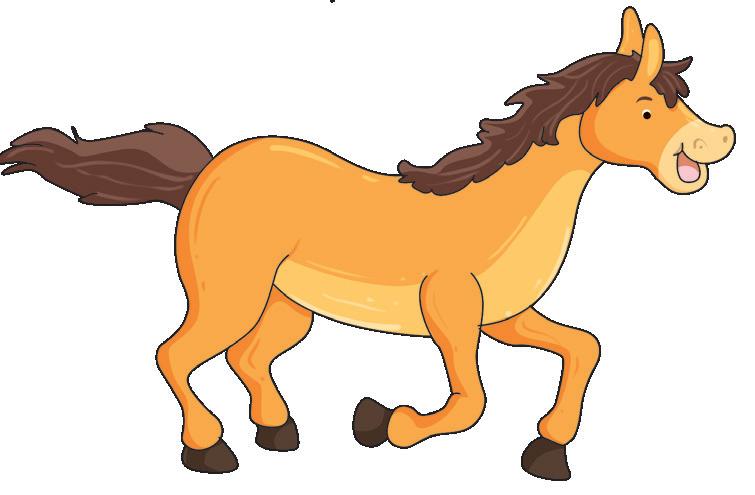








horse and foal







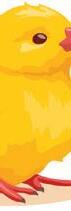

hen and chick


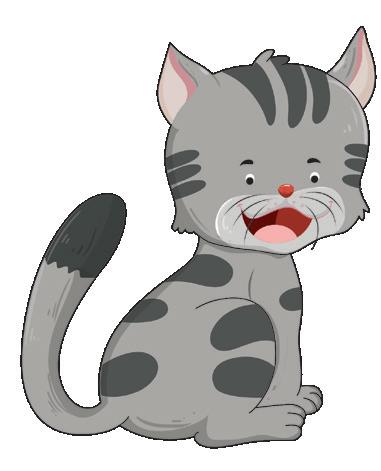






cat and kitten
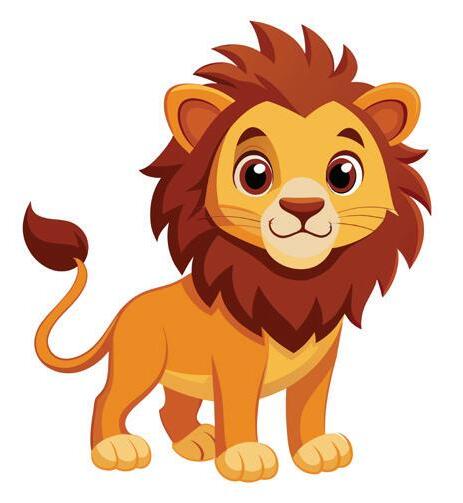
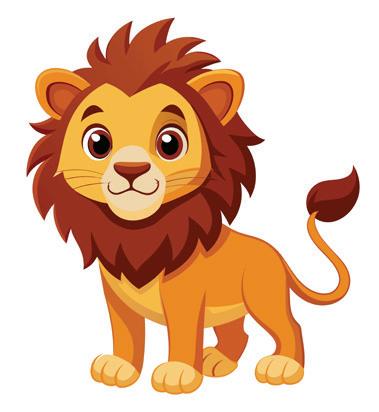
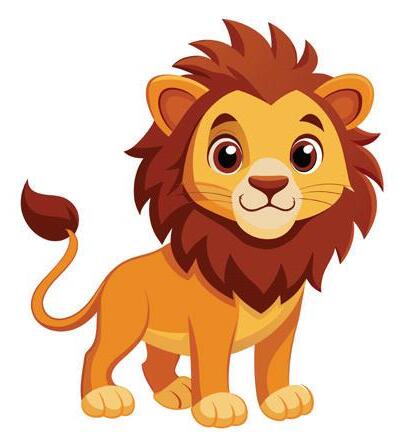
lion and cub
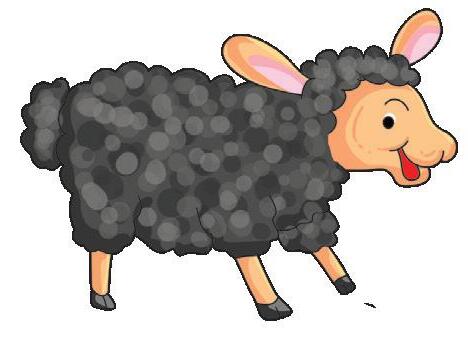
sheep and lamb
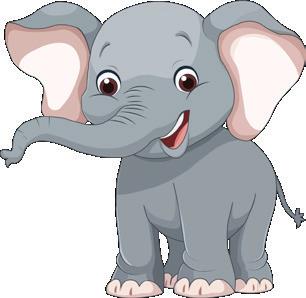
elephant and calf


dog and puppy
Match each animal with its baby.
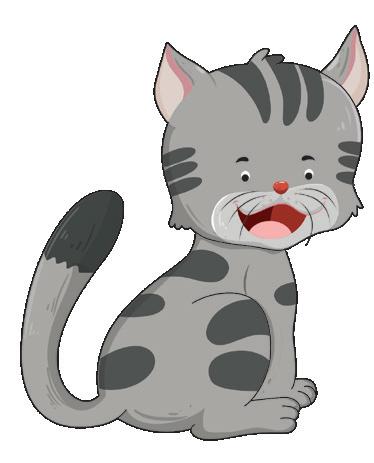
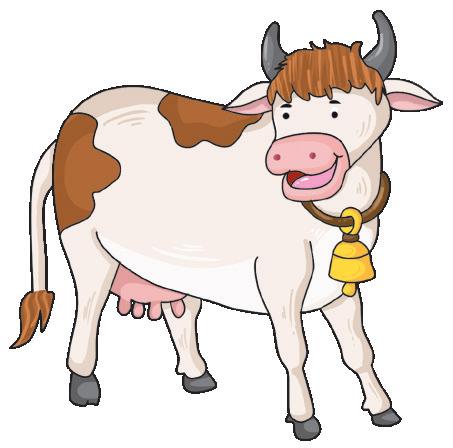
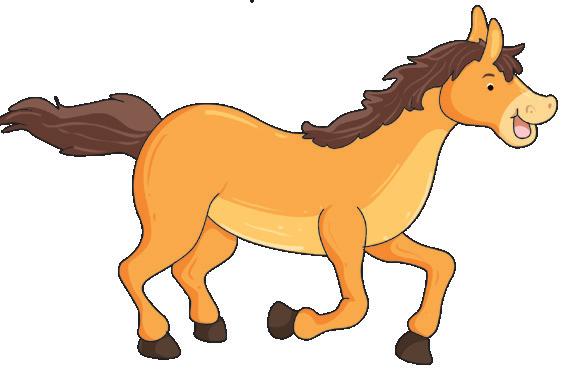
Some animals eat plants. Let us read their names.
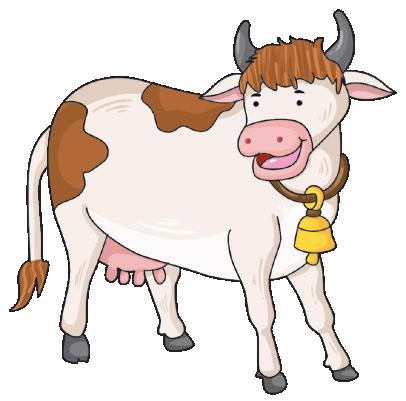
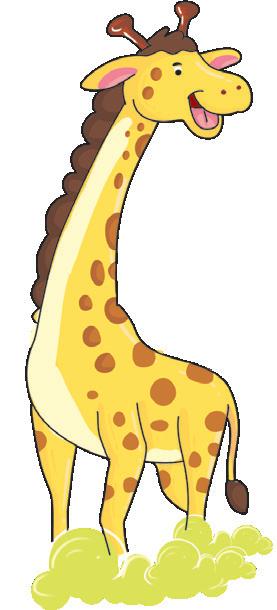
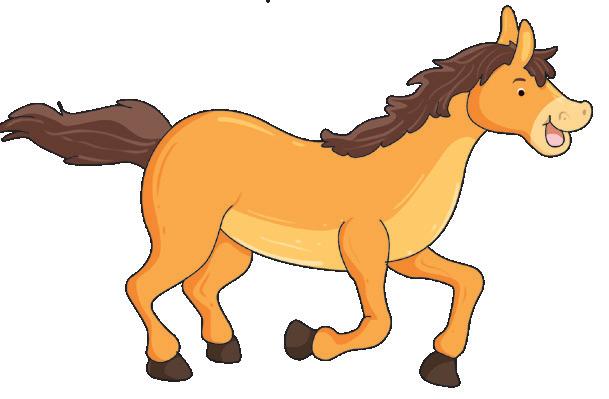
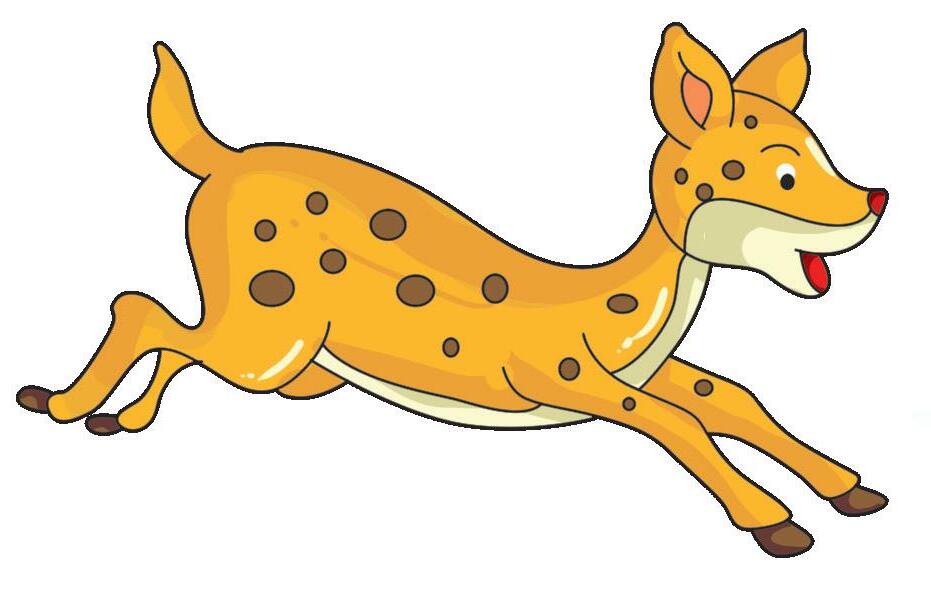
Some animals eat other animals. Let us read their names.
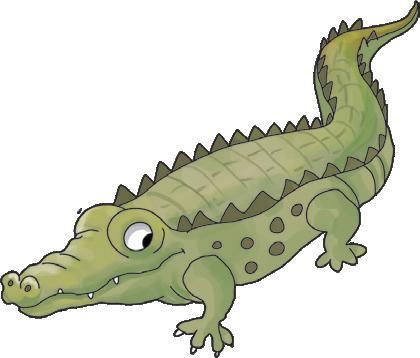
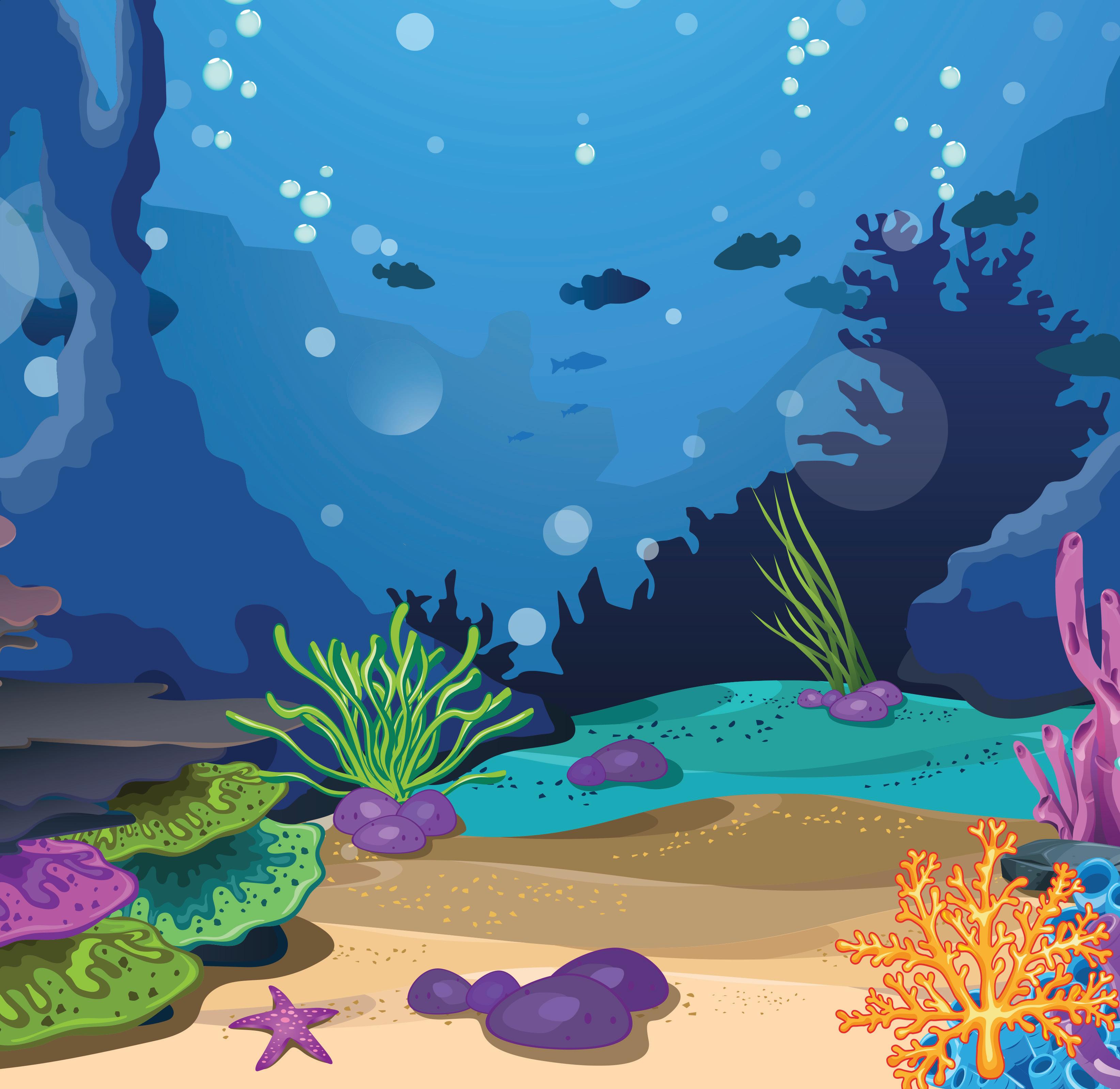
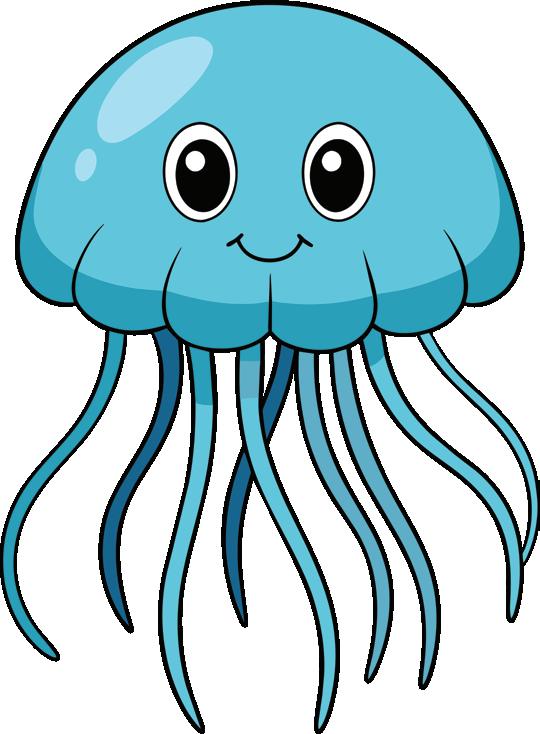
Many animals live in ponds, lakes, rivers and oceans. These are called water animals. Let us learn about them.
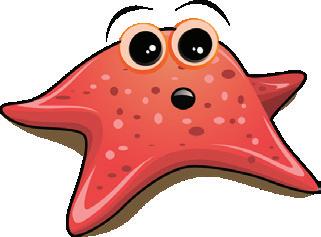
Encourage children not to throw garbage in water and to keep water bodies clean. This protects water animals.
Look at the pictures and tick () the correct word.
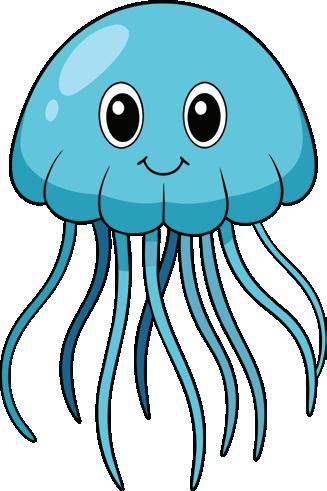
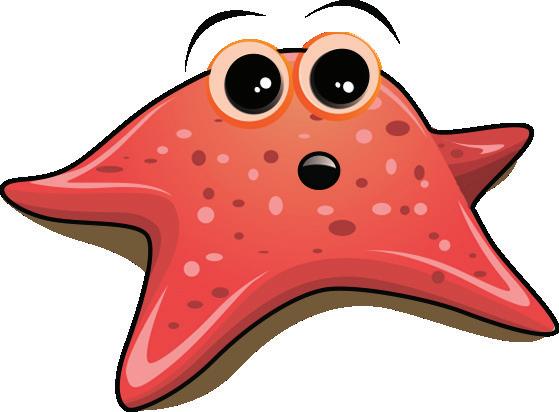
Read the clues. Circle the animals.
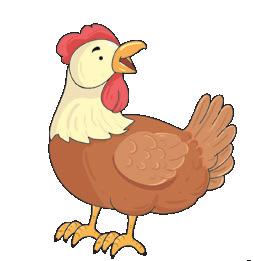
Animal that lays eggs.
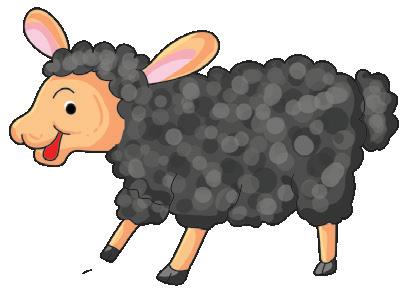
Animal that eats other animals.
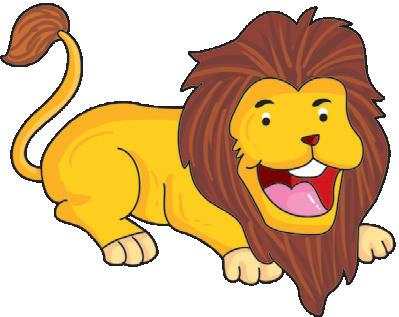
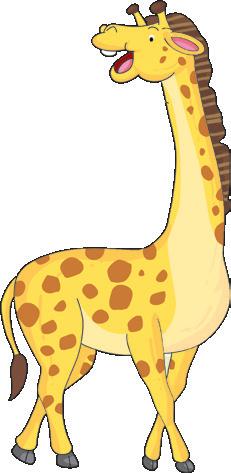
Animal that we keep as a pet.
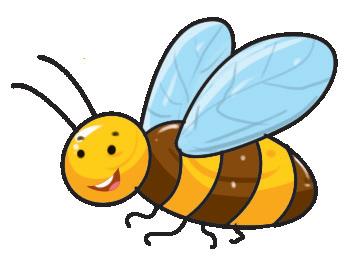
Animal that does not live in water.
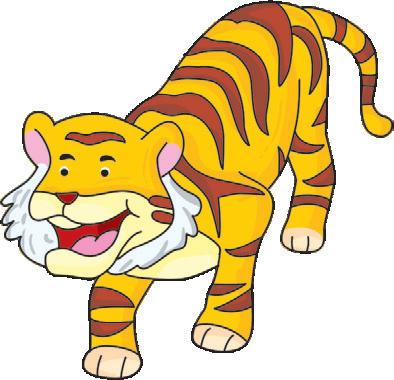
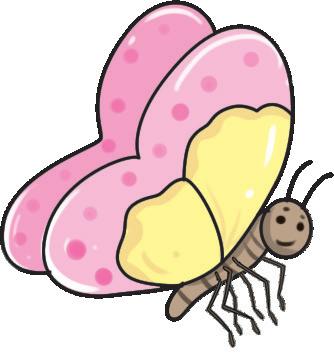
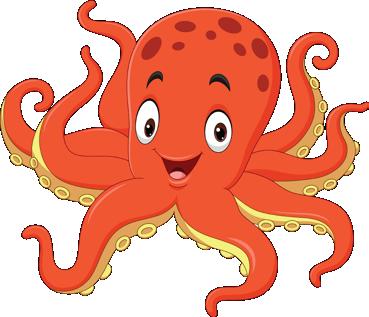
We see many birds around us. Some can fly and some cannot. Let us look at them.
Birds that can fly.
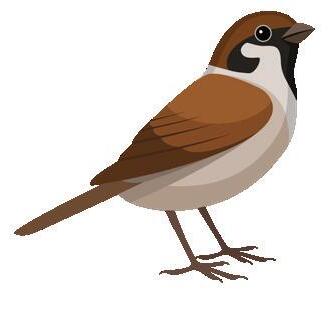
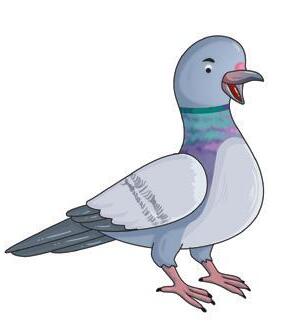
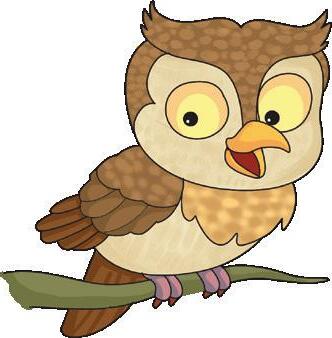
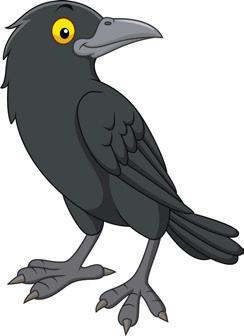
Birds that cannot fly.
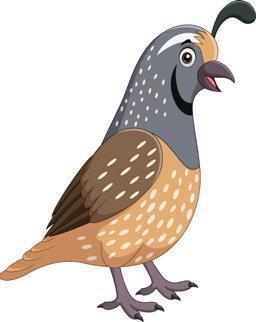
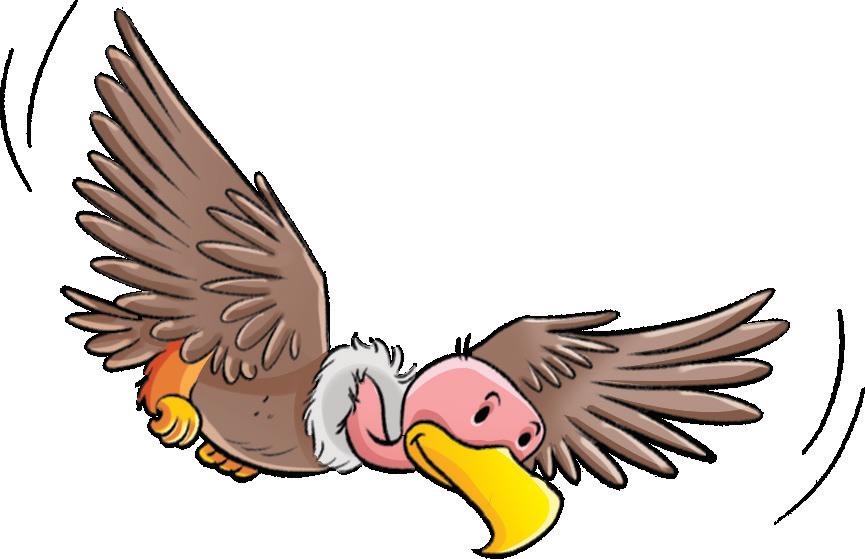
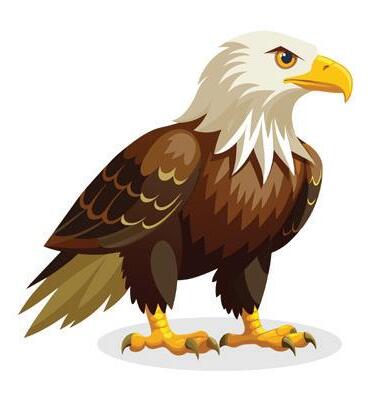
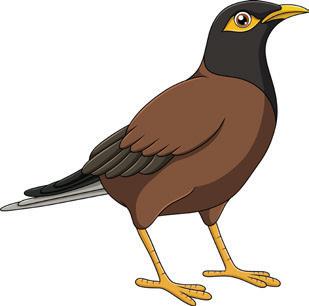
Look at the pictures. Write the names of the birds using the help box given below.
sparrow eagle owl pigeon crow emu ostrich vulture
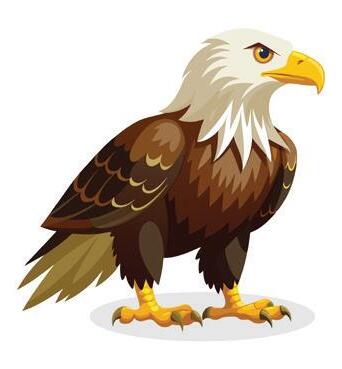
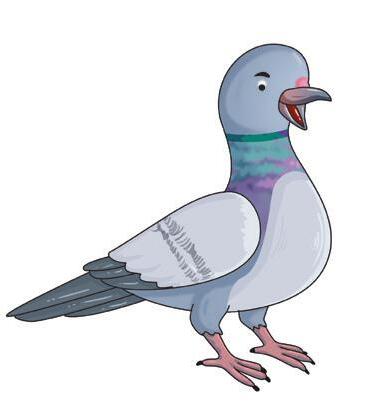
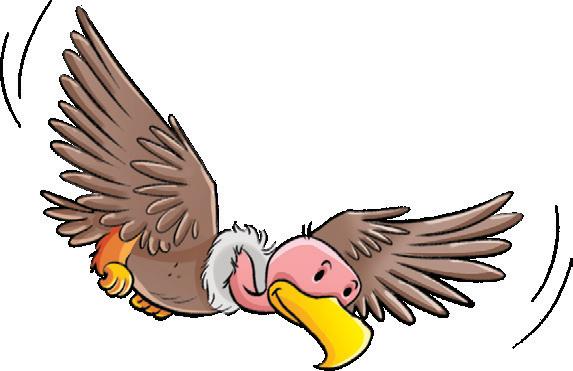
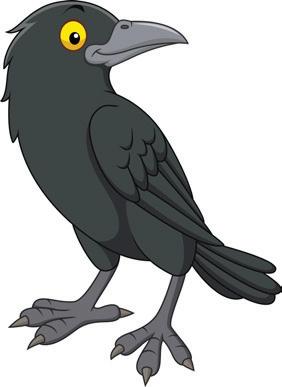
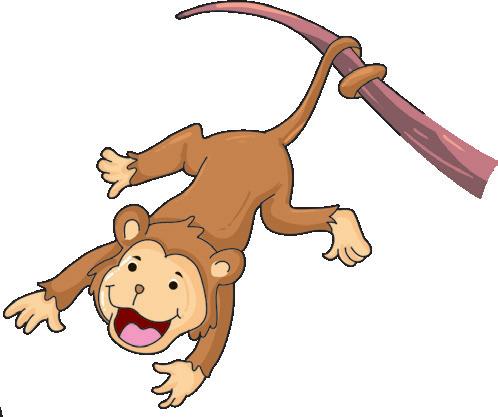
Insects are tiny animals. We often see them around us. Let us look at their pictures and say their names aloud.
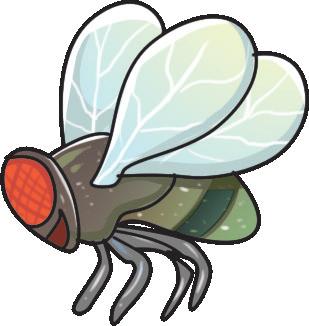
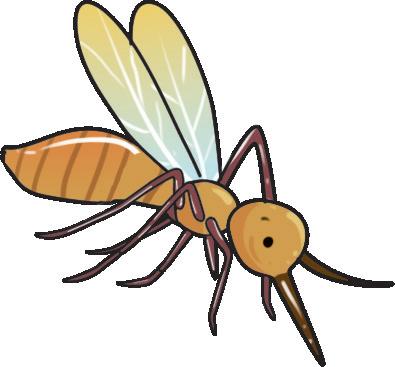
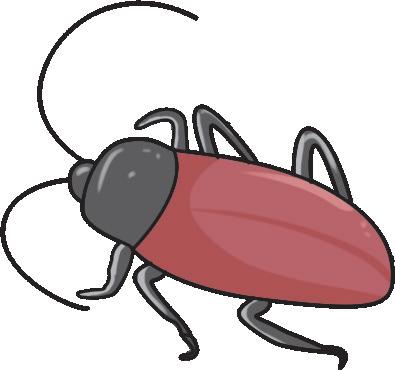
Let's Talk
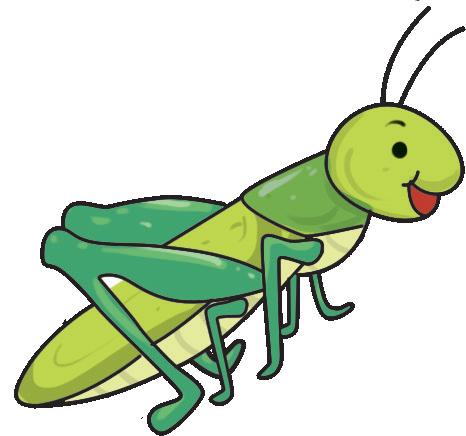
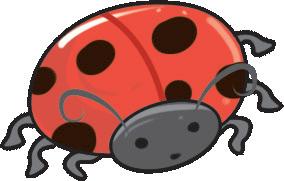
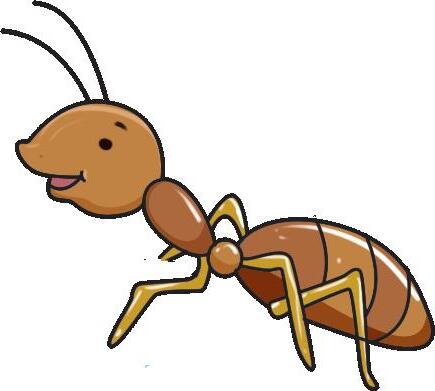
Which insects have you seen? Are you scared of any of them?
Look at the pictures. Write the names of the insects using the help box given below.
housefly butterfly dragonfly mosquito grasshopper spider bee ladybird cockroach
Animals make different sounds. Let us learn about some of them.
dog (barks)
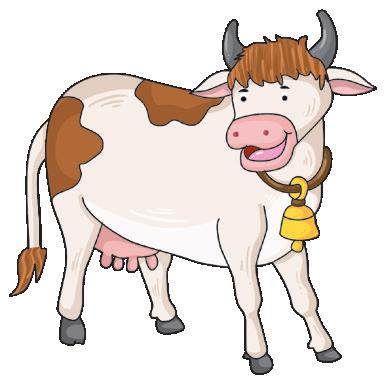
lion (roars)
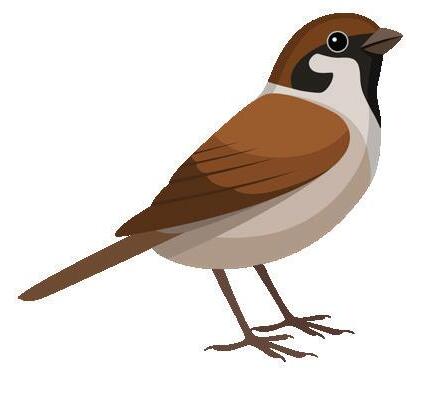
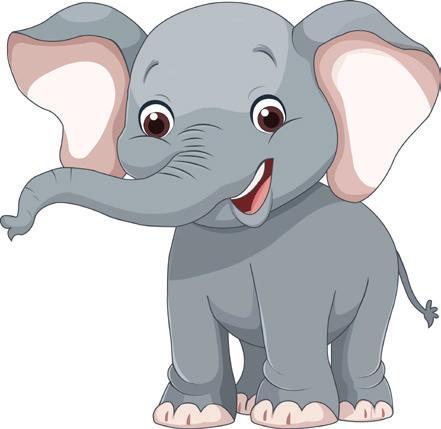
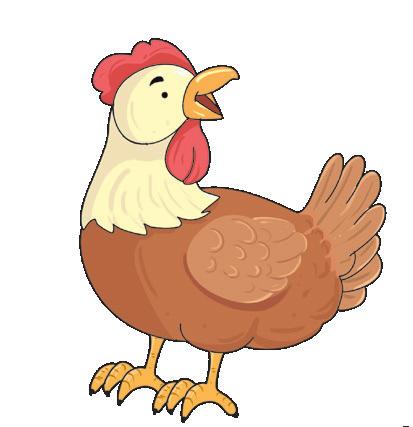
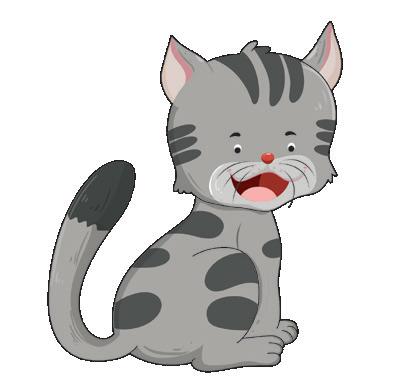
cat (meows)
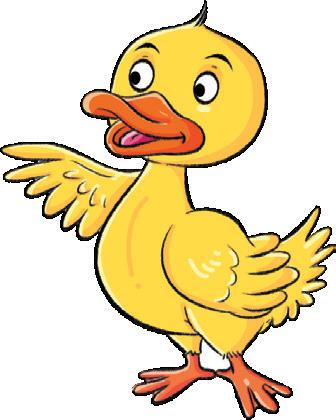
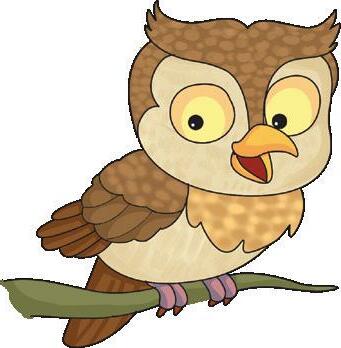
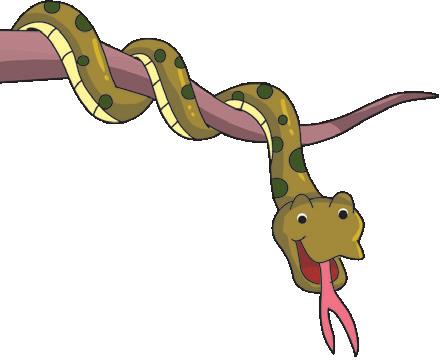
Match the animals with their sounds. trumpets meows
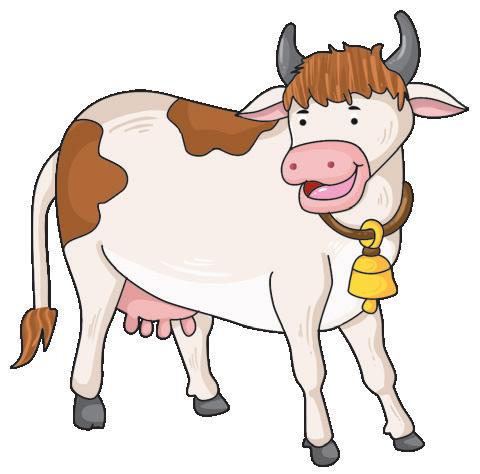
barks moos roars
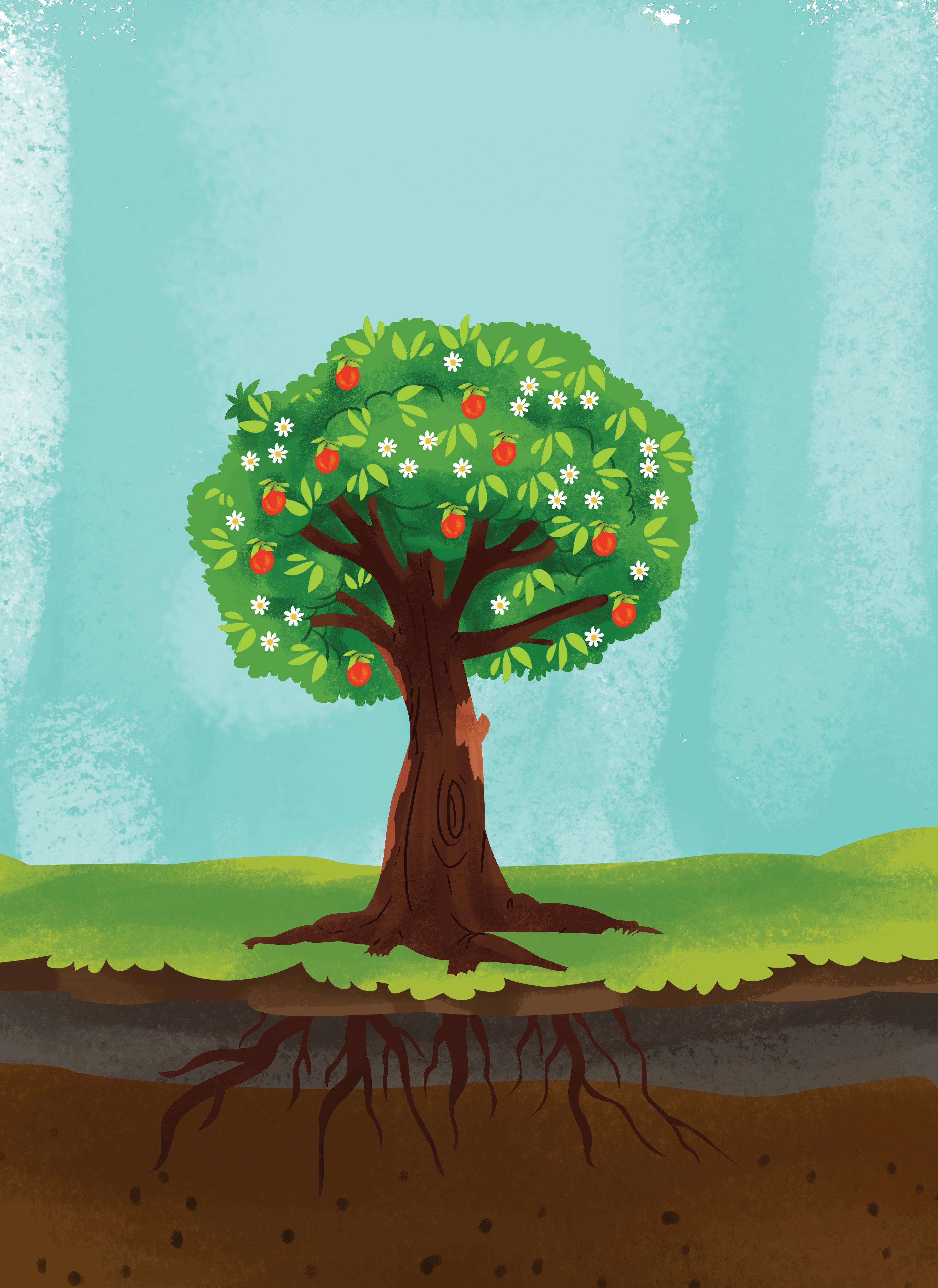

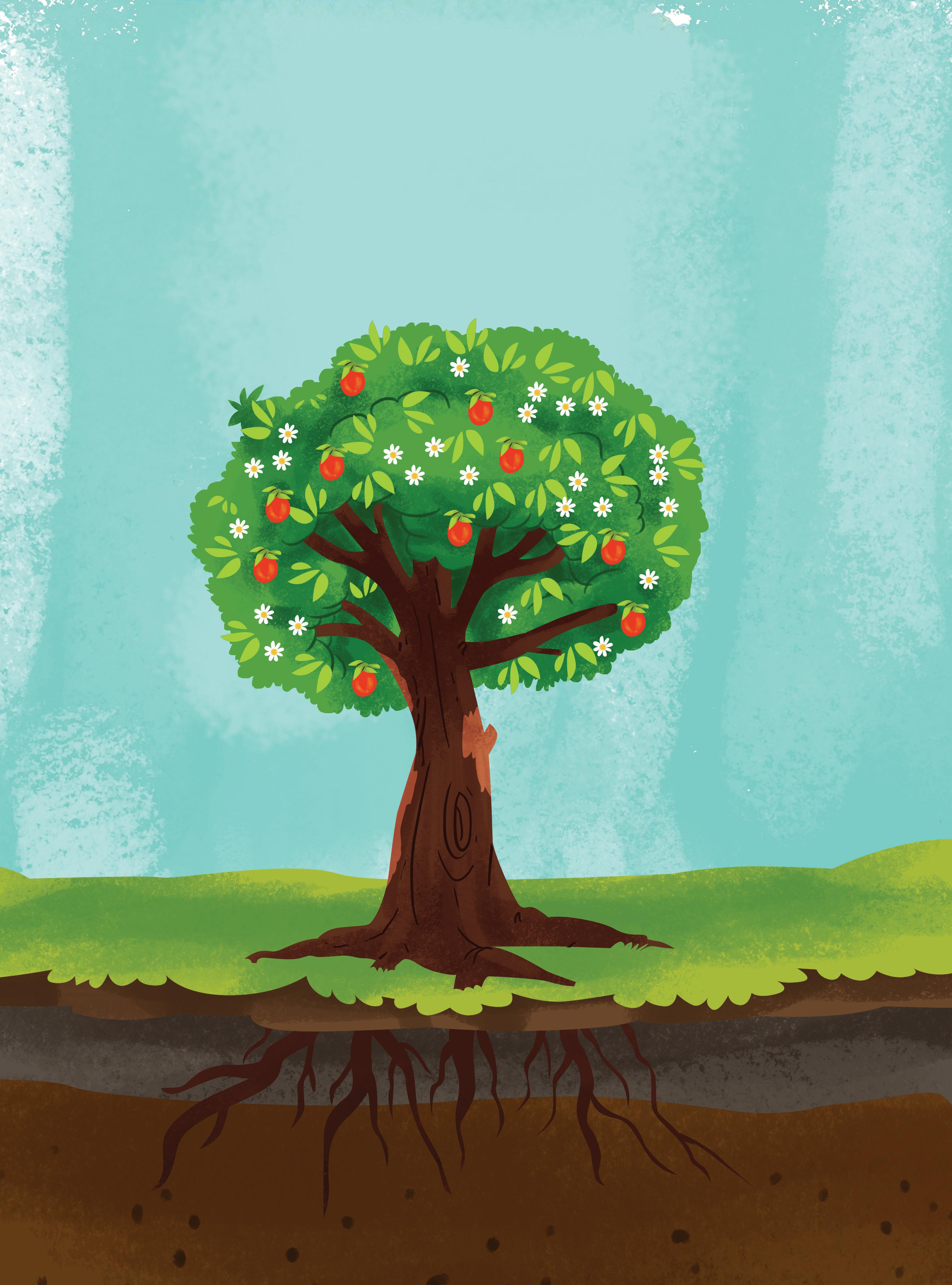
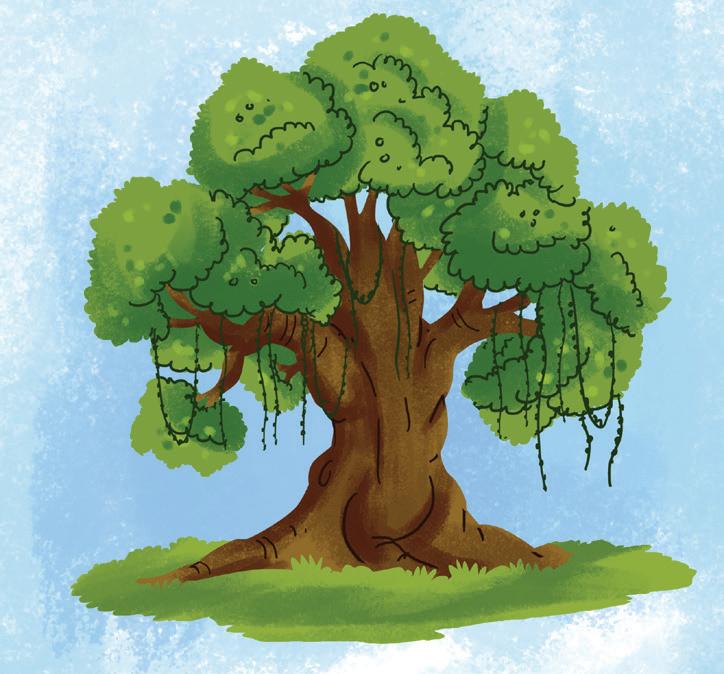
Big plants are called trees. Let us learn about the parts of a tree.
Let's Talk
How are plants and trees useful to us?

Plants are very useful. We get many things from them. Let us learn about them.
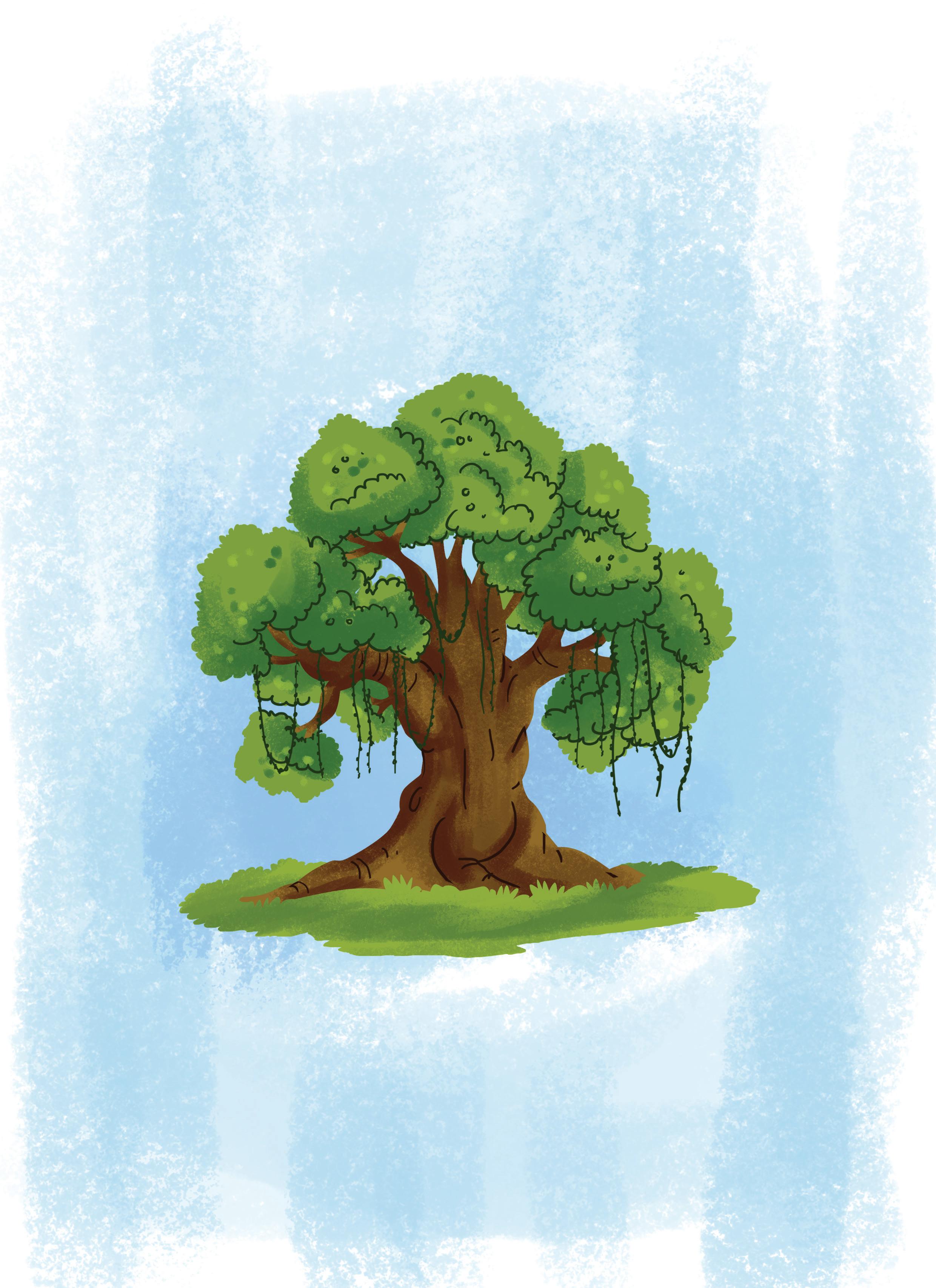

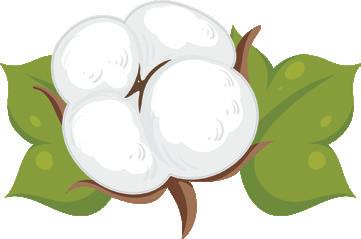
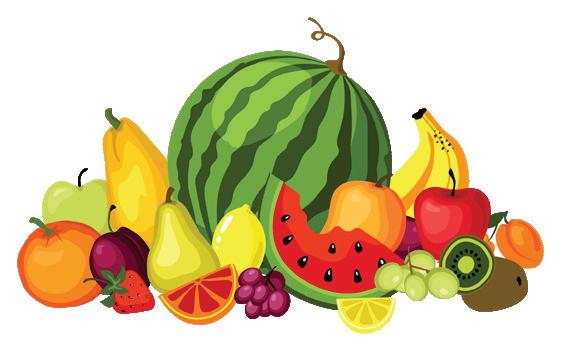
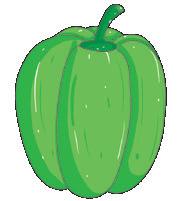
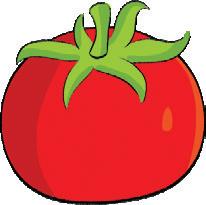
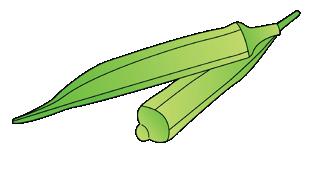
Encourage children to care for plants by watering them regularly, avoiding the picking of leaves or flowers, and showing kindness towards nature.
Plants are good for us. We can also grow plants. Let us see how.
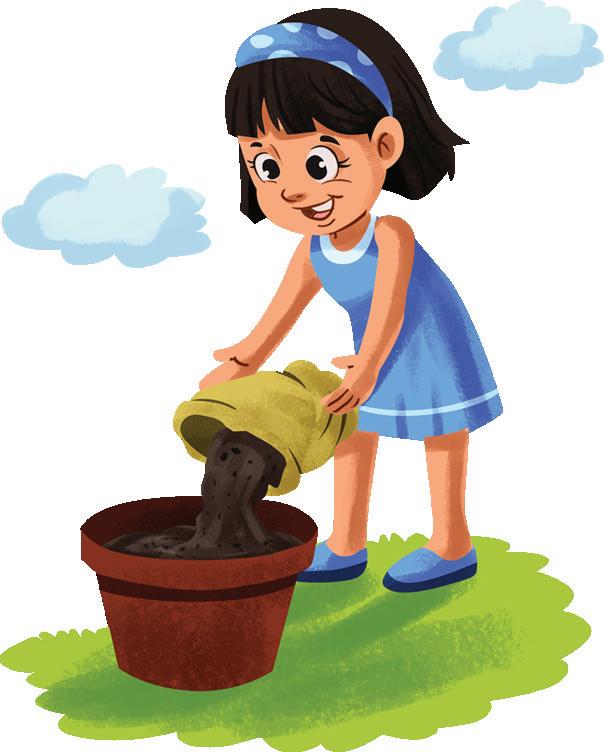
Fill a pot with soil.
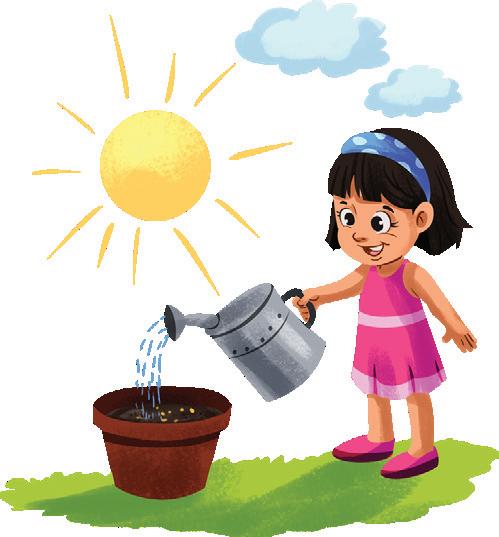
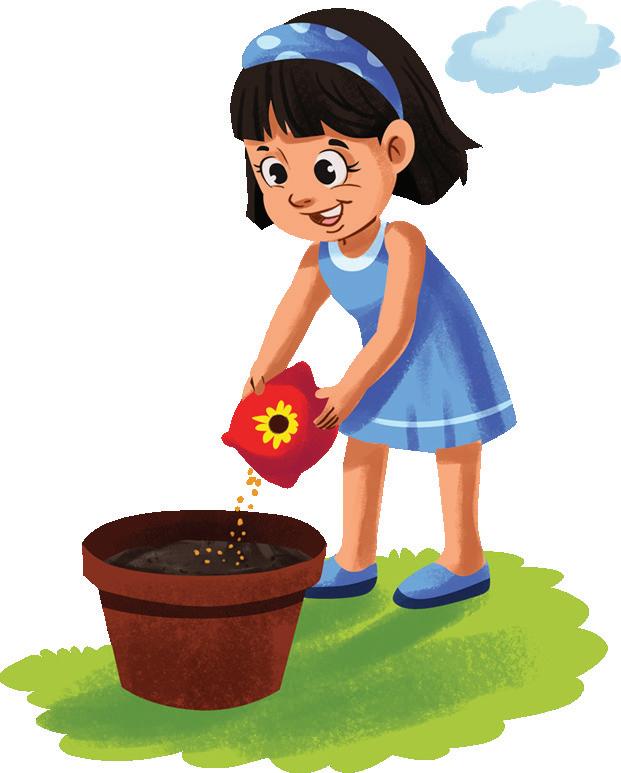
Plant a seed in the soil.
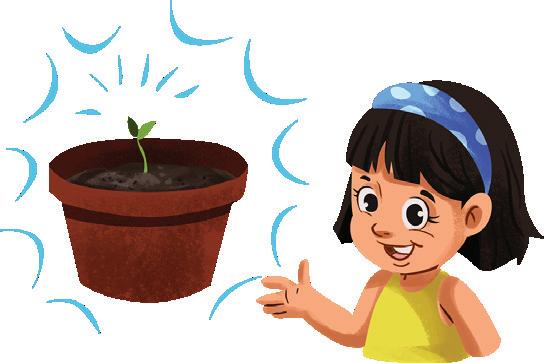
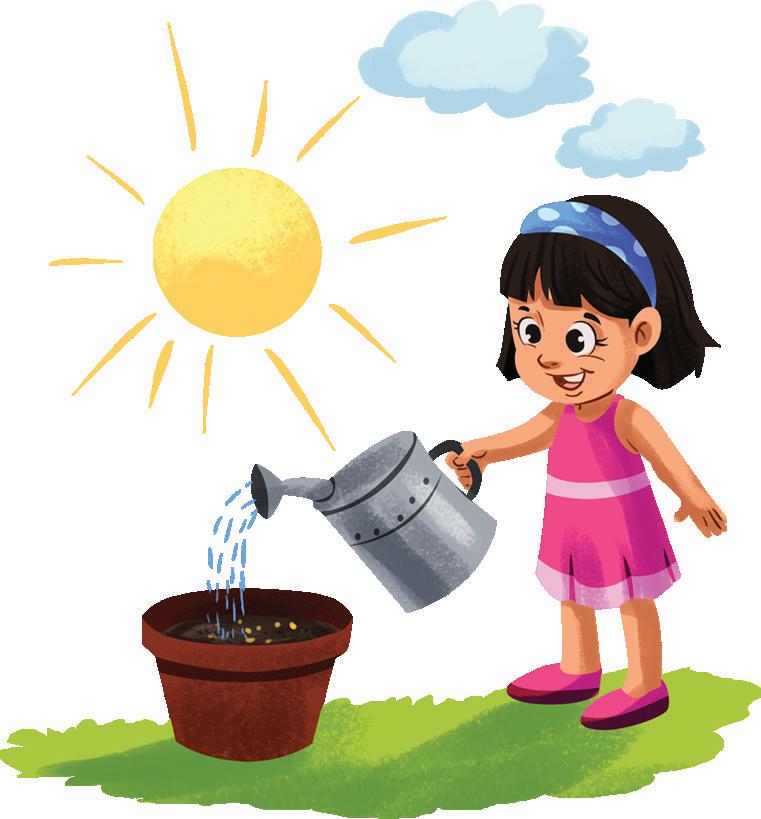
After a few days, a small plant grows. Place it in the open air and sunlight. Water it everyday.
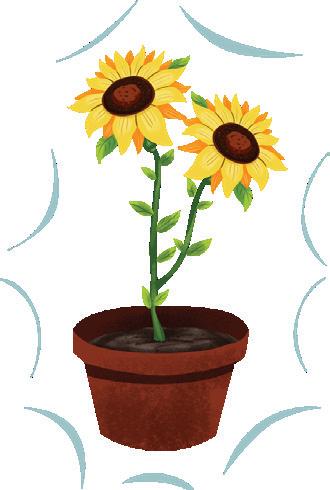
In a few weeks, the plant grows big and strong.
TEACHER TIP
Encourage children to grow plants at their home.
Tick () the things a plant needs to grow.

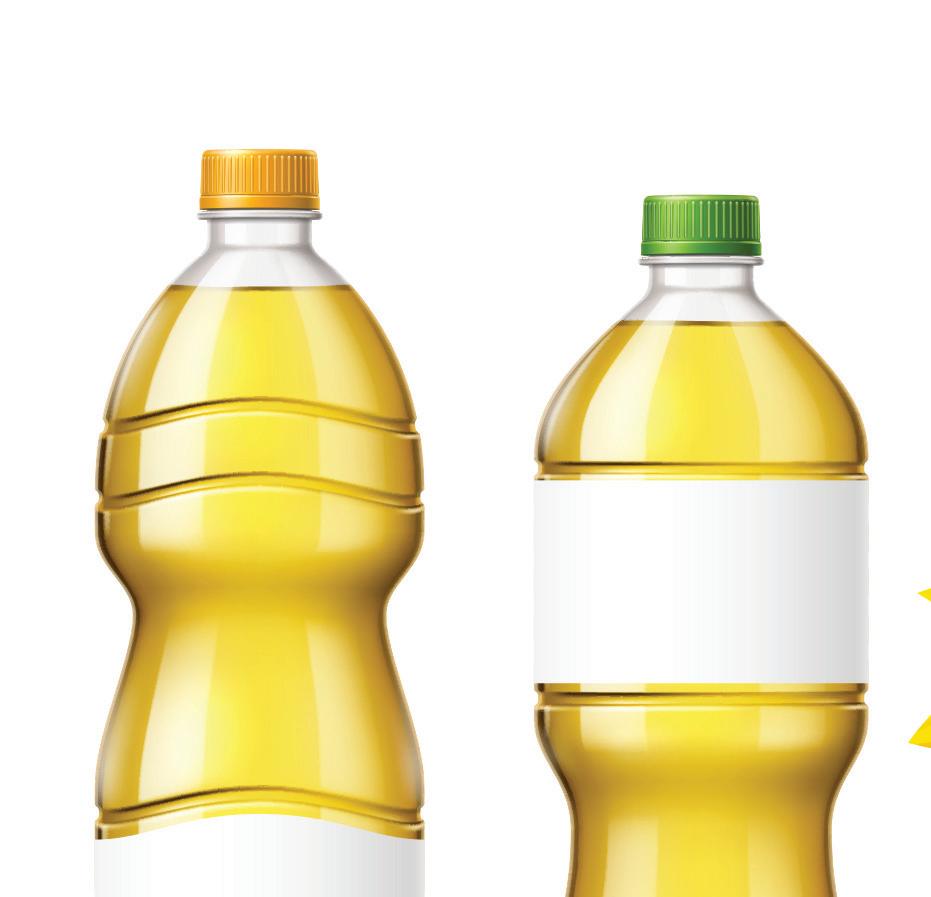

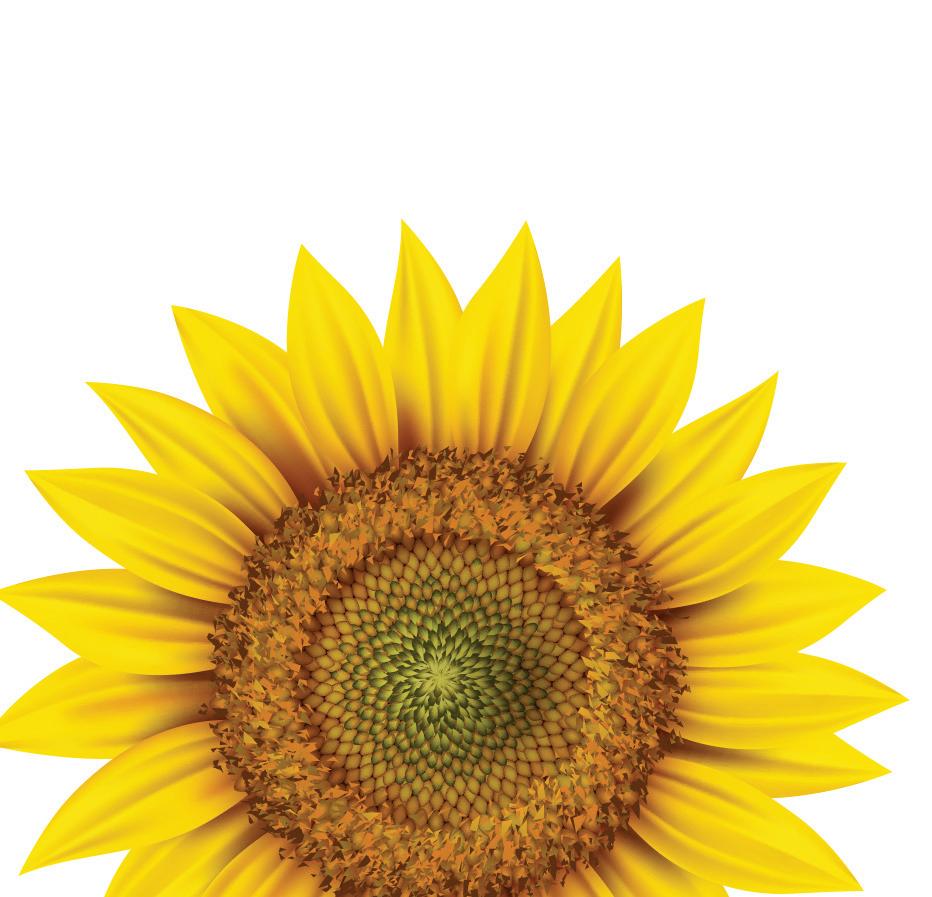
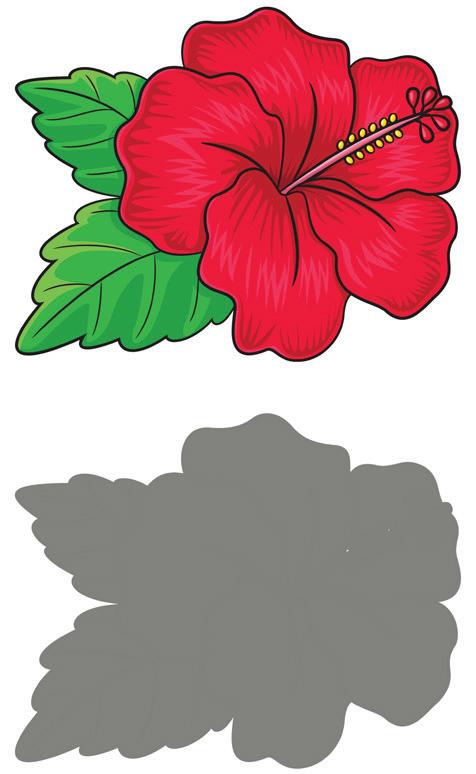
Flowers grow on plants and trees. They are colourful and have a nice smell. Let us learn the names of some common flowers.
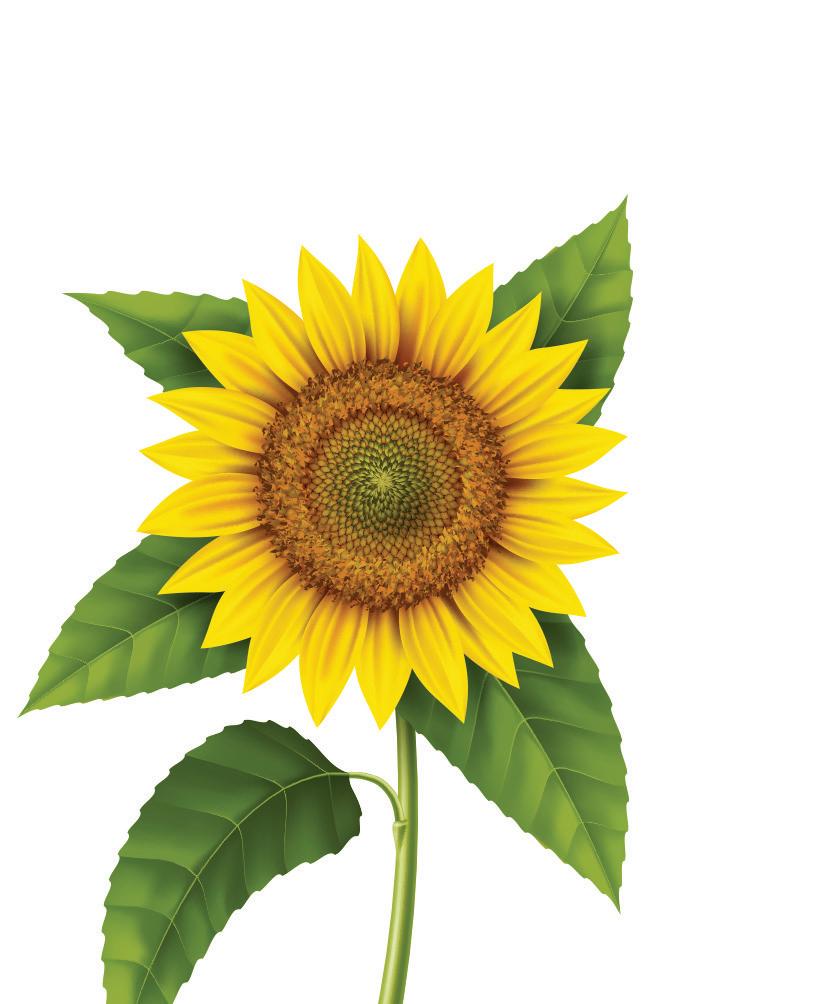

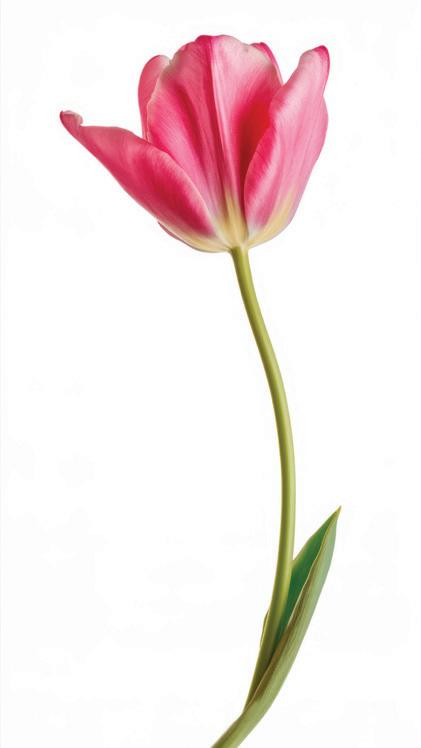
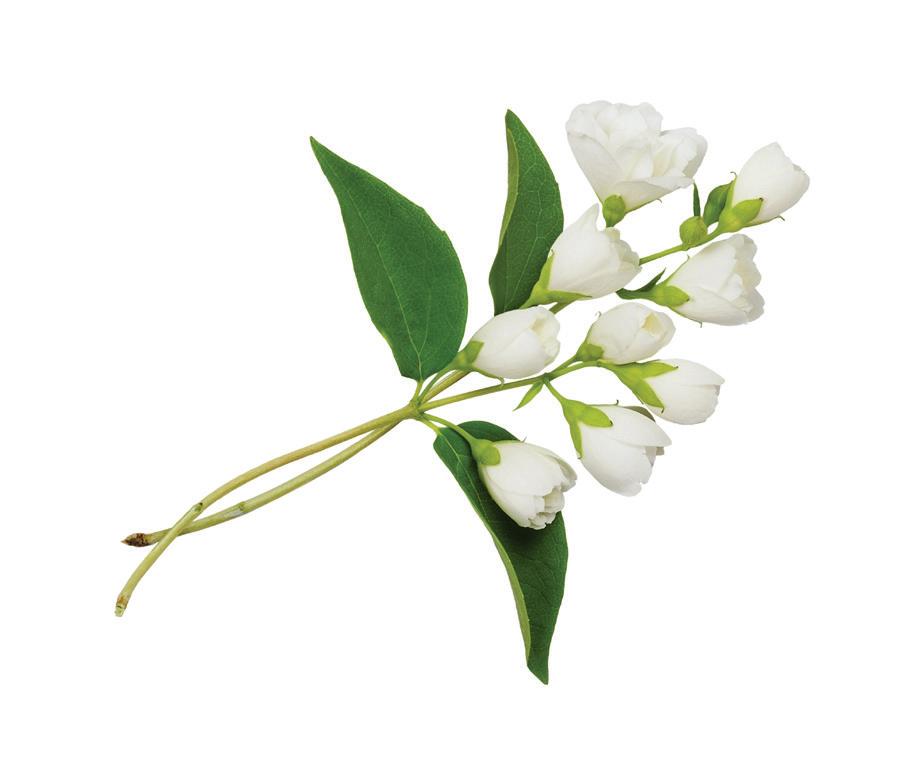
Match each flower with its shadow.




Fruits are good for our health. We should eat them regularly. Let us learn their names and write them below.
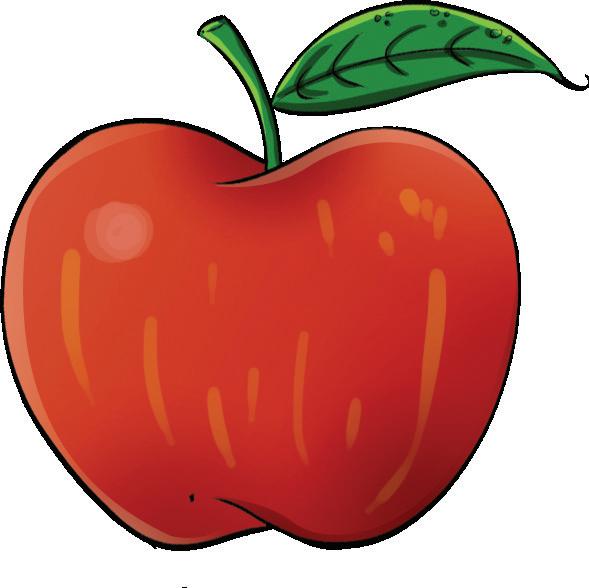
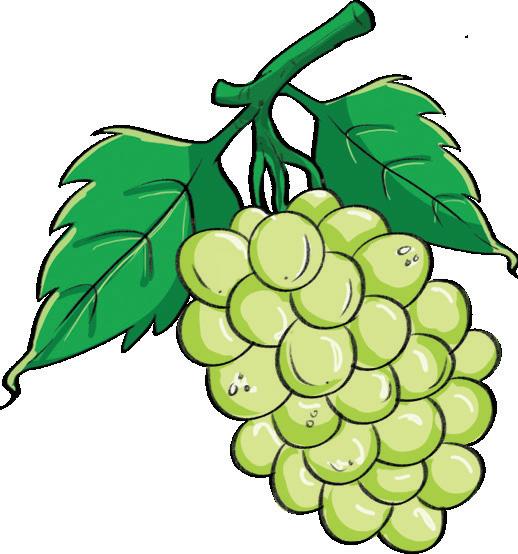
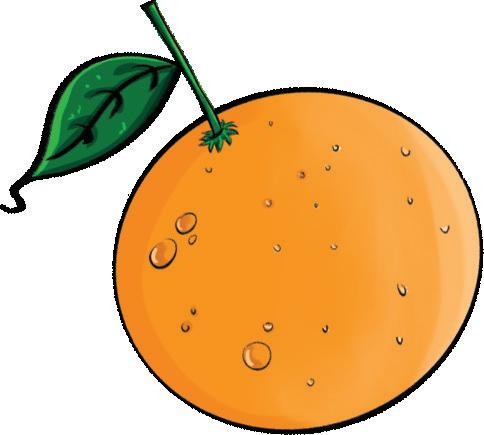
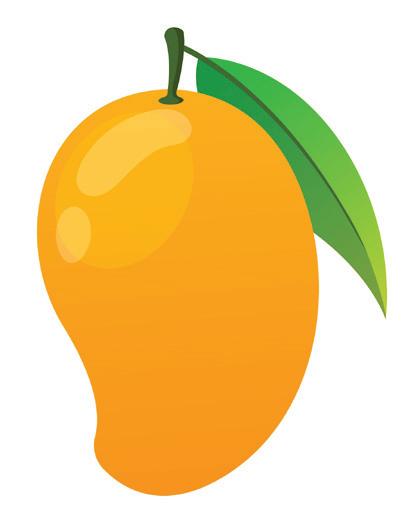
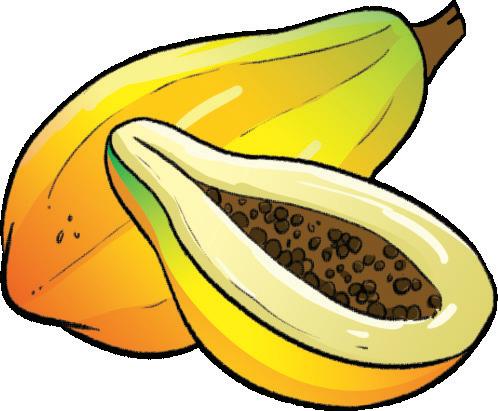
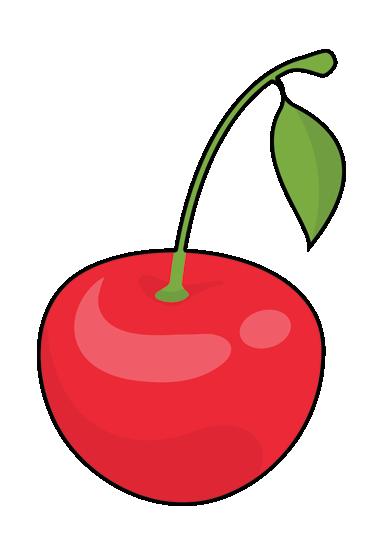


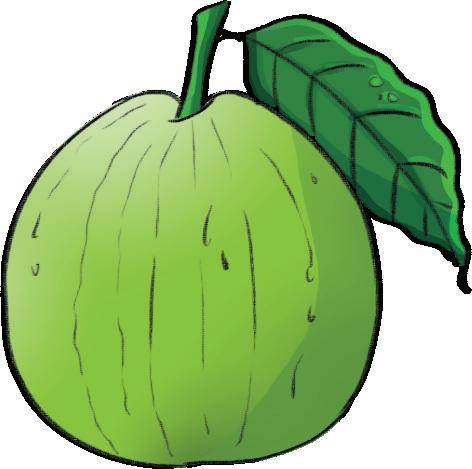





Arrange the pictures in the correct order. One has been done for you.
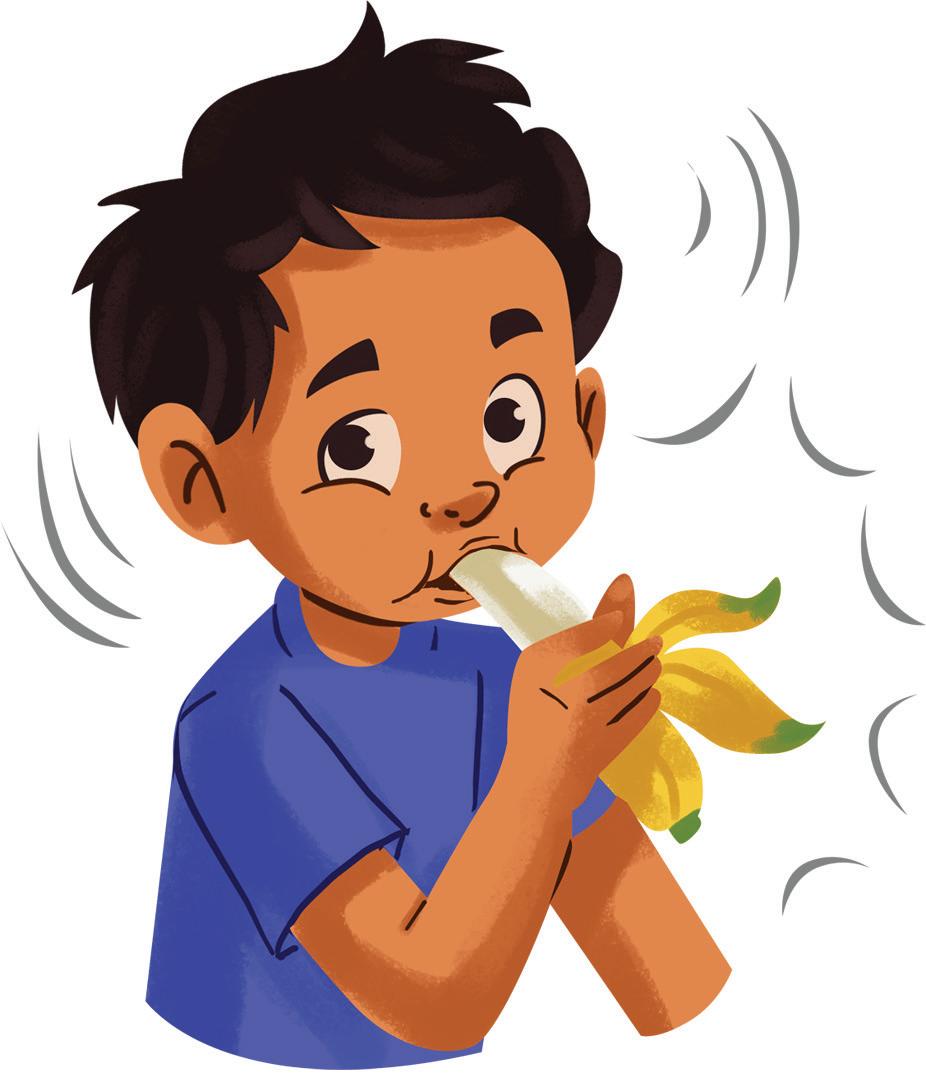
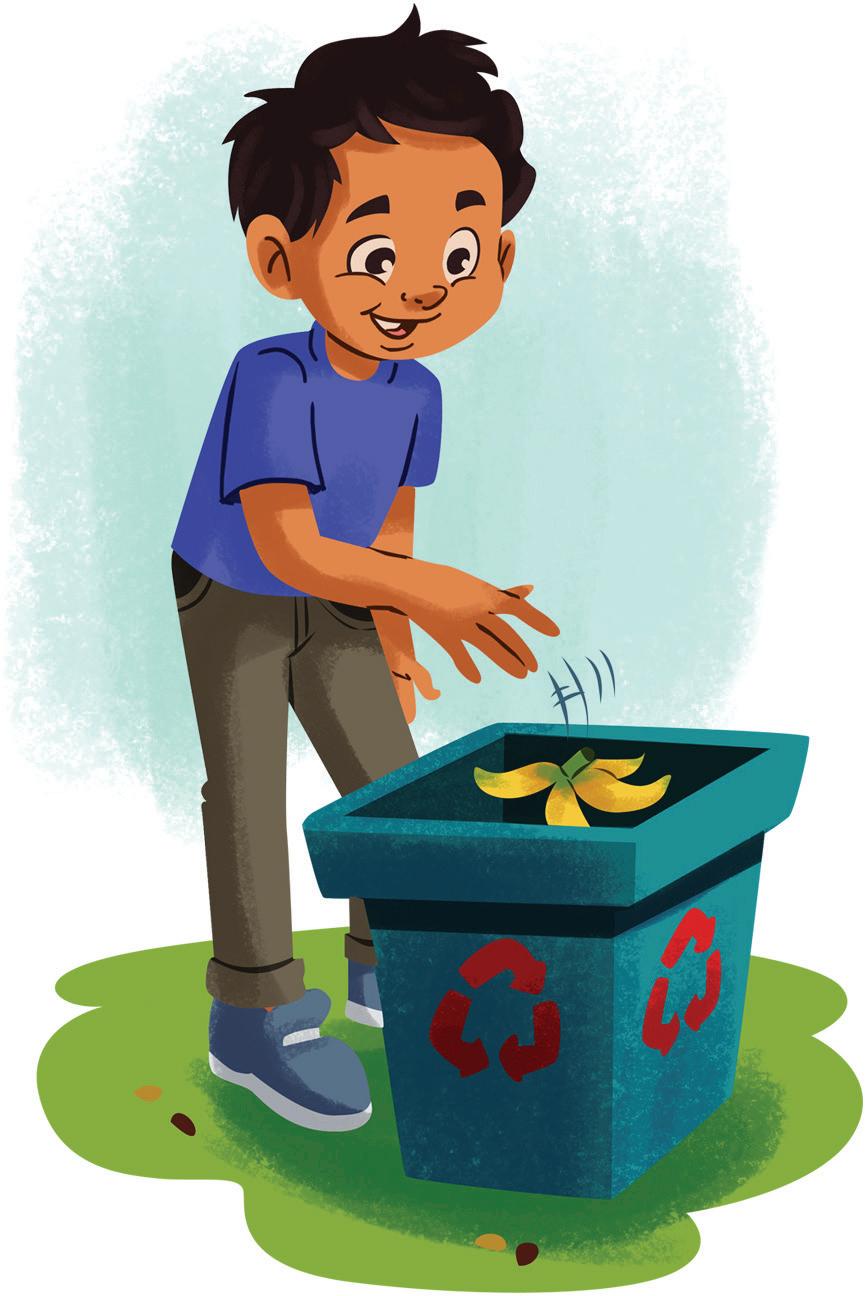
Eat the banana. Throw the peel in the dustbin.
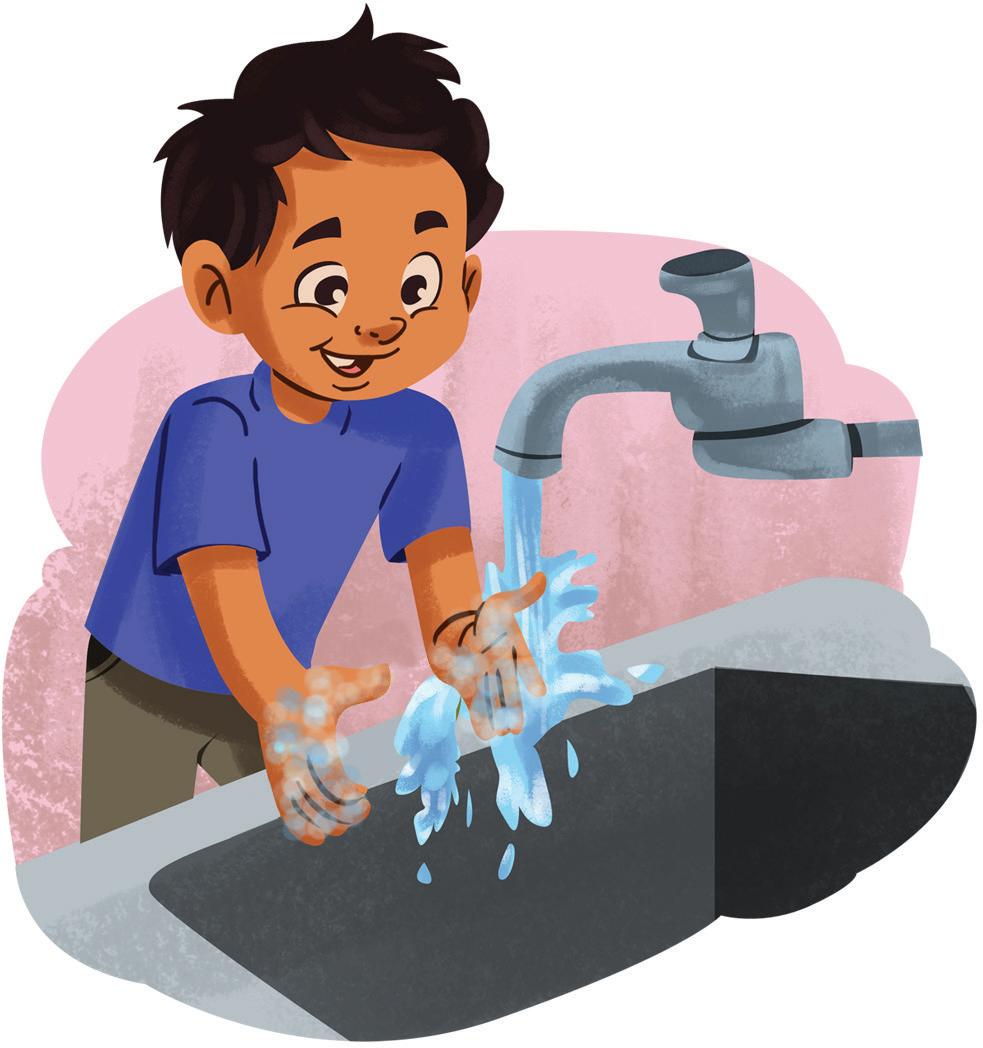
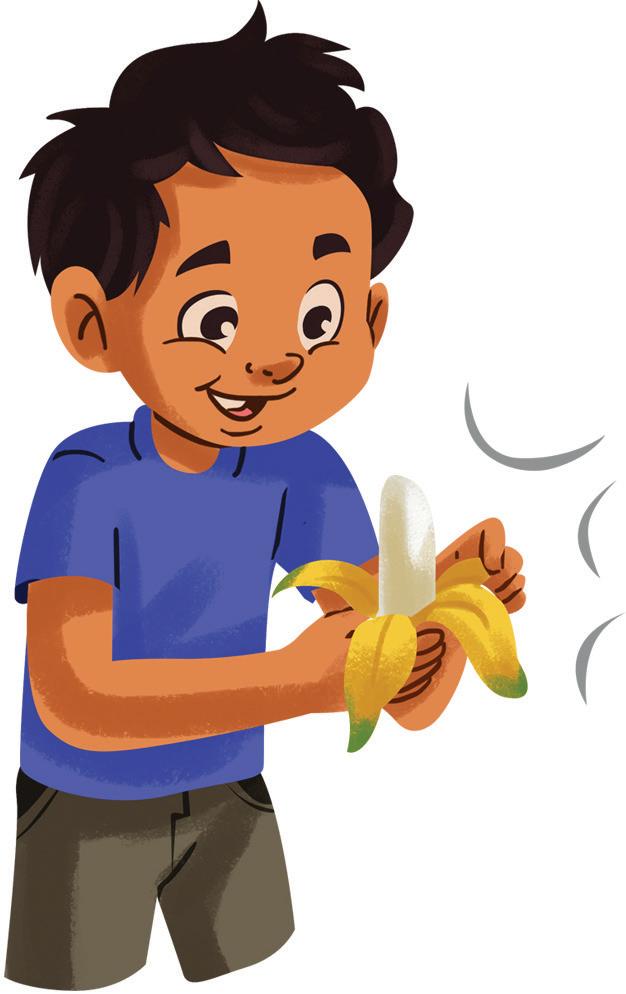
Wash your hands. Peel the banana.
TEACHER TIP
Remind children to wash their hands before and after eating to stay safe from germs.
Fruit have seeds. Some have one. Some have many. Look at the examples to understand.
Write ‘one’ next to the fruit that has one seed and ‘many’ next to the fruit that has many seeds.
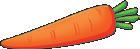
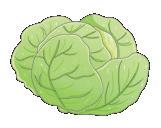
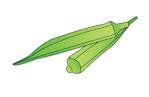
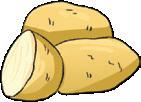
Vegetables are good for our health. They keep us strong and healthy. Let us learn their names and write them below.
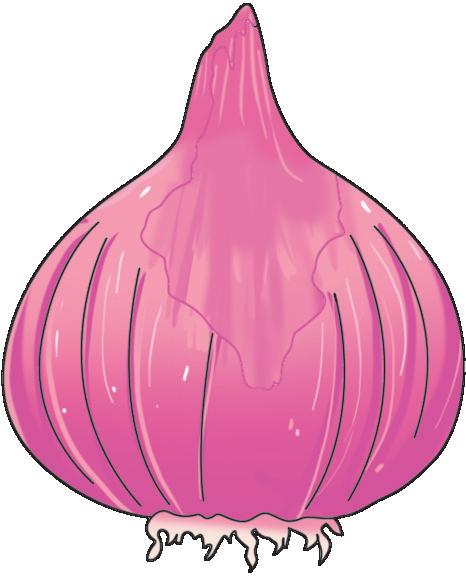
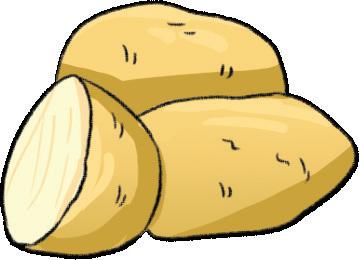
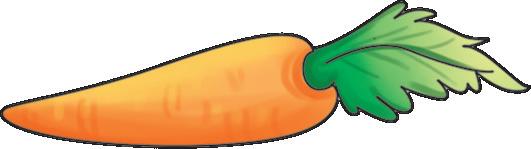
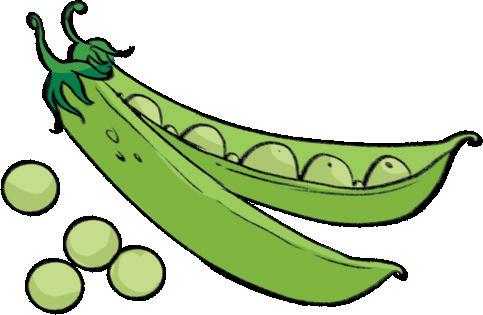
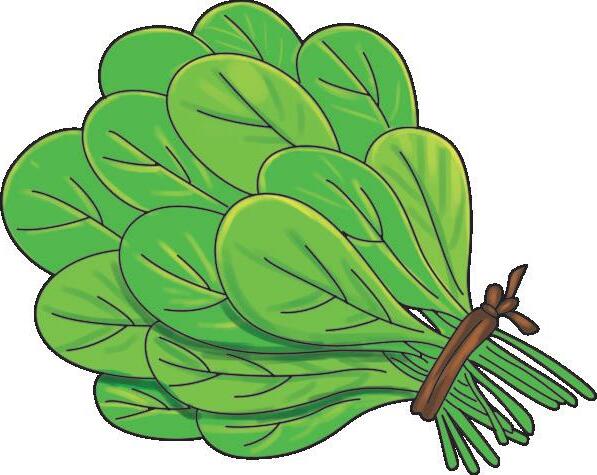
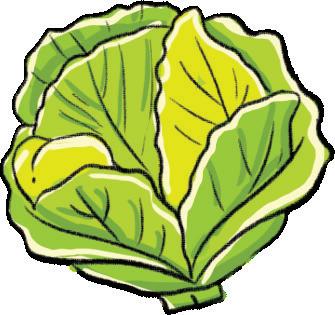
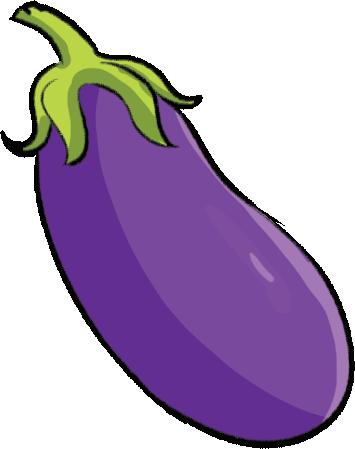
Eating salads keeps us healthy. Some vegetables can be eaten raw as salads. Let us look at them and read their names aloud.
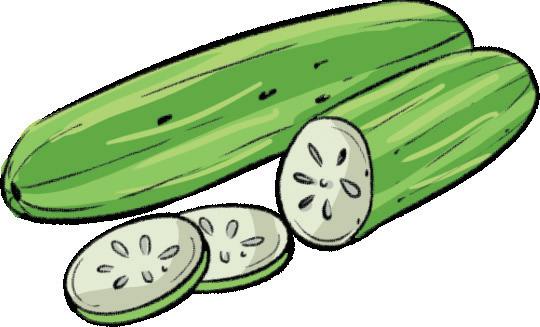
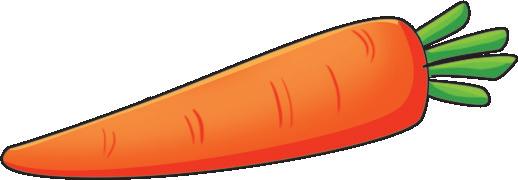
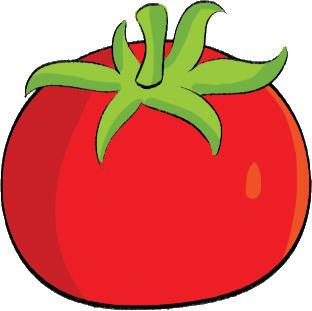
Some of the food items are healthy and can be eaten or drunk every day.
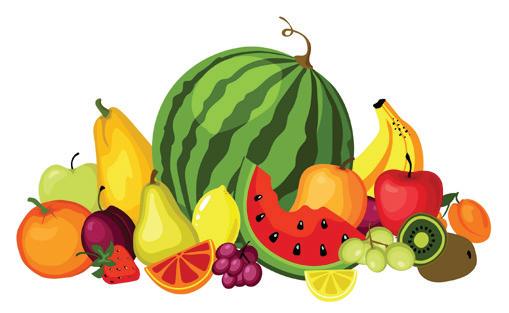

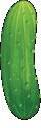
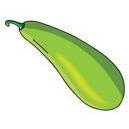
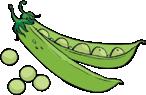

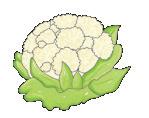


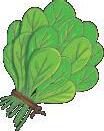
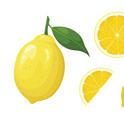
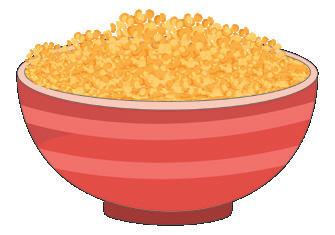
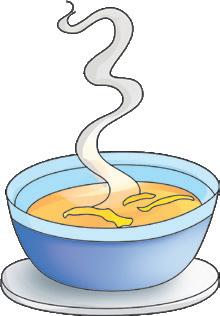
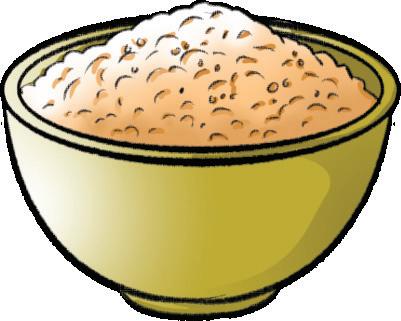
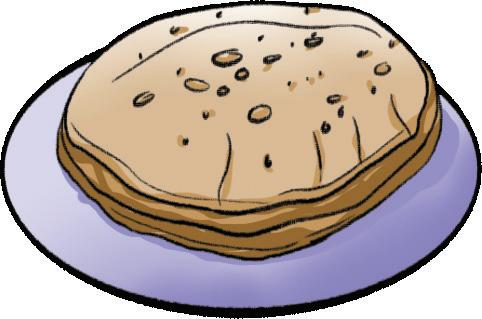
Some food items are tasty but not healthy. We should only eat them once in a while.
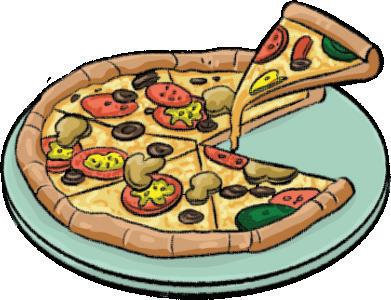
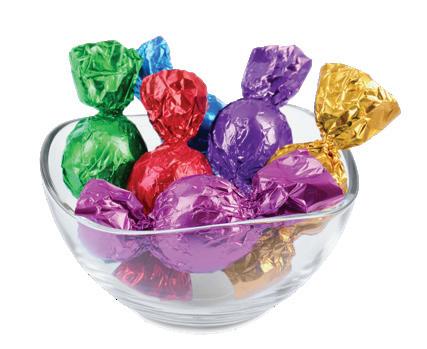
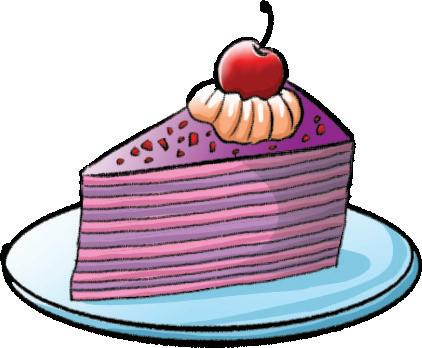
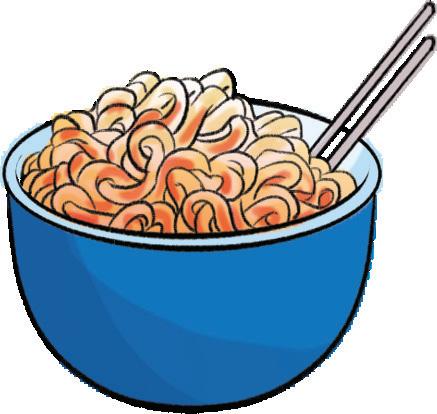
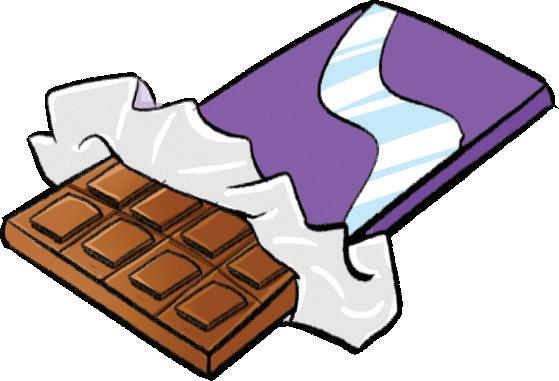
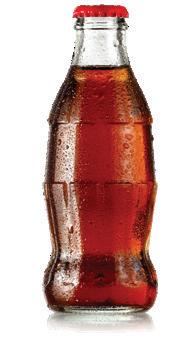
Circle the pictures that show healthy habits.
Eat food that is clean and covered.
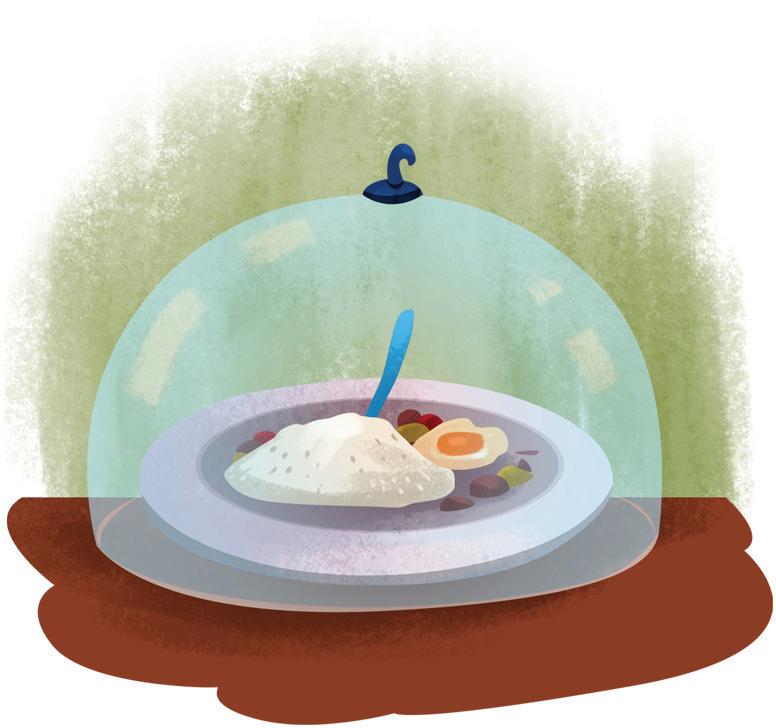
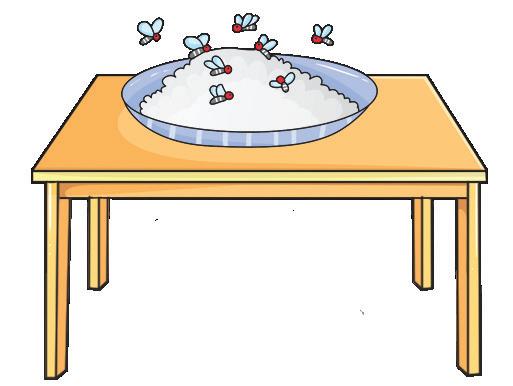
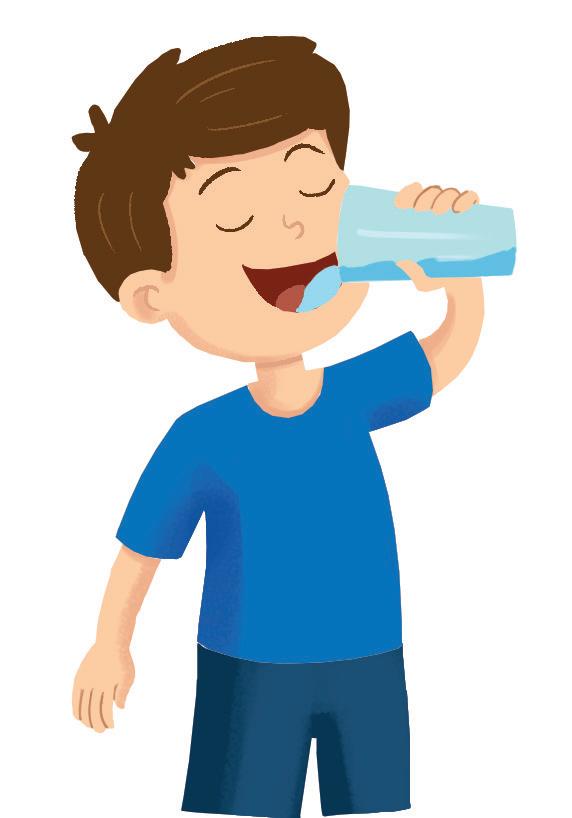
Drink water that is clean and covered.
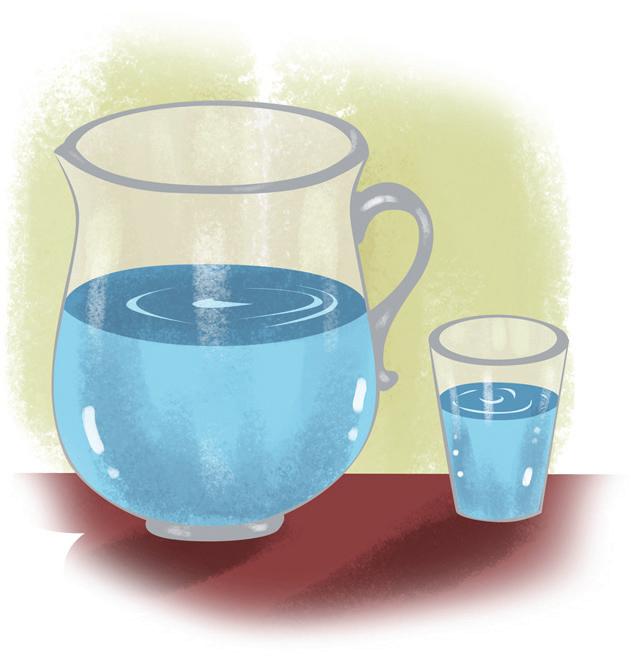
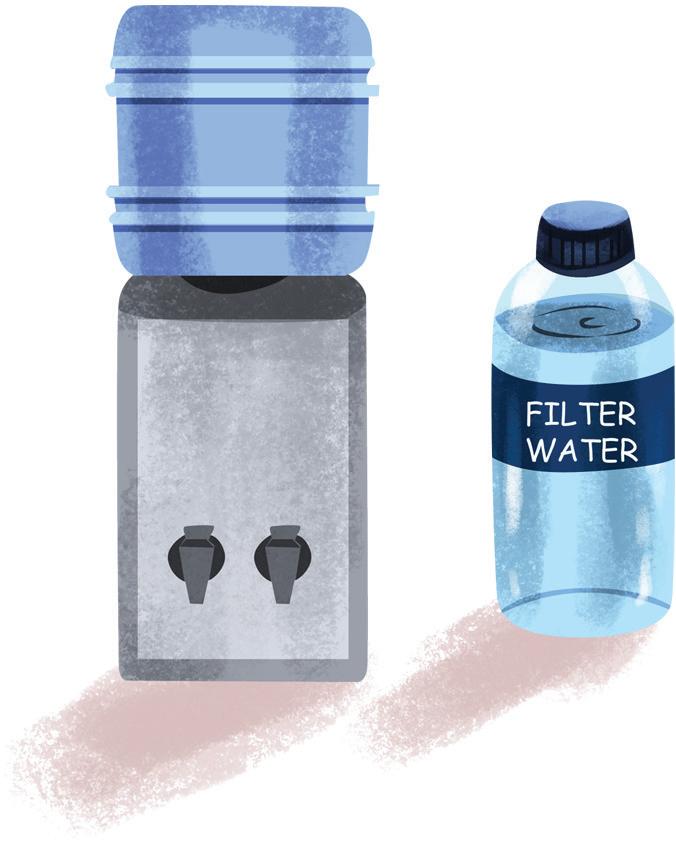
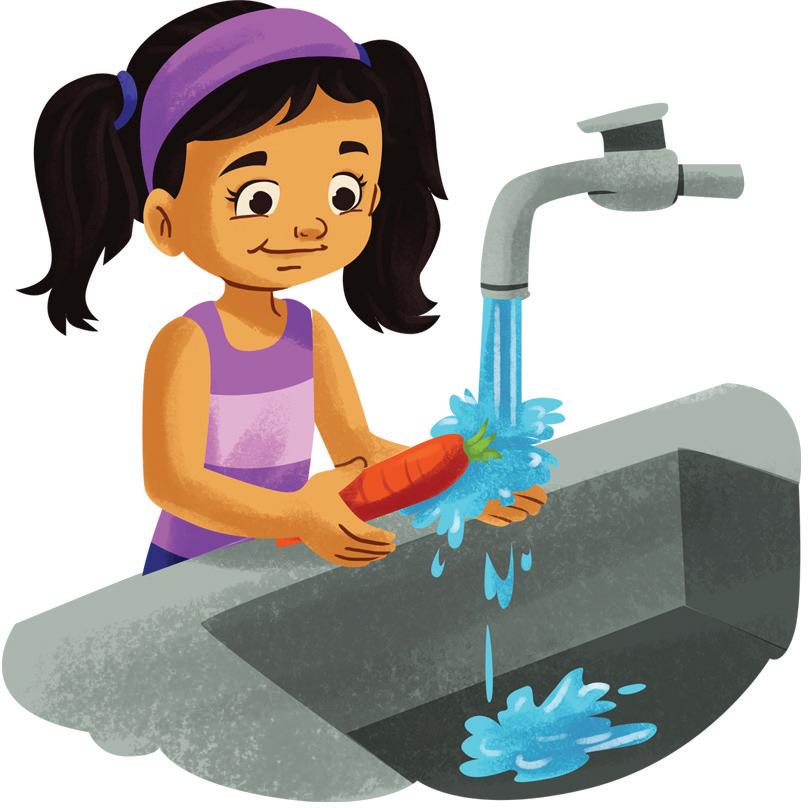
Wash fruits and vegetables before eating.
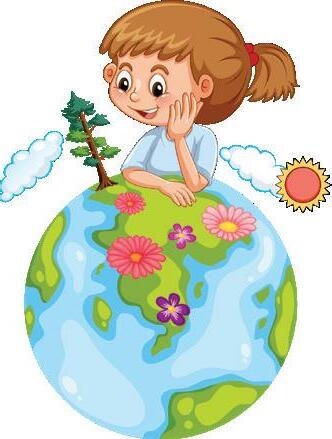
We live on the Earth. Earth has land and water. Colour the picture of the Earth according to the code. 1 2

The green part shows the land. The blue part shows water.
Water is important for us. We use water in many ways. Let us see how we use water in our daily life.
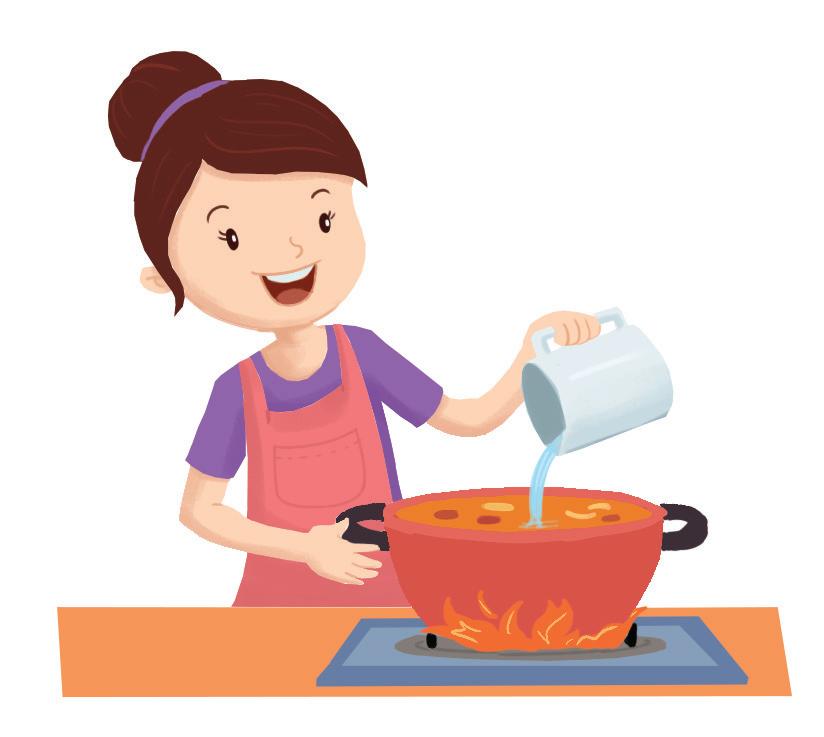
washing clothes cooking
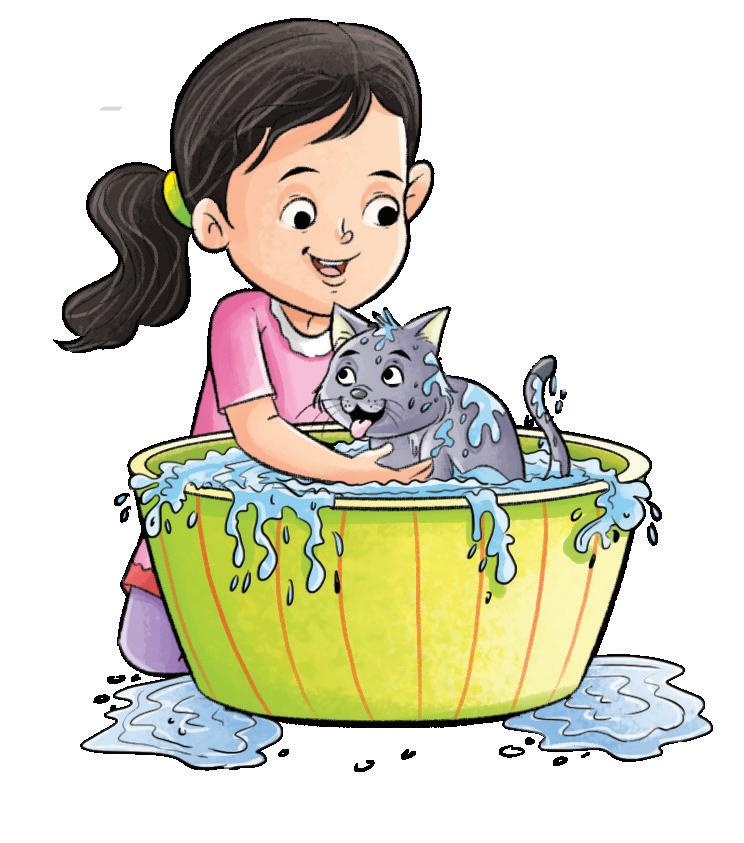
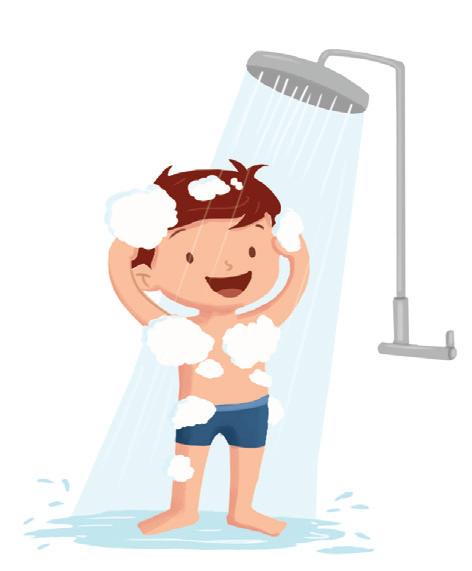
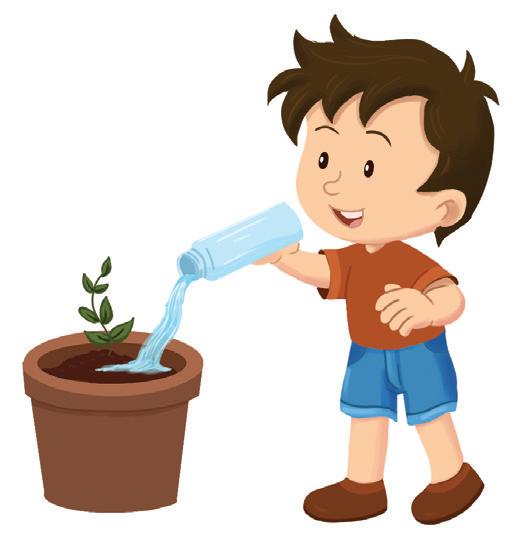
watering plants bathing
bathing the pet cleaning washing fruits and vegetables
TEACHER TIP
Talk about the importance of water and ways to save it.
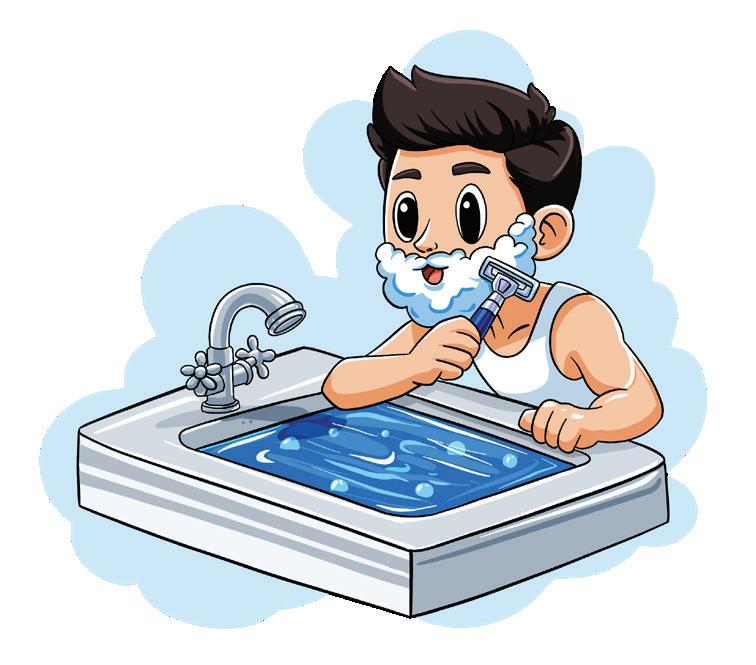
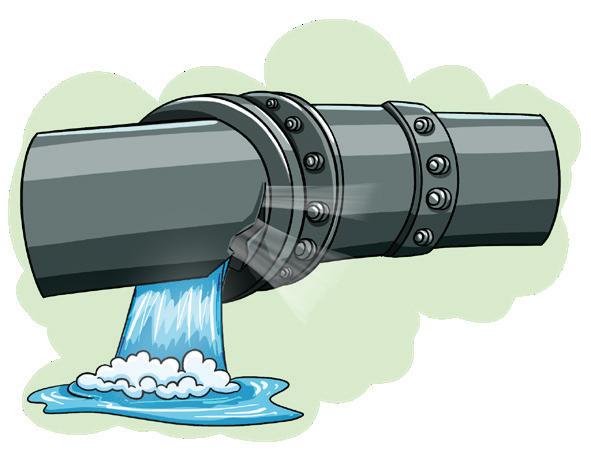
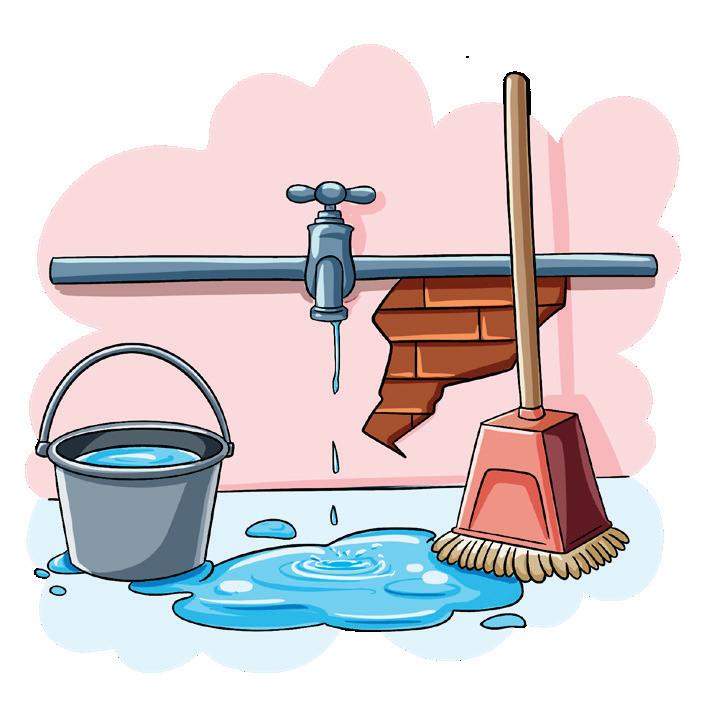
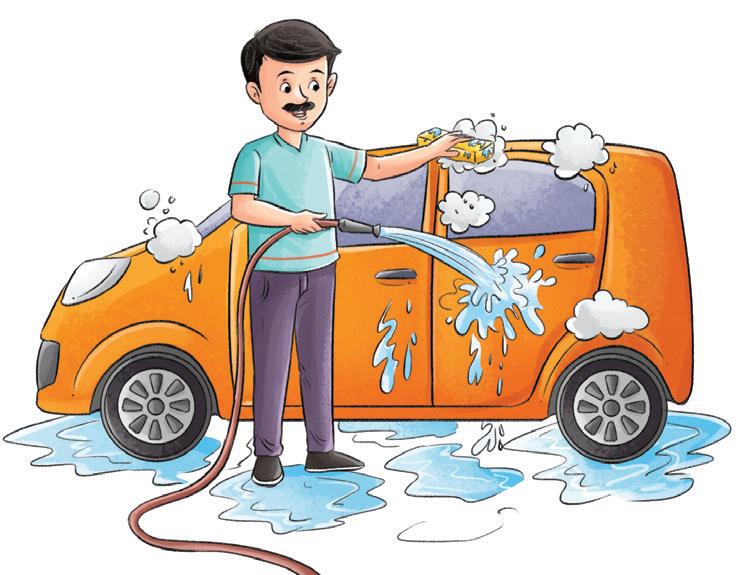
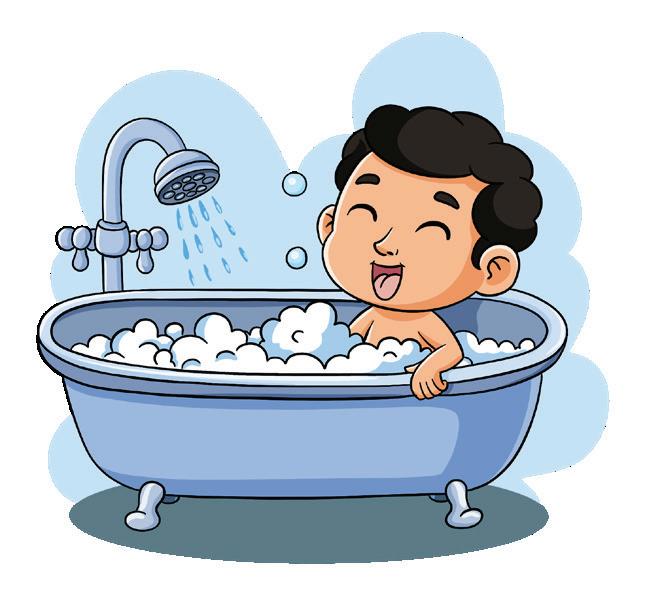
We get water from different sources. Let us learn the names of some sources of water.















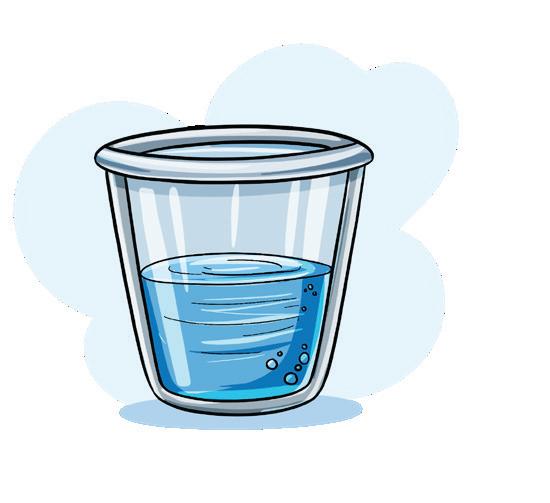
Step 1: Take a glass of water (half full).
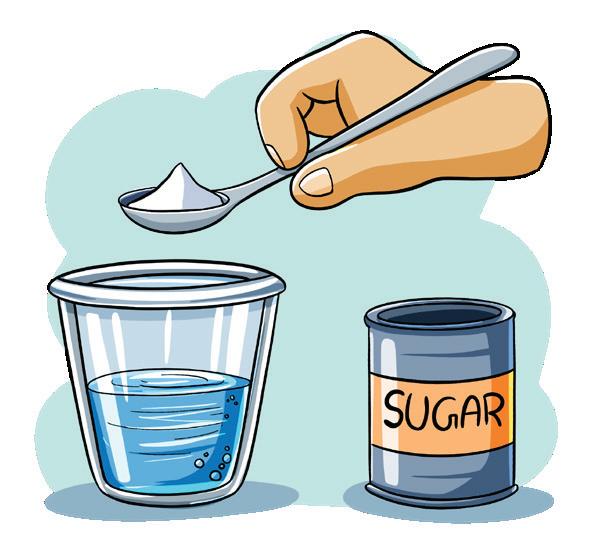
Step 2: Add sugar.
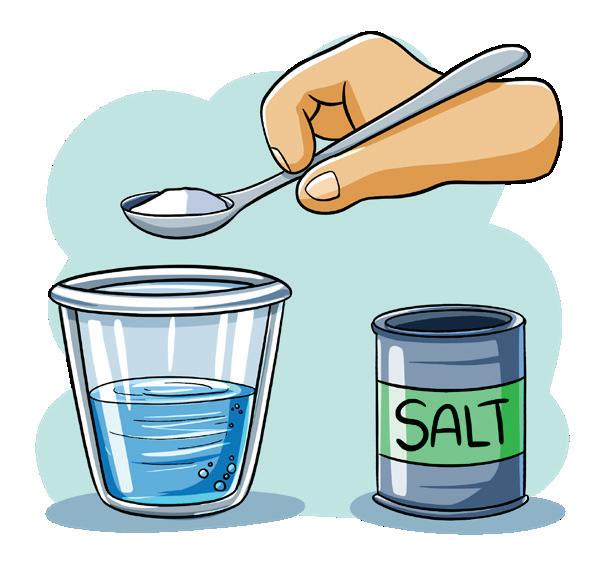
Step 3: Add a little salt.
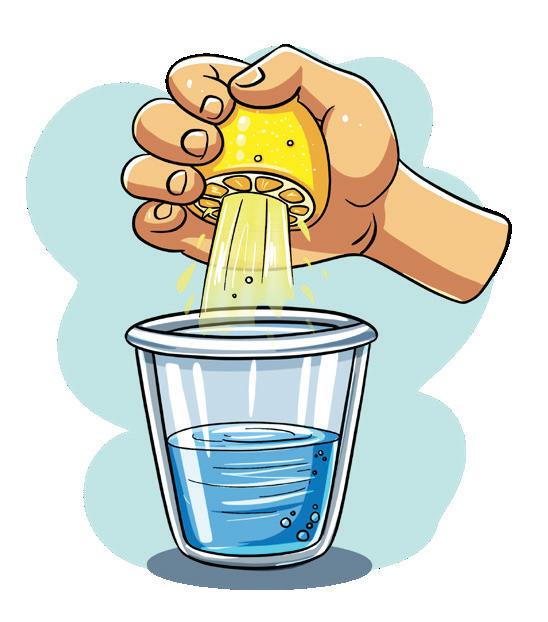
Step 4: Add lemon juice.
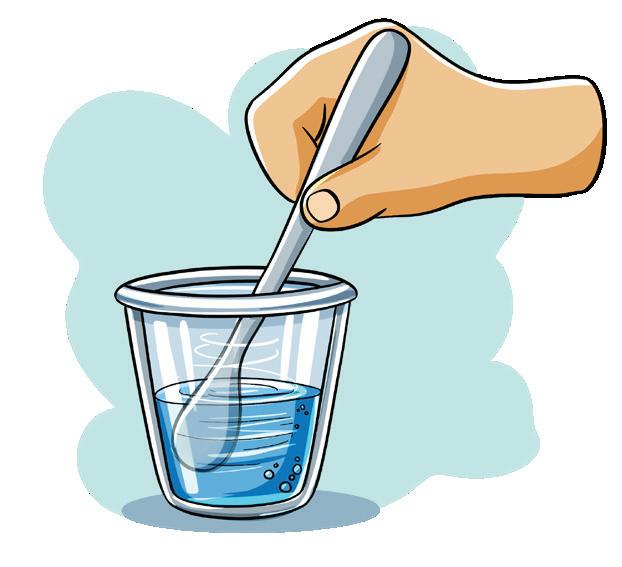
Step 5: Mix them.
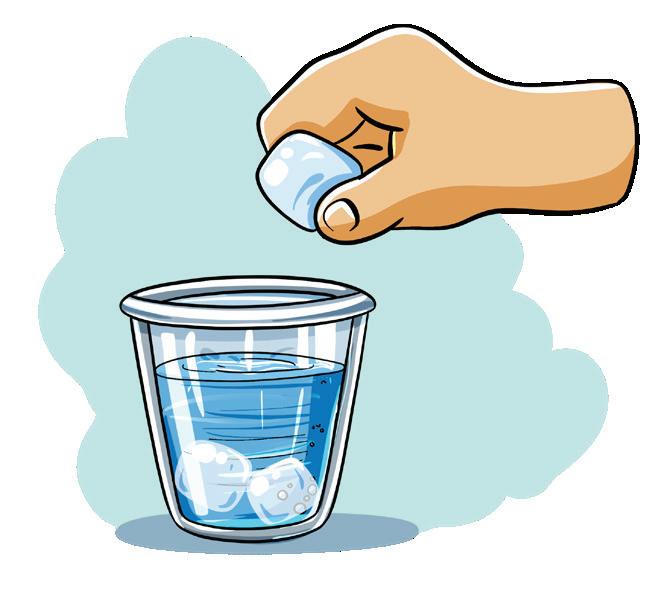
Step 6: Add ice cubes.
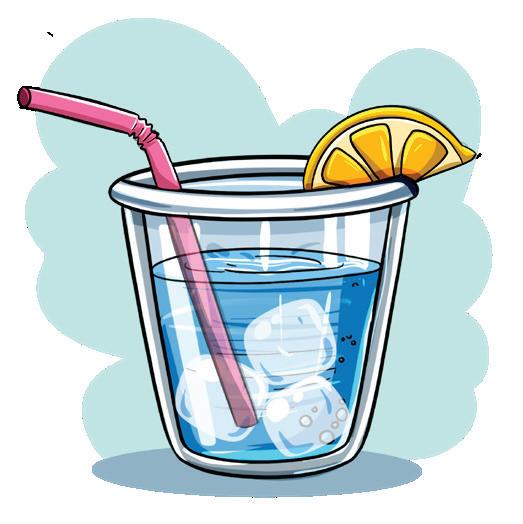
Lemonade is ready.
TEACHER TIP
Take water, salt, sugar and lemon. Add one thing at a time and let children taste it. Help them understand that water itself has no taste or smell.
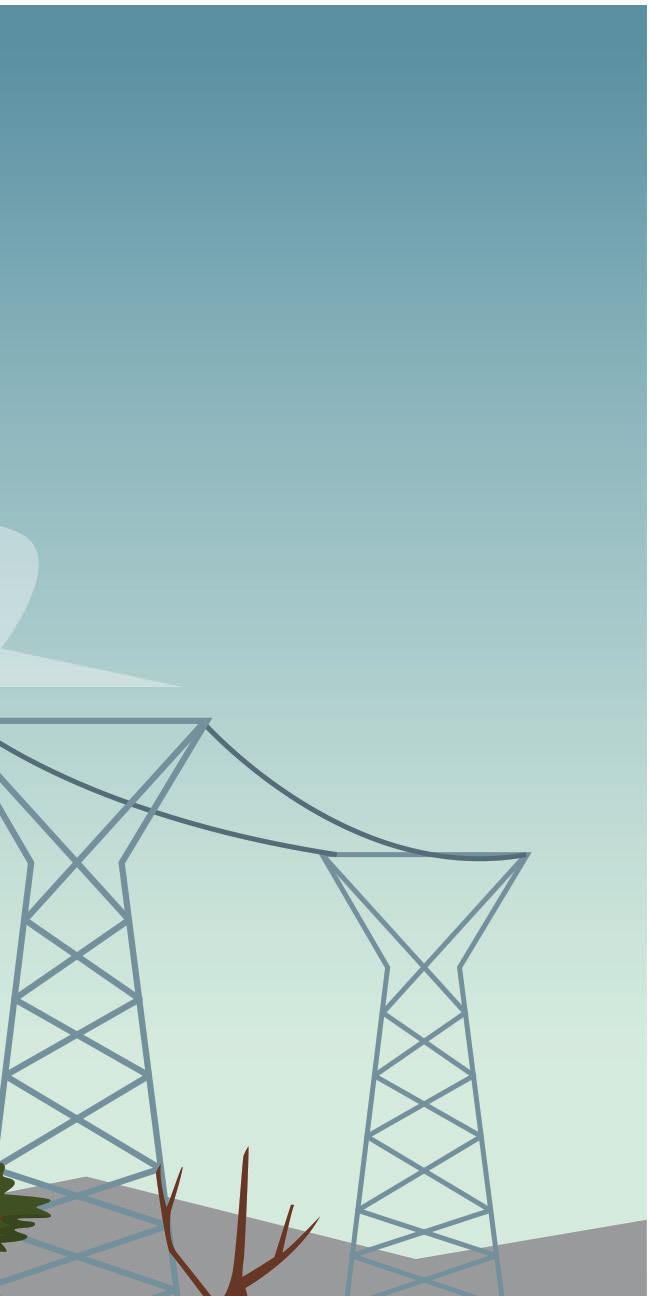
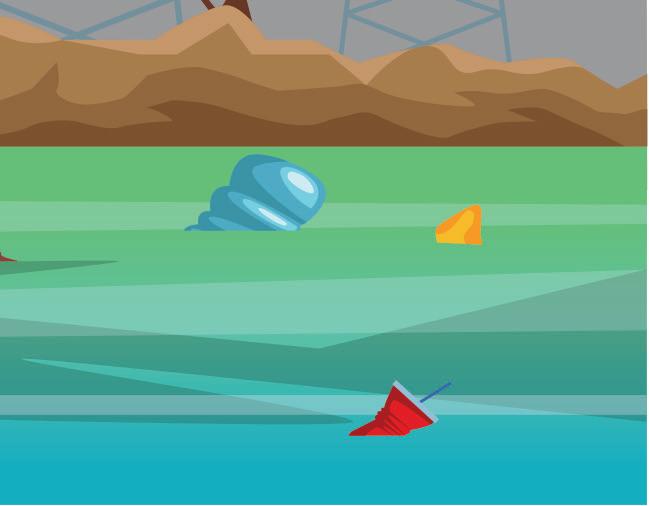
Water pollution happens when rivers, lakes, and oceans become dirty. Look at the picture below and point to the things that make the water dirty.

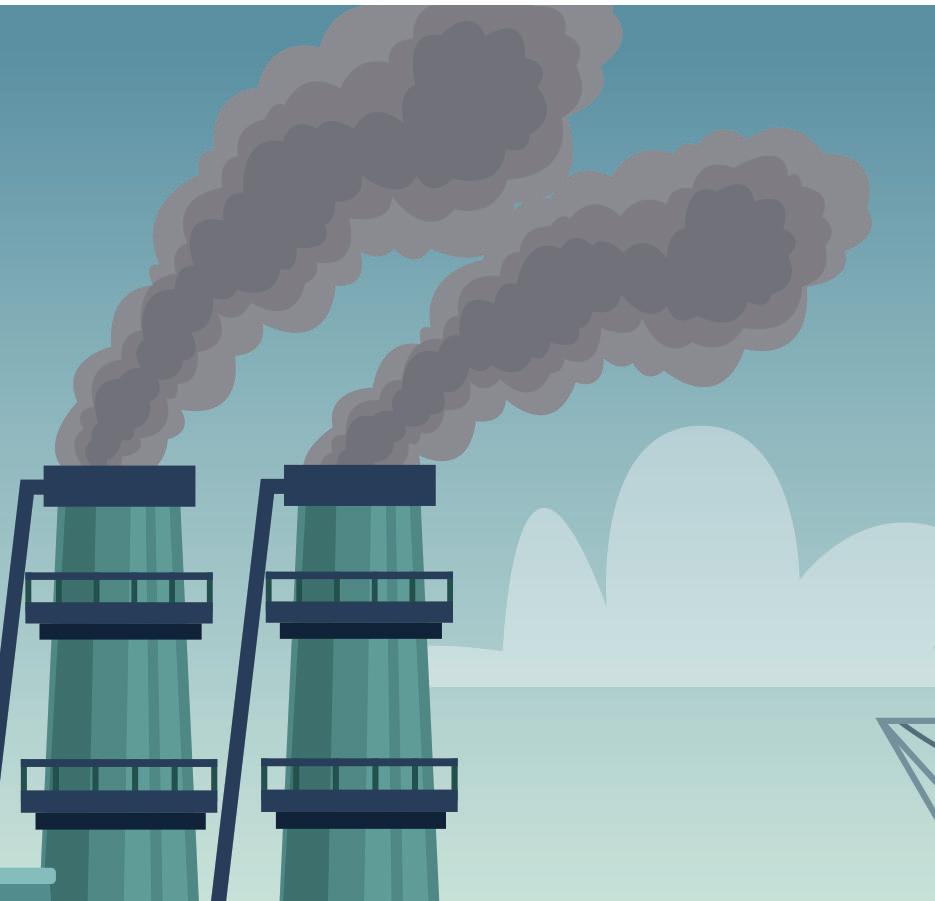
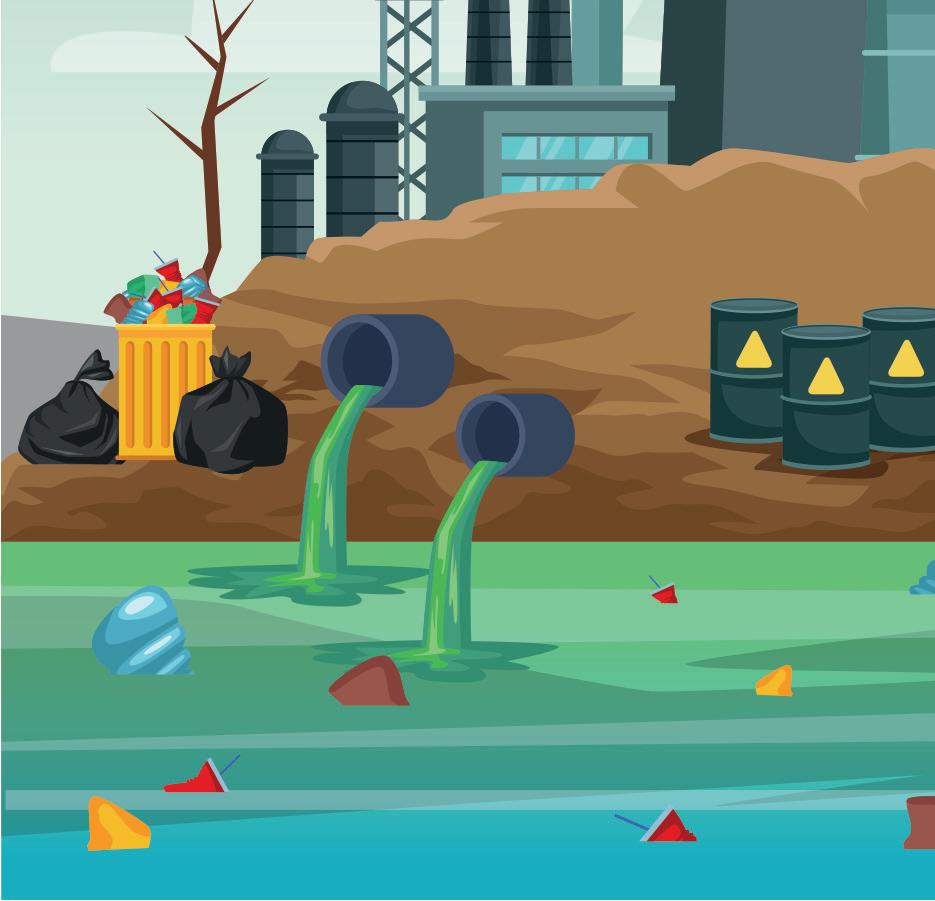
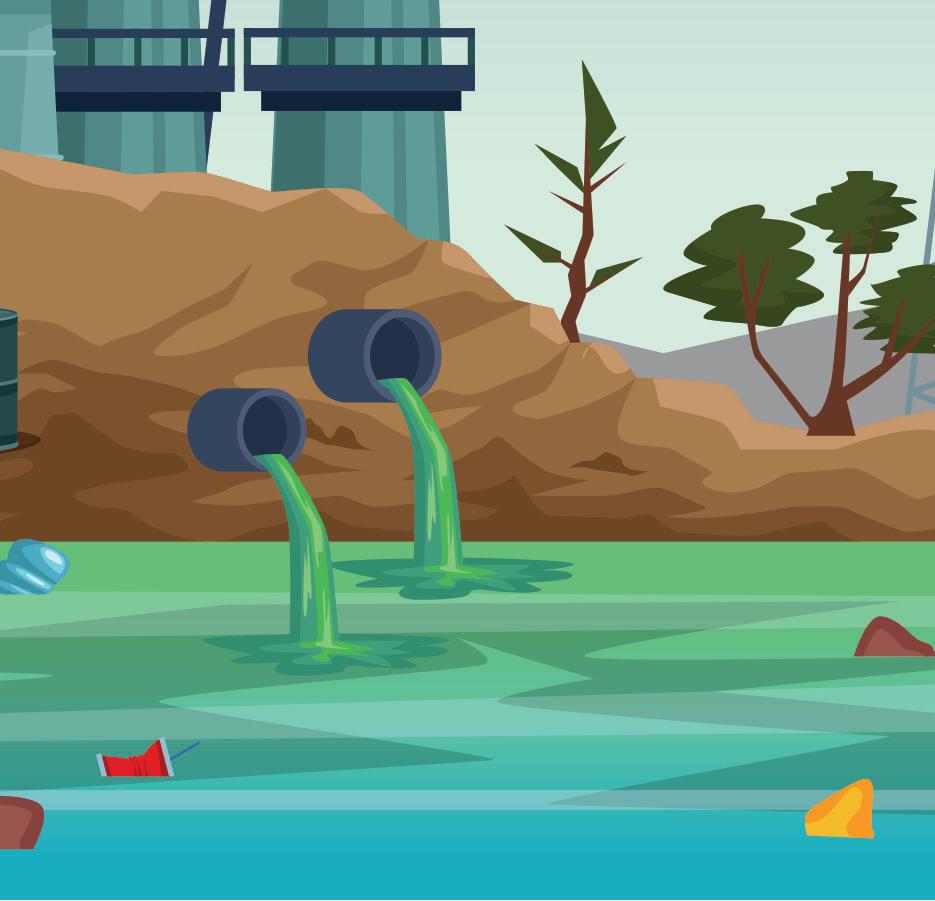
Discuss in class about the different sources of water pollution and how not throwing away plastic saves water from pollution.
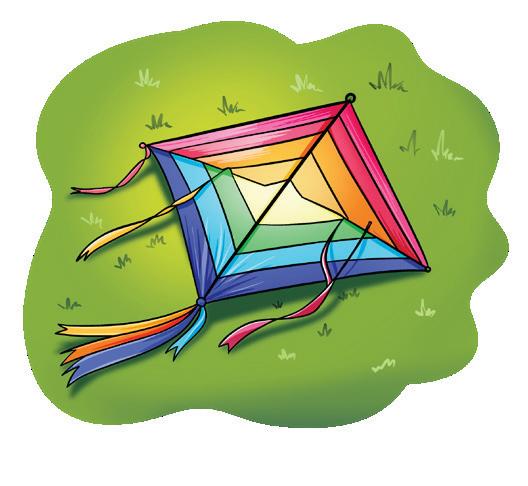
Air is all around us. We need air but we cannot see it. Look at the different ways how air helps us.
flying a kite breathing
whistling
playing a flute drying clothes
blowing bubbles
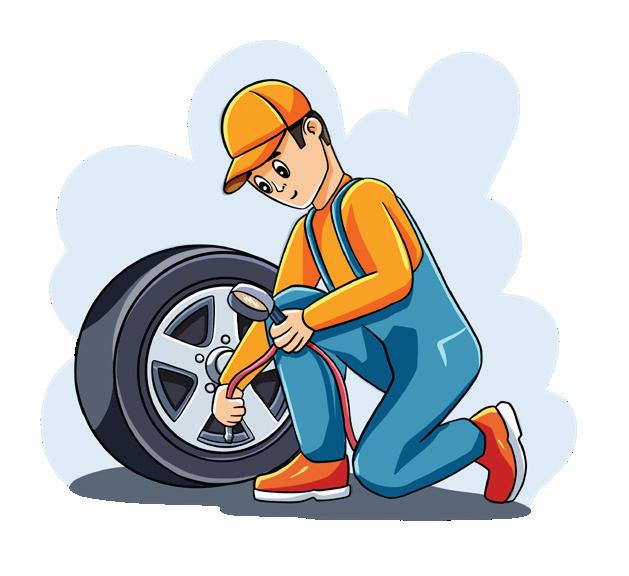
filling a tyre
growing plants
spinning a pinwheel


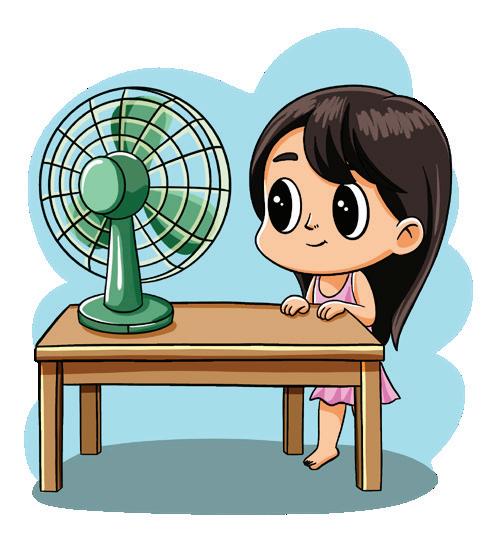

Air pollution occurs when the air becomes dirty. Let us learn how air gets polluted.
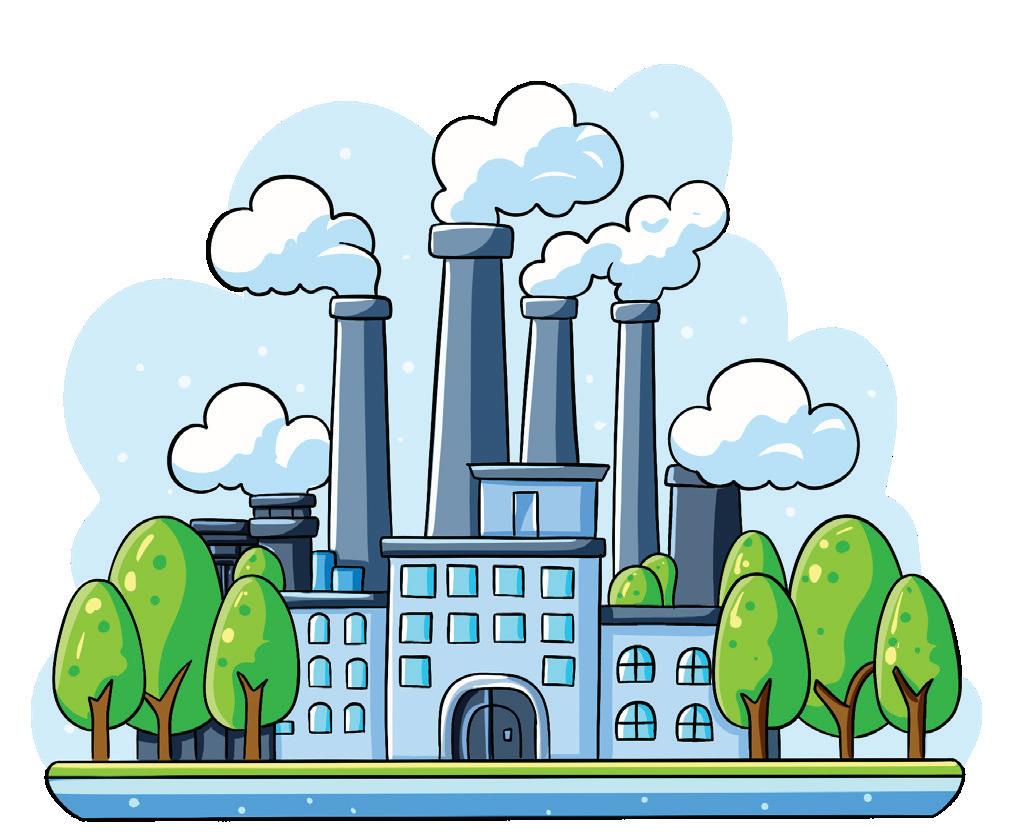
smoke from factories
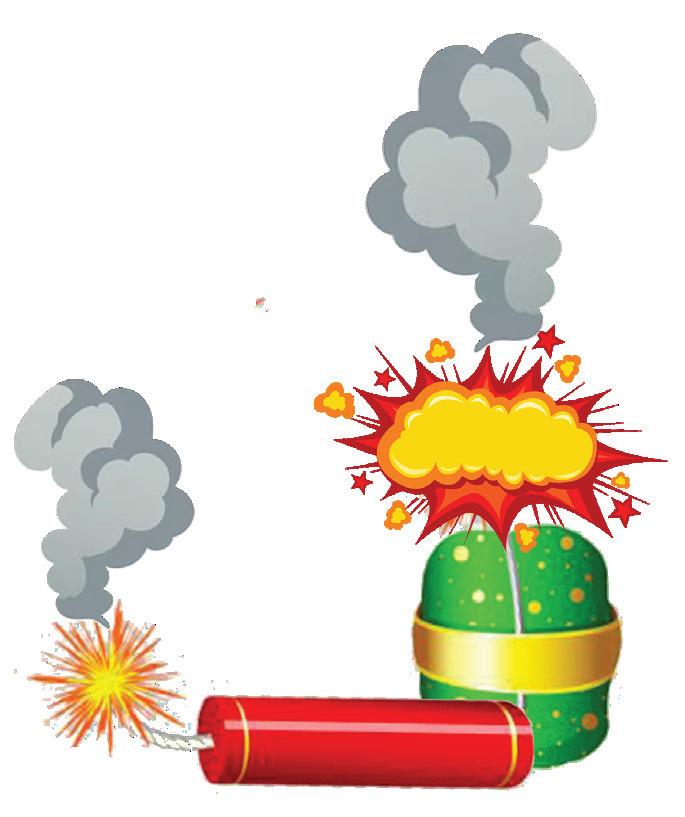
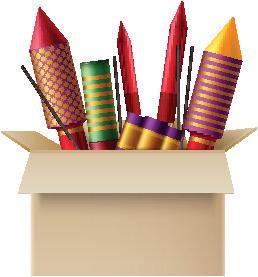
smoke from cars and buses smoke from bursting crackers
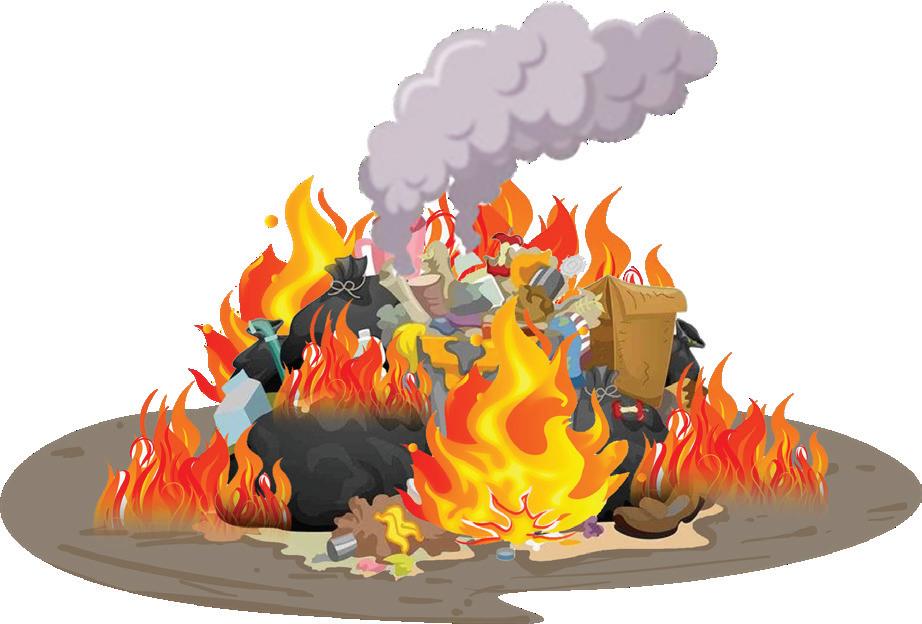
smoke from burning garbage
TEACHER TIP
Explain to children how planting more trees helps reduce air pollution. Encourage them to plant and care for trees.
We live on Earth. We must take care of it. Let us understand how to do it.
Plant more trees.
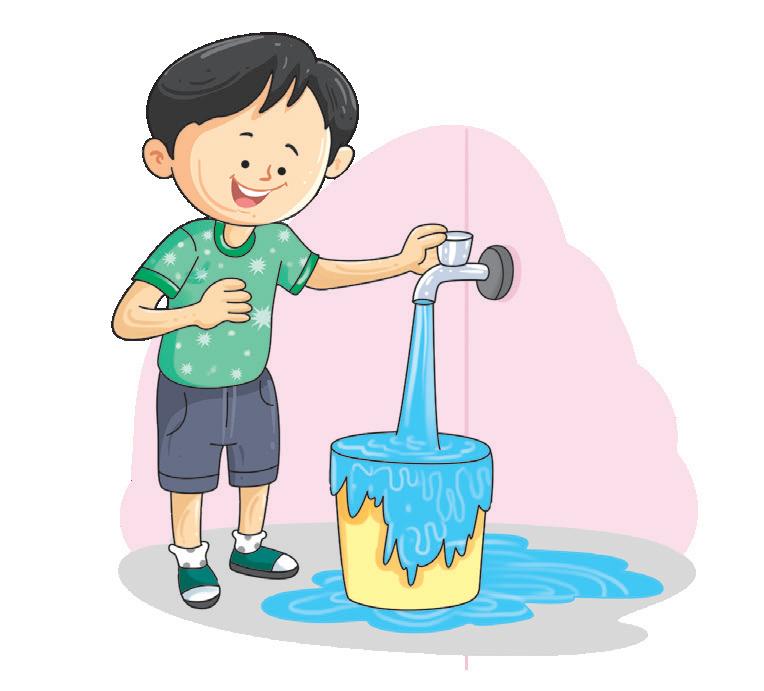
Do not waste water.
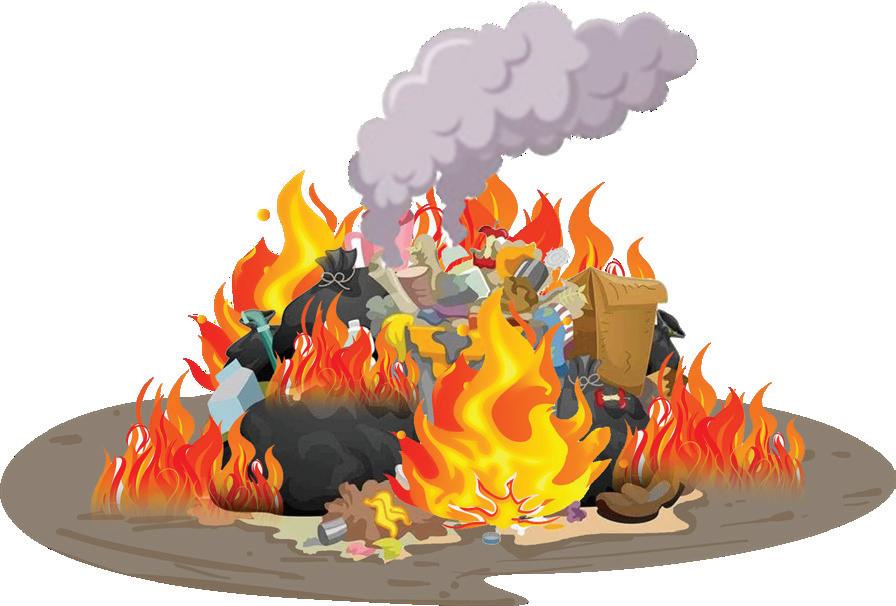
Do not burn garbage.

Do not cut down trees.




























Use less plastic.
Throw waste in the bin.
Help the boy reach the running tap and turn it off.
Tear coloured paper and paste it on the dustbin.
Throw waste in the dustbin!
Let us learn about the different seasons.
Talk about how the weather, clothes and activities change in each season.





































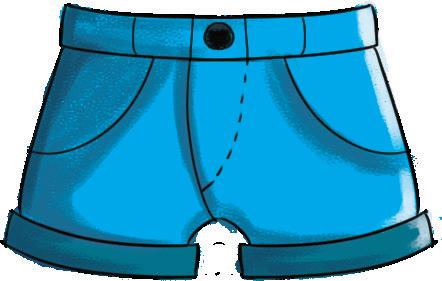
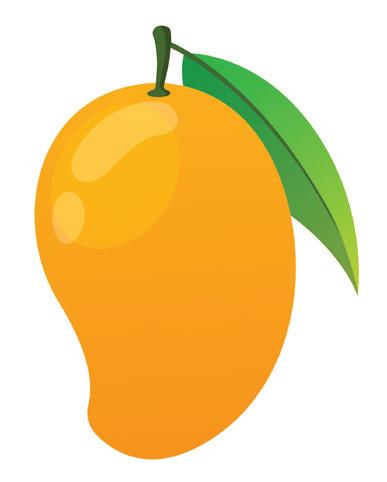
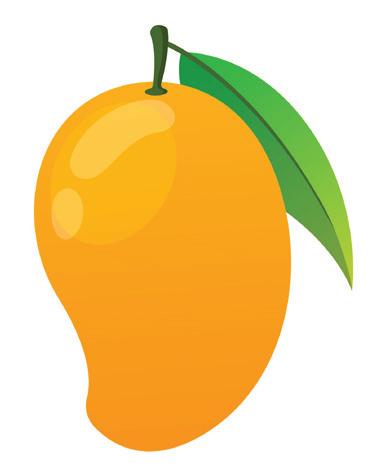
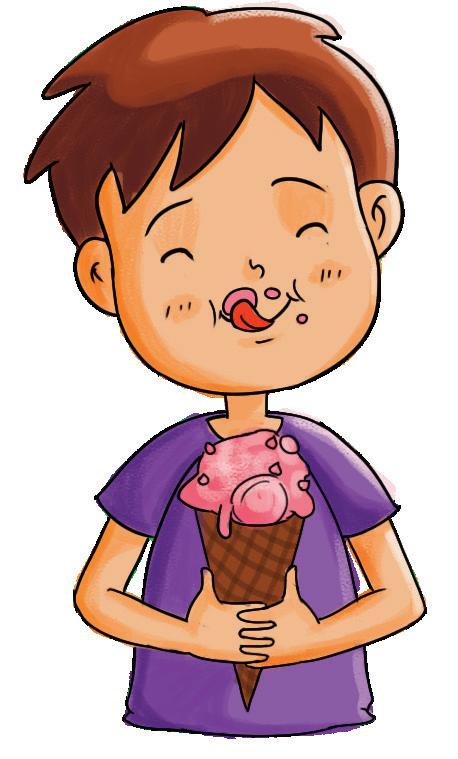
Tick () the things we see and use in the summer season. One has been done for you.






































Tick () the things we see and use in the rainy season.
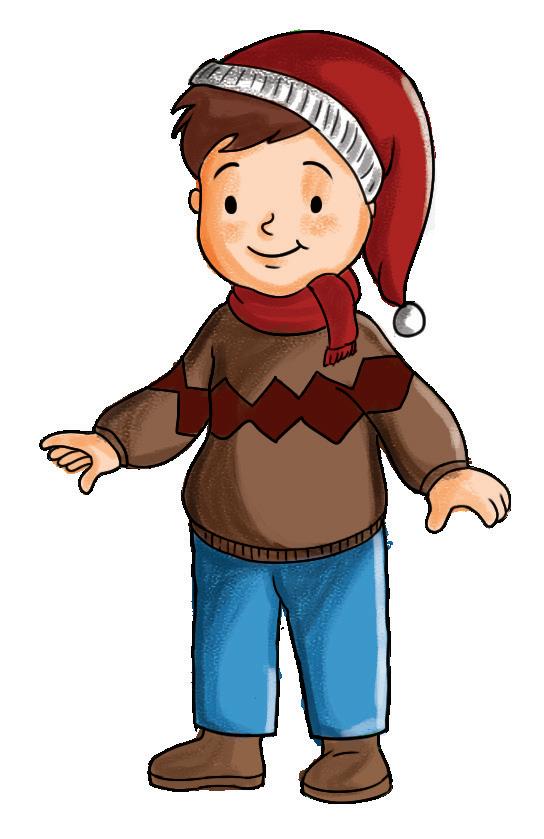
Tick () the things we do and use in the winter season.
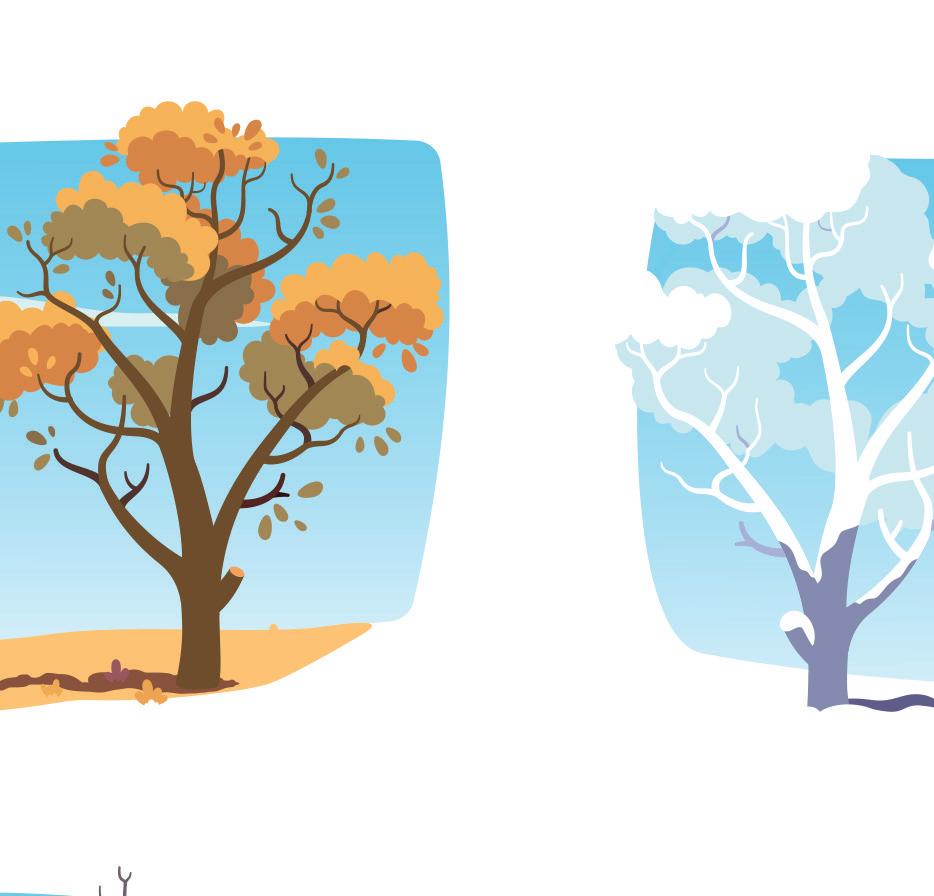
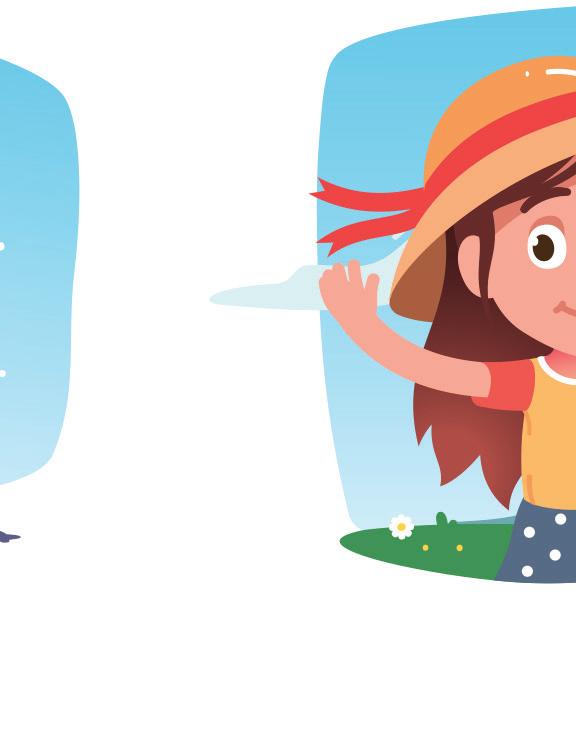
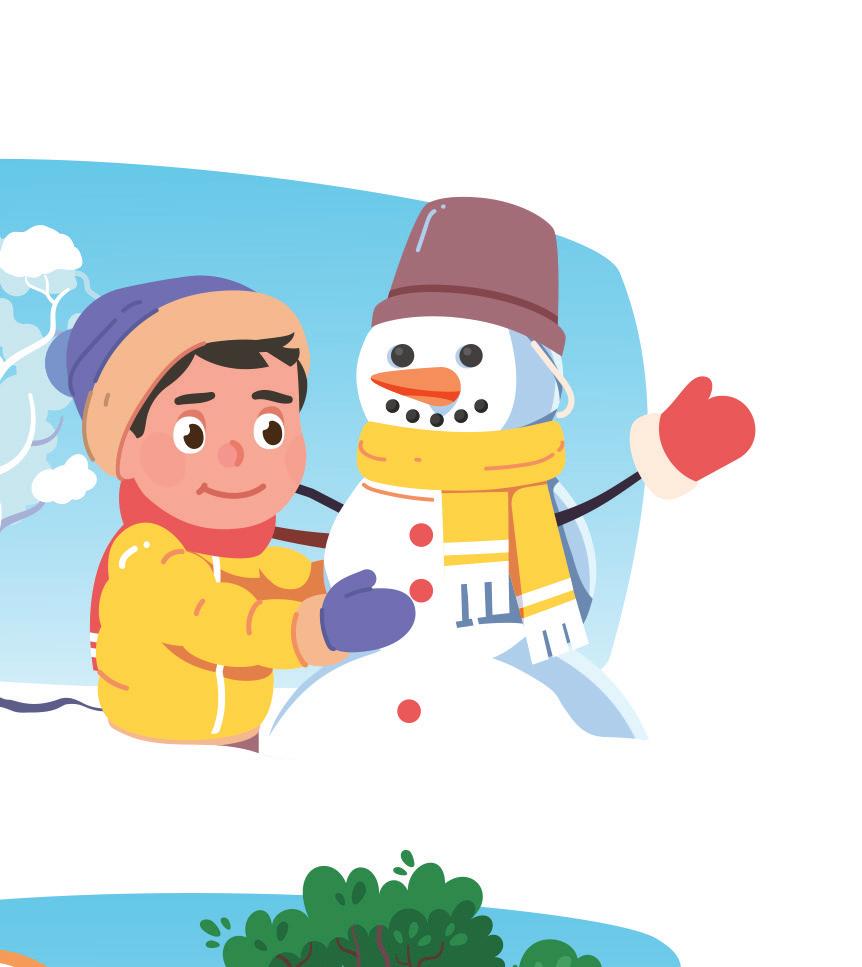
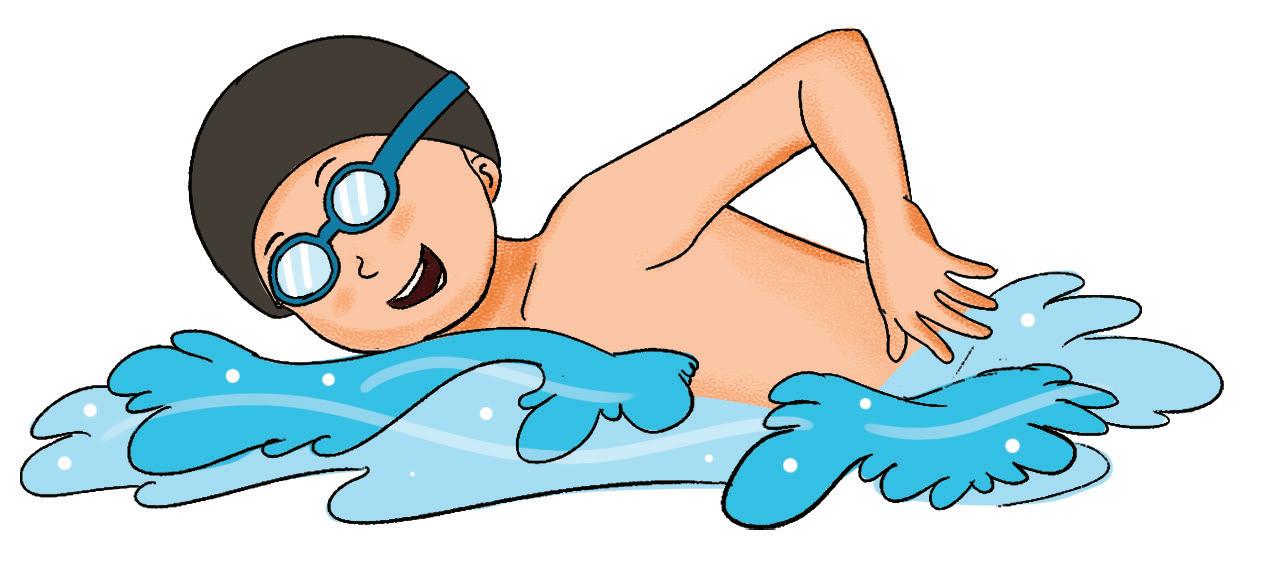
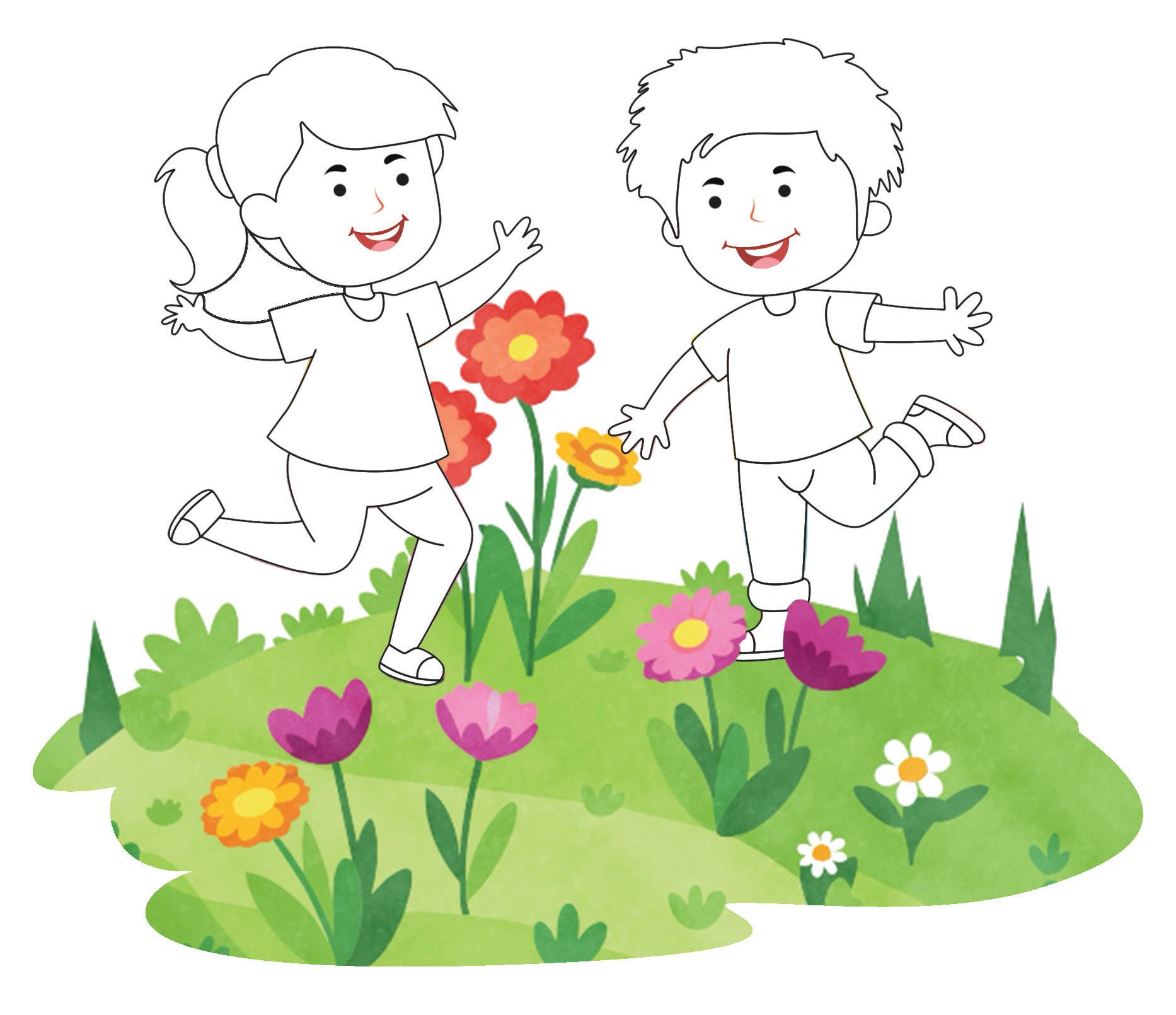
Spring is when flowers bloom and trees turn green. Colour the children playing in the spring.
India is our country. We love our country. Let us look at its map.
LADAKH
CHANDIGARH
JAMMU & KASHMIR
HIMACHAL PRADESH
PUNJAB
HARYANA DELHI
UTTARAKHAND

GUJARAT
DAMAN & DIU
DADRA & NAGAR HAVELI
RAJASTHAN UTTAR PRADESH
SIKKIM
BHUTAN
BIHAR MEGHALAYA
JHARKHAND
WEST BENGAL
MADHYA PRADESH
MAHARASHTRA
ARABIAN SEA
GOA
LAKSHADWEEP
TELANGANA
CHHATTISGARH
ODISHA
KARNATAKA
ANDHRA PRADESH
PUDUCHERRY
TAMIL NADU KERALA
INDIAN OCEAN
MALDIVES
ARUNACHAL PRADESH
MIZORAM ASSAM
NAGALAND
MANIPUR
TRIPURA
MYANMAR
BAY OF BENGAL
MAP NOT TO SCALE
Let us learn about the national symbols of our country.
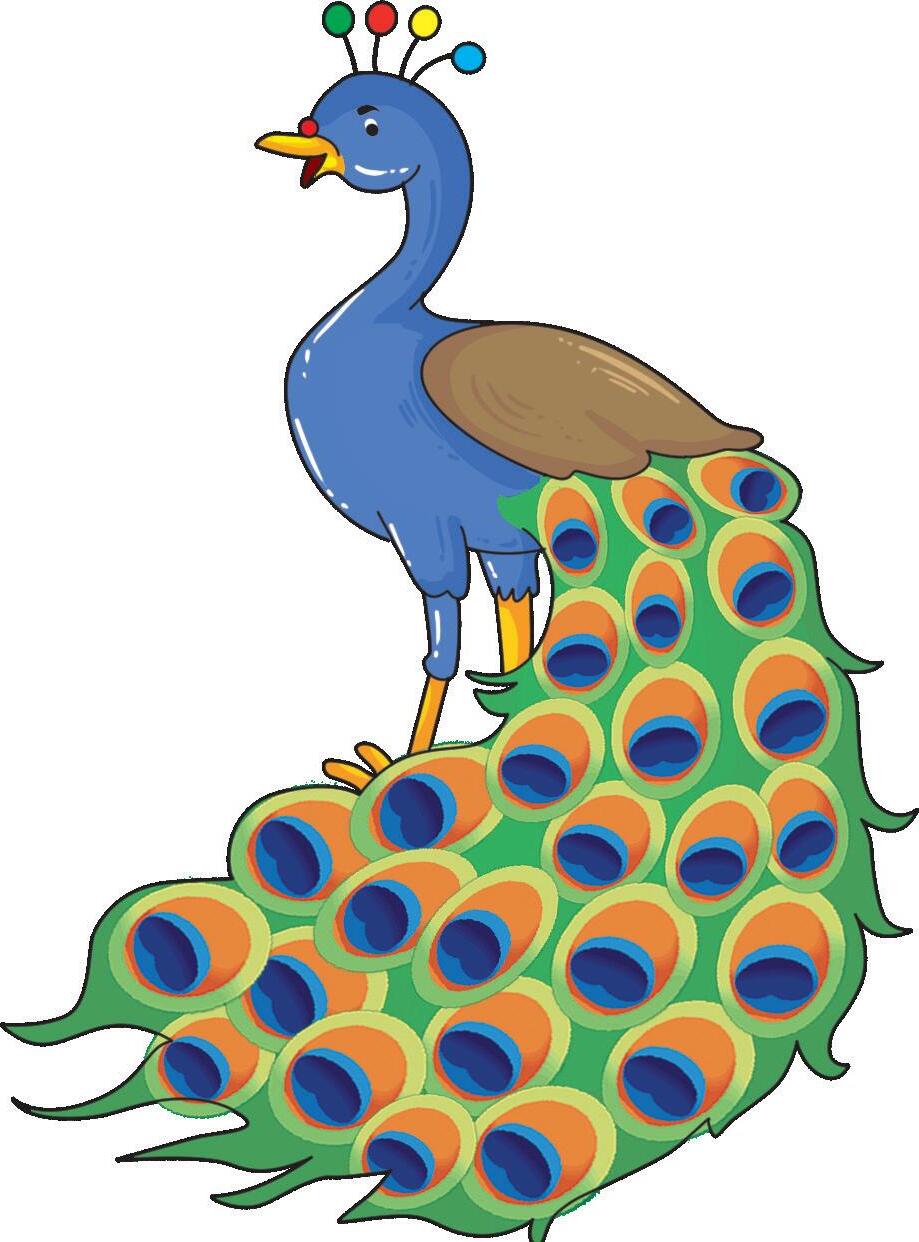
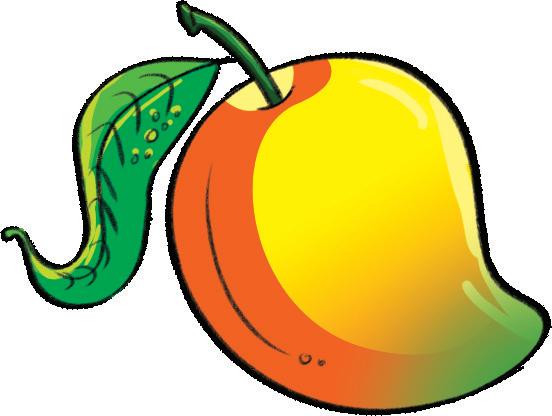
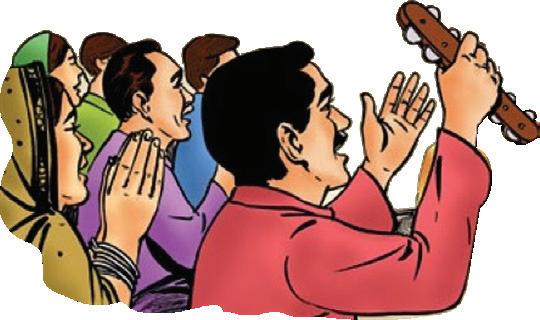
Let us learn about the national festivals of our country.
We celebrate Republic Day every year on 26 January.
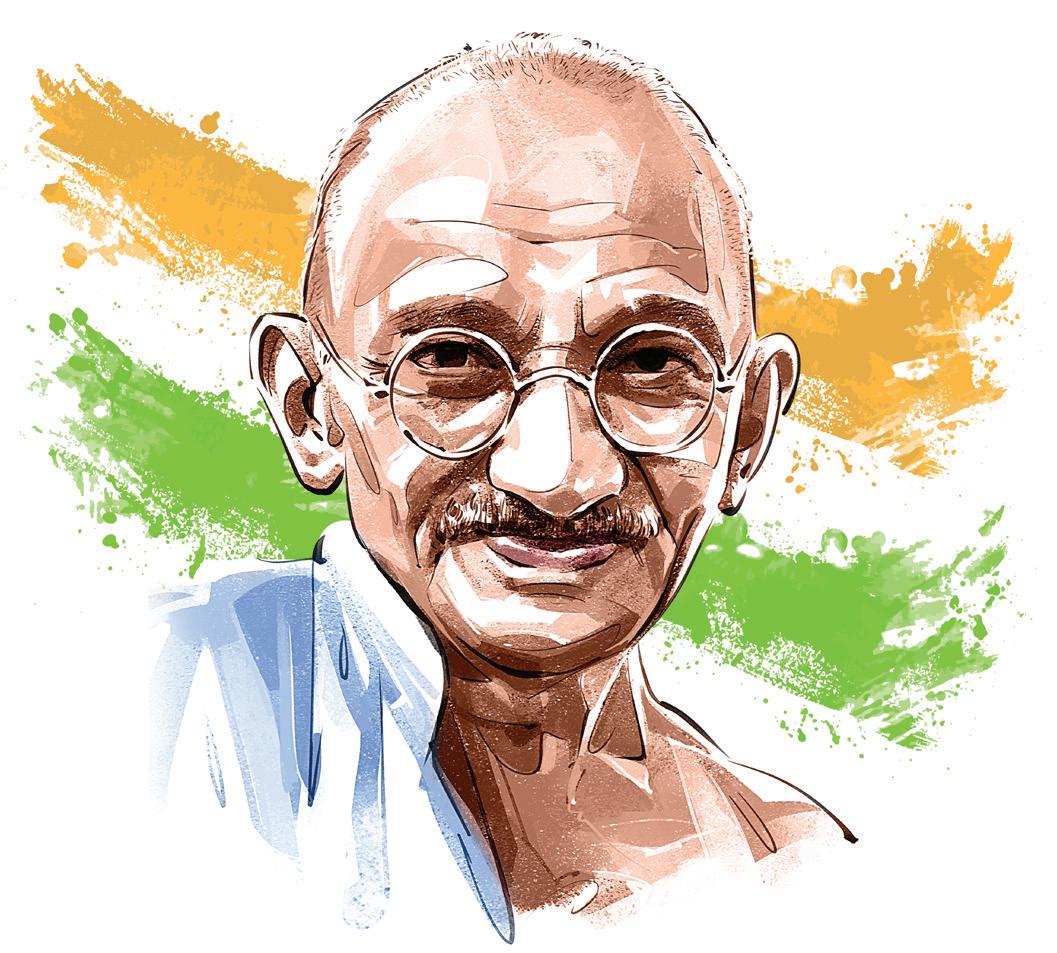
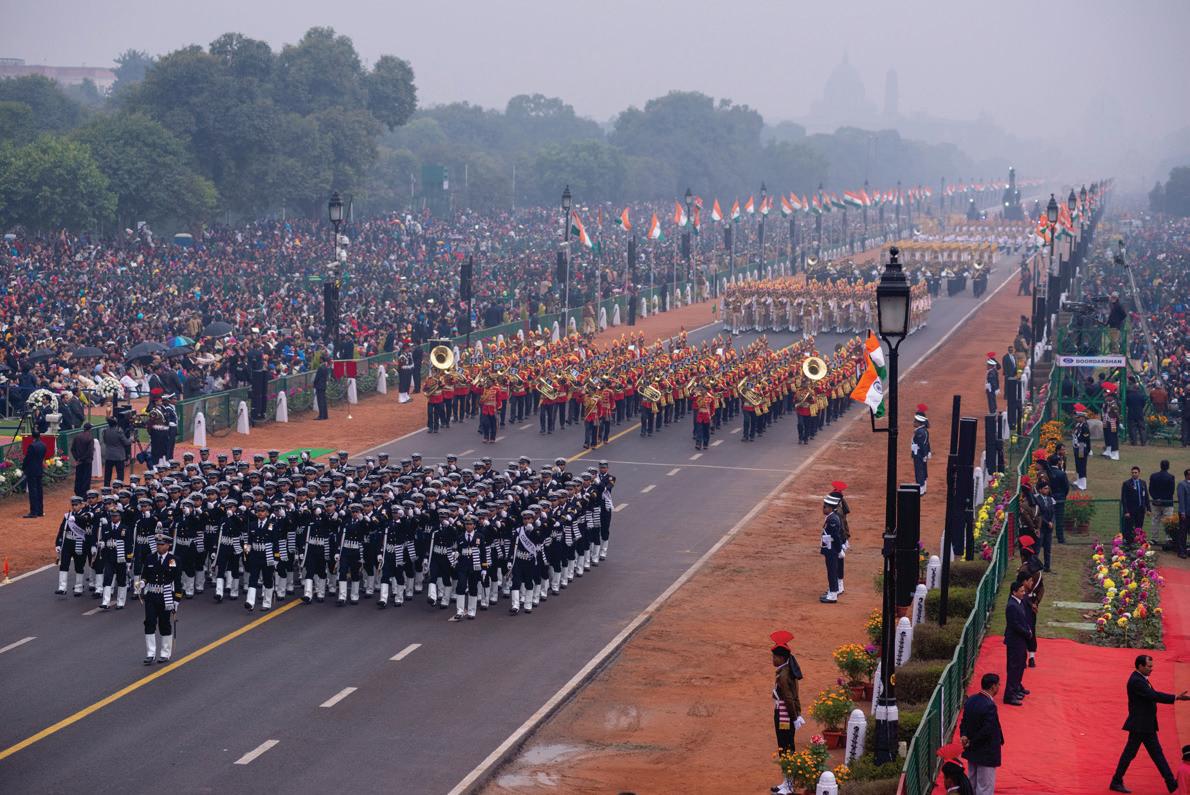
We celebrate Gandhi Jayanti every year on 2 October.
We celebrate Independence Day every year on 15 August.
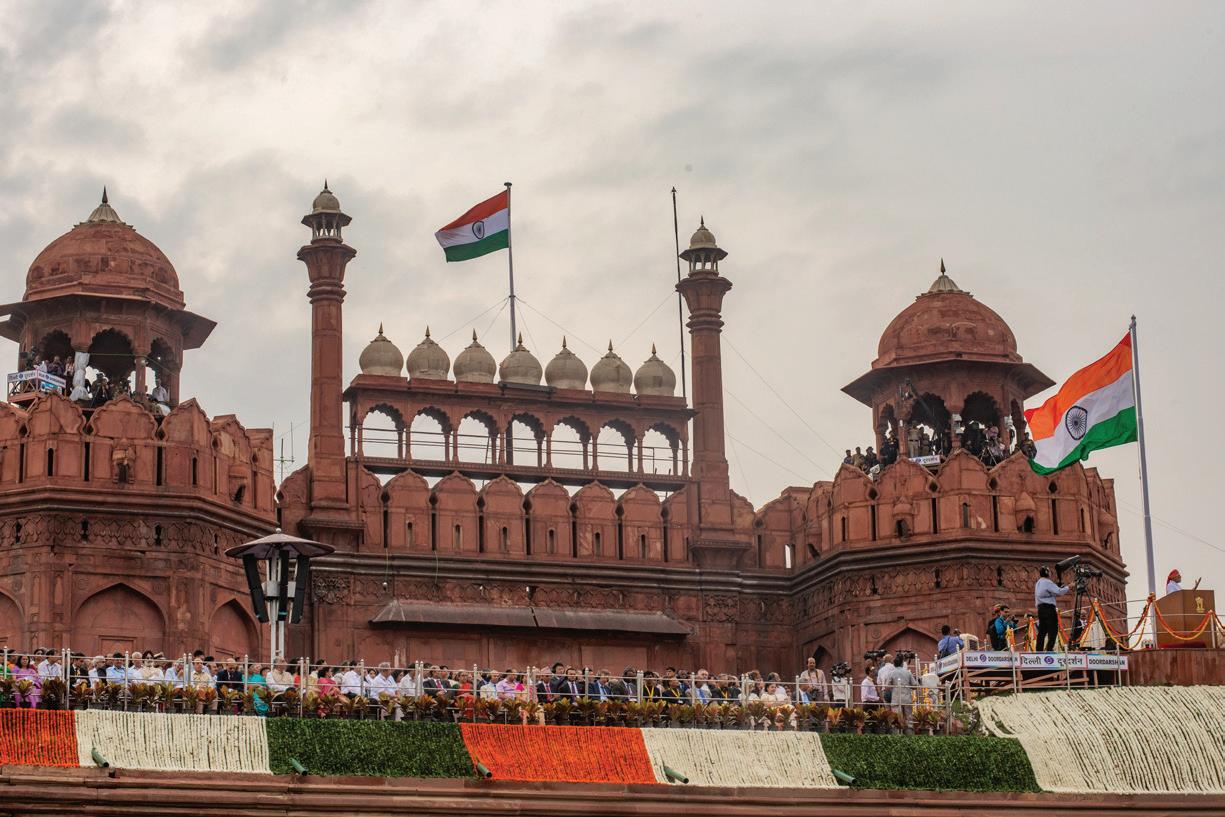
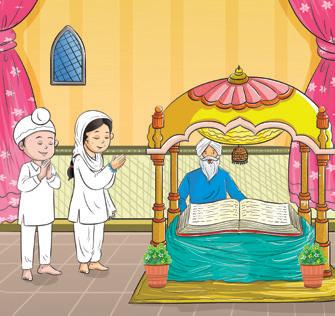
Here are some more festivals that are celebrated in India. Let us learn about them and write their names below.
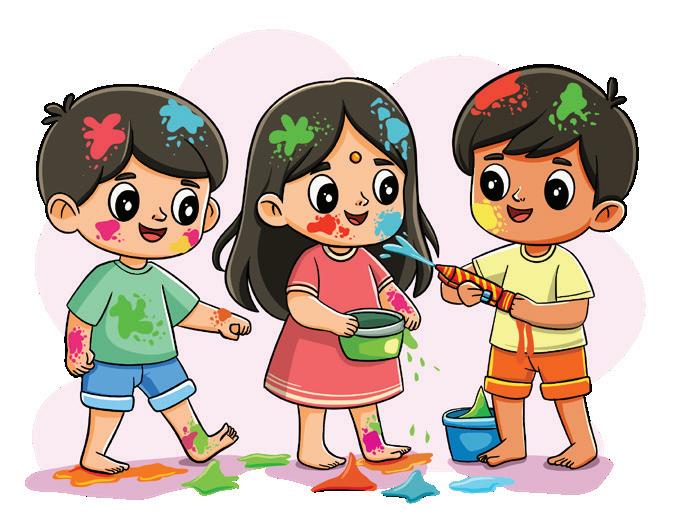
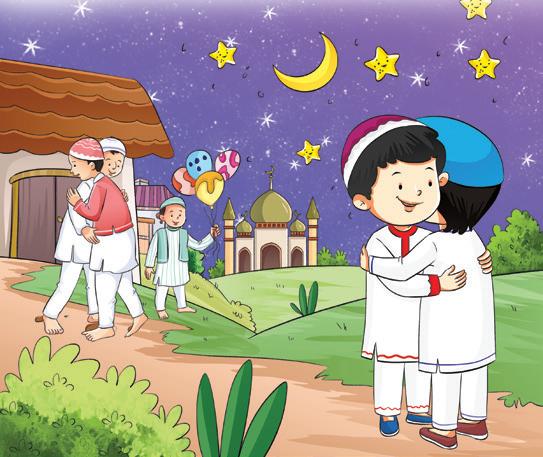
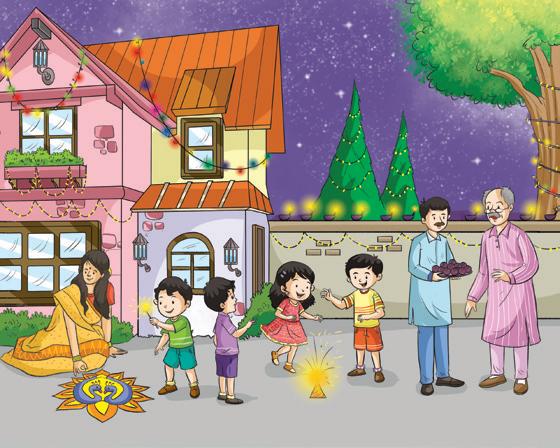
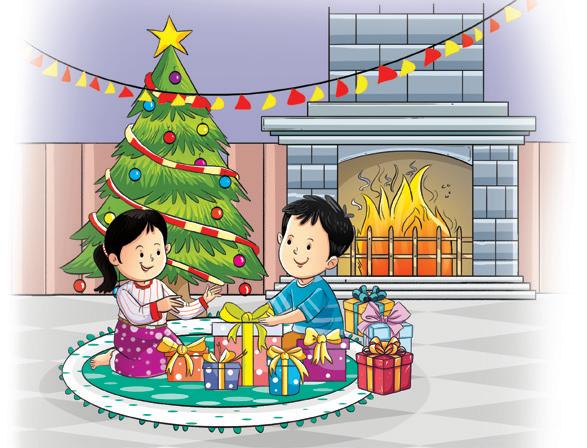
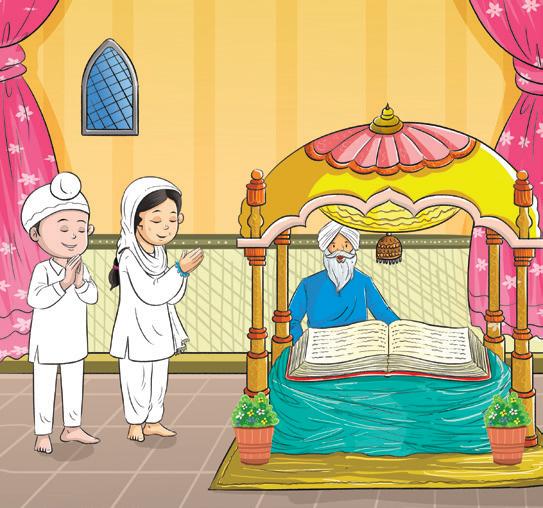
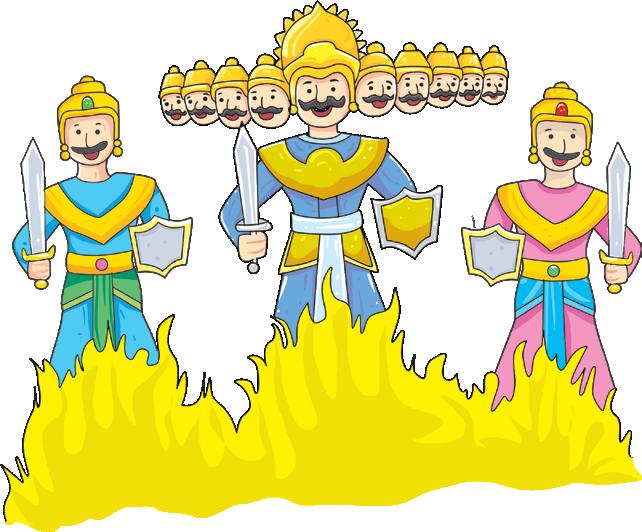
In each set, circle the items that do NOT belong to each festival.






Land vehicles move on roads. All land vehicles have wheels to move. Let us look at their pictures and learn their names.
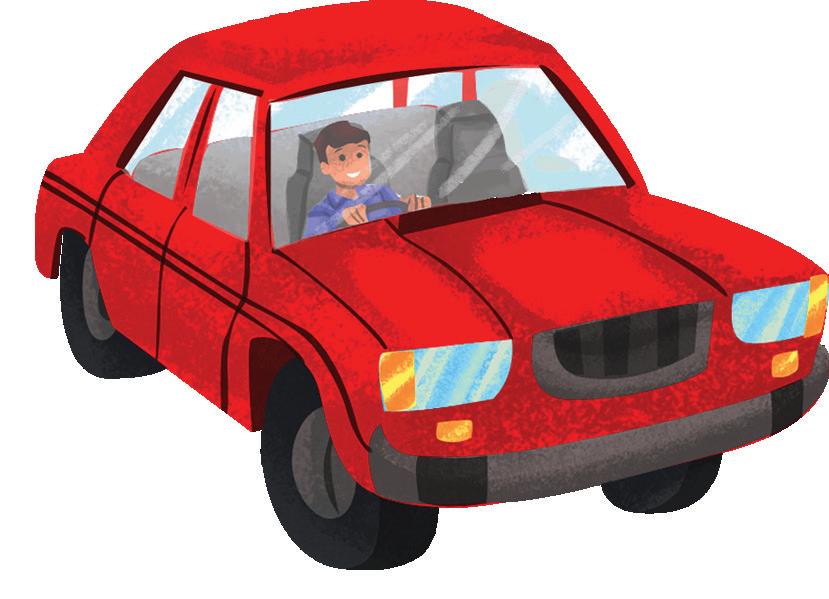
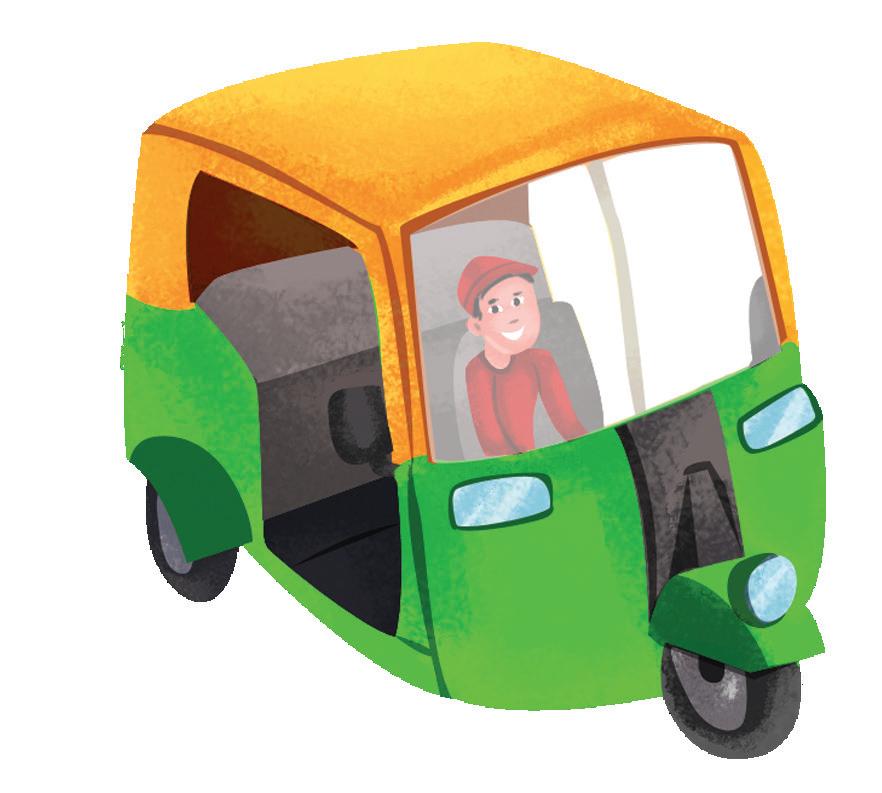
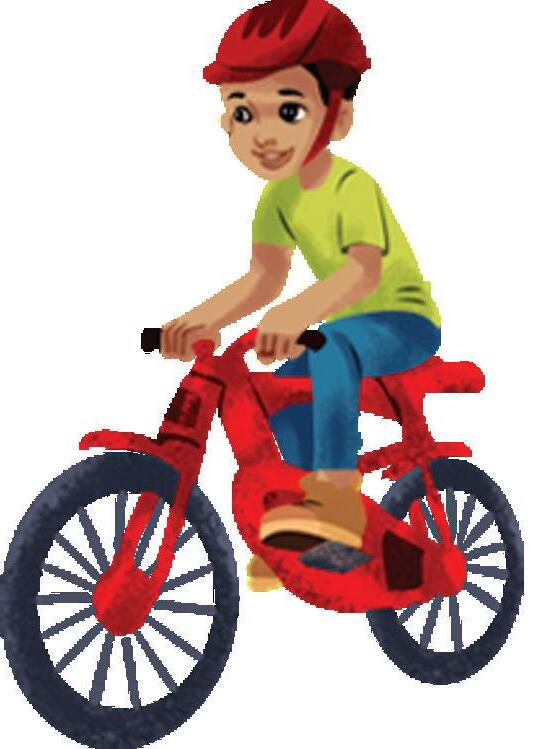
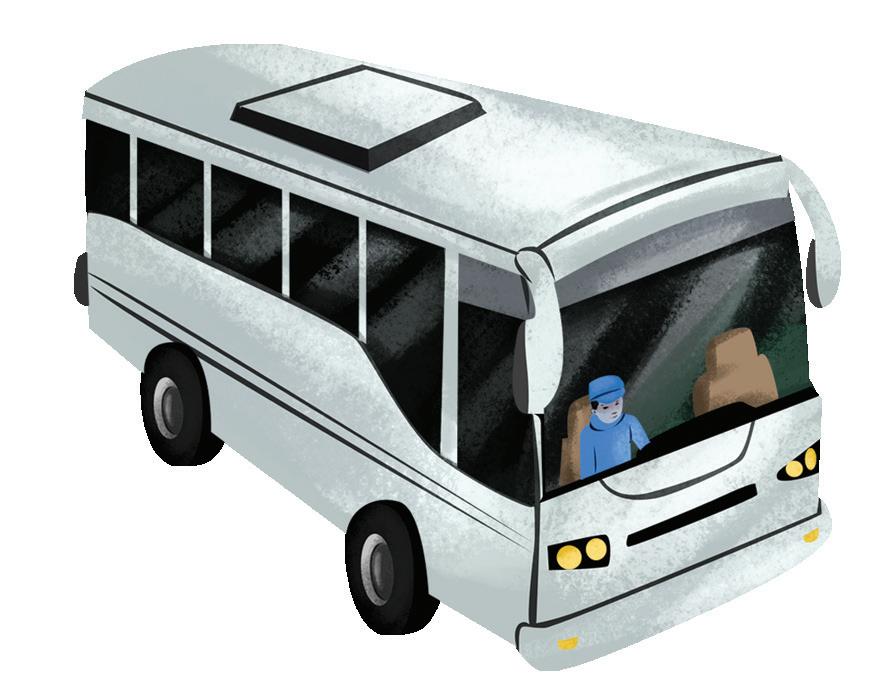
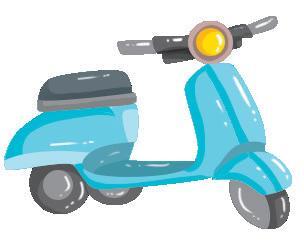
Tell children that a person who drives a land vehicle is called a driver.
All water vehicles move on water. Let us learn their names.
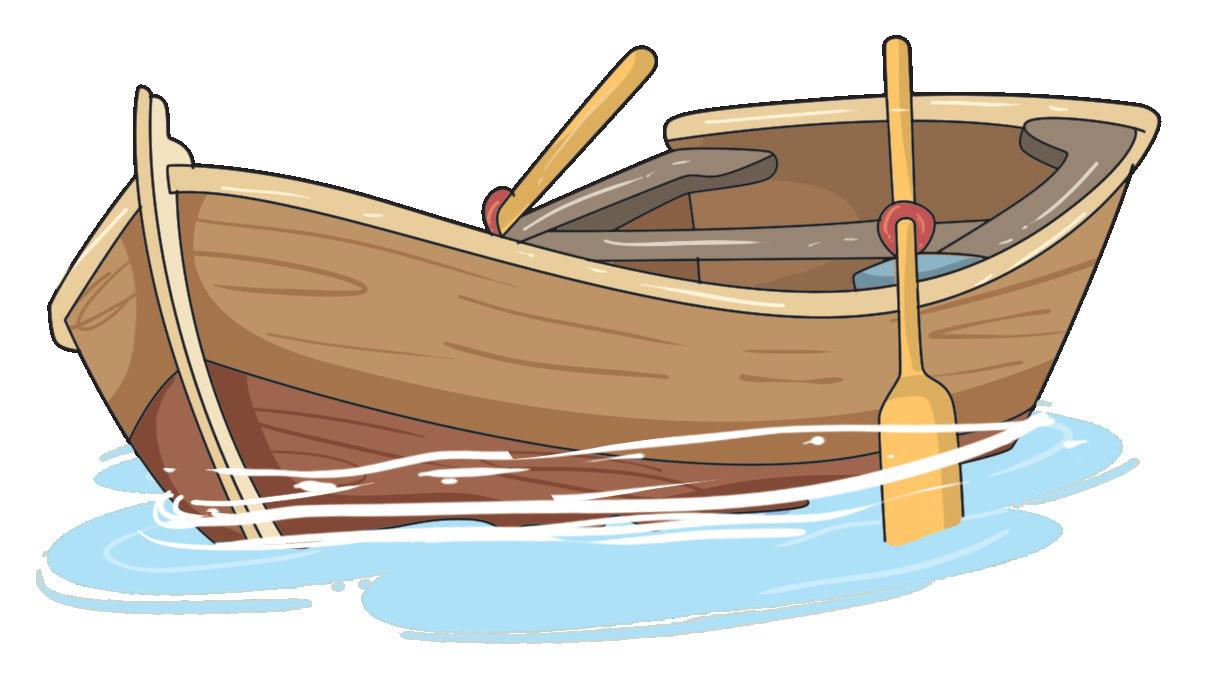
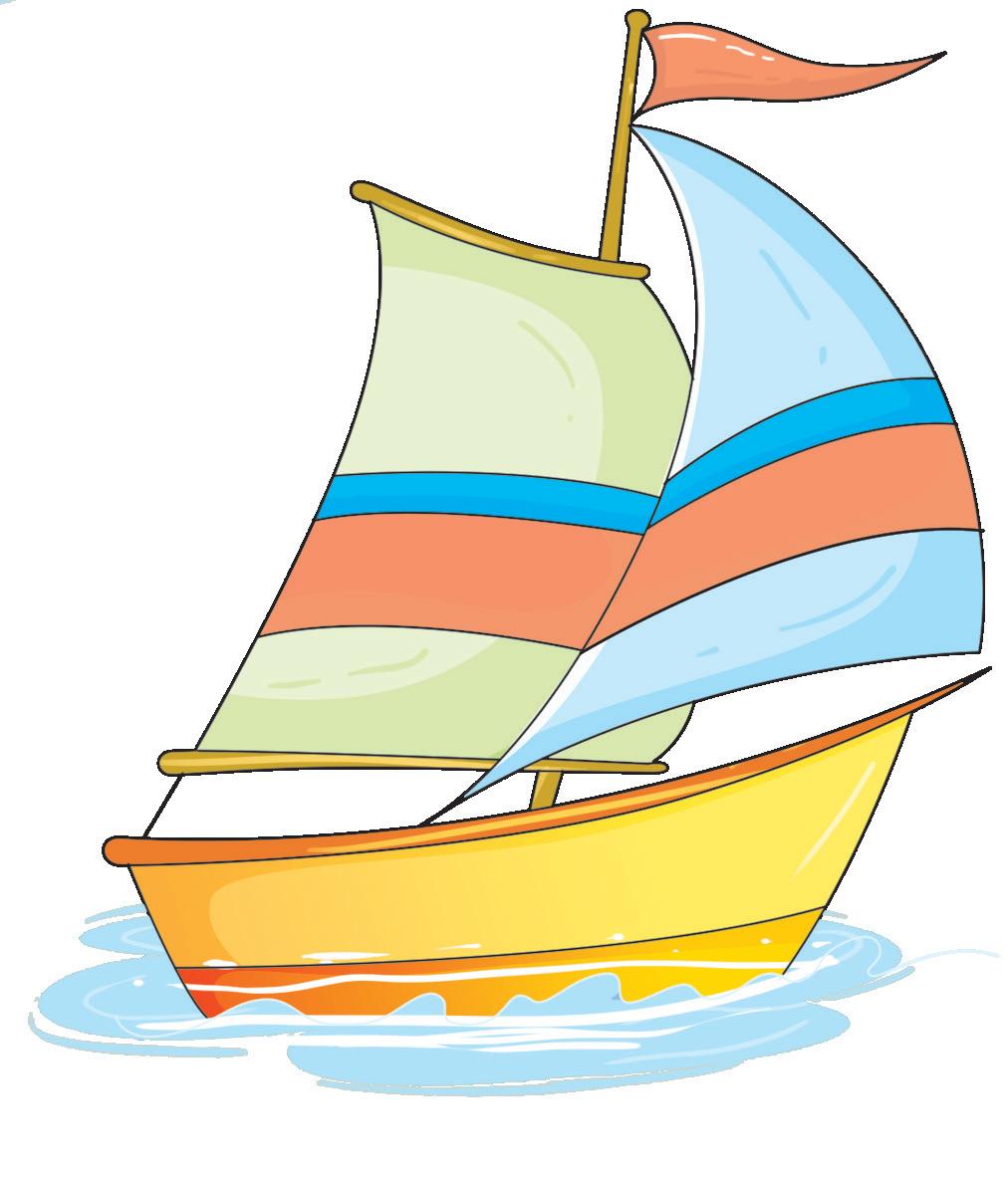
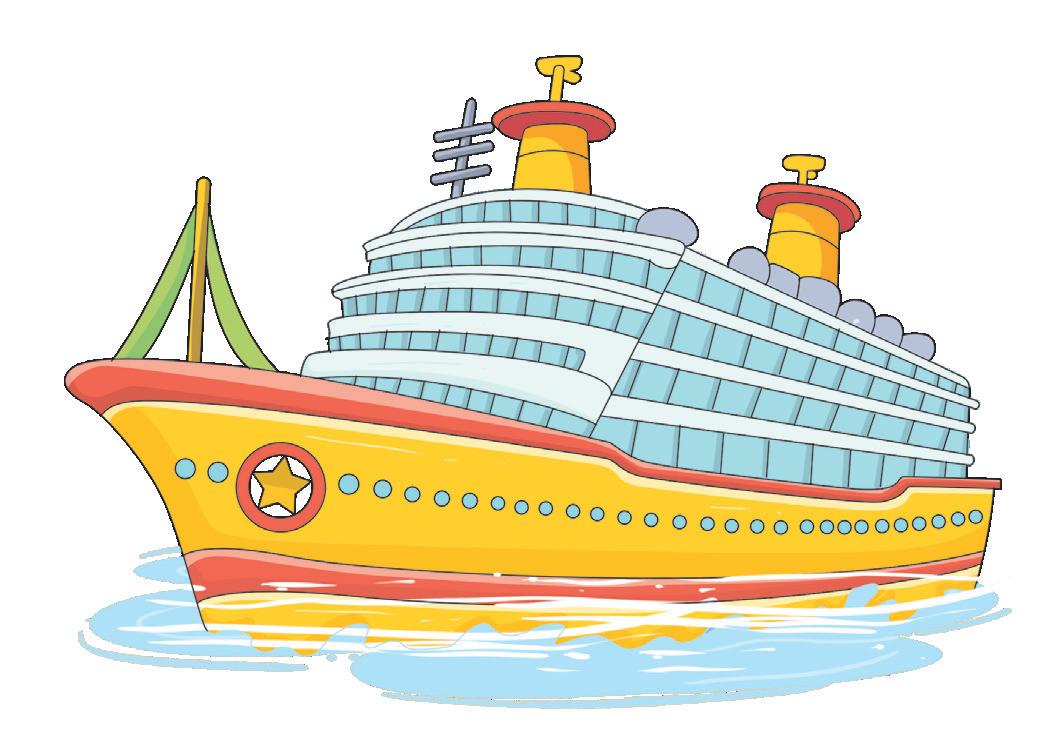
Tell children that a person who sails a ship is known as a captain.
All air transport moves through the air. Let us learn about them.
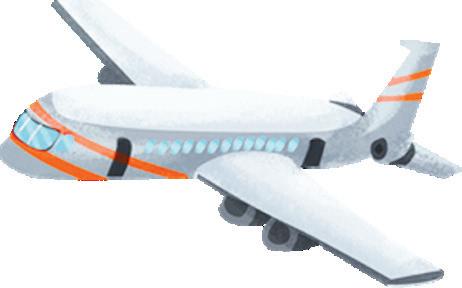
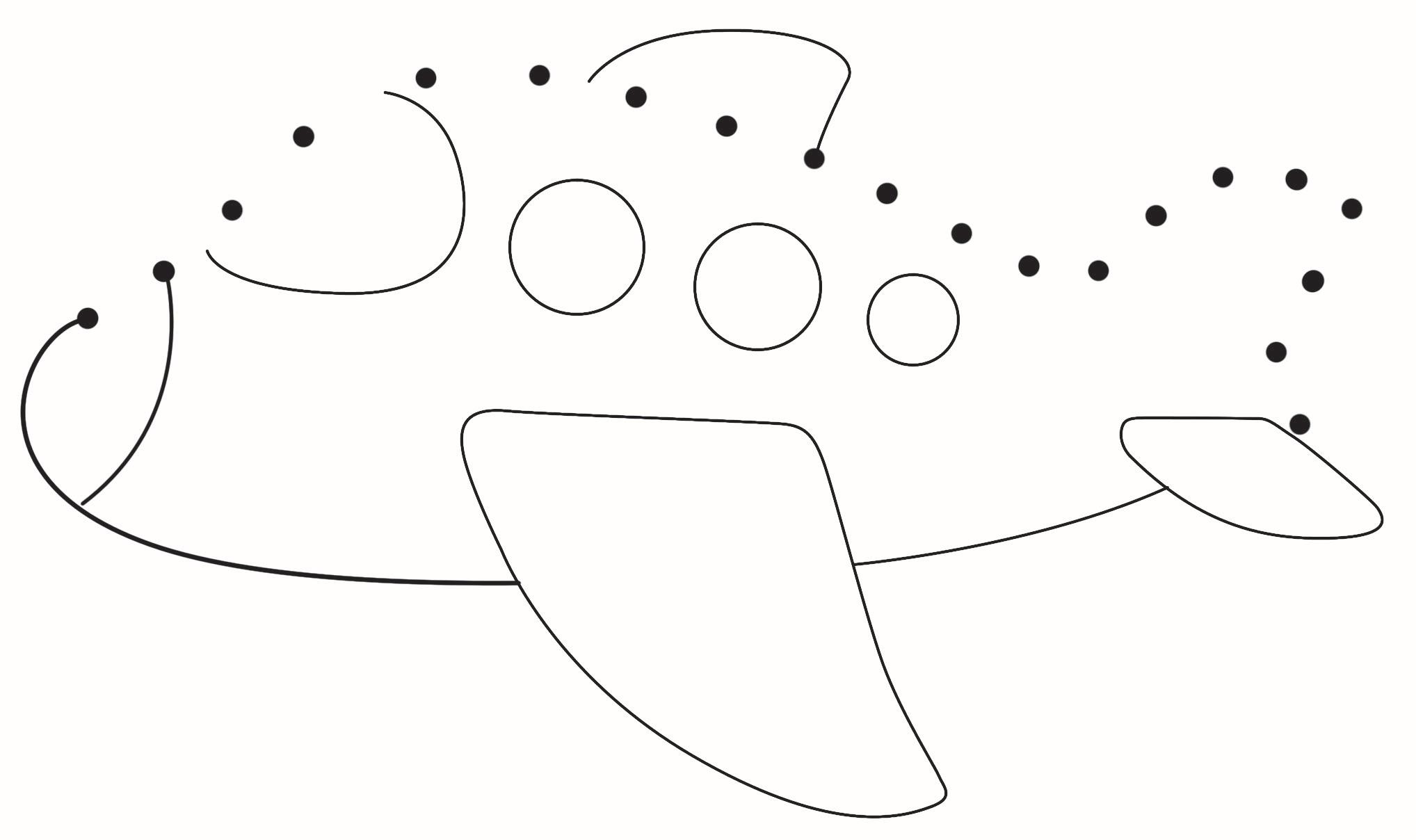
Join the dots from numbers 1 to 20 to complete the picture of the aeroplane.
A train runs on a railway track. Let us look at the steps to book a train ticket and travel.
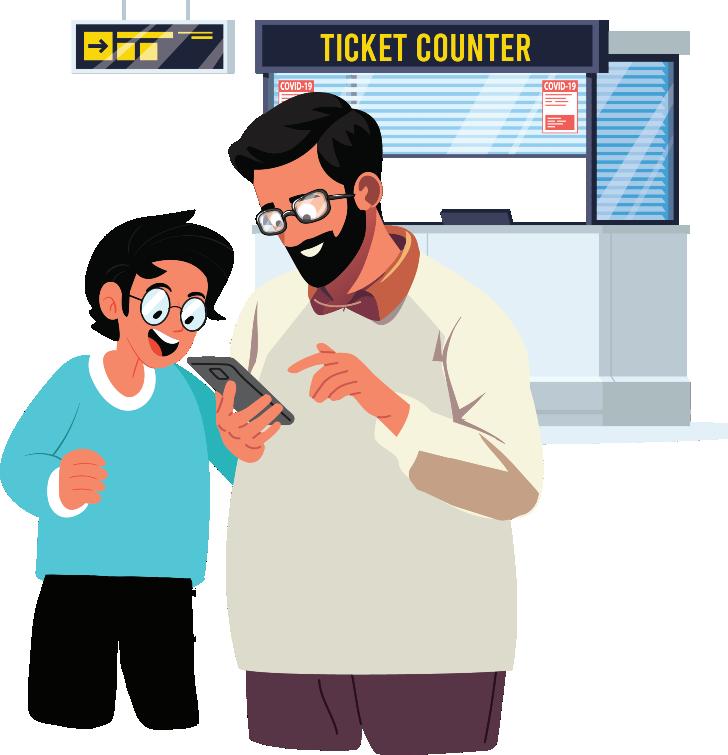
Book the ticket at the ticket counter or online.
3 2 4
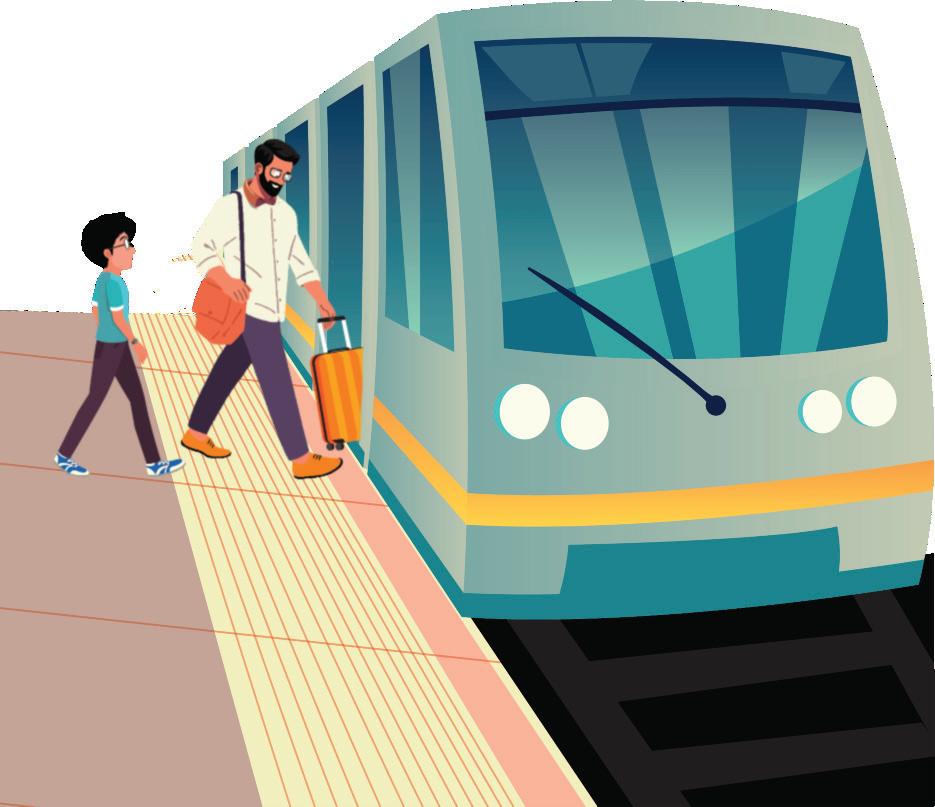
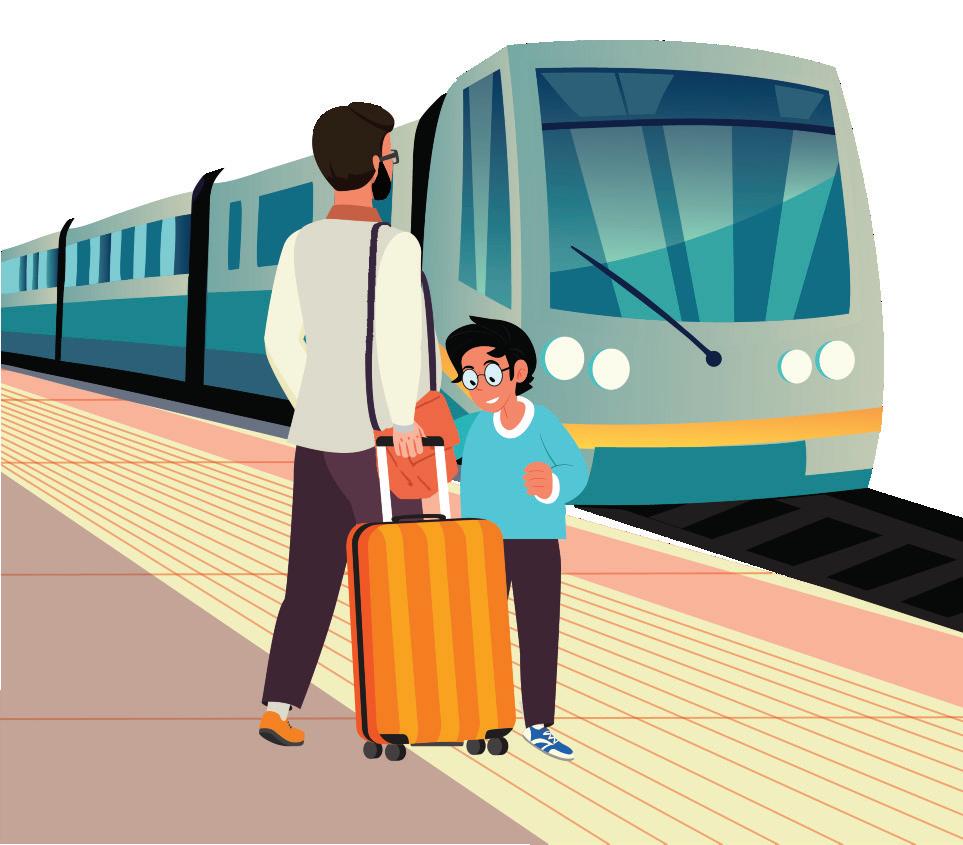
Arrive at the railway station early and find the platform for your train.
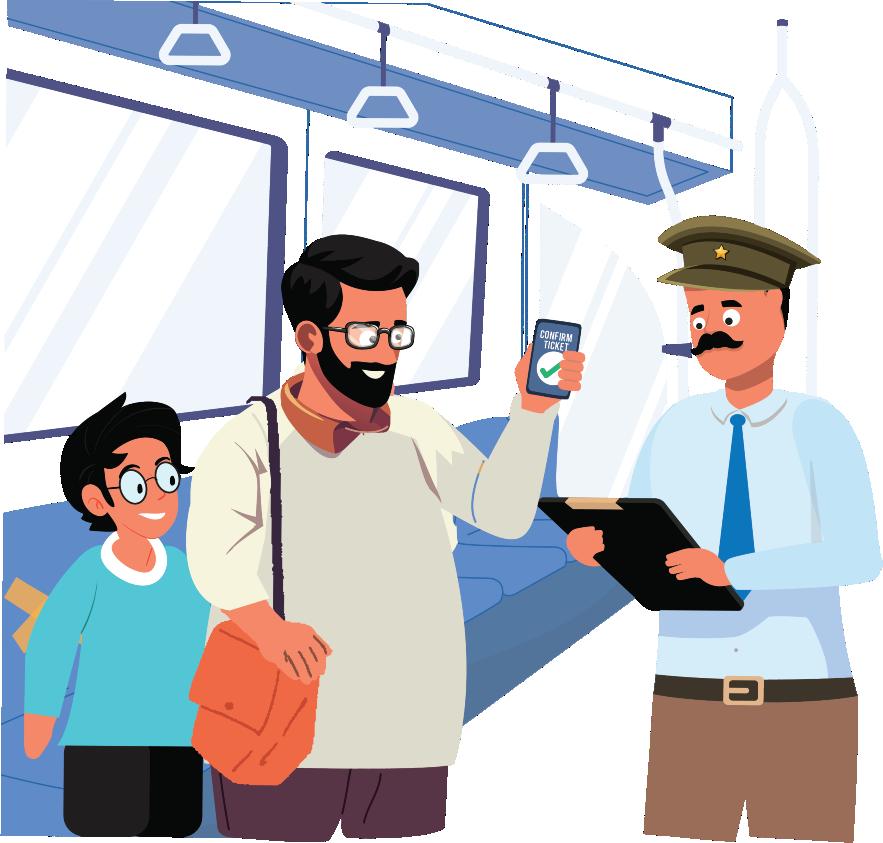
Board the train. Show your ticket to ticket collector.
Emergency vehicles are special vehicles that help us in need. Let us read about them.
An ambulance takes sick people to the hospital.
A police car helps the police to keep us safe.
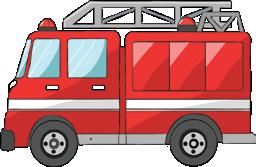
A fire truck helps firefighters put out a fire.
Most vehicles need fuel (petrol, diesel, CNG) to run.
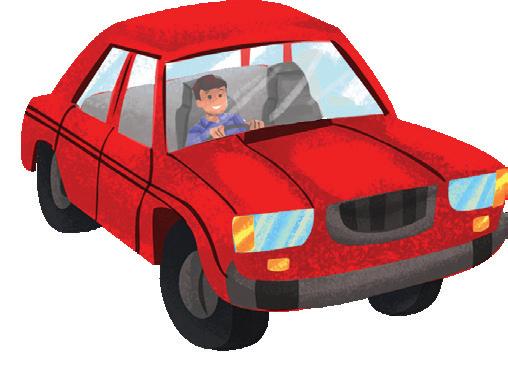
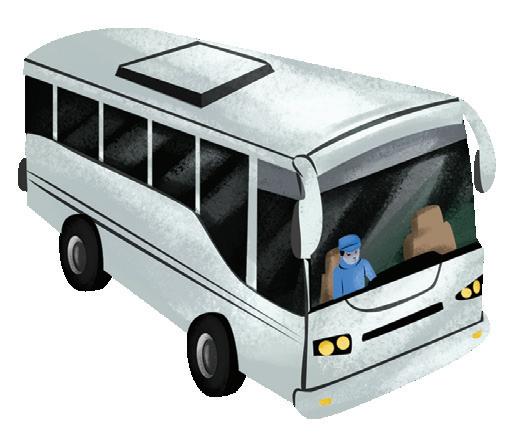
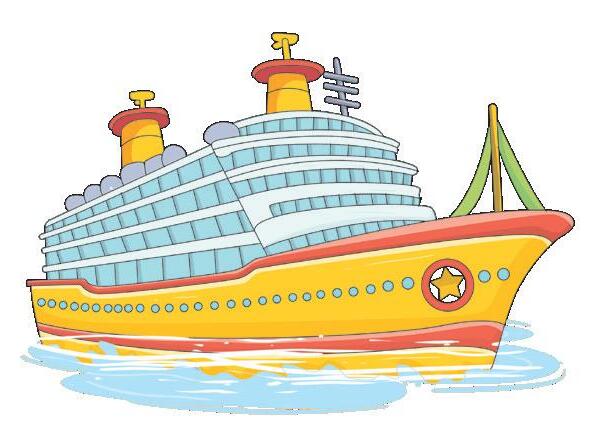
Tick () the vehicles that need fuel to run.
ship
We should follow safety rules on the road. Let us learn about some of them.
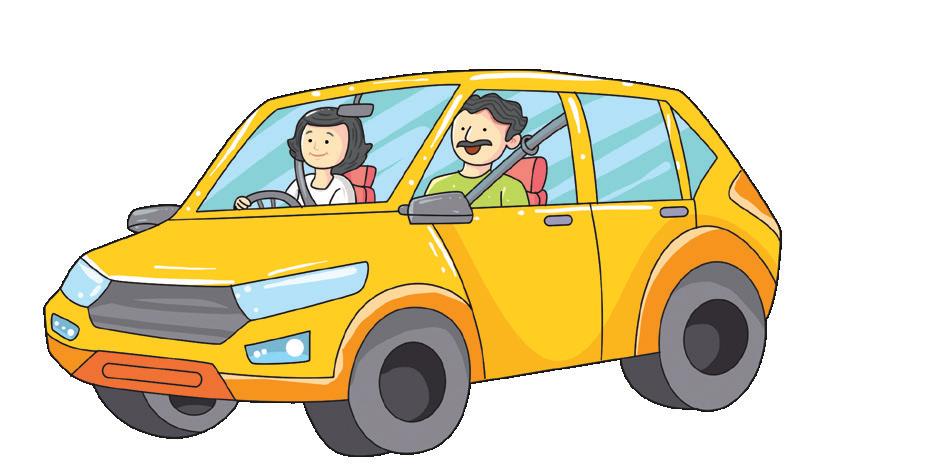
Wear a seatbelt when in a car.
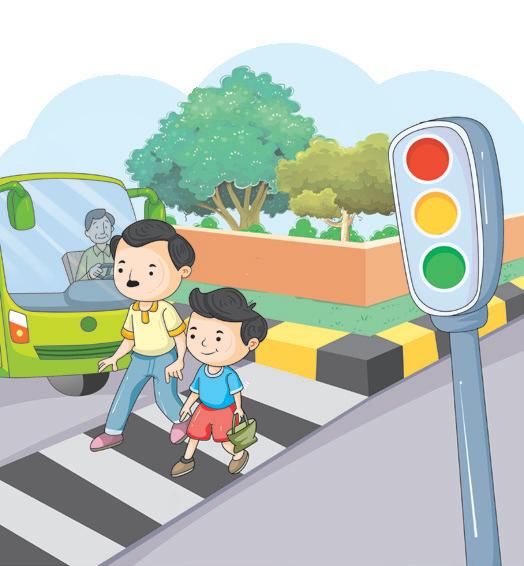
Use the zebra crossing to cross roads.
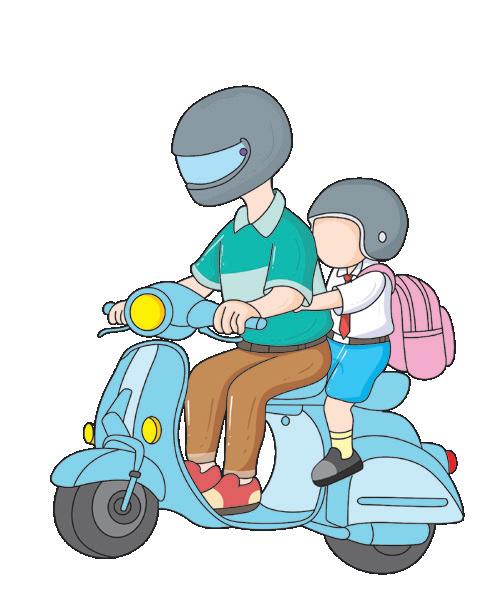
Wear a helmet when riding a scooter or a bike.
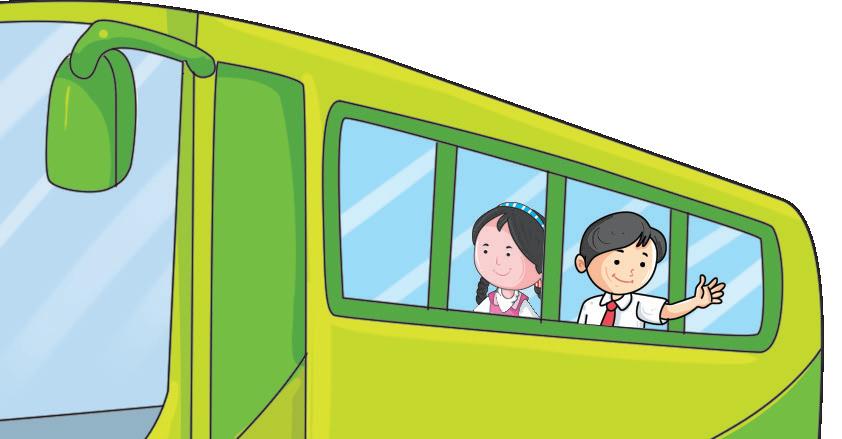
Do not put your hand or head out of the window.
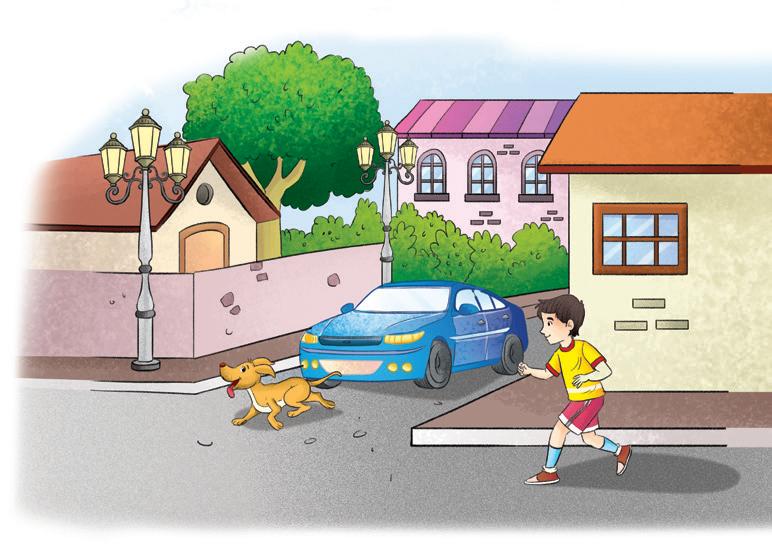
Do not run on the road.
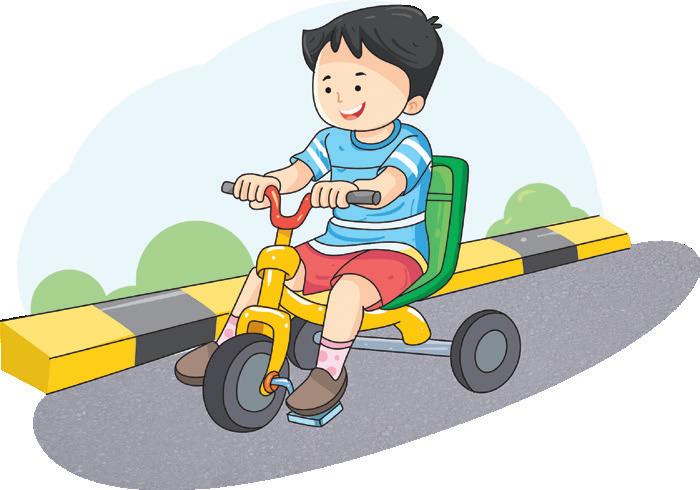
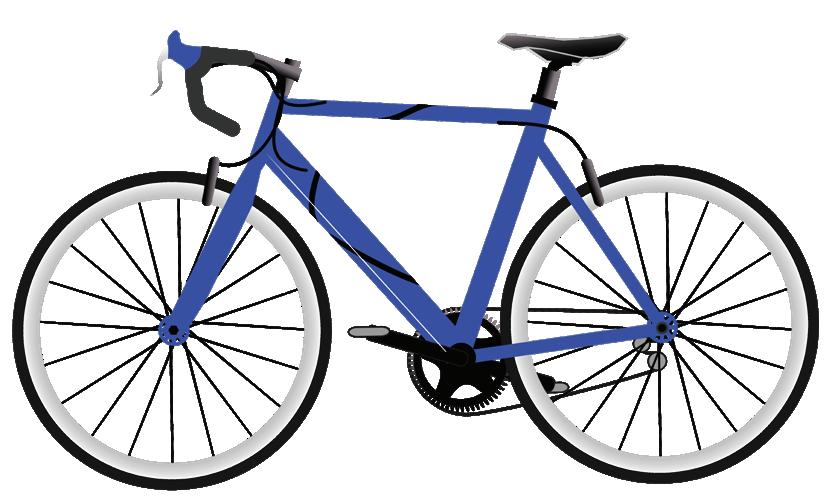
Do not cycle on the main road.
Colour the picture that shows road safety. Remember to look left and right before crossing!
Look at the pictures. These are parts of a computer. Let us read and learn their names.














Colour the monitor.
Colour the speaker.
We use tools and gadgets every day to make our life easier. Let us read and learn about some of them.
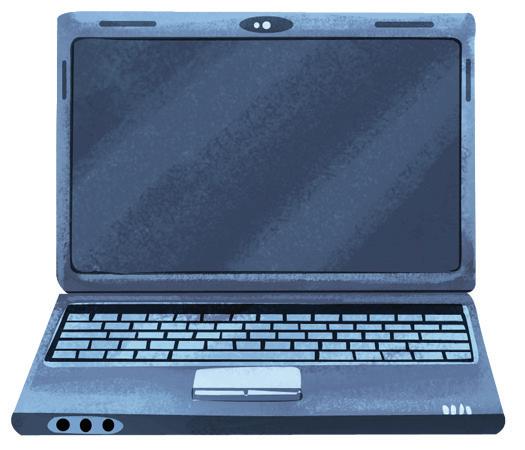


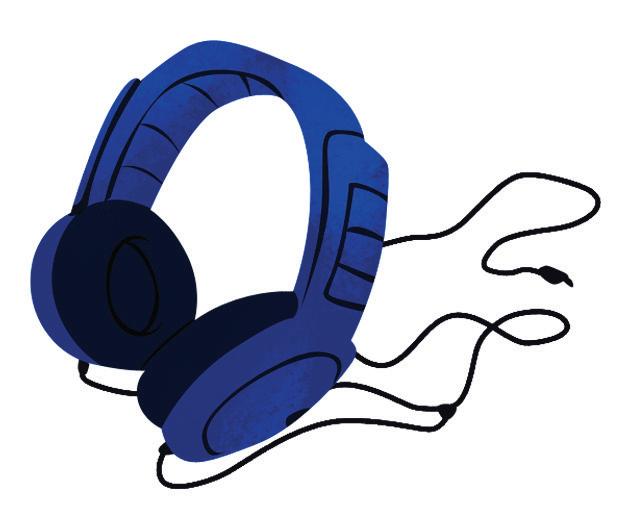

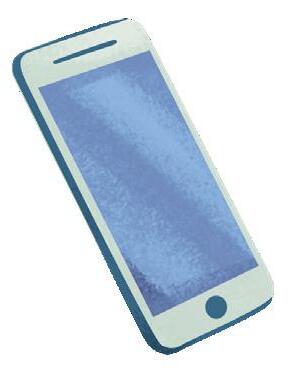










TEACHER TIP
Tell children that these are some common gadgets we use at home, but not every home has the same ones. Each house may have different gadgets.

Look at these machines and tick () the ones you see at your home.
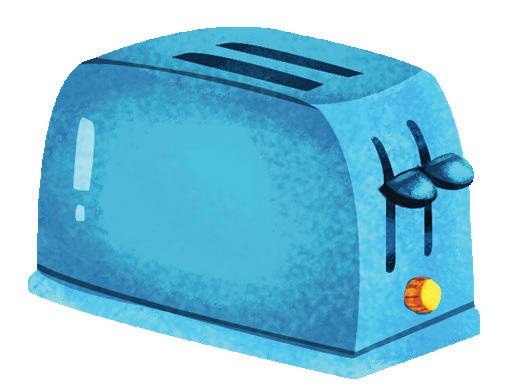



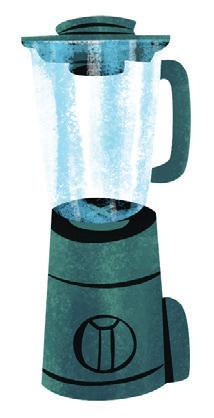


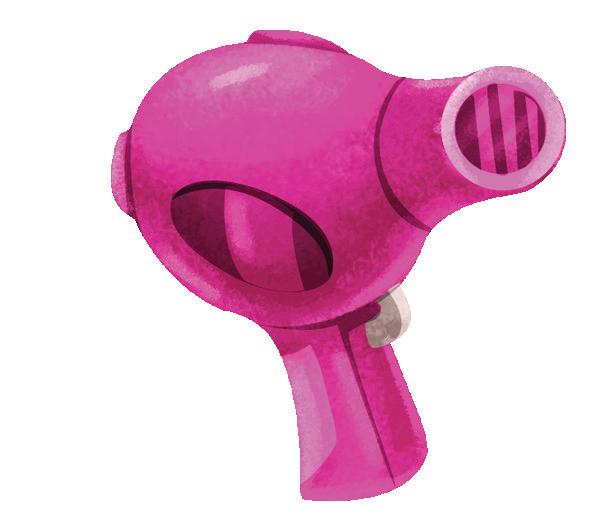
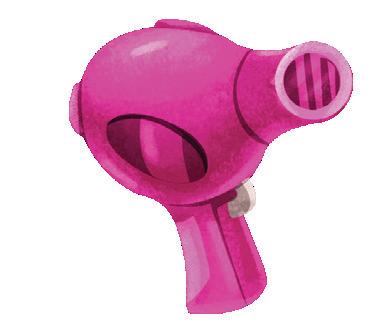
hairdryer
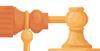


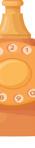








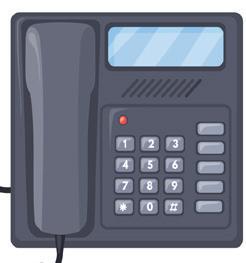






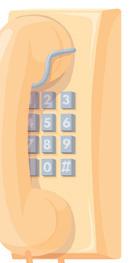

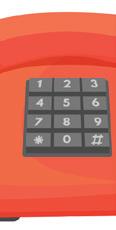









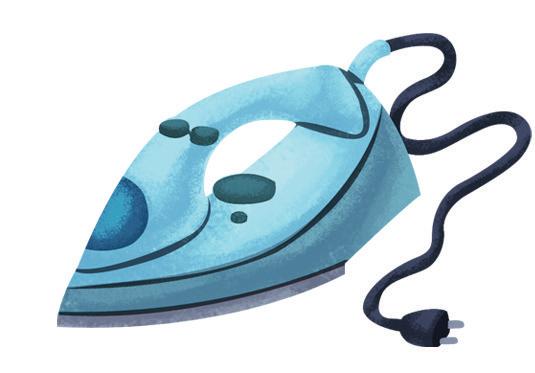










Match the gadgets with the activities they are used for.
All About Me Introduces self using name, gender, age and favourite things 1
I Can Do Identifies activities that they can do on their own 2–3
My Hobbies Talks about and identifies their hobbies. 4
My Body Identifies and writes the names of body parts. 5–6
My Senses Uses senses to explore and understand the environment. 7
I Can See and Tell Observes objects and talks about what they see. 8
I Can Hear and Tell Recognises and identifies different sounds around them. 9
I Can Taste and Tell Recognises and describes sweet, sour, salty and bitter tastes 10
I Can Smell and Tell Recognises and talks about different smells 11
I Can Touch and Tell Recognises and describes objects as rough, smooth, soft or hard 12
Good Touch and Bad Touch Recognises and distinguishes between good touch and bad touch 13
Good Habits Recognises and practises good habits in daily life 14–15
My Family Understands the difference between a big family and a small family 16–17
Helping My Family Recognises ways to help their family at home 18
My Friends and I Recognises and talks about activities they enjoy doing with their friends 19
My House Recognises different rooms in a house and their uses 20
Rooms in a House Recognises different rooms in a house 21–22
Types of Houses Recognises the different types of houses. 23–24
Cleanliness at Home Recognises ways to keep home neat and tidy 25
Safety at Home Differentiates between safe and unsafe practices at home 26–27
Colours Understands how secondary colours are made from primary colours 28–29
My School Recognises and talks about different activities done in school 30
Rooms in a School Recognises and names different rooms in a school 31–32
Good Habits at School Practises good manners and behaviour at school 33–34
Celebrations at School Recognises and talks about celebrations and special events at school 35
Safety at School Differentiates between safe and unsafe practices at school 36–37
Games That We Play Identifies and differentiates between indoor and outdoor games 38–39
Places Around Us
Identifies and recognises different places around them 42–45
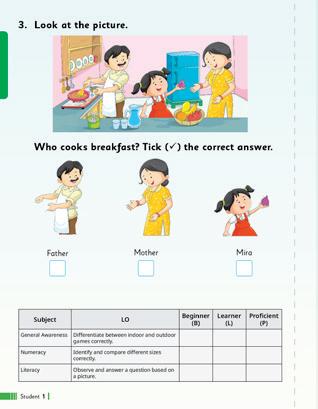
The Great Rescue Listens to a story and talks about how community helpers help us 46–47
People Who Help Us Identifies different people who help us and the work they do 48–50
Animal Around Us Identifies common animals around them 51
Rohan’s Pet Dog Listens to a story and talks about ways to take care of pets 52–53
Farm Animals Identifies and names the farm animals 54
Useful Animals Recognises animals that are helpful to people 55
More Useful Animals Recognises animals that are helpful to people 56–57
Wild Animals Identifies and writes the names of wild animals 58–59
Animal Homes Identifies animals and their homes 60
More Animal Homes Identifies animals and their homes 61–62
Animals and Their Young Ones Identifies animals and their young ones 63–64
What Do Animals Eat? Identifies animals and the types of food they eat 65
Water Animals Identifies and names the water animals 66–68
Birds Identifies and writes the names of birds around us 69–70
Insects Around Us Identifies and writes the names of insects around us 71–72
Animals and Their Sounds Recognises animals and matches them with their sounds 73–74
Plants and Trees Recognises and writes the names of the parts of a plant 75–76
Uses of Plants Recognises and talks about the ways plants are useful to us 77
From Seed to Plant Understands the steps of planting a seed and caring for it 78–79
Flowers Identifies and names the flowers around us 80–81
Fruits Identifies and writes the names of fruits around us 82–83
Fruit with Seeds Identifies and sorts fruits based on the number of seeds 84
Vegetables Identifies and writes the names of vegetables around us 85
Vegetables Eaten as Salad Recognises vegetables that can be eaten raw as a salad 86
Healthy and Unhealthy Food Recognises and tells the difference between healthy and unhealthy foods
Our Earth Recognises the Earth and its basic features 89
Uses of Water Recognises different uses of water in daily life
Sources of Water Recognises and writes the names of different sources of water around us
Let's Make a Lemonade Follows steps to make lemonade and observes the process 94
Water Pollution Understands ways in which water gets polluted 95
Air Around Us Recognises that air is all around us and describes activities that involve air
Air Pollution Understands ways in which air gets polluted 98
Caring for Earth Recognises ways to take care of the Earth 99
Seasons Recognises and talks about the different seasons of the year 102
Summer Season Identifies the different things we see and the activities we do in the summer season 103
Rainy Season Identifies the different things we see and the activities we do in the rainy season
Winter Season Identifies the different things we see and the activities we do in the winter season
Spring Season Identifies the different things we see and the activities we do in the spring season
My India Says the name of their country and some things about India
National Symbols of India Identifies the national symbols of India 108
National Festivals Understands the importance of national festivals of India 109
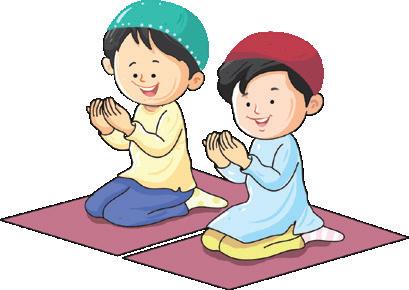
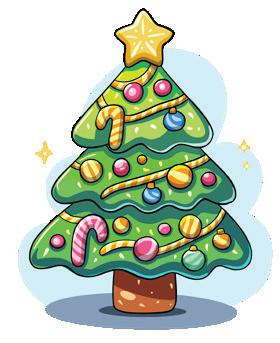
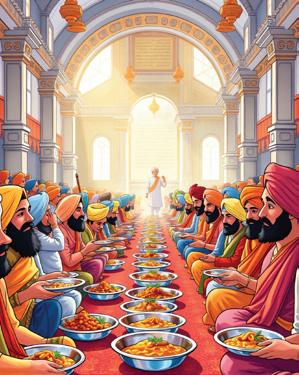
Religious Festivals Recognises and writes the names of different religious festivals 110–111
Land Transport Recognises different land transport vehicles
Water Transport Recognises different water transport vehicles 113
Air Transport Recognises different air transport vehicles 114
On the Track Recognises that tickets are needed to travel by train 115
Emergency Vehicles Identifies the uses of emergency vehicles and how they help people 116
Fuel Identifies that vehicles need fuel such as petrol or diesel to move
Safety on Road Follows basic safety habits while walking or travelling on the road
My Computer Recognises a computer and its basic parts 120–121
Gadgets We Use Recognises common gadgets used at home and identifies their basic uses in daily life
DAWN is a comprehensive, NCF 2022-based Early Childhood Education program that lays a solid foundation for lifelong well-being and holistic growth, encompassing physical, cognitive, and socio-emotional development.
This General Awareness coursebook is specifically designed to help learners build awareness about themselves, their immediate surroundings and the world around them.
Additional Resources
• Sticker Sheets
• TLM and Flashcards
• Charts and Posters
• Assessment Sheets
• Holistic Progress Card
• Teacher's Manual
• Digital Resources
Key Features
• Play-based learning activities, which promote holistic development of the child in all ECE domains
• School readiness, which is assured in the curriculum and learning design
• All-round development, in areas of physical, cognitive, cultural and socio-emotional domains
• Teacher assets, like assessment tools and lesson plans to help maximise program quality and outcomes
Uolo partners with K-12 schools to provide technology-enabled learning programs. We believe that pedagogy and technology must come together to deliver scalable learning experiences that generate measurable outcomes. Uolo is trusted by over 15,000+ schools across India, Southeast Asia and the Middle East.
hello@uolo.com
Not to be sold separately
ISBN 978-93-49697-48-5