


Academic Authors: Muskan Panjwani, Svetlana Drobysheva
Creative Directors: Alena Sizintseva
Book Production: Aleksandra Nazarova, Larisa Pavlenko, Anastasia Shnip
All products and brand names used in this book are trademarks, registered trademarks or trade names of their respective owners.
© Uolo EdTech Private Limited First edition 2026
This book is sold subject to the condition that it shall not by way of trade or otherwise, be lent, resold, hired out, or otherwise circulated without the publisher’s prior written consent in any form of binding or cover other than that in which it is published and without a similar condition including this condition being imposed on the subsequent purchaser and without limiting the rights under copyright reserved above, no part of this publication may be reproduced, stored in or introduced into a retrieval system, or transmitted in any form or by any means, electronic, mechanical, photocopying, recording or otherwise, without the prior written permission of both the copyright owner and the abovementioned publisher of this book.
Book Title: DinoLab Math Smartbook 4
ISBN: 978-93-89789-43-0
Published by: Uolo EdTech Private Limited
Corporate Office Address:
91Springboard, 3rd Floor
145, Sector 44, Gurugram, Haryana 122003
CIN: U74999DL2020PTC360472
Printed by: Printpro Solutions
All suggested use of the internet should be under adult supervision.
Get access to animated interactive courses, Marathons, Olympiads and much more — all in the Uolo Learn app!
1. Download the "Uolo Learn" app from Google Play (Android) or App Store (iPhone).
2. In the app, click scanner to scan the QR code below.
Class:
Name:
School:
3. Follow the instructions in the app to access the content.
DinoLab is an AI-powered self-learning platform that helps children learn Mathematics and other subjects step by step, at their own pace. Students can practise and revise every topic digitally and through printed smartbooks.
The DinoLab Mathematics Smartbook is a companion to the digital course. Each exercise has a QR code linking to the Uolo Learn app for continued practice.
Using AI, DinoLab creates a personalised learning path: it explains the concept, gives guided practice and adapts if mistakes occur — helping students gain clear understanding.
Digital content is presented as interactive flashcards with 50,000+ gamified exercises and animations, making learning engaging and enjoyable.
DinoLab works in Uolo apps and on multiple devices
To use DinoLab on the web, Smartboards and in computer labs, your school will receive special access for each student and teacher.
Once the Uolo Learn app is installed and you are logged in, you can access DinoLab. Our Mathematics course is designed with interactive exercises that help children cover the school syllabus step by step, at their own pace.
1 2 3
• Solve problems and earn points
• Check the leaderboards of your class, school and all of India
• Get achievement certificates Compete and win in Marathons!
1 3 In this Smartbook, you will find QR codes placed next to the exercises. Simply use the QR scanner inside the app to access the interactive content. QR codes in the smartbook
2
Open the Uolo Learn app.
1. A 6-digit number is given below. Choose and write the name of each digit’s place.
hundreds ten thousands tens thousands ones lakhs
2. Circle the number that matches the description. One is in the ten thousand place.
Let’s remember base-ten bundling.
— International (up to Hundred Thousand).
780,314
Write in words:
7,80,314
Write in words:
Fill both charts for 543216.
Write using commas as per International system: Write in words:
Write using commas as per Indian system: Write in words:
4. Write the number in words: 875432.
International system: Indian system:
5. Write 406,090 in words. Then write it using the Indian place value system.
6. Write using numbers: Five hundred forty-three thousand two hundred sixteen.
7. Expand the given numbers.
705,090 = 700,000 + 5,000 + 90
7 × 100,000 + 5 × + 9 ×
10,892 = 10,000 + 800 + 90 + 2
10,892 = 1 × 10,000 + 8 × + 9 × + 2
8. Compose the number.
6 × 10,000 + 4 × 1,000 + 2 × 100 + 9 =
9. Consider the number: 268,451 and answer the following questions.
What digit is in the ten-thousands place?
What digit is in the ones place?
10. How many thousands are there in 345,600? Write the count of thousands and the numeric value.
11. Write the numbers that come before and immediately after 120,000.
12. Write the number that is 1 more than 1,199,999.
13. Starting at 93,500, skip count forward by 1,000. Write the next three numbers.
14. Mark 170,000 on the given number line.
030,00060,00090,000120,000150,000180,000
15. Which number is halfway between 120,000 and 140,000? Mark it on the given number line.
030,00060,00090,000120,000150,000180,000
16. Compare the numbers and identify which number is greater.
814,530814,430
17. Write these numbers in the ascending order: 95,300; 95,030; 95,003; 94,900.
18. Make the greatest 6-digit number using the following digits without repetition 4, 0, 9, 1, 5, 7.
19. Make a 6-digit number where the digit in the tenthousands place is 6 and the sum of all the digits is 20.
20. The population of Nellore is 598,548 and that of Bhavnagar is 593,768. Identify which city has a higher population. Explain your reasoning. Then, write both numbers in the Indian system of numeration.
21. The table shows the prices of the cars of Brand A and Brand B. Write each price in International as well as Indian place value systems. Which car costs more? Brand A
B
22. Compare the numbers. Fill in the blanks with <, >, or =.
a) 814,530 b) 1390
23. Some digits are missing. Complete the numbers and compare them using <, >, or =. 1 5 2 4
24. Write the missing digits to make the comparison correct.
531,487531, 87531,687 < < 14,31214,3 614,320 < <
25. Arrange the numbers in the ascending order: 1,19,900; 1,20,009; 1,19,990; 1,20,090.
26. Complete the sequence and write the rule.
134,000; 134,500; ; 135,500; ; 136,500
27. Fill in the blank with a number such that the sequence is maintained and all the four numbers are in ascending order.
56,451; ; 58,451; 59,451
28. Circle the greatest number.
29. You want a closer estimate of 389,250 − 201,780. Should you round the numbers to the nearest 10,000 or 100,000? Explain your choice and find the estimated difference.
30. Answer the questions.
The populations of two cities are given below: City A: 128,450 City B: 130,025
a) Round the population of each city to the nearest 10,000.
b) After rounding, which city is more populated?
c) Round the population of each city to the nearest 100,000.
d) Is the population of both the cities about 130,000? Explain your answer.
31. Answer the questions.
A store rounds off the prices of the following items before printing the price tags.
TV: ₹74,590 Laptop: ₹76,410 Phone: ₹49,499
If the store rounds off the price of each item to the nearest ₹10,000:
a) What price will appear on the tag of each item?
b) The store has displayed a banner saying “All items under ₹75,000!”
Based on the rounded prices, which items can be advertised under this offer?
c) Now round the price of each item to the nearest ₹1,000. Does your answer to part (b) change? Explain briefly.
32. Answer the questions.
Two cities are connected to a hill station by different roads. Road A is 148,650 m long and Road B is 151,480 m long.
a) Round the length of each road to the nearest 1,000 m. Are the rounded lengths the same or different?
b) Round the length of each road to the nearest 10,000 m. Are the rounded lengths the same or different?
c) Which rounding gives a clearer comparison of the two roads: (a) or (b)?
Explain why.
33. Answer the questions.
For each situation below, choose a sensible place value to round to (10 / 100 / 1,000 / 10,000 / 100,000) and explain your choice.
a) City population: 406,090.
b) Receipt total: ₹19,410.
c) Road length: 151,480 m.
d) Price tag: ₹74,590
1. Add.
2. Match each expression to its value.
1) 324 + 245 =
2) 506 + 193 =
3) 140 + 350 = 4) 612 + 187 =
5) 670 + 245 = 6) 248 + 523 = 7) 785 + 345 =
3. Match each expression to its value.
1) 700 − 200 = 2) 961 − 540 =
3) 432 − 111 = 4) 909 − 404 = 5) 942 − 518 = 6) 582 − 237 = 7) 1,000 − 275 =
4. Complete the additions.
5. Find the sum.
5643 + 2,105 =
3297 + 4,301 =
55,490 + 1,107 =
6 and 0
6. Add.
7. Find the sum. 8,432 + 1,762 = 78,034 + 10,789 = 67,209 + 3,428 =
8. Complete the subtractions. Subtract 5
Subtract 3 from 5
9. Find the difference and write the answer.
5,443 – 2,322 = 3,297 – 1,073 = 55,490 – 4,270 =
10. Add.
1,743 + 567 + 45 =
5,887 + 3,409 + 761 =
806 + 479 + 921 =
11. A student subtracted 5,879 from 64,203 as shown below. Did he make any mistake? If yes, then find and write the correct answer.
12. Find the missing digits.
1. 3 ,042 − 2,578 = 33,464
2. 72,500 − ,960 = 63,540
3. 405,0 6 − 2,789 = 402,217
13. Find the missing digits.
1. 4 ,865 + 27,438 = 75,303
2. 12, 50 + 3,972 = 16,42
3. 24,13 + 15,269 = 39,399
14. Check the following using the inverse operation.
1. 139,900 + 24,750 = 164,650 2. 268,451 − 121,980 = 146,471
15. Write + or – in both blanks to make the statement true.
24,130 15,269 2,916 = 42,315
53,402 27,689 1,014 = 24,699
40,002 7,859 3,578 = 44,283
300,070 8,945 2,689 = 306,326
700,100 50,000 3,578 = 646,522
24,130 4,780 275 = 28,635
16. Solve.
A toy company needs to deliver 120,000 toy boxes to different stores. They have already shipped 38,450 boxes. How many toy boxes are still left to be shipped?
A library had 48,960 books. The librarian added 5,430 new books this week. In the coming week, people borrowed 1,002 books from the library. How many books are left in the library now?
18. Estimate the following sums by rounding the numbers to the place value mentioned.
1. Round to the nearest 1,000: 34,590 + 19,410 =
2. Round to the nearest 10,000: 74,590 + 26,410 =
3. Round to the nearest 100,000: 128,450 + 130,025 =
4. Round to the nearest 10,000: 406,090 + 18,900 =
5. Round to the nearest 1,000: 95,450 + 95,499 =
6. Round to a place value of your choice, then estimate the sum: 12,305 + 4,780 =
19. Estimate the following differences by rounding the numbers to the place value given.
1. Round to the nearest 10,000: 268,451 − 121,980 =
2. Round to the nearest 1,000: 151,480 − 148,650 =
3. Round to the nearest 1,000: 406,090 − 399,860 =
4. Round to the nearest 10,000: 300,070 − 8,945 =
5. Round to the nearest 100,000: 408,500 − 399,900 =
6. Round to a place value of your choice, then estimate the difference: 800,600 − 300,500 =
20. Compare the numbers after rounding using >, < or = signs.
Round each pair to the place value given.
1. Nearest 10,000: 268,451 271,980
2. Nearest 100,000: 408,500 399,900
3. Nearest 1,000: 95,450 95,499
(If both numbers round to the same value, compare the original numbers or round to a finer/smaller place.)
21. Answer the questions.
Two roads are being built to connect nearby towns. Road A is 148,650 m long and Road B is 151,480 m long. Round each length to the nearest 1,000 m. Which road is longer and about how much?
Round each length to the nearest 10,000 m. Do the lengths still look different or the same? Which rounding will give more useful information in this situation?
22. Answer the questions.
A company received five cheques. The value of each cheque is between ₹19,900 and ₹20,100. Estimate the total amount of all five cheques. State the method you used.
1. Write 4 + 4 + 4 + 4 + 4 as a multiplication sentence.
4 + 4 + 4 + 4 + 4 = 4 + 4 + 4 + 4 + 4 =
2. A table has 4 legs. How many legs do 5 tables have?
How many similar numbers did you add?
3. Fill in the table.
Repeated addition
6 + 6 + 6
2 + 2 + 2 + 2 + 2 + 2 + 2
Multiplication 8 × 5
4. Write the first 10 multiples of 9. What is the pattern in the digits of these multiples?
5. The following are the 6 neighbouring multiples of 7. Guess which of these are even and which are odd. What is the pattern among these numbers?
7 × 2, 7 × 3, 7 × 4, 7 × 5, 7 × 6, 7 × 7
6. Fill in the blanks.
1. 6 × 7 = 42, so 7 × 6 =
2. 9 × 8 = 72, so 9 × 80 =
3. 983 × 10 = 9830, so 983 × 100 =
1. 30 × 400 =
2. 200 × 60 =
3. 3,000 × 7 = 7. Multiply.
8. Multiply.
9. Multiply.
357 × 6 =
502 × 4 =
10. A box contains 356 apples. How many apples are there in 4 such boxes?
11. Divide the group into two parts.
6 × 4 = (3 + 3) × 4 = 3 × 4 + 3 × 4 = + =
12. Solve.
3 × (4 + 5) = × + × =
(5 + 3) × 6 = × + × =
8 × (2 + 7) = × + × =
13. Match the expressions that have the same value.
14. Without actually multiplying, decide which is larger: 499 × 8 or 500 × 8. Explain your reasoning.
15. Fill in the missing multiplier.
78 × = 780
16. Look at the pattern.
21 × 2 = 42
21 × 3 = 63
21 × 4 = 84 What comes next?
17. A factory makes 1,245 bottles every day. How many bottles will it make in 6 days?
18. Multiply.
174 × 45 =
58 × 76 = 806 × 92 =
20. Multiply.
21. A factory produces 425 toys each day. How many toys can it produce in a year of 365 days?
22. A library is organising books into sets of 327 books per shelf. There are 312 shelves. How many books are there in total?
23. Estimate the product: 487 x 298. Also, find the actual product.
24. Estimate the product of 487 and 92 by rounding both numbers to the nearest hundred.
Estimated product = × =
25. Estimate the following products by rounding both numbers to the nearest tens.
1) 176 × 28 =
2) 449 × 62 =
3) 587 × 46 =
26. Estimate the following products by rounding both numbers to the nearest hundred.
1) 162 × 413 = 2) 238 × 725 =
28. A library has 86 shelves. Each shelf can hold about 295 books. Estimate how many books the library can store in total. Why is estimation helpful when planning space in public places like libraries?
29. A coach wants to buy cricket kits for his team. Each kit costs ₹2,845 and he needs 17 kits. Use estimation to check if ₹40,000 will be enough. Also, explain how estimation helps in making quick money decisions.
1. Let’s warm up! Divide the following two and threedigit numbers.
1) 42 ÷ 7 = 2) 96 ÷ 8 = 3) 225 ÷ 5 = 4) 364 ÷ 2 =
2. Divide.
3. Solve using long division.
4. Find the quotient and remainder.
5.
6. Solve using long division.
7. A farmer picks 1248 mangoes. He packs 24 mangoes in each basket. How many baskets does he need?
8. A library has 3580 books. Each shelf holds 45 books. How many shelves are needed?
9. Estimate 4950 ÷ 49 by rounding the numbers.
10. Rahul divided 248 by 12 and got a remainder of 8. Check if he is correct using the rule: Dividend = Divisor × Quotient + Remainder.
11. Compute and fill in the table. 456 ÷ 38 × 13 9121178988197613683306
12. Determine which numbers are hidden behind the pictures and solve the puzzle.
13. Help Dino reach his friend! Solve each problem, find the answer and colour the matching box to find the path.
380 ÷ 20 = 2) 900 ÷ 60 = 3) 2262 ÷ 78 =
2520 ÷ 35 = 5) 1209 ÷ 13 =
972 ÷ 18 =
14. Solve the number crossword using the clues.
15. Compute each quotient. Match every answer to its letter on the wheel. Use these letters to find the names of the birds.
1. Colour the balloons that show multiples of 3.
2. Tick ( ) the correct answers.
by 7.
by 9.
by 15.
3. Write three multiples for each of the given
4. Help Dino colour the carpet with the correct crayons.
Multiples of 7
Multiples of 4
Multiples of 18
5. Tick the correct answers.
1. Is it possible to divide 12 boys and 10 girls into 2 similar teams?
2. Is it possible to divide 22 boys and 12 girls into 3 similar teams?
3. Is it possible to divide 5 boys and 15 girls into 5 similar teams?
4. Is it possible to divide 10 boys and 18 girls into 2 similar teams?
6. Match each statement to the correct type of number.
1. A natural number having only two factors.
2. A number that is the product of two numbers larger than 1.
3. A number that is larger than 1 and divisible only by 1 or itself.
7. Colour all the prime numbers in the grid.
number
number
8. Write the following numbers in the correct box.
122, 709, 590, 619, 211, 474, 127, 449, 604, 397, 519, 222
9. Find the factors of the following numbers using the factor tree method.
10. Tick the correct prime factorisation of the given numbers.
11. Look at the prime factorisations of 1734 and 5070. Use these to match the given expressions and statements.
12. Find the prime factors of the given numbers. 1734 = 2 × 3 × 17 × 17
= 2 × 3 × 5 × 13 × 13
13. List all the common factors of each pair of the numbers.
14. Write the highest common factor (HCF).
HCF (15, 50) =
HCF (60, 11) =
HCF (18, 36) =
HCF (12, 18) =
HCF (28, 42) = HCF (34, 17) =
HCF (20, 100) =
HCF (49, 56) =
15. Tick all the correct answers.
Which of these pairs of numbers have 3 as a common factor?
50 and 63
81 and 99 100 and 203 16 and 21 27 and 45 14 and 25 33 and 77
Which of these pairs of numbers have 7 as a common factor?
77 and 91 84 and 105 14 and 21 28 and 42 33 and 49 56 and 63 70 and 85
1. Tick the correct answers.
3 4 numerator
A circle is divided into equal parts and some of the parts are shaded. A fraction is written to show the shaded parts.
What does the numerator of this fraction show?
The total number of parts in the circle.
The number of shaded parts in the circle.
The number of unshaded parts in the circle.
The size of each part.
What does the denominator of a fraction show?
The total number of parts in the circle.
The number of shaded parts in the circle.
The number of unshaded parts in the circle.
2 3 denominator
The size of each part.
2. Write the fraction that shows the shaded part of each figure.
3. Look at the fraction. Shade the circle to match it.
4. The shaded part in the box on the left is a part of a whole figure. Use the given fraction and tick the whole figure it belongs to.
5. Use the given picture to answer the following questions.
What fraction of the fruits is bananas?
What fraction of the fruits is pears?
What fraction of the fruits is yellow?
6. Write the fractions.
1) Numerator = 3, denominator = 7
2) Numerator = 13, denominator = 35
3) Denominator = 9, Numerator = 3
4) Denominator = 3, Numerator = 7
5) Numerator = 7, denominator = 7
7. Connect each pair of fractions to the correct basket.
equal denominators.
8. Write fractions for each of the given values. Make sure that the fraction has the given numerator or denominator.
1) The fraction with a denominator of 5
3) The fraction with a numerator of 12 2) The fraction with a denominator of 6 4) The fraction with a numerator of 70 = 7 = 3 = 5 = 10
9. Compare using the correct sign: >, <, =.
10. Connect each fraction to the correct box.
11. Write the given improper fractions as the mixed fractions.
12. Write the following mixed fractions as improper fractions.
13. Look at the fractions written on the balloons. Join each fraction to where it belongs on the number line.
14. Circle the largest fraction.
15. Arrange the fractions in the ascending order.
Now observe your answers and complete the following sentences.
In fractions with the same numerators, the fraction with the smaller denominator is
In fractions with the same denominators, the fraction with the larger numerator is .
16. Write fractions that are equivalent to the given fractions. Make sure that they have the same numerator or denominator as shown.
6 13 = numerator 24
17. Make the numerators of the fractions the same. Then compare them.
18. Solve.
a) There were 32 apples in the basket. Ahana shared 1 4 of these apples with her friends. How many apples did Ahana share?
Answer:
b) Vivaan is training for a 42 km marathon. He runs 1 6 of it every day. How many kilometres does he run in a day?
42 km ?
Answer:
c) Shreyas was outdoors for 40 minutes. He spent 1 5 of this time playing basketball. How long did he play basketball?
Answer: 32 apples ?
40 min ?
a) Harsh planned to ride his bike 18 km to the hill, but he rode only 7 9 of the distance. How far did he ride?
b) Priya spent 60 minutes at the sports club. She used 2 3 of this time playing tennis. How long did she play?
min ?
of the duration is: min
a) 2 5 of a packet of sugar weighs 80 grams. How much does the whole packet weigh?
80 g ? 1 5 of the weight of the packet is: g
Weight of the whole packet is: g
b) Neerav thought of a number. 4 5 of this number is 40. What number did he think of?
? 1 5 of total number is:
The number is:
c) In his carpentry class, Nitesh used 21 nails to make a table. These nails were
of all the nails he had. How many nails did he have in total?
? of all the nails is:
Number of nails:
22. Add the fractions.
23. Help Gagan to describe the rules for adding fractions. Tick the correct options that will complete his sentence.
To add the fractions with same denominator you should: add the numerators take one of the numerators add the denominators keep the same denominator
24. First add the fractions. Then compare the results.
25. Subtract the fractions.
26. Help Gagan to describe the rules for subtracting fractions. Tick the correct options that will complete his sentence.
To subtract the fractions with same denominator you should: subtract the numerators take one of the numerators subtract the denominators keep the same denominator
27. Start from the first fraction and move along the arrows. Add or subtract the fraction as shown. Find the final answer.
28. Compare the fractions. Use = or ≠.
29. Start from the first fraction on the left. Add or subtract as indicated. Write the results you get inside the wheels.
30. This is how we add or subtract a fraction from a mixed fraction.
Step 1: Convert the mixed fraction to an improper fraction:
Step 2: Perform addition or subtraction:
Step 3: Convert answer to a mixed fraction:
7
Now use the steps shown above to solve the following problems. Connect the fraction that you get to the correct place on the number line.
31. Solve.
1. Choose the correct word and fill in the blanks.
This is a
2. Match the following images to their correct names.
straight line
This is a line. This is a line. points curve straight point curved
Recall:
This is called a ray. It has a starting point but has no end point.
This is called a line segment. It has two end points.
3. How many line segments are there? Mark them.
4. How many rays are there? Mark them.
5. Connect the following dots in the increasing order.
The figure that you draw is called a simple polygonal chain.
The points or corners in a polygonal chain are called vertices. How many vertices are there in the polygonal chain above?
Lines connecting the vertices are the sides or edges. How many edges are there in the polygonal chain above?
6. This is a closed polygon.
Each vertex of a polygon connects two of its sides or edges. If a polygon has 5 vertices, how many sides will it have?
Is it a polygon?
Each vertex of a polygon connects either 1 or 2 line segments.
How many line segments are connected to this red point?
Explain your answer.
7. Match the shapes with their names.
8. Draw any two polygons that have different number of sides. closed polygonal chain simple polygonal chain not a polygonal chain
9. How many different straight lines can you draw through one point?
Choose an answer:
only one none many
10. How many different curved lines can you draw through one point?
Choose an answer:
only one none many
11. How many different curved lines can you draw through two points?
Choose an answer:
Choose an answer: only one only one none none many many
12. How many different straight lines can you draw through two points?
13. Colour the fish.
• Mark any 2 curved lines in the picture with blue colour.
• Mark closed figures in the picture with orange colour.
• Mark line segments in the picture with green colour.
• Mark any one point in the picture with black colour.
14. Tick all the closed polygons.
15. Tick all the images that are not closed polygons.
16. Count the number of vertices and sides in each shape. Then name the shapes.
17. Match each shape to its name.
quadrilateral
18. Tick the shapes that are quadrilaterals.
19. Tick the shapes that are hexagons.
20. Feed the elephants by connecting each shape to the correct elephant.
I eat triangles!
I eat circles!
21. Draw a circle, a square and a triangle here. Then colour them.
22. Colour each shape. Use the same colour for all the shapes of the same kind.
23. Write the names of any 5 objects that look like a rectangle.
24. Colour the triangles, rectangles and circles in the following image in different colours.
25. Explain the difference between a square and a rectangle.
26. Feed the elephant by connecting all the hexagons to the elephant.
I eat hexagons!
27. Draw a hexagon and then colour it.
28. What is a circle?
A “circle” is shown as many dots that are at the same distance from a point O.
a) Join the dots to trace the circle.
b) Measure the distance from O to 3–4 different dots.
What do you notice?
29. Tick all the circles.
What objects around you look like a circle? Write their names.
30. Draw two circles of any size. Label their centres as D and E.
In each circle, place a red point inside, a blue point on the circle, and a green point outside.
Which point is closest to the centre — the red, blue or green Why?
31. On the given circle with centre A, measure radii AB, AC and AD. Draw one more radius and measure it.
32. A chord is a line segment that joins two points on the boundary of a circle. Two chords of a circle are shown below. Without actually measuring them, identify the longer chord.
33. Circles in real life — measure and fill in the table.
Pick two round objects (coin, bottle cap, cup). Measure the diameter and compute the radius.
Object name
Diameter (cm)
Radius (cm) = d ÷ 2
34. Could this be a chord?
A circle has a radius of 4 cm. Could one of its chords be 2 cm, 4 cm, 8 cm, or 10 cm long? Explain your answer.
1. Colour all the cubes in one colour and the cuboids in other colour.
2. Starting from the leftmost shape, number them 1, 2, 3, and so on. Then write the positions of the cuboids and cubes in the correct boxes.
3. Colour the shapes. Use one colour for cones and a different colour for cylinders.
4. Starting from the leftmost shape, number them 1, 2, 3, and so on. Then write the positions of the cylinders and cones in the correct boxes.
5. Colour the shapes that are spheres.
6. Starting from the leftmost shape, number them 1, 2, 3, and so on. Then write the positions of the shapes in the correct boxes.
7. Look at the following shapes and then fill in the blank. 2-dimensional These are shapes. 3-dimensional
8. A face of each of the 3-D shape is placed on the paper as shown. What shape will you get by tracing that face?
9. Choose the shape you will get on tracing a face of these shapes.
10. Which 2-D shape will you get by tracing the bottom face of these objects? Tick the correct shape.
CircleTriangleRectangleSquare
CircleTriangleRectangleSquare
CircleTriangleRectangleSquare
CircleTriangleRectangleSquare
CircleTriangleRectangleSquare
CircleTriangleRectangleSquare
CircleTriangleRectangleSquare
11. Representing 3-D Shapes as 2-D Shapes.
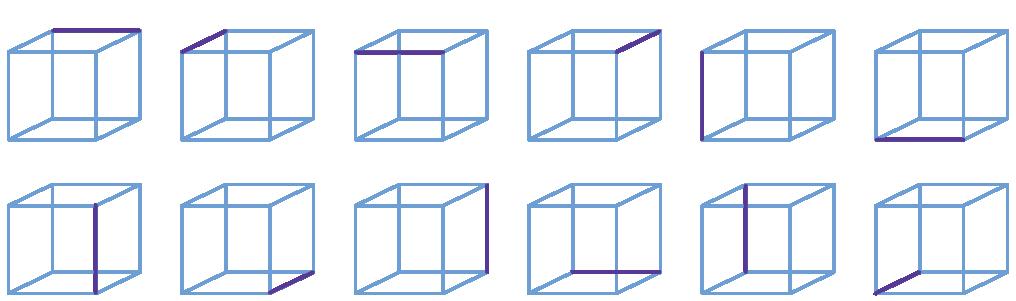
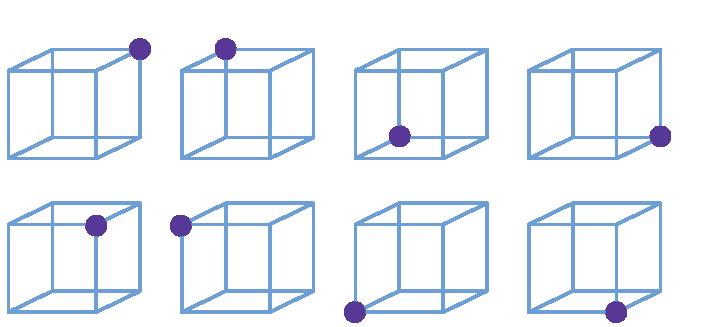
The place where two or more edges join is called a corner.
A cube has edges.
A cube has corners.
Let's look at the surface or face of a cylinder.
A cylinder has curved surface and flat faces.
12. Match each of the following shapes with the number of flat faces it has.
13. Match the shapes with the number of corners it has.
14. Write the name of the shape with 12 edges.
1. Draw and colour the next three shapes to continue the pattern.
2. What shape should be in the missing place? Circle the correct option.
3. Draw and colour the next shapes to continue the pattern.
4. Tick the ball that will continue the pattern.
5. Write the next numbers of the pattern.
6. Tick the symmetrical shapes.
7. Connect the shapes to the correct box.
Symmetrical shapes
Asymmetrical shapes
8. Tick the option that shows the correct line of symmetry for the given shapes.
9. Draw the line of symmetry for each of the following shapes.
10. Tick the missing symmetrical half of the shapes given on the following vases.
11. Write any 6 capital letters of the English alphabet that are symmetrical and draw their lines of symmetry.
12. Look at the STOP sign. Is its shape symmetrical? How many lines of symmetry does it have? Explain why road signs often use symmetrical shapes.
1. Look at the following units of length. Then fill in the blanks.
This is 1 millimetre. This is 1 centimetre. This is 1 decimetre.
This is 1 metre.
1 cm = mm
1 dm = cm = mm
1 m = cm = mm
This is 1 kilometre.
1 km = m = dm = cm = mm
2. How much larger is a metre than a centimetre? Connect each circle to the correct option.
3. What is the relation between the pairs of units of length connected by an arrow? Connect each circle to the correct option.
4. Convert metres to other units of length. Write the correct values in the table.
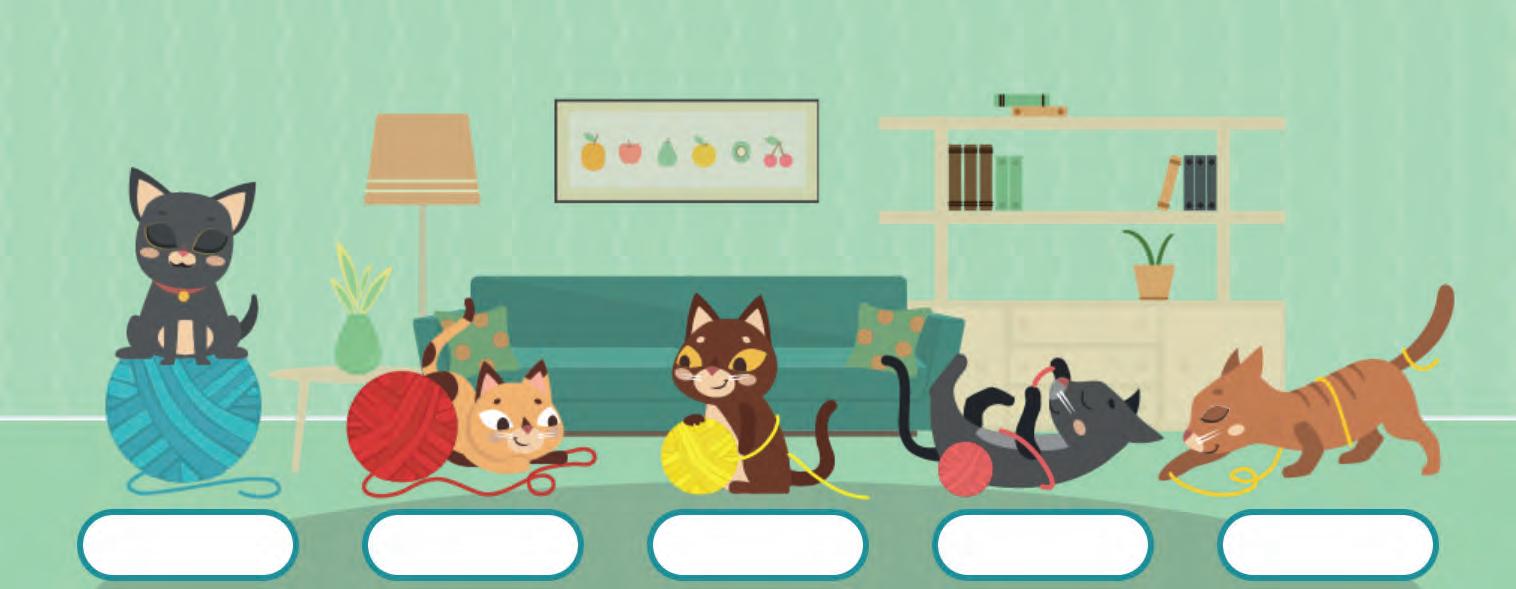
5. How long are the balls of wool? Sort lengths from largest to smallest. Connect each length to the correct blank space.
6. How long are the cables? Sort lengths from largest to smallest. Connect each length to the correct blank space.
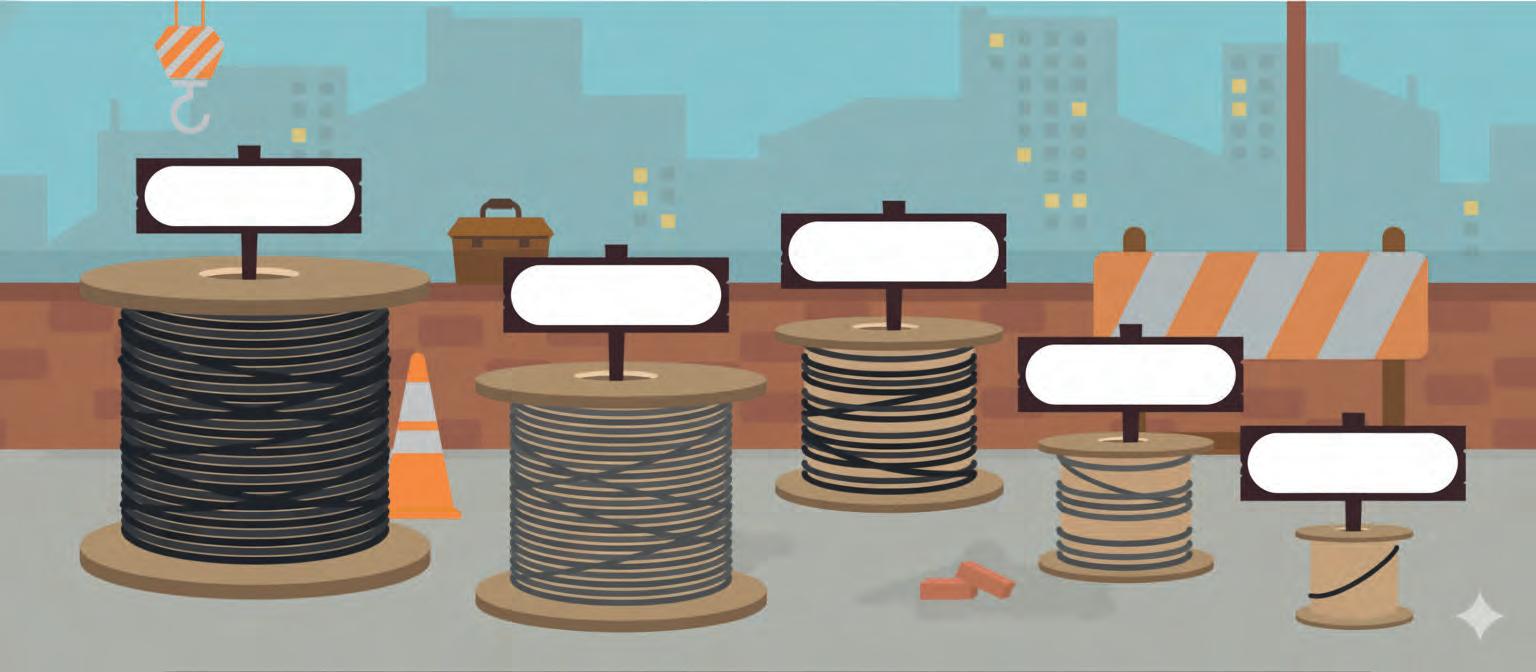
60 mm60 dm700 cm60 cm60 m 35 mm35 m350 m35 dm30 cm
7. Find the width of the objects and fill in the blanks.
8. Find the length of the objects and fill in the blanks.
9. Choose an appropriate unit of length. Tick the correct option.
The height of a giraffe is 4 . kilometres centimetres metres millimetres
The length of a child's hand is 1 .
The length of an eraser is 5 .
kilometres centimetres metres millimetres
The length of the tip of the pencil is 5 .
10. Compare the lengths. Use <, = or > to fill in the blanks.
80 m 16 cm 816 cm
315 dm 3 m 15 dm
82 mm 8 cm 2 mm
11. Find the distance travelled by a ladybug and a seahorse. Write your answers in the blanks.
12. Fill in the blanks.
13. Do the conversions and fill in the blanks.
14. Which scale should be used to measure the weight of a baby?

15. Convert the given units of weight. Fill in the table.

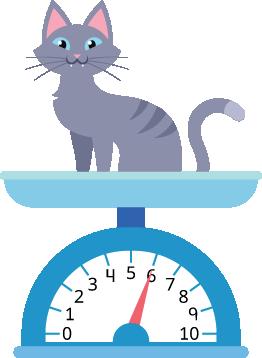
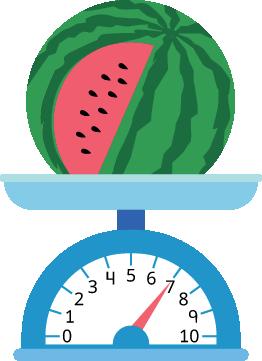
16. How much does each object weigh?
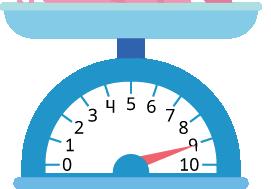
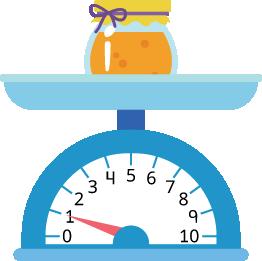
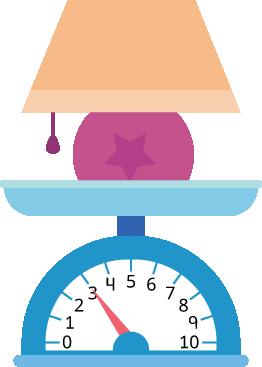
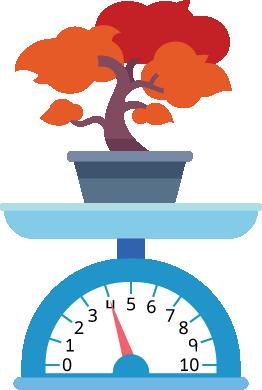
17. Convert and fill in the blanks.

5800 g = kg g
6 kg 800 g = g
18. Find the weight of each ostrich egg.

19. Fill in the blanks with the missing weights.
20. Fill in the blanks with the suitable units of weight.
a) The weight of a loaf of bread is 450 . kilograms grams
b) An Asian elephant weighs 2700 . grams kilograms
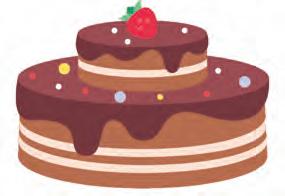
c) A piece of cake weighs 150 . kilograms grams
Show a piece of cake and not the full cake.
21. Do the conversions and fill in the blanks.
2500 g = kg g
7 kg 600 g = g
500 g = kg
12,000 g = kg
5 kg 250 g = g
6450 g = kg g
8 kg 75 g = g
3200 g = kg g
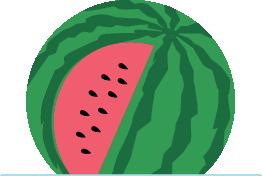
22. A papaya weighs 2 kg 250 g and a watermelon weighs 4 kg 800 g. Find the total weight of both the fruits.
23. A grocer has 125 kg of rice. He sells 75 kg 500 g of rice. How much rice is left?
24. A sack of onions weighs 49 kg. Find the total weight of 20 such sacks.
25. Mohan weighs 47 kg 800 g. Estimate his weight to the nearest kilogram.
26. Which weight is heavier: 3 kg 250 g or 3250 g? By how much?
27. A puppy weighs 4 kg. A kitten weighs 2300 g. By how much is one heavier than the other?
28. How much milk in mL is there in the carton of capacity 1L? Fill in the blank.
1 carton of milk = × 4 cups
29. Units of capacity.
A shopkeeper sells milk in 1-litre packets, juice in 1-litre bottles, and soft drink in 1-litre cans. Aarav’s shopping list contains:
• 2 L of milk
• 4 L of juice
• 3 L of soft drink
How many packets of milk should Aarav buy?
How many bottles of juice should he buy?
How many cans of soft drink should he buy?
Find the total number of items he will carry home
30. Which vessel has more water: A or B? Tick the correct answer.
31. Look at the two pictures. One cup of water is poured into Vessel A and Vessel B each. Which vessel has more water? Explain your answer.
32. Mark 2 water cans in the row to match the given condition.
Total water needed = 6L
Total water needed = 7L
33. Give the dinosaurs as much tea as they asked for. Connect the correct teapots to their cups.
7 L of tea, please!
3 L of tea, please!
5 L of tea, please!
7 L of tea, please!
3 L of tea, please!
10 L of tea, please!
34. The juice from the completely filled jar is poured in the two glasses as shown. How much juice is left in the jar? Write your answer in the box.
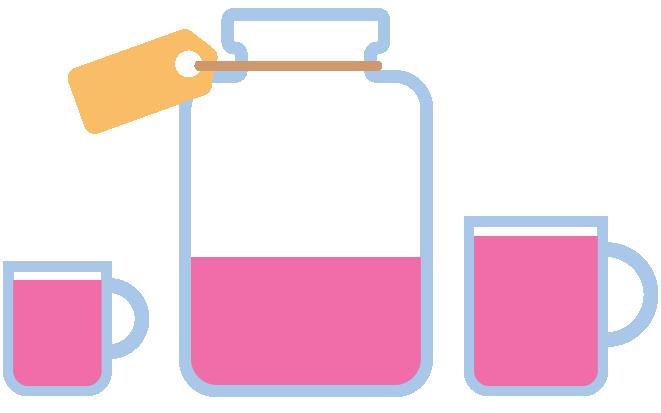

Answer: Answer:
How many litres are needed to fill the smaller vessel? Write your answer in the box.

How many litres are left in the larger vessel?
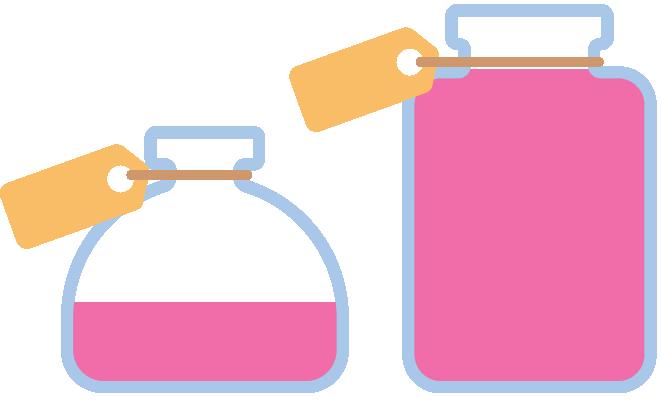
Answer:
Answer:
After filling the smaller vessel, how many litres are left in the larger vessel?

35. Do the conversions and fill in the blanks.
36. A bottle holds 750 mL of juice. How many such bottles are needed to fill a jug of capacity 9 L?
37. At a milk plant, 12 litres of milk are filled equally into 6 cans. How many litres go into each can?
38. A man drinks about 2 L of water daily. Find how much water he drinks in 1 month of 30 days.
39. A can holds 498 mL of juice. Estimate its capacity to the nearest 100 mL.
40. You have a 3 L jug and a 5 L jug. How can you get exactly 4 L of water?
41. A shopkeeper has measuring flasks of 1 litre and 500 millilitres. A customer wants exactly 7 litres of oil. How can the shopkeeper measure it? Suggest two different ways.
1. Find the perimeter of the following shapes. Write your answers in the blanks.
2. Find the perimeter of the following shapes.
3. Solve.
One side of a triangle is 18 m, the second side is 24 m, and the third side is 12 m longer than the first side. What is the perimeter of the triangle?
The perimeter of the triangle is .
One side of a quadrilateral is 9 cm and another is 12 cm. The next side is 7 cm longer than the 9 cm side, and the last side is 5 cm shorter than the 12 cm side. What is the perimeter of the quadrilateral?
The perimeter of the quadrilateral is .
4. The perimeter of each shape is given. Find how long the missing side is using the side lengths you know.
a) In each of the following, two squares of the same size are joined along one side to form a new shape. Find the perimeter of the new shape.
b) In each of the following, a square and a rectangle are joined along their equal sides as shown. Find the perimeter of the new shape.
c) In each of the following, two rectangles of the same size are joined along one side as shown. Find the perimeter of the new shape.
6. Dino bought a plot of land. He wants to put a fence around it. Will a 35 m long fence be enough? Tick the correct answer.
7. Calculate the perimeter of the shape. Draw a square with the same perimeter.
8. Find the perimeter of the given shapes.
9. Colour the shape with the largest area.
10. Connect the shapes that have the same area.
11. Calculate the areas of the shaded regions.
Number of shaded
squares =
Area of 1 square = cm2
So, total shaded area = cm2
12. Look at the following shapes and fill in the gaps.
Shape and shape have same perimeter but different areas.
Shape and shape have same area but different perimeters.
Shape and shape have different areas and different perimeters.
13. The first image on the left shows how to count the number of full squares and half squares. Use this to find the areas of shaded regions in the next two shapes.
14. Find the area of the irregular shape shown below.
half squares
full squares
more than half squares
less than half squares
Number of unit squares
Full squares
Half squares
More than half squares
Less than half squares
Total area is about cm2.
15. Calculate the areas of the given irregular shapes.
Total area is about cm2.
Total area is about cm2.
Total area is about cm2.
Total area is about cm2.
16. Calculate the areas of the given figures.
Total area (approx.) Total area (approx.)
area (approx.)
17. Colour the shape with a larger area in each row.
18. Count the area of the shaded shape. Draw your own shape with the same area.
1 unit = 1 cm2
Area = cm2
19. Circle your palm and calculate the area of the irregular shape formed.
Number of unit squares
Full squares
Half squares
More than half squares
Less than half squares
Total area (approx.)
1. Convert the units. Complete the table.
2. Convert.
3. Convert the units. Complete the table.
4. Convert.
5. What
does each clock show? Use the hints and write your answers in the table.
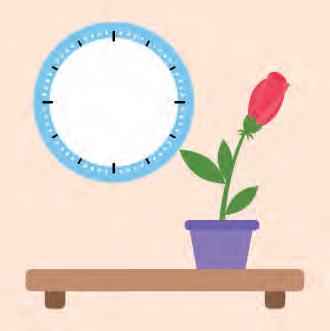
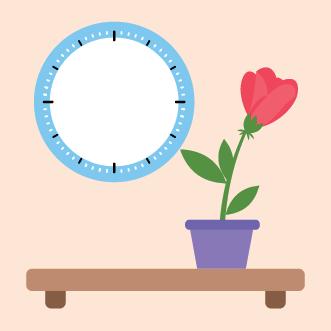
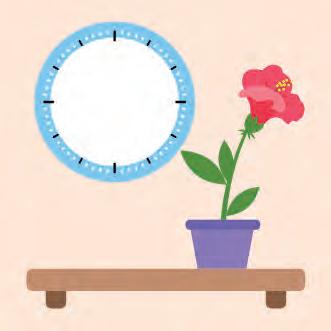
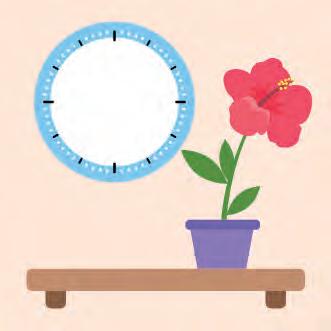
When the minute hand is at 1, it shows 5 minutes.
When the minute hand is at 3, it shows 15 minutes.
When the minute hand is at 9, it shows 45 minutes.
6. What is the time on the
7. What is the time on the
8. Draw the hour and minute hands on the clock to show the given time.
9. Circle the clock that shows the given time.
10. Find which class is starting now by looking at the clock.
Time table 8:30 — English 9:20 — Mathematics 10:10 — Science 11:05 — Music Time table 10:10 — Science 11:05 — Art 12:00 — Music 12:55 — Games
11. Help Sonya reach her friend’s house.
Subtract 10 minutes to find the next step. Then join them to show the path.
Add 30 minutes to find the next step. Then join them to show the path.
12. Convert the given time from 12-hour format to 24-hour format.
• 9:00 a.m. =
• 3:30 p.m. =
• 12:15 a.m. =
• 11:45 p.m. =
13. Convert the given time from 24-hour format to 12-hour format.
• 06:20 =
• 14:05 =
• 23:30 =
• 00:45 =
14. Convert the following.
• 3:45 p.m. to 24-hour format
• 07:30 to 12-hour format
• 23:15 to 12-hour format
15. How many minutes are there in 5 hours?
16. How many complete hours and minutes are there in 270 minutes?
17. A football match started at 4:20 p.m. and ended at 6:05 p.m. How long did it last?
18. A concert begins at 3:45 p.m. and ends at 5:10 p.m. How long does the concert last?
19. Convert the units. Complete the table.
20. Convert. 2
2
21. Convert the units. Complete the table.
22. Convert.
1 week 5 days = days 23 days = week days
2 week 5 days = days
29 days = week days
23. What is the calendar year made up of?
There are actually 365 days in a year. There are 366 days in a leap year. A leap year has an extra day, on 29 February.
In 2026 there are days.
There are months in a year.
There are complete weeks and day(s) in a normal (non-leap) year.
25. Parth's birthday is on 5 December. Circle all the months which have the same number of days as December.
January July February August March September April May June October November December
26. Simi's birthday is on 15 April. Circle all the months which have the same number of days as April.
January
July February August March September May June October November December
27. If 1 February is a Saturday, then on which days will the following dates fall in a common (non-leap) year? 2 February — 7 February — 29 January —
28. If 3 May is a Wednesday, then on which days will the following dates fall in a common (non-leap) year?
1 May — 18 May — 9 May —
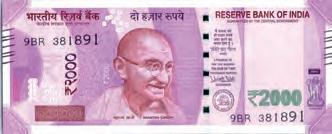
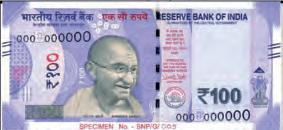
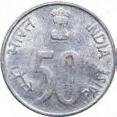
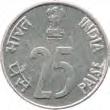
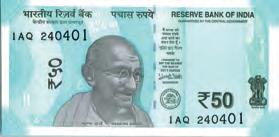
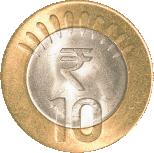
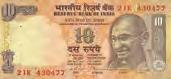
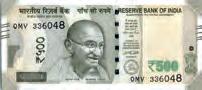
1. Match the coins and banknotes to the correct value.

2. Circle the correct ways to make ₹20.


3. How much money is there in each wallet? Write the answer in the box.
I have ₹522 in my wallet. a)
Ice-cream costs ₹125.
4. Help Alisha count how much money will she have left after buying ice-cream. ₹522 – ₹125 = ₹1157 – ₹536 = ₹1270 – ₹920 =
b) c) I have ₹1157 in my wallet. I have ₹1270 in my wallet.
Ice-cream costs ₹536.
Ice-cream costs ₹920.
5. Which of these equals ₹50? Circle the answers.
5 notes of ₹10
2 notes of ₹20 and 1 note of ₹10
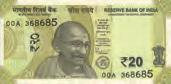
6. Convert into paise:
a) ₹3.75 = paise
b) ₹10.50 = paise
c) ₹125.00 = paise
7. Convert into rupees:
a) 485 paise = ₹
b) 760 paise = ₹
c) 12,450 paise = ₹
50 coins of ₹1

8. Aarav buys a pencil for ₹12.50 and an eraser for ₹7.50. How much does he spend in total?
9. Riya buys fruits for the amounts mentioned below:
Apples: ₹45.00 Bananas: ₹23.50 Oranges: ₹31.50 What is the total cost of the fruits she bought?
10. Write ₹325.50 in words.
11. Write 'Six hundred forty-three rupees and twentyfive paise' in numbers.
12. Riya had ₹500. She spent ₹348.75 on a bag. Find how much money was left with her.
13. Aarav had 1250 paise. He bought a notebook for ₹9.25. How much money (in paise) was he left with?
14. A fruit seller sold mangoes for ₹256.50 and bananas for ₹189.25. How much money did he earn in total?
15. A water bottle costs ₹97.50. Estimate its price to the nearest 10 rupees.
16. Manu bought two items: one costs ₹348.75, the other costs ₹652.20. Without adding the actual numbers, estimate the amount of money she paid.
17. Neha says ₹5.50 is the same as 55 paise. Aarav says it is the same as 550 paise. Who is correct? Why?
18. A purse has coins worth ₹50 in total. If each coin is of ₹2, how many coins are there?
19. Write in words: ₹742.15.
20. Write in figures: Three hundred eighty-four rupees and fifty paise.
21. Convert 8150 paise into rupees.
22. Convert ₹45.60 into paise.
23. A bill shows: 2 pens at ₹12 each, 1 eraser at ₹6 and 1 sharpener at ₹5. Find the total amount of the bill.
24. A bakery sold 3 cakes at ₹85.50 each. Find its total sale.
25. Convert ₹999.99 into paise.
26. Eva has ₹128.75. If she spends ₹75.25, how much money does she have left?
27. Maya has ₹100. She wants to buy exactly 5 items. Each item costs ₹10, ₹15, or ₹20. Can you find one possible combination of items she can buy for ₹100?
28. Rohan went to a stationery shop. He bought 4 pencils at ₹7.50 each and 2 notebooks at ₹22.25 each. How much did he spend?
29. A family went for lunch. Their bill was ₹865.75. They gave the waiter ₹1000. How much change did they get back?
30. A school collected ₹115 from each of 24 students for a trip. How much money was collected in total?
31. A grocery bill is ₹489.75. Estimate the amount to the nearest hundred.
32. A shopkeeper sold goods worth ₹299.40 and ₹501.20. Estimate the total.
33. A price tag on a shirt says ₹799.00. Riya says the shopkeeper could also just write ₹799. Is she correct? Which way is clearer for customers?
34. A shopkeeper writes the price of an item as ₹349.99. Why do you think he did not write it as ₹350?
1. Look at the pictures and fill in the table.
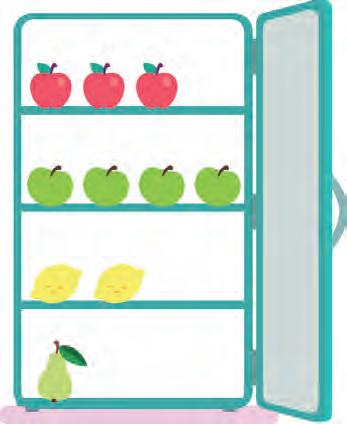


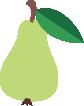
2. Fill in the table. Connect the image to the correct cell.
3. Look and fill in the table. Connect the image to the correct cell.
4. Look and fill in the table. Connect the image to the correct cell.
5. Circle the correct objects in the machine to make the given ice-cream. Circle it.
6. Give the medals to the athletes.
7. The time taken by five cars to complete a race is shown here. Fill in the blanks with the finishing positions of the cars.
8. Count the birds on the trees and fill in the table.
9. The table shows how many red and yellow mushrooms Bhumi and Neelam gathered during their jungle trip.
10. The table shows the number of shells and pebbles Aakriti and Mahi gathered on the beach. How many seashells did they collect in total? How many red mushrooms did they gather together?
Answer:
11. The table shows the number of flowers Vruti and Ruchika planted near their house. How many more lilies did Ruchika plant than Vruti?
12. The table shows the number of toys Kartik and Aditya have. How many more robots does Kartik have than Aditya?
13. Connect two rows of each table to their correct headings.


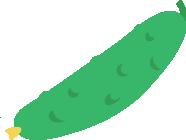

14. Connect rows and columns of each table to their correct headings.
15. Fill in the table.
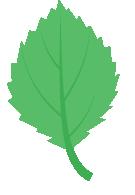
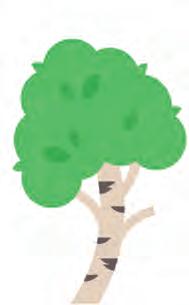
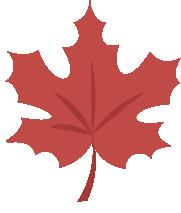
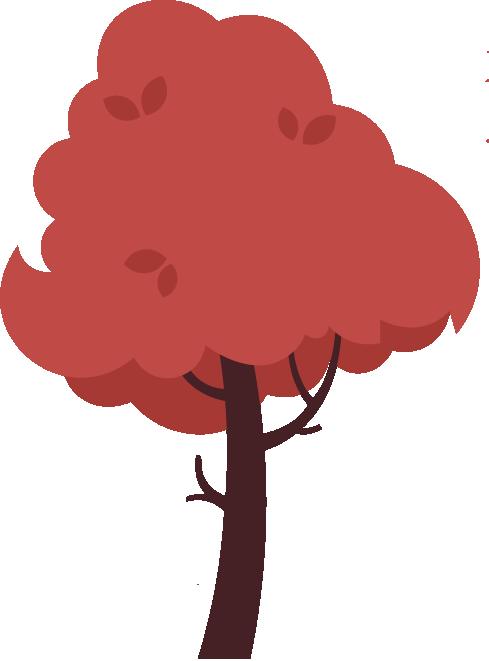
Height of the tree (m)
Width of the leaf (cm)
16. Read the dialogues carefully and fill in the table with the missing information.
Hello! I am Tanvi. I am 9 years old and I am in Class 3. My favourite subject is maths.
Hi! My name is Parth. I am 7 years old and I study in Class 1. My favourite subject is music.
Boy
Girl
17. Read the dialogues carefully and fill in the table with the missing information.
Hello! I am Natali. I have a cat, and my hobby is playing badminton. My favourite colour is green.
Hi! My name is Raghav. I have a parrot, and my hobby is playing chess. My favourite colour is yellow.
Girl
18. Look at the table and answer the questions. Ahmedabad
In which city is the weather partly cloudy with a day temperature of 14 degrees?
The weather
In which city is the weather sunny with a night temperature of 20 degrees?
In which cities is the weather sunny?
19. Look at the table and the message. Then fill the blank with the correct city name.
Delhi
Mumbai
Chandigarh
Ahmedabad
Chandigarh
WeatherTemperature
Hi! Come to visit us at . Here it is cloudy and the temperature is above 20°C!
Hi! Come to visit us at . It is raining and the temperature is 18°C!
Hi! Come to visit us at . Here it is sunny and the temperature is above 20°C!
20.
21. Look at the passwords. Fill the table with correct numbers.
Password 1
Number of letters Number of digits
Password 2 4 5
Number of letters Number of digits
Password 1
Password 2 4 3
22. Look at the table and answer the questions.
Who has the most postcards?
Circle the answer.
Who has the least stamps?
Circle the answer.
Who has the most erasers?
Circle the answer.
Who has the least pens?
Circle the answer.
23. Look at the table and fill in the boxes.
High jumps (cm)
throwing (m)
Best ball thrower:
Best rope skipper:
Long jumps (cm) Push-ups
Who did the maximum push-ups?
Who did the maximum pull-ups?
24. Count the tally marks and write the number.
a) |||| || =
b) |||| |||| || =
c) |||| =
25. Write the answer.
The different fruits in Riya's basket are shown here. How many fruits of each type are there?
Apples = Oranges = Bananas =
26. Show the data using tally marks.
A group of students voted for their favourite sport. The table shows which sport is liked by how many students.
Cricket — 12 Football — 8 Badminton — 5 Swimming — 10
27. Look at the chart and answer the questions.
a) How many lions are there?
b) Which animal is the least in number?
c) How many animals are there in total?
28. Key: = 2 fruits
A basket has:
How many fruits are there in total?
29. Look at the pictograph of cars in a parking lot.
Key: = 5 cars
Answer the questions:
a) How many red cars are there?
b) Which color of car is the most in number?
c) What is the total number of cars?
30. Show this information using a pictograph.
The number of books read by three students is shown below: Seema — 10 Vimal — 15 Bhanu — 5
31. Use the following pictograph to answer the questions that follow.
Key: = 10 oranges
Tree 1: Tree 2: Tree 3:
Answer:
a) Which tree has the most number of oranges?
b) How many more oranges are on tree 3 as compared to tree 2?
32. Nina collects data on the pets in her neighbourhood:
Dogs: 14
Cats: 8
Birds: 10
She wants to make a pictograph where = 2 pets. How many symbols should she draw for each pet?
If she uses = 5 pets instead, will it be easier or harder to make the pictograph? Why?
33. Draw a pictograph for the following data.
Apples: 10
Bananas: 8
Grapes: 12
Use 1 picture = 2 fruits.
Which fruit is the most popular?
34. The pictograph shows the number of bicycles sold in 4 months:
= 5 bicycles
January:
February:
March:
April:
In which two months were equal bicycles sold?
If May sales were 25 bicycles, how many symbols should be added?
35. The pictograph shows the number of mangoes eaten by 4 children: = 2 mangoes
Rina:
Mohit:
Asha:
Kiran: Who ate the most mangoes?
If the key changes to = 4 mangoes, how will the pictograph look now?
36. Look at the picture and answer the questions.
37. Look at the data in the table and draw the missing bar.
38. Colour the correct answers.
The chart shows how many different sweets are on display. What sweets are the most in number?
The chart shows how many second-grade students play different sports. What is the most popular sport? The chart shows how many
40. Read the condition and change the chart. Show how the chart will change if 2 more apple trees grow in the garden.
The chart shows the number of Helen’s toys. Show how the chart will change if Helen gives one doll and two cubes to her friend.
a) The chart shows the number of different fish in the aquarium.
Is the statement true? Circle it.
Goldfish are the most of all.
Mollies are more than Bettas.
Goldfish and guppies are equal in number.
How many fewer Bettas are there than guppies?
b) The chart shows how many different wild cats are there in the zoo.
Is the statement true?
There are more lions than panthers.
Tigers are the least.
The number of Pumas is more than that of panthers but less than that of tigers.
How many more pumas are there than the lions?
c) The chart shows how many second grade students were in different summer camps.
Is the statement true?
In Spaceship, there were fewer children than in Friendship.
In Chamomile, there were 6 second grade students.
How much more children are there in Friendship camp than in Chamomile?
d) The chart shows the modes of transport students prefer to use to go to school.
Is the statement true?
Most students prefer to go by foot.
More students get to school with their parents by car than by bike.
How many more children use a school bus than a taxi?
42. The table shows the number of students in various class of a school. Use this data to complete the bar graph.
43. Dino recorded the number of hours of sleep per day for 5 days. Represent the data as a bar graph.
The chart shows the favourite colours of the students of Class 2. A total of 46 students participated in the survey. How many students love yellow?
Answer:
The chart shows the number of different trees in the school yard. The total number of trees is 120. How many of them are birch trees?
Answer:
45. The tourist recorded their travel expenses and drew a pie chart. Connect each cost to the correct part of the chart.
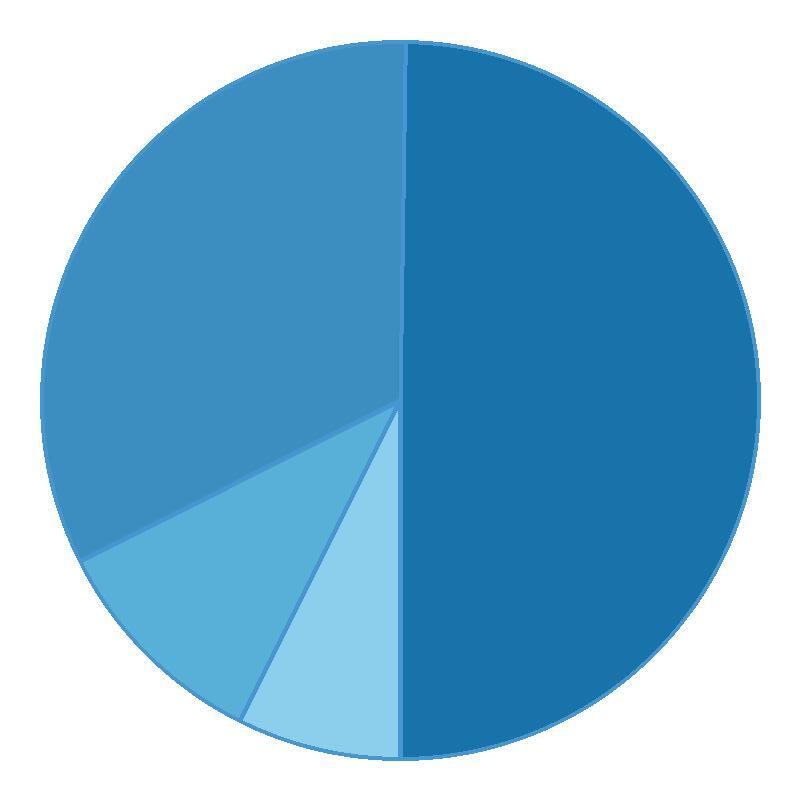
46. Tick the correct answers.
Which continent has the largest population?
Which continents have a smaller population than South America?
Is it true that the population of Asia is larger than that of other continents combined?
47. The teacher made a chart showing how many of her students were born in each season.
Tick the option where the seasons are listed from the most birthdays to the fewest.
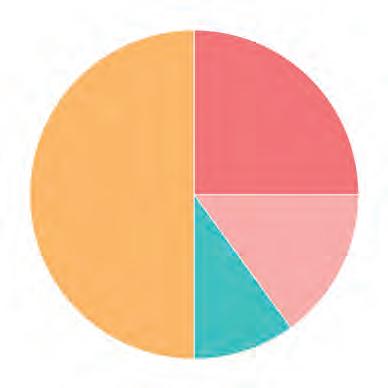
48. Answer the questions.
Favorite subjects of 4th-grade students:
Winter - Spring - Summer - Autumn
Autumn - Spring - Summer - Winter
Spring - Autumn - Summer - Winter
Autumn - Summer - Spring - Winter
How many students like maths?
How many students’ favorite subject is NOT English?
How many students are there in the class in total?
Page 1
1. 2. 11451 7 3 5 7 6 9
Page 2
3. Seven hundred eighty thousand three hundred fourteen
Seven lakh eighty thousand three hundred fourteen
543,216 — Five hundred forty-three thousand two hundred sixteen
5,43,216 — Five lakh forty-three thousand two hundred sixteen
Page 3
4. International system: 875,432 (Eight hundred seventy-five thousand four hundred thirty-two)
Indian system: 8,75,432 (Eight lakh seventy-five thousand four hundred thirtytwo)
5. International system (406,090): Four hundred six thousand ninety Indian system (4,06,090): Four lakh six thousand ninety
6. 543,216
7. 1000, 10
100, 10
Page 4
8. 64,209
9. 6; 1
10. There are 345 thousands in 345,600. Numeric value = 345 × 1,000 = 345,000
Page 5
11. Before: 119,999 After: 120,001
12. 1 more than 1,199,999 is 1,200,000
13. 93,500 94,500 95,500 96,500 14.
030,00060,00090,000120,000150,000180,000
Page 6
16. <, >
17. Ascending order: 94,900; 95,003; 95,030; 95,300
Page 7
18. 975410
19. Answers may vary.
Sample answers: 162344, 260543, 360056
20. The number 598,548 is greater than 593,768 because 598 thousand is more than 593 thousand. So, Nellore has the larger population. Population in Indian system: Nellore: 5,98,548 Bhavnagar: 5,93,768
Page 8
21. Brand A: International system: 747,871 Seven hundred forty-seven thousand eight hundred seventy-one
Indian system:
7,47,871 Seven lakh forty-seven thousand eight hundred seventy-one Brand B:
International system:
829,860 Eight hundred twenty-nine thousand eight hundred sixty Indian system:
8,29,860 Eight lakh twenty-nine thousand eight hundred sixty
Since 829,860 > 747,870, the car of Brand B costs more.
Page 9
22. a) 814,530 > 814,430
b) 1,390 < 256,701
c) 95,300 > 95,030
d) 44,571 > 2,404
23. <
24. 5, 1
25. 1,19,900; 1,19,990; 1,20,009; 1,20,090
Page 10
26. 135,000; 136,000
Rule: Add 500 each number to get the next number.
27. 57,451
28. 68,090
29. Rounding to the nearest 10,000 is more sensible because this rounding gives a closer estimate.
389,250 rounded to nearest ten thousands is 390,000
201,780 rounded to nearest ten thousands is 200,000
Estimated difference = 390,000 − 200,000 = 190,000.
30. a) After rounding to the nearest 10,000
Population of City A = 130,000
Population of City B = 130,000
b) After rounding to the nearest 10,000, both cities appear to have the same population, 130,000.
c) After rounding to the nearest 100,000: Population of City A = 100,000; Population of City B = 100,000.
d) Yes, the population of both the cities is about 130,000 when rounded to the nearest 10,000 because City A (128,450) is only slightly below 130,000 and City B (130,025) is just above it. Since both are close to 130,000, rounding makes their populations appear the same.
31. a) Rounded to the nearest ₹10,000:
TV: ₹74,590 ₹70,000
Laptop: ₹76,410 ₹80,000
Phone: ₹49,499 ₹50,000
b) The banner says “All items under ₹75,000". Based on the rounded prices, only the TV (₹70,000) and Phone (₹50,000) can be advertised under this offer.
c) Rounded to the nearest ₹1,000:
TV: ₹74,590 ₹75,000
Laptop: ₹76,410 ₹76,000
Phone: ₹49,499 ₹49,000
d) After rounding to the nearest ₹1,000, the TV changes to ₹75,000, which is not under ₹75,000, while the Phone remains below ₹75,000.
So, the answer changes — now only the Phone can be advertised as under ₹75,000.
32 .a) Rounded off to the nearest 1,000 m:
Length of Road A = 149,000 m
Length of Road B = 151,000 m
The rounded lengths of the roads are different.
b) Rounded off to the nearest 10,000 m:
Length of Road A = 150,000 m
Length of Road B = 150,000 m
The rounded lengths of the roads are the same.
c) Rounding to the nearest 1,000 m gives a clearer comparison because it shows that Road B is slightly longer than Road A. Rounding to the nearest 10,000 m makes both roads appear equal in length, which is less accurate for comparison. Page 12
33. a) City population: 406,090 Usually rounded to the nearest 100,000
Populations are usually expressed in lakhs or rounded to the nearest one lakh. Rounded value = 400,000.
b) A bill amount of ₹19,410 Usually rounded to the nearest 10
Receipts and bills are usually accurate up to the nearest ten rupees. Rounded value = ₹19,410.
c) A road length of 151,480 m Usually rounded to the nearest 1,000
Road lengths are usually given to the nearest kilometre (1,000 m). Rounded value = 151,000 m.
d) A price tag of ₹74,590 Usually rounded to the nearest 1,000
Prices of expensive items are usually displayed rounded to the nearest thousand. Rounded value = ₹75,000.
13 2.
1. 324 + 245 = 569
2. 506 + 193 = 699
3. 140 + 350 = 490
4. 612 + 187 = 799
5. 670 + 245 = 915
6. 248 + 523 = 771
7. 785 + 345 = 1130
Page 13
3.
1. 700 − 200 = 500
2. 961 − 540 = 421
3. 432 − 111 = 321
4. 909 − 404 = 505
5. 942 − 518 = 424
6. 582 − 237 = 345
7. 1,000 − 275 = 725
14
5. 7748; 7598; 56,597
Page 15
6. 58,783; 21,859; 12,679
7. 10,194; 88,823; 70,637
Page 16
8. 1061; 22,516; 34,121
9. 3121; 2224; 51,220
Page 17
10. 2355; 10,057; 2206
11. Sample answer:
Yes, There is a mistake in the answer in the thousands place. The mistake is that when 1 thousand was borrowed from 4 thousands and regrouped into hundreds, 3 thousands should have been left behind. But the student kept 4 thousands instead of 3, which made the thousands place wrong in the answer.
The correct answer is 58,324
Page 18
12. 6; 8 ; 0
13. 7; 4; 0;
14. 1. Addition and subtraction undo each other.
If you add 24,750 to 139,900, you get 164,650.
To check, do the opposite: 164,650 − 24,750. If it gives back 139,900, the answer is correct.
2. Subtraction and addition undo each other.
If you subtract 121,980 from 268,451, you get 146,471.
To check, do the opposite: 146,471 + 121,980. If it gives back 268,451, the answer is correct.
15. +, + –, –+, –+, ––, –+, –
Page 19
16. 120,000 − 38,450 = 81,550
Page 20
17. 48,960 + 5,430 − 1,002 = 53,388
Page 21
18. 54,000; 100,000; 200,000; 430,000; 190,000
Rounded to 1000: 17,000 (Answers may vary.)
19. 150,000; 2,000; 6,000; 290,000; 0
One possible answer (Rounded to 100000): 500,000
Page 22
20. 1. Both round to 270,000. 268,451 < 271,980
2. Both round to 400,000. 408,500 > 399,900
3. Both round to 96,000. 95,450 < 95,499
21. 1. Nearest 1,000 m:
Road A ≈ 149,000 m
Road B ≈ 151,000 m
Road B is longer by about 2,000 m.
2. Nearest 10,000 m:
Road A ≈ 150,000 m
Road B ≈ 150,000 m
They look the same after rounding to this place.
Rounding to the nearest 1,000 m is more informative because it shows the difference between the lengths of the two roads.
22. Estimated total ≈ ₹100,000 by rounding each cheque to ₹20,000 and then multiplying by 5.
Page 23
1. 5 × 4 = 20
2. 5 × 4 = 20, 5
3. 3 × 6; 5 + 5 + 5 + 5 + 5 + 5 + 5 + 5; 7 × 2
Page 24
4. The first 10 multiples of 9: 9, 18, 27, 36, 45, 54, 63, 72, 81, 90 (Pattern: The sum of the digits of each multiple is 9.)
5. 7 × 2 = 14 (even), 7 × 3 = 21 (odd), 7 × 4 = 28 (even), 7 × 5 = 35 (odd), 7 × 6 = 42 (even), 7 × 7 = 49 (odd), (Pattern: The multiples are alternatively even and odd.)
6. 1. 42
2. 720
3. 98,300 7. 1. 12,000 2. 12,000 3. 21,000
Page 25
8. 3812; 1488; 1904 9. 2142; 2008
Page 26
10. 1,424 apples
11. 12, 12, 24
12. 3, 4, 3, 5, 27
5, 6, 3, 6, 48 8, 2, 8, 7, 72
Page 27
13.
14. 500 × 8 is bigger. When the same number is multiplied by a larger number, the product is greater. Here 8 is greater than 1, so 500 × 8 will also be greater than 500 × 1.
15. 10
16. 21 × 5 = 105
Page 28
17. 7,470 bottles
18. 9,462; 20,493
Page 29
19. 7,830; 4,408; 74,152
20. 59,147 431,460
Page 30
21. 155,125 toys
22. 102,024 Books
23. Estimated product: ≈ 500 × 300 = 150,000
Actual product: 487 × 298 = 145,126
Page 31
24. 500; 100; 500 × 100 = 50,000
25.
1) 176 × 28 180 × 30 = 5,400 2) 449 × 62 450 × 60 = 27,000 3) 587 × 46 590 × 50 = 29,500
26. 1) 162 × 413 200 × 400 = 80,000 2) 238 × 725 200 × 700 = 140,000
Page 32
27. 86 × 295 ≈ 90 × 300 = 27,000 books
Estimation helps because it gives a quick idea of space needed without doing detailed calculation.
28. 17 × 2,845 ≈ 20 × 3,000 = 60,000 ₹40,000 might not be enough. Estimation helps quickly judge affordability without doing long and detailed calculations.
4. Division
Page 33
1. 1) 6; 2) 12; 3) 45; 4) 182
2. 107; 162
Page 34
3. 226, 91, 234
4.
Quotient: 91, Remainder: 0
Quotient: 451, Remainder: 0
Quotient: 81, Remainder: 1
Quotient: 233, Remainder: 2
Quotient: 72, Remainder: 4
Quotient: 89, Remainder: 1
Page 35
5. 1206; 11,958
Page 36
6. 447; 1172
Page 37
7. 52 baskets
8. 80 shelves
9. 5000 ÷ 50 ≈ 100
Page 38
10. Dividend = 248
Divisor = 12
Quotient = 20
Remainder = 8
Rule: Dividend = Divisor × Quotient + Remainder.
12 × 20 + 8 = 240 + 8 = 248
Since 248 = 248, Rahul is correct.
12. (47 × 19) – (17 × 32) = 349
Page 39
13. 1) 380 ÷ 20 = 19
2) 900 ÷ 60 = 15
3) 2262 ÷ 78 = 29
4) 2520 ÷ 35 = 72 5) 1209 ÷ 13 = 93 6) 972 ÷ 18 =
Page 40
15. 23, 34, 53, 25, 48, 34, 36, 54, 49, 47 kingfisher; 54, 35, 35, 24, 35, 49 hoopoe.
Page 41
1. 45, 72, 96, 81
2. Divisible by 7: 196, 343
Divisible by 9: 81, 405
Divisible by 15: 150, 225
Divisible by 8: 32, 184
Page 42
3. One of the possible answers:
7: 14, 21, 28
2: 20, 10, 4
19: 38, 57, 76
21: 42, 63, 84
11: 22, 33, 44 16: 32, 64, 80
Page 44
8. Prime numbers: 127, 619, 709, 449, 397, 211 Composite numbers: 122, 590, 474, 604, 222, 519
Page 44
5. Yes; No; Yes; Yes
Page 43
3.
Page 45 11.
28, 42: 2, 7,14 45, 60: 3, 5, 15 24, 36: 2, 3, 4, 6, 12 150, 225: 3, 5, 15, 25, 75 120, 180: 2, 5, 3, 4, 6 , 10, 12, 15, 20, 30, 60 648, 864: 2, 3, 4, 6, 8, 9, 12, 18, 24, 27, 36, 54, 72, 108, 216
Page 46 13. 14.
15. 27 and 45, 81 and 99
28 and 42, 56 and 63, 77 and 91, 84 and 105, 14 and 21
6. Fractions Page 47
1. The number of shaded parts in the circle. The
parts in the circle. 2.
Page
Page 55
Page
14. a) 6 7 b) 3 5
Page 56 18. 8 apples, 7 km, 8 min
Page 57 19. a) 2, 14 b) 20, 40 20. a) 9 b) 12 c) 8 d) 55 e) 84
Page 58 21. a) 40, 200 b) 10, 50 c) 3, 24
27. 6 3 or 2 26.
61
28. 1) = 7) = 2) ≠ 8) = 3) ≠ 9) = 4) = 10) ≠ 5) = 11) ≠ 6) = 12) =
3 line segments 4. 6 rays subtract the numerators take one of the numerators subtract the denominators keep the same denominator
Page 62 30. 3
7. Lines and 2-D Shapes:
Page 63
1. Point, curved line, straight 2.
Page 65
5. vertices: 4 sides or edges: 3
Page 66
6. 5. Triangle, 3, 3
Page 67
7. A simple polygonal chain. Not a polygonal chain. A closed polygonal chain.
Page 68
9. many
10. many
Page 69
11. Many
12. Only one
Page 70 13.
71
Page 72
16. 3, 3, triangle 4, 4, quadrilateral 5, 5, pentagon
17. pentagon, hexagon, quadrilateral
73 19.
74
triangles!
Page 75
Possible answers:
23. book, notebook, window, door, wall
Page 75
24.
25. A square has all sides equal. A rectangle has opposite sides equal but all the 4 sides are not necessarily equal.
Page 77 29.
26.
Page 76 I eat hexagons!
Ring, wheel, pizza, coin.
Page 78
30. The red point is closest to the centre, because it is inside the boundary of the circle.
Page 77
28. b) The distance from O to each dot is the same.
Page 79
32. CD is longer because it is closer to the centre.
33. 2 cm, 4 cm, 8cm, 10 cm. All chord lengths are possible as these are not greater than the diameter of the circle.
Page 81
1.
2. cuboid: 1, 2, 5, 7
cube: 3, 4, 6, 8, 9
Page 82
5. cylinder
6. cylinder: 3, 5, 6, 8, 11, 12
cone: 1, 2, 4, 7, 9, 10 123456789101112
Page 83
5.
Page 83
6. cones: 1, 5, 8 spheres: 2, 4 cylinder: 3 cubes: 6, 9 cuboids: 7 123456789
7. 3-dimensional
Page 84
8. Square, rectangle, circle
Page 85
9. Circle, square and rectangle, circle and triangle
Page 86
10. Square, rectangle, circle, circle, circle, circle, square
Page 87
11. 12, 8 1, 2
Page 88
12. Sphere — 0, Cube — 6, Cone — 1
13. Cylinder — 0, Cube — 8, Cone — 1
14. Cuboid
9. Patterns and Symmetry: Page 89 1. 2.
90
5. 29, 32, 35, 38 10, 6, 2 22, 24, 26, 28 17
Page 92 6. 7. Symmetrical shapesAsymmetrical shapes
Page 93 Page 94 Page 93
11. Vertically symmetrical: A, H, I, M, O, T, U, V, W, X, Y
Horizontally symmetrical: B, C, D, E, H, I, K, O, X
Both vertical and horizontal symmetry: H, I, O, X 10.
1 m = 100 cm = 1000 mm 1 km = 1000 m = 10,000 dm = = 100,000 cm = 1,000,000 mm Page 91 4.
12. The STOP sign is an octagon (8 sides). It has 8 lines of symmetry (each line passes through opposite vertices or midpoints of opposite sides).
Road signs often use symmetrical shapes because they are easy to recognize and look the same from multiple directions.
10. Length, Weight and Capacity
Page 95
1. 1 cm = 10 mm
1 dm = 10 cm = 100 mm
Page 96
2. 1 metre is 100 times a centimetre.
1 kilometre is 1000 times a metre.
3. 1 kilometre = 1000 metres
1 metre = 10 decimetres
1 decimetre = 10 centimetres
1 centimetre = 10 millimetres
4. 3 km, 30,000 dm, 300,000 cm; 3,000,000 mm
Page 97
5. 60 m > 700 cm > 60 dm > 60 cm > 60 mm
6. 350 m > 35 m > 35 dm > 30 cm > 35 mm
Page 98
7. 7 mm
5 cm + 5 mm
8. 7 cm, 4 cm
Page 99
9. metres decimetre centimetres millimetres
10. >, >, =
Page 100
11. Ladybug: 3 dm + 4 dm + 2 dm + 2 dm = 11 dm
Seahorse: 15 mm + 20 mm + 10 mm + 10 mm = 55 mm
Page 100
12. 3 m 99 cm 10 cm 1 mm
Page 100
13. 1 m 35 cm 245 cm 5,200 m 8 km 1,350 m
4 m 25 cm 1,125 cm 15,000 m
Page 101 14. Medical scale
15. 1 kg = 1,000 g 5 tons = 50 quintals = 5,000 kg 17,000 kg = 17 tons = 170 quintals
Page 102
16. 6 7 3 9 1 4 17. 5 kg 800 g 6,800 g
Page 103
18. 2kg, 1 kg
19. 6kg, 6 kg
Page 104
20. grams, kilograms, grams
21.
Page 104 2 kg 500 g 7,600 g 0.5 kg 12 kg 5,250 g 6 kg 450 g 8,075 g 3 kg 200 g
Page 105
22. 2 kg 250 g + 4 kg 800 g = 7 kg 50 g
23. 125 kg − 75 kg 500 g = 49 kg 500 g
24. 49 kg × 20 = 980 kg
Page 106
25. 47 kg 800 g ≈ 48 kg
26. They are equal (3 kg 250 g = 3,250 g)
27. Puppy’s weight = 4 kg = 4000 g Difference = 4000 g – 2300 g = 1700 g The puppy is heavier by 1700 g or 1.7 kg.
Page 107
28. 1 L = 1000 mL
29. 2 packets 4 bottles
3 cans 9
Page 108
30. B
31. They have equal amounts of water because exactly one cup of water was poured into both containers.
Page 109
32. 2 L + 4 L or 1 L + 5 L
3 L + 4 L or 2 L + 5 L
33. 3 L + 2 L + 2 L 3 L 3 L + 2 L
3 L + 4 L 3 L 3 L + 3 L + 4 L
Page 110
34. 2 L, 3 L
2 L, 2 L
3 L , 4 L
Page 111
35. 3 L 500 mL
8,250 mL
1 L 200 mL 15,000 mL 2,075 mL
8 L 500 mL
4,600 mL 19 L 500 mL
36. 9,000 ÷ 750 = 12 bottles
37. 2 L
Page 112
38. 60 L
39. ≈ 500 mL
40. One possible method:
1. Fill the 5 L jug completely.
2. Pour water from the 5 L jug into the 3 L jug until it is full.
3. The 5 L jug now has 2 L left.
4. Empty the 3 L jug. Pour the 2 L from the 5 L jug into it.
5. Fill the 5 L jug again and pour into the 3 L jug until it is full.
Now there are 4 L of water left in the 5 L jug.
41. Way 1: Use the 1-litre flask seven times (7 × 1 L = 7 L).
Way 2: Use the 500-millilitre flask fourteen times (14 × 500 mL = 7000 mL = 7 L).
11. Perimeter and Area
Page 113
1. 18 cm, 32 cm, 26 cm, 24 cm
2. P = 79 cm P = 63 cm P = 81 cm P = 40 cm P= 28 cm P = 48 cm
Page 114
3. 72 m 44 cm
4. 22 mm, 15 mm, 7dm
Page 115
5. 42 cm 60 mm 42 cm 38 cm 22 cm 32 cm
Page 116
6. 34 m Yes
7. P = 24 cm
8. А (P = 32 mm) B (P = 36 mm) C (P = 42 mm)
Page 117 9. 10. 11.
a) Number of units = 14, area = 14 cm2 b) 29 cm2
c) 46 cm2
Page 118 12.
C A, B B, C 13.
119 14.
Page 120
15. a) 32 b) 8 c) 32 d) 3
16. a) 9 b) 4 c) 7
Page 121
18. Area = 40 sq. cm 17.
126
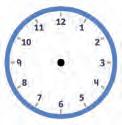
10:00 4:45 12:00 9:05
127
Page 123
1. Row 1: 2, 7 Row 2: 240
2. 160 min 1 h 30 min
170 min 2 h 10 min
3. Row 1: 4, 8 Row 2: 300
4. 2 min 5 sec
170 sec
2 min 25 sec
230 sec
Page 124
5. 7:05 7:15 7:45 8:05 12. Time
Page 125
7. 2:00 4:00 7:00 12:00 8. 1:15 4:40 7:55 9:05
Mathematics; Games
128
Page 129
12. 9:00 a.m. = 09:00
3:30 p.m. = 15:30
12:15 a.m. = 00:15 11:45 p.m. = 23:45
13. 06:20 = 6:20 a.m.
14:05 = 2:05 p.m.
23:30 = 11:30 p.m. 00:45 = 12:45 a.m.
14. 3:45 p.m. = 15:45 07:30 = 7:30 a.m. 23:15 = 11:15 p.m.
Page 130
15. 5 h = 300 min
16. 270 min = 4 h 30 min
17. 1 h 45 min
18. 85 min or 1h 25 min
Page 131
19.
Row 1: 4, 3
Row 2: 48, 192
20.
50 h 1 d 12 h
60 h 1 d 16 h
21. Row 1: 3, 8
Row 2: 35, 28
Page 132
22. 12 d 3 w 2 d
19 d
4 w 1 d
Page 132
23. 365 12 52, 1
Page 133
24. Autumn: 3 months, 91 d Winter: 3 months, 90 d
Page 134
25. March, May, July, August, October 26. June, September, November 27. Sunday Wednesday Friday 28. Monday Tuesday Thursday
13. Money Page 135
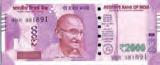
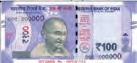


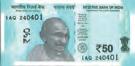

2. All the options are correct.
Page 136
3. ₹522 ₹1270 ₹1157
4. ₹397, ₹621, ₹350
Page 137
5. All the options are correct.
6. 375 paise 1050 paise 12500 paise
6. ₹4.85
₹7.60
₹124.50
Page 138
8. ₹12.50 + ₹7.50 = ₹20.00
9. ₹45.00 + ₹23.50 + ₹31.50 = ₹100.00
10. Three hundred twenty-five rupees and fifty paise
11. ₹643.25
Page 139
12. ₹500 − ₹348.75 = ₹151.25
13. 1250 − 925 = 325 paise
14. ₹256.50 + ₹189.25 = ₹445.75
15. ₹100
Page 140
16. ₹1000
17. Aarav is correct because:
₹5.50 = 5 rupees + 50 paise =500 paise + 50 paise = 550 paise
18. ₹50 ÷ ₹2 = 25 coins
Page 141
19. Seven hundred forty-two rupees and fifteen paise
20. ₹384.50
21. ₹81.50
22. 4560 paise
Page 142
23. ₹35
24. ₹256.50
25. 99999 paise
26. ₹53.50
Page 143
27. Maya can buy 5 items of ₹20 each (5 × 20 = ₹100).
28. ₹74.50
29. ₹134.25
30. ₹2760
Page 144
31. ₹489.75 ≈ ₹500
32. ≈ ₹300 + ₹500 = ₹800
33. ₹799 is clearer as it has lesser number of digits
34. ₹349.99 seems cheaper
Page 151
9. 5, 10 , 15
10. 5, 9, 14
Page 152
11. 4
12. 4, 1, 3
Page 153 13.
Vegetables
Page 155
15. 14 m 15 m 5 cm 8 cm 14 m 32 m 5 km 9 km
Page 156
16. Parth, 7 years, 1, music Tanvi, 9 years, 3, maths
17. Raghav, parrot, chess, yellow Natali, cat, badminton, green
Page 157
18. Hyderabad, Mumbai Bangalore, Chennai
Page 158
19. Chandigarh Ahmedabad Jaipur
Page 154 14.
Page 160
21. Page 161
Password 1
Number of letters Number of digits
Password 2 4 3 3 5
222. Jatin
Kushal Akshita
Neha
Page 162
23. Kiara Aarohi
Dhruv Vedant
Page 163
24. 7, 12, 5
25. Apples = 3
Oranges = 2
Bananas = 4
Page 164
26. Cricket – 12 ||||||||||
Football – 8 |||||||
Badminton – 5 ||||
Swimming – 10 ||||||||
27. a) 5 b) Tiger c) 27
Page 165
28. Number of fruits: 5 × 2 = 10 fruits
29. a) 15 b) Green c) 45
Page 166
30. Key: 5 books
Seema:
Vimal:
Bhanu:
31. Tree 3 20
Page 167
32. Dogs - 7
Cats - 4
Birds - 5
It will be harder to make because 14 is not a multiple of 5.
33. Apples: 10
Bananas: 8
Grapes: 12
Most popular: Grapes
Page 168
34.
a) January and April
b) May = 25 5 symbols
Page 169
36. 6 Prisha 37. NandiniLekhaGita
35. Asha Rina: Mohit: Asha: Kiran: Page 170
38. Waffles, Basketball, Rolls Page 171
39. 18, 3, 9
Page 173-174
41. a) False, True, True, 4
b) False, False, False, 16
c) False, True, 1
d) False, True, 7


ISBN: 978-93-89789-43-0