TSA announces new Chair
Building regional momentum for proactive and preventative care
Entries now open for the ITEC Awards 2026
TSA’s new home at The Catalyst, Newcastle Upon Tyne
This issue is sponsored by

November/December 2025

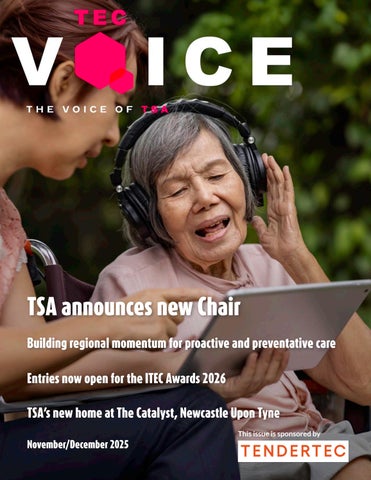
Building regional momentum for proactive and preventative care
Entries now open for the ITEC Awards 2026
TSA’s new home at The Catalyst, Newcastle Upon Tyne
This issue is sponsored by
November/December 2025
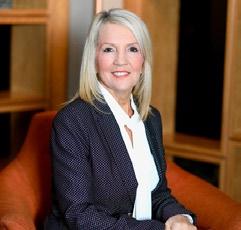
Alyson Scurfield TSA Chief Executive
I’m thrilled to welcome Professor Martin Green OBE, Chief Executive of Care England, as TSA’s new Chair. Martin brings deep expertise in social care, a powerful voice for transformation, and a clear-eyed commitment to improving people’s lives. His leadership will be instrumental in guiding our Board and shaping TSA’s work as we move to our next chapter.
That chapter begins with the launch of our fiveyear business plan at the House of Commons in January. Hosted and sponsored by Paralympian and crossbench peer, Baroness Tanni GreyThompson - who has long been a champion for innovation and independence - we will share our mission-led roadmap at a time when the TEC sector is experiencing rapid change and opportunity.
TSA’s vision is simple but bold: People’s everyday lives enriched, enhanced and enabled by TEC. Our new business plan sets out how we’ll get there, together. Find out more on page 7.
That spirit of togetherness was front and centre at November’s event, Digitally Enabled Lives: Building Connected Communities and Collaborative Futures, held at TSA’s new home: The Catalyst, Newcastle - a world-class hub for health and care innovation.
The day was a celebration of 30 years of TSA, and a powerful reminder of what collaboration, challenge and care can achieve. From lived experience to local systems, the energy in the room was extraordinary. Read more on page 5.
We’ve also been flying the flag for TEC internationally. At the SilverEco Festival in France, the Connected Health & Safety Association
(formerly MAMA) Annual Conference in the US, and the Canadian Embassy in London, we’ve been sharing the brilliant TEC innovations coming out of the UK.
Closer to home, our public affairs work continues to grow. TSA’s head of membership services, Charlotte Findlay and our business strategy and transformation associate, Tim Mulrey headed to Westminster to meet MPs and spread the word about TEC. Charlotte and Tim met some real advocates for our sector and built relationships with key officials. Watch this space for updates on our lobbying work
And finally, next year’s ITEC (16 & 17 March 2026) is shaping up nicely with the exhibition already sold out and early bird tickets selling fast. With themes like community hubs, neighbourhood models, and proactive care, it promises to be our most practical and inspiring conference yet. And the wonderful Baroness Tanni Grey-Thompson will be chairing once again. Get your tickets here: https://itecconf.org.uk/
I hope you enjoy this issue.

We are delighted to announce that Professor Martin Green OBE will be joining the TEC Services Association (TSA) as our new Chair. Martin brings a rare blend of leadership, strategic insight and sector-wide credibility that will significantly support TSA’s mission and serve the wider technology-enabled care (TEC) landscape.
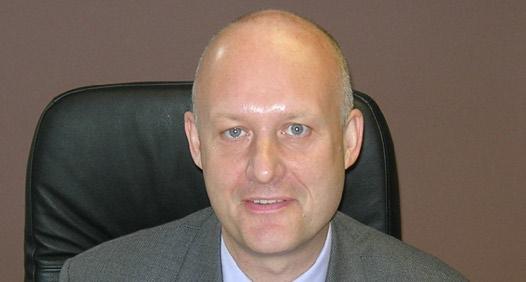
Health and Vice President of The Care Workers
Charity. In 2012 he was appointed the Department of Health and Social Care’s Independent Sector Dementia Champion and in 2012 he received an OBE for services to social care. Martin’s experience spans advocacy, policy, service transformation and innovation in both UK and international settingswhich makes him ideally placed to guide TSA in such a fast paced and ever-evolving sector.
Martin has built a distinguished career in social care and beyond. He is currently Chief Executive of Care England, the UK’s leading representative body for independent adult social-care services, and holds a number of other non-executive and trustee roles, including Commissioner of The Royal Hospital Chelsea, Trustee of The National Centre for Creative

Our Chief Executive Alyson Scurfield said:
TSA’s ambition is to accelerate the shift to smarter, more person-centred, tech-enabled care across health, housing and social systems - and Martin’s appointment helps to anchor that ambition. His voice and leadership will strengthen TSA’s ability to convene stakeholders, influence policy, and support members to deliver outcomes that matter to people and communities.
“I am thrilled to welcome Martin as Chair of TSA. His deep understanding of the social-care and TEC ecosystem, his track record of driving change and his commitment to putting people at the heart of services make him a powerful partner for our membership, sector and most importantly, the people and families at the heart of our work.
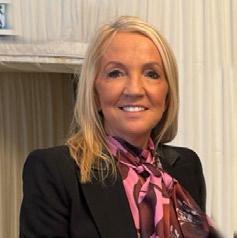
I would like to take this opportunity thank our outgoing interim Chair, Roy Sandbach OBE, for his invaluable contribution and strategic impact over the last 18 months.”
Looking ahead, under Martin’s chairmanship, TSA will be better placed than ever to champion quality, innovation and integration - ensuring that TEC doesn’t just support services but truly transforms lives. We believe this marks a significant moment for our community of members, commissioners and service providersand for the many thousands of people whose lives we support

By Paul Berney Principal Associate at TSA
Since launching in April, the ADASS TSA Blueprint has supported councils across England and Wales in making the investment case for preventative digital care.
With over 600 downloads by local authority staff, including social care commissioners, TEC service managers and directors of adult social services (DASSs), our Blueprint is being actively applied as a practical tool for change.
We’ve now moved into a new phasesupporting different regions to assess their progress and shape strategic options for 2026. In the North East, we’re working with all 13 councils to run rapid assessments of their proactive and preventative care provision, each resulting in a dashboard and report card that evaluates their current position against the Blueprint. These assessments offer tailored recommendations - short and long term - on how to build on existing work and maximise investment.
work in the North East. We are firmly aligned to the NHS 10 Year Health Plan’s ambition for scalable, preventative care rooted in community-based service design.
Proving this point, our recent hackathon in the North East brought together representatives from every local authority to rethink services from the ground up. The message was clear: it is critical to test the wraparound service rather than the technology.
One of our core goals in the North East is to prove the value of proactive and preventative services as part of a hybrid model of care by running proof-of-concept tests that avoid duplication and help councils get beyond the pilot stage to effective, at-scale implementation. In 2026 we’ll be testing three core service models across rural and urban settings, with shared learning and pooled effort.
We’re also continuing our work with DASSs and commissioning leads in other ADASS regions, using the Blueprint as a guide. These conversations are helping us understand where councils are on their journey and how we can flex our support accordingly.
As we celebrate 30 years of TSA, we are stepping into one of the most exciting moments in our history. Earlier this month, we announced that from 18 December 2025, TSA will officially relocate to The Catalyst in Newcastle Upon Tyne, a nationally recognised centre for innovation that brings together the National Innovation Centre for Data (NICD), the National Innovation Centre for Ageing (NICA), and more than 30 organisations shaping the future of health, care and technology.
This move represents a bold new chapter for TSA. It places us at the heart of a thriving community where research, lived experience and real-world delivery come together. The Catalyst is home to people and organisations who share our belief that the future of care must be proactive, preventative and powered by insight. Being based alongside world leading thinkers, innovators and partners strengthens our ability to champion technology enabled care on a national and international scale.
For TSA, The Catalyst feels like the right place for many reasons. It reflects our ambition to connect ideas and action. It gives us a base where collaboration is part of everyday life. And it brings us closer to the incredible work happening across the North East, a region known for its ingenuity, its warm and grounded communities, and its influential role in shaping health and ageing research. For our Chief Executive, Alyson Scurfield, it is also a return to her roots, bringing TSA home to a place that has shaped her values and leadership.
Wilmslow office closure: TSA’s Wilmslow office will permanently close on 18 December 2025
Our new address from this date : Technology Enabled Care Services Association (TSA) The Catalyst, 3 Science Square, Newcastle upon Tyne, NE4 5TG
To ensure continuity, email addresses and phone numbers will remain unchanged - and remain the fastest way to get in touch with TSA.
We’re also aggregating these insights to inform a regional strategy and linking this work with the government’s neighbourhood health service policy. Indeed, Stockton and Sunderland - two of the Government’s 43 wave 1 neighbourhood health sites – are a central part of our proactive and preventative
Looking ahead, we’ll be working with ADASS to build a community of practice around the Blueprint, leveraging existing networks and embedding this work into regional planning.
Download the Blueprint today and explore how it can support your council’s journey towards scalable, proactive and preventative care: Download the Blueprin t
The Catalyst will be our new base for operations, events, partnership working and sector wide engagement. It is a home built for the future we are working towards.
By joining a world class community of innovators in the North East, we are strengthening our role as the national voice of technology enabled care and building the foundations for a more connected, compassionate and forward-looking care system.
We cannot wait to welcome members, partners and colleagues to our new home in Newcastle Upon Tyne.

Emma Quest didn’t plan to work in technology enabled care. Her career began in a wedding dress shop, moved into personal banking, and then drew her to local government - where she fell in love with TEC and went on to lead an award-winning lifeline service for Horsham District Council.
As the local authority’s community link manager, Emma managed the entire TEC service, improving processes, preparing for quality standards audits, disaster recovery planning and driving innovation.

She set up a virtual reality service to improve quality of life for people living with dementia and chronic pain and went on to win an Innovation Award at the iESE Public Sector Awards.
Emma later held roles as service manager, innovation and project manager and head of TEC at NRS Healthcare, where she set up the UK’s first fully digital TEC service – rolling out innovations such as robotic cats and fresh ways of working that changed lives across the UK. She’s delivered national TEC service redesigns, implemented bespoke customer management systems, and led award winning teams in workforce development and hospital discharge innovation. Her work blends empathy, strategy, and a deep understanding of how TEC operates on the ground.
Now, Emma’s joined TSA as an associate. She brings a 360-degree view of the sector - having led a TEC service across a local authority and also a major
supplier. She knows what it’s like to be the person fixing processes, leading multiple teams, and collaborating with partners to drive system-wide improvement, whilst always keeping the person drawing on TEC at the centre.
Her insight will be invaluable to TEC organisations across health, care and local government and we’re thrilled to have her on board.
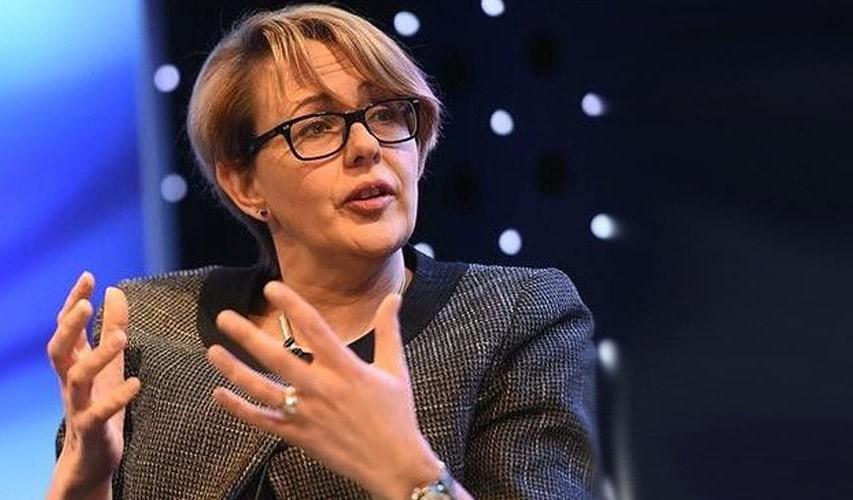
The Technology Enabled Care Services Association (TSA) will begin the new year with the launch of its 2026 to 2030 Business Plan at the House of Commons in January 2026. The event is being hosted and sponsored by Paralympian and crossbench peer, Baroness Tanni Grey-Thompson, who has long been a champion for inclusion, independence and innovation across public services.
This launch marks an important milestone in TSA’s 30-year journey. The new plan sets out a confident and forward looking vision for the next stage of technology enabled care in the UK, at a time when the sector is experiencing rapid change. With the analogue to digital switchover in its final stages, rising demand for social care, and growing pressure on the workforce, TSA’s plan focuses on how technology, data and partnerships can help create services that are more proactive, more compassionate and more sustainable.
Alyson Scurfield, Chief Executive of TSA, said:
The plan is shaped by three central themes: improving outcomes for people who draw on care and support, building a confident and well equipped workforce, and strengthening national leadership so that technology becomes a natural part of everyday care rather than an add on. It also sets out how TSA will deepen collaboration with local authorities, housing providers, the NHS, suppliers and the voluntary sector, drawing on learning from across the UK and internationally.
“This is a moment for ambition and collective purpose. Our new Business Plan looks ahead to a future where technology supports people to live the lives they choose, and where services can anticipate needs rather than react to crisis. The plan brings together everything we have learned over the past thirty years with the insight and innovation we see across the sector today. I am grateful to Baroness Grey-Thompson for hosting us and for supporting this important next step for TSA and for technology enabled care.”
We’re also looking for more brilliant people like Emma. If you’ve got TEC experience and want to help shape the future of care, join TSA’s Associate Network.
The House of Commons event will bring together leaders from government, councils, housing providers, health partners, technology innovators and national bodies. Attendees will explore how stronger system leadership, shared standards and workforce development can help create a more connected model of care, particularly as the country moves beyond the digital switchover.
The launch also reflects TSA’s commitment to being a positive national voice for change. The organisation will continue to champion the role of technology in promoting independence, preventing crisis and improving everyday experiences for people and communities.
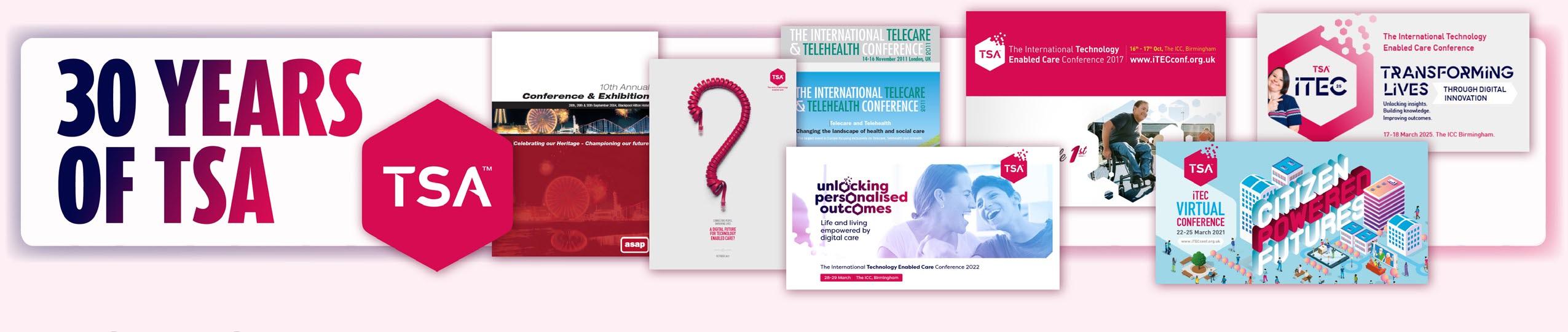
This year marks a major milestone for the TEC Services Association (TSA) as we celebrate 30 years at the forefront of Technology Enabled Care.
From our early days as a small community alarms association to our position today as the largest and most influential TEC membership body in Europe, TSA has shaped the direction, standards and ambition of technology enabled care across the UK and beyond.
TSA’s journey began on 8 March 1995, when the Association of Social and Community Alarm Providers was established in Kent. The focus was simple. To raise standards, support providers and strengthen the quality of community alarm services.
By 2002, the organisation had evolved into the Association of Social Alarm Providers (ASAP), reflecting a broader remit as telecare began to emerge. In 2005, the association became the Telecare Services Association, before relocating to Manchester three years later as its reach, partnerships and responsibilities grew.
A defining moment came in 2015 when the organisation rebranded to TSA, adopting the strapline The Voice of Technology Enabled Care This new identity reflected the organisation’s modern role and its ambition to drive strategy, innovation and standards right across health, housing and social care.
Today, TSA is proud to represent more than 350 valued members, ranging from local authorities and housing providers to global technology innovators and care providers. Together, this collaborative network continues to drive improvements in quality, safety and innovation for millions of people.
Since 2017, TSA has played a leadership role in guiding the sector through the UK’s analogue to digital switchover. Working closely with Government, Ofcom, telecoms providers and the wider sector, TSA has published major guidance documents, delivered national readiness programmes and supported providers to manage risk and protect service users.
This work has been cited across Government briefings and shared nationally as best practice, demonstrating TSA’s strategic role at the centre of national resilience planning.
Central to TSA’s impact is the Quality Standards Framework (QSF), delivered through our assurance partner TEC Quality. QSF is the UK’s only UKAS accredited scheme designed specifically for TEC services, giving commissioners and providers a robust, outcomes focused benchmark for safety, quality and continuous improvement.
QSF has become increasingly influential in UK policy and commissioning. It is recognised in the Department of Health and Social Care’s What Good Looks Like framework, referenced in the NHS England Technology Enabled Care Referral Guidance, and recommended by commissioners seeking evidence based, assured TEC services. NHS leaders, including the NHS England Chief Executive, have encouraged Integrated Care Boards to work with QSF certified providers as part of winter resilience and urgent response planning.
This policy recognition has cemented QSF as the national quality mark for TEC, raising standards and strengthening services for people across the UK.
Over the past decade, TSA has become a trusted partner for Government and the NHS, shaping national thinking on proactive and preventative care. Our work with ADASS, LGA and NHS England has influenced how digital practice is embedded in social care, and how risk, safety and quality are regulated in a digital age.
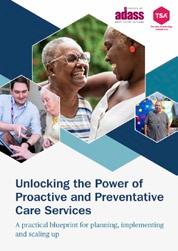
TSA’s policy impact includes co-authoring the widely referenced Proactive and Preventative TEC Blueprint contributing to Parliamentary committees, informing national guidance, and advising ministers and senior officials on digital care, telecare resilience and the future of independent living.
TSA’s annual conference has grown from a small gathering in the early years to the global TEC event it is today. After the final pre ICC conference at Celtic Manor in 2016, ITEC moved to the ICC Birmingham and has grown every year since. Today, it attracts more than 2,000 delegates, bringing together leaders from health, housing, social care, government and industry to shape the future of technology enabled care.
As TSA celebrates 30 years, the organisation stands stronger than ever. With a growing membership, an international footprint and an influential voice at the heart of national policy, TSA is leading the shift to a digital, proactive and person centred future for care and housing.
Find out more about our 30 year journey by visiting our anniversary page.
16 - 17 March The ICC, Birmingham

TSA are delighted to once again present the annual International Technology Enabled Care (ITEC) Awards to be held at the prestigious Gala Dinner at this year’s ITEC conference on the evening of the 16 March 2026 at the ICC Birmingham.
ITEC represents Innovation, Integration and Improvement using Technology Enabled Care, and these awards will highlight organisations that are doing the most to deliver significant benefits for users, carers and communities, as well as for commissioners and providers.
The TSA ITEC Awards are open to any organisation or individual working in Technology Enabled Care in the UK and overseas and they recognise excellence and outstanding achievements within the TEC sector
The ITEC Awards act as a hallmark of quality for your organisation and will attract recognition from the whole TEC community of the difference the winners and entrants make to the TEC industry and the millions of people it supports.
Award entries must be submitted by 5pm on Friday 16 January 2026 and the finalists will be announced in mid-February. We are very much looking forward to seeing a great set of entries for this year's awards and we can't wait to see who the winners will be.







Last month marked a critical step change in recognising the profound impact that housing has on the health and care of people.
Awaab’s Law came into effect on 27 October 2025, and it represents vital progress in improving safety and living standards for people in social housing across England. The law was created by UK Government following the tragic death of two-year-old Awaab Ishak, who died from the effects of damp and mould in his home.
We are profoundly grateful to Awaab’s family for their courage and strength in speaking out. Their determination has brought about lasting change that will protect other families, and their bravery stands as a powerful reminder that health, safety and dignity must sit at the heart of every home.
No one should ever lose their life because of poor housing conditions.
The changes introduced will affect some of our members, including local authorities, housing
associations, social housing providers and others who already work with housing partners to identify damp and mould through sensor technology. In addition to the critical legal requirement, it is an opportunity to think more widely about how digital systems and data can help housing providers understand the full picture - both the condition of the property and the wellbeing of the person living in it. These areas are often treated separately, when in reality, they are closely linked.
By using technology to connect these insights, organisations can take a more preventative approach. We are already seeing this happen – there are examples of housing associations working with their TEC ARC provider to monitor damp and mould as part of their technology-enabled care service. It shows how housing, technology and care can come together to create safer environments.
If you are a TSA member and you have any queries about your responsibility in relation to Awaab’s law, we - alongside partners such as the Northern Housing Consortium - are here to connect and guide you through these changes

If you work at a local authority, there’s still time to contribute to TSA & PA Consulting’s Technology Enabled Care: Outlook 2026 Survey - but not much. The survey closes on 1 December, making this your final opportunity to share insights from your council that will shape the sector’s direction.
Now in its third year, this UK-wide survey captures how councils are integrating Technology Enabled Care (TEC) to improve outcomes, manage demand, and support independent living. As the sector continues its digital migration, your input helps map progress, identify gaps, and spotlight innovation.
The findings will inform a national reportcomparing trends across three years - and will be launched at our ITEC Conference on 16 - 17 March 2026. Council colleagues completing the survey will receive a complimentary two-day conference pass and the full findings report.
Whether you’re embedding TEC into your local authority’s frontline services or shaping strategic commissioning, your perspective matters. Help us build a clearer picture of how TEC is evolving - and where it’s headed next.
Contact us to contribute
To complete the survey, please email: marketing@TSA-Voice.org.uk and we’ll forward the link to you.
Align your brand with TEC Voice, the only dedicated publication in TEC, and engage a dedicated, receptive audience that can transform your business. Secure your space today and connect with leaders shaping the future of Technology Enabled Care.
marketing@tsa-voice.org.uk
With an engaged readership and limited, high-value advertising opportunities, your message will reach those making impactful decisions.
Don’t miss this exclusive chance to be part of TEC’s only dedicated magazine! Click here to find out more