Each year, Arizona becomes a little more connected not only through broadband, but through a movement of people and opportunities.
Three years into this work, the Maricopa County Broadband Initiative (MCBI) has shown what’s possible when partners with the right tools move in the same direction. Together “AZ-1,” Arizona State University, Sun Corridor Network and the Institute for Digital Inclusion Acceleration are helping residents gain access to reliable broadband, digital tools and the skills to put them to use.
Across neighborhoods, libraries and community centers, we’ve seen the results firsthand: Seniors joining telehealth appointments for the first time. Students submitting homework for an online class they previously couldn’t access. Job seekers getting hired for new opportunities in a world where nearly every application is now digital. Each story and positive outcome only happened because of the power of connection, both digital and human.
This past year strengthened the foundation we’ve been diligently and thoughtfully building since 2022. Broadband infrastructure e d d Thousands of devices reached new homes. Digital literacy p shaped by the needs of the communities they serve. Many o have unfolded in our AZ-1 web portal.
As we look forward, our focus is continuing to serve the pub toward long-term sustainability, and building systems that la
A connected Maricopa County where broadband and digital tools work reliably, reach everyone and support the essentials of modern life.
The MCBI Ecosystem
Hundreds of thousands of Maricopa County residents still lack reliable home internet. MCBI is the county’s response — a $34.6 million effort to bridge Arizona’s digital divide through data, infrastructure and people-centered inclusion. MCBI brings together three key partners:
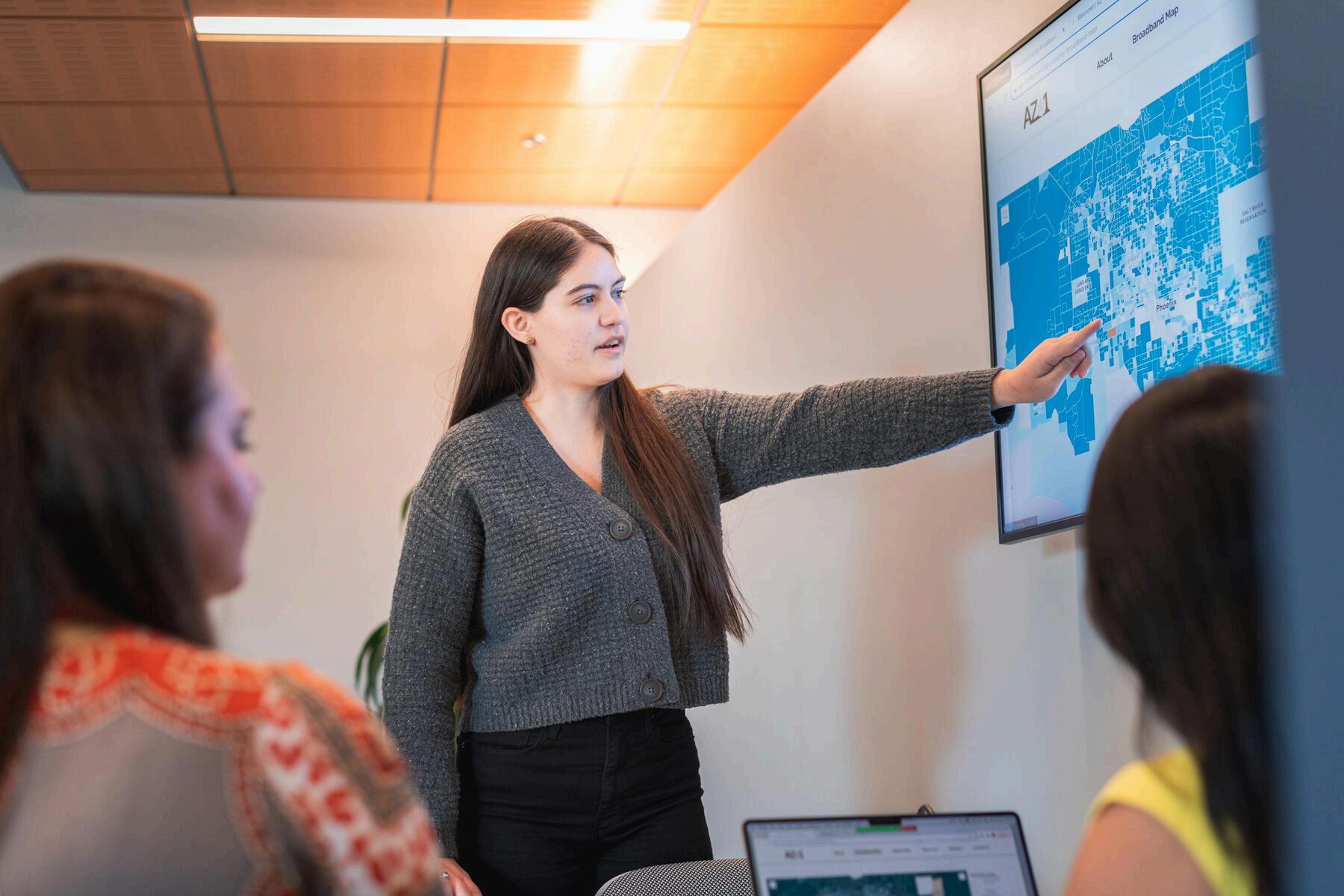
ArizonaStateUniversity:Leads program strategy, broadband mapping, and the AZ-1 portal to help communities plan with clear, accessible data.
SunCorridorNetwork:Expands middle-mile fiber and connects schools, libraries, and other community anchor institutions.
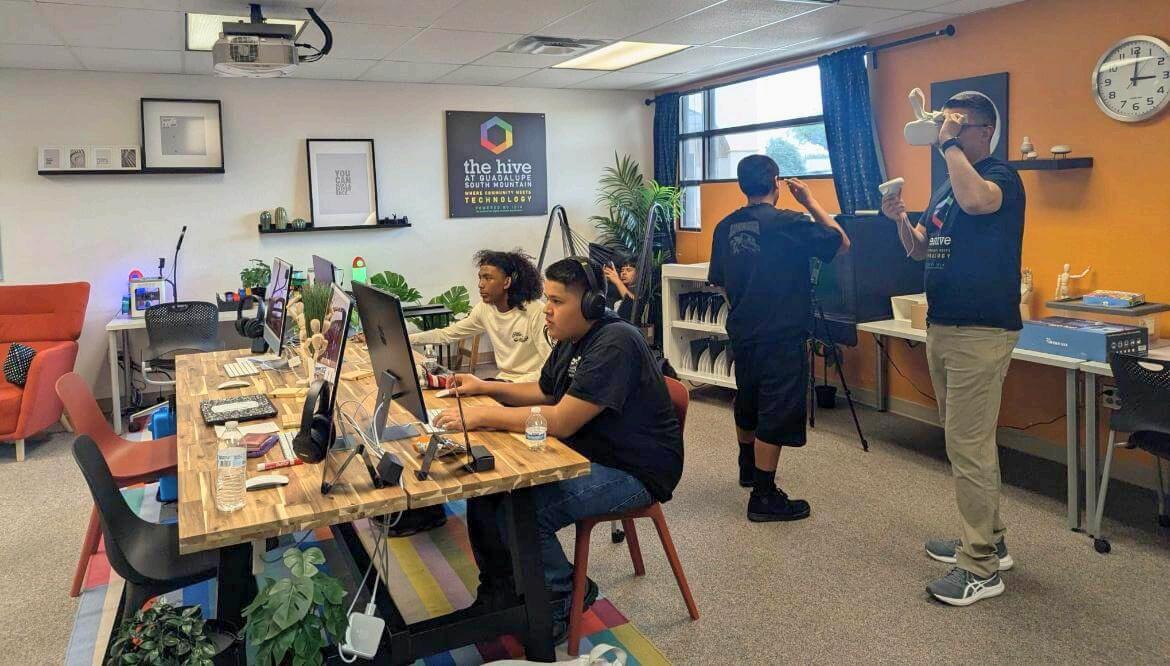
InstituteforDigitalInclusionAcceleration: Builds digital skills and access through community Hives, devices, and digital navigators.
In 2025, AZ-1 expanded its broadband ma give communities clearer, more useful ins digital access is growing and where challenges remain
New map layers added in 2025 include:
CommunityAnchorInstitutions(CAI)byApprovedBEADEligibility, identifying schools, libraries and other key facilities central to expansion efforts.
MaricopaCountySupervisorDistrictBoundariesandBEADProjectAreas, offering visibility into local broadband planning zones.
DigitalDivideIndex(DDI)layerswithDDIscores, to show priority areas for infrastructure, device distribution, and digital skills building.
AZ-1 also collaborated with the MaricopaCountyLibraryDistrict to make it easier for staff to keep public information current. Together, teams created automated maps that update branch and service data in real time, improving how residents locate nearby resources and connectivity options, including Culture Pass locations.
In collaboration with the Arizona State Library and Connect Arizona, AZ-1 also launched interactive County Broadband Profiles, giving local leaders and organizations a clearer view of broadband access and infrastructure needs across Arizona.
In February, AZ-1’s story collection, Broadband Stories from the Arizona Community, was a finalist for the 2024ArcGISStoryMapsCompetition in the Planning and Infrastructure Category. There were 570+ total submissions across 5 categories and 58 countries.
LearnhowE-Rate–fundedlibrariessupport residentsinruralArizona.Momentsfromlibrary life fromhelpingsomeonecompleteurgent paperworkafterapersonallosstoconnecting anotherresidentwithessentialitemsunavailable locally—illustratetheimpactofthefederalERateprogram.
Community firs
How 2025 brought Arizona onli JustasnewfiberexpandedAr network,MCBIcontinuedstren onein2025—buildingconnec g y momentsoflearning,support,andproblem-solving.
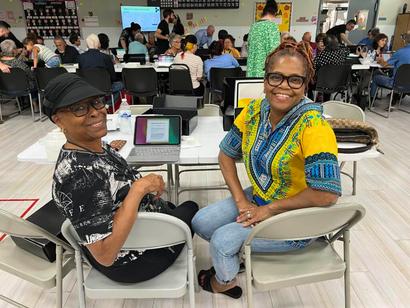
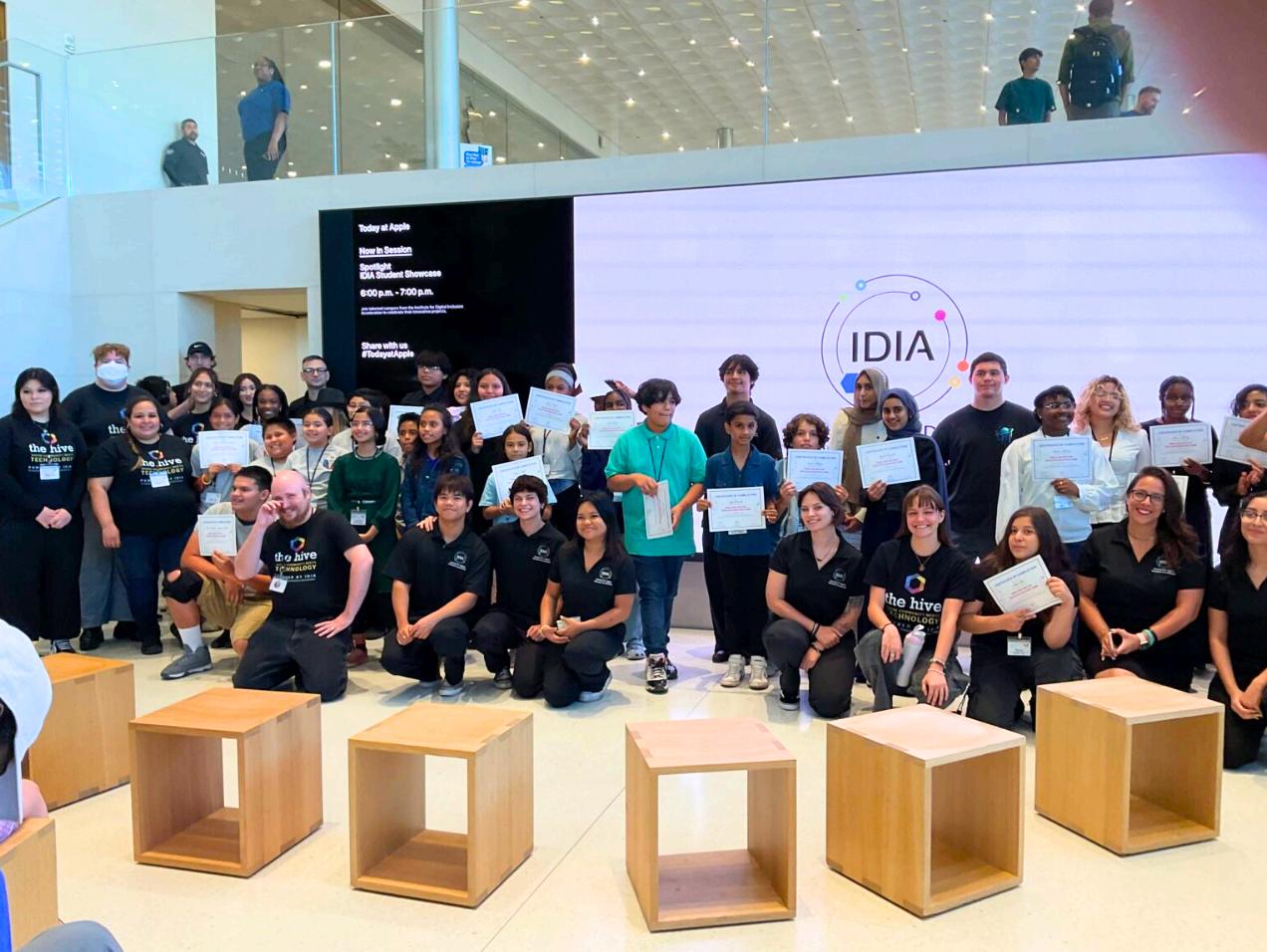
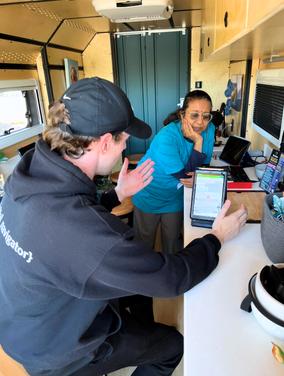
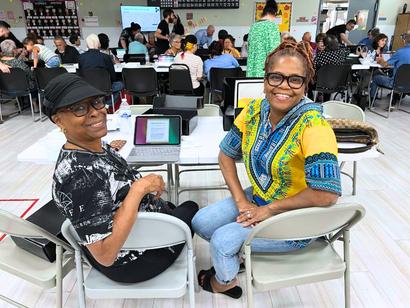
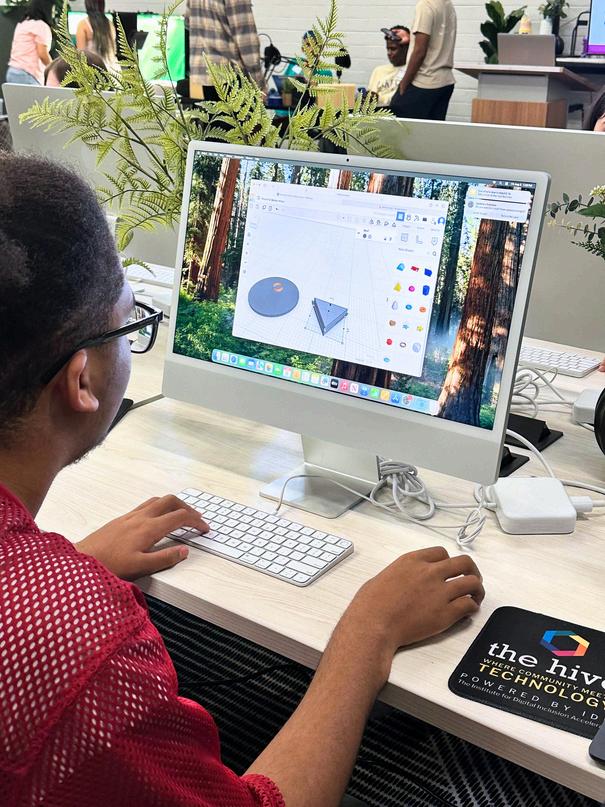
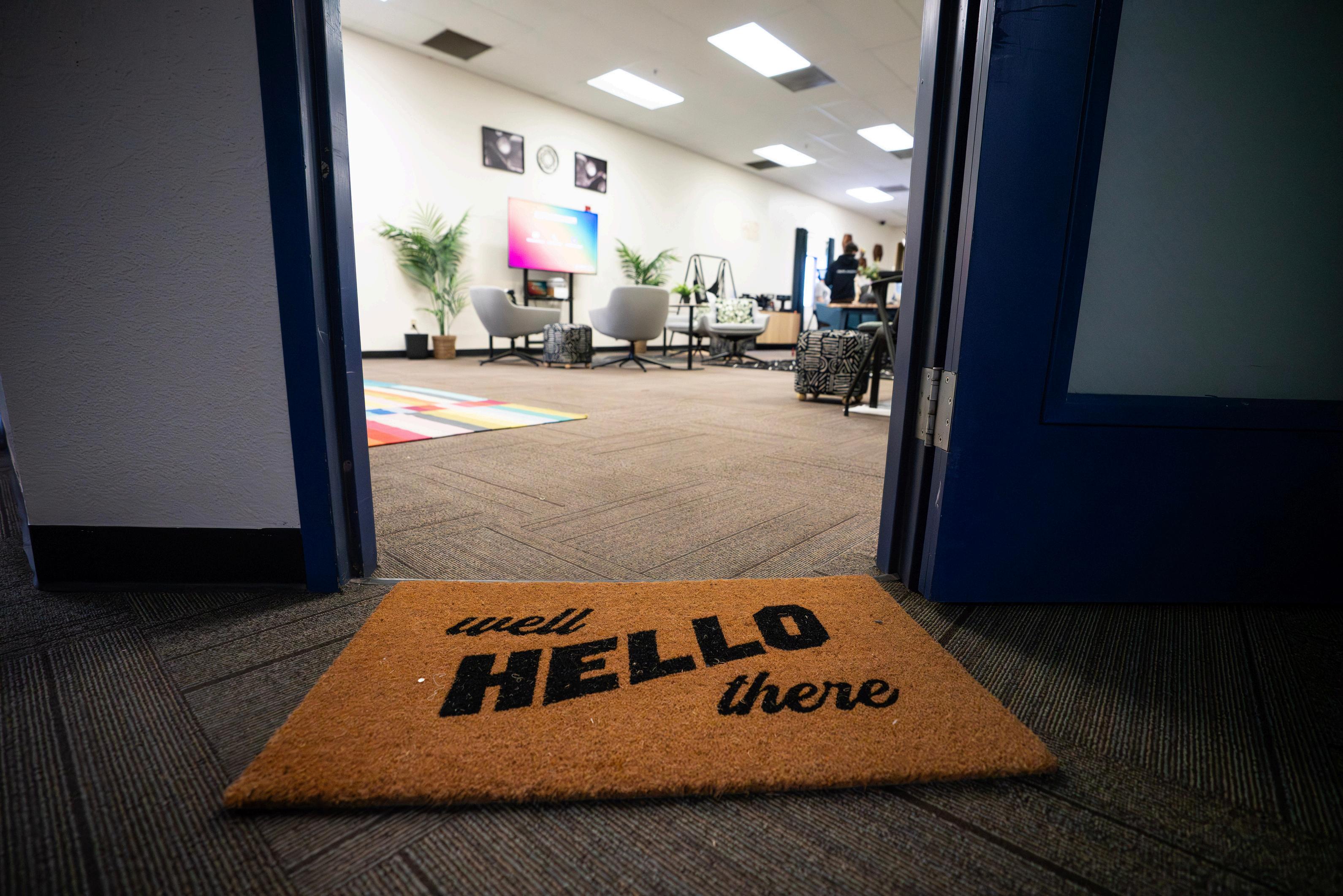
Through IDIA’s Hive network and Digital Navigators, residents in high-need areas of Maricopa County received practical support tied to work, education, healthcare access, online safety, and technology use. 2025 highlights include: 100,000liveschanged In2025,IDIA’sHivenetworkreachedmorethan112,000Arizonans,generatingan estimated$8millionineconomicimpactthroughjobaccess,skill-building,anddigital support.Todate,IDIAhascreated150+jobswith52peopleenrolledincredential programs,fosteringconfidence,stability,andsecurity.
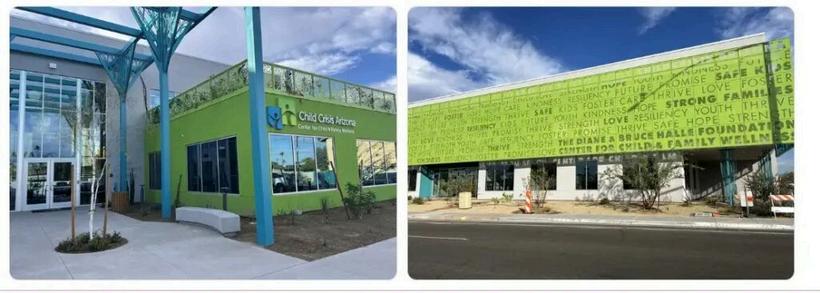
A new Hive opened in Mesa, expanding digital learning opportunities in a large metro area. Located inside Child Crisis Arizona’s Center for Family and Child Wellness, it supports families through access to technology and hands-on training.
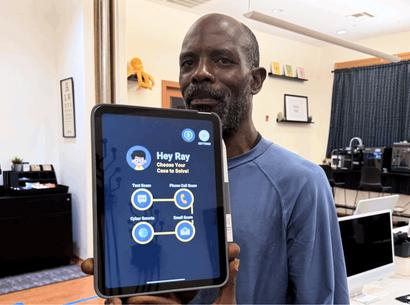
In 2025, IDIA launched Spot the Scammer, a free mobile app designed to help Arizonans recognize and avoid online scams. Developed with community input, it uses gamified interactive scenarios to build practical cybersecurity awareness across age groups. The app is in use by community members, government entities, and nonprofit organizations.
89
events organized by IDIA, including camps, workshops and more
100+ people gaining employment through Hives and Digital Navigator support
6100+
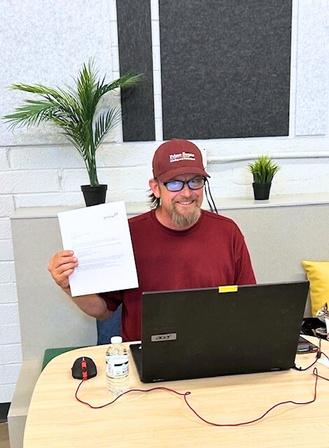
“It all started here.”
– Terry Wright, who submitted an application with help from a Digital Navigator, and landed a full-time role with benefits
new Hive visitors at locations across Maricopa County
Building the backbone 2025 infrastructure progress
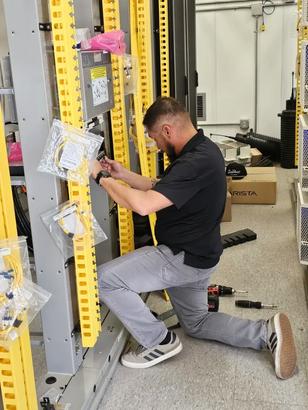
In 2025, new projects strengthened Arizona’s broadband network in ways that will endure for years to come, with new projects lighting up connections decades in the making.
2026 will be a year of intention and translation. MCBI will use what’s been built and open the doors wider, translating its robust foundation into further impact and growth.
The mapping team will expand its data analysis as new datasets become available. Outreach efforts will focus on increasing awareness of existing maps and resources, while providing user-centered guidance shaped by community feedback. Storytelling across Arizona will continue to grow to highlight the needs and the impact of ongoing work in broadband and digital inclusion.
For broadband infrastructure, Sun Corridor Network and partners will continue expanding high-speed coverage statewide, extending reliable service to more schools, libraries and communities.
In digital inclusion, IDIA will grow workforce pathways in partnership with state workforce boards and bring more training to rural regions, helping people access opportunities for jobs, education, telehealth and essential online services.