
Corinna
Alisha
Corinna
Alisha
What happens in a year? As it turns out - quite a lot! In just twelve short months, we’ve witnessed progress and discoveries that have left us in awe of human ingenuity and the endless possibilities of augmenting human intelligence.
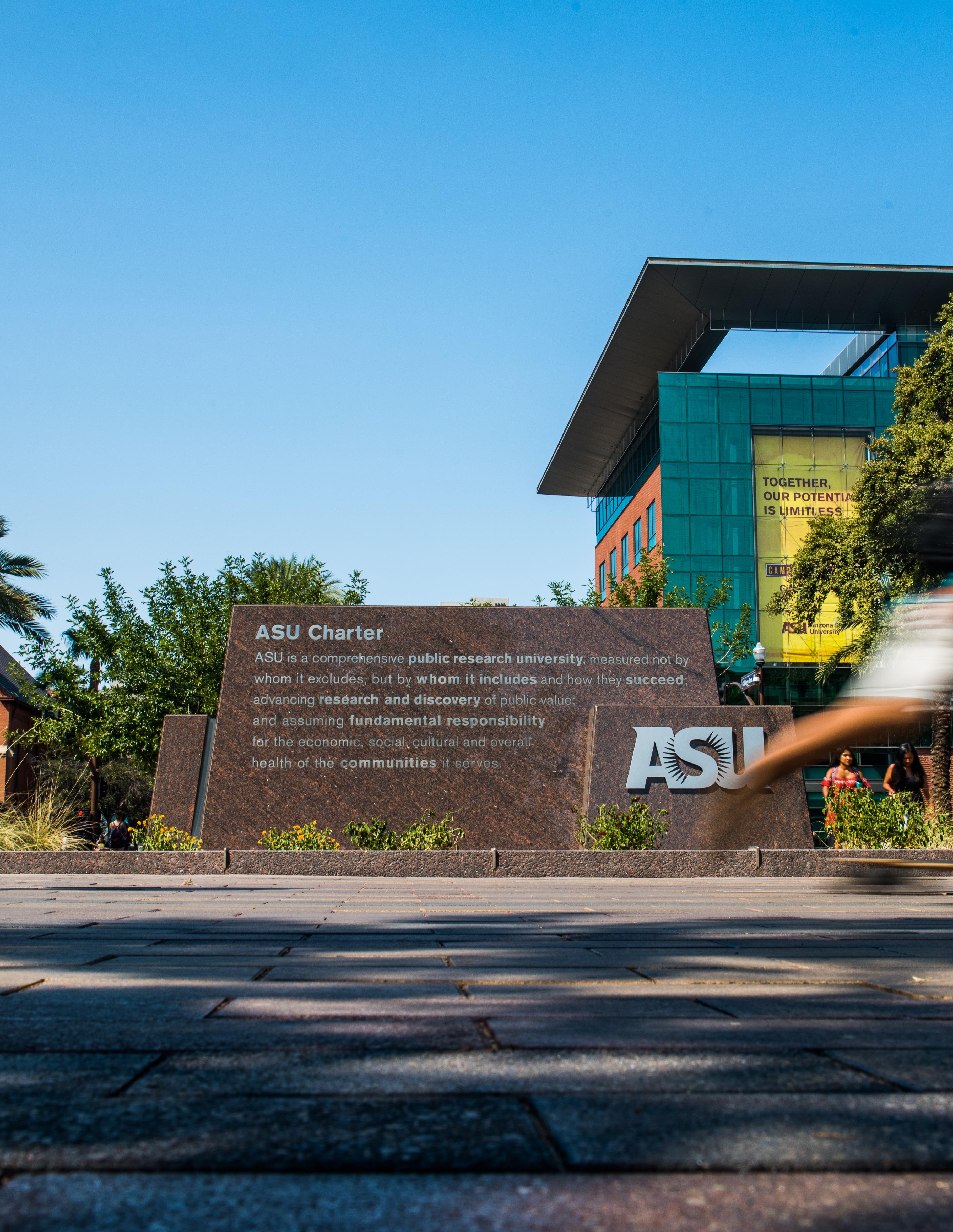
Guided by the ASU Charter, our vision is to create and deliver an outstanding, human-centered digital experience for the communities we serve – ASU students, faculty, researchers, staff and Arizona residents. Each day, informed by our commitment to principled innovation, we provide the technical infrastructure that supports world-class innovation. From enhancing classroom technology to safeguarding against cyber threats, our teams contribute to making ASU the student-centric, research-oriented and inclusive institution we aspire to be.
The numbers tell our story, and we quantify the year’s achievements through figures, such as over nine billion visits to websites ASU operates and by highlighting impactful stories that extend into the greater Arizona community.
Our dedication to nurturing a positive core collaborative culture is at the heart of our mission. We’re actively driving a comprehensive strategy for cultural transformation, encouraging a thoughtful exploration of aligning our work methods across the ASU Enterprise. This allows us to boost operational agility, ensuring the thoughtful execution of prioritization, planning, activation and delivery of results.
As we maintain our position at the forefront of technology and cultivate forward-thinking approaches, ASU Enterprise Technology proudly announced the launch of AI Acceleration, a dedicated team of technologists committed to creating next-gen AI tools. This initiative is designed to yield positive student outcomes, forge new pathways for groundbreaking research, and develop the technical infrastructure for more efficient business operations. In October, we also launched our website: ai.asu.edu. This accomplishment is a testament to ASU’s enduring legacy of leadership and innovation in higher education, demonstrating our unwavering commitment to pushing boundaries and reshaping the future of learning through AI tools.
Establishing a robust community and cultivating strategic alliances are paramount for our success year after year. We strengthened our efforts by forming crucial partnerships with industry leaders — including Amazon Web Services, Arista and Zoom — empowering us to advance real-world work projects and internship opportunities. These initiatives equip the next generation of learners with the necessary technology, skills and hands-on experiences they need.
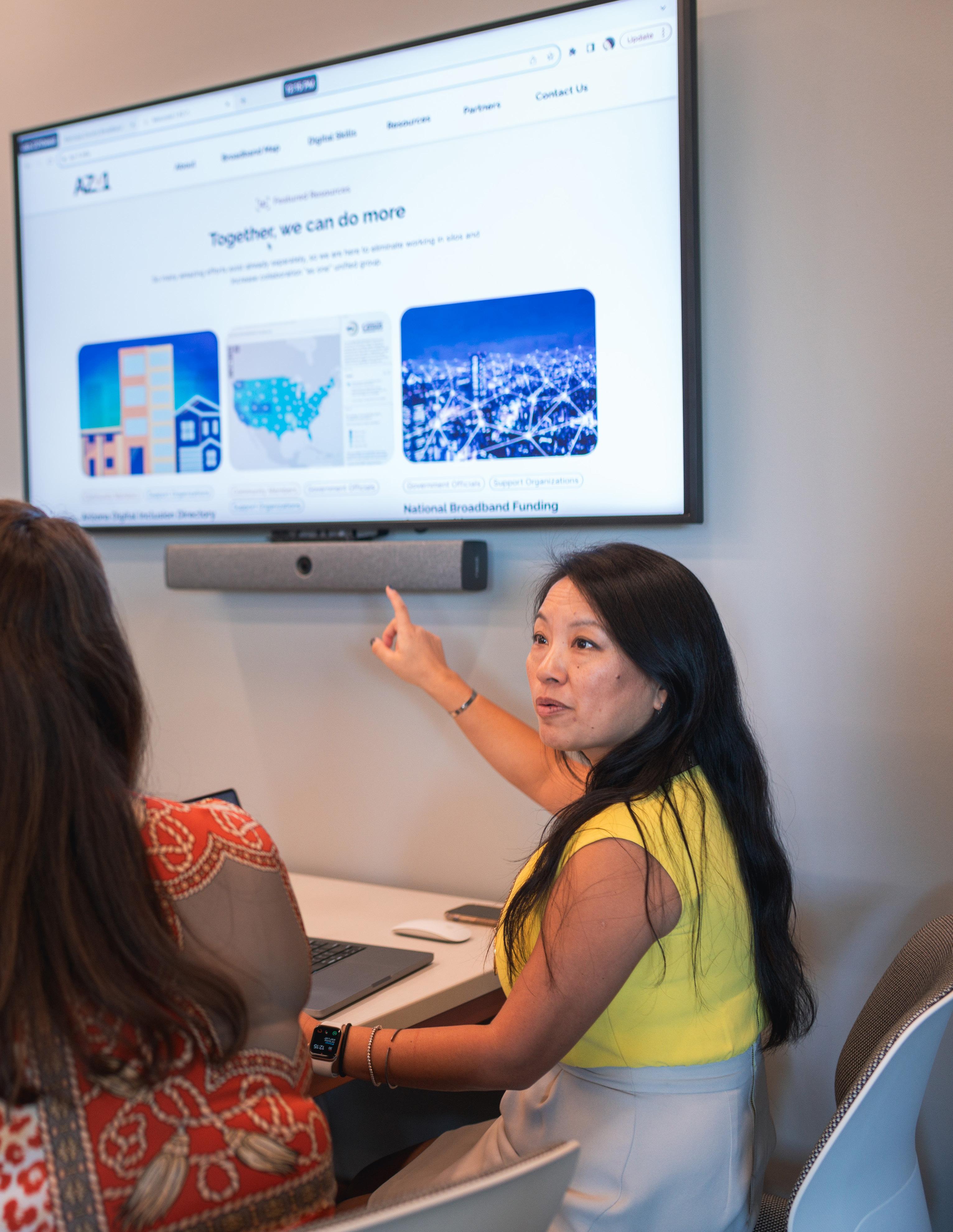
Speaking of the importance of community, to address the growing disparity in reliable high-speed broadband access across Arizona, Enterprise Technology, alongside a network of collaborators, launched AZ-1 (pronounced “as one”). This portal represents the coalition of Arizona change-making organizations committed to enacting and disseminating large-scale change.
As we prepare and plan for the year ahead, we do so by reflecting on the past and continuing to chart what’s next, now.
Thank you for being part of this extraordinary journey.

Forks up!
Lev Gonick Chief Information Officer Arizona State University
“As we reflect on the past year, it’s clear that universities like ours are not just centers of learning, but also hubs of technological innovation for societal good. At ASU, our Enterprise Technology team, in collaboration with its various partners, has continued to build a robust and innovative network. This network extends beyond technology - it’s a comprehensive tapestry that intricately weaves together living, learning, and working, all aligned to meet the pressing needs of both Arizona and the wider global community. This year has been a testament to our commitment to harnessing our collective strengths for the greater good.”

Chris Howard Executive Vice President and Chief Operating Officer
Arizona State University
Enabling extraordinary learning experiences
98,226
Online immersion students taking courses on Canvas
14,055
Visits to ASU’s “Digital Backpack” website, which offers access to Zoom, Slack, Dropbox, G Suite, and Adobe Creative Cloud
5,081
Tech Hub customers served
3,472
Number of user accounts on MediaPlus
Keeping Sun Devils secure via our Cybersecurity chapters
32,828
Laptops/desktops protected via Crowdstrike Endpoint Protection
6,821
Security incidents escalated and remediated
2 hrs 36 min
Scaling community services
9B
Visits to websites ASU operates
56,902,626
Secure sign-in’s to ASU web
605,180
Unique active community members in My ASU
Median security event investigation and triage duration NEW
6,000
Visits to newly launched ai.asu.edu

Exceptional service delivery
All things communication, culture and giving back to the community
40,737,181
Minutes consumed on Zoom
1,332,788
Experience Center customers served
762,633
Zoom sessions (classes, meetings and webinars)
228,741
Total number of community members using the ASU Mobile App
169,886
Total Analytics Portal sessions
116,744
Slack messages sent weekly
21,913
Weekly active Slack members
1,913
Visits to the newly launched service, IT Connection, a knowledge hub for ASU IT staff professionals
551,423
Visits to tech.asu.edu
3,149
Produced event participants
77
Colleagues participating in Culture Weavers
32
Enterprise-wide projects that went live

30
Empowering Leaders graduates in 2023. 157 graduates since the program launched
15
Events across the ASU+ community

On Feb. 1, more than 350 technologists, city leaders and changemakers gathered in the heart of Phoenix at the Heard Museum for the 2023 Smart Region Summit to address digital inequities in the communities we serve.
IT:
In March, we honored Women’s History Month. Enterprise Technology recognized the courageous, determined and fearless women who are significantly impacting the ASU community and the global stage.
After serving as Arizona State University’s Chief Information Officer for more than five years, Lev Gonick wrote a “living playbook” to document his inclusive blueprint for strategic planning, one that empowers the future of IT leadership in higher education.

• ASU’s Experience Center collaborates with the Digital Equity Institute to help Arizona residents access the Affordable Connectivity Program.
• ASU brings cybersecurity leaders and students together to discuss the future of data privacy.
• Students explore ways to embrace AI tools in a writing course. See page 17 to read the full story.
• The 2023 Service Awards recognizes Enterprise Technology team members who have reached milestone years in their service to ASU.
• Five university leaders explore how ASU powers tech-enabled student and learner success at the sixth annual Empower.
• Designing a digital credential ecosystem that places students at the center at the 2023 TLN Unconference.
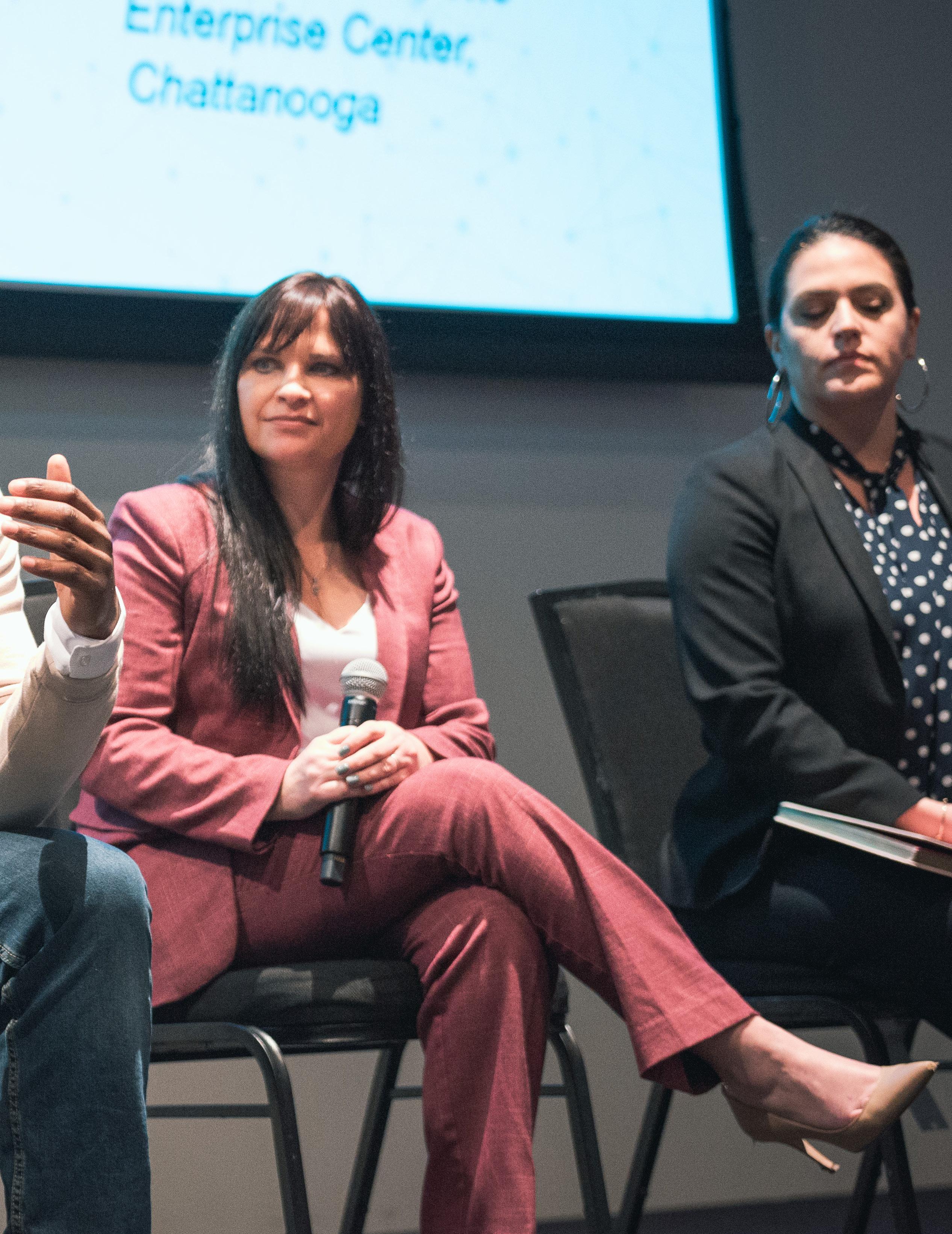
During Pride Month, Enterprise Technology stood in solidarity with our LGBTQIA+ community, emphasizing ASU’s commitment to inclusivity and advancement both on and off campus.
ASU faculty shared insight into how artificial intelligence (AI) is currently shaping education across the university and beyond, along with specific steps to advance our understanding of AI tools in the classroom.
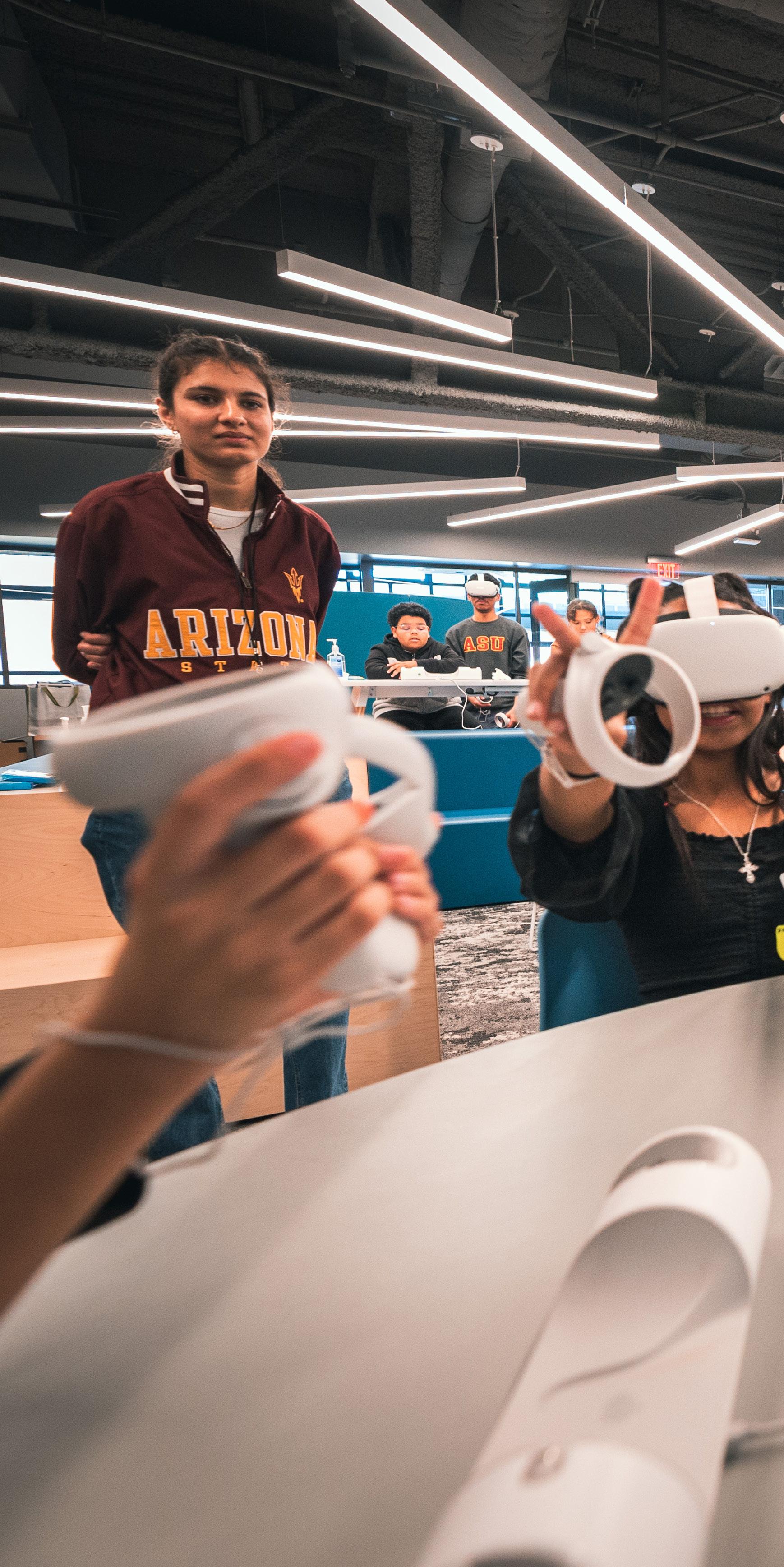
Every semester, ASU students have the opportunity to work as pod operators at ASU Dreamscape Learn’s immersive learning lab on the Tempe campus. Hear from two students on their experience as pod operators and how this unique combination of technology and leadership prepared them for life after graduation.


• ASU Mobile App debuts new features ahead of the fall semester.
• High school graduate earns big after completing ASU Cloud Foundations course.
• ChatGPT course teaches students to engineer prompts to learn, study.
• Enterprise Technology future proofs internet access for more IP addresses.
Formerly known as Learning Futures, Enterprise Technology unveiled Next Lab, a reimagined approach to how ASU is advancing future technology and skills required to power nextgen solutions — such as spatial computing, AI, 5G networks, and immersive technologies.
A month-long campaign to promote Cybersecurity Awareness Month offered a series of activities and resources to improve cyber practices, including better password protection and multi-factor authentication.
As part of the $34M in funding to support the Maricopa County Broadband Initiative, Enterprise Technology released its first set of interactive maps that combine data sources, including demographic layers and internet connectivity. See page 37 to read the full story.
• ASU Pocket achieves a milestone in open beta testing for Sun Devils.
• Cities of the future: Three predictions for AI’s impact on how we live and work from ASU’s Cloud Innovation Center.
• Summit explores digital trust in accelerating the age of AI.
• Enterprise Technology’s annual professional development event spotlights AI in action at ASU.
• Elevating student learning through datadriven insights.
• The new Digital Maker Studio provides on-campus opportunities to create and explore cutting-edge tech tools.
• 7th annual ASU Data Conference focuses on the right data tools for the right data jobs.

At Arizona State University, we embrace generative AI not as a replacement for human intelligence but as a tool to enhance our collective creativity and problemsolving.
By building collaborative alliances across the ASU Enterprise, we leverage all forms of AI to create positive student outcomes, pave new pathways for research and develop the technical infrastructure for rapid digital transformation.
Our approach is grounded in ASU’s ninth design aspiration: Principled Innovation®. ai.asu.edu

by Kevin Pirehpour
Students enrolled in an advanced English course at Arizona State University (ASU) used generative artificial intelligence (AI) tools to assist their writing process — from brainstorming ideas to editing drafts.
And when reflecting on the semester, these students shared it made them better writers. The adoption of AI tools in the
classroom reflects a growing technology trend in higher education. Nevertheless, the emergence of generative AI tools — those capable of utilizing machine learning to provide recommendations or create content, alongside a variety of other tool-specific functionalities — has introduced a wave of disruption, sparking continuous
discussions and debates within the academic community.
This experiment to leverage generative AI tools — including ChatGPT, Wordtune and Google Bard — in the ENG 390: Methods of Inquiry writing course last semester provides a glimpse into how future classrooms might increasingly look to machine learning to augment human creativity and critical thinking.

“It’s like having a spotlight that highlights each sentence, making me pause and really think about how it adds value to my main idea,” said Erin Slutzky, who studies communications at The College of Liberal Arts and Sciences, where the Methods of Inquiry course was offered during the 2023 spring semester. “But these tools do more than just suggest edits for my writing — it’s teaching me to become a more thoughtful and effective writer, carefully considering the value and impact of each sentence I write.”
Recent advancements in AI tools have left many grappling with the future of teaching and learning. And while these new tools may disrupt traditional practices, they also unlock a world of endless possibilities for innovation and exploration.
“We possess the potential to mold the future of AI tools and their role in our lives,” said Courtney Caputo, an English graduate student and course participant. “If we approach it with fear, it will hinder its development as a productive tool. By embracing AI tools — and considering all the ways they can be applied — we can unlock transformative possibilities.”
“Artificial intelligence,” or AI, coined in the late 1950s, aimed to equip machines with human-like cognitive abilities. Fast forward to 2012, neural networks — systems that learn through statistical patterns — transformed the field, enabling speech processing, object recognition and language translation.
In 2018, another leap occurred with large language models, which are trained on extensive internet data to mimic the form of written
language. These algorithmic models can compose unique text, write code and engage in nuanced conversations — a development now known as generative AI.
Since late 2022, general access to large language models hit an alltime high with generative AI tools — such as ChatGPT — dominating tech headlines.
The AI tools used in the Methods of Inquiry course work alongside students as they write, generating feedback and options for them to make revisions and corrections in real-time. This method proves especially helpful when a student encounters a roadblock on a topic.
“Say I’m struggling to identify supporting arguments for a paper and want to explore new perspectives — AI tools enable me to generate fresh ideas and expand my horizons,” said Slutzky. “It encourages me to think beyond the constraints of my current thought process and consider alternative approaches to writing about my topic.”
For more information, visit the Learning Experience playlist for a six-part discussion series on Generative AI tools at ASU.
“We ought to be trying to help our students invent and evaluate possibilities,” said Kyle Jensen, director of writing programs in The College’s Department of English and professor of the Methods of Inquiry course. “Students can do that in isolation with the technology, but it becomes exponentially more powerful when they do it as a group, as a class.”
In addition to offering real-time feedback, Caputo and her
classmates employ AI tools as catalysts for generating writing ideas, which they can then explore in-depth in group conversations.
“In those types of collaborative, brainstorming-style discussions, you’re sometimes limited to certain sources or your ideas on the subject,” Caputo said. “Having AI tools helped us add more researchbased content in real-time without disrupting the flow of our conversation.”
Students in the class reported improved writing abilities after incorporating AI tools into their process. By using multiple AIpowered tools for tasks such as generating ideas, organizing content and refining sentence structure, they were able to focus more on developing their analytical and communication skills. Instructors go back and forth on how to best integrate AI tools in education — primarily when used for writing assignments because of its capacity for cheating or plagiarism. But it is clear that AI tools will alter workflow for many students, from computer science majors to English majors and everything in between.
“These technologies are not altogether that threatening if we are genuinely committed to working closely with our students, learning their voice, reading multiple drafts and cultivating a trusting, collaborative relationship,” Jensen said.
Incorporating a network of AI tools in classrooms sets the stage for an intriguing yet intricate new approach to education. As educators and students alike wrestle with the ethical implications of AI tools on academic integrity and overhaul teaching methods,
“As we navigate the boundless possibilities of AI tools, it’s our responsibility to empower students with the knowledge to wield these technologies wisely.”
-Kyle
Bowen, executive director of Learning Experience at ASU’s Enterprise Technology.

another pivotal issue emerges — digital literacy.
Equipping students for the digital age
Digital literacy, at its core, refers to the ability to navigate, comprehend and utilize digital tools and platforms effectively. In today’s increasingly connected world, it encompasses skills such as searching for information, discerning reliable sources and engaging in online communication with clarity and respect. It’s the passport to the digital world, empowering individuals to participate fully in the evolving digital society, whether it’s for education, communication or work.
“As we navigate the boundless possibilities of AI tools, it’s our responsibility to empower students with the knowledge to
wield these technologies wisely,” said Kyle Bowen, executive director of Learning Experience at ASU’s Enterprise Technology. “By fostering digital literacy and promoting responsible use of AI tools, we equip our learners to become creators, critical thinkers and compassionate stewards of the future.”
One approach or step to enhancing digital literacy involves gaining a deeper understanding of the technology’s historical development, says Jensen.
“Whenever we use technology — be it a stylus or a smartphone — it’s essential to understand its history and how it works,” he said.
“In the past semester, we didn’t just incorporate generative AI tools to diversify our learning methods in the course. We also delved into the history and evolution of artificial intelligence research to

better understand how and why the technology functions the way it does.”
The effort to improve digital literacy should, in a perfect world, guide educators and students to a point where AI tools and emerging technologies become less mystifying. In this envisioned future, educators, armed with a better understanding of potential benefits and limitations of AI tools, can responsibly implement its applications in the classroom — transforming AI tools into instruments for enhanced teaching and learning.
Yet, there’s still plenty of progress to be made before AI tools are fully integrated into higher education. “We need to be fastidious in watching and observing the evolution of large language modeling,” Jensen said. “In some ways, the genie’s out of the bottle,
but in another way, we don’t even know what the genie is yet, in large because we’re at the nascent stage of large language modeling development.”

In summer 2023, Professor Andrew Maynard from the College of Global Futures taught an online course called “Basic Prompt Engineering with ChatGPT.” The course was built in and completed using ChatGPT, with curriculum focusing on instructing students in the engineering of AI prompts that yield responses aimed at improving learning and study practices.
At ASU, faculty across disciplines are already harnessing AI tools to provide personalized learning experiences, generate course content and even assist in creative arts projects. The inaugural Generative AI Community of Practice at ASU offers a crossenterprise effort to explore how AI can best serve the educational needs of students and learners.
1,000 Sun Devils enroll in ASU’s generative AI course for teaching and learning
ASU launched a new course called Teaching and Learning with Generative AI to help current Sun Devils navigate generative AI tools. The self-paced course, available via Canvas, is designed by university experts to support ethical and responsible use of generative AI.
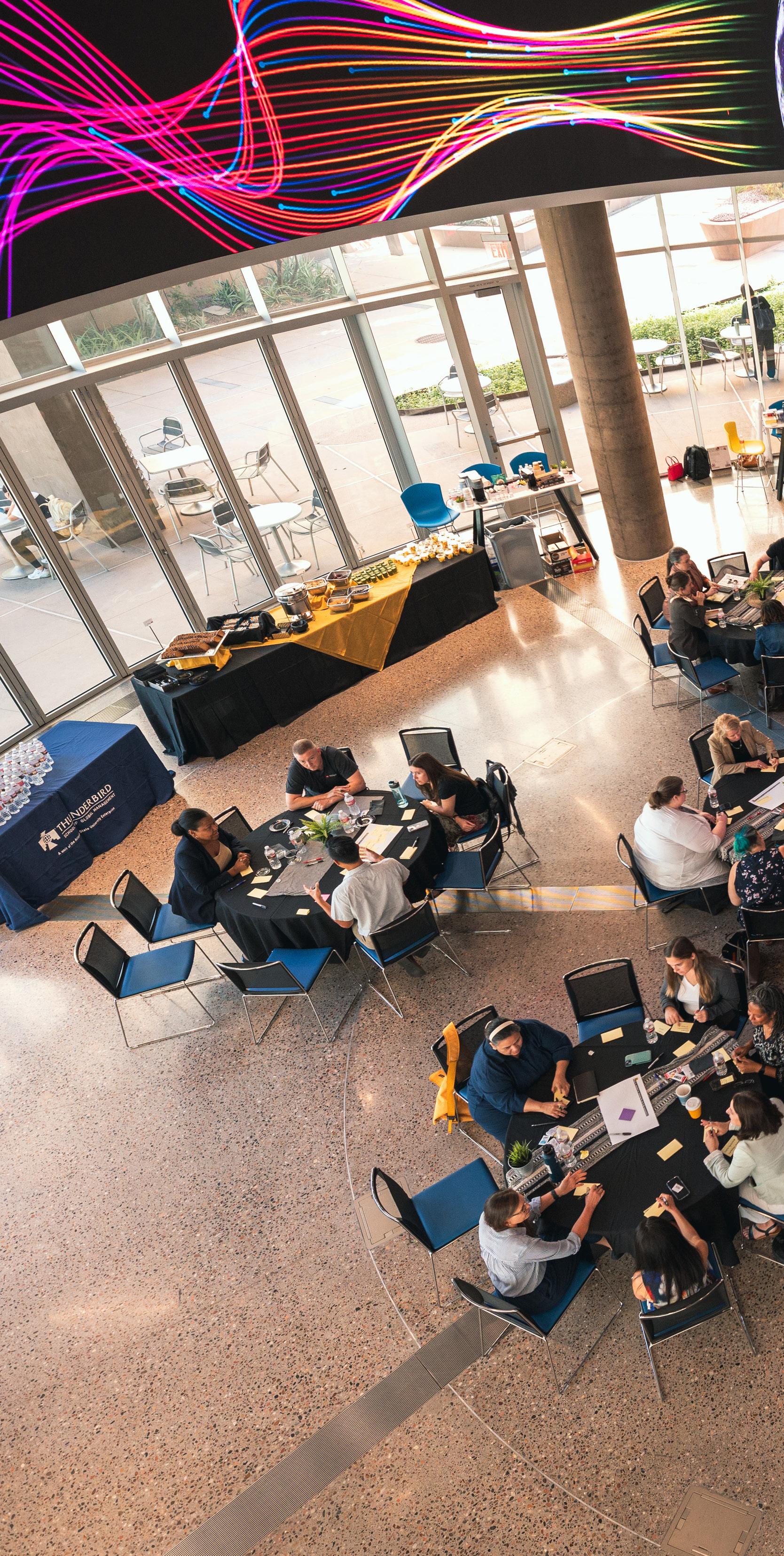
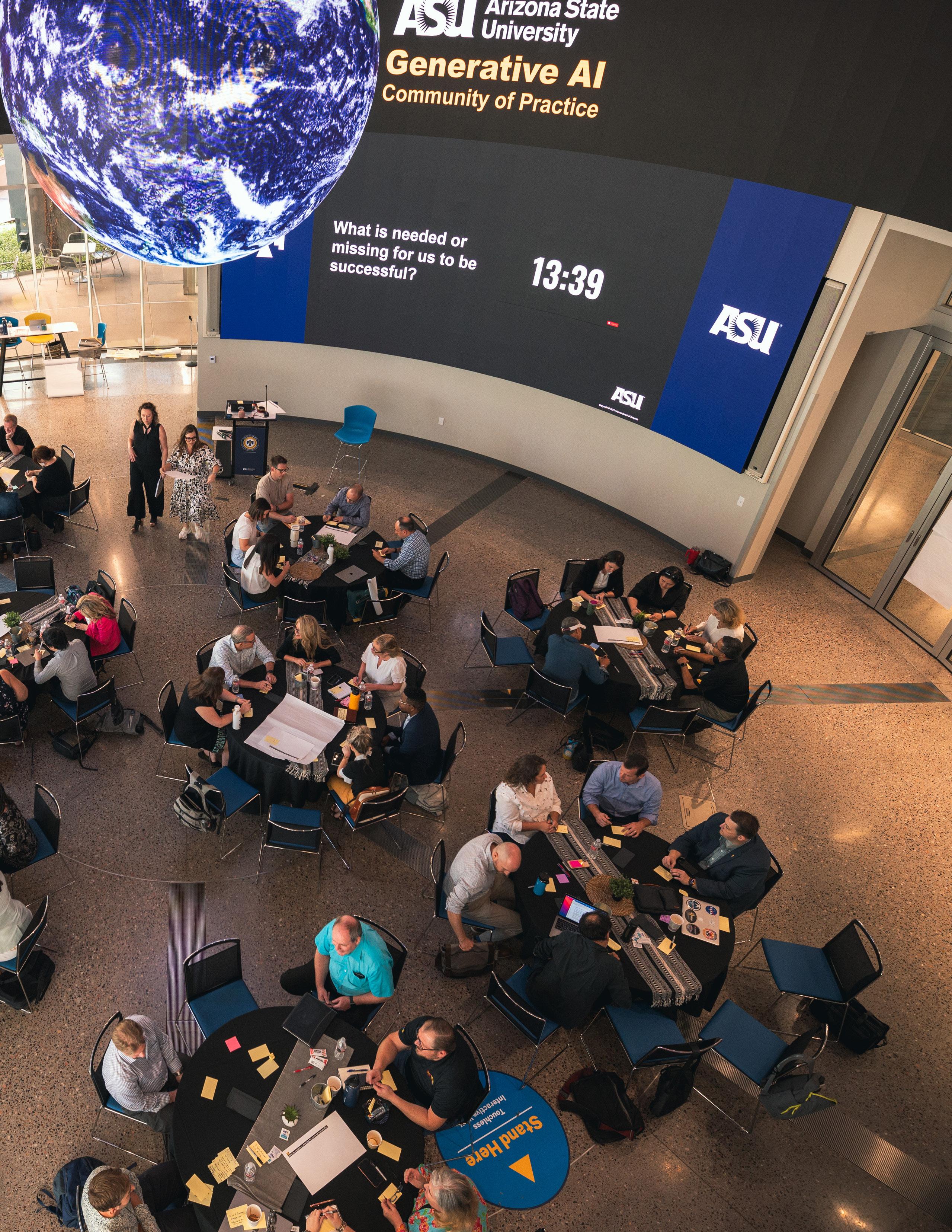
Recognized as the nation’s most innovative university by U.S. News and World Report for eight years and counting, ASU is at the forefront of cutting-edge technology. In continuing to chart the pathway of tech and innovation, ASU’s Enterprise Technology announced today the launch of AI Acceleration, a new team of technologists dedicated to creating the next generation of artificial intelligence (AI) tools.
The group is chartered with providing positive outcomes for students, paving new pathways for groundbreaking research, and developing the technical infrastructure for more efficient business operations.
AI Acceleration is part of a larger initiative being led by ASU’s Enterprise Technology to drive strategy across the university that empowers all students, faculty and staff to leverage the advantages of AI to enhance their daily work.
Under the leadership of Executive Director Elizabeth Reilley and AI Technology Director Zohair Zaidi, AI Acceleration brings together a team of 15 people working as machine learning operations (MLOps) engineers, data scientists and AI development engineers to drive the development of AI platforms and products.
“Our goal is to develop AI platforms and products that effectively cater to the needs of students and society,”
says Reilley. “This encompasses technologies that enhance learning, knowledge, and overall progress for everyone, along with tools that improve the accessibility, affordability and personalization of higher education.”
Work under the AI Acceleration team is already underway. For example, a new platform is being developed that provides next-generation AI technology to teams across the university. The platform is designed to accomplish various tasks, such as training and deploying large and discreet language models, natural language processing (NLP), predictive modeling and more — regardless of their knowledge of software development. By leveraging these models, the university can

make informed decisions that enhance retention, enrollment, operations, and student experience.
The platform places AI capability into the hands of staff and faculty, providing lower barriers to entry, quicker deployment and ensuring maintainability and scalability.
“Our success in working with AI will be gauged not just by technological breakthroughs but also by our capacity to collaborate and create solutions that bring about a positive social impact,” continues Reilley. “Above all, our vision is to leverage the ingenuity of AI to foster the advancement and equitable distribution of human potential.”
Enterprise Technology is deeply rooted in the university’s mission towards social transformation, entrepreneurship, principled innovation and addressing society’s greatest challenges. With the launch of this first-of-its-kind initiative, ASU builds upon its well-established, widely-known role as a leader of technological advances in the nation.
“We take pride in our principled approach to innovation, differentiating ourselves in the AI and higher education landscape,” says Lev Gonick, ASU’s Chief Information Officer. “Our focus is on delivering tangible outcomes and creating change guided by values and ethical understanding to positively impact the ASU community and beyond.”
At the launch of the ai.asu.edu website, the university provided a first look at its technical foundation model that is poised to shape the future of generative AI.
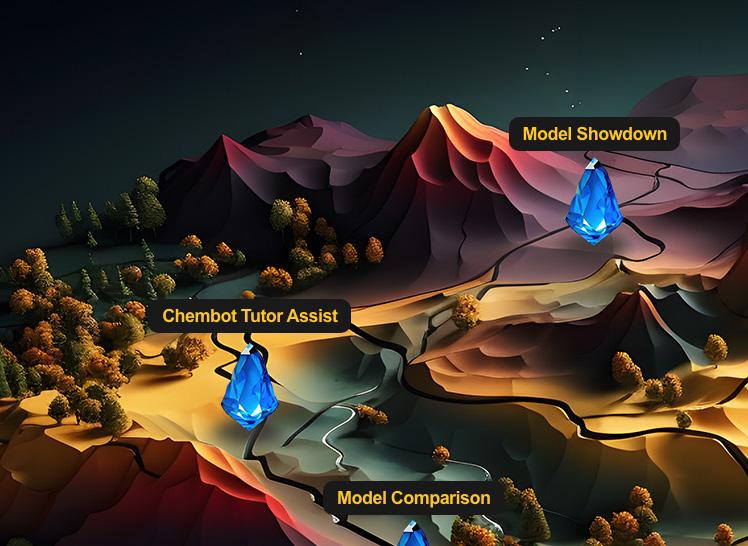
ASU announced its in-house generative AI application platform, BetaLand, which aims to streamline and democratize app development to enable individuals, particularly educators, to leverage the power of generative AI tools for teaching, learning, creating and more.
ASU’s third annual Digital Trust Summit gathered more than 200 global participants to explore the intersection of trust and ethics in the rapidly evolving landscape of generative artificial intelligence.

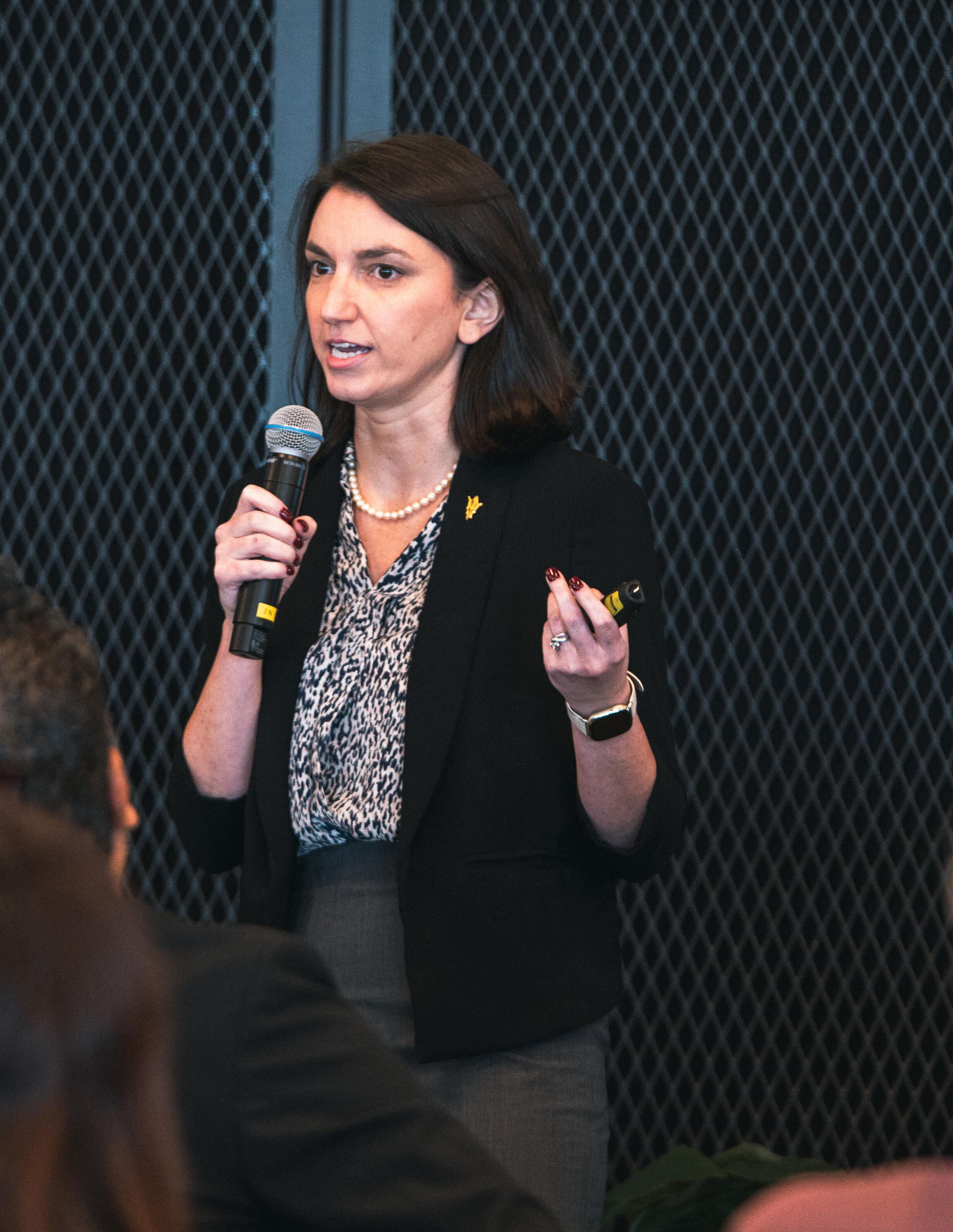
ASU Enterprise Technology collaborates to design and deliver an exceptional, human-centered digital experience for the communities we serve.

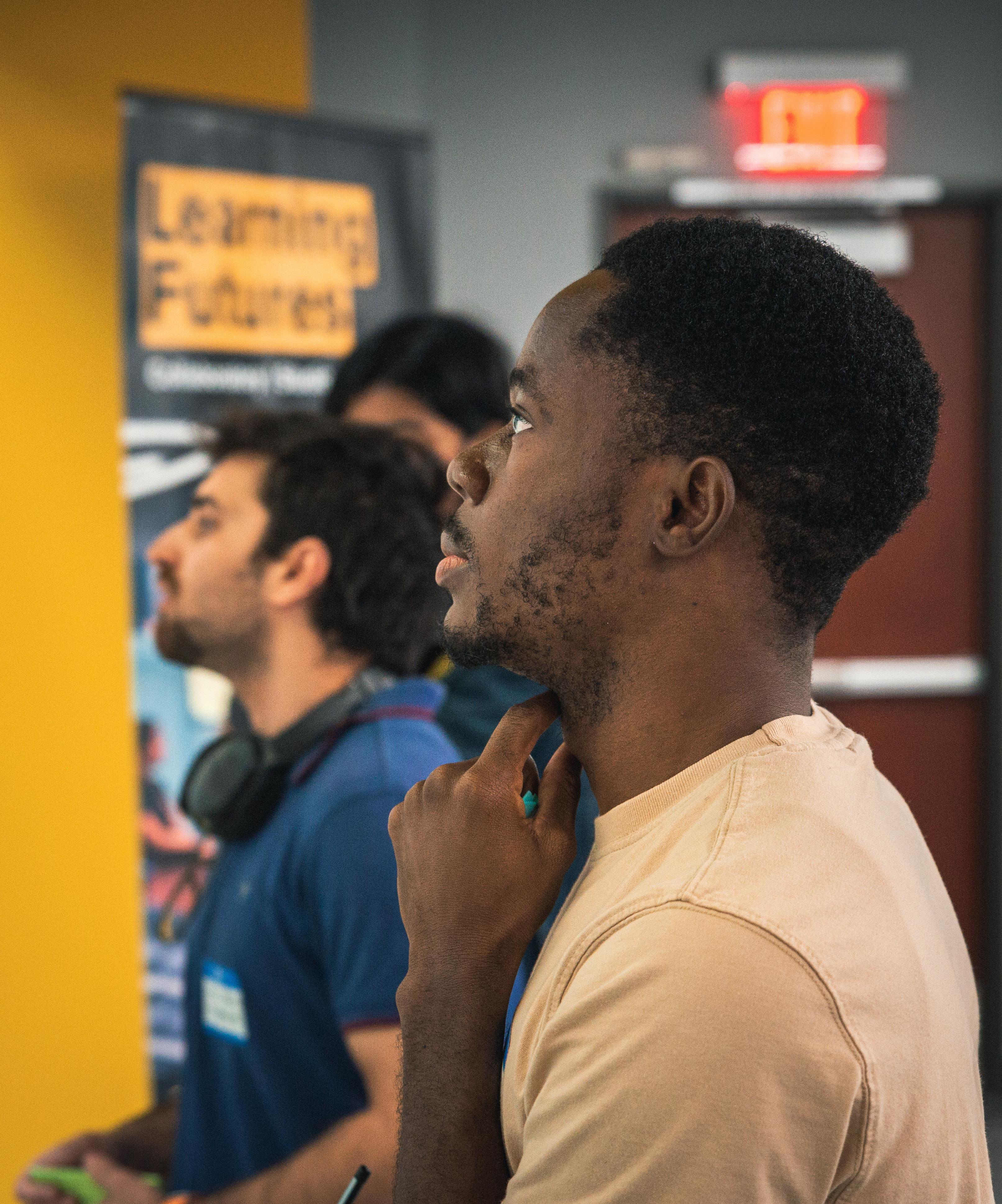
Offering tech-enhanced learning experiences, as well as new opportunities to upskill and reskill
In fall 2023, Enterprise Technology invited ASU students from the humanities and computer science to solve world problems using generative AI tools. The two-day event brought together 30 students, 10 teams and nearly a dozen ASU faculty and staff to explore the use of generative AI tools for learning, creativity and exploration.
ASU students use the power of storytelling to drive awareness of water scarcity
During Idea Jam in March 2023, over a dozen ASU students came together to find new ways to use interactive storytelling to increase public awareness around Arizona’s water crisis. Student ideas ranged from interactive movies with alternative endings to immersive virtual reality video games that tell the story of water usage.
The story on how two ASU faculty members used the Adobe Creative Cloud to break through traditional teaching modalities and use podcasting to enhance student writing. The podcast assignment allowed students to rethink the boundaries of their creativity and find new ways to engage with research.
Local elementary students connect with Cardinal players for a day of STEM at ASU
In celebration of the Super Bowl in Glendale this year, ASU hosted more than 75 local sixth-grade students on the Tempe campus for Super STEM Digital Equity Day to explore game design, storytelling and immersive learning through various handson activities. Students explored alongside former and current Arizona Cardinals.

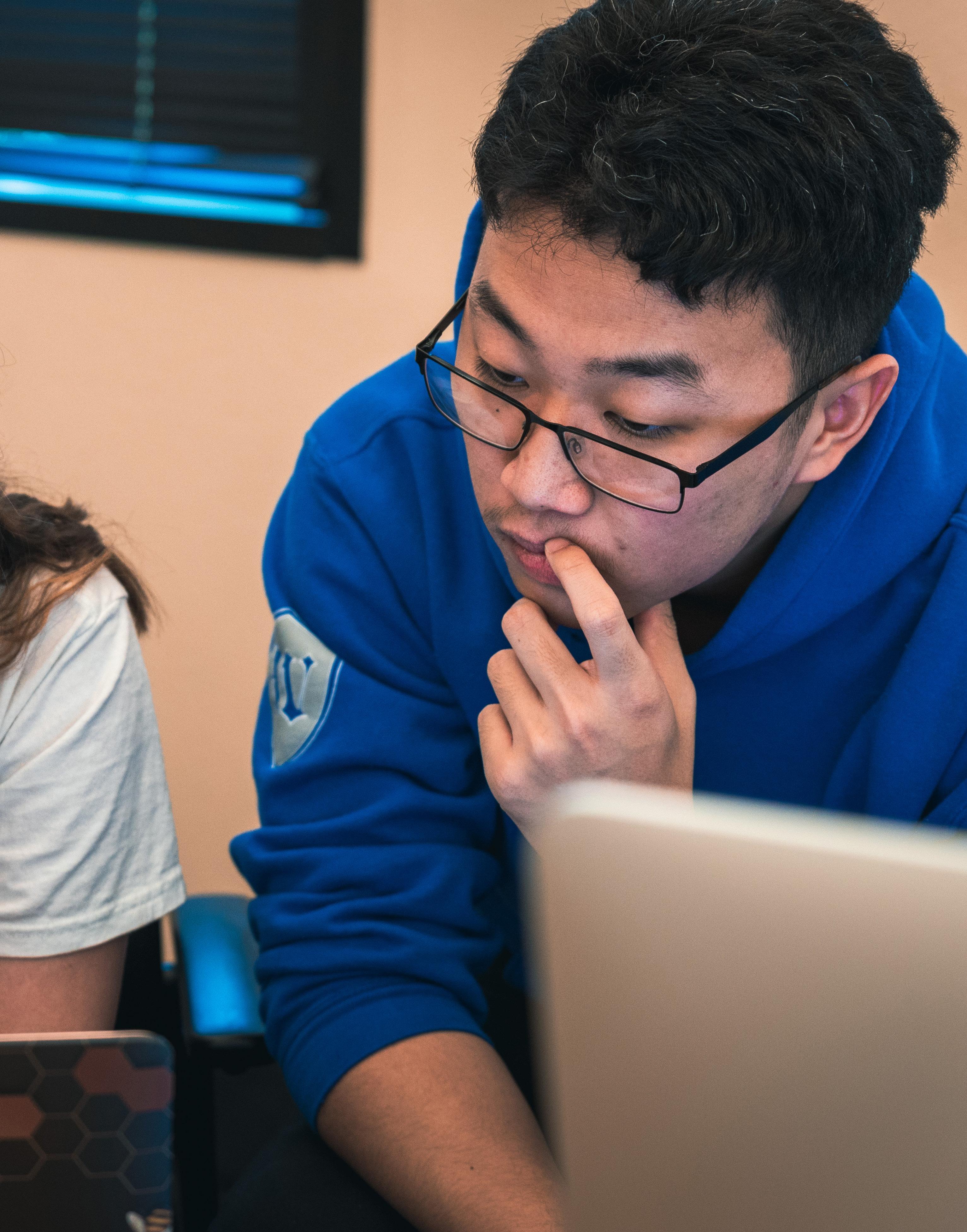
Looking for your next podcast series? Check out the Learning Futures Podcast, with co-hosts Sean Leahy from Enterprise Technology and Punya Mishra from Mary Lou Fulton Teachers College. Together, they discuss improving education and the future of learning.


“This program gives me the opportunity to experience some of the skills that I’ve learned in the classroom, and that will help me in work. We can connect the things that we learn
-Parastoo Mehrzad, a sophomore studying software engineering and computer science and fellow program participant

By: Stephanie King
Two years ago, Arizona State University (ASU) student Shiba Walizada arrived in Phoenix with 60 other refugee women from Afghanistan. Her arrival came on the heels of her studies at the Asian University for Women in Bangladesh being halted due to the COVID-19 pandemic and the rise of the Taliban in Afghanistan after U.S. troops withdrew from the country. Speaking with Walizada, you wouldn’t expect to learn that she’s already experienced so much in her lifetime. She’s excited to tell you about how she is a sophomore studying computer science and cybersecurity major at ASU; or will humbly share why she’s interested in technology. “Some people are good at memorizing, but I’m really good at techniques,” said Walizada. Walizada is one of eight Afghan female international students – all from the group that came to Phoenix two years ago — who are part of the university’s Technical Upskilling Program, offered through ASU Enterprise Technology and Arista, which creates new pathways to enter the IT workforce.
Along with being ASU students, the all-female cohort must complete 20 hours of training per week with Todd Simmons, director of network programs for ASU Enterprise Technology and lead trainer for the program. The program only began in September 2023, and the cohort will train for a year, first receiving Arista
Certified Cloud Engineering Level 1 status, followed by the completion of Level 2 and Level 3 certifications. This experience provides workforce readiness, as most network engineers operate at a Level 3 status. The goal for this cohort is to achieve 3-5 years of training in a single year, and Arista is helping to make that possible. “Arista has been a great partner for the program, providing training and equipment for the labs,” said Simmons, who brings decades of experience creating high-density networks.
Only two months in, the cohort is training to learn more about connectivity and networking systems and processes — think exploring WiFi, learning how to fix issues, how devices are connected to each other and more.
Parastoo Mehrzad, a sophomore studying software engineering and computer science and fellow program participant, appreciates the working and training experience that the program has given her. “Studying and working are different,” said Mehrzad. “This program gives me the opportunity to experience some of the skills that I’ve learned in the classroom, and that will help me in work. We can connect the things that we learn with the real-life experience.”
While the IT field is historically male-dominated — only 26.7% of women currently hold a position in tech — Enterprise Technology’s Upskilling Program offers opportunities for individuals like Walizada and Mehrzad to enter the IT workforce. Mehrzad shared how much she’s grown in her knowledge and understanding of technology. “Before, I didn’t have a lot of information on how technology works,” said Mehrzad. “When I got here, I realized how it makes life easier for people and how much technology is used in every part of our lives.”
By offering the Upskilling Program, ASU Enterprise Technology is creating a more diverse workforce that is better attuned to the various needs of today’s communities. “What makes this cohort special is that it’s all women,” said Simmons. “And, more importantly, it’s all women whose government did not value them enough to understand how incredibly intelligent and how much ability they have because of their gender.”
Mehrzad explained that, from her perspective, she didn’t witness many women pursuing careers in technology in Afghanistan. “Back in my country, I was interested in doing other work like journalism or medicine,” said Mehrzad. “But here, I became interested in technology. I changed my major to computer science. Science and technology as women – it’s really interesting and gives me more confidence.”

Shiba Walizada, ASU student and Technical Upksilling Cohort participant
program born from ASU’s rapid digital and network transformations
Simmons is training the upskilling cohort to be network engineers, hoping they will consider continuing on to become university employees after graduation.
What’s more, ASU’s network is transitioning to a software-defined network or what Simmons calls “infrastructure as code.” This means that when there is a network issue, instead of fixing an individual device, engineers will change processes via code, have people verify it, and then have different artificial intelligence (AI) engines check for trends and analyze if an error occurred. Once a human approves the change, the software makes the update instead of a person manually going to the
individual device to correct it. This innovative network engineering approach is modern compared with more traditional networking systems: the cohort of Afghan women is learning how things are done today and how Simmons believes things will be done in the next few years. This, he noted, will make the cohort incredibly hirable. “We’re one of the only universities taking this approach,” said Simmons. “I tell the cohort, ‘Stick with us, and you’ll have a successful career in technology.’”
Walizada has big dreams for her future after the Upskilling Program and beyond. “I hope that when we [complete the first year] of the program, ASU or Arista will hire me because this is a good place
for me to continue my education and work,” said Walizada. One day, Walizada wants to start her own software development company with her education and work experience.
“I’m happy for this opportunity; it is a unique opportunity and I can say that most people cannot get it – it is special,” said Walizada. “When I’m done [studying for my major], I will be ready for the plans I have for my future.”

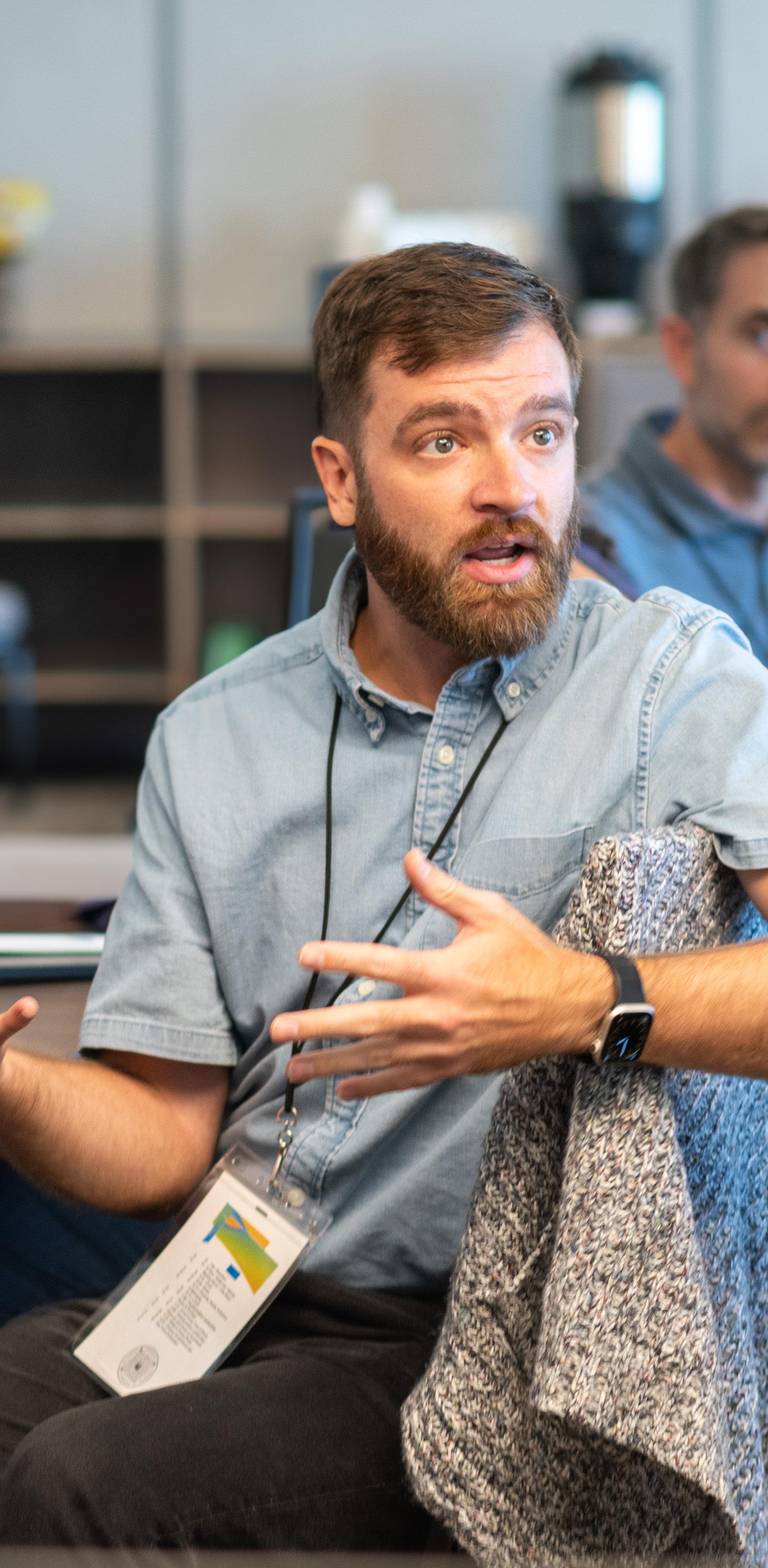
In fall 2023, Enterprise Technology invited ASU students from the humanities and computer science to solve world problems using generative AI tools. The two-day event brought together 30 students, 10 teams and nearly a dozen ASU faculty and staff to explore the use of generative AI tools for learning, creativity and exploration.
The year-long program provides a variety of IT experiences for individuals looking to upskill and explore a career in technology. In addition to 41 applicants for year two of the Technical Upskilling Program, a new cohort of eight female international students is focusing on a series of Arista certifications.
ASU students explore learning opportunities through university partnerships with industry giants like Amazon Web Services and Zoom to gain real-world experiences and internships. These strategic partnerships have allowed ASU students to further prepare for the future workforce with the future of technology, skills and experiences.
As a leader in cloud acceleration, ASU integrated a new ultra-highbandwidth, low-latency approach to cloud storage to support its growing community. The new approach leverages the Phoenix Local Zone and robust cloud storage to improve delivery for online services.
Helping our teams and the communities we serve succeed
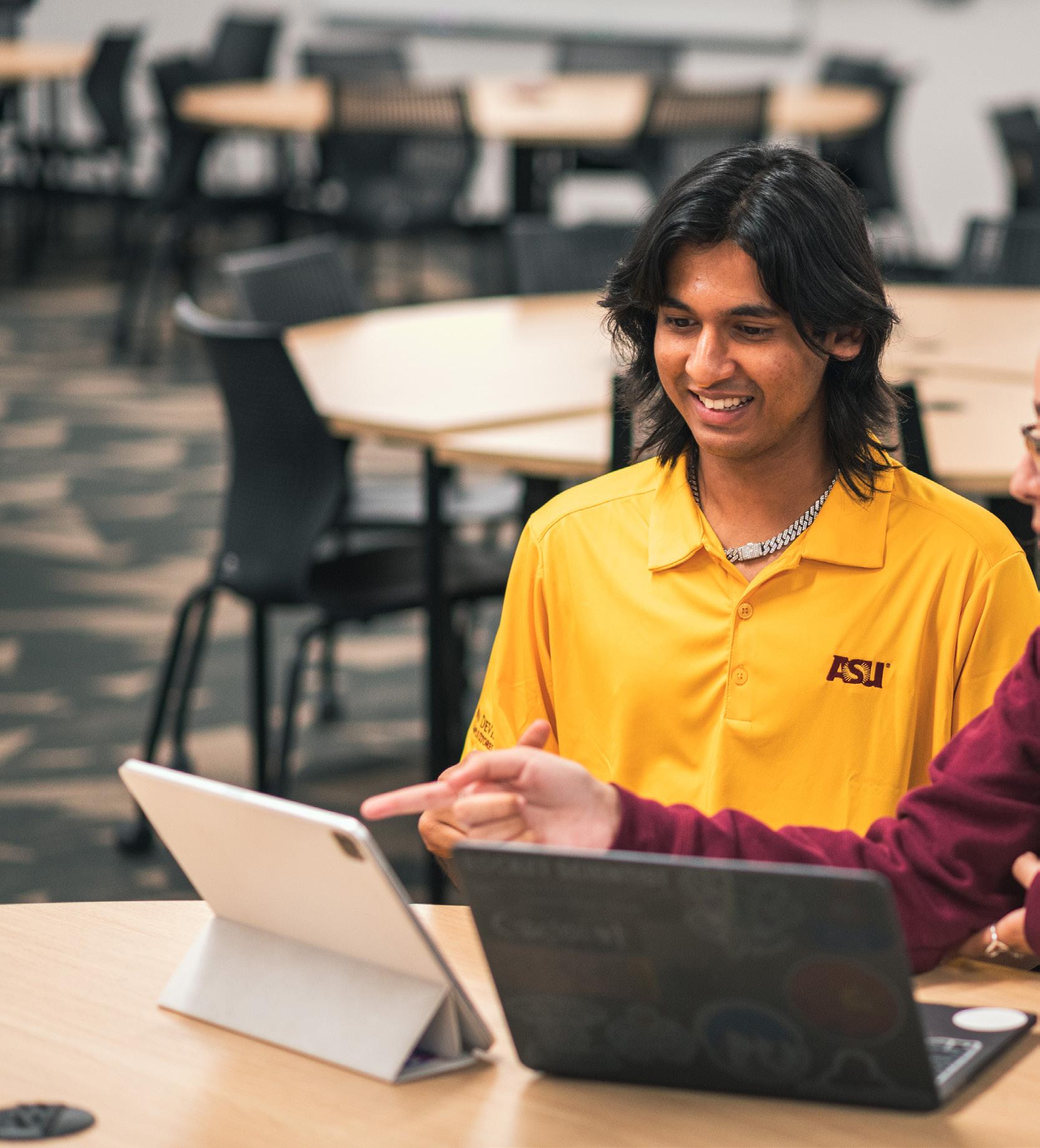

High school graduate earns big after completing ASU Cloud Foundations course
A high schooler in New York earned a scholarship after completing ASU’s Cloud Foundations course. The course offers students nationwide the chance to earn high school and college credit and an industry certificate in cloud computing.
trauma
Meet Todd Lunn, who recently relaunched his career in IT at ASU. After graduating from ASU’s Technical Upskilling Program — which aims to open new doors of opportunity to non-traditional learners by creating pathways toward various IT career paths — Todd is now part of ASU Deskside.
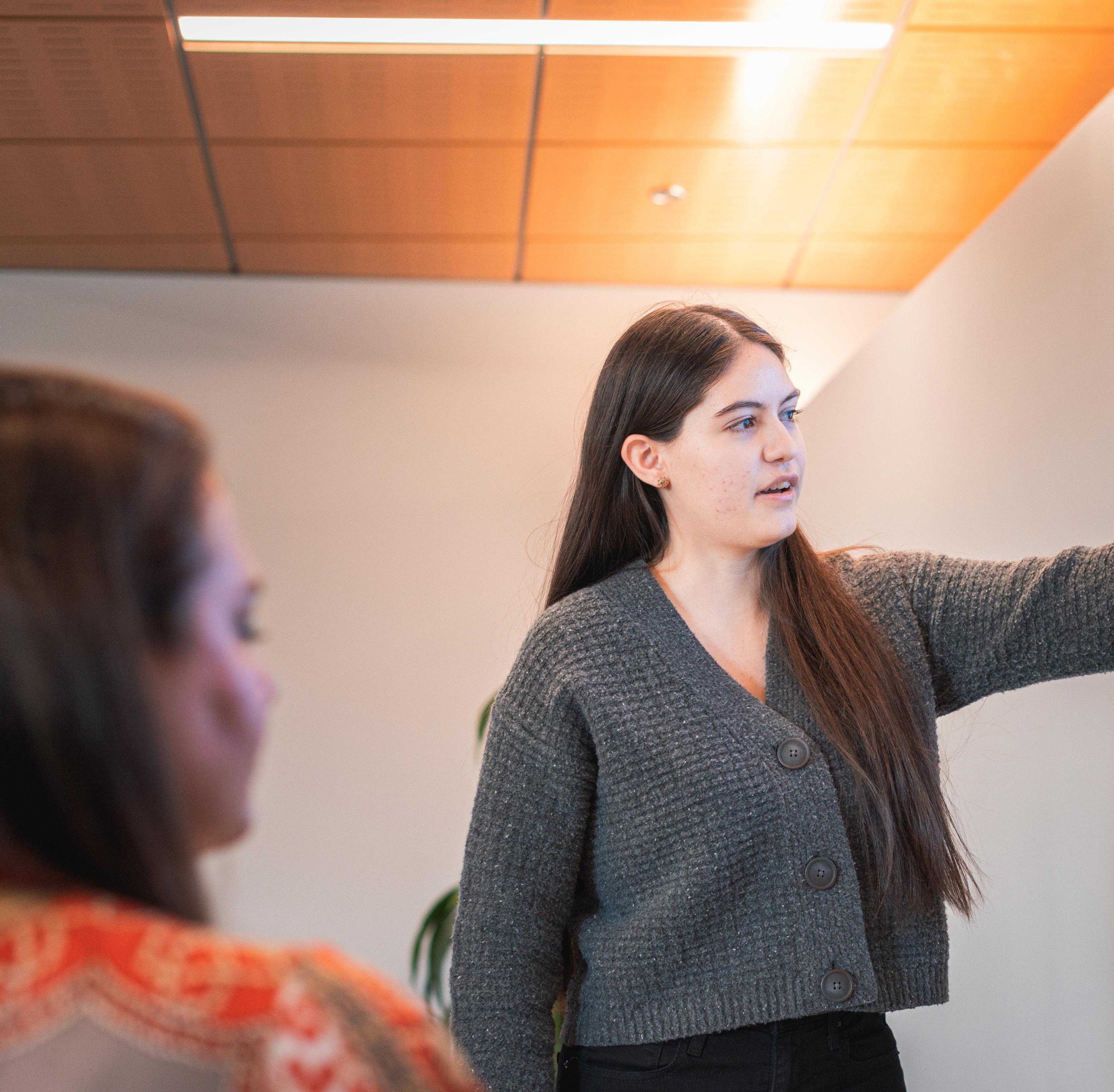
A
team of technologists at ASU have launched maps and resources for connecting Arizonans
By: Annie Davis, Samantha Becker, and Kevin Pirehpour
In our rapidly evolving digital era, access to the internet has become essential for staying connected to opportunities in work, learning and telehealth services.
Yet, reliable high-speed broadband access varies across Arizona. To address this growing disparity, Arizona State University (ASU) is taking concrete steps to help Maricopa County communities get connected – and stay connected.
This month, ASU’s Enterprise Technology, alongside a network of collaborators across the state, launched AZ-1 —- a repository of resources on broadband expansion, digital equity and
inclusion efforts. AZ-1 (pronounced “as one”) symbolizes the coalition of Arizona changemaking organizations invested in enacting and sharing about large-scale change.
“By providing the resources communities need to get and stay connected, we’re shaping a future where everyone has the access needed to thrive, regardless of zip code,” said Lev Gonick, chief information officer at ASU. “It takes strategic collaboration to make a meaningful and sustainable impact, and AZ-1 has tapped the expertise of innovative and values-driven organizations across the state.”
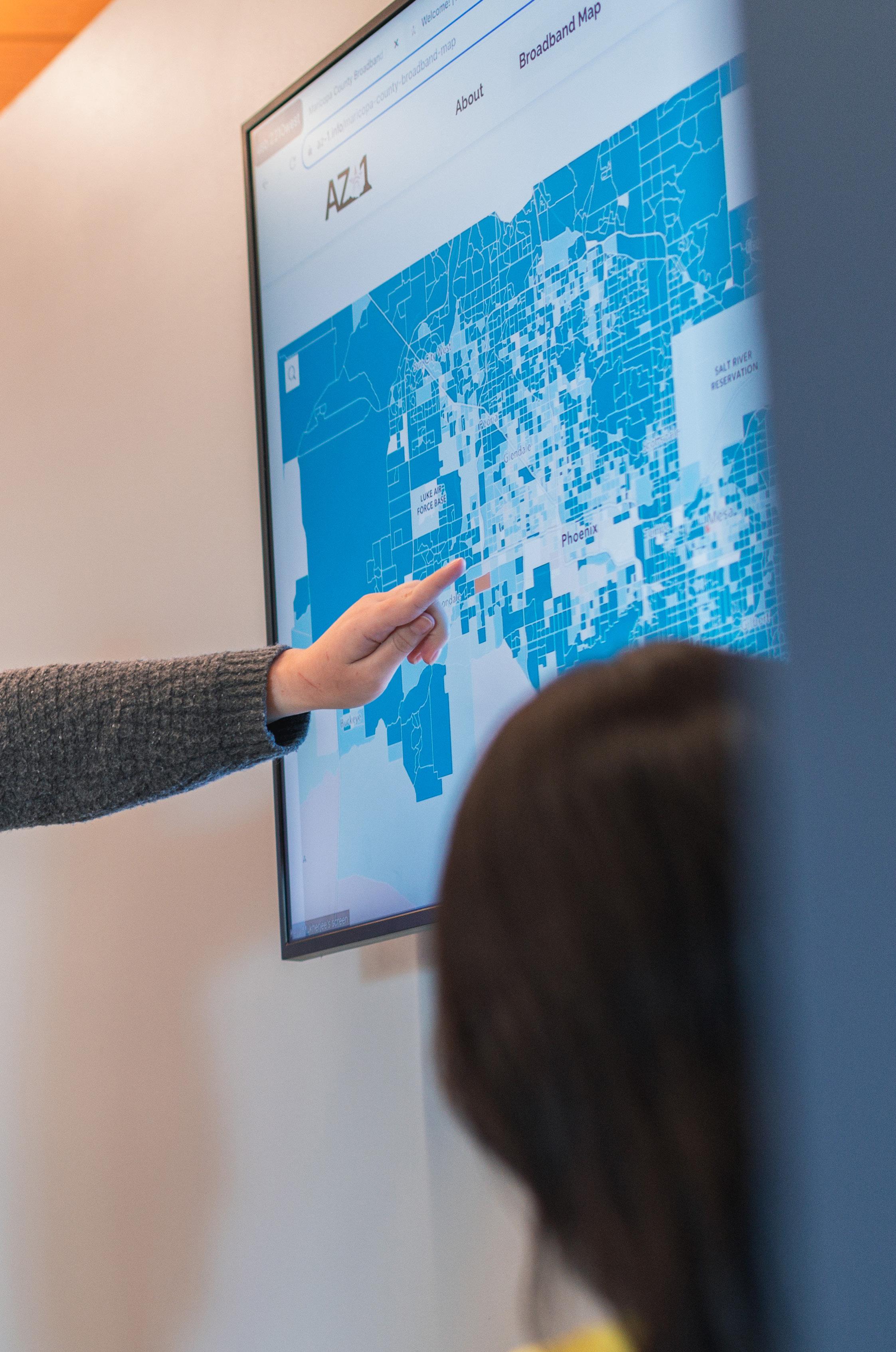
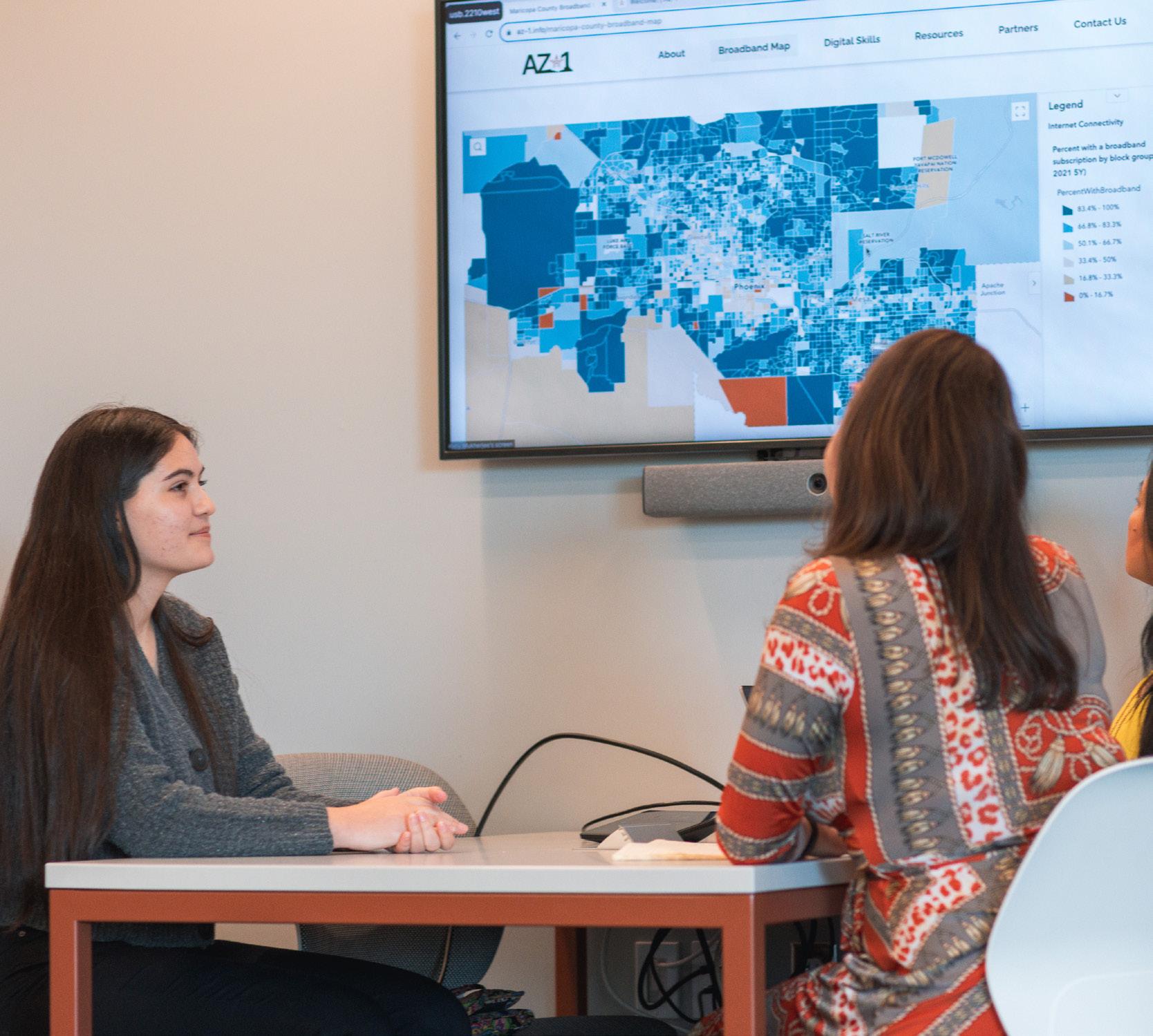
One seminal resource created by the network is Maricopa County’s Broadband Map, which highlights areas most in need of broadband access.
In Fall 2022, the Maricopa County Board of Supervisors voted to provide ASU and its collaborators $34.6 million to advance broadband, community support, equipment and training across Maricopa County through 2026 — one of the largest university-led digital equity initiatives in the nation. This collective work became known as the Maricopa County Broadband Initiative. As part of the grant, ASU launched the broadband mapping project seeking to visually represent broadband connectivity across Maricopa County to help inform city and community planning. The maps combine multiple data sources to better tell the complexity of broadband connectivity and access.
The internet connectivity layers include fixed broadband and mobile availability data reported by the Federal Communications Commission (FCC), types of computers and internet subscriptions reported by the American Community Survey (ACS), and aggregated download and upload speed tests reported by Ookla®. Meanwhile, the demographic layers include unincorporated areas, residential zoning, population, education, income, persistent poverty, and tribal lands.
Combined, these data sources provide a much more detailed picture of access and availability.
The maps are meticulously designed, layering multiple data sources to achieve a comprehensive view of broadband access in the county. Kelly Mukherjee, director of technical program management for Broadband and Digital Inclusion at ASU, and the mapping team set out to better understand broadband access.
One example included better understanding the intersection between persistent poverty and low broadband subscription rates. This revealed critical insights about areas where economic challenges might compound with digital exclusion.
“Collaborators, including Sun Corridor Network and the Digital Equity Institute, are leveraging them to strategize the expansion of broadband infrastructure and cultivate partnerships with community pillars, including libraries, educational institutions, and food distribution centers,” shared Mukherjee.
Mukherjee noted that addressing the needs of underserved communities is complex.
Because the term “underserved” encompasses a broad spectrum, it doesn’t have a single definition when it comes to digital access. It can refer to a range of situations: from areas with no internet connectivity at all to regions with slow or unreliable connections, or places where broadband might be available but not affordable to most residents.
To ensure internet access accurately aligned with community needs, the map also reflects crowd-sourced speed test data from community members, using
the Ookla speed test. As more participants test speeds within their households, AZ-1 will continue to capture the authentic state of connectivity.
Given this multifaceted notion of underserved communities, each layer of the broadband map provides specific insights about an area. Depending on the data sources and layers used, the maps highlight different aspects of digital exclusion.
The mapping team includes the Geographic Information System (GIS) expertise of Ciera Parkhurst, a recent graduate of ASU with deep ties to Maricopa County. “A combination of relevant datasets is more valuable than any single data source alone,” Parkurst explained. Each layer tells its own distinct story about the nature and extent of digital disparities in a given community.
“By providing the resources communities need to get and stay connected, we’re shaping a future where everyone has the access needed to thrive, regardless of zip code”
-Lev Gonick, chief information officer at ASU
Maricopa County cities get involved
Over the past few weeks, the team has been collaborating with city leaders across Maricopa to promote the availability of the maps, generating interest and feedback. For example, the team recently met with the City of Surprise —- which has a population that’s grown five times that of what it was in the early 2000s. The City of Surprise is in the process of building a Multigenerational Community Resource Center, which aims to expand access to services like health, wellness and workforce development for local residents. While the location of the Resource Center has been established for some time, these maps provided a new layer of understanding when it came to broadband connectivity and internet access.
Eric Fitzer, City of Surprise director of strategic initiatives, noted that the maps reinforced what the City

of Surprise already knew: “The Resource Center was being built where it is needed most, which is in the heart of underserved communities. And while these maps help to reinforce this, they can also provide new data and information to support initiatives that build out broadband and wireless connectivity to support future economic development opportunities.”
The team later met with city leaders from Chandler, which is thought of as one of the more affluent communities in Maricopa.
“While we don’t really think of communities like Chandler as having persistent poverty, it does exist in the area,” noted Laura Etter, who manages government affairs for the Maricopa County Broadband Initiative. “Sometimes that perception can make it more difficult for areas like these to get support.”
Similar to the City of Surprise, Chandler used the maps to identify
areas in need, layering metrics that included persistent poverty, low uptake of internet subscriptions and internet providers, to name a few.
“We are finding that these maps are helping city leaders reinforce what areas are most in need, and even better understand where gaps in broadband and connectivity exist,” shared Etter. “In addition to helping address the needs of underserved populations, the maps can also support the community as a whole, expanding future growth for economic development opportunities.”
Since the launch of the maps in late August, the team has had several engagements with local cities, including Peoria, Surprise, Chandler and Glendale, to name a few.
As Mukherjee noted, this is just a starting point. “With more cities wanting to work with us, we can continue to iterate and improve these maps and our data sources overtime. It takes the whole community coming together as one

in order to make a difference.”
The team continues to explore new engagements across Maricopa County – if you are interested, contact the team here.
As the Maricopa County Broadband Initiative enters its second year, ASU and its network of collaborators will continue to apply the maps towards identifying and providing tailored support for communities in need. High-speed, reliable internet connectivity for all is just the next step – and a significant foundation for what’s to come.
A holistic approach that factors in the full range of technical support and upskilling needs is vital for cultivating a digitally fluent Arizona, where every individual has the capacity to navigate our digital world. Watch this space as the initiative continues to connect Arizonans to faster broadband and greater opportunity.
“Collaborators, including Sun Corridor Network and the Digital Equity Institute, are leveraging them to strategize the expansion of broadband infrastructure and cultivate partnerships with community pillars, including libraries, educational institutions, and food distribution centers.”
-Kelly Mukherjee, director of technical program management for Broadband and Digital Inclusion at ASU

February 21, 2023
EdScoop podcast: Inside ASU’s ‘paradigm shift’ for learning
September 20,2023
‘Just keep moving forward’: ASU’s deputy CIO talks modernization in higher ed
September 20,2023
Digital Equity Champions for All Learners: Arizona’s Digital Equity Institute Encourages States to Co-Create of Solutions with Communities

March 06,2023
CIO.com: Transforming IT for cloud success
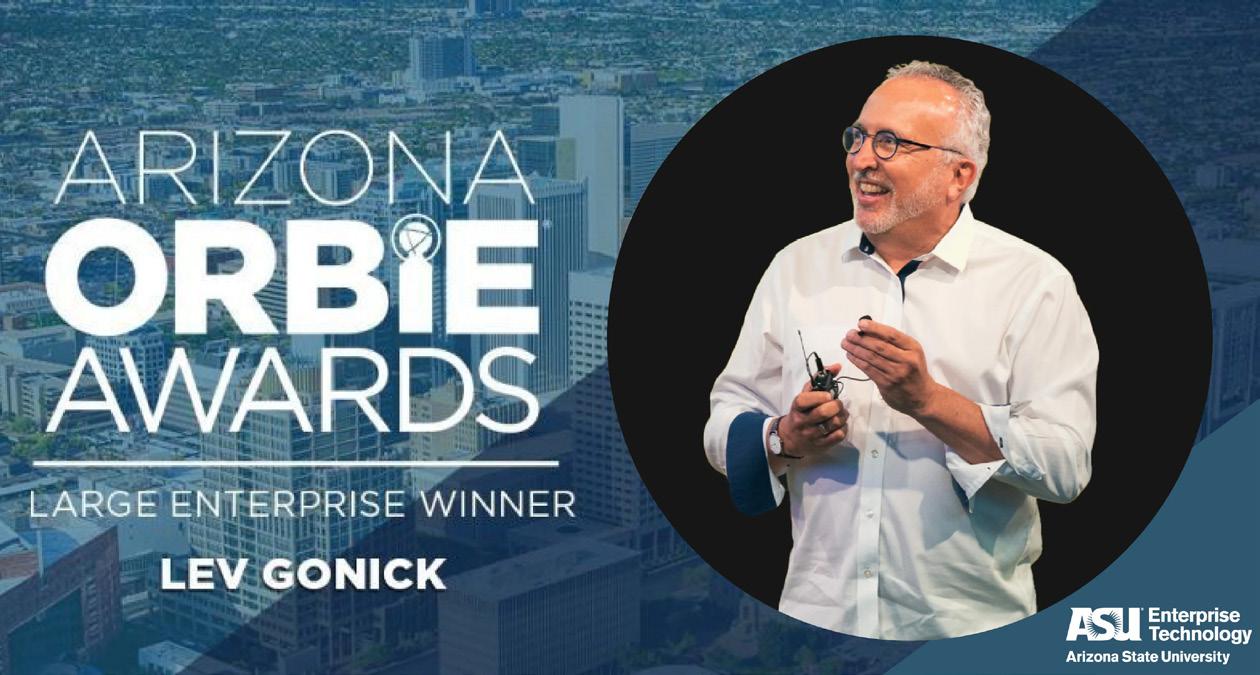
Orbie Awards: ASU’s Lev Gonick named Arizona CIO of the Year
January 12, 2023
Government Tech: What’s New in Digital Equity: More States Adding Broadband Offices

January 23, 2023
Ask a Privacy Manager ft. Ben Archer
July 17, 2023
Jamming over video chat is nearly impossible for musicians right now, but an experiment with 5G showed promise for 2 artists 2,600 miles apart





A team of ASU students worked as pod operators at ASU Dreamscape Learn’s immersive learning lab on Tempe campus. This unique combination of technology and student leadership offers a glimpse into a future where students learn and lead in immersive, collaborative environments.
During ASU’s Verizon 5G Innovation Hub hackathon, a team of students developed EquiBraille, a braille board that uses AI to offer visually impaired students real-time access to written classroom material. This tool was inspired by a computer science senior’s dedication to supporting students with low or impaired vision from underserved backgrounds supported by our partnership with Apple Swift Program.
ASU’s Smart City Cloud Innovation Center (CIC), powered by AWS, partners with local organizations to navigate digital transformation. This year, two student workers at the CIC took the lead on a project to improve communication between transportation services, healthcare providers and Arizonians in need.

• ASU announces new strategic partnership with Arista to advance network transformation.
• ASU course uses Apple Swift Playground to help students develop app for healthcare services.
• Cox Collaboratory at ASU partners with research team to explore smart traffic solutions.
• ASU and Salesforce celebrate 10 years of partnership to ensure a better-connected enterprise.
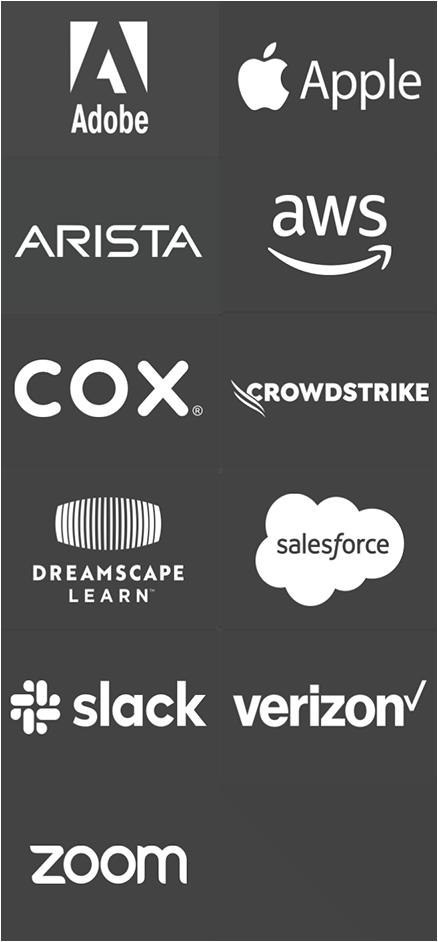
Thank you to our partners



Located at the Creativity Commons on the Tempe campus, explore a collection of studios, spaces and services that offer the latest in learning technologies.
From deeper exploration in virtual reality to creating multimedia content in the studio spaces, The Collective offers many opportunities to learn, explore and create using the latest digital tools and environments.
ASU Tech Hub offers various services, including direct personal device consultations, navigating campus resources and integrating creative technology into your academic journey. Tech Hubs are available across all four campuses in the greater Phoenix area.
Charged with creating what’s next, this community of future-focused thinkers and creators bridges the gap between imagination and reality by exploring emerging technologies, identifying future-ready skills and activating interdisciplinary collaboration.
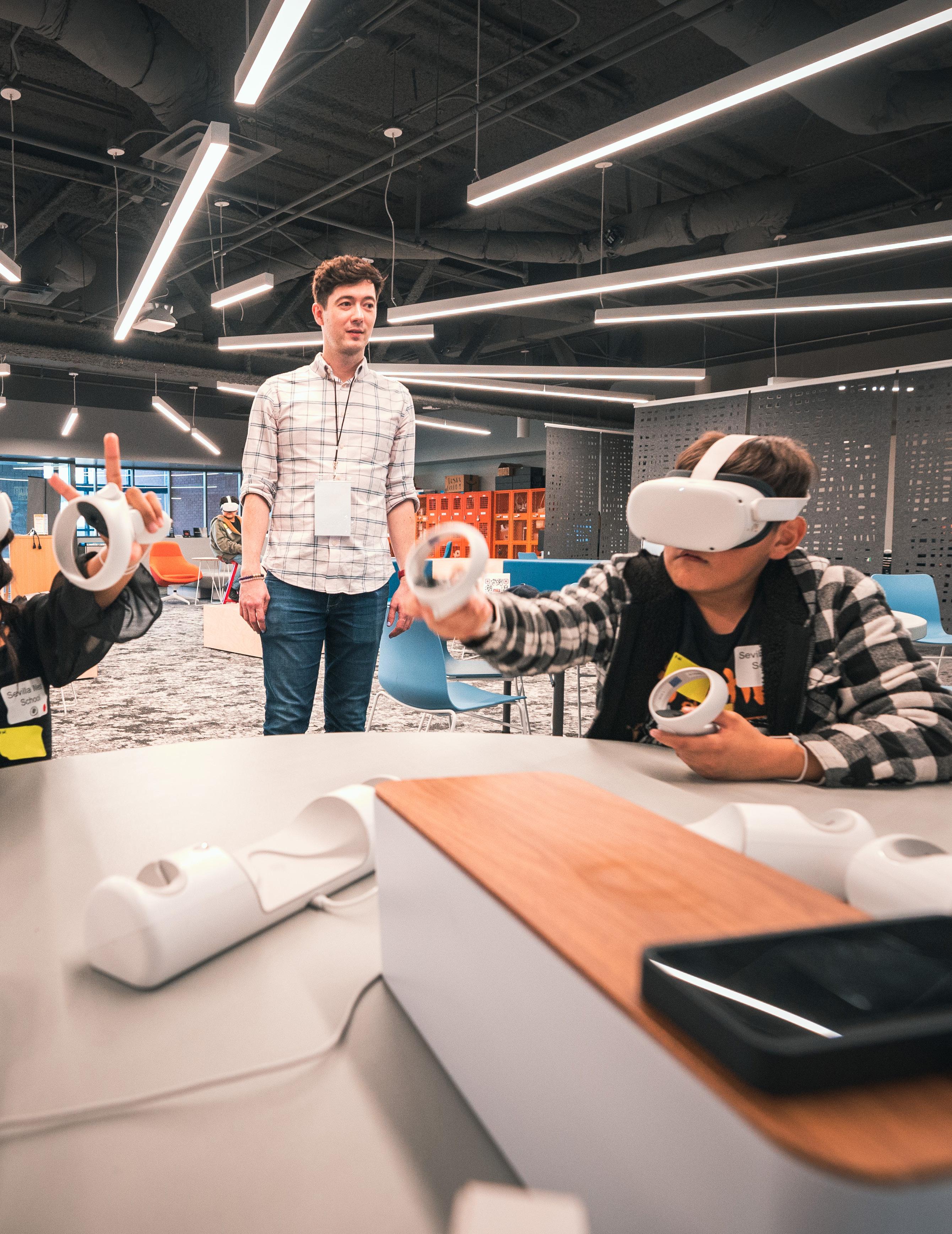
The Digital Maker Studio offers the latest in emerging technology to encourage students to investigate, explore and create in a supportive environment.
The first-of-its-kind Zoom Innovation Lab at ASU combines resources available across the ASU Public Enterprise – including the university’s expertise, research, networks and learning assets – with Zoom’s technology and talent to create solutions that better connect society. and talent to create solutions that better connect society.
Born from a partnership between Dreamscape Immersive and ASU, this collaboration seamlessly blends state-of-the-art educational practices with the emotionally resonant storytelling of the entertainment industry. ASU students are provided unique opportunities to learn and work at Dreamscape Learn.

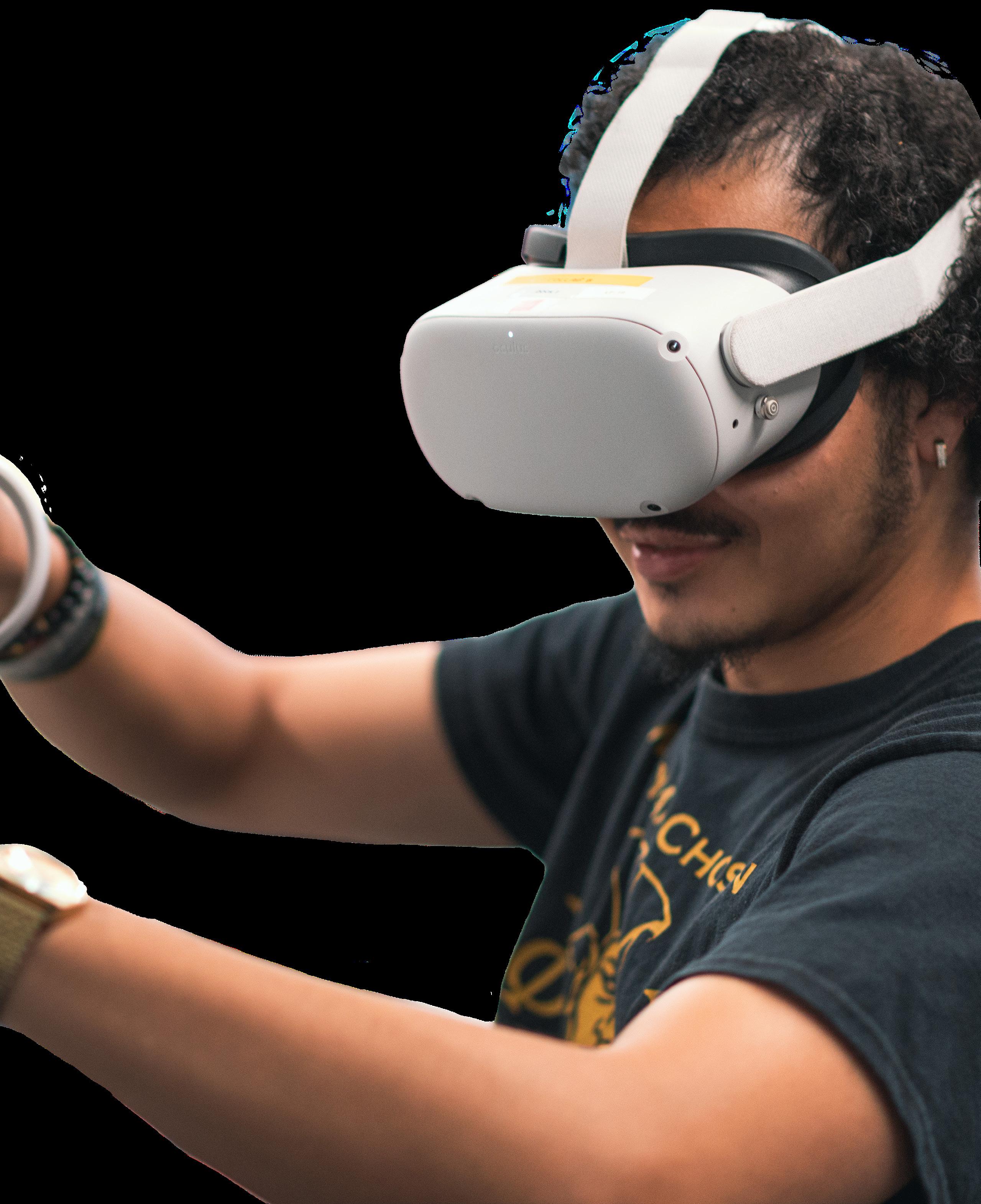

Providing 21st century tools for work and learn: Grab your ASU Digital Backpack
A suite of tools for learning, creating and collaborating offers free access to Adobe Creative Cloud, Zoom, Slack, Dropbox and more to enhance the ways we learn and work.
Ensuring the highest levels of trust
Enterprise Technology’s approach to cybersecurity includes several services that protect ASU community members’ digital identity and personal information getprotected.asu.edu
Creating what’s next, now: Trusted Learner Network, ASU Pocket and Interactive Degree Planner
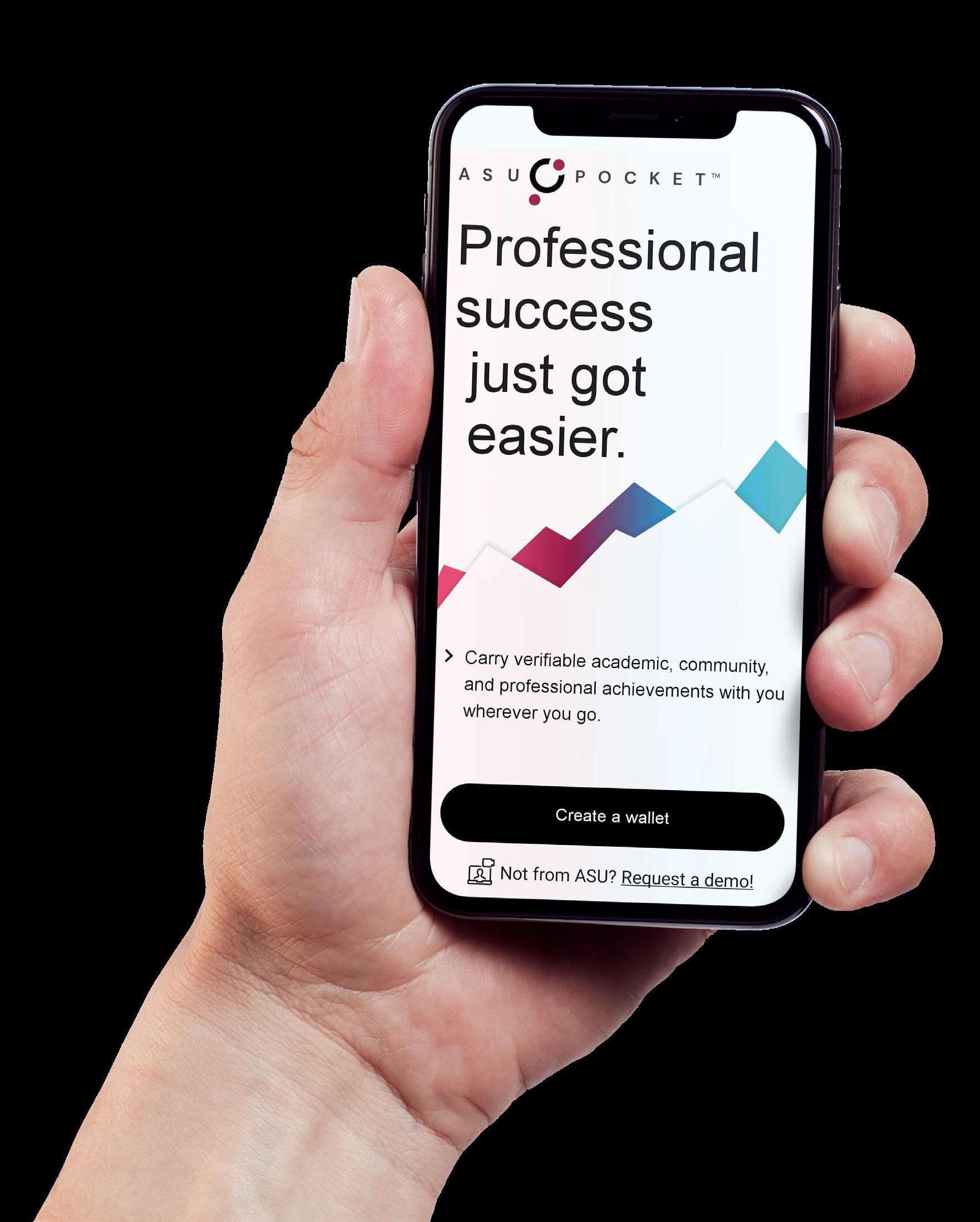
Recognizing that learning happens across lifetimes, ASU is committed to helping students better navigate their learner journey. To do so, the university is developing a suite of tools that improve credit mobility and showcase the depth and breadth of individuals’ education and experience. This includes a digital credential ecosystem through the Trusted Learner Network, a digital wallet for individuals to securely store and access credentials called ASU Pocket and the Interactive Degree Planner to optimize earned credits to create a pathway to graduation.
tln.asu.edu pocket.asu.edu
To date, this transformation has encompassed more than 30 buildings, integrating 460 switches and 2,000 wireless access points. This strategic overhaul is designed to elevate the IT infrastructure, ensuring it is ready for the growing capacity, speed, reliability, and resilience needs. The goal is clear: to provide robust support for the burgeoning innovations among our community,both now and in the foreseeable future.
In partnership with the Office of the University Provost, teams of technologists at Enterprise Technology support the technical foundation for these platforms, providing daily updates, tools and services to the Sun Devil community.
The Experience Center continues to meet students and learners where they are. A partnership with ASU Enterprise Brand Strategy and Management resulted in a new service offering where the ASU community can get support through ASU’s social media platforms.
Launched this year, IT Connection website is a one stop knowledge portal for ASU’s IT staff professionals to be connected with information that is pertinent to their role.