Water Desalination ReporT
The international weekly for desalination and advanced water treatment since 1965
Volume 62, Number 4 26 January 2026
Chile
Striking mine worker’s stop SWRO
Canadian-headquartered Capstone Copper said that unionized workers at its Manteverde copper mine in Chile went on strike on 2 January and have now interrupted SWRO plant operations. The company said that striking union members entered the desal plant facilities on the evening of 18 January and interfered with the SWRO’s electrical system, resulting in the interruption of water supply to Mantoverde.
Late last week, the company said that the strikers have continued to prevent access and the restart of facility operations at the desal plant, which is located 40km (25 mi) from the mine. At Mantoverde, on-site water reserves were continuing to be used for essential services. However, sulfide operations were temporarily suspended and oxide operations were expected to be halted unless the water supply is restored.
The company is currently seeking judicial support to regain access to the desal plant to restore water supply to the mine and resume operations. Meanwhile, it says it remains willing to engage in discussions to seek a resolution with the union.
The original 10,368 m3/d SWRO (2.7 MGD) was designed and supplied by Valoriza Agua (now Sacyr S.A.) in 2014. It was expanded to 22,464 m3/d (5.9 MGD) in 2023, and is located at Corral de los Chanchos Bay, Chile.
Company News
4th ranked desal supplier acquired
Spain’s NMDC Group, an EPC and marine dredging firm, announced that its wholly owned subsidiary, NMDC Infra, signed a strategic acquisition agreement to acquire 51% of Lantania Aguas, Grupo Lantania’s desal and water specialist. Lantania Aguas will operate under the name Lantania NMDC Water, and Group Lantania will retain the remaining 49% of the company.
In 2022, Lantania hired former Abengoa Water and Energy CEO Pedro Almagro to launch a new desalination division. The company, which was ranked fourth in desal production capacity contracted in 2024-2025, already had had a role in consortium building the 600,000 m3/d (158.5 MGD) Jubail
SWRO project in Saudi Arabia, and when it is operational, will have 1.55 million m3/d (409.5 MGD) in operation.
Lantania NMDC Water will combine NMDC’s commercial and technical capabilities with Lantania’s experience, credentials, and expertise in desalination, wastewater treatment, and water reuse to create a leading global operator in water infrastructure. The rebranded company will comprise over 300 professionals, and a current project backlog totaling more than AED 2 billion [$544 million] spread across several countries, a solid foundation that supports its growth outlook
Caribbean Island gets new SWRO
Last week, Florida-based Seven Seas Water announced the opening of its 9,084 m3/d (2.4 MGD) Barnacle Point SWRO plant in Antigua. This was the second SWRO plant that the company inaugurated for Antigua Public Utilities (APUA) in the past twelve months.
The plant has been producing water since November 2025 and is located adjacent to APUA’s existing Ivan Rodrigues SWRO plant, to leverage existing infrastructure. It will serve communities in the island’s northwestern corridor.
The plant was delivered under Seven Seas’ water-as-a-service delivery model employing a 12-year BOOT agreement.
Singapore Hyflux trial resumes
As testimony in the trial of Hyflux founder and former CEO Olivia Lum and five other executives continues, a securities expert testified that Hyflux executives did not give a full picture of the new Tuaspring project in 2011, and that “red flags” would have been raised if investors had known that water sales from the integrated water and power project would be used to subsidize the cost from the power plant.
When the plant began selling electricity to the grid in 2016, there was an oversupply in the electricity and Hyflux began to lose money. It finally declared bankruptcy in 2018, and it has been speculated that Hyflux’s 34,000 retail investors were owed S$900 million ($663 million). Meanwhile,
Tom Pankratz, Editor, P.O. Box 75064, Houston, Texas 77234-5064 USA
Telephone: +1-713-397-2125, www.desalination.com/wdr, email: tp@globalwaterintel.com © 2026 Media Analytics. Published in cooperation with Global Water Intelligence.
criminal investigations were initiated against the executives, and in 2022, two civil lawsuits were filed in the Singapore High Court, and six violations in the Securities and Futures Act and the Companies Act.
If convicted, each of the accused may face up to seven years in prison, a fine of up to $196,270, or both, while Lum and the four independent directors could also face up to two years in prison, a maximum fine of $115,760, or both.
The trial is scheduled to conclude on 5 February.
Lessons Learned
My favorite plant
In 2020 and again in 2024, WDR asked some veteran desalters to name their favorite desal plant or most memorable project, and briefly explain what made it so unforgettable. There were 37 responses that were included, two or three at a time, in WDR over several weeks. There are now some more memorable projects to be added to the collection, beginning with a low-pressure membrane plant and followed by a SWRO plant:
Diana Mourato-Benedek, PhD, membrane pioneer
David C. McCollom Water Treatment Plant
Olivenhain, California 2002
My absolute favorite project is the Olivenhain Water District’s David C. McCollom Water Treatment Plant in North San Diego County, California. When the original 25 MGD plant was opened in April 2002, it was the largest immersed UF membrane plant in the world, and Zenon’s first large US drinking water plant that used our submerged ZeeWeed UF membrane.
Besides those two important Zenon ‘firsts’, Olivenhain was particularly important to me because it was the first time that our paradigm-shift UF technology was validated for a large US drinking water plant, which would open a large market for us. For me, it was even more personal, since I played a key role in the development of ZeeWeed and, as vice president of municipal systems, I was now responsible for its commercialization.
Due to the project’s size and importance, I was personally involved in an Arizona pilot study that was required by Boyle Engineering before they would recommend the technology to their client. I also had to convince Boyle’s membrane expert, Steve Duranceau, that immersed membranes were a cost-effective replacement for pressurized membranes.
Because of our success in MBR applications, and three much tougher drinking water applications, two in Canada, and a containerized Arizona project for CH2M Hill, we were very confident. In fact, we considered drinking water to be an ‘easy’ application.
Memcor, Aquasource, and Pall, all offering pressurized membranes, were our main competitors. We were the only company offering an immersed membrane product operating under vacuum. The competition was fierce.
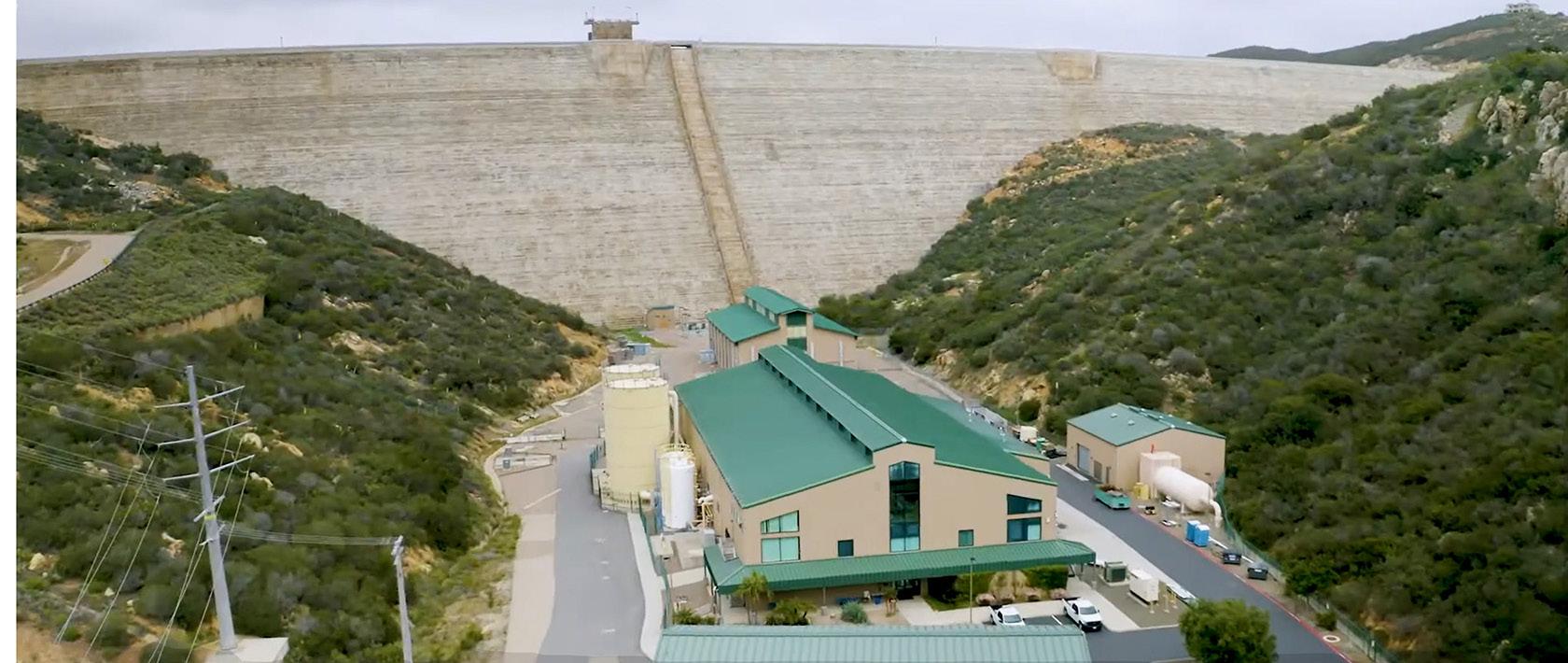
Since the plant was fed with pressurized water from the dam immediately behind it (see photo, below), it was obvious that without a creative solution, our competitors would claim that the application was better suited for pressurized membranes. Together, Zenon CEO Andrew Benedek and Steve Low, my senior applications manager, developed a concept to recover energy from the dam’s spill water to run the blowers. They
– 26 January 2026
worked closely with Boyle’s Ernie Kartinen and his team, and with JW Contracting’s Stan Simmons, to ensure that the immersed concept worked.
After many “NOs”, we finally got a “YES”, and 23 years later, the plant is still operating and providing exceptional water quality. Furthermore, we used our membranes to filter process wastewater and, because there were no sewers in the area, installed the first membrane concentrate filtration system to increase the plant recovery and reduce the volume of waste to be hauled off.
A little bit of creativity often goes a long way, and it made the difference in this project. Today, immersed membranes are an industry standard, and being called the “Mother of ZeeWeed” by former colleagues and clients fills me with pride.
Before the Olivenhain startup, and soon after Zenon was awarded the Collingwood, Ontario, drinking water plant, the Memcor sales manager pulled me onto the dance floor at the 2001 New Orleans AWWA conference. He told me to enjoy my win, because this was my last one. My answer: “Watch me.” After being awarded the Olivenhain project, which was followed by many others, he never asked me to dance again. Not much later, to explain our technology difference, my team and I had to wear “We suck – They blow” T-shirts at the WEFTEC conference, courtesy of our CEO, Dr Andrew Benedek. Considering that this occurred on the heels of the Clinton/Lewinsky scandal, it was not an easy wear.
Many of the people that were involved in the plant installation are still active today, including Kim Thorner, who was the lawyer with whom I had the toughest negotiations ever. In 2007, Kim was promoted to general manager of Olivenhain Water District, a position she still holds.
Epilogue: In 2004, the plant was expanded to 34 MGD, and in 2022, it celebrated 20 years of successful service. In 2027, Zenon was acquired by GE Water, and its ZeeWeed membranes have been a part by Veolia Water’s technology portfolio since 2022. Boyle Engineering was acquired by AECOM, and CH2M Hill is now Jacobs. Steve Duranceau is now a professor at the University of Central Florida. Andrew Benedek went on to found Anaergia, from which he retired in 2023. Steve Low followed Andrew and Diana to Anaergia, as director of application engineering. Diana and Andrew moved to Rancho Santa Fe, California, in 2005, and she told WDR, “We actually moved to this area because we wanted to drink ZeeWeed water!” She retired in 2023 to cofound and direct the Benedek Climate Change Foundation, a non-profit organization.
Neil Hawkins, independent consultant Cayman Brac SWRO upgrade, 2003
Without a doubt, Water Authority Cayman’s (WAC) Brac SWRO plant on Cayman Brac, a small island 145km (90 mi) north of Grand Cayman, is my favorite project. My association with the plant dates to 2003, when I was part of the team that was dispatched from Grand Cayman for 5 weeks, to commission an upgrade to the 560 m3/d SWRO plant initially furnished by Reliable Water in 1991. Since 1989, the Brac plant has been operated by Ocean Conversion Ltd (OCL), a Consolidated Water Company (CWCO) subsidiary. The project was turned over to WAC in 1996, who has owned and operated it ever since.
The design and planning of the upgrade went back some time, and most of the equipment had been warehoused on the island for a couple of years. WAC was exerting pressure to finish the upgrade, and I suggested to OCL’s Gerard Pereira that I could be part of the team to complete the works—a team that also included Jeremy Yates, the venerable Flo Pelletier (Maga Systems), who built the control panel, and two electricians.
One big challenge was that once the preparations were made and the trigger pulled, the plant would be offline for an estimated 10-15 days, until the upgrade was commissioned, so the island would have to rely on its storage tanks. Therefore, it was imperative that we completed as much work as possible, prior to the shutdown.
For three weeks, we traveled to Brac each Monday, and returned every Friday, on a series of memorable flights on Island Air’s small, prop-powered planes, highlighted by one Monday morning flight, when we were joined by the governor and his wife. On that flight, the pilot saw fit to lean backwards from the cockpit to interrupt a particularly salacious story being told by one of our electricians, to spare the first lady’s blushes.
WAC’s plant manager, Bernstein Banks, and his nominated successor, Paul Connolly, were onsite to oversee our work, and they provided endless mirth during the project, and ever since we have known them.
Prior to the start of the project, Gerard, Flo, and I took a factfinding preparatory site trip. During that trip, Flo insisted that we relocate the Wheatly high-pressure pump’s soft-start cabinet contents from outside the control room to a new MCC bucket that housed a DOL starter that we couldn’t use. Although the geometry was altogether different, Flo promised it would be a “two-hour project”, despite Gerard’s skepticism.
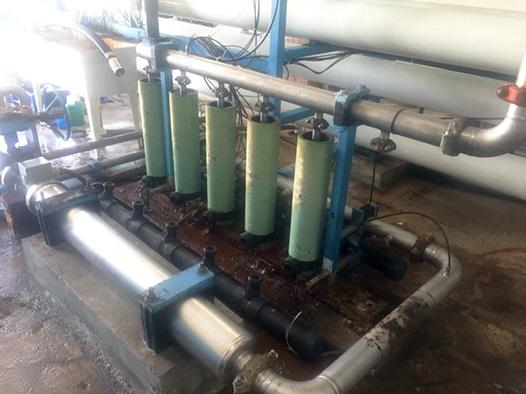
When commissioning time came, the old plant was removed, except for the Wheatly HP pump, which was to be reused with (pre-yellow) ERI PXs to increase production. We raced against time to complete the work and indeed, did so without the tank levels dropping below 30%. However, the “twohour project” morphed into two and a half days, much to the merriment of all, and has gone down in lore, accordingly.
That commissioning week remains a highlight of my time in the industry. When one of the owner’s staff was initially told that we were going to Brac for a few weeks, he was overheard telling a colleague, “All they’re going to do is work and drink”, and that’s what we did. It was an outrageous, hilarious, and ultimately successful upgrading of the plant. The only one who seemed disappointed was a disgruntled “programmer” who came to the site on the final Saturday and sulked his way through final startup.
Since then, I’ve been fortunate to have returned several times. The first was in 2011, as a representative of NanoH2O, to do our first membrane performance contract with WAC. I also returned in 2017, with my friend and colleague, Bradley Sessions, as AQC (Idaho) Ltd, to upgrade the plant with new HPP and ERI PXs, along with a new control system which I built from scratch (with wire numbers and markers for the first time).
The Brac plant staff and administrative staff, past and present, have always been wonderful to work with, and I should like to thank them all for their kind treatment of me over the years. I dedicate my memories in this small piece to my friend, the late Cameron Freddie Baumann without whom the world is a sadder place. We laughed from morning ‘til night.
Epilogue: Gerard Pereira formed H2Oracle, Ltd in 2018, and in 2023-2024, with Neil’s assistance, the company completed another Brac upgrade for WAC, doubling the plant’s production capacity.

In brief
The agenda for CalDesal’s 2026 Annual Conference, which will be held on in Sacramento, California, on 12-13 February is now available at https://www.caldesal.org/events
People
Lance Johnson has stepped back from his role at Nitto Hydranautics as he settles into a new, permanent residence in Sicily. He told WDR, “I fully expect to remain engaged in the water sector and anticipate exploring advisory or consulting roles where my background and experience can be effectively applied. I look forward to re-engaging with the industry in this capacity in due course. He may be contacted at landalson@gmail.com
Rate for one year: £455 or US$685. Subscribe and renew online at: www.desalination.com/wdr. Reproduction or electronic distribution is forbidden. Subscribers may circulate their copy on their immediate premises. To email or create additional copies for other office locations, contact Kirsty Hewitt (khewitt@globalwaterintel.com) to arrange a site license.