DidacticsofMathematicsin LatinAmericanCountries
Practicesand Problematics onDidacticsof Math
Educational process in Colombia. How to improve it ?
Get in touch with the didactic practices and problamatics of mathematics in several countries of Latin America.
 Nicolás
U N A D 2 0 2 4 L I L E I - D I D A C T I C S O F M A T H E M A T I C S - G R O U P 1 4
By
Rayo, Yeiner Molina, Yuli Ospina, Hanna Suarez, and José Montaño
Colombia 1 2 3 4 5
Rica INDEX
Brazil Costa
Chile Argentina
the importance that students have access to mathematical Olympics with their previous preparation to achieve adaptation in that area and advanced training in this field that leads to scientific path.
Improving education in Colombia requires training in the mathematical field of teachers of all areas. The intensity is necessary to put it into practice from primary teachers, as the first social contact faced by students and later in secondary school, looking for reading skills development alternatives in students for a better understanding of mathematics.
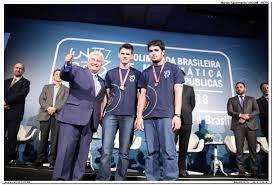
Brazil has a Brazilian Academy of Sciences in Rio de Janeiro. Brazil has a National Institute of Mathematics (IMPA). Brazil makes efforts to have several students with scientific training through the Brazilian Math Olympics
Brazil and Mexico, are densely populated (176 million and 105 million inhabitants, respectively), while others
Brazil total population
186831
Annual population growth 1.3 % Life expect at birth 71 poverty with less than 2 USD/day 21 GDP per capita 8402.
Brazil has students with low reading and math skills which is higher than Colombia. Brazil is among the countries where students have little ability to solve mathematical problems.

S O L U T I O N T O R E D U C E T H E P R O B L E M O F D I D A C T I C S O F M A T H - A P P L I C A T I O N T O C O L O M B I A ’ S C O N T E X T F A V O R A B L E A S P E C T S
N E G A T I V E A S P E C T S

Currently, there is development of new programs focused on education based on solving problems related to real contexts.
Math can be used to transform vision of mathematical activity in the classroom environment.
The importance of building new learning by involving aspects such as reproduction, connection, and reflection (Arce et al.,2013).
Some problems of mathematics
teaching in Costa Rica involve the elementary school in which the features of national education do not determine the areas or contents that elementary school teachers should have. Moreover, the knowledge in mathematics for teachers are not focused on a pedagogical perspective (Arce et al., 2013).
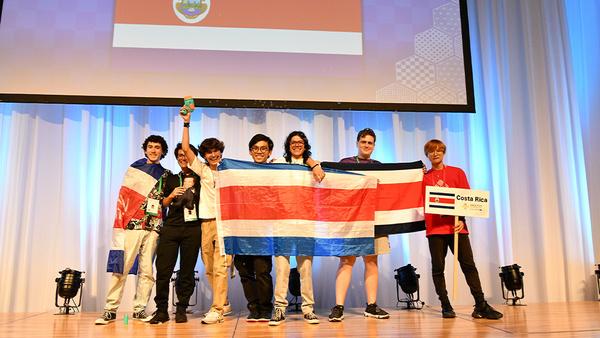
A common aspect that these two Latin American countries share is that math teaching is not focused on a pedagogical perspective in some schools. Hence, the didactics methods are not motivating and related to practical application in real contexts. However, it is necessary for Colombia to follow the system of Costa Rica for developing programs focused on math real application and critical thinking for making learning meaningful.
P O S S I T I V E A S P E C T S O F D I D A C T I C S O F M A T H I N C O S T A R I C A A S P E C T S I N W H I C H D I D A C T I C S S H O U L D I M P R O V E I N T H I S C O U N T R Y
A P P L I C A T I O N F O R C O L O M B I A ’ S E D U C A T I O N S Y S T E M
DIDACTICS OF MATHEMATICS IN CHILE
POSSITIVE ASPECTS
Chile's proactive measures to enhance the quality of mathematics education demonstrate a commendable commitment to addressing longstanding issues within its educational system. By involving researchers and prominent mathematicians in training school teachers, Chile has recognized the importance of bridging the gap between theoretical knowledge and pedagogical practices. Additionally, the implementation of specialized online courses for both high school and elementary teachers signifies a strategic approach towards continuous professional development. Moreover, the shift in attitude within the mathematical community from blame to shared responsibility reflects a mature understanding of the complex factors influencing educational outcomes.
NEGATIVE ASPECTS
LHowever, Chile still faces challenges such as the heterogeneity in mathematics teaching programs and the need for stronger connections between disciplinary knowledge and teaching techniques. To further improve its educational system, Chile could consider investing in comprehensive curriculum reforms that align with international standards while also incorporating innovative teaching methodologies Additionally, fostering collaborations between academia, government, and local communities can facilitate the exchange of best practices and resources. Moreover, prioritizing equitable access to quality education, especially in underserved regions, is crucial for ensuring that all students have the opportunity to succeed in mathematics and beyond.
HOW TO ENHANCE EDUCATION IN COLOMBIA ?
LTo enhance the educational process in Colombia, it's crucial to prioritize several key areas. Firstly, investing in teacher training and professional development programs akin to those implemented in Chile can significantly improve the quality of mathematics education. By involving researchers and mathematicians in training sessions and developing specialized online courses, Colombia can bridge the gap between theoretical knowledge and effective teaching practices. Moreover, fostering a culture of shared responsibility among the educational community, similar to the shift observed in Chile, can promote collaboration and collective efforts towards improving student outcomes.
DIDACTICS OF MATHEMATICS IN ARGENTINA
POSSITIVE POINTS OF ARGENTINA
As an important point, it is worth highlighting mathematics events that take place in Argentina such as the International Seminar, the National Mathematics Olympiad, activities that are carried out every year (Bosch et al , 2010)
The international seminar brings together experts from all over the world for a week, along with more than 300 professors from Argentina. Prominent mathematicians committed to education participate in this seminar, where the potential for teaching mathematics is explored.
The Mathematics Olympiad is one of the largest and best competitions in the Latin American and Caribbean – LAC region, catering to students ranging from primary school to secondary school
The University of Buenos Aires (UBA) holds an exhibition every year called “Elementary Samples of Mathematics” where it receives groups of students to take a tour of the world of mathematics, in which students can interact in Mathematical games, explore, and learn in a fun way.
Holding conferences for different audiences, such as teachers, students of different levels and the public.
NEGATIVE ASPECTS OF ARGENTINA
Regarding the Pisa 2022 tests, these exams allow us to see how young people are prepared for life after school.
Students from Argentina obtained 378 points in mathematics, which means that this score placed the country in 66th place out of 81 countries, meaning that 7 out of every 10 students in Argentina did not achieve basic levels in Mathematics (Argentino por la Educación, s.f.)
This subject, which was the main point, 72.9% of the students were below level 2 of performance, which is considered the minimum.
Based on these results, we can say that, if we want to be part of this globalized and competitive world, we must be prepared in mathematics. It has been shown that through the different tests and evaluations carried out such as the PISA test, Latin America and the Caribbean obtain the lowest results; It is clear to see that there are difficulties in teaching mathematics and this is due from the beginning, that is, from primary school where the bases for knowledge of this important and indispensable area are formed. This type of tests where the level of knowledge of the students is measured is a clear sign that as teachers, we are not doing things well and that for this reason we obtain low results.
RECOMMENDATIONS FOR ARGENTINA AND COLOMBIA
Its important to have professional mathematicians who help teachers acquire the necessary mathematical knowledge and become more effective instructors, to raise the level of all students.
Some teachers who teach mathematics are unqualified or poorly qualified. The only way to help students understand and master mathematics is to give them teachers who have a deep knowledge of their discipline and the professional training necessary to teach it properly, because this teaching skill is learned over time through training and practice. of the exercise of teaching.
It is important that teachers acquire new knowledge through training, updating, and using technological tools that allow them to be used in the classroom to help students build their own knowledge based on their own experience and the interaction they establish with its environment The use of technological tools and access to the Internet allows us to have a greater diversity of educational programs, support material and information to improve the learning experience, both for students and teachers. Its important that the student has the knowledge of their language so that they can read and understand a mathematical problem, the same happens with teachers, in which they must have a command of their language so that they can communicate mathematical concepts, that is why Therefore, education experts increasingly recognize the importance of this relationship Since good communication allows us to understand and solve a mathematical problem
DIDACTICS OF MATHEMATICS IN COLOMBIA
According to Arango o & Cosio J (2014) The most important aspect to address is a lack of state policies for science education. so, we nee learn to teach mathematics and we acquire methodologies in didactics of Math. In this way, the problem is made very long taking into account that some books are defective, and have a very extensive curriculum, so, there isnt structured planning.
All these aspects are a revelation of abandonment and lack of logical reasoning among other things because the Colombian culture lacks reading.
Mathematics is seen as a grammatical language of formulas and not as a science in which you have to think with reasoning, and the biggest problem is that in general the habit of reading any science of knowledge well is not nurtured. The biggest problem that arises is that we have not learned to read.
Mathematics teaching in Colombia has difficulties because We were not taught to convert language problems into mathematical formulas So, mathematics teaching in Colombia needs to be tuned towards new methods motorized by critical thinking and the proposal of students and learners in strategies for solving problems by thinking logically.
According to Gómez S. Alfonzo (2018). Some of the first mathematics teachers in Colombia were professionals from other areas such as engineering, who perhaps were not pedagogues.
Negative aspects:
Poor organization of the curriculum
Old methods
Capacitation to the teachers focused in specific áreas
Teaching methods that are meaningful for the student are not established
The books that are used do not lead to a field of action but to the consumption of contributions and methods
Furthermore, they are books that do not present a well-organized explanatory design
People are not taught to read mathematically
Then in Colombia, a teacher of different áreas teaches matters that arent your competencies
Some teachers are not trained in mathematics teaching but, they have to teach mathematics and other áreas
Finally, there are fewer and fewer students interested in training as mathematics professionals.
Positive aspects:
In Colombia, mathematics is considered a fundamental área of teaching, in this way becomes necessary in all educative institutions
Gómez S Alfonzo (2018) It is important to highlight the interest in improvement that Colombia demonstrates with the intervention of Colombian teachers in international meetings sponsored by FISEM, ICMI, CLAME CIAEM, etc
Many teachers in Colombia are teaching math from investigation
Some institution are noticing their shortcomings and they are using methods from other countries
The teaching of mathematics through investigations.
Teaching mathematics in Colombia has been promoted by different institutions such as magazines, National conferences, universities, meetings, etc.
The best practice to consider.
To study mathematics seeing it as a science fo solving problems and using it in context from real life
Training teachers in specific areas for teaching mathematics and not, particular teachers for teaching mathematics in the school.
Adopt modern didactics and pedagogical practice for math teaching.
To do a curriculum with the implemeation of adapted positions and strategies in math teaching.
Teaching to the student and the society in logical thinking
Culture of reading and reflexive critical in solving problems
Teaching the learner in the method and formula creation for solving difficult situations
References
Arce, A. L. A., Alpízar, M., López, Y. M., Ramírez, M., & Huertas, O. S. (2013). La formación inicial y continua de docentes de matemáticas en Costa Rica. Cuadernos de Investigación y formación en Educación Matemática, 131-173. Vista de La formación inicial y continua de docentes de Matemáticas en Costa Rica | Cuadernos de Investigación y Formación en Educación Matemática (ucr.ac.cr)
Argentinos por la educación. (s.f). Como le fue a Argentina en las pruebas de pisa 2022. https://argentinosporlaeducacion.org/informe/como-le-fue-a-argentina-enlas-pruebas-pisa-2022/
Arango o. & Cosio J. (2014) La enseñanza de las matemáticas en Colombia. MedellinUNAL. Ciudad campus universidad Nacional de Colombia
https://youtu.be/laQX8 a4WXk?si=zCVESr5XE1YmJwSm
Bosch C; Álvarez, L; Correa, R: Druck, S; & McEaching, R. (2010). Mathematics education in Latin America and the Caribbean: a reality to be transformed. Science for a Better Life: Developing Regional Scientific Programs in Priority Areas for Latin America and the Caribbean. Volume 4. Mexico City, ISBN 978-0-930357-80-1. http://docplayer.net/20952213-Mathematics-education-in-latin-america-and-thecaribbean-a-reality-to-be-transformed.html
Enlace permanenteMostrar mensaje anteriorResponder
Gómez S. Alfonzo (2018) La educación matemática en Colombia: origen, avance y despegue. SciELO Bolivia. http://www.scielo.org.bo/scielo.php?
script=sci arttext&pid=S2071081X2018000200008#:~:text=La%20educaci%C3%B3n%20matem%C3%A1tica%20en %20Colombia%20tiene%20una%20historia%20tan%20antigua,Matem%C3%A1ticas%2 0de%20Mutis%20en%201762.