Publications of the Catholic Record Society

THE Catholic Record Society was founded 10June, 1904, for printing Registers and other old Records of the Faith, chiefly personal and genealogical, since the Reformation in England and Wales
THE Catholic Record Society was founded 10June, 1904, for printing Registers and other old Records of the Faith, chiefly personal and genealogical, since the Reformation in England and Wales

EDITED BY J. P. SMITH
1913
BY J. WHITEHEAD & SON, LEEDS

This Volume is Issued to the Members for 1912-13 being the second for the year
INTRODUCTION , by J. P. Smith
WESTBY Contributed by J. P. Smith
Historical Notes by JosephGillow Baptisms, 1763-1816
GREAT ECCLESTON . Contributed byJ. P.Smith
Historical Notes by JosephGillow Baptisms, 1771-1832
COTTAM . Contributedby Rev. Joseph A. Barker -
HistoricalNotes by Joseph Gillow Baptisms, 1783-1834
Confirmations
SALWICK HALLAND LEA. ContributedbyJ. P. Smith
HistoricalNotes by JosephGillow
Baptisms, 1775-1810
1810-1813and sundrydates
1820-1831
, 1776-1780
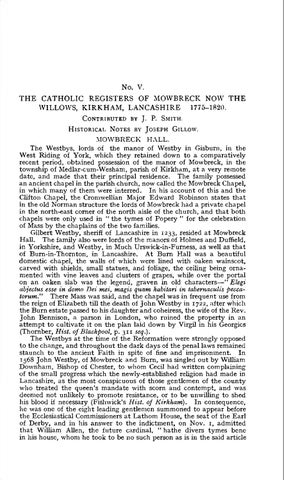
MOWBRECKHALLAND KIRKHAM ContributedbyJ.P.Smith
Historical Notes by JosephGillow Baptisms, 1775-1827
Burials, 1814-1839
NEWHOUSE . Contributed by Rev. Henry Roberts
Historical Notes by JosephGillow Baptisms, 1774-1834
Burials, 1808-1834
GARSTANG . To appear in the Second Volume. POULTON .

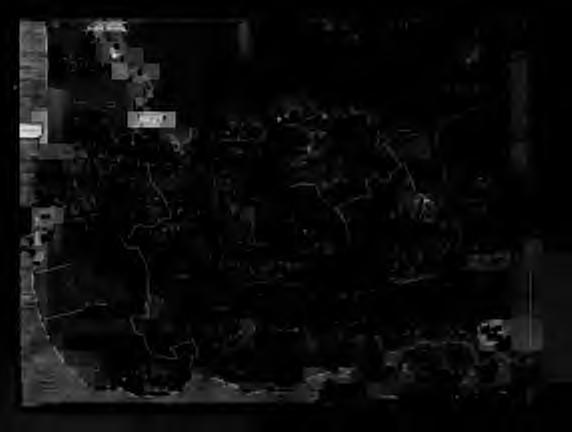
Thisisthefirst time that anyattempt has been madeto combine in one series the whole of the registers of any particular district The object is to make the records more useful to the genealogist; and to still further aid this intention a special map covering the Fyldedistrict has been prepared, as a knowledgeof local topography is essentialto this kind ofresearch This map shows the nine Catholic missions whose registers are now presented, and also the parish churcheswith the date of earliest registers, * so that the searchfor marriages and burials will be simplified and facilitated; baptisms of Catholics are seldom found in parish registers The parish and township boundaries are given, and many of the old halls where Mass was said in penal times are shown in a distinctive type, and though these old abodes of the gentry are now used as farmhouses and have fallen from their highestate, they will always be interesting to Catholics as having played an importantpartin keeping alive the lamp of the Faith in days of persecution.
This part of Lancashire known as " the Fylde" has no official delimitation Porter, in his History of the Fylde, describes it as consisting ofthe sixparishesofKirkham, Poulton, Bispham, Lytham, St. Michael's, and Woodplumpton The more general description would be the district bounded south by the River Ribble, north by the River Wyre, west by the sea, and east by the high road from Preston to Garstang. No district even in Lancashire has clung more tenaciously to the Faithor given more sons to the Church, and this may to some extent be accounted for by its comparative isolation, as lying off the main track . One of the most interesting books dealing with the Catholic life of this district is " The TyldeslyDiary " (covering the period 1712-3-4), which was edited by Joseph Gillow , and printed with copiousnotes in 1873. The period just beforethe Jacobite rising of 1715 is an important one, and this book is largely quoted by every historian dealing with this part of Lancashire. The " Haydock Papers , " by the same author, also deals largely with Catholic life in this neighbourhood.
Someof the registers were in a very bad state, and the printing ofthem has come none too soon if the records were to be preserved at all Thanks are due to the Archbishop of Liverpool and clergy for hearty co-operation, and especially to Dean O'Reilly and FF. Barker and Roberts for undertaking their transcripts. Only second in importance to the registers themselves are the historical notes on the separate missions by Mr. Gillow, the value
The following registers have already been printed by the " Lancashire Parish Register Society":Poulton, 1591-1677; Lytham , 1679-1754; St. Michael's , 16591707 ; Woodplumpton , 1604-1659; Bispham.
viii

ofwhichcannot easily be over-rated Mr. Gillow'splaceas a Catholic historian and genealogist is too well known to our membersto need recapitulation , but here he is in his own particular domain, and his vast stores of information have enabled him to produce what is practically a complete Catholic history of one of the most Catholic parts of England, and a veryfull record of the livesofthose devoted clergy who laboured so strenuously in this district.
J. P. SMITH
Members will like to know that Mr. J. P. Smith is presenting to the Society Volumes XV and XVI, bearing the whole of the expense of transcribing six of the nine registers, the preparation of the index and map, together with all the collation of proofs, printing, binding, etc. In addition, he has obtained subscriptions towards other registers. The result of his generosity and labour is that theSociety will be in a position to issue two volumes yearly for some time
Further, he has devoted his marked business ability and energy to organising the system of obtaining further transcripts of Lancashire registers, so that a fine collection is completed, and is being increased Being behind the scenes, I have knowledge of many journeys taken by him, large correspondence , and all that devotion and diplomacy necessaryto secure such results, and the confidence of those in authority. So I decline to be silentTHE HON SECRETARY

CONTRIBUTED BY
BY
J. P. SMITH
JOSEPH GILLOW
Westby Hall, so long the seat of the mission under the protection of its ancient lords , the Cliftons, is situated between Kirkham and Lytham,and is nowa farmstead , with no visibletraces of thetimeswhen it was the residence of a great territorial family The manorofWestby originally belonged, it is believed , to the family of that name which eventually through an heiress obtained and settled at Mowbreck Hall, in the neighbouring township of Wesham It had passed , however , into the possession of Gilbert de Clifton, of Clifton, about the time when he was sheriff of Lancashire in 1278. His descendant, Richard de Clifton, foundedthe chantry of the Holy Crucifix in the parish church of Kirkham , and on July 1 , 1444, had a licence granted to him by the archdeacon of Richmond to have divine services performed by a fit chaplain within his Oratories at Westby and Clifton-(Raine's Lanc. Chantries, Cheth Soc , ii, 213) In 1606, Cuthbert Clifton, subsequently knighted, purchased the manor of Lytham, and about 1625 converted the ancient priory with various additions into a residence, known as Lytham Hall, to which he removed from Westby, and died there in 1634. Westby Hall, however , longcontinuedto be occupied as a dowerhouse or by various younger members of the family In 1641 the hall was held by the parliamentarian Major Edward Robinson , and the cavaliers made an unsuccessful raid on the place, and a good dealof skirmishing was the result. During the Cromwellian sequestration , Mass no doubt ceased to be said under the roof of the hall, but there is evidence that it was said elsewhere in the township, and that the numerous Catholics of the district had always their spiritual wants attended to by a resident priest As in similar histories of missions during the dark days of persecution , only occasional glimpses are obtained of those good priests who risked their lives in their efforts to preserve the faith and serve their countrymen, and the record of such is as follows:
- Sir Thomas Prymbett, the last incumbentofthe chantry of the Holy Crucifixin Kirkham, ofwhich Sir Thomas Clifton was patron at the time of the suppression, in 1548, was then sixty years of age. He withdrew with a small pension to Westby Hall, as chaplain to his patron, who died Sept. 19, 1551. There the good priest passed the remainder of his life, and died July 19 , 1564. In his will, dated the previous Jan. 24th, he describeshimselfas " Thomas Premytt, Preste, " anddesires tobe buriedin theparishchurch of Lytham ; he makes variousbequests, amongstwhich-"to olde Maystres Cliftoun a crone in golde" -(Raine's Lanc Chantries) The names of thenext two priestsmetwithin connec tion with Westby are from the reports of spies in 1581
Rev. " Richard Brittaine , a prieste, receypted in the howse of William Bennet of Westbye , about the beginninge of June last [1580], from whence youngeMr. Norriceof Speake conveighed the said Brittaine to Speak, as the said Bennett hath reported This also appeareth by the presentmente ofthe vicareof Kirkham This Brittaineremayneth now at the howse of Mr. Warrine of Speake, as appearetheby the deposicon of John Osbaldston (by comon reporte) "(Fishwick, Hist of Kirkham, p. 201 ). The wife of Thomas Clifton, of Westby Hall, who died in 1608, was Mary, daughter ofSir Edward Norreys, of Speke Hall, co. Lanc , Knt , and Mr. Clifton's grandfather and namesake married Eleanor, daughterof Sir AlexanderOsbaldeston, of Osbaldeston Hall, co Lanc , Knt Several of the Brittons (Brettons) were at the colleges at Douay, Rome, and in Spain.
Rev. " Rica Hadocke , a seminarie priest, als. deiv' Tytmouse, conversantein the companie of two wydowes, viz , Mrs. Alice Clyfton and Mrs. Jane Clyfton, aboute the first day of October last, 1580 , by the reporte of James Baine . This appearethby the presentmenteof the vicar of Kirkham "(Fishwick, Hist of Kirkham, p 201). Dr. Richard Haydock usually lived at Cottam Hall, and he apparently used the alias of Titmouse. He was a relative of the Cliftons, his greatgrandfather, Gilbert Haydock, of Cottam, having married Alice, daughter of Robert Clifton, of Westby and Clifton, and the families were otherwise allied. " ffather Robinsonne , " unidentified, the name probably being an alias, is also found in the report of a spy, about 1585, as apparently dividing his services between Cuthbert Clifton at Westby and Mrs. Tyldesley, the wife of Thurstan Tyldesley, at Stanzacre Hall, in Myerscough (P.R.O. Dom Eliz, vol clxxxv, No. 85).
Dom Lambert Clifton, O.S.B., son of William Clifton, of Ballam in Westby, gent , younger son of Thomas Clifton, of Westby Hall, Esq., by his first wife Eleanor, daughterof Sir Alexander Osbaldeston , of Osbaldeston Hall, Knt , was entered in the rolls of the Preston Guilds of 1582 and 1602. Hewas professed at S. Facundus , Sahagun, in Spain, came to the English mission, and was apparently in London, usingthe alias of Lawrence Lambert in 1605 , and was imprisoned with the venerablemartyr John Roberts in Newgate in 1610-(Camm, Life of Ven John Roberts, pp 178, 289, 291) After his release he came to Lancashire, was serving the mission in 1619 (Weldon, Chron. Notes , Appx , 6), and was probably at Westby Hall till his death, the date being assigned to March 30, 1631 .
Dom Edmund Augustine Smith, O.S.B., a native of Lancashire , went toRome,where he was received intothe English HospitalMarch28 , for eight days, and thence on April 12 , 1589 , was admitted into the English College by Fr. Joseph Cresswell, S.J., the rector, at the age of 24. He took the college oath on Dec. 8 following (Foley, Records S.J., vi, 178 , 561), and was ordained priest, but immediately afterwards joined the Benedictines at Monte Cassino, where he was professed in 1592. "Hewas soesteemed, " says Dom BennetWeldon (Chron Notes , O.S.B., p. 40), " especially for his skill in the canon law, that they made him their vicar to discharge the episcopal jurisdiction that blessed and renowned sanctuary enjoyeth in its territory." In 1605 he left for the English mission, and was appointed superiorof the Italian Benedictine Congregation in England- (Snow, Bened Necrology, p 38) When it was considered expedientto unite the old English, the Spanish, and the Italian Congregations in England, the last did not come in under the Brief Ex Incumbenti in 1619, and continued under their old Cassinese

3
superiors till at last they died out. Fr. Smith settled on the mission atWestby, and his name is coupled with that of Fr. Lawrence Anderton, S.J., alias John Brereley, Priest, in a spy's report to the Councilof the pilgrimage to St. Winifred's Well, on St. Winifred's Day, 1629, as * FF Andertonand Smith, "SirCuthbertClifton'stwo priests atLytham Hall and Westby Hall The date of Fr. Smith's death is unknown The next Benedictine found at Westby wasDom Gervase Grey, O.S.B., but of whom very few particulars can be traced. Thesurname was almostcertainly an alias, butasthe rather uncommon Christian name was one that was popular with the Cliftons of this period, it is suggestive that he was one of that family He was professed some time before 1619 at the great BenedictineAbbeyof MonteCassino (Weldon, Chron Notes , p 5), came to the Englishmission, and died at Westby Hall, April 6, 1641 (Snow, Bened Necrology, p 46)
As we have seen it was in or about this year that the hall ceasedto be occupied bymembers ofthe Clifton family As the Cassinese Congregation in Englandhad nowdwindledto the point of extinction, the mission was handed over to the care of the Jesuits, and probably served from Lytham Meanwhile , the civil wars broke out, several of the Cliftons lost their lives in the royal cause, and their estates were confiscated by the parliamentarians.
Fr.William Shackleton alias Stanton and Banister, S.J., was administering to the district at this period, but his notice will appearunder Lytham
Fr. Augustus Heneage alias Newby, S.J., succeeded Fr. Shackleton at Lytham in 1655 for some years MeanwhileWestby Hall had been let as a farmhouse , though it is almost certain that its chapel was regularly served It is the tradition that for some time Mr. Clifton's chaplain used to say an early Mass at Lytham Hall and a later one at WestbyHall. The next resident chaplain met with at Westby was--
Fr. Edward Barrow, S.J., born at Westby in 1660, most probably the son of John Barrow, yeoman, who appears as a recusant in Westbycum-Plumpton in 1667 (C.R.S., vi, 207) He entered the Society of Jesus at Watten on Sept. 7, 1683, and was made a spiritual coadjutor Feb. 2, 1693. He came to the mission in Lancashire , and was appointed chaplainto the Cliftons atWestby Hall Afterthe defeat of the Chevalier de St. George in 1715 , John Smith, of Stalmine, one of the two high constables for Amounderness Hundred, made his return to the Hon Commissioners for Forfeited Estates , and Estates givento Super- stitious Uses, in Oct., 1716, under the township of Westby-cumPlumpton, as "Abouta year ago one Mr. Barrow, a pop prt " (P.R.O. , Forfeited Estates Papers, 1 , 2) ; and at the Lancaster sessions , Jan. 15 , 1716-7, he was convicted as a popish recusant under the description of " Edward Barrow, reputed romish Priest" (Ibid , 62 P.) He was also outlawed Mr. Chambers Slaughter, the accountant-general to the Forfeited Estates Commission , was very anxious to catch Fr. Barrow , and the description he gives of his proceedings in his correspondence with the Commissioners reads like a romance , or a thrilling narrative of a priest hunt in the days of Elizabeth Fr. Barrow took refuge at Lytham Hall, but paid repeated secret visits to Westby Hall From the correspondence (Gillow , Haydock Papers, pp 232 seq ) it appears that Slaughterhimself discovered various hiding-places in the chapel, and obtained from them " a large quantity of folio books, among which several MSS , a large gilt head of St. Ignatius, some altar linnen, and a crucifix," and also " priests' vests, some altar and household linnen, and a large picture of ye Virgin Mary, which I suppose
by the size cover'd the wall at the altar. " As the goods were being conveyed away, on March 9, 1716, " the people at Kirkham came out and forct in the two horses which were hir'd from thence to bring Barrow's books, etc., to Preston . But bythe help of constable whom I charg'd, and some other assistance, I forct out the horses again, and brought off ye goods The reason, I apprehend , must be disaffection . " Fr. Barrow proved himself a match for Mr. Chambers Slaughter, and remained at Westby till his death in August, 1721 , aged 61 . He possessed extraordinary force of character, was a famous hunter, and used to follow the hounds with Squire Clifton His portrait in oil, with date and age, was eventually given by Miss Hall, of Westby, to her brother, the Very Rev. Provost John Hall, of Macclesfield, andremained in the presbytery there till after the death of Canon Henry Walker, when it passed to some other member of the Hall family, which was related to that of Barrow-
(C.R.S . , vi, 207) Fr. Barrow's successor was-Fr. John Berington alias Harper, S.J., born March 19, 1673, one of the ancient family seated at Winsley Hall, co Hereford, who at the time ofFr. Barrow'sdeathwas chaplainto William Hesketh, of Maynes Hall, in Little Singleton, Esq., and thence removed to Westby Hall In the beginningof 1729 ,BishopWilliams, V.A.-N.D., made his visitation, and gave confirmation to 247 of the united congregations of Lytham and Westbyin the chapel at Lytham Hall, Fr. Berington being present on the occasion with the Lytham chaplain, Fr. John Gosling alias Bennet , S.J. Upon the latter's departurefrom Lytham in 1741 , Fr. Berington took his place, and resided there till his death in 1743, and will be further noticed under Lytham. He was succeeded at Westby by-
Fr. Roger Leigh, S.J., son of Roger Leigh, of Aspull, co Lancaster, born March 15, 1708, who has already been noticed under Liverpool (C.R.S. , ix, 185) He came to Westby Hall in 1741. During Fr. Barrow's troubles, and probably for many years later, William Latham was the tenant-farmer of Westby Hall The Lathams became connections of the Leighs of Aspull, for Fr. Roger Leigh eventually died at the house of his nephew, Thomas Latham, in Wigan Lane, in 1781 . Soon after Fr. Leigh's arrival at Westby, Squire Thomas Clifton commenced to erect a new chapel attached to the westernend of the hall, which wasformallyopened onMay 1 , 1742. Like nearlyallofthechapels in the Fylde, it was " up-steps, " the lower portion being used for farm purposes. Three years later, in 1745, probably on accountofthe Jacobite rising of that year, Fr. Leigh was transferredby his superiors to Formby, and his subsequent career was spent as related under Liverpool. His successor at Westby wasFr. William Weldon alias Hunter, S.J., possiblydescended from the territorialfamilyseated atWeldon, in Northumberland, inwhichcounty he was born Dec. 12, or July 2 , 1711. He entered the SocietySept. 7 , 1732, and in due course came to the mission in Lancashire . He was at New House , Ince Blundell, in 1741 , according to Bishop Dicconson's list, probably having gone there in 1738, and thence was transferredto Westby Hall in 1745. Here he continued till his death, Dec. 3 , 1761 , aged 50 , and was succeeded by- Fr. Thomas Cuerden, S.J., born June 23 , 1718 , the younger son of William Cuerden, of Clayton-le-dale, co Lanc , chapman, who as a Catholicnon-juror registered his estate in 1718, and returned some land held in fee by his infantson Thomas , and estate at Cuerden forthe lives ofhissonsMatthew and Thomas. Thefamilywere originally descended

REGISTERS OF WESTBY 5 from the territoriallords of Cuerden (C.R.S., vi, 154) He entered the Society Sept. 7, 1737 , in due course came to the mission in London, and in 1761 was appointed to Westby Hall Here he commenced the registerof baptisms on Jan. 16 , 1763. In 1767 the Bishop of Chester had returns made to him as regards the numbers of papists and popish priests in his diocese, and the vicar of Kirkham reportedthattherewere 989 Catholics above sixteen years of age in his parish, and a Jesuit priest named Thomas Cuerden. In a previousreturn in 1717, the number of Catholics was estimated at 477. Westby Chapel, however, was further from Kirkham than that at Mowbreck Hall, which mission, now represented by The Willows, embraced the town of Kirkham OnSept. 21, 1784, Bishop Matthew Gibson,V.A.-N.D., made hisvisitation at Westby Hall, and confirmed 78 members of the congregation , Fr. Cuerden returning his communicantsat 360. At this period the Society had been temporarily suppressed, and Fr. Cuerden was described in documents as " ex-Jesuit , " or " Gentleman of the ex-Society" In 1791 hewas transferredto Scholes, near Prescot, where he died March 30 , 1793, aged 75. His successor was-
Dom Richard Bernard Butler, O.S.B., born 1748 , second son of Henry Butler, of Stalmine Hall, Esq , and his wife Mary, daughter of Richard Parkinson, of Claughton, Esq Fr. Butler's grandfather was Christopher Butler, Esq , the twenty-firstand youngestchild of Richard Butler, of Rawcliffe Hall, Esq He was professed at St. Gregory's Monasteryat Douayin 1776, and after being cellerarius was sent tothe English mission, first to St. Mary's, Liverpool, 1785-7, and thence to Follyfoot, co York, 1787-91, when he took charge ofWestby Herehe remained till he retired in 1820 from missionaryduty to his monastery of St. Gregory , meanwhile settled at Downside , near Bath, and there he died, July 2, 1825, aged 77. Upon his withdrawal from Westby his place was taken by-
Rev. Thomas Pinnington, who came to Westby from Heath Hall, co York, in 1820, and retained possession of the mission till 1830, though latterly for some brief period he had a Benedictine assisting in the mission. Mr. Pinnington's career will be found under Great Eccleston . Dom Peter Athanasius Allanson, O.S.B., born in London in 1805 , professed at Ampleforth, near York, in 1821 , and ordained priest in 1828 , for a short period assisted Mr. Pinnington at Westby Hall till his appointment, it is said, to Swinburne , Northumberland, though he appears in the registers of Bellingham as serving that mission from Dec. 6 , 1829, to Jan. 28, 1831. The remainderof his life he spent at Swinburne , dying Jan. 13, 1876, aged 70
Rev. George Leo Haydock, the eminent biblical annotator, succeeded Mr. Pinnington on Sept. 25, 1830. He was the youngestson of GeorgeHaydock, ofThe Tagg, Cottam, gent , and his secondwife, Anne, daughterand eventual heiress of William Cottam, of Bilsborrow, gent , and was bornApril 11 , 1774. Hemade his elementarystudies underthe Rev. Robert Banisterat MowbreckHall, where he remained for three years, andfrom that boarding-school was sent to Douay College, where he arrived April 29, 1785. During the French Revolution he effected his escape from the college on Aug. 5, 1793, and arrived in London nine days later After visiting his home, he proceeded to Old Hall Green, near Ware, about the following Dec. 3 , to join some Douay refugees assembled there, but left on Nov. 3, 1794, to repair to Crook Hall, Durham, where other Douay refugees had collected, but seeing thingswere so unsettled went home, and stayed at The Tagg, reading the vulgate, etc., until Jan. 13, 1796, when he set out for Crook Hall,
where hearrivedfourdays later. Therehe finished his course oftheology, was ordained priest Sept. 22, 1798, and was retainedin the college as a professor till Jan. 26, 1803. He then took charge of the mission at Ugthorpe, in Yorkshire, where he erected a new chapel, which was opened April 10 , 1810. He was transferred to Whitby in 1815 , and thence came to Westby in 1830, but only stayed eleven months. He withdrew to his estate, The Tagg, in August, 1831, and thereresided in retirement for eight years In 1839 he took charge of the mission at Penrith, where he projected the erection of a new chapel, but died before it was opened, Nov. 29, 1849, aged 75, and was buried in the new chapelon the left side of the chancel . His memoir and list of works will be found in the writer's Biographical Dictionary of the English Catholics, iii, 211-21 . He was succeededat Westby by- Rev. John Dixon, noticedunder Cottam, who came to Westby Hall in August, 1831 , and remaineduntil the chapel was closed by Squire Thomas Clifton in 1845. His predecessor, Mr. Haydock, writing in 1847, says that the income of the missionat Westby in 1831 amounted to about 100: " John Clifton [of Lytham] paid for all repairs, several hundreds, while I was there But in August, 1831 , his son Thomas Iwent over to the Protestant Church , and after some years shut up ye chapel, and my successor, John Dixon, got to Cottam happily John Clifton died Mar. 23 , 1832 [aged 68], nearLondon, perhaps still aCatholic, and was brought to be buried at Lytham . His son, upon whose wife I once called, about June, 1831 , was zealous for ye Protestant Church. Hehadneverbeen so foryeCatholicChurch, thougheducated at St. Cuthbert's College, andmarrying a Protestant clergyman's daughter, said to have been a Jewess, and both gamblersprobably neglectinga good conscience, easilymade shipwreckof the faith. May he return before it is too late [Thomas Clifton, whodied in July, 1851 , aged 63 , married Hetty, daughter of Pellegrine Treves, postmastergeneralof Bengal , and widow of David Campbell, of Kildaloig, Argyllshire, younger brother to Sir Lewis Campbell , Bart ] His son [John Talbot Clifton, who returned to the faith before his deathin 1882]got awhile to be M.P. for North Lancashire[1844-7], and talked foolishly about ye Protestant prayer-book, denying that there was any prayer for plenty and against 'dearth, ' being a protectionist The Clifton familyhas injured ye congregation atWestby, which had justbeautified ye chapelat£100 expense. The father of Thomas , [John], and son ofye admired old squire [Thomas, who died May 11 , 1783, aged 55], had formerly suppressed Salwick [Hall] Chapel, and had a lawsuit (in which he was cast) with Mr. Lund [Anthony, priest at Fernyhalgh, and vicargeneral in Lancashire ], etc., on ye death of good old Rev. Wilson [Robert Langstaff alias Wilson, who died at Salwick Hall, Jan. 14 , 1798]. The judge said he might have been transported, and he was probably ye first [of his family] who had thus acted towards his own Church. He lived atvariance with his wife Riddell [Elizabeth, daughter ofThomas HorsleyWiddrington-Riddell, of Felton Park andSwinburne Castle, Esq.], and all this tended to his ruin We must pray for all benefactors as ye family was longand for enemies too"(Gillow, Haydock Papers, p 237). And so Mr. Dixon was transferredto Cottam , in 1845 , where he remained till his death, June 4, 1852. After his departurethe missionwas temporarily served by- Fr. Joseph Postlewhite (correctly Postlethwaite), S.J. , born April 7 , 1784 , son of William and Elizabeth Postlewhite of Westby, where his ancestors had been tenant-farmers under the Cliftons for many generations , and had supplied a considerable number
of priests to the Church . He was educated at Stonyhurst, enteredthe Society at Hodder in 1803 , was ordained priest by Bishop Milner at Wolverhampton, Sept. 15, 1816, and, after serving at Wardour Castle, the seat of Lord Arundell, Courtfield, co Hereford, the seat of the Vaughans,Wigan, Boston, and Worcester , retiredto his home atWestby, and was the last to say Mass in the old chapel The old hall, the walls of which were of great thickness and strength, was then pulled down, and the chapel, with the part used as the priest's house, was converted into a farmhouse Fr. Postlewhitethen returnedto Stonyhurst, where he diedMarch 30, 1870 , aged 86-(Foley, RecordsS.J., vii, 618)
Afterthe closure of the chapel atWestby Hallin 1845, the congregation had to attend the newchurch erected in that year at TheWillows, Kirkham Atlength, in 1859, Miss ElizabethDalton, ofThurnhamHall, who died two years later, March 15 , 1861 , aged 81, purchased from Col. John Talbot Clifton a siteat Westby, near to the old windmill, and not very far from the hall, and presented it to the Bishop of Liverpool, Dr. Alexander Goss , for the erection of a new church , presbytery, and schools Miss Anne Orrell, of Blackbrook House, gave £500 , Mr. William Billington, of Kirkham, defrayed the expense of the chancel, Mr. John Hodgson, of Goosnargh, gave £100 andthetabernacle, and Mr. John Sidgreaves, of Lytham, gave a similar amount. The foundation-stone ofthe new church, dedicated to St. Anne, was laid on May 31 , 1859, by Bishop Goss, and on Aug. 26, 1860, it was solemnly opened. The design of the church was gothic but peculiar, being one of the bishop's ideas carried out by Mr. E. W. Pugin Eventually, during 1889-90, the roof havingforced the walls from the perpendicular and endangered the church, buttresses and iron columns were added under the supervision of Mr. Pugin's half-brother, the late Peter Paul Pugin, and in 1899 a neworganandgallery were erected Forfourteen monthsafter the openingof the church its founderRev. Frederick Hines, of The Willows, Kirkham, under which he is noticed , served Westby from thence, till the appointment in 1861 of- Rev. William Ball, born 1826, son of Mr. Thomas Ball, ofHeaton , near Lancaster , and his wife Jane, who died respectivelyat Lancaster and Kirkham, June 26, 1840 , aged 63, and Sept. 14 , 1854 , aged 74 . Some accountof this old yeomanryfamily, long seated at Dolphin Lee , in Bulk, near Lancaster, has appeared C.R.S., vi, 246. Mr. Ball was ordained priest at Ushaw , Sept. 21, 1850, and, after servingfor a short time at Wigan, and at St. Anthony's, Liverpool, was placed in 1852 at Thurnham , whence in 1857 he was transferred to The Willows, Kirkham, as assistant to Dean Hines, and, as already stated, became the first resident incumbent of the restored mission at Westby in 1861 (Hewitson, Our Country Churches and Chapels, pp 345-52) Owing to the faulty design or construction of the roof, the church was never considered safe, and on one occasion when Mr. Ball happened to shootan owl in the church, which he was unable otherwiseto get rid of, he informed the writer that he really thought the church would have collapsed through the explosion; but, as Mr. Anthony Hewitson observed, nothing appeared to disturb him, he never met trouble half way,and so kept the ball gently moving till his retirementfrom missionary duty, in 1877, to his relationsat Dolphin Lee, where he peaceably passed tohisrewardon June 27, 1880, aged 54. His successorsatWestby have been as follows :
- Rev. Thomas Dawson , 1877-82
Rev. Joseph Lowe, ordained priest at Ushaw , March 16 , 1878, after serving in Liverpool, came to Westby in 1882 and stayed till 1892 ,

when he went to Widnes, 1892-4, Woolston, 1894-1905, and thence retired in ill-health till his death, Nov. 23, 1911
Rev. George W. Park, ordained priest at St. Joseph's, Upholland, May 30, 1885, after serving in Liverpool came to Westby in 1892 , and is the present pastor J.G. 1763
Jan. 16. James Fairclough Son of Rob et Reb Fairclough of G. Plunton* John Hall and Ellin Wilding of G. Plunton, Godfr and Godmr
31. Thomas Hall Son of Tho. and Eliz. HallofG. Plunton. John Blakoe ofG. Pluntonand Ellin Fletcher ofWestby, Godfr and Godmr
31. Edward Abraham Sonof Tho and Eliz. Abraham ofWestby . Edw Barrow of Westby and Molly Hall of Weeton, Godfr an Godmr
March 5. Alice Gillot Daughter of Ric : and EllinGillotof Plunton John Whiteside and Ann EatonofPlunton, Godfr and Godmr
7. Richard Holiday Son of John and Mary Holiday of G. Plunton. Henryand Marg. Blakoe of G. Plunton, Godfr and Godmr
8. Elizabeth Wolf Daughter ofLaur : and MaryWolfofWestby. John Robinson of Eccleston and Ellin Lawrenson of Wessam, Godfr and Godmr
April 22. Ann Rigby Daughter of Tho : and Ann Rigby of L. Plunton Rich Lawrenson and Jenny Porter, Godfr
27. Ann Whiteside Daughter of Rob. and Marg. Whiteside ofL. Martin. John Parkinson and Ellin Lide of L. Plunton, Godfr and Godmr
June 24. John Parkinson Son of John and Isab Parkinson ofL. Martin. John Gillot and Al : Parkinson of Great Plunton, Godfr and Godmr
July 10. Agnes Mercer Daughter of James and Mary Mercer of G. Plunton Tho. Hornby of L. Pluntonand Betty HallofWestby, Godfr and Godmr
24. Margarite Parkinson Daughter of John and Molly Parkinson of Ray-Green . James Davi and Ellin Hodgon, Godfr and Godmr
Aug. 3. Ellin Barrow Daughter of Tho and Marg. Barrow of Westby-Hall John Hall of Balaam and Cat . Shepherd, Godfr and Godmr
30. Ellin Wilson Daughter of Tho and Cicily Wilson of Mosside. John Hall and Isab. Taylor of Great Plunton , Godfr and Godmr
Sept. 10. Rebecca Catterel Daughter of Tho and Rebecca Catterel of Weeton Tho Eccles of Westby and Ellin Cross of Weeton, Godfr and Godm
Oct. 18. Mary Boullard Daughter of Alice Boullard ofthe Mosside James and Grace Boullard, Godfr and Godmother 1764
Jan. 1. James WindstandlySon of Rich and Jane Windstandly of G. Plunton. Will Hodgon and Isabella Taylor of G. Plunton , Godfr and Godmr
Feb. 3. Ellin Johnson Daughter of Tho. and Betty Johnson of ye Mosside . Henry Johnson and Peggy Hodgon of G. Plunton , Godfr and Godmr
Plunton, a local pronunciation of Plumpton. ? Mary.

May 6. James Dickinson Son of Will and Prudence Dickinson of G. Plunton. George Wilkinson and Jane Dickinson, Godfrand Godmr
June 12. Jane Wilding Daughter of Rich. and Betty Wilding of L. Plunton RogerWhaley ofWharton, and Jane Crookall of Mosside , Godfr and Godmr
Aug. 8. Elizabeth Taylor Daughter of George and Marg : Taylor of Balaam. James Posselwight of Balaam and Mary Johnsonofye Mosside, Godfr and Godmr
Sept. 9. Edward Parkinson Son of Tho and Marg. Parkinson of Weeton Henry Blakoe of G. Plunton and Molly Parkinson of Balaam, Godfr and Godm
Oct. 7. Peter Wolf Son of Laur and Mary Wolf of Westby Richard Lawrenson of Mowbrique and Betty Charles of L. Plunton, Godfr and Godm
30. ThomasDucketh Son of Tho and Marg Ducketh of Balaam Edw and Alice Barrow of Westby, Godfr &c
Nov. 28. George Nixon Son of John and Jennet Nixon of G. Plunton. John Hall and Ellin Gillot of Great Plunton , Godfr &c. 1765
Jan. 22. Ann Rigby Daughter of Tho and Ann Rigby of L. Plunton Rob Swarbrique and Isab Simpon of L. Plunton &c
31. John Barnes Son of Rich and Isab Barnes of Weeton. Silvester and his Daughter Dolly Richardson of Weeton &c
Feb. 28. Margarite Catterel Daughter of Tho and Reb Catterel of Weeton James Swarbrique and Dolly Richardson of Weeton
March 1. Laurence Eaton Son of Will and Marg : Eaton of L. Plunton George Randforthand Mary Gillot of L. Plunton
19. Elizabeth Wilson Daughter of Tho and Cicily Wilson of Plunton Moss. Harry Hall and Cicily Moxem of Great Plunton, Godfr and Godmr
Ap. 5. Ann BackhouseDaughter of Will and FrancesBackhouse of Westby. James Mercer of Westby and Ann Couban of L. Plunton &c.
16. Richard Abrham Son of Tho and Eliz Abrham of Westby Richard Hall of Weeton and Ellin Abrham of Westby, Godfr & Godmr
20. Ann Hull Daughter of Robert and Ann Hull of Westby. Thomas Hodskinson of Balaam and Ann Barrowof Westby, Godfr and Godmr
30. James Wilding Son of Thomas and Jane Wilding Henry Blakoe of Great Plunton and Alice Wilding of Westby &c.
June 3. Thomas Boullard Son of James and Margarite Boullard of Brown Mosside . John Taylor of ditto and Mary Swarbrique of L. Plunton &c
July 29. Thomas Pike Son of Edward and Jennet Pike of L. Plunton . Thomas Pike of Clighton and Alice Barrow of Westby, Godfr &c
Sept. 8. Ann Randforth Daughter of Thomas and Nany Randforth of Kellemore James Randforth of Weeton and Peggy Barrow of Westby-Hall &c
Oct. 26. James Cross Son of John and Alice Cross of Westby . George Randforth of L. Plunton and Alice Barrow of Westby, Godfr &c.
Nov. 18. William Robinson Son of John and Ellin Robinson of the Brown Moss . Thomas Robinson of Michal's and Betty Fairof Brown Moss, Godfr & Godmother
Dec. 6. George Hall Son of Thomas and Betty Hall of Great Plunton Edw : Barrowand Peggy Hodgon, Godfr and Godmother [Swarbrique crossed out and Hodgon written above] 1766
17 Jan. Alice Johnson Daughter of Thomas and Betty Johnson of Brown Moss Side John Fair and Margarite Posselwight&c
21. Robert Gillot Son of Nicolas and Ellin Gillot of WestbyMills. Richard Gillow and Betty Eaton, Godfr & Godmr
Feb. 5. Jean Simpson Daughter of Rich and Ellin Simpson of L. Plunton . George Randforth and Betty Whiteside, Godfr &c.
12. John Winstandley Son of Rich and Jane Winstandley of the BrownMoss Side Ralphand Betty Crookall, Godfr and Godm"
April3. William Windstandley Son of Thomasand Isabell Windstandley ofWestby Mills John Hall and Alice Barrow, Godfr and Godmr
June 1th . John Wilding Son of Thos and Jane Wildingof Greatplumpton John Battersbey and EllenWilding, Godf : and Godm
24. John Mercer son of James and MaryMercerof Great Plunton. James Mercer and Ann Eaton, Godfr and Godm
July the 28th . Thos Parkinson the Son of John andJennetParkinson of Wesbey. Godf : William Bennet and Isabel Gregson Godm:
Aug. 17. John Wilson Son of Thomas and Cecily WilsonofPlunton Moss. John Wilson & EllinGillot, Godfr and Godmr
Sept. 4. Catarine Wilding Daughter of Rich and BettyWilding of L. Plunton . John Hall and Catarine Whiteside, Godfr & Godmr
25. Roger Taylor Son of George and Marg : Taylor of Balaam. James Highton and Peggy Parkinson, Godf and Godmr
28. Ellen Barnes Daughter of Rich and Isabel Barnes of L. Plunton Sylvester Mercer and Ellin Fletcher, godfr and Godmr
Oct. 20. Ellin GibsonDaughter ofJohn and Isabel Gibson. James Boar and Ellin Gillot, Godfr & Godmr
Nov. 9. James Banes Son of Edmund and Betty BanesofKirkham. James Davi and Jenny Brown
30. MaryBall Daughter of Rich and Eliza Ball of Westby Mills. John Hall and Ann Eaton&c. 1767
Jan 11. Elizabeth Hall Daughter of John & Nancy Hall of Balaam. John Hodskinson Jun and Peggy Barrow&c.
15. Robert Lee Son of John and CicilyLeeof G. Plunton Henry Hall & Margaret Blakoe
Feb. 11. James DuckethSon of Thomas and Margarite Ducketh of Balaam. John Raby& Nancy Bennet, Godfr and Godmr
March 2. Robert Moor Son of Christopher and Mary Moor of Westby. Will Barrow and Nancy Moor, Godfr and Godmother
22. Ellin Parker Daughter of William and Alice Parker of G. Plunton George Gillot and Mary Cross &c.
Ap. 20. Margarite Parkinson Daughter of Tho. & Marg : Parkinson of Weton John Hodskinson & Marg : Parkinson
29. Thomas Nixon Son of John and Jennet Nixon of Westby Edward and Alice Barrow &c.
May 3. Agnes Eaton Son of Will and Marga : Eaton, Plunton. Will Bennet and Eliz. Singleton, Godfr &c
June 3. Margarite Whiteside Daughter of John and Catarine Whiteside of G. Plunton John Whiteside and Peggy Barrow&c
Nov. 28. John Posselwight Son of Will and Betty Posselwight of Moss-side . George Posselwight and Ann Hodgon, Godfr and Godmr
Dec. 5. Robert Catterel Son of Tho and Rebecca Catterel of Weeton Sylvester and Mary Richardson, Godfr and Godmr
1768
Jan 10. Jane Crone Daughter of Rich and Ellen Crone of Weeton. George Randforth and Ellen Crone &c.
II. ThomasRobinsonSon ofJohn and Ellen RobinsonofBalaam Will Ball & Mary Hall &c.
21. Ann Wilding Daughter of Tho & Jane Wilding of G. Pl: George Couban and Ann Swarbriq&c
Ap 25. Elizabeth Goodier Daughter of John and Eliz : Goodier of Bryning Hall James Highton & J. Crookal
May 12. Mary Winstandly Daughter of Tho. and Isab. Winstandly of Plunton George Randforth& Betty Kilshay &c.
18. James Dickinson Son ofWill & PrudenceDickinson ofL. P. Rich Barrow & Al. Cross &c
July 3. Ann Charnock Daughter of Rich and Betty Charnock of Weeton. Sylv Mercer & Nany Boar&c.
5. Jennet Hodgon Dr of Tho : & Agnes Hodgon of Weeton. Rob Cornway & Dolly Richardson &c.
5. Ellin Davie Dr of James & Isabell Davie of Wray-Green . James Clifton & Mary Oribin * &c
24. Ellin Higginson Dr of Rob. & Betty Higginson of G. Plunton. Will Gillot & MaryHoliday&c
Aug. 4. William EatonSon of Seb & Isabell Eaton ofWharton Greg Couban & Mrs Brown &c
9. Thomas Hall Son of John & MaryHallof Balaam MrAnderton & Miss Bertwhistle &c
Sept. 12. Alice Hodskinson Dr of Tho: & Mary Hodskinson of Balaam Edw Barrow& Ellen Snape &c.
Oct. 9. James Couban Sonof John & DorothyCouban of Plunton . James Couban & MaryCouban&c
25. Ellen Swarbriq Daughter of Betty Swarbriq of G. Plunton George Swarbriq and Ellen Wilding &c.
28. Elizabeth Fletcher Daughter of John & Ellin Fletcher of Bryning Thos Abram& Eliz Abram &c
Nov. 25. John Barnes Son of Rich. and Isab . Barnes of Plunton. John Rigby and Ellin Gillot &c * ? Horrabin
Dec. 17. James Robinson Son of Edw & Mary Robinson of Weeton (or Westby). John Hodgon & ...... * 1769
17Jan. Jane Parkinson Dr of John & Jennet Parkinson ofPlunton. Rich : Woods and Rebecca Hall
23. William Moor Son of Christ & Mary Moore of Westby James Moor and Ann Highton&c.
24. Margarite Eaton Dr of Will and Marg : Eaton of Westby Sylv. Richardson & Ellen Gillot
March 7. Richard Eccles Son of Tho : & Ellin Eccles, BrownMoss Side Rich : Gillow & Reb. Hall
16. Richard Whiteside Son of Jn & Cat Whiteside ofL.Plunton Richard & MaryGillow&c
27. Esther Ball Dr of Rich. & Betty Ball of Balam. George Randforth& Mary Posselwight
Ap 23. James Winders Son of Jane Winders of Westby John Eccles & Alice Bour &c
29. Ann KirbyDr of Rich. & Betty Kirby of Balaam. Jn Hodskinson, Peggy Parkinson
May21. John Wilson SonofTho.& Cecily Wilson ofGt Plunton John Wilson and Margaret Blakoe &c
21. John Mercer Son of Sylvester & Ellin Mercer of Westby. James Mercer and Alice Barrow &c
June 21. Jane Banks daughter of Tho: Banks & Margaret his wife Tho Abraham, Elisa Godier &c
25. Ellen Daughter of John and Jane Nixon of Brown Mosside. Will. Hall & Ellen Whiteside
July 17. Elizabeth Dr of Will& PeggyNixon ofB. Mosside . John Barlow & Peggy Posselwight
Aug. 26. James Son of Rich and Alice Windstandley of Mosside . George Randforth&Mary Gillow
Sept.21. John Smithson ofThomas&MarySmithofG.Plunton Henry Hall& Mary Cross &c.
23. Hellen Dr of Rich & Betty Wilding of L. Plunton George Randforthand Betty Johnson &c
Oct. 26. John son of Thomas and Jane Wilding. Nicolas Wilding & Eliz. Fairclough &c
31. John son of Thomas and Eliz : Abram of Westby. Rich: Gillow & Peggy Barrow
Alice Dr of Rich and Betty Woodsof Low Lands John Parkinson and Mary Johnson
1770
Jan 2. Thomas Son of William Henry Carter & Alice Hodgon &c Betty Posselwight, Moss side
23. Isabell Dr of John & Betty Goodier of Bryning Thomas Goodier and Margaret Goodier
March 8. Joseph Robinson Son of John and Ellen Robinson of Balaam. Thomas Hodskinson and Mrs Westby of White Hall &c
10. James Catterel Son of Thomas and Bella Catterelof Weeton. Will and Nany Hall [? Hull] &c
* Left blank.
May 6. EllenDr of George and Jenny Gregson of Carlton. Rob Gregson and Sera Waterhouse&c
27. Elizabeth Dr of William and Nancy [? Nany] Barrow ofthe Brows Thomas and Betty Barrow&c
June 29. Ann Dr of John and Dorothy Couban of L. Plunton. Henry Blakoe and PeggyParker&c
Sept. 7. John son of Thomas& Mary Hodskinson HughSnape & Margarite Parkinson &c
8. John son of Sebastian and Isabel Eaton of Killimore John Hodgon and Margery Noblet &c.
30. Elizabeth Dr of Rich and Ellen Crone of G. Plunton Harry Johnson& Ellen Nixon
Oct. 14. John son of Christ. & Mary Moor of Westby. Roger Blackbourn and Catharine Moor &c.
Nov. 2. Alice Dr of Tho and Isabell Windstandley of Plunton John Kilshay& Nancy Barrow [
Nov. 8.cf. below after Feb. 18 , 1772]
Dec. 23. Ann Dr of Rob. and Betty Swarbrique of G. Plunton. John Rigby and Mary Swarbrique &c
23. Elizabeth Dr of Will and Fanny Fair, Moss-side John Fair and Betty Fair &c
1771
Feb. 3. Robert Son of Will and Marg. Eaton of Westby. John Billington and Ann Eaton &c
6. Joseph Son of William and Fanny Backhouse of Plunton. John Hodgon & Cicily Couban
Item (? Idem). Mary Backhouse Dr of Will and Fanny Backhouse , Plunton George Couban , Mary Fletcher
8. Henry Son of Richard and Isabel Barnes ofL.Plunton Henry Johnson& Isab. Crone
15. James Son ofAlice Whiteside of G. Plunton . HenryJohnson and Mary Swarbrique
22. Elizabeth Drof Silvester and Ellen Mercer of Westby Tho Abram and Betty Barrow&c.
March 10. William Son ofWill & Ann Nixon ofWestby Edward & Peggy Barrow &c
Ap. 5. James son of Rob & Betty Higinson of G. Plunton Henry Blakoe & Ellen Mellin&c.
30. Richard son of Richard & Alice Windstandly of Westby. Richard Gillow& Ann Wolf &c
May 17. Thomas son ofThomas and JaneWildingof G. Plunton. John Hodgon and Alice Hall&c
July 12. John son of Robert and Betty Gregson of Stenen . * Randel Penswick and Edith Penswick
Aug. 15. Robert son of John and Ann Hodgon of Moss-side. John Fair and Jane Crookall &c
Sept. 28. Robert Son of John and Jennet Parkinson, Carbridge. Gregory Couban and MaryMercer&c
Oct. 14. James Son of Margaret Swarbriq, Plunton George Randforth and Rebecca Fairclough &c .. * Stayning .
26. Alice Dr of James and Nany Grinal of Ray-Green Jn Bird, Jeny Brown &c
Nov. 20. William Son of Tho and MaryThrelfall of Ray-Green. Silv. Mercer and Nany Boar &c
25. Thomasson of Thomasand AgnesHodgon ofWeeton James Swarbrique and Molly Richardson &c
Dec. 3. Ellen Dr of Rich and Betty Woods of G. Plunton . Greg. Coubanand Betty Fair&c.
21. Thomas Son of Will and Catarine Mellin of G. Plunton Thomas Marginson and Betty Marginson 1772
Jany. 7. Thomas Son of William & Nany Barrow of the Brows Wharton. Edw. & Peggy Barrow&c.
14. John Son of Betty Moxam of Plunton. and Fanny Backhouse&c. William Fairclough
Feb. 2. Thomas Son of Thomas and Rebecca Catterelof Weeton. Will Townsend and Ann Hall &c.
12. MaryDr of John and Catarine Whiteside of Moss side Henry Blakoe and GraceShepherd
15. Helen Dr of Thomas and MarySmith of G. Plunton William Hodgon and Ellen Gillot &c
15. Margaret Dr of Thomas and Cicily Wilson, G. Plunton William Hodgon & Mary Cross &c.
18. Henry Son of Thomas and Margaret Parkinson of Weton . James Swarbrique and Margaret Blakoe 1770
Nov. 8. John Son of John & Catarine Whiteside, Moss side John Fair & Mary Whiteside &c [Out of order, see above 1770] 1772
Feb. 20. Robert Son of John and Jenny Nixon, Lytham. Thomas Beans and MaryBattersby&c.
March 10. James Son of Thomas and Betty Battersby ofWeton. Harry Duckethand Mary Battersby
28. William Son of John and Mary Hall, Balam JnBlakoe and Alice Hall &c
Ap 12. Elizabeth Dr of John and Betty Miller (or Mellin), G. Plunton Rich Barnes and Betty Higgison
23. Christopher Son of Jn and Betty Goodierof Bryning Will Crookal and EllinTootal
26. OwenSon of James and Betty Cross, Mosside Richard Cross and Catarine Bamber &c
May22. MaryDrofEllenMellin, Weton John Mellin and Jenny Richardson &c
29. ThomasSon ofJohn & Betty Fair, Moss side Will Crookal and Margarite Gradwell &c
June 2. John son of John and Ellen Robinson William Robinson and Betty Carter &c.
July 5. James Son of Christopher and MaryMoor, W¹by. William Hodgon and Cicily Couban&c
15. Alice Dr of John and Isabel Gillot of G. Plunton Henry Blakoe and Ellen Gillot &c
Aug. 8. William Son of John and Rachel Brown of Westby. James Mercerand Ann Wolf &c
18. Margaret Dr of Will and Betty Posselwight Richard Gillow and PeggyPosselwight
28. ThomasSon of John & DorothyCouban, L. Plunton George Coubanand MaryFletcher &c.
Sept. 15. William Son of Bettyand Thomas Abram of Westby. Sylvester Mercer and Betty Abram &c
20. John son of James and Mary Mercer, Westby. Sylvester Mercerand Ann Parkinson &c
Dec. 3. Alice Dr of Thomas and Jane Wilding, G. Plunton George Swarbriq & Nany Highton&c
17. Silvester Son of Thomas and DollyMellin, G. P. Will Carter and Jenny Richardson &c.
26. StephenSon ofSebastianand Isabel Eaton, Wharton Will Noblet & Nany Highton&c.
29. Henry Son of Thomas and Mary Hoskinson, Balam. Rich. Gillow and Ann Parkinson &c
1773
Jan. 6. John Son of James and Jane Leever, Balam Thomas Moxem and Jane Sharrock &c.
Jan. 14. Thomas Son of Rich & Isabel Barnes , Little Plumpton . Willm Hodgson & Margt Blakoe
20. Richard Son of Richard and Ellen Crone, Marton Wm Hodgon and Mary Johnson
Feb. 5. Ann Dr of Thomas and Rebecca Catterel, Warton [or Weaton]. Will Townsendand Ann Hall&c. II. John Son of Gauther and PeggyHardman of Clifton James Gradwel and Jane Clarkson &c.
14. ThomasSon of Wmand Catarine Mellin, GrPlunton Thomas Marginson and Jenny Mellin &c.
15. Ann Dr of John and Mary Hall, Balam. Jn Blakoe and Alice Hall &c
March 2. MaryDr of Silvester & Ellen Mercer, Westby. George Wilkinsonand Betty Snape &c.
Ap 8. Mary Dr of James & Mary Randforth, Weton James Swarbriq and Jenny Richardson
July 6. William Son of John and Jane Abbot, L. Plunton . Jn Rigby & Peggy Grimaldston &c.
10. Elizabeth Dr of Henry and Margaret Blakoe, Moss-side. ThomasCrookal and PeggyBlakoe
Aug. 3. Ann Dr of Henry and Peggy Hall, Westby. Richard Richardson & Betty Barrow&c
Oct. 19. William Son of Thomas and Cicily Wilson, G. Plunton. John Hodgon and EllenGillot&c
31. Jane Dr of John & Isabel Gillot of Westby GeorgeRandforth and Grace Mercer &c

Nov. 8. William Son of James and Margaret Boulerd, Moss side Will and Betty Crookal &c.
26. Mary Dr ofWill and NanyBarrow, Wharton Thomas and Nancy Adamson &c.
Dec. 10. Helen Dr of John and Betty Fair, Moss side James Gradwel and Betty Fair&c.
18. Helen Dr of Thomas and Isabel Winstandly, L. Plunton . Edw and Betty Barrow&c
1774
Jan. 10. Thomas Son of Tho and Jane Wilding Will Ball & Alice Hall &c
20. Will Son of Will. and Fanny Backhouse , L. Pl. George Coubanand MaryFletcher &c.
21. Ellen Dr of Tho. and MarySmith, of G. Plun : Will.Hodgon and Ellen Gillot &c
23. Ann Dr of Tho. and Mary Threlfall, Wray Green . John Parkinson and JaneRiding&c.
March 18. Helen Dr of William & Catarine Mellin, Plunton Jn Mellin and Betty Marginson &c.
Ap 5. George Son of John and Catarine Whiteside, Moss side. Thomas Whiteside and Ann Parkinson &c
8. AnnDrof Richard and Betty Woods, G. P. George Randforth and Nany Parkinson &c
May 3. James Son of Christ and Mary More, Westby Mills John Crook and Mary Gillot &c.
II. Alice Dr of James [or John ?] and May Leaver, Balaam. Mr Swarbrick and Mary Battersby&c
June 3. Margarite Dr of Thomas and Betty Hornby, Westby. George Couban and Mrs Porter &c
21. William Son of John and Ellen Robinson, LowLands Thomas Robinson & Nan Wolf &c
July 8. Mary Dr of William & Prudence Dickinson, G. Plunton. Will. Gillot and Nancy Bamber &c
20. Jean Dr of John & Jenny Parkinson, Wray Green Oliver Crook & Mary Rigby&c.
Aug. 24. Esther Dr of Jn & Rachel Brown, Westby John Kerby& Jane Riding&c.
Sept. 12. Thomas Son of Laurence & Betty Sidgrave, Westby Silvester Richardson & PeggyLeach &c
18. William Son of Thomas & Nany Beanes, Balam John Beanes & DorothyCouban&c.
19. Henry Son of Thomas & Betty Battersby, Weeton Will. Townsend and Ann Hodgon &c .
Oct. 23. Ann Dr of William and Ellen Hull, Westby. Will Bennet & PeggyBarrow&c
Nov. 8. James son ofOliver&Nany Crook, Westby JohnCrook & Ellen Gillot &c
Dec. 4. Robert Son of James & Mary Mercer, Great Plunton. James Wilkinson& Alice Mercer &c

8. Mary Dr of Thomas & Rebecca Catteral, Weeton. Will. Parkinson & Sister Alice &c 1775
Jan. 7. Richard Son of Silvester & Ellen Mercer,Westby. Robert Laytham & Molly Barrow &c.
Feb. 7. Thomas Son of Henry& Peggy Blakoe, Moss side . John Parkinson & MaryCrookal &c.
25. Ellen Dr of Rich and Betty Kerby Mr Danson and Mary Hall &c
March 8. Betty Dr of John & Betty Fair, Moss side James Posselwight& Betty Crookal &c
25. William Son of Jn and Molly Hall, Balam. Mr, Mrs Platt &c .
26. Margarite Dr of Richard & Ellen Crone, Marton Will. Barrow & MaryWhiteside &c.
Ap 6. Edward Son of Rich & Cecily Gillow , Westby JnGillow and Mary Gillow &c.
6. James Son of Rich. & Cecily Gillow, Westby. James & Ann Couban &c
May 5. Alice Dr of Sebastian & Isabel Eaton, Wharton Will Wolf and Ellen Gillow&c.
June 25. Betty Dr of Henry & Peggy Hall, Balam Will & Molly Hall &c.
27. Richard Son of John and Isabel Gillot, WrayGreen . George Randforth & Grace Mercer&c
July 24. James Son of Thomas & Ellen Eccles, Brown Moss side. James Couban and Jenny Winstandly
Aug. 28. William Son of Thomasand Cecily Wilson, G. Plunton Will Gillot & Alice Wilson &c
Sept. 1. HenrySon of John & Cat. Whiteside, Moss side Thomas Marginson and Molly Shepherd &c.
6. Mary Dr of John & Dorothy Couban, L. Plunton Rich Richardson & PeggySwarbrick &c.
Oct. 21. John Son of John & JaneAbbot, LittlePlunton George Randforth& Mary Rigby&c.
30. JosephSon of Thomas & Jane Wilding, G. Plunton George Swarbrick & Mary Cross &c.
Nov. 3. Elizabeth Dr of Betty & Thomas Abram , Westby. George Billington and Ann Hull &c
7. Mary Dr of Will and Cat. Mellin, Plunton James Hall & Marg. Grimaldeston &c.
10. John Son of Catarine Bamber, G. Plunton Will Gillot and Nancy Bamber &c
18. William Son of Robert and Betty Swarbrick , Moss side. John Rigby and Mary Swarbrick &c
26. Thomas Son of James & Betty Randforth, Weton. William Randforth & Ellen Cross &c.
Dec. 23. Robert Son of James & Jane Leever, Westby. James Wilkinson & Nancy Mercer &c. 1776
Jan. 6. Ann Dr of Thomas & Mary Brindle, Westby . Henry Fletcher and Mary Richardson &c. B

19. Margarite Dr of Rich & Isab Barns, L. Plunton. John Hodgon & MaryGillow&c
21. Thomas Son of Thomas & Margarite Quick, G. Plunton. Thomas Blakoe & Alice Hall &c.
24. Elizabeth Dr of Xphor & Mary More, Westby Harry Fletcher & Alice Highton&c.
Feb. 2. Mary Dr of Tho. and Mary Smith, G. Plunton. Rich. Gillot & Margarite Blakoe &c.
21. Margarite Dr of Thomas & Nany Banes, Balaam Tho. Whiteside & Mary Leach &c.
23. James Son of William & Nany Barrow, Peel William & Molly Barrow &c
March 13. Margarite Dr of William & Agatha Ball, L. Plunton. Tho Marginson & Mary Gillow&c
Ap 4. William Son of Jane Winstandly, G. Plunton Will Backhouse& Mary Winstandly&c
June 25. Thomas Son of James & Mary Swarbrick, Mosside. Thomas Fletcher & Betty Posselwight
July 7. Thomas Son of Thomas & Rebecca Catteral, Weeton. Jn Townsend & Ann Richardson &c
17. Robert Son of William & Betty Bennet, Westby William Wolf & Molly Barrow&c
21. Mary Dr of Jn and Jane Parkinson, Wray Green. James Highton& Betty Woods &c
Aug. 6. James Son of Silvester & Ellen Mercer, Westby. John Charles & Clemens Hall &c II. Robert Son of Laurence & Betty Sitgrave,* Westby Robert Laytham& Rebecca Hull
14. Thomas Son of Richard & Betty Bennet, Westby . JnNixon & MaryWhiteside &c.
Sept. 18. Thomas Son of John and Peggy Hodgon, Weeton James Hodgon and Ann Richardson
29. Alice Dr of John and Ellen Blakoe, Plunton Will Hodgon & Alice Hall &c
Dec 16. John Son of John & Betty Fair, Moss side. Ralph& Mary Fletcher &c
18. Isabel Dr of Richard & Betty Woods, L. Plunton . John Rigby& Molly Mercer&c 1777
Jan. 24. Mary Dr of Alice Townsend, Lodge James Bour & Alice Cross &c.
Feb. 19. Alice Dr of James & JennyLawrenson, Wharton Rich. Charls& MollyWolf &c
22. Alice Dr of Thomas & Betty Battersby, Weeton. Will. Parkinson & Jenny Richardson &c
March 7. Edward son of Richard & CicilyGillow , Westby. John and Mary Gillow &c
Ditto Mary Dr of Richard and Cicily Gillow, Westby. Thomas Hodskinson & Mary Cowban &c
* Sidgreaves.

11. Mary Dr of Will & Fanny Backhouse, L. Plunton Edw Barrow & Mary Couban &c .
29. Jean Dr of Henry & Peggy Blakoe, Moss side. Richard Crookal& Molly Blakoe &c
31. Betty Dr of John and Molly Hall, G. Plunton Mr & Mrs Platt &c
Ap 2. Robert Son of James and Mary More, Westby Jn Hodskinson & Clemens Hall &c
15. William Son of William & MarySwarbrick, Plunton James Couban& Jenny Highton&c
24. Margaret Dr of Thomas & Mary Brindle, Westby James Couban& Peggy Eaton &c
June 1st . James Son of George & Ellen Couban, Plunton Will Hodgson& Mary Couban &c
July 17. Thomas Son of Will and Ann Harrison, Marton John Parkinson and Mary Whiteside &c
22. Mary Dr of Henry & Peggy Hall, Balaam James & Alice Hall &c.
Aug. 14. George Son of Miles & Betty Bour, Moss side John Bour & Ann Key &c
22. Jean Dr of John & Isab Gillot, Wray Green George Gillot & Alice Parker &c
Sept. 7. Helen Dr of Thomas and Nany Banes, Balam Thomas and Peggy Ibison &c
28. MaryDr of James & Jane Leiver, Westby Tho Lawrenson & Grace Mercer &c
Oct. 12. Helen Dr of John & Catarine Whiteside, Lit. Phinton Tho. Whiteside & Mary Richardson &c
18. Margarite Dr of John & Jane Abbot, L. Pl : John Banes & MaryJohnson&c
Nov. 15. John Son of William & Betty Bennet, Westby John Charls & Ann Nixon &c
28. Aloysius Son of Thomas & Ellen Eccles, Moss side James Hardman & Betty Abram &c.
Dec. 4. Margaret Dr of Sebastian & Isabel Eaton, Wharton Edw Smith & Isabel Hodgson &c
8. Alice Drof James and Mary Mercer, Plunton & Ellen Parkinson &c 1778 Richard Woods
Jan. 14. Cecily Dr of Tho & Cecily Wilson, Westby James Couban& Jenny Highton&c
Feb. 6. Francis Son of Will & Betty Nixon, B. Moss Will Cuerden and Rebecca Hall &c.
8. Agnes Dr of Christ & Mary Moor, Westby James Couban & Jenny Highton&c
25. Ann Dr of Rob & Betty Swarbrick, Wharton Henry & MaryFletcher &c
28. Jean Dr of Will & Prudence Dickonson, Plunton Richard Gillot & Alice Parker &c
March 1. Richard Son of James & Betty Randforth, Weton Jn Swarbrick & Rebecca Cateral &c
12. Robert Son of Thomas & Jane Wilding, Plunton James Hall & Mary Blakoe &c
26. William Son of Will & Betty Posselwight, Westby. Will. Wolf & Molly Barrow&c
Ap. 13. MaryDr ofWilliam & Ellen Hall,Westby Edw. Barrow & Mary Fletcher&c.
16. Margarite Dr of Thomas & Margarite Quick. James Hall & Mary Couban&c.
17. Thomas son of Robert & Nancy Laytham, Moss side . Tho Fletcher & Molly Barrow&c
May 20. ThomasSon of William & Agatha Bell, Westby Thomas Whiteside & Mary Marginson &c
26. William Son of John & Betty Fair, Mosside . William Hodgon & Teresia Crookal &c
June 26. Richard Son of George & Ellen Couban, Westby. Tho. Mellin& Cecily Gillow&c
do. Thomas Son of Thomas & Betty Abram, Westby. John Hull & Molly Barrow &c
July 1. John Son of William & Nany Barrow , Pill. Charles Gillot & Betty Snape &c
18. Agnes Dr of James & Margarite Boar, Moss side Will Hodgon & TeresiaCrookal &c
26. Margarite Dr of John & Peggy Hodgon, Warton James Swarbrick & Alice Parkinson &c
Aug. 10. John Son of Henry& Peggy Blakoe, Moss side. Rich. Crookal & MaryBlakoe &c.
14. Ann Dr of James& Ann Swarbrick, Plunton Will Kritchly & Ann Couban &c
Sept. 25. Elizabeth Dr of James& Betty Bennet, Balaam. John Nixon & Mary Whiteside &c.
Oct. 9. William Son of John & Nany Fairclough, G. Plunton Peter Lee & Betty Fairclough &c
22. Ellen Dr of Will & Betty Gillot, Westby James Couban & Alice Hall &c.
22. Thomas Son of Will & Mary Barrow, L. Plunton Edward Barrow and Betty Plumb&c
31. Nicolas Son of William & Mary Swarbrick, Westby . James Lee & Betty Gillot &c
Dec. 29. John sonof Thomas& Rebecca Catteral, Weton. Robert Corney& PeggyRichardson 1779
Jan 9. Robert Son of Tho & Molly Brindle. Jn Simpson & Mary Couban &c
30. Alice Dr of James & Mary Wilding, L. Plunton. Ja Banes & Ellen Parkinson
March 13. William Gillot Son of Rich. & Molly Gillot, Westby Robert Parkinson & Ellen Billington

May 3. Mary Dr of Will & Anna Harrison, Croppal. Will. Dawson&MaryLeech&c.
13. Jane Dr of John & Ellen Blakoe, Plunton Tho. Blakoe & Alice Parkinson &c
June 9. Mary Dr of James & Jane Liever, Westby . Laur : Sidgrave& Dolly Mercer&c. II. Elizabeth Dr Samuel and Ann Baxendale , Westby. James Lee & Ellen Leach &c
30. John Son of John & Isab Gillot , Wray Green John Rigby & Ann Wolf &c
July 20. Margarite Dr of John & Mary Hull, G. Plunton Will Hall & PeggyBarrow&c.
Aug. 22. Jane Dr of Jn & Cat Whiteside, L. Plunton . Jn Rigby & Betty Plumb&c.
25. George Son of Will. & Ann Hodgon, G. Plunton Gillow & Mary Couban&c Rich
Sept. 15. James Son of Will & Betty Bennet, Westby Thomas Ward & Betty Ward &c
Oct. 1. JamesSon of Robert & Peggy Battersby, Westby Will Wolf & Esther Brown &c
6. Ann Dr of Thomas& Betty Battersby, Weeton John Parkinson & Betty Hornby
10. Alice Dr of Henry& Peggy Hall, Balam Mr Rob and Ann Platt &c
31. Mary Dr of George & Ellen Couban, Westby. James& Mary Couban &c
Nov. 6. Jean Dr of Jn & Jane Abbot, L. Plunton Tho Wilding & Betty Plumb&c
17. Edward Son of J" & Mary Tinckler, Weeton Will Parkinson and Dorothy Porter &c
19. Silvester Son of James & Mary Mercer, Plunton Richard Woods & Betty Woods &c
26. Mary Dr of Tho. & Betty Banes, Balam. J" Billington & Ann Banes
Dec. 10. Mary Dr of Christopher & Mary More, Plunton Will Cardwell & * Holiday.
18. James Son of Jn & BettyFair, Moss side Jn & Nancy Crookal &c
19. James Son of William & Nancy Dawson, Marton. James Cross & Jane Bamber &c 1780
Jan. 2. Christophor Son of Thomas & Ellen Irland, Moss side Richard Billington & Teresia Crookall &c.
26. James Son of James & Mary Wilding, Plunton Jn Banes and Eliz. Plumb &c.
27. Margarite Dr of Will & Catarine Randforth, Weton Rob * Alice Randforth
Feb. 6. Margarite Dr of Will & Fanny Backhouse, Plunton Will. Wolf & Ellen Barrow&c
* Left blank
16. Thomas Son of Will. & Mary Barrow, Plunton. Thomas Barrow & Betty Plumb
March 15. Richard Son of William & Agatha Ball, Plunton. Nicholas Whiteside & El Robinson
30. MaryDr of Richard &CicilyGillow , Westby Tho Hodskinson & MaryCouban&c
Ap 7. Richard Son of Tho & Jane Wilding, Plunton Tho Blakoe & Ellen Gillot &c
16. William Son of Rob & Nancy Laytham, Balam Ralph Hall & Nancy Laytham&c
30. Margarite Dr of Sebas : & Isab Eaton, Wharton Will Posselwight& Anne Wolf
May 4. EllenDr of Will &NanyBarrow, Peel James Newsham & Ellen Barrow &c
22. Jean Dr of James & Ann Greenow, Weeton John & Mary Parkinson &c.
July 22. Ellen Dr of Will. & Mary Swarbrick, Westby. Tho. Whiteside & BettySwarbrick &c
Aug. 19. James Son of Tho & Ann Singleton, Wharton James Caross & Alice Blackborn &c
22. Isabel Dr of Will & Betty Posselwight, Westby. & Ann Wolf &c JnCharls
Sept. 12. Henry Son of Rob. & Mary Parkinson. Henry Fletcher & Peggy Grimaldeston &c.
23. Mary Dr of Tho & MaryBrindle, Westby William Brindle & Bibiana Eaton &c
Oct. 4. Thomas Son of Will. & Betty Gillot, Plunton . Tho. Hall & Molly Couban&c.
Nov. 1. John Son of Thomas & Ellen Eccles, Lytham. Richard Billington & Ann Nixon&c.
6. John son of Tho & Peggy Quick, G. Plunton Tho Wilding & Jenny Highton&c.
12. DorothyDr ofJames & Betty Cross, Plunton . Edw. Barrow & Mary Cross &c
Dec. 2. Richard Son of Will & Alicee Nixon, Moss side Will Hodgon & Alice Johnson &c.
3. James Son of James & Betty Randforth, Weeton Thomas & Nancy Randforth&c.
5. John Son of Richard & Mary Gillot, Westby . Will. Whiteside & Nancy Parkinson &c 1781
George Son ofMaryLeech, Balam John Charls& Ellen Leech&c
Jan. 19. John Son of Rob & Peggy Battersby, Plunton George Randforth& Mary Brindle
22. James Son of Will & Ann Hodgon, Plunton James Hall & MaryCouban&c.
Feb. 11. William Son of Harry & PeggyBlakoe, Plunton Will Crookall & Alice Parkinson
17. Helen Dr of James & Jane Lever, Westby. Tho Hall & Agatha Mercer &c

March 4. John Son of Tho & Ellen Ireland, Moss side George Randforth & Isab. Hodgon &c.
Ap. 26. Ann Dr of Richard & Ellen Cross , Plunton Jos Posselwight & Betty Abram &c
27. Silvester Son of John & Mary Tinkler, Weeton. Rich Richardson& PeggySwarbrick
May 9. Robert Son of Benjamin & Margarite Worthington , Wray Green. Edw and Agatha Smith&c
June 3. Margarite Dr of George & Ellen Couban, Plunton Will Wolf & Jane Highton&c
8. John Son of Will & Betty Bennet, Westby. Rich Charls & Ann Nixon &c
16. Henry Son of Thomas & TeresiaFletcher, G. Plunton Harry Hall & Jenny Crookal&c
Aug. 2. Ann Dr of Richard & Betty Bennet, Balam Tho Eccles & Nany Gillot
10. Laurence Edward Son of Cat & Jn Whiteside, L. Plunton J" Rigby& Grace Shepherd &c .
17. Mary Dr of John & Isabel Gillot, Wray Green James Hall & Peggy Kirkham &c
20. Robert Son of Laurence & Betty Sidgrave, Westby Will Hodgon & Mary Bushell &c
Sept. 2. Ellen Dr of Henry & Ellen Fletcher, Hestham Will Crookall & Alice Hall &c
Ditto John Son of Will & Ann Harrison, Croppal James Wilding & Mary Dickonson &c
9. James Son of Will & Ellen Bretherton, Moss side. John Boar & Alice Johnson&c
Oct. 27. Margarite Dr of James & Reb Hardman, Peel John Hardman & Clemens Hall &c
31. Thomas Son of Tho. & Nany Banes, Balam Ralph Hall & Eliz Abram &c
Nov. 22. Alice Dr of James & Mary Wilding, L. Plunton Will Battersby & Margaret Plumb &c 1782
Jan. 5. Thomas Son of Henry & Peggy Hall, Balam Tho Barrow & Betty Hall
9. John Son of Rich & Cicily Gillow, Westby John Crook & Betty Gillow &c
Feb. 16. Robert Son of George & Mary Wilkinson , Stanin. James Wilkinson& Ann Hodgon
17. James Son of Christ & Mary Moor, Plunton. Ralph Fletcher & Alice Parker &c
20. Margarite Dr of Thos & Betty Battersby, Weeton Robert Battersby& Marg Hodgon &c
23. Robert Son of Will & Nancy Ibison, Peel Henry Johnson & Mary Barrow&c.
24. William Son of Thomas & Mary Randforth, Weeton Henry Kirkham & Alice Randforth

March 19. Thomas Son of John & Jane Abbot, Martin Henry Fletcher & Agatha Posselwight
25. Cecily Dr of Will & Molly Swarbrick, Westby Tho Marginson & Mary Nangles&c.
Ap 6. Elizabeth Dr of Jn& Ellen Blakoe, Moss side Jos.Diggles & Mary Blakoe
9. Marg Dr of Tho & Jane Gregson, Stenen Edw Gregson & Al.Walmsley &c
Ditto. Martha Dr of Ditto Edw Gregson& Ann Gregson&c
21. Thomas Son of Will & Betty Hall, Plunton Richardson & Alice Hall &c Rich.
May 8. Ellen Dr of Rob & MaryParkinson, LowLands Ralph Johnson & Ellen Parkinson &c.
10. Mary Dr of Will & Nancy Dawson, Peel Will Gillot & Betty Willosy&c
12. Joseph Son of Tho & Mary Ethringdon [? Ethrington], Martin. George Hall & Mary Parkinson &c.
16. Ann Dr of James & Clem Lee, Westby Thos Whiteside & Ellen Barrow &c
Aug. 30. Ann Dr of Will. & MaryBarow, Little Plunton John & Ann Rigby&c.
31. Ellen Dr of Tho & Jane Wilding, L. Plunton James Fairclough & Al. Parker
Sept. 15. Ann Dr of James & Ann Greenwal(?), Weeton. James Swarbrick& Jenny Abram&c .
16. John Son of Will & Ann Hodgon, G. Plunton John Hodgon & Helen Maccentash&c.
17. Margaret Dr of Lawrence & Margaret Bonny Thos Whiteside & Alice Parker &c.
Oct. 17. Elizabeth Dr of Will & Betty Gillot, Plunton Tho Blakoe, Mary Couban
25. Nicolas Son of Rich & MaryGillot, Westby Jos. Greenow & Betty Gillot &c 1783
3. Alice Dr of Jn& Ellen Rigby, G. Plunton. James Hall& Betty Haddock &c .
6. William Son of Tho & Ellen Irland, M. Side John Bour & Isab. Hardman &c
26. Jane Dr of James & Betty Cross, Plunton Tho Marginson & Ellen Wilding
Feb. 22. Ellis Son ofTho & Ellen Eccles , Balam. Rich.Holiday & Ann Bence (?)
March 6. Joseph Son of Will & Betty Posselwight, Westby. Thomas Barrow& Al Hall &c
23. Alice Dr of Rob & Marg Battersby, Plunton Jn Battersby & Peggy Plumb&c
May 12. John Son of George & Ellen Couban, Westby. James Couban & Peggy Plumb&c
22. Ann Dr of James & Rebecca Hardman, Peel. Thomas & Betty Barrow &c

June 19. Robert Son of John & Betty Newsham, Westby Rich Gillot & Jane Wilson &c
July 3. Jane Dr of Henry & Peggy Blakoe, Plunton . James Couban & Ann Taylor &c
14. Jane Dr of James & Joan [?] Leever, Wray Green John Mercer& Betty Wilson &c
30. Alice Dr of William & Ellen Bretherton, Moss side. James Barns & Alice Boar &c
Aug. 20. Edward Son of James & Nany Housman , Moss side John Crookal & Jenny Charnly &c
Sept. 5. George Son of John & Isabel Gillot, Wray Green. Tho. Whiteside & Dolly Mercer
Oct. 16. MaryDr of John & Marge Parkinson, Plunton Robert & Mary Parkinson (?)
21. William Son of Jn & Cat : Whiteside, Plunton Tho Hall & EllenSwarbrick&c.
Nov. 18. John Son of Richard & Ellen Cross, Plunton . John Rigby& Nancy Posselwight
Dec. 15. Thomas Son of James & MaryWilding, Plunton Tho. Whiteside & Dolly Mercer &c
28. Margarite Dr of Richard &NanyBarns, Riby. Tho .Wilding & Jenny Highton &c
Jan. 5. Elizabeth Dr of Henry & Peggy Fletcher , Hestham . Ralph & Teresia Fletcher &c.
6. Mary Dr of George & Mary Wilkinson, Steenen . James Couban& Cec : Gillow &c
23. Ralph Son ofWill & Nancy Ibison, Peel Richard& Betty Johnson&c.
Feb. 10. Elizabeth Dr of Will & Molly Swarbrick, Westby. Rich Holiday& Ellen Eaton
28. Robert Son of Will & Ellen Cardwell, Plunton Tho Hall and Ellen Swarbrick &c
March 1. Mary Dr of Miles & Betty Bour, Plunton . John Bour & Mary Johnson&c
6. Richard Son of Tho & Jane Gregson, Stenen Edw & Nany Gregson &c.
21. Ellen Dr of Robert & Nancy Laytham, Balam Will. Wolf & Alice Johnson&c.
24. Margarite Dr of James & Clemens Lee , Westby Rob Lee & Betty Swarbrick &c.
Ap. 4. William Son of Will & Betty Bennet, Westby. Richard & Betty Charls&c.
Ditto. William Son of Will. & Fanny Backhouse , Plunton Ralph Fletcher & Mary Couban &c.
7. Joseph Son of Will & Betty Posselwight, Westby. Tho. Barrow & Al Hall &c
8. Mary Dr of Will. & Betty Hall, Plunton James Couban & Ellen Rigby&c
27. Thomas Vincent Son of George & Ellen Couban , Plunton Henry Johnson & Al. Hall&c.
May 4. Margarite Dr of Henry & Peggy Hall, Balam James Hall & Ann Wolf
16. James Son of James & Mary Couban, Plunton Ralph Fletcher & Al Hall
30. Ann Dr of Tho & Nany Banes [or Barns], Balam Richard Barns & Nancy Parkinson &c.
July 25. Laurence Son of Will & Ann Harrison, Marton Will Dickinson & Ellen Mercer &c
Aug. 16. Antony Son of Will & Nancy Dawson, Low Lands Rob Parkinson & Cat Bamber
Sept. 29. Elizabeth Dr of James & Eliz. Randforth, Weeton. Rich Richardson & Marg. Hodgon
Ditto Robert Son of John & Nany Fairclough, Plunton Thos Wilding & Nany Hayton&c
Oct. 1. Edward Son of Will & Mary Barrow, Plunton Edw. Barrow & Ann Wolf &c.
2. Nicolas Son of Will. & Betty Gillot, Westby. Ralph Fletcher & Jenny Hyton &c
4. Ellen Dr of Rich & Mary Gillot, Plunton Will Parkinson & Dor: Mercer &c
9. Mary Dr of Will. & Ann Hodgon, Plunton. & Cicily Gillow&c James Couban
15. Mary Dr of Seb : & Isab : Eaton, Wharton Will Hodgon & Jane Crookal &c
30. Thomas Son of John & EllenBlakoe, Moss side. Jn Crookal & Grace Shepherd
Nov. 1. Edward Son of Jn & JaneAbbot, Marton. Edw. Barrow & Al. Whiteside &c
Ditto Nicolas Son of Tho & Ann Singleton, Wharton. Will Swarbrick & Agn Mercer
Dec. 22. Thomas Son of Will & Ellen Bretherton, Moss side. Richard Barns & Betty Wilson &c 1785
Dec. 2. Alice Dr of Roger & Alice Blackow, Wray Green Rob Gillot & Grace Mercer &c
Feb. 4. Ellen Dr of Tho & Betty Grimaldeston, Peel Will Posselwight& EllenWillosy&c.
5. Jean Dr of Tho & Ellen Irland, Moss side Cuddy Nixon & Ellen Ball &c
7. Thomas Son of Rob & Marg Batersby, Lit. Plunton Will Batersby & Ellen Swarbrick &c
16. Edward Son of Jn & Mary Porter, Weeton James Parker & Nancy Randforth&c
March 20. Elizabeth Dr of James & Mary Wilding, G. Plunton. Tho Whiteside & Dor Mercer &c
Ap 17. John Son of Will & Nancy Ibison, Peel Will Crookal & Ann Wolf &c

18. MaryDrof Tho.& Marg. Randforth, Weeton. & Ann Swarbrick &c Rich Hodgon
30. Mary Dr of Rich. & Betty Bennet, Moss side. John Posselwight & Jane Crone&c
May 2. Thomas Son of Christ & Mary Moor, G. Plun James Couban& Dolly Grayson [? Gregson]
15. Peter Boniface Son of G. & Ellen Couban, Brining Will Hodgon & Nany Hayton&c.
20. Elizabeth Dr of Rob & Mary Parkinson, Low Lands Jn Johnson& NancyParkinson
June 23. Ann Dr of Jn & Ellen Rigby, Plunton Thomas&Ann Rigby
Aug. 3. Jane Dr of James & Rebecca Hardman, Peel Cuddy Hardman & Ellen Abbot &c
17. Margarite Dr of Tho & Ellen Eccles, Balam. Rich. Barns & Nany Bonny&c
22. Harry Son of Jn& Betty Newsham , Westby (?) John Posselwight & Betty Wilding
Sept. 5. Joseph Son of Jn & Cat Whiteside, Plunton. JnCharls & Betty Barrow &c.
Oct. 5. Alice Dr of Rich & Nany Barns, Wray Green James Barns & Esther Barns &c.
13. JamesSon of Tho & Mary Quick, Plunton George Hodgon & Ann Hodgon &c
Nov. 6. Mary Dr of Hugh & Ellen Singleton, Westby . Richd. Barker & Betty Wilson &c.
Dec. 23. Henry Son of Henry & Peggy Fletcher, Hestham. Ralph & Jennet Crookal &c.
24. Richard Son of Harry & Peggy Blakoe, Moss side . Tho. Barrow & Al. Randforth&c 1786
Jan 20. Mary Dr of Will & Betty Bennet, Westby. Thos. Barrow& Betty Posselwight&c .
Feb. 19. Ellen Dr of James & Clemens Lee, Westby. Tho. Hall & Mary Barrow &c
March 2. Helen Dr of Will. & Mary Swarbrick, Westby . Laur. Newsham & Cic Gillow &c.
Ap. 5. Jane Dr of Laur. & Betty Sidgrave, Westby. Silvester & Ellen Mercer &c
15. Ann Dr of Rob. & Nancy Laytham, Balam Will & Peggy Penswick &c.
22. Jane Dr of Will & Betty Hall, Plunton . Ralph Hall& Jenny Hayton&c.
30. Owen Son of James & Ellen Cross, Plunton. Tho. Cross & Peggy Posselwight
May 13. Ann Dr of Jn & Peggy Nixon, Balam. Tho. Nixon Isab Nixon &c
June 15. Margarite Dr of George & Ellen Couban , Brining Will Hodgon & Jenny Highton&c
Ditto. Betty Ditto. Will. Crookal & Rachel Brown

Aug. 1. Helen Dr of Jn & Isab Gillot , Wray Green. Will Swarbrick & Nancy Posselwight
12. Thomas Son of Richard & Mary Gillot, Westby Will Parkinson & Ellen Parkinson
Sept. 30. Christopher Son of Tho.& Ellen Irland, Moss side Jn Winstandly& Jane Crookall &c.
Oct. 10. Thomas Son of James & Mary Wilding, G. Pl Will Parkinson & Betty Swarbrick &c.
12. Mary Dr of Will & Nancy Ibbison, Peel Ann Wolf &c Will Crookall &
13. John Son of Laur & Peggy Bonny, G. Pl Will Parkinson & Betty Swarbrick&c
Nov. 1. AnnDrofWill & Ellen Bretherton, Moss side Jn Posselwight& MaryWhiteside &c.
Jane Dr of Tho & Betty Grimadeston, Bal Jn Abbot & Ann Gillow
John Son ofJames & Betty Cross. Will Eaton & Jenny Highton
Ann Dr of Will & Ann Hodgon, Plunton. Tho. & Alice Hall&c. 1787
Jan. 7. Margaret Dr of Rob & PeggyBattersby, Plunton. Ralph Fletcher & Ell Wilding &c
14. Matthew Son of Jn & Nany Fairclough, Plunton Tho Blakoe & Jane Johnson &c
17. James Son of James & Mary Couban , Westby . Ralph Fletcher & Al. Hall &c.
20. Henry Son of Jn & Betty Wilkinson, Westby George Couban & Mary Hodgon &c.
Feb. 8. Elizabeth Dr of Jn & Ellen Rigby, Plunton. George& Betty Haddock &c.
March 14. Alice Dr of Will & Ann Gregson, Plunton . Ralph & Alice Hall &c
18. John Son of Henry & Alice Parker, Plunton William & Marg Parkinson &c
Ap 22. Frances Dr of Will & Ann Harrison, Martin George Bour & Prud. Dickonson
27. Richard Son of Will. & Mary Barrow, Wray Green. Tho. Rigby& Al. Hall &c.
May 23. John Son of John & Mary Porter, Weton. Will Grinow & Nany Walmsly
July 10. Helen Dr of Henry& PeggyHall, Balaam RalphHall & Mary Barrow &c
27. Mary Dr of Will. & Betty Posselwight, Westby Tho Hall & Betty Charls &c.
Aug. 3. John Son of Rich & Jane Holiday, Brining. Tho. & Jenny Crookal &c
10. George Son of Betty Swarbrick, Plunton Will Parkinson & Ellen Cross &c
12. Helen Clare Dr of Rich & Nany Barns, Wray Green Will Barrow & Betty Barns &c

25. Edward Son of John & Betty Newsham, Westby. Rich. Quick & Dor Mercer &c.
27. Robert Son of James & Becka Hardman. John . Ann Wilkinson * &
Oct. 6. Margarite Dr of Hen & Peggy Fletcher, [Plunton?] Will Hodgon & Al Corlas &c.
Nov. 25. Alice Dr of Tho & Ann Singleton, Wharton Tho Eaton & Esther Ball &c. 1788
Jan. 1. William Son ofWill. & MollySwarbrick, Westby. Rich Barns & Alice Winstandly
11. Alice Dr of Cuddy & Alice Nixon Tho & Isab Nixon &c.
Feb.23. Margarite Dr of Rich & Ellen Garlick, Plunton George Hall & Alice Parker &c.
May5. Mary Dr of James & Clem Lee, Westby Edw. Nangles & MaryWinstandly&c
Ju 6. Ann Dr of James & Mary Wilding, Plunton James Barns& Mary Lawrenson&c.
29. Catarine Dr of John & Peggy Nixon, Balam Will. Nixon & Agatha Posselwight &c.
July 7. Ann Dr of Tho. & Peggy Rigby, Westby. Jn Charls & Jenny Hyhlton &c
Sept. 10. James Son of Rich & Marg Gillot, Westby. John Posselwight& Betty Newsham &c .
Oct. 25. Alice Dr of Will & Ann Hodgon, Plunton George Hall & Alice Parker &c.
30. Frances Dr of Christ & Mary Moor, Plunton John Smith & Ann Parkinson &c.
Nov. 11. Helen Dr of Tho &EllenIrland, Balaam JnWinstandly & Nany Leech &c.
16. Helen Dr of George & Ellen Couban , Westby Tho Blakoe & Martha Bonny &c.
Ditto Ann, &c James Couban & Ellen Fletcher &c
26. Richard Son of Will & Ellen Bretherton, Moss side. George Bour & Marg Catteral &c.
Dec. 3. Ann Dr of Will. & Nancy Ibison, Peel. Rob. Wilkinson & Jenny Crookal &c.
12. Robert Son of Rich. & Betty Bennet, Westby . James Winders & Ellen Bonny&c 1789
Jan. 22. Mary Dr of Tho. & Betty Grimaldston, Marton. John Posselwight& Ellen Abbot&c.
Feb. 11. John Son of Thomas & Dolly Welsh, Westby Rob Mercer& Alice Chandly &c.
14. Henry Son of James & Mary Couban, Westby George Couban& Cecily Gillow&c.
15. James Son of Richard & Nany Barns, Wray Green James Barns & Jenny Crookall &c.
March 21. Helen Dr of Jn & Ellen Rigby, Plunton Will Wolf & Mary Barrow &c.
* Illegible,

March 1. Elizabeth Dr of Nicolas & Jane Carpenter , Moss side JnWinstandly& Jane Crookal &c
4. Cecily Dr of Will. & Ann Gregson, Plunton . Tho. Hall & Betty Fairclough &c
II. Edward Son of Henry & Peggy Blakoe, Moss side John Wilkinson& Nancy Crookall &c.
Ap. 9. George Son of Jn & Betty Wilkinson, WestbyFell Mr Lund & Ellen Kellet &c
Apl 15. Thomas Son of Rich. & Jane Holiday, Brining. Tho. Eaton & Jenny Highton&c.
24. Elizabeth Dr of Tho & Ann Banes, Balaam Will Wolf & Marg Valentine &c
May 4. Ann Dr of James & Mary Wilding, Plunton. James Barns & Mary Lawrenson &c
27. Mary Dr of Rob & Peggy Battersby, Plunton. William & Nancy Parkinson
June 14. Elizabeth Dr of James & Betty Cross, Westby. Richard Parker & Al. Whiteside &c
18. Ann Dr of Tho & Alice Kelbrick, Wray Green Will Whiteside & Alice Walmsly
21. Helen Dr of Will & Ann Harrison, Marton JamesBattersby & Betty Grimaldston &c
July 25. Elizabeth Dr of Cuddy & Alice Nixon, Balam. Jn Winstandly & Jane Simpson &c.
Aug. 2. Isabell Dr of James & Nancy Posselwight, Newton. Ja Posselwight& Agg Fidler &c
4. William Son of James & Rebecca Hardman, Hestham Thomas & Jane Crookal &c.
26. William Son of Will & Mary Barrow, Plunton . Tho. Hall & Nany Barrow&c
Sept. 15. Mary Dr of Rob & Nancy Laytham, Balam James Catteral & Marg Valentine&c.
25. James Son of John & Betty Newsham, Westby. Richard Gillot & Mary&c
Oct. 9. John Son of John & Nany Fairclough, Westby James Catteral & Ellin Smith &c.
25. Ann Dr of Rich & Eliz. Abram &c Cross . John Posselwight&
26. ThomasSon of Tho & PeggyRigby, Peel Will Wolf& Ann Rigby &c
Nov. 24. Jane Dr of Henry & Peggy Hall, Balam. GeorgeHall & Jane Crookall &c
Dec. 1. Thomas Son of James & Clemens Lee, Westby Jn Mercer& MaryWinstandly&c
21. John Son of MaryHousman, Balam Will Swarbrick &Ann Housman &c.
1790
March 2. MaryDr of John & Grace Crookal, WrayGreen. Ralph & Jenny Crookal &c
Rev. John Lund of Cottam . Left blank
Ap 30. Laurence Son of Tho & Dor Welsh, Balam Rich.& Mary Mercer &c
9. Frances Dr ofChrist & Mary Moor, Plunton Tho Whiteside & Nancy Parkinson
12. Helen Dr of Will. & Ellen Cardwell, Low Lands Jn Swarbrick & Ellen Smith &c.
May 20. Ann Dr of Rob & Peggy Batersby, Plunton Will Parkinson & Isab Brindle&c.
Aug. 1. MaryDr ofTho. & Ellen Eccles, Westby Will.&Nancy Parkinson &c.
Sept. 7. Grace Dr of Rich & MaryGillot, Westby. Rich. Quick & Marg Parkinson &c.
7. Elizabeth Dr of Rob. & Betty Abram, Lodge. Edw. Abram & Marg. Taylor &c.
Nov. 9. Betty Dr of Betty Brown, Stening James Lee& Peggy Barns &c
23. John Son of Will. & Ellen Bretherton, Moss side. James Battersby & Ester Brown &c
Dec. 21. Dorothy Dr of James & Betty Cross, Westby. Rich. Parker & Cat Marginson&c. 1791
Jan. 24. Ann Dr of James & Marg. Wilding George Hall & Ellen Smith &c
George Son of Jn& Ellen Abbot, Marton Will & NanySmith&c.
29. Charls Son of Will & Betty Winstandly, Plunton Jn Barrow & Alice Winstandly
Feb. 9. Cicily Dr of Will & Ann Hodgon, G. Plunton Joseph & PeggyGoodier &c
16. Christopher Son of Tho & Ellen Irland, Balam John Wolf & Mary Swarbrick &c
19. Robert son of Will & Ann Harrison, Marton. Will Swarbrick & Prud Dickinson
March 4. MaryDr of Ellen Mellin, Westby Will. Mellin& Mary Bonny &c
6. Elizabeth Dr of Laur & PeggyBonny, Plunton Jn Parkinson & Ellen Nixon &c
Ap. 18. Jn Son of Tho. & Alice Kelbrick, Moss side. James Lee & Jane Crone &c.
28. Helen Dr of Jn & Betty Wilkinson, Westby Hall James Wilkinson & Ellen Adamson &c.
May 16. Ralph Son of J" & Grace Crookal, Wray Green. Tho. Crookal & Ellen Fair &c.
22. JamesSon of Jn & PeggyNixon, Balam. JamesPosselwight & Betty Nixon&c
28. Elizabeth Dr of Rich & Nany Barns, Wray Green James Barns & Grace Barns &c .
June 6. Betty Dr of Will & Betty Bennet, Westby Mr Buttler & Molly Bushel&c.
26. Ann Dr of Henry & Peggy Blakoe, Westby . Tho. Fair & Marga Blakoe &c.
30. Frances Dr of Christ. & Mary Moor, Plunton Tho Whiteside & Nancy Parkinson &c.
July 30. Ann Dr of Rob & Peggy Battersby, Plunton Will Parkinson & Isab Brindle &c.
Aug. 4. Charls Son of Jn & Betty Newsham, Westby James Posselwight & Ann Hall
8. Mary Dr of Thos & Ellen Grimaldston, Marton Jn Posselwight & Ellen Abbot
16. Mary Dr of Ja & Peggy Rigby, Bal. Jn Worswick & Mary Barrow &c.
17. Alice Dr of James & Reb Hardman, Marton James Lee & Ann Hall &c
Revd Thomas Cuerden is placed at Westby , dying 31 March , 1793, in Coghlan's Gen. Obit among Regulars. He was a Jesuit, and it seems he died rather 1792 , or some other wrote for him . Hewas before on London Mission byleave of Dr. Challoner, 1761.*
Jan. 6th Was baptis'dElizabethda to John & EllenAinsworth of Ray Green. Sp John & GraceMercer
Jan. 24. Was baptis'd Mary dau of Hugh & Ann Carley, an Irish family, of Liverpool Sp James Lee & Ellen Abbot
25. Was baptis'd Catherine da of Thomas & Ann Singleton of Warton. Sp. Will Noblet, Agnes Blackburn
26. Was baptis'd James Son of William & Mary Barrow of L. Plumpton . Sp Ralph Hall, Ellen Smith
Feb. 15. Was baptis'd Thomas Son of John & Ellen Rigby of Plumpton Sp Thos Smith & Ellen Abbot
Mar. 16. Was baptis'd Francis Son of John & Catharine Winstanley of Westby Sp Joseph Goodhear, Grace Gregson
21. Was baptis'd Alice daughter of Thomas & Dorothy Welsh of farther Ballam Sp James Mercer (for whom stood his father, Silvester Mercer) & Margaret Moore
Ap 2. Was baptis'd Robert son of Robert & Ann Latham of Ballam. Sp. William Parkinson, Jane Crookall the younger
15. Was baptis'd Isabell da : of Will & Eliza Winstanley of Gt Plumpton Sp Tho Whiteside , Ellen Winstanley
Augt 17. Were baptis'd Robert & William, the twin sons of William & Ann Harrison of Marton, Moss side Spon William Grimbaldeston
Sepr 18. Was baptis'dWilliam Son of Richard & Mary Gillot of Westby. Sp. Rich Quick, Margt Parkinson
Oct. 6. Was baptis'd James Son of James & ElizabethCross of Gildersbridge. Sp James & MaryMercer
13. Was baptis'dGeorge Son of John & Mary Porter of Weeton. Sp. Thos Melling, Margaret Wilson
Nov. 10. Was baptis'd Mary da of James & Clementia Lee of Westby Sp Henry Barnes, Magt Wilson
19. Was baptis'd Thomas Son of Thomas & Ellen Eccles. Sp. Richard & Ellen Whiteside
* Note by Rev. George Leo Haydock
Feb. 12. Was baptis'd Elizabeth dau ofWilliam &Ann Hodgson of G' Plunton. Sp. Ralph Hall, MaryBarrow
24. Was baptis'd Elizabeth da of John & Ellen Ainswortho Ray Green Sp James Gillow & Mary Snape (for whom stood Catharine Heaton
Mar. 19. Was baptis'd Eliza da of Richd. & Ann BarnesofRay Green Sp Sylvester Mercer (for whom stood by proxy James Barnes), Mary Mercer
23. Was baptis'dNicholas Son of James & Mary Butlerof Mossside Sp Will Nickson & Esther Brown
Ap. 16. Was baptis'dMarydau of James & MaryWilding. Sp. James Batersby, Mary Winstanley
May 2. Was baptis'd Robert son of Thomas & Alice Kilbrick. Sp William Buller, EllenFair
7. Was baptis'd William Son of John & Margaret Nickson of Ballam. Sp. Henry Barnes, Ann Baines
18. Was baptis'dJames Son of Christopher & MaryMoore ofGt Plunton Sp William Moore, MaryDickinson
June 15. Was baptis'd John Son of Henry & Margaret Hall of Ballam Sp Ralph Hall & Mary Barrow
July 18. Was baptis'dAnn da of John & Elizabeth Newshamof Westby. Sp. James Gillow, Elizab. Abram
Aug 10. Was baptis'dAnn da of John & Catharine Winstanley ofWestby. Sp. James Barnes, Bibiana Heaton
Sept. 22. Was baptis'd Thomas son of Thomas & Elizabeth Eaves of Peel Sp James Bickarstaff& Ellen Bennet
27. Was baptis'd Margaret da of William & Ann Wolf. Sp. Tho Barrow, Junr, Alice Rainford
Oct. 6. Was baptis'd William son of Tho. & Margaret Rigbyof Peel Sp. Robt Wilkinson, Marg. Brindle
8. Was baptis'dJamessonofJohn & Ann Fairclough ofWestby. Sp Barnaby Hull, Ann Hull
14. Was baptis'd Jane da of John & Grace Crookall of Wray. Sp Will Hodgson, Eliza Hall
do. Was baptis'dElizabeth da of Evan & Jane Cross ofWestby. Sp. John Fairclough, Mary Cross
Nov 6. Was baptis'dMargaret da of Thomas & MaryWhiteside of little Plumpton Sp. James & Ellin Whiteside
do. Was baptis'dAnn da of Cuthbert & Alice Nickson of Ballam . Sp James Postlethwaite, Alice Nickson
8. Was baptis'd Ellen da of Robart & Margaret Batersby of little Plumpton Sp George Hall, Margaret Parkinson
Dec. 29. Was baptis'd Elizabeth da of Will & Ann Harrison . Sp John Buller, Rebecca Hardman
1794
Jan. 9. Was baptis'd John Son of Thomas & of Ballam. Sp John Buller& Mary Hall

* Bains
Ap. 6. Was baptis'dJaneda of John & Ellen Rigby ofPlumpton.
* Left blank, C
Sp Robt Wilkinson, Ellen Smith
8. Was baptis'd Edward son of John & Ellen Ainsworth ofWray. Sp Tho. Cattrall, Martha Bonny
23. Was baptis'd Martha, nat da, of Eliz Bell Sp. Mary Winstanley
May29th . Was baptis'd Helen da of Isabell Woodsand William Cookson Sp. John Woods & Ann Woods for whom stood Eliz Parkinson
June 5. Was baptis'd (subcond) Jamesson of *
23. Was baptis'd Ellen da of William & Ellen Cardwell of gt Plunton Sp John Swarbrick, Ellen Smith
July 2. Was baptis'd John son of James & Mary Wildingof gt Plunton Sp James Batersby, MaryWinstanley
Augt 2. Was baptis'd Joseph Son of Richd & Mary Gillet Sp John Newsham, Ellen Billington
17. Wasbaptis'dEllen da. of Joseph& Margaret Hull ofWestby. Sp William Moxham, Ann Hull
Sept 16. Was baptis'd John son of Thomas & Ann Fare Sp. James Cowban , Eliza Fare
21st . Was baptis'd John son of Thomas & of Peel Sp. John & Ellen Rigby

* Rigby
22. Wasbaptis'd Maryda of James & MaryCowban. Sp. Ralph Crookall, Alice Hoskinson
Nov 23. Was baptis'd Ann da of Thos & Dorothy Walsh Sp George Buller, Cath Marginson
Dec 29. Was baptis'dElizabeth da ofWilliam & Ellen Brotherton Sp. Will & Agnes Buller
30. Was baptis'd Mary da. of Will. & Ann Wolf Sp Will Hodgson, Alice Hodgkinson 1795
Jan. 1. Was baptis'd William Son of John & Grace Crookall Sp. Will. Crookall, Eliza Fare
Feb. 21. Was baptis'd Rebecca da of James & Clemens Lee of Westby. Sp. Thomas Swarbrick, Ann Hull
Mar. 11. Was baptis'd Ellen da of Joseph & Eliza Melling of Ballam Sp John Green, Esther Brown
18. Was baptis'd John son of Richd & Wray Green. Sp John & * Singleton
* Barnes of
28. Was baptis'd Elizabeth da of Thomas & Alice Kilbrick Sp John Green , Eliza Singleton
Ap. 2. Was baptis'd William son of John & Catharine Winstanley. Sp. Nicolas Swarbrick, Jane Gillet
10. Was baptis'd John Son of John & Ellen Rigby ofgt Plunton Sp Robert Lupton, Ann Parkinson
12. Was baptis'd Christopher son of Christopher & Ann Moor of Gt Plumpton . Sp. Robt Moor , AnnGregson
28. Was baptis'd Ellen da of George & Mary Buller, Sp. John Buller, Esther Brown
* Left blank
June 26. Was baptis'd William, natural son of Richd. Cross and Eliz. Swarbrick Sp James & Clemence Lee
Augt 30. Was baptis'd Jane da. of Henry& BridgetSimmonds , Strangers at Weeton Sp William Gillet, Rose Sutherland
Sept. 21. Was baptis'd Margaret da of James & Ann Butler. Sp. Tho. Latham , Eliza Bennet
Nov 7. The baptismal ceremonies were supplied on William ye natural son of Ellen Mellingof gt Plumpton & Richd Cross Sp. Will Swarbrick, Mary Forster N.B.The infant being in danger had beenbaptiz'd by a lay person
26. Was baptis'd JosephSon of Robert & Margaret Battarsby of Ballam. Sp. James Cattral, MaryHall
Dec 26. Was baptis'dCatherine da. of John & Ellen Ainsworth. Sp. Stephen Ainsworth, Catharine Walmsley, for whom stood T. Newsham & M. Bonny
28. Was baptis'd Ann da of Evan & Jane Cross ofWestby Sp. Henry& Ann Battersby
29. Was baptis'd Thomas son of Will & Ann Parkinson Sp. George Clarkson, Margt Bonny 1796
Jan. 10. Was baptis'dAnn da of James & Ann Whiteside Sp Thomas Hall, Margt Rogerson
23. Was baptis'd John son of Thomas & Mary Whiteside. Sp. James Fairclough, Eliz. Miller
26. Was baptis'd Thomas son of Ralph & Ellen Hall Sp. Thomas & Eliz. Hall
Feb. 28. Was baptis'd John son of Nicholas & Jane Carpenter . Sp. Ralph Crookal, Eliza Fare
29. Was baptis'd John son of Robert & Ellen Parkinson Sp. John & Eliza Parkinson
Mar. 26. Was baptis'd James son of Richard & Eliza Eccles. Sp. Tho. Ireland, Ann Eccles
Ap. 3. Was baptis'd Thomas Son of John & Ellen Abram of Westby. Sp. Tho Newsham , Margt Eaton
May 1. The Baptismal ceremonies were perform'd on Margaret dau of John & Ellen Rigby Sp George Hall, Eliz Parkinson N.B. It was baptis'dby ye Doct do Was baptis'd William Son of Robt & Ann Lee Sp Tho Cattrall & Mary Lee
July 2. Was baptis'dAlice da of Antony & Elizabeth Salthouse Sp James Postlethwait , Jane Witham
Augt 12.Was baptis'd Margaret da of Cuthbert & Alice Nickson . Sp John Fairclough, Grace Mercer
Sep. 25. Was baptis'd Thomas son of William & Ann Gregson. Sp. Rob Fairclough, Margt Rogerson
Oct. 2. Was baptis'd Elizabeth da of Tho & Ann Bains Sp James & MaryCowban
8. Was baptis'd Moor, Agness Buller

* of Will & Ellen Brotherton. Sp. Will, * Left blank ,
Dec. 1. Was baptis'dMaryda of John & Catharine Winstanley. Sp. John Watton, Ellen Winstanley
9. Was baptis'd Ellen the natural daug. of John Wilkinson& Eliz Singleton Sp Tho & Ann Swarbrick 1797
Jan. 10. Was baptis'd Eliz da of Will. & Ann Wolf Sp.
. *
15. Was baptis'dAnn da of Jos & Margaret Hull Sp
21. Was baptis'd Richard son of John & Grace Crookall Sp John Postlethwait & Mary Hall
Feb. 20. Was baptis'd Rob. son of Richd & Mary Gillet. Sp. Robt Bennet, Alice Davis
do Was baptis'd Catherine, natural da of Mary Melling of Warton & John Anderton of Blackburn . Sp W. Cardwell & Ellen Melling
Ap. 19. Was baptis'd Rebecca da of James & Clemence Lee. Sp HenryHalsal , Eliz Fairclough
27. Was baptis'd Ellen da of Richd & Eliza Eccles Sp. John & Alice Davis
May 16. Was baptis'd Lucy da of John & Ellen Rigby. Sp. Tho Hull, Alice Thompson
June 4. Was baptis'dWilliam Son ofWill & Ann Harrison. Sp. Will Grimbaldston, Margt Hardman
14. Was baptis'd Ellen da. of Tho. & Ann Swarbrick. Sp. William Bains & Ellen Singleton
July 19. Was baptis'd Richard son of John & Alice Barnes . Sp. Richd Mercer , MarySmith
Augt 17. Was baptis'd Margaret da of John & Ellen Abram Sp. Edward Abram, Eliz. Heaton
Sept 6. Was baptis'd Ellen da of Tho & Alice Kilbrick Sp. John Nixon, Alice Davies
7. Was baptis'd James son of John & Ellen Ainsworth Sp. James Postlethwaite, Eliz. Massy
18. Was baptis'd Margaret da of Rob & Ann Latham. Sp. *
Nov. 1. Was baptis'd James Son of George & Ann Buller. Sp. Will. Fare, Esther Brown Sp do. Was baptis'd Alice da of James & * Gregson, John Blacow , Jun
2. Was baptis'd James son ofWill. & Will & . * Parkinson 1798
* Whiteside. * Parkinson Sp
Jan. 30. Was baptis'd da of Anthony & Ann Salthouse Sp. Joseph Newsham, Mrs Witham
Feb. 3. Was baptis'dThomas son of Evan and Jane Cross Sp Richd. Quick, Mary Cross
21. Was baptis'dJohn son of Ralph and EllenHall Sp. George & Mary Hall
Mar. 4. Was baptis'dWilliam, natural son of Thomas Dobson & * Left blank
Ann Hardman, widow Sp Evan Cross & Margaret Hardman
Ap. 2. Was baptis'd John son of Will & Jane Moor Sp. John Parkinson, Jane Gillet
May 1. Was baptis'd John son of Thomas & Mary Whiteside . Sp. James Fairclough, Eliz. Miller
July 8. Was baptis'dAnn da of Will & Ellen Cardwell of great Plumpton Sp Will & Ann Swarbrick
II. Was baptis'dJohn son of Robt & Catherine Wilkinson. Sp. John Wilkinson, Ellen Tasker
Sp
18. Was baptis'd Eliza da to Will. * Singleton, Agness Buller

Brotherton
30. Was baptis'd Rebecca da of James & Rebecca Hardman. Sp Robt Gillow , Margaret Lee
Aug. 8. Was baptis'dDorothy da. to John stanley. Sp. *
9. Was baptis'd Maryda of Joseph . *
Win-
Hull . Sp
10. Was baptis'd Catharine da to John & Ellen Rigby. Sp. John Wilkinson, Jun' , Eliz Charnley
31. Was baptis'd William son of Tho & Ann Nickson Sp Will Wilson, Margt Parkinson
Oct. 20. Was baptis'dJames son ofWill & Ann Parkinson Sp. Will, and Ann Parkinson
22. Was baptis'd Thomas son of John and Grace Crookall Sp J. Wilkinson, A. Hodgkinson
Nov 6. Was baptis'd Edward son of James & Ann Butler. Sp. James Leach, Mary Bennet
10. Was baptis'd Thomas son of Robert & Ann Lee. Sp. Tho.
. *
Dec. 17. Was baptis'd Eliz dau of John & Sp. Henry Barnes , Mary Hall * Barnes .
20. Was baptis'd Laurence son of Will & Anne Wolf Sp Robt Bennet, Mary Hall
1799
Jan. 3. Was baptis'd Thomas son of Stephen & Ann Heaton. Sp Jos Newsham, Eliz Heaton
15. Was baptis'd William Son of Cuthbert & Alice (?) Nickson. Sp. Tho & Ellen Barnes (or Baines)
17. Was baptis'd Elizabeth da of Robert & side Sp. J. Dawson , Mary Lee * White-
Feb. 7. Was baptis'd Jane nat da to Mary Lever by James Parke Sp Rich. Gillet, Grace Mercer
Mar. 10. Was baptis'dWilliam son of John & Ellen Abram Sp Robt Bennet, E. Whiteside
Ap 23. Was baptis'd Ellen da of Nicolas & Eliz. Swarbrick Sp. John Fairclough, E. Parkinson
May 27. Was baptis'd Mary da. of Will. & Ann Gregson Sp James Holding, * Winstanley
Jun 13. Wasbaptis'd Janenaturalda ofEllen MellingbyGeorge Left blank.

Braithwaite of Marton Sp James Batersby, Eliza Bennet
24. Was baptis'd Thomasson of Richd& Eliza Eccles . Sp. John Gillet, Ellen Baines
July 11. Was baptis'd Robert son of James & Clem Lee Sp James Cattrall, Eliz Hall
12. Was baptis'd William nat. son of John Anderton & Mary Melling. Sp. Tho Whiteside, Ann Heaton
25. Was baptis'd John son of Thomas & Alice Kilbrick Sp Will Nickson, Ann Bennet
Augt 16. Were baptis'd Ralph & John the sons of Ralph & Ellen Hall. Sp. George Hall& A. Cross Tho Hall & Ann Hodgson
21. Was baptis'd James son of Thomas & Eliz. Grimbaldeston. Sp. *
Oct. 16. Was baptis'd Alice da of James & Cathe Winstanley. Sp. Rich. Winstanley, Dor Walsh
17. Was baptis'd Elizabeth da of Tho & Ann Fayre Sp Tho Cowban, Eliz. Fayre 1800
Jan. 11. Was baptis'dJames son of John & Alice Nickson Sp. Rich. Nickson, Magt Lee
Sp.
29. Was baptis'dThomas son ofWilliam * * Buller
Feb. 10. Was baptis'd John son of Thomas & Ann Lawrenson Sp John & Eliz Charnley
23. Was baptis'd Thomas son of Stephen & Ann Eaton Sp John & Ann Charnley
do. Was baptis'd William son of James & Ann Postlethwait. Sp. John Postlethwait * Swarbrick
Mar. 2. Was baptis'd (conditionately ) Elizabeth nat. da of Catharine Smithson by John Walton Sp Will Smithson, Mary Dawson
13. Was baptis'd James son of Thomas & Ann Swarbrick Sp T. Latham , *
do. Was baptis'd Ann da of John & Grace Crookall Sp. George Hull, M. Crookall
18. Was baptis'd John son of Tho & Ann Bains Sp Thomas Newsham, Mart Bonny
21. Was baptis'dRobert son of John & Ellen Rigby. Sp.Robert & MaryBennet
Ap. 14. Was baptis'd Margaret da of Rob & Cath. Wilkinson. Sp Tho Rimmer, Dor. Tasker
May 4. Was baptis'd Richd son of Richd & Mary Gillot. Sp. Tho Newsham, Ann Parkinson
June 18. Was baptis'd Jane da ofAntony& Elizabeth Salthouse Sp. John and JaneWitham
19. Was baptis'd Richard son Robt & Ann Lee Sp Tho Singleton, JaneGillet
24. Was baptis'd Richd son of Will & Jane ? Will. Parkinson & Margt Bonny * Sp. Left blank
July21. Was baptis'd John son of John & Catharine Winstanley. Sp. John Blacow, Jun.,& Margt
Aug. 25. Was baptis'd John son of John & Margt Nickson. Sp. Robt Bennet, MarySmith
Sept. 19. Was baptis'd John son of George & Margt Clarkson Sp * Parkinson John * &
21. Was baptis'd Robert son of Joseph& . * * Hull. Sp.
Nov 1. Was baptis'd Eliza da of John & Ellen Abram Sp
6. Was baptis'd Ann da. of William & Ann Wolf Sp. Th Newsham , Alice Hall
Dec. 1. Was baptis'd Isabell da of John & Alice Barnes. Sp. John Postlethwait , Esther Brown
7. Was baptis'd Ellen da of Nicolas & Eliza Swarbrick Sp. Will Parkinson, Cecy Swarbrick
Jan. 20. Was baptis'd Margaret da of Tho & Ann Nixon Sp. Tho Parkinson & E. Whiteside
Feb. 13. Was baptis'd Richard son of James & Catharine Winstanley Sp John Barnes , Eliza Winstanley
24. Was baptiz'd Richard son of Will & Ellen Brotherton Sp J. Brotherton , A. Crookall
28. Was baptis'd Margaret da of James & Jun . Sp Tho. Hall * Winstanley * Wilding,
Mar. 22. Was baptis'd Eliza da of Will. & Ann Parkinson Sp. John Parkinson, Martha Bonny
Ap 5. Was baptis'd Elizabeth da. of James & Clem Lee Sp Thomas Cattrall, Margt Hall
12. Was baptis'd Ellen da of George& * Mercer, AliceRigby * Buller. Sp.
May 28. Was baptis'dEliza da of Robt & Ellen Parkinson. Sp . *
July 25. Was baptis'd James son of James & Ann Postlethwait
Augt 29. Was baptis'd Henry son of John & Mary Wilkinson. Sp Joseph Wilkinson& Alice Hall
Sep. 16. Was baptis'd Ann da of Rob. Tho Hall, Alice Rigby * Abram Sp.
Oct. 11. Was baptis'd Joseph son of John & Ellen Ainsworth. Sp John Walmsley, Ann Hyde
Decr Was baptis'd James son of John & Ellen Davy. Sp Nicolas Gillet, Ann Davy
29. Was baptis'd William son of John and Ellen Rigby. Sp. Will Parkinson, Eln Whiteside
1802
Mar. 2. Was baptis'dGrace da of Tho. & Alice Kilbrick do Was baptis'd Alice da of James& * * Nickson . Sp.
6. Was baptis'd Elizabeth da of Rob & Cathrine Wilkinson. Sp Left blank
Ap 13. Was baptis'd Thomas son of Tho. & baldston . *
20. Was baptis'd Robt son of Jos & * Grim* Hull . Sp *
26. Was baptis'dEliz. da of John & Grace Crookall. Sp. Rob. & Mary Bennet
May 2. Was baptis'd James son of George & *
10. Was baptis'd Ann da of John & Martha Walton Sp. John Mercer, Ellen Fletcher
June 23. Was baptis'd John son of Richd & Eliza Eccles. Sp. Ellis Eccles, Eliz Swarbrick
July 7. Was baptis'd Thos son of James & Ann Cattrall Sp Tho. Cattrall & M. Parkinson
20. Was baptis'd Sebastianson of Stephen & Ann Heaton Sp John Charles, MaryHeaton
Augt 4. Was baptis'd Mary da of John & Alice Barns. Sp. James & Cecily Cowban
7. Was baptis'd Thomas son of John & Catharine Winstanley. Sp. Tho. Wilson, Jane Gregson
Oct. 3. Was baptis'd Eliz da of George & Margt Clarkson Sp Will & Ellen Parkinson
7. Was baptis'd Tho son of Will & Jane Moor Sp George Hodgson, Margt Simpson
16. Was baptis'd Mary da of Thos & Ann Swarbrick . Sp. J. [or S.] Gillet & Margt Swarbrick
Sp
Nov. 7. Was baptis'd Margaret da ofWill. & *
14. Was baptis'd Rebecca da. of Robert . * * Buller * Lee . Sp.
23. Was baptis'd John son of Will. & Margery Fairclough. Sp. Matt & Isabel Fairclough
Dec 2. Was baptis'd Eliz da of Robert & Isabell Parkinson Sp. Tho & Marg* Parkinson
4. Was baptis'd Henryson of Will & Ann Wolf. Sp. Tho Hall, Marg. Bennet
1803
Jan. 16. Was baptis'd Peter son of James & Catharine Winstanley Sp Rob Cardwell, Ellen Parkinson
Feb. 17. Was baptis'd Eliz. da of John & Ellen Mercer. Sp. Henry Singleton, Eliz. Fayre
23. Was baptis'd John son of Robt & Jane Whiteside. Sp Tho Baines , Eliz. Whiteside
Mar. 6. Was Baptis'd John son of Tho & Ann Nickson Sp. John Parkinson, Ann Rigby
Ap. 4. Was baptis'd James son of John & Julian Mercer. Sp. Silvester Mercer, Jane Gregson
10. Was baptis'd Richard son of John & Margt Nixon Sp. Geo. Leach & Eliza Bennet
13. Was baptis'd (sub conditione) Ellen da of Will & Ann Parkinson. Sp John Gillet , Ellen Parkinson
* Left blank

27. Was baptis'd George son of Robert & Eliz. Abram. Sp. James Cowban, Eliza Blacow
June 12. Was baptis'd John son of John & Grace Crookall. Sp Tho. Newsham, Isab Postlethwaite
Aug 6. Was baptis'd Will son of Tho▪ & Cecily Cattrall. Sp. Will Bennet, jun³, Ann Lee
Sep 7. Was baptis'd Edward son of Thos & Alice Kilbrick Sp * Nixon, Ann Lea
11. Was baptis'd Eliza da of Richd & Margaret Gillet Sp John Gillet , Margt Parkinson
Oct 13. Was baptis'd Mary da of Thos & Ann Fayre Sp * Hodgson * Fayre,
16. Was baptis'd William son of Stephen & Ann Eaton Sp . *
18. Was baptis'd Isabell da of Nicholas *
26. Was baptis'd Ellen natural da of Eliz Clarkson by Henry Barnes. Sp. John & Ellen Davis Sp Thos & MaryBaines
Nov 17. Was baptis'd Ann da of John & Ellen Davis. Sp. Thos & Mary Baines
Jan. 10. Was baptis'd James son of John & Mary Eccles Sp Will Buller & Margt Eccles
Feb. 12. Was baptis'd Eliza da of George & Mary Buller Sp. John Postlethwait , Ellen Parkinson
13. Was baptis'd Dorothy da of Robt & Catherine Wilkinson Sp James & Ellen Wilkinson
20. Was baptis'd Ann da of Will & Ann Nickson. Sp. James Postlethwait , Alice Gillet
24. Was baptis'd John son of Richd & Agnes Gillet & MaryBennet * Sp. John
28. Was baptis'd Alice da of John & Catharine Winstanley Sp Rob Bennet, Dorothy Walsh
Mar. 25. Was baptis'd Robert son of Thos. & Margt Ellis Sp Thos Hall, Eliza Blacow
Ap. 2. Was baptis'd Alice da of John & Ellen Ainsworth Sp Henry Singleton, Agness Buller
8. Was baptis'd Whiteside, Mary Eaton * of John & Ellen Abram Sp. Jos
22. Was baptis'd James son of Tho & Ann Baines Sp Will Newsham , Ann Lee
May 1. Was baptis'd John son of Thomas & Jane Singleton. Sp John Gillet, Mary Crookall
9. Was baptis'd John son of Joseph & Alice Morris Sp John & Ellen Gillet
do. Was baptis'd Ellen da. of John & Alice Barnes Sp Will Newsham , Mary Postlethwait
15. Was baptis'd Jane da of Thomas & Mary Whiteside Sp Jos Whiteside, Mary Eaton
June 12. Was baptis'd Ellen da. of William & Ann Parkinson.
Left blank
Sp John Gillet, Ellen Parkinson
28. Was baptis'd Eliz da of John & Catharine Woods Sp. Tho & Margt Parkinson
July 1. Was baptis'd Robert naturalson of Tho. & MaryHarrison of Martin Sp. Thos Cattrall, Jane Hardman
4. Was baptis'd Thomas son of John & Martha Walton. Sp. Will & Ellen Swarbrick
Aug. 6. Was baptis'd Ann da of George and * Bonny
Sep 17. Was baptis'd Isabell da of Cuthbert & Alice Nixon Sp John Gillet, Alice Thompson
27. Was baptis'd John son of William & Mary Fayre. Sp. Geo . Hodgson, Eliz. Fayre
Oct. 2. Was baptis'd William son of Joseph & Margt Hull Sp. Rich Nixon, Isab Fairclough
6. Was baptis'd Robert son of James & Marg Batersby Sp Thomas& Alice Batersby
Nov 6. Was baptis'd Isabell da of Richd & Eliz Eccles Sp George Leach, Eliza Gillet
do. Was baptis'd John son of Thomas & Alice Newsham . Sp. Thomas Hall, MarySmith
do Was baptis'd Richard son of Robert Henry Singleton, Margt Lee
Decr 9. Was baptis'd Nicholas son of George& Clarkson Sp John Parkinson, EllenSingleton 1805 * Lee . Sp
Jan. 8. Was baptis'd John son of Richard & Ester Singleton. Sp. Henry & & * Singleton
22. Was baptis'd Ann da of John & Julian Mercer. Sp. John * Gregson
23. Wasbaptis'd John son ofTho.&EllenWilcock. Sp. Thomas & Eliza Hall
27. Was baptis'd Thomas son of Will & Ann Wolf Sp Thomas & Alice Newsham
Mar. 11. Was baptis'd Mary da of William & Jane Moor Sp. Thomas Simpson, Eliz. Miller
14. Was baptis'd Rebecca da. of Thos & Cecily Cattrall Sp *
27. Was baptis'd John son of James& Ann Cattrall . Sp. Joseph and Ellen Whiteside
May 12. Was baptis'd Eliza da of Tho. & Ann Nixon Sp Jos Whiteside, Alice Rigby
23. Was baptis'd Clemence da of Tho. & Ann Swarbrick. Sp John Fairclough, Margt Lee
26. Was baptis'd Rebecca da of Thos & Margaret Harrison. Sp. John Gillet, Jane Hardman
Sep 20. Was baptis'd Alice da. of Tho. & MaryWhiteside. Sp. John & Mary Postlethwaite
Oct. 28. Was baptis'd Thos son of John & Frances Parkinson. Sp. James Marsh & Ann Miller
Left blank

Nov. 19. Was baptis'd Thos son of James & Ann Postlethwaite Sp. James & Margt Postlethwaite #
Dec. 15. Was baptis'd William son of John & Ellen Mercer . Sp *
29. Was baptis'd Isabell da of Joseph & Alice Morris Sp Richd Mercer, Eliz Hall
do. Was baptis'd John son of Stephen & Margt Robinson Sp. Will. Hull, Ann Hodgson 1806
Jan. 7. Was baptis'd Catharine da of John & Catharine Winstanley Sp HenrySmith, Anne Gregson
19. Was baptis'd Ann da of John & Alice Barnes Sp Henry & Ellen Fletcher
Feb. 9. Was baptis'dThomas son of William & Margaret Nixon. Sp. Rich & Alice Nixon
II. Was baptis'd Alice da of Richard & Ester Singleton. Sp. Thomas Singleton, Margaret Cowban
13.Wasbaptis'd Alice Mary da of Robert & CatharineWilkinson Sp HenryWilkinson , Alice Hogkinson
Mar. 5. Was baptis'd Isabella da of Stephen & Ann Eaton Sp John Postlethwaite, E. Lonsdale
Apr. 1. Wasbaptis'd Eliza da of James & Catharine Winstanley Sp Richard & Eliza: Carpenter
7. Was baptis'd Ann da of Will & Mary Fayre Sp John Fayre, Jun , Ann Hodgson
II. Was baptis'd Mary da of John & Catharine Woods Sp Joseph& EllenWhiteside
28. Was baptis'd Margaret da of James & Margaret Battersby Sp James & Ellen Barnes
May 11. Was baptis'd Thomas son of Tho³ & Alice Kilbrick. Sp Henry Fletcher, Mary Bennet
25. Was baptis'd Ann da of Tho & Ann Baines Sp John & Mary Postlethwait
July 15. Was baptis'd Richard son of Robt & Ann Lee Sp Henry Singleton, Margt Lee
23. Was baptis'd Mary da of Nicholas & Isabell Gillet Sp. James Gillet, Mary Bennet
30. Wasbaptis'd John Joseph son of William & Mary Newsham Sp Jos . Newsham, Marg Bonny.
Sept. 25. Wasbaptis'd Henryson of Tho & Alice Newsham . Sp Joseph Newsham, Eliza : Hall
26. Was baptis'd Thomas son of George & Mary Buller. Sp John Fayre, Alice Thompson
Oct. 13. Was baptis'd John son of John & Ellen Abram. Sp. John Gregson, Mary Bennet
Nov. 30. Wasbaptis'd George son ofWilliam & Eliz Abbot Sp James Jackson, * Postlethwait
Dec. 8. Was baptis'd William Son of Tho & Margt Gillet Sp William Gillet, Eliz Fayre
Left blank
II. Was baptis'dAnn da of William & Ann Wolf Sp. William Bennet, Alice Gillet
12. Was baptis'd Nicholas son of William & Ann Parkinson Sp James Gillet, Ellen Leach 1807
Jan. 2. Was baptis'dClemence da ofJ. *
Feb. 13. The baptismal ceremonies were supplyed on William son of John & Julian Mercer Sp. James Mercer, Cecily Gregson
14. Was baptis'd Will son of James & Ann Brotherton. Sp. . *
27. Was baptis'd Thomas son of George & Margt Bonny. Sp. John Quick, Margt Cowban
Mar. 4. Was baptis'd Cuthbert Son of Cuthbert & Alice Nixon. Sp John & MaryPostlethwaite
13. Was baptis'd James son of Will & Jane Moore. Sp John & Ann Hodgson
do. Was baptis'd Edward son of Richard & Margt Eccles. Sp. Richard Nixon, Margt Eccles
18. Was baptis'd Margt da. of Robt & Jane Whiteside. Sp Ralph & Mary Crookall
Ap. 13. Was baptis'dRichard son of Thomas & MaryWhiteside. Sp Will Ireland, Eliz Charnley
May3. Was baptis'd Mary da of Thomas & Cecily Cattrall Sp Thomas Cattrall,jun II. Was baptis'd Elizabeth da of John & Frances Parkinson . Sp Will Parkinson, Eliz Marsh
14. Was baptis'd Margaret da of James & Ann Cattrall Sp Thomas & * Rigby
June 25. Was baptis'dThomas son of Tho & Ann Nixon. Sp Tho Parkinson, Ellen Whiteside
July 5. Was baptis'dTeresada of John & Grace Crookall. Sp Thomas & Eliz Latham
8. Was baptis'd Agness natural da of Alice Brotherton and Richard Simpson Sp Will Brotherton, MaryEccles II. Was baptis'd Mary da of George & * Gillett & Isabell Fairclough * Leach Sp
Augt 3. Was baptis'd Ellen da of John & Jane Gillet Sp Will & Ellen Ireland
15. Was baptis'd Robert son of John Barrow & Ellen. Sp Richard Barrow , Ellen Rigby
Sept. 1. Was baptis'd Richard son of William & MaryNewsham . Sp Joseph & Mary Postlethwaite
Oct. 16. Was baptis'd Richard son of Henry & Eliz : Barnes . Sp Edward Barrow , Martha Wilding
Nov. 8. Was baptis'd Margaret da. of John & Catharine Winstanley Sp. Thomas Hall, Alice Gillet
22. Was baptis'd Eliz. da of Rich & Alice Smith Sp. Tho. Blacow, Mary Hall
25. Was baptis'd Mary da of James & Catharine Winstanley. Sp Will & Eliz Gillet * Left blank.

1808
Jan. 7. Was baptis'd John son of James & Ann Postlethwaite Sp. Tho Crookall, Eliz Fayre
Feb. 15. Was baptis'd Margaret da of John & Ellen Banes . Sp Robert & Hannah Cookson
Mar. 1. Was baptis'd Peter son of John & Alice Barnes Sp George Wilkinson, Ellen Cowban
12. Was baptis'd Ellen da of James & Margaret Battersby. Sp. Tho Parkinson, Mary Barnes
Ap. 3. Was baptis'd Alice da of Stephen & Ann Eaton Sp John Davy& GraceSwarbrick
May 9. Was baptis'd James son of William & Mary Fayre. Sp. John Hodgson, Eliza Hall
14. Was baptis'd Ann da of Thomas & Margt Harrison Sp Richd Eccles , Alice Hardman
30. Was baptis'd Margaret da of Thomas & Alice Newsham Sp. William Bennet, Margaret Hall
July 17. Was baptis'd Ellen da of Joseph & Alice Norris Sp Richard Barrow, Margt Hall
20. Was baptis'd Ellen da of John & Catharine Woods Sp Laurence Bonny, Ellen Smithson
Aug 31. Was baptis'd William son of Rich & Ellen Nixon. Sp. Robert Hardman , Agness Buller
Sep. 2. Was baptis'd James son of Robt Catharine Wilkinson Sp George & Ellen Wilkinson
25. Was baptis'd James son of Thomas& Ann Bains. Sp John & Margt Gregson
Oct. 16. Was baptis'd side. Sp. Ralph & Mary Crookall of Thomas * White-
22. Was baptis'd James son of James & Ann Brotherton. Sp. John Fairclough, Mary Barnes
Nov. 6. Was baptis'd Thomas son of Joseph & Margaret Brown Sp Mark Holmes
9. Was baptis'd William son of Robert & Cecily Bennet Sp. William Bennet, Mary Cowban
16. Wasbaptis'dAlice da ofWilliam & Ann Wolf. Sp. Thomas Dawson, Margaret Hall
23. Was baptis'd Ann da of Thomas & Ann Wilkinson Sp. Henry & Ellen Wilkinson
Dec. 31. Wasbaptis'd Margaret da of Thomas& Margaret Gillet. Sp Tho Parkinson, AliceGillet 1809
Feb. 3. The Baptismal Ceremonies were supplyed on Peter son of John & Alice Barnes Sp George Wilkinson, Ellin Cowban
Wasbaptis'd Christopher son of William & Jane Moor. Sp. * Was baptis'd Grace da of Nicholas & * Gillet. Sp.
. *
Ap. 10. Wasbaptis'dMary da of John & Jane Gillet Sp James Gillet, Agness Greenalgh Left blank,

II. Wasbaptis'd Robert son of John & Julian Mercer. Sp. James Cowban * Parkinson * Was baptis'dLucyda of John &
June 5. Was baptis'd Margaret da of Thomas & Cecily Cattrall
Sp . Matthew Fairclough & * Battersby
July 24. Was baptis'd Margaret da ofWilliam & AnnParkinson . Sp George Bonny, Eliz Nixon
Augt 13. Was baptis'd Johnson Sp .. * da of Henry & Elizabeth
21. Was baptis'dThomas, natural son of Margaret Simpsonand John Fairclough
23. Was baptis'd Ellis son of Richard & Elizabeth Eccles Sp William Swarbrick , Agatha Green
26. Was baptis'd Grace da of William & Marg. Newsham. Sp. George Critchley , Alice Newsham
Sepr6. Was baptis'dJames son of John & Catharine Winstanley. William Gillet , Ann Hodgson, Sp
14. Was baptis'd Margaret da of Thomas & Ann Nixon Sp ThomasWilding, Ellen Rigby
19. Was baptis'd Alice da of William & Margaret Bamber. Sp. HenryIreland, Eliz. Salthouse
Oct. 22. Was baptis'd John son of Robert & Cecily Bennet Sp. John Postlethwaite, Eliz Bennet
27. Was baptis'd John son of Cuthbert & Alice Nixon Sp James Gillet & Alice . Was baptis'd .. 1810
Jan. 24. Was baptis'd Henry son of John & Ellen Barrow. Sp. Edward Barrow, Alice Gillet
Feb. 2. Was baptis'd Ellen da. of Thomas & Ann Fayre. Sp. John * Hodgson
25. Was baptis'd Joseph son of James & Ann Postlethwait Sp Ralph & MaryCrookall
26. Was baptis'd.
27. Was baptis'd [ends]
[Mar. 6. cf.below after Sep. 12, 1811.]
March 30. Was baptis'd Thomas son of William & Margt Nixon. Thomas Wilding, Alice Nixon, Spons
Ap. 15. Was baptis'd Jane da of Stephen & Ann Eaton Sp. John Davy, Margaret Whiteside
21. Was baptis'd *
July 2. Was baptis'd Richard son of James & Ellen Battersby. Sp. ThomasWilding, MaryBattersby
Aug. 13. Was baptis'd Margaret da. of Henry& Marg. Fletcher. Sp. Will. Grimbaldston, Ann Bennet
Sept. 6. Was baptis'd Clemence da of Richd & Ellen Nixon Sp Christ Ireland , Mary Lee
27. Was baptis'd John son of Matthew & Ellen Fairclough Sp Chris, Ireland, Isab. Fairclough
* Left blank ,

Nov. 29. Was baptis'd Ann da of James & Catharine Winstanley Sp. James Moor, EllenCardwell
Dec. 15. Was baptis'd Alice da of Henry& Ellen Ireland Sp Richard Wilkinson, MaryGrimbaldston
23. Was baptis'd Clemence da of Joseph & Margaret Brown. Sp. Christ Ireland, Mary Lee 1811
Jan. 3. Was baptis'd William son of John & Mary Gregson Sp. HenryAdamson, Alice Gregson
17. Was baptis'd Lawrence son of Thomas & Margt Harrison. Sp Henry & Ellen Hull
Feb. 4. Was baptis'd Richard son of John & Jane Gillet. Sp. Christopher Ireland, Mary Battersby II. Wasbaptis'd Alice da of Joseph & Alice Morris. Sp William Gillet , Ann Bennet
25. Was baptis'd Ellen da of Thomas & Cecily Cattrall . Sp James Cowban, Eliza Dickenson
Mar. 18. Was baptis'd James son of George & MaryBuller. Sp. Richd Wilkinson, Alice Gillet
21. Was baptis'd Elizabeth da ofWilliam & Margt Nixon. Sp. John & Alice Cotham
Ap. 2. Was baptis'd John son ofWilliam & Ann Wolf. Sp. John & Jane Hall
Sp. Was baptis'd William son of Thomas & * Was baptis'd * Brotherton. da of Stephen & Ann Eaton. Sp Richard Wilkinson, MaryWhiteside
Was baptis'd Robert son of William & Jane Moor
II. Was baptis'd (sub conditione) Nicolas son of John & Frances Parkinson
Sept. 12. Was baptis'dMary da of Will & Ann Parkinson. Sp. Richd. Gillet, Alice Thompson 1810
Mar. 6. Was baptis'd Isabell da of John & Ellen Davy Sp John Cotham, Margaret Cookson [Out oforder, cf. 1810 above.] 1811
Sept.17. Wasbaptis'd John son of James & Elizabeth Fairclough Sp Edward Miller, Jane Hall
Dec 18. Was baptis'dAlice da. of Tho & Ann Nixon Sp John & Marg Postlethwait 1812
Mar. 11. Was baptis'dJames son ofJames & Margaret Battersby. Sp. John & Alice Barnes
Ap: 4. Was baptis'd Joseph son of William & Mary Newsham . Sp. John Postlethwaite, Ann Ñewsham
May 1. Was baptis'd Thomas son of John & Ellen Davy. Sp. ThomasCookson , Eliz Ball
May20. Was baptis'dJohnson of Joseph& Margaret Hull. Sp. James Cowban, Eliza. Hodgson
* Left blank
Was baptis'd
* * of James & Ann Postlethwait .
Augt 10. Was baptis'd Thomas son of John & Ellen Barrow. Sp John Parkinson, Mary Rigby
12. Was baptis'd * Hall
Sep Sp. John & da of William & Ann Wolf
Dec 27. Was baptis'd Agness da of Thomas Whiteside. Sp. ThomasSmith, Margt Whiteside
1813
Jan. 29. Was baptis'd Ann da of Tho & Cecily Cattrall Sp. Richd Wilkinson, Ann Cowban
Feb. 15. Was baptis'd Ann da of Thomas & Sp. George & Ann Hodgson * Hall
18. Was baptis'dWilliam son of William & Margaret Nixon Sp. James Buller, Alice Bonny
Mar. 25. Was baptiz'd Robert son of Robert & Catharine Wilkinson . Sp. George Wilkinson, Margt Marsh
Ap 5. Was baptis'd Thomas son of John & Jane Gillet Sp Robert Gillet, Eliz Nixon
7. Wasbaptis'd Ellen da ofWilliam & Ann Buller Sp William Bennet, MaryCrookall
13. Was baptis'd Jane da of Joseph & Alice Morris Sp John & Jane Hall
23. Was baptis'd Ellen da of William & Mary Fayre Sp Thomas Hall
Was baptis'd * Hodgson * of Henry & * * Barnes
Was baptised Ellen da of Stephen & Ann Eaton
Was baptis'd Wilkinson , Eliz Bennet * of Henry & Mary Fletcher. Sp. Richd
Aug. 23. Was baptis'dWilliam son of George & Agness Critchley. Sp William Buller, Ellen Swarbrick
Nov. 5. Was baptis'd Ann da. of James & Ann Cattrall. Sp. * Wilkinson, *
Dec 27. Was baptis'd Stephen son of Richd & Ellin Nixon Sp *
1814
Jan. 19. Wasbaptis'dAnn da of Thos & Ann Nixon Sp. George Wrigley, Alice Gillet
Feb. 15. Wasbaptis'd *
Mar. 27. Was baptis'd William son of Tho.& Ann Hull [or Hall]. Sp John & Cecily Hodgson
Was baptis'd Was baptis'd . * of Tho. & Cecily Cattrall *
July 14. Was baptis'd William son of John & Ellen Davy. Sp. William Brotherton, Ellen Wilcock
31. Was baptis'd Thomas son of James & Mary Battersby. Sp. Thomas Rigby & Ann Battersby
Was baptis'd * Sp .. *
Aug. 10. Was baptis'd Josephnatural son of EllenWoods. Sp. John & Alice Woods
* Left blank
Sep 11. Was baptis'd Ann da of Stephen & Ann Eaton. Sp. John & Eliz Housman
Nov. 7. Was baptis'd Elizabeth da of James & Ann Postlethwait. Sp Will & MaryFayre
Was . *
Dec. 4. Was baptis'd William son of Will & Mary Fayre. Sp Robert Wilkinson, Eliz. Hodgson
Dec 29. Was baptis'd Alice da of Henry & Eliza Barnes. Sp. John Wilkinson, Mary Rigby 1815
Jan. 13. Was baptis'd Edward son of William & Margaret Nixon. Sp. Christopher Nixon, Eliza Kilbrick
June 28. Wasbaptis'dWilliam son of Thomas&Marg.Whiteside . Sp Richd& Ellen Wilcock
Was baptis'd . *
Sept. 1. Was baptis'd Margaret da of John & Jane Gillet. Sp. Richard Eaton, Eliza Johnson
25. Was baptis'd William son of Thomas & Ann Banes Sp. Edward Swarbrick , Elizabeth Banes
Oct. 1. Was baptis'd Eliz. da of William & Eliz. Swarbrick. Sp Thomas Swarbrick, Ellen Willcock
12. Was baptis'd Margaret da of Richard & Esther Singleton. Sp. Will & Mary Fayre
do The Baptismall ceremonies were supplied on Thomas son of the above Sp John & Eliz Fayre 1816
Feb. 3. Was baptis'dWilliam son of Joseph& Alice Moorhouse Sp John Heaton, Ellen Batarsbe
May 25. Was baptis'd Elizabeth da of Stephen & Ann Eaton Sp. John Whiteside, Agnes Holden
N.B. This is ye last left by Mr Butler since 1792 , who did not leavelong beforeMr Pinnington came1820 .
July 25 .

* Left blank
John

CONTRIBUTED BY
J. P. SMITH. HISTORICAL NOTES
BY
JOSEPH GILLOW .
Great Eccleston , in the parish of St. Michael's-on-Wyre, now perhaps the most secluded village in the Fylde, being situated from five to seven miles from the railway stations at Kirkham and Poulton to the west, and Garstang and Brock to the east, was in the seventeenth and eighteenth centuries considered a centre of social activity, in so muchthatit acquiredthe sobriquetof Little London Manymembers and connections of Jacobite families reduced to impoverishmentafter the Rising of 1715 settledin the village or vicinity ; and several artists of repute at different times resided in Great Eccleston whilst painting family portraits for the surroundinggentry One of the last, a native, was Thomas Barrow, a pupil of Romney, who died in the village in 1822 , aged 85. The Holy Sacrifice of the Mass never ceased to be offered up throughout the dark ages of persecution either in the village or in the houses of recusants in the neighbourhood , such as Eccleston House, subsequentlycalled Leckonby House, in the village, and the Demesne of Elswick, some little distance away, both seats ofthe Leckonbys; Great Eccleston Hall, the residence of the Stanleysfrom early inthe seventeenth till the middleof theeighteenthcentury; CrossHouse , in Great Eccleston , the seat of the White family from the reign of Edward III downtothatof George III ; Gillow House, in Little Eccleston, a seat of the Gillows from the middle of the seventeenth century till 1855; Stockenbridge Hall, in Tarnacre , the seat ofthe Blackburnes for about a hundredyears priorto 1726 , after which it passed through an heiress to the Leckonbys; Rawcliffe Hall, in Out Rawcliffe, the seat ofthe Butlers till the estate was confiscated in 1718, in consequence of the family's staunch adherence to the Stuarts; Upper Rawcliffe Hall, commonly known as White Hall, the seat of the Kirkbys, an ancient Catholicfamily, till about 1631 , and afterwardsof the Westbys till they sold the estate in 1857; and Turnover Hall, the seat ofthe Shuttleworth familytillit passedthrough marriage to that ofWestbyin the middle ofthe eighteenthcentury There were secret chapels inall these houses, and Mass was said in them either according to the convenience of the itinerantpriests or the exigencies of the times
In 1654 a priest passing under the name of John Sefton is found serving Stockenbridge Hall, the seat of Edward Blackburne, gent (Foley, Records S.J., vi) He had previously been one of the chaplains at the Manor of Furness, the seat of John Preston , Esq , in 1629 (ibid, iv, 535). About this period another priest is met with attending to the locality This was the Rev. George Richardson alias Benison , whose history is exceedingly interesting. He was either a curate or a Puritan minister during the Commonwealth , at the parish church of St. Michael's-on-Wyre After his conversion he was befriended by the
Lancashire grand-vicar, and archdeacon of the Chapter, the Rev. Robert Charnockalias Manley, of Blacklach House, otherwisethe Old Hall of Leyland, " by whose paines and industry hee was fitted for priesthood, " and by whom he was given the Chapter's dismissory letters to be ordained in Ireland Afterwards he returned to the Fylde, to the parish in which he had served as a parson " Hee was a very vertuousandgood labourer, " continuesthe old Chapter Obituary record (Palatine Note Book, iii, 102), " and dying was buried in the church where hee had formerly beene parson, " apparently a very old man , and was entered in the registers of St. Michael's -on-Wyre under the alias of" GeorgeGilloe, ofElswicke , 5 November , 1672 " (L.P.R.S., vol xxvii, pp. 70-2). He had suffered much persecution , and the vicar, Thomas Robinson , even condescended to malign the venerable old priestshortly before his death by imputing in his registers a " suposed daughter to Benison , ould prist." It was probably on this account that his friendsburied him underthe name of Gillow. At the time of his death he was residing at Elswick, probably at The Demesne, the residence of Richard Leckonby, Esq.
At length, during the reign of James II, things looked more propitious, and theneighbouringolddomestic chapel in Maynes Hall, in Little Singleton, the seat of Thomas Hesketh, Esq., was replaced by a new structure adjoining the mansion, and publicly opened in 1686. Hence it is by no means improbable that it was about this time that the independentmission was established in the village of Great Eccleston , in the old thatchedhouse in the Raikes, adjoining the site of the present chapel The first priest on record, however , is theRev. William Caton, who either came at the end of 1701 or the beginning of 1702. He was the son of Thomas Caton and Helen his wife, of Upper Rawcliffe, belongingto a staunchrecusantfamily, and was sent to the English College at Rome, where he was admitted at the age of nineteen on April 24, 1694. There he was ordained subdeacon and deacon in February and April, andpriest on May 24 , 1699 , and left the college on Oct. 1 , 1701 , en route for Paris, whence he came tothemission in England, being then, or very soon afterwards, appointed tothechargeofGreat Eccleston The Jacobitediarist, Squire Tyldesley, under date Sunday, Nov. 2 , 1712, records going " to Mr. Caton to prayers, " with Mistress Mary Butler and her brother, " theyoungLord, " Richard Butler, son and heir of Henry Butler, Esq., of Rawcliffe Hall, and again with them " to Mr. Caton's" on Sunday, Sept. 6, 1713. It is thus evident that the independentmission had then been established in the old house in the Raikes
After the defeat of the Chevalier de St.George at Preston in 1715 , Mr. Catonwas indicted andconvicted ofrecusancy atthe LancasterSessions , Jan. 15 , 1716-7 In theprevious October, 1716, the constables of Great Eccleston , William Gaulter and Gregory Bibby, in their return to the High Constable ofAmounderness Hundred (Forfeited Estates Papers, P.R.O., L. 2) had stated as regards their township that there were " no forfeited estates except Tho Stanley, Esq., who is now outlawed, makinghis escapeoutofthis rebellion Wm Kayton, a reputed pop priest There is no attainted persons or estates given to superstitious uses " Notwithstanding, Mr. Catondoes not seem to have been disturbed, and he continued to serve the mission till his death, apparently whilst on a visit to the house ofThomas Holmes at Cottam, in 1749. His name appears on the Tabella Missarum at Scortonunder the date Feb. 12, possiblythatof his death For somelittle time themission appears to have beenwithout anincumbent,though it is probablethatsome priest usually stayed with
Mr. Richard Gillow, at Gillow House, and attended to the requirements of the locality until the appointment of the Rev. Edward Ball, in 1750. He was one ofthe sonsthreeofwhom became priests ofRobert Ball, of Dolphin Lee in Bulk, near Lancaster, by Winifred his wife, daughter of Mr. [John ?] Taylor, of Park Hall in Quernmore ,nearLancaster , and was bornAug. 5, 1717. Hewassent to Douay College, where he entered upon his course under the alias of Worthington on Oct. 1 , 1730 , was ordained priest Oct. 23 , 1741 , and was retainedin the college as a professor until Aug. 6, 1747, atwhich time he was teachingrhetoric, when he was sent to take charge ofthe ancient mission at Ugthorpe in Yorkshire. In that "purgatory of the mission , " as it was called, Mr. Ball continuedtill the bishoptransferred him to Great Eccleston in 1750. Meanwhile , the old house and chapel dedicated to St. Laurence in the Raikes had fallen into a state of dilapidation, and its restoration was undertaken by Mr. Richard Gillow, who had it rethatched, and otherwiserepaired At the same time the house was furnished for the reception of the new incumbent out of contributions from the congregation , and Mr. Gillow purchased a clock for Mr. Ball from Adam Costen The following is a specimen of Mr. Gillow's private accounts of expenditure on the maintenanceof the chapelfor one year :
An Account wt I have paid concerningthe house and chappel in Eccleston 1750. ffirst for Wine for Candles for Glasening for Bread for Wine for a stand for book for Wine ffor Breads for an Extinguish ffor Wine ffor Breads and Candles ffor Wine at twice ffor breads ffor Thatching ffor Wine
2. о I.I. 4
Mr. Ball figures in these accounts till Nov. I, 1757. It was then, most likelyin consequence of some temporary " no Popery" persecution, that he was transferred to the Midland Vicariate, and appointed chaplain to Lord Langdale at Paynsley Hall, co . Stafford ; but two yearslater, in 1759, he removed to Wolverhampton, probably in successionto the Rev.Thomas Atherton alias Pearson, who diedthereDec. 31, 1758. There he remained till 1764, when he was called to teach at St. Omer's College, which had just been taken over by the secular clergy from the Society of Jesus After some years he retired from St. Omer's, and in 1773-4 is met with as one of the chaplainsat the Sardinian Chapel in London (Harting, Hist of the Sardinian Chapel, p. 112). Finally, his mental faculties became weak, and he was sent into Flanders , where he died, according to a Clergy Obituary MS , at or near Aire in Artois, in January, but according to Dr. Kirk, on Feb. 16, 1789, aged 71. His successor at Great Ecclestonwas―

Rev. FrancisAdamCliffe , son of Thomas Cliffe, ofWindle, co.Lancaster, and his wife, Elizabeth, daughter of Thomas Naylor, of Ashtonin-Makerfield . His paternal grandfather, Adam Eccles alias Cliffe, of Windle, yeoman, was convicted of recusancy at the Lancaster Sessions , April 10 , 1716, and as a Catholic non-juror registered his estate in 1717, mentioning his son Thomas and his two daughters Ellen and Anne. Francis was sent to Douay College, where he arrived Oct.9, 1744; andwas placed in rudiments, took the college oathApril 10 , 1751; defended philosophy, May28, 1751 ; natural philosophy, Feb. 12 , 1752; universal philosophy, June 4, 1752 ; received the tonsure and minor orders in the latter year ; defended theology, June 26 and 27 , 1753 received the sub-diaconate , Aug. 19, 1753, and in due course was ordained priest and returned to England His first missionis not stated, but he came to Eccleston in 1757, with his sister, Miss Ellen Cliffe, to keep house for him In 1760 a new chapeldedicated to St. Laurence was erected close to the old one in the Raikes, under the direction of Richard Leckonby, Esq , out of mission funds in hishands. In 1767, in a return made to the Bishop of Chester of the Catholicsin thecuracyof Copp Chapel, established in 1725 , Mr. Cliffe'sGreatEccleston congregationwas estimated at 91 , and it was stated that therewere 184 Catholicsat St.Michael's, the parish church, most ofwhomnodoubt would belong to the Great Eccleston mission . In a similar official return made in 1717, the Catholics in St. Michael's parishwere putdown at 206. Mr. Cliffe commenced to keep a baptismal register on Dec. 27 , 1771 , and continuedit till March 29, 1794. During a vacancyatGreat Singleton , he undertook to look after that mission In June , 1774 , Bishop William Walton, coadjutor to Bishop Francis Petre, V.A.N.D., made his visitation at Great Eccleston , and confirmed114 persons Between this date and Oct. 1st following there are no entries in the register, but on the latter date the Rev. Philip Butler and Mr. Cliffe's sister Ellen appear as sponsors at the baptism of the son of a cadet of the Blackburnes of Stockenbridge Hall. Mr. Butler was secretaryto Bishop Petre, by whom he was highly regarded, and it is probable that during the interval Mr. Butler temporarily supplied for Mr. Cliffe. Philip Butler, born Dec. 8, 1724, was the son of William Butler, gent., a cadet of the Butlers of Rawcliffe Hall, and his wife Dorothy, daughterofHilaryAshton, ofOut Rawcliffe, gent Hearrived at Douay College July 13 , 1740 , became an alumnus April 2, 1747 , was ordained deacon Dec. 20, 1749, and priest Dec. 19 , 1750, and left the college to succeed the Rev. Thomas Parkinson alias Golden at Blackbrook House, in Parr, the seat of James Orrell, Esq , on May 9, 1752 . In 1754 he commenced to erect a new chapel adjoining the mansionat Blackbrook, and he continued in charge till his death Dec. 9, 1777 , aged 53, his remains being interred within the walls of the old ruined chapel at Windleshaw. He bequeathed his library to the mission with express injunctions that it should be taken great care of by succeeding incumbents.
On Feb. 3 , 1783, the vicar-general for Lancashire , the Rev. John Chadwick, informed Bishop Matthew Gibson, V.A.-N.D., that Mr. Cliffe's congregation numbered 200 , and on Sept. 19, 1784, the bishop visited Eccleston , and gave confirmation to 37 persons, the communicants being returned at 185. On Jan. 8, 1787 , there was another episcopal visitation Some years earlier, in 1782 , Mr. Cliffe , finding his strength failing, wrote to the Rev. Simon George Bordley, the vicar-general, for assistance, but it was not till 1795 that his request was granted in the person of the Rev. Henry Parkinson ,
who came from Lisbon in that year. Thus Mr. Cliffe continued till his death, Feb. 5, 1799, greatly lamented by his congregation. He had the reputation of being a good preacher and a most assiduous missioner His sister, Miss Ellen Cliffe, survived him, and was providedbyMr. William Gillowwith a cottage,which he bequeathed to her in his will, dated Dec. 9, 1813, and in which she resided till her death Mr. Cliffe was succeeded by his assistant, theRev. Henry Parkinson, who commenced a new volume of registers on July 19 , 1795. He was the son of Thomas Parkinson , of Weeton in the Fylde, by Margaret Hodgkinsonhis wife, and was born Feb.4, 1772. He was sent to the English College at Lisbon, where he was admitted on the Peres Fund, Oct. 23, 1784, became an alumnus on March 25 , 1791, was ordained priest on April 5, 1795, and leftfor the mission at Eccleston six days later It was apparently before Mr. Cliffe'sdeaththathe opened a smallschool, and amongst hislater pupils were one or more of the sons of William Fitzherbert Brockholes , Esq. , ofClaughtonHall, Richardand WilliamWalker, sons ofWilliamWalker, of Thistleton, and John and James Newsham from the Fylde In 1801 the chapel was again partiallyrebuilt or enlarged underthe supervision of Mr. William Gillow, and subsequentlya gallery was added . Thus Mr. Parkinson continued till his death, Jan. 3, 1832, aged 60 , his remains being interred at TheWillows, Kirkham His sisterresided with him as housekeeper in the house in the Raikes, adjoining the old chapel, subsequently converted into schools In appearance he was rather short than tall, with dark hair and eyes, and being near-sighted generallyused aneye-glass. He dressed neatly, withgaiters andshorts, after the clerical fashion of the period He was very mild in manner , and was a good, pious, and humble man, devotedly attached to his priestly duties. The ardent desire of his life was to see a suitabletemple for hisflock , and with this object in view he set apart all he could spare from his small income, and bequeathed it to his congregation . Some years before his death, Mr. Parkinson became infirm, and was much assisted in hisduties by the Rev. Ralph Platt, of the neighbouringmission at Breck, near Poulton, which in 1813 had replaced the ancient Singleton mission The Rev. John Billington , assistant to the Rev. Henry Gillow at St. Mary's, Mulberry-street, Manchester , was doing duty at Eccleston in Dec., 1830 , as likewise the Rev. John Walker, of St. Patrick's, Liverpool, whilst on a visit to his father, Mr. William Walker, formerly of Thistleton, but then resident in Great Eccleston Immediately after Mr. Parkinson's death, Bishop Penswickformally appointed a successor in the mission in the person of- Rev. Ralph Platt, who had for some time supplied the wantsof the congregationfrom Poulton. He was twin-brother to the Rev. James Platt, of BishopThornton, co. York, and son of John Platt, of Orford, near Warrington, brother of the Rev. Ralph Platt, of Puddington, co Chester . His mother was Alice, daughter of Mr. John Rigby, of Fylde Plumpton, and his wife Ellen, daughter of Mr. Robert Haydock, of Leach Hall in Bartell, nowknownas Bartell Hall Hewas bornin 1785 , and with his brother James was admitted into Crook Hall College, Sept. 27 , 1801, andin due course finished his course at Ushaw, and was ordained priest When the old chapel at Singletonwas closed in 1812 , a new one was erected at Breck, near Poulton, about threemiles distant , on a site given by WilliamFitzherbert Brockholes , Esq , of Claughton Hall This was opened in theautumn of 1814 , and Mr. Plattwas placed in chargeof the new mission As he practically had to take charge of the mission at Great Eccleston in 1830, he was granted an assistantat

Poulton in the person of the Rev. Richard Brown, who succeededhim there when he took up his residence at Eccleston in 1831. His first care was to carry out the wishes of his predecessor, and in 1832 he commenced preparations for a new chapel with presbytery adjoining. On July 26, 1835, the present chapel, a square brick building, with circular-headed windowsat the sides, was solemnlyopened, anddedicated to St.Mary instead of the old patron St. Laurence The Rev. Thomas Irving alias Sherburne and the Rev. Thomas Billington preached at the morning and afternoon services on the occasion The accounts of the mission, dated Jan. 1 , 1837 , show that there had been received in respect of the building fund, £1,107 15s 2 d., and that the payments had been £1,238 5s The chapel would seat 356 persons, inclusive of the gallery Towardsthe close of 1835 , Mr. Platt's health obligedhim to resign the missionhe died soonafterwardsand his successorwas Rev. Thomas Pinnington, born 1786, son of Thomas Pinnington and his wife Margaret, of Appleton, co Lancaster He was sent to Crook Hall, and, whilst in the school of philosophy, migrated with the collegians to Ushaw in 1808. After his ordination he was appointed assistant to the Rev. Valentine Longstaff alias Marmaduke Wilson at Appleton. Thence, in 1819, he went as chaplain to the Benedictine nuns at Heath Hall, co York, in succession to the Rev. Samuel Sayles, who died there on the previous Dec. 4. In 1820 he was appointed to take charge of the ancientmissionatWestby Hall in the Fylde, where he remained till July 18 , 1830, when he resumed his former chaplaincy to the Benedictinenuns, who meanwhile , in 1821 , had removed from Heath Hallto Orrell Mount, near Wigan, in which position hecontinued till his arrival at Eccleston in 1835. Here he remained till he was appointed chaplain to the convent at York Bar in February, 1838 . Six monthslater he set out to pay a visittothe conventat Princethorpe, co . Warwick, to which the community at Orrell Mount had removed in 1835. Near Leeds he had a fall from the coach whilst recoveringhis hat, which had blown off, but he proceeded to the Royal Hotel in Briggate. Therehe left his luggage, and walked a short distancedown the street, intending to visit the Catholic church then in erection, but suddenlycollapsed and expired in Briggate, on Monday, July 16, 1838 , aged 52. He was succeeded at Eccleston by-
Rev.Andrew Macartney, who remained from 1835 till August, 1839 . His biography has already been given under Callaly (C.R.S., vol vii, 321) He was succeeded by-
Rev. Henry Sharples, son of Mr. William Sharples, of Liverpool, timber merchant and shipbroker, and younger brother of the Rt. Rev. Bishop James Sharples After his ordination at Ushaw, he was sent in 1835 to Martinscroft, nearWarrington, and thence, early in 1838 , to Berwick-on-Tweed, which he left in October of the same year for the TowneleyHall or Burnley Mission, and in 1839 came to GreatEccleston . He onlyremained six months, when he was transferred to Pleasington Priory, near Blackburn, where he stayed till 1844. Thence hewent to Bootle till 1847, so to St. Mary's, Mulberry-street, Manchester , till his appointment to Alston Lane, near Preston , in May, 1850. There he erected a new chapel, dedicated to St. Michael, in 1857, and remained till his death, Feb. 17, 1874, aged about 62. It is noteworthy that his brother, BishopSharples, died whilst returning toSingletonafter paying a visit to the presbytery at Great Eccleston , Aug. 11 , 1850, and lies interred in a gravejust in front of the entranceto the chapel.
Rev. Randolph Frith succeeded in 1839. He was the son of Mr. William Frith, of Sheffield, and his wife Alice, daughter of Mr. Robert

Ball, of Dolphin Lee, near Lancaster, and was born in 1808. From the school kept bythe Rev.Ralph Plattat PuddingtonOld Hall, co. Chester , he was sent to Sedgley Park in 1818, and thence proceeded to Ushaw , where he was ordainedpriest in 1835. His first mission was St. Augustine's, Manchester , whence he came to Eccleston In 1842 he was transferred to St. Patrick's, Liverpool, whence he went to Edgeley, Stockport, in 1844. When the firstchapterofShrewsburywas created , hewas appointed one of the canons, and so continuedtill the end of his life He was at Edgeleyduring the 'No Popery' riots of 1852 , when the church was nearly wrecked, and he remained there till 1879 , when he took charge of the new mission at New Brighton, where he erected a church. In 1887 he retired from missionaryduty to Orrell House , New Brighton, where he died July 25, 1893. His successorat Eccleston was-
Rev. Edward Francis Browne, eldest son of Mr. Edward Browne, of Preston, and his wife Alice, daughterof Mr. John Greenhalgh, of Blackburn, and sister of the Rev. Henry Canon Greenhalgh , of Weld Bank. He had five brothers priests. In 1828 he was sent to Sedgley Park, and thence proceeded to the English College at Lisbon, where he was admitted Dec. 24, 1829. After ordination, he left the college for the English mission Aug. 6, 1839, and was placed at Minster-Acres, co. Northumberland, the seat of the Silvertop family, whence he came to Great Eccleston in 1842. Four years later, in 1846, he was transferred to St. Werburgh's, Birkenhead In 1852 he was appointed a canon ofthe new Shrewsburychapter, of which he eventually became provost, and in 1857 he received the degree of D.D. In the latteryear he was transferredtoWrexham, co Denbigh, ofwhichthenew church,dedicated to St. Mary, was opened on Nov. 19 of that year. There he remained till his death, July 17, 1872. His successor at Great Eccleston wasRev. Walter Saunders Maddocks , who came in 1846 and stayed till 1860. He had been ordained at Ushaw, like his brother, the Rev. John Canon Maddocks , who died at Old Swan, Liverpool, Dec. 5, 1865 , and his first charge seems to have been at Lea, where he stayed only four months, and thence went to Callaly Castle, Northumberland in January, 1826 (C.R.S., vol vii, 322). Thence he was sent to BishopWearmouth, co Durham, in 1827 , whence after a brief stay he was transferred in the same year to Ellingham, co Northumberland, and in 1828 to St. Chad's, Rook-street, Manchester In 1829 he went to Ashton-in-Makerfield, where he remained till he came to Great Eccleston Failing in health, he retired from missionaryduty to Southport in 1860, but after a time assisted the Very Rev. Richard DeanGillow some time previousto his death, at Fernyhalgh, on Aug. 16 , 1864. In this last year he again took charge of Lea, which he served till 1867 , when he withdrew to Newsham. In 1868 he retired in a declining state of health to Smethwick, near Birmingham, where he died April 15 , 1869. Shortly before he left Great Eccleston in 1860 , he was assisted by the Rev. William Fielding, who had been ordained at Lisbon in 1855 for the Westminster diocese, and had served at New-road, London, 1855-8, and at the BenedictineConvent at Hammersmith, 1858-9 .
Rev. Edward Swarbrick succeeded Mr. Maddocks Born Oct. 10 , 1824, he was son of Edward Swarbrick, ofNateby House, nearGarstang , yeoman, and his wife Margaret, daughter of James Newsham . 1838 hewas sentto Ushaw, where he was ordained priest May 25 , 1850 , and appointedassistantto the Rev.Thomas Cookson at St.Augustine's, Preston, of which he became rector in 1856, and in September, 1860 ,
In
REGISTERS OF GREAT ECCLESTON
57 was transferred to Great Eccleston . Twelve years later, Mr. Anthony Hewitson, in his Country Churches and Chapels, states that there were 430 Catholics in Mr. Swarbrick's congregation , and that the average attendance at Mass was 250, and at Benedictionin the afternoonfrom 140 to 150. In 1878 Mr. Swarbrick removed to Clifton Hill, Forton, aformer seatofthe Gillows ,whichhadrecentlypassedintothepossession of Mrs. Fitzherbert Brockholes , who with her mother erected a chapel and founded an independent mission in that year to take the placeof the old domestic chapel originally maintained by Robert Gillow, Esq., andhis successorsat the hall. Mr. Swarbrick'sbrother James was then in charge of the neighbouring mission at Thurnham Owing to illhealth he retired from missionarydutyin 1885, andtook up his residence in Fulwood Park, Preston, where he died Jan. 10 , 1893, aged 68. He was succeeded at Ecclestonby- Rev. Thomas Wells, born Jan. 14, 1844, son of John Wells, of Heaton, nearLancaster, yeoman, and Mary his wife, daughterof Peter Bradley, of Hole House, Claughton-in-Lonsdale, yeoman. He was ordained priest at Ushaw, June 4, 1871, and was sent for a short time to assist the Rev. Michael Hickey at Garstang, and thence in the same year went to St. Mary's, Wigan, where he continued till he was transferred to Eccleston in 1878. Here he passed the remainderof his life, being assisted during his last illness by the Jesuits from Ditton Hall, and died March 3, 1889, aged 44. He was buried in the chapel-yard His successorssince then have been-
Rev. Thomas Smith, 1889-96
Rev. Henry Roberts, 1896-1911 .
Rev. Thomas Dawson , 1911 to date . In the presbytery are several objects of interest handed down from the times of persecution . Notably amongst them is a portable altarstone, in a very rude oak frame, such as priests carried from house to house during the darkest days of the penal laws It appears to date back to the reigns of Elizabeth or James I. Thereare also two ancient silver chalices of chaste design, one of them beinga fine exampleofthe silversmith's craft. According to traditionit was the gift ofone ofthe Gillows The other was presented in the early years of the eighteenth century byWilliam Leckonby, Esq. Thealtar andreredos in thechapel were erected in 1869 byMiss Emma Mary Phipps, of LeckonbyCottage, Great Eccleston,-who died April 2, 1891, aged 79 ,-in memory of her mother, the heiress of the Leckonbys. The whole forms a really artistic structure in Caen stone and marble
Theregisters havebeen transcribedby Mr. William Clement Kendall [Heading inside of cover] [Page 1] [FIRST BOOK.] Register J.G. and parts adjacent by Fr: Cliffe [1771] of Catholic Births in ye Parish of St Michael*
Dec 27th, 1771. James ye son of James & Agnes Carverchristened John Winder& Mary Kellet, Godfather & Godmother 1772
Jan. 1t. Helen Daughter of Robt & Helen Clarkson Jn Lawrenson & Helen Greenall, Godf & Godmother * St . Michael on Wyre See Introduction

Jan. 12th. RobtSon of Richard & Martha Lee. LawrenceSnape & Mary Kellet , Godf & Godmother
Jan. 26th. Ann Daughter of Robt & Hannah Wilson. Richd Gornal & Eliz Bamber, Godf & Godmother
Feb 2d . Margret Daughter of John & Eliz Cross Alis Robinson, Godmother
Francis son of Gregory & Helen Blackburn of Thistleton , born 5th of Feb , & Christned on ye 9th Ditto Francis Cliffe & Mrs Marg Westby,* Godf & Godmother
[2]
March 14th. Thomas Son of John & Helen Brown Robt Clarkson & Jane Clarkson, Godf & Godmother
April 26th Sylvester Son of Ralph & Agnes Tomlinson Thos Westby & Bridgit Gillow , Godf & Godmother
May 8th Richard son of William & Margt Bond John Waring & MaryHardman, Godf & Godmother
May 21t. Thos son of John & Eliz Latham. James Swarbrick & Eliz. Crauchly, Godf & Godmother
June 7th Ales Daughter of Thos & Margt Sitgraves . Will. Singleton & Margt Bamber, Godf & Godmother
[3] July 7th Ann Daughter of James & Ann Swarbrick. John Waring & Eliz : Crauchly, Godf & Godmother
Aug 9th Elizabeth Daughter of Robt & Eliz Robinson Richa Waterhouse & Ales Robinson, Godf & Godmother
Aug 28th John Son of Thos & Eliz Shepperd WillmWalker& Margt Walker, Godf & Godmother
Septr 2d . Robert son of William & Margret Parkinson. William Walker& Jane Robinson, Godf & Godmother
Oct 19th. William Son of James & Helen Hoskinson William Robinson & Ann Anderton , Godf & Godmother
[4] Nov rt Ann Daughter of Joseph & Ann Swarbrick. John Waring& Ales Robinson, Godf & Godmother
Dec 4th Ann Daughter of Joseph & Ruth Waring Richd Anderton & Ales Shepperd, Godf & Godmother
[5] 1773
Jany 8th Elizabeth Daughter of Willm & Helen Park Willm Hoskison & Helen Park, Godf & Godmother
Feb 21. Helen Daughter of Richd & Margt Smith. John Walton & An Smith, Godfr & Godmother
March 18th . James Son of John & Eliz Cross Eliz Robinson, Godmother
March 21. Ann Daughter of Willm & Eliz Crauchly. Richd Swarbrick & Helen Blackburn , Godfather & Godmother
March 28th Helen Daughter of John & Jane Clarkson John Brown & Frances Whitehead, Godf & Godmother
[6] April 27th Mary Daughter of John & Eliz Cussel Ralph Gornal & Ann Gornal, Godf. & Godmother
Francis Cliffe, priest, and Mrs. Westby, widow of Squire Thomas Westby, of White Hall, and daughter ofWilliam Shuttleworth , of Turnover Hall, Esq.— 6 Westby succeeded to White Hall and Mowbreck Hall, and Miss Gillow , daughter of Richard Gillow, of Gillow House, died April 16 , 1810.-J.G.

April 28th, William Son of Robt & Eliz. Hardiker. Joseph Tomlison & Jane Robinson, Godf & Godmother
July 18th . Thomas Son of William & Elizabeth Robinson Robt Hardiker& Helen Bryars, Godfr & Godmother
July 20th . Henery Son of Henery & Ann Procter. Peter Goring & Isabel Goose, Godfr & Godmother
July 25th . Ambrose son of Richd & Helen Shuttlworth . Willm Robinson & Ann Parkinson, Godf & Godmother
[7] Sept 5th. Josephson of Thos & Ann Webster. JosephTumlison & Agnes Tomlison, Godf & Godmother
Sept 29th William Son of Willm & Cecily Hoskinson Robt Kellet & Gennet Anderton, Godf & Godmother
Nov 14th JamesSon of James& AgnesCarver. Robert Carver & Ann Swarbreck, Godf & Godmother
Dec 28th. Jane Daughter of William & Alice Jackson. Henery Procter & Gennet Anderton , Godf & Godmother
[8] 1774
Jany 16th Elizabeth Daughter of Robt & Eliz. Hardiker. Willm Parkinson & Ann Swarbreck, Godf & Godmother
March 6th William Son of Robt & Helen Clarkson John Clarkson & FrancesWhitehead , Godf & Godmother
March 13th . John son of William & Mary Kellet Robt Kellet & Isabel Carter, Godfather & Godmother
March 20th Joseph Son of Willm & Alice Parkinson . Thos Robinson & Mary Lee, Godf & Godmother
April 8th. Jane Daughter ofWillm & Eliz Porter. John Kellet & Jane Sharples , Godf & Godmother
[9] April 14th . William Son of Robt & Eliz. Hardiker . Joseph Topping & Bridgit Gillow, Godf & Godmother
April 24th. Robert son of Willm & Ann Waring. John Hornby & Helen Tompson, Godf & Godmother
April 24th. John son of John & Helen Brown John Mather & Dorothy Lawrenson, Godf & Godmother
May 30th. Elizabeth Daughter of William & Ann Smith. Richd Smith& Margaret Smith, Godf. & Godmother
June 5th . Alice Daughter of Willm & Margt Atkinson of Hardhorn JamesAtkinson& Mary Green, Godf & Godmother
[10] Sept 8th. Elizabeth Daughter of Robert & Hannah Wilson. Jane Kellet , Godmother
Octobr 1. Gregory son of Gregory & Helen Blackburn. Mr Philip Butler & Helen Cliffe, Godf & Godmother
Octobr 28th. Helen Daughter of John & Elizabeth Latham. James Swarbreck & Ann Latham, Godf & Godmother
Octobr 30th. Catharine Daughter of Joseph & Ann Swarbreck. Willm Parkinson & Catharine Adamson, Godf & Godmother
Nov 6th. Margaret Daughter of Ralph & Agnes Tomlison. Richd Rich& Mrs Margaret Westby, Godf & Godmother
[11] Decembr 18th Joseph Son of Willm & Margt Parkinson Peter Nuby & Mrs Margt Westby, Godf & Godmother

Feb 14. William Son of Thos & Isabel Goose Robt Hathornwate & Jane Anderton , Godf & Godm
Febry 24th . Edward son of James & Ann Green. Elizabeth Robinson, Godmother
March 31st . Henery Son ofWillm & Helen Walmsly. Chrystopher Goodier & Eliz Whiteside, Godf & Godmother
April 19th Richard son of George & Margt Gillow Willm Gillow& Eliz. Sheppard, Godf & Godmother
April 28th. William Son of James & Ann Swarbrick. Willm Walker& Bibiana Heaton, Godf & Godmother
[12] May 21t. John son of Thos & Eliz Whitside. Bartholy Hoskinson & Jane Kellet, Godf & Godmother
May 21t. Mary Daughter of John & Jane Clarkson. Robt Clarkson & Helen Brown, Godf & Godmother
July 2d . Elizabeth Daughter of John & Ann Lancaster Jos Wearing & Margt Strikleton, Godf. & Godmother
July 12th. Elizabeth Daughter of Peter & Margt Lee. Robt Goudier & Ann Hull, Godf & Godmother
July 26th Mary Daughter of Henery & Ann Procter William Jackson & Ann Anderton , Godf & Godmother
[13] Augt 13th Robert son of Robt & Elizabeth Hardiker Robt Carver & Elizabeth Robinson, Godf & Godmother
Sept 17th. Joseph son of Joseph & Ruth Waring Willm Parkinson & MaryGornal, Godf. & Godmother
Octobr 15th . John son of Richd & Helen Shuttleworth. Helen Towers, Godmother
Octobr 15th . Mary Daughter of Henery & Elizabeth Gravston . James Carus & Eliz Gravston, Godf & Godmother
Nov 26. Joseph son ofWilliam & Ann Morris. Richd Lee & Ann Gornall, Godf & Godmother
[14] December21t. FrancesDaughter of FrancesWhitehead. John Brown & Jane Clarkson, Godf & Godmother 1776
Febry2d. Joseph son of John & Elizabeth Cussel. James Worswick & Helen Singleton, Godf & Godmother
Febry 11th. Henery son of William & Helen Park. Thos Miller & Ales Southwort , Godfr. & Godmother
Febry 26th Richard son ofWilliam & Cecily Hoskinson Willm Carter & Helen Park, Godf & Godmother
March 28th Alice Daughter of Alice Jackson (Defuncto marito) William Anderton & Isabel Jackson, Godf & Godmother
[15]
March 31. Jane Daughter of Robt & Elizabeth Robinson Richd Lee & Ann Anderton , Godf & Godmother
April 28th Jane Daughter of Willm & Ann Smith. Willm Gillow& Ann Haddock, Godf & Godmother
May 18th. William Son of Peter* & Elizabeth Newby. Willm
* He established a boarding-school in Great Eccleston in 1775 , which he removed to Gerard Hall, Haighton , in 1780. His wife was daughter of Robert Carter, of Thistleton , brother of the Rev. John Carter, of NewhouseJ.G

Newby& Margt Sharples, Godf & Godmother
May 28th. Joseph Son ofWillm & Margt Bond Ann Parkinson, Godmother
June 4th. Mary Daughter of Willm & Margt Parkinson Ralph Gornal & Ann Gornal, Godf & Godmother
[16] June 12th . Alice Daughter of Robert & Helen Clarkson. Richa Kellet & Ann Mather, Godf & Godmother
July 18th . Helen Daughter of Thomas & Catharine Lawrenson. Rob Carter & Ann Adamson, Godf & godmor
Sept 5th Helen Daughter of Willm & Mary Kellet. Richd Kellet & Helen Blackburn , Godf. & Godmother
Sept 15th. Jane Daughter of Robt & Elizabeth Hardiker
Rich Billington & Margt Fielding, Godf & Godmother
[17] Sept 20th Helen Daughter of Ann Gillet John Holliday & Ann Willacy, Godf & Godmother
Sept 22d Ann Daughter of John & Elizabeth Latham. Richd
Billington & Mary Lee, Godf & Godmother
Sept 29th. Dorothy Daughter of James & Jane Hull. Richa Tomlison & Ann Anderton , Godf & Godmother
Nov 12th George Son ofWilliam & Elizabeth Robinson Helen Gregson, Godmother
[18] 1777
Jany 12th . Elizabeth Daughter of Thos & Eliz : Whiteside John Tomlison & Ann Dewhurst, Godf. & Godmother
January 19th . William Son of George & Margt Gillow. William Walker & Helen Cliffe, Godf & Godmother
January 26th . Ann Daughter of James & Ann Green. James Hull, Godfather
Febry 9th. Raguel Son of John & Helen Brown Robt Clarkson & Mary Green , Godf & Godmother
[19] March 19th. William Son of John & Jane Clarkson. John Lawrenson & Dorothy Lawrenson, Godf & Godmother
April 2d. George Son of William & Elizabeth Crauchly. James Swarbrick & Elizabeth Latham , Godf & godr
June 15th. John Son of Robert & Hanna Wilson Robt Kellet & Elizabeth Kellet, Godf & Godmother
July 13th . Brigit Daughter of Thos & Ann Webster. John Benson & Ann Parkinson, Godf & Godmother
[20] July 20th . Elizabeth Daughter of William & Ann Waring. John Cross & Margaret Gregson , Godf & Godmother
July 27th John Son of Joseph & Ann Swarbrick Richd Banks & Alice Parkinson, Godf & Godmother
July 30th . Elizabeth Daughter of William & Helen Walmsly. Thos Walmsly & Mary Swarbrick , Godfr & Godmother
Augt 30th Robert Son of Robt & Elizabeth Hardiker Willm Gillow & Elizabeth Lee, Godf & Godmother
[21] September7th Margaret Daughter of William & Ann Morris
Ralph Gornal & Elizabeth Lee, Godf. & Godmr
Octobr 26th . Robert Son of Thomas & Isabel Goose. John Ethrington& Helen Ethrington, Godf. & Godmr
December 26th Joseph son of Peter & ElizabethNuby. Grimshaw Lomax* & Mrs Margt Westby, Godf & Godmr
[22] 1778
Jany 1. Alice Daughter of Willm & Helen Park. Thos Holmes & Elizab. Carter, Godf & Godmother
Janry25th Mary, Daughter of George & Helen Billington. John Billington & Mary Singleton, Godf & Godmother
Febry 8th. William Son of Richd & Martha Lee. Richard Kellet & Helen Park, Godf & Godmother
Febry 11th Jane Daughter of James & Ann Greenall (? h) Richd Abraham & Jane Abraham, Godf & Godmr
[23] April 5th. William Son of John & Margt Singleton George Bamber & Ann Anderton, Godf & Godmother
June 28. Joseph Son of Henery & Ann Procter Ralph Gorner & Helen Singleton, Godf & Godmother
Aug 16th Robert Son of Robt & Eliz : Hardiker. James Dewhurst & Margery Almond , Godf & godmr
Sept 13th. William Son of Mary Lee Rd Lee & Rebecca Lee , Godf & Godmother
[24] Sept 25th Gennet Daughter of George & Margt Gillow Willm Walker& Helen Cliffe, Godf & Godmr
Nov 22d . James Son of Joseph & Ruth Waring. James Hull & Ann Morris , Godf & Godmother
Dec 26th. John Son ofJames & JaneHull Cristopher Anderton & Ales Hull, Godf & Godmother
Dec 27th . Ales Daughter ofWillm& Ann Smith RobtHaddock & Mary Fidler, Godf & Godmother
[25] 1779
Jany 6th . Isabel daughter of Thos & Helen Crookal Peter Newby & Eliz Newby, Godf & Godmother
Jany 17th. Elizabeth Daughter of Thos & Elizabeth Whiteside. John Tomlison & Rebecca Lee, Godf & Godmother
Jany 17th. Robt Son of Willm & Alis & Helen Park, Godf & Godmother isParkinson . Willm Walker
Jany 24th George Son of John & Elizabeth Latham. William Crauchly & Helen Billington, Godf & Godmr
[26] Jany. 31st Ales Daughter ofWillm& Ann Morris Cristopher Anderton & Helen Singleton, Godf. & Godmr
Febry 24th. Raphael Son of John & Helen Brown. George Gillow & Jane Brown, Godf & Godmother
March 20th, Richd Son of Ales Jackson Ann Parkinson, Godmother
April 5th Jane Daughter of Joseph & Ann Swarbrick . Thos Barton & Helen Park, Godf & Godmother
[27] April 6th George Son of Willm & Eliz Crauchly Cristopher
Diggles & Helen Billington, Godf & Godmother
April 18th Grace Daughter of Willm & Helen Walmsly . Peter Hull & Ann Willacy, Godf & Godmother
Richard Grimshaw Lomax, Esq , of Clayton Hall.-J.G.
April 24th. John Son of James & AgnesDagger Eliz Robinson, Godmother
May 2d. AnnDaughter ofThos & Margt Lee. Lee, Godf & Godmother

John Lee & Martha
May 6th. Mathew Son of Henery & Helen Hull of Todderstaff Robt Hull & Ales Hull, Godf. & Godm
[28]
June 27th Ann Daughter of Robt & Helen Clarkson Willm Brown & Helen Brown, Godf & Godmother
July 17th Ann Daughter of Robt & Eliz Carver. Willm Walker & Eliz : Cussel, Godf & Godmother
Augt 8th. Margaret Daughter of Robt & Dorothy Hoggart. Willm Robinson & Margaret Dicconson, Godf & Godmother
Octobr 3d Thomas Son of John & Ginny Clarkson Rd Swarbrick & Helen Parkinson, Godf & Godmother
[29] Octobr 10th William Son of George & Helen Billington Richd Billington & Jane Swarbrick , Godf. & Godmr 1780
March 12th Richd Son of Willm & Eliz Robinson. Robt Carver & Helen Tours, Godf & Godmother
March 19th Thos son of Willm & Helen Park Thos Swarbrick & Mary Swarbrick, Godf & Godmother
May 10th . Joseph Son of Willm & Cecily Hodskinson. Helen Park, Godmother
May 21st . Margaret Daughter of Willm, Eliz : Waring Richd Billington & Mary Billington, Godf & Godm .
[30] July 9th. Henery Son of Thos& Isabel Goose WillmWalker & Helen Park, Godf & Godmother
July 23d . Antony Son of Richd & MaryBillington. John Singleton & Ann Singleton, Godf & Godmother
Nov 26. Thos Son of James & Agnes Dagger. Elizabeth Robinson, Godmother
Dec 24th Jane Daughter of James & Agnes Carver. Peter Carrol & Eliz. Robinson, Godf & Godmother
[31] 1781
Jany 8th Elizabeth Daughter of Robt & Hannah Wilson AnthonyBillington & MaryWhittle, Godf & Godmother
March 26th Helen Daughter of Willm & Ann Parkinson Robt Hardman & Margt Cataral, Godf. & Godmother
March 31st Ales Daughter of Robt & Eliz Hardiker Margery Almond , Godmother
April 8th
Elizabeth Daughter of Robt & Helen Clarkson Richd Lee & Elizabeth Bamber, Godf. & Godmr
[32] April 22d . Thos Son of Willm & Ann Morris Joseph Pike & Grace Gornal, Godf & Godmother
April 23d . Helen Daughter of Robt & Dorothy Hoggart. Margt Gregson, Godmother
April 30th. Isabel Daughter of George & Margt Gillow . Richd Billington & Ales Walker , Godf & Godm
June 25th . Michael Son of John & Helen Brown. James Brown & Jane Swarbrik, Godf & Godmother

[33] July 13th . William Son of John & Elizabeth Latham Robt Hardman & Margaret Hardman , Godf & Godmr
Sept 2d . Helen Daughter of George & Helen Billington Thos Hornby & Elizabeth Hornby, Godf & Godmother
Octobr 21st. Robert Son ofJames & Jane Hull WillmAnderton & Marg Whittle, Godf. & Godmother
Octobr 31. Jane Daughter of Willm & Elizabeth Singleton. James Hall& Jane Crookal, Godf. & Godmother
[34] 1782
March 31. Joseph Son of Joseph & Ann Swarbrick Ann Parkinson, Godmother
Augt 1st . Henery Son of Robt & Jane Carter. Wm Swarbrik & Dorothy Carter, Godf & Godmother
Sept it. William Son of Willm& Eliz. Robinson. Isabel Goose , Godmother
Octobr 13th. Richard Son of John & Mary Tinkler. Willm Gillow& Jane Parker, Godf & Godmother
[35] Octobr 27th Robt Son of George & Eliz Waring. Roger Waring & Eliz Robinson, Godf & Godmother
Dec 12th Dorothy Daughter of Jos & Ruth Waring. Heny Abbot, Helen Woods, Godf & Godmother
[36] 1783
Jany. 1st . Margaret Daughter of John & JaneClarkson. Joseph Park & Agnes Parkinson, Godf & Godm
Jany 12. Isabel Daughter of Richd & Alis Simpson. Thos Robinson & Jane Lund, Godf & Godmother
Jany 20th James Son of Willm & Cecily Hoskinson. Leonard Beasly & Mary Dewhurst, Godf & Godmother
Janry31t. James Son of Willm & Helen Park Jos: Park & Ales Carter, Godfr & Godmother
[37] March 4th Francis son of James & Agnes Dagger. Eliz Robinson, Godmother
March 25th . James Son of John & Jane Kay Joseph Kay & Isabel Kay, Godf & Godmother
April 11th. William Son of George & Margt Gillow. Thos Tomlison & Ann Parkinson, Godf & Godmother
April 27th Elizabeth Daughter of William & Helen Walker . Joseph Park & Elizabeth Carter, Godf & Godmr
[38] May 7th, 1783. Ann Daughter of Thos & Isabel Goose Rd Billington & Ann Parkinson, Godf. & Godmother
May 27th . John Son of Robt & Eliz : Rossall John Lee & Rebecca Hull , Godf & Godmother
July7th. Ann Daughter ofThos& Eliz Watson RichaSingleton & Catharine Adamson, Godf & Godmother
July 20th . Grace Daughter of John & Winfrede Crombleholm . Jane Threlfal, Godmother
[39] Sept 16th. Robert Son of James & Agnes Carver. Mary Porter, Godmother
Octobr 12th . Mary Daughter of Helen Singleton. James Livsey & Eliz Livsey, Godf. & Godmother

Nov 12th. Elizabeth Daughter of Thos & Ann Adamson. Thos Robinson & Mary Tinkler, Godf & Godmother
Decembr 12th. Margaret daughter of Robt& Jane Carter. Thos Swarbrick & Ginny Lund, Godf . & Godmother
[40] 1784
Jany 25th . James Son of James & Jane Hull Bartholw Hoskison & Ann Anderton, Godf & Godmr
Febry 15th . Elizabeth Daughter of Willm & Helen Brown John Clarkson & Ann Smith, Godf & Godm
March 14th . Elizabeth daughter of Joseph & Ann Swarbrik . Joseph Park& Alis Mason , Godf. & Godmother
April 19th Mary Daughter of Willm & Eliz Singleton Ralph Fletcher & Alis Hall, Godf. & Godmother
[41] April 20th George Son of John & Eliz Latham. Wm Crauchly & Helen Swarbrick , Godf & Godmother
May 7th Joseph Son of Robert & Hannah Wilson Ann Hoskison, Godmother
May 16th. Thomas Son of Robt & Helen Clarson. Willm Brown & Frances Whithead , Godf &Godmr
July 23d . Richd Son of James & Ann Grenalh. Robt Hardman & Mary Tinkler, Godf & Godmother
Thos Son ofWillm& Catharine Ranford Robt Hardman & Jane Ashton, Godf. & Godmother
[42] Sept 16th Catharine daughter of Richd & Alice Simpson. Rich Lund & Jane Simpson, Godf & Godmother
Octobr 10th Richard Son of Willm & Helen Walker James Wilkinson & Grace Gornal, Godf. & Godm 1785
Jany 11th . Ales Daughter of Robt & Elizabeth Rossal Robt Hardman & Mary Slater, Godf & Godmother
Febry 20th William Son of William & Ann Morris Willm Whiteside & DorothySheppard, Godf & Godmr
[43] Febry 22d Elizabeth daughter of Nicholas & Ann Smith Willm Walker & Helen Sagar (?), Godf & Godmother
March 29th. Margaret Daughter of Robert & Dorothy Hoggart. Margt Gregson, Godmother
April 19th. Helen Daughter of Joseph& Ann Swarbrik. James Riley & Mt Parkinson, Godf & Godmother
May 15th . Helen Daughter of William & Ann Parkinson . Thos Parkinson & Ales Parkinson, Godf & Godmother
[44] June 22d. Simon Son of Richd & Mary Billington. William Moss & Elizabeth Moss, Godf & Godmother
June 29th. Elizabeth Daughter of John & Sarah Halliday. Joseph Pike & Ales Robison, Godf & Godmother
June 29th Elizabeth Daughter of Thos & Elizabeth Watson . Thos Adamson & Catharine Adamson, Godf & Godmother
July 10th . Joseph Son of George & MargtGillow. James Smith &MrsMargtWestby, Godf & Godmother
[45] Augt 9th. Edward Son of Thos & Grace Adamson George Gillow & Ann Park, Godf & Godmother E

Sept 18th Jane Daughter of Richd & Ales Walker James Hodgon & Ann Parkison, Godf & Godmother
Nov 20th. Joseph Son of William & Helen Park. Heny Park & Ann Parkison, Godf & Godmother
Nov 27th. Margret daughter ofWilliam & HelenGornal. James Worswick& Grace Gornal, Godf & Godmother [46] 1786
March 1st . Richard Son of John & ElizabethTompson Willm Hoskison & Grace Adamson, Godf & Godmother
April 5th . Thos Son of Richd & Ales Wilcox James Smith & Agnes Parkinson, Godf & Godmother
May 14th, 1786. James son of George & Elizabeth Waring Roger Waring & Mary Porter, Godf. & Godmother
Augt 5th Henery Son of Willm & Helen Walker Richd Singleton & Ales Carter, Godf & Godmother
[47] Nov 2d Elizabeth Daughter of Robert & Elizabeth Rossal
William Parkinson & Elizabeth Rossal, Godf & Godmother
Nov 20th. Ann Daughter of Nicholas & Ann Smith. Joseph Park & Helen Walker , Godf & Godmother
Nov 27th Henery Son ofRobt& Margt Procter RogerWaring & Isabel Jackson, Godf. & Godmother
Decr 5th. John Son of Willm & Helen Brown. Thos Parkison & Mary Somner, Godf & Godmother
December 9th. John Son of Richd & Mary Billington. John Gillow& Grace Crookal, Godf & Godmother
[48] 1787
Jany 3d William Son ofJames& Gennet Hull Richd Anderton & Jane Sharrok, Godf & Godmother
Jany 28th, Robert Son of William & Elizabeth Robinson Robt Catral & Agnes Parkinson, Godf & Godmother
March 25th. Sarah Daughter of John & Winifred Cromblholm . Joseph Pike & Jane Cromblholm, Godf. & Godmother
May 7th. Mary Daughter of Robert & Jane Carter. Edward Swarbrick& Mary Swarbrik, Godf. & Godmother
[49] June 17th . John Son of John & Elizabeth Latham. James Ashton & Grace Crookal, Godf & Godmother
June 21t. Margaret Daughter of Thos & Alice Gornal John Hodskinson & Ann Parkinson, Godf & Godmother
July 22d. John Son ofWilliam & Ann Morris John Lee& Ann Simpson, Godf & Godmother
Augt 2d Mary Daughter of Robert & Jane Hardman. Richa Hardman & Elizabeth Goudier, Godf & Godmr
Aug 20th Helen Daughter of William & Helen Gornal. James Livsey & Ann Simpson, Godf. & Godmother
[50] Augt 23d Ann Daughter of James & Helen Hall. Elizabeth Latham , Godmother
Nov 18th James Son ofWilliam & Catharine Ranford James Smith & Jane Ball, Godf & Godmother
Dec 30th, Robt son of Richd & Ales Wilcox Thos Tomlison & Elizabeth Berry, Godf. & Godmother

Febry 10th. Isabel Daughter of George & Margt Gillow. James Worswick & Magt Sheppard, Godf & Godmother
April 4th . Margaret Daughter ofWilliam & Ann Parkison. Robt Hardman & Elizabeth Singleton, Godf & Godmother
[51] April 15th John son of Robt& Helen Clarson James Brown & Helen Clarson, Godf & Godmother
April 27th . Elizabeth Daughter ofJohn & JaneClarson William Brown & Eliz Hagger, Godf & Godmother
April 27th Joseph son of John & Sarah Holiday Henery Crombleholm & Jane Crombleholm, Godf & Godmr
May25th Thosson of Bartholemew & Eliz Hoskison Leonard Beezely & Jane Beezely, Godf & Godmother
June 29th. Helen daughter of Robt & Dorothy Hoggart. Margt Gregson, Godmother
[52] July 11th , Mary Daughter of William & Helen Park . Thos Adamson & Elizabeth Singleton, Godf & Godmother
Augt 9th. JosephSon ofWilliam & Helen Walker. Nic Smith & Margt Sheppard, Godf & Godmother
Augt 30th Mary Daughter of Robert & Elizabeth Rossal. Elizabeth Lee, Godmother
Octobr 13th .Mary* Daughter of Nicolas & Ann Smith. James Smith & Elizabeth Hubbasty, Godf & Godmother
Dec 25th . Timothy son of Thos & Mary Garner Godmother, Margaret Whitehead
[53] 1789
Jany 28th . Margaret Daughter of Jane Simpson Richd Simpson & Margt Whitehead, Godf & Godmother
Febry 13th. Robert son of John & Sarah Tomlison Thos Tomlison & Grace Kirkham, Godf. & Godmother
March 1. Margaret Daughter of Walter & Ann Moran Js Worswick & Grace Crookal, Godf & Godmother
March 4th, Margaret Daughter of James & Agnes Smith. Robt Park & Ann Parkinson, Godf. & Godmr
April 1st . Richard Son of Robt& Jane Hardman. James Ashton & Grace Crookal, Godf. & Godmother
June 10th John Son of Richard & Elizabeth Hagger Richd Hardman & Dorothy Lawrenson, Godf & Godmr
[54] July 15th . Helen daughter ofWilliam & Helen Brown. Robt Clarson & Helen Clarson , Godf & Godmother
Septr 4th . Thomas Son of James & Jane Hull William Park & Ann Hesketh, Godf & Godmother
Sept 6th. Mary Daughter of Robt& ElizabethRossal George Hall & Eliz. Fairclough, Godf & Godmother
Dec 4th. Ralph Son of Willm & Elizabeth Singleton Thos Ireland & Ann Eadsforth, Godf & Godmother 1790
Jany 3d . Richd Son of John & Dorothy Kay & MargtSheppard, Godf & Godmother Robt Sheppard
[55] April3d. Josephson of Robt& Jane Carter. Richd Billington
Professeda Bridgettine at Syon Abbey, Lisbon, under the name of Magdalen in 1817. Forty-sixth Lady Abbess Died June 27th , 1860 .
& Eliz. Carter, Godf & Godmother
April 3d. Mary Daughter of James & Jane Livsey Richd Hardman & Elizabeth Wilkinson, Godf. & Godmr
April 4th Ann daughter of Robt& Margt Procter. Thos Robison & Ales Porter, Godf & Godmother
April 5th. Agnes Daughter of Joseph & Mary Greenal. George Clarson& MaryGillet, Godf. & Godmother
Augt 5th. James son ofWilliam & Helen Gornal Richd Hardman & Jane Crone, Godf & Godmother
[56] Augt 10. Elizabeth Daughter of Thos. & An Robison John Robison & Ales Robison, Godf. & Godmother
Octobr 6th. Helen Daughter of Bartholomew & Eliz. Hoskison. Ralph Hoskison & An Hesketh, Godf & Godmother
Octobr 15th James Son of Willm & Helen Walker James Smith & Catharine Kellet, Godf & Godmother
Nov 1st. Helen Daughter of Nicolas & Ann Smith James Hubbaste & Helen Brown, Godf. & Godmother
[57] Nov 1st . Jane Daughter of Nicolas & An Smith John Hubbaste & Ann Threlfal , Godf & Godmother
Nov 11th. John Son of James & Grace Ashton Thos Tomlison & Ann Parkison, Godf & Godmother
Nov 14th . Ann Daughter of Thos & Mary Garner William Whitehead & FannyWhitehead, Godf & Godmother 1791
Jany 22d , 1791. Mary Daughter of Ginny Hardman . Richd Hardman & Jane Hardman , Godf & Godmother
[58] April 10th John Son of Robt & Jane Hardman Thos Tomlison & Ann Goudier, Godf. & Godmother
Elizabeth Daughter of John & Sarah Holliday . Thos. Robinson & Jane Robison, Godf & Godmother, April 17th
April24th . William Son ofWilliam & CatharineRanford. George Mally & Ginny Ray [? Raby], Godf & Godmother
May13th. William Son ofWillm& HelenPark Richd Billington & Eliz Robinson, Godf. & Godmother
[59] July 26th Margaret Daughter of George & Margt Gillow. Rob Webster & Elizabeth Tomlison, Godf & Godmother
July 31t. George Son of Richd & Elizabeth Hagger. Richd Billington & Eliz Leigh, Godf & Godmother
Sept 29th. John Son of John & Elizabeth Lee. James Ashton & Margery Lee , Godf & Godmother
Nov 14th . James Son of James & Jennet Hubbesty. Joseph Park & Ann Smith, Godf & Godmother
Nov 25th Helen Daughter of James & Jane Livsey Thos Latham & Ales Robison, Godf & Godmother
[60] 1792
Jany 25th . Alis Daughter of Willm & Ann Parkison Richd Hardman & Jenny Clarkson, Godfather & Godmother
Feby 12th. Robert Son of Thos & Ann Robison. Rob Robison & Jane Robison, Godf & Godmother
March 7th. Willm Son of Joseph & Mary Green. James Brown & Jenny Brown, Godf & Godmother

March 11th Dorothy Daughter of James & Jenny Hull. Thos Beesly& Eliz Robison, Godf & Godmother
March 12. Ann Daughter of William & Eliz Singleton Thos Latham & Eliz Latham , Godf & Godmother
[61] May 8th Mary Daughter of Richd & Isabel Hardman. Thos Latham & Helen Latham , Godf. & Godmother
July 22d . William Son of John & Dorothy Kay. John Holliday & Elizth Smith, Godf & Godmother
Aug 15th . Helen Daughter of Heny & Eliz. Fox. Richd Billington & Margt Tomlison, Godf & Godmother
Aug 26th. Helen Daughter of Robt & Eliz : Rossal Thos Goss & Grace Buller, Godf & Godmother
Sept 16. Robert Son of William & Helen Walker. Robt Parkison & Ann Moss, Godf & Godmother
[62] Sept 30th Frances Daughter of Richa & Margt Corlus William Whitehead & Jenny Brown, Godfather & Godmr
October 12th Elizabeth daughter of James & Agnes Smith Thos Smith& Helen Smith, Godfather & Godmother
October 14th John Son of John & Sarah Tomlison. Thos Appleton & Jane Hardman, Godf & Godmother
Dec 17th Helen daughter of Bartholomew & Eliz Hoskinson Ralph Hoskison & Margery Leigh, Godf & Godmother 1793
March 7th. Thomas Son of James & Grace Ashton. Richa Gillow & Isabel Crookal, Godf & Godmother
[63] March 24th. Mary Daughter of Thomas & Ann Robison. Rob* Robison& An Beron (? Baron), Godf. & Godm
March 24th Margaret Daughter of Richd Ray & Jane Ray. Rich Simpson& Mary Wells, Godf & Godmother
April 8th Elizabeth Daughter of Robert & Jane Hardman. Joseph Bond & Isabel Hardman, Godf & Godmr
July20th William Son of Richd & Elizabeth Hagger Elizabeth Rossal, Godmother
Octobr 9th Marydaughter of Robt & Elizabeth Sinkison Bartholomew Hoskison & Bridget Hubbesty, Godf & Godm
[64] October 12th Isabel daughter of Willm & Mary Whiteside Willm Parkison & Elizabeth Rossal , Godf & Godmother 20th October. James Son of Richd & Bella Hardman. Rob* Hardman & Grace Buller, Godf & Godmother 1794
Feby 2d James Son of John & Dorothy Kay Will Smith & Mary Kay, Godf & Godmother
March 24th Ralph Son of Robert & Ann Tomlison. Thos Tomlison & Margaret Tomlison, Godf & Godmother
[65] March 29th William Son of Richd and Margaret Cornell James Brown & Helen Clarson, Godf & Godmr
April 25th Thos Son of Wm & Helen Brown. John Brown & Ginny Brown, Godf & Godmother
[Nothingmorein the book, excepton the inside oflast cover : Gardner, Thos & M. Gardner. " No date.] " Rob .
* A Bridgettine (Ursula) at Syon Abbey, Lisbon, 1818 , died 21 Jan., 1821

OF GREAT ECCLESTON [SECOND BOOK .]
1795
Register of Catholick births in the Parish of St Michael & parts adjacent by H. Parkinson, Mo Apo [Page 1]
Die 19a. Julii baptizavi Catharinam Whiteside pridie natam ex Gulielmo et Maria Whiteside (olim Thornton) conjug
Patrinus fuit Richardus Horrabin Matrina Catherina Horrabin
Die 30. Septembris baptizavi Elizabetham Tomlinson natam ex Roberto et Anna Tomlinson (olim Moss) conjugibus Pat fuit
Robertus Parkinson Matrina Alicia Carter
[2]
Die 20. Octobris baptizavi Joannem Hardman pridie natum ex Richardo et Isabella Hardman (olim Goudier) conjug : Pat
Robertus Whitehead Mat : Elizabetha Goudier
Die 6° Octobris Josephum pridie natum ex Roberto et Joannâ Hardman (olim Goudier) conj Pat fuit Richardus Billington Mat Helena Hull
Die20 Octobris baptizaviThomam Sinkinson die 18 praecedente natum ex Roberto et Elizabetha Sinkinson (olim Swarbrick) conj : Patrinus fuit Jacobus Hubberstey Matrina Anna Swarbrick
[3]
Die 7° Decembris. Joannem Cross pridie natum ex Evanno et Margarita Cross Pat. fuit Jacobus Cross et Elizabetha Park
Die 8° Decembris baptizavi Josephum Corner die 3º Januarii natum ex Aliciâ Corner. * Matrina fuit Helena Baines
Die20 Decembris baptizavi Saram die 17 praecedentenatam ex Ambrosio et Alicia Fox conjugibus Pat Thomas Robinson Mat: Margarita Crooke
1796
Die 17 Januarii baptizavi Joannam natam ex Henrico et Maria Porter (olim Swarbrick) conj : Pat fuit JoannesSwarbrick Mat. Anna Swarbrick [4]
Die19 Januarii Joannem Hubberstey die praecedentenatum ex Jacobo et Joanna Hubberstey (olim Whittle) conjugibus Patrini fuere Josephus et MariaPark
Die 6°Martii baptizavi Elizabetha Livesey natam eodem die ex Jacobo et Joanna Livesey (olim Salisbury) conj : Patrinus fuit Robertus Hardman. Matrina vero Elizabetha Robinson
Die 18 Aprilis baptizavi Georgium Proctor die 13º praecedente natum ex Roberto et Margta Proctor conj : Matrina Dorothea Proctor
Die 2º Maii baptizavi Georgium Brown eodem die natum ex Gulielmo et Helena Brown (olim Cotham) conjugibus. Patrinus fuit Rob Whitehead Mat FrancescaWhitehead [5] Die 8° Maii baptizavi Joannem Whitehead 5° ejusdem mensis dienatumex Roberto et Maria Whitehead (olim Carter) conj : Pat : Thomâ et Helena Dewhurst
Die 25° Maii baptizavi Gulielmum Hornbydie 23° praecedente natum ex Jacobo et Maria Hornby (olim Myerscough) conjugibus Patrinus fuit Thomas Tomlinson Matrina Margarita Myerscough
Die 24° Junii natus et die sequenti baptizatus fuit Robertus
A corruption of Corney.

Joannes Carter filius Joannis et Elizabethae Carter (olim Adkinson) conjugum Patrinus fui ego Henricus Parkinson Matrina Anna Carter a me H : Parkinson, Misso Apostolico
[6]
Die ga SeptembrisbaptizaviJacobumWalker natum ex Gulielmo et Helena (olim Parke) conj : Patrini fuere Gulielmus Park et Margarita Gillow
Die 18 Septembris baptizavi Eduardum 10ª ejusdem mensis die natum ex Gulielmo et Joannâ Whitehead (olim Lawrenson) conj :
Die 4 Decembris baptizavi Rachael: Mariam natam ex Jacoboet Helenâ Ashton (olim Clarkson) conj : [7] 1797
Die 16 Februariibaptizavi Gulielmum die 14ª natum ex Richardo et Isabella Hardman conj : (olim Goudier alias Diggles) Patrinus fuit Bartholomeus Hodskinson Matrina vero Anna Fletcher
Die 23ªMartii baptizavi Margaritam eadem dienatam ex Richardo et Maria Gillow (olim Parkinson) conj : Patrini fuere Thomas et Anna Crookal
[8]
Die 26ª Martii baptizavi Joannem filium Thomae et Annae Robinson conj. (olim Brighouse) pridie natum. Patrinis Georgio et Joannâ Robinson
Die 23ª Aprilis baptizavi Gulielmum Crooke die 20ª natum ex Thomâ et Mariâ (olim Butler) conj : Patrinus fuit Georgius Robinson Matrina vero Birgitta Webster
Die 23 Junii baptizavi Mariam Gillow eadem die natam ex Joanne et Alicia (olim Adkinson) Patrini fuere Joannes Carter A uxor ejus Elizabetha
[9]
Die 26a Julii Helenam eadem die natam ex Jacobo et Gratia Ashton (olim Crookal) conjugibus Patrinis Joanne Halsall et Joanna Ashton
Die 20 Augusti baptizavi Helenam Smith pridie natam ex Jacobo et Agnete (olim Parkinson) conj : Patrinus fuit Henricus Parkinson. Matrina Joanna Johnson
Die 20ª Augusti baptizavi Margaritam et Maria Hornby (olim Myerscough) conj Margaritâ Parkinson pridie natam ex Jacobo PatrinisJacoboSmithet
[10]
Die 3ª Septembris baptizavi Georgium Latus die 30% Augusti natum ex Gulielmo et Anna conjuge suâ Matrina sola fuit Joanna Swarbrick
Die28 Septembris baptizaviJosephumHodskinsonpridie natum ex Bartholomeo et Elizabethâ (olim Beasley) conjugibus Patrinis Joanne Hodskinson et Anna Kellet
[11] Die 29ª Septembris a me baptizata fuit Anna Swarbrick pridie nata ex Thoma et Alicia (olim Morris) conjugibus Matrina sola Anna Swarbrick
Die 8ª Octobris baptizavi Mariam Whitesid die praecedente natam ex Gulielmo et Maria (olim Thornton) conj Patrinus fuit Jacobus Smith Matrina Margarita Parkinson
Die 19ª Octobris baptizavi Radulphum Tomlinson pridie natum ex Roberto et Anna Moss ([olim above ] Moss) conjugibus. Patrini
The priest
fuere Thomas et Margarita Tomlinson
Die 11 Novembris Mariam Porter eadem die natam ex Anna Porter
[12] Die 26 Novembris baptizavi Elizabetham pridie natam ex Evanno Cross et Margarita conjug : Patrinus fuit JacobusCross
Die30 Novembris baptizavi Margtam die 28a praecedentenatam exAdamo etAlicia Smith (olim Arrowsmith) conj : Patrinis Evanno Cross et Annâ Smith
Diega Decembrisbaptizavi Richardum Rossal die ejusdemmensis 7anatum ex Roberto et Elizabetha (olim Lee) conj : Patrini Robertus Gosse et Helena Baines
[13]
1798
Die 18ª Januarii nata et die 20a baptizata fuit Alicia Beesley filia Roberti et Margaritae Beesley (olim Eaton) conjugum Pat. fuit Bartholomeus Hodskinson. Matrinavero Elizabetha uxor ejus
Die 8 Feb baptizaviMariam Whitehead die30 Januariinatam ex Gulielmo et Elizabetha conjugibus Patrini fuere Joannes Brown et Francisca Whitehead [14] Die 10 Febru¹ baptizavi Catharinam Carter eadem die natam ex Joanne et Elizabetha Carter (olim Adkinson) conj : Patrini Thos et Catharina Adamson
Die 13ª Februarii baptizavi Thomam Brown eadem die natum et Jacobo et Helenâ Brown (olim Clarkson) conj : Patrinis Gabriel Brown et MargaritaClarkson [15] Die 21ª Feb" baptizavi Margaritam Livesey eademdie natam filiam Jacobi et Joannae Livsey (olim Salisbury) conj Patrinus fuit Antonius Billington Matrina vero Helena Hull
Die22 Feb¹ baptizavi Gulielmum Hardman die 19ª praecedente natum ex Richardo et Isabellâ Hardman (olim Goudier vulgo Diggles) conjugibus Pat : Bartholomaeus Hodskinson et Joanna Worswick
Die 3a Martii baptizaviGulielmumHodskinson pridienatum ex Joanne et Elizabeth Hodskinson (olim Valentine) conj Pat Radulpho Hodskinson et Helena Valentine [16] Die 4a Aprilis baptizavi Joannam Ashton die 2ª praecedente natam ex Jacobo et Helena (olim Clarkson) conj Patrinis Jacobo Brown et Elizabethâ Clarkson
Die 25a Aprilis baptizavi Josephum Fox die praecedentenatum ex Ambrosio Fox et Alicia (olim Robinson) conj : Patrinus fuit Georgius Robinson Matrina Margarita Parkinson [17] Die 13a Maii baptizavi Mariam Hornby die ejusdem mensis octava natum ex Joanne Hornby et Elizabeth (olim Park) conj : Patrinis Georgio Robinson et Anna Hesket
Die 14 Maii baptizavi Jacobum eadem die natum ex Roberto et Joannâ Hardman (olim Goudier vulgo Diggles) conj Patrini fuere Joannes Mercer et Helena Baines
Die 28a Maii baptizavi Thomam Park natum die praecedente ex Gulielmo Park et Helena (olim Miller) conj : Patrinus fuit GeorgiusRobinson Matrina vero Elizabeth Sinkinson [18] Die 22 Septembris baptizavi Elizabetham Hagger die 20a

praecedente natam ex Richardo Haggar et Elizabetha (olim Rogerson) conj : Pat : Joanne Mercer et Helena Baines
Die 23ª Septembris baptizavi -Franciscum Whitehead filium
Roberti Whitehead et Mariae (olim Carter) conj. natus est die 21ª praecedente Patrinus fuit Gul : Carter Mat vero Alicia Carter
Die 11 Octobris baptizavi Annam nescio quo die natam ex Roberto et Margarita Proctor conj
Die14 Octobris baptizavi AliciamGillow pridienatam exRichardo et Maria (olim Parkinson) conj : Pat fuit Joannes Mercer Mat : AgnesSmith [19] Die 28 Octobris baptizaviNicolaum Hornby eadem die natum ex Joanne Hornby et Maria (olim Webster) conj Pat Roberto et Birgitta Webster 1799
Die 22 Januariibaptizavi Joannam Brown pridienatam ex Gul: Brown et Helena (olim Cotham) conj Pat : Raphaele Brown et Elizabethâ Clarkson
Die 3 Februarii baptizavi Gulielmum Brown pridie natum ex Jacobo Brown et Helena (olim Clarkson) conj : Pat: fuit Raphael Brown. Matrina vero soror ejus Francisca Brown [20]
Die 16a Junii baptizavi Thomam Carter pridie natum ex Joanne Carter et Elizabeth (olim Adkinson) conj : Patrini fuere Thomas Hull et Elizabetha Carter
Die 16ª Junii baptizavi Josephum Ashton mane ejusdem diei natum ex Jacobo Ashton et Gratia conjuge (olim Crookall). Patrinus fuit Jacobus Cross Matrina Anna Swarbrick
Die 17 Junii baptizavi Margaritam Whiteside* die 15 praecedente natam ex Gulielmo et Mariae olim (Thorton) conj Patr : fuere Thomas Robinson et Catharina Whittle
[21]
Die 15 Julii baptizavi Catharinam Hodskinson pridie natam ex Joanne et Elizabeth (olim Valentine) conj : patrinis Jacobo Valentine et Maria Valentine
Die 28 Julii baptiz: Mariam Latus die 23 praeced: natam ex Gulielmo et Anna conj. Patrinus fuit Radulphus Hodskinson. Mat vero Alicia Park
Die 4ª Augusti bap : Thomam Crooke die 28 praeced : natum ex Thoma et Maria (olim Butler) conj : Pat: Thomas Robinson et Deborah Crooke [22] Die 21ª DecembrisbaptizaviGulielmum Gillowdie 20a praec: natum ex Richardo Gillow et Maria (olim Parkinson) conj : Pat : fuit Jacobus Smith Matrina vero Agnes Smith 1800
Die7 Januarii baptizaviJoannam Walker eademdie natamex Richardo et Alicia (olimGreenalgh) conj Pat fuitJacobusHornby. Mat Margarta Parkinson [23]
Die4ª Februarii baptizavi Joannem Walker eadem die natum ex Gulielmo et Helena (olim Park) conj : Patrinus fuit Joseph Swarbreck. Matrina Anna Swarbreck
Die 16 Februarii baptizavi Annam Smith eadem die natam ex Jacobo et Agnete (olim Parkinson) conj : Patrini fuere Richardus Gillow et Anna Swarbrick
A Bridgettine nun at Syon Abbey, Lisbon, 1818, died 10 Jan., 1820

Die 13ª Martii baptizavi Jacobum Cross eadem die natum ex Thoma et Alicia (olim Eccles) conj : Patrinus fuit Jacobus Cross Mat Elizabeth Eccles
Die 16aMartii baptizaviJoannemBrown filium Jacobi et Helenae (olim Clarkson). Patrinus Gulielmus Adkinson MatrinaFrancisca Whitehead
[24]
Die 16 Martii baptizavi Annam Smith eademdie natam Jacobo et Agnete (olim Parkinson) conj : Patrinus fuit Richardus Gillow.
Matrina Anna Swarbreck (this entry is crossed out in original)
Die 25 Martii baptizavi Elizabeth pridie natam ex Thoma et Alicia Swarbrick (olim Morris) conj : Patrinus fuit Josephus Morris . Matrina vero Joanna Worswick
Die 12 Aprilis baptizavi Margarettam Livsey pridie natam ex Jacobo Livsey et Joannâ (olim Salisbury) conj : Patrinus fuit
Gulielmus Gornal
Matrina Helena Gornal
[25] Die 20a Aprilis baptizaviJoannem Ashton die 18 praecedente natumex Jacoboet Helenâ (olim Clarkson) conj : Patrinus Jacobus
Ashton fuit. Mat Joanna Cook
Die 16 Aprilis baptizavi Gulielmum Hornby eadem die natum ex Joanne et Elizabeth (olim Park) conj : Pat: et Mat: Georg: et Elizabeth Robinson
Die 16 Maii baptizaviGulielmum Parkmane natum ex Henrico et Joanna (olim Gillow) conj : Patrinus fuit Josephus Gillow.
Matrina Isabella Crookall
[26] Die 30 Maii baptizavi Jacobum Rossall die 27 praecedente natumex Roberto et Elizabeth (olim Leevel Leigh) conj : Patrino Thoma et Mat : Alicia Swarbrick
Die 12 Junii baptizavi Robertum Hardman die praeced: natumex Roberto Hardman et Joanna (olim Goudiervulgo Diggles) conj Pat. fuit Richardus Lund. Mat. vero Isabel Crookal :
Die 6 Julii baptizavi Elizabeth Fox natam die 29 Juniipraeced: ex Ambrosio et Alicia (olim Robinson) conj : Patrinus fuit Thomas Robinson Mat . vero Alicia Parke
Die 8a Julii baptizavi Joannem Cooke eadem die natum ex Gulielmo Cooke et Joannâ conj : Patrinus fuit Richardus Gillow. MatrinaBirgitta Webster [27] Die 2 Novembris baptizavi Joannem Whitehead die 20ª Octobris natum ex Gulielmo Whiteheadet Elizabeth conj Patrinus fuit Jacobus Brown Mat : Helena Brown 1801
Die 22 Januarii natus et die sequenti baptizatus fuit Gulielmus Carter filius Joannis et Elizabeth Carter (olimAdkinson) conjugum. Patrinus fuit Gulielmus Lupton matrina Francisca Luptona me H : Parkinson, Misso Apostolico
Die 19 Februarii baptizaviIsabellam die 16 praecedente , natam ex Richardo Hardman et Isabella (olim Diggles) conj : Matrina fuit Joanna Hardman [28] Die 6ª Maii baptizavi Agnetem Sinkinson die praecedente natam ex Roberto et Elizabethâ (olim Swarbrick) conj Patrinus
* Ordained priest at Ushaw, and died July 13 , 1853.-J.G.

fuit Eduardus Swarbrick Matrina Anna Swarbrick
Die 13 Maii baptizavi Agnetem Tomlinson eodem die natam ex Roberto et Annâ (olim Moss) conj : Pat : fuit Silvester Tomlinson
Matrina Isabella Tomlinson
Die 26Maii baptizavi Joannam Whiteside die praecedentenatam ex Gulielmo et Maria (olim Thornton) conj Patrinus fuit Georgius
Houghton Matrina vero Catharina Whittle
[29]
Die 170 Junii baptizavi Richardum Whitehead eodem die natum ex Gulielmo et Maria Patrinus fuit Gulielmus Adkinson
Mat vero Francisca Whitehead
Die 220 Junii baptizavi Jacobum Hornby die praecedente natum ex Jacobo Hornby et Isabella (olim Howard) Patrinus fuit
Gulielmus Cooke et matrina Joanna Cooke
Die 22 Augusti baptizavi Jacobum Cross eodem die natum ex JacoboCrosset Elizabeth (olim Wren) conj : Pat fuit ThomasCross.
Matrina Mollicia (?) Cross
[30] Die 50 Augusti baptizavi Mariam Brown eadem die natam ex Gulielmo Brown et Helenâ (olim Cotham) conj : Patrinus fuit
Guliel Whitehead Mat vero Helena Clarkson
Die 6 Augusti baptizavi JosephumTomlinson eadem die natum ex Richardo et Annâ (olim Letus) conj : Pat : fuit Richardus
Gillow Mat Margaretta Tomlinson
Die5ª Octobris baptizavi Annam Hornby die 3ª praeced : natam ex Joanneet Maria (olim Webster) conj : Pat Josephus et Brigitta Webster
[31] Die Septembris baptizavi Henricum Hornbydie natum ex Joanne Hornby et Elizabeth (olim Parke) conj : Pat fuit
Gulielmus Parke Mat vero Joanna Parke
Die 15 Decembris baptizavi Joannam Walker* die praeceden : natam ex Gulielmo Walker et Helenâ (olim Parke) con] : Pat fuit Henricus Parkinson Matrina vero Margaretta Parkinson
Die 21 Decembris baptizavi Robertum eadem die natum ex JacoboAshton et Gratia (olim Crookall) conj : Patrinus fuit Jacobus Adamson Matrina Helena Baines [32] 1802
Die 23 Aprilis baptizavi Georgium Gillow pridie natum ex Richardo et Maria (olim Parkinson) conj Patrinus fuit Robertus Parkinson. Matrina Isabella Crookall
Die 26a Aprilis baptizavi Henricum Brown pridie natum Jacobo et Helena (olim Clarkson) conj : Patrinus Gabriel Brown et Elizabeth Brown Matrina
Die 14ª Maii baptizavi Elizabeth Hardman die 12 praecedente natam ex Richardo et Isabella (olim Goudier) conj : Patrinus fuit Jacobus Bauker. Matrina Francisca Whitehead [33] Die 1ª Junii baptizavi Thomam die 30ª mensis praeced : natum ex Elizabeth Webster Matrina Margarita Hornby
Die 18ª Junii baptizavi Georgium Parke die praecedentenatum
Canon John Walker of Scarborough, died at Great Eccleston June 22, 1873 , aged 71.-J.G.
ex Henrico et Joannâ (olim Gillow) conj : Patrin : Gulio Houghton et Joannâ Houghton
Die 23a baptizavi Robertum Waringdie 20a praecedentenatum ex Gulielmo et Elizabeth conj : Patrinus fuit Jacobus Waring. Matrina vero Dorothea Waring
Die 26a Junii baptizavi Jacobum Livesey pridie natum ex Jacobo et Joannâ (olim Salisbury) conj Patrino GeorgioLaytham . Matrina Maria Singleton
[34] Die baptizavi Mariam Carter . natam ex Joanneet Elizabeth (olim Adkinson) conj : PatrinusfuitGulielmus Lupton matrina Maria Carter
Die 25a Julii baptizavi Helenam Ashton die 23ª praecedente natam ex Jacobo et Helenâ (olim Clarkson) conj : Patrinus et Matrina Antonius Billington et MariaGillow
Die 20 Augusti baptizavi Gulielmum Beesly die 15 praeced: natumex Roberto et Margta (olim Heaton). Patrinus fuit Ambrosius Fox. Matrina Elizabeth Singleton
[35] Die 10a Septembris baptizavi Eduardum Gillowpridie natum ex Joanne et Alicia Gillow (olim Adkinson) conj : Patrinus fuit Gulielmus Adkinson matrina vero Francisca Whitehead
Die 19ª Septembris baptizavi Annam Robinson die 13ª praecedente natam ex Thomâ et Anna (olim Brighouse) conj : Patrinus fuit Jacobus Waring matrina Elizabeth Waterhouse
Die 26 Septembris baptizavi Jacobum Hornbyeadem dienatum exThomâ Hornby et Francisca Hornby(olim Brown) conj : Patrinus fuit Raphael Brown. Matrina Margarita Clarkson
[36] Die 13 Novembris baptizavi Josephum Hornby die praeced: natum ex Jacobo et Isabella (olim Howard) Pat et Mat. Richard et Maria Gillow
Die 26 Novembris baptizavi Gratiam Swarbrick eadem die natam ex Thomâ et Aliciâ Swarbrick (olim Morris) conj : Patrinus fuit Jacobus Leach Matrinâ vero Margarita Parkinson
Die 28 Novembris baptizavi Margaritam Robinson die praecedente natam ex Georgio Robinson et Elizabeth (olim Hardman) conj. Patrinus fuit Jacobus Hardman matrinaDeborah Crooke Pat
Die 28 Novembris baptizavi Margaritam Crooke die 22ª praecedente natam ex Thomâ Crooke et Maria (olim Butler) conj : fuit Georgius Robinson matrina Elizabeth Crooke
Die 10 Decembs baptizavi Jacobum Hodskinson pridie natum ex Joanne et Elizabeth (olim Valentine) conj : Patrinus fuit Barthol Hodskinson Matrina Elizabeth Hodskinson [37] 1803
Die 23ª Januarii baptizavi Elizabeth Cross die 19ª praecedente natam ex Jacobo et Alicia Cross (olim Wren) Matrina Margareta Singleton
Die 8a Februarii baptizavi Mariam et Annam geminas die6a praecedente natas ex Gulielmo et Joannâ Cooke conj. Matrina primae Matrina fuit Maria Gillow, secundae vero Patrinus et Matrina fuere Thos Tomlinson et Anna Swarbreck
Die 21ª Februarii baptizavi Margaritam Whitehead die 19

praecedentenatam ex Gulielmo et Elizabeth Whitehead . Patrin et Matrina Thomas et Margarita Clarkson
[38]
Die 23a Martii baptizavi Annam Hornby eadem die natam ex Joanne et Anna Hornby conj : Patrinus fuit Gulielmus Hornby. Matrina Elizabeth Clarkson
Die 23 Martii baptizavi Josephumnatumeadem dieex Roberto et Anna Tomlinson (olim Moss) conj : Patrinusfuit Antonius Billington. Matrina Maria Bretherton
Die 24 Maii baptizavi Franciscam natam eâdem ex Roberto et Maria Whitehead (olim Carter) conj : Patrino Gulielmo Whitehead. Matrina fuit Margarita Clarkson [39]
Die 26a Maii baptizavi Joannam Hardman eadem die natam ex Roberto et Joannâ Hardman (olim Goudier) conj : Patrinus fuit Jacobus Adamson Matrina Margarita Adamson
Die 27ª Septembrisbaptizavi Annameadem die natam ex Roberto et Elizabeth Sinkinson (olimSwarbreck) conj : Patrinus fuitThomas Gregson , matrina Anna Gregson
Die ga Novembris baptizavi Robertum Valentine diepraecedente natum ex Helenâ Valentine. Patrinus fuit Joannes Hodskinson matrina Elizabeth Hodskinson [40] Die 15 Novembris baptizavi Radulphum Tomlinson die praecedente 13ª natum ex Richardo et Anna (olim Latus) conj : Patr et Matr : fuere Silvester Tomlinson et Maria Breatherton 1804
Die 13 Januarii baptizavi Josephum Whiteside die 11ª praecedente natum ex Gulielmo et Maria (olim Thornton) conj : Patr et MatrinaThomas Westby et Helena Osbadaleston
Die 7 Februariibaptizavi Josephumeadem die natum exJacobo Brown et Helena (olim Clarkson) conj : Patrinus fuit Gul : Brown
matrina Helena Brown
[41]
Die 27 Februarii baptizavi Margaritam Lupton die praecedente natam ex Gulielmo Lupton et Helenâ (olim Carter) conj : Patrinus fuit Joannes Lupton. Matrina Elizabetha Carter
Die 7 Martii baptizavi Joannem Carter eadie natum exJoanne et Elizabeth Carter(olimAtkinson) conj : Patrinus Josephus Gillow
Matrina Helena Bains
[42] Die 18ª Martii baptizavi Mariam Whitehead pridie natam ex Elizabeth Whitehead. Patrinus fuit Joannes Brown Matrina
Elizabetha Clarkson
Die 26ª Martii baptizavi Agnetem pridie natam ex Joanne et Maria Hornby (olim Webster) conj Matrina sola Agnete Webster
Die 27 Aprilis baptizavi Elizabeth Gillow eâdem dienatam ex Joanne et Alicia (olim Adkinson) conj : Patrinus fuit Jacobus
Bains Matrina Elizabeth Bains
Die 27 Aprilis baptizavi Annam Brown eadem die natam ex Gulielmo et Helena (olim Cotham) conj : Patrinus fuit Jacobus
Brown Matrina Margta Clarkson
[43] Die 14 Maii baptizavi Rowlandum Cornall eadem die natum ex Gulielmo Cornall, Protestante, et Helena (olim Hull) catholica
Matrinasola Anna Hull

Die 24ªMaii baptizavi Michaelem Hornby die praecedentenatum ex Thoma et Francisca (olim Brown) conj : Patrinusfuit Joannes Brown matrina Elizabeth Brown
[Entry here ofbaptism ofWilliam Fox cf. June 29, 1804, crossedout] [44] Die 28a Maii baptizavi Margaritam Cross natam ex Evanno et Margarita Patrinus et Matrinafuere Thomas et Elizabetha Cross
Die 10a Junii baptizavi Margaritam pridie natam ex Richardo Hardman et Isabella (olim Goodier) conj : Patrinusfuit Richardus Hardman . Matrina Maria Hardman
Die 13 Junii baptizavi Thomam Parke eadem die natum ex Henrico et Joanna (olim Gillow) conj : Patrinus fuit .... . .
Matrina Isabella Gillow
[45] Die 29 Junii baptizavi Gulielmus Fox die 24 praecedente natum ex Ambrosio et Alicia (olim Robinson) conj : Patrinus fuit Richardus Robinson Matrina Maria Deborah Crooke
Die 16 Julii baptizavi Gulielmus Robinsondie praecedentenatum ex Georgio et Elizabeth (olim Hardman) conj : Patrinus fuit Radulphus Hodskinson, matrina Helena Robinson
Die 5 Augusti baptizavi Joannem Livesey eadem die natum Jacoboet Joannâ (olimSalisbury). Matrinasolafuit Margarita Gornal [46] Die 19 Augusti baptizavi Mariam Cross natam ex Jacobo et Maria (olim Wren) conj: Patrinus fuit Michael Livsey, matrina Elizabeth Singleton
Die 23 Septembris baptizavi Richardum Beesley die 19 praecedente natumex Roberto et Margarita(olim Heaton). Matrina sola Helena Beesley
Die 18 Novembris baptizavi Gulielmum Hodskinson pridie natum ex Joanne et Elizabeth (olim Valentine) conj Patrinus fuit Radulphus Hodskinson matrina Helena Valentine [47] Die 2 Decembris baptizaviThomam Gillowpridie natumex Richardo et Maria (olim Parkinson) conj : Patrinus fuit Robertus Parkinson matrina Margta Parkinson
Die 12 Decembris baptizavi Gratiam Kirk eademdie natam ex Gulielmo Kirk et Patrinus fuit Richardus Gillow. Matrina Sara Barton [48] 1805
Die 27 Januarii baptizavi Thomam Crooke die 25 Decembris praecedentis natum ex Richardo et Elizabeth Patrinus fuit Georgius Robinson Matrina Elizabeth Crooke
Die 30 Januarii baptizavi Thomam Lawrenson die praecedente natum ex Petro et Elizabeth (olim Butcher) conj Patrinus et Matrina Jacobus Wilson et uxor ejus [49] 1a die Februarii baptizavi Richardum Swarbreck die praecedentenatum ex Thoma et Alicia (olim Morris) conjugibus. Patrinus erat Joannes Morris matrina Catharina Adamson
Die 23 Februarii baptizavi Aliciam Sinkinson die 21 praecedente natam ex Roberto et Elizabeth (olim Swarbreck) conjug : Patrin et Matrin Joanne Swarbreck et Alicia Swarbreck
Die 21 Aprilis baptizavi Mosen Crooke natum ex Thoma et Maria conj olim Butler
[50]

Die 7ª Maii baptizavi Joannem Hornby die praecedente natum ex Jacobo et Isabella (olim Howard) Patrinus fuit Josephus Webster matrina Birgitta Webster
Die 19 baptizavi Thomam Hornby natum ex Joanne et Anna (olim Clarke) conj : Patrinus fuit Joannes Clarke matrina Joanna Clarke
Die 27 Junii baptizavi Gulielmum Parkinson eadem die natum ex Roberto et Margarita (olim Adamson) conj : Patrinus fuit Jacobus Adamson matrina Maria Adamson [51]
Die 30 Junii baptizavi Margaritam Wilkinsonpridie natam ex Joanne et Maria (olim Hall) conj : Patrinus fuit Josephus Wilkinson , matrina Magarita Parkinson
Die 5ª Augusti baptizavi Jacobum Carter pridie natum ex Jacobo et Elizabetha (olim Atkinson ) conj : Patrinus fuit Gulielmus Carter matrina Elizabeth Bamber
Die 8ª Septembris baptizavi Gulielmum Nottingham eadem die natum ex Jacobo et Helena (olim Valentine) conj Patrinus fuit Henricus Carter matrina Anna Valentine [52] Die 28 Septembris baptizavi Margaritam Cornall eadem die natam ex Gulielmo et Helena (olim Hull) Matrina sola Anna Hull
Die 24ª Octobris baptizavi Joannem Parkinson die 22ª praeced : natum ex Jacobo et Deborah conj. Patrinus et Matrina Robertus Parkinson et Elizabeth Lupton
Die 28 Octobris baptizaviHenricum Whitehead eadem dienatum ex Gulielmo et Elizabetha Patrinus fuit Raphael Brown matrina Elizh Brown
[53]
Die 8a Novembris baptizavi Agnetem Tomlinson eadem die natam ex Richardo et Anna (olim Letus) conj Patrinus fuit Gulielmus Letus, matrina Isabella Tomlinson
Die Novembris baptizavi Joannem Cross natum ex Jacobo et Maria (olim Wren) Patrinus fuit Henricus Parke, matrina Helena Gornall
Die 19 Decembris baptizavi Henricum die 16 praecedente natum ex Maria Proctor Matrina sola Maria Livsey [54] 1806
Die 1 Januarii baptizavi Jacobum Brown die 28ª Decembris praeced natum ex Jacobo et Helena (olim Clarkson) conjugibus. Patrinus Michael Brown, matrina Birgitta Webster
Die 1 Januarii baptizavi Margaritam Robinson die praecedente natam ex Thoma et Helena (olim Sharrock) Patrinus fuit Richardus Robinson, matrina Elizabeth Worswick
[55] Die 4ª Januarii baptizavi Gulielmum Whitehead eadem die natum ex Roberto et Maria (olim Carter) Patrinus et Matrina Henricus et Elizabeth Barnes
Die 7 Januariibaptizavi Margaritam Hardman eadem die natam ex Roberto et Joanna (olim Goodier) conj : Patrinus fuit Joannes Rossal matrina Helena Bamber
[56]
Die 19ª Januarii baptizavi Annam et Helenam geminas die 17 praeceden natas ex Gulielmo et Margarita Bickerstaffe conj
An error for John.—J.G.

Patrinus et Matrina Annae fuere Robertus Rigby et Maria Carter, Helenae vero Gulielmus Clarke et Margta Clarke
Die ga Februarii baptizavi Agnetam Tomlinson pridie natam ex Roberto et Anna (olim Moss). Patrinus erat Simon Moss , matrina Isabel Tomlinson
Die 2ª Aprilis baptizavi Catharinam Hardman die praecedente natam ex Richardo et Isabella (olim Goodier) conj : Patri fuit Joannes Brown matrina Elizab: Brown
[57] Die 3a Aprilis baptizavi Richardum Barnes eadem die natum ex Henrico et Elizabeth (olim Clarkson) conj : Patrinus Raphael Brown, matrina Margarita Clarkson
Die 11ª Aprilis baptizavi Helenam Gillow* pridie natam ex Joanneet Alicia (olim Atkinson) conj : Patrinus Thomas Tomlinson matrina Anna Swarbreck
[58] Die 19a Junii baptizavi Gulielmum Nickson eadem die natum ex Joanne et Alicia Nickson Patrinus fuit Robertus Swarbreck.
Matrina Agnete Wilkinson
Die 25 Julii baptizavi Joannam et Helenam Parke geminas eademdie natas ex Henrico et Joannâ (olim Gillow) conj : Patrinus primae fuit Thomas Tomlinson,matrinaMargaretta Gillow , secundae vero Josephus Parke, Matrina Maria Parke
[59] Die 3 Augusti baptizavi Annam Crookedie vigesima quarta Junii natam ex Richardo et Elizabeth Crooke Patrinus fuit Thomas Robinson Matrina Anna Proctor
Die 4ª Novembris baptizavi Gulielmum Livesey eodem die natum ex Jacobo et Joannâ (olim Salisbury) conj Matrina sola Helena Gornall
[60] Die 19 Novembris baptizavi Joannem Nottingham_eodem natum ex Thoma et Elizabetha (olim Snape). Patrinus Thomas Snape Matrina Elizabeth Adamson
Die 23ª Novembris baptizavi Elizabeth Hornby Die 20% praecedente natam ex Joanne et Maria (olim Webster) conj : Matrina sola Elizabeth Webster
Die 23 Novembris baptizavi Robertum Gillow die praec: natum ex Richardo et Maria (olim Parkinson) conj : Patrinus fuit Joannes Rossall Matrina Isabella Gillow [61] 1807
Die4 Januarii baptizavi Helenam Helm pridie natam ex Evanno et Elizabeth Helm Protestante Patrinus Joannes Billington. MatrinaAlicia Billington
Die 15° Januarii baptizavi Mariam Whitehead eodem die natam ex Roberto et Maria (olim Carter) conj : Patrinus fuit . . Lawrenson. Matrina Elizabeth Brown [62] Die 4 Januarii baptizavi Elizabeth Adamson die praecedente natam ex Jacobo et Helena (olim Bains) conj : Patrinus fuit
Henricus Adamson Matrina Maria Adamson
Die 18 Februarii baptizavi Gulielmum Gosse die praecedente
* Professed a Bridgettine at Syon Abbey, Lisbon, under the name of Frances , in 1847 , and died there March 8, 1860.-J.G.
REGISTERS OF GREAT ECCLESTON

81
natum ex Roberto et Joanna (olim Gregson) conj : Patrinusfuit
Thomas Gosse Matrina Anna Gosse
[63] Die 23 Februarii baptizavi Gulielmum Cross filium Henrici Cross et Matrina sola Joanna Park [64] Geminos baptizavi Petrum et Paulum filios Joannis Carter et Elizabeth (olim Atkinson) conj Baptizavi Petrum Die 27ª Februarii eadem die natum : Paulum vero baptizavi 1ª die Martii Patrinus et matrina Petri fuere Gulielmus Atkinson et FranciscaWhitehead. Pauli vero Patrinus fuit Simon Billington Matrina Margaretta Parkinson
Die 6ª Martii baptizavi Helenam die praeced: natam ex Roberto Sinkinson et Elizabeth (olim Swarbreck) conj : Patrinus Henricus Walker Matrina Anna Swarbreck [65] Die ... Martii baptizavi Elizabeth Wilkinson die praecedente natam ex Joanne et Maria (olim Hall) conj : Patrinus fuit Henricus Wilkinson Matrina Margaretta Hall
Die 6ª Aprilis baptizavi Georgium Parkinson eodem die natum ex Roberto et Margaretta (olim Adamson) conj : Patrinus Henricus Adamson, matrina Anna Adamson
Die 18 Aprilis baptizavi Thomam Hornby pridienatum ex Jacobo et Isabella (olim Howard) Patrinus fuit Joannes Ashton Matrina Isabella Gillow
[66] Die 23 Aprilis baptizavi Gulielmum Swarbreck pridie natum ex Thoma et Alicia (olim Morris) Matrina sola Joanna Parke
Die 31a Maii baptiza Josephum Swarbreck die 29ª praeced: natum ex Joanne et Maria Patrinus Thos Gregson Mat : Elizab Sinkinson
[67] Die 15 Julii baptizaviJoannam die eadem natam ex Joanne Hornby et Anna (olim Clarke) conj : Patrinus Jacobus Clarke Matrina Elizabeth Brown
Die 29 Julii baptizavi Gulielmum Waring pridie natum ex Gulielmo
Die 31 Julii baptizavi Gulielmum Swarbreck pridie natum ex Thoma et Anna (olim Hull) conj in Singleton Patrinus Jacobus Adamson, matrina Margarita Adamson
[68] Die 16 Augusti baptizavi Joannam Fox die praeced: natam ex Ambroseo et Alicia (olim Robinson) conj : Patrinus fuit Robertus Robinson, matrina Elizabeth Robinson
Die 23 Augusti baptizavi Jacobum Beesley pridie natum ex Roberto et Margarita (olim Heaton) Matrina sola Helena Beesley
[69] Die 29ª Septembris baptizavi Margaritam Robinson praeced. natam ex Thoma et Helena (olim Sharrock) conj : Patrinus et Matrina Richardus Robinson et Alicia Fox
Die 11ª Octobris baptizavi Aliciam Cross die primo ejusdem mensis natam ex Jacobo et Alicia (olim Wren) conj : Matrina Anna Smith Patrinus Raphael Brown
Die 18ª Octobris baptizavi Wenefridam Crumbholm die 16ª praeced : natam ex Sara Crumbholm. Patrinus fuit Eduardus Crumbholm, matrina Margaretta Tomlinson
[70] Die 25 Octobris baptizaviMargarettam Crookeocto hebdomaF
des natam ex Richardo et Elizab: Crooke Patrinus fuit Thomas Robinson. Matrina Elizabeth Crooke
Die 1ª Decembris baptizavi Thomam Gillow eodem die natum ex Joanne et Alicia (olim Atkinson) conj : Patrinus Henricus Parkinson Matrina Elizabeth Walker [71]
Die 6a Decembris baptizavi Gulielmum Tomlinson pridie natumex Roberto et Anna (olim Moss) conj : Patrinus fuit Sylvester Tomlinson matrina Isabella Gillow 1808
Die 6a Januarii baptizaviThomam Whitehead eadem die natum ex Gulielmo et Elizabethâ Patrinus fuit Jacobus Lawrenson , matrina Helena Brown [72] Die 12 Januarii baptizavi Thomam Swarbreck pridie natum ex Josepho et Anna (olim Swarbreck) conj : Patrinus Thomas Swarbreck, matrina Elizabeth Walker
Die 15 FebruariibaptizaviMargarettam Ropereadem dienatam ex Maria Roper Patrinus fuit Jacobus Roper matrina Elizabeth Roper [73] Die 16 Februarii baptizavi Richardum Tomlinson pridie natum ex Richardo et Anna (olim Letus) conj : Patrinus fuit Robertus Tomlinson matrina Anna Tomlinson
Die6ª Martii baptizaviRadulphum Thomlinson pridie natum ex Thoma et Elizabeth (olim Bamber) conj : Patrinus fuit Silvester Thomlinson . Matrina Helena Bamber
Die14 Martii baptizaviMichaelem Brown pridienatum exJacobo et Helena (olim Clarkson) conj : Patrinus fuit Joannes Brown. Matrina ElizabethClarkson [74]
Die 16ª Martii baptizavi Aliciam Cornall die 12ª praeceden: natam ex Gulielmo et Helena (olim Hull). Matrina sola Anna Hull
Die 16a Martii baptizavi Annam Hardman pridie natam ex Richardo et Isabella (olim Goodier) conj Patrinus fuit Thomas Hodskinson Matrina Elizabeth Duckworth
Die 30 Aprilis baptizavi Margarettam Adamson eodem dienatam ex Jacobo et Helenâ (olim Bains) conj : Patrinus Henricus Parkinson, matrina Margaretta Parkinson [75] Die 10a Maii baptizaviGulielmum eodem die natum ex Gulielmo Brown et Helenâ (olim Cottam) conj : Patrinus fuit Raphael Brown matrina Anna Whitehead
Die 26a Maii baptizaviMariam Crookenatamex Thoma et Maria (olim Butler) conj : Patrinus Thomas Robinson matrina Elizabeth Crooke
Die 19 Junii baptizavi Margarettam Rainford eadem die natam ex Gulielmo et Margaretta (olim Swarbreck) conj Patrinus fuit Thomas Swarbreck, matrinaMariaPostlewhite
Die 25 Junii baptizavi Gulielmum Lupton die praeced. natum ex Roberto et Maria (olim Bennet) conj : Patrinus et MatrinaGulielmus et Elizabeth Bennet
[76] Die 11 Augusti baptizavi Henricum Parke eodem die natum ex Henrico et Joanna (olim Gillow) conj : Patrinus Thomas Hodskinson, matrina Margaretta Gillow

Die 6ª Octobris baptizavi Annam Singleton eodem die natam ex Roberto et Mariâ (olim Singleton) conj : Patrinus et matrina Jacobus et Helena Nottingham
Die 24 baptizavi Thomam Kelbrick die 17 praeced natum ex Thoma et Maria Patrinus et Matrina Gulielmus et Margaretta Nickson
[77] Die 24 Octobris baptizavi Aliciam Snape eadem die natam ex Jacobo, et Helena (olim Rogerson ) conj Patrinus fuit Henricus Walker matrinaAlicia Snape
Die 9ª Decembris baptizavi Helenam Cross die 5ª praeced. natam ex Henrico et
Die 23ª Decembris baptizavi Elizabeth die praeced: natam ex Helena Lee Patrinus fuit Petrus Lee matrina Anna Singleton 1809
Die 13 Januarii baptizavi Birgittam Gillow eadem die natam ex Richardo et Maria (olimParkinson) conj: Patrinus Henricus Walker, matrina Margaretta Gillow
[78] Die 22 Januarii baptizavi Georgium Swarbrick eadem die natum ex Josepho et Anna (olim Swarbrick) conj : Patrinus et matrina Robertus et Elizabeth Sinkinson
Die 7 Februarii baptizavi Georgium Backhouse eodem die natum ex Gulielmo et Annâ (olim Adamson) conj : Patrinus Jacobus Adamson, matrina Margaretta Parkinson
Die 19ª Februarii baptizavi Joannem Liveseydie 17° praecedenti natam ex Jacoboet Joanna (olimSalisbury) conj : Patrinus Jacobus Gornall matrina Anna Cowell [79] Die 27 Februarii baptizavi Franciscum Kelbrick die 18° praecedente natum ex Roberto et Elizabeth (olim Parker). Patrinus et Matrina Gulielmus et Margaretta Nickson
Die 19° Martii baptizavi Robertum Tomlinson eodem die natum ex Roberto et Anna (olim Moss) conj Patrinus Henricus Walker matrina Alicia Moss
Die 7 MaiibaptizaviAgnetem Tomlinson pridienatam ex Thoma et Elizabeth (olim Bamber) conj Patrinus fuit Robertus Tomlinson matrinaMargaretta Tomlinson [80] Die Junii baptizavi Annam Hornby pridie natam ex Jacobo et Isabella Patrinus fuit Robertus Whiteside Matrina Maria Hornby
Die Junii baptizaviAnnam Hornby pridienatam exThoma et Maria Patrinus fuit Robertus Rigby, matrina Francisca Hornby
Die Junii baptizavi Radulphum Hull filium Dorotheae Hull. Matrina sola Agnes Wilkinson [81] Die 2ª Julii baptizavi Annam Gillow eadem die natam ex Joanne et Alicia (olim Atkinson) conj Patrinus fuit Richardus Walker Matrina Margarita Parkinson
Die 28 Julii baptizavi Gulielmum Nottingham pridie natum ex Thoma et Elizabeth (olim Snape) conj : Patrinus Josephus Walker, matrinaAlicia Snape
Die 17 Septembris baptizaviJoannemSinkinson pridienatumex Robertoet Elizabeth (olimSwarbreck) conj : Patrinus fuit Josephus
84
Walker, matrina Anna Swarbreck
Die 18 Septembris baptizavi Eduardum Swarbreck eadem die natum ex Joanne et Mariae Patrinus fuit Thomas Robinson matrina Anna Gregson [82] Die 23 Septembris baptizavi Helenam Whitehead eodem die natum ex Roberto et Maria (olim Carter) conj : Patrinus Henricus Walker, matrina Isabella Gillow
Die 30 Septembris baptizavi Margaritam Cross die 27 praec: natam exJacoboet Alicia (olimWren) conj : MatrinaHelenaGornall
Die 80 Octobris baptizavi Isabellam Hornby die 4° praeced: natam ex Joanne et Anna conj : Patrinus fuit Gulielmus Whitehead matrina Francisca Whitehead [83] Die 24 Novembris baptizavi Helenam Wilkinson eodem die natam ex Joanne et Maria (olim Hall) conj : Patrinuset Matrina Georgius Wilkinson et Helena Wilkinson
Die 17° Decembris baptizavi Margaritam Swarbreck eadem die natam ex Thoma, et Alicia (olim Morris) conj : Patrinus Jacobus Ashton, matrina Elizabeth Rossall [84] 1810
Die 30a Januarii baptizavi Georgium Swarbreck die praeced: natum ex Josepho et Anna (olim Swarbreck) conj : Patrinus et Matrina fuere Robertus et Elizabeth Sinkinson
Die 180 Februarii baptizavi Mariam Fox die 12° praeceden : natam ex Ambrosio et Alicia (olim Robinson) Patrinus Joannes Robinson, matrina Helena Livesey
[85] Die 19° FebruariibaptizaviJoannem Butler eadem die natum ex Paulo et Margarita (olim Hardman) conj : Patrinus Georgius Hodgson matrina Alicia Hardman
Die 28° Martii baptizavi Elizabeth Whitehead eodem die natam ex Gulielmo et Elizabeth . Patrinus fuit Joannes Brown matrina Elizabeth Clarkson
Die 29 Martii baptizavi Isabellam Parke eodem die natam ex Henrico et Joanna (olim Gillow) conj : Patrinus Thomas Ashton
matrina Anna Wilson
[86] Die 4° Aprilis baptizavi Richardum Hardman die ejusdem mensis prima natum ex Richardo et Isabella (olim Goodier vulgo Diggles) conj : Patrinus Gulielmus Atkinson Matrina Anna Whitehead
[87] Die 11°Aprilis baptizavi Petrum Brown die 9° praeced: natum exJacoboet Helena (olimClarkson) conj : PatrinusThomas Brown. Matrina Anna Whitehead
Die 21° Aprilis baptizaviAliciam Adamson eodem dienatam ex Jacobo et Helena (olim Bains) conj : Patrinus fuit Joannes Singleton, matrina Elizabeth Adamson
Die8° Maii baptizaviGulielmum Backhouseeodem die natum ex Gulielmo et Anna (olimAdamson) conj : Patrinus Jacobus Adamson
matrina Elizabeth Adamson
[88] Die 17° Junii baptizaviElizabeth Robinsondie 15° praecedente natum ex Thomâ et Helena (olimSharrock) conj : Patrinus Thomas Gregson , matrina Joanna Birch
Die ... Julii baptizavi Thomam Hornby die . . . . . praecedente natum ex Joanne et Maria (olim Webster) conj : Patrinus Thomas
Ashton matrina Elizabeth Webster
[89]
Die. Julii baptizavi Thomam Bamberdie natum ex Helena Clarkson praeceden : Bamber Patrinus et Matrina Robertus et
Die 9ª Septembris baptizavi Richardum Gillet eadem die natum ex Thoma et Maria (olim Hardman) conj : Patrinus Richardus Hardman matrina Elizabeth Hardman
[90]
Die 1a Octobris baptizavi Joannem Wilkinson eadem die natum ex Henrico et Anna (olim Ibbison) conj : Patrinus fuit Georgius Wilkinson. Matrina Helena Wilkinson
Die7 Octobris baptizavi SilvestrumTomlinson eadem dienatum exRichardo et Anna (olim Latus) conj : Patrinus JoannesBreatherton, matrina Anna Tomlinson
[91]
Die5° Novembris baptizaviThomam Cross die 3º praecedente natum ex Henrico et Patrinus fuit Jacobus Cross
Die 3º Decembris baptizavi Gulielmum Singleton pridie natum ex Roberto et Maria conj : Patrinus fuit Radulphus Singleton. MatrinaTeresia Singleton
Die 24° baptizavi Joannem Snape pridie natum ex Jacobo et Helena (olim Rogerson) conj : Patrinus Thomas Snape, matrina
[92]

1811
Die 13° Martii baptizavi Margarettam Gillow eodem die natam ex Joanne et Alicia (olim Atkinson ) conj : Patrinus Henricus Wilkinson, matrina Anna Wilkinson
Die 22 Martii baptizavi Bernardum Livesey eodem die natum ex Jacobo et Joanna (olim Salisbury) conj : Patrinus Thomas Ashton, matrina Helena Gornall
[93]
Die2ª Aprilis baptizavi Georgium Swarbreckeodem dienatum ex Josepho et Anna (olim Swarbreck) conj : Patrinusfuit Robertus Sinkison, matrina Elizabeth Sinkison
Die 16a Aprilis baptizavi Thomam Rossall pridie natum ex Joanne et Maria (olim Smith). Patrinus Joannes Snape matrina Alicia Hardman
Die 16 Julii baptizavi Jacobum Wilkinson eodem die natumex Joanne et Maria (olim Hall) conj : Patrinus Joannes Hall, matrina Joanna Hall
Die 6º Augusti baptizavi Robertum Wareing filium Gulielmi Wareing
[94] Die Octobris baptizavi Margaritam Hardman die ... praecedente natam ex Jacobo et Maria (olim Bamber). Patrinus fuit Gulielmus Hodskinson, matrina Helena Hodskinson
Die 10 Novembris baptizavi Jacobum Nottingham eodem die natum exThoma, et Elizabeth (olim Snape) conj : Patrinus Thomas Hodskinson, matrinaMaria Carter
Die 28 Novembris baptizavi Joannam Wilkinson eodem die natum ex Henrico et Anna (olim Ibbison) conj : Patrinus Joannes Ibbison. MatrinaJoanna Ibbison
[95]
Die 28 Decembris baptizavi Annam Tomlinson eodem die natam ex Thoma et Elizabeth (olim Bamber) conj : Patrinus et matrina fuere Jacobuset Helena Adamson 1812
Die 26° Januarii baptizaviPetrum Brown die praecedentenatum ex Jacobo et Helena (olim Clarkson) conj : Patrinus fuit Thomas Brown, matrina Anna Whitehead
[96]
Die 2ª Februarii baptizavi Richardum Robinson die 29° Januariinatum ex Thoma et Helena (olim Sharrock) conj : Patrinus fuit Robertus Robinson matrina Sara Fox
Die 12° FebruariibaptizaviMariam Cowell eodem die natam ex Anna Cowell . Patrinus fuit Thomas Ashton matrinaHelenaLivesey
Die 8a Martii baptizavi Annam Hornby pridie natam ex Jacobo et Isabella (olim Howard) Patrinus fuit Gulielmus Hornbymatrina Maria Hornby
[97]
Die 11° Martii baptizavi Margarettam Gregson eadem die natam ex Thoma et Elizabeth (olim Clarkson). Patrinus fuit Jacobus Laurenson, matrina Elizabeth Brown
Die 12ª Martii baptizavi Robertum Swarbreck pridie natum ex Joanne et Maria (olim .). Patrinus fuit ThomasGregson, matrinaAnna Gregson
Die 25 Martii baptizavi Gratiam Crumbholme die 20ª praecedente natam SaraCrumbholme. Patrinus solus Jacobus Crumbholme
[98]
Die 27 Martii baptizavi Mariam Hornby die 25 praecedente natam ex Joanne et Anna (olim Clarke) conj : Patrinus fuit Thomas Adamson, matrina Anna Adamson
Die 14° Aprilis baptizavi Jacobum Cross die 10° praecedente natum ex Jacobo et Alicia (olim Wren) conj : Matrina Elizabeth Coope to
Die 9° Maii baptizavi Elizabeth Backhouse die praecedente natam exGulielmo et Anna (olimAdamson) conj : Patrinus Joannes Gregson, matrina Maria Gregson [99]
Die 15° Maii baptizavi Elizabetham Whitehead die 13° praecedente natam ex Roberto et Maria (olim Carter) conj : Patrinus fuit Thomas Brown matrina Helena Brown
Die 17° Maii baptizavi Elizabeth Crooke die 13 mensis Martii natam ex Richardo, et Elizabeth (olim Carver). Patrinus fuit Thomas Gregson, matrina Anna Procter
Die 20 Junii baptizavi Aliciam Jackson die praecedentenatam ex Thoma et Helena (olim Singleton) conj : Patrinus fuit Joannes Rossall, matrina Elizabeth Brown [100] Die 14° Junii baptizavi GeorgiumAdamson eodem die natum ex Jacobo et Helena (olim Bains) conj Patrinus Gulielmus Backhouse , matrina MargaritaParkinson
Die 60 Augusti baptizavi Aliciam Swarbreck die praecedente natam exThoma et Alicia (olim Morris) conj : Patrinus fuit Thomas Ashton matrina Helena Gornall
Die 20 Augusti baptizavi Joannam Parke eodem die natamex Henrico et Joanna (olim Gillow) conj : PatrinusGulielmus Parke , matrina MargaritaGillow
[101 ]
Die 4ª Decembris baptizavi Helenam Whitehead eadem die natam ex Gulielmo et Elizabethâ Patrinus fuit Joannes
Whitehead, matrina Anna Whitehead 1813
Die7 Februariibaptizavi Catharinam Brown die 3a praecedente natam ea Henrico et Catharina (olim Swarbrick) Patrinus fuit
Gulielmus Whitehead matrina Anna Whitehead
[102] Die 2a Martii baptizavi Gulielmum Tomlinson ea die natum ex Thoma et Elizabeth (olim Bamber) conj : Patrinusfuit Thomas
Ashton matrina Isabella Tomlinson
Die 1º Aprilis baptizavi Henricum Sharrock die praecedente natum ex Petro et Margarita conj : Patrinus fuit Joannes Rossall, matrina Anna Gosse
[103] Die 50 Maii baptizavi Gulielmum Tomlinson die praecedente natum ex Richardo et Anna (olim Letus) conj : Patrinus fuit
Georgius Letus, matrina ElizabethTomlinson
Die 17° baptizavi Margaritam Cross pridie natam ex Henrico et Martha . Matrina sola fuit Anna Cross
Die 1° Julii baptizavi Joannam Singleton die 29° Junii natam ex Roberto et Maria (olim Singleton) conj : Patrinusfuit Henricus
Walker Matrina Sara Ireland [104] Die Julii baptizavi Elizabeth Corner pridie natam ex HelenaCorner
Die 19° Julii baptizaviElizabethWilkinsoneodem die natam ex Henrico et Anna (olimIbbison) conj : Patrinusfuit JoannesIbbison matrina Maria Ibbison
[105] Die 270 ° Julii baptizavi geminas Annam et Dorotheam Wareing pridie natas ex Jacoboet Elizabetha PatrinusetMatrina Annae fuerunt Thomas et Anna Wareing Patrinus et matrina
Dorotheae Gulielmus et Elizabeth Wareing
Die 29° Augusti baptizavi Mariam Snape die 24° ejusdemmensis natam ex Jacobo et Helena (olim Rogerson) conj : Patrinus fuit
Henricus Carter, matrina Margarita Nickson
[106] Die 29° Augusti baptizavi GeorgiumCowpe die 25° praecedente natum ex Georgio et Amelia, matrina sola Elizabetha Wielding
Die 29° Augusti baptizavi Annam Wareing die 27° praecedente natam ex Gulielmo et Sara. Matrina Elizabeth Wielding
Die 10° Octobris baptizavi Robertum Wilkinsoneodem dienatum ex Joanne et Maria (olim Hall) conjugibus Patrinus fuit Thomas Hall. Matrina Anna Wilkinson [107] Die 26° Octobris baptizavi Joannam Rossall die 24° praecedente natam ex Richardo et Elizabeth (olim Cross), matrina sola Alicia Snape
Die 28° Octobris baptizavi Richardum Hornby eodem die natum ex Jacobo et Isabella (olim Howard) Patrinus fuit Gulielmus Gillow matrina Elizabetha Tomlinson
Die 13° Decembris baptizaviMargaritam Atkinsonpridie natam ex Gulielmo et Francisca (olim Whitehead) conj : Patrinus fuit
Radulphus Gillow, matrina Isabella Gillow
[108] Die 9° Februarii baptizavi Margaritam Swarbreck eodem die natam ex Josepho et Anna (olim Swarbreck) conj : Patrinus fuit
Robertus Swarbreck matrina Margarita Swarbreck
Die 13° Februarii baptizavi Margaritam Brown die ejusdem mensis quinto natam ex Jacobo et Helena (olim Clarkson) conj: Patrinus fuit Joannes Hornby Matrina Maria Hornby
[109]
Die 31° Martii baptizavi Henricum Nottingham eodem die natum ex Thoma et Elizabeth (olim Snape) conj : Patrinus fuit
Robertus Wamsley, matrina Margarita Nickson
Die 6° Aprilis baptizavi Margaritam Jackson pridie natam ex Thoma et Helena (olim Singleton) conj : Patrinus fuit Joannes Whitehead, matrina Anna Whitehead
[110] Die 60 Aprilis baptizavi Elizabeth Parkinson eodem die natam ex Roberto et Margarita (olim Adamson) conj : Patrinus fuit Gulielmus Shepherd, matrina Elizabeth Shepherd
Die 14°MaiibaptizaviMariam Hornby die decimoejusdemmensis natam ex Joanne et Maria (olim Webster) conj : MatrinasolaAnna Tomlinson
Die 1º Juniibaptizavi Margaritam Sharrock die 28° Maii natam ex Petro et Margarita (olim Rawlinson) conj : PatrinusRichardus Sharrock, matrina Elizabetha Rossall
[111] Die baptizavi Thomam Adamson pridie natum ex Jacobo et Helena (olim Bains) conj : Patrinus fuit Benjaminus Shepherd, matrina Elizabeth Shepherd
Die50 Septembris baptizavi Franciscam Backhousepridienatam exGulielmo et Anna (olim Adamson) conj : Patrinus fuit Benjamin Shepherd, matrina Helena Adamson
[112] Die 13° Augusti baptizaviJoannam Cross natam ex Henrico et Martha (olim Wilding), matrina fuit Helena Wilding
Die 4° Octobris baptizavi Helenam Adamson eodem die natam ex Thoma et Margarita(olim Letus) conj : Patrinus fuit Radulphus Hodskinson, matrina Teresia Singleton [113] Die 21° Octobris baptizaviMariam ex Joanne et Anna (olim Clarke) conj : matrina Margarita Shepherd
Hornbyeodem die natam Patrinus Silvester Clarke
Die 50 Decembris baptizavi Mariam Parke pridie natam ex Henrico et Joanna (olim Gillow) conj : Patrinus fuit Thomas Ashton, matrina TeresiaSingleton
Die 25° Decembris baptizavi Aliciam Wielding eodem die natam ex Josepho et Joanna (olim Jackson) Patrinusfuit Joannes Clarkson, matrinaMaria Hardman
Baptizavi Robertum Sitgreaves natum ex Elizabeth Sitgreaves [114] 1815
Die 2° Martii baptizavi Thomam Whitehead eodem die natum ex Gulielmo et Elizabeth Patrinus fuit Thomas Brown , matrina Maria Brown
Die 30° Aprilis baptizavi Joannam Robinson pridie natam ex Thoma et Helena (olim Sharrock) conj : Patrinus Richardus Sharrock, matrina Teresia Singleton

[115] Die 12° Maii baptizavi Elizabetham Benneteodem die natam ex Thoma et Anna (olim Whitehead) conj : Patrinus fuit Joannes Whitehead, matrina Anna Whitehead
Die Maii baptizavi Sharrock die 28° natum ex Petro et Margarita (olim . . . . . ) conj Patrinus et matrina fuerunt [This entry is crossed out]
Die 11° Junii baptizavi Joannem Gregson pridie natum ex Roberto et Alicia (olim Snape) Patrinus fuit Jacobus Snape matrinaAgnesSnape [116] Die 2º Augustibaptizavi Mariam Cartereodem die natam ex Henrico et Alicia (olim Hornby) conjug : Patrinus fuit Josephus Walker matrina Maria Carter
Die 13º Augusti baptizavi Gulielmum Whitehead eodem die natum ex Roberto, et Maria (olim Carter) conjug : Patrinus fuit Franciscus Carter, matrina Francisca Whitehead [117] Die 280 Augusti baptizavi Teresiam Wilkinson eodem die natam ex Henrico et Anna (olim Ibbison) conj : Patrinus fuit Henricus Walker, matrina Joanna Walker
Die 3º Septembris baptizavi Robertum Swarbreck eodem die natum ex Thoma et Anna (olim Hull) conj : Patrinus fuit Robertus fuit Robertus Walmesley, matrinaAlicia Hardman
Die 8° Octobris baptizavi Jacobum Clarksondie 5° praecedente natum ex Georgioet Amelia. Patrinusfuit JacobusClarkson matrina Clarkson
Die 19º Octobris baptizavi Joannam Cross pridie natam ex Henrico et Martha (olim Wielding) Matrinasola Elizabeth Wielding [118] Die 16º Decembris baptizavi Gulielmum Swarbreck pridie natum ex Joanne et Maria (olim .) Patrinus fuit Thomas Gregson, matrina Gregson
1816
Die 230 Februariibaptizavi Helenam Swarbreck die praecedente natam exThoma et Alicia (olim Morris) conj : Patrinusfuit Jacobus Gornall, matrina Catharina Carter [119]
Die3º Maii baptizavi JacobumSingletondie 1º ejusdem inensis natum ex Roberto et Maria (olim Singleton) conj : Patrinusfuit Thomas Ashton matrina Helena Singleton
Die 6° Maii baptizavi Elizabetham Hodskinson eodem die natam ex Thoma et Elizabetha (olim Tomlinson) conj : Patrinus fuit Josephus Hodskinson, matrina Helena Hodskinson
Die 2º Junii baptizavi Robertum Moss eodem die natum ex Gulielmo et Joannâ (olim Howard) conj : Patrinus fuit Thomas Ashton matrina Alicia Moss [120]
Die 3º Junii baptizaviRobertum Guest eodem die natum ex Eduardo et Joannâ (olim Blacoe) conjugs Patrinus fuit Joannes Middlehurst, matrina Anna Middlehurst
Die 21º Junii baptizavi Thomam Wareing natum ex Richardo et Alicia (olim Robinson) conjugs Patrinus fuit Gulielmus Parke matrina Margarita Thompson
[121]
Die 19° Augusti baptizavi Joannem Walmesley codem die natam ex Roberto et Alicia (olim Hardman) conjugs Patrinus fuit
Robertus Walker, matrina Margarita Haythornwhaite
Die 28° Augusti baptizavi . Sharrock die 25° praecedente natam ex Petro et Margarita (olim Rawlinson) conjugs. Patrinus fuit Richardus Sharrock, matrina Maria Proctor
Die4° Octobris baptizavi Helenam Wilkinsoneodem die natam ex Henrico et Anna (olim Ibbison) conjugs Patrinus fuit Joannes Wilkinson, matrina Maria Wilkinson
[122]
Die 70 Octobris baptizavi Gulielmum Clarkson eodem die natumex Joanne et Joanna (olim Hardman) conjugs Patrinusfuit Thomas Wilkinson, matrina Maria Hardman
Die 130 Octobris baptizavi GratiamTomlinson eadem die natam ex Richardo et Anna (olim Laytus) conjugs Patrinus fuit Thomas Poulton , matrina Margarita Tomlinson
Die 26° Novembris baptizavi Jacobum Backhousepridie natum ex Gulielmo et Anna (olim Adamson) conjugs Patrinus fuit Henricus Walker, matrina Alicia Adamson
[123] 1817
Die 1° Decembris baptizavi Henricum Liveseydie 280 Novembris natumex Jacobo et Joannâ (olim Salisbury) conjugs Patrinus fuit
Henricus Smith matrina Anna Smith
Die 10° Decembris baptizavi die 8° praecedente natum ex Gulielmo, et ... [This entry is crossed out]
Die 10° Decembris baptizavi Robertum Swinley die 80 praecedente natum ex Gulielmo et Elizabeth (olim Baxendale , olim Wells) Patrinus fuit Petrus Tomlinson, matrina Alicia Fox [124] Die 200 Januarii baptizavi Robertum Benneteodem die natum ex Thoma et Anna (olim Whitehead) conjugs Patrinus fuit
Franciscus Whitehead, matrina Francisca Whitehead
Die 50 FebruariibaptizaviElizabeth Ashton eodem die natam ex Thoma et Teresia (olim Singleton) conjugs Patrinus fuit Jacobus
Gornall, matrina Helena Ashton
[125] Die70 FebruariibaptizaviJacobumAshton eodem die natum ex Joanne et Joanna (olim Hodgson) conjugs Patrinus fuit Josephus Ashton, matrina Helena Ashton
Die 11° Februarii baptizavi Franciscam Atkinson pridie natam ex Gulielmo et Francisca (olim Whitehead) conjugs Patrinus fuit
Josephus Hodskinson, matrina Francisca Whitehead
Die 9° Martii baptizavi Annam Swarbreck die praecedente natam ex Joanne et Maria (olim .). Patrinus fuit Thomas Gregson, matrina Anna Gregson [126] Die 30° MartiibaptizaviGulielmum Brown eodem die natum ex Joanne et Helena (olim Hodskinson) conjugs Patrinus fuit
Josephus Hodskinson, matrina ElizabethBrown
Die 1° Maii baptizavi Agnetem Hornby eodem die natam ex Joanneet Anna (olim Clarke) conjugs Patrinus fuit Thomas Brown matrina Anna Whitehead
Die 11° Maii baptizavi Thomam Nottingham die 70 praecedente natumex Thoma et Elizabeth (olim Snape) conjugs . Patrinusfuit
Jacobus Nottingham, matrina Helena Nottingham [127] Die 4° Junii baptizavi AnnamWalker eodem die natam ex

91
Richardo et Margarita (olim Wolfe) conjugs. Patrinus fuit Laurentius Wolfe, matrina Maria Wolfe
Die 13º Julii baptizavi Aliciam Snape die 11° praecedentenatam ex Jacoboet Helena (olim Rogerson ) conjugs. Patrinus fuit Jacobus Atkinson , matrina Maria Snape
Die 13° Septembris baptizaviJoannam Gillow eodem die natam ex Richardo et Elizabeth (olim Hardman). Patrinus fuit Joannes Ashton, matrina Joanna Ashton [128] Die 16° Novembris baptizavi Joannem Lawson eodem die natum ex Roberto et Maria (olim Snape) conjugs Patrinus fuit
Jacobus Swarbreck, matrina Agnes Snape
Die 16° Novembris baptizavi Elizabeth Wareing pridienatam ex Jacobo et Elizabeth (olim Hall) Patrinus fuit Richardus Wareing matrina Elizabeth Cross
Die 30° Novembris baptizavi Elizabeth Hagger natam ex Helena Hagger. Patrinus fuit Gulielmus Haggar [129] Die 29° Decembris baptizavi Annam Hodskinson eodem dienatam exThoma et Elizabeth (olim Tomlinson) conjugs Patrinus fuit
1818
Die 16ºAprilis baptizavi Robertum Clarksondie 14° praecedente natum ex Joanne et Joannâ (olim Hardman) conjugs. Patrinus fuit Josephus Ashtou, matrina Joanna Walker
[130]
Die 9° Maii baptizavi Richardum Moss eodem die natum ex Gulielmo et Joanna (olim Howard) conjugs. Patrinus fuit Josephus Wielding matrina Helena Gornall
Die 13° Maii baptizavi Evannum Whitehead eodem die natum ex Gulielmo et Elizabeth (olim .). Patrinus fuit Joannes Whitehead matrina Anna Whitehead
Die 21° Juniibaptizavi Thomam Gregson pridienatum ex Roberto et Alicia (olim Snape) Patrinus fuit Richardus Rossall, matrina AgnesSnape
[131] Die 220 Junii baptizavi Evannuin Cross pridie natum ex Jacobo et Alicia (olim Beesley) conjugs Patrinus fuit Joannes Wareing, matrina JoannaBeesley
Die 1° Julii baptizavi Thomam Robinsondie 29° Junii natum ex Thonia et Helena (olim Sharrock) conjugs Patrinus fuit Radulphus Hodskinson, matrinaAlicia Fox
Die 120 Julii baptizavi Richardum Crooke die 25° Maii natum ex Richardo et . Matrina Eliz Wielding
[132] Die 5° Augusti baptizavi Isabellam Butler eodem die natam ex Paulo et Margarita (olim Hardman) conjugs Patrinus fuit
Robertus Walmesley, matrina Maria Hardman
Die 6° Septembris baptizavi Helenam Sharrockeodem die natam ex Petro et Margarita (olim Rawlinson) conjugs Patrinus fuit
Josephus Ashton, matrina Martha Lee
[133] Die 8° Septembris baptizavi Mariam Backhouse eodem die natam ex Gulielmo et Anna (olim Adamson) conjugs . Patrinus fuit
Henricus Wilkinson, matrina Alicia Adamson
Die 27° Septembris baptizavi Joannam Walmesley eodem die
natam ex Roberto et Alicia (olim Hardman) conjugs Patrinusfuit
Jacobus Swarbreck Matrina Margarita Bains
Die 280 Septembris baptizavi Aliciam Hardman pridie natam ex Richardo et Maria (olimWielding) conjugs . Patrinus fuit Jacobus Hardman, matrina Joanna Hardman [134] Die Septembris baptizavi Helenam Singleton pridie natam ex Roberto et Maria (olim Singleton) conjugs. Patrinus fuit Robertus Nottingham, matrina Elizabeth Walker 1819
Die 24° Januarii baptizavi Mariam Bennet pridie natam ex Josepho , et Joannâ (olim Jackson) Patrinus fuit Gulielmus Robinson, matrina Helena Ashton. [This entry is crossed out]
Die 24°Januariibaptizavi Mariam Bennetpridienatam ex Thoma et Anna (olim Whitehead) conjugs Patrinus fuit Joannes Whitehead matrina Maria Whitehead [135] Die 24° Januarii baptizavi Annam Wielding pridie natam ex Josepho et Joanna (olim Jackson) Patrinus fuit Gulielmus Robinson matrina Helena Ashton
Die 29° Januarii baptizavi Annam Pitt die 27° praecedente natam ex Helena Pitt. Matrinasola Elizabeth Etherington
Die 28° Februariibaptizavi Margaritam Ashton eodem die natam ex Joanneet Joannâ (olim Hodgson) conjug : Patrinus fuit Josephus Hodgson, matrina Agnes Hodgson [136] Die ... Martii baptizavi Mariam Rossall die praecedentenatamex Joanne et Maria (olim Cross). Patrinus fuit Gulielmus Kellet, matrina Anna Nickson
Die22°Martii baptizaviElizabeth Brown pridienatam exJoanne et Helena (olim Hodskinson) conjugs Patrinus fuit GeorgiusBrown matrina Elizabeth Duckworth [137] Die 18° Aprilis baptizavi Jacobum Ashton eodem dienatumex Thomâ et Teresia (olim Singleton) conjugs. Patrinus fuit Josephus Ashton, matrina Elizabeth Duckworth
Die 19° Aprilis baptizavi Aliciam Lawson pridie natam ex Roberto et Maria (olim Snape) conjugs Patrinus fuit Jacobus Atkinson, matrinaAgnesSnape
Die 25° Aprilis baptizavi Mariam Sitgreaves die 22° praecedente natam ex Elizabeth Sitgreaves . MatrinaElizabeth Wielding
Die 1° Junii baptizavi Mariam Wilkinson eodem die natam ex Henrico et Anna (olim Ibbison) conjugs Patrinus GeorgiusWilkinson, matrina Helena Wilkinson [138] Die260Junii baptizaviHenriettam Hornby die 24praecedente natam ex Gulielmo et Joanna (olim . . . . .) Patrinus fuit Joannes Hornby, matrina Anna Hornby
Die 27° Junii baptizaviMargaritam Hodskinsoneodem die natam ex Thoma et Elizabeth (olim Tomlinson) conjugs Patrinus fuit
Gulielmus Abram, matrina Helena Ashton
Die 14° Augusti baptizavi Joannam Wareing die 2º praecedente natam ex Jacobo et Elizabeth (olim Hall). Patrinus Robertus Wareing matrina Maria Wareing [139] Die 14° Augusti baptizaviRichardum Moss eodem die natum
REGISTERS OF GREAT ECCLESTON 93
ex Gulielmo et Joanna (olim Talbot) conjugs Patrinus fuit Jacobus Hardman, matrina Helena Ashton
Die .. Octobris baptizavi Thomam Wareing ex Gulielmo et natum matrina fuit Margarita Wareing
Die 12° Novembris baptizavi Joannam Hardman eodem die natam ex Richardo et Maria (olim Wielding) conjugs Patrinus fuit Josephus Hardman matrina Maria Parkinson [140]
Die 1º Decembris baptizavi Robertum Cross pridie natum ex Jacobo et Alicia (olim Beesley) conjugs Patrinus fuit Joannes Cross , matrina Helena Cross
Die 8° Decembris baptizavi Hugonem Swarbrick pridie natum ex Joanneet Maria (olim Hall) Patrinus fuit Thomas Gregson , matrina Anna Gregson
Die9° Decembris baptizavi Elizabeth Swinleydie 7° praecedente natam exGulielmo et Elizabeth (olim Wells) Patrinus fuitRichardus Threlfall, matrina Anna Holding [141]
Die 19° Decembris baptizavi Elizabeth Crumbholme die 15° praecedente natam ex Sara Crumbholme. Matrina fuit Anna Tomlinson
1820
Die 26° Januarii baptizavi Jeremiam Walmesleypridie natum ex Roberto et Alicia (olim Hardman) conjugs Patrinus fuit Paulus Butler, matrinaAgnesSnape
Die 13º Februarii baptizavi Petrum Sharrock pridie natum ex Petroet Margarita (olim Rawlinson) conjugs. Patrinus fuit Richardus Rossall, matrina Helena Gornall [142] Die 170 Februarii baptizaviJoannem Gillow eodem die natum Richardo et Elizabeth (olim Hardman) Patrinus fuit Henricus Walker, matrina Helena Ashton
Die 20º Februarii baptizavi Richardum Wareing pridie natum ex Richardo et Alicia (olim Robinson) conjugs Patrinus fuit JacobusCross , matrinaAlicia Cross
Die 270 Martii baptizavi Mariam Clarkson eodem die natam ex Joanne et Joanna (olim Hardman) conjugs Patrinus fuit Josephus Hardman , matrina Maria Parkinson [143] Die 27° Aprilis baptizavi Silvestrum Hornby eodem die natum ex Joanne et Anna (olim Clarke) conjugs. Patrinus fuit Joannes Whitehead, matrina Anna Laytus
Die 2º Maii baptizavi Annam Bleesdale die 14° Aprilis natam ex Joanne et Birgitta (olim Webster) Patrinus fuit Robertus Hardman, matrina Helena Ashton [144] Die 15° Maii baptizavi Margaritam Parkinson eodem die natam ex Roberto et Margarita (olim Adamson) conjugs Patrinus fuit Jacobus Adamson, matrina Helena Adamson
Die 30 Junii baptizavi Henricum Proctor eodem die natum ex Jacobo et Margarita (olim Parke) Patrinus fuit Gulielmus Blacoe, matrina Maria Proctor
Die 120 Junii baptizaviMargaritam Hodskinsoneodem dienatam ex Thoma et Elizabeth (olim Tomlinson) conjugs Patrinus fuit Josephus Tomlinson , matrinaMaria Proctor
[145] Die 19° Junii baptizavi Joannem Tomlinson eodem dienatum ex Thoma et Elizabeth (olim Bamber) conjugs Patrinus fuit Joannes Hall, matrinaMaria Bretherton
Die 1° Augusti baptizaviAnnam Nottingham eodem die natam ex Thoma et Elizabeth (olim Snape) conjugs Patrinusfuit Thomas Brown, matrinaAgnesSnape
[146] Die 10° Augusti baptizavi Elizabeth Hodkinson eodem die natam ex Gulielmo et Elizabeth (olim Brown) conjugs Patrinus fuit Josephus Hodskinson, matrina Helena Brown
Die 150 Augusti baptizavi Jacobum Parke eodem die natum ex Henrico et Joanna (olim Gillow) conjugs Patrinus fuit Gulielmus Blacoe, matrina Maria Proctor
[147] Die 170 Septembris baptizavi Elizabeth Snape pridie natam ex Jacoboet Helena (olim Rogerson) conjugs Patrinusfuit Thomas
Nottingham, ma Anna Rogerson
Die 20° Septembris baptizavi Gulielmum Bennet pridie natum ex Thoma et Anna (olim Whitehead). Patrinus fuit JoannesBrown matrina Helena Brown
Die 26° Novembris baptizavi Mariam Butler pridie natam ex Paulo et Margarita (olim Hardman) conjugs Patrinusfuit Jacobus
Nottingham, matrinaElizabeth Etherington
[148] Die 29° Novembris baptizavi Bartholomaeum Brown pridie natum ex Joanne et Helena (olim Hodskinson) conjugs. Patrinus fuit Joseph Hodskinson, matrina Helena Brown
Die24° Decembris baptizaviRobertum Robinsondie 18° praecedente natum exThoma et Helena (olim Sharrock) conjugs Patrinus fuit Petrus Sharrock, matrina Margarita Sharrock [149] 1821
Die 4° Februarii baptizavi Mariam Singleton eodem die natam ex Roberto et Maria (olim Singleton) conjugs. Patrinus fuit Gulielmus Nottingham , matrina Elizabeth Kellet
Die 230Martii baptizaviGratiamAshton pridie natam ex Joanne et Joanna (olim Hodgson) conjugs. Patrinus fuit Jacobus Gornall matrina MargaritaGillow
[150] Die9° Aprilis baptizaviThomam Robinsondie 4° praecedente natum ex Thoma et Helena (olim Sharrock) conjugs Patrinus matrina fuit
Die 21° Aprilis baptizavi ElizabethHardman eodem die natam ex Richardo et Maria (olim Wielding) conjugs Patrinus fuit matrina
[151] Die 1° Maii baptizaviJacobum Proctor eodemdie natumex Jacoboet Margarita (olim Parke). Patrinus fuit matrina
Die 230 Maii baptizavi Georgium Bamber eodem die natum ex Joanne et Rachaele(olim Dobson ) conjugs Patrinusfuit Gulielmus Bamber Helena Bamber matrina
[152] Die 13° Junii baptizavi Thomam Guest eodem die natum ex Eduardo et Joannâ (olim Blacoe) conjugs Patrinus fuit Radulphus Crookall, matrina Alicia Crookall
Die 31° Julii baptizavi Jacobum Gregson die 29° praecedente
REGISTERS OF GREAT ECCLESTON

95
natum ex Roberto et Alicia (olim Snape). Patrinus fuit Robertus [153] Hardman matrinaJoanna Hardman
[154]
Die50 Augusti baptizaviElizabeth Crooke die8° mensisJunii natam ex Richardo et Elizabeth (olim Hardiker) matrina sola Sara Cross
Die 130 AugustibaptizaviJacobum Leepridie natam ex Martha Lee Patrinus fuit Jacobus Rossall, matrina Margarita Lee [155] Die 270 Augusti baptizavi Jacobum Parke pridie natum ex Gulielmo et Maria (olim Proctor) conjugs Patrinus fuit Richardus Robinson, matrina
Die 20° Octobris BaptizaviGratiamAshton eodem die natam ex Thomaset Teresia (olim Singleton) conjugs Patrinus fuit Robertus Ashton, matrina Elizabeth Johnson
[156] Die ... Novembris baptizavi Saram Wareing die mensis praecedentisnatam ex Gulielmo et Sara (olim .. .. ). Patrinus fuit Jacobus Cross, matrina Sara Cross
Die 10° Novembris baptizavi Robertum Whitehead pridienatum ex Maria Whitehead. Patrinus fuit Joannes Whitehead , matrina Francisca Whitehead
[157] Die 13° Novembris baptizaviHelenam Hodskinsoneodem die natam ex Thoma et Elizabeth (olim Tomlinson) conjugs Patrinus fuit Josephus Ashton, matrina Maria Whitehead 1822
Die 1° Januarii baptizaviHelenam Hodskinsoneodem dienatam ex Gulielmo et Elizabeth (olim Brown) conjugibus Patrinus fuit Thomas Brown , matrinaMariaBrown [158] Die 10° JanuariibaptizaviJoannemClarksoneodem die natum ex Joannes et Joannâ (olim Hardman) conjugs Patrinus fuit
Joannes Wilkinson, matrina fuit Helena Ashton
Die 200 Januarii baptizavi Richardum Gillow eodemdienatum ex Richardo et Elizabeth Patrinus fuit Henricus Walker. Matrina Joanna Park
[159] Die 2º Martii baptizavi Catharinam Wilkinson eodem die natam ex Henrico et Anna (olim Ibbison) conjugs Patrinus fuit Joannes Wilkinson, matrina Margaret Wilkinson
Die 10° Martii baptizavi Jacobum Backhouseeodem die natum ex Gulielmo et Anna (olimAdamson) conjugs Patrinus fuit Robertus Hardman, matrina Joanna Hardman
Die 16° Martii baptizavi Margaritam Cross eodem die natam ex Jacobo et Alicia (olim Beesley) conjugs. Patrinus fuit Gulielmus Parke, matrina Margarita Cross
[160] Die 1º Aprilis baptizavi . ... Walmesley eodem die natum ex Roberto et Alicia (olim Hardman) conjugs. Patrinus fuit Gulielmus Walker , matrina Maria Hardman
Die 8° Aprilis baptizavi Joannem Wareing die 27° Martii natum ex Richardo et Alicia (olim Robinson) conjugs Patrinusfuit Joannes Cross, matrina Sara Cross
[161] Die 9° Aprilis baptizaviThomam Wielding eodem die natum ex Josepho et Joanna (olim Jackson) Patrinus fuit JosephusTomlinson, matrina Joanna Wielding

Die 20° Aprilis baptizavi Helenam Brown eodem die natam ex Joanne et Helena (olim Hodskinson) conjugs Patrinusfuit Thomas Brown, matrina Joanna Brown
[162] Die ... Maii baptizavi Thomam Sumner eodem die natum ex Gulielmo et Helena (olim Hull) conjugs Patrinus fuit Joannes Hull, matrina Anna Laytus
Die 17° Octobris baptizavi Robertum Parkinson eodem die natum ex Roberto et Margarita (olim Adamson) conjugs. Patrinus fuit Gulielmus Backhouse, matrinaAgnesSmith
[163] Die 24° Octobris baptizavi Helenam Lawson eodem die natam ex Roberto et Maria (olim Snape) conjugs Patrinus fuit Gulielmus Nottingham, matrina Anna Rogerson
Die 270 Octobris baptizavi Joannam Proctor pridie natam ex Jacobo et Margarita (olim Parke) Patrinus fuit Gulielmus Parke , matrina Maria Parke
[164] Die 13° Decembris baptizavi Robertum Hardman pridie natum ex Richardo et Maria (olim Wielding) conjugs Patrinus fuit Robertus Hardman, matrina Margarita Hardman 1823
Die 28° Januarii baptizavi AnnamParke pridie natam ex Gulielmo et Maria (olim Proctor) conjugs Patrinus fuit Gulielmus Robinson, matrina Margarita Proctor [165] Die 5º Februariibaptizavi Isabellam Butlereodem dienatam ex Paulo et Margarita (olim Hardman). Patrinus fuit Joannes Nottingham, matrina Elizabeth Kellet (olim
Die 80 Februariibaptizavi ElizabethWareing die 5ºpraecedente ex Gulielmo et . . . . .). Patrinus fuitGeorgius Wareing, matrina Elizabeth Wareing
[166] Die ... Aprilis baptizavi Elizabeth natamex MargaritaSidgreaves, matrina Maria Cross
Die 1° Maii baptizavi Gulielmum Parke pridie natum ex Thoma et Phoebe (olim Kirkby) Patrinus fuit Georgius Parke, matrina Helena Parke
Die 8° Junii baptizavi Helenam Hodskinson eodem die natam ex Josepho et Maria (olim Brown) conjugs Patrinus fuit Georgius Brown, matrina Helena Brown
[167] Die 18° Junii baptizavi Richardum Singleton eodem die natumex Roberto et Maria (olim Singleton) conjugs . Patrinus fuit
JoannesSingleton, matrina Agnes Snape
Die 24° Junii baptizavi Henricum Wielding die 22° praecedente natum ex Josepho et Joanna (olim Jackson). Patrinusfuit.
[This entry is crossed out]
[168] Die 240 Junii baptizavi Henricum Wielding die 22° natum ex Elizabetha Wielding. Patrinus fuit Joannes Cross, matrinaSara Cross
Die 13 Julii baptizaviRobertum Wareing pridienatumexJacobo et Elizabeth (olim . .). Patrinus fuit Thomas Wareing, matrina MargaritaWareing
Die Julii baptizaviMariam Crookenatam ex Thoma et Helena Crooke . Patrinus fuit Joannes Cross, matrina Maria Cross
[169]

97
Die 280 Julii baptizavi Henricum Hardman eodem die natum ex Roberto et Elizabetha (olim Walker) conjugs Patrinus fuit Jacobus Rossall, matrina Joanna Hardman
Die 10° Augusti baptizavi Richardum Snape pridie natum ex Jacoboet Helena (olim Rogerson) conjugs . Patrinusfuit Richardus Hornby, matrina Agnes Snape [170]
Die 14° Septembris baptizaviMargaritam Wareing die nona praecedente natam ex Gulielmo et Sara Wareing Patrinus fuit Joannes, matrina Sara Cross
Die 28° Septembris baptizaviMargaritam Cornwall pridie natam ex Joanne et Margarita (olim Whitehead) conjugs. Patrinus fuit Joannes Whitehead , matrina Anna Whitehead [171 ]
Die 220 Octobris baptizaviMariam Poulton eodem die natam ex Richardo et Anna (olimRogerson) conjugs Patrinus fuit Josephus Poulton , matrina Elizabetha Singleton
Die 220 Novembris baptizavi Thomam Clarkson pridie natum ex Joanne et Joannâ (olim Hardman) conjugs Patrinus fuit Robertus Ashton, matrina Anna Parker
Die70 Septembris baptizavi Birgittam pridie natam ex Richardo et Elizabetha (olim Hardman). Patrinus fuit Joannes Wilkinson, matrina Elizabetha Wilkinson [172]
Die 200 Decembris baptizavi Joannem Swarbreck_pridie natumex Joanne et Anna (olim Johnson) Patrinus fuit Thomas Gregson , matrina Anna Gregson
Die 27° Decembris baptizavi Petrum Robinson pridie natum ex Thoma et Helena (olim Sharrock) conjugs PatrinusfuitGulielmus Robinson, matrina Maria Parke 1824
Die 300 Januarii baptizavi Annam Hodskinson pridie natam ex Gulielmo et Elizabetha (olimBrown) conjugs Patrinus fuit Georgius Brown, matrina Anna Brown [173] Die 180 FebruariibaptizaviJoannam Guest eodem die natam ex Eduardo et Joanna (olim Blacoe) conjugs Patrinus fuit Robertus Bretherton , matrina Maria Bretherton
Die 29° FebruariibaptizaviRobertum Hornby eodem die natum ex Joanne et Anna (olim Clarke). Patrinus fuit Thomas Hornby, matrina Anna Hornby
Die 20 Martii baptizavi Richardum Parke eodem die natum Helena Parke. MatrinaMargaritaRobinson [174]
Die 29° Martii baptizavi Richardum Walmesley eodem die natum Roberto et Alicia (olim Hardman) conjugs Patrinus fuit Joannes Nottingham, matrina Elizabeth Kellet
Die 30 Aprilis baptizavi Joannam Ashton eadem die natam ex Thoma et Teresia (olim Singleton) conjugs . Patrinusfuit . matrina [175] Die 5° Aprilis baptizavi Joannem Turner eodem die natum ex Gulielmo et Margarita (olim Walker). Patrinus fuit Robertus Hardman, matrina Elizabetha Hardman
Die6° MaiibaptizaviHelenamClarksondie 2° praecedentenatam ex Joanneet Agnete (olim Hardman [crossedout in original]) conjugs. G
Patrinus fuit Gulielmus Blackburne, matrina Helena Clarkson Patrinusfuit Robertus
Die5° JuniibaptizaviJacobum Hardman die 30° Maii natum ex Richardo et Maria (olim Wielding) conjugs. Hardman, matrina Elizabetha Hardman
[176]
Die 70 Juniibaptizavi Cross die Jacobo et Alicia (olim Beesley) conjugs Patrinus fuit
matrina . ex
Die 21° Julii baptizavi Gulielmum Wareing die 15° natum ex Richardo et Alicia (olim Robinson) conjugs Patrinusfuit Joannes
Cross, matrinaSara Cross
[177] Die 15° Augusti baptizavi Annam Wilkinson pridie natam ex Henrico et Anna (olim Ibbison) conjugs Patrinus fuit Robertus Ibbison, matrina Teresia Ibbison
Die 150Augusti baptizavi Josephum Standing pridie natum ex Joanne et Elizabetha (olim Corniffe) conjugs Patrinusfuit Jacobus
Cross, matrinaAnna Tomlinson
[178] Die 220 Augusti baptizavi Gulielmum Smith die 200 praecedente natum ex Joanne Smith et Anna (olim Cross). Patrinus fuit
Joannes Cross, matrina Elizabeth Cross
Die 220 Augusti baptizavi Margaritam Cross pridie natam ex Thoma et Margarita (olim Gornall) Patrinus fuit Joannes Cross , matrina Margarita Cross
Die 28° Novembris baptizavi Gulielmum Crooke die 28° Septembris natum ex Richardo et Elizabetha (olim Hardiker ), matrina
sola Maria Cross
[179] Die 50 Decembris baptizavi Joannam Bennet pridie natum ex Thoma et Anna (olim Whitehead) conjugs Patrinusfuit Henricus
Whitehead Matrina Maria Whitehead 1825
Die9° Januariinata et baptizata fuit Joanna Park, filiaGulielmi et Mariae (olim Proctor) conjugum. Patrinusfuit Thomas Gregson matrina Isabella Park, a Revo Dom Platt
[180] Die 6º Februarii baptizavi Richardum Hornby eodem die natum ex ...... Hornbyet Anna (olim Rossall). Patrinusfuit Richardus Hornby, matrina Martha Lee
Die 70 Februarii baptizavi Aliciam Park eodem die natam ex Thoma et Phoebe (olim Kirkby). Patrinus fuit Georgius Park matrina Helena Smithson
[181] Die 120 FebruariibaptizaviElizabetham Bennet pridie natam ex Joanne et Francisca (olim Whitehead) Patrinus fuit Gulielmus Whitehead. Matrina Elizabeth Whitehead
Die 10° Martii baptizavi Jacobum Walmesley pridie natum ex Caroloet Margarita(olim Hardman) conjugs PatrinusfuitRichardus Hardman matrina Maria Hardman
[182] Die 20° Martii baptizavi Eduardum Dickinson die 26° Februariinatum ex Richardo et Elizabetha (olim Wielding). Patrinus fuit Gulielmus Cross, matrina Cross
Die 230 Martii baptizavi Joannem Proctor pridie natum Jacobo et Margarita (olim Park) Patrinus fuit Thomas Park, matrina Isabella Park

99
Die 27° Martii baptizavi Elizabetham Etherington eodem die natam ex Maria Etherington. Patrinus fuit JosephusEtherington, matrina Helena Smithson
[183] Die 10° Aprilis baptizavi Mariam Whitehead die 7° ejusdem mensis natam ex Richardo et Anna conjugs (olim . rinus fuit Henricus Whitehead, matrina Maria Whitehead .) Pat-
Die 70 Maii baptizavi Joannem Wilkinson pridie natam ex Elizabetha Wilkinson Patrinus fuit Thomas Wilkinson, matrina HelenaClarkson
Die 60 Junii baptizavi Elizabetham Hodskinsoneodem dienatam ex Josepho et Maria (olim Brown) conjugs . Patrinusfuit Thomas Brown, matrina Joanna Brown
[184] Die 270 Julii baptizavi Josephum Backhouse eodem die natum ex Gulielmo et Anna (olim Adamson) conjugs Patrinus fuit Henricus Walker, matrina Elizabetha Johnson
Die 9° Augusti baptizaviThomam Henricum Brougham Glover die 25° Junii natum ex Jacoboet . Patrinusfuit Thomas Walker matrina Rachael Lawrenson, (v alteram paginam)
[185] Die 1º Septembris baptizavi Margaritam Poulton eodem die natam ex Richardo et Anna (olim Rogerson) conjugs Patrinus fuit Gulielmus Rogerson matrinaMargaritaRogerson
Die 16° Septembris baptizavi Josephum Butler eodem dienatum ex Paulo et Margareta (olim Hardman). Patrinus fuit Joannes Dobson, matrina Clementia Swarbreck
Die 9° Octobris baptizavi Josephum Gillow pridie natum ex Richardo et Elizabetha (olim Hardman) Patrinus fuit Richardus Hardman, matrina Maria Hardman
[186] Die 28° Augusti baptizavi Helenam Crookedie 24° natam ex Thoma et Anna (olim Walton) Patrinus fuit Jacobus Cross, matrina Margarita Walton
Die ... Octobris baptiza Gulielmum Cornwall pridie natum ex Joanne et Margarita(olim Whitehead) conjugs Patrinusfuit Henricus Whitehead, matrina Maria Whitehead [187] Die 6° Novembris baptizavi Johannem Lawson eodem die natum ex Roberto et Margarita (olim Snape) conjugs Patrinus fuit JoannesNottingham, matrina Anna Poolton
Die 11° Decembris baptizaviGulielmumRossall die 8° ejusdem mensisnatumex Georgioet Anna (olim Hornby) conjugs Patrinus fuit JoannesHornby, matrinaAnna Hornby
Die 21° Decembris baptizavi Thomam Brown pridie natum ex Joanneet Helena (olim Hodskinson) conjugs Patrinusfuit Thomas Hodskinson, matrina Maria Hodskinson 1826
[188] Die5° FebruariibaptizaviEvannum Cross eodem die natum ex Thoma et Margarita (olim Gornall) Patrinus fuit Jacobus Cross matrina Agnes Clarkson
Die 26° Februarii baptizavi Gulielmum Archer pridie natum ex Joanne et Elizabeth (olim Kellet) conjugs Patrinus fuit Joannes Hodgson, matrina Elizabeth Rossall
[189] Die ... Martii bap. Mariam Hardman eodem die natam ex
Joanna Hardman. Patrinus Robertus Hardman matrina Elizabeth Hardman
Die 16° MartiibaptizaviMargaritam Whitehead pridie natam ex Joanne et Joanna (olim Green) conjugs Patrinus fuit Joannes Green , matrina Margarita Green
Die 15° Januarii baptizavi Elizabeth Hardman pridie natamex
Richardo et Maria (olim Wielding) conjugs Patrinus et matrina
Robertus et Elizabeth Hardman [190]
Die 21° Januarii baptizavi Richardum Clarkson eodem die natumex Joanne et Anna (olim Hardman) conjugs. Patrinus fuit
JoannesWhitehead , matrina Elizabeth Johnson
Die 31° Januarii baptizavi Mariam Wareing die 25° ejusdem mensis natam ex Richardo et Alicia (olim Robinson) conjugs. Patrinus fuit Joannes Robinson matrina Joanna Parkinson
Die 10° Februarii baptizavi Robertum Hodskinson eodem die natum ex Thoma et Elizabeth (olim Tomlinson) conjugs. Patrinus
Robertus Tomlinson , matrina Maria Hodskinson [191] Die 4° Junii baptizavi Thomam Walmsley eodem die natumex Roberto et Alicia (olim Hardman) conjugs Patrinus fuit
Henricus Carter. Matrina Alicia Carter
Die 14° Junii baptizavi Joannem Cross pridie natum ex Jacobo et Alicia (olim Beesley) conjugs Patrinus fuit Jacobus Beesley, matrina Maria Cross [192] Die 220 Julii baptizavi Annam Ashton eodem die natamex Thoma et Teresia (olim Singleton) conjugs Patrinus fuit Joannes
Crookall, matrina Teresia Crookall
Die 30º Julii baptizavi Mariam Rossall eodem die natam ex Jacobo et Elizabeth (olim Gornall) conjugs Patrinus fuit Hardman , matrina Joanna Beesly
Die 9º Augusti baptizavi Elizabeth Hodskinson eodem die natam ex Gulielmo et Elizabeth (olim Brown) conjugs Patrinus fuit Georgius Brown, matrinaMaria Hodskinson
[193] Die 10° Septembris baptizavi Franciscum Bennet pridie natum ex Thoma et Anna (olim Whitehead) conjugs Patrinusfuit
Thomas Brown, matrina Helena Whitehead
Die 220 Septembris baptizavi Mariam Wilkinson eodem die natam ex Henrico et Anna (olim Parker) conjugs Patrinus fuit
Thomas Wilkinson Matrina Maria Seed
Die 13° Novembris baptizavi Margaritam Hornby eodem die natam ex Joanne et Anna (olim Rossall) conjugs Patrinus fuit
Jacobus Rossall, matrina
[194] Die 2º Decembris baptizavi Gulielmum Proctor eodem die natumex Jacobo et Margarita (olim Park) Patrinus fuit Georgius Park, matrinaMargaritaPark
Die 3º Decembris baptizavi Gulielmum Liveseydie 25° Novem bris natum ex Jacobo et Elizabeth Patrinus fuit Radulphus, matrina Joanna Livesey
[195] Die 9° Decembris baptizavi Joannem Dickinson die primo ejusdem mensis natum ex Richardo [originally Gulielmo] et Eliza beth (olim Wilding). Patrinus fuit Gulielmus Cross, matrina Sara Cross

Die 28° Decembris baptizavi Annam Ashton eodem die natam ex Henrico et Helena (olim Swarbreck ) conjugs . Patrinus fuit Petrus Winstanley , matrina Clementia Swarbreck [196] 1827
Die 1º Martii baptizavi Eduardum Park die 27° Februarii natum ex Thoma et Phœbe (olim Kirkby) Patrinus fuit Gulielmus Beesley, matrinaElizabeth Rossall
Die baptizavi Gulielmum Park pridienatum ex Helena Park. Patrinus et matrinafuere Gulielmus et Maria Park
Die 1º Aprilis baptizavi Mariam Billingtoneodem die natum ex Joanne et Anna (olim Tomlinson) conjugs Patrinusfuit Radulphus Tomlinson, matrina Maria Bretherton [197] Die 11° Aprilis baptizavi Thomam Swarbreck eodem die natum ex Joanne et Maria (olim . . .). Patrinus fuit Thomas Gregson, matrina Anna Gregson
Die 24° Aprilis baptizavi Richardum Hardman eodem die natum exRichardo et Maria (olim Wilding) conjugs Patrinus fuit Robertus Ashton, matrina Joanna Hardman
Die 28° Aprilis baptizavi Aliciam Robinson eodem die natam ex Thoma et Helena (olim Sharrock) conjugs. Patrinus fuit Georgius Park, matrina JoannaSharrock
[198] Die 30° Aprilis baptizavi Mariam Clarkson pridie natam ex Joanneet Agnete (olim .) conjugs. Patrinus fuit Gulielmus Blackburne, matrina Maria Rossall
Die 14° Junii baptizavi JacobumStandingpridienatum ex Joanne et Elizabeth (olim Corniffe) conjugs Patrinus fuit Joannes Crookall, matrina Anna Crookall
Die Junii baptizavi Joannam pridie natam ex Sara Cross Patrinus fuit Gulielmus Cross, matrina Helena Cross [199] Die 1º Julii baptizavi Helenam Park eodem die natam ex Georgeo et Margarita (olim Robinson) conjugs Patrinus fuit Gulielmus Park, matrina Elizabeth Robinson
Die 150 Julii baptizavi Jacobum Gillow eodem die natum ex Richardo et Elizabeth (olim Hardman) Patrinus fuit JosephAshton, matrina Elizabeth Hardman
Die 200 Augusti baptizavi Josephum Butler eodem die natum ex Paulo et Margarita (olim Hardman) conjugs Patrinus fuit Joannes Hodson, matrinaElizabeth Rossall
[200] Die 20 Septembris baptizavi Saram Smith die 27° Augusti natam ex Joanna et Anna (olim Cross ) Patrinus fuit ThomasCross, matrinaMargarita Cross
Die 26° Septembris baptizavi Annam Rossall eodem natam ex Georgio et Anna (olim Hornby) conjugs Patrinus fuit Jacobus Rossall, matrinaMaria Ross!
[201] Die 26° Octobris baptizavi Helenam Clarkson pridie natam ex Joanneet Joannâ (olim Hardman) conjugs Patrinus fuit Joannes Whitehead, matrina Elizabeth Johnson
Die 1° Novembris baptizavi Helenam Hornby pridie natam ex Joanne et Anna (olim Clark) conjugs . Patrinus fuit Thomas Whitehead , matrina Maria Whitehead
Die 30 Novembris baptizavi Annam Gillow eodem die natam ex Thoma et Isabella (olim Gillow) Patrinus fuit Robertus Gillow , matrina Helena Gillow
[202] Die 11° Novembris baptizavi Gulielmum Whitehead eodem die natum ex Joanne et Joanna (olim Green) conjugs Patrinus fuit Thomas Whitehead, matrina fuit Anna Whitehead
Die 11° Novembris baptizaviHelenam Hodskinson eodem natam ex Josepho et Maria (olim Brown) conjugs Patrinus fuit Georgius Brown, matrina Helena Brown
Die 20° Novembris baptizavi Rachael Park pridie natam ex Gulielmo et Maria (olim Proctor). Patrinus fuit Thomas Park, matrina Isabella Park
[203] Die 25° Novembris baptizavi Jacobum Park pridie natum ex Gulielmo et Helena (olim Boys). Patrinus fuit Gulielmus Bamber, matrina Maria Boys
Die 22°Martii baptizavi HelenamTownley pridienatam ex Jacobo et Maria (olim Bolton). Patrinus fuit Jacobus Bolton Matrina Alicia Bolton
Die 220 Aprilis baptizata fuit a Revd Dom Platt MariaCross die 19° ejusdem mensisnatamex Maria Cross Patrinus fuit Gulielmus
Cross matrina Helena Cross [204] Die 27° Aprilis baptizavi Mariam Threlfall die 25° natam ex Richardo et Joanna (olim Smith) conjs Patrinus fuit Joannes
MatrinaHelena Whitehead
Die 270 Aprilis baptizavi SusannamBennet eodem die natam ex Thoma et Anna (olim Whitehead) conjugs Patrinus fuit Petrus Winstanley Matrina Elizabeth Whitehead
[205] Die 14° Junii baptizaviAnnamLawson eodem die natam ex Roberto et Margarita (olim Snape) Patrinus fuit Joannes Hodgson, matrina fuit Isabella Poolton
Die 14° Junii baptizavi GulielmumHodskinsoneodem die natum ex Gulielmo et Elizabeth (olim Brown) conjugs Patrinus fuit Gulielmus Brown matrina Helena Brown
Die 230 Junii baptizavi Gulielmum Smithson eodem natum ex Roberto et Helena (olim Ibbison) Patrinus fuit Joannes Butler, matrina Clementia Swarbreck
[206] Die 11° Julii baptizaviJacobum Fairclough pridie natum ex Joanne et Helena (olim Ashton) Patrinus fuit Robertus Hardman , matrina Maria Brindle
Die 70 Augusti baptizavi Henricum Walmesley pridie natum ex Roberto et Alicia (olim Hardman) conjugs Patrinus fuit Joannes Jackson, matrina Helena Jackson
Die 70 Augusti baptizavi Robertum Winstanley eodem die natum ex Petro et Francisca (olim Whitehead) conjugs. Patrinusfuit
Robertus Whitehead, matrina Maria Whitehead
[207] Die 10° Augusti baptizavi Catharinam Hornby pridie natam ex Joanne et Anna (olim Rossall) conjugs Patrinus fuit Robertus Myerscough, matrina Anna Hornby
Die 170Augusti baptizavi ElizabethCross die 14° ejusdemmensis

103
natam ex Jacobo et Alicia (olim Beesley) conjugs Patrinus fuit
Thomas Cross, matrinaAlicia Cross
Die31° Augusti baptizavi Gulielmum Laytham die 24° natam ex Alicia, matrina sola Joanna Clarkson [208] Die 31° Augusti baptizavi Joannem Brown eodem die natum ex Joanne et Helena (olim Hodskinson) conjugs Patrinus fuit
Gulielmus Brown, matrina Anna Brown
Die 14 Septembris baptizavi Gualtiertum (Gualbertum) Moran pridie natum ex Gualberto et Elizabeth conjugs. Patrinus fuit
Robertus Hardman , matrina Catharina Wells
Die 26° Septembris baptizavi Helenam Ashton eodem natam ex Thoma et Teresia (olim Singleton) conjugs Patrinus fuit Henricus Walker. MatrinaMaria Boys [209] Die 220 Octobris baptizaviHelenam Morris eodem die natam ex Gulielmo et Maria Patrinus fuit Jacobus Wareing, matrina
Joanna Livesey
Die 50 Novembris baptizavi AnnamTomlinson die 30 natam ex Agnete Tomlinson Patrinus fuit Richardus Tomlinson, matrina Anna Tomlinson
Die 16° Novembris baptizavi Franciscam Whitehead die 13º natam ex Richardo et Anna (olim Wharless ) Patrinus fuit Jacobus Eccles, matrina Elizabeth Whitehead [210]
Die 170 Novembris baptizavi Gulielmum Wareing die 13° natam ex Richardo et Alicia (olim Robinson) Patrinus fuit Thomas Cross, matrina Alicia Cross
Die 220 Decembris baptizaviElizabeth Rossalleodem die natam ex Jacoboet Elizabeth (olimGornall) conjugs Patrinus fuit Joannes Whitehead, matrina Joanna Whitehead
[End of book]
[THIRD BOOK]
[1]
Baptismal Register 1829
Die 6º Februarii baptizavi Robertum Smith die 30° Januarii natum ex Joanneet Anna (olim Cross) Patrinus fuit Jacobus Cross , matrina Margareta Cross
Die 9° Februariibaptizavi Elizabeth Whiteheadnatum exJoanne et Joanna (olim Green) conjugs Patrinus fuit Henricus Whitehead , matrina Maria Whitehead
Die 230 Februarii baptizavi Henricum Park eodem die natum ex Georgio et Margareta (olim Robinson) conjugs Patrinus fuit Gulielmus Park, matrina Elizabeth Robinson
Die 230 Aprilis baptizavi Robertum Standing eodem die natum ex Joanne et Elizabeth (olim Carniffe) conjugs.
Die 80 Junii baptizavi Margaritam Billington eodem die natam ex Joanne et Anna (olim Tomlinson) conjugs Patrinus Robertus Hardman matrina Elizabeth Hardman [2] Die 9° Septembris baptizavi Henricum Gillow pridie natum ex Richardo et Elizabeth (olim Hardman). Patrinus fuit Radulphus Tomlinson matrina Elizabeth Johnson
Die 24° Septembris baptizavi Mariam Swarbrick pridie natam ex Josepho et Alicia (olimJenkinson) conjugs. Patrinus fuit Thomas Jenkinson, matrina Helena Jenkinson
Die 1º Octobris baptizavi Park pridie natum ex Gulielmo et Maria (olim Proctor) conjugs. Patrinusfuit Georgius Park, matrina Margarita Park
Die 30 Octobris baptizavi Joannam Gornall pridie natam ex Jacobo et Isabella (olim Park) Patrinus fuit GeorgiusPark, matrina Margarita Park [3] 1829. 1830 [sic]
Die 11° Octobris baptizavi Radulphum Dickinson pridie natum ex Richardo et Elizabeth (olim Wielding) matrina Helena Cross
Die 25° Octobris baptizavi Edwardum Clarksondie 18°natum ex Joanne et Joanna (olim Hardman) conjugs Patrinus fuit Robertus Tomlinson matrina Anna Butler
Die 170 Novembris baptizavi Mariam Myerscoughdie 15° natam ex Joanne et Sara (olim Collier) conjugs Patrinus fuit Joannes Collier, matrina Elizabeth Collier
Die ... Decembris baptizavi Annam Heaton eodem die natam ex Isabella Patrinus fuit Gulielmus Nottingham , matrinaClementia Swarbrick
1830
Die70 Januariibaptizavi Thomam Bennetpridienatum exThoma et Anna (olim Whitehead) conjugs Patrinus fuit Robertus Whitehead, matrinaMaria Whitehead
[4]
Die 80 Januarii baptizavi Petrum Sharrock die 28° Decembris natum ex Richardo et Anna (olim Gornall) Patrinus Henricus Sharrock, matrina Elizabeth Standing
Die Februarii baptizavi Elizabeth Butler pridie natam ex Paulo et Margarita(olim Hardman) conjugs. Patrínus fuitGulielmus Beesley, matrina Anna Swarbrick
Die 70 Martii baptizavi Robertum Hodskinson pridie natum ex Thoma et Elizabeth (olim Tomlinson) conjugs Patrinus fuit Gulielmus Tomlinson matrina AgnesSinkinson
[5] Most of what follows is copied from Scraps of Paper in the Hand Writing of the late Revd W. G. Parkinson I make mention of this that the difference in Hand Writing may be accounted for Ralph Platt appointed by Dr Penswick to succeed the aforesaid Mr Parkinson in the Mission at Eccleston 1829
James Eccles Child Thomasborn and christened5thApril James & Margt, Godfather & Godmother
[6]
John Clarkson's child Robert born & Christened 10th ofApril. Godfather & Godmother, John Hornby& Anna Rossall Wm Backhouse'schild Anne born 19th April and christened on the Godfather & Godmother, Ge Parkinson & Elizabeth Back- 20th house
[7]
1830
Die 19° Aprilis natus et die 200 baptizatus Joseph Walmsley filius Roberti et Aliciae (olim Hardman) conjugum. Patrinus fuit
Thomas Jackson matrina Helena Jackson a Revd Dr R. Platt, MissioAp:
[8] Die 12° Septembris baptizatus Thomas Cowburn Die 10° ejusdem mensis natus ex Gulielmo et Clementia (olim Swarbrick) conjugae a Revo Joanne Walker , Patrinus fuit Jacobus Willacy Matrina Anna Swarbrick
Die Novembris baptizaviThomam Park eodem die natum ex Georgio et Margarita (olim Robinson) conjugs. Patrinus fuit
Thomas Gregson Matrina Anna Gregson
[9] Die 10° Decembris baptizata et eodem nata Anna ex Joanne Whitehead et Joannâ (olim Green) conjugs Patrinusfuit Richardus
Seed Matrina Elizabeth Whitehead a Rev: Joanne Billington, MissioAposto
[10] Die 12º Decembris baptizatus et pridienatus Robertus Rossall ex Jacobo et Elizabeth (olim Gornall) conjug. Patrinus fuit Jacobus
Smith Matrina Elizabeth Hardman a Revd JoanneWalker, Missio Aposto
[11] Die 20° (Decembris I suppose) Ego Parkinson baptizavi Josephum Swarbrick pridie natum ex Thomâ et Annâ (olim Crookall) conjugs Patrinus fuit Joannes Crookall Matrina
Elizabeth Crookall

1831
Die 70 Januariinata et die 9º ejusdemmensis baptizata Isabella Hornby filia Joannis et Annae (olim Rossall ) conjugs Patrinus fuit
Richardus Clarkson. Matrina Isabella Hornby a Rev. Domino
Roberto Bretherton
[12] Die Martii baptizavi Aliciam Sharrock die praecedenti natam ex Richardo et Annâ (olim Gornall). Patrinus fuit Jacobus
Rossall Matrina Elizabeth Rossall
Die 26 Martii baptizavi Elizabeth Swarbrick pridie natam ex Richardo et Margarita (olim Green) conjs Patrinus fuit Joannes Whitehead Matrina Gratia Swarbrick
[13] Die 6º baptizavi Jacobum Dickinson die 5º ejusdem mensis natum ex Joanneet Anna (olim Cross ) Patrinus fuit ThomasCross Matrina Maria Cross
[14] Die 28° Aprilis baptizavi Gulielmum Ashton eodem die natum exThoma et Teresia (olim Singleton) conj Patrinus fuit Richardus Seed Matrina Alicia Adamson
Die 2º Maii baptizavi Margaritam Gillow die praecedenti natam ex Josepho et Joannâ (olim Hardman) conjs Patrinus Robertus Hardman. MatrinaJoanna Walker
[15] Die 19° Junii baptizavi Annam Tomlinson die 17 ejusdem mensisnatam ex Josepho et Joannâ (olim Thornton [?]) . Patrinus fuit Richardus Tomlinson Matrina Helena Bretherton
[16] Die 23º Junii baptizavi Gulielmum Whitehead pridie natum ex Richardo et Annâ (olim Wardless [?]) Patrinus fuit Petrus Winstanley . Matrina Francisca Winstanley
Die 3º Juliibaptizavi Annam Standen die 1º Julii natam ex Joanne et Elizabeth (olim Cunliffe) conjs . Patrinus fuit Richardus Helme. MatrinaAnna Helme

[17] Die 280 Augusti baptizavi Saram Dickinson die 20° ejusdem mensis natam ex Gulielmo et Elizabeth (olim Wilding) Patrinus fuit Gulielmus Cross. Matrina Helena Cross
[18] Die ... Septembris baptizavi . ex Jacobo et Helena (olim
Eccles pridie natu .) conjugs. Patrinus fuit Petrus Winstanley
Matrina Helena Battersby
Die 26° Septembris baptizavi Eduardum Park die 13º ejusdem mensis natum ex Thoma et Phoebe (olim Kirkby) Patrinus fuit
Thomas Snape. Matrina Clementia Cowburn
[19] Die 270 Septembris baptizavi Bartholomeum Hodskinson pridie natum ex Josephoet Maria (olim Brown) conjugs Patrinus fuit Gulielmus Brown
Matrina Anna Brown
[20] Die20 Octobris baptizavi Joannam Proctor die 270Septembris natam ex Jacobo et Margarita (olim Park). Patrinus fuit Joseph Park
Matrina Maria Proctor
[21] Die 160 Octobris baptizavi Mariam Lawson eodem die natam ex Roberto et Margaritâ (olim Snape) conjugs . Patrinus fuit Gulielmus Nottingham. Matrina Helena Snape
[22] Die 25° Pro SusannaTownley (die 180 ejusdemmensis nata et prius ab Elizabeth Standen ad id approbata, baptizata) filia Jacobi et Mariae (olim . .. .. . ) Townley, Ceremoniae sunt suppletae, pro Revo H. Parkinson a me R. Platt 1832
Robert Waring born Jan. 24th, Son of William and Phoebe (olim Cookson) Waring Sponsores , John Cross, Margaret Cross, wasbaptized Janry29th by me, Ralph Platt
[23] Jane Park (born March 29th) Daughter of George and Margt (olim Robinson) Park Sponsors, James Proctor, Margt Proctor , was baptized March 30th by me, Ralph Platt, M. Ap April 15th . Joseph Waring (born April 2d) son of Richard and Alice (olim Robinson) Waring. Sponsors , James Cross, Anne Robinson, was baptized by me, Ralph Platt, M.A. [24] April 15th Sarah Cardwell (born 7th Apr1, 1831) Daughter of James and Elizabeth (olim Cross) Cardwell Sponsors , John Cross , Margaret Cross, was baptized by me, Ralph Platt, M.A.
No. III.
CATHOLIC REGISTERS OF S. ANDREW'S , COTTAM , PRESTON, LANCASHIRE. 1783-1834.
CONTRIBUTED BY
The ancient familyof Haydock provided a place of worship in their manor-house at Cottam, in the parish of Preston , for the persecuted Catholics of the neighbourhoodfrom the date that Mass ceased to be said in the churches According to tradition, priests were regularly sheltered in the venerable mansion , whichwas repletewithhiding-places readyfor use in case of sudden raid bypursuivants, and thereis ample recordof such having taken place The Haydockswere descendedfrom Henry de Haydock, of Tulketh Castle in Ashton-upon-Ribble, and lord of Cottam, younger son of Hugh de Haydock, lord of Haydock, whose descendant and representativethrough an heiress is the present Lord Newton, owner of Haydock, Newton, and other of the family estates It was at Tulketh that the Cistercians from Savigny, in Normandy, settledin 1124, till they erected and removed to Furness Abbey threeyearslater Several members ofboth branches of . the Haydocks sat in Parliament, and one of them, Sir Henry de Haydock, was the first Chancellorof the Duchy of Lancasterin the early part of the fourteenth century John de Haydock, eldest son of Henry by Elena daughter of Adam de Hoghton, of Hoghton, died in the lifetime ofhis father, and one of his two daughtersand coheiresseshad as herportion Tulketh Castle, which remained for many generations in the possession ofthe linealdescendants ofherhusband, Lawrence de Travers, ofNateby Hall, M.P. for Preston in 1327. Cottam passed to John's younger brother, Robert de Haydock, M.P. for the Shire in 1299, to whose grandson , John de Haydock, was granted a license for an Oratory in his manor-house at Cottam by the Archdeacon of Richmond in the first half of the fourteenth century His descendant , Vuane (Vivian) Haydock, grandnephew of the martyred Cistercian monk ofWhalley Abbey, William Haydock, sometwentyyears after the death of his wife, whose sister was the wife of Cardinal Allen's brother , surrendered his estate to his eldest son, William Haydock, and with his youngersons Richardand George passedover, in 1573 , to DouayCollege, where all three were ordained priests, the youngest being martyred at Tyburn in 1584. The old squire, referred to in Government records as " the fugitive, " returned to England as a missionerin 1575 , served in the Fylde, and is supposed to have died either at MowbreckHallor Cottam Hall about the time of his son George's martyrdom, afterbeing much sought after by the Council and hunted by pursuivants Dr. Richard Haydock was residing with his brother William at Cottam in andabout 1584 , and traditionallyis said to have buried hisfatherunder the chapel in the hall After ten years of missionary duty, playing hideand seek withthe pursuivants, the Doctor returnedto Rome, where he died in 1605. His brother, the Squire of Cottam, died at a great
age, Aug.4, 1624. His sister,Aloysia Haydock, was cruelly imprisoned for the faith in Salford Gaol in 1584 , and died in consequence of her sufferings The names of the priests who served the domesticchapel in Cottam Hall cannot be recovered till the arrivalof― "
Rev. John Hughes, who is found baptising at Cottam in 1653 . The surname is probably an alias, and the Christian name possiblyan error, as " John Hughes cannot be identified in the collegiate or other records . A priest, however, of the name of " ThomasHughes, " or Hughson , was certainly serving in Amounderness , in which Cottam is situated, in 1675. He was a collector for the Lancashire and Westmorland Clergy Fund, to which in the following year he subscribed £10, and in 1691 , possiblyafter his decease , another£20 He was probably succeeded by the priest whom he baptised-
Rev. John Bayne alias Peter Blacow and John Kendal, baptised by Mr. Hughes, ofCottam, Nov. 30 , 1653, was theyoungerson ofRichard Bayne, of Catforth in Woodplumpton, and his wife Jennet His mother'smaidenname was probably Blacowor Kendal, the latterbeing that by which Mr. Bayne was known on the mission . After studying humanities at Kirkham, he was sent to Rome, where he was admitted into the English College under the alias of Peter Blacow, Oct. 4, 1674 . He was ordained priest April 9, 1678, but did not leave the college for the English mission until April 24, 1681 , owing to the frenzied state of the country caused by the Oates Plot It does notappearwherehe commenced his missionary labours, but it was probably somewhere in the Fylde, and soon after his arrival in Lancashire he subscribed £10 to the Clergy Fund For some time he filled the chaplaincyatCottam Hall, but in or about 1703 he took a barn in Woodplumpton, just over the border of Cottam manor, at no great distance from the hall, fitted it up as a chapel, and put it under the patronage of St. Andrew After the unsuccessful rising in favour of the Chevalierde St. George and his defeat at Preston, a return was made by the high constable of Amounderness Hundred under date Oct. 17 , 1716, from copies of those sent in five days earlier by the constables of the various townshipsin respect to Forfeited Estates and estates given to Superstitious Uses, etc. (P.R.O., Forfeited Estates Papers, L. 2), and Charles Hoghton, the constable for Lea, Ashton, Ingol, and Cottam, returned Joseph ffidler, a convictedrebel of no estate, and " fforfeited Estateswee know not of any. pop prts wee have none . " William Willowsy, constable of the adjoining township of Woodplumpton, reported: " John ffidler (son of ffrancis ffidler) Indicted ffor High Treason of Rebellion, but a man of no estate Jo: Kendall als Baine, a popish priest " The Squire of Cottam, William Haydock, had as a matter of fact taken part in the attempt to restore the throne to the rightful heir, but had escaped indictment William Bilsborrow, of Woodplumpton, yeoman, summoned before the commissioners at Preston, " sworne this 18 July, 1718, saith that he let a Barne to John Baine alias Kendall, who hath fitted it up into a dwelling-house, and hath lived there 15 years, and hath heard him often say Mass there, and that he fitted it up for that purpose, and pays him £5, and that the contract expires in November next." John Woorden gave evidence to the same effect, and James Hume (Helme) swore that he " hath heard Bain preach and officiate at the altar "(P.R.O., Forfeited Estates Papers, M. 10) On the previous Jan. 15 , 1716-7, the three unwilling informants, William Bilsborrow , of Woodplumpton, yeoman , John Worden, of Cottam, labourer , and James Helme , of Lea, yeoman, had been indicted and convicted of recusancy at the Lancaster sessions In 1718, William Bilsborrow ,

109 in the registration of his estate as a Catholicnon-juror, refers to hiscottage and six acres of freehold land in Woodplumpton, and also to a barn and four acres of land in Cottam leased in 1685 to his late father, John Bilsborrow, withanotherproperty for three lives by William Haydock, the elder, Esq The former property Mr. Bayne secured for the mission, andthough actually situatedin Bartell QuarterofWoodplumpton, it has ever since been known as Cottam Chapel Here Mr. Bayne continuedto minister to the wantsof the Catholics of the neighbourhood till hisdeath, April 25, 1727, aged 73. His will was proved atLancaster by his brother, Edmund Bayne , of Catforth, in that year, the inventory being sworn under £19. Meanwhile he was assisted in the mission for some time by-
Rev. Gilbert Haydock, a youngerson oftheSquire ofCottam, William Haydock, the elder, and his wife Jane, daughter of Hugh Anderton, of Euxton Hall, co Lancaster, Esq , by Margaret, daughter of Roger Kirkby, of Kirkby Ireleth Hall, in the same county, Esq. He was born at Cottam Hall in 1682, and was sent to Douay College, where he took the oath of the alumni Sept. 8, 1703 , defended universals Aug. 3 , 4, and 5, 1705, went to Cambrai to receive the sub-diaconate Dec. 16, 1706, was ordained priest in 1708 , and left the college for the mission in his native county in April, 1709 (Douay Diaries MSS.) On the mission it is recorded that his apostolic zeal and labours were attended with the happiesteffects in the conversion and care of souls. Following upon the defeat of the Chevalier de St. George at Preston in 1715, a raid was made on Cottam Hall, and Gilbert Haydock was discovered hiding in a great oak tree in what was formerly the park at Cottam, the site of which is known to this day as catch-field " He was seized and committed to LancasterCastle, where he endured several months' incarceration on account of his sacred calling Whilst still a prisoner he received the appointment of confessor to the English Augustinian nuns of the convent of St. Monica at Louvain, where, having obtained his release, he arrived on Aug. 1 , 1716. On the 14th of the samemonth he arrived at Douay, with his socius, the Rev. John Melling, on a visit to his alma mater Two years later he escorted to England two nuns of the family of the martyred Earl of Derwentwater to endeavour to preserve from confiscation their pensions, which had been paid hitherto out of the patrimony of the earl Gilbert Haydock remained chaplain at Louvain till his death, Sept. 22, 1749, aged 67, his eulogy appearing at length in a printed mortuary bill issued by the religious ladies of the convent of St. Monica Amongst his literary labours extant is a work entitled : " Eight Meditations for a Retreat to Religious By Gilbert Haydocke, A.M.D.G. Ad usum Monialium Angloruni ex ordine Sancti Augustini Lovanii, " MS , 1719. Shortly before the death of Mr. John Bayne alias Kendal, in 1727 , it would appearthat he was assisted by his relative, the Rev.Henry Kendal, who eventually succeeded to the charge of the mission-
Rev. Henry Kendal, born June 20, 1689, son of Mr. John Kendal, of Fulwood, near Preston, and his wife, Catherine Tomlynson, made his preparatory studies at Ladywell, Fernyhalgh, and thence was sent to Douay College, where he became an alumnus Dec. 27, 1709, and after ordination was retained in the college as a professor, and taught philosophy and theology for some years. He left the college for the mission on Aug. 19, 1726, apparently to assist his relative at Cottam, upon whose death in the following year he succeeded to the mission, and was here when Bishop Williams made his visitation in Oct., 1728 , when hislordshipgave confirmation to members ofthe Cottamcongrega-
tion at the neighbouringmission at Ladywell, Fernyhalgh It is said that from Cottam he removed to Croxdale Hall, Durham, the seat of the Salvins. If so, he would probably succeed the Rev. William Errington, whodied thereFeb. 12 , 1732, 0.s. Thence he was transferred to Manchester , where he appears in Bishop Dicconson's list in 1741 . From Manchester he had to attend the chapel at Sutton Hall, near Macclesfield, the seat ofViscount Fauconberg During the illness which preceded his death, Mr. Kendal withdrew from Manchester to Our Lady's Well, Fernyhalgh, ofwhich hisbrother, the Rev. George Kendal, D.D., was then in charge, and there he passed to his eternal reward , Oct. 29, 1752, aged 63, and was buried privately in the grounds in close proximity to the holy well Mr. Kendal's successor at Cottam wasRev. John Cowban (Colborne) alias Butler, born about the feast of St. Michael, in Sept., 1701 , probably son of Lawrence Colborne , of Freckleton in the Fylde, of which manorhis ancestor, Butler Colborne, of FreckletonHall, was lord in the seventeenth century (vide C.R.S., vi, 182) After making his elementary studies at the school kept by the priest at Ladywell, he was sentto St. Omer's College, whence at the end of rhetoric he was transferred to Douay College, where he arrived Sept. 5, 1722, and took the college oath April 18 , 1723. At Douay, where he was known by the name of Butler, he was ordained priest March 27 , 1728 , and retained at the college, teaching grammar, poetry, and two courses of philosophy till he left July 12, 1732, to take charge of the mission at Cottam (Douay Diary MS . ). In or about 1741 he was transferred to Ladywell, Fernyhalgh, and was appointed rural dean of Amounderness , and also, it is said, became one of Bishop Dicconson's grand-vicarsfor Lancashire In August, 1744, he succeeded the Rev. John Debord alias Davisonat New House, Eshe, co. Durham , and in November , 1748, he was transferred to Crathorne-in-Cleveland , co York, in succession to the Rev. Sir William Anderson, and there remained till his death, Oct. 6, 1777, aged 76. Upon his removalfrom Cottam he was succeeded by-
Rev. John Harrison, born Sept. 21, 1714, son of John Harrison, of Lea, adjoining Cottam, yeoman , and his wife Elizabeth, daughter of Christopher Walmesley, of Preston (vide C.R.S. , vi, 168) He was sent to Douay College, where he arrived in September, 1729 , and there was ordained sub-deacon April 2, 1739, deacon April 1 , 1741 , and priest at Arras on the following Dec. 23, after which he left the college to take charge of the mission at Cottam The retreat of PrinceCharles in 1745 was followed by a wave of persecution , and " No Popery mobs roamed about the country, destroyingCatholic chapels and other property After wreckingSt. Mary's in Friargate, the ruffiansmarched to Cottam, and attacked Mr. Harrison's house and chapel, and though he resisted with intrepidity, both were burnt down, after which fortwo years no Mass was said at Cottam (Gillow, Haydock Papers) Mr. Harrison then removed to TowneleyHall, the seat of the Towneleys , which he served for thirty-three years, until his infirmities obligedhim to retire from missionarylabour in 1779, and he withdrew to the house of his brother Lawrence in Friargate, Preston, where he died on or about Jan. 16, 1780, aged 65. Until the chapel either was restored or a new one erected at Cottam, the Catholics of the district had to attend the neighbouring missions at Preston, Ladywell, Salwick Hall, Mowbreck Hall, and Newhouse, Newsham . The name of the next priest met withas servingCottam wasa-
33
Rev. Mr. Smith, whose first appearance is his election as a member of the Society of the Catholic Brethren in Preston Dec. 25, 1762 , and
111 in thefollowing years is found as a recipientoffundsfrom the Bilsborrow Charity issuing out of lands and tenements in Ashton-super-Ribble, devised by John Bilsborrow, son of the before-mentioned William Bilsborrow , of Woodplumpton This is gathered from a portion of the accountsin the writer's possession, derivedfrom the Haydocksof Leach Hall, who were trustees for the charity Mr. Smith's identity has not been ascertained , the name possibly being an alias At the same period, Fr. Joseph Smith, S.J., was rector of St. Mary's, Friargate, Preston , but considering that Cottam was a secular mission it seems somewhat unlikely that he was identical with the Mr. Smith who served there, especiallyas there were two elections of a " Mr. Smith " as members of the Catholic Brethren, the one as recorded above, and the other on Jan. 2, 1763. Meanwhilethe chapelat Cottam had been restored or a new one erected, for during the great election riot at Preston in 1768 ,it was again nearly destroyed by a " No Popery" mobfrom the town, after which themissiononce more seems to have been discontinued for a short period On the same occasion Fr. Joseph Smith's chapel in Friargate likewisewas sacked, and though for the time beinghe escaped with his life, his death took place on May 1st of that year atthe early age of 43. In the previousyear, 1767 , an official return was made by the vicar of Preston to the Bishopof Chester, estimatingthe number of Catholicsin Woodplumpton at 276, and that of Fr. Smith'scongregation at Preston at 1,043 Notwithstanding, it is not impossiblethat Cottam should have been served by the Jesuits from Prestonafterthe destruction of the chapel in 1745. Eventually Mr. Robert Haydock, of Leach Hall, and two other members of the congregation , repaired the chapel and house, and in 1769 BishopPetre, V.A.-N.D. , was persuaded to send another priest in the person of- Rev.John Lund,bornatBartellin Woodplumpton, in 1733 ,grandson of Anthony Lund, of Midgeall in Myrescough , who was sentto Douay College in 1750, became an alumnus April 13 , 1754, was ordainedpriest in December , 1759, left the college for England May 21 , 1760 , andafter a brief rest-cure was appointed to Swinburn Castle, Northumberland, the seat of the Riddells Thence he was transferredto Lartington Hall, co York, the seat of the Maire family, where he remained till the beginningof 1769, in which year he took charge of the Cottammission. On Feb. 3, 1783 , Bishop Matthew Gibson's grand-vicar in Lancashire , the Rev. John Chadwick, of Weld Bank, near Chorley, reported to his lordship that Mr. Lund had 190 communicants at Cottam On the following Nov. 7th he commenced a new register of baptisms. On Sept. 10, 1784, the bishopmade his visitation andconfirmed60 members of the congregation , and Mr. Lund returned his communicantsat 206 . In 1793 he erected the present chapel, dedicated to St. Andrew, and continued in charge till his death, June 24, 1812, aged 79, and was buriedwithinthe sacred edifice Mr. Lund was ruraldean ofAmounderness , and was esteemed a good preacher . He was never veryrobust, even as a student he had to leave Douay for a time to recuperatehis health , and hisregistershows that he had to be assisted forsomemonths in 1799 by the Rev. James Carteralias Mawdesley , of the neighbouring missionof Newhouse, and the Rev.John Daniel, who is noticed under Salwick Hall His successor, Mr. Caton, also refers in the register to the long illness which preceded Mr. Lund's death. Rev. Thomas Caton, a native of the neighbouring township of Broughton, and a Lisbonianpriest, noticedelsewhere underthe registers of Culcheth Hall, came from Burnley to take charge of the missionat Cottam on or about July 24, 1812, as stated in the new registerwhich
hecommenced . He remained untilhisdeathAug. 14, 1826, agedalmost 70 , and was interred within his chapel He was succeeded by- Rev. Thomas Berry, who, also noticed under CulchethHall, arrived atCottam from Crosby, Oct. 25, 1826, themissionhaving been attended during the vacancy by the Rev. Joseph Bryan Marsh, of Newhouse . During Mr. Berry's incumbency he erected the priest's house adjoining the chapel In the beginning of 1845 he withdrew to Great Crosby, where he finished his career Aug. 29, 1851 , aged 85. Beforethe arrival of the next incumbent it would appear that Cottam was served for a brief interval by the Rev. Thomas Irving alias Sherburne , of The Willows, Kirkham
Rev. John Dixon, born in Kendal, where his father, a weaver , was converted by the Rev. Thomas Wilkinson He was sent to Ushaw, whence he proceeded to Rome, but the climate disagreeing with him , he returned to Ushaw, where he was ordained priest, and was appointed to succeed the Rev. James Lawrensonat Scorton, Nov. 12, 1826, and, in turn, was succeeded by the Rev. John Woodcock, Nov. 9, 1830 He went on Aug. 22, 1831 , to Westby Hall, which he served till Christmas, 1844. He then supplied temporarily at Southport, and in the summer of 1845came to Cottam Early in 1852 it became evident that his health had entirely broken down, so in April the bishopappointed a successor, and Mr. Dixon retired to live with his friend, Dom E. V. Dinmore, O.S.B., at The Hill Chapel, Goosnargh, where he died June 3 , 1852 , aged 53 . Rev. George J. A. Corless, D.D., a member of an old Lancashire recusantfamily (vide C.R.S., vi, 254), according to the registerof the college arrived at Crook Hall from Middleton, Lancashire , Nov. 16, 1803, and his brother Joseph on Oct. 9, 1805. He removed with the collegians to Ushaw in 1808 , and after ordination was placed in 1816 at Crathorne-in-Cleveland, co York From thence he directed many controversial letters to the Catholic press, and also publishedin 1827 a reply to the Rev. George Townsend's attack on the Catholicbishops' Declaration, as likewisean answer to a workagainstTransubstantiation by the Rev. J. S. Faber (Gillow, Biog Dict Eng Caths , i, 571-2) Subsequently , in recognition of his literary labours , his holiness conferred upon him the degree of D.D. In 1833 he was transferredfrom Crathorne to Bolton-le-Moors, Lancashire , and afterwards served Ellingham, Northumberland, 1834-5 ; HaggerstonCastle, in the same county, 1835-7: Osbaldeston , Lancashire , 1837-9 ; Thropton Hall, Northumberland, 1839-52, thence serving Biddleston about 1840-1 ; andfinallycame to Cottam in 1852 , and was appointedthe firstmissionary-rector Here he made great improvementsto the chapel, addinga new sanctuary and sacristy, as well as the green-house adjoining the presbytery He also laid out a small cemetery , in the centre of which he erected a handsome cross for his own resting-place, inscribed to his memory, with blanks left for the insertion of the dates of his demise . He died of dropsy, Nov. 1 , 1865, aged 73, and was interred as he had directed. He was succeeded by- Rev. Roger Taylor, born July 7, 1828 , at Lodge Hall, Warton in the Fylde, which his father, George Taylor, farmed under the Cliftons ofLytham Subsequentlythe farmsteadwas remodelled , enlarged, and converted into a residence for the present venerable occupier , Mr. AugustusWykeham Clifton, and renamed Warton Lodge Mr. Taylor was educated at Ushaw , and was ordained priest May 17 , 1856 , hisfirst appointment being as curate at St. Augustine's, Preston. In 1863 he was instructed by the bishopto establisha newmission in Ribbleton

Lane, in the same town, and on June 18, 1864, the foundation-stone of a school-chapel dedicated to St. Joseph was laid by Joseph Gillow, Esq From Preston , in the following year, Mr. Taylor removed to Cottam, but his health breaking down, and being obliged to have assistance, he resigned the mission in 1867, and withdrew to Moor Park, Preston , to reside with his brother, Canon James Taylor In 1870 hewent to be curate to Dean Hines at The Willows, Kirkham , whence he was given the charge of the mission at Lytham in 1874. There he died Sept. 9, 1885 , aged 57. He was succeeded at Cottam by-
Rev. Henry J. Thrower, born near Bury St. Edmunds, Suffolk, Aug. 7, 1824 , studied for eight years at the Benedictine College at Douai, whence he passed in April, 1847, to Oscott College, where he was ordained priest June 2, 1849 , and for over a year was retained in the college as a professor. He was then appointed military chaplain at Weedon Barracks, Northamptonshire, in 1850 , made a canon of Northampton in 1852 , and left Weedon for Stoke-by-Nayland, Suffolk, in 1853. When the fever epidemic broke out in the north of England, and a number of priests at Newcastle-upon-Tyne had succumbed , Canon Thrower volunteeredto serve in the city, and went to St. Mary's in 1854. In 1856 he went to Shefford , Bedfordshire , whence he retired in ill-healthin 1858. Three years later he was appointedto theCatholic Institute at Liverpool, in 1861 , and thence came to Cottam in 1866 to assist Mr. Taylor, whom he succeeded in the following year Here he remained till 1885, when his health, never strong , entirely broke down, and he retired from missionary duty to Lytham, where he died March 14 , 1891, aged 68, and was buried at Cottam His successor was-
Rev. Mgr Francis John Gillow, born Sept. 25, 1852 , the fourth son of Richard Thomas Gillow, of Leighton Hall, co Lancaster, Esq , J.P. , by Mary Anne, daughterof Charles Eyston, of East Hendred, co Berks, Esq., J.P. and D.L., high sheriff co Berks 1831. He was educated at Ushaw, where he was ordained priest Oct. 3 , 1880 , and served as curateatSt. Oswald's , Old Swan, Liverpool, then, 1881-3, atSt. Vincent de Paul's, Liverpool, 1883-5 at Garston, and in the latter yearwas given the charge of Cottam Here he made many improvements , especially to the sanctuary, which he enlarged, and remained until the retirement in 1895 of the Very Rev. Provost Frederick Hines from The Willows, Kirkham, whom he succeeded, and is the present rector of that important mission Since Mgr. Gillow left Cottam it has been served by the present rector-
Rev. Joseph Albin Barker, ordained priest at Ushaw Oct. 3 , 1875, who came to Cottam in 1895 J. G.
The threebooks of registers are all thin books withstiff papercovers . The first measures 8 ×6 inches, and contains 32 pages , of which the first is blank The second measures 7 ×4 inches, and contains 44 pages, of which the first 41 are for baptisms , and the last threefor confirmations The third book measures 7 × 4 inches, and has 94 pages , 48 in the first half and 46 in the second half The tenth leaf does not go through, and therefore there is one missing between pages 76 and 77 ; but as the last entry on p 76 is March 16th, and the first on p. 77 is May 14th, it would appearthat it was a fault in the making ofthe book, orat any rate the leafwas missing before the book was used The first 86 pp. are baptisms, then three blanks, and the last five confirmations They are now in my possession at Cottam. J.A. B.
A register of ye baptised at Cottam by ye Revd John Lund of Cotham. Catharine Valentine born November 7th and bptzd the same day, daughter of James and Catharine Valentine
John Hull son of George Houle and Alice Singleton his wife Baptized ye 18 of Decem , 1783. Sponsores, John Singleton and AgnesAdkinson
March . Margret Kirk daughter of Cuthbert and his wife Mary baptized ye 19 of March, 1784. Sponsores, John Miller and Mary Fearclough
April28. John Kitchenson of John Kitchen and JaneHubershaw his wife baptized ye 2d of May. Sponsores, William Hubbershaw and Alice Ireland
July 9. Jennet Haydock Daughter of Robt Haydock and Mary Fiddler his wife was born July 9 and baptized the same day. Sponsores, Jos Fiddler and Eliz. Haydock
July26. Thomas Parker son of Richard Parker and Ann hiswife was born July 26 and Baptized the same day Sponsores , Jos Fiddler and Ann Dewhurst
Augt 30. John Turner son of John Turner and Margery Smith his wifewasborn August 30 and baptized the same day Sponsores, James Smithand MaryTurner
Sep 26. Isabel Sheperd Daughter of Rob: Shepherd and Catharine Haythornwhite his wifewas born Sep 26 and baptized thesame day Godfather and Godmother, Rob Haythornwhiteand Elizabeth Valentine
Ocbr3. John James Johnsonson of Richd Johnsonand Elizabeth Barrow his wife was born October the 3d and baptized the same day. Godfather, Mr James Maudesley. Godmother, Ann Adamson
Octbr 18. Ann Smith Daughter of Tho . Smith and MaryKirk his wife was born the 17 of October and baptized the following day. God Father, William Smith. god Mother, Mary Ferclough 1785
January 12th, 1785. Magaret Billington Daughter of James Billingtonand Elizabeth Goodear Conjugeswasborn the 12 of Jan : and baptized the same day. Sponsors , JosephMiller and Mary Miller
Feb: 11. Thomas IrelandsonofWilliam Ireland and Elce Adamson, Conjuges, was born ye II of Feb: and Baptiz'd the same day . Sponsors , Henery Adamson and Sara Ireland
Feb: 16. Francis Turnorson of Richd Turnurand Margret Bilington his lawfull wife was born february16thand Baptiz'd the same day Sponsors , John Wilson and Mary Turnor
Feb 27. Thomas Fiswick son of William Fiswick and Hellen Billington, Conjuges ,was born the 26 of februaryand Bapzdthe 27 . Godfather, John Livesey and MaryTurnor
March 17th. Catharine Akers daughter ofWilliam Acresand Alice

Richmond, Conjuges , was born the 17 of March, 1785, and Baptiz'd the 18. Sponsores , Joseph Miller and Hellen Richmond
March 23. Hellen Rushton daughter of Peter Rushton and Ann Billington, Conjuges , was born and baptiz'd the 23 March, 1785 Sponsores , Edward Swarbrik and Mary Fearclough
Sep 7. Mary Goodear Daughter of Willm Goodear and his wife N. born Sep the 7th and Baptized the same day Godfather, ThomasMiller and N. March
Ocb 26. George Dewhurst son of James Dewhurst and Jane Walker his wife was born the 26 of ocb and Baptiz'd the 27. Godfather, Batholomew Hodskinson God Mother, Ann Kellett
Decem³ 14. John Livesey son of John Livesey and Alce Green his wife was born the 13th of December and Baptized the 14th. Sponsors , John Johnsonand MaryJohnson 1786
Feb 14. Helen Eves Daughter of Richd Eves and his wife N. born the 13 offeb: and Bapd the followingday God F. and GodM., E. Swerbrek and Grace Eves
March 1th Helen Garner Illegitimate Daughter of Helen Garner born the first ofMar: Bapd thesame day G. F. and G. Mother, John Turner, Helen Smith
March 19. Willm Hathornwhiteson of Robt Hathornwhite and N. Gornerhis wife was born ye 19 of Marchand baptized the same day G. Father, Robt Hathornwhite G. Mother, Eliz : Haydock
Apr 19. Thos Miller son of Thos Miller and Helen his wife was born April 19 and baptiz'd the 20th God Mother, Alice Miller
Ap 24th MaryWaltondaughter of John Walton and MaryChew hiswifewasborn the 24 April and baptiz'dthe same day G. Father, John Walton G. Mother, Jane Chew
Apl 30th. William Hull son of George Hull and Alice Singleton his wifewasborn Apl 30th and baptiz'd the 1thof May G. Father, Richard Singleton G. Mother, Mary Eaves
May 1th Mary Kirk daughter of Cuthbert Kirk and Mary Higgison his wifewas born the 1thofMay and Baptiz'dthe same day G. Father, Edward Swarbrick G. Mother, Bridget Higgison
June 17. Alce Haydock daughter of Robt Haydock and Mary Fiddler, conjuges Cath , was born 17 of June and baptiz'd the 18 Ditto. G. F., George Haydock G. Mother, AgnesFiddler
July10. William Turner son of Ricd Turner and Margt Billington, Conjuges, wasborn the 10th ofJuly and Baptized the same day. God Father, Peter Rushton God Mother, Hellen Turner
Augt ye 20. Mary Kitching daughter of John Kitchingand Jane Huberstey, Conjuges , was born august ye 19 and Baptiz'd ye 20 G. father, John Kitching. G. Mother, Mary Kitching
Oct 26. Edward Rushton son of Peter Rushton and Ann Billington, Conjuges , was born the 26 and baptized the 27 of october G. Father, James Billington. G. Mother, Doritty Wilcock
Novbr 19. Alce Parker daughter of RicdParker and Ann Rogison, Conjuges, was born the 19 of novembr and Baptiz'd the same day. G. father, James and Jane Dewhurst, Conjuges
Decembr the 4. John Billington son of James Billington and Elizabeth Goodear was born the 4 of December and baptiz'd the same day G. Father, Peter Rushton G. Mother, Eliz : Livesey 1787
Feb 26th. James Miller son of Thos Miller and Jane Kay, conjuges, was born feb: 26 and Baptized the same day. G. Father , John Lund. G. Mother, Hellen Kellett
March 26. Richd Noblet son of Tho. Noblet and Grace Eves , Conjuges, was born March 26and baptizd the same day G. Father, T. Holden God Mother, Elizeth Eves
April 19. Elizabeth Daughter of John Livesey and Alice Green , Conjuges, was born Apl. 19 and Bapd the same day. G. F. and G. Mother, John Lund, Hellen Kellett
May 7th Henery Ierland son ofWillm Ierland andAlce Adamson , Conjuges, was born May ye 7 and baptd ye 8th God F., Thomas Ierland God M., Mary Adamson
June 14th MaryJohnson Daughter of Richd Johnsonand Elizabeth Barrow, Conjuges , was born ye 13 and Baptizd ye 14 of June. God Father, ye Revd Will : Fisher . * God Mother, MaryJohnson
Novbr3. Robert Akers son ofWillm Akers and Alce Richmond, conjuges, was born 3th ofNovbr and baptiz'dthe same day. G. F. , JosMiller. G. M., MaryMiller
Novbr 21. William Dewhurst son of James Dewhurst and Jane Walker, conjuges, was born ye 21 Novbr and baptiz'dthe same day. G. F., John Fidler G. M., Alce Dewhurst 1788
January Thomasine Eaves Daughter of Richard Eaves and N. his wife was born Jan : ye 26 and baptizd the sameday. Richd Holme God mother, Elizabeth Emmet God F. ,
Feb 19. JaneCottom Daughter of Lawrance Cottomand Catherine Smith, Conjuges Cath: was born ye 19 and baptizd the same day. God Father, Cuthbert Kirk. G. M., Elizabeth Billington
Sep. PeterWaltonson ofJohn Walton and MaryChew , conjuges Catholici, was born the 24 of Seprand baptiz'd the same day God F. and God M., Thos Chew and Ann Walton
Octobr 3. Ann Kellett Daughter of John Bains and Elizabeth Kellet, Conjuges Catholici , was born October 3d and baptiz'd the same day G. Father, Richd Kirby G. Mother, Ann Kellet, junr.
October 10th. John Livesey son of John Livsey and Alce Green , Catholici , Conjuges , was born the 10thof October and baptiz'd the same day. Sponsors, Thos and Elizabeth Livesey 1789
Jan Gregory Walkerson of JamesWalkerand MaryAdamson , Catholici Conjuges, was born and baptiz'dJanuary 11th. Sponsores, John Walker, Elizabeth Adamson
April, 1789. Ann Johnson Daughter of Richd Johnson and Eliz: Barrow was born 14th and baptiz'd the same day Sponsores, Frac Blundall, Eliz : Hodgon
* Of Showley Hall, the seat of theWalmesleys He removed the mission to Stydd Lodge in 1789, where he died Nov. 1 , 1813.-J.G.

July Joseph Miller son of Thos Miller and Jane Kay, Catholici, was born ye 18 and Baptiz'd ye 19. God F., Thos Kay God M., Helen Fidler
Sepr. Robert Akers son ofWill Akers and Alce Richmond, Cath. Conjuges , was born Sep 20 and bapz'd the same day G. Father, Thos Turner, jun G. Mother, Mary Richmond
Dcem 22d Margaret Haythornwhite Daughter of Robt Ditto and his wife N., Catho: conjuges, was born the 22d of Decr and Baptiz'd Jan 1th. G. Father and G. mother, Richd and Alice Haythornwhite
October Robert Dobson son of Jas Dobson and Ellen Hibbison, Cathol conjuges , was born October ye 3d and baptiz'd the 4d. G-d Father, Martin Billington G - d Mother, Ann Hibbison
1791
Jany. Elizabeth Rigby Illegitimate daughter of Elizabeth Rigby was born 6th of January and Baptized the 7th G. Father, Richd Corlass God Mother, Eliz : Goodhear
Apr. 1th. William Walkerson of James Walker and Mary Adamson, Conj Cathet, was born the 1st of April and baptiz'd the same day. G. Father, William Ireland G. M. , Elizabeth Walker
Apr. 25. Helen Billington Daughter of James Billington and Elizabeth Goodear, conjuges Cath: was born and baptiz'd 25 of April Gd Father, Will Pollard G. Mother, Ann Wilson
May 15. William Miller son of Thos Miller and Jane Kay, Cathoci Conjuges , was born and bapzd Apl 15. G. Father, Willm Park. G. Mother, Margt Charnley
October 13th William Smith son of John Smith and Hellen Heatly, Conj Cath: was born the 13th of October and Bapd the same day Sponsores , John Smith, sen" , and Mary Heatly
19. Mary Dewhurst Daughter of James Dewhurst and Jane Walker, Cath: Conj : was born ye 19 of October and Bapd the same day. Sponsores , George Dewhurst and Doraty Dewhurst 1792
Jan 15. Helen livesey Daughter of Jno . livesy and Alce Livesy olim Green , was born ye 15 of January and Bapzd the 16th Sponsores, Thos Smith and Helen Smith
Feb. 4th Richd Cayton son of Richd Caton and Mary Caton, ConjugesCatholici , was born 4th of Feb: and Baptzd the following day Sponsores , Thos Turnerand Dorathea Dewhurst
Feb. 16th, Robert Kellet son of Leonard Kellet and MaryKellet olim worsick, Catho Conjuges , was born ye 16th and baptz the same day. Sponsores , Richd Kirbyand Helen Kellet
March 13th . Christopher Horn son of William Horn and Alice Horn , conjuges Catholici , was born Marchye 12th and Baptzd ye 13th Sponsors , James Walton and his wife Alice Walton
March 24. Ann Dobson daughter of Jas Dobson and Helen Dobson , Cathet conjuges , was born March ye 24th and bapzd ye 25 God Father, William Fletcher God-mother, Ann Fletcher

1794
Feb : Edward livesey son of John Liveseyand Alice Green ,conj : cath: was born and Baptizd Feb. 2d Sponsores , John Valentine and Elizabeth Valentine
Feb: 14. MaryDawsonDaughter of Tho : Dawsonand N., Conj : Cath was born and Baptiz'd Feb: 14. Sponsors, John Valentine and Mary Barrow
Feb 28. Elizabeth Wilson Daughter of Henery Wilson and Izabel his wife, Catholici , was born and baptiz'd ye 28 of feb : Sponsores , John Noblet and Margaret Cottam
Feb: 28. Richard Kelletson of Robt Kellet andElizab: Haydock, Conj Catholici , was born ye 27 and baptiz'd ye 28. Sponsores, Richd Kirbyand Elizabeth Haydock
April3rd. John Crookson ofHenery Crookand Elizabeth Adcroft, Conjug : Catholici , was born April 3rd and baptiz'd the same day. Sponsores, Th: Dobsonand AnnAdcroft
Apr. 16. James Horn son of William Horn, Alice Heatly, Conj : Cath¹, was born Ap: 16 and Bapd. Sponsores , John Horn, Ellen Turnner
October. Margaret Miller Daughter of Richd Miller and N. Towers, Cat: Conjuges , was born and Bapd octoberye7th Sponsores, Richd Towers and Alice Miller
Decmbr 4. William Dobson son of James Dobson and Helene Hibbison, conjuges Cath: was born Decemberye 3d and Bapd ye4th Sponsores , Tho : Miller and Jane Kay
Decem 27.William Hathornwhiteson ofWill Haithornwhiteand Ann Ryley, ConjugesCath¹, was born Decemberthe 27 and Baptiz'd the same day. Sponsores , Robert Haithornwhiteand Alice Haithornwhite
December 28. Henry Smith son of William Smith and his wife , a Protestant , was bornDecemberye 27 andBaptiz'dye 28. Sponsores , William Kirk and Catherine Smith
1795
Jan. SaraIarlandDaughter ofWill : Iarland and AliceAdamson was born January29th and Bapd the same day Sponsores , James Walkerand Dorathea Singleton
Feb. 2. Thos Noblet son of John Noblet and Mary Turner, conj : Cat : was born ye 2 of Feb: and Bapd the same day Sponsores, ThomasTorner and Ann Smith
March Alice Turner Daughter of Richd Turner and Margt Billington, conj : Catholici, was born and Baptiz'd on the 15th of March. Sponsores , James Billington and MargtMellin
Octobr. 8th Jane Miller Daughter of Joseph Miller and Agnes Fidler, conj : Cathet, was born and Baptiz'dOctoberye 8. Sponsores, Joseph Fidler and Helen Fidler
Octr 23. Peter Walton son of John Walton, senr. , and his wife N., a Protestant, wasborn October ye 23 and Baptiz'dthesameday. Sponsores, Richard Walton and Ann Walton
Nov 4. John Huberstey son ofWilliam Hubersteyand N. Rich, a Protestant, conjuges , was born Octoberye 3d and Baptiz'd the4th.

Sponsores, William Wilson and Margaret Wilson
Nov 10th Richd Kellet son of Robt Kellet and Elizabeth Haydock, conj Cath¹ : was born ye 9th of November and Baptiz'd ye 10th Sponsores , Richd Kirby and Elizabeth Haydock :
Decem 13. Jane Dewhurst Daughter of James Dewhurst and Jane Walker, conj : Cath : was born and Baptiz'dthe 13th of December Sponsores , John Valentine and Elizabeth Valentine
Dcem 25. Jane Kellet Daughter of Leonard Kellet and Mary Worsick, Conj Cath¹, was born and Baptiz'd the 25 of December. Sponsores, George Haydock and GraceFidler
Decem 26. Mary Dawson Daughter of Thos Dowson and his wife Alice, Cath³, was born and Baptiza December 26. Sponsores, John Valentine and Mary Barrow 1796
Apl 19. JamesHodson son of Robt Hodsonand MaryEves, conj : Catholici , was born and Baptiz'd April 19th. Sponsores , Mathew Eves and Mary Hodson
May 18. Margaret Wilson Daughter of James Wilson and Margaret Wilson, conj : Catholici , was born and baptiz'd May the 18. Sponsores, William Wilson and Margaret Wilson
May 22d . Joseph Horn son of John Horn and Alice Hartly, conj : Catholici , was born the 21 and baptised the 22d of May. Sponsores, John March and Hellen Lever
July 17. William Crookson ofHary Crookand Elizabeth Adcroft , conjuges Cath¹, was born the 16th and baptiz'd the 17. Sponsores, John Cottam and Alice Crook
Aug 3. Jane Walker Daughter of James Walker and Mary Adamson, conj : Cath: was born august 2d and Baptiz'dye 3. God Father, John Ireland . God Mother, Jane Riding
Aug 12. Henry Miller son of Richard Miller and N. Towers, Conj Cathet, was born Augt 11th and Baptiz'd ye 12. G. Father, John Miller. G. Mother, Ann Walton
Octob³ 12. Edward Livesey son of John Liveseyand Alice Green , Cath Conj was born October 12 and Baptiz'd God Father, Thos Green God mother, Hellen Valentine
Nov 17. Jane Pike Daughter of Edward Pike and Margaret Walker, conj Cath: was born the 16 and baptiz'dthe 17 of November Sponsores , John and MaryWalker
Nov: 20. Mary Sheperd daughter of Robt Shephard and Catharin Hathornwhite was born and Bap: the 20thof Nov : Sponsores , John and Hellen Valentine 1797
Feb 5. Elizabeth Dobson daughter of James Dobson and Ellen Ibison, conj: Cath: wasborn February 5 and baptiz'd the same day Sponsores, Thos Dobsonand Ann Parker
Feb 10. Isabela Kirk daughter of William Kirk and Margaret his wife, a Protestant , was born Feb : ye 10 and Baptiz'd the 11th Sponsores, John Noblet and Catharine Southworth
His mother was daughter of Robert Haydock of Leach Hall, Bartell He was ordained priest at Ushaw , and was for fifty-four years chaplain to the Poor Clares at Scorton and Darlington till his death, Oct. 26, 1877 , aged 81.-J.G.

Feb 13. Mary Miller Daughter of Thos Miller and Jane Kay, conj : Cathet, was born Feb: 13 and Baptiz'd the 15th Sponsores , Thos Charnley and Eliz : Hayddock
Nov. John Kelletson ofLeonardKelletand Maryhis wife,conj : Cathet, was born Novr ye 6 and Baptiz'd the 8th. Sponsores, Jos Fidler, Elizabeth Kellet alias Haydock
Hellen Turner Daughter of Richd Torner and Margt Billington, conj Cathel was born Nov: 27 and Baptizd the 29. Sponsores , Richard Cottam and Ann Turner : 1798
Jan Thomasin Hodson Daughter Robert Hodson and Mary Eaves, conj : Cathet, was born and Baptiz'd Jan 1st God Father, ThosHodsonand MaryHodson
Jan 15. Thos. Walker son of JamesWalalker and his wifeAnn, conj : Cathe , was born and Baptiz'd 16. Sponsores, Richd Pike and Jane Ridon
Jan 29. Hellen Miller Daughter of Jos Miller and AgnesFidler, conjes Cathe¹, was born and Baptiz'd ye 29. Sponsores, Jno. Lund, Alice Miller
Feb 19. Ann Walton Daughter of John Walton, jun , and his WifeN., a protestant , was born ye 19 and Baptiz'dye 20. Sponsores, John Walton and Margaret Walton
May 21. Will Billinton son of Jams Billington and Elizabeth Goodear , Cath¹ conjuges, was born 21 and Baptiz'd. Sponsores, Hary Crook and Marg Singleton alias Mellin
May 25. Henry Crookson of HenryCrookand Elizabeth Adcroft, conjes Cathel, was born ye 25 and Baptiz'd. Sponsores , Robt Crook and Alice Miller
July 8. Mary Horn daughter of John Horn and Alice Hartly, conjes Cathel, was born July ye 7th and Baptiz'd ye 8. Sponsores , James March and Elizabeth Gorton
Augt 20. William Walmsley son of John Walmsley and N. his wife, conjes Cathel, was born Augt ye 20 and Baptiz'd ye 21. Sponsores , Richd and MaryWhiteside
Augt 24. Robt Miller son of Richd Miller and Elizabeth Towers , conjes Cathci, was born and Baptiz'd ye 24 of Augt Sponsores , Robt and Ann Towers
Oct 4. Mary Smith daughter of Robt Smith and Ann Brwon , Conjes Cathci, was born October ye 3 and baptiz'dye 4. Sponsores , John Gradwell and Eliza Haydock
Nov 15. Elizabeth Mellindaughter of Thos Mellin and Rosemund Wilds, Conjes Catholici, was born ye 15 and baptiz'd the same day. Sponsores , John Valentine, Mary Barrow 1799
Martii Die 18. Baptizatafuit Elizabetha Kirk nata die 16 filia Gul: & Maragaritae (olim Cross ) Cath : conjugum, in Pago Plumpton in Parochia Sti Michaelis Patrinus Alexander Swarbrec Matrina Sara Barton a me Jacobo Mawdsley, Missio Aplco.
Martii die 22, 1799. Baptizatafuit Margarita Rushton nata eodem
121
die filia Petri et Annae Billington, Catholicorum conjugum, in Pago Lea Patrinus GeorgiusTurner Matrina Margarita Barns Joannes
Daniel
Martii die 29, 1799. Baptizatus fuit Gulielmus Kelletnatus eodem die filius Roberti et Mariae Cross , Catholicorum conjugum, in pago Clifton Patrinus Thomas Kellet Margarita Kellet matrina
Joan Daniel :
Mayye 31. Francis Turner son of Richd Turner and his wife N., a Protestant, was born ye 30 of may and bapd the 31st Sponsores , John Hathornwiteand Mary Hathornwite
Martii die 29 , 1799. Baptizatus fuit Thomas Lund natus eodem die filius Joannis et Ceciliae Birch, Catholicorum conjugum, in pago Clifton. Patrinus Cuthbertus Cardwel MatrinaAlicia Ethrington
Joan Daniel
Aprilis die 13, 1799. Baptizatus fuit Robertus Adamson natus die praecedenti filius Roberti et Elizabethae Singleton, conjugum Catholicorum, in Catforth Patrinus Joannes Singleton Matrina Elizabetha Fair Joan: Daniel
Ap: die 16, 1799. Baptizatus fuit Jacobus Dobson natus diepraecedenti filiusJacobi et Helenae Hibbison, conjugum Catholicorum , in pago Plumpton. Patrinus Ricardus Singleton Matrina Margarita Singleton Joannes Daniel
Aprilis die 21, 1799. Baptizatus fuit Jacobus Noblet natus eodem die filius Gulielmi et Agathae Smith, conjugum Catholicorum, in pago Wharton Patrinus Thomas Smith Matrina Catharina Kellet Joannes Daniel
Aprilis die 28, 1799. Baptizatus fuit Jacobus Walton natus die praecedenti filius Gulielmi et Mariae Swarbrick, conjugum Catholicorum, in pago Clifton Patrinus Walterus Hardman Alicia Ethrington Matrina Joannes Daniel
Maii die 4to, 1799. Baptizatus fuit Gulielmus Livesay natus die praecedenti filius Joannis et Aliciae Green , conjugum Catholicorum, in pago Ingal de Cotham Patrinus Joannes Akers Matrina Anna Akers. JoannesDaniel
Maii die 6to, 1799. Baptizatus fuit Thomas Smith natus eodem die filius Josephi et Elizabethae Helm, conjugum Catholicorum, in pago Woodplumpton Patrinus Joannes Turner Anna Smithmatrina. Joannes Daniel
June 5. Thos Carter son of William Carter an Ann Gradwell, conjes Cath was born ye 4th of June and baptiz'dthe 5th Sponsores, Rob Adamson and Alice Singleton :
July 25. Alice BattersbyDaughter of William and Eliz : his wife, conjuges Cathet, was born the 25 and Baptiz'd ye 28. Sponsores , JamesCottam and Elizabeth Clarkson
July 31. MaryKellet Daughter of William Kelletand Ann Wells, conjes Cathel, was born and baptiz'd the 31st Sponsores , John Isherwood and Alice Miller
Aug 4. Robt Haydock son of George Haydock and Eliz: Smith, conjes Cathet, was born on the 4th of Augt and baptized the same
day Sponsores , William Smith and Ann Walton
Sep 15. Elizabeth Kellet Daughter of Robt Kelletand Elizabeth Haydock, conjes Cathel, was born and Baptized the 15 of Sepг. Sponsores , Thos Smith and Jane Haydock
Oct 6. John Noblet son of John Nobletand MaryTurnor, conjes Cathet , was born and baptized the 6th of Octr Sponsores , Will Wilson and MaryAinsworth
Oct 18. Thos Kellet son of Leonard Kellet and Ann Fletcher, conjes Cathci, wasborn and baptized the 18th ofOctober Sponsores , Thos Kellet and Jane Kellet, in Catforth
Oct 30. Jos Walker son of John Waker and Mary his wife, conjes Cathci, was born on ye 29 of October and Baptized ye 30th. Sponsores , John March and Alice Billington, in Broughton
Oct 31. Mary Kellet daughter of John and Mary Kellet in Salwick, conjes Cathci, wasborn and Baptizd ye 31 ofOctг. Sponsors, Thos and Ann Kellet, in Lea
Decembr22. Hellen MoonDaughter ofThos and Hellen Hardman, Cath conju : was born on ye 20th and baptized ye 22. Sponsors, Richd Anderton and Margaret Hardman, in Salwick
Decem 22. Richd Nixson son of George and Margaret Swarbrick , Catholico conju : was born ye 21 and baptized ye 22 of Decem * Sponsores , Robt Singleton and Alice Etherington In Clifton 1800
Jan. Richd Cornar son of Richd and Margaret Whiteside, conjes Cath¹, wasborn ye 31 ofdecm³ and Baptized Janг 1st God Father, Robt Hathornwhiteand Ann his wife In Catforth
Jan 4. Ann HassallDaughter of Josephand Margret Wilkinson , Conjes Cathoe., was born and baptiz'd ye4th God Father, George Holden. God Mother, Mary Wilkinson, in Salwick
Feb 24. Elling Hull Illegitimate Daughter of John Hull (the mother unknown to me) was born on the 24th Febr and baptiz'dby me the 24of March God Father, Robt Fairclough. God Mother , Jane Hull. In Lea
March 19. Isabel Dawson Daughter ofThos Dawsonand hiswife Alice, conjes Cathet, was born ye 18 of March and babtized ye 19. God Father, James Valentine and Elizabeth Dawson, in Lea
April 6th John Adamson son of Robt Adamson and Isabel Singleton, ConjugesCathel, was born ye 5 and Baptized thesixt of April Sponsors , John and Elizabeth Wilkinson, Catford
April 13. James Crookson ofHenryCrookand Elizabeth Adcroff, Conjuges Cathci, was born on ye 12th and baptiz'd 13th of April. Sponsores, Robrt Crook and Alice Miller, in Woodplumpton
April 13. Elizabeth Smith Daughter of Robt Smith and Ann Brown, Conjes Cathel, was born the 12th and baptiz'd the 13th of April Sponsors, George Gradwell and Alice Gradwell In Clifton
May 5th . John Joseph Miller son of Joseph Miller and Agnes Fidler, Cathoci Conjes, was born the 5th and baptiz'd the same day. God Father, Thos Miller. God Mother, Elizabeth Haydock. In Cotham
May 18. James Huberstey son of James Huberstey and Alice

Billington, Catholici Conjes, was born ye 18 and baptiz'dye 19 ofMay. God Father, John Walker . God Mother, Mary Walker In Ingoll
May 21. Ann Kellet Daughter of Leonard Kellet and Mary Worsick , Conjes Cathci, was born ye 21 and baptiz'd God Father, William Smith. God Mother, Jenet Haydock In Woodplumpton
June 22. John Green son of William Green and Elling Parker, Conjes non-Cathocl, was born ye 21st and Baptized ye 22d. God Father, John Valentine. God Mother, Elling Valentine. In Lea
June 22. Jane Walker Daughter of James Walker and Ann Threlfall, Conjes Cathet, was born ye 21 and Baptized ye 22 of June Sponsores , William Threlfall and Cicily Parker alias Threlfall In Cotham
July 7. Alice Livesy Daughter of John Livesy and Alice Green, Conjes Cathel , was born ye 7th of July and Baptizd ye 10th of July. Sponsores , John Lund, Alice Miller In Cotham
June 28. George Miller son of Thos Miller and Jane Key, Conjes Cathci, was born June 28 and baptiz'd the 29. Sponsores , Robt Haydock and Mary Fidler. In Catford Qarter
Ocbr 4. James Billington son of James Billington and Elizabeth Goodear , Conjes Catlıcı, was born ye 4th and Baptiz'd the 5th of october Godfather, William Wilson God Mother, Ann Adcroft, in high Bartell, Plumpton
Nov 7th Margaret Bilsborrow Daughter of Henry Bilsborrow and Bridget his wife, Conjus Cathoc , was born the 5th and baptized ye 7th of Novг Godfather, John Barrow God mother, Grace Parker, in ye Hamlet ofClifton
Dec 5. William Cayton son of Richd Cayton, junt, and Mary Ormand, Conjes Cathci, was born ye 5th and baptized the 6th God Father, Peter Forest and Elizabeth Phisick In Cotham
Dec 25. William Sheperd son of Robt Sheperd and Catharine Hathornwhite, Conjes Cathci, was born on the 25 and baptized 26. God Father, John Ireland. God Mother, Margaret Kirk InSalwick
Dec 25. Isabel MellinDaughter of PeterMellin and Mary Watson wasborn ye 25 and baptized the same day Sponsores , John Walton, jun , and Isabel Walton, jun . In Broughton 1801
Mar. 8th. Margt Corner Daughter of Richd and Margt Corner, Conjes Cathe, was born and baptized ye 8 of March God Father, Henry Swarsbrick. Godmother, Mary Cross. In Catford , Woodplumpton
July 15. Margaret Fairclough Daughter of Richd Fairclough and Mary Hathornwhite , Conjes Cathet, was born the 14th and baptized ye 15th . God Father, James Dewhurst God Mother, Elling Fairclough. In Bartel Quarter, Woodplumton
July25. Francis Anderton son of Richd Anderton and Margr* his wife, a Protestant , was born and babtized ye 25. Godfather,William Anderton Godmother, JaneAnderton , in Salwick
July 27. Margaret SmithDaughter of James Smith and Margaret Emmett, Conjes Cathe¹, was born ye 27 of July and Baptiz'd ye 28 Godfather, RogerWhittle. Godmother,AnnSmith. IngollQuarter

Augt 16th John Dobsonson of James Dobsonand Helen Hibison was born and baptized the same day God Father, Thos Dobson. God Mother, Ann Adcroft Woodplumpton
Decem 5. Rober Abram Kellet son of Leonard Kellet and Ann Fletcher, Conjes Cathoci, was born 5 and baptiz'd the 6th. God Father, John Valentine , junr God Mother, Helen Valentine, in Catford Quarter
Decem 26. William Ireland son of John Ireland and Margaret Wilcock, Conjes Cathci, was born ye 25 and baptized ye 26. God Father , William Ireland, junr God Mother, Alice Wilcock, in Catford, Woodplumton
1802
Feb 14th Alice Dawson Daughter Thos Dowson and Alice his wife, conjes Catholici , was born ye 14 of feb and baptized ye 15. God Father, Edward Dowson. God mother,AgnesKellet, in Lea : Feb 23. Elizabeth WalkerDaughter of John Walkerand Mary his Wife was born the 23 of febr and baptized the same day. God Father, William Threlfall and G-d Mother, Izabel Walton In Woodplumton [Halfa page leftblank]
Augt4th. Mary Hoole Daughter of Barnaby and AliceDewhurst , Conjuges Cathci, was born and baptized ye 4th of August. God Father, James Dewhurst God Mother, ElizabethHaydock Augt 8. Catharine Kellet Daughter of Will : Kellet and Ann Welds, Conjes Cathocl, was born and baptized the 8th of August Godfather, John Akers. Godmother, Ann Baine In Ashton of Cotham
Nov. William Smith son of Thos Smith and Ann Walton, conjes Cathlici, was born ye 10th and baptized bymeye 17thof Novг. God Father, William Smith. God Mother, Mary Walton. Lightford houses, Broughton
Decem John and Ralph Miller sons of Joseph Millerand Agnes Fidler, Conjes Catholici , were born the 19 of Decem" and Baptized the same day. God Father, George Hall. God Mother, Ann Miller, in Cotham Quarter J. Lund
1803
Jan 24. Mary Southworth Daughter of Richd Southworth and Ann Kellet, Conjuges Cathet, was born the 24 and baptized the 25 of Janury. God Father, John Turnor, junr. God mother , Tabatha Hathornwhite , in Woodplumton , by me J. Lund
Jan: 19. Edward Billington son of Jas Billingtonand Elizabeth Goodhear , Conjuges Cathel, was born 19 and baptized by me Jno Lund the day following God Father, Jas Walton, junr Mother, Ann Parkinson, in Bartal Quarter God
Feb 21. Robert Corlass son of Richd Corlass and Margt his wife, ConjugesCathet, wasborn feby. 17thand baptized the21 byme Jno. Lund God Father, James Walker God Mother, Elizabeth Whiteside. In Catford Quarter
March 16th. Laurence Fearclough son of Richard Fearclough and Mary Haythornwhite, Conjes Catholici , was born March ye 16th and baptized by'me Jno. Lund the 17th. God Father, Richd Fear-

clough God Mother, Isabel Shephard, Bartel Quarter
Apr. 13th . Will. Livsey son of John Livsey and Alice Green , Conjes Cathet, was born April ye 13thand baptiz'd the same day by me Jno. Lund. God Father, Jos Miller. God Mother, AgnesMiller. In Cotham
June 21th, 1803. Elling Kellet daughter of Leonard Kellet and Ann Fletcher, Conjes Cathlici , was born the 21th of June and Baptized the dayafter God Father, Henery Swarsbrick God Mother, Catharin Valentine , junr John Lund , CatforthinWoodplumton
June 25. Ann Etheringtondaughter of Mathew Etherington and Izabel his wife was born the 24 and Baptized ye 25 by me J. Lund God Mother, Elizabeth Beesly Catforth Qarter
June 27. ThomasDowsonson of Thos DawsonandAliceDowson , Conjuges Cathel, was born the 27and baptized the 28. God Father, James Bonny. God mother, Agnes Blackburn alis Smith, in Sitgraves Lane, Lea Jno Lund
Decem 25th Coecily Walker Daughter of Jas Walkerand Ann his wife, Cathc¹ Conjuges, was born and baptized the same day. God Father, Willim Akers, jnr. God Mother, Eliz : Bleasdel In Cotham. John Lund
1804
Feb 18. Mary Kellet Daughter of Leonard Kellet and Mary Worsick, Conjuges Catholici , was born and baptized the same day. God Father, Robert Kellet God Mother, Alice Miller Woodplumton, by John Lund
March 16. Thomas Cayton son of Richa Cayton and Mary Ormand, Conjes Chal¹, was born the 16 and baptized the same dayby me John Lund God Father God Mother, Alice Miller. Cotham
April ye 5th Thos Dobson son of James Dobson and Helen Ibbyson, conjes Cathci, in Woodplumton, was born ye 4th and baptized ye 5th by me John Lund God Father, John Walker God Mother, MaryWalkerhis wife Woodplumton
Oct 21th John Smithson of Thos Smith and Ann Walton , Conjes Chathoc , was born ye 21 and baptized ye 22d Sponsors , Thos Walton, Elizabeth Haydock Lighford Houses 1805
June 24. James Eccles son of John Eccles and Mary his wife, ConjugesChaltet, was born ye 22d and baptiz'd ye 23 of June by me Revd John Lund. God Father, John Valentine . God mother, Catharine Valentine, junior
June 24, 1805. Hellen Fairclough Daughter of Richd Fairclough and Mary Haythornwhite, Conjes Chotholici, was born ye 23d and baptiz'dye24by Rev :John Lund God , William Swarsbrick. God Mother, Hellen Fairclough 1806
Feb. Mathias son of John of Noblet and Mary Turner, cojuges Cathol, was born febuary ye 23 and baptized ye 24. God Father, John March. God Mother, Alice Eves John Lund
feby 26th James Doson son of Thos Doson, Alice Doson , Conjes
Catholici , was born feby 25 and baptized the 26 by me J. Lund God Father, James Clarkson God mother, Ann Clarkson Sitgraveslane
May 26. Mary Miller Daughter of Richard Miller and Betty Towers was Bap'd by me John Lund God Father, Thos Walton. God Mother, Elizabeth Walton Lighford Houses
June the 26. James Valentine son of John Valentine and Mary Barrow was baptized by me June ye 26, John Lund. God Father , John Hodskinson God Mother, Elizabeth his wife alias Valentine
July 13. Frances Singleton Daughter of Thos Singleton and N. his wife, Conjuges Cathel, was born July 13 and bapzd by me John Lund God Father, Thos Simpson. God Mother, Mary Simpson. Salwick
July 17. Mary Kellet Daughter of Leonard Kellet and Ann Fletcher, Conjes Catholici, in Catford, was born and bapz'd the same day by me John Lund. God Father, John Kellet. God Mother , Margret Kellet
July 24, 1812
Owing to Mr Lund's ill health none were set down after the above . Since July 24, 1812, I have set themdown in a book of my own.
Baptizati a me sub conditione.
Georgius Swarbrick
Anna Gregson
Maria Cherry
Maria Kellet
Anna Fairclough
Anna Latham
Jacobus Hull
Sarah Teebay
Susannah Gardner
Helen Walmsley
Margaret Gillow* Baptizatia me ThoaCaton a die 24 Julii, 1812
Die 8 Septembris natus et eodem die baptizatus fuit Leonardus Walker filius Ricardi et Elizabethae Walker (olim Billington) conjugum in Wood Plumpton . Patrinus fuit, Joannes Billington. MatrinaHelena Billington a me Thoma Caton, Misso Apeo Pater Catholicus. Mater Acatholica
Die 10 Novembris, 1812, natus et die 12 baptizatus fuit Robertus Gillet filius Thomae et Mariae Gillet (olim Hardman) Conjugum Catholicorum in Wood Plumpton Patrinus Ricardus Billington.
Matrina Helena Billington a me T. Caton, Misso Apco
Die Maii natus 1813 et die 8 baptizatus fuit Joannes filius
Born March 13 , 1811. Daughter of John Gillow of Salwick Hall, she married Bartholomew Brown ofWinckleyHall, where she died Jan. 17 , 1878. She was mother of the Rev. Richard Brown, who died Dec. 6, 1905, aged 52, and of the Rt Rev. Mgr William Henry Brown, President of Ushaw , see p 85.-J.G.

Ricardi et Elizabethae Wrennall (olim Walton) Conjugum Catholi corum apud Lightford Houses in Broughton." Patrinus Joannes Noblett Matrina Aloysia Green a me T. Caton, Misso Apco 1813
Die 27 Maii 1813 nata et die 29 baptizata fuit Helena Walker filia Jacobi et Susannae Walker (olim Dobson ) Conjugum Catholicorum in Wood Plumpton. Patrinus Robertus Dobson Matrina Aloysia Walker. a me T. Caton, Misso Aposto
Die 28 Maii 1813 nata et die 29 baptizata fuit Aloysia Akers filia Gulielmi et JoannaeAkers (olim Lawrenson) Conjugum Caolcorum in Ashton Patrinus Jacobus Akers Matrina Maria Bradley a me T. Caton, Misso Apco
Die 30 Junii 1813 natus et eodem die baptizatus fuit Gulielmus Hawthornthwaite filius Jacobi et Catharine Hawthornthwaite (olim Goodear) Conjugum Catholicorum in Bartel. Patrinus Henricus Dicconson Matrina Joanna Sheppard. a me T. Caton, Misso Aposto
Die 15 Septembris 1813 natus et die 16 baptizatus fuit Thomas Hodson filius Joannis et Joannae Hodson (olim Eccles) conjugum Catholicorum in Broughton . Patrinus deest Matrina Aloysia Green. a me T. Caton, Misso Aposto
Die 22 Septembris 1813 nata et die 26 baptizata fuit Anna Hawthornthwaite filia Henrici Heaton et Joanne Hawthornthwaite in Salwick Patrinus JoannesCarter Matrina Aloysia Sheppard a me T. Caton, Misso Apoteo
Die 3Octobris 1813 natus et die 5 baptizatus fuit Thomas Kellet filius Joannis Kellet Catholici et Mariae Kellet Acatholicae (olim Cherry), conjugum in Wood Plumpton Patrinus Thomas Kellet. Matrina Maria Kellet. a me T. Caton, Aposto Misso
Die 6 Decembris 1813 natus et eodem die baptizatus fuit Gulielmus filius Joannis Parkinson Catholici et Joannae Parkinson Aclča . (olim Rawlinson) conjugum in Wood Plumpton MatrinaElizabetha Billington a me T. Caton, Misso Aposto
Die 6 Decembris 1813 nata et die 7 baptizata fuit Elizabetha Valentine filia Joannis et Mariae Valentine (olim Barrow) Conjugum caolicorum in Salwick. Patrinus Jacobus Middlehurst . Matrina Catharina Valentine a me T. Caton, Apco Misso 1814
Die Januarii8 1814 nata et die 9 baptizata fuitAloysia Lawrenson filia Joannis et Margaritae Lawrenson (olim Billington) Conjugum Caolcorumin SitgreavesLane Patrinus ThomasClarkson Matrina
Catharina Clarkson a me T. Caton, Misso Aposto
Die 1 Februarii 1814 natus et die 2 baptizatus fuit Ricardus Turner filius Francisci et Elizabethae Turner (olim Middlehurst) conjugum Catholicorum in Bartel Patrinus Henricus Dicconson MatrinaElizabetha Fishwick a me T. Caton, Misso Aposto
Die Januarii 27 1814 natus et die 11 Februarii baptizatus fuit Stephanus filius Thomae Bonney Catholici et Aloysiae Billington Catholicae in Catford Patrinus Thomas Smith. a me T. Caton, Misso Aposto

Die8 Martii 1814 nata et die 9 baptizata fuit Anna filiaThomae et Helenae Kitchen (olim Clarkson) conjugum Catholicorum in Broughton. Patrinus Thomas Swarbrick Matrina Julia Turner. a me T. Caton, Misso Aposto
Die 15 Martii1814 nata et die 24 baptizata fuit AgnesGreenfilia Thomae Green Catholici et Aloysiae Green acatholicae (olim Holmes) conjugum in Bartel Matrina Margarita Kellet a me T. Caton, Misso Aposto
Die Maii 12 1814 nata et eodem die baptizata fuit Maria Walker filia Ricardi WalkerCaolciet Elizabethae WalkerAcaolcaeconjugum in Wood Plumpton Cognomen Elizabethae olim Billington Patrinus Joannes Parkinson Matrina Maria Walker a me T. Caton, Misso Aposto
Die 8 Junii 1814 nata et eodem die baptizata fuitAnnaFairclough filia Ricardiet Mariae Fairclough (olim Hawthornthwaite ) conjugum caolcorum in Wood Plumpton Patrinus Henricus Miller Matrina Margarita Miller a me T. Caton, Misso Aposto
Die 11 Octobris 1814 nata et die 14 baptizata fuit Anna filia Helenae Cottam Caolcae et Jacobi Hull acaolci in Bartel Matrina Elizabetha Cottam. a me T. Caton, Misso Aps 1815
Die 8 Januarii 1815 nata et eodem die baptizata fuit Joanna Hawthornthwaitefilia Jacobi et Catharinae Hawthornthwaite (olim Goodear) conjugum Caolcorum in Lea Patrinus JacobusClarkson . Matrina Aloysia Sheppard a me T. Caton, Misso Apo
Die 19 Martii 1815 nata et die 20 baptizata fuit Elizabetha Hodson filia Roberti et Annae Hodson (olim Clayton) conjugum caolcorum inSitgreavesLane Patrinus ThomasMelling MatrinaElizabethae Clarkson. a me T. Caton, Misso Aposto
Die 28 Martii 1815 nata et die 29 baptizata fuit Joanna filia Helenae Riley caolcae in Plumpton Matrina Maria Sheppard a me T. Caton, Misso Aposto
Die 8 Aprilis 1815 nata et eodem die baptizata fuit Elizabetha Barrow filia Ricardi et Mariae Barrow (olim Barnes ) conjugum caolcorum in Bartel Patrinus Thomas Barrow Matrina Aloysia Barrow. a me T. Caton, Misso Aposto
Die21 Julii 1815 nata et die 23 baptizata fuit Dorothea Clarkson filia Thomae et Helenae Clarkson (olim Beesley) conjugum Catholicaeum in Catford Patrinus Thomas Beesley Matrina Catharinae Clarkson. a me T. Caton, Misso Aposto
Die Augusti 15 1815 natas et die 16 baptizatus fuit Thomas Smith* filius Gulielmi et Joannae Smith (olim Haydock) conjugum Caolorum in Sitgreaves Lane Patrinus Rev. Dnus Marsh Matrina Annae Hampson a me T. Caton, MissoAposto
Die 23 Augusti 1815 nata et eodem die baptizatafuit Maria Caton filia Ricardi et Joannae Caton (olim Billington) conjugum
Hisfather lived at Clock House, Sidgreaves Lane, Lea, and his mother was daughter and coheiress of Robert Haydock, ofLeach Hall, Bartell He was ordained priest at Ushaw , was many years at Osbaldeston, and died at his privateresidence , St. Michael's House, Broughton, Sept. 27, 1882 , and was buried at Cottam.J.G .
caolcorum in Plumpton . Patrinus Joannes Forrest. Matrina Maria Caton a me T. Caton, Misso Aposto
Die 24 Augusti 1815 natus et die 25 baptizatas fuit Thomas Moxam filius Roberti et Annae Moxam (olim Simpson ) conjugum caolcorum in Clifton Patrinus Josephus Hornby Matrina Helena Moxam. a me T. Caton, Misso Apco
Die 24 Octobris 1815nata et die 29 baptizata est HelenaParkinson filia Joannis Parkinson catholici et Joannae Parkinson acatholicae (olim Rawlinson) conjugum in Plumpton Patrinus Joannes Turner Matrina Helena Billington a me T. Caton , Missº Apco 1816
DieJanuarii 16 1816 natus et die 18 baptizatus fuit Christopherus Anderton filius Thomae et Franciscae Anderton (olim Cornwall) conjugum caolcorumin Lea Patrinus Ricardus Clarkson Matrina Tabitha Cornwall a me T. Caton, Apos Misso
Die 17 Januarii1816 nata et die 18 baptizata fuit Francisca Maria TeebayfiliaJacobi et Sarae Teebay (olim Taylor) conjugum calcorum in Ingol Patrinus Ricardus Teebay Matrina Maria Teebay a me T. Caton, Misso Apco
Die 27 Februarii 1816 nata et die 28 baptizata fuit HelenaWalker filia Ricardi Walker caolci et Elizabethae Walker acaolcae (olim Billington ) conjugum in Wood Plumpton Patrinus Gulielmus Billington Matrina Joanna Billington, a me T. Caton, MissºApco
Die 17 Martii 1816nata et eodem die baptizata fuit Aloysia Mason filia Joannis et Mariae Mason (olim Corbridge ) conjugum caolcorum in Bartel Patrinus Joannes Lund Matrina Joanna Lund T. Caton, Misso Apco a me
Die17 Aprilis 1816 nata et die 21 baptizata fuit Margarita Billington filia Gratiae Billingtonet Jacobi Thompson in Woodplumpton Patrinus Joannes Billington a me T. Caton, Misso Apco
Die 13 Maii 1816 nata et eodem die baptizata fuit Anna filia Joannis et Mariae Kellet (olim Cherry) conjugum caolcoruminWoodplumpton Patrinus Ricardus Clarkson MatrinaElizabetha Clarkson a me T. Caton, Misso Apco
Die 18 Maii 1816 natus et die 19 baptizatus fuit Nicolaus Rigby filius Georgii et Annae Rigby (olim Thistleton) conjugum caolcorum in Wood Plumpton Patrinus Thomas Smith Matrina Margarita Kay. a me T. Caton , Misso Apco
Die 25 Martii 1816 nata et die 22 Junii baptizata fuit Maria filia Thomae Green caolci et Aloysiae Green acolcae (olim Holmes) in Bartell Desunt Patrinus et Matrina a me T. Caton, Misso Apco
Die 8 Augusti 1816 nata et die 9 baptizata fuit Aloysia Kitchen filiaThomaeet HelenaeKitchen (olim Clarkson) conjugum caolcorum apud 5 lane ends Patrinus Benjaminus Armistead Matrina Anna Armistead ameT.Caton, Misso Apco
Die 12 Augusti 1816 nata et die 13 baptizata fuit Aloysia Clarkson filia Thomaeet Helenae Clarkson(olim Beesley) conjugum caolcorum in Lea Patrinus Thomas Threlfall Matrina Maria Beesley a me T. Caton, Misso Apco
Die 16 Augusti 1816 natus et eodem die baptizatus fuit Joannes I
Rushton filius Martini et Elizabethae Rushton (olim . . . . . ) conjugum caolcorum in Catford Patrinus Jacobus Hawthornthwaite Matrina Catharina Hawthornthwaite . a me T. Caton , Misso Apco
Die 28 Augusti 1816 natus et die 29 baptizatus fuit Joannes Middlehurst filius Jacobi et Joannae Middlehurst (olim Banks) conjugum caolcorum in Lea. Patrinus Thomas Middlehurst . Matrina Anna Middlehurst . a me T. Caton, Misso Apco
Die I Septembris 1816 nata et eodem die baptizata fuit Helena Walker filia Mariae Walker Catholicae et Jacobi Billington Acaolci in Plumpton . Patrinus Jacobus Walker MatrinaSusanna Walker. a me T. Caton, Misso Apco
Die 16 Octobris 1816 natus et eodem diebaptizatus fuit Ricardus Blacoe filius Edwardo et Mariae Blacoe (olim Rigby) conjugum caolcorum in Wood Plumpton Patrinus JacobusWalker Matrina Margarita Miller. a me T. Caton, Misso Aposto
Die 23 Novembris 1816 nata et die 24 baptizata fuit Elizabetha filia Roberti et Dorotheae Hull (olim Leeming) conjugum caolcorum in Broughton. Patrinus Jacobus Emmot Matrina Helena Anderton a me T. Caton, MissoApco
Die 25 Decembris natus et die 26 baptizatus fuit Georgius Noblet filius Thomae et Agnetis Noblet (olim Holmes) conjugum caolcorum in Ingol Patrinus Joannes Noblet Matrina Aloysia Turner a me T. Caton, Misso Apco 1817
Die 1º Januarii 1817 nata et die 20 baptizata fuit Anna Catonfilia Ricardi et Joannae Caton (olim Billington) conjugum Caolcorum in Wood Plumpton Patrinus Joannes Isherwood. MatrinaAnna Isherwood a me T. Caton, Misso Apco
Die 5 Januarii 1817 natus et eodem die baptizatus fuit Thomas Melling filiusThomaeet RosamundaeMelling (olimWelds) conjugum caolcorumin Bartel Patrinus Joannes Ireland MatrinaMargarita
Ireland a me T. Caton , Misso Apco
Die 18 Februarii 1817 natus et die 20 baptizatus fuit Henricus
Barrow filius Ricardi et Mariae Barrow (olim Barnes ) conjugum caolcorum in Bartel Patrinus Gulielmus Wilson Matrina Elizabetha Barnes. a JacoboWagstaffe, Misso Apco T. Caton praesente.
Die26 Februarii 1817 natus et eodem die baptizatus fuit GulielmusMasonfilius Joannis et Mariae Mason (olim Corbridge) conjugum caolcorum in Bartel Patrinus Joannes Isherwood MatrinaAnna Isherwood a me T. Caton, Misso Apostco
Die 4 Aprilis 1817 nata et eodem die baptizata fuit Margarita Hawthornthwaitefilia Jacobi et Catharinae Hawthornthwaite (olim Goodear) conjugum caolcorum in Plumpton Patrinus Gulielmus Shepherd MatrinaCatharina Shepherd a meT. Caton, Misso Apco
Die 27 Junii 1817 natus et die 28 baptizatus fuit Ricardus Fairclough filius Ricardi et Mariae Fairclough (olim Hawthornthwaite) conjugum caolcorum in Bartell Patrinus Gulielmus Shepherd Matrina Catharina Shepherd. a me T. Caton, Misso Apco
Die 17 Septembris 1817 nata et die 18 baptizata fuit Anna filia

131
Ricardi Billington et Margaritae (olim Hawthornthwaite ) conjugum caolcorum in Plumpton Patrinus Gulielmus Billington. Matrina Helena Billington a me T. Caton, Misso Apco
Die 1º Novembris 1817 baptizata fuit Joanna filia GulielmiKellet Caolci et Elizabethae Sanderson Acaolcae conjugum in Catforthnata die praecedenti Patrinus FranciscusSmith MatrinaMaria Kellet. a meT. Caton, Misso Apo
Die29 Octobris natus et die 20 Novembris baptizatus fuit (Rock) Gulielmus Abbot filius Antonii Abbot et Mariae (olim Houghton) conjugum caolcorumin Myerscough. Patrinus Thomas Hollinhurst. Matrina Anna Hollinhurst. a me T. Caton, Misso Apo
Die 30 Octobris natus et die 3 Novembris baptizatus fuit Thomas Parkinson filiusJoannis caolci et Joannae acaolcae (olim Rawlinson) conjugum in Plumpton Patrinus Josephus Smith Matrina Aloysia Parkinson. a me T. Caton, Missionº Apo
Die 31 Decembris 1817 baptizatus fuit Gulielmus filius Mariae Clarkson conjugis Clarkson (qui diu absens fuerat) natus die praecedenti in Holloforth Patrini desunt a me T. Caton, Miss° Apo 1818
Die 13 Januarii natus et die 15 baptizatus fuit Jacobus Hull filius Joannis et Franciscae Hull (olim Banks) conjugum caolcorum in Plumpton Patrinus deest Matrina Dorothea Hull a me T. Caton, Miss Apo
Die 8 Martii nata et die 9º baptizata fuit Joanna Teebay filia Jacobi et Sarae Teebay (olim Taylor) Conjugum Caolcorum in Ingol Patrinus Joannes Noblet Matrina Maria Noblet a me Thoma Caton, Misso Apo
Die 26 Martii natus et eodem die baptizatus fuit Jacobus Eidsforth filius Thomae Eidsforth et Aloysiae (olim Haydock) conjugum caolcorum in Lea. Patrinus Joannes Whittingham. MatrinaAnna Whittingham a me T. Caton, Misso Apo
Die 13 Martii nata et die 31 baptizata fuit Elizabetha Walker filia Ricardi Walker catholici et Elizabethae (olim Billington) acatholicae conjugum in Plumpton Matrina Elizabetha Walker. a me T. Caton, Misso Aposto
Die 1º Aprilis nata et eodem die baptizata fuit Helena Turner filia Joannis Turner et Helenae (olim Allman ) conjugum caolcorum in Plumpton Patrinus Joannes Rigby Matrina Joanna Clark Error est. Uxor non est Catholica a me T. Caton, Misso Aposto
Die 13 Aprilis natus et eodem die baptizatus fuit JoannesFare filius Joannis et Mariae Fare (olim Carr) conjugum caolcorum in Ashton Patrinus Thomas Kitchen Matrina Maria Fare a me T. Caton, Missº Apco
Die 23 Aprilis nata et eodem die baptizata fuit Isabella Wilcock filia Josephi Wilcock et Margaritae (olim Wilson) conjugum caolcorum in Lea Matrina Anna Wilson. a me Tho Caton, Misso Apco
Die 5 Maii nata et eodem die baptizata fuit Maria Walker filia Jacobi Walker et Susannae (olim Dobson) conjugum catholicorum in Plumpton Patrinus Joannes Hawthornthwaite . Matrina Margta
Hawthornthwaite a me T. Caton , Misso Apco
Die7° Maii natus et eodem die baptizatus fuit Jacobus Newsham filius Joannis Newsham et Aloysiae (olim Walker) conjugum caolcorum in Plumpton Patrinus Thomas Wrennals Matrina Elizabetha Wrennals a me T. Caton, Misso Apco
Die9° Maii natus et eodem die baptizatus fuit Gulielmus Smith* filius Gulielmi Smith et Joannae (olim Haydock) conjugum caolcorum in Lea Patrinus Jacobus Noblet Matrina Anna Cardwell a me 1homa Caton, Misso Apo
Die 17 Maii natus et eodem die baptizatus fuit Joannes Kellet filius Roberti et Helenae Kellet (olim Miller) conjugum caolcorum in Plumpton a Maria Hartley omnibus omissisdie 22 suppletaea me . Patrinus Thomas Kellet Matrina Joanna Kellet T. Caton, Misso Apco
Die 30 Maii natus et eodem die baptizatus fuit Thomas Green filius Thomae Green et Aloysiae uxoris ejus (olim Holmes ) in Bartell Pater est caolcus . Mater acaolca . Matrina Elizabetha Melling. a me T. Caton, Misso Apco
Die 2 Augusti baptizata est Joanna filia Jacobi Battersby et Mariae (olim Sharples) conjugum Catholicorum in Clifton nata die 31 Julii Patrinus Robertus Moxam Matrina Helena Clarkson a me Thoma Caton, Misso Apco
Die 23 Octobris natus et die 25 baptizatus fuit Robertus Kellet filius Gulielmi Kellet et Mariae (olim Harrison) conjugum caolcorum in Clifton. Patrinus Joannes Moxam Matrina Maria Moxam. a me Thoma Caton, Misso Apco
Die 2º Decembris nata et die 30 baptizata fuit Helena Noblet filia Thomae Noblet et Agnetis (olim Holmes) conjugum caolcorum in Lea. Patrinus Gulielmus Bilsborough. Matrina Aloysia Bilsborough a meT. Caton, Miss Apco
Die 5° Decembris nata et die 6º baptizata fuit Anna Anderton filia Thomae Anderton et Franciscae (olim Cornwall) conjugum caolcorum in Lea. Patrinus Josephus Anderton . Matrina Tabitha Cornwall. a me T. Caton, Misso Apostco
Die 23° Decembrisnatus et die 24° baptizatus fuit Ricardus Caton filius Richardi Caton et Joannae (olim Billington) conjugum caolcorum in Plumpton Patrinus Ricardus Billington MatrinaIsabella Caton . a me T. Caton, Misso Aposco 1819
Die 18 Januariinatus et die 19 baptizatus fuit Henricus Kitchen filius Thomae Kitchen et Helenae (olim Clarkson) conjugum caolcorum in Ashton Patrinus Ricardus Fare Matrina Joanna Fare a me T. Caton, Misso Apco
Die 22 Januariinatus et die 24 baptizatus fuit Gulielmus Moxam filius Roberti Moxam et Annae (olim Simpson ) conjugum caolcorum in Clifton Patrinus Joannes Moxam Matrina Isabella Walton a me T. Caton , Misso Apco
* Ordained priest at Ushaw Sept. 20, 1845, served Masborough (Rotherham) and Lawkland , whence retired to St. Michael's House, Broughton, where died June 26, 1892, and buried at CottamJ.G.
Die 13 Februariinatus et die 14 baptizatus fuit Robertus Barrow filius Ricardi Barrow et Mariae (olim Barnes) conjugum caolcorum in Bartell. Patrinus Henricus Barnes Matrina Elizabetha Barnes. a me T. Caton, Misso Apco
Die 14 Aprilis natus et die 15 baptizatus fuit Henricus Rigby filius Georgii Rigby et Annae (olim Thistleton) conjugum Catholicorum in Plumpton Patrinus Henricus Holden. Matrina Anna Holden a me Thoma Caton, Misso Apco
Die 20 Aprilis nata et die 21 baptizata fuit Anna Clarkson filia Roberti Clarkson et Helenae (olim Rushton) conjugum caolcorum in Clifton Patrinus Joannes Moxam Matrina Isabella Rushton a meThoma Caton, Misso Apco
Die 24 Aprilis natus et eodem die baptizatus fuit Henricus Bilsborough filius Gulielmi Bilsborough et Aloysiae (olim Barrow) conjugum caolcorum in Bartel Patrinus Ricardus Bilsborough Matrina Maria Bilsborough. a me T. Caton, Misso Apostco
Die 4 Maii nata et die 6° baptizata fuit Joanna Eidsforth filia Thomae Eidsforth et Aloysiae (olim Haydock) conjugum caolcorum in Lea Patrinus deest Matrina Maria Eidsforth ame T. Caton, Misso Apco
Die 18 Junii natus et die 20 baptizatus fuit JoannesLawrenson filius Roberti Lawrenson et Aloysiae (olim Etherington) conjugum caolcorum in Clifton Patrinus Josephus Moxam Matrina Joanna Nixon. a me T. Caton, Misso Apco
Die 5 Julii natus et die 6° baptizatus fuit Gulielmus Wrennals* filius Thomae Wrennals et Elizabethae (olim Newsham ) conjugum caolcorum in Lea Patrinus Edwardus Swarbrick Matrina Margarita Swarbrick. a me T. Caton, Misso Apco
Die 14 Juliinatus et eodem die baptizatus fuitThomasHawthornthwaitefilius Jacobi Hawthornthwaite et Catharinae (olim Goodear) conjugum caolcorumin Plumpton . Patrinus Laurentius Fairclough Matrina Margarita Fairclough a me Thoma Caton, Misso Apco
Die 13 Augusti nata et die 15 baptizata fuit Aloysia Kirby filia Gulielmi Kirby Catholici et Joannae uxoris ejus (olim Hardman) Acaolcaein Salwick. Patrinus Gulielmus Shepherd MatrinaCatharina Shepherd. a me Thoma Caton, Misso Apco
Die 17 Septembris nata et die 18 baptizata fuit Anna Hull filia Roberti Hullet Dorotheae (olim Leeming) conjugum caolcorum apud LightfordHouses MatrinaAnna Caton ameThoma Caton, Misso Apco
Die 18Octobris natus et die 19 baptizatus fuit RicardusThompson filius Jacobi Thompsonet Helenae (olim Kellet) conjugum caolcorum inClifton. Patrinus RicardusSingleton Matrina HelenaWrennals a me T. Caton, Misso Apco
The Rt . Rev. Mgr William Wrennall , D.D., formerly President of Ushaw College, who died at HornbyDec. 2 , 1907. He was nephew of the Rt Rev. Charles Newsham, President of Ushaw, and elder brother of the Rev. Joseph Wrennall , Mgr. Thomas Wrennall , formerly Rector of St. Bede'sCollege, and the Rev. Henry Canon Wrennall His father at this time residedat Lea Hall, subsequentlyremoved to Bell Fold, Woodplumpton , and finally to Fernyhalgh The name was locally pronounced " Wrennals " J.G
Die 3° Jan: natus et die 4° baptizatus fuit JoannesSmith* filius Gulielmi Smith et Joannae (olim Haydock) conjugum caolcorum in Lea Patrinus Robertus Noblet MatrinaJoannaNoblet Caton, Misso Apostco ame T.
Die15 Maiinata et eodem die baptizata fuitMariaAnnaAdamson filia Henrici Adamson et Aloysiae (olim Gregson) conjugum caolcorum in Salwick Patrinus Josephus Gillow Matrina Maria Gillow. a me T. Caton, Misso Apostco
Die 23 Junii natus et die 25 baptizatus fuit Joannes Walker filius Ricardi Walker caolci et Elizabethae (olim Billington ) acaolcae conjugum in Plumpton Matrina Joanna Billington. a meThoma Caton, Misso Apco
Die Julii 80 natus et die 9° baptizatus fuit Gulielmus Smithfilius Henrici Smithcaolci et Mariae (olimWalmsley)Acatholicae conjugum in Plumpton . Patrinus Jacobus Billington Matrina Helena Billington. a me Thoma Caton, Misso Apostco
Die 50 Augusti nata et eodem die baptizata fuit Maria Gregson filia Gulielmi Gregson et Joannae (olim Coward) conjugum caolcorum in Bartel. Patrinus Joannes Lund. Matrina Joanna Lund. a me Thoma Caton, Misso Apco
Die 21 Octobris nata et die 22 baptizata fuit Ursula Joanna Poulton filia Thomae Poulton et Elizabethae (olim Noblet) conjugum caolcorum apud Lightford Houses . Patrinus Robertus Hull. Matrina Dorothea Hull a me Thoma Caton, Misso Apostco
Die 2º Novembris nata et eodem die baptizata fuit Joanna Caton filiaRicardiCatonetJoannae(olimBillington) conjugum caolcorumin Plumpton MatrinaAnna Billington a me Thoma Caton, Misso Apco
Die 19°Octobris natus et die5°Novembris baptizatus fuit Jacobus Rawlinson filius Helenae Rawlinson Acaolcae in Bartel et Joannis Hodgson Caolci Matrina Helena Worden. a me Thoma Caton , Misso Apostco
Die 8 Novembris nata et die 10 baptizata fuit Helena Anderton filia Thomae Anderton et Franciscae (olim Cornwall) conjugum caolcorum in Black Leach. Patrinus Gulielmus Carter Matrina Anna Kellet a me Thoma Caton, Misso Apco
Die 28 Novembris natus et eodem die baptizatus fuit Joannes Holidayfilius Georgii Holiday et Elizabethæ (olim Lund) conjugum caolcorum in Myerscough. Patrinus Joannes Lund. MatrinaAnna Almond a me Thoma Caton, Misso Apco 1821
Die 21 Januarii nata et eodem die baptizata fuit Maria Barrow filia Ricardi Barrow et Mariae (olim Barnes) conjugum caolcorum in Bartell Patrinus Jacobus Barrow. Matrina Margarita Barnes a me Tho Caton, Misso Apco
Die 20 Februarii natus et eodem die baptizatus fuit Ricardus Bilsborough filius Gulielmi Bilsborough et Aloysiae (olim Barrow)
Went to Ushaw , and thence to Rome, where ordained priest Sept. 6, 1846 , and was at Bishop Auckland from Aug. 1 , 1847 , till June, 1851 , when went to Croxdale, where died May 25, 1897.-J.G.

135
conjugum caolcorum in Bartell Patrinus Henricus Bilsborough. MatrinaAnna Barrow a me Thoma Caton, Misso Apco
Die 10 Martii natus et die 11° baptizatus fuit JacobusMiddlehurst filius Jacobi Middlehurst et Dorotheae (olim Snape) conjugum caolcorum in Lea Patrinus Robertus Snape Matrina Catharina Snape a me Thoma Caton, Misso Aposto
Die 15 Augusti nata et die 16 baptizata fuit Maria Hawthornthwaitefilia Jacobi Hawthornthwaite et Catharinae (olim Goodear) conjugum caolcorum in Plumpton Patrinus Robertus Rushton Matrina Margarita Hawthornthwaite a me T. Caton, Misso Apco 1822
Die 27 Januarii natus et eodem die baptizatus fuit Jacobus Gregsonfilius Gulielmi Gregson et Joannae (olim Coward) conjugum caolcorum in Bartel Patrinus Joannes Lund Matrina Elizabetha Melling a me Thoma Caton, Misso Apco
Die 25 Februarii natus et die 10 Martii baptizatus fuit Thomas Hodgsonfilius Joannis Hodgson caolci et Helenae (olim Rawlinson) Acaolcae conjugum in Bartel Matrina Helena Wearden a me Thoma Caton, Misso Aposto
Die 30 Aprilis nata et die 4 baptizata fuit Aloysia Smith filia
Joannis Smith et Helenae (olim Livesey) Catholicae conjugum in SidgreavesLane MatrinaMaria Livesey Pater nonest Catholicus a me Thoma Caton, Misso Apco
Die 6° Maii natus et eodem die baptizatus fuit Jacobus Smith filius Gulielmi Smithet Joannae (olim Haydock) conjugum catholicorum in Sidgreaves Lane Patrinus Thomas Rigby Matrina Helena Rigby. a me Thoma Caton, Misso Apco
Die8° Maii natus et die 11° baptizatus fuit Christophorus Anderton filius Tho'ae Anderton et Franciscae (olim Cornwall) conjugum Catholicorum in Patrinus Joannes Carter Matrina Helena Carter. a me Thoma Caton, Misso Apco
Die 19 Augusti natus et eodem die baptizatus fuit Gulielmus Bilsborough filius Gulielmi Bilsborough et Aloysiae (olim Barrow) conjugum caolcorum in Bartel. Patrinus Thomas Bilsborough Matrina Margarita Bilsborough a me Thoma Caton, Misso Apco
Die 5° Septembris natus et die 80 baptizatus fuit JoannesSmith filius Henrici Smith caolci et Mariae (olim Walmsley) acaolcae conjugum in Plumpton . Patrinus Eduardus Billington. Matrina Aloysia Parker a meThoma Caton, Misso Apco
Die 27 Octobris nata et die 28 baptizata fuit Dorothea Middlehurstfilia Jacobi Middlehurst et Dorotheae (olim Snape) conjugum Ca'ol'corum in Lea Patrinus Joannes Middlehurst MatrinaWinifreda Middlehurst . a me Thoma Caton Misso Apco.
Die 30 Novembris natus et die 1° Decembris baptizatus fuit Ricardus Noblet filius Thomae Noblet et Agnetis (olim Holmes) conjugum caolcorum in Cottam Patrinus Matthias Noblet. Matrina Anna Noblet a me Thoma Caton , Misso Apco 1823
Die 16 Januarii nata et die 17 baptizata fuit Margarita Barrow filia Ricardi Barrow et Mariae (olim Barnes) conjugum caolcorum in

Bartel Patrinus Joannes Wilkinson. Matrina Margarita Wilkinson a me Thoma Caton, Misso Apco
March 24 Baptizatafuit Elizabetha Walkerfilia Ricardi Walker caolci et Elizabethae (olim Billington) acaolcae conjugum in Plumpton nata die 4° Martii Patrinus Jacobus Ward Matrina Elizabetha Walker a me T. Caton, Misso Apco
Die 5 Aprilis natus et eodem die baptizatus fuit Robertus Caton filius RicardiCatonet Joannae (olim Billington) conjugum caolcorum in Plumpton . Patrinus Georgius Billington. Matrina Margarita Billington a me T. Caton, Misso Apco
Aprilis die 8 nata et eodem die baptizata fuit Mariafilia Ricardi Billingtonet Isabellae (olimCaton) conjugum caolcorumin Plumpton. Patrinus GeorgiusBillington Matrina Elizabetha Fishwick. Thoma Caton, Misso Apco a me
Aprilis die 10 nata et eodem die baptizata fuit Catharina Latus filiaGeorgii Latus et Elizabethae (olim Melling) conjugum caolcorum in Plumpton . Patrinus Nicolaus Parkinson. Matrina Elizabetha Parkinson a me Thoma Caton, Misso Apco
Aprilis die 19 natus et die 20 baptizatus fuit Anselmus Thomas Poulton filius Thomas Poulton et Mariae (olim Noblet) conjugum caolcorum in Plumpton Patrinus Thomas Miller Matrina Margarita Miller. a me Thoma Caton, Misso Apeo
Die 1° Maii natus et die 20 baptizatus fuit Jacobus Caton filius Joannis Caton et Annae (olim Billington) conjugum caolcorum in Plumpton Matrina Elizabetha Billington. a me Thoma Caton , MissoApco
Die 24° Junii nata et die 25 baptizata fuit Catharina Hawthornthwaitefilia Jacobi Hawthornthwaite et Catharinae (olim Goodear) conjugum caolcorum in Plumpton Patrinus Georgius Latus. Matrina Elizabetha Latus. a meThoma Caton, Misso Apco
Die 18 Julii natus et die 19 baptizatus fuit Jacobus Latusfilius Gratiae Latus caolcae et Matthaei Jackson caolci. Natus est in Bartell Matrina Helena Latus. a me Thoma Caton, Misso Apco
Octobris die 12° nata et eodem die baptizata fuit Joanna Noblet filia Joannis Noblet et Mariae (olim Horn) conjugum caolcorum in Bartel. Patrinus Josephus Walker Matrina Anna Noblet. Thoma Caton, Misso Apco a me
Die 5 Novembris nata et eodem die baptizata fuit MariaJohnson filia Thomae Johnson et Annae (olim Barrow) conjugum caolcorum in Lea . Patrinus Gulielmus Bilsborough Matrina Aloysia Bilsborough. a me Thoma Caton, Misso Apco
Die 8 Decembris natus et die 9 baptizatus fuit Bartholomaeus Hodgkinson filius Thomae Hodgkinson et Elizabethae (olim Tomlinson) conjugum caolcorum in Bartel Patrinus Georgius Latus. Matrina Elizabetha Kellet. a me Thoma Caton, Misso Apco 1824
Jan: die 21 nata et die 220 baptizata fuit TabithaAndertonfilia ThomaeAnderton et Franciscae(olim Cornwall) conjugum caolcorum inCatforth. MatrinaTabitha Cornwall. a me Thoma Caton, MissoApco
Feb¹¹die 16natus et die 170 baptizatus fuit ThomasfiliusGulielmi
Bilsborough et Aloysiae (olim Barrow) conjugum Catholicorum in Bartel Patrinus Thomas Barrow Matrina Anna Walsh
Caton, Misso Apco a me T.
Junii die 1ºnata et die 2º baptizata fuit Anna Latus filia Georgii et Elizabethae Latus (olim Melling) conjugum Caolcorum in Plumpton Patrinus Joannes Rushton Matrina Elizabetha Rushton a me Thoma Caton, Missº Apco
CONFIRMATIONS .
Confirmati de Congregatione apud Cottam, T. Caton, Pastore
Confirmati ab Illmo & Revmo Episcopo de Bolina, * Coadjutore
Illmi & Revmi Episcopi Acanthensis, Fernyhalgh
Edwardus Crumbleholm.
Ricardus Billington.
Jacobus Carter.
Gulielmus Ireland .
Joannes Gregson
Joannes GulielmusHubberstay Slayter
Jacobus Walker
Robert Dobson
Gulielmus Dobson
Jacobus Dobson
Joannes Miller.
Gulielmus Miller
Josephus Wilcock
Jacobus Wilcock.
Thomas Noblet
Joannes Noblet
Joannes Hodson.
Thomas Kellet
Martinus Rushton

die 8 Septembris, 1813, apud
Maria Kellet
Joanna Kellet
Joanna Miller
Helena Miller
Margarita Miller.
Maria Dewhurst
Elizabetha Billington
Anna Billington. Joanna Lund (Maria)
Maria Beesley.
Helena Beesley.
Maria Miller
Joanna Kellet. Agnes Holmes.
Helena Cottam
Maria Hays.
Anna Turner
Aloysia Turner.
Joanna Sheppard.
Aloysia Sheppard
Margarita Swarbrick
Aloysia Wilcock
Joanna Walker
Joanna Billington. Anna Dobson
Elizabetha Dobson
Helena Wilcock
Helena Arkwright.
Maria Anderton
Helena Livesay
Anna Hodson.
Elizabetha Clarkson
Maria Swarbrick .
Confirmati ab Illmo & Revmo Episcopo de Bolina, die 13 Octobris, 1821, apud Preston.
Jacobus Noblet
Dr. Thomas Smith
Maria Livesey. Dr. William Gibson .
Gulielmus Noblet.
Joannes Carter
Josephus Miller.
Joannes Miller
Laurentius Fairclough.
Joannes Lund
Georgius Billington
Anna Swarbrick .
Joanna Noblet
Margarita Arkwright.
Joanna Smith
Agnes Smith
Anna Lee.
Maria Carter
Margarita Fairclough
Thomasina Worden
Maria Worden.
Helena Worden
Margarita Billington
Maria Hardman.
Elizabetha Rushton
Helena Turner
Sarah Catteral
Anna Caton
Aloysia Parker
Elizabetha Parker
Anna Noblet
Joanna Laurenson.
Confirmatiab Illmo & Revdo Epo de Bolina, die 24 Novembris , 1821, apud Fernyhalgh
Robertus Rushton.
Josephus Melling.
Josephus Shepherd
Gulielmus Hawthornthwaite
Joannes Rushton
Thomas Cornwall
Edwardus Billington
Gulielmus Billington
Francisca Hawthornthwaite .
Helena Rushton
Maria Hawthornthwaite .
Elizabetha Poulton
Margarita Poulton
Sarah Teebay.
Elizabetha Crook
Elizabetha Billington
Elizabetha Melling
Die 11° Julii nata et die 17° baptizata fuit Maria Kellet filia Thomae Kelletet Elizabethae (olim Threlfall) conjugum caolcorum in Salwick Patrinus Gulielmus Kellet Matrina Joanna Threlfall a me T. Caton, Misso Apco
Die 14 Augusti natus et die 15 baptizatus fuit Gulielmus Noblet filius Thomae Noblet et Agnetis (olim Holmes) conjugum Catholicorum in Ingol. Patrinus Joannes Crook. MatrinaEliz.Joanna Crook. a me T. Caton, Misso Apco
Die 30 Septembris nata et eodem die baptizata fuitAnnaWilding filia Jacobi Wildinget Mariae (olim Bradley) conjugum caolcorum in Cottam Matrina Ann Isherwood a me T. Caton, Misso Apco
Die 14 Octobris natus et eodem die baptizatus fuit Robertus Billington filius Joannis BillingtonCa'olci et Agnetis Aca'olcae(olim Blacow) conjugum in Plumpton . Patrinus Edwardus Billington. Matrina Eliza Billington a me T. Caton, Miss Ap. 1825
Die22 Januariinata et die 23 baptizata fuit MargaritaLangfilia Thomae Lang et Annae (olim Smith) conjugum caolcorum in Lea . Patrinus FranciscusSmith Matrina Anna Morgan. ameT.Caton , MissoApco
Die 25Januariinata et eodem die baptizata fuitAloysiaAdamson filiaHenrici AdamsonetAloysiae (olim Gregson) conjugum caolcorum
in Salwick.

Patrinus GeorgiusBonney Matrina Margarita Bonney. a meThoma Caton, Misso Apco
Die 16 Februariinata et die 18 baptizata fuit Elizabetha Wilcock filia Josephi Wilcock et Margaritae (olim Wilson) conjugum caolcorum in Lea Patrinus Petrus Wilcock MatrinaMaria Clarkson a me Thoa Caton, Misso Apco
Die 27 Februariinata et die 28 baptizata fuit Margarita Hodson filia Roberti Hodson et Annae (olim Clayton) conjugum caolcorum in Lea. Patrinus Gualterus Hardman Matrina Margarita Hardman . a me Thoma Caton, Misso Apco
Die 270 [240 ] Februarii nata et die 28 baptizata fuit Aloysia Green filia Birgittae Green Catholicae in Lea et Jacobi Turner Acatholici in Plumpton Patrinus Gualterus Hardman Matrina Margarita Hardman a me T. Caton, Misso Apco
Die 7° Martii natus et eodem die baptizatus fuit GeorgiusCaton filius Ricardi Catonet Joannae (olim Billington) conjugum caolcorum in Plumpton Patrinus Thomas Caton Matrina Anna Caton a me Thoma Caton, Misso Apco
Die7° Martii natus et eodem die baptizatus fuit Ricardus Billington filius Richardi Billington et Isabellae (olim Caton) conjugum caolcorum in Plumpton Patrinus ThomasCaton Matrina Helena Caton a me Thoma Caton, Misso Apco
Die 15 Martii natus et eodem die baptizatus fuit Joannes Whiteside filius Gulielmi Whiteside Caolci et Mariae (olim Cockrane)
Acatholicae conjugum in Bartel Patrinus Franciscus Melling . Matrina Anna Whiteside a me Thoa Caton, Miss° Apeo
Die 23 Martii natus et die 24 baptizatus fuit Henricus Beesley filius Thomae Beesley et Annae (olim Barnes ) conjugum caolcorum in Bartel. Patrinus Robertus Beesley MatrinaElizabetha Barnes a me Thoma Caton, Misso Apco
Die 29 Martii natus et die 30 baptizatus fuit Josephus Smith filiusGulielmi Smith et Joannae(olim Haydock) conjugum caolcorum in Lea Patrinus Josephus Gillow Matrina Helena Eccles. a me Thoma Caton, Misso Apco
Die 30 Aprilis nata et eodem die baptizata fuit Elizabetha Johnson filia Thomae Johnson et Annae (olim Barrow) conjugum caolcorum in Lea. Patrinus Thomus Barrow. Matrina Elizabetha Johnson. a me Thoma Caton, Misso Apco
Die 16 Maii nata et eodem die baptizata fuit Elizabetha Barnes filia Joannis Barnes et Dorotheae (olim Rogerson) conjugum caolcorum in Clifton Patrinus Gualterus Hardman Matrina MargaritaHardman. a me Thoa Caton,Miss Apeo
Die 30 Maii nata et die 31 baptizata fuit Petronilla Isabella Poulton filia Thomae Poulton et Mariae (olim Noblet) conjugum caolcorum in Plumpton . Patrinus Georgius Hull Matrina Margarita Kellet. a me Thoma Caton, Misso Apco
Die 10 Augusti nata et die 14 baptizata fuit Helena Hull filia Radulphi Hull et Mariae (olim Moxam) conjugum caolcorum in Clifton. Patrinus Robertus Moxam. Matrina Joanna Lawrenson. a me Thoma Caton, Misso Apco

Die 23 Augusti nata et die 28 baptizata fuit Maria Sharplesfilia Joannis Sharples Acatholiciet Catharinae (Nixon) caolcae conjugum in Trails MatrinaCatharina Moxam. a me Thoa Caton, MissoApco
Die 31 Augustinatus et die 1º Septembris baptizatus fuit Joannes Ireland filius Gulielmi Ireland et Elizabethae (olim Parkinson) conjugum caolcorumin Bartel Patrinus Josephus Walker Matrina Eliza Walker. a me Thoma Caton, Misso Apco
Die 26 Septembris nata et eodem die baptizata fuit Maria Hawthornthwaite filia Francisci Hawthornthwaite et Margaritae (olim Billington) conjugum caolcorum in Salwick. Patrinus Robertus Rushton. Matrina Margarita Hawthornthwaite a me Thoma Caton, Misso Apco
Die 1° Decembris natus et die 2º Baptizatus fuit Eduardus Billington filius Ricardi Billington et Margaritae (olim Hawthornthwaite) conjugum caolcorum in Plumpton Patrinus Josephus Walker Matrina Maria Walker a me Thoma Caton, Misso Apco 1826
Die 28 Januarii nata et eodem die baptizata fuit Maria Latus filiaGeorgii Latus et Elizabethae (olim Melling) conjugum caolcorum in Plumpton Patrinus Franciscus Melling. MatrinaAnna Kellet a meThoma Caton, Misso Apost . co
Die 31 Martii nata et die 2 Aprilis baptizata fuit AloysiaNoblet filia Joannis Noblet et Mariae (olim Horn) conjugum caolcorum in Bartel Patrinus Matthias Noblet Matrina Anna Horn a me Thoa Caton, MissoApco
Die 21 Aprilis natus et eodem die baptizatus fuit Gulielmus BeesleyfiliusHenriciBeesley et Margaritae (olim Cornwall) conjugum caolcorum in Catforth Patrinus Thomas Cornwall Matrina Agatha Walmsley a me Thoma Caton, Misso Apco
Die 16toAugusti natus et die 17mo baptizatus fuit Jacobusfilius Gulielmi Whiteside Catholici et Mariae Cockeram conjugum de Bartle Patrini Ricardus Billington et Maria Hardman. a me J. B. Marsh, Miss Ap
Die 30 Novembris 1826 natus et die 3 Decembris ejusdem anni baptizatus fuit Robertus Robinson filius Thomaeet Annae Robinson (olim Smith) conjugum Catholicorum ex Broughton Patrinus fuit Jacobus Worden MatrinaMaria Hodkinson a me Thoma Berry, Misso Apo
Die 15 Decembris 1826 natus et die sequenti baptizatus fuit Edwardus Billington filius Jacobi et Annae Billington (olim Brown) conjugum ex Plumpton Patrinus fuit Gulielmus Billington matrina Elizabetha Billington a me Thoma Berry, Misso Apo 1827
Die 3 Januarii 1827 nata eodemque die baptizata fuit Margarita Crook filia Alexandri et Helenae Crook (olim Turner) conjugum. patrinus fuit Josephus Crook. matrinaAlicia Crook. a me Thoma Berry, Misso Apco
Die 17 Januarii 1827 nata eodemque die baptizata fuit Alicia Hawthornthwaitefilia Jacobi et Catharinae Hawthornthwaite (olim Diggles) conjugum ex Catforth. patrinusfuit Gulielmus Hawthorn-

thwaite. matrinaCatharina Anderton a me Thoma Berry, Misso Apco
Die 1 Februarii 1827 natus et die 80 ejusdem mensis baptizatus fuit Gulielmus Smith filius Joannis (Protestantis) et Helenae Smith (olim Livesly) conjugum ex Lea patrinus fuit Thomas Singleton matrina Elizabetha Singleton. a me Thoma Berry, Misso Apco
Die 6 Martii 1827 natus eodemque die baptizatus fuit Gulielmus Latus filius Georgii et Elizabethae Latus (olim Melling) conjugum patrinus fuit Gulielmus Ireland . matrina Maria Kellet a me Thoma Berry,Misso Apco
Die 17 Martii 1827 natus eodemque die baptizatus fuit Joannes Noblet filius Thomae et Agnetis Noblet (olim Holmes) conjugum. patrinus fuit Josephus Noblet matrina Maria Walker a me Thoma Berry, Misso Apco
Die 3 Aprilis 1827 nata et die sequenti baptizata fuit Margarita Middlehurst filia Jacobi et Dorotheae Middlehurst (olim Snape) patrinus fuit Robertus Nottingham matrina Elizabetha Carter. a me Thoma Berry, Misso Apco
Die 21 Novembris 1827 natus eodemque die baptizatus Thomas Caton filius Richardi et Joannae Caton (olim Billington) conjugum. patrinus fuit Josephus Caton matrina Helena Caton. a me Thoma Berry, Misso Aposco
Die 6 Decembris 1827 nata et die sequenti baptizata fuit Maria Wearden filia ThomasinaeWearden. Patrinus fuit Thomas Robertson Matrina Helena Wearden. a me Thoma Berry, Misso Apco
Die 8 Decembris 1827 natus et die sequenti baptizatus fuit Leonardus Beesly filius Thomae et Annae Beesly (olim Barnes) conjugum. patrinus fuit Henricus Barnes matrinaMaria Beesly. a me Thoma Berry, Misso Apco
Die 11 Decembris 1827 nata eodemque die baptizata fuit Isabella Wilding filia Jacobi et Mariae Wilding (olim Bradly) conjugum. patrinus fuit Josephus Miller matrinaJoannaMiller. Berry, Misso Apco ameThoma
Die 12 Decembris 1827 nata eodemque die baptizata fuit Margarita Hawthornwhite filia Francisci et Margaritae Hawthornwhite (olim Billington) conjugum patrinus fuit Gulielmus Hawthornwhite matrina Anna Adamson a me Thoma Berry, Misso Apco
Die 27 Decembris 1827 nata et die 30 ejusdem mensis baptizata fuit Helena Fairclough filia Joannis et Margaritae Fairclough (olim Walmesly) conjugum patrinus fuit Edwardus Crook matrina Anna Crook. ame Thoma Berry, Misso Apco 1828
Die 23 Februarii 1828 nata et die 27 ejusdem mensis baptizata fuit Joanna Shakeshaft filia Thomae et Joannae Shakeshaft (olim Talbot) conjugum patrinus fuit Richardus Billington matrina Helena Walmesly a me Thoma Berry, Misso Apco
Die 25 Martii 1828 natus et die sequentibaptizatus fuit Gulielmus Crook filius Sylvestri et Elizabethae Crook (olim Cross ) conjugum. patrinus fuit Alexander Crook matrina Helena Crook. a me Thoma Berry, Misso Apco
Die 20 Aprilis 1828 natus et die 22 ejusdem mensis baptizatus fuit Edwardus Lang filius Thomae et Annae Lang (olim Smith) conjugum. patrinus fuit Thomas Rigby matrina Maria Heyes. a me Thoma Berry, Misso Apco
Die 7 Junii 1828 natus et die sequenti baptizatus fuit Norbertus Gulielmus Poulton filius Thomae et Mariae Poulton (olim Noblet). patrinus fuit Gulielmus Wilson matrina Anna Wilson. a me Thoma Berry, Misso Apco
Die 16 Junii 1828 natus et eodemdie baptizatus fuit Franciscus Smith filius Gulielmi et Joannae Smith (olim Haydock) conjugum patrinus fuit ThomasNoblet matrinaMaria Noblet. a me Thoma Berry, Misso Apco
Die 4 Julii 1828 natus et die 6 ejusdem mensis baptizatus fuit Robertus Irelandfilius Gulielmi et Elizabethae Ireland (olimParkinson) conjugum. patrinus fuit Joannes Lund matrina Joanna a me Thoma Berry, Misso Apco Lund
Die 8 Julii 1828 nata et die 10 ejusdem mensis baptizatafuit Elizabetha Timmings filia Roberti et Margaritae Timmings (olim Unsworth) conjugum patrinus fuit Jacobus Bennet. matrina Maria Unsworth a me Thoma Berry, Misso Apco
Die 30 Julii 1828 natus et die sequenti baptizatus fuit Gulielmus Walmesly filius Helenae Walmesly. patrinus Thomas Beesly matrina Elizabetha Walmesly. a me Thoma Berry, Misso Apco
Die 6 Augusti 1828 natuset die sequentibaptizatus fuitEdwardus Billington filius Joannis catholici et Agnetis Acatholicae Billington (olim Blacow) conjugum patrinus fuit Gulielmus Billington matrina Joanna Billington a me Thoma Berry, Misso Aposco
Die 18 Decembris 1828 nata et die sequenti baptizata fuit Rosa Letus filia Georgii et Elizabethae Letus (olim Melling) conjugum. patrinus fuit Joannes Rigbey. matrina Maria Hodgkinson a me Thoma Berry, Misso Apco
Die 27 Decembris 1828 nata et die sequenti baptizata fuit
Joanna Mollyneux filia Jacobi et Annae Mollyneux (olim Heyes) conjugum patrinus fuit Thomas Heyes matrina MariaHaydock. a me Thoma Berry, Misso Apco 1829
Die 5 Januarii 1829 nata et die sequentibaptizata fuitMargarita Crook, filia Gulielmi et Aliciae Crook (olim Turner) conjugum. Patrinus fuit Alexander Crook, matrina Helena Crook A me Thoa Berry, Misso Apco
Die18 Januarii 1829 natuset eodem die baptizatus fuit Gulielmus Noblet filius Joannis et Mariae Noblet (olim Horn) conjugum. patrinus fuit Josephus Horn matrina Margarita Barnes a me
Thoma Berry, Misso Apco
Die 19 Martii 1829 nata eodemque die baptizata fuit Joanna Parkinson filia Joannis et Joannae Parkinson (olim Rawlinson) conjugum patrinusfuit Henricus Parkinson matrinaMaria Poulton a me Thoma Berry, Misso Apco
Die 26 Martii 1829 nata et eodem die baptizata fuit Elizabetha Billington filia Jacobi et Annae Billington (olim Brown) conjugum

OF COTTAM 143 patrinus fuit Joannes Turner. matrina Helena Billington. a me
Thoma Berry, Misso Apco
Die 28 Martii 1829 nata et die sequenti baptizata fuit Helena Hawthornwhite filia Francisci et Margaritae Hawthornwhite (olim Billington) conjugum patrinus fuit Thomas Rushton matrina
Maria Hawthorn white a me Thoma Berry, Misso Apco
Die 19 Aprilis 1829 nata eodemque die baptizata fuit Maria
Anna Noblet filiaThomaeet Agnetis Noblet(olimHolmes) conjugum patrinusfuit Gulielmus Ireland matrina Elizabetha Ireland a me Thoma Berry, Misso Apco
Die 26 Martii 1829 natus et die prima Maii ejusdem anni bapti- zatus fuit Joannes Smith filius Joannis Acatholici et Helenae catholicae Smith (olim Livesly) conjugum matrina fuit Helena Fidler a me Thoma Berry, Misso Apco
Die 3 Maii 1829 natus et die sequenti baptizatus fuit Robertus Bradly filius Roberti et Mariae Bradly (olim Clarkson) conjugum. patrinus fuit Jacobus Wilding matrina Maria Wilding a me Thoma Berry, Misso Apco
Die 10 Junii 1829 nata et die 11 ejusdem mensis baptizata fuit Elizabetha Robinson filia Gulielmi et Margaritae Robinson (olim Cross ) conjugum patrinus fuit Joannes Cross matrina Mariae Hodgkinson a me Thoma Berry, Misso Apco
Die 16 Julii 1829 natus et die 19 ejusdem mensis baptizatus fuit Joannes Shakshaft filius Thomae et Joannae Shakshaft (olim Talbot) conjugum. patrinus fuit Franciscus Melling. matrina Maria Hardman a me Thoma Berry, Misso Apco
Die 20 Septembris 1829 nata eodemque die baptizata fuit Birgitta Crook filia Sylvestriet Elizabethae Crook (olim Cross) conjugum. patrinus fuit Josephus Crook matrina Joanna Kellet a me Thoma Berry, Misso Apco
Die25 Octobris 1829natus eodemque die baptizatus fuit Robertus filius Roberti et Annae Clarkson(olim Anderton) conjugum patrinus fuit Robertus Hodson matrina Elizabetha Whitsy a me Thoma Berry, Misso Apco
Die 22 Decembris 1829 natus et die 24 ejusdemmensisbaptizatus fuit Henricus Wrennalls* filius Thomae et Elizabethae Wrennalls (olim Newsham) conjugum patrinus fuit Henericus Wrennalls matrina Elizabetha Wrennalls a me Thoma Berry, Misso Apco 1830
Die 6 Januarii 1830 nata et die sequenti baptizata fuit Maria Noblet filia Jacobi et Annae Noblet (olim Johnson) conjugum. patrinus fuit Revdus Joannes Hall. matrina Marjory Noble. a me Thoma Berry, MissoApco
Die 21 Januarii 1830 nata et die sequenti baptizata fuit Agnes Timmings filia Roberti et Margaritae Timmings (olim Unsworth) conjugum. patrinus fuit Joannes Clarkson matrina Helena
* Canon Henry Wrennall was ordained priest at Ushaw in Oct., 1856 , and died at Stella, Blaydon-on-Tyne, July 17 , 1912.-J.G.
Rev. John Hall, of Macclesfield, subsequentlyD.D., and Provost of Shrewsbury, died Oct. 1 , 1876, aged 80.-J.G.

Clarkson. a me Thoma Berry, Misso Apco
Die16Martii 1820 nata eodemque baptizata fuit SarahBillington filia Richardi et Elizabethae Billington (olim Green) conjugum. patrinus fuit Leo Billington. matrina Helena Billington. a me
Thoma Berry, Misso Apco
Die22 Martii 1830 natuseodemque die baptizatus fuit a Catharina Valentine urgente mortis periculo Gulielmus Beesly filius Thomae et Mariae Beesly (olim Clarkson) conjugum et die 25 ejusdem mensis suppletae fuerunt preces et ceremoniae omissae patrinus fuit Gulielmus Beesly matrinaAnna Clarkson a me Thoma Berry, MissoApco
Die 27 Martii 1830 nata et die sequenti baptizata fuit Anna Kellet filia Thomae et Elizabethae Kellet(olim Threlfall ) conjugum. patrinus fuit Jacobus Holmes matrinaAnna Kellet a me Thoma Berry, Misso Apco
Die 22 Aprilis 1830 natus eodemque die baptizatus fuit Thomas Latus filius Georgii et Elizabethae Latus (olim Melling) conjugum. patrinus fuit Franciscus Melling. matrina Anna Kellet a me Thoma Berry, Misso Apco
Die 19 Junii 1830 natus et die 21 ejusdemmensisbaptizatus fuit Thomas Middlehurst filius Jacobi et Dorotheae Middlehurst (olim Snape) conjugum patrinus fuit Jacobus Halsall matrina Anna Snape a me Thoma Berry, M. A.
Die 19 Augusti 1830 nata eodemque die baptizata fuit Helena Caton filía Richardi et Joanna Caton (olim Billington) conjugum. patrinus fuit Joannes Miller matrina Maria Almond a me Thoma Berry, M. A.
Die 24 Augusti 1830 natus et die 29 ejusdem mensis baptizatus fuit Joannes Salthouse filius Jacobi et Margaritae Salthouse (olim Hawthornwhaite) conjugum : patrinus fuit Thomas Rushton . matrinaMaria Hawthornwhaite . a me Thoma Berry, Misso Apeo
Die 8 Octobris 1830 nata et die 10 ejusdem mensis baptizata fuit Anna Crook filia Gulielmi et Aliciae Crook (olim Turner) conjugum patrinus fuit GeorgiusTurner matrina Anna Turner. me Thoma Berry, Misso Apco a
Die 10 Octobris 1830 natus eodemque die baptizatus fuit Jacobus ClarksonfiliusThomaeet Helenae Clarkson(olimThrelfall) conjugum. patrinusfuit ThomasMiller matrinaMaria Clarkson. ameThoma Berry, Misso Apco
Die 23 Decembris 1830 nata et die 26 ejusdem mensis baptizata fuit Elizabetha CrookfiliaSylvestri et Elizabethae Crook(olimCross) conjugum. patrinus fuit Gulielmus Crook matrina Alicia Crook a me Thoma Berry, Misso Apco 1831
Die 16 Januarii 1831 natus et die 18 ejusdemmensis baptizatus fuit Richardus Billington filius Joannis (Catholici) et Agnetis (acatholicae) Billington (olim Blacoe) conjugum : patrinus fuit Thomas Noblet matrina Helena Billington a me Thoma Berry, Misso Apco
Die 25 Februarii 1831 nata eodemque die baptizata fuit Maria

Lund filiaJoannis et JoannaeLund (olim Ogden) conjugum patrinus fuit Joannes Carter. matrina Elizabetha Carter a me Thoma Berry, Misso Apco
Die10Maii1831 nata et die sequenti baptizata fuit MariaCrook filia Elizabethae Crook patrinus fuit Gulielmus Wilson matrina Anna Turner a me Thoma Berry, Misso Apco
Die 29 Maii 1831 natus eodemquedie baptizatus fuit Georgius Cookson filius Georgii et Annae Cookson (olim Singleton) conjugum. patrinus fuit Jacobus Noblet matrinaHelena Miller ameThoma Berry, Misso Apco
Die 29 Maii 1831 natus et die sequenti baptizatus fuit Gulielmus Ireland filius Gulielmi et Elizabethae Ireland (olim Parkinson) conjugum. patrinusfuit GeorgiusLatus matrina Elizabetha Latus a me Thoma Berry, Misso Apco
Die 10 Augusti 1831 natus eodemquedie baptizatus Gulielmus Clarksonfilius Roberti et Annae Clarkson (olimAnderton) conjugum. patrinus fuit Joannes Rushton matrina Anna Catterall a me Thoma Berry, MissoApco
Die 19 Septembris 1831 nata et die sequentibaptizata fuit Agnes Noblet fília Thomae et Agnetis Noblet (olim Holmes) conjugum patrinus fuit Joannes Billington matrina Maria Noblet. a me Thoma Berry, Misso Apco
Die 20 Septembris 1831 natus eodemque die baptizatus fuit Josephus Rigbyfilius Esther Rigby patrinusfuit Richardus Rigby. matrina Amy Rigby a me Thoma Berry, Misso Apco 1832
Die 2 Februarii 1832 nata et die 4 ejusdem mensis baptizatus fuit Richardus Miller filius Thomaeet Catharinae Miller (olim Swarbrick) conjugum patrinus fuit Robertus Miller matrina Maria Miller a me Thoma Berry, Misso Apco
Die 5 Januarii 1832 nata et die sequenti baptizata fuit Joanna Noblet filiaJoannis et Mariae Noblet (olim Horn) conjugum patrinus fuit Joannes Stock matrina Joanna Mawdsly a me Thoma Berry, Misso Apco
Die 1 Martii 1832 natus eodemque die baptizatus fuit Gulielmus Shepherdfilius Gulielmi et Mariae Shepherd (olim Rockliff)conjugum. patrinus fuit Joannes Rushton matrina Catharina Rushton me Thoma Berry, Misso Apco a
Die30 Martii 1832 natus et die sequenti baptizatus fuit Thomas filius Richardi et Elizabethae Billington (olim Green) conjugum patrinusfuit Franciscus Melling . matrina Marjory Morton. a me Thoma Berry, Misso Apco
Die 29 Martii 1832 natus et die 1 Aprilis baptizatus fuit Evan Crook filius Silvestri et Elizabethae Crook (olim Cross) conjugum patrinus fuit Thomas Crook matrina Margarita Dugan. a me Thoma Berry, Misso Apco
Die22Maii 1832 nata et die sequentibaptizata fuit HelenaCrook filia Gulielmi et Aliciae Crook (olim Turner) conjugum patrinus fuit Gulielmus Wilson matrinaAnnaWilson a me Thoma Berry, Misso Apco
J

Die 3 Augusti 1832 natus et die sequenti baptizatus fuitThomas Withinghamfilius Thomae et Annae Withingham(olim Carter) conjugum. patrinus fuit Henricus Macintire matrina Elizabetha Withingham. a meThoma Berry, Misso Apco
Die 30 Octobris 1832 natus et eodem die baptizatus fuit ab Anna Ball (urgente mortis periculo) Edwardus Stock filius Joannis et Joannae Stock (olim Miller) conjugum et die 1º Novbris preceset ceremoniae omissae suppletae fuerunt (Patrinus fuit Joannes Miller. matrina Stock ) a me Thoma Berry, Misso Aposco
Die 25 Novembris 1832 nata et die sequenti baptizata fuit Alicia Clarkson filia Joannis et Susannae Clarkson (olim Wearden et olim Hindle) conjugum. Sponsores fuerunt Robertus et Dorothea Hull. a me Tho. Berry, Misso Apco
Die5 Decembris 1832 nata et die sequenti baptizata fuit Elizabetha BeeslyfiliaThomaeet Mariae Beesly (olimClarkson)conjugum. patrinus fuit Henericus Beesly. matrina Elizabetha Beesly. a me Thoma Berry, Misso Apco
Die 5 Decembris 1832 nata et die sequenti baptizata fuit Helena Beesly filia Thomae et Mariae Beesly (olim Clarkson) conjugum patrinus fuit Joannes Beesly. matrina Elizabetha Walmesly. a me Thoma Berry, Misso Apco
Die 22 Decembris 1832 natus et eodem die baptizatus fuitThomas Rogerus Fairehurst filius Michaelis et Gratiae Fairehurst (olim Adamson) conjugum patrinus fuit Georgius Dewhurst matrina Maria Adamson a me Thoma Berry, Misso Apco
Die31 Decembris 1832 nata et die primaJanuarii 1833 baptizata fuit MariaKellet filia Thomae et Elizabethae Kellet (olim Threlfall) conjugum patrinus fuit Edwardus Kirby matrinaJoanna Threlfall ameThoma Berry, Misso Apco 1833
Die 12 Martii natus et die sequenti baptizatus fuit Ricardus BillingtonfiliusJoanniset Agnetis Billington (olimBlacoe) conjugum patrinus fuit Thomas Noblet matrina Helena Billington a me Thoma Berry, ApcoMisso
Die 19 Martii 1833 natus et eodem die baptizatus fuit Thomas Clarkson filius Roberti et Annae Clarkson(olimAnderton) conjugum. patrinus fuit Gulielmus Hawthornwhaite matrina Maria Beesly. a me Thoma Berry, Misso Apco
Die 3 Martii 1833 natus eodemque die (urgente mortis periculo) baptizatus fuit a Maria Unsworth Georgius Latus filius Georgii et Elizabethae Latus (olim Melling) conjugum et die 5 ejusdemmensis preces et ceremoniae omissae suppletae fuerunt patrinus fuit Joannes Ireland matrina Helena Morton. a me Thoma Berry , Misso Apco
Die 5 Martii 1833 natus et die sequenti baptizatus fuit Joannes Billington filius Richardi et Elizabethae Billington (olim Green) conjugum patrinus fuit Gulielmus Hollyday. matrina Alicia Hollyday a me Thoma Berry, Misso Apco
Die11 Aprilis 1833 natus eodemquedie baptizatus fuit Gulielmus Salthouse filius Jacobi et Margaritae Salthouse (olim Hawthorn-
whaite) conjugum patrinus fuit Robertus Rushton matrina Catherina Hawthornwhaite a me Thoma Berry, Misso Apco
Die 6 Maii 1833 natus et die sequenti baptizatus fuit Gulielmus Crook filius Alexandi et Helenae Crook (olim Turner) conjugum patrinus Tho : Crook matrina Maria Crook a me Thoma Berry, Misso Apco
Die 15 Augusti 1833 nata eodemque die baptizata fuit Joanna Miller filia Thomae et Catharinae Miller (olim Swabrick) conjugum. patrinus fuit
Richardus Swabrick matrina Margarita Swabrick a meThoma Berry, Misso Apco
Die 31 Augusti 1833 nata et die Ima Septembris baptizata fuit Maria Walton filia Jacobi et Mariae Walton (olim Lund) conjugum. patrinus fuit
Richardus Rigby matrina Maria Masker. a me Thoma Berry, Misso Apco
Die 14 Octobris 1833 nata eodemque die baptizata fuit Catharina Walmesly filia Gulielmi et Elizabethae Walmesly (olim Rushton) conjugum patrinus fuit Joannes Rushton matrinaAnna Bibby a me Thoma Berry, Misso Apco
Die 14 Octobris 1833 nata eodemque die baptizata fuit Helena Billington filia Jacobi et Annae Billington (olim Brown) conjugum. patrinus fuit Joannes Billington matrinaJoanna Billington a me Thoma Berry, Misso Apco
Die 11 Novembris 1833 nata et die sequenti baptizata fuit Margarita Noblet filia Thomae et Agnetis Noblet(olim Holmes)conjugum patrinus fuit Thomas Miller matrina Catharina Miller
Thoma Berry, Misso Apco a me
Die 7 Decembris 1833 nata et die sequenti baptizata fuit Maria Kellet filia Thomae et Elizabethae Kellet (olim Threlfall ) conjugum. patrinus fuit Edwardus Kirby matrinaAnna Kellet Berry, Misso Apco ame Thoma
Die 17 Decembris 1833 natus et die sequenti baptizatus fuit Jacobus Caton filius Richardi et Joannae Caton (olim Billington) conjugum patrinus fuit Jacobus Noblet matrinaMargarita Curran . a me Thoma Berry, Misso Apco 1834
Die 10 Februarii 1834 nata et die sequenti baptizata fuit Helena Beesly filia Gulielmi et Annae Beesly (olim Taylor) conjugum patrinus fuit Gulielmus Walmesly. matrinaAnna Haydock. a me Thoma Berry, Misso Apco
Die 18 Martii 1834 nata et die sequenti baptizata fuit Maria Anna Noblet filia Joannis et Mariae Noblet (olim Horn) conjugum Patrinus fuit Thomas Beesley matrina Anna Beesley. a me Thoma Berry, Misso Apco
Die7 Aprilis 1834 nata eodemquedie baptizata fuit AnnaBeesly filia Roberti et Mariae Beesly (olim Loutham) [Southam ?] conjugum patrinusfuit Robertus Hodson. matrina Margarita Curran a me Thoma Berry, Misso Apco
Die 4 Junii 1834 nata et die sequentibaptizata fuit MariaLivesly filia Edwardi et Elizabethae Livesly ( .) conjugum patrinus
148
fuit Thomas Poole. matrinaHelena Adamson ameThoma Berry, Misso Apco
Die 8 Junii 1834 natus eodemquedie baptizatus fuit Richardus Liveslyfilius Thomae Catharinae Livesly (olim Clarkson) conjugum. patrinus fuit Georgius Swabrick matrina Catharina Swabrick. a me Thoma Berry, Misso Apco
Die 10 Augusti 1834 natus eodemque die baptizatus fuitThomas Poulton filius Joannis et Margaritae Poulton (olim Yates) conjugum patrinus Joannes Noblet matrina Elizabetha Poulton a me Thoma Berry,MissoAposco
Die8 Octobris 1834 natus eodemquedie baptizatus fuit Joannes Clarkson filius Joannis et Susannae Clarkson (olim Wearden olim Hindle) conjugum patrinusfuit Thomas Livesly matrinaCatharina Livesly a me Thoma Berry, Misso Apco
Die 6 Novembris 1834 natus et die 9 ejusdemmensis baptizatus fuit Edwardus Hethringtonfilius Joannis et Margaritae Hethrington (olim Kirby) conjugum patrinus fuit Thomas Kellet matrina Anna Kellet a me Thoma Berry, Misso Apco
Die I Decembris 1834 natus et die sequenti baptizatus fuit Franciscus Latus filius Georgii et Elizabethae Latus (olim Melling) conjugum. patrinus fuit Gulielmus Hallyday. matrina Alicia Hallyday. a me Thoma Berry, Misso Apco
Die 7 Decembris 1834 nata et die sequenti baptizata fuit Helena Ireland filia Gulielmi et Elizabethae Ireland (olim Parkinson) conjugum patrinus fuit Gulielmus Walmesly matrina Elizabetha Walmesly . a me Thoma Berry, Misso Apco
.
Confirmati ab Illmo & Revmo Episcopo Europum, Coadjutore Illmi & Revmi Episcopi de Bolina, die 29 Septembris, 1825, apud
New House .
Robertus Akers
Ricardus Billington
Petrus Rushton.
Thomas Rushton
Petrus Wearden
Robertus Smith
Josephus Walker.
Gulielmus Beesley.
Joannes Beesley. Henricus Beesley.
Leonardus Beesley
Georgius Hull.
Franciscus Melling.
Josephus Noblet
Joannes Poulton.
Jacobus Wilding
Jacobus Teebay.
Thomas Beesley. Gulielmus Wilcock
Joanna Hull
Catha Hathornthwaite
Margta Hathornthwaite
Anna Kellet. Maria Miller. Helena Poulton. Hester Rigby.
Helena Walmsly
Maria Smith .
Maria Noblet
Elizabetha Walker
Anna Lang. Helena Morton. Margarita Morton. Maria Southworth .
Rachel Fairclough. Helena Fairclough
Anna Horn. Anna Wilcock.
Confirmati ab Illmo et Revmo D.D. Thoma Penswick Episcopo Europum et Coadjutore Illmi et Revmi D.D. Thoma Smith, Episcopi
Bolinæ, et in Anglia Districtus Septentrionalis Vicarii Apostolici apud Cottam chapel, die 20 Junii, 1831
John Rushton
George Noblet.
Robert Hull
William Smith
John Smith
John Middlehurst
Richard Cookson
William Hathornthwaite
Thomas Melling
William Walmsley.
James Walmesly.
Thos Hathornthwaite.
Mary Heaton
Mary Caton
Ann Caton.
Mary Teebay.
Jane Teebay.
Ann Clarkson
Dorothy Clarkson
Eliz Hull
Cath Rushton
Ann Carter
Margt Thompson
Helen Barnes (?)
Eliz Cookson
Jane Hathornthwaite
Cath Wilkinson
Ann Hornby.
Eliz : Wilding.
Mary Walker
Mary Rushton .

No. IV.
CONTRIBUTED BY J. P.
HISTORICAL NOTES BY JOSEPH
Clifton-cum-Salwick is situated within the old chapelry of Lund , formerly a chantry founded and belonging to the Cliftons, within the parish of Kirkham , and it was only constituted a parish, with Newtoncum-Scales, in 1840. From time immemorial it has been held by the knightly family of Clifton, save for a brief period after the death of Cuthbert Clifton in 1512 , when the estates passed through his only daughter and heiress to Sir William Molyneux, of Sefton , whose only son by this marriage, Thomas Molyneux, resided at Clifton Hall, and after deathwas succeededbyhis sister and heiress, whoin 17thHen .VIII (1525-6) married Henry Halsall, of Halsall She died in 1589, and her son Richard resided at Halsall, and though vice-chamberlainof Chester and a justice of the peace, was only outwardly " conformable" to the new Establishment, being reportedto theprivycouncilin 1590as"otherwise ofnogood notein religion" His natural son, SirCuthbert Halsall, inherited his grandmother's Clifton estates in 1589 , and eventually succeeded to Halsall, which he sold and retired to Salwick Halltowards the close of his life He was a staunchrecusanttill his deathin 1619 His widow Dorothy, natural daughter of Henry Stanley, 4th Earl of Derby, by Jane Halsall, of Knowsley, continued to reside at Salwick, and appears in the recusant rolls as late as II Car I (1635-6) Sir Cuthbert Halsall'sdaughterand eventualheiress, Ann, marriedThomas Clifton, of Westby Hall, son of Sir Cuthbert Clifton, of Westby and Lytham, and thus restored Clifton and Salwick to its ancient lords. Thomas Clifton had a younger brother, Fr. Cuthbert Clifton alias Norreys, S.J., who spent most of his missionary career in Lancashire , and no doubt frequently said Mass at Salwick Hall He reconciled to the Church James Stanley, 7th Earl of Derby, shortly before thatloyal and gallant nobleman was executed by the Parliamentary rebels at Bolton in 1651. Thegood Fathereventually died chaplainatGarswood in 1675 , aged 64. After Dame Dorothy Halsall's death, Salwick Hall was either occupied by junior members of the Clifton family, or leased to Catholictenants, and the site of the old chapel in the WoodMeadow , of which considerable remains existed in the early part of last century, is still regarded as "holy ground" It is probable that the chapel at Salwick Hall was regularly served, and the hall rarely without a resident priest, throughout the dark ages of persecution , down to the deathof the Rev. Robert Langstaffalias Wilsonin 1798 , afterwhich the mission was removed to Lea Not far from the hall was another residence belongingto the estate called Ward's House, which was long occupied by a younger branch of the Cliftons, of whom were several Jesuits (vide C.R.S., vi, 194) There was a chapel in the house , and Mass was frequently said in it. After the Cliftons left it, early in the

REGISTERS OF SALWICK AND LEA 151 eighteenthcentury, it was tenanted by various Catholic families, and eventually by the Smiths One of them , John Smith, joined Prince Charlie in 1745, and was imprisoned in Lancaster Castle . He had married,in 1720 , Agnes, daughterofChristopherParkinson , ofSingleton, and dying in 1759, was succeeded by his son James, whose wife Jennet was daughter of Cuthbert Threlfall, of Eaves, in Woodplumpton. James died at Ward's House, June 21, 1810, aged 81, and his wife May 14 , 1802 , aged 67. They had two sons priests, James and Thomas , both of whom appear in the Lea registers These two frequently said Mass in the chapel at Ward's House, as remembered by their niece, the mother of the present writer, and there the congregation generally attended after the chapel in the hall was closed until the new chapel was opened at Lea Meanwhilethe mission at Salwick Hall was served by the following priests : - Rev. Robert Swarbrick alias Walker, son of William Swarbrick, of GreatSingleton, and his wife LucyWalker, was admitted into the English College at Rome April 24, 1694, aged 19 , received the subdiaconate and diaconate in Feb. and March, and the priesthood April 10, 1700 . He left the college for that at Douay April 12 , 1701 (Foley, Records , vi, 445), and there taught rudiments till the close of the following year He then came to the mission, and was appointedto SalwickHall, unless there be some confusion between him and his cousin, the Rev. John Swarbrick, who will be noticed under Crow Hall, Newsham , whence it has been said that he occasionally served Salwick Hall. When the Commissioners for Forfeited Estates came down to Lancashire after the Rising of 1715, Richard Singleton , the tenant of Salwick Hall, was summoned before them on July 18, 1718, and in his affidavit " saith that he rents Sowick Hall of Sir Tho Clifton at the yearly rent of £71, and hath rented it for 8 years, and pays his rent to his steward ; that Mr. Swarbrickhath frequently said Mass there" (P.R.O., " Information ofvarious parties as to houses having Mass performed in them , " v, Report, Appendix ii, p 15, M. 10) Mr. Swarbrick probably served Salwick till he succeeded his uncle, the Rev. James Swarbrick, who was apprehended in the house of Richard Gillow at Great Singleton , and died a prisonerin LancasterCastle, and at Singleton Mr. Robert Swarbrick remained till his death, Feb. 23 or 24, 1736-7 Who was hisimmediate successorat Salwick is not certain, but the next priest on record was Rev. James Gaunt, to be noticed under Garstang , who seemsto have served both Salwick and Mowbreck Halls He died at Salwick Hall Nov. 26, 1734. In the following autumn he was succeeded by- Rev. Simon George Bordley, born Oct. 28, 1709 (Douay Diaries, p 59), son of William Bordley, of Thurnham, yeoman, a Catholicnonjurorin 1717,whoprobablywentfromDameAlice'sschool atFernyhalgh to Douay College, where he arrived in July, 1727, and on the following Oct. 1st commenced the scholastic year in rhetoric with Alban Butler, who had been his schoolfellow at Fernyhalgh, John Turberville Needham, and others , who subsequently became famous On Oct. 3, 1728, he became an alumnus, was ordained subdeacon in 1731 , deacon March4, 1732, and priest April 24, 1734 , being retained as a professor in the college till he left for the mission on Sept. 13, 1735 (Douay Prefect's Lists, MS.). He was placed at Salwick Hall, and also had charge of the mission of Mowbreck Hall At Salwick he established a boardingschool, and prepared many pupils for the colleges at Douay, Lisbon , and Valladolid. He probably removed for a very brief period to The Wood, in Melling, a seat of the Molyneux family of MosboroughHall, during the troubles of 1745, whence he was transferred on August 28 ,
REGISTERS OF SALWICK AND LEA
1746, to Moor Hall, in Aughton, a seat of the Stanleysof Hooton Hall, and there he re-established his school, in which he had the assistance of various masters, including PeterNewby, in and about 1766. When Lady Stanley came in 1784 to occupyMoor Hall, Mr. Bordley removed to Newhouse, Aughton, and erected a boarding-school at Ince Blundell, which he placed under the direction of Mr. Hewitt, assisted by Mr. John Berry and other masters There he frequently had as many as seventyoreighty scholars In thisway, and in various literary pursuits, as well as in his missionary duties, Mr. Bordley employed his time and money during a long life, in the course of which he himself says, the moneys received or saved amounted to £5,170 18s od Towards thecloseofhiscareer he becamealmostblind, in 1798 retiredto Liverpool, and died at Holywell Nov. 3 , 1799, aged 90 (Westm . Archives , Chapter Deceased Brethren, MS.) Mr. Bordley, with some eccentricities, was a very zealous and laborious missionary , and a learned man (Gillow, Biog Dict , i, 272-4). In his old age he published several works on shorthand, and through attention being called to this by the present writer, a "Memoir of Simon Bordley, author of ' Cadmus Britanicus,' 1787 , the first Script System of Shorthand," was published in 1890 by his friend, John Westby Gibson, LL.D., the founder of the International ShorthandCongress, who also issued a reproductionin facsimile of Bordley's "Cadmus Britanicus, " of which only four copies were extant Mr. Bordley was succeeded at Salwickby― Rev. John Debord alias Davison, born Jan. 24, 1715, in Newcastleupon-Tyne, and probably maternally connected with the Davisons of Blackeston, whose name he assumed He arrived at Douay College from Newcastle in September, 1729, being entered in the books as "de Borde " He became an alumnus May 25, 1734, received minor orders April 20, 1737, the subdiaconate May 29, 1738 , the diaconate in 1739, was ordained priest Dec. 12, of the latter year, and left the college Nov. 15 , 1740, forthe mission, where he was always known as Davison He was given charge of New House, Esh, co Durham, where hearrived Dec. 10 , 1740, and had a salary of £30. During the troublesensuing upon the raid of PrinceCharliein 1745, andthe renewal of anti-Catholic feeling, an almost general shuffle of missioners became absolutelynecessaryfor their personal safety, and Mr. Davison was transferred by the bishopto Moor Hall, in Aughton, serving Ince Blundell and Formby as well, whence in August, 1746, he came to SalwickHall,and thence served Mowbreck Hall, a seat of the Westbys In a return to the Bishop of Chester in 1767, Mr. Davison's congregation was estimated at 182 , above theage of sixteen In June, 1774, BishopWilliamWalton made hisvisitation atSalwick, and confirmed88 persons Thus he continued till his death at Salwick Hall Sept. 29, 1775, aged 60. Mr. Davison was a good Greek, Hebrew, and mathematical scholar, and a sound theologian, yet modest, and never ostentatious (Kirk, Biographies, pp 63, 259, 263). He was succeededby- Rev. William Husband , born Oct. 13 , 1743 , son of William Husband, of Grain House, Giggleswick , co. York, by Anne daughter of Henry Faithwaite, of Pott Yeats, Littledale, in Caton , co. Lancaster , who arrived at Douay College July 7, 1759, and was placed in grammar He was ordained subdeacon in 1767, deacon in 1768 , and priest in 1769 , after which he was appointed professor of poetry on Oct. 1 of that year, of rhetoric on Oct. 1 , 1770 , and on July 30, 1771 , left the college for the mission. He was placed at Great Singletonin place of Peter Wareing, who had apostatised in the previousyear, and had informed against his old school-

153
fellow, Mr. Davison, who for a time had to seek refuge in flight from Salwick Hall Upon the latter's death in 1775, Mr. Husband was transferred from Singleton to Salwick, where he commenced the registers on Oct. 8 of that year. Thus he continued till he was infected by smallpox , whilst attending the sick, and died at Salwick Hall Aug. 1o or 26, 1779 , aged 35. He bequeathed £10 to the Lancashire and Westmorland Clergy Fund, and his mother, Mrs. Anne Husband , by will dated Aug. 8, 1779, devised £500 to her executors , Thomas Winder Faithwaite and James Taylor, for an ecclesiastical education fund at Douay College for the benefit of the Northern Vicariate, more especially for Lancashire , her declaration of trust being dated Oct. 13, 1785 (West Derby Hundred Records, MS ) Mr. Husband was succeededby Rev. Robert Langstaff alias Wilson, born March 23, 1736, son of Robert Langstaff and his wife Mary Wilson, of Rokeby Close, in the parish of Hutton Long Villiers, co York, Esq , who followed his elder brother, the Rev. Valentine Langstaff alias Marmaduke Wilson to Douay College in 1751. His brother was ordained priest in 1758 , and after being a professor left the college for the mission Sept. 11 , 1760. Robert entered his first year's theology on Oct. 1 , 1761 , but during the course was transferred to St. Gregory's Seminary at Paris, where he was ordained priest, and in due course came to the mission Where hefirstserved doesnot appear, but after the deathofMr. Husband he succeededhim, and arrived at SalwickHall Oct. 10, 1780 , the mission having been served during the interval by neighbouring priests. In February, 1783 , Mr. Wilson returned his communicantsat 200 , and on Sept. 22, 1784 , Bishop Matthew Gibson, V.AN.D , made his visitation, and confirmed 47 persons in the chapel at Salwick Hall, when Mr. Wilson returned his communicantsat 210. Thus he continued till his death at Salwick Hall Jan. 14, 1798 , aged 61. Mr. Wilson was very highly respected, and his death was widely regretted He bequeathed his freehold estate at Dalton, co York, then bringing in £26 per annum , and his personal estate to the amount of £1,800 for the establishment of a fund for ecclesiastical educationat Douay College, " if such there be , " and " if not at such place as shall be appointedfor the education ofpriests forthe Northern District, " with preference for the descendants of Thomas Richardson -Cowley, of Widnes Hall, co Lancaster , to the descendants of James Singleton , of Lea Hall, yeoman, and to those of James Orrell, of Blackbrook House, Esq , and in default of such the noinination of candidates by the authorities to rest with the recommendationof the clergy of Salwick Hall and neighbourhood as to twothirds of the estate, and one-third to be administered by the clergy of Yorkshire The fund is now at Ushaw . His sister, Miss Elizabeth Langstaff, of Richmond, co York, also established a fund of £400 at Ushaw in 1818, and his brother Anthony Langstaff, Esq , likewise left a fund Meanwhile , from the registers it appears that Mr. Wilson was temporarily assisted by the Rev. William Blackoe , noticed under Cottam, about Jan., 1781, and the Rev. John Lund, of Cottam, in June, 1789. Immediately after Mr. Wilson's death, the mission was served for a few months by-
Rev.JohnDaniel, born Nov. 16, 1755, son of John Daniel, ofDurton, in Broughton, co Lancaster , gent , and his wife Anne Blackoe(Douay Diaries, p. 78), who, after studying at Dame Alice's school at Fernyhalgh, was admitted into the English College at Rome Jan. 25, 1768, by Fr. William Hothersall, S.J., the last Jesuit rector. Afterthesup- pression of the Societyin 1773, and the dismissal of the Englishandthe introduction of the Italian superiors into the college, Mr. Daniel, at

his own request, and with the permission of the Cardinal Protector, left on Jan. 28, 1774, for Douay College, with the obligation of taking the oath of the alumni, and continuing his studies (Foley, RecordsS.J. , vi, 503). He arrived at Douay and entered logic on March 30 , 1774 , was ordained subdeacon in 1778, deacon in 1779 , and priest in 1780 , and left the college for the mission Feb. 5, 1781 (Douay Prefect's Lists, MS .). He succeeded the Rev. William Gibson to the chaplaincy at Minsteracres , Northumberland, the seat of Albert Silvertop, Esq, but only remained a few months, going thence to Stockton-on-Tees, whence he served Darlington, co Durham After Mr. Wilson's death in January, 1798, Mr. Daniel appears to have paid a lengthened visit to Salwick, and his name is found in the registers from Feb. 11 to April 27. After this he returned to his missionat Stockton, where he died Feb. 17 , 1802, aged 46 (Chapter Deceased Brethren , MS.)
Upon Mr. Wilson's death, his brother, the Rev. Valentine Langstaff alias MarmadukeWilson, came from Appleton, co Lancaster, to wind up the mission at Salwick Hall, which, as related by the Rev. George Leo Haydock under Westby, the reigning lord of the manor, John Clifton, unhappily, suppressed Mr. Wilson delivered the altar plate and vestmentsinto the charge of Mr. John Gradwell, the tenant-farmer ofClifton Hall, or Hall-yards, as it was then called . Mr. Clifton claimed them, and contested the matter in the ecclesiastical courts at Chester, but was defeated by Mr. Gradwell, who, it is said, maintainedthe suit at his own cost. The chapel appears to have been closed about June, 1798, and Mr. Wilson returnedto Appleton, where he diedJan. 24, 1823 , over90 years ofage Threemembers ofthecongregation , Mr. Gradwell, Mr. George Gillow, of Moor House , Newton-cum-Scales, and Mr. James Smith, of Ward's House, Salwick, purchased a site for the erectionof an independent chapel and priest's house in the adjoining hamlet of Lea, just outside Mr. Clifton's influence, butit was not opened till 1800 , and meanwhile Mass was usually said at Ward's House It is noteworthy that two bishops came from the Salwick mission, the Rt. Rev. Robert Gradwell, D.D., coadjutor bishop of the London Vicariate, who was born at Hall-yards, Clifton, Jan. 26, 1777, and his cousin , the Rt. Rev. George Hilary Brown, first Bishopof Liverpool, bornatClifton Jan. 13 , 1786. Before continuing the account of the Mission at Lea Town, some account must be traced of its earlier history.
The manor of Lea originally belonged to the Lancasters , barons of Kendal, lineally descended fromIvo Talbois, Earl of Angiers , in France, and Baron of Kendal, temp. William the Conqueror . The manor was divided, and became known as French and English Lea, after Warren de Lancaster'sgrant about 1230 of one moiety to his son, Henry deLea, and the other to Avicia his daughter Sir Richard de Hoghton, of HoghtonTower, married Sibylla, daughterof William de Lea , who died in 1302 , and after her brother, Sir Henry de Lea, had been beheaded for his part in the rebellion of 1315 , she became heiress to French Lea. Avicia de Lea marriedAdamde Hoghton, of Hoghton, SirRichard's father , and his daughter Elena carried the other moiety of Lea , subsequently known as English Lea, and a moiety of the adjoining manor of Ashton, including Tulketh Castle, the manor-house, in marriageto Henry de Haydock, of Cottam Hall, second son of Hugh de Haydock, lord of Haydock From this period The Lea, otherwise known as Lea Hall,became a residenceof the Hoghtonfamily,and was soin thetimeof SirRichardde Hoghton, of HoghtonTower, whowitnessed the complete
REGISTERS OF SALWICK AND LEA 155 overthrow of the ancient Church and the Establishment of the new religion His son Thomas, unable to reconcile his conscience to the change, and moved to that end by his cousin, Vivian Haydock, the squire of Cottam, and William Allen, subsequently cardinal, repaired to The Lea in 1569, and thence embarked in a small vessel, probably from Pool Foot or Skippool, and after a stormy passagelasting sixteen daysandnights arrived at one of the Frenchports, whence hetravelled to Antwerp, and died an outlaw in exile at Liége in 1580 (Haydock Papers). Thomas Hoghton's wife was Catherine , daughter of Sir Thomas Gerard, of The Bryn, and their only daughter and ultimate heiress, Jane, became the wife of James Bradshaigh , of The Haigh, Esq. Four years later the old squire of Cottam, Vivian Haydock, resigned his estate to his son William, whose wife was a daughter of Sir Richard de Hoghton, and half-sister to the exile, and following the latter's example passed over to France, and was ordained priest at Douay. On Nov. 21 , 1575 , he set out from the college to risk his life on the English mission, and chieflyministeredto the wantsofCatholics atThe Lea, where he was reportedby a spy to have frequentedin 1584 (P.R.O. , Dom Eliz , clxxv, No. 21), Barton Hall, Cottam Hall, and MowbreckHall, where he is said tohave diedin orabout 1584. Thomas Hoghton's brother and heir, Alexander, resided chiefly at The Lea, and continued to harbour priests for the service of his domestic chapel till his untimely death in August, 1581. The Lea constantly appears in the reports of spies as a place harbouring priests, and it was in 1581 that it was visited by the blessed martyr, Fr. Edmund Campion, S.J., who preached to the crowds that pressed to have conference with him After the tragic death of yet another of the exile's half-brothers, also named Thomas Hoghton, whowas slain at TheLeabyThomas Langton, BaronofNewton, in 1589, his young son andheir Richard, subsequently knight and baronet, was given in ward to Sir Gilbert Gerard , Master of the Rolls, who married him to his daughter, whilst still a minor, and brought him up a Protestant. The younger Thomas Hoghton's widowgrand-daughter of Sir Henry Keighley, of Inskip Hall, co. Lancaster , and Keighley, co Yorkcontinued to reside at The Lea, brought up her youngerchildren Catholics, and was frequently reported to the Council as a harbourer of priests Richard Blundell, who possiblywas a priest, is thus referredto by James Young alias Thomas Christopher and George Bingley, an apostate priest and informer , in October, 1592: " Mrs. Houghton of the Lea hathe kepte sithsince the deathe of her husbande one Richard Blundell, Brother to Will" Blundell of Crosbie, Armig , who is an obstinate Papiste, well acquainted with a number of Seminaries, and he teacheth her children to singe and plaieupon the Virginalls " (P.R.O., Dom Eliz , vol ccxliii, No. 52). Further onin the samereport the spysays : " Mrs. Houghton of the Lea received Alexander Gerrarde, she came to him and Howes the Semynarie in the feilde [Fylde] country as I have hearde, and itis consonant to reason, for sithsince she hathe bin soche a notorious Recusante, andAlexanderis her neare kynsman, how can it be thoughte that shee hathe not received him and others to, well she received me and bothe wche sithsince the laste statute I suppose her livinge is worthe a thousandepoundsa yeare " Alexander Gerard, third son ofWilliam Gerard, ofInce Hall, Esq., byJane, daughterof SirAlexander Osbaldeston, of Osbaldeston Hall, was at Douay and Rheims, whence he was ordained priest at Laon April 5 , 1586, and left the college for the mission in England Jan. 2, 1587 (Douay Diaries, pp 180, 198 , 207 , 209, 214 , 263; Gillow, Biog. Dict., ii, 433-4). In August, 1588, he

REGISTERS OF SALWICK AND LEA
was reported as serving the chapel at Rixton Hall, the seat of William Mascy, Esq (P.R.O., Dom Eliz , ccxv, No. 79) Soon afterwardsboth he and his brother Thomas , also a priest, were apprehended , and in September, 1588, the Council ordered them to be sent up to London to stand their trials for treason and other matters (C.R.S., v, 165) From Bridgewater (Concertatio Eccles , 1594) it appears that Alexander was exiled He returned to Lancashire , however, and as recorded was at The Lea in 1592. Again he was apprehended , and in April, 1598, he is found a prisoner with his brother Thomas in WisbechCastle Thomas certainly died there, a confessor of the Faith, and probably Alexanderas well, as his name had disappeared from the list of prisoners in 1610. Howes, the name of the other priest received at The Lea in 1592 , was probably an alias Mrs. Hoghton subsequently married Sir Richard Sherburne , of Stonyhurst, but had no issue by him, and she seemsto have resided much at The Lea, where she died Oct. 30 , 1609 , aged 60, having regularly appeared in the recusant rolls to the last year of her life. About the time of her death, her fourth son , Adam Hoghton, was living at The Lea, and the benefit of his recusancy was granted by James I to the rapacity of two of his Majesty's parasitical followers, Markey and Webbes, Jan. 19, 1609 (P.R.O., Dom James I, xliii, 29) No doubt records of other priests serving the chapel in Lea Hallcould be found, and possiblyat a later date, for though soon after this it ceasedto be occupied by members of the Hoghton family, itwas generally tenanted by Catholics down to a recent period After the chapel at Salwick Hall was closed in 1798 , the congregation usually attended Mass at Ward's House, and occasionally at Moor House , the residence of George Gillow, till the newchapel in LeaTown was opened in 1800, after which it was served as follows: - Rev. James Smith, born Dec. 25, 1775 , son ofJames Smith, formerly of Hazleheads, but latterly of Ward's House, Salwick, who was sent to the English College at Valladolid in Spain, where he was ordained priest and came to reside with his father at Ward's House, and superintended the erection of the new chapeldedicated to St. Maryand priest's house in Lea Town, to which he was appointedby the bishop. Here Mr. Smith remained till his health brokedown and heexchanged missions with the Rev. James Haydock, chaplain to the Traffords of Trafford House, near Manchester, in 1807. His health, however , grew worse , and in the following year he had to retire from missionary duty, and eventually died in the asylum at Manchester, Jan. 26, 1827 , aged 51. During his ministration at Lea he was temporarily assisted by hisbrother , the Rev. Thomas Smith, born July 1 , 1777 , who accompanied him to Valladolid in Oct., 1788, and was there ordainedpriest În 1802 hewas appointed assistant to the Rev.Arthur Story at Sunderland Bridge, co Durham, whence the chapel at Croxdale Hall, the seat of the Salvin family, was served, and succeeded to the charge upon Mr. Story's removalin 1808. There he continuedtill hisdeathat Croxdale, Feb. 26, 1855 , aged 77 , and hisremains were brought to Lancashire for interment at Cottam For some years before his death he was assisted by his nephew, the Rev. John Smith, who died at Croxdale May 25 , 1897, aged 77 , uncle and nephew having served that mission for the space of 95 years Another priest found temporarily assisting Mr. Smith at Lea in 1806was the Rev. William Irving, of TheWillows, Kirkham , underwhich his noticewill be found Mr. Smith's successor was-Rev. James Haydock, born 1764, son of George Haydock, of The Tagg, Cottam, gent , and elderbrotherof the Rev.George Leo Haydock.

From the school at MowbreckHall he was sent to Douay College, where he arrived June 18, 1780. During his journey he witnessed in London part of the great " No Popery riots inaugurated by Lord George Gordon As a minor professor he taught grammar1787-8, was ordained subdeacon in 1791 , deacon Oct. 23 in the same year, priest at Arras in 1792 , and again was appointed to teach grammar on Oct. 1 of that year, but left for the mission Feb. 11 , 1793, to be chaplain to John Trafford, of Trafford House , Esq. In 1807 he removed to Lea, where he contracteda fever whilst attending to the sick of his congregation , and died a martyr to charity April 25 , 1809 , aged 45. His remains were buried at Newhouse Chapel, Newsham Mr. Haydock was a learned, laborious, and zealous missionary, and many tributes to his memory were paid by his congregationand friends Dr. Kirk says that he was some years prefect of the study-place at Douay, and also taught catechism, in which he excelled For a time the mission was served from Newhouse by-
Rev. Henry Carter, whose notice more appropriately will come under Newhouse, till the appointment of-
Rev. Joseph Bryan Marsh, born Sept. 4, 1783, son of Edward Marsh, a brazier in Manchester, who was sent to the Manchester Grammar School in 1794, and thence was transferred to the Rev. Simon George Bordley's school at Ince Blundell, under Mr. Hewitt's mastership . Thence he was sent to the English College at Lisbon, wherehewasadmitted March 27, 1798 , on Mr. Bordley's Fund, but owing to ill-health returned to England, and was admitted, July 30, 1803 , at Crook Hall, Durham, whence he removed with the collegians to Ushaw in 1808. He finished his course in July, 1809, and having been ordained priest was appointedto Lea In 1818 he was transferredto Newhouse , under whichhissubsequent career will appear He was succeededat Leaby-
Rev. John Anderton, son of Roger Anderton and his wife Elizabeth Haworth, formerly of ChorleybutfinallyofMount Pleasant, Liverpool, who died respectivelyJune 11 , 1831, aged 74 , and Jan. 23 , 1819 , aged 53. He was admitted at Crook Hall Dec. 23, 1803, and, having been ordained priest at Ushaw , came to Lea in succession to Mr. Marsh In 1824 he removed to SS. Peter and Paul, Bolton, till 1836, thence went to Burscough Hall 1836-48, Bootle 1848-9, GreatSingleton184953, Congleton , Cheshire, 1853-5, and died Aug. 8, 1857, aged 68. His sister Ellen, of York Bar Convent and St. Joseph's Convent at Scarborough, established a fund at Ushawin 1832 , andhisyoungerbrother, James Francis Anderton, purchased the Haighton House estate from the last ofthe Gerards, and died therein 1853. For a short time after Mr. Anderton left Lea the mission was served by-
Rev. Robert Brindle, grandson of Thomas Brindle, of Kirkham, and his wife Mary, daughter of Richard Gillow, of Gillow House, in Little Eccleston, who was ordained priest at Valladolid, and is found serving at The Willows, Kirkham, in 1820 and 1824 , in which latter year he came to Leaforsomemonths Hethenwent to Croston Hall, theseatof theTraffords,where he died Nov. 8, 1828, aged36. Hewasfollowedby Rev. James Sharples, son of William Sharples, a timber merchant and shipbroker in Liverpool, descended from an ancient familysettled at Freckleton-in-the-Fylde, and elderbrother of the Rev. HenrySharples noticed under Great Eccleston He entered Ushaw College Jan. 27, 1809 , and left it Sept. 21 , 1818 , to embark in the brig Susanna from Whitehaven for Leghorn with Nicholas Wiseman , the future cardinal, and eight other students to re-open and colonise the English College at Rome , which had just been restored by Pius VII to its original owners ,

REGISTERS OF SALWICK AND LEA
the secular clergy, after it had lain desolate and uninhabited for almost ageneration . The little band arrivedon Dec. 18 , andthereMr. Sharples passed through a distinguished course, taking many prizes in mathematics, theology, and Hebrew . He received the subdiaconate Dec. 21 , 1822, the diaconate May 20, and the priesthoodNov. 30, 1823 , left the college for the Englishmission on July 12 , 1824 , and came to Lea He also is found serving at The Willows in 1825, and about August inthat year was transferredfrom Lea to St. Alban's, Blackburn There he completed and opened the new chapel, which had been commenced by the Rev. Richard Albott in 1824 , furnished it with a fine organ, and later established a mission at Darwen. From 1828 to 1830 he was actively engaged in religious controversy, and was one of the leading disputants in what was known as " The Bradford Controversy" (Cath. Miscel. MS . , 1829, pp. 3, 85 ; ibid., 1830, p. 28 seq.; and Cath. Mag., i, 135) In 1836 he was presented with a testimonial for his exertions in promoting the cause of musical science in Blackburn In October, 1839, he was transferredto Sheffield, andwhilst thereerected the church ofSt. Bede atMasborough , which was opened Oct. 12, 1842. Towards the closeofthe latteryearhe was summoned to Rome, withtheintention ofbeing made Bishopof Malta in place of the Italian bishopof that See . The English Governmenthad intrigued successfully with the Pope to remove the Italian bishop, and his Holiness called upon him to resign, but the bishop declined, saying there was no law to compel him. In consequence, Mr. Sharples was detained at Rome ; but it so happened that about this time Bishop Brown, vicar-apostolic of the Lancashire District, applied for a coadjutor, and, much to that bishop'ssurprise and displeasure, Mr. Sharples was appointed, cum successione , by propaganda , Aug. 7, 1843. Eight days later he was consecrated to the see of Samaria in partibusat the Irish College, and before the close of the year returned to England. In July, 1847, he was delegated by the vicars-apostolic to proceed with Bishop Wiseman to Rome to negotiate the restoration of the hierarchy in England, and whilst at Rome he was seized with the acute malady of which he subsequently died After his return to England he retired, probably about the beginning of 1850, to the ancient mission of Singleton-in-the-Fylde, and one Sunday, on his way home from Great Eccleston, he suddenly collapsed, and died Aug. 11 , 1850 , aged about 52, and was interred at Great Eccleston He was succeeded at Lea by-
Rev. Walter Saunders Maddocks , noticed under Great Eccleston, who came about the end of August or beginning of September, 1825, but only stayed four months. At this period the trusteeshipof the mission was vested in Mr. John Gillow, of Salwick Hall, from whose private ledger, in the possession of the writer, some of the details and dates connected with the mission have been obtained His son , the Rev. Henry Gillow, of Manchester , appears in the registersas doing temporary service in 1828 and 1831. Of the original trustees George Gillow, Mr. John Gillow's brother, had died in 1808 , James Smith in 1810, and John Gradwell had removed to Preston , where he died in 1829 , aged 80. The rent obtainedfor the land belonging to the mission was £25 15s . od. , to which had to be added £6 for hay-grass Moreover, some small legacies had been received, including £5 from Fr. James Bruno Finch, the last of the English Carthusians , who died at Fernyhalghin 1821 ; 10 bequeathed by Mr. Joseph ffidler, offfidler's, in Lea, who died Jan. 16, 1827 ; and fro left by Catherine Howcroft The annual stipend of the priest was £80 When Mr. Maddocks left in January, 1826, he exchanged places with-

159
Rev. Andrew Macartney, who arrived at Lea from Callaly Castle (vide C.R.S., vii, 321) Jan. 10, 1826 , but only remained thirty-fourdays, and was paid for that period at the rate of £80 a year by Mr. Gillow He went to Sheffield, and eventually died at Ushaw Jan. 27 , 1874 , aged 84. He was succeeded at Leaby- Rev. RichardAlbott, whose arrival is notedby Mr. Gillowon Feb. 14 , 1826. He was one of the sons of Mr. George Albott, steward to Sir Walter and Sir Edward Blount, 7th and 8th Barts , of Sodington, co. Worcester, and MawleyHall, co Salop, who died April 29, 1817, aged 63 . He was sent in 1791 , with his brothersGeorge and Charles, to Sedgley Park School, where another brother, James, followed later. Thence he proceeded to Crook Hall, where he arrived from Mawley Dec. 10 , 1799, was ordained priest in due course, and is found supplying at St. Andrew's, Newcastle -on-Tyne, in 1811. Soon afterwards, in 1813 , he appears at St. Alban's, Blackburn, where he commenced to erect a new chapel in 1824. He came to Leain 1826, as alreadyrelated, and remained till his death April 2, 1837. He was succeeded by-
Rev. Charles Walker, 1837, till deathMay 18, 1864. He erected the school and schoolhouse in 1860
Rev. Walter Saunders Maddocks , returned for a second term 1864 to 1867, when he retired from missionary duty to Newhouse (vide under Great Eccleston)
Rev. RichardDoyle, 1867-73 .
Rev. Henry Clements, 1873-82 .
Rev. James Eager, 1882-5 .
Rev. John O'Reilly, 1885-93 .
Rev. Frederick D'Heurtor, 1893-7 .
Rev. James Gardner , 1897 , till death July 27, 1908. Born at Lancaster in 1852 , he was sent in 1867 to Sedgley Park School, whence he was transferred to St. Edward's College, Liverpool, matriculated for the London University in 1873 from Ushaw , and there finished his course and was ordainedpriest March 16 , 1878. He was placed at St. Joseph's, Grosvenor Street, Liverpool, and thence became rector of Eldon Street, but breaking down in health in 1896 he was appointed assistant to Mgr. James Lennon, D.D., late President of Ushaw, at St. Anne's -on-Sea, andin 1897 came to Lea, and now rests in the cemetery attached to the chapel.
Rev. Michael Melia, 1908-9 .
Rev. Edward L. Smith, 1909 to date.
The first book of the Salwick register is 6 inches x 63 inches, bound in calf. The first 84 pages are filled with baptisms The book has then been reversed and from the other end, for 51 pages, there are entries of burials. Several pages are blank.
[Outside] Liber Baptismorum Congregationis Salwicae
[Page 1]
Incipiens (a mense Augusti)
1775
Ego Gulielmus Husband Sacerdos Missionarius ad capellam de Salwick Baptizavi juxta Ritus et Caeremonias Sanctae Matris Ecclesiae
1775
Ricardum Gradwell filium Joa : Gradwell & Margar : Gregson Conjugium Catholicorum de Clifton. Patrini Georgius Gregson , Alicia Gradwell die 26 Augusti

Helenam filiam Gul : & Cath : Simpson (Supplevi omissa). Sp G Adamson M. Wilcock Oct: 8
Gualterium Hardman fil : Gualterii Hardman & Margarita Carter
Conjugium Catholicorum de Clifton PP. Jacobus Singleton, Anna Clarkson die 20 Nov: Mariam Cottam natam ex Joanne Cottam Catholico & Elis : Protestante Conjugibus de Clifton PP. erant Jacobus Singleton, Joanna Clarkson die 29 Nov: 1776
Ricardum natum ex Joa : Fairclough & Anna Swarbrick Conj : Cathol de Newton PP. Gul Fishwick, Anna Lund Jan: 14
Mariam natam ex Jac : Southworth & Joanna Bilsborrow Conj : Cathol de Lea PP Jac : Norris , Maria Bilsborrow Mar: 3
[2]
Mar. 16. Supplevi omissa super Baum* Roberti natiexThomae Lund & Anna Wilkinson Conj : Cathol : de Chapel-houses
Mar. 26 Martham natam ex Gul : Moss & Eliz : Singleton
Conj Cathol : de Chapel-houses. PP. Christop : Rogerson, Joanna Singleton
Mar 29. Thomam natum ex Alex : Molden et Gratia Billington
Conj Cathol : de Warlous PP . Thomas Rigby, Joanna Hawthorn- : thwaite
April 10. Aliciam natam ex Jacobo & Agnete Singleton conj : Cathol de Lea Hall. PP. Atkinson, Alicia Singleton
Octob 8. Ricardum natumex Thoma Moxam & Helena Clarkson
Conj Cathol de Clifton PP. Joannes Clarkson, Anna Singleton
Nov :4. Ricardum natumex Gulielmo Brown & Helena Gradwell
Conj Cathol de Clifton PP. Thomas Brown, Alicia Gradwell
Dec. 17. Annam natam ex Andrea Leaver Protestante & Margarita Catholica Conjugibus in Lea PP Thomas Whiteside, Margarita Barns :
Dec. 18. Isabellam natam ex Ricardo Singleton & Margarita Gradwell Conj : Cathol : In Salwick PP. Ricardus Marsden, Joanna Carter [3] 1777
Jan. 10. Margaritam natam ex Jacobo & Maria Willacy Conj : Cathol de Trales PP. Franciscus Carter, Margarita Singleton
Jan. 26. Joannem et Robertums Gemellos natos ex Joanne Gradwell & MargaritaGregson Conj : Cathol : de Clifton PP Gulielmus & Helena Brown , Thomas & Dorothea Brown
Feb. 19. Margaritamnatam ex Petro Ryley & Helena Billington Conj Cathol : In Lea. PP : Gul Kellet, Jun , Catharina Billington
Feb. 19. Isabellam natam ex Petro Cowper & Maria Conj : Cathol. In Lea. PP. Nicolaus Smith, Alicia Singleton
Feb. 23. Gulielmum natum ex Gul. Kellet & Margarita Conj : Cathol PP Gul Beesley, Martha Battersbey
Mar. 16. Joannem natum ex Gul : Hawthornthwaite & Marg: Southworth Conj : Cathol : in Plumpton PP : JacobusSouthworth , Maria Bilsborow , jun:
* Ba[ptism]um . Wharles § Bishop Gradwell , coadjutor to Bishop Brampton, V.A.-L.D.

161
April 6. Margaritam natam ex Thoma Wilkinson & Helena
Conj Cathol in Salwick PP Joannes Kirby, Eleoner Carter
April 13. Laurentium natum ex Rolando Molden & Gratia
BillingtonConj : Cathol in Salwick. PP : Rob Swabrick, Elisbeth Molden :
[4]
Jun. 15. Supplevi omissa super Baptismum Simonis nati ex Jacobo Singleton & Anna Clarkson Conj : Cathol : in Clifton
Aug 24. Helenam natam ex Margarita Singleton. PP: Jacobus Singleton frater Margaritae, Maria Willacy
Octob 7. Ricardum natum ex Nicolao Smith (a line and a half written over) Anna Conj : Cathol : PP Joannes & Eliz Chew
Nov. 30. Isabellam natam ex Gul Smith & Maria Walton Conj : Cathol in Salwick PP Petrus Walton , Isabella Walton
Dec. 26. Gulielmum natum ex Petro Ryley & Helena Billington
Conj Cathol in Lea PP Rob : Kellet, Agnes Billington 1778
Jan. 11. Georgium natum ex Joanne & Maria Singleton Cathol : Conj In Salwick PP Jacobus Singleton, Maria Singleton
Jan. 12. Elizabetham natam ex Jac : Singleton&AgneteAtkinson
Conj Cathol in Lea PP Edward Singleton, Singleton
Mar 2. Joannam natam ex Thoma & Anna Lund Conj : Cathol : In Chapelhouses PP . Nic : Rigby, Joanna Crone [5]
Mar. 9. Maria natam ex Gul. Moss & Eliz : Singleton Conj : Cathol in Chapel houses PP. Jacobus Singleton, Mar : Clarkson
Mai 22. Annam natam ex Joa : Crook et Maria Gillow Conj : Cathol in Chapel houses PP. Geo Wilkinson , Anna Woolfe
Maii 31. Henricum natum ex Jac : Southworth & Joanna Bilsborrow Conj Cathol : In Salwick PP Joa : Wilkinson :
Jun. 5. Elizebetham natam ex Jac: Singleton & Anna Clarkson
Conj Cathol In Clifton. PP. Joa : Clarkson
Jul 19. Joannem natum ex Thom : Kellet & Ma Hodshon
Conj Cathol in Catforth PP. Joan Ryley, Helen : Billington
Sep. 21. Thomam natum ex Ric Singleton & Marg : Gradwell
Conj Cathol in Salwick Hall PP Gul Singleton, Anna Gradwell
Oct. 14. Robertum natum ex Thom : Moxam & Helen Clarkson
Conj Cathol in Clifton PP Geor Gillart, Mar : Clarkson
Oct. 22. Gulielmum natum ex Rob : & Marg : Hardman Conj : Cathol In Salwick PP Nicolas Rigby, Joanna Crone
Nov. 8. Thomam natum ex Gul & Ann BillingtonConj : Cathol : In Lea PP. Ricardus Bilsborow, Marg Ryding
[6] Nov. 15. Thomam natum ex Thom : Millar & Maria Crooker
Conj Cathol in Catforth PP Gul : Crooker, Lucia Millar
Nov. 18. Helenam natam ex Jac Swabrick & Maria Postlewaite
Conj Cathol in Trales PP. Joa Kirby, Anna Latham : Dec. 6. Gulielmum natum ex Joan & Maria Singleton Conj : Cathol in Salwick PP. Joa Hardman : Alicia Clarkson
Dec. 22. Margaretam natam ex Gul : & Marg: Kellet Conj : Cathol in Catforth PP : Tho : Kellet, Joanne Kellet 1779
Feb 6. Georgium natum ex Joanne Gradwell & Marg : Gregson
K
162
REGISTERS OF SALWICK AND LEA
Conj Cathol : in Clifton. PP . R : D : Ric : Gregson, O.S.B. , * & Maria Hall
Mar. 4. Gulielmum natumex Jac : & Maria Willacy. PP. Jac : Swabrick
Mar. 8. Helenam fil : Gul : Brown & Helenae Gradwell PP Joan & Margarita Gradwell
April 18. Edwardum fil : Rob: & Gra : Molden PP. Rob : Swabrick & Eliz : Molden [7] April 18. Henricum fil : Gul : & Mar: Kellet PP Gul: Carter
Jun 27. Robertum fil: Jac : & Ann: Singleton PP Robt: & Maria Clarkson Hic finiit R.D. Gul Husband, Ubi Incipit Rob Wilson
Ocbr 10. R.W. 1779
1. Ocbr. 10. Rosam Brown natam ex Herico & Maria Brown de Salwick. PP. Jac : Willacy & Jane Kellet
2. Ocbr 24. Joannem fil Jane Simpson de Clifton PP : Edwardus Waterhouse & Cat : Billington
3. Ocbr. 31. Joannem natum ex Gul Goudier & Eliz : Richardson de Lea. PP. Pet : Railey, Eliz: Shelley
4. Novbr 5. Joannem fil: Jac Singleton & Agnes Atkinson De Lea Hall. PP. Jac Holmes, Maria Bilsborow
5. Nobr 24. Mariam fil Gul Hathornwaite & Marg : Southward de Lea. PP. Robt Shepard, Cat : Kellet
6. Decbr 21. Eliz : Moss fil : Gul : & Eliz: Singletonde Chapelhouses PP. Thos Bonne, Eliz : Bonne [8] 1780
7. Feb. 2 : Mariam Smith fil : Gul : & Mariae Walton de Salwick. PP. Joannes Chew, Anne Smith
8. April 7. Joannem fil. Richar : Singleton & Marg : Gradwell Conj Cathol de Salwick Hall. PP. Joan & Jane Singleton
9. April 13. Dorth : Holmes fil : Tho : & Eliz : Miller de Salwick PP Jac : Holmes & Lucia Miller
10. April 23. Henricum Railey fil Pet : & Helen Billington de Lea. PP. Gul Goodier, Elcia Southard
II. Maii 4. Geor : Singleton fil Joan & Mariae Singleton de Salwick. PP Thos Swabrick & Maria Singleton
12. Mai 7. Eliz Miller fil Tho : & Maria Crooker de Catforth. PP Gul Ireland, Eliz Holmes
13. Junii 22. Agnem Swabrick fil : Geor: & Annae Hornby de Salwick. PP. Rob : Shepard, Maria Carter
14. Augst. 13. Joannem Smith fil Richar : & Marg : Walton PP Richar : Carter, Maria Carter [9]
15. Ocbr 3 : Supplevi omissa Super BaptmumAnnae Singleton natae ex Jac : & Anna Clarkson de Clifton. PP. Jos. Laurenson & Helena Moxam
16. Novbr 17. Joannem Corlass fil : Roberti & Agnetis Latteus Conj Cathol de Salwick PP . Thos Corlass et Eliz: Corlass
Rev. Robert Langstaff alias Wilson * Of Sefton

163
17. Decmb 25. Richardum Clarkson natum ex Joan: & Else Southard Conj : Cathol : de Lia. PP Thos Southard, Maria Clarkson 1781
18. Jan: 12. Annam Kellet natam ex Gul: & Marg: Newsham Conj: Cathol: de Catfort PP Robt Beesley & Helen Billington Gul : Blacow Bapt'vit
19. Feb. 18. Catherinam Southard natam ex Jacobo & Jane Bilsborrow Conj : Cathol: de Salwick PP Ricardus Farrington & Maria Bilsborrow [10] 20. March 11. Richardum Fairclough natum ex Laurentio Cathol: et Helena Morley Protestante Conj: de Newton. PP. Jac: Swabrick & Agnes Fairclough
21. March 24. Thomam Kellet natum ex Thoma & Maria Hodgshon Conj: Cathol: de Catford PP Wm Beesley , Margaret Hodshon
22. April 2. Helenam Brown Natam ex Gul: & Helena Gradwell Conj:Cathol: de Clifton PP Joannes Gradwell & Margret Gradwell
23. April 16. Mariam KerbyNatam ex Joanne& Agnes Greveston Conj: Cathol: de Salvica PP Eliz: Carter
April 25. Richardum Moxam natum ex Thoma & Helen Clarkson Conj Cathol: de Clifton PP Robt: Clarkson & Maria Clarkson
24. May 3. Gul: Smith Natum ex Nicol : & Anne Hubberston Conj: Cathol: de Salwick PP: Gul : Smith & Jane Kitchen
[11] 25. July 24. Henricum Gradwell Natum ex Joanne & Margarita Gregson Conj : Cathol: de Clifton PP Rob: Hummer & Anne Brown
26. July 24. Richardum Singleton Natum ex Jacobo & Agnete Atkinson Conj: Cathol: de Lea PP Richard Atkinson & Helena Norris
27. Novbr 18. Margaritam Swabrick Natam ex Jacobo & Maria Porsnett Conj: Cathol: de Trails PP Geor Gillet & Anne Gradwell
28. Decbr 23. Elis : Mellen Natam ex Thoma & Dorothea Richardson Conj: Cathol: de Salwick PP: Joanne Hodshon & Margarita Hodshon
1782
29. Jan. 30. Robertum Swabrick Natum ex Georgio & Anne Hornby Conj: Cathol: de Salwick PP Roberto Smith & Agnes Smith
[12] 30. Feb. 3. Rebecham Singleton Natam ex Joanne & Maria Moore Conj : Cathol : de Salwica PP . Jacobus Singleton & Anne Gradwell
31. Feb. 21. Aliciam Singleton Natam ex Richardo & Margarita Gradwell Conj: Cathol: de Salwick Hall PP Gul Wake & Maria Wake
32. March 9. Richardum Singleton Natum ex Jacobo & Anne Clarkson Conj: Cathol : de Clifton PP: Thos Moxam et Anne Gradwell
33. March 10. Simeon Moss Natum ex Gul & Eliz: Singleton
164
REGISTERS OF SALWICK AND LEA
Conj: Cathol: de Chapel Houses : PP. Gul Kellet & Maria Beans
34. March 17. AliciamRailey natam ex Petro &HelenaBillington
Conj: Cathol: de Lia PP Jos: Laurenson, Alicia Clarkson [13]
35. March 17. Elisabeth Molden natam ex Rolando & Gracia Billington Conj : Cathol : de Warlass PP Jacobus Swabrick, Maria Willacy
36. April 8. Gul Corlass Natum ex Roberto & Agnete Letus Conj: Cathol: de Salwick PP Georg: Letus & Hellen Corlass
37. May 27. Elis: Kirby Natam ex Joanne & Maria Greveston Conj: Cathol: de Clifton PP. Fran: Billington, Nanny Brown
38. July 14. Jacobum Hathornwaite Natum ex Gul & MargaritaSouthard Conj: Cathol: de Plunton PP Ed: Warterhouse : Cat: Kellet
39. Octobr 9. Richardum Singleton natum ex Jacobo & Agnete Atkinson Conj: Cathol : de Lia Hall PP. Jacobus Norris, Helen Goodier
40. Octbr 13. Annam Whiteside natam ex Thoma & Eliz: Lovelady Conj: Cathol: de Trales PP. John Valentaine, Elisia Valentaine [14] 41. Octbr 16. Thomam Kellet Natum ex Thoma & Maria HodgshonConj : Cathol : de Catford PP. John Valentaine & Elisia Valentaine
42. Novbr 19. Joannem Southwort natum ex Helena Southworth de Lia PP Thos: Sowthworth , Cat: Hathornwaite
43. Debr 1. Supplevi omissa super Baum* Annae Crooke natam ex Joanne & Maria Gillow Conj: Cathol : de Clifton PP Robt Smith, Anne Banister
44. Debr 8. Robertum Clarkson Natum ex Joanne & Elisa Southwort Conj: Cathol: de Clifton PP: Robt Clarkson, Cat: Hathornwaite
1783
45. Jan. 23. Else Smith natam ex Nicolao & Anne Hubbastey Conj: Cathol: de Salwick PP Joanne Kitchen & Janne Cadwell [15] 46. Feb. 1. Catherinam Goodier Natam ex Joanne & Eliz: Toutle Conj: Cathol: de Catford PP . Joaan: Carter, Anne Gradwell
47. March 1. Rebeccam Singleton Natam ex Joanne & Maria Moore Conj: Cathol: de Salvica PP. Joan: Wilkinson, Isabella Hardman
48. April 12. Maria Moxam Filiam Natam ex Thoma & Helen Clarkson Conj: Cathol: de Clifton PP. Jacob: Hardman , Else Clarkson
49. April 13. Agnetem Knowles Natam ex Joan: & Maria Bilsborrow Cathol: Conj : de Scales . PP. Gul : Bilsborrow & Maria Bilsborrow
50. June 15. Edwardum Molden natum ex Rolando et Gracia BillingtonConj : Cathol : de Lia PP JacobDuhurst, Dorothea Kellet
51. July 6. Marcum Holmes natum ex Thoma & Eliz: Miller Conj: Cathol: de Salwica PP Thos Miller, Anne Gradwell [16] 52. July 24. Margaritam Brown natam ex Gul: & Helena * Baptismum.
165
Gradwell Conj: Cathol: de Clifton PP Jacobus Cottam & Eliz: Haddock
53. Sep. 2. Stephanum Kellet Natum ex Gul: & Margarita Kellet Conj: Cathol: de Catford P ... Kellet [Christian name illegible]
54. Ocbr 10. Mariam Carloss Natam ex Roberto & Agnes Letus Conj: Cathol: de Trales PP Ralph Hall, Mary Johnson
55. Deb 12. Elisam Moss Natam ex Gul: & Eliz: Singleton Conj: Cathol: de Chapel Houses , Clifton PP. Fran : Billington, Maria Beans
56. Deb 14. Annam Swabrick natam ex George & Anne Hornby Conj : Cathol: de Salvica PP. Gul : Keetley, Eliz: Hornby
57. Debr 25. Helenam Fairclough Natam ex Laurentio Cathol: & Helena Morley Protes: Conj : de Newton PP. Jac Singleton, Helen Fairclough [17] 1784
58. Jan. 5. Jacobum Mellon natum ex Thom: & Dorothea Richison Conj: Cathol: de Salwick PP Gul: Smith, Mary Smith
59. Jan. 5. Joannem Kerby natum ex Joan: & Maria Grestone Conj Cathol: de Clifton PP. Gul: Carter, Anne Singleton
60. Jan. 22. Esther Gradwell natam ex Joanne et Margarita Gregson Conj: Cathol: de Clifton PP Thoma Blacow & Margarita Goodier
61. Jan. 29. Joannem Singleton natum ex Jacobo & Anne Clarkson Conj Cathol : de Clifton PP. Joanne Wilkinson & Anne Wilkinson
62. March 15. Joannem Moon natum ex Joanne & Bibiana Parker Conj: Cathol: de Clifton PP. Joan : Smith, Anne Brown [18] 63. March 27. Joannem Anderton natum ex Christophoro & Anne Willacy Conj : Cathol: de Trales PP Gul: Anderton, Jane Willacy
64. May9. JacobumSouthardnatum ex Jacobo& JaneBilsborow Conj Cathol: de Clifton PP. John Kellet, Anne Gradwell
65. May 16. Elise Billingtonnatam ex Jacobo, Cathol., Dorothea Billington, Protes: Conj : de Salwick. PP. Jacobo Singleton, Maria Singleton
66. June 12. Gul: Swabrick natum ex Jacobo et Maria Porsnett Conj : Cathol: de Trales PP Joanne Wilkinson, Jane Goodier [In the margin in a modern writing is the suggestion of Postlewhite or " Postlethwaite"for Porsnett ] " 1785
67. Jan. 10. Robertum Moxam natum ex Thoma & Helena Clarkson Conj: Cathol: de Clifton PP Jac: Hardman & Else Clarkson
68. Jan. 20. Else Singletonnatam x Jacobo& Agnetem Atkinson Conj : Cathol: de Lia Hall PP. Thos: Ireland, Else Hall [19] 69. Feb. 9. Edwardum Billington Natum ex Gul: & Anne Charnley Conj: Cathol: de Lia PP Jac Singleton, Maria Beans
70. Feb. 13. Gulielmum Swabricknatum ex Thos& ElseClarkson Conj Cathol: de Salwick PP Robt Hardman & Isabel Hardman
166
71. March 20. Gul: Clarkson natum ex Jac: et Elicia Southard
Conj: Cathol: de Lia PP . Thos Hardman, Agnes Kellet
72. March 20. Ricardum Beasley natumx Roberto & Margarita
Heaton Conj: Illa Protestante de Inskip. PP. Gul: Beasley, Eliz: Beasley
73. April 20. Gul: Molden natum x Rolando & Grace Billington
Conj Cathol: de Lia PP . Fran : Kellet, Anne Parkinson
74. May 21. Robertum Crooke natumex Joanne & MariaGillow
Conj Cathol : de Clifton. PP. RD: Robt Banister, Eliz: Gillow
[20] 75. July 24. Annam Witherington natam x Maria Witherington de Salwica PP. Rbt Hardman, Margt Witherington
76. Augt 15. Jacobum Corlass Natum x Robt & Agnes Letus
Conj : Cathol : de Trales PP. Jac Blacow & Jane Smith
77. Augt 21. Jac: Carons Natum x Jac: & Margarita Cookson
Protes: Illa: Conjbs de Trales PP. Thos Parkinson & Jane Willacy
78. Aug 25. Helenam Kellet natam x Thos & Mary Hodgshon Conj Cathol : de Catford PP . Thos Hodskinson, Mary Railey
79. Sepbr 5. Joannem Kirby natumx Joanne & Agnete Greston
Conj: Cathol: de Clifton PP Joanne Carter, Hellen Carter [21] 80. Sepbr6. Elizabetam Carternatam x Gul: &AnnaGradwell
Conj: Cathol: de Salvica. PP Richd Carter, Isabel Carter
81. Octbr 7. AnnamSingleton natam x Joanne & Maria Moore
Conj: Cathol: de Chapel houses, Clifton. PP Fran: Billington, Maria Singleton
82. Decbr 6. Thomam Mellen natum x Thos. & Dorethea Richardson Conj: Cathol: de Salwica PP Richd Mellen, Eliz: Bonne
83. Decbr 27. Helenam Anderton natam x Christophoro & Anne Willacy Conj: Cathol: de Trales PP. Richar : Anderton & Helen Willacy
1786
84 and 85. Jan. Thomam & Henricum Railey natos x Petro et Helena Billington Conj: Cathol: de Wood Plimton PP Thos. Billington & Anne Railey
86. Jan. 13. Georgium Hilarium Brown natumx Gul:& Helena Gradwell Conj: Cathol: de Clifton PP. Joan: Gradwell , Margt Gradwell [22] 87. Jan.15. Thos Smithnatumx Thos Cathol : & Mercy Wright Protes: Conj: de Catford PP Ralp: Kellet, Cat: Smith
88. Jan. 27. Gul: Swabrick natum x Geor: Nihilo vel Protestante et Anne Hornby Conj : de Salwick PP Joan: Smith, Agnes Kellet
89. Feb. 5. Robertum Clarkson Natum x Maria Clarkson de Lia. PP . Joan: Clarkson, Anne Singleton
90. March 15. Nicolaum Kellet Natum x Richardo & Else Gillet conj: Cathol: de Lia PP Gul : Kellet, Anne Kellet
* Of Mowbreck Hall
He became Vicar-Apostolic of the Lancashire District, and first Bishopof Liverpool . He died 25 Jan., 1856

167
91. March 26. Gul : Hodskinson Natum x Batholomeo & Eliz: Beasley Conj: Cathol: de Inscip. PP John Hodskinson, Jane Beasley
92. May 25. Agnetem Natamx Jac: Southard& Jane Bilsborrow Conj: Cathol: de Clifton PP. Rt Kellet, Else Simpson [23] 93. May 30. Henricum Felicem Gradwell Natum x Joanne et Margarita Gregson Conj : Cathol: de Clifton PP. Robt Smith, Anne Smith
94. May 31. Jane Smith natam x Gul: & Maria Walton Conj: Cathol: de Lia PP. Gul: & Anne Billington
95. June 13. Suplevi omissa in Baptsmo Margrtae Hathornwaite natae x Gul: & Margarita Southard Conj: Cathol: de Plumpton. PP Richd Mellen, Anne Raileysub conditione postea Baptisavi
96. June 14. Joannem Wilcock natum x Joanne & Parnel Wilcock Conj: Cathol: de Plumpton PP Gul: Wilcock, Isabel Goodier
97. June 25. Joannem Fairclough natum x Laurentio Cathol: & Helen Morreley Protestante Conj : de Newton PP Joann: Fairclough & Helen Gillet [24] 98. Augst. 22. Eliz: Moxam natam x Thos& Helena Clarkson Conj: Cathol: de Clifton . PP. Gul: Barns & Eliz: Cottam
99. Nob 26. Eliziamvel Else natam x Anna ["2" above]Nixon & Georgio ["1" above] Gillet Conj : Cathol: de Clifton PP. Jac: Singeton & Helen Gillet
100. Debr 4. Isabellam Carter natam x Gul : & Anne Gradwell Conj: Cathol: de Salvica. PP Joanne Carter, Maria Carter 1787
101. Jan. 26. Margaritam Swabrick natam x Thos. et Else Clarkson Conj : Cathol: de Salvica. PP. Peter Railey, Maria Swabrick
102. Feb. 4. Helenam Beasley natam x Roberto & Margarita Heaton Conj : Cathol : de Inskipe PP Leonard Beasley& Helena Beasley [25] 103. Feb. 14. Annam Wamsley natam x Joanne & Eliz: Witherington Conj : Cathol: de Catford. PP. Thos . Holmes, Else Wamsley
104. April 18. Edwardum Crook natum x Joanne & Maria Gillow Conj: Cathol: de Clifton PP Rd Gillow, Nancy Werden
105. May 6. Thos: Whiteside Natumx Thoma & Elz: Lovelady Conj : Cathol: de Trales PP Joannes Wilkinson, Isabel Hardman
106. May 9. Jacobum Gradwell Natum x Jacobo Cathol : & Jane Monk Nihilo Conj : de Clifton PP Rt Bilsborrow , Mgt Blackburn
107. July 6. Robertum Kellet Natum x Richardo & Else Gillet Conj: Cathol: de Lia PP. Gul : Barns, Maria Laurenson
108. July 15. Robertum Holmes Natum x Thos & Eliz: Miller
Conj: Cathol: de Salvica. PP: Gul : Wilcock, Isabel Hardman [26]
109. July 17. Gul: Horn Natumx Gul: & Else HartleyConj: Cathol: de Catford PP Rt Shepard, Anne Railey
IIO. Augt9. Gul: SingletonNatumx Maria Singleton de Salvica.
168
REGISTERS OF SALWICK AND LEA
PP. John Sington, Else Swabrick
III. Augt 20. Jacobum Anderton natum x Christophero & Anne Willacy Conj: Cathol: de Trales PP. Rt Whiteside, Elz : Whiteside
112. Augt 31. Jane Corlass natam x Robto et Agnes Letus Conj: Cathol: de Trales PP. John Johnson, Else Corlass
113. Ocbr 12. Thomam Railey Natum x Petro Helen Billington Conj: Cathol: de Plumpton PP . Rob Shepard, Catr: Shepard [27] 114. Octbr 30. Thomam Clarkson Natum ex Joanne et Else Southard Conj : Cathol : de Lia. PP. Jos: Lauwrenson, Jane Lauwrenson
115. Novbr 26. Jacobum Singleton natum x Jacobo & Agnete Atkinson Conj: Catholc: de Lia Hall PP. Hen: Bilsborrow & Bibiana Eaton
116. Decbr 3. Johannem Singleton natum x Joanne & Maria Moore Conj: Cathol: de Clifton PP . Gul : Simpson, Elz: Moss 1788
117. Jan. 17. Thomam Swabrick natum x Georgio (Nihilo vel Cathol:) et Anne Hornby Conj : Cathol: de Salvica PP: Thos Smith, Eliz: Kellet
118. Feb. 22. Anne Swabrick natam x Jacobo& Maria Postelwite Conj : Cathol: de Clifton PP. Thos Hardman , Eliz: Moss [28] 119. March 29. Jane Lawrenson natam x Josepho & Jane Clarkson Conj: Cathol: de Lia PP Thos Moxam, Helen Moxam
120. June 7. Thos Anderton natum x Christophoro & Anne WillacyConj : Cathol: de Trales PP Richd Willacy, Maria Willacy
121. June 24. Helenam Brown natam x Gul : & Helena Gradwell Conj: Cathol: de Clifton. PP. Jac: Cottam, Eliz: Haddock
122. July 4. Gul: Wilcocknatum x Joanne & ParnelWamsley Conj : Cathol: de Salvica PP. Gul : Whitehead, Mary Wiggans
123. Augst 7. Helena Hodskinsonnatam x Richardo Protestante & Rosa WitheringtonConj: de Catford Spon: Helena Hardman [29] 124. Augst 12. MargaritamMoon natam x Thoma & Helena Hardman Conj: Cathol : de Salvica PP. Rbto Hardman , Jun., Isabel Hardman
125. Augst 31. Margaritam Kellet natam x Thoma & Maria Hodshon Conj: Cathol: de Catford PP: Hen Hodskinson, Jane Kellet
126. Sepber.2. Elis:Wamsleynatam x Joanne&Eliz:Witherington Conj: Cathol: de Catford PP. John Goodier, Helen Beasley
127. Octbr 6. Joannem Hardman natum x Joanne & Dorothea Parker Conj: Cathol: de Lia PP. Gul : Hathornwaite , Else Kellet
128. Ocbr 21. Jacobum Dickinson natum x Thoma et Margret Mare Conj : Cathol: de Clifton PP Thos Parkinson, MarthaKellet [30] 129. Octobr 29. Robertum Moxam natumx Thoma & Helena Clarkson Conj: Cathol: de Clifton PP. Thos Whiteside, Anne Singleton
130. Octobr 30. Richardum Smith natum x Thos Cathol: & Mercy Right Protes: Conj: de Catford PP. John Smith, Margery Turner
REGISTERS OF SALWICK AND LEA

169
131. Novbr 9. Mariam Swabrick natam x Thoma & Else Clarkson Conj: Cathol: de Salvica. PP Ed: Swabrick, Marg* Swabrick
132. Novb 14. Thos . Hubberstey natum x Jacobo & Jane Wittal Conj: Cathol: de Salvica PP. John Hubberstey, Margt Walker
133. Deb 25. Margarita Gradwell natam x Jacobo & Jane Mounk Conj: Cathol: de Clifton PP: Gul : Brown, Margt Swabrick
134. Decb 26. Thomam Beasley Natum x Roberto & Margt Heaton (Nihilo) Conj : de Inskip PP Lenard Beaseley , Jane Beasley
1789
[31] 135. Jan 10. Richardum Barns natum x Gul: et Anne Cottam Conj : Cathol: de Clifton PP. Richd Barns, Mary Winstanley
136. Jan. 11. Barthol Kellet natum x Richardo & Else Gillet Conj Cathol: de Lia PP John Kellet, Dorethey Kellet
137. Jan. 29. Thomam Corlass natum x Roberto et Agnes Letus Conj Cathol: de Trales PP John Billington, Mary Corlass
138. Feb. 22. Jacobum Mellen natum x Thoma et Dorethea Richardson Conj: Čathol: de Salvica PP Gul : Smith, Anne Swabrick
139. March 7. Isabellam Else Whitherington natam x Maria Witherington de Salvica PP. Jacob: Singleton, Maria Beans
140. March 19. Henericum Railey natum x Anne Railey de Plumpton PP. Thos Hathornwaite , Margret Walker
[32] 141. May 19. Joannam Carternatam x Gul : et Anne Gradwell
Conj Cathol: de Salvicæ PP Ricardo Mackarell & Jane Mackarell
142. May30. Eliz: Beasley natam x Gul : & Helen WillacyConj: Cathol: de Catford PP Lenard Beasley, Dorethea Hodson
143. June 21. Joannem Nixon natum x Georgeo et Margarita Swabrick Conj: Cathol: de Clifton PP Thos Miller, Hellen Swabrick N.B.: Hunc fuisse baptizatum a R.D. Lund de Cottam
144. July 20. Ricardum Smithnatum x Roberto & Anne Brown Conj Cathol: de Chapel Houses, Clifton PP Gul : Smith& Hellen Smith
145. Augst 5. Thomam Horn natum x Gul: & Else Hastel [?] Conj Cathol: de Catford PP John Horn , Helen Horn [33] 146. Ocbr 2. Edwardum Singleton Natum x Jacobo & Agnes Atkinson Conj: Cathol: de Lia. PP Jac: Cottam, Grace Sharrock
147. [Octob ] 22. Gulielmum Bilsborrow Natum x Henerico et Brigite Eccles Conj: Cathol: de Clifton PP Jac: Singleton, Dorethey Kellet
148. Novbr 11. Supplevi omissa Annam Gradwell natum x Joanne& Margarita Gregson Conj : Cathol : de Clifton PP Roberto & Anna Smith
149. Nob 22. Joannem Hull natum x Matheo & Eliz: Fisher Conj Cathol: de Clifton PP. John Kerby, Agnes Kerby
150. Decmbr 5. Gul: Crook natum x Joanne et Maria Gillow Conj Cathol: de Clifton PP. John Gillow et AgnesSmith

151. Feb. 15. Annam Hardman natam x Thoma & Dorethea Parker Conj: Cathol: de Lia PP John Clarkson, Dorethea Hull [34] 152. Feb. 24. Joannem Wamsley natumx Joanne et Elizbeth Witherington Conj: Cathol: de Catford PP . Thos Addamson , Anne Elston
153. March 22. Gul: Green natum x Edwardo Catacumeno & Helena Parker Protestante Conj : de Lia. Ths Green [Hardman crossed out], Else Livsa [Alicia Livesey added in modern writing]
154. March 31. John Clarksonnatumx Joanne et ElseSouthard Conj : Cathol: de Lia PP Rt Shepard, Anne Kellet
155. April 1. Richard Anderton Natum x Crestifero & Anne Willacy Conj: Cathol: de Clifton PP. Laurence Fairclough , Eliz: Anderton
PP.
156. May 16. Jacobum Wilcock natum x Richardo et Else [Alicia, as above, again] Mason Conj: Cathol: de Catford . Ricardo Holmes, Else Hathornwaite [35] 157. July 1.the first Joannem Witherington natumx Magarita Witherington PP. Jacobum Singleton, Maritam Swabrick
158. July 11. Eliz: Barns natam x Gul : Anne Cottam Conj: Cathol: de Lia PP Jac : Barns & Eliz: Cottam
159. Augst. 25. Robertum Swabrick natum x Helena Swabrick de Clifton PP. Hugh Cross , Maria Winstanley
160. Sepbr 7. Henricum Moon natum x Joanne et Helen Hardman Conj : Cathol: de Clifton PB Richard : Hardman , Anne Hardman
161. 20. Mariam Swabrick Natamx Jacobo & Maria Postelwite Conj: Cathol: de Clifton PP Robt Whiteside, Anne Barton [36] 162. Lenartum [Leonardus added] natum x Roberto Beasley & Margarita Heaton Conj : (Illo Cathol: Illa Nihilo) de Inscip[Inskip added]. PP Gul : Beasley, Jane Kellet
163. Nobr 16. Mariam Moxam natam x Thoma et Helen Clarkson Conj: Cathol: de Clifton PP. Richd Simpson, Else Simpson
164. Nob 16. Margaritam Fairclough natam x Laurentio Cathol: & Helen Hall Conj : de Newton PP John Fairclough, Anne Anderton
165. Nobr 17. Helen Beasleynatumx Gulielmo et Helen Willacy Conj: Cathol: de Catford PP . John Wikison [Beasleyunderneath], Dorethea Hodson
166. Debr 9. Supplevi omissa super Baptismum EdwardiRushton filii Petri & Annae Pinnington [Billington suggested , but ? Pennington] Conj : Cathol: de Lia PP. Joan: Kellet, Anne Kellet
167. Debr 14. Helenam Kellet natam x Richardo et Else Gillet Conj : Cathol: de Lia PP Jac: Bilsborrow, Dorethea Hardman [37] 1791
168. Jan. 21. Ricardus Poulton natum Joanne Eliz: WalleyConj: Illo Cathol: Illa Protestante de Clifton PP Thos Whiteside, Eliz: Cottam
169. Adde : non Bapt : sed supplevi reliquia omissa Jan. 26. Robertum Corlass natum x Roberto et Agnete Letus Conj: Cathol:

REGISTERS OF SALWICK AND LEA de Trales PB. Joannes Smith, Dorethea Shaw
170. Feb. 2. Martham Dixkenson & Richd Dixkinson Gemellos natos x Thos et Margarita Maire Conj: Cathol: de Clifton. PP . Rot Parkinson, Cat: Kellet, Gul : Smith, Eliz: Hatherwaite
171. Feb. 12. Anne Swabrick natam x Thos et Else Clarkson Conj: Cathol: de Salwica PP Gul: Sawbrick, Bella Singleton [38]
172. Feb. 16. Hanna Smith natam x Thos: Cathol: Masy SmithProtestante Conj : Cathol : de Catford PP Jos : Smith, Anne Smith
173. April 19. Mariam Swabrick natam Georgeo et Anna Hornby Conj: Cathol: de Salvica PP John Lawrenson, Cat: Kellet
174. April 30. Jane Railay natam ex Helena Railay. PP. Rhd Southard, Jane Baily
175. May 13. Richardum Carternatum x Richardo et Margarita Gradwell Conj: Cathol: de Salvia Hall PP Joan Wilkinson, Eliz: Carter
176. May 15. Georgium Houl Natum x Matheo & Eliz: Fisher Conj: Cathol: de Clifton PP: Gul : Moxam, Dorethea Garner
177. May 22. Maria Bilsborrow Natam x Henrico & Brigita Eccleles Conj: Cathol: de Salvica PP Richardo Bilsborrow, Agnes Kellet [39]
178. May 22. Richardum Carter natum x Gul: et Anne Gradwell Conj: Cathol: de Salvica PP. Gul : Simpson, Eliz: Carter
179. June 23. Gul: Simpson natum x Elisia Simpsonde Clifton PP. Rich Simpson, Hellen Swasbrick
180. Augst. 14. Margret Hoggard natam x Robto Protestante & Dorethea Gregson Conj : de Crossmoore PP James Hall, Eliz: Robinson
181. Augst 26. Gul: Smith natum x Roberto & Anne Brown Conj Cathol: de Clifton PP Joannes Smith& AgnesSmith
182. Sepb 10. Helen Anderton natam x Gul: & Eliz: Smith Conj: Cathol: de Cattford. PP Joanes Kellet, Anne Smith
183. Ocbr 1. Margaritam Hardman natam x Thoma & Dorethea Parker Conj: Cathol: de Lia PP Robert Lee, Anne Hardman [40] 184. Ocbr 3. Robertum Nixon natum x Georgeo & MargaritaSwabrick Conj : Cathol: de Cliffton PP The Simpson, Ellen [?] Clarkson
185. Ocbr7. JaneMellon natam x Thomaet DoretheaRichardson Conj: Cathol: de Salwica PP. Cudbert Kirk, Maria Kirk
186. Nob 12. Margaritam Whiteside natam x Thoma et Eliz: Cottam Conj: Cathol: de Clifton PP. Richa Simpson, Else Cottam
187. Deb 16. Jacobum Cross natum x Hugo Cross et (Margarita Brown Catholicâ) Conj : de Lia PP. Thomas Cross, Jane Park 1792
188. Feb. 12. Georgium Corlass * natum x Roberto et Agnete Letus Conj: Cathol : de Trales PP Jac: Wholey et AgnesSmith [41] 189. Feb. 17. Maria Kellet natam x Thoma et Maria Hodshon Conj: Cathol: de Catford. PPR. Hen: Kellet, Agnes Kellet
190. Feb. 26. Maria Holden natam x Gul: et Maria Kerby Conj: Rev. George Corless , see under Cottam
172

Cathol: de Lia PP Jac: Kerby, Helen Kerby
191. March 4. Ja[mes crossed out, cobum above] Anderton natum x Chirs [ri added] Anderton& Anne WillacyConj : Cathol:deClifton. PP. Laurence Fairclough, Jane Willacy
192. March 27. Grace Wamsleynatamx Joanne, Eliz:Witherington Conj: Cathol: de Catford PP Thos Holmes, Eliz: Holmes
193. March 29. Helenam Beasleynatam x Lenard et Dorothea HodshonConj : Cathol: De Inskip PP. Robt Hodshon, Anne Anderton
194. March 30. Joannm Barns natum x Gul : et Anne Cottom Conj: Cathol: de Lia PP . Joannes Barns, Else Valentine
195 and 196. June 23. Christophorum et Richardum Poulton gemillos natos x Joanne et Eliz: Wh[ole crossed out, alley above] Protestante illa Conj : de Clifton PP Joanes Lee, Else Cottam. PP. Joanne Lund, Dorethea Garner [42] 197. Augst 3. Josephum Benedictum Elisabeth Wilcok natum ex Richardo et Elizia Mason Conj: Cathol: de Catford PP . Thos Mason , Elisbeth Mason
198. Sept. 3. Anne Fairclough natam x Laurentio Cathol: et Helena Hall Protes : Conj: De Neuton PP Joannes Fairclough & Matty Bonne
199. Ocbr 4. Robertum Dicenson Natumx Thoma et Margarita Mare Conj : Cathol: de Clifton PP Rt Parkinson, Cath: Kellet
200. Nbr 4. Edwardum Green natum x Gul: et Helen Parker Conjbs: de Lia PP Thos Green , Dorethea Hardman
201. Nbr 8. Else Beasleynatamx Roberto & Margarita Heaton Conj vix Cathol: de Inscipk PP Rhd Anderton , Jane Threlfal 19. Henericum Odo Gradwell* natumx Joanneet Margt Gregson Conj: Cathol: de Clifton PP. Robert Smith, Anne Smith [43] 203. Nb 25. Elisebeth Fendernatam x Anna Fender Cathol: de Clifton. PP. Robt Clarkson, Else Cottam
202 ....
204 30. Petrum Railey natumx Petro & Helena Billington Conj: Cathol: de Plumpton PP. George Bolton, Anne Bolton
205. Dcmbr 1. Andream Moon natum x Thoma et Helena Hardman Conj: Cathol: de Chapel House. PP. Gul: Hardman , Margt Wilkinson
1793
206. Jan. 28. Edwardum Birch natum x Cudberto et Jane Sharock Conj : Cathol: de Trales. PP. Rt Lee et CiciliaBirch
207. Feb. 18. Margaritam Hathorwite natum x Gulielmo et Anna Railey Conj : Cathol: de Lia PP Thos Hathorwite, Eliz: Velentaine
208. 24. Thos Moxam natum x Thoma & Helena Clarkson Conj: Cathol: de Clifton PP. Simon Singleton, Elisia: Elizebeth Cottam
[44]
209. March 6. Eliz: Swabrick natam x Thoma & ElseClarkson
Conj: Cathol: de Salvica PP . Thomas & Eliz: Holmes
210. April 5. Rolandum Hall natum x Agnete Hall Protestante de Lia. PP. Joanne Molden, Anne Kellet
Rev. Henry Gradwell , who died at Claughton May 22 , 1860 .

REGISTERS OF SALWICK AND LEA 173
211. April 7. Margret Houl natam x Matheo, Eliz: Fisher Conj: Cathol: de Clifton PP Gul : Houl , Mary Margison
212. April 13. Georgium Swabrick natum x Jacobo & Maria PostelwiteConj: Cathol: de Clifton PP Robt Whiteside, Margarita Barton
213. May 3. Gul: Lever natum × Else Lever de Lia PP Joannes Lever, Anne Parkinson. (After Gul: Lever is inserted: Called Wm Kellet now (1833) of Salwick R.A." (? as to R) ).
214. May 20. Henricum Beasley natum x Gulielmo & Helena
Willacy Conj: Cathol: de Catford PP Lenard Kellet , Dorethea Willacy
215. June 19. Supplevi Omissa super Richardum Bilsborrow natum ex Henerico Bilsborrow et Brigita Eccles Conj : Cathol: de Salvica. PP Rchd Southard, Anne Parkinson [45] 216. July 22. Catharinam Clarkson natam x Joanne et Elisia Southard Conj: Cathol: de Lia PP Thos Moxam, Anne Singleton
217. Augst 25. Joannem Ludovicum Noblet natum x Gulielmo Noblet et Agnete Smith Conj : Cathol : de Salvica PP Gul : Smith, Eliz: Smith
218. Sepbr 18. Gul: Kellet natum x Richardo & Else Gillet
Conju: Cathol: de Lia PP Richardo Southard, Anne Parkinson
219. Sepbr 18. Robertum Rushton natum x Petro et Anne Billington Conj : Cathol: de Lia PP Cutberto Kirk, Maria Kirk
220. Sepbr 22. Thomam Threlfal natum x Laserio Threlfal Protestante et Jane Beasley Cathol: Conj : de Catford PP. Gul: Beasley, Jane Kellet
221. Sepbr 22. Margaritam Swabrick Natam x Georgeo et Anna Horby [? Hornby] Conj : Cathol: de Salvica PP Thos Smith, Grace Keetley [46] 222. Sepbr 25. Thomam Beasley natum x Lenarto & Dorethea Hodson Conj: Cathol: de Inskipt PP Thos Robinson, Eliz: Park
223. Ocbr 4. Thomam Bonne natum x Jacobo et Martha Parker Protestante Conj : de Clifton PP Ric Hardman, Martha Bonne
224. Ocbr 6. Walterium Hardman natum x Thoma & Dorethea Parker Conj : Cathol: de Lia PP Walterio Hardman , Anne Parkinson
225. Ocbr26. Thomam Crossnatum x HugoneCross Et Margarita Brown Conj: Cathol: de Inskip PP Joanne Fairclough, Anne Houseman
226. Nb 21. Thomam Wamsley natum x Joanne et Eliz: Witherington Conj : Cathol : de Catford PP Mat : Holmes & Anne Kellet
227. Nbr 30. Gulielmum Simpson Natum x Richardo & Anne Smith Conj: Cathol: de Clifton. PP Gul : Simpson, Eliz: Anderton [47] 228. Debr 23. Mariam Anderton natam x Christophoro et Anne Willacy Conj : Cathol: de Clifton. PP. Laurent : Fairclough, Dorethea Willacy
1794
229. Jan. 6. Samuelem Swabrick natum (anno uno & tribs mesbs) x Helena Swabrick sub öditione PP Joannes Lee, Margt Nixon

REGISTERS OF SALWICK AND LEA
230. Jan : 6. Joannem Etherington natum x Matheo Ether: Protestante & Isabel Hardman Conj : de Catford. PP. Richd Carter, Bella Singleton
231. March 9. Helena Smith natam x Roberto et Annae Brown Conj: Cathol: de Clifton PP . Ths Smith, AgnesSingleton
232. May 30. Isabellam Barns natam x Richardo et Anne Cottam Conj: Cathol: in Lia. PP Ths Barns, Margarita Barns
233. June 4. Helenam Hull natam Jacobo et Jane Anderton Conj: Cathol: de Salvica PP. Joanne Hodskinson et Dorethea Beasley [48] 234. June 19. Eliz: Birch natam x Cutberto & Jane Sharock Conj: Cathol: de Nuton [Newton]. PP. Joanes Lee & Jane Birch
235. July 3. Robertum Clarkson natum x Rt Clarkson et Eliz: Reively Conj: Cathol: de Clifton. PP. Joannes Clarkson, Mary Clarkson
236. July 18. Joannem Kellt natumx Joanne et MariaRichardson Conj: Cathol : de Salvica PP. Abraham Fletcher, Anne Fletcher
237. July 18. Richardum Gillow* natum x Georgeo & Jane Crookhall Conj: Cathol: de Newton PP Gul: Crookhall, Else Gillow
238. Augst 24. Richardum Poulton natum x Joanne et Eliz: Whole illa nihil, illo Cathol : De Clifton PP Rt Clarkson, Maria Bolton
239. Augt 29. Agnetem Hall natam x Agnete Hall Protestante de Lia. PP. Thos Molden, Anne Rushton [49] 240. Sepbr 18. Jacobum Fairclough natum x Laurentio Cathol: & Helena Moreley nil: Conj : de Neuton PP Richard Gillet , Else Gillet
241. Nov 23. Gul : Joannem Wilcock natum x Rihdo & Eliza Mason Conj: Cathol: de Catford PP Joanne Johnson & Jane Johnson
242. Debr 18. Jenam Nixon natam x Georgio et Margarita Swabrick Conj: Cathol: de Clifton PP Joanne Hardman, Helena Siget [or Liget]
243. Janry 2. Jacobum Carter natum x Gul: et Anne Gradwell Conj: Cathol: de Salvica PP. Joanne Madder, Elenor Madder
244. Jan. 14. Helenam Railey natam x Helena Railey De Catford PP. Ths Turner, Else Slaiter
245. Jan. 28. Robertum Beesley natum x Roberto Cathol: &MargritaHeaton Nihilo Conj : de Inskip PP Joanne Hodskinson & Dorethea Beesley
246. Feb. 8. Doretheam Southard natam x Richardo Southard et Anna Kellet Conj : Cathol: de Lia PP. Joanne Kellet, Agnes Miller
247. March 25. Elizebeth Beesley natam x Gul: & HelenaWillacy Conj : Cathol: de Catfort . PP. Rd Hodson, Anne Smith [50] 248. March 25. Mariam Moon natam x Thoma & Helena Canon Richard Gillow, see under Newhouse
175
Hardman Conj : Cathol: de Clifton PP Gul: Walton, Maria Bolton
249. March 26. Else Barrow natam x Gul: et Maria Rigby Conj : Cathol: de Lia PP Gul : Smith, Brigita Bilsborrow
250. April 6. Helenam Threfall natam x Laserio Protestante & Jane Beasley Cathol: Conj: de Catford PP John Hodskinson, Anne Kellet
251. May 16. Jane Anderton natam x Christophero & Anne WillacyConj: Cathol: de Scales PP Gul: Willacy, Anne Anderton
252. May 24. Mariam Beesley natam x Lenardo et Dorethea Hodson Conj : Cathol : de Inskip PP Radulfo Hodskinson, Anne Smith
253. May 28. Robertum Swabrick natum x Thoma & Else Clarkson Conj: Cathol : De Salvica. PP Rot Lee Margarita Hardman
[51] 254. June 6. Thomam Hodshon natum x Jacobo & Jane Park Conj Cathol: de Lia PP Joanne Kellet, Jane Dawson
255. June 22. Mariam Lancaster natam x Georgio Lancaster et Margarita Parker Conj : Cathol: de Catford PP. Radulfo Faircloug & AgnesLancaster
256. June 23. Elizabetham Green natam ex Gul : et Helena Parker Conj et nil: de Lia. PP. Joanneet Else Clarkson
257. July20. Walterium Hardman natum x Thoma et Dorethea Parker Conj: Cathol: de Lia PP Walterio Hardman, Anne Southard
258. Augst. 16. Mariam Smith natam x Roberto et Anne Brown
Conj Cathol: de Clifton PP Joanne Gradwell, Eliz: Hadock
259. Augst 21. Joannem Anderton natum x Richardo Anderton Cathol: Elizebeth Anderton Protes: Conj : de Salvica PP Gul : Anerton , Jane Houl
260. Sepbr 29. Jane Lee natam x Roberto & Helena Nixon Conj Cathol: de Salvica PP Jacobo Lee, Anne Carter
261. Ocber 26. Henericum Bilsborrow natum x Herico & Brigita
Eccles Conj:Cathol: de Salvica PP Gul : Battersbey, Maria Barrow [52] 262. Nobr 1. Isabellam Rushton natam x Petro et Anne BillingtonConj : Cathol: de Lia PP Roberto Kellet, Maria Kellet
263. Nob² 1. Aliciam Simpson natam x Richardo & Anne Smith
Conj Cathol de Trales PP Roberto, Cicilia Birch
264. Nob 14. Joannem Clarkson natum x Helena Clarkson Cathol: De Clifton PP Joanne Brown, Fanny Whitehead
265. Novbr 19. Helena Maxam natam x Thoma et Helena Clarkson Conj: Cathol: de Clifton PP. Jos: Laurenson, Eliza Clarkson
266. Dcmbr 9. Eliz: Hardman natam x Edwardo & Eliz: Swarbrick Conj:Cathol : de Clifton PP Jos : Laurenson, Jane Lawreson 1796
267. March 12. Petrum Clarkson natum x Agnete Clarkson Protestante de Newton . PP. Walterio Hardman, Agnete Kellet
268. April 1. Thomam Kellet natum x Joannes Maria Bolton Conj: Cathol: de Lia PP. Joannes Lund , Anne Seed [53] 269. April 10. Jacobum Daggernatum x Gul: Dagger& Margarita Eccles Conj : Cathol: de Catfort . PP. Joanne Swabrick, Eliz: Wamsley

REGISTERS OF SALWICK AND LEA
270. May 30. Richardum Clarkson natum x Roberto et Eliz: ReveleyConj: Cathol: de Lia. PP. Robt Singelton, Anne Singelton
271. June 5. Anne Gradwell natam x Joanne Gradwell et Margarita Gregson Conj: Cathol: de Clifton PP. Ths Singeton, Maria Gregson
272. July 3. Petrum Goffenatumx Joanne Goffe& Anna Hogg Conj: Cathol: de Hibernia PP Rt Haitens, Anne Carter
273. July 12. Tabitheam Cornwellnatam x Richardo etMargarita Whitehead Conj : Cathol: de Catford PP Joanne Francisca Whitehead
274. Augst 3. Else Etherington natam x Matheo Pro: et Isabella Hardman Conj: de Catford PP. Joanne Singleton, Else Singleton
275. Augst 11. Richardum Birch natum x Cudberto & Jane Sharrock Conj: Cathol : de Newton PP. Petro Sharrock, Cecilia Lund [54]
276. Augst 21. Jane Anderton natam x Christofero & Anne WillacyConj: Cathol: de Clifton PP Joanne Berum, Maria Smith
277 .... 30. Else Wilcock natam x Charolo & Cat: Sanderson Conj: Cathol: deTrales PP Richardo Wilcock, Margarita Wilcock
278. Sepbr 8. Georgium Swabrick natum x Georgio et Anne Hornby Conj: Cathol: de Salvica. PP Joanne Carter, Eliz: Carter
279. Sepbr 19. Isabellam Poulton natam x Joanne& Eliz: Wholey Conj: Cathol : de Clifton PP. Joanne Gradwell, Martha Bonne
280. Sepbr 25. Ralphum Gillownatumx Georgio& Jane Crookall Conj: Cathol : de Neuton PP Gul: Gillow, Eliz: Faire
281. Ocbr 23. Edwardum Wamsley natum x Joanne et Eliz: WitheringtonConj: Cathol: de Plumpton PP. Joanne Swabrick , Anne Walton
281. Novbr 26. Jane Lee natam x Roberto & Helena Nixon Conj: Cathol: de Salvica PP. Joanne Lee et Eliz: Carter [55] 282. Novbr 27. Else Smithnatam x Roberto & Anne Brown Conj: Cathol: de Clifton PP Gul : Smith, Agnes Noblet
283. Dcmbr 8. Helenam Moxam natam x Gul: Moxam et Maria Hull Conj :Cathol : de Clifton PP Roberto Singleton, Anne Swabrick 1797
284. Feb. 11. Margaritam Lancaster natam x Georgio & Margarita Parker Protestante, Conj: de Catford PP Joanne Bonne, Jane Corner
285. Feb. 19. Gul : Carter natum x Gulielmo & Anne Gradwell Conj: Cathol: de Salvica PP . Thoma Singelton, Else Singelton
286. Feb. 24. Else Barns natam x Gul : & Anne Chottam Conj: Cathol: de Clifton PP Henerico Barns, Helena Valentine
287. March 9. Elizebetham Threlfall natam x Lazero & Jane Beasley Cathol : Conj: de Salvica PP Batholemo Hodskinson , Eliz: Hodskinson [56] 288. March 12. Elizabetham Walton natam x Gulielmo Walton & Maria Swabrick Conj: Cathol: de Clifton PP Richo Lund, Maria Kirby
289 .. 14. Helenam Hornby natam x Joanne Hornby Nil Eliz: Park Catol : Conj: de Inscipk PP Radulfo Hodskinson, Else Park

14. Thomam Kellet natum et Anne Kelet Jemilos x Joanne & Maria Conj Cathol : de Salvica PP Thome Turner pro. Thoma, Anne Hathornwaite pro Anne Lenord Kellet & Anne Kellet
290. March 20. Richardum Beans natum x Eliz: Beans Cathol: de Catford PP Richardo Beans, Matty Beans
291. March 27. Jane Lund natam x Thoma & Sicilia Birch Conj Cathol: de Clifton PP. Richardo Lund, Anges Kellet
292. April 2. Jacobum Dagger natum x Gul: et Margarita Eccles Conj : Cathol: de Catford PP. Richardo Wilcok, Eliz: Robinson [57] 293. April 4. Thomam Nixon natum x Georgeo et Margarita Swabrick Conj: Cathol : de Clifton. PP. Simon Singleton et Martha Bonme
294. April 8. Edwardum Sawbrick natum x Thoma et Else ClarksonConj: Cathol : De Salvica. PP. Jacobo Holmes, Margarita Turner
295. April 10. Elizabetham natam x Laurentio Fairclough et Helena Morelly Nil Conj : de Newton PP Cutberto Hull, Anne Anderton
296. 12. Jacobum Hodshon natum x Jacobo et Jane Park Conj: Cathol: de Clifton PP Gul: Hardman, Jane Hodshon
297. 29. Thomam Beasley natum x Gul: & Helena Willacy Conj Cathol: de Catford PP Gul : Willacy, Anne Kellet ....
298. June 22. Agnetam Flood natam x Joanne et Anne Divine Conj Cathol: de Salvica PP Joanne Lee, ElizaSwabrick [58] 299. June 30. Elizebetham Simpson natam x Richardo& Anne Smith Conj: Cathol: de Trales PP Thoma Singleton & Maria Smith
300. July 10. Richardum Adamson natum x Roberto & Isabella Singleton Conj: Cathol: de Catford PP Thoma Singleton, Elisa Singleton
301. Sepbr 14. Joannem Kelletnatum x Joanne et Maria Bolton
Conj: Cathol: de Lia PP Radulfo Hodskinson, Anna Southard
302. Sepbr 18. Anne Raily natam x Jana Railey de Plumpton . PP. Gul: Shipard, Else Railey
303. Sepbr 21. Jacobum Sawbrick natum x Jacobo et Maria Postwlwaite Conj : Cathol: de Trales PP. Richardo Simpson, Helena Swabrick
304. Ocbr 5. Petrum Hathornwaite natum x Gul : et Anna Railey Conj: Cathol : de Salvica PP Gul : Railey, Else Railey
305. Nbr 26. Jane Southard natam x Richardo et Anna Kellet Conj Cathol: de Lia PP. Ricardo Hathorwaite , Cat: Southard [59] 305. Dcbr 7. Seram Moon natam x Thoma & Hela Hardman Conj: Cathol: de Salvica PP Gul : Swabrick, Eliz: Goddier
306. 9. Robertum Beesley natum x Lenardo et Dorethea Hodson Conj: Cathol: de Cattford PP Lenard Kellet, Anne Kellet
307. II. Henericum Gillow* natum x Georgio& JaneCrookel Conj: Cathol: de Newton PP Radulpho Crookel, Else Corlass
Rev. HenryGillow, educated at Ushaw and Rome, died at Appleton May6, 1849

REGISTERS OF SALWICK AND LEA
308. Jany. 23. Gulielmum Birch natum ex Cuthberto& Joanna Conjug: Cathis: de Newton Sponsbs Joe Lund & Agne Kellet, Marm: Wilson de Appleton
309. Feb: 11. Margaritam Willcock natam ex Ric : et Al: Willcock Conj: Catholicis de Catforth PP Ric: Athornwaite, Margareta Willcock.Joa: Daniel
[60] 310. Ap: 4. Thomam Bilsborough (row) natum ex Henrico et Brigitta Boothe Conjugibus Catholicis de Salwick PP. Thomas Barrow, Agatha Miller .Joae Daniel [marginal note, " Booth seu Eccles"]
311 .... 27. Elizabetham Clarkson natam ex Roberto et Elizabetha Reevlay Conjugibus Catholicis de Lea PP . Richardus Clarkson, Elizabetha Singleton .Joa: Daniel
312. June 12. Joannem Moxham natum ex Thoma et Helena Clarkson conjugibus Catholicis de Clifton PP Robertus Singleton, MariaSimpson
[61] 313. 23. Helenam Hawsal natam ex Josepho et Margarita WilkinsonConjugibus Catholicis de Salwick PP . Joannes Wilkinson , Elizabetha Wilkinson
[The gap between 1798 and 1801 is accounted for by the closing of the private chapel in Salwick Hall] Incipit Jacobus Smith. 1801
Feb. 10. Margaritam natam ex Joanna Reylay de Salwick PP. Gulielmus Hawthornwiteet Catharina Wilcock
April 16. Margaritam Dawson natam ex Edwardo et Maria Lee
Conj: Cathol: de Lea PP . Thomas Hallua , Joanna Gillet
April 17. Ricardum Pools natum ex Joanne et MariaAinsworth Conj Cathol: de Higher Bartel PP . Georgius Turner, Maria Billington
[62] Maii 27. Elizabetham Haydock natam ex Georgio et Elizabetha Smith Conj: Cathol: de Salwick PP . Thomas Smith, Joanna Haydock
Junii 7. Mariam Lee natam ex Roberto et Elizabetha Nickson Conj: Cathol: de Salwick PP. Richardus et MargaritaEyves
Julii 5. Elizabetham Gillow natam ex Georgio Gillowet Joanna Crookhall Conj: Cathol: de Newton PP Gulielmus Smithet Maria Crookhall
Sept. 11. Gulielmum Moxam natumexGulielmo Moxam et Maria
Hool Conj: Cathol : de Clifton PP . Robertus Clasonet Elizabetha Clason
23. Catharinam Haythornwite natam ex Gulielmo Haythornwite et Anna Riley Conj: Ca: de Trayles PP John Haythornwite et Margarita Haythornwite
[63] October 7. Agnetem Birch natam ex Cuthberto Birch et Joanna Sharrock Conj: Cathol : de Newton PP. Peter Sharrock et Helena Sharrock
18. Margaritam Barns natam ex Gulielmo Barns et Anna Cottam Conj: Cathol: de Salwick PP Joannes Singleton et Elizabetha Wilkinson

REGISTERS OF SALWICK AND LEA 179
30. Helenam Carter natam ex Gulielmo Carter et Anna Gradwell Conj: Cathol: de Salwick PP Joannes Singleton et Margarita Kirk
Novem :4. JosephumMoxam natum ex Thoma Moxam et Helena Clarkson Conj: Cathol: de Clifton PP Robertus Clason et Anna Singleton
27. Jacobum Tornor natum ex Richardo Tornor et Helena Sowthart Conj: de Bartel PP. Richardus Fairclough & Helena Fairclough
Decem : 4. Mariam Singleton natam ex Joanne Singleton et Maria Smith Conj: Cathol: de Salwick PP Richardus Simpson et AnnaSimpson [64] 1802
Martii 1. Richardum Singleton natum ex Thoma Singleton et Maria BackhouseConj: Cathol: de Salwick. PP Gulielmus Anderton et Elizabetha Kirk
7. Joannem Kelletnatumex Thoma et Kellet et Anna Hardman Conj: Cathol: de Newton PP Gulielmus Kellet et Helena Valentine
14. Joannam natam ex Thoma Lauranson et Anna Birk Conj: Cathol: de Clifton PP. Gulielmus Robinsonet Elizabetha Singleton
21. Gulielmum Hacking natumex Thoma Hacking et Margarita Gregson Conj : Cathol : de Lea PP Gulielmus Barrow et Maria Barrow
August 27. Thomam Pooton natumex Joanne Pooton et Elizabetha PP. Gulielmus Cardwell et Anna Singleton
29. Edwardum Parker natum ex Gulielmo Parker et Gratia Abbot. PP. Henricus Bilsborrow et Birgitta Bilsborrow
[65] Septem : 8. Annam Barrow natam ex Gulielmo Barrow et Maria Rigby Conj: Cathol: de Lia. PP. Georgio Haddock et Margarita Hacking
17. Robertum Moon natum ex Thoma et Helena Hardman Conj: Cathol: de Salwick PP Thoma Singleton etMariaSingleton
19. Richardum Dagger natumex Gulielmo Dagger et Margarita Eccles Conj: Cathol : de Catforth PP Leonardus Clerkson et Elizabetha Robinson
Oct: 22. Annamnatam ex Roberto Smith et Anna Brown Conj: Cathol: de Clifton PP. Roberto Crook et MariaKirby
31. Jacobum natum ex Joanne Parkinson et Elizabetha Baxindane Patre Protestante De Clifton. PP. Gulielmo Cardwell et Anna Singleton
Decem : 15. Joannem Robinson natum ex Stephano Robinson et Margarita Solas Conj: de Cliftonmatre Protestante. PP. Gulielmo Moxam et AnnaSingleton [66] 1803
Jan. 31. Joannam natam ex GeorgioNixon et MargaritaSwabreck
Conj: Cathol: de Clifton. PP. Gulielmo Garneret Margarita Gobing
Feb. 15. Thomam natum ex Richardo Simpson et Anna Smith
Conju: Cathol : de Treals PP Joanne Singleton et Joanna Smith
Martii 13. Gulielmum natum ex Georgio Haydock et Isabella

REGISTERS OF SALWICK AND LEA
Smith Conj : Cathol: de Salwick. PP. Gulielmo Anderton et Elizabetha Haydock
19. Margaritam natam ex Gulielmo Carter et Anna Gradwell
Conj:Cathol : de Salwick PP NicolausGilletet Elizabetha Fair.
April 2. Thomam natumexJoanne Hardman et Isabella Stevenson matre Protestante de Clifton PP Jacobo Battersby et Anna Hardman
[67] Maii 14. Elizabetham natam ex Johanne Kellet et Maria
Richison Conj: Cathol: de Salwick PP Gulielmo Swabrick, Dorothea Holms
Augusti 19. Annamnatam ex Roberto Lee et Helena Nickson
Conj: Cathol: de Clifton PP. GeorgioNickson et Margarita Nickson
Sep: 3. Petrum Green natumex Gulielmo Green et Helena Parker
Protestante de Lea PP. Richardo Clarksonet Elizabetha Laranson
Sep: 22. Margaritam natamex Cuthberto Goodear et Margarita
Stuart de Calforth PP Roberto Rushton et Margarita Goodear
Octob: 21. Martham natam ex Elizabetha Brindle de Salwick. PP. Maria Kirk
29. Mariam natam ex Gulielmo Smith et Joanna Haydock
Conj: Cathol: de Salwick PP. Thoma Smith et Alicia Haydock
Decem : 10. Annam natam ex Gulielmo Moxam et Maria Hool
Conj: Cathol: de Clifton. PP Gulielmus Cardwell, Elizab : Moxam
[68] 1804
Januarii 20. Petrumnatum ex Gulielmo Haythornwhite etAnna
Riley Conj: Cathol : de Trales PP Jacobo Haythornwhiteet Margarita Haythornwhite
Feb: 13. Gulielmum natum ex Roberto Smithet Anna Brown
Conj: Cathol: de Clifton PP. Thomas Smith et Helena Brown
22. Elizabetham natam ex Roberto Singleton et MariaSingleton
Conj: Cathol: de Clifton. PP. Joanne Singleton et AnnaSingleton
Martii 7. Gulielmum natum ex Gulielmo Barns et Anna Cottam
Conj: Cathol: de Clifton. PP Gulielmo Kellet et Helena Lee
Aprilis 14. Elizabetham natam ex JacoboBattersby et Margarita
Gobing Conj: Cathol: de Clifton PP. Gauther Hardman et Maria
Simpson
Maii4. Thomam natumex Roberto Lauranson et Allicia Etherington Conj: Cathol: de Clifton PP Roberto Singleton et Helena
Laurenson
[69] 13. Mariam natam ex Thoma Adamson et Anna Birket Conj: Cathol: de Clifton. PP. Gauther Hardman et Maria Kirk
Junii 18. Joannem natum ex Richardo Clarkson et Elizabetha
Baxendane Patre Catholico de Lea PP. Thoma Clarkson et Helena
Rushton
July 22. Annam natam ex Gulielmo Anderton et Joanna Hardman Conj: Cathol: de Salwick PP Jacobo Hool et Margarita
Shepherd
31. Joannem natum ex Leonardo Beasley et Dorothea Hodson
Conj : Cathol: de Plumpton . PP Jacobo Dewhurst et Dorothea Holms
Aug: 2. Mariam natam ex Joanne Hardman et Elizabetha
181
Stevenson Conj: de Catforth PP. Joanne Hardman et Anna Hardman [70] 10. Gulielmum natum ex Thoma Singleton et Maria Backhous Conj: Cathol : de Salwick PP Nicolao Gillet, Margarita Kirk
12. Thomam natum ex Thoma Kellet et Anna Hardman Conj: Cathol: de Lea. PP. Joanne Hardman et Helena Kellet
12. Isabellam natam ex Thoma Lauranson et Sera Poolton de Clifton PP Joanne Clarkson et Margarita Nixon
Nov. 17. Gregorium natum ex Richardo Wilcock et Elizabetha
MasonConj: Cathol : de Catforth. PP . Roberto Rushton, Elizabetha Crook
18. Joannem natum ex Richardo Carter et Helena Torner
Conj: Cathol : deSalwick PP. JoanneNoblet et Elizabetha Haydock
25. Alliciam natam ex Gulielmo Parker et Gratia conj : Cathol: de Lea PP Gulielmo barrow et Maria Barrow [71] 1805
Jan: 8. Mariam natam ex Georgio Haydock et IsabellaSmith
Conj: Cathol: de Salwick PP. Jacobo Middlehurst , Elizabetha Middlehurst
16. Mattheum natumex Joanne Poolton et Elizabetha Hardman de Clifton. PP Roberto Dikison et Helena Kellet
25. Annam natam ex Joanne Parkinson et Elizabetha Baxendale Conj: de Clifton PP Richardo Singleton et Margarita Nikson
27. Robertum natum ex Gulielmo Carter et Anna Gradwell
Conj : Cathol: de Salwick PP . Thoma Maddar et Sera Kirk
Feb: 7. Thomam natumex Richardo Torner et Helena Southart
Conj: de Plumpton PP . Thoma Torner et Isabella Carter
17. Richardum natum ex Thoma Wilcock et Maria Bennet
Conj : Cathol: de Salwick. PP. Roberto Wilcock et Anna Savage
25. Joannam natam ex Gulielmo Smith et Joanna Haydock
Conj: Cathol: de Salwick PP. Josepho Fidlar et Agnete Noblet [72] Martii 18. Mariam natam ex Richardo Simpsonet Anna Smith
Conj: Cathol: de Clifton PP Joanne Wilkinson et Elizabetha Wilkinson
25. Margaritam natam ex Joanne Singleton et Maria Smith
Conj: Cathol: de Salwick PP Francisco Torner et Isabella Carter
Aprilis 7. Richardum natumex ThomaMoonet HelenaHardman
Conj : de Salwick PP . Gulielmo et Anna Carter
Maii 19. Alliciam natam ex Gulielmo Swabreck et Margarita Haythornwate Conj: Cathol : de Bartel PP. Thoma Swabreck et Allicia Haydock
Junii 6. Catharinam natam ex Gulielmo Dager et Margarita
Conj: Cathol: de Catforth PP . Thoma Wilcocket Catharina Clarkson
Julii 22. Annam natam ex Roberto Lauranson et Else Etherington Conj: Cathol: de Clifton. PP. Roberto Clarkson et Elizab: Larranson
Nov. 19. Alliciam natam ex Richardo Southworth et Anna Kellet Conj: Cathol: de Plumpton. PP Gulielmo Bilsborrow et Maria Bilsborrow
21. Joannem natumex Gauther Hardman et Margarita Richison Patre Catholico PP. Thoma Kellet et Anna Kellet
31. Helenam Mariam natam ex Jos[or Jas .]Wilcocket Margarita Dager Conj: Cathol: de Catford PP. Thoma Wilcocket Else Wilcock
Decem: 3. Margaritam natam ex Thoma Hacking et Margaritam gregson Conjugibus Catholicis de Lia PP Thoma Clarkson et Joanna Clarkson
1806
1806. Die 18 Augusti 1806. Natus et eodem die Baptizatus fuit Joannes Helm filius Ricardi et Mariae Helm (olim Kirby) conjugum Patrinus fuit Robertus Clarkson, Matrina Elizabeth Kirby. A me Thos Smith, Misso Apo [74] 1806. Die 30 Nov bap: Aliciam Singleton pridie natam ex Joanne et Mariâ Singleton cath: conjugibus in Salwick. Pat. Thoma Swarbricket Alicia Kirk G. Irving 1807
1807. Die 2 Oct nata & die 4 ejusdem mensis baptizatafuit
Susannafilia Edwardi & Aliciae Crook (olim Almond) conj: Patrinus fuit Robertus Parker, Matrinavero Helena Brown a me Jac: Hay- dock, Mrio Aposco
1807. Die 6 Oct: nata & die 8 ejusdem mensis baptizatafuit Maria Wrokeland filia Ricardi Protest & JoannaeWrokeland (Smith olim) conj: Patrinus fuit Thomas Holmes, Matrina vero Eliz: Holmes. a me J. H., M. Apo [75] 1807. Die 26 Novemb: natus & die 28 ejusdem mensis baptizatus fuit Gullielmus Singleton filius Joannis & Mariae Singleton (olim Smith) conj: Patrinus fuitThomas Swarsbrick, Matrinavero Helena Anderton a me Jac: Haydock , M: Ap: 1808
1808. Die 2 Jan: natus & die 6 ejusdem mensis baptizatus fuit Joannes BirchfiliusCuth: protes:& JoanneBirch (olim . .) conj : Patrinus Jos: Lee, Matrina fuit Anna Greystock. a me J. H., M: Aps: 1808. Die 9 Jan : natus & die 10 ejusdem mensis baptizatus fuit Joannes filius Ricardi et Annae Simpson (olim Smith) conj : Patrinus fuit Robt Moxam, Matrina vero Maria Simpson A me Jac: Haydock, M: A: [76] 1808. Die 27 feb: natus & die 28 ejusdem mensis baptizatus fuit Jacobus filius Thoae & Annae Laurencson (olim Burget ?) conjugum. Patrinus fuit Joannes Lund, Matrina vero Caecilia Lund a me J. Haydock, M: A: 1808. Die 2 Martiinata & die 3 ejusdem mensis baptizatafuit Helena filia Ricardi (protestantis) & Elizabethae Rosall (olim Moxam) conj: Patrinus fuit Ric : Singleton, Matrina vero Maria Moxam. a me Jacobo Haydock, Missionario Ap: 1808. Die 17 Martii nata & eodem die baptizata fuit Helena filiaFrancisci &Elizabethae Turner (olim Middlehurst) conj:Patrinus fuit Ric: Carter, Matrinafuit MargarittaMiddlehurst . Ame Jacobo Haydock, Misrio Ap:

OF SALWICK AND LEA 183
[77] Die 22 Aprilis natus & die 23 ejusdem mensis baptizatus fuit Joannes filius Joanniset BarbaraeCarter(olim Tootell) Patrinus fuit Ricardus Carter, Matrina vero Winfreda Tootell a me Jacobo Haydock, Mrio Apco 1808. Die 4 Maii natus & eodem die baptizatus fuit Joannes filius Thomae& HelenaeMoon (olim Hardman) conj: Patrinus fuit JoannesCarter, Matrina vero Elis: Carter A me Jacobo Haydock, M: A:
1808. Die 12 Maii natus & die 14 ejusdem mensis baptizatus fuit Gulielmus filius Thomae & Annae Ireland (olim Middlehurst) conj: Patrinus fuit Jacobus Middlehurst , Matrina vero Alicia Kirk a me J. H., M: A: [78] 1808. Die 3 Junii natus & die 4 ejusdem mensis baptizatus fuit Thomas filius Joannis & Mariae Hodgson (olim Melling) conj : Patrinus fuit Henricus Adamson, Matrina vero Eliz: Adamson A me Jac: Haydock, M: A: 1808. Die 6 Junii nata & eodem die baptizata fuit Helena filia Jacobi & Elizabethae Eccles (olim Laurenceson) conj: Patrinus fuit RobtusLaurenceson, Matrina vero Joanna Laurenceson A me Jac: Haydock , Missrio Apco 1808. Die 23 Junii nata & die 26 ejusdem mensis baptisata fuit Maria filia Henrici & Helenae Hodskinson (olim Smith) conj : Patrinus fuit Gul: Kellet, Matrina vero Elis: Carter a me J. H., Misrio Ap: 1808. Die 3 Julii nata & eodem die baptizata fuit Isabella filia Thomae & Mariae (olim Backhouse) Singleton conj: Patrinus fuit Robertus Kellet, Matrinavero SarahKirk. ame J. H., MrioAp: [79] 1808. Die 8 Julii nata & die 9 ejusdem mensis baptizata fuit Rachael Filia Joannis & Anne Fearclough protestantis (olim Archer) conj: de Lower Bartel Patrinus fuit Jacobus Fearclough, Matrina vero Margaritta Fearclough a me J. H., M: A: 1808. Die 7 Julii natus & die 10 ejusdem mensis baptizatus fuit Thomasfilius Thomae& MargarittaHaking (olim Gregson) conj: Patrinus fuit Peter Crook, Matrina vero Anna Crook. a me Jac: Haydock, M: A: 1808. Die 11 Julii natus & die 14 ejusdem mensis baptizatus fuit Joannes filius Gualterii & Margarittae (protestantis) (olim Richardson) Hardman conj: Patrinus fuit Ric : Singleton, Matrina vero Helena Thompson. A me J. H., M: A: [80] Die 29 Julii nata & die 30 ejusdem mensis baptisata fuit Elizabetha filia Gulielmi (protestantis ) & Gratiae Parker (olim Abbot) conj: Patrinus fuit Thomas Barrow, Matrina vero Maria Billsborough. A me J. H., M: A:
Die 31 Julii natus & eodem die domi baptizatus fuit Joannes filius Joannis & Caeciliae (olim Birch) Lund conj: Patrinus fuit Jacobus Eccles: Matrina Anna Laurenceson. a me J. H. N.B.die 3 Aug: supplevi omissa
Die 31 Julii natus & eodem die domi baptizatus fuit Robertus filius Joannis & Caeciliae Lund (olim Birch) conj: Patrinus fuit Thomas Laurenceson, Matrina vero Catherina Holdcroft a me

J. H., M: Ap: N.B. supplevi omissa die 2 Aug: et die 19 Sep: moritu
Die 9 Sept: natus & die 10 ejusdem mensis batisatus fuit Petrus filius Martini & Elizabethae protestantis Rushton (olim Charles) conj: Patrinus fuit Joannes Hoole, Matrinafuit Joanna Hathornwhaite a me J. Haydock, M: A: [81]
Die 14 Sep : natus & die 15 ejusdem mensis baptizatus fuit Ricardus filius Joannis & Elizabethae Whiteside (olimLivesey) conj : Patrinus fuit Jacobus Hathornwhaite , Matrinavero Helena Livesey a me Jac: Haydock, M: Ap:
Die 20 Sep. natus & eodem die baptizatus fuit Gulielmus filius Gulielmi & Annae Batersby (olim Grime) conj: Patrinus fuit
Joannes Singleton, Matrinavero Maria Simpson a me J: Haydock, Misrio Apco
Die 4 Oct: nata & die 5 ejusdem mensis baptizata fuit Annafilia Jacobi & Margaritae Battersby (olim . . ..) conj: Patrinus fuit Joannes Singleton, Matrinavero HelenaThompson. a meJ.H., MrioApco
Die 25 Oct: natus & die 26 ejusdem mensis domi baptizatus fuit Petrus filius Jacobi & Aliciae Wilkinson (olim Walton viduæ) conj: Patrinus fuit Robt Crook, Matrina vero Joanna Crook a me Jac: Haydock, M: A: Supplevi omissa Die 9 Nov: 1808 [82]
Die 17 Nov: natus & die 18 ejusdem mensis domi baptisatus fuit Ricardus filius Gul: & Johanna Andeeton (olim Hardman & protestan :) conj : mortuus est paulo post.
Die 13 Dec: natus & die 14 ejusdem mensis baptizatus fuit
Jacobusfilius Gul : & JoannaeSmith(olim Haydock) conj: Patrinus fuit Thomas Singleton, Matrina vero Isabella Postlewhaite. a me Jac: Haydock, Mrio Apco
1809
Die 13 Jan: natus & die 15 ejusdem mensis baptisatus fuit
Joannesfilius Edwardi et Aliciae Crook(olimAlmond) conj: Patrinus fuit Robertus Crook, Matrina vero Elizabetha Kirby a me Jacobo Haydock, MrloApco
Die 21 Martii natus & die 22 ejusdem mensis baptisatus fuit
Cuthbertus Nixonfilius Geo: & Margarittae Nixon (olim Swarsbrick) conj: Patrinus fuit Ricardus Singleton, Matrina vero Caecilia Lund, mortuus est die 4Aprilis A me Jac: Haydock, Mrlo Apco [83] Die 4 Aprilis natus & die 5 ejusdem mensis baptizatus fuit
Petrus filius Hen: & Cath: Hallsall (olim Gobbin) conj: Patrinus fuit Jos: Hallsall, Matrinavero Eliz: Hallsall a me J. H., M: A:
Die 20 Augusti nata et eodem die baptizatafuit Maria Roskell filia Richardi Prot: et Elizabethae Cath: Roskell (olim Moxham) conj : Patrinus fuit Rob: Lawrenson, Matrina Maria Simpson. a me Hen: Carter, Misrio Apco [Rossall inserted above Roskell] [84]
1810
Die 31 Januarii nata & die 1a Februarii baptizata fuit Alicia filia (ante conj:) Roberti Lee Catholici & Helenae Darlington. Patrinus fuit Jacobus Eccles, Matrina Elizabeth Eccles A me Josepho Briano Marsh, Miss : Apos:

Die4ªFebruariinatus & die 7a baptizatus fuit Richardus Anderton filius Gulielmi Anderton Catholici & Johannae Hardman conjugum Patrinus fuit Henricus Adamson, Matrina Anna Roskell à me J. B. Marsh, Miss : Apost: [End of baptisms in Book I. The baptisms in what is labelled Book 3 would appear to follow on this and cover the years 1811-12 and 13.]
[BookI. From the reverse end to page 51. The other side ofthis folio is 84 with baptismson it The priest who started this book ruled three marginal columns giving the age ofdeceased in years, months and days. His successors do not seem always to have followed the same plan, though the columnsremain, and this makes the meaning ofsome ofthe entries doubtful These are queried.]
[Page 1 R] Liber Mortuorum ex Congregaoe Salwica 1776
Mar: 5. Ricardus Clarkson filius Roberti & Eliz: Clarkson de Clifton aet: Anno 22do in Domo Patris in Coiõe S : Matris Ecclesiae aamDeoreddiditcujus corpusdie 7mo Martii sepultum est in Ecclesia Parochiali in Kirkham Confessus Sanctissimoque Viatico refectus & sacr: olei Unctioe roboratus die 19 FebruariipraecedentisSacramentorum Ministro Gulielmo Husband Sac: Missioario ad Capellam de Salwick Aged 21 yrs 5 months
Mar: 17. Robertus Lund filius Thomae& Annae Lundde Chapelhouses pridie natus & baptizatus āam sine macula Coelo reddidit cujus corpus die 18 Mar: Sepultum est in Ecclesia Parochiali in Kirkham. Aged 1 day
Mar: 20. Ricardus Cottam eodem die confessus & sacri Olei Unctione roboratus aet: Anno 64 in Domo Henrici Barnes de Lea Aām Deo reddidit cujus corpus die 21 Martii sepultum est in Kirkham . Aged 63 years
Maii 7. Jacobus Gradwell filius Joannis & Isabella Gradwell de Clifton pridie Confessus Sanctissimoque Corporis Dni Viatico & sacri Olei Unctione roboratus in Domo Patris aetatis anno 26 āam Deoreddiditcujus Corpussepultum est die 9 Maii in Eccla Parochiali in Kirkham. Aged 25 yrs 9 months
June 1. Joannes Hawthornthwaite filius Gulielmi & Margaritae Hawthornthwaite de Plumpton Aet: Anno 2do in Domo Patris āam sine macula coelo reddidit cujus corpus die 3º Jun: Sepultum est in Plumpton Aged 1 yr 6 months [2 R] Sep: 8. Isabella LeutyUxor Edmundi Leutyde Lea,subitanea morte correpta occubuit Aetatis Anno 80º ante dies 14 devote susceptis EcclesiaeSacramentis cujus corpus sepultum est die 10 Septembris in Plumpton Aged 79 yrs 7 months
Oct. 16. Cuthbertus Cardwell paterfamilias in Salwick confessus sacro Corporis Dñi Viatco & extrema Olei Unctione roboratus, aet: Anno 780 in Domo sua in Coioe S. MatrisEcclesiae āam Deoreddidit cujus corpus Die 18 Octob: sepultum est in Kirkham Aged 77 years

Nov: 6. Thomas Singleton (Farmer at Salwick Hall) confessus cõicatus& unctus äam Deo reddidit in Clifton (having given up his farm to his son ye preceding Candlemass ) aetatis Anno 61° cujus Corpusdie Nov. sepultum est in Kirkham Aged 60 yrs 10 mos.
Dec. 5. Robertus Smith (antient Farmer at Salwick Hall) confessus sacroC'rporis Dñi Viatico, & extrema Olei Unctioe roboratus in Domo sua in Lea aetat, Anno 75 äam Deo reddidit cujus Corpus die 8 Decem: sepultum est in Kirkham Aged 74 years 1777
Jan. 5. Margarita Billington filia Thomae & Annae Billington de PlumtonAetatisAnno 4toin Domo Patris äaminnocentem Coelo reddidit cujus corpus die 7mo Januarii sepultum est in Plumpton. Aged 3 yrs & I mo.
Jan. 28. Gulielmus Ward Paterfamilias in Trales confessus sacro C'ris Dni. Viatco & extrema Olei Unctione roboratus aet Anno 84 in Domo sua aam Deo reddidit, quem uno Die praeivit frater ejus junior Thomas Ward Salwicanae olim Congregaoisqui ultimo vitae suae biennio commoratus fuerat in Westby quorum Corpora sepulta sunt in Kirkham Aged 83 yrs & II months [3 R]
Mar. 8. Margarita Ryley filia Petri & Helenae Ryley de Lea 1ºAetatis mense obiit cujus C'rpusdie 10 Mar. Sep. estinPlumpton. Aged 19 days
April 18. Edwardus Molden filius Rowlandi & Gratiae Molden de Warleys ante triduum infelicis Equi Ungulà percussus Aetatis suae Anno IImo āamDeo reddidit Cujus Corpus die 20 April: sepultum est in Kirkham Aged 10 yrs & I mo
Mai 14. Anna Gradwell Vidua Ricar: Gradwell de Clifton perceptis Ecclesiae Sacramentis aet Anno 64 pie obiit cujus corpus die 16 Maii sepultum est in Kirkham Aged 63 years
Mai 16. Anna Billington Uxor Tho Billington de Plumton confessa roboratque sacro C'ris Dni Viatico & extrema Unctioe aet Anno circiter 50 pie obiit cujus corpus die 18 Mai, sepultum est in Plumton Aged 50 years
Aug. 24. Ricardus Marsden molendinarius in Clifton Confessus & extrema Olei Unctione roboratus aet Ann 38 obiit supremum diem cujus C'rpus die 26 Aug. sepultum est in Kirkham. Aged 37 years
Sep. 17. Georgius Brown paterfamilias in Clifton ōibus Ecclesiae Sacraisrite munitus AetatisAnno 66 āam Deo reddidit Cujus Corpus die 18 Septem . sepultum est in Kirkham Aged 65 years
Sep. 18. Maria Wilcock filia Christophori & Helenae Wilcock de Poulton Ancilla Domus meae fidelis & irreprehensa subitaneo Sanguinis Vomitu oppressa äam Deo reddidit sacrae absoluois & extremae Olei Unctiois raptim imprsae Beneficio munitam circumstantium ta fletu precibusque commendatam aet An 25 cujus C'rpus die 20 Sep. Sepultum est in Kirkham. Aged 24 yrs 6 months
Nov. 3. Margarita Willacyfilia Jacobi & MariaeWillacydeTrales decimo aetatis mense äam Deo reddidit cujus Crus : die 4 Nov. Sep. in Kirkham. Small Pox Aged 9 months
Nov. 15. Gulielmus Ryley filius Petri & Helenae Ryley de Lea

Anno Aet. 3° obiit cujus c'rus die 16 Nov. Sep. est in Plumton Small Pox . Aged 2 years
Nov. 25. Alicia Ryley filia Pet. & Hel Ryley de Lea Aet Anno 8° obiit cujus C'rpus sepultum est in Plumpton Small pox. Aged 7 yrs & 2 months [4R]
Dec. 30. GeorgiusBrown filius Gulielmi & HelenaeBrown de Clifton Anno Aet 3° ãam Deo reddidit cujus c'rpus die 1º Jan. Sep. in Kirkham. Small Pox. Aged 2 yrs 11 months 1778
Jan. 4. Martha Battersby Uxor Joannis Battersby Sartoria arte victitantis in Salwick aetatis Anno 45 primam prolem expositura medico ad partum vocato, subito Apoplexia morbo correpta, äam Deo reddidit ante paucos dies devote susceptis Ecclesiae Sacramentis cujus c'rpus una cum Infante nonnato die 6 Jan. Sepult est in Kirkham Aged 44
Jan. 21. Georgius Singleton filius Joannis & Mariae Singleton de Salwick 1º aetatis mnse obiit cujus corpus sep est in Kirkham Aged 11 days
Jan. 25. Alicia Singleton filia Ricardi & Marg. Singleton de Salwick Hall An. aet 3° obiit cujus c'rpus sep in Kirkham Small Pox Aged 2 yrs & 6 months
Jan. 26. Maria Cottam filia Joa: & Eliz: Cottam de Clifton Ann Aet 3° obiit cujus C'rpus Sep. est in Kirkham. Small Pox. Aged 2 yrs & 2 months
Feb. 13. Elizabetha Rigby Uxor Nicolai Rigby de Salwick Aet Anno 51 Eccla Sacrais pluris in diutino morbo susceptis āam Deo reddidit Cujus C'rpus die 15 Feb. Sep. in Kirkham. Aged 50 years
Mai 26 Henricus Kellet filius Gulielmi & Mariae KelletdeSalwick Aet Anno 7° obiit cujus C'rpus Sep. in Kirkham Aged 6 yrs & 9 months
Jul 8. Elizabetha Wilson vidua Jacobi Wilson de Plumtonoïbus Ecclae Sacramentis munita aet A. 84° aam Deo reddidit cujus
C'rpus die 10moSep. in Plumton Aged 84 years
Sep. 19. Anna Crook filia Joa: & Mariae Crookde ChapelHouses aet Mense 4º obiit cujus corpus Sep. in Kirkham Aged 3 months [5 R] 1779
Jan. 27. Elizabetha Bain Vidua Gul: Bain de Catforth aet An 81 vel 2 Ecclae Sacrais munita āam Deo reddidit cujus corpus sep. est in Plumton die 29 Jan. Aged 81 years
Mar. 18. Laurentius Molden filius Roland & Gratiae Molden de Warleys Aet. Anno 2do obiit & sep in Kirkham Aged 1 yr & II months
Mai 9. Maria Stanley Uxor Rob. Stanley de Clifton obiit sine Sacrais aet. 92 cujus c'rpus Sep. Kirkham. Aged 91 yr 5 months
Jul 10. Gulielmus Beesley paterfamilias in Catforth oibus Ecclae Sacrais munitus obiit aet A. 85 cujus c'rpus sep. in Plumton. Aged 85years
Aug. 10. R. Adm D.D. Gul: Husband Pastor Salwicae A.D.S. obiit aeta: ..

Feb. 28. Gul: Singleton Aetat: 93
March 28. Maria Kellet
May I. John Railey
June. Robert Beans
Novb 24. Thos CottamdeClifton Aetat 73
[6 R] Liber Mortuorum ex Congregatione Capellae Leansis
Anno Dmni 1810
Die 4ª Februarii mortua est & animam innocentem Deo suo reddidit Alicia filia Roberti Lee Aetatis suae die 5a Beati parvuli qui in Domino moriuntur. An , Men., Die
[The rest ofpage, and pages 7 R to 12 R are blank ] 1814 An Dmni
[13 R] Liber Mortuorum ex Congregatione Laeensi & Sepultorum in Cemeterio Capellae Leensis
Martii 14a . Petrus Whalley filius Gulielmi & Elizabeth Whalley de Salwick, omnibus Ecclesiae Sacramentis munitus , animam Deo reddidit in domo Patris sui die Undecimā Martii Anno Salutis 1814 Aetatis suae 23° cujus Corpus sepelivi in Cemeterio nostrae Capellaedie decima quarta ejusdem mensis P. B. Marsh Aged 23 yrs
[14R] Thomas Wilcock Paterfamilias de Lea, omnibus Ecclesiae Sacramentis munitus in domo suo animam Deo reddidit die vigesima tertiâ Martii anno salutis nostrae 1814° aetatis suae octogesimo tertio: cujus Corpus sepelivi in Cemeterionostrae Capellae die vigesima quinta Martii J. B. Marsh, Miss : Apost: Aged 83 years
Aprilis5a. Margirita Lawrensonde Leauxor Johannis Lawrenson omnibus Ecclae Sacramentis rite munitain domo suo Animam Deo reddidit die quinta Aprilis & die sequente a me Sepulta est in Caemeterio nostrae Capellae de Lea. J. B. Marsh Aged 29 yrs
3 mos
[15 R] Aprilis 12a Immaculatam AnimamDeo reddidit Gulielmus
Crookfilius Roberti Crook & Johannae Crook aetatis suae hebdomada nona & die quinta cujus corpus in nostro cemeterio sepelivi die 14ª Aprilis. Aged 9 months & 5 days
Maii 19a Georgius Swarbrick Paterfamilias de Salwick omnibus Ecclae Sacramentis munitus in domo sua animam Deo reddidit die 19a Maii anno salutis 1814 Aetatis suae 86ae cujus Corpus sepelivi in Cemeterio nostrae Capellae die Vigesima prima ejusdem mensis
J. B. Marsh, Miss: Apost : Aged 86 yrs I month Junii 10a . Immaculatam animam Deoreddidit Gulielmus Whiteside filius Johannis & Elizabetha Whiteside aetatis suae Anno quarto & mese sexto cujus corpus in Cemeterio sepelivi die 11ª ejusdem mensis Aged 4 years months
[16 R] Junii 14. Immaculatam animam Deo reddidit die decima quarta Junii Johannes Whiteside filius Johannis & Elizabethae Whiteside aetatis suae Anno 2 mense sexta cujus corpus sepilivi in Coemeterio nostræ Capellae Laeensis Aged 2 yrs 6 months
J. B. Marsh , Miss: Ap:

Junii 28. Thomas Swarbrick filius Georgii & Annae Swarbrickde Salwick omnibus Ecclae Sacramentis munitus in domo matris suae animam Deo reddidit Aetatis suae Anno Vigesimo sexto mense 5° & die 16a cujus corpus sepelivi 30a die ejusdemmensis inCaemeterio nostro J. B. Marsh, Miss : Apost : Aged 26 yrs 5 m . & 16days
Oct 6. Immaculatam animam Deo reddidit die 5 Octobris Alicia Lawrenson filiaJohannis Lawrenson& Margaritae Lawrenson (Conj: Cath:) aetatis suae mense decima cujus corpus sepelivi in nostro cemeterio die 6a Mensis Octobris J. B. Marsh, Miss : Apost: [17 R] Nov 4. Petrus Holiday Paterfamilias de Preston omnibus Ecclae Sacramentis munitus in domo suo animam Deo reddidit Aetatis suae 62 cujus corpus sepelivi in nostro Cemeterio die 6a Novembris Aged 62 years J. B. Marsh, Miss : Apost: 1815
Jany.25. JacobusWhittamomnibus EcclaeSacramentismunitus in domo Patris sui in oppido Preston animam Deo reddidit Aetatis suae anno vigesimo nono & mense 3° cujus corpus sepelivi in Cemeterionostro die278 Januarii J. B. Marsh [18 R] Die Vigesima septima Januarii Aninimam innocentem Deo reddidit Georgius Hodson filius Roberti Hodson cujus corpus in nostro cemeterio sepelivi die vigesima octavo ejusdem mensis. J. B. Marsh, Miss: Apost:
Die trigesima primaJanuariiAnimam DeoreddiditAliciaHighton de Preston, omnibus Ecclae Sacramentis munitam Anno aetatis suae octogesimoprimo cujus corpus in nostro Cemeteriosepelivi die 2 Februarii. J. B. Marsh, Miss : Apost : Aged 81 yrs II months [19 R]
Die 1a Februarii Animam Deo suo reddidit, omnibus Ecclae Sacramentis à me confortatam Johanne Kellet de Salwick Aetatis suae anno vigesimo & mense nono cujus Corpus sepelivi in nostro Cemeterio die 2ª Februarii J. B. Marsh , Miss: Apost : Aged 20 yrs 9 months
Die 27 Martii Animam Deo reddidit, omnibus Ecclae Sacramentis munitam Maria Hodskinson de Lea, vidua, aetatis suae Anno 67mo cujus corpus in nostro Cemeterio sepelivi die 29a Martii J. B. Marsh, Miss: Apost: [20 R]
Die2 (or 4a) Aprilis Animamsuam innocentem Deoreddidit Johannes Johnson filius Johannis & Eliz: Johnson Anno primo & mense undecima Aetatis suae, cujus corpus in nostro cemeterio sepelivi die 6a ejusdemmensis J. B. Marsh, Miss: Apost:
Die 5a AprilisAnimamDeo reddidit, omnibus Eccl'æSacramentis munitam Thomas Gregson de Lea, Paterfamilias anno aetatis suae 770 cujus corpus in nostro Cemeterio sepelivi die 7ª ejusdem mensis J. B. Marsh, Miss : Apost: [21 R] Die 23a AprilisAnimamDeoreddidit SacramentoPenitentiae die vigesima munitam Elizabeth Whiteside de Salwick aetatis suae anno trigesimo sexto salutis nostrae 1815 cujus corpus in Nostro Cemeterio sepelivi die 25 Aprilis J. B. Marsh Aged 36 years
Die 3a Maii Animam Deo reddidit õibus Ecclae Sacramentis munitam Anna Miller de Preston Aetatis suae Anno quadragesimo sexto, salutis nostrae 1815 cujus corpusin Nostro Cemeteriosepelivi
190
REGISTERS OF SALWICK AND LEA
die 25 Aprilis J. B. Marsh, Miss: Apost: [22 R] Die 31a Maii Animam Deo suo reddidit Isabella Postlewhite de Lea omnibus EcclaeSacramentismunitamcujus corpusin nostro cemeterio sepelivi die 3a Junii J. B. Marsh, Miss: Apost:
Die 4a Junii Animam Deo reddidit, o'ibus Ecclae Sacramentis munitamAnna Ireland Materfamilias de Lea Aetatis Suae Anno 33° & Salutis nostrae 1815 cujus corpus in nostro cemeterio sepelivi die 6toejusdemmensis
J.B. Marsh, Miss : Apost : [23R] Die 29 Julii Animam Deo suo reddidit Richardus Wittam omnibus Ecclesiae Sacramentis munitam cujus corpus in hoc cemeterio Sepelivi Die 31 ejusdem mensis . J. B. Marsh, Miss: Apost:
Die 2 Oct. āam reddidit Deo Rev: Gul : Blacow , * omnibusque Sačmis Eccliae munitus anno 84 aetatis suae cujus corpus sepelivi in hoc coemtrio die 4 Oct. Rob: Gradwell, M: A:*
Die Vigesima prima Octobris animam Deo reddidit subita morte GeorgiusNoblet de Ribchester olim de Cottam ejus corpus in nostro Cemeterio sepelivi die 23a ejusdem Mensis J. B. Marsh, Miss: Apost: [24R] Die 26a Novembris ōibus Ecclae Sacramentis munitus obiit Gulielmus Forrest Paterfamilias de Preston, cujus corpus in nostro cemeteriosepelivi die 28 ejusdemmensis J. B. Marsh, Miss: Aged 28 yrs & 2 months
Die 3a Novembris õibus Ecclae Sacramentis munitam animam
Deo reddidit Margarita Carr de Preston cujus corpusin nostro Cemeterio sepelivi die 6ta ejusdem Mensis J. B. Marsh, Miss : Apost : Aged 25 yrs
Die 4ta Decembris õibus Ecclae Sacramentis munitamAnimam
Deo reddidit Alicia Hayhurst de Preston ejus corpus in nostro Cemeterio die 6a ejusdem Mensis sepelivi Aged 65 yrs J. B. Marsh, Miss: Apost: [25 R] 1816
Die 24 Januarii oibus Ecclae Sacramntis munitam animam
Deo reddidit Hellena Whittle de Preston, Ancilla cujus corpus in nostro Cemeterio sepelivi die 28ª Januarii anno aetatis sue 34mo . Aged 34 years. J. B. Marsh, Miss: Apost:
Die undecima Februarii õibus Ecclae Sacramentis munitum animam Deo reddidit Gulielmus Wrennalls de Lea Hall. Paterfamilias aetatis suae anno 58 cujus corpus in nostro Cemeterio sepelivi die 14a ejusdemmensis. J. B. Marsh, Miss : Apost : Aged 58 yr I mo. [26 R] Die quartadecima Martii Animam Deo reddidit ōibus Ecclae Sacramentis rite munitam Simon Billington de Eccleston in domo Patris sui Anno salutis 1816 & aetatis suae 30mo ejus corpus in nostro Cemeterio sepelivi die 16ma ejusdem mensis & Anni J. B. Marsh, Miss : Apost :
Die 2a Aprilis AnnoSalutis nostrae 1816 AnimamDeo Innocentem reddidit Anna Dagger filia Gulielmi Dagger & Margaritae DaggerAnno aetatis suae 2do mense 3º ejus corpus innostro Cemeterio
* He died at Preston Of Claughton, subsequentlybishop.
REGISTERS OF SALWICK AND LEA
sepelivi die 3ª Aprilis J. B. Marsh, Miss : Apos: 191 Die 24 Aprilis Anno Salutis nostrae 1816 Animam Deo reddidit õibus Ecclae Sacramentis munitam Johannes Cottam de Clifton aetatis suae Anno 78vo cjs corpus in nostro Cemeterio sepelivi die 26 Aprilis J. B. Marsh, Miss : Apost : [27 R] Die 16° Maii õibus Ecclae S'crmentis munitam Animam Deo reddidit Anna Simpson Materfamilias de Clifton cjs corpus in nostro cemeterio sepelivi die 18ª Maii Anno Salutis 1816, Aetatis suae 44to . Aged 44 yr 3 mos J. B. Marsh, Miss : Apost: Animaminnocentem Deo suo reddidit Helena Orrellfilia Johannis & Margaritae Orrell mense decima Aetatis suae die 23a Maii Anno salutis nostrae 1816 cjs corpus in nostro cemeterio sepelivi die 26a ejusdem mensis . J. B. Marsh
Animam suam Deo suo reddidit Elizabeth Laurenson filia Johannis Laurenson & Margaritae Laurenson Anno aetatis suae quinto die 30 Maii anno Salutis nostrae 1816 cjs corpus in nostro cemeterio sepelivi die 31 Maii J. B. Marsh, Miss: Apost: [28 R] Die 8a Junii Anno Salutis 1816 õibus Ecclae Sacramentis munitam Animam Deo reddidit Johanna Slater de Preston Aetatis suae Anno 36to cjs corpusin nostro CemeterioSepelivi die 10ª Junii Aged 36 yrs & 8 mos J. B. Marsh, Miss : Apost : Die 9a Junii An 1816, ōibus Ecclae Sacramentis rite munitam Animam Deo reddidit Elizabeth Gregson Materfamilias de Preston aetatis suae Anno 79 cjs. corpus in nostro cemeterio sepelivi die 12a ejusdem mensis & Anni Aged 29 years J. B. Marsh, Miss : Apost:
Die 22 Junii An 1816, ōibus Ecclae Sacramentis munitam Animam Deo reddidit Maria Gradwell de Preston Materfamilias aetatis suae Anno 29no cjs corpus in nostro cemeterio sepelivi die 24ª ejusdem mensis
J. B. Marsh, Miss : Apost : [29 R] Die 9a Julii Anno 1816 Animam suam innocentem Deo reddidit Elizabeth Gradwell filia praedictae Mariae Gradwell Etatis suae mense prima die tertia cjs corpus in nostro Cemeteriosepelivi die 10ª ejusdem mensis
J. B. Marsh, Miss : Apost: Aged 1 month 3 days
Die 15 Augusti Animam suam innocentem Deo suo reddidit Anna Beesley cjs corpusin nostro Cemeteriosepelivi die 17ª Augusti J. B. Marsh, Miss : Apost :
Die 13 Septembris Animam suam ŏibus Ecclae Sacramentis munitam Gulielmus Haythornwhait de Salwick Paterfamilias , cjs. corps in nostro Cemeterio Sepelivi die 15a ejusdem mensis J. B. Marsh, Miss: Apost: [30 R] Die 17a Septembris Animam suam Deoreddidit Maria Simpson Materfamilias , ōibus Ecclae Sacramentis munitam, aetatis suae Anno 70° cjs. corpus in nostro Cemeterio Sepelivi die 19ª ejusdem mensis J. B. Marsh, Miss : Apost: Aged 70 yrs & 11 mos.
Die 23 Septembris Animam suam innocentem Deo reddidit Maria filia Edwardi & Mariae Barrow Conj : Cath: die Ima aetatis suae cjus. crps. in nostro CemeterioSepelivi eadem die. J. B. Marsh
Die 3& Octobris Animam suaminnocentem Deoreddidit Richardus Thompson filius Jacobi & Helenae Thompson aetatis suae heb-

REGISTERS OF SALWICK AND LEA
domada 10a c'jus corpus in nostro Cemeterio sepelivi die 4a J. B. Marsh. Aged 10weeks
[31 R] Die 21a Octobris Animam Deo suo oimibus Ecclae Sacramentis munitam Jacobus Carter de Preston cjs corps in nostro Cemeterio sepelivi die 23a Octobris Etatis suae Anno 6rmo J. B. Marsh, Miss : Apost :
Die 4ta Novembris AnimamSuam Deo reddidit Thomas Barrow de Salwick ōibus Ecclae Sacramentis munitam Aetatis suae Anno 44tocjs corpus in nostro Cemeterio sepelivi die 6ta ejusdemMensis. J. B. Marsh, Miss : Apost :
Die 10a Novembris Animam suam Deo reddidit ōibus Ecclae Sacramentis munitam Robertus Clarkson de Lea Paterfamilias Aetatis suae Anno 50mo mense IImo & die 14mo cjs crps in nostro Cemeterio Sepelivi die 12ma ejusdem mensis J. B. Marsh, Miss: Apost : Aged 50 yrs 11 m . & 14d.
[32R] Die 23a Decmbris Animamsuam Innocentem Deo reddidit Anna filia Johannis Hardman de Lea, hebdomada 18a Aetatis suae ejus corpus in nostro Cemeterio die 24a ejusdem mensis Aged months 2 days. J. B. Marsh, Miss: Apost : 1817
Die27 FebruariiAnimam Deo reddidit ōibus EcclaeSacramentis munitamMargarita Smith, Materfamilias de Lea Aetatis suae Anno 72 cjs crps in nostro Cemeterio Sepelivi die 2a Martii Anno Dmni. 1817. J. B. Marsh, Miss : Apost:
Die 8va Martii Animam suam Innocentem reddidit Johannes filius Johannis & Margari : Hardman Anno Aetatis suae 2do mense 6tocjs corpusin nostro cemeteriosepelivi die 10a Anno Dmni 1816. J. B. Marsh, Miss : Apost :
[33R] Die 1a Aprilis Animamsuam Deo suo reddidit õibus Ecclae Sacramentis munitam Johannes Harrison de Preston Anno Etatis suae 23tio cjs corpus in nostro Cemeterio die 3a Aprilis Sepelivi. J. B. Marsh
Die 17 Aprilis Animamsuam Innocentem Deo suo subita morte reddidit Agnes Johnson filiam Johannis & Elizabeth Johnson de Clifton Aetatis suae Anno secundo & hebdomada 10a cjus corpus in nostro Cemeterio sepelivi die 20a ejusdem mensis J. B. Marsh , Miss : Apost : [34 R] Die 26ta Junii Animam Die reddidit Parnel Wilcock de Preston Materfamilias ōibus Ecclae Sacramentis munitam cjs. crpus in nostro Cemeterio Sepelivi die 28 Junii J. B. Marsh, Miss: Apost:
Die 6ta Septembris Animam Deo suo reddidit, ōibus Ecclae Sacramentis munitamAlicia Norris de Preston Anno salutis nostrae 1817. Etatis suae 17mo cujs. crps in nostro Cemeterio sepelivi die 9a ejsdem mensis J. B. Marsh, Miss: Apost: [35 R] Die 15 Novembris Animam suam innocentem Deo suo reddidit Thomas Turner filius Francisci & Elizab: Turnerde Preston Aetatis suae Anno 2do cjus corpus in nostro Cemeterio sepelivi Die 17 ejusdem mensis J. B. Marsh, Miss : Apost: Aged 2 yrs
REGISTERS OF SALWICK AND LEA 1818 193
Die 4ta Januarii Animam suam ōibus Ecclae Sacramentis munitam Deo suo reddidit Richardus Smith de Lea Paterfamilias aetatis suae anno 76 cjs crps in nostro Cemeterio sepelivi die 6ta Januarii Anno Salutis 1818. J. B. Marsh Aged 76 years [36 R] Die 6ta Januarii Animam Deo reddidit Johanna Dickenson de Goosnargh Materfamilias sacro viatico confortatam aetatis suae anno 26mo cjs crpus in nostro Cemeterio sepelivi die sequenti J. B. Marsh, Miss : Apost :
Die 17 Februarii Animam Deo suo reddidit Sarah Lawrenson Materfamilias de Salwick ōibus Ecclae Sacramentis munitam Aetatis suae anno ..... .cjs crpus in nostro Cemeteriosepelivi die 19ª ejusdem mensis J. B. Marsh, Miss : Apost :
Die 17 MaiiAnimamDeo suo reddidit ōibus Ecclae Sacramentis confortatam Margarita Anderton de Lea, Uxor, cjs. corpus in nostro Cemeteriosepelivi die 20a Maii J. B. Marsh, Miss: Apost : [37R] Die 11a Augusti õibus Ecclae Sacramentis munitam Animam Deo reddidit Johanna Middlehurst Materfamilias de Lea , cjs. crpus in nostro Cemeteriosepelivi die 13a ejsdem mensis Aetatis suae Anno 22do & mense 6to J. B. Marsh, Miss : Apost : Aged 22 yrs & 6 months
Die 29a Augusti Animam Deo reddidit õibus Ecclae Sacramentis munitam Maria Singleton de Salwick Materfamilias Aetatis suae Anno 44tocjs corpusin nostro Cemeteriosepelividie 31 Augusti. J. B. Marsh, Miss : Apost :
[Pages 38R , 39 R , and 40 R are blank ]
[41 R]

1819
Mense Novembre Animam Deo suo reddidit Jacobus Battersby Ecclesiaesacramentis munitus cujus corpus sepelivi in nostro Caemeterio J. Anderton, M: Apostolicus
1820
Mense Maio animam Deosuo reddidit JohannesWhiteside morte subitanea viz a fulgure correptus die vigessiomo quinto ejusdem mensis diequesequenticorpussepelivi in nostro Caemeterio Joannes Anderton , M: Apostolicus
[43 R]
[Page 42 R blank ]
1822
Die 22 Septembris AnimamDeo suo reddidit Robertus Swarbrick cujus corpussepelivi in nostro coemeterio J. Anderton , Miss:Apus
[Page 44R blank]
[45 R]
1823
May 22. Mary Fairclough was interred Aged 43
Augst 8th Isabella Wilding was buried in this Cemetery, being drowned, age 4 months 6 days [? or 46]
August 10th. AnnFairclough fromCatforth, aged4 days [? or40]
Octbr 24. Thomas Clarkson, aged3 months 1824
Fury 9th John Clarkson, infant, aged2.3.
February15th . Alice Clarkson, infant, aged 7 , bothfrom Preston March 23. James Valentine, aged 8. 3 M

[Whether this is 8 years and 3 months or 83 years it is difficult to say.]
March 30. Robert Clarkson, from Preston, I yr 4 months [46 R]
March 9. Richard Usherwood , from Cottam, aged 98
May 19. Jane Carter, Salwick, aged 1 year
June 9th . Helen Moon, Salwick , aged 1 year
August 15th . John Livsey, Lea, aged [no age given]
August 25. Alice Singleton, Haighton, aged 52
Sep 4. Ann Kellet, from Preston, aged months 7 [47 R] 1825
Jan. 18th . Thomas Swarbrick, from Salwick, aged 64
Mar. 5. Joannam Gregson Infantem in nostro Coemeterio sepelivi R. Albott , M: A:
Apr 25. Joannem Wilkinson sactis prius munitum duosque antehac dies vita functum annos natum, 69 (in nostro Cemeterio sepelivi R. Albott) Et Margaritam Singleton de Leensi vico quae Sacramentis munita Deo animam reddidit Aprilis die vigesimo primo annos nata 83 in nostro coemeterio sepelivi Richus Albott, MusApus
[48 R]
1827
Jan. 12. Joannem Carter die 9 Inst: defunctum sepelivi in nostro Coemeterio. R. Albott, M: Ap :
Jan. 19. Josephum Fidler die 16 Inst: defunctum sepelivi in nostro coemeterio R. Albott, M: Ap:
Jul 27. Margaritam Gradwell (de Preston, olim de Clifton) uxorem Joannis Gradwell sepelivi in nostro coemeterio Rdus Albott, M: A:
1829
Apr 24. Corpuspraedicti Joannis Gradwell de Preston, in nostro cemeteriosepelivi R. Albott
[49 R]
1832
19 Junii Corpus Gulielmi Barrowde Lea sacris ritibus Ecclesiae Catholicae munite in nostro cemeterio sepelivi R. Albott
[50 R] 1835
10 Feb. Corpus Mariae uxoris Thomae Simpson de Clifton Catholicae subitâ morte oppressae in nostro cemeterio sepelivi R. Albott
II Feb. Corpus Margaritae Valentine omnibus Ecclesiaesacris ritibus munitae in nostro cemeterio sepelivi. R. Albott
23 Feb: Corpus Aliciae Leigh filia Roberti Leigh omnibus Ecclesiae ritibus munitae, in nostro Coemeterio sepelivi R. Albott
5 Maii. Corpus Thomae Moxam de Clifton viri annis gravati, meritis vitae bonae & religiosae conspicui attamen subitâ morte oppressiin nostro cemeterio sepelivi R. Albott
[51 R] 1837
9 Feb. CorpusRichardiSimpson(alias Crone) in nostro cemeterio sepelivi R.Albott
15 Feb. Corpus Thomae Simpson (fratris supra dicti Ric¹) de Clifton sacrisritibus muniti, innostro cemeteriosepelivi R.Albott
20 Feb. Corpus Birgittae Bilsborrow Viduae ritibus omnibus sacris munitae in nostro cemeterio sepelivi R.Albott
16 Mar. CorpusGulielmi Moxam (de Clifton) sacris ritibus muniti in nostro cemeterio sepelivi R. Albott
[BOOK II]
Thisis about inches by4 , of about 72 pages It is reallythird in order of date, the third being onlyin scraps.
[On cover]
[Page 1]

Liber Baptismorum Congregationis de Lea incipiens a mense Januario
[1820]
Ad Majorem Dei gloriam
Die vigessimo nata et die trigessimo Januarii baptizata fuit
Dorothea Hodgsonfilia Roberti et Annae (olim Clayton) conjugum de Lea Patrinus fuit
Richardus Clarkson, Matrina Maria Beasley
A me Joanne Anderton , Missō Apō
Die 18 Februarii natus et die 20 baptizatus fuit Gulielmus Moonfilius Henrici Moonet Mariae (olimRigg) conjugum deSalwick. Patrinus fuit GeorgiusBonney. A me Joanne Anderton , Missō Apō
[2]
Die 24 Februarii natus et die 25 baptizatus fuit Gulielmus Hardman filius Gualteri et Margaritae (olim Richardson) conjugum de Lea. Patrinus fuit Thomas Bilsborrow, Matrina Anna Barrow. A me Jane Anderton , Miss. Ap
Die 22 Maii nata et die 25 baptizata fuit Alicia Wilcock filia
Josephi Wilcock et Margaritae (olim Wilson) conjugum Patrinus fuit Joannes Wilson, Matrina Elizabetha Cross A me J. Anderton, Miss Apō
[3]
Die 27 Maii natus et die 28 baptizatus fuit Oswaldus France filius Joannis France et Margaritae (olim Winstanley) conjugum
Patrinus fuit Richardus Smith, Matrina Helena Smith A me J. Anderton, Missō Apō
Omissa supplevi super baptismum Joannae Parkinson quae nata fuit die 18 Decembris 1819 et die 20 baptizata ejusdem mensis filia Joannis Parkinson Protestans et Joannae . (olim ) conjugum Patrinus fuit Robertus Moxam, Matrina Joanna Nixon A me Joa: Anderton, Miss Apo.
Die 3 Julii nata et die 5 baptizata fuit Maria Holmes filia Marci Holmes et Joannae (olim Marsden) Protestans conjugum. Patrinus fuit Gulielmus Carter, Matrina Isabella Walton A me
Joanne Anderton, Misso. Apō
[4]
Die 5 Augusti nata et die 6 baptizata fuit Maria Nixon filia
Joannis Nixon et Annae (olim Eccleston) conjugum. Patrinus fuit
Robertus Nixon, Matrina Alicia Kellet A me J. Anderton, Missō Apō
Die 18 Augustinata et die 20 baptizata fuit Catharina Swarbreck filia Gulielmi Swarbreck et Margaritae (olim Haythornthwaite ) conjugum. Patrinus Gulielmus Shepherd, Matrina Catharina Shepherd A me J.Anderton, Misso. Apo.
Die 1° Septembris natus et die 3º ejusdem mensis baptizatus fuit Christopherus Mason filius Joannis Mason et Mariae (olim Cor-
REGISTERS OF SALWICK AND LEA
brigg) conjugum. Patrinus fuit Gulielmus Robinson , MatrinaMargarita Kay. A me Joan : Anderton , Miss . Apō
[5]
Die 20 Octobris nata et die 22 baptizatafuit Margarita Nixon filia Roberti Nixonet Elizabethae Nixon(olimSwarbreck) conjugum.
Patrinus fuit Joannes Swarbreck, Matrina Joanna Nixon A me
Joan: Anderton, Miss Apoco
Die 4 Novembris nata et die 5 baptizata fuit Helena Kellet filia Gulielmi Kelletet Mariae Kellet (olim Harrison Prot ) conjugum.
Patrinus fuit Simon Singleton, Matrina Maria Singleton. A me
Jo: Anderton , Misso Apō
Omissa supplevi super baptismum Aliciae Whiteside quae nata fuit die 6 Novembris filia Joannis Whiteside et Elizabetha Whiteside (olim Livsey) conjugum Patrinus fuit JosephusGillow, Matrina Maria Gillow Joannes Anderton , Missionarius Apõus
[6]
Die 11 Decembris nata et die 120 baptizata fuit Maria Hodgson filia Joannis Hodgson et-Mariae (olim Melling) conjugum Patrinus fuit Josephus Gillow, MatrinaAlicia Gillow A me Joan: Anderton, Miss Apo
Die 28 Decembris natus et eodem die baptizatus fuit Jacobus
Wrennallfilius Thomae et Elizabethae (olim Newsham ) conjugum
Patrinus fuit JosephusWrennall, Matrin Helena Wrennall A me
J: Anderton , MissōApō
Die 31 Decembris natus et eodem die baptizatus fuit Gulielmus Carter filius Joannis Carter et Isabellae (olim Leuty) conjugum. Patrinus fuit ThomasCarter et Margarita Carter A meJ.Anderton , Misso . Apō
[7]
Finis Anni 1820

Anno Domini 1821
Die 18 Februariinata et die 25 baptizata fuit WinifredaJohnson filia Joannis Johnson et Elizabethae (olim Kirby) Conjugum de Clifton. Patrinus fuit Thomas Simpson, Matrina Maria Simpson. A me Jo: Anderton, Miss Apō
Die 20 Martii natus et die 21 baptizatus fuit Joannes Noblet filius Thomae Noblet et Agnetis (olim Holemes) conjugum de Lea . Patrinus fuit Joannes Usherwood, Matrina Margarita Kay A me J: Anderton , Missō Apō
Die 14 Septembris natus et 15 die baptizatus fuit Richardus Shepherd filius Annae Shepherd Patrinus fuit Josephus Shepherd, Matrina Maria Shepherd. A me J: Anderton , Missō Apō [8] Die 30 Septembris nata et eodem die baptizata fuit Maria Clarksonfilia Roberti Clarksonet Helenae (olim Rushton) conjugum. Patrinus fuit Richardus Singleton, Matrina Maria Clarkson A me J: Anderton , Miss. Apō
Die 18 Octobris nata et die 20 baptizata fuit Anna Moon filia HenriciMoonet Mariae (olimRigg) conjugum. Patrinus fuit Jacobus Carter,Matrina Maria Hetherington A me J:Anderton , Miss. Apoº
Die 28 Decembris natus et die 30 baptizatus fuit Franciscus Kirby filius Gulielmi Kirby et Joannae (olim Hardman) conjugum. Patrinus fuit Josephus Shepherd, Matrina Maria Kellet A me J: Anderton , Misso.Apō

REGISTERS OF SALWICK AND LEA 197
[9] 1822
Supplevi omissa super baptismum Caeciliae Hoole quae nata die 14 et die 18 Januariibaptizata fuitfilia Rodolphi Hooleet Mariae (olim Moxam) Conjugum Patrinus fuit Josephus Moxam et Joanna Nixon. Joannes Anderton, Miss Apo
Die 18 Januarii nata et die 20 baptizata fuit Helena Hetherington, Protes: et Mariae (olim Moon) conjugum. Patrinus fuit Gulielmus Carter, Matrina Sarah Southand A me J: Anderton, Misso Apō [10]
Die 10 Februarii nata et eodem die baptizata fuit Alicia Moxam filia Roberti Moxam et Annae (olim Simpson) conjugum. Patrinus fuit Gulielmus Moxam, Matrina Joanna Nixon A me J: Anderton , Miss . Apō
Die 22 Martii natus et die 24 ejusdem mensis baptizatus fuit Joannes Moon filius Thomae Moon et Margaritae (olim Moon) conjugum. Patrinus fuit Henricus Moon, Matrina Maria Moon. A me J: Anderton, Miss Apō
[11]
Die 16 Februarii nata et die 17 baptizata fuit Isabella Lee filia Roberti Lee et Helenae(olimDarlington ) conjugum Patrinus fuit Rodolphus Hoole, Matrina JoannaBirch Ame J:Anderton,Miss Apō
Die 14 Aprilis nata et eodem die baptizata fuit Maria Bonney filiaAnnae Bonney Patrinus fuit Josephus Shepherd, MatrinaMaria Shepherd. A me J: Anderton, Misso Apō
Die 9 Aprilis nata et eodem die baptizata fuit Anna Holmes filia Marci Holemeset Joannae (olim Marsden) conjugum Patrinus fuit Richardus Walton, matrinaHelenaWalton . A me J:Anderton, MissōApo
[12] Die 26 Junii natus et die 27 baptizata fuit Gulielmus Johnson filius Joannis Johnson et Elizabethae (olim Kirby) conjugum. Patrinus fuit Robert Nixon, Helen Thompson Matrina A me J: Anderton , Misso. Apō
Die 5 Junii natus et eodem die baptizatus fuit Richardus Mason filius Joannis Mason et Mariae Corbridge conjugum. Patrinus fuit Thomas Wrennall, Matrina Elizabetha Wrennall A me J: Anderton , Misso . Apō
Die 8 Junii natus et die 9 ejusdemmensis baptizatus fuit Thomas Singleton filius Thomae et Elizabethae (olim Livesay) conjugum. Patrinus fuit Gualterus Hardman , Mary Livesey Matrina. A me J: Anderton, Miss Apo.
[13] Die 3 Julii natus et die 4 ejusdem mensis baptizatus fuit Robertus Kellet filius Roberti et Mariae (olim Walton) conjugum.
Patrinus fuit Richardus Wrennall , Matrina Elizabetha Wrennall A me J: Anderton, Misso. Apo.
Die 7Julii natus et eodem die baptizatus fuit Robertus Barrow filius Jacobi Barrowet Mariae (Parkinson olim) conjugum. Patrinus fuit NicholausParkinson, MatrinaAnna Barrow. A me J. Anderton , Missionario Apostolico
[14] Die 24 Julii natus et die 28 ejusdem mensis baptizatus fuit Robertus Melling filius Joannis et Joannae (olim Smaley) conjugum. Patrinus fuit Robertus Nottingham, MatrinaAgnes Smaley A me J: Anderton , MissōApō
198

REGISTERS OF SALWICK AND LEA
Die 2 Augusti supplevi omissa super baptismum Helenae Kellet natae die primo Augustifiliae Gulielmi Kellet et Mariae (olim Harrison) conjugum Patrinus fuit Richardus Nixon, Matrina Joanna Leaver Johannes Anderton , Miss Apō [15]
Die 13 Septembris natus et die 15 ejusdem mensis baptizatus fuit Jacobus Swarbreckfilius Jacobi et Elizabethae (olim Boardman) de Treals conjugum Patrinus fuit Henricus Brown, Matrina Maria Brown A me J : Anderton , MissionarioApostolico
Die 18 Septembris nata et die 19 ejusdem mensis baptizata fuit Helena Southard filia Gulielmi Southard Protest et Sarae (olim Moon) conjugum Patrinus fuit Henricus Moon,MatrinaMaria Moon
A me J: Anderton, MissoApō
[16]
Die 18 Octobris nata et 19 baptizatafuit Helena Wrennall filia Thomae et Elizabethae (olim Newsham ) conjugum. Patrinus fuit Joannes Hubertsey, Matrina Dorothea Hubertsey A me J: Anderton , Miss Apo
Die 6 Decembris natus et die 8 ejusdem mensis baptizatus fuit
JacobusIdsforthfilius Thomae et Aliciae (olim Haydock) conjugum
Patrinus fuit Thomas Whittingham, Matrina Maria Smith A me
Ric: Gillow, Sacerdote
Die 18 Novembris nata et die 20 ejusdem mensis baptizata fuit
Maria Moxam filia Gulielmi et Annae (olim Hodskinson) conjugum
Patrinus fuit Robertus Moxam, Matrina Helena Moxam A me
J: Anderton , Missō Apō
[17]
Die 17 Decembris natus et die 19 ejusdem mensis baptizatus fuit Gulielmus Adamson filius Henrici et Aliciae (olim Gregson) conjugum. Patrinus fuit Robertus Parkinson, Matrina Margarita Parkinson A me J: Anderton , Misso Apo
Die 17 Decembris natus et 19 ejusdem mensis baptizatus fuit
Thomas Hoole filius Radolphi et Mariae (olim Moxam) conjugum
Patrinus fuit Robertus Moxam, Matrina Anna Moxam. A me J: Anderton , Misso . Apō
[18] 1823
Die 13 Januarii natus et die 19 ejusdem mensis baptizatus fuit
Thomas Nixon filius Roberti et Elizabethae (olim Swarbrick) conjugum de Clifton Patrinus fuit Joannes Johnson, Matrina Alicia Kellet. A me J: Anderton , Misso Apoo
Die 28 Januarii nata et die 30 ejusdem mensis baptizatafuit
Anna Whiteside filia Gulielmi et Mariae (olim Catteral) conjugum de Salwick Patrinus fuit Josephus Shepherd,MatrinaMariaShepherd. A me J: Anderton, Misso Apo
[19] Die 17 Martii nata et die 19 ejusdem mensis baptizata fuit
Elizabetha Barnes filia Joannis et Margaritae (olim Charnley) conjugum apud Treales Patrinus fuit Thomas Salthouse, Matrina MargaritaSalthouse A me J: Anderton, Misso Apoo
Die 4 Maii natus et die 6 ejusdemmensis baptizatus fuit Jacobus Hodson filius Roberti et Annae (olim Clayton) conjugum Patrinus fuit Jacobus Kay, Matrina Margarita Kay. A me J: Anderton, Misso . Apo
* OfScarborough, subsequenily of Fernyhalgh, eldest son of John Gillow of Salwick Hall
Die 17 Maii natus et die 18 ejusdem mensis baptizatus fuit
Jacobusfilius Joannis Cook et Margaritae (olim Hornby) conjugum apud Kirkham. Patrinus fuit ThomasNixon,MatrinaAgnesNixon. A me J: Anderton
[20] Die 11 Augusti nata et die 12 ejusdem mensis baptizata fuit Anna filia Helenae CarterapudSalwick. Patrinus fuit Gulielmus
Carter, Matrina Isabella Carter
A me J: Anderton , Misso Apō
Die 11 Augusti natus et die 13° ejusdem mensis natus fuit (sic)
Thomas Helme filius Richardi et Mariae (olim Kirby) conjugum apud Walton Houses de Kirkham Patrinus fuit Thomas Crookall et Matrina Elizabetha Crookall. A me J: Anderton, Misso. Apo
[21] Die 7 Octobris nata et die 12 ejusdem mensis baptizata fuit
Elizabetha filia Jacobi Hetherington Prot et Mariae (olim Moon) apud Salwick conjugum Patrinus fuit Joannes Swarbrick , Matrina Helena Walton A me J: Anderton , Misso. Apoo
Die 23 Octobris nata et die 26 ejusdem mensis baptizatafuit
Helena filia Henrici Moon et Mariae (olim Rigg)* conjugum apud Salwick. Patrinus fuit Josephus Shepherd, Matrina Maria Hodskinson. A me J: Anderton , Miss. Apoo
[22] Die 26 Octobris nata et eodem die baptizata fuit Alicia filia Edwardi Barrow et Helenae (olim Barnes) conjugum apud Lea Patrinus fuit Richardus Barrow, Matrina Maria Barnes [or Barrow]. A me J: Anderton, Misso Apoo
Die 26 Octobris natus et die 27 baptizatus fuit JoannesBlacow filius Roberti et Joannae (olim Tomlinson) conjugum apud Pasture Barn in Parochia Kirkham. Patrinus fuit Gulielmus Crookhall, Matrina Anna Crookhall. A me J: Anderton , Misso. Apoo [23] Die 15 Novembris natus et die 19 ejusdem mensis baptizatus fuit Joannes filius JoannisNixon & Annae (olim Eccleston) conjugum apud Clifton Patr fuit Robertus Moxam, Matrina Joanna Nixon A me J: Anderton , MissoApoo
Die 5 Decembris natus et eodem die baptizatus fuit Laurentius filius Roberti Beesley et Elizabethae (olim Fairclough) conjugum apud Lea. Patrinus fuit Jacobus Fairclough, Matrina Joanna Fairclough A me J: Anderton , Misso Apo [24] Die 30. Decembris natus et die primo Januarii baptizatus fuit Richardus filius Francisci Anderton et Annae (olim Moxam) apud Clifton conjugum Patrinus fuit Josephus Moxam, Matrina Maria Hull A me J: Anderton, Misso Apo 1824
Die 2 Januarii natus et die 7 ejusdem mensis baptizata fuit Joannes filius Joannis Housemanet Elizabetha (olim Rawsthorne) conjugum apud Freckleton. Pat Richardus Carter, Mat. Helena Hall. A me J: Anderton, Misso Apoº [25] Die 11 Januarii natus et die 12 ejusdem mensis baptizatus fuit Gulielmus filius Joannis Porter Prot et Catharinae (olim Haythornthwaite ) conjugum apud Dawbridge. Patrinus fuit Petrus Haythornthwaite , Matrina Maria Barnes A me J: Anderton , Misso . Apo.
* Vide 18 Feb., 1820, and 20 Apr., 1828
200
REGISTERS OF SALWICK AND LEA
Die 7 Martii nata et eodem baptizata fuit Elizabetha filia Thomae Singleton et Elizabethae (olim Whiteside) conjugum apud Salwick. Patrinus fuit Gualterus Hardman, Matrina Margarita Swarbreck. A me J: Anderton , Misso Apoo [26]
Die 30 Martii natus et eodem die baptizatus fuit Petrus filius Gulielmi Hawthornthwaite et Aliciae (olim Wilcock) conjugum apud Dalebridge [or Dawbridge] Patrinus fuit Petrus Hawthornthwaite, Matrina Anna [?] Anderton A me J: Anderton, Misso. Apoo
Die 20 Martii natus et die 24 baptizatus fuit Robertus filius Roberti Clarkson et Helenae (olim Rushton) conjugum apud Lea. Patrinus fuit Richardus Nixon, MatrinaMargarita Rushton. A me J: Anderton , Misso. Apoo [27]
Die 4 Maii natus et die 7 ejusdem mensis baptizatus fuit Gorgius filius Gulielmi Shepherd et Mariae (olim Rocliffe) conjugum apud Salwick Patrinus fuit Robertus Rushton, MatrinaMargarettia Hawthornthwaite A me J: Anderton, Misso . Apoo
Die 9 Junii natus et eodem die baptizatus fuit Joannes Lund filius Thomaeet Elizabethae (olim Ward) conjugum apud Kirkham Patrinus fuit Gulielmus Carter, Matrina Caecilia Carter. A me J: Anderton, Misso . Apoo
[28] Die 25 Junii nata et die 28 ejusdem mensis baptizatafuit
Anna filia Joannis Mason et Maria (olim Corbridge) conjugum apud Lea Patrinus fuit Joannes Davies, Matrina Elizabetha Howard. A me J: Anderton, Misso . Apoo
Die 27Junii nata et die 29 ejusdemmensis baptizatafuitIsabella filia Marci Holmes et Joannae (olim Marsden) Prot. conjugum apud Salwick. Patrinus fuit JacobusBonney, MatrinaAnna Bonney. A me J:Anderton , Misso.Apoo [29] Die 23 Julii nata et die 25 ejusdem mensis baptizata fuit
Margarita filia Joannis Parker et Joannae (olim Gillet) conjugum. Patrinus fuit Jacobus Parker, Matrina Anna Winstanley . A me J: Anderton, Miss. Apoo
Die primo Augustibaptizatus fuit Jacobus filiusGulielmi Southard et Sarae (olimMoore) [or Moon] conjugum Patrinusfuit Gulielmus Carter, Matrina Helena Walton A Rev. Dom Brindle, Missō Apō [30] Die 16 Septembris natus et die 19 ejusdem mensisbaptizatus fuit Joannes Hull filius Rodolphi et Mariae (olim Moxam) conjugum apud Clifton. Patrinus fuit Robertus Moxam, Matrina Joanna Laurenson. A me J: Anderton , Misso Apoo
Die 24 Septembris natus et die 26 ejusdem mensis baptizatus fuit Thomas filius Thomae Idsforthet Aliciae (olim Haydock) Conj: Cath: de Lea Hall Patrinus fuit Georgius Haydock , Matrina
Dorothea Hodgson. A me Rob Brindle, M. A° [31]
Die 18 Octobris nata et die 19 ejusdem mensis baptizata fuit
Anna filia Gulielmi Billingtonet Margaritae (olim Billington) conjugum apud Kirkham Patrinus fuit Rev. J: Anderton , Matrina
Maria Billington A me J: Anderton , Misso Apoº
Die 11 Novembris nata et die 14 ejusdem mensis baptizata fuit
Anna filia Jacobi et Mariae Houseman(olim Hornby) conjugum apud

Freckelton Patrinus fuit Robertus Hornby, Matrina Elizabetha Slater A me JohanneAnderton , Misso Apoo
[32] Die 15 Novembris natus et eodem die baptizatus fuit Robertus filius Joannis Moxam et Catharinae (olim Shepherd) conjugum apud Treals Patrinus fuit Henricus Cheetam , Matrina Isabella Walton. A me J: Anderton , Miss Apoo
[33] 1825
Die 30a Aprilis nata et die 1a Maii baptizata est filia Joannis Carteret Isabellae(olim Lewtas ) conjugum PatrinusfuitRichardus Carter, Matrina Helena Carter A me Jacobo Sharples, M. Apo
Die 8 Junii 1825. Natus et 12 baptizatus fuit Robertus Lee filius Robertiet Helen Lee (olim Darlington) conjugum. Patrinus fuit Joannes Battersby, MatrinaMaria Battersby . a me T. Smith, * Misso . Apoo
Die 22 Junii 1825 nata et die 25 ejusdem mensis baptizatafuit Helena filia Roberti Moxham et Annae (olim Simpson) conjugum. Patrinus fuit Jacobus Parkinson, Matrina Margarita Hardman me Jacobo Sharples, M. Apo. a [34] Die 28 Augusti natus et die 4° Septembris baptizatus fuit Gulielmus filius Joannis Nixon et Annae (olim Eccleston) conjugum.
Patrinus fuit Gulielmus Kellet, Matrina Anna Lawrenson. A me
Gualtero Maddocks, Miss Apos. [35] Die 29 Novembris natus et die 2do Decembris baptizatus fuit Richardus filius ThomaeNixon et Agnetis (olimBirch) conjugum.
Patrinus fuit Joannes Battersby et Matrina Jana Nixon [Joannâ is added]. A me Gualtero Maddocks, Miss Apost
Die 29 Novembris nata et die 4 Decembris baptizatafuitAnna filia Joannis Battersby et Mariae (olim Lee) conjugum. Patrinus fuit Thomas Nixon et Matrina Jana [same correction (?) as before] Nixon. A me Gualtero Maddocks, Miss Apos [36] Die 14 Decembris nata et die 16 Decembris baptizata fuit Catharina filia Gulielmi Shepherd et Mariae (olimRocliffe) conjugum. Patrinus fuit Gulielmus Elhornwhite , Matrina Anna Kellet A me Gualtero Maddocks, Miss . Apos 1826
Die 25 Januariinata die 30 Jan: baptizata est Anna filia Gulielmi Southworth & Sarae (olim Moon) conjugum Sponsoribus Richardo Carter et Mariâ Carter à Revdo Dno Andreà Macartney, Misso . Aposto. Ita testor ego infra scriptus. Rich: Albott, Miss : Apost. [37] Die 1 Mart, nata eodem die baptizata fuit Margaritafilia Roberti Beazley& Elizabethae (olim Fairclough) conjugum. Sponsoribus Roberto Wilkinson& TabithâWrennall A me Rdo Albott, Mo Apo
Die 4 Apr. nata die 9 Aprilis baptizata fuit Alicia filia Gulielmi Kellet et Mariae (olim Harrison) conjugum Sponsoribus Thomâ Nixon & Agnete Kellet a me Rdo Albott [38] Die 6 Maii natus die sequenti baptizatus fuit Thomas filius Joannis Johnson & Elizabethae (olim Kirby) conjugum Sponsori-
* Rev . Thomas Smith of Croxdale, co Durham Hawthornthwaite , Haythornthwaite ; pronounced HathornetR . ALBOTT .

bus Gualtero Hardman &MargaritaKellet. a me RdoAlbott, M. A.
Die 19 Maii nata die 21 ejusdem mensis baptizata fuit Helena filia MarciHolmes & Joannae (olim Marsden) conjugum Sponsoribus Henrico et Helena Hodgkinson a me Rdo Albott
Die 29 Jun natus die 2 Julii baptizatus fuit Joannes filius Radulphi Hoole & Mariae (olim Moxam) conjugum. Sponsoribus
Gulielmo Moxam & Alicia Kellet a me Rdo Albott
[39] Die 16 Julii Gulielmo, filio Gulielmi Moxam & Annae (olim Hodgkinson) conjugum baptizato in periculo mortis a me infra scripto suppletae sunt caeremoniae Sponsoribus Radulpho Hoole & Alicia Kellet à me Rdo Albott, M.A.
Die 13 Aug: nata die 15 Aug: baptizata fuit Bibiana filia
Joannis Parker & Joannae (olim Gillett) conjugum Sponsoribus
Joanne Cuerden& Helena Cuerden. a me Rdo Albott
Die 1 Sept: nata, eodem die baptizatafuit Margarita Josephina filia RobertiClarkson & Helenae (olim Rushton) conjugum Sponsoribus Me infra scripto & Joannâ Wrigley à me Richdo Albott, M°A°
[40]
Die 4 Sept. nata, die 6 Sept. baptizata fuit Alicia filia Mariae Livesey. Sponsoribus Gulielmo Livesey & Elizabetha Singleton. à me Rdo Albott
Die 2 Octob: nata eodem die baptizata fuit Alicia filia Thomae Edsforth & Alicia (olim Haydock) conjugum Sponsoribus Joanne Gillow & AliciaGillow à me Rdo Albott
Die 18 Octo. natus die sequente baptizatus fuit Jacobus filius
Antonii Billington& Agnetis (olim Snape) conjugum. Sponsoribus Jacobo Middlehurst & Dorothea Middlehurst a me Rdo Albott, M.A.
[41] Die 15 Dec. natus eodem die baptizatus fuit Henricus filius Thomae Johnson & Annae (olim Barrow) conjugum Sponsoribus Richardo Bilsbury& Margarita Bilsbury A meRdoAlbott
Die 17 Dec. nata die sequente baptizata fuit JoannafiliaGulielmi Kirby & Joannae(olim Hardman) conjugum SponsoribusGulielmo Hawthornthwaite& Elizabetha Newsham. a me Rdo Albott 1827
Die 1 Jan. natus die sequente baptizatus fuit Joannes filius Helenae Carter . Sponsoribus Carolo Shepherd & Margarita Carter a me RdoAlbott, Misso Apo.
[42] Die 29 Jan. nata die sequente baptizata fuit Anna Maria filia Roberti Kellet & Maria (olim Walton) conjugum. Sponsoribus Petro Walton& Maria Williams a me Rdo Albott
Die26 Mar. nata die 16 Aprilis baptizata fuit Maria Anna filia Isabellae Poulton Sponsoribus Jacobo Parkinson & Alicia Kellet. a me Rdo Albott
Die 24 Apr: nata, die sequente baptizata fuit Margaritafilia Georgii Heyes et Joannae (olim Speakman) conjugum. Sponsoribus Joanne France et Margaritâ France. a me RdoAlbott, Misso Apost. [43] Die 9 Maiinatus die 16 ejusdemmensis baptizatus fuit Joannes filius Thomae Gulielmi Fallowfield et Sarae (olim Cooke) conjugum. Sponsoribus Gulielmo Cooke & Elizabetha Himsworth. à me Rdo Albott

203
Die 30 Junii nata die seq (1 July) baptizata fuit Helena filia Thomae Singleton & Elizabethae (olim Livesey) conjugum Sponsoribus Gulielmo Livesey & Anna Leigh a me RdoAlbott
Die 7 Jul: nata die sequenti baptizata fuit Alicia filia Joannis Barnes & Dorotheae (olim Rogerson) conjugum. Sponsoribus JoanneSingleton& Elizabethâ Rogerson a me RdoAlbott, Misso Aposto [44] Die 23 Julii natus die 26 ejusdem mensis baptizatus fuit Georgius filius Jacobi Rigby & Mariae (olim Carter) conjugum. Sponsoribus Gulielmo Carter & Mariae Rigby a me RdoAlbott
Die 4 Aug. natus die sequente baptizatus fuit Jacobus filius Roberti Beesley & Elizabethae (olim Fairclough) conjugum Sponsoribus Gulielmo Ireland et Mariâ Haydock A me Rdo Albott
Die 12 Aug: natus die 15 Aug: baptizatus fuit Leonardusfilius Joannis Kellet & Elizabethae (olim Hardman) conjugum Sponsoribus Robertus Kellet & Helenâ Kellet. A me Rdo Albott
[45] Die 24 Aug: nata die 26 Aug: baptizata fuit Margarita filia Jacobi Hatherington et Mariae (olim Moon) conjugum Sponsoribus GeorgioRigby et Alice Rigby A me Rdo Albott
Die 6 Octob: natus die 14 Octob: baptizatus fuit Gulielmus filius Francisci Anderton et Annae (olim Moxam) conjugum. Sponsoribus Joanne Moxam et Joannâ Nixon. a me Rdo Albott
Die26 Oct: nata die 28 Octob: baptizata fuit Maria filia Joannae Kellet Sponsoribus Gulielmo Ainsworth & Agnete Kellet à me Rdo Albott, Misso Aposto
[46] Die 21 Nov: nata die 23 Nov : baptizata fuit Joanna filia
Jacobi Molineux & Annae (olim Heys) conjugum Sponsoribus
Thomâ Heys & Helena Bradley à me Rdo Albott
Die 3 Dec: natus die sequente baptizatus fuit Joannes filius Joannis France et Mariae (olim Gillow) conjugum Sponsoribus Josepho Gillowet Margaritâ France. à me Rdo Albott, Misso Aposto
Die 15 Dec: natae baptizataeque in periculo mortis suppletae sunt caeremoniae Joannae filiae Joannis Nixon & Annae (olim Eccleston) conjugum SponsoribusRadulpho Hull & Maria Thompson. à me Rdo Albott
[47] 1828
Die 19 Jan: natus die sequentebaptizatus fuit Franciscus filius Gulielmi Kellet et Mariae (olim Harrison) conjugum Sponsoribus
Roberto Clarkson & Joannâ Nixon à me Rdo Albott
Die 24 Jan: nata die 27 Jan: baptizata fuit Alicia RobertiMoxam & Mariae (olim Livesey) conjugum Sponsoribus Gulielmo Livesey & Annâ Leigh a me Rdo Albott
Die 31 Jan: nata die 3 Februi : baptizata fuit Margarita filia
SimonisSingleton& Mariae (olim Bilsborrow) SponsoribusHenrico Bilsborrow & Helenâ Wrennall a me Rdo Albott
[48] Die 29 Feb: nata die sequente baptizata fuit Margarita filia Henrici Adamson & Alicia (olim Gregson) conjugum Sponsoribus
Georgio Parkinson & Elizabetha Adamson A me Rdo Albott
Die8 Apr nata die sequente baptizata fuit Margarita filia Josephi Wilcock & Margaritae (olim Wilson) conjugum Sponsoribus
Jacobo Halsall & Mariâ Hodgson a me Rdo Albott
Die 13 Apr nata die 15 Apr baptizatafuit Joanna filia Gulielmi Moxam & Annae (olim Hodgkinson) conjugum. Sponsoribus Jacobo Parkinson & Agnete Kellet a me RdoAlbott, Misso Aposto [49]
Die 19 Apr nata die sequente baptizata fuit Helena filia Edwardi Barrow & Helenae (olim Barnes) conjugum. Sponsoribus Roberto Noblet et Helenâ Wrennall a me Rdo Albott
Die 20 Apr nata die sequentebaptizata fuit Helena filia Henrici Moon& Mariae (olim Rigg) conjugum. SponsoribusCaroloShepherd & Mariâ Kellet a me Rdo Albott
Die 3 Maii nata eodem die baptizata fuit Elizabetha Joanna filia Joannis Turner & Joannae (olim Whiteside) conjugum Sponsoribus Daniele Leigh & Susanna Leigh. A me RdoAlbott [50]
Die 30 Apr nata die 4 Maii baptizata fuit Maria filia Roberti Nixon & Elizabethae (olim Swarbrick) conjugum Sponsoribus Georgio Bonney & Margaritâ Bonney. a me Rdo Albott, M.A.
Die22 Maii natus die 25 ejusdemmensis baptizatus fuit Joannes filius Joannis Mason & Mariae (olim Corbridge) conjugum Sponsoribus Henrico Bilsborrow & Margaritâ Bilsborrow à me Rdo Albott
Die 30 Jun: nata die 2 Julii baptizatafuit Isabella filia Joannis Carter & Isabellae (olim Lewty) conjugum Sponsoribus Jacobo Halsall& Margaritâ Swarbrick a me Rdo Albott [51] Die 22 Jul : natae baptizataeque die 27 ejusdem mensis suppletaesunt caeremoniaeAliciae filiae Joannis Battersby & Mariae (olim Leigh) conjugum SponsoribusGulielmo Battersby& Helenâ Leigh. a me Rdo Albott
Die 5 Augusti nata die 6 ejusdem mensis baptizata fuit Isabella filia Roberti Moxom & Annae (olim Simpson) conjugum Sponsoribus Joanne Moxam & Maria Thompson. A me Henrico Gillow, * Misso Aposto de Mancunio
Die 8 Sept: natus die 10 Sept: baptizatus fuit Matthaeus , filius JoannisJohnson& Elizabethae (olimKirby) conjugum. Sponsoribus
Joanne Hardman & Alicia Kellet a me Rdo Albott [52] Die 12 Sept: nata die 14 Sept: baptizata fuit Dorothea filia Marci Holmes & Joannae (olim Marsden) conjugum Sponsoribus Gulielmo Kirby & Mariâ Shepherd à me Rdo Albott
Die 8 Octob: nata die 10 Oct: baptizata fuit HelenafiliaRadulphi Hoole & Mariae (olim Moxam) conjugum Sponsoribus Joanne Moxam & Mariâ Rossall. a me Rdo Albott
Die 3 Nov: nata die 9 Nov: baptizatafuit Maria filia Jacobo Hetherington & Mariae (olim Moon) conjugum Sponsoribus Joanne Rigby & Mariâ Hodgkinson a me Rdo Albott, M. Ap. [53] 1829
Die 2 Mar: nata die sequente baptizata fuit Alicia filia Joannis France & Mariae (olim Gillow) conjugum Sponsoribus Henrico France & Elizab: Gillow à me Rdo Albott
Die 14 Mar: die sequentebaptizatus fuit Gulielmusfilius Thomae Shepherd & Joannae (olim Smith) conjugum. Sponsoribus Thomâ Singleton et Elizabetha Singleton à me Rdo Albott
* Second son ofJohn Gillow of Salwick Hall.
Die 15 Mar: nata die 22 Mar: baptizata fuit Mariafilia Joannis Bradley & Helenae (olim Hodgson) conjugum Sponsoribus Gulielmo Bradley& Elizabetha Bradley . à me Rdo Albott
[54] Die 25 Mar : nata die 29 ejusdem mensis baptizata fuit Alicia filiaHelenae Lee . Sponsoribus Joanne Hardman & Aliciâ Haydock à me Rdo Albott
Die 18 Apr. nata die sequentebaptizata fuit Helena filia Roberti Beesley & Elizabetha (olim Fairclough) conjugum. Sponsoribus Thomâ Brown& Margaritâ Morton. a me Rdo Albott
Die 20 Apr. nata eodem die baptizata fuit Martha filia Jacobi Cocker (Prof.) & Mariae (olim Heyes) conjugum Sponsoribus Thomâ Heyes& Annâ Molineux a me Rdo Albott
[55] Die 20 Maii natus die sequente baptizatus fuit Gulielmus filius Thomae Johnson et Annae (olim Barrow) conjugum Sponsoribus Edvardo Barrow & Helenâ Barrow. a me Rdo Albott, Mo Аро
Die 23 Maii nata die 28 Maii baptizata fuit Sara filia Joannae Bond Matrina Maria Thompson a me Rdo Albott, Misso Aposto
Die 5 Jun:natadie 8 Junii baptizata fuit Rosamundafilia Gulielmi Kirby et Joannae (olim Hardman) conjugum Sponsoribus
Ricardo Kirby & Elizabetha Kirby a me Rdo Albott
[56] Die 24 Junii natus die sequente baptizatus fuit Joannes filius Joannis Barnes & Dorotheae (olim Rogerson) conjugum
Sponsoribus Thoma Bilsborrow & Elizabethâ Gillow Albott a me Rdo
Die 30 Augusti natus die sequente baptizatus fuit Edvardus filius Thomae Lang et Joannae (olim Anderton) conjugum Sponsoribus Thomâ Rushton & Annâ Lang a me RdoAlbott
Die 20 Septis Gulielmo Josepho filio Joannis Turner & Joannae (olim Whiteside) conjugum baptizato a me in periculo mortis suppletae sunt caeremoniae a me Rdo Albott
[57] Die 1 Nov. natus die sequente baptizatus fuit Petrus filius
Georgii Heyes & Joannae (olim Speakman ) conjugum Sponsoribus
Joanne Bradley & Helenâ Bradley a me Rdo Albott
Die 7 Nov. natus die sequente baptizatus fuit Jacobus filius
RichardiWalton & Helenae (olim Carter) conjugum Sponsoribus
Jacobo Bonney & Helena Walton a me RdoAlbott, Misso Aposto
Die 7 Nov. nata die sequente baptizata fuit Elizabetha filia
Thomae Carter& Joannae (olim Billington) conjugum. Sponsoribus
Carolo Shepherd & Margarita Carter. a me Rdo Albott
[58] Die to Nov. nata eodem die baptizata fuit Maria Anna filia
RichardiCarter& Mariae (olim Duckworth ) conjugum Sponsoribus
Joanne Carter & Elizabethâ Riley. a me Rdo Albott
Die 17 Nov. natus die 22 Nov. baptizatus fuit Thomas filius
Gulielmi Kellet & Mariae (olim Harrison) conjugum. Sponsoribus
Thomâ Carter & Margaritâ Carter à me Rdo Albott, Missionº Aposto
Die 17 Dec: natus die 25 Dec: baptizatus fuit Joannes filius
Roberti Moxam & Mariae (olim Livesey) conjugum Sponsoribus
Joanne Moxam & Maria Rossall à me Rdo Albott
[59]

1830
Die 12 Jan: nata die 6 Feb: baptizata fuit Elizabetha filia Mariae Hatherington SponsoribusGeorgio Rigby& Helena Rigby. à me RdoAlbott, Misso Apoo
Die II Feb: nata die 14 Febru: baptizatafuit Maria filia Joannis Park & Mariae (olim Moxam) conjugum Sponsoribus Joanne Moxam & Mariâ Rossall à me RdoAlbott
Die 6 Mar: nata die sequente baptizatafuit Joanna filia Henrici Moon & Mariae (olim Rigg) conjugum Sponsoribus Thomâ Carter & MargaritâCarter à me Rdo Albott, Misso Ap [60] Die 31 Mar: nata die sequente baptizata fuit Maria filia Simonis Singleton & Mariae (olim Bilsborrow) conjugum. Sponsoribus Joanne Singleton & Franciscâ Singleton. Albott a me Rdo
Die 8 Apr nata eodem die baptizata fuit Francisca Elizabetha filia Edwardi Barrow & Helenae (olim Barnes ) conjugum. Sponsoribus me infra scripto& Anna Barnes. à me Rdo Albott
Die 1 Maii nata eodem die baptizata fuit Alicia filia Roberti Kellet & Helenae (olim Riley) conjugum Sponsoribus Georgio Rigby & Joanna Wrigley à me Rdo Albott [61] Die 9 Maii caeremoniaesuppletae sunt Gulielmo filioGulielmi Carter& Helenae (olim Park) conjugum baptizatoà femina prudente in periculo mortis Sponsoribus Thos. Carter & Marga Carter. à me Rdo Albott
Die 29 Maii natus die sequente baptizatus fuit Marcus filius Marci Holmes & Joannae (olim Marsden) conjugum. Sponsoribus Thomâ Miller & Elizabethâ Gillow. a me R. Albott
Die 1 Jun: nata, die 7 ejusdem mensis baptizatafuit Annafilia Joannis Bradley & Helenae (olim Hodgson) conjugum Sponsoribus Gulielmo Bradley& Elizabethâ Bradley a me Rdo Albott, Misso Apo [62] Die 6 Junii nata die sequentebaptizata fuit Anna filia Thomae Edsforth & Aliciae (olim Haydock) conjugum SponsoribusGeorgio Haydock & Isabelâ Haydock a me Rdo Albott
Die 18 Julii nata eodem die baptizatafuit Maria filia Joannis Mason & Mariae (olim Corbridge) conjugum Sponsoribus Joanne Ireland et Margaritâ Ireland à me Rdo Albott
Die 28 Jul natus, die sequente baptizatus fuit PetrusfiliusRoberti Hodgson & Annae (olim Clayton) conjugum. Sponsoribus Joanne Hardman & Annâ Hardman à me Rdo Albott [63] Die 24 Aug: nata die29Aug: baptizata fuit JoannafiliaRadulphi Hull & Mariae (olim Moxam) conjugum Sponsoribus Joanne Moxam & Maria Thompson. à meRdoAlbott
Die 27 Aug: nata die 29 Aug: baptizata fuit Maria filia Joannis Battersby & Mariae (olim Lee) conjugum Sponsoribus Thomâ Brown& Mariâ Rossall à me Rdo Albott, M.A.
Die Aug: natus die 29 Aug: baptizatus fuit Richardus filius Joannae Bonny. Sponsoribus Gulielmo Bonny & Annâ Bonny. à me Rdo Albott, Misso Apoo
[64]
Die 17 Octo : natus die 19 Oct : baptizatus fuit Richardus filius Joannis France & Mariae (olim Gillow) conjugum. Sponsoribus

Revdo Dno. Richardo Gillow* & Annâ France à me Rdo Albott, M.A.
Die 30 Nov. natus die 5 Dec. baptizatus fuit Robertus filius Roberti Nixon & Elizabethae (olim Swarbrick) conjugum Sponsoribus Jacobo Bonny & Annâ Bonny. a me RdoAlbott
Die 7 Dec. natus die sequente baptizatus fuit Jacobus filius Jacobi Wilding & Mariae (olim Bradley) conjugum (de Cottam) Sponsoribus Joanne Carter & Elizabetha Carter à me Rdo Albott, Miss Apoo
[65] Die 13 Dec. nata die sequente baptizata fuit Martha filia Edouardi Ward & Annae (olim Nixon) conjugum. Sponsoribus Roberto Turner & Mariâ Halloway à me RdoAlbott 1831
Die 20 Feb: nata die 27 Feb: baptizata fuit Alicia filia Jacobi Hatherington & Mariae (olim Moon) conjugum Sponsoribus GeorgioRigby& Helenâ Rigby a me RdoAlbott
Die 25 Mar: nata die 27 ejusdem mensis baptizatafuit Maria filia Jacobi Rigby & Mariae (olim Carter) conjugum Sponsoribus Thomâ Carter & Helenâ Rigby à me Rdo Albott, Misso Ap.
[66] Die 10 Maii nata die 12 ejusdem mensis baptizatafuit Alicia filia Richardi Waltonet Helenae (olim Carter) conjugum Sponsoribus Petro Wilkinson& Catharinâ Wilkinson a me Rdo Albott
Die 18 Junii nata die sequentebaptizata fuit Elizabetha Joanna filia Roberti Beesley & Elizabethae (olim Fairclough) conjugum Sponsoribus Joanne Ireland& Helenâ Hardman à me RdoAlbott
Die 2 Octob: 1830 nato die 18 Julii 1831 baptismus conditionalis & caeremoniaesuppletae sunt Gulielmo filio Jacobi Cocker(Protestantis) & Mariae (olim Heyes) conjugum Sponsoribus Richardo Pomfret & Margaritâ Pomfret à me Rdo Albott
[67] Die 28 Julii natus die 31 ejusdem mensis baptizatus fuit Robertus Moxom filius Roberti Moxom et Annae (olim Simpson) conjugum. Sponsoribus Ralph Hull & Maria Rossall Ame Henry Gillow
Die 12 Junii natus die 28 Augusti baptizatus fuit Thomas filius Joannis Park & Mariae (olim Moxam) conjugum. Sponsoribus Radulpho Hull& Mariâ Rossall à me Rdo Albott
Die 23 Sept. nata die 2 Octob: baptizata fuit Maria filiaRadulphi Hull & Mariae (olim Moxam) conjugum SponsoribusJoanne Johnson & Mariâ Rossall à me Rdo Albott, Misso Apoo [68] Die 8 Octob : nata die sequente baptizata fuit Margaritafilia Mariae Thompson Sponsoribus Joanne Johnson & Joannâ Nixon. à me RdoAlbott, Misso Apoo
Die 24 Dec. nata die sequente baptizata fuit Elizabetha filia Joannae Bonny. Sponsoribus Jacobo Bonny& Anna Bonny à me R.Albott
[The nexttwopages finish the book, and arefrom the reverse end .] Confirmati .
Die 13 Jun: 1831, in capella de Cottam De Conge Leensi
Very Rev. Richard Dean Gillow, of Fernyhalgh. Of Manchester, died Feb. 25 , 1837 , aged 41
21
Gualterus (Gother) Hardman Guliel: Valentine
Robertus Turner
Joannes Singleton
Thos Haydock
Jacobus do
Thos Hodgson
Robertus Edsforth
Joannes Helm (seu Holmes)
Thos Whiteside
Thos Moxam
Thos Holmes

Jacobus do.
Edu: Rushton
Joannes Kellet
Georg: Nixon (fil: Rob!)
Jacobus Ireland
Joannes Smith
Gul : Barrow Joannes Bonny
Richardus Pomfret
Confirmatae &c. , ut supra
Helena Hardman
Agnes do
Elizabetha Holmes
Joanna do
Joanna Barnes
Elizabetha Kellet
Maria do
Elizabetha Valentine
Dorothea Hodgson
Elizabetha do
MargaritaGillett
Anna Barrow
Agnes Bonny
25
Elizabetha Edsforth
Margarita Hawthornthwaite
Maria Rossall
Alicia Mason
Joanna Moon
Elizabetha Clarkson
Maria Billington
Isabella Wilcock
Helena Carter (conjux Guliel:)
Helena Lang
Helena Hardman (consobrina rae)
Alicia Nixon (Confirm: apud Willows)
[BOOK III ]
This is a sort of scrap book with a number of slips pasted in bythe edges, with entries frequentlyon both sides No particular order seems to have been observed They have been arranged chronologicallyhere Those whichare undated are placed last in the baptisms ; then followthe marriages, which have been extracted and placed together.
Die 14a MaiiAnnosalutis nostrae 1771 nata & die 19a Decembris
AnnoejusdemDomininostri sub conditione baptizata fuitElizabeth Rishton (olim Thompson) nuper Protestans jam vero Catholicus a me J. B. Marsh, Miss Apos
Anno Jesu Christi 1793. die 3a Junii natus die 19ª Decembris
Anno ejusdem Domini nostri sub condioe baptizatus fuit Jacobus Clarkson (olim Protestans)
Robert Rishton baptized Sept 18, 1793, 16 compleat Isabella Rishton baptized Nov 1st, 1795, 9 compleat.
DieAprilis undecima anno salutis 1812 baptizatus fuit Josephus
Henricus (filius Gulielmi Bleasdale & Mariae [? Counsel] Conj: Acatholicorum ) qui natus fuit die Julii vigesima sexta, Anno 1796.
Testis Helena Brown . a me J. B. Marsh
18 Augusti 1804. Isabellam natam ex Thoma Lauranson et Sara Poolton de Clifton Patrinis Joanne Clarkson et Margarita Nixon, baptizavi ego, Jacobus Smith

Ann Hardman Filia Gualteri Hardman &Margaritae Richardson (Conjugum Cath:) Patrinus Johannes Singleton & MatrinaJohanna Coupland [at back of this is April 1st 1810]
Die 1 Januarii Anno 1811 natuis (?) & 2ª ejusdem mensis à ine baptizatus fuit Antonius filius Stephani Robertson(& Margaritae Salthouse) Conjugum ex parte patris Catholic: Patrini Robertus Clarkson & Cecilia Lund J. B. Marsh, Miss Apost
Die 9ª Januarii Anno 1811 natus & die 10ª ejusdem mensis baptizatus fuit Thomasfilius Joannis Hardman & Margaritae Fearclough (Con: Cath:) Patrinus Gotherus (Walterus) Hardman & Anna Fearclough a me J. B. Marsh [a word or two illegible]
Die Januarii undecima Anno 1811 natus & die 12ª ejusdem mensis baptizatus fuit Hugo filius Edvardi Crook & Aliciae Almond (Conjugum Cath:) Patrinus Richardus Singleton, Patrina Helena Singleton a me J. B. Marsh, Miss : Apost : 1811. Die 17ª Martii natus & die 18a a me baptizatus fuit Jacobus Josephus filius Annae Middlehurst & ThomaeIreland (Conj: Cath:). Patrini Jacobus & Sarah Ireland . a me J. B. Marsh, Miss. Apost: 1811. Die 15ª Maii nata & eadem die baptizata fuit Alicia filia Johannis Crook & Eliz: Battersby Catholicorum Patrini Johannes Johnson & Anna Battersby. a me J. B. Marsh, Miss Apost 1811. Elizabeth filia Gulielmi Anderton Catholicus & Johannae AndertonProtestans Conj: die 23ª Junii nata & die 25ª à me baptizatafuit. Patrini Jas Clarkson& Johanna Anderton J. B. Marslı, Miss. Apost 1811. Die 19ª Julii natus & eadem die baptizatus fuit Cuthbertus filius Roberti Fearclough & Aliciae Kirk (Conjugum Cath:). Patrini Georgius Singleton & Margarita Singleton à me J. B. Marsh, Miss : Apost: 1811. Die Julii 26 nata & die 28 baptizata fuit Catharina filia Martini Rishton & ElizabethiaeThompson (Conjugum Cath:) Patrina Joanna Shepherd. à me J. B. Marsh, Misso. Apost. 1811 Thomas filius Jacobi Battersby & Mariae Sharples (Conj: Cath:) die 27 Julii natus & die 31ª ejusdem mensis a me Baptizata fuit. Patrini Jacobus Sharples & Eliz: Sharples a me J. B. Marsh, Miss Apost : 1811. Die Augusti 14ª Anno Salutis 1811 natus & die 15a ejusdem mensis à me baptizatus fuit Johannes filius Gulielmi & Mariae Moxam (olim Hoole) conjugum Cath: Patrini Thomas Moxam & Helena Singleton a me J. B. Marsh, Miss Apost Sep 19a 1811. Die decima octava Septembris natus & die decima nona baptizatus fuit Thomas filius Jacobi Thompson& Helenae Kellet (Conj : ex parte saltem matrina Cath:) Patrini Johannis Kellet & Margarita Kellet a me J. B. Marsh, Miss. Apost. Alicia Lee filia Roberti Lee & Helenae Carr die 3ª Novembris nata & eadem die a me baptizata fuit Patrini Jac: Eccles & Anna Eccles J. B. Marsh, Miss Apost 1811. Gulielmus filius Johannis Parkinson & Elizabethac Baxendale ex parte matrina Catholica die nona Novembris natus N

REGISTERS OF SALWICK AND LEA & die undecima ejusdem mensis à me baptizatus fuit in Capella Leaense . Patrini Johannis Singleton & Johanna Laurenson J. B. Marsh, Miss Apost
1811. Joannes filius Francisci Turner & Elizabethae Middlehurst Conjugum Catholicorum die 18ª Novembris natus & eodem die a me baptizatus fuit Patrini Thomas Billington & Alicia Turner . J. B. Marsh, Miss Apost.
Joannes filius Joannis Whiteside & Elizabethae Livesey (Conj: Cath:) die quarta Decembris natus & die quinta ejusdem mensis a me baptizatus in Capella Leaensi Patrini Johannes Wilkinson & Marg: Eaves J. B. Marsh, Miss : Apost: 1811. Die immaculatissimae Conceptionis Beatissimae Mariae Virginis Maria filia Jacobi Eccles & Elizabethae Laurenson (Conjugum Catholicorum) nata & eadem sacratissimâ die à me baptizata fuit. Patrini Robertus & Anna Moxam J. B. Marsh 1811. Die 19ª Decembris natus & die vigesima baptizatus fuit
Joannes filius Mariae Singleton & Joannis Whallin [?] Patrina
Helena Hodskinson à me J. B. Marsh, Miss Apost 1812. Die undecima Januarii nata & duodecima baptizatafuit Francisca filia Thomae Singleton & Mariae Backhouse (Conjugum Cath:). Patrini Joannes & Elizabeth Carter. à me J. B. Marsh , Miss . Apost 1812. Die 17 Januarii natus & eadem baptizatus fuit Thomas filius Walteri Hardman & Margaritae Richardson (Conjug: Cath:). Patrini Walterus & Annae Hardman a me J.B. Marsh , MissApost 1812. Die nona Februarii nata & die decima baptizata fuit
Helena filia Johannis France & Margaritae Winstanley Conjugum Cath: Patrini Robertus & Anna Smith. à me J. B. Marsh, Miss. Apost
Die 30a Martii anno salutis 1812 baptizatus fuit Gulielmus filius Thomae Green & Aliciae Holmes (Conj: ex parte patrino Cath:). Patrini Richardus & Maria Billsborough à me J. B. Marsh
Die Aprilis 12a 1812 nata & die 19 ejusdem mensisà me baptizata fuit Alicia filia Gulielmi Dagger & Margaritae Eccles (Conj: Cath:) Patrini Richardus & Margarita Cornwall. J. B. Marsh, Miss Apost 1812. Die 17ª Maii nata & die 18a baptizatus fuit Elizabeth filia Richardi Rosall Protestantis & Elizabeth Moxam Conjugum Patrini Robertus Clarkson & Helena Laurenson. à me J. B. Marsh, Miss. Apost.
1812. Helena filia Johannis Hardman & Margaritae Fearclough (Conj : Cath:) die 30a Maiinata & eadem die baptizata fuit Patrini James Fearclough & Margarita Hardman à me J. B. Marsh, Miss
Apos.
1812. Gulielmus filius Sarah Poulton natus die 28a Augusti & die 30a Augusti à me baptizatus fuit. Patrina Anna Battersby à me J. B. Marsh, Miss Apost
1812. Die undecima Octobris natus & die 13a baptizatus fuit Henricus filius Jacobi Battersby & Mariae Sharples (Conj: Cath:) Sponsores Richardus & Helen Singleton a me J. B. Marsh

REGISTERS OF SALWICK AND LEA 211 1812. Margarita filia Johannis Hodgson& Mariae Melling(Conj: Cath:) die ga Novembris nata & die undecima baptizata fuit. Patroni Johannes& Maria Kellet à me J. B. Marsh 1812. Die Decembris duodecima anno salutis 1812 natus & eadem die baptizatus fuit Robertus* filius Johannae Hadock & Gulielmi Smith (Conj: Cath:). Patrini Revdus Thomas Smith & Anna Rigby a me J. B. Marsh, Misso 1812. Die 25 Decembris nata & 26a baptizata fuit Anna filia Isabellae Carter & Ric: Cookson Protestans Patrini Jacobus & Eliz: Carter. à me J. B. Marsh 1813. Die tertiadecima Aprilis natus & eadem die baptizatus fuit Gulielmus filius Stephani Robinson & Margaritae Salthouse (Conjugum ex parte Patrino Catholicorum). Patrini John Johnson& CeciliaeLund à me J. B. Marsh, Miss Apost 1813. Sacratissima die Resurrectionis Domni nostri Jesu Christi 18a mensis Aprilis natus & die 19a baptizatus fuit Josephus filius Roberti Laurenson & Aliciae Hethrington (Conj: Cath:) Patrini Thos Moxam & Helena Singleton à me J. B. Marsh, Miss Apost. 1813. Johannes filius Johannis Johnson & Elizabethae Kirby (Conjugum Cath:) die 16a Maii natus & eadem die baptizatus fuit. Patrini Robertus Clarkson & Maria Moxam. à me J. B. Marsh , Miss . Ap. 1813. Die 5ª Decembris nata & die 6a baptizata fuit Helena filiaHenrici Moon& Mariae Rigg Conjugum ex parte Catholi Patrini
JohannesCarter & Margarita Moon a me J. B. Marsh, M.A. [Thefollowing have no 'year' given.]
Die 19 Maii[1810 ?] nata et eadem die baptizata fuit Elizabetha filia Joannis Lawrenson & Margaritae Billington (Conjugum Cath:). Patrinus Jacobus Bonny& Patrina Alicia Lawrenson à me J. B. Marsh, Miss . Apost
Die 19 Augusti [1810 ?] nata & eademdie baptizatafuit Maria filia Johannis Hodgson& Mariae Melling (Conjugum Cath:) Patrinus Leonardus Beesley, Patrina Dorothea Beesley a me Jos : B. Marsh, Miss Apos [1810 ?]Thomasfilius Henrici Hodskinson& HelenaeSmith (Conj: Cath:) die quarta Septembris natus & die 6ª ejusdem mensis à me Baptizata . Sponsores Petrus Waller & Sarah Kirk J. B. Marsh , Miss . Apost. Helena Filia Josephi & Annae Gillow (olim Carter) (conjugum Cath:) die ra Augusti nata & eodem die à me baptizata fuit in Capella Leaensi : Patrina J. B. Marsh, Miss Apost: Thomas Rosall filius Ricardi Rosall Acatholici & Eliz: Moxam Catholicae (conjugum) die 17a Octobris natus & die 19a ejusdem mensis à me baptizatus in Capella Leaensi Patrinus Johannes Singleton, Patrina Helena Singleton J. B. Marsh, Miss Apost Jacobus filius Marci Holmes Catholici & Joannae Marsden Acatholici (Conjugum) die decima Novembris nata & die duodecima ejusdem mensis a me baptizata fuit in Capella Leaensis . Patrinus Johannes Hardman, PatrinaSarah Kirk J. B. Marsh, Miss Apost
Very Rev. Robert Canon Smith, who died Feb. 7 , 1879

Die Augusti 26a & die 27a baptizata fuit Maria filia Gulielmi & DorotheaeShepherd (olim Holmes) Conj : Cath: PatrinaMargarita Eaves. à me J. B. Marsh, Miss Apost C. St. [?]
Die 25 Septembris natus & die 27a ejusdem mensis a me baptizatus fuit Thomas filius Thomae Lawrenson & Sarah Kirk (Conj: Cath:) Sponsores Thomas Horn & Mary Rigby. Testis Ann Huthersall . J. B. Marsh, Miss : Apost:
Die 25ª Septembris natus & die 27a ejusdemmensis à me baptizatus fuit Thomas filius Marci Holmes & Johannae Marsden (conj: ex parte Patrino saltem Cath:) Sponsores Jas Holmes & Johanna Shepherd J. B. Marsh, Miss Apost
Die Martii 23a Gulielmus filius Johannis Valentine & Mariae Barrow (Conj: Cath:) die 22a Martii natus & die 23a ejusdemmensis à me baptizatus fuit. Patrini Jacobus & Helena Knot
Elizabeth filia Gulielmi Turner & Isabellae Valentine (Conj: Cath:) die 13 Aprilis nata & die 14ª ejusdem mensis baptizatafuit. Patrini Gulielmus Gregson & Catharinus Valentine à me J. B. Marsh, Miss Apost
Elizabetha Lawrenson die 6a nata & die 7a baptizata fuit filia
Roberti Laurenson & Aliciae Etherington (Conjugum Cath:). Patrinus Richardus Singleton, Matrina Helena Laurenson J. B. Marsh, Miss :
Thomas filius Thomae Moon & Helen Hardman (Conjugum Cath:) die 17 Novembris nata& die 18a a me baptizata Patrinus John Hardman , PatrinaIsabella Carter J. B. Marsh, Miss Apost:
Alicia filia Francisci Turner& Eliz: Middlehurst (Conj: Cath:)
Patrinus Jno Middlehurst , Patrina Sarah Kirby filius Johannis Clarkson & Elizabethae Thompson (conjugum Protestantium ). à me J. B. Marsh, Miss. Apost.
Die 8a Martii nata & eadem die baptizata fuit Agnes Burk filia Joannis Burk & Isabellae Medcalf (Conjugum Catholicorum) Patrinus Richardus Clarkson, Matrina Elizabetha Clarkson J. B. Marsh
Anna filius Johannis Swarbrick de Newtown & Johannae Dickenson (Conj : Cath:) die 15a nata & die 16a baptizata fuit. Patrini Josephus Gillow & Agnes Sharrock. à me J. B. Marsh, Miss Apost
[The following marriages occur . They are here extracted and chronologicallyarranged]
Die Januarii 7a 1811. Matrimonio conjunxi Margaritam Fearclough & Joannem Hardman Testes Thos Kellet , Ann Fearclough. J. B. Marsh, Miss.Apost. 1811. Die Martii 25 Matrimonio conjunxi dispensatione ab Episcopo prius accepta Robertum Moxam & Annam Simpson Catholicos in Capella Leensi J. B. Marsh, Miss. Apost 1811. Die prima Augusti Mat : conjunxi Jacobum Alternut & Cath: Rishton. Testes R. Marsh, Ann Shepherd
[An invitationto dinner for a Mr Singleton] 1813. Die ra Februarii Matrimonio conjunxi Gulielmum Atkinson & Franciscam Whitehead . Testes Jacobus Laurenson
& Isabella Gillow
J. B. Marsh, Miss. Apost

213
Die 28 Feb: 1813 matrimonio conjunxi Dorotheam Hardman & Thos Kellet Testes Thos Barrow& Alicia Barrow
Die trigesima Augusti Anno 1813 Matrimonio conjunxi Gulielmum Carter & Ceciliam Lund (olim Birch) Testes Josephus & Anna Gillow. J. B. Marsh
[Also given ]
Agnes Kirby die tertia Decembris omnibus Ecclesiae Sacramentis ritae munita
"I the Revd J. B. Marsh, Officiating Priest of Lea Chapel, hereby testify that I have received from Jos: Fidler & Thos Singleton of Lea, Executors of the late James Cottam of Lea, the sum of £10 bequeathed by the said Jas: Cottam
[BOOK IV] "
A slight paper book 7 by 4 inches It has reallytwo beginnings : the end is made a fresh one, and the last pages are 45 to 48 from this end. Liber Baptismorum [Page 1]
Collabor
Apud Lea
Comitatu Lan (perished)
N.B. De Confirmatorum
[2] -se Oct 1835 vide mensis ejus d . inter bap
[Only part ofthis page remains.]]
1832
Die 12 Feb: natus eodem die baptizatus fuit Richardus filius Marci Holmes & Joannae (olim . .) conjugum. Sponsoribus a me RdoAlbott, Misso Apoo
filius Jo: Tomlinson & Joannâ
17 Feb: natus die 19 Feb: & Mariae (olim . soribus Roberto Beesley & Elizae Beesley. Feb: nata die sequente Helenae (olim . .)
R. Albott Sponsoribus fuit Jacobus .) conjugum SponRdo Albott Anna filia Ro . & Catharina.
[3]
Die23 Feb:natus die 26ejusdemmensis baptizatus fuit Georgius filius Gulielmi Kellet& Mariae (olim Harrison) conjugum Sponsoribus Gulielmo Carter & Isabella Carter a me RdoAlbott
Die 25 Feb: natus die 4 Martii baptizatus fuit Gulielmus filius Roberti Moxam & Mar (olim Livesey) conjugum. Sponsoribus Radulpho Hull & Alicia Singleton à me R. Albott
Die 11 Mar: nata die sequentebaptizata fuit Helena filiaJoannis Barnes & Dorotheae (olim Rogerson) conjugum. Sponsoribus Me ipso & Joanna Wri[ght, part of leaf gone]. à me RdoAlbott, Miss
[4]
Die 13 Mar: natus die 18 Mar: baptizatus fuit Joannes filius
Francisci Anderton & Annae (olim Moxam) conjugum Sponsoribus
Radulpho Hull & Elizabethâ Kirby à me Rdo Albott
REGISTERS OF SALWICK AND LEA
Die 6 Apr. natus die 8 Apr baptizatus fuit Jacobusfilius Edvardi
Barrow & Helenae (olim Barnes) conjugum Sponsoribus Jacobo
Noblet & Agnete Smith à meRdoAlbott
Die6 Apr natus die 8 Apr baptizatus filius Joannes filius Richardi
Pomfret & Margarita (olim Hardman) conjugum Sponsoribus Joanne Hardman & na Hardman à me Rdo Albott
[5]
Die 5 Maii natus die sequente baptizatus fuit Joannes filius
Matthaei Poulton & Annae (olimWinstanley) conjugum Sponsoribus
Thomâ Moxam & Mariâ Rossal à me RdoAlbott
Die 27 Maii natus die 31 Maii baptizatus fuit Robertus filius
Henrici Moon & Mariae (olim Rigg) conjugum SponsoribusJacobo
Bonny & Annâ Bonny. à me R. Albott
Die I Aug: nata die 5 Aug: baptizata fuit Anna filia Thomae Carter & Joan . (olim Billington) conjugum Sponsoribus Carter à me Rdo Alb
Gulielmo Carter & He
[6]
Die 28 Aug: natus eodem die baptizatus fuit Thomas filius
Gulielmi Ireland & Aliciae (olim Haydock) conjugum Sponsoribus
Joanne Ireland & Margarita Ireland à me Rdo Albott, Misso Apo
Die 29 Aug: natus die sequente baptizatus fuit Joannes filius
RobertiHaydock & Annae (olimValentine) conjugum Sponsoribus
Jacobo Valentine et Mariâ Haydock. a me Rdo Albott
Die27Sept:nata die 7 Octob: baptizata fuit Dorothea Thomae Shepherd (olim Heaton. à me Rdo Albott .) conjugum. Matrina Maria
[7]
Die 18 Oct : nata die 20 Oct: baptizata fuit Margarita filia
Isabellae Lawrenson (vulgo Poulton). Matrina Maria Rossall à me Rdo Albott
Die Nov: 29 natus die 2 Dec: baptizatus fuit Alexandrus filius
Gulielmi Moxam & Annae (olim Hodgkinson) conjugum. Sponsoribus Radulpho Hull& MariaRossall a me Rdo Albott [8] 1833
Die 17 Jan: natus die 19 ejusdem mensis baptizatus fuit Gulielmus filius Joannis Battersby & Mariae (olim Lee) conjugum. Sponsoribus Lauro Dixon & Elizaba Valentine à me Rdo Albott
Die 16 Jan: natus die 20 Jan : baptizatus fuit Richardus filius Joannis Hatherington & Margaritae (olim Kirby) conjugum Sponsoribus Edvardo Kirby& Catha Anderton à me R. Albott
Die I Feb: natus die 3 Feb: baptizatus fuit Henricus filius Josephi Wilcock & Margaritae (olim Wilson) conjugum. Sponsoribus Roberto Wilcock & Joannâ Hunter. à me Richdo Albott, Misso Apost [9] Die 15 Feb: natus die 17 Feb: baptizatus fuit Gulielmus filiusGulielmi Carter& Helenae (olim Park) conjugum Sponsoribus Thoma Carter & Elizabetha Carter. a me Rdo Albott
Die 16 Feb: nata die sequentebaptizata fuit Maria filia Henrici Barnes & Helenae (olim Preston) conjugum Sponsoribus Joannes Barnes & Helena Barnes à me Rdo Albott
Die 13 Mar: nata die 17 Martii baptizata fuit Elizabetha filia Jacobi Hatherington & Mariae (olimMoon) conjugum. Sponsoribus Joanne Kellet & Joannâ Moon à me Rdo Albott, Misso Aposto

215
[10] Die 22 Mar: nata die 24 Mar: baptizata fuit Elizabetha filia Roberti Nixon & Elizabethae (olim Swarbrick) conjugum. Sponsoribus Thomâ Bonny & Margaritâ Bonny à me Rdo Albott
Die14 Apr. natus die 21 Apr baptizatus fuit ThomasfiliusRoberti Moon & Mariae (olim Hatherington) conjugum Sponsoribus Jacobo Bonny & Annâ Bonny à me Rdo Albott
[11] Die27 Apr nato suppletae sunt coeremoniae eodem die Roberto (a feminâ prudente in periculo mortis baptizato ) filio posthumo Roberti Beesley & Elizabethae (olim Fairclough) conjugum Sponsoribus Roberto Wilkinson & Tabitha Wrennall . à me RichdoAlbott, Misso Apoº
Die 12 Maii natus die 16 Maii baptizatus fuit Petrus filius Richdi Walton & Helenae (olim Carter) conjugum. Sponsoribus Joanne Kellet & Annâ Carter à me Rdo Albott, Mo Apo
Die 9 Junii nata eodem die baptizata fuit Anna filia Margaritae Carter Sponsoribus Gulielmo Carter et Elizabethae Carter. à me Rdo Albott
[12] Die 19 Junii nata die 23 ejusdemmensis baptizata fuit Margarita filia Roberti Titterington & Helenae (olim Hardman) conjugum. Sponsoribus Richardo Gradwell & Rachele Wilson à me Rdo Albott
Die 25 Oct: natus die 27 Oct: baptizatus fuit Henricus filius Joannis France et Mariae (olim Gillow) conjugum Sponsoribus Thomâ Gillow& Mariâ France à me Rdo Albott 1834
Die 3 Feb: natus die eodem baptizatus fuit Gulielmus filius Margaritae Ireland . SponsoribusGulielmo Ireland & Aliciâ Ireland. à me Rdo Albott, Miss Apoº
[13] Die 31 Jan: natae baptizataeque a feminâ prudente in periculo mortis die 90 Feb: suppletae sunt caeremoniae Mariae filiae Roberti Bradley et Mariae (olim Clarkson) conjugum. Sponsoribus Georgio Haydock & Elizabetha Bradley à me Rdo Albott
Die 9 Feb: natus die 12 Feb: baptizatus fuit Gualterus filius Georgii Lydiate & Annae (olim Hardman) conjugum. Sponsoribus Thoma Hardman & Helenâ Hardman à me Rdo Albott, Misso Apoo [14] Die 21 Feb: natus die sequente baptizatus fuit Leonardus filius Roberti Kellet et Helenae (olim Riley) conjugum Sponsoribus Roberto Park et Margarâ Kellet à me Rdo Albott
Die 8 Apr nata die seq: baptizata fuit Margarita filia Richardi Pomfret et Margae (olim Hardman) conjugum Sponsoribus Thomâ Hardman et Helenâ Hardman à me Rdo Albott
Die 13 Apr nata eodem die baptizata fuit Maria filia Roberti Haydock & Annae (olim Valentine) conj: Sponsoribus Gul : Valentine & Elizaba Haydock à me Rdo Albott
[15] Die 17 Apr : natus die 20 Apr baptizatus fuit Henricus filius
Henrici Moon & Mariae (olim Rigg) conjugum Sponsoribus Jacobo Holmes & Elizabethâ Holmes à me Rdo Albott
Die 22 Apr natus die 27 Apr baptizatus fuit Robertus filius ThomaeCarter & Joannae (olim Billington) conjugum Sponsoribus Thomâ Holmes & Joannâ Holmes à me Rdo Albott
[16]

Die 3 Maii nata die sequente baptizata fuit Anna filia Mariac Thompson. Sponsoribus Joanne Thompson et Aliciâ Kellet à me Rdo Albott
Die 24Maii natus die seq: baptizatus fuit Jacobusfilius Matthaei Poulton & Ann (olim Winstanley) conjugum Sponsoribus Joanne Penswick & Mariâ Penswick à me Rdo Albott
Die 16 Junii nata die 22 Junii baptizata fuit Mariafilia Roberti Moxam & Mariae (olim Livesey) conjugum Sponsoribus Joanne Moxam & Mariâ Rossal à me RdoAlbott, Misso Apoo [17]
Die 11 Julii natus die 13 Julii baptizatus fuit Robertus filius
Annae Lawrenson SponsoribusThoma Lawrenson& Alicia Kellet à me Rdo Albott
Die 8 Aug: natus eodem die baptizatus fuit Joannesfilius Henrici Barnes & Helenae (olim Preston) conjugum. Sponsoribus Joanne Barnes & Mariâ Rossall à me Rdo Albott
Die 9 Aug: nata sequente die baptizata fuit Elizabetha filia Jacobi Rigby & Mariae (olim Carter) conjugum Sponsoribus Joanne Kellet & Margaritâ Carter à me R. Albott
[18]
Die 29 Sept. natus die sequente baptizatus fuit Gulielmus filius Thomae Johnson & Annae (olim Barrow) conjugum Sponsoribus Henrico Johnson & Helenâ Johnson à me Rdo Albott
Die 26 Oct. natus 2 Nov: baptizatus fuit Edvardus filius Isabellae Poulton Sponsoribus Thomâ Moxam & Franciscâ Singleton à me Rdo Albott
Die 23 Nov: natus die 30 Nov: baptizatus fuit Gulielmus filius Mich's Knowles & Margae (olim Carter) conjugum. Sponsoribus Thomâ Moon & Isabella Carter à me RdoAlbott [19] Die 22 Decemb: nata die 25 Dec: baptizata fuit Margarita filia Joannes France & Mariae (olim Gillow) conj: Sponsoribus Roberto France & Margaritâ Gillow à me Rdo Albott, Misso Apo 1835
Die 16 Feb: natae suppletaesunt caeremoniaeMariae à prudente feminâ in periculo mortis baptizatâ filiae Thomae Whittingham & Annae (olim Carter) conjugum die 22 Feb: SponsoribusRichardo Carter & Helenâ Carter à me R. Albott [20]
Die 15 Martii nata eodem die baptizatafuit Sara filia Jacobi Hatherington & Mariae (olim Moon) conjugum. Sponsoribus Joanne Moon & Annâ Moon à me R. Albott
Die 23 Apr: nata eodem die baptizata fuit Anna filia Gulielmi Ireland & Aliciae (olim Haydock) conjugum. Sponsoribus Thomâ Haydock & Elizaba Haydock à me Rdo Albott
Die 12 Maii natus die 17 ejusdem mensis baptizatus est Robertus filius JoannisBattersby et Mariae (olimLee) conjugum Sponsoribus Thoma Moxam & Anna Birch à me Rdo Albott, Misso Aposto [21]
Die 28 Maii nata die 31 Maii baptizata fuit Margaritafilia Henrici Dewhurst & Margaritae (olim Bradley) conjugum Sponsoribus Joanne Ireland & Margaritâ Ireland à me Rdo Albott
Die 5 Julii nata eodem die baptizata fuit Joanna filia Roberti Nixon et Elizabethae (olim Swarbrick) conjugum. Sponsoribus Gulielmo Bonny & Helenâ Bonny à me Rdo Albott, Misso Aposto

217
[22] Die 23 Sept. nata die 26 Sept. baptizata fuit Helena filia
Roberti Moon& Mariae (olimHatherington) conjugum Sponsoribus
Gulielmo Carter et Annâ Carter à me Rdo Albott
Die 10 Octob nata die sequente baptizata fuit Elizabetha Catharina filia Simonis Singleton & Mariae (olim Bilsborrow) conjugum. Sponsoribus Ricardo Singleton & Joannâ Wrigley à me
Rdo Albott, Miss Ap
[23] Die 12 Oct: natae die 18 Octob: suppletae sunt caeremoniae
Annae (baptizatae à foeminâ prudente in periculo mortis ) filiae
Gulielmi Carter & Helenâ (olim Park) conjugum Sponsoribus
Joanne Moon & Margaritâ Carter à me Rdo Albott
Paginâ sequente videbitur numerus Confirmatorum die 6a mensis Octobris A.D. 1835 datis eorumdem nominibus
[24]
Oswaldus France
Gul: Johnson 6 Octob 1835
Josephus Poulton
Robertus Kellet
Jacobus Hodgkinson
Ric: Shepherd
Gul: Carter
Ric: Barnes
Jacobus Edsforth
Thos Haythornthwaite
Thos Molineux
[Pages 25 to 44 inclusive blank from thereverse end ]
Confirmati sunt
Joannes do
Joannes Haydock
Henricus Battersby
Jacobus
Ric: Barrow do.
Thos Singleton
Simon Moxam
The book has then been filled up
The outside leaf has perished in part
What is left is thus : -
[Page 48] Anno 1838 dic
obtenta per Reverend™ D
Briggs Vicarium Apostm
-trictus, dispensatione ab -to secundi gradus affinit
Carolus Walker Missus Ap .
Lea, filium Leonardi et Dorathy Beesley
Higher Bartle, Woodplumptun
filiam Rupti et Annae Hodson, loci
-ton, interrogavi , eorumque mutuo consensu habito, solemniter per v
-ba de presenti matrimonio conju
-i, presentibus testibus notis, Joan Beesleyet Annâ Johnson, qui habi
-tant, Wood plumpton et Preston
[The line Beesleyet Anna Johnson, qui habi is thefull line, and tant follows to finishthe habitant. Preston is the last word in the last line After D in the first line about 1 inches have perished only ] (47) is only a partial page. To the left side an inch and a quarter has gone. What is left is thus : -
1838 Confirmati sunt
Wilcock
Nixon
Margareta Hodson
Elizabetha Wilcock
Carter Nixon Shepherd
Hoole
bus Hodson
annes Kellett
Josephus Carter
Henricus Singleton
Thomas Edsforth
Laurentius Beesley
Thomas Johnson
Ralph Hoole
Joannes Nixon
Alicia Kellett
[46] Jacoba Kellet
Anna Moon
Alicia Moxam
Cicilia Hoole
Jacoba Carter
Elizabetha Hoole
Anna Holmes
Elizabetha Johnson
Alicia Dewherst
Maria Weroden
Ellena Holmes
Elizabetha Singleton
On 25th Dec., 1838, were admitted to first Communion :-
John Nixon
Thos Eadsforth
[45] [Perished] Carter Johnson
Hoole Nixon Hodson
John Kellett
Jane Carter
Eliz: Johnson
Ann Holmes
Alice Barrow
Alice Dewherst
Mary Weroden
Elizabeth Hoole
Cicely Hoole
[BOOK V]
A small paper book 7 by 4 inches
The first two pages are evidently confirmations , thus: -
[1]
Joannes Moon
Gul: do
Anton Shakeshaft
RChrist . Mason
Helena Battersby
Joanna do
Marga Carter
A Anna do
Maria Johnson
Anna Barnes
Elizab: do.
Marga Holmes
Maria do
Isabella Shepherd
[3]
[2]
Winifrida Johnson
Maria Moxam
Maria Dewhurst
Birgitta Singleton
Joanna Kellet
Marga Moon
Videulterius
Maria Barrow
Alicia do
Rebecca Mason
Alicia Wilcock
Maria Nixon
Maria & Alicia Whiteside
1836
Die 5 Feb: baptizatae à viro prudente in periculo mortisdie 7a ejusdem mensis suppletae sunt caeremoniaeJoannae filiae Josephi Wilcock& Margaritae (olim Wilson) conjugum Matrinâ Dorotheâ Hodgson. a me Rdo Albott , Misso Apoo
Die 6 Feb: natus die sequente baptizatus fuit Gulielmus filius
RobertiHaydock & Annae (olimValentine) conjugum. Sponsoribus Gulielmo & Aliciâ Ireland conjugibus. à me RdoAlbott
[4]
Die 7 Feb: natus die 14 Feb: baptizatus fuit Gulielmus filius
Mariae Shepherd . Matrina Elizabetha Singleton à me Rdo Albott

Die30 Apr nata die sequente baptizata fuit Helena filia Henrici Moon & Mariae (olim Disley) conjugum Sponsoribus Joanne Bonny et Agnete Bonny . à me Richardo Albott
Die28 Aprnatus die 1ª Maii baptizatus fuit Joannes filius Roberti Moxam & Mariae (olim Livesey) Conjugum Sponsoribus Joanne Moxam et Maria Rossall à me Rdo Albott [5]
Die 15 Junii natus die sequentebaptizatus fuit Robertus filius Roberti Kellet et Mariae (olim Riley) conjugum. Sponsoribus Gulielmo Holden & Joannâ Wrigley à me Rdo Albott
Die 2 Oct natus eodem die baptizatus fuit Gulielmus filius ThomaeCarter & Joannae(olim Billington) conjugum Sponsoribus Joanne Moon et Margarita Moon à me Rdo Albott
Die 26 Nov. natus die sequente baptizatus fuit Joannes filius Jacobi Rigby et Mariae (olim Carter) conjugum Sponsoribus Georgio Rigby & Elizabethâ Rigby à me Rdo Albott , Misso Apoo [6] 1837
Die 22 Jan: natus die 29 ejusdeminensis baptizatus fuit Jacobus filius Jacobi Hatherington & Mariae (olim Moon) conjugum Sponsoribus Joanne Moon & Margarita Carter à me Rdo Albott
Die 12 Feb: natus die 26 ejusdemmensis baptizatus fuitEdvardus filius Isabellae Poulton Sponsoribus Gulielmo Birch & Annâ Birch. à me Rdo Albott , Misso Apoo
Die 19 Feb: nata die 26 ejusdem mensis baptizata fuit Isabella filia Thomae Whitingham & Annae ( olim Carter) conjugum Sponsoribus Thomâ Carter et Margarita Carter à me Rdo Albott, Misso Apoo
[Pages 7 to 15 inclusive are filled with entries of baptisms, but all have been crossed out. The rest ofthe book is blank. These Registers have been transcribedby William Clement Kendall ]
No. V.
1775-1820

CONTRIBUTED BY J. P. SMITH
The Westbys, lords of the manor of Westby in Gisburn, in the West Riding of York, which they retained down to a comparatively recent period, obtained possession of the manor of Mowbreck, in the township of Medlar-cum-Wesham , parishof Kirkham , at a very remote date, and made that their principal residence. The family possessed anancientchapel in the parishchurch, nowcalled the MowbreckChapel, in which many of them were interred In his account of this and the Clifton Chapel, the Cromwellian Major Edward Robinson states that in the old Normanstructure the lords ofMowbreckhad a private chapel in the north-east corner of the north aisle of the church, and that both chapels were only used in " the tymes of Popery" for the celebration of Mass by the chaplains of the two families Gilbert Westby, sheriff of Lancashire in 1233, resided at Mowbreck Hall The family also were lords of the manors of Holmes and Duffield, in Yorkshire, and Westby, in Much Urswick-in-Furness, as well as that of Burn-in-Thornton, in Lancashire
At Burn Hall was a beautiful domestic chapel, the walls of which were lined with oaken wainscot, carved with shields, small statues, and foliage , the ceiling being ornamented with vine leaves and clusters of grapes, while over the portal on an oaken slab was the legend, graven in old characters— “ Elegi abjectus esse in domo Dei mei, magis quam habitari in tabernaculis peccatorum " There Mass was said, and the chapel was in frequent usefrom the reignof Elizabeth till the death of JohnWestbyin 1722, after which the Burn estate passed to his daughterand coheiress, the wifeofthe Rev. John Bennison , a parson in London, who ruined the property in an attempt to cultivate it on the plan laid down by Virgil in his Georgics (Thornber, Hist ofBlackpool, p 311 seq.)
The Westbysat the time of the Reformation were strongly opposed to the change, and throughout the dark daysof the penal laws remained staunch to the ancient Faith in spite of fine and imprisonment In 1568 John Westby, of Mowbreck and Burn, was singled out byWilliam Downham, Bishop of Chester, to whom Cecil had written complaining of the small progress which the newly-established religion had made in Lancashire , as the most conspicuous of those gentlemen of the county who treated the queen's mandate with scorn and contempt, and was deemed not unlikely to promote resistance, or to be unwilling to shed his blood if necessary (Fishwick's Hist of Kirkham) In consequence, he was one of the eight leading gentlemen summoned to appear before the Ecclesiastical Commissioners at Lathom House, the seat ofthe Earl of Derby, and in his answer to the indictment, on Nov. 1 , admitted that William Allen, the future cardinal, " hathe divers tymes bene in his house, whom he took to be no such person as is in the said article

REGISTERS OF MOWBRECK AND KIRKHAM 221
conteyned , nor thought it any offence in law to lodge and kepe company wth hym , being his kinsman in the third degree (P.R.O. , Dom Eliz., vol xlviii, No. 36, iv) Westby was imprisoned at Chester and elsewhere, and heavily mulcted in fines for the remainder of his life, his widow and children after him His second wife, Catherine , was sister of that great sufferer for the Faith, Sir John Southworth, and relict of Thomas Clifton, of Westby Hall
It was one of Sir John's sons, either the Rev. John Southworth, ordained priest at Rheins, or the Rev. ChristopherSouthworth,ordained priest at Rome in 1583, who is referred to in the report of a spy about 1585 as " Mr. Sowtheworthe resident in the feilde or at Samesbury Mr. Southeworthe'shouse " (P.R.O., Dom Eliz , vol clxxxv, No. 85) There can be little doubt that he frequently served in the chapels at Mowbreck and Burn Christopherwas later imprisoned
Another priest who is known to have much frequented Mowbreck Hall at this period was JohnWestby's brother-in-law, Vivian Haydock, " the Fugitive," who is associated with the ancient tradition of" The Gory Head of MowbreckHall, " and is thus referred to in theHaydock Papers " On the hallowe'en preceding the arrest of his son George [Feb. 6, 1582], Vivian Haydock stood, robed in his vestments , at the foot of the altar in the domestic chapel at Mowbreck, awaiting the clock to strike twelve As the bell tolled the hour of midnight, the fugitive beheld the decapitated head of his favourite son slowly rising above the altar, whose blood -stained lips seemed to repeat those memorable words, Tristitia vestra vertetur in gaudium. Swooning at the horrible apparition, the old man was carried to his secretchamber ; and when the little children called on All Souls for their somas cakes, to their customary acknowledgment of Pray God be merciful to the suffering souls in purgatory, ' they addedGod be merciful to the soul of Vivian Haydock' His body was borne to its last resting-place, and laid beneath the chapel at Cottam Hall by his son, Dr. Richard Haydock"
Shortly before this , in 1581, the celebrated Jesuit and blessedmartyr, Edmund Campion , had visitedMowbreckHall, and it was not long before Squire Westby was arrested and cast into prison by order of the Earl of Derby. No doubt the names of many other priests who served Mowbreck and Burn will eventually be met with, but at presentthere isagreatgapin the record .
In the time of the Coinmonwealththe Mowbreck estate was confiscated , and was only recovered later on the payinent of a fine After the death of John Westby, in 1722 , Mowbreck passed to his younger brother Robert, who died in London June 23, 1762, when the estate was inherited by his male heir in tail, John Westby, of White Hall, whose father, Thomas , of White Hall, had marriedin 1744the daughter and heiress of William Shuttleworth, of Turnover Hall, and his wife Bridget, second daughter and coheiress of John Westby, of Mowbreck Hall. Robert Westby had apparently made provisionfor the maintenance of the chapel at Mowbreck, possibly had erected a new chapel, for in the book of anniversaries is the following note : Rob : Westby hujus templi institutor, 1762. For a considerable time the hall had been let to Catholic tenant-farmers , but its domestic chapel was always maintained and regularly served, either by a resident priest or by the priest at Salwick Hall.
The Westbys did not resume residence at Mowbreck till the last owner of the estate, Capt Jocelyn Tate Fazakerley -Westby, J.P. and D.L., formerly of the Royal Scots Greys, had parted with White Hall

REGISTERS OF MOWBRECK AND KIRKHAM
and the other family estates, and by his mortgagees it was sold to the Earl of Derby about forty years ago Capt Westby, after the death at Paris, in 1842 , of his father, George Westby, Esq , of White Hall, being left a boy undereleven years of age, was sent to a Protestantschool by his mother, who was not a Catholic, and thus lost his religion, though occasionally he attended The Willows church when Masses were being said for his father and relatives On one occasion, in the recollection ofthewriter, whenvisitorsat Mowbreckhad assembledin theold chapel, and one of them, the Rev. John Sparling, vicar of Eccleston , declined to read prayers unless " the symbols of papistry were removedthe crucifix, candles, and two ancient family chalices placed at either end of the altarCapt Westby announced that he would not comply, as the altar had stood thus for centuries , and consequently he sent for Dean Hines from The Willows, who at once went and said prayers Long subsequently to this incident Capt Westby had the grace to be reconciled to the Church . " " 'Mowbreck Hall, " says Col. Fishwick (Hist. of Kirkham), " still presents many features of interest to the antiquarian ; and although one of its wings has been pulled down, yet what remains is sufficient to indicate that in the good old time it must have been one of the finest of the halls of Kirkham Until quite recently a considerable portion ofthe mosaic pavementof the three courtyards, representing a hunting scene , was intact, and even now [1874] the course of the moat which formerly surrounded the hall can distinctly be traced Many portions of the interior of the hall show signs of considerable antiquity, and the old chapel, with its adjacent ' priest's room , ' still remains
A field in front of the hall is still known as Martyr-dale, a fight (it is said) having taken place there in the time of the Jacobites " Martyrdale, however , is far more likely to have obtained its name from some tragic incident connected with its religious history At various periods during the dark ages of persecution Mass was occasionally said in neighbouringCatholichouses, such as Preese Hall, in Weeton , the seat of the Skillicornes till the reign of James I ; Bryning Hall, the seat of the Bradleys till the reign of James II ; Bradkirk Hall, the seat of the Parkers, till it was sold in 1723 by AlexanderParker, Esq , ofGray's Inn, whose wife Dorothy was sister to John Westby, of Burn Hall; and also at Freckleton Hall, the seat of the Colbornes
Theold chapel at MowbreckHall was superseded by a public chapel , with presbytery, erected by the Rev. William Irving at The Willows, havinga stone overthedoorinscribed as follows: " I have lovedO Lord -the beauty of Thy Houseand the Place whereThy Glorydwelleth, Ps 25, vi A.D. 1809." It was dedicated to the Holy Cross Eventually his brother, the Rev. Thomas Irving alias Sherburne , erected close by a handsome stone church, with a large new cemetery, from designs by the elder Pugin, which was opened with much solemnityon the feast of St. George, April 23, 1845, and dedicated to St. John the Evangelist. Thechurch was calculated to seat from five to six hundredpersons, but the old chapel continued to be used for early Mass and services for the children till thetimeofMgr Gillow, who partially took itdownandadded the remainderto the adjoining presbytery Sofar as can be ascertained with certitude, the later record of priests serving Mowbreck Hall and the mission is as follows :
- Rev. James Gaunt, who after the break-up of Dimples Hall in 1716 (to be given under Garstang) took charge of the missions at Mowbreck and Salwick, at the latter of which he died in 1734. He was succeeded by-

223
Rev. Simon George Bordley, noticed under Salwick Hall, whence he served Mowbreck till the troubles ensuing upon the Rising of 1745 necessitated his removal to a more distant part of the country He was followed by-
Rev. John Debord alias Davison, who likewise served Mowbreck from Salwick, and is noticed underthat mission
Rev. William Gaunt, born March 25, 1721 , son of William Gaunt, of Great Singleton , and his wife Jane Jackson, and nephew of the Rev. James Gaunt, was sent to Douay by the Rev. Nicholas Skelton, of Lancaster, the north Lancashire agent for the college, and arrived there Sept. 25, 1737, became an alumnus Sept. 21 , 1743 , received the tonsure and fourminor orders atArras June 12, 1745, thesubdiaconate March26, the diaconate Dec. 17, 1746 , and was ordained priestby the Archbishop of CambraiMay 27, 1747. He left Douayfor the missionon August 5 , 1748, but where he was placed does not appear, and his name is not in Bishop Dicconson's list of priests in the Northern Vicariate in 1752 Soon after this hemust have been appointedresident priestat Mowbreck Hall, then tenanted by Edward Swarbrick, who died in 1757. From a letter from Roger Parker, confidential servant to Mr. Robert Westby, then living in London, addressed to Mr. William Cottam, under date Feb. 19, 1754, it appears that there was something amiss with Mr. Gaunt at Mowbreck, and that his conduct was giving dissatisfactionto his superiors He was sent to Raventofts, co York, in 1760, to be underthe Rev. James Wilson, but soon left to be chaplainto Mr. Francis Trappes at Nidd Hall. In 1763 he left Nidd, and shortly afterwards apostatised , some saying that he was insane, and others that " he fell and turned silly " He was given a curacy at Brindle, near Preston , whence in 1770 he was promoted to the curacy of Ribby-with-Wrca, in theparish of Kirkham, after reading his recantationsermon, published at Manchester , in the church at Kirkham in 1769. Thus he remained ininister of the episcopal chapel at Wrea Green, not very far from his old mission at Mowbreck , passing an unhappy and weary time, and depressed with melancholy , till his death in 1773 (Thornber, Hist of Blackpool, p 307 ; Kirk, Biog Collins , MS.; C.R.S., iv, 249-50, vi, 202) Mr. Gaunt's successor at Mowbreck wasRev. John Jones, a native of the Fylde, who was sent to Douay College in 1749 , became an alumnus whilst in poetry at the age of 22, April 13 , 1754, and, having been ordained priest, left the college on March 23 , 1760 (Douay Lists , MS.; First Douay Diary, p 70), to take Mr. Gaunt's place at Mowbreck Hall In June, 1774 , Bishop William Walton, coadjutorto Bishop Francis Petre, V.AN.D., visited Mowbreck Hall, but apparently did not give confirmation in the chapel, having done so at Salwick and Lytham In 1775 Mr. Jones left Mowbreck, and possiblyserved somewhere in the neighbourhood , as a priest of his name was a member ofthe CatholicBrethren, or First CatholicCharitable Society of Preston , in June , 1776. Some time before Feb., 1780, he is found at Kilvington Hall, co York, the seat of the Meynells , and there he died July 2, 1786, aged 54. He was succeededat Mowbreck by--Rev. Robert Banister, born Oct. 26, 1725, second son of Robert Banister, of Hesketh Bank, co Lancaster , and his wife, Mary Bell, who, after being at Dame Alice's school at Fernyhalgh, was sent to Douay College, where he arrived Oct. 15 , 1741. It is said that he made thejourney as faras Londonon a donkey Hebecame analumnus June 3 , 1748 , was ordained priest in 1751, taught rhetoric 1752-3, philosophy 1753-61, was prefect of studies 1754-61, and again 1768-9, and was professor of theologyfrom 1757 till he left the college Aug. 15,
REGISTERS OF MOWBRECK AND KIRKHAM
1769. For about a year he was chaplain to the Dicconsons atWrightington Hall, and thence removed to Ladywell, Fernyhalgh, where he remained till he was recalled to Douay to become vice-president, teach theology, and be prefectof studies Hearrivedatthe collegeonOct.28 , 1773 but, unable to stand the monotony of the routine after being on the mission , left it again on June 3, 1774 (Douay Lists, MS.; First Douay Diary), and was placed at Thurnham Hall, in succession to Fr. Christopher More, S.J., who accompanied the squire, John Dalton , to reside at Bath. In the following year he came to Mowbreck Hall, where he commenced the registers on Oct. 22, 1775. He became a memberofthe Catholic Brethrenat Preston on March30, 1776. Immediately after his arrival at Mowbreck , Mr. Banister opened a day and boarding school in the hall, with the principal idea of preparing boys for the colleges at Douay, Valladolid, Lisbon, and Rome, and large numbers passed through it, including Dr. George Hilary Brown, the first Bishop of Liverpool, in connectionwithwhom an anecdote toldby his nephew, the Very Rev. Richard Dean Brown, of Lancaster , willbe appropriate as showing the opprobrium Mr. Banister's scholars had to put up with from their neighbours Young Brown, in daily walking from Clifton, had to pass by Kirkham grammar school, and was continuallyassailed with such offensive epithetsas " Red-neck, " commonly applied to Catholics , and " BanisterDoll "-suggested by the name of the famous Preston ghost, which was believed to nightly perambulate the streets of the town, crying like a little child, and unableto cross a guttertill on one occasion the youth laid down his dinner, which he carriedwithhim, seizedonebig lad by both ears, and so pulledthem that everafterwardshe passedunmolested . On Sept. 22, 1784, BishopMatthewGibson made his visitation atMowbreck, andconfirmed55 persons, Mr. Banister returning his communicants at 100. He also took an active part in the disputes between the Catholic Committee and the bishops respecting the oath of allegiance, and accompanied Bishop Matthew Gibson to London in Oct., 1789 (Brady, Episcopal Succession , iii, 223). The bishop wanted Mr. Banister to be his successor in the Northern Vicariate, and recommended him to Propaganda, but his lordship's brother William, formerly president of Douay College, was chosen in 1790. MeanwhileMr. Banisterhad been elected a capitular in 1770, was appointed controversial writer in 1778 , and was made titular archdeacon of the Chapter for Norfolk and Sussex in 1794 After the seizure of Douay College by the Revolutionists in 1793 several of the refugee students joined Mr. Banister at Mowbreck to continuetheir studies underhim The newbishop, Dr.William Gibson , also had great regard for him, and after the death of the Rev. John Lonsdale , Oct. 8, 1802 , offered him Dodding Green, in Westmorland , the best mission in his vicariate, and the most suitablefor his declining years Mr. Banister had evidently entertained no idea of leaving Mowbreck, for an entryin his diary, formerly in the possession of his grand-nephew, Dr. Alexander Goss, second bishopof Liverpool, states that he had obtainedthe permission of his friend, Mr. Richard Gillow, of Singleton, to be buried in his family grave in the parishchurchyard at Kirkham Bishop Gibson, however , persuaded him to remove to Dodding Green, where he went in 1803 and remained till his death May 17 , 1812 , aged 86. As a classical scholar Mr. Banisterhad a great reputation, and, in the judgment of the eminent hagiographer , Alban Butler, possessed the Ciceronian style in a degree equal, if not superior, to any of his age His letters, which are numerous , wouldform a highly instructive and interesting publication. Whilst at Douay he issued a
new edition of " Instructions concerning an Annual Spiritual Exercise, " Douay, 1759 , 12mo. , which had originally been written for the benefit ofthe studentsof the college, and printed by C. L. Derbaix, at the Salamander in the School-street, Douay, in 1723, 18mo , pp 45. During Mr. Banister's time, the Rev. Joseph Shepherd, the rector of St. Alban's College, Valladolid, is found supplyingduring a visitto England in 1792 He was son of William Shepherd, of Broughton, near Preston, and his wife, Priscilla Barton, and was born July 27, 1738 (C.R.S., vi, I12). From Dame Alice'sschool at Fernyhalgh, he was sent to Douay, where he arrived in July, 1754, and during his course soon took the premierplace in his school Hetook the college oathfrom Mr. Banister Dec. 31 , 1759, received the tonsure and minor orders Dec. 19, 1761 , the diaconateDec. 17, 1763, and was ordained priest at Arras Dec. 22, 1764. He became a minor professor Oct. 1 , 1765, and was appointed professor of rhetoric Oct. 1 , 1767, but left the college Jan. 3, 1768, with a colony to take possession of the English College at Valladolid upon the suppression of the Jesuits in Spain (Douay Lists, MS.; First Douay Diaries, p 72) He first went to St. Gregory's Seminary at Paris to meetthe Rev. Philip Mark Perry, D.D., who had beennominated the first secular rector of St. Alban's College in the preceding year, and travelled with him to Madrid, where they arrived Feb. 22, and thence went to Valladolid, where they arrived April 15, 1768. Upon Dr. Perry's deathat Madrid, whither the affairs of the college had called him, on Sept. 5, 1774, Mr. Shepherd was formally appointedto succeed him on Oct. 25, 1775 , as rector of St. Alban's, and in that office he continued till his death Oct. 30, 1796, aged 56, and was interred in the church of St. Francis Borgia (Valladolid Diary, MS ) Mr. Banister was succeeded by-
Rev. William Irving, born Sept. 10, 1776, son of Joseph Irving, of Kirkham, and his wife, Alice Sherburne,descendedfrom one ofthejunior branches of the Sherburnes of Stonyhurst, who made his rudimentary educationunder his predecessor at MowbreckHall, whence he was sent to St. Alban's College at Valladolid, where he was ordained priest He came to Mowbreck in Feb., 1803. Just a year later old Mr. William Cottam, thetenant of the hall, died on Feb. 12, 1804, aged 84, bequeathing, amongst other charities , about £2,200 to the college at Crook Hall, and some three or four hundred pounds to Mr. Irving towardsthe erectionof an independent chapel on groundbelonging to his family. About this time, in 1807, the communicantsat MowbreckHall were returned at 270 .
The chapel and adjoining priest's house, however, were not comienced till the spring of 1809, and were solemnly opened in that year In 1813 Mr. Irving was recalled to Valladolid to take up the position of rector of the college, where he died Aug. 3, 1822. During his incumbencythe name of the Rev. Thomas Dawson , of Lytham, appears in the register , in Nov. , 1806, as supplying at Mowbreck Hall Mr. Irving was succeededat The Willows by hisbrotherRev. Thomas Irving alias Sherburne , by which latter name he was always known He was born at Kirkham June 16, 1779 , and after studying under Mr. Banister at Mowbreck Hall was sent in 1788, at the age of nine, to Valladolid, where he assumed his mother's name , perhaps the last instance of this practice, so very necessaryfor students abroad and priests during the action of the penal laws In 1803 he was ordained priestand returnedto England, and was sent by Bishop William O

Gibson to assist the Rev. John Barrow at Claughton, but after about a year was transferred to Blackburn in succession to the Rev. William Dunn, D.D., who died Oct. 27, 1805. There he remained till his brother was recalled to Valladolid in 1813, whenhe was appointedto the charge of The Willows, and in the following year laid out and opened the burialground attached to the chapel Afterhis brother'sdeathin 1822, Mr. Sherburne officiated as rector of the college at Valladolid, but resumed his charge of The Willows in 1825, and brought backwithhim a number of old Spanish oil-paintings belonging to the college, with which he decorated the walls of his chapel One very large one, which hung on the western wall, and was valuedat one thousandguineas, was subsequently sent to Ushaw College, and displayed on the wall at the end of the greathall A companionpicture remained in the old chapel till altered and added to the presbytery by Mgr Gillow In 1826 Mr. Sherburne erected the school and master's house not far from the chapel with funds devised for that purpose by Mr. Thomas Daniel, a noted clockmaker of Kirkham , descended from the old fainily of his name seated at Durton, whose portraitnow hangs in the school, and bywhom the school was also endowed. After the death of the Rev. Richard Thompson , of Weld Bank, Dec. 30, 1841 , his office of vicar-general was conferred upon Mr. Sherburne by Bishop Brown, vicar-apostolic of the Lancashire District When Squire Heatley, of Brindle Lodge, a relative of Mr. Cottam , the principal benefactor to the old chapel, died in 1840, he bequeathed to Mr. Sherburne the bulk of his real and personal estate, which was followed by litigation , and in the end Mr. Sherburne effected a compromise With part of this money he decided to erectthe new church, to which reference has been previouslymade ,at a cost of upwards of £10,000 It was commonly credited with being the firstCatholicchurchfurnishedwith a peal of bells since the Reformation In his decliningyears Mr. Sherburne had to have assistance, but took an active part in the duties of the mission till his death Dec. 17, 1854, aged 75. Mr. Sherburne was a man of very strong character, with an indomitable will He was a good preacher, and an unequalled catechist. He edited with some slight variations, " The Old-fashioned Farmer's Motives for Leaving the Church of England and Embracing the Roman Catholic Faith, " London, 1815, 18mo , originally written by Dr. Thomas Whittingham , chaplain to the Earl of Shrewsbury at Heythrop, co Oxon , which elicited a controversyin which the Rev.RobertGradwell, successorto Mr. Sherburne as assistant at Claughton, and subsequentlybishop, joined in 1817 (Gillow, Biog Dict , iii, 555-9) Mr. Sherburne was succeeded in the rectorship by the Rev. James Swarbrick, but during his incumbency the following priests appearfrom the registers to have either assisted or supplied : -
Rev. Richard Albott, in 1816% ; see under Lea.
Rev.JohnSerjeant, in 1817, who wentin 1791 to Sedgley ParkSchool, whence he was sent to Valladolid, where he was ordained priest, subsequently was many years one of the chaplains at Spanish Place, London, and died in an asylum at Liverpool Sept. 1 , 1825 .
Rev. John Anderton, in 1819-23-24 and 1825, see under Lea, who died at Great Singleton Aug. 8, 1857, aged 68, and was buried at The Willows
Rev. Robert Brindle, 1820, 1824 ; see under Lea.
Rev. John Billington, 1822-3, son of James Billington and his wife Jane, of Durton-in-Broughton, born Sept. I, 1763 , and baptised at Ladywell, followed his brother Thomas to Sedgley Park School, where he was confirmedby Bishop Hornyold May 16 , 1776. Thence he went to

REGISTERS OF MOWBRECK AND KIRKHAM 227
the English College at Lisbon, where he was admitted Nov. 5, 1777, on the Triple Trust, became an alumnus March 12, 1781, and, having been ordained, left for the mission Feb. 11 , 1784. He is found at Sizergh Castle, Westmorland, the seat of the Stricklands, in 1790, and thence went to Cliffe Hall, the seat of the Withams, in 1792, and then served Lartington Hall, the seat oftheMaires , from Jan.to May, 1793. Subsequently he was chaplain to the Stapletons at Carlton Hall from 1823 till the end of Dec., 1827, after which the writeris unable to trace him.
Rev. James Sharples, 1825 ; see under Lea
Rev. Charles James Teebay, curate, born in 1824, son of Richard Teebay, a wine and spirit merchantin Preston, descended from an old Fylde Catholicfamily, came to assist Mr. Sherburne after his ordination at Ushaw May 25, 1850, and stayed till shortly before Mr. Sherburne's death in 1854. He was then transferred to St. Edward's College, Liverpool, thence in 1867 was appointed rector of the new mission of St. Joseph's, Birkdale, became canon penitentiary of the diocese, and in 1883 became first rector of the new diocesan college at Upholland, near Wigan In 1886, owing to paralysis , he resigned the rectorship but continuedto reside in the college till his deathJuly 4, 1892, aged 68
Rev. James Swarbrick succeeded Mr. Sherburne as rector of The Willows. He was son of Edward Swarbrick, of Nateby House, near Garstang, and his wife Margaret, daughterof James Newsham, and was born in 1823. Afteran elementaryeducationat a good Catholicschool at Garstang, he proceeded in 1836 to Ushaw, where he became a minor professor and elocution master He then went to the English College at Rome, and was the first student received by Dr. Thomas Grant, the rector, in 1844. Afterthirteen monthshe was ordered homefor a three months' restonaccountof his delicate health, then wentto St. Edward's College for his theologyunder Dr. Fisher, was ordained priest byBishop Brown in 1846, and retainedin the college as professor of mathematics and classics In 1854 his health failed, and he had to spend the winter in Torquay, after which, in 1855, he came to The Willows He left, however , in 1857, to take charge of the mission of Thurnham, which he had previously declined when offered to him in 1852. Besides his missionaryduties he held manydiocesan offices connected withexamination of ecclesiastical candidates , and eventually was advised by Bishop Goss , on accountof his health, to engagein agricultural pursuits, which he did with such success that he came to be acknowledged one of the best judges of shorthorns in the county In the autumn of 1889 his health obliged him to retire from missionary duty, but before leaving Thurnham he had a vault prepared near the west door of the church forthe receptionof himselfand hisbrother, the Rev. Edward Swarbrick. covered with a massive Aberdeen granite stone, fully inscribed with the exceptionof dates of deathand ages He then retired to Seaholme , Grange-over-Sands, but while paying a visit to his old friend Mgr Wrennall at Hornby, was seized with a paralytic stroke , and dięd three days later, Aug. 20, 1898, aged 75, and was buried at Thurnham He was succeeded at The Willows by-
Rev. Frederick Hines, who came from Rome as assistant to Mr. Sherburne and successor to Mr. Teebay in 1854, and for some months after Mr. Sherburne's death served the mission alone, till Mr. Swarbrick came as rector Mr. Hines , born in 1824, was son of John Hines, Esq , of Durham, and his wife, Hannah Swinburne , to whose memoryand to that of his brother, there is a tombstone in The Willows cemetery. He went to Stonyhurst College Feb. 13, 1836, became a professor at St. Edward's College in 1848 , went to the English College at Rome in

REGISTERS OF MOWBRECK AND KIRKHAM
1849 , was ordained priest in 1853, and came to Kirkham as curate in 1854. Upon Mr. Swarbrick's transference to Thurnham in 1857 , Mr. Hines succeeded to the rectorship In 1859 he promoted the new church at Westby, and served it till the appointment of his curate, the Rev. William Ball, as rector. He succeeded Mgr. ThomasCookson , of Fernyhalgh, to the deanery of St. Augustine in 1870, became canonof Liverpool in 1889, and provost in 1894. In 1880 the last two members of the Billington family died, the Rev. Thomas Billington at Bolton, May 20, and his sister, Mrs. Anne Gibson, at Kirkham, on Dec. 18, and at their deaths left funds to provide for the spiritual wants of Wesham . With this moneyDeanHines purchased a little overtwo acres from the Earl of Derby at a site near to the meeting of four roads, where formerly stood a roadside cross, whence theplace is called Wesham Cross, and also close to the spotwhere the ancientgibbet stood, onwhich malefactorswere hanged in chains, and hence obtained the name of BloodyLaneEnds, leading to MowbreckHall, the seat of the old mission . Here a church and presbytery were erected from designs by Mr. James O'Byrne, son of Francis O'Byrne, Esq. , and his wife, Mary Agnes, daughterofRobertGillow, ofClifton Hill, Forton, Esq Thefoundation stone was laid by the bishop of Liverpool July 13, 1884, and the new church, dedicated to St. Joseph, was consecrated by the bishopofLeeds March 18 , 1886. A school adjacent to the church, with certified accommodationfor 192 children, was opened Feb. 10 , 1890 ; and a cemetery was consecrated by the bishop of Liverpool Sept. 22, 1895. The Rt Rev. Mgr William Wrennall, D.D., late President of Ushaw , was appointedfirst rector, and when he was shown over the presbytery by Dean Hines he found it so completely furnished for use that the only deficiency he could detect was that of a gimlet ! In the same year, on Feb. I, 1880, a large additional cemeteryacross the road oppositetoTheWillowswas consecrated by Dr. O'Reilly, bishopof Liverpool Provost Hines retired from missionary duty in 1895 , and resided at Skerton, near Lancaster, till 1902, then removed to Ashton-on-Ribble, Preston, till his death Dec. 10, 1906, aged 82 , and was buried at The Willows. He was succeeded by Mgr Gillow, but during his term of officehehadthefollowing assistants : -
Rev. William Ball, curate 1857-61, noticed under Westby.
Rev. Dominic J. Mulkerns, curate for a brief period before goingto Widnes in 1862 .
Rev. Richard Doyle, curate 1862-7 ; see under Lea
Rev. John O'Meara , curate 1867-70 ; left for Mawdesley .
Rev. Roger Taylor, assistant June 24, 1870, till 1874 ; see under Cottam and Lytham
Rev. James Dawber, curate 1874-6 .
Rev. Andrew O'Riordan, curate 1877-80 .
Rev. Michael J. McCarthy, curate 1880-7 .
Rev. Edmund Kearney, curate 1887-95 .
Very Rev. Mgr. Francis John Gillow (see under Cottam), succeeded Provost Hines as rector in 1895 to date In his first two yearshemade important improvements in the church, erected sacristies, and added a portion of the old chapel to the presbytery. A school-chapel at Freckleton, dedicated to the Holy Family, was opened on Sept. 23 , 1900, and a separate mission was formed under the rectorship of the Rev. Joseph Roche in 1907, in whichyear Fr.Gillow received the dignity of camerieri d'onore to His Holiness Pius X. In the following year he erected in the church at The Willows a newhigh altar and lady altar, with altar-rails and pulpit J. G.

[The first book of baptisms in Mowbreck is an old-fashioned pocket book, bound in parchment, 6 by 4 inches It is in good preservation, coversfrom Oct. 22, 1775, to Sept. 17 , 1811 , and contains 149 pages ]
From Oct. 22, 1775, to Sept 17 , 1811
CatalogusBaptizatorumin Mowbrickper me Robertum Banister Sacerdotem Missionarium in praedicto loco intra Parochiam Kirkhami
[Page 1] 1775
Baptizavi infantem faemellam natam 22° Octobris Anni 1775 ex Thomâ Etherington Protestante et Annâ Billington Conjugibus in Esprick intra Parochiam Kirkhami die 28° Oct. 1775 : cui nomen impositum Alicia Patrini Gul: Hornby et Anna Heaton filia Gulielmi
[2] Die 1omo Decbris baptizavi infantem masculum natum die 6° ejusdem mensis et Anni ex conjugibus catholicis Richardo Bains ct Martha Hindle in Kirkham : cui nomen impositum Ambrosius Edmundus. Patrini Joannes Culshaw et Helena Turner 1776
Die 10mo februarii baptizavi infantem faemellam pridie natam ex conjugibus Eduardo Birch Protes, et Elizabethâ Cardwell in Treals cui nomen impositum Elizabetha Apollonia Patrini Edvardus et Maria Robinson Conjuges in Treals
Die 25 februarii baptizavi infantem faemellam natam 21° ejusdem mensis et Anni ex conjugibus Catholicis Richardo Lee et Martha Kellet in Medlar : cui nomen inpositum Maria Patrini Rodolphus Sharrock et Elizabetha Sharrock frater et soror consobrini praedicti Richardi
Die 9º Aprilis baptizavi infantem faemellam pridiè natam ex Francisco Carter Catholico et Annâ Worthington Protestante conjugibus in Treals : cui nomen impositum Alicia Patrini egomet Robertus Banister et Agnes Bell : nam Patrinus oblatus omiserat com . pasch diu
Die 14 Julii baptizavi infantem marem eodem die natum ex Catholicis conjugibus Richardo Lawrenson (alias Adamson) et Annâ Page in Kirkham cui nomen impositum est Petrus. Patrini Thomas Wilson et Helena Windstanley ex eodem oppidulo. [4] Die 16º Augusti baptizavi infantem faemellam pridie natam ex Catholicis conjugibus Edvardo Robinson et Mariâ Holmes in Treals: cui nomen impositum Maria. Patrini Joannes frater praedictae Infantis et Helena Lawrenson, alias Adamson
Die 180 Augusti baptizavi Infantem faemellam die 15° ejusdem mensis et Anni natam in Medlar ex conjugibus Catholicis Thoma Melling et Dorotheâ Richardson : cui nomen impositum Maria Patrini Georgius Adamson et Anna Richardson infantis matertera
Die 1omo Sepbris baptizavi Infantem marem eodem die natum ex cong: Cath: Josepho Irving et Aliciâ Sherbourne in Kirkham :
230

REGISTERS OF MOWBRECK AND KIRKHAM
cui nomen impos. Gulielmus * Patni Robus Blacow et Maria Ward pro Aliciâ Parkinson filiâ Thomae
[5]
Die 18 Oct. bap imf masculum eod die natum in Kirkham ex Edmundo Bains et Margaritâ LeeCatholicis conj cui nn impositum Joannes Lucas Pat Rob Snape et Margarita Saunderson
Die 30 Nov. bap Inf marem eod die natum in Dawbridge propè Kirkhamin Pago Newton ex Tho Saunderson et SarâThrelfall Cath: Conj: cui nn imp. Thomas Patrini Gulielmus Billington filius Roberti et Helena Turner
[6]
Die 17 Nov. bap inf marem natum die 12 praedicti mensis ex Tho. Etherington Protestante ac Anna BillingtonCath: Conjugibus in Esprick in Parochiâ Kirkham : cui nomen impos Gulielmus
Martinus Pat Gul Billington et Elizabetha Ward
Die 19 Nov. bap Inf marem pridie natum ex Rob Snape ac Elizabethâ Smith Cath: conj: in Kirkham cui nn impos. Joannes Patrini Rob Gillowfilius Georgii et Anna Eatonfilia Gulielmi
Die 1º Dec. bap inf marem pridie natum ex Joanne Holliwell et Helenâ Rigby Cath: Conj: in Treals in Parochia Kirkham nn. illi impos Andreas Thomas Patr Henricus Bramhall
[7]
Die 8° Dec. bap inf marem natumdie 4° ejusd mensis et Anni ex Hen Rainford Cath: et Elizabethâ Lawson Protes . conjugibus in Weeton in Parochiâ Kirkham, nn illi impos. Gulielmus Petrus. Patrini Henricus Bramhall et Alicia Rainford matertera praed infantis
Die 10 feb. bap. inf marem natumdie 28° Januariipraecedentis in Greenhall in Parochiâ Kirkham ex Jacobo Albany Protestante at MariâHull Catholicâ conjugibus cui nn imp. Robertus Ignatius. Patrini Isabella Hull Aviaet GeorgiusHull avunculus maternus dicti infantis
Die20 feb bap inf faemellampridienatam ex Richardo Charnock et Elizabethâ Buller Cath. Conj in Kirkham cui nn impos Maria Margarita Pat Josep Ward et Anna Buller dicti infantis matertera
[8]
Die 80 feb bap inf marem pridiè natum in Kirkham ex Joanne Molyneux et Margaritâ Hodgson Cath. Conj cui nn imp. Gulielmus Patrini Thomas Ireland et Anna Wolfe
Die 9º Apr bap inf. faemellam pridiè natam ex Cath . Conjugibus Jacoboet Dorothea Rogisonin Kirkham : cui nn impos.Margareta. Patr. Thomas Daniel et GratiaPenswick
Die 5° Maii bap infantes Gemellos marem et faeminam eod . die natos ex Dionysio Hall Protestante et Elizabethâ Fairbrother catholicâ conjugibus in Corner Row. quibus nomina imposita Thomas et Alicia Patrini Isabella Hull et Thomas Melling faemellae: Maris autem Maria Blacow pro Aliciâ Fairbrotheret Gul. Ball [9]
Die 29 Maii bap inf faemellam die 27 praecedentenatam ex Thomâ Lee et Elizabethâ Snape Cath. Conj in Medlar cui nn imp
Elizabetha. Pat. Richardus Lee, Patruus infantis et Dorothea Melling
* Rev . William Irving Cornorow in Greenhalgh with Thistleton

Die 19 Junii bap. inf faemellam pridiè natam ex Gul Singleton et Elizebethâ Crookhall filiâ Radolphi conj. Cath in Esprick cui 1111. imp Elizabetha Patrini Henricus Fletcher et Teresa Crookhall filia praedicti Radolphi
Die 22 Junii bap inf marem natum die 9º ejusdem mensis et Anni ex Richardo Shuttleworth et Helenâ Smith Cath Conjugibus in Rossaker in Parochia Kirkham : cui nn imp Gulielmus Albanus Patr. Gulielmus Anderton et Alicia Shuttleworth soror praedicti Richardi
[10] Die 23 Junii bap infantem faemellam eod die natam ex Richardo Bains et Martha Hindle cath conj. in Kirkham cui nn. imp Elizabetha Pat Joannes Westheadfilius Richardi et Isabella Hindle noverca praedictae Marthae
Die 4º Julii bap inf marem eod die natum ex Henrico Barns et Elizabethâ Holmes cath conj in Treals cui nn impos Jacobus Petrus Patrini Robertus et Joanna Blacow conjuges
Die 17 Maii bap. infantem marem eod die natum ex Gul. Wilson et Aliciâ Hull conj cath in Kirkham cui nn imp Thomas Pat Thomas Marsh et Anna Wilson Uxor Thomae
[11] Die 20 Oct. Robertus Wilkinson pridie natus ex Joanne Protestante et Catharina Moor catholicâ conjugibus in Kirkham baptizatus à R. D. Edvardo Daniel Sacerdote Pat Thomas Daniel et Maria Moor
Die 27 Oct. bap infantem marem 25 ejusd mensis et Anni natum ex Henrico Gravestone Cath et Conjuge Suâ Protestante in Treals cui nn imp . Jacobus Crispinus Pat Josephus Shepherd et Isabella Hindle pueri matertera
Die 23 Dec. bap. faemellam eod. die natam in Kirkham ex Helenâ Windstandley et Joanne Gregson, ut fertur, nullo conjugio junctis cui nn imp Elizabetha Joanna Francisca Pat Joannes Buller et Maria Westhead
[12] 1778
Die 3º Jan. bap marem pridie natum ex cath conj Joanne Robinsonet Helenâ Ball in Medlar cui nn imp MacariusStephanus. Pat Rogerius Parker et Anna Eaton loco Elizabethae Cotthain
Die 6º Jan. bap inf marem pridie natum in Esprick ex Thomâ Etherington Protes et Anna Billington catholicâ conjugibus : cui nn imp Gulielmus Gaspar Patrini Gul et Gratia Eaton frater et soror
Die 70 feb bap inf marem pridie natum in Esprick ex Georgio Hull cath. et Margaretâ Charles Prot conjugibus : cui nn impos. JosephRomualdus Patrini Isabella Hull avia et Joannes Robinson filius Edvardi huc refer unam omissam, paulo infrà positam [13] Die 27 Mar. bap inf marem eod die natum ex Henrico Bramhall et Alicia Rainford cath: conj: in Wessam : cui nn impos Josephus Patrini Gul Billington filius Rob et Alicia Westhead
Die 29 Mar. bap inf faemellam eod die natam in Kirkham ex Ric Lawrenson (alias Adamson) et Annâ Page cath. conj cui nn impositum Alicia Pat. Joannes Buller et Maria Westhead
Die 18 Apr bap. faemellam eod. die natam ex Petro Cardwell

REGISTERS OF MOWBRECK AND KIRKHAM
et Mariâ Hull cath conj in Weeton cui nn. impos Helena. Patrini
Edvardus Hull avus et Joanna Blacow
Die 3º Maii bap inf masculum pridie natum ex Randolpho Penswick catholico et Annâ Clarkson Protestante conjugibus in pago Wrea-Green cui nn impos Thomas Athanasius . Patr. Josephus Shepherd et Anna soror Infantis
[14]
Die 20 Julii bap inf faemellam eod die natam ex Tho Melling et Dorothea Richardsonconjugibus in Medlar cui nn impos Agnes Patr Joannes Robinson et Dorothea Porter
Die 30mo Aug: bap. inf masculum eod die natum ex Jacobo et Dorothea Rogisoncath. conj in Kirkham cui nn impos Gulielmus Patrini Henricus Righley et ipsiusmet uxor
Die 170 Sepbris bap inf marem eod die natum ex Roberto Cardwell et Mariâ Turner cath. conj. in Newton propè Kirkham : cui nomen impos Gulielmus Franciscus. Patr. Robertus Blacow filius Rob et Elizebetha Birch infantisamita
[15] Die 2º Martii bap infantem faemellam 28° februariipraecedentis natam ex Mariâ Hull catholicâ et Jacobo Albany Protest conj : in Esprick cui nomen impos Maria Magdelena Patrini Isabella Hull et Robertus Blacow filius Roberti in Mowbrick :
Die 180 Oct. bap infantem faemellam natam die 26 Sep. praeccdentis ex JoanneBrown et Mariâ Hindle conjugibus, illo Protestante, hac Catholicâ, in Freckleton cui nn impositum Elizabetha. Patr. Joannes Wharton junior puer 15 Annorum et Isabella Hindle [16] 1779
Die 13° Januarii bap infantem marem die IImo praecedente natum ex Thoma Etherington Protestante et Anna Billington Catholicâ conjugi in Esprick : cui nomen imp thomas Patrini
Henricus Bilsborough et Bibiana Eaton
Die 21 Januarii bap infantem faemellam eodem die natam ex Henrico Rainford Catholico et Eliz . Lawson Protest conj. in Weeton nomen illi impositum Agnes Patrini Helena Rainford
Avia Infantis et Jacobus Haydocke filius Georgii
Die 24 Januarii bap infan marem die 120 praecedente natum ex Richardo Bains et Marthâ Hindle catholicis conj in Kirkham : cui nn imp. Edmundus Patrini Gul Bushel et Isabella Hindle [17] Die 27 Jan. baptizavi infantem faemellam die 25° praecedente natam ex Georgio Gravestone Protestante et Eliz: Swarbreck Catholicâ conjugibus in Freckleton : cui nn imp. Anna. Patrini Gul Swarbreck exWhartonet Margar. Swarbreck ex eodem Wharton
Die 4º Martii bap inf faemellam pridie natam ex Richardo Parker et Joannâ Richardson Catholicis conjugibus in Kirkham: cui nn imp Margarita . Patrini R. Dñus Rob Swarbreck* per proxenetam suum Joannem Wharton puerum Quindecim Annorum et Maria Swarbreck filia Thomae Apothecarii sen Pharmacopolae
* Rev Robert Swarbreck, born Jan. 8. 1747 , n.s., son of John Swarbreck , of Weeton , and his wife Mary Roe, was ordained priest at Douay in 1774 , and remained as a professor till he was sent to St. Omer's College, June 30, 1774. Subsequently he becamemissioner at Euxton, where he built the priest's house, and died in May, 1815.-J.G.
Die 20mo Martii bap inf masculum die 18 ejusdem mensis et Anni natumex Hen. Barnes et Elizabethâ Holmes cath. conjugibus in Treals cui nomen impositum Richardus Patrini Richardus Barns Avunculus et Dorothea Singleton filia Jacobi [18] Die 18 Aprilis bap. infantemfaemellam eodem die natam ex Thomâ et Martha Rigby cath : conjugibus in Kirkham : cui nomen impos. Helena. Patrini Robertus Blacow filius Roberti et Anna Righleyuxor Henrici
Die 30mo Ap bap infan faemellam pridie natam ex Francisco Carter Cath. et Annâ Worthington protestante conj : in Corner Row cui nn imp Susanna Patrini Richardus Barns et Eliz. Carter Infantis matertera
Die 2º Maii bap. Inf marem pridie natum ex Gul. Singleton et Eliz . Crookhall Cath: Conj: in Esprick : cui nn imp. Thomas Philippus Jacobus Patrini Gul Crookhall et Dorothea Singleton [19] Die Sacro Pentecostes bap. infantem faemellam pridie i.e. 22° Maii natam ex Richardo Charnocket Eliz Buller Cath Conj in Kirkham cui nn impositum Rachel Patr Joan Bulleret Helena Parkinson
Die 28° Maii bap. inf. faemellam eodem die natam ex Tho. Adamson et Annâ BarrowCath Conj in Kirkham : cui nn impos. Helena. Patr. Tho. Daniel et MargaritaBarrow cui nn
Die 16 Junii bap inf. marem eodem die natum ex Josepho Irving et Aliciâ Sherbourne Catholicis conj: in Kirkham imp. Thomas. Patrini Josephus Ward et Anna Eaton pro Die 11 Julii bap. inf. marem die 8vo praecedente natum ex Dionysio Hall protestante et Elizabetha Fairbrother Cath . conj. in Corner Row: cui nn imp Georgius Patrini Tho : Lee filius Thomae et Eliz: Billington filia Roberti [20] Die 11° Aug. bap infantem faemellam pridie natam ex Jo: Hodgson et Dorotheâ Parker catholicis conj in Weeton cui nn. imp. Margarita Patrini Jacobus Parker avunculus et Helena Smith
Die 26 Aug. bap infantemmarem eodem die natumex Nicolao Smithet Anna Hubbersteycatholicis conj in Salwick : cui nn imp Joachim Jacobus Patrini Egomet et Maria Hubberstey, matertera , Infantem autem baptizavi in capellâ apud Salwick
Die 5° Sept. bap. infan . marem pridie natumex Henrico Gravestone et Elizabethâ Kirby cath: conj : in Trayles : cui nn impositum Richardus Patrini Jo. Fletcher et Agnes Gravestone matertera
Die 10 Oct. bap Infan marem 1° hujus mensis natum ex Richdo Shuttleworth et Helenâ Smithcath. conjugibus in Rossaker: cui nomen imp. Josephus Patrini Gul. Halliwell et Martha Lee [21] Die 13 Dec. bap inf. marem eodem die natum ex Petro Cardwell et Mariâ Hull Cath Conjugibus in Weeton cui nn impositum Cuthbertus. Patrini Edvardus Hull avuset Joanna Blacow uxor Roberti
1780
Die 10 Feb. bap inf marem die 5° ejusdemmensis et anni natum ex Thoma Ducketh et Margarita Welsh cath. conjugibus in Kirkham:
* Rev . Thomas Irving alias SherburneJ.G .

REGISTERS OF MOWBRECK AND KIRKHAM
cui nn. impos. Joannes Patrini Joanne Ducketh infantis patruus et Helena Charnock per Proxenetas Thomam Ireland et Isabellam Hindle
Die 22 feb. bap inf marem pridie natum ex Thoma Wilson et Caecilia Parker Cath. Conj. in Plumpton cui nn. imp. Thomas . Patrini Gul. Hall et Gratia Eaton
[22]
Die 24 feb bap inf marem pridienatum ex Tho: Melling et Dorothea RichardsonCath Conj inGreenhall : cui nn imp Petrus
Patrini Richardus Richardson et Margta Swarbreck filia Jo¹s in Weeton
Die 17 Martii supplevi baptismi caeremonias in puello die 15° praecedente nato ex Richdo Parker et Joannâ Richardson Cath Conj in Kirkham et ob periculum mortis baptizato a Jo: Swarbreck medico obstetricante testibus adstantibus Elizabethâ Snape et Patre infantis cui nn imp Joannes Patrini R. D. Rob. Swarbreck per Proxenatam Josephum Ward et Maria Swarbreck filia Thomae :
Die 50 Aprilis bap inf. Marem pridie natumex Jac etDorotheâ Rogerson Cath: Conj: in Kirkham cui nomen imp. Gulielmus
Patrini Jacobus Haydock et Anna Righley
[23] Die 1º Maii bap inf marem natumdie 29° mensis praecedentis ex JacoboAlbanyet Mariâ Hull catholicâ conjugibus in Thistleton: cui nomen imp Robertus Patrini Joannes Woodcock et Rebecca Leefilia Petri
Die 11° Maii bap inf faemellam eodem die natamex Edvardo et Martha Ward Cath Conj. in Dawbridge propè Kirkham cui nn imp. Martha Patrini Jos Ward per proxenetam Robertum Gillow filium Georgii, et Joanna Greenwood
Die 25 Maii bap. inf. faemellam pridie natam ex Rich. Worthington protestante et Annâ Holmes filiâ Jacobi catholicâ conjugibus in Wessam cui nom imp Maria Patrini Maria Bushel et Robertus Blacow fil Roberti
[24] Die 28 Junii bap. inf marem die 260 praecedente natum ex Henrico Bramhall et Aliciâ Rainford Catholicis conj inWessam : cui nomen imp Gulielmus Patrini Joannes Molyneux etGratia Mercer
Die 30 Sep. bap inf marem die 250 Aug. praecedentis natum ex Tho. Etherington Protestante ac Annâ Billington Catholicâ Conjugibus in Esprick cui nn imp. Joannes Patrini Edoardus Nangle ac Elizabetha Hornby uxor Thomae
Die 4° Sept. bap Inf marem eodem die natum ex RichdoLaurenson (alias Adamson) et Anna Page Cath Conj in Kirkham cui nn. imp Richardus. Patrini Gulielmus Robinson et MariaWesthed filia Richardi
Die 21 Sept. bap inf marem die 19° praecedente natum ex Joanne Hodgson & Marga Richardson Cath Conj: in Esprick : cui nn imp.Sylvester Patrini Rich Richardson frater matrisetMarga ejus uxor
[25] Die 24 Sept. bap inf faemellam pridie natam ex Edmundo Robinson et Mariâ Holmes Cath conj in Trayles : cui nn imp Maria. Patrini Joannes Woodcock et Joanna Blacow

Dic 25 Sept. bap inf marem die 21° praecedente natum ex Georgio Hull catholico et Margaritâ Charles protestante conjugibus in Esprick cui nn imp Robertus Patrini Joannes Irving filius Josephi et Anna Feareclough uxor Joannis
Die 1° Nov. bap infantem faemellam pridienatam ex Radolpho Penswick Cath: et Annâ Clarkson Conjugibus in Wrea-Green : cui nn imp Margarita Patrini Joannes Molyneux et Anna soror Infantis
Die 3º Nov. bap: inf: marem die 25° Oct. praecedentis natum ex Ricdo Bains et Martha Hindle cath conj in Kirkham : cui nn imp. Joannes Patrini Joannes Bonny Sartor et Isabella Hindle vidua
[26] Die 17 Dec. bap inf faemellam eodem die natam ex Roberto Snape et Elizabeth Smith Catholicis conjugibus in Kirkham : cui nn. impositum Elizabeth Patrini Gul. Billington filius Roberti et Dorothea Singleton filia Thomae et Elizabethae 1781
Die 9 Jan. bap inf marem pridiè natum ex Henrico Barns et Eliz: Holmes cath conj in Trayles : cui nn imp Joannes Patrini Jacobus Barns infantis avus per proxenetam Joannem Woodcock; et Anna Shaw per proxenetam Elizebetham Mouldin
Die 20mo Jan. bap inf faemellam natam die 23° Dec. praecedentis ex Richo Hoyle cath et Elizabethâ Clarksonprotest conjugibus domicilium habentibus in Liverpool: cui nn imp Joanna Patrini Gulielmus Wilson et Alicia Lawrenson (alias Adamson) uxor Richardi
Die27 Jan. bap inf faemellam pridienatam ex JoanneHalliday et Sarâ Parkinson cath Conj in Kirkham cui nn imp Maria Patrini Richus Halliday, Patruus et Joanna Sanderson filia Jacobi et Margaritae
Die 12 februarii bap faemellam die 8vo praecedente natam ex Georgio Gravestone Protes et Elizab Swarbreckcathol conjugibus in Freckleton : cui nn impositum Helena Matrina (absque Patrino) Anna Fidler, Matris Matertera
Die 270 Martii bap inf. faemellam pridienatam ex Tho : Ducketh et Margaritâ Welsh Cath. conj: in Kirkham : cui nn impositum Elizabetha. Patrini Joannes Irving filius Josephi et Helena Parkinson [28] Die 16 Apr. bap inf. faemellam natam die 14 praecedente ex Jac: Carus et Margaritâ Cookson Cath Conj in Wharton : cui nn. imp. Helena. Patrini Richardus Eaves et Gratia Eaves
Die 27° Ap bap inf faemellam pridie natam ex Tho. Adamson et Annâ Barrow Cath Conj in Kirkham : cui nn imp Maria Patrini Edv Smith et Maria Barrow infantis matertera
Die 21 Maii bap inf faemellam pridie natam ex Richardo Charnock et Eliz Buller cath Conj in Kirkham : cui nn imp Elizabetha Patrini Joannes Buller et Anna Bennet
Die 28 Maii bap inf faemellam pridie natam ex Joanne Fearclough & Annâ Hull cath conj in Plumpton cui nn imp Elizabetha. Patrini Jacobus Fearclough et Alicia Parker filia Gulielmi
[29]

Die 10 Junii bap inf marem pridie natum ex Georgio Hull protestante et Alicia Singleton conj in Kirkham cui nn imp
Thomas Patrini Rob Blacow Senior et Dorothea Ireland
Die 9º Julii bap. Inf marem pridie natum ex Joanne Molyneux et Marga Hodgson Cath Conj: in Kirkham cui nn imp Joannes. Patrini Ric Billington et Anna Righley uxor Henrici
Die 20 Sep. bap infantem faemellam pridie natam ex Henrico Rainford et Eliz: Lawson Cath. Conjūbus in Weeton cui nn. Imp Maria Patrini Henricus et Alicia Bramhall
Die 21 Oct. bap inf marem eodem die natum ex Richardo Parker & Joannâ Richardson Cath Conjugibus in Kirkham cui nn. imp. Sylvester. Patrini Richardus Richardson et Swarbreck filia Joannis
[30]
Die 4° Nov. bap Inf. faemellam eodem die natam ex Gul. Parkinson et AliciâParkcath. conj in Esprick cuinn imp Catharina. Patrini Joannes Hodgson et Margarita ejusdem conjux.
Die 4° Nov. bap inf. faemellam pridie natam ex Roberto Gillow et Annâ Eaton Catholicis conjugibus in Wrea cui nomenimpositum Wenefrida Francisca Margarita Patrini Joannes Gillowet Joanna Blacow Roberti uxor
Die 5º Nov. bap. inf. faemellam die 3° praecedente natam ex Thoma Lee et Eliz: Snape Cath Conj natam in Wessam : cui nn imp Maria Patrini Thomas Leefilius Thomae et Eliz: Wilkinson filia Georgii
Die 9° Nov. bap. inf. marem hâc eâdem die natum ex Henrico Gravestone et Eliz: Kirby Cath Conj in Trayles : cui nn imp. Joannes. Patrini Edvardus Nangle et Maria Johnsonfilia Radolphi
Die 25° Nov. bap inf faemellam pridie natam ex Joan . Hodgson et Dorotheâ Parker Cath. Conj in Weeton cui nn imp. Dorothea. Patrini Jacobus et Elizabetha Swarbreck conjuges in Weeton [31] 1782 :
Die 11 feb. bap. inf marem eodem die natum ex Jac: Rogison et Dorotheâ uxore ipsius Catholicis in Kirkham cui nn.impositum Georgius. Patrini Edvard Singleton et Helena Parkinson
Die 20 feb bap inf marem ex Dionysio Hall prot et Elizab: Fairbrother Cath. Conjugibus in Esprick natumdie 18 praecedente: cui nn imp. Thomas Patrini Gul Parkinson et Alicia uxor ejus
Die 26 Feb. bap inf faemellam die 21° praecedente natam ex Richardo Worthingtonprotestante et Anna Holmes Cath Conjugibus in Wessam : cui nn imp Alicia Patrini Joannes Irving et Maria Robinson
Die 3º Martii bap. inf marem natum 22° febr praeced in pago dicto Whartonex Eliz . SwarbreckCath filiâ Robertinon conjugatâ : cui nn imp.Jacobus Patrini ThomasWalmesleyetMariaHorrabin [32] Die 23 Martii bap. inf. faemellam eodemdie natam ex Josepho Irving et Alicia SherbourneCath. Conj in Kirkham cui nn imp Catharina Patrini Rob. Snape et Helena Lawrenson
Die 70 Apr bap inf masculum hâc die natumex Thomâ Ireland et Dorothea SingletonCath. Conj .in Kirkham cui nn imp. Joannes. Patrini Gul Irelandet Alicia Hull uxor Georgii

Die 19° Apr bap inf faemellam hâc die natam ex Sarâ Cooper non conjugatâ in Kirkham : cui nn imp Maria Patrini Robertus Gregson et Anna Penswick praedictae Sarae avia
Die 28 Apr bap inf faemellam die 26° hujus mensis natam ex Thoma Etherington et Annâ Billington Cath. Conj. in Esprick: cui nn imp Maria-joanna Patrini Gul Billington et Eliz Hornby
[33]
Die 29 Jul. bap. inf. faemellam natam die 21° ejusdem mensis Julii ex Ric. Bains et Martha Hindle Cath conj in Kirkham cui nn. imp. Helena Matrinasola fuit Helena Leach
Die 1º Sep. bap inf. marem natum eodem die ex Henrico Bramhall et Alicia Rainford Cath. Conjugibus in Wesham cui nn imp. Joannes. Patrini Joannes Rainford et Helena Leach
Die 10 Sep. bap inf faemellam natam eodem die ex Roberto Snape et Eliz: Smith cath conjugibus in Kirkham : cui nn imp Agnes Patrini Edvard Singleton: et Agnes Turnard
Die 22 Sep. bap inf marem die 19 praecedentenatum ex Joanne Hodgson et Marga Richardson Cath Conjugibus in Esprick : cui nn. imp. Josephus Patrini Tho. & Dorothea Melling conjuges
Die 14 Oct. bap inf faemellam hâc ipsâ die natam ex Gul Ball& Agnete Whiteshed cath. conjug. in Kirkham : cui nn imposit Helena Patrini Rich Ball per Georgium Haliday et Eliz: Swarbreck
[34] Die 6 Nov. bap inf faemellam natam 1º die huj , mensis ex Jacobo Spenser Catholico et Margaritâ Knowles protestante Conjugibus in Freckleton cui nn imp Agnes Patrini Henricus Sharples et Maria Knowles
Die 20 Nov. bap inf marem die 18 praecedentenatum ex Gul Walmesley et Helenâ Whiteside Cath conj in Greenhalgh : cui nn imp Robertus. Patr Maria Whiteside & Tho Lee
Die20 Dec.bap inf faemellam natam hoc eodem die ex Georgio Hull cath et Margarita Charles protestante conjugibus in Esprick : cui nn. imp. Maria Gabriela : patrini Gabriel Fielding et Alicia Parkinson
1783
Die 23º februarii bap inf marem pridie natum ex Jacobo Carus Catholico et Marga Cookson conjugibus in Wharton : cui nn imp Thomas Pat Gul Swarbreck et Eliz Swarbreck
[35] Die 18 Mar. bap inf faemellam die 16 praecedente natam ex Henrico Sharples et Helenâ Willacy conjugibus in Freckleton : cui nn. impos. Anna Patrini Joannes Sharples et Maria Knowles
Die 2º Ap bap Inf marem pridie natum ex Thomâ Grimbaldestone et Eliz Willacy Cath. conj. in Wharton cui nn. imp. GulielPatrini Guliel Parkinson et Anna Willacy mus.
Die 16º Apr. bap inf marem pridiè natum in Kirkham ex Catlı Conj. Thomâ et Annâ Adamson cui nn imp Joachim Gulielmus : patrini Tho: Barrow avunculus et Anna Wolfe per proxenatas
Die 13 Maii bap inf faemellam pridienatam in Weshamex Cath conj. Gulielmo et Isabellâ Robinson : cui nn imp. Agnes . Patrini Edvardus et Elizabetha Nangle
[36] Die 26Maii bap inf maremdie21 °praecedentenatum ex Georgio

Gravestone Protes et Eliz: Swarbreck Cath Conj in Freckleton : cui nn imp Jacobus Patrini Gulielmus Swarbreck et Margaritâ Swarbreck per Proxenetas
Die 11ºJulii bap inf marem hâc die natum ex Edmundo Robinson et Maria Holmes cath conj in Kirkham cui nn imp Joachim Pius Patrini Tho Barrow filius Gulielmi et Eliz Cottam
Die 12 Jul. bap inf marem pridie natum ex Roberto Gillow die 270 Maii praecedentis defuncto pie admodum et Annâ Eaton ejusdem viduâ Catholicis in Westby : cui nn imp Robertus Gulielmus Joachim Patrini Joannes Blacow et Maria Eaton
Die 28 Jul bap inf faemel pridiè natam ex Ricdo Charnock et Elizabethâ Buller cath conj in Kirkham : cui nn imp. Alicia. Patrini Georgius Billington et Anna Adamson [37] Die 24 Aug. bap inf. marem pridienatum ex Henrico Rainford et Eliz Lawson cath conjug in Weeton : cui nn imp Henricus Patrini Joannes Rainford et Maria Winstanley uxor Francisci
Die5° Sep. bap inf marem die 3º huj mensis natam ex Richardo Parker et Joannâ Richardson cath conj in Kirkham cui nn imp Sylvester Patrini Ricus Richardson et Anna Swarbreck filiam JoannisinWeeton
Die 270 Sep. bap inf faemellam hâc die natam ex Joanne Hodgson et Dorotheâ Parker cath conj in Weeton : cui nn imp
Dorothea. Patrini Tho Parker et Alicia Rainford filia Thomae in Weeton
Die 12 Sep. bap inf faemellam natam die 80 praecedente ex Francisco Cartercath, et Anna Worthingtonprotest in Corner Row : cui nn imp Catharina Pat Gul Billington filius Roberti et Alicia Westhed filia Richardi
bap. inf. marem die Dec. Norâ 4 mat. natum ex Georgio Billington et Helenâ Buller cath conj in Kirkham : cui nn imp. Joannes. Patrini Jacobus et Maria Righley consobrini Patrio infantis
[38] 1784
Die 29 Jan. bap inf faemellam eodem dienatam ex Tho Ducketh et Margarita Welsh cath conjugibus in Kirkham : cui nn imp. Margarita patrini Jacobus Sanderson et Anna Goodear alias Digles filia Joannis
Die 21 feb bap inf marem hâc die natum ex Jo: Halliday et Sarâ Parkinson cath conj in Kirkham : cui nn imp. Joannes Patrini Jacobus Eman: et Eliz Hallidayper prox : Joannam Bamber
Die1º Aprbap inf faemellam natam die 21° mensisMar. praecedentis ex Jacobo Spencer Cath et Marg Knowles protestante in Freckleton cui nn imp Elizabetha Patrini Gul Hall filius Dionysiifabri ferrarii et Joanna Bamber
Die 15 Apr bap Inf. marem pridie natum ex Thomâ Ireland et Dorothea Singletoncath conj in Kirkham : cui nn imp. Thomas. Patrini Edvardus Singleton et Anna Shaw uxor Gul
[39] Die 80 Julii bap inf marem eodem die natum ex Thomâ Leeet Eliz Snape Catholicis conj : in Wessam : cui nn imp Joannes Patrini Robertus Lee et Alicia Westhed

Die 20mo Julii bap inf marem pridie natum ex Joanne Hubberstey et Eliz: Horn Catholicis conjugibus in Trayles : cui nn imp Jacobus Patrini Henricus Hubberstey et Isabella Horn
Die 1ºAug. bap inf faemellam die 30momensis Jul:praecedentis natam ex Hen Sharples et Helenâ Willacy conjugibus in Freckleton cui nn imp Maria Patr Robus Knowles et Maria Guddell
Die 22° Aug. bap inf marem pridie natum ex Tho: Etherington et Anna Billington cath conj in Wesham : cui nn imp Joannes. Pat Gul Billington et Juliana Ward filia Edvardi
Die 16 Sep. Supplevi bap¹ coeremonias in puellâ eodem die natâ ex Robo Snape et Eliz Smith cath. conjugibus in Kirkham et ob periculum mortis baptizatâ ab Annâ Righley Uxore Henrici gravi et devotâ faeminâ : cui nn imp Margarita Editha Patrini Thomas Hodskinson filius Joannis et praedicta Anna [40] Die 29 Sep. bap inf faemellam die 27 praecedente natam ex Ric. Parker et Helena Parkinson Cath conj . in Kirkham cui nn. imp. Joanna. Patrini Joannes Blacow et Anna Parkinson
Die 30 Oct. bap inf marem die S. Hieronymi [i.e. Sept 30th] praecedentenatum ex Jo: Hodgsonet Margta Richardson cath. conjugibus in Esprick : cui nn imp Josephus Patrini Tho et Dorothea
Melling Conjuges
Die 13 Nov : bap inf faemellam hâc die natam ex Dionysio Hall protestante et Eliz : Farbrother conjugibus in Esprick : cui nn imp. Alicia Patrini Henricus Hall et Joanna Johnson 1785
Die 18 Januarii bap inf marem hâc die natum ex Richardo Worthingtonprotestante et Annâ Holmes cath conjugibus in Wesham cui nn imp Ambrosius Patrini Tho Hodskinson junior et Eliz. Whaley [41] Die22 feb bap inf faemellam hâc die natam ex Tho Batersby & Elizebetha Duketh cath conj in Weeton cui nn imp Maria Pat. Jacobus Hodgson et Margarita Parkinson filia Thomae
Die 18 Aprilis bap. inf. faemellam hâc die natam ex Edvardo et Martha Ward Catholicis conj in Wesham : cui nn imp Helena Patrini Henricus Hodskinson filius Thomae et Eliz. Whaley
Die 220 Apr. bap. inf. faemellam pridiè natam ex Gul Ball et Agnete Whiteshed cath. conj. in Kirkham : cui nn. impos. Maria Patrini Jo: Billington fil Gul et Dorotheae Mercer filia Joannis
Die 26 Maii bap inf faemellam hâc die natam ex Gul Robinson et Isabella Blacow cath conj in Wesham : cui nn Imp. Maria Patrini Joannes Blacow et Margarita Westby per proxenatam Joannam Blacow
Die 17° Julii bap inf faemellam hâc die natam ex Richardo Charnock et Eliz Buller Catholicis conj: in Kirkham cui nn imp. Alicia Patrini Geo Billington et Anna Adamson [42] Die 31° Julii baptizavi Thomam Bains filium Gulielmi et Eliz Tomlison conjugum in Kirkham
Die 1º Sep. bap. Gulielmum Barns natum 29 Aug. praecedentis ex Henrico et Eliz Holmes conj: cath in Trayles, Patrini Rob Lee et Agnes Fearclough
Die 30 Sep. bap. Richardum Bains filium Richardi et Marthae Hindle conj : cath: natum in Kirkham die 20mo Aug. praecedentis. Patrini Anna Righleyejusque filius Gulielmus puer agens 13m an. aetatis
Die 18 Sept. baptizavi imf marem pridie natum in Kirkham ex Thoma Adamson et Annâ Barrow cath conjugibus : cui nn. imp Robertus Franciscus Patrini egomet ac Joanna Blacoe uxor Roberti
Die 11° Oct. bap inf faemellam pridie natam ex Hen Rainford et Elizabeth Lawson cath conj inWeeton : cui nn imp. Winefrida Elizabetha Patrini Henricus Bramhall et Maria Rainford Uxor 2da Georgii in Weeton
[43] Die220 Oct. bap. inf marem hodie natum ex Rolando Ducketh et Eliz .Rogisoncath conjugibus in Kirkham : cui nn imp. Joannes. Patrini Edvardus Danson per proxenetam Tho: Adamson juniorem, et Dorothea Rogison
Die 11° Nov. bap. inf. faemellam pridie natam ex Richardo Lawrensonet Annâ Page Cath Conj in Kirkham cui nn impositum Maria. Pat Robertus Blacow per proxenetam Jacobum Barrow et Anna Farington
Die 220 Nov. bap inf marem pridie natum ex JosephoIrving et Alicia Sherbournecath. conj. in Kirkham cui nn imp Josephus Patrini Tho . Ireland et Helena Billington uxorGeorgii 1786 :
Die 220 februarii bap Inf marem hâc ipsâ die natum ex Geo . Hull cath et Marga Charles protest conj in Esprick cui nn. imposi Joannes Patrini Gul Hull frater et Marga Hodgson uxor Joannis hic baptismus collatus est die vigesimo 2dofebruarii. Testis Rob. Banister [44]
Pat Jo Sharples et Eliz. Taylor filia Georgii
Die 70 Martii bap inf. faemellam pridie natam ex Jacobo Houseman et Annâ Gillet cath conjugibus in Freckleton : cui nn. imp. Margarita
Die 19° Martii bap Inf faemellam pridie natam ex Thoma Leeet Marga Snape Cath. Conj . in Wessam : cui nomen imp. Alicia. Patrini Richardus Lee et Alicia Bramhall
Die 29 Mar. bap. imf faemellam pridie natam ex Ric. Parker et Helena Parkinson Cath conjug in Kirkham cui nn imp. Maria Pat Hen Parker et Alicia Parkinson
Die 20 Apr bap Inf faemellam pridiè natam ex Geo Billington et Helenâ Buller Catholicis conj in Kirkham cui nn imp. Joanna. Patrini Edouardus Singleton et AliciaIrving
Die 25 Maii bap inf faemellam pridie natam ex Gul Sherlaker et Rebecca Lee Cath conj in Thistleton cui nn imp. Margarita. Patrini Isaac Nixon et Catharina Kellet filia Gulielmi [45] Die 30 Maii Supplevi coeremonias in puero eâdem die nato ex Edmundo Robinson et Maria Holmes cath Conjugibus in Kirkham et ob periculum vitae baptizato ab Annâ Adamson gravi et religiosâ matronâ uxore Thomae cui nn imp. Benedictus Josephus. Matrina eadem Anna
Die 16 Julii bap. inf. faemellam nocte praecedente natam ex

241
Joanne Hodgson et Dorotheâ Parker Catholicis conj in Weeton : cui nn imp Maria Patrini Ric et Marga Richardson
Die 24 Julii baptizavi Richardum Carter hodie natum ex Francisco Cath. et Annâ Worthington conjugibus in Corner Row sine caeremoniisconsuetisin bap. solemni ob periculum vitae, uti dictum erat mihi Obiit infans
Die 30 Julii bap Mariam et Margaritam gemellas hodie natas ex Tho. Dawson et Alicia Housman Catholicis conj in Freckleton Patrini Christopheruset Anna Goodearet Marga Housmanet utraque mortua est intra tres hebdomas
[46] Die 30 Aug. bap. inf. faemellam hâc die natam ex Henrico Barns et Eliz. Holmescathol conj in Trayles : cui nn imp Helena Patrini Rob Lee et Eliz. Lee
Die 20 Sept. bap inf marem pridiè natum ex Jo et Helenâ Ainsworthconj in Kirkham : cui nn imp Gulielmus Pat Gul Livesay et Alicia Parker
Die 230 Sept. bap inf faem pridiè natam ex Tho Adamson et Annâ Barrow cathol. conj in Kirkham : cui nn imp Elizabetha.
Patrini egomet et Joanna Blacoe
Die 10 Oct. bap Saram Orrell natam pridiè in Kirkham ex Cath Conj . Joanne Orrell et Mariâ Swarbreck filiâ Thomae Apothecarii
Patrini Philippus Saltmarsh et Sara Swarbreck
Die 12 Oct. bap inf faemellam hâc ipsâ die natam ex Thoma Ireland et Dorothea Singleton Catholicis conj: in Kirkham : cui nn imp Elizabetha Patrini Gulielmus Livsay et Eliz Snape [47] Die 16 Nov. bap inf marem pridiè natum ex Joanne Hodgson et Margaritâ Richardson Cath conj in Esprick : cui nn imposit Richardus. Patrini Thomas et Elizabetha Hornby Conjuges
Die 30 Dec. bap inf marem die 28° praecedente natum ex Roberto Gregson et Alicia Hardman Cath Conjugibus in Kirkham : cui nomen imp. Georgius Pat Jacobus Eman et Helena Laurenson 1787
Die 70 Januarii bap inf faemellam hodiè natam ex RobtoSnape et Eliz. Smith catholicis conj : in Kirkham cui nn imp Helena Pat. Thio. Marsh et Margarita Parkinson filia Nicolai
Die 28 Janu: bapt Helenam Barns natam die 26 huj mensis ex Joanne et Francisca Barns conj in Medlar
Die 17 Feb. bap inf marem hâc die natum ex Gul et Helenâ Cardwell conjug. Catholicis in Westby : cui nn. imp. Gulielmus. Patrini Gul. Critchley et Eliz . Hall uxor Gulielmi [48] Die 14 Aprilis bap. inf. marem pridiè natum ex Richardo Billington et Aliciâ Parkinson Catholicis conjugibus in Weeton : cui nn Gulielmus Benedictus Josephus Patrini Joannes Billington et Margarita Parkinson Inf matertera
Die 23 Apr. bap inf faeminam hodie natam ex Jacobo et Dorotheâ Rogison Cath conj in Kirkham : cui nn imp Anna Patrini Joannes Infantis frater et Sara Swarbreck
Die 29 Apr bap Inf marem hodiè natum ex Jacobo Carus Cath et uxore suâ Prot in Trayles : cui nn Imp Jacobus Patrini Thomas Parkinson et Wenefrida Singleton
P

REGISTERS OF MOWBRECK AND KIRKHAM
Die 9° Junii bap. inf marem pridiènatum ex Richardo Worthington protestante et Annâ Holmes Catholicâ conjugibus in Wessam: cui nn. imp. Jacobus . Patrini Ric Parker et Joanna Blacoe
Die 170Junii bap inf maremhodiè natum ex Richardo Whiteside et Maria Righley conjugibus Catholicis in Warles : cui nn imp. Joannes patrini Rob. Whiteside et Eliz. Righley
[49]
Die Tomo Jul bap. inf. faemellam pridie natam ex Joan. Hodgson et Dorotheâ Parker cath conjugibus in Weeton : cui nn imp Helena Patrini Geor Ball et Alicia Parker
Die IrmoJul bap inf. faemellam hodie natam ex Joanne Blacoe et Annâ Rainford Cath. Conjugibus in Mowbreck : cui nn imp Joanna Patr Joan Swarbreck per proxenatam Jacobum Barrow et Alicia Rainford Infantis matertera
Die 28 Jul. bap inf marem hodiè natum ex Rich. Goodear (alias Diggles) et Alicia Wilson Cath Conj in Freckleton cui nn imp Joannes Patrini Jacobus Eman per Tho. Marsh et Anna Brown filia Gulielmi
Die 12 Jul bap inf marem natum6° die huj mensis ex Henrico Rainford et Eliz Lawson Cath conj in Weeton : cui nn impositum Joannes. Patr. Hen Bramhall et Margarita Rainford
Die 21 Jul. bap. inf. faemellam 20 die hujus mensis natam ex Benjamino Worthington Protese et Margaritâ Smith Cathâ Conjugibus in Kellamore : cui nomen imp Maria Patr Joannes Blacoe et Anna Blacoe conjuges
[50] Die 19° Aug. bap inf faemellam pridiè id est die 18° Augusti natam ex Richo Charnock et Eliz. Buller cath conj in Kirkham : cui nn. imp. Helena Patr. Joannes Billington et Maria Buller
Die 230 Aug. bap inf. faemellam pridiè natam ex Josepho Swarbreck tunc mortuo et Annâ Barton Cath conj in Warles : cui nn imp. Eliz. Helena Patr Jacobus et Elizabetha Righley
Die 14° Sept. bap inf faemellam hâc die natam ex Jacobo Cheetham proteste et Eliz Sharrock Catholicâ conjugibus in Kirkham cui nn imp Margarita Patr Henricus Righley et Maria Sharrock
Maria Bains nata die romo Nov. ex Richo et Marthâ Hindle conjugibus in Kirkham fuit baptizata die 27° Nov. Anna Wilson sola matrina
[51] Die27 Nov. bap inf faemellam pridie natam ex Richo Parker et Helenâ Parkinson Catholicis conj. in Kirkham cui nomen imp Elizabetha. Patrini Gul Parkinson et Alicia Parker pro Annâ Parkinson filiâ Gulielmi
Die 9° Dec. bap. Margaritam Bains natam ex Gulielmo et Eliz Johnson conjugibus in Kirkham die 3º hujus Eliz Charnock matrina sola
Die 9° Dec. bap Helenam Dickinson natam ex Gulielmo et Aliciâ Park conjugibus in Kirkham die 6° Decembris Anna Charnock matr.
1788
bap Annam Bains natam 16° feb ex Mariâ Bains Matr Mara Eaton

Die 16 Mar. bap inf. faemellam natam die 13° praecedente ex Jac Housmanet Anna Gillet conjug cath. in Freckleton. Patrini
Rob Knowles et Joanna Swarbreck
Die 29 Apr bap inf marem hodie natumex Joanne Hubberstey et Eliz . Horn conj. cath. in Trayles : cui nn imp. Joannes. Patrini Jo: & Helena Horn
[52]
Die 19 Julii bap. inf. faemellam natam die 17° praecedente ex Joanne et Helenâ Ainsworth conjugibus in Kirkham : cui nn. imp. Margarita patr Thomas Marsh junior et Juliana Ward
Die21 Aug. bap inf faem hâc ipsâ die natam ex Gul Robinson et Isabellâ Blacoe cath Conj in Wesham : cui nn. imp. Agnes.
Patr Anna Blacoe & Ric Melling
Die20 Sept. bap inf.faemellam pridie natam ex Joanne Hodgson et Margta Richardson conj cath in Esprick cui nn imp Anna Pat Ric Melling jun & Margta Parkinson
Die 12 Oct. baptizavi Josephum et Mariam Nixon infantes gemellos natos ex Helenâ Nixon in parvo Plumpton istum die 11° hanc 12° Oct. istius Patrini Jac Feartclough et Marga Parkinson filia Nicolai , hujus patrini Gul Parkinson filius Nicolai et Anna Parkinson filia Joannis
Die 19 Oct. bap inf faemellam hâc die natamex Tho Ireland et Dorotheâ Singleton cath conj in Kirkham cui nn imp Sara: patrini Robertus Snape et Alicia Irving vidua [53] Die 18 Dec. bap inf faemellam hodie natam ex Rich. Laurenson (alias Adamson) et Aliciâ Page cath conj in Kirkham : cui nn imp Anna. Patrini Robertus et Elizabetha Lee filii Richardi 1789
Die4° Mar. bap Richardum Billingtonpridiè natum exGeorgio et Helenâ Bullerin Kirkham Catholicis conjug Patr.AliciaValentine & Greg Blackburn
8vo die Mar. bap inf faemellam die 6° hujus mensis natam ex Henrico Barns et Eliz: Holmes cath. conj in Trayles : cui nn imp Maria Pat Rob Parkinson et AgnesSharrock filia Richardi
Die 14° Mar. bap inf marem hâc die natum ex Hen Parker et Aliciâ Parkinson cath. conj. in Kirkham : cui nn imp Gulielmus. Pat Jo. Parkinson filius Nicolai et Anna Parkinson filia Jo: Die 3º Maii bap. inf. faemellam hâc die natam ex Jo. Blacoe et Annâ Rainford catholicis conj: in Mowbreck : cui nn. imp Anna. Patrini Thomas Barrow filius Thomae et Maria Eaton filia Gulielmi
[54] Die 31° Maii bap. inf. marem pridie natumex Roberto Snape et Eliz Smith Cath: Conjugibus in Kirkham cui nn imp. Jacobus. Pat Tho Ireland et Alicia Billington
Die 23 Junii baptizavi Elizabetham Ashton hodie natam ex Joanne Ashton in Kirkham sola Dorothea Ireland tenuit in baptismo
Die 19° Julii bap inf. marem natum die 17° praecedente ex Richardo Charnock et Elizabethâ Buller Catholicis Conjugibus in Kirkham cui nomen impositum Gulielmus Pat Tho Marsh

REGISTERS OF MOWBRECK AND KIRKHAM et Maria Buller per Proxenetas Hen. Bramhallet Margarita Eaton filia Gulielmi
Die 18 Aug. bap inf marem, natumdie 15° praecednteex Benj Worthington Protestnte et Marga Smith Catha Conjbus in Kellamore: cuinn imp. Jacobus Patrini Tho Wilkinsonet Maria Eaton
[55]
Die 22 Dec. baptizavi Margaritam Rainford filiam Hannah Rainford pridie natam Matrina fuit Alicia Rainford filia Tho: in Weeton
1790
Die 70 Jan. bap inf faemellam eodem die natam ex Eduardo Nangles et Joannâ Haighton cath conj in Westby : cui nn. imp. Elizabetha Alicia patrini Jacobus Cowban et Anna Adamson Vidua
Die 12 Jan: bap. inf. faemellam pridie natam ex Henrico Sharples cath. et Helenâ ejus conjuge in Freckleton cui nn imp. Isabella Patr Tho Bonney et Alicia Ball filia Richardi
Die 24 Jan. bap inf marem natum die 19° praecedenteex Gul. Bains cath et Elizabethâ Protestante conj in Kirkham cui nn imp. Henricus Patrini Jo: Dennet consobrinus Rev. D: Henrici
Dennet apud Birchley* : et Elizabetha Charnock uxor Richardi
Die 20 Martii bap inf faemellam hodie natam ex Ric Parker et Helenâ Parkinson cath. conj in Kirkham cui nn imp. Anna Pat. Rob. Parkinson avunculus et Eliz. Clarkson filia Gul in Goosenargh
Die 6 Martii bap. puerum natum die 26 feb praecedenteex Gul Dickinson etAlicia Park conj in Kirkham cui nn impos Joannes Pat Ric. Mellinget Marg. Eaton [56] Die70 Mar. bap. inf. faemellam hodie natam ex Gul. Billington et Alicia Westhed cath conj in Kirkham cui nn imp. Margarita Pat Tho Hornby et Martha Westhed
Die70 Mar. bap inf faemellam hdiè natam ex Jac . Cowban et Maria Fletcher cath. conj. in Westby: cui nn imp. Helena. Pat. Hen Hall et Anna Adamson vidua Thomae in Kirkham
DieSancto Paschatis [i.e. Apr 4th] bap. inf. marem pridienatum ex Ric. Whiteside et Mariâ Ryley cath conj in Wharles : cui nn imp. Thomas. Patr Jac Ryleyet Marga Whiteside filia Tho.
Die 50 Apr bap inf faemellam pridie viz die S. Pasch: natam ex Joanne Ainsworth Cath et Helenâ Kilshaw conj in Kirkham: cui nn. imp. Maria Pat. Joannes Farrington et Anna Snape filia Roberti
Die 9º Apr. bap inf marem pridiè natum ex Georgio et Helenâ Billington cath conj in Kirkham cui nn imp Josephus Patr Franciscus Blackburn frater ex eâdem matre et Maria Buller consobrina
Rev. Henry Dennett, born Feb.23, 1754, son of William Dennett, ofLydiate, yeoman, and his wife Margaret, daughter ofWilliam Tarleton, of Orrell, yeoman, was admitted into Douay College in 1766 , was ordained deaconin 1778, and priest, whilst teaching grammar, in or about March, 1780, when he left for England. His first mission was at Roundhay Park, near Leeds, and in 1787 he went to Ugthorpe . In the following year he went to Birchley, in Lancashire, where he remained till his death, Dec. 4, 1803, aged 49.-J.G.
REGISTERS OF MOWERECK AND KIRKHAM 245
[57] Die 15° Apr bap. inf marem pridie natum ex Jac. Houseman et Annâ Gillet Cath conj in Freckleton cui nn imp Nicolaus Patrini Evannus Cross et Alicia Ball
Die 26 Maii bap inf faemellam hodie natam ex Robo et Elizab Snape catholicis conj: in Kirkham cui nn inp Teresia Patrini Tho Snape frater infantis et Margarita Swarbreck filia Thomae
Die 13º Junii bap inf marem die 9° praecedente natum ex Thoma et Annâ Gregson Cath conjugibus in Kirkham imp Josephus Patr Joannes et Maria Gregson cui nn
Die 20mo junii bap. Helenam Bains natam die 18 praecedente in Kirkham ex Ric et Marthâ Bains conjugibus matrinaElizabeth Lee filia Richardi
Die 18 Sept. bap inf marem pridienatum ex Gul Ball et Agnete Whiteshed conj cath. in Kirham : cui nn imp Joanes
Jacobus et AnnaAdamson

Patr
[58] Die 6º Oct. bap inf marem pridiè natum ex Jo. Hodgson et Marg Richardson Cath Conj in Esprick : cui nn imp Robertus. Pat Sylv Richardson fil Ricdi et Marg Swarbreck filia Joannes
1791
Die festo purificationis B. M. Virginis baptizavi Robertum Hubberstey natum ex Joanne et Eliz. Horn qui intra horam circiter post ad Dei visionem transiit et gaudium Angelorum
Die 26° Feb. bap faemellam hâc eâdem die natam ex Jo Blacoe et Annâ Rainford Cathcis conj in Mowbreck : cui nn imp Alicia : patrinus ego patr Joanna Blacoe infantis avia
Die 1º Mar. bap faemellam hâc eâdem die natam ex Eduardo Nangleset Joannâ Haighton catholicis conj in Westby : cui nomen imp Anna patrini Joan Blacoeet Eliz Nangles
Die 1º Mar. bap inf marem pridiè natum ex Roberto et Joannâ Wilkinsoncath. conj in Kirkham : cui nn imp Henricus Patrini Hen Riley et Isabella Clarkson [59] Die20 Martii bap. inf. marem pridie natum ex Henrico Barns et Eliz. Holmes cath conj: in Trayles : cui nn Gulielmus imp: patrini Joan et Joanna Parkinson
Die 220 Mar. bap inf faemellam die 22° feb praecedentisnatam [ex Gul Moorcroft ex Ormskirk galerorum artifice protstnte] ac Mariâ Wilson filiâ Gulielmi filii Edmundi in Riblide submersi, catholicâ in conj: Doncaster : cui nn imp Margarita : patrina Anna Hodgson filia Joannis
Die 25 Mar. bap Richardum Winstanley die 23° praecedente natum ex Helenâ Winstanley in Kirkham suo Domiclio , ad quod praegnans ducta est aliqo comitatu Septentrionali
N.B. MaryWilson has ownedto the Overseer ofWhartonthat she isnotmarried,March 28,1791 She also lied concerningthe child's age
Die 1º Apr bap. faemellam hâc die natam ex Richardo et Aliciâ Billington cath conjugibus in Weeton cui nn imp Maria Patr Henricus Hodskinson et Alicia Rainford
[60] Die 16º Maii bap inf marem pridie natum ex Jacobo Houseman et Anna Gillet Cath conj in Freckleton : cui nn imp Nicolaus Patrini designati Evannus Cross & Alicia Ball

Die 70 Junii bap inf marem hoc die natumex Joanne etAliciâ Swarbreck catholicis conj: in Kirkham cui nn imp Edvardus Patrini Gulielmus Irving frater ex eadem matre et Joanna Blacoe inftis Amita
Die29 Junii bap inf marem die 25° praecedentenatum exJoanne ac Dorothea Billingtonconjugibus in Trayles : cui nn imp Joannes . Patrini Rich. Lee et Isabella Brown
Die 29 Jul bap inf faemellam pridie natam ex EdvardoSmith et Aliciâ Hall cath conjugibus in Kellamore : cui nn imp. Anna. Patrina Radolphus Hall puellae avunculus et Alicia Rainford matertera ejusdem
[61]
Die 28 Aug. bap. inf marem pridie natum ex Gul et Helenâ Brown cath. conj in Elswick : cui nn imp. Thomas Patrini Josephus Greenhall et Joanna Brown
Die 9° Sept. bap. inf. faemellam hodie natam ex Cutho Birchall et Joannâ Sharrock catholicis conj: in Trayles : cui nn. imp. Margarita. Patrini Richardus et MargtaSharrock
Die 11° Sept. baptizavi Josephum Hornby die 9° praecedente natum Gulielmo et Mariâ conjugibus cath in Weeton Patrini Hen. Bramhall et RebeccaCattarall
baptizavi Robertum Billington die 29 Sept. qui natus est die 25° praecedenteex Thomâ viro Catholico et Annâ Snape Protestante conjugibus in Rozzaker Matrina Eliz. Garner
Die 1º Oct. bap. inf. faemellam hodie natam ex Gul. et Annâ Gregson cath. conj. in Great Plumpton : cui nn imp. Margarita. Patrini Geo. Hall et Helena Smith
[62] Die 19° Oct. bap. inf. marem hodie natum ex Thoma et Dorothea Ireland cath conj in Kirkham cui nn imp. Gulielmus . Pat. Jo. Swarbreck filius Edvardi et Helena Billington Uxor Georgii
Die 21 Nov. bap. Edmundum Riley filium Elizabethae filia Richdi et Catharinae, natum pridie. Pat Ric Whiteshed et Maria Swarbreck filia Josephi defuncti
Die 25 Nov. bap. Annam pridiè Whiteshed cath conj in Thistleton 1792 natam ex Roberto et Mariâ Pat Ric. & Cath. Kellet
Die 29 Jan. bap. Franciscum Lee hodie natum ex Elizabethâ Lee filiâ Richardi et Marthae Kellet conjm catholicorum. pat. idem Richardus et Anna Hardman filiaGualterii
Die 20mo feb bap Elizabetham Bains heri natam ex Gulielmo Bains cath et ejus conjuge Elizabethâ in Kirkham protestante Pat. Jo: Dennet & Agnes Feartley [63] Die 1° Martii bap Robertum Billington hodie natum ex Gulielmo et Aliciâ WesthedCath. conj. in Kirkham. Pat Robertus Mercer et Eliz. Westhed
Die 9° Mar. bap. Robertum Snape hodie natum ex Roberto et Elizabetha Cath Conj in Kirkham Patr Gulielmus Irving et Eliz. Whalley
Die 21° Apr baptizaviThomam Whiteside hodie natumex Elizabethâ filiâ Joannis quae concepit ex Nautâ in Lytham sed peperit in Wesham Matrina Alicia Davies filia Gulielmi

Die 24 Junii bap Margaritam Lee hodie natam ex Thomâ et Margaritâ suâ conjuge inWesham Patrini Ricdus MellingetAlicia Dewhurst
Die 6° Julii bap. Aliciam Nangles hodie natam ex Edvardo et Joannâ Haighton cath conj in Westby Patrini Tho. Hall et Maria Barrowfilia Thomae
Die 150 Jul bap Mariam Dickinson filiam Gul et Aliciae conj in Kirkham natam 12° huj : mensis Patrini Jo. Brown nepos Jo: Browne ex fratre et Maria Dickinson infantis amita [64] Die 14 Septembris natus & die 16° ejusdem mensis baptizatus fuit Joannes Sidgreaves filius Laurentii Sidgreaves Elizabethae Sidgreaves (olim Snape) conjugum patrinus fuit Jacobus Feartclough & patrina MariaBusshel a Me Josepho Shepherd, Misso Apoo
Die 17 Nov. bap Joannem pridie natum ex Joanne Hodgson et MargtaRichardsoncath conj in Esprick Pat Robertus Cornagh et Uxor ejus Anna
Die 20mo Nov. bap. Thomam Hodie natum ex Edv . Smith et Aliciâ Hall Cath conjugibus in Kellamoor Pat Thomas Hallet Anna Blacoe uxor Joannis in Mowbreck [65] Die 23 Nov. bap. Richardum Barns pridie natum ex Jacobo et Gratiâ Kirkham cath conj in Westby Pat Rob Bennet filius Jacobi et Maria Mercer
Die 26 Nov. bap Josephum Billington pridie natumex Georgio et Helenâ Buller catholicis conj. in Kirkham Patrini Guliel. et MariaBillington frater et soror Germani inftis praedicti 1793
Die 20 feb. bap Mariam Hubberstey pridie natam ex Joanne et Elizabethâ conjug cath in Trayles Pat Joannes Laurenson et Margarita Whiteside
Die 6º Martii baptizavi Robertum Blacoe hâc die natum ex Joanne ac Annâ Rainford cath conjugibus in Mowbreck Pat Tho. Daniel et Alicia Swarbreck Uxor Joannis
Die 20moMar.bap. Jacobum Sharples natumdie 18° praecedente ex Henrico cath. et Helenâ Willacy conjugibus in Freckleton . Pat. Jacobus et Anna Housman conjugesibidem [66] Die 70 Apr. bap Annam Barns pridie natam ex Henrico et Elizabethâ Holmes catholicis conj in Trayles Pat Richardus Sharrock fil Rich et Maria Parkinson
Die 70 Apr baptizavi Dorotheam Billington natam ex Joanne et Dorotheâ Billington conjugibus in Trayles die 30mo Martii Patrini Ric. Whiteshed et Helena Halliwel
Die 2º Maii baptizavi Henricum Eaton pridie natum ex Thoma et Helena Silcock cath. conj in Westby Pat. Alicia Eaton Soror Thomae et Robertus Mercer
Die 24° Maii bap Catharinam Billington pridie natam ex Gulo etAliciaWesthedcath: conjugibus in Kirkham Pat Gul Penswick et Maria Westhed
Die 20mo Aug. bap. Joannem Housemanpridie natum ex Jacobo et Annâ Gillet Cath conj in Freckleton Patrini Joannes Fearclough et Helena Gillet
248
[67]

REGISTERS OF MOWBRECK AND KIRKHAM
Die 29 Sept. bap Jacobum Ball pridie natum ex Gulielmo sex circitermensibusacutâ febri è vivis sublato et Agnete Whiteside cath. conjugibus in Kirkham. Patrini Tho. Cross et Maria Eaton filia Gulielmi
Die 6° Oct. bap. Thomam Billington pridie natum ex Richardo et Aliciâ Parkinson Catholicis Conjugibus in Weeton Pat Jo Parkinson et Alicia Hodskinson
Die 29 Oct. baptizavi duas geminas Mariam et Annam hodie natas ex Richardo Cardwellet JoannâThrelfallcath conj in Trayles. Patrini Mariae Jacobus et Maria Melling conjuges . Pat. Annae Ric et Margta Sharrock conjuges
Die 14° Nov. bap Josephum Coreless pridie natum ex Roberto et Agnete Letus cath conjugibus in Trayles Pat Gul Smith et Maria Billington
Die 24 Nov. bap. Jacobum Smith natum die 22° huj. mensis ex Edvardo et Alicia Hall catholicis conj. in Kellamore Pat. Geor Hall et Maria Cowban uxor Jacobi
Die 17° Dec. bap. Mariam Nangles hodie natam ex Edvard et Joannâ catholicis conj in Westby Patrini Robertus Wilkinson et Alicia Rainford [68] Die 31 Dec. bap Martham Lee pridie natam ex Thomâ et Margaritâ Conjugibus in Wesham Patr Richardus Lee et ejus filia major natu viz Elizabetha
1794
Die 220 Apr bap Franciscam Whiteshed filiam Robertiet Mariae Conj Cath hâc die natam in Elswick Patrini Gul Whiteshed et Helena Clarkson filia Joannis in Elswick
Die 30moAp bap Richardum Billingtonpridienatum exGeorgio et Helenâ Buller conjugibus cath in Kirkham. Patrini Gulielmus et Maria frater & Soror infantis
Die 3º Maii bap. Josephum Gulielmus Brown natum die 28° Aprilis hujus Anni ex Henrico protestnte et Catharinâ Swarbreck filiâ Josephi et Annae Barton Catholicorum Conjugibus in Warles Una Patrina designata est viz. Anna Swarbreck Matertera Infantis [69]
Die 13 Maii bap Luciam Annam pridie natam ex Georgio Cowban et Helenâ Melling conj: Cath: in Westby Pat Geor Hall et MariaGillowfilia Ricdi in Westby
Die 13° Maii bap Margaritam Grimbaldeston pridiè natam ex Thoma et Eliz Willacy Conj Cath in Martin Pat Robertus Parkinson et Anna Parkinson filia Joannis in Plumpton
Die 18° Maii bap Helenam natam die 15° precedenteex Joanne et Elizabeth Feartley conjugibus in Freckleton Pat Jac Houseman et Anna Feartley
Die 26 Junii bap Josephum Rainford pridie natum in Weeton ex Georgio et Eliz Rossall conjugibus Una matrina erat Alicia Bramhall
Die 6° Julii bap Henricum Bains natum 30mo Junii ex Gulielmo et Eliz: conjugibus in Kirkham Patrinus Joannes Farrington [70]
Die 70 Julii bap Mariam Halliday die 5° natamex Richardo et Joanna Halliday conj : in Freckleton Patrini Georgius et Eliz. Halliday

Die 80 Julii bap. Joannem Cook pridienatum ex Jacoboet Alicia Valentine conjugibus cath in Kirkham Patrini Tho Adamson et Marga Valentine
Die 27° Julii bap Joannem Gregson pridie natum ex Thomâ et Annâ Gregson conjugibus in Kirkham Patrini Edvardus et Maria Gregson frater et soror
Die 14 Aug. bap Thomam Blacoe eâdem die natum ex Annâ et Joanne conj Catholicis in Mowbreck. Pat D. Rob Blacoe* infantis patruus Margta Richardson [71] Die 31 Aug. bap Henricum Brown pridie natum ex Joanne et Elizabethâ Ryley conjugibus in Trayles Pat Joannes Whitehead et Dorothea Willacy
Die 31° Oct. bap Joannem Singleton hodie natum ex Joanne et Mariâ Catholicis conj in Kirkham Patrini Ric Lee et Maria infantis matertera
Die 19° Nov. bap Gulielmum Higison hodie natum ex Gulielmo et Elizabetha conj. cath in Kirkham. Patrini Jo . Billington et Helena Swarbreck filia Roberti in Clifton
Die 1° Dec. bap Dorotheam Coreless pridie natam ex Roberto et Agnete cath conj in Trayles. Pat Gulielmus Smithfilius Jacobi et Helena Smithfilia Richardi
Die 14 Dec. bap. Mariam Billington natam 6° praecedente ex Joanne et Dorotheâ conjugibus in Trayles Pat: Joannes Adamson filius Joannis et Alicia Mally filia Joannae [72] Die 25 Dec. bap. Isabellam Hornby pridie natam ex Gulielmo et Mariâ HornbyCath. conj inWeeton Pat. Tho. Hornby, patruus infantiset MargaRainford
1795
Die 28 Januarii bap Isabellam hodie natam ex Thoma Eaton et Helenâ Silcock Cath conj in Westby Patrini Bibiana et Stephanus Eaton
Die 30 Martii bap Agatham Snape pridie natam ex Roberto et Elizabeth Cath conj in Kirkham pat Jo: Rogerson et Margta Lee filia Richardi in Eccleston majori
Die 18° Martii bap Mariam Porter natam die 30 Januarii hujus Anni ex Joanne Porter filio Edvardi Magni Venatoris , Protestante acMariâ Turner catholicâ, conjugio Vinctis in Weeton. Sola Patrina fuit Maria Rainford filia Jacobi lanii in eodem pago Weeton [73] Die 1º Apr bap. Mariam Barns hodie natam ex Jacobo Barns et Gratiâ Kirkham Catholicis conj in Medlar Pat Richardus Barns et Gratia Mercer filia Jacobi
Die 12ºApr bap Joannam Hodgsonnatam die 10mopraecedente ex Joanne et Margaritâ Richardson cath conj in Esprick Patr Richardus Hodgson et Eliz. Smith
* Rev . Robert Blackoe, son of the tenant farmer of Mowbreck Hall, where he wasborn in 1767 , arrived at Douay College Oct. 13 , 1781 , was ordained subdeaconin 1793, and made his escape during the French revolution on Nov. 24 of that year He went to assistthe Rev. Arthur Storey in his school at Tudhoe, co Durham, whence he joined the Douay refugees , and was ordained priest at Crook Hall, Dec. 23 , 1794 Eventually he succeeded the Rev. AnthonyLundat Fernyhalgh, who died Sept. 20 , 1811 , and there he continued till his death of apoplexy, Oct. 18, 1823, aged 56, and was succeeded by the Rev. Richard Gillow.J.G.
250
REGISTERS OF MOWBRECK AND KIRKHAM
Die 9° Maii bap. Henricum Barns pridie natum ex Henrico et Elizabethâ Cath conj: in Trayles Pat Thomas Parkinson et Maria Cross filia Jacobi
Die 20mo Maii bap Elizabetham Sharples natam die 18° praecedente ex Henrico cath et Helenâ illius conjuge in Freckleton Patrini Richardus Halliday et Anna Knowles infantis cognata in 2º grada
[74]
Die 4º Julii bap Richardum Shepherd natum die 15° Junii praecedentis ex Gulielmo et Dorotheâ Hesket conjugibus. Matrina Helena Laytham
Die 290 Julii bap Josephum Swarbreck hodie natum ex Helenâ (filiâ Roberti) in Kirkham : patrina sola Maria Greenhall vidua
Die 30mo Aug. bap Elizabetham natam die 28° praecedente ex Edvardo Smith et Alicia Hall cath conj in Kellamoor Patrini Jacobus Smith et Alicia Barrow
Die 9º Sept. bap Jacobus Nangles pridie natum ex Edvardo et Joanna cath conj in Westby Pat Jacobus et Helena Adamson frater ac soror
Die 1º Dec. bap Agatham Houseman pridie natam ex Jacobo et Annâ Gillet cong cath in Freckleton Pat Thomas et Helena Gillet consobrini infantis
Die 6º Dec. bap Joannem Coreless pridie natum ex Roberto et Agnete Letus Cath conj in Trayles Patrini Tho & Joa Parkinson frater et soror
1796
Die 17° Januarii baptizavi Annam Bains natam die 7º praecedente ex Gul et Eliz. conjugibus in Kirkham
Die 20mo feb bap Gulielmum Ireland pridie natum ex Thoma ct Dorotheâ Singleton cath conj in Kirkham Patrini Joannes ejus frater et Alicia Billington
Die 130 Mar. bap. Robertum Singletonnatum 8° die praecedente ex Joanne & Maria Singleton, conjugatis in Kirkham : Maria infantis matertera fuit sola matrina
Die 26° Ap bap Annam Billingtonnatam hodiè ex Gulielmo et Alicia Westhed cath conj in Kirkham patrini Tho Laytham et Eliz. Westhed
Die 8° Maii bap Mariam Cook natam die 6° praecedente ex Jacobo et Aliciâ Valentine conj. cath. in Kirkham. Pat Joannes Swarbreck et MargaritaLee
Die 18° Maii baptizavi Robertum Parker puerum quinquennem (nam natus est die 4to Nov., 1790) nepotulum meumlegitime natum, sub conditione propter dubium grave de valore baptismi prioris
Die 24 Junii bap. Agatham Snape hodie natam ex Roberto et Eliz. Smith catholicis conj in Kirkham. Patrini Tho. Daniel et Alicia Swarbreck [76] Die 17° Aug. Richardum Billingtonnatum die 12° praecedente ex Joanne ac Dorotheâ ejus conjuge in Trayles : una patrina fuit Maria Swarbreck uxor Jacobi in Trayles
Die 280 Sept. bap Mariam Blacoe hodie natam ex Joanne ac Annâ Cath conj in Mowbreck Patr Revd D. Josephus et ejus
REGISTERS OF MOWBRECK AND KIRKHAM
soror Maria Shepherd in Bolton les Moors

251
Die 1º Nov. bap Margaretam Pike pridie natam ex Edvardoet Aliciâ conj. cath. (in Kirkham). Matrina sola Alicia Swarbreck uxor Joannis in Kirkham
Die 26 Nov. bap Henricum Billingtonhodie natum ex Richardo et Alicia conj: Catholicis in Weeton Patrini Rev. D. Hen Parkinson et Anna Blacoe uxor Joannis
Die 270 Nov. bap. Aliciam Halliday hodie natam ex Richardo et Joannâ cath conj in Freckleton Patrini Thomas Simpson (alias Crone) avunculus infantis et MariaSimpson conjuges in festo S. Luciae V. M.* bap inf marem hac die natum ex Rob. & Agnete Coreless in Trayles : cui dedi nomen Lucius à 1º Rege Christiano in Britanniânostrâ Pat Ric Ryley etAnnaShaw [77] 1797
Die 18 Jan. Rev. D. Henricus Parkinson baptizavit Dorotheam Gregson natam die 11mo hujus mensis ex Thomâ et Anna Gregson Conjugibus in Kirkham Maria Greenall vidua tenebat infantem
Die 4to Feb. bap Edvardum Hodgson die Purificationis B. M. Virginis natum ex Joanne et Margaritâ Conjugibus in Esprick Patrini Leonardus Kellet ejusque soror Anna Kellet consobrini I11fantis
Die 26° Feb. bap catharinam brown pridie natam in Trayles ex Joanne Brown et Eliz Ryley conjugibus patrini Gul Willacy et Joanna Swarbreck
Die 1º Martii bap Annam Feartclough hodie natam ex Joanne ac Elizabethâ conjugibus in Freckleton Patrini Robertus Snape ac Anna Feartclough infantis avia
Die 16 Aprilis bap Thomam Etherington pridienatum ex Thoma et Eliz: Whaley cath conjugibus in Weeton pat Hen Bramhall et Eliz Ward filia Edvardi et Marthae
Die 250 Apr. bap Jacobum Fayer pridie natum ex Thomâ et Annâ Cowbancatholicis conjugibus in Wrea : patrini Joannes Fayer patruus et Maria Cowban consobrina matris infantis [78] Die 13º Maii bap Richardum Eaton pridie natum ex Thoma et Helenâ Silcock conjugibus cath. in Kirkham : patrini Thomas Laytham et Margta Mercer
Die 250 Junii bap. Mariam Smith pridie natam ex Edvardoet Alicia Hall Catholicis conj in Kellamoor patrini Gulielmus Crookhallet Maria Smithper proxenetam Aliciam Rainford filiam Thomae
Die 1º Julii bap Helenam Nangles hodie natam ex Edvardo et Joannâ Nangles catholicis conj: in Westby . Patrini Robertus et Joanna Blacoe conjuges per Proxenatas Robertum Parker meum pronepotum et Annam Blacoe
Die 19° Julii baptizavi Annam Parker puellam quinquennem nepotulam meam legitimè natam sub conditione propter dubium grave de Valore baptismi prioris
Die 24° Julii bap Dorotheam Mercer pridie natam ex Jacobo et Margtâ Mercer cath conj in Kirkham Pat Joannes Rogerson infantis avunculus et Eliz: Westhed
* Of Great EcclestonJ.G Dec. 13th

Die 20mo Augusti bap. Thomam natam 29° Julii praecedente ex Hen Sconce protestante et Isabella Sherlaker Catholicâ matrimonio junctis. Patrini Ricdus Halliday et Maria Hodskinson infantis matertera
[79] Die 19° Septembris Rev. Dňus JoannesDaniel Praeses Collegii Duaceni, baptizavit Margaritam hodie natam ex Thomâ et Agnete Parkinson cath conjugibus in Trayles Patrini Thomas Crookhall et Helena Laytham
Die 15° Octobris baptizavi Gulielmum Hull natum die 13º praecedenteex Matthaeo et Elizabethâ conjugibus in Esprick . Patrinus Henricus Bramhall
Die 6° Dec. bap Helenam Barns die 4° praecedentenatam ex Jacobo et Gratiâ Barns cath. conj in Greenall Pat. Joannes Leach et Francisca Barns uxor Ricdi Patruiinfantis
Die 18° Dec. bap Gulielmum Sidgreves eodem die natum ex LaurentioSidgreves et Eliz Snape catholicis conjugibus in Wessam Pat Jac Mercer et Elizabetha Westhed 1798
Die 23° februarii bap Jacobum Houseman natum die 21mo ex Jacobo et Annâ conjugibus Catholicis in Freckleton. Patrini Henricus Sharples et Annâ Knowlesfilia Roberti et Mariae conjugum in Freckleton [80] Die 15° Aprilis bap Agnetem Hodgsonpridie natam ex Joanne
The Rev. John Daniel, the last President of Douay College, born 1745 , was son of Edward Daniel, of Durton , in Broughton After receiving his rudiments with his brother Edward at Dame Alice's famous schoolat Fernyhalgh, he went to Douay College, where he arrived Oct. 20, 1760. He was ordained subdeacon in 1768 , deacon in 1769 , and, after teaching poetry, rhetoric, and philosophy for three years , was ordained priest and became a senior professor in 1773. He continued to teach . philosophy till 1779, and was also prefect of studiestill 1778 , and left the college with the intention of going to the mission in Aug., 1779, but returned for the opening of the scholastic year on the following Oct. I. He was then appointed professor of theology, became vice-president in 1786, and so continued till his appointment as president, upon the resignation of the Rev. Edward Kitchen , Feb. 16, 1792. In the following year the college was seized by the revolutionists, and the professorsand studentswere conveyed prisoners to Arras, and then to Dourlens, where they were detained till Nov. 27, 1794. They were then removed to the Irish College at Douay till Feb., 1795 , when they were allowed to return to England Mr. Daniel joined the Douay refugeesat Crook Hall, and was installed president, but being advised that this might prejudice his claim on the French Government, and that it would be better toretain his title of president of Douay College, he immediately resigned the presidency of Crook Hall After paying a visit to his relatives, and supplying various missionsin the Fylde, he took up his residence in St. Gregory's Seminaryat Paris, and prosecutedhis claim for the recovery of Douay College and its property
Eventually the French Government paid over to the English Government a sum of almost half a million sterling in settlement of the claims of British establishments despoiled during the revolution . This wasduly apportioned to the claimants with the sole exception of the amounts awarded to the Catholic colleges and convents, which the English commissioners refused to hand over under the extraordinary plea that the English college at Douay and the other Catholic collegesand convents were not Englishbut French establishments A Protestant Government felt unable to hand over money to Catholic colleges and convents, but, like the chief priests of the Jews , doubted the lawfulness of puttingmoney thus acquired into the corbona , and so devoted it to the dischargeof the debt incurred in the erection and furnishing of the Pavilionat Brighton, the palace of pleasureof the Prince of Wales, subsequently George IV Mr. Daniel died in St. Gregory's Seminary at Paris, Oct. 3 , 1823 , aged 77.-J.G.

REGISTERS OF MOWBRECK AND KIRKHAM 253 et Margaritâ Richardson cath conj in Esprick Pat Leonardus et Anna Kellet infantis consobrini
Die 3º Julii bap. Thomam Adamson Natum hodie ex Thoma et Margaritâ Crookall catholicis conjugibus in Kirkham Patrini Jacobus et Helenâ Adamson, Patris frater et soror
4º die Julii bap infantem marem hodie natum ex Joane et Margaritâ Snape conjugibus in Kirkham cui nomen impositum est Robertus Patrini Tho Laytham et Eliz: Westhed
Die 230 Aug. bap. Dorotheam Rogison hodie natam ex Joanne et Joannâ conjugibus in Kirkham Patrini Jacobus et MargaMercer
Die 5° Sept. bap. Gulielmum Anderton hodie natumex Christophoro et Anna Willacy cath conj in Clifton Patrini Rob. Greavstone et Maria Kirbyfilia Joannis [81] Die 24° Septembris baptizavi Joannem et Josephumgemellos fratres, natos die 22° praecedenteex Joanne et Elizabethâ Poulton conjugibus in Clifton. Patrini Joannis prius nati erant Geo. Nixon et Maria Clarkson, Patrini Josephi prius renati per baptismum Rob. et Maria Kellet
Die 50 Oct. bap Thomam Moxham hâc eâdem die natum ex Gulielmo et Mariâ Hull conj cath in Clifton Patrini Richardus Moxham infantis patruus et Anna Singleton filia Jacobi
Die 18° Oct. bap Thomam Sharples natum die 16° ex Henrico et Helenâ Willacy conj in Freckleton Patrina sola et una Anna Houseman
Die 25° Octobris bap Joannem Etherington pridie natum ex Thomâ et Elizabethâ catholicis conjugibus in Weeton Patrina sola et una Elizabeth Robinson filia Gulielmi
Die 50 Nov. bap Mariam Billington pridie natam ex Gulielmo et Aliciâ Cath conj in Kirkham Patrini Gulielmus Robinson et Anna Westhed per proxenetas Robum Parker puerum et Elizabetham Westhed [82]
Die 9° Nov. bap Catharinam Brown hâc die natam ex Joanne a Elizabethâ Ryley conjugibus in Trayles Pat Joannes Swarbreck ejusque soror Helena
Die2º Dec. bap Elizabetham Halliday pridienatam ex Richardo et Joannâ conjugibus in Freckleton. Patr. Jacobus et Anna Houseman conjuges ibidem
Die 170 Decembris baptiz: Elizabetham pridie natam ex Thomâ et Dorothea Ireland conjugibus Cath in Kirkham Pat Gul Livesay et Alicia Ireland
Die 220 Decembris bap. Josephum Barns in domo paternâ, sine consuetis caeremoniis ob periculum mortis , eodem die natum ex Henrico et Eliz Conj Cath in Trayles et obiit in Dño 31° Dec. pridie vero supplevi hic caeremonias consuetas
1799
Die 19° Jan. baptizavi WenifridamNangles hodie natam ex Edvardo et Joannâ Cath conj in Westby. Pat Thomas Foster et Maria Pemberton
[83] Die 30mo Januarii baptizaviMargaritam Lee pridie natam ex Roberto et Helenâ conj cath in Salwick Pat JacobusLeeet uxor ejus Clementina

REGISTERS OF MOWBRECK AND KIRKHAM
Die 2ºMartii bap. Mariam Billingtonnatam hodiemanèex Joanne ac Dorotheâ conjugibus in Trayles. Pat. Tho Parkinson et Helena Swarbreck
Die 70 Mar. bap Joannem Billington natum die 5° praecedente ex Richo et Alicia conj Cath. in Weeton Pat Henricus Parkinson et Margta infantis avunculus et matertera
Die 14° Mar. bap. Mariam Barns pridie natam ex Gulielmo et Annâ conjugibus in Salwick Patrini Gualterius Hardman jun et Helena Barns infantis Amita
Die 220 Martii bap Joannem Parkinson hodie natumex Thoma etAgnete Cath conj in Trayles Pat Gulielmus Penswicket Helena Swarbreck filia Jacobi et Annae in Weeton [84]
Die 1º Apr bap. Sebastianum Eaton pridie natum ex Thomâ et Helenâ Silcock cath conj in Kirkham Patrini Gul Parkinson filius Joannis in Plumpton et Alicia Eaton Soror praedicti Thomae
Die 14° Apr. baptizavi Elizabetham natam die 9° praecedente ex Joanne ac Alicia Paine in Weeton Patrini Gul Rainford infantis avunculus et Maria Rainfordfilia Jacobi in Weeton
Die 30 Maii bap infantem faemellam Die 28° praecedente natam ex Gulielmo et Annâ Hathornwhite vel Hathernette conjugibus in Trayles : cui nomen impositum Helena Patrini Richardus infantis Patruus et Maria Kellet
Die 28 Julii bap JosephumSwarbreck natum die 26° ex Joannâ Swarbreck in Trayles Patrini Hen. Bramhall et Francisca Brown
Die 80 Sept. bap Joannam paucis antè diebus natam ex Cuthberto Birch vel Birchall ejusque conjuge in Newton Patrini Josephus Culshaw et Maria Whiteside vidua Richardifilii Thomae [85]
Die 20mo Oct. bap Joannem Henricum natum die 18° praecedente ex Tho Swarbreck et Aliciâ Clarkson conj cath in Salwick Pat Ricdus et Anna Simpson conjuges in Trayles
Die 30 Nov. bap Wenefridam natam die 30mo Oct. praecedente ex Thomâ et Annâ Gregson conjugibus in Kirkham una Patrina Maria Greenhall
Die 17° Novembris baptizavi Richardum Simpsonpridie natum ex Ricdoet Annâ Simpson conjugibus in Trayles Pat Ricdus Barns et Joanna Parkinson filia Joannis
Die 20mo Nov. bap. Robertum Adamson pridienatumex Thoma et Margareta Crookhall conjugibus in Kirkham. Patrini Joannes et Maria Adamson frater et soror Patrisinfantis
Die 220 Nov. bap Joannem Snape hodie natum_ex Joanne ac Margaretâ Conjugibus in Kirkham Pat Joannes Rogerson et AgnesSnape
Die 8° Dec. baptizavi Jacobum Rogersonhodie natumex Joane et Joanna conjugibus in Kirkham Pat Robertus Blacoe et Helena Eaton UxorThomae
1800 [86] Ego baptizavi Agnetem die 70 Jan., 1800, sed natam ex Gulielmo Dagger et Margarita Eccles Conjugibus in Cathforthdie 31mo Decembris, 1799. Patrina Ricdus Wilcock et Joanna Crook filia Thomae et Margaritae

REGISTERS OF MOWBRECK AND KIRKHAM 255
Die4º Feb. bap faemellam hodie natam ex Thoma Ball et Joannâ Smith conjugibus in Kirkham : cui nn imp . Helena, una patrina Helena Ball Amita
Die 19° Martii bap JosephumBrown natum 7° die hujus mensis ex Henrico et Catharinâ Swarbreck conjugibus in Trayles : Una Patrina Rosa Brown
Die 9º Apr bap Elizabetham pridie natam ex Henrico Barns et Eliz. Holmes conjugibus in Trayles Patrini Jacobus et Gratia Barns conjuges in Esprick
Die 12mo Maii bap Petrum Moor natum die 10mo praecedente ex Christophoro ejusque conjuge de 2dis nuptiis Patrini Georgius Hodgson filius Gulielmi et Eliz: Miller : in magnâ Plumpton [87] Die 14° Maii bap JosephumHousemanpridienatum ex Jacobo et Anna Gillet conjugibus in Freckleton Patrina Maria Knowles
Die14°Maii bap Joannam eodem die natam ex Josepho Robinson et HelenaSwarbreckconjugibus in Kirkham. PatrinaMaria Greenall
Die 14° Junii bap. Joannam Franciscam eodem die natam ex Joanne Dilworth et Mariâ Parkinson conjugibus cath. in Trayles. Patrini Petrus Dilworth et Agnes Parkinson uxor Thomae
Die 29 Junii bap. Richardum Poulton natum die 25° praecedente ex Joanne et ejus conjuge in Clifton Pat Jacobus Parkinson et Anna Dawson
Die 70 Julii bap Margaretam Singleton hodie natam ex Thomâ et Mariâ conjugibus in Salwick Patrini Joannes et Alicia Singleton, patruus et amitainfantis
Die 29° Aug. bap Thomam Whitehead hodie natum ex Thoma et Maria Miller conjugibus in Bryning Pat Thomas et Maria Cross conjuges
Die 12° Sept. bap Mariam Agatham heri natam ex Jo Walmesley et Eliz: conjugibus in Catforth Pat Henricus et Helena Swarbreck frateracsoror [88] Die 28° Oct. bap. Mariam Magdalenam hodie natam ex JosephoBramhallet Margaretâ conjugibus in Wesham. Patrini Tho . Sidgreaves et Alicia Bramhall Aviainfantis
Die 5° Novembris bap Margaretam pridie natam ex Sylvestro Hodgsonet Joannâ Garlick conjugibus in Esprick Patrini Joannes Kellet et Maria Kellet Soror avi paterni infantis
Die 1º Dec. bap Winefridam Nangles hodie natam ex Edvardo et Joanna conj: cath: in Westby Patrini Jacobus Cowban filius Georgii et Maria Pemberton
Die 11° Dec. baptizavi Teresiam hodie natam ex Jacobo Barns et Gratiâ Kirkham Conjugibus in Greenhall. Patrini Richardus Quick et Helena Laytham 1801
Die 70 Jan. bap Gulielmum Hallidaynatum die 5to praecedente ex Ricdo et Joannâ conjugibus in Freckleton Pat. Tho et Maria Simpson conjugesin Clifton
[89] Die 16 Jan. bap. Thomam Bickerstaff pridie natum ex Thomâ et Annâ conjugibus in Kirkham Patrini Gul Bickerstaff et Anna Crouland, patruus et Amita infantis praedicti

REGISTERS OF MOWBRECK AND KIRKHAM
Die 170 Feb. bap Joannem Josephum eodem die natum ex Thomâ Laytham et Elizabethâ Westhed catholicis conjugibus in Kirkham Patrini Rev. D. Rob Banister et Alicia Rainford
Die 220 Martii baptizavi Jacobum Brown eodem die natum ex Joanne et Elizabetha conjugibus in Trayles Pat. JoannesSwarbreck ejusque soror Helena
Die 29 Mar. bap faemellam die 25° praecedente natam ex Gulielmo et Elizabetha Bains conjugibus in Kirkham Joanna. Una Patrina Helena Ball filia Gul. et Agnetis cui nomen
Die 20 Apr bap. faemellam hâc die natam ex Tho. Parkinson et Agnete Feartley conj in Trayles : cui nomen imposui Agatham Patrini Jo Kirkbyet Alicia Dewhurst :
Die 24 Maii Supplevi caeremoniasin puellulo nato et baptizato die 150 praecedenteà Rev. Dño Joanne Daniel cui nomen impositum Gulielmus, Pater ejus Tho Ball, mater Joanna Smith conjuges in Kirkham. Una Patrina Helena Ball
Die 150 Junii bap Mariam Swarbreck hdie natam ex Gulielmo et Joanna Cardwell conjugibus in Weeton Patrini Cuthbertus Cardwell et Helena Swarbreck
Die 160 Junii bap. Jacobum Adamson heri natum ex Tho: et Margarita conjugibus in Kirkham Patrini Jacobus et Elizabeth Adamson
Die 170 Junii bap. filiam Mariae Rainford hodie natam. Una Patrina Maria Homby vidua Gulielmi [91]
Die 50 Oct. baptizavi Gulielmum eodem die natum in Weeton ex Helena Simpson (alias Crone) Patrini Gulielmus et Isabella frater et soror praedictae Helenae
Die 16° Oct. infra Octavam S. Edvardi Regis bap. Edvardum Lund pridiè natum ex Joanne et Cicilia Birchall conjugibus in Newton . Pat. Tho. Halliwell et Hel Eaton
Die 21° Oct. bap. Edvardum Ireland gemellum hodie natum ex Tho: et Dorotheâ conjugibus in Kirkham Pat Thomas et Elizabetha Laytham conjuges : alter vero gemellus a viro Laico obstetrice baptizatus vitè intra unius horae spatium defunctus est
Die 9° Nov. baptizavi Elizabetham Rogersoneodem die natam ex Joanne et Joannâ conjugibus in Kirkham. Pat. unicus Joannes Snape filius Roberti
Die 20mo Nov. bap Elizabetham hodie natam ex Gul et Alicia Billingtonconjugibus in Kirkham patrini JacobusWilkinsonfrater Georgii et Helena Laytham [92] 1802
Die 23 januarii bap Elizabetham Snape heri natam ex Joanne et Margaretâ Snape conjugibus in Kirkham Pat Joanneset Helena Laythamfrater et soror Germani
Die 14° Feb. bap Gulielmum Gregson pridie natum ex Tho et Annâ Gregsonconjugibus in Kirkham Una patrina fuit Margarita Lee
Die 210 Feb: bap. Mariam Etherington pridie natam ex Thoma Etheringtonet Elizabeth Whaley conjugibus in Weeton Pat Tho. Sidgreaveset Maria Cowban filia Georgii
Die 11° Maiibap. JoannamNixon hodie natam ex catholicis conj : bus Cuthberto et Alicia Nixon in Westby . Pat. Christophorus Nixonet MargtaBeesley
[93] Die 18vo Junii bap. puellulam natam die 8vo hujus mensis ex Hen. Brown et Catharina Swarbreckfilia Josephi Conj. in Trayles : cui nomen imposui Isabellam Pat Joannes Swarbreck et Rachel Brown avunculus et Amita Infantis
Die 28 Junii bap. Joannem baptistam pridie natum horâ circiter II noctis ex Tho et Eliz Laytham conj cath in Kirkham. Patrini Rev. D. Gul. Irving et Helena Laytham per proxenetas Joannem Laytham et Aliciam Billington
Die 11mo Junii baptizavi Elizabetham Whiteside hodie natam ex Thomâ et Mariâ conjugibus in Bryning : una Patrina Helena Ball infantis consobrina
Die 18 Julii bap Elizabetham Nixon mediâ noctenatam ex Richo et Margta Ball conjugibus in Kirkham. Patrini Christophorus Nixon et Joanna Ireland
Die 25° Sept. bap Martham Ward hodie natam ex Eliz Ward et Jacobo Miller. una patrina Elizabetha Etherington [94]
1803
Die 29 Jan. bap. Jacobum Swarbreck pridie natum ex Gulielmo et Joanna Cardwell cath conjugibus in Weeton Pat Maria Cardwell et Joannes Swarbreck patruus infantis
[95]

[The only entry on this page ]
Catalogus baptizatorum in Mowbrick per me Gulielmum Irving Sacerdotem Missionarium in praedicto loco intra Parochiam Kirkhami
Die 24 Feb: bap: Joannem Hodgson pridie natum ex Silvestro et Annâ Hodgson conjugibus in Esprick Pat: Joannes Hodgson Kirkhami et Helena Laytham
[96] Die 6 Martii bap. Joannam Dickison die tertio hujus mensis natam ex Gulielmo Dickison et Aliciâ Park conjugibus in Kirkham Pat: Bernardus Huges et Maria Parkinson
Die 13 Martii bap Rosam Huges die hujus mensis natam ex Bernardo Huges et Margaritâ Charnock conjugibus in Kirkham. Pat: Alicia Charnock
Eodem die bap: Eliz: Cross die . hujus mensis natam ex Helena Cross non conjugata in Ribby Pat Thomas et Anna Laytham
Die 25 Martii bap: Annam Blackburn die 24 hujus mensis natam ex Thomâ et Helenâ Blackburn conjugibus in Westby. Pat. Richardus Nickson et Anna Laytham
[97] Die 27 Martii bap: Joannem Barns pridie natum ex Jacobo et Gratiâ Barns Catholicis conjugibus in Greenald Pat: Joannes et Maria Wilkinson
Die 13 Aprilis bap: Helenam Parkinson pridie natam ex Gulielmo et Annâ Parkinson conjugibus in Westby . Pat John Gillet et Helena Parkinson Q

Die 18° Aprilis bap: Margaritam Barns die 16 ejusdem mensis natam ex Henrico et Elisabeth Barns conjugibus in Trayles. Pat: Richardus Simpson et Anna Simpson
Die 20 Aprilis bap: Helenam Bald pridie natam ex Thomâ et Joanna Bald catholicis conjugibus in Kirkham Pat Helena Bald [98] Die 25 Aprilis bap. Mariam Sydgraves eodem die natam ex Catholicis conjugibus Thomâ et Elizabeth Sidgraves in Westham . Pat: Thoma Danson et Maria Robinson
Die 28° Aprilis bap Elisabetham Adamson die 25 precedente natam ex Thomâ Adamson et Margarita Crookhall cath. conjugibus in Kirkham Pat Joannes et Maria Wilkinsonconjuges
Die4 Maii bap Elisabetham Westhead pridienatam exGulielmo et AgnesWesthead catholicis conjugibus in Kirkham Pat Petrus et MariaLawrenson
[99] Die 180 Augusti bap: Richardum Brown eodem die natum ex Joanne et Elisabetha Brownin Bolton houses Pat: Gulielmus Swarbreck, Margarita Swarbreck
Die 19 Augustibap: Annam Rogerson eodem die natam exJoanne et Joannâ Rogersonconjugibus in Kirkham Pat: Robertus Blacoe et Helena Heaton
Die27 Augusti bap: Alicia Melling die 25 ejusdem mensisnatam ex Joanne et Aliciâ Melling conjugibus in Kirkham. Pat: Petrus et Joanna Laurenson [100] Die 28 Augusti bap. Thomam AugustinumSnape eodem die natum ex Joanne et Margaritâ Snape conjugibus in Kirkham
Die 31 Augusti bap: MargaritamDawson eodem die natam ex Annâ Dawson in Westby (patre ignoto). Pat. Robertus et Joannâ Whiteside
Die 4 Septembris bap. Margaritam Bickerstaff eodem die natam exThomâ et Elisabethâ Bickerstaff catholicis conjugibusin Kirkham. Pat Ricardus et Anna Cromwell
[101] Die 24 Septembris bap. Annam Singleton die 22 ejusdem mensisnatamex Rebeccâ Singleton in Salwick (patre ignoto) Pat. Richardus Nixson et Maria Parkinson
Die2 Octobris bap: AgnesRobinsoneodem die natam exJosepho et Helenâ Robinson conjugibus in Kirkham Pat: Thomas et Elizabeth Sydgraves
Die 7 Octobris bap. Joannem Franciscum Laytham eodem die natum ex Thomâ et Elizabethâ Laytham catholicis conjugibus in Kirkham Patrini ego Gul: Irving et Helena Laythamper proxenetas Alicia Billington
[102] Die 15 Octobris bap: Helenam Birch die 13 ejusdem mensis natam ex Cuthberto et Joanna Birch cath: conj: in Newton Pat: Cecilia Lund
Die 30 Octobris bap Joannem Singleton die 24 ejusdem mensis natum ex Joanne et Mariâ Singleton conjugibus in Kirkham. Pat: Christophorus et Helena Nixon Conjuges 1804
Die24 Nov: bap. Mariam TeresamLaytham eodem dienatam ex Thomâ et Elisabethâ Laythamcath: conj: in Kirkham . Susceptor

REGISTERS OF MOWBRECK AND KIRKHAM
egomet ipse G : Irving, Susceptrix Helena Laytham 259
[103] Die 4 Jan: bap: Saram Procter pridie natam ex Catharinâ Procter in Kirkham. Patrina Margarita Snape
Eodem die bap: Joannam Saunderson pridie natam ex Gulielmo Saundersoncath et Margaritâ protest : conjugibus in Warles Pat Thomas et Anna Crookhall
Die2Martii bap. Gulielmum Nixon pridienatum ex Christophoro et Helenâ Nixon conjugibus cath in Kirkham. Pat: Thomas Nixon et MariaBell [Ball ?]
[104] Die 4 Martii bap. Robertum Wilkinson eodem die natum ex Jacobo et Joannâ Wilkinson in Clifton cath conjugibus Pat Thos et Anna LaythamFrater etSoror
Die 1 ° Martii bap: Gulielmum Nixon die 9 ejusdem mensis natum ex Richardo et Margarita Nixonconjugibus cath in Kirkham Pat Ricardus Ball et Maria Ball, frater et soror
[105] Die 26 Martii bap Annam Brown eodem dienatam ex Henrico et Catharina Brown conjugibus in Trayles moor side Pat : Gulielmus et Margarita Swarbreck, frater et soror
Die 12 Aprilis bap: Annam Eaton pridie natam ex Thomâ et Helenâ Eaton conjugibus in Kirkham Pat Joannes Rogerson et Elisabeth Nangles
Die 27 Julii bap: Elisabetham Sidgreaves eodem die natam ex Thomâ et Elisabethâ Sidgreaves Cath: conjugibus in Wesham Pat Robertus Sidgreaves et Joanna Blacoe
[106] Die 19 Septembris bap JosephumEtherington pridie natum ex Thomâ et Elisabethâ Etherington Cath . conju in Weeton Pat. Henricus Bramwell et Joanna Moor
Die 11 Octobris bap. Michaelem Rainford eodem die natum ex Gulielmo et Margaritâ Rainford Cath Conju in Trayles moor side Pat: Gulielmus Swarbreck et Maria Rainford 1805
Die 8 Jan. bap Saram Snape die 4 ejusdem mensis natam ex Joanneet Elisabetha Snape conjugibus in Kirkham Pat: Edvardus et Maria Dawson [107]
Die 5 Febr bap: Richardum Wilson pridie natum exThomâ et Helena Wilson conjugibus in Weeton Pat Gulielmus Cardwell et Catharina Simpson
Die 6 Febr bap AliciamWildingpridienatam ex JoannaWilding in Weeton Patrina Martha Wilding
Die 19 Febr bap Jacobum Sanderson die 17 ejusdem mensis natum ex Thomâ et Rac Sanderson catholicis conjugibus in Warles Pat: Gulielmus Swarbreck et Rosa Brown [108] Die 6 Aprilis bap. Robertum Hodgson die 4 ejusdem mensis natum ex Silvestro et Joannâ HodgesonCath.Conjugibusin Esprick Pat Josephus et Anna Hodgeson
Die 22 Aprilis bap: Gulielmum Ball pridie natum ex Thomâ et Joannâ Ball conjugibus in Kirkham. PatrinaMaria Ball
Die 22Aprilis bap: Henricum Barns eodem dienatum exRichardo et Maria Barns in Trayles conjugibus Pat: Jacobus Holms et Helena Barns
[109]

Die 28 Aprilis bap: Richardum Winstanley eodem die natum ex Ricardo et Isabellâ Winstanley in Weeton Pat: Gulielmus Cardwell et Anna Swarbreck
Die 5 Maii bap Edvardum Gregson die 3 Maii natum ex Thomâ et Annâ Gregson conjugibus in Kirkham PatrinâM. Lee
Die 11 Maii bap Saram Singleton die 4 ejusdem mensis natam ex Gulielmo et Maria Singleton conjugibus in Kirkham Pat : Thoma Ireland et Margarita Snape
[110] Die 16 Maii bap: Richardum Dawson pridie natum ex Edvardo et Maria Dawson Cath: Conjugibus in Kirkham Pat: Richardus Lee et Elizabeth Lee
Die 24 Maii bap Cuthbertum Adamson pridie natum ex Thomâ et Margaritâ Adamson Cath: Conjugibus in Freckleton Pat: Joannes Johnsonet Dorothea Ireland
Die 10 Junii bap: Thomam Snape eodem die natum ex Johanne et Margaritâ Snape conjugibus in Kirkham. Pat. Robertus et Margarita Snape
[111] Die 14 Julii bap : Helenam Dixson die 5 ejusdem mensis natam ex Gulielmo et Aliciâ Dixson conjugibus in Kirkham Pat: Edvardus Dawson et Alicia Dixson soror patris infantis
Die 19 Julii bap: Helenam Halliday eodem die natam ex Thoma et Joanna Halliday cath. conjugibus in Newton. Pat. Gul Smith et Helena Halliday
Die 9 Septembris bap: Margaritam Laytham eodem die natam ex Thomâ et Margaritâ Laytham in Wray-green Conjugibus Pat Josephus Brown et Margarita Lee [112] Die 9 Nov. bap: Cuthbertum Birch die 26 Octobris natum ex Cuth: et Joannâ Birch Pat : T. N. Robinson
Die 13 Novr bap: Joannam Abot pridie natam ex Gulielmo et Elizabethâ Abbot cath: conj: in Westby Pat Georgius Hall et JoannaGregson
Die 13 Novem: bap Jacobum Noser [? Hoser] pridie natum ex Henrico et Catharina Noser cath conjugibus in Westby Pat: CarolusNowet [?] et Eliz Feartclough 1806
Die 17 Jan: bap: Catharinam Brown pridie natam ex Joanne et Elisabethâ Brown conjugibus in Trayles Pat. Ricardus Barns et Rosa Brown
Die 27 Jan. bap Helenam Hodgson pridie natam ex Silvestro et Joanna Hodgsoncath: conj : in Esprick SusceptorRic: Hodgson, Susceptrix Maria Robinson [113] Die4 Feb: bap: Joannem Robinsonpridie natum ex Josepho et Helenâ Robinson cath conju : in Kirkham Pat : T. Ireland et Maria Parkinson
Die 180 Febr bap: Jacobum Nixon pridienatumex Christophoro et Helenâ Nixon cath: conj: in Kirkham Pat: Josephus et Helena Whiteside
Die 25 Feb: bap: Thomam Athornwhite pridienatum ex Gulielmo et Annâ AthornwhiteCath: conj : in Trayles Moorside Pat Benjamin et Isabella Chapel
[114]

261
Die 23 Feb bap: Saram et Martham gemellas hodie natas ex Joanne et Elizabethâ Snape conjugibus in Kirkham sine caeremoniis consuetis in bap: solemni ob periculum vitae
Die 9 Martii bap. Robertum Lund pridie natum ex Jo: et C. Lund Cath: conjugibus in Clifton Patrina Helena Birch
Die 27 Martii bap Thomain Lee die 25 natum ex Roberto et Helena Lee cath conj : in Newton. Pat Thomas Halliwellet Anna Lee
[115] Die 2 Maii bap: Jacobum Rogerson pridie natum ex Joanne et Joannâ Rogerson conjugibus in Kirkham. Pat : Silvester ct Anna Rich
Die 5 Maii bap: Mariam Battersby die 3 ejusdem m: natam ex Jacobo et Margaritâ Battersby cath: conj: in Clifton Pat G. Gobin et Singleton
Die 11 Junii bap: Jacob: Swarbreckeodem die natum ex Joanne et Joanna Swarbreck cath: conj: in Wesham Pat T. Laytham et Helena Swarbreck
Die21 Junii bap: Jose: Etherington eodem die natum ex Joanne Barns et Elizabethâ Etherington in Kirkham. Patrina Elizabetha Bams [116 ] Die 28 [? 18] Julii bap Jacobum Barns eodem die natum ex Jacobo et Gratiâ Barns in Esprick cath conj Pat. Thomas et Margerita Ryley
Die 27 Julii bap Edvardum Ward die 24 ejusdem mensis natum ex Henrico Simpson Protestante et Helena Ward Catholicâ in Brining. Patrina Elizabeth Etherington [117] Die 2 Septembris bap Jacobum Singleton pridie natum ex Roberto et Maria Singleton Cath: Conj : in Clifton. Patrina Anna Singleton
Die 14 Octor bap Gulielmum Wilson eodem die natum ex Thomâ et Helenâ Wilson conjugibus in Weeton. Patrina Maria Hornby
Die 11 Novembris 1806nata et eadem die baptizata fuit Margarita Hardman filia Gualteri et MargaretaeHardman conjugum. Patrinus fuit Robertus Clarkson, Matrina Anna Singleton a me Thoâ Dawson, Sacerdote [118] 1807
Die 3 Martii bap: Ag: Nixon eâdem die natam ex Margarita Nixon (patre ignoto) in Brining. MatrinaMartha Lee
Die 6 Martii bap Thomam Welsh die 3 natum ejusdem mensis in Weshamex Thomâ et Helenâ Welsh Susceptrix fuit Elizabetha Sidgreaves
&
Die 29 Aprilis bapt: Jacobum Barnes inf: eod: die nat: ex Ric: Barnes. Patrini Henric & Eliz: Barnes Thos Sherbourne
Die 15 Maii bap: Georgium Ball eodem die natum ex Thomâ et Joannâ Ballconjugibus in Kirkham. Pat. Joannes Ball et Margarita Nixon [119]
Die 25 bap: Isa: Gillet pridie natam ex Jo: et Mar. Gillet cath : conj: in Wraygreen Susceptrix Helena Gillet
Die 8 Aug: bap: An: Singleton die 3 ejusdem mensis nat: in Kirkham ex Gul et Mar : Singleton conj: Suscep Helena Snape
Die I Sept bap: Helenam Leepridienatam in Newton exThomâ et Helenâ Lee conj: Patrinus Josephus Nixon et Susceptrix Anna Graystone
Die2 Juliibap. MarthamDawsoneodem die natam ex Edvardo et Mariâ Dawson cath: conj : in Kirkham. Susceptor Petrus Lee, Susceptrix Maria Lee [120] Die 8 Augusti bap Joannem Hallaway eodem die natum in Newton ex Thomâ et Joannâ Halloway cath: conj: Pat: Ric: et Maria Elm
Die 13 Sept: bap: Margaritam Dagger die 11 ejusdem mensis natam in Catforth ex Gulielmo et Margaritâ Dagger cath: conj: Pat Robt Wilcocket Joannâ Kellet
Die 14 Sept bap: AnnamElm pridienatam ex Ricardo et Mariâ Elm in Newton cath conj: Susceptrix Maria Lee [121] Die 9 Octobris bap: Helenam Hall die 5 natam in Freckleton ex Joanneet Margaritâ Hall conjugibus Pat : Nicolauset Elizabeth Houseman
Die 7 Nov : bap: Mariam Cardwell pridie natam ex Cuthbertoet Mariâ Cardwell cath. conj. in Weeton Pat: Edvardus Swarbreck et ElizabethWalker
Die 21 Nov. bap: Swarbreck die 17 ejusdem mensis natum exJoanne et Joannâ Swarbreck cath: conj :in Wesham [122] Die 30 Nov. bap: Elisa : Nixon eodem die natam ex Thomâ et Agnete Nixon cath conj in Kirkham Susceptor Ric Nixon, Susceptrix HelenaSnape
Die 23 Decr bap: Gulielmum Snape pridie natum ex Joanne et Margarita Snape conjugibus in Kirkham SusceptorGul : Billington, Susceptrix Margarita Billington
Die 25 Dec: bap: Joannem Nixon pridie natum ex Ric: et Margaritâ Nixon Cath: conj : in Kirkham Patrinus Joannes Ball, Matrina Anna Laurenson [123] 1808
Die 8 Febr bapt : Ciciliam Wilson pridienat: ex Thomâ et Helenâ Wilson conj in Weeton Matrina Maria Wilding
Die 10 Feb bap: Jacobum Swarbreck pridienatumex Gulielmo et Rosâ Swarbreck Cath: Conj: in Trayles Pat Guli Brown , Matrina Anna Swarbreck
Die 17 Martii bap: Annam Barns pridie natam ex Aliciâ barns in W. Medlar Susceptor Henricus Barns, Susceptrix Alicia Lee [124] Die 25 Martii bap: Joannem Adamson pridie natum ex Thomâ et Margaritâ Adamson cath: conj: in Freckleton Patrinus Robertus Wilkinson, MatrinaUxorRoberti
Die 5 Aprilis bap: Margaritam Laytham eodem die natam ex Thomâ et Elizabetha Laytham cath: conj: in Kirkham. Patrinus
Revd T. Sherbourne, MatrinaAnna Laytham
Die 13 Maii bap: Thomam Robinson pridie natum ex Steph: et Marg: Robinson conj: in Wraygreen Pat: Ellis Eccles, Maria Lever
[125]
REGISTERS OF MOWBRECK AND KIRKHAM 263
Die26 Maii bap. Mariam Westhead pridienatam exGulielmo et Agnesiâ Westhead cath: conj: in Kirkham Susceptor Thomas Crookhall, Susceptrix Helena Snape
Die 9 Junii bap Helenam Jackson die 7 ejusdem mensis natam ex Thomâ et Helenâ Jacksoncath: conj: in Catforth Pat Joannes et Maria Singleton
Die 12 Junii bap Robertum Laytham die 7 natum ex Thomâ et Margaritâ Laytham cath: conj: in Wraygreen Susceptrix Margarita Lee
Die 19 Junii bap: Martham Snape die 17 natam ex Joanne et Elizabethâ Snape conjugibus in Kirkham Susceptor Ric: Lee , Susceptrix Maria Dawson
Die 26 Juniibap. Elizabetham Nixon pridienatam exChristophoro et Helenâ Nixon cath: conj: in Kirkham Pat Tho: Ball, Matrina Helena Snape
Die 26 Junii bap. Elisabetham Dickison die 11 Junii natam ex Gulielmo et Alicia Dickison conj: in Kirkham. Pat. Petrus Lee, Mat. Bains
[127] Die 28 Junii 1808 bap. Henricum Fletcher eodem die natum ex Henrico et Maria Fletcher cath conj :inWestby Pat: Gulielmus Ryley, Mat Maria Postlewaite
Die 1 Julii 1808 bap: ThomasSharples eodem die natum ex Joanne et Catharinâ Sharples conjugibus in Dawbridge Pat: Ric Elm, Mat: Maria Elm
Die 18 Julii 1808 bap. IsabelamBrown eodem dienatam ex Joanne et Elisabethâ Brown conjugibus in Bolton Houses Susceptor Gulielmus Swarbreck, Susceptrix Anna Swarbreck
[128]
Die 23 Julii bap. Ric: Lee die 19 ejusdem mensisnatum ex Petro et Maria Lee cath conj in Daw-bridge. Pat Ric : Elm et Anna Laurenson
Die 31 Aug: bap: Margaritam Gillet eademdie natam ex Joanne et Maria Gillet in Wraygreen cath conjugibus Susceptor Gul. Ainsworth , Susceptrix Maria Lever
[129] Die 220 Sept bap: Joannem Whiteside pridie natum ex Jacobo et Annâ Whiteside cath: conj: in Westby-Mills Susceptor Gul: Swarbreck, Susceptrix Alicia Gregson
Die 23 Septrbap Joannam Jackson pridie natam ex Josephoet Agnesiâ Jackson conjugibus in Kirkham Pat: Thos Ireland et HelenaSnape
Die 30 Nov: bap: Mariam Annam Porter 19 ejusdem mensis natam exMariâPorterin Weeton SusceptorEduardus,Susceptrix
Eliz: Swarbreck [130] Die 27 Dec: bap.JoannamNorris die 25 ejusdem mensisnatam ex Josepho et Mariâ Norris conjugibusin Kirkham Patrinus Joannes Whittle, Matrina Helena Martley per proxenetam Anna Laurenson 1809
Die 14 Febr supplevi caeremonias in Isabellâ Ireland die 10 Januarii natâ ex Thomâ et Mariâ Irelandconjugibus in Kirkham et ob periculum vitae baptizata à Thomâ Laytham : cui nomen imp: Isabella. Matrina Sera Ireland
[131 ]

REGISTERS OF MOWBRECK AND KIRKHAM
Die27 Martii bap: Mariam Ball eodem die natam ex Thomâ et Joanna Ball conjugibus in Kirkham Matrina Margarita Ball
Die 2 Aprilis bap: Annam Hodgsoneodem die natam ex Silvestro et Joannâ Hodgson in Thistleton . Susceptor Robertus Hawthornwhite, Susceptrix Elizabeth Hawthornwhite
Die 19 Aprilis bap: Thomam Halliday die 17 ejusdem mensis natum ex Thomâ et Joannâ Halliday cath: conj : in Newton Susceptor Joannes Swarbreck, Susceptrix Joanna Swarbreck [132] Die 22 Aprilis bap Elizabetham Battersby eodem die natam in Magno Plumpton ex Joanne et Elizabethâ Battersbycath: conj: Pat Gulielmus Gillet et Anna Bennet
Die 27 Augusti bap: Thomam Moor pridie natum ex Roberto et Helená Moor cath conj in Great Plumpton SusceptorJoannes Gregson, Susceptrix Elizabetha Miller
Die 10 Sept: bapt : Annam Dawson filiani Edw:& Mariae Cath: Conj: Pat: Thos Clarkson, Mat Evy: Gillet
Eodemdie bapt Aliciam SingletonfiliamJoan & MariaeSingleton Conj Pat Rob: Faircloughi, Mat. Alicia Kirk [133] Eod: die bapt Gul: Swarbrick filium Joan: & Joannae Swarbrick cath: Conj: Pat: Jac: Postlewhite , Mat Helena Cardwell
Die 17 Sept. bapt Annam Hall filiam Joannis et Marg: Hall conj in Freckleton Pat Edw: Houseman, Mat : Anna Knowles
Eod. die bapt. Martham Lee filiam Rob: & Anna Lee Cath. Conj in Wray green Pat Jacob: Barnes , Mat : Maria Leaver
Die 22 Oct: bap Joan: Laytham eodem die natum ex Thomâ et Elizabetha Laytham cath: conj: in Kirkham Susceptor Rev. Thos Sherbourne, Susceptrix Anna Laytham [134] Die 31 Oct: bap Margaritam Welsh pridie natam exThoma & Helenâ Welsh cath: conj : in Wesham Matrina Helena Robinson
Die 1 Nov. bap: Joannem et Margaritam Stesicar [? Stirzaker] conjugesin Weeton sub conditione propter dubium grave de valore baptismi prioris
Die 12 Nov. bap Henricum Snape die 10 ejusdem mensis natuni ex Joanne et Margaritâ Snape cath conj in Kirkham Pat Henricus Singleton, Mat HelenaSnape [135] Die 19 Nov: bap Annam Adamson die 17 natam ex Thomâ et Margarita Adamson cath. conj in Freckleton Pat Robertus Blacoe , Mat Alicia Rainford
Die . . Nov. bap. Joannem Weredon pridie natum ex Jaco. etMargarita WeredonCath: Conj : in Freckleton SusceptorJacobus Sharples, Susceptrix Margarita Cookson
16 Maii baptizatus fuit Petrus Cardwell per Revd Jos: Orrell in Singleton eodem die natum ex Cuth: et Mariâ Cardwell inWeeton P: Pet: Cardwell, Matrina Maria Cardwell [136] 1810. die 21 Jan. Supplevi caeremonias [Half a page left blank]
1810
Die 22 Jan. bap. Henricum Swarbreckeodem die natum ex Gulielmo et Rosa Swarbreck cath: conjugibus in Trayles Moor side. Pat: Geo Swarbreck, Mat : Anna Stesicar
[137] die 23 Feb. bap: Silvestrum Mercer pridie natum ex Thoma et Helena Mercer cath. conj: in Brown Moss side. Pat: Jacobus Barns, Mat: Helena Barns
Die 25 Feb. bap: Joannem Barns pridie natum ex Ricardo et Maria Barns conjugibus in Treals Matrina Elizabetha Barns
Die 19 Aprilis bap: Helenam Barns pridie natam ex Joanne et MargaritaBarns conjugibus in Trayles Susceptor Henricus Singleton, Susceptrix MariaBarns
[138] Die 25 Maii bap. Joannem Singleton pridienatum ex Joanne et MariâSingleton cath conj in Wray-Green Pat: Jacobus Gillet, Mat: Alicia Gillet
Die 10 Junii bap Thomam Nixon eodem die natum ex Ric. et Helenâ Nixon cath conj in Westby Mills Pat: Gulielmus Gillet, Elizabeth Nixon
Die 25 Junii bap. Thomam Ireland pridie natum ex Thomâ et Maria Ireland conjugibus in Kirkham Pat Gulielmus Billington, Mat Marg : Lee
Eodem die bap: Elisabetham Abram pridie natam ex Joanne et Helenâ Abram cath conjugibus in Kirkham Pat: Charnley, Mat. Marg Moor
[139] Die 5 Julii bap. Hugh Nelson pridie natum ex Ricardo et Maria Nelson cath: conj: in Newton Susceptor Thomas Halliday, SusceptrixJoanna Halliday
Die 21 [Julii] bap Margaritam Sharples pridie natam ex Joanne et Catharina Sharplesconjugibus in Dawbridge. Pat: Joannes Rogerson, Mat: Anna Laytham
Die 29 Julii bap: Elizabetham Wilding eodem die natam ex Joanna Wilding in Weeton Pat Josep : Hornby, Mat Marg Stesicar
[140] Die5 Augusti bap Mariam Bainseodem die natam ex Thomâ et Annâ Bains cath: conj: in Great Plumpton Susceptor Thomas Blacoe, Cecilia Hodgson
Die 23 Augusti bap: Thomam Jackson pridie natum ex Thomâ et Helenâ Jackson cath conj in Catforth Pat: Thoma Parkinson, MatrinaAnna Singleton
Die 9 Sept: bap Aliciam Feartclough pridie natam ex Gulielmo et Margarita Feartclough cath: conj : in Weeton Pat: Thomas Battersby , Mat: Elizabetha Stesicar
[141] Die 13 bap: Ricardum Leach pridie natum ex Georgio et Helenâ Leach cath. conj. in Farnbrick. Pat: JacobusGillet, Mat: Elizabetha Feartclough
Die 10 Oct: bapt: Joannem Laytham pridie natum filium Thoae & Margaritae Laytham Cath Conj in Wray Green Pat: Thos Swarbreck, Mat: Marg: Hall. Thos Sherburne
Die 21 Oct: bap: Margaritam Lee die 17 ejusdem mensis natam exPetro et Mariâ Lee cath: conj : in Dawbridge Pat: Thoma Crone , Mat: Helena Snape
Eodem die bap: Gulielmum Barrow pridie natum ex Ricardo et Mariâ Barrow cath: conj: in Trayles. Pat: Ed Barrow, Mat. Anna Barns
266

REGISTERS OF MOWBRECK AND KIRKHAM
[142] bap Joannam Birch die 30 Nov., natam die 28 ejusdemmensis ex Cuthberto et Joannâ Birch cath conj: in Newton Pat: Petrus Sharrock, Mat : Margarita Sharrock
bap. Annam Westhead pridienatam ex Gu : et Agnete Westhead cath: conj in Kirkham Pat: Thomas Laytham et Anna Garner 1811
Die 1 Jan bap Thomam Brown pridie natum ex Joanne et Elisabethâ Brown conjugibus in Trayles Pat: GeorgiusSwarbreck, Anna Stesicar
[143] Die 13 Jan. bap Annam Woods pridie natam ex Joanne et Catharina Woods cath conj. in Tarnbrick. Matrina Elis : Bonny
Die 30 Jan: bap: Elisabetham Robinson pridie natam ex Mariâ Robinson in Wesham Pat Gul : et Agnes Robinson
Die 1 Feb: bap: Elisabetham Gregson die 30 Jan: natam ex Josepho et Margaritâ Gregson conjugibus in Kirkham Matrina Anna Bains
Die9 Feb.bap:JoannemMoor pridienatum ex Robertoet Helenâ Moor cath: conj : in Great Plumpton Pat : Joannes , Mat: Joanna Hall
[144] Die10Martii bap: Joannem Ball eodem die natum exThomâ et Joannâ Ball cath: conj: in Kirkham. Pat: Ric: Nixon et Helena Bains
Die 11 Martii bap: Aliciam Singleton pridie natam ex Henrico et Annâ Singleton Cath: conj: in Trayles Pat: Joannes et Maria Singleton
Die 13 Martii bap: Margaritam Battersby eodem die natam ex Joanne et Elisabethâ Battersby cath: conj: in Great Plumpton . Pat: Jacobus Battersby et Helena Battersby
Eodem die bap: Gulielmum Hodgson eadem die natum ex Silvestro et Joannâ Hodson cath: conj: in Thistleton MatrinaElisabetha Walker
[145] Die 27 Martii bap Georgium Winstanley pridie natum ex Joanneet Catharinâ Winstanley cath: conj: in Westby Mills Pat : Henricus Barns et Helena Cowban
Die 29 Martii bap Mariam Nixon pridie natam ex Christophoro et Helena Nixon Cath: conj: in Kirkham MatrinaAnna Laytham. See the beginning of this Register.
[Thefollowing four pages are at the beginning ofthe book, but are really pages 146, 7, 8, and 9.]
[146] Die 31 Martii bap: Mariam Singleton die 27 ejusdem mensis natam ex Gulielmo et Mariâ Singleton conjugibus in Kirkham Pat Robertus Bickerstaff et Maria Singleton
Die 5 Aprilis bap Mariam et Margaritam Barns in Trayles sub conditione propter dubium grave de valore baptismi prioris
Die 23 Aprilis bap: Aliciam Cardwell pridie natam ex Cuthberto et MariâCardwell cath: conj: in Weeton Pat: Thomaset Margarita Batt
[147]
Die3 Maii bap: Mariam Halliway pridienat ex Tho et Joannâ Holliway cath. conj in Newton Pat : Rob Moxam et Alicia Parkinson
Die 30 Maii bap. Mariam Snape die 26 natam ex Joanneet Margarita Snape cath: conj: in Kirkham Pat : Georg : Laytham, Mat Teresa Snape
Eodem die bap: Thomam Swarbreck die 28 ejusdem mensis natum ex Joanneet Joanna Swarbreck cath: conj : in Newton Pat: Gul: Swarbreck, Mat: Anna Laytham [148] Die 15 Junii bap. Mariam Swarbreckeodem die natam Gulielmo et Annâ Swarbreck [cath ] conj in Little Plumpton Pat: Joannes Wilding, Mat : Elis Swarbreck
Die 19 Junii bap: Mariam Lee eodem die natam ex Roberto et Annâ Lee cath conj in Wray-Green Pat: Joannes Barns, Mat: Joanna Crookhall
Die 21 Julii bap: Elizebetham Hall die 18 ejusdem mensis natam ex Joanne Hall et Margaritâ Hall in Freckleton Pat: Joannes Housemanet Elis : Sharples
Eodem die bap: Henr : Dickinson natum eodem die ex Gulielmo et Helenâ Dickinson conjugibus in Kirkham. Matrina Margarita Nixon [149] [the last] Die 23 Julii bap Mariam Crook eodem die natam ex Roberto et Joannâ Crook cath conj in Clifton Pat: Ricardus Carter, Mat: Alicia Gregson
Die 25 Augusti bap Joannem Gillet eodem die natum ex Thomâ et Margaritâ Gillet cath conj in Trayles Pat: Gulielmus Brown, Mat: Helena Cardwell
Die I Sept: bap Thomam Bretherton pridie natum ex Jacobo et Anna Bretherton cath: conj: in Westby Pat. Robertus Cardwell, Mat Isabella Feartclough
Die 17 Sep. 1811 bap. Mariam Carpenter natam ex Ricardo et Elisabetha Carpenter cath: conj: in Westby Mill Pat : Joannes Wilding, Mat : AgnesBoar
[End offirst book ]

[A paper-backed book 7 by 43 inches, containing88 pages. tains the registers at the Willows, Kirkham, from Oct. 12 , 1811 , to Oct. 9, 1821.]
It con-
[Page 1] Catalogus Baptizatorumin Willows per me Gulielmum Irving Sacerdotem Missionarium in praedicto loco intra Parochiam Kirkhami 1811
Die 12 Oct: bap: Jacobum Ireland die 9 ejusdemmensis natum ex Thomâ et Maria Ireland cath: conj: in Kirkham Pat: Joannes Cook, Mat : Agnes Jackson
Die 31 Oct: bap: Helenam Bennet pridie natam ex Roberto et Cecilia Bennet Cath: conj: in Little Plumpton Pat: Thomas Rigby, Mat: Margarita Cowban
Die 11 Nov : bap: Margaritam Laytham eodem die natam ex Thomâ et Elisabethâ Laytham cath: conj: in Kirkham. Pat: Gul : Billington, Mat : Alicia Billington [2] Die 29 Nov: bap: Gulielmum Hall pridie natum ex Mariâ Hall in Great Plumpton Pat Thomas Hall, Mat: Joanna Hall
Die 30 Nov: bap: Aliciam Nixon pridie natam ex Ricardo et Helenâ Nixon cath: conj: in Westby Mill Pat: Jacobus Gillet, Mat : Agnes Greenald
Die 6 Dec. bap: Joannem Barns die 4 ejusdem mensis natum ex Joanne et Margarita Barns cath: conj: in Bolton-houses Mat: Anna Swarbreck
Die 14 Dec: bap: Carolum Newshamdie 12 ejusdemmensisnatum exThomâ etAlicia Newshamcath : conj : inWestby. Pat: Robertus Cardwell, Mat: Alicia Gillet [3]
Die 20 Dec: bap: Jacobum Gillet eodem die natum ex Nicolao et Isabellâ Gillet cath: conj: in Westby. Pat. Josephus Gillet, Mat: Elis: Nixon
Die 24 Dec: bap: Gulielmum Eccles eodem die natum ex Ricardo et Elisabethâ Eccles cath: conj: in Westby Pat: Rob: Wilkinson , Mat Helena Cowban
Die 26 Jan: bap: Mariam Dawson die 21 ejusdem mensis natam ex Mariâ Dawson in Wray-Green Pat: Robertus Whiteside, Mat: Joanna Whiteside
Die29 Jan: bap: Margaritam Alsten die 22 ejusdemmensis natam ex Ricardo Alsten Protestante et Maria Alsten Catholicâin Kirkham. Pat: Robt Watson, MatrinaDorothea Watson [4]
Die2 Feb: bap: Mariam Robinsondie 29 Jan: natam exJosepho et Helena Robinson cath: conj: in Kirkham Pat: GeorgiusNixon, Mat: Helena Abram
Die 9 Feb: bap: Josephum Rainford die 6 ejusdem mensis natumex Margaritâ Rainford in Weeton Pat: Thomas Battersby, Mat : Maria Hornby
Die 13 Feb: bap: Joannam Sharples die 11 ejusdem mensis natam ex Joanne et Catharinâ Sharples conjugibus in Dawbridge Pat: Thomas Kirkham, Mat : Elis: Nixon [5]
Die 16 Feb: bap: Joannem Jackson pridie natum ex Josepho et Agnes Jackson conj: in Kirkham Pat: Joannes Hodgson, Mat: Joanna Hodgson
Die17Feb: bap: Elisabetham Swarbreckpridienatam ex Gulielmo et Rosâ Swarbreck cath: conj: in Trayles Pat: GeorgiusSwarbreck, Mat : Anna Stesicar
Die 15 Martii bap: Robt Gregson pridie natum ex Josepho et Marg: Gregson conj: in Kirkham Mat: Helena Bains [6]
Die 1 Aprilis bap: Thomam Ainsworth pridie natum ex Mariâ Ainsworthin WrayGreen Pat: Gul :Ainsworth , Mat : MariaAinsworth
Die 30 Aprilis bap: Jacobum Nixon eodem die natum ex Cuth: et Alicia Nixoncath: conj : in Fox-lane ends Pat: Joannes Cottam , Mat : Agnes Greenald
Die 3 Maii bap: Catharinam Cottam pridie natam ex Joanne et Aliciâ Cottam cath: conj: in Westby Pat: Chris: Ireland, Mat: Elis : Nixon
Die 12 Maii bap: Mariam Singleton pridie natam ex Henrico et Annâ Singleton cath: conj: in Trayles Pat: Joannes Sharples, Mat: Anna Laytham
OF MOWBRECK AND
269 [7]
Die 24 Maii bap: Thomam Whiteside pridie natum ex Roberto et Joanna Whiteside cath: conj : in Wray-Green . Pat : Jacobus Barns, Mat : Elis Barns
Die 1 Junii bap: Mariam Stesicar eodem die natum ex Annâ Stesicar in Weeton Matrina Alicia Hornby
Die 14 Junii bap: Helenam Barns die 12 ejusdemmensis natam ex Ricardo et MariaBarns cath: conj: in Trayles Mat : Elis : Barns
Die 16 Junii bap: Gratiam Eccles pridie natam ex Henrico et Mariâ Eccles conjugibus in Greenhalgh Mat: Gratia Barns [8]
Die 28 Junii bap: Ricardum Gillet die 25 ejusdemmensisnatum ex Joanne et Luciâ Gillet cath: conj : in Wharton. Pat: Georgius Cookson, Mat : Marg: Whiteside
Die 5 Juliibap: Elis: Nixon eodem die natam ex Ricardo et Marg. Nixon cath: conj: in Kirkham Pat: Christ : Nixon, Mat: Maria Parkinson
Die 19 Julii bap: Joannam Gillet pridie natam ex Joanne et Mariâ Gillet cath: conj: in Trayles-moorside Pat: Thomas Singleton, Mat: Anna Singleton
Die 21 Julii bap: Jacobum Elm eodem die natum ex Ricardo et Mariâ Elm cath: conj: in Dawbridge Pat: Chris: Nixon, Mat: Helena Nixon [9]
Die 31 Julii bap: . . . ..
Crone eodem die natum ex Thomâ et Anna Crone cath: conj: in Wesham Pat : Rob: Blacoe, Mat: Alicia Blacoe
Die 30 Augusti bap: Elis : Welsh die 23 ejusdem mensis natam ex Thomâ et Helenâ Welsh cath: conj: in Wesham Mat : Anna Stesicar
Die 8 Sept: bap: Isabellam Butler die 16Augustinatam ex Joanne et Isabellâ Butler conjugibus in Freckleton. Pat : Jacobus Sharples, Mat : Elis : Sharples
Die 20 Sep: Supplevi caeremonias in puerodie II ejusdemmensis nato ex Roberto et Elisabetha Cardwellcath: conj: in Westby Mill, et ob periculum vitae baptizato a ... cui nomen imposui Gulielmus. Pat : Georgius Critchley, Mat: Helena Cardwell [10] Die9 Oct: bap: Thomam Cardwelldie 7 ejusdemmensisnatum ex Cuthberto et Mariâ Cardwell cath: conj: in Weeton. Pat: Ego Gul: Irving, Mat: Alicia Rainford
Die 4 Nov: bap: Helenam Barrow pridie natam ex Ricardo et Mariâ Barrow cath: conj: in Westby. Pat : Henry Barns, Mat: Helena Barrow
1813
Die 3 Jan: bap: Joannem Winstanley pridie natum ex Joanne et Elizabethâ Winstanly cath: conj: in Great Plumpton . Mat: Alicia Gregson [11] Die24 Jan: bap: Elis: Hodgson eodem die natam ex Silvestro et Joannâ Hodgsoncath: conj: in Esprick . Pat: JoannesHodgson, Mat : Joanna Hodgson
Die 28 Jan: bap: Thomam Wilson pridie natum ex Thomâ et Helena Wilson cath: conj: in Weeton Pat: Thomas Wilding, Mat: Maria Rainford

Die31 Jan: bap: Mariam Moor pridienatam ex Roberto et Helenâ Moor Cath: conj: in Great Plumpton Pat: Chris: Moor, Mat : Helena Cowban
[12] bap: Gulielmum Bretherton die 15 Dec. , 1812, natum ex Thomâ et Margarita Bretherton conjugibus in Warton Pat : Joannes Bretherton , Mat: Anna Bretherton
Die 3 Martii bap: Thomam Bretherton pridienatum ex Jacoboet Annâ Bretherton Cath: Conj : in Westby . Pat : Joannes Bretherton , Mat Elis: Lee
Die 12 Martii bap: Marga: Bonny pridie natam ex Georgio et Margaritâ Bonny cath: conj: in Westby Pat : Hen Goss , Mat: Helena Goss
[13] Die 2 Aprilis bap: Joannem Bains die 31 Martii natum ex Thomâ et Anna Bains cath: conj : in great Plumpton Pat: Josephus Rainford , Mat : Gratia Johnson
Die 8 Aprilis bap: Gulielmum Halliday pridie natum ex Thomâ et Joanna Halliday cath: conj : in Newton. Pat: Gulielmus Carter , Mat: MaryRigby
Die 11 Aprilis bap: Thomam Battersby pridie natum ex Joanne et Elisabethâ Battersby cath: conj: in Great Plumpton Pat: Thomas Caterall , Mat : Helena Hull
Die 22 Oct: bapt : Joannem Lee filium Roberti & Annae Lee Cath: Conj in Wray Green Pat: Gul: Crookall, Mat Eliz Barnes [14] Die 21 Aprilis bap: Catharinam Alsten natam die 14 Februarii ejusdem anni ex Ricardo et Mariâ Alsten conj in Kirkham Joannes Watson, Mat: Helena Roberts Pat:
Die 8 Maii bap: Elis: Ireland pridie natam ex Thomâ et Mariâ Ireland cath: conj: in Kirkham Pat: Thoma Marsh, Mat Sara Ireland
Eodem die bap: Helenam Escot die 5 Maii natam ex Elisabethâ Escot in Kirkham Mat : Agatha Snape bap: Gul: Billington die 12 Maii, pridie natum ex Gulielmo et Margaritâ Billington cath: conj: in Kirkham Pat : Revd H: Parkinson, Mat : Margarita Parkinson [15] Die 19 Maii bap: Gul: Ireland pridie natum ex Henrico et Helena Ireland cath: conj: in Peel Pat: Thomas Rigby, Mat : Margarita Grimbaldeston
Die 4 Junii bap: Josephum Westhead pridie natum ex Gulielmo et Agnet Westhead cath: conj: in Kirkham MatrinaAnnaGarner
Die 6 Junii bap:JoannemParkinsoneodem dienatum exJoanneet FrancesParkinson cath: conj: in LittlePlumpton Mat:Maria Rigby [16] Die 27 Junii bap: Annam Snape die 25 ejusdemmensis natam ex Joanne et Margarita Snape cath: conj: in Kirkham. Pat: Robt Blacoe, Mat: Anna Garner
Die 4 Julii bap: Annam Lee die 2 ejusdem mensis natam ex Petro et Mariâ Lee cath: conj: in Kirkham Pat: Gul: Ireland , Mat : HelenaSnape
Die 11 Julii bap: Thomam Hardman eodem die natum ex Roberto et Alicia Hardman cath: conj: in Brown Moss-side. Pat Gul: Nixon, Mat: Ann Welsh

[17]
Die 20 Julii bap: Georgium Ball pridie natum ex Thomâ et Joannâ Ball cath: conj: in Kirkham Matrina Margarita Whiteside
Die 22 Julii bap: Elizabetham Bennet die 20 ejusdem mensis natam ex Roberto et Cecilia Bennet cath: conj: in Little Plumpton . Pat : Geor: Wilkinson, Mat: Helena Cowban
Die 25 Julii supplevi caeremonias in Ricardo Woods die 21 ejusdem mensis natum ex Joanne et Catharinâ Woods cath: conj: in Great Plumpton et ob periculum vitae baptizatum ab Helenâ Nixon Matrina Helena Woods
[18] Die 11 Aug: bapt : Agnetem Nickson filiam Christopheri & Helenae Nickson cath: conj: Kirkhami Pat : Gul : Hawthornwhite , Mat Helena Swarbrick
[In pencil ] Die 22° Aug. bapt : Jacobum Hall filium Joannis & Marg: Hall Conj: Pat: Jacobus Sharples , Mat : Agatha Houseman
Die 4 Nov: bapt : Elizabetham Newsham filiam Thoae & Aliciae Newsham Cath: Conj : in Westby Pat: Ralphus Crookall, Mat: Anna Newsham
Die 21° Nov: bapt : Gulielmum Salesburyfilium Gul: & Aliciae Salesbury conj: Pat: Georgius Swarbreck, Mat: Eliz: Ball
Die Io Dec : bapt Henricum Barnes filium Joannis & Marg: Barnes Cath: Conj : Pat: Henricus Barnes , Mat Anna Barnes
[19] Die 16 Dec bapt : Isabellam Nixon filiam Thomae & Agnetis Nixon Cath: Conj: in Westby. Pat: Xtopherus Nixon , Mat: Francisca More
Die 26° Dec: bapt: Gul : Eccles filium Henrici & Maria Eccles Conj in Treales Pat : Gul : Brown, Mat : Helena Barnes 1814
Die 4° Jan: bapt : Aliciam Cookson filiam Roberti & Annae Cookson Cath: Conj: in Wharton Pat : Rob: Noblet, Mat: Maria Eaton
Die 11° Jan: bapt: Annam Fairclough filiam Mathaei & Helenae Fairclough Cath: Conj: in Wray-green Pat: Jacobus Fairclough, Mat: Helena Bamber
[20] Die 14 Jan: bapt : Mariam Cardwell filiam Rob: & Eliz: Cardwell Cath: Conj : in Westby Pat : Nic: Swarbreck, Mat : Anna Cardwell
Die 16 Jan: bapt : Annam Singleton filiam Thoae & Isabellae Singleton Cath: Conj : in Wray-green Pat: Gul: Crookall, Mat : Joanna Crookall
Die 22° Jan: bapt : Mariam Nixon filiam Richardi & Helenae Nixon Cath: Conj: in Westby Pat : Gul : Nixon, Mat: AnnaNixon
Die 15° Feb: bapt : Gulielmum Kips filium Joannis & Ceciliae Kips Cath: Conj : in Coppal * Pat: Henricus Adamson, Mat: Alicia Adamson
Die 16° Feb: bapt : Richardum Cookson filium Georgii & Annae Cookson Cath: Conj: in Wharton Pat: Thos Cookson , Mat : Teresa
Singleton
[21] Die 20 Feb: bapt : Henricum Cottam filium Joannis et Aliciae Cottam in Plumpton Cath: conj: Pat : Xtopherus More, Mat: HelenaCardwell
* Coppul in Standish.

Die 11 Martii bapt : Gul: Maskow filium Thoae et Mariae Maskow Conj in Wesham. Pat: Gul: Robinson, Mat : Eliz: Sidgreaves
Die18°Martii bapt : Margaritam Singletonfiliam Henrici& Annae
Singleton Cath: Conj : in Treales Pat: Ralphus Crookall, Mat: Maria Crookall
Die 30 Martii HelenamGillet filiam Joannis& Mariae GilletCath: Conj inWray-green Pat: Joannes Baines, Mat : Helena Swarbreck
Die 19° Ap: bapt: Nicolaum Carpenter filium Rich : & Eliz: Carpenter Cath: Conj: in Westby Pat : Joannes Carpenter, Mat: Anna Swarbreck
[22] Die 2 Junii bapt : Annam Eccles filiam Rich : & Eliz: Eccles Cath: Conj in Westby. Pat : Thos Wilkinson, Mat: LuciaCowban
Die 50 Junii bapt : Joannem Charnock filium Gul: & Eliz: Charnock conj: Pat: Thos Ball, Mat: Eliz: Smith
Die 230 Junii bapt : Joannam Jackson filiam Josephi & Agnetis Jackson Conj: Pat: Joannes Hodgson, Mat : Anna Hodgson
Die 10 Julii bapt : Luisam Gregson filiam Josephi & Annae Gregson conj: Pat: Petrus Lee, Mat: Maria Lee
Die 20 Julii bapt : Gulielmum Gillet filium Joannis et Luciae
Gillet Cath: Conj : in Kellamore Pat: Ellis Eccles, Mat: Eliz: Houseman
[23] Die 1º Aug: bapt : XtopherumMore filium Roberti& Helenae
More Cath: Conj: in Westby. Pat: Jacobus Whiteside, Mat : Helena Goss
Die 10° Aug: bapt : Joannem Thompson filium Rich: & Eliz: Thompson Cath: Conj : in parochia Kirkhami Pat : JacobusBretherton, Mat: Anna Nickson
Die 14° Aug. bapt : Rich: Gillet pridie ex Nic: & Eliz: Gillet Cath: Conj natum Pat: Jacobus Eccles, Mat: Helena Eccles
Die 180 Aug: bapt : Annam Catterall filiam Rob: & Helenae Catterall Conj: Pat: Jacobus Hull, Mat : Margarita Slater
Die 21° Aug: bapt : Annam Barnes filiam Rich: & Mariae Barnes Cath: Conj in Treales. Pat : Henricus Barnes, Mat: Marg: Barnes [24] Die 28° Aug: bapt : Annam Sharples filiam Joannis & Cath: Sharples Conj in Treales Pat: Gul: Mat: Gracia Nickson
Die 1° Sept: bapt : Annam Ireland natam ex Thomâ & Annâ Ireland Cath: Conj: in Kirkham Pat: Joannes Cook, Mat: Anna Garner
Eod. die bapt : Gulielmum Adamson natum ex Thoa & Marg: Adamson Cath: Conj : in Frecleton Pat : Rich: Walker, Mat: Marg: Brindle
Die 16° Sept: Mariam Swarbrick filiam Gul: Swarbrick & RosamundaeSwarbrick Cath: Conj :inTreales Pat: Jacobus Swarbreck. Mat: Gracia Walmesley
Die 21° Sept: bapt: Joannem Fairclough filium Joannis & Eliz: Fairclough in Westby. Pat : Joannes Postlewhite, Mat : AnnaGillet [25] Die 24° Sept: bapt : Elizabetham Laytham natam ex Thoa & Eliz: LaythamCath: Conj: in Kirkham Pat : GeorgiusLaytham, Mat: Maria Abram

Die 50 Oct: bapt : Annam Newsham natam ex Gul: & Mariâ NewshamCath: Conj: inWestby Pat: Joannes Fair,Mat: Eliz:Fair
Die 6 Oct: sub: cond: bapt : Joannem Cross (in periculo mortis. jam fuerat a quâdam bapt :) natum ex Jacobo & Eliz: Cross Cath: Conj: in Westby Pat : Laurentius Bonny, Mat: Anna Bennet [In pencil] Die 4° Dec: bapt : Margaritam Woods filiam Joannis et Cath:WoodsCath: Conj : in Plumpton Pat: Edwardus Smithson , Mat : Helena Hull
[26] Die27 Dec: bapt : Georgium Hodgsonfilium Georgii & Marg: Hodgson Cath: Conj: apud Dawbridge Pat: JoannesWelsh, Mat: Anna Bretherton
Die 29 Dec : bapt : Georgium Gregson filium Joannis & Mariae Gregson cath: conj: apud Westby Leys. Pat : Thos Gregson, Mat: Marg: Parkinson
1815
Die4° Jan: bapt: Joannem filium Thoae & HelenaeWalsh Cath: Conj : in Wesham . Mat: Maria Maskow [Myerscough]
Eod: die bapt : AnnamLaytham filiam Thoae & Marg: Laytham Cuth: Conj: in Wray-green Pat : Thos Swarbreck, Mat: AnnaNickson [27] Die 14 Feb: bapt : Edw: Helme filium Rich: & Mariae Helme Cath: Conj: in Newton Pat: Georg: Hodgson, Mat: Marg: Hodgson
Die 170 Feb: bapt : Elizabetham Singleton ex Thoa & Isabellâ Singleton Cath: Conj: in Wray Green natam Pat: Jacobus Fairclough, Mat: TeresaSingleton
Eod: die bapt : Thomam Fairclough filium Gul: & Marg: Fairclough Cath: Conj: in Weeton Pat: Thos Battersby, Mat : Anna Sterzicar
Die 120 Martii bapt : Edwardum Hodgson filium Silvestri & Joannae Hodgson Cath: Conj: in Thistleton Pat: Thos Swarbreck , Mat : Alicia Carter [28] Die25° Martii bapt :MariamBrown eodem dienatam exJoanne & Eliz: Brown Conj: apud Treales moor side. Pat: Jacobus Swarbreck, Mat: Marg: Hornby
Die 270 Martiibapt : Jacobum Housemanfilium Joannis & Eliz: Houseman conj : in Frecleton. Pat: Jacobus Houseman, Mat : Agatha Houseman
Die 4° Apr: bapt: Aliciam Simpson ex Thomâ & Annâ Conj: Simpson, Cath: Conj : eodem dienatam, in Wesham Pat: Richardus Bamber, Mat: Alicia Bamber
[29]
Die 8° Apr: bapt : Joannam Hesket filiam . . . . . Hesket Matrina Eliz: Laytham
Die 16° Apr: bapt : GeorgiumSwarbreckfilium Joannis& Joannae Swarbreck Cath : Conj: in Newton. Pat: Rob: Birdsall, Mat: Anna Cardwell
Die 27° Ap: bapt : Helenam Battersby filiam Joannis & Eliz: Battersby Cath: Conj: in Plumpton Pat : Xpherus More, Mat: Eliz: Johnson
Die 80 Maii bapt : Mariam Leechfiliam Georgii & Helenae Leech cath: conj: in Wray-Green Pat: Gul: Gillet, Mat: Marg: Butler

Die 160 Maii bapt : Annam Winstanley filiam Joannis & Cath: WinstanleyCath: Conj : in Great Plumpton , Mat : Alicia Gillet
[30] Die 22° Maii bapt : Joannam Halliway filiam Thoae & Joannae
Halliway Cath: Conj : in Newton Pat: Thomas Simpson, Mat: Alicia Parkinson
Die 25° Maii bapt : Gul: Greenwood illeg: ex Graciâ Greenwood Prot: apud Kirkham natum Pat : Gul: Bretherton , Mat: Helena Eccles
Die 18° Junii bapt : Joannem Cardwell pridie natum ex Rob: & Eliz: Cardwell Cath: Conj: apud Winbrick Pat: Gul : Gillet, Mat: Alicia Whiteside
Eod die supplevi caerem : infantulae nomine Anna, antea a me baptizatae natae & Gul: & Aliciâ Salesbury Conj : Pat: Georgius Gillet, Mat: Helena Wilcock
[31] Die 25 Junii supplevi caerem : infant: nomine Clemens, antea a me bapt : & nato ex Jacobo & Annâ Bretherton Cath: conj : in Westby Pat: Jacobus Margerson, Mat: Marg: Bretherton
Die Julii bapt Aliciam Nickson filiam Gul: & Graciae Nickson Cath: Conj: inWesham. Pat : Edwardus Eccles, Mat : Isabella Johnson
Die 170 Julii bapt: Margaritam Singletonfiliam Henrici et Annae Singleton Cath: Conj: in Treales Pat: Gul: Crookall, Mat : Maria Crookall
Die 230 Julii bapt: Joannem Hall filium Joannis & Eliz: Hall conj in Frecleton. Pat: fuit Josephus Houseman, Mat: Alicia Salesbury
[32] Die 27° Aug: supplevi caeremonias inf: nomine Mariadie 22° praec: a me bapt: filio Marg: Bonny apud Westby Pat: Jacobus Cross, Mat: Marg: Bonny
Eod: die bapt : Gul: Hardman filium Rob: & Alicia Hardman Cath: conj: apud Little Plumpton Pat: Joannes Parkinson, Mat: Alicia Hardman
Die 70 Sept. bapt : Eliz: Adamson filiam Henrici & Aliciae Adamson Cath: Conj: apud Salwick Pat: Thos Gregson , Mat: Marg: Gregson
Die 10Sept:supp: caeremonias inf : Josepho Ireland (subpericulo bapt: a Jos: Rogerson medico prudente & hisce in rebus versato) filio Xtopheri & Agnetis Ireland cath: conj: in Westby Pat: Rich: Wilkinson, Mat: Anna Newsham
[33] Die 15° Sept: bapt : Catharinam More filiam Rob: & Helenae More Cath: Conj: apud Westby Mills Pat: Georgius Wilkinson, Mat: Agatha Robinson
Die 1º Oct: bapt : Helenam Robinson filium Steph: & Marg: Robinson cath: conj: in Clifton Pat: Jos : Orrell , Mat : Maria Moxam
Die 15° Oct: bapt : Annam Moxam filiam Gul: & Marg: Moxam Cath: Conj in Lytham Pat : Rich : Gillet, Mat: Maria Moxam
Die 220 Oct: bapt: Mariam Lee filiam Petri & Mariae Lee Cath: Conj in Kirkham Pat: Thos Ireland , Mat: Sara Ireland
Die 5° Nov: bapt : Joannem Hall filium Thoae & Annae Hall

275
Cath: Conj: apud Plumpton Pat: Rob: Wilkinson , Mat: Joanna Hall
[34]
Die 16° Nov : bapt : Aliciam Sharples filiam Joannis & Cath. Sharples Cath: Conj : in Treales Pat: Jacobus Swarbreck, Mat: Marg: Parkinson
Die 20° Nov: bapt: Agnetem Eccles filiam Henrici & Mariae Eccles conj: in Treales . Pat: Gul : Swarbreck, Mat : Teresa Barnes
Die 6° Dec: bapt: Henricum Butler filium Pauli & Marg: Butler Cath: Conj in Thistleton Pat: Joannes Clarkson, Mat: Eliz: Walker
Die 8° Dec : bapt : Helenam Newsham filiam Thoae & Aliciae Newsham Cath: Conj : in Westby Pat : Thos Rigby, Mat: Maria Postlewhite
[35] Die 11° Dec: bapt: infantem marem nomine Robertum filium Henrici & Julia Porter Cath: Conj : in Kirkham Pat: Gul: Salesbury, Mat : Helena Robinson
Die 12° Dec : bapt: Robertum Fairclough pridie natum ex Matheo & Helena Fairclough Cath: Conj : in Wray-green Pat : Nic: Butler, Mat: Marg: Butler
Die 21° Dec: bapt: Annam Nixon filiam Rich: & HelenaeNixon Cath: Conj in Westby Pat : Nic : Butler, Mat: Marg: Butler
Die 23° Dec: bapt : Annam Sterzicar illeg: filiam Marg: Sterzicar in Weeton. Pat: Gul : Fairclough, Mat: Anna Sterzicar
[36] Die 25° Dec: bapt: Marg: Nickson filiam Xpheri & Helenae Nickson Cath: Conj: in Westby Pat: Joannes Whiteside, Mat: Marg: Whiteside
Die ult: Dec: bapt: Richardum Charnock filium Gul: & Eliz: Charnock Conj in Kirkham Pat: Rich Charnock, Mat : Maria Lee 1816
DieJan: bapt : Annam Gillet filiam Joannis & Mariae Gillet Cath: Conj in Wray-green Pat : Joannes Nickson, Mat: Maria Ainsworth
Die23° Jan: bapt : Mariam Parkinson filiamJoannis& Franciscae Parkinson Cath: Conj : in Little Plumpton Pat : Nic: Parkinson, Mat: Maria Parkinson
[37] Die 4° Feb: bapt : Richardum Ball filium Thoae & Joannae Ball Cath: Conj: in Kirkham Pat : Thos Ireland , Mat : Maria Lee
Eod: die bapt: Helenam Bonny pridienatam ex Georgio& Marg: Bonny Cath: Conj : in Westby Pat : Thos Parkinson, Mat: Anna Bonny
Die II Feb: baptizatus fuit Jacobus filius Thomae Ireland & Mariae (olim Shepherd) conjugum Cath: in Kirkham Patrino Gulo Ireland & Mata Mariâ Lee à me Rdo Albot
Die 20 Feb: bapt : Rich: Barnes ex Joanne & Marg: Barnes Cath: Conj in Treales Pat: Henricus Baines , Mat : Eliz: Barnes [38] Die 24° Feb: bapt : Josephum Hull filium Jos : & Marg: Hull Cath: Conj : in Plumpton Pat : Thos Gregson , Mat: Joanna Hall
Die 25° Martii bapt : inf : marem cui nomen impositum Gul : pridie natum ex Thoa & Cath: in Weeton Mat : Eliz: Witherington
Die 26° Martii bapt : Aliciam Adamson die 24º ejusd: mensis

REGISTERS OF MOWBRECK AND KIRKHAM
ex Thoa & Marg : Adamson Cath: Conj : in Frecleton natam Sponsores Thos & Eliz: Laytham
Die 31°Martiibapt : Annam Fairclough eod. die natam exJoanne & Eliz: Fairclough Cath: Conj : in Westby Pat: Nic : Butler, Mat: Marg: Butler
Die 2º Ap: bapt: Margaritam Thompson pridie natam ex Rob: & Helenâ Thompson conj : in Thistleton Pat: Jacobus Snape, Mat : Eliz: Etherington
[39] Die 3º Ap: bapt : Aliciam eod die natam ex Gul: & Marg: Billington Cath: Conj: in Kirkham Pat: Thos Billington, Mat: Catharina Billington
Die 50 Aprilis bapt : Annam pridie natam ex Edwardo & Aliciâ Birch Cath: Conj: in Newton. Sponsores Thos Benson & Joanna Leaver
Die 70 Ap: bapt : Marg: eod : die natam ex Thomâ & Agnete Nickson Cath: Conj: in Westby Pat: Thos Parkinson, Mat: Marg: Butler
[In pencil] Die 10 [or 16] Ap: bapt : Thomam Haydock eod . die natum ex Georg: & Isabellâ Haydock Cath: Conj: apud Little Plumpton . Pat: Thomas, Mat: Maria Rigby
Die 21° Ap: omissa recepit Joanna filia Jos: & Marg: Gregson conj : in Kirkham. Jam fuerat in periculo baptizata a Jos: Rogerson medico in hisce rebus perito & satis prudente Pat : Petrus Lee, Mat: Maria Lee
[40] Die 27° Ap: bapt : Joannem Westhead pridie natum ex Gul: Agnete Westhead Cath: Conj: in Kirkham Pat : Rob: Snape, Mat: Maria Billington
Die 29° Ap: bapt : Aliciamfiliam Joannis & Aliciae CottamCath: Conj in Plumpton Pat: Gul: Nickson, Mat : Marg: Nickson
Die 70 Maii bapt : Mariam pridie natam ex Josepho& Marg: Hornby Cath: Conj: apud Weeton Pat: Joannes Barker, Mat: Anna Bretherton
Die 220 Junii bapt : Gul: Sterzicar 19° die ejusd: mensisnatum illeg: ex Dorotheâ Sterzicar Cath: in Weeton Mat: Eliz: Witherington [41] Die 5 Sept: bapt : Jacobum Gillet eod die natum exJoanne& Luciâ Gillet cath: conj: apud Kellamore Pat: Joannes Whiteside, Mat: Agatha Houseman
Die 16° Sept: bapt : Thomam Cardwell pridie natum ex Rob: & Eliz: Cardwell Cath: Conj: apud Westby Pat: Thos Gregson, Mat : Anna Hughes
Die 22° Sept: bapt : Gul: Lee pridie natum ex Rob: & Annâ Lee Cath: Conj : apud Wray green Sponsores Richardus & Anna Crookall
Die 130 Oct: bapt : infant: faemellam cui nomen imp: Annaeod . die natam ex Joanne & Alicia Pain Conj: apud Weeton. Mat: fuit Anna Bretherton
Die 31° Oct: bapt : Thomam Faireod die natum ex Thoa & Mariâ Fair Cath: conj: apud Moss-side. Pat: Georg: Wilkinson , Mat: Alicia Hodgson

[42]
Die 80 Nov: bapt : Annam Housemaneod : die natam ex Joanne et Eliz: Houseman Cath: Conj : apud Frecleton Pat : Josephus , Mat: Eliz: Houseman
Die 9° Nov: bapt : Jacobum Ainsworth illeg : pridie natum ex Catharinâ Ainsworth Cath: in Wray Green Pat: Edw: Mat: Maria Ainsworth
Die 1° Dec: bapt : Thomam Margersonex Gul : & Eliz: Margerson Cath: Conj apud Weeton Mat: Maria Hornby
Die 25° Dec: bapt : Henricum Swarbreckex Gul: & Rosamundâ Swarbreck Cath: Conj : apud Treales Moss Side Pat: Jacobus Brown, Mat : Rachel Sanderson [43] 1817
Die 12° Jan: supplevi caeremoni: infant: nomine Clement Bennet in periculo a medico D. Jos. Rogerson baptizato . Pat: Jacobus Margerson, Mat: Rebecca Lee Pater & Mater infantis Bennet apud Westby &
Die 26° Jan: bapt : JoannemNickson die 25° ejud : mensis natum ex Annâ Nickson apud Westby Pat: Joannes Nickson, Mat: Maria Nickson
Die 6º Feb: bapt : Catharinam Shepherd pridie nat : ex Joannâ Shepherd Cath: apud Treales Mat: Anna Swarbreck
Die 16º Feb: bapt : Annam Bretherton ex Gul: & Marg: Bretherton conj: apud Wharton. Pat: Joannes Nickson, Mat : Eliz: Bretherton
[44] Die 26° Feb: bapt : Jacobum Eccles die 21 praec: natum ex Henrico & Mariâ Eccles (inf pater acath:) conj: in Treales: Pat : Jacobus Barnes, Mat: Helena Barnes
Die 2º Martii bapt : Rich: Barnes Die 28° Feb: praec: natum ex Rich: & Mariâ Barnes Cath: Conj : apud Treales Moss Pat: Henricus Barnes, Mat: Eliz: Barnes
Die 150 Martii bapt : Cath: Sharples filiam Joan: & Cath: Sharples: conj apud Treales Pat: Joannes Nickson, Mat: Alicia Nickson
Die 16° Martii bapt : Annam Crookall natam ex Ralpho & Aliciâ Crookal Cath: Conj: apud Weeton Pat Gul: Crookall, Mat: Maria Blacow
[45] Die 24 Martii bapt : Thomam Jarvis Die 25 Dec: praec : natum ex Joanne & Helenâ Jarvis conj: apud Wesham Pat : Gul: Mat: Alicia Salesbury
Die 6° Ap: bapt : Mariam Annam Kirby die 3º ejusd: mensis natam ex Thomâ & Annâ Kirbyconj: apud Kirkham Pat : Petrus Lee, Mat: Maria Lee
Die 8° Ap: bapt : Helenam Gerrard eod : die natam ex Gul: & Marg: Gerrard Cath: Conj : apud Wray Green Pat : Edw: Ainswortli, Mat: Anna Ainsworth
Die 11° Ap: bapt : Elizabetham Hall eod : die: natam ex Tho & Annâ Hall Cath: Conj: apud Plumpton Pat: Joanne Hall, Mat: Eliz: Hodgson
[46] Die 13° Apr : bapt : Jacobum eod : die natum ex Jacobo & Eliz: Cross Cath: Conj: apud Westby Pat : Jacobus Margerson, Mat : Eliz: Barnes

Die 200 Ap: bapt : Gul : Fairclough pridie natum ex Gul: & Marg: Fairclough Cath: Conj: apud Weeton. Pat: Joannes Fairclough, Mat: Marg: Stericar
Die 21° Ap: bapt : Margaritam Eccles eod: die natam ex Jacobo & HelenâEccles Cath: conj : apud Willows Pat : Josephus Battersby, Mat: Helena Eccles
Die 1º Maii bapt: Joannam Hodgsondie 29° Ap: natam exSilv: & Joannâ Hodgson Cath: conj: apud Thistleton Pat: Josephus Walker, Mat : Agnes Hodgson [47]
Die 20 Maii bapt: Gul : eod: die natum ex Rob: & Helenâ Moor Cath: Conj: apud Westby Pat : Rob: Gillet, Mat : Marg: Moor
Die 250 Maii bapt : Thomam die 22° ejusd: mensis natum ex Thomâ & Annâ Simpson Cath: Conj : apud Wesham Pat : Henricus Wilson, Mat: Isabella Carter
Die 270 Maii bapt : Helenam eod : die natam ex Joanne& Joanna Swarbreck Cath: Conj: apud Newton Pat: JoannesCraven , Mat: Helena Craven
Die 29° Maii bapt : Richardum Postlewhite pridie natum ex Jacobo & Annâ Postlewhite Cath: Conj: apud Westby. Pat: Georgius Hodgson, Mat : Eliz: Bennet [48]
Die 80 Junii bapt : Gul : filium Jacobi & Helenae Wilcock Cath: Conj: apud Kirkham. Pat : Gul: Wilcock, Mat: Marg: Wilcock
Die 14° Junii bapt : Gul: Gillet ex Nic : & Isabellâ Gillet Cath: Conj: natum apud Westby. Pat: Rob: Gillet, Mat: Anna Newsham
Die 18° Junii bapt : Marg: Nixon eod : die natam ex Gul: & Graciâ Nixon Cath: Conj: apud Wesham Pat: Gul: Sumner, Mat: Maria Bonny
Die 30 Julii natus & eod : die bapt : est Gul: Battersby filius Joannis & Eliz: Battersby Cath: Conj: Sponsores fuerunt Jos : Battersby& Alicia Battersby a Rev: J. Serjeant [crossed out] [49] Die 70 Julii natus & postridiebapt : est Georg: filius Joannis & Cath: Winstanley Cath: Conj: Sponsores Gul: Winstanley& Helena Cowban A Rev: J. Serjeant
Die 15° ejusd: mensis nata & postridie bapt : est Helena filia Thomae & Annae Blacow cath: Conj: apud Weeton Sponsores Gul: Crookall & Joanna Crookall a Rev: J. Serjeant
Die 20 Julii nata & 21° ejusd: mensis bapt : est sub conditione Joanna filia Georgii & Marg: Hodgson Cath: Conj: apud Newton Mat : fuit Joanna Birch A Rev: J. Serjeant
Die 10° Aug: bapt : Cuthbertum Thompson eod die natum ex Rich: & Eliz: Thompson Cath: Conj: apud Winbrick Pat: Gul: Nickson, Mat: Marg: Nickson
Die25°Aug: bapt : Annamdie 23° ejusd: mensis natam ex Joanne & Cecilia Heaps Cath: Conj: Sponsores Thomas & Margarita Gregson [50]
Die 30 Augusti bapt : Joannem die 28° ejusd: mensis natum ex Henrico & Annâ Singleton Cath: Conj: apud Treales. Pat: Rob: Blacow, Mat: Dorothea Rogerson
Die 31° Aug: bapt: Richardum Adamson die 29° ejusd: mensis natum ex Thomâ & Marg: Adamson Cath: Conj: apud Frecleton. Sponsores Joannes & Marg: Wilkinsonde Westby
Die 20 Sept : bapt : Helenam Fairclough pridie natam ex Matheo & Helenâ Fairclough Cath: Conj: apud Wray-green Pat: Thos Singleton, Mat : MariaAinsworth
Die 120 Sept: bapt : Nicolaum Holliday die 10° ejusd: mensis natum ex Thomâ & Joannâ Holliday Cath: Conj: apud Newton . Pat: Edwardus Birch, Mat: Alicia Parkinson & [51]
Die 6º Oct: bapt : Helenam Salesbury pridie natam ex Gul: Salesbury Cath: Conj: apud Wesham Pat : Petrus
Lee, Mat : Maria Lee
......
Die 180 Oct: bapt: Joannem Barnes pridie natum ex Jacobo & Eliz: Barnes Cath: Conj: apud Wray green Pat: Joannes Barnes , Mat : Alicia Barnes
Die 19° Oct: bapt : Margaritam Hall die 15° ejusd: mensisnatam ex Joanne & Marg: Hall conj: apud Frecleton Pat : Joannes Nickson, Mat : Eliz: Bretherton
Die 29° Oct: bapt : Richardum Ireland pridie natum ex Tho & Mariâ Ireland Cath: Conj: apud Kirkham . Pat: Rob: Snape, Mat: Eliz: Laytham [52]
Die 6º Dec: bapt : Catharinam die 20 ejusd: mensis natam ex Joanne & Marg: Cook Cath: Conj: apud Kirkham. Pat: Gul: Slater, Mat : Maria Cook
Die 17°Dec: bapt : Helenam pridienatam ex Rob: & Eliz: Cardwell Cath: Conj : apud Westby Pat: Rob: Gillet, Mat: MariaBaines
Die 30° Dec: bapt : Petrum Lee die 28° ejusd: mensisnatumex Petro & Maria Lee Cath: Conf : apud Kirkham Pat: Petrus Lawrenson, Mat : Eliz: Snape [53] 1818
Die 6° Jan: bapt : Richardum eod : die natum ex Gul: & Marg: BillingtonCath: Conj: apud Kirkham Sponsores Henricus Billington & AnnaBillington
Die 18° Jan: bapt : Mariam Crook natam ex Edwardo & Aliciâ Crook Cath: Conj: apud Kirkham Mat : AliciaCook
Die 11° Feb: bapt : Thomam Bretherton die 9° ejusd: mensis natum ex Jacobo & Anna Bretherton cath: conj: apud Westby Pat : Gul : Postlewhite, Mat: Rebecca Lee
Die 150 Feb: bapt : Helenam Charnock natam ex Gul: & Eliz: Charnock Conj: apud Kirkham Pat : Joannes Bickerstaff , Mat: Eliz: Smith [54] Die 180 Feb: bapt : Isabellam Fairclough pridie natam ex Joanne& Eliz: Fairclough Cath: Conj: apud Westby Pat: Joannes Walsh, Mat: Helena Gillet
Die 220 Feb: bapt: JosephumNickison pridie natumex Xphero & Helenâ Nickson Cath: Conj: apud Westby Sponsores Josephus & Maria Wilkinson
Die 1° Martii bapt : Helenam Winstanley ex Gul: & Marg: Winstanley Cath: Conj: apud Plumpton natam. Sponsores Thos Eccles & Helena Hull

Die 21 Martii bapt : Elizabetham Nickson eod die natam ex Rich: & Helenâ Nickson Cath: Conj: apud Westby. Sponsores Josephus Gillet & Marg: Nickson
[55] Eod : die bapt : EstheremNicksonex eod : patre& matre natam & eod: tempore Sponsores Rob: Gillet & Eliz: Parkinson
Die 190 Ap: bapt : Joannem Birch eod: die natumex Edw: & Aliciâ Birch Cath : Conj : apud Clifton Sponsores Henricus Wilson & Joanna Birch
Die 26° Ap: bapt : Thomam Cookson die 19° ejusd: mensis natum ex Rob: & Anna Cookson Cath: Conj: apud Wharton. Sponsores Gul: & Joanna Hesketh
Die 24° Junii supplevi omissa super puellulam die tertio ejusdem mensis natam & a me in periculo baptizatam Parentes infantulae Henricus & Judith Sponsores Richardus Moor & Alicia Salesbury
[56] Die 100 Julii bapt : Joannem Anderton pridie natum ex Gul: & Isabella Rainford Cath: Conj: apud Weeton Sponsores Jacobus Leach & Helena Leach
Die 120 Julii bapt : Thomam pridie natum ex Thomâ & Annâ
Baines Cath: Conj: apud Westby mill Sponsores Joannes Davies & Anna Hughes
Eod die bapt : Elizabetham eod : die natam ex Joanne & Aliciâ Cottam Cath: Conj: apud Plumpton Sponsores Thomas Eccles & Anna Nickson
Die 13° Julii bapt : Elizabetham Cross eod. die natam ex Jacobo & Eliz: Cross Cath: conj: apud Gilderbridge Sponsores Gul: Wilcock& Eliz: Barnes
[57] Die 25° Julii bapt: Jacobum Ball die 23° ejusd: mensis natum ex Thomâ & Joannâ Ball Cath: Conj: apud Kirkham Sponsores
Gul: Ball & Helena Nickson
Die 1° Aug: bapt : Thomam Gillet die 30 praeced: mensis natum ex Joanne & MariaGillet Cath: Conj : apud Wray-green Sponsores
Edw: Ainsworth& Joanna Leaver
Die 6° Aug: baptizata fuit Anna Housemanpridie nata ex Jacobo & Mariâ HousemanCath: Conj: apud Frecleton Sponsores Thomas Sharples & Maria Hornby. a Rev: Jacobo Lawrenson [58][In pencil] Die 20 Aug: bapt : infantem nomine Robertum eod: dienatumex Thomâ & Cath: Beesley Cath: conj : apud Wesham . Sponsores Henricus Wilson & Isabella Carter
Die 26 Aug: bapt : Elizab : pridie natam ex Gul : & Maria Fair Cath: Conj: apud Moss side. Sponsores Georg : Wilkinson& Alicia Hodgson
Die 70 Sept: bapt: Joannem Wilson eod: die natum ex Thomâ & Helenâ Wilson Cath: Conj: apud Weeton Sponsores Gul: Fairclough & Dorothea Sterzicar
Die 14° Sept: bapt : Jacobum Gregson pridie natum ex Joanne & Mariâ GregsonCath: Conj: apud Plumpton. Sponsores Jacobus Adamson & Marg: Gregson [59]
Die 16 Oct : bapt : Aliciam Barnes die 13 ejusd: mensis natam ex Rich: & Francisca Barnes Cath: Conj: apud Little Plumpton.

MOWBRECK AND KIRKHAM
Sponsores Laurentius Etherington& Eliz: Barnes
Die 18° Oct: bapt : Thomam O'Neil eod die natum ex Carolo & Annâ O'Neil Cath: Conj : apud Moss side Sponsores Joannes Walsh & Anna Postlewhite
Die 230 Oct: bapt : Mariam Annam Harrison 21° ejusd: mensis natam ex Joanne & Mariâ Harrison Cath: Conj : apud Wray Green Sponsores Edwardus & Helena Ainsworth
Eod: die bapt : Gulielmum Singleton eod: die natum ex Tho & Isabella Singleton Cath: Conj: apud Wray-Green Sponsores JacobusGarner & Joanna Leaver
[60] Die 13° Nov: bapt : Joannem Crookall eod: die natum ex Ralpho & Alicia Crookall Cath: Conj : apud Weeton Sponsores Thos: & Anna Crookall
Eod: tempore bapt: sub conditione fratremejus gemellum Josephum. Sponsores ipsemet T. Sherburne & Alicia Rainford
Die 260 Nov : bapt: Helenam Wilkinsonpridienatam exGeorgio & Mariâ WilkinsonCath: Conj : apud Plumpton. Sponsores Thos. Rigby& Eliz: Wilkinson
Die 27° bapt : Annam Nickson eod: die natam ex Gul: & Marg: Nickson Cath: Conj : apud Westby Sponsores Robertus Gillet & Eliz: Nickson
Die 280Nov : bapt: HelenamAdamsonex Thoa& Marg: Adamson Cath: Conj: apud Frecleton natam Sponsores Joannes & Marg: Wilkinson
[61] Die 5° Dec: bapt : Annam Carter pridie natam ex Joanne & Isabellâ Carter Cath: conj: apud Salwick. Sponsores Gul: Carter & Isabella Carter
Die 13° Dec: bapt : Richardum die 4° ejusd: mensis natum ex Richardo & Helenâ Charnock conj: apud Kirkham Sponsores Petrus Lee& Agatha Snape
Die 14° Dec: bapt : Joannem Sharples pridie natum ex Joanne & Catherinâ Sharplesconj: apud Treales Sponsores Henricus & Anna Singleton
Die 20 Dec: bapt: Robertum die 150 ejusd: mensis natum ex Joanne& Eliz:Housemanconj: apud Frecleton Sponsores Jacobus Carter & Maria Houseman
Die 250 Dec: bapt : Mariam Nickson die 21° ejusd: mensisnatam ex Tho & Agnete Nickson Cath: Conj: apud Westby. Sponsores Jacobus Formby& Helena Eccles
[62] Die 29 Dec: bapt: Richardum die 25° ejusd: mensis natumex Tho & Joannâ Holliday conj: apud Frecleton Sponsores Gul: & Eliz: Holliday
1819
Die 6º Jan: bapt : Robertum Eccles pridie natum ex Jacobo & Helena Eccles Cath: Conj: apud Willows Sponsores Gul: Crookall & Helena Gillet
Die 10° Jan: bapt : Josephum Moxam pridie natum ex Tho & Joanna Moxam Cath: Conj: apud Treales . Sponsores Josephus Moxam & Cath: Shepherd
Die 15° Jan: Joannem Singleton 13° die ejusdem mensis natum

REGISTERS OF MOWBRECK AND KIRKHAM
ex Joanne & Aliciâ Singleton Cath: Conj: apud Treales Sponsores
Gul : Livesey & Helena Livesey
[63]
Die 30 Jan : bapt : Marg: Day die 270 ejusdem mensis natam ex Francisco et Annâ Day Cath: Conj: apud Kirkham. Sponsores
Joannes Singleton & Maria Moxam
Die 1° Feb: bapt : Stephanum Eaton sub conditione natum ex Stephano & Annâ Eaton Cath: Conj : apud Wharton Sponsores
Gul: & Graciâ Swarbreck
[In pencil] Die 70 Feb: bapt : Richardum Ireland pridie natum ex Gul: & Marg: Ireland Cath: Conj : apud Kirkham Sponsores
Gul : Slater & Eliz: Ireland
Die 10° Feb: bapt : infantem marem pridie natum ex Tho & Annâ Blacow de Weeton cui nomen impositumJoannes Sponsores
Rob: & Maria Blacow
[64][In pencil]
Die 210 Feb: bapt: Marg: Holmes die 15° ejusdem mensisnatam ex Marco& Joannâ Holmes Cath: Conj : apud Salwick. Sponsores Joannes Swarbreck & Maria Singleton
Die 280 Feb: bapt : Eliz: Sumner pridie natam ex Gul: & Helenâ Sumner Cath: Conj: apud Wesham. Sponsores Thos & Anna Hool
Die 8° Martii bapt : Joannem Wilding illegitime natum ex Joannâ Wilding Cath: apud Weeton Matrina Isabella Rainford
Die 28° Martii Mariam Hall pridie natam ex Tho & Annâ Hall Cath: Conj : apud Plumpton Sponsores Thos Gregson &Maria Hall
[65] Die 20 Ap: bapt : Agnetem eod: die natam ex Silvestro et Joannâ HodgsonCath: Conj : apud Esprick Sponsores Jacobus & Helena Nottingham
Die 29° Ap: bapt : Eliz: Eccles pridie natam ex Thoa & Annâ Eccles Cath: Conj : apud Westby Sponsores Gul: & Marg: Nickson
Die 9°Maii bapt : Eliz: Gilletdie 70 ejusd: mensis natam exJoanne & Lucia Gillet Cath: Conj: apud Kellamore Sponsores Thos Eaton & Joanna Whiteside
Die 14° Maii Aliciam Swarbreck eod: die natam ex Helenâ Swarbreck non conjugatâ apud Plumpton Sponsores Thos Moxam & Maria Hull
Eod: die bapt : Aliciam Salesbury die 10 ejusd: mensis natam ex Gul: & Alicia Salesbury Cath: Conj: apud Wesham Sponsores Thos Ball & Eliz: Swarbreck [66] Die 15° Maii bapt : Hornby die 11° ejusd: mensis natam ex Mariâ Hornby Catholicâ apud Frecleton Sponsores Jacobus & Agatha Houseman
Die 230 Maii bapt : Annam Barnes eod : die natam ex Henrico & Eliz: Barnes Cath: Conj : apud Little Plumpton. Sponsores Joannes & Catharina Rigby
Die 4 Julii bapt : Annam Hardman pridienatam ex Rob:&Aliciâ Hardman Cath: Conj: apud Moss side Sponsores Lawr: Harrison & Rebecca Hardman
Die 6° Julii bapt : Richardum pridie natum ex Rob: & Mariâ
Bennet Cath: Conj: apud Westby. Sponsores Rob: Gillet & Marg: Nickson

Die 18 bapt : Georgium die 13° ejusd: mensis natumex Jacobo et Eliz: Swarbreck Cath: Conj: apud Treales moorside Sponsores
Jacobus Brown & Anna Swarbreck
[
Die 21° Julii bapt : Gulielmum die 19° ejusd: mensis natum ex Thomâ & Mariâ Ireland Cath: Conj: apud Kirkham. Sponsores
67]
Gul: & Eliz: Ireland
Die 31 Julii bapt : Elizabetham Barnes eod: die natam ex Rich: & Mariâ Barnes Cath: Conj: apud Treales Moss side Sponsores
Henricus & Eliz: Barnes
Die 15°Aug: bapt : Joannem Beesley die 10° ejusd mensis natum ex Thomâ & Cath: BeesleyCath: Conj: apud Wesham Sponsores
Joannes Clarkson & Cath. Hawthorntwhaite
Eod: die bapt : Helenam Simpson die 12° ejusd: mensis natam ex Thomâ & Annâ Simpson Cath: Conj: apud Wesham Sponsores
Thos Caterall & Eliz: Bretherton
[68] Die 4 Septembris natus et eadem die baptizatus fuit Joannes Rainford filius Gulielmi Rainford et Isabella Rainford(olim Cruen) conjugum. Sponsores Gulielmus Swarbreck et Anna Nixon A me
Joanne Anderton, Miss : Aposto [of Lea]
Die 3 nata et die 5 Septembris baptizata fuit Alicia Bretherton filia Joannis Brethertonet Elizabethae Bretherton (olim Kelbrick) conjugum Patrinus fuit Richardus Bretherton , MatrinaElizabetha Bretherton . A me Joanne Anderton , Misso Apoº
Die 24 Septembris nata et eodem die baptizata fuit Agnes Cheetham filia Thomae et Margaritae Cheetham (olim Parkinson) conjugum. Patrinus fuit Jacobus Brown, Matrina Joanna Parkinson a me Joanne Anderton, Misso Apoo
[69] Die 1º Octobris natus et die quarto baptizatus fuit Robertus Gregson filius Josephi Gregsonet Margaritae Gregson (olim Marcus) conjugum. Patrinus fuit Josephus Houseman, Matrina Agatha Houseman. A me Joanne Anderton, Miss : Apo
Dienono natus et die decimo Octobris baptizatus fuit Gulielmus, filius Edwardi Barrowet Helenae Barrow (olim Barnes) conjugum Patrinus fuit Joannes Barrow, Matrina Alicia Barnes A me Joae Anderton , Misso Apoo
Die decimo Octobris nata et eodem die baptizatafuit Isabella filia Matthaei Fairclough et Helenae Fairclough (olim Ireland) conjugum. Patrinus fuit Edwardus Ainsworth, Matrina Anna Welsh A me Joâ Anderton , Misso Apo [70] Die 15 Octobris natus et eodem die baptizatus fuit Nicholaus Cardwell filius Roberti Cardwell et Elizabethae Cardwell (olim Swarbreck) conj: Patrinus Josephus Gillet, Matrina Elizabetha Parkinson A me J. Anderton , Miss Apoo
Die 14 Octobris natus 17 baptizatus fuit Joannesfilius Thomae et Margaritae Bretherton (olim Kilshaw) conjugum. Patrinus fuit Richardus Bretherton , Matrina Elizabetha Bretherton A me J. Anderton, Misso Apoo
Die 23 Octobris nata et eodem die baptizata fuit Margarita Billingtonfilia Gulielmi et Margaritae Billington conjugum. Patrinus Joannes Billington, Matrina Maria Billington. A me J. Anderton, Misso Aposo
[
71]
Die 2 Novembris nata et eodem die baptizata fuit Joanna Barnes filia Joannis Barnes et Dorotheae Barnes (olim Rogerson) conjugum Patrinus fuit Edwardus Barrow & Matrina Anna Rogerson. A me Joanne Anderton, Misso Aposº
Die 6 Novembris nata & die 7 baptizata fuit Anna Singleton filia Henrici Singleton et Annae Singleton (olim Knowles) conjugum. Patrinus fuit Richardus Crookall, Matrina Margarita Webster A me J. Anderton , Miss. Apo
Die 3 Decembris nata et die 4 baptizata fuit Maria Battersby filia Joannis et Elizabethae Battersby(olim Gillet) conjugum. Patrinus fuit Jacobus Eccles , Matrina Margarita Battersby A me J. Anderton , Misso Apo
[72]
Die 8 Decembris natus et eodem die baptizatus fuit Robertus Fairclough filius Joannis Fairclough et Elizabethae Fairclough (olim Gillet) conjugum Patrinus fuit Josephus Wilkinson, Matrina Maria Wilkinson A me J. Anderton , Misso Apoo
Die 13° Dec: bapt : Aliciam Wilding pridie natam ex Richardo & Mariâ Wilding Cath: Conj : apud Kirkham Sponsores Jacobus Eccles & Joanna Wilding
1820
Die 14° Jan: bapt : Richardum Gerrard die 11° ejusd: mensis natum ex Gul : & Marg: Gerrard Cath: Conj : apud Wray-green. Sponsores Edw: & Helena Ainsworth
Die 15 Jan: bapt : Joannem die 13° ejusd: mensis natumex Gul: & Marg: Winstanley Cath: Conj : apud Westby Sponsores Thos: & Maria Winstanley
[73]
Die 160 Jan: bapt : Maria die 10° ejusd: mensis natam ex Stephano & Anna Eaton Cath: Conj: apud Wharton Sponsores Thos Smith & Maria Eaton
Eod: die bapt : Eliz Sharplesdie 14° natam ex Joanne & Cath: Sharples conj: apud Treales Sponsores Henricus Barnes & Gracia Walmsley
Die 29° Jan: baptizatus fuit a Rev: Joanne Anderton, Nicholas pridie natus ex Jacobo & Eliz: Barnes , Cath: Conj: apud Westby mill. Sponsores Rich: Winstanley& Martha Walton
Die 5 Feb: bapt : Elizabetham Snape die 20 ejusd: mensis natam ex Agatha Snape Cath:apud Kirkham Sponsores Rob: & HelenaSnape
Die 11° Feb: bapt : Henricum Singleton pridie natum ex Joanne & Aliciâ Singleton Cath: Conj: apud Treales. Sponsores Henricus & Anna Singleton [74]
Die 20 Feb: bapt : Isabellam Holliway pridie natam ex Tho & Joanna Holliway Cath: Conj : apud Newton Sponsores Petrus & Maria Lee
Die 13º Ap: bapt: Catharinam Barnes die 11º ejusd: mensis natam ex Richardo & Francisca Barnes Cath: Conj : apud Little Plumpton Sponsores Rob: Rigby & Helena Barnes
Die 14° Ap: omissa supplevi infantulo die 12° ejusd: mensis baptizato in gravi mortis periculo, a muliere prudente nomen impositum Robertus parentes Jacobus & Helena Eccles apud Willows . Sponsores Gul: Crookall, Helena Gillet

Die 16º Ap: bapt : Helenam Lee die 14° ejusd: mensis natam ex Petro & Maria Lee Cath: Conj : apud Kirkham. Sponsores Agatha Snape
[75] Die 17° Ap: bapt : Marg: Nickson pridie natam ex Rich: & Helenâ Nickson Cath: Conj: Apud Westby Sponsores Jacobus Parkinson & Joanna Nickson
Die 28° Ap: bapt : Thomam Nickson pridie natum ex Xtophero & Helenâ Nickson Cath: Conj : apud Westby. Sponsores Nicolas Butler & Eliz: Nickson
Die 30° Ap: bapt : Georgium Hall die 27° ejusd: mensis natum ex Joanne & Marg: Hall conj: apud Frecleton Sponsores Josephus Houseman & Maria Houseman
Die 7°Maii bapt : Jacobum die 4º ejusd: inensis natum ex Gul: & Gracia Nickson Cath: Conj : apud Wesham Sponsores Thos Caterall & Helena Cardwell
Die 23° Maii bapt : Annam Whiteside pridie natam ex Rob: & Joanna Whiteside Cath: Conj : apud Wraygreen Sponsores Thos Crookall & Joanna Leaver [76] Die 23° Maii bapt : Elizabetham Woods illeg: pridie natam ex Helena Woods Cath: apud Plumpton Sponsor Eliz: Cross
Die 28 Maii bapt : Robertum Slater die 26° ejusd: mensis natum ex Gul: & Eliz: Slater Cath: Conj: apud Frecleton Sponsores Jos: Houseman & Agatha Houseman
Die 80 Junii bapt: Eliz: Barrow die 6º ejusd: mensis natam ex Joanne & Helenâ Barrow Cath: Conj: apud Little Plumpton. Sponsores Joannes Rigby & Anna Barrow
Die 15° Junii bapt : Thomam Crookall pridie natum ex Ralpho et Aliciâ Crookall Cath: Conj : apud Weeton Sponsores Ipsemet Thos Sherburne& Alicia Rainford
[77] Die 11° Julii bapt : Cuthbertum Cottam eod: die natum ex Joanne & Aliciâ Cottam Cath: Conj: apud Plumpton . Sponsores Robertus Gillet & Joanna Nickson
Die 29° Julii nata et ejusdem mensis 30 die baptizata fuit Agnes filia Joannis& Margaritae Brown Conj : Sponsores fuerunt Richardus Nixon et Margarita Nixon A me R. Brindle
Die 30 Julii a Rev: Rob: Brindle baptizata est Joanna Moor eod: die nata filia Rob: & Helena Moor Cath: Conj : apud Westby. Sponsores Thos Walton& Helena Hughes
Die 31° Aug: bapt : Aliciam Gillet pridie natam ex Joanne & Mariâ Gillet Cath: Conj: apud Wray Green Sponsores Joannes Nickson & Anna Morris [78] Die 5° Sept: bapt : Georgium eod: die natum ex Georgio & Marg: Bonny Cath: Conj : apud Salwick. Sponsores Jacobus & Eliz: Parkinson
Die 17°Sept: bapt : Josephum Day eod : die natum ex Francisco & Annâ Day Cath: Conj : apud Kirkham. Sponsores Josephus Wrennall& Eliz: Singleton
Die 1° Maii bapt : Gulielmum Birch pridie natum ex Edw: & Aliciâ Birch Cath: Conj: apud Newton Sponsores Tho³ Caterall & MariaSingleton

Die 80 Oct: bapt : Henricum Beesley pridie natum ex Thoa & Catharinâ Beesley Cath: Conj : apud Wesham Sponsores Thos Caterall & Eliz: Bretherton
[79] Die 10° Nov: bapt : Catharinam Houseman & 7° ejusd: mensis natam ex Josepho & Helenâ Houseman Cath: Conj: apud Frecleton Sponsores Gul: Slater & Anna Laytham
Die 19° Nov: bapt : Richardum Hardman die 14° ejusdem mensis natum ex Joanne& Annâ Hardman Cath: Conj: apud Plumpton. Sponsores Thos Bretherton & Marg: Bretherton
Die 2º Dec: bapt: Gulielm : Swarbreck die 31° Nov: natum ex Jacobo & Eliz: Swarbreck Cath: Conj : apud Treales. Sponsores Gul: & Rosamunda Swarbreck
Die2º Nov:bapt: Carolum Postlewhiteeod: die natum ex Jacobo & Annâ Postlewhite Cath: Conj : apud Westby. Sponsores Thos & Eliz: Laytham
[80] Die 12° Dec: bapt : Edwardum Ireland pridienatum ex Tho & Maria Ireland Cath: Conj: apud Kirkham Sponsores Gul: Slater & Maria Hull
Die 25° Dec : bapt : Jacobum Charnock eod: die natum ex Rich: & Helenâ Charnock Cath: Conj : apud Kirkham Sponsores Tho & Joanna Ball
[In pencil] Die 27° Dec: bapt : Annam Barnes pridie natam ex Joanne & Marg: Barnes Cath: Conj: apud Treales "Sponsores Rich: & Anna Barnes
Die 28° Dec: bapt : Mariam Aliciam Fair eod: die natam ex Gul: & Mariâ Fair Cath: Conj : apud Moss side Sponsores Gul : Crookall & Helena Cowban
[81] 1821
Die6º Jan: bapt : Aliciam Cook pridie natam ex Joanne& Marg: Cook Cath: Conj: apud Kirkham Sponsores Henricus Riley & Cath: Hawthornthwaite
Die 14° Jan: bapt : Marg: Houseman die 11° ejusd: mensis natam ex Joanne & Eliz: Houseman Cath: Conj : apud Frecleton Sponsores Gul: Slater & Helena Houseman
Die 23° Jan: bapt : Margaritam Harrison eod: die natam ex Joanne & Mariâ Harrison Cath: Conj : apud Kirkham. Sponsores Jacobus& Cath: Ainsworth
Die 28 Jan: bapt : Jacobum Cross die 26° ejusd: mensis natum ex Jacobo & Eliz: Cross Cath: Conj: apud Plumpton. Sponsores Rich: Moor & Maria Barnes [82] Die 10 Feb: bapt : Rob : Blacow eod: die natum ex Thomâ & Annâ Blacow Cath: Conj : apud Weeton Sponsores Gul : & Helena Lupton
*Die 13° Feb: bapt : Agnetem Nickson pridie natam ex Rich: & Marg: Nickson Cath: Conj: apud Kirkham Sponsores Jacobus Houseman & Helena Ball
Die 20 Feb: bapt : Thomam Bennet eod: die natum ex Rob: & Mariâ Bennet Cath: Conj : apud Westby. Sponsores Jacobus Parkinson & Eliz: Lee
Die 23° Feb: bapt: Henricum Barnes die 21º ejusd: mensis
REGISTERS OF MOWBRECK AND KIRKHAM 287 natum ex Gul: & Mariâ Barnes Cath: Conj: apud Treales Sponsores Thos Beesley & Marg: Barnes
[83] Die 19° Martii bapt: Gul : Edge eod: die natum ex Thomâ & Joanna Edge conj: apud Kirkham (quor: ille acath:) Sponsores Josephus Buller & Joanna Blacow
Die 25° Martii bapt : Joannam Singletonpridie natam ex Thomâ & Isabellâ Singleton Cath: Conj: apud Wray-green Sponsores Tho Crookall & Eliz: Ireland
Die 29° Martii bapt: Mariam Halliday die 27° natam ex Thomâ & Joanna Halliday Cath: Conj : apud Frecleton Sponsores Jacobus Sharples & Joanna Whiteside
Die4°Ap: bapt : HelenamAdamsondie 2º ejusdem mensis natam ex Tho & Marg: Adamson Cath: conj: apud Frecleton Sponsores Joannes& Marg: Wilkinsonper proxenetas
[84] Die7° Ap: bapt : Marg: eod: die natam ex Josepho & Helena Miller Cath: conj: apud Kirkham Sponsores Jacobus & Eliz: Westhead
Die 180 Apl: Thomam Eccles die 16º ejusd: mensis natum ex Tho & Annâ Eccles Cath: conj: apud Plumpton Sponsores Thos Gregson & Alicia Whiteside
Die 26° Ap: bapt : Mariam Annam Wilkinsoneod: die natam ex Georgio& Maria WilkinsonCath: Conj : apud Plumpton Sponsores Rob: Wilkinson& Helena Rigby
Die2ºMaii bapt : Joannem die 22° Ap: natum ex Rich: & Maria Alston Conj: apud Newton Sponsores ipsemet & Alicia Billington uxor Richardi
[85] Die9º Junii bapt : Mariam Davidson eod : die natam ex Thomâ & Mariâ Davidson conj: apud Kirkham. Sponsores Richardus Banks & Helena Ball
Die 80 Junii bapt : Thomam Porter die 6° natum ex Henrico & Juliâ Porter conj: apud Wesham Sponsores Petrus Wilcock & Catharina Atternot [Hathornthwaite]
Die 4º Julii bapt : Jacobum Sharples die 2º natum ex Joanne & Catharinâ Sharples Conj : apud Treales Sponsores Gul : Billington & Joanna Moxam
Die 6º Julii bapt : Annam Barnes eod : die natam ex Joanne & Dorothea Barnes Cath: Conj : apud Wray-green Sponsores Jacobus Rogerson & Alicia Barnes
[86]
Die 7º Julii bapt : Joannem Radcliffe pridie natum ex Joanne & Maria Radcliffe Cath: Conj: apud Ribby Sponsores Rich: Crookall & Anna Chorley
Die 11 Julii bapt : Eliz: Wilding pridie natam ex Richardo & Mariâ Wilding conj: apud Kirkham Sponsores Gul: & Alicia Salesbury
Die 13° Julii bapt: Georgium Hodgson die 11° ejusd: mensis natum ex Silvestro & Joanna Hodgson Cath: Conj : apud Thistleton. Sponsores Rob: Walker& Joanna Walker
Die21° Julii bapt : Aliciam Ireland pridienatam ex Gul:& Marg: Ireland Cath: Conj: apud Frecleton. Sponsores Rob: Kelbrick & Anna Anderton
[87]

REGISTERS OF MOWBRECK AND KIRKHAM
Die 220 Julii bapt: Annam Cardwell eod : die natam ex Rob: & Eliz: Cardwell Cath: Conj: apud Westby Mill Sponsores Jacobus & Maria Swarbreck
Die 25° Julii Aliciam Hall die 23° ejusd: mensis natam ex Thomâ & Annâ Hall Cath: conj : apud Plumpton Sponsores Gul : Fare& Helena Cowban
Die 13º Aug: bapt : Gul : Worsick die 11° ejusd: mensis natum ex Gul: & Annâ Worsick Cath: Conj: apud Kirkham Sponsores Jacobus Houseman & Dorothea Hull'
Die 18° Aug: bapt: Rosamundam Swarbreck pridie natam ex Gul: & Rosamunda Swarbreck Cath: Conj: apud Treales Moss-side. Sponsores Josephus Brown & Anna Brown
[88]
Die 8° Sept: bapt: Aliciam Singleton pridie natam ex Joanne & Alicia Singleton Cath: Conj: apud Treales Sponsores Henricus Brown & Marg: Barnes
Die 220 Sept: bapt : Dorotheam Cheetham die 19° natam ex Tho & Marg: Cath: Conj : apud Treales Sponsores Gul : Swarbreck & Marg: Cook
Die 70 Oct : bapt : Richardum Barrow eod : die natum ex Edw: & Helenâ BarrowCath: Conj: apud Wray Green Sponsores Richardus Barnes & Dorothea Barnes
Die 9° Oct: bapt : Gul: Rainford eod: die natumex Gul: & Isabellâ RainfordCath: Conj: apud Weeton Sponsores Joannes Pain & Marg: Sterzicar
[End of second book]
[THIRD BOOK ]
[A paper-backed book, 7 by4 inches, inscribed , " 1821. Baptismal Register for Willows Chapel,-Thos : Sherburne " Again on a label, - Baptisms . " The extent is from October 13th, 1821, to August 12th, 1827 . It contains 49 pages ]
" 1821
[Page 1]
Die 13° Oct : bapt : Helenam Nickson pridie natam ex Thomâ & Agnete Nickson cath: conj: apud Westby Sponsores Gul: Nickson & Helena Parkinson
Die 26 Oct: bapt : Joannam Barnes Die 24 ejusdem mensis natam ex Richardo & Mariâ Barnes Cath: Conj: apud Treales Sponsores Joannes & Margarita Barnes
Die 28 Oct: bapt : Gul : Fairclough eod: die natum ex Matheo & Helenâ Fairclough Cath: Conj: apud Wray Green. Sponsores Joannes& Isabella Singleton
Die 1º Nov : bapt : Thomam Salesburyeod : die natum ex Gul : & Aliciâ Salesbury Cath: Conj : apud Kirkham. Sponsores Petrus Atternot & Joanna Wilding [2]
Die 11° Nov: bapt : Aliciam Beesley die 6° ejusd: mensis natam ex Thomâ & Cath: BeesleyCath: Conj: apud Wesham Sponsores Petrus Wilcock& Joanna Atternot [Hathornthwaite]
Die 14° Nov: bapt: Saram Porter die 12° ejusd: mensis natam ex Joanne & Joannâ Porter Cath: Conj : apud Kirkham Sponsores Thos: Snape & AnnaSnape
Die 11° Dec: bapt: Mariam Annam Houseman pridie natam ex

Jacobo & Maria Houseman Cath: Conj : apud Willows Sponsores Gul: Worswick & Bridgitta Hornby
Die 27Dec: bapt : infantes gemellos Robertum & Helenam pridie natos ex Thomâ & Joanna Moxam Cath: conj: apud Treales Sponsores Rob: fuere Joannes Moxam & Margt Atternot : Helenae Sponsores Josephus Shepherd& Maria Hool 1822
Die 6° Jan: bapt : Josephum Barnes eod : die natum ex Rich: & Franciscâ Barnes Cath: Conj : apud Kirkham. Sponsores Gul: Nickson & MariaBarnes
Die 16° Jan: bapt : Mariam Billington eod : die natam ex Gul: & Marg: Billington Cath: Conj : apud Kirkham Sponsores Joannes Billington & Eliz: Billington
Die 6° Feb: bapt: Josephum Robinson pridie natum ex Joannâ Robinson Cath: apud Kirkham. Sponsores Thos: Nickson & Marg: Whiteside
Eod: tempore bapt : fratremgemellum nomine Henricum. Sponsores Richard Wilding & Agnes Nickson [4]
Die 10° Feb: bapt : Jacobum pridienatum ex Josepho & Helenâ HousemanCath : Conj: apud Frecleton. Sponsores Joannes Nickson & Agatha Carter
Die 14° Feb: bapt: Annam Battersby pridie natam ex Joanne & Eliz: Battersby Cath: Conj : apud Little Plumpton Sponsores Rob: & Anna Battersby
Die 230 Feb: bapt : Robertum Backhousedie 17° Jan: natum ex Joanne& Cath: BackhouseConj: apud Frecleton Sponsores Helena Clarkson
Die 24° Feb: bapt : Thomam Brown eod: die natum ex Joanne & Marg: Brown Cath: Conj: apud Kirkham Sponsores Xtopherus & Helena Nickson
Die 16º Feb: bapt: fuit Gracia Crookall caeremoniis postea additis eod: nata ex Rodolpho & Alicia Crookall Cath: Conj : apud Weeton. Sponsores Edwardus & Joanna Guest [5]
Die 24° Martii bapt : Gul: Simpson pridie natum ex Thomâ & Francisca Simpson Cath: Conj: apud Wesham. Sponsores Math: Blacow & Maria Barnes
Die 3º Ap: bapt : Joannem Nickson pridie natum ex Rich: & Helenâ Nickson Cath: Conj: apud Westby. Sponsores Jacobus Moor & Eliz: Woods
Die 6° Ap: bapt : Thomam Moxam pridie natum ex Joanne & Catharina Moxam Cath: Conj : apud Treales Sponsores Thos Moxam & Maria Shepherd
Die 23° Ap: bapt : Gul: Gillet pridie natum ex Jacobo & Marg: Gillet Cath: Conj : apud Westby . Sponsores Rich: Gillet & Anna Gillet
[6]
Die 3º Maii bapt : Eliz: Richardson pridie natam ex Jacobo & Maria Richardson conj: apud Weeton Sponsor Maria Pickles
Die 16° Maii bapt : Eliz: Brindle eod: die natam ex Rodolpho & Sara Brindle Cath: Conj: apud Kirkham. Sponsores Xperus & Helena Nickson
S

Die 10° Junii bapt : AnnamSlater pridie natam ex Gul: & Eliz : Slater Cath: Conj: apud Frecleton Sponsores Jacobus Houseman & Eliz: Battersby
Die 11° Junii bapt: Gratiam Barnes pridie natam ex Gul: & Mariâ Barnes Cath: Conj : apud Kirkham Sponsores Thos Beesley & Marg: Barnes
Die 230 Junii bapt: Joannam Barnes eod: die natam ex Jacobo & Eliz: BarnesCath: Conj: apud Westbymill. Sponsores Edwardus Barrow & Helena Goose [7]
Die 260 Junii bapt : Richardum die 23° natum ex Joanne & Cath: Sharples Conj: apud Treales Sponsores Richardus Nickson & Anna Nickson
Die 19° Julii nata & die 20 ejusd: mensis baptizatafuit Anna Day filia Franc : & Annae (olim Singleton) Cath : Conj: Sponsores JacobusWhiteside &Anna Moxam a Rev: T. Billington, * Miss: Apoo
Die 280 Julii bapt: Georgium Nickson die 26° ejusd: mensis natum ex Thomâ & Agathâ Nickson Cath: Conj: apud Dawbridge. Sponsores Thos Lund& Joanna Birch
Die 21 Aug: bapt : Mariam Miller pridie natam ex Josepho & Helenâ Miller Cath: Conj: apud Kirkham Sponsores Georgius Miller & Eliz: Snape
[8] Die 8 Sept: bapt : Joannem Gillet die 5° ejusd: mensis natum ex Joanne & Luciâ Gillet Cath: Conj: apud Kellamore . Sponsores Thos Whiteside & Eliz: Farrel [or Faircl]
Eod: die bapt : Annam Carter die 3º ejusd: mensis natam ex Jacobo & Agatha Carter Cath : Conj: apud Frecleton Sponsores Gul: Slater & Eliz: Slater
Die 11° Sept: bapt : Josephum Pain pridie natum ex Annâ Cookson& Joanne Pain de Weeton Sponsores Henricus & Catharina Rainford
Die 5 Decembris baptizavi Richardum Sterzicar et die 7º ejusdem mensis natum ex Alicia Sterzicar apud Weeton. Sponsores Gulielmus Fairclough, Margaret Sterzicar
[9]
Die8 Decembris bapt : Elizabetham Lee et die 5 ejusdemmensis natam ex Petro Lee et Maria conj: Apud Kirkham Sponsores Jacobus Whiteside, Margarita Whiteside
Die 15 Decembris bapt : Helenam Gorton et die primo ejusdem mensisnatam ex Gul : Gorton et [illegible] (do ... ) conj:ApudWeeton Sponsores Richardus Margison
Die 22 Decembris baptiza : Eliza : Eccles et die 16 ejusdem mensis natam ex Jacobo Eccles et Helena (olim Battersby) conjugum Apud Kirkham Sponsores JacobusWhiteside, Margarita Whiteside [10] 1823
Die 30 Januariinatus et die 20 Februariibaptizatus fuit Robertus Beeaslyfilius Thomaeet Catharinae (olim Clarkson) Conjugum apud Whesham Patrinus fuit Matheus Blacow , Martrina Joanna Bramwell. A me J. Anderton, Misso. Apo° [of Lea]
Die 13° Februarii nata et die 16 ejusdem mensis baptizatafuit
* Rev . Thomas BillingtonofYork, where he died Oct. 1 , 1847 , was brother to the Rev. John Billingtonnoticed in the introduction .J.G.
Maria Irelandfilia Thomaeet Mariae (olim Shepherd) conjugum apud Kirkham Patrinus fuit Richardus Ward , Matrina Sarah Ireland
A me J. Anderton, Misso Apoº
[11] Die 16 Februarii natus et die 17 ejusdem mensis baptizatus fuit HugofiliusGulielmi Gerrard, Margaritae (olimCookson) conjugum apud Wray-Green Patrinus fuit Joannes Whitside, Matrina Margarita Whiteside A me J. Anderton , Misso Apoº
Die 20 Februarii natus et eodem die baptizatus fuit Joannes Nixon filius Christopheri et Helenae (olim Ball) conjugum apud Kirkham Patrinus fuit Gulielmus Ball , Matrina Helena Cookson A me J. Anderton, Misso Apoo
[12] Die 21 Februarii nata et eodem die baptizata fuit Maria filia Joannis Cottam et Aliciae (olim Nixon) conjugum de Plumpton. Patrinus Joannes Nixon,MatrinaIsabella Nixon. A me J. Anderton, Misso Aposo
Die 23 Februarii natus et die 1º Martii baptizatus fuit Jacobus Houseman filius Josephi et Helenae (olim Nixon) conjugum apud Freckleton Patrinus fuit Joannes Nixon, Matrina Agatha Carter. A me J.Anderton, Misso Apoo
Die 8° Martii nata & seq: die baptizata fuit Winefrida Halliway filia Thomae & Joannae (olim Hall) Cath: Conj : in Newton Sponsores Gul : Carter & Cecilia Carter. A Joanne Billington, Miss : Ap:
[13] Die 25 Martii natus et die 30 ejusdem mensis baptizatus fuit Carolus filius Joannis Radcliff et Mariae (olim Chorley) conjugum apud Ribby. Patrinus Gul: Huddersall, MatrinaCatharina Chorley.
A me J. Anderton , Misso Apoto.
Die 31 Martii natus et eodem die baptizatus fuit Henricus filius RichardiWildinget Mariae (olim Singleton) conjugum apud Kirkham. Patrinus fuit Jacobus Whiteside, Matrina Margarita Whiteside A me J.Anderton, Misso . Apoo
Die 4 Aprilis nata et die 6 ejusdemmensis baptizatafuit Maria Singletonfilia Joannis et Aliciae (olim Livsey) conjugum apud Treals. Patrinus fuit Henricus Barnes, Matrina Maria Livesey A me J. Anderton , Misso . Apoo
[14] Die 8 Maii nata et die 9 ejusdem mensis baptizata fuit Joanna filia Joannis Carter et Isabellae (olim Leuty) conjugum de Salwick. Patrinus fuit Richardus Carter, Matrina Helena Carter A me J. Anderton , Misso Apoo
Die 8 Maii natus et die 11 ejusdem mensis baptizatus fuit Cuthbertus filius Edwardi Birch et Aliciae (olim Nixon) conjugum apud Freckleton Patrinus fuit Jacobus Ainsworth, Matrina Elizabeth Battersby. A me J. Anderton, Misso . Apoo
[15] Die 29 Maii natus et eodem die baptizatus fuit Robertus filius Gulielmi Shepherd et Mariae (olim Rowcliff) conjugum apud Salwick Patrinus fuit Josephus Shepherd, Matrina Maria Shepherd A me J.Anderton , Misso Apoo
Die 17Junii nata et die 22 ejusdemmensis baptizata fuit Helenena filia Joannis Battersby et Mariae (olim Lee) conjugum apud Newton Patrinus fuit Gulielmus Livesey, matrinaAnna Lee A me J. Anderton , Misso Apoo

Die 8° Martii nata & seq: die baptizatafuit Dorothea Ireland filia Gul: & Marg: (olim Slater) Cath: Conj: apud Kirkham Pat: JacobusWhiteside , Mat: Sara Ireland . A Rev: J. Billington, Miss : Ap:
[16] Die 23 Junii nata et die 24 ejusdem mensis baptizata fuit
Elizabetha filia Joannis Bickerstaffe et Isabellae (olim Kirk) Prot conjugum apud Kirkham. Patrinus fuit Gulielmus Billington, Matrina Maria Lee. A me J. Anderton, Misso Apo
Die 16 Junii natus et die 20 Juliibaptizatus fuit Richardus Alston filius Richardi et Mariae (olim Watson) conjugum apud Newton. Matrina fuit Sarah Ireland A me J. Anderton , Misso. Apoo
Die 27 Junii nata et die 30 ejusdem mensis baptizata fuit Alicia filia Thomae Smith et Elizabethae (olim Noblet) conjugum apud Kellymergh Patrinus fuit Jacobus Smith, Matrina Elizabetha Bennett A me J. Anderton, Misso Apoo
[17] Die 10 Augusti natus et die 17 ejusdem mensis baptizatus fuit
Henricus filius Henrici Porter et Judith (olimCumstay) apudWesham conjugum. Patrinus fuit Gulielmus Nixon, Matrina Gratia Nixon. A me J. Anderton , Misso . Apoo
Die 11° Augustinatus et eodem die baptizatus fuit Marcus filius Joannis Cheppendale et Mariae (olim Kendrick) conjugum apud Kirkham. Patri fuit Jac: Whiteside, MatrinaMargaritaWhiteside.
A me J. Anderton, M. Apo
[18] Die 4 Octobris natus et eodem die baptizatus fuit Thomas filius Gulielmi et Isabellae Rainford (olim Simpson) conjugum apud Weeton Patrinus fuit Gulielmus Hodgson, MatrinaMaria Ranford
A me J. Anderton , Miss.Apoo
Die 21 Septembris nata et die 5 Octobris baptizatafuit Alicia filia Thomae Kirby et Annae (olim Lawrenson) conjugum apud Kirkham. Patrinus fuit Gulielmus Carter, Matrina Maria Lee. A meJ.Anderton, Misso. Aposo
Die 14 Octobris natus et die 19 ejusdem mensis baptizatus fuit Jacobus Carter filius Isabellae Carter apud Wesham. A me J. Anderton , Misso. Apoo
[19] Die 24 Octobris natus et die 24 ejusdem mensis baptizatus fuit Thomas Ballfilius Helenae Ball Patrinus fuit Gulielmus Ball, MatrinaMaria Snape A me J. Anderton , Miss Apo
Die 1 Novembris nata et die 2 ejusdem mensis baptizata fuit Elizabetha filia Thomae et Annae Simpson (olim Swarbreck) apud Wesham conjugum Patrinus fuit Richardus Moor, Matrina Maria Moor A me J. Anderton , Miss Apo [20] Die 13 Novembris natus et die 14 ejusdem mensisbaptizatus fuit Robertus filius Richardi Barnes et Mariae (olim Topping) conjugum apud Treals Patrinus fuit Joannes Moxam, Matrina Maria Barnes. A me J. Anderton , Miss . Apo
Die 16 Novembris nata et eodem die baptizatafuit Joanna filia Radolphi Crookall et Aliciae (olim Blacow) conjugum apud Weeton. Patrinus fuit Joannes Crookall, Matrina Gratia Crookall A me J.Anderton ,Misso.Apoo
Die 19 Novembris nata et die 20 ejusdem mensis baptizata

fuit Alicia filia Thomae Eccles et Annae (olim Nixon) conjugum apud great Plumpton. Patrinus fuit Petrus Moor, Matrina Isabella Nixon A me J. Anderton , Miss Apo
[21] Die 11° Decembris nata et die 14 ejusdemmensis baptizatafuit
Helena filia Joannis Sharples Prot: et Catherinae (olim . .) conjugum apud Treals Patrinus Barnes, MatrinaMargaritiaBarnes . A me J. Anderton, Misso. Apo.
1824
Die 17 Januarii nata et die 18 ejusdem mensis baptizatafuit
Agnes filia Jacobi Swarbreck et Elizabethae (olim Boardman) conjugum apud Treals. Patrinus Jacobus Swarbreck, Matrina Maria Postlewhite. A me J.Anderton , Misso . Apoo
[22] Die 6 Januarii nata et die 9 ejusdem mensis baptizatafuit
Mariafilia Silvestri Hodgson et Joannae (olim Garlick) apud Thistleton conjugum Patrinus fuit Thomas Laytham, Matrina Elizabetha Laytham A me J. Anderton, Misso Apoº
Die 17 Januarii natus et die 18 ejusdem mensis baptizatus fuit
Cuthbertus filius Thomae Nixon et Agnetis (olim Birch) conjugum apud Newton. Patrinus fuit Robertus Nixon, Matrina Helena Lee. A me J. Anderton, Miss Apo
[23]
Die 25 Januariinatus et die eodem ejusdem mensis baptizatus fuit Edwardus Dawson filius Margaritae Dawson Patrinus fuit Joannes Whitside , Matrina Rebeca Lee. A me J. Anderton, Misso. Ароо
Die 25 Januarii natus et eodem die ejusdem mensis baptizatus fuit Robertus filius Thomae Moxam et Joannae (olim Shepherd) conjugum apud Treals Patrinus fuit Joannes Moxam, Matrina Anna Shepherd A me J. Anderton , Misso Apoo
Die 25 Januarii natus et die 26 ejusdem mensis baptizatus fuit
Georgiusfilius Jacobi Gillet et Mariae (olim Butler) conjugum apud Westby Patrinus fuit Jacobus Moor, Matrina Elizabetha ParkinA me J.Anderton, Misso. Apoo son.
Die I Februariinata et die 2 ejusdemmensis baptizata fuit Maria filia Thomae Cheetham et Margaritae (olim Parkinson) conjugum apud Treals Patrinus fuit Henricus Cheetham , Matrina Maria Cook A me J.Anderton, Misso .Aposo
Die 11 Februariinatus et die 29 ejusdem mensis baptizatus fuit Robertus filius Jacbi Wignalet Elizabethae (olimSimpson) conjugum apud Clifton Patrinus fuit Jac: Parkinson, Mat : Anna Moxam
A me J. Anderton, Miss Apoo
[25] Die 11 Martii natus fuit et die 14 ejusdem mensisbaptizatus fuit Gulielmus filius Thomae Moor et Margaritae (olim Moon) conjugum apud Clifton Patrinus fuit Gulielmus Carter, Matrina Sarah Southworth A me J. Anderton, Misso. Apoo
Die 22 Martii natus et die 27 ejusdem mensis baptizatus fuit
Jacobus filius Joshephi Miller et Helenae (olim Snape) conjugum apud Kirkham. Patrinus fuit Gulielmus Snape , Matrina Maria Miller. A me J. Anderton , Misso Apoo
[26]
Die 30 Maii nata et eodem die baptizatafuit Margarita filia Henrici Hull et Joannae (olim Swarbreck) conjugum apud Great

Plumpton . Patrinus fuit Joannes Walsh, Matr: Helena Hull. A me J. Anderton , Miss. Apoo
Die 26 Maii natus et die 31 ejusdem mensis baptizatus fuit
Edwardus filius Joannis Hall Prot: et Margaritae (olim Housman) conjugum apud Freckleton Patrinus fuit Jacobus Carter, Matrina Helena Housman A me J. Anderton , Miss. Apo°
[27] Die 11 Junii nata et die 13 ejusdem mensis baptizata fuit
Alicia filia Gulielmi Kirby et Joannae (olim Hardacre or Hardman) Prot. conjugum apud Salwick Patrinus fuit Gulielmus Carter, Matrina Helena Kellet A me J. Anderton , Misso Apoo
Die 24 Julii natus et ejusdem mensis die 25 baptizatus fuit
Gulielmus filius Radolphi et Sarae Brindle Conj : Cath: apud Kirkham. Patrinus fuit Thomas Laytham, MatrinaElizabetha Willacey. a me Robto Brindle, Mo Apoo
[28] Die 30 Julii nata et die I Augusti baptizata fuit Anna filia Mariae Porter, Matrina fuit Maria Porter A me J.Anderton , Misso
Аро
Die 31 Augusti nata et die I Septembrisbaptizata fuit Elizabetha filia Jacobi Barnes et Elizabethae (olim Cartmel) conjugum apud WestbyMills. Patrinusfuit Thomas Walton, Matrina Anna Barnes A me J.Anderton , Misso Apoº
[29] Die 14 Novembris nata et die 21 ejusdemmensis baptizata fuit Helena filia Thomae et Mariae Catteral (olim Lever) conjugum apud Kirkham Patrinus fuit Gulielmus Ainsworth , Matrina Maria Ainsworth. A me J. Anderton , Misso Apoo
Die 26 Nov: nata et die 5 Decem: baptizata fuit Eliza: filia Thomae Kays (or Haeys) et Helenae (olim Helme) conj: apud Salwick Patrinus fuit Gul: Carter, Matrina Helena Walton A me J. Anderton , Misso Apoo
[30] Die 30 Decembris natus et die 31 ejusdem mensis baptizatus fuit Cuthbertus filius Richardi Wilding et Mariae (olim Singleton) conjugum. Patrinus fuit Richardus Nixon, Matrina Margarita Nixon. A me J. Anderton , Misso. Ap. 1825
[31] Die 26 Decembris natus et I die Januarii baptizatus fuit Jacobus filius Catharinae Rainford apud Weeton Patrinus fuit Henricus Rainford , Matrina Catharina Leach. A me J. Anderton , Misso Apoo
Die 15 Januarii natus et eodem die baptizatus fuit Henricus filius Roberti Blacow et Joanna (olim Tomlinson) conjugum Patrinusfuit Richardus Crookall, Matrina Elizabetha Crookall J.Anderton , Misso . Apoo A me
[32] Die 31 Januarii natus et die 6ta Februarii baptizatus fuit
Joannes filius Cuthberti Nickson et Elizabethae (olim Bretherton) Conjugum Patrinus fuit Thomas Nickson, Matrina Margharita Bretherton a me Jacobo Sharples, M.A.
Die 27 Februariinatus et die 6ta Martii baptizatus fuit Thomas filius Joannis Gillet et Luciae (olim Bonny) conjugum. Patrinus fuit Ricardus Whiteside, Matrina Elizabetha Whiteside a me JacoboSharples, M.A.

[33]
Die 4ta Februarii natus et die 6ta ejusdem mensis baptizatus fuit Joannes filius Joannis Brown & Margaritae (olim Whiteside) conjugum Patrinus fuit Thomas Ball, Matrina J . . . . . Ball a me Jacobo Sharples, M.A.
Die 18 Februarii nata et die 20a ejusdem mensis baptizataest Anna filia Guglielmi Nixon et Gratiae (olim Johnson) Conjugum. Patrinus fuit Richardus Nixon et Helena Parke [? Parker]. a me JacoboSharples, M.A.
Die 15 Februarii natus et die 20a ejusdem mensis baptizatus fuit Joannes filius Roberti Nixon et Elizabethae (olim Swarbrick) Conjugum. Patrinus fuit Thomas Nixon, Matrina Anna Simpson. a me Jacobo Sharples, M. Ap
[34] Die 30a Martii natus et die 3ª Aprilis 1825 baptizatus fuit Matheus filius Jacobi Etherington et Mariae (olim Moon) Conjugum Patrinus fuit Thomas Carter, Matrina Elizabetha Carter. a me JacoboSharples, M.A.
Die 2da Maii nata et die 8a ejusdem mensis baptizata fuit Agnes filia Thomae Nickson et Agnetis (olim . .) Conjugum. Patrinus fuit JacobusNixon, MatrinaAnna Singleton. a me Jacobo Sharples, M.A.
Die 20a Maii natus et die 22a ejusdem mensis baptizatus fuit Joannes filius Joannis Bickerstaff et Isabellae (olim Kirk) Conjum Patrinus fuit Richardus Nickson, Matrina Sara Brindle. a me Jacobo Sharples, M.A.
Die 25 Sept: bapt: Robertus Holstein die 25° Julii natum ex Richardo & Mariae Holstein conj: apud Newton Sponsores Rich: Roberts & Catharina Roberts T. Sherburne
Die29 Sept: baptizata fuit JoannaWiggins pridienataexHenrico & Judithae Wiggins Cath: conj : apud Wesham. Matrinafuit Eliz: Woods
[36] Die 3 Oct: baptizata fuit Cath: Fairclough eod die nata ex Matheo & Helena Fairclough Cath: Conj: apud Wray Green. Sponsores Tho Whiteside & Anna Fairclough. A me T. Sherburne
Die 28 Oct: baptizatus fuit Thomas Billington eod: die natus ex Gul: & Marg: Billington Cath: Conj: apud Kirkham Sponsores Ipsemet T. Sherburne et Anna Johnson de Liverpool . . T. Sherburne
Die 30 Oct: baptizatus fuit Thos Beesley pridie natus ex Thomâ & Cath: Beesley Cath: Conj: apud Wesham Sponsores Rich: Singleton & Anna Simpson. T. Sherburne
Die 1° Nov: bapt: fuit Gul: Carter pridie natus ex Jacobo & Agatha Carter Cath: Conj: apud Frecleton. Sponsores Rob: Carter & Helena Houseman a me T. Sherburne
[37] Die27 Nov. baptizata fuit Maria Barnes die 25° nata ex Joanne & Marg: Barnes Cath: Conj: apud Treales Sponsores Thos Moxam & Marg: Barnes
Die 6 Dec: baptizatafuit Maria Moxam eod : die nataex Thomâ & Joanna Moxam Cath: Conj: apud Treales. Sponsores Henricus Cheetham & Isabella Walton a me T. S.
38]

1826
Die 8 Jan: baptizatus fuit Stephanus Heaton die 13° mensis Dec: pracedentis natus ex Gul : Maria Heaton Conj: apud Wharton Sponsores JohnnesGillet& Isabella Heaton
Die Jan: 22 baptizata fuit Maria Caterall eod die nata exThomâ: & Joannâ Caterall Cath: Conj : apud Wesham. Sponsores Gul: Snape & Maria ejus uxor : Eod: die baptizata fuit Eliz: Moxam die 19° ejusd: mensis nata ex Josepho & Anna Moxam Cath: Conj: apud Treales Sponsores Jacobus Parkinson & Joannâ Lawrenson
Die 29 Jan: bapt: fuit Gul : Ratcliffeod: natus ex Joanne& Maria Ratcliff Cath: Conj: apud Ribby Sponsores Jacobus Chorley & Gratiâ Park
[39]
Die 5º Feb: baptizatus fuit Gervasius Hieronymus Cheetham pridienatus ex Thoma & Marg: CheethamCath: Conj: apud Treales Sponsores Jacobus Swarbreck & Isabella Walton
Die 180 Feb: baptizatus fuit Gul: Haythornwhite pridie natus ex Petro & MariaHaythornwhiteCath: Conj: apud Wesham. Sponsores Gul: Haythornwhite& Isabella Barnes
Die 270 Martii baptizatus fuit Joannes Birch die 24 ejusd: mensis natus ex Edw: & Alicia Birch Cath: Conj: apud Clifton Sponsores Jacobus & Maria Battersby
Die 9° Ap: bapt : Anna O'Neil eod: die nata ex Carolo & Anna O'Neil Cath: Conj : apud Townbrick Sponsores Joannes Hall & Marg: Caterall
[40]
Die 15° Ap: bapt : fuit Joannes Barnes die 13° ejusd: mensis natus ex Rich: & Francisca Barnes Cath: Conj: apud Kirkham Sponsores Petrus Atternot [Hathornthwaite] & Isabella Barnes
Die 28° Ap: bapt: Gul : Barnes pridie natus ex Rich: & Mariâ Barnes Cath: Conj : apud Treales Sponsores Henricus&HelenaBarnes
Die 9° Maii bapt : Joanna Ireland die 70 ejusd: mensis nata ex Gul: & Eliz: Ireland Cath: Conj: apud Kirkham. Sponsores Jacobus Nixon& Joanna Wilding
Die 13° Maii bapt : fuit Richardus Nixon die 11° ejusd: mensis natus ex Thoma & Dorotheae Nixon Cath: Conj: apud Weeton . Sponsores Joannes Fairclough &Alicia Sterzicar [41]
Die 31 Maii bapt : fuit Petrus Johnson die 9° ejusd: mensis natus ex Thomâ Johnson& Mariâ Johnsonconj: Mat: Agnes Nickson
Die 1° Junii bapt : fuit Helena Swarbreck die 30 Maii praec: nata ex Gul: & Rosamundâ Swarbreck Cath: Conj: apud Treales. Sponsores Petrus & Hela Wilkinson
Die 9º Junii bapt : fuit Gul: Porter eod : die natus ex Joanne & Joannâ Porter Cath: Conj: apud Kirkham. Sponsores Thos Snape & AnnaSnape
Die 21° Junii bapt : fuit Thos Brindle eod: die natus ex Ralpho & Sarâ Brindle Cath: Conj : apud Kirkham Sponsores Gul : Billington & Marg: Ball
[42]
Die 1° Julii bapt : fuit Rob: Blacow pridie natus ex Rob: & Joannâ Blacow cath: conj: apud Wesham Sponsores Joannes & Joanna Blacow

Die 23 Julii bapt : fuit Henricus Turner die 20 ejusd: mensis natus ex Gul : & Marg: TurnerCath: Conj : apud Wesham Sponsores
Rob: & Eliz: Hardman
Die 6º Aug: baptizata fuit Helena Nickson die 31° Julii nata ex Cuthb : & Elizabetha Nickson conj: apud Kirkham Sponsores Tho Lee & Marg: Bretherton
Die70 Aug: baptizata fuit Maria Swarbreckpridienata ex Jacobo & Maria Swarbreck Cath: Conj: apud Treales Sponsores Henricus Barnes & Cath: Brown [43]
Die 4° Sept: baptizatus fuit Joannes Brown die 7° Julii praecedentisnatus ex Joanne & Marg: Brownconj: apud Kirkham. Sponsor Anna Laytham
Die 70 Sept: bapt: fuit Alicia Eccles pridie nata ex Thomâ & Annâ Eccles Cath: Conj : apud Plumpton . Sponsores Petrus Moor & Isabella Nickson
Die 170 Sept: bapt : fuit Gulielmus Hall die 15° ejusd: mensis natus ex Joanne & Marg: Hall conj: apud Frecleton. Sponsores
Rob: Carter & Anna Hool
Die 14 Octobris (nata 13) baptizata fuit Joanna Nixon filiaRichardi et Helenae Nixon (olim Smith) conjug a me Jacobo Crook , M.A. Sponsores Johannes Nixon et Isabella Nixon [44] Die 29 Octobris 1826 baptizata fuit (nata 24 ejusd:) Joanna Houseman filia Joannis et Elizabetha Houseman (olim Spencer) conj: a me Jacobo Crook Sponsores Robertus & Isabella Carter
Die 26° Nov : baptizata fuit Helena Wilcock die 25° ejusd: mensis nata ex Christophero & Helenâ WilcockConj: apud Westby mill. Sponsores Thos Wilcock& Eliz: Hodgson
Die4° Dec: baptizatus fuit Rich : Bennet eod: die natus ex Rob: & Maria Bennet Cath: Conj: apud Great Plumpton Sponsores Rob: & Helena Hull
Die 17° Dec: bapt : fuit Rodolphus Crookall die 15° ejusd: mensis natus ex Rodolpho & Alicia Crookall Cath: Conj: apud Weeton Sponsores Joannes & Marg: Wilkinson [45] Die 21° Dec: bapt : fuit Jacobus Barnes die 19° ejusd: mensis natus ex Jacobo & Eliz: Barnes Cath: Conj : apud Westby mill Sponsores Rob: Battersby& Marg: Barnes 1827
Die 23 Jan: bapt: fuit Helena Moxam pridie nata ex Joanne & Cath: Moxam Cath : Conj: apud Treales Sponsores Josephus Moxam & Alicia Singleton
Die 27° Jan: baptizata fuit Anna Lund die 25° ejusd: mensis nata ex Thomâ & Eliz: Lund Cath: Conj: apud Treales Sponsores Jacobus & Marg: Barnes
Die 10° Feb: bapt: fuit Maria Freth die 5º ejusd: mensis nata ex Joanne & Helenâ Freth: Cath : Conj: apud Weeton. Matrina Maria Porter [46] Die 20 Feb: bapt : fuit: Joannes Pain die 17° ejusd: mensis natus ex Joanne & Annâ Pain conj: apud Weeton. Sponsores Richardus Wilson & Joanna Wilding
Die 16° Martii bapt: fuit Eliz: Bickerstaff die 12° ejusd: mensis

natus ex Joanne& Isabellâ Bickerstaff conj: apud Kirkham. Sponsores Gul : & Maria Billington
Eod: tempore baptizatus fuit Gemellus prioris frater cui nomen impositum Richardus. Sponsores Georgius & Helena Westhead
Die 24Martii bapt :fuit Josephus Westheadpridienatus exGeorgio & Maria Westhead Cath: Conj: apud Kirkham Sponsores Gul: Billington Sr & Catharina Bonny
[
47]
Die 26° Martii bapt: fuit Thomas Wilcock pridie natus ex Jacobo & Eliz: WilcockCath: Conj : apud WestbyMill. Sponsores Thos Wilcock & Marg: Parkinson
Die29 baptizatus fuit Robertus Whiteside pridienatus ex Joanne & Annâ Whiteside Cath: Conj : apud Wharton Sponsores Thos Davy& Eliz: Davy
Die 16° Ap: bapt : fuit Margarita Singletonpridie nata exJoanne & Aliciâ Singleton Cath: Conj : apud Treales Sponsores Jacobus Barnes & Alicia Singleton
Eod: die baptizatus fuit Gul : Beesley pridie natus ex Thomâ & Cath: Beesley Cath: Conj: apud Wesham Sponsores Joannes Wilding& Joanna Kellet
[48]
Die 26° Aprilis bapt : fuit Eliz: Fairclough eod: die nata ex Matheo & Helena Fairclough Cath: Conj : apud Wray Green . Sponsores Richardus Whitiside& Rebecca Lee
Die 26° Maii bapt : fuit Cuthbertus Gillet eod: die natus ex Rob: & Marg: Gillet Cath: Conj: apud Westbymill Sponsores Joannes Nickson & Maria Whiteside
Die 10° Junii bapt : fuit Catharina Wilkinsoneod: die nata ex Georgio& Mariâ WilkinsonCath : Conj: apud Plumpton . Sponsores Joannes Hall & Helena Cowban
Die 260 Junii bapt : fuit Gulielmus Houseman pridie natus ex Josepho& Helenâ Houseman Cath: Conj: apud Frecleton Matrina Eliz: Battersby
[49]
Die 29 Junii bapt : fuit Gulielmus Smith die 26° ejusd: mensis natus ex Thomâ & Eliz: Smith Cath: Conj: apud Bryning Sponsores Joannes Hall & Eliz: Hodson
Die 11° Julii bapt : fuit Helena Whiteside eod: die nata ex Gul: & Alicia Whiteside Cath: Conj: apud Wray Green Sponsores Edw : Ainsworth& Helena Ainsworth
Die 220 Julii bapt : fuit Rob: Porter die 19° ejusd: mensisnatus ex Joanne & Cath: Porter conj: apud Wesham Sponsores Thos Atternot & Maria Porter
Die 120 Aug: bapt: fuit Joannes Davies eod: natus ex Jacobo & Mariâ Davies Cath: Conj: apud Wray Green Sponsores Joannes Whiteside & MargaritaDavies
[The end ofthe third book.]
[FOURTH BOOK]
[A book of burials , 6 by 4 inches, labelled ," Burials from Jan. 1 , 1814, to Feb. 19, 1839." There are 60 pages, the first being blank] [Page 1 blank] [2]
Eliz: Parkinson , aged, Eliz: Smith, from Walton, 1814 Jan. 12. from Westby, Jan. 19. o . 6.0
REGISTERS OF MOWBRECK AND KIRKHAM
Marg: Fairclough, Jan. 23d fromSingleton, 299 3.6
Richd Charles , Elizabeth Postlewhite, Jan. 27thfrom Brown Moss Side. 3.6
Jan. 29thfromWestby, Ι Ο.Ο
Mary Cross , Feb. 3rd Kellamore, " .IO O
Elizabeth Hull, Feb. 15 " Singleton, Taylor, infant, Feb. 16 WhartonLodge, 3.2 5.6
Mary Walmsley, March 19th , Rossall, I. 0.0
Thos Quick , March 20th , Singleton,
Marg. Singleton, infant, Ap. 23rd. 5.0 6.0
Thos Blacow , June 10th from Preston, Ι Ο.Ο
Mary Webster, aged 7 years June 16. from Walton, Ja. Wilding, aged 20YTS Aug. 18. from L. Plumpton, 1815
Marg: Wilkinson , aged 3 days,
Frances Bacchus, aged 75 yrs
Jane Parkinson, aged 42 yrs
[3 & 4] March 4. Rebecca Catterall , March 13. Battersby,infant, Ap 2. James Fairclough, Ap 21. Mary Myerscough, Swarbreck, aged ,, Treales , aged 80 yr, Weeton,
May May Oct. 20 ..9. Thos Hall, Mr Marsh ,
Jan. 23d Marg: Bonny,
Jan. 24. Ann Adamson , Feb. IIth Rachel Eaton,
Jan. 30. from Westby, Jan. 30. fromWestby, Feb. 17 .
• 3.0 6.6 8.o • 5.o 5.0 fromClaughton, 4.0 " Singleton, 8.0 Wharton, 5.6 aged Plumpton , 2.0.0 " aged Kirkham 1816 " aged fm Westby aged Singleton,

July 29. Agatha Parkinson, aged.
Feb. 29th Agnes Parkinson , Ap. 22d Mary Myerscough, Api 22d Marg: Swarbreck, May 20. Ann Gregson, aged infant aged aged 0.6.0 aged 60 yrs Blackburn Treales, Singleton, 0. 6.0 0. 3.0 Wharton, 0 . 5.0 Plumpton , 0.10.6 8.0 3.0 4.0 • 7.6 7.6
Nov. 3d Jenny Hull, aged [5 and 6] Nov. 26. Isabel Goss, aged 70. Nov. 27. Helen Sharples, aged Dec. 18. Betty Worthington, aged 1817 Treales , Higher house , Westby Mill, Frecleton, Frecleton,
Jan. 12. Peggy Quick, aged George Swarbreck, aged 23. Treales
Ар 16
April
Ар. Ap 29. Marg: Hall, aged
May 19. Ann Charles , aged.
May 25. Wm Moor, aged
June 1st Marg: Wilkinson, aged.
June 8. Thos Ireland, aged
June. Marg: Wilkinson, infant
June 21. James Taylor, aged Fair, aged 6 months Moss Side, 29. Catharine Winstanley , aged. 0. 5.0 0.7.0 0.10.6 0. Ι Ο 0.17.6 2.6 5.0 1O O Weeton, Moss Side Preston , Preston, Westby Westby, Westby, 0 . Westby, Wharton,
June 23d
June Bretherton, infant. Mary Wilkinson, Westby aged Larbrick, O. IO . O
Aug. 5.

Aug. 31. Ellen Rigby, James Cross,
[7 and 8]
Oct. IO
aged. L. Plumpton, o . 5.0 5 months old Westby, 0. 2.6
Oct. 7. Edward Hull,aged. Singleton, infant Singleton Elswick, 0. 2.6
Oct. 21. James Bacchus , infant 0. 5.0
Nov. Barnes, aged Preston, 0. 5.0
Nov. 20 . Ann Gillet, aged. L. Plumpton, o . 2.0
Dec. 12. James Swarbreck, Dec. 13th Richd Adamson , Dec. 24. Joseph Goodear , aged 70. Treales infant Frecleton, 0. 3.0 aged Preston, 0.10.0 1818
Jan. 27. James Leaver , aged 66. Wray Green , o . 3.0
Feb. 5. Joseph Smith, aged 20. Singleton, 0.17.6
March 20. Jane Leaver, aged 76 Wray Green , o 3.0
26 John Atternot, " aged Thisleton, 27 . John Wilkinson , aged 47 . Larbrick,
April 3d Betty Thompson , aged 30 . Winbrick, July 22d Rob. Battersby, aged 62 Ballam , 0. 5.0 0.10.0 0. 5.0 0.5.0
July 24. Alice Crookall, aged 50. Westby, 0.17.6
Oct. 5. Rob: Lee, aged 19. Westby, Oct. 17. John Rainford, aged 11 weeks . Weeton , [9 and 10] Oct. 28. Richard Bennett, aged 63. Ballam, Nov. 16. Joseph Crookall , infant Weeton
Nov. 28. John Gillet, Nov. 24.
Dec. 8. 0.4.0 0.2.0 0.3.0 infant L. Plumpton, o0 . 2.0 Eliz: Crookall, aged 44. Hurst Green, near Stonyhurst Helen Gillet, aged Westby
Jan. 4. Molly Blackburn , aged 65. Gt Plumpton 1819
Feb. 28 Isabella Webster , د"
March 18. Eliz: Laytham, 25. Eliz: Morris, "
July 27. Thos Guest,
Aug. 25. Ann Whiteside ,
Sept. I. Rob. Parkinson, Sept. 8. Geo Cowban ,
Jan. 7. Mary Baines ,
0.10.0
Plumpton Eccleston
Westby [in pencil]
1820 aged 40 Westby 16. Plumpton Jan. 14. Alice Winstanley , Jan. 21. James Swarbreck, [11 and 12] Feb. 1st Fanny Barnes , March. Betty Barnes ,
Ap. 17. George Gillet , Ap 20th Thos Gillow , Ap 21. Jenny Gillet, Wilson, Ap 30. Betty Sidgreaves , May.
May 18. Houseman, infant Kirkham
May 20. John Cookson , aged 9. Wharton, 2.0
July 20. Wm Robinson, aged 67. Wesham , 0.3.0
July 24. Wm Gillet, Aug. 6th James Snape,
Aug. 23d Alice Hardman,
Aug. 24. Thos Rainford ,
Dec. 14. Laur: Sidgreaves,
aged 76. L. Plumpton , o 4.0 aged 49. Kirkham No. 9 vault aged 29. Westby IO . 6 aged 88. Weeton, d Aug. 20 17.6 Wesham. Vault No. 1o aged. 1821
Feb. 10 . George Bonny, infant.
March 5. Thos Etherington, 84
May 12 . Helen Adamson,
May 14 . Wm Bacchus,
Ap: 18. Rob: Knowles, [13 and 14] Ap 30. Eliz: Smith, aged 25, Vault 8. Kellamergh infant. Frecleton, 0. 5.0 aged 83. Westby, 0. 3.0
May 24 . Wm Sidgreaves ,
May 29th Ann Bretherton ,
June 15 Rob: Gillow, aged 36. Preston, 0. 4.0
July 2. Mary Ireland, infant. Westby, 0.2.6
July 5. Rebecca Hardman , aged 70 Piel, 0. 4.0
July 15 Alice Eccles, infant Wharton, 0. 2.0
July 26 Rob: Fairclough, aged 103 Plumpton , o . 5.6
Aug. 9. Mary Wilkinson , aged 15 . Hill
Aug. II Wm Swarbreck , aged 14 Thistleton
Sept. 25 Mr Parker, aged Vault 13 Goosnargh,
Oct. 16. Eliz: Barrow , infant L. Plumpton infant Westby, IO . 6 5.0 0. 0.0
Nov. II Robert Nickson,
Dec. 2. Jenny Blacow , aged 92 Bretherton , aged 1822
Jany. 3d Rob: Hardman , aged [15 and 16] Jan. 16. Alice O'Neil, aged one
Feb. 12. Alice Gregson ,
March 16. John Nickson , Mowbrick Hall,o . 10. O Moss Side Moss Side year. Moss Sideo 2.6 aged Westby infant Thistleton , 0 . 2.0
March 18. James Houseman,
March 31. Henry Barnes, infant. Frecleton, 0. 0.0 infant. Treales , 0. 3.0
Ap: 6. Betty Barnes, infant. Treales , 0. 2.0
May 13. Margt Parkinson , June 7 Eccleston, Vault 3, Ι Ο Ο Bretherton , infant Plumpton , 0. 2.0
June 10. Eliz: Wilkinson, aged Vault 7. Eccleston
July 9. ThosGillow, infant Preston ,
July 30. Jenny Barnes, infant. Westby,
July 31. John Barnes , infant Westby,
July 23. Wm Ireland, infant. Kirkham, 0.2.6 0. 2.6 0. 2.0 0 0.0
Aug. 5. Richd Wilding, aged 17. V. 13. Weeton
Oct. 7. Richd Leigh, aged 84. Wray Green
Oct. 28. Margaret Nixon, aged 7. Kirkham
No. 17. Henry Barnes,
Dec. 16. Mary Sidgreaves ,
Dec. 24. Martha Coupe, [17 and 18]
Jany 2. Mary Nickson, aged 73 . Treals Mill aged 20 [or 26] Kirkham. Vault 10 aged 44 . Kirkham 1823
aged II Kirkham
Jan. 9. Henry Wilson, aged 26. Mowbrick
April 3
May 21
Ellen Swarbreck , aged 6. Willows
Ann Swarbreck , aged 84. Willows
June Is Richard Wilcock , aged 31 . Warton
June 22 . John Nixon, aged I. Westby
July Mary Smith, aged 41. Singleton
Sep. 24. Mr Daniel, aged 72. Kirkham. Vault 9
Oct. 16. Margaret Harrison , aged 3
Oct 19. James Cook,
Wray Green aged 1. Kirkham
Oct 19. Elizabeth Hardman, aged 2
December 4. Margaret Cook, aged 28
DecemberII. Helen Blacow, aged 81 1824
February 1st Alice Billington, aged 65
Feb. 13. Helen Cliffe, aged 89
Little Eccleston
Kirkham G: Plumpton
Kirkham. Vault 3 Eccleston
Febry. 21 . Robert Wilkinson, aged 57. Westby Hall Vault 7
March 17 Mary Eccles, aged 46. Wharton
March 23. Wm Wilcock, aged 30. Gilderbridge
April 21 Helen Nixon , aged I. Westby [19and 20] May 14. JaneAnderton , aged 82. Dawbridge
May 16. Elizabeth Eccles, aged 1. Kirkham
June 21 . Mary Swarbreck , aged 70 . Treals
June 23. Helen Cowban , aged 73 . Mear Westby
June 25 Mary Cowban , aged 45 . Alston
June 29. Thos Blacow ,
July 15 .
Sep. 2.
Sep. 5. An Parkinson , Dec. 16. Ann Bell,
Jan. 15. Mary Wilkinson , aged 1 . Plumpton
Thomas Simpson , 43 . Pasture Barn Christopher Moor, 82. G: Plumpton 86 [ 76] Dawbridge aged 51. Wray Green 1825
73. Hill
Jan. 26. William Swarbreck , Wharton
Feb. 24. Mary Cowban , 30 L. Plumpton
March 16. Margaret Ainsworth, 37 . " 22. Hugh Snape, Wray Green Vault 9
April 6. Josh Postlewhaite , [21 and 22] April 18. Rebecca 79. " Lee, 28. Plumpton April 27. Mary Smith, July 30. Eliz: Ireland,
Dec: 14 [?] Betty Sidgreaves, Dec : 22. Teresa Ibison ,
Jan. 12. John Ainsworth , Feb: 13. Richd Gillet, Vault 14. Westby mill Kirkham
March 1. Alice Eccles , March 19. Betty Charles , Sept. 21. Else Lawrenson , Nov: 15. James Etherington, Nov: 26. Infant of J. Barnes
43. Vault 10
67. Vault 1. Claughton, IO.O 1826
74. Wray Green, 3.0 year do 2 years Plumpton 85 93. 13 Kirkham 51 . Clifton yr Westby
Ap: 6. Grace Critchley, Ap: 14 . John Pain, infant Westby. Vault 9. year Weeton . IO . O
Ap: 26 James Barnes , aged 28. Preston, . 1O.O
Ap: 30 Eliz: Wilding,
Ap: 30. Wm Holliday, 1. Wharton 25. Frecleton , • 3.0
May 13 . [23 and 24] May5. Betty Barnes, widow, 67. Treales , Betty Etherington, 5.0
May 14. Margt Eccles , 8 days. 66. Thistleton, Wharton 3.0
May 25. Thos Whiteside , 67 . W. Green
May 30 Betty Lawrenson , 16 . Clifton [in pencil]
June 4 Jane Clarkson , 12 G. Plumpton 0. 4.0 Do. Wm Postlewhite , 85. Willows
June 25 . Mary Wilding, 41. Kirkham
July 8 .
Aug. 2.
Oct: 14 .
Nov: 2.
Dec: 6 . Thos Billington, Helen Caterall, Henry Nixon, Thomas Lund, Alice Salesbury, Kirkham ,
Dec: 12 . Judith Porter, Dec: 15 James Swarbreck ,
Dec: 25. Cecily Carter ,
Dec: 30. Wm Smith, 8 months Kirkham , 34. Wesham , 4 years. Wesham 27 years. Preston 45 . 9 weeks . Wesham 70. Wharton
Jan. 20. Lawrence Harrison, Jan. 31. William Crookall, Feb: 3. George Wilkinson, [25 and 26] Feb: 26. Roger Taylor,
Singleton, I. 0.0 2.6 0.2.0
. 10.0
42. G. Plumpton, .10.0 . 2.0
March 8. George Hall, 79. Moss Side, Ι Ο.Ο
March- John Cook, Kirkham
March 22 . Thomas Halliway, 52. Newton " 25 . Rob: Whittle, 79 . Westby,
3.0 د" 25 . Ann Lee , 14 Kirkham " 30. George Richardson , 1 . Weeton
د" 31 . Hall, infant Frecleton
April 3d Thos Lee , Ribby " 7 . Wm Adamson , aged 12 Frecleton, 2.6
May 2. May 18 . Betty Wilkinson, June 3d Cuthbert Nickson, Richd Gillow, 83. Wray Green aged 7 wks. Westby aged 77. Westby, 0. 3.0
Do. Lawrencon boy, 7. Clifton
June 4. John Billington, 74 . Kirkham
June 8. Nancy Wolfe, June 22. Margt Beesley, June 26 . Beesley,
July 11. Joseph Morris, Peel Vault 16 . 10.0 inf: 3. Wesham inf: 1. Wesham 50. Ballam [27 and 28] July 19. Betty Blacow, I year. Plumpton [Bettyand Iyearin pencil] 53
July 20. Thos . Fayer, Aug: 10. Henry Johnson, Iуr. Moss Side aged 81 . Westby, 0. 3.0
Sept. 4. George Brown , REGISTERS OF MOWBRECK AND KIRKHAM aged 1. Kirkham
Oct. 5. Henry Shelley, aged 35 Kirkham
Nov. 9. Joseph Brown , aged 45. Treales
Nov. 17 . Cowban, infant Westby, 2.0
Dec. IO Helen Walker, aged 12 . Layton Vault 16 1828
Jan. 5. Mary Richardson , Weeton " 7 . Mary Moor,
" Feb. 29 . Betty Newsham,
5. Rachel Brown,

. G. Plumpton ,
. Layton Heys
" 14 . Catharinae Holcroft, Kirkham Vault 9 "" 14 Ann Slater, 6 Frecleton, do o
" 15 . Mary Cardwell, 5. Peel , do o .
22. " Ann Houseman , 73 . Frecleton ,
[29 and 30] Feb. 24. John Payne, I yr Weeton March 8 Wm Swarbreck , " 13 . Wm Postlewhite, " 23 Mary Knowles, وو 29 Betty Sterzicar, Ap: II. Alice Postlewhite, 40 I day
Ap: 13. Eliz: Eccles , 23. Thos Wilding,
Weeton . Westby Vault 12 Elswick
Ap: Ap: Silv: Mercer, 80. Ballam, 2.0
Ap: 26. Henry Robinson , Ap: 27 . Ap: 30. Mary Billington,
80. L. Plumpton. Vault aged 6. Kirkham infant 2 days. Ballam aged 6 years. Kirkham
May 24. Mary Richardson, June 6. Richd Hodgson, July 14. Ann Bamber, 12 weeks. John Nickson ,
Aug: 26
у . Sept. 10 Gillet, Sept. 13. Dorothy Nickson , Oct: 3. Henry Sharples, 12. Mary Ann Hull, Oct: Vault 3, 1. 0.0 Weeton Weeton. Vault 17 .IO . O Wharton Vault 17 5.0 infant 4 months. Plumpton aged .... Westby [31 and 32] Oct: 17. Betty Barnes, Oct: 19. John Charles , Nov: 7. Joseph Westhead, Nov: 29. Joseph Gillet, Dec: 30. Ann Swarbreck ,
Jan. 12. Edw: Smith, " 26. Alice Battersby, Feb: II. Cuth: Nickson , II. John Rainford, March 4. Rob Towning, 21. John Rigby, "
Ap: 9. Jane Brindle, Ap: 10. John Blacow , 30. G. Plumpton, Frecleton, Vt4, 1 yr. Preston , .2.6 .IO O 0. 2.0 aged 40. Westby . Vt 14. . 15.0 aged year Kirkham. VtII 66. Westby , 34 . Wray Green 42. Plumpton 1829 aged .... Bryning Vault 8 2 months. Plumpton W. Mill 5 "د II years [?]Weeton 31 76 ” Ballam, L. Plumpton . Vault 15 , Kirkham aged 87. Preston 2.6 2.6 .IO.O

May 2d James Wilkinson, aged 73. Lea
" 3d James Hull, 28. Eliz: Hornby, Kirkham ,Frecleton . 2.6
July 21 . Richd Singleton, Same day. Thos Adamson , [33 and 34] James Swarbreck, 2 yrs Mowbrick Frecleton Vt 18 ,. 10.0 Broughton 2.0 Mary Moor , I уr. Kirkham, pro variis 7.0
Aug. 8 . John Sharples, aged 78. Frecleton, 15.0
26 " Eliz: Barnes , I month Treales 28 Jane Miller, I month, Kirkham
Sept. 9
" 15 . James Westhead , Helen Cookson , Kirkham 39
" 16. James Postlewhite, 27. John Hodgson, Oct. 13. Peggy Postlewhite,
Nov. 19. James Blacow , Wharton Lodge 51. Moss Side 75. Thistleton , .IO . O F. Balham Vat 15. I. 0.0 aged 84. Preston 1830
Jan. 4 Westhead ,inf: Kirkham Vault II
20 " Alice Cook , 72 . Kirkham
33 23. Ann Fairclough, 83. Wray Green, . 2.0
33 24 Frances Atkinson , 54 . Wesham , 2.0
" 25 . John Parke , 53 . Wray Green
[35 and 36] Feb. 3. Thomas Hodson, 21 Kellamergh. Vault 17 , .IO.O
Feb. 4 Blacow , infant. Weeton 23. Alice Billington, aged 72. Kirkham , Ι Ο Ο
March 2. Mary Lee , May 12. Jane Hubberstey, 14. Kirkham Ballam. Vt 17 , .IO.O
June 1 . Margt Westhead, aged Kirkham I. Wm Cardwell, aged 2 yr. Little Marton
June 24. Molly Smith, July 15. John Whiteside , aged 85 Kellamergh Vault 8 Wray Green 35 . Kirkham aged 80. Cottam 84. Westby, $ 2.6
Aug. 6. Patrick Malany, Sept. 6. Alice Clarkson , Oct. 3. Isabel Ireland, Nov: 10 Thos Bamber , Nov: 15. Helen Garlick, 19. Betty Rainford, Nov: 30 .
Dec: 7. Mary Webster,
[37 and 38] Smith,
March 7. Betty Hardman , Ap. 22. Wm Lee , May 24. Ann Lee, June 5. Margt Battersby, 20 Kirkham L. Plumpton. V. 17 , 5.0 83. Wray Green V 17 ,. 10.0 Catterall , 8. Westby mill, 14. Walton , 2.6 . 2.0 Preston
Kirkham, . 2.6 1 yr. Kirkham Ribby Willows وو 6 James Gillet, aged 78 Weeton, . 2.6
" 21. Agnes Fairclough, 9. Westby 25. Betty Fairclough, T 58. Plumpton, . 2.6
June 28. John Sterzicar, Aug. 28.
Westhead, inf
Sept. 8. Alice Woods, Sept. 9. Jane Whiteside,
Sept. 16. John Whiteside,
Sept. 20. Ann Cookson , 66. Weeton [66 in pencil Preston, 5.0 2.6 60. Westby, inf: I. Preston inf: 3 Preston 20 Plumpton , 2.6
Oct. 25 Garlick, L. Plumpton 31. Mary Rainford, Wray Green
Nov: 3. Richd Barnes, 73
Dec:
Dec: 14 6 Mary Gillet, 76 Westby Wm Hodgson, 86. Willows [39 and 40] Dec : 31. Alice Johnson, aged 80. Westby, 2.6
Dec: 31. Wm Wolfe, Vault 16, 75. Peel " 31. Rich Halliday, 69 Frecleton 1832
Jan. 14. Ann Barnes, Feb. 16. Ann Eaton, 20. Dorothy Bickerstaff, 20. Wm Walker, 26. Ann Singleton,
March 8 . Mary Smithson, Edw : Bickerstaff, ,, 8 March 18 Rebecca Catterall, Ann Baines, Margt Rainford,

82. Thistleton (Vault 19) 84. Wharton 86. Westby, 2. Wharton Westby mill
Ap: 2d " 7. 8g Weeton 18 James Bennett , 2 weeks . Plumpton
79. Westby 2.6 17 . Treales, 2.0 15. Wharton + . Wharton
May 9 Grace Swarbreck, 25 Joseph Swarbrick, 1
June 5
June 18 Wilcock, inft. 11. Jos: Etherington, [41 and 42] July 11 78. Westby mill inf: 3 . Westby Richard Kerby, aged 22. Salwick 2.6 St Michaels Garstang
July 13 . Ann Eaton, 56. Wharton
Aug. 15 . Thos Nickson , 65 . Moss Side Oct. 3. Henry Walmsley, 4 Thistleton
Dec. 24. James Hubberstey, Ballam Vault 17 1833
Jan: 14 . Agnes Kellet, 71. 16. Wm Gillet , 29. John Helme , Kirkham 2. Westbymill 24. Clifton, 2.0
Mch 29 . Atternot, I. Kirkham
Apl 2. Helen Davies, " 4. John Fare , II Ann Brown, 21. Henry Johnson, May 21 Jane Rainford, 26. Ann Buller, 55. Preston 55. Moss Side Vt 20, 1. 0.0 29. Elswick 70. Ballam . Kirkham Moss Side Vt II Vt 20
" 58 .
June 27. Helen Nickson , 44 . Westby mill
July 8. Ann Corry, Kirkham
Aug. 15. Mary Barnes, I. Clifton mill
Sept. 6. Winefrid Brindle, I week Kirkham
REGISTERS OF MOWBRECK AND KIRKHAM
[43 and 44] Sept.
Sept. 7. James Nickson ,
Sept. 17. Ann Towning,
Oct. 21. Wm Bickerstaff , 89. Townbrick : Kirkham Wharton 807 Richd Gillet, aged 75. Westby
7. Brown Moss Side 29 .
Nov. I. Cartmell, inf. Brown Moss Vault 14
Nov. 2d Rd Beesley, aged 1 . Broughton
John Hodgson, 80
Nov. 16. Eliz: Fairclough, 77
33 17 . T. Sanderson , 25 . Helen Brown ,
Dec: 22 . Silv: Hodgson , 1834
Jan. 5 Stephen Eaton , Thistleton Vault or 83] Plumpton 72. Plumpton 25. Elswick. Vault II I. Thistleton 62. Wharton " 17 .23. " " 25 . George Bamber, Isabel Hodgson, Mary Clarkson, Ann O'Neil, " 29.

June 9. Edward Kerby, 23 . Ann Eaton ,
July 6 Jane Carpenter,
Feb: 8. James Fairclough, 10. Wm Catterall , [45 and 46] May 27. Benedict Thistleton Ballam. Vault II 8. Wray Green 73. Plumpton 73. Wood Plumpton. VtII Townsend, 38. Kirkham 19. Salwick one week. Wharton 14. Moss Side 77. Lytham 28. 82.
July 10 John Blacow , 73 . Mowbreck Hall
Aug: 2d Agnes Hodson , I month . Kellamore
Sept: 21. Alice Barnes ,
Nov: 2 . Betty Greenall, 86. Wray Green Plumpton, 2.0
Nov: 14 . Wm Noblet, I week .
Dec. 24. Ann Clarkson , 67 . Singleton Vault 20 Broughton 1835
Jan. 4. James Greenall, 79. Preston 6. Thos Ward, 2. Newton " 20. John Laytham, 89. Eccleston Vault 3 . 22d Eliz: Laytham,
Feb. 3d Isabel Cowban, " " 17. Helen Davies, 20. Ap 1 . Margt: Cornwell , Mary Billington, 63. Kirkham: Do. 0. 2.6 41. Westby, 3. Wray Green Wesham Kirkham Vault 32. 44 .
Ap: 10. Henry Fletcher, 50 . Westby [47 and 48] Ap 21. Margt Hool, 66 Plumpton
May 7. Thomas Laytham, 63. Kirkham. Vault
" 30. Mary Butler, 79. Westby
June 6 Mary Smith, 35 Kirkham
" II Wm Kerby, 27. Treales
" 20. Jane Walmsley, 18. Thistleton
" 22d Jane Blacow, 73 Kirkham Vault
July 10 .
Aug. 7. Mary Hardman,
" 27. Eliz: Kerby, Sept. 4. Jane Kerby, .Singleton, inf Westby mill 43 Kirkham 23. Salwick 8. Salwick
Sept. 12
Oct. 13 . Richa Rainford, Charles Houseman, 14. John Rainford, "
Nov. 15. Alice Rawsterne, Dec. 5 Eliz: Swarbreck, Dec. 6. James Hull,
25. L. Plumpton inf: 5 months. Frecleton inf: I yr. L. Plumpton yr. Wray Green Kirkham 42
26. Gt Plumpton 6 Helen Ireland, 50 L. Plumpton
Dec. 19 . Mrs Ann Taylor, [49 and 50] 1836
Jan. I. Ellis Eccles ,
Do. 5. John Swarbreck, Feb. 5 Mary Ireland, 14 Wm Swarbreck, John Eaton, " 23 Eliz: Rawsterne , 28. Rob: Rigby, March 2. Margt Nickson , II. " Helen Halliway, 12
د , 15 . Helen Park, "د 19 . Jane Blacow , ,, 22. Jane Hardman, 33 30. Peter Frith, " 30 Margt Nickson, " Lytham Vault 18
inft 9 months Elswick 2 yrs Wray Green Kirkham
26. Wray Green Wharton 2 2. Wray Green
36. Plumpton Vault 15 ,. 10.0 19 Kirkham
59. Treales Ann & Eliz: Eccles, 2 months. Ballam
Ap 21. Margt Hornby, 21. Edward Birch, 30. Jane Sidgreaves, May 17. Betty Bennett, 17. James Cowban , " "
May 23d Mary Park, May 29. Betty Bennett, June 12. John Whiteside , Helen Moore, 19. James Cowban , Jr 30. Rob: Cardwell, " "
"7 13 . 30. Thos Hall, July 12. Eliz: Wolfe, Oct. 4. Marg: Woods , 5. George Postlewhite, Nov. 3d Margt: Brindle, " " 8. Ann Cardwell, 24. Margt Constantine, 27. Alice Nickson, Dec: II. James Houseman , 26. James Hull, Dec. II. Helen Woods ,
Jan. 21. Eliz: Heslos, " 27. Eliz: Swarbreck , I month. Esprick 16. Mowbreck Hall. Vault Kirkham 2 yrs Kirkham
78. Ballam 5. Ribby
44. Clifton Wesham Vault 10 90. Esthum Vault 18 ,. 10.0
82. L. Plumpton Vault 18, ged 1. Wray Green
92. Westby 1. Wray Green
57. Westbymill
49. Westby. Vault 18 inft. I day. Peel
74. Plumpton . Vault 18
39 Peel. Vault 6 Kirkham 23 . Moss Side Vault 12 17. Kirkham
21. Peel 22 Treales
70. Westby Frecleton inft I day Plumpton
27. Kirkham 1837
91. Lytham
21. Wharton Lodge
Feb. 5. [53 and 54]
REGISTERS OF MOWBRECK AND KIRKHAM
Feb. Ann Eaton, 7 . 8 Eliz: Richardson, " II " Thos Parkinson ,
Isabel Robinson, 309 78. Westby. Vault, . 10.0 17. Kirkham 71. Treales 14 . Mary Bamber , 73. Lytham
20. Wharton
Feb. 7. MatthewWilding, 4. Kirkham
Feb: 23 Thomas Brecol,
March 10 Agatha Carter , Kirkham Frecleton
Ap. 20 Helen Blacow , Wesham
" 22. 26
دو
May 4.
دو
"3 Isabella Turner, Wm Harrison, I. Frecleton Thos Cornwell, Betty Cartmell,
Ann Cartmell, 16. 18.
" 28. Richd Browne, June 17. Cuth: Thompson,
Aug. 3d Helen Catterall,
July 9. 3. Wesham 56 [?] Moss Side II. Moss Side 10 weeks Wesham Iуr Moss Side 19. Singleton Moss Side Kirkham
Cartmell, 12 56
" " " 8. Rob : Lawrenson , 18. Pat: James McDonnell, 20. Dominick Marring [?], Woodplumpton year Lytham year. Kirkham [55 and 56] Sept. 10. Alice Hodskinson,
" 20. John Moor , Oct. I. Richd Barnes, Nov. 25. Nancy Ibitson , Dec: 14. Mary Blacow , Dec. 27. Ann Brettargh,
Jan. 4. John Barnes,
69. Ballam. Vault 5. Kirkham
22. Westby mill 81. Garstang I. Wesham 71 . Kirkham. Vault 1838
" 17 . Nany Bennett , 27 . Mary Mallany, 9
Feb. 21
March 2d Dina Halliday, 88 John Brown,
21. Westby Mill Westby Frecleton Moss Side Treales Moss Side
33 II 85 . L. Plumpton
" 13. Isabella Smithson, 60. Wharton
"3 inf. y Wray Green 2years. Moss Side Thos Barnes , 22d James Rainford, Ap 4. Thomas Burn, 12 . James Rawsthorne, inf : 8 months Wray Green inf 2 weeks Salwick May 13. Wm Sington, June 9. James Cowban , July 7. Eliz: Swarbreck, [57] Aug 1. Grace Crookall ,
Aug. 6. JamesSwarbreck, of Aug. 8. Peter Atternot, Aug. 10. John Park, Aug. 16. Wm Barnes, Sept: [In pencil]
61. Meior [?] 31 . South Hill aged 75 . Kirkham. 16 Wesham . 34
Lytham. 8 months 9
Oct.
Edw : Smithson , 59 Oct. 3. Richd Hornby, I yr Wm Bretherton , Westby
30. Helen Wilcock, inf: Kirkham
310
Nov. 10. Ralph Benson , REGISTERS OF MOWBRECK AND KIRKHAM
33
Do. George Postlewhite, inft I
Nov. 13 . Thomas Battersby, 24
Nov. 17 . Betty Nickson
Nov. 23 . John Towers
Nov. 29 Thos Whiteside , Workhouse 1839
Jan. 5. Silv: Hodson, 22. V: 16
33 12 . Mary Crookall, Alston 76
Feb. 5 Eliz: Ainsworth, W. Green 46
33 19. Mary Eaton, Wharton . 35
[End ofthe burials.]
[59] [The last in the book]
The consideration, which the undersigned or others pay for the Vaults, in the burial ground at the Willows , is not considered as the purchase of the freehold plot, but an indemnificationfor money expended; including however, a right, to themselves, families, & descendants , who are Catholics, of being interredin the said Vaults, so long as the same shall continue a burial place This does not exempt from the accustomed remuneration to the Priest. No. 1. John Crookall
" 2. John Blacow . £7.0.0
" 3. Billingtons & Laythams 7.0.0 7.0.0
" 4. J. Sharples .
" 5. G. Wilkinson 7.0.0
" 6. Wm Hodgson 7.0.0
" 7. Rob Wilkinson 7.0.0 8. Edwd Smith . 7.0.0 دو 9. Variorum 7.0.0
" 10. John Sidgreaves
" 12. John Postlewhite ,, II. Westhead & Variorum [in pencil] 7.0.0 ,, 13. Variorum 7.0.0 14. James Barnes ,, 15. Variorum 7.0.0
" 16. Wm Wolfe دو 17. Variorum
33 18. Variorum ,, 19. Robert Walker
" 20. James Fair . 7.0.0 7.0.0 7.0.0
[End of the book The above registers were transcribed by William Clement Kendall ]
No. VI
Newhouse ,inthe townshipofNewsham , was formerly in thechapelry of Goosnargh and parish of Kirkham, but since 1850 has been attached to thatofBarton, aboutfive miles from Preston Apparently Newhouse was the original name of the township, for in Domesday Bookitis spelt Neuhuse Newsham (or Newsam) Hall was for many generations the seat of the Newshams (C.R.S., vi, 172), till in the first half of the seventeenth century it was sold to a Protestantfamilyofthe name ofWilson. Though the family appears in the recusant rolls, and was allied with many good Catholics , there is no record of Mass having been said in the hall. The Catholics of the district, however, had always the opportunity of attending domestic chapels in neighbouringmansions, such as Myerscough Lodge, the seat of the Tyldesleys ; Stanzacre Hall in Myerscough , the seat of a junior branch of the same family till the early part of the eighteenth century ; Kirkland Hall, the seat of the Butlers, who retainedthe Faithtill after the unfortunate deathofCapt. John Butler, who was slain at the battle of Marston Moor in 1644 ; Claughton Hall, throughout the seat of the Brockholes family; Midgehalgh, generally called Midge Hall, in Myerscough , the residence ofthe Lunds ; Broughton Tower, the seat of the Singletons till about 1616; and Bank Hall in Broughton, a seat of the same family, or a branchof it, till 1625 or later, and afterwards of the Crooks till the first quarter of the nineteenth century These were the chief places which supplied the religiouswants ofthe districtundernotice, till the mission gradually became centralised at Crow Hall, the residence of the Dickinsons, inthe eighteenthcentury, and TheHoughin Hollowforth, both situated in the township of Newsham . Myerscough Lodge was one of the seats of Edward Tyldesley, a justice of the peace, and deputy-keeper of the forest of Myerscough under the Earl of Derby. He died in 1586, and his widow, Anne, daughter and heiress of Thomas Leyland, of Morleys Hall in Astley, Esq., was a staunch recusantand harbourer of priests, constantly reported by spies till as late as 1598. The Tyldesleys were allied with almost all the great Catholicfamilies of the county, and many of them figure in the records of the English convents abroad . The lastof the family to reside at The Lodgewas Edward, son of the Jacobite squire, Thomas Tyldesley, whose diary in 1712-4 was edited by the present writer in 1872-3 James I visited MyerscoughLodge and sleptthere a night or twoin his progress from Edinburgh to London in 1617 , and Charles II "lodged one night at Myerscoe, Sir Thomas Tyldesley's house , " on August 13 , 1651 , during his advance through Preston towards Worcester , and twelve days later Major-General Sir Thomas
Tyldesley was slain at the battle of Wigan Lane Stanzacre Hall was inherited by Edward Tyldesley's second son Thurstan, and it washis wife Mary, daughter of Robert Charnock , of Charnock Richard, Esq., who is reported as harbouring Fr. Robinson in 1585 (P.R.O. Dom Eliz, clxxxv, No. 85) It was the customof James I to appease the greed of hishungry followersby granting them two third-parts of the estates ofrecusants, and in 1608 he leasedthe benefitof therecusancy of Thurstan Tyldesley to Charles Chambers ; and in 1610 he handed over that of Edward Tyldesley, of Morleys Hall and Myerscough Lodge, to the tender mercies of Thomas Marbury (Gibson, Lydiate Hall, p 269) At Barton Hall, so long the seat of the territorial lords of the name, resided the widow of Richard Barton, who diedin 1569, Anne, daughter of Sir Thomas Southworth, of Samlesbury Hall, and sister of that redoubtable confessor of the Faith, Sir John Southworth, and she constantly appears in the records of recusants In 1584 she is reported as keeping "an olde Priest, " that is a Marian priest, and Mr. Haydock, a seminary priest, was often there. This would be Vivian Haydock mentioned elsewhere One of her nephews, the Rev. John or Christopher Southworth, was reported as resident in those parts in 1585 , and no doubt often said Mass at Barton Some accountof the Bartons has been given by the present writerin C.R.S., vol iv It was on the high road from Preston, between Broughton and Myerscough , that an attempt was made in 1600 to release the venerable martyr Fr. Robert Middleton, S.J. , whilst being conveyed by pursuivants a prisoner to Lancaster Castle One of the would-be rescuers turned out to be a priest, named Thurstan Hunt alias Greenlow , stationed somewhere in the neighbourhood , probably at Myerscough Lodge or Broughton Tower Hewas capturedin theattempt, and both priests were executed at Lancaster towards the close of 1601 (Gillow, Biog. Dict., iii, 481 ; v, 12); and their martyrdom was commemoratedby Fr. Laurence Anderton, S.J., alias " John Brereley, Priest, " in the " Songe of foure Priestes thatsuffered death at Lancaster," in hisMS , nowin the British Museum, Add. MSS., 15, 225" Hunt's hawtic corage staut
With godlie zeale so true ; Myld Middleton, O what tongue Can halfe thy virtue shew ! At Lancaster lovingly These matters tooke their end , In glorious victorie, True faith for to defende "
Broughton Tower, abutting on Sharoe Green in Broughton, was for centuriesthe seat of the knightlyand powerful familyof Singleton, formerly seated at Singleton Ithadalwaysbeen a mostdevoutfamily, and at various times had founded chantriesat Broughton, Goosnargh, and Fernyhalgh On Jan. 8, 1348-9, a license was granted by ArchbishopZouche to Thomas, son of Gilbert Singleton , tohave divine service by a fit chaplain within his manors of Broughton, Fernyhalgh, and Farmanholes , for three years, without injury to the parish church of Preston, but in the reign of Edward VI these were suppressed That at Ladywell, Fernyhalgh, though dismantled was never deserted by Catholics, and in the reign of James II a newchapel and priest's house was erected adjoining the original site, and the mission has continued to this day. After the deathof EdwardSingleton , of BroughtonTower, in 1567 , hewas succeeded by his son Thomas, a most staunchrecusant,
818
who suffered so many penalties for his Faith that his estate became greatly impoverished About 1585 , in a report to the Governmentof priests in Lancashire , appears : " Mr. Singeltonne , A Jesuit att Mr. Singeletonne of the Tower, 3 miles ffrom Prestonne, or els in thefilde" also : "Mr. Lowe Ats Jensonne, resident in the moost about Mr. Singletons house" (Dom Eliz, clxxxv, No. 85) There were several priests of the name of Singleton at this date, and many later, but no Jesuit that can be identified. Dr. William Singleton, of the Lancashire family, whowas ordained at Rheims in 1587 , did not come to the mission till 1590. He was apprehended , and after being imprisoned was banished in 1606, and subsequently assisted his kinsman Dr. Thomas Worthington, Presidentof Douay College, till he went to Rome in 1618 (Dodd'sChurch Hist , ii, 376, 421 , 496) The other priest at Broughton Tower was the Rev. John Lowe alias Jenson, a native of Lancashire , who was ordained sub-deacon at Rheims March 14 , and priest shortly afterwards, and, after sayinghis first Masson May 4, set out for England May 23, 1579. In that year, and for some time, he resided with Mr. Henry Laithwaite, of The Meadows in Pemberton Thence hecame to Broughton Tower, and it would seem that the spy's report led to his immediate apprehension , for in Jan., 1584, he was sent to Salford gaol (Dom. Eliz., clxvii, No. 41), and it is recorded in the Douay Diary that hereturned an exileto Rheims on June 14 , 1586 , after a two years' imprisonment. He set out with the Rev. Christopher Southworth Dec. 15, 1586, to return to the English mission , after which he is lost to view The Rev. Christopher Southworth was eventually apprehended and imprisonedat WisbechCastle in 1595. Aboutthis timea priest named Edmund Haworth was reported as saying Mass in the village of Broughton in the house of Widow Dilworth (Smith, Records of Preston Parish Church, p 21). Mr. Thomas Singleton attended the Preston Guild of 1602, and returnedhis sons Edward, Cuthbert, Thomas and George, and his grandson Thomas , son of Edward Soon after this he died, and his son Edward succeeded, for, in accordance with the previously mentioned iniquitous system invented by the advisers of James I to appease the appetites of his parasites by granting them the benefit of the recusancy of those who refused to conform to the Establishment, Edward Singleton, of Broughton Tower, was awarded to Charles Chambers as his prey, March21, 1608 (Dom Eliz , xxxi, 82) Some few years later the estate seems to have been heavily mortgaged to Roger Langton, of Preston, but the family continued to reside at the Tower for some time later, as is evident from an incident related in Bishop Challoner's Memoirs of Missionary Priests, vol ii, 1742 , pp 495-6. The venerable martyr Edward Bamberalias Richardson , Reading and Walsh, son of Richard Bamber, of The Moor in Carleton , parish of Poulton-le-Fylde, was first arrested upon his landing at Dover when returning from Valladolid via Belgium to the mission in 1628. He was banished , but again returning to England, where heis found labouring in Lancashire in 1632 (C.R.S., i, 115 ; vi, 183), he was apprehended for the second time at Standish , and whilst being conveyed to LancasterCastle was lodged at Broughton In the dead of the night, his keepers being in drink, Mr. Bamberfound means to escape outofthe window in his shirt. Inthis plighthe was met bythe lord of Broughton Tower, who had been admonished that nightin a dream that he would find the priest in a certain field, and rising up fully possessed of the truth of the vision met him in that very spot. Mr. Singleton conducted him to the Tower, where he carefully tended to his wants After some time Mr. Bamber fell a third time into the
hands of the persecutors, and was committed to the county gaol at Lancasterwhere he made anotherattempt to escape , but after travelling all night, to his great surprise, found himself in the morning in close proximity to the town, so concludingthat it was the will of God that he should suffer, he surrendered himself to his pursuers, and was accordingly martyred at LancasterAugust 7, 1646. After the sale of Broughton Tower to Roger Langton, a Protestant, Edward Singleton's younger brothers, Cuthbert, Thomas, and George, were living at Bank Hall in Broughton, and Cuthbert hadason William,and thus, nodoubt , Masscontinuedto be said there
About 1625, or a little later,theBank Hall estate appears to have been divided, for in 1632 Hugo Crook was living there, and in that year paid his fines for recusancy. In 1641 Richard Woodcock , of Walton-le-dale, was found in his inquisition post mortem to be possessed of another portion of the estate Eventually a moiety of the mansionand estate was settled by the Rev. George Crook, who served the mission there, in tail male uponhis nephew John Crook and his issue about 1695. The Rev. George Crook, who was a memberof the Lancashire and Westmorland Clergy Fund somewhere between 1672 and 1682 , died March 2 , 1709 , and was succeeded in the mission at Bank Hall by the Rev. Edward Kitchen alias Smith , who became an alumnus at Douay College Sept. 8, 1670, andafter hisordination came over to Lancashire He was one of the Kitchens of Barton , subsequentlyof Catforth Hall in Woodplumpton, and possiblyson of Thomas Kitchen, of Barton, goldsmith, who died in 1677 (C.R.S., vi, 165). After his ordination he came to Lancashire , and appears to have succeeded the Rev. John Langton alias Baldwin at Higher Shuttling Fields, Walton-le-dale, in 1684, and thence came to Bank Hallin successionto Mr. Crookin 1709. When persecution was renewed with such vigour after the unsuccessful raid of the Chevalier de St. George in 1715, Samuel Peploe, the vicar of Preston, reported in 1716 to the Commissioners for Forfeited Estates (P.R.O., 134 P.) : " Bank Hallin the Chapelryof Broughton and parishof Preston This estate is divided into two parts One part was one Mr. George Crooks freeholdestate , who was a Romish priest, dead about fouror five years ago. He, upon the marriage of his kinsman John Crookwith Martha Preston, settledthat estate upon him the said John and his maleissue by that marriage about 18 or 20 years ago Afterwards at his death, he confirmed that settlement by his will, charging the estate with the payment of £200 to Mr. [John] Layburne, of Nateby, now a Rebel, which was only in trust to him for Romish priests. This the wife of the said John Crookhas told me several times, & I know other people to whom I believe she has told the same . The other part of Bank Hall estate is Mr. Thomas, or his son John Clayton, of Preston ; this has been in lease many years Mr. Smith, a Romish priest (whose true name is Edward Kitchen), lives in that part ofthe house at Bank Hallwhich belongs to this side of the estate , & has occupied & let the ground from time to time ; his life is in the lease as I am told. Tho. Moor, of Sandford in Woodplumpton, holds now about 5 or£6 per an . , which he took of Mr. Smith alias Kitchen in the name of William Shepherd. He has always paid his rent to Smith, only he paid it this summer to Dorothy Walton his housekeeper. William Gregson, of Broughton, has likewise ground of Mr. Smith. The said Smith has also for many years paid me Easter dues & small tythes for those lands he has had in possession I am told that Mr. John Clayton has entered on this tenement some days ago, pretending that hehas boughtSmith out ofit. Clayton told the above-mentionedGreg-
Con so NicholasMoor, son of the said Moor ; Tho Tounson , ofBarton , havetakengrounds ofMr. Smith & paidhim their rents" JohnClayton and William Shepherd were trustees for the estate. On Oct. 12 , 1716 , James Walton and John Dickenson , constables for Broughton, reported to George Green, the high constable of Amounderness Hundred: " No forf Est .reputed pop. prts. are 2 (viz Wm. Tootell and Mr. Smith Wee have no attaint psons or estates given to Superst uses . " The constables evidently referto the Rev. Christopher Tootell, whowas the priest at Ladywell, Fernyhalgh On Jan. 15, 1716-7, " Edw Kitchen, gen.,a reputedpopishPriest, " in Broughton, was convictedofrecusancy at the Lancaster Sessions The Crooks continued to reside at Bank Hall till the death of John Crook in 1817, after which, during the minority of his son, John Crook, Esq., M.D., who died at Broughton, Oct. 31 , 1869, aged65, the estate was sold by histrustec, Joseph Bushell, Esq. , of Myerscough Cottage, to John Wilson, of Preston , attorney-atlaw. The Wilsons erected a new hall, some little distance from the old one , and in making alterations within the latter discovered a secret chamber adjoining the old domestic chapel, in which were a tabernacle , an ancient chalice, and various articles of altar furniture These were handed over to Dr. Crook. The Crook family is now extinct, but the chalice is in the hands of a relation, the Rev. E. L. Smith, of Lea. How long Mr. Kitchen continued to serve Bank Hall is uncertain, but hemay be identical withthe Edward Kitchen who died at Catforth Hall in 1730. After the mission at Newhouse had been thoroughly established , the chapel at Bank Hall would be used only occasionallyby itinerantpriests. The reign of James IIhadbrokendownthemore severeformsofpersecution, the barbarous executions of priests, and the penalties for nonattendance at the communion services monthly in the Protestant churches . Catholics , indeed, had been tacitly permitted to open unobstrusive chapels in various parts of the kingdom, and a feeling of greater security prevailed Many of these , however, were wrecked by " No Popery" mobs at the time of the Orange Revolution ; but others were only closed till fanaticismquieteneddown The backof the longdrawn-outpersecution was broken, thoughthe spirit ofbigotry remained, and was easilyfanned into a flame when it suited political purposes. Things were settling down, outlying missionarystationsso necessary for preservingsecrecy in the pastwere gradually falling into disuse, and missions were becoming permanently centralised At the opening of the eighteenth century Myerscough Lodge had been vacated for a short time bythe Tyldesleys , andMass was being said byitinerantpriests in the neighbouringabode of Henry Mawdesley in Myerscough Tyldesley, the diarist, thenresidingin Lancaster, whilst payinga visitwithhis wife to Nateby Hall, the seat of John Leyburne, Esq., writes, under date Tuesday , Oct. 28, 1712 : Went early in the morning to prayr [that is , Mass] at Hen : Madsley's ; honest Mr. Gant being loyall" The Jacobite squire had been greatly annoyed the previous Sunday, when he had attended the domestic chapel in Bowers House, the seat of the Greene family, because the priest Shirdy did not pray for our master," James III
The Rev. James Gaunt (vide under Mowbreck) seems at this time to have generally served the domestic chapels in Nateby Hall and Dimples Hall, and likewise such outlying stations as that in the house of Henry Mawdesley in Myerscough. The latter, a farmer , was convicted of recusancy at the Lancaster Sessions , Oct. 2 , 1716, and died in 1719. Another chapel was in the house generally called Midge Hall, but really Midghalgh, a hamlet in Myerscough ,
occupied and owned by Anthony Lund, senior On Sunday, July 25, 1714 , Squire Tyldesley, then at The Lodge, records : " Went with Mrs. and lasses to Antony Lund's Mr. Rogr Brookhall dind with us . " The Rev. Roger Brockholes , of Claughton Hall, at this time served several missionary stations in the district, and will be noticed later Again the diarist records, on Sunday, Sept. 5 , following : "Wee went [from The Lodge] to Antony Lund's, off Midghall ; Mr. Vaviser there" Fr. Walter Vavasour, S.J., then residing with Thomas Hothersall, Esq , of Hothersall Hall, succeeded his cousin Sir Walter Vavasour, Bart. , of Haslewood Castle, co York, as 4th Baronet, Feb. 16, 1712-3, anddied at Preston, April 10, 1740, aged 78. Anthony Lund, the elder, yeoman, was convicted of recusancy at the Lancaster Sessions Jan. 15 , 1717 , with a large number of other Myerscough Catholics , including the diarist's son Edward Tyldesley, Esq. (Forfeited Estates, 62 P.). Notwithstanding all this, the constable of Myerscough , John Gorner , reported to the high constable , George Green, in Oct., 1716 : " No forfd Est except John Parkinson's , who was in this late Rebellionandnever apprehended , neither was there ever any reputed pop. prts. ever harboured within our sd towne That we know of " Anthony Lund died in 1727. At this time therewas another chapel at CrowHall in Newsham, which was served bythe Rev.John Swarbrick, whoalsohad charge ofthat at Midge Hall On Sunday, August 17 , 1712 , Tyldesleyenters in his diary : "I prayed at Crow Hall ; stayed an hour at Lodge, and 2 at Natby"; and on Sunday, Dec. 27, 1713, " thence to Crow Hall, where I had occasion to chide Mr. Jo Swarbrick ffor disloyalty, " thus showingthe offence he had taken by the omission of prayers for "the King over the water. " After the defeatof the Chevalierde St. George at Preston, the vicar of Preston , the Rev. Samuel Peploe, B.D.whom George I, in reward for his activities, in his broken-English speech saidshould" peep high," and consequently made him BishopofChester -reported to the Commissioners that " Crow Hall, Newsham, in the chapelry of Goosnargh, near Preston , is supposed to be the priests One Edmund Fishwick left a sum of money to lease for it. Ever since Fishwick's death, which is 10 or II years ago, a priest has lived upon it, was Mr. Richardson & now Mr. Swarbrick. The estate goes in the above-mentionedWilliam Sheppard's name, & the lease is supposed tobe in his name in trust forthe Priests Jane Corwen , of Barton , Richard Clarkson , of Catforth Hall, steward to Sir Nicholas Sherborn , & Jennet Higgison, wife of Roger Higgison , of Barton, who lived by CrowHall,may be proper persons to examine uponthis account. James Walton, a debt prisoner in Lancaster, lived on the estate 7 or 8 years This James Walton about 2 years ago being privy to the interests of the priests in the estate compelled Will Sheppeard, the trustee, and a Priest to compoundwith them for some benefitfrom it, otherwisehe threatenedto inform Mr. Read North, gaoler of Lancaster, knowsthis "(Forfeited Estates, 134 P.) Edward Fishwick, of Newsham , who died in 1702, was a member of the ancient Catholicfamily of the name seated at Bulsnape Hall in Goosnargh. William Shepherd, of Croxteth, gent , was trustee for much church property (vide C.R.S., vi, 112), and all the others appearin the various recusant records of the period In Novemberof the sameyear, is an accountofWilliamShepherd's discovery of being a trustee for some estates in Newsham and Woodplumpton, called Crow Hall, near Broughton, four miles from Preston, granted to superstitious uses , the rents whereof were paid toMr. Richardson , a priest (ibid , 62 P.) The Rev. Thomas Richardson , a member of an ancient Myerscough family, became an alumnusat

Douay College April 20 , 1691 (Douay Diaries). He may be identical with the Thomas Richardson , of Robert Hall in the parish of Tatham, whose will was proved at Richmondin 1711. If so he must have gone there to assist the Rev. Edward Gilpin, who had charge of the chapels at Robert Hall and Claughton Hall in Lonsdale (C.R.S., iv, 319) He was most probably a relative ofthe Thomas Richardson , of Nateby, who was convictedof recusancy at the LancasterSessions Jan. 15 , 1717 (Forfeited Estates, 62 P.), the eldest of the two sons of Thomas Richardson, of Myerscough , gent This Thomas Richardson , the son, sold his estate in Myerscough in 1712, and then went to live with his brother William at Nateby, where both frequently appear in the Tyldesley diary. Mr. Richardsonwas succeeded by Rev. John Swarbrick, born in or about April, 1679, son of Edward Swarbrick, and his wife Elizabeth, of Weeton Hall, yeoman, who was admitted into the English College at Rome Dec. 12, 1697, took the oath June 22, 1698, was ordained sub-deacon and deacon in Sept. and Dec., 1702 , and priest March 3 , 1703. He left the college April 25, 1704 (Foley, Records , S.J., vi, 448 ), was for some time at Thurnham Hall, the seat of the Daltons, and then became itinerantmissioner of Midge Hall and Crow Hall When Bishop Williams, V.A.-N.D. , visited these parts in the beginning of 1729, he confirmed 114 persons at The Hough in Newslam, including the Midge Hall and Crow Hall congregations , and Mr. Swarbrick was present on the occasion He died at Crow Hall, Sept. 15, 1729, and by his will, his executors the Rev. Henry Kendal, of Cottam, the Rev. Edward Melling, of Ladywell, Fernyhalgh, and the Rev. James Gaunt, ofSalwick Hall, were instructed toexpend his effects in the supportof a priest if those deriving advantage from his services would erect a place of worship at Midge Hall, and bequeathed £368 towards the project, and at the end of his private instructions declared : " blessed be those that forward these my pious designs, and let those who offer to alter any partof them answer for it at the tribunal of Almighty God " (Hewitson, OurCountry Churchesand Chapels, p. 557). However, as already said, Anthony Lund had died two years previous , and his son John inherited the estate according to the entail of his grandfather John Lund He for some reason removed to Barton Park, supported the erection of the chapel at Newhouse, adjoining The Hough , andeventuallyreturnedto Midge Hall, where he diedin 1743. The estate then devolved upon his son the Rev. Anthony Lund, V.G. , of Ladywell, Fernyhalgh, who died in 1811 , having sold Midge Hall and given most of the proceeds towardsthe settlement of the refugees from Douay College at Crook Hall and the erection of Ushaw College Thus Mr. Swarbrick's designs were deviated from, as William Cardwell , of Barton, tanner, who died in 1743, made certain financial promises if the chapel was erected at The Hough, Hollowforth in Newsham
This estate belonged to the Sherburnes of Stonyhurst, and about 1680, or earlier, it was tenantedby- Rev. Francis Kirk alias Simpson, a member of an old Chipping or Goosnargh family. He was admitted into the English College at Valladolid in 1663 , and having finished his studies and been ordained priest he came to the English mission In the records of the Lancashire and WestmorlandClergyFund (Kirk, Biographies , p 260) appears the note: " Francis Kirk, Priest at Hough, near New House, near Preston. Mrs. Grant, aunt of Robert Gillow, Esq , boarded with him" Mrs. Grant,

widow ofWilliamGrant, ofHambleton, whodied in 1686, was a daughter of George Gillow, of Gillow House, in Little Eccleston On March 3 , 1697, Mr. Kirk's signatureappears to the " Declaration of the Clergy of Lancashire" with respect to their effects being bequeathed to the church. Tyldesley in his diary records : Sept. 19, 1713 , " In toun [Lancaster] alday ; about 6 , old Mr. Brookholls & Mr. Kirke came to see me , and Mr. Brookhollsstayd 3 hows"; and on Sunday, Sept. 12 , 1714 , " After din went with Mrs. to Esqre Brookholles. Over tuke Mr. Kirke. Stayd there betwixt 2 & 3 hows; soe home [Myerscough Lodge]. " On Oct. 2, 1716, " Francis Kirk, gen , a reputed Preist, of Newsham, " was convicted of recusancy at the Lancaster Sessions (Forfeited Estates, 62 P.), and Peploe, the vicar of Preston , reported to the Commissioners : "A house & grounds called The Hough in Newsham is a tenementunder one Mr. Hesketh John Reynoldsand one Mr. Kirk a Priest live upon it John Heskethof Newsham & John Hankinson of the same may be able to give some account ofit" (ibid., 134 P.). And there were other informations to the same effect It has been thought that John Heskethwas a youngerson ofWilliam Hesketh, of The Maynes, Esq , by Perpetua, daughter of Thomas Westby, of Mowbreck Hall, Esq His eldest brother William Hesketh married Mary, daughterof John Brockholes , of Claughton Hall, Esq., and their sons Thomas, Joseph, and James Hesketh in turn succeeded to the Claughton estates and assumed the name of Brockholes. Mr. Kirk continued to serve the chapel in The Houghtill hisdeath, butitisquite likelythat he had to remove his residence, for his will, provedat Richmond in 1721 , is datedfrom Myerscough He is commemorated inthe Rev. Thomas Anderton's MS on Dec. 24, 1721 , the day being thaton which Mass was said for the repose of his soul
Meanwhile , Sir NicholasSherburne , Bart , of Stonyhurst, the owner of The Hough estate, had died Dec. 16 , 1717, and his daughter and heiress , Mary Winefrid Frances, had married in 1709 Thomas Howard, 8th Duke of Norfolk, who died without issue in 1732. The Duchess remarried the Hon Peregrine Widdrington, third son of William , third Lord Widdrington, but in 1754 she died childless In 1739 Catherine , daughter of John Brockholes , of Claughton, Esq. , married Charles Howard, who subsequently became roth Duke of Norfolk upon the death of the 9th Duke in 1777. Probably this event enabled her elder half-brother, the Rev. Roger Brockholes , to negotiatewiththe Dowager-Duchess for the purchase of a portion of The Hough estate for the site of a new and independentchapel Anyhow it wasabout this time, shortly before 1741, that six acres of land were conveyed by the Dowager -Duchess to trustees for the mission, and a chapelerected , subsequently known as Newhouse This portion of the estate appears to have been conveyed to Richard Simpson, of Newsham , yeoman, probably a relative of Mr. Kirk, the priest, as one of the trusteesfor the mission He was followed in the trust by his son Joseph Simpson, of Standish , yeoman , who conveyed it in 1787 to Henry Pope, ofNewsham,yeoman. In 1819 thereis a codiciltothewill of James Pilkington, of Newsham , yeoman, who, as sole survivor of the church lands trust, the other two trustees, William Sharples and [Rev.] James Mawdesley being dead, devises the property to the Rev. Richard Thompson, of Weld Bank , V.G.forLancashireto the Bishopof the Northern Vicariate, the Rev.George Brown, of Lancaster, subsequently BishopofLiverpool, and the Rev. Joseph Bryan Marsh, of Newsham The Hough and another portion of the estate was sold in 1788 by Thomas Walton, ofHollowforth , yeoman , to Hugh Pilkington, of Hampstead , co. Middle-

sex, gent The latter's nephew and divisee, JohnPilkington, of Preston, grocer, son of James Pilkington the trustee of the mission property, who died at Hollowforth Jan. 21 , 1823 , eventually settled at The Hough, and in 1816 sold the property to Nicholas Salisbury, the description being : " All that messuage and tenement . late commonly known by the name of The Hough, but now called Newsham House " Mr. Pilkington's son, John Critchley Pilkington, became a well-known surgeon, practising in Lune Street, Preston The estate was eventually purchased by John Hawkins, a wealthy cotton mannfacturer of Preston , who between 1850 and 1860 pulled down the old house and erected the present stone-built mansion called Newsham House, since 1896 the property and residence of William Smith, Esq , M.P. for North Lonsdale from 1892 to 1895, who likewise purchased the adjoining manor and estate of Barton Lodge After Mr. Kirk's death in 1721 The Hough was served by the Rev. Roger Brockholes from Claughton Hall until a small ill-made chapel was erected and dedicated to St. Lawrence on the land secured as previouslyrelatedfrom the Dowager -Duchess of Norfolk, and since known as-
Newhouse Chapel.
Rev. Roger Brockholes was a younger son of John Brockholes , of Claughton, Esq He was ordained priest at Rome in 1708, and soine two or three years later came to assist the Rev. Richard Taylor alias Sherburne at Claughton Hall, and is frequently alluded to by Squire Tyldesley OnSunday, July 25, 1714, the diarist records goingto Midge Hall, where Mr. Brockholes said Mass , and afterwards dined with Mr. TyldesleyatThe Lodge . Mr. Brockholes evidently officiatedas required at one or other of the chapels of the district, inclusive of The Hough, and Midge Hall Upon the death of Mr. Taylor in 1726 he succeeded to the Claughtonmission, but continued to serve The Hough , or Newhouse as the new chapel was called, and appears in charge of the two missions till his death at Claughton Hall, Dec. 30, 1742. In 1729 he was present when Bishop Williams confirmed 135 persons His notice will more naturally come under Claughton He was succeeded in the same charges, Claughtonand Newhouse, by-
Rev. Richard Birtwistle alias Halliwell till his death Jan. 26, 1742-3 (Gillow, Register of the English College at Lisbon, p 176) His successor was-
Rev. James Parkinson alias Cotham, a Douay priest, who also appears in Bishop Dicconson's list of his clergy as serving Claughton and Newhouse, and died at Claughton Jan. 26, 1766, but probably aboutthe timethat a chapel independentof that in the hall was opened over the presbytery in 1744, Bishop Dicconson appointed a priest to take charge of " S : Lau New Chapel " in the person of-
Rev.JohnCarter, who was probably son of Robert Carter, of Thistleton, yeoman, a Catholic non-juror in 1717, who died in 1721. He was admitted on the Radcliffe Fund into the English College at Lisbon, August 17 , 1727 , and after his ordination was sent to England July 17, 1736. His first mission is not recorded, but he was at Newhouse in 1745 when Prince Charles Edward passed by on his march towards Preston, and obtained an assurance from his royal highness that his troops should not molest either his person or the mission property. After the defeat of the Prince at Preston , and the wave of persecution which followed it, Mr. Carter took refuge with Mr. Richard Gradwell at Clifton Hall till the trouble had blown over In 1768, during the anti-Jacobite and No-Poperyferment at Preston , an infuriated mob,

after destroying St. Mary's Chapel in Friargate, Preston , and burning thatat Cottam, moved in the direction of Newhouse with the intention of demolishing the chapel there Mr. Hankinson, a neighbouring Protestant, however, met the rioters near Hollowforth Mill, and persuaded them not to molest Mr. Carter, whom he highly praised, and then appeased them by giving them something to eat and drink, after which the mob marched back to Preston In 1762 his nephew, the Rev. James Carter alias Mawdesley, had come from Douay to assist him In 1774 Bishop William Walton confirmed 76 persons in the chapel ; and on Sept. 23, 1784, Bishop Matthew Gibson made hisvisitation, when the confirmations were 84, and the communicants were returned at 300, both Mr. Carter and his nephew Mr. Mawdesley being present on the occasion Thus Mr. Carter continued till his death Oct. 18, 1789, and was succeeded by his nephew―
Rev. James Carter alias Mawdesley, born 1736, son of Richard Carterand his wife Elizabeth Mawdesley, grand-daughter of old Henry Mawdesley, of Myerscough , in whose house Mass used to be said From Dame Alice's school at Fernyhalgh he was sent to Douay College with John and Anthony Lund, became an alumnus Dec. 28, 1758 , was ordained sub-deacon in 1760, deacon in 1761 , and priest in 1762 (Douay Diaries, p 71 Douay Lists, MS), and coming to the mission, where he was alwaysknownbythe name of Mawdesley, was appointedassistant to his uncle at Newhouse In 1805 his nephew the Rev. Henry Carter came as assistant, and through his exertionsa new chapel near the old site was erected, and with a view to prevent any ill-feeling with the Protestants , whose chapel at Barton was dedicated to St. Lawrence , the old patron of Newhouse was abandoned , and the new edifice was dedicated to St.Mary, with a tablet placed over the entrance bearing the inscription " In hoc signo vinces MDCCCVI" : After a residence of fifty-two years, Mr. Mawdesley died at Newhouse Feb. 4, 1814 , aged 78. During his term the name of the Rev. Joseph Maini appears in the registers in 1805. He is noticed under Leyburn Mr. Mawdesley was succeededbyhisnephew-
Rev. Henry Carter, born Feb. 2, 1761, son of Robert Carter and his wife Jane Coupe, of the Fylde, who arrived at Douay College August 28, 1774, became an alumnus June 29, 1780, and, after being ordained sub-deacon in 1783 , was sent to St. Omer's College to teach, and was there ordained priest Aftercoming to the mission he isfound at Culcheth, 1792-6, and came to assist his uncle at Newhouse in 1805 . When the new chapel was erected in 1806, a burial ground was opened, to the greatire of the curateof Goosnargh, the Rev. Joshua Southward, who demanded the interment fees, and in 1810 threatened Mr. Carter withpainsand penalties , closing his letter withthe following confession : " All I want is, primarily, the fees paid here, and then it is nothing to me how much you can getafterwards. " In 1818 Mr. Carter retired in ill-health to Preston , where he died Nov. 24, 1826, aged 65. He was succeeded at Newhouse by-
Rev. Joseph Bryan Marsh, who has been noticed under Lea He erected the presbytery adjoining the chapel In 1854 he retired an invalid to a cottage in Carter's Lane, the road running past the chapel to the Lancasterand Preston high road, and there died July 20, 1857 , aged 73 , and was buried under a massive stone erected by Thomas Fitzherbert Brockholes , of Claughton Hall, Esq During his time, in 1822 , and again in 1827 appears the name of " Smith " as a priest temporarily serving the mission The first in all probability , would bethe Rev. Thomas Smith, of Croxdale , who was often on visits to his
REGISTERS OF NEWHOUSE 321 relativesin the neighbourhood (vide under Lea) The other, appearing April 4 , 1827, would probably be Dom Joseph Bede Smith, O.S.B., fifth son of Robert Smith, of Drax Abbey, co York, by Anne, daughter of John Howe, of Everingham, born June 9, 1801, who came to the mission in Liverpool in 1827 , and died at Brindle Jan. 29, 1874, aged 73 . Mr. Marsh was succeededby-
Rev.Peter Holmes, son ofWilliam Holmes, of Preston and Newsham, who was ordained priest at Ushaw Sept. 23, 1854, and came to fill the vacancy till Canon Gillow could come He then was placed at St. Vincent's, Liverpool, 1855-60, and spent the remainderof his missionary career at Huytontill his deathSept. 4, 1882
Rev. Richard Gillow, born July 18, 1794, eldest son of George Gillow, of Moor House, Newton-cum-Scales , and his wife Jane, daughter of Ralph Crookall, followed Mr. Holmes At the age of twelve he was sent to the Rev. Ralph Platt's school at Puddington Old Hall, Cheshire, whence he went to UshawJuly 12 , 1810. In 1819 he proceeded to the English College at Rome withhis brother Henry, and both received their sacerdotal orders in the church of St. John Lateran from Archbishop Frattini on July 16, 1821, and soon afterwards the elder brother was appointed vice-rector of the college, an office which he held till the autumn of 1825. On Sept. 7, in that year, he left Rome to return as a professor to Ushaw, where he arrived on Dec. 6, and taught poetry, rhetoric, philosophy, and for three years theology, besidesbeing prefect of studies for some time In 1837 he took charge of the mission at Puddington, vacant by the deathof his former master, the Rev. Ralph Platt, and also undertook to finish a number of theological students He erected the chapel at Neston, designed by the famous architect, A. Welby Pugin, and opened it Nov. 29, 1843. Early in 1846 he was transferred to Euxton, whence he served Chorley , to which town he removed in 1851, and in 1854 erected the church of St. Mary, Mount Pleasant, from designs by the eminent architect, Joseph A. Hansom . In 1855 he left Chorley, came to Newhouse, and in that year built a very good day and Sunday school a short distance from the chapel Thushe continuedtill his death Nov. 3 , 1867 , aged 73, and was interred under a handsome monumenterected by his friend Squire Brockholes He was one of the original members of the Chapter of Liverpool, but resigned when he came to Newhouse Mr. Gillow was a very learned man, one of the editors of the Catholic Magazine, a contributor to the press generally, and was closely engaged in correspondence connected with and arising out of the Oxford Movement. He was witty, kindly, and sharp, and in dispositionever cheerful even to the last day of his life, as the present writer can personally testify. To a mutual friendCanon John Walker, of Preston, who attended him in his last illness -he casuallyremarked that if he had the offer of passing his life over again, he would hesitate to accept it, as he felt confidence as to his future state, never knowingly having committed a grievous offence . His successors were-
Rev. Walter Saunders Maddocks , noticed under Lea and Great Eccleston , whowas succeededin the sameyear, 1867, by-
Rev. William Henry Bradshaw , born March 3 , 1834 , educated at Ushaw and ordained in 1860. In 1868 he was transferred to St. Joseph's, Preston , and eventually died at Aintree March 14, 1912, aged 78
Rev. Pierse Power, 1868-9, who cut down the fine old shrubs surrounding the house, much to the displeasure of Bishop Goss , and eventually died at Kirkdale, Liverpool, March 28, 1895 U
Rev. Austin Powell , May, 1869, till 1872, son of Daniel Powell, of Eaton House, West Derby, Esq., educated at Ushaw and Rome , ordained priestat thelatter, Dec. 22, 1866, whoafter serving in Liverpool and Preston came to Newhouse, whence he went to Birchley, wherehe diedAugust 10, 1910, a very notableman
Rev. John Bilsborrow, 1872-80, subsequently Bishop of Salford, who established the newmissionof St. Robert at Catforth in 1877
Rev. Thomas Carroll, 1880-95 .
Rev. Edmund Kearney, 1895 till death August 29, 1911. In 1905 the old chapel was pulleddownand a handsome newchurchwas erected at the expense of Mr. William Smith, of Newsham House, lord of the manor of Barton, formerly Mayor of Lancaster and M.P. for North Lonsdale . It was consecrated Nov. 22, 1906, and formallyopened for public service Jan. 17, 1907 .
Rev. Henry Roberts, 1911 to date.
Anno 1774
Helena Huddersal filia Joan: et Annae : Patrin: Jacob: Chesters fil: Gul: Matrina Joanna Cardwell filia Annae et Thomae
Die 19° Martii Joannes Allmond filius Cuthberti et Elizabethae . Patrin: Joan: Livesy Matrin: Elizabetha Billington amita ejusdem infantis
Die 200 ejusdem Mensis Joan: Whitehead filius Jac: et Mariae. Patrin: Jac: Chesters. Matrin: Elizabetha Whitehead amita infantis
24 April Helena Glover filia Jac: et Rebeccae. Patrin: Jac: Pilkington et Anna Huddershall
Die 10 Maii Eliz: Helm filia Geor: et Annae Patrin: Gul: Wilton, Joanna Cardwell filia Annae
IIejusdemMensis Josep : Dunderdalefilius Jac: & Eliz: Patrin: Gul: Dunderdale & Joanna Cardwell filia Annae
31 ejusdemmensis ThomasHodsonfilius Rob: & Mariae Patrin: Thos : Hodson & Anna Corbishley
Die 2 Junii Mich: Livesey filius Joa: & Annae Billington & Dor: Green
Die 16 Junii Georg: Mally filius Joan: & Aliciae Cross, Grat. Hornby
Die 6 Julii Joan: Pope filius Nat: Eliz: Pope Hodson, Joan: Cardwell
Die 30 Ejusdem Joan: Allmond filius Ric: et Rob : Lawrenson, Ellena Pilkington
Aug: 10 Alicia Waterhouse filia Rich: et Sarae Waterhouse, Ambr: Barton
Aug. 23 Margarita Pope filia Hen : & Eliz: herd , Ginet Horn
Sepbr 27JacobusLawrensonfiliusJosep : Ellena Sanderson
Patrin: Thos:
Patrin: Jac:
Patrin: Rob: Patrin:
Patrin: Mary
Patrin: Joan: Shep-
Patrin: Edw: Harison ,
Octbr 24 Gratia Abbot filia Gul: & Aliciae : Pat : Georg: Bolton , Eliz: Leach
25ejusdemMensis JoannaThraiffallfilia Edw:& Annae. Patrin: Edw: Harrison , Joanna Thrailfall

Novembris die 30, 1774 Dorothea Jenkinsonfilia Nicolai & Doroth: Patrin: Rob Wareing, Marg: Abbot
Decembris die 6° Alicia Wareing filia Rob: et Joannae Patrin: Jac: Chesters & Isabella Lawrenson
Decembrisdie 21° Thos. Dewhurst filius Joa: et Aliciae Patrin: Rob: Clerkson & Joanna Cardwell
Die 260 Joanna Garner filia Nat: Ellenae. Patrin: Gul : Abbot & Anna Garner 1775
Die 4 Jan. 1775 Marcus Hornby filius Joa: Patrin: Thos. Willacy, Joanna Sharples
Die 228 Elizbetha Garner filia Jac: & Agnetis Pat: Oliver Garner, Maria Hyggison
Feb: 23 Eliz: Turner filia Thomae et Mariae Patrin: Jac: Johnson, Eliz: Turner
Mar: 13 , '75 Eliz: Lee filia Joa: & Ellen Patrin: Joa: Walker, Maria Cross
Mar: die 13 , '75 Joa: Pilkinton filius Jac: & Ellenae. Patrin: Hug: & Ellena Pilkinton
April 1775 die 25 Joan: Huddershall filius Nat: Eliz: Patrin: Joa: Huddershall , Marg: Newsham
April 1775 die 30 Marcus Holms filius Thos & Eliz: Patrin: Thos Miller, Marg: Sharples
8 Maii 1775 Joanna Dunderdale filia Rich : & Aliciae. Patr: Thos Liming & Marg: Turner
28 Junii 1775 Margarita Billington filia Joa: & Eliz. Patrin: Jac: Pilkinton, Maria Whittle
Julii 8, 1775 Elizabetha Cateral filia Cudbrt & Marg: Patrin: Cuthb: Allmon, Isabella Lawrenson
Julii 14, 1775 Jac: Thraifallfilius Rich: & Eliz: Patrin: Thomas & Alicia Arrowsmith
Die 26 Julii 1775 Gul: Dunderdale filius Jac: et Eliz: Patr: Joa: Kyhly et Alicia Dunderdale
28 Augusti 1775 Maria Eedforth filia Thos: et Mariae : Patrin: Joan: Edforth avunculus et sacerdos et AnnaCardwell
Septr die 20 1775 Hellena Latehouse filia naturalis Eliz: Latehouse Patrin: Gul: Abbot et MargaritaAustin
Septr die 11° Joannes Lund filius Gul : et Elizab: Pat: Geor: Green, Frances Lund
Octobris die 12° 1775 Wilfrid Arrowsmithfilius Joan:et Ellenae : Patrin: Gul: Craven, Anna Cardwell filia Cuthberti
Nov 22, 1775 Joan: Barton filius Ambro: et Agnetis Patr: Thos Waterhouse, Anna Shepherd
Nov 23 Josep: Dods filius Thos: et Annae : Patrin: Domin : Lund et Anna Helm 1776
Martii 20 1776 Georgius Helm filius Georgii et Annae. Patr: Jaco : et Marg: Eedforth
26 Junii 1776 Henricus Swarbric filius Richardi et Catharinae. Patrin: Samuel Corbishley Matrin: Anna Helm

28 Junii 1776 Anna Dewhurst filia Joan: et Aliciae Pat: Joan: Arrowsmith, Marg: Cooper
Die 6º Julii 1776 Rob: Hodson filius Rob: et Mariae Patr: Joan: Walmsley, Marg: Hodson
Die 13° Julii 1776 Josephus Glover filius Jac: et Rebeccae . Patr: Ric: Withingham, Agnes Lathous
Die 25 Aug. 1776 Joanna Waterhouse filia Laurentii & Annae . Patr: Francis Boomforth , Eliz: Leach
Septembris 1° 1776 Thos: Laurenson filius Joan: et Joannae
Protes: Patr: Rich: Whithingham , Isab Laurenson
Eodem die 1776 Margarita Mally filia Joan: et Aliciae. Patr: Joan: Wearden Matri: Gratia Hornby
Oct 20, 1776 Caecilia Pope filia Hen: et Eliz: Patrin: Robrt
Hodson, Eliz: Pope
Dec 29, 1776 Thomas Laurenson filius Rob et Eliz: Patr: Rich: Maudsley Matr: Maria Cross
Margarita Billington filia Thomae et Rosann: Patrin: Gul: Wareing, Marg: Shaw
Martii 11 , 1777 Elizabetha Kirk filia Cuthbr et Mariae Patr: Gul: Morton Matrina Anna Crumbland
Martii 25, 1777 Maria Digles filia Joan: et Eliz: Pat: Jac: Livesey et Joanna Tootell
Aprilis 15, 1777 Jacobus Carver filius Jac: et Agnet: Patrin: Joan: Lee et Dorothea Newsham
April 22, 1777 Ricardus Wareing filius Rob: et Joan: Pat: Jac: Pilkinton, Marg: Harrison
Die 12maMaii 1777 nata et die 13tia baptizata fuit Cecilia Pilkinton filia Jacobi et Helenae Pilkington de Myerscough Patrin:
Maii 25, 1777 Henricus Abbot filius Gul: et Aliciae. Patrin: Oliver: Garner, Eliz: Cateral
Julii 20, 1777 Anna Allmond filia Cudbrti Catholici et Eliz: Protestntis Patr: Joan: Billington et soror ejus Anna
Julii 25 , 1777 Jacobus Holms filius Thomae et Eliz: Patrin: Georg : Swarbric, Maria Kirk
Julii 29, 1777 Helena LeefiliaJoan: et Helenae conjugum Patr: Rob: Lund, Joanna Cardwell
Augusti 17 , 1777 Joanna Setterforth filia Caroli: Protestantis et Ellenae Catholicae conjugum Patrin: Cuthbrt: Cardwell Matrin: Joanna Penswick
Augusti 27 , 1777 Maria Laurenson filia Thoae: et Catharinae fidel: conju: Patr: Rich: Maudsley, Doroth: Pilkinton
Septembr 15 , 1777JoannesCoop filius Jac: et Joannae conjugu: Patr: Thos: Coop, Joanna Horn
Octobris 14 , 1777 Maria Austin filia natural : Isabellae Austin. Patr: Gul: Horn, Marg: Walker
Novem: 2° 1777 Maria Billington filia Joan: et Eliz: fidlium conjugu : Patrin: Joan: Roughbottom , Marg: Green
Novem 24, 1777 Georgius Lund filius Gul: et Eliz: fidelium

conjugu: Patr: Jac: Maudsley. Matr: Cath: Porter
Dec 26, 1777 Thomas Eedforth filius Thoae et Mariae conjug: Jacob: Cateral, An : SmithPatr: 1778
Janry12, 1778 GratiaDunderdale filia Rich: et Aliciae Dunderdale fidelium conjugum
Patrin: Georg: Blackburn , Maria Turner
Jan 25, 1778Isabella Hornby filia Thoae et Annae fidliu' conjugu' .
Patrin: Rich: Whittingham, Alicia Harrison
Eodem die 1778 Maria Fitch filia Jac: Catholici et Magdlnae Protestntis
Patrin: Georg: Bolton, Gratia Hornby
Febr 70 , 1778 Joan Huddershal filius Joan: et Annae fidliu' conjugu' . Patrin: Laurent : Waterhouse, Margarita Walker
Aprilis 14, 1778 Maria Barton filiaAmbr:
Aprilis 16, 1778 Anna Lund filia Joan: et JoannaeParent: Cath: Patr: Gul : Lund
Matr: Eliz: Lund
Julii 17 , 1778 Elena Walkerfilia Joan: et Annae cjugu' Patr: Geor: Singleton
Matr: Mar: Burn
Julii 20 Alicia Digles filia Chris: et Alic: conjugu'. Pat: John Whittingham, Isabella Laurenson
Septr 60 1778 Anna Pope filia Henrici et Eliz: fidliu' conjugu'.
Patrin: Rob: Moss Matrin: Anna Helm
Nov 6a 1778 Maria Helm filia Geor: et Annae Cath: paren: Patr: Rich: Hornby. Matr: Anna Sandham 1779
Jan 11° 1779 Edw: Kirk filius Cuth: et Mariae fidel: conjug: Patr: Joan: Holms, Eliz: Thraifall
Martii 28, 1779 Thomas Mally filius Joan: et Aliciae conjugm. Pat : Rob: Ribchester, Marg : Salsbury
Martii29, 1779 Thomas Laurenson filius Thos: et Cath: conjug:
Patr: Thos : Miller, Dorothea Pilkington
Martii 31, 1779 Dorothea Carver filia Jac: Cath: et Agnetis Protest : conjugu'. Patrin: Georgius Bolton. Matrin: Maria Walmsley
Junii 26 , 1779 Gul: Swarbric filius Geor: et Mariae Cath: conj : Pat : Geor: Bolton, Anna Billington
Julii 12 , 1779 Jacobus Holms filius Joan: et Annae Parent: Cath: Patr: William Morton Matr: Eliz: Thraifall
Julii 13, 1779 Henricus Setterforth filius Carol Protestant: et Ellenae Cathcaeparentu' Patrin: Gul : Swindlehurst Matrin: Maria Kitchin
Aug: 4 1779 Maria Forest filia Ric : et Mariae Cath: Paren: Patr: Gul: Billington. Mat: Maria Forest
Septr 16a 1779 Gul: Garner filius Thomae Catholi: et Eliz: protestantis conjugu' Patrin: Ed: Garner Matrin: Eliz: Thrailfall
Septr 17 1779 MargaritaDigles filia Joan: et Eliz: Cath: conj:
Patr: Jos: Digles Matr: Marg: Digles
Sept 22, 1779 Elizabetha Maseon filia Edw: et Aliciae Cath: conj: Pat: Thos. Walker, Joanna Wells
Oct. 10° 1779 Joannes Thrailfall filius naturalis Eliz: Protest:
Pat : Joan: Lee Matr: Maria Duckett
Oct. 24, 1779 Maria Hornby filia naturalis Joannae Hornby.
Pat : Thos Hornby, Maria Billington
Dec 31a Gulielmus Gregson filius Gul: et Mariae Cath: conj : Pat: Georg : Gregson, Alicia Valentine 1780
Febr 20 1780 Rob: Laurenson filius Joannis Cath: et Joannae
Protes : conjugu' . Patrin: Roland Ducket. Matrin: Dorothea Pilkington
Feb 8, 1780 Anna Lund filia Joan: et Joannae Cath: conj: Patr: Adam Smith
Matr: Alicia Smith
Febr 24, 1780 Joannes Hornby filius Tho: & Annae Cath: conj :
Pat: Joan: Billington Mat: Joan: Swindlehurst
Martii 20 1780 Anna Ribchester filia Rob: & Annae Cath: conj:
Pat : Edw: Harrison
Matr: Joanna Horn
Martii 16° 1780 Thomas Whittinghamfilius Richardiet Annae
Cathol: conjugum. Patrin: Thos: Whittingham. Matrin: Ellena
Roughbottom
Martii 20, 1780 Elizabetha Walker filia Joan: & Annae Cath:
Paren: Patr: Joan: Walmsley, Ellena Pilkington
Aprilis 11° 1780 Margarita Pilkingtonfilia Jac: et Elenae Cath: conj: Patr : Petrus Cardwell, Anna Walker Mat: Aprilis 12, 1780 Gul: Houghton filius Edw: & Amablis Cath: conj: Pat: Gul: Gregson Mat: Doroth: Gregson
April 13° 1780 Anna Abbot filia Gul: et Aliciae Cath: conj:
Pat : Joan: Walker Mat: Susanna Kay
Maii 5° 1780 Elena Helm filia Geor: & Annae Cath: conj: Patr: Ric : Snape Matr: Maria Cross
Maii 31° 1780 Anna Mally filia naturalis Gratiae Patr: Rob: Hathornwaite
Mat: Anna Barton
Junii 6° 1780 Joannes Crook filius Geor: et Mariae Cath: Paren: Patr: Rich: Snape
Matr: Maria Hall
Junii 23 , 1780 Eliz: Garner filia Edw: & Annae Cath: conj : Patr: Jac: Blackburn . Mat: Isabella ditto
Aug: 17 , 1780 Maria Dunderdale filia Ric: et Aliciae Cath: paren: Patr: Ric: Cayton
Matr: Eliz: Hornby
Septr 4, 1780 Eliz: Lund filia Joan: et Mariae Patr: Joannes
Liming Mat: Maria Chesters
Sept 14 , 1780 Joanna Garner filia naturalis Annae Garner. Pat : Thos: Garner.
Mat: Marg: Abbot
Septr20 Maria Ducketh filia Jacob: et Joannae Cath: conj : Pat: Oliver Garner
Mat: Anna Eccles
Septr 30a 1780 Thos: Billington filius Joan: & Mariae Cath: conj: Pat: Thos: Hudson
Mat: Maria Billington
Oct 15a 1780 Gul: Barton filius Ambros : et Agnetis Cath: conj: Patr: Ric : Cottam
Mat: Anna Rogison
Nov 8vo 1780 Catharina Pope filia Hen: et Eliz: Cath: conj:
Patr: Samuel Corbishley

Mat: Maria Hubbersty
Nov 20, 1780 Anna Walmsley filia Mathaei & Annae Cath: conj : Pat : Gul: Wilson
Mat : Maria Kyghley
Jan 29, 1781 Gul: Holms filius Joan: et Annae conj: Cath: Patr: Ric : Maudsley, Joanna Walker
Feb 11° Eliz: Wells filia Francisci et Eliz: conjugm. Patr: Jac: Pilkington Mat: Maria Brand
April 1° 1781 Joanna Brown filia Jac: & Mariae conj: Cath:
Pat : Ed: Garner
Mat : Joanna Livesey
April 2, 1781 Joan: Ducketh filius Rolandi et Isabellae conj:
Cath: Pat : Hugo Barton
Mat: MariaDucketh
April 17 , 1781 Joannes Mascow filius Edv: et Aliciae Cath:
conj: Pat : Geor: Bolton
Mat: Gratia Hornby
Maii 9, 1781 Joan: Eccles filius Geor: et Rosan: Cath: paren:
Pat : Rob: Eastham
Mat : Eliza ditto
Maii 16, 1781 Anna Parker filia Rob: Protest : et Eliz: Cath:
conj: Pat: Joan: Bamber Mat: Maria ditto
Maii 27, 1781 Joannes Eedforth filius Thoae & Mariae paren:
Cath: Pat: Jac: Cardwell. Mat : Maria Cardwell
Maii 27 , 1781 Joseph Goodear filius Ric : & Aliciaeconj: Cath:
Pat : Gul: Gregson
Mat: Anna Gregson
Junii 6° 1781 Eliz : Lee filia Joan: et Elenae Conj: Cath: Pat: Geor: Bolton. Matr: Anna Billington
Junii 19mo 1781 Alicia Mally filia Joan: & Aliciae Cath: conj:
Pat : Joa: Holms Mat: Joanna Horn
Julii 22, 1781 Ric: Rowbottom filius Joan: & Joannae Cath: conj: Pat : Gul : Kellet
Mat : Maria Billington
Aug: 11° 1781 Anna Allmond filia Ric: Cath: et Aliciae Prot: conj: Pat : Thos: Hornby. Mat: Joan: Harrison
Septr 25, 1781 Marg: Holinhurst filia Thoae & Marg: Cath: conj:
Pat : Thos: Dods
Mat : Marg: Abbot
Oct. 28, 1781 Joanna Gregson filia Gul: et Annae Cath: conj:
Pat : Gul: Tootel
Mat: Marg: Tootel
Nov II, 1781 Joanna Latus filia Ric: et Joannae Cath: conj:
Pat : Alex : Veuse
Mat : Eliz: Salesbury
Dec 14 1781 Joannes Crook filius Joan: et Annae Cath: conj:
Pat: Joa: Walton

Mat: Joanna Cardwell 1782
Jan 90 1782 Jac: Garner filius Edv: & Annae Cath: conj:
Pat : Ambros: Barton
Mat: Ellena Cottam
Jan 28, 1782 Elizabetha Vousefilia Step: et Ellenae conj: Cath:
Pat: Pet: Vouse
Mat: Joan: Cardwell
Feb 14 , 1782 Maria Billingtonfilia Joan: & Annae Cath: conj:
Pat: Laur: Turner
Mat: Sara Hudson
Eodem die Henricus Hodson filius Rob: et Mariae Cath: conj:
Pat : Ric : Swarbric
Mat: Eliz: Pope
Feb 17 , 1782 Jacobus Walkerfilius Joan: & Annae Cath: conj:
Pat : Grego : Walker. Mat : Ellena Singleton
Die 19, 1782 Thomas Valentine filius Ric: Cath: et Annae Prot:
conj: Pat: Joan: Valentine. Mat: Marg: Hathornwaite
Eodem die 1782 Agnes Woodcock filia Gul: et Marg: conj:
Cath: Pat : Petrus Pool Mat: Elizab: Horn
Eodem die 1782 Anna Clerk filia Caroli Protes: et Annae Cath: conj: Ric: Rich Mat: Joanna Rich
Feb 21° 1782 Josias Garner filius Thos: Cath: et Eliz: Prot: conj : Patr: Geor: Blackburne Mat: Anna Green
Febr 22, 1782 Elizab: Forest filia Ric: et Mariae Cath: conj: Pat: Joan: Walmsley Mat : Eliz: Forest
Febr 24, 1782 Isabella Garner filia Gul: & Susan : Cath: conj: Pat : Joa: Mather. Mat: Isabella Kay
April 25, 1782 Ric: Crook filius Geor : & Mariae Cath: paren: Pat : Ric: Forest Mat: Martha Snape
Junii 14, 1782 Ric: Swarbric filius Geor: & Mariae Cath: paren: Pat : Joan : Leach Mat : Anna Swarbric
Aug. 15, 1782 Eliz: Hornby filia Thos: et Annae Cath: conj: Pat: Joan: Adamson Mat : Eliz: Hornby
Septr 15 , 1782 Hugo Pilkingtonfilius Jac: et Ellenae conj: Cath: Pat : Joan: Harrison Mat : Alicia Harrison
Sep. die (?) 1782 Henricus Green filius Thoae Protes: et Eliz: Cath: conj:
Oct. 6, 1782 Elizabetha Mallin filia Joan: et Annae Cath: conj: Pat : Geor : Dewhurst Mat : Anna Green
Oct. 8, 1782 Thomas Mascowfilius Edw: & Aliciae Cath: conj:
Pat: Ric: Maudsley Mat: Joan: Walker
Dec 13a 1782 Jacobus Waring filius Rob: et Joannae Cath: conj: Pat: Ric: Waring. Mat: Alicia Chesters
Dec 28mo 1782 Joannes Larenson filius Jos: et Joannae Cath: conj: Pat: Ric : Waring
Mat: Anna Hodskinson 1783
Jan 22, 1783 Gulielmus Walmsley filius Mathaei & Fran: Cath: conj: Pat : Gul : Kighley
Mat: Eliz: Walmsley
Febr 12° 1783 Robertus Geldartfilius Gul : Prot: et Ellenae Cath: conj: Pat: Ric: Eccles. Mat: Ellena Pilkington
Martii 11 , 1783 Anna Walker filia Joan: & Annae Cath: conj:
Pat : Jac: Pilkington
Mat : Eliz: Riding
Martii 12 , 1783 Joannes Billington filius Joan: & Mar: Cath: conj: Pat : Edv: Bain . Mat: Ellena Digles
Aprilis 4 1783 Isabella Abbot filia Gul: et Aliciae Cath: conj: Pat : Roland Ducketh Mat: Joan: Cardwell
Aprilis 23, 1783 Eliz: Crook filia Joan: et Mariae Cath: conj: Pat : Jac: Pilkington Mat: Marg: Veuse
April 30, 1783 Robertus Ducketh filius Rolandi et Isab: Cath: conj : Pat : Hen: Parker
Mat: MariaMaudsley
Maii 27 , 1783 Isabella Billingtonfilia Gul : Prot: & Eliz: Cath: conj: Pat : Édv: Bain
Mat: Anna Hodskinson
Junii 5, 1783 Helena Huddershallfilia illegitimaEliz: Huddershall
Pat: Joan: Kellet Mat: Cecil: Rowbottom
Julii 22, 1783 Anna Smith filia Adami & Aliciae Cath: conj : Pat : Joan: Lund Mat : Joanna Lund
Aug. 3° 1783 Lucia Wiggins filiaGul : et Eliz: Cath: conj: Pat: Edw: Gregson Mat: Anna Gregson
Aug. 22 , 1783 MariaVeuse filia Petri & Annae Cath : conj: Pat:

Laurent : Harrison. Mat:
Aug. 31, 1783 Elena Goodeer filia Ric: et Aliciae Cath: conj: Pat: Hugo Almond Mat: Joan: Goodeer
Sep. 20, 1783 Eliz: Kay filia Jos: & Marg: Cath: conj: Pat: Joan: Kay. Mat: Maria Lund
Sep. 21, 1783 Laurentius Waterhouse filius Laur: & Annae
Cath: conj: Pat: Gul : Waterhouse Mat: Alic: Maudsley
Oct. 3° 1783 Catharina Latus filia Ric : & Gratiae Cath: conj: Pat : Edw: Wearden Mat: Anna Huddershall
Oct. 22, 1783 Antonius Kyghly filius Gul: & Gratiae Cath: conj: Pat : Joan: Charnock
Mat: Eliz: Hornby
Nov 20, 1783 Maria Hodson filia Rob: et Mariae Cath: conj: Pat : Ric: Swarbric. Mat: Eliz: Rowbottom
Nov 30, 1783 Henricus Gardner filius Mic : & Mar: Cath: conj: Pat: Joannes Gardner Mat: Joan: Maudsley
Dec 3 , 1783 Jacobus Valentine pridie natus filius Ric: Cath: et Annae Protes: conjugm. Pat: Joan: Whittingham. Mat: Anna Valentine
Dec 25, 1783 Ellena Dunderdale filia Chris: Prot: & Mariae
Cath: conj: Pat: Joa: Harrison Mat: Marg: Walker 1784
Jan 8 Joan: Hollinhurst filius Thoae et Marg: Cath: conj : in pago Bartonet parochia Preston Patr: Joan: Abbot. Mat: Maria Singleton
Jan 19 , 1784 Eliz: Rowbottom filia Joan: et Joannae Cath: conj: in pago Myerscough in Parochia Lancaster Pat : Geor: Bolton. Mat: Cecilia Rowbottom
Jan 25 Franciscus Wells filius Fran: Cath: & Eliz: Protes: conj: in pago Myerscough in Parochia Lancaster Pat: Eedforth
Mat : Maria Lund
Febr 220 1784 Richardus Caton filius Gul: & Joannae Cath: conj in pago Barton in Parochia Preston Pat: Thos: Livesey. Mat : Joan: Cardwell
Feb. 26, 1784
Thomas Wearden filius Thoae et Mariae Cath: conj in pago Whittingham in Parochia Kirkham. Patr: Gul: Caton Mat: Ellena Hornby
Mar: 3° 1784 Eliz: Holms filia Joan: et Annae Cath: conj: in pago Myerscoughin Parochia Lancaster Pat : Joan: Whittingham. Mat : Eliz: Turner
Aprilis 9° 1784 Joannes Lund filius Joan: et Joannae Cath: conj: in pago Barton in Parochia Preston Pat: Cuth: Cardwell
Matr: Joanna Cardwell
Maii 11° 1784 Maria Mally filia Joan: & Aliciae Cath: conj: in pago Myerscough in Paroch: Lancaster Pat: Edw: Mascow. Mat: Marg: Hathornwaite
Maii 25 , 1784
Helena Laurenson filia Jos: et Joannae Cath: conj: in pago Plumpton in Paroch: St Michaelis Pat: Hugo Almond Mat: Eliza: Horn
Maii 30, 1784
Robertus Bamber filius Thoae et Eliz: Cath: conj: in pago Broughton & in Paroch: Preston Pat: Gul : Horn Mat: Eliz: Hornby
Junii 1mo 1784 Alicia Dunderdalefilia Ric: & AliciaeCath: conj: in pago Barton in Paroch: Preston Pat : Joan : Kellet Mat: Alicia Glover
Junii 13, 1784 Georgius Sitgreaves filius Jacobi Protes: et Eliz: Cath: conj: in pago Bartonin Paroch: Preston Pat : Geor: Green Mat : Alicia Green
Junii 26, 1784 Gulielmus Wearden filius Joan: et Marg: Cath: conj: in pago Barton in Paroch: Preston Pat: Edwardus Wearden Mat: MarthaBonny
Julii 27 , 1784 Thomas Crook pridie natus, filius Joan: & Annae
Cath: conj: in pago Broughton in Paroch: Preston Pat: Samuel Corbishley Mat: Maria Crook
Aug. 10° 1784 Pridienatus Jacobus Mascowfilius Edw: & Aliciae
Cath: conj: in pago Barton in Parochia Preston Pat : Joannes Lee Mat: Marg: Salisbury
Aug. 15, 1784 Thomas Pope filius Hen: et Eliz: Cath: conj : in pago Holloforth in Parochia Kirkham Pat : Thomas Bamber Mat: Isabella Horn
Aug. 26° 1784 Christopherus Goodeer filius Ric: et AliciaeCath: conj: in pago Plumpton in Parochia S. Michaelis Pat : Joan: Lund
Mat: Maria Lund
Septr 19, 184 (?) Franciscus Kellet filius Gul: et Annae Cath: conj: in pago Myerscough in Parochia Lancaster. Pat: Franciscus
Wells Mat: Maria Lund
Oct. 11° 1784 Thomas Forest filius Ric: et Mariae Cath: conj : in pago Broughton in Parochia Preston Pat: Rob: Billington. Mat: Maria Hall
Oct. 18, 1784 Joannes Veuse filius Stephani et Ellenae Cath: conj: in pago Plumpton in Parochia S. Michaelis Pat: Edw: Bain
Mat: Maria Lund

1785
Jan 13a 1785 Gul: Hornby filius Thoae: et Annae Cath: conj: in pago Eaves in Parochia S. Michaelis Pat: Robertus Waring Mat: Anna Threlfall
Jan 21 1785 Joannes Midghall filius naturalis Ellenae Midghall pridie natus in pago Myerscoughin Paroch: Lancaster. Pat: Joan: Etherington Mat: A. Threlfall
Martii 3a 1785 Ellena Mellin filia Joan: et Annae Cath: conj : in pago Gooshnargh in paroch: Kirkham Pat: Jac: Blackburn . Mat: Agnes Blackburn
Martii 28, 1785 Maria Parker filia Roberti Protes: et Eliz: Cathol: conj: in pago Barton in Parochia Preston Matrin: Eliz: Forest
Aprilis 24, 1785 Robertus Lee filius Joan: et Ellenae Cath : conj: in pago Myerscough in Parochia Lancaster. Pat: Ed: Mascow. Mat: Marg: Hathornthwaite
April 27 , 1785 Joanna Geldart filia Gul: Protes: et Ellenae Cath: conj: in pago Barton in Paroch: Preston Pat : Thos: Walker. Mat: Joanna Harrison
Maii 14 , 1785 Maria Crook filia Joan: et Mariae Cath: conj: in

pago Myerscough in Paroch: Lancaster Pat: Petrus Veuse Mat: Dorothea Newsham
Maii 24, 1785 Gul : Kyghley filius Gul: et Gratiae Cath: conj: in pago Broughton in Paroch: Preston Pat: Thos: Bamber Mat: Joanna Cardwell
Maii 25, 1785 Alexander Veuse filius Petri et Annae Cath: conj: in pago Hollowforthin Paroch: Kirkham. Pat: John Crook Mat: Ellena Horn
Maii 30, 1785 Anna Walker filia Joan: et Annae Cath: conj: in pago Hollowforth in Parochi : Kirkham. Pat: Jac: Walker Mat: Joanna Cardwell
Junii 18, 1785 Gul: Waringfilius naturalis Joannae Cardwell et Rich: Waring in pago Hollowforthin Paroc: Kirkham Pat: Thos: Waring Mat: Anna Crook
Junii 19, 1785 Richardus Kay filius Jos : et Marg : Cath: conj: in pago Sowerby in Paroch: S. Michaelis Pat: Hen: Abbot Mat: Marg: Kay
Junii 25, 1785 Jacobus Waringfilius Rob: et Joan: Cath: conj: in pago Eaves in Paroch: S. Michaelis Pat: Ric: Waring Mat: Alicia Chesters
Julii 29, 1785 Mattheus Walmsley filius Matt: et Fran: Cath: conj in pago Broughton in Paroch: Preston Pat: Rich: Caton. Mat: Joanna Cardwell
Aug. 26, 1785 Ellena Holms filia Joan: et Annae Cath: conj: in pago Myerscough in Paroc: Lancaster. Pat: Ric: Fisher Mat: Anna Eedsforth
Sep. 5a 1785 JacobusPilkingtonfilius Jac: et Ellenae Cath: conj: in pago Myerscough in Paroc: Lancaster Pat: Geor: Hull Mat: Joan : Harrison
Sep. 27, 1785 Anna Careless filia Petri ct Ellenae Cath: conj: in pago Plumpton in Paroch: S. Michaelis Pat: Rob: Hathornwaite. Mat: Anna ditto
Oct. 15 , 1785 Joannes Billington filius Gul: Protes: et Eliz: Cath: conj in pago Catforth in Paroch: S. Michaelis. Pat: Joan: Etherington. Mat: Anna Threlfall
Nov 10a 1785 Richardus Lund filius Joan: et Joannae Conj: Cath: in pago Barton in Paroch: Preston Pat: Jac: Brand Mat: Maria Brand
Dec 1a 1785 Elizab : Lawrenson filia Jos: et Joannae Cath: conj in pago Eaves in Paroch: S. Michaelis Pat: Ric: Goodeer . Mat : Anna Singleton
Dec 11 , 1785 Rosamonda Allmond hujus 5ª nata filia Hugonis Cath: et Gratiae Prot: conj: in pago Inskip in Paroc: S. Michaelis Pat: Gul: Beesley . Mat: Cath: Green 1786
Jan 30, 1786 Joanna Clarke filia Caroli Protes: et Annae Cath: conj in pago Myerscoughin Paroch: Lancaster. Pat: Ric: RichardMat: Anna Richardson son
Feb 6 1786 Petrus Abbot filius Gul: et Aliciae Cath: conj : in pago Myerscough in Paroch: Lancaster Pat : Petrus Veuse Mat: Anna Walker

Feb 7 1786 MariaLatus filia Ric: et Gratiae Cath: conj: in pago Plumpton in Parochia S. Michaelis Pat: Lauren : Harrison Mat: Isabella Horn
Feb 15, 1786 Anna Hollinhurst filia Thoae et Marg: Cath: conj in pago Barton in Paroc: Preston. Pat: Ric: Abbot , Mat: Maria Arrowsmith
Feb 19, 1786 Thomas Billington filius Joan: Cath: et Dorotheae Prot: conj in pago Eaves in Plumpton in Paroc : S. Michaelis
Pat: Thos: Hornby Mat: Anna Lee
Feb 19, 1786 Margarita Newsham filia naturalis Dorotheae in pago Myerscough in Paroch: Lancaster Pat: Ric: Valentine
Mat: Ellena Setterworth
Feb 20, 1786 Anna Barton filia Jac: & Ceciliae Cath: conj: in pago Myerscough in Paroch: Lancaster Pat: Jacobus Cowban
Mat: Anna Whittingham
Febr 26, 1786 Joannes Hodskinsonfiliusnaturalis Annae Hodskinson in Pago Plumpton in Paroc: S. Michaelis Pat: Rich: Goodear
Mat: Joan: Lawrenson
Eodem die 1786 Ellena Smith pridie nata filia Petri Cath: et Joan Prot: conj : in pago Eaves in Paroch: S. Michaelis Pat: James Smith. Mat : Margarita Lee
Martii 24, 1786 Anna Valentine filia Rich: Cath: et Annae Prot: conj in pago Myerscough in Paroc: Lancaster Pat: Edv: Mascow. Mat : MargaritaSmith
Martii 28, 1786 Elizab : Boys filia Geor: Prot: et Marg: Cath: conj in pago Broughton in Paroc: Preston. Pat: Thos: Walker.
Mat: Joanna Walker
April 8a 1786 Marg: Mascow filia Edw: et Aliciae Cath: conj: in pago Barton in Paroch: Preston. Pat: Joan: Holms. Mat: Anna Salisbury
April 22 1786 Ricardus Rowbottom filius Joan: et Eliz: Cath: conj in pago Myerscoughin Paroc: Lancaster. Pat: Rob: Symson Mat : Anna Whittingham
April 24, 1786 Geor: Wells filius Francisci Cath: et Eliz: Prot: conj in pago Myerscough in Paroch: Lancaster. Patr: Geor: Eccles Mat: Maria Eedsforth
Junii 8, 1786 Richardus Forest filius Ric: et Mariae à Doctore Osbaldiston Seniori baptizatus fuit in pago Broughton in Paroc: Preston Pat Rob: Billington. Mat : Maria Hall
Julii 23, 1786 Anna Crook filia Joan: et Annae Cath: conj: in pago Broughton in Parochia Preston Pat: Ric : Snape Mat: Martha Snape
Aug. 8ª 1786 Anna Sanderson filia Hen: Protes: et Ellenae Cath: conj in pago Plumpton in Paroc: S. Michaelis Pat: Joan: Walker Mat: Eliz: Smith
Aug. 27, 1786 Eliz: Pope filia Hen: et Eliz: Cath: conj: in pago Hollowforth in Paroc: Kirkham Pat: Laur: Harrison Mat: Eliz: Bamber
Septr 7, 1786 Anna Gardner filia Edw: et Annae Cath: conj: in pago Barton in Paroc: Preston. Pat: Gul: Dunderdale. Mat : Eliz: Eedsforth

333
Oct. 25, 1786 Maria Smithfilia Thoae junioris et Mariae Cath: conj : in pagoCatforthin Paroc: S. Michaelis Pat: Joannes Turner Mat: Maria Hoghton
Dec 4 1786 Edwardus Billington filius Joan: et Mariae Cath: conj: in pago Sowerby in Paroc: S. Michaelis Pat: Rob: Waring Mat : Eliz: Laurenson
Feb 15 1787 Maria Kyghley filia Gul: et Gratiae Cath: conj : in pago Broughton in Paroc: Preston Pat: Ric : Caton. Mat: Maria Charnock
Feb 19, 1787 Richardus Liming filius Jac: et Eliz: Cath: conj: in pago Bartonin Paroc: Preston Pat : Ric : Midghall Mat : Eliz: Smith
Martii 5a 1787 Gulielmus Holms filius Joa: et Annae Cath: conj: in pago Myerscough in Paroc: Lancaster Pat: Jac: Brand Mat : Maria Brand
Martii 12 1787 Joanna Lee filia Joan: et Ellenae Cath: conj : in pago Myerscough in Paroc: Lancaster. Pat : Thos: Bamber. Mat: Anna Whittingham
Martii 25, 1787 Richardus Allmond filius Hugonis Cath: et Gratiae Prot: conj: in pago Inskip in Paroc: S. Michaelis Pat : Ric: Almond Mat : Catharina Green
Martii 25, 1787Anna Valentine filia Ric: Cath: et Annae Prot: conj: in pago Myerscoughin Paroc: Lancaster Pat : Edw : Mascow Mat : Anna Salisbury
Martii 27, 1787 Thos: Hornby filius Thomae et Annae Cath: conj: in pago Plumptonin Paroc: S. Michaelis. Pat : John Etherington Mat: Alicia Laurenson
April 13 , 1787 Gul: Mascow filius Edw: et Aliciae Cath: conj : in pago Barton in Paroc: Preston Pat : Ric: Valentine Mat: Alicia Chesters
April 20, 1787 Jacobus Turner filius Laurentii et Ellenae Cath: conj: in pago Myerscoughin Paroc: Lancaster. Pat: Joan: Harrison Mat: Cath: Richardson
April 29, 1787 Rosamonda Parker filia Rob: Protes: et Eliz: Cath: conj: in pago Barton in Paroc: Preston. Pat: Henr : Pope. Mat: Marg: Quaryher
Maii 10a 1787 Maria Arrowsmith filia Rob: et Mariae Cath: conj: in pago Barton in Paroch: Preston Pat: Georgius Turner Mat : Maria Arrowsmith
Junii 14 1787JacobusMelling filius Joan: & Annae Cath: conj: in pago Goosenargh in Paroch: Kirkham Pat: Cuth: Cardwell
Mat: Susanna Garner
Junii 14 1787 Marg: Lund filia Joan: et Joannae Cath: conj: in pago Barton in Paroch: Preston Pat: Jac: Pilkington Mat: Ellena Pilkington
Junii 15 1787 Joannes Veuse filius Petri et Annae Cath: conj: in pago Hollowforth in Paroch: Kirkham. Pat : Stephanus Veuse. Mat: Ellena Veuse
Aug. 1a 1787 Maria Waterhouse filia Thomae et Annae Cath:

conj: in pago Bilsborrow in Paroch: Garstang. Pat: Thos: Waterhouse Mat: Anna Waterhouse
Aug. 5 Gul: Rowbottom filius Joan: & Eliz: Cath: conj: in pago Myerscough in Paroch: Lancaster Pat: Jac: Ribchester Mat: . Elizabeth Barton
Septr 23, 1787Jacobus Walker pridie natus filius Joan: & Annae Cath: conj : in pago Hollowforth in Paroc: Kirkham. Pat: Jac: Pilkington Matrin:
Oct. 27, 1787Jacobus Bain filius Edw: Cath: et Mariae Protes: conj : in pago Eaves in Paroch: S. Michaelis Pat : Joan: Adamson. Mat : Eliz: Adamson
Nov 18, 1787 Robertus Hubbersteyfilius Joan: & Isabellae conj: in pago Plumpton in Paroch: S. Michaelis Pat: Gul: Hubberstey. Mat: Anna Hubberstey
1788
Jan 16 1788 Alicia Geldart filia Gul : Protes: et HelenaeCath: conj: in pago Bartonin Paroch: Preston Pat: Thos: Cowell Mat: Ellen Sandwell
Jan 27 , 1788 Joannes Sanderson filius Hen: Protes: et Ellenae Cath: conj : in pago Plumpton in Paroch: S. Michaelis Pat: Joan: Horn . Mat : Dorothea Hodson
Febr 20, 1788 Margarita Kellbrig filia Thomae Prot: et Alicia Cath: conj: in pago Myrescough in Paroc: Lancaster Pat: Thos: Walmsley Mat: Anna Walmsley
Febr 21, 1788 Maria Boys pridie nata filia Thomae Protes: et Marg: Cath: conj: in pago Broughton in Paroch: Preston Pat: Samuel Corbishley. Mat: Anna Walker
Martii 9a 1788 Eliz: Kellet filiaGul : &Annae Cath: conj: in pago Barton in Paroch: Preston Pat: Rich : Kirby. Mat: MariaBillington
Martii 10, 1788 Ellena Walmsley filia Matthaei & PhanuelisCath: conj : in pago Broughton in Paroch: Preston. Pat: Sam: Corbishley . Mat: Anna Corbishley
Martii 15a 1788 Alicia Rogisonfilia Jos : Cath: et AliciaeProtes: in pago Myerscough in Paroch: Lancaster Pat: Rich: Valentine Mat : Anna Eedsforth
April : 1 1788 Joanna Billingtonfilia Joan: Cath: et Dorotheae
Prot: conj: in pago Eaves in Paroch: S. Michaelis. Pat : Joan: Laurenson Mat: Eliz: Laurenson
Aprilis 19, 1788 Isabella Hornby filia Ric: et Cath: Cath: conj: in pago Eavesin Parochia S. Michaelis Pat: Thos: Hornby Mat: Alicia Laurenson
Junii 8, 1788 Hellena Latus filia Ric: et Gratiae Cath: conj: in pago Plumpton in Parochia S. Michaelis Pat : Joa: Kellet Mat: Joanna Kellet
Junii 10a 1788 Robertus Waring filius Rob: et Joannae Cath: conj: in pago Eaves in Paroch: S. Michaelis. Pat: Jac: Edisforth. Mat: Marg: Chesters
Julii 18a 1788 Richardus Allmond filius Hugonis Cath: et Gratiae
Prot: conj: in pago Plumpton in Paroc: S. Michaelis Pat : Ric: Allmond Mat : Hellena Beesely

Julii 29, 1788 Jacobus Blackburn filius Geor: et Ellenae Cath: conj: in pago Barton in Paroch: Preston Pat: Jac: Richmond. Mat: Agnes Richmond
Septr 148 1788 Ric: Holinhurst filius Thoae: Prot: et Marg: Cath: conj: in pago Barton in Paroc: Preston. Pat: Joan: Abbot Mat : Maria Gornall
Septr 21, 1788 Joan: Kay filius Jos: et Mariae Cath: conj: in pago Sourby in Paroc: S. Michaelis Pat: Rob : Waring Mat: Alicia Drinkell
Oct 31 , 1788 Antonius Abbot filius Gul: et AliciaeCath: conj: in pago Myerscough in Paroc: Lancaster Pat: Joan: Pilkington
Mat: Anna Huddershall
Dec 12, 1788 Martha Crook filia Joan: et Annae Cath: conj: in pago Broughton in Paroch: Preston. Pat: Thos : Bamber. Mat: Marg: Boys
Dec 22, 1788 Eliz: Chorleyfilia Jac: et Eliz: Cath: conj: in pago
Goosnarghin Parochia Kirkham. Pat : Ric : Cardwell Mat : Alicia Cardwell
Jan 20 1789 Ric: Hornby filius Thoaeet Annae (Billington)Cath: conj: in pago Plumpton in Paroc: S. Michaelis Pat : Ric : Allmond
Mat: Dor: Hodson
Jan 12, 1789 Marg: Mascowfilia Edv: et Aliciae (Beesley) Cath: conj: in pago Bartonin Paroc: Preston Pat : Jac: Eedsforth. Mat: Eliz: Smith
Febr 1a 1789 Anna Roskell filia Gul: Cath: et Mariae Prot: (Hornby) conj : in pago Inskipin Paroc: S. Michaelis Pat: Ric: Anderton. Mat: Anna
Febr 12, 1789 Maria Kyhleyfilia Gul: et Gratiae (Hornby) Cath: conj: in pago Broughton in Paroc: Preston Pat: Thos: Hornby.
Mat: Maria Charnock
Feb 24, 1789 Gul : Lund filius Joan: et Joannae (Arrowsmith) Cath: conj: in pago Bartonin Paroc: Preston Pat: Ric: Thrailfall
Mat : Anna Corbishley
Martii 4a 1789 Anna Leefilia Joan: et Ellenae Patrie Cath: conj: in pago Myerscough in Paroch: Lancaster Pat: Ric : Whiteside
Mat : Eliz: Smith
Aprilis 1mo 1789 Anna Shepherd filia naturalis Aliciae in pago Midgehall in Parochia Lancaster Pat: Rob: Dunderdale Mat: AnnaShepherd
April: 12, 1789 Hellena Holms filia Joan: et Annae (Crumbleholme) Cath: conj : in pago Myerscoughin Paroc: Lancaster. Pat: Jac: Eedsforth . Mat: Elizabethdo.
April : 14 , 1789 Gul: Billington filius Gul: Prot: et Eliz: Cath: conj: (olim Hornby) in pago Plumptonin Paroc: S. Michaelis Pat: Jac: Glover Mat: Anna Lee
Aprilis 17 , 1789 Alicia Smithfilia Petri Cath: et Joannae(Singleton) Prot: in pago Eaves in Paroc: S. Michaelis Pat: Laur: Turner.
Mat: Joanna Wells
Maii 9, 1789 Maria Bains nata die 5 filia Tho: et Marg: (olim
Swarbric) conj:in pago Barnaker in Paroc: Churchtown Pat: Thos: Eedsforth Mat: Alicia Duckett
Junii 10, 1789 Gul: Green filius Ric: Prot: et Eliz: Cath: conj: in pago Myerscough in Paroc: Lancaster Pat: Jac: Lee Mat: Anna Whittingham
Julii 28, 1789 Edvardus Bains filius Edv: Cath: et Annae
Prot: (olim Preston) conj: in pago Eaves in Paroc: S. Michaelis
Pat : Rob: Dunderdale Mat: Anna Threlfall
Aug: 2, 1789 Agnes Carver nata die 28 Julii filia Jac: Cath : et Agnetis Prot: (Garner) in pago Myerscough in Paroc: Lancaster
Pat: Gul: Kellet Mat : Hornby
Aug: 22, 1789 Anna Rowbottom filia Joan: et Eliz: (Hornby)
Cath: conj in pago Myerscough in Paroc: Lancaster. Pat : Thos: Hornby. Mat: Gratia Kyhley
Septr 15 , 1789 Marg: Valentine filia (pridie nata) Ric: Cath: et Annae (olim Walker) Prot : in pago Barton in Paroc: Preston
Pat: Joan: Lee Mat: Eliz: Smith
Oct. 21, 1789 Rolandus Wells (pridie natus) filius Fran: Cath: et Eliz: (olim Parkinson) Protes : in Pago Myerscough in Paroc: Lancaster Pat : Ric: Threllfall Mat: Mar: Arrowsmith
Nov 27, 1789 Marg: Sanderson filia Hen: Prot: et Ellenae Cath: conj: in pago Plumpton in Paroc: S. Michaelis Pat: Jac: Barton. Mat : Eliz: Pope
Dec 30 1789 Georgius Walkerfilius Joan: et Annae (Singleton) Cath: conj: in pago Holloforth in Paroc: Kirkham. Pat: Jac: Singleton
Dec 8, 1789 Maria Hubbersty filia Joan: et Isabellae (Waiton) Cath: conj: in pago Plumpton in Paroc: S. Michaelis Pat: Chris: Miller Mat: Joana Park
Dec 31 , 1789 Anna Boys (pridie nata) filia Geor : Prot: et Marg: (olim Walker) conj: in pago Broughton in Paroc: Preston Pat: Jac: Walker. Mat: Ellena Walker
1790
Jan 10 1790 Elizabetha Billington filia Joan: et Mariae (olim Bain) Cath: conj: in pago Eaves in Paroc: S. Michaelis Pat : Gul: Threlfall Mat: Ginnetta Wells
Jan 10, 1790 Anna Hornby filia Thoaeet Annae (olim Billington) Cath: conj in pago Catforth in Paroc: S. Michaelis Patr: Ric: Almond . Mat: Dorothea Hodson
Jan 22, 1790 Jacobus Pilkington filius Jac: et Ellenae (olim Edisford) Cath: conj: in pago Myerscoughin Paroc: Lancaster.
Geor: Hull Mat : Joanna Harrison
Pat:
Jan 26, 1790 Anna Huddershall filia Mariae in pago Broughton in paroc: Preston Pat: Ric: Townley Mat : Anna Huddershall Martii 22, 1790 Anna Melling filia Joan: et Annae (olim Johnson) nata die 18 hujus in pago Goosnargh in Paroc: Kirkham Pat: Jac: Caterall Mat : Eliz: Sitgreaves
Aprilis 24, 1790 Robertus Geldart filius Gul: Prot: et Ellenae (olim Swarbric) Cath: conj: in pago Bartonin Paroc: Preston Pat : Geor: Cross Mat: Ellena Pilkington
337
Aug. 3, 1790 natus et die 4 baptizatus fuit Joan: Arrowsmith filius Rob: et Mariae (Turner) in pago Barton in Paroc: Preston. Pat : Thos : Turner Mat: Maria Charnock
Aug. 15, 1790 Elizabetha Townley pridie nata filia Annae Cath: in pago Broughton in Paroc: Preston Pat: Joan: Dugdall Mat: AgnesTownley
Nov 2, 1790 Frascus Waring filius Rob: et Joannae (olim Chesters) Cath: conj: i pago Eaves in Paroch: S. Michaelis Pat: Joan: Pilkington. Ma : Joanna Threlfall
Nov 14 , 1790 Laurent us Harrison filius Joan: et Cath: (Billington) Cath: conj : in pago Myerscough in Paroc: Lancaster. Pat: Jac: Pilkington Mat: Ellena do.
Nov 30 1790 Agnes Walmsley filia Mathei et Phanuelis (olim Yates) Cath: conj: in pago Broughton in Paroc: Preston. Pat : Thos: Bamber Mat: Gratia Kyhgley
Nov 3, 1790 Anna Kellet filiaGul : et Annae (Wells) Cath: conj: in pago Myerscough in Paroc: Lancaster Pat : Ric : Threlfall Mat: Maria Wells
Dec 3, 1790 Josephus Mascow filius Edv: et Aliciae (Beesley) Cath: conj: in pago Bartonin Paroc: Preston Pat: Joan: Holms Mat : Eliz: Turner
Dec 25, 1790 Thomas Liming filius Jac: et Ellenae (Eccles) Cath: in pago Bartonin Paroc: Preston Pat : Geor: Eccles Mat: Ellena Eccles
Dec 13 , 1790 Juliana Walker filia Joan: et Annae (Singleton) Cath: conj: in pago Hollowforth in Paroc: Kirkham. Pat : Rob: Parkinson Mat: Anna Parkinson
1791
Jan 9, 1791 An (?) Adamsonfilia Thomae et Annae (Richardson) Cath: conj: in pago Myerscough in Paroc: Lancaster Pat: Gull: Ireland. Mat: Anna Threlfall
Jan 11 , 1791 Thomas Hollinhurstfilius Thomaeet Marg: (Abbot) Cath: conj: in pago Barton in Paroc: Preston Pat: Edv: Barton. Mat : Ellena Eccles
Jan 13, 1791 Adamus Allmondfilius Hugonis Cath: et Gratiae (Cross) Prot : conj : in pago Plumpton in Paroc: S. Michaelis. Pat: Gul: Beesley. Mat: Catharina Cross
Martii 15, 1791 Robertus Holms filius Joan: et Annae (Crombleholme) Cath: conj: in pago Myerscough in Paroc: Lancaster Pat: Rob: Holms. Mat : An Edisford
Aprilis 1º 1791 Robertus Caup filius Ellenae in pago Barton in Paroc: Pres: Mat : Eliz: Gardner
Aprilis 9, 1791 Eliz: Parker filia Rob: Prot: et Eliz: (olim Pope)
Cath: conj: in pago Broughton in Paroc: Preston Pat: Gul: Keighley Mat: Alicia Cardwell
April: 17, 1791 Geor: Latus filius Ric: et Gratiae Cath: conj: in pago Plumpton in Paroc: S. Michaelis Pat : Josephus Smith. Mat: Anna Smith
Maii 5, 1791 Jac: Lee filius Joan: Cath: et Aliciae (olim Aimer)
Catechumenaeconj: in pago Eaves in Paroc: S. Michaelis Pat: Jac: Lee . Mat: Anna Lee

Maii 20, 1791 Joan: Kyghley filius Gul: et Gratiae (Hornby) Cath: conj: in pago Broughton in Paroc: Preston Pat: Ric: Cardwell. Mat: Alicia Cardwell
Junii 10, 1791 Marg: Lee filia Joan: et Helenae Cath: conj: in pago Myerscough in Paroc: Lancaster Pat : Gul: Waring. Mat: Maria Wilkinson
Junii 14 , 1791 Johannetta Hornby filia Ric : Catechumeni et Catharinae Cath : conj: in pago Eaves in Paroc: S. Michaelis Pat: Joan: Billington Mat : Anna Lee
Aug. 21, 1791 Maria Bain filia Edv: Cath: et Mariae Prot: (Preston) conj: in pago Eaves in Paroc: S. Michaelis. Pat: Rob: Adamson Mat: Maria Mally
Dec 21 , 1791 Anna Harrison filia Joan: et Cath : (olimBillington) Cath: conj: in pago Myerscough in Paroc: Lancaster. Pat: Joan: Horn. Mat: Sara Lund
Jan 7, 1792 Ego Ant : Lund sacerd : Mission: ad capellam Bae M:V: in Fernyhalgh (sed eo tempore suplens vicesDñi Jac:Maudsley apud novam Domum in Holloforthejus loci pastoris) Baavi infantem dato die natam ex Geor: Blackburn et Helenâ Richmond Catholicis conjugibus in Barton nomen infantis erat Agnes Pat: erant Joan: Leeming & Elizab: Turner
Jan 16, 1792 Geor: Thomsonfilius Hen: Protes: et Aliciae(olim Davis) Cath: conj: in pago Sowerby in Paroc: S. Michaelis Pat: Benjam: Mally Mat: Maria Kay
Eadem die et eodem tempore soror ejus Maria Thomson filia ejusdem Hen: et Aliciae Pat: Joan Lee Mat: Anna Lee
Feb 8, 1792 Anna Billington filia Joan: et Mariae (Bain) Cath: conj: in pago Eaves in Paroc: S. Michaelis Pat: Gul: Threlfall Mat : Alicia Waring
Febr 26, 1792 Juliana Turner filia Thoaeet Mariae (Mather) Cath: conj: in pago Barton in Paroc: Preston Pat : Gul: Threlfall Mat : Maria Arrowsmith
Febr 27 , 1792 Ellena Rowbottom filia Joan: et Eliz: (Hornby)
Cath : conj: in pago Myerscough in Paroc: Lancaster Pat: Gul: Waring . Mat : Ellena Waterhouse
Martii 16, 1792 Thos: Smithfilius Petri Cath: et Joannae Prot: conj : in pago Eaves in Paroc: S. Michaelis Pat : Joan: Lee. Mat: Catharina Hornby
Martii 29, 1792 Eliz: Hubberstayfilia Joan: et Isabellae (Waiton)
Cath: conj: in pago Plumptonin paroc: S. Michaelis. Pat: Rob: Hubberstay. Mat : Maria Dunderdale
Aprilis 18, 1792 Maria Crook filia Joan: & Annae (Cardwell)
Cath: conj: in pago Broughton in paroc: Preston. Pat: Richardus
Bilsborrow Mat : Eliz: Bamber
Aprilis 20, 1792 Ellena Green filia Ric : Prot : et Eliz: (Rowbottom)
Cath: conj: in pago Myerscough in paroc: Lancaster. Pat: Joan: Kellet. Mat: Joanna Atherton
Aprilis 28 , 1792 Anna Abbat filia Gul: et Alicia (Turner) Cath: conj : in pago Myerscoughin paroc: Lancaster. Pat: Gul : Threlfall Mat: Cecilia Pilkington

Aug. 12 , 1792 Thomas Cardwell filius Ric: et Joannae (olim Threlfall) Cath: conj: in pago Eaves in paroc: S. Michaelis Pat: Jac: Melling. Mat: Maria Melling
Septr21 , 1792 Maria Boys filiaGeor: Prot: et Marg: (olimWalker) Cath: conj: in pago Broughton in paroc: Preston Pat: Sam: Corbishley. Mat: AnnaWalker
Nov 5 , 1792 Thos: AdamsonfiliusThomaeetAnnae (Richardson) in pago Myerscough in paroc: Lancaster. Pat : Joan: Osbaldiston. Mat: Alicia Ireland
Nov 25, 1792 Anna Fórestfilia Ric: et Mariae (Billington)inpago Broughton in paroc: Preston Pat: Jos : Hall. Mat: Joanna Atherton
Jan 10 , 1793 Joan: Geldartfilius Gul : Prot: et Ellenae (Swarbric)
Cath: conj: in pago Barton in paroc: Preston Pat: Geor: Hull. Mat: Marg: Liming
Feb 3, 1793 Geor: Latus filius Ric: et Gratiae Cath: conj: in pago Plumpton in paroc: S. Michaelis Pat: Jos: Smith Mat: Alicia Mally
Febr 17 , 1793 Maria Mascow pridie nata filia Edv: Mascow et Aliciae (olim Beesley) Cath: conj: in pago Bartonin paroc: Preston. Pat : Joan: Walker Mat: Doroth: Hull
Febr 21, 1793 Joanna Harrison pridie nata filia Joan: et Cath: (Billington) conj: in pago Myerscough in paroc: Lancaster Pat: Geor : Bolton Mat: Anna Bolton
Martii 16 , 1793 Eliz: Billington filia Gul: Prot: et Eliz: Hornby Cath: conj: in pago Eaves in paroc: S. Michaelis Pat: Joan: Laurenson Mat: Ellena Laurenson
Martii 29, 1793 Marg: Hornby pridie nata filia baptizatafuit Ric: et Cath (Roskell) conj: in pago Eaves in paroc: S. Mic : Pat: Joan: Adamson Mat: Marg: Lee
Eodem tempore baptizata fuit Maria Hornbyfilia ejusdem Ric: Catechumeni et Cath: Cath: conj: Pat: Thos Adamson Mat: Alicia Mally à me Jac: Maudsley, M.A.
N.B. The above Registers in the originals are all in the handwriting of Revd James Maudsleythough not signed by his name except the last.
Martii 29, 1793 Baptizata fuit Rosamonda Eccles filia Geor: et Aliciae (olim Davis) conj : in pago Myerscough in paroc: Lan: Pat : Thos : Hodskinson. Mat: Maria Edisford. à me Jac: Maudsley, Miss : Apos: Aprilis 6, 1793 Baptizatus fuit Edmondus WaiscoatfiliusBenjam: Cath: et Annae (Threlfall) Prot: conj : in pago Eaves in paroc: S. Mic : Pat : Joan: Adamson Mat : Alicia Mally à me Jac: Maudsley, Miss : Apos:
Maii 30, 1793
Baptiz : fuit Maria Crook filia Joan: et Annae (Cardwell) Cath: conj: in pago Brough: in Paroc: Preston. Pat: Jos : Hall. Mat : Anna Bolton à me Jac: Maudsley, Miss: Apos: Aug: 4, 1793
Baptiz: fuit Maria Walmsley filiaMatt: et Phanuelis (Yates) Cath: conj: in pago Whittingham in Paroc: Goosenargh.
Pat: Gul: Kyhley Mat: Eliz: Bamber à me Jac: Maudsley, Miss: Apos:
Aug: 4, 1793
Baptiz: fuit Joanna Kellet filia Gul : & Annae (Wells) Cath: conj: in pago Myerscough in paroc: Lancas: Pat: Joan: Wells. Mat: RosamondaWells à me Jac: Maudsley, Miss: Apos:
Eadem die 1793 Baptiz : fuit Anna Holms filia Joan: & Annae
Cath: conj . à Doctore Rogison
Sept 1 , 1793 Baptiz: fuit Joannes Lee filius Joan: & Aliciae (Emer) Cath: conj: in pago Eaves in paroc: S. Michaelis Pat: Joan: Adamson. Mat : Marg: Lee à me Jac: Maudsley, Miss : Apos: Septr 2, 1793
Baptiz : fuit Andreas Kay filius Jos: & Mariae (Mascow) Cath: conj : in pago Myerscough in paroc: Lancaster Pat : Gul: Gardner Mat : Marg: Mascow à me Jac: Maudsley, M. Apos:
Oct. 7, 1793 Baptiz : fuit Ellena Almond pridie nata filia Hugonis
Cath: et Grat : Prot: (Cross) conj: in pago Catforth in Paroc: S. Mic : Pat : Ric : Almond Mat : Ellena Beesley à me Jac: Maudsley, M.A.
Oct. 13, 1793 Baptiz: fuit Agnes Turner filia Thoae et Mariae (Mather) Cath: conj: in pago Barton in Paroc: Preston Pat: Joan: Mather. Mat : Eliz: Walker. à me Jac: Maudsley, Miss : Apos:
Dec 17 , 1793 Anna Rowbottom Baptiz: fuit filia Joa: et Eliz: (olim Hornby) Cath: conj: in pago Myerscough in Paroc: Lancas: Pat : Rob: Bomfer Mat: Anna Smithvulgo à me Jac: Maudsley, M.A.
Dec 19, 1793 Baptiz : fuit Anna Hornby pridie nata filia Thos: & Annae (olim Billington) Cath: conj: in pago Catforth in Paroc: S. Mich : Pat : Rob: Hodson Mat : Ellena Physick [Fishwick] à Jac: Maudsley, Miss : Ap:
Dec 31, 1793 Gratia Hollinhurstbaptiz: fuit filia Thoae: Catechum: et Marg: (Abbat) Cath: conj: in pago Bartonin paroc: Pres : Pat: Geor: Eccles ejusdempagi et Isab: Fisher à meJac:Maudsley , Miss : A:
Jan 1794 Baptiz : fuit Rob: Adamson pridie natus filius Joan: et Eliz: (olim Horn) Cath: conj: in pago Eaves in Paroc: S. Mich: Pat: Joan: Horn Mat : Eliz: Hubbersty à me Jac: Maudsley, Miss : Ap: Feb 16, 1794
Baptiz: fuit JoannaWilden Feria 4ª nata filiaJoan: et Joannae (Sherrington) Cath: conj: in pago Plumptonin Paroc: S: Mich: Pat: Jac: Hubberstey Mat : Maria Sherrington. à me Jac: Maudsley, M.A.
Feb 19 , 1794
Baptiz: fuit Anna Blackburn pridienatafiliaGeor: et Ellenae (Richmond) Cath: conj: in pago Bartonin Paroc: Preston. Pat : Joan: Corbishley Mat: Marg: Corbishley à me Jac: Maudsley, Miss : Apos:
Martii 28, 1794
Baptiz: fuit Joan: Bain filius Edw: et Mariae (Preston) Cath: conj: in pago Eaves in Paroc: S. Michaelis. Pat:
Joan: Lee. Mat: Alicia Mally à me Jac: Maudsley, Miss : Apos: Aprilis 2, 1794
Baptiz: fuit Geor: Arrowsmith filius Rob: et Mariae (Turner) Cath: conj: inpago Barton in Paroc: Preston Pat: Ric: Threlfall Mat : Marg: Tomson à me Jac: Maudsley, Miss : Apos
Julii 3, 1794
Baptiz: fuit Thos: Adamson filius Thos: et Annae (Clark) Cath: conj : in pago Myerscough in Paroc: Lancaster Pat: Thos : Walker Mat: Sara Lund à me Jac: Maudsley, Miss : Apos:
Julii 22, 1794
Baptiz: fuit Eliz: Gardner filia Gul: et Susan : (Kay) Cath: conj: in pago Eaves in Paroc: S. Michaelis Pat: Edv: Gardner Mat : Eliz: Walker à me Jac: Maudsley, Miss: Apos: Aug. 4, 1794 Baptiz: fuit Maria Green filia Ric: Prot: et Éliz:
(Rowbottom) Cath: conj: in pago Myerscough in Paroc: Lancaster. Pat: Thos : Walker Mat: Marg: Mally à me Jac: Maudsley, Miss: Ap:
Aug. 24, 1794 Baptiz: fuit Jac: Billingtonfilius Joan: et Mariae (Bain) cath: conj : in pagoEavesin Paroc: S. Mich: Pat: Joan: Lee. Mat : Anna Threlfall. à me Jac: Maudsley, Miss : Apos:
Aug. 28, 1794
Baptiz: fuit Joan: Lee filius Joan: et Ellenae (Partise) Cath: conj : in pago Myerscough in Paroc: Lancas: Pat: Ric: Threlfall Mat: Anna Edisford . à me Jac: Maudsley, Miss: Apos:
Sep. 6, 1794
Baptiz: fuit Margarita Elston filia Ric: Prot: et Annae (Walmsley) Cath : conj : in pago Myerscoughin Paroc: Lancas: Pat : Joan: Walmsley. Mat : Ellena Pilkington à me Jac: Mauds-
leyNov

28 , 1794
Baptiz: fuit Cecilia Parker filia Rob: Prot: et Eliz: (olim Pope) Cath: conj : in pago Barton in Paroc: Preston. Pat : Joan: Hodson Mat: Eliz: Pope à me Jac: Maudsley, Miss : Apos:
Dec 2, 1794
Baptiz : fuit Joanna Cowellnata Novr 29 filia Thoae Prot: et Mariae (Arrowsmith) Cath : conj: in pago Myers: in Paroc: Lancas: Pat: Rob : Threlfall Mat: RosamondaWells à me Jac: Maudsley
Dec 14 , 1794
Baptiz: fuit Ellena Boys pridie nata filia Geor: Prot: et Marg: (Walker) Cath: conj: in pago Brough : in paroc: Preston. Pat: Joan: Crook. Mat: Ellena Masdin. à me Jac: Maudsley, M. Ap:
Dec 31, 1794
Baptiz: fuit Marg: Williams à Marg: Mather filia
Joan: et Mariae (Mather) Cath: conj: in pago Claughton in Paroc: vulgo dictaChurchtown omissa oia supplevi 1ª Jan Jac:Maudsley. Pat : Thos : Williams Mat: Margarita
Dec 29, 1794
Baptiz: fuit Ric : Threlfall filius Ric: et Isab: (Shankey) Cath: conj: in Myerscough Pat: Joan: Holms Mat: Ellena Waterhouse. à me Jac: Miss: Apos: 1795
Jan 17 , 1795
Baptiz: fuit Maria Harrison filia Joan: et Cath: (Billington) Cath: conj: in pago Myerscough in Paroc: Lancas: Mat : Eliz: Richmond Pat: Laur: Richmond. àmeJac:Maudsley , M.A.

Jan 27, 1795 Baptiz: fuit Maria Latus filia Geor: et Annae (olim Walton) Cath: conj: in pago Myers: in Paroc: Lancas: Pat: Geor: Lund Mat: Maria Walton. à meJac: Maudsley, Miss : Apos: Feb. 22, 1795 Baptiz: fuit Ric: Mascow filius Edv: et Aliciae (olim Beeseley) Cath: conj: in pago Bartonin Paroc: Preston. Pat: Thos: Walker Mat: Anna Salisbury à me Jac: Maudsley, Miss: Apos:
Martii 18, 1795 Baptiz: fuit Gul: Cardwellfilius Ric : et Joannae (olim Threlfall) Cath: conj: in pago Goosenarghin paroc: Kirkham. Pat: Gul: Threlfall Mat: Anna Threlfall à me Jac: Mausdsley, Miss . Ap:
Martii 18 , 1795
Baptiz: fuit Anna Kyley filia Gul : et Gratiae (olim Hornby) Cath: conj: in pago Broug: in paroc: Pres : Pat: Edv: Bamber. Mat: Eliz: Bamber à me Jac: Maudsley, Miss: Apos:
Martii 29, 1795
Baptiz: fuit Simon Turner filius Laur: Cath: et Ellenae (Midghall) Prot: in pago Myers: in paroc: Lancaster Pat : Geor: Lund Mat: Cecilia Pilkington. à me Jac: Maudsley, Miss: Ap:
Maii 24, 1795 Baptiz: fuit Geor: Parkfilius Gul: et Ellenae (olim Miller) Cath: conj: in pago Inskip in paroc: S. Michael: Pat: Thos: Robinson Mat: AliciaFox à me Jac: Maudsley, Miss : Ap:
Junii 24, 1795 Baptiz: fuit Gul: Eccles natus die 22 fil: Geor: et Aliciae (Deys) in pago Myerscough in paroc: Lancas: Pat: Samuel Corbishley. Mat: Maria Hodskinson à me Jac: Maudsley
Junii 28, 1795 Baptiz: fuit Jos: Wilden natus 26 filius Joan: et Joannae (Sherrington) in pago Plumptonin paroc: S. Mic: Pat: Jac: Hubberstey Mat: Mar : Sherrington à me Jac: Maudsley
Junii 15, 1795 Baptiz: fuit Anna Adamson filia Joan: et Ellenae (Horn) Cath: conj: in pago Eaves in Paroc: S. Michael: Pat: Joan: Hubberstey Mat: Isab : Mawdsley à me Jac: Maudsley, Miss: Ap:
Aug. 21, 1795 Baptiz : fuit Petrus Smithfil: Petri Cath : et Joannae (olim Singleton) Prot: conj: in pago Eaves in paroc: S. Mich: Pat: Jos: Smith Mat: Maria Mally. à me Jac: Maudsley, Miss : Ap: Nov 7 , 1795
Baptiz: fuit Gul: Geldart fil: Gul: Prot: et Ellenae Cath: (Swarbric) conj: in pago Barton in Paroc: Pres : Pat: Joan: Holms Mat: Anna Holms. à me Jac: Maudsley, M. Ap:
Nov 20, 1795
Baptiz: fuit MargaritaHornby filia Ric: et Cath: (olim Roskell) Cath: conj : in pago Eaves in paroc: S: Mic : Pat: Gul: Billington. Mat: Maria Kay à me Jac: Maudsley, Miss : Ap:
Dec 24 , 1795
Baptiz: fuit Anna Hubberstey filia Joan: et Eliz: (olim Horn) in Pago Barton in Paroc: Preston cath: conj: Pat: Ric : Marids Mat : Ellena Hubberstey à me Jac: Maudsley, M:A: Dec 25, 1795
Baptiz: fuit Alicia Billingtonpridienatafilia Gul: et Eliz: (Hornby) Cath: conj: in pago Eaves in paroc: S. Mic: Pat: Thos: Laurenson Mat : Maria à me Jac: Maudsley, M.A. 1796
Jan die 1796
Baptiz: fuit Eliz: Turner filia Thoae: et Mariae (olim Mather) cath: conj: in pago Bartonin paroc: Preston .
Pat: Jos: Mather. Mat: Joan: Riding. à me Jac: Maudsley, Miss : Apos:
Feb 29, 1796
Baptiz: fuit Ric: Allmond filius Hugonis Cath: et Gratiae (olim Cross) Prot: in pago Catforth in paroc: S. Mic: Pat: Rob: Hodson Mat: Maria Hodson à me Jac: Maudsley, M.A.
Martii 18, 1796 Baptiz : ThomasAdamsonpridienatus fil: Thoae: et Annae (Richardson) in pago Eaves in paroc: S. Michael: Pat: Joan: Richardson Mat : Eliz: Walker à me Jac: Maudsley, M.A.
Aprilis 2, 1796 Baptiz : fuit Gul: Kay pridie natus filius Jos: et Mariae (olim Mascow) Cath: conj: in pago Myers: in paroc: Lancas: Pat: Thos: Adamson Mat: Anna Elston à me Jac: Maudsley
Aprilis 11, 1796 Baptiz : fuit Joan: Blackburn filius Geor: et Ellenae (Richmond) in pago Barton in paroc: Preston Pat: Joan: Liming Mat: Anna Rogers à me Jac: Maudsley, Miss : Ap: Aprilis 25, 1796 Baptizata fuit Alicia Bain filia Edv: et Mariae (Preston) Cath: conj: in pago Myers: in paroc: Lancaster Pat: Rob: Adamson Mat : Eliz: Turner à me Jac: Maudsley, Miss : Ap:
Maii 4, 1796 Baptizatus fuit Thomas Whittinghamnatus die 2da filius Joan: et Annae (olim Edisford) Cath: conj: in pago Myers: in paroc: Lancaster. Pat : Joan: Edisford Mat : Maria Edisford. à me Jac: Maudsley, Miss : Ap:
Maii 10 , 1796 Baptizati fuerunt Ric: et Rober: filii gemelli Thoae Hornby et Annae (olim Billington) Cath: conj: in pago Plumpton in paroc: S. Michaelis: Pat : Richardi Richardus Almand Mat: Marg: Wilson Pat: Roberti Rob: Adamson. Mat: Eliz: Turner à me Jac: Maudsley, Miss : A.
Maii 26, 1796
Baptiz: fuit Ric: Latus filius Gul: et Annae (Salisbury) in pago Inskip in paroc: S. Michaelis Cath: conj: Pat: George Robinson . Mat: Joanna Porter à me Jac: Maudsley, Miss : Ap:
Sep. 19, 1796
Baptiz : fuit Margarita Cowart filia Thoae Prot: et Mariae (Arrowsmith) Cath: conj: in pago Bilsborough in paroc: Churchtown Pat : Thos: Gardner Mat : Anna Lund à me Jac: Maudsley, Miss: Apos:
Sep. 24, 1796
Baptiz: fuit Joan: Billington pridie natus filius Joan: et Mariae (Billington) Cath: conj: in pago Eaves in paroc: S. Mic: Pat: Rob: Laurenson Mat : Eliz: Turner à me Jac: Maudsley, M.A.
Oct. 14, 1796
Baptiz : fuit Ric: Crook filius Joan: et Annae (olim Cardwell) Cath: conj: in pago Broug: in paroc: Preston Pat: Rob: Hubberstey Mat : Alicia Slater à me Jac: Maudsley, Miss : A :
Oct. 27, 1796
Baptizata fuit Maria Turner filia Laur: Cath: et Ellenae Prot: (Midghall) conj: in pago Myers: in Paroc: Lancas: Pat: Thos: Geldart Mat: Eliz: Walker. à me Jac: Maudsley, Miss: Ap:
Nov 27, 1796
Baptizatus fuit Gul: Elston fil: Ric: Prot: et Aliciae (Walmsley) conj : in pago Myerscough in paroc: Lancas: Pat: Thos: Adamson Mat: Grat : Kyhley à me Jac: Maudsley, M . Ap:
Nov 28, 1796 Baptizati fuerunt Joannes et Thomas Gemelli filii Thomae Prot: et Mariae Cath: (olim Bains) conj: in pago Myerscough in paroc: Lancaster Pat: Joannes Lee utriusque Mat: Joannis Eliz: Rowbottom Mat: Thomae Joanna Setterforth. à me Jac: Maudsley, M.A.
Jan 22, 1797
1797
Baptiz: fuit Gul: Hollinghurstfil: Tho: Prot: et Marg: (olim Abbot) Cath: conj: in pago Barton in paroc: Preston. Pat: Edv: Sale. Mat : Ellena Physic. à me Jac: Maudsley, Miss: Apos:
Martii 4, 1797
Baptiz: fuit Joanna Wells filia Joan: et Eliz: (olim Barton) Cath: conj: in pago Myerscough in paroc: Lancas: Pat: Thos Edisford. Mat: RosamondaWells à me Jac: Maudsley, M.A.
Martii 23, 1797
Baptiz: fuit Joanna Latus pridie nata filia Geor: et Annae (olimWalton) Cath: conj : in pago Myers: in paroc: Lancas: Pat: Gul: Threlfall Mat : Anna Latus à me Jac: Maudsley, M.A.
Martii 25, 1797 Baptiz: fuit Francis Bamford filius Rob: et Eliz: (olim Smith) Cath: conj: in pago Barton in paroc: Preston. Pat: Joan: Wells Mat: Marg: Mally à me Jac: Maudsley, Miss : Ap:
Martii 28, 1797 Baptiz : fuit Joanna Threlfall pridie nata filia Gul : et Eliz: (olim Walton) Cath: conj: in pago Eaves in Paroc: S. Mic: Pat : Georg: Lund Mat: Maria Walton à me Jac: Maudsley, M . Ap:
Maii 8, 1797 Baptiz: fuit Maria Robottom filia Joan: et Eliz: (olim Hornby) Cath: conj: in pago Myerscough in paroc: Lancas: Pat : Thos : Geldart Mat : Eliz: Lee à me Jac: Maudsley, Ap: Miss :
Junii 10, 1797
Baptiz: fuit Ambrosius Barton fuitfil: Edv: Cath: et Gratiae (olim Clerkson) Prot: conj: in pago Bilsborrow in Paroc: Churchtown. Pat: Gul: Barton Mat : Maria Barton. à me Jac: Maudsley
Junii 6, 1797 Baptiz: fuit Gul : Lee pridie natus filius Joan: et Ellenae (Patire) Cath: conj: in pago Myerscough in paroc: Lancas: Pat: Thos: Mascow Mat: Eliz: Mascow. à me Jac: Maudsley, Miss: Apo: Nov 9, 1797
Baptiz: fuit Richardus Fairfilius Geor: et Joannae (olim Townley) in pago Broughton in paroc: Preston Pat : Jac: Latus. Mat : Maria Townley. à me Jac: Maudsley, Miss: Apos: Nov 13 , 1797 Baptiz: fuit Gratia Latus filia Richardi et Gratiae Cath: conj: inpago Eaves in Paroc: S.Michael: Pat : Gul: Threlfall. Mat: Sara Lund à me Jac: Maudsley, Miss : Apos : Decr 9 , 1797 Baptiz: fuit Joannes Rigby filius Joan: Cath: et Annae Prot: in pago Plumpton in Paroc: S. Michaelis. Pat: Thos: Hornby Mat: Anna Hornby à me Jac: Maudsley, Miss : Ap: 1798
Jan 2, 1798 Baptiza : fuit Elizab: Adamson filia Joan: et Ellenae (olim Horn) Cath : conj: in pago Eaves in Paroc: S. Michael: Pat: Gul: Threlfall Mat : Anna Latus. à me Jac: Maudsley, M. Ap: Jan 27, 1798 Baptiz: fuit Rob: Hubberstey, ab Ellena Swarbric,

345
filius Joan et Eliz: (Horn) Cath: conj: in pago Barton in paroc: Preston Pat : Jac: Hubberstey Mat: Ellena Swarbric : Die 28 suppletis ceremonis à me Jac: Maudsley, Miss : Apos:
Martii 26, 1798 Baptizatafuit JoannaTurner filia Thoaeet Mariae (olim Mather) cath: conj: in pago Barton in paroc: Preston Pat: Carolus Ratcliff Mat : Helena Walker à me Jac: Maudsley, M.A.
Martii 28, 1798 Baptiz: fuit Maria Whittingham filia Joan: et Annae (olim Edisforth) Cath: conj: in pago Goosenargh in paroc: Kirkham. Pat : Thos : Whittingham Eliz: Edisforth Mat : Jac: Maudsley à me
Aprilis 4, 1798 Baptiz: fuit Ric: Geldart filius Gul: Prot: et Helenae Cath: conj: (olim Swarbree) in pago in Paroc: Preston Pat: Joan: Whittle Mat: Marg: Chesters à me Jac: Maudsley, Miss: Ap:
Aprilis 24, 1798 Baptiz: fuit Joan: Hornby filius Ric: et Cath: (Swarbric) Cath: conj : in pago Plumpton in Paroc: S. Mich: Pat: Joan: Lee. Mat: Anna Newsham. à me Jac: Maudsley, Miss : Ap: Pat: Junii 5, 1798
Baptiz: fuit Joan: Adamson filius Thoae et Aliciae (olim Mally) Cath: conj: in pago Eaves in paroc: S. Mich: Thos : Adamson Mat : Maria Mally à me Jac: Maudsley, M. Ap:
Sep: 21, 1798 Baptiz: fuit Marg: Bamfort filia Rob: et Eliz: (olim Smith) Cath: conj: in pago Barton in paroc: Preston Pat: Thos: Mally. Mat : Alicia Mally. à me Jac: Maudsley, Miss : Apos: Oct 21, 1798 Baptiz : fuit Rob: Hornby pridie natus in pago Plumpton in paroc: S. Mic: filius Thoae : et Annae (Billington) cath: conj: Pat : Rob: Laurenson Mat: Eliz: Turner à me Jac: Maudsley, M.A.
Oct: 3, 1798
Baptiz: fuit Jac : Kay filius Jos: & Aliciae (olim Mascow) Cath: conj: in pago Sorby in paroc: S. Mic: à Doctore Rogison. Pat: Ric : Threlfall Mat: Alic: Kay suppletis à me ceremoniis, Jac: Maudsley
Nov 11 , 1798 Baptiz: fuit Ric: Almond filius Hugonis Cath: et Gratiae Prot: (olim Cross) conj: in pago Plumpton in paroc: S. Mic : Pat Silvester Melling . Mat : Eliz: Melling à me Jac: Maudsley, Miss: Ap:
Dec 31 , 1798
Baptiz: fuit Anna Bain filia Edv: et Mariae (olim Preston) Cath: conj: in pago Eaves in paroc: S. Mic: Pat: Thos: Adamson Mat: Ann Newsham. à me Jac: Maudsley, Miss : Apos: 1799
Jan 22, 1799
Baptiz: fuit Antonius Billington filius Joan: et Mariae (olim Bain) Cath: conj : in pago Plumpton in Paroc: S. Mic: Pat: Sylvester Melling . Mat : Joanna Kellet . à me Jac: Maudsley, Miss : Apos: Pat: Jan 22, 1799. Baptiz: fuit Gul: Huddershall fil: Joan: et Isab: (olim Fisher) Cath: conj: in pago Barton in paroc: Preston Ric : Huddershall Mat : Birgitta Huddershall à me Jac : Maudsley, Miss Ap: Jan 28, 1799
Baptiz: fuit Eliz: Laurenson filia Joan: et Ellenae (olim Horn) Cath: conj: in pago Eaves in Paroc: S. Mic: Pat: Thos: Laurenson Mat: Helena Laurenson à me Jac : Maudsley, Miss : Apos:

Feb 17 , 1799
Baptiz: fuit Jos: Barton die 4 natus filius Edv: Cath: et Gratiae (Clerkson) Prot: conj: in pago Goosenarch in paroc: Kirkham. Pat : Ric: Abbot. Mat : Marg: Barton. à me Jac: Mawdsley, Miss: Apos:
Feb: 23, 1799
Baptiz: fuit Agnes Blackburn pridie nata filia
Geor: et Ellenae (Richmond) Cath: conj : in pago Barton in paroc: Preston. Pat : Carolus Rawclif. Mat: Maria Richmond à me Jac: Mawdsley, M.A.
Martii 2 , 1799
Baptiz: fuit Gul: Latus pridie natus filius Geor: et Annae (Walton) Cath: conj: in pago Eaves in paroc: S. Mic: Pat : Ric: Walton Mat: Helena Walker. à me Jac: Mawdsley, Miss: Apos:
Martii 13, 1799
Baptiz: fuit
Edv: Pike pridie natus filius Thoae et Aliciae Cath: conj: in pago Broughtonin paroc: Preston Pat: Edv: Pike Mat: Maria Pike . à me Jac: Mawdsley, Miss : Apos:
Martii 19, 1799
Baptiz : fuit Ric: Lancaster die 17 natus filius
Geor: Cath: et Marg: (Parker) Prot: in pago Catforth in paroc: S. Mic: Pat: Geor: Bonny . Mat : Anna Bonny. à meJac:Mawdsley, Miss: Apos:
Martii 23, 1799
Baptiz: fuit Helena Hollinhurstnata die 20 filia
Thoae: Prot: et Marg: (Abbot) Cath: conj : in pago Bartonin paroc: Preston Pat: Gul : Abbot Mat: Agnes à me Jac: Mawdsley, Miss: Apos:
Aprilis 6, 1799
Baptiz: fuit Edv: Rob: Mascow filius Edv: et Aliciae (Beesley) Cath: conj : in pago Barton in paroc: Preston Pat : Rob: Hodson Mat: Anna Kellet à me Jac: Mawdsley, Miss: Apos:
April: 19 , 1799
Baptiz: fuit Maria Latus filia Gul: Catec: et Mariae (Turner) Cath: conj : in pago Eaves in paroc: S. Mic: Pat: Rob: Laurenson. Mat: Eliz: Turner . à me Jac: Mawdsley, Miss: Apos:
Maii 25 , 1799
Baptiz: fuit Agnes Cardwell pridie nata filia Ric: et Annae (Helm) Cath: conj : inpago Goosenargh in paroc: Kirkham . Pat: Cuth: Cardwell Mat: Marg: Boys à me Jac: Mawdsley, Miss : Apos:
Junii 14, 1799
Baptiz: fuit Geor: Latus filius naturalis Annae Latus pridie natus in pago Myerscough in Paroc: Lancaster. Pat: Jos : Smith. Mat: Helena Lee à me Jac: Mawdsley, Miss : Apos:
Junii 25, 1799
Baptiz: fuit Maria Arrowsmith pridie nata filia
Joan: et Joannae Catechumenae (Parkins) conj : in pago Barton in paroc: Pres : Pat: Ric: Arrowsmith Mat: Marg: Adamson à me Jac: Mawdsley, M.A.
Julii 15, 1799
Baptiz: fuit Jac: Beesley pridie natus filius Gul: et Ellenae (Willacy) Cath: conj: in pago Plumpton in paroc: S. Michaelis. Pat: Hugo Almond Mat: Helena Fletcher. à me Jac: Mawdsley, Miss: Apos:
Aug. 9, 1799
Baptiz: fuit Jac: Rigby natus die 8 filius Geor: Cath: et Annae (Thistleton) catechum: in pago Plumptonin paroc: S. Mic : Pat: Rob: Hodson Mat : Anna Clarke à me Jac: Mawdsley, Miss: Apos:

Oct: 22, 1799 Baptiz: fuit Gul: Beesley filius Leonardi et Dorotheae (Hodson) cath: conj: in pago Catforth in paroc: S. Mic : Pat: Gul: Beesley Mat: Anna Bony à me Jac: Mawdsley, Miss : Apos:
Nov 6, 1799 Baptiz: fuit Gul : Hubbersteyeadem die, filius Joan: et Eliz: (Horn) cath: conj: in pago Barton in paroc: Preston Jac: Hubberstey Mat: Maria Hubberstey à me Jac: Mawdsley, Miss: Ap:
1800
Pat:
Jan 26, 1800 Baptiz : fuit Joan: Walker filius Joan: et Helenae (Wilkinson ) conj: in pago Hollowforth in paroc: Kirkham. Pat: Jac: Pilkington Mat: Alicia Hubberstey à me Jac: Mawdsley, M.A.
Feb 2, 1800 Baptiz: fuit Rob: Lawrensonfilius Thoae: et Aliciae (Mally) cath: conj: in pago Eaves in paroc: S. Michaelis. Pat: Thos: Lawrenson Mat : Maria Walton. à me Jac: Mawdsley, M . Ap:
Martii 4, 1800 Baptiz: fuit Rober: Cross filius Ric: et Eliz: (Swarbrec) Cath: conj: in pago Catforth in Paroc: S. Michaelis Pat: Gul: Beesley. Mat : Maria Cross. à me Jac: Mawdsley, Miss : Apos:
Martii 5, 1800 Baptiz: fuit Jac: Holden filius Ric: Cath: ct Joannae (Yates ) Prot: conj: in pago Broughton in paroc: Preston. Pat : Geor: Holden Mat: Eliz: Forest à me Jac: Mawdsley, Miss : Apos:
Aprilis 12, 1800 Baptiz: fuit HelenaLee pridie nata filiaMargaritae in pago Myerscough in paroc: Lancaster Pat: Joan: Lee Mat: Anna. à me Jac: Mawdsley, Miss : Apos:
April 27, 1800 Baptiz: fuit Marg: Witherington nata die 18 filia . Witheringtonet Marg: (Cowbarn ) in pago Plump: in paroc: S. Mic: Pat: Joan: Holms Mat: Joan: Latus à me Jac: Mawdsley, M.A.
Aprilis 28, 1800 Baptiz : fuit Joan: Threlfall filius Gul: et Eliz: Walton cath: conj: in pago Plumpton in paroc: S. Mic: Pat: Ric: Walton Mat: Marg: Walton à me Jac: Mawdsley, Miss : Apos: Maii 23, 1800 Baptiz: fuit Eliz: Lund filia Joan: Cath: et Helenae (Coop) catechum: conj: in pago Myerscough in paroc: Lancaster Pat : Antonius Lund Mat: Eliz: Wells. à me Jac: Mawdsley, Miss: Ap:Junii 3, 1800 Baptiz: fuit Anna Crook pridie nata filia Gul : et Bibianae Crook(Cateral) cath: conj : in pago Myers: in paroc: Lancas: Pat: Joan: Horn Mat: Cecilia Pilkington à me Jac: Mawdsley Julii 5, 1800 Baptiz: fuit Joan: Turner filius Thoae et Mariae (Mather) Cath: conj : in pago Barton in paroc: Preston Pat : Edv: Soutworth. Mat: Anna Coop à me Jac: Mawdsley, Miss : Ap: Julii 28, 1800 Baptiz: fuit Eliz: Huddershall filia Joan: et Isab: (Fisher) Cath: conj: in pago Barton in paroc: Pres : Pat: Thos: Edisford Mat : Eliz: Charnley à me Jac: Mawdsley, Miss : Apos: Aug. 23, 1800 Baptiz: fuit Jac: Hodson filius Joan: Hodson et Mariae (olim Melling) conj: in pago Catforthin paroc: S. Mic: Pat: Sylvester Melling Mat: Agnes Melling. à me Jac: Mawdsley, Miss : Ap:

Aug: 25, 1800 Baptiz : fuit Thos: Hornby filius Ric: et Annae (Roskell) cath: conj: in pago Plumpton in paroc: S. Mic : Mat: Anna Preston à me Jac: Mawdsley, Miss : Apos:
Oct: 15, 1800 Baptiz: fuit Maria Walmsley filia Hugonis et Annae cath : conj: in pago Claughton in paroc: Churchtown Pat: Rob : Johnson. Mat: Eliz: Lee à me Jac: Mawdsley, Miss : Apos:
Dec 14 , 1800
Baptiz: fuit Jos: Kay pridie natus filius Jos: et Mariae (Mascow) in pago Sowerby in paroc: S. Mich: Pat: Ric: Abbot. Mat : Maria Holiday à me Jac: Mawdsley, Miss : Ap: 1801
Martii 3a 1801
Baptiz: fuit Thos: Cardwell filius Ric: et Annae (Helm) cath: conj: in pago Goosenargh in paroc: Kirkham. Pat: Gul: Chorley. Mat : Joanna Pennington à me Jac: Mawdsley, M. Ap:
Martii 5, 1801
Baptiz: fuit MariaRigby filiaGeor: Cath: et Annae (Thistletown) Prot: in pago Plumpton in paroc: S. Mic : Pat:
Joan: Hornby. Mat : Eliz: Abbot à me Jac: Mawdsley, Miss: Apos:
Martii 27 , 1801 Baptiz: fuit Joanna Pike filia Thoae et Aliciae Cath: conj: in pago Broughton in Paroc: Preston. Pat: Joannes Crook. Mat: MariaHubbersty. à me Jac: Mawdsley, Miss : Apos:
Maii 5, 1801 Baptiz: fuit Joan: Lawrensonfilius Joan: et Helenae (Horn) in pago Plumpton in paroch: S. Michaelis Pat: Thos: Lawrenson. Mat: Cecilia Pilkington à me Jac: Mawdsley, M . Ap:
Junii 21 , 1801 Baptiz: fuit Anna Bain filia Edv: et Mariae (Preston) cath: conj: in pago Eaves in paroc: S. Michaelis Pat: Thos: Adamson Mat: Maria Bain à me Jac: Mawdsley, Miss: Apos:
Junii 22, 1801 Baptiz: fuit Alicia Allmond filia Hugoniset Gratiae (Cross) Prot: in pago Catforthin paroc: S. Mich : Pat: Rob: Hodson . Mat: Anna Smith à me Jac: Mawdsley, Miss : Apos: Aug. 2, 1801 Baptiz: fuit Helena Hollinhurst filia Thoae Prot: et Marg: (Abbot) in pago Myerscough in paroc: Lancas: Pat: Thos: Geldart. Mat: Alicia Mally à me Jac: Mawdsley , Miss: Apos: Septr 18, 1801 Baptiz: fuit Elizab: Bomfrey filia Rob: et Eliz: (Smith) conj: in pago Bilsborrow in paroc: Churchtown. Pat: Joan: Wells. Mat: Helena Lee. à me Jac : Mawdsley, Miss : Ap: Septr30, 1801
Baptiz: fuit Eliz: Goodear pridienata filia Christop: et Marg: (Stuart) in pago Catforth in paroc: S. Mich : Pat: Thos: Wilcock. Mat : Eliz: Goodear. à me Jac : Mawdsley, Miss : Ap: Nov 27 , 1801
Baptiz: fuit Anna Latus pridie nata filia Geor: et Annae (Walton) in pago Eaves in Paroc: S. Mich: Pat: Thos: Laurenson Mat: Marg: Walton à me Jac: Mawdsley, Miss : Ap: Dec 4, 1801
Baptiz: fuit Gul : Beesley pridie natus filius Gul: et Hellenae (Willacy) in pago Plumpton in paroc: S. Mic : Pat: Gul: Kirk Mat : Agnes Sharrock à me Jac: Mawdsley, Miss :
Apos:
Dec 2, 1801
Baptiz: fuit Marg: Grimshaw filia Hugonis Prot: et Joannae(Poulton) Cath: in pago Sowerby in paroc: S. Mic: Pat:
Joan: Salisbury Mat : Alicia Tomson à me Jac: Mawdsley, Miss : Ap:
Dec 25, 1801
Baptiz: fuit
Rob: Blackburn filius Geor: et Helenae (Richmond) in pago Bartonin paroc: Preston. Pat: Jac: Pilkington. Mat: Cecilia Pilkington. à me Jac: Mawdsley, Miss : Apos: 1802
Jan 16 , 1802
Baptiz: fuit Joannes Latus filius Gul : et Annae (Smith) in pago Myerscough in Paroch: Lancaster Pat : Geor: Mally Mat : Alicia Digles à me Jac: Mawdsley, Miss : Apos :
Jan 30, 1802
Baptiz : fuit Marg: Billingtonab Isabella Laurenson in Plumpton in paroc: S. Mic: Pat: Francis Smith Mat: Isabella Adamson, suppletis caeremoniisà me Jac: Mawdsley, Miss : Apos:
Feb 11, 1802
Baptiz : fuit Alicia Hubbersteyfilia Joan : et Eliz: (Horn) in pago Barton in Paroc: Preston. Pat : Joan: Horn . Mat: Eliz: Waterhouse à me Jac : Mawdsley, Miss : Apos:
Feb 13 , 1802
Baptiz: fuit Maria Rigby filia Geor: et Annae (Thistleton) Catech: in pago Plumpton in paroc: S. Mic: Pat : Joan: Hornby Mat: Maria Hodson à me Jac: Mawdsley, Miss: Ap:
Martii 11 , 1802
Baptiz: fuit Marg: Kirk filia Gul: et Marg: (Cross) in pago Plumpton in paroch: S. Mic: Pat: Gul : Beesley Mat: Duckworth. à me Jac: Mawdsley, Miss : Apos:
Martii 22, 1802
Baptiz : fuit Maria Melling filia Petri et Mariae (Walton) Cath: conj : in pago Plumpton in paroc: S. Mich: Pat: Ric: Walton Mat : Agnes Walton à me Jac: Mawdsley, Miss: Apos:
Aprilis 6, 1802
Baptiz: fuit Joan: Lee filius Jac: et Marg: (Kay) cath: conj: in pago Myerscough in paroc: Lancaster Pat: Barthol: Dickinson. Mat: Eliz: Lee à me Jac ; Maudsley, M. Ap:
Maii 10, 1802
Baptiz : fuit Ric : Proctor filius Joan: et Mariae (Banks) in pago Hollowforth in paroc: Kirkham Pat: Joan: Walker Mat: Helena Walker. à me Jac: Mawdsley, Miss : Apos:
Maii 30, 1802 Baptiz: fuit Maria Turner filia Thomae et Eliz: (Calvet) Cath: conj: in pago Goosenargh in paroc: Kirkham Pat : Joan: Noblet. Mat : Maria Turner à me Jac: Mawdsley, Miss : Ap: Junii 8, 1782 (?) Baptiz : fuit Helena Cross filia Ric: et Eliz: (Swarbree ) in pago Catforth in paroc: S. Michaelis Pat: Joan: Cross. Mat: Agnes Sharrock. à me Jac: Mawdsley, Miss : Ap:
Junii 18, 1782 (?) Baptizat: fuit Joan : Dobson filius Laur: et Marg: (Park) Pat : Hugo Walmsley Mat: Alicia Walmsley in pago Barton. à me Jac: Mawdsley, Miss : Apos: (N.B. The two last entriesdated 1782are evidently a mistake on the Registrar Rev. Jas Mawdsley for 1802J Bilsborrow )
Junii 19 , 1802 Baptiz: fuit Henricus (?) filius Leonardi et Dorotheae (olim Hodson) in pago Plumpton in paroc: S. Mic: Pat: Cross Mat: Maria Cross à me Jac: Mawdsley, Miss : Apos: Julii 16, 1802
Baptiz : fuit Anna Threlfall filia Gul: et Eliz: (Walton) Cath: conj: in pago Eaves in paroc: S. Mic: Pat: Edw: Threlfall Mat: Anna Threlfall. à me Jac: Mawdsley, Miss : Apos: Aug. 8, 1802
Baptiz: fuit Eliz: Hodson filia Joan: Hodson et Mariae Melling conj: in pago Catforth in paroc: S. Michael; Pat :

Joan: Cross Mat : Marg: Melling à me Jac: Mawdsley, M. Ap: Aug. 8, 1802
Baptiz: fuit Eliz: Cardwellfilia Ric: et (olim) Annae Helm in paroc: Goosenargh Pat: Revd William Smith Mat : Eliz: Cardwell à me Jac: Mawdsley, Miss: Apos:
Sep. 5, 1802
Baptiz: fuit Thomas Rigbyfilius Nicholai et Cath: (olim Smith) in pago Catforth in parochia S. Mich: Pat: Thos: Smith Mat : Anna Smith à me Jac: Mawdsley, Miss : Apos:
Sep. 5, 1802
Baptiz: fuit Henricus Holden filius Ric: et Joan: (olim Yates) in pago Broughton in Pat: Jos : Holden Mat : Maria Forest. à me Jac: Mawdsley, Miss : Ap:
Sep. 9, 1802
Baptiz: fuit Rodolphusfilius JoannisBonyetMarthae (olim Parker) Protestantis in pago Plumpton in paroc: S. Mic: Pat: Gul : Kirk. Mat: Maria Ducketh à me Jac: Mawdsley, M.A.
Sep. 17 , 1802
Baptiz: fuit Eliz: et (?) Joanna Crook filia Gul: Crook et Birgittae Cateral (olim) in pago Myerscough in paroc: Lancas: Pat: Thos: Grimison Mat: Joan: Grimison à me Jac: Mawdsley
die 9, 1802
Baptiz: fuit Alicia Adamson filiaThomasAdamson et Marg: (olim Latus) in pago Myerscow. Pat: Gul: Waterhouse. Mat : Eliz: Adamson à me Jac: Mawdsley, Miss: Apos:
Nov 13, 1802 Baptiz : fuit Maria Bamford filia Rob: et Eliz: (olim Smith) inpago Bilsborrow in paroc: Church-town Pat: Edv: Waterhouse. Mat : Eliz: Waterhouse. à me Jac: Mawdsley, A.M.
Dec 12, 1802
Baptizat: fuit Elizab: Townley filia naturalisin pago Broughton Pat : Ric : Townley Mat : Helena Helm. à me Jac: Mawdsley, Miss: Apos: 1803
Jan 7 , 1803
Baptiz: fuit Maria Turner filia Thomae (olim) Mariae Mather in pago Barton in paroc: Broughton Pat: Joan: Mather. Mat: Gratia Kyhley. à me Jac: Mawdsley, Miss: Apos: Febr 27, 1803
Baptiz: fuit Joannes Rogison filius Ric: Prot: et Aliciae (olim Mally) in pago Myerscow in paroc: Lancaster Pat: Thos: Mally. Mat : Joan : Geldart à me Jac: Mawdsley, Miss: Apos:
Martii 21, 1803 Baptiz: fuit Joan: Lund filius Joan: et Helenae (olim Coup) Cath: conj: in Myerscow Pat: Joannes Eccles . Mat: Anna Walker à me Jac: Mawdsley, Miss: Apos: 1803 Baptiz: fuit Alicia Goodear filia Joannis Prot: et Joannae Cath: in pago Eaves in paroch: S. Michael: Pat: Ric : Goodear. Mat : Eliz: Goodear à me Jac: Maudsley, Miss: Apos: Aprilis 1803 Baptiz: fuit Joan: Wilson filius Henrici et Joannae in pago Myerscowin paroch: Lancaster Pat : William Crook. Mat: Birgetta Crook à me Jac: Mawdsley, Miss : Ap:
Maii 26, 1803
Baptiz: fuit Robertus Towers filius Edvardi et Marg: (Cooper) in pago Barton in paroc: Broughton (?). Pat: JoannesTowers. Mat : Maria Billington. à me Jac: Towers, Miss: Apos:
Maii 26 , 1803
Baptizat: fuit Alicia filia Jos: Digles et Katharinae (olim Parkinson) Cath: conj: in pago Myers: in paroc: Lancaster. à me Jac: Mawdsley, Miss : Apos:

Maii 28, 1803
Baptiz: fuit JacobusMascowfilius Thoaeet Lydiae (olim Wilton) in pago Barton in paroc: Broughton Pat: Joan: Mascow Mat: Anna Dewhurst à me Jac: Mawdsley, Miss : Ap: Julii 11, 1803
Baptiz: fuit Eliz: Allmondfilia Hugonis Cath: et Gratiae Prot: in pago Plumpton in paroc: S. Mich: Pat: Joan: Hodson Mat: Maria Hodson. à me Jac: Mawdsley, Miss : Apos: Sept 11 , 1803
Baptiz : fuit Dorothea filia Petri Melling et Mariae (olim Melling) in pago Myerscowin paroc: Lancaster. Pat:Sylvester Melling. Mat : Marg: Melling à me Jac: Mawdsley, Miss : Ap: Oct. 25, 1803
Baptiz: fuit Edmundus Adamson filius Thoae et Aliciae (olim Mally) in pago Plumptonin paroc: S. Mich : Pat: Thos: Adamson. Mat: Anna Adamson à me Jac: Mawdsley, Miss: Ap: Oct. 30, 1803
Baptiz: fuit Thomas AdamsonfiliusJoan: Adamson et Helenae (Helm) in pago Plumptonin paroc: S. Mich: Pat : Jac: Pilkington. Mat: Cath: Adamson. à me Jac : Mawdsley, M.A.
Dec 6, 1803 Baptiz: fuit Joanna Leeming filia Gul: et Eliz: (olim Edisford) in pago Barton Pat: Guliel : Mat : Anna Whittinghain à me Jac: Mawdsley, Miss : Apos: Nov 15, 1803 Baptiz: fuit Maria Rigby filia Georgii Rigby et Annae (olim Thistleton) in pago Plumpton in Paroc: S. Mic: Pat: Joan: Hodson. Mat: Maria Hodson à me Jac: Mawdsley, Miss : Ap: 1803 Baptiz: fuit Richardus Hornby filius Ric: et Cath: (olim Roskell) in pago Eaves in paroc: S. Mich: Pat : Geor: Noblet Mat : Margarita à me Jac: Mawdsley, Miss : Ap: 1804
Jan 1804 Baptiz:fuit Nicholasis (?) Turner die 2do Filius Thomae (Matrina ? Mather) in pago Broughton Pat : Joannes Mather Mat : Gratia Kyghley à me Jac: Mawdsley, M . Ap:
Jan 1804 Baptiz: fuit Eliz: Proctor filia Joan: Proc: (Maria olim Banks) in pago Hollowforth in paroch: Kirkham Pat: Joan: Horn. Mat: Cecilia Pilkington. à me Jac: Mawdsley, Miss : Apos:
Jan 1804 Baptiz: fuit Helena Rigby filia Nicolai et Cath: (olim Smith) in pago Plumpton in paroc: S. Mich: Pat: Thos: Smith. Mat : Anna Greenalg. à me Jac: Maudsley, Miss: Apos: Febr 5, 1804
Baptiz: fuit Rich: Beesley filius Gul: et Helenae (Willacy) in paroc: S. Michaelis Pat: Joan: Cross Mat: Helena Walker. à me Jac: Mawdsley, Miss: Apos: Feb 10, 1804
Baptiz : fuit Georgius Latus filius Geor: et Annae (olim Walters) in Myerscough Pat: Ric: Latus Mat : Cath: Latus à me Jac: Mawdsley, Miss : Apos: Feb 13, 1804
Baptiz: fuit Anna Forest filia Eliz: Forest Pat: Ric: Helm. Mat: Maria Helm in pagoBroughton in paroc: Preston à me Jac: Mawdsley, Miss : Apos: Feb 19, 1804
Baptiz : fuit Joan: Huddershalfilius Joan: et Isab: (olim Fisher) in pago Goosenargh Pat: Joan: Horn Mat: Eliz: Huddershall à me Jac: Mawdsley, M . Ap: Feb. 22, 1804
Baptiz : fuit Sylvester Crook filius Gul: Crook et BirgittaeCateral (olim) in pago Badgeberry Pat: Sylvester Melling Mat : Marg: Melling à me Jac: Mawdsley, M . Ap:
April : 16, 1804
Baptiz : fuit Alicia filia RichardiRogisonet olim Aliciae Mally in paroc: Lancaster. Pat: Gul : Mascow. Mat: Margarita (?) à me Jac: Mawdsley, Miss : Apos:
Maii 15 , 1804
Baptiz : fuit Dorothea filia Joannes Hodson (olim Melling) in pago Plumptonin paroc: S. Mich: Pat: Thos: Mason Mat : Eliz: Mason à me Jac: Mawdsley, M . Ap:
Maii 18 , 1804
Baptiz : fuit Edmundus Bain filius Edvardi et (olim) Mariae Preston in pago Plumpton in paroc: S. Mich: Pat:
Joan: Cross. Mat: Maria Cross à me Jac: Mawdsley, M.A.
Maii 20, 1804
Baptiz : fuit Gul: Robinson filius Thoae Robinson et Helenae Sharrock in pago Sowerby in paroc: S. Mich: Pat: Peter Sharrock . Mat : Agnes Sharrock à me Jac: Mawdsley, M.
Ap:
Maii 25 , 1804
Baptiz: fuit Margarita Cross filia Ric: Cross et Eliz: Swarbrec olim in pago Catforth in paroch: S. Mich : Pat : Hevan Cross . Mat : Helena Beesley à me Jac: Mawdsley, Miss .
Apos:
Maii 28 , 1804
Baptiz: fuit Alicia Whittingham filia Thomae Whittingham et Mariae Helm Pat: Ric: Helm Mat : Anna Johnson in pago Whittingham à me Jac: Mawdsley, Miss : Apos:
Sept 8 , 1804
Baptiz: fuit Isabella Hubbersty filia Joan: Hubbersty et olim Eliz: Horn in paroch: Broughton Pat: Joan: Walmsley. Mat: Marg: Walmsley. à me Jac: Mawdsley, Miss.
Apos:
Oct. 5, 1804
Baptiz: fuit Gul : Threlfallfilius Gul: et Eliz: (olim Walton). Pat: James Walker. Mat: Juliana Walker in paroc: Plumpton in pago Eaves à me Jac: Mawdsley, Miss: Apos:
Oct. 15, 1804
Baptiz : fuit Helena Physic filia Joan: Physic et (olim) Annae Coup in pago GarstangJacobus Coup AgnesPennington Mat: à me Jac: Mawdsley, Miss: Apos:
Nov 16, 1804
Baptiz: fuit Joan: Kay filia Jac: et Marg: Kay in pago Broughton à me Jac: Mawdsley, Miss : Ap:
Nov 27, 1804
Baptiz: fuit Rob: Hodsonfil: Rob: in pago Plum : in paroc: S. Mic: Pat: Thoa Mat: Anna Adamson à me Jac: Mawdsley
Dec. 14, 1804
Bap: fuit Gul: Rigby filius Geor: et Annae (Prot) in pago Plumpton Pat: Joan: Clerk Mat : Peggy Melling à me Jac: Mawdsley
Baptiz: fuit Joanna Smith. Joan: Smith Pat: Marg: Lee Mat: à me Jac: Mawdsley, Miss : Apos:
Julii 30 Bap: fuit Gul: Smith filius Thoaeet Eliz: (olimCritchley) in pago Bar: in paroc: Anton: et Marg: Hodson à me Jac: Mawdsley, M. Ap: [no year given] 1805
Feb 9, 1805
Baptiz: fuit Agnes Melling filia Petri Melling in pago Mascow , Maria Melling Charles Ratcliff, Margarita Ratcliff à me Jac: Mawdsley, Miss: Apos:
Feb. 16, 1805
Baptiz: fuit Joannes Towers filius Edmundi et Marg: Cooper in pago Broughton. Pat : Jac: Blackburn et Joanna Dewhurst. à me Jac: Miss : Apos:

Martii 25, 1805 Baptiz: fuit Thomas Myerscough filius Thoae et Marg: in pago Barton in paroc: Broughton . Thomas Edisforth Pat: Marg: Myerscough Mat: à me Jac: Mawdsley, Miss : Apos:
Maii 1º 1805 Baptiz : fuit Anna Dickenson filia Joan: Dickenson et Annae in pago Hollowforth Georgius Bolton et Anna Bolton à me Jac: Mawdsley, Miss: Apos: Maii 9, 1805 Baptiz: fuit Christopherus filius Josephi Digles in pago Mascow . Pat: Ric: Critchley . Eliz: Digles Mat: à me Jac: Mawdsley, Miss: Apos:
Die 10, 1805 Baptiz: fuit Benedictus Josephus (?) in pago Myerscough in Bageberry filius Gulielmi (?) Birgitta Thomas Crook, Alice Ripe. à me Jac: Mawdsley, Miss : Apos:
Sep. 27 Baptiz: fuit Alicia Rogison in pago Mierscow in Bageberry. MaryMally& George Mally à me Jac: Mawdsley, Miss : Apos: Sep. 28 natus et die 29 ejusdem baptus Thomas Anderton filius Joan Anderton et Mariae Bain conj: Pat : Gul: Duckworth. Mat: Anna Green baptizavit Jacobus Mawdsley ita testor Joseph Maine, Miss : Ap:
Oct: 13 natus et 14 ejusdem baptus Matheus filius Thoae et Annae Richardson (olim Parker) conj: Pat: Gul: Swarbrick Mat: Helena Garner : baptizavi Ego Jos : Maine, Miss : Appos: Oct. 19, 1805 Baptiz: fuit Thos: Laurenson filius Thoaeet Aliciae Laurenson in pago Eaves. Pat : John Crook. Mat : Marg: Lee. à me Jac: Mawdsley, Miss : Apos:
Oct. 18, 1805 nata et eodem die baata fuit Anna Helme filia
Georgii et Mariae Helme (olim Forest) conj: Pat : Ric : Helme Mat: Anna Johnson à me Hen: Carter
Oct. 19, 1805 nata et die sequenti bāata fuit Maria Goodier filia
Christopheri et Marg: Goodierconj: Patr: Ric: Corm . Matr: Marg: do. à me Hen : Carter, Miss : Ap:
Nov 16, 1805 nata et die sequenti baata fuit Agatha filia Even Elmer et Eliz: Prot: (olim Baines ) conj: Pat: Thos: Smith Mat: Joan Threlfall à me Hen: Carter
Nov 18, 1805 nata et die sequenti bāapta fuit Maria Pat : Ric: Walker Mat: Anna Turner
Nov 29, 1805 nata et Imo Dec: bãata fuit Helena Latus filia
Jos:et Mariae Latus (olim Melling) conj: Pat : Joan: Hesket Mat : Anna Halsal à me Hen: Carter, Miss : Apos: Nov 28 , 1805 natus et die sequenti baatus fuit Ric: Park filius
Joan : Cath: et Mariam : Prot: Park (olim Coulters ) conj: Pat: Bart: Diconson Mat : Rosa Parker à me Hen: Carter, Miss : Ap: Dec 12 nata 1805 et die seq: bāapta fuit Joanna Bonny filia
Joan Cath: et Marthae Prot: Bonny (olim Parker) conj : Pat: Joan Billington Mat: Eliz: Swarbrick à me Hen: Carter, Miss : Apos:
1806
Jan 29, 1806 nata et die seq: bãapta fuit Agatha Darlingtonfilia
Edv: Prot: et Annae Cath: Darlington (olim Sainsbury) conj: Pat: Rob: Baumforth . Mat: Alicia Roginson. à me Hen : Carter
Of Crow Hall.-J.G. W Kev. Joseph Maini , of Leyburn , co York.-1.C
Feb. 2, 1806 natus et die seq: baatus fuit Jacobus Lund filius Joan: et Ellenae Lund (olim Cope) conj: Pat: Joan: Slater
Feb. 8, 1806 nata et eodem bãata fuit Anna Crook filia Joan: et Aliciae Crook (olim Smith) conj: Patr: Jac: Hubberstey. Mat: Alicia Hubberstey à me Hen: Carter
Martii 5, 1806 natus et eodem die baatus fuit Jacobus Melling filius Petri et Mariae Melling (olim Walton) conj: Pat: Gul : Threlfall. Mat: Elizab: Threlfall à me Hen : Carter, Miss : Ap:
Martii 17, 1806 nata et eodem die baata fuit Isabella Adamson filia Joan: et Hel: Adamson (olim Horn) conj: Pat: Joan: Hubberstey. Mat : Maria Mally. à me Hen: Carter
Martii 20, 1806 nata et eodem die baata fuit Margarita Nobblet
filia Geor: et Aliciae Nobblet (olim Rawlison) conj: Pat: Thos: Adamson Mat : Marg: Lee à Jacobo Maudsley
Maii 2, 1806 nata et eodem die baata fuit Joanna LeefiliaMariae
Lee Pat: Rober: Mat: Anna Lee à me Hen: Carter
Maii 6, 1806 natus et die 11° bãatus fuit Georgius Rigby filius
Nicolaiiet Cath: Rigby (olim Smith) Pat : Gul: Duckworth Mat: Anna Walmsley. à me Hen: Carter, Miss: Apos:
Maii 11, 1806 natus et eod : die baatus fuit Thos : Lee fil : Eliz:
Lee. Pat: Rob: Lee Mat : Alic: Rogison à me Hen : Carter
Maii 13, 1806 nata et eodem die baata fuit Maria Turner filia Thoae: et Mariae Turner (olim Mather) conj : Pat: Joan: Kighley
Mat: Maria Kighley. à me Hen: Carter, Miss: Apos:
Maii 27 , 1806 nata et die seq: baata fuit Isabella Halsal filia
Joan: et Isab: Halsal (olim Latus) conj: Pat: Thos: Edesforth.
Matr: Maria Edesforth à me Hen: Carter, Miss: Ap:
Junii 7, 1806 nata et ga ejusdem bãata fuit Joanna Helme filia
Helenae Pat: Jos: Smith Mat: Al: Parkinson à me Hen : Carter, M.A.
Julii 5, 1806 nata et die seq: baata fuit Catharina Swarbrick
filia Hen: et Joannae Swarbrick (olim Singleton) conj: Pat: Joan: Cross Mat: Mary Cross à me Hen: Carter, M. Ap:
Julii 21 , 1806 natus et eodemdie baatus fuit GeorgiusCross filius
Ric: et Eliz: Cross (olim Swarbrick) conj: Pat: Hen : Swarbrick
Isabella Etherington à me Hen: Carter, M. Ap:
Aug: 3, 1806 natus et 6° ejusdem baatus fuit Jacobus Eastham filius Ric: et Gratiae Eastham conj: Pat: Richardus Southworth
Mat: Cath: Latus à me Hen: Carter , M. Ap: Sep. 9, 1806 nata et die seq: baata fuit Maria Threlfallfilia Gul: et Eliz: Threlfall (olim Walton) conj: Pat: Revd Hen: Carter. Mat: Helena Carter à me Hen : Carter, Miss : Ap: Nov 17, 1806 natus et eodem die baatus fuit Ricardus Smith filius Thoaeet Eliz: Smith (olim Critchley) conj: Pat : Geor: Blackburn. Mat: Helena do. à me Hen: Carter, M.A.
Dec. 13, 1806 nata et die seq: bäata fuit Isabella Lee filia Jac: et Marg: Lee (olim Kay) conj: Pat: Joan: Hall Mat: Bella Kay. à me Hen: Carter, Miss : Apos: Dec. 22, 1806 nata et die seq: bäata fuit Helena Hubberstey filia Joan: et Eliz: Hubberstey(olim Horn) conj: Pat: Jac: Walms-

ley. Mat : Eliz: Walmsley. à me Hen: Carter, M. Ap: 355
Dec 21, 1806 nata et 29ª ejusdem bāata fuit Anna Wilcockfilia
Thoae et Mariae Wilcock (olim Bennett) conj: Pat: Jas: Wilcock
Mat: Helena Anderton à me Hen: Carter, Miss : Ap: 1807
Jan 9, 1807 nata et eodem die baata fuit Agnes Smithfilia Gul: et Joannae Smith (olim Haydock) conj: Pat: Walton
Mat: Helena Carter à me Hen: Carter, Miss : Apos:
Jan 30, 1807 nata et die seq: baata fuit Maria Rigby filia Geor: Cath: et Annae Prot: Rigby (olim Thistleton) conj: Pat: Joan: Hodson Mat: Helena Hodson à me Hen: Carter, Miss : Ap:
Feb. 23, 1807 natus et die seq: baatus fuit Thos: Towers filius
Edv: et Marg: Towers (Cowper) conj : Pat : Thos : Smith Mat : Eliz: Smith à me Hen: Carter, Miss : Apos:
Martii 10, 1807 nata et eodem die bāata fuit Sara Coop filia Jac: et Mariae Coop (olim Hodson) conj: Pat: Joan: Hubberstey Joan: CoopMat: à me Hen: Carter, Miss : Apos:
Aprilis 11° 1807 natus et die seq: baatus fuit Petrus Latus filius Geor: et Annae Latus (olim Walton) conj: Pat : Jac: Latus Mat: Helena Latus à me Hen : Carter, Miss : Apos:
Aprilis 12, 1807 natus et die seq: baatus fuit Richardus Sharrock filius Petri et Marg: Sharrock (olim Ronson) conj: Pat : Nicolas Rigby Mat: Agnes Sharrock à me Hen: Carter, M. Ap:
Maii 6, 1807 natus et die seq: baatus fuit Joannes Park filius
Joan et Mariae Prot : Parks (olimColthurst) conj: Pat: Gul : Bamber. Mat: Helena Park à me Hen: Carter, M. Ap:
Maii 8, 1807 natus et eodem die baatus fuit ThomasWhittingham filius Thoae: et Mariae Whittingham(olim Helme ) conj: Pat : Geor: Mather. Mat: Anna Crook à me Hen: Carter, Miss : Ap:
Junii 2, 1807 natus et die 4to ejusdem bäatus fuit Gul : Jac: Ashton filius Jac: Prot: et Ellenae Ashton (olim Clarkson) conj: Pat: Thos: Felton Mat: Dorothea Gill à me Hen: Carter, M. Ap:
Junii 25, 1807 natus et 28° bāatus fuit Joannes Goodier filius Christopheri et Marg: Goodier conj: Ric: Hardman Pat: Maria Hardman Mat : à me Hen: Carter, Miss: Apos:
Julii 18 1807 nata et die 3ª bãata fuit Agnes Wilcock filia Jac: et Marg: Prot: Wilcock (olim Dagger) conj: Pat: Thos: Wilcock. Mat: Maria Wilcock à me Hen: Carter, Miss : Ap:
Julii 10, 1807 nata et die 14ª ejusdem bãata fuit Maria Turner filia Ric: Cath: et Ellenae Prot: Turner (olim Southworth) conj: Pat: Joan: Lawreson Mat : Maria Turner à me Hen: Carter, М.А.
Julii 31 , 1807 natus et eodem die baatus fuit JosephusTurner filius Thoae: et Mariae Turner (olim Mather) conj : Pat: Joan: Arrowsmith Pat: Arrowsmith à me Hen: Carter
Julii 31, 1807 nata et die seq: bãata fuit Margarita Diconson*
She wasborn at Crow Hall, married Laurence Toole, of Liverpool , who was born there August 17 , 1807 , and had an only daughter, a nun . After her death Mr. Toole went to Ushaw, spent four or five years in the study of philosophy and theology, and in October, 1840, was ordained priest at York He was retained in the

filia Joan: et Annae Diconson (olim . .)conj: Pat: Mat : Cecilia Pilkington à me Hen: Carter, Miss : Apos:
Die 16, 1807 natus et eod: die baatus fuit Gulielmus Diggles
filius Jos:et Cath: Diggles (olim Parkinson) conj: Pat: Gul: Melling Mat : Marg: Melling. à me Hen: Carter, Miss: Ap:
Aug: 22, 1807 natus et die seq: baatus fuit Gul: Physwick filius
Joannis et Annae (olim Coop) conj: Pat: Joan: Hubbersty Mat: Joanna Coop à me Hen: Carter
Septr25, 1807 natus et die 27 bäatus fuit Gul: Kelletfilius Gul: et Isab: Prot: (olim Salthouse) conj: Pat: Joan: Clarkson Mat: Joan: Kellet. à me Hen: Carter, Miss: Ap:
Oct. 23, 1807natus et die 25 ejusdembaatusfuit Joan: Parkinson filius Jacobi et Deborae Parkinson (olim Salthouse) conj: Pat: Joan: Diconson. Mat : Eliz: Cardwell à me Hen: Carter
Nov 2 , 1807 nata et die 8a bãata fuit Gratia Molding filia Gul: et Ellenae Molding (olim Moss) conj: Pat: Thos: Molding. Mat: Ellena Anderton à me Hen: Carter, Miss: Ap: 1808
Jan 16, 1808 nata et die seq: bäata fuit Joanna Adamson filia Thoae et Aliciae Adamson (olim Molly alias Westcote) conj: Pat: Gul: Mat: Eliz: Threlfall à me Hen: Carter, Miss: Ap:
Jan 26 , 1808 natus et eodem die baatus fuit JoannesMally filius
Geor: et Mariae Mally (olim Johnson) conj: Thos: Hollinhurst. Mat: Alicia Rogerson. à me Hen: Carter, Miss : Ap:
Feb. 4, 1808 natus et die seq: baatus fuit Gul : Pilkington filius Joan: et Eliz: Pilkington(olim Critchley) conj: Pat: Hugo Pilkington Mat: Alicia do à me Hen: Carter, Miss : Ap:
Feb. 13, 1808 natus et die 21 bāatus fuit Gul: Rigbyfilius Nic: et Cath: Rigby(olim Smith) conj: Pat: Odemus Cross Mat : Anna Cross à me Hen: Carter, Miss : Apos:
Feb. 23 , 1808 natus et die seq: baatus fuit JoannesBamber filius
Gul : et Eliz: Bamber (olim Park) conj : Pat: Joan: Lund Mat: Gratia Kighley. à me Hen: Carter, Miss: Apos:
Feb. 19 , 1808 natus et die I Martii baatusfuit JosephusEastham filius Ric : et Gratiae Prot: Eastham (olim Harrison) conj: Pat: Jac: Heys Mat: Eliz: Heys à me Hen: Carter, Miss: Ap:
Martii 13, 1808 bãatus fuit Joannes filius incognitae cujusdam mulieris Pat: Jac: Lee. à me Hen: Carter
Martii 13 , 1808 nata et die seq: baata fuit Margarita Swarbrick filia Hen: et Joan: Swarbrick (olim Singleton) conj: Pat: Gul: Kellet. Mat: Marg: Walmsley à me Hen: Carter, Miss: Ap:
college as a professor till February, 1843 , when he became curate at Weld Bank , Chorley, whence he was transferred to SS Peter and Paul, Bolton, in October, 1846 Thence he removed to St. Wilfrid's, Hulme, Manchester, as rector, and there he died March 10 , 1892, aged 84. In Manchester he was the most distinguished ecclesiastic ofhis day On the erection ofthe Salford Chapter, June 24, 1852, he was appointed a member . Upon the establishment of the School Board in 1870 , he tooka very active part, and became the leading representative of the Catholic body, retaining his seat for over twenty years, and being vice-chairman for many years In 1875 , in recognition of his servicesin the cause of education, His Holiness granted him the honorary degreeof D.D. He was the author of severalsmall publications, but his reputation was madeasa public orator, lecturer, and controversialist in the public pressJ.G

Martii 17, 1808 nata et die seq: bãata fuit Maria Green filia Annae Green. Pat: Gul: Duckworth Mat: Joanna Coupe à me Hen: Carter, Miss: Ap:
Maii 6, 1808 natus et die seq: bäatus fuit Sylvester Melling filius Petriet Mariae Melling (olin Walton) conj: Pat : Jos: Diggles. Mat: Marg: Corless à me Hen: Carter, Miss : Ap:
Maii 1 , 1808 natus et die 8º bāatus fuit Pet: Phil : JacobusHolden filius Ric: et Joan: Prot : Holden (olim Yates) conj: Pat: Ric: Rogison Mat: Joanna Latus. à me Hen: Carter, Miss : Ap:
Maii 15, 1808 natus et eodem die baatus fuit JoannesBillington filius Jac: et Bellae Billington (olim Billington) conj: Pat : Geor:
Noblet. Mat: Marg: Lee à me Hen: Carter, Miss: Ap:
Maii 26, 1808 nata et eodem die baata fuit Elizab : Rogison filia Ric: et Aliciae Rogison (olim Mally) conj: Pat : Jos : Myerscough Mat: Joanna Melling à me Hen : Carter, M.A.
Maii 25, 1808 nata et die 27 bāata fuit Helena filia Annae Lee . Pat Thos: Adamson Mat: Eliz: Lee à me Hen: Carter
Aprilis 29, 1808 natus et die 12ª Junii baatusfuit JoannesWiggins filius Gul: Cath: et Joannae Prot : (olim Radilif) conj: Pat: Hen : Carter à me Hen: Carter, Miss: Apos:
Julii 18, 1808 natus et die seq: bāatus fuit Thos: Coupe filius
Jac: et Mariae Coupe (olim Hudson) conj: Pat: Jac: Walmsley
Mat : Marg: Walmsley à me Hen: Carter, Miss : Apos:
Aug. 18 , 1808 nata et 21 ejusd: bāata fuit Joanna filia Jacobi et Annae Wooderuff (olim Funnylove)* conj: Pat: Gul: Funnylove.
Mat Alicia Funnylove à me Hen: Carter, Miss : Apos:
Aug. 24, 1808 nata die seq: bāata fuit Joanna Holinhurst filia
Annae Holinhurst Pat : Thos : Holinhurst Mat: Eliz: Mooring. à me Hen: Carter, Miss : Apos:
Aug. 27, 1808 natus et die seq: baatus fuit Thos: Noblet filius Geor: et Aliciae Noblet (olim Ranson ) * conj: Pat: Jac: Lee Mat: Anna Lee à me H. Carter
Sep. 9, 1808 natus fuit Edvardus Threlfall et eod: die baatus filiusGul: et Eliz:Threlfall (olimWalton) conj: Pat: PetrusMelling. Mat: Anna Preston à me H. Carter, Miss : Ap:
Sep. 10, 1808nata et die seq: bäata fuit Anna filia Joan: Parkinson et Joannae Prot: (olim Rawnson) conj: Pat : Geor: Rigby Mat: Cath: Latus à me Hen: Carter, Miss : Ap:
Oct. 1 , 1808 natus et eodem die bāaptus fuit Gulielmus Sharrock filius Pet: et Marg: Sharrock (olim Rawnson) conj: Pat: Gul: Funnylove. Mat: Alicia do à me Hen: Carter, Miss : Ap:
Oct. 12, 1808 natus et bãatus fuit Cuthbertus Blackburn filius Jacobi et Aliciae Blackburn (olim Cardwell) conj: Pat: Edvar: Towers. Mat: Marg: Towers à me H. Carter, Miss: Ap: Oct. 12, 1808 nata et die seq: bāata fuit Margarita Holinhurst filia Marg: Mat: Gratia do à me H. Carter
The name should be Fullalove Possibly Mr. Carter was thinkingthat "Full of Love" wasa funny name, and henceinadvertently wrote " Funnylove "J.G
The name is later spelt Rawlinson. The local pronunciation would be Rawnson or RonsonJ.G.
Nov 26 , 1808 natus et die seq: bãatus fuit Georgius Rigby filius Geor: et Annae Rigby (olim Thistleton) conj: Pat: John Parkison. Mat: Joanna Clark. à me Hen: Carter, Miss: Ap: 1809
Feb: 3, 1809 nata et die 5a ejusd: bäata fuit MariaAshton filia
Jac: Prot: et Ellenae Ashton Čath: (olim Clarkson) conj: Pat: Thos: Edisforth. Mat: Gill à me H. Carter, Miss : Ap:
Feb. 8, 1809 nata et die 10a bãata fuit Alicia Rigbyfilia Nicolaii et Cath: Rigby (olim Smith) conj : Pat : Thos: Smith Mat: Anna Smith. à me H. Carter, Miss : Apos:
Aprilis 1 , 1809 nata et die seq: bäata fuit Anna ForestfiliaThoae et Marg: Forest (olim Eccles) conj: Pat: Rob: Arrowsmith Mat: Maria do à me Hen: Carter, Miss : Ap:
Aprilis 24, 1809 nata et die seq: baata fuit Helena Latus filia
Ric: et Eliz: Latus (olim . ..). Pat: Jos: Latus Mat : Maria Latus à me H. Carter, Miss : Apos:
Maii 17 , 1809 nata et die 19a bäata fuit Anna Whitinghamfilia
Thoaeet Mariae Whitingham (olim Helme) conj: Pat: Hen: Coope. Mat : Anna Cardwell à me H. Carter, Miss : Ap:
Maii 21, 1809 nata et eodem die baata fuit Anna Hothersal filia
Joan: et Isab: Hothersal (olim Fisher) conj: Pat: Gul: Threlfall.
Mat: Marg: Hothersall à me Hen: Carter, Miss : Ap:
Junii 14, 1809 natus et eodemdie baatus fuit JacobusLee filius
Jac: et Marg: Lee (olim Kay) conj: Pat: Ric : Gardner Mat: Helena Gardner à me Hen: Carter, Miss: Apos:
Junii 21 , 1809 natus et die 24 ejusdembäatus fuit Joannes Bonny filius Joan: et Marthae Bonny (olim Parker) conj: Mat : Helena Beesley à me H. Carter, Miss: Apos:
Julii 21, 1809 nata et eodem bãata fuit Maria Hollinhurst filia
Joan: et Mariae Hollinhurst (olim Billington) conj: Pat : Antonius
Abbot Mat : Helena Billington à me Hen: Carter, Miss: Ap:
Julii 17 , 1809 natus et die 24 bäatus fuit Jacobus Waringfilius
Gul: et Sarah Prot: Waring (olim Diconson) conj: Pat : Hen : Carter. à me Hen : Carter, Miss : Apos:
Aug : 26, 1809 nata et eod : die baata fuit Anna Swarbrick filia
Rob: et Isab: Swarbrick (olim Shepherd) conj: Pat: fuit Joan: Kighley Mat: Alicia Hubberstey à me Hen: Carter, Miss : Ap: Sep. 16, 1809 natus et eod: die baatus fuit Robertus Lund filius
Joan: et HelenaeLund (olim Coop) conj: Pat: Gul : Wearing. Mat: Eliz: Wareing à me H. Carter
Sep. 16, 1809 natus et die seq: bãatus fuit Geor: Parkinson filius
Jac: et Deborae Parkinson (olim Salthouse ) conj: Pat: Joan : Lee
Mat: Anna Walker à me Hen: Carter
Sep. 23, 1809 natus et die seq: baatus fuit Gul: Goodier filius
Christopheri et Marg: Goodier conj: Pat: Joan: Hardman Mat: Eliz: Carter. à me Hen: Carter, Miss: Apos:
Oct. 7, 1809 nata et eod : die baata fuit Martha Park filia Joan: et Mariae Park (olim Colthurst) conj: Pat: Joan: Kighley Mat: Eliz: Bamber à me Hen: Carter, Miss : Apos: Nov 8, 1809 natus et die 10 ejusd: bãatus fuit Petrus Towers
filius Edw: et Marg: Towers (olim Cooper) conj: Pat: Joan: Coop
Mat: Anna Blackburn à me H. Carter, Miss : Ap:
Nov 10, 1809 natus et eod: die baatus fuit Gulielmus Wilcock
filius Thoaeet Mariae Wilcock (olim Bennet) conj: Pat: Gul : Bennet. Mat: Anna Bennett à me H. Carter, Miss : Ap:
Nov 13, 1809 nata et eod: die baapta fuit Elizabetha Rogison
filia Ric: et Aliciae Rogison (olimMally) conj: Pat: Anton: Abbott
Mat: Joan: Melling. à me H. Carter, Miss: Ap:
Nov 14, 1809 natus et eod: die baatus fuit Geor: Turnerfilius
Thoaeet MariaeTurner (olim Mather)conj: Pat: Geor: Arrowsmith
Mat: Anna Kighley à me H. Carter, Miss : Ap:
Nov 25, 1809 natus et die seq: ejusd: baatus fuit Josephus
Goodier vulgo Diggles filius Jos : et Cath: Goodier (olim Parkinson) conj: Pat: Thos. Edisford. Mat: Helena Lund à me Hen: Carter, Miss: Ap:
Nov 28, 1809 natus et die seq : ejusd: baatus fuit Alexander
Billington filius Jac: acath: et Isabellae Billington (olim do ) conj: Pat : Gul: Threlfall Mat : Anna Preston àmeH.Carter , Miss: Ap: Dec 22, 1809 nata et die 24 ejusd: baata fuit Helena Swarbric filia Hen: et Joan: Swarbrick (olim Singleton) conj: Pat: Ric: Singleton Mat : Eliz: Walmsley. à me Hen: Carter, Miss: Ap:
Dec 30, 1809 nata et die 6a Jan 1810 baata fuit AnnaTurner filia Ric: Cath: et Helenae Prot: (olim Southworth) conj: Pat: Ric: Eastham. Mat : Joan: Clarke à me Hen: Carter, Miss : Ap: 1810
Febr 3, 1810 nata et die seq: bäata fuit Helena Pilkingtonfilia
Joan:et Eliz: Pilkington(olimCritchley) conj: Pat: Thos: Edsforth
Mat : Maria Edsforth. à me H. Carter, Miss: Ap:
Feb. 9, 1810 nata et eodem die baata fuit Joanna Rigby filia
Nicolai et Mariae Rigby (olim Lee) conj: Pat : Joan: Lee. Mat: Eliz: Lee. à me H. Carter, Miss : Apos:
Feb. 11, 1810 natus et eodem die baatus fuit Robertus Parkinson
filius Joan: Cath : et Joannae Prot: (olim Ranson) conj : Pat : Gul: Barrow. Mat : Maria Walker à me H. Carter, Miss: Apos:
Martii 11 , 1810 nata et eod: die baata fuit Maria Hodgson filia
Thoae et Marg: Hodgson(olim Melling) conj: Pat: Rob: Hodgson.
Mat: Joanna Melling à me H. Carter, Miss : Apos:
Martii 30, 1810 natus et die Imo Aprilis baatus fuit Joannes
Poulton filius Thoae et Mariae Poulton (olim Noblet) conj: Pat: Joan: Noblet Mat: Isabell Knoblet à me H. Carter, Miss : Apos: Aprilis 6, 1810 natus et die seq: baatus fuit Robertus Rigby filius Geor: et Annae Rigby (olim Thistleton) conj: Pat: Odomus
Cross Mat: Helena Beesley. à me H. Carter, Miss: Apos:
Aprilis 5, 1810 nata et die 8a bãata fuit Elizabetha Daggersfilia
Gul: et Marg: Daggers (olim Eccles) conj: Mat : Maria Kellet à me H. Carter, Miss: Apos:
Aprilis 19, 1810 natus et die seq: baatus fuit Thos: Bamber filius
Gul: et Eliz: Bamber (olim Park) conj: Pat: Joan: Kighley. Mat: Maria Park . à me Hen: Carter, Miss: Ap:
Maii8, 1810 nata et eodem bãata fuit MariaLaurensonfilia Thoae

et Aliciae Laurenson (olimMally) conj: Pat: Odoerius Cross Mat: Anna Preston à me Hen: Carter
Maii 6, 1810 nata et die 9° baata fuit Anna Richardsonfilia Thoae
Cath: et Annae acath: Richardson (olim Parker) conj: Pat: Joan: Feartly. Mat: Cath: Rushton à me Hen: Carter (Cottam)
Maii 16, 1810 natus et eod: die baatus fuit Antonius Rigby
filius Ric: et Annae Rigby (olim Abbott) conj : Pat: Hen: Rigby.
Mat: Joan: Green à me Hen: Carter, Miss : Apos: (Durton)
Maii 14, 1810 natus et 16 ejusd: baatus fuit Ric: Eastham filius
Ric: Cath: et Gratiae Prot: Eastham (olim Harrison) conj: Pat:
Jac: Lee . Mat: Marg: Lee à me Hen: Carter, Miss : Apos:
Maii 28 , 1810 nata et eod: die baata fuit Marg: Physwickfilia
Joan: et Annae Physwick (olim Coop) conj: Pat: Thos: Edsforth
Mat : Marg: Chesters . à me H. Carter
Aug: 11 , 1810 natus et eod : die baatus fuit Joannes Lee filius
Jac: et Mariae Lee (olim Clarkson) conj: Pat: Joan : Lee Mat: Alicia Lee. à me Hen: Carter, Miss: Apos:
Aug. 25, 1810 nata et eod: die baata fuit Eliz: Threlfallfilia Gul: et Eliz: Threlfall (olim Walton) conj: Pat: Joan : Lee. Mat: Maria Latus. à me Hen : Carter
Sep. 3, 1810 nata et die seq: baata fuit Anna Mally filia Geor: et Mariae Mally (olim Johnson) conj : Pat: Jos: Diggles. Mat: Cath: Diggles. à me H. Carter
Sep. 21, 1810 nata et eod: die baata fuit Marg: Coopfilia Jacobi et Mariae Coop (olim Hodgson) conj: Pat: Joan : Holliday Mat: Eliz: Waterhouse à me H. Carter
Oct. 17, 1810 nata et die seq: baata fuit Joanna Hodgson filia
Joan: et JoannaeHodgson(olim Eccles) conj: Pat: Geor: Hodgson
Mat: Joan: Hodgson à me Hen: Carter
Oct. 22 , 1810 natus et die seq: baatus fuit Thomas Mellingfilius
Pet: et Mariae Melling (olim Walton) conj: Pat: Jos: Myerscough.
Mat: Anna Latus à me Hen : Carter, Miss: Apos:
Oct. 25, 1810 nata et eod: die baata fuit Dorothea Myerscough
filia Jos: et Joan: Myerscough (olim Melling) conj: Pat: Anton: Abbott Mat: Maria Myerscough à me H. Carter
Oct. 27, 1810 natus et die seq: baatus fuit Geor: Helme à Gratia
Kighley filius Helenae Helme Omissa suscepit à me H. Carter, Miss : Apos: Mat: Maria Whittingham
Dec 2, 1810 natus et eod: die baatus fuit Rob: Wooderuff filius
Jac: et Annae Wooderuff (olim Funnylove) conj: Pat: Thos: Lawrenson Mat: Maria Mally. à me H. Carter, Miss : Apos: Dec 13, 1810 natus et die 16 ejusd: baatus fuit Geor: Latus
filius Jac: et Eliz: Latus (olim Hodgson) conj: Pat : Anton: Hodgson.
Mat: Cath: do à me H. Carter, Miss: Apos: Dec 22, 1810 nata et 23a baata fuit Maria Hodgsonfilia Anton: et Joan: Hodgson (olim Rodders) conj: Pat: Revd Dom: Hen: Carter. Mat : Anna Mather. à me Hen : Carter, Miss: Apos: Dec. 21 , 1810 nata et die 23 ejusd : baata fuit Joanna Sharrock
filia Pet:et Marg: Sharrock (olimRonson) conj : Pat: Ric:Sharrock .
Mat: Alicia Livesley à me H. Carter
Dec 22, 1810 natus et die seq : baatus fuit Gul : Adamson filius
Joan: et Cath: Adamson (olim Horn) conj: Pat : Ric: Threlfall
Mat: Maria Latus à me H. Carter, Miss : Apos: 1811
Jan 7, 1811 nata et eod : die bãata fuit Marg: Turner filia Thoae et Mariae Turner (olim Mather) conj: Pat: Jac: Dewhurst
Anna Blackburn à me H. Carter Mat:
Jan 25, 1811 nata et die seq: baata fuit Marg: Hollinghurst filia Joan et Mariae Hollinghurst (olim Billington) conj: Pat : Thos: Hollinghurst Mat: Gratia do à me H. Carter, Miss : Ap:
Feb. 4, 1811 nata et die 10ª ejusd: baata fuit Elizabetha Smith filia Annæ Mat: Anna Green à me H. Carter
Feb 17 , 1811 nata et die
Mariae Pat : Thos : Woods 10ª ejusd: baata Helena Woods filia
Mat : Mar: Carlisle à me H. Carter
Die 22 , 1811 natus et die seq: bãatus fuit Geor: Swarbrick filius
Rob: et Bellae Swarbrick (olim Shepherd) conj: Pat: Thos: Swar-
brick

Mat: Anna Crook à me H. Carter, Miss : Ap:
Feb: 27, 1811 nata et eod: die baata fuit Lydia Billington filia
Jac et Eliz: Billington . Mat: Anna Adamson à me H. Carter, Miss: Apos:
Martii 7, 1811 natus et eod: die bāatus fuit Franciscus Smith
filius Jos: et Eliz: Smith (olim Helme) conj: Pat: Joan: Billington
Mat: Eliz: Cottom à nie H. Carter, Miss: Ap:
Martii 11 , 1811 nata et eod : die baata fuit Maria Leeming filia
Jac: et Annae Leeming (olim Hothersall) conj: Pat: Rob: Hool
Mat: Dorothea Hool à me H. Carter, Miss: Apos:
Aprilis 16, 1811 natus et die seq: baatus fuit Rob: Billington filius Aliciae Mat: Cath: Swarbrick à me H. Carter
Maii 6, 1811 natus et eod : die baatus fuit Geor: Blackburn filius
Jac: et Joan: Blackburn (olim Cardwell) conj: Pat: Cuth: Cardwell
Mat: Eliz: Cardwell à me H. Carter, Miss : Ap:
Maii 27 ,
Joan: et M 1811 natus et eod: die baatus fuit Gulielmus Park filius
Park (olim Colthurst) conj: Pat: Joan: Kighley. Mat: Eliz: Bamber
Junii 17 , 1811 natus et die seq: bäatus fuit Jacobus Fairclough filius Ric: et Mariae Fairclough (olim Hathernate) conj: Pat: Gul: Morton Mat : Helena Noblet à me H. Carter
Junii 22, 1811 nata et die seq : bäata fuit Eliz: Wilson filia Aliciae. Pat: Pet: Melling Mat: Mar: Mally à me H. Carter
Julii 24, 1811 natus et die 28 bāatus fuit Gulielmus Ashtonfilius
Jac: Prot: et Aliciae Cath: Ashton (olim Clarkson) conj: Pat: Jac Parkinson. Mat: Dorothea Parkinson. à me H. Carter, Miss:
Ap: Sep. 12, 1811 natus et die 17 ejusd: bāatus fuit Richardus Parkinson filius Joan: Cath: et Joannae Prot: (olim Rawlinson) conj: Pat: Jac: Parkinson, Deborah Parkinson à me H. Carter, Miss:
Apos: Sep. 26, 1811 natus et die 29 bãatus fuit Geor: Goodier vulgo Diggles filius Chris: Cath: et Marg: Prot: (olim Steward ) conj: Pat: Jac: Hathernwaite . Mat: Anna Gregson . à me H. Carter
Sep. 26 , 1811 natus et die 29 bãatus fuit Hugo Goodier vulgo
Digglesfilius Chris : Cath: et Marg: Prot: (olim Steward) conj: Pat: Jac: Hatherwaite Mat: Cath: Hatherwaite à me H. Carter
Oct. 11 , 1811 nata et die 13 bãata fuit Joanna Helme filia Geor: et Mariae Helme (olim Forest) conj: Pat: Geor: Leeming Mat: Maria Cross. à me Hen: Carter
Oct. 14, 1811 nata et eod: die baata fuit Marg: Hothersal filia
Joan: et Isabellae Hothersal (olim Fisher) conj : Pat : Hen: Mawdsley Mat: Eliz: Holmes à me Hen: Carter
Oct. 25, 1811 nata et die seq: bãata fuit Alicia Lee filia Eliz: Lee Pat: Joan: Lee Mat: Alicia Lee à me H. Carter
Nov 1 , 1811 nata et die 3 ejusd: bāata fuit Maria Williamsfilia
Jac: et Eliz: Williams (olim Miller) conj: Pat: Jos : Miller Mat: mater ejusdem Jos: à me Hen: Carter
Nov 20, 1811 natus et eod: die baatusfuit Hugo Pilkingtonfilius
Joan: et Eliz: Pilkington(olim Critchley) conj: Pat: .
Smithies. Mat: Anna Holmes à me H. Carter
Dec. 19, 1811 natus et die 22 bãatus fuit Richardus Forestfilius
Thoae Cath: et Marg: Prot: (olim Eccles) conj: Mat: MariaForest à me Hen: Carter
1812
Jan. 6, 1812 natus et die seq: bäatus fuit Gulielmus Lee filius
Jac: et Marg: Lee (olim Kay) conj: Pat: Chris: Gardner Mat: Eliz: Cardwell à me H. Carter
Jan: 7, 1812 natus et die 12 ejusd: bāatus fuit Thomas Walton filius Joannis. Pat: Thos: Hollinghurst. Mat : A. Hardman à me H. Carter
Jan. 19, 1812 nata eod : die baata fuit Helena Rigby filia Geor: Cath: et Annae Prot: (Thistleton olim) conj: Pat: Joan: Lee Mat:
Alicia Lee à me H. Carter
Martii 7, 1812 nata et die seq: bāata fuit MarthaSwarbrickfilia
Hen: et Joan: Swarbrick (olim Singleton) conj: Pat: Gul: Duckworth Mat: Ellena Beesley à me H. Carter
Martii 9, 1812 nata et eod: die baata fuit Marg: Towers filia
Edv: et Marg: Towers (olim Cowper) conj: Pat: Jac: Dewhurst. Mat : Anna Dewhurst à me H. Carter
Martii 27 , 1812 natus et die 29 bäatus fuit Rob: Hodgson filius Thoae et Marg: Hodgson(olimMelling) conj : Pat : Thos: Walker.
Mat: Maria Walker à me H. Carter
Martii 30, 1812 natus et die seq : bäatus fuit Jacobus Jackson filius Thoae et Esther Jackson (. . . .) conj: Pat: Jos: Diggles
Mat: Cath: Diggles. à me H. Carter
Aprilis 2, 1812 nata et eodem die baata fuit Maria Lee. Pat: Joan: Lee. Mat: Marg: Melling à me H. Carter
Aprilis 5, 1812 nata et eodem die baata fuit Isabella Hodgson filia Georgii et Catharinae Hodgson(olim Geldart) conj: Patr: Laur: Harrison. Mat : Joan: Hodgson à me H. Carter
Aprilis 5, 1812 nata et die seq: bäata fuit Anna Whittinghamfilia Thoaeet Mariae Whittingham(olim Helme) conj: Pat: Joan: Hall
Mat: Anna Cardwell à me H. Carter

Aprilis 7, 1812 nata et eod: die baata fuit Margarita Towers filia
Rob:et MariaeTowers (olim Dunderdale) Pat : Jac: Dewhurst Mat: Agnes Walmsley à me Hen: Carter
Aprilis 7, 1812 natus et eod : die baatus fuit Thos : Towers filius
Rob: et Mariae Towers (olim Dunderdale) Pat : Edv: Towers. Mat: Eliz: Turner. à me H. Carter
Aprilis 12, 1812 natus et die 15 bãatus fuit Gul: Rigby filius
Nicolai et . . . Rigby (olim Smith) conj: Pat: Gul: Duck-
worth Mat: Helena Beesley. à me Hen: Carter
Maii 30, 1812 natus et cod : baatus fuit Thomas Turner filius
Thoaeet Mariae Turner (olim Mather) conj: Pat: Joan: Blackburn
Mat: Anna Dewhurst à me Hen: Carter, Miss : Ap:
Junii 1 , 1812 natus et eod: die baatus fuit Thomas Lee filius
Jac: et Mariae Lee (olim Clarkson) conj: Pat: Jac: Woodruf Mat: Anna Woodruf à me Hen: Carter
Junii 14, 1812 natus et eod : die bãatus fuit Pet: Threlfallfilius
Gul: et Eliz: Threlfall (olim Walton) conj: Pat: Rob: Adamson
Mat Alicia Wilson à me Hen: Carter, Miss : Ap:
Junii 25, 1812 natus et eod: baatus fuit Geor: Swarbrick filius
Rob: et Bellae Swarbrick (olim Shepherd) conj: Pat: Thos: Swarbrick Mat: Anna Crook à me Hen: Carter, Miss : Ap:
Julii 17, 1812 natus et eod: die bāatus fuit Thos: Edsforthfilius
Joan: et Dorotheae Edsforth (olim Gill) conj: Pat: Joan: Gill Mat: Maria Edsforth à me Hen: Carter
Julii 20, 1812 natus et die 23 bãatus fuit Thos: Swarbrick filius
Gul: et Marg: Swarbrick (olim Hawthornwaite) con]: Mat: Cath: Hawthornwaite . à me Hen: Carter
Aug. 9, 1812 nata et die seq: bāata fuit Eliz: Bamber filia Gul: et Eliz: Bamber (olim Park) conj: Pat: Gul: Swarbrick Mat: Maria Kighley . à me Hen: Carter
Oct. 3, 1812 nata et die seq: bāata fuit Elizabetha (Goodier) Diggles filia Jos: et Cath: Diggles (olim Parkinson) conj: Pat : Jac: Thompson Mat : Marg: Hodskinson à me Hen: Carter, Miss : Ap:
Oct. 7, 1812 natus et eod: die baatus fuit Thomas Lund filius
Joan:et Helenae Lund (olim Coope) conj: Pat: Gul: Melling Mat: Marg: Melling à me H. Carter
Oct. 8, 1812 nata et eodem die bāata fuit Helena Adamson filia
Joan et Helenae Adamson (olim Horn) conj: Pat: Jac: Walker
Mat: Eliz: Threlfall à me H. Carter
Oct. 17, 1812 natus et baatusfuit Joan: MyerscoughfiliusMariae
Pat: Jos: Mat: Marg: Myerscough à me H. Carter
Oct. 19 , 1812 nata et eod : die bāata fuit Eliz: Billingtonfilia Jac: et Bellae Billington Pat: Thomas Laurenson Mat: Maria Mally. à me H. Carter
Nov 1 , 1812 natus et eodem die baatus fuit Joan: Hodgsonfilius
Antonii et Joannae Hodgson (olim Rodding [Rhodes]) conj: Pat: Jac: Holmes. Mat: Sarah Fosset à me Hen: Carter 1813
Feb. 12, 1813 natus et seq: die ejusd: bāatus fuit Thomas Adamson filius Thoaeet Aliciae Adamson (olim Mally) conj: Pat: Sylves-
ter Clark.
Mat : Joan: Clark. à me H. Carter
Feb. 25, 1813 nata et die 28 ejusd: baata fuit Marg: Mellingfilia
Petri et Mariae Melling (olim Walton) conj: Pat: Ric : Threlfall
Mat : Anna Adamson à me H. Carter, Miss : Apos:
Feb. 25, 1813 nata et die 27 ejusd: bäata fuit Maria Anna Edsforth filia Thoae et Aliciae Edsforth (olim Haydock) conj: Pat: Gul: Smith. Mat: Joan: Smith. à me Hen : Carter, Miss: Apos:
Martii 1 , 1813 nata et die 3 bäata fuit Anna Woodroof filia Jac: et Annae Woodroof (olim Funnylove) conj: Pat: Jac: Lee Mat: Maria Thompson à me Hen: Carter, Miss : Ap:
Martii 20, 1813 natus et die seq: baatus fuit Joan: Myerscough filiusGul : et MariaeMyerscough(olim Smith) conj: Pat: Rowlandus
Wells. Mat: Maria Edsforth. à me Hen: Carter, Miss: Ap:
Aprilis 15, 1813 natus et die 21 bãatus fuit Gul: Cottam filius JoannaeCottam. à me Hen: Carter, M. Ap:
Martii 22 , 1813 natus et die 24 Aprilis baatus fuit Ric: Turner filius Ric: Cath : et Annae Prot: (olim Southworth) conj: Pat:
Thos: Laurenson. Mat : Alicia Laurenson. à me H. Carter
Maii 18 , 1813 natus et die seq: bãatus fuit Barthol: Hothersal filius Joan: et Isab: Hothersal (olim Fisher) conj: Pat: Gul: Threlfall Mat : Marg: Hothersal à me H. Carter
Maii 26, 1813 nata et die 2 Junii baata fuit Eliz: Swarbric filia
Ric: Prot : et Helenae Cath: (olim Melling) conj : Pat : Rob: Adamson Alicia Melling Mat: à me H. Carter
Julii 14 , 1813 et die seq: bãatus fuit Laurentius Turner filius
Joan: et Helenae Prot: (olim Allmond) conj: Pat: Jac: Walker.
Mat: Anna Walker à me Hen: Carter
Aug. 2, 1813 nata et eodem die baata fuit Isabella Hodgsonfilia
Geor: et Cath: Hodgson(olim Geldart) conj: Pat: Laur: Harrison.
Mat: Joan: Hodgson à me H. Carter
Aug. 11 , 1813 natus et eod: die baatus fuit Joan: Pilkington filius Joan: et Eliz: Pilkington (olim Critchley) conj: Pat: Jac: Pilkington. Mat : Maria Caton à me H. Carter
Sep. 1 , 1813 nata et die seq: bãata fuit Alicia Blackburnfilia
Jac: et Blackburn (olim Cardwell) conj: Pat: Joan: Blackburn Mat: Anna Blackburn à me H. Carter
Sep. 12, 1813 nata et die seq: baata fuit Alicia Gregson filia
Thomae et Eliz: Gregson (olim Clarkson) conj: Pat: Gul: Whitehead Mat: Anna Laurenson à me H. Carter
Oct. 7, 1813 natus et die seq: bäatus fuit Thomas Hollinhurst filius Joan: et Mariae Hollinghurst (olim Billington) conj: Pat: Ric: Hollinhurst. Mat: Joan: Turner à me Hen: Carter
Oct. 20, 1813natus et die 22 bāatusfuitGeor: Eccles filius Thomae et Annae Eccles (olim ) conj : Pat : Joan: Holiday Mat: Eliz: Leeming à me Hen: Carter
Oct. 29, 1813 natus et eod: die baatus fuit Gul: Wilson filius
Aliciae. Thos: Lawrenson Pat : E. ThrelfallMat : à meH.Carter
Nov 16, 1813 natus et die seq: baatus fuit Ric: Rigby filius
Geor : et Annae Rigby (olim Thistleton) Pat: Thos : Beesley . Mat: GratiaWalmsley à me Hen: Carter

Dec 29, 1813 natus et die seq: bäatus fuit Ric : Dewhurst filius Adami et Cath: Dewhurst (olim Latus) conj: Pat: Bartholomaeus Dickinson. Mat: Helena Lund à me Hen: Carter
Dec 30, 1813 nata et die seq: baata fuit Catharina Swarbrick filia Rob: et BellaeSwarbrick (olimSheppherd) conj: Pat: Benjam: Sheppherd Mat: Joanna do à me Hen: Carter 1814
Jan: 3, 1814 nata et die seq: baata fuit Alicia Mally filia Geor: et Mariae Mally (olim Johnson) conj: Pat: Joan: Holmes Mat: Joan: Hodgson à me H. Carter
Jan 5, 1814 natus et die seq : bäatus fuit Rob : Hool filius Rob: et Doroth: Hool (olim Leeming) conj: Pat: lena Hool. à me H. Carter Mat: He-
Martii 1 , 1814 natus et die 2 bãatus fuit Leonardus Billington filius Jac: et Bellae Billington(olim Billington) conj : Pat: Jac: Walker Mat: Anna Walker à me H. Carter
Martii 2, 1814 natus et die 5 bãatus fuit Joannes Holden filius Geor: et Joan: Holden (olim Richardson) conj: Pat : Thos: Holinhurst. Mat : Eliz: Sharrock. à me Hen: Carter
Martii 2, 1814 nata et die 10 bãata fuit Maria Billington filia Dorotheae. Mat: Isabella Hetherington à me Hen: Carter
Martii 14, 1814 natus et eod: die baatus fuit Jac: Threlfall filius Gul: et Eliz: Threlfall (olim Walton) conj: Pat : Bart: Dickinson Mat: Anna Walker à me H. Carter
Martii 26, 1814 nata et die seq: bäata fuit Eliz: Gilletfilia Thoae et Marg: Gillet (olim Parkinson) conj: Pat: Gul : Melling Mat: Marg: Melling. à me H. Carter
Martii 30, 1814 nata et eod: die baata fuitMariaForestfiliaThoae et Marg: Forest (olim Eccles) conj: Pat : Laur: Harrison. Mat: Maria Helme à me H. Carter
Aprilis 6, 1814 natus et die seq: baatus fuit Rob: Edsforthfilius Thoae et Aliciae Edsforth (olim Haydock) conj: Pat: Joan: Edsforth Mat: Maria Edsforth à me Hen: Carter
Maii 21 , 1814 natus et die 23 baatus fuit Thos: Leeming filius
Jac: et Leeming (olim .. ..) conj: Pat: Adam : Dewhurst. Mat: Agnes Pennington. à me Hen: Carter
Junii 12 , 1814 nata et eod : die baata fuit Eliz: Holmesfilia Jac: et Mariae Holmes (olim Sinkinson) conj: Pat: Thos: Sinkinson. Mat : Eliz: Holmes à me Hen: Carter
Junii 22, 1814 nata et die 24 bäata fuit Anna Turnerfilia Thoae et Mariae Turner(olim Mather) conj: Pat: Thos: Sinkinson Mat: Agnes Blackburn . à me Hen: Carter
Aug. 3, 1814 nata et eod: die bäata fuit Dorothea Hodgson filia
Thom: et Marg: Hodgson(olimMelling) conj: Pat: Joan:Walmsley . Mat: Walmsley à me Hen: Carter ...
Aug. 9, 1814 nata et die seq: bäata fuit Alicia Dilworth filia
Caroli et Joan: Dilworth ex Goosnargh(olimWalmsley) conj: Pat: Thos: Mat : Isabella Wearden à me Hen: Carter
Sep. 11 , 1814 nataet die seq: bäata fuit Anna Hawthornthwaite filia Marg: Hawthornthwaite Pat : Geor: Rigby Mat : Anna Rigby à me Hen: Carter

Oct. 22, 1814 natus et die seq: bãatus fuit Jacobus Rigbyfilius
Nicholai et Cath: Rigby (olim Smith) conj: Pat : Fran : Smith Mat: Anna Physwick . à me Hen: Carter
Novr3, 1814 natus et eodem bãāatus fuit Edv: Towers filius Edv: et Marg: Towers (olim Cooper) conj: Pat: Geor: Blackburn. Mat: Helena Blackburn . à me Hen: Carter
Nov 15, 1814 natus et eod: die baatus fuit Jacobus Lee filius
Jac: et Mariae Lee (olim ... .) conj: Pat : Thos: Lawrenson
Mat : Marg: Lee à me H. Carter
Novr 19, 1814 nata et eod : die baata fuit à Maria Kighley
Ellena Bamber filia Gul: et Eliz: Bamber (olim Park) conj: Pat:
Jos : Thompson Mat : Anna Kighley Omissa supplevit Hen: Carter
Nov 19, 1814 natus et eod: baatus fuit Antonius Hodgsonfilius
Anton: et Joannae Hodgson (olim Rhoddis [Rhodes]) conj : Pat: Thos: Laurenson. Mat: Maria Mally. à me Hen: Carter
Nov 26, 1814 natus et eod: die baatus fuit Thomas Smithfilius
Fran : et Helenae Smith (olim Beesley) conj: Pat: Thos: Smith.
Mat: Eliz: Beesley à me Hen: Carter
Dec 20, 1814 nata et die seq: bãāata fuit Eliz: (Goodier) Diggles
filia Jos: et Cath: Diggles (olim . . . .) conj : Pat: Jos: Latus
Mat: Anna Critchley. à me Hen: Carter 1815
Feb. 4, 1815 natus et eod: die baata fuit Joannes Edsforth filius Joan: et Doroth: Edsforth (olim Gill) conj: Pat : Joannes Whittingham. Mat : Anna do. à me Hen: Carter
Feb. 10, 1815 natus et eod: die baatus fuit Ric: Swarbrickfilius
Hen: et Joan: Swarbrick (olim Singleton) conj: Pat: Fran: Smith
Mat: Anna Physwick. à me Hen: Carter
Feb. 21 , 1815 nata et die seq: bãata fuit Marg: Melling filia Pet: et Mar: Melling (olim Walton) conj : Pat : Petrus Walton Mat: Joanna Latus à me Hen: Carter
Martii 20, 1815 nata et eod: die baata fuit Anna Billington filia Jac: et BellaeBillington(olimBillington) conj: Pat: Gul: Adamson
Mat: Alicia Laurenson à me Hen: Carter
Aprilis 1 , 1815 nata et die seq: bäata fuit Alicia Wooderuf filia Jac: et Annae Wooderuf (olim Funnylove) conj: Pat: Anton: Hodgson. Mat : Alic: Laurenson à me Hen: Carter
Aprilis 7, 1815 natus et die seq: baatus fuit Robertus Hubberstey filius Joan: et Dor: Hubberstey (olim Newsham) conj: Pat: Rob: Hubberstey. Mat : Anna do à me Hen: Carter
April 15 , 1815 natus et eod: die baatus fuit Joannis Blackburn
filius Jac: et Joan: Blackburn (olim Cardwel) conj: Pat: Joan: Blackburn Mat : Maria Holinhurst. à me Hen: Carter
Aprilis 25, 1815 natus et eodem die baatus fuit Thos: Pilkington filius Joan: et Eliz: Pilkington (olim Critchley) conj: Pat: Revd Hen: Carter Mat: Eliz: Holmes. à me Hen: Carter
Aprilis25, 1815 nata et die seq: bäata fuit Eliz: Whittinghamfilia
Thoaeet Mariae Whittingham(olim Helme) conj: Pat: Jos:Smith. Mat : Eliz: Smith à me Hen: Carter

Maii 4, 1815 natus et eodem die baatus fuit Nicolaus Rigby filius Geor: et AnnaeRigby (olim Thistleton) conj: Pat: Jac: Walker. Mat: Susanna Walker à me Hen: Carter
Maii 9, 1815 natus et die seq: baatus fuit Henricus Hoole filius
Joan et Fanniae Hoole (olim Banks) conj: Pat : Jac: Hoole Mat: Helena Hoole à me Hen: Carter
Maii 24, 1815 nata et die seq: bāata fuit Helena Jackson filia
Thoaeet Esther Jackson (olim Eaves) conj: Pat: Joan: Lund Mat : Helena Lund à me Hen: Carter
Maii 24, 1815 natus et die 26 bãatus fuit Geor: Parkinson filius
Jac: et Deborae Parkinson (olim .) conj: Pat: fuit Thos: Parkinson Mat: Alicia Walker à me Hen: Carter
Junii 5, 1815 nata et die 11 ejusd: bāata fuit Alicia Funnylove* filia Jac: Cath: et Aliciae Prot : (olim Newsham ) conj: Pat: Geor: Mally Mat: Maria Mally à me Hen: Carter
Maii 5, 1815 natus et bãatus fuit Edv: Towers ab ipso medico
Alexander,filius Rob: et MariaeTowers(olim Dunderdale) conj : Pat: Thos : Turner Mat: Maria Turner
Julii 2, 1815 nata et eod: die baata fuit Helena Walkerfilia Jac: et Susannae Walker (olim Dobson) conj: Pat : Rob: Dobson. Mat: Alicia Walker à me Hen: Carter
Julii 4 , 1815 natus et die seq: bāatus fuit Thos: Dewhurst filius
Adami et Cath: Dewhurst (olim Latus) conj: Pat:
Eliz: Dickinson à me Hen: Carter Mat:
Aug. 2, 1815 nata et eod: die baata fuit Anna Holinhurstfilia
Joan et Mariae Holinhurst (olim Billington) conj: Pat: Edy: Towers Mat: Anna Holinhurst . à me Hen: Carter
Aug. 3, 1815 natus et eod : die baatus fuit Ric: Towersfilius Joan: et Mariae Towers (olim Billington ) conj: Pat: Joan: Kighley . Mat: Maria Kighley à me Hen: Carter
Sep. 24, 1815 natus et seq: die baatus fuit Hugo Turner filius
Joan Cath: et Helenae Prot: (olim Allemand) conj: Pat : Ric:
Threlfal. Mat: Joan: Threlfall à me Hen: Carter
Sep. 29, 1815 nata et eod : die bāata fuit Agatha Swarbrick filia
Rob:et Isab: Swarbrick (olim Shepherd) conj: Pat : Laur: Harrison
Mat: Marg: Shepherd à me Hen: Carter
Nov 1 , 1815 natus et die seq: bāatus fuit Henricus Hollinhurst filius Thoae et Mariae Hollinhurst (olim Myerscough) conj: Pat:
Rob: Myerscough Mat: Gratia Hollinhurst. à me Hen: Carter
Nov 14, 1815 nata et eod : die baata fuit Anna Southworth filia
Dorotheae Southworth Pat: Jos : Smith Mat : Eliz: Smith à me
Hen: Carter
Dec 25 , 1815 nata et die seq: baata fuit Alicia Lund filia Joan: et Helenae Lund (olim Coop ) Conj : Pat: Thos: Adamson Mat: Maria Mally. à me Hen: Carter 1816
Jan 3, 1816 nata et eod: die bāata fuit Maria Swiendlass filia
Joan Prot: et Elizab: Cath: (olim Turner) conj: Pat: Joan: Kighley. Mat: Joan: Turner. à me Hen: Carter
* Fullalove ; see May 30, 1820.-J.G.

Jan 17, 1816 natus et die seq: bãatus fuit JosephusArkwright filius Annae Arkwright. Pat : Joan: Arkwright. Mat: Helena Arkwright me Hen: Carter
Jan 27, 1816 natus et eod: die baatus fuit Joannes Leeming
filius Jac: et Annae Leeming (olim ...... ) conj: Pat: Rob: Swarbrick Mat : Anna Dewhurst à me Hen: Carter
Febr 3, 1816 nata et die seq: baata fuit Elizab: filia Thomae et Aliciae Edsforth (olim Haydock) conj : Pat: Jos: Fidler Mat:
Anna Postlewhaite à me Hen: Carter
Martii 7, 1816 natus et die ga bāatus fuit Josephus Abbot filius
Ric: Cath: et Marg : Prot: (olimBramhall) conj: Pat:Gul: Waering.
Mat: Eliz: Waering. à me Hen: Carter
Martii 21, 1816 nata et eod : die baata fuit Margarita Holden filia Hen: et Eliz: Holden (olim
.) conj: Pat: Geor: Rigby.
Mat: Marg: Hodgson à me Hen: Carter
Aprilis 1 , 1816 natus et eod : die baatus fuit GeorgiusParkinson filius Jac: et Deborae Parkinson (olim Salthouse) conj : Pat: Thos: Parkinson. Mat: Alicia Walker à me Hen: Carter
Aprilis 5, 1816 nata et die 7a bãata fuit RosaAbbotfilia Antonii et Mariae Abbot (olim Houghton) conj: Pat: Laur: Harrison Mat: Gratia Hollinhurst à me Hen: Carter
Aprilis 11 , 1816 nata et eod: die baata fuit Margarita Billington filia Ric: et Marg: Billington (olim Hawthornthwaite) conj: Pat:
Joan: Turner Mat : Maria Billington à me Hen: Carter
Aprilis 14, 1816 natus et eod: die baatus fuit Gul : Smith filius
Fran: et Ellenae Smith (olim Beeseley) conj: Pat : Thos: Smith
Mat: A. Kellet à me Hen: Carter
Aprilis 28, 1816 natus et die seq: bãatus fuit JosephusThompson filius Mariae Thompson Pat : Jos : Thompson Mat: Maria Latus à me Hen: Carter
Junii 26, 1816 natus et die 28 ejusd: bäatus fuit CarolusHelme fil: Ellenae Mat: Leeming à me Hen: Carter
Aug: 13 , 1816 natus et seq: die baatus fuit Thomas Gillet filius Thomaeet Marg:Gillet (olimParkinson) conj: Pat: Jac: Parkinson Mat: Deborah do à me Hen: Carter
Oct. 10, 1816 nata et 13a bãata fuit Maria Holden filia Geor: et Joannae Holden (olim ...... ) conj: Pat: Jac: Keighley. Mat: Alicia Green à me Hen: Carter
Oct. 15 , 1816 nata et die 19a baata fuit Marg: ForestfiliaThomae et Marg: Forest (olim Eccles) conj: Pat: Geor: Hodgson. Mat: Cath: do à me Hen: Carter
Nov 2, 1816 nataet die seq: bäata fuit Helena RigbyfiliaNicolai et Cath: Rigby (olimSmith) conj: Pat: Fran: Smith Mat: Helena Smith à me Hen : Carter
Nov 5 , 1816 nata et eod: die baata fuit MariaMally filia Geor: et Mariae Mally (olim Johnson) conj: Pat : Jac: Funnylove . Mat: Helena Lund à me Hen: Carter
Nov 6, 1816 natus et eodem die baatus fuit Rob: Hollinhurst filius Joan: et Mariae Hollinhurst(olim Billington) conj: Pat : Gul: Holinhurst . Mat: Anna do à me Hen : Carter

Nov 9, 1816 natus et die seq: bäatus fuit Ric : Towersfilius Rob: .) conj: Pat: Ric: Poulton Mat: et Mariae Towers (olim . Sarah Fowler à me Hen: Carter
Nov 22, 1816 nata et die 24 bäata fuit Anna Woderuffilia
Joan: et Woderuf (olim Billington) conj: Pat: Jos: Dig- gles. Mat: Cath: Diggles à me Hen: Carter
Dec 6, 1816 natus et eodem die baatus fuit Joannes Billington
filius Jac: et Bellae Billington(olimBillington) conj: Pat: Jac: Pilkington. Mat : Eliz: Newsham à me Hen : Carter
Dec 20, 1816 nata et eodem die baata fuit Marg: Towers filia
Edv: et Marg: Towers(olim Coop) conj: Pat: Ric: Poulton Mat: Maria Towers à me Hen: Carter
Dec 20, 1816 natus et eod : die baatus fuit Thomas Swarbric filius Rob: et Bellae Swarbric (olimShepherd) conj: Pat : Gul : Swarbric. Mat: Maria Swarbric à me Hen: Carter
Dec 27, 1816 nata et die seq: bāata fuit Elizabetha Walmsley filia Joan: et Aliciae Walmsley (olim Salthouse) conj: Pat: Joan: Walmsley Mat: Anna Hubberstey à me Hen: Carter 1817
Jan 9, 1817 natus et die seq: baatusfuit JacobusGillfilius Joan: Cath: et Joannae acath: Gill (olim Waddington) conj : Pat: Jac: Walmsley. Mat : Maria Gill. à me Hen: Carter
Feb 7, 1817 natus et die 9 bäatus fuit Gul: Funnylove filius Jacobi et .). Pat: fuit Joan: Walton Mat: Helena Loftus à me Hen: Carter (olim .
Martii 9, 1817natus et die 14 ejusd: bäatus fuit Thomas Riley filius Helenae Ryley de Preston Pat: Hen: Carter à me Hen: Carter
Martii 23 , 1817 nata et eodem die baata fuit Helena Lang filia
Thomae et Annae Lang (olim Smith) conj: Pat: Thomas Smith. Mat: n .. Physwick à me Hen: Carter
Maii 19 , 1817 nata et die seq: bãata fuit Dorothea Hodgsonfilia
Anton: et Joannae Hodgson (olim . ... . .) conj: Pat: Joan: Talbot. Mat: Maria Hodgson à me Hen: Carter
Maii 19 , 1817 nata et die 25 bäata fuit Alicia Waltonfilia Ellena Walton. Pat : Jac: Walton Mat: Alicia Walton à me Hen: Carter
Junii 18 , 1817 nata et die 23 ejusd: baata fuit Marg: Threlfall
filia Eliz: Threlfall Pat: Gul : Kellet Mat : Helena Threlfall à me
Hen: Carter
Junii 26, 1817 nata et die 29 bāata fuit Joanna Gregson filia
Thomae Prot: et Eliz: Cath: (olim Whitehead) conj : Pat: Joan: Wilson Mat : Anna Wilson à me Hen: Carter
Julii 29, 1817 natus et die seq: bãatus fuit Petrus Melling filius
Petriet Mariae Melling (olimWalton) conj: Pat: Thos: Lawrenson. Mat : Anna Walker à me Hen: Carter 1818
Martii 27 , 1818 nata et eod: die baata fuit Joanna filia Jacobi Lee et Mariae Clarkson (conj: Cath:) de Plumpton Patrini Jac: Fullalove et Helena Lee à me J. B. Marsh, Miss: Apos:

Julii 12 nata et die 13 ejusd: mensis bãata fuit Helena filia MariaeTurner (Cath:) de Eaves Patrini Thomaset AliciaAdamson. à me J. B. Marsh, Miss : Apos:
Julii 24 natus et die 26 bãatus fuit Radolphus filius Henrici Holden et Annae Parker (Cath:) conj: Patrini Thos: Rigby& Anna Watson à me J. B. Marsh, Miss: Apos:
Julii 24 nata et die 26 bäata fuit Anna filia Barthol: Dickenson et Joan: Threlfall Cath: conj: Patrini Ric: Threlfallet Eliz: Dickenson. à me J. B. Marsh, Miss: Apos:
Julii 31 nataet die seq : bãata fuit Alicia filia Jacobi Blackburn et Joannae Cardwell Cath: conj: de Barton Patrini Rob: Blackburn et Marg: Dickenson à me J. B. Marsh, M. Ap:
Julii 29 nata et die 2 Aug: bãata fuit Anna filia Jacobi Slater Cath: et Lydiae Howard Catechumenaeconj: Patrini Benj: Armistead et Alicia Slater, omnes de Catforth à me J. B. Marsh
Die 22a natus et eadem die baptiz : fuit Josephus filius Thomae Hollinhurst et Mariae MyerscoughConj: cath: Patrini Ric : Myerscough et Maria Hollinhurst. à me J. B. Marsh, Miss: Apos: Septr 4, 1818 nata et die 6ta bāata fuit Anna filia Margaritae
Wilding de Salwick Patrini Gul : et Eliz: Carter à me J. B. Marsh, Miss: Apos:
Sep. 8, 1818 natus et eodem die baatus fuit Joan: filius Thoae Singleton et Helenae Cowban Conj: Cath: à me J. B. Marsh
Sep. 11 , 1818 nata et die 13ma baata fuit Margarita filia Hen: Moon et Mariae Wrigg Cath: conj: de Salwick. Patrini Gul: Shepherd & Helena Carter à me J. B. Marsh, Miss: Apos:
Sep. 20, 1818 nata et die 21 bãata fuit Joanna filiaJoan: Swindlehurst Catechum: de Barton et Eliz: Turner Cath: conj: Patrini
Joan: Turner& Anna Dewhurst à me J. B. Marsh, M.A.
Sep. 21 , 1818 nata et die 23 bäata fuit AliciafiliaAnnae Rogerson Cath: Patrini Geor: Latus et Maria Keighley à me J. B. Marsh , Miss: Apos:
Die 27, 1818 natus et eod: die baatus fuit Thomas filius Joan: Walmsley et Aliciae Salthouse Conj: Cath: Patrini Jac: Walmsley & Anna Mawdsley. à me J. B. Marsh, Miss: Apos:
Oct. 10, 1818 natus et die 18 bãatus fuit Jacobusfilius Silvestris
Clarke et HelenaeBrindle Conj: Cath: Patrini Gul : Brindle& Joan: Clarke à me J. B. Marsh, Miss: Apos:
Oct. 31, 1818 nata et die 2 Novr baata fuit Joanna filia Joan: et Joannae Duckworth de MyerscoughConj : Cath: Patrini Jos: Goodier et Cath: Goodier à me J. B. Marsh, M. Ap:
Nov 8, 1818 nata et die eadem bäata fuit Isabella filia Mariae
Moon Cath: de Salwick Patrina Maria Moon à me J. B. Marsh , Miss : Ap:
Nov 21, 1818 nata et eadem die baata fuit Anna filia Thomae Rigby et Eliz: Livesey Conj: Cath: Patrini Joan: Rigbyet Helena Threlfall. à me J. B. Marsh
Nov 30, 1818 natus et die 6ta Decr bäatus fuit Gulielmus filius
Hen: SmithCath: et Mariae Walmsley conj: Patrinii Jac: Walton et Anna Walker à me J. B. Marsh , Miss: Ap:

Dec 4, 1818 natus et die seq: bãatus fuit Thomas filius Joan: Lund et Helenae Coup Cath: conj: de Myerscough Patrini Jos et Cath: Goodiere à me J. B. Marsh, Miss : Apos:
Decr 7 , 1818 natus et 9a baptiz : fuit Jacobus filius Henrici Warbreck et Annae Ball Conj : Cath: de Myerscough Patrini Jac: Keathlawet Eliz: Gregson à me J. B. Marsh, Miss : Ap:
Decr 8 natus et die ga bāatus fuit Robertus filius Rob: Swarbrick et IsabellaeShepherd conj: Cath: Patrini Thomas Beesley& Maria Neathley. à me J. B. Marsh, Miss : Ap.
Dec 13 , 1818 nata et die 19a bäata fuit Johanna filia Thomae Kellet et Eliz: Kellet (Threlfall) Cath: conj: de Catforth Patrini Thos: Threlfall & Maria Beesley à me J. B. Marsh, Miss : Ap:
Dec 15, 1818 nata et die 19a bãata fuit Annafilia Jacobi Leeman et Annae .. . (Conj : Cath:) de Broughton Patrini Rob: Towers et Maria Towers à me J. B. Marsh, Miss: Ap:
Dec 14 , 1818 natus et die 19 bãatus fuit Jacobus filius Joan: Parkinson Cath: et Joan: Rawlinson Prot:conj : dePlumpton . Pat: Jac: Parkinson & Eliz: Smith à me J. B. Marsh , Miss: Ap:
Dec 21, 1818 nata et die 23 bãatus fuit Maria filia Fran: Smith et Helenae Beesley de Catforth conj: Cath: Pat: Ric: Beesley& Marg: Walmsley à me J. B. Marsh, Miss : Apos:
Die 23, 1818 natus et die 26 bāatus fuit Gulielmus filius Jacobi Slater Cath: et Lydiae Howarth Catec : conj: Patrini Thos: Threlfall & Anna Feartly à me J. B. Marsh, Miss : Ap:
Die28, 1818 nata et die seq: bäatafuit Maria filia ThomaeBillington et Annae Hardman Conj: Cath: de Barton Patrini Geor: et Eliz: Billington à me J. B. Marsh, Miss: Ap: 1819
Jan 28, 1819 natus et privatè baptizatus JoannesEccles. J. B. Marsh, Miss Ap
Febr 19, 1819 nata et die 19 bäata Helena filia Thomae Gregson Prot: et Eliz: Clarkson Cath: de Myerscough. Patrini Hen : Warbreck et Anna Warbreck à me J. B. Marsh, Miss: Ap:
Dec 31, 1818 nata et die seq: baata fuit Anna filia Johannis Gill Cath: et Joan: Waddington Prot: conj: Patrini Jac: et Cath: Gill à me J. B. Marsh, Miss: Apos:
Martii 6, 1819 natus et die 8mo baatus fuit Henricus filius Annae
Wilson Cath: de Barton . Pat: Richar : Hallsall et Maria Wilson à me J. B. Marsh , Miss: Apos:
Martii 9, 1819 sub conditione baptizavi Gul: Eccles de Barton aetat. suae 16. J. B. Marsh, Miss : Ap:
Martii 16, 1819 natus et die 18 baatus fuit Jacobusfilius Marg: Wilson de Brindle Cath: nunc vero de Catforth. Pat: Thos: et Helena Kellet. à me J. B. Marsh, Miss: Apos:
Martii 18, 1819 nata et eadem die baata fuit Margarita filiaGul: Hollinhurst Cath: et Susannae Gidman Catechu: conj: de Barton. Pat : Jac: Dewhurst et Eliz: Parker à me J. B. Marsh
Martii 20 , 1819 nata et die seq: bãata fuit Helena filia Jac: et Annae Leeming (olim Hothersall) Cath: conj : de Broughton Patrini Joan: et Helena Smith à me J. B. Marsh, Miss: Ap:

Martii 26, 1819 nata et die 29 bäata fuit Joanna filia Thomae et Eliz: Rigby (olim Livesey conj : Cath: de Catforth Patrini Jac: Rigby et Helena Kellet à me J. B. Marsh, Miss: Ap:
Martii 30, 1819nata et die 31 bãata fuit Joannafilia Jac: et Annae
Dewhurst conj: Cath: de Plumpton Patrini Laur: Harrison et Maria Hayes à me J. B. Marsh, Miss: Ap:
April: 6, 1819 nata et eadem die baata fuit Maria filia Gul: et Eliz: Kellet (olim Sanderson)Conj: Cath: de Catforth Patrini Joan: et Helena Kellet à me J. B. Marsh, Miss : Apos:
April: 5, 1819 natus et die 7a baatus fuit Joannesfilius Mariae Hornby de Catforth Patrini Ric : Smith et Anna Physick à me
J. B. Marsh, Miss: Apos:
Aprilis 7, 1819 nata et eod : die baata fuit Margarita filia Geor: Mally et Mariae Johnson Cath: conj : de Myerscough. Patrini Jac: Keathlaw et Eliz: Lund à me J. B. Marsh, Miss : Ap:
Aprilis 18, 1819 nata et die seq: baata fuit Anna filia Geor: Holding et Joan: RichardsonConj: Cath: de Myerscough. Pat: Hen: Warbricket Maria Hull à me J. B. Marsh, Miss : Ap:
April: 25, 1819 nata et die 26 baata fuit Mariafilia Rob: Park et Eliz: Baines Conj: Cath: de Barton. Pat: Thos : Baines et Maria Whittingham. à me J. B. Marsh , Miss: Ap:
Maii 8, 1819 nata et die seq: bäata fuit Mariafilia Joan:Adamson Cath: et Joan: Tomlinson Catechumenae(conj:) Pat: Hen: Swarbrick & Maria Malley. à me J. B. Marsh, Miss: Ap:
Maii 22 , 1819 nata et die 23 bãata fuit Catharina filia Jos: et Cath: Goodiere (olim Parkinson) conj : Cath: de Myerscough. Pat: Joan: et Helena Lund à me J. B. Marsh, Miss: Ap:
Maii 23, 1819 natus et die 24 bãatus fuit Jacobus filius Jac: Fullalove et Aliciae Muschamp de Broughton Cath: conj: Pat : Gul: Fullalove et AnnaWooderough à me J. B. Marsh , Miss: Ap:
Junii 26, 1819 nati et die 27 baptizati fuerunt Petrus et Paulus Josephusgemelli filii Jac: et Isabellae Billingtonconj: Catechumeni de Eaves Pat : Jac: Walton et Maria Malley à me J. B. Marsh, M.A.
Junii 27, 1819 natus et die 29 bãatus fuit Gulielmus filius Ric: Abbot et Marg: Bramwell conj : ex parte patris Cath: de Eaves Pat : Hen: Halliday et Eliz: Lund à me J. B. Marsh, Miss : Ap: Die ... 1819 natus et die 6 (Julii ?) bãatus fuit Thomas filius Gul: et Marg: Dagger conj: Cath : de Catforth. Pat: Gul: Duckworth à me J. B. Marsh, Miss: Ap:
Aug. 11, 1819 natus et die 12 Aug: bãatus fuit Thomas filius Thomae Forrest et Marg: Eccles Cath: conj : de Broughton Patrini Jacobus et Anna Leeman à me J. B. Marsh, Miss : Ap:
Aug. 13, 1819 nata et die seq: bäata fuit Marg: filia Gratiae Billington de Catforth Patr: Joannes Billington à me J. B. Marsh, Miss: Apos:
Aug. 14, 1819 natus et die seq: baatus fuit Thomas filius Gul: Kellet Cath: et Eliz: Sanderson Catec: conj: de Catforth Pat: Gul : Cornwall & Maria Kellet à me J. B. Marsh, Miss : Ap:
Die Septr nata et die 3tla 1819 baata fuit Helena filia Joan:

Hollinhurstet Mariae Billington conj: Cath: de Barton Pat: Thos: et Anna Billington. à me J. B. Marsh, Miss : Apos:
Sep. 19, 1819 nata et die seq: bäata fuit Rosa filiaAnnae Kirby de Salwick. Pat: Gul: Shepherd & Joan: Anderton à me J. B. Marsh, Miss: Ap:
1820
Jan 21 , 1820 natus et die 23 ejusd: baatus fuit Joannesfilius
Thoae et Eliz: Rigby (olim Livesey) conj: cath: de Eaves Pat: Gul : et Marg: Cornwall à me J. B. Marsh, Miss: Apos: Febr 10, 1820 nata et die 12ma baata fuit Elizabeth filia Antonii
Abbot et Mariae Houghton conj: cath: Pat: Geor: et MariaMally. à me J. B. Marsh, Miss: Apos:
Martii 2, 1820 natus et die 3 bãatus fuit Jacobus filius Rob: Towers et Sarae Fowler conj: cath: de Barton Pat : Edv: Towers et Helena Fowler à me J. B. Marsh, Miss : Apos:
Martii 16, 1820 nata et die seq: baata fuit Helena filia Moysis
Barlow et Aliciae Dobson cath: conj: de Broughton. Pat: Joan: Barlow et Eliz: Dobson à me J. B. Marsh, Miss: Ap:
Martii 19, 1820 natus et eadem die baatus fuit Josephus Pius filius Petri Abbot et Aliciae Shepherd conj: cath: de Barton. Pat: Gul: et Maria Burns à me J. B. Marsh, Miss: Ap:
Martii 20, 1820 natus et eodem die baatus fuit Josephus filius Joan Gill cath: et Joan : Waddington Prot: Pat : Joan : et Doroth: Edsforth à me J. B. Marsh, Miss : Apos:
Aprilis 25, 1820 sub conditione baptizavi Johannam Knowles filiam Protestantis aetatis suae 13mo et mense 6ta J. B. Marsh, Miss: Apos: Testis MariaMelling
Aprilis 25, 1820 bãatus fuit et natus Thomas filius Jos: Livesey Cath: et Aliciae Bibbynil conj : de Catforth. Pat: Rob: et Helena Kellet. à me J. B. Marsh
Aprilis 28, 1820 sub conditione baptiz : et Ecclae : reconciliatus Georgius Thistleton de Barton aetatis suae 28. à me J. B. Marsh, Miss: Apos:
Maii 3, 1820 nata et die 4ta baptiz: fuit Helena filiae Anton: Hodson et Joan: Rhoddes conj: cath: de Broughton Pat: Laur: Harrison et Cecilia Pilkington. à me J. B. Marsh
Maii 18 , 1820 nata et die 19 baptiz : fuit AnnafiliaHen: et Joan: Swarbrick (olim Singleton) conj: cath: de Catforth Pat: Rob: Hodson et Maria Beesley à me J. B. Marsh, Miss : Ap:
Maii 12, 1820 natus et die 14 baptiz : fuit Joannes filius Gul: Carter et Eliz: Sibbring conj: cath: de Broughton Pat: Hen: Carter et Anna Sibbring à me J. B. Marsh, Miss : Ap:
Maii 15 , 1820 natus et die 17 baptiz : fuit Richardus filius Petri Melling et Mariae Walton conj: cath: de Myerscough Pat: Thos: Adamson & Anna Walton. à me J. B. Marsh , Miss: Ap:
Maii 21, 1820 nata et die 22 bãata fuit Elizabeth filia Thomae Wilcock et Mariae Bennet conj: cath: de Eaves Pat: Joan: et Marg: Wilcock à me J. B. Marsh, Miss: Ap:
Maii 30, 1820 nata et die Ima Junii baptiz: fuit MariafiliaJac: et Aliciae Mariae Fullalove conj: cath : de Broughton Pat: Jac: et
Anna Dewhurst à me J. B. Marsh, Miss : Ap:
Junii 6, 1820 nata et die seq: bãata fuit Joanna filia Agnetis
Sharples de Broughton Pat: Cuth: Cardwell et Agnes Cardwell de Goosnargh à me J. B. Marsh, Miss : Ap:
Junii 15, 1820 natus et die 17mo baptiz : fuit Joannesfilius Joan: Parkinson et Joan: Rolinson Prot: conj: de Plumpton. Pat: Nic: Rigbyet Marg: Parkinson. à me J. B. Marsh
Junii 17 , 1820 natos baptizavi Josephumet Elizabeth gemellosde Jac: BillingtonMissae auditor olim Protestans et Isabella Billington cath: de Eaves. Pat : Thomas Adamson et AliciaWoodrough à me
J. B. Marsh, Miss: Apos:
Junii 18 , 1820 nata et die 20 bãata fuit Isabella filia Aliciae
Howarth Cath: (olim Wilson) et Thoae Howarth Prot: conj: de Eaves Pat : Jac: et Eliz: Walton à me J. B. Marsh, M.A.
Junii 26, 1820 natus et die seq: bäatus fuit Edv: filius Joan: Walmesley et Aliciae Salthouse conj: cath: de Bilsborough Pat: Joan: et Doroth: Hubbersty . à me J. B. Marsh, Miss : Ap:
Julii 23, 1820 nata et eod: die (Julii 23) bãata fuit Ânna filia
Silvestri Clark et Helenae Brindle conj: cath: de Catforth Pat: Joan: Rigbyet Helena Smith. à me J. B. Marsh, M.A.
Aug. 26, 1820 natus et die seq: bãatus fuit Richardus filius Gul: et Marg: Cornwall (olim Livesey) conj: cath: de Catforth. Pat: Gul : Duckworthet Tabitha Cornwall à me J. B. M.
Sep. 21, 1820 nata et die 23 ejusdembaptiz : fuit Elizabetha filia
Joan: Kellet et Mariae Leeming conj: cath: de Plumpton Pat: Jos: Smith et Mariae Billington à me J. B. Marsh, M. Ap:
Sep. 24, 1820 nata et eadem die baata fuit Maria filia Hen: Swarbrick et Joannae Singletonconj: cath: de Catforth. Pat : Leonardus et Dorothea Beesley à me J. B. Marsh, M. Ap :
Oct. 1 , 1820 natus et die eadem bãatus fuit Petrus filius Thoae Walton et Mariae Turner conj: Cath: de Plumpton Pat : Petrus Walton et Anna Turner. à me J. B. Marsh, Miss : Ap:
Oct. 28, 1820 natus et eadem die baatus fuit Josephus filius Rob: et Isabellae Swarbrick (olim Shepherd) conj: cath: Pat: Jos : et Isabella Gornall à me J. B. Marsh, Miss : Ap:
Oct. 27 , 1820 natus et die 29 bãatus fuit Joannes filius Ric: Myerscough et Annae Atkinson de Myerscough conj: cath: Pat: Joan: Atkinsonet Isab: Myerscough à me J. B. Marsh, Miss : Ap: 1821
Jan 4, 1821 natus et die 14 bãatus fuit Gulielmus filius Rob: Ashton et Mariae Billington conj: de Plumpton Patre protestante. Pat: Joan: et Helena Billington à me J. B. Marsh, Miss : Ap:
Jan 14 , 1821 nata et die 16 bäata fuit Sarafilia Joan: et Joannae Ducket (olim Gillet) conj: cath : de Myerscough Pat: Geor: Holden et Joan: Latus à me J. B. Marsh, Miss : Apos:
Pat:
Jan 17 , 1821 nata et die eadem bãata fuit Agnes filia Joan: Swindlehurst Catec : et Eliz: Turner cath: conj : de Newsham. Jac: Dewhurst et Julia Keathlaw à me J. B. Marsh, Miss: Ap:
Jan 17, 1821 nata et baptiz : fuit Joanna filia Mariae Kellet de Salwick. Pat : Thoae et Annae Kellet . à me J. B. M.
Jan 23, 1821 nata et die 25 bäata fuit Maria filia Matthaei et HelenaeWalmsley (olim Garner) de Whittingham conj: cath: Pat: Jos : Gornal et Agatha Walmsley à me J. B. Marsh, Miss : Ap:
Jan 27 , 1821 natus et die 28 bäatus fuit Gulielmus filius Joan: et Juliae Keathlaw (olim Mather) de Broughton. Pat: Rob: Swarbrick et Joan: Turner à me J. B. Marsh, Miss: Ap:
Feb. 9, 1821 natus et die 10 bäatus fuit Josephus filius Thoae Walmsley et Helenae Clarkson conj : cath: de Billsborough Pat: J. B. Marsh et Helena Lee à me J. B. Marsh, Miss: Apos:
Martii 3, 1821 nata et die 5 bãata fuit Julia filia Antonii Hodson et Joan: Rawdis [Rhodes]conj: cath: de Eaves Pat: Petrus Walton et Eliz: Holmes à me J. B. Marsh, Miss : Apos:
Aprilis 1 , 1821 nata et die 3 bãata fuit Alicia filia Ric : Threlfall et Joan: Smith conj: cath: de Eaves Pat : Gul : Smith et Marg: Singleton. à me J. B. Marsh, Miss : Apos:
Maii 3 , 1821 natus et die 5 bãatus fuit Georgius filius Geor: Hodson et Cath: Geldart conj: cath: de Myerscough Pat: Ric: Geldart et Cecilia Pilkington. à me J. B. Marsh , Miss: Apos:
Maii 1 , 1821 nata et die 6 bãata fuit Joanna filia Joan: Laurenson Cath: et Joan: Tomlinson Prot: conj: Pat: Gul : Duckworth et Alicia Walmsley à me J. B. Marsh, Miss: Apos:
Maii 10 , 1821 nataet die 12 bäata fuit Joanna filiaJac: Fullalove Cath: et Aliciae catechumenae conj: de Broughton Pat : Rob: et Joan: Fullalove . à me J. B. Marsh, Miss : Ap:
Aprilis 2, 1821 nata et die 3 bäata fuit Alicia filia Jac: Walmsley et Susannae Dobson conj: Cath: de Plumpton . Pat: Jos: Walker & Maria Ward à me J. B. Marsh, Miss : Apos:
Aprilis 14, 1821 natus et die seq: baatus fuit Robertus filius Nicolai Rigby et Cath: Smithconj: cath: Pat: Joan: Rigbyet Anna Eccles . à me J. B. Marsh, Miss : Apos:
Aprilis 12, 1821 nata et die 16 bäata fuit Elizabeth filia Joan: Nixon Cath: et Mariae Olives conj: de Whittingham Pat: Hen: Rigby et Ann Nixon à me J. B. Marsh, Miss : Apos:
Aprilis 17, 1821 natus et die 18 bäatus fuit Henricus filius Rob: Park et Eliz: Baines conj: cath: de Barton Pat: Joan: et Elizab: Holden. à me J. B. Marsh, Miss : Apos:
Junii 18, 1821 natus et die 19 bãatus fuit Jacobusfilius Thomae et Isab: Wilding (olim Walker) conj: cath: de Plumpton Pat: Jac: Dewhurst et Marg: Turner à me J. B. Marsh, Miss : Ap:
Junii 22, 1821 nata et die seq: bäata fuit Alicia filia Thomae Hollinhurstet Mariae Myerscoughconj: cath: de Myerscough. Pat: Ric: Myerscough et Helena Hollinhurst à me J. B. Marsh
Junii 26, 1821 nata et ead: die baata fuit Maria filia Thomae
Kitchen et Helenae conj: cath: de Billsborough. Pat: Jac: et Eliz: Loftus . à me J. B. Marsh, Miss : Apos:
Junii 28, 1821 natus et die 28 bäatus fuit Jac: filius Ric: Billington et Marg: Haythornthwaite conj : cath: de Plumpton Pat: Jac: Bonny et Joan: Billington à me J. B. Marsh, Miss : Ap:
Julii 27 , 1821 natus et die 29 bãatus fuit Ric: filius Henrici Holden et Anna Parker cath: conj: de Catforth. Pat: Jac: Kay
et Helena Kay. à me J. B. Marsh , Miss: Apos:
Aug. 17, 1821 sub conditione baptizavi Deborah Mariam Parkinson conj: de Plumpton aetatis 39. J. B. Marsh
Die 24 Augusti sub cond: baavi Aliciam Mariamconjugem conversam de Broughton aetat: 27. à me J. B. Marsh
Aug. 24 baptizavi sub cond: Elizabeth Mariam conj: conversam de Catforth aetat: 27. J. B. Marsh [Qu , in correctionofforegoing]
Sep. 9, 1821 nata et die eadem bãata fuit Maria Anna filia Joan: Parkinson Cath: et Joan: Rawlinson Prot: conj: de Plumpton. Pat: Anna Rigby. à me J. B. Marsh, Miss : Apos:
Die 21, 1821 natus et die 23 bãatus fuit Richardus filius Ric: Abbot Catec : et Marg: Bramwell Prot: conj: de Eaves Pat: Ric: Hall et Anna Edmondson. à me J. B. Marsh, Miss : Ap:
Die 23, 1821 nata et eod: die baata fuit Elizabetha filia Ric: Billington et Marg: Haythornwhite conj: cath: de Plumpton Pat: Jos: et Eliz: Smith à me J. B. Marsh, Miss: Apos:
Sep. 28, 1821 natus et eadem die baatus Josephusfilius Thoae Hollinhurstet Mariae Myerscoughconj: cath: de Myerscough Pat: Ric: Halsallet Hel : Smith à me J. B. Marsh, Miss : Ap:
Sep. 28, 1821 natus et eod: die baatus fuit Jacobus filius Gul: Cornwall et Marg: Livesey conj: Cath : de Catforth Pat: Ric: Wilcock et TabithaCornwall à me J. B. Marsh, Miss: Ap:
Oct. 6, 1821 natus et die II bãatus fuit Jacobus filius Agnetis Sharrock de Broughton Patrina fuit Eliz: Cardwell à me J. B. Marsh, Miss : Apos:
Oct. 20, 1821 natus et die 21 bãatus fuit Richardus filius Jac: Keathlaw et Joan: Hellam conj : cath: de Goosnargh Pat: Joan: Latus & Alicia Goodiere à me J. B. Marsh, M. Ap:
Oct. 24, 1821 natus et die 28 bäatus fuit Edvardus filius Thomae
Lang et Hannah Smith conj: Cath: de Catforth. Pat: Thos: Beesley et Helena Clark à me J. B. Marsh, Miss : Apos: Oct. 28, 1821 nata et die 30 baata fuit Mariafilia Joan: Towers et Mariae Billington conj: cath: de Barton Pat: Rob: Towers & Agatha Walmsley à me J. B. Marsh, Miss : Apos: Oct. 31, 1821 natus et eadem die baatus ab Isabella Halsall, urgentemortispericulo, Jacobus filius Jac: BillingtonCatec :et Mariae Billington Cath: conj: de Eaves Die seq: supplevi omissa Pat: ex necessitate J. B. Marsh Mat : Maria Melling J. B. Marsh, Miss: Apos: Nov 11 , 1821 nata et eadem die baata fuit Anna filia Thoae Walton et Mariae Turner conj: cath: de Louth, Plumpton Pat: Geor: Latus et Eliz: Melling à me J. B. Marsh, Miss: Ap : Nov 24, 1821 nata et eod: die baata fuit Joanna filia Edv: et Marg: Towers (olim Cooper) conj : cath: de Whittenham Pat: Jos : et Mar: Gornall à me J. B. Marsh, Miss : Apos: Dec 3, 1821 nata et die bāata fuit Winifrida filia Petri Abbot et AliciaeShepherd conj: cath: de Barton. Pat: Henricus et Joanna Green à me J. B. Marsh, Miss : Apos: Dec 8, 1821 natus et die gma baatus fuit Joannesfilius Thoae Kellet et Eliz: Threlfall conj: cath: de Salwick. Pat: Gul: Carter

et Helena Kellet. à me J. B. Marsh, Miss : Apos: 377
Dec 9, 1821 nata et die 10ma bãata fuit Elizabeth filia Thomae Gregson et Eliz: Clarkson conj: ex matrina Cath: de Myerscough Pat: Gul: et Maria Latus à me J. B. Marsh, Miss : Apos: Dec 25, 1821 natus et die seq: bāatus fuit Johannesfilius Geor: Hollidayet Eliz: Lund cath: conj : de Eaves Pat: Hen: Holliday et Anna Ormond à me J. B. Marsh, Miss : Apos:
Dec 28, 1821 natus et eod : die baatus fuit et postea animam innocentem Deo suo reddidit Richardus Billington cujus corpus in nos : Coemet: sepelivi eadem die J. B. Marsh, Miss : Ap: 1822
Jan 24, 1822 nata et die 26 bäata fuit Anna filia Marg: Meagh de Myerscough Sponsoribus deficientibus. à me J. Marsh, Miss: Apos: Testis Anna
Jan 25 , 1822 natus et die 30 bāatus fuit Joannes Cartwright Howarth filius Thomae Howarth Prot: et Aliciae Wilson Cath: conj de Eaves Pat: Joan: Wilson & Anna Wilcock à me J. B. Marsh
Jan 31, 1822 nata et 1ma Febr bāata fuit Elizabeth filia Joan: Hollenhurst et Mariae Billingtonconj: cath: de Barton Pat: Joan: Towers et Helena Hollenhurst à me J. B. Marsh, M. Ap:
Feb 10, 1822 natus et ead: die baatus fuit Joannes filius Thomae et IsabellaeWearden (olim Helm) conj: cath : de Whittenham Pat : Ric: et Anna Rigby à me J. B. Marsh, Miss : Ap:
Feb 13 , 1822 nata et die 15 bãata fuit Joanna filia Thomae Forest Cath: et Marg: Eccles Catec : conj: de Broughton Pat : Jos: et Maria Waring à me J. B. Marsh, Miss : Ap:
de April : 11, 1822 natus et die 13 baatus fuit Henricus filius Mariae Patrina Anna Rigby Pat: nullo à me J. B. Marsh, Miss: Apos:
Maii 2, 1822 nata et die 4ta bāata fuit Elizabeth filia Moysis Barlow et Aliciae Dobson conj: cath: de Broughton. Pat : Joan: et Helena Clayton à me J. B. Marsh, Miss : Ap:
Maii 25 , 1822 vigilia Pentecostissub cond: baptizavi Margaritam Forrest de Broughton Matrem familiam conversamaetatis suae 36 J. B.Marsh, Miss : Apos:
Junii 24, 1822 natus et die 27 bāatus fuit Jacobus filius Joan: Walmsley et Aliciae Salthouse conj: cath: de Billsborough. Pat: Rob: et Anna Smith de Claughton à me J. B. Marsh, Miss: Ap: Junii 30, 1822 nata et ead: die bāata fuit Eliz: filia Geor: Rigby et Annae Thistleton conj: cath: de Eaves Pat : Rob: Beesley et Anna Southworth à me J. B. Marsh, Miss : Apos:
Julii 15, 1822 natus et die 19 bâatus fuit Joannis filius Hen: Warbrick et Annae Ball conj : cath: de Myerscough Pat: Ric : et Anna Myerscough à me J. B. Marsh, Miss : Ap:
Aug. 10, 1822 natus et die seq: bãatus fuit Gulielmus filius Geor: Mally et Mariae Johnsonconj: cath: de Myerscough Pat: Xristopherus et Alicia Goodiere à me J. B. Marsh, M. Ap:
Aug 16, 1822 et die 20 bãata fuit Anna filia Eliz: Simpsonde Eaves Patrinis deficientibus Testes fuerunt Cecilia Pilkington et

Joanna Simpson à me J. B. Marsh, M. Ap:
Sep: 13, 1822 natus et die 14 bãatus fuit Joannesfilius Silvestri et Helenae Clarke (olim Brindle) conj: cath: de Catforth. Pat: Fran: Smithet Anna Hornby à me J. B. Marsh
Oct. 3, 1822 nata et die 4ta bãata Elizabeth filia Fran: Smithet Helenae Beesley conj : cath: de Catforth Pat: Silvester Clark et Eliz: Hornby à me J. B. Marsh , Miss: Ap:
Oct. 4, 1822 nata et die 5 bãata fuit Elizabeth filia Rob:Swarbrick et Eliz: Shepherd conj: cath: de Broughton Pat: Rob: Towers et Maria Shepherd à me J. B. Marsh
Die 10, 1822 natus et die 12 bäatus fuit Jacobus filius Joan: et JoannaeDuckworth (olimGillet) cath: conj: de Myerscough. Pat: Jac: et Eliz: Duckworth à me J. B. Marsh
Nov 19, 1822 nata et 20 bãata fuit Dorothea filia Thomae et Annae Billington (olim Hardman) conj: cath: de Barton. Pat: Joan: et Anna Caton à me J. B. Marsh, Miss: Ap:
Die II .. . 1822 nata et die 12 bäata fuit Maria Anna filia Helenae Kellet de Catforth cath: Pat: Joan: et Maria Kellet à me J. B. Marsh, Miss: Ap:
Dec 15, 1822 natus et die 18 bãatusfuit Thomas filius Eliz: Walton de Eaves. Pat: Pet: Walton Testes baptizmiMarg: Forrest et AnnaWells à me J. B. Marsh , Miss: Ap:
Dec 20 , 1822 natus et die 21 bãatus fuit Richardus filius Jos: et Mariae Waring (olim Latus) conj : cath: de Broughton Pat: Geor: et Joan: Latus . à me J. B. Marsh, Miss: Ap:
Dec 21 , 1822 nata et die 22 bãata fuit Elizabeth filia Joannae Smith de Plumpton Cath: Pat: Jos: Smith et Joan: Billington à me J. B. Smith, Miss: Ap: 1823
Feb 10, 1823 nata & eademdie baata fuit Isabella filia Richardi & Anna Rigby (olim Abbot) conj: Cath: de Whittenham. Pat: Thos: Whittenhamet Isab : Gornall à me J. B. Marsh
Feb 10, 1823 natus et die 11mabaatus fuit Laurentius filius Jac: Turner et Mariae Charnley conj: de Louth in Plumpton Patr: Joan: Rigbyet Maria Walton. à me J. B. Marsh
Martii 25, 1823 natus et die 27 bãatus fuit Gul: filius Gul: Cornwall et Marg: Livesey conj: cath: de Plumptoncum Catforth Pat: Thos: et Tabitha Cornwall à me J. B. Marsh
Feb. 7, 1823 nati et die 8 bāati fuerunt gemelli Gulielmus et Margarita matre Annâ Hollinhurst de Myerscough Pat : Gul: et Helena Hollinhurst à me J. B. Marsh, Miss: Ap:
Julii 15 , 1823 natus et die 17 bãatus fuit Joannesfilius Thoaeet Mariae Walton(olimTurner) Cath: conj : de Myerscough. Pat: Joan: Eccles et Isab: Walton à me J. B. Marsh, M. Ap:
Julii 19 , 1823 natus et die 20 bäatus fuit Antoniusfilius Joan: et Juliae Keathlaw (olim Mather) conj: cath: de Broughton Pat: Jos: Gornal et MariaWhittenham . à me J. B. Marsh, Miss: Ap:
Aug: 12, 1823 natus et die 13 bãatus fuit Joannesfilius Joan: Turner alias Walton Cath: et HelenaeAlmond Prot: conj : de Eaves
Pat: Ric: Hall et Anna Walker. à me J. B. Marsh, Miss: Ap:

Sept 12 , 1823 nata et die 14 bãata fuit Anna filia Jac: et Mariae Lee (olim .) conj: cath: de Sowerby Pat: Jac: et Anna Walker à me J. B. Marsh, Miss : Apos:
Sept 14, 1823 nata et die 15 baata fuit Elizabeth filia Petri et Eliz Dilworth (olini Holding) conj: cath: de Whittenham Pat: Rob: et Isabella Swarbrick à me J. B. Marsh, Miss : Apos:
Oct. 8, 1823 natus et die 9ma bāatus fuit Bernardus filius Petri et Aliciae Abbot (olim Shepherd) conj: cath: de Barton. Pat: Jos: Shepherd de Salwick et Helen Green de Broughton à me J. B. Marsh
17 ... 1823 sub condit : baptizavi Aliciam Mariam Holliday conj: conversamde Myerscoughaetatis suae anno26¹º et mense 10ma. J. B. Marsh, Miss : Apos:
Nov 18, 1823 sub condit : baptizavi Ric: Hool de Myerscough aetatis suae 22. J. B. Marsh, Miss : Apos:
Nov 22, 1823 nata et die 23 bãata fuit Elizabeth filia Hen: et Annae Holding (olim Parker) conj: cath: de Catforth . Pat: Hen: Beesleyet MariaSouthworth . à me J. B. Marsh, Miss : Ap: 1824
Jan 5, 1824 nata et die 6ta bāata fuit Margarita filia Geor: Miller de Billsborough Cath: et Agnetis Holmes Prot: conj: Pat: Thos: et MariaMiller de Catforth à me J. B. Marsh, Miss : Ap:
Jan 7, 1824 natus et 8vo baptiz : fuit Joannes filius Mariae Kellet de Salwick. Pat: Gul: et Eliz : Kellet à me J. B. Marsh
Pat: Rob:
Jan 11, 1824 natus et eod: die baatus fuit Jacobus filius Geor: et Eliz: Thistleton (olim Bolton) conj: cath: de Barton. et Eliz: Park à me J. B. Marsh, Miss : Apos:
Jan 30, 1824 nata et die Ima Febr baata fuit Margarita filia Thomae et Mariae Wilcock (olim Bennet) conj: cath: de Bartle Pat: Joan: Wilcock et Maria Clarkson. à me J. B. Marsh, M. Ap: Feb. 1 1824 natus et die 3tia bāatus fuit Joannes filius Jac: et Susannae Walker (olim Dobson) conj: cath: de Plumpton . Pat: Joan Billington et Maria Walker à me J. B. Marsh, M. Ap:
Feb. 3, 1824 nata et die 4 bāata fuit Anna filia Joan: et Mariae Towers (olim Billington) conj: cath: de Barton. Pat : Jos : Gornal et Joanna Whittenham à me J. B. Marsh, Miss : Apos:
Feb. 21, 1824 natus et die eadem bāatus fuit Henricus filiusEdv: et Marg: Towers (olim Cooper) conj : cath: de Whittingham Pat: Rob: Towers & Joan: Whittenham . à me J. B. Marsh, Miss : Apos:
Feb. 22, 1824 natus et die 22da bāatus fuit Joannesfilius Joan: Walton Cath: et Helenae Simpson Prot: conj: de Plumpton cum Eaves Pat : Joan: et Marg: Walton à me J. B. Marsh, M. Ap:
Martii 9, 1824 natus et die 10ma baptiz : fuit Joannes filius Joan: et Mariae Hollenhurst (olim Billington) conj: cath : de Barton Pat: Thomae et Mariae Hollenhurst à me J. B. Marsh, M. Ap:
Martii 11 , 1824 natus et die 12ma baatus fuit Josephus filius Ric: Threlfallet JoannaeSmith conj : cath: de Eaves. Pat : Joan: Adamson & Isabella Easterby à me J. B. Marsh, Miss: Ap:
Martii 31 , 1824 natus et die 2 Aprilis bãatus fuit Georgiusfilius Gul: et Eliz: Kellet (olim Sanderson) conj: cath: de Catforth Pat:
Joan Rigbyet Anna Kellet à me J. B. Marsh, M. Ap:
Aprilis 8, 1824 nata et die ona baata fuit Joanna filia Jac: et Annae: Leeming (olim Hothersal) conj: cath: de Broughton Pat: Jos et Maria Gornal à me J. B. Marsh, Miss: Ap: Feb. 29, 1824 nata et die 13 Aprilis bāata fuit SarahfiliaThomae Cardwell Prot: et Eliz: Billingtoncath: conj: Pat: defuerunt. Testis baptismi Cecil: Pilkington à me J. B. Marsh , M.A.
Martii4, 1824 natus et die 5ta bāatus fuit Luca filius Ric: Abbot Cath: et Marg: Bramwell conj: de Eaves Patr: Gul: et Alicia Holliday. à me J. B. Marsh, Miss: Apos:
Maii 7, 1824 nata et ead: die baata fuit Elizabeth filia Jac: Dewhurst et Annae Hayes conj: cath: de Plumpton . Pat: Rob: Towers et Anna Dewhurst à me J. B. Marsh, Miss: Ap: Aprilis 8, 1824 natus et die 29 Maii bäatus fuit Gulielmus filius Alex : BillingtonProt: et Doroth: Southworth Cath: conj: de Eaves. Pat: Joanna Southworth à me J. B. Marsh, Miss : Ap:
Pat: Thos:
Junii 11 , 1824 natus et die 12 bāatus fuit Joannesfilius Gul: et Eliz: Caton (olim Clarkson) conj : cath: de Goosenargh. Caton et Anna Livesey à me J. B. Marsh, Miss: Ap:
Julii 1 , 1824 natus et die 29 bãatus fuit Thomas filius Thoae Gregson& Eliz: Clarksonconj: matre catholicâ Pat: Revd Josephus Marsh et Anna Warbrick à me J. B. Marsh , Miss: Ap:
Aug: 6, 1824 nata et die 8va baata fuit Joanna Holden filia Jac: Holden et Marg : Lee Conj : cath: de Catforth Pat: Hen: Holden & Alicia Rigby. à me J. B. Marsh , Miss: Apos:
Sep. 16, 1824 natus et die 19 bäatus fuit Joannesfilius Joannis Ducket et Joannae cath: conj : de Myerscough. Pat: Rob: Waring et Joanna Ducket amitâ à Gulielmo Hogarth* Nov 11, 1824 natus et die 14 bãatus fuit Josephusfilius Hen:*
* The Rev. William Hogarth , a younger son of William Hogarth, of Dodding Green in Skelsmergh, co Westmorland , and grandson of Lancelot Hogarth, ofthe same , was ordained priest at Ushaw December 20, 1809. It was intended that he should take charge of the chaplaincy at Blackbrook House, co Lancaster , the seat of the Orrells but his serviceswere required at Ushaw, and he was retained in the college as a professortill October 31, 1816. He then went to Cliffe Hall, co. York, as chaplain to Henry Thomas Maire -Silvertop -Witham , Esq , which he was just about to vacateat the timethat he visited Newhouse On November 9, 1824 , he was transferred to the mission of Darlington , and subsequentlybecame Vicar Apostolic of the Northern District, being consecratedbishop at Ushaw on August 24, 1848. Two years later, upon the restoration of the hierarchy, he became the first bishop of Hexham, and in 1861 Newcastle was added to the see He died at Darlington January 29, 1866, aged 79 , and was buried at Ushaw (vide Gillow, Biog Dict , iii, 321-3).J.G
"Hen " is clearly an error for Thomas, of Bell Fold in Woodplumpton , yeoman, whose wife Elizabeth was daughter of Thomas Newsham, of Westby cum Plumpton, yeoman Joseph Wrennall was sent to Ushaw, where he was ordained priest September 23, 1854, and was retained in the college as a professor For many years he was a most energetic prefect of studies, but on December 10 , 1869 , he acceptedcharge of the mission of Birchley, co Lancaster, where he built the chancel and presbytery at a cost of £1,438 Hedied whilst on a visit to Harrogate, July 14 , 1872 , and was interred at Birchley He was nephew ofthe Right Rev. Mgr Charles Newsham, president ofUshaw, and brother to the Right Rev. Mgr WilliamWrennall , president of Ushaw, the Very Rev. Mgr Thomas Canon Wrennall, and the Very Rev. Henry Canon Wrennall , of Blaydon-on-Tyne, who died July 17 , 1912.-J.G.

Wrennal et Eliz: Newsham conj: cath: de Plumpton. Pat: Gul: et Maria Smith de Singleton à me J. B. Marsh, Miss : Ap:
Nov 28, 1824 natus et die 1ma Decr baatus fuit Georgius filius
ThomaeRigbyet Eliz: Livesey conj: cath: de Catforth Pat : Nic: et Maria Rigby. à me J. B. Marsh, Miss: Ap:
Nov 28, 1824 natus et die 2da Decr baatus fuit Thomas filius
Gul: Wilson et Marg: Billington conj: cath: de Myerscough. Pat:
Joan: et Joanna Mawdesley. à me J. B. Marsh, M.A.
Dec 30, 1824 nata et die 31 Dec baata fuit Helena filia Jac:
TurnerCath: et Mariae Charnley Prot: conj: de Louth * Pat: Geor: Rigbyet Joanna Clark à me J. B. Marsh, Miss : Ap: 1825
Jan 7 , 1825 natus et die 8 bãatus fuit Jacobus filius Moysis
Barlow et Aliciae Dobson conj: cath: de Broughton Pat: Rob: Dobson et Anna Crook à me J. B. Marsh, Miss : Ap:
Jan 15, 1825 natus et die 18 bãatus fuit Rob: filius Jac: Blackburne et Joan: Cardwell conj: cath: de Barton Pat : Thomas et Maria Whittenham à me J. B. Marsh, Miss: Ap:
Jan 21, 1825 natus et die 29 bãatus fuit Henricus Howarthfilius Thomae Howarth Prot: et Aliciae Wilson Cath: conj: de Eaves
Pat: Geor: et Anna Wilson de Claughton à me J. B. Marsh, Miss: Apos:
Feb. natus et die 14 Martii 1825 sub conditione baatus fuit Carolus filius Joannae Southworth Cath: de Eaves
Pat : Anna Walker à me J. B. Marsh
Feb. 13, 1825 natus et die eadem bāatus fuit ThomasfiliusMariae Bretherton cath: de Plumpton. Pat: Nicolaus Rigby et Eliz: Walmsley. à me J. B. Marsh, Miss : Ap:
Feb. 18, 1825 nata et die 19 Feb: bãata fuit Margarita Cornwall filia Gul: Cornwall et Marg: Livesey conj: cath: de Catforth Pat: Joan Livesey et Tabitha Cornwall à me J. B. Marsh, Miss : Ap:
Martii 3, 1825 nata et die 4 bāata fuit Helena filia Rob: et Eliz: Park conj: cath: de Barton Patr: Jac: et Eliz: Baines de Claughton à me J. B. Marsh, Miss : Apos:
Martii 4, 1825 natus et die 6 bāatus fuit Joannes filius Jac: et Aliciae Fullalove conj : cath: de Broughton Pat: Thomas Whittenham et Joanna do à me J. B. Marsh, Miss : Ap:
Martii 6, 1825 nata et die 7ma bāata fuit Elizabeth filia Thomae et Isabellae Wilding (olim Walker ) cath: conj : de Plumpton Pat: Joan: Atkinson et Helena Ward à me J. B. Marsh, Miss: Ap:
Martii 20, 1825 natus et die 26 bãatus fuit Gulielmus filius Jac: Walton Cath: et Helenae Simpson Prot: conj: de Eaves Thomas Hornbyet Eliz: Walton à me J. B. Marsh, Miss : Ap: Aprilis(?) 10, 1825nata et 11ma baatafuit HelenafiliafiliaThomae et Helenae Kitchen (olim Clarkson) conj: cath: de Billsborough Pat: Ric: et Helena Smith à me J. B. Marsh, Miss: Ap:
Aprilis 22, 1825 natus et die 24bãatusfuit RobertusfiliusJoannae
Ashton Cath : de Newsham. Pat: Math: Brown et Helena Ashton. à me J. B. Marsh
Lewthin WoodplumptonJ.G

April : 19, 1825 natus et die 24bäatusfuit Richardusfilius Sylvestri Clark et Helenae conj: cath: de Catforth. Pat: Nic :
et Cath: Rigby à me J. B. Marsh
April : 4, 1825 nata et die 8 bãata fuit Elizabeth filia Hen: Smith cath: et Mariae conj: de Catforth Pat: Gul : Billington et Joan: Threlfall à me J. B. Marsh, Miss : Apos:
Maii 20, 1825 nata et die 22 bäata fuit Joanna filia Jos: Wilding Cath: et Joan: Jackson conj: de Swillbrook Pat : Jos: et Maria Shepherd à me J. B. Marsh
Junii 13, 1825 nata et die 15 bãata fuit Elizabeth filia Jac: Billington Catec : et Eliz: Billington cath: conj: de Eaves Pat: Gul : Holden et Joanna Adamson à me J. B. Marsh, Miss : Ap:
Junii 20, 1825 natus et die 21 bãatus fuit Robertus filius Eliz: Parker de Broughton . Pat: Rob: Towers et Margarita Coup . à me J. B. Marsh, Miss : Apos:
Junii 20, 1825 nati et die 26ta supplevi omissa super baptismata Josephi et Jacobi gemelli nati ex Joanna Dagger de Salwick Cath: Pat: Josephi Gul : et Maria Kellet. Jacobi Jac: et Cath: Dagger. Minister, J. B. Marsh
Junii 26, 1825 natus et die 29 bäatus fuit Laurentius filius Gul: Turner et Annae Lee conj: cath: de Eaves Pat : Joan: et Helena Turner à me J. B. Marsh, Miss: Ap:
Aug. 1 , 1825 natus et die ead: baatus fuit Ricardus filius Thomae
Anderton et Francescae Cornwall conj: cath: de Catforth Pat: Gul: Cornwall et Helena Kellet à me J. B. Marsh
Aug. 18, 1825 nata et die 20 bãata fuit Dorothea filia Joan: Keathlaw et Juliae Mather conj: cath: de Barton Patr: Petrus et Alicia Abbot à me J. B. Marsh, Miss : Apos:
Aug. 16, 1825 natus et die 21 bäatus fuit Andreas filius Hen: Moon et Mariae Disley conj: cath: de Salwick Pat: Jos: Shepherd et Maria Hodskinson à me J. B. Marsh
Aug: 27, 1825 nata et die 28 bãata fuit Aliciafilia Hen: Swarbrick et Joan: Singleton conj: Cath: de Catforth. Pat: Joan: et Anna Fishwick . à me J. B. Marsh, Miss: Apos:
Sep. 21, 1825 natus et ead : die baatus fuit Thomasfilius Thomae
Hollenhurst et Mariae Myerscoughconj : cath: de Myerscough Pat: Gul: et Maria Myerscough à me J. B. Marsh
Oct. 5, 1825 natus et die 9 bäatus fuit Joannes filius Geor: Miller Cath: et Agnetis Holmes Prot: conj: de Billsborough Pat : Edv: Cock et Helena Holmes. à me J. B. Marsh, Miss : Ap:
Oct. 28, 1825 natus et die 29 bãatus fuit Henricus filius Gul: Caton et Eliz: Clarkson conj: cath: de Goosenargh Pat: Jos: et Anna Caton à me J. B. Marsh, Miss : Apos:
Oct. 29, 1825 natus et die 30 bãatus fuit Henricus filius Ric: Threlfall et Joan: Smith conj : cath: de Eaves. Pat: Joan: Walsh et Alicia Parker à me J. B. Marsh
Nov 3, 1825 natus et die 4 Novr baatus fuit Henricus filius Fran: Smith et Helena Beesley conj: cath: de Catforth Pat : Hen : et Marg: Beesley à me J. B. Marsh
Nov 14, 1825 natus et die 15ta baatus fuit Laurentius Benjamin

383
filius Rob: Swarbrick et Isab: Shepherd cath: conj: de Broughton. Pat: Jos: Shepherd et Mar : Swarbrick à me J. B. Marsh
Die 2da (Decr ?) 1825 nata et die 4 bãata fuit AliciafiliaJac: Dewhurst et Annae Heys conj: cath: de Plumpton Pat: Joan: Towerset Joan: Whittenham à me J. B. Marsh
Die ... Nov 1825 nata et die 4 bãatafuit Anna filia Geor: Thistleton et Eliz: Bolton conj: cath: de Barton Pat: Jos : BainesetAnna Wells. à me J. B. Marsh
1826
Jan 12 , 1826 nata et die 15 baata fuit Anna filia HelenaeWorden cath: de Broughton Pat: Thomas Miller et MariaWorden à me J. B. Marsh
Die 16 (Jan ?) 1826 nata et die eadem bãata fuit Joanna filia Thomae et Marg: Forrest (olim Eccles) conj: cath: de Broton. Pat: Jos : Gornal et Anna Simpkinson. à me J. B. Marsh
Febr 5 , 1826 natus et ead: die baatus fuit Josephusfilius Joan: et Mariae Towers(olim Billington) conj: cath: de Whittenham Pat: Joan et Marg: Towers. à me J. B. Marsh
Die24, 1826 nataet die 25 bãata fuit Helena filiaGeor: Halliday et Eliz: Lund conj: cath: de Myerscough Pat : Jac: Lundet Helena Ashton. à me J. B. Marsh
Martii 6, 1826 nata et die 7 bäata fuit Anna filia Anton: etMariae Abbot (olim Houghton) conj : cath: de Newsham Pat: Geor: et Eliz: Thistleton à me J. B. Marsh
Martii 7, 1826 natus et ead: die baatusfuit Richardus filius Joan: Hollenhurst et Mariae Billingtonconj: cath: de Barton. Pat : Rob: et Marg: Towers à me J. B. Marsh, Miss : Ap:
Die 7, 1826 natus et die 8 bäatus fuit Thomas filius Ric : Gornal et Eliz: Adamsonconj: cath: de Whittenham Pat : Joan: Adamson et Maria Gornal à me J. B. Marsh
Die 11 , 1826 nata et die 12 bäata fuit Elizabeth filia Joan: et Marg: Feartley (olimWalmsley) cath: conj: de Catforth. Pat: Ric: et Eliz: Myerscough à me J. B. Marsh
Die 25, 1826 natus et die ead : bãatus fuit Joannesfilius Joan: Walmesley et Aliciae Salthouseconj : cath: de Billsborough Pat: Rob: et Cath: Wilding à me J. B. Marsh
Martii 26, 1826 natus et ead : die baatus fuit Richardus filius Joan: Turneret Helenae Almond cath: conj: de Eaves Pat : Matt: Brown et Joan: Adamson à me J. B. Marsh
Aprilis 15, 1826 nata et die 16 bãata fuit HelenafiliaHen:Holding et Annae Parker conj: cath: de Catforth Pat: Hen: et Joanna Swarbrick à me J. B. Marsh, Miss: Apos:
Die 27, 1826 natus etdie 29 bāatus fuit Petrus filius Jac: Walton Cath:et HelenaeSimpson Prot: conj: deEaves. Pat : Petrus Walton et Joan: Anderton . à me J. B. Marsh, Miss : Apos:
Maii 15, 1826 natus et ead : die baatus fuit Gulielmus filius Thomae Waringet Marg: Whiteside conj: Cath : de Myerscough. Pat: Ric : et Eliz: Smith de Myerscough. à me J. B. Marsh
Maii 22, 1826 nata et die 23 bãata fuit Maria filia Thomae et Isab: Wilding (olim Walker ) conj: cath: de Brotin [Broughton].

Pat: Geor: Latus et Maria Waring. à me J. B. Marsh
Maii 29, 1826 nata et Ima Junii baata fuit Maria filia Thomae
Wrennallet Eliz: Newsham conj: cath: de Plumpton Pat: Joan: et Marg: France à me J. B. Marsh
Julii 10, 1826 natus et die 16 bãatus fuit Adam filius Joan: Parkinson Cath: et Joan: Ronson Prot: conj: de Plumpton. Pat: Hen: et Alicia Parkinson à me J. B. Marsh, Miss : Apos:
Aug. 31, 1826 baata et die 12ma Maii nata fuit Elizabeth filia
Alex: BillingtonProt: et Doroth: Southworth cath: conj: de Eaves. Pat : defuerunt. Testis Alicia Woodrough à me J. B. Marsh
Sep. 23, 1826 nata et die 24 bãata fuit Anna filia Jac: Walker et Susannae Dobsonconj: cath: de Plumpton. Pat: Ric: et Marg: Cornwall. à me J. B. Marsh
Sep. 17 , 1826 nata et die 24 bäata fuit GratiafiliaGul: Singleton Prot : et Mariae Singleton cath: conj: de Broughton Pat: Joan: Park et Marg: Coup. à me J. B. Marsh
Oct. 1, 1826 nata et eadem die baata fuit Joanna filia Joan: Adamson Cath: et Joan: Tomlinson nihil conj: de Newsham. Pat: Joanna Adamson à me J. B. Marsh, Miss : Ap:
Die 21, 1826 nata et eadem die baata fuit Isabella filia Hen: Rigby et Eliz: Waltonconj: cath: de Broughton Pat : Gul : Rigby et Isabella King à me J. B. Marsh
Aprilis 13 , 1826 nata et eadem die baata fuit Margarita filiaJoan: Robinson et Joan: Anderton conj : cath: de Catforth Pat: Ric: Cornwall et Marg: Cornwall à me J. B. Marsh
Die 8, 1826 nata et die 10 bäata fuit Anna filia Joan: Ducket et JoannaeGillet cath: conj: de Myerscough. Pat: Ric : et Anna Waring à me J. B. Marsh, Miss : Apos:
Nov 12, 1826 natus et eademdie baatusfuitJacobusfilius Sarah Coupcath: de Billsborough Pat: Ric: Threlfall et Hanna Gornal à me J. B. Marsh
Oct. 30, 1826 natus et die 27 (Decr ?) baatus fuit Gulielmus filius Thomae Cardwell Prot: et Eliz: Billington conj : de Barton Pat: defuerunt à me J. B. Marsh
Nov 19, 1826 nata et die 20 bãata fuit Margarita filia Nicolai Rigby et Marg: Oldam conj : cath: de Plumpton Pat: Hen: et Eliz: Oldam J. B. Marsh, Miss: Apos:
Dec 1 , 1826 natus et die 3 bäatusfuit ThomasfiliusGul:Cornwall et Marg: Livesey cath: conj : de Catforth Plumpton Pat: Gul: Walmsley et Tabitha Cornwall à me J. B. Marsh, Miss : Ap: Dec 21, 1826 nata et die 22 bãata fuit GratiafiliaAliciae Parker et Thomae Walton conj: cath: de Myerscough Pat: Jacobus et AnnaSmith. à me J. B. Marsh
Dec 17, 1826 natus et die 31 bãatus fuit Thomas filius Annae Hollenhurst de Myerscough Pat: Gul : et Marg: Hollenhurst . àme J. B. Marsh, Miss: Apos: 1827
Jan 10, 1827 nata et die 13 bãata fuit Anna filiaGul : Billington et Joan: Southworth conj: cath: de Plumpton Eaves Patrina Maria Adamson à me J. B. Marsh

385
Jan 23 , 1827 natus et die 24 bāatus fuit Philippus filius Petri Abbot et Aliciae Shepherd conj: cath: de Whittenham Pat: Joan: et Julia Keathlaw à me J. B. Marsh, Miss : Ap:
Martii 7, 1827 natus et die 9 bāatus fuit Gulielmus filius Hen: King Prot: et Isab: Walton Cath: conj: de Brotn Pat: Ric: Crook et Marg: Walton à me J. B. Marsh, Miss: Ap:
Martii 9, 1827 nata et eadem die baptiz : fuit Rachelfilia Helenae Ashton de Myerscough Cath: Pat : Jac: Wilson et Maria Ashton à me J. B. Marsh, Miss: Apos
Aprilis 28, 1827 sub conditione baptizavi Annam Parkinson de Barton Catec : aetatis 37. J. B. Marsh
Die 30, 1827 sub condit : baptizavi Aliciam Adamson Materfam : de Eaves aetatis 55. J. B. Marsh
Martii 26, 1827 natus et die Ima Aprilis bäatus est Petrus filius
Jac: Dagger Cath: et Joan: Sanderson catec: conj: de Catforth Pat: Fran : Smithet Joan: Mcquantire. à me J. B. Marsh,Miss : Ap:
Aprilis 4, 1827 natus et ead: die baatus fuit JosephusHenricus filius Geor: Miller Cath: et Agnetis Holmes Prot: conj : de Billsborough Pat: Gull : Huthersall et Mar: Williams à me J. B. Smith
Aprilis 10, 1827 natus et die 13 bāatus fuit Joannesfilius Gul: Turner et Annae Leigh conj: cath: de Plumpton Eaves Pat : Ric: Cornwall et Helena Dunderdale à me J. B. Marsh, Miss: Ap:
Maii 5, 1827 nata et die 9 bäata fuit Maria filia Gul : Jac: Turner Cath: et Mariae Charnley Prot: conj: de Louth. Pat: Gul : et Maria Rigby. à me J. B. Marsh, Miss: Ap:
Die 19 , 1827 natus et die 20 bäatus fuit Leonardus filius Thomae Kellet et Threlfall conj: cath: de Salwick. Pat: Ric: Carter et Maria Kellet à me J. B. Marsh, Miss: Apos:
Maii 20, 1827 nata et ead: die bāata fuit Maria filia Gul: Caton et Eliz: Livesey cath: conj : de Goosnargh Pat: Joan: Rigby et Helena Livesey à me J. B. Marsh, Miss : Apos:
Junii 3, 1827 et die 10 bāata fuit Maria filia Thomae Hayeset Helenae Helm conj: cath: de Catforth. Pat: Thomas et Marg: Carter à me J. B. Marsh
Junii 11 , 1827 natus et die ead: bāatus fuit Richardus filius Joan: Robinson et Joan: Anderton Cath: conj: de Catforth Pat : Gul: Cornwall et Maria Hornby à me J. B. Marsh, Miss : Ap:
Junii 16, 1827 natus et die 17 bãatus fuit Gulielmus filius Gul: Wilson et Marg: conj: cath: de Myerscough Patrina Marg: Gregson à me J. B. Marsh, Miss: Apos:
Aug. 4, 1827 natus et die 5 bāatus fuit Josephus filius Ric: Higgison et Mariae Pearson conj: cath: de Goosnargh Pat: Thos: Richmond et Maria Dilworth. à me J. B. Marsh, Miss: Ap:
Aug. 5, 1827 nata et die 12 bāata Isabella filia Jos: Wilding et Joan Jackson conj: cath: Patr: Gul: et Maria Haythornwhite à me J. B. Marsh
Aug. 18, 1827 natus et die eadem bãatus fuit Thomas filius Gul: et Mariae Myerscough(olim Smith) conj: cath : de Myerscough. Pat: Ric et Eliz: Myerscough à me J. B. Marsh
Die 22, 1827 nata et die 24 bäata fuit Catharina filia Eliz: Rigby cath: de Catforth Patrini Georgius et Maria Rigby. à me J. B. Marsh , Miss : Apos:
Septr 30, 1827 natus et die Ima Oct* bäatus fuit Jacobus filius Jac: Wilson Cath: et Mariae Rimmington Prot: conj: de Myerscough. Pat : Joan: et Eliz: Wilson à me J. B. Marsh, Miss : Apos:
Nov 15 , 1827 natus et die 16 ejusdem bäatus fuit Gulielmus filius Joan: et Julia Keathlaw (olim Mather) conj : cath: de Whittenham. Pat : Joan: Towers et Cath: Hodskinson. à me J. B. Marsh , Miss: Ap:
Nov 13, 1827 nata et die 18 bãata fuit HelenfiliaThomaeWilding et Isab: Walker conj: cath: de Brotn Pat : Marg: Walton à me J. B. Marsh
Dec 20, 1827 natus et die 23 bãatus fuit Laurentius filius Laur: Fearclough et Eliz: Billington conj: cath: de Barton Pat: Joan: Smith et Marg: Morton. à me J. B. Marsh, Miss : Apos: 1828
Jan 10, 1828 nata et die 13 bãata fuit Mariafilia Hen: Beesley et Marg: Cornwall conj : cath : de Catforth Pat : Fran : et Helena Smith à me J. B. Marsh
Jan 14, 1828 nata et die 20 bãata fuit Maria filia Sylvestris Clark et Helenae Brindle cath: conj: de Catforth Pat : Joan: Brindleet Maria Brindle de Preston à me J. B. Marsh, M. Ap:
Jan 18, 1828 natus et die seq: bäatus fuit Antonius Abbotfilius
Antonii Abbot et Mariae Houghton cath : conj: de Myerscough. Pat: Jac: Melling et MarthaPark à me J. B. Marsh, Miss: Apos:
Martii 9, 1828 nata et die 12masub condit: baptizaviMargaritam
filiam Gul: Southworth Prot: et SarahMoon cath: conj : de Catforth
Pat : Maria Tomlinson J. B. Marsh, Miss : Apos:
Martii 15 , 1828 natus et 16 bãatus fuit Joannes filius Jac: Dewhurstet Annae Haysconj : cath: dePlumpton
Pat: Joan: Dewhurst et Helena Dunderdale à me J. B. Marsh, Miss: Ap:
Martii 19, 1828 natus et die 20 bāatusfuit Edvardus filiusThomae et Mariae Hollenhurst (olim Myerscough) cath: conj : deMyerscough.
Pat: Ric : Smith et Marg: Crook à me J. B. Marsh
Martii 25, 1828 natus et die 26bäatus fuitThomas* filius Thomae
Wrennallet Eliz: Newsham conj: cath: de Plumpton Pat: Joan: et Marg: Noble de Preston à me J. B. Marsh
He was sent in 1841 to Ushaw , where he was ordained priest by Bishop Turner November 12 , 1854, and wasappointed curate at St. Chad's, Cheetham Hill, Manchester. In 1861 he became rector of St. Mary's, Oldham, which he left in 1869 owing to ill-health When the Convent of the Good Shepherd was founded in Manchester he wasselectedas the firstchaplain Subsequently, for severalyears, he was diocesaninspector of religious instruction in schools , and in 1877 was appointed by Bishop Vaughan rector ofSt. Bede'sCollege in Alexandra Park In April, 1878 , he became a member ofthe Salford Chapter, and in July, 1880 , he was appointed Cameriere Segreto by Leo XIII In September, 1891 , on the amalgamation of St. Bede's College with the Salford Grammar School, he retired from the rectorship, and was succeeded by Dr. Casartelli, the present Bishop of Salford He continued, however, to act as procurator at St. Bede's for about fouryears, until, owing to failing health, he retired from active duty, residing most of his time at St. Bede's Lodge adjoining the college, and regularly attending the meetings of the Salford Chapter There he died February 10 , 1904, aged 75.-J.G.

387
Aprilis 25, 1828 natus et ead : die baatusfuit Edvardus filius Sarah Woods de Barton Cath: Patrina Helena Simpkinson à me J. B. Marsh, Miss: Apos:
Aprilis 24, 1828 baptizavi Joannes filius Rob: Clarkson et Marg: Fishwickconj : cath: J. B. Marsh
Aprilis 25, 1828 natus et die 26 bāatus fuit Marcus Antonius filius Joan: Walmesley et Aliciae Salthouse conj: cath: de Billsborough Pat: Jac: et Eliz: Lofthouse. à me J. B. Marsh, Miss: Ap:
Maii 7 , 1828 natus et ead: die bǎatus fuit Gulielmus filius Thomae Kitchen et Helenae Clarkson conj: cath: de Billsborough Pat: Jac: Dewhurst et Maria Swarbrick à me J. B. Marsh
Maii 13 , 1828 natus et die 14 bāatus fuit Richardus filius Ric: Billington et Marg: Haythornwhite conj: cath: de Louth Plumpton. Pat: Jac: et Susan : Walker à me J. B. Marsh
Maii 27, 1828 natus et die 28 baatus fuit Robertus filius Edv: Towers et Marg: Cowper conj: cath: de Whittenham . Pat: Gul : Walmesley et Marg: Towers à me J. B. Marsh
Maii28, 1828 natus die 1ma Juniibaatus fuit Antonius filius Joan: Archer Catechum: et Eliz: Kellet cath: conj: de Plumpton . Pat: Antonius et Anna Cross . à me J. B. Marsh
Julii 6, 1828 nata et die 10 bãata fuit Anna filia Joan: Myerscough et Gratiae Collier conj : cath: de Sowerby. Pat : Samuel et Cecilia Anderton de Mancunio [Manchester]. à me J. B. Marsh Miss : Ap:
Julii 23, 1828 natus et die 24 bāatus fuit Georgius filius Geo: Holliday et Eliz: Lund conj: cath: de Myerscough Pat: Joan: Lund et Maria Myerscough à me J. B. Marsh, Miss: Ap:
Junii 19, 1828 nata et 28 Julii baata fuit Catharina filia Alex: Billington Prot : et Doroth: Southworth conj: de Eaves Pat : Ric: et Alicia Southworth à me J. B. Marsh, Miss : Ap:
Die 6, 1828 nata et ead : die baata fuit Margarita filia Joan : Hollenhurst et Mariae Billingtonconj: cath: de Barton Pat: Jeremiah et Eliz: Smith à me J. B. Marsh, Miss : Ap:
Aug. 9, 1828 natus et die 10 bãatus fuit Joannes filius Ric: Gornall et Eliz: Adamson Cath: conj: de Whittenham Pat: Josua et Isab: Bamber à me J. B. Marsh, Miss: Apos:
Aug. 14, 1828 natus et die 15 baatus fuit Henricus filius Hen: Holden et Annae Parker cath: conj : de Catforth . Pat: Ric: Holden et Cath: Swarbrick à me J. B. Marsh, Miss: Ap:
Aug. 22, 1828 natus et die 23 bāatus fuit Joannes filius Joan: et Mariae Towers (olim Billington) cath: conj : deWhittenham . Pat: Joan: Rigbyet Marg: Coup. à me J. B. Marsh
Sep. 10 , 1828 nata et die 11 bãata fuit Maria Anna filia Moses Barlow et Aliciae Dobson conj: cath: de Broughton Pat: Thos : Dobson et Helena Holmes. à me J. B. Marsh
Sep. 16, 1828 natus et die 19 bãatus fuit Jacobus filius Fran: Smith et Helenae Beesley conj: cath: de Catforth Pat: Hen: Beesley et Helena Fishwick à me J. B. Marsh
Sep. 20, 1828 sub condit : baptizavi Deborah Mariam Cornwall Prot: conversam aetatis 25. J. B. Marsh
Sep. 3, 1828 nata et die 5 bãata fuit Anna filia Rob: Blackburn

et Marg: Walmsley conj: cath: de Barton. Pat: Joan: et Helena Sinkinson à me J. B. Marsh
Oct. 18, 1828 natus et die 19 bãatus fuit Henricus filius Hen: Smith Cath: et Mariae Walmesley Prot: conj : de Catforth Pat: Thos: Rigby et Marg: Fishwick à me J. B. Marsh
Nov 7 , 1828 sub cond: baptizavi Elizabeth Livesey conversam aetatis suae 35. J. B. Marsh
Nov 12 , 1828 nati et die 14 bãati fuerunt Carolus et Edvardus gemelli filii Joan: Ducket et Joan: Gillet conj: cath: de Myerscough. Pat : Thos: et Alicia Walton à me J. B. Marsh
Nov. 11 , 1828 natus et die 14 baatus fuit Jacobus filius Gul: Caton et Eliz: Livesey conj: cath: de Goosenargh Pat : Geor: et Helena Caton à me J. B. Marsh
Nov 16, 1828 nata et die 17 baata fuit Joanna filia Joan: et Winefridae Walker (olim Walsh) cath: conj: de Myerscough Pat: Jos: Baines et Marg: Crook. à me J. B. Marsh
Nov 31, 1828 sub cond: baptizavi Helenam Billingtonconversam aetat : suae anno 23. J. B. Marsh, minister
Dec 21, 1828 natus et die 25 bãatus fuit Joannes filius Gul: Cornwall et Marg: Livesey conj: de Catforth Pat: Gul: Kellet et TabithaCornwall à me J. B. Marsh, Miss : Apos:
Dec 27 , 1828 sub condit : baptizavi Joannam Walker filiam Ric: Walker Cath: et Eliz: Billington de Myerscough aetatis suae anno 18 mense 9. J. B. Marsh 1829
Jan 3, 1829 nata et die 6 baata fuit Isabella filia Gul: Billington et Joan: Southworth conj : cath: de Eaves Pat: Thomas Adamson et MariaSouthworth à me J. B. Marsh, Miss : Ap:
Jan 7, 1829 nata et die 8 bäata fuit Elizabeth filia Edv: Bamber et Annae Rigby cath: conj: de Whitnm Pat : Gul: Carter et Cath: Bamber. à me J. B. Marsh, Miss : Ap:
Jan 21, 1829 natus et ead: die baatusfuit Gulielmus filius Leonis Billingtonet Helenae Hindle conj: cath: de Myerscough Pat: Gul: Holden et Joan : Walker à me J. B. Marsh, Miss : Ap:
Febr 18, 1829 natus et ead: die bāatus fuit Rob: filius Thomae et Annae Whittenham (olimSimpkinson) conj : cath: de Whittenham Pat: Thos: Swarbrick et AgnesSimpkinson à me J. B. Marsh
Feb. 28, 1829 nata et die 1ma Martii baata fuit Alicia filia Joan: Adamson Cath: et Joan: Tomlinson Catec : conj : de Eaves . Pat: Maria Adamson à me J. B. Marsh
Martii 1 , 1829 nata et die 2 bäata fuit Alicia filia Annae Walsh de Myerscough. Pat: Joan : Smith et Doroth: Myerscough à me J. B. Marsh
Martii 3, 1829 natus et ead: die baatus fuit Joannesfilius Jac: Rigby & Mariae CarterCath: conj : de Plumpton Pat: Joan : Rigby et Eliz: Hornby à me J. B. Marsh
Martii 13 , 1829 nata et ead: die baata fuit Isabella filia Jac: Leeming et Annae Huthersall conj: cath: de Brotn. Pat: Thos: et Marg: Forrest à me J. B. Marsh
Martii 8, 1829 nata et die 17 bäata fuit Maria filia Thomae Card-

well Prot : et Eliz: Billington Cath: conj: de Barton Pat : Isabella Billington à me J. B. Marsh
Martii 18 , 1829 natus et die 20 bãatus fuit Georgius filius Gul: SingletonProt: et Mariae Singleton Cath: conj : de Broughton Pat: Geor: et Hel: Singleton à me J. B. Marsh, Miss : Apos:
Martii 28, 1829 nata et die 29 bãata fuit Joannafilia Jac: Hardicre Prot: et Helenae Ashton Cath: conj: de Myerscough Pat: Geor: et Eliz: Holliday à me J. B. Marsh
Aprilis 8, 1829 natus et die 10 bāatus fuit Gulielmus filius Gul: Swarbrick et Mariae Kitchen conj: cath: de Broughton Pat: Jac: et Anna Whittle à me J. B. Marsh
Die 11 , 1829 nata et die 18 bāata fuit Eliz: filia Thomae Forrest et Marg: conj: cath: de Broughton Pat: Rob: Towers et Anna Helm à me J. B. Marsh
Die 17, 1829 natus et die 18 bāatus fuit Joannes filius Jos: Walker et Doroth: Hodson cath: conj: de Plumpton . Pat : Jac: Ward et Eliz: Hodson à me J. B. Marsh
Maii 18, 1829 nata et ead : die bāata fuit Anna filia Jac: Fullalove et Aliciae Musham conj: cath: de Broughton Pat: Moses et Alicia Barlow . à me J. B. Marsh
Junii 29, 1829 nata et ead : die baatafuit Aliciafilia Hen: Eastham et Aliciae Myerscough cath: conj: de Whittenham . Pat: Geor: Whittle et Anna Forrest à me J. B. Marsh
Aug. 11 , 1829 natus et die 15 baatus Thomas* filius Thomae Walton et Aliciae Parker conj : cath: de Myerscough Pat: Gul : et Maria Latus à me J. B. Marsh, Miss: Apos:
Aug. 15 , 1829nata et eadem die baatafuit Franciscia filia Matthaei Walmesly et HelenaeGarnerconj: cath: de Whittenham Pat: Joan: et Marg: Towers à me J. B. Marsh, Miss : Apos:
Aug. 20, 1829 nata et die 23 bāata fuit Anna filia Jac: Turner Cath: et Mariae Charnley nil de Louth Pat: Gul: et Anna Turner. à me J. B. Marsh
Sep. 12, 1829 natus et die 14 bāatus fuit Joan: filiusGul: Turner et Annae Leeconj : cath: de Eaves Pat: Thos: Critchley et Helenae Adamson. à me J. B. Marsh, Miss: Apos:
Sep. 25, 1829 natus et die 27 baatus fuit Nicholaus filius Gul: Fox et Aliciae Rigby cath: conj: de Catforth Pat: Thos: Rigby et Marg: Fishwick à me J. B. Marsh
Oct. 8, 1829 nata et die 9 bäata fuit Margarita filia Rob: Huthersall et Marg: Easthamconj: cath: de Barton Pat: Gul: Huthersall et Maria Clarkson. à me J. B. Marsh, Miss : Ap:
Thomas Walton was sent to Ushaw in 1843 , but retired in ill-health in 1854 , and after finishing his course at Stonyhurst was ordained priest April 1 , 1855. His first mission was at St. Anthony's , Liverpool , whence he went to Bootle in 1860 , and thenceto Widnes Dock , Warrington , in 1861. He was transferred as curate to St. Augustine's, Preston, in 1862, and in 1865 took chargeof Birchley, where he remained till 1870. He then returned to St. Augustine's, Preston, as curate, till 1874 , when he was given thecharge of Alston Lane, where he continued till his death, August 7 , 1897 , aged almost 68. He was remarkably able and well read, and might haverisen to any eminence had he not been obsessed with an inward delight of posing as a roughly cultured Lancashire man and watching its effect He madea large collection ofvaluable prints , and left a considerablesum to Ushaw for a cricket pavilion, &cJ.G

Oct. 17, 1829 nata et ead: die baata fuit Joanna filia Gul: Shepherd et Mariae Rawcliffe conj: cath: de Plumpton Pat : Geor: Swarbricket Joanna Holden à me J. B. Marsh
Die 18, 1829 nata et die 25 bãata fuit FrancescaAndertonfilia Thomae Anderton et Frances: Cornwall conj: cath: de Catforth Pat : Thos: Hornby et Marg: Cornwall à me J. B. Marsh
Nov 2 , 1829 nata et die 3 baata fuit Helena filia Rob: Blackburn et Marg: Walmesley conj: cath: de Barton Pat: Jeremias Smith et . Maria Whittenham à me J. B. Marsh
Oct. 28, 1829nata et die 6 (Novr ?) bäata fuit HelenafiliaIsabellae Wilson de Plumpton cath: Pat: Ric : Whiteside et Eliz: Hornby. à me J. B. Marsh
Nov 3, 1829 nata et die 6 bãata fuit Helena filiaEliz: Wilson de Plumpton Cath: Pat : Ric : Whiteside et Marg: Billington à me J. B. Marsh
N.B. Two last born in PlumptonPoor House
Nov 19, 1829 natus et die 20 bäatus fuit Richardus filius Jac: Holden Cath: et Marg: conj: de Eaves . Pat: Geor: et GratiaHolden. à me J. B. Marsh , Miss: Apos:
Dec 13 , 1829 nata et die ead : baata fuit Helena filia Hen: Beesley et Marg: Cornwall conj: cath: de Catforth Pat: Fran: Smith et Helena Fishwick . à me J. B. Marsh , Miss: Apos: 1830
Feb: 2, 1830 natus et die 3 bäatus fuit Edvardus filius Gul: Myerscoughet Mariae Smithconj: cath: de Eaves Pat : Joan: Mally et Doroth: Myerscough. à me J. B. Marsh, Miss: Apos:
Feb. 7, 1830 natus et die 9 bãatus fuit Josephus filius Jac: Smith et Mariae Walmesley conj: cath: de Catforth Pat: Matthaeus et Joan: Brown. à me J. B. Marsh , Miss: Ap:
Feb 12, 1830 nata et die 14 baata fuit Helenafilia SylvestriClark et Helenae Brindle cath: conj: de Catforth Pat: Joan: et Anna Fishwick . à me J. B. Marsh
Martii 11 , 1830 natus et die 12 bãatusfuit Robertus filiusThomae Hollenhurst et Mariae Myerscoughcath: conj: deMyerscough Pat: Jos : Baines et Doroth: Myerscough à me J. B. Marsh
Martii 23, 1830 natus et die 28 bãatus fuit Jacobus filius Jos: Wildinget Joan : Jacksoncath: conj: de Catforth Pat: Geor : Rigby, Maria Williams à me J. B. Marsh, Miss : Apos:
Martii 31, 1830 nata et die Ima Aprilis bāata fuit MariafiliaJoan: Hollenhurst et Mariae Billingtonconj: cath: de Barton Pat: Jeremias et Eliz: Smith à me J. B. Marsh
Aprilis 19, 1830 nata et die 20 bãata fuit Elizabeth filia Jac: Cross et Aliciae Beesley conj: cath: de Sowerby. Pat: Thomas et Alicia Cross. à me J. B. Marsh, Miss : Apos: Maii3, 1830nataet die4 baatafuit Margarita filia Joan:Robinson et Joan: Anderton conj: cath: de Catforth Pat: Gul: Anderton. à me J. B. Marsh
Maii 21, 1830 natus et die 22 bãatus fuit Gulielmus filius Gul: Wilson et Marg: Billingtonconj : cath: de Myerscough. Pat: Thomas Cross et Marg: Dobson à me J. B. Marsh, Miss : Apos:

Junii12 , 1830 nata et die 13 bãata Joanna filia Geor: MillerCath: et Agnetis Holmes Prot: conj : de Billsborough Pat: Thomas et Anna Gornal. à me J. B. Marsh, Miss: Apos:
Julii 29, 1830 natus et die 31 bãatus fuit Robertus filius Jac: Blackburn et Joan: Cardwell cath: conj: de Barton Pat: Joan: et Eliz: Smith à me J. B. Marsh, Miss : Apos:
Aug. 16, 1830 natus et die 29 bãatus fuit Thomasfilius Thomae
Cross Cath: et Marg: Gornal Prot: conj: de Paroc: Sancti Michaelis. Pat: Gul : et Helena Cross à me J. B. Marsh
Septr 3, 1830 natus et die 5 bãatus fuit Gulielmus filius Gul: Kellet et Eliz: Saunderson cath : conj: de Catforth Pat : Geor: Rigby et Joanna Threlfall à me J. B. Marsh
Septr 25, 1830 natus et die ead : bãatus fuit Jacobusfilius Joan: Keathlaw et Juliae Mather conj: cath: de Whittenham. Pat: Joan: Whittle et Helena Towers à me J. B. Marsh
Oct. 15, 1830 nata et die 18 bãata fuit Mariafilia Jos: Walkeret
Doroth: Hodsonconj: cath: de Plumpton Pat: Jacobuset Helena Ward . à me J. B. Marsh, Miss: Apos:
Nov 17 , 1830 natus et die 19 bãatus fuit Matthaeus filius Gul: Caton et Eliz: Livesey Cath: conj: de Goosnargh Pat: Joan: et Marg: Coup à me J. B. Marsh, Miss : Apos:
Nov 21, 1830 nata et die 22 bãata fuit Maria filia Rob: Simpson et Eliz: Parker conj : cath: de Broughton Pat: JoannesWard et Eliz: Bonny. à me J. B. Marsh, Miss: Apos:
Nov 26, 1830 natus et die 29 bãatus fuit Joannesfilius Joan: Kellet et Eliz: Swarbrick conj: cath: de Catforth. Pat: Joan: et Helena Rigby. à me J. B. Marsh, Miss : Apos:
Dec 20, 1830 nataet die 21 bāata fuit Alicia filiaAnton: Abbot et Mariae Houghton conj: cath: de Newsham Pat: Joan: Rigby et Joan: Adamson à me J. B. Marsh, Miss: Apos:
Dec 27 , 1830 nata et die 6 Jan 1831 sub condit: baptizavi Isabellam filiam Gul : Southworth Prot: et Sarah Moon Cath: conj: de Catforth. Pat: Thos: et Marg: Carter à me J. B. Marsh 1831
Jan 22, 1831 natus et die 23 baatus fuit Gul: filius Jac: Beesley et Mariae Hornby conj: cath: de Catforth Pat : Hen : Beesleyet Helena Rigby. à me J. B. Marsh
Jan 30 , 1831 nata et ead: die baata fuitAliciafilia Geor: Holliday et Eliz: Lund conj: cath: de Myerscough Pat: Gul : Walmesley et Eliz: Holliday. à me J. B. Marsh
Feb. 2, 1831 nata et die 4 bãata fuit Maria filia Ric : Gornal et Eliz: Adamson conj: cath: de Whittenham Pat: Thos: et Helena Adamson à me J. B. Marsh
Feb. 17 , 1831 nata et die 18 baata fuit Mariafilia Jos: Baines et Marg: . conj: cath: de Myerscough Pat: Jac: et Maria Baines à me J. B. Marsh, Miss: Apos: Martii 6, 1831 et die 9 bãata fuit Alicia filia filia Hen: King Prot: et Isab: Walton conj: de Goosnargh Patrini defuerunt à me J. B. Marsh, Miss : Apos: Martii 21 , 1831 natus et die 22 bãatus fuit Georgiusfilius Helenae
Clarkson de Barton. J. B. Marsh
Patr: Hen: Holden et Marg: Clarkson . à me
Martii 23 , 1831 natus et die 24 bäatus fuit Josephusfilius Jac: Fullalove et Aliciae Musham conj: cath: de Broughton Pat: Rob: et Eliz: Simpson à me J. B. Marsh
Aprilis 20, 1831 sub condit : baptizavi Joannam Tomlinson conversam aetatis suae anno 22. J. B. Marsh
Aprilis 25, 1831 natus et ImaMaii baatusfuit Thomasfilius Joan: Adamson et Joan: Tomlinson Catec : conj: de Eaves Pat : Thomas Adamson et Gratia Holden à me J. B. Marsh, Miss: Ap:
Aprilis 30, 1831 natus et die Ima Maii baatus fuit Thomas filius
Joan Archer catechu: et Eliz: Kellet cath: conj: de Plumpton . Pat: Ric: Whiteside et Eliz: Cuerden. à me J. B. Marsh, Miss : Ap:
Maii 15 , 1831 nataet die 17 baata fuit Anna filia Gul: Fox Cath: et Aliciae Rigby conj: cath: Patr: Geor: et Cath: Rigby à me J. B. Marsh
Die 23, 1831 nata et die 24 bäata fuit Martha filia Rob: Blackburn et Marg: Walmesley cath: conj : de Barton Pat: Laur: Fearclough et Martha Barlow. à me J. B. Marsh
Junii 7 , 1831 natus et die 14 bäatus fuit Henricus filius Alex: BillingtonProt: et Doroth: Southworth cath: conj: de Eaves. Pat: Gul: Holden et Mariae Southworth à me J. B. Marsh
Junii 15 , 1831 nata et ead: die baata fuit Margaritafilia Jac: Billington Cath: et Annae Brown Prot: conj: de Plumpton Pat: Fran : Smith et MariaShepherd à me J. B. Marsh
Julii 8, 1831 natus et die 9 bãatus fuit Thomas filius Rob: Aubin et Marg: Higginson conj: de Barton. Patrini
Marsh, Miss : Apos:
J. B.
Julii 20, 1831 nata et die 22 baata fuit Margarita filia Hen: Beesley et Marg: Cornwell conj: cath: de Catforth Pat: Jos: et Joan: Tomlinson à me J. B. Marsh
Julii 19, 1831 nata et die 22 bäata fuit Elizabeth filia Thomae Whittenham et Annae Sinkinson conj: cath: de Whittenham Pat: Thos : Holden et Maria Whittenham à me J. B. Marsh
Aug. 1 , 1831 nata et die 6 baata fuit Anna filiaThomae Rigbyet Helenae Fishwick conj: cath: de Catforth Pat: Hen : Beesleyet Cath: Rigby. à me J. B. Marsh, Miss: Apos: Aug. 6, 1831 natus et die 7 subcondit : baptizavi Richardum filium
ThomaeAnderton et Fran : Cornwall conj: cath: de Wardless Pat: Ric: et Tabitha Cornwall J. B. Marsh, Miss: Apos: Aug. 5, 1831 natus et die 7 baatus fuit Robertus filius Laur: Fearcloughet Eliz: Billingtonconj : cath: de Barton Pat : Robertus et Margarita à me J. B. Marsh, Miss: Apos:
Aug. 10 , 1831 nata et die 13 baata fuit Helena filia Joan: Wilding
Cath: et Annae Livesey Catec : conj: de Billsborough Pat: Joan: et Alicia Walmesley. à me J. B. Marsh, Miss: Apos:
Aug. 11 , 1831 nata et die 14 baata Helena Eliz: filia Jac: Hardacre
Prot: et Helenae Ashton Cath: conj: de Myerscough Pat: Jos: Slater et Joan: Walker à me J. B. Marsh

Sep. 25, 1831 natus et die 28 bãatus fuit Josephus filius Gul: Singleton Prot: et Mariae Singleton Cath: conj: de Barton . Pat: Joan: Singleton et Alicia Bleasdale. à me J. B. Marsh, Miss : Ap:
Oct. 9, 1831 nata et ead: die baata fuit ab Henrico Critchley
Laico Eliz: filia Gul: Smith et Cecil: Gradwell conj: cath: de Myers: Pat: Ric: et Eliz: Halsall die 14 Oct. supplevi omissa J. B. Marsh
Nov 18, 1831 nata et die 19 bāata fuit Elizabeth filia Gul: Myerscoughet Mariae Smith conj: cath: de Eaves Patr: Thomas et Joanna Adamson à me J. B. Marsh, Miss: Apos:
Dec 11, 1831 natus et die 18 bäatus fuit Thomas filius Hen: Smith et Mariae Walmesley conj : ex parte patris Cath: Pat: Fran : Smith et Cath: Rigby à me J. B. Marsh 1832
Feb. 23, 1832 nata et die 25 bãata fuit Helena filia Gul: Billington et Joan:Southworth de Eaves Plumpton conj: cath: Pat: Thos: Adamson et Lydia Billington. à me j B. Marsh
Martii 17 , 1831 natus et die 18 bāatus fuit Josephus filius Fran: Smith et Helenae Beesley conj: cath: de Catforth Pat: Thos: et Cath: Rigby. à me J. B. Marsh, Miss : Apos:
Martii 18, 1832 natus et die 18 baatus fuit Joannes filius Rob: Simpson et Eliz: Parker conj: cath: de Brotn Pat : Joan: Park et Rosa Ball à me J. B. Marsh
Martii 19, 1832 sub condit : bãatus fuit et 28 Aug: anno Dom. 1825 natus Gulielmus Jos: Parkinson filius Deborah Parkinson. Pat: Ric: Cornwall. à me J. B. Marsh
Martii 23, 1832 natus et die 25 bāatus fuit Gul: Rob: filius Geor: Clarkson et Marthae Hubbersty conj: cath: de Broughton Pat: Joan: Clarkson et Helena Hubbersty absentes : testis Mar: Clarkson. à me J. B. Marsh, Miss : Ap:
Aprilis 21, 1832 nata et die 22 bãata fuit Teresa filia Gul: Crookall et Eliz:Swarbrick conj: cath: de Brotn: Pat: Joan: et Eliz: Crookall de S. Michaelis paroc: à me J. B. Marsh, Miss : Ap:
Maii 22, 1832 nata et die 24 bãata fuit Francisca filia Thomae Snape Catec: et Aliciae Lund conj: de Myerscough Pat: Jac: Melling et Alicia Gregson à me J. B. Marsh
Aprilis 18, 1832 natus et die 4 Junii baatus fuit Hugo filius Hugonis Murphy et Mariae O'Brien conj : cath: HiberniciPerigrinantes à me J. B. Marsh Testis Maria Latus
Aug. 3, 1832 nata et ead: die bāata fuit Maria filia Geor: Miller Cath: et Agnetis Holmes Prot: conj: de Goosnargh Pat : Geor: et Marg: Cross à me J. B. Marsh
Aug: 4, 1832 natus et die 5 bāatus fuit Richardus filius Rob: Miller et Aliciae Parker conj: cath: de Myerscough Pat: Ric: Whiteside et Maria Myerscough à me J. B. Marsh
Sep. 1 , 1832 nata et die 2 bãata fuit Elizabeth Anna filia Thomae Wrennall et Eliz: Newsham conj: cath: de Plumpton Pat: Jac: Hubberstyet Helena Swarbrick à me J. B. Marsh
Oct. 1 , 1832 natus et die 5 bãatus fuit Gulielmus filius Thomae Rigby et Helenae Fishwick conj: cath: de Catforth Pat: Thos: Smithet Marg: Swarbrick . à me J. B. Marsh
Oct. 8, 1832 nata et die 10 bäata fuit Anna filiaThomaeClarkson et Helenae Threlfall conj: cath : de Barton Pat: Gul : Huthersall et Maria Clarkson. à me J. B. Marsh, Miss: Ap:
Nov 14 , 1832 nata et die 16 bãata fuit Maria filiaRob: Huthersall et Marg: Eastham cath: conj: de Barton Pat: Geor: et Martha Clarkson de Broughton à me J. B. Marsh
Dec 7, 1832 nata et die 9 bãata fuit Elizabeth filia Rob: Alwin et Marg .. conj: Cath: de Barton. Pat: Rob: et Eliz: Shelliker. à me J. B. Marsh
Dec 15 , 1832 nata et die 17 baata fuit Maria filia Helenae Lee Cath: de Eaves Pat: Rob: et Deb: Cornwall à me J. B. Marsh
Dec 21 , 1832 natus et die 23 bãatus fuit Joannesfilius Joan: Kellet et Eliz: Hardman conj: cath: de Catforth Pat: Thomas Kelletet Helena Threlfall à me J. B. Marsh
Dec 22, 1832 natus et die 23 bāatusfuit Eliz: filia Jos: Walkeret Joan: Hollenhurst conj: Cath: de Barton Pat : Thos: Smith et Alicia Gregson . à me J. B. Marsh
Dec 31, 1832 nata et die Ima Jan 1833 bãata fuit Margarita filia Thomae et Mariae Hollenhurst (olim Myerscough) conj: cath: de Myers: Pat: Joan: Smith et Joan: Gregson à me J. B. Marsh 1833
Jan 1 , 1833 natus et die ead: baatus fuit Jacobus filius Jos: Baines et Marg: Crook conj : cath: de Myerscough Pat : Barnabas et Maria Baines. à me J. B. Marsh
Jan 17, 1833 nata et die 18 bäata fuitMaria filiaRob: Blackburn et Marg: Walmesley conj: cath: de Barton. Pat: Geor: Rogerson et Joanna Holden à me J. B. Marsh
Jan 29, 1833 natus et die 26 bãatus fuit Joannes filius Jos: Walker et Dor: Hodson conj: Cath: de Plumpton Pat: Hen : et Maria Beesley. à me J. B. Marsh
Jan 29, 1833 nata et die 3 Febr bäata fuit Joanna filia Silvestri Clark et Helenae Brindle Cath: conj: de Catforth Pat: Hen: et Joan: Swarbrick à me J. B. Marsh, Miss : Apos: Feb 3, 1833 nata et die 4 bãata fuit Sarahfilia Gul: Fox Prot: et Aliciae Rigby Cath: conj: de Eaves Pat: Joan: Holden et Anna Southworth. à me J. B. Marsh, Miss: Ap:
Feb. 11, 1833 nata et die 17 bãata fuit Anna filia Eliz: Backhouse cath: de Plumpton Pat: Geor: Backhouse et Eliz: Hornby. à me Thomâ Holden, Miss : Apos:
Die20, 1833 nata et ead: die baata fuit Anna filia Jacob: Walker et SusannaeDobsonconj: cath: de Plumpton Pat : Ric : et Marg: Cornwall à me J. B. Marsh, Miss : Apos:
Martii 4, 1833 natus et die 7 bäatusfuit Henricus filiusHen:King Prot: et Isab: Waltoncath: conj : de Goosnargh. Pat : Eliz: Carter. à me J. B. Marsh
Martii 5, 1833 natus et die 9 bãatus fuit Stephanusfilius Joan: Robinson et Joan: Anderton conj: cath: de Catforth Pat: Ric: Anderton et Anna Southworth à me J. B. Marsh
Martii 14, 1833nata et die 15 bãata fuit HelenafiliaMariae Ashton de Plumpton Cath: Pat: Joan: et Isabella Myerscough. à me J. B. Marsh

Martii 20, 1833 nata et die 21 bãata fuit Alicia filia Gul: Catonet Eliz: Liveseyconj: cath: de Barton. Pat : Gul : et AnnaWalmsley. à me J. B. Marsh
Martii 17, 1833 natus et die 19 bäatus fuit Josephusfilius Jos: Tomlinson et Joan: Marsdenconj : cath: de Catforth Pat: Jacobus Holmes et Sarah Cooper à me J. B. Marsh
Aprilis 3, 1833 nata et die 4 bãata fuit Elizabeth filia Laur: Feartley et Eliz: Billington cath: conj: de Barton Pat: Thomas et Helena Towers à me J. B. Marsh
Aprilis 18, 1833 nata et die 10 bãata fuit Margarita filia Geor: Holliday et Eliz: Lund cath: conj: de Myerscough. Pat: Thos: Waring et Eliz: Snape à me J. B. Marsh
Aprilis 29, 1833 natus et die ead: bäatus fuit Gulielmus filius Jac: et Marg: Holden (olim . ... . ) conj : cath: de Catforth Plumpton . Pat: Joan: et Anna Fishwick Testis Joanna Holden. à me J. B. Marsh
Maii 7 , 1833 sub condit: baptizavi Thomas Snape Catechu: conversum aetatis suae 22. J. B. Marsh
Maii 24 , 1833 natus et die 26 bãatus fuit Leonardusfilius Lydiae Billingtoncath : de Eaves Pat: Ric : Anderton et Anna Southworth . à me J. B. Marsh, Miss: Apos:
Junii 7, 1833 nata et ead: die baata fuit Maria filia Hen: Malley Cath: et Marg: Parkinson Prot: conj: de Myerscough. Pat: Ric: Andertonet Anna Malley. à me J. B. Marsh, Miss : Ap:
Junii 19, 1833 nata et die 20 bäata fuit Maria filia Edmundi Bamberet Annae Rigby conj: cath: deWhittenham Pat: Randul : et Eliz: Bamber à me J. B. Marsh
Pat:
Julii 6, 1833 natus et die 7 bãatus fuit Josephus filius Jac: Leeming et Annae Huthersall conj : cath: de Whittenham. Gul: et Eliz: Carter à me J. B. Marsh, Miss : Ap:
Julii 6, 1833 natus et die 14 baatus Robertus filius Gul: Kellet et Eliz: Saunderson conj: cath: de Catforth Pat: Thomas et Eliz: Kellet à me J. B. Marsh
Julii 11 , 1833 natus et die 14 bãatus fuit Thomas filius Rob: Simpson et Eliz: Parker cath: conj: de Broughton Pat: Thomas Richmond et Alicia Gregson à me J. B. Marsh, Miss: Apos: Julii 28, 1833 nata et die 29 bäata fuit Maria filiaAnnae Sinkinson et Thomae Whittenham conj: cath: de Whittenham Pat: Jac: Leeming et Maria Edsforth. à me J. B. Marsh
Aug. 8, 1833 nata et die 9 bäata fuit Martha filia Moysis Barlow et Aliciae Dobson conj: cath: de Broughton Pat: Jac: et Cath: Dobson à me J. B. Marsh
Aug. 9, 1833 natus et die II bãatusfuit Thomasfilius Jac: Beesley et Mariae Hornby conj : cath: de Catforth Pat : Rob: Cornwall et Marg: Beesley à me J. B. Marsh, Miss: Ap:
Septr13, 1833 nata et die 16 bãata fuitMariafilia Gul:Southworth et Sarah Moon conj: cath: de Catforth Pat: Joan : Kellet et Joan: Moon à me J. B. Marsh
Oct. 6, 1833 natus et die ead : bäatus fuit Joannes filius Joan: Keathlaw et Juliae Mather conj: cath: de Whittenham Pat: Gul:
et Anna Walmesley à me J. B. Marsh
Oct. 18, 1833 nata et die 21 bãata fuit Francisca filia Alex : Billington Prot: et Dor: Southworth Cath: conj: de Eaves Pat: Ric: Anderton et Maria Adamson. à me J. B. Marsh
Oct. 21, 1833 natae et die 22 bãatae fueruntJoanna et Catharina gimellae filiae Joan: Wilding cath: et Annae Liveseycatec: conj : de Myersc: Pat: JoannaeThomaset Marg:Wilding Pat: Catharinae
Rob: Lund et Cath: Wilding. à me J. B.Marsh
Oct. 27, 1833 nata et die 30 bãata fuit Helena filia Rob: Lund Cath: et Sarae Millar Prot: conj: de Sowerby in Paroc: S. Michaelis
Pat : Jac: et Doroth: Lund à me J. B. Marsh
Nov 6, 1833 natus et die 7 baatusfuit Thomas filius Joan: Smith et Annae Hornby cath: conj: de Plumpton. Pat: Jos: Smith et Doroth: Hornby. à me J. B. Marsh
Nov 10, 1833 nata et die IImabaata fuit Isabella filiaGul: Shepherd et Mariae Rawcliffe conj: cath: de Plumpton. Pat: Gulielmus
Andertonet MariaShepherd. à me J. B. Marsh, Miss : Ap:
Oct: 20, 1833 natus et die Ima Decr bäatus fuit Edvardus filius
Joan: Adamson Cath: et Joan: Tomlinson nil, conj: de Eaves. Pat: Gul: Holden et Joan: Adamson amitâ à me J. B. Marsh
Nov 23, 1833 natus et die 2 Decr
Helenae Robinson cath: de Catforth Southworth. à me J. B. Marsh

bãatus fuit Cornelius filius
Pat: Ric: Anderton et Anna
Dec 29, 1833 nata et ead : die baata fuit Maria filiaGul : Singleton
Prot: et Mariae Singleton Cath: conj : Pat: Jos: Slater et Helena
Sinkinson à me J. B. Marsh 1834
Jan 10, 1834 natus et die II sub condit: bäatus fuit Gulielmus
filius Joan: Walmesley et Aliciae conj: cath: de Billsborough. Pat: Gul: et Alicia Billsborough à me J. B. Marsh
Jan 11 , 1834 natus et die ead: bäatus fuit Thomas filius Geor: Clarkson et Hubbersteyconj: cath: de Broughton. Pat: Thos: et Alicia Clarkson à me J. B. Marsh
Jan 27 , 1834 nata et die 3 Febr baata fuit Maria filia Joan: Archer Cathec : et Eliz: Kelletcath: conj : de Woodplumpton Pat: Carolus Shepherd et Helena Rossall à me J. B. Marsh
Feb 8, 1834 nata et die 9 bãata fuit Catharina filiaThomaeRigby et HelenaeFishwick conj: cath: de Catforth Pat: Joan: et Helena Fishwick à me J. B. Marsh
Feb. 28, 1834 natus et die 2 Martii baatusfuit Gulielmus filiusGul: Carter et Eliz: . conj : cath: de Barton. Pat: Rob: et Marg: Towers . à me J. B. Marsh
April 11, 1834 nata in Kendal et die 18 båata fuit Catharina filia Joan: Barlow et Mariae Goulding cath: conj : de Paroc: Aiskay in comitatu Sligo in Hibernia peregrinantes nunc pauperes Pat: defuerunt à me J. B. Marsh, Miss: Apos:
Aprilis 24, 1834 nata et die 27 bãata fuit Sarah filia Rob: Blackburn et Marg: Walmesleyconj: cath: de Barton Pat: Gul: et Anna Walmesley. à me J. B. Marsh, Miss: Apos: Maii 3, 1834 natus et ead: die baatus fuit Edvardus filius Rob:
Myerscough et Agathae Walmesley cath: conj : de Myers: Pat: Ric : et Eliz: Myerscough à me J. B. Marsh, Miss : Apos:
Maii 7, 1834 sub condit: baptizavi Eliz: Stirzaker conversam de Plumpton aetatis suae 15. J. B.Marsh
Junii 8, 1834 nata et die ead: bãata fuit Helena filia Thomae Clarkson Cath: et Helenae Threlfall Prot: conj: de Barton Pat: Gul: et Helena Clarkson à me J. B. Marsh
Junii 12, 1834 nata et die 14 bãata fuit CeciliafiliaJoan: Adamson et Mariae Hubbersty conj : cath: de Eaves Pat: Rob: et Cath: Hubbersty. à me J. B. Marsh
Septr 3, 1834 nata et die 8 bãata fuit Margarita filia Hen: Smith et Mariae Prot: conj : de Barton Pat : Ric: et Francisca Dilworth à me J. B. Marsh, Miss: Apos:
Oct. 23, 1834 nata et die 27 bãata fuit Gratiafilia Jos: Wilding Cath: et Joan: Jacsoncatec: conj: de Plumpton Pat : Joan: Kellet et Cath: Rigby. à me J. B. Marsh, Miss: Ap:
Nov 5, 1834 nata et die 6 bãata fuit Helena filia Jac: Williams et Marg: Kitchenconj: cath: de Myerscough. Pat: Thos : et Anna Kitchen. à me J. B. Marsh
Nov 26, 1834 natus et die 30 bäatus fuit Richardus filius Hen: Beesley et Marg: Cornwall conj: cath: de Catforth Pat: Rob: et Deborah Cornwall à me J. B. Marsh
Dec 28, 1834 nata et die ead : bãata fuit Margaritafilia Jos: Baines et Marg: Crookhall conj: cath: de Myerscough Pat: Barnabas Baines et Anna Crookall. à me J. B. Marsh
Dec 30, 1834 nata et die ImaJan 1835 baata fuit Maria filia Jos: Tomlinson et Joan: Marsden conj: cath: de Catforth. Pat: Petrus et Cath: Rishton à me J. B. Marsh
[The following particulars are written at the beginningof the Baptisms, and should have been transcribed and printed before them . They are important , showing the history of the registers from which our transcript was taken
The registers, both of Baptismsand Deaths, as transcribed by Fr. Bilsborrow, are contained in a single book of paper 12 x7 inches , cloth, half bound in calf, there being 160 pages, ruled, and with cash columns The first twelve pages have been cut out, seeminglybefore the book was used for registers.]
[Page 1]

This Book contains : -
1° Copies of Registers of Births from 1774-1854 A.D.
20 Copies of Registers of Deaths from 1808-1855A.D.
Transcribed by me
John Bilsborrow , Miss: Apos: Apud Newhouse 1874 .
[Page 2 blank]
[Page 3]
Thefollowing are copies ofthe Registersof Baptisms taken, literatim et verbatim, from the originals now in my possession as priest of Newhouse Chapel They have been transcribed at the suggestion of the Right Revd Bernard O'Reilly, Lord Bishop of Liverpool, in which Diocese NewhouseChapel is situate, for security, in case the original Registers, written many of them on loose , or
REGISTERS OF NEWHOUSE
soiled, orrotten pieces of paper, be lost In testimony of the perfect accuracy with which they have been copied I, the copyist, here affix my hand & signature,
John Bilsborrow , Miss: Apos: Priest of Newhouse Chapel, Sunday, October 11th, 1874.
REGISTER OF DEATHS ,
The following are copies of the Registers of Deaths carefully transcribed from the originals now in my possession as priest of NewhouseChapel In testimonyof the perfect accuracy withwhich they have been copied I, the copyist, here affix my name and signature.
John Bilsborrow , Miss: Apos: Priest of NewhouseChapel, " All Souls , " Novr 2nd , 1874 .
NEWHOUSE CHAPEL .
Febr 20, 1808 Helen Lee aged 55
Mar: 2, 1808 Mary Lee daughter of the aforesaid Helen Lee aged 25
Martii 16, 1808 obiit Jacobus Hatternate aetatis 84
March 31, 1808 James Ashton an infant
April 12, 1808 Elizabeth Rogison an infant
April 22, 1808 Helen Carteraged 25, nieceto the Revd H.Carter then priest at the Newhouse , Hollowforth
May 24, 1808 Jane Sharples aged 92
Aug. 16, 1808 obiit Helena Catonaetatis 27. Lightforth Houses
Aug. 20, 1808 An infant of John Parks Alleleuia!
Sep. 1st 1808 An infant of John Adamson's
Sep. 27, 1808 Peter Holden an infant
Oct. 7, 1808 Ralph Kellet aged 47
Oct. 23, 1808 Robert Rushton aged 28
Decr 8, 1808 William Parkinson aged 79
Jan 5, 1809 Richard Procter aged 23
Febr 7, 1809 Alice Charnock aged 39
Feb. 9, 1809 Ann Gill aged 50
March 9, 1809 John Myerscough aged 28
April 25, 1809 A child of Thos: Hodgson
April 25, 1809 The Revd James Haydock priest at Lea Chapel aged 43
May 14 , 1809 A child of Thomas Lawrenson
May 20, 1809 Two infants of John Adamson
May 21 , 1809 An infant of Richard Rogison
Junii 10, 1809 obiit Isabella Blackburn aetatis 75
June 14, 1809 William Parkinson an infant
June 24, 1809 Catharine Anderton an infant
June 28, 1809 Jane Baines an infant
July 6, 1809 James Clark aged 30
July 17 , 1809 Mary Gorner an infant
July 19, 1809 Margaret Procter aged 25
Aug. 17 , 1809 Mary Haydock aged 69
Septr 10 , 1809 William Wiggins aged 78
Nov 3, 1809 Mary Mally aged 7
Nov 14 , 1809 Catharine Sharrock aged 78
Jan 8, 1810 Martha Park an infant
Febr 4, 1810 John Mally aged 75
Feb. 14, 1810 Alice Rogison daughter of John Mally aged 28
Febr 20, 1810 James Sanderson aged 47
March 2, 1810 John Kellet aged 10
Martii 13 , 1810 obiit subitè Georgius Latus aetatis 51
March 20, 1810 Mary Rigby aged 30
March 30, 1810 Elizabeth Greenall aged 71
April 22, 1810 Bartholemy Dickson aged 43*
April 30, 1810 Margaret Carter aged 16
May 15, 1810 Ann Pope aged 71
Junii 10, 1810 obiit Margarita Smith aetatis 69
June 15 , 1810 George Parkinson an infant
June 18, 1810 William Parkinson an infant
June 23, 1810 James Smith aged 81
July 6, 1810 John Middlehurst aged 70
July 19, 1810 obiit Gul: Kighley aetatis 67
July 30, 1810 An infant of Henry Wilson
Septr 17 , 1810 William Barrow aged 21
Septr 26, 1810 An infant of William Smith's
Oct 24, 1810 Elizabeth Diggles aged 79
Novr 2, 1810 Rebecca Glover alias Simpson aged 75
Nov 20, 1810 Alice Mally Aged 72
Nov 25, 1810 John Leeming aged 88
Dec 11 , 1810 William Brown aged 71
Anno 1811
Jan 18 Matthaeus Walmsley aetatis 93
Febr II Revd Joannes Barrow aetatis 76 [of Claughton]
Martii 18 Catharina Roddis aetatis 18
Aprilis 24 Anna Eccles aetatis 88
Maii 4 Maria Turner infans
Maii 22 Infans Joannis Laurenson
Junii 11 Infans Joannis Morton
Junii 19 Carolus Sanderson infans
Julii 24 Maria Walmsley aetatis 61Septr 28 Infans
Septr 29 Infans Thomae Melling ex Sitgreaves Lane
Oct. 19 Thomas Arrowsmith aetatis 57
Oct. 22 Maria Hatternate aetatis
Oct. 27 Infans Gulielmi et Joannae Smith
Nov 24 Gulielmus Green aetatis 5
Dec 16 Revdus Dominus Joannes Barrow aetat 60 [of Garstang]
Dec 28 Hugo Waterhouse aetat: 31
Anno 1812
Jan 12 Turner infans
Martii 16 Elizabetha Smith aetatis 77
* This should be Bartholomew Dickinson , younger son of Bartholomew Dickinson (or Dicconson), of Crow Hall, and his wife, Anne Corbishley.J.G.

Martii 14 Thomas Beesley aetatis 89
Aprilis 21 Maria Cuerden aetat:
Maii 10 Jacobus Snape aetatis 59
Maii 13 Isabella Hodgson Infans
Maii 13 Richardus Sharrock aetatis 70
Maii 14 obiit MariaKelletuxorLeonardi et die 16ta sepulta fuit aetat: 44
Maii 19 Laurentius Turner infans
Junii 9 obiit Isabella Halsall et diesequentisepultafuitaetatis 6
Junii 20 obiit Anna Rowbottom et die 22 sepulta fuit aetatis 89
Aug. 4 obiit Richardus Caytonet die 6 sepultus fuit aetatis82
Aug. 29 Infans Jacobi Parkinson
Septr 23 obiit Jacobus Gregson et die 26 ejusdem sepultus fuit aetat :
Oct. 17 Sepultus fuit infans Richardi Latus
Oct. 15 obiit Hugo Pilkington et die 18 sepultus fuit aetatis 30
Oct. 19 Infans Gulielmi Turner
Anno 1813
Feb. 2 AgnesSingleton obiit et sepulta fuit 4ta ejusdem.
Martii 22 Henricus Parkinson obiit et sepultus fuit 24 ejusdem mensis
Aprilis 3 Christopherus Anderton obiit et sepultus fuit 5 ejusd: mensis
Aprilis 23 Anna Hothersal sepulta fuit, aetatis suae 4
Julii 21 Joanna Mally obiit et sepulta fuit 23 ejusd: mensis
Septr 4 Thomas Arrowsmithaetatis 9
Nov 2 Margarita Middlehurst sepulta fuit, aetat: 70
Nov 26 Helena Ashton sepulta fuit, aetatis 42
Nov 28 Anna Diggles sepulta fuit, aetatis 89
Nov 30 JoannesArrowsmithsepultus fuit, aetat: ... Anno 1814
Jan 7 Anna Mally sepulta fuit uxor Benjamin (Inglewhite) aetatis 44
Feb. 4 obiit Revd Dom Jacobus Mawdesleyet die 7 sepultus fuit, aetatis 79
Feb 22 Josephus et Elizabetha Diggles et die 27 Gulielmus Diggles infantes
Martii 6 Elizabetha Green infans
Martii 29 Joannes Worswick aetatis 93 Filius Gulielmi Latus aetatis 9
Maii 31 Elizabetha Cardwell aetatis 83
Junii 1 Infans Jacobi Walkeret 7a Junii infans Joannis Lund
Junii 20 Helena Jackson aetat: 5
Julii 13 Anna Dickson* aetat : 49
Aug: 24 Infans Edvardi Towers et die 28 Oct Thomas Turner infans
Nov 17 Helena Pilkingtonobiit et die 20 sepulta fuit,aetatis67
* Should be Dickinson, wife of John Dickinson , of Crow Hall She died on July 10 , and wasburied on the 13th.-J.G.
Anno 1815
Martii 15 Infans Aliciae Wilson
Aprilis 10Thomas Hubbersty aetatis 52
Aprilis 13 Infans Elizabethae Parker et die 23 Aprilis Richardus Kellet aetatis 8
Maii 12 Helena Latus aetatis 78
Maii 24 Rebecca Cuerden aetatis 76
Junii 2 Infans Jacobi Parkinson
Junii 6 Joannes Waltonaetatis 67
Junii 11 Thomas Kelletaetat: 18. Junii 22 Infans Georgii Rigby
Julii 8 Margarita Walker (olim Hornby) aetat: 41
Julii 8 Caecilia Parker obiit et die 10 ejusd: sepulta fuit aetat: 20
Julii 14 Elizabetha Wildingobiit et die 16 sepulta fuit aetat: 64
Julii 20 Joannes Haliday obiit et die 22 sepultus fuit aetat: 31
Aug. 4 Joannes Lee aetatis 69
Aug. 15 Infans Joannis Leeming die 5 Septr infans Joannis Hollinhurst
Sep. 22 Margarita Lee aetatis 69
Aug. 31 Richardus Charnock aetat : .
Nov 16 Anna Parkinson obiit et die 18 sepulta fuit, aetat: 13
Decr 3 Robertus Lund sepultus fuit, aetat : 64
Decr 3 Anna Anderton sepulta fuit, aetatis 68
Decr 8 Margarita Laurenson sepulta fuit, aetat: 35 Anno 1816
Jan 14 Gulielmus Richardson infans
Jan 15 Joannes Singleton aetatis 78
Jan 27 Christopherus Anderton infans
Febr 8 Mariam Park aetatis 31
Feb 14 Margarita Hollinhurst aetatis 61
Feb 27 Infans Joannis Hardicar, et die 27 Febr infans cujusdam de Garstang
Aprilis 9 Anna Hardicar obiit et die II sepulta fuit aetat: 26
Junii 2 Maria Guest obiit et die 5 sepulta fuit, aetat: 72
Junii 7 Richardus Leach obiit et die 9 sepultus fuit aetat: 41
Junii 18 Jacobus Gardener aetatis 23
Junii 19 Infans Josephi Myerscough. Die 20 Junii infans Richardi Billington de Woodplumpton
Julii 11 Samuel Corbishley aetat : 84
Julii 14 Bella Wilson aetat: 44
Julii 14 Infans Joannis Crook
Julii 15 Elizabetha Towers aetatis 71
Julii 16 Josephus Myerscough aetat: 27
Aug. 26 Anna Anderton aetatis 57
Nov 8 Maria Dunderdale obiit aetatis 63
Decr 3 Leonardus Kellet aetat:
Dec 25 Martha Snape aetatis 77 Anno 1817-1818-1819
Febr 7 Simon Turner aetatis 21
Martii 2 Maria Crook aetatis 23
Z
Martii24
Anna Bolton aetat : 58
Martii 27 Gulielmus Horn aetat: 60
Martii 22 Robertus Hubberstey aetat: 70
Aprilis27 Maria Walker aetat : 56
Junii 19 Joannes Crook aetat : 35
Die 23 Anna Walker aetat : 33
Aug. 5 Anna Tomlinson de Claughton aetat : 67
Aug. 8, 1818 sepelivi in hoc Coemeterio corpus Annae Slater. J. B. Marsh, Miss: Apos:
Septo 13, 1818 Richardus Latus de Lightfoot Houses animam Deo reddidit o'ibus Ecclesiae sacramentis munitam anno aetatis suae 76 cujus in nostro Coemeteriosepelivi die 15 ejusdemmensis . J. B. Marsh, Miss : Apos:
Nov 5, 1818 Animam Deo reddidit Joanna Chew de Lightfoot Houses , o'ibus Eccae : sacr : munitam cujus corpus sepelivi in nos: Coem: die 6. aetatis suae 103 et 6 menses J. B. Marsh, Miss : Apos:
Nov 30, 1818 AnimamDeoreddidit morte subita JacobusDuckworth de Myerscough Anno aetatis 9no cujus corpus in nos : Coemet: sepelivi Dec 2. J. B. Marsh
Dec 11 , 1818 Animam innocentem Deoreddidit Gulielmus Smith filius Hen: et Mariae Smith de Eaves , aetatis suae die 12ma cujus corpusin nos : Coemet : sepelivi die 12 Decr. J. B. Marsh 1819
Jan 18 , 1819 AnimamDeo reddidit o'ibus Eccae: Sac: munitam Hugo Green de Preston in domo patris suiaetatis suae 17, ejus corpus in nos: coem : sepelivi die 20. J. B. Marsh
Jan 25 , 1819 Animam innoc : Deoreddidit JacobusfiliusThomae et Aliciae Eadsforth de Lea [Hall] aetatis mense . ... et die .... ejus corpus in nos : Coem : sepelivi die 27 ejusd: men: J. B. Marsh
Martii 3, 1819 AnimamDeo reddidit o'ibus Eccae: sac: munitam Laurentius Turner de Eaves paterfamilias ejus corpus sepelivi in nos : Coemet : die 5 Martii J. B. Marsh, Miss :
Maii 11, 1819 AnimamDeo reddidit o'ibus Eccae: sac: munitam Thomas Adamson de Claughton, anno aetat: suae 14. ejus corpus in nos: Coemet: sepelivi die 13 ejus mensis . J. B. Marsh
Maii 13 , 1819 Animam innoc: Deo reddidit Joannes Kellet filius Rob: et Helenae Kellet conj: cath: aetatis suae anno Imo ejus corpusin nos: coemet: sepelivi die 15 ejusd: J. B. Marsh
Junii 2, 1819 AnimamDeo reddidit Joanna Latus de Plumpton o'ibus Eccae: sac: munitamejus corpus in nos: coemeteriosepelivi die 3 ejusdem mensis J. B. Marsh, Miss : Ap:
Junii 28, 1819 Animam innoc: Deo reddidit Isabella Moon filia
Mariae Moon deSalwick 33ma hebdomada de Small Pox " ejus corpus in nos : coemet: sepelivi die 30 ejusd: mensis J. B. Marsh
Martii 28, 1819 AnimamDeo reddidit o'ibus Eccae : Sa: munitam
Maria Crookall materfamilias de Goosnargh aetatis suae anno68 ejus corpus in nos : coemet: sepelivi die Ima Aprilis J. B. Marsh
Julii 18, 1819 Animam Deo reddidit o'ibus Eccae : Sac: munitam
Maria Dunderdalede Bartonaetatis suae anno 72 ejus corpus in nos: Coemet: die 20 ejusd: mensis sepelivi J. B. Marsh
403
Oct 29, 1819 AnimamDeo reddidit o'ibus Eccae : sac: munitam Maria Eadsforth Matrifamilias de Barton in domo filii sui Thomae de Lea Hall, aetatis suae anno 80, ejus corpus in nostro Coemet: sepelivi die ImaNovembris 1819. J. B. Marsh, Miss : Apos: Nov 8, 1819 Animaminnoc: Deo reddidit Thomas filius Gul: et Annae Smith de Goosnarghaetatis suae die 1omo ejus corpusin nos: Coemeteriosepelivi J. B. Marsh, Miss : Apos: Anno 1820
Jan 14, 1820 AnimamDeo reddidit Viaticoconfortatam Helena Arrowsmith in Goosnargh Materfam : de Barton ejus corpus nos: coemet: sepelivi die 18 ejusd: mensis J. B. Marsh
Jan 19, 1820 animam Deo reddidit Margarita TurnerMaterfam: de Woodplum : o'ibus Eccae : sac : munitam aetatis suae 71, ejus corpus in nos : Coemet : sepelivi die 21 ejusd: men: J. B. Marsh
Jan 20, 1820 AnimamDeo reddidit Joannes Walker* Paterfam : de Plumpton o'ibus Eccae : sac: munitamaetatis suae 68 ejus corpus in nos : Coemet : sepelivi die 22 Jan. J. B. Marsh
Febr 7, 1820 Animam Deo reddidit, subitâ morte, JoannesTurner Paterfam: de Woodplum : aetatis suae anno 75 ejus corpus in nos: Coemet: sepelivi die 9 Febr. J. B. Marsh, Miss : Ap:
Martii 23, 1820 Animam innoc: Deo reddidit Jacobus Lofthouse de Billsborough aetatis suae die 4ta ejus corpus in nos : coemet: sepelivi eadem die J. B. Marsh , Miss: Apos:
Aprilis 5, 1820 AnimamDeo suo reddidit Jacobus Eadsforth de Lea Scarlet feverabsolutione recepta ejus corpusin nos : Coemet: sepelivi die 6ta ejus: mensis . J. B. Marsh, Miss: Ap: Aprilis 25, 1820 Animam Deo reddidit Joannes Sharrock de Preston Paterfam : o'ibus Eccae : sac: munitamaetatis anno 83, ejus corpus in nos: Coemet: sepelivi die 30 ejusd: men: J. B. Marsh
Maii 4, 1820 Animam Deo reddidit sac: Poeniten: et Euchar: munitam Edvardus Myerscough de Barton Paterfam : aetatis anno 75 ejus corp: in nos : coemet: sepelivi die 6. J. B. Marsh
Maii 11, 1820 Animam Deo reddidit Maria Kellet de Catforth Sacramentis Poenit: et Sacrae Unctionis Munitam aetatis anno 13 ejus corpus in nos: coemet: sepelivi die 13. J. B. Marsh
Junii 30, 1820 Animam Deo reddidit Čatharina Goodiere Materfam: de Myerscough Sac: Extr: Unc: munitamejus corpus in nos: Coemet: sepelivi die 2da Julii 1820. J. B. Marsh , Miss: Apos: Septr 23, 1820 Animaminnoc: Deo reddidit JoannesArrowsmith de Goosnargh aetatis suae mense 6 cujus corpus in nos: coemet: sepelivi die 25 Septг J. B. Marsh
Septr 29, 1820 Animaminnoc : Deo reddidit Gulielmus Dagger filius Gul : et Marg: Dagger de Catforthaetatis anno 5to ejus corpus in nos : coemet: sepelivi die 30 Septr J. B. Marsh, Miss: Ap: Oct 18, 1820 Animam innoc : Deo reddidit Helena filia Ric: et Isab: Threlfall de Goosenarghaetatis suae mense IImoejus corpus in nos : Coemet: sepelivi 21 ejusd: mensis . J. B. Marsh, Miss : Ap:
* Of Ambrose Hall in Woodplumpton , yeoman, born November 6, 1752, third son of Richard Walker, of Thistleton , and uncle of Canon John Walker, of ScarboroughJ.G
Nov 8, 1820 AnimamDeo reddidit o'ibus Eccae : Sac: munitam Edvardus Walmsley de Catforth aetatis anno 23 in aede Patris suae ejus corpus in nos : Coem : sepelivi die 10 ejusd: men: J. B. Marsh
Dec 6, 1820 Animam innoc : Deo reddidit LaurentiusTurner filius Gul : et Annae Turnerde Goosnarghaetatis anno 3to ejuscorpus in nos : coemet: sepelivi die 8 ejusd: mensis J. B. Marsh
Dec 20 , 1820 AnimamDeo reddidit Elizabeth Wildingde Myerscough o'ibus Eccae : sac: munitamin domo patris sui ejus corpusin nos: coemet: anno aetatis 16mo sepelivi J. B. Marsh
Dec 31, 1820Animam DeoreddiditRichardusGillet deGoosnargh subitâ morte submersione ejus corpusin nostro Coemet : sepelivi die 2da Jan , 1821. J. B. Marsh 1821
Jan 4, 1821 Animaminnoc: Deo reddidit Joannes Holliday filius Geor: et Eliz: Holliday de Plumptonaetatis hedom: 5ta: ejus corpus in nos: coemet: sepelivi die 5 Jan. J. B. Marsh
Feb 7 , 1821 AnimamDeo reddidit o'ibus Eccae : Sac: munitam
Robertus Tomlinson paterfam : de Goosnargh aetatis anno 96 ejus corpus in nos: coemet: sepelivi die 10 Febr. J. B. Marsh
Febr 12, 1821 Animam innoc : Deo reddidit Joannes Lee filius Gul: et Eliz: Lee aetatis hedom: 2da ejus corpus in nos : coemet: sepelivi die 14 ejusd: mensis J. B. Marsh, Miss : Apos:
Aprilis 11 , 1821 AnimamDeoreddidit o'ibus Eccae : Sac: munitam
Josephus Shepherd paterfam: aetatis anno 56ejus corpus in nos : coemet: sepelivi die 16. J. B. Marsh, Miss : Apos:
Aprilis 15, 1821 AnimamDeoreddidito'ibus Eccae :sac:munitam
Margarita Hollenhurst de Bartonaetatis anno 12. ejuscorpus in nos : coem : sepelivi die 17 ejusd: men: J. B. Marsh
Aprilis 27, 1821 AnimamDeo reddidit Anna Leede Billsborough o'ibus Eccae: sac: munitam aetatis anno 92. ejus corpus in nos: Coem : sepelivi die 29. J. B. Marsh, Miss: Apos:
Maii 10, 1821 AnimamDeo suo reddidit Richardus Kirkham de Claughton ejus corpus in nostro coemet: de Newhousesepultum est à Revdo Henrico Gradwell die 13 Maii [of Claughton]
Junii 28, 1821 Animam innoc: Deo reddidit Dorothea Billington filia Thomae et Annae Billington de Preston aetatis mense 7ma, ejus corpus in nos : coem: sepelivi die 29 Junii J. B. Marsh
Junii 3, 1821 Animam Deo reddidit Anna Walker de Barton o'ibus Eccae: Sac : munitam aetatis anno 79 ; ejus corpusin nos: coemet: sepelivi die 5 Junii J. B. Marsh
Julii Ima Animam innoc: Deo reddidit Gul : Hollenhurst de Preston aetat : mense 9 cujus corpusin nos : coem : sepelivi die 3 Julii J. B. Marsh
Julii 23, 1821 Animam Deo reddidit Sac: Poenit: et Extr: Unc: munitam Thomas Melling de Myerscough, aede patris sui, aetatis anno 9 ejus corpus in nos : coem: ejusd: 25 men: sepelivi J. B. M.
Aug. 1 , 1821 Animam Deo reddidit o'ibus Eccae : Sac : munitam Thomas Smithin aede patris sui de Plumptonaetatis anno22. ejus corpus in nos : coemet: die 2da mensis ejusd: sepelivi J. B. Marsh

Sep. 23 , 1821 AnimamDeo reddidit sac: Poenit: et Extr: Unc: munitamJoanna Holdenaetatis anno9no indomopatris sui in Myerscough ejus corpus in nos : coem : sepelivi die 25 ejusd: men: J. B. Marsh
Nov 29, 1821 Animam Deo reddidit subitâ morte Joannes Bowker de Myerscough aetatis anno 18. ejus corpus in nos : coem: sepelivi die Ima Decr J. B. Marsh, Miss : Apos: Dec 7, 1821 AnimamDeo reddidit o'ibus Eccae : sacr: munitam Robertus Arrowsmithde Goosnarghaetatis anno 69. ejus corpus in nost: coem : sepelivi die 9 Decr. J. B. Marsh, Miss: Apos: 1822
Febr 4, 1822 Animam Deo reddidit Thomas Adamson paterfam : de Eaves o'ibus Eccae : sacr: munitamaetatis anno 64. ejus corpus in nostro coem: sepelivi die 7 Febr. J. B. Marsh, Miss: Ap:
Febr 8, 1822 Animam Deo reddidit Agnes filia Joan: et Eliz: Swindlehurst de Highton aetatis anno 1. ejus corpus in nos : coem : sepelivi die 11 Febr J. B. Marsh , Miss: Apos: Aprilis 17 , 1822 Animam Deo reddidit Anna Haydock de TaggCottam materfam : o'ibus Eccae : sac: munitamaetatis anno 91 ejus corpus in nos : coem : sepelivi die 19. J. B. Marsh
Maii 2, 1822 Animaminnoc : Deo reddidit Robertus Keathlaw de Stonyhurst , aetatis mense 7mo ejus corpus in nost: coem : sepelivi die 5 ejusd: mensis
J. B. Marsh, Miss : Ap:
Maii 10, 1822 Animam Deo reddidit sacram: Poenit : et Extr: Unc: munitamJoanna Dobson materfam : de Claughton ejus corpus in nos: coem : sepelivi die 13 anno aetatis 27. J. B. Marsh
Jan 8 , 1822 AnimamDeo reddidit Maria Waltonmaterfam : de Preston o'ibus Eccae : sacr: munitamaetatis anno 76 ejus corpus in nos: coem : sepelivi die 11. J. B. Marsh, Miss : Ap:
Maii 18, 1822 AnimamDeo reddidit o'ibus Eccae : sac : munitam Richardus Shepherd de Bonds ejus corpus in nos : coem : sepelivi die 22 Maii J. B. Marsh, Miss : Ap:
Junii 17, 1822 Animam Deo reddidit Robertus Denny de Goosnargh paterfam : aetatis anno34. ejus corpus in nos : coem : sepelivi die 20 ejusd: mensis J. B. Marsh, Miss: Apos: Julii 25, 1822 Animam suam Deo reddidit o'ibus Eccae: Sac: munitam Francisca Walmesley materfam : de Myerscough aetatis anno 75 ejus corpus in nos: coem : sepelivi die 28. J. B. Marsh
Aug. 17, 1822
AnimamDeoreddidit o'ibus Eccae : sacr: munitam JacobusChorleypaterfam : de Montain in Goosnarghaetat: anno 92. ejus corpus in nos: coem : sepelivi 21 Aug. J. B. Marsh
Sept 15, 1822
Animaminnoc: Deo reddidit Richardus Mackarell filius Thomae Mackarell de Goosnargh ejus corpus in nos : coem : sepelivi die 17 ejusd: mensis J. B. Marsh, Miss: Ap:
Sep. 27, 1822 Animam innoc: Deo reddidit Joannes Hornby aetatis hedom: 25 ejus corpus in nos : coem : sepelivi die 29. J. B. Marsh, Miss: Apos:
Septr 8, 1822
AnimamDeo reddidit Elizabeth Threlfall de Billsborough materfam : o'ibus Eccae : Sac : munitam aetatis anno 77 ejus corpus in nos : coem : sepultum è die 11. J. B. M.

Dec 1 , 1822 Animam o'ibus Eccae Sac: munitam Deo reddidit Robertus Adamsonin domo patris sui aetatis anno22. ejus corpusin nos: coem : sepelivi die 3tla J. B. Marsh
Dec 14 , 1822 Animam Deo reddidit Samuel Snape de Barton aetatis anno 71 ejus corpus in nos : coem : die 16 sepelivi ejusd: mensis J. B. Marsh, Miss: Apos: 1823
Jan 2, 1823 AnimamDeo reddidit o'ibus Eccae: sac: munitam Jacobus Pilkington paterfamilias de Newsham aetatis anno 81 ejus corpus in nos : coem : sepelivi die 5ta. J. B. Marsh, Miss: Apos:
Jan 24, 1823 Animam Deo reddidit ThomasBillingtonde Barton sacr : Poenit : et Extr: Unc : munitamaetatis anno 41 ejus corpus in nos : coem: sepelivi die 26. J. B. Marsh, Miss: Ap:
Jan 25, 1823 AnimamDeo reddidit Jacobus Eadsforth de Billsborough paterfam : ejus corpus in nos : coem : sepelivi die 28 ejusd: mensis
J. B. Marsh, Miss : Apos:
Feb 6, 1823 Animam Deo reddidit Cecilia Dalton de Garstang aetatis anno 77 in nostro coemet: sepelivi die 10 ejusd: mensis J. B. Marsh, Miss: Apos:
Febr 18, 1823 Animam Deo reddidit Isabella Adamson sacr: Poenit: et Extr: Unc: munitam aetatis anno 17. ejus corpus in nos: coemet: sepelivi 20 Febr J. B. Marsh, Miss: Ap:
Martii 8, 1823 AnimamDeo reddidit Gulielmus Whittle de Inglewhite paterfam : o'ibus Eccae: sacr: munitam ejus corpus in nos: coem : sepelivi die 10 ejusd: mens : J. B. Marsh
Martii ... 1823 Animam Deo reddidit o'ibus Eccae : sacr: munitam Elizabeth . materfam : de Myerscoughejus corpus in nos : coem : sepelivi die 15 Martii J. B. Marsh, M. Ap:
Junii 29, 1823 Animam Deoreddidito'ibus Eccae :Sacr: munitam Thomas Garner paterfam : de Claughton aetatis anno53. ejus corpus in nos : coem : sepelivi die 2 Julii J. B. Marsh
Julii 4, 1823 AnimamDeo reddidit o'ibus Eccae : sacr: munitam Gulielmus Abbot paterfam : de Myerscoughaetatis anno75. ejus corpus in nos : coem : sepelivi 6 Julii J. B.Marsh
Sep. 21, 1823 Animam Deo reddidit o'ibus Eccae: sacr : munitam Elizabeth Dilworth materf: de Whittenham aetatis anno 37. ejus corpus in nos : coem: sepelivi 23 Septr J. B. Marsh
Septr 26, 1823 Animam Deo reddidit Anna Meagh filia Marg: Meaghaetatis anno Imo ejus corpus in nos:coem: sepelividie 28 Septr J. B. Marsh
Septr 28, 1823 Animam Deo reddidit Joannes Dickenson o'ibus Eccae : Sacr: munitam paterfam : de Preston, olim de Crow Hall Newsham, ejus corpus in nos: coem : sepelivi I Octr. J. B. Marsh
Oct 6, 1823 AnimamDeo reddidit Joanna Forrest de Broughton aetatis anno Imo ejus corpus in nos: coem : sepelivi die 8va ejusd: mensis J. B. Marsh
Nov 20, 1823 AnimamDeoreddidit o'ibus Eccae : Sacr : munitam Henricus Ivison de Nether Wyersdale aetatis anno 73, ejus corpusin nos: coem : sepelivi 23 ejusd: men: J. B. Marsh
Dec 21, 1823 AnimamDeoreddidit o'ibus Eccae: sacr: munitam

Elizabeth Waringuxor Roberti Waring de Myerscough aetatis anno 22 ejus corpus in nos: coem : sepelivi 24 Decr J. B. Marsh 1824
Martii 25, 1824 Animam innoc: Deo reddidit Richardus filius Gul: et Eliz: Carter de Broughton aetatis anno 2do ejus corpus in nos : coem : sepelivi die 27 ejusd: men: J. B. Marsh
Aprilis 3, 1824 subitâ morte Animam Deo reddidit Richardus Latus paterfam: de Myerscough aetatis anno 84 ejus corpus in nos: coem: sepelivi die 6 Aprilis J. B. Marsh, M. Ap: Aprilis 3, 1824 Animam Deo reddidit o'ibus Eccae: sac : munitam
Maria Melling de Eaves aetatis anno 22 ejus corpus in nos: coem : sepelivi die 6 Aprilis
J. B. Marsh
Aprilis 14, 1824 Animam Deo reddidit o'ibus Eccae : sacr: munitam Maria Duckworth materfam : de Catforth aetatis anno 87, ejus corpus in nos: coem: sepelivi die 8va. J. B. Marsh, Miss: Ap: Maii 9, 1824 Animam Deo reddidit Maria Whittle mense 6ta aetatis , ejus corpusin nos : coem : die 11 sepelivi J. B. M.
Julii 19, 1824 Animam Deo reddidit Dorothea Melling de Eaves in domo patris aetatis anno 21 ejus corpus in nos : coem : sepelivi die 21 Julii J. B. Marsh
Julii 27 (17 ), 1824 Animam Deo reddidit Sylvester Melling de Eaves in domo patris sui, aetatis anno 15, ejus corpus in nos: coem : sepelivi die 190 1824. J. B. Marsh
Septr 26, 1824 Animam Deo reddidit Ann Mackerall materfam : de Eaves Sacr: Extr: Unc: munitamaetatis anno 29, ejus corpusin nostro coem : sepelivi die 29 Septr J. B. Marsh
Septr 26 , 1824 Animam Deo reddidit Margarita Sharrock de Haightonaetatis anno 86. ejus corpus in nos : coem : sepelivi die 28 J. B. Marsh
Oct 25 (15 ?), 1824 Animam Deo reddidit Joannes Arrowsmith paterfam: de Inglewlite o'ibus Eccae : sacr: munitam aetatis anno 51, ejus corpus in nos: coem : sepelivi die 17 Oct: J. B. Marsh
Oct 24, 1824 Animam Deoreddidit o'ibus Eccae : Sacr: munitam Maria Walton materfam : de Eaves aetatis anno 26 ejus corpus in nos: coem: sepelivi die 26. J. B. Marsh
Novr 24, 1824 Animam Deoreddidit o'ibus Eccae : Sacr : munitam Richardus Fisher paterfam: de Barton aetatis anno 93 ejus corpus in nos: coem : sepelivi die 26. J. B. Marsh
Nov 7, 1824
Animam Deo reddidit o'ibus Eccae : sacr : munitam Elizabetli Parker materfam : aetatis anno 74 ejus corpus in nos : coem : sepelivi die 9. J. B. Marsh, Miss : Ap: 1825
Feb 16, 1825
Animam Deo reddidit o'ibus Eccae: sacr : munitam Anna Walmesley Materfam : de Goosnargh aetatis anno 71 ejus corpus in nos: coem: sepelivi die 19 ejusd: men: J. B. Marsh
Feb 19 , 1825 Animaminnoc: Deo reddidit Robertus Blackburn aetatis hebdom: 6. ejus corpusin nos: coem : sepelivi die 20. J. B. Marsh
Feb 19, 1825
Animam Deo reddidit Richardus Cross paterfam : de Claughton Extrem: Unc: munitam ejus corpus in nos : coem :
sepelivi die 21 Febr J. B. Marsh
Febr 23, 1825 Animam Deo reddidit Gulielmus Hollenhurst filius
Helina Hollenhurst de Myerscough aetatis anno 2do ejus corpus in nos: coem : sepelivi die 26. J. B. Marsh
Maii 8, 1825 Animam Deo reddidit o'ibus Eccae : sacr: munitam
Maria Gilletmaterfam : de Whittenhamaetatis anno 38 ejus corpus in nos: coem : sepelivi die 10 Maii J. B. Marsh
Maii 15, 1825 AnimamDeoreddidit Richardus Critchleypaterfam : de Myers:[cough] o'ibus Eccae : sacr : munitamaetatis anno 68 ejus corpus in nos : coem: sepelivi die 17 Maii J. B. Marsh
Maii 22 , 1825 AnimamDeoreddidit o'ibus Eccae : Sacr: Munitam
Agnes Melling de Myers: aetatis anno 20 ejus corpus in nos : coem : die 24 Maii sepelivi. J. B. Marsh, Miss: Ap:
Junii 15 , 1825 Animam Deo reddidit Sacr : Unc: Extr: munitam
Gratia filia Jac: & Eliz: Loftus de Billsborough aetatis anno 7mo ejus corpus in nos: coem: sepelivi 17 ejusd: men: J. B. Marsh
Junii 20, 1825 Animaminnoc:Deo reddiditJoannesfiliusThomae et Isab: Physwick de Myerscoughsubmersione aetatis anno 6. ejus corpusin nos: coem: sepelivi Junii 23. J. B. M.
Junii 25, 1825 Animam Deoreddidit o'ibus Eccae : sacr : munitam
Petrus Dilworthpaterfam : de Goosnarghejus corpusin nostro coem: sepelivi 27aetatis anno 42. J. B. Marsh
Julii 18, 1825 Animam Deo reddidit subita morte Thomas Leeming paterfam : de Claughton ejus corpusin nos: coem : sepelivi die 20 . J. B. Marsh
Julii 30, 1825 Animam Deo reddidit Jacobus filius Antonii et Joannae Hodson de Preston aetatis die 18ma ejus corpus in nos: coem : sepelivi die 31 Julii. J. B. Marsh
Oct. 12, 1825 AnimamDeo reddidit Joannes Cross filius Jac: et Aliciae Cross de Inskip aetatis anno 10 , ejus corpus in nos : coem: sepelivi. J. B. Marsh
Oct. 22, 1825 AnimamDeo reddidit Margarita Lupton materfam : de Penwortham o'ibus Eccae : sacr: munitam, aetatis anno 76, ejus corpus in nos : coem: sepelivi 25 Octr J. B. Marsh
Oct 31, 1825 AnimamDeo reddidit Elizabeth filia Jac: et Isab : Billingtonde Eavesaetatis mense 4 ejus corpusin nos : coem : sepelivi die 1 Nov. J. B. Marsh
Dec 28, 1825 Animam Deo reddidit Gratia Carter materfam : ejuscorpusin nos: coem : sepelivi die 30 Dec aetatis anno 65. J. B. Marsh, Miss : Apos:
Febr 17 , 1826

1826
AnimamDeo reddidit o'ibus Eccae : sacr: munitam
Gulielmus Green paterfam : de Preston, aetatis anno 64, ejus corpus in nos : coem : sepelivi die 19 Febr J. B. Marsh, M: Ap:
Febr 16, 1826
AnimamDeo reddidit o'ibus Eccae : sacr : munitam
Maria Coup materfam : de Goosnargh, aetat : anno 33, ejus Corpus in nos: coem : sepelivi die 19. J. B. Marsh
Martii 10, 1826
Animam Deoreddidit o'ibus Eccae : sacr : munitam
Thomas Smith paterfam : de Forton aetat : anno 58 ejus Corpus in nos: coem: sepelivi die 13 Martii J. B. Marsh, Miss: Ap:

Martii 22, 1826 Animam Deo reddidit Joanna filia Joan: et Joannae Adamson de Eaves subita morte ignita, ejus corpus in nos: coem: sepelivi die 24 Martii J. B. Marsh
Martii 28, 1826 Animam Deoreddidit o'ibus Eccae : Sac: munitam Helena Turner materfam : de Eaves aetatis anno 32, ejus corpus in nos: coem: sepelivi die 30 Martii J. B. Marsh
Aprilis 30, 1826 AnimamDeoreddidito'ibus Eccae : sac: munitam
Anna Crook in domo patris sui Joan: Crook de Bank Hall, aetatis anno 39 ejus corpus sepelivi die 2 Maii J. B. Marsh
Maii 21, 1826 Animam Deo reddidit Extr: Unc: Munitamsubita morte JoannesHuthersall paterfam: de Barton aetatis anno56, ejus corpus in nos: coem : sepelivi die 24 Maii J. B. Marsh
Junii 8, 1826 AnimamDeo reddidit Elizabeth Thornton de Goosnargh o'ibus Eccae: sacr : munitam aetatis anno 73. ejus corpus in nos: cemet: sepelivi 11 Junii J. B. Marsh
Julii 9, 1826 Animam Deo reddidit o'ibus Eccae : sacr : munitam
Maria Snape aetatis anno 81 ejus corpus in nos : coem : sepelivi die Julii. J. B. Marsh
Julii 29, 1826 Animam Deo reddidit Maria Hodson de Catforth in domo patrissui, aetatis anno 16 ejus corpusin nos : coem: sepelivi die Ima Aug. J. B. Marsh
Sept. 15, 1826 Animam Poenit: et Extr: Unc: Sacrs: munitam Deo reddidit Joanna Threlfallmaterfam : de Catforthejus corpusin nos: coem: sepelivi die 17. J. B. Marsh
Oct. 1 , 1826 Animam o'ibus Eccae : Sacr: munitamDeo reddidit
Robertus Haydock de Bartle paterfam : aetatis anno 76 ejus corpus in nos: coem: sepelivi 4 Oct. J. B. Marsh
Oct. 7, 1826 Animam Deo reddidit o'ibus Eccae : sacr: munitam
Robertus Towers de Whittenham aetatis anno 23 ejus corpusin nos: coem: sepelivi die 9 Oct. J. B. Marsh
Nov. 7, 1826 Animam Deo reddidit Helena Holding filia Thomae et Maria Holding de Billsborough aetat : hebdom : 3tla ejus corpus in nostro coem : sepelivi die 9. J. B. Marsh
Nov: 25, 1826 Animam Deo reddidit o'ibus Eccae : sacr: munitam
Elizabeth Rigby materfam : de Broughton aetatis anno 24 ejus corpus in nos: coem : sepelivi 26 Novг J. B. Marsh 1827
Jan 2, 1827
Animam Deo o'ibus Eccae : sacr: munitam reddidit
Thomas Waterhouse paterfam : de Billsborough aetat: anno 75, ejus corpus in nos : coem : sepelivi die 4 Jan. J. B. Marsh
Jan 13 , 1827 Animam Deo reddidit o'ibus Eccae : Sacr : munitam
Thomas Hodson paterfam : de Catforth aetat: anno 53 ejus corpus in nos: coem : sepelivi die 16. J. B. Marsh
Jan 18, 1827 AnimamDeo reddidit Richardus Geldertde Preston aetatis anno2. ejus corpus in nos: coem : sepelivi die 23 Jan. J. B. Marsh
Jan 24, 1827 Animam Deoreddidit o'ibus Eccae : Sacr: munitam
Elizabeth Hodgkinson materfam : de Elswick aetat: anno 64 ejus corpusin nos : coem: sepelivi die 27. J. B. Marsh
Jan 30, 1827 Animam Deoreddidit o'ibus Eccae : sacr : munitam
Anna Crook de Broughton aetat : anno 16 ejus corpusin nos: coem : sepelivi die 1 Febr J. B. Marsh
Feb. 9, 1827 Animam Deo reddidit Alicia Smith o'ibus Eccae: sacr: munitam aetat: anno 55 ejus corpus in nostro coem : sepelivi die 12 Febr J. B. Marsh
15 Aprilis, 1827 AnimamDeo reddidit Gulielmus filius Hen: et Anna Warbreck aetatis I anno de Fortonejus corpusin nostro coem : sepelivi die 17 ejusd: men: J. B. Marsh
Martii 23, 1827 AnimamDeoreddidit o'ibus Eccae :sacr: munitam GratiaLatus materfam : de Bartle aetat : anno 73 ejus corpusin nos: coem: sepelivi die 25. J. B. Marsh
Aprilis 18 , 1827 nati et bäati gemelli filii Thomae et Annae Lang de Ashton [-super-Ribble] et ead: die Animas Deo reddederunt quorum corpora in nos : coem : sepelivi 20 Aprilis J. B. Marsh
Aprilis 24, 1827 Animam suam Deo reddidit Catharina Diggles de Myerscough aetat : anno 7 ejus corpus in nos: coem : sepelivi die 26 Aprilis J. B. Marsh
Maii 10 , 1827 AnimamDeoreddidit Joannes Whittenham paterfam: de Whittenham o'ibus Eccae: sacr: munitamaetatisanno 70 ejus corpus in nos : coem: sepelivi 13. J. B. Marsh
Maii 11, 1827 AnimamDeo reddidit Maria Turner o'ibus Eccae : Soc: Munitam aetat: anno 13 ejus corpus in nos : coem: sepelivi die 13 Maii J. B. Marsh
Maii 17 , 1827 Animam Deo reddidit Joannes Lee de Plumpton Sacs Poenit: et Euchar : munitam anno aetat: 16 ejus corpus in nos: coem : sepelivi eadem die J. B. Marsh
Junii 2 , 1827 Animam Deo reddidit Joanna filia Jac: et Marg: Procter de Inskip aetat : anno 4 ejus corpus in nos : coem: sepelivi die 3tia J. B. Marsh
Junii 10, 1827 AnimamDeo reddidit Richardus Snape de Barton o'ibus Eccae: sac: munitam aetat : anno 81 ejus corpus in nos: coem: sepelivi die 12 Junii J. B. Marsh
Junii 27 , 1827 Animam innoc : Deo reddidit Maria Livesey filia Edv: et Eliz: Livesey mense 5 ejus corpus in nos : coem : sepelivi die 29 Junii. J. B. Marsh
Julii 1 , 1827 Animam Deo reddidit Sacs: Extr: Unc: et Poenit: munitam Jacobus Mawdesley aetat: anno 23 ejus corpus in nos: coem : sepelivi die 3tla Julii J. B. Marsh
Julii 14 , 1827 Animam innoc: Deo reddidit filius Richardi et Eliz: Gornal die Ima aetatis, ejus corpus in nos : coem: sepelivi die 15 Julii. J.B.Marsh
Aug. 6, 1827
Animam innoc: Deo reddidit Alicia Holden filia
Edm: et Annae Holden de Goosnargh ejus corpus in nos : coem: sepelivi die 8 Augusti . J. B. Marsh
Sept. 12, 1827
Animam Deo reddidit Eliz: Haydock de Ingol o'ibus Eccae : sac: munitam aetat : anno 66 ejus corpus in nos: coem: sepelivi die 15 Sept. J. B. Marsh
Oct 9, 1827
Animam Deo reddidit sacram: Poenit: et Extr: Unc: MunitamJoanna Kellet de Catforthaetat: anno 9. ejus corpus in nos : coem : sepelivi die 11 Oct. J. B. Marsh

411
Dec 1 , 1827 Animam Deo reddidit o'ibus Eccae : sacr : munitam Helena Park materfam : de Crossmore aetatis anno 33 ejus corpus in nos: coem : sepelivi 3 Decr J. B. Marsh
Dec. 9, 1827 Animam Deo reddidit o'ibus Eccae : Sacr : munitam Elizabeth Wiggins materfam : de Preston aetatis anno 95 ejus corpus in nos: coem : sepelivi die 12 ejusd: men J. B. Marsh
Dec 21 , 1827 Animam Deo reddidit Richardus Anderton filius Thomae et Fran : Anderton de Preston aetat: anno 2do ejus corpus in nos: coem : sepelivi die 23. J. B. Marsh
Dec 6, 1827 Animam Innoc: Deo reddidit Joannes Hollenhurst de Preston aetat: 7 mens: ejus corpus in nostro coem : sepelivi die 9 Decr J. B. Marsh
1828
Jan 13 , 1828 Animam Deo reddidit o'ibus Eccae : sac: munitam aetatis anno 20 ejus corpusin nos: coem: sepelivi die 15 Jan³ J. B. Marsh
Feb 13, 1828 Animam Deo reddidit o'ibus Eccae : sac: munitam
Evan Cross paterfam : de Winmarleigh aetat : anno 65 ejus corpus in nos : coem : sepelivi die 15 Febr J. B. Marsh
Feb 16, 1828 Animam innoc: Deo reddederunt Richardus et Elizabeth Cornwall aetatis die 2da , filius et filia Joan: et Marg: Cornwall de Wesham quorum corpora sepelivi in nos: coem : 17 Febr J. B. Marsh
Feb 14 , 1828 Animam Deo reddidit Gulielmus Arrowsmith filius Joan:et JoannaeArrowsmithde Inglewhite aetat : anno 8ejuscorpus in nos: coem : sepelivi die 17. J. B. Marsh
Feb 19, 1828 Animam Deo reddidit o'ibus Eccae : sac: munitam
Margarita Wareing materfam : aetat: anno 27 ejus corpus in nos : coem : sepelivi die 21. J. B. Marsh
Febr 22, 1828 Animam Deo reddidit o'ibus Eccae : Sac: munitam
Maria Forrest de Broughton materfam : aetat : anno 79 in nos : coem : sepelivi ejus corpus die 24 Febr J. B. Marsh
Martii 8, 1828 Animam Deo reddidit o'ibus Eccae : sac: munitam Jacobus Lee de Goosnargh paterfam : ejus corpus in nos: coem : sepelivi die 10 ejusd: men : J. B. Marsh
Aprilis 2, 1828 Animam Deo reddidit Maria Malley de Inglewhite aetatis anno 7ejus corpus in nos: coem : sepelivi die ... J. B. Marsh
Aprilis 6, 1828 Animam Deo reddidit Anna Walkerfilia Jac: et Walker de Plumpton aetat: anno 1mo ejus corpus in nos: coem: sepelivi die 9 Apr: 1828. J. B. Marsh
Aprilis 22 , 1828 Animam Deo reddidit o'ibus Eccae: sacr : munitam Dorothea Hodson filia Thomae et Marg: Hodson de Catforth aetat: anno 13 ejus crp: in nos: coem : sepel : die 24. J. B. M.
Aprilis 25, 1828 Animam Deo reddidit Richardus Holden de Catfortho'ibus Eccae : sac: munitamaetatis anno 25 ejus corpus in nos : coem: sepelivi die 27 Apr: J. B. Marsh
Maii 14, 1828 Animam Deo reddidit Martha Middlehurst de Lea o'ibus Eccae : sacr : munitam aetatis anno 54 ejus corpusin nos : coem: sepelivi die 16 Maii J. B. Marsh
Maii 15 , 1828 Aniniam Deo reddidit o'ibus Eccae : sac: munitam

Joannes Walmesley Paterfam : de Goosnargh aetatis suae 64 ejus corpus in nos: coem : sepelivi die 16 Maii J. B. Marsh
Maii 16, 1828 Animam Deo reddidit Helena filia Hen: et Eliz: Holden de Catforthaetatis anno 2do ejus corpus in nos : coem: sepelivi die 17 Maii J. B. Marsh
Maii 23, 1828 Animam Deo reddidit Thomas Anderton filius
Thoae et Fran : Anderton de Preston aetatis mens : 9 ejus corpus in nos: coem : sepelivi die 27 Maii J. B. Marsh
Maii 30, 1828 AnimamDeo reddidit Maria Whittenhamo'ibus Eccae : Sac: munitammaterfam : de Broughton aetatis anno 50 ejus corpus in nos : coem: sepelivi die 2 Junii J. B. Marsh
Junii 6, 1828 Animam Deo reddidit o'ibus Eccae: sac: munitam
Elizabeth Smith materf: de Myerscough aetat : anno 46 ejus corpus in nos : coem : sepelivi die 9. J. B. Marsh
Junii 10, 1828 AnimamDeo redd: o'ibus Eccae : sac: munitam
Thomas Whittle de Whittenham aetat : anno 15 ejus corp : in nos: coem : sepelivi die 12. J. B. Marsh
Julii 16, 1828 AnimamDeo redd : Alicia Abbot de Whittenham materfam : in domo filiae suae aetat : anno 79 ejus corp: in nos: coem: sepelivi die 18 Julii J. B. Marsh
Aug. 13, 1828 AnimamDeo redd : Joannes Turnerfilius Gul: et Annae Turner de Catforth aetatis anno 1mo ejus corpus: in nos: coem: sepelivi die 15 Aug. J. B. Marsh
Aug. 20, 1828 Animam Deo redd: o'ibus Eccae : sac: munitam
Joan: Threlfall de Goosnargh aetat: anno 23 ejus corpus in nos: coem: sepelivi 23 Augusti J. B. Marsh
Sept. 7, 1828 Animam Deo reddidit o'ibus Eccae : sacr: munitam
Maria Hollenhurst de Barton aetatis anno 19 ejus corpus in nos: coem: sepelivi die 9 Sept. J. B. Marsh
Oct. 9, 1828 AnimamDeo reddidit Joannes Latus paterfam : de Preston o'ibus Eccae : sac: munitam aetatis anno 26to ejus corpus in nos : coem : sepelivi die 12 Oct. J. B. Marsh
Nov: 26, 1828 AnimamDeo reddidit o'ibus Eccae: sac: munitam Richardus Billington paterfam: de Plumpton aetatis anno 40 ejus corpus in nos : coem: sepelivi die 29. J. B. Marsh
Nov: 24, 1828 Animam Deo reddidit ElizabethHollenhurst de Bartonaetatis anno 6 et men: 10 ejus corpus in nos: coem : sepelivi die 6ta J. B. Marsh 1829
Jan 19, 1829
AnimamDeo reddidit Richardus Whittle de Whittenham sac: Extr: Unc: munitam anno aetatis 85 ejus corpus in nos: coem : sepelivi die 22. J. B. Marsh
Jan. 20, 1829
Animaminnoc: Deo reddidit Gulielmus Latus de Preston aetatis anno Imo ejus corpus in nos : coem : sepelivi die 22 J. B. Marsh
Feb: 18, 1829 Animaminnoc : Deo reddidit Maria filia Geor: et Annae Arrowsmithde Quarnmoor aetatis hebdom: 6 ejus corpus in nos: coem : sepelivi 20 Feb. J. B. Marsh
Martii 21 , 1829
AnimamDeoreddidit o'ibus Eccae : sac: munitam
Helena Brown materfam : in aede nostro Newhouse primâmortuâ ,

REGISTERS OF NEWHOUSE 418 aetatis anno 84, virtute eximiâ ejus corpus solemni officio et Missa celebratâ Filio suo Presbytero et aliis sex sacerdotibus presentibus in nos: coem : sepelivi die 26 Martii J. B. Marsh, Miss : Ap:
Aprilis 13, 1829 Animam Deo reddidit Margarita filia Joan: et Joannae Robinson conj : de Catforth aetatis die Ima ejus corpus sepelivi die 15ta J. B.Marsh
Maii 14 , 1829 Animam Deo reddidit o'ibus Eccae : Sac : munitam
Anna Smith de Forton aetatis anno 53 ejus corpus in nos : coem : sepelivi die 18 Maii J. B. Marsh
Maii 2, 1829 Animam innoc: Deo reddidit Margarita Hollenhurst filia Joan: et Mariae Hollenhurst de Barton aetatis mense 9 ejus corpus in nos : coem: sepelivi die 2 Maii J. B. M.
Maii 28, 1829 Animam Deo reddidit o'ibus Eccae: sac: munitam Maria Holding materfam : de Whittenhamaetatis 67 ejus corpus in nos: coem : sepelivi 31 Maii J. B. Marsh
Maii 29, 1829 Animam innoc: Deo reddidit Anna Holding filia Edmundi et Annae Holdingde Goosnarghaetat : anno 5to ejus corp: in nos : coem: sepelivi die 31 Maii J. B. Marsh
Junii 15, 1829 Animam innoc: Deo reddidit Joannesfilius Jos: et Doroth: Walker de Plumpton aetat: hebod: 4ta ejus corpus in nos: coem : sepelivi 17 Junii. J. B. Marsh
Sept 27, 1829 Animam innoc: Deo reddidit Helena Cross filia Thomae et Marg: Cross de S. Michae ejus corpus in nos : coem : sepelivi die 28. J. B. Marsh
Nov: 17, 1829 AnimamDeo reddidit o'ibus Eccae : Sac :Munitam
Joanna Lund viduaet materfam : de Goosnarghaetat: anno 79 ejus corpus in nos: coem : sepelivi 20 Nov: J. B. Marsh
Nov: 17 , 1829 Animam Deoreddidit o'ibus Eccae: sac: munitam Georgius Whittle de Whittenham aetatis anno 20 ejus corpus in nos: coem: sepelivi die 19 Decembris (?) J. B. Marsh 1830
Feb: 20 AnimamDeo reddidit Margarita Wearden Infans aetat: anno 4to ejus corpus in nos: coem : sepelivi 22 Feb: J. B. Marsh
Martii 23 Animaminnoc: Deo reddidit Anna Smithfilia Rob: et Annae Smith de Claughton aetat: anno Imo ejus corpus in nos: coem : sepelivi die 25 Martii J. B. Marsh
Martii 24 Animam innoc : Deo reddidit Elizabeth filia Jac: et Aliciae Cross de Sowerby aetatis anno Imo in nos : coem: ejus corpus sepelivi 26 Martii . J. B. Marsh
Martii 28 Animam innoc: Deo reddidit Thomas filius Gul: et Ceciliae Smith conj: de Myerscough aetat die rma ejus corpus in nos : coem : sepelivi 29 Martii J. B. Marsh
Aprilis 5 Animam o'ibus Eccae : sac: munitam Deo reddidit Thomas Smith paterfam: de Catforthaetat : anno 84 ejus corpus in nos: coem : sepelivi 11 Aprilis J. B. Marsh, Miss: Ap:
Aprilis 22 Animam o'ibus Eccae : sac : munitam Deo reddidit
JoannesWalmesleyde Catforthpaterfam: aetat : anno76ejuscorpus: in nos : coem: sepelivi 25 Aprilis J. B. Marsh
Maii 4 AnimamDeo reddidit Dominicus Mauston o'ibus Eccae: sac: munitam aetat : anno 23 ejus corpus in nos : coem : sepelivi Maii 6. J. B. Marsh

Maii 22 Animam Deo reddidit Gulielmus Cooper o'ibus Eccae : sac: munitamaetatis anno 25 ejus corpus in nos : coem : sepelivi die 25 Maii. J. B. Marsh Miss : Ap:
Junii 4 Animam Deoreddidit o'ibus Eccae : sac: munitamJoanna Coup materfam : de Claughton aetat: anno 84 ejus corpus in nos: coem: sepelivi 8 Junii J. B. Marsh
Junii 16 Animam Deo reddidit o'ibus Eccae : Sac : Munitam Alicia Smith de Forton aetat: an 17 ejus corp: in nos : coem : sepelivi die 19 Junii J. B. Marsh
Junii 20 AnimamDeoreddidito'ibus Eccae : sac: munitam Robertus Threlfallin domo patrissui de Goosnarghaetat : an: 14 ejus corp: in nos: coem : sepel : die 22 Junii J.B. Marsh
Junii 23 Animam Deo reddidit o'ibus Eccae : Sac : Munitam Helena Unsworth de Inglewhite aetat : anno 17 ejus corpus in nos: coem: sepelivi die 26. J. B. Marsh
Junii 24 Animam innoc : Deo reddidit Richardus Wearden filius Thoae et Isab: Wearden de Claughton aetat : anno 2do ejus corpus: in nos : coem : sepelivi 27 Junii J. B. Marsh
Junii 29 Animam o'ibus Eccae : Sac: munitam Deo reddidit
Michael Ribchesterpaterfam: de Preston aetat: 76 anno ejus corpus: in nos : coem : sepelivi I Julii J. B. Marsh
Julii 30 Animaminnoc: Deo reddidit Radulphus Walmesley de Goosnargh aetatis mense 6ta ejus corpus in nos : coem : sepelivi die 3 Julii. J. B. Marsh
Julii (?) 30 Animam Deo reddidit Joannes Towers de Whittenham o'ibus Eccae : sac: munitam aetat: anno 25 ejus corpus in nos: coem : sepelivi die Ima Augusti J. B. Marsh, Miss: Apos:
Septr 30 Animam innoc: Deo reddidit Jacobus Poulton filius HelenaPoulton deMyerscoughaetat : hebdom: Imaejuscorpusinnos: coem : sepelivi 30 Septr J. B. Marsh
Oct 2nda AnimamDeo reddidit Paulus Billingtonsac: Poenit: et Extr: Unc: Munitam aetatis anno 1omo ejus corpus in nos: coem : sepelivi die J. B. Marsh
Oct 21 Animam Deo reddidit Leonardus Billington de Eaves sac: Poenit: et Extr: Unc: Munitamaetat : anno 17 ejus corpus in nos: coem: sepelivi die 22. J. B. Marsh
Oct 24 Animam Deo reddidit o'ibus Eccae : sac: munitam Franciscus Wells de Claughton aetat: anno 27 ejus corpus in nos: coem: sepelivi die
Nov 20 AnimamDeo reddidit Thomas Pope o'ibus Eccae : Sac: Munitampaterfam: de Alston aetatis 80 ejus corpus in nos: coem: sepelivi die 23. J. B. Marsh
Nov 27 Animam Deo reddidit o'ibus Eccae sac: munitam Robertus Ribchester de domo Pauperum de Inglewhite aetatis 81 ejus corp: in nos : coem : sepelivi die 30. J. B. Marsh 1831
Jan 2 AnimamDeo reddidit o'ibus Eccae : sac : munitamElizabeth Billington uxor de Plumpton anno aetat : 70 ejus corpus in nos : coem: sepelivi Jan 4. J. B. Marsh

Jan 2 Animam Deo reddidit o'ibus Eccae : sac: munitam Maria Abbot materfam : de Newsham aetat: anno 35 ejus corpus in nos : coem : sepelivi die 5ta J. B. Marsh
Jan 5 AnimamDeo reddidit, subitâ morte, Thomas Walton de Myerscough paterfam : aetat: anno 41 ejus corpus in nos : coem : sepelivi die 8va J. B. Marsh
Jan II Animam Deo reddidit o'ibus Eccae : sac: munitam Margarita Kellet aetatis anno 13 ejus corpus in nos: coem : sepelivi die 14 Jan. J. B. Marsh
Jan 25 Animam Deo reddidit Anna Fearclough ejus corp: in nos: coem: sepelivi die 27. J. B. Marsh
Aprilis 30 Animam Deo reddidit Elizabeth Smith de Forton o'ibus Eccae: Sac: Munitam aetatis anno 22 ejus corpus in nos: coem : sepelivi die 3tia Aprilis. J. B. Marsh
Maii 4 Animam Deo reddidit Joannes Eastham filius Geor: et Marg: Eastham de Ribchester aetatis hebdom: 24 ejus corpus in nos: coem: sepelivi 6 Maii . J. B. Marsh
Maii4 Animam Deo reddidit Antonius Garner de GoosnarghSac: Poenit: et Extr: Unc: munitam aetat: anno 18 ejus corpus in nos : coem: sepelivi 8 Maii J. B. Marsh
Maii 6 Animam Deo reddidit Sac: Poenit: et Euchar: munitam Robertus Akers de Claughton aetat anno 20 ejus corpus in nos : coem : sepelivi 10 Maii J. B. Marsh
Maii 29 Animam o'ibus Eccae : Sac: Munitam Deo reddidit Eliz: Parker in aede sororissuae Aliciae Waltonde Myerscough, aetatis 24, ejus corpus in nos: coem: sepelivi 31 Maii J. B. Marsh
Maii 29 Animam Deo reddidit Eliz: Park materfam : de Inskip, o'ibus Eccae : sac: munitam aetatis anno 79 ejus corpus in nos: coem : sepelivi 31 Maii J. B. Marsh
Maii 30 Animam Deo reddidit o'ibus Eccae : sac: munitam Gulielmus Wilding in domo patris sui aetat: anno 32 ejus corpus in nos: coem: sepelivi die 2 Junii J. B. Marsh
Junii 13 Animam Deo reddidit Sac: Eccae : munitam Mense Aprilis, subitâ morte, aetatis 43 Cuthbertus Wrennall de Myerscough ejus corpus in nos : coem: sepelivi Junii 15. J. B. Marsh
Junii 16 Animam Deo reddidit Maria Salthouse materfam : de Myerscougho'ibus Eccae : sac: munitam aetatis anno 44 ejus corpus in nos: coem: sepelivi die 18 Junii J. B. Marsh
Junii 18 Animam Deo reddidit Thomas Forrest paterfam: de Preston o'ibus Eccae : sac: munitam aetatis anno 49 ejus corpus in nos: coemet: sepelivi die 19. J. B. Marsh
Julii20Animam receptisSac : Poenit: et Extr: Unc: Deo reddidit
Elizabeth Billington de Plumpton in domo patris aetat: anno 37 ejus corpus in nos: coem : sepelivi 22 Julii J. B. Marsh
Aug. 11 Animam sac: Poenit: et Extr: Unc: munitam Deo reddidit Helena Robinson materfam : de Claughton aetat: anno 54 ejus corpus in nos : coem : sepelivi 14 Aug. J. B. Marsh
Aug. 18 Animam Deo reddidit o'ibus Eccae : sac: munitam Anna Moulding materfam : de Inglewhite aetat: anno 38 ejus corpus in nos: coem: sepelivi 21 Aug. J. B. Marsh

Sept. 6 AnimamDeo reddidit o'ibus Eccae : Sac : munitamElizabeth Thistleton materfam : de Caton aetat : anno 33 ejus corpus in nos: coem : sepelivi Septr 9. J. B. Marsh
Septr 9 Animam innoc : Deo reddidit infans Johannis Foy de Barton aetat : hebod: ejus corpus in nos : coem: sepelivi die 12. J. B. Marsh, Miss: Apos:
Nov: 2 Animaminnoc : Deo reddidit Maria Parker filia Jac: et Mariae Parker de Inglewhite aetat: anno 2do ejus corp: in nos : coem: sepelivi 4 Novг J. B. Marsh
Nov 20 Animam Deo reddidit o'ibus Eccae : Sac : munitam
Joannes C[r]ook paterfam : de Broughton aetat : anno 87 ejus corp: in nos: coem : sepelivi 23 Nov. J. B. Marsh, Miss : Ap:
Nov 23 AnimamDeoreddidit o'ibus Eccae : sac: munitamAnna Arrowsmithmaterfam : de Tarleton aetat: anno 34 ejus corpus in nos: coem: sepelivi 25 Novг J. B. Marsh
Nov 29 Animam innoc: Deo reddidit Elizabeth filia Gul: et Mariae Myerscough de Eaves aetat : hebdom: 2da ejus corp: in nos: coem: sepelivi Ima Decr J. B. Marsh
Decr 31st Animam innoc : Deo reddidit Eduardus Holden filius Edmundi et Annae Holden de Inglewhite aetat: hebdom: 21 ejus corp: in nos : coem : sepelivi 2 Jan. J. B. Marsh 1832
Jan 4, 1832 AnimamDeo reddidit o'ibus Eccae : sac: munitam
Alicia Myerscough materfam : de Barton aetat : anno 78 ejus corp: in nos: coem : sepelivi Jan³ 8. J. B.Marsh
Jan 22, 1832 AnimamDeo reddidit o'ibus Eccae : sac: munitam
Gul: Smith paterfam: de Lancaster aetat : anno 29 ejus corpus: in nos : coem : sepelivi 24 Jan. J. B. Marsh
Feb 3, 1832 AnimamDeo reddidit o'ibus Eccae : Sac: Munitam
Richardus Hollenhurst paterfam : de Preston aetat : anno 43 ejus corp: in nos : coem : sepelivi 5 Martii J. B. Marsh
Febr 23 Animam innoc : Deoreddidit Maria filia AntoniietMariae
Abbot de Newshamaetat : anno Imoejus corp: in nos : coem : sepelivi Febr 5. J. B. Marsh
Martii 14 Animam innoc: Deo reddidit Richardus Billington de Plumpton ejus corpus in nos : coem: sepelivi 15 Martii Filius fuit
Joan: et Agnetis Billington J. B. Marsh
Martii 26 Animam o'ibus Eccae : Sac : Munitam Deo reddidit
AnnaLund de Goosnarghaetat: 35 ejus corpusin nos : coem : sepelivi 29 Martii. J. B. Marsh
Martii 27 Animam innoc: Deo reddidit Joannes Kelletfilius Joan: et Eliz: Kellet de Catforthaetat : anno Imoejus corpusin nos : coem : sepelivi 29 Martii J. B. Marsh
Aprilis 19Animaminnoc:Deoreddidit Maria Walkerde Plumpton aetat: anno Imo ejus corpus in nos : coem : sepelivi die 22 Aprilis. J. B. Marsh
Aprilis 29 Animam innoc: Deo reddidit Isabella Smith filia
Hierom : et Joan: Smith de Goosnarghaetat : hebdom: 8 ejus corp: in nos: coem : sepelivi 30Aprilis J.B. Marsh
Maii 2 AnimamDeo reddidit Anna Walkeruxor Jacobi Walker

de Eaves sac: Poenit : et Extr: Unc: munitamaetat: anno 44 ejus corp: in nos : coem : sepelivi 4 Maii J. B. Marsh
Junii 9 AnimamDeo reddidit Richardus Holden in domo patris Henrici Holden de Catforthaetat : anno 10 mense II, ejus corp: in nos : coem: sepelivi Junii 10. J. B. Marsh
Junii 24Animam o'ibus Eccae : sac: munitamDeoreddidit Emma Forrest uxor Francisci Forrest de Claughton aetat: anno 27 ejus corp: in nos : coem: sepelivi 27 Junii J. B. Marsh
Junii 26Animam Deoreddidito'ibus Eccae :Sac : munitam Helena Smith aetat : anno 14 ejus corp: in nos : coem : sepelivi Junii 30 . J. B. Marsh
Julii 9 George Holden son of George and Anne Holden of Grace died July 9th & was buried July 10th 1832 aged 12 years. Ralph Platt [of Great Eccleston]
Julii 9 Animam o'ibus Eccae : sac: munitamDeoreddiditGeorgius Holden in domo patris sui de Catteral aetat : anno 12 ejus corp: in nos : coem : sepultum est a Radulpho Platt [of Great Eccleston]
Julii 23 AnimamDeo reddidit o'ibus Eccae : sac : munitamAnna Kellet materfam : de Catforthaetat : anno 62 ejus corp: in nos : coem: sepelivi 25 Julii J. B. Marsh
Sept. 4 Sepelivi corpus Francisci Forrest paterfam : deClaughton aetat: anno 29. R.I.P. J. B. Marsh
Sept. 4 Animam o'ibus Eccae : sac: munitam Deo reddidit Richardus Cornwall in domo patrisdePlumptonaetat : anno 32 ejus corpus in nos : coem: sepelivi 6 Septr J. B. Marsh
Sept 5 Animam o'ibus Eccae : sac: munitamDeo reddidit Anna Gregsonmaterfam : de Plumpton ejus corpus in nos : coem : sepelivi 6Septr J. B. Marsh
Oct 31 Animamo'ibus Eccae : sac: munitamDeoreddiditJoannes Carter de Bartonpaterfam : aetat: anno 78 ejus corpusin nos : coem: sepelivi 2da Nov. J. B. Marsh
Dec 14 Animaminnoc: Deo reddidit Gulielmus filius Francisci et Helena Bretherton de Claughton aetat : anno Imo ejus corp: in nos: coem: sepelivi 16 Decr. J. B. Marsh
Dec 14, 1832 Animam o'ibus Eccae : Sac: munitamDeo reddidit Agnes Abbott materfam : de Barton aetat: anno 91 ejus corpus in nos: coem: sepelivi 17 Decr J. B. Marsh 1833
Jan 1 Animam Deoreddidit sac: Poenit: et Extr: Unc:munitam
Margarita Eastham uxor Geor: Eastham de Ribchester aetat: 25 ejus corpus in nos: coem: sepelivi Jan 4. J. B. Marsh
Jan 7 Animam Deo reddidit o'ibus Eccae: sac : munitamMaria Hollenhurst materfam : de Myerscough aetatis anno 40 ejus corpus in nos: coem : sepelivi die 10. J. B. Marsh
Feb Ima Animam o'ibus Eccae : Sac : munitam Deo reddidit Elizabeth Chorleymaterfam : de Goosnargh aetat : anno 77 ejus corp: in nos: coem : sepelivi 5 Febr. J. B. Marsh
Feb: 3tia Animam Deo reddidit o'ibus Eccae : sac: munitam
Margarita Lund materfam: de Preston aetat : anno 82 ejus corp: in nos: coem: sepelivi 6 Febr J. B. Marsh
AA

Martii 27 Animam Deo reddidit Maria Anna Smith deForton o'ibus Eccae: sac: munitam aetat: anno 26 ejus corpus in nos: coem: sepelivi 29 Martii J. B. Marsh
Aprilis I Animam innoc: Deo reddidit Joannes filius Gul: et Annae Turner de Eaves aetat: anno 3tto ejus corp: in nos: coem : sepelivi 3 Aprilis J. B. Marsh
Maii 2 Animam innoc : Deo reddidit Richardus filius Thomaeet FranciscaeAnderton conj : de Preston aetat : anno Imo ejus corpusin nos: coem : sepelivi 5 Maii J. B. Marsh
Maii 4 Animam Deo reddidit Deborah Parkinson o'ibus Eccae sac : munitam aetat : anno59 ejuscorpusin nos : coem : sepelivi 7 Maii. J. B. Marsh
Augusti 14 nata et eadem die animam Deo reddidit Susanna filia Roberti et Annae Smith de Claughton ejus corpus in nos : coem: sepelivi 16 Aug. J. B. Marsh
Oct 8 Animam Deo reddidit Maria Melling materfam : de Myerscough o'ibus Eccae : sac : munitam ejus corpus in nos: coem: sepelivi 10 Octг J. B. Marsh
Nov: 25 AnimamDeo reddidit Thomas Smith infans Joannis et Marg: Smith de Plumpton aetat : hebdom: 3tla ejus corpus in nos: coem : sepelivi 26 Nov. J. B. Marsh
Dec 16 Animam o'ibus Eccae : sac: munitam Deo reddidit Georgius Ibbison paterfam : de Bonds aetat : anno 82 ejus corpusin nos: coem : sepelivi 19 Decr. J. B. Marsh 1834
Jan 15 Animam innoc: Deo reddidit infans Jac: et Aliciae Fullalove cath: conj : de Broughton ejus corpus in nos : coem : sepelivi 16 Jan. J.B. Marsh
Jan 27 AnimamDeoreddidit o'ibus Eccae : sac: munitam Helena Dobson materfam : de Barton aetat : 68 ejus corpus in nos : coem: sepelivi 29 Jan. J. B. Marsh
Jan 31 Animamo'ibus Eccae : sac : munitam Deo reddidit Anna Langtree in domo patris sui aetat : Anno 29 ejus corpus in nos: coem : sepelivi die 3 Febr J. B. Marsh
Martii 21 Animam innoc: Deo reddidit Thomas filius Geor: et MarthaClarkson de Broughton aetat : hebdom: 9 ejus corp: in nos: coem : sepelivi 23 Martii J. B. Marsh
Aprilis 30 Animam Deo reddidit o'ibus Eccae: sac: munitam Helena Wilkinson in domo patris Claughton aetat: anno 19 ejus corp: in nos: coem : sepelivi 2 Maii. J. B. Marsh
Maii 2 AnimamDeo reddidit o'ibus Eccae : sac: munitam Gratia Waterhouse materfam : de Billsborough aetat : 85 ejus corpus in nos: coem : sepelivi 4 Maii J. B. Marsh
Maii4 Animam Deo reddidit JacobusCoup Paterfam: deClaughton o'ibus Eccae : sac: munitam aetat : anno 85 ejus corpusin nos: coem : sepelivi 7 Maii J. B. Marsh
Maii 29 AnimamDeo reddidit Maria Anna filia Thomae et Marg: Mercer de Winmarleighaetat: die Ima ejus corpus in nos : coem : sepelivi 31 Maii J. B. Marsh
Sept 23 Animam Deo reddidit JoannesGillet o'ibus Eccae: sac:

419
munitamin domo patris de Claughton aetat : 21 ejus corp: in nos: coem : sepultum est J. B. Marsh
Junii 18 Animam Deo reddidit Thomas Gillet o'ibus Eccae : sac: munitamin domo patris de Claughton aetat : anno 17 ejus corpusin nos : coem : sepelivi 20 Junii J. B. Marsh
Julii 24 Animam Deo reddidit o'ibus Eccae sac: munitam in oppido Liverpool Thomas Fearclough de Preston aetat: 34 ejus corp: in Nos: coem : sepelivi 27 Julii J. B. Marsh
Oct. 24 Sepultum in nos : coem : corpus Fabiae WaringConj: de S. Michaelis Parochiâ J. B. March
Nov: 13 Animam Deo reddidit Richardus filius Joan: et Helenae
Hallsall de Salmesbury ejus corp: in nos: coem : sepelivi 16 Novr aetatis anno 5. J. B. Marsh
Nov: 24 Animam o'ibus Eccae : sac: munitam Deo reddidit Thomas paterfam : de Goosnarghaetatis anno 83 ejus corp: in nos: coem: sepelivi 27 Nov³. J. B. Marsh
Die Dec Animam innoc: Deo reddidit Maria filia Roberti et Marg: Blackburn conj: cath: de Barton aetat : anno 2do ejus corp: in nos: coem: sepelivi 11 Decr J. B. Marsh
Dec: 16 Animam Deo reddidit o'ibus Eccae: sac: munitam Anna Holden materfam: de Bonds aetat: anno 59 ejus corp: in nos : coem : sepelivi 19 Dec³. J. B. Marsh
Dec: 17 Animam o'ibus Eccae : sac: munitam Deo reddidit Jeremias Snape aetatis anno 93 ejus corpus in nos : coem : sepelivi Dec 23. J. B. Marsh
Dec 29 Animam innoc: Deo reddidit BarnabasSmith filius Jeremiae et Joan: Smith de Goosnargh aetat: hebdom: 30 ejus corpus in nos : coem : sepelivi 31 Decг J. B. Marsh
(pp xv and 296. Index, 53.)
1. Dr. N. Sander to Cardinal Moroni on the Changeof Religion , 1558
2. Official Lists of Prisoners for Religion , 1562-80
3. Autobiography of Fr. Wm Weston, S.J. Missing part of Morris's "Troubles . "
4. Martyrdom of the Ven John Boste, Priest, by the Ven Christopher Robinson , Priest and Martyr, 1594
5. Brawl betwixt the King's Officers and Followers of the French Embassy on English Papistsresorting there to Mass, 1626. Plan of Durham House
6. Sir John Coke to Lord Conway Priest taken at Newington , 1626
7. Unsigned Protection for John Colleton, Priest , 1626 .
8. Note Book of John Southcote, D.D., 1628-37 .
9. Autobiography and Genealogical Notes of the Ven Arthur Bel, O.S.F. , Martyr, 1638. Bel arms , impaling Daniel and Barnard
10. Obituary of Dom John Huddleston, O.S.B. , temp Civil War.
11. FamilyNotes of Edmund Napper, of Holywell, Oxon
12. Permit to Thomas Owst, of Halsham, a Popish Recusant, to visit his sick wife, 1745. Facsimile
13. Family Notes of Smiths of Drax, Yorkshire , 1771 , etc.
14. Family Notes of Wilks, Sherlock, Lewys, Whitmore , 1731 , etc.
15. Family Notes of Roskell of Garstang, Lancashire, 1733.
16. Registers of Winchester, 1731-1826
17. Registers of Cowdray, Sussex 1745-1822
18. Registers of Perthir , Monmouth, 1758-1818
(pp 368. Index, 38.)
1. Testimonial by Bishop Goldwell and others in favour of Thomas Sackville , afterwards Earl of Dorset, with facsimile Also three Vatican papers on the messages sent through him to Queen Elizabeth
2. Memoirs of Fr. Robert Persons , S.J. i. Autobiography, 1546-84 ii. Storic of Domesticall Difficulties in the English Catholike cause iii Entrance of the Fathers of the Society into England iv Observation of Certayne Aparent Judgementsagainste sucheas have been seditous , 1598. v Political Retrospect, being Fr. Persons ' letter to Fr. Rivers, S.J. 1603
3. Official Lists of Catholic Prisoners 1581-1602 (concluded )
4. Catholicism in the South Wales Marches, 17th and 18th Centuries. i. Report of Robert Bennett, Protestant Bishop of Hereford, 1605. ii List of Recusants Disarmed, 1625. iii Lands given to Superstitious Uses , 1689. iv. Reputed Papists in St. David's Diocese, 1767 .
5. Licence bythe Earl ofHuntingdon to John Beaumont of Gracedieu, Papist, 1610
6. Registersof Towneley Hall A Chaplain's Stipendiary Accounts
7. Petition of Denis Molony to be allowed to practise at the Bar .
8. Registers of Cheam, Surrey, 1755-80
9. Registers of Wootten Wawen, Warwickshire, 1765-1819.
10. Registers of Bellingham (Hesleyside), Northumb , 1794-1836 .
(pp 330. Index, 55.)
1. Queen Elizabeth's Licence to Richard Hoghton , 1576.
2. Bills for Prisoners in the Tower of London 1576-89
Withfacsimile .
3. Life and Martyrdom of the Ven Thomas Maxfield , 1616. Portrait, &c.
4. Memoir of Edmund Mathew or Poins, at St. Omers College, 1667
5. Recusants of Masham, Yorkshire , 1589-1628 .
6. Letters on the Treatment of Prisoners at Wisbeach Castle, 1615
7. Letters of the Archpriest Harrison , 1618
8. A Chapter of Necrology, 1670-8
9. Registers of Holywell, Flintshire , 1730-1829
10. Registers of Nidd Hall, Yorkshire , 1780-1823.
11. Registers of Llanarth, Monmouthshire, 1781-1838
12. Registers of St. Joseph's, Trenchard Street, Bristol, 1777-1808
13. Extract of letter of Sir Robert Crosse, 1607
14. Certificate of Oath by Canon Tierney, 1813
(pp 440. Index, 71.)
1. Memoirs of Fr. Robert Persons , S.J. (concluded)
2. Lord Burghley's Map of Lancashire, 1590. Annotated by Joseph Gillow.
3. Bills for Prisoners in the Tower of London, 1595 ; with GatehouseCertificates , 1592-1603
4. Notes by Fr. John Laurenson, S.J., Chaplaincies and Families in the North. 18th Century
5. Notes of the Knight Family of Lincolnshire 17th Century.
6. Documents at Everingham 17th and 18th Centuries
7. Registers of Holme on Spalding More, Yorkshire , 1744-1840
8. Registers of Robert Hall, 1757-1811, and Hornby, 1811-51, Lancs.
9. The Nuns of the "Instituteof Mary" at York Bar Convent, 1677-1825
10. Papists in York and part of the Ainsty, 1735-
11. Registers of the Chapel at York Bar Convent, 1771-1826
12. Registers of Courtfield , Hereford , 1773-1832 .
13. Monumental Inscriptions from Middleton Hall Chapel, Yorks , 1826-1866 .
14. Fr. John Birkett, Confessor in Lancaster Castle; 1678
, 1584-1603
(pp xvi and 401 ; Index , 21.) Editedby Rev. J. H. Pollen, S.J.
173 documents relatingto the Martyrs declared 'Venerable ' From papers at the Record Office, the Archives of the Archdiocese of Westminster, Stonyhurst, Oscott Colleges, &c Ten facsimiles of letters of Martyrs
(pp 424. Index, 126.)
1. Annals of Anne Neville, O.S.B. , Abbess of Pontoise (Teignmouth), 1597-1684
2. Will of Christopher Stonehouseof Dunsley, Whitby, Recusant, 1631
3. Recusants in 23 Counties or Cities, and the proposal to tax them Temp Charles II 10,000convictions, the names arrangedunder parishesand towns , with the occupationsin most cases
4. Registersof Crondon Park, Essex , 1759-1831; with Notes relatingto Hopcar, Lancashire, 1739
5. Registers of Lulworth Castle, Dorset, 1755-1840 .
(pp xvi and 434. Index, 58.)
1. Bedingfeld Papers . Diaries and Memoirs of the Bedingfelds of Oxburgh, inthe 17th and 18th Centuries Family portraits View of Oxburgh Registers of Oxburgh, Norfolk, 1791-1811
2. Monmouthshire Recusants, 1719
3. Obituaries of AbbessNewsham of St. Clare's Abbey, Darlington , 1759-1858
4. Everingham Papists, 1767 .
5. Registersof Everingham Park, Yorkshire , 1771-1840
6. Registers of Richmond, Surrey, 1794-1839
7. Registers of Callaly Castle, Northumberland , 1796-1833.
8. Registers of Slindon , Sussex , 1697-1717and 1738-1837 .
9. Registers of Waterperry and Oxford, 1701-1834 .
10. Genealogical Supplement to Bedingfeld Paperswith four Pedigrees, by Richard Thackeray Bedingfeld
Edited byJoseph Gillow and Richard Trappes-Lomax. (pp xxiii and 316. Index and Elucidation , 124.)
Annals of the English Community, the " Order of the Immaculate Conception, " 1658 to the dissolution in 1792. The Nuns were connected with many well-known English Catholic families
(pp 431. Index, 61.)
1. Inquisitio post mortem of Thomas Wiseman of Wimbish, Essex, 1586
2. SomeCorrespondenceof Cardinal Allen
3. Particulars of Priests in England and Wales, 1692
4. Official papers relating to six Catholic Recusants, 1596-1637 .
5. Catholics at Mass at the Spanish Embassyon Palm Sunday, 1614
6. The firstLord Arundell'sproposedsettlement of Christchurch-Twineham, Hants, on the Church, 1638.
7. Monmouth Mission and Catholics
8. The Confession ofJohn Hambley, priest, Martyr
9. Notes of the familyof Eccles of Meanfields, Lancashire
10. Registers of St. Mary's, Liverpool , 1741-73
11. Memorials of the English Benedictine Nuns of Paris (now Colwich)
Edited by the Revv Edwin Burton, D.D., and Thomas Williams, M.A. (pp xxx and 576. Index, 45.)
The first two Diaries of the EnglishCollege at Douay were published in 1878 by the Oratorians of London These volumes include the Third, Fourth, and Fifth Diaries, from 1598 to 1654. Details as to someMartyrs under JamesI and Charles I. Report on English collegesand religious houses in the Low Countries Narrative of the brief episcopate of the first Vicar Apostolic , Dr. William Bishop. Rheims Report, 1579-80 Genealogical notes Illustrations
(pp 272. Index, 64. )
1. Chapter Obituaries of Secular Priests, 1722-83 .
2. "Laity's Directory " Obituaries 1773-1839 .
3. Epitaphs.

(pp 416. Index , 64.)
1. The English Benedictine Nuns of Cambrai, now at Stanbrook, 1620-1793 .
2. Supporters of Mary Queen of Scots, 1574 and 1582 .
3. Portugueseaccount of the Martyrdom of the Ven. Thomas Holland, S.J., 1642.
4. Courtfield Muniments Vaughans of Ruardean, etc.
5. Addressesof Jesuits, 1727-34-
6. Ralph Clavering's account book, 1763-4 .
7. Boys at Liége Academy, 1773-91 .
8. MinuteBook of the Catholic Club, 1793-8
9. Registersof Fr. Thomas Worthingtonin Lancashire, 1714-7 .
10. Registers of Danby Hall, Leyburn and West Witton, Yorkshire , 1742-1840 , with Scrope notes, 1663-1754 .
11. Registers of Rev. Pierce Parry at Claxby, Lincoln, 1755, and Oscott , Warwick, 1761-6
12. Registers of Britwell-Prior, Oxon , 1765-88 .
13. Registers of Isleworth , Middlesex, 1746-1835 .
14. Registers of Newport , Salop, 1785-1846
15. Registers of Culcheth, Lanes , 1791-1825
16. Registersof Southworth Hall, Lancs , 1795-1827
In thepress .
I. Fr. Persons , S.J. His account of foundations of collegesabroad, 1585-9
2. The English Poor Clares of Gravelines, 1608-1837 .
3. The English Benedictine Nuns at BrusselsandWinchester, now at East Bergholt, 1598-1856.
4. Rosary Confraternity Lists, 1706-78 and 1728-1813
5. Registersof Capheaton, Northumberland , 1769-85 .
6. Registers of Biddleston, Northumberland , 1767-1818 .
7. Registersof Lymington , 1805-40, RookCliff, 1813-15 , Hants
8. Registers of Rev. Monox Hervey, 1729-56
9. Supplementary Papers to the last above
AND
OF THE FYLDE, LANCS. (XV, pp viii and 419) ; XVI in the press
1. Registersof Westby, 1763-1816
2. Registersof Great Eccleston, 1771-1832
3. Registers of Cottam, Preston, 1783-1834 .
4. Registers of Salwick and Lea, 1775-1837
5. Registers of Mowbreck and Kirkham, 1775-1838
6. Registers of Newhouse, 1774-1834 .
7. Registers of Lytham, 1753-1829
8. Registersof Garstang, 1788-1825 .
9. Registers of Poulton, 1814-30.
the press
1. ProfessionRegisters English Sepulchrine Nuns of Liége (New Hall), 1652-1793
2. ProfessionRegisters of English Benedictine Nuns of Pontoise (Teignmouth) Probably other papers.
, 1590 (pp 61 ; Index , 20.) Annotated by Joseph Gillow. Reprint, on thickpaper, ofthesecond subject in Vol . IV , repaged, with MapandSpecial Index . Only206 copies printed. Members C.R.S., 6s.; to outsiders, 8s.
PRESENTED TO THE ANNUAL GENERAL MEETING AT ARCHBISHOP'S HOUSE, WESTMINSTER, on WEDNESDAY , JULY 9, 1913
Together with the Roll of Members, the Constitutions , &c

1. Name. The name of the Society is " THE CATHOLIC RECORD SOCIETY . "
2. Objects The objects are the transcribing, printing, indexing and distributing to its members the Catholic Registers of Baptisms, Marriages, and Deaths, and other old Records of the Faith, chiefly personal and genealogical, since the Reformation in England and Wales
3. Management The affairs of the Society are managed by a Council consisting of twelve members and four honorary officers, viz, The Recorder, Bursar, Legal Adviser and Secretaryfour forming a quorum . It has power to appoint a President and Vice-Presidents , its Chairmanand Officers, and to fill vacancies on its own body, and has power to refuse or take away membership One-third of the twelve members and all the honorary officers retire each year, but are eligible for re-election Nominations of New Members of the Council must be sent to the Secretaryfourteen days before the Annual Meeting The representationand management are reserved to Catholic Members .
4. Subscription . Thesubscriptionis one guinea perannum, which entitles members to the publicationsfor the year, but the names ofany members whose subscription shall be two years in arrears will thereupon be removed from the Society, and not be readmitted until all arrears are paid
Subscriptionsare due on June I in each year, and no workis issued to any member whose subscription is unpaid A member wishing to retire from the Society must intimate his intention to the Bursar or Secretary before the 1st day of June, or be held liable for his subscriptionfor the ensuing year.
5. Privileges. The members are entitled to the Volume or Volumes printed for the year of subscription, no Volume being issued to any member whose subscription is unpaid They may also, on prepayment , obtain back numbers (if in stock) on such terms as the Council may direct
6. Meetings An Annual Meetingis held in the month of Juneor July, of which at least seven days' notice is sent to all the members. At this meetinga report of the work of the Society, with a statement of the income and expenditure, is presented This is issued together with the list of members and the Constitutions of the Society
7. Audit. The Bursar's accounts are audited by a member of the Societyappointedby the Council , at the close of the financial year, which expires on May 31 .
N.B. The Bursar deals with Membership and Subscriptions .
FOUNDEDJUNE 10, 1904
PATRONS
HIS EMINENCE THE CARDINAL ARCHBISHOP OF WESTMINSTER
THE MOST REV. THE ARCHBISHOP OF BIRMINGHAM
THE MOST REV THE ARCHBISHOP OF LIVERPOOL
PRESIDENT
THE MOST NOBLE THE DUKE OF NORFOLK , E.M., K.G., P.C. , G.C.V.O.
VICE-PRESIDENTS
THE RIGHT REV F. AIDAN GASQUET , D.D. Abbot President O.S.B.
COLONEL LORD EDMUND TALBOT, M.V.O., D.S.O., M.P.
ADMIRAL OF THE FLEET LORD WALTER KERR, G.C.B.
ALDERMAN SIR JOHN KNILL, BART , K.C.S.G.
HENRY FARNHAM BURKE, Norroy King of Arms, C.V.O., C.B., F.S.A.
COUNCIL (Elected)
REV. EDWIN BURTON, D.D. MARQUIS DE RUVIGNY
REV . GILBERT DOLAN, O.S.B.
REV . BEDE JARRETT, O.P. , M.A.
FRANCIS A. R. LANGTON
J. HOBSON MATTHEWS
REV . JOHN H. POLLEN, S.J.

MAJOR FRANCIS J. A. SKEET
JOHN P. SMITH, J.P.
CARLISLE J. S. SPEDDING
V. REV . CANON SUTCLIFFE , M.A.
GEORGE C. WILLIAMSON , LITT.D.
Honorary Officers (On Council ex officio)
Hon Recorder
JOSEPH GILLOW
Hon Bursar
Hon. Legal Adviser
CHARLES J. ROSKELL
LEONARD C. LINDSAY, 22 Chester Square, S.W.
Hon Secretary
JOSEPH S. HANSOM , 110 Palace Gardens Terrace, Kensington, W.
Bankers
MESSRS COUTTS AND Co., 440 STRAND, W.C.

HE past year has been marked by many trials There were quitereasonableprospectsof three volumesbeing out before its completion ; but many weary delays have had to be endured, some being absolutely vexatious They have caused much anxiety, occasioned otherwise unnecessary work, and perfectly legitimatecomplaints from some of our subscribers, to whom our regrets are tendered, together with thanks for their considerate forbearance. The Council desires to avoid particularising those who have been the chief offenders No useful purpose can be gained by doing so With the Society's affairs in a sound position, the membership making fair progress , fresh material for printing constantlycoming in, and more being prepared, such delays have been very mortifying.
Difficulties have to be surmounted and avoided in the future At the present time two volumes are nearing completion, two more are in an advanced state, a fifth has been started , and it is proposed to start a sixth as soon as the two first are cleared out of the way Before the next report is presented it is confidently expected that five will be in the hands of members, and the sixth followsoon after.
The means towards accomplishing this result has been rendered easy by Mr J. P. Smith, who has supplemented his first gift of two Lancashire registers in Volume XIII by the cost of a whole series, consisting of nine registers, covering the whole of the Fylde district, the most Catholic part of Catholic Lancashire, whence so many devoted priests have come . Since the last meeting he has been co-opted a member of the Council, and, associated with several of the clergy and gentry , has organised the work of getting Lancashire registers transcribed for the Society, His Grace the Archbishop of Liverpool givinghis cordialsupport and amplefacilitiesfor thework, without which it must have lagged Seven more of these registers have been transcribed , and a dozen others are in progress.
To the regret of the Council, Mr Engelbach found himself unable to continue in the position of Hon Secretary During the 8 years of the Society there had been four gentlemen filling the post, with several long intervals , during which Mr Hansom had transacted the work, as well as the heavier general management of the Society's affairs, excluding the financial part. It was suggested that a new Hon Secretary should be appointed, and that an honorarium of £50 per annum should be attached to his post to secure permanency. Eventually it was decided to amalgamate the workin his hands on this arrangement. It calls for no office rent, and centralises the business
It is a trite and truthfulsaying that societies of a similar nature to ours could never succeed without the devoted labour of their members and friends. Ours has been singularly happy in this respect, and the Council cannot thank too much those who have come to their help in a cause worthy of their devotion . Thanks are due to several priests and the laity whose names appear at the headsof papers as contributors , or which will appear in due course
Thanks are also due to Mrs and Miss M. A. B. Martin for the laborious work of compiling the index of Volume XII ; to Miss Stearn, who has again come to our help in examining proofs, etc.; toMr R. Trappes-Lomax, who is editingthe records of theEnglish Sepulchrinesof Liège (now New Hall) ; to Mr Andrew for auditing the Bursar's accounts for the ninth time ; and to other helpers.
We welcome specially two new workers in our ranks. The Very Rev. Alexius Calderbank, O.S.F.C. , who is preparing the Profession Registers ofthe Poor Clares of Rouen (nowDarlington), and other papers ; and Mr Baterden, who has already rendered servicesover the history of northern missions and registers.
We have to deplore the deaths of Mr Henry Nevill, whichtook place more than two years since , but has only lately been reported from Brazil; of Mr Samuel Francis Bernard Ward ; of Mr Alfred John Blount, Hon LegalAdviser, Memberofthe Council, and thirtyfifth Founder ; of Mr Henry George Worth, M.A.; of Mr Horace Stone Wilcocks , M.A., the eleventh Founder ; of the Rt Rev. Monsignor Thomas Luck ; of the Rev. John Gerard, S.J.; of the Rt Hon. Bertram Ashburnham, 5th Earl of Ashburnham , G.C.M., G.C.P.
The resignations have been only three.
Owing to delay with the volumes, the Council has not thought it desirable to enforce Constitution 4 against fourteen members in arrear
Against these serious losses of twenty-five we are able to count seventeen new members It should be noted, however, that two ofthese figures are practically transfers, asBirmingham Oratory, vice Fr Norris , deceased ; ErdingtonAbbey, vice Fr Camm, resigned on change; whilst the subscription of Mr Athill, Richmond Herald , as Registrar ofthe College ofArms, was actually transferred to the College itself, and is not counted As transfers to important permanent corporations, these changes tend towards stability, which is desirable.
The result is a gain nominally of six members, increasing the members for last year to three hundred and ninety-six. It is hoped that some of the losses will be replaced by new members in the present year. One such has already been announced to the Secretary.
Mr Henry Farnham Burke, Norroy King of Arms , found it difficult to attend the Council, and has been elected a Vice-President, and continues to give that advice and help to the Society whichare so important, and whichit would be difficult to replace.
Mr Charles J. Roskell has been elected Hon. Legal Adviser, witha seaton theCouncil, in placeof MrAlfred J. Blount, deceased ; and Mr J. P. Smith, member of Council, vice Mr Henry Farnham Burke, Norroy King of Arms, elected Vice-President ; and Major Skeet, vice Mr J. S. Hansom, ex officioas Hon. Secretary.
The members of Council retiring by rotation are the Rev. J. H. Pollen, S.J., Mr J. Hobson Matthews, Mr J. P. Smith, and Mr Carlisle Spedding.
1
1913 May 31 Income for the year. 334 Subscriptions for 1912-13 25 18 " in advance for1913-14 arrears for 1911-12 Total Subscriptions
Back Numbers Subscriptions for Burghley's Map
Examined and found correct, June 5, 1913 . W. R. ANDREW , Hon Auditor
NOTE . 24 subscriptions for 1912-13 were paid in advance , and 43 are still due, making, with 334, a total of 401 subscriptionsfor the pastyear. Only £175 of the expenses forVolumes XII, XIII, and XIV have as yet been paid for.-L.C.L.
Year ending May 31 , 1913
1912
July 5
J. S. Hansom , Petty Cash
" Miss M. A. Vialls, Reporting
Sept. 7
"3
Nov. 20
Dec. 18
1913 Feb. 19
" Mar. 1o
Warrington & Co., Writing and Stationery
W.Austin, Stationery and Forms
Secretary, Petty Cash
J. Whitehead & Son, Reports .
Strowger& Son, on accountfor Vol XII
W. Austin, Stationery and Forms
Rev. E. Burton, D.D., for Transcriber of seventh Douay Diary
18 Mercat Press , on accountVol xiv
" 19 Secretary, PettyCash
April 2
Ballantine& Hanson, on accountVol. XIII
Rev. E. Burton, D.D., for Transcriber of
" May 21 " " " " seventh Douay Diary
Globe-Wernicke Co., Furniture
Emery Walker, Illustrations Vol XIII
Secretary , Honorarium
Art and Book Co., for use of Meeting Room
Cheque Book
" " " " Ditto for Postage
Hon Bursar , for Advertisements
Expenditure
C. LINDSAY , Hon Bursar.

The Ninth Annual General Meeting was held, by permission of His Eminence the Cardinal-Archbishop, at Archbishop's House, Westminster, on Wednesday, 9th July, 1913 , at 5-30 p.m. His Grace the Duke of Norfolk, the President, took the chair
There were also presentMrs Hungerford Pollen ; the Rev. Edwin Burton, D.D.; the Very Rev. Prior Higgins, C.R.L.; the Rev. Bede Jarrett, O.P.; the Rev. John Hungerford Pollen , S.J.; the Very Rev. William Ormond Canon Sutcliffe ; the Marquis of Ruvigny; Major Francis J. A. Skeet; Dr James J. Gorham ; Mr William Raeburn Andrew; Mr Alfred Denton Cheney; Mr Joseph Gillow (Hon Recorder) ; Mr Reginald M. Glencross ; Mr Geoffrey A. Eyton Hope; Mr Charles J. Munich ; Mr Charles J. Roskell (Hon Legal Adviser) ; Mr John P. Smith; and Mr Joseph S. Hansom (Hon. Secretary)
The press was represented by the London Central Press Agency and the Universe
Regrets for absence were received from His Eminence the Cardinal-Archbishop of Westminster (Patron) ; Mrs John Humble ; Mrs Stanley-Cary-Caddell ; the Right Rev. Abbot Gasquet, O.S.B. (Vice-President) ; the Right Rev. Monsignor Ward; Admiral of the Fleet Lord Walter Kerr (Vice-President) ; the Very Rev. Alexius Calderbank, Prior O.S.F.C.; the Rev. J. Gilbert Dolan , O.S.B.; Mr Henry Brierley (Hon Secretary Lancashire Parish Register Society) ; Mr Francis A. R. Langton ; Mr H. Farnham Burke, Norroy King of Arms (Vice-President); Mr Richard Duncan Ratcliffe ; Mr Orby Shipley ; Mr Richard Trappes-Lomax ; and Mr Leonard C. Lindsay (Hon Bursar). The President proposed the adoption of the report. His Grace called attention to the number of volumes in various states of progress, and pointed out that the first copy of Volume XII was then on the table. He regretted that so manydifficulties had been encountered by the Council, and felt sure they would soon be overcome. The financial position was specially sound, as opposed to that of many other societies with which he was connected The Very Rev. Canon Sutcliffe seconded, and it was so resolved
The re-election for three years of four retiring members of the Council, viz. , The Rev. John Hungerford Pollen, S.J. , Mr John Hobson Matthews, Mr John Peter Smith, J.P., and Mr Carlisle James Scott Spedding, was proposed by the Very Rev. Prior Higgins, C.R.L., seconded by Mr William Raeburn Andrew , and carried.

Mr Charles J. Munich proposed and Mr. Alfred Denton Cheney seconded a vote of thanks to the Council and Officers for their services during the past year, and it was carried .
The Rev. Dr Burton proposed and the Rev. Fr Pollen seconded a vote of thanks to the President for taking the chair at the meeting, and to the Cardinal-Archbishop of Westminster for kindly allowing the meeting to be held at his house This was carried and briefly replied to by the President, who invited suggestions from members for the advancement of the Society's work
Mr Glencross urged the importance of getting all the old registers of the Catholic missions copied and printed by the assistance of the bishops Mr J. P. Smith described what had been done in Liverpool diocese It was pointed out that most of the older registers in existence were the property of individual priests, and not local or parochial registers. It was dangerous to keep registers, as proofs of priesthood, and such brief notes as a priest made were taken by him from mission to mission. One was instanced begun in Oxfordshire, continued in London , Yorkshire, and Montgomeryshire, and concluded in London. Mr Munich urged the desirability of making exhibits ofits work at the Catholic Congress meetings, instancing there being none at Plymouth Congress, from which he had just returned The Secretary pointed out that there was little to exhibit in a dozen volumes or so; but that Mr Langton and the Bursar had represented the Society
FFounders on June 10 , 1904
Libraries and other Institutions are to be found under Towns and Places
Those in the Metropolis are under London. Members for the ninth year are retained below after resignation or death
F Abbotsleigh, Rev. Mother Prioress, C.R.L., Newton Abbot, Devon
Acton, Mrs Vincent, Overbury, Tewkesbury. Albany, New York, U.S.A.New York State Library (J. I. Wyer, Jun , Director), c/o Messrs G. E. Stechert, 2 Star Yard, Carey Street, W.C.
Ampleforth Abbey Library (Rev. H. Dunstan Pozzi, D.D., O.S.B. , Librarian), Oswaldkirk, York
Amycla, Rt Rev. (Dr Fenton) the Bishop of, 30 Morpeth Mansions , Westminster, S.W.
Anderson , Yarborough, 57 Esplanade , Scarborough .
Anderton, Mrs.Ince, Palazzo Capponi , 28 Via GinoCapponi, Florence, Italy.
F Andrew, William Raeburn, M.A., Cathcart House, Cathcart Road, South Kensington, S.W.
Antiquaries, Society of, see London . Arms, College of, see London
Arundell of Wardour, The Lady, Wardour Castle, Tisbury, Wilts. Ashburnham, Lady Catherine , Pembrey , Carmarthenshire
Ball, Henry Houston, 40 Downshire Hill, Hampstead , N.W.
Barrett, Lady Maud, Finches, Rustington, Sussex; for Mother Prioress, C.R.L., Le Couvent Anglais, Bruges, Belgium
Barrow Public Library (Charles W. Gabbatt, Librarian), Town Hall, Barrow-in-Furness .
Bartlett, Joseph Henry, 27 Redcliffe Gardens, SouthKensington, S.W.
Baterden, James Rae, 54 Brighton Grove, Newcastle-on-Tyne. Beaumont, The Lady, Carlton Towers, near Selby. Beaumont College, Old Windsor, Berks , Very Rev. (George Jinks) Rector, S.J.
Bedingfeld , Sir Henry Paston , Bart , J.P. , Oxburgh Hall, Stoke Ferry, Norfolk.
Bedingfeld, Mrs Raoul , 27 Pont Street, S.W.
Bergholt (East), Lady Abbess, O.S.B., St Mary's Abbey, near Colchester, Suffolk
Berkeley , Major Henry, Fieldgate House, Kenilworth
Berkeley , Robert V., J.P. , F.S.A Spetchley Park, Worcester
Berlin Royal Library , c/o Messrs Asher & Co., 13 Bedford Street, Covent Garden, W.C.
Bingham, William Baring, Rosehill, Cheltenham .
Birmingham . The Oratory (Very Rev. Richard Garnett Bellasis, Superior), Hagley Road, Edgbaston.
Birmingham Public Library (A. Capel Shaw, Librarian), Ratcliff Place, Birmingham
Blackburn Public Library (Richard Ashton, Librarian), Blackburn,
* Record Searcher

Blackpool Public Library (Rowland Hill, Librarian ), Blackpool
F Blount, Alfred John R.I.P.
Blundell, Francis N., Crosby Hall, Blundellsands , Liverpool
Bodleian Library, see Oxford .
Bodmin, St Mary's Priory, Very Rev. Prior (McElroy), C.R.L.
Bollandist's Library, see Brussels
Bolton Public Library (Archibald Sparke , Librarian), Bolton, Lancashire
Boothman, Charles Thomas, 14 Clarinda Park West, Kingstown, Dublin.
Boothman, Edward Duncan , M.A., Compton Lodge, Kearsney, Dover. Boston Public Library (Horace G. Wadlin, Librarian), Boston, Mass , U.S.A.
Boston, Mass , U.S.A.New England Historic Genealogical Society (Wm . Prescott Greenlaw , Librarian), 18 Somerset Street (Messrs B. F. Stevens & Brown).
F Bourdelot, Rev. Edgar, The Presbytery, Mayfield, Sussex
F Bowden, Rev.Henry Sebastian, The Oratory, SouthKensington, S.W.
Bowden, Miss (M. B.), 30 Thurloe Square, South Kensington, S.W.
Bradford Public Library (Butler Wood, Librarian), Darley Street, Bradford
Bradney, Colonel Joseph Alfred , J.P. , B.A., F.S.A. , Talycoed Court, Monmouth.
* F Brierley, Henry, M.A., 26 Swinley Road, Wigan
Brighton Public Library (Henry D. Roberts , Librarian), Church Street, Brighton
Bristol Central Library (Edward Robert Norris Matthews , F.R. Hist S., Librarian), Bristol
British Museum , see London .
F Britten, James, K.S.G., 41 Boston Road, Brentford. Brown, Very Rev. William Canon, Old Elvet, Durham. Brussels, Belgium .Library of the Bollandists, 775 Boulevard Militaire
Buckfast Abbey, Rt Rev. Abbot (Vonier) of, O.S.B. , Buckfastleigh, Devon
Burke, Henry Farnham, C.V.O., C.B., Norroy King of Arms, College of Arms, Queen Victoria Street, E.C.
F Burton, Rev. Edwin, D.D., St Edmund's College, Old Hall, Ware, Herts
Burton, Rev. Harold, Claremont, Church Road, Burnham-on-Crouch , Essex.
Callaway, Rev. Thomas, St Mary's Presbytery, Chipping, Preston. Calthrop, Miss Muriel M. C., 13 Maitland Park Villas, Haverstock Hill, N.W.
Cambridge, St Edmund's House Library (Rev. Thomas L. Williams, Librarian).
Cambridge University Library(FrancisJ. H. Jenkinson , M.A., Litt.D., Librarian) , Cambridge .
Cambridge , Massachusetts, U.S.A.Harvard University Library, c/o Messrs Allen & Son, Ld , 14 Grape Street,Shaftesbury Avenue, W.C.
Cambysopolis , Rt Rev. (Dr Butt) Bishop of, Archbishop's House , AmbrosdenAvenue, Westminster , S.W.
* Hon Secretary, Lancashire Parish Register Society
Campbell, Rev. Thomas J., S.J., 59 East 83rd Street, New York City, U.S.A.
Canadian Parliament Library, see Ottawa.
Canea, Rt Rev. (Dr Donnelly) Bishop of, Auxiliary of Dublin, St Mary's, Haddington Road, Dublin
Cardiff Public Library (Harry Farr, Librarian), Trinity Street, Cardiff
Carnegie, John, B.A. , 22 Ridgway Place, Wimbledon, S.W.
Carnegie Library, see Cork.
Carr, Rt Rev. Mgr Canon, V.G., The Rectory, Formby, Liverpool
Carr, Richard Marsh, Heathside , 56 Hazlewell Road, Putney, S.W.
Carus, Alderman Alexander, J.P., K.S.G., Hoddesden Hall, Darwen, Lancashire
Caswell, Very Rev. John Canon, St Austin's, Kenilworth, c/o Very Rev. Canon Glancey, St Charles' Institute, Begbroke, Oxon
Catholic Encyclopedia (Condé B. Pallen, LL.D., Managing Editor), 39 West 38th Street, New YorkCity, U.S.A.
Catholic Reference Library, see London.
Cave, Charles J. P., J.P. , Ditcham Park, Petersfield , Hants
Charterhouse, see Parkminster .
Cheney, Alfred Denton, F.S.A., F.R.Hist S., Lympne, Hythe, Kent
Chicago, Ill , U.S.A.Newberry Library, c/o Messrs B. F. Stevens and Brown, 4 Trafalgar Square, W.C.
Chichester, Major Henry A., 14 Pelham Street, South Kensington, S.W.
Chichester-Constable, Major Raleigh, J.P. , Burton Constable, Hull
F Chudleigh , Lady Abbess, O.SS.S. , Syon House , Devon.
Clifford, Charles W., J.P., The Red House , Market Drayton, Salop
Clifton, Rt Rev. (Dr Burton) Bishop of, St Ambrose , Leigh Woods, Bristol
F Codrington, Hon Mrs , 16 Vicarage Gate, Kensington, W.
Colwich, Rev. Mother Prioress, O.S.B., St Benedict's Priory, near Stafford
Connolly, Rev. James C. , St Swithun's, Saxe Weimar Rd, Southsea Constitutional Club, see London
Cooksey, Rev. Walter, 83 Plaistow Lane, Bromley, Kent
Cork . Carnegie Free Library(JamesWilkinson, Librarian), Anglesea Street
Cosgrave, Very Rev. Lawrence Canon, V.F., St Augustine's Presbytery, Preston
Cottam, Gilbert Geoffrey , M.D., 303-306 Boyce-Greeley Building, Sioux Falls, South Dakota, U.S.A.
Cotton, Rev. John, D.D., M.A., St. Mary's Presbytery, East Street, Fleetwood
Coulston, Rev. Gabriel, D.D., Ushaw College, Durham
Coulston, Henry Joseph, J.P. , Hawksheads , Bolton-le-Sands, Carnforth, Lancashire
Cowley Franciscan College, Very Rev. (Alexius Calderbank ) Prior, O.S.F.C. , near Oxford
Cox, Rev. George Bede, O.S.B., St Mary's Priory, Highfield Street, Liverpool, W.
Cox, John G. Snead, J.P. , Junior Carlton Club, Pall Mall, S.W.
Crank, Rev. Thomas , Mount Pleasant , Chorley.
F Crisp, Frederick Arthur, F.S.A. , Broadhurst, Godalming, and 270 Walworth Road, S.E.

F Culleton, * Leo, 92 Piccadilly, W.
Culley, Rev. Matthew, Coupland Castle, Kirknewton, Northumberland
Day, Samuel Henry, I Pump Court, Temple , E.C.
Delany, Rev. William , S.J., LL.D., St Ignatius's, 35 Lower Leeson Street, Dublin
de Paravicini, The Baroness, Ashley Lodge, Abbey Road, Torquay
F de Zulueta, Francis , M.A., New College, Oxford
F Dolan , Rev. J. Gilbert, O.S.B., St Wulstan's Priory, Little Malvern, Worcestershire
Dolan, Very Rev. Oswald, V.F., St Mary's Rectory, Sheffield.
Douai Abbey, Rt Rev. Abbot (Taylor) of, O.S.B., Woolhampton R.S.O., Berks
Downside Abbey, Rt Rev. Abbot (Butler) of, O.S.B., near Bath.
Dublin . National Libraryof Ireland (Thomas W. Lyster, Librarian) , Kildare Street.
Dublin . Trinity College Library (Rev.T.K.Abbot ,Litt.D.,Librarian)
Dublin . Very Rev. Fr Superior, S.J., St Francis Xavier's, Upper Gardiner Street
Dublin Ulster King of Arms' Office, c/o Messrs Ponsonby, Ltd, 116 Grafton Street.
Dunlop, Archibald Claud, M.A., K.S.G., Kensington Palace Mansions, De Vere Gardens , Kensington, W.
Eager, Rev. James, Burscough Hall, Ormskirk, Lancashire
Edinburgh, Rev. Mother Superior, St Margaret's Convent
Edinburgh Public Library (Hew Morrison, Librarian), George IV Bridge , Edinburgh.
Edinburgh . The Signet Library (John Minto, M.A., Librarian)
F Edleston, Miss (Alice), Gainford, Darlington, Durham
Edmondson , Hubert H., 64 Fishergate , Preston , Lancashire
Edmondstoune -Cranstoun , C. J., J.P., Corehouse, Lanark, N.B.
Elgar, Sir Edward, O.M. , Mus Doc , LL.D., Severn House, 42 Netherall Gardens, Hampstead, N.W.
Elwes, Gervase Henry, J.P. , Billing Hall , Northampton
F Engelbach , George Frederick, 47 Manchester Street, Manchester Square, W.
English Colleges, see Lisbon, Rome , Valladolid
Erdington Abbey, Birmingham Rt Rev. Abbot (Ansgar Hoeckelmann) of, O.S.B.
Exeter Royal Albert MemorialLibrary (H. Tapley -Soper, F.R.Hist.S., Librarian), Exeter.
Eyre, Lewis, Padley, Edgehill, Wimbledon, S.W.
Eyre, Stanislas Thomas , J.P. , 60 EnnismoreGardens, S.W.
Eyston, John, J.P. , Hendred House, Steventon , Berks
Farrer, William, Litt.D., Hall Garth, Carnforth, Lancashire
Ferrers , Henry Ferrers, 4 Clanricarde Gardens, W.
Fitzherbert, Basil , J.P., Ensleigh, Grayshott, Hants
Fitzherbert-Brockholes , William, J.P., Claughton-on-Brock, Garstang R.S.O., Lancs.
Fitzsimons, Miss (Mary), Holly Bank, Victoria Park, Manchester
Fitzwilliam , Lady Alice, 20 South Street , Park Lane, W.
Fleetwood -Hesketh, Charles Hesketh, Stocken Hall, Stretton, Oakham, Rutland
* Record Searcher and Heraldic Artist

Fletcher, Rev. John , The Presbytery, Hillside Road, Streatham Hill, S.W.
Fort Augustus Abbey, Inverness , Rt Rev. Abbot (Sir David HunterBlair, Bart.) of, O.S.B.
Fournier, Louis, 18 Rue Chazière, Lyon, France.
F Fowler, Rt Rev. John Clement , Prior, O.S.B., Belmont, Hereford
Fulham Public Library, see London
Gainsborough , The Earl of, Exton Park, Oakham , Rutland
Gainsford , William D., J.P., Skendleby Hall, Spilsby , Lincolnshire
Gaisford -St Lawrence , Julian Charles, J.P., Howth Castle, Dublin.
Galloway, Rt Rev. (Dr Turner) Bishop of, St Benedict's , Maxwelltown, Dumfries, N.B.
Gasquet, Rt Rev. Francis Aidan Abbot, D.D., O.S.B., 16 Harpur Street, Theobald's Road, W.C.
Gatty, Charles T., F.S.A. , 28 Clare Street, Dublin
Gay, Mrs (R.T.), c/o H. E. Marquis de Equilles, 22 Rue de Tocqueville, Paris, France
F Gillow, Joseph, Lyndhurst, Buxton
Glasgow, Most Rev. (Dr Maguire ) Archbishop of, 160 Renfrew Street, Glasgow. Glasgow . Mitchell Library (Francis T. Barrett, Librarian), 21 Miller Street
Glencross, Reginald M., M.A., LL.B., F.S.G., F.R.S.A.I., Makshufa, Harefield Road, Uxbridge
Goldstone, Mrs (Frances), 7 Upper Church Street, Bath ; for Victoria Reference Library (Joseph Davis , Librarian), Guildhall, Bath.
Gorham , James J., M.A., M.D., J.P., 80 South Side, Clapham Common, S.W.
Gray, Rev. John, St Peter's , Falcon Avenue, Morningside Road, Edinburgh
Greenway, Edward Maurice, R.I.P.
Grisewood, Francis, Upton Wold, near Moreton in the Marsh.
Gudgeon, George E., J.P. , St John's Mead, Winchester.
Guildhall Library, see London
F Hall, Very Rev. Francis John , V.F., St Charles's Rectory, Jarrat Street, Hull
Hammersmith Public Library, see London
Hampstead, Convent I.B.V.M., see London
F Hansom , Joseph Stanislaus , 110 Palace Gardens Terrace, Kensington, W.
Harding, George, Book Store, 64 Great Russell Street, W.C.
Harrow, Middlesex , Rev. Mother Superior, Visitation Convent.
F Harting, Miss (Johanna H.), 6 Avonmore Gardens, Kensington, W. Harvard University Library, see Cambridge, U.S.A.
Haverstock Hill, Dominican Priory, see London
Hawke, Richard, Le Vieux Logis, Vauxbuin par Soissons, Aisne, France
Hawkesyard Priory, Rugeley, Staffordshire , Very Rev. Prior, O.P.
Hayward, Rev. Francis M., Bamford, near Sheffield .
F Hayward's Heath, Rev. Mother Prioress, C.R.L., Priory of Our Lady of Good Counsel, Sussex
Heditch, Rev. Joseph, The Convent, Tower House, Chiswick Lane, Chiswick, W.
* Record Searcher

Herbert, Major General Sir Ivor, Bart , C.B., C.M.G. , M.P. , Llanarth Court, Raglan, Monmouth
Herries, The Lady, Everingham Park, York
Hewins, William Albert Samuel, M.A., M.P., 15 Chartfield Avenue, Putney Hill, S.W.
Holden, Richard, K.S.G. , J.P.,Woodfield, Clarence Street, Blackburn. F Hook, Very Rev. Paul, Ph.D., President , St Mary's College, Holywell, North Wales.
Hope, GeoffreyAloysius Eyton, 22 Lingfield Road, Wimbledon, S.W.
Hornsey, Very Rev. (J. O'Leary, D.D.) Prior, C.R.L., Austin Canons, 12 Womersley Road, N.
Howell, Mrs David, Rose Hill, Penzance, Cornwall
Huddleston, Denys Lawlor, J.P., Sawston, Cambridgeshire .
Hull Public Library (William F. Lawton, Librarian), Albion Street, Hull
Humble, Mrs. John , Forebridge, Stafford
Hunnybun, William Martin, M.A., 66 Cheyne Court, Chelsea, S.W.
Hussey-Walsh, Valentine, 10 Avenue Marçeau, Paris , France
Iles, Rev. Richard Augustine, Collegio Inglese, via Monserrato 45 , Rome, Italy.
Jarrett, Rev. Bede, O.P., M.A., S.T.L., St Dominic's Priory, Southampton Road, Haverstock Hill, N.W.
Jerningham, Sir Henry S., Bart , J.P. , 89 Sloane Street, S.W.
F Jerningham, Sir Hubert E. H., K.C.M.G., J.P. , F.S.A. , Longridge Towers, Berwick-on-Tweed, Northumberland
John Rylands Library, see Manchester.
Johnson , Humphrey John T., Oak Hurst, near Derby.
Jones, Evan Davies , J.P., 6 Addison Road, Kensington, W.
Kendal, Mrs, Brandreth House, Parbold, near Southport, Lancs
Kendal, Miss (Teresa), 214 Deepdale Road, Preston
Kennard, Rt Rev.Monsignor Canon, "Westleigh" , Burnham,Somerset
Kensington Public Library, see London
Kenyon, Joseph R., 8 Harrington Street, Liverpool
F Keogh, C. George Neal, 12 Girdler's Road, West Kensington, W. Kerr, Admiral of the Fleet Lord Walter, G.C.B. , J.P., 58 Cromwell Road, S.W.
Kirby, Edmund, Overdale , Oxton, Birkenhead.
Klincksieck, Monsieur (for the Bibliothèque Nationale), Paris, c/o Messrs Simpkin, Marshall & Co., 2-8 Orange Street, W.C.
F Knill, Alderman Sir John , Bart , K.C.S.G., South Vale House , Blackheath, S.E.
Lancaster Public Library (James M. Dowbiggin, Librarian), Storey Institute, Lancaster
Langdale , Major Philip, J.P., Houghton Hall, Sancton R.S.O. , Yorks
F Langton, Francis Albert Romuald, 48 Egerton Gardens , South Kensington, S.W.
Langtree, Rev. Richard, St Charles' Presbytery, Grange overSand Lancs
Lanherne , Rev. Mother Prioress, O.C.D. , St Columb , Cornwall
Leeds, Rt Rev. (Dr Cowgill) Bishop of, Bishop's House, Leeds
Leeds Public Libraries (Thomas W. Hand, City Librarian), Central Public Library, Leeds
Leeming, James Whiteside, J.P., Greaves House, Lancaster
Leese, Colonel William Francis, V.D., 17 Carlton Road , Ealing, W.
Limerick, Right Rev. (Dr O'Dwyer) Bishop of, The Palace, Corbally, Limerick
Lindsay, Leonard C., F.S.A. , 22 Chester Square, S.W.
Lindsay, William Alexander, K.C., J.P. , M.A., F.S.A. , Windsor Herald, College of Arms, E.C.
Lisbon, Portugal.EnglishCollege, Rt Rev. (MgrJames V.Warwick) President
Liverpool, Most Rev. (Dr Whiteside) Archbishop of, Archbishop's W House, St Domingo Road, Liverpool, N.
Liverpool Public Library(GeorgeT. Shaw, Librarian),William Brown Street , Liverpool.
Liverpool . St Francis Xavier's,Very Rev. (Frederick Parry) Rector, S.J., Salisbury Street.
LondonAntiquaries, Society of, Burlington House, Piccadilly, W. LondonArms, College of (G. Woods Wollaston, Bluemantle, Librarian), Queen Victoria Street, E.C.
LondonBritish Museum Library, c/o Messrs Dulau & Co, 37, Soho Square, W.
LondonCatholicReference Library (Miss PaulineWillis , Treasurer), 92 VictoriaStreet, Westminster, S.W.
LondonConstitutionalClubLibrary,NorthumberlandAvenue,W.C.
LondonFulham Public Library (Walter S. C. Rae, Librarian), 598 Fulham Road, S.W.
LondonGuildhall Library(Bernard Kettle , Librarian ), The Guildhall, E.C.
London Hammersmith Public Library (Samuel Martin, Librarian), Brook Green Road, W.
London . Hampstead , N.W.Rev. Mother I.B.V.M., St Mary's Convent , England's Lane
London . Haverstock Hill, N.W.Very Rev. (Humbert Everest, S.T.B.) Provincial O.P.,St Dominic's Priory,SouthamptonRoad
London Kensington Public Library (Herbert Jones, Librarian), KensingtonHigh Street, W., c/o Messrs Farmer & Sons , Young's Library, 179 Kensington High Street , W.
London . Kensington(South),S.W.Very Rev. (AlphonsusCoventry) Provincial O.S.M., St Mary's Priory, 264 Fulham Road
London Library (C. T. H. Wright , LL.D., Secretaryand Librarian), 14 St James's Square, S.W.
London "The Month " (Rev. Joseph Keating, S.J., Editor), 31 Farm Street, Berkeley Square, W.
LondonRecord Office Library, c/o Messrs Wyman & Sons, Fetter Lane, E.C.
LondonReform Club Library (W. R. B. Prideaux, Librarian), Pall Mall, S.W.
London Westminster Public Library (Frank Pacy, Librarian), Buckingham Palace Road, S.W.
Longstaff, Leonard W. , St Kitts, 13 Butler Avenue , Harrow .
Longueville, Thomas , J.P. , Llanforda, Oswestry, Salop
Loughnan, Ignatius Hamilton , 383 Viale Giulio Cesare, Rome , Italy. Luck, Rt Rev. Mgr Thomas Canon R.I.P.
Lupton, Rev. Edward, Presbytery, South Shore, Blackpool, Lancs McCabe, Very Rev. BernardJ. Canon, St Hilda's Presbytery,Whitby. MacGregor , Mrs, 12 Craven Gardens, Ealing, W. McKenna, Miss (Alice), 5 Ashley Gardens, Westminster , S.W.
17
Madison , Wis , U.S.A.Wisconsin State Historical Society (Reuben Gold Thwaites, LL.D. , Librarian), c/o Messrs Henry Sotheran and Company, 140 Strand, W.C.
Manchester Public Free Library(Charles W.Sutton, M.A., Librarian), King Street, Manchester
Manchester .John Rylands Library (Henry Guppy, M.A.,Librarian)
Manresa House, Roehampton , S.W., Very Rev. (Charles Blount) Rector, S.J.
Martin, Mrs (T.E.), Invermay, LowerBrimley, Teignmouth, S. Devon. F Matthews, John Hobson, 69 Gordon Road, Ealing, W.
Mawson, Joseph, 3 Upper Park Road, Hampstead , N.W.
Melbourne , Victoria, Australia .Victoria Public Library (E. la T. Armstrong, Librarian), c/o the Agent-General of Victoria, Melbourne Place, Strand, W.C.
Menevia , Rt Rev. (Dr Mostyn) Bishop of, Bishop's House,Wrexham, North Wales
Meynell, Edgar, Old Elvet, Durham
Middelton, Marmaduke F., c/o Messrs Newsam & Gott, North British Buildings, East Parade, Leeds
Middlesbrough , Right Rev. (Dr Lacy) Bishop of, Bishop's House , Middlesbrough.
Middlesbrough Public Library (Baker Hudson, Librarian), Middlesbrough
Milner, Rev. Henry F. , St Joseph's College, Upholland, near Wigan. Mitchell Library, see Glasgow. " Month," see London.
Moorat, Samuel, 25 Pembroke Gardens, Kensington, W.
Moriarty,VyRev.Ambrose Canon, D.D., Bishop's House, Shrewsbury .
Mostyn, of Talacre , Lady, Talacre , Prestatyn R.S.O., Flintshire
Mount St Bernard's Abbey, near Coalville, Leicestershire , Very Rev. (Lewis Carew) Superior, O.C.R.
Mount St Mary's College, near Chesterfield , Very Rev. (Patrick L. Wolfe) Rector, S.J.
Mumford, Charles E., 19 Ivanhoe Road, Liverpool
Munich, Charles J., K.S.G., F.R.Hist.S, 8 Achilles Road, West Hampstead , N.W.
Myerscough, Rev. Thomas, St Joseph's, Rigby Street, Preston Namur, Belgium .Rev Superioress General, Convent of Notre Dame. National Library of Ireland, see Dublin
Newberry Library, see Chicago. Newcastle Public Libraries (Basil Anderton, Librarian), New Bridge Street, Newcastle-on-Tyne.
Newdigate, Alfred, M.A., 27 Clarendon Square, Leamington
New England Historic Genealogical Society, see Boston
New Hall, Rev. Mother Prioress, C.R.S.S., Chelmsford
New South Wales Public Library, see Sydney.
Newton-Howes, Robert William, British HondurasRailways, Stann Creek, British Honduras.
New York Historical Society (Robert H. Kelly, Librarian), 170 Central Park West, New York City, U.S.A. , (Messrs B. F. Stevens and Brown)
New York Public Library (J. S. Billings, Librarian), Aston Library Building,40 La Fayette Place, c/o Messrs B. F. Stevens & Brown , 4 Trafalgar Square, IV.C.
Municipal Archivist and Record Searcher .

New York State Library, see Albany.
F Norfolk, The Duke of, E.M., K.G., P.C., Norfolk House, St James's Square, S.W. , c/o Dr Stewart, The Castle, Arundel
Northampton, Rt Rev. (Dr Keating) Bishop of, Bishop's House Northampton.
O'Connor, Rev. Arthur, St Augustine's, York Street, C.-on-M., Manchester
O'Farrell, Rev. Francis , Catholic Church, Aldershot
Ontario Legislative Library, see Toronto
Oratory, see Birmingham
Oscott College Library, near Birmingham.
Ottawa, Canada .Canadian Parliament Library(A. D.Cellas, LL.D., and Martin J. Griffin, LL.D. , Librarians), c/o Messrs E. J. Allen & Son , Ltd., King Edward Mansions, 10 Grape Street, Shaftesbury Avenue, W.C.
Oulton, Lady Abbess of, O.S.B., St Mary's Abbey, Stone, Staffs
Oxford . The Bodleian Library (Falconer Madan , M.A., F.S.A., Librarian).
Paine, Rev. Arthur H., M.A., 47 Manchester Street, Manchester Square, W.
Parfitt, J. J., B.A., K.C., Highwood, The Drive, Wimbledon, S.W.
Paris . Bibliothèque Nationale , see Klincksieck
Parker, Colonel JohnW.R., C.B. , J.P. , F.S.A. , Browsholme Hall, near Clitheroe , Yorkshire
Parkminster Charterhouse , Partridge Green, Sussex, Very Rev. (Peter M. Pépin) Prior Pauling, George Craig Saunders, The Lodge, Effingham, Surrey,
Penketh, Charles Henry, 259 Thomas Street, West Gorton, Manchester
Penney, AlexanderTerasius, 16 Water Lane, GreatTowerStreet, E.C.
Pennsylvania Historical Society, see Philadelphia.
Pennsylvania University Library, see Philadelphia .
Philadelphia, Pa , U.S.A.Pennsylvania Historical Society, 1300 Locust Street, c/o Messrs B. F. Stevens & Brown, 4 Trafalgar Square, W.C.
Philadelphia, Pa., U.S.A.PennsylvaniaUniversity Library (Morris Jastrow, Jun , Librarian), 34th Street and Woodland Avenue
Phillips, Rev. George E., UshawCollege, Durham.
Phillipson, Rev.WilliamA., Petra, Cleeve Hill R.S.O., Gloucestershire. Pilley, Walter, R.I.P.
Pollen , Arthur Hungerford, 69 Elm Park Gardens, South Kensington, S.W.
Pollen, Mrs Hungerford, 157 Victoria Street, S.W. F Pollen, Rev. John Hungerford, S.J., 31 Farm Street, Berkeley Square, W.
Pope, Rev. John O'Fallon, S.J., M.A., Pope's Hall, Oxford
Portsmouth, Rt Rev. (Dr Cotter) Bishop of, Bishop's House, Edinburgh Road, Portsmouth.
Preston Free Public Library (W. S. Bramwell, Librarian), Preston. Preston .St Ignatius' , Rev. (Arthur Day) Rector, S.J.
Princethorpe , Rev. Mother Prioress, O.S.B. , near Rugby.
Princeton Theological Seminary Library (J. H. Dulles, Librarian) Princeton, New Jersey, U.S.A.
Radcliffe, Charles A. F., The Old Hall, Stackhouse, Settle, Yorks.
Radcliffe, Sir Joseph Edward, Bart , Rudding Park, Knaresborough

Radcliffe, Richard Duncan, M.A., F.S.A., 26 Derwent Road, Old Swan, Liverpool
Ratcliffe College, Very Rev. (Joseph Cremonini) President , I.C., near Leicester.
Record Office Library, see London
Reform Club, see London
Reynolds , James Philip, J.P., Dove Park, Woolton, near Liverpool
F Riddell, Cuthbert David Giffard, J.P. , SwinburneCastle, Barrasford, Northumberland
Riddell, Edward Charles, J.P. , HermestonHall, Oldcotes, Rotherham , Kinwarton House, Alcester, Warwickshire .
Riddell-Blount, Major Edward Francis, J.P. , Cheeseburn Grange, Newcastle -on-Tyne
Robertson , Charles, K.S.G. , Apsley Paddox, Oxford
Robinson , Miss (Elizabeth), c/o B. Grant Holden, Raglan, GreenHill, Derby.
Robinson , Wilfrid Clavering, F.R.Hist.S., 13 WulfhageStraet, Bruges, Belgium
Rochdale Public Libraries (George Hanson , Librarian), Art Gallery and Museum , Rochdale
Roehampton , Rev. Mother Superior, Sacred Heart Convent , S.W.
Rome . BIBLIOTECA APOSTOLICA VATICANA (Rev. J. Ehrle, S.J., Librarian), The Vatican (Honorary)
Rome . Library, Collegio Inglese, Rt Rev. ( Monserrato45 ) Rector , Via
Roskell , Charles John, 6 Vicarage Gate, Kensington, W.
Ruvigny, Marquis de, 15 Hanover Chambers, Buckingham Street, Strand, W.C.
FSt Beuno's College, St Asaph, Flintshire, Very Rev. (Charles Townsend) Rector, S.J.
St Edmund's House, see Cambridge
St Francis Xavier's, see Dublin, Liverpool.
St Helens (Lancs ) .-Holy Cross , Rev. (T. S. Baldwin) Rector, S.J.
St Helens (Lancs .) .St Mary's, Lowe House, Rev. (Reginald Riley) Rector, S.J.
St Leonards-on-Sea, Rev. Mother Superior, Convent H.C.J.
FSalford, Rt Rev. (Dr Casartelli ) Bishop of, St Bede's College, Manchester
Sands, W. H. B., 15 King Street, Covent Garden , W.C.
Santley, Sir Charles, K.C.S.G., 13 Blenheim Road, N.W.
Scott-Gatty, Sir Alfred Scott, K.C.V.O. , F.S.A., Garter Principal King of Arms, College of Arms, E.C.
Semmes, Raphael T., Semmes' Hardware Co., Savannah, Georgia , U.S.A.
Servite Monastery , see London .
Sharrock, Very Rev. Thomas Canon, Bishop's House, Salford.
Sheffield Public Library (Samuel Smith, F.R.Hist S., Librarian), Surrey Street, Sheffield .
Sheldrake , Harry James, White Barn, Kelvedon S.O., Essex
Sheldrake , James Ernest, Farm Hill, Kelvedon S.O., Essex.
Sheldrake , Willie, White Barn, Kelvedon S.O., Essex.
F Shipley, Orby, M.A., 39 Thurloe Square, South Kensington, S.W.
Shrewsbury, Rt Rev. (Dr. Singleton) Bishop of, Bishop's House, 39 Beresford Road, Birkenhead

Signet Library, see Edinburgh.
Simms, Rupert, 27, Ironmarket, Newcastle , Staffs.
Skeet, Major Francis J.A., Hatfield Regis Grange, Hatfield Broad Oak, Essex.
Skipton.St Stephen's , Rev. (Richard Sharp) Rector, S.J. " Stimmen ans Maria Laach, " see Valkenburg .
Smith, Mrs. F. Yorke, BoughfieldCottage , Sidmouth, S. Devon.
F Smith, Alderman John Peter, J.P., Arndene , Barrow-in-Furness
Smith, William Abbey, Rosebery Villa, Hutton Avenue, West Hartlepool
Smith, William Bernard Stanislaus, Newsham House, Broughton, near Preston.
F Spedding, Carlisle James Scott, 78 Oxford Terrace , Hyde Park, W.
F Spencer, Mrs Seymour , The Birks, Bellingham, Northumberland. Stafford Public Library (Thomas Jackson, Librarian ), Stafford.
Stanbrook Abbey, The Lady Abbess, O.S.B., Worcester .
Stanfield, Rev. Raymund, Convent of the Good Shepherd, Fulham Palace Road, Hammersmith, W.
Stanley-Cary-Caddell, Mrs, 10 Manson Place, South Kensington , S.W.
Stapleton, Hon Mrs. Bryan, Earnscliffe, Parkwood Road, Boscombe , Bournemouth
Stapleton-Bretherton, Frederick, J.P., The Hall, Rainhill, Lancs .
Stebbing, Very Rev. George, C.SS.R., Rector, St Mary's, Clapham Park Road, Clapham, S.W.
Stevenson, Rev. William, The Presbytery, Kendal
Stockport Public Library (R. Hargreaves , Librarian) , Stockport, Cheshire
Stokes, Philip Folliott Scott, 6 Stone Buildings, Lincoln's Inn, W.C.
StonyhurstCollege,Blackburn,Very Rev.(WilliamBodkin) Rector, S.J. Sumner , Francis G., J.P. , Roseland , Torquay.
FSutcliffe, Very Rev. William Ormond Canon, M.A., 7 Howitt Road, Hampstead , N.W.
Swarbreck, Edward Dukinfield, Bedale, Yorkshire
Sweeney, Rev. Joseph Dunstan, O.S.B., St John's Priory, South Parade, Bath.
Swift, Rev. Francis J., Giffard House, Wolverhampton.
Sydney . New South Wales Public Library, c/o Messrs Truslove and Hanson, 153 Oxford Street, W.
Talbot, Colonel Lord Edmund, M.V.O., D.S.O., M.P., I Buckingham Palace Gardens, S.W.
F Tatum, Rev. George B., M.A., St Joseph's, Elm Grove, Brighton
Taunton . Rev. Mother Abbess, O.S.F., Franciscan Convent
Taylor-Smith, Mrs M. E. Piercey, Ralley Park, South Mimms, Herts
Teebay, Rev. George, The Rectory, Weld Bank, Chorley , Lancs
Teignmouth, Lady Abbess, O.S.B., St Scholastica's Abbey, Devon. Tempest, Mrs, Broughton Hall, Skipton-in-Craven, Yorkshire.
Thomas, Charles Edward, 13 Queen's Square, Bath.
Toke, Leslie A. St L., Stratton-on-the-Fosse, near Bath. Toronto, Ontario, Canada.Ontario Legislative Library (Avern Pardoe, Librarian), c/o Messrs E. G. Allen & Son, King Edward Mansions , 14 Grape Street, Shaftesbury Avenue, W.C.
Torre Diaz, Countess de, 21 Devonshire Place, Portland Place, W.
Townend, George Percy, F.S.G., General Post Office, Melbourne , Victoria, Australia.
Genealogist

Towsey, William, 1 MarlboroughRoad, N.W.
Trappes -Lomax, John B., Clayton Hall, Accrington
Trappes-Lomax, Mrs, Clayton Hall, Accrington
Trappes-Lomax, Richard, J.P., Allsprings, Great Harwood , Blackburn
Trinity College Library, see Dublin.
Trotman, John William, " Bromsgrove , " Brentwood, Essex.
Turnbull, Philip Bernard, Egton, Penylan Road , Cardiff.
Turville -Petre , Oswald , J.P. , B.A., BosworthHall, Rugby.
Ulster King of Arms' Office, see Dublin.
Urquhart, Francis Fortescue, M.A., Balliol College, Oxford
Ushaw College Library, Durham (Rev. Edwin Bonney, Librarian) Valkenburg, Limburg, Holland . "Stimmen aus Maria Laach" (Rev. H. A. Krose, S.J., redacteur), Ignatius Kolleg
Valladolid, Spain .Very Rev. Rector, Colegio Ingles
Vassall-Phillips, Rev. Oliver R., C.SS.R., Bishop Eton, Wavertree, Liverpool
Vatican Library, see Rome.
Vaughan , Major Charles Jerome , J.P., Farnham House, Broadway, Worcestershire
Vaughan , Col. Francis Baynham, K.C.P. , J.P. , Courtfield, Ross , Herefordshire .
Vaughan , Rev. Herbert, D.D., Mission House, Brondesbury Park, N.W.
FVaux of Harrowden, The Lord, M.A., Harrowden Hall, Wellingborough, Northants.
Venturi , Rev. Pietro Tacchi, S.J., Collegio Pio Latino Americano, Prati di Castello, Rome, Italy.
Victoria Public Library, see Melbourne
F Wainewright, John Bannerman , 31 Dryden Chambers, 119 Oxford Street, W.
Wake, Philip Kenyon, Handsworth Grange, Sheffield
Walmesley , Very Rev. William Canon, Rector, St Joseph's College, Upholland, Wigan.
F Ward, Rt Rev. Monsignor Canon, President , St Edmund's College, Old Hall, Ware, Herts
Ward, Samuel Francis Bernard, R.I.P.
Warrington, J. Francis, Walton Grange, Wakefield.
Washington Library of Congress (Herbert Putnam, LL.D. , Litt D., Librarian), Washington, D.C., U.S.A. , c/o Messrs Allen & Son , King Edward's Mansions, 14 Grape Street, Shaftesbury Avenue , W.C.
Watson, Charles Gordon , F.R.C.S. , 82 Harley Street, W.
Watson, Rt Rev. Mgr Edward J., M.A., St Charles' House, Brentwood , Essex.
Webb, Edward Doran, F.S.A., Gaston Manor, Tisbury, Wilts
FWedgwood , Rowland Henry, M.A., Slindon, Arundel, Sussex
Weetman , Henry Charles, Ryall House, Upton-on-Severn, Worcestershire
Weld, Francis Joseph, 32 Weld Road, Birkdale, Southport
FWestminster, His Eminence Cardinal Bourne the Archbishop_of, Archbishop's House, Ambrosden Avenue, Westminster, S.W.
Westminster Public Libraries, see London . Whitfield, Rev. Joseph L., M.A., Oscott College, Birmingham
Wigan Free Public Library (Henry G. Folkard, F.S.A. , Librarian)
FWilcocks, Horace Stone, M.A. R.I.P.
FWilliams, Alfred, J.P., The Mount, Caerleon, Monmouthshire
F Williamson, George Charles, Litt D., Burgh House, Well Walk, Hampstead , N.W.
Willson, Rev. E. Hilary, O.S.B., Fort Augustus Abbey, Inverness.
Wilmot, Hon Alexander, K.S.G., Cape Town, South Africa
Wimbledon Public Library (Henry William Bull, Librarian), Wimbledon , S.W.
F Windle, Sir Bertram C. A., M.D., LL.D., F.R.S., F.S.A., President, Queen's College, Cork
Wisconsin State Historical Society, see Madison.
Witham, Philip, Whitmoor House, Sutton Park, near Guildford
Wonersh (St John's) Seminary, Rt Rev. (Mgr Doubleday) Rector, Wonersh, near Guildford.
F Wood, Herbert Maxwell, B.A., 5 The Grove, Sunderland Woodruff, Mrs. Cumberland , St David's, Shorncliffe Road , Folkestone , Kent
FWoollan, Joseph Henry, 42 South Park Road, Wimbledon, S.W.
Worcester , Mass , U.S.A. , Free Public Library (Samuel Swett Green , M.A., Librarian), c/o Messrs Kegan, Paul, Trench, Trübner & Co. , Broadway House, 67-74 Carter Lane, E.C.
Worsley-Worswick, Major William R.I.P.
Worth, Henry George R.I.P.
Wyndham, Very Rev. Francis M. Canon , M.A., O.S.C., St Mary of the Angels, WestmorelandRoad , Bayswater, W.
F York . Rev. Mother, I.B.V.M., St Mary's Convent, Micklegate Bar. Young, Smelter Joseph, Richmond Park, near Sheffield
* Hon. Secretary, Durham and Northumberland Parish Register Society.
N.B. Changes of address are to be notified to the Secretary

THE position of our Society as compared with other Record-printing Societies and the dates of foundation will be of interest. These Societies, even with a smaller membership , have done and are doing valuable work They deserve more support
1904 CATHOLIC RECORDS (I June, 1912) . 1834 Surtees Harleian 1869 1898 1888 British Records Lancashire Parish Registers 396 Limited to 350 273 216 *
1904 Canterbury and York (EpiscopalRegisters) 1899 Yorkshire Parish Registers 1877 Harleian (Register Section)
1885 Yorkshire Archæological (Record Series)
1898 Durham and Northumberland Parish Register Society Limited to 150
* Exclusive of 32 Subscribers to Furness Registers

1905
F Blount, Sir Edward Charles, K.C.B., 15 March, æt. 95. Nicholl, Samuel Joseph, 21 March, æt. 78 . Knight, Rt Rev. Edmund, Bishopof Flavias, 9 June, æt 67 . Worsley-Worswick, Colonel Richard Christopher , 9 Dec., æt 69
1906
Mackey, Rev. H. Benedict Canon, D.D., O.S.B. , 8 Jan., æt 60
Gradwell, Rt Rev. Mgr Robert, 16 May, æt 80.
F Sayles, Lewis Charles, 17 Nov., æt 64
Arundell ofWardour,JohnFrancisArundell, 12th Baron, 26Oct.,æt . 74
1907
Herbert, Major Edmund, 20 Feb., æt. 84. Liverpool, Cecil George Savile Foljambe, 1st Earl of, P.C. , F.S.A. , 23 March, æt 60
F Gibson , Rev. Henry, 7 March, æt 80. Hayes, Rev. James, S.J., 28 May, æt 67 . Grissell, Hartwell de la Garde, K.C.P. , 10 June, æt. 67. Collingridge , Rev. Charles P. F., 26 July, æt 63.
Forbes-Leith, Rev. James, S.J., 25 Oct. , æt 73 . Wyatt-Davies, Ernest Reuter, 26 Oct., æt 45.
1908
F Threlfall, Henry Singleton, 8 Feb., æt 53. Bequeathedreversion of£500. Warrington, John, 18 April, æt 87. Radcliffe, Sir Joseph Percival Pickford, 3rd Baronet, K.C.S.G. , 27 April, æt 83
F Dewar , Captain James Cumming, K.M., K.H.S., 29 April , æt 51. Allen, Rt Rev. Samuel Webster, Bishopof Shrewsbury , 13 May,æt 64 Woodroffe, James Tisdall, K.C.S.G., 3 June, æt 70. Day, Rt Hon. Sir John Charles, P.C., 13 June, æt. 81.
FHerries, MarmadukeFrancisConstable-Maxwell, 14thand 1st Baron , 5 Oct., æt. 71. The first President
Chase, Rev. Charles Rose, M.A., 27 Nov., æt. 65. Hovenden, Robert, F.S.A., 23 Nov., æt 78 Nevile, (Mrs) Mildred Frances, 24 Dec., æt 58
1909
Brand, James, K.C.S.G., 15 Jan. , æt 77
Crook, Rt Rev. Mgr John Edward Canon, 2 March, æt 71
F Bodenham -Lubienski, CountLouis Pomian, 19 March, æt 56. Mostyn, William, 25 March, æt 85
Cary Elwes, Valentine Dudley Henry, 16 June, æt 76
FScrope, Simon Conyers, 16 June, æt . 51 . Ripon, George Frederick Samuel Robinson , Ist Marquess of, K.G. 9 July, æt . 81 . Jordan, Rev. Andrew, 27 July, æt 44 .
F Humble, John, 29 July, æt . 83 . Saunders , (Miss) Sarah , 15 Sept., æt 73 . Hanmer, Anthony John, 2 Nov., æt 92. Chamberlayne , Major Tankerville James, 16 Dec. , æt 66
1910
Powell, Vy Rev. Austin, V.F., 10 Aug. , æt 68
Walton, Hon. Mr Justice (Sir Joseph), 12 Aug., æt 64
Beesley, Rt Rev. Mgr John, 18 Oct., æt 76
Nevill, Henry, 25 Nov., æt. 1911
Gordon, Rt Rev. William , Bishop ofLeeds, 7 June, æt 79
Gordon , Very Rev. James Watson Canon, 29 July, æt 73
Payne , John Orlebar, M.A., 10 Oct., æt 75
Norris, Very Rev. John , Cong Orat , D.D., 18 Oct., æt 68
Greenway , Edward Maurice, 4 Dec. , æt 71
1912
Washbourne , Robert Beale, 9 Jan., æt 75 .
Iles, Very Rev. Daniel Canon, L.D., I Feb., æt 56
Ward, Samuel Francis Bernard, 15 July, æt. 60
F Blount, Alfred John, 26 Sept., æt 66
Worth, Henry George, M.A., 2 Oct., æt 60
FWilcocks, Horace Stone, M.A., 29 Oct. , æt 77 .
Luck, Rt Rev. Mgr ThomasCanon, 16 Nov., æt. 75 .
Gerard , Rev. John , S.J., 12 Dec., æt 72 . 1913
Ashburnham, Bertram Ashburnham, 5th Earl of, G.C.P., G.C.M., Jan., æt. 72
Worsley-Worswick, Major William, 16 July, æt . 75 .
Pilley, Walter, 22 Aug., æt 65.

VOLUMEXII, thefirstforthe year 1911-12 , was posted to subscribersfor that year on 16th July, 1913. Volume XIII, the second for the sameyear, and Volume XV, the second for the year 1912-13 , are both nearlyready, and are intended to be posted to the respective members for those years togetherwith the Ninth Report Volume XIV, the firstfor 1912-13 , is still backward . Volumes XVI and XVII, for the year 1913-14 , are in progress.
Members are requested to call the attention of their friends to the Society and its work. A copy of the current subscription form is enclosed to members this year, in case they desire to introduce a friend. It shows also how back numbers are procurable by members desiring to complete a set; but it must be clearly understood that it is liable to alteration without notice.
Transcripts of interesting unpublished documents ready for the press, together with the loan of the originalsfor the purpose of collation , are invited It is desired always to have material for half a dozen volumes ready for printing, as special donations for printing mayenable the output of work to be increased Mr. Smith's donations secure two volumes being sent yearly to members for some time.
Offers of help in transcribing documents, especially in the Public Offices in London, where the greater part of the documents relating to the country are stored, are invited Parish priests are especially invited to provide exact copies of old registers in their custody, or give facilities for this being done.
Members desirous of paying through their bankers can be supplied with a " Banker's Order, " on application to the Bursar or Secretary.