TR Veteran Resource Center provided a lunch of burgers for veterans and military-connected students to maximize their knowledge of the available resources at the Burgers and Benefits event.
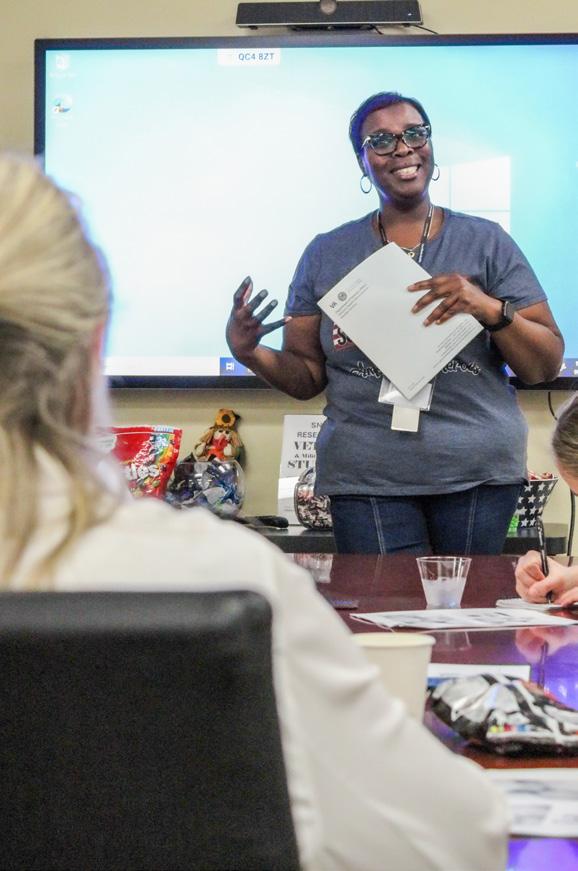
Two Veterans Affairs employees spoke about educational and medical benefits student veterans can use.
Ronald Christy is a VetSuccess on Campus (VSOC) representative who helps veterans with their educational benefits. He spoke to TR veterans about Chapter 31, the Veteran Readiness and Employment program (VR&E) formerly known as Vocational Rehabilitation and Employment.
“The VR&E program assists qualified veterans service members with service-connected disabilities,” Christy said. “Prepare, obtain and maintain suitable employment and live as an independently as possible.”
He explained the application process, eligibility criteria and the five tracks available: reemployment, self-employment, long term services and independent living.
“Chapter 31 is going to be available as long as you have that service-connected connection,” Christy said.
TCC student veteran Dominique Walker was an attendee at the event and talked about his experiences with educational and medical benefits. He explained he has access to educational and employment resources to relieve some of his anxiety, such as using the Hazlewood Act, a benefit that provides veterans with free educational credit hours from enlisting in Texas. However, this process hasn’t always been easy for him.
“The VA can be very slow on processing your G.I. benefits even when you turn in paperwork on time,” Walker said. “It feels like they get to it when they feel like getting to it.”
Debra Cheatham is a program manager for the Dallas VA hospital. She went over the post 9/11 program at North Texas VA which focuses on case management for veterans. She highlighted the need for veterans to be proactive in seeking healthcare and the importance of follow-ups and communication.
“Fight and advocate for your care,” Cheatham said.
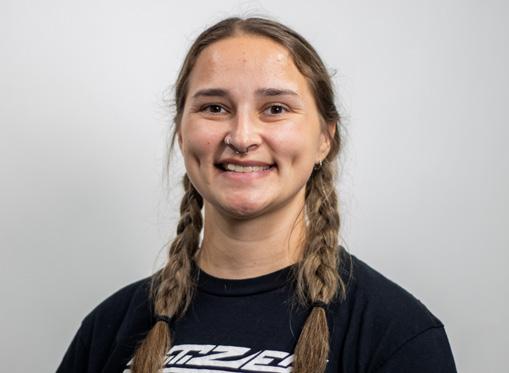
Anali Cervantes started at TCC this fall as a student veteran. She has recently transitioned out of the military. She explained how being a veteran equipped her with skills that made education an important part of her life.
“Now being in school, the SVA and VRC has shown me that there’s programs here at TCC that truly care about their students,” Cervantes said. “There’s already been See Veterans, Page 2
Science building raises concerns
Multiple faculty uncertain about shared office space
NE science faculty have mixed feelings about the new science building being built on their campus.
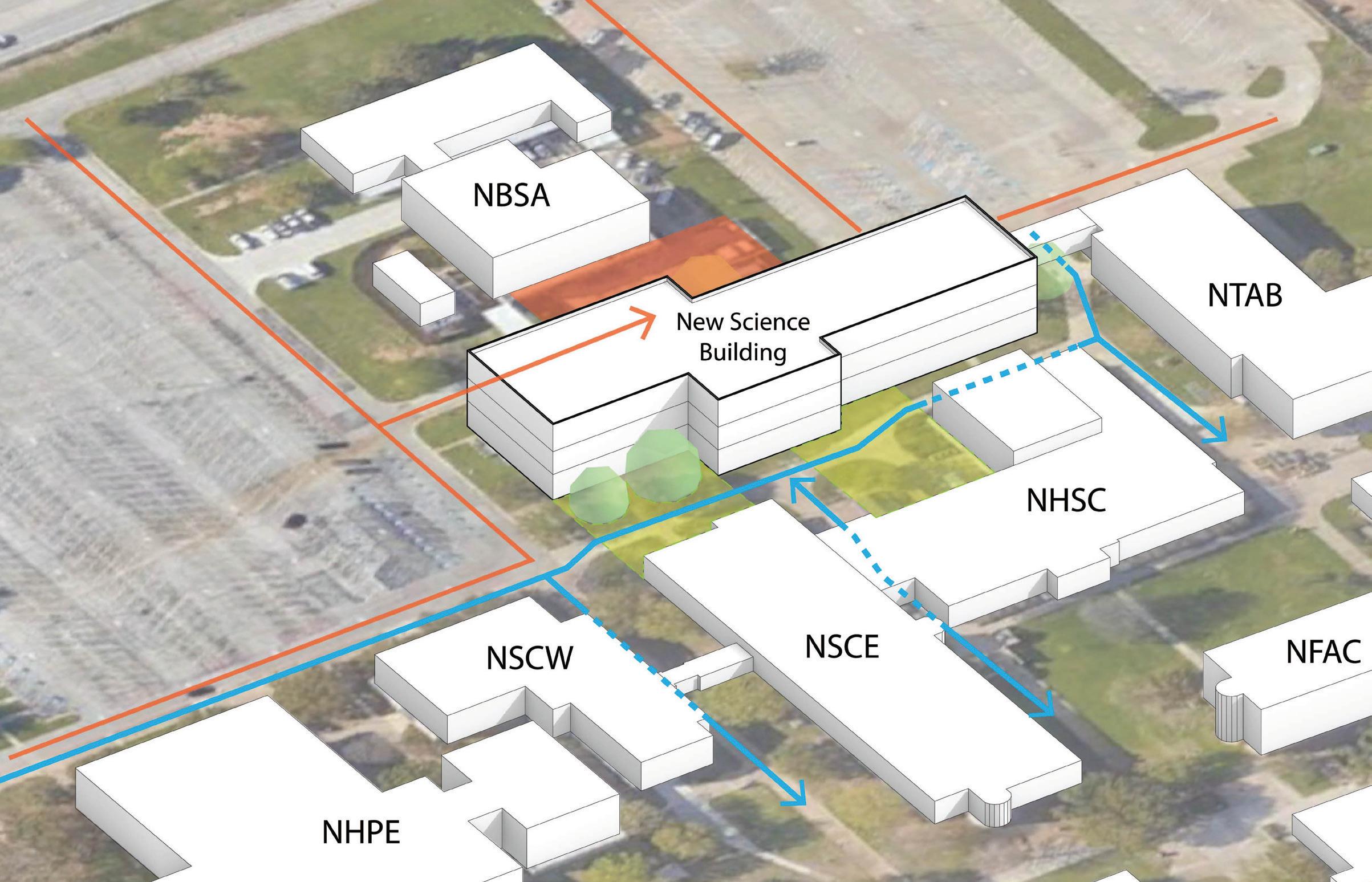
The new building will house labs while the old buildings will be renovated into classroom spaces.
One point of conflict lies in the implementation of shared office spaces. These “faculty neighborhoods” will get rid of private offices, which has raised concerns among some instructors, including chemistry professor Susan Patrick.
“I don’t like it. That’s one of the things I’m most nervous about because it just feels like students will be less likely to come to see you,” Patrick said.
These neighborhoods require students to make appointments to speak with professors. If a professor wishes to meet with a student privately, they must go into a “focus room,” which does not
NORTHEAST
allow for personalization.
Patrick often uses the books in her office to help students or she might look something up on her computer. With the neighborhood model, she would have to go back to her shared office to grab materials.
“I won’t have what I need,” she said. “I’m afraid that that’s going to be a huge issue.”
NE physics professor Raymond Benge echoed the sentiment. He recalled the issues his colleagues at SE Campus faced when the neighborhoods were situated on their campus.
“You can’t just shut the office door and work on things, and so they’re complaining that their productivity has drastically dropped off,” he said. “Their interaction with students has dropped off because people can’t just walk up and say, ‘Hey, can I speak to you?’ because they’re locked up behind doors.”
NE biology professor Lara Kingeter said she wants to serve
students in the best way she can and feels the shared office spaces could make that harder.
“It might make students more r eluctant to seek us out if they know that they are in a more public
Interim president listens to student suggestions, ideas
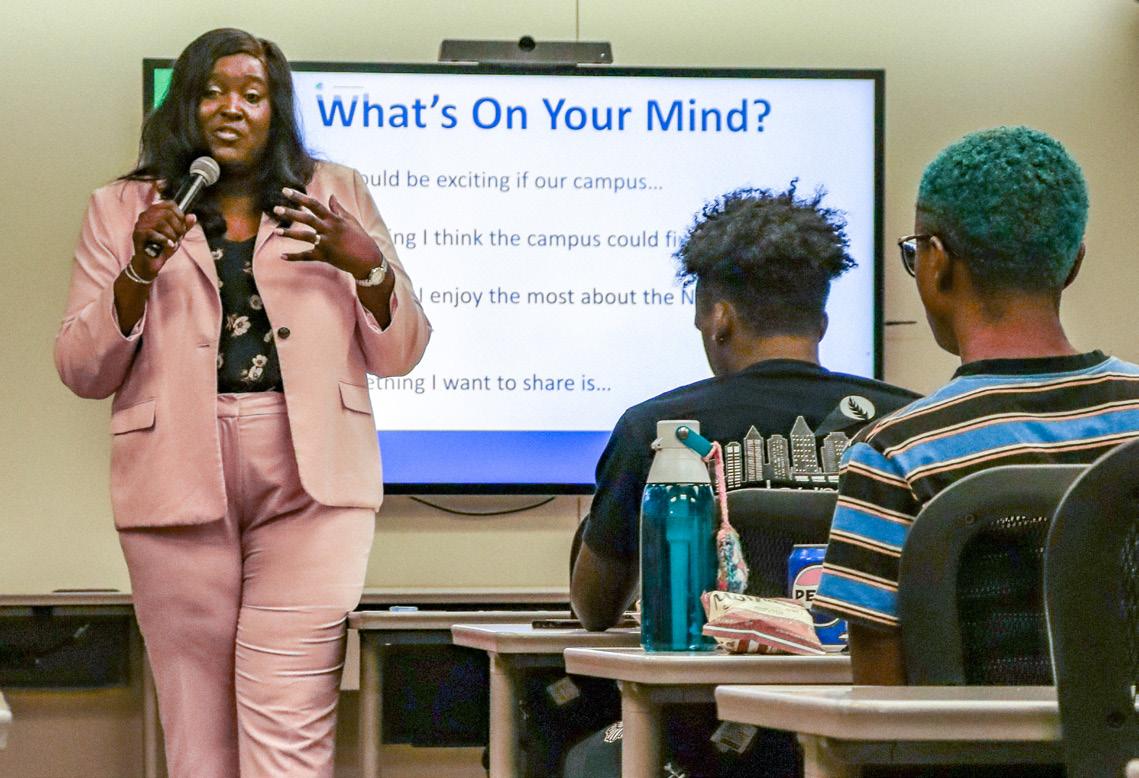
NE students joined Interim President Jan Clayton for a listening session designed to give students information and receive feedback on what’s important to them.
The listening session had several attendance options this semester, student where able to choose between a day or evening session as well as a virtual option.
The focus of the meeting was on optimizing campus operations and addressing student needs, include establishing a serenity room and a well-being center, driven by student feedback.
The president also mentioned new initiatives like the building of a new science building, the café getting new equipment, so students have more hot meal options.
“Our goal is to really listen and hear your concerns, your issues,” Clayton said. “What you see as opportunities, what you see as needs for the campus.”
After a student spoke about
the campus lack of color and feeling drab, President Clayton spoke about a new effort called a beautification committee, that will be led by assistant to the president Terri Ford and facilities manager Ryan Jordan. She said, “Part of what they’re going to be working on f or this coming year are those things, the esthetics, how we look on the inside and the outside, how
we communicate information to
setting than a faculty office space,” she said. Aside from the shared office spaces, Kingeter said she is excited about the new building because See Science, Page 2
Voter registration, deadlines, precincts and districts. The overload of election information and rules can overwhelm anyone, but the League of Women Voters provides nonpartisan education to everyone during the process.
“One of our missions is to empower voters,” said Janet Mattern, president of Women Voters of Tarrant County. “So, when they go to the pollspolls, they feel confident.” From Sept. 16-20, TR hosted a voter registration week where grassroots organizations set up booths around campus to confirm students and faculty were registered and informed for the upcoming election.
Mattern explained how the organization dedicates its efforts to providing everyone with the tools and knowledge needed when voting. They collect information about candidates and ballot issues to create a nonpartisan voting guide for Tarrant County.
See Voters, Page 2
TRINITY RIVER
Photos courtesy of Dan Eikenberry Block diagram of plans from Perkins&Will show the location of proposed new science building on NE Campus.
Kailey Railey/The Collegian
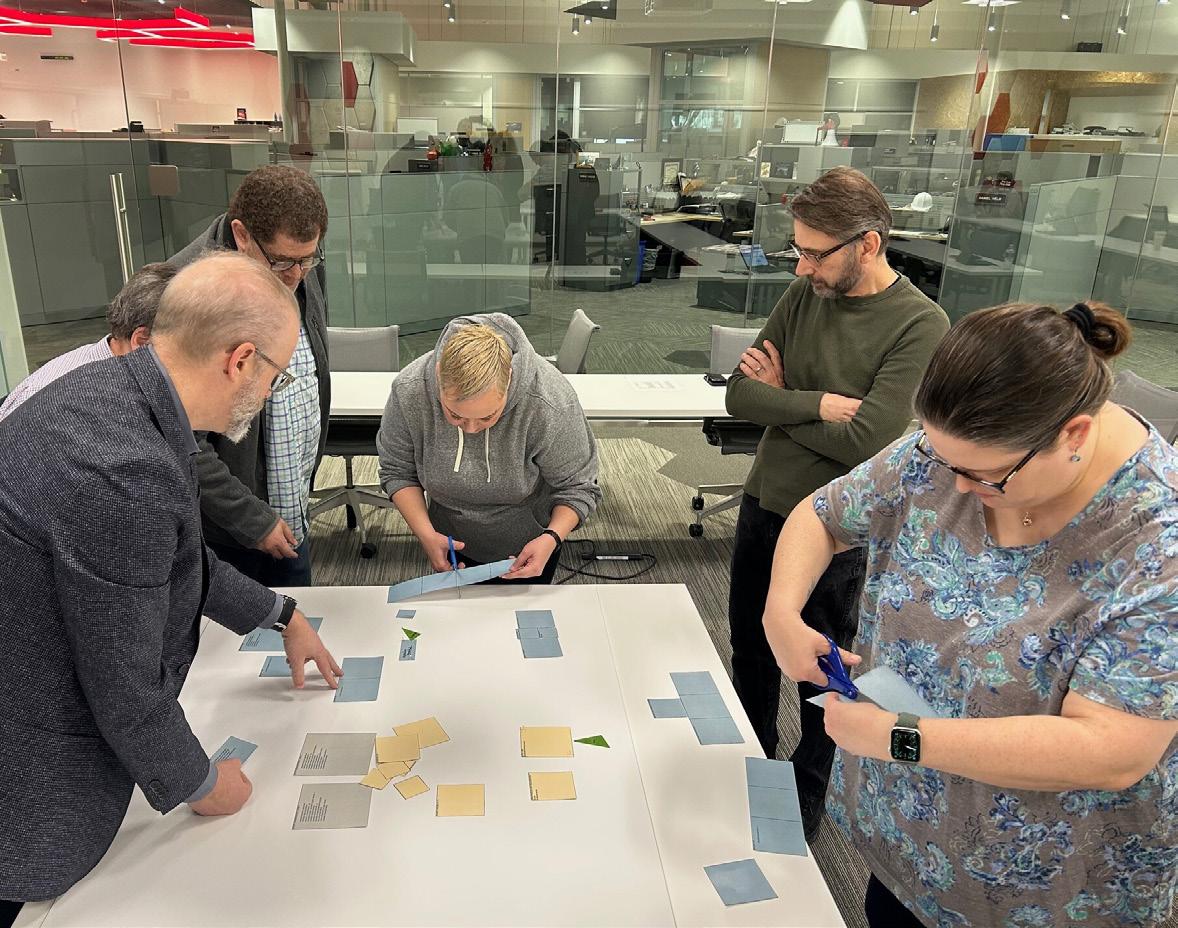
Tyler Murph, an architect from Perkins&Will, far left, along with TCC committee members plan out NE’s new science building.
Veterans Affairs social worker Deborah Cheatham informs TR veterans on resources available on campus.
Huda Qureshi/The Collegian
Interim NE Campus President Jan Clayton hosts presentation about the various plans for campus improvement.
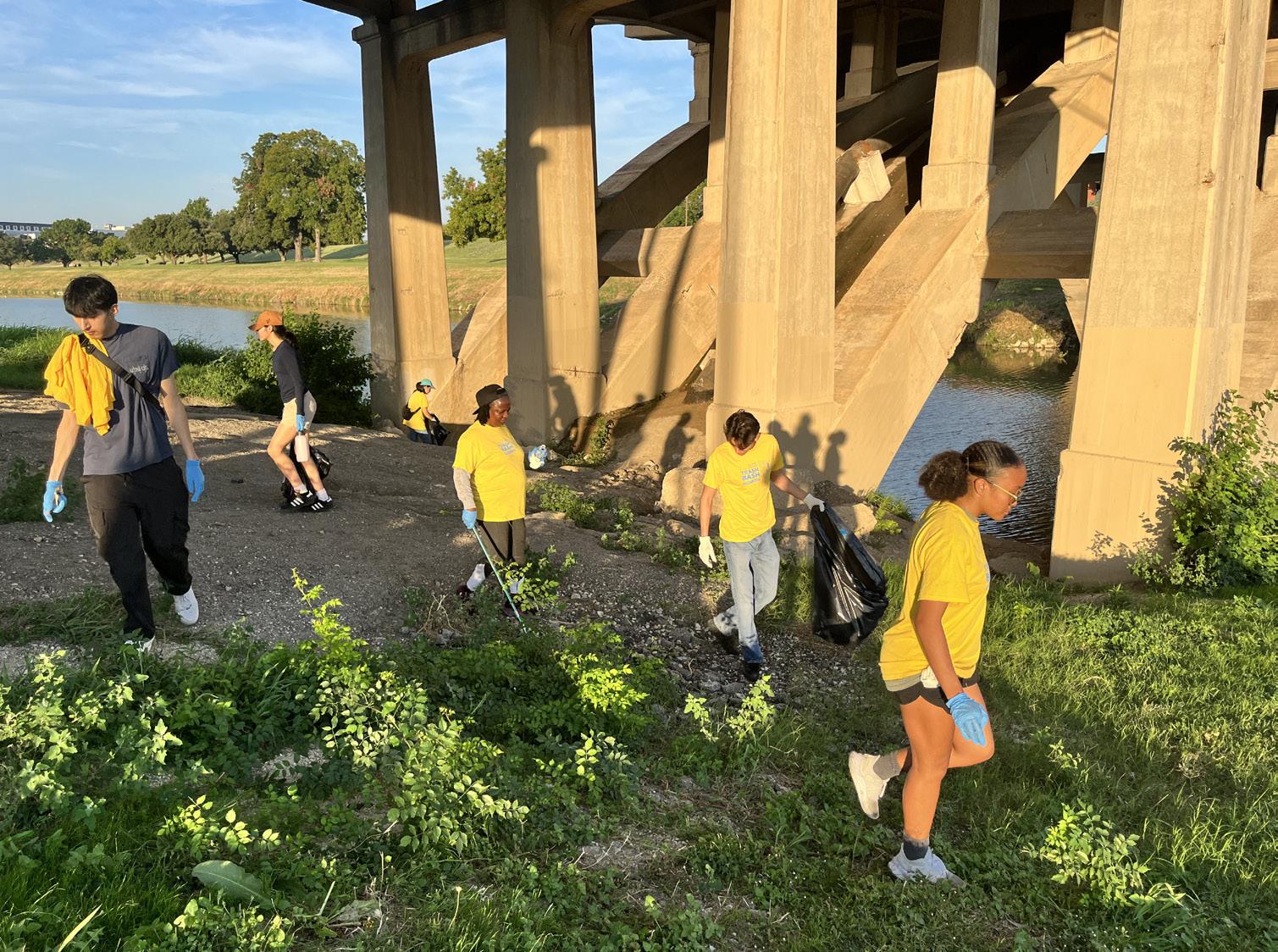
TCC students and staff demonstrated their commitment to a cleaner environment at Saturday’s Trash Bash at the Trinity River.
Participants were given bags and gloves and picked up trash along the riverbank, walking trails and neighboring city parks.
Tarrant Regional Water District coordinates the annual event, hosting four separate cleanups during the fall. “Thousands of volunteers” come out yearly to help clean out litter from the Fort Worth waterway and connected land, the water district’s website says.
Many students were surprised at the amount of discarded plastic, clothing and hygiene products. Henyi Lariincoreas, a student at TR, questioned whether the city was partly to blame.
“We need more accessible trash cans,” she said. “We need more designated places to put certain things like cigarettes. There were a lot of cigarettes.”
Despite regularly attending classes several hundred yards away, TR student Ashlyn Abelson was surprised at the water’s condition.
“You don’t really realize how dirty things can get until you take the time to scan and work on it,” they said. “I look down at
Veterans
the river from the windows every day, and I don’t notice anything. Not until today I was like, oh my gosh, the river’s not being taken care of.”
Radiology Technology student Audry Collins heard about the event through the program’s partnered club, Alpha Beta Gamma. She explained that as a mother, she wanted to do her part to protect the environment for the next generation.
“We’ve already created so much harm, so it’s time to try and fix what we’ve done,” Collins said.
TR Campus Student Activities coordinator Brittani Schultz says the school promotes student participation to encourage them to take responsibility for their environment and provide opportunities to help.
“We're teaching students to give back to their community … to narrow the footprint we create here in our own space and clean up the area we live in,” she said.
“Some people are shocked to see the amount of trash that’s out here, and as humans, how we take care of the environment. But I tell [students], as long as we have humans that want to do their part … help fight against the trash that people throw out, that can help us preserve the earth.”
Renata Ocampo, assistant director of student development at the TR campus, said experience with humanitarianism could help students in their careers.
(continued from page 1)
so many helpful information sessions and it’s only been a month.”
One of the programs the VRC holds every Wednesday is Steady Warrior Yoga. A program that teaches you how to develop resiliency in response to life experiences through trauma-informed yoga. It’s geared towards veterans, military connected students, staff and community members.
Coffee and Conversation is another event that happens every Wednesday. This event explores various topics relevant to TCC students, such as academic success, career development, mental health and community resources.
TR VRC continues to aid veterans and military-connected students in having a place where they can ask for help. Not only is it a place veterans can get more information, it’s also a place where veterans are intended to be comfortable.
Students can contact their campus Veterans Resource Center for more information: https://tinyurl.com/wx9mcar9
Lauren Harper/The Collegian
Students pick up junk under a bridge behind TR Campus during the Trash Bash event hosted Sept. 21 by the Tarrant Regional Water District.
“The goal is that students remember these experiences so when they see a need, they know to step up,” she said. “You can be a professional, but you can also be a part of the community.”
Science
TRWD will host another clean-up at Cedar Creek Lake Saturday, Sept. 28, unassociated with TCCD. Those interested can register on their website, https://www.trwd.com/trashbash/.
(continued from page 1)
labs are integral to her teaching model.
The current labs are not optimal, according to Patrick, who also relies on labs for chemistry. She said the labs have problems with equipment, including sinks, drawers and drains.
“The labs need to be gutted, basically,” she said.
The new labs plan to implement pods or clusters instead of the long rows of benches of the current setup. Kingeter said this will allow instructors to increase interactivity in their classrooms.
“It will make it easier for the instructor to get to every student and give them that attention and that feedback. So we’re very excited from that perspective,” she said.
Kingeter also said having updated lab equipment is essential.
“We want to be able to present [students] with the opportunity to interact with instruments and perform experiments that are more relevant to what’s happening today in the field,” she said. “So just having that space, having that additional capacity, is going to help us advance our curriculum.”
Additionally, the new labs will offer more space for biology, which means they will be able to offer more classes.
However, Benge said the lab setup for his subject, physics, is adequate and he is not happy about being forced to move to new facilities.
“Physics and geology, we’re happy with the labs that we got,” he said. “It might be kind of nice to have new furniture and so forth, but that’s a very small thing. … We’d be perfectly happy to build it as a chemistry, biology building, and then leave us where we’re at.”
Geoscience professor Kevin Barrett is in the same boat. He said the current lab setup is perfect for what they do. However, the new building will house a new computational lab which could help enhance some geoscience classes, and some physics classes.
Barrett also mentioned that the con -
Listening
struction of the new building is avoiding taking up too much green space.
“Whenever you’re putting a building on green space, it can become an issue with flooding and runoff pollution,” he said. “They’re trying to make it as small of a footprint in that area as possible, and they’re leaving some of the existing trees.”
Make the most of your free rides and get that last-minute assignment done! TCC students ride Trinity Metro for FREE anywhere in Tarrant County with a current student ID.
NW Campus had a new science building built on their campus which came with some drawbacks. NE Campus faculty are in communication with them so they can avoid similar problems in their new building.
Alexandar Bauman, learning lab manager on NW Campus, said the cabinets were placed too high in the labs and the faculty neighborhoods were not what people wanted.
“They didn’t really fix any issues and they introduced more issues,” he said.
There were some safety concerns such as an issue with contaminated water because the water lines were not flushed properly, which created problems at the safety eye wash as well as concerns about glass panes that didn’t allow room to hide in the case of an active shooter.
“Both of those issues have been addressed,” he said. “It’s still not as safe as the old building.”
Baumann said the experience was not as positive as it should be, but the faculty were able to get used to it.
“We found ultimately that the functionality remains and students are able to learn,” he said. “We just had to pivot.”
Baumann urged NE Campus science faculty to push for changes.
“There are people who care who are working to solve the problems,” he said.
Kingeter said it’s going to be a big challenge for faculty to move to the new building. She said she understands the diversity of opinion regarding the change.
“[We should] work together to come to some common ground and make sure that everybody’s needs are being considered and addressed as best as possible,” she said.
(continued from page 1)
we have right now is that we don’t have the right type of equipment in the food services area” Clayton said. “So, it limits the kind of food that can be prepared for example, things that can be grilled require actual grill equipment to be in the facility.”
Students were given a chance to give their feedback during a Q&A session after the president spoke.
NE student government president Imam Ssentongo said, “One thing that I would love to see that would be exciting on the campus is a sense of like sportsmanship, so like competition.”
He spoke about being an engineering student. Having taken part in competitions and that he things that TCC would benefit from having more scholastic competitions.
Emily Mushohwe, vice president of Scholarships for PTK, brought up how international students need more timely support from the district international student office, especially during the off hours.
“I lost my dad, and it was during the weekend,” said Mushohwe. “And one of the problems that I had was I had no access to communicate to international office. I understand that it is on Trinity campus, but I had no way to communicate or to get that permission slip to travel. It had it took me about three days to get that permission.”
Mushohwe also mentioned that there are often multiple barriers that international students have to overcome to even register for classes, because advisers and international students’ office have different criteria that need to be met.
Clayton made sure to first give her condolences and give a reminder that we have counseling services on campus for students.
The international student’s office is located at TR and has a limited staff.
“I want to make sure we follow up with the Vice President for Student Affairs,” Clayton said. “Follow up with the director of student success and advising, because maybe there’s some stopgap things we can do in the short term.”
Ssentongo asked Clayton if there where plans to create more space or look at other areas of campus to use for a serenity room to the small size of the room and especially for students who pray together.
“There’s a campus facilities plan that’s called a master plan,” Clayton said. “And for this campus, some of those planned new buildings that will have more of that space. Include a new library, they include a new student union. They include a new administrative building.”
Voters
(continued from page 1)
“We’re trying to alleviate some of the hurdles and help people become less frustrated when they go to vote,” Mattern said.
The League of Women Voters is a nonprofit organization founded after the 19th Amendment passed, giving women the right to vote. For over 100 years they have encouraged active and informed participation in government.
Their table set up at TR was covered in flyers equipped with answers to frequently asked questions and step-by-step instructions for voters leading up to Election Day.
A QR code in huge bold print placed on the table directed TR student Ellasia Boke to a database that immediately validated her registration status.
“It made it 10 times easier,” Boke said. “I tried to do it at home, and it took me forever, so I gave up.”
Boke said she believes it is important for everyone to register because she wants the community’s voice to be heard on Election Day.
“Everyone’s vote matters,” Boke said.
The League of Women Voters collects information about voting, candidates and ballot issues to create its voting guide for Tarrant County and is available in English and Spanish. Their goal is to educate voters on what is on the ballot before going to the polls.
“We’re trying to alleviate some of the hurdles and help people become less frustrated when they go to vote,” said Mattern.
A retired NW employee, Nancy Stevens, volunteered with the League of Women Voters and attended the TR events. She said she is grateful for the organizations that come to college campuses.
“So many of my students were taking full-time class loads and working close to full time,” Stevens said. “They were some of the busiest people.”
College students are not able to dictate their schedule around voting, Stevens said, and it is important to provide them with many opportunities to register and vote.
Mattern said the organization hopes it is making an impact on students by providing all the resources needed to get them to the polls.
“We want to make sure that everyone has the ability to vote,” Mattern said, “because that is our superpower.”
*To access their voter guide visit vote411.org
CAMPUS VOICES
Artemis Nichols NE Campus
“No, I don’t plan to vote because not only have I been pressed by my family, but I just turned 18 and I’m not ready to help make that decision. The [candidates] in the debates were ridiculous and I don’t feel like voting for either of those people right now.”
Julia Williamson NE Campus
“Your vote is your say in the changes that you want to see. It’s very important to me to try and advance the rights that I have and the rights for everyone else as well, and voting is one aspect of that.”
Derek Gutierrez NE Campus
“Yes, I will be voting in the November election. Although a big part of me thinks that voting might just be useless, I still will take a stand for what I believe to be the truth and fight for what I think is the best direction for our country to take.”
Matthew Hailu NE Campus
“I don’t see any reason not, especially since there’s a registration booth at the NSTU building.”
CAMPUS EVENTS
Keeton Charbonneau NE Campus
“Yes. I believe we’ve been given an opportunity to come together and provide for our present and future generations. Regardless of what side you choose, it’s important because if you can’t stand for something, then you’re not really standing for yourself.”
Aaron Martin NW Campus
“No, because I’m not old enough. [But if I could], probably not. Just because I don’t really stand with anybody who’s running.”
“I probably would just because it’s important to my girlfriend. I usually don’t really care about voting, but I got more into it. So, I’ll probably vote this year.”
DISTRICT CRIME LOG
Sept. 13
Theft of property valued over or equal to $100 was reported on NW Campus.
Sept. 14
A criminal mischief case greater than or equal to $100 was reported on SE Campus.
A domestic violence case was reported on SE Campus.
A stalking case was reported on the SE Campus.
Sept. 17
A vehicular accident with damage greater than or equal to $200 was reported on NE Campus parking lot C4.
A terroristic threat causing fear of imminent serious bodily harm was reported on NE Campus.
Sept. 18
A criminal mischief case greater than or equal to $100
reported on South Campus.
Fraudulent possession/use of a credit or debit card was reported on TR Campus.
Possession of marijuana weighing less than two ounces was reported on NE Campus.
A drug law violation case was reported on NE Campus.
An aggravated assault with a deadly weapon case was reported on SE Campus parking lot G.
Hira Fatima NW Campus
GOP tries to suppress student voters
Recently, a failed attempt was made to suppress the votes of minority groups led by Republican Tim O’Hare, a chief elected official of Tarrant County.
The idea was to close early voting sites on several college campuses including TCC South and NE, which have diverse student bodies. The 2024-2025 data profile from the TCC website shows the Black, Hispanic/Latino and Asian populations to be almost 73% on South campus and 55% on the NE campus.
Another site proposed to be closed was UT Arlington. In 2022, the minority student population was 57% on campus.
In comparison, Texas Christian University didn’t face the chopping block. Their student demographic is majority white and more conservative.
The logic used by O’Hare included points such as the polling sites being too close together and the sites being an inefficient use of taxpayer dollars that could be used for funding senior voting centers. He stated that more seniors come out to vote than college students, while having less sites.
Regarding point one, O’Hare was specifically referencing the Arlington Sub courthouse location being too close to the UT Arlington one. These locations are a 20-minute walk from each other going through busy roads. Many college students do not have cars, which means removing the UT Arlington location would, objectively, make it harder for them to vote.
Point two falls within the framing used heavily by O’Hare, protecting the votes of senior citizens. Tarrant County should be focusing on how to make it easier for everyone to vote, instead of pitting senior citizens and college students against each other.
For example, the elderly face issues when voting due to lack of public transportation. Taking steps to improve the public transportation system would make it easier for seniors to vote, not closing voting sites on college campuses.
Another way to increase ac -
cessibility for voters is to decrease the number of restrictions placed on mail-in ballots. The restrictions make the window of people who can use mail-in ballots narrow.
However, the aim of O’Hare and the GOP backing him up is completely different than providing accessible means to vote for Tarrant County residents, at least not all of them.
The underlying issue for them is where the votes of college students
Pets positively
Pets can have an overwhelmingly positive impact on mental health. Dogs and cats as pets provide amazing health benefits. We are starting to see how animals are helping those who have health conditions. As someone who has pets, I can say, my two dogs have had a huge impact on my mental health. I like having little friends around. They’re always excited to see me when I come home. Cuddling or petting them helps ease any anxiety I’m having at that moment.
This became more noticeable for me during the pandemic. I was getting daily exercise and daylight because I had to walk my dog at least three times a day. Having my dog beside me all day helped ease
and minority groups tend to lean, which happens to be their opposing party.
The claims of the proposed closures being a non-partisan issue are false. Manny Ramirez is currently facing backlash from fellow Republicans for voting against their effort to suppress student votes.
The chair of the Tarrant County Republican Party, Bo French, po sted a resolution which stated that Ramirez voting against closing polling stations, “undermines the
ability of Republicans to win the general election in Tarrant County.”
He said this resolution was signed unanimously at the last Tarrant County GOP meeting.
Ramirez said he voted to add more locations as a Republican so more people could go out to vote.
He was supported in his stance by some constituents making public comments.
French ended up revealing the real reason of the proposed closures through statements attacking
the anxiety I was having about the world around me. If you’re someone battling with stress or anxiety, spending time with a pet could lead to improvement in mood. Your body releases oxytocin which is crucial for bonding and stress reduction.
Various studies have supported how animals offer mental health benefits. Pets can fulfill the basic human need for touch.
“Petting a dog releases serotonin and dopamine, and staring into the eyes of a dog you know can release oxytocin,” said veterinarian Dr. Marta Vieira in an article from Signature Health.
We are starting to see how much of an impact service dogs can have. They can help people with disabilities improve their quality of life. Service dogs can open doors, retrieve medication, prevent anxiety attacks and aid visually impaired people.
The companionship of pets can help ease loneliness, and most are great for healthy exercise. Walk -
ing your dog is a healthy activity that benefits you. According to National Alliance on Mental Health (NAMI), exercise increases endorphins which can fight depression. Pets can add structure and routine to your day. Many pets require a regular feeding and exercise schedule. Maintaining a consistent routine keeps the animal balanced and calm.
I’m all for having dogs as pets in my life. I’ve seen the positive effects they have on humans. I’ve personally experienced it with the dogs I had during childhood and the two I have now.
Bring a furry companion into your life and experience the many health benefits they have on humans.
Candidates should prioritize abortion rights
As I watched the Presidential debate, I, like many other Americans, had thoughts.
Women have had their rights yanked away with the reversal of Roe v. Wade.
We have all heard the horror stories of women nearly losing their lives, or in some cases, dying from lack of abortion access in the state of Texas. While President Trump did say he was in support of women receiving abortions in the cases of rape, incest or life-threatening issues, where is his plan to make that happen? What is he going to change to allow these women to get the help that they so desperately seek?
even gets the chance to have her day in court.
In addition, let’s think about how many times men are convicted of rape. If that gentleman is white and has money, chances are that he will get away with these crimes.
Ramirez, which is to suppress votes that will not benefit the Republican party. There was no intent of upholding the right to vote by increasing accessibility for all.
In the end, the attempt at voter suppression was unsuccessful. O’Hare was the only official of the Commissioners Court who voted to close the polling locations. On principle, voting is a right that should be protected for everyone, regardless of which way their vote falls.
The Collegian is a weekly student publication serving the Tarrant County College District. Editorial statements and advertisements do not necessarily reflect the opinion of the TCC administration.
EDITOR-IN-CHIEF
ADVERTISING
MULTIMEDIA
CAMPUS
First, we must think about how much time it will take for women in this predicament to go through the system and prove they were raped, a victim of incest or that their life is on the line.
There are backlogs of rape kits that have not been sent for testing. This was a problem before the overturning of Roe v. Wade. Let’s also think about how long it will take the victim to prove in court that she was raped or a victim of incest. The women will most likely have been forced to have the baby before she
Maybe I am asking too much of a president who thinks it is appropriate to grab women in their lady parts, or has affairs with porn stars or a president that is being tried for a felony, but for heaven’s sake president Trump, women across America are begging for you to at the very least, create some kind of fast track to help women who are victims of these crimes.
Vice President Harris, I am looking at you too. I know that you will do everything in your power to see Roe v. Wade back on the shelf, but we know the Supreme Court
leans to the right and that is going to be a challenge in and of itself. We need quicker steps to help these women. I want to see action. I want to see the power of democracy make changes. I want the women in my life to feel that they can make whatever choice they need to choose. Not the choice of politicians. Not the choice of doctors unable to provide services for women with life threatening pregnancies. Not the choice of the jury in the cases of rape and incest. I want that choice to be back in women’s hands and women’s hands only.
Until that happens, our two candidates have to develop quicker plans of action. The lives and mental well-being of women are at stake.
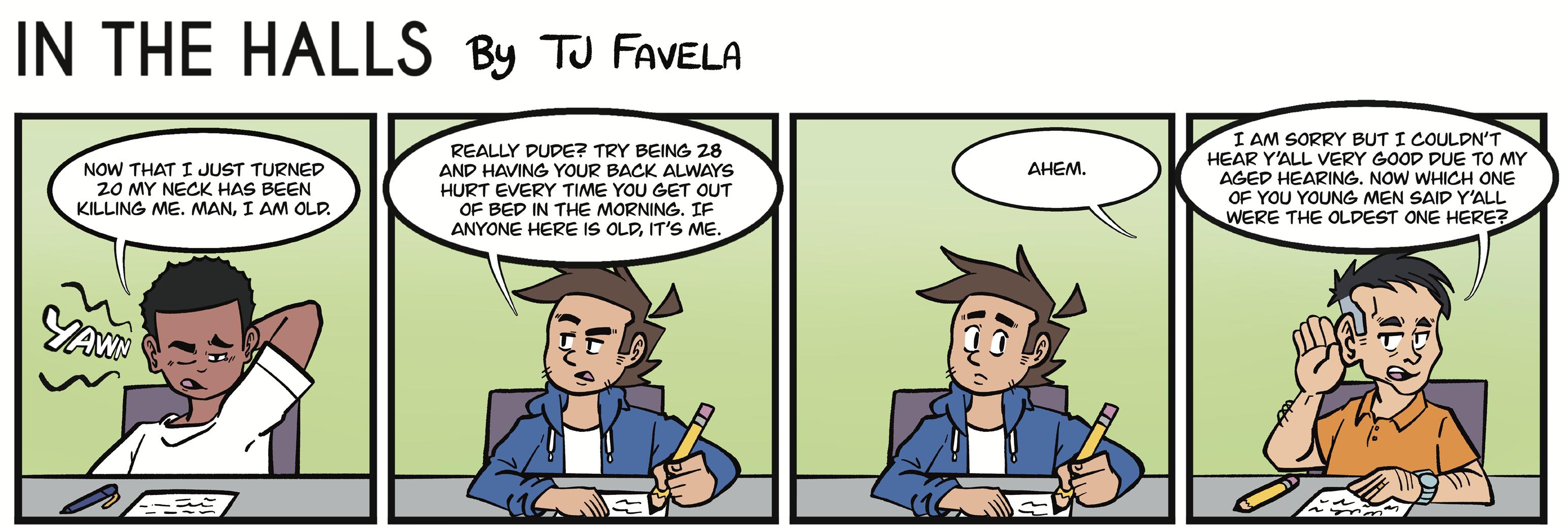
TJ Favela/The Collegian
‘Speak No Evil’ remake similar to original
FRED NGUYEN campus editor collegian.editor@tccd.edu
James Watkins’ “Speak No Evil” is an entertaining way to spend your evening but it doesn’t make you think too hard about it.
This remake of a 2022 Danish film of the same name by Christian Tafdrup has the same story beats but differs in characters and theme.
The film follows an estranged couple, Ben (Scoot McNair) and Louise Dalton (Mackenzie Davis), and their anxiety-ridden kid. They meet an attractive but odd couple, Paddy (James McAvoy) and Ciara (Aisling Franciosi), in Italy.
After the vacation, they are invited to the family’s rural home and find themselves trapped in a cycle of being unnerved by the behavior of their host and manipulated into staying.
The original was known for its intensely uncomfortable atmosphere and the remake lives up to its expectations.
The red flags displayed by Paddy and Ciara as they bounce between being pleasant and genuinely terrifying will spike any viewer’s heart rate.
Their treatment of their mute son (Dan Hough) is also distinctly wrong to anybody with working eyes yet their guests seem unable to leave.
Viewers will have a strange kind of fun watching every painfully awkward moment play out on the screen. It’s like watching a trainwreck in slow motion as the transgressions by the host become worse by the minute.
The film is shot in a way that maximizes each of these moments. The cinematography flourishes in uncomfortable silence and does
not leave out any detail.
The quaint setting of the story becomes colder and saturated in blues as the Daltons grow more alarmed by the behavior of their host.
McAvoy stands out as a charming but deeply disturbed man. He is no stranger to the role of a horror villain, and he plays it well.
The suddenness of his transformation from a normal person to what seems to be a mix of an alpha male stereotype and a psychotic football coach is jarring.
This all comes together to create a solid psychological horror film that undoubtably makes for a good two hours well spent.
But it does beg the question: Why did Hollywood remake it?
Viewers familiar with the original film will see that the remake is almost a shot-by-
shot copy of the original up until the climax.
This in itself would not be a problem if the remake did it better. It did not.
The theme of the remake is much more jumbled and unclear than the original’s very distinct criticism of the reflexive politeness of society that allows certain transgressions to happen.
The title hints at the central character’s failing. They spoke no evil. Or in this case, they abided by social niceties.
The remake did touch up on this subject but not nearly to the extent of the original. The remake seemed more concerned with turning McAvoy into an attractive, hypermasculine boogeyman for their trailer.
The “Speak No Evil” trailer has been mocked for how much it was a scourge for theater-goers these past few months and
The characters in the new NE and NW Campus production, “Tigers Be Still”, find humor and optimism in the deepest of trenches.
There are four characters in total, each experiencing a struggle unique to them, but they manage to relate in some way.
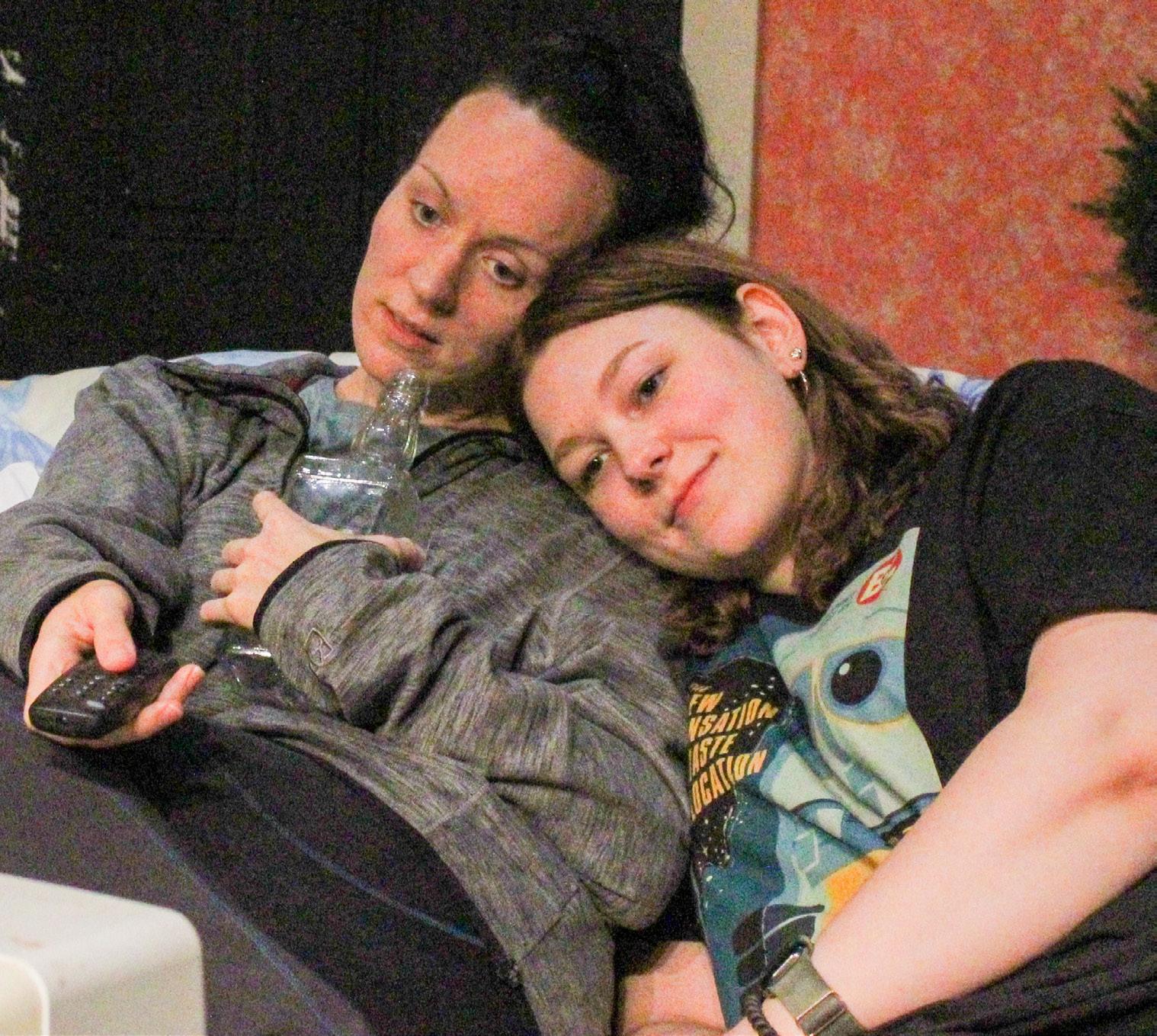
There’s Grace, played by NE paralegal student Alexis Harrison, a woman going through a breakup that she is not dealing with well. She frequently steals items from her cheating ex-fiancé’s apartment and is often seen with a Jack Daniels bottle in hand. Harrison finds Grace’s spiraling to be sad.
“It got me thinking [that] the best revenge is no revenge,” Harrison said. “It’s to move on and do better.”
Sherry is Grace’s sister, played by NE music student Kaiya Matthews. As a recent art therapy graduate, she is having trouble finding a job. She acts as a narrator and breaks the fourth wall to walk the audience through the events on stage.
She also fills the role of a therapist to Zach, a character played by NE film student Anthony Mazzone. Zach struggles with anger management due to past trauma.
“[Trauma] can really stop you in your tracks and he’s lashing out like he doesn’t know what else to do with himself and his emotions,” Mazzone said.
Brent Alford, a professor of drama on NW Campus and the director of the play said
many have half-jokingly sighed in relief at its release. It also spoiled almost every major story beat and moment that would have benefited from being a surprise. The draw of the remake seems to be the admittedly fantastic performance of McAvoy, but it doesn’t offer much else than that.
The original film was new and exciting at its release. It was better than the remake in most ways in terms of theme and atmosphere.
The remake was just distinctly Hollywood-ified. The story became more sanitized and crowd-pleasing, which completely ditched the interesting thematic value of the original.
trauma in play
the production balances mental health issues without becoming too cynical.
“It’s not a pessimistic drama about mental health crisis,” he said. “It’s a hopeful,
optimistic view of mental health challenges.” Mazzone and Harrison note the humor in the production. Mazzone said the humor is enhanced due to the cast working well to-
gether.
“We find humor with each other,” he said. “It does feel like it’s a sitcom because sometimes the jokes get set up, and I feel like I can hear a laugh track.” Harrison points out that some of the humor comes from an element of truth in the jokes.
“It’s dealing with real human issues like depression,” Harrison said. “I think there’s humor in that, the absurdity. I like that element. It’s not just a complete farce. There is a depth and morale to it.” Jakie Cabe is the assistant director of the play and a NE Campus associate professor of drama. He also plays the fourth character, Joseph. Cabe said he pursued the role due to the logistics of needing to fill an older role. He finds that he can benefit students by doubling as an actor and professor.
“I’m a better teacher when I’m acting because I am trained as an actor, so I feel like I’m able to really see the rhythm of things when I’m in the scene,” he said.
The characters connect and run into each other in various ways during the play. Sherry is Grace’s sister but also Zach’s therapist who is Jospeh’s son.
“They all kind of help each other,” Matthews said. “It’s the importance of having a support system.”
Mazzone reflects on the underlying wishes of the characters in “Tigers Be Still” as they work through their trauma.
“Everybody in this show just wants to be happy, or at least have a happy ending in some way,” he said.
Released by Universal pictures, An image of James McEvoy in a scene from “Speak No Evil.”
Kailey Raley/The Collegian
NE students Alexis Harrison, playing Grace and Kaiya Matthews, playing Sherry practice an upcoming scene in their play Tigers Be Still.
Kreuger inspires colleagues through his motivational poetry
TCC Chief Information and Technology Officer Todd Kreuger has gone against the grain in a world where people are put into career boxes from an early age.
His path in life took him through detours, from being an accounting major to overseeing a college’s technological needs. From software and Wi-Fi to the help desk, Todd is the person who makes sure students and staff can study and work daily. On the flip side, his life is not only about zeros and ones, but he also paints a picture using emotion, rhymes and metaphors.
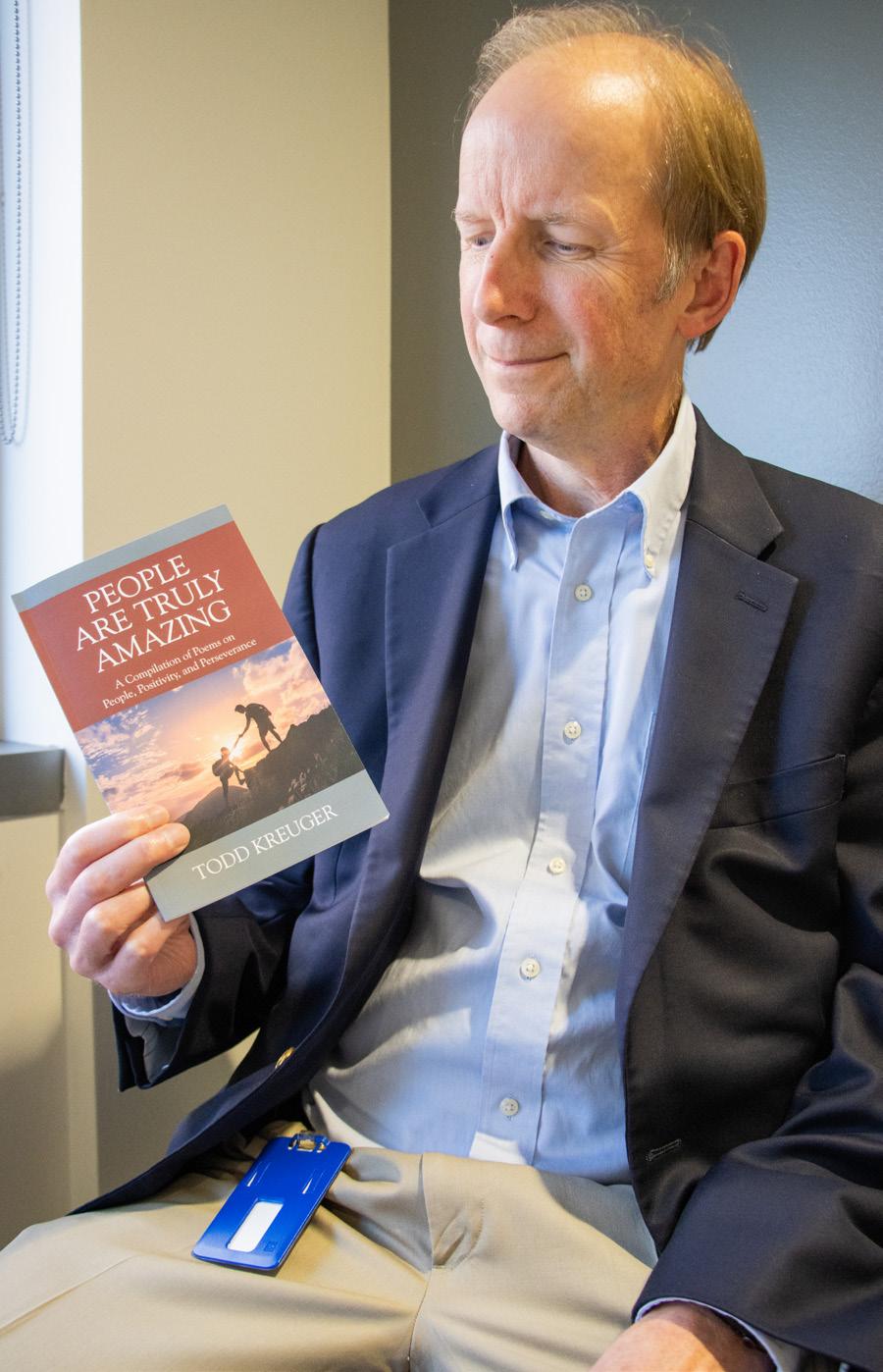
Kreuger’s creative side comes out in poetry. He self-published his book “People Are Truly Amazing”, in 2021.
“I paint word pictures, for instance,” Kreuger said. “What I talk about is the journey to innovative and transformational. It runs on the streets of communication, over the bridge of trust, through the community of collaboration.”
In his work life, Kreuger has demonstrated that he is a fixer. He can come into an institution with IT problems and build a relationship with the IT employees at all levels, create solutions and help them solve their problems.
“When they described the challenges and opportunities,” Kreuger said. “And I really like to be able to fix things, so that was a great opportunity.”
During his early life, he saw through his mother’s hard work and perseverance in raising him and his brother during a difficult time, which instilled in him the belief that people can overcome obstacles if they keep pushing through.
The poems in his book tackle issues such as self-worth and the importance of not using the word “can’t sometimes life takes on a detour that we didn’t expect, but there is a reason for it—his poems are about helping people see the best in themselves and the best in others.
“I enjoy helping others find what’s
communication,” said Peggy Leis, executive assistant to Krueger. “He defines the customer as anyone and everyone we encounter every day.”
“Regardless of the battle, again and again Because you got back up, you continue to win.”
Todd Kreuger
Excerpt from ‘People Are Truly Amazing’
Detours
A poem by Todd Kreuger
Make a plan and follow it
Kreuger’s ability to work well with people and make sure people feel seen and heard at work is a theme that played out re-
“This poem immediately made me think of my mom,” Boudreau said. “My mom’s favorite thing to say was ’God will never put on you more than you can bear.’ I’ve learned that to be true through the many trials of my life. I choose to be stronger moving forward.”
“I think his background in poetry helps us a lot there because he’s really, really good at understanding people’s needs,” said Marcus Kerr, executive director of project and portfolio management. “And explaining technical stuff in a way that makes it really understandable for other folks.”
Kreuger said it’s important to help people find their unique qualities, which can positively impact work environments and organi-
“His leadership style is one of positivity, excellence and service,” said Natalie Gamble, manager of data and information.
He joined TCC’s IT department when many people had left. Once in-person learning resumed again, employees had to come back into the office. He built a connection with people and made them feel that everything was going to be OK.
“There could be 40 of us sitting in attendance at the town hall,” said Pat BouIT contracts and compliance manager. “And it has become a game since he’s started having these this past year where he goes through the entire room and tells everybody their name.”
Boudreau, who is an avid reader, shared more of her favorite poems from Kreuger’s book, including one called “People Are Truly Amazing.”
adressing the TCC board of trustees to discuss employee salary raises in early August, 2024.
Take the path you did before But if you happen on a detour
You may experience more
Some of these new paths
That you may want to run from May actually end up being Harbingers of good things to come
It happened to me in College I had mapped out my career
As I think about how it turned out
I’m grinning from ear to ear
Some call them detours, But I call them free tours
Because they allow you to explore And help you find opportunities galore No, it may not be what you planned But you may come to clearly see
That the unexpected change of course
Helped you become all you were meant to be
Your Girlfriend may dump you And your boss may say goodbye As traumatic as these can be They may propel you - to really fly
Prior to Kreuger joining TCC, Boudreau was considering retiring, but once she worked with him, she could see that things would get better at work.
“He’s very good at guiding people,” she said. “I consider him a friend and a boss.”
Photos by Alex Hoben/The Collegian
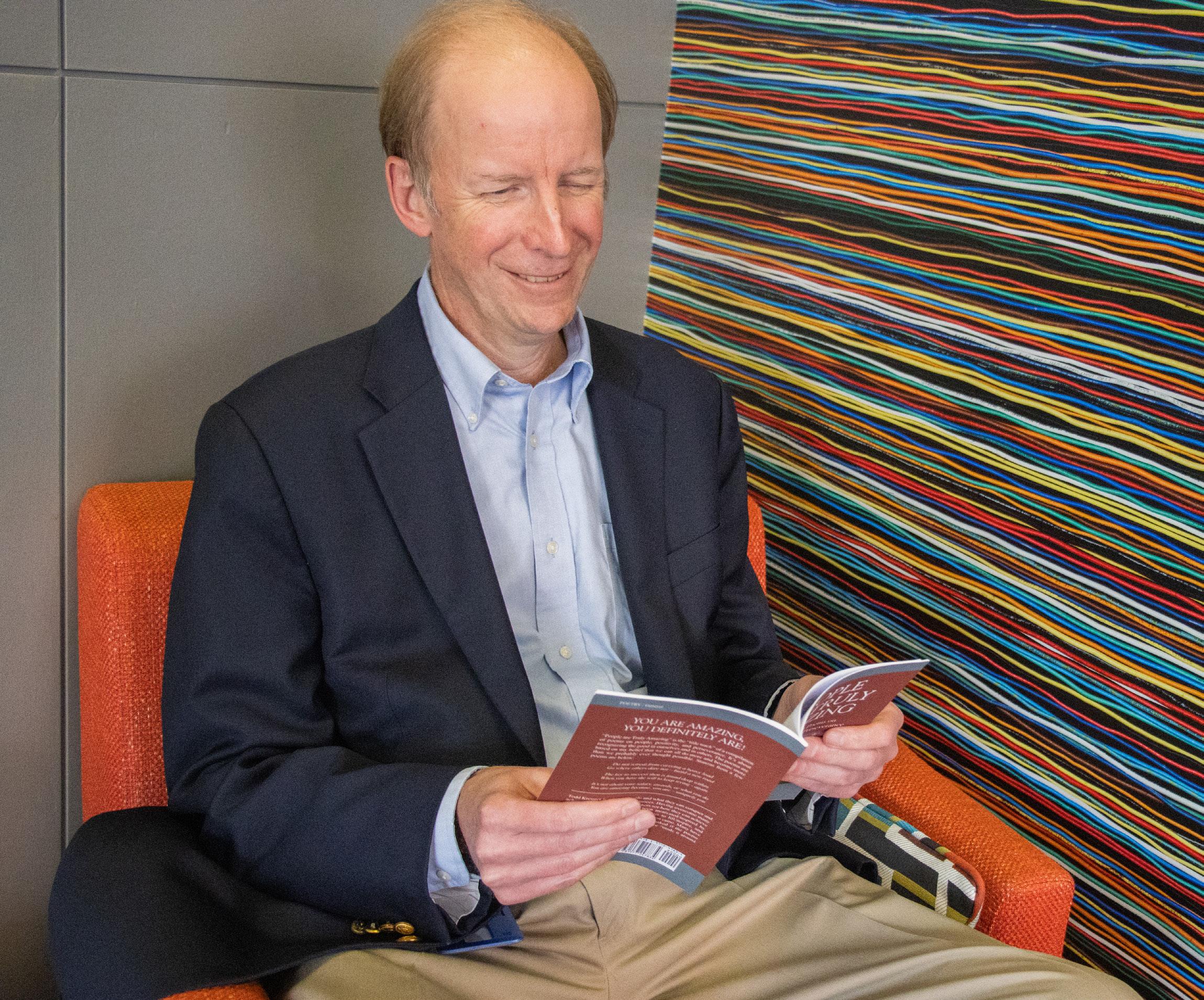
Chief information officer Todd Kreuger self-published a collection of poems called “People Are Truly Amazing.” He has been working on the poems in the book for many years.
Kreuger
The book is made up of many poems that Kreuger has written and shared not only in his work life but also in his personal life.