COVID cases on the rise in Texas
Protocols ensure safety as virus worsens
college would certainly listen to its community partners such as Tarrant County Public Health.
According to the CDC, COVID-19 hospitalizations have increased at a rate of 27% and 35.7% in Tarrant County and Dallas County respectively. In an Aug. 30 article, the CDC said Pirola, a new variant, has been detected in a small number of samples in several countries, including the U.S. This allows students to remember quarantine, vaccines and mental health statuses that COVID-19 infiltrated.
TCC stopped COVID-19 protocols regarding reporting tracking and college notifications on March 23, 2022. However, William Driver, director of emergency services said that while nothing is planned at the moment, the
This is to determine if TCC would coordinate vaccines and testing sites as long as these actions are conducive with campus academic and logistical factors.
“TCC has a pandemic annex as part of our emergency operations plan that address actions to include but not limited to providing masks and hand sanitizers for students, faculty, staff and visitors during the influenza season or outbreak as part of mitigation and preparedness actions,” he said. “The TCC Department of Emergency Management participates in local, regional and state conference calls to coordinate information and actions.”
While TCC has an action plan for the possibility of another COVID-19 wave, NW speech instructor Deanna Roskop believes that some of her students were, and still are, wary of the aftereffects of COVID-19.
“I just think it really hurt a lot of people and hurt our education system,” she said. “So
for me, seeing the increase in COVID is more about the fear of what that’s going to do to people mentally. For fear of isolation, I don’t want that to happen again. My hope is that we’re able to still stay working and in school and having that social interaction that we need.”
As a speech instructor, she has noticed her students repeatedly mentioned their experiences with COVID-19 as something that significantly impacted them in their introduction speeches.
“Again, the rate of depression, the rate of anxiety skyrocketed,” she said. “There’s so much of it that’s relationship-oriented, and so much of it that they need to be speaking in front of a live audience and have that experience. So, for me, it would be really hard to go back to that.”
With many of her family members passing away from COVID-19, TR student Carmen Gonzalez is one of many people in See COVID-19, page 2
Students, staff talk family planning options
A recently published article questioned the ethics behind people wanting biological children, but is the discussion warranted?
there is considerable debate about what makes an action right or wrong, but to my mind no plausible moral system can ask us to stop trying to procreate. I just don’t see any realistic chance that a moral rule against procreation would be widely accepted.”
South student Jamaica Hotep shared a similar opinion, saying it’s a genetic desire.
parents wanted biological children, and they went through IVF [In Vitro Fertilization] to have me, and then they adopted my siblings because IVF is very expensive,” she said.
She speculated on reasons why people may prefer biological or adopted children.
Barbara Leath and Heidi Milosevich sit at a table on NE campus and ask those who pass by, “Hi! Are you registered to vote?”
Leath and Milosevich are official deputy registrars, allowing them the ability to assist in registration in various counties, including Tarrant, Collin, Dallas and Denton.
Now visiting NE every Wednesday until Thanksgiving, they have registered as many as 300 students in one day at a new student orientation.
“We were so excited because, like Barbara said, this was the first time we’ve had a table at these orientation sessions,” Milosevich said. “And wow, talk about low-hanging fruit.”
They were motivated to begin offering registration to students during the 2022 Texas governor election after candidate Beto O’Rourke’s call to action for more registrar volunteers.
NE student Mia Jackson is now registered to vote. She received Leath and Milosevich’s help during one of the new student orientations.
Jackson said that she is nonpartisan and, when voting, wants to choose the candidate who will be the best for the country.
However, while she tries to stay updated on candidates, she can only handle a few minutes of learning about candidates from popular outlets like the news available in this day and age – which I try to stay updated on
See Vote, page 2
Leo Kim, writer for Wired, published “Preferring Biological Children are Immoral” on Aug. 31. In said article, the writer argued that people who desire genetic offspring are in “conflict with other evolving values around parenting and family” and said that “insisting that you’ll only be a parent to a related child will be seen as increasingly reductive and close-minded—a stance at odds with the momentum of our expanding ethics.”
TCC attendees weighed in on the conversation and expressed their own opinions regarding the morality of preferring biologically related children. Some opinions are bit more indecisive, like Connect Campus English professor Juila Quarles said.
“It’s an interesting question,” Quarles said. “I could see an argument from both sides.”
Other opinions are more conclusive, like South Campus psychology professor Jeremy Byrd’s.
“I do not think it is immoral for people to have biological children,” Byrd said. “While I agree that it would be wonderful for more people to be open to adoption, we also have to acknowledge the clear fact that the majority of people are also going to want to have biological children.”
Byrd speculates that the want for biological children derives from an instinctual human desire to contribute to the species.
“While I am certainly not an evolutionary psychologist,” he said. “I would speculate that this common desire is a helpful mechanism for passing our genes along to the next generation. Of course,
“There’s nothing wrong with wanting children that share your DNA,” Hotep said. “It’s definitely sad that some people want that and can’t have it, but as with everything we don’t always get what we want in life. I think it’s a biological thing. We are essentially animals, and it’s programmed into us to want to continue our bloodlines.”
Byrd South psychology professor
Hotep felt as if people should be allowed to do as they please in terms of the type children they want and said people should not need to feel “pressured” to do something that they don’t want to do.
“People should be left to do what they want,” she said. “It would be great if more people could adopt, but they shouldn’t feel pressured to or be forced. Not everyone would be able to sustain it [as in afford adoption].”
One South student, Hannah Huggins, has experience with adoption within her own family.
“From my family’s experience, my
“I think it’s moral to have biological children over adopted because it’s a natural longing to want your own family and your biological kids,” she said. “Not everyone is meant to be a parent, which is why there are so many children in the system. But adopting children is extra tedious and the children are already emotionally traumatized from separation from their parents.”
She provided some outcomes that could arise if society were to begin viewing the act of having biological children immoral.
“So, if the public starts seeing that biological children are immoral then more kids will be adopted, but then most parents can’t deal with the baggage of the children’s emotional trauma and the children will be traumatized more,” she said.
“When you adopt a kid, you are basically a baby sitter until the kid is 18 and wants to be with their biological family. All my siblings have a biological longing to be with their biological parents because you can’t change genetics. People should only adopt if they understand all the factors that they are committing to.”

TR Campus student Jason Hardaway said that while people preferring biological children isn’t immoral, choosing to adopt is especially good.
“I don’t think it’s immoral for people to want biological children over adopted children,” Hardaway said. “But I think it might be morally superior to opt for adopting kids. So, I don’t think people who have kids are bad people, but I think some people who adopt kids are extraordinary people.”
Connect English professor Angela Thurman said, “I don’t think this is a question about morality- it’s a personal preference.”
Wednesday, September 13, 2023 – Volume 37 Issue 4 @tccthecollegian • collegian.tccd.edu DFW upcoming - The Collegian chooses four concerts to look forward to Page 4 Considering age limits Government officials are pushing past ages that do not represent America Page 3 Child internet safety After the Colleen Ballinger scandal, TCC weighs in on internet safety for children Page 2 Bus safety Public schools need to take a more critical look at the safety technology in place for buses Page 3
DISTRICT DISTRICT DISTRICT OLLA MOKHTAR
Converting students into voters XAVIER BOATNER campus
HOPE SMITH
ief
Infographic by Alex Hoben/The Collegian Information gathered from the CDC, Tarrant County Public Health COVID archive and Texas Human Health Services.
campus editor olla.mokhtar@my.tccd.edu
editor xavier.boatner@my.tccd.edu
editor-in-ch
hope.smith393@my.tccd.edu
not
it is
for people to
children
COVID-related hospitalizations in Texas doubled from June to August 3,885 Cases of COVID in Tarrant County from June to August 72,314 Cases of COVID in Texas from June to August
I do
think
immoral
have biological
Jeremy
Concerns about child safety on internet YouTuber child grooming allegations spark controversy across web
NINA BANKS managing editor nina.banks@my.tccd.edu
Social media has been the medium for many to inspire change. In recent years, however, it seems that its impact has negatively affected the youngest generation.
Many content creators on platforms such as YouTube or TikTok have had allegations made against them of child grooming and inappropriate conduct with minors.
Most recently was YouTuber Colleen Ballinger. Ballinger created an online personality called Miranda Sings, where she donned overdrawn red lips red sweatpants and her iconic off-key voice. NE student Jeremiah Lewis Jr. used to watch her content.
“I used to watch her videos when I was really little,” Lewis Jr. said. “I just never got it. I would watch it, but I just never got it, so I stopped watching her.”
On June 28, Ballinger released a YouTube video where she played the ukulele and sang about the allegations made against her claiming they were “toxic gossip.” NE student Eddie Jimenez was aware of the video.

“I mean I thought it was terrible,” Jimenez said. “Especially, I started seeing things about her shows she would do and there were kids there so yeah it’s terrible.”
For Jimenez, this situation is not the first time he has witnessed an influencer accused of an inappropriate relationship with underage fans.
“It was part of this group I used to watch, I think Mini Ladd,” Jimenez said. “He used Snapchat so it was one on one so it was even worse.”
Jimenez believes these relationships have become even more prominent in recent years.
“I would say it’s more because they’re idolized,” Jimenez said. “The young ones don’t care if they are old enough. All they see
COVID-19 (continued from page 1)
Vote
(continued from page 1)
[by] watching the news – makes me sad, so I don’t know,” she said.
For the two deputy registrars, the Wednesday ritual of ensuring students have the option to vote is crucial because it’s a misconception that an eligible Texan can do first-time registration online.
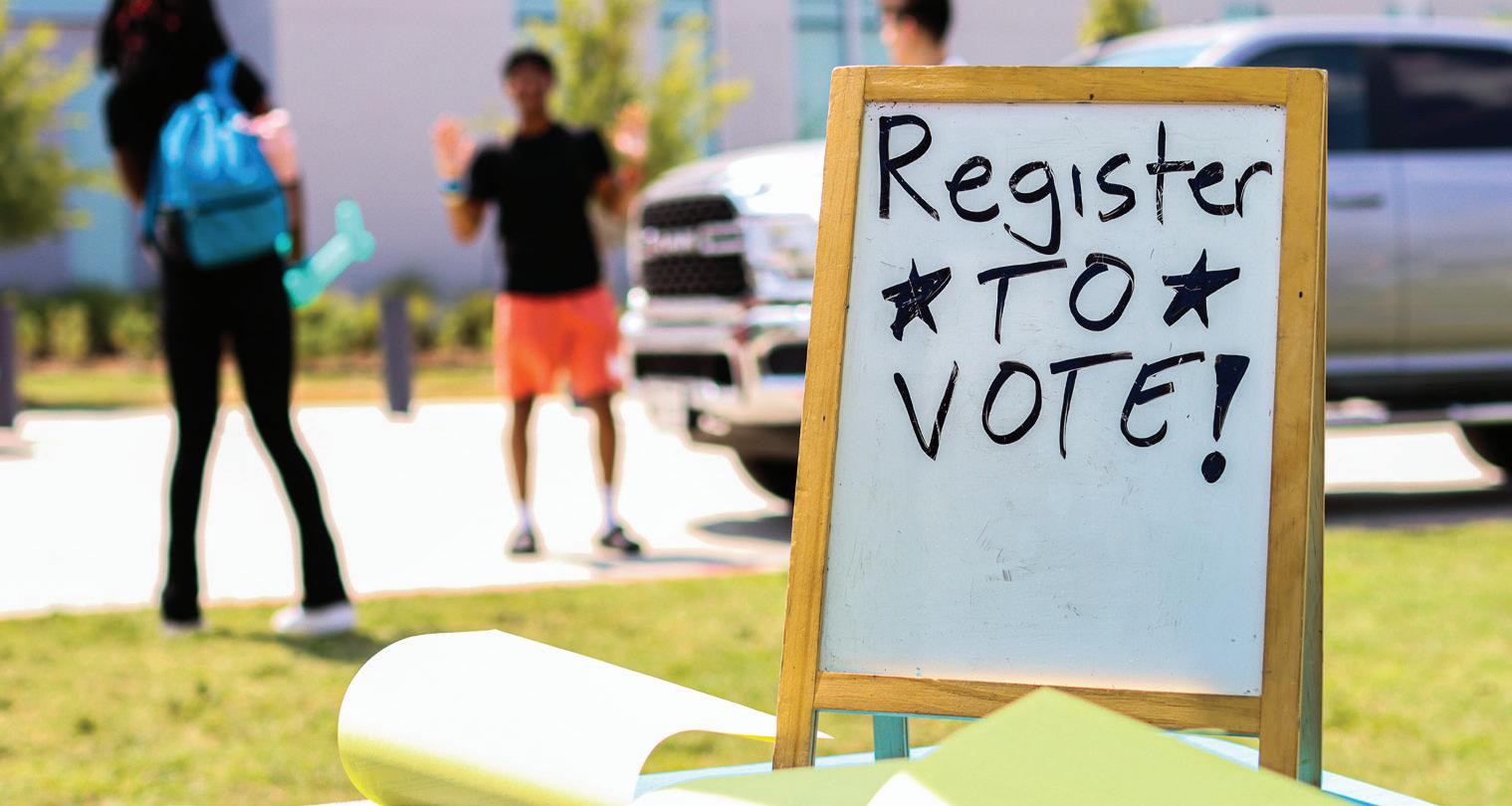
“Especially with young people now, what Barbara and I hear a lot when they come by and we’re talking is: ‘I can just do it online,’” Milosevich said. “Well, no, you can’t. You can’t do it online.”
The requirements for registering in Texas are as follows: You must be 18 years of age, not a felon, and a U.S. citizen, as well as a resident of the county being registered in.
Even more than that, Leath said getting students to the registration tables engages them in thoughtful conversation.
“We’re trying to not only register people but also talk to those that are saying that they’re not really political and that sort of thing,” she said, “And trying to figure out where that comes from and get their passion because part of our democracy is that you use the power of your vote to make change.”
TR student Jakob Brown also registered and believes it is incredibly important to vote.
“This country, although not entirely dictated by the votes of the people, runs off of
its voters,” he said. “The manifestation of the general population’s opinions really gets acknowledged officially through those votes, and it’s important everybody’s voice is heard, especially in federal elections.” Brown said he personally doesn’t like the way current politics are looking.
“It feels as though many representatives today aren’t actually representing their voters, and because of that it’s very hard to find any politician I largely personally agree with,” he said. “And frankly, as long as lobbying and the Electoral College dictate our politics, our voice will never truly and faithfully be heard.”
Like Brown, Milosevich said getting the younger generations involved with voting gives them a platform to have a voice.
“Whatever their [the younger generation] issues are, what they feel emboldened about or that they think are important, the only way to voice it is their votes,” she said. “And we’ve seen it in recent elections make a difference. And, you know, people are counting on it, and there are people that are counting on young people not voting.”
NW government professor Julie Lantrip has noticed that students don’t realize that local government can be just as important as national.
is an idol, and they want to go after it.”
Lewis Jr. has noticed an uptick of online spaces dominated by children being infil trated with groomers.
“It’s getting to the point where it’s kind of terrible because games like Roblox were kid friendly, you can find creeps on there,” Lewis Jr. said. “Even if you go Instagram or Snapchat, its going to be a lot of creeps in there. It’s kinda unsafe out for kids nowa days. I think they shouldn’t really be online.”
NE student Natnael Tesfazion fears for his nieces’ and nephews’ safety online.
“There is just a lot of people who can contact you all that stuff and then what they try to promote,” Tesfazion said. “Because kids now will be saying foul, vulgar language and they don’t know the meaning behind it, and they’ll hear it from their YouTuber that says that or the internet. That’s why I try to keep them off it a little because they’ll be saying stuff they don’t know what it means.” Lewis Jr. understands the toll that
the community who were personally affected. Hearing about the recent uptick in COVID-19 cases reminded her of her experience with quarantine.
She said even though she struggled with it emotionally, she would do it again because it would be necessary for everyone’s safety. “I’ve already experienced it. And so, emotionally, I feel like it’s gonna be hard, but it’s not something that you can’t overcome,” she said.
She believes that extends to taking the new vaccine the CDC announced at the end of August.
As someone who was homeschooled, ßß student J.W. Milton said it didn’t affect him as much, but as a Christian, he believed taking any COVID-19 related vaccine, whether it be released to the public or not, went against his religious beliefs.
“There’s a verse in First Corinthians that says, the body is the temple of the Holy Spirit,” he said. “And for me, as a Christian, wanting to glorify Christ, I don’t want to put anything in my body that I don’t understand or comprehend. So, I would rather know about it before I put it in. It’s Christian liberty, but in my mind, it would be sinful for me to put something into my body that I don’t know what it is. So, I would really have to research it before I actually did anything.”
Although Gonzalez and many students don’t like the prospect of going back into quarantine, she does have some advice regarding it.
“Your own mental health is really something that you should focus on just because it does have it is very negative, and it affects everything around you in your daily life. My advice would just be to keep a journal and just to write everything out and socialize,” she said..
“Learning that their votes often matter even more at the local level can give students a greater sense of political efficacy that can motivate them to remain engaged in government even after college,” Lantrip said. She emphasized that just because someone is registered to vote doesn’t mean they are obligated to do so. Instead, she says it is a necessary step toward having the option to vote.
To stay educated, she suggests that stu-
dents go to resources like Vote411 to compare candidates on issues and to read local newspapers.
Milosevich said that the environment relies on young people to vote for change, and that while she may be gone by the time the environment worsens, it will be a problem for the younger generations.
“Young people are the ones who are going to make the difference,” Milosevich said.
2 • Wednesday, September 13, 2023 NEWS
Markus Meneses/The Collegian
Ariel DeSantiago/The Collegian
A table on NW Campus gives students the opportunity to get registered to vote.
NORTHEAST 0 10,000 20,000 30,000 40,000 50,000 60,000 70,000 80,000 0 1,00 0 2,00 0 3,00 0 4,00 0 5,00 0 6,00 0
Consider age limits on government officials
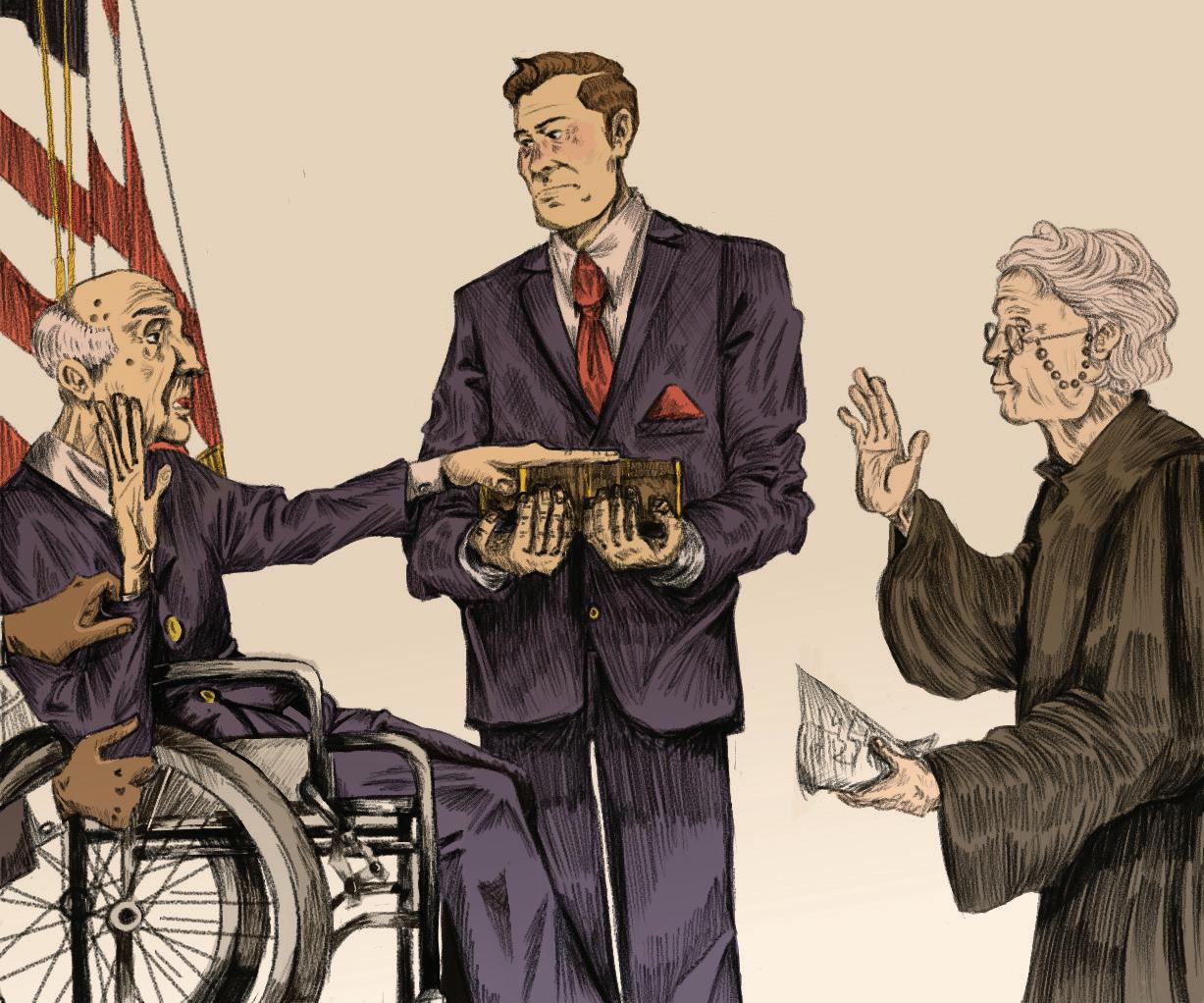
Your grandmother forgetting where she was in the middle of a story is not usually a call for concern.
But add cameras and Senate Minority Leader Mitch McConnell to the mix, and suddenly what you brush off as granny being silly seems a whole lot more troubling. Especially when it’s happening to the people running our country.
Age may just be a number, but it should also be a larger factor in considering our candidates.
On two separate occasions, Sen. Mitch McConnell has frozen in front of the press. The last incident lasted nearly 30 seconds. A letter from McConnell’s doctor was published shortly after stating there is “no evidence” of seizure, stroke or Parkinson’s.
Similarly, there has been talk of whether resident Joe Biden is mentally capable of carrying out his term. This has culminated in the carefully crafted epithet ‘Sleepy Joe’ from Republicans.
Some suggest our congressmen are too old to properly represent the people. And episodes like McConnell’s add fuel to the intergenerational fire.
Biden is the oldest president elected, at 78 years old on Inauguration Day. For the upcoming election, the future is slightly more promising. The youngest candidate, Republican Vivek Ramaswamy, is 38 and the oldest candidate, Biden, is 80.
Our founding fathers were in
VIEWPOINTS
their 20s to 40s, so of course we find it odd that the median age of a senator being 65.3 years old or that we have an 80 year old president.
Albeit, 35 was the average lifespan in the 1700s, so even a 21 year
old Alexander Hamilton signing the Constitution practically had a foot in the grave.
Perhaps we’ve always entrusted the responsibility of running the country to the elders, or the propor-
tionally old. This begs the question why don’t we trust the youth. We hold the younger generations to be our hope. For God’s sake, Whitney Houston wrote a song about it.
So let’s vote for the people
without an AARP membership. No, that’s not the solution either. The issue isn’t how many butterscotches are in your congressmen’s pockets or if you know the definition of ‘rizz.’
One word, five syllables: representation.
Every day we fight to reduce racism, sexism, homophobia and so many more issues that have led to a 75% white majority in Congress.
People have long fought for racial, ethnic and gender representation, but overlooked age representation.
According to the Data Commons, 48% of Congress are baby boomers yet the average age of an American in 2019 is 38.1. Of course, it is difficult for the younger generations to find adequate representation among our leaders, especially when we only have one member of Gen Z in Congress.
Being older doesn’t mean you can’t comprehend the issues of the young and vice versa.
But for a country as diverse as ours, the leaders of our country should better reflect the demographics of the U.S. U.S. citizens are diverse in all facets of our identity.
Whether you were born, naturalized or sought refuge here, we have the best interest of America in our hearts.
This congressional melting pot seems to be a blue cheese fondue, aged and famously bitter. We need some fresh ricotta and mozzarella in the mix.
KEYLA HOLMES campus editor keyla.holmes@my.tccd.edu
Many people know the importance of seat belts. We know they save lives. However, many large school buses across the country don’t have them in the vehicle.
The National Highway Traffic Safety Administration requires them on buses that carry 15 or less, but not ones that seat more.
Children of all ages depend on the bus to get to and from school. It’s absolutely disheartening that proper safety restraint systems aren’t on most buses.
One of the reasons for the lack of seat belts is due to “compartmentalization.” The idea is that the padding from the seats and the overall structure of the bus will protect students in the situation of a crash.
While the design was created with the potential of a crash in mind, studies suggest that “compartmentalization” is ineffective when the bus is hit from the side or any angle causing the vehicle to potentially flip or roll.
If the research is there and the National Transportation Safety Board has recognized the need for change, then it should be a priority for most states.
School buses do have a pretty good record in terms of being safe. They’re heavily regulated, so they should be. However, kids are still dying.
On the way to their first day of school, a bus in Springfield, Ohio crashed, injuring
about 20 elementary school students and killing one.
The bus didn’t have seat belts.
When I was in elementary school, kids would sit at the back of the bus if they wanted a bumpier and more exciting ride. Students would be jolted out of their seats, or would slide to the left or right when the vehicle made a turn.
It was fun for a lot of students.
Sometimes I enjoyed the back myself. Never did I think about what might happen to us if the bus took too sharp of a turn, or if we got into an accident with a car.
I’m not sure if any of the other kids did. Looking back on it though, it was extremely unsafe. I think that’s why a lot of us enjoyed it. It was like a ride at an amusement park, except less secure since those have seat belts.
I have siblings who are elementary school aged, and while they don’t ride the bus, they still rely on that mode of transportation for field trips. Some trips are to the zoo or a museum, neither which are super close to their school.
When I was younger and would ride the bus for field trips we’d sometimes have to get on the highway or cross busy intersections. If I were with my parents going to either of those places, the expectation would be for me to buckle up.
My siblings’ buses, like many others, most likely don’t have seat belts. As an older sister, it’s worrisome to know that they could be seriously injured or worse.
Many issues surrounding the implementation of seat belts have to do with money. To go in and get seats that are specifically made for seat belts on every bus, is apparently expensive.
While I doubt the task would be simple or quick, I think the discussion of seat belts should be a priority when discussing school safety.
The Collegian is a weekly student publication serving the Tarrant County College District. Editorial statements and advertisements do not necessarily reflect the opinion of the TCC administration.

Letters to the paper should be 150 words or less, free from libel and poor taste and include the writer’s Colleague ID or telephone number (the numbers will not be published). Letters may be brought to The Collegian office (NCAB 1124A, NE
Hope Smith
Nina Banks
In the early stages of AI, it’s important to keep a level head about the situation as it pertains to the workforce. It is serious and should not be taken lightly, but the end days are not here yet.
To start, let’s address how AI could replace humans in the workforce, in the many ways it could happen.
From the looks of it, that includes every job that doesn’t require a human presence. And, as automation may have it, jobs are constantly opening up to the possibility of adopting AI. For example, fully automated McDonalds.
The risks are clear from the content panic which ensued after it was revealed AI art is generated by combing through and copying other artists’ work posted on the internet. The writer’s strike was not enthralled to find out that AI was also being used to script write either.
Now, people aren’t just scared, but mad. Nobody wants to be replaced by code. But, the current reality is that AI is still a baby learning to walk. Society is getting a taste of the capabilities.
There are people right now that are angry and worried enough that efforts are being made to regulate AI.
These concerns especially arise from commerce and services.
Campus),or mailed to:
The Collegian 828 Harwood Road Hurst, TX 76054
Office: 817-515-6391 email: collegian.editor@tccd.edu
Introducing: The World Trade Organization’s “Trade-Related Aspects of Intellectual Property Rights.” It does not include AI. People think it should. Basically, TRIPS protects intellectual property, and because everyone sort of shrugs when asking AI, “Who does this artwork belong to?” It leaves that idea up to the individual country.
Well, in 2021, an appeal to the United States District Court for the Eastern District of Virginia made by developer of the AI software “DABUS,” Stephen Thaler. The case is called Virginia Eastern District Court Decision Thaler v. Hirshfeld.
Thaler requested that DABUS become a patented inventor for any generated inventions.
It was denied, as the court declared that in the Patent Act, an “inventor” by definition must be human.
So the conversation has already started in limiting AI’s control. There are no national policies currently on AI, but that doesn’t mean no one is working towards it.
Joshua Bengio, one of the leading experts in AI cautioned that because AI is just now making advancements, it is now that precautions are taken.
For that reason, he signed an open letter pausing giant AI experiments for at least six months. The open letter asks that production be halted and AI developers take a step back to discuss proper safety features and see that AI does not move beyond the control of humans. Also, they work with policy makers in governing AI law to make a more secure spot for AI to be, no holes for it to fall through.
Hope is not lost. AI is unpredictable right now, but if people continue on the course of pushing for legislation and regulation, there’s no reason we can’t advance with AI as a tool.
TCC is an equal opportunity institution that provides educational and employment opportunities on the basis of merit and without discrimination because of race, color, religion, sex, age, national origin, veteran status or disability.
Chris Whitley Lori Dann
MANAGER Stacy Luecker
EDITOR-IN-CHIEF
MANAGING EDITOR
ILLUSTRATORS Tj Favela Markus Meneses CAMPUS EDITORS NORTHEAST Xavier Boatner SOUTH Keyla Holmes SOUTHEAST Keyla Holmes TRINITY RIVER Olla Mokhtar
Alex
PHOTOGRAPHERS Ariel DeSantiago ADVERTISING COORDINATOR Nathan Hailu
PHOTO/MULTIMEDIA EDITOR
Hoben
Meet the Staff EDITORIAL
Markus Meneses/The Collegian
Letter Policy
Schools have to give bus safety features to students
• collegian.tccd.edu ProfeSSional
A new look on AI, what it means for a working society
@tccthecollegian
Staff ADVISERS
PRODUCTION
Wednesday, September 13, 2023 • 3 OPINION
HOPE SMITH editor-in-chief hope.smith393@my.tccd.edu
These
 HOPE SMITH editor-in-chief hope.smith393@my.tccd.edu
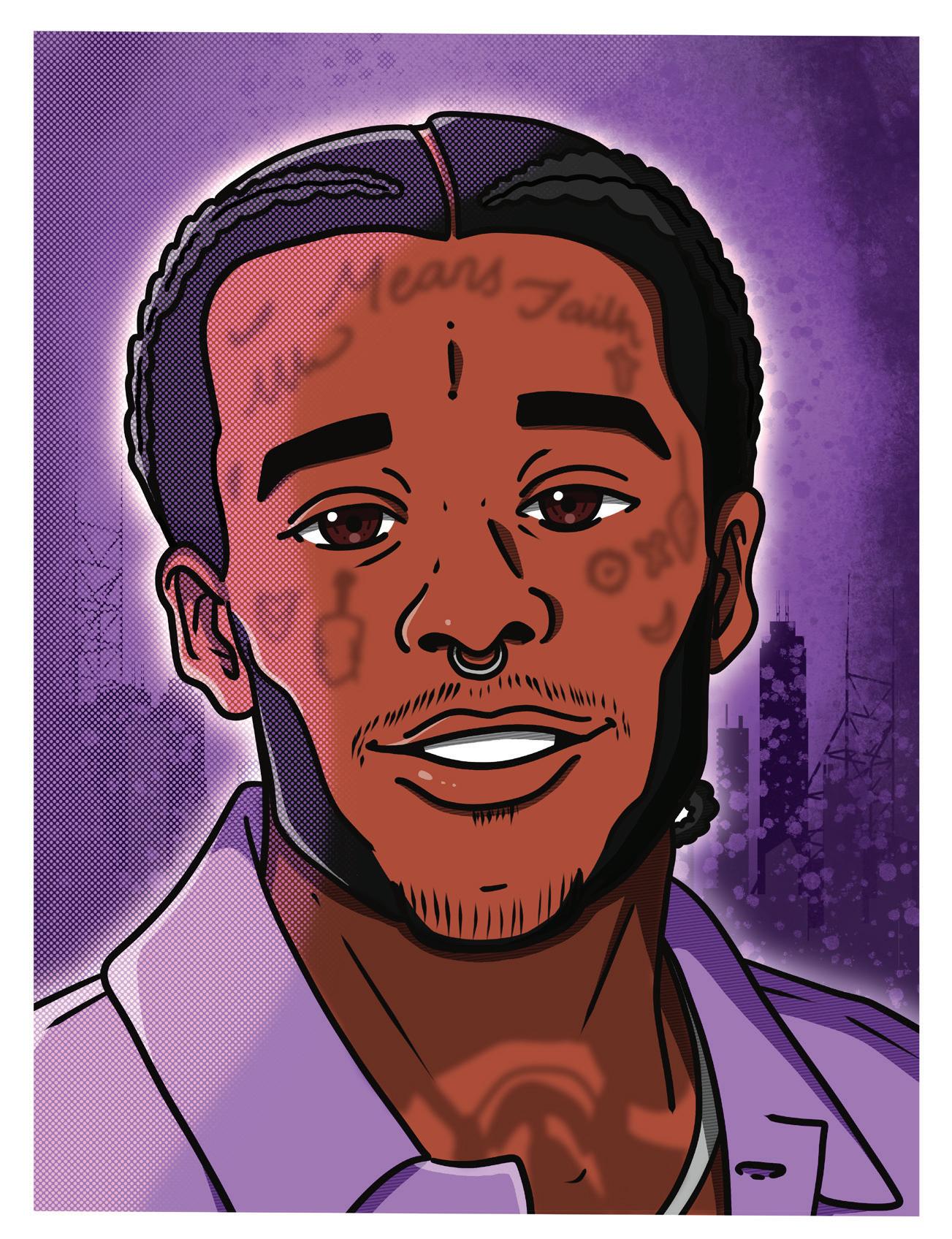
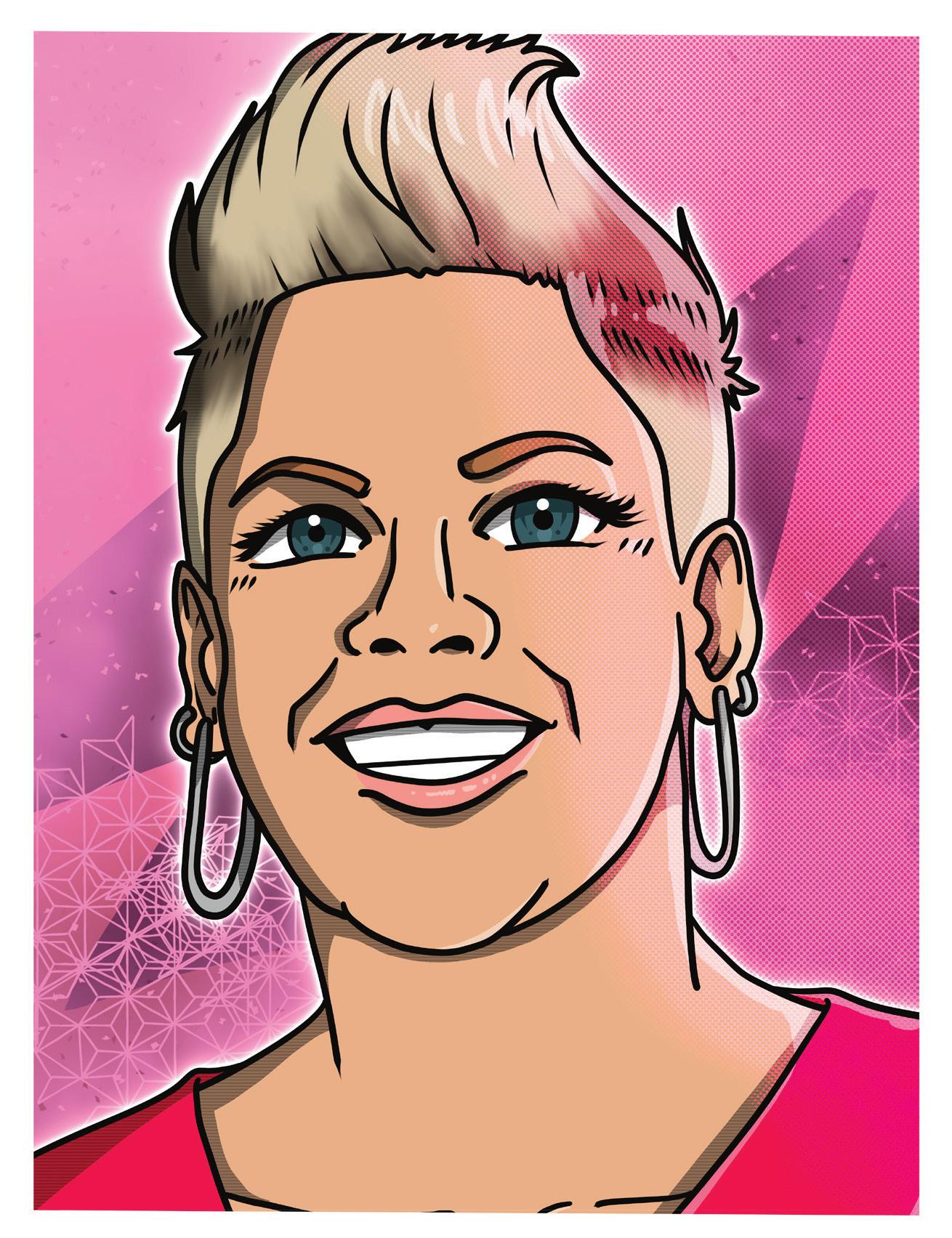
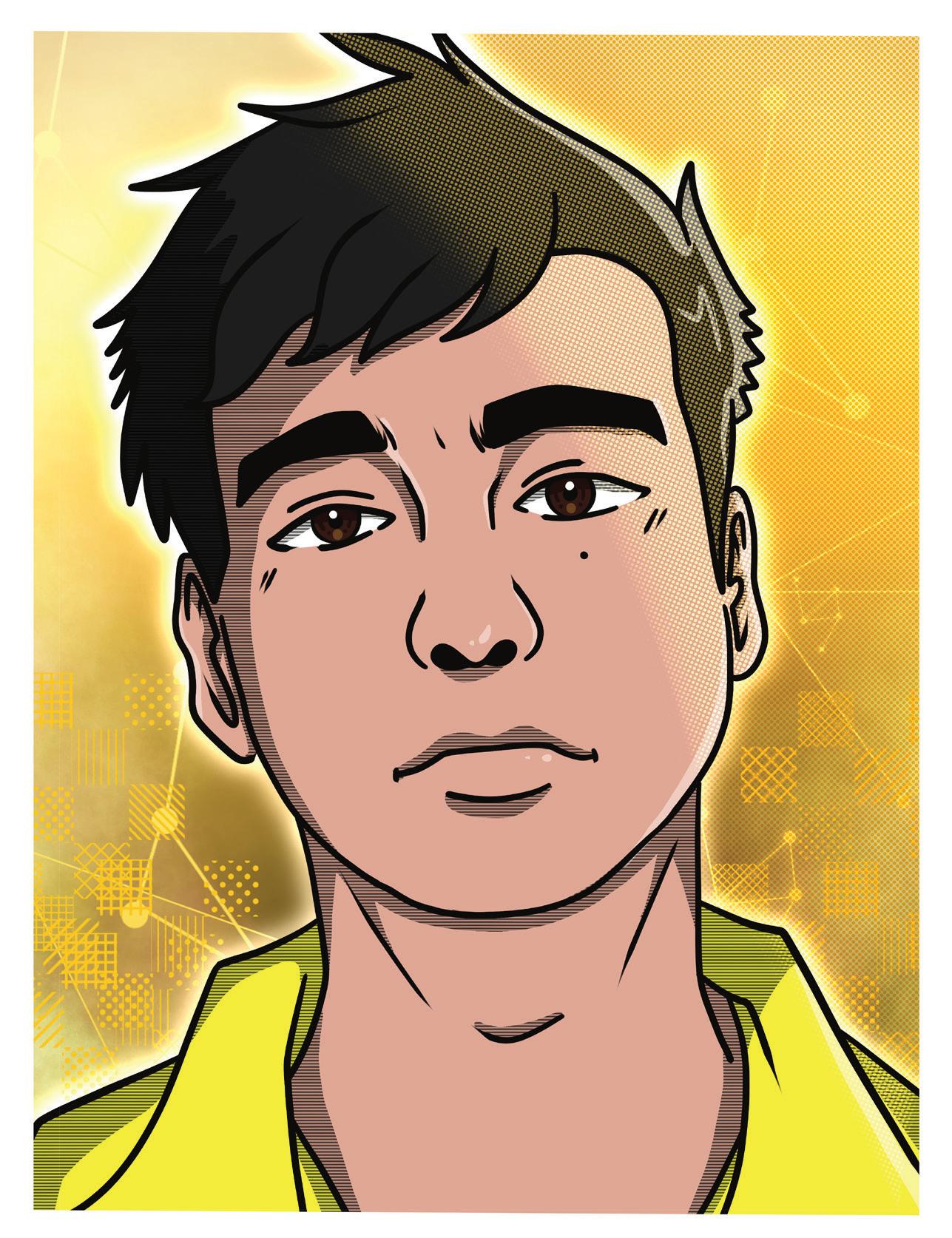
This fall, DFW will see many music artists grace the stage. The Collegian is most looking forward to seeing these artists: P!NK, Lil Uzi Vert, Doja Cat and Joji. These artists were picked for their classic beats, like P!NK who is a timeless throwback. Lil Uzi Vert will offer Texas their catchy beats that make the audience move, and Doja Cat will make her comeback live. Finally, with Joji joining the scene, concert-goers will get the opportunity to experience euphoric tunes.

4 • Wednesday, September 13, 2023
fall concerts are coming to town, don’t miss out
Illustrations by Tj Favela/The Collegian
