Tasting Kitchen (TK), Asia’s epicurean lifestyle media group, leads the way to the world’s best in food and drink, art and design, and luxury travel adventures.
SHANGHAI: Room H2, No 25, Lane 550 South Shaanxi Road, Shanghai • 上海市徐汇区陕西南路 550 弄嘉善老市 25 号 H2 室 HONG KONG: Units 1-2, 6/F., Oceanic Industrial Centre, 2 Lee Lok Street, Ap Lei Chau, Hong Kong • 香港鸭脷洲利乐街 2 号海湾工贸中心 6 楼 1 室 MACAU: Rua do Volong n2-a, Lazarus Verde, Rés-do-chão C, Macau • 澳门和隆街 2 号晶品艺楹地面 C 座
Mark Hammons FOUNDER & PUBLISHER
创办人兼出版人 mark@tasting-kitchen.com
Joey Cheang
DEPUTY PUBLISHER
副出版人兼主编 joey@tasting-kitchen.com
Lauriane Lemaire MANAGING DIRECTOR
常务董事 lauriane@tasting-kitchen.com
Mamie Chen
Marilyn Burkley
Robert Burkley
Zita Wan
SENIOR EDITORS
资深编辑
Regina Li
CHINESE EDITOR
中文编辑
Kate Nicholson
CONTRIBUTING EDITOR
ART AND DESIGN
特约编辑-艺术设计专栏
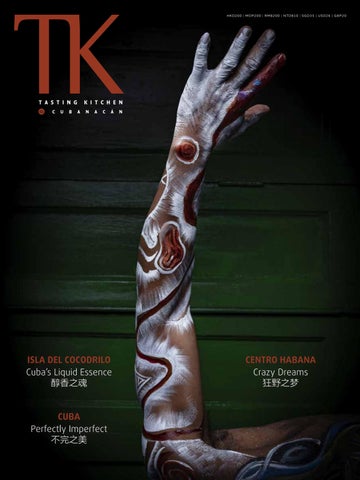
ON THE COVER
Photography by David Hartung
David Hartung DIRECTOR OF PHOTOGRAPHY
摄影总监
J. Carl Kerkman, MFA
IMAGE EDITOR
图像编辑
Jin Lao
IMAGE TECHNICIAN
图像技术员
Vivian Pun
DIGITAL CONTENT MANAGER
数字媒体经理
Victoria Lei
PROJECT MANAGER
项目经理
Alicia Beebe ART DIRECTOR 艺术总监
Lucy Morgan
BUREAU CHIEF, PARIS
巴黎区编辑主管
Dorothy So
Joyce Kwok
Julie Tu
Lorria Sahmet
Nicole Slater
CONTRIBUTING WRITERS
特約作家
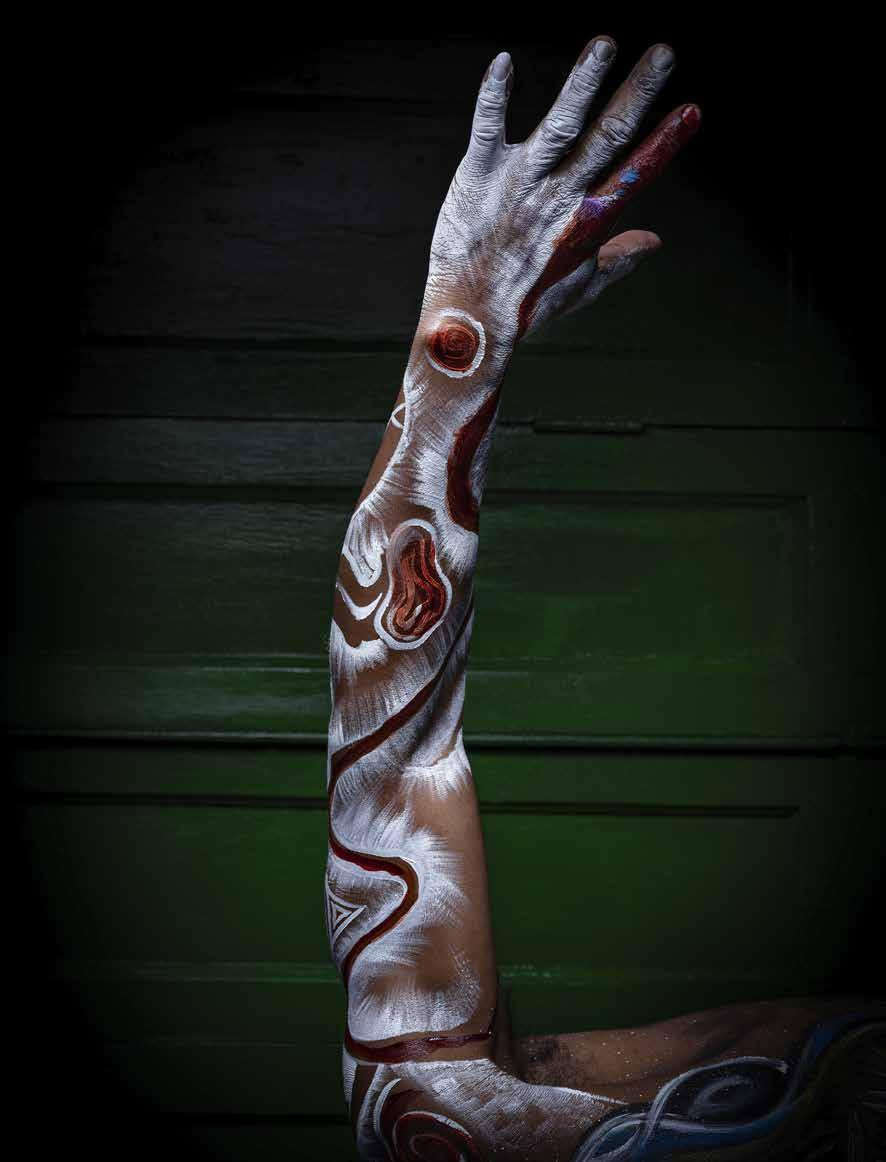
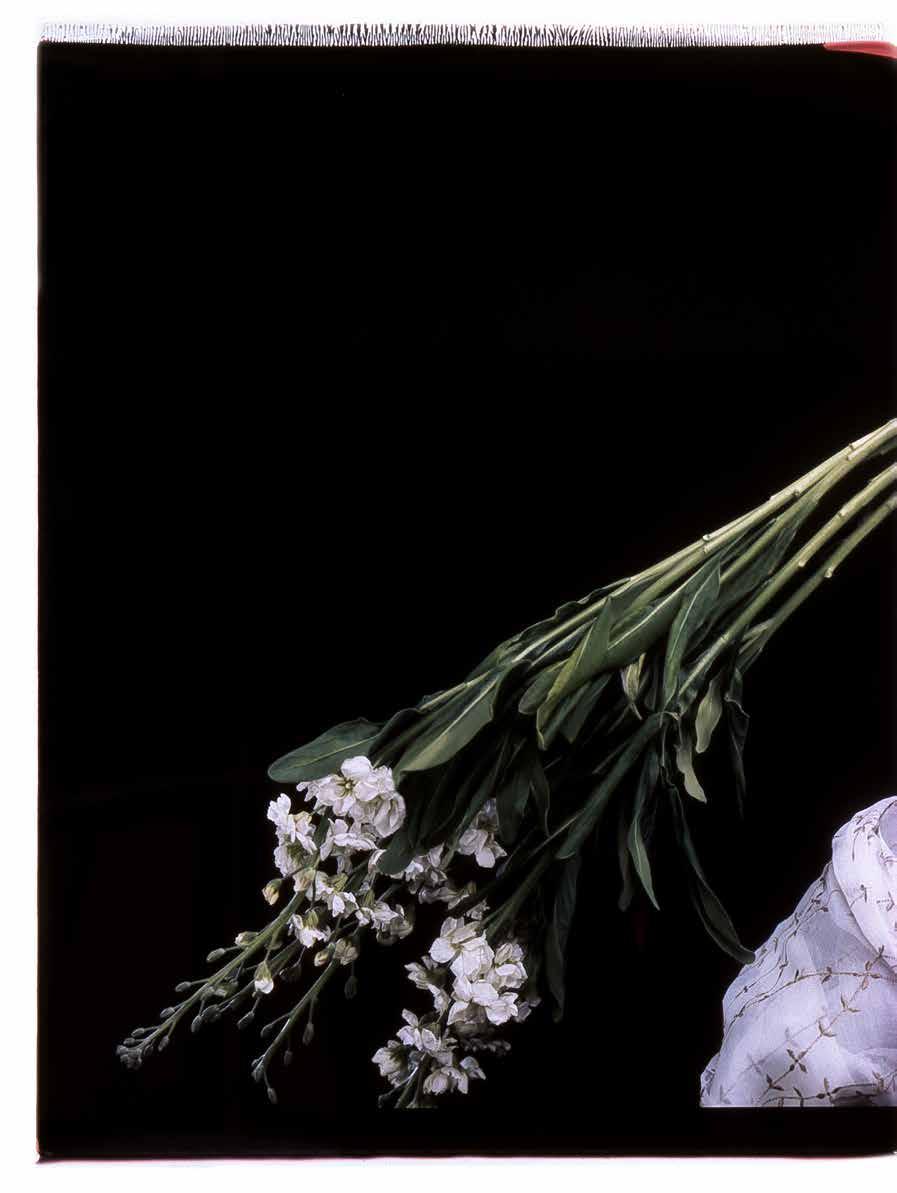
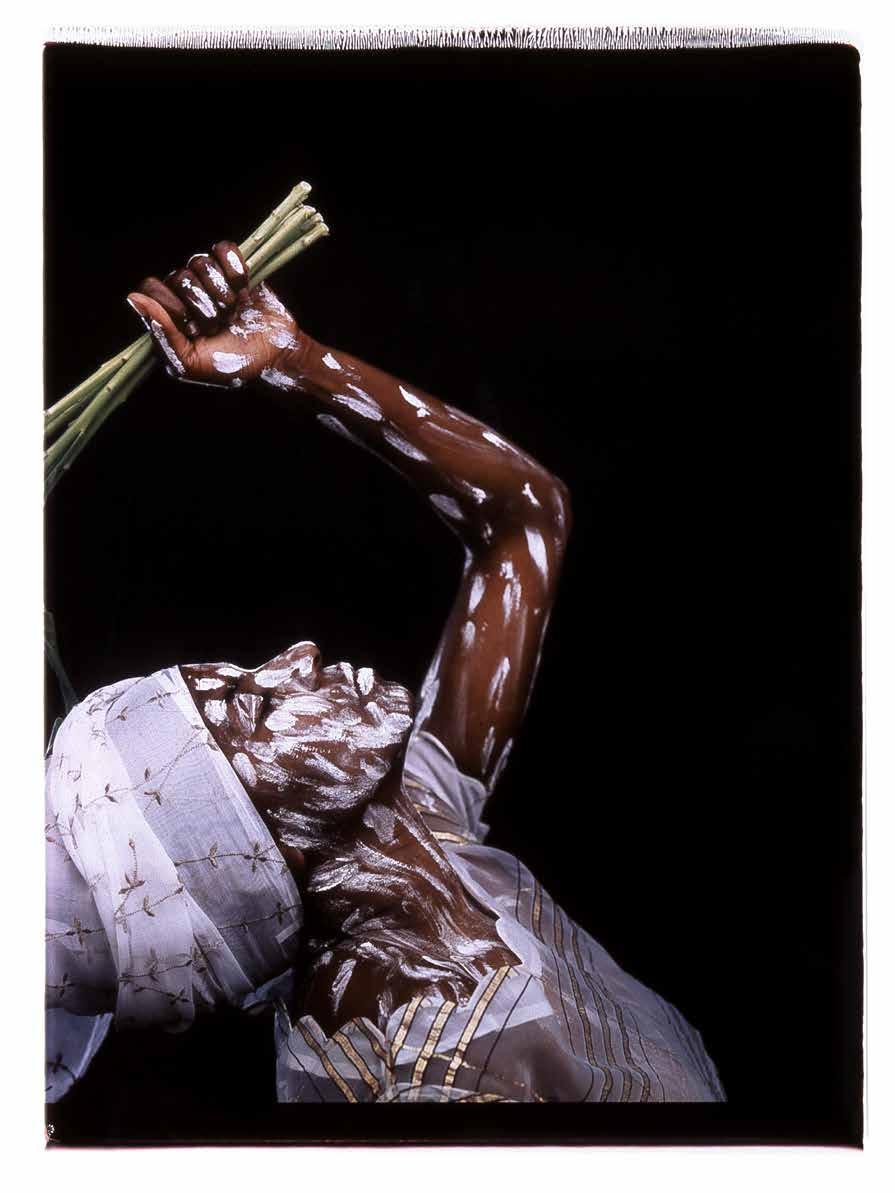
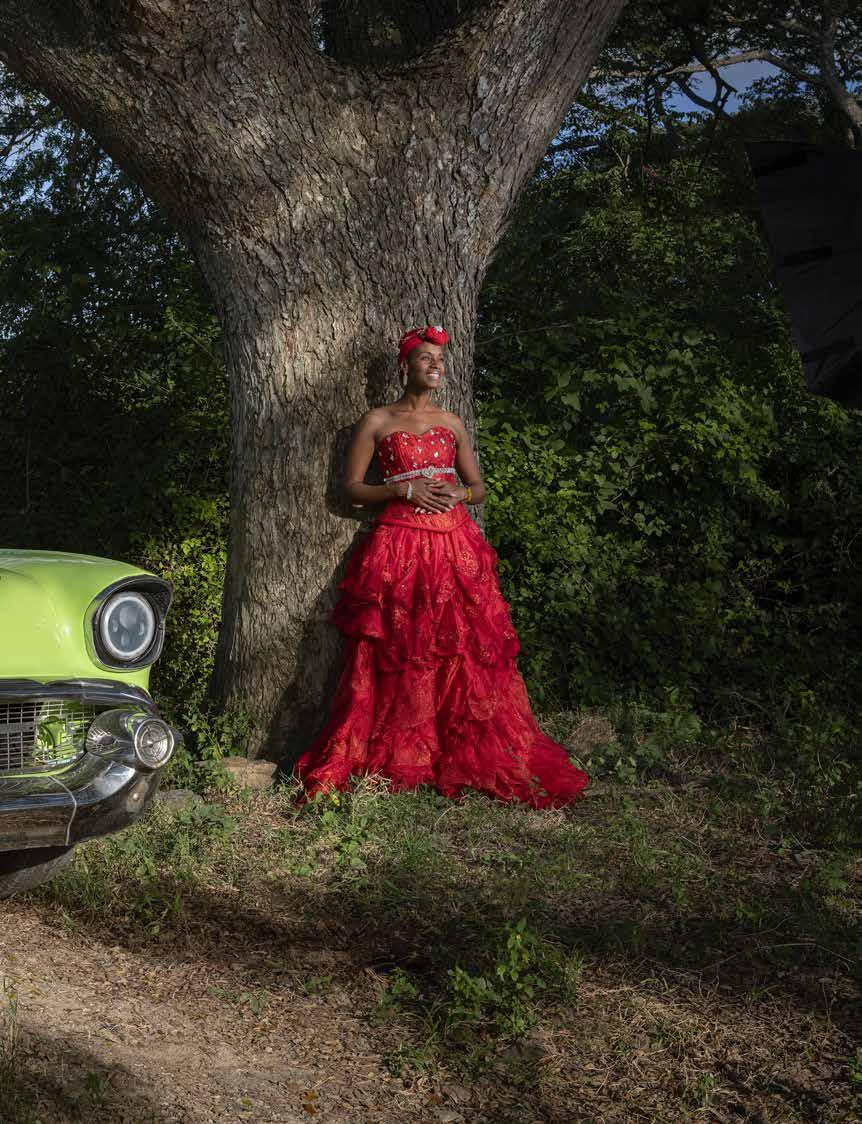
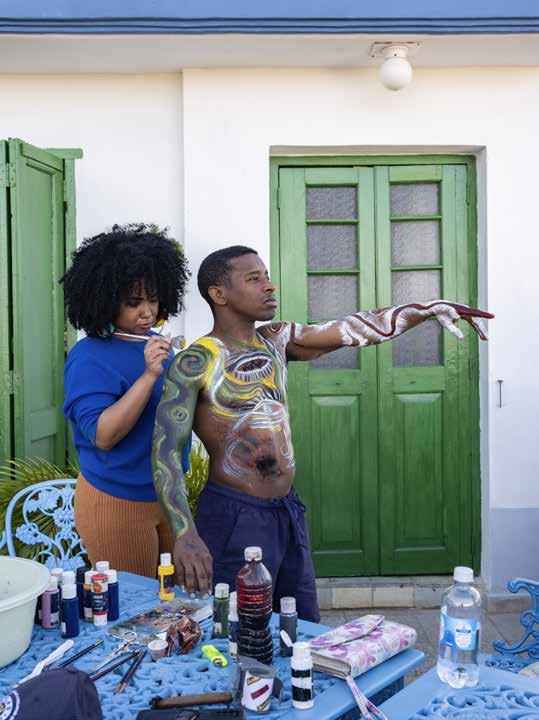
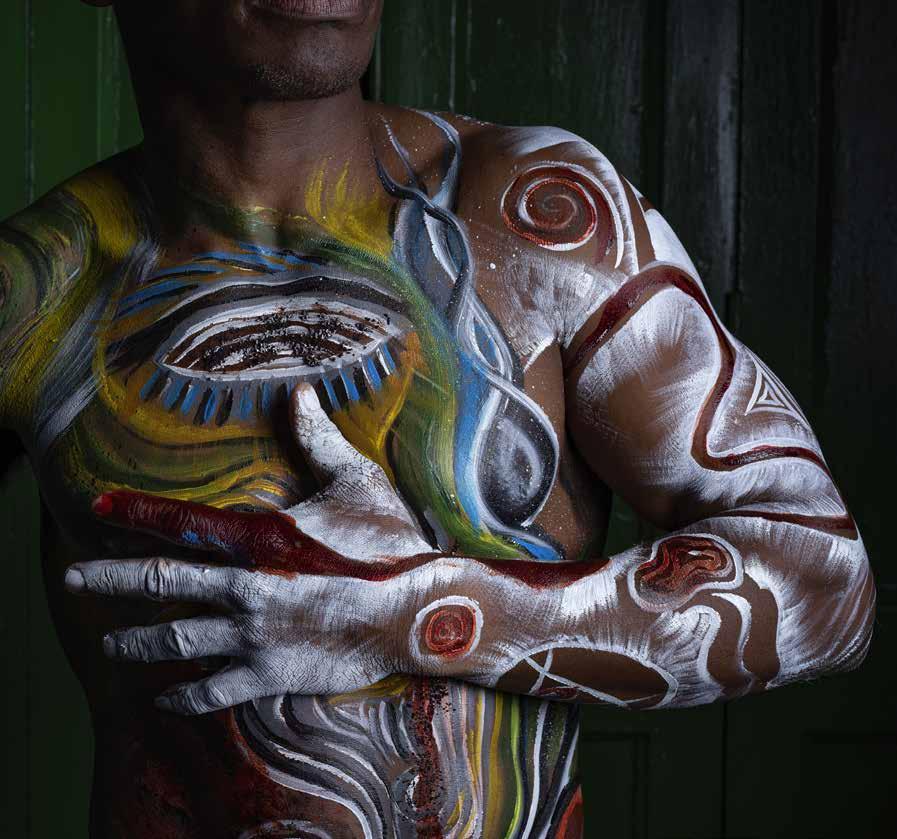
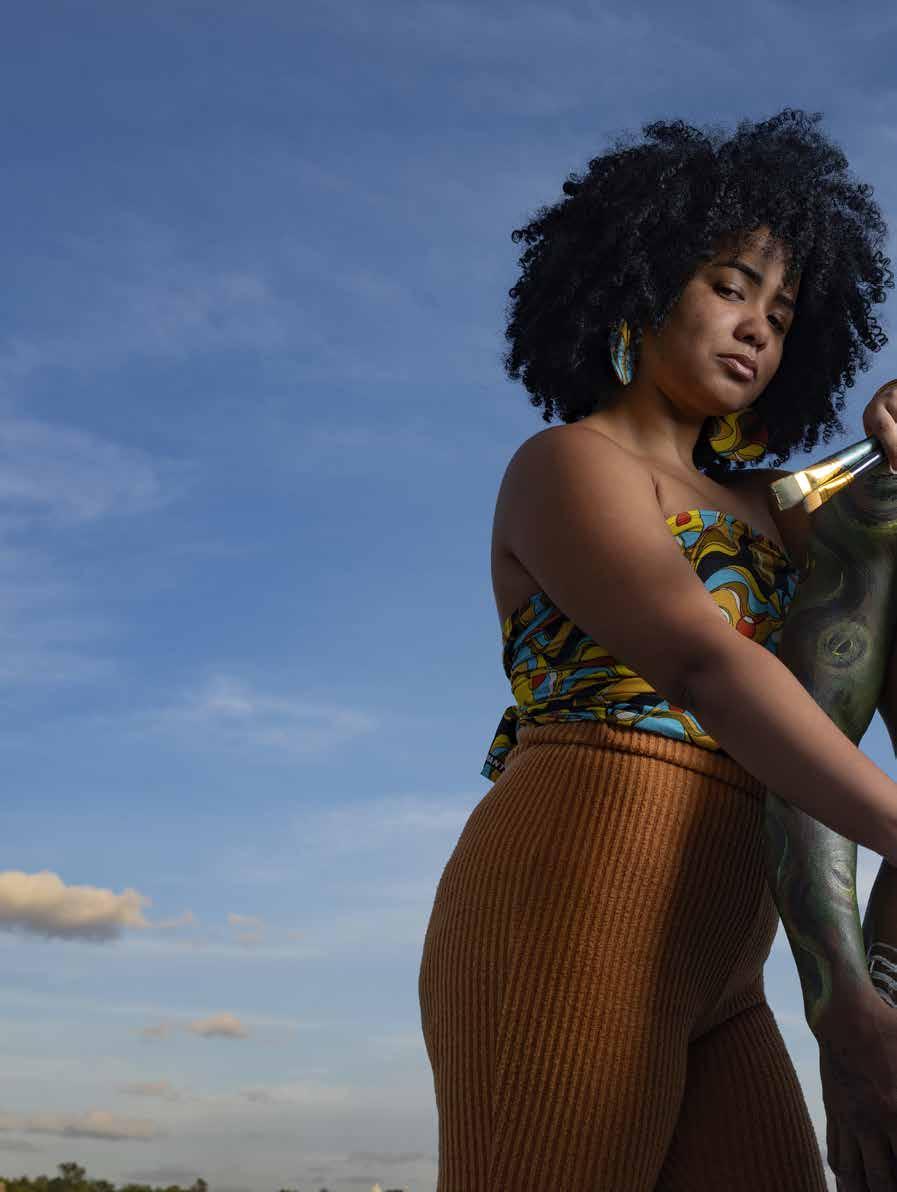
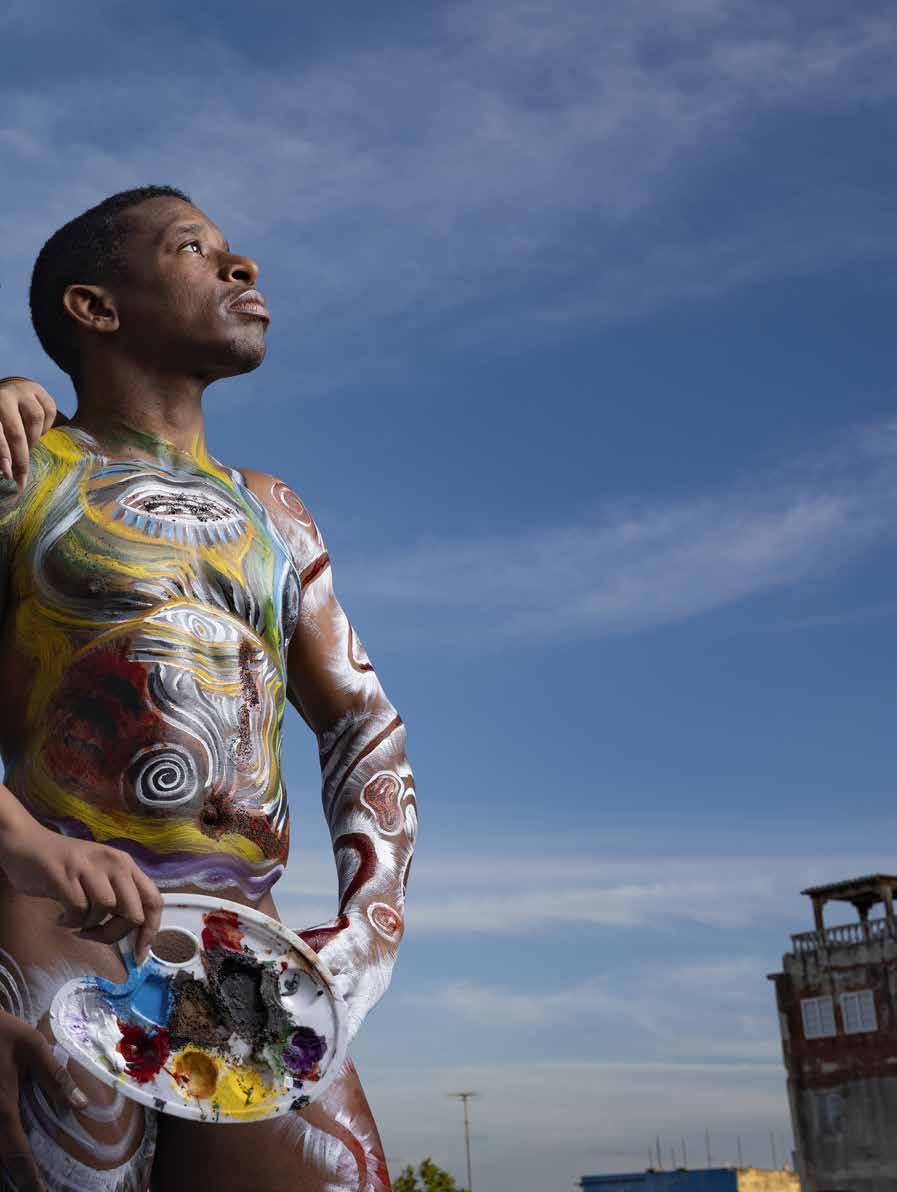
In her body-paint artwork, Havana-based Claudia Bacallao González draws on West African Yoruba and Afro-Cuban Santería religious traditions. Here, African spirits struggle to guide the viewer toward the right path, with the “blood” painted on the hand serving as a symbolic portal into the spiritual world.
Cubanacán is a Taíno word meaning “a place at the center.” It’s an apt name for an island that sits in the middle of the Caribbean and, for the duration of this issue, at the center of our imaginations.
We went to Cuba to find the story of rum but quickly found ourselves asking a bigger question: How does a place besieged by difficulty still radiate so much style, flavor, and joy?
One answer lies in the stubborn audacity of its people. Nowhere is this more evident than in our cover story, “Crazy Dreams.” When Enrique Núñez opened La Guarida in a crumbling mansion in Centro Habana, he didn’t just battle for customers; he battled for supplies. He jokingly refers to his early days of “Samsonite ingredients” – essentials flown in by friends in suitcases – which he transformed, with a notebook of recipes, into a global culinary legend.
That spirit of improvisation is the heartbeat of this issue. We see it in “Cuba’s Liquid Essence,” where Maestro Ronero César Martí treats rum not just as a drink, but as a cultural archive. We see it in the design collective Clandestina, whose credo nada es perfecto (nothing is perfect) runs quietly through these pages. And we see it in the photography of David Hartung, who, armed with a camera and a pocketful of Tootsie Pops, captures a country that refuses to be defined by what it lacks, but rather by what it creates.
In an industry sometimes obsessed with polished perfection, this issue is a reminder that the most compelling stories often come from the rough edges. The stories here are about alchemy: turning scarcity into creativity and uncertainty into possibility.
Here’s to the dreamers of Havana, and the makers of magic from the minimal.
A Cuban-born artist’s work bridges tradition, migration, and personal ritual over a decades-long international career.
The Calling (detail) (2003), diptych of Polaroid Polacolor Pro photographs, collection of Jonathan and Barbara
The Calling》
Jonathan
Barbara Lee收藏
Lee
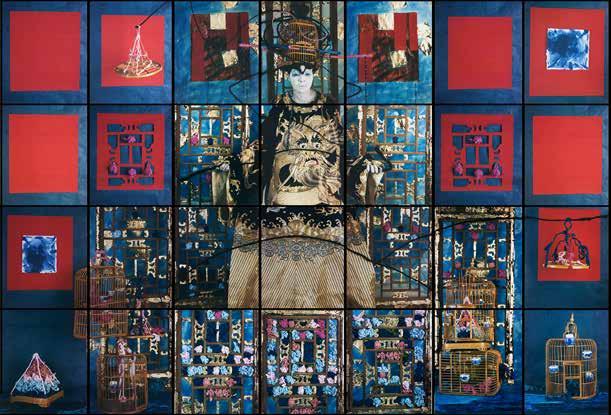
Finding Balance (2015), composition of twenty-eight Polaroid Polacolor Pro photographs, 268 x 404 cm, Miami, Jorge M. Pérez Collection
《Finding Balance》(2015年),由二十八张宝丽来照片组成,268 x 404厘米,迈阿密,由Jorge M. Pérez收藏
BEFORE US-BASED ARTIST María Magdalena Campos-Pons made art, she saw spirits. Before she picked up a paintbrush, she watched her grandmother cast spells with eggshells. Today, the prolific creator has a résumé of exhibitions spanning five continents and at least as many decades. A professor of art at Vanderbilt University, she serves as Cornelius Vanderbilt Chair of Fine Arts. Her work recently featured in the traveling retrospective María Magdalena Campos-Pons: Behold, shown at the Brooklyn Museum in 2023 and subsequently at the Nasher Museum of Art, the Frist Art Museum, and the Getty Center.
BY KATE NICHOLSON
Campos-Pons, whose grandmother was a priestess in Santería, a religion born of Yoruba spiritual traditions blended with Catholicism, is inspired by its practices. In The Calling (2003), she depicts herself as a priestess too, but of art rather than any particular theology. Her documented performance positions art-making itself as ritual by borrowing imagery from Santería traditions –including a white dress, protective eggshell powder, and a body bent in a ceremonial gesture – to enact a rite of transformation.
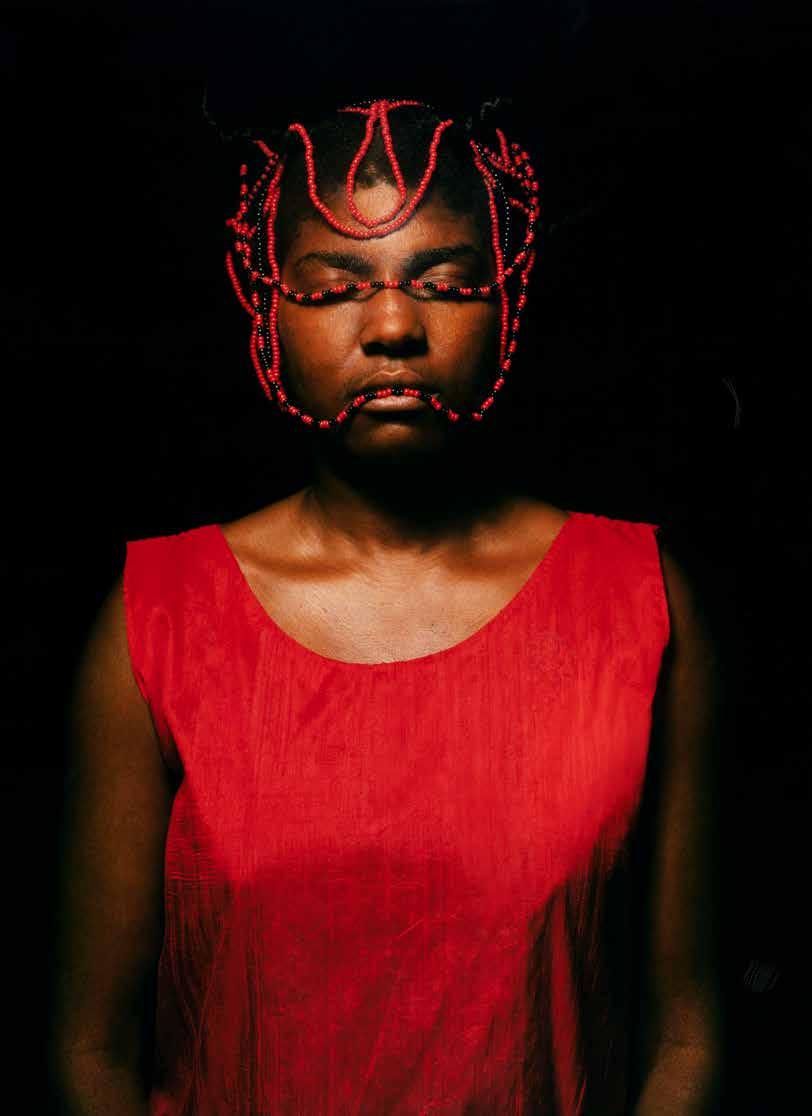
Her spiritual calling, says Campos-Pons, is innate, something in her DNA. Indeed, others of her pieces pay homage to her ancestors, enslaved and indentured workers from China and Africa. In Red Composition, she references their histories of migration, both literally with the garabato, used by Cuban farmers to clear paths through sugarcane fields, and metaphorically through blood-red cords and prayer beads draped across her face and body in the central image, which represents the intersection of inner and outer worlds.
Central image from a triptych of Polaroid Polacolor Pro photographs entitled Red Composition (1997) from the series Los Caminos (The Path), collection of Wendi Norris
Red Composition
如梦似画
midnight visions
Cuban artist Alejandro Piñeiro Bello’s “night paintings,” translated from notebook to canvas, explore memory, dreams, and the deep recesses of the mind.
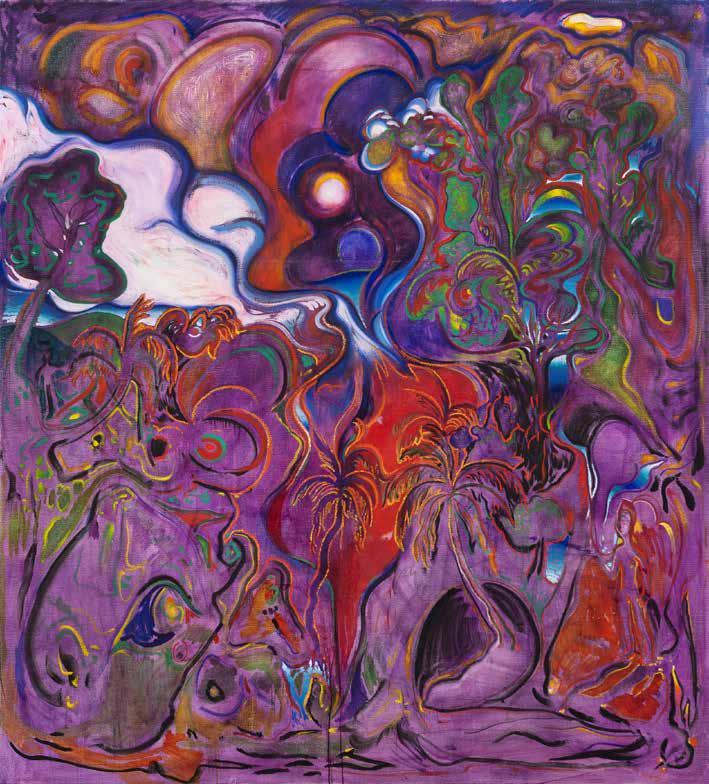
CUBAN-BORN, Miami-based painter Alejandro Piñeiro Bello keeps his ideas in notebooks. To anyone but him, the pages appear abstruse, simply a series of boxes with a phrase or word, typically in Spanish, scribbled within. To the artist, however, each rectangle holds an entire world. “They change a little with time,” he says. “They’re my sketches. They’re the initiation point, the departure. And then I let loose with the unconscious mind.” When Piñeiro Bello transfers one particular realm to canvas, he marks that idea as used. Nothing is repeated, which perhaps is surprising in light of the fact that he has produced hundreds of works, some acquired by museums, and has participated in prestigious exhibitions and residencies worldwide.
BY KATE NICHOLSON
Since 2024, Piñeiro Bello has been represented by highly regarded Pace Gallery. In his exhibition Solo Quiero Soñar (I Just Want to Dream), which ran at Pace’s Hong Kong space this year from mid-September to mid-October, he presented ten paintings of his imaginary nightscapes.
Unofficially, he calls them “night paintings” and says they come from deeper within than any of his other works. “My practice,” says Piñeiro Bello, “already comes from that unconscious side of the mind –from dreams, from symbols, from apparitions. The night paintings are an answer to all of that.” They draw, he says, on ideas that reach deep into his personal life – even into dimensions of time travel or telepathic dreaming. Sometimes, he’s unsure exactly where they come from, while at other times, the influence is more grounded in everyday reality.
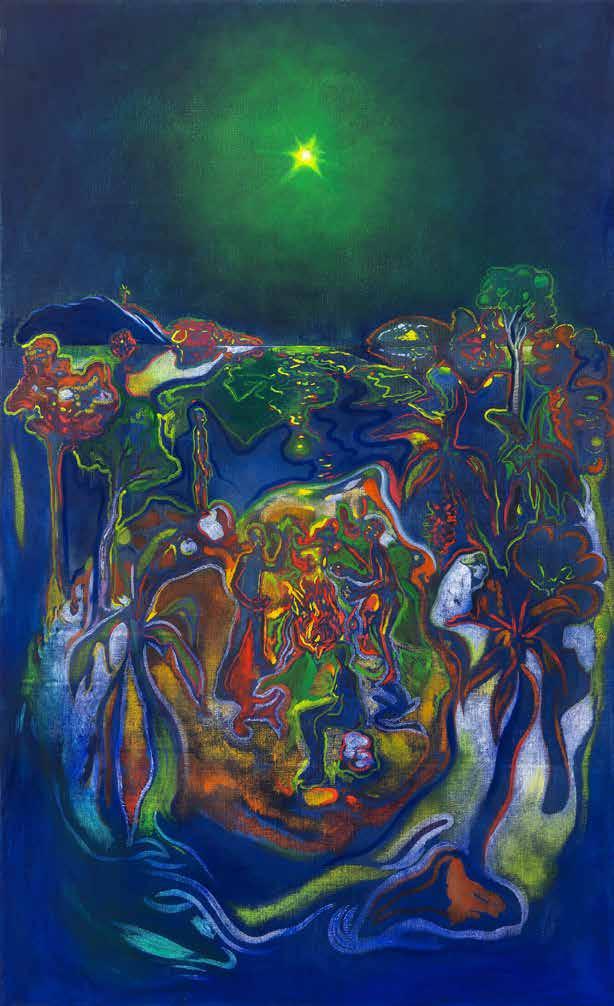
One of the exhibition’s anchoring works is La Estrella Que Nos Guíaba También Desapareció, Señora, Señora (The Star That Guided Us Also Disappeared, Lady, Lady). Featuring a surrealist island-scape replete with palm trees and figures and a luminous green star in a cerulean sky, it was inspired by an Afro-Cuban song with lyrics based on an ancient West African Yoruba chant. Titled “Ingrato Corazón,” it was recorded by Carlos Valdés and Eugenio Arango, known as Patato & Totico, in 1968 in New York. “Even though the song is sung in Spanish,” says Piñeiro Bello, “you can feel the influences of the music that came to Cuba through the slave trade. It reverberates within the walls of my studio. I’m listening to it and I’m connecting to the idea of elusive love in the lyrics. I’m
他私底下称这些作品为「夜景画」,并坦言 它们比其他任何作品都更贴近心灵深处。他说: 「我的创作源自潜意识的幽微角落,来自梦境、 符号与幻象。这些『夜景画』,正是对这一切的 回应。」画作的创作灵感,甚至触及时间旅行与 心灵感应之梦的维度。有时,他不确定想法从 何而来;但有时,想法则与现实生活紧密相连。 展览压轴之作《La Estrella Que Nos Guíaba También Desapareció, Señora, Señora (夫人!夫人!指引我们的星星也消失了!)》 描绘一座超现实的岛屿,棕榈树与人影错落, 蔚蓝天幕中悬着一颗明亮的绿星。这幅画的创 作灵感来自一首非洲 – 古巴歌曲《心若死灰》, 1968 年由 Carlos Valdés 与 Eugenio Arango 在 纽约录制。Alejandro 说:「歌词虽是西班牙语, 你仍能感受到随奴隶贸易传入古巴的音乐影响。 我在工作室聆听它,与歌词中那难以捉摸的爱 共鸣。我想象出一颗闪烁的绿星。」这想法在日 记中酝酿三年,而当他提笔作画时,却无需翻
Fragmentos Nocturnos
imagining a flickering green star.” The idea lay in his journal for three years before he produced the work, and when the time came to put it on canvas, he didn’t need to flip pages to find it. “It came to me again as a revelation. It was a natural moment.”
Piñeiro Bello’s night paintings are outliers. The works in each of his exhibitions or series typically span several moments across a day, but there is usually no more than one nightscape. “They were rare, they were unique,” he explains. Having so many in one show is a boon to viewers, who can better appreciate the unique point of contrast they offer to the vibrant, tropical worlds he most often creates on canvas.
The Cuban landscapes of the artist’s childhood and young adulthood strongly influence his aesthetic choices. “In the Caribbean, you’re surrounded by exuberant nature,” he says. “During the summer, you have all these multilayered clouds in the sky, with the sun and the ocean below creating pure beauty and color.” Though it’s not something Piñeiro Bello consciously taps into, he is fully aware of its effect on the act of painting. He likens the method to the natural, organic way children paint what they see around them. “When I go to Canada or London, I feel nostalgic for home, and I want to paint these scenes more. It’s protective. In the studio, I’m surrounded by my paintings, and they’re the clouds, the sunshine, a spark of light, or heavy rain.”
La Estrella Que Nos Guíaba Tambien Desapareció, Señora, Señora
对称宇宙
cosmic symmetries
Cuban-born artist José Bedia channels tribal knowledge across cultures with a blend of ritual, fieldwork, and painting.
STEP INSIDE MIAMI-BASED ARTIST José Bedia’s studio and you won’t see any of his own art. He doesn’t like to, in his own words, “consume himself.” Instead, the space holds his “library of open books,” a collection of tribal and indigenous art spanning almost every continent. “When I visit a place,” he notes, “I always bring something back, not just physically, but in memory. It’s like anthropology, but in an artistic way, not strictly academic. It’s a more sensitive, intuitive approach. I create a kind of altar or space for that object in my home and spend time studying it. Eventually, the meaning comes out to me.”
BY KATE NICHOLSON
Despite being trained in the traditional art conventions of both the West and the USSR, Bedia’s deepest inspiration comes from indigenous art from every continent. Much of his work since 1983, when he was initiated into Palo Monte (an Afro-Cuban religion) focuses on Mpungus, a Bakongo term for
尽管 José 接受过西方和苏联传统艺术规 范的训练,但他最深刻的灵感却来自全球各大 洲的原住民艺术。自 1983 年加入以姆彭古 (巴刚果语中意为塑造世界的强大精神力量)
Lembo-Nkuyo-Sarabanda,
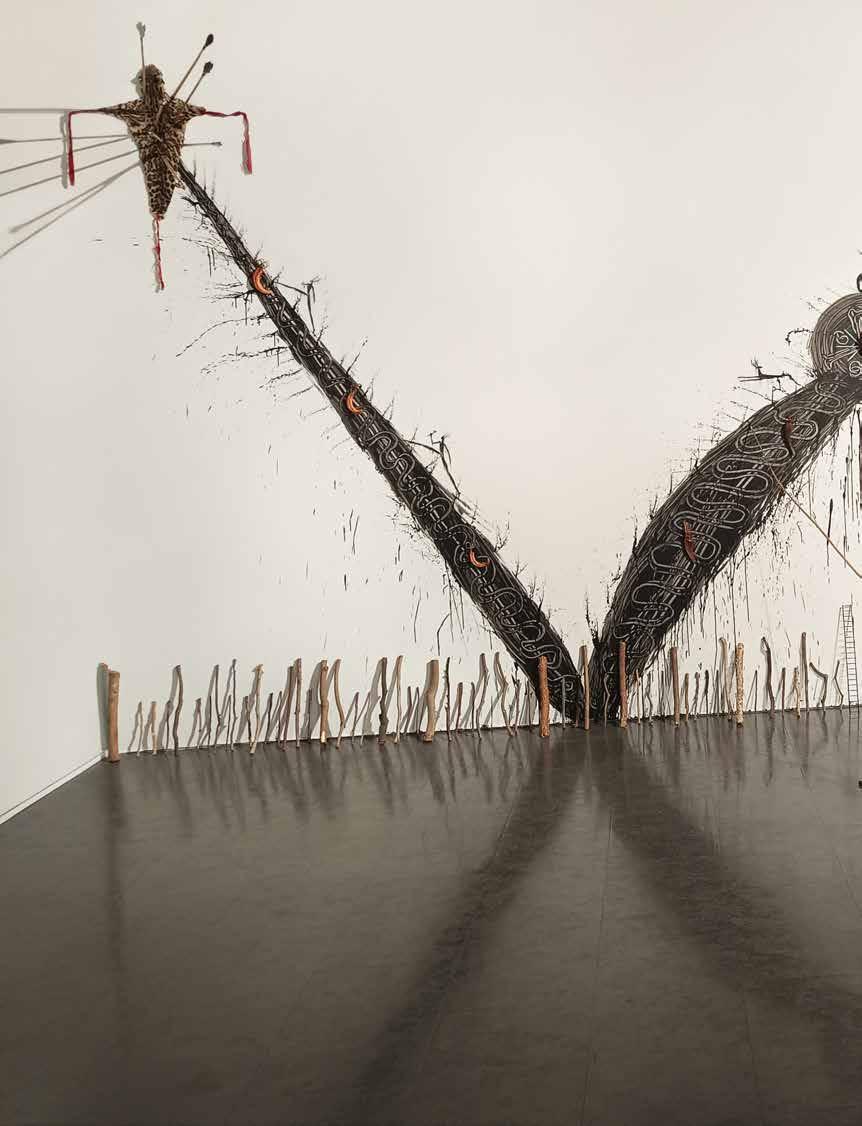
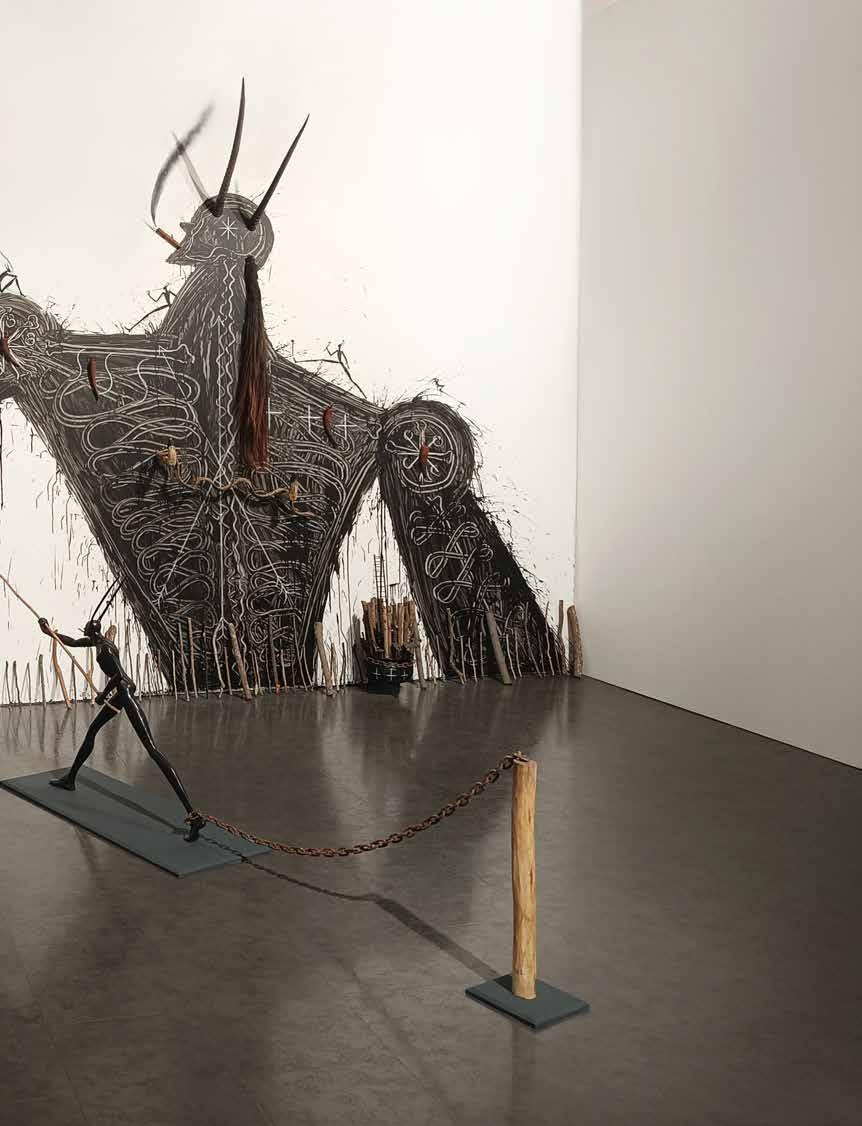
An Mpungu (2024), acrylic on canvas, iron cauldron, bronze sculpture, wood, and mixed media, 380 x 630 cm 《Lembo-Nkuyo-Sarabanda, An Mpungu》 (2024
JOSÉ BEDIA
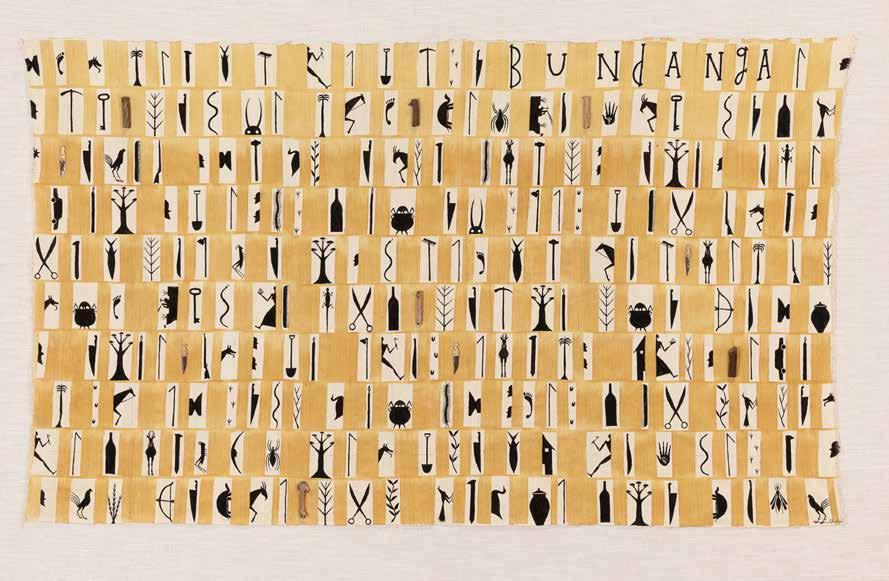
Bundanga (2020), acrylic on handmade textile, wooden objects, 139.7 x 223.5 cm 《Bundanga》(2020),手工纺织品丙烯画、木制品,139.7 x 223.5厘米
powerful spiritual forces that shape our world, and is also influenced by the community’s practices. Indeed, the enormous installation Lembo-Nkuyo-Sarabanda, An Mpungu (2024), shown at Fondation Opale in Switzerland in April this year, evokes a sacred spirit bursting from a nganga, or cauldron, commonly used in Mpungu ceremonies.
According to Bedia, practitioners fill the pot with items like animal parts, twigs from sacred trees, and soil from culturally important places. “The whole universe is concentrated there,” he says. For the installation, he used his hands to paint onto the wall a spirit radiating from the cauldron. A small bronze deity stands nearby, painting its own image on the wall with a long stick. According to Bedia, “He’s a wild kid who likes to play jokes” and also a guide who “controls the crossroads.” Appease him, and he may set you on a blessed path; displease him, and you never know where you might end up.
Tribal cultures, says Bedia, view symmetry not simply as an aesthetic choice but as an elemental principle: “Symmetry is balance. It’s the harmony between heaven and earth, day and night, man and woman.” Drawing on these indigenous worldviews, Bedia often paints with both hands simultaneously, a method that breaks with Western conventions of perspective and linear composition to offer instead a more holistic interpretation of our world.
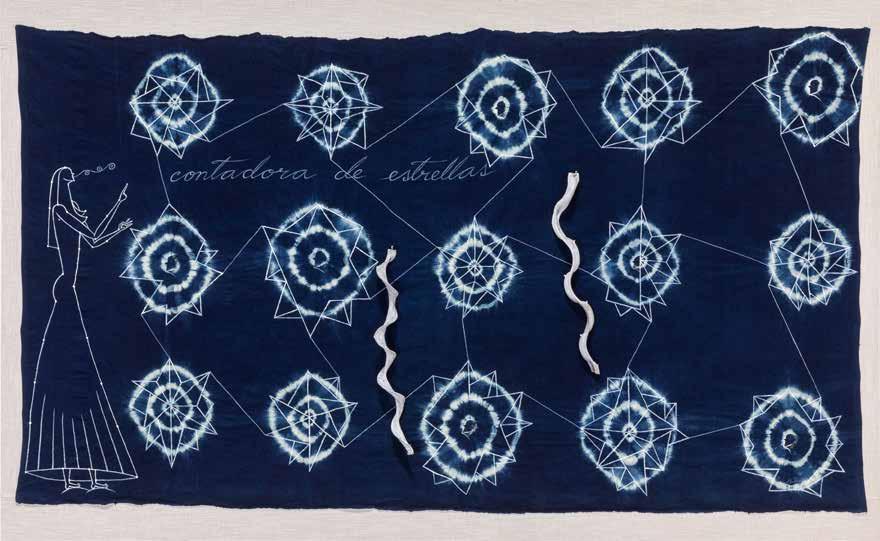
Works like Bundanga and Contadora de Estrellas, both painted in 2020 and shown in the 2024 exhibition Bestiary & Idols at Mendes Wood DM in New York, showcase the artist’s unique take on anthropology for cross-cultural artistic exchange. During numerous trips to
West Africa beginning in the mid-2000s, he developed close relationships with traditional textile makers whose methods have become an integral part of his own creative process. “In those places, the elders gather like a kind of men’s club. They drink tea, they smoke, and they weave,” he explains. “The women dye the cloth naturally, with indigo, which gives that deep blue, like in my paintings, or with earth pigments.” Later, the makers stamp the cloth with various motifs. Bedia once asked to paint on the dyed but otherwise unmarked cloth. “One man told me,” he recalls, “‘Sir, I can’t sell you something that’s unfinished.’ But I said, ‘That’s what I want.’” But after he took time building a rapport, the artisans began giving him pieces. “These surfaces aren’t neutral,” says Bedia. “You can see the human touch. I don’t like perfection. Perfection is the work of God. I prefer human perfection: a knot, a twist, a little flaw.”
José 说:「这些布料并非中性的,你可以看到人为的 痕迹。我不喜欢完美,那是上帝的作品。我更喜欢 人类的完美:一个结、一个皱褶、一点瑕疵。」
Contadora de Estrellas (2020), acrylic on handmade textile, dried vines, 165.1 x 267 cm 《Contadora de Estrellas》(2020),手工纺织品丙烯画、干藤,165.1 x 267厘米
Mai Chongchaiyo Chief Creative Officer
Steve Leung Hospitality Ltd. (SLH)
设计凝炼 餐饮美学
dining by design
In Mai Chongchaiyo’s meticulous approach to the restaurant environment, every space, every plate is carefully considered.
AS CHIEF CREATIVE OFFICER at Steve Leung Hospitality Ltd. ( SLH ), where he has spearheaded global hotel and dining ventures since 2017, Mai Chongchaiyo is concerned with far more than what a restaurant looks like. He and his team, he says, “balance aesthetics with functionality and commercial viability to ensure that our work is visually appealing and economically beneficial.”
The key to getting this blend right every time is the in-depth research into varied culinary histories and local market characteristics that informs every SLH design. Working as part of a multicultural team comes as second nature to Chongchaiyo, who grew up in Bangkok, a city where diversity – in everything from religion to architecture – shaped his understanding of how cultural influences can work in harmony. “Thai culture’s unique embrace of vitality and inclusiveness nurtured my ability to absorb different perspectives from an early age,” notes the A&D Awards 2021 “40 Under 40” award honoree. “Being surrounded by various cultures taught me to stay open to new ideas, listen actively, and connect seemingly unrelated elements.”
Of SLH’s approach, he notes, “Design is all about precision. For example, we don’t consider Chinese cuisine as a generic category. Whether we’re dealing with Peking duck, xiaolongbao, or premium dim sum, specificity is essential.” As examples, he cites two restaurants in Singapore’s Resorts World Sentosa. At KA-MON, the entire space was designed around three Japanese grilling styles: warayaki, robatayaki, and genshiyaki. At Sugarra, the team centered their concept on a key Spanish Basque ingredient, olive oil, integrating it into every detail.
The Warayaki, Robatayaki and Genshiyaki counters at KA-MON 火纹的稻草烧、炉端烧及原始烧料理台
SLH’s approach involves tailoring designs to correspond with the unique genetic makeup of each project. “Even when clients ask us to recreate a previously successful project,” says Chongchaiyo, “we advise trying something new.” On projects that have similar genetic foundations, that share design DNA, as Chongchaiyo puts it, innovative variations are introduced. For example, when SLH was planning SIXA at Hong Kong City Gate Outlets, some features were kept from its previous work at sister venue HEXA, a restaurant at Ocean Terminal in Hong Kong that caters to affluent diners, but others were adapted for a local audience with lower price expectations.
Complex projects require reverse engineering. “We start,” says Chongchaiyo, “by envisioning the finished space and asking ourselves, ‘Why does this location need this design?’ This process naturally narrows our options. We then break the project down like a puzzle, dissecting it into components and solving them piece by piece.”
The SLH team has already applied AI to multiple projects, not only for conceptual design but also in such practical operations as precise measurement. Chongchaiyo expects technology to offer deeper insights into how design influences guest behavior. “With the help of AI,
a theatrical open-kitchen spectacle. 味焰的渐变式玻璃幕墙呈现戏剧化的开放式厨房效果。
we can document guest preferences and every detail, from wine selections to seating arrangements. Some restaurants are even able to track a customer’s mood or emotional state in real time and tailor experiences like recommending Champagne when they’re celebrating or comfort food when they’ve had a tough day.”
What does the future hold for restaurant design in China? Chongchaiyo believes authenticity has never been more important or better understood by the region’s established and emerging designers. He sees this reflected in entries to CRIDA (China Restaurant Interior Design Awards), for which he was a 2025 jury member. Where designers once relied on online research or travel, today they engage in deep research and create nuanced narratives, driving rapid change. On one side are mass-market brands and on the other are niche restaurants with limited seating and strong identities. Few options exist in between, which Chongchaiyo considers a good thing. This shift is doubling restaurant life cycles, resulting in greater sustainability and long-term value. “The China design community has shown incredible creativity and potential,” he says. “With continued dedication and passion, the entire industry will evolve, along with individual careers.”
中国餐饮设计的未来会怎样? Mai 认为, 资深与新锐设计师对「真实性」的重视及理解 已达至新高度。作为 2025 年中国餐饮空间设 计大奖(CRIDA)的评委,他从参赛作品中窥 见这一趋势:设计师以往主要依赖网络研究或 旅行来获取灵感,而如今,他们进行深入研究, 构建细腻叙事,推动了行业的快速变革。市场 一端是面向大众的品牌,另一端是座位有限、 特色鲜明的精品餐厅。两者之间鲜有折中选择, Mai 认为这是良性发展。这种转变使餐厅的生 命周期延长一倍,实现更高的可持续性和长期 价值。他说:「中国设计界展现出惊人的创造 力和潜力。只要保持投入和热情,行业整体将 不断发展,个人职业生涯也将随之提升。」
The gradient glass curtain wall at Sugarra creates
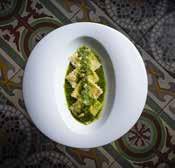
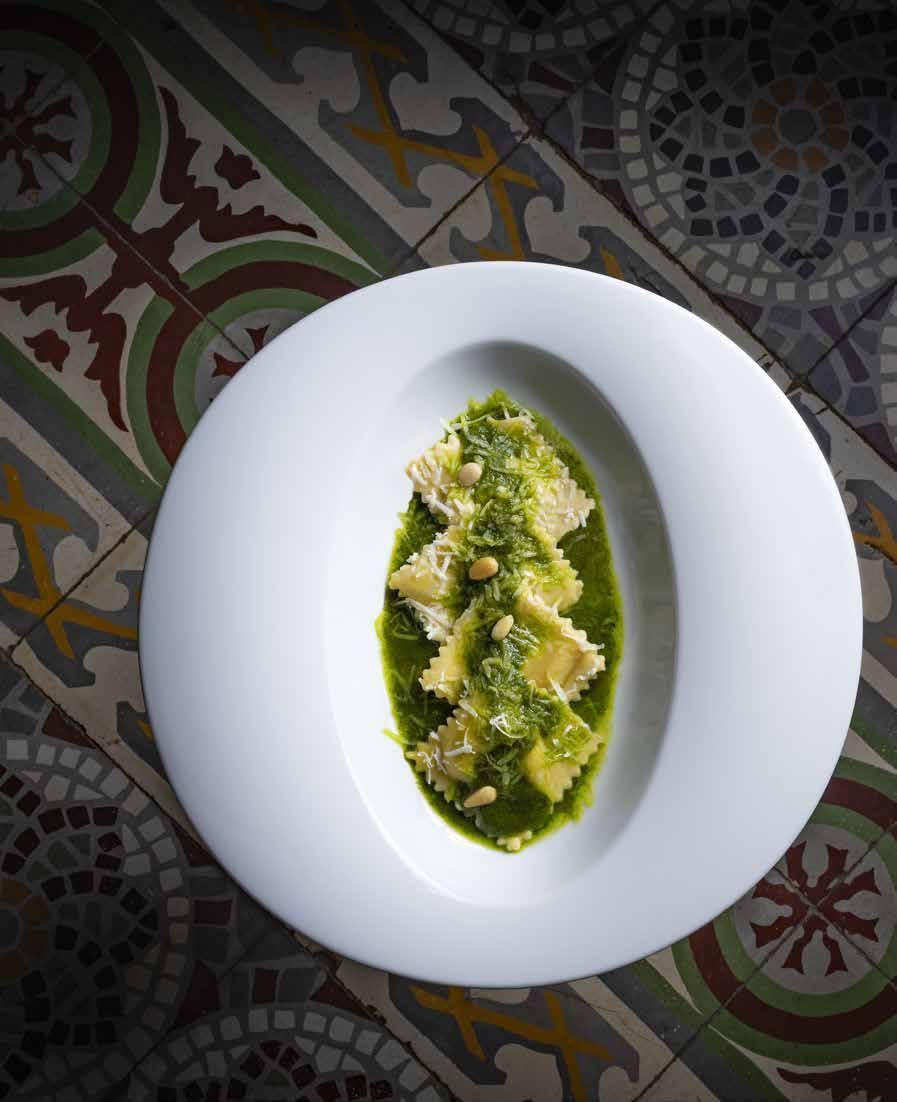
Pumpkin ravioli with spinach, blue cheese, pesto sauce, and pine nuts 南瓜意大利饺配菠菜、
CRAZY DREAMS
A Cuban couple’s culinary aspirations progress from paladar to haute cuisine.
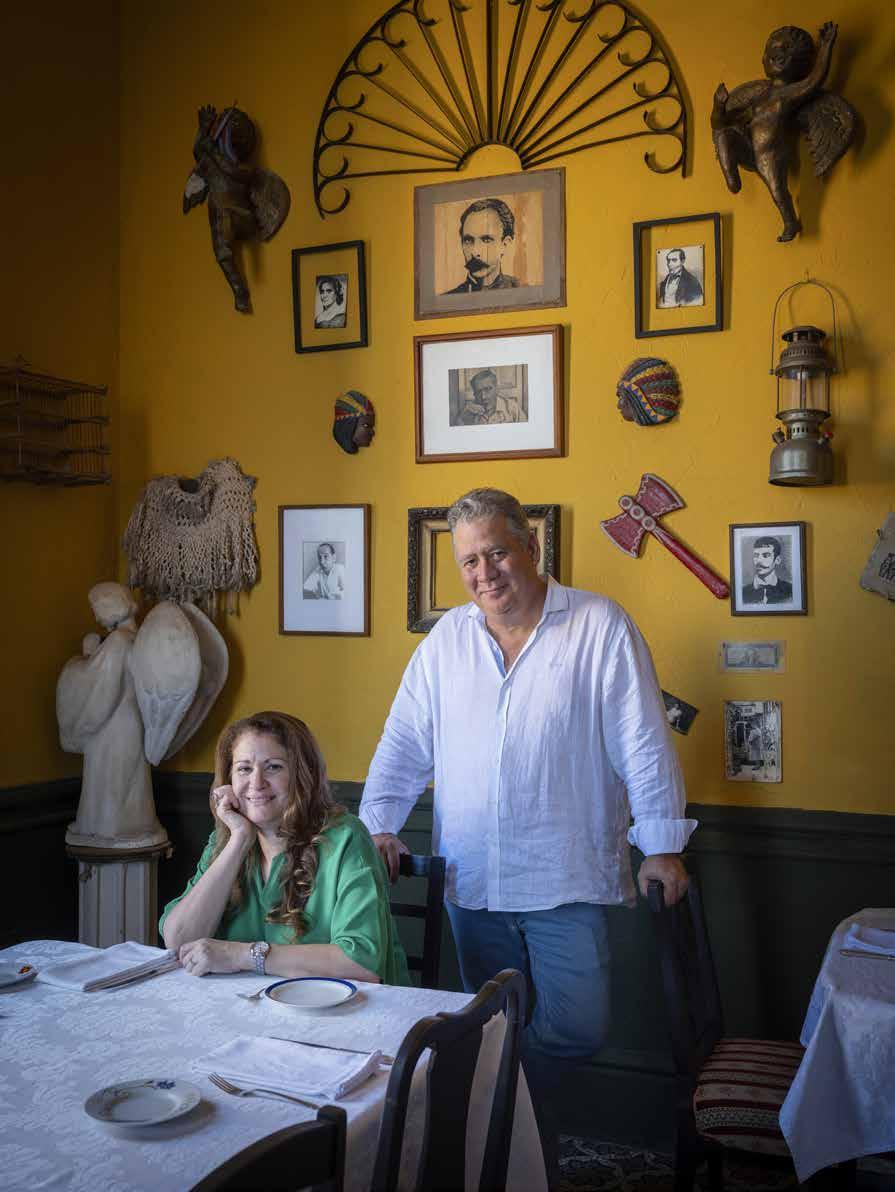
“I WAS BORN HERE, and I grew up in this building. It was a normal Cuban family home until the year 1993,” says Enrique Núñez. He and his wife Odeysis Baullosa together are the cocreators and co-owners of La Guarida, an iconic paladar (family-run restaurant) in the San Leopoldo neighborhood of Centro Habana.
That year, by stroke of fortune, they rented their third-floor apartment in a timeworn-yet-glorious, earlytwentieth-century mansion-turned-tenement-block to Cuban director Tomás Gutiérrez Alea to use as the main set for his upcoming film. When Fresa y chocolate achieved international success – it was the first Cuban film to be nominated for an Oscar – fans began flocking to the famous site, nostalgically seeking to immerse themselves in the cinematic world of the main characters, Diego and David.
BY MAMIE CHEN
• PHOTOGRAPHY BY DAVID HARTUNG
In 1996, by stroke of genius, Núñez and Baullosa decided to capitalize on the interests of the “set-jetting” tourists and opened a paladar in their living room, newly kitsched-out in the style of Diego’s guarida (den). “We changed our lives forever,” says Núñez.
Núñez was a telecommunication engineer, Baullosa was a theater actress, and neither had any prior experience in the hospitality industry. But what they had was a “magic notebook” filled with details about recipes and cooking techniques shared by their first chef and with notes on clever substitutions and other tricks of the trade acquired from personal experience.
Early on, they served typical Cuban dishes, shopping for basic products and ingredients at the same stores and markets as other Cuban families. Not only did government regulations on paladares at the time stipulate a maximum seating capacity of twelve guests and limit the hiring of employees to immediate family members, but they also restricted the use of certain ingredients, such as steak, lobster, and fish.
But where state-run restaurants followed a standardized and, frankly, uninspiring menu of recipes and ingredients, the paladares enjoyed the creative freedom to rescue, and refine, Cuban cuisine.
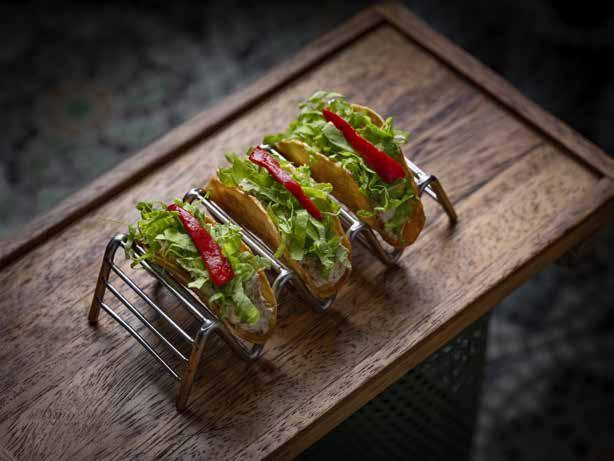
La Guarida’s house tacos feature house-made sweet potato tortillas and marlin macerated for twenty-four hours in Cuban rum and a secret blend of spices.
La Guarida的塔可风味别具,内有以自制甜薯饼和在古巴朗姆酒和秘制香料中浸泡一日的马林鱼。
“From the beginning, we tried to make what I like to call the new Cuban cuisine,” says Núñez. “I love and respect the authentic and traditional cuisine, but at the same time, I prefer to update it. For me, gastronomy is like something that is alive. It shouldn’t be frozen in time. You need to let it change and grow, with new techniques and new flavors.”
From 1998 onward, Núñez and Baullosa took opportunities to travel outside of Cuba and to explore and learn from famous chefs around the world, including Reine Sammut of Provence, Juan Mari Arzak of the Basque Country, and Douglas Rodriguez of New York City. In Miami, they rediscovered Cuban dishes like the Cubano sandwich and picadillo a la habanera (a ground beef dish) that had long since been forgotten in Havana. The learnings from their travels have continued to influence their take on modern Cuban cuisine.
Today, the restaurant has expanded, occupying the entire third floor as well as a rooftop bar called Bar Mirador that serves craft cocktails and tapas along with stunning views of Havana and the Malecón and that has become a “must-visit” destination in its own right.
La Guarida’s menu features updated traditional Cuban classics like ropa vieja (a shredded beef dish) and cochinillo lechal confitado (confit suckling pig) alongside internationally influenced dishes like red tuna belly with yakiniku sauce and lamb tikka masala.
“Our cooking is like the architecture in Cuba,” says Núñez. “It’s
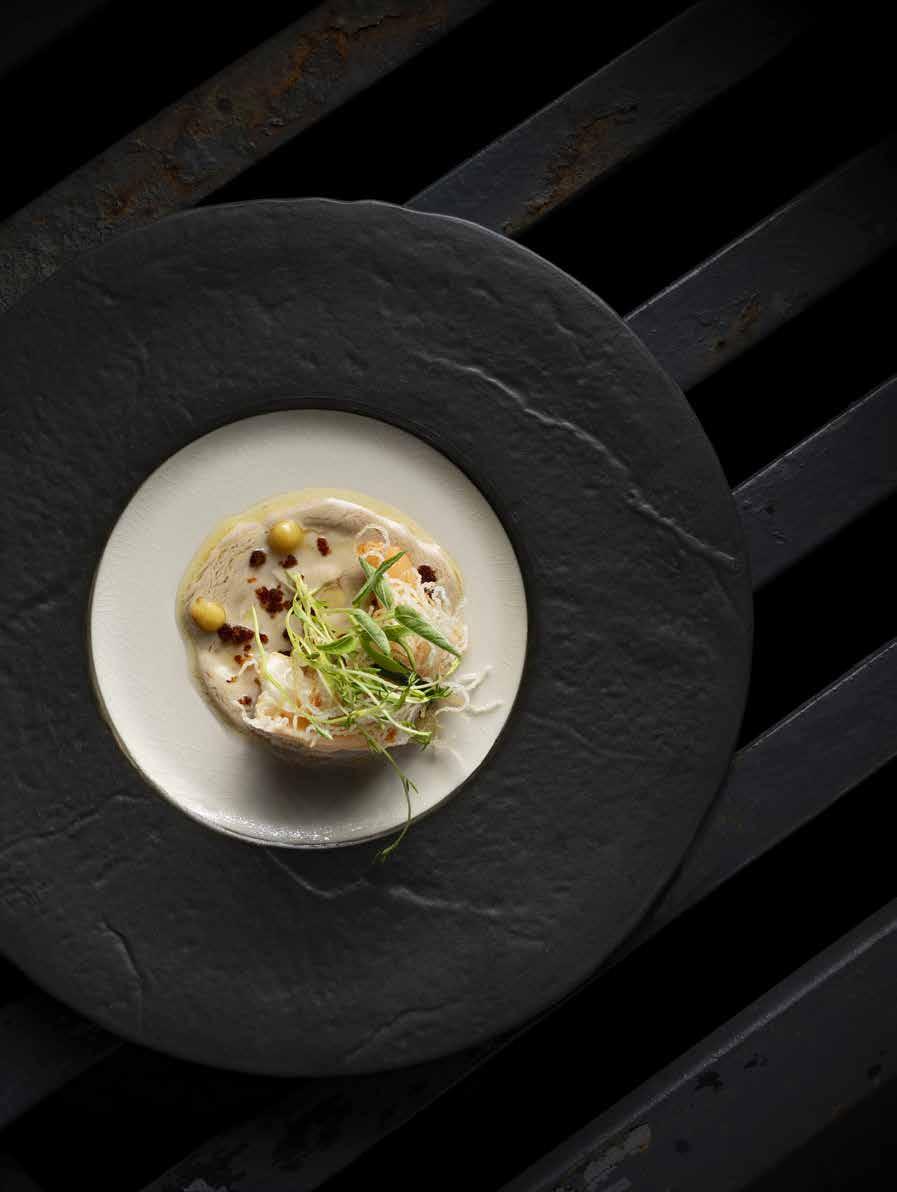
The first course on the Ánimas & Virtudes tasting menu, crispy shrimp and foie parfait
& Virtudes
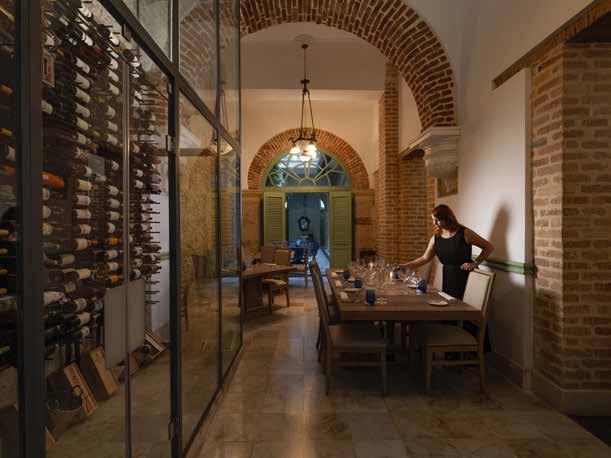
Newly opened gastronomic restaurant Ánimas & Virtudes occupies the first floor of a boutique hotel by the same name.
新开业的Ánimas & Virtudes在同名精品酒店的一楼。
an eclectic mix, from what we consider the best kitchens around the world. But you will always feel in the background, of course, the taste of Cuban traditional cuisine.”
The kitchen is stocked with typical Cuban ingredients like sugarcane, black beans, and yuca as well as imported ingredients like pine nuts and spices – what Núñez jokingly refers to as “Samsonite ingredients” that he or friends and family have brought back to Cuba in their luggage after traveling abroad. Núñez also now holds an importing license, which has eased, though not eliminated, the challenges they regularly face in sourcing necessary products and supplies.
The importing license plays an even more critical role in their latest venture, a new gastronomic restaurant called Ánimas & Virtudes, which was inspired by their first visit with Chef Reine Sammut at her Michelin-starred restaurant, La Fenière. “We discovered her menu and thought one day we’d like to do something like this,” says Núñez. The concept would not work for La Guarida, but they eventually found a fitting space which they remodeled into a boutique hotel with a restaurant on the first floor.
The menu, designed by a chef from the Basque city of Pamplona, shows influence from the New Basque cuisine of Juan Mari Arzak by applying modern techniques, creative plating, and unexpected flavor combinations. Dishes feature fine ingredients imported from around the world, including caviar, foie gras, toro, and scallops. But even with
从 1998 年起,Enrique 和 Odeysis 抓住机 会走出古巴,向世界各地的著名厨师学习,包括 普罗旺斯的 Reine Sammut、巴斯克地区的 Juan Mari Arzak 和纽约的 Douglas Rodriguez。在迈 阿密,他们重新发现了古巴菜肴,如古巴三明治 和哈瓦那风味碎肉(一种碎牛肉菜肴),这些菜 肴在哈瓦那都早已被遗忘。他们旅行的收获塑造 了他们对现代古巴美食的诠释。
如今,餐厅经过扩建,已占据了整个三楼, 还有一个名为 Bar Mirador 的屋顶酒吧,提供手 工鸡尾酒和小吃,客人可以同时欣赏到哈瓦那和
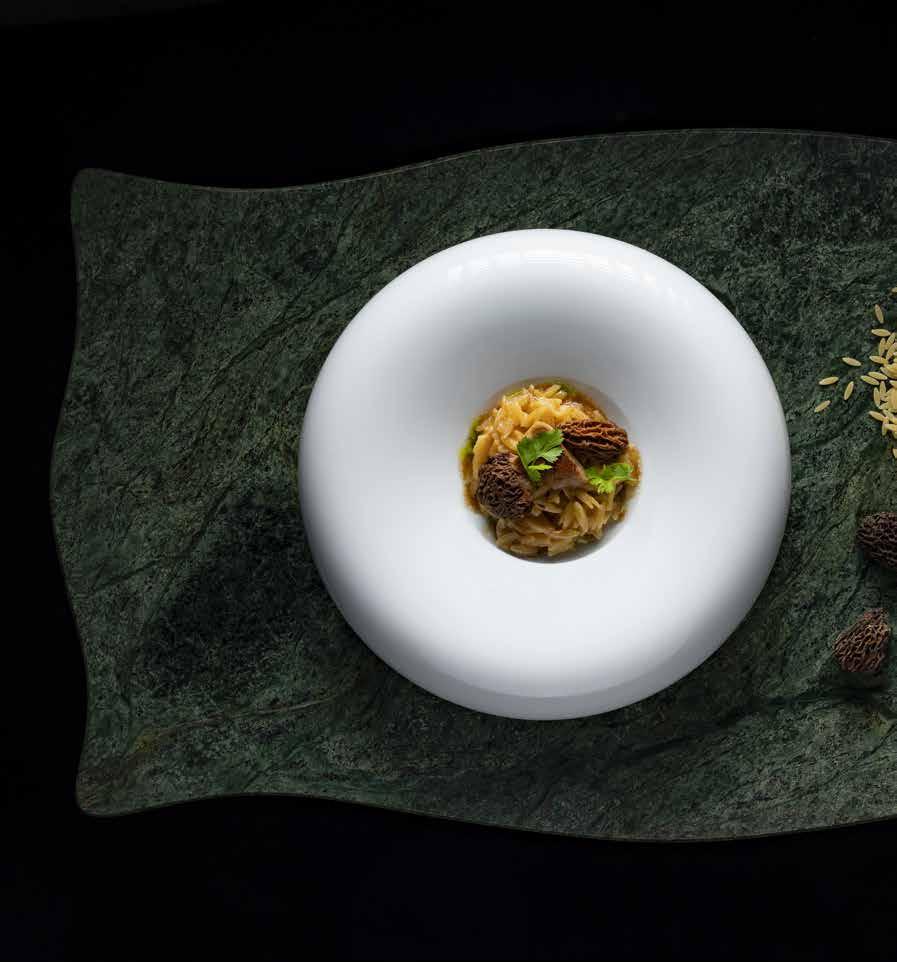
Puntalette pasta with shallot cream sauce, topped with morels and pan-seared foie gras 米型意大利面佐红葱奶油酱,
the Núñez’s import business, the chefs are careful to maintain a backup plan for each dish in case they encounter difficulties in obtaining key ingredients.
“I know this concept will be a big challenge for Cuba, especially now in this moment when we have a lot of problems with the economy, the tourists, the electricity,” says Núñez. “But I think the people who live here in Cuba, the entrepreneurs and the diplomats, are looking for something different. That’s why we decided to start this.
“Everyone was saying the same thing when we decided to open La Guarida here, on the third floor of an old building in the middle of Centro Habana. ‘Enrique, brother, you’re crazy!’ But here we are, almost thirty years later.”
马雷贡海滨大道的壮丽景色,已成为一个「必去」的 景点。
La Guarida 的菜单上有改良后的传统古巴经典 菜肴,如碎牛肉和油封乳猪,也有受国际影响的菜肴, 如配以日式烤肉酱的红金枪鱼腹和羊肉咖喱。
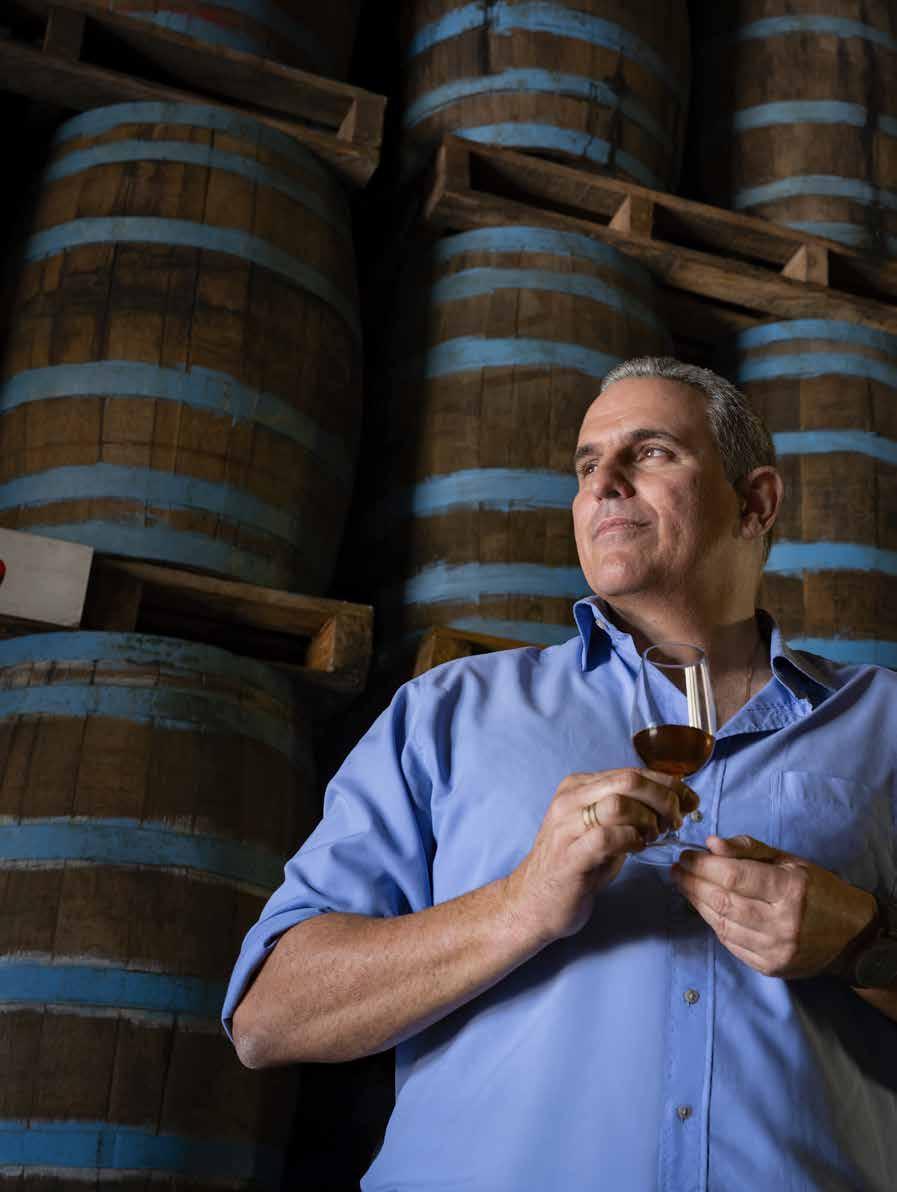
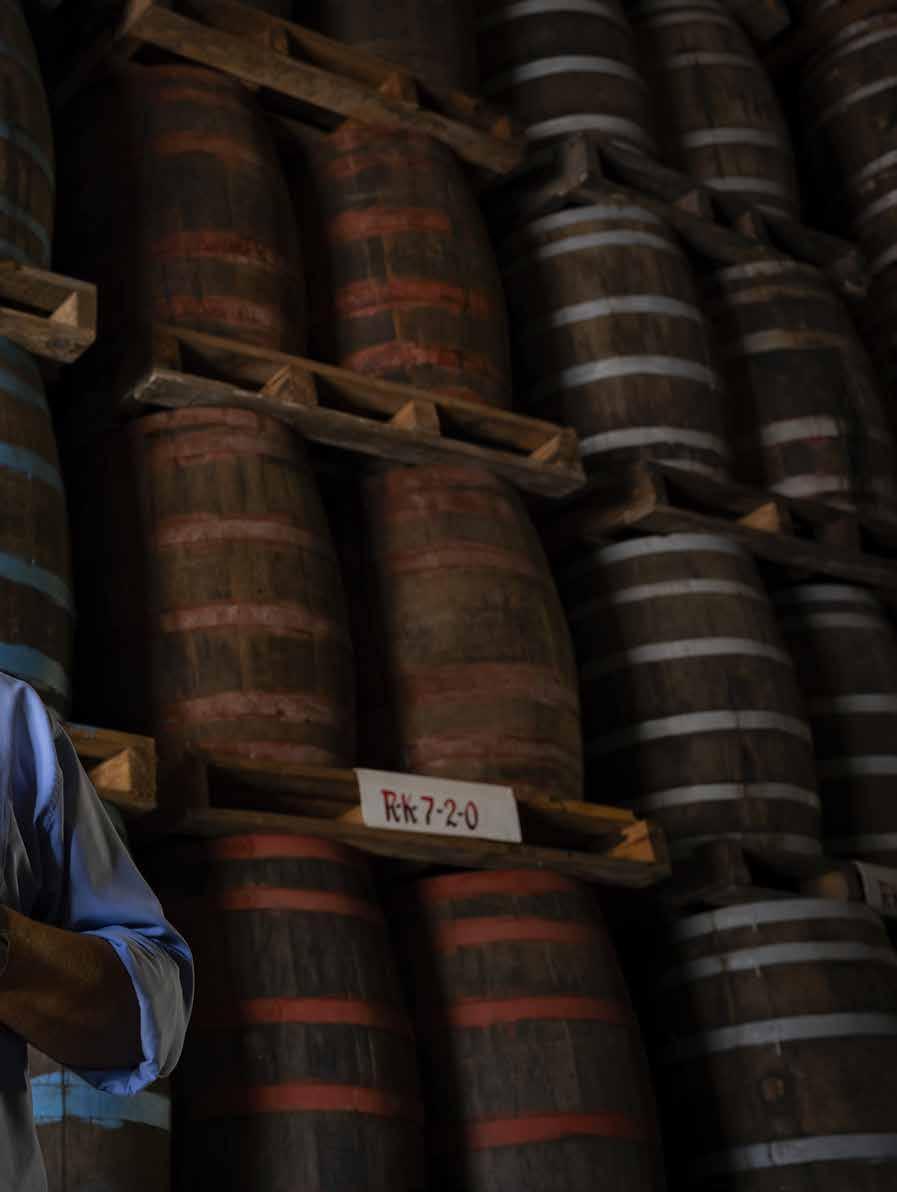
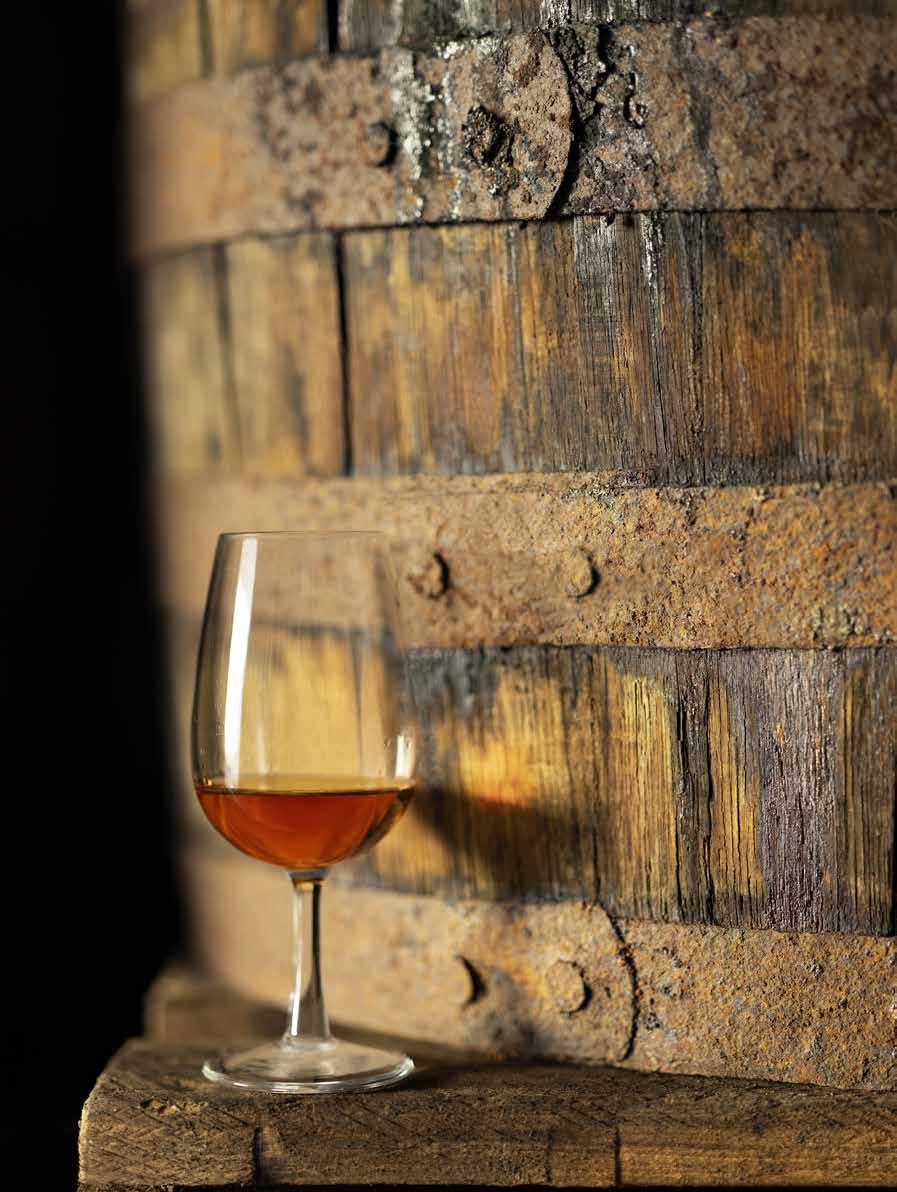
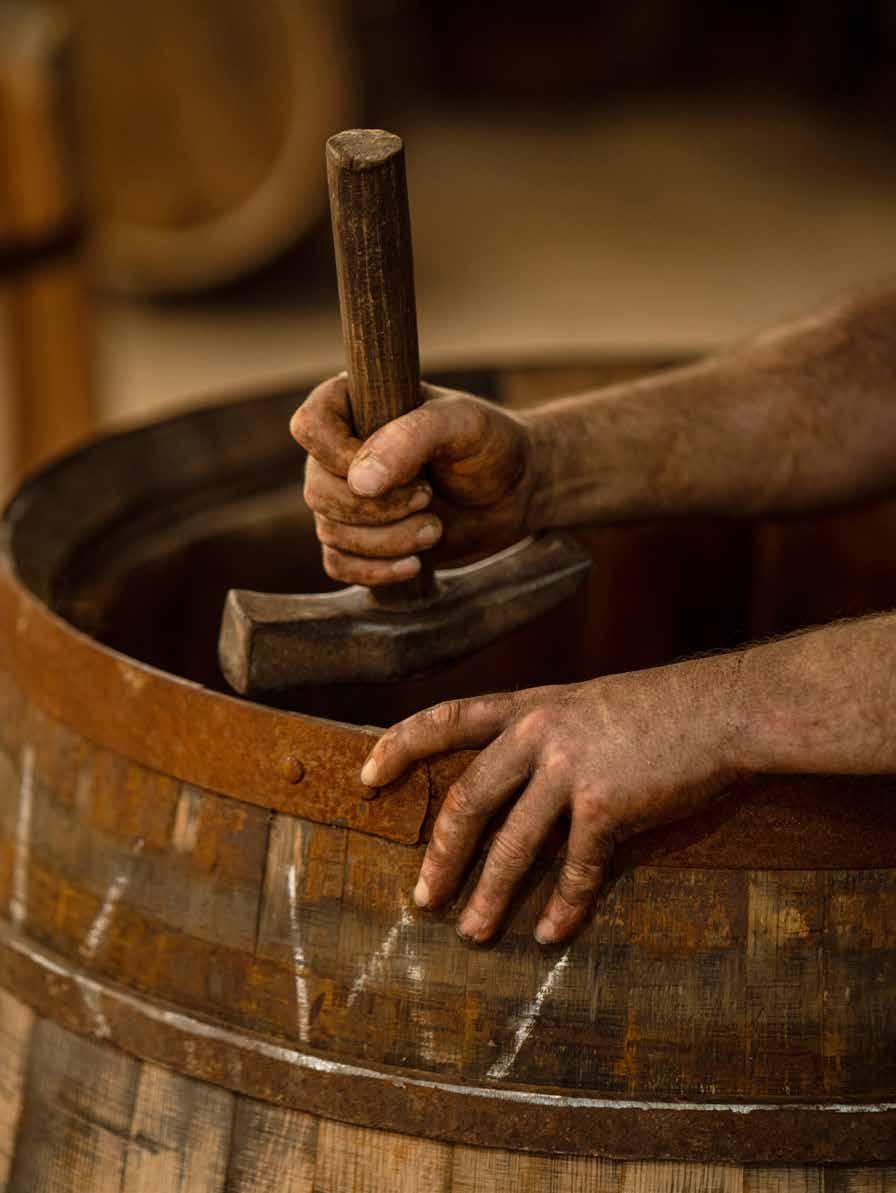
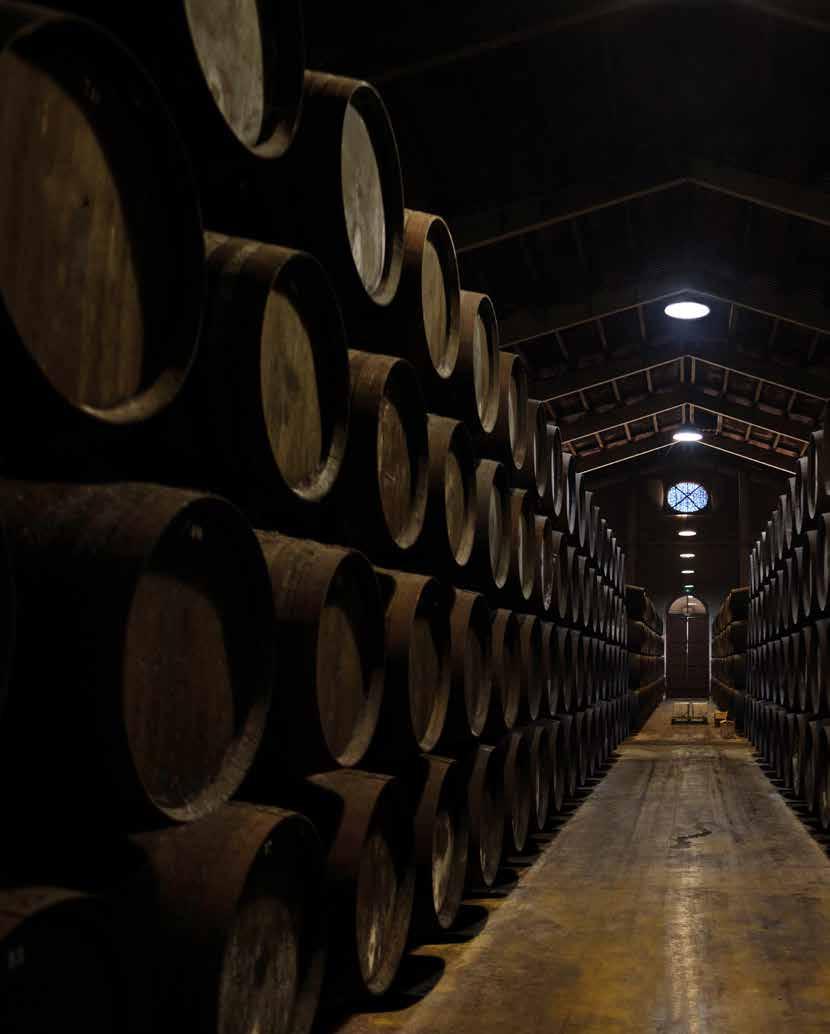
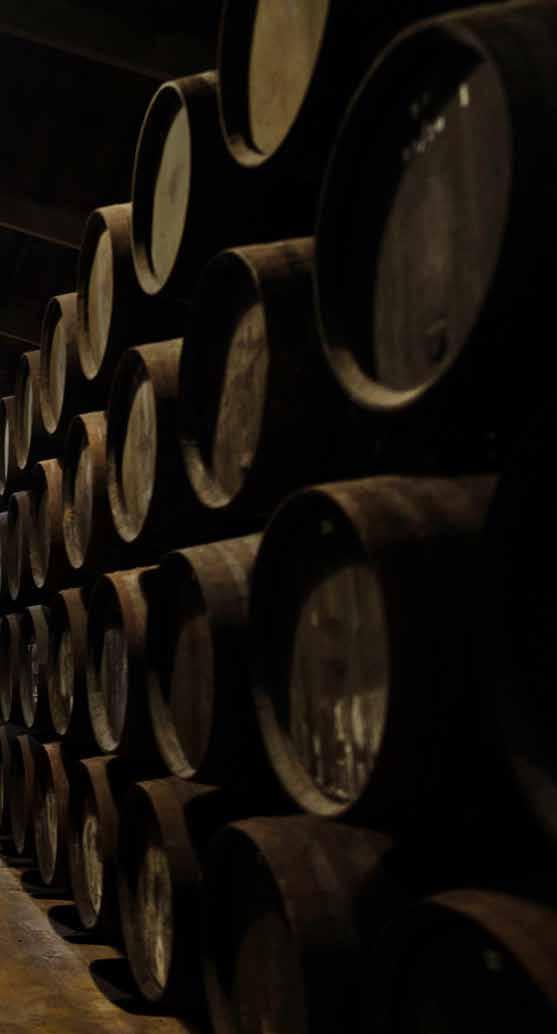
“AS SOON AS YOU STEP IN, you’re going to sense a lot of aromas that will take you through a journey of different experiences,” says César Martí, rum master of premium Cuban rum brand Eminente. As we enter a cellar housing tens of thousands of barrels of aging rum, we’re immediately immersed in a complex blend of tantalizing scents – warm notes of toasted nuts, coffee, caramel, vanilla, and more. As we progress further in, the heady cloud shifts and morphs, reflecting the angel’s share evaporating from the various rows of oak barrels we pass.
BY MAMIE CHEN
• PHOTOGRAPHY BY DAVID HARTUNG
Some barrels are aging aguardiente, a 75 percent ABV sugarcane molasses distillate with a distinctively aromatic and flavorful profile. Others are aging a base rum made from a blend of aged aguardiente and a 95 percent ABV light rum distillate, and still others are holding precious liquids that are undergoing their third, fourth, and even fifth or sixth round of aging.
Under the DOP (Protected Designation of Origin) regulations governing the production of Cuban rum, aguardiente must first be aged in previously used white oak barrels for at least two years before undergoing carbon filtration, blending, and a second aging period. For Eminente, the aguardiente is aged a minimum of five years before successive rounds of blending and aging.
Award-winning rum brand Eminente celebrates a nation’s indomitable spirit.
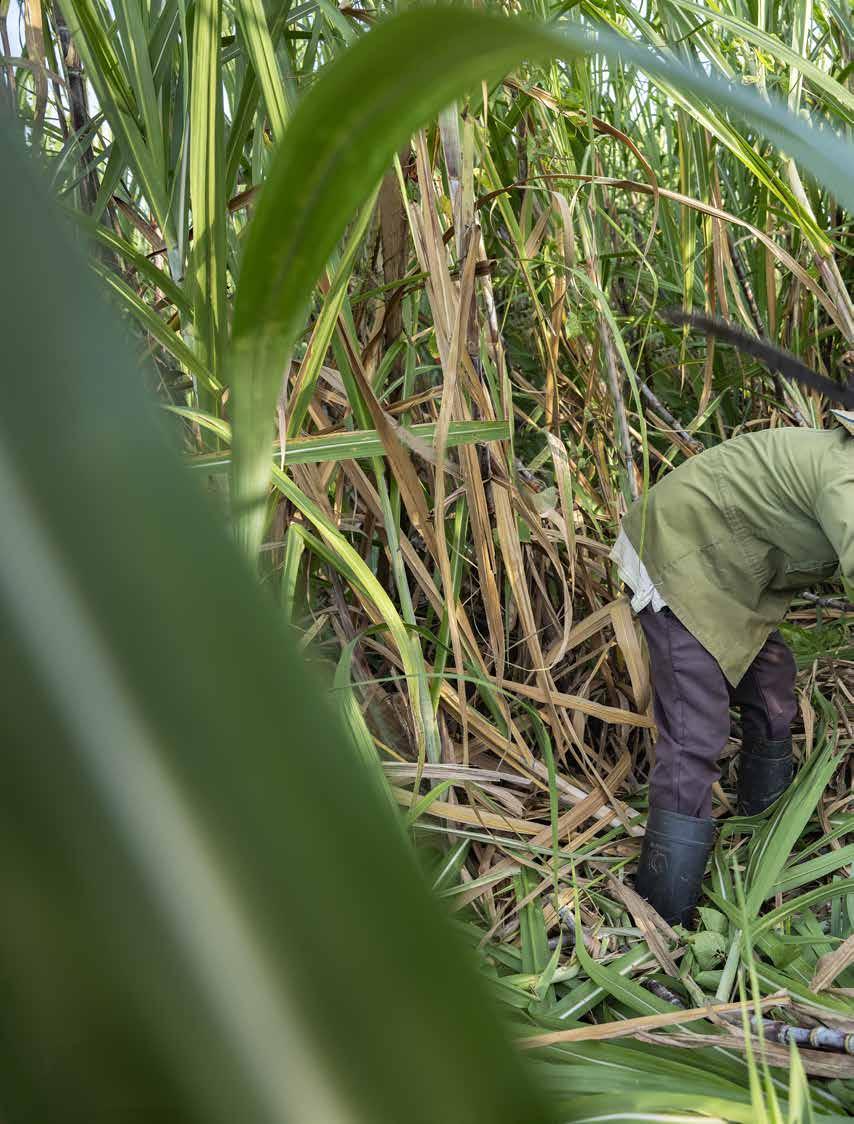
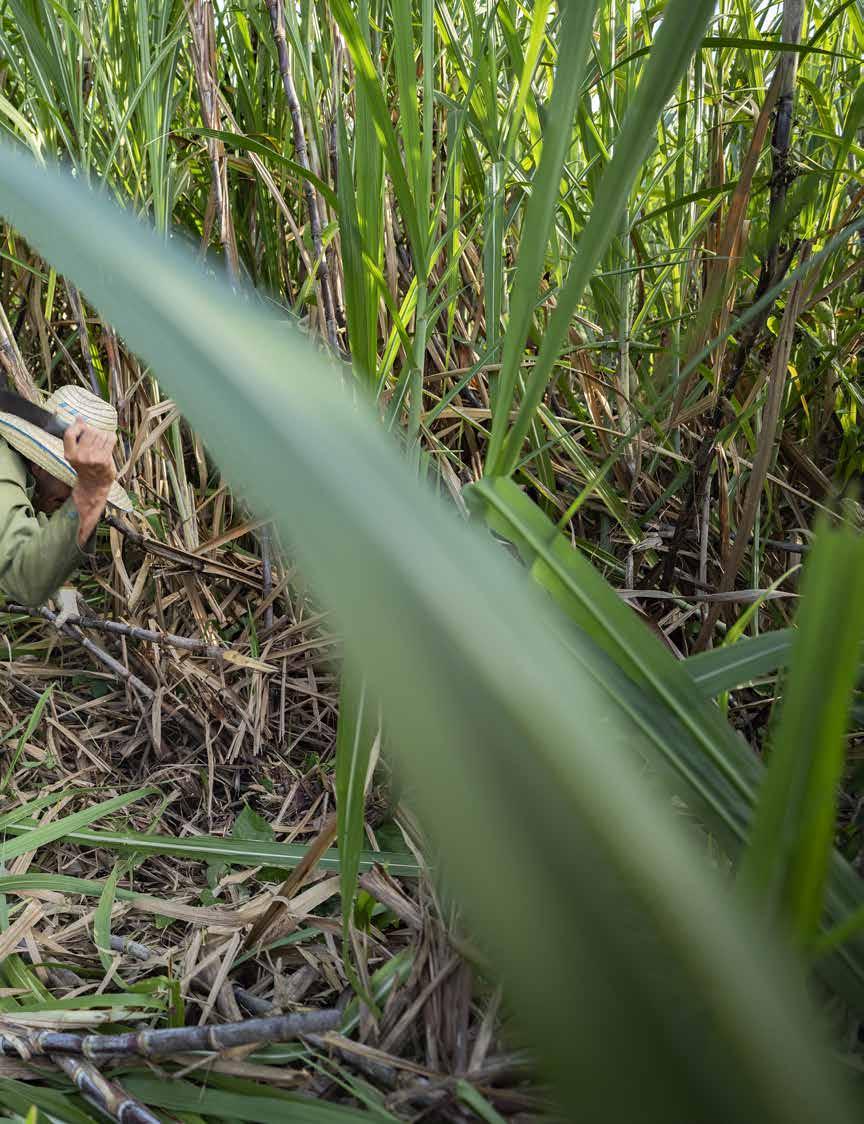
“Cuba is a country with a lot of biodiversity,” says César Martí. “We have more than a hundred and twenty varieties of sugarcane. Of them, seventy-two are native to our island.
“Through the sugar production process, molasses is generated as a byproduct. But we don’t like to call it a byproduct – it’s a resource. It’s dark, dense, and thick, with a lot of minerals in its composition. And in Cuban molasses, you’ll find a higher concentration of sugar than in molasses from other parts of the world. It is very good, very sweet.
“One of the reasons is that the Cuban sugarcane industry has not been modernized in many years. Maybe that’s bad for sugar, but it’s very good for molasses, because the sugar that’s not extracted in the production process remains in the molasses. Also, we have an agreement with the sugar company that the molasses we use for rum production will have 55 percent sugar concentration.”
“I was born surrounded by a green sea, and by that I mean sugarcane fields,” says Martí. “My maternal grandfather was the chief of operations at a nearby sugarcane mill. And as a young child, I would accompany him and play there. I think my passion for this whole world of Cuban rum comes from that time.
“I always had ideas and dreams, but they were hard to implement and make happen. Eminente is a project that came into my life about five years ago when I met some wonderful people who had a great desire to do something new and innovative in the field of rum. This gave me the opportunity to do something that could change the perception of Cuban rum.”
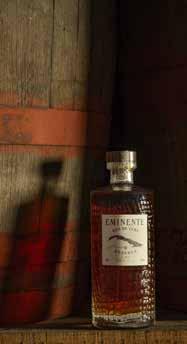
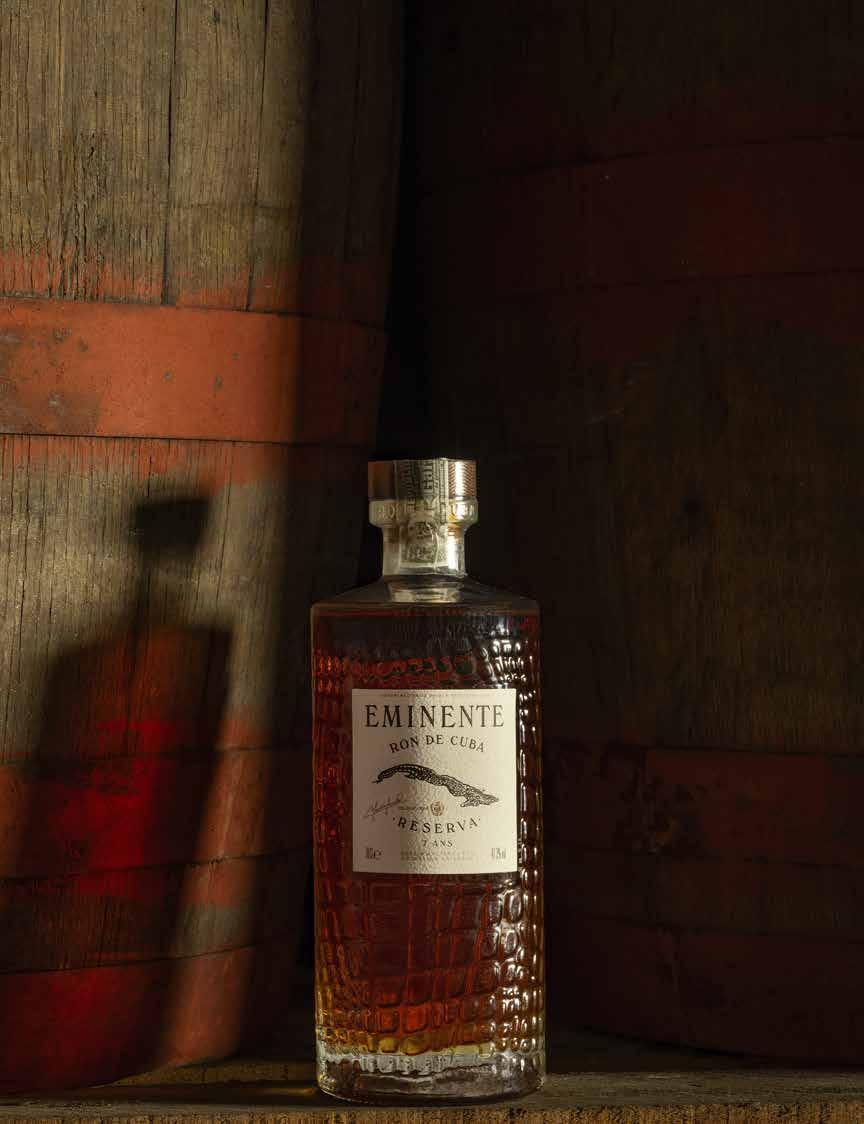
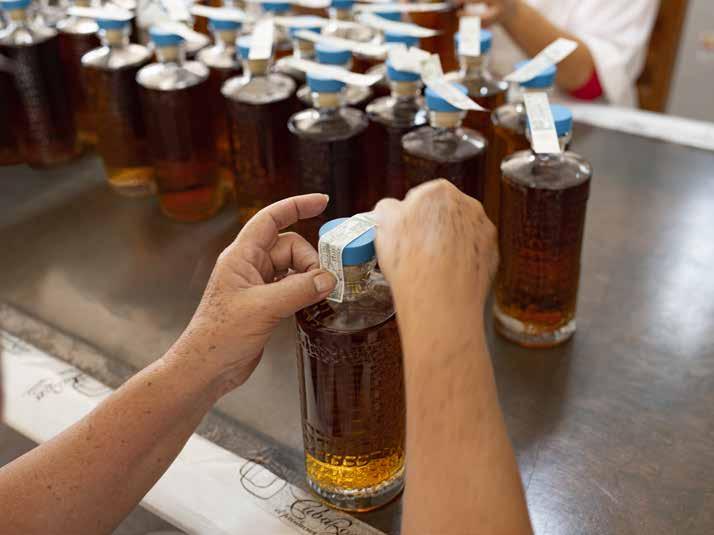
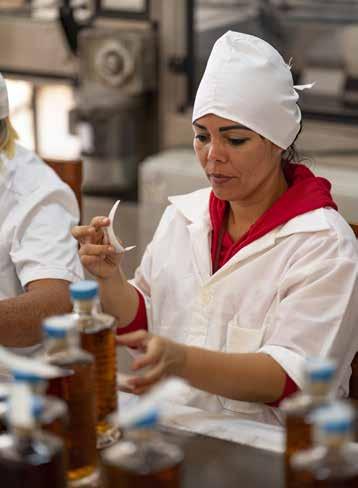
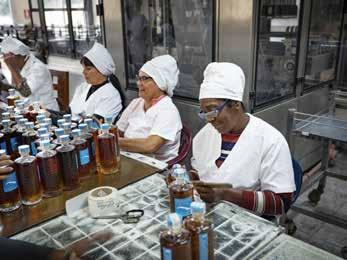
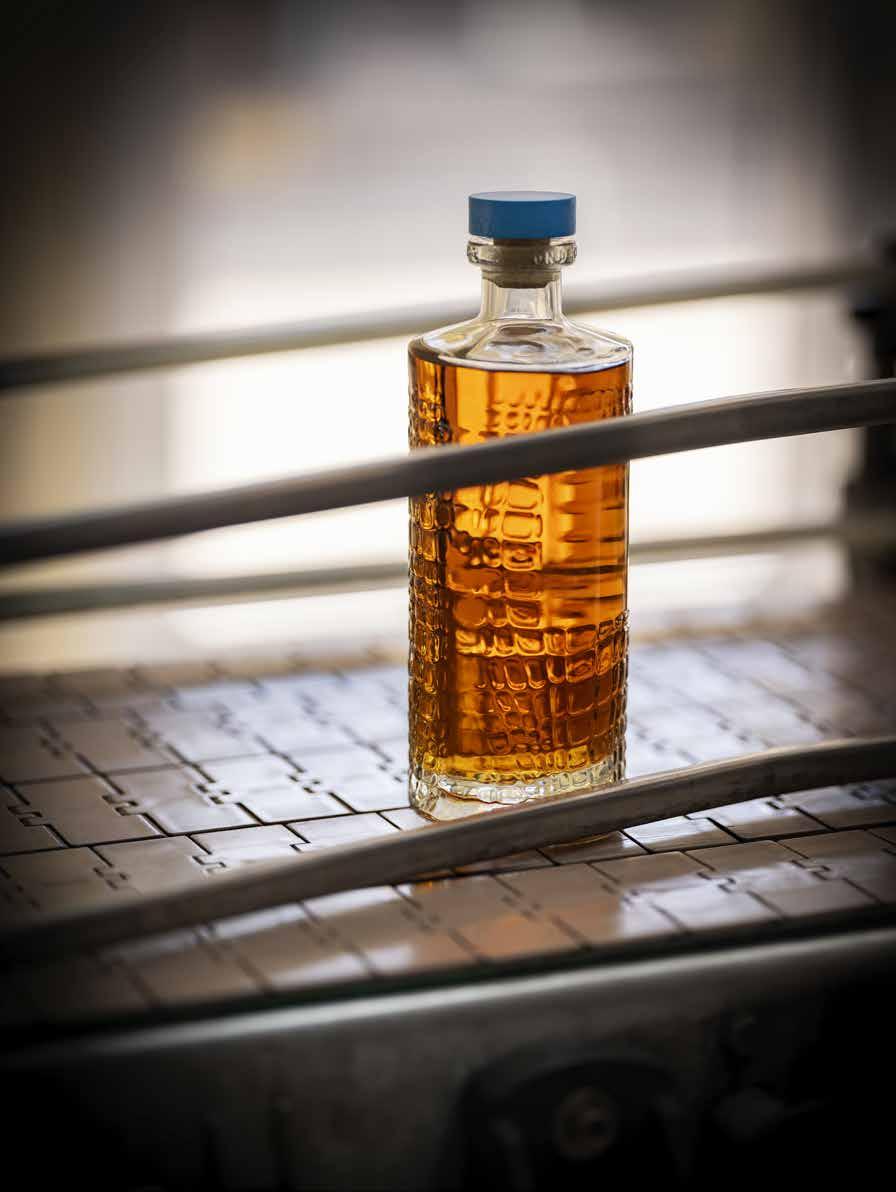
Eminente bottles are beautifully textured in a distinctive crocodile-skin pattern in reference to the island’s nickname, Isla del Cocodrilo, or “Crocodile Island.” Each bottle has hand-affixed labels made from cotton remnants discarded by the Cuban textile industry.
“It’s a bottle that we intentionally made as beautiful as possible,” says Martí. “As it is part of our culture and our way of reusing everything, we want people to reuse the bottle for a vase, a lamp, a candle holder, or for anything.”
“We call aguardiente the soul of Cuban rum because there cannot be any rum made in Cuba without its presence,” says Martí. “And the aguardiente that we use has a specific aromatic profile and a specific physical and chemical composition that is only possible to get with the technology and know-how that we have in Cuba.”
The generations-old trade secrets are closely guarded and carefully passed down by a select group of Maestros del Ron Cubano (Cuban rum masters) whose knowledge and expertise have been officially recognized on UNESCO’s list of Intangible Cultural Heritage.
César Martí was named the youngest ever Maestro Ronero in 2009 and a decade later was awarded the highest distinction, Primer Maestro del Ron Cubano (First Master of Cuban Rum).
One hallmark of Cuban rum making is the practice of oxidative aging, whereby the rums’ developing flavors are meticulously managed through purposeful exposure to oxygen during the blending and re-barreling processes and through the skillful use of young, medium-stage, and old barrels.
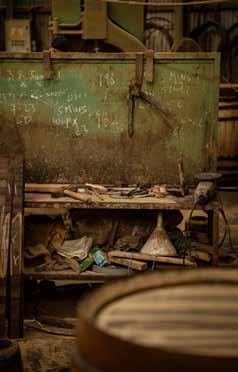
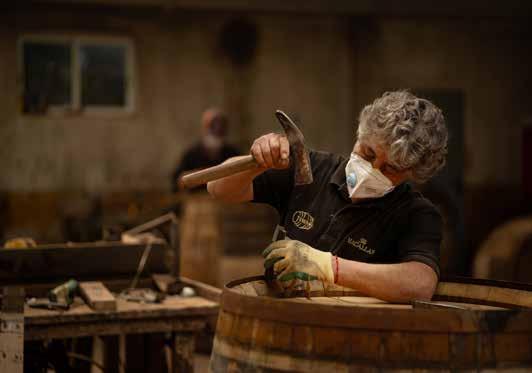
Martí, whose PhD thesis focused on the interaction that occurs between the barrel and the liquids during the aging of spirits, shines in this area. In the Santo Domingo rummaking facility that he oversees, he has at his disposal a treasure trove of barrels, ranging from brand-new to some that are more than sixty years old, which are affectionately referred to as cofres maravillosos, or “wonderful chests.”
“The new barrels and the younger barrels are just like young people,” he says. “They’re very energetic and a bit crazy. I blend the liquid from these barrels with liquids from older barrels that will give them the right advice, so they move on the path that I want them to go.” Martí monitors the liquid in each barrel, tracking where it came from, what it was blended with, and when its aging process was cut and restarted in a different barrel. In the final blend, all the flavors, aromas, and mouthfeel that he had been meticulously managing throughout the long journey of the rum are at long last realized.
All of the rums in Eminente’s product range are elaborated with a much higher percentage of aguardiente than the 10 percent minimum required by DOP regulations: Ámbar Claro is made with 30 percent aguardiente, Carta Ora with 45 percent, Reserva with 70 percent, and Gran Reserva with 80 percent.
“Eminente rums are a contemporary tribute to the early aguardientes that first put Cuban rum on the map,” says Martí.
“Our life, our passion, our culture are in these liquids. That’s why at the bottom of the bottle, we have a message: Elaborado en Cuba del campo a la botella, meaning ‘crafted in Cuba from field to bottle.’ Eminente is a rum that has a homeland.”
César 说:「Eminente 朗姆酒是对早期阿瓜迪恩特的当代致敬, 正是它们让古巴朗姆酒声名远扬。我们的生命、热情、文化都凝聚 其中。因此我们在酒瓶底部印上这句说话:Elaborado en Cuba del campo a la botella,意思是『从田间到酒瓶,全程由古巴匠心酿造』。 Eminente 是有故乡的朗姆酒。」
THE SPIRIT OF CUBA
“EMINENTE IS MY WAY OF REVEALING the culture of the Cuban people and the smells, flavors, and special characteristics of the campiña cubana, the Cuban countryside,” says César Martí. “I wanted to show, through the rum, how diverse the country is and how diverse the people of this country are.
“We see rum production as the liquid flavor of Cuba. Cuban people are like ajiaco [a hearty stew made from beef, pork, chicken, and a variety of vegetables and starchy roots]. We are a mix of Spanish, African, and many other cultures. And as with rum production, we are continuing with our legacy from generation to generation while also creating new things as well.”
In the same manner that Martí has crafted his rums with the goal of elevating the perceptions of Cuban rum as a premium spirit, the Eminente brand has ardently supported the work of visionary artists from across the culinary, mixology, fashion, film, and art worlds to celebrate and showcase a variety of unique expressions of Cuba beyond the stereotypes typically held of the island nation.
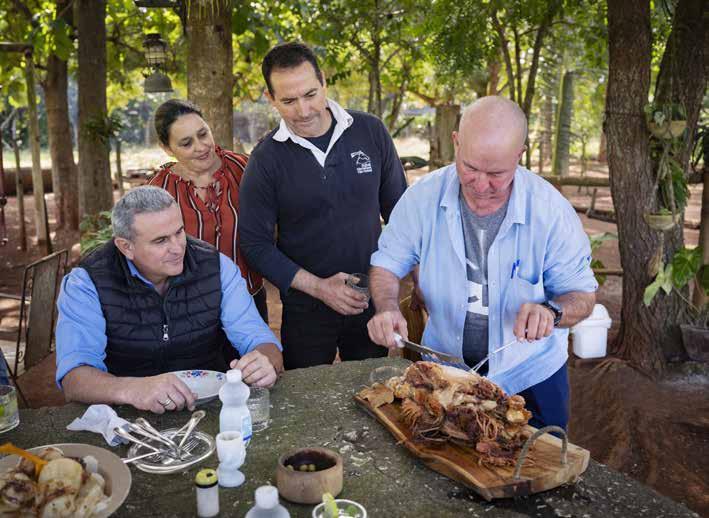
To share firsthand experience of the spirit of Cuba and its traditions, Martí invites special guests of Eminente to a barbecue at a nearby farm owned by his childhood friend Boris Franco Domínguez and his wife Adyenis Lago Viera (pictured in the center). The menu includes pernil, a classic Cuban staple of slow-roasted pork shoulder marinated overnight in mojo criollo garlic sauce with citrus.
为了分享古巴精神及其传统,César邀请Eminente的贵宾参 加他儿时好友Boris Franco Domínguez及其妻子Adyenis Lago Viera(图中)在附近农场举办的烧烤聚会。菜式包括古巴经 典美食pernil,用柑橘蒜香酱腌制一夜后慢烤的猪肩肉。
RAÚL BRAVO
Filmmaker and Market Manager & Brand Ambassador for Eminente
电影制作人、市场经理兼Eminente品牌大使
“I WAS BORN IN MATANZAS, an hour and a half to the east of Havana. I came to Havana when I was fourteen to study acting at Escuela Nacional de Arte. I worked for seven years in television and the cinema and the theaters. I was very, very popular, but actors don’t get paid very well here. For me, it was a contradiction.
“My friend and I started one of the first independent production companies in Cuba so we could make the films in the way we wanted and to tell the stories that we wanted to tell. We were working nonstop on commercials, music videos, and documentaries.
“That’s when Eminente approached me to create some content for the brand. I spent a month driving around the country trying to find the best places, the raw colors of the country, to represent what we call the wild side of Cuba. Places like Topes de Collantes and Cienaga de Zapata – wellpreserved areas where there’s no technology and where you can find yourself and feel purified and rejuvenated. We finished the production. But after that, anytime they had a problem in Cuba, they called, and I would try to help any way that I could.
“One day, they said they needed someone in Cuba. They said that someone from France would not understand the culture as well as someone born here. For me, it was very surprising. Most big companies would bring foreigners to run the brand. The fact that Eminente came and said to this young Cuban – I was thirty-two at the time – that they wanted me to manage their business in Cuba. I thought, I’m going to commit myself to this brand, because it speaks very well about Cuba and the people of Cuba.”
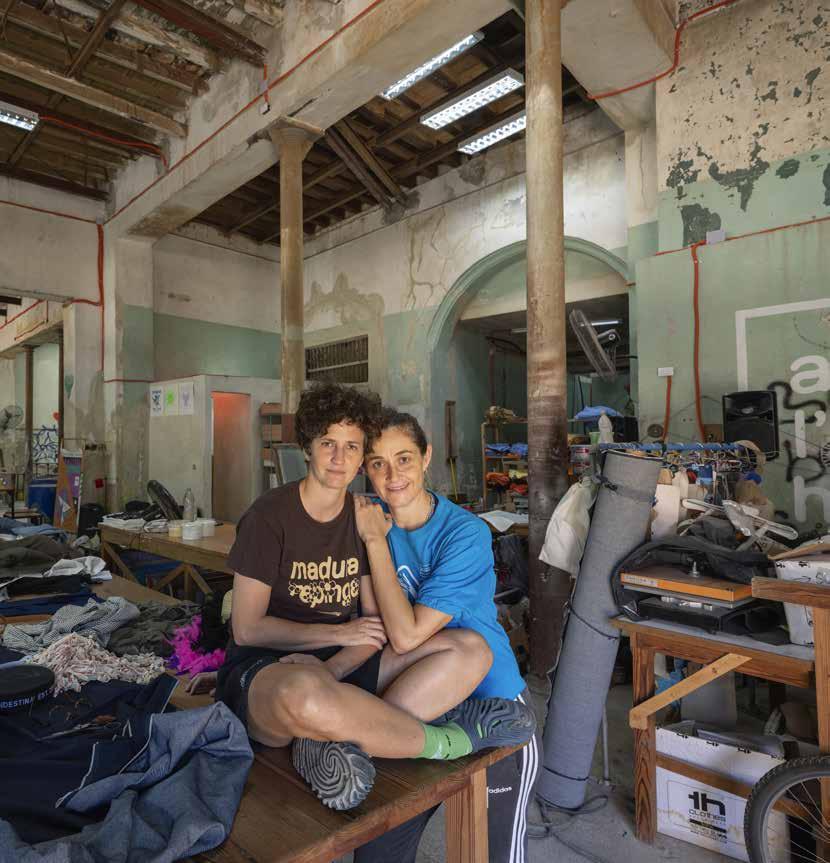
“LEIRE AND I MET IN 2011 and worked on a bunch of different creative projects,” says Idania del Río. “When Raúl Castro announced some big changes, I thought, maybe this is the time. I called Leire and said that we have to do something different and make some money. All those projects we did were basically art for the sake of art. Of course, Clandestina is art too, but we could make some money in the process.
“We are a group of designers, creatives, and technicians. A lot of what Clandestina provides or does for the community is messaging and branding around what it’s like to be Cuban, what it’s like to be in this precise moment in society, and what the future of Cuba might be.
“Especially at the beginning, no one else was doing anything like this – not because there weren’t other creative or bold people but because of the timing. We were the first, so we got a lot of punches. But we also got success. We got a lot of international attention and even met President Obama when he came to Cuba. That was very, very special.
“The message of one of our bestsellers, Actually, I’m in Havana, was about how Havana was the city to be in. Everyone was coming here – Obama, the Rolling Stones, Chanel. Those were important years, when there was a lot of hope and a sense of progress.
“But now it has a completely different meaning. We are in a very challenging moment, because the situation in the country is unstable and uncertain. But we are a very resilient people. The meaning of Actually, I’m in Havana is that we are here. But there is a lot of emigration. People go. You know, I get it. But they can still be in Havana even if they are somewhere else. Maybe the location is different, but the feeling is the same.
“Eminente contacted us just before the pandemic to make bags for their bottles. We crocheted about six miles long for the straps. We got the thread from Pinar del Río, a tobacco region. It’s a type of thread that is used for tobacco, and the color is natural. It’s not dyed or bleached. The material for the bags was postindustrial polypropylene recycled from rice, beans, and postal service sacks.
“We made thirteen hundred bags for Eminente, through Covid and through a lot of blackouts when we couldn’t use our sewing machines. There was a lot of disruption. It is hilarious to think about now, but back then, it was stressful.
“I love the brand. I love the rum. I love the bottles. And I love the community that they are building here. It is very curated and very interesting.”
Co-founders of Clandestina, a Cuban graphic and fashion designer collective
RAULITO BAZUK
Chef patron of Grados
Grados餐厅主厨兼老板
“TO EVERYBODY I SAY that Cuban food does not exist right now. It would be easy to describe the dishes in the pantheon of Cuban cuisine. But everything I say is from a privileged standpoint. Most people can’t make flan because it’s super-hard to get eggs, milk, and sugar. People aren’t cooking. Refrigerators are not working. Kitchens are not fired up. Regular people are not cooking ‘Cuban food’ except on special days, like birthdays or New Year. And I don’t want Cuban food to be defined by one date.
“In my cooking, I’m looking forward. Of course I pay attention to everything that has been done before by others and to the heritage in different parts of Cuba. But we have to look to the future.
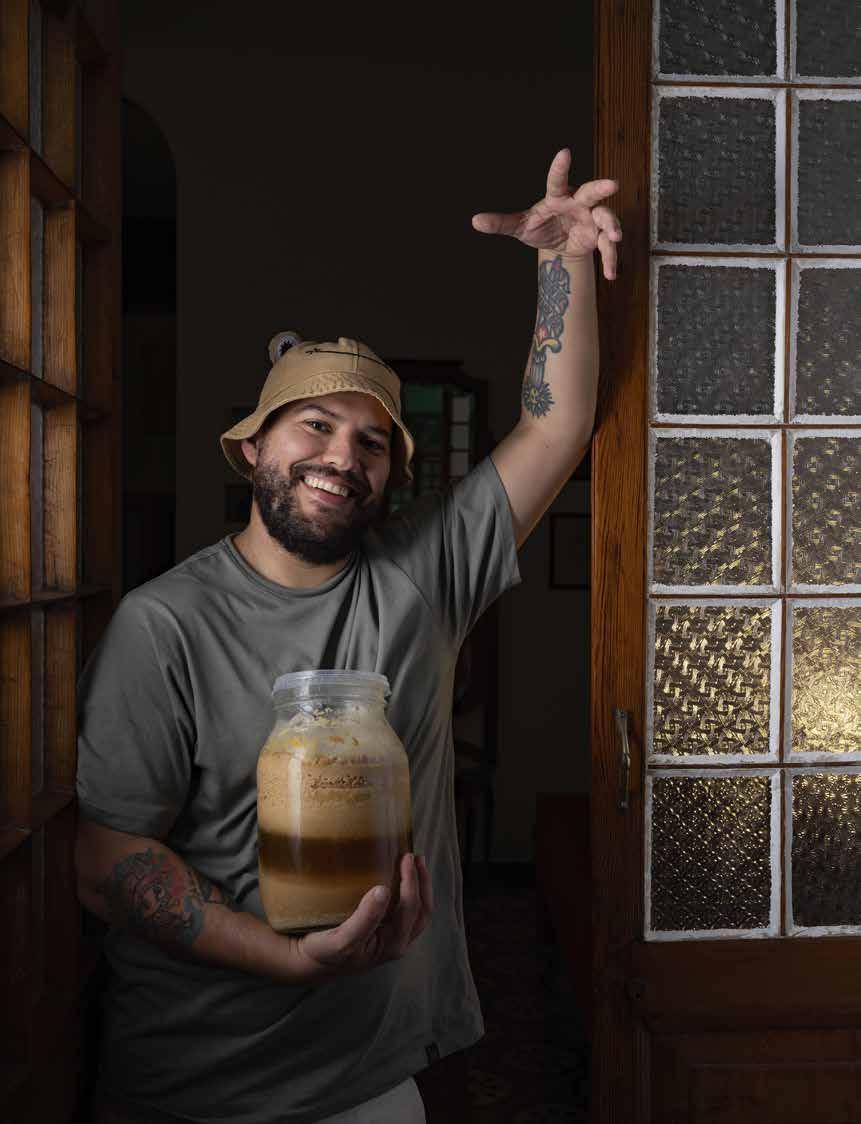
“In Cuba, there’s a strong culture of fermentation. It started with all the sugar we were producing. Whenever you produce sugar, you’re going to see people trying to make rum out of it. But people have also been making fermentations of rice and of fruits. Pru is a traditional fermented beverage from El Oriente [the easternmost province of Cuba] made from different roots, stems, and leaves. It’s really particular to Cuba. So I used pru as the principal ingredient in a sauce to make with lamb.
“Eminente came to Grados to make some content and to have some fun and eat. They knew about our work, and they were making a really nice rum. I love rum, and I can feel how much work is behind theirs. We thought about how we could use their energy in our favor, so we tried a marinade with their rum.
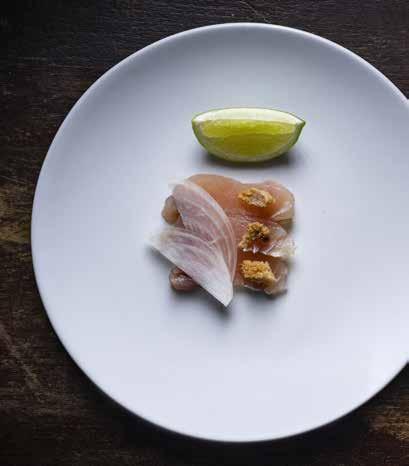
“The first dish on our menu is ‘Raw.’ We marinate the fish in a salmuera [brine] of salt, water, and Eminente rum. The flavor of the rum is subtle but the spirit is there. There’s also swordfish roe that has been salted and smoked. And we add just a piece of raw onion and a slice of lime. Every Cuban fisherman marinates their fish and roe with salt water, and they add a lot of lime juice. Yes, in our version, we add rum and smoke the roe. But it’s a very simple dish, because we think that’s the best way to eat fish.”
Raulito Bazuk trained in Spain at two-Michelin-star Atrio, which is now three-starred. He returned to Havana nine years ago to open Grados in his childhood home in the residential neighborhood of Vedado.
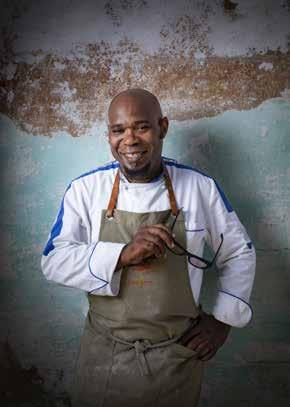
“COOKING IS MY PASSION, and it’s also a family tradition for many generations. My great-great-grandfather was among the first Black men in Cuba who paid for their own freedom. He cooked in a restaurant on Calle Obispo, near the harbor of Havana, and he worked at Hotel Inglaterra [the oldest in Havana]. In 1875, he prepared a menu for Antonio Maceo, who was a general during Cuba’s War of Independence. I have original menus from that period.
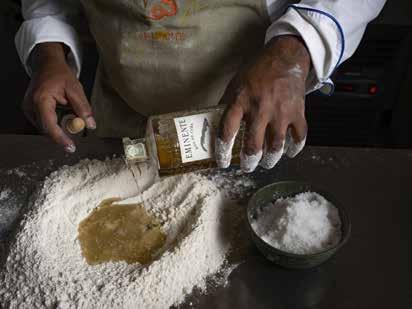
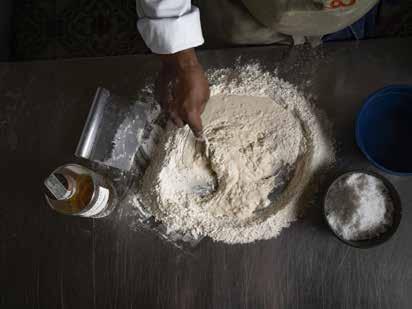
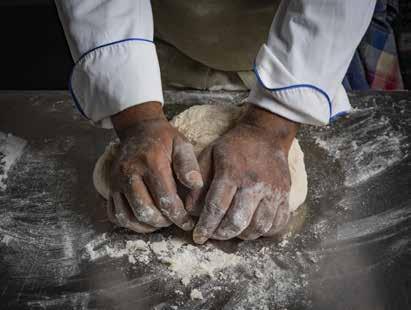
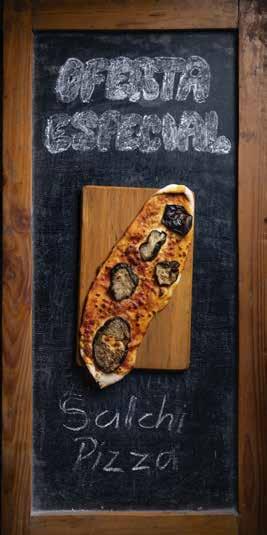
“I studied cuisine and trained in restaurants in Italy. After sixteen years, I returned home to Centro Habana. Some people had licenses to make pastries but not for baking bread. I made a salchicha [sausage] that was very wide. The bread in Cuba was not big enough, so I made my own bread that was wide enough to make a sandwich with the salchicha. That’s how I got a license to open a bakery and why I named it Salchipizza.
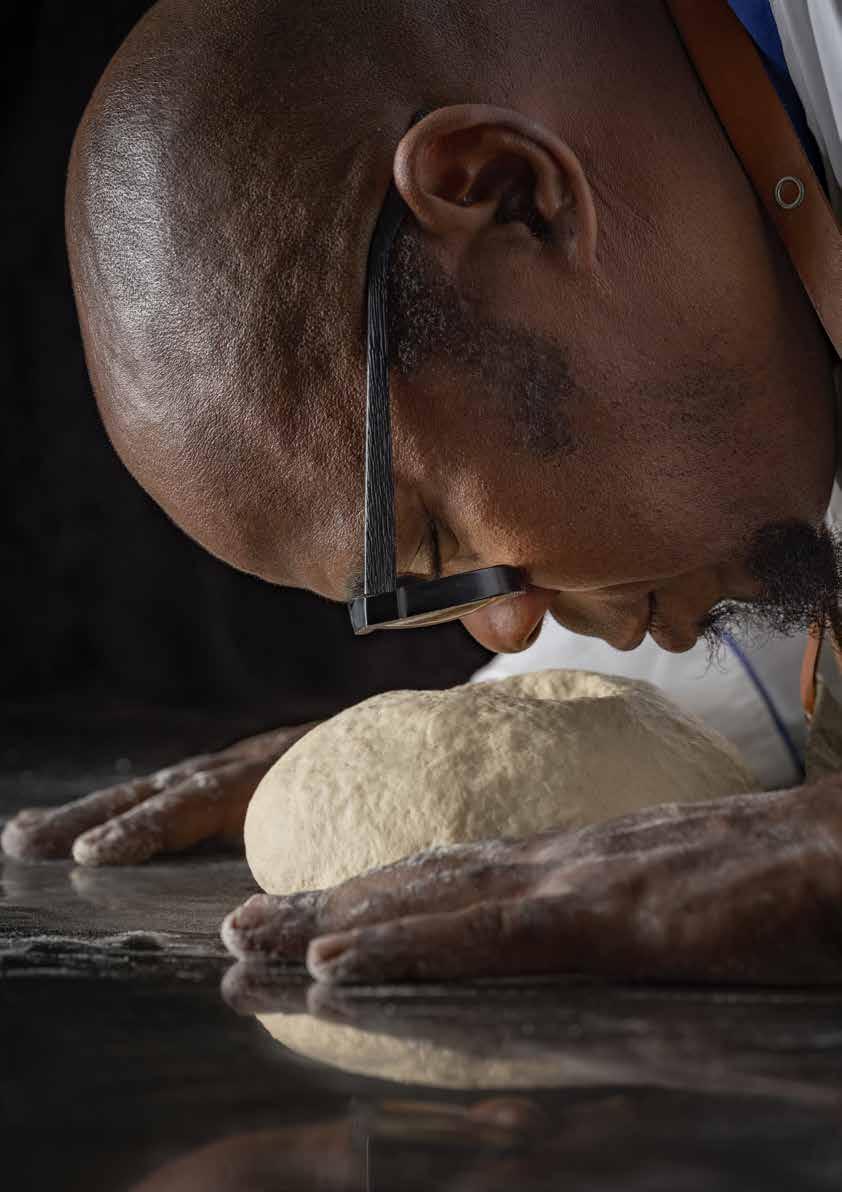
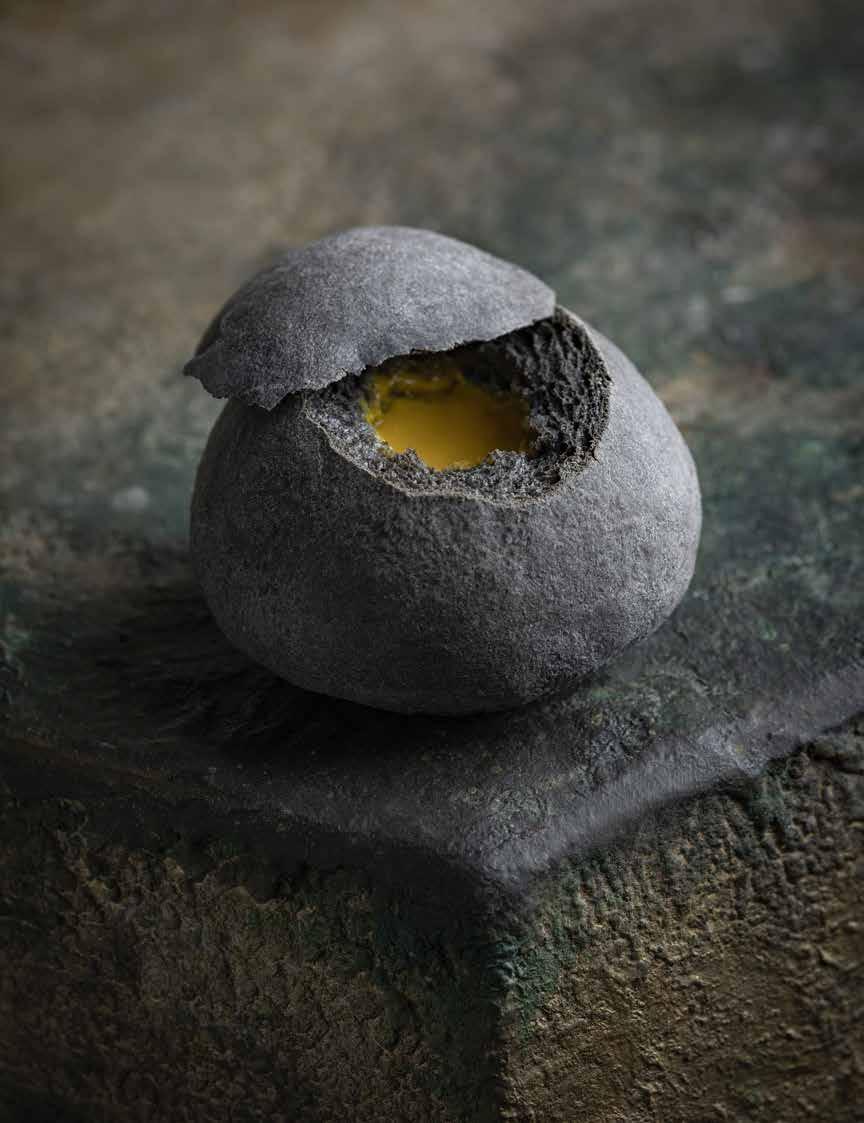
“At that time, people in Cuba only knew one type of bread. They didn’t know the different varieties of healthy breads I made using the mother dough kept in my family.
“In Cuban cuisine, there are many things that we have lost because of the lack of products. We used to eat roast pork, chicken, fish, and beef. We didn’t eat minced meat like we do now. People forgot the old Cuban recipes. Or worse, they badly make an Alain Ducasse recipe without the proper ingredients.
“I am trying to keep Cuban cuisine alive. I have recipes from the 1800s, and I cook with some old techniques and also some modern techniques. Here, people can eat real Cuban food and understand the traditions and origins of the cuisine.
“There are other younger chefs who have another point of view about Cuban cuisine. This is good, so we can exchange ideas. It’s a good opportunity to innovate or create some Cuban dishes from different generations. If everybody could make Cuban food, I think our cuisine would be more elevated.
“Eminente invested very well in a new product with a new flavor and aroma that is different from other Cuban rums. It’s a good representation for Cuba. When they opened Casa Eminente in Paris, they asked me to make a menu inspired by my Cuban roots to represent the dynamism of the Cuban people.”
Alberto González, the first Cuban chef to helm a Michelin-starred restaurant, Sauro in Milan, returned to Cuba when the government began allowing self-employment activities, and he opened Salchipizza, an artisanal bakery turned restaurant.
Alberto González是首位执掌米其林星 级餐厅(米兰Sauro)的古巴主厨。他 在政府开放个体经营后毅然返乡,并 开设了一家由手工面包坊转型而成的 餐厅Salchipizza。
烹饪是我的热情所在,也是我家族传承多代的传统。我的曾曾祖 父是古巴首批自赎自由的黑人之一,他在哈瓦那港附近奥比斯波 街的一家餐厅当厨师,还在 Inglaterra 酒店(哈瓦那最古老的酒店) 工作过。1875 年,他为古巴独立战争时期的将领 Antonio Maceo 准备了一份菜单。我现在还有那份菜单。
Eminente 的一款新产品风味独特,香气别具一格,与其他 古巴朗姆酒不同。这个品牌是古巴的代表。他们在巴黎开设 Casa Eminente 时,邀请我制作了一份灵感源于我古巴根源的菜单,以 展现古巴人民的活力。
ANNABELLE CANTARERO AND ALFREDO WILSON
Wife and husband co-owners of Finca Tungasuk
Finca Tungasuk农场场主夫妇
“I WENT TO FERRANDI PARIS CULINARY SCHOOL,” says Annabelle Cantarero. “I did an internship at Alain Ducasse au Plaza Athénée and an internship in Bordeaux, and I worked for a Japanese chef in a small family restaurant in Fontainebleau.
“Then my husband found an announcement for this abandoned farm. We wanted to start something on our own. This area is beautiful but hilly. According to the agricultural authorities, the terrain is useless land for agriculture. That’s why in this area there are many private farmers. We do multi-cropping and grow many fruit trees like mamey, annona, caimito, mango, avocado, and guava, and many small crops like yuca and boniato.
“For five years, we were working nonstop on the farm. Then the government allowed us to present a project to combine agriculture and gastronomy. We also opened a volunteer program through an NGO for people who come to Cuba and want to spend a day working and volunteering.
“We realized that a lot of seeds we’d received were damaged and had a low germination rate because of the way they were stored. With blackouts and no refrigeration, seeds are gone. During the pandemic, we kept our seeds by sharing them with neighbors. For example, we had hibiscus and passion fruit seeds, but we didn’t have enough labor. We gave seeds to our neighbors to plant, so in case ours failed, we could get some back from them. Many people were doing the same.
“Eminente has supported many projects related to nature and agriculture. So now we’re proposing to work with them to create a community seed bank.”
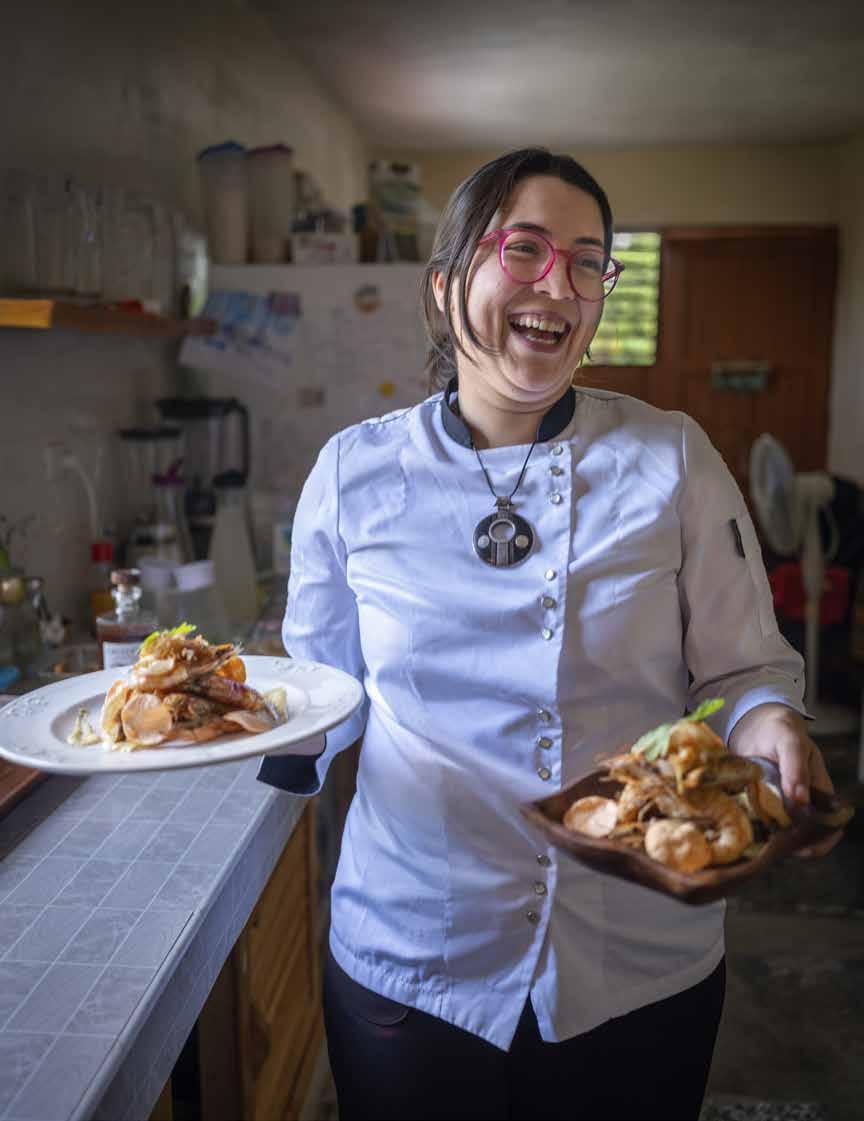
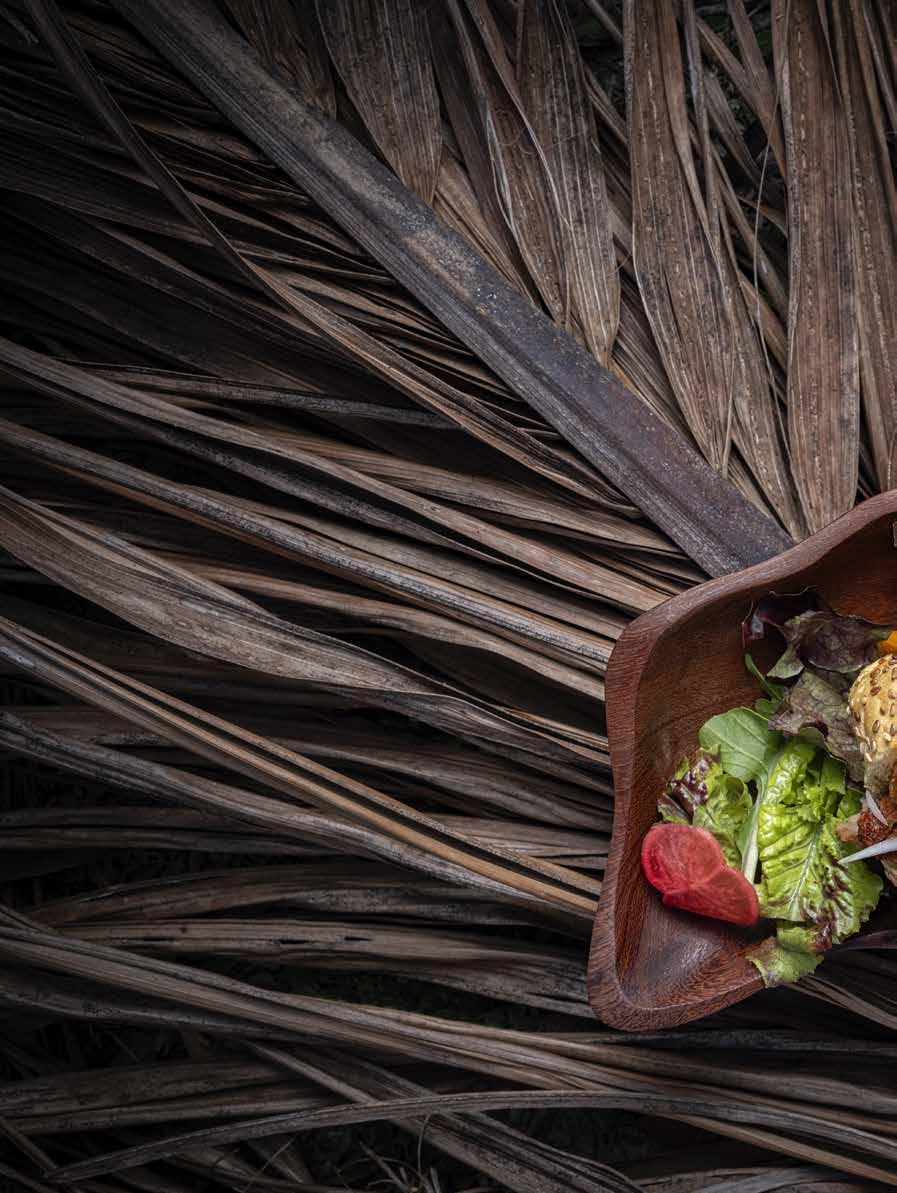
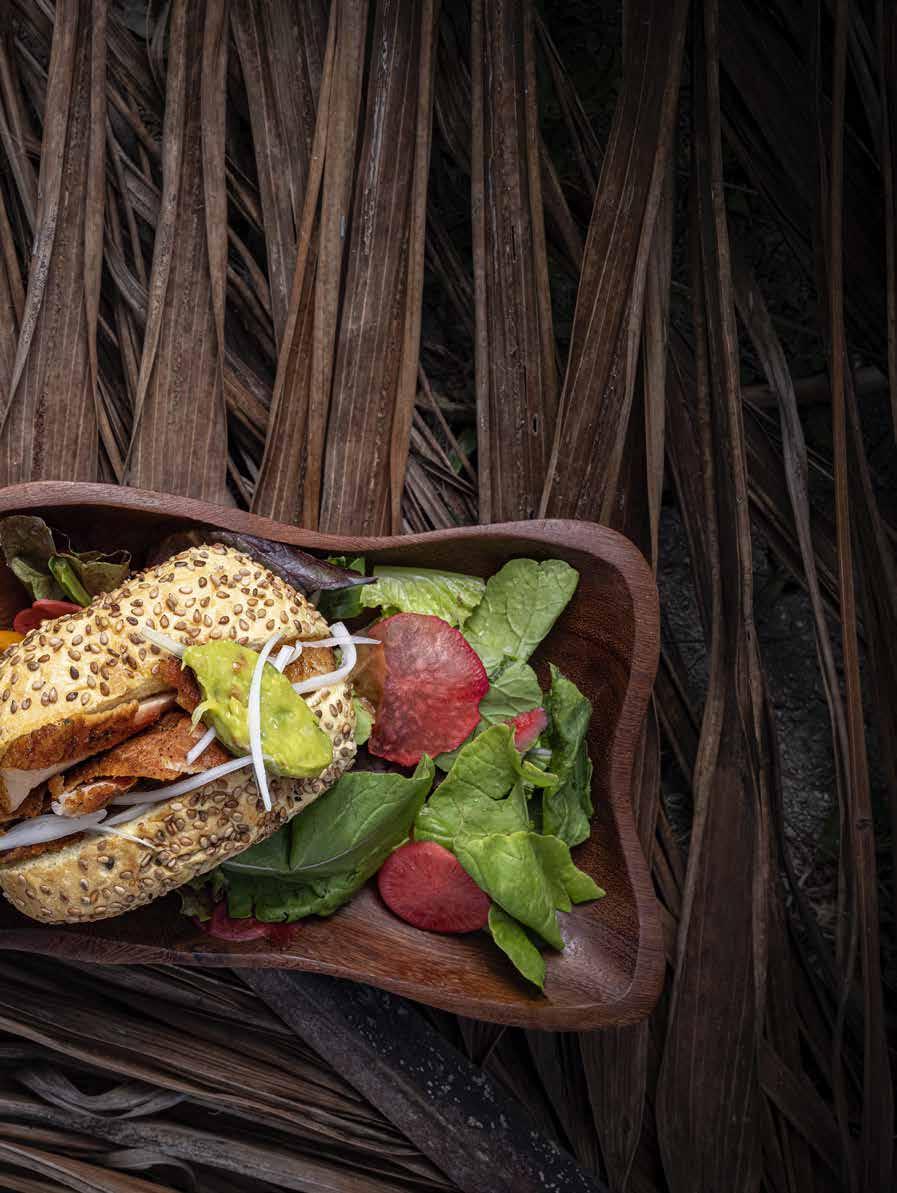
For her pan con lechon Cuban sandwich, Cantarero slow-roasts a pig for six hours until the skin is crispy and the meat is tender and juicy. The lechon is served on a homemade sourdough bun with pickled radish, fresh salad greens, and a dressing made with the pork drippings.
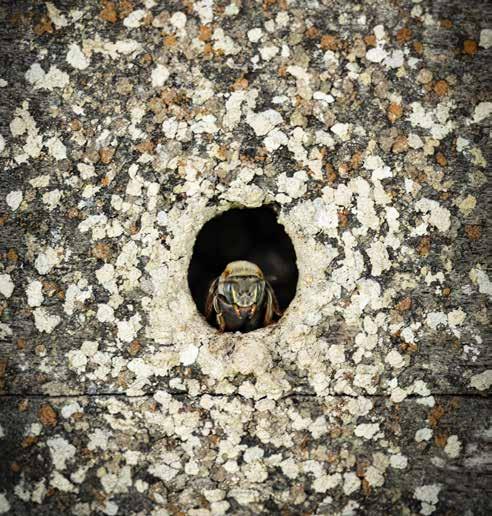
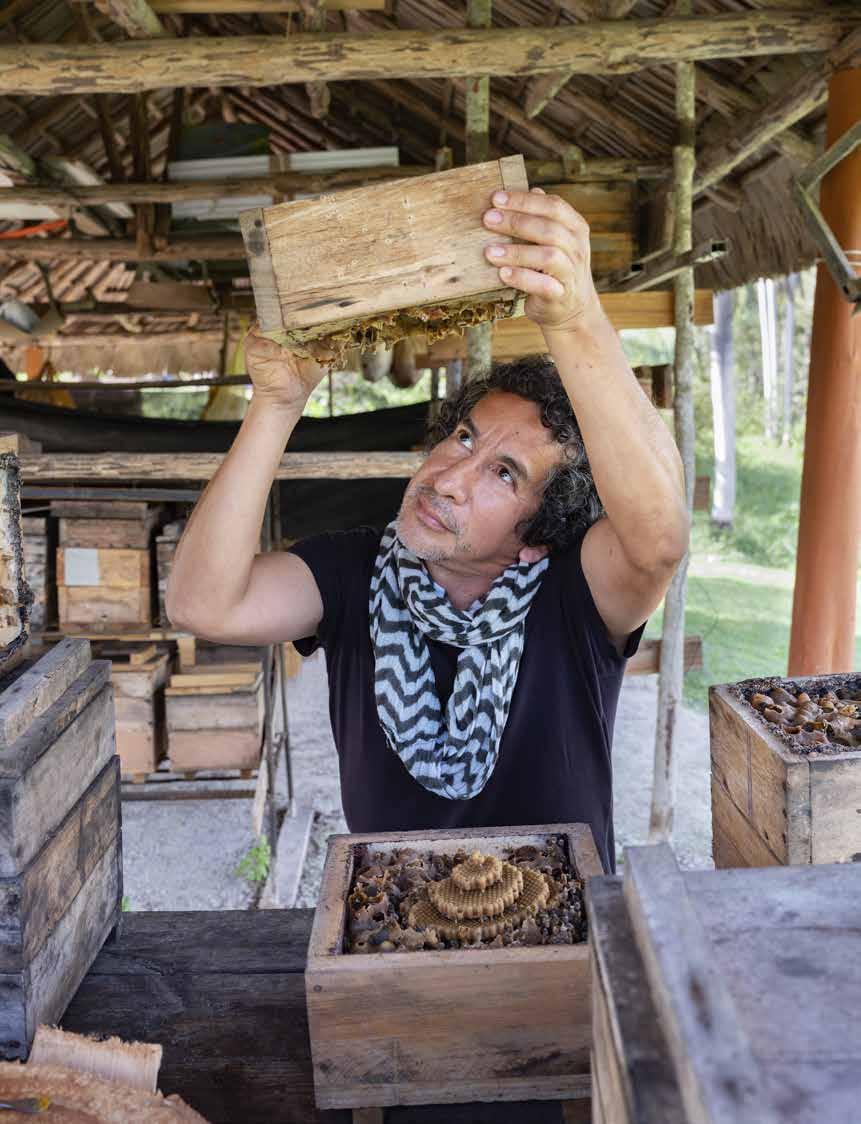
“WHEN WE FIRST BEGAN FARMING,” says Alfredo Wilson, “every book and manual I read said that as a farmer you need to have bees for pollination. You can increase production of crops by 50 percent. But that was a problem, because you cannot buy proper bee suits here in Cuba. The European bees attacked me and the farm workers. And we had a baby. So we decided, no, we don’t want bees.
“Then one farmer said why don’t you try this kind of Mayan bee? They’re originally from the Yucatán Peninsula in Mexico, but we can find them in the forest here. They’re not aggressive at all. It’s almost ten years now, and I really love them.
“When you buy honey from the supermarket, it always has the same color and taste. But when you become a beekeeper, you notice that the color and taste and density of the honey change depending on the season. When there are romerillo wildflowers, it turns more yellow. When it’s avocado or mango season, the flavor changes. There’s one flower that people call campanilla that contains some alkaloids. That honey is transparent, and people say it relaxes you.
“We have eighty beehive boxes now. In a few weeks, we’re going to reproduce them and will have more than a hundred boxes. Each hive has three thousand to four thousand bees. These types of bees are not regulated by the government, because they don’t produce enough honey. So we can sell the honey to whoever wants to buy it. It’s easy to sell in Cuba, because there’s not much production. I say, ‘I have ho—,’ and it’s sold before I even finish my sentence.
“We started this as a business and convinced other families to take care of the beehives, and together we can harvest the honey. We’re looking for a small lab in a container, so it can be the property of the community, and we’ll all produce the honey. That is my goal.”
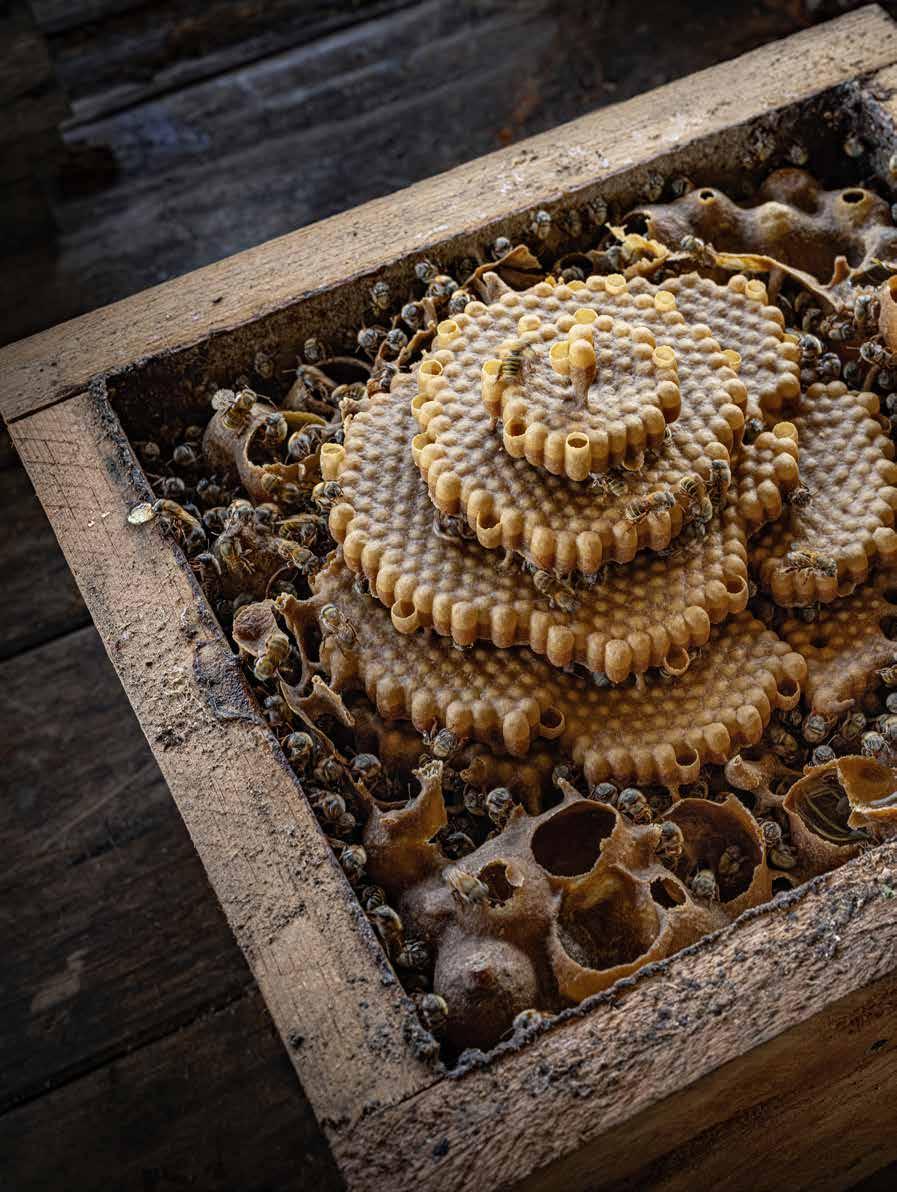
“Each box has many queens,” says Wilson. “The dot patterns around the entrances look the same to us but completely different to the bees. They help them identify which box to enter. A bee guards the entrance. He is like the immigration officer and checks that all the bees are bringing pollen.”
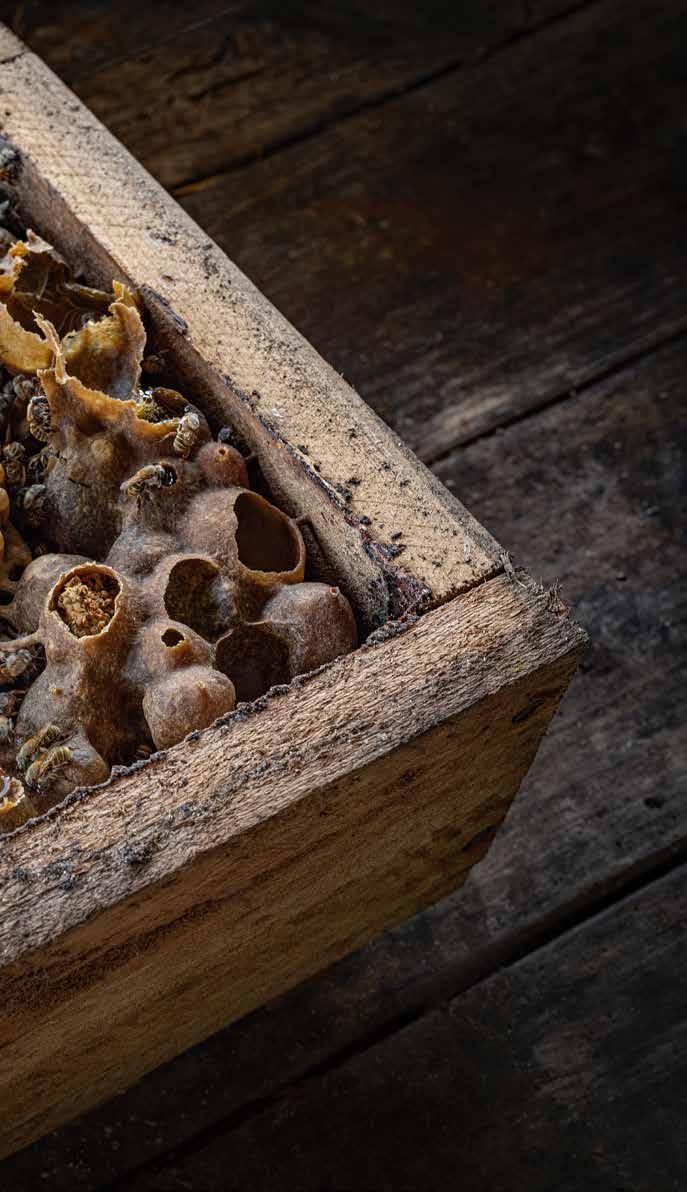
The beehives are structured in three levels. The bottom one serves as the main nest, where pollen and honey are stored in bulbous pots and where the eggs are laid in brood cells that form a uniquely tiered, pyramid-like structure. As the colony grows, it expands into the second level, with both honey pots and brood cells. Surplus honey is stored in the top level, and it is this honey that Wilson will harvest.
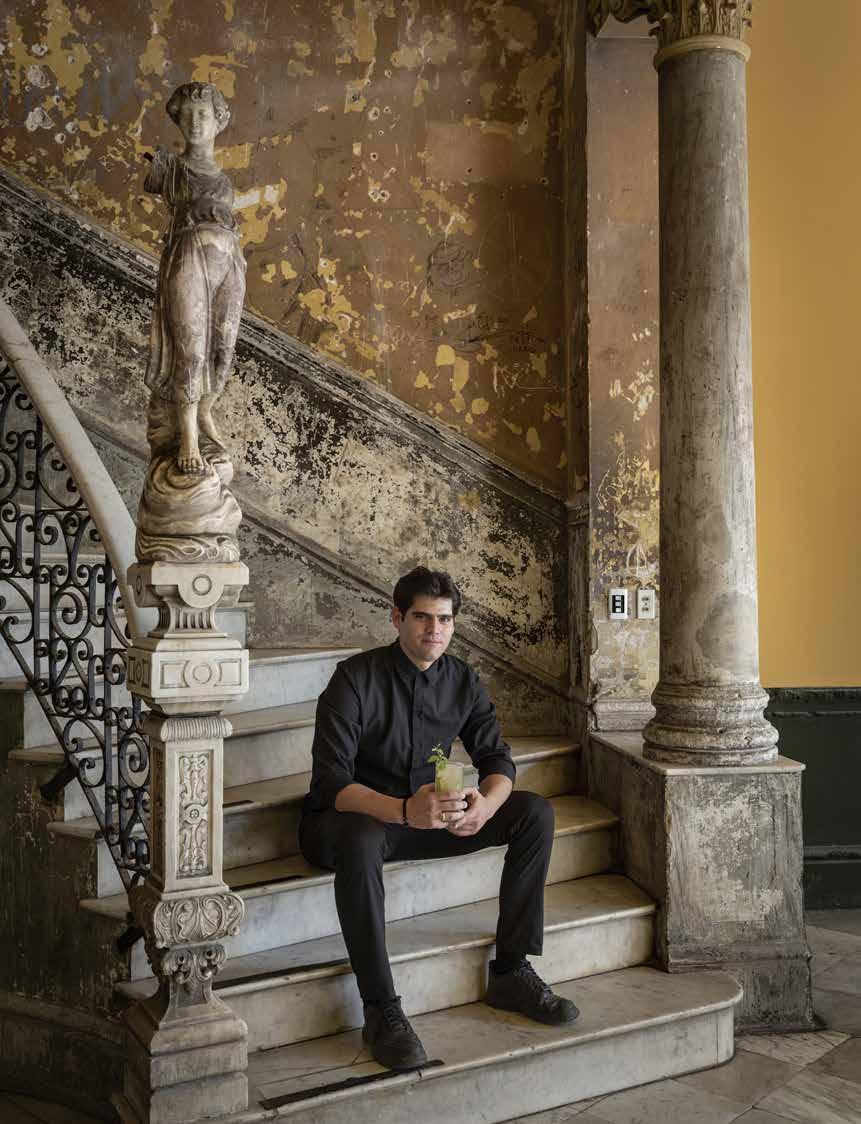
“I’VE BEEN WORKING HERE at La Guarida for eight years. It was my first job ever. At the beginning, I was a waiter. It’s very busy here, I was walking around too much, and my feet were hurting a lot. So I thought about the idea of getting into the bar and being more comfortable inside that space.
“At first, you say it’s only a job. But it’s almost mandatory to fall in love with the bar – it’s the smiling people. I love being focused on the people. You listen to everything. We’re like gossips behind the bar.
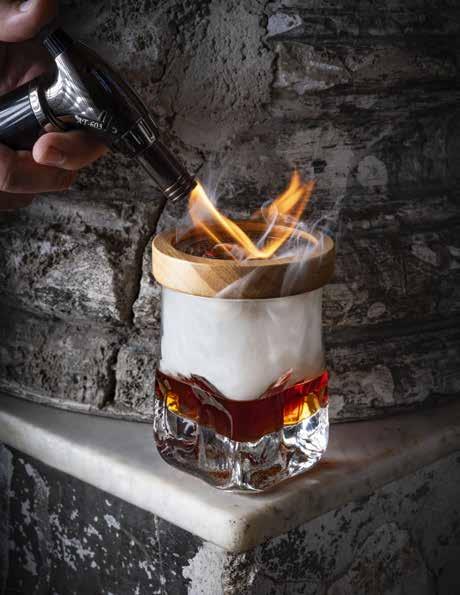
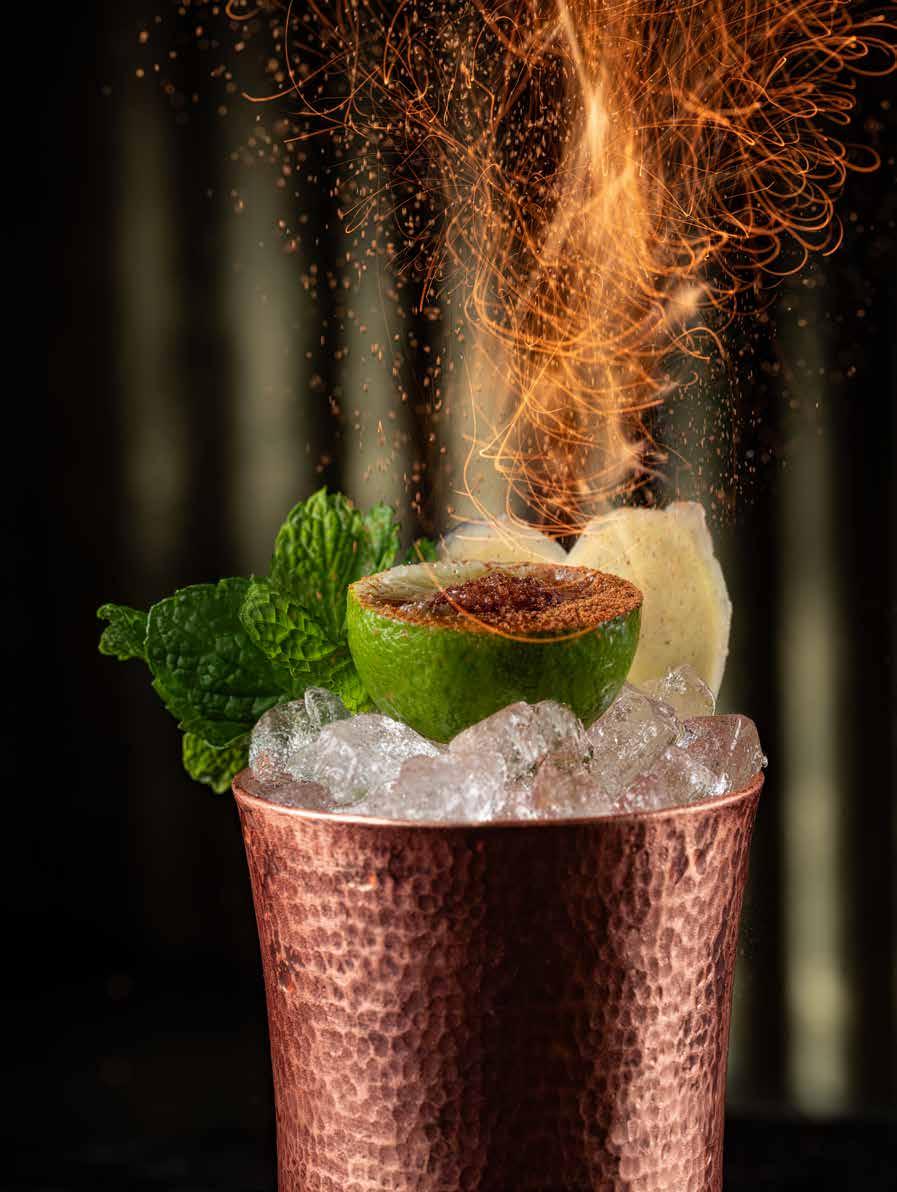
“The team here at La Guarida made a cocktail, Eminente No. 7, for Eminente. It has Eminente Reserva, fresh squeezed lime juice, pineapple juice, fresh ginger, fresh mint, simple syrup, aquafaba for the foam, and some cinnamon on top. It is spicy and refreshing, with all the potent flavors of Eminente.
“You know, you can enjoy Eminente at many stages during the day and get a different experience. At six in the morning, wake up with Eminente, coffee, and a little bit of honey. We call it carajillo. It’s a cocktail to start the day.
“At midday, when it’s the hottest time, Eminente and some sparkling water is perfect. It’s a long drink that can help you get through the day.
“At night, you need a drink to relax with. A good old-fashioned made with Eminente and paired with a cigar would be a perfect finish.”
我在 La Guarida 工作已经八年了。这是我的第一份工作。刚开始我是 一名服务员。这里非常忙碌,我四处奔走,脚疼得厉害。所以我想去 酒吧工作,那里应该会更舒服。
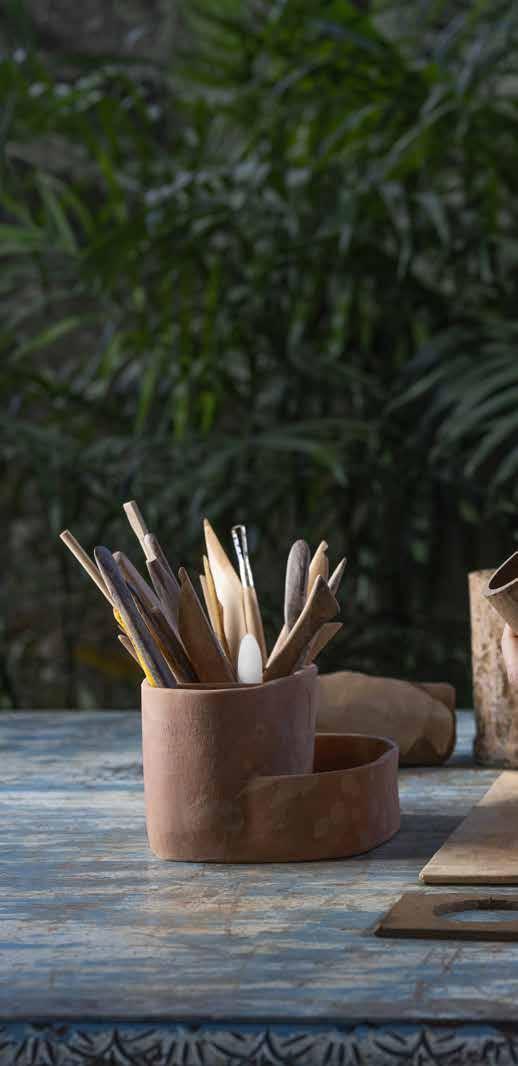
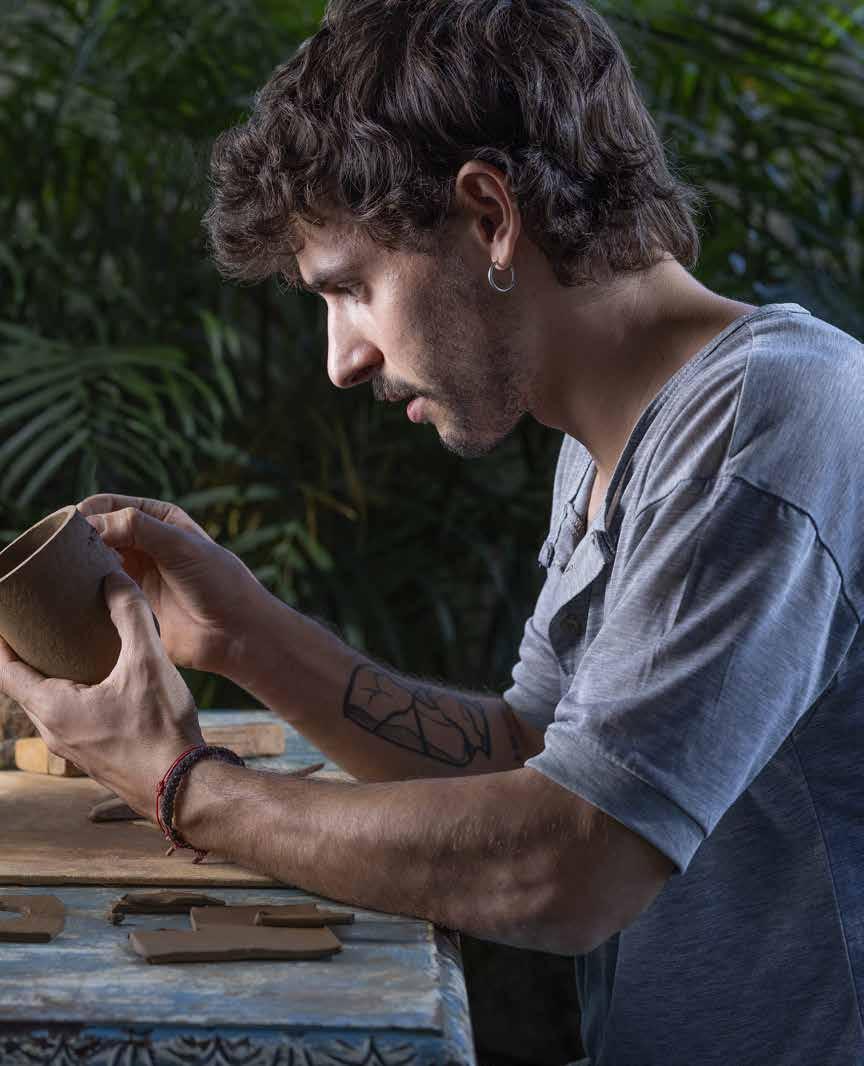
“I STARTED TO WORK WITH CERAMICS when I was thirteen. My uncle was my teacher. I studied automatic engineering at university for two years, but during the pandemic, I started this project. I thought, I need to take control of my life, this is my passion, this is my project. The name is Linos Pottery. It was born, it grew. These past five years were very important for me.
“I made some items – cups, plates, bottles and plant pots – for Malecón 663. It’s a very avant-garde bar and restaurant. By coincidence, they took a picture of my cup with an Eminente bottle. I think that’s how Raúl Bravo heard about my project.
“He called me to make cups for an event. The canchánchara cocktail and the cups are from Trinidad. Traditionally they are a little round. Together with Raúl, we decided my version for Eminente would be a little more contemporary and minimalist in style. I made almost three hundred cups. And when they sponsored a new restaurant here, I made a different style of cup for the opening.
“Last September, I had my first personal exhibition, and Eminente was a sponsor. Tomorrow, I’m participating in the Havana Ceramics Biennial.” [In December 2024, Li was awarded the Beca de Creación for his Vasija Ritual collection displayed in the Museum of Contemporary Ceramics of Cuba.]
TK Director of Photography David Hartung explores an isolated island nation besieged by difficulties and discovers its rich history, its evocative beauty, and the enduring warmth of its people.
WORDS AND PHOTOGRAPHY BY DAVID
HARTUNG
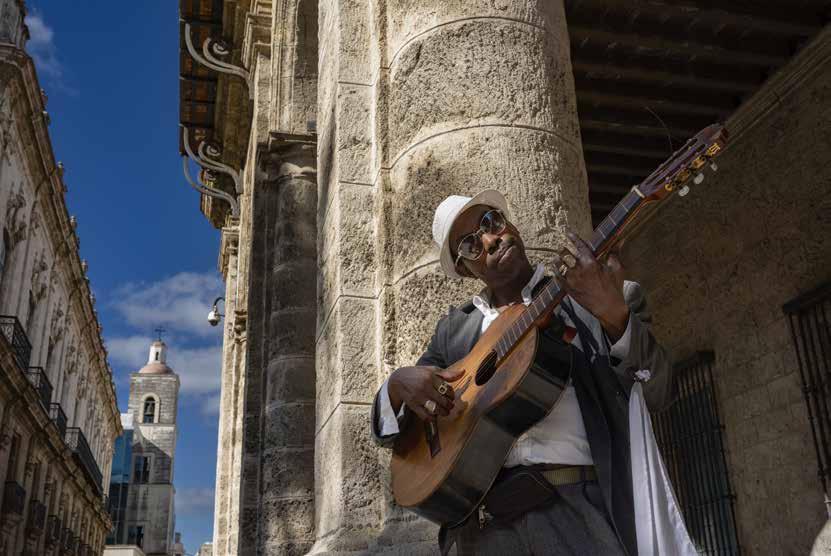
Habana Vieja street buskers Marisela and Rafael 哈瓦那旧城的街头艺人 Marisela及Rafael
THERE WAS A TIME when American citizens were not allowed by the US government to travel to Cuba. The restrictions were relaxed somewhat under the Obama administration. And recently, when an opportunity for TK to do a story there presented itself, I wholeheartedly agreed that we should go.
But after applying for visas, we began to have second thoughts. The Cuban economy was in a bad state, and the electrical grid was often failing across the entire country. Newspaper articles were predicting that the government was on the verge of collapse. When we presented our concerns to Christopher Baker, our guide and fixer, who has spent years covering the island as a writer and photographer, his response was basically don’t worry about it – that stuff has been going on for years. I thought, okay, good enough for me, let’s go!
Upon arrival at Havana’s José Martí International Airport, my thoughts turned to how I’d be treated in a country that the US has kept isolated for so many decades. Surely they’ll harbor deep resentment toward their northern neighbor. And while part of that statement may be true, at least in terms of how they view the US government, it didn’t affect how I was treated on a personal level. From the moment I left the plane, I encountered kindness and gracious hospitality. This welcoming spirit followed me throughout our entire trip.
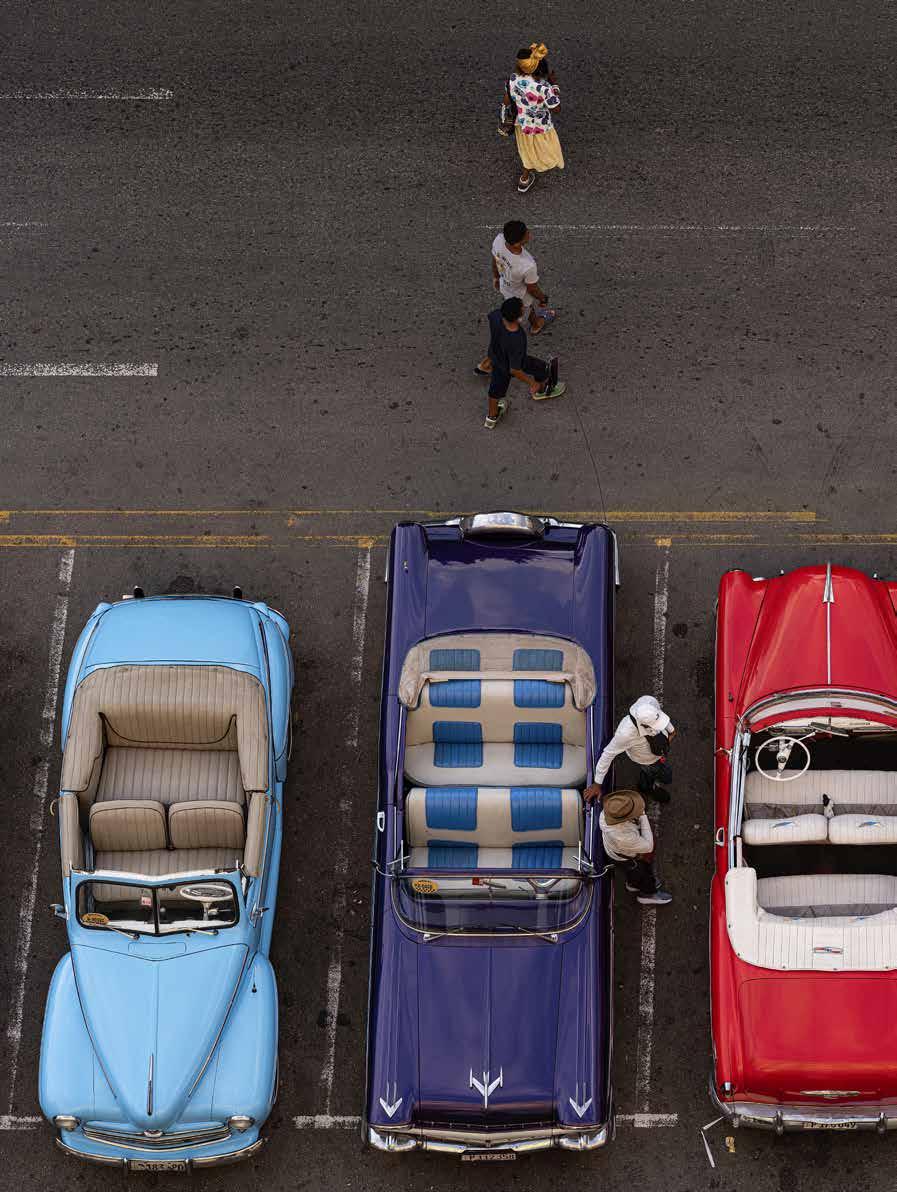
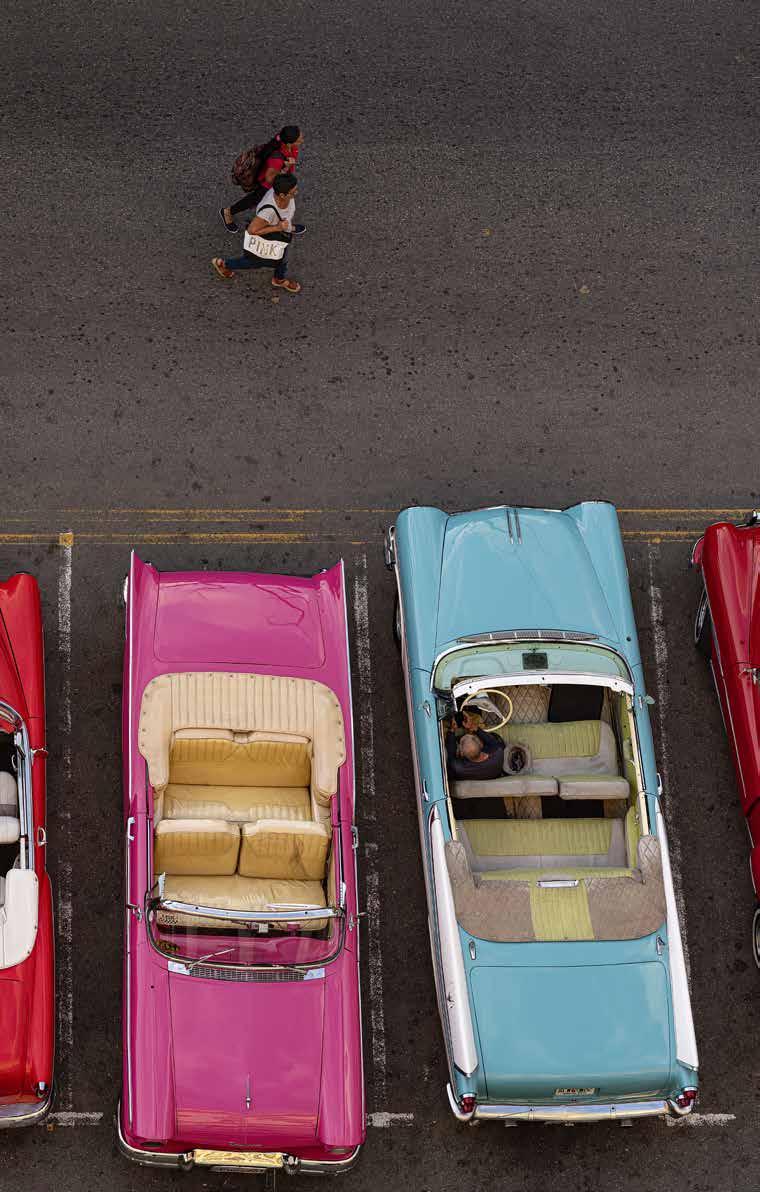
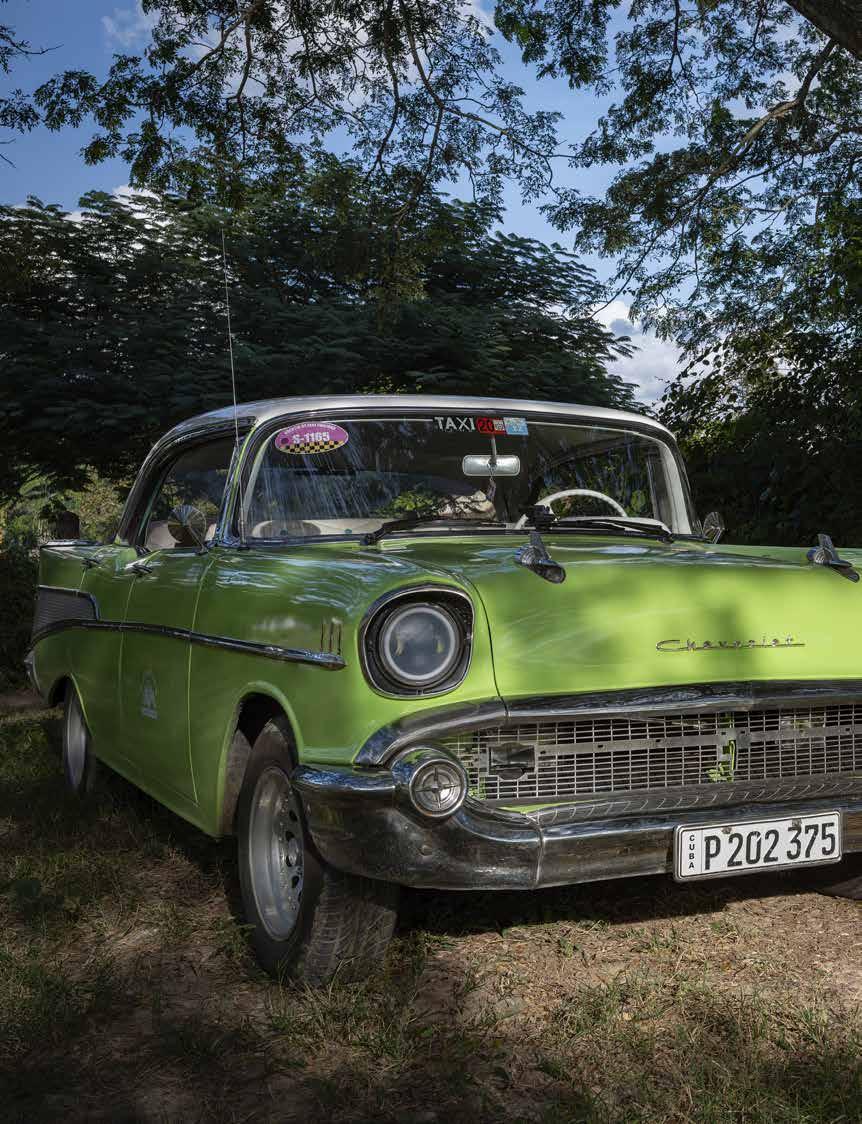
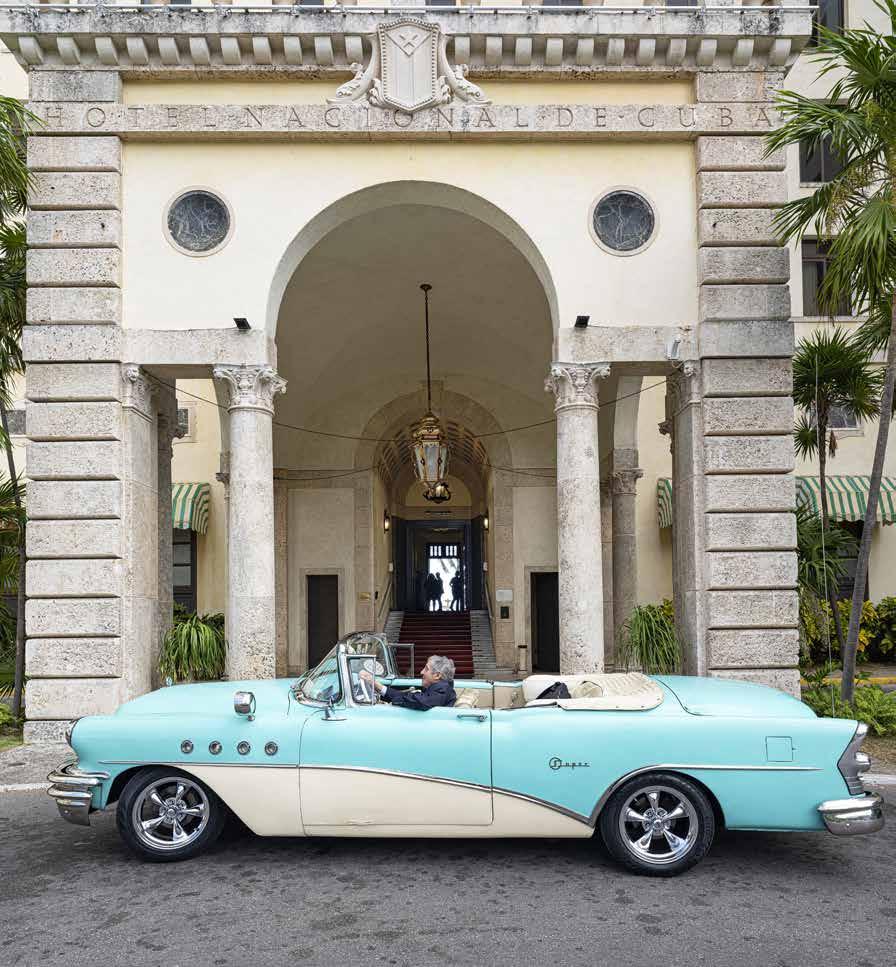
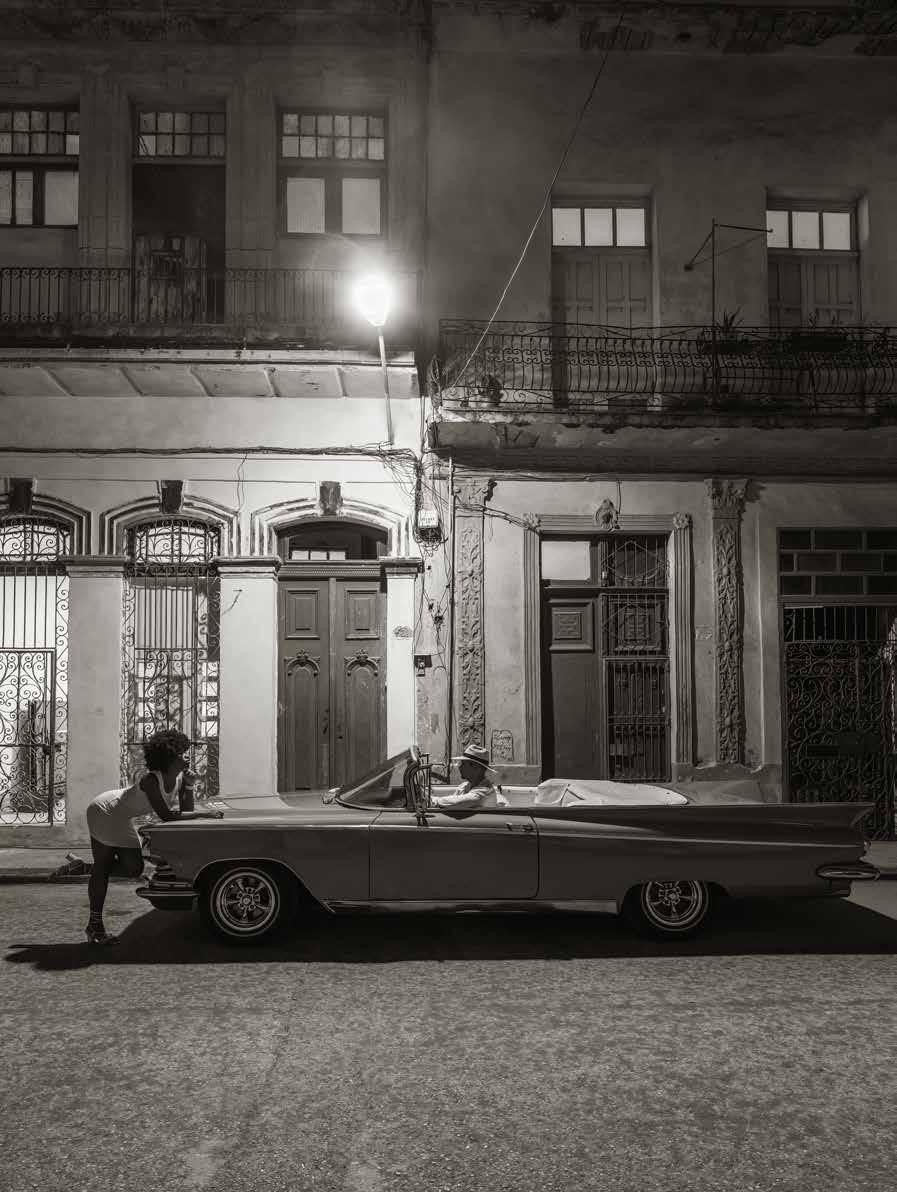
One of the first things any visitor to Cuba will notice is all the classic American automobiles from the 1950s. Their owners cherish them as if they were members of the family. Keeping vehicles like these running well on a daily basis is no easy feat, especially when parts supplies have long dried up. Like so many other things I observed in Cuba, the people find a way to make do by either manufacturing what they need in small garages or adapting parts from newer vehicles. In most of the cars I rode in, the look, feel, and even the sound of the engine seemed authentic. But I learned from one owner that the motor in his seventy-year-old car is actually a Hyundai model.
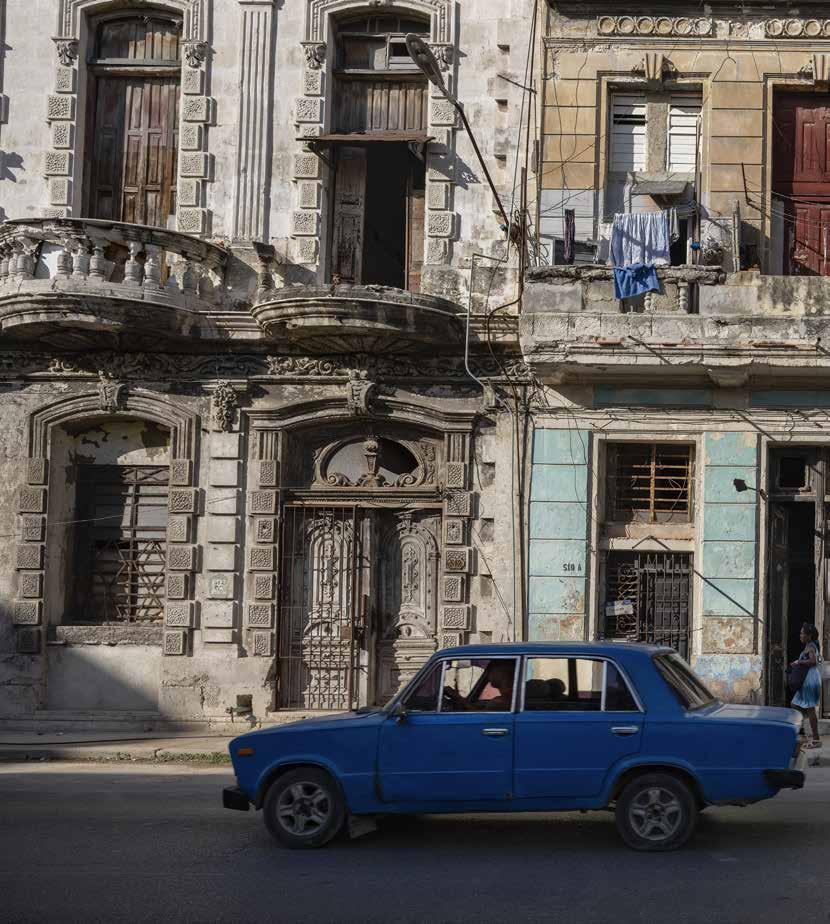
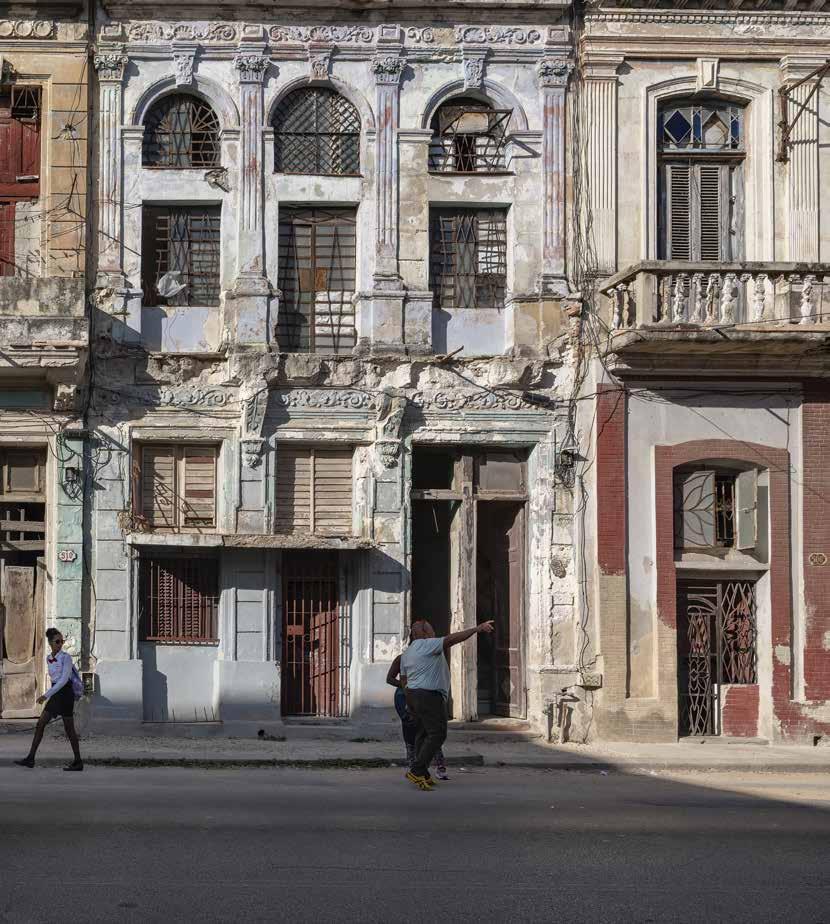
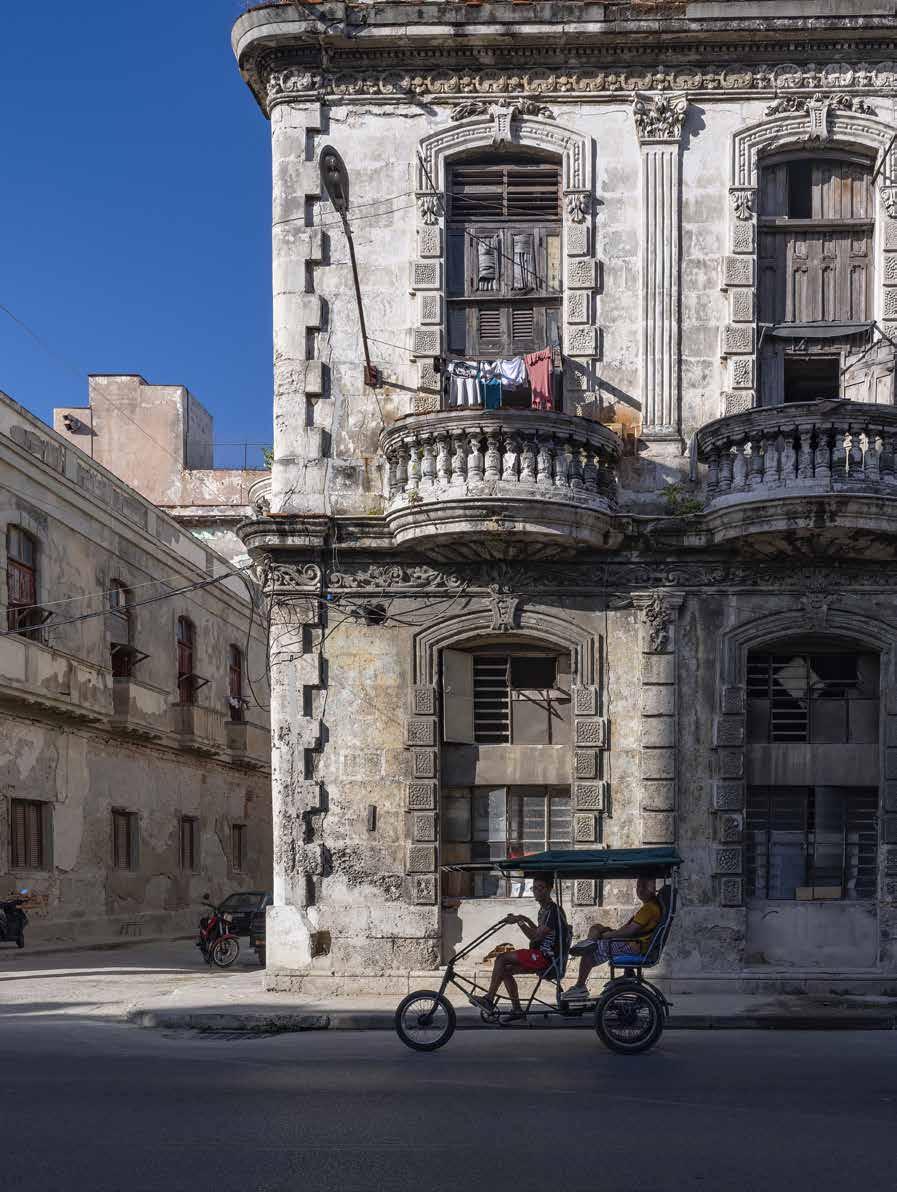
Our first few days in Cuba were spent wandering around Havana. Because of limited investment and resources, many of the buildings are crumbling right
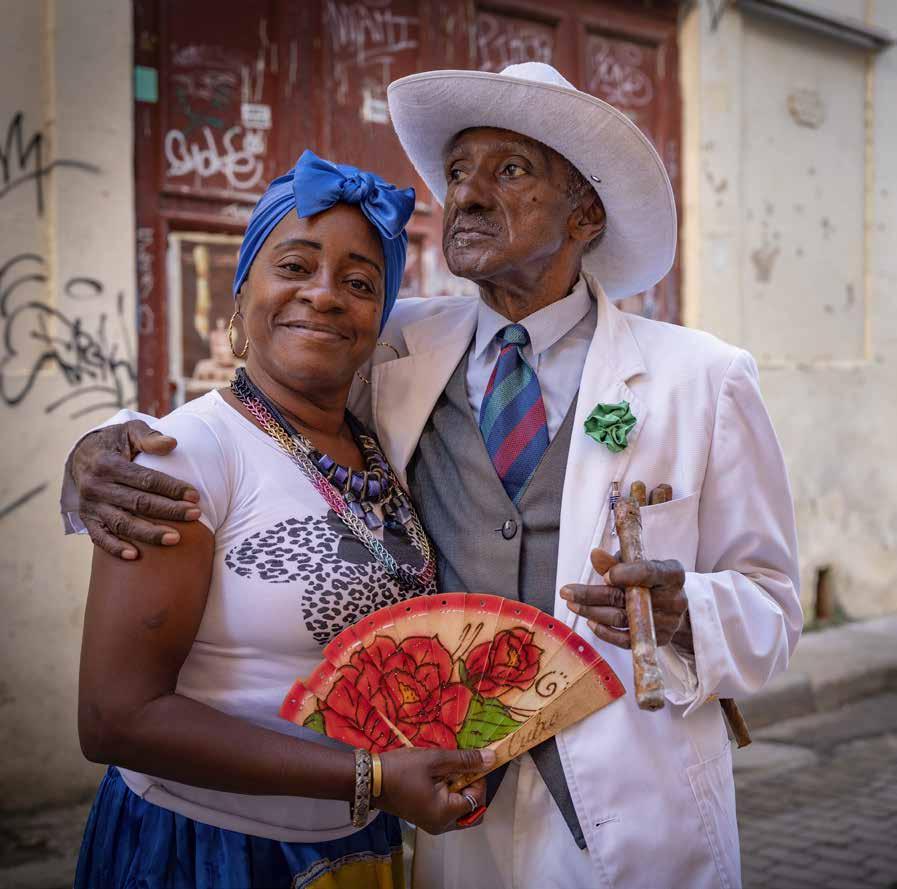
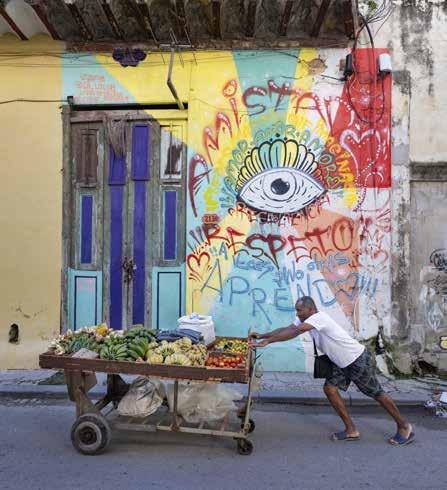
before your eyes. While this presented wonderful textural backgrounds for me to photograph, it was also quite sad to see. In areas frequented by tourists, there were folks dressed up in period costumes puffing away on cigars along with buskers entertaining visitors with their Cuban classics.
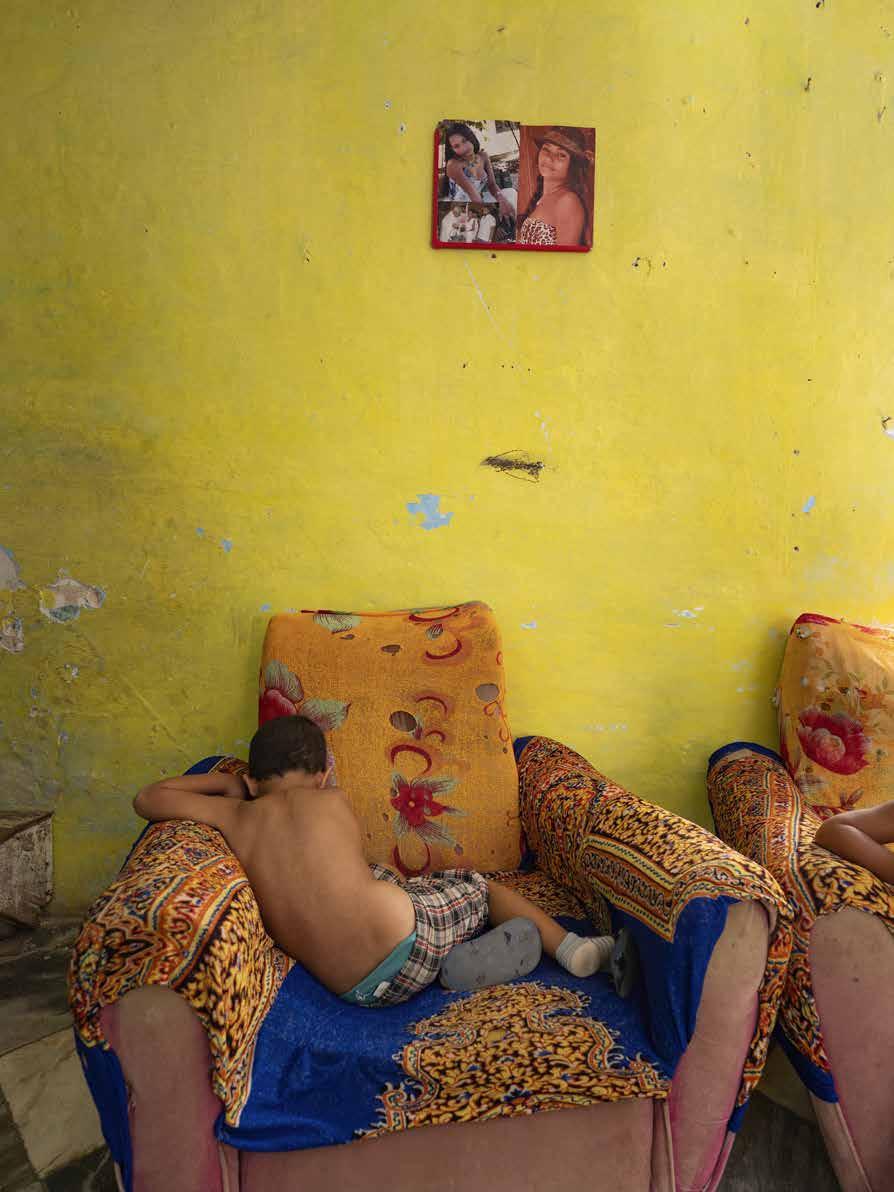
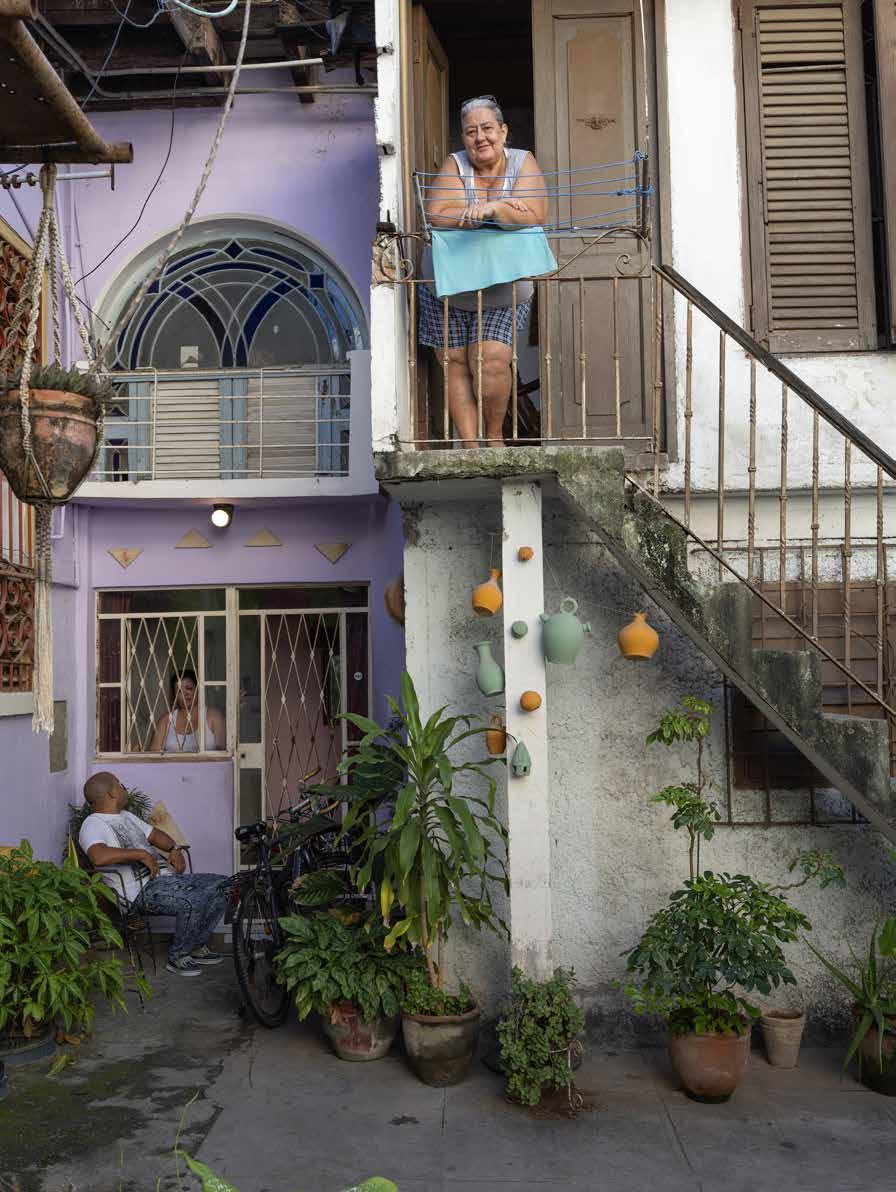
As we ventured into residential areas, we’d be welcomed into tenement buildings where we could catch a glimpse of how local people live. Daily life for average Cubans is not easy, but they are often welcoming and happy to share a smile and a chat. One ice-breaker I carried
with me was a huge bag of Tootsie Pops, the American brand of lollipops with a chocolate center. I mainly brought them to share with the children but soon discovered that the adults loved them as well and that I should have brought more.
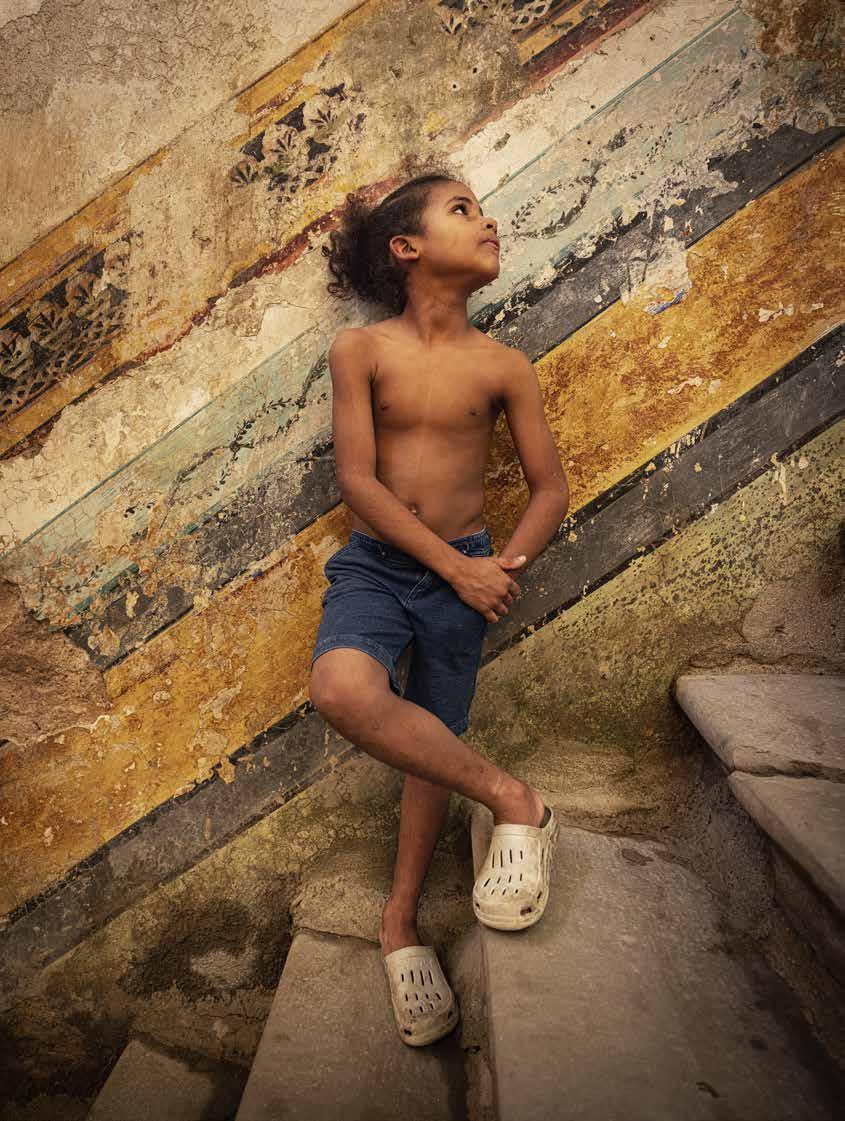
In one of these tenement buildings, I met a nine-year-old boy named Christopher and proceeded to photograph him standing on the staircase that led up to his family’s home. I asked him if he liked baseball, to which he replied in the affirmative. So I reached into my camera
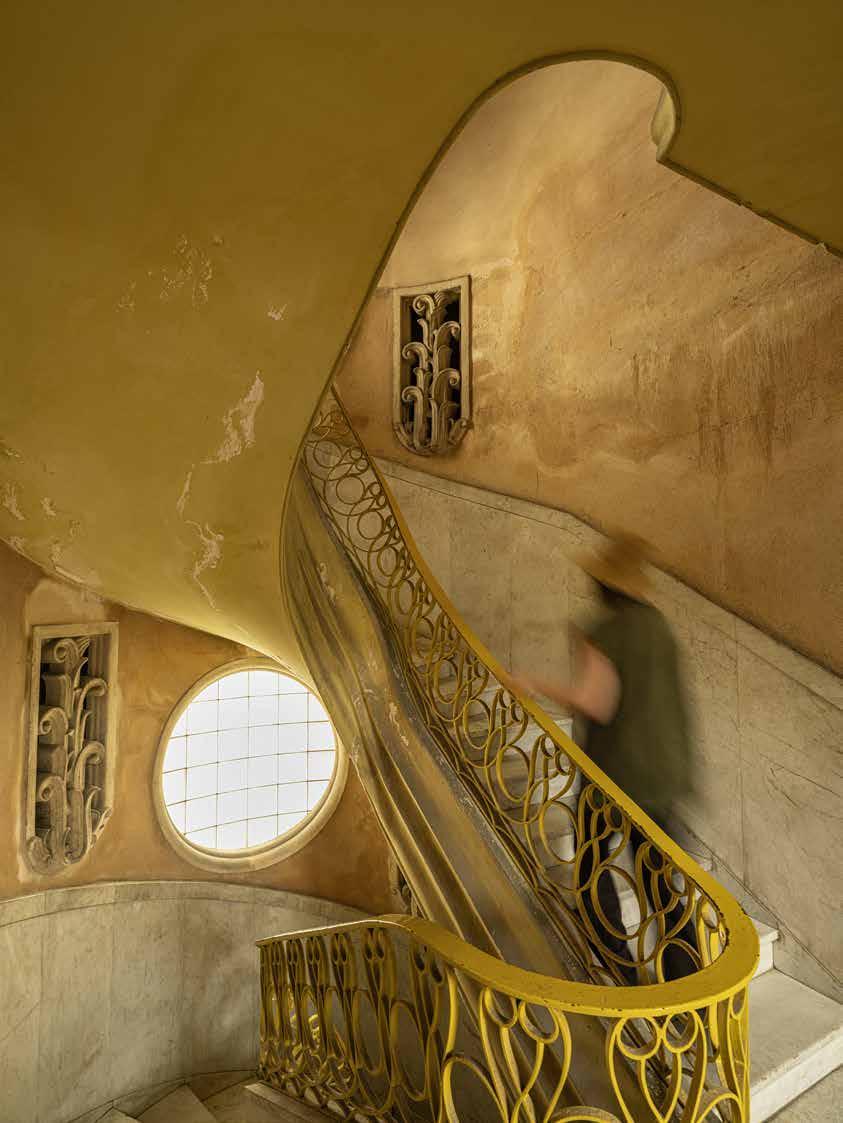
The timeless elegance of an Art Nouveau spiral staircase in the Vedado district of Havana
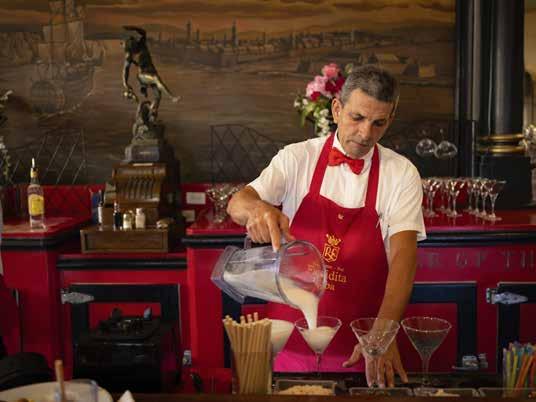
← A bartender pours daiquiris at El Floridita in Havana.
调酒师在哈瓦那El Floridita
酒吧调制代基里酒
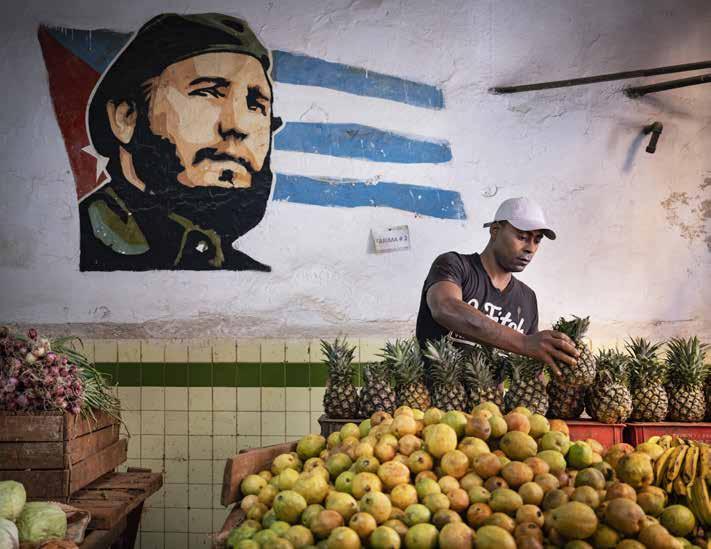
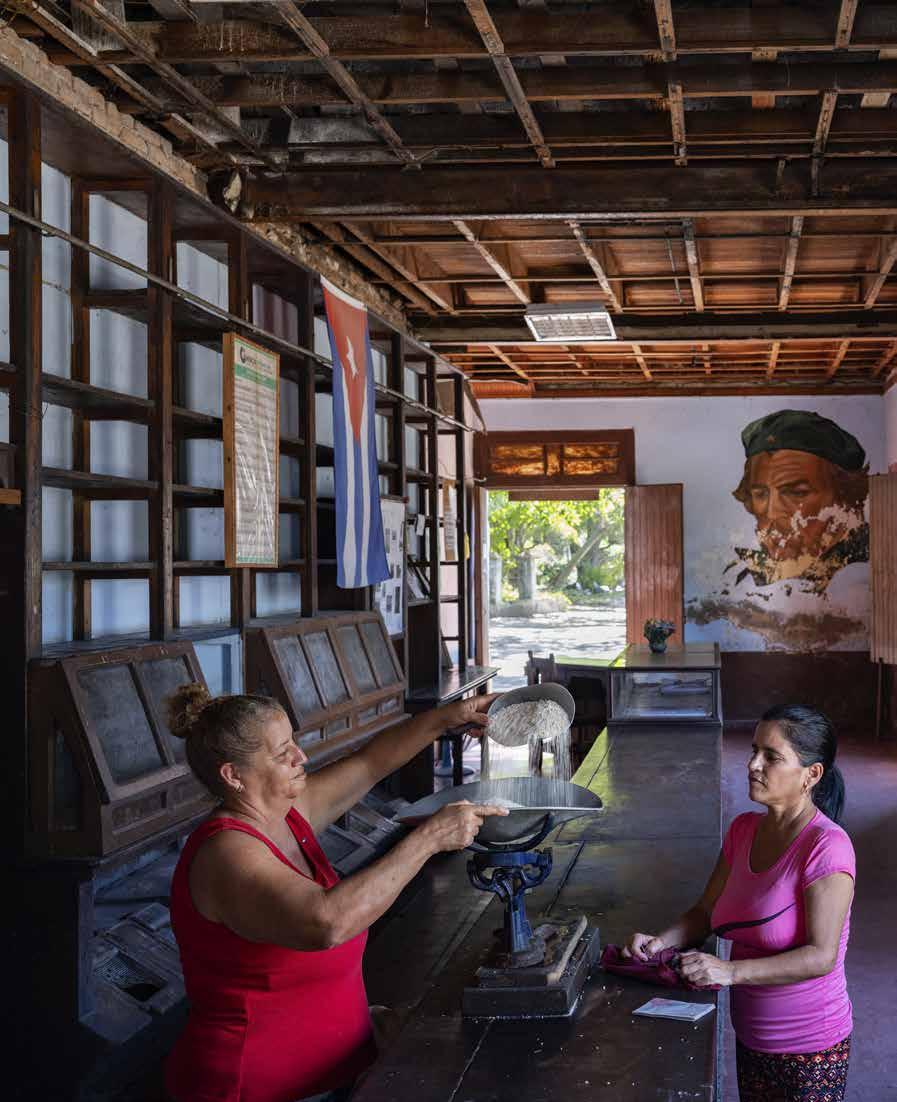
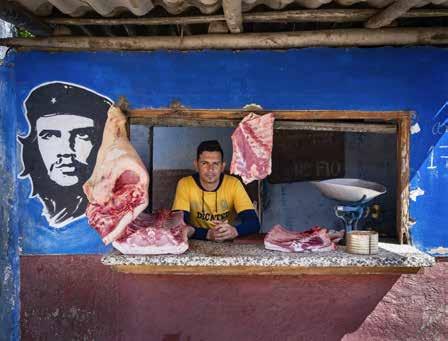
↓ A mural of Fidel Castro in an agromercado, or staterun vegetable market 一家国营蔬菜店里的 Fidel Castro壁画
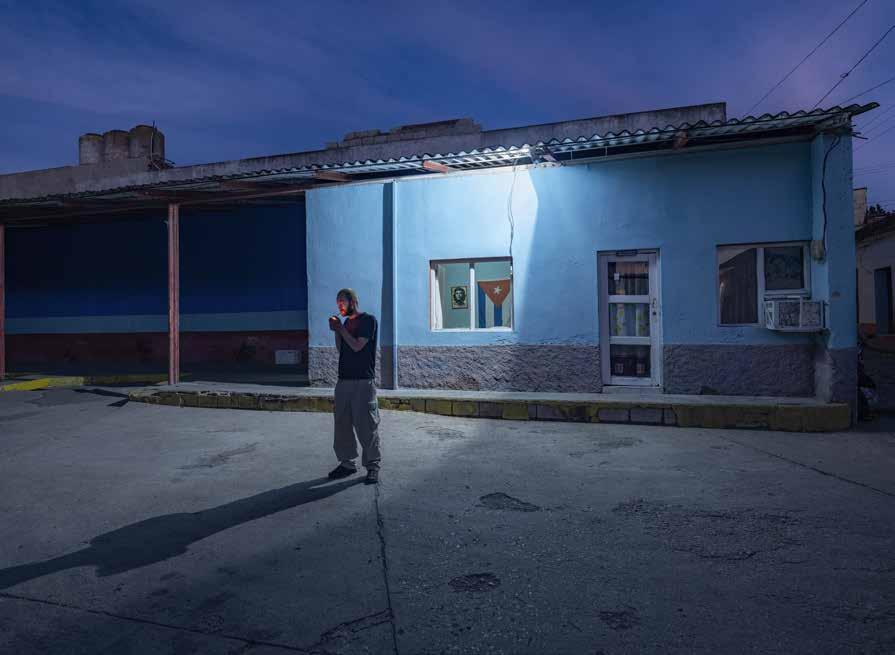
Blue-hour quiet at a Trinidad bus stop 暮色四合时,特立尼达的静谧公交车站
bag and revealed a new Rawlings baseball. Christopher literally gasped and held his heart. I had no idea such a small gift would receive such a reaction. Chris, our guide, later told me that the young fellow had probably never seen a brand-new baseball before.
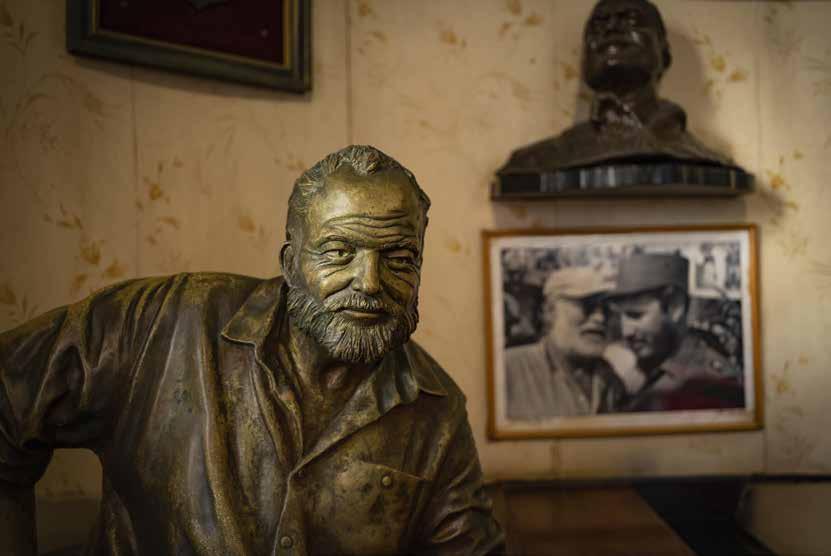
As we continued to wander, we found ourselves in front of El Floridita bar, which was a popular hangout, including for Ernest Hemingway, prior to the revolution. The famous writer, so it is said, asked for a stronger, less-sweet version of their daiquiri, which they created by deleting the sugar, doubling the rum, and dubbing it the Papa Doble in his honor. I, of course, couldn’t pass up the opportunity to try one myself.
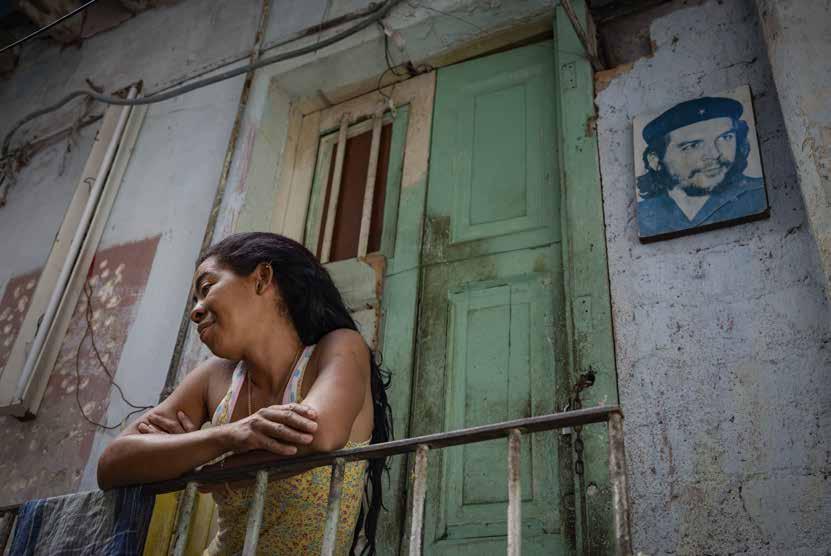
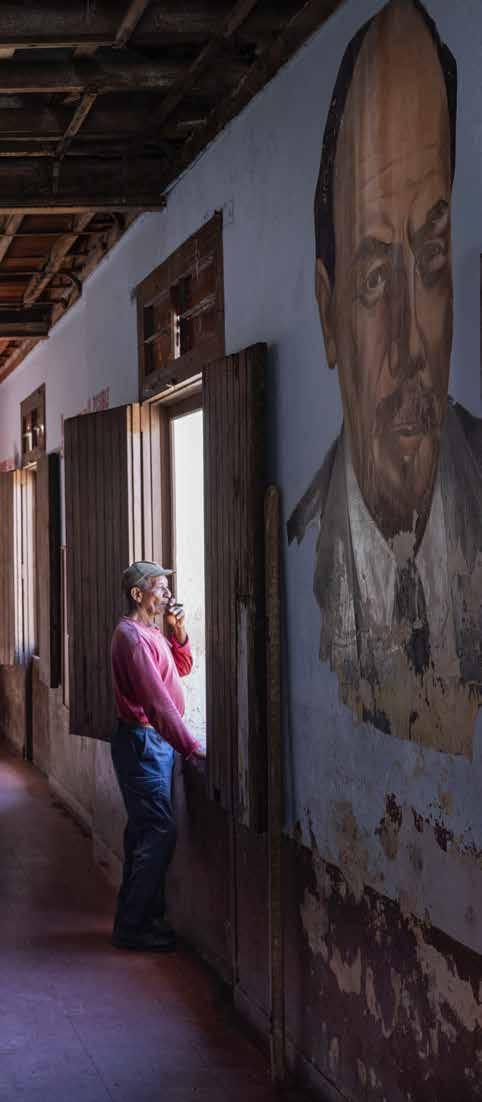
Next on our itinerary was a road trip to the city of Trinidad about three hundred kilometers southeast of Havana. Along the way, we stopped at the village of Pepito Tey, where we visited a government-run ration store. Every Cuban has a ration book that allows them to collect a set amount of such staples as rice, beans, coffee, and sugar. The store was simple and, like many buildings in Cuba, in decay. The walls were painted with the portraits of historic Communist notables like Ernesto “Che” Guevara and Karl Marx and other figures of the revolution.
When we finally reached Trinidad, I was anxious to begin wandering this well-preserved historic city that served as an important trading center for the sugarcane industry during the eighteenth and nineteenth
向导 Chris 后来告诉我,这孩子可能从未见过一 个全新的棒球。
我们继续闲逛,来到了革命前海明威等名人 常去的 El Floridita 酒吧。据说,他曾要求调酒师 为他创作一款酒精度更高、甜度更低的代基里酒。 调酒师去糖、加倍朗姆酒量,并将这款特调命名 为 Papa Doble 以表敬意。我当然不会错过尝试 一杯的机会。
centuries. The fact that it has been named a UNESCO World Heritage Site has allowed Trinidad to develop its tourism industry and has made it a popular destination for foreign visitors. Fortunately, development has not destroyed its beauty, and visitors can still feel a bit of the old world by walking the narrow streets and chatting with the locals.
One morning we got up before sunrise to walk the city, calm and quiet, with only our footsteps making sounds as we walked along the aging brick-lined streets. The only activity was people gathering at a bus station to catch an early morning ride out of town.
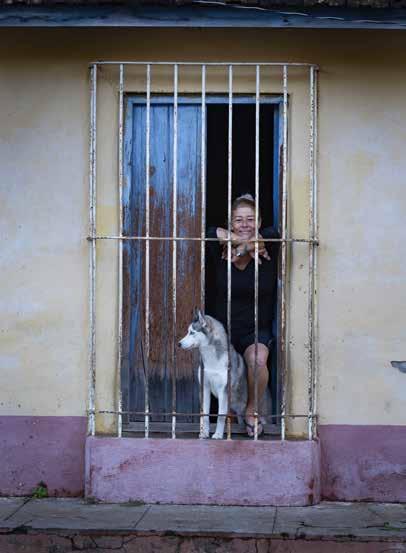
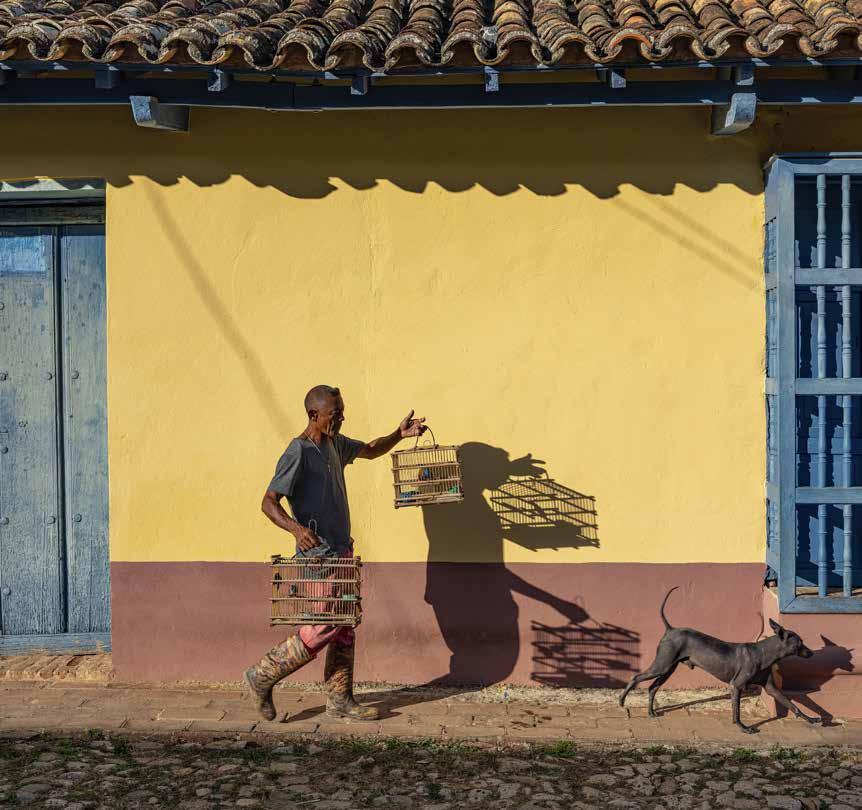
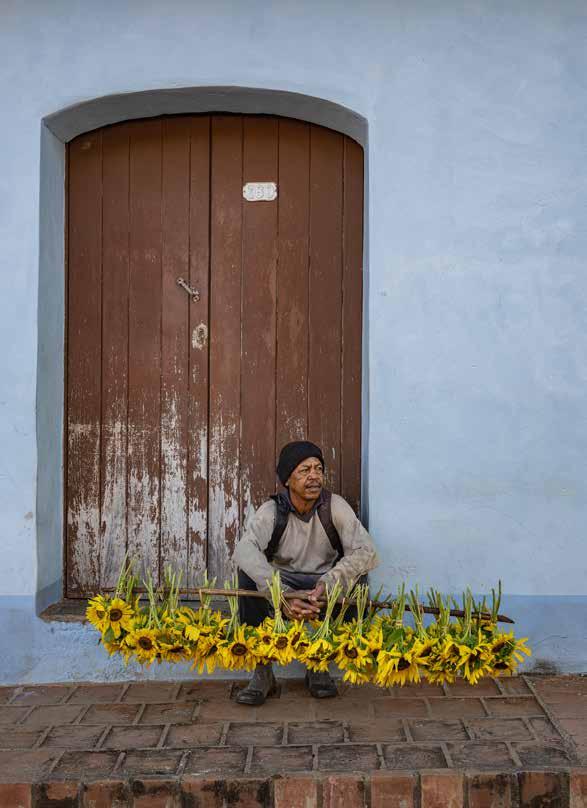
As the sun came up and began to warm the city, we found ourselves approaching its outer edges. Here, people live in one- or two-story buildings. I love making portraits and was happy that the people in this neighborhood were so welcoming.
While in Trinidad we decided to head out of town to one of the old plantation houses, which is now a museum. We met up with a guide named Dayanis who was dressed in period costume and generously offered her time to pose for a few photos. Near the plantation house we met a family, with whom we had a nice lunch before exploring their farm and the nearby sugarcane fields.
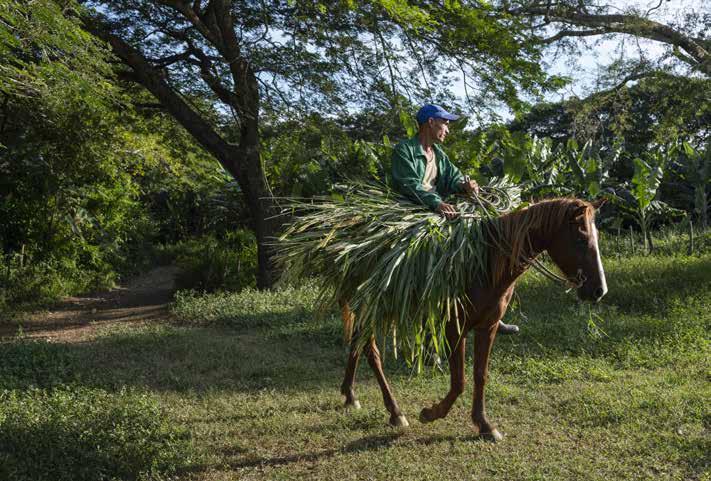
A campesino, or peasant farmer, brings in sugarcane cuttings in Valle de los Ingenios (Valley of the Sugar Mills).
在Valle de los Ingenios(糖谷), 一位农民正运送甘蔗秆
PHOTO
Dayanis Brunet, dressed in period costume at Hacienda Guáimaro, the historic sugar plantation and museum
Dayanis Brunet
俱乐部的舞者们
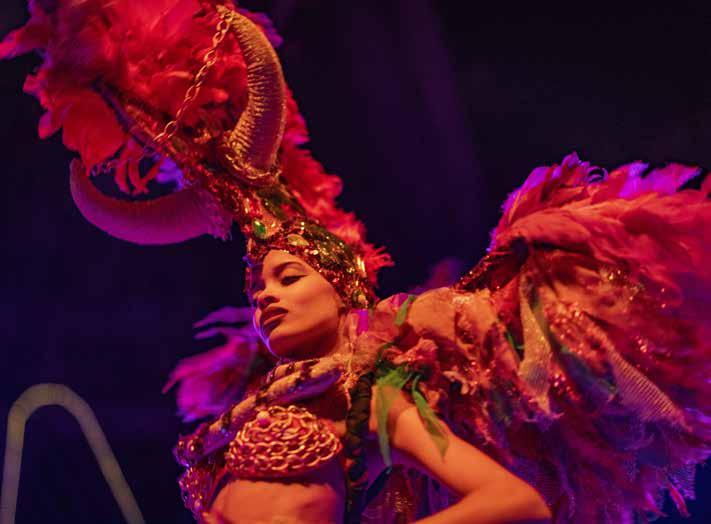
With time running out, we headed back to Havana, where we were invited to attend a performance of the famous Tropicana Cabaret. With a cast of more than two hundred dancers, singers, and other performers, the historic show dates back to the late 1930s. The colorful costumes and exuberant Afro-Cuban dancing made for an evening of sensory overload.
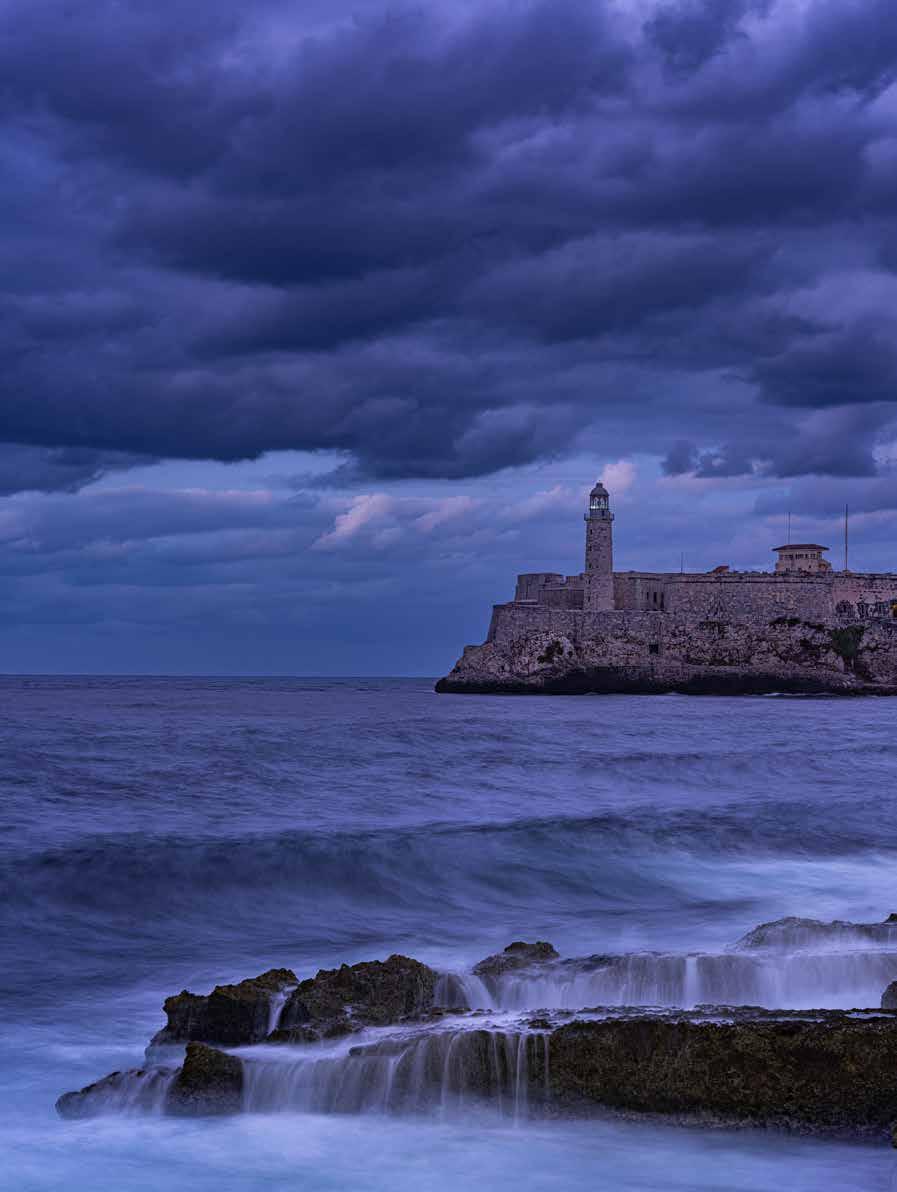
On our last evening in Havana, I took one last walk along the Malecón, an eightkilometer stretch of road with a seawall on one side and beautiful old decaying buildings on the other. In any other city in the world, this would be prime real estate with unimaginable prices.
As dusk approached, I set up my tripod to make a photograph of the sea and the distant lighthouse, Faro del Castillo de los Tres Reyes del Morro. Storm clouds were coming and the sea was churning. And while I like to see myself as an optimist, I couldn’t help but feel a sense of foreboding about the future that this image may represent.
Dancers at Tropicana nightclub in Havana 哈瓦那Tropicana
PERFECTLY IMPERFECT
In the face of daunting limitations, an island nation combines day-to-day pragmatism with a tenacious spirit of cultural pride.
BY MAMIE CHEN
• PHOTOGRAPHY BY DAVID HARTUNG
NADA ES PERFECTO. NOTHING IS PERFECT.
Clandestina, a Havana-based designer collective and sustainable fashion brand, offers two versions of its popular graphic design. The subtle version whispers the catchphrase in a diminutive, broken font. Pausing to scrutinize it closely, I can’t help but wonder if it has been printed slightly – imperfectly – askew.
In the bolder version, the same catchphrase is enthusiastically repeated three times in all caps and emblazoned in cheerful neon yellow across a stark black background. The implied completion of thought, “and that’s okay,” is left unprinted but is manifestly understood by all.
Which is the correct takeaway from nada es perfecto, the pragmatic or the upbeat? Either, depending on the context.
Inspired both by the intensity of life in Cuba, with all its inevitable tribulations, and by the plucky resolver spirit continually exhibited by the Cuban people in the face of adversity, Idania del Río and Leire Fernandez cofounded Clandestina to explore and promote social dialogue about what it means to be Cuban.
Another graphic, Actually, I’m in Havana, was originally conceived during the brief period of growing optimism and economic improvement the country experienced after Barack Obama and Raúl Castro announced the restoration of diplomatic relations between the US and Cuba. Amid an unprecedented tourism boom, the tagline was a celebration of Havana being the place to be.
Ten years on, the Cuban economy has collapsed and the outlook is grim. The interpretation of the same slogan – still a bestseller for Clandestina – is now dramatically different. For the many who have emigrated, it is a wistful state of mind that no matter where they are physically, they will always be in Havana. For those who remain, it is a staunch statement of resilience.
WWE ARRIVE IN THE MORNING at Havana’s José Martí International Airport, bleary-eyed from a travel itinerary that included a red-eye flight, a mad scramble in Miami, and an interminably long wait in the baggage claim area. Our airport transfer driver tells us to wait for him by the curb and to look for a tan American car, but it doesn’t register until a beautiful vintage car, cream-colored and buffed to a shine, pulls to a stop in front of us. In our exhaustion, we’d forgotten about the abundance of 1950s classic American cars that have become an iconic symbol of Cuba.
As we drive the twenty kilometers into Havana, our driver, Osmani Clausell, a classic car enthusiast, can’t resist pointing out the other vintage cars on the road: a cherry red 1950 Oldsmobile Rocket 88, a bright pink 1955 DeSoto, a turquoise 1959 Mercury Park Lane. Some are in better condition than others, and when we pass a particularly well-restored car, the drivers exchange appreciative nods.
Like many other owners, Clausell personally repaired and restored his 1948 Chevrolet. The exterior paint job is pristine and the leather upholstery is impeccable. It’s not original, we’re told. Neither is the air-conditioning system, nor even the engine, which we are surprised to learn is Japanese because it’s easier to source parts for.
We come to understand that the vintage cars, both the gleaming and those roughly patched together, have become a part of the
nation’s cultural identity, not just for their aesthetic and nostalgic appeal, but because they symbolize Cuban ingenuity and resourcefulness. They also play a vital role in the tourism industry.
The ’48 Chevy is Clausell’s pride and joy as well as his means of livelihood. The average monthly salary for a state worker is around $16 US . Even when factoring in free health care, free education, subsidized rations, and little-to-no rent, many are struggling to afford basic necessities on their government salary alone. By comparison, Clausell will earn $35 plus tip for our oneway transfer. This is a story we will hear repeated over and over by people who have put their energy and creativity into solving problems and creating better lives for themselves.
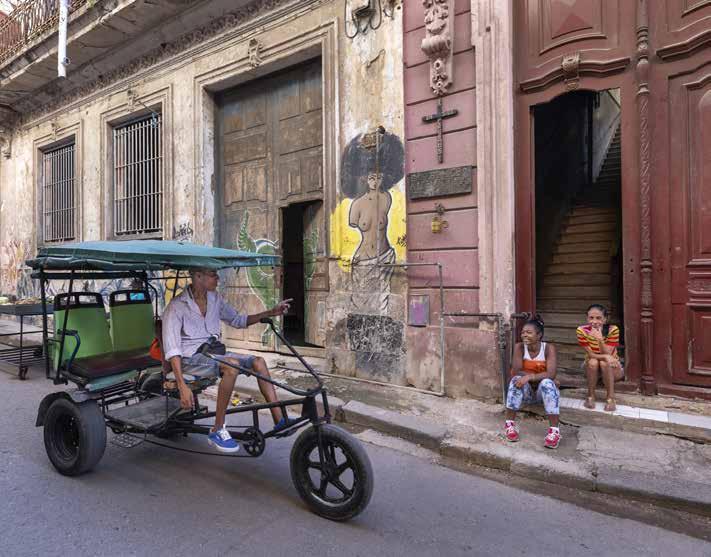
Adrian, a bicitaxi (bicycle taxi) driver, tells us he had studied accounting and, upon graduation, he was asked to stay on to teach his former schoolmates because of a staffing shortage. Teachers have been leaving their jobs, preferring to work as waitresses at paladares (private restaurants) and as hotel cleaning staff at casas particulares (private guesthouses) because pay in the private sector is so much better.
While waiting for his next fare, a bicycle taxi driver chats with neighbors in Habana Vieja.
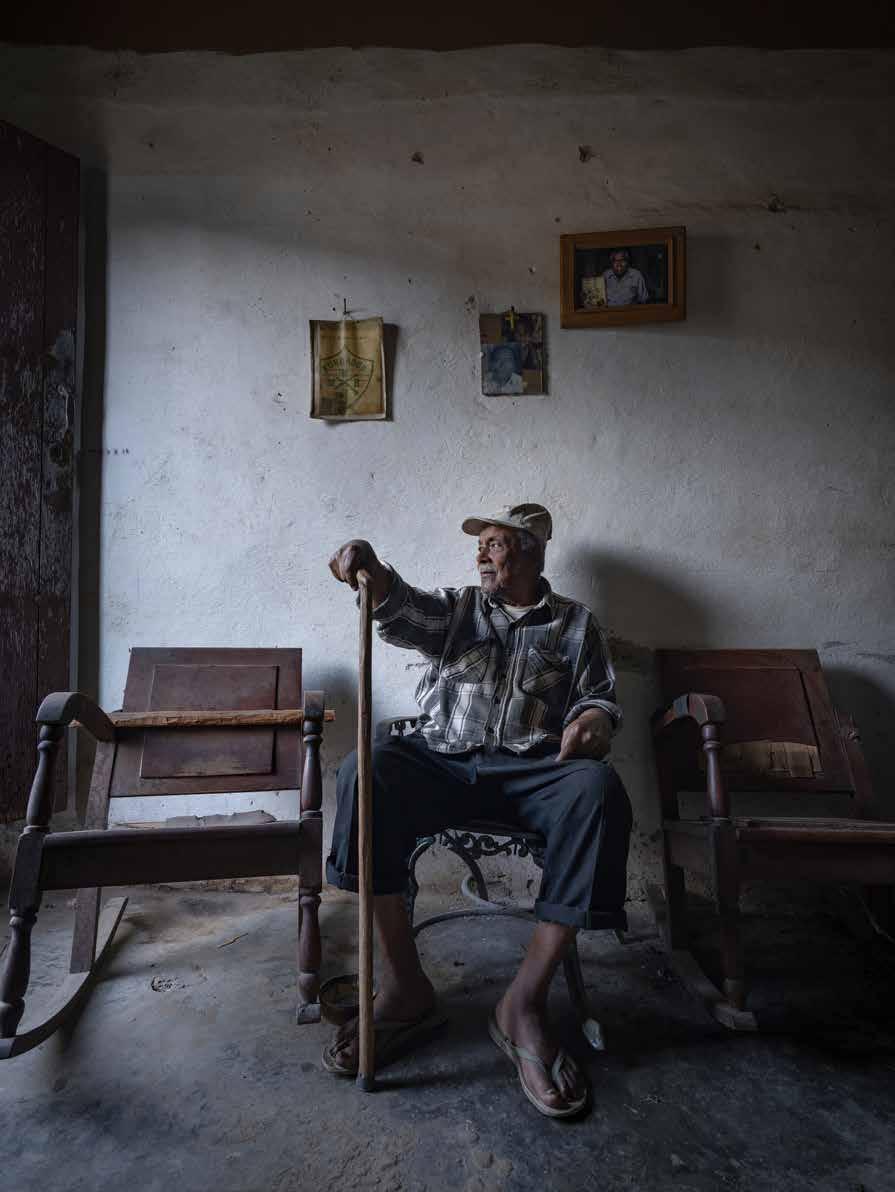
Florencio Marin Naranjo, who fought with Fidel Castro’s rebel army in the Sierra Maestra mountains, now lives in Trinidad, a UNESCO-listed colonial town on Cuba’s south coast.
Adrian himself left his teaching post once he had improved his English skills enough to work in tourism. At the height of American tourism to Cuba during the Obama years, he owned two bicitaxis and even when business was slow, was making at least $30 to $40 per day. As an accountant or a teacher on a government salary, he would have made less than $20 per month.
With tourism currently down, the situation is harder for people like Adrian, but US dollars give them the flexibility to shop in specialty stores to buy necessary food and household items to supplement their government-subsidized rations.
Cuba still operates a food rationing system under which every household is issued a Libreta de Abastecimiento booklet that is used to record purchases of subsidized supplies at local bodegas and butcher shops. During the 1960s through the 1980s, nearly every product that people needed – from food and household necessities to clothing and toys to gasoline and even cigarettes – was included in the rations.
When Cuba entered the “Special Period” of economic crisis after the collapse of the Soviet Union, the government was forced to dramatically reduce the number of products distributed through the rationing system. Today, the rations are down to a handful of such basic products as rice, beans, and cooking oil, and government officials have indicated their intention to put an end to the entire system.
“Everybody knows when the Special Period started in the early 1990s,” says Enrique Núñez, owner of the famous paladar La Guarida. “But when was that period finished? It depends. Some people finished early. Others later. And some people are still in it.”
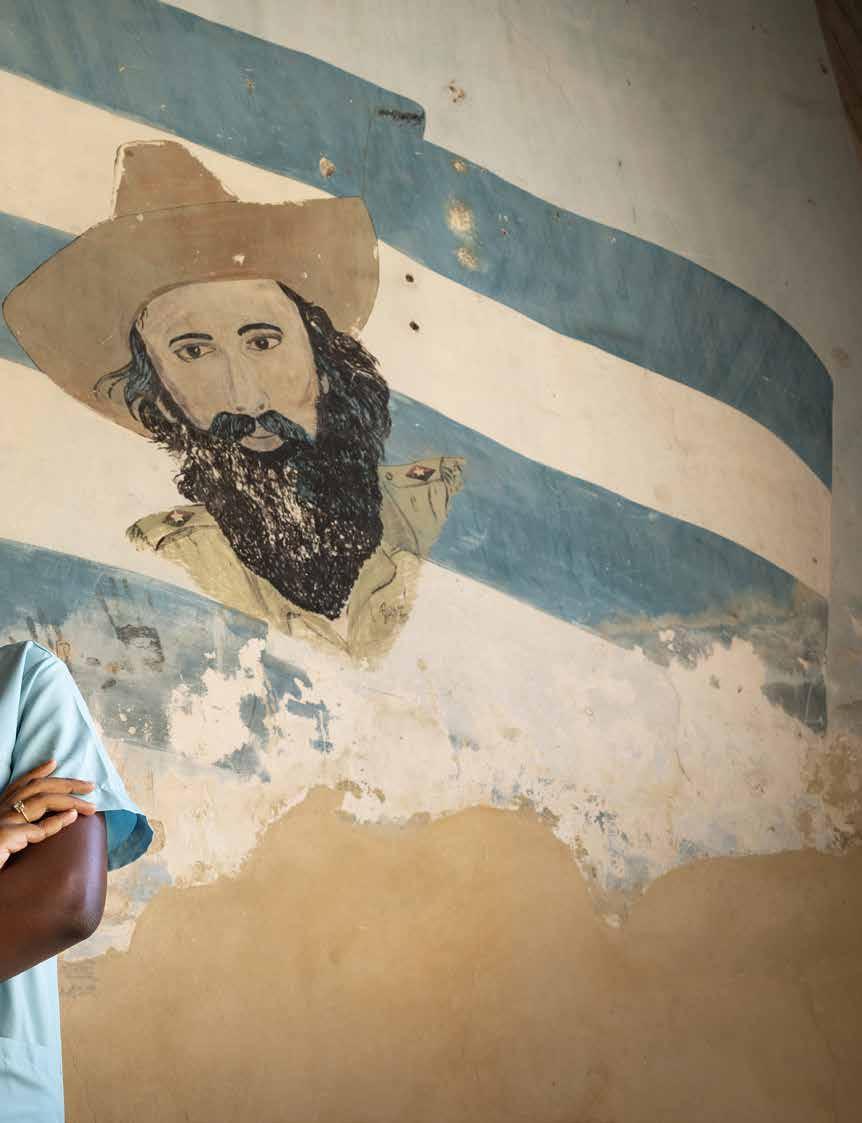
Hannah Knight stands before a mural of Camilo Cienfuegos, a key figure in the Cuban Revolution.
Hannah Knight
Camilo Cienfuegos
HANNAH KENYA ALAYO KNIGHT
MEDICAL STUDENT AND PROFESSIONAL MODEL 医学生兼职业模特
woman of many talents, Hannah at age eight auditioned for and was accepted into an art school to learn violin and piano. But her mother, a doctor, withdrew her after four years when she found the program lacking in academic rigor. A decade later, Hannah, upholding the family tradition of studying medicine, was lauded as the top student in her class.
“I’m in Havana because I won a national scholarship to study at a hospital here. They select the best medical student from every province to come, and I was that student from Guantanamo.
“I was also attending classes at a modeling school in Havana. I just graduated in August of this year, so now I am a professional model with a license. It’s nice to earn money so I don’t have ask my mom for it.
“Because I haven’t graduated yet, I’m not making money as a doctor. But if I dedicated my life to being a model, I’d make much more than I would as a doctor. Many of my friends in Guantanamo who graduated as doctors have left their jobs and are now working as waiters in bars because the particular (private sector) gives you more money than the state.
“I like the doctor career and I like the modeling career, so I’ll try to continue doing both.”
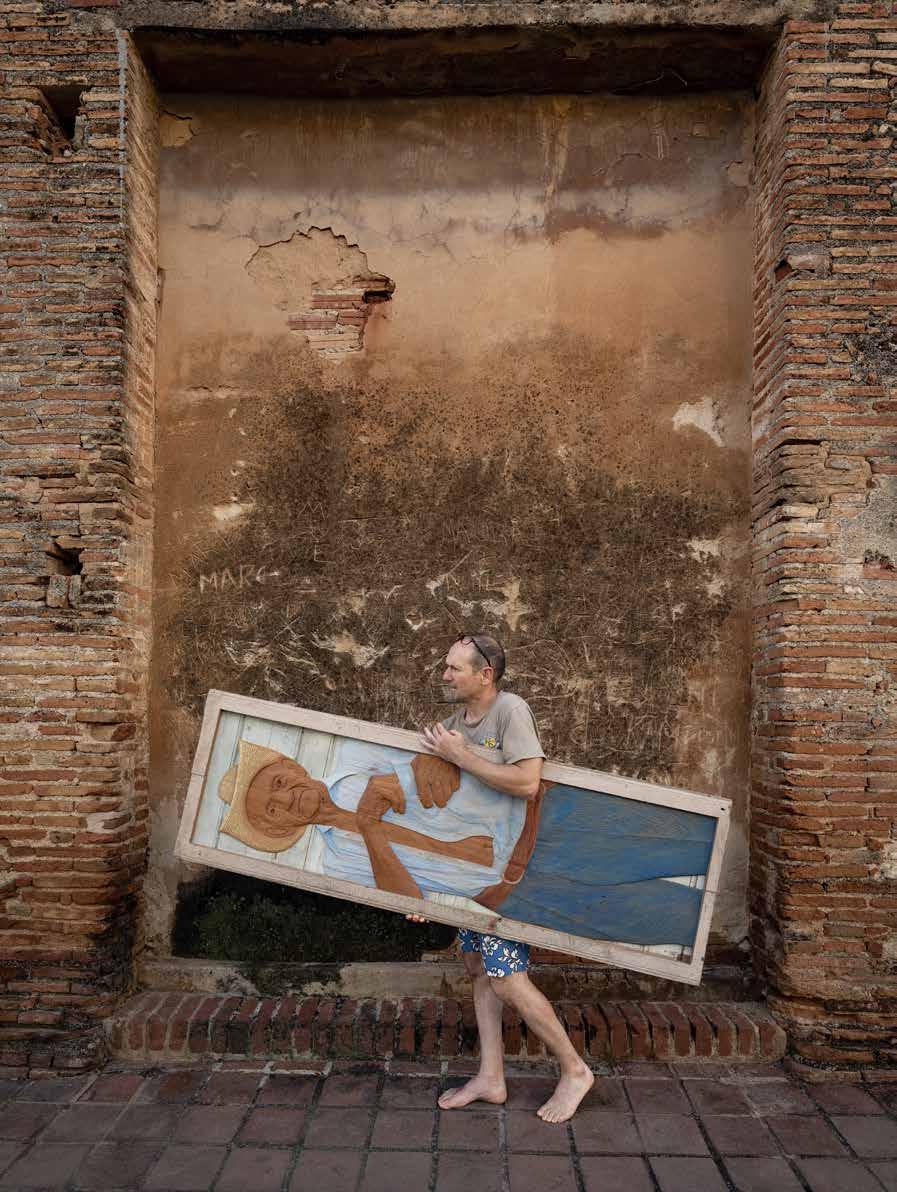
’ve been working for more than twenty years as a sculptor. I use recycled cedar wood from old doors and windows – you know, in Cuba, we recycle everything just out of necessity.
“When I was a student at the art school in Trinidad, it was impossible to get traditional artists’ materials. So we worked with whatever was available. I even made my own tools.
“Using polychrome bas-relief techniques, I hand-carve portraits from the old wood. I principally work with peasant farmers and fishermen, and almost always abuelos (grandparents), because they’re the foundation of every family.
“They work hard under the boiling sun, working the land – this is Cuba. You can see it reflected in their sun-weathered faces.”
BODY PAINTER AND FRONT-OF-HOUSE RESTAURANT STAFF 人体彩绘师兼餐厅前台工作人员
laudia lights a cigar and takes a couple of deep puffs before tapping off the ash and mixing it with coffee grounds and fake blood. She brushes the resulting mixture onto the center eye painted on the chest of Harold, her subject.
“I studied to be a preschool teacher, but I wasn’t making enough money. That’s why I left my job. I’m working at Salchipizza now.
“One day, I felt inspired to mix paints in my room and began painting. I told my mother I was going to paint, and she was surprised and asked if I was sure. I started painting on my own body and shared it on social media. That’s how it started.
“I paint with the spirits, and my art is based on the Yoruba religion [of West Africa] and Santería, which is the Afro-Caribbean religion of Cuba.”
Claudia 点燃一支雪茄,深吸几口后,将烟灰弹掉,与咖 啡渣和假血混合在一起。然后,她将这种混合物刷到模特 Harold 胸口画着的「主眼」上。
studied carpentry and worked as an assistant carpenter and assistant blacksmith. But then I went to work at a hotel, because I wanted to see what else I could do. I learned to work with electricity, plaster, and everything else and became like a handyman who could do anything.
“One day, I was approached by a woman from Switzerland who asked me if I needed money and if I would dance for her and some of her friends. I said yes, I’ve never done it before but I could try.
“That first time, I was very shy, so I drank a lot of rum and I just let it go!”
“This whole painting shows the struggle of every African spirit that represents us and guides our lives to follow the right path,” says Claudia Bacallao González. “We open our eyes, and we close our eyes. The spirits sense the change and transform the energy, turning the bad into good.”
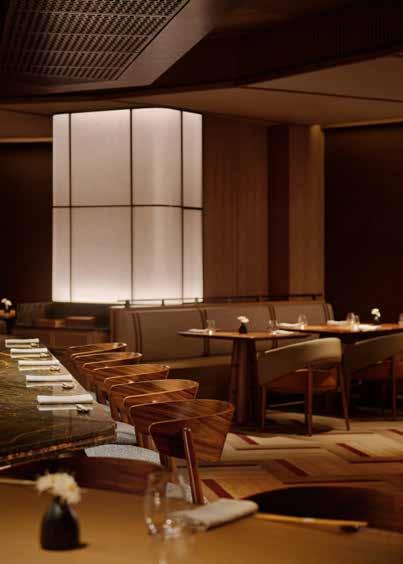
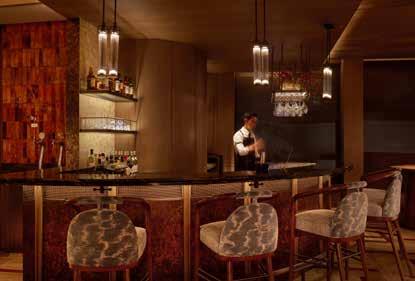
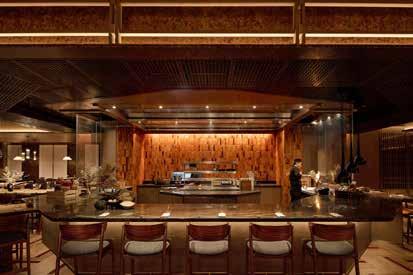
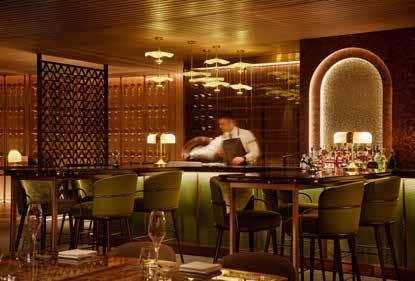
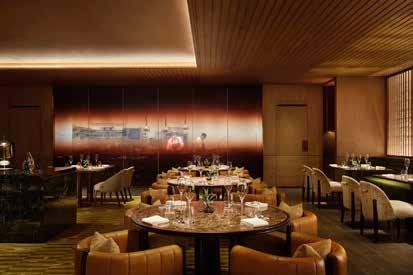
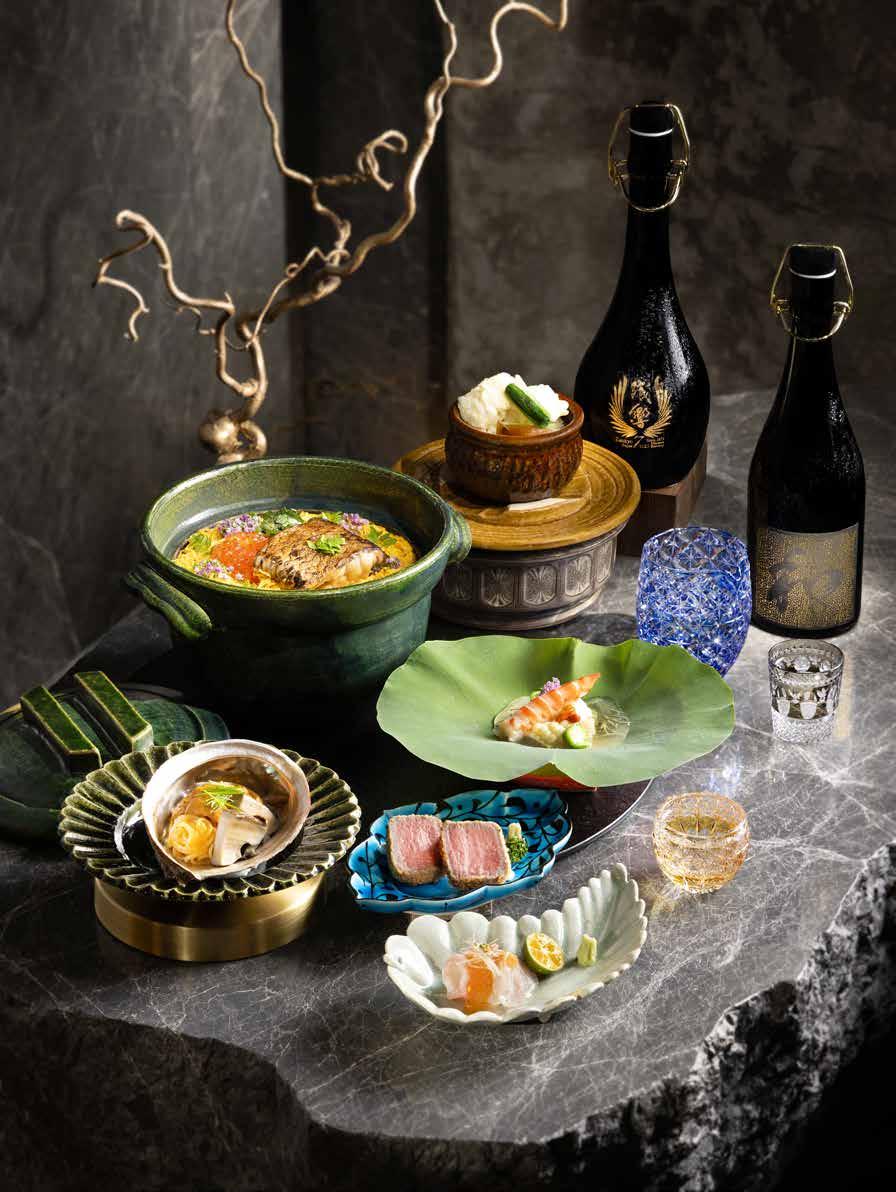
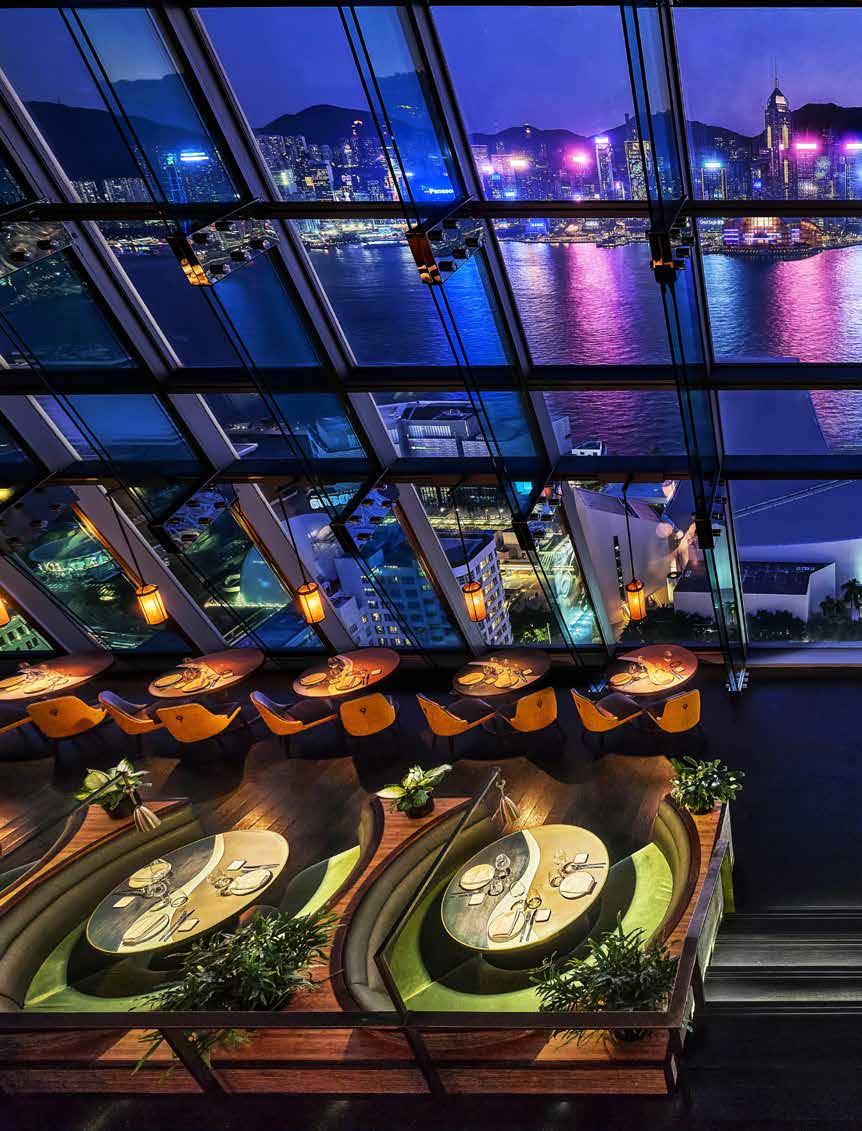
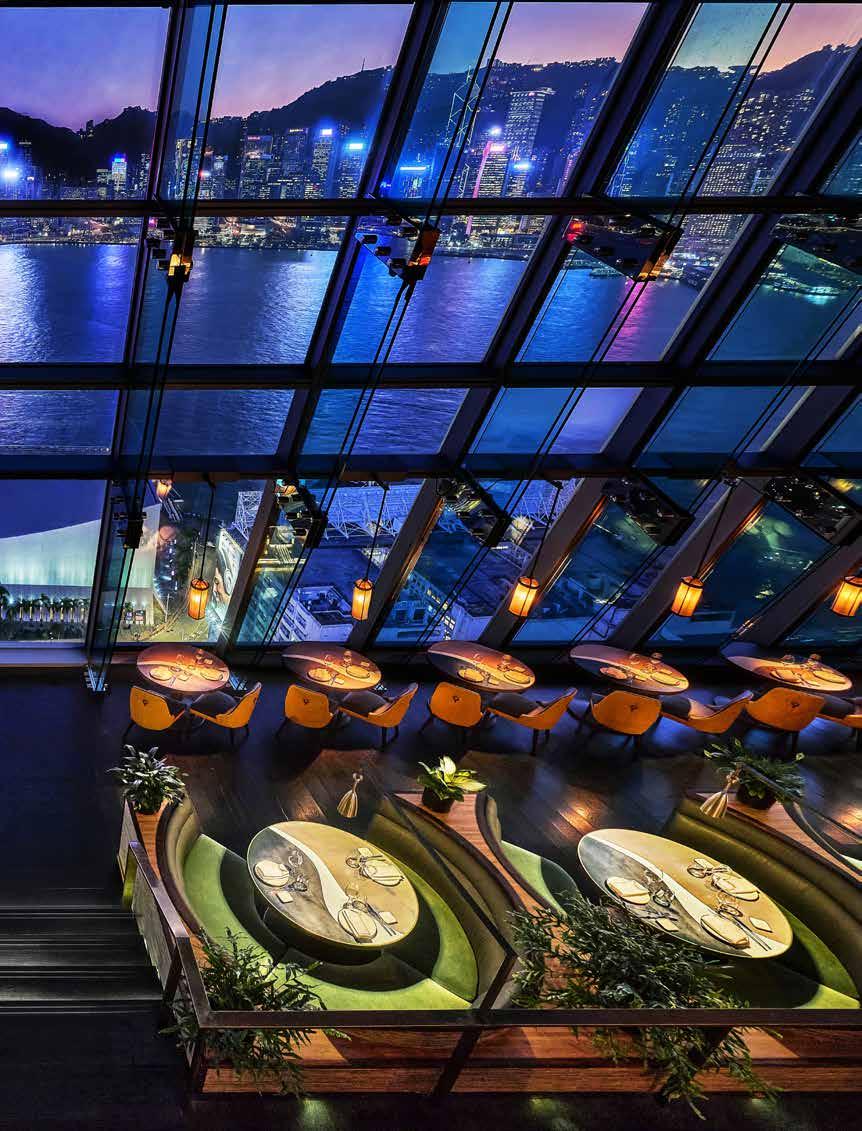
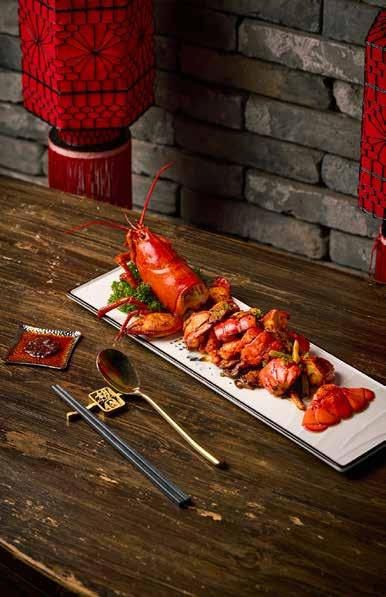
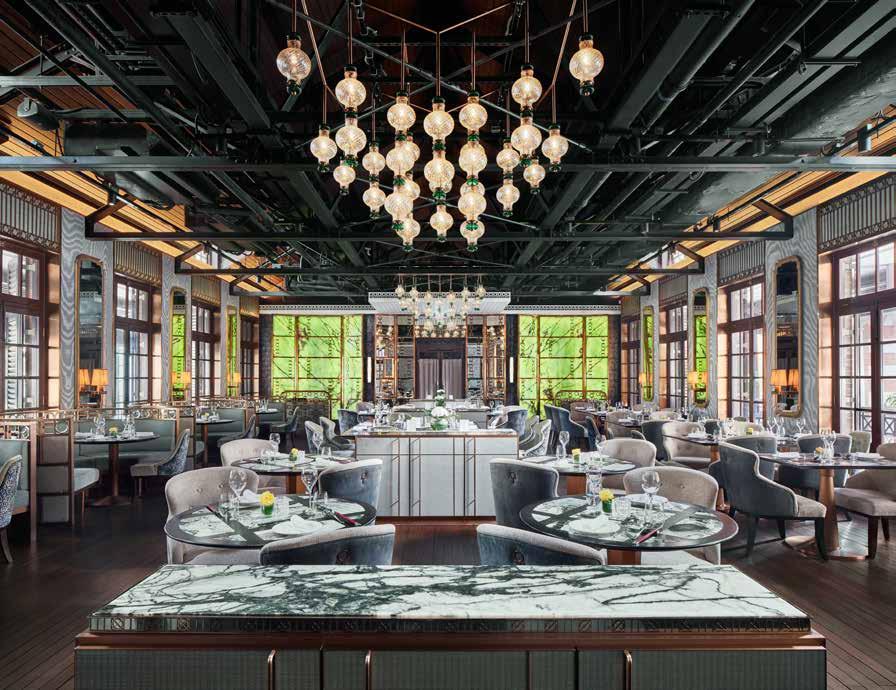
Grand Lisboa Palace Resort Macau brings together four celebrated restaurants from across the globe—kappo from Japan, coastal Italian, contemporary Portuguese, and refined Cantonese. § At Zuicho, Yoshinori Kinomoto has spent three decades perfecting his interpretation of kappo cuisine, where kaiseki's seasonal precision meets the immediacy of Edomae sushi at an open counter. §
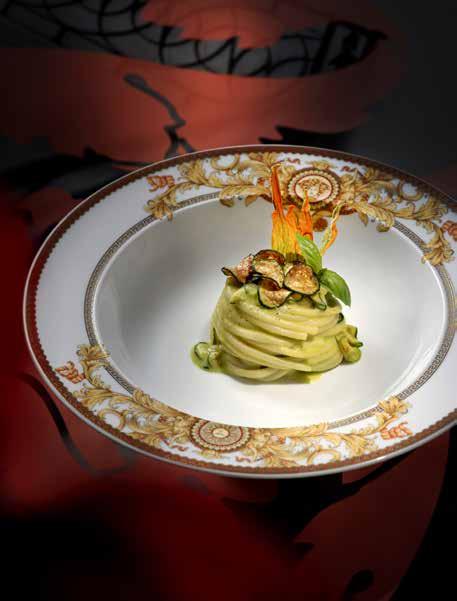
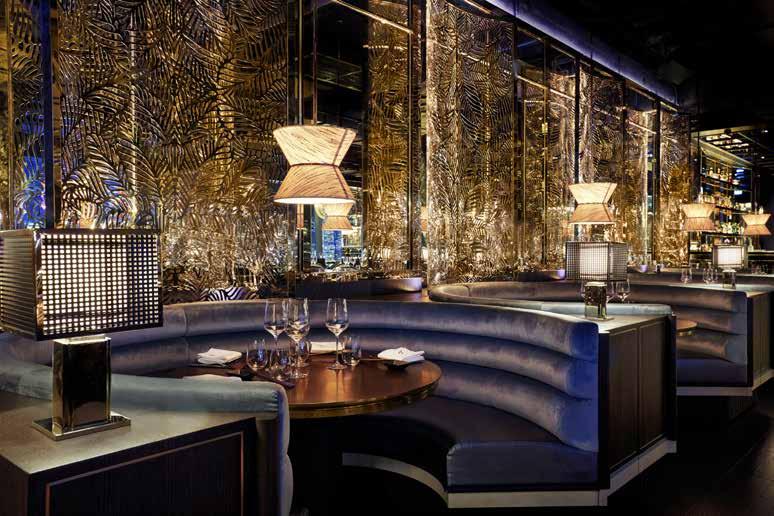
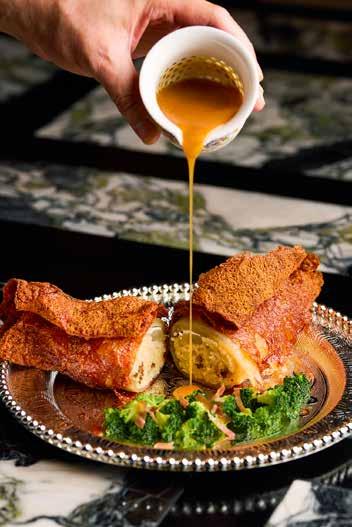
Don Alfonso 1890 carries the Iaccarino family's southern Italian traditions from the Amalfi Coast to Asia, serving handmade pastas and fresh seafood in a Versace-appointed dining room. § José Avillez makes visits three times a year to Mesa by José Avillez, where he works with Head Chef Herlander Fernandes to update his take on contemporary Portuguese cooking, designed for sharing in Karl Lagerfeld's architectural space. § Palace Garden pairs classic Cantonese preparations with carefully selected Chinese teas, applying sommelier principles to centuries-old recipes.
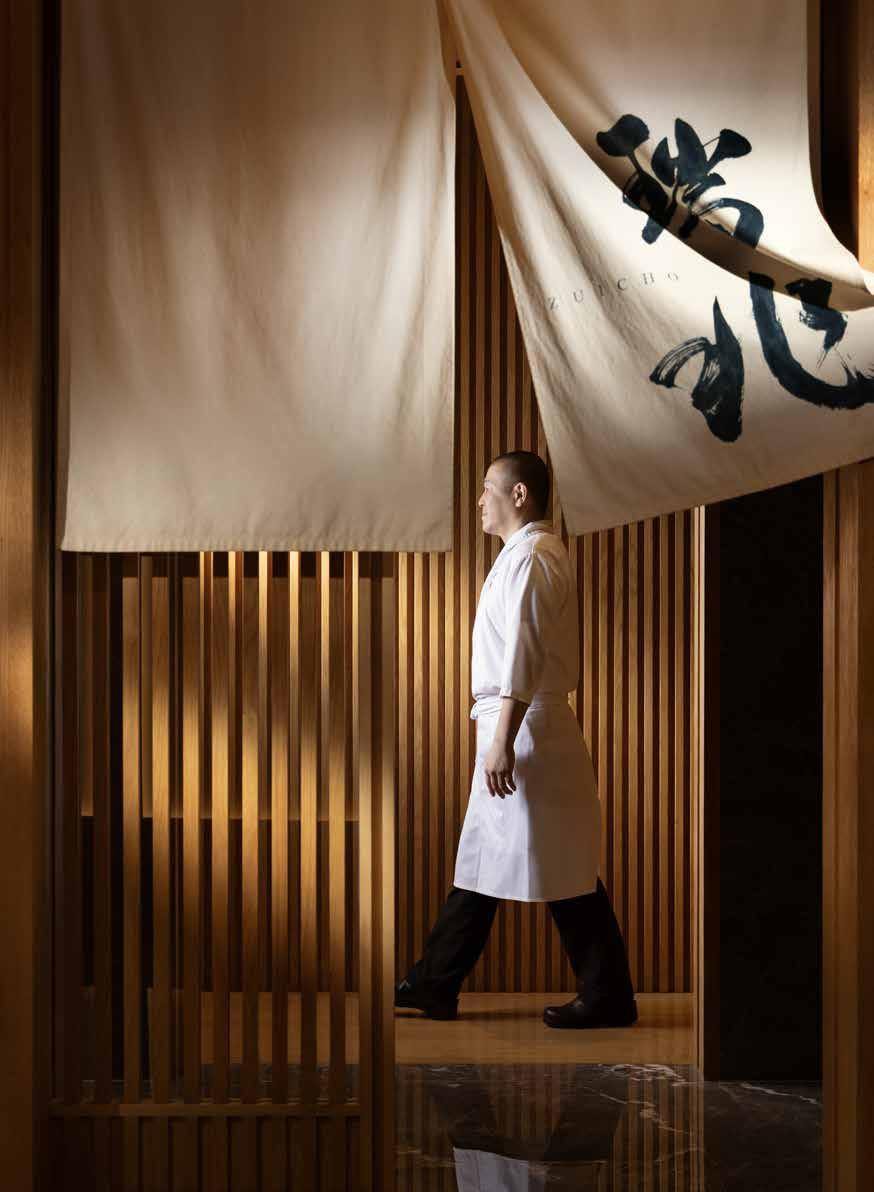
At Zuicho, Chef Yoshinori Kinomoto draws on experience, imagination, and insight to offer a fresh take on one of Japan’s most appealing dining styles.
在瑞兆,总厨纪之本义则以丰富经验、非凡想象与深刻洞察, 为日本割烹餐饮赋予全新演绎。
“DON’T YOU THINK kappo represents the pinnacle of both kaiseki cuisine and Edomae sushi?” asks Head Chef Yoshinori Kinomoto of Zuicho. No one, of course, knows the answer better than the Osaka native himself, who recently secured one-Michelin-star status for Grand Lisboa Palace Resort Macau’s elegant Japanese fine-dining restaurant.
With three decades of experience in the culinary world, built on an apprenticeship under the guidance of his renowned mentor, Fujio Moriguchi, Chef Kinomoto has maintained laser focus on continually refining his skills at the highest level of kappo cuisine and developing deep insights into it.
“The foundation of Japanese cuisine,” he notes, “is kaiseki. It has a set order of dishes, features more vegetables than meat, and uses a limited selection of ingredients. And guests cannot see the chef hidden away in the kitchen. On the other hand, the essence of Edomae sushi lies in its vinegared rice, or shari, and in welcoming guests to interact closely with the chef at the sushi bar.”
In his view, kappo cuisine draws on and surpasses both of these culinary approaches. Its open kitchen and bar are visually inviting to guests, and its unrestricted cooking methods and diverse range of ingredients create an array of flavors and textures that meet modern diners’ expectations for an elevated, multisensory experience.
While stressing that the unchanging core of kappo cuisine remains its sense of seasonality and its convivial hospitality, Kinomoto points out that current issues – such as the ocean crisis, climate change, and advancements in food technology – have compelled it to evolve with the times. “In the past, basic dashi ingredients like kombu and bonito flakes were readily available,” he says, “but now their quantities are dwindling. Chefs must prioritize sustainability and learn to borrow cooking techniques from other cuisines to break free from external constraints and avoid stagnation.”
He cites the restaurant’s signature A5 Black Wagyu Beef Tenderloin Cutlet as a case in point. The French sous vide method is used to retain the meat’s juiciness, creating a tantalizing contrast with the crispy breadcrumb coating. With the aim of continually surprising guests, Kinomoto has also
experimented with less commonly used varieties of fish, such as Japanese horse mackerel and Pacific saury. “And different fish preservation methods,” he says, “can delightfully alter the taste.”
Kinomoto’s embrace of change and his dedication to constant refinement are undoubtedly key factors behind the restaurant’s achievement of a Michelin star, but another certainly must be his skill and finesse with seafood. During the peak of summer, the restaurant’s omakase, or “chef’s choice,” menu features seasonal Japanese pike conger, also known as hamo, and blackthroat seaperch, or nodoguro. The pike conger is transformed into a seasonal hot pot, with the fish fried as tempura and the bones simmered with onions and dashi to create a delectable broth. “The secret,” he says, “is in the subtle aroma of toasted rice, a characteristic fragrance of traditional dashi.”
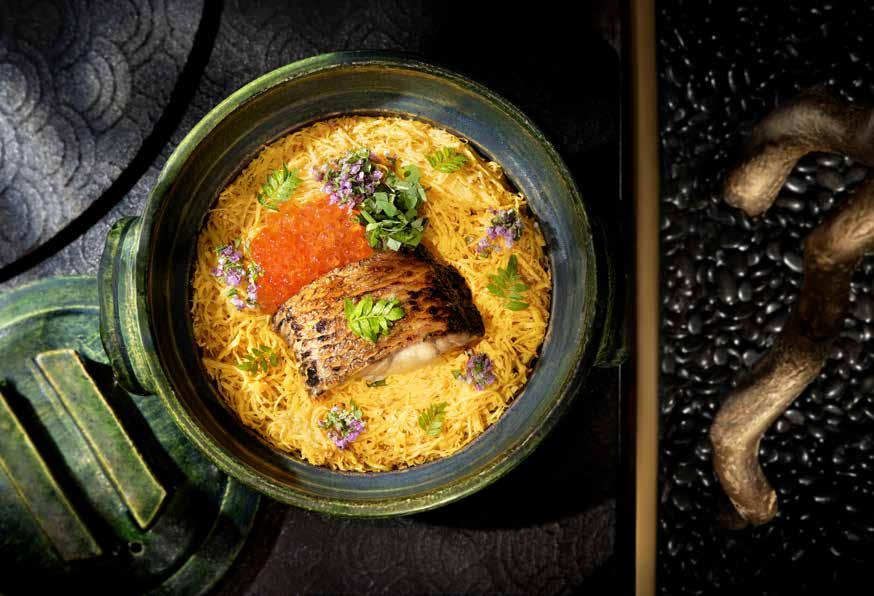
Rosefish is prepared as a steamed rice dish that allows guests to appreciate how every part of the seafood is used. The fatty fish is grilled over charcoal, while the head and bones are used to make a fish stock for steaming the rice. Served with perilla leaves and salmon roe, it makes a satisfying but not heavy meal.
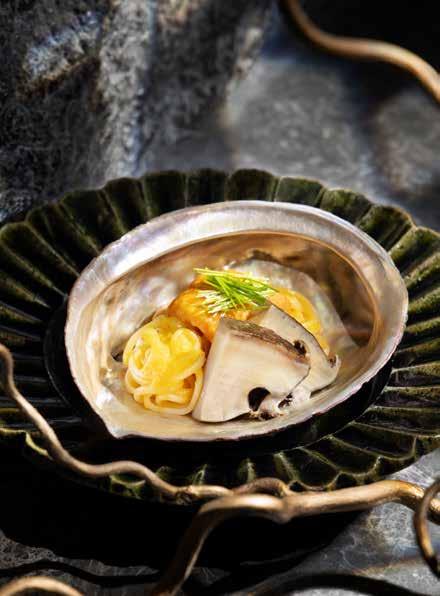
The dish that perhaps lingers longest in guests’ memories is the chef’s seasonal appetizer, Abalone and Sea Urchin Somen Noodles. A luxurious combination of creamy Hokkaido uni, steamed black abalone in dashi, and silky hand-pulled noodles, it concentrates the ocean’s complex aromatic essence in a single bowl.
Much about Kinomoto’s world of kappo remains ineffable. It is only when seated before the open counter that one can fully appreciate his respect for the seasons, his dedication to ingredients, his creative inspiration that transcends tradition.
“Chefs must prioritize sustainability and learn to borrow cooking techniques from other cuisines to break free from external constraints and avoid stagnation.
主厨们要讲究永续,
甚至借鉴其他菜系的烹调手法,
突破外在环境的桎梏, 不能故步自封。”
CHEF YOSHINORI KINOMOTO
纪之本义则
总厨纪之本义则
Yoshinori Kinomoto, Head Chef
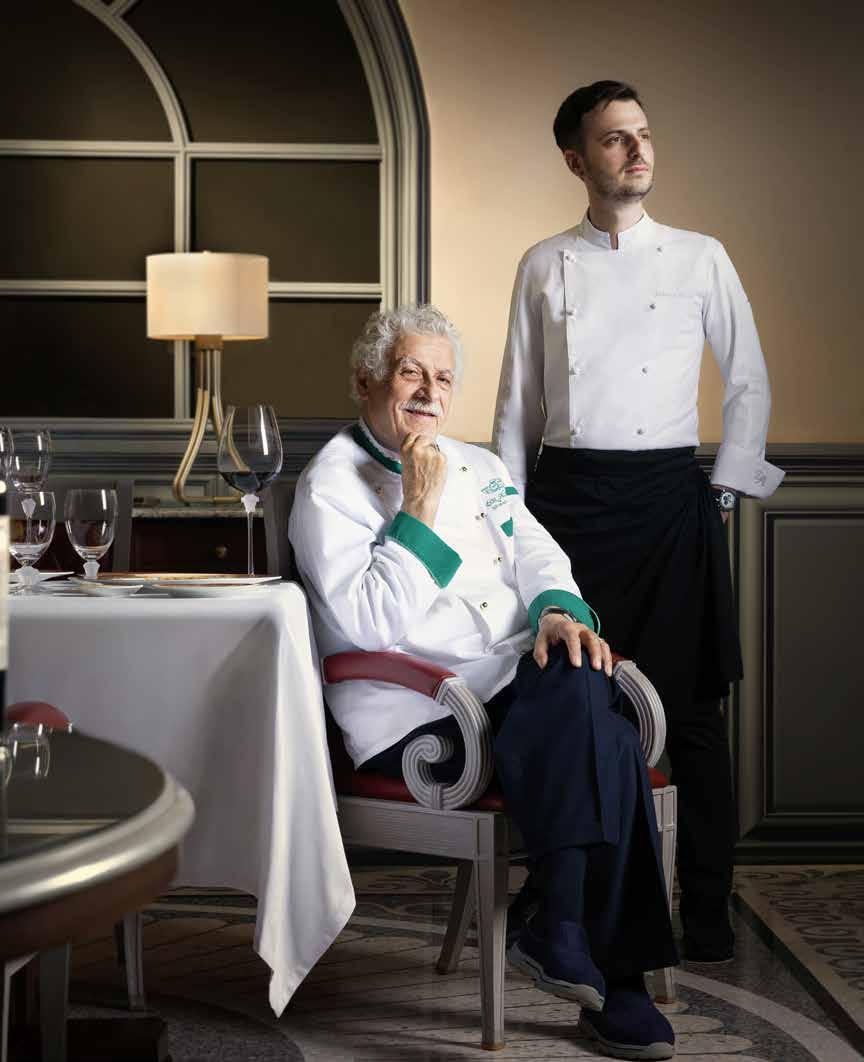
Left: Chef Alfonso Iaccarino
Right: Chef Federico Pucci
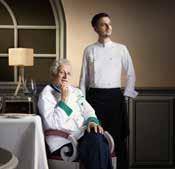
南意「澳」妙 薪火相传 CRAFTING A CULINARY LEGACY
For nearly two decades, Chef Alfonso Iaccarino has brought the soul of Southern Italy to Macau, and today, Don Alfonso 1890 continues to celebrate his timeless classics and dedication to culinary excellence. 近二十年来,主厨Alfonso Iaccarino将南意大利的灵魂带到澳门。
如今,当奥丰素1890继续弘扬他的永恒经典及匠心厨艺。
WHEN CHEF ALFONSO IACCARINO first arrived in Macau in 2007 to open Don Alfonso 1890 (renamed Casa Don Alfonso in 2017) at Grand Lisboa Macau, he faced a culinary landscape vastly different from today’s. “It was impossible to get quality Italian ingredients in Macau,” he recalls with a smile. “I can remember hand-carrying white truffles from Italy.” Nearly two decades later, this pioneering chef’s partnership with SJM Resorts, S.A., has not only transformed Macau’s dining scene but also established Southern Italian cuisine as a cornerstone of fine dining across Asia.
What began with a single restaurant has now evolved into two distinctive dining venues: the casually elegant Casa Don Alfonso at Grand Lisboa Macau and the fine-dining Don Alfonso 1890 at Grand Lisboa Palace Resort Macau, honored with a Five-Star rating by Forbes Travel Guide. Together, these restaurants showcase Iaccarino’s dedication to sharing his family’s culinary traditions with a modern audience.
Today, on his fifty-fifth visit to Macau, Chef Iaccarino is delighted to present a celebratory menu at Don Alfonso 1890 that features refined interpretations of his signature dishes. While paying homage to his family’s centuries-old recipes, the menu also embraces modern techniques and locally sourced ingredients.
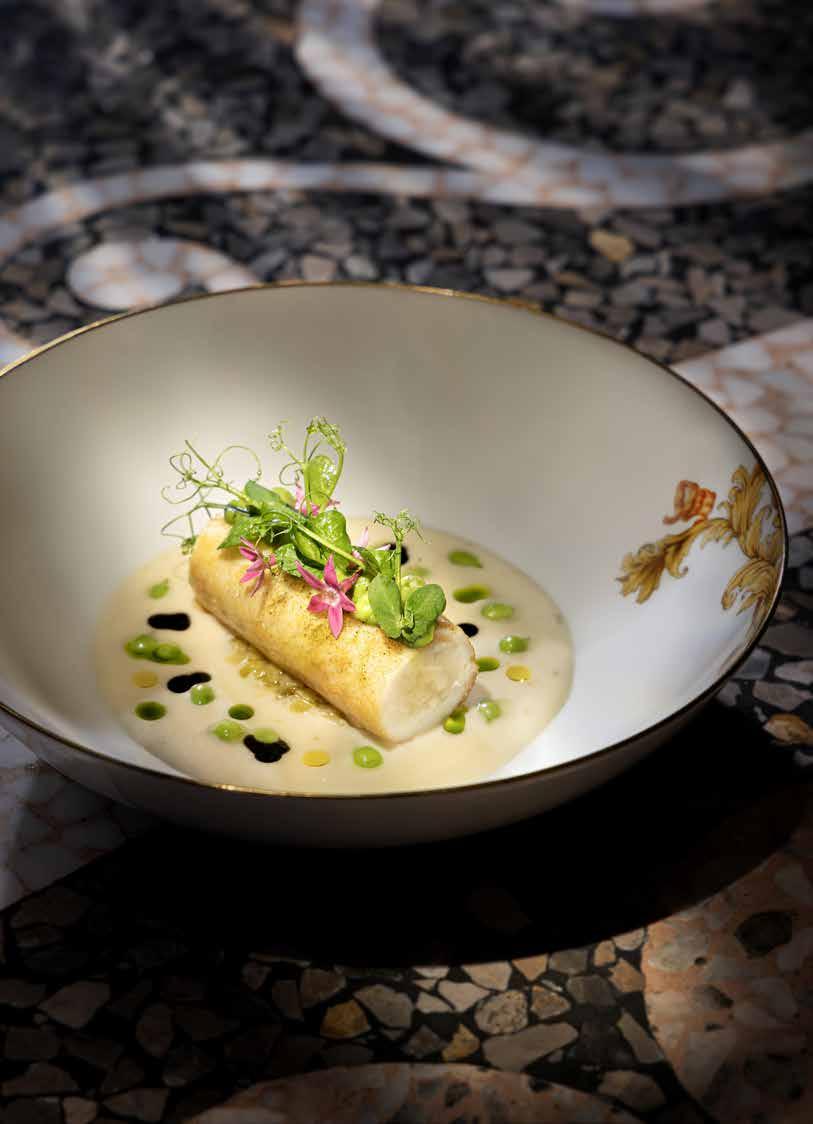
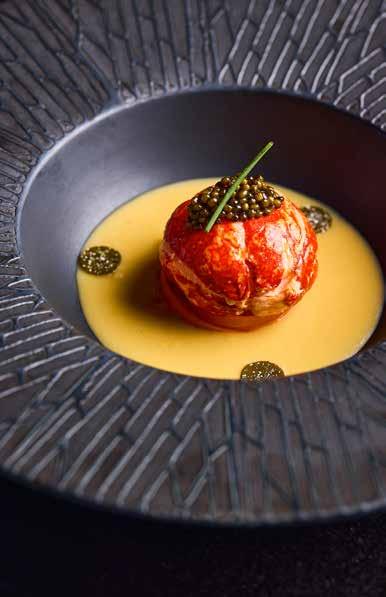
Highlights include his Wild Turbot with Roasted Leek, Honey Bean and Buffalo Mozzarella, a dish that balances delicate flavors with bold textures. Another standout, Brittany Blue Lobster with Artichoke, perfectly complements the lobster’s sweetness with the delicate flavor of artichoke.
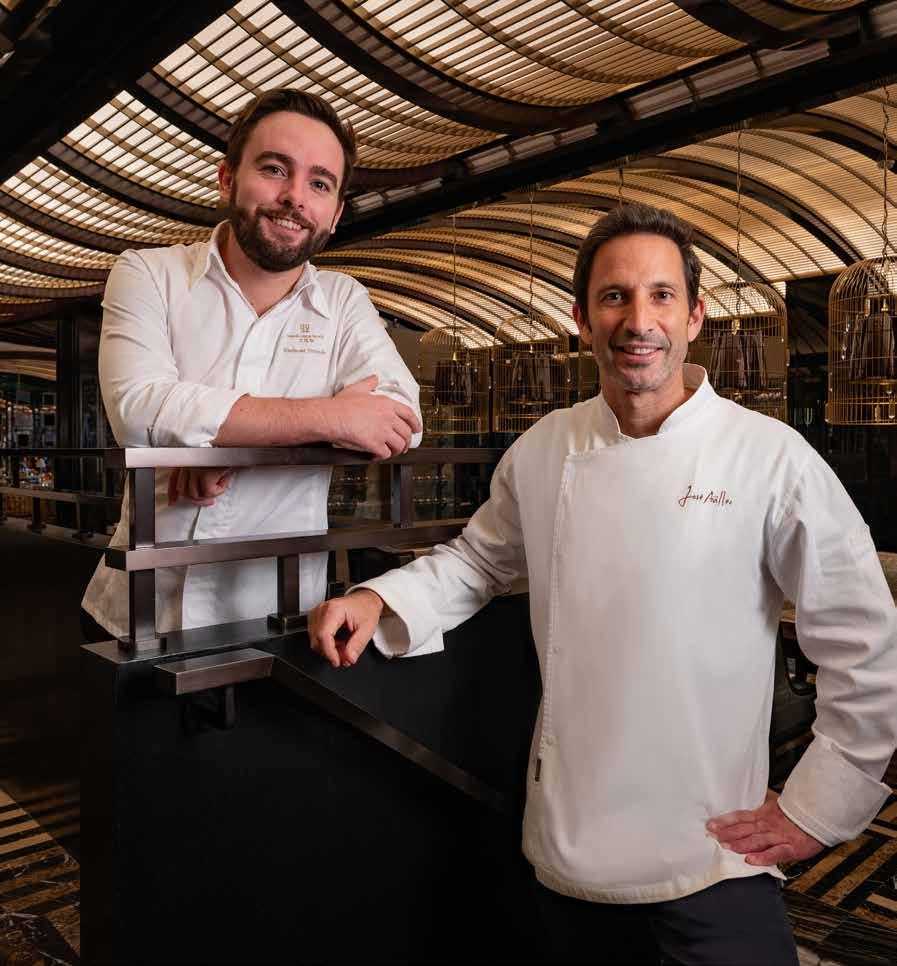
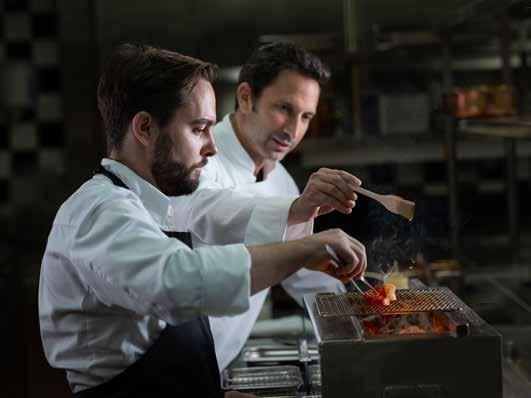
For Chef Iaccarino, his work involves not only creating exceptional cuisine but also ensuring that his legacy lives on through the next generation. This approach is embodied at Don Alfonso 1890 at Grand Lisboa Palace Resort Macau by Head Chef Federico Pucci, who has worked closely with Iaccarino to master the art of Southern Italian cooking. “To mentor someone, you must teach them not just recipes but the values behind the cuisine,” Iaccarino explains. “It’s about understanding the ingredients, respecting tradition, and always striving for excellence.”
对 Alfonso 而言,他的使命不仅是创 造卓越的美食,更在于透过下一代延续这 份传承。这个理念在当奥丰素 1890 的总 厨 Federico Pucci 身上得到了体现,他与 Alfonso 密切合作,掌握了南意烹饪艺术的精
“As long as a dish has soul, it will resonate across cultures.
只要一道菜有灵魂,就能跨越文化产生共鸣。”
CHEF ALFONSO IACCARINO
Pucci’s role is a testament to this philosophy. By reinterpreting Iaccarino’s iconic dishes, he ensures that Don Alfonso 1890 remains rooted in tradition while appealing to a modern audience. The deep collaboration between the two chefs is expressed in Pucci’s faithful execution of the classics and his thoughtful use of the finest seasonal ingredients.
The menu at Don Alfonso 1890 is a natural extension of the Iaccarino family’s pioneering commitment to sustainability. Long before “farm-to-table” became a global trend, Chef Iaccarino and his wife Livia established Le Peracciole, a nine-hectare organic farm on Italy’s southern coast. The farm produces honey, olive oil, and rare heirloom vegetables, all cultivated using time-honored, sustainable practices.
This pioneering spirit lives on at Don Alfonso 1890 at Grand Lisboa Palace, where products from the farm are imported directly to Macau, ensuring authenticity in every dish. “These are not just ingredients,” says Iaccarino. “They’re the foundation of everything we do.”
Pucci and the culinary team embrace this sustainable ethos, treating each ingredient with the reverence it deserves.
Iaccarino believes that Don Alfonso 1890’s embrace in Macau stems partly from fundamental similarities between Chinese and Italian food cultures. “The noodles and pasta, ravioli and dumplings, plentiful green vegetables – and a love of soup,” he observes. Equally important are shared dining traditions, the centrality of family meals, and respect for culinary heritage.
“As long as a dish has soul, it will resonate across cultures,” says Iaccarino. “And what we strive for at Don Alfonso 1890 at Grand Lisboa Palace Resort Macau is to create food that connects people, no matter where they’re from.” This outlook has guided his nearly two-decade partnership with SJM, during which he has built a Southern Italian culinary dynasty in Asia.
As he reflects on his long presence in Macau, he views the restaurant as something more – an ongoing legacy. “What we do here is not just about food,” he says. “It’s about sharing a piece of our culture, our history, and our family.”
With Chef Pucci by his side, Chef Iaccarino is confident that this legacy will continue to thrive. From hand-carrying truffles to establishing a Five-Star fine-dining destination, he continues a journey that reveals how tradition, when nurtured with passion and authenticity, can flourish even far from home and speak the universal language of exceptional food shared among family and friends.
Wild Turbot, Roasted Leek, Honey Bean and Buffalo Mozzarella
Left: Chef Herlander Fernandes
Right: Chef José Avillez
葡韵新绎
PORTUGAL
ON
A PLATE
At Mesa by José Avillez, the celebrated chef and Head Chef Herlander Fernandes express the flavorful essence of their homeland with an innovative approach.
“FOOD IS A BIG PART of any country’s identity,” says Chef José Avillez. “Our greatest achievement is seeing guests at Mesa by José Avillez smiling and happy as we offer dishes that embody Portuguese culture.”
The chef is in Macau for his thrice-yearly visit to Mesa by José Avillez, his sole Asian venture, nestled on the third floor of THE KARL LAGERFELD at Grand Lisboa Palace Resort Macau. Maintaining his namesake restaurant’s culinary standards and keeping its menus fresh and exciting while adapting to an ever-changing market is largely why he’s here, but the visits are also part of a single big-picture vocation: steering the contemporary evolution of Portuguese cuisine.
Based on what Avillez describes as his “Casual Fine Dining” philosophy, Mesa by José Avillez has carved out its own unique genre of contemporary Portuguese cooking. Set amid the elegance of a dining room with suitably symbolic décor, it explores a tremendously vast range tuned to both local palates and historical influences.
“In Macau, 90 percent of Portuguese food is more traditional,” notes Avillez. “Portugal is a rich territory with a history of traveling the world during the time of discoveries, and in Macau, you have dishes with Portuguese names but that are not what we would consider as native cooking.”
It’s the realignment between the two cultures and two moments in time that drives Mesa by José Avillez’s ongoing progression. Led by Head Chef Herlander Fernandes, a native Portuguese living in Macau for the last decade, this evolved iteration of dining remains firmly tethered to time-honored Portuguese flavors, techniques, ingredients, and traditions, and yet is met by exciting modern-day creativity of continual innovation and adaptation. “The first thing when doing something contemporary,” says Fernandes, “is to respect tradition while elevating a dish either through the quality of the ingredients or the technique used. At Mesa by José Avillez, we try to combine both.”
Mesa by José Avillez preserves the familiar Portuguese sense of shared camaraderie around the family table, with generations-long recipes refined into exquisite tasting plates. The chef’s Crispy Suckling Pig with Baby Jam Lettuce and Orange Cream, delicately layered with crispy golden skin sandwiched on both ends, is complemented by
José Avillez 说:「美食是各国文化认 同的重要部分。当客人在味赏品尝凝 聚了葡萄牙文化的佳肴而绽放笑容 时,就是我们最大的成就。」
José 一年三次亲临澳门,造访其 亚洲唯一分店 位于澳门上葡京综 合度假村卡尔拉格斐奢华酒店大楼三 楼的味赏。他既要维持以其名字命名 的餐厅的烹饪水准,保持菜单的新颖 与吸引力,又要适应瞬息万变的市场 需求。这一切,实则都是他推动当代 葡萄牙美食演进的其中一环。
味赏开创了独具一格的当代葡萄 牙烹饪流派,以 José 所倡导的「休闲 精致餐饮」为理念。餐厅菜式既迎合 本地口味,又融入历史脉络,同时餐 厅环境典雅,装饰富有象征意义,且 独具巧思。
José 指出:「澳门九成的葡萄牙 菜都较为传统。葡萄牙是一片富饶的 土地,在大航海时代就有着周游世界 的悠久历史。而在澳门,有些菜式虽 以葡萄牙菜命名,却并非我们传统意 义上的菜式。」
“Our greatest achievement is seeing guests at Mesa by José Avillez smiling and happy as we offer dishes that embody Portuguese culture.
当客人在味赏品尝凝聚了葡萄牙文化的佳肴而
绽放笑容时,就是我们最大的成就。”
CHEF JOSÉ AVILLEZ
a rich orange cream. And the unmistakable smokiness of Our Chicken with Piri Piri Sauce and Jerusalem Artichoke is stylishly presented in two parts: a dry-aged chicken breast and a pressed, deboned leg in a velvety sauce infused with spicy chicken jus.
Beyond classics are the inventive products of Avillez’s experiments with textures and fresh produce, like his vegetarian delight, the rose-shaped Beetroot Tartare with mustard and pine nut milk.
Like all of his fifteen restaurants, Mesa by José Avillez represents a staunch dedication to a vision that has earned him the informal title of ambassador of Portuguese culinary heritage.
Avillez’s cooking has led him afar and left behind a dazzling trail of achievements, including recognition as the first Portuguese chef to attain two Michelin stars. But his chief desire, one that began twenty-five years ago, remains the same as ever: to share the flavors of Portugal with the world.
Crispy Suckling Pig with Baby Jam Lettuce and Orange Cream
脆皮乳猪配迷你罗马 生菜及香橙酱
②
Our Chicken with Piri Piri Sauce and Jerusalem Artichoke
葡式烤鸡配辣椒酱及菊芋
③ Beetroot Tartare with Mustard and Pine Nut Milk
红菜头塔塔配芥末及松子奶
Chef Herlander Fernandes and Chef José Avillez
“The first thing when doing something contemporary is to respect tradition while elevating a dish through the quality of ingredients or technique.
当代烹饪的首要原则,就是尊重传统,同时通 过提升食材品质及烹饪技艺来升华菜式。”
CHEF HERLANDER FERNANDES
茶馔之道
TEA HARMONY
Palace Garden has mastered the fine art of pairing Chinese teas with exceptional Cantonese specialties.
御花园深谙中国茶与粤式佳肴相配的精致艺术。
IN RECENT YEARS, the concept of wine and food pairing in Western cuisine has been extended to include a variety of other beverages, such as Chinese teas. When applied to tea, the approach can achieve the goal of enhancing each sip and bite while also showcasing the rich and enduring heritage of Chinese culture.
“Pairing Cantonese cuisine with tea is never just about cutting the richness of dim sum,” says Ken Chong, head chef of Palace Garden at Grand Lisboa Palace Resort Macau. “It is virtually a cultural science that integrates history, the Lingnan climate, and concepts of health-conscious eating to enhance the pleasures of dining.” Proficient in Taishi cuisine, Chef Chong grew up in Hong Kong, influenced by the morning tea culture of “one pot of tea with two dim sum.” An avid consumer of Chinese tea, he is well-versed in its wide range of properties. “Green teas like Longjing are cooling in nature. It balances and pairs well with hot, roasted dishes like roasted pigeon. Fragrant teas, such as Tieguanyin and jasmine, beautifully complement the fresh and delicate flavors of Taishi cuisine.”
Tea culture, says Chef Chong, is deeply rooted in Guangzhou province, Hong Kong, and Macau, and, in his eyes, each region has its unique strengths. “Macau has a deep historical foundation in tea, Hong Kong preserves the heritage of aged teas, and Shenzhen enjoys the geographical advantages of being adjacent to famous tea-producing regions in China.” He believes that in the future it will be possible to leverage the strengths of each region to create more exciting synergies through their complementary and contrasting qualities.
In his initial exploration of tea pairing, Chef Chong selected a variety of classic dishes, such as the Homemade Bean Curd Served with Truffle. He thoughtfully chose traditional white tea for this dish, collaborating with the restaurant’s tea sommelier to create Jade Moon, a new tea beverage.
“Based on lightly fermented moonlight white tea,” he explains, “this tea has hints of soy milk and offers black bean flavors similar to those of bean curd. The bean aromas in both the tea and the dish beautifully complement each other.” To enhance its fragrance, the tea sommelier used the oil-rinsing cold-brewing method, which involves quickly rinsing the tea
leaves with a small amount of hot water and then steeping them in cold water to slowly extract the tea’s scent while preserving its delicacy. This approach not only honors the heritage of the dish but also highlights the fresh and nuanced flavors of both the tea and the bean curd, which is steamed with broth, chicken puree, and spotted garoupa puree. Finally, Chef Chong grates Australian black truffle over the bean curd to add another dimension to the dish’s rich flavor profile.
As part of its ongoing exploration of tea pairing, Palace Garden proudly presents Queen of Flowers, a new tea beverage crafted to enhance the flavors of Macau Sole Stewed with Puning Bean Paste and Tomato. Queen of Flowers, notes Chong, is also a white tea but with an added layer of honey sweetness and grassy fragrance. The tea’s theanine, he explains, activates the umami receptors on the tongue, amplifying the natural sweetness of the fish and creating a layered “salty, fresh, and sweet” taste sensation.
“The richness of Puning bean paste,” he says, “needs the mildness of white tea to complement it.” Taking a bite of the delectably tender fish followed by a sip of the smooth tea not only elevates the experience of Cantonese cuisine but also embodies its underlying philosophy of finding the perfect balance between rich and mild flavors.
And, with his expert finesse in pairing a variety of Chinese teas with exquisite Cantonese cuisine, perfect balance is exactly what Chef Chong has achieved.
“Pairing Cantonese cuisine with tea is never just about cutting the richness of dim sum. It is virtually a cultural science.
Macau Sole Stewed with Puning Bean Paste and Tomato
Ken Chong, Head Chef 总厨庄嘉辉
Davide Del Gatto
身居狮城 心向罗马
when in singapore, think roman
Thin
crust, thick ambition.
IN ORCHARD ROAD, where Singapore’s garden city ethos meets cosmopolitan verve, Chef de Cuisine Davide Del Gatto is rewriting the rules of Italian hospitality. At Basilico, Conrad Singapore Orchard’s reimagined Italian soul, Romana-style pizzas emerge from the oven thinner, crisper, more audacious than their Neapolitan cousins. It’s a small revolution, delivered one perfectly blistered crust at a time.
Del Gatto’s renaissance of the space follows the hotel’s recent transformation, bringing with it a raw bar gleaming with the day’s catch and live grill stations where theater meets technique. The new Basilico Bar pulses with Italian aperitivo culture, its cocktails infused with vermouth and that unhurried Italian timing that makes you forget you’re six thousand miles from Rome.
But perhaps the most intriguing development is how the hotel has woven Basilico into its innovative Conrad 1/3/5 program, a collection of immersive one-, three-, or five-hour celebrations of discovery, creativity, and well-being that bring guests closer to the spirit of the destination. One of these, Negroni Hour, takes place at elegant Basilico Bar. This vermouth-forward exploration highlights Italy’s iconic cocktail with three distinct variations, all delightfully paired with Italian cicchetti
The experiences extend beyond Basilico’s domain – there’s Manhattan bar’s barrel-aged, velvety-noted cocktail flight in their in-hotel rickhouse and a series of “Singapore Stories” adventures, like Crafted in Cacao and Living Peranakan, that suss out the city’s multilayered heritage and vibrant cultural life. The Edible Garden Walk through UNESCO-listed Singapore Botanic Gardens merges history, botany, and gastronomy in a lively sensory journey.
Basilico’s Cheese Room, where more than fifty artisanal Italian varieties slumber, is the site of the indulgent Cheese Infusion Workshop. Guests learn hands-on the art of flavor pairing by marrying Gorgonzola with white chocolate and truffle, infusing Montasio with Amarone wine, and transforming fresh burrata with bright pesto.
In a city where Italian restaurants often lean on nostalgia or imported authenticity, Del Gatto and his Basilico team have created something more nuanced: a space that honors tradition while speaking fluently in Singapore’s sophisticated culinary dialect. Add the Conrad 1/3/5 program, and it’s like an invitation into a stylish friend’s inner circle – one where the Parmesan wheel is always freshly cracked and the stories flow as freely as the Barolo.
A celebrated chef calibrates the look and the culinary approach of his awardwinning restaurant to meet the tastes of today’s younger and more affluent diners. positioned for success 定位寻真
THIS YEAR, the elegant restaurant Jiang by Chef Fei at Mandarin Oriental, Guangzhou, helmed by renowned Chinese chef Huang Jinghui (known professionally as Chef Fei), was once again awarded two Michelin stars. It marks the seventh year that the restaurant has held the award, and, as always, the chef attributes the honor to the dedication of his team. He also emphasizes that the key to the venue’s enduring popularity in Guangzhou’s fiercely competitive market lies in its precise positioning.
His focus on the high-end dining segment since the restaurant’s inception has given Chef Fei the freedom to pursue the ultimate in quality without undue regard to price point. It has also allowed him to explore the interpretation of a range of luxury ingredients and to fully realize the authentic essence of Cantonese cuisine.
The perfect environment for savoring the chef’s creations is provided by the restaurant’s sophisticated contemporary design featuring wood floors, patterned carpets, Oriental artwork, and a stylish palette of grays, browns, and cream.
Another aspect of meeting the elevated expectations of today’s diners is maintaining extremely high standards in the kitchen. An expert, Chef Fei believes, can discern the essence of a dish from such subtle details as skillful knife work.
Catering to an increasingly younger market means incorporating fresh ideas into both presentation and the use of ingredients. Chef Fei’s firm conviction is that “ingredients are the essence of Cantonese cuisine.” Modern transportation and cold-chain technologies may make sourcing the world’s finest ingredients easier than ever, but with this come challenges to a chef’s deep understanding of these products. “This requires time to develop,” says the chef, citing one of his signatures, Poached Kuixiang Chicken, as an example. “Just in Guangdong, there are numerous chicken varieties, and differences in their origins, feed, free-range methods, and even the number of days they’re raised can lead to vastly different flavors and textures.
“Innovation requires not forgetting our roots. Even if traditional sharing dishes are replaced by those served by portion, the craftsmanship and flavors of Cantonese cuisine must be preserved.”
Four culinary professionals from THE KARL LAGERFELD MACAU at Grand Lisboa Palace Resort Macau gather over a glass of The Macallan to reflect, bond, and share ideas. § 四位澳门上葡京综合度假村的餐饮专家,于澳門卡尔拉 格斐奢华酒店大楼齐聚一堂,举杯品鍳 The Macallan 威士忌,共叙情谊并交 流睿见。
IN ONE OF MACAU’S most fashionable dining and drinking destinations, service is coming to an end. This is Mesa by José Avillez, the Portuguese restaurant within THE KARL LAGERFELD MACAU at Grand Lisboa Palace Resort Macau, a beautiful space that pays homage to both the Chinese and Portuguese heritages of Macau. Here, Avillez’s vision, centering on the concept of “Casual Fine Dining,” reimagines Portuguese classics through a Macanese lens, creating dishes that honor tradition while embracing innovation.
BY LUCY MORGAN
• PHOTOGRAPHY BY DAVID HARTUNG
As the last guest leaves, delighted by an evening of exceptional food and world-class cocktails, the chic black, gold, and white tones of the restaurant interior soften as the lights dim.
Standing in the center of a circular bar, its golden hues glowing in the gentle light, is Frederick Ma, Resort Master Mixologist at Grand Lisboa Palace Resort Macau and IBA World Cocktail Champion. He uncorks a bottle of The Macallan Rare Cask in preparation for a precious weekly ritual.
Resort Head Sommelier Winnie Chen joins him, perching on a golden metal stool. The room is imbued with the artistry of Eastern thematic elements and geometric patterns, where the cultural essence of East-meets-West is seamlessly woven into every intricate detail.
Carabineiro with Curry and Green Apple with The Macallan Harmony Collection Vibrant Oak 红魔虾配咖喱及青苹果配The Macallan臻味不凡系列 – 太阳橡木
WC: Is that the Macallan Rare Cask? I love its complexity – there are so many layers of flavors. I heard someone say it’s possible to detect up to one hundred aromas in a top-quality whisky.
FM: I think the way you serve prestige whisky is important to maximize the flavor. I like to help our guests understand how much water to add and whether to use distilled or mineral to get the very best experience out of the drink. I do try to steer them away from ice, as that can mute the aromas. The Macallan Rare Cask has delicate vanilla and dried fruit – then a lovely fusion of apple, orange, and lemon. It’s beautiful.
WC : Actually, after service when it is just us, I prefer to drink whisky neat – no water, no ice. I like the intensity – it gives me pause for thought. With a quality whisky like The Macallan Rare Cask, the complexity of the flavors means they linger on the palate, and that makes you reflect. First the flavors are in your mouth, then they go to your nose. As you think about these aromas, time slows for a second. You keep thinking about the whisky because the flavor doesn’t go away. And after all those dried fruit and zesty notes, there’s a long, beautiful, and velvety finish.
WC: 这是 The Macallan Rare Cask 奢想吗? 我钟爱它的层次感,那么多重风味交织。听说顶 级威士忌能让人品出上百种香气呢。
Restaurant Manager David Rabaca and Head Chef Herlander Fernandes join Winnie at the bar counter. Frederick pours them each a dram.
HF: When I have a well-crafted drink, it is inspiring, it has meaning. I believe if you align your life with the best of things, it improves you. There are a lot of similarities between whisky making at the level of The Macallan and fine dining. Great craftsmanship starts with great products. Then there is respect for heritage – at Mesa by José Avillez we truly respect our Portuguese roots, and The Macallan has more than two hundred years of whisky-making history. The main similarity between us involves patience – in the kitchen, if we need more time to finish a dish, we take it. It’s the same for The Macallan – you can’t rush the aging of a fine whisky.
DR: The outcome depends on the effort, dedication, and attention we put into things – that’s a deep connection between fine dining and whisky.
HF: Being in the company of good craftsmanship makes you a better craftsman.
DR: For me, when all the guests have gone and we’re sitting at the bar counter, there’s some music playing, and Frederick serves us all a glass of The Macallan, I feel there’s such positive energy shared among us.
WC: David, we love you!
FM: This moment with the team is special to me. When I’ve finished service, I don’t want to go home straightaway, I want to stay with my teammates for a relaxed drink. Then, as we chat and it gets deep, we exchange ideas.
餐厅经理 David Rabaca 和主厨 Herlander Fernandes 也来到吧台边 ——Frederick 为每人斟 上一杯。
Fish with Almond Emulsion, Tear Drop Peas and Lemon with The Macallan A Night on Earth in Jerez de la Frontera 多宝魚配杏仁乳酱、蜜豆及柠檬配The Macallan地球之夜 – 赫雷茲新年
HF: I agree. The moment after the last dish is sent out of the kitchen is the point when I start reflecting, thinking about all the dishes we made, revisiting everything we did during the day. It’s a learning moment – the end of service is a critical point for us to improve, to do better. Every evening, we’re building on José’s vision of bringing authentic Portuguese flavors to Macau.
FM: Because I’m behind the bar, I’m the first person the guests see – and also one of the last. As they’re leaving, I can feel from their vibe what kind of experience they’ve had and I give them one last taste of our hospitality. Then when the lights dim and the music softens, it’s time for me to reflect and relax. My mood calms – and often that’s when inspiration strikes.
DR: It’s true – as front of house staff, we have to keep going and we can’t relax or slow down, even though the end of the night is approaching. If guests are still there, we need to keep the energy going, keep professional until the last one has gone. So it’s a mix of adrenaline and happiness for me at the end of service.
HF: During service we never switch off. This is our moment to be more than our roles.
WC: You finish a day, but it shouldn’t just progress straight into another day. This is a moment to respect your soul, to take pause. And a quality drink like The Macallan Rare Cask relaxes your mind and body – in a way, it’s like a moment of meditation.
As the four colleagues savor their final sips, the ritual that has become essential to their bonding as a team continues, a weekly tradition of reflection that helps them honor Portuguese heritage while creating something uniquely their own in the heart of Macau.
HF: 我深有同感。当最后一道菜从厨房送出的 那一刻,我便开始反思。我回顾当日制作的每一 道菜,重温一天的点点滴滴。这是心灵沉淀的时刻。 一天之末,正是我们改进学习的关键时刻。每个 夜晚,我们都在践行 José 的愿景,将正宗葡萄牙 风味带到澳门。
The St. Regis Bar Macao marks its fifth anniversary with a new cocktail menu and a stellar lineup of guest mixologists.
BY DOROTHY SO
• PHOTOGRAPHY BY DAVID HARTUNG
THIS NOVEMBER, the city’s most glamorous watering hole raised a toast to five years in its current spot on the second floor of The St. Regis Macao, where it has established itself as one of the most magnetically appealing bars in Asia and beyond.
“When we opened,” says Head Mixologist Kevin Lai, “we were still impacted by the pandemic, so we had a predominantly local clientele. But over the past few years, we’ve gained the recognition of guests from other Asian countries and the rest of the world.” Reflecting its growing renown, the bar has garnered a bouquet of accolades, including No. 22 ranking on the list of Asia’s 50 Best Bars 2024.
The bar team
“We used Manhattan as our guiding concept and drew from its history, culture, people, and events to create these cocktails.
我们以曼哈顿为灵感,从其历 史、文化、人文及传奇事件 中提炼鸡尾酒创作精髓。”
Kevin Lai
The service team
As a salute to the five-year milestone, Lai has designed a new cocktail menu that pays tribute to the storied heritage of the St. Regis brand. “The very first St. Regis opened in 1904 on Fifth Avenue in New York,” says Lai, who traveled there last year to gain on-the-ground insight and inspiration for his new drinks. “We used Manhattan as our guiding concept and drew from its history, culture, people, and events to create these cocktails.”
Like many of Lai’s most popular creations, the new libations also weave in influences from the bar’s home in Asia. The Wall Street Buck, for example, is a fiery twist on the Moscow Mule that uses spicy ginger to evoke the kinetic energy of New York’s Financial District. Another highlight is The Pickle Barrel of LES, which references the pickling traditions that Jewish immigrants brought to Manhattan’s Lower East Side. A fresh oyster served on the side pairs beautifully with the drink’s fresh, briny profile and also serves as a nod to Macau’s history as a port city.
Kevin 去年亲赴纽约,实地探寻灵感,为新酒单 汲取养分。他分享:「首家瑞吉酒店于 1904 年在 纽约第五大道开业。我们以曼哈顿为灵感,从其
From left to right: Jazz on the Rooftop, The Lenape Path and Disco Beer
Resident Musician – AL
驻场音乐人 - AL
As part of the anniversary festivities, a call went out to awardwinning guest mixologists to come and strut their stuff by presenting an inventive selection of artisanal cocktails starring Scotch whiskies from The Macallan and Highland Park.
On November 19, it was Dre Yang, co-founder of Shanghai’s Pony Up, known for its “elevated casual” vibe. The following day saw a guest shift by Gagan Gurung and Jaroensap Rapeephat of Tell Camellia, Hong Kong’s tea-inspired cocktail bar.
While The St. Regis Bar Macao’s expertly crafted drinks are undoubtedly a major draw, Lai says they are just one aspect of what the venue has to offer. Its commitment to creating a complete and unforgettable experience is what truly sets it apart. As soon as guests step through the doors, they are swept up in a multisensory tour of New York’s Gilded Age, evoked by plush interiors from Hong Kong’s acclaimed architect Steve Leung. The thoughtfully curated drinks, food
历史、文化、人文及传奇事件中提炼鸡尾酒创作 精髓。」
与 Kevin 众多广受欢迎的佳作一样,新酒单 亦巧妙融入了亚洲的独特风情。例如,The Wall Street Buck 是对经典 Moscow Mule 的创新演绎, 以辛辣姜味唤起纽约金融区的蓬勃活力。另一款 亮点之作 The Pickle Barrel of LES 则致敬了犹太 移民为曼哈顿下东区带来的腌制传统,搭配的新 鲜生蚝不仅与饮品清新咸鲜的风味相得益彰,更 呼应了澳门曾是渔港的历史渊源。
周年庆典期间,酒吧特邀多位获奖客座调 酒大师,以 The Macallan 与 Highland Park 苏格 兰威士忌为主角,呈现一系列匠心独运的限定特 调。11 月 19 日,上海 Pony Up 酒吧联合创始人 Dre Yang 率先登场,以其标志性的「精致休闲」
menu and live jazz performances complete the sophisticated ambience.
And then there’s the impeccable service at the core of the St. Regis brand. Daily staff briefings as well as weekly meetings ensure that standards are kept to the highest level. “Macau is a tourist destination, and so we encounter guests from all countries and cultures,” notes Lai, whose staff is well attuned to customers’ differing needs and knows how to make every guest feel special with personalized recommendations and thoughtful gestures. “Some of them,” he says, “have even given us handwritten notes to show their appreciation.
“Our bar, service, and entertainment teams work closely together to deliver the best possible experience for every guest. This has always been our goal, and that will never change.”
瑞吉酒吧的精湛调酒技艺已是亮点,但 Kevin 强调这仅 是酒吧魅力的其中一部分。酒吧致力于打造全方位的难忘体验, 这才是真正脱颖而出的秘诀。宾客一踏入酒吧,便置身于香港 著名建筑师梁志天打造的奢华空间,开启一场纽约镀金年代的 多感官之旅。精心设计的酒水与美食菜单,搭配现场爵士乐表 演,共同打造无与伦比的高端餐饮体验。
而瑞吉品牌的核心 无可比拟的服务,同样不可或缺。
每日的员工简报会与每周例会确保服务始终保持最高水准。
Kevin 指出:「澳门作为旅游城市,我们接待的宾客来自五湖 四海。」团队深谙顾客需求各异,以个性化推荐与贴心服务, 让每位宾客都感受到特别关怀。「有些宾客甚至会亲手写感谢 信,以表谢意。」
「我们的酒吧、服务与演艺团队紧密协作,为每位宾客打 造极致体验。这是我们始终未变的初心。」
The Pickle Barrel of LES
The Wall Street Buck
the cards
Vida Rica Bar introduces Head Mixologist Juan Lagos and launches The Cocktail Destiny menu of South American and Macanese flavors.
Navigator’s Elixir
WHEN IT COMES TO CREATING the perfect cocktail bar, top-tier mixology talent and a welcoming team are at the heart of any concept, followed closely by a unique and memorable lineup of drinks. Luckily for Macau, Mandarin Oriental, Macau’s very own Vida Rica Bar draws the high card with its new menu, The Cocktail Destiny.
Helming the bar team is Head Mixologist Juan Lagos, born and raised in Argentina on the outskirts of Buenos Aires. To Vida Rica Bar he brings a distinct South American flair, along with charismatic wit and a playful approach to cocktails. “We have four traditions in Argentina,” Lagos explains, “and if you don’t follow them, you can’t be Argentinean – drink martinis, drink Fernet-Branca, drink mate, and be loyal to your friends and family.”
With a background in sports journalism and an additional degree in economics, Lagos has worn many hats. “Like all Argentineans,” he says, “I love football, so I really enjoyed writing and talking about sports. I’m not naturally a very social person, but entering the world of journalism, I learned a lot about conversation and how to read different social cues, which has really helped me interact and bond with guests to give them the best possible bar experience.” Though he attempted to balance his two lives, he eventually found his true calling behind the bar. Since 2014, he has worked around Argentina and even at bars in Doha before moving to Asia and joining his dream team at Vida Rica Bar.
After spending the past nine months immersing himself in Macau culture, he ventured to incorporate such Macanese delicacies as Portuguese egg tarts and minced pork into two intriguing cocktails, Navigator’s Elixir and Macau’s Choice. His drinks also speak with an Argentinean accent by including traditional flavors like yerba mate, eight kilograms of which he hand-carried to Macau and which features in another of his creations, Banquets of Empire.
With customer experience central to Vida Rica Bar’s service, The Cocktail Destiny menu, designed to be engagingly interactive, consists of two decks of cards from which guests are invited to draw. Inspired by tarot, the first deck has a beautifully illustrated card for each of the new menu’s eleven cocktails. Guests may choose at random, leaving it up to fate to decide what they will enjoy that evening.
The second deck allows guests to tailor their cocktails by selecting three cards that best represent their flavor-profile preferences of sweet, sour, refreshing, umami, or spirit-forward. In a second stage, seven additional cards are presented, offering distinct types of spirit base, and a final stage allows a choice of spirit, fortified wine, or flavored cordial. Based on customers’ selections, Vida Rica Bar’s mixology wizards create a customized cocktail for each guest.
The bar’s glassware and imaginative presentations also add elements of surprise with each drink. From bright blue lightning bolts darting across the glass of a Macau’s Choice to the handwritten note signed by the entire bar team and delivered with a Portuguese Pirate, these delightful little touches bring each cocktail to life and leave guests with magical moments to remember.
The SG Shochu brings new flavor and versatility to one of Japan’s oldest spirits. made for the mix
“BLOODY MARY?”
featuring The SG Shochu KOME
The SG Shochu KOME (dill-infused) (莳萝浸渍) 45 ml
Tomato water 番茄水 55 ml
Skinos Mastiha 史帝諾斯利口酒 10 ml
St-Germain elderflower liqueur
圣哲曼接骨木花利口酒 10 ml
Lemon juice (clarified) 澄清柠檬汁 5 ml
*Shake and serve on the rocks. 摇匀后加冰享用。
“PIÑA COLADA?”
featuring The SG Shochu IMO
The SG Shochu IMO (cinnamon butter-infused) (肉桂黄油浸渍)25 ml
Coconut water 椰子水 30 ml
Pineapple juice (clarified) 澄清菠萝汁 30 ml
Coconut liqueur 椰子利口酒 8 ml
Vin jaune 法国黄酒 10 ml
*Shake and serve up.
摇匀后不加冰享用。
“OLD FASHIONED?”
featuring The SG Shochu MUGI
The SG Shochu MUGI 45 ml
Hon mirin 本味醂 10 ml
Seedlip Spice 94
Seedlip香料94无酒精烈酒 5 ml
Orange peel 橙皮
*Build and serve on the rocks.
调制后加冰享用。
Shingo Gokan 后闲信吾
FOR MORE THAN A DECADE, Shingo Gokan has been celebrated as one of the world’s most influential bartenders and bar owners, his venues consistently ranking among The World’s 50 Best Bars. Now, the award-winning visionary is channeling that experience into reimagining shochu, one of Japan’s historic spirits.
With five centuries of craft behind it, shochu, says Gokan, is “a truly Japanese spirit.” But he felt that, despite its long heritage, traditional shochu had not yet been adapted to the needs of modern cocktail culture. “I thought it would be interesting to make it from a bartender’s point of view.”
Collaborating with three esteemed Kyushu-based producers, Gokan launched The SG Shochu, with three distinct expressions: “While keeping the traditional style of shochu, I improved things like flavor, alcohol content, mixability with fruit, even bottle design.”
KOME, made from rice by Takahashi Shuzo, offers ginjo-like fruitiness and clean, subtle umami. “I aimed for a shochu well-suited for refreshing cocktail-making,” says Gokan, who finds it ideal for bright, citrusy drinks or as an elegant substitute for gin or vodka.
IMO is crafted by Satsuma Shuzo from two sweet potato varieties, including the rare purple Eimurasaki. Thanks to its nectar-like sweetness and floral lift, “a piña colada suits IMO very well.”
MUGI , from renowned Sanwa Shurui, blends multiple barley shochu genshu (undiluted shochu) produced using varied koji ratios, distillation pressures, and aging methods to bring out a nutty, layered profile. “It’s very versatile – great for rich cocktails like an oldfashioned as well as lighter ones like a white lady.”
由知名三和酒类酿造的 MUGI,融合了多款大 麦烧酎原酒。这些原酒采用不同曲比、蒸馏压力与 陈酿技艺酿造,展现出层次丰富的坚果香气。「它非 常百搭,既能驾驭 Old Fashioned 等浓郁酒款,也 能演绎 White Lady 这种轻盈的酒款。」
the long game
The Macallan’s whisky journey begins in Spanish oak forests where trees have stood for a century, and ends in Scottish warehouses where patience becomes whisky.
BY MARK HAMMONS • PHOTOGRAPHY BY GRAEME KENNEDY
IN THE SAMPLE ROOM at Easter Elchies House, morning light filters through windows overlooking the River Spey. Master Whisky Maker Kirsteen Campbell draws a sample from a cask marked 1996. The amber liquid catches the light like captured sunlight. She noses it once, pauses, noses again. Thirty years collapse into this single sensory assessment. This whisky began its journey more than one hundred thirty years ago as an acorn in a Galician forest.
“Patience,” she says, “is our only real ingredient.”
The Macallan’s twenty-five- and thirty-year-old expressions – Sherry Oak 25, Sherry Oak 30, and Double Cask 30 – represent
麦卡伦 25 年与 30 年威士忌系列中的经典雪 Easter Elchies House, built in 1700, and The Macallan Distillery on the Speyside estate 斯佩赛德麦卡伦庄园上的 Easter Elchies House 与现代酒厂建筑
西班牙赫雷斯市
Jerez de la Frontera, Spain
的
Grapevines in the sherry region catch the last light of day. 雪莉酒产区的葡萄藤在 夕阳余晖中闪耀。
Oloroso sherry is poured into a tasting glass at sunset. 夕阳下缓缓注入酒杯
Oloroso 雪莉酒。
Narcisso Fernandez of Tevasa Forestal
Group in the cask yard at Jerez 在赫雷斯,Tevasa Forestal Group的
Narcisso Fernandez站在橡木板堆旁
Vineyards stretch across the rolling Andalusian countryside.
Stacks of Spanish oak staves seasoning in the open air. 自然风干中的西班牙 橡木板整齐堆叠。
Oak staves are stacked at the cooperage before barrel making.
在西班牙锯木场堆放、等 待制桶的橡木板。
Maturing casks lined up in one of The Macallan’s traditional warehouses.
麦卡伦传统酒窖中整齐排 布、静静陈酿的橡木桶。
麦卡伦团队成员从雪莉酒橡木桶中抽取酒液样本。
something increasingly rare in our accelerated world: products that can’t be rushed, can’t be replicated through technology, can’t be shortened by innovation. They are time in a bottle.
In northern Spain’s oak forests, where morning mist clings to valleys unchanged since medieval times, The Macallan’s journey begins with selection. Not of barrels or staves, but of trees themselves. These aren’t timber farms but ancient woodlands where oak grows wild among chestnuts and birches, where only 1 or 2 percent of trees are harvested each decade, allowing light to reach the forest floor and trigger natural regeneration.
“We treat every tree like an heirloom,” explains Director of Cask Operations Anna Acuña. The trees selected for The Macallan casks have typically grown for eighty to one hundred years – Spanish oak, sometimes one hundred fifty. Each ring in their trunks represents a year of Galician rain, drought, wind. This history will eventually show up in the whisky’s flavor.
After felling, the wood is cut into staves and left to airdry under the Andalusian sun for up to two years. No kilns, no shortcuts. “We let nature do her work first,” Acuña notes. “Air-drying softens the tannins, brings balance. It’s the first act of patience.”
A member of The Macallan team draws a sample from a sherry-seasoned cask.
A barrel fire at the cooperage heats staves from within during toasting.
在 Tevasa 制桶厂内,桶内火 焰自内而外烘烤橡木板。
A cooper bends heated staves into shape while the wood is still flexible.
制桶匠趁橡木受热变得柔 软时弯曲桶身定型。
Steam and smoke rise as a freshly
蒸汽与烟雾在烘烤完成的橡 木桶冷却时缭绕升起。
toasted cask is cooled.
A cooper’s hands tighten the hoops around a cask. 制桶匠用锤子敲紧橡 木桶上的铁箍。
A veteran cooper finishes a cask at the workbench. 经验老到的制桶匠为橡木桶做最后修整。
Inside the Tevasa cooperage in Jerez de la Frontera, flames bloom from barrel fires. The air hangs thick with the aromas of toasting oak – vanilla, coconut, spice. Coopers whose families have worked these fires for generations hammer hoops with inherited rhythm. Each strike must be precise – too hard and the stave cracks, too soft and the seal won’t hold.
The Macallan owns the majority of all new sherryseasoned oak casks crafted in Jerez each year, an unusual level of vertical integration in the whisky world. After careful assembly, these casks are seasoned with bespoke sherries for up to two years in bodegas that The Macallan now owns. Ignacio López of Valdespino, whose family has made sherry for seven centuries, describes the process as musical: “The wine doesn’t just fill the cask – it sings to it. Our aged Oloroso penetrates the wood, softens the structure, draws out richness, and imparts a memory.”
This is where The Macallan’s approach diverges from virtually every other Scotch whisky. While 95 percent of Scotland’s whisky matures in ex-bourbon barrels (a byproduct of American whiskey laws requiring new oak), The Macallan maintains complete control of its sherry-seasoned cask supply chain. From sawmill to cooperage to bodega, every step is specified, monitored, recorded.
In 2023, The Macallan was granted a patent for its casktracking system. Each barrel bears two barcodes, one applied in Spain, the other upon arrival in Scotland. “You could trace
Sherry-seasoned casks stacked high in a traditional dunnage warehouse.
a cask all the way back to the tree,” notes Head of Advocacy Alex Robertson. “That’s not just technical – it’s deeply emotional.”
Back in Speyside, The Macallan’s curiously small copper stills haven’t changed since Alexander Reid founded the distillery in 1824. They create something essential: a rich, robust new-make spirit specifically designed for long maturation. These small stills with their distinctive shape reduce reflux, capturing rich, heavy notes. And while a light spirit is overwhelmed by the oak after a few years, this spirit has the stamina to age for decades.
It’s both poetry and chemistry. The robust new-make spirit The Macallan produces can withstand extended interaction with those sherry-seasoned casks, which will contribute up to 80 percent of the whisky’s flavor and 100 percent of its natural color. It’s built, from the moment of distillation, for the long game.
In The Macallan’s warehouses, nature exacts its tax. Each year, roughly 2 percent of the whisky evaporates – the angels’ share. After twenty-five years, approximately half the original volume has vanished. After thirty years, more than 60 percent has disappeared into the Scottish air. What remains has concentrated into something remarkable.
The Whisky Mastery Team conducts more than six hundred thirty sensory checks across each cask’s lifetime. “By seven years old, every cask has been nosed at least once,” Campbell explains. “We’re identifying which casks will peak at twelve, which have potential for eighteen, and which rare few might become our twenty-five- and thirty-year-olds.”
The metaphor of Olympic selection comes up naturally. Some whiskies are sprinters, brilliant at twelve years. Others are marathoners, improving with each passing decade. The skill lies in recognition – understanding not just what a whisky is, but what it might become.
Campbell’s team, working in tiny batches for these aged expressions, gathers to assess each cask with what she calls “incredible scrutiny.” She speaks of seeking an elegant balance – the richness of oak against sweet aromas threading through their rarest casks. The differences between three famous expressions reveal themselves in color alone.
The Macallan’s characteristically small copper stills inside the Speyside distillery 斯佩赛德麦卡伦酒厂内独具 特色的小型铜制蒸馏器。
Valdespino representative among the sherry casks 瓦尔德斯皮诺酒庄的 代表站在橡木桶旁
European oak, presents deep mahogany entirely from wood –no artificial coloring, a point of pride. After a quarter-century, with half its volume lost to evaporation, what remains carries concentrated notes of dried orange and black cherry, crystallized ginger and dark chocolate. “Aged to perfection,” Campbell says, explaining how first-fill casks provide depth while select refill casks add vibrancy.
At thirty years, the expressions diverge along philosophical lines. Sherry Oak 30 represents what Campbell calls “European oak at its pinnacle.” More than 60 percent evaporated, leaving behind liquid density: honeyed figs, caramelized pineapple, fruitcake rich with spice. “We’re very fortunate as whisky makers that
A pour of one of The Macallan’s aged expressions prepared for tasting 为品鉴而准备的一瓶麦卡伦陈年威士忌。
today, more than thirty years later, we can select the casks to craft this exceptional whisky.”
The Double Cask 30 goes another way, marrying American and European influences into what Lead Whisky Maker Euan Kennedy describes as “rare casks in perfect concert.” Golden instead of mahogany, it speaks in honeycomb and vanilla rather than dark fruit – proof that even after three decades, oak’s influence remains nuanced, never boring.
In Asia, where The Macallan commands particular reverence, these aged expressions have traditionally been kept as investments, displayed but unopened. Managing Director for Asia Pacific Jaime Martin challenges this thinking: “These whiskies were made for moments that define us – silver anniversaries, the succession of a family business, achievements that took decades to realize.”
These distinguished expressions don’t just accompany celebrations; they transform occasions into ceremonies of recognition. Each dram invites pause, to savor not just exceptional whisky, but time itself transformed into liquid memory.
Chief Operating Officer Rachel Walters frames The Macallan’s philosophy through stewardship: “My predecessors had the bravery not to bottle everything at twelve years. One of
在亚洲,麦卡伦备受推崇,这些陈年佳酿向来被视 为可传世的投资品,静伫藏柜,未经开封。亚太区董事 总经理 Jaime Martin Chocano 却提出另一番见解:「这 些酒,是为那些定义我们人生的重要时刻而生 银婚 之庆、家族企业的传承、数十年耕耘终得的成就。」
这些珍贵陈酿不只陪伴欢庆,更将寻常时刻升华为 一场致敬。每一杯,都是一次驻足,我们品尝的不仅是
Guests focus on color and aroma while savoring The Macallan neat. 宾客纯饮麦卡伦陈年威士忌,品鉴酒色与香气。
my key responsibilities is ensuring that we’re laying down stock for the next generation.”
This long-term thinking permeates every decision. When Chinese demand could double overnight, The Macallan prioritizes selective distribution over volume. When the new distillery was built in 2018, the curiously small stills were replicated exactly to make sure that the spirit produced in 2030 will match that of a century before.
In her father’s carpentry workshop as a child, Campbell learned that craftsmanship meant obsessive attention to detail, that patience was not passive but active, that some things –French polish, aged whisky, mastery itself – can only be built through layers of time.
Standing in the warehouse, surrounded by sleeping casks, one comprehends the audacity of The Macallan’s approach. In an era that measures success quarterly, here is a business model that requires thinking in centuries. From acorn to glass: one hundred thirty years. From forest to first sip: five generations of human hands. And in each generation, someone like Campbell, standing in the morning light, making the decision – this cask is ready.
Time, it turns out, is the only luxury you can’t manufacture.
The list of The World’s 50 Best Bars 2025 reveals a global bar culture that is entering a new phase of greater maturity and groundedness.
Jackfruit + Sticky Rice from Bar Us
The team of Backdoor Bodega Backdoor Bodega团队
AFTER YEARS OF COMPETITION driven by innovation and “concepts,” this year’s edition of The World’s 50 Best Bars no longer serves as a stage for mere ostentatious displays of creativity. Instead, bars are moving toward reintegration with the fabric of urban life and returning to an emphasis on authentic emotion, human exchange, and a deeper sense of place.
With a broader geographical distribution than ever before, the list includes bars from twenty-nine cities, a sign that global drinking culture is evolving from a single-center model to one more diversified. While the European market maintains its long-standing
stability, Asia shows remarkable range and maturity. And thanks to their originality and distinct cultural identities, newcomers from Latin America and Africa have emerged as focal points. All these developments make it clear that a truly internationally minded bar must not only provide a sense of novelty but must also know how to make customers feel comfortable, to extend genuine hospitality, and to offer emotional engagement and interaction.
A notable example of success is Hong Kong’s Bar Leone. The “Popolari” spirit advocated by owner Lorenzo Antinori resets Italian approachability by replacing elaborate designs with clean, distinct flavor expressions and thoughtful service. Every drink is easily understandable yet retains depth. This simple-but-not-simplistic return to basics is quietly influencing bar styles worldwide. The true essence of hospitality lies not in complex design concepts or ostentatious decorations but in precise mastery of flavor balance and a subtle sensibility of making people feel cared for.
The same approach is taken by Milan’s Moebius Milano, winner of this year’s Nikka Highest Climber Award. Resembling an urban improvisation, it weaves dining, music, and bartending rhythms into an expressive realm where the space’s mood subtly adjusts to time and foot traffic. This fluidity,
replacing the past’s performance-centric bar atmosphere, is fast becoming a source of vitality for a new generation of urban bars.
The trend finds lively expression in Asia. Hope & Sesame, hidden among the old streets of Guangzhou’s Dongshankou district, allows the city’s rhythm to naturally permeate every detail. “The meaning of innovation has never been about pursuing novelty but about sustaining cultural vitality,” notes owner Andrew Ho. Charming Bar, with the pragmatism and composure of the southern Chinese, redefines “local hospitality.”
Asian bars are increasingly highlighting the unique charms of “localness,” expressed through regional customs, terroir, and flavor languages. For example, Backdoor Bodega in Penang, Malaysia, which won both the Asian and global Siete Misterios Best Cocktail Menu Award this year, makes local stories its soul. Drawing inspiration from street names, festivals, and daily habits, the bar transforms cocktails into liquid memories of place.
As a new hub of global cocktail culture, South America has been especially eye-catching this year. Lady Bee in Lima, which won the Michter’s Art of Hospitality Award, practices the art in a distinctly Latin spirit. Not merely service, it becomes cultural sharing, flavor dialogue,
and interpersonal exchange rooted in understanding. After ingredients and their origins are thoughtfully introduced, guests are invited to first sample local spirits before the blended flavors are presented. Through interaction, guests experience not only a cocktail but the passion and sincerity of Peruvian culture, imbued with the warmth of the land. Bar Us, Thailand’s highest-ranked bar this year, replaces traditional emphasis on cocktail techniques with creation of an overall atmosphere. Scents, lighting, music, and human exchanges are employed as creative languages to make the space the subject of the experience rather than its backdrop. What guests remember is not just the flavors of the drinks but the emotional resonance of the entire evening.
Looking at this year’s list, it’s clear that worldwide bar culture has shifted, that the standards of professionalism, no longer synonymous with bartending skills alone, have widened to include making people feel at ease and understanding customer needs. When true creativity blossoms, service becomes communication, experience trumps concept, and bars rediscover their essence as places to relax, share, and connect.
The founder of Hong Kong’s most successful hospitality export discusses design theater, building a restaurant empire on family values, and why his brands don’t sit still.
Vista
At Aqua Group’s 25th-anniversary celebration in Hong Kong, founder David Yeo told guests: “Aqua means water. Tonight, you’re surrounded by little drops of water all around you.” § He was referring to his staff, many of whom have been with him for more than two decades. In an industry notorious for turnover, fifteen employees have stayed more than twenty years. Multiple dim sum chefs have risen to executive positions; runners have become general managers. § This loyalty has helped Yeo build what few Hong Kong restaurateurs have achieved: a wholly owned international portfolio of more than twenty restaurants across Hong Kong, Dubai, London, Paris, New York, and Miami, employing over two thousand people. Unlike competitors who franchise or rely on investors, Aqua owns every venue outright – a strategy that threatened the company during Covid but ultimately preserved its culture. § 在香港Aqua集团25周年庆典上,创始人
Let’s start with the pandemic. You went into personal debt to keep staff employed. How close did you come to losing everything?
I had legal letters, threats of personal lawsuits. Landlords wanted their money. I told them straight: “Sue me. I’ll tell the court all the money is going to pay my team members’ children’s school fees. You’re billionaires putting kids on the street.” I reminded them the Hong Kong government had forced us closed without compensation. I said, “Think about the PR – do you really want to be that landlord?” Four days later, they called back ready to negotiate.
先从疫情谈起。您当时负债维持员工生计,究 竟有多接近一无所有?
BY MARK HAMMONS
The decision to stay was never about money. These aren’t just employees. I’ve seen their children born; I know who’s caring for elderly parents. When you employ someone for twenty years, you don’t abandon them.
That philosophy seems to contradict industry wisdom about restaurant expansion. How do you scale “family” to over two thousand people?
Think of it like the mafia – you have trusted lieutenants who become heads of territories. Stephen at The Chinese Library started as a runner twenty years ago, now he’s general manager. Chef Ren’s culinary creativity first shone through his standout specials in Dubai. Once discovered, his talent quickly elevated Hutong and earned it welldeserved recognition from the Michelin Guide.
这种理念似乎与餐饮业扩张的普遍智慧相悖。 您如何将「家庭」理念扩展到这二千多名员工? 可以想象成黑手党 你有值得信赖的副 手,他们成为各个区域的负责人。二十年前,The Chinese Library 的总经理 Stephen 还只是服务生, 如今已执掌大局。厨师 Ren 的烹饪创意最初在迪 拜,通过他的特色菜式展现出来。一经发现,他 的才华迅速提升了胡同的品质,并使其荣获米其 林指南的认可。
“Our brands don’t sit still. Neither do we. 我们的品牌 永不止步。 我们也是。”
David Yeo
We only expand when we know who will run the venue. These aren’t external hires parachuted in. They’re people who’ve absorbed our culture and bring their own teams. London is now a hub nurturing Paris. Hong Kong seeds Asia. It’s organic, which is why we grow slower than others but with deeper roots.
Early in our conversation, you talked about your love of analog –the tactile, the real. Does that inform how you build restaurants?
Completely. The appeal of vinyl is that you feel the sound –the wave is seamless, not digital approximation. Dining should be the same: textures, light, the weight of a glass in your hand. You can’t replicate that on a screen. If you’re asking someone to leave their couch, you owe them a physical experience they’ll remember.
Your design aesthetic has been remarkably consistent –theatrical, dramatic, site-specific. Where did this sensibility come from?
I wanted to be an architect, but my parents pushed me into law. So I became a lawyer who draws restaurants in his head. Twenty-five years ago at our first location, I created tables where food appeared to float – glass surfaces lit from below, dishes served on hand-blown glass plates. During the day, I’d arrange chives in geometric patterns just for the light to hit them.
For One Peking in Tsim Sha Tsui, I slipped into a Dior fashion event with a flashlight hidden in my jacket. While everyone watched the show, I was checking the reflective index of every window to understand how light would behave. That research created our “lovers’ seats” – intimate corners where the architecture creates privacy. We’ve had hundreds of proposals there.
Tell me about patience in real estate. Paris took five years?
I said no repeatedly – it had to be iconic. When we finally found the space with Eiffel Tower views, I installed Murano glass lights programmed to sparkle in sync with the Tower’s hourly light show. At ten o’clock, the Eiffel Tower starts blinking, and our lights mirror it exactly. Then both stop together.
New York was different – 25,000 square feet on Broadway, 430 seats, entrances on two streets. The room has already drawn A-list guests. We’re doing 500–600 covers nightly, though not yet at London levels, where we serve about 900 daily.
How do you think about brand architecture as you grow?
Two tiers. Flagships – Aqua, Hutong, The Chinese Library –belong in what I call the “perfume-bottle” cities: New York, London, Paris, Rome, Milan, Tokyo. They’re bespoke and scarce, requiring iconic locations. Then a second tier – Dim Sum Library, Shiro, Vesu
随着品牌扩张,您如何规划品牌架构? 分为两个层级。旗舰品牌 ——Aqua、胡同、 The Chinese Library—— 属于我所说的「香水瓶」城 市:纽约、伦敦、巴黎、罗马、米兰、东京。它们 是高级定制且稀有的,需要标志性的选址。第二层
Aqua
Hutong: Wok-tossed lobster with Lao Gan Ma chili black bean sauce
Aqua: Italian grilled blue lobster with chickpea puree and heirloom carrots
– that’s more nimble, can live in prime neighborhoods, brings our hospitality to more people. But even at the casual level, we won’t cookie-cut. Every location needs story and craft.
How do you translate authentic Asian cuisine to Western markets without compromising?
First, you source differently. Our Peking duck recipe failed completely with American ducks – all the fat drained out. We import Canadian ducks. In London, Irish ducks. Each market requires solving these puzzles.
But innovation comes from collision. Our Italian pizzaiolo, Salvatore, went to London’s Chinatown, found bok choy, tossed the white stems because they weren’t green enough for pesto, blanched the leaves, and infused them with ginger. That Chinese pesto led to our Peking duck pizza, which helped the new concept land on a top-50 regional pizza list in its first year.
You hired Chef Mark Abbott from two-Michelin-starred Midsummer House to lead high-volume Aqua Shard. Some people might see that as counterintuitive.
Mark wanted to prove there’s life outside a 55-cover tasting
级 ——Dim Sum Library、Shiro、Vesu—— 则更灵活, 可入驻黄金地段,将我们的待客之道带给更多人。但 即使在休闲层级,我们也不会千篇一律。每个地点都 需要故事与匠心。
您从米其林二星餐厅 Midsummer House 聘请了 Mark Abbott 来执掌高客流量的 Aqua Shard。有 人可能觉得这有悖常理。
The Chinese Library
temple. For over a decade, he’d done the same menu for three months, waiting for inspectors. He described it like performing on Broadway – rehearse to death, then curtains up for the same show nightly. Now he serves hundreds without lowering standards, and the restaurant entered the Michelin Guide under his watch. It’s liberating when excellence isn’t equated only with hushed rooms and tiny portions.
Your “lifestyle dining” concept predates the experience economy by two decades. How do you stay ahead?
We brought DJs to Sunday brunch in 2000 when nobody did that. We said dining shouldn’t be three courses then leave – instead come for drinks, enjoy dinner, then stay for dessert and music. That sounds obvious now, but it was radical then.
Today everyone talks about Instagram and influencers. Yes, there’s a generation that goes places to be seen, but that’s not new. Hong Kong always had the party restaurant of the moment – places with long queues that disappeared two years later. Good restaurants survive because people can distinguish good sushi from bad, a real tomato from a tasteless one.
The Chinese Library: Pan-seared fish maw with sea cucumber and mushroom rice The Chinese Library的缠绵花胶酿饭
Shiro: Miyazaki Wagyu beef sirloin Tataki with Togarashi chili Ponzu Shiro 的⾹煎宮崎和⽜西冷配柑橘酢
Dim Sum Library: Memory
Dim Sum Library的回味点⼼拼盘
Lane Dim Sum Platter
After building this empire, what drives you now?
Watching the next generation create. Chef JJ , formerly of Din Tai Fung, joined us because he was tired of making the same dumplings daily. He saw our traditional dim sum technique – layers that puff into delicate honeycomb – learned it, then turned it vertical and made it a dessert with walnut lava flowing out, based on a traditional walnut soup. That creativity, when given space and support, is what excites me.
We’re looking at Mumbai, Munich, Milan. But we’ll only plant flags where we can tell authentic stories. In Dubai, we carved a fivemeter sandstone wall inspired by a historic minaret marking Islam’s early presence in China. Every location needs that level of thought.
What would you tell someone starting in hospitality today?
Three things never change: respect your ingredients – know where they came from and let them shine. Service should be efficient but personal – we ask managers how many tables they personally touched each night. And create discovery – seasonal menus, new flavors, reasons to return beyond habit.
But mostly, remember you’re in hospitality. When someone enters our restaurants, they should feel like they’re slipping off high heels into comfortable slippers – luxury slippers, but comfortable ones. That’s home, elevated. Our brands don’t sit still. Neither do we.