1,397 Members Get Rebates
BuyBoard® is distributing rebates to the most recipients in a given year since the rebate program’s inception. For districts across the state, these rebates — funded by excess revenue from vendor service fees — are more than a check. They’re a way to reinvest in students, staff, and community priorities.
“...as budgets get tighter, the annual rebate check is certainly an appreciated bonus!”
— Texas City ISD
“...a fantastic boost to our budget that allows us to reinvest in essential projects and resources for our students.”
— La Porte ISD Visit buyboard.com/rebate to learn how your district can save time, get help with compliance, and potentially get money back for purchases you already make.
Texas School Business
BRAGGING RIGHTS
2025-2026
Volume LXXII, Issue 7
406 East 11th Street
Austin, Texas 78701
Phone: 512-477-6361
www.texasschoolbusiness.com
EDITORIAL DIRECTOR
Dacia Rivers
DESIGN
Phaedra Strecher Heinen
ADVERTISING SALES
Jennifer Garrido
TEXAS ASSOCIATION OF SCHOOL ADMINISTRATORS
EXECUTIVE DIRECTOR
Kevin Brown
DIRECTOR, COMMUNICATIONS & MARKETING
Amy Francisco
IFrom the editor
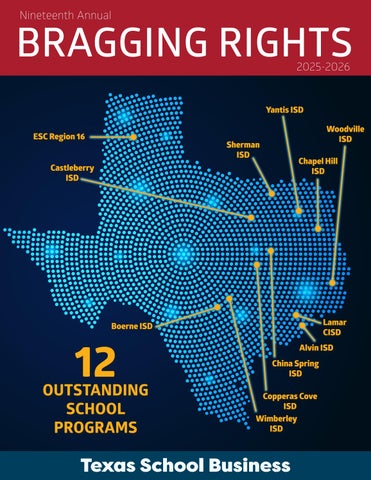
t’s the most wonderful time of the year — it’s Bragging Rights time! Right now you are reading the 19th annual Bragging Rights edition of Texas School Business magazine. In these pages, we highlight 12 outstanding programs happening right now in Texas public schools.
This issue is always inspiring to put together, from combing through the many, many nominations we receive to speaking to the dedicated administrators who are always thinking outside the box to bring the best, most innovative programs to their students.
It’s my hope that the stories in Bragging Rights inspire you and make you proud of your colleagues, proud of your Texas public schools.
I’d like to send a huge thank-you to all of the districts who submitted nominations, and all of the chosen districts for helping us bring their stories to light. And thanks to you for reading! I hope that you share this issue far and wide to help us brag on the outstanding opportunities Texas’ public schools provide for the students, staff and residents of their communities.

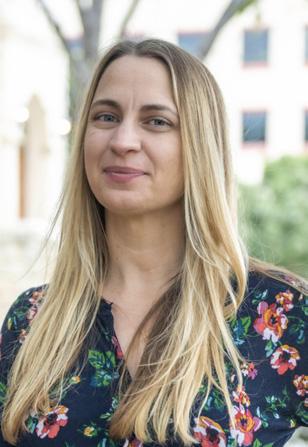
DACIA RIVERS Editorial Director
t E xas Educators first
—Aleisha Fuller-Moore FIRST GRADE TEACHER, DENTON
ISD
ATPE is the only professional association that brings together every Texas public school employee in an effort to better public education and serve students. We believe everyone who works for a public school influences the educational environment and that collaboration is necessary to ensure student success. We fight every day for educators to have a voice in their profession.

Alvin ISD County: Brazoria Region: 4
Superintendent: Carol Nelson
Enrollment: 30,000
Number of schools: 35
ALVIN ISD
Jump starting careers in animal medicine
by Merri Rosenberg
It’s a childhood fantasy come true for many students — having the chance to work with veterinarians taking care of animals.
For students enrolled in the Veterinary Assistant Program at the JB Hensler College and Career Academy in Alvin ISD, it’s a daily reality. Open to junior and senior high school students who have satisfied the required prerequisites, the 8-year-old program features a year of classroom studies followed by a year of clinical and other experiences. The goal is for students to be able to pass the state Certified Veterinary Assistant test at the end of the year and either go directly to work in the field or pursue pre-veterinary studies at college.
“Our students gain industry-based certifications, have great mentorships and work with 15 different clinics and hospitals,” says Alvin ISD Superintendent Carol Nelson. “We want to get as many students [who are interested] to have the opportunity. After
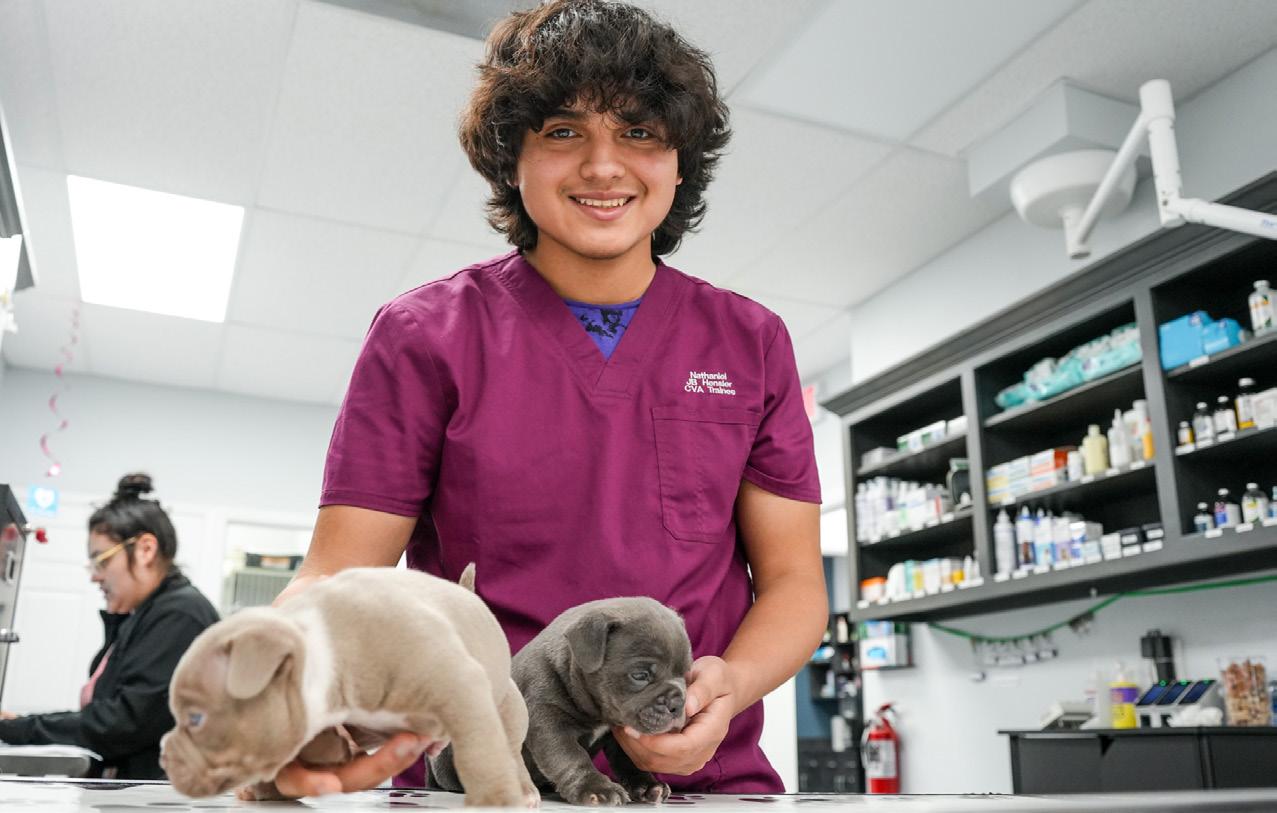
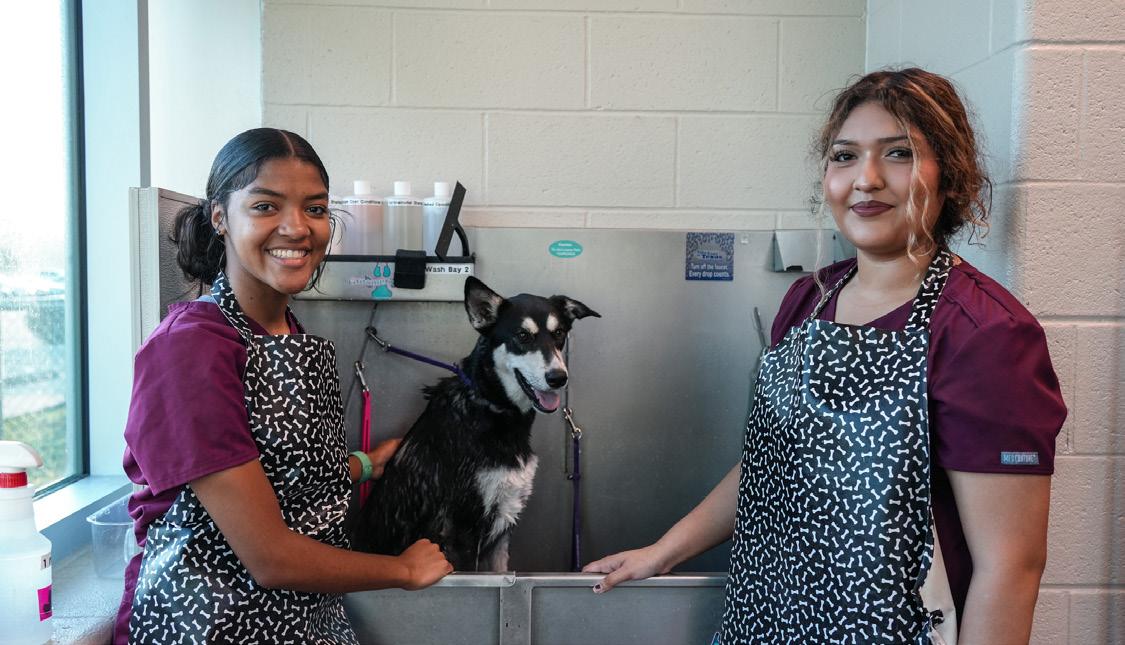
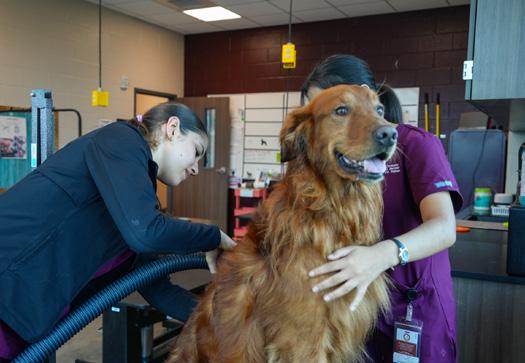
Alvin ISD students enrolled in the district’s veterinary assistant program can work toward passing the state Certified Veterinary Assistant test and either work in the field or pursue pre-vet studies after high school.
graduation, with this program, students can go right in and get a job.”
Typical of the students who are attracted to the program is senior Nikko Sharber, who says, “Really, I’ve always liked working with animals. I was picking between human medical or veterinary. Going into my junior year I picked animals. I like the clinics because they’re more hands-on. When I graduate, I will be a certified vet assistant. I’ll go to college, become a tech and eventually become a veterinarian. This is my favorite part of high school. It’s the best part of my day. Getting the chance to be in this program makes me appreciate how to get a head start in your career.”
Currently there are 66 students in the first-year Veterinary Science course, and 50 in Practicum of Veterinary Science. The program is funded through the regular school budget. Alvin ISD,
Helping Schools Achieve Their Goals
210 Spaces—Designed & Installed in Three Weeks
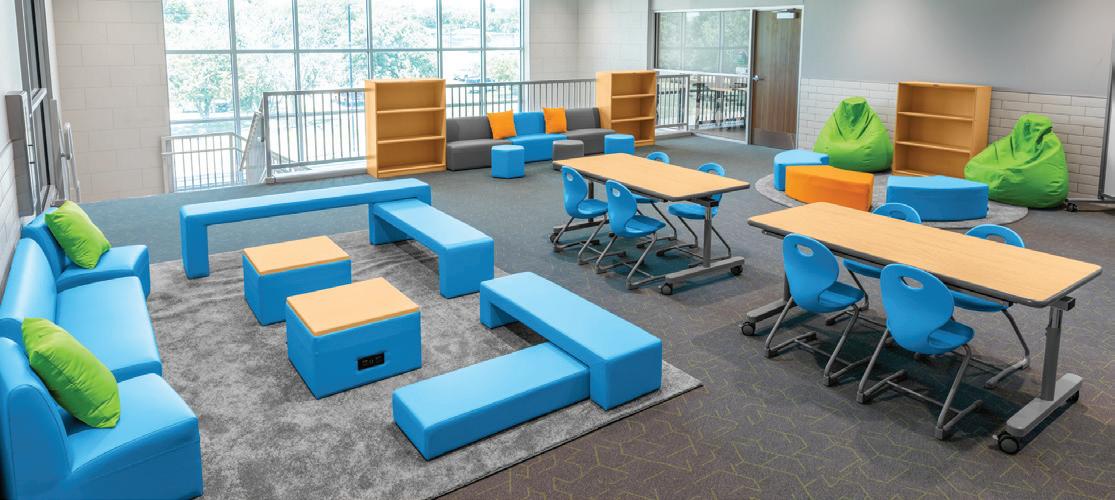
To support their growing student
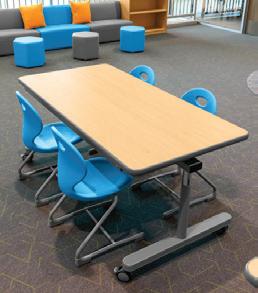
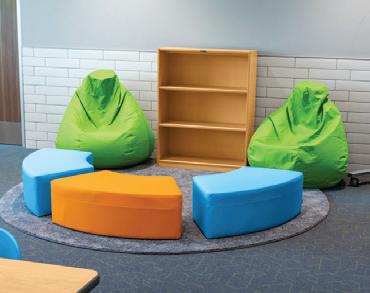
population, Sherman Independent School District in Sherman, Texas, built three new elementary schools. However, with only three weeks to install furniture across all three campuses, they needed a partner who could act fast—on top of providing mobile tables and desks that allow for easy transitions and withstand years of use.
At the end of the project, all 210 learning spaces were outfitted with the versatile furniture they needed, providing students and educators with ultimate flexibility for teaching and learning.
It has truly been an awesome experience working with Lakeshore. It started with a great design experience...and concluded with great customer service. ... I definitely plan to reach out to them again for our future projects.
Brannon Kidd, Director of Capital Projects, Sherman ISD

The course work, designed to have students pass the qualifying exam for a veterinary assistant, is intense: 90 minutes a day, five days a week.
located south of Houston, has about 30,000 students in 35 schools. The program was initially launched because of a community need for more vet assistants, says Jaycee Thompson, veterinary assistant instructor, who set up the program.
While “there are a lot of programs in Texas like this,” Thompson says she’s pleased that Alvin’s level-two students all have clinic placements and that 97% of the students pass their certification while all students pass on their retest.
Students also have the opportunity to work with clinics that offer a holistic approach, with herbal medicine, acupuncture and alternative therapies.
“We are a vet assistant program,” says Thompson. “I try my best to keep up with former students. Almost every clinic we work with has at least one former student.”
“In level one, there’s core content with a lot of medical information and memorization,” says teacher Emily McCoy, herself a graduate of the program. “We focus on safety, medical technology — there are a lot of flash cards.” There is also an emphasis on animal skeletons and anatomy.
“When students move into level two, that’s when they apply their knowledge,” McCoy explains. “We teach them the content side of what they need to know and teach them skills.”
The course work, designed to have students pass the state
qualifying exam for a veterinary assistant, is intense: 90 minutes a day, five days a week. Students’ schools transport them to the JB Hensler Academy.
Most of the work is with house pets, such as cats and dogs, although there are also opportunities to work with reptiles and more exotic animals.
“About half of our students want to be vets,” says McCoy. “Others want to do ag sciences. Former students are groomers or work in lab settings.” One student’s ambitions include opening an exotic animal shelter.
Among the field activities students pursue are working with local veterinarians, running the JBH Dog Spa class business (including scheduling, working with clients, managing paperwork and billing aspects), volunteering for community spay/neuter events, a partnership with Jenni’s Rescue Ranch that also offers free vaccinations to Brazoria County residents, and work with large animals, such as horses.
Senior Savannah Sheffield is especially interested in the barn days, where she can work with large animals, because “livestock vets are few and far between.”
And senior Trinity Edmond admits, “Since I was 3 I knew this was my path. I’ve been around horses, turtles and exotics. I’ve had cats, dogs, a bunny.”

Trinity expects to go to college directly, to study a pre-vet curriculum. She appreciates her recent summer internship at a local clinic.
“I developed professional and personal relationships,” she says, adding that she had the opportunity to take patient histories, draw blood and monitor surgeries, among other activities.
Gretchen Batista, a certified groomer as well as a licensed veterinary technician who teaches in the first-year program, says instructors regularly check in with their students while they are in the clinics and hospitals. “We want to make sure our students are comfortable and confident.”
One distinctive activity Batista oversees is working with the students when the cats and kittens from the Alvin Adoption Agency come to the JB Hensler Veterinary Assistant Program twice a year.
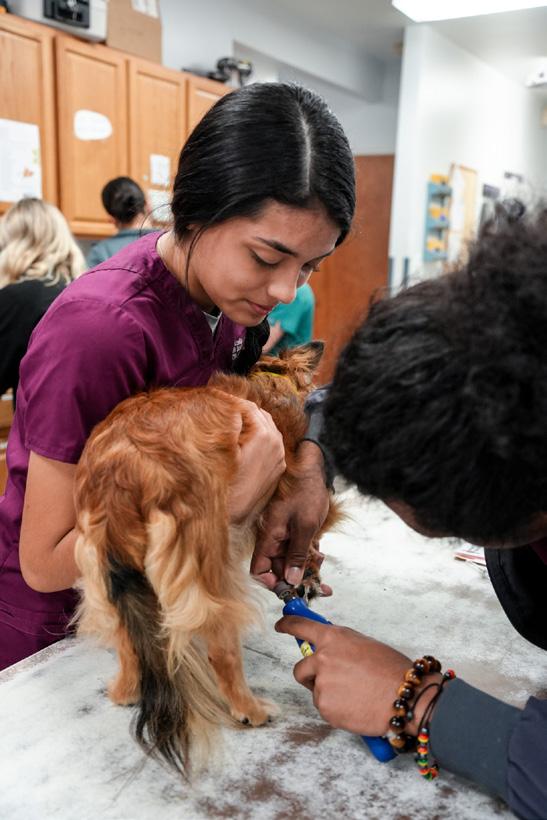
“It’s hands-on with the cats, giving them medications, practicing restraining them,” she says. At the spay/neuter events, students learn to “take temperatures and what to look for if a patient is overly sedated by checking vital signs.” With the Dog Spa, says Batista, students gain experience in working with more “fractious dogs,” as well as “more mild-mannered ones,” and learn to trim nails among other skills.
Parents appreciate the program’s effect on their children.
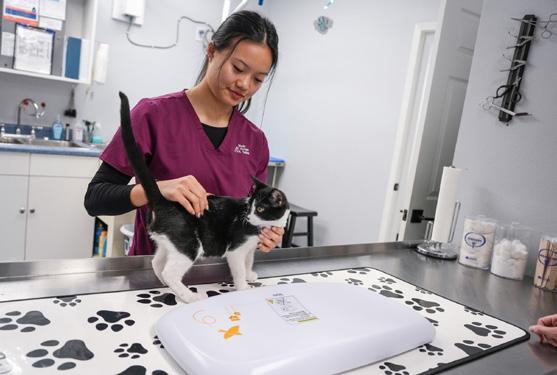
Students in Alvin ISD’s Veterinary Assistant Program perform hands-on tasks, aiding in animal examinations.
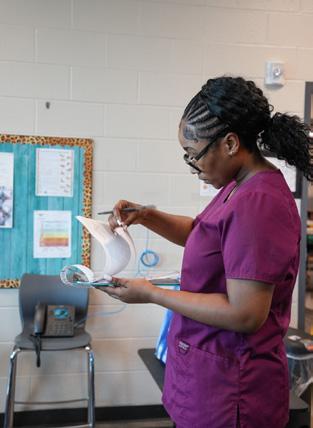
Steve Edmond, a senior pastor at a local church and senior manager at the local port authority, says his daughter has had a long-standing affinity for animals.
“Animals would always connect with Trinity, and she’s fearless with animals,” says Edmond. “We saw her mature more in this [veterinary] internship. She stayed committed and gave up her whole summer. She would work 12 hours a day. We’re very satisfied with the direction she’s going and are behind her 100%.”
For one of the participating veterinarians in the program, Dr. Malantus Moore, of the Manvel Animal Clinic in Manvel, “It’s rewarding to be able to influence the younger generation to come to this side of veterinary medicine. When they come through the program, they see the good and the bad of veterinary medicine. I see the growth of each and every student.”
Some of the students shadow Moore during surgery; they learn how to restrain animals for examinations and how to take blood as well as understand the blood work results, urinalysis and fecal stool samples. “Some come back and work here as vet techs,” he says.
Adds Moore: “I think it’s great to have this program. I wish this was available when I was in high school.”
Merri Rosenberg is a freelance education writer and editor based in Westchester County, New York: merri.rosenberg@gmail.com.

www.hcde-texas.org
Boerne ISD
County: Kendall
Region: 20
Superintendent:
Kristin Craft
Enrollment: 10,700
Number of schools: 12
BOERNE ISD
High school students in Boerne get a jump on real estate careers
by Autumn Rhea Carpenter
For some students, getting a head start on their career starts in high school. In Boerne ISD, students can obtain their real estate license through the Real Estate: From Classroom to Closing program in the Career and Technical Education (CTE) department. These classes integrate academic and technical knowledge with hands-on learning experiences to prepare students for specific careers or further post-secondary education.
The 180-hour accredited program began in 2024. Chris Carter, who has been teaching for 28 years, is in his second year as teacher of the district’s real estate program. He’s also a Realtor with JBGoodwin Realtors and the head boys and girls track and crosscountry coach at Boerne High School.
“Some students gravitate to the idea of having a career or going to college and doing this on the side. They like how it is a real
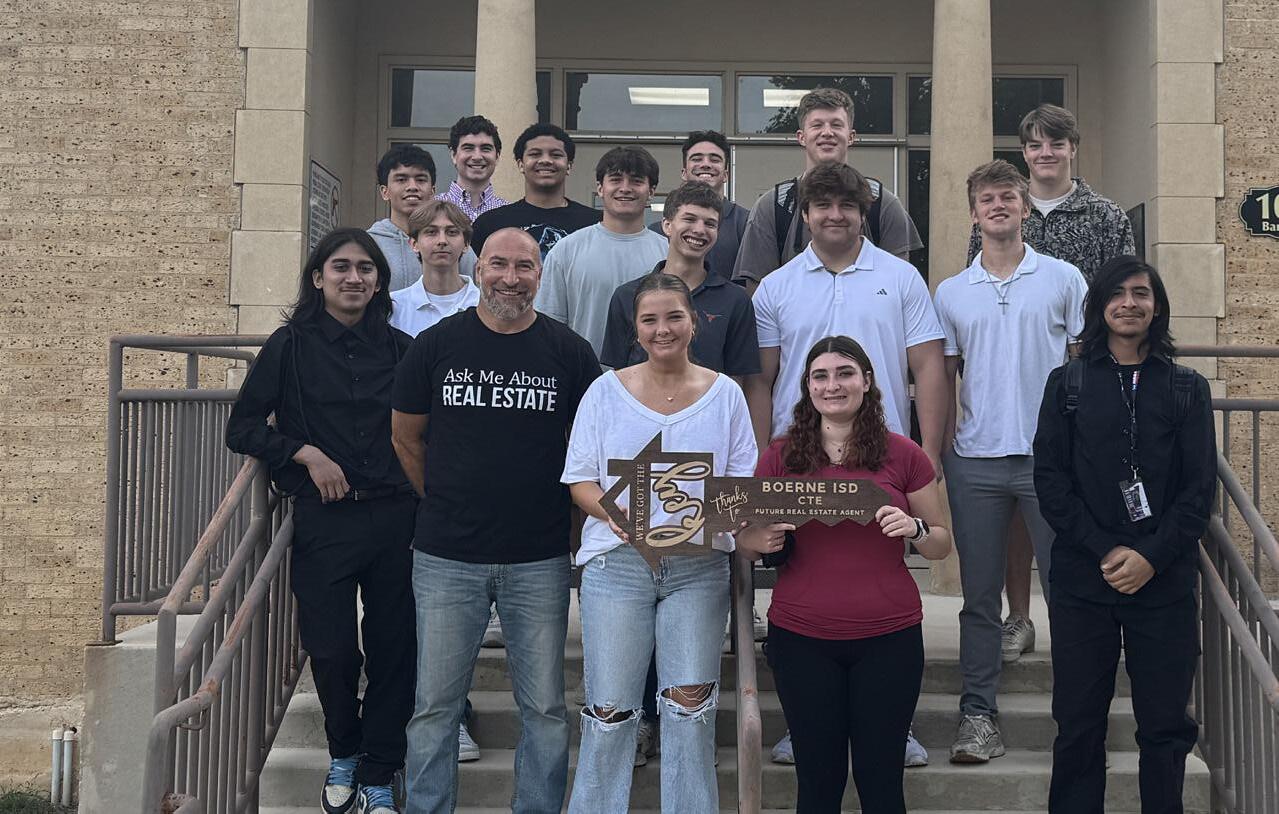
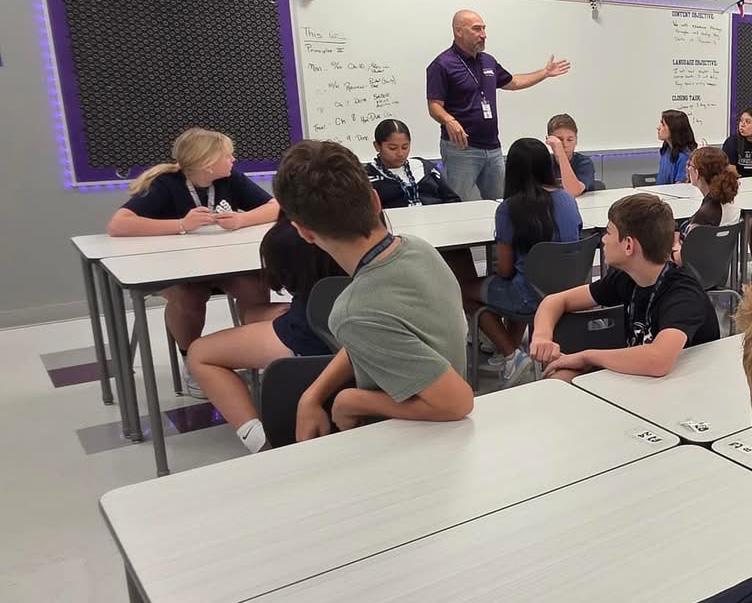
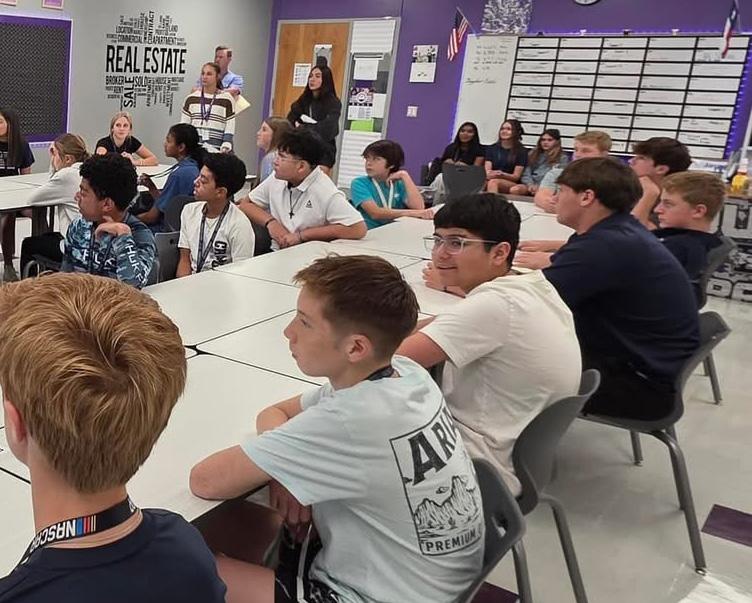
Students in Boerne ISD can participate in a real estatefocused CTE program.
certification and has real application,” Carter says. “The struggle that comes from it is very self-driven. They must complete assignments, test on time and be prepared for exams.”
The district offers two classes that are double blocked. The program includes 37 students with another 22 in a real estate practicum who are working with various businesses in the community in real estate-related fields.
The program provides students with a license at no cost as well as an opportunity to gain valuable experience. In Texas, the six required 30-hour prelicensing courses to become a real estate sales agent, for a total of 180 hours, are:
• Principles of Real Estate I: This course provides a foundational overview of the real estate industry.
Students graduate from the program ready to take the state licensing exam.
• Principles of Real Estate II: This is the second part of the course covering additional foundational topics.
• Law of Agency: Students will learn about the relationships and duties between agents and their clients.
• Law of Contracts: This course covers the elements of a contract, offer and acceptance, and remedies for a breach.
• Promulgated Contract Forms: This class teaches the proper use of contract forms approved by the Texas Real Estate Commission (TREC).
• Real Estate Finance: Students will be introduced to mortgage types, financing laws, and the lending process.
These courses are approved by TREC and must be completed before students can take the state licensing exam.
Students complete projects that are not part of the online curriculum where they practice completing contracts as a seller’s agent and as a buyer’s agent.
“This is one of the most practical and beneficial things we do,” Carter says. “Anyone can take a real estate course online, but the
practice helps students get to see the contracts they will actually use.”
Elaina Smith, a Boerne High School senior, has completed the coursework and is preparing for the state licensing exam when she turns 18. Her mentors have provided hands-on experiences in several key areas.
“I learned the process of closing a deal by observing how my mentor identified client needs, presented solutions, handled objections, and finalized contracts. I also provided marketing support by helping create promotional materials and assisting with campaign planning,” she says. “These experiences gave me a well-rounded understanding of the sales and marketing process.”
The program has also opened the doors to other careers that students had not considered such as appraisers, inspectors, builders, title company, and mortgage lenders.
A Champion High School senior in Boerne, Jones Ferguson, explains that shadowing a mentor has helped him gain valuable experiences.
“I’ve learned how agents communicate with each other and my mentor has shown me a lot of the marketing aspects of real estate, such as drone footage and real estate photography,” Ferguson says. For James Butcher, a Boerne High School graduate, the courses offered a window into the world of real estate and how the market works.
“It’s a class that is fun, engaging, and can give you a unique reward at the end of it,” he says. “My favorite part of the class was the feeling of success when I finally got my license. It felt surreal that I could get one from a high school class,” he says. “The most challenging part of the class was learning all the acronyms.”
Student success is BISD’s core business. CTE is one of the ways students gain invaluable experience before entering college, the workforce, or military service. When the community expressed a desire to see a real estate pathway created for students, district administration realized it was something they had to deliver.
Whenever a district wants to add a CTE or Pathways in Technology Early College High School (P-TECH) focus area, it's imperative that they ask the community for input.
“In Boerne, our families consistently share that they want their children to be able to have careers that enable them to return to our area and thrive. Real estate and other pathways we've recently added were selected because they fit those criteria,” says BISD Superintendent Kristin Craft. “When the community is behind what you're doing, engaging community partners, finding mentors and internship opportunities for students, and ensuring that the quality of education and guidance truly sets these students up for success becomes easier to accomplish and turns a dream into a reality.”
When Craft shares that BISD students are receiving their real estate licenses at such early ages, community members are shocked.
“When we receive questions about the comprehensive nature of the program, we garner even stronger support because our community recognizes that we're preparing the next generation of real estate professionals — and that we're doing it responsibly.”
Autumn Rhea Carpenter is a freelance writer based in Portland, Oregon.
Castleberry ISD
County: Tarrant Region: 11
Superintendent:
Renee Smith-Faulkner
Enrollment: 3,600
Number of schools: 7
CASTLEBERRY ISD
Coding confidence at A.V. Cato Elementary
by David George
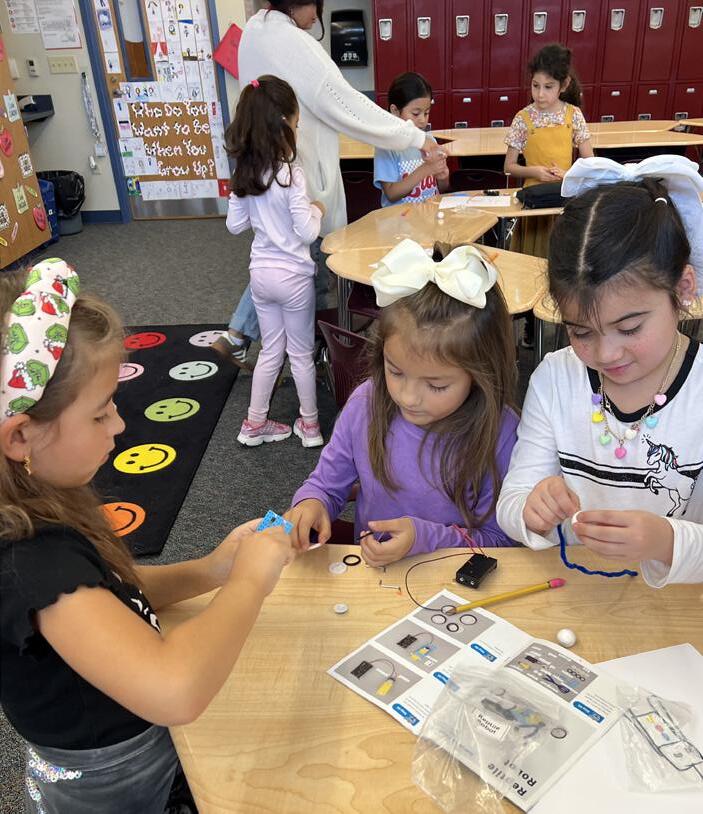
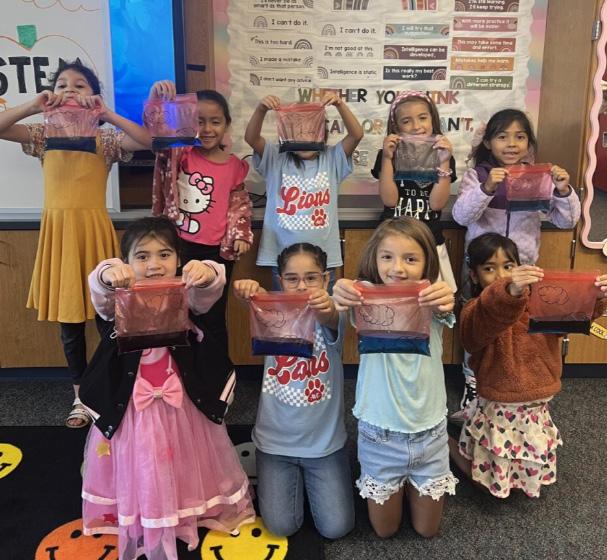
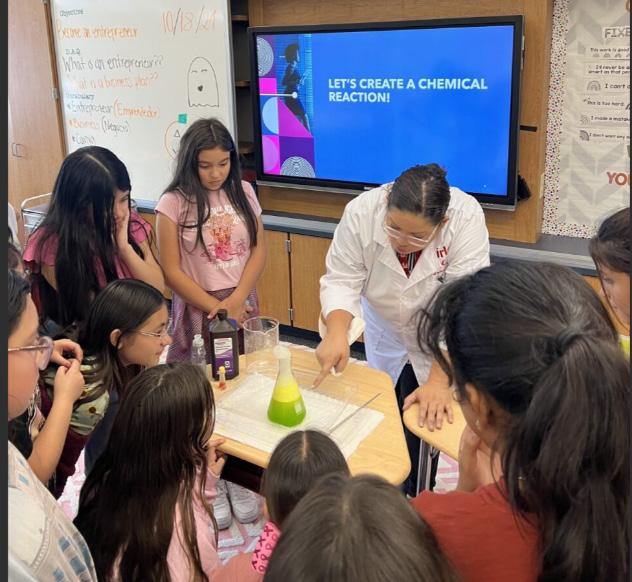
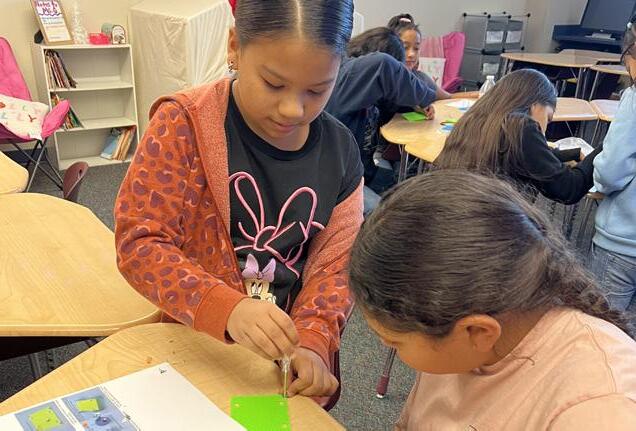
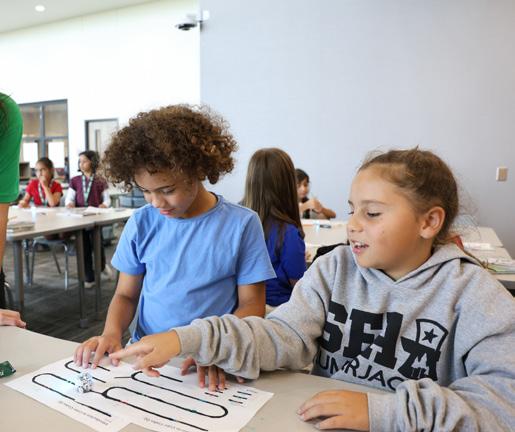
When you walk into the Girls Inc. classroom at A.V. Cato Elementary in Fort Worth, you’re greeted by the hum of Ozobots gliding across colorful tracks, the laughter of students solving coding challenges, and the proud smiles of girls showing their parents the robots, circuits, and science experiments they’ve built.
“Our campus is about 93% free and reduced lunch and about 86% Hispanic. It’s a very diverse neighborhood,” says Principal Michelle Strambler, who has led the school for eight years. “We’re in Fort Worth, but we’re part of Castleberry ISD, which covers three municipalities: River Oaks, Sansom Park, and Fort Worth. My district is very innovative and forward-thinking.”
That innovation includes Wi-Fi towers providing free internet access to families, one-to-one devices for all students, and daily coding instruction beginning in kindergarten.
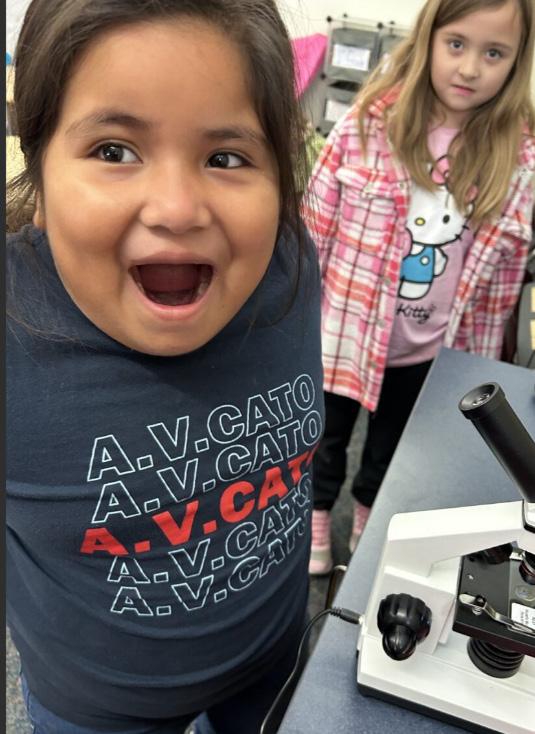
Female students at A.V. Cato Elementary participate in a STEMfocused Girls Inc. program.
“Coding has always been at the forefront,” Strambler says. “Our superintendent’s background is in educational technology, so she’s always looking for the next opportunity to prepare our kids for the future.”
Within that forward-looking culture, the school’s partnership with Girls Inc. took root, bringing a full-time STEM instructor to campus and offering girls new pathways to explore science, technology, engineering, and math in a supportive environment.
Bringing STEM to girls during the day
Unlike most Girls Inc. programs, which take place after school, A.V. Cato’s model happens during the regular school day. Every grade level sends about 15 girls to the class four days a week, following the same rotation as the district’s coding schedule.

“Typically, Girls Inc. meets after school, but that can create barriers,” Strambler explains. “Transportation, family schedules, and long days can get in the way. Our daytime program takes those barriers away.”
Students who can’t attend during the day are invited to participate after school or on weekends, where they dive deeper into handson activities, robotics, and science experiments. Guest speakers, field trips, and events, including the annual Day of the Girl business fair allow participants to practice public speaking, teamwork, and financial literacy.
“One of our fourth graders told me she thought she needed a summer off, but she quickly got bored,” Strambler says with a smile. “She told me, ‘I’ll never do that again. I’m going to do Girls Inc. every summer.’ Hearing that kind of excitement from our students is wonderful.”
Representation, opportunity, and confidence
Representation is key to the program’s success. Many of the guest speakers and mentors are women of color who share similar backgrounds with the students.
“Our Girls Inc. teacher is Latina and bilingual, and we’ve had several Latina doctors and engineers come speak,” Strambler says. “It’s powerful for our girls to see women who look like them in these careers.”
Girls Inc. meetings are held during the school day, four days a week, giving more girls the opportunity to attend.
Girls Inc. research shows that participants gain confidence, leadership skills, and a stronger belief in their potential. At A.V. Cato, those outcomes are easy to see. Strambler has watched formerly shy students blossom into confident leaders who now speak at fundraisers and community events.
“One of our students started out so nervous she could barely get through a sentence. Now she stands tall and delivers a presentation like a pro,” Strambler says. “For a campus like ours, with so many students who have limited resources, seeing them shine like that is amazing.”
For Strambler, that transformation defines success.
“Any time I can give students an opportunity they might not otherwise have, that’s success to me,” she says. “Girls Inc. gives our girls an avenue to discover their own potential in ways the regular classroom can’t always offer.”
A pathway to the future
The program also creates a natural bridge to Irma Marsh Middle School’s STEM Academy, where students can continue their studies and eventually earn college credit in computer science.
“Our middle school has a strong STEM program, and now, participation in Girls Inc. counts toward extra points when students apply,” Strambler says. “We’re starting to see that pipeline develop.”
“Our students are amazing. Socioeconomics and race don’t define them. They’re full of potential and if given the opportunity and the resources, the sky’s the limit.”
Because the district already had a robust coding structure in place, A.V. Cato’s girls enter middle school ready for more advanced coursework. The district’s career and technical education programs also align with local business needs, giving students clear pathways from elementary enrichment to high school internships and beyond.
“This program helps our girls see that there are real opportunities out there for them,” Strambler says. “They can pursue higherpaying jobs and careers in fields they might not have considered before.”
Looking ahead with hope
Now entering its third year, the A.V. Cato Girls Inc. partnership is funded jointly by the Sid Richardson Foundation and Castleberry ISD. Strambler hopes it continues to grow.
“Our superintendent loves the program,” she says. “If funding allows, we would love to see more campuses benefit from it.”
She acknowledges that implementing the model requires creativity and commitment.
“For another district, scheduling might be tricky, but it’s doable,” she says. “You have to really believe in the value of it and make it work.”
Ultimately, Strambler says, the success of the program lies in its message of hope.
“Our students are amazing,” she says. “Socioeconomics and race don’t define them. They’re full of potential and if given the opportunity and the resources, the sky’s the limit. It doesn’t matter where you come from — it matters where you’re going.”
Through the Girls Inc. STEM program, the girls of A.V. Cato Elementary are discovering exactly that. Each robot they build, each code they write, and each idea they pitch is more than an exercise in science or math. It’s a step toward a future they can now see for themselves, a future full of possibility.
David George serves as the editor for ATPE News magazine. He is proud to be a Texan, a military veteran, and most importantly, a public education advocate.
Chapel Hill ISD
County: Smith Region: 7
Superintendent:
Lamond Dean
Enrollment: 3,300
Number of schools: 5

CHAPEL HILL ISD
Bulldog Bonding Boxes: educational craft boxes that encourage family time
by Stacy Evans
Studies have shown that when parents are involved in their child’s education, students get better grades, come to school more often, and exhibit fewer disruptive behaviors in class. So an ambitious team in Chapel Hill ISD decided they would build their own “Bulldog Bonding Boxes” — creative DIY crafting kits that would be sent home with students over holiday breaks, encouraging educational playtime between elementary school students and their families.
Chapel Hill’s director of student services, Robin White, says she got the idea by noticing how much fun her grandchildren had with similar kits sold by KiwiCo. Yet White realized not every family had the resources to purchase these kits, particularly in the district’s two Title I elementary schools. After successfully implementing a program at her previous district, White was excited to bring this idea to families in Southeastern Washington County.
“Bulldog Bonding Boxes” are take-home DIY crafting kits that students can enjoy over holiday breaks.
“My grandkids had received these Kiwi Crates at their home,” recalls White, “and the excitement they had over those was just unreal. But my daughter told them, ‘No, y’all can't open them right now, because we do that together as a family.’ So she made them put the kits away until they could do that at a later time. I thought, ‘Wow, that's a really cool idea!’”
White says she originally brought the idea to Crystal Benning, who at that time was Chapel Hill’s family engagement coordinator.
“What she brought to the table was different from what I’d done in my previous district. There,” posits White, “we just put the boxes together as a district and then distributed them to schools. But Crystal gave the ownership to the campuses themselves. So they actually put the boxes together as a faculty and as community members.”
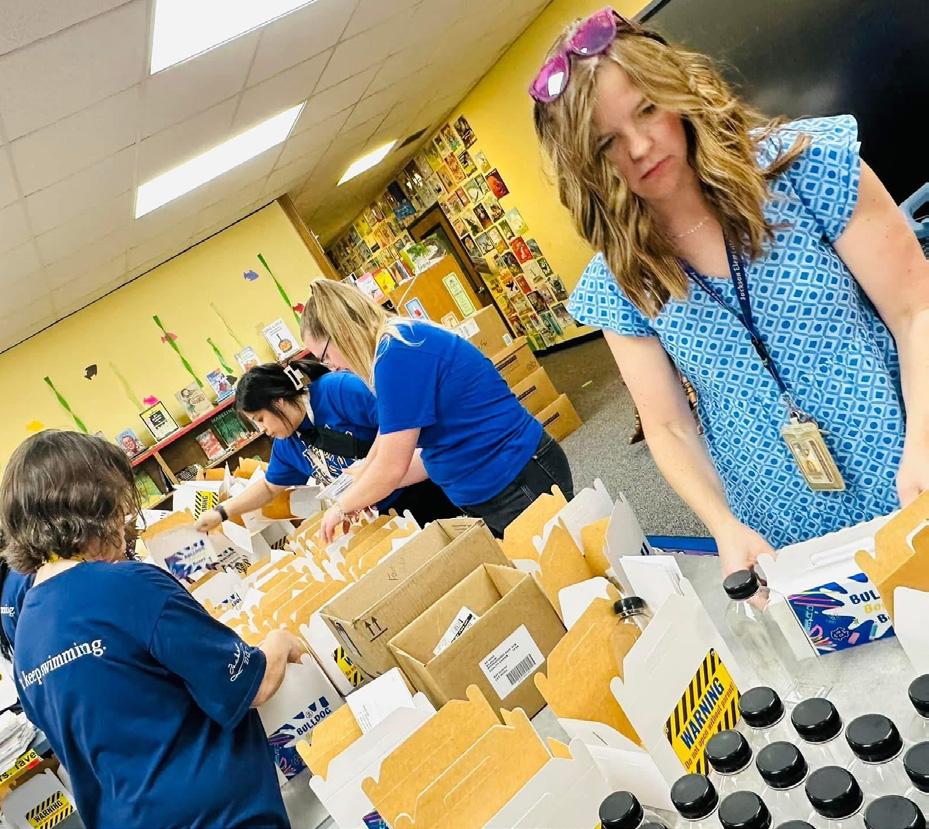
Thus, campuses ultimately decided to up the ante by turning these after school “box assembly days” into lighthearted competitions — arms flailing, tissue paper flying, popsicle sticks dancing — as faculty members raced to see who could build their boxes in record time.
So what about teachers, who often have so much on their plates already? White says putting the boxes together didn’t take nearly as long as they anticipated. Their secret sauce? Teamwork and organization. In addition to faculty members, volunteers from the community also joined in the fun.
“Everything was really organized, and so it was almost like an assembly line.”
Although the activities students have done have certainly been educational — many of them focused on sharpening STEM skills — the projects were not graded. The focus has been on instilling a lifelong love of learning, and planting the idea in the minds of students that learning can happen anywhere, and not just at school.
So while the hands-on projects wouldn’t impact a student’s grade, families were still encouraged to share their thoughts on completed projects.
“There was a QR code that was put into the boxes when they were sent home, and when you clicked on the QR code, it opened up a
Google form for parents to give the feedback, and then they could also upload pictures of what they did,” White says. “We would also have discussion questions in there for students to share with their parents, so that they could have an open dialogue about the process.”
Deidra Sutton is CHISD’s executive director of human resources and student services. She notes that overall, parents have been delighted by the Bulldog Bonding Boxes.
“They look forward to it,” says Sutton. “We send them home at Thanksgiving and spring break, but they would really like for us to send them home more often!”
White says she knew they had been successful when students came back at the end of breaks with smiles on their faces and plentiful stories to tell.
“We have a lot of families who are Spanish speakers at home,” she says. “One family shared that their child is predominantly English-speaking and struggles to speak Spanish, even though that's their home language. So the grandmother has a hard time connecting with her grandson, because she’s only Spanishspeaking, and he’s only English-speaking. But when they worked together on their boxed activity, it gave them a reason to try and communicate better, and the student got to work on his Spanish!”
Sutton says it’s important to look at the big picture, and remember why they do what they do.


Students
in CHISD use the boxes to complete hands-on, fun and educational activities at home with their family members.
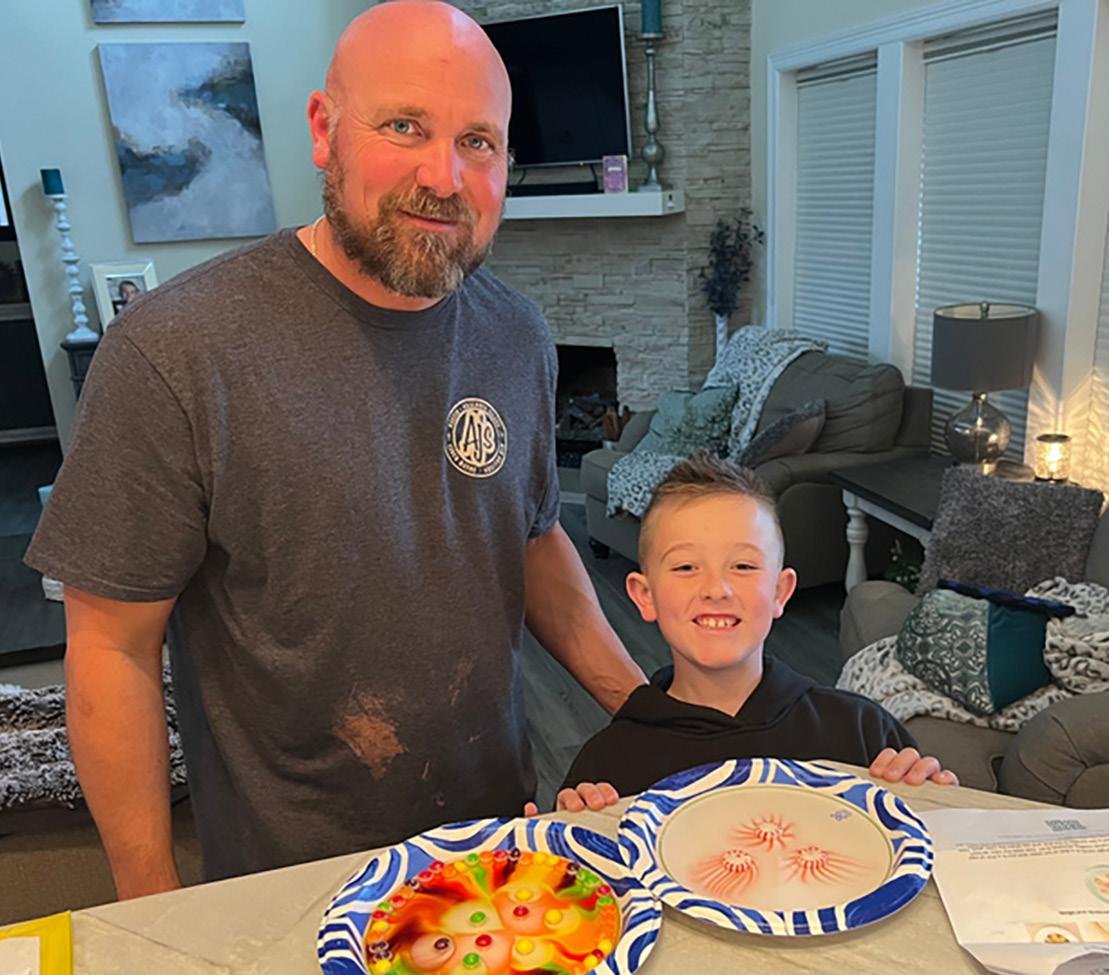
“We’re aiming to strengthen the connection between home and school, and we're always looking for ways to build trust with our families and our parents,” she says. “Also, we’re providing fun learning activities for our kiddos! You know, so often our kids are watching TV or they’re on an iPad. But this opportunity provides them with a chance to do something interactive with their families.”
As far as budgeting for this initiative, White says they used their SSI grants through their community partnerships, but she says she knows not every district will have access to those grant funds.
“However,” shares White, “when you're a Title I campus, you’re required to have parent and family engagement money spent, so they could literally use their parent family engagement money for bonding boxes.
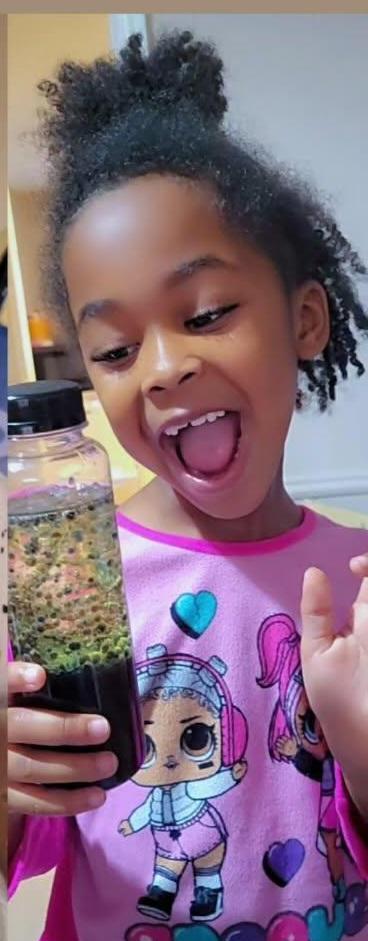
White estimates that the district’s budget for its Bulldog Bonding Boxes program is around $10,000 for supplies, enough to provide activities for 1,800 students across three schools. Past projects — chosen via numerous brainstorming sessions, and designed to align with existing curriculum — have included parachutes, window greenhouses and lava lamps.
is a state-certified secondary
“We’re aiming to strengthen the connection between home and school, and we're always looking for ways to build trust with our families and our parents.”
Stacy Evans
teacher who spent five years working with students throughout the state of Texas. She has been a freelance writer for more than 20 years.
China Spring ISD
County: McLennan
Region: 12
Superintendent:
Marc Faulkner
Enrollment: 3,000
Number of schools: 6
CHINA SPRING ISD
‘Champions’ cohort gives way to informed advocates
by Joel Weckerly
Like most superintendents, Dr. Marc Faulkner has felt the ebbs and flows of school district social media. Its inherent snowball effect of comments and shares can generate community support as quickly as it can erode it.
“It creates an opportunity for people to complain about school issues,” says Faulkner, who is entering his 13th year as superintendent in China Spring ISD. “Most of the time, it’s people who don’t have correct facts. We wanted to arm people with the correct facts.”
He began formulating a plan to rally community support in 2023, shortly after one of his trustees was inspired by a Friends of Texas Public Schools (FOTPS) Ambassador presentation at a TASA/ TASB conference. One of his key steps was creating a director of
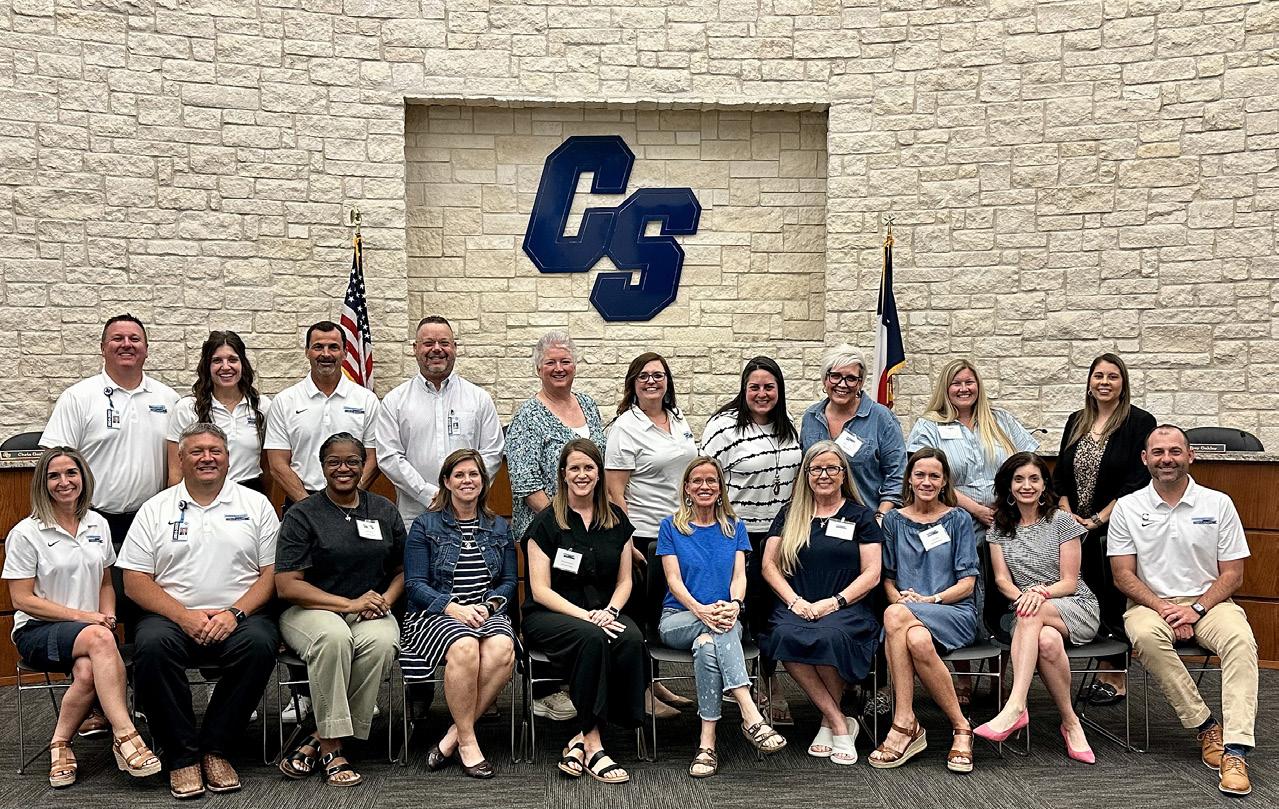
The inaugural community cohort of Champions for China Spring ISD met four times throughout the 2024-25 school year, learning about topics including school finance, media and being a champion for the district.
public information and communications position. He hired Emily Corntassel that summer, tasking her with the key goal of creating an advocacy program.
“Champions for China Spring” was officially launched in the fall of 2024, with separate community and educator cohorts comprising 35 members each. Members were chosen intentionally who were not already die-hard supporters of the district, and the educator cohort allowed for authentic feedback from staff.
“When someone attacks their profession on social media, sometimes educators feel like they have to put on a professional teacher face and not speak their mind,” Corntassel says. “Our setup let educators be honest about the challenges they face. It was a good opportunity for both groups to have their space without getting into those delicate situations.”
The inaugural educator cohort of Champions for China Spring ISD met six times throughout the 2024-25 school year, learning about similar topics to the community cohort in a safe space for school staff.
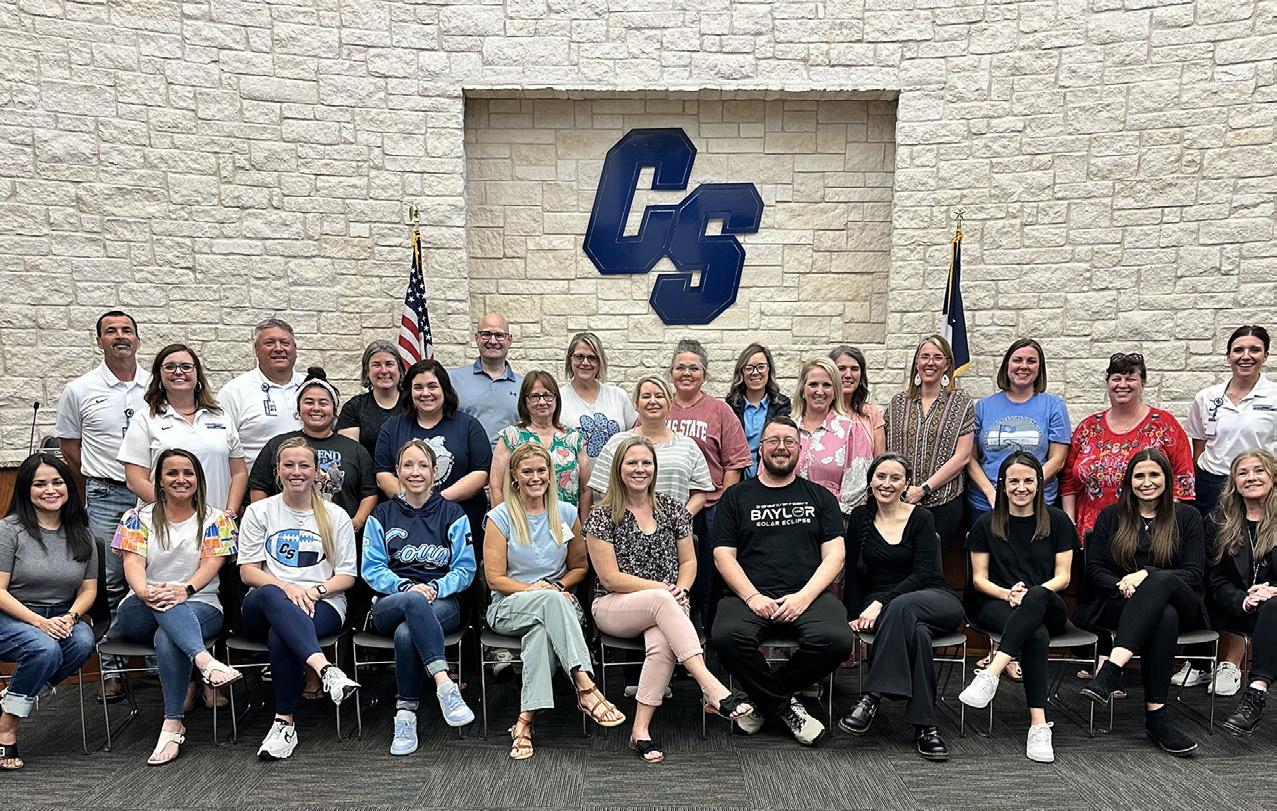

The educator cohort met for six 90-minute sessions throughout the 2024-25 school year, while the community cohort met four times for two hours each. Topics included school finance, bonds, how the media works and being a champion for the district. Each session featured a variety of presentations and small group discussion, allowing for open dialogue and access to district leadership.
By the end of the year, even those who entered the cohort with negative perceptions came away with a clearer understanding of the issues and a deeper appreciation for the work happening in their local schools.
“One person who came in very skeptical volunteered to make a certificate to celebrate the students who had been making our meals,” Corntassel says. “She has come to a board meeting since to ask for a policy change, but at the same time she is very
supportive of the VATRE. That’s a tangible example. We didn’t necessarily change their mind about everything, but we got them on board enough to where they can help drive the district forward.”
The Champions have already put their knowledge and school pride into practice. Over the summer, when CSISD posted to social media about the possibility of a voter-approved tax rate election (VATRE) before it was officially on the November ballot, a predictable handful of dubious comments were met with a wave of corrective comments from supporters.
“Immediately our Champions chimed in and said that’s not true, our tax rate is not going up. They encouraged them to come to meetings and get informed,” Corntassel says. “Even now, if you give it five or 10 minutes, our Champions are chiming in and trying to redirect that conversation.”
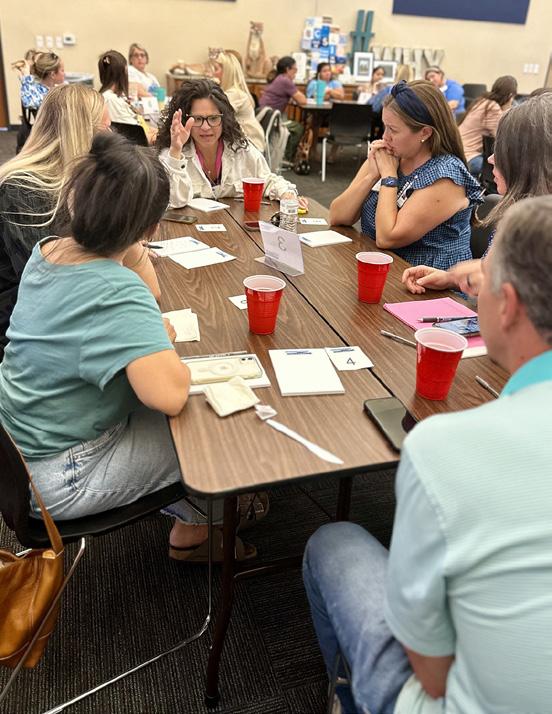
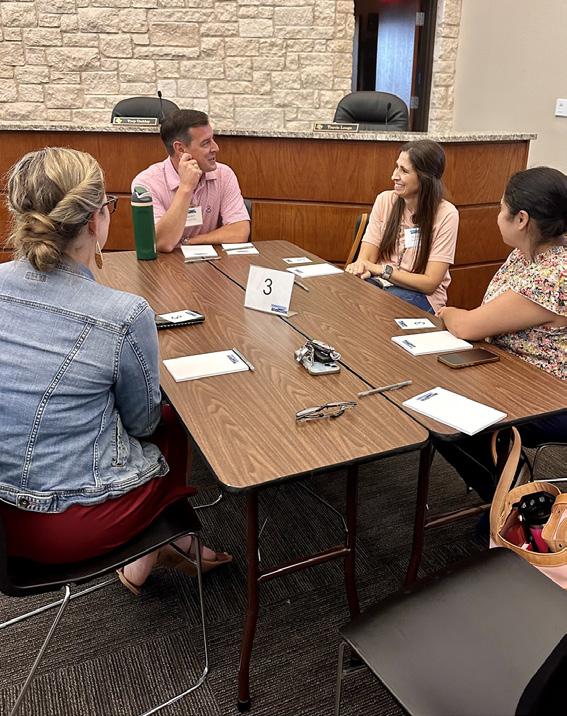
Champions for China Spring sessions varied between presentations and small group discussion, allowing for open dialogue and access to district leadership.
The ripple effect has reached previously neutral stakeholders, empowering them to join in on the positive dialogue.
“A lot of our parents already want to be supportive; they just don’t want to be the first to do it,” Faulker says. “The Champions program has created the leaders to be that initial voice, and then the mainstream parental group follows through. You can look at one of our Facebook posts now and see 200 comments and 180 will be positive. That’s a big deal.”
CSISD is carrying that momentum into the 2025-26 school year, expanding their Champions cohort to 85 people. Faulkner and Corntassel presented the program to an audience of more than 150 at the TASA|TASB txEDCON conference in Houston in September.
“We hope that other people go out and build these programs for their districts,” Faulkner says. “We need parents and community members throughout the state to understand more about the ins and outs of key issues like school finance, so they can make educated votes when it pertains to their kids’ education.”
And that VATRE measure? It passed with 52.45% approval on Nov. 4, 2025.
“Your participation represents a community coming together to support the people and programs that make China Spring ISD exceptional,” Faulkner wrote in a community letter following its passage.
At its heart, says Corntassel, Champions for CSISD is more than a communications effort; it’s a cultural movement. And it’s one that is picking up a lot of steam in northwestern McLennan County.
“This is something I thought would take a lot of time to see tangible results happening,” she says. “I have been pleasantly surprised at the real, physical proof we are seeing of this working, inspired by our Champions.”
Learn more about the Champions for China Spring ISD by visiting the CSISD website.
Joel Weckerly is the director of communication for Cypress-Fairbanks ISD, and the TSPRA vice president for the Houston/Beaumont region. Follow him at @cyfairjoel.
County: Coryell Region: 12
Superintendent:
Brent Hawkins
Enrollment: 8,000
Number of schools: 11
COPPERAS COVE ISD
Mentorship in motion: weekly sessions support early-career diagnosticians
by Jack Densmore
The foundation of a district’s ability to provide special education services is a diagnostician. It makes sense: Before you can provide services to a student, an experienced professional must sit down with the student and figure out what services are needed.
It’s not an easy task in a field where student, parent, and teacher frustration can run high — and new laws and guidelines are a constant reality. But Central Texas school district Copperas Cove ISD has developed a mentorship program for early-career diagnosticians that has resulted in a strong team environment and reduced turnover. Through the program, diagnosticians with fewer than three years of experience tackle the challenges of the role with the help of seasoned mentors and colleagues in the district’s special education department.
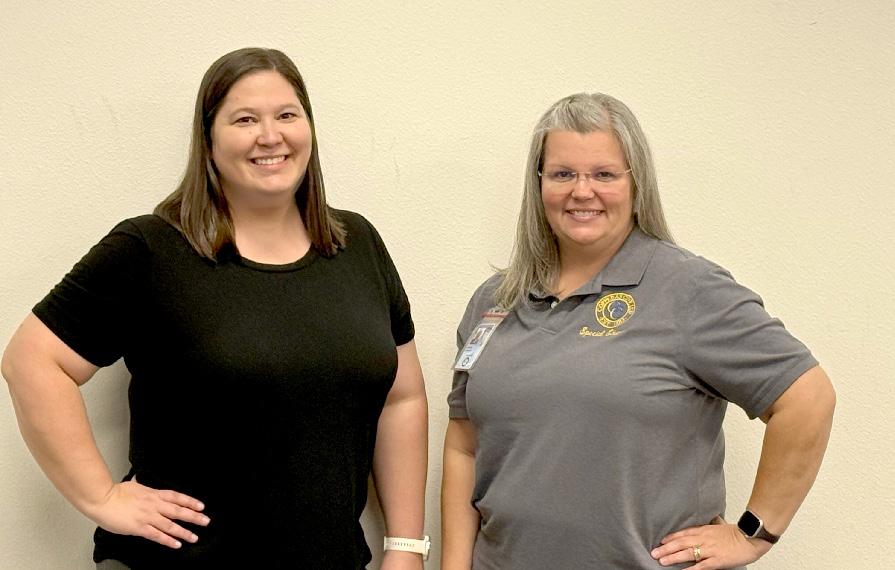
CCISD’s mentorship in motion program was created to support early-career diagnosticians. Shown are Amber Bottoms, educational diagnostician (left) and Jennifer Stevenson, special education coordinator/ educational diagnostician (right).
Those experienced mentors include Copperas Cove ISD Director of Special Education Cynthia Lavallee, Assistant Director of Special Education Angela Sharp, and Special Education Coordinator Jennifer Stevenson.
Lavallee, who spearheaded the program, says that the need for it grew out of difficulty in finding enough certified diagnosticians. The district was having to hire contractors for testing and to provide services, and Lavallee wanted to get out from under that.
“It’s a grow-your-own-type mindset,” Lavallee says. “If we provide them mentorship and training, they’ll want to stay because of all that support. I was a diagnostician and can appreciate how much help you need in the beginning. The laws change quickly.”
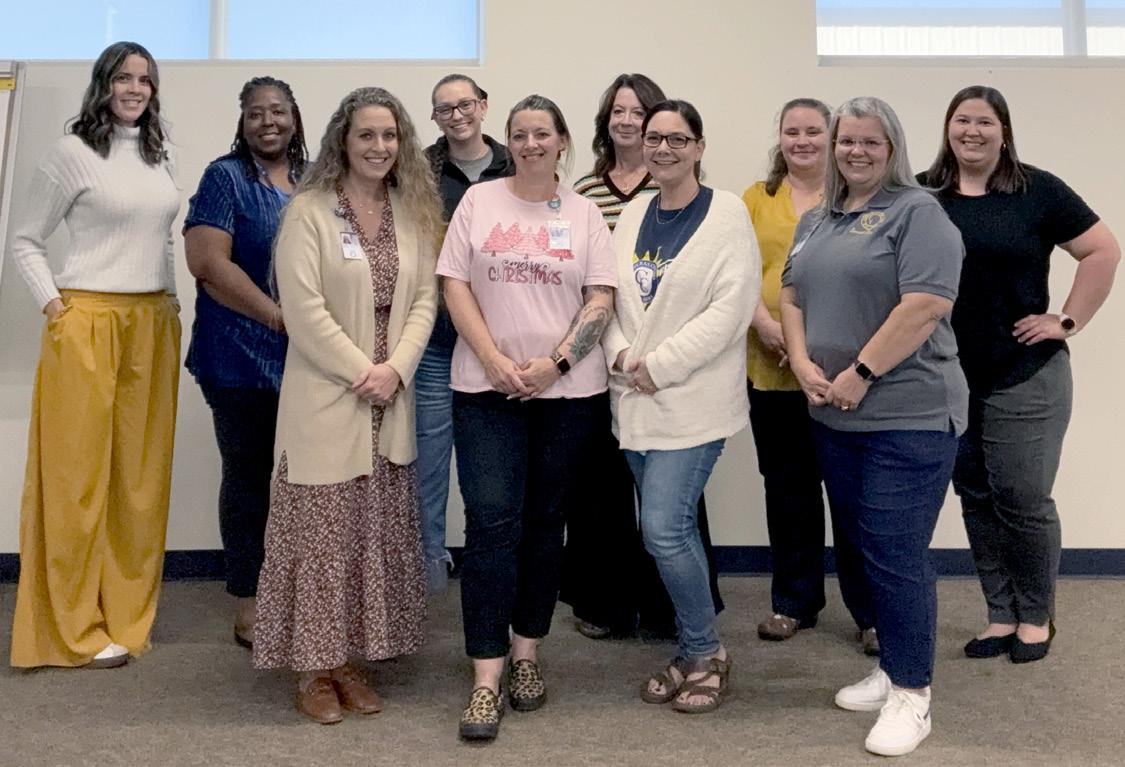
The mentorship in motion program for diagnosticians in Copperas Cove ISD includes weekly meetings and numerous opportunities for professional development and collaborative staffing.
Weekly meetings
Weekly meetings are at the core of the program, providing a forum for both education and collaboration with other diagnosticians and special educators throughout the district.
“It’s a ripple effect,” Sharp says. “It starts with this team meeting weekly and then branches out and has impact across different campuses.”
What do the weekly meetings look like? For a brand-new diagnostician, the meetings begin with learning about the eight cognitive areas and what they look like in the classroom and the impact on the student. The eight cognitive areas are comprehension knowledge, fluid reasoning, working memory, processing speed, learning efficiency, retrieval fluency, auditory processing, and visual processing.
During the meetings, the diagnosticians also review updated TEA guidance and any new handbooks or other materials.
“We do a small teaching at the beginning,” Stevenson says. “Then
we go into our case studies and start connecting all that we’ve newly learned. We love a good debate, too.”
What new diagnosticians also receive is a better understanding of how to convey information to parents and other educators, who may not be as aware of the different ways students can process information. This can include mock Admission, Review, and Dismissal (ARD) meetings that provide an opportunity to roleplay difficult conversations.
The ARD meeting is an opportunity for parents and teachers to have those “aha” moments that help them reach students in new ways. Stevenson recalls a mother who said she was frustrated when her daughter made lists all of the time. She explained to the mom that based on her evaluation as a diagnostician, the daughter needed to make the lists to remember things. And then the mom understood.
“They make the connections while we’re in there,” Stevenson says. Once the “aha” moment takes place, it’s easier to become a team and figure out how to close gaps for a student in the classroom.
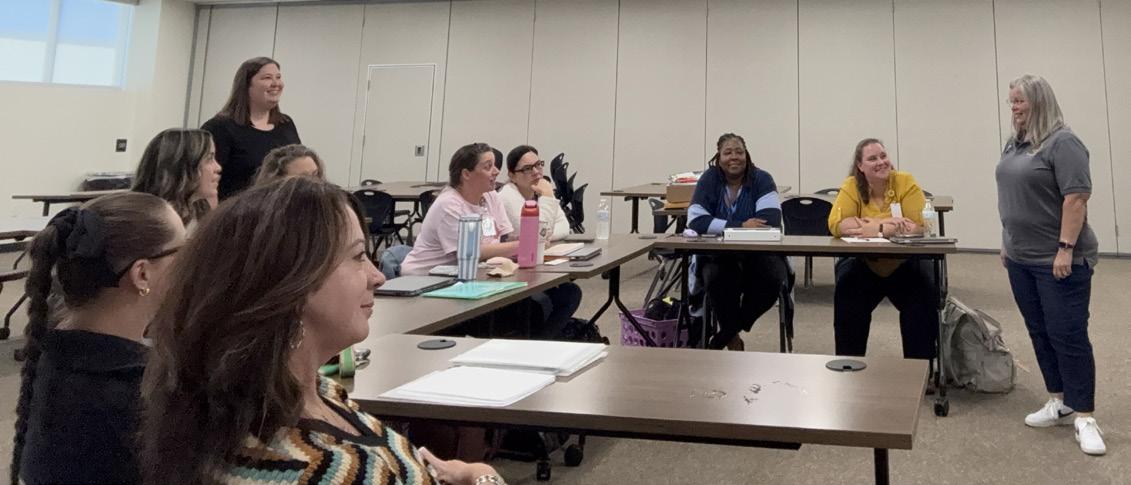
As the team of diagnosticians in Copperas Cove ISD grows in tenure, the mentorship program’s goals have shifted from reducing turnover to leadership development.
A diagnostician must have three years of teaching experience to become certified. The Copperas Cove team says it takes twoand-a-half to three years of on-the-job experience to have a solid footing in the role. At that point, a diagnostician is no longer required to attend the weekly meetings, just specific training on the myriad changes in the field, but the seasoned diagnosticians often keep attending for the opportunity to collaborate.
“It’s hard to make some of these decisions alone,” Lavallee says.
“When other diagnosticians come to our district, even if they’re veterans, they appreciate that it’s not on the shoulders of just one person.”
The collaboration continues informally, as well.
“We get phone calls all the time, and we have a giant group chat. A question will come up in a group chat, and everyone is there to help. I've never found a more supportive team that just jumps right in.”
Looking toward the future
As the team of diagnosticians in Copperas Cove ISD grows in tenure, the mentorship program’s goals have shifted from reducing turnover to leadership development.
“The more we build and support them, the stronger their evaluations will be, and the more positively impacted our students and campuses will be,” Sharp says.
As Lavallee says, helping kids is the end result.
“Helping kids who have learning disabilities overcome them or learn how to compensate for them and be productive citizens is the best goal we could ever have. It’s very important for me that we get it right.”
Jack Densmore is a marketing and communications specialist at the Association of Texas Professional Educators.
County: 61
Students served: 80,000
Campuses: 226
Square mile area: 26,000
Executive director: Tanya Larkin
ESC REGION 16
Stronger together: a rural CTE partnership in the Panhandle
by Leila Kalmbach
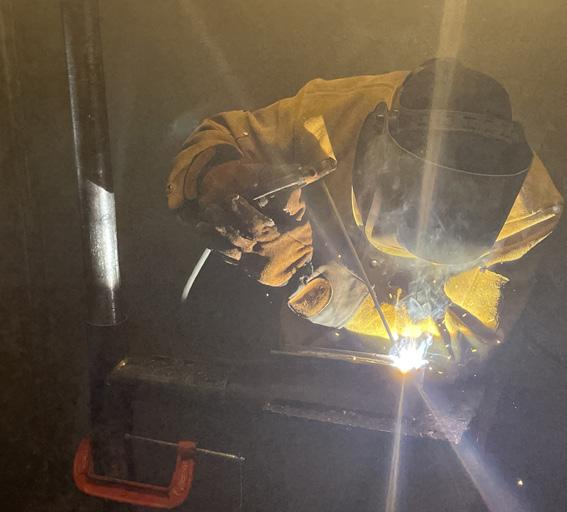
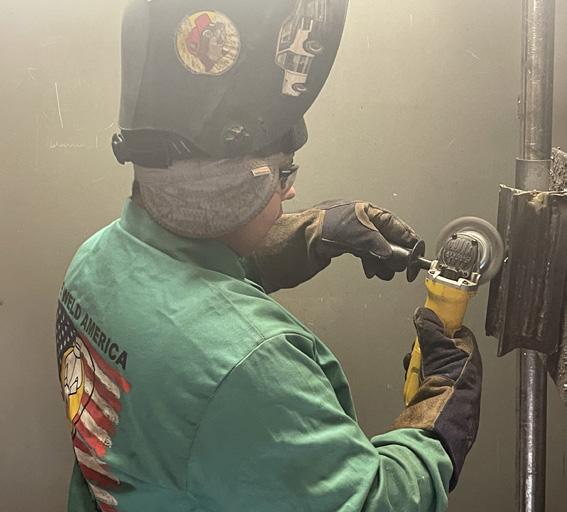
On a weekday morning in the Texas Panhandle, a bus hums east along open ranchland, its students hunched over laptops tethered to the bus’ hotspot. The ride from Texline School to Dalhart is almost 40 minutes; Channing School’s bus comes in from the south, about 30 minutes away. When the doors open at Dalhart High School, teens from the other two districts slip in next to Dalhart students. Some peel off toward a health science lab; others head for a diesel bay. Welding students stay on the bus another 2 miles to Frank Phillips College.
This daily routine is part of the Northwestern Panhandle Innovation Zone, a new Rural Pathway Excellence Partnership, or RPEP, formally designated by the Texas Education Agency this spring and launched to students in August 2025. The premise is straightforward but ambitious: share staff, facilities and schedules
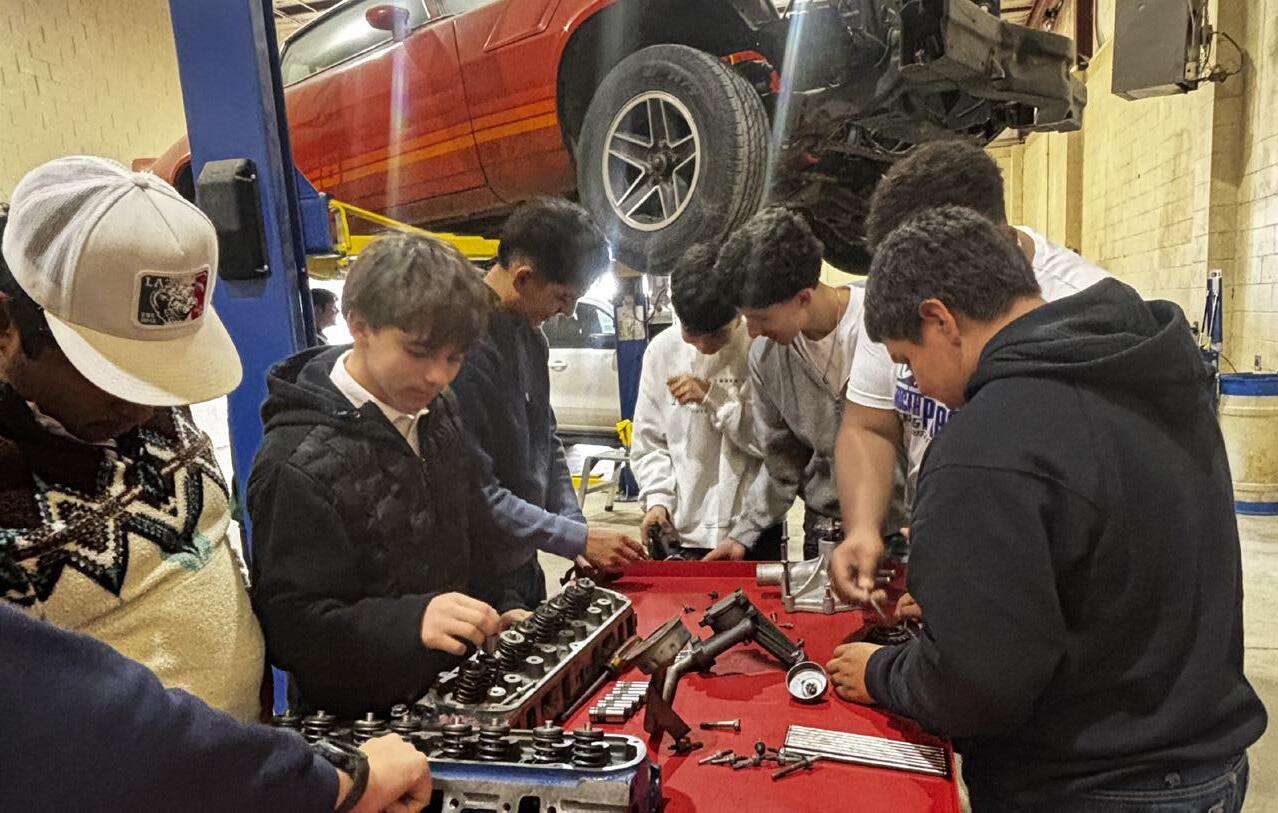
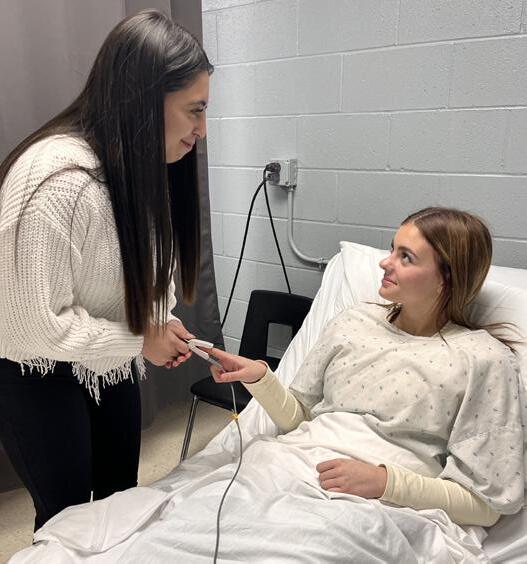
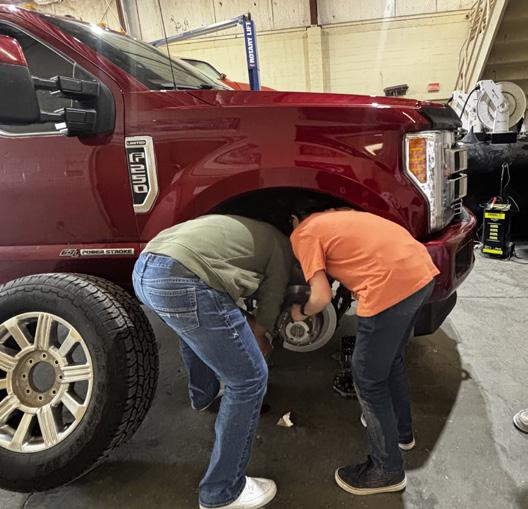
The Northwestern Panhandle Innovation Zone helps schools in ESC Region 16 offer high-demand CTE pathways.
so that small, rural schools can offer high-demand CTE pathways they couldn’t sustain alone.
Dalhart ISD serves as the hub. Students from much smaller districts travel by bus four mornings a week — 22 of Texline ISD’s 227 total students and 11 of Channing ISD’s 128. Split across welding, health science, and diesel mechanics programs, these students work online on unrelated classwork during the commute before joining their in-person classes. Before graduation, many of these students will have earned industry-based certifications that will allow them to get well-paying jobs straight out of high school. Students in the health science program even get to complete their CNA clinical hours senior year.
For Dalhart, the collaboration comes with no direct financial benefit. Under the RPEP statute, districts with fewer than 1,600
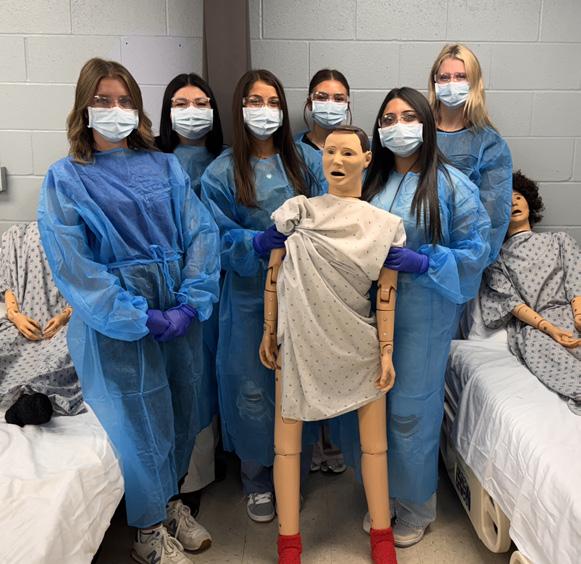
Students from Dalhard, Texline and Channing ISDs come together through the partnership to earn industry-based certifications.
students earn additional weighted average daily attendance funding tied to industry-based certifications. At 1,788 students, however, Dalhart is over the threshold.
“They are doing this out of the goodness of their heart and out of the goodwill of the Texas Panhandle,” says Lawana Pulliam, chief academic officer at Region 16 Education Service Center.
Jeffrey Byrd, superintendent of Dalhart ISD, frames it differently.
“We’re looking three to five years down the road,” he says. By sharing resources among multiple districts, all districts will be able to provide more diverse opportunities for their students.
“Long-term, I want our community to be able to provide middleclass positions,” he says. “And I feel it’s our responsibility to create students who graduate so that if they choose to stay here, they’re qualified for those middle-class positions.”
That focus on community sustainability extends beyond trades.
Health sciences teacher Abbey Garcia shares that the small hospital in Dalhart receives and stabilizes all sorts of patients from around the area, and transfers those who need it to the nearest major trauma center an hour and a half away. Having ample health care staff locally could mean the difference between life and death for some residents.
“We’re out here in the middle of nowhere,” Garcia says. “So keeping the doors open on this hospital means having qualified people who want to live here and to work here. We want to keep as many of these kids in our town at our hospital as possible.”
Garcia, a Dalhart native and former nurse herself, teaches 70 Dalhart students plus the cross-district cohorts in Principles of Health Science and Health Science Theory. The added coordination and larger roster, she says, are small trade-offs for the chance to give students true hands-on experience and a reason to stay in town after graduation.
“There’s something special about taking care of the people in your community,” she says.
And there were certainly additional logistics to solve. For one, both sending districts operate on four-day weeks, while Dalhart runs five. The compromise? Texline and Channing students attend Monday through Thursday in person, with clear expectations for online work on Fridays to stay on track with Dalhart’s schedule.
Time management brought its own challenges, says the program’s coordinator, Jackie Graves, who joined Region 16 ESC specifically to manage this program. Given that CTE teachers are teaching multiple courses, students end up with an off period while waiting for their peers to finish class. After some trial and error, Texline and Channing students now have a space at Dalhart High to work on an online core class during that downtime. The buses also have
CTE
offerings in Region 16 are aligned with workforce needs in the local community, preparing students for the most in-demand jobs in their area.
Wi-Fi and students are expected to work in transit to and from their home schools.
For Graves, the human moments make the logistics worthwhile.
“One of the students, she came up to me and she said, ‘I am so grateful that y’all are doing this for me. Y’all have no idea how happy I am for this,’” she said. “I got teary-eyed.”
Other students echo that sentiment. Viviana DeLeon, a Channing ninth grader in Principles of Health Science, says the program has opened her eyes to new career pathways and helped her make new friends who share her goals and ambitions. It’s also helped her learn how to better manage her time.
“Before this program I always did things at the last minute,” she says. “I feel like the responsibility not only gave me a reality check but also gave me a sense of satisfaction about the way I use my time.”
Issabella Reed, a Texline junior taking Health Science Theory, agrees. The program, she says, “has really helped me learn how to manage my time and stay motivated on my own. Since starting, I’ve realized two big things: It takes hard work and determination to keep up with everything, and I’m capable of doing hard things.” It’s also allowed her to actually picture herself working in health care and prepare for some of the real-life situations. For instance, one hands-on learning moment came during a mock emergency in class.
“We were in the health lab checking on patients when we realized one of their babies was missing,” she says. “It instantly put us in ‘fight or flight’ mode! It was fun but also eye-opening because it showed how quickly things can happen in a hospital.”
Texline Superintendent Terrell Jones sees pride rising alongside skill. He’s watched the change in his students firsthand.
“I enjoy watching the boys carry around their welding helmets,” he says. “They’re obviously very proud of their welding helmets. They’re very proud to be able to say, ‘Hey, I’m becoming a welder.’”
The collaboration’s funding comes from multiple sources. A Texas Rural Pathways Network grant supports the full-time coordinator position, and the Greater Texas Foundation dollars and in-kind support from Empower Schools covered startup needs, from classroom backdrops to student lanyards.
Just as important as the funding are lessons shared by other districts. Byrd credits an early visit to the Rural School Innovation Zone in South Texas with beginning to shape the program’s vision.
“They answered a lot of questions for us,” he says. “And we spent the next two years developing how we can meet the needs of our students.” Ultimately, not all of the five districts that joined that visit are currently involved in the collaboration, but Byrd is hopeful that more will join in coming years.
The team built the programs around workforce demand, not just student interest. Region 16’s assistant director for strategic programs, Chris Nies, estimates that of the 26 counties that make up their quadrant of the Texas Panhandle, 80-90% of jobs cluster in just two of those counties.
“While the rest of Texas, their population is rising, ours has been declining for the past few years,” she shares. “Why aren’t people staying here? Well, they’re not staying here because they don’t see opportunity. They don’t see jobs.”
It was important, then, not just that students get the opportunity for CTE training, but that the training they received match up with the region’s needs. Health care and skilled trades were obvious choices. Next up is information technology and cybersecurity, a direct response to employer input from data centers moving into the Panhandle.
The students, for their part, have already started telling the story forward. One Texline sophomore moved back from out of state to join the health pathway. Others are revising graduation plans around certifications that now feel real.
And each day, the region’s future feels a little more connected.
Leila Kalmbach is a freelance writer and self-employment coach for freelancers.
County: Fort Bend Region: 4
Superintendent: Roosevelt Nivens
Enrollment: 42,000
Number of schools: 45
LAMAR CISD
Innovative School Day prepares students for life
by Michael Spurlin
Last year, Lamar CISD launched its Innovative School Day program, which aims to provide students with the life skills to succeed after graduation while also improving the worklife balance of its teachers.
After a pilot program last year, each LCISD campus is participating this year. Every grade level gets one Innovative School Day every two weeks. On that day, teachers meet for collaborative planning in the morning before being free to perform their non-teaching duties. They can use the time to grade papers, have conferences, or put up bulletin boards, or for anything else they need to work on.
“This day serves two purposes,” explains Lamar CISD Superintendent Dr. Roosevelt Nivens. “One is to increase our teacher retention and help staff with their work-life balance. We want to help them so they are not taking so much work home,
The Innovative School Day in Lamar CISD provides collaborative planning time for teachers and activities and speaker events for students.
so that they aren’t working so much in the evenings and on weekends. On the other side, we want to teach students things they would not normally talk about in school. We should be teaching them things like how you pay your taxes, how do credit card interest rates work, what is a credit score.”
While teachers are using their time to catch up on work, students participate in a variety of activities and hear from a number of different speakers. What exactly Innovative School Day looks like for the students will vary from campus to campus, according to LCISD Chief Learning Officer Christi Cottongame.
“Our district is very diverse,” Cottongame says. “We're 385 square miles. So, what works for a campus on this side of town would not necessarily work with students on the other side of town. We leave it up to the leaders of each individual campus.”
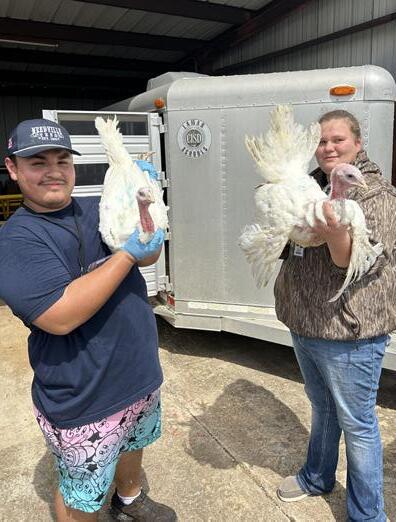
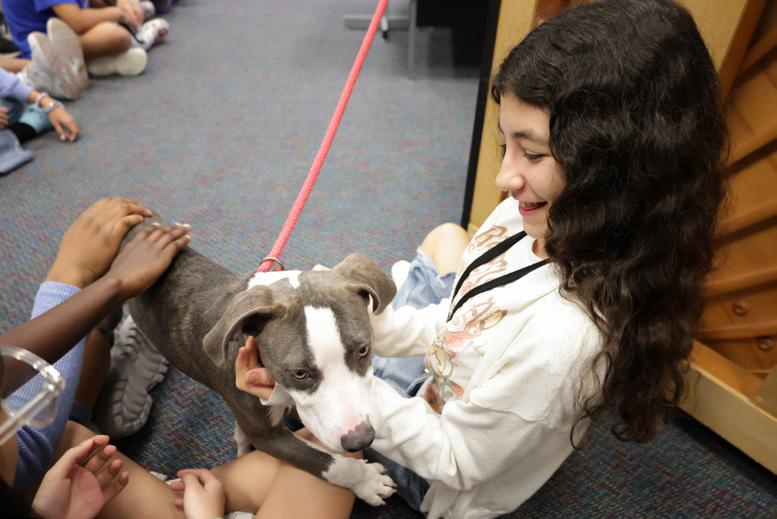
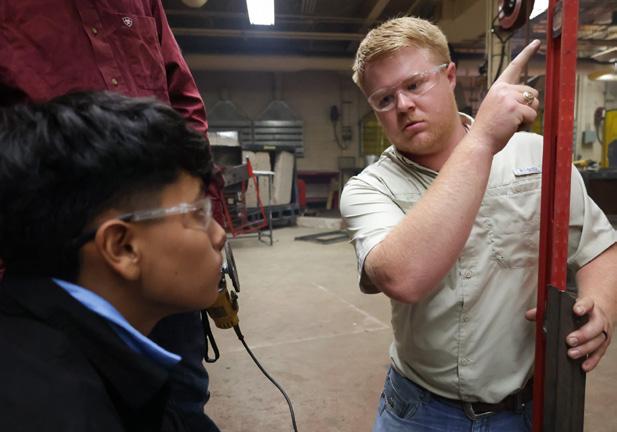
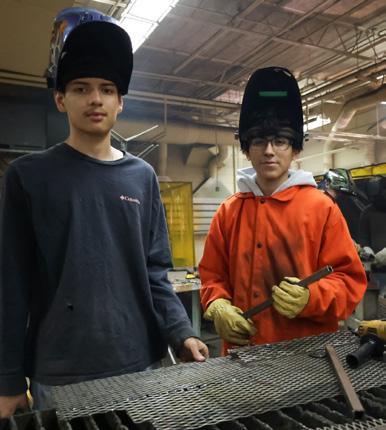
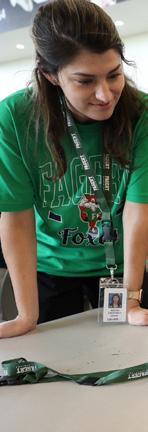
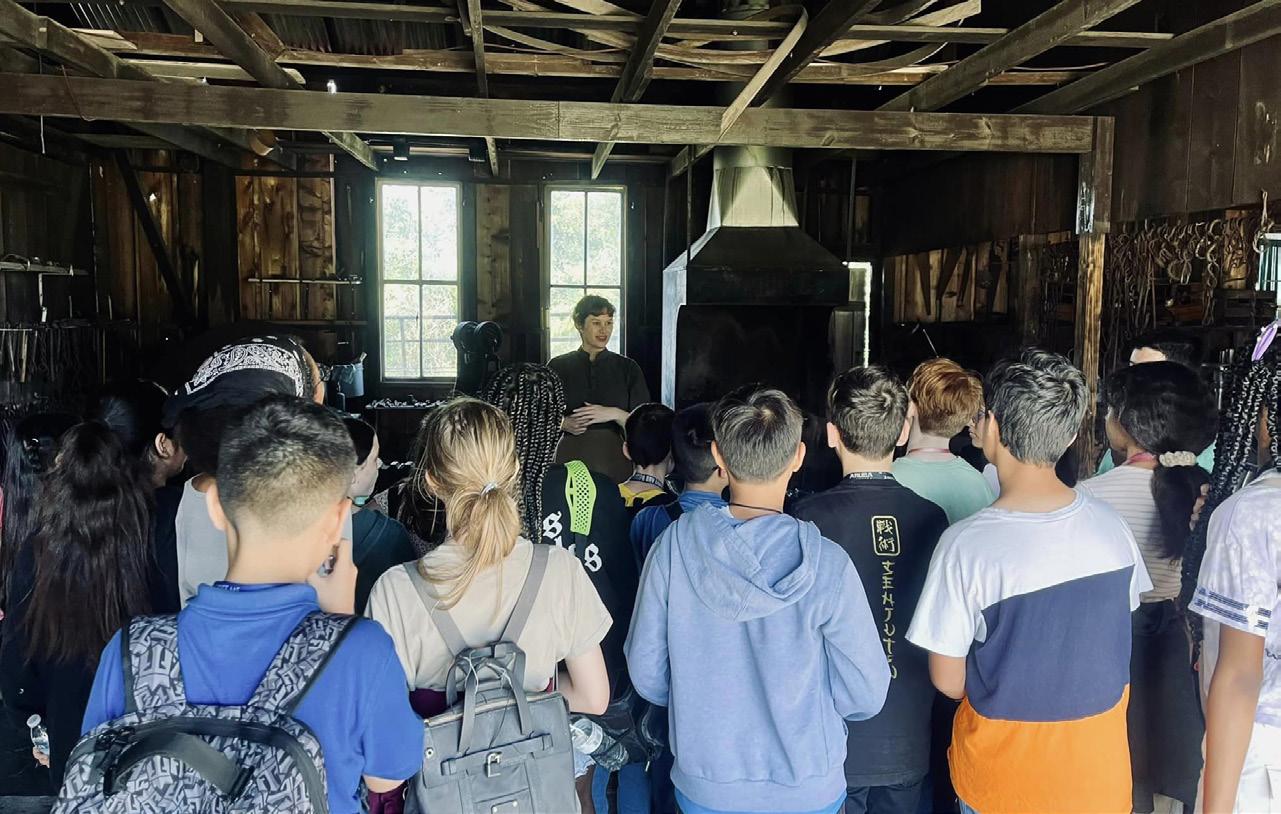
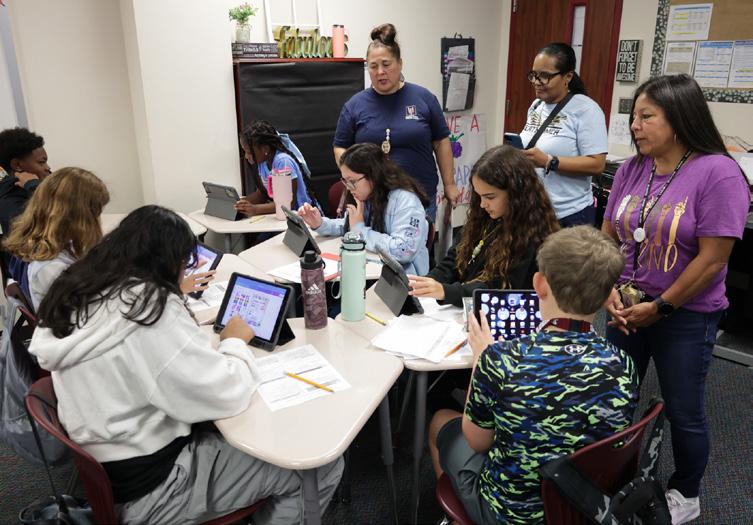
Student activities during the Innovative School Day range from hands-on STEM activities and agricultural lessons to career discussions and SEL exercises.
Students could meet with the school counselor and focus on social-emotional learning lessons. They could also be working in the science lab doing STEM activities. Many times, the school will bring in an outside expert to share lessons or demonstrate what a job is like in their profession.
“For example, some of our campuses have partnered with the YMCA to provide lessons to the students,” Cottongame says. “Another one had a sports photographer come and meet with some students to talk about how he does his job.”
Nivens was inspired to create Innovative School Day in part based on his own experiences. After he graduated from college and had his first job, he realized he was never taught anything about how to pay his taxes. He believes basic financial literacy is something that students in the district should have before they graduate. It comes as no surprise then that many of the days revolve around these types of financial matters.
“This is a great conversation to have with middle school students,” Nivens says. “Some students are learning about credit card interest rates. Once you are a senior in high school and go to college, you get that letter that says you are ‘pre-approved’ for a credit card. Everybody gets excited because it’s their first credit card. However, they don’t read the fine print that says how much the interest rate is. So, I want them to have the knowledge when they go out into the world. Make sure you read that fine print.”
One of the more memorable examples of a unique experience offered to the students was when they had the opportunity to learn about ethical harvesting of turkeys and provide a farm-totable experience.
Agricultural sciences students harvested turkeys before culinary students prepared them. The turkeys were cooked on a grill made by other agricultural students. Later, cooked turkeys were served
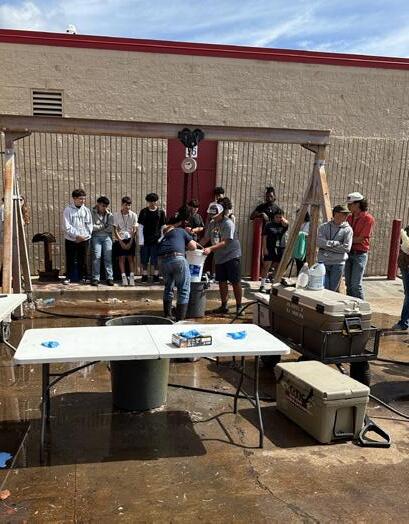

to the entire campus. Every student was able to take something from the experience.
“It was a really good lesson that brought in multiple disciplines and multiple subjects, allowing a lot of students to have that one experience,” Nivens says.
Although the program is relatively new, the feedback the district has received so far is already encouraging.
“I hear a lot from the parents saying how their kids are coming home excited about it, or they'll say, ‘I can't miss today because it's Innovation Day,’” Cottongame says.
As for the teachers, the feedback is even more positive. Nivens says the teachers he has spoken to tell him how much they appreciate the extra time. Many teachers say they are less tired and no longer have to carry bags of papers to grade when they go home.
Additionally, the program has already had a positive impact on teacher retention. The district has seen its retention rate climb 5% after just one year of the pilot program, a number district officials hope continues to climb.
According to Nivens, this program is the only one of its kind currently in the U.S. However, he firmly believes that schools will need to continue to think outside the box and come up with new programs like Innovative School Day.
“Any time I talk to educators, I like to issue challenges,” Nivens says. “One challenge is that we have to think different. Schools in 2025 cannot look exactly like they did in 1975. We have to think bigger. I challenge educators to think outside of the box. Don't be scared to do something even as innovative as this.”
Michael Spurlin is a marketing and communications specialist with the Association of Texas Professional Educators (ATPE) and a freelance writer based in Austin.
Sherman ISD
County: Grayson
Region: 10
Superintendent:
Thomas O'Neal
Enrollment: 7,700
Number of schools: 15
SHERMAN ISD
BLOOMing with confidence: a new approach to early education
by Tommie L. Smith
Beginning school is an emotional journey for everyone involved … students are scared, parents are protective, and teachers are trepidatious. New routines and new challenges abound, and just when that newness manifests itself into fear and sometimes misbehavior that is repetitive, disruptive, and persistent, Sherman ISD begins to BLOOM.
Behavioral Learning Opportunities to Overcome Misbehavior (BLOOM) is a non-traditional, non-disciplinary, Tier 3 Behavior Intervention Program designed to meet the needs of younger students who require more intensive support and a smaller student-to-teacher ratio to facilitate appropriate behavior. Even starting a new school district in grade one or two can be a bit challenging or overwhelming for 6- or 7-year-olds, so SISD continues to support the BLOOMing of their students by making the program available for K-2 students.
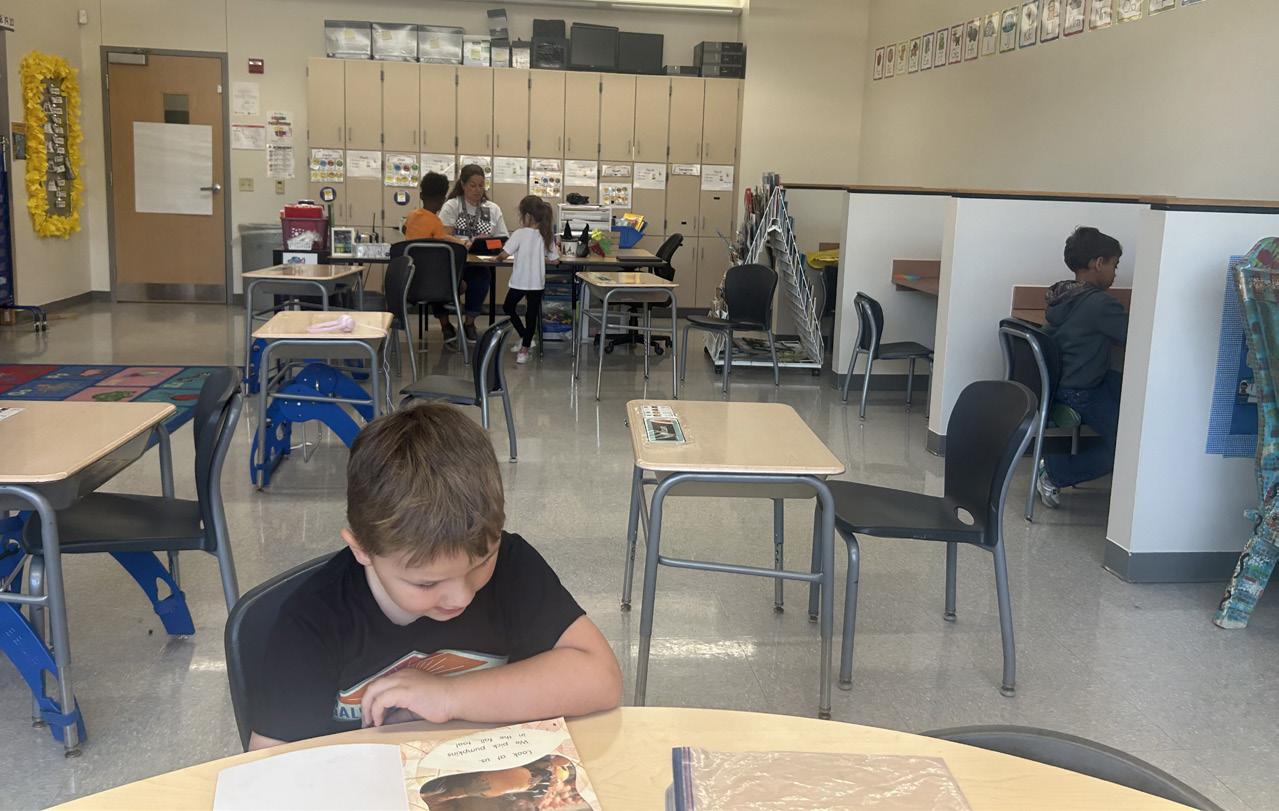
Sherman ISD created the BLOOM program to meet the needs of younger students who need more intensive support and a smaller student-toteacher ratio.
“Sometimes our kindergarten friends struggle with coming to school and doing school things” is how Director for Special Populations Dr. Melissa Ramirez frames the need for BLOOM. Assistance, support, and extended educational opportunities are available to a small number of students who qualify for BLOOM, after a formal and informal teacher assessment aimed at developing a plan to close any learning gaps. Researchbased instructional strategies are implemented to increase engagement, interest, and on-task behavior. Students qualify for the program by being enrolled in grades K-2, displaying noncompliant behaviors that have not improved after numerous accommodations, and having a reasonable prognosis for improvement within a highly structured program.
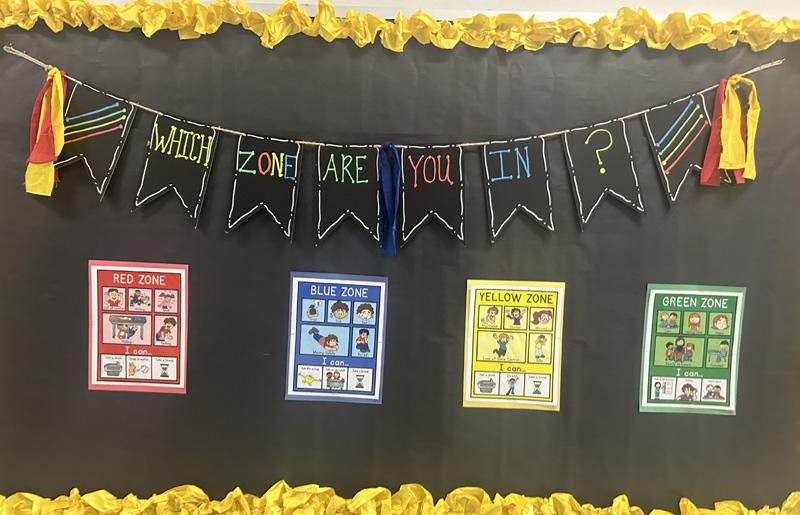
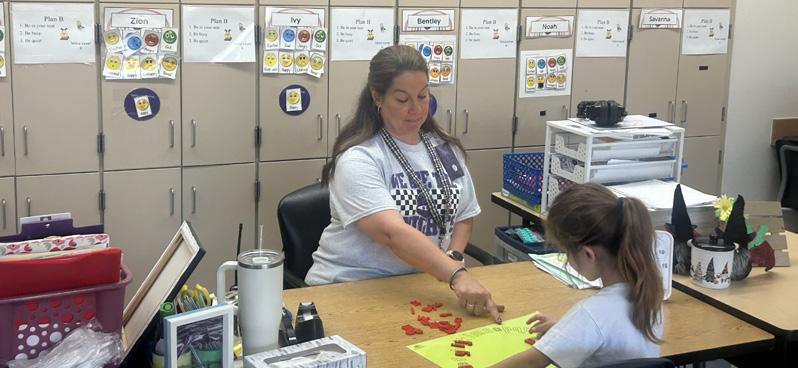
A focus on student ownership of behavior is exemplified by Shawn Muller, BLOOM teacher since the program’s 201819 inception, who puts it best: “This is their classroom; we encourage ownership of behavior and appropriate ways to conduct themselves: ‘This is your classroom, do you want to do this in your classroom, do you want to act like this in your classroom…?’”
Muller’s encouragement is bolstered by focusing on intensive social-emotional learning (SEL), behavior training, and skill development, academic lessons tailored to individual levels, and personalized transition plans. For six to nine weeks, BLOOMing is supported by implementing level systems, reflection centers, self-monitoring, picture/cue cards, and SELfoci. Encouragement and BLOOM curriculum are provided with assistance from the classroom aide, Rachel Kurys, who has also been supporting the program since its inception. She and Muller have extensive, connected work histories rooted in specialized student support. Kurys refers to their work in the BLOOM program as “creating our own community.”
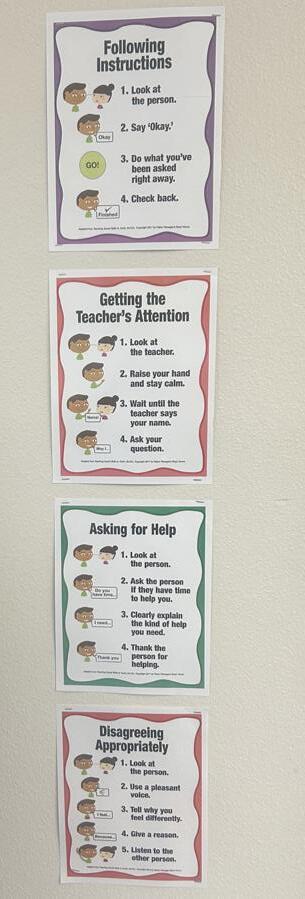
“We work on maturity with our students; they’re new to social interaction but used to lots of screen time,” so growth beyond that has necessitated the assistance of an active and consistent school community connection.
Such a classroom-to-community connection is supported daily in the BLOOM program. With the help of ClassDojo (a communication and behavior management tool that supports private classroom feeds and messages), real-time updates on student progress are provided to parents. Parents can log in and see their students’ progress, and BLOOM parents are logged in every day.
In fact, students know that and are fully invested in their reports, as Muller notes: “They sometimes try to negotiate what is posted and reported … my grandma will see that, and I’ll get in trouble.” Shared photos throughout the school day have facilitated a realtime partnership.
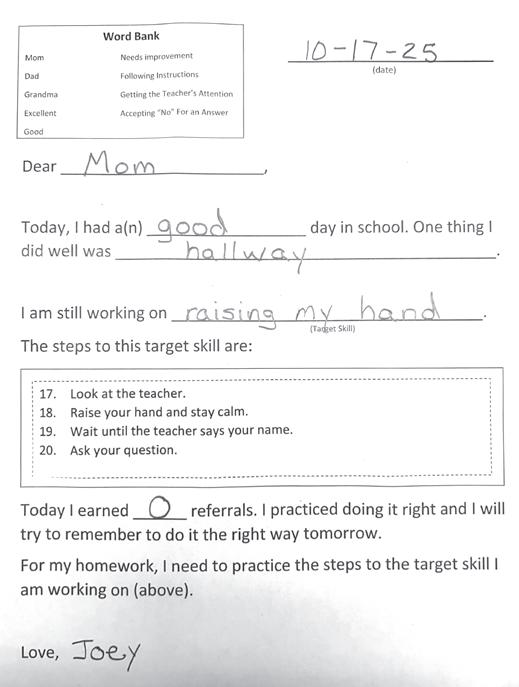
Because daily parent communication and involvement are essential for a full BLOOM, student-written parent letters are provided daily. A student shares his or her own report on their own classroom behavior and success — or need for improvement.
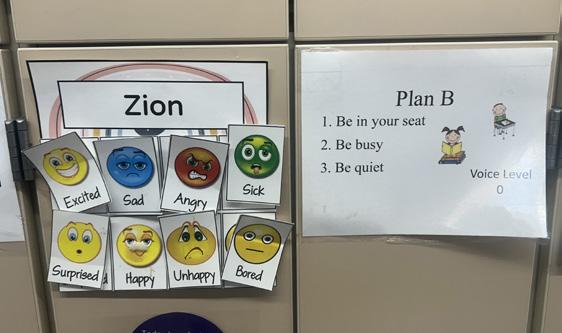
The BLOOM program focuses on SEL, behavior training and skill development.
As Ramirez states, “Strategies and successful classroom interventions are shared with parents. Parents leverage those same successful strategies at home and other places, leading to a comprehensive shift in behavior and indicating a readiness for graduation.”
Brittany Wright, mother of Bentley, one student in the program, noticed an improvement in his behavior while shopping. After problematic behavior in daycare, preschool, and kindergarten, Bentley’s lashing out, distracted behavior, and an inability to appropriately regulate his overstimulation around peers, his first grade teacher decided it was time for Bentley to BLOOM.
Nine weeks later, when Bentley made a request but was refused, he marked the occasion with, “Mom, I just accepted ‘no’.”
Such a blossom in behavior — like the program’s namesake — conversation, and self-monitoring is a marked improvement from his mother’s daily calls and texts from teachers and school administrators, Bentley’s refusal of “no” for an answer, and not fully engaging in the school curriculum. This seemingly simple acknowledgement marked a significant milestone. As Bentley gradually reimmerses into his original classroom, his mother gratefully awaits his graduation.
Yes, students graduate from BLOOM and even participate in a graduation ceremony! Parents and teachers alike swell with pride and joy, knowing how much the students have matured. It’s not just a graduation program, but a continual academic and behavioral BLOOM. Every new skill and positive interaction is a testament to the hard work of students, teachers, school support, and families. The tears represent the solid foundation that will set up each student for a lifetime of success.
Daily parent communication is an essential part of the BLOOM program, with students writing daily letters to their parents.
As schools work toward “educating the whole child,” BLOOM activates Sherman ISD’s entire school community to do just that, creating a network of support that ensures no student is overlooked, left behind, or experiences out-of-class placements due to behavior. Campus administrators, student support staff, teachers, and aides are directly involved in an all-hands-on-deck approach, allowing BLOOM students to tap into their whole educational support team from an early age. Their support system becomes a permanent fixture in their school community, fostering a shared vision for success. Students learn to take responsibility for their classroom conduct and apply those same appropriate behaviors at home and beyond, a practice that develops vital skills for lifelong success.
Dr. Tommie L. Smith is a school public relations professional and active member of the Texas School Public Relations Association (TSPRA). DrTommieSmith@gmail.com
County: Hays
Region: 13
Superintendent:
Greg Bonewald
Enrollment: 2,700
Number of schools: 4
WIMBERLEY ISD
Collaborative community project helps neurodivergent students gain valuable vocational skills
by Autumn Rhea Carpenter
During the COVID-19 pandemic, community connections struggled. The Wimberley ISD 18+ program needed to keep working on vocational skills with their neurodivergent students. A small gardening project grew into a lasting community legacy that Wimberley has wholeheartedly wrapped its arms around.
The 18+ program, a community-based, post-high school vocational and training program, provides qualifying special education students (ages 18-22) who have met their high school academic requirements with additional assistance transitioning to adult life. The focus is on vocational skills and eventual employment as well as independent living skills.
“The key to our students' success is community contacts and the
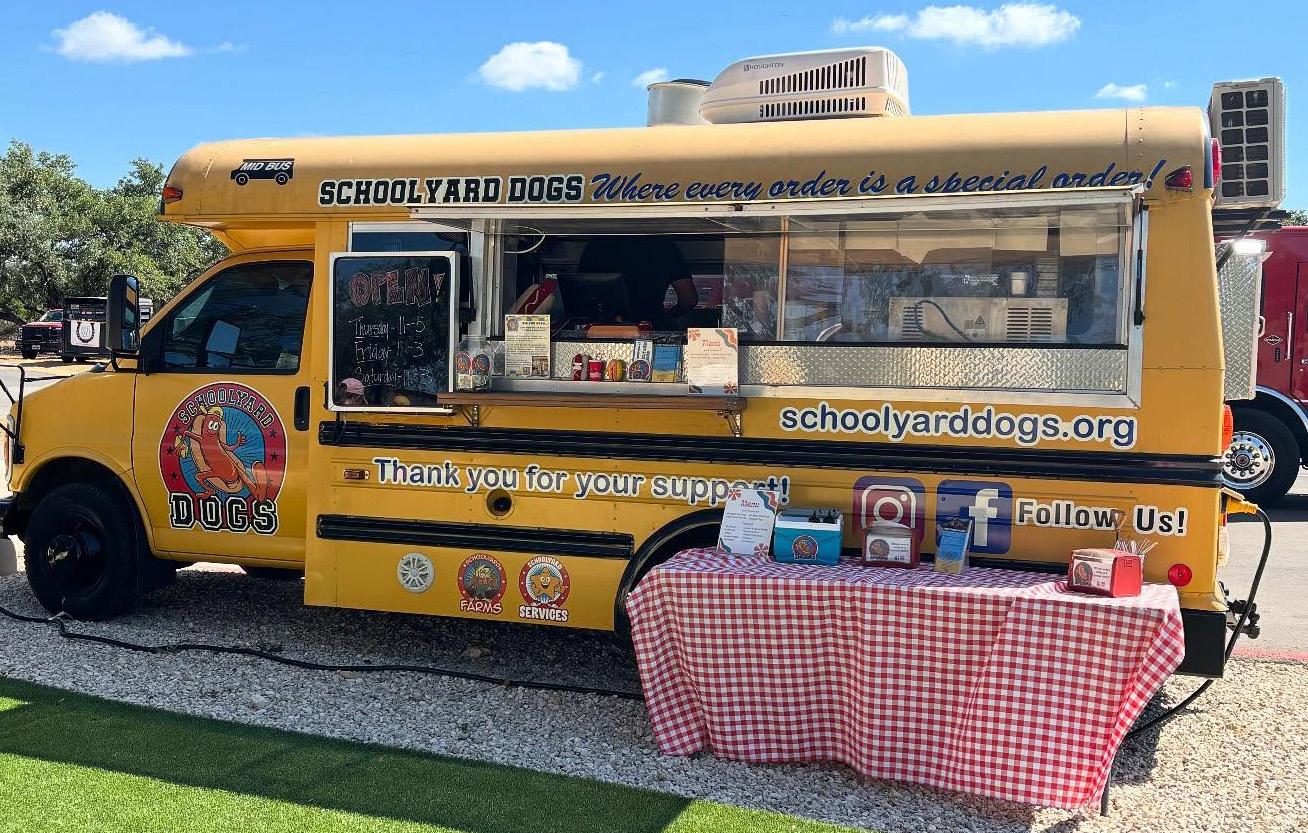
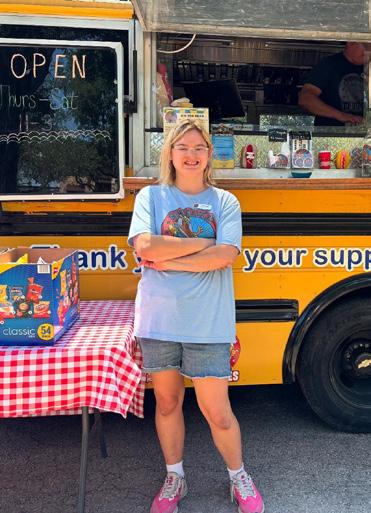
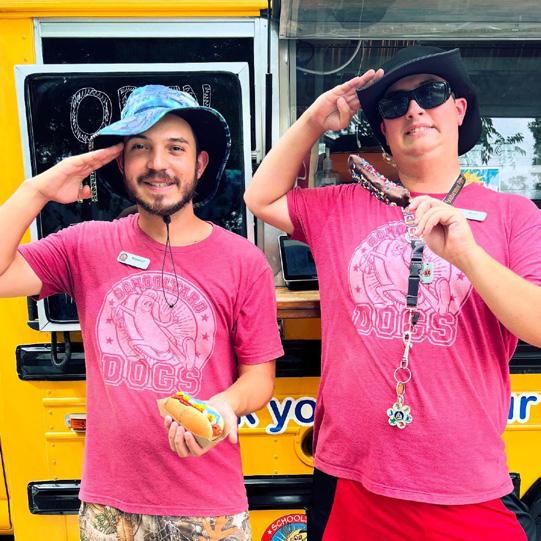
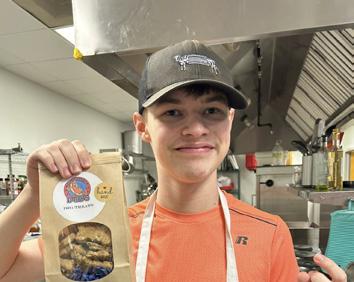
The 18+ program in Wimberley ISD includes a student-run food truck called Schoolyard Dogs.
network of people who have a heart for our population,” says 18+ teacher Ryan Durkin, who is in his 10th year in Wimberley ISD and has spent 24 years in public education. “In Wimberley, we have an abundance of people with kind and giving hearts.”
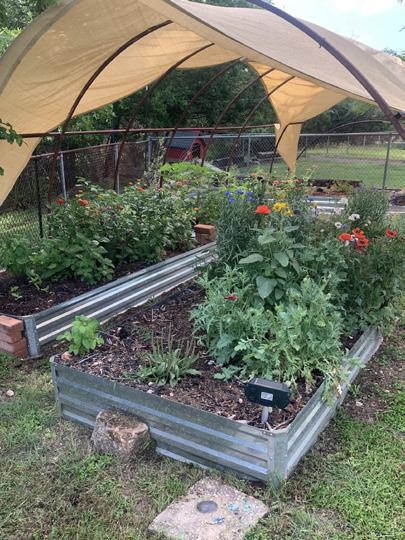
In the 2018-19 school year, the group moved to Scudder Elementary (now Texan Academy @ Scudder) after the district built a new primary campus. When they arrived, a small overgrown garden existed containing five small, raised beds on campus. Some of the 18+ students had previously worked at a local plant and garden store, Wimberley Gardens. With help from the Wimberley Education Foundation, the program acquired 17 more raised beds to bring the 800-1,000-square foot garden space to life.
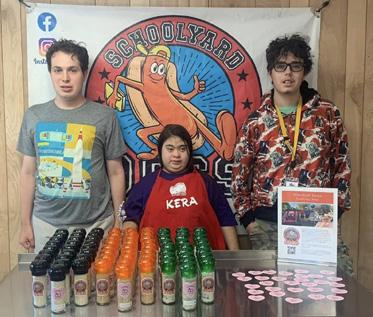
“Wimberley Gardens had a dump truck full of garden soil delivered and Schoolyard Farms was born,” Durkin says. “They also provided large garden hoops to cover the raised beds plus way more gardening knowledge than we had.”
The students planted blackberries, jalapenos, habaneros, lettuce, and spinach in the first garden as well as pomegranate, apple, and plum trees. The current fall garden contains pumpkins, assorted herbs, spinach, peppers, lettuce varieties, loofahs, and goji berries. The organization was already incubating and raising quails before the pandemic. They added a water catchment system (thanks to Integro Solutions). Every drop of water used is collected rainwater. They are also in the process of adding a chicken coop and a large greenhouse thanks to local donations from the Wimberley Garden Club and the Wimberley VFW. In the past five years, the 18+ program has had 20-30 participants at Schoolyard Farms and former students volunteer at the farm after completing the program.
The garden and farm provide daily chores and routines that allow the neurodivergent students to follow checklists and eventually complete tasks independently. It also provides them the freedom to try new things and experiment with growing different produce and flowers.
“Farm work enables students to grow their critical thinking skills,


practice workplace communication, and teamwork in a safe environment,” Durkin says. “Work stamina is also an important skill for those who wish to seek competitive employment after leaving the program.”
Wimberley High School student Jasper Perkins Smith worked at the farm and enjoyed watering the garden and walking his favorite donkey, Bubbles. His brother, Rufus, also enjoyed watering duties, chopping onions, and washing dishes. Both brothers were diagnosed with autism and their parents, Mickey Perkins and Roger Smith, started thinking about next steps for their boys. When Jasper and Rufus graduated from Wimberley High School and aged out of the 18+ program, they realized that there are few job training and employment resources for them.
“In 2020, I dreamed that I bought a special education bus and started selling hot dogs out of it,” Mickey Perkins says. “Hot dogs are Jasper’s favorite food. I told Roger about the dream, and he thought it was amusing. To his surprise, I found a bus about a month later and bought it.”
The couple invested $25,000, allotting $10,000 to update the electrical system; they also purchased a 10-burner range/double oven, a griddle, and a bread oven, along with everything needed to run a commercial kitchen. In 2023, the bus conversion was completed and Schoolyard Dogs launched on July 4, 2024.


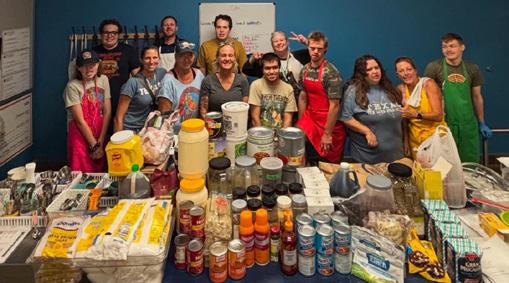
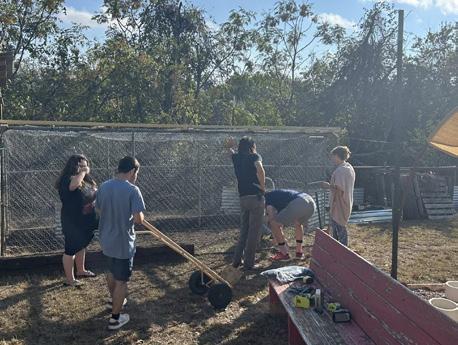

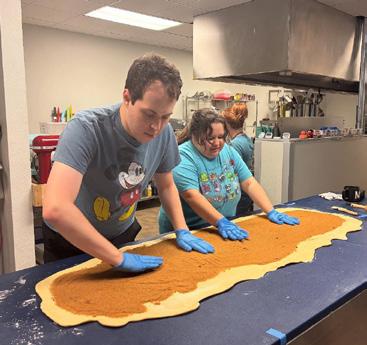
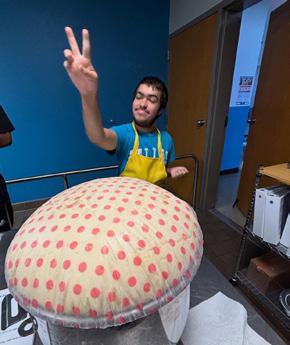
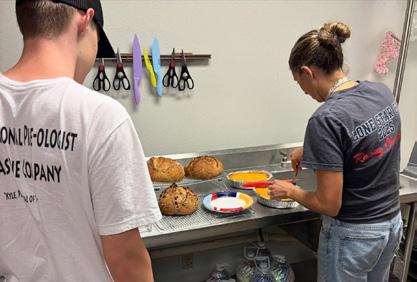
Wimberley ISD provides 18+ students with the skills they need to complete tasks independently, preparing them for life beyond the classroom.
Schoolyard Dogs serves hot dogs, chili dogs, and specialty dogs as well as Frito pies, cookies, and frozen bananas.
“Jasper loves a hot dog with a lot of ketchup which we call ‘The Crime Scene.’ Ironically, Rufus does not like hot dogs,” Mickey Perkins says.
A regular customer at Schoolyard Dogs, Wimberley resident Donna Sloan emphasizes its impact on the community.
“They provide skills for folks who otherwise might not be earning a paycheck, and they feel successful while building relationships and learning,” she says. “There is always positive energy at the bus, lots of smiles, and hugs. It is so fantastic to see these young adults grow.”
The couple’s long-term goal has evolved into Schoolyard Services, a nonprofit aimed at creating a community center for neurodivergent and disabled adults living in the Wimberley area.
“There is almost no governmental support for adults with disabilities, which is terrible for them, hard on their families, and a disservice to their communities since otherwise there is little integration,” Perkins says.
This initiative is an example of excellence in the world of public school partnerships.
“When students, parents, and teachers are empowered to be innovative and are encouraged to create real-world learning opportunities that extend beyond the walls of the schools, the results can be magical,” says WISD Superintendent Greg Bonewald. “Their work is an inspiration to our community and encourages us all to dream bigger when thinking about the capacity within each of us to impact positive change.”
Bonewald suggests that school districts interested in duplicating the Schoolyard model should start with a passionate and committed staff and a supportive community.
“So much of the success of the Schoolyard Dogs and Schoolyard Farms programs is a result of staff members who routinely pour into our students with extra time, care, patience, and a willingness to think of and implement innovative ideas,” he says. “You need to have or develop connections with your community to support collaborative projects like this. I'm so grateful for the number of donations — equipment, time, and money — that have contributed to the success of these programs. It's morphed into something that certainly isn't owned by Wimberley ISD, but instead is truly a community-based project.”
Autumn Rhea Carpenter is a freelance writer based in Portland, Oregon.
Woodville SD
County: Tyler Region: 5
Superintendent: Lisa Meysembourg
Enrollment: 1,200
Number of schools: 4
WOODVILLE ISD
Supporting the Toolbelt Generation: WISD enters fourth year of plumbing program with lots to brag about
by Stacy Evans
In the last few years, the media have christened Gen Z the “toolbelt generation,” perhaps to the chagrin of their college-educated parents, many of whom assumed their offspring would follow their footsteps into higher education.
But in June of this year, the Associated Press sounded the alarm with a troubling headline: “Unemployment among young college graduates outpaces overall U.S. joblessness rate.” The author of this worrying piece speculated that the burgeoning field of artificial intelligence may be to blame for the lack of entry level opportunities in white collar fields such as law, technology and finance.
Between the lines of these diverging think pieces, the message is clear: As educators of adolescents, we need to do a better job of making sure young people in Texas have the tools to
Master plumber/ teacher
John Bunker helped start the CTE plumbing program in Woodville ISD.
realize their dreams, even if it means rethinking the “college for all” ethos that has dominated our collective school culture in recent decades.

Enter Lisa Meysembourg, superintendent of Woodville ISD, a rural district in deep East Texas. When she joined the district seven years ago, she made it her mission to grow their CTE programs. So in 2022, when she received a call from John Bunker, a retired master plumber who was anxious to lead the next generation of tradesmen after learning about the Texas State Board of Plumbing Examiners’ program, she didn’t need convincing.
John Bunker
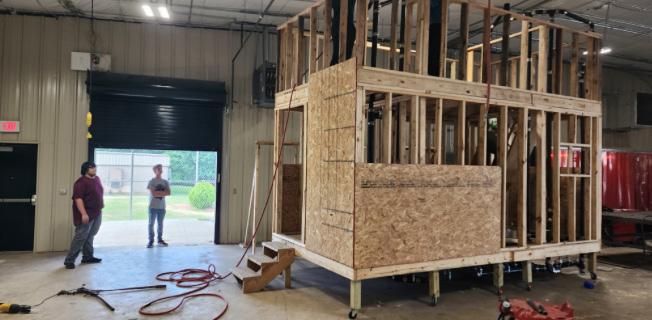
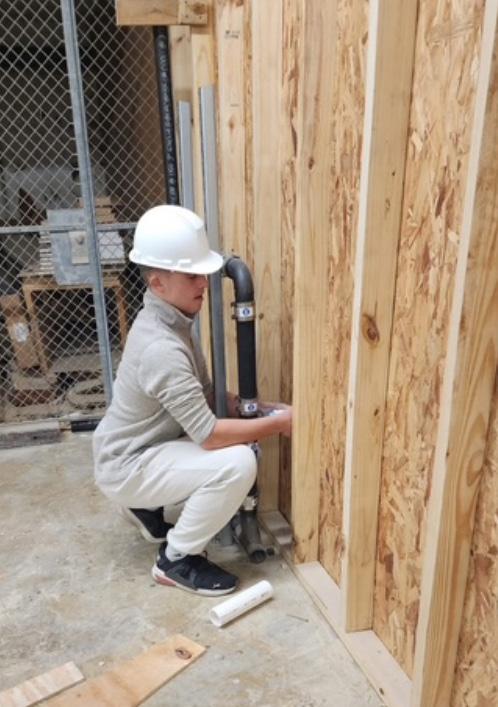
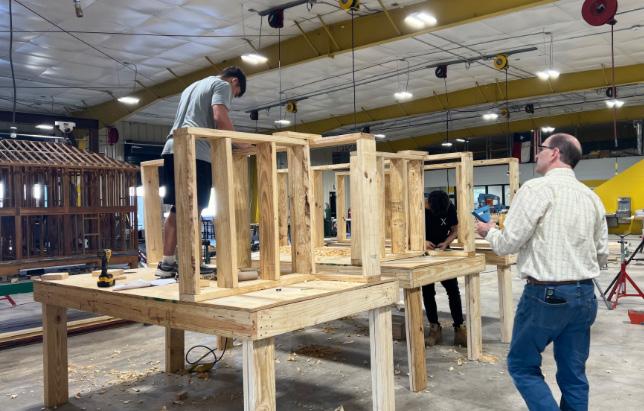
Plumbing CTE students work on a mock-up of a two-story house on the Woodville High School campus.
“I said, ‘Let's figure it out,’” the superintendent says. “Let's go!’ Meysembourg is quick to give credit to Bunker, her right hand man — an expert in the field of plumbing, but a newcomer to teaching when the program started four years ago.
“He’s the one who was really the driving force behind this program. I just gave him the space, and the ability to do it — and we’ve been working together ever since!”
The space in question, refurbished by funds made available after a May 2022 bond election, features a first-of-its-kind model of a two story-house, where students can get hands-on experience in solving “real world” plumbing challenges — without ever leaving the Woodville High School campus.
“The space is great,” says Bunker, “and we really just put together the mock-up house out of necessity. The biggest challenge for me was just being a new teacher in the public schools. I will say that the administration has been very generous with me — and with the CTE people in general — they have given us some latitude. They understand that it's a different world in the trades.”
For members of the “Toolbelt Generation” and beyond, there is good money to be made in the trades, and though plumbing may not be the most attractive career out there, in the current job market, its appeal may be in its stability.
When asked how she successfully markets the plumbing program to skeptical students, Meysembourg once again praises the program’s passionate instructor, Bunker, and his ability to keep
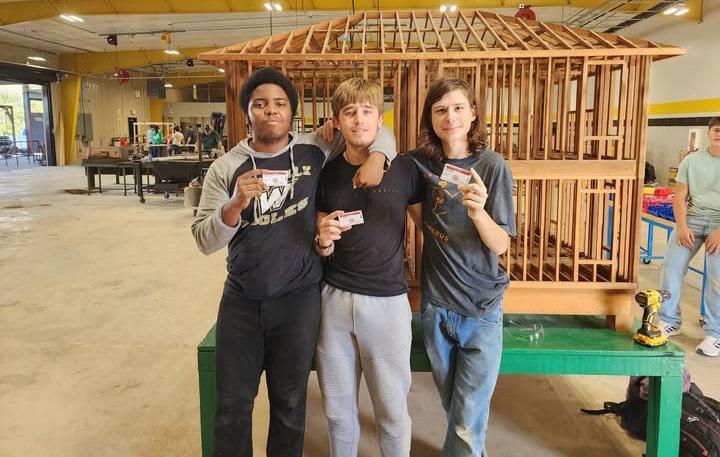
Woodville students
Carmelo Castle, Jerry Dove, and John Owen pose with their Plumbing Apprenticeship Cards.
students motivated and inspired. She says word travels fast on campus, and the kids appreciate the plumber-turned-teacher's unconventional background.
“He brings so many connections and opportunities that our kids would not have access to otherwise,” says the superintendent. “He has partnerships with the plumbers union, and he’s connected to a lot of the different vendors and contractors, because of his history working in the field. So he is able to take our kids on field trips and bring presenters in.”
Asked what advice she would give to administrators in other parts of Texas who would like to bolster their CTE programs, Meysembourg says she was fortunate the plumbing program wasn’t her first rodeo. In the recent past, she’d facilitated the onboarding of an auto body and collision professional who had also been a newcomer to teaching.
“What I have learned through this process is, number one: It takes time. There is a different level of mentorship that’s needed for people who have that expertise in the trades, because as Mr. Bunker indicated, they really are coming from a different world. They’re coming from a business mindset, and we need to get them into an education mindset. I make sure that we stay open-minded and truly listen to what they have to say. At the same time, I need them to understand things from the school’s perspective as well, so we can reach a consensus.”
Three students from the program’s first cohort received their apprentice licenses last summer, and they were actually hired
by the plumbing company that had been awarded the bid for new construction in the district. In that way, WISD’s plumbing program has been the gift that keeps on giving. Bunker says he’s proud of what they’ve accomplished in the last four years.
The instructor points to Carmelo Castle, a 2025 graduate with the distinction of being the first student in the state of Texas to complete the approved plumbing program in high school and pass the state plumbing exam upon graduation. Castle was recently accepted into the Beaumont Plumbers Local as a secondyear apprentice, giving him a huge jumpstart on his career.
Superintendent Meysembourg says they hope to have Castle come back to Woodville High School and speak to students.
“Now that we have had Carmelo be so successful,” says Meysembourg, “word is getting around. I have had a couple of people in neighboring districts say, ‘Hey, if I have a kid or two, can we send them?’ I say, ‘Absolutely, you can send them!’ because this is not just about Woodville.”
Indeed, Meysembourg recognizes that making special arrangements for these students is a small price to pay for growing the economy and the workforce in the entire region. With thoughtful leadership like this, and a team that values pragmatism and collaboration, educators in the Lone Star State are doing their part to make sure the Texas economy stays as strong as ever.
Stacy Evans is a state-certified secondary teacher who spent five years working with students throughout the state of Texas. She has been a freelance writer for more than 20 years.
Yantis ISD
County: Wood Region: 7
Superintendent: James Cowley
Enrollment: 350
Number of schools: 2
YANTIS ISD
Chicken farm leads to districtwide collaboration
by Matthew LeBlanc
On a crisp fall morning in Yantis, the sound of soft clucking joins the chatter of students on their way to class. Just beyond the elementary playground, a group of high school students lean over the fence of a tidy chicken run, inspecting the day’s eggs nestled in straw. For the Yantis High School agriculture education department, it’s the real-life result of vision, teamwork and a simple idea that hatched into something extraordinary.
What began as a hands-on learning project has grown into a districtwide collaboration connecting students from prekindergarten through high school, tying classroom learning into lessons about responsibility, sustainability and community. The Yantis chicken farm started with a challenge: How could the
Students in Yantis ISD's agricultural mechanics classes built a chicken coop and work to raise and care for chickens as part of the CTE program.
agriculture department give students a true farm experience right on their campus? In fall 2024, that question sparked a meeting between YHS Principal Austin Baxley, the agriculture department and the elementary principal.
“We were discussing the need to increase participation in our CTE programs and the need for enrichment activities at our elementary school,” Baxley says. “Our ag mechanics teacher, Michael Moore, suggested the idea of building the chicken coop. Everyone agreed it was a great idea, and we began planning that day.”
Students in the agricultural mechanics classes designed, budgeted and built a modern chicken coop from the ground up. From framing to roofing, every step was student-driven. They fenced in a run, added shade by modifying an existing structure and created
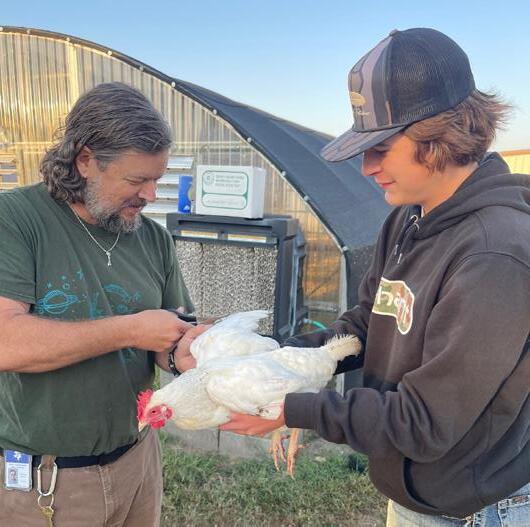
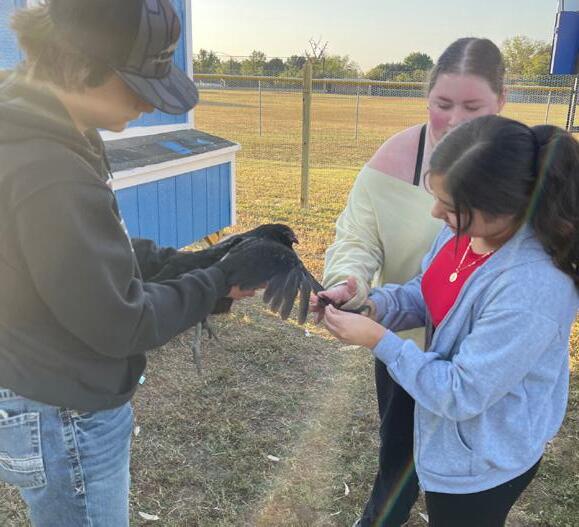

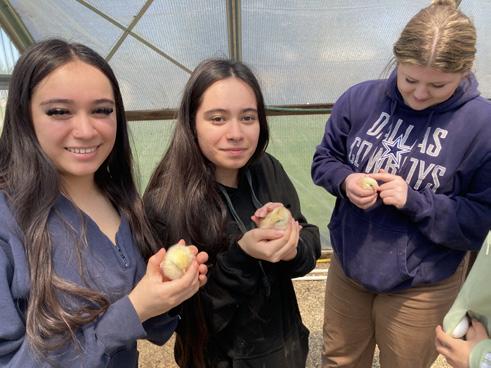

a space that would serve as both a learning lab and a working farm.
“We wanted the students to feel ownership of the project so that they would be invested in its success,” Baxley says. “By having them design, construct and maintain it, they had constant opportunities for hands-on learning as they put the idea into action.”
When the structure was complete, the project began to take on a life of its own. A local farmer donated a starter flock of 12 hens, and the small group of builders became caretakers. Students rotated through daily responsibilities, feeding and watering, collecting eggs, cleaning the coop and learning how to handle everything from wing clipping to chick care.
“Yantis is a community where farming has been part of our history and identity, but there are few working family farms anymore,” Moore says. “The idea for this project began as a way to give an authentic agricultural experience to our students and help them get in touch with their community’s roots.”
From there, the project quickly expanded beyond just caring for the chickens.
“From an agricultural perspective, this touched on some aspect of almost every course we teach,” Moore says. “It’s been a small-scale farm-to-table enterprise, but we didn’t want to keep it to ourselves. Teachers from other subjects were invited to bring their classes to visit, feed the birds and use them for science lessons or examples of animal behavior.”
In Yantis, the elementary and high school sit next to each other. Proximity, along with a common goal of maximizing hands-on learning, saw the impact of the project spread districtwide.
“This project has positively impacted learning across grade levels,” Baxley says. “Elementary students have enriching science lessons with live animals, and secondary students are practicing carpentry, manufacturing, maintenance and animal care with realworld materials.”
Elementary teachers have turned visits to the coop into hands-on lessons, showing younger students life cycles and ecosystems in motion right outside their playground. Art students have painted the farm’s feathered residents in bright, detailed works. Culinary arts students use the eggs in recipes, learning about sustainability and local sourcing.
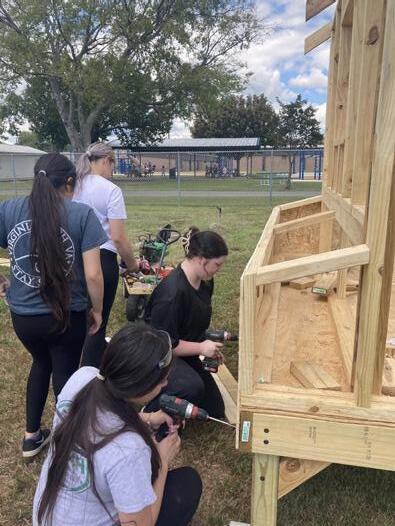
“Experiential learning is one of the best ways to understand something. This has given our students the opportunity to engage in the full spectrum of what it means to create and maintain an agricultural business.”
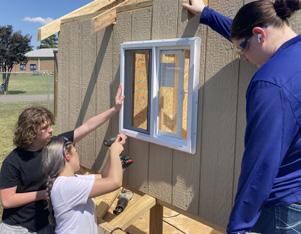
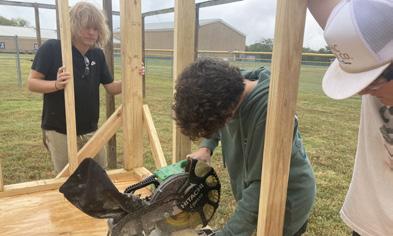

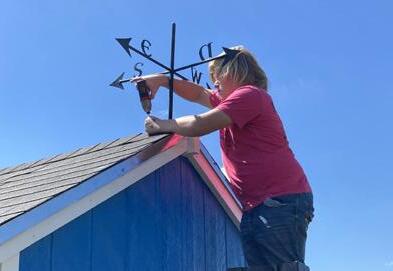
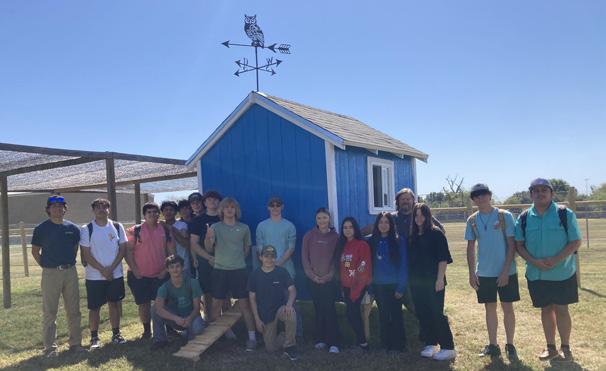
“The chickens are used for many different things than just eggs,” says Justice Vivion, a student involved in the project. “Our science classes use the chickens, and the elementary kids go and see them to learn about the chickens. It also shows that our FFA can raise animals and shows responsibility for our school.”
But the impact of this project doesn’t end inside the school gates. Using an honor-system box near the elementary entrance, students sell surplus eggs to the community. The system operates on trust, inviting neighbors to leave payment and take a carton of eggs. The proceeds help fund the program.
“The eggs produced by the flock make the program selfsustaining,” Moore says. “The honor box donations help us purchase feed, chicks and other needs. It also allows us to provide eggs for the culinary program, creating a true farm-to-table connection right here at school.”
Students who helped build and now maintain the coop have seen firsthand how something simple can unite a school.
“It’s great to think that my friends and I created something the community and school can enjoy just as much as we enjoyed making it,” says Ashton Rodriguez, a student who helped build the coop.
Classmate Tommy Mitchell adds, “It feels great that other people get to experience something we built and so many people get to enjoy it.”
And everybody is invested in the project’s success. Neighbors stop by and volunteer advice and materials. Elementary students spend recess checking on the chickens. Parents chat with students when they come by to purchase eggs.
“Experiential learning is one of the best ways to understand something,” Moore says. “This has given our students the opportunity to engage in the full spectrum of what it means to create and maintain an agricultural business. There’s real value in cultivating the desire and ability in young people to care for other living creatures.”
In Yantis, that lesson isn’t just taught. It’s lived, one coop, one class and one egg at a time.
Matthew LeBlanc is the executive director of communications in Eagle Mountain-Saginaw ISD. He has spent more than a decade serving public schools in Texas, and before that spent close to 20 years as a news and sports broadcaster.