
BRITISH SCHOOLS OVERSEAS INSPECTION REPORT 2025

Tanglin Trust School
British Schools Overseas Inspection Report
Inspection Dates: 3 to 7 November 2025
Lead Inspector: Valerie Dunsford
Team: Sam Hyman
Sally Lane
Dee Russell-Thomas
Kaushi Silva
Age Group: 3 to 18 years
Report Published: 28 November 2025
Report Reference Number: 11/73/2025
Purpose and scope of the inspection
This inspection report follows the English Department for Education (DfE) schedule for the inspection of British schools overseas. The inspection was carried out by five inspectors from Education Development Trust who spent five days at the school. Education Development Trust is a body approved by the British government for the purpose of inspecting schools overseas and quality assured by the Office for Standards in Education (Ofsted).
Education Development Trust is one of the world’s leading not-for-profit education companies, providing a range of education services in the UK and internationally. Education Development Trust employs staff worldwide, all working on projects relating to educational quality.
To be recognised by the Department for Education, a British School Overseas (BSO) must have an inspection report which shows that its performance against all the standards is at least satisfactory. This reflects the standards required for continuing registration as a school in England. Schools meeting the standards will have their inspection reports published on the Department's website and will be added to the register, ‘Get information about schools’.
Inspectors report on the extent to which schools meet the relevant standards for BSO accreditation. The inspection follows closely the framework for the inspection of independent schools in England but, where appropriate, also takes account of compliance with local regulations.
The DfE updated the standards in August 2023. The new standards aligned the BSO standards with the Independent School Standards (ISS) and National Minimum Standards (NMS) for Boarding applied to schools in England; clarified and reiterated the relationship between the UK and host country laws and reshaped staff recruitment standards to ensure international applicability.
The BSO standards are as follows:
Part 1. The quality of education provided by the school (Curriculum, Teaching and Assessment).
Part 2. The spiritual, moral, social and cultural development of pupils.
Part 3. The welfare, health and safety of the pupils.
Part 4. The suitability of the proprietor and staff.
Part 5. The premises and accommodation.
Part 6. The provision of information.
Part 7. The manner in which complaints are handled.
Part 8. The leadership and management of the school.
Part 9. The quality of provision for boarding.
The purposes of BSO inspections are to:
• help schools to improve the quality and effectiveness of pupils’ education and of the care for their welfare
• provide rigorous and reliable inspection reports which help schools to recognise and celebrate their strengths and to identify and remedy any weaknesses
• inform parents and carers and the wider public of the quality of British schools overseas by placing reports in the public domain.
Key for inspection grades
Grade 1 Outstanding
Grade 2 Good
Grade 3 Satisfactory
Grade 4 Inadequate
Proportions used in the report
90–100% Vast/overwhelming majority or almost all
75–90% Very large majority, most
65–74% Large majority
51–64% Majority
35–49% Minority
20–34% Small minority
4–19% Very small minority, few
0–3% Almost none/very few
Information about the school
Tanglin Trust School is a co-educational school for pupils aged three to 18 years, located in the one-north area of Singapore. Tanglin is the oldest British international school in South East Asia, celebrating its centenary year in 2024/25. There are currently 2,874 pupils on roll: 741 in the infant school from nursery to end of key stage 1; 779 in the junior school from Years 3 to 6; 1,354 in the senior school, including 972 from Years 7 to 11 and 382 in sixth form, making it larger than most other all-through schools. The school is located on one campus, with separate buildings for infant, junior and senior pupils.
Tanglin Trust School Limited is a public company limited by guarantee. The school’s governing board also serves as the board of directors of the company. Tanglin is a not-for-profit school and is a registered charity in Singapore.
Tanglin is a diverse community representing over 50 nationalities. The largest groups represented are British and South Asian. Proficiency in English is a prerequisite for entry to Tanglin and, as such, there is no specific provision for pupils who speak English as an additional language (EAL) in the school. At approximately 10% a year, there is a relatively low turnover of pupils. Almost all pupils make the transition from infant to junior school and then on to the senior school.
From the age of three to 14, pupils follow the bespoke, enriched Tanglin curriculum, which is aligned with the early years foundation stage (EYFS) curriculum and the national curriculum for England (NCfE). This prepares pupils for a wide range of IGCSE and Post-16 courses. Tanglin offers both A levels and the International Baccalaureate Diploma Programme (IBDP) in the sixth form, ensuring each student benefits from an educational pathway that is best suited to them. In 2024/25 Tanglin opened the Tanglin Gippsland campus in Victoria, Australia. This is the base for a five-week residential Highlands programme which is undertaken by Year 9 pupils.
Since the last BSO inspection in 2022, the school has extended its facilities to include the Centenary building and the Junior Arts Centre.
The school’s vision is for Tanglin to aspire to be the best school in the world, with a dynamic learning community which nurtures and inspires every individual to be the best they can be.
Summary of the evidence base used by the inspection team
This BSO inspection was carried out by five Education Development Trust inspectors. The BSO registration and self-review documents were completed and the inspection dates were agreed upon with the school with eight weeks' notice of the start date of the inspection. Inspectors had access to information about the school before the inspection.
Inspectors visited 122 lessons, including five which were jointly observed by an inspector and a senior member of staff. There were 51 meetings with leaders, teachers, pupils, parents and the chair of the school’s board of governors.
Inspectors scrutinised pupils’ work. They analysed a wide range of documents relating to assessment, policies and strategic plans. They inspected the school’s safeguarding arrangements. Inspectors also considered the views of parents, staff and pupils expressed in an externally administered survey, which was completed just prior to the inspection.
Evaluation of the school
Tanglin Trust School is an outstanding school and provides an outstanding quality of education for pupils from three to 18 years.
The school meets all of the Standards for BSO except those which it is precluded from meeting because of the host country’s legislation. These are explained later in the report. The requirements of the host country take precedence and no action points are, therefore, specified in relation to these unmet standards and no further action is required as a result of this inspection.
Attainment and progress in English are outstanding across the school.
Children enter the early years with age-appropriate skills and make rapid rates of progress. By the end of the phase, almost all exceed expectations in language, confidently speaking, listening, reading, and writing simple, well-formed sentences while understanding story structures. The well-planned and accurately targeted phonics’ programme enables all children to rapidly develop their sound recognition skills and this continues through the infant school.
Infant and junior pupils make excellent progress and consistently perform well above expectations for their age. Selected books and vibrant libraries entice both boys and girls to read for pleasure. There remains a small gap because as boys’ attainment improves so too
does that of girls. Pupils with special educational needs and/or disabilities (SEND) make strong rates of progress and benefit from break-out sessions, in-class support and targeted interventions. The enthusiasm in lessons is palpable. Pupils enjoy discussing stories, applying spelling rules and engaging in writing tasks to extend their grammatical and creative skills. Teaching assistants play an active role in ensuring on-going levels of support. Attainment exceeds both England and international averages.
In the senior phase, pupils achieve above expectations, with IGCSE English Language results showing an upward trend. The removal of the IGCSE English literature coursework component initially presented challenges but the greater emphasis on essay writing strengthens pupils’ analytical and extended writing skills, preparing them more purposefully for sixth form study. IBDP results in English have significantly exceeded international averages over the past three years. The small number of students who take A levels also achieve very highly, and above England averages.
Throughout the school, pupils communicate with confidence and clarity. They make excellent progress through the use of creative talk for writing, guided reading, and active listening. Junior pupils compose letters of response using key questions. Others consider the impact of punctuation, pace and mood in writing.
Senior pupils explore the relentless ambition of the mad scientist in the ‘Frankenstein’ novel and the ethical dilemmas faced by modern scientists, questioning humanity’s right to manipulate nature. Older pupils analyse Shakespeare, compare different novels and appreciate contrasting poems. They refine examination techniques, and debate complex themes such as colonialism, cultural identity, feminism and diversity. They present mature, well-reasoned arguments, demonstrating strong inference, nuance, and persuasive skills in both literary and non-literary contexts.
Work scrutiny from classes, selected books, folders and digital platforms supports the outstanding judgement in achievement.
Attainment and progress in mathematics are outstanding throughout the school. Pupils of all ages demonstrate exceptionally high understanding of mathematical concepts and terminology with an ability to apply their knowledge critically. Expert teaching, high aspirations, a well-structured and coherent curriculum and rigorous assessment processes ensure that all pupils make outstanding rates of progress in relation to their different starting points.
Children make excellent rates of progress in their mathematical knowledge and understanding across the early years. Imaginative, practical and investigative activities encourage children to look at relationships between numbers, subitise and successfully use number bonds to 10. By the time they leave the early years, almost all children are working above UK national expectations in number recognition, counting and number bonds.
Excellent progress continues through the infant school and by the end of key stage 1, almost three quarters exceed the expected level as a result of teachers’ high expectations and strong focus on ensuring that pupils can articulate and explain their thinking. Teaching and learning assistants (TLA) provide outstanding targeted support, ensuring that activities are appropriately adapted to each child’s needs. The attainment of boys is higher than that of girls at the end of key stage 1 but this gap narrows as pupils progress through the junior school.
All pupils, including those with SEND, continue to make outstanding rates of progress in the junior phase, deepening their understanding of mathematics through a continued focus on metacognition which encourages them to reflect, not just on what, but how they are learning. For example in an enrichment group, Year 5 pupils were introduced to Farey sequences and presented different strategies to figure out the next sequence. By the end of Year 6, the majority of pupils exceed the expected level for their age.
The transition between key stages is seamless, as a result of Tanglin’s three to 14 curriculum which ensures that pupils build on prior learning, mastering the skills and concepts required for success in IGCSE courses and beyond. Dynamic and enthusiastic teaching, supported by impactful use of online mathematics learning platforms, ensures that pupils are supported and challenged, with tasks personalised to each pupil’s ability. By the time they complete their IGCSE examinations, Year 11 pupils achieve results in mathematics and further mathematics which are significantly above England and international averages. Over the past three years, pupils have achieved almost half a grade higher than expected, based on their ability. In 2025 over half of the cohort achieved at the highest grade of 9.
In the sixth form, mathematics is a very popular option. Students are attracted by the high level of challenge and are regularly seen leading the learning with teachers facilitating their progress. Results in mathematics A level and IBDP higher and standard level examinations far exceed England and world averages, ensuring that students are extremely well prepared for progression to the next stage of their education.
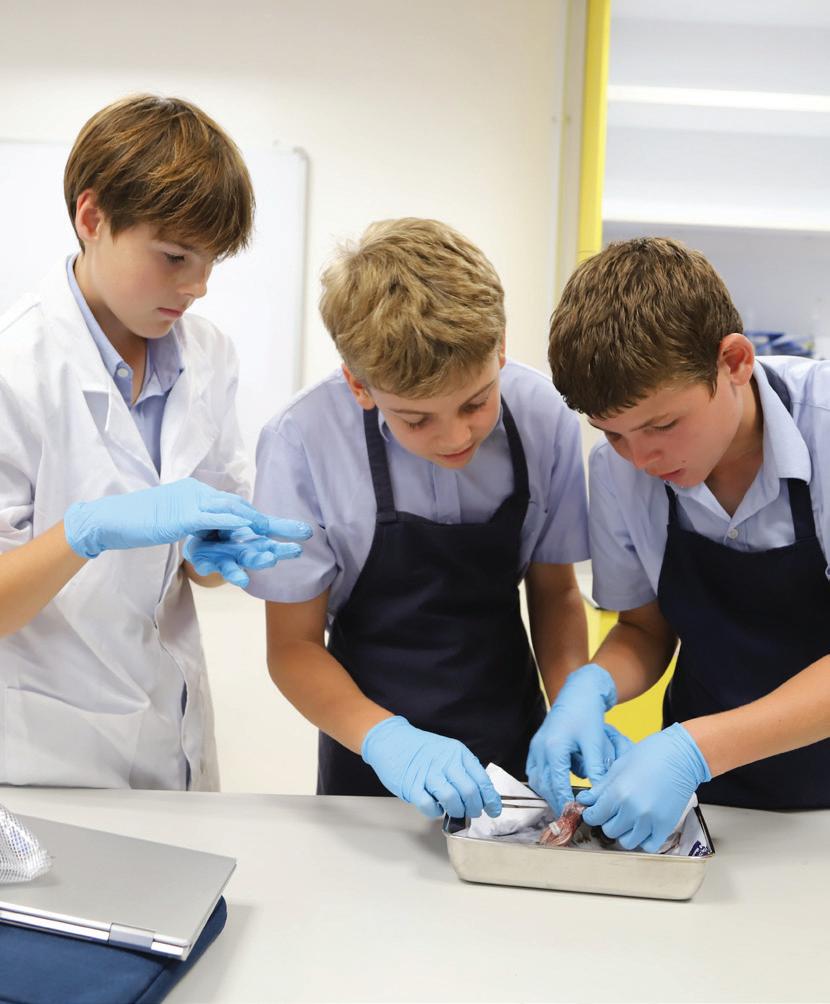
Attainment and progress in science across the school are outstanding.
Pupils across the school consistently achieve well above England standards and make accelerated progress at every phase. Boys marginally outperform girls with regards to greater depth in the infant and junior schools although no significant gaps exist between different groups of pupils. Pupils with SEND match the progress of their peers, benefitting from targeted interventions and inclusive access to the curriculum.
Across the early years, children make significant progress from their starting points and achieve outcomes that are well above England averages. Children have opportunities to develop and conduct scientific experiments. In a nursery class, children observed the changes that occurred when white flowers were placed into coloured water. Most were able to talk about why plants need water and make predictions about how this would affect the colour of the petals.
In the infant school, teacher-assessed standards remain consistently high. Almost all pupils exceed age-related expectations and make rapid progress from the Reception Year to Year 2. During a Year 1 forest school session, pupils demonstrated creativity, and collaboration as they created paints and perfumes from nature and explored the rich outdoor learning environment.
In the junior school, pupils sustain strong progress across key stage 2. Over the previous three years attainment has remained well above standardised averages. By Year 6 almost all pupils meet expectations and over half exceed them.
In the middle school, standards remain high because pupils make strong progress from Years 7 to 9 consolidating and extending their scientific knowledge. In a Year 8 lesson, pupils began with a task focused on improving scientific method skills, learning effectively from peer examples. In the upper school, IGCSE results remain exceptional across all science subjects. Pupils outperform their predictions, with physics grades averaging half a grade higher and combined science over three quarters of a grade higher. In all three sciences over 80% of pupils achieve the highest grades of 9 to 8. In a Year 11 biology lesson, pupils deepened their understanding of the eye’s structure and function.
In the IBDP, students consistently outperform global averages and exceed their individual predictions in both the higher and standard level courses. At A level, outcomes remain exceptional, with a large majority achieving at the highest grades. Over the past three years, students have achieved well beyond the grades predicted by prior attainment in biology, chemistry and physics.
Students across the sixth form demonstrate independence, resilience, and a collaborative approach to learning. Their reflective practice strengthens their metacognitive skills and scientific reasoning. Expert teaching underpins these outcomes, further enriched by external speakers from universities and former pupils who share their experiences. The alumni internship programme has proved highly successful, particularly in promoting female role models, inspiring pupils to pursue science-related courses and careers.
Pupils achieve highly and make excellent progress in a range of other subjects across the curriculum. In the junior school, specialist teachers in art, Chinese, dance, drama, music, physical education (PE), and technology teach pupils from an early age. Pupils actively use transferable skills and knowledge across the curriculum and connect their learning to reallife experiences. Teachers design purposeful lessons that emphasise high achievement and critical thinking. They apply excellent subject knowledge and innovative teaching methods to meet the needs of each pupil.
Across the wider range of secondary subjects, pupils make rapid rates of progress. Their attainment is consistently outstanding, reflecting high-quality teaching and effective assessment.
Creative and performing arts subjects are a clear strength. In art, IBDP exhibition work showed exceptional technical accomplishment and originality, with students articulating their creative intent fluently.
Lessons observed in geography, history, French, art, music, drama, design and technology, and PE demonstrated ambitious expectations and strong outcomes, reflected in outstanding attainment at IGCSE, IBDP and A level. Pupils are challenged to think critically, connect ideas and apply learning in new contexts. The breadth and quality of provision in these areas contribute significantly to the richness of the Tanglin curriculum and to pupils’ wider intellectual, creative and personal development.
Summary of other judgements against the BSO standards:
• The quality of the curriculum provided by the school is outstanding (see Part 1 below).
• The quality of teaching and assessment are outstanding overall (see Part 1 below).
• Pupils’ spiritual, moral, social and cultural development is outstanding (see Part 2 below).
• The welfare, health and safety of the pupils are outstanding (see Part 3 below).
• The Standard for the suitability of the proprietor and staff is met (see Part 4 below).
• The premises and accommodation meet the requirements of the Standard (see Part 5 below).
• The provision of information for parents meets the requirements of this Standard (see Part 6 below).
• The school’s procedures for handling complaints meet the requirements of the Standard (see Part 7 below).
• The leadership and management of the school are outstanding (see Part 8 below).
As a result of this inspection, undertaken during November 2025, the school has demonstrated that it meets the BSO standards except for those standards that cannot be achieved legally in the host country. The school’s provision prepares pupils well to enter or re-enter the independent school system in England. This judgement is endorsed by the British government, quality assured by Ofsted and is valid for a period of three years.
Part 1. The quality of education provided by the school
The standards relating to the quality of the education are met except for the standard in paragraph 2(2)(d)(ii). This is not met because of the requirements of the host country relating to the UK Equality Act 2010.
The quality of the curriculum is outstanding.
The Tanglin three to 14 curriculum framework provides a clear structure of progression through five milestones, aligned with the EYFS and the NCfE. It prepares pupils seamlessly for IGCSE, A level, and IBDP pathways. Leaders have designed a broad, balanced, coherent, ambitious and inclusive curriculum that fully aligns with BSO standards. Tanglin’s conceptdriven approach focuses on threshold concepts and ‘sticky knowledge’, ensuring depth, mastery, and transferability of learning. The curriculum is carefully sequenced and age appropriate. The three to 14 framework, introduced in 2022, is now fully embedded. Leaders continue to review and refine its implementation in response to ongoing feedback, ensuring it remains dynamic, responsive and aligned with best practice.
The curriculum promotes inclusion from the outset. Staff identify pupils with SEND early using a graduated approach and provide high-quality teaching, targeted interventions, and personalised learning plans. The learning support team is highly qualified and well resourced and works closely with on-site therapists and external specialists. Data shows that many pupils with SEND make progress in line with or above their peers, reflecting the positive impact of tailored provision. All staff receive training in language development strategies, ensuring pupils with diverse linguistic backgrounds thrive. Recent professional development on neurodiversity, anxiety, and executive functioning has strengthened teachers’ confidence in adaptive strategies and raised expectations for all pupils.
British values and traditions are embedded across the curriculum. Pupils explore democracy, government, and the rule of law through topics such as the First World War, entitled Perspectives and Peace, and comparative studies of Singapore and London 100 years ago. During the inspection, an assembly commemorating Remembrance Day celebrated the diversity of those who served across religions, ethnicities and genders. The house system, tutor model, personal, social and health education (PSHE) and life skills’ curriculum reinforce the school’s values of respect, responsibility, and purpose. These experiences prepare pupils exceptionally well for life in British society and support seamless reintegration into UK schools or those with a British curriculum.
The curriculum prepares pupils exceptionally well for their next stage of education and employment. Outcomes at IGCSE, A level, and IBDP are significantly above England and global averages. Careers guidance is a comprehensive programme throughout all phases of the school, led by a team of five university counsellors. Pupils engage with global university fairs, workplace readiness workshops, visiting speakers and work experience placements. While all pupils eventually progress to higher education, the programme also supports pathways into national service, gap years, and foundation courses.
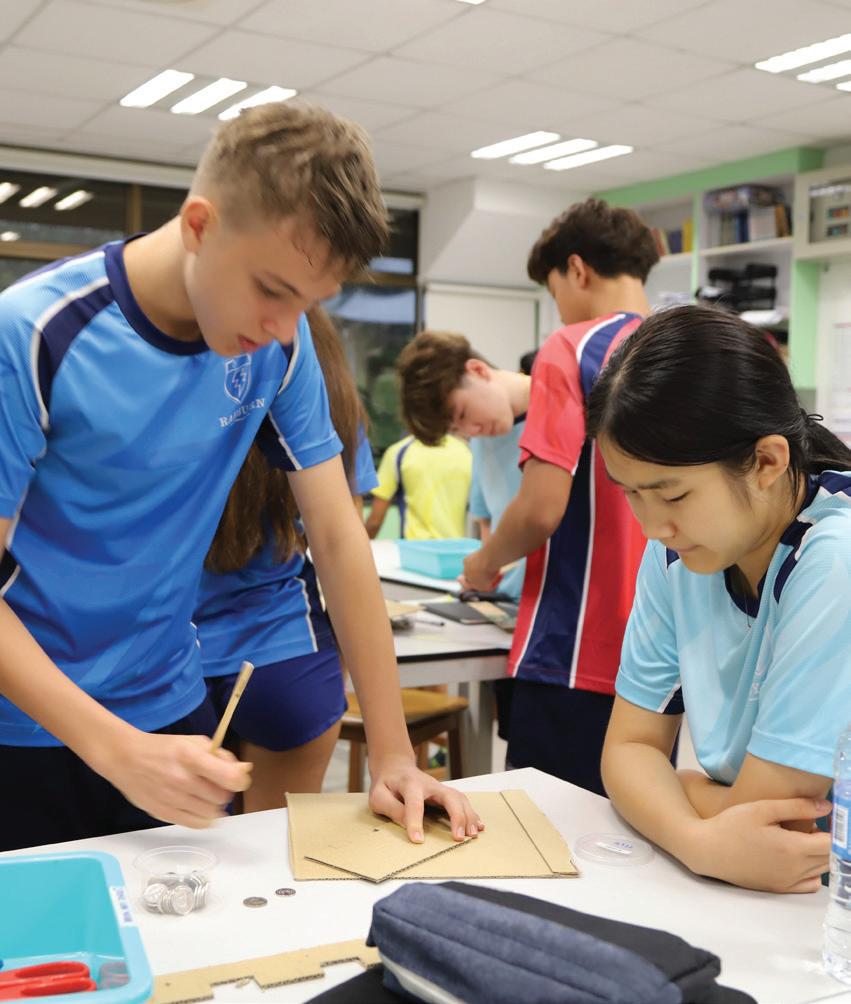
The curriculum is enhanced by an extensive, interest driven and inclusive programme of 425 different co-curricular activities (CCA) across all phases. Participation rates are exceptionally high at 99.7% in the infant and junior school and 94% in the senior school. Pupils gain access to academic, creative, sporting, and service opportunities, including the Model United Nations (MUN), coding competitions, drama productions, music ensembles, and the pupil-led ‘Hackathon’. The junior school Futures Programme, built around service, sustainability, science, technology, engineering, arts, and mathematics (STEAM), and enterprise, integrates seamlessly into both curriculum and CCA, promoting authentic, real-world learning. A large range of trips, including the five-week residential programme at the Gippsland campus in
Australia, provides transformative experiences that build pupils’ resilience, independence, leadership, life skills and unforgettable memories.
Curriculum policies and plans promote respect for all people and explicitly reference the protected characteristics of the Equality Act 2010. Reception Year children explored the concept of gender bias during a well-structured assembly, which culminated in the empowering message that ‘You can do anything you want’. The session promoted inclusion, challenged stereotypes, and encouraged ambition from an early age. The life skills and PSHE curriculum promote diversity, inclusion, and respect for all, with pupils receiving accurate, age-appropriate education within legal frameworks and host country laws. Relationships and sex education (RSE) is delivered through the life skills’ programme, aligned with UK best practice and adapted to the local context.
The curriculum makes effective use of the local environment and community. Pupils engage with Singapore’s cultural and historical context and benefit from partnerships with businesses and professionals through The Institute@Tanglin. These links provide authentic opportunities for research, innovation, and enterprise.
The curriculum at Tanglin is exceptional. It reflects British values while embracing its international context. It enables pupils to achieve academic excellence, develop resilience, and be ready for an ever-changing world. Tanglin helps every pupil to achieve their personal best and to contribute meaningfully to society.
Teaching, learning and assessment across the school are consistently outstanding and enable pupils to make excellent rates of progress from their starting points.
Teachers demonstrate excellent subject knowledge and have a secure understanding of examination and assessment requirements. Their enthusiasm and commitment to pupils’ success create a positive, respectful climate for learning in which pupils feel known, valued and supported. Relationships between teachers and pupils are warm, respectful and productive; this mutual trust promotes curiosity and confidence in learning.
Pupils are highly motivated and enthusiastic participants in lessons. They settle to work quickly, collaborate effectively and show genuine enjoyment in learning. Teachers’ enthusiasm is infectious, and pupils respond with high levels of engagement and focus. Lessons have clear learning intentions and are skilfully sequenced, incorporating purposeful recaps, opportunities to apply knowledge and carefully judged plenaries that consolidate pupils’ understanding.
A wide range of teaching approaches promotes independence and reflection. Pupils are encouraged to think deeply, evaluate their own understanding and explain their reasoning, reflecting the school’s ongoing focus on metacognition. Across subjects and phases, collaborative work, problem-solving and structured discussion develop pupils’ critical thinking, creativity and resilience.
Teachers plan thoroughly to meet individual needs. Formative assessment is used regularly to identify misconceptions and adapt teaching in real time, ensuring that no pupil is left behind. Additional adults, particularly in the infant school, make an outstanding contribution to learning through precise and well-timed support. The school’s enhanced provision provides targeted extension and intervention so that both additional support and stretch are delivered promptly and effectively.
Assessment systems are comprehensive and well established. Teachers and subject leaders collect and analyse a wide range of qualitative and quantitative data to monitor progress and inform their planning. This ensures that approaches remain responsive and personalised to each pupil’s learning profile. Pupils understand how their performance is monitored and how assessment information contributes to target setting.
Feedback is regular, constructive and focused on improvement. Scrutiny of pupils’ work shows that teachers provide clear guidance, identifying strengths and next steps. Pupils understand this feedback and act upon it to refine their work, demonstrating ownership of their progress. In Music, Year 9 personal projects offered differentiated pathways through performance, composition and research, encouraging pupils’ independence and crosscultural awareness. Assessment and feedback together form a coherent process that supports high levels of attainment and personal growth.
Classrooms are calm, inclusive and purposeful. Behaviour for learning is excellent, and pupils demonstrate pride in their work. Teaching assistants, specialist staff and learning support teams work collaboratively to remove barriers and enable full access to learning for pupils with additional or language needs. Classrooms are exceptionally well resourced and pupils have access to their own technology to support and enhance their learning. In a Year 6 technology lesson, pupils applied their coding knowledge and skills to create precise sequences of instructions for a war simulation. In a Year 10 history lesson, pupils produced analytical podcasts on the Munich Putsch and debated medieval leadership with insight and factual accuracy. However, the creative and innovative use of emerging digital technologies by teachers to support and extend pupils’ learning experiences is inconsistent both within
and across subjects in all sections of the school. This is an area which leaders have identified as a priority for further development.
Overall, teaching, learning and assessment are major strengths of the school. Through expert teaching, responsive assessment and a culture that values metacognition and independence, pupils develop the knowledge, skills and confidence required for success both in the school and in the next stage of their education.
Part 2. The spiritual, moral, social and cultural development of the pupils
The standards relating to the spiritual, moral, social and cultural development of pupils are met except for the standard in paragraph 5(b)(vi). This is not met because of the requirements of the host country relating to the UK Equality Act 2010.
The school demonstrates outstanding provision for pupils’ spiritual, moral, social, and cultural (SMSC) development.
It fosters a highly cohesive community where pupils, staff, and parents celebrate exceptional academic achievements, promote emotional well-being, and uphold the highest standards of care and support. Pupils thrive in this nurturing environment and display exemplary behaviour at all times. By prioritising good manners, the school cultivates strong, positive, and respectful relationships between pupils and staff.
Pupils demonstrate remarkable attitudes towards learning. They engage enthusiastically in lessons and work effectively both independently and collaboratively to meet their targets. Student leaders describe the school as ‘a place where everyone is valued, understood and well supported to achieve their best academically, and also be the best version of themselves’. Pupils actively uphold the school’s core values of respect, responsibility, and purpose. They recognise that whilst each of them has connections across the world, they are first and foremost part of the Tanglin family. In that prestigious role, they are exceptionally well supported on their individual learning journeys, given opportunities to take risks and develop lifelong connections. They are therefore extremely well prepared for the challenges of life and learning beyond school and face their futures with confidence and a sense of pride.
The school develops pupils’ strong moral code through a wide range of curriculum activities that promotes an understanding of right and wrong. Year 6 pupils spoke passionately about the importance of equity over equality, explaining that equity recognises different starting points and the need for targeted support, while equality assumes everyone begins from the same place.
Through a well-structured PSHE programme, the school nurtures pupils’ personal development, equips them with essential life skills, and fosters a safe, respectful environment. Parents confirm that this is a real strength of the school. In life skills lessons, teachers guide pupils to navigate complex relationships, explore identity, and develop emotional literacy so that they can build healthy relationships. In a Year 3 lesson, pupils acknowledged that friendships bring happiness and support but also challenges. Through role play, they demonstrated empathy and compromise to help their friends feel valued.
The school’s SMSC provision actively promotes respect for all people and promotes nearly all protected characteristics outlined in the Equality Act 2010: age, disability, gender reassignment, religion or belief, marriage, pregnancy and maternity, race, sex, and sexual orientation. The school cannot fully meet the requirements regarding civil partnership and gender reassignment as a result of Singapore’s current laws. Teachers embed the protected characteristics throughout the curriculum using carefully chosen literature and thoughtfully planned activities. The school holds themed weeks, such as Disability Week and Respecting Race Week, to help pupils understand how barriers and attitudes can exclude people and how they can promote empathy and respect. Older pupils strengthen links with a local school for children with special educational needs by leading weekly music and sports workshops for pupils with physical, social, and emotional needs.
The school integrates the United Nations Convention on the Rights of the Child (UNCRC) into its ethos. Pupils confidently discuss their rights and the importance of respecting and protecting others’ rights. They show a strong sense of responsibility and compassion, making the school an inclusive environment where everyone feels respected. This care and empathy inspire pupils’ active involvement in local and national charities.
Pupils engage in a wide range of charitable initiatives, such as collecting hygiene packs for those in need in Cambodia, volunteering at a local home for the elderly, and ‘singing for smiles’ at the local hospital. These initiatives have expanded schoolwide. One project, the creativity, activity and service (CAS) 2020 Reading Project, has operated for over ten years in the school. In this initiative, sixth-form pupils use their lunch breaks to plan and deliver English grammar, speaking, listening, and reading lessons for support staff who commute from Malaysia. Pupils have identified this project’s positive impact in the way that it helps staff to improve literacy, to support their families, and strengthens pupils’ own sense of social responsibility while enabling them to make a meaningful difference to others’ lives.
The school deepens pupils’ understanding of cultural diversity through celebrations and events such as Chinese New Year, Deepavali, and International Day. These experiences enrich pupils’ appreciation of the diverse cultures in their school and local community. The school offers a wide range of transformative trips that enhance pupils’ personal and social
development. Pupils value the rich itineraries and immersive experiences that allow them to connect classroom learning to real life.
Teachers actively promote British values across the curriculum. Lessons encourage pupils to compare and contrast life in Singapore and the UK. For older pupils, university preparation and careers guidance deepen their understanding of British institutions such as parliament, public service, and the legal system. Pupils learn about respect, individual liberty, democracy, and the rule of law. The school celebrates events such as Remembrance Day both in school and at the Kranji War Memorial.
Throughout the school, pupils embrace leadership opportunities that support the school’s smooth daily operations. In the early years ‘Planet Protectors’ take responsibility for switching off lights when classes go outside. Extensive pupil leadership opportunities such as the students’ council, student leadership teams, and environmental project leaders reinforce democratic principles through elections and teamwork. Pupils value these responsibilities and recognise their importance. Members of the student leadership team reflect thoughtfully on the qualities required for their high-profile roles, including the ability to challenge others’ sensitively, having conviction in their own beliefs and negotiating effectively with senior leaders for the best solutions.
Part 3. The welfare, health and safety of the pupils
The welfare, health and safety of pupils and staff are outstanding.
Leaders have developed rigorous and highly effective systems of care and support to meet the needs of both staff and pupils. This success is attributed to a holistic approach in which all members of the school’s community work together to promote well-being. Preventative measures are in place to ensure that pupils remain safe and healthy. They receive regular updates about digital safety, substance misuse, and healthy lifestyles. Staff carry out stringent risk assessments. Closed-circuit television (CCTV), scanners, secure entry gates, and access passes ensure the highest level of security. All relevant policies, including those for health and safety, safeguarding, anti-bullying, attendance, fire safety and medical considerations are implemented and are accessible online. Both external and internal safeguarding audits, including the recent EDT BSO audit, have been carried out to ensure compliance with the highest standards.
A team of 14 qualified designated safeguarding leads (DSL) oversee safeguarding and work collaboratively with the wider pastoral team to ensure consistent practice. Three health centres operate across the different sections of the school, each staffed by qualified nurses and managed by a lead practitioner. All confidential medical records are securely stored, and medication is safely locked away, with adrenaline auto-injector pens kept readily accessible to allow for a rapid response to emergencies. Staff receive regular and comprehensive
training, and all employees are aware of their safeguarding responsibilities and of the principles outlined in Keeping Children Safe in Education (2025).
The welfare of staff and pupils is a priority. Leaders pay considerable attention to ensuring high-quality working conditions, with access to excellent facilities including cafés, sports areas, counselling services, medical clinics, physiotherapy, yoga classes, and annual health initiatives such as on-site mammogram screenings. Attendance across the school remains high with an overall average of 95%. Systems to monitor absence and lateness ensure rapid communication with families and prompt intervention where patterns of non-attendance are identified. Staff supervise the arrival and departure of buses with care and precision.
All safeguarding and risk management measures are fully in place at The Tanglin Gippsland campus in Australia with additional considerations in line with local legal requirements. Staff describe Tanglin as a haven of inclusivity, nurture, and support. Both adults and pupils report feeling valued, respected, and known. Pupils can raise concerns through an online platform, where entries are analysed by the lead DSL and referred to appropriate staff or external agencies when required. Older pupils mentor younger peers in one of many opportunities for developing leadership. The phenomenal range of co-curricular clubs promotes both personal growth and balance. Staff, parents and pupils describe Tanglin as a family, a place where kindness, courage, and care are deeply embedded in the culture of the school.
Part 4. The suitability of the proprietor and staff
The school meets the requirements of this standard.
The school’s dedicated human resources (HR) team follows rigorous recruitment practices which align with UK safeguarding best practice and meet Singapore legal requirements. A comprehensive record is kept of every staff member’s information in a meticulously maintained single central record (SCR), which records all the required checks and dates. This record also includes staff employed at the Tanglin Gippsland campus and external contractors. Checks on governors and details of staff who are employed by outsourced companies, such as catering staff, cleaners and drivers are kept separately and include the same rigorous checks.
The SCR covers checks on start dates, verification of identity, qualifications, medical fitness, the right to work in the host country, qualifications, criminal record checks, and references. Social media checks are conducted as part of the recruitment process. The recruitment process is overseen regularly by the governors’ safeguarding committee to ensure that records remain up to date and reflect the latest safeguarding requirements. At least one member of every recruitment panel has completed safer recruitment training. All staff and governors participate in annual safeguarding training, reflecting the school’s commitment to maintaining the highest safeguarding standards
All visitors to the school are required to register before arrival, pass through security and complete a safeguarding declaration before receiving an identification lanyard.
Staff turnover is low at approximately 8% annually. The majority of teachers have British teaching qualifications. A comprehensive induction programme is in place to ensure that all staff complete safeguarding training and are familiar with the school’s policies and procedures prior to beginning work at the school.
Part 5. The premises and accommodation
The school meets the requirements of this standard.
The school is a large, exceptionally well-resourced institution with state-of-the-art facilities and purpose-built accommodation. The campus houses over 1,000 CCTV cameras, 13 lifts, and secure access systems across all sections. Risk assessments are externally verified by a consultant every six months, and safety standards consistently exceed local and international requirements. The school carries out fire evacuation drills twice a year together with a full lockdown exercise, observed and supported by the Singapore Civil Defence Force. Structural, energy, and façade inspections are completed regularly to ensure full compliance with regulatory frameworks.
The recently completed Junior Arts Centre includes advanced music suites where former pupils have returned to perform, art studios equipped with digital technology, a dance studio and theatre for pupils’ productions. Across the campus, all classrooms, laboratories, and specialist areas are modern, well-equipped, and fully compliant with safety regulations. Science laboratories are interchangeable and feature showers, gas shut-off systems, and access-controlled technician rooms. The sports complex includes a rugby-certified field with electronic scoreboard and lightning alert system, a 50-metre covered swimming pool, virtual golf simulators, and a physiotherapy clinic. Automated external defibrillators (AED), hoists, and emergency call buttons are available at various points across the campus.
Environmental sustainability is visible across the school through vertical greenery, solarreflective materials, and displays promoting the United Nations Sustainable Development Goals. The heritage banyan tree, over 120 years old, was successfully transplanted and remains a central feature alongside the Symphony of Trees sculpture and a sundial designed by a former pupil. Every area, from infant playgrounds to senior facilities, prioritises accessibility and safety, with high locks, ramps, lifts, and finger guards on doors.
The infant and junior schools feature secure playgrounds, low-level water coolers, and health centres staffed by qualified practitioners. The infant dining area includes lockable doors, collapsible tables, and finger protection. High quality toilet and washing facilities are provided for pupils of all ages, with separate facilities for staff and visitors. Pupils have access to wellappointed changing and showering facilities. Throughout the school, in-house technicians and cleaners maintain high levels of cleanliness and hygiene, supported by a daily environmental sanitation regime conducted by certified coordinators. Communal areas include the Hive senior common room, multiple cafés, and staff rest areas. A strong sense of inclusivity and well-being is reflected in design elements such as prayer
rooms, accessible facilities, and visual campaigns promoting diversity and mental health awareness. Signage, such as reminders that staff and pupils alike face learning differences, reinforces the school’s culture of openness and support.
The school balances world-class facilities with a culture of safety, care, and innovation. Every detail, from structural design to pastoral provision, demonstrates a commitment to excellence, ensuring a secure, inspiring, and forward-thinking environment for all members of the community.
Part 6. The provision of information for parents, carers and others
The school meets the requirements of this standard.
The school has established strong, mutually respectful relationships with parents, carers, and other stakeholders. Parents express strong levels of positivity about the school’s ethos and the robust systems that enhance their children’s learning and well-being. They report that teachers and school leaders know their children well and ensure that every child receives the right level of support and challenge to achieve their best academically and emotionally. Several parents describe how the school provided high-quality, targeted support that was delivered sensitively and effectively when their children faced academic or emotional challenges. Parents demonstrate a strong awareness of safeguarding procedures and express confidence in the school’s commitment and capacity to manage any concerns effectively.
Parents particularly appreciate the wide range of non-academic opportunities available to pupils and recognise how these experiences help their children become well-rounded and confident global citizens.
The school provides high-quality and regular information about pupils’ learning. Parents receive detailed written reports on their child’s academic attainment and progress along with clear advice about next steps. Parents indicate that termly parent and teacher conferences, arranged to discuss these highly personalised reports, give them valuable guidance on how to support their child’s learning at home. The school uses multiple platforms to share information about the curriculum and pupils’ achievements. Parents of younger children particularly value these tools and the learning showcase events that celebrate their children’s significant accomplishments.
Parents value the information shared through school newsletters and appreciate the careful consideration the school gives to the results of the annual parent surveys. Parents make effective use of the wide range of opportunities to meet with staff when they want to share ideas or raise concerns. They report that teachers and senior leaders remain highly visible around the school and consistently listen to and respond to their views efficiently and
sensitively. Parents frequently use the school’s website, which they find easy to navigate. The website includes all essential policies such as admissions, safeguarding, curriculum, behaviour, bullying, inclusion, complaints and health and safety, including the administration of first aid and medicines. It provides links to the school’s most recent inspection reports, its mission, vision and values and contact details for the school and the board of governors.
Many parents speak positively about the structured transition curriculum that supports children through key life changes, whether transferring between school phases, joining the school for the first time, or leaving for another school or country. They value highly the school’s sensitive recognition of the challenges faced by children who spend their formative years in a culture different from that of their parents’ and its focus on helping them develop a secure sense of belonging.
New parents confirm that they value the social events that the school organises to help them settle in and become active members of the community. Class representatives play an instrumental role in maintaining regular communication between parents and senior leaders. As parents take on more active roles in organising and attending events, participating in training and volunteering, they become integral members of the school’s community.
Part 7. The school’s procedures for handling complaints
The school meets the requirements of this standard. A thorough and clear complaints policy is easily accessible to parents on the school’s website. The policy sets out clear timescales and a staged escalation process, progressing from informal resolution to formal review by the head of school, chief executive officer (CEO) and ultimately the governing body. All complaints and their resolution are logged, maintaining confidentiality throughout.
Phase leaders typically resolve informal complaints through phone calls and record them on the child protection online monitoring system (CPOMS). Leaders review these entries and discuss emerging trends and follow up actions.
In 2024, the school received one formal complaint. Both in-house and external legal teams reviewed the case and resolved it clearly and appropriately.
Formal complaints proceed to the governors’ complaints committee which includes the chair, two other governors not directly involved in the matter and one independent member. If convened, the panel allows the complainant to be accompanied by one other person. The panel delivers its report within its stated timeframe and communicates its findings in writing to all parties. The school maintains confidential records of all complaints, responses and outcomes.
The Friends of Tanglin parent body includes a class representative for every class throughout the school. Each class operates an online communication group which helps to raise concerns early and often diffuses potential complaints. Leaders actively listen to parental feedback and respond constructively.
Part 8. Leadership and management of the school
The quality of leadership and management across the school, and at all levels, is outstanding.
Leaders and governors articulate a very clear and ambitious mission: ‘To be the best school in the world, with a dynamic learning community which nurtures and inspires every individual to be the best they can be’. This unwavering pursuit of excellence in every aspect of school life is one that is shared by every member of the school’s community and one that draws on Tanglin’s rich heritage, and reputation for providing high quality education. A strong valuesdriven ethos of respect, responsibility and purpose provides a framework for staff and pupils which underpins all decision-making.
The school’s distributed leadership model ensures that Tanglin operates extremely effectively as one school with a shared mission, vision and values across the campus. Leaders from each section of the school work together to ensure a fully coordinated approach to strategic initiatives in academic, pastoral, co-curricular and technology matters. This structure helps to develop leadership capacity and potential and ensures that all pupils and staff are members of a smaller community where they are known as individuals and supported to ensure their unique needs are met and their strengths recognised.
The school benefits from a highly qualified and experienced board of governors that ensures exceptional strategic oversight, maintaining legal compliance, clear financial policies, and a well-defined separation of responsibilities between governance and the school’s leadership. The board holds the CEO and heads of school to account through a supportive appraisal programme which includes key performance indicators linked to the school’s development priorities, ensuring that the BSO standards are consistently met.
Leaders and governors work together to drive sustained improvement across the school and to ensure that Tanglin remains true to its founding purpose while continuing to meet the needs of the community it serves. The ‘Beyond Boundaries’ strategic plan sets out a transformative vision which will ensure its pupils are ‘future ready’ in every way. The attention to pupils’ holistic care and development is evident in governors’ investment in the school’s facilities, resources and staff. The opening of the Tanglin Gippsland campus provides invaluable opportunities for pupils to extend geographical boundaries as well as to challenge themselves way beyond their own comfort zones. The Institute@Tanglin provides a forum for
pupils to develop their leadership and networking skills through partnerships with businesses, universities, and government departments.
The school’s leadership demonstrates exceptional use of data, ensuring a rigorous and systematic approach to monitoring every aspect of pupils’ development. This meticulous analysis directly informs pastoral and academic self-evaluation and identifies priorities for improvement, such as the need to ensure that pupils and staff have the skills and knowledge to use digital tools creatively as well as safely and ethically.
Senior leaders are committed to the continuous development of every member of staff, whatever their role or experience. This includes support to achieve additional qualifications, training, leading on initiatives, contributing to working parties or being involved in research projects. The staff appraisal process focuses on collaborative goal setting, regular feedback and opportunities for professional reflection and growth. The Institute@Tanglin provides inspiring facilities where innovation is encouraged and excellent practice is celebrated and shared across the school. Leaders and teachers are regularly invited to share their research and practice and contribute to the professional development of staff at other schools in Singapore and beyond.
Staff describe Tanglin as ‘a school that never stops progressing’. They are proud to be part of a learning community, which continually reviews, reflects and refines systems and processes. The ‘Team Tanglin’ approach means that every member of the community pulls together to ensure that the school operates efficiently and always in the best interests of the pupils. Staff report that they feel highly valued as a result of the school’s investment and interest in them professionally and personally. Leaders show their support for the well-being of staff through the ‘staffwise’ programme which offers access to wellness workshops, exercise classes, counselling support, health checks and medical advice.
Leaders actively seek and value the views of its community through regular surveys, parental representative groups, students’ council and focus groups. Leaders act on this feedback to inform their strategic decisions, such as the expansion of the co-curricular programme and significant changes to school lunches and dining arrangements.
Tanglin is an inclusive community where every individual is valued, encouraged and supported. This is seen in leaders’ investment in teaching, learning and pastoral support staff who are expertly trained to meet the needs of every pupil whether that be academically, physically or emotionally. Leaders are committed to promoting diversity, equity and inclusion through events, speakers and student leadership. Safeguarding procedures are very robust, ensuring the safety and well-being of all pupils.
Leadership at every level is highly effective in ensuring that the school provides an exceptional all-round education.
EYFS provision
The quality of early years’ provision is outstanding. Children across the early years attain very high results, as reflected in the school’s Good Level of Development (GLD) data which in 2025 was well above UK averages. Almost all make exceptional rates of progress and demonstrate high levels of engagement, active learning, collaboration and independence. The personalised curriculum ensures that boys and girls achieve equally well, with no significant differences in progress or attainment. Children who join in the nursery and complete two years of the early years’ curriculum gain a clear advantage across all the early learning goals. The curriculum draws inspiration from a variety of age-appropriate curriculums. Through forest school, teachers provide children with opportunities to extend their learning outdoors and build strong connections with the natural world. Children show a deep passion for protecting the environment and caring for nature. The curiosity approach to learning encourages them to explore resources independently, take calculated risks, and nurture their natural curiosity. Teachers design the curriculum around children’s personal interests, ensuring that every child engages in purposeful activities from the moment they arrive each day.
Teachers place a strong emphasis on developing phonics’ awareness. They plan and deliver well-structured daily activities that enable children to master early reading and writing skills. Across the early years, teachers skilfully use storytelling resources to help children explore story elements, drawing inspiration from practical materials. In one nursery class, children collaborated to create imaginative stories with interesting characters, engaging settings, problems, and thoughtful resolutions. By focusing on key vocabulary and group discussion, teachers build children’s confidence in speaking, listening, and creativity. They also plan the development of mathematical, scientific and technological skills through continuous provision tasks. Targeted questions are incorporated into all activities to promote discussion, critical thinking and reasoning skills.
Teachers further strengthen early learning skills through carefully monitored, continuous provision tasks that foster independence and confidence, allowing children to progress at their own pace. These tasks encourage children to ask questions, think scientifically, solve problems, and investigate concepts independently. As children design their own tasks and take greater responsibility for their learning, they demonstrate self-regulation, autonomy, and resilience. Teachers make full use of outdoor areas, enabling children to explore safe, sensory-rich spaces where they develop physical and social skills through a range of stimulating activities. Most children show care for others and regulate their own behaviour effectively.
Teachers and support staff demonstrate a deep understanding of how young children learn. Their high-quality teaching builds confidence and helps children engage meaningfully with the world around them. Regular, focused observations capture children’s achievements and track their development. Robust systems for planning and monitoring progress support precise curriculum review and design. The learning support and enrichment team provides targeted support for children with additional needs.
Staff in early years maintain strong partnerships with parents and carers. They provide regular updates on children’s learning through an online platform. The soft start to each day gives parents opportunities to participate more actively in their child’s learning and to understand curriculum expectations.
Leaders in this phase demonstrate highly effective leadership. They possess extensive knowledge of the curriculum and innovative teaching methods. They set high expectations for learning behaviour and for developing children’s critical thinking skills.
Through robust systems for planning and progress tracking, leaders and staff ensure that every child makes excellent progress and a seamless transition into Year 1.
Post-16 provision
The quality of the sixth-form provision is outstanding. It provides an ambitious and wellbalanced blend of A-level and IBDP pathways that offer students genuine breadth and challenge. The curriculum enables students to pursue courses that match their interests, aspirations and learning styles. Most pupils from Year 11 continue into the sixth form, joined by around 35 new entrants each year. Where appropriate, students are supported to retake IGCSE English or mathematics, ensuring that all meet essential requirements for progression to the next stage of their education.
Teaching in the sixth form is demanding, engaging and intellectually stimulating. Students describe lessons as challenging yet enjoyable and speak highly of the trust and independence afforded to them. They value the professionalism of their teachers, noting that expectations are high and that they are encouraged to think for themselves and take responsibility for their own learning.
The careers and university guidance programme is a major strength of the provision. Every student has a dedicated counsellor who provides personalised advice through regular oneto-one meetings from Year 12 onwards. The service is highly regarded by students, parents and staff and is viewed as a defining feature of the sixth form. A comprehensive programme of workshops and presentations supports applications to universities in the UK, USA and elsewhere. Former pupils and visiting university representatives contribute regularly, broadening students’ awareness of higher-education pathways and employment options.
Pastoral care and well-being are equally strong. The careers office functions as a trusted and supportive space where students can seek guidance independently of academic grading. Well-being is monitored carefully through CPOMS and a recently introduced digital platform that links emotional-health indicators with pastoral records. Parents are kept well informed through regular communication, workshops and webinars, which strengthen the partnership between home and school.
Leadership and service opportunities are plentiful and well established. Students act as house captains, prefects, society leaders and mentors to younger pupils. They take pride in organising community and charity events and in contributing through the CAS elements of the IBDP programme or through A-level enrichment and leadership strands. These experiences develop confidence, responsibility and teamwork, qualities that students readily identify with the school’s ‘Inspired Learners’ ethos.
Overall, the sixth form exemplifies the school’s commitment to developing confident, wellrounded and globally aware young people. Academic standards are exceptionally high, outcomes and destinations are excellent and the combination of academic rigour, personalised guidance and extensive opportunity prepares students extremely well for the next stage of their education or future employment.
Compliance with regulatory requirements
Tanglin Trust School meets all of the required standards except those that would be in breach of the host country laws. The requirements of the host country take precedence.
It cannot fully meet the standards that relate to 2(2)(d)(ii) or 5(b)(vi). The school encourages respect for other people, paying particular regard to the protected characteristics of age; disability; pregnancy and maternity; marriage; race; religion or belief; sex and sexual orientation as set out in the Equality Act 2010.
What the school could do to improve further
While not required by regulations, the school might wish to consider the following point for development:
Across the school, staff and pupils routinely use digital tools and platforms to support and enhance teaching and learning and operational efficiency. To support the school’s commitment to preparing pupils to become ‘future ready’, leaders should implement a clear and coordinated whole school digital strategy. This will ensure technology is integrated purposefully and consistently, equip staff with the skills to enhance pedagogy, and enable pupils to develop the critical, ethical and transferable digital skills required for lifelong learning.
Summary of inspection judgements
The quality of education
Overall quality of education x
How well the curriculum and other activities meet the range of needs and interests of pupils x
How effective teaching and assessment are in meeting the full range of pupils’ needs x
How well pupils make progress in their learning x
Pupils’ spiritual, moral, social and cultural development
Quality of provision for pupils’ spiritual, moral, social and cultural development x
The behaviour of pupils x
Welfare, health and safety of pupils
The overall welfare, health and safety of pupils x
Leadership and management
Overall effectiveness of leadership and management x
School Details
Name of school Tanglin Trust School
Type of school International School (Independent)
Date school opened 1925
Age range of pupils 3 to 18 years
Gender of pupils Mixed
Number on roll (full-time pupils) 2,874
Number on roll (part-time pupils) n/a
Annual fees (day pupils)
From $34,770 (Nursery) to $55,734 (Sixth Form) (Singapore dollars)
Annual fees (boarders) n/a
Address of school 95 Portsdown Road Singapore 139299
Telephone number +65 6778 0771
Email address communications@tts.edu.sg
Headteacher Craig Considine (CEO)
Proprietor Tanglin Trust School Limited
GLOSSARY
Achievement – Progress made by a pupil taking his/her individual circumstances and starting point into account.
Accreditation – The system whereby a school or similar organisation is assessed against agreed standards and if deemed as having achieved the standards required is provided with some form of official certification or recognition.
Accreditation Board – The body responsible for the strategic direction, operation and conduct of the accreditation service provided by Education Development Trust
Assessment – The process of finding out how well pupils have learnt what they have been taught. It is a continuous process that occurs throughout the school year, using a variety of forms for different purposes.
Attainment – The level pupils reach, usually measured by reference to benchmarks, such as test and examination results.
British Schools Overseas Inspection (BSO) – Inspection framework and standards defined by the DfE for British schools overseas to opt to be inspected against.
Education Development Trust – Formerly CfBT Education Trust, we are one of the world’s leading not-for-profit education companies providing a range of education services in the UK and internationally.
Central Support Team – Personnel based in Education Development Trust Head Office who are responsible for the administration of the various educational services provided to international schools.
Combined or Joint Visit – a BSO Inspection visit combined with an ISQM accreditation or re-accreditation visit conducted (or DSIB inspection in Dubai) at the request of the school. This will be carried out concurrently with reference to both frameworks and sets of standards. Some of the standards against which the school will be inspected are common, but some of the BSO standards relate to the British nature of the school.
Cycle of Inspection – The period of three years between BSO inspection visits.
Curriculum – The educational programmes or courses of study taught by a school including subjects and activities inside and outside the classroom, as well as extracurricular enrichment programmes.
Dubai Schools Inspection Bureau (DSIB) – All private schools in Dubai are required by the Knowledge and Human Development Authority to be inspected by the Dubai Schools Inspection Bureau (DSIB). A joint DSIB/BSO inspection may be requested through the KHDA’s strategic partner Education Development Trust.
Leadership – Leadership at any level (for example principals/headteachers, governors, board members, team/subject leaders) involves setting direction, empowering staff to work effectively, creating a suitable environment for learning, and setting an example to others. It entails different skills from management.
Learning – Pupils’ gains in knowledge, skills and understanding.
Management – The practical business of running a school, department or aspect of a school’s work in an efficient and useful way.
Ofsted – The Office for Standards in Education, Children’s Services and Skills is the nonministerial government department of His Majesty’s Chief Inspector of Schools in England and is responsible for school inspections in England.
Progress – The gains in learning made between two points in time. A pupil can be described as having made insufficient progress, satisfactory, good, or outstanding progress in relation to his/her starting point.
School self-evaluation – The identification by the staff of a school of its strengths and weaknesses across the key aspects of its performance. Effective self-evaluation focuses specifically on the impact of the school’s work on the outcomes for pupils.
Standards –
(1) The levels of knowledge, understanding and skills that pupils and a school demonstrates at a particular point in time.
(2) The evaluation requirements to be used in the inspection of British Schools Overseas.
Teaching – All activities undertaken by the teacher aimed at enhancing pupils’ learning.
With 50 years' experience of delivering education services worldwide Education Development Trust’s vision is a world in which all lives are transformed through excellent education. We strive to improve education for learners globally, grounding our work in research and evidence. We support leaders to raise standards, improve school performance, develop great teachers and open career pathways.
Teaching and learning are the essence of what we do and we have more than 2,500 staff around the world designing and delivering services. Education Development Trust staff support educational reform, teach, advise, research and train.
We have built a reputation for providing high quality educational support and inspection services. One of our main aims is to improve schools through high quality school inspections. We have strong values and a clear vision to deliver a world class inspection service that will directly contribute to improving the quality of teaching, learning and care of all children and young people in settings, schools and colleges.
Education Development Trust first delivered inspections on behalf of Ofsted in 1993. Since then we have developed our experience and expertise in the field of school evaluation and improvement to become one of the UK's first major providers of inspection services.
You may copy all or parts of this document for non-commercial educational purposes, as long as you give details of the source and date of publication and do not alter the information in any way.
Education Development Trust 16-18 Duke Street
Reading
RG1 4RU UK
Report reference no: 11/73/2025