SKIES WITHOUT LIMITS FORGED TO LEAD DEFINING THE FUTURE
HARVESTING INNOVATION
PRESIDENT AND CEO
Kelly M. Miller, Ph.D.
MANAGING EDITOR
Jaime Nodarse Barrera
Vice President for Institutional Advancement
ASSOCIATE EDITORS
Elvia Aguilar ’17
Executive Director of Alumni Engagement
Luisa Buttler ’05
Director of Communications
Ashley Larrabee ’06
Executive Director of Marketing
WRITERS
Carlos Adamez ’04
Greg Chandler ’27
Cierrah Godin ’24
Len Hayward
Dr. Aurelia O’Neil ’25
Brianna Sandoval ’23
DESIGN
Katelynn Phelan ’24
Richard Solis ’26
PHOTOGRAPHY
Kyra Blundell ’26
Juan Canchola ’12
Edgar De La Garza
Morgen Dozier ’28
Faith Flores
Jerimiah Howell ’26
Courtney Reeves ’26
Terence Russell ’26
Jace Tunnell ’98, ’01
Benjamin Zaragosa
Me dia representatives may use part or all of any article within this publication. Please provide appropriate credit and tearsheet. For more information, contact the editors.
Check out the Islander magazine online at theislander.tamucc.edu to share your story ideas.
The Islander is published biannually by the Texas A&M-Corpus Christi Division of Institutional Advancement.
DEAR ISLANDERS,
The future is not a distant horizon — it is unfolding here and now on our island. It is evident in students pursuing ambitious academic goals, faculty advancing the frontiers of knowledge, student-athletes striving for peak performance, and our community collaborating to foster sustained growth and opportunity. Across campus, the future is in motion. From the skies, where researchers are pioneering the next generation of autonomous flight, to our coastal labs, where scientists are advancing sustainable oyster aquaculture, Islanders are leading change with purpose and vision.
Our students are also laying the groundwork for what lies ahead, taking advantage of opportunities that prepare them for the future. Through dual credit partnerships, young scholars are stepping into their academic journeys earlier than ever, while Islander ROTC cadets are developing the skills to lead with integrity and serve with distinction. At the same time, courses in artificial intelligence filmmaking empower Islanders to blend creativity with technology to tell the stories of the future while our new
architecture program will equip students to design the spaces of tomorrow.
As our campus expands beyond the island with the new Downtown Building, we are strengthening our connection with the Coastal Bend and creating spaces that inspire innovation and collaboration. And at the same time, we honor our past by preserving and celebrating our shared history within the Downtown Building, the new home to Special Collections and Archives.
I hope you enjoy reading about the discoveries, achievements, and ideas that shape the future of Texas A&M-Corpus Christi. Because no matter how the future unfolds, one thing will never change: Islanders lead the way.
Sincerely,
Kelly M. Miller, Ph.D. President and CEO Texas A&M University-Corpus
Christi
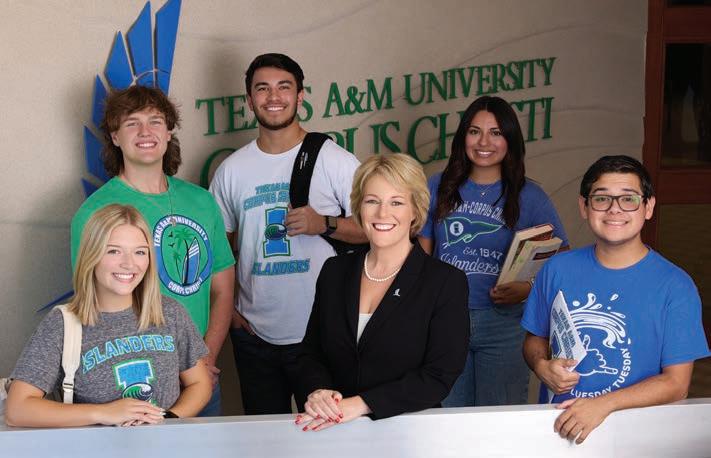
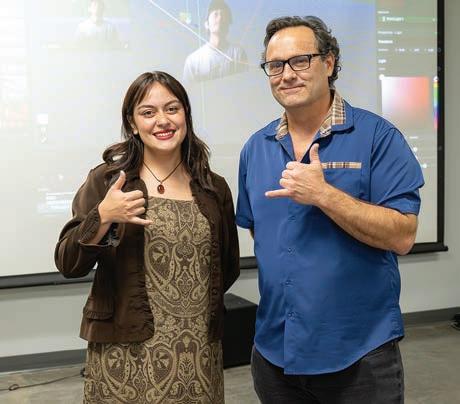
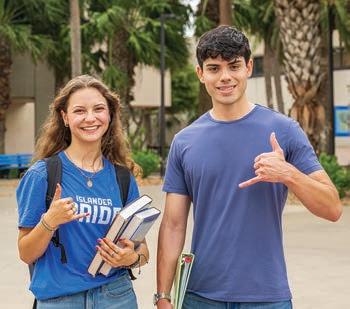
Dr. Kelly M. Miller, TAMU-CC President and CEO, seen here with Island University students. Miller has served as university president since 2017.
TABLE OF CONTENTS
REDEFINING THE REEL
AI empowers NextGen filmmakers
ALL IN THE FAMILY
Reyna siblings carry on a legacy of law and Islander pride
08 06 19 28 34 44 13 24 36
FORGED TO LEAD
Inside the Islander ROTC experience
SKIES WITHOUT LIMITS
Autonomy Research Institute charts the next era of aviation
PAGEANT WITH A PURPOSE
Madison Hickman ’26, Miss United States, redefines what it means to wear the crown
RAISE THE ROOF
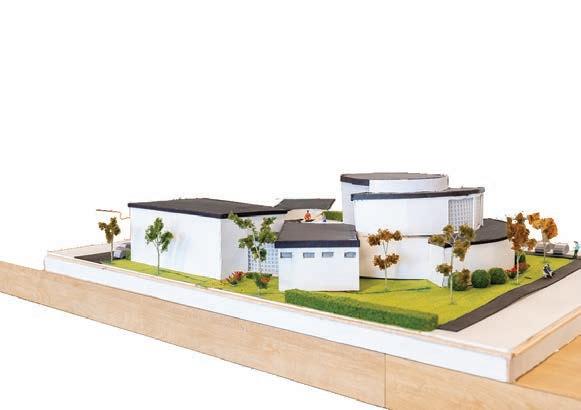
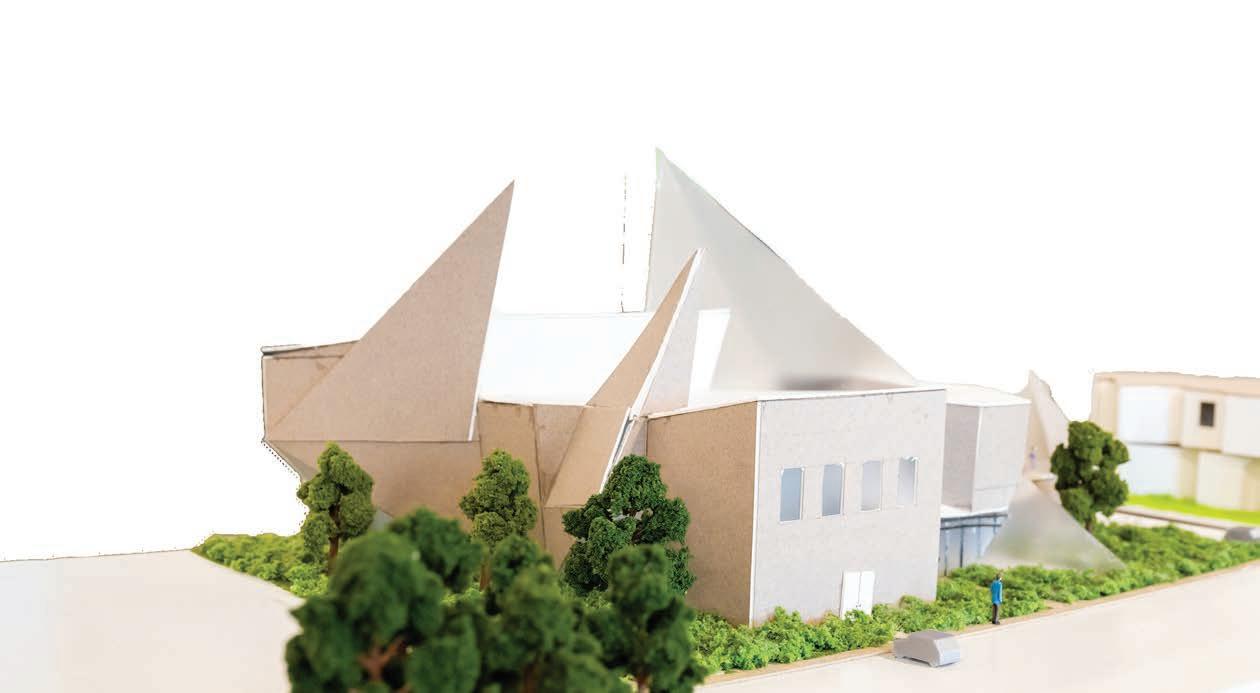
TAMU-CC launches architecture program with Del Mar College
WHERE HISTORY FINDS A HOME
From civil rights to surf culture, TAMU-CC preserves stories that shaped South Texas
IT'S T-TIME
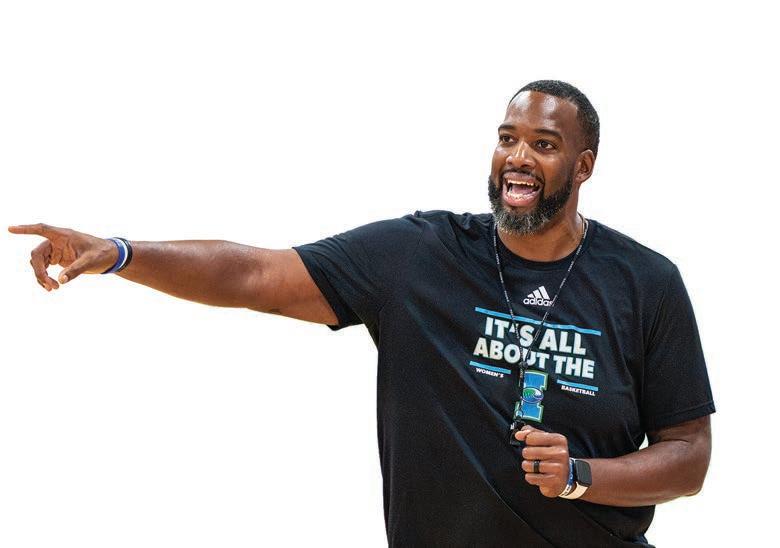
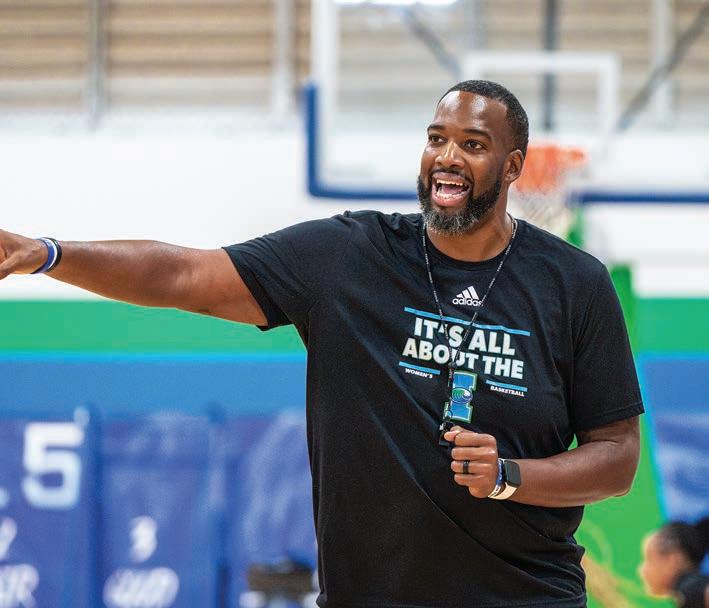
Coach Toyelle Wilson leads Islanders Women’s Basketball with love, demands greatness
CLASS NOTES
Catch up on the big accomplishments, milestones, and adventures of our Islander alumni
MADISON HICKMAN ’26
ANCHOR CAMP CELEBRATES 25 YEARS OF SUPPORTING NEW ISLANDERS
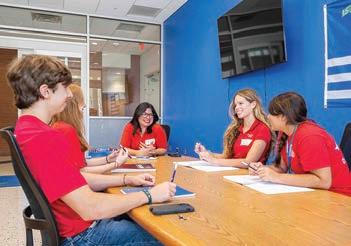
Stepping onto a college campus for the first time can be overwhelming. For incoming freshmen, the possibilities, and the questions, seem endless: Will I make friends? How hard will my classes be? Where are my classes? And wait… who’s Izzy again? The mix of uncertainty and first-day jitters can leave students feeling a bit adrift.
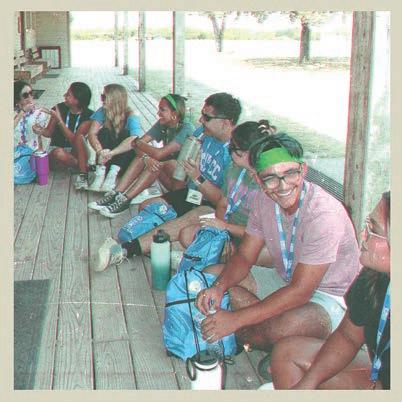
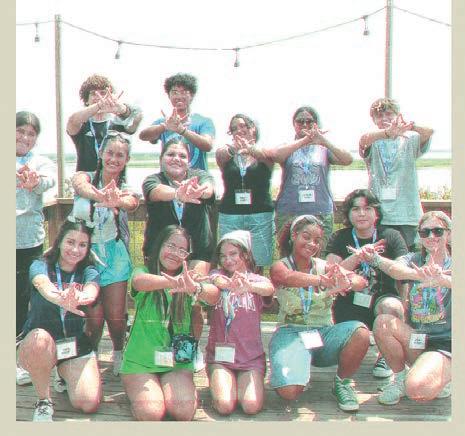
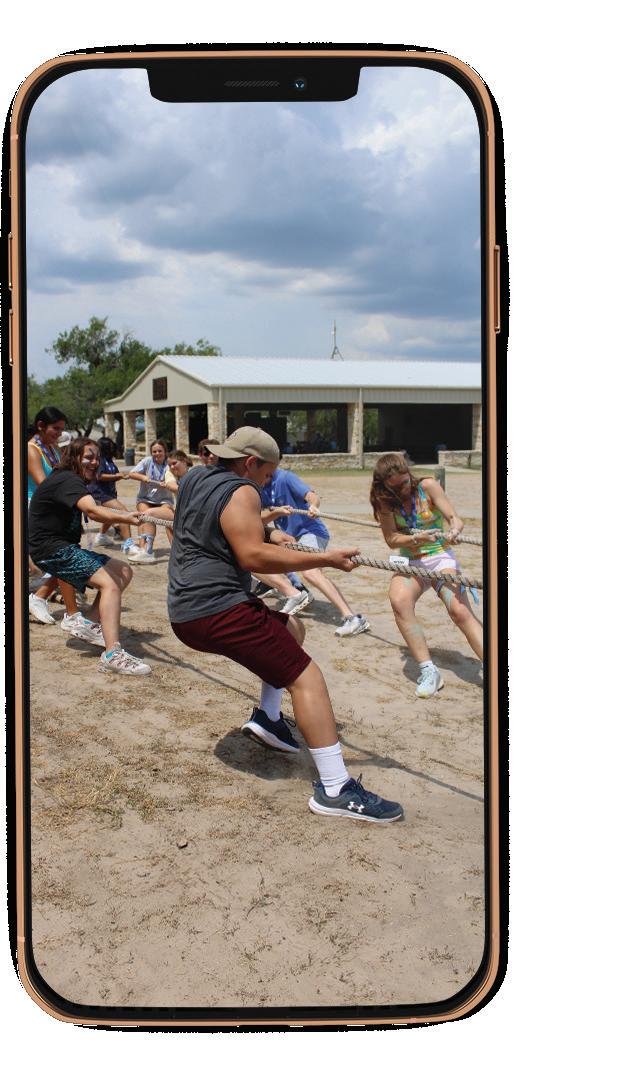
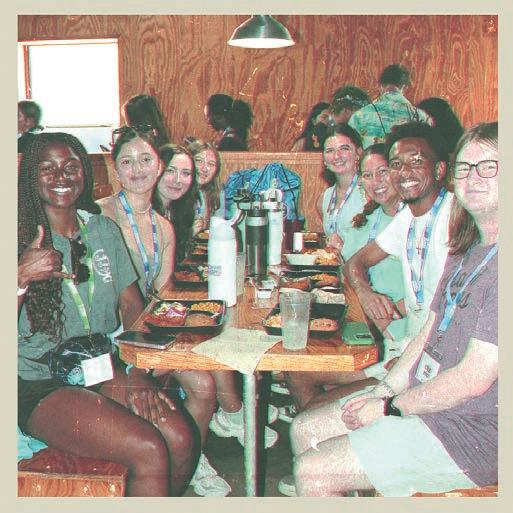
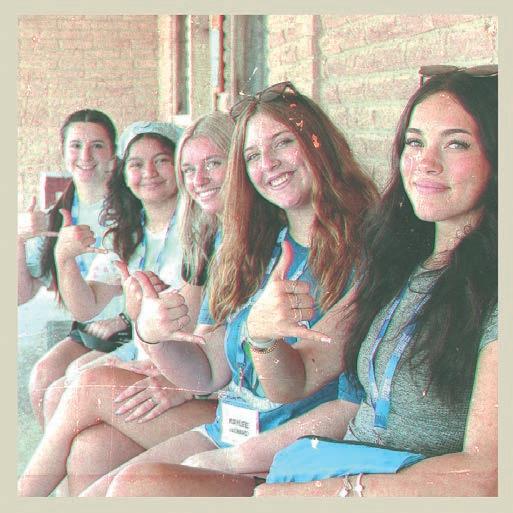
For 25 years, Anchor Camp has been a steady force, a beacon for incoming Islanders in search of connection, confidence, and community. Held just days before the fall semester begins, this beloved tradition offers students a jump on navigating college life.
“I wanted to form connections and make friends,” said Kendall Cooper ’29, an environmental science major from Castroville, just west of San Antonio. “I figured this experience would give me
a head start into college life and set me up for success.”
Cooper discovered Anchor Camp while scrolling through social media. Having worked as a summer camp counselor in high school, the idea of a pre-college camp felt familiar and comforting.
“The activities are fun, and making friends came super easy,” Cooper said. “After camp was over, I had so many phone numbers and Instagram connections. I’m so grateful for my time here.”
Organized by Student Activities, Anchor Camp is held at Camp Zephyr in Sandia, nestled along the shores of Lake Corpus Christi. It’s a place where students can dip their toes — not just in the water, but into Islander life itself. The camp is led by Island Leaders and Anchor Leaders, experienced upper-level students who serve as mentors, session guides, and activity
help new Islanders feel seen, welcomed, and connected.
“Sometimes people have a hard time making friends and they need a little push,” said Courtney Reeves ’26, a senior marketing major and Anchor Leader. “I try to get to know everyone, and link people up based on shared interests. A little conversation can go a long way.”
Reeves knows this better than most. She attended Anchor Camp as a first-year Islander and credits the experience with giving her the foundation and friendships she needed to thrive at TAMU-CC.
“It had such a strong impact on me and
I couldn’t wait to go back as a mentor and leader,” Reeves said. “I found a couple of forever friends through Anchor Camp, including two of my bridesmaids for my upcoming wedding.”
At its core, Anchor Camp encourages participants to discover their personal “anchor”— a source of support, belonging, and balance throughout their college journey. For some, that anchor might be student organizations, friendships, or even a sense of purpose. For Christopher Humphrey ’29, a communication major from Dallas, that anchor came in the form
“I’ve never been afraid to try new things, but Corpus Christi is far away from Dallas — I was nervous,” Humphrey said. “This was a big step, and this camp was like ripping off a Band-Aid. It got me really excited for the new school year.”
His nerves, like those of many campers, were quickly replaced with enthusiasm.
“I’m excited to live on my own and have new adventures with all these people that I met at camp,” Humphrey said. “They may not be my family, but the great thing about friends is that they are the family
As the camp marks its 25th anniversary, it stands as a celebration of Islander tradition, community, and transformation — and of the thousands of students who have stepped off the bus and into a journey of connection, discovery, and belonging.
“Anchor Camp is more than just fun and games,” Reeves said. “It’s about giving students the tools to be successful, socially and emotionally, before they ever step into a classroom.” •
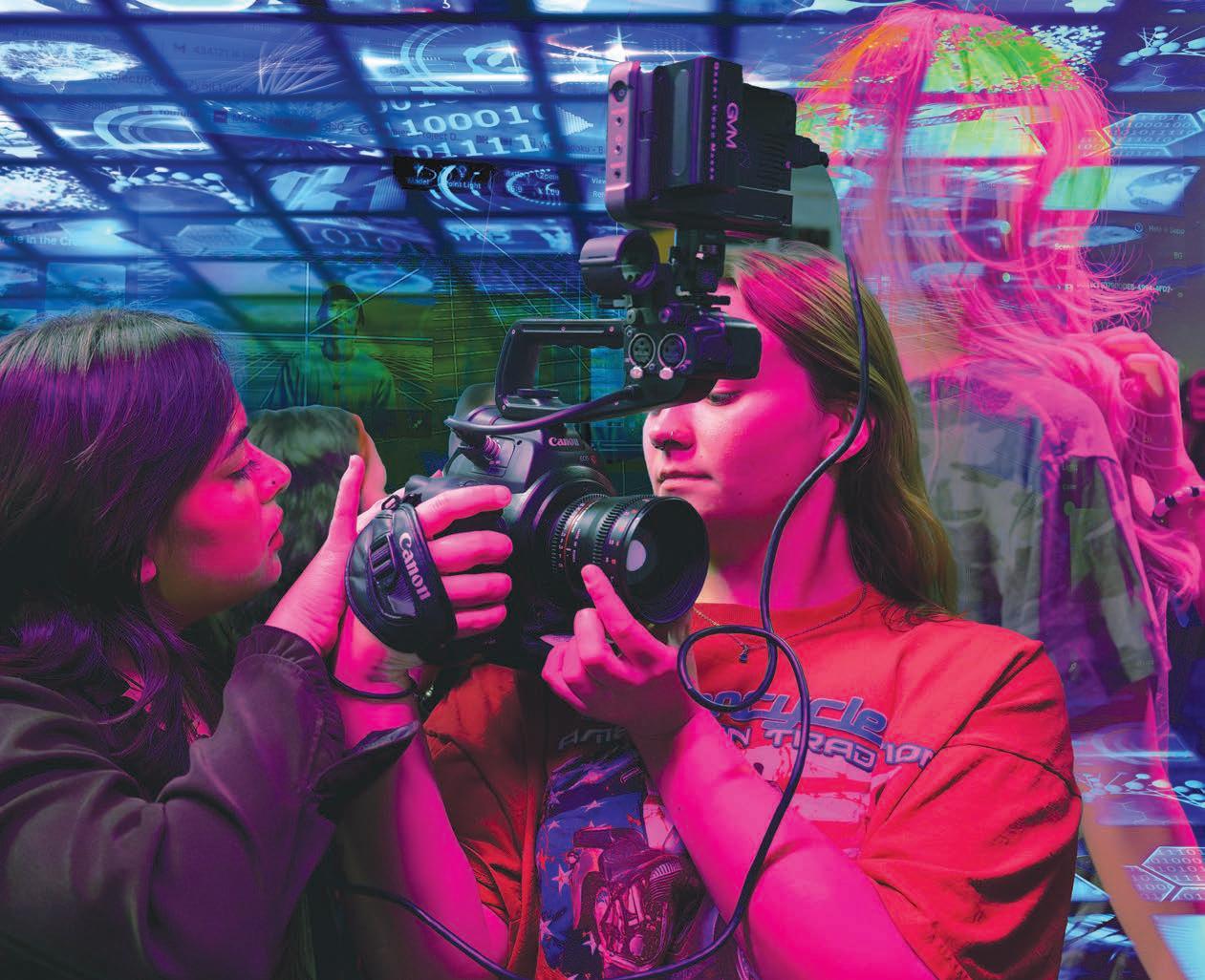
In spring 2025, TAMU-CC became the first university in Texas to teach an AI Filmmaking course, and one of only three institutions nationwide to do so. Since its launch, John Darbonne, Associate Professor of Digital Media, and his students have been working to redefine the future of the film industry through artificial intelligence.
Recently, Texas enacted Senate Bill 22, which created a $1.5 billion Texas Moving Image Industry Incentive program that will run through 2035. The initiative is expected to bring 50 to 100 additional productions annually to the state through grants for the filmmakers. As the largest investment in film in the state's history, the bill positions Texas as a top-tier production destination, rivaling Georgia and Louisiana.
With this momentum, the Island University has a once-in-a-generation jump on an opportunity to become a coastal hub for innovation in films. The university is currently exploring a grant-funded proposal to transform the Black Box Theatre, located in the
“AI is not a replacement for creativity; it’s a new lens through which imagination can thrive.”
AMANDA SULLIVAN ’26
Center for the Arts, into an AI-powered virtual production studio, mirroring the LED-screen technology used to film “The Mandalorian,” the first live-action series in the Star Wars franchise. The space would serve as an anchor for creative and technical collaboration, bringing together film, robotics, computer engineering, and the arts to transform how stories are made.
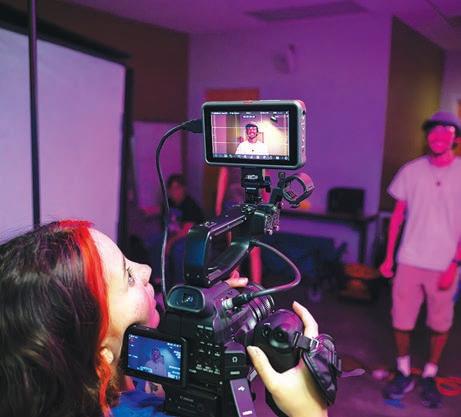
“Our goal is to make environments adapt as an actor performs,” Darbonne said. “We take a real person from existing footage, remove the original background, and create a new AI-generated setting that matches the camera’s movement. Then we place the actor back in and relight the scene, so it looks like they were filmed there all along.”
While the curriculum evolves in real time due to AI’s rapid advancements,
AI EMPOWERS NEXTGEN FILMMAKERS
Amanda Sullivan ’26 and fellow film student Shaleigh Mower ’26 adjust their camera for the perfect shot.
students are immersed in cutting-edge techniques, including character design with tools like Midjourney and Magnific Mystic. They create 3D models, animate characters, and integrate AI-generated assets into film projects. Beyond storytelling, AI has revolutionized postproduction. Audio editing, color grading, and visual effects that used to take months to create now only take weeks.
“AI has increased workflow efficiency by 300-500%,” Darbonne said. “This allows students to focus more on storytelling rather than getting bogged down by technical barriers.”
Amanda Sullivan ’26, a media production major from Corpus Christi, has been harnessing AI since first learning about it from Darbonne. Now, she has brought her original episodic series, “Devil in the Details,” to life using this emerging technology.
“Mr. Darbonne introduced our class to the emerging AI tool called Adobe Firefly,” Sullivan said. “He encouraged us to learn it, knowing it was already changing how professionals approached commercial and film production.”
Through the university’s S-RISE program, which supports students in research and creative activities, Sullivan was able to turn her creative interests into a research project. Over the summer, she participated in the competitive program, attending weekly sessions that included lectures on leadership, presentation skills, and research development. Darbonne acted as her mentor.
“It was definitely a challenge because I came in with a creative script and had to rework it into something that fit within a
research framework,” Sullivan said.
The project became both a creative experiment and a study of AI’s interpretive range. The team, including fellow media production major Quentin Labrador ’26, produced a series of short scenes that explored how AI could render a fantasy world featuring complex visual elements, including a character made entirely of smoke.
“ We both ended up with about three minutes of footage, and it was fascinating to see how differently the same guidelines translated on screen,” Sullivan said. “It really showed how human direction and AI tools can work together to create something unique.”
When Sullivan presented her research to university leadership at the S-RISE showcase, it marked a turning point in her confidence as both a storyteller and a scholar.
“AI is not a replacement for creativity; it’s a new lens through which imagination can thrive,” Sullivan said. “Even if you’re a student without a big budget or animation skills, AI gives you tools to create and tell stories you never thought you could.”
As Texas positions itself as a national film production powerhouse, the Island University’s early investment in AI filmmaking ensures Islanders will be at the forefront of this new cinematic frontier.
“The goal is to equip students with the tools they need to thrive in an AI-driven industry,” Darbonne said. “I want our Islanders to be competitive candidates when they graduate — not just following trends, but setting them.” •
CROSS THE FINISH LINE
Amanda Sullivan ’26 and John Darbonne, Associate Professor of Digital Media, in the classroom.
Kayla Brotherton ’26 and Luke Rivas ’27 use cinematography techniques to rehearse a scene.
The story of the Reyna family shows how one man’s dream can ripple through generations, how a hometown university can launch greatness, and how a shared passion for the business of law can build a lasting legacy.
The patriarch, Armando L. Reyna, is a first-generation American who came to this country with determination and big dreams — dreams he would see fulfilled through hard work and perseverance. From humble beginnings, he built a life defined by purpose. After putting himself through school and earning a law degree, he laid down roots in Corpus Christi, becoming a lawyer, husband, and father.
“My father was my hero,” said Luis Reyna III ’05. “By eighth grade, I had written a school project about him. I knew then that I wanted to follow in his footsteps.”
And follow, he did. Luis graduated from Texas A&M-Corpus Christi in 2005 with a bachelor’s degree in business
administration. Four years later, he earned his law degree from Texas Southern University in Houston. Today, he serves as an attorney for the Public Defender’s Office at the Nueces County Courthouse.
“When I was a kid, I spent a lot of time at my father’s law office,” Luis said. “I saw the work he was doing in our community, and it was something that I felt I had a strong passion to do — to help others.”
While Luis became the first sibling to navigate the path to law school, he didn’t walk the halls of justice alone for long. One by one, his brothers and sister followed suit. They would all earn their bachelor’s degree from TAMU-CC and then make their way to law school.
Carlos Reyna ’07, the youngest brother, earned a bachelor’s degree in psychology from the Island University before attending law school at St. Mary’s University in San Antonio. Today, he’s a criminal defense attorney and owns a law practice in Corpus Christi.
“Because my two brothers also work in Nueces County, we often see each other in the courtrooms or in the hallways,” Carlos said. “We get to bounce ideas off each other and get a different perspective on our cases.”
Robert Daniel Reyna ’08, who earned a bachelor’s degree in computer science from TAMU-CC, also runs his own law practice in Corpus Christi, handling courtappointed and federal criminal cases.
“I originally wanted to be a software engineer and write code,” Robert said. “But my brothers were big influences on me. Even though I’m the middle brother, they were attorneys before me. My parents were very supportive as well.”
The youngest sibling, Crystal Reyna ’12, earned a bachelor’s degree in criminal justice from TAMU-CC and later completed her law degree at Texas Southern University, like her brothers Luis and Robert. She now serves as an attorney for the Harris County Public Defender’s Office in Houston.
REYNA SIBLINGS CARRY ON A LEGACY OF LAW AND ISLANDER PRIDE
“I always knew I wanted to go to law school, but once I started taking more criminal justice courses at TAMU-CC, it confirmed my interest in criminal law and impacted my decision to become a criminal defense attorney,” Crystal said.
All four Reyna siblings share fond memories of their time at the Island University — crediting their time on campus with helping them cultivate the leadership skills they needed to succeed in the legal profession.
“I’ve always been very shy, and I didn’t like talking in front of groups of people,” Robert said. “But group projects at TAMU-CC gave me confidence that I took into law school and now my career.”
For Luis, one of the most formative experiences on campus was joining Phi Delta Theta, a fraternity built on brotherhood, moral rectitude, and sound learning.
“ We studied together, worked out together, and held each other accountable,” said Luis, who served as the fraternity’s vice president. “My brother Carlos even joined, so we weren’t just brothers — we were fraternity brothers, too.”
Crystal also took part in Greek Life at the Island University.
“I’m an Alpha Gamma Delta and I’m also active member in the Islander Alumni Association based in Houston,” Crystal said.
The Reyna family legacy at TAMU-CC extends beyond the siblings. Their mother, Maribella Reyna ’12, returned to school later in life to earn a degree in psychology and graduated from TAMU-CC the same year as her daughter. Various family members have also selected TAMU-CC for their degrees.
“We’ve gotten really good at saving seats at graduation,” Luis joked.
Though their time as students at the Island University may be over, their impact lives on.
“I speak at the TAMU-CC Criminal Justice Club meetings several times a year, talking to students about the process of trying a case and what they need to do to become a lawyer,” Luis said.
Each Reyna sibling has carved their own path in the business of law, yet they remain connected by family and the Islander education that shaped them all. •
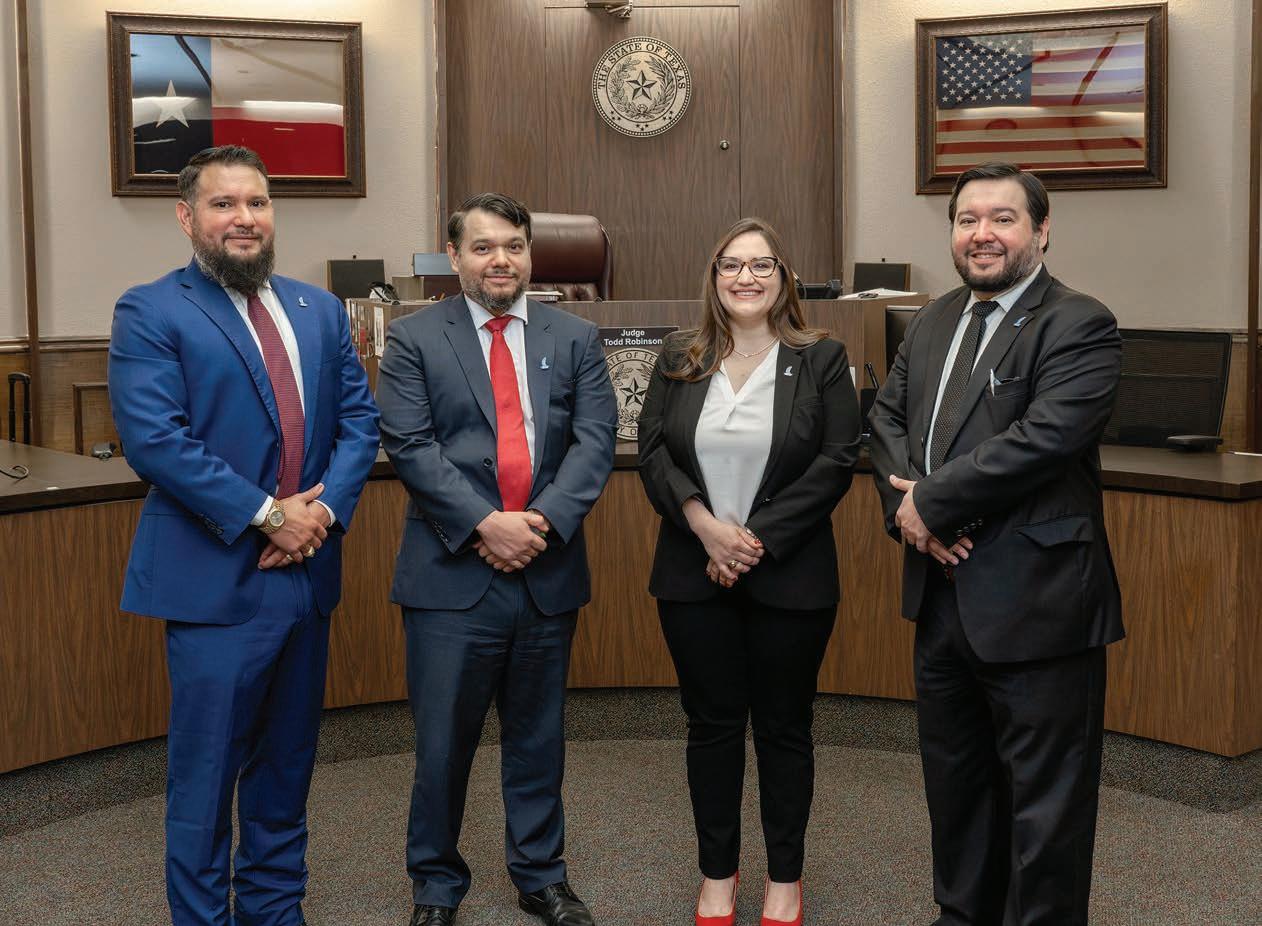
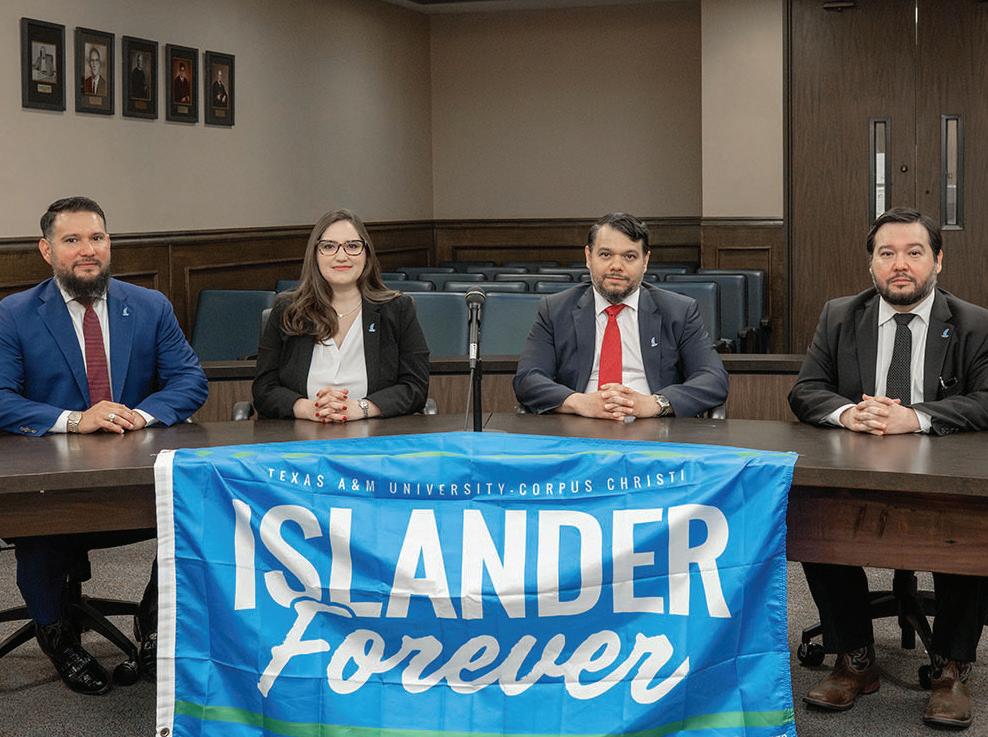
Luis Reyna III ’05, Crystal Reyna ’12, Carlos Reyna ’07, and Robert Reyna ’08 in the Nueces County Courthouse.
SCIENTISTS LEAD THE CHARGE TO PROTECT CORAL
Long after most students had left for the day on an unusually warm October night, a black Toyota Tacoma carrying precious cargo turned onto Island Boulevard, making its way to the loading docks at the Harte Research Institute at Texas A&M-Corpus Christi.
Next to HRI’s main building sits a brick facility housing an 860-square-foot room containing 12 new 150-gallon Tenji life support systems, or mesocosms — the latest tools of HRI’s Coral Reef and
Ocean Health Lab. On this night, those same tanks awaited new residents from the Florida Keys.
Once the truck backed into the dock, research aquarist Jack Willans hoisted a large gray cooler from the truck bed and carried it inside. Waiting for him at the dock were Dr. Keisha Bahr, Chair for the Coral Reef and Ocean Health Lab, and Robert Bretzing ’20, ’23, lab manager. Together, they prepared to unpack HRI’s newest collection of corals.
“Fieldwork always comes with surprises like weather shifts, equipment hiccups, and the unpredictability of the ocean itself,” Bahr said. “But that’s part of what makes it exciting. You learn to problemsolve in real time and adapt, and that flexibility is what keeps every expedition interesting and successful.”
The crew worked with Reef Renewal USA to collect, pack, and transport endangered corals from Florida to HRI, where they will be housed in the lab’s new
HRI
mesocosm system — a miniature ocean that allows researchers to simulate past, present, and future ocean conditions in a controlled environment.
Coral reefs are an important part of the ocean’s ecosystem, providing food and shelter for countless marine species. Reefs around the world are under threat from a changing ocean environment, and many regions are experiencing coral bleaching — an event where corals lose their color after essential algae vacate the coral structure.
That’s where HRI’s coral researchers come in. Dubbed Operation Coral Rescue 2.0, the expedition showcased HRI’s Coral Reef and Ocean Health Lab at the forefront of coral research. The Harte Charitable Foundation helped fund the mesocosm system.
“We have investigated the responses of several coral species to environmental change in three very distinct regions — the Hawaiian Pacific, the Gulf, and the Caribbean,” said David Armstrong ’26, a Ph.D. candidate and graduate research assistant who has worked in the Coral Reef and Ocean Health Lab since 2022. “The lab has changed tremendously, and with this comes the opportunity to push the boundaries to better understand these ecosystems that are threatened more with every passing day.”
Operation Coral Rescue 2.0 came just over a year after the original Operation Coral Rescue, when HRI scientists transported rescued corals from Nova Southeastern University’s coral nursery on Florida’s east coast to Texas during a heatwave. The mission mirrored the most recent operation, relocating threatened corals to a more stable environment to aid their growth while allowing scientists to study them. This effort is part of a growing portfolio of research projects for HRI’s coral lab since its launch in 2024.
Students and researchers from the lab have studied coral reefs in Hawaii, the Fiji Islands, Tahiti, and the Gulf waters off the Yucatan. The team also contributed to NOAA’s annual assessment of the Flower Garden Banks National Marine Sanctuary, located about 100 miles off Galveston, the Gulf’s only large coral reef and one of the most resilient and stunning in the world.
Back home at HRI, the Coral Reef and Ocean Health Lab is undergoing a remodel, along with the expansion of its aquarium facilities.
“From these corals we can learn so much — from their basic anatomy to which conditions work best for different species and how local and global stressors affect them,” Willans said. “With our new mesocosm tanks, we can also do this on a larger scale, testing multiple species together and looking at effects on a community level.”
HRI’s establishment of a coral reef lab was a long-term goal, and the program continues to blaze trails in coral research. From creating coral color cards — a unique citizen science tool for measuring coral health — to conducting ongoing research on coral genetics and ways to make corals more resilient to environmental change, the lab is making a lasting impact in the Gulf and beyond.
“Unfortunately, the world’s coral reefs are struggling due to local and global stressors such as ocean acidification and climate change,” Willans said. “The research performed here at the Coral Reef and Ocean Health Lab is vital to understanding how these factors are affecting reefs worldwide — what we
can do to stop the decline, and how we can better inform restoration practices to give reefs in the Gulf and beyond the best chance of recovery.” •
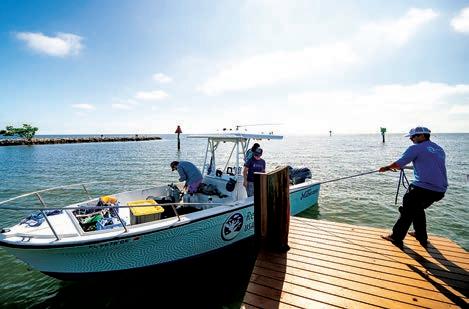
HRI and Reef Renewal USA researchers in Florida prepare to head out into the Atlantic Ocean on Operation Coral Rescue 2.0. The mission brought back more than 200 endangered corals from Reef Renewal USA's off-shore coral nursery.
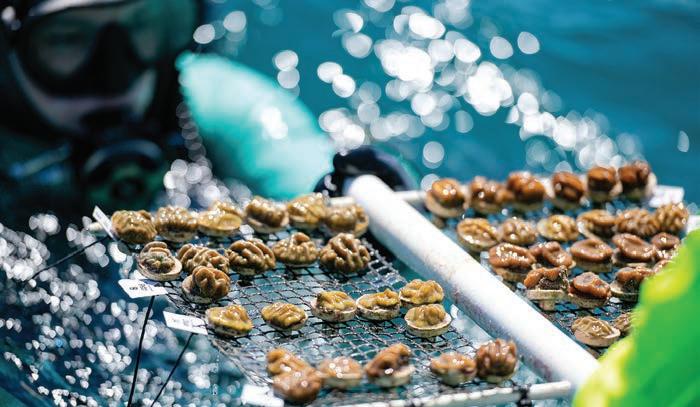
Multiple coral species are loaded onto a coral platform in Florida in preparation for transport to HRI.
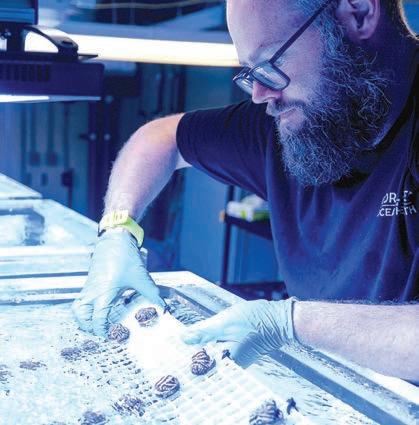
HRI Research Aquarist Jack Willans works with a species of brain coral in HRI's mesocosm lab. The lab is 860 square feet and houses 12 tank systems for corals.
GUY HARVEY FOUNDATION TRANSFORMS ‘ BEACHCOMBING ’ INTO TEACHING TOOL
Nearly every week, rain or shine, hot or cold, Jace Tunnell ’98, ’01 ventures onto a beach along the Gulf. It might be near Port Aransas or on the Padre Island National Seashore, and from those adventures, one of the world’s best-known beachcombers — whose posts and videos have garnered more than a half-million views in 2025 — finds treasures that enlighten, enthrall, and engage his followers through the Harte Research Institute’s social media channels.
ready-to-use marine science and ocean conservation lesson plans and self-paced activities for Texas and Florida teachers, homeschoolers and other informal science educators.
As Tunnell’s “Beachcombing” program continues to expand, he will now reach a wider, and maybe his most important audience — students.
This fall, the Guy Harvey Foundation (GHF), one of the world’s top supporters of marine research and education, teamed up with HRI and Tunnell in an educational initiative that combines GHF’s education resources with Tunnell’s informative “Beachcombing” videos to help bring a deeper understanding and appreciation of marine ecosystems.
Tunnell's “Beachcombing” videos are a key piece of the program, providing free,
“Connecting students with the marine world is crucial for inspiring the next generation of ocean stewards,” said Tunnell, a Corpus Christi native who is HRI’s Director of Community Engagement.
“The Guy Harvey Foundation’s resources are scientifically sound, engaging, and incorporate art as a teaching tool. It’s exciting to be a part of this effort to bring these to students to not only entertain, but also teach about our oceans.” •
FREE DOWNLOAD HRI Program for Educators
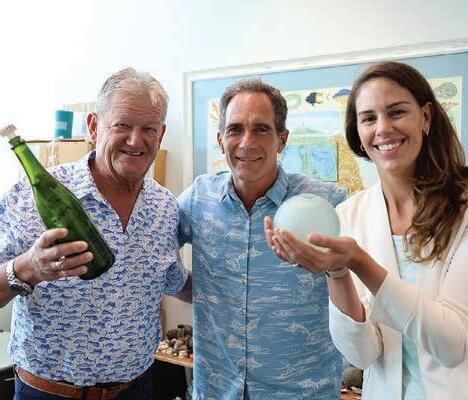
Guy Harvey, Jace Tunnell '98, '01, and Jess Harvey hold up some of the treasures Tunnell has picked up through the years while beachcombing.
INSIDE THE ISLANDER ROTC EXPERIENCE
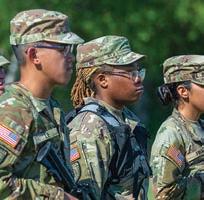
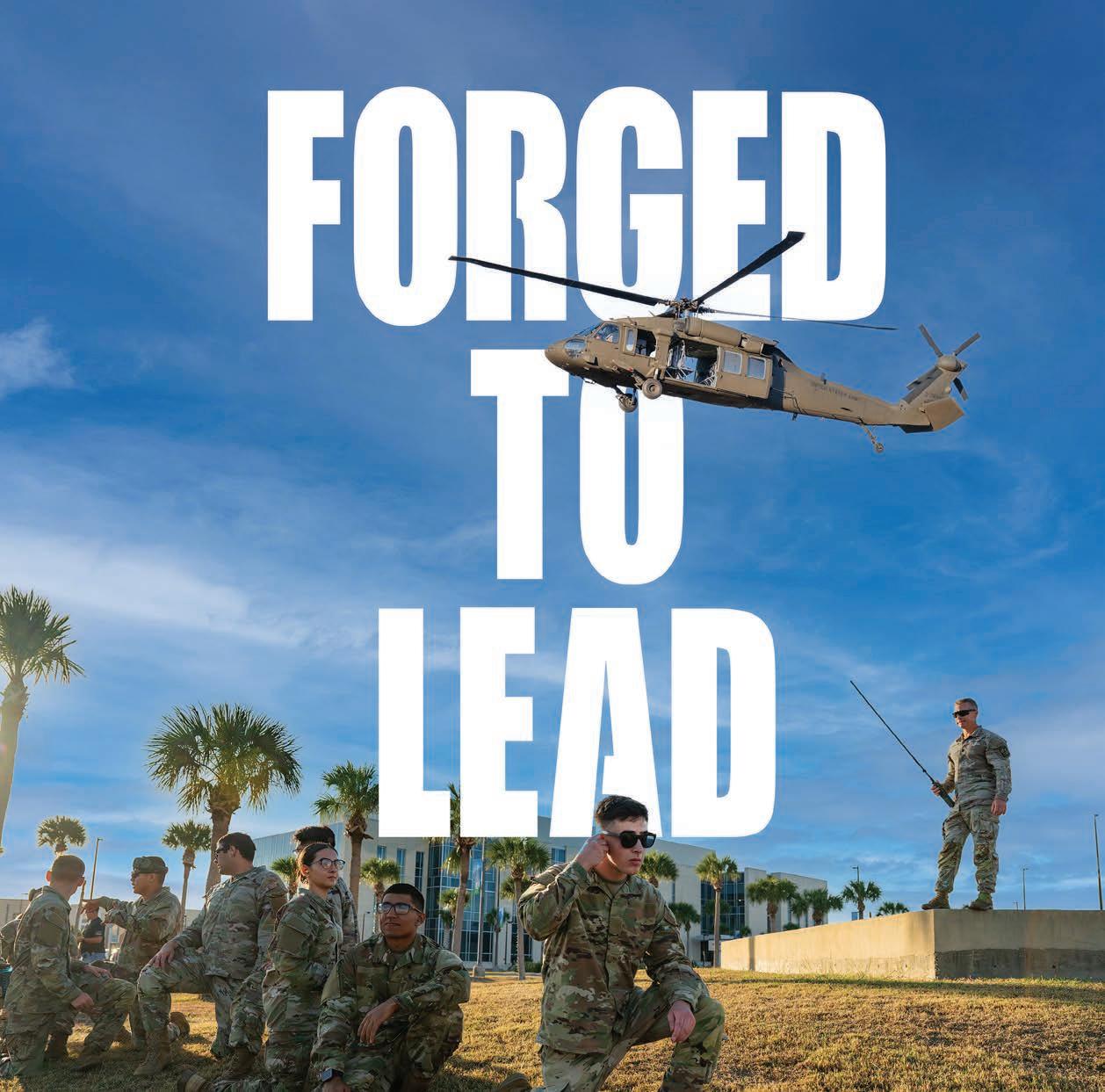
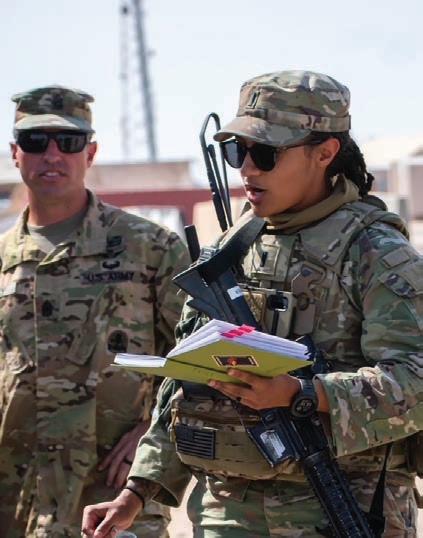
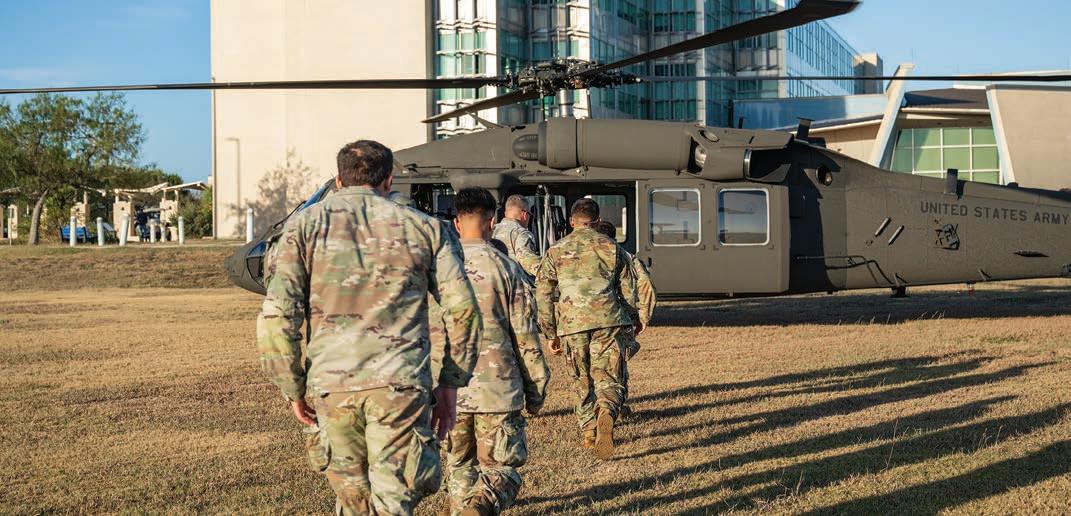
The whir of rotor blades cuts through the early morning air as cadets line up, boots planted, eyes forward. A UH-60 Blackhawk waits just ahead, ready to lift the Islander Battalion into the sky. In a matter of minutes, those cadets will be whisked away to the La Copa training area, where a grueling 72-hour exercise will test everything they’ve learned this semester: marksmanship, rappelling from dizzying heights, maneuvering through obstacle courses, navigating unfamiliar terrain day and night, and leading tactical operations under pressure.
This is what the Reserve Officers’ Training Corps (ROTC) looks like at Texas A&M-Corpus Christi, a program defined by challenge, camaraderie, and the relentless pursuit of becoming something more. For freshman Rion Ochoa ’29, that pursuit is personal. What began as curiosity has quickly become a calling — one measured not only in miles or missions, but in growth.
Continued on next page.
“It’s stressful, but it’s going to make me strong,” Ochoa said. “Every drill, every rep, I give 100%; it’s all preparing me for the challenges ahead.”
Ochoa, a criminal justice major from Pleasanton, just south of San Antonio, represents a new generation of cadets embracing the challenge of the U.S. Army ROTC, a program which blends classroom academics with hands-on leadership and military training, preparing students to commission as officers in the U.S. Army upon graduation.
Like many of his peers in the Islander Battalion, Ochoa’s plans after high school did not initially include serving in the military.
“I thought I might go into the oil field like my dad,” Ochoa said. “But then I saw the ROTC scholarships, and everything kind of fell into place.”
U.S. Army ROTC scholarships can be earned after a cadet’s first year, are worth more than $6,000 each semester, and are funded by U.S. Army Cadet Command. The program has been shaping leaders around the nation since 1916.
“Over 75% of officers in the Department of Defense come through programs like this,” said Lt. Col. Andrew Stevens, Professor of Military Science and the Islander Battalion’s commanding officer. “Our cadets spend four years balancing their degree requirements with military leadership training. It’s a demanding path, but the results speak for themselves.”
Those results are impressive. Between their junior and senior years, cadets from around the country gather at Fort Knox, Kentucky, for a 35-day assessment known as ROTC Advanced Camp. It’s a grueling crucible of physical fitness tests, tactical operations, medical drills, and leadership evaluations. TAMU-CC’s program boasts a 100% success rate.
Stevens believes the Islander Battalion’s size gives it a unique advantage.
“Because we’re a smaller yet growing battalion, we can offer one-on-one mentorship. I know each cadet’s strengths and weaknesses and can help them compete nationally,” he said. “That’s why nearly 90% of our cadets get their first branch choice and 100% get their first or
second branch choice after graduation.”
The battalion’s growth tells its own story. Now in his second year leading the Islander Battalion, Stevens said when he first arrived at TAMU-CC, the program numbered just over 30 cadets. Today, it’s more than doubled, with about 70 students in uniform and projections pointing past 80 by next year. That kind of momentum is rare at a time when many university ROTC programs are struggling to hold their ground — a sign that word is spreading about the unit’s leadership training, career opportunities, and culture of purpose.
“Not everyone has the same motivation or work ethic,” Ochoa said. “I’ve had to learn how to challenge people while still respecting their differences.”
That lesson comes early and often. First-year students typically start by observing labs and participating in team drills, while sophomores and juniors take on leadership roles as squad or platoon leaders. Seniors serve as mentors and planners, guiding operations which range from field exercises in the brush behind campus to tactical drills on the Momentum Campus training grounds. It’s
a structure designed to build confidence step by step, turning timid first-year students into decisive leaders.
“Even cadets who were quiet and unsure at first end up standing in front of a formation and leading effectively,” said 1st Lt. Ashley Fryer ’21, a program alumna now deployed as a logistics officer with the 101st Airborne Division in the Middle East. “That transformation is one of the most rewarding parts of ROTC.”
Fryer, who studied biomedical sciences with a minor in military science at the Island University, didn’t know much about ROTC when she first arrived on campus.
“My dad suggested I sign up,” said Fryer, whose father and uncle each served 20 years in the military. “I loved the camaraderie, the leadership roles, and the mentorship. Even if you’re unsure about the military, I’d say give it a try for a year or two. It gives you a new perspective on leadership and a real confidence boost.”
The path to commissioning is rigorous. Freshmen attend lectures, physical training, and leadership labs for about five hours per week. By senior year, the commitment climbs to around eight hours a week, not counting
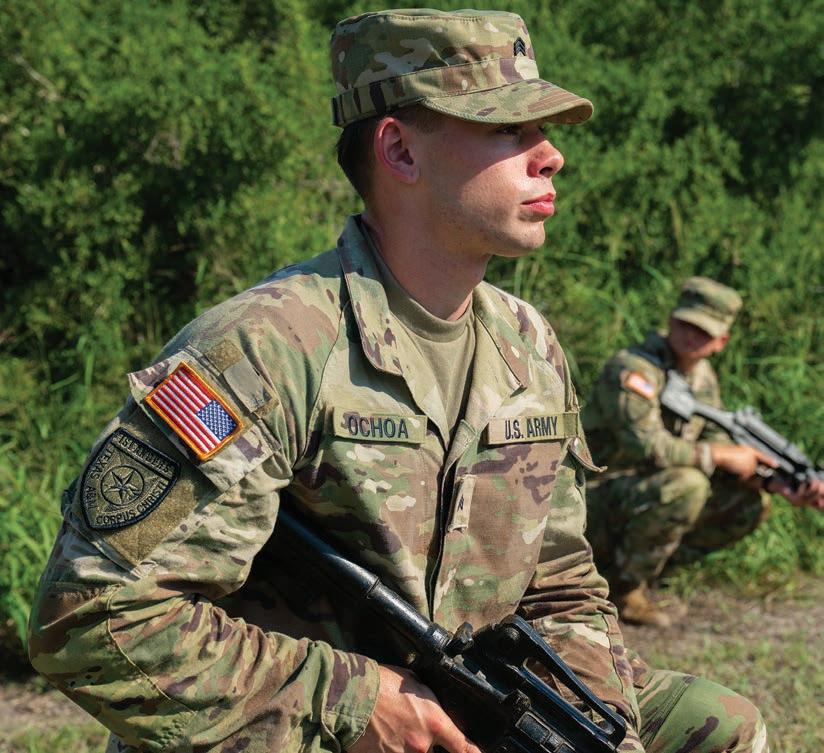
Rion Ochoa ’29 during an afternoon military science lab at Momentum Fields.
extracurricular opportunities like Ranger Challenge, a two-day endurance event testing everything from navigation and marksmanship to teamwork under stress.
Ochoa, who captains the Ranger team, sees the challenge as a proving ground.
“The Ranger competition is exhausting. You’re running on little sleep, pushing your limits, leading under pressure,” Ochoa said. “But it’s exactly what I need to prepare for Ranger School after college.”
ROTC’s influence on cadets often extends far beyond graduation. Stevens says the mentorship aspect of his job, helping students navigate not only military decisions but also financial planning and personal challenges, is one of the most meaningful parts of the role.
“This program doesn’t just produce officers,” Stevens said. “It builds resilience, discipline, and leadership skills which will serve students whether they stay in the Army for four years or four decades.”
For Fryer, lessons learned in ROTC proved invaluable as she transitioned from college cadet to officer.
“ROTC taught me to lead through words, not just actions,” Fryer said. “As battalion commander my senior year, I learned how to delegate tasks, build confidence in others, and lead effectively
without doing everything myself. Those skills are essential in the field.”
And while Fryer now oversees logistics for a Combat Aviation Brigade halfway around the world, she still carries with her the lessons she learned at the Island University and watches the battalion’s progress from afar with pride.
“I’m proud of how much the program has grown,” Fryer said. “The training, the coordination, even the social media presence — it’s stronger every year. And bonds you build here, those never fade.”
Upon graduation, every ROTC student is commissioned as a 2nd Lt., but not all will enter the Army the same way. Cadets rank nationwide using a points-based system that weighs leadership evaluations, academics, physical fitness, and summer training performance. Cadets at the top of the list get first pick — including coveted active-duty slots, serving full-time as Army officers. Others are assigned to the Reserves or National Guard, where they balance military commitments with civilian careers.
“Plan A for me is active duty,” Ochoa said. “I’m working hard to earn the chance to serve full time.”
In a program built on challenge, mentorship, and relentless pursuit of
growth, Ochoa and his fellow cadets are charting their own courses — one drill, one decision, one leadership lesson at a time. •
1st Lt. Ashley Fryer ’21 draws on the leadership experience she gained at the Island University while serving on deployment in the Middle East.
Cadets from the Islander ROTC Battalion line up to board a U.S. Army UH-60 Blackhawk helicopter.
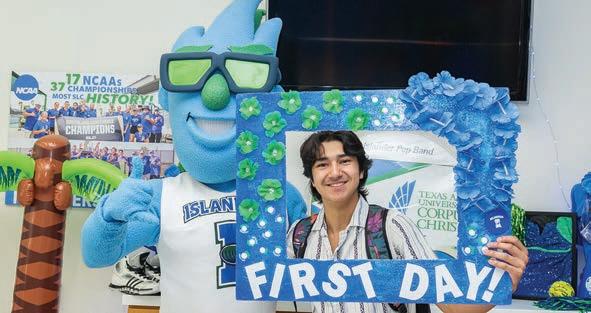
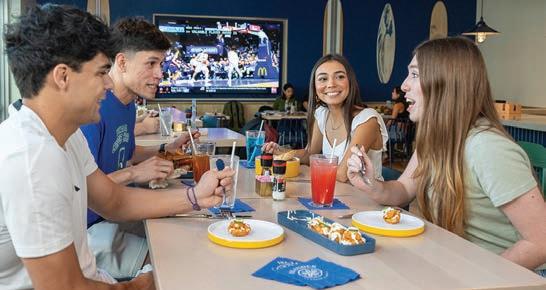
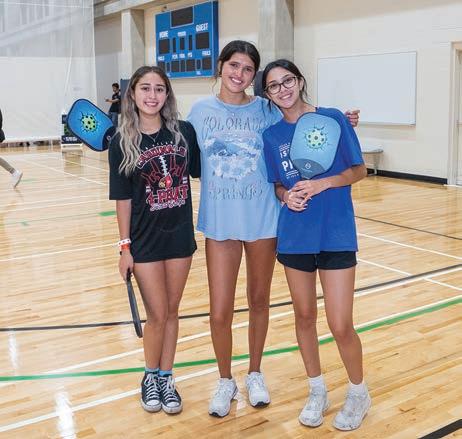
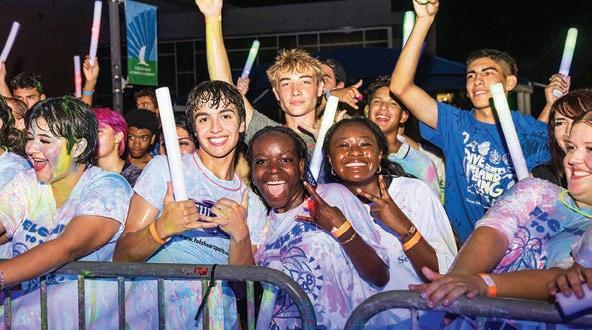
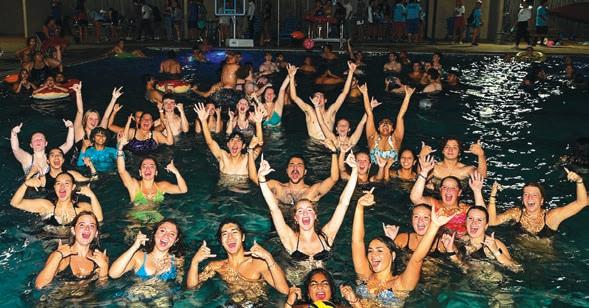
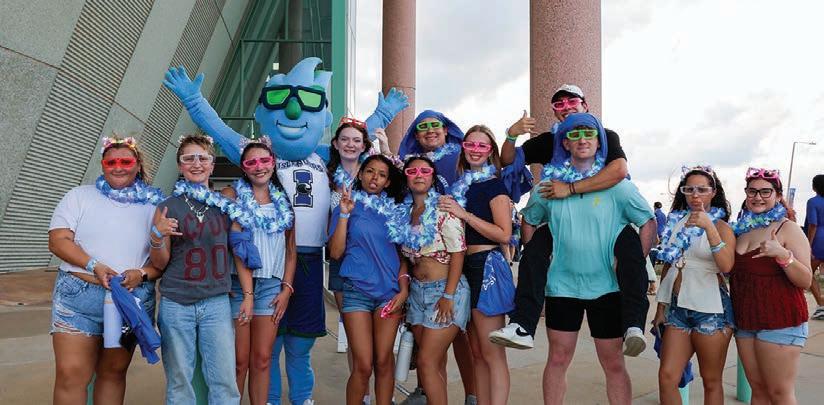
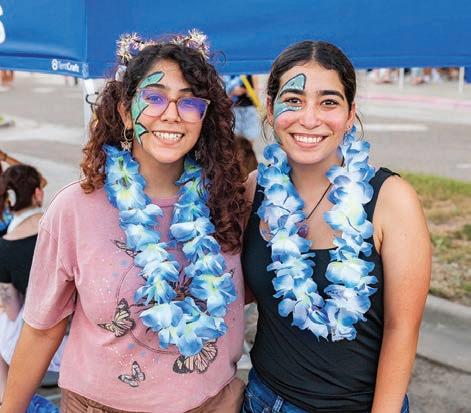
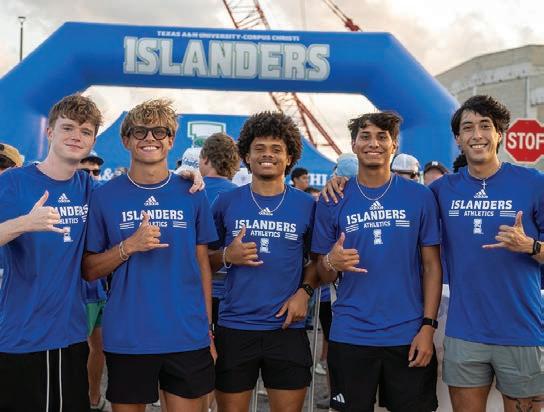
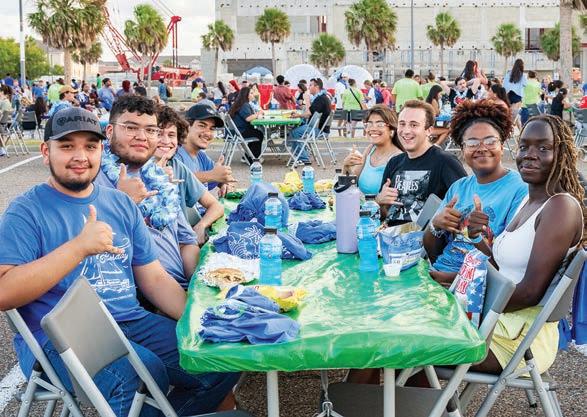
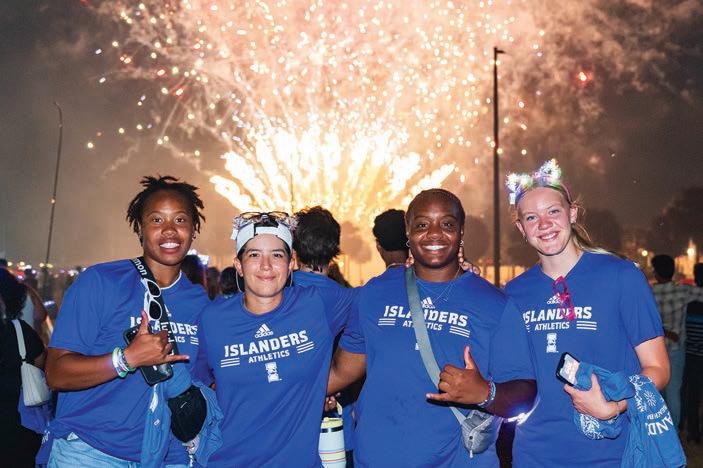
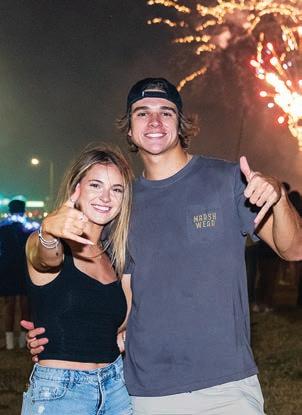
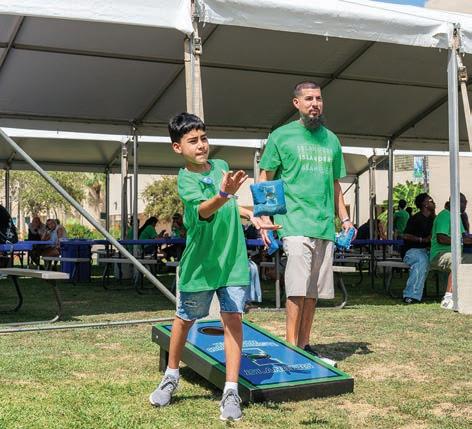
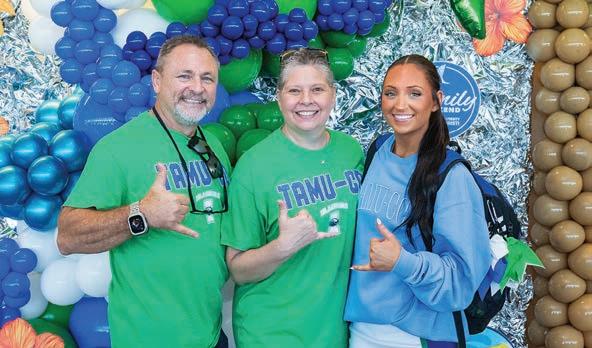
Each fall semester, the campus community comes together to welcome new and returning students during Waves of Welcome (WOW). This year’s celebration featured more than 70 events, including popular favorites like REC the Night, Islander Palooza, and Islanders Beach Bash. Through these activities, students embrace Islander traditions, build lasting friendships, and explore campus and community resources. The university also marked a major milestone this fall with the grand opening of Islanders Sandbar & Grill, its first full-service restaurant and bar.
Continued
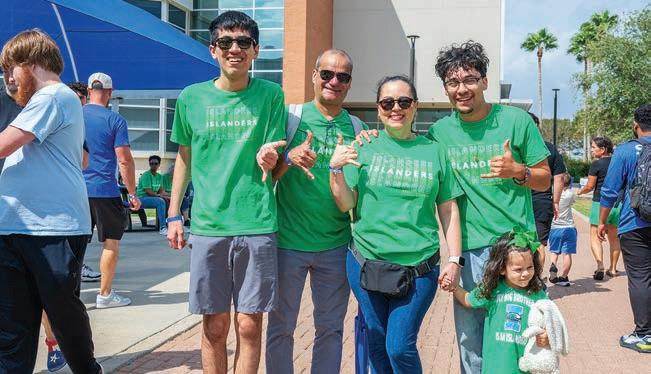
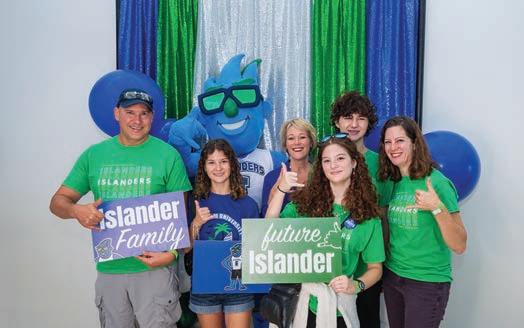
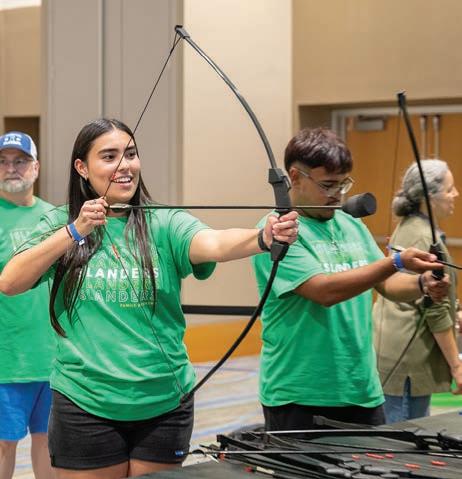
Families from near and far joined their students during Islander Family Weekend to celebrate traditions, explore campus, cheer on Islanders Athletics, and make memories that last a lifetime.
SKIES WITHOUT LIMITS
AUTONOMY RESEARCH INSTITUTE CHARTS THE NEXT ERA OF AVIATION
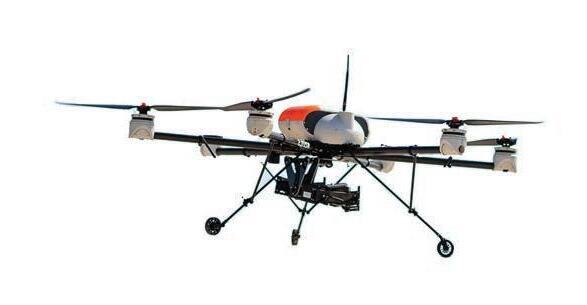
What started more than a decade ago as a local effort to explore the emerging field of autonomous aircraft systems has grown into a nationally recognized center of innovation. Now, TAMU-CC’s Autonomy Research Institute (ARI) is poised to lead the Federal Aviation Administration’s newest Center of Excellence: The Center for Advanced Aviation Technologies (CAAT). It’s a milestone marking a new chapter in
the Island University’s research legacy, one defined by curiosity, collaboration, and a relentless pursuit of the horizon.
“It’s happening here and it’s happening now,” said Mike Sanders, Assistant Vice President and ARI Executive Director. “And we’re showing the world what that future looks like.”
Under Sanders’ leadership, the former Lone Star UAS Center for Excellence
and Innovation grew rapidly, pioneering research in safety protocols, flight operations, and real-time data systems. As autonomous technology expanded beyond drones into ground, maritime, and space applications, the need for a broader, more flexible research framework became clear. In 2024, the Autonomy Research Institute was born.
Continued on next page.
“Our shift to the Autonomy Research Institute reflects not only a name change, but a strategic leap toward full-spectrum autonomy — from small drones to larger aircraft and integrated airspace solutions,” Sanders said. “We’re building the future of aviation right here in the Coastal Bend.”
Today, ARI is a transdisciplinary institute uniting engineers, social scientists, computer scientists, and communications experts across campus. Work spans multiple domains and centers on four core research pillars: data visualization and decision support; human-autonomy teaming; autonomy policy and ethics; and sensing, perception, and system integration. ARI has also taken on ambitious work in disaster response, environmental monitoring, and fire detection.
“Our efforts are not theoretical; they are deeply applied,” Sanders said. “We’re not just testing ideas in a lab, we’re building real-world solutions.”
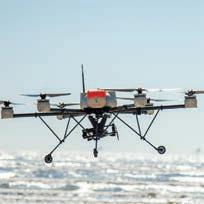
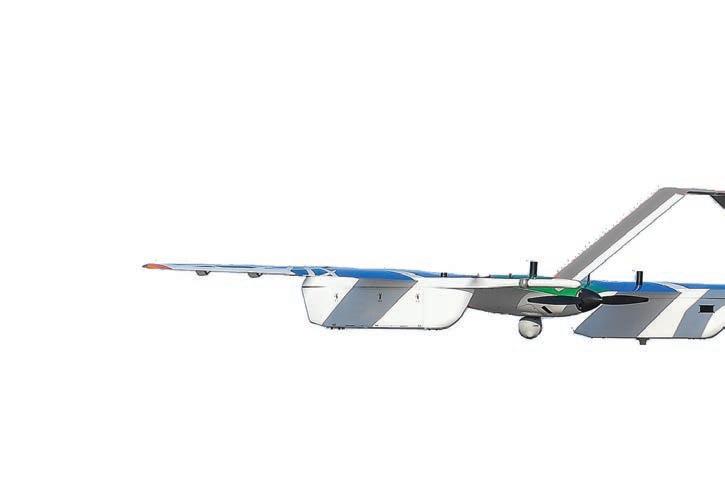
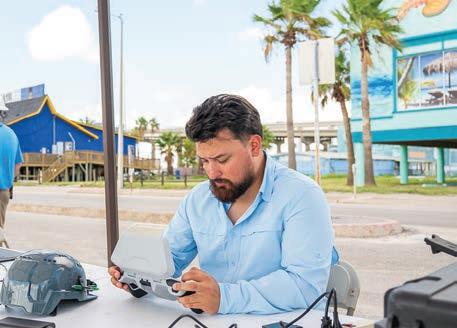
That commitment to real-world problem-solving was on full display during a September Autonomous Aviation Demonstration at the Texas State Aquarium, where ARI researchers showcased how uncrewed systems can safely operate in complex environments. The flight scenario simulated emergency response conditions, combining live aircraft, weather modeling, and sensor data to demonstrate how autonomy can support rapid decision-making in the field.
“The demonstration brought together every piece of what we’ve been building,
including communication networks, airspace coordination, and real-time data processing,” said Tye Payne, ARI Associate Director for Public Operations.
Working in collaboration with industry leaders and partners, the team integrated multiple autonomous platforms into shared airspace. The exercise also served as critical validation of the research infrastructure supporting ARI’s broader mission: advancing autonomy through rigorous testing, data sharing, and crosssector cooperation.
“Demonstrations like this show that Corpus Christi is becoming a proving ground for the next generation of air mobility, one where safety, innovation, and collaboration all take flight together,” Payne said.
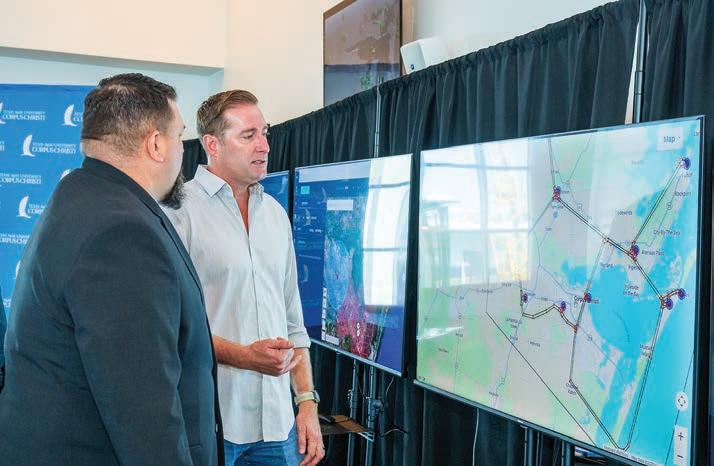
The demonstration also marked one of the first major operations supported by ARI’s new operations center in the university’s Downtown Building. Outfitted with advanced communications systems, real-time tracking displays, and secure data links, the facility serves as a
“We’re not just testing ideas in a lab, we’re building real-world solutions.”
MIKE SANDERS, Assistant Vice President and ARI Executive Director
second mission hub for connecting pilots, engineers, and researchers across multiple test sites. From this location, ARI can coordinate simultaneous flight operations, monitor weather and airspace conditions, and analyze data as it streams in, while collaborating live with partners from across the country.
“The operations center represents a new level of capability,” Payne said. “It gives our team the ability to manage complex autonomous missions from a central location, right in the heart of Corpus Christi’s innovation corridor.”
As ARI takes on its new role leading CAAT on behalf of the Texas A&M University System, the downtown operations center will serve as both a regional command center and a model for national network integration — demonstrating how local innovation can be scaled to support the next era of autonomous aviation. This five-year cooperative agreement, an initiative of up to $190 million in funding, will connect TAMU-CC with a consortium of academic and industry partners nationwide.
“This partnership positions us at the forefront of aviation autonomy research, enabling us to collaborate with top minds across the country,” Sanders said. “Together, we’ll pioneer solutions that extend far beyond aviation.”
ARI currently supports more than a dozen undergraduate, graduate, and doctoral students from nearly every academic unit on campus. Through
The downtown operations center is equipped to monitor, manage, and analyze multi-domain operations through
real-world, hands-on assignments, from writing technical manuals to designing drone payloads, students gain experience which positions them for careers in emerging industries.
Originally joining as an administrative student worker, graduate student Siva Annavajhula ’25 soon found himself drawn into research projects that merged his computer science studies with realworld applications in artificial intelligence and data analytics.
His first assignment, Project Wildfire, focused on using multiple data streams to detect and track wildfires, and his work was showcased as part of the downtown Autonomous Aviation Demonstration.
“I came to TAMU-CC expecting to study theory and maybe find a job,” Annavajhula said. “I never imagined I’d be helping expand what’s possible in computer science and autonomy. ARI lets me turn what I learn in the classroom into something that can change the world.”
Annavajhula, an international student from India who is working towards a Master of Science in Computer Science, now works on developing hyperlocal weather models to predict how wildfires spread based on block-to-block variations in wind and humidity.
“Once we detect a fire, people want to know where it’s going so they can position firefighters,” Annavajhula said. “Global models don’t show that level of detail, so I’m building a tool that observes local weather patterns and predicts where the fire might move next. This experience has opened my eyes to how computer science can make a tangible impact.”
ARI’s partnerships with industry, state agencies, and federal regulators are also creating new opportunities for the Coastal Bend in hydrogen fuel, clean energy, and smart infrastructure.
“This isn’t Buck Rogers stuff,” Sanders said. “This is real, it’s here, and we’re doing it together.”
As the Island University approaches its 2030 vision, ARI embodies TAMU-CC’s commitment to innovation, impact, and intellectual leadership. From a modest test site to the epicenter of a national FAA research hub, ARI continues to push boundaries, not only asking what’s next, but how to get there first. •
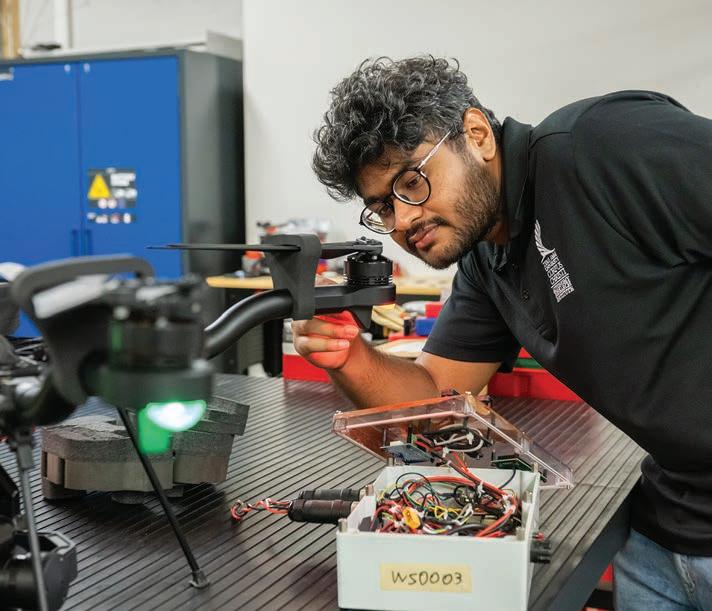
Siva Annavajhula ’25 installs an anemometer on a UAS to deliver real-time wind data for an AI fire prediction tool.
Above: Tye Payne, ARI Associate Director for Public Operations, and Texas Army National Guard 1st Lt. Brett Orr review flight data during ARI's inaugural Autonomous Aviation Demonstration.
Right: Using a Skydio X10 aircraft, flight operations coordinator II Arturo Rodriguez conducts a mock search for sea turtles during the Autonomous Aviation Demonstration.
LIGHTS, CAMERA, Creation
For Matthew Thornton ’02 and Denise Thornton ’02, what started off as an elective course at TAMU-CC — filmmaking — quickly emerged into a creative career that has spanned over 20 years.
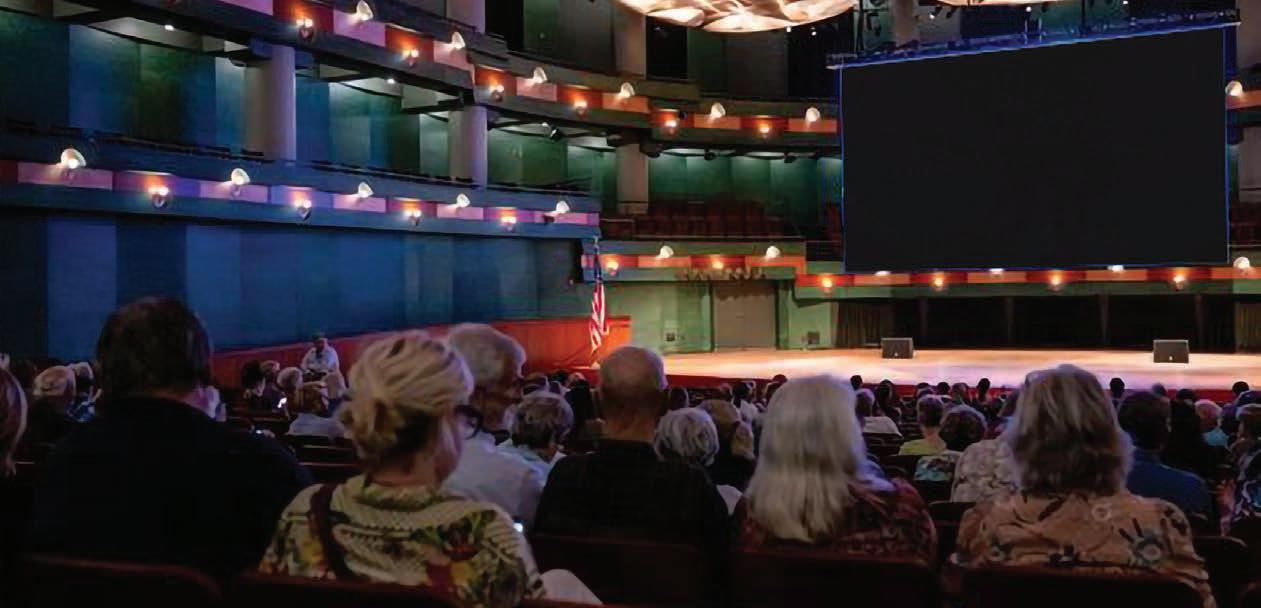
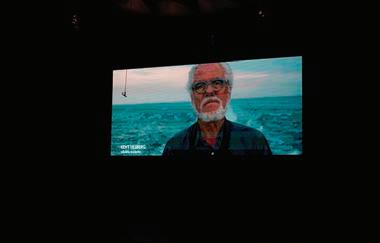
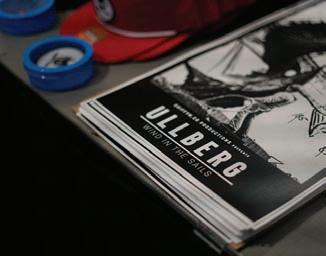
The high school sweethearts graduated from Flour Bluff High School in Corpus Christi in 1998 and the Island University in 2002. Now living in Austin, they recently returned to campus to debut their first feature documentary, “Ullberg: Wind in the Sails,” at the H-E-B Performance Hall in the
Performing Arts Center. The couple co-own Griffyn.Co Productions where Denise served as the film’s executive producer and Matthew as the film director. The screening, sponsored by the Island University, was held to raise funds to edit the documentary from 88 minutes to the required 56 minutes, as it was selected for broadcast in the Made in Texas series on Texas PBS. The broadcast premiere is scheduled for May 2026, and it will reach more than 200,000 Texas households.
“It’s awesome to be able to come back and not just have the support but also see
how the school has grown and evolved since we were there,” Denise said. “It looks somewhat the same, but different in all the right ways.”
For the Thorntons, the Island University was more than a place to earn a degree. It was where Denise played tennis during the Islanders’ first season as an NCAA Division I program, where Matthew dove headfirst into intramurals and campus life, and where one elective class shifted his trajectory entirely.
“I was a criminal justice major, but I took a screenwriting elective with Kim Henkel ’01 who co-wrote ‘The Texas Chainsaw Massacre,’” Matthew said. “That one elective changed everything about what I wanted to do.”
Denise’s path was equally shaped by her Islander experience.
“I was a kinesiology major, and I loved being a part of campus and athletics,” she said. “The university gave me the foundation of discipline and teamwork that I still carry with me today.”
After graduating, the couple married and worked in Corpus Christi for about a year. They then moved to Los Angeles to chase Matthew’s acting ambitions.
“We were in LA for about four or five years, I had some good acting gigs, but eventually, the pull of writing and creating my own projects was too strong to ignore,” he said.
The couple eventually returned to Texas, balancing full-time teaching
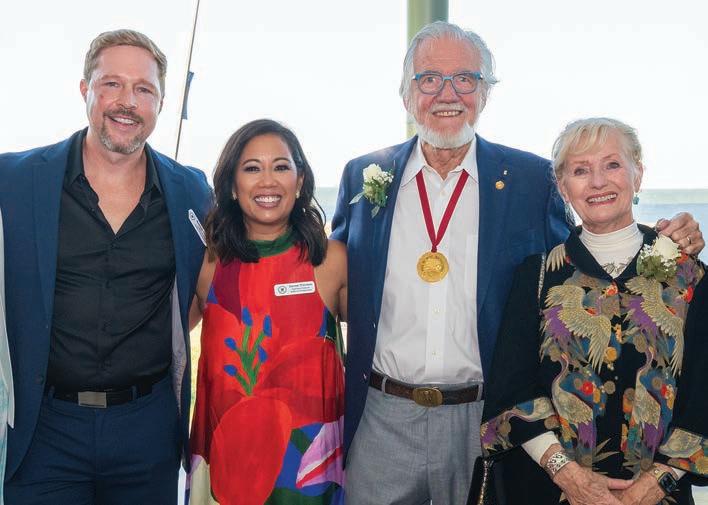
Matthew Thornton ’02, Denise Thornton ’02, Kent Ullberg, and Veerle Ullberg gather in the Louise and John Chapman Lobby for a special screening of “Ullberg: Wind in the Sails.”
ISLANDER ALUMNI BRING SCULPTOR’S STORY TO LIFE
careers with late-night creative work within the film industry. That balance became the inspiration for their podcast “Creative Moonlighting.”
Through interviews with artists, musicians, and filmmakers, the podcast built the network and storytelling practice that would prepare them for the leap into feature filmmaking. Eventually, worldrenowned sculptor Kent Ullberg and his wife, Veerle Ullberg, joined the Thorntons on their podcast in 2022, where they learned more about the sculptor’s work. The Ullbergs, who are natives of Sweden, now call Corpus Christi’s North Padre Island home.
“The idea that our first feature documentary would be about someone
from our hometown — that just made sense. It’s a way of giving back to the community that gave so much to us,” Matthew said.
“The university gave me the foundation of discipline and teamwork that I still carry with me today.”
DENISE THORNTON ’02
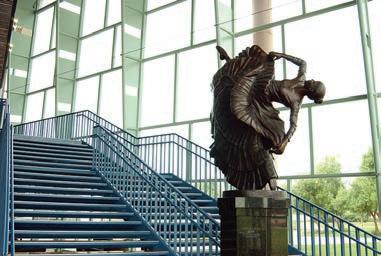
Ullberg is an internationally acclaimed sculptor with 22 public works across Texas and two of the world’s largest wildlife sculptures located in Florida and Nebraska. Ullberg sculpture “Danzemar,” a bronze sea dancer with a flowing shell-like skirt, anchors the Louise and John Chapman Lobby of the university’s Performing Arts Center. Ullberg’s work, which often blends coastal culture, science, and art, can also be found throughout the City of Corpus Christi.
“I think Matt and Denise did a tremendous job with the documentar y,” Ullberg said. “They approached everything with such sensitivity and respect, and I really appreciate that. They didn’t try to bend our story, and they recorded it beautifully.”
Following a successful festival circuit and Texas PBS premiere, the Thorntons plan to take the film to a broader audience, expanding into educational licensing for universities and museums, on-demand streaming platforms, and curating community screenings in partnership with nonprofits. A limitededition version, featuring exclusive bonus content and an educational study guide, will further extend the film’s reach and inspire deeper discussion in classrooms and civic spaces. •
Denise Thornton ’02 served as executive producer for the documentary and co-owns Griffyn.Co Productions alongside her husband Matthew Thornton ’02.
Great design starts with a strong foundation, and that’s exactly what a partnership between Texas A&M-Corpus Christi and Del Mar College provides as the institutions team up to launch two new architecture programs designed to build bright futures right here in the Coastal Bend.
Beginning in fall 2026, pending final approval from the Texas Higher Education Coordinating Board and the Southern Association of College and Schools Commission on Colleges, TAMU-CC and DMC will offer two joint architecture degree programs: a fouryear, pre-professional Bachelor of Science in Architecture and a five-year Bachelor of Architecture professional degree — the latter of which meets the educational requirements for licensure in Texas.
“This is a transformational moment for higher education and the region’s architecture profession,” said Dr. Catherine Rudowsky, TAMU-CC Provost and Vice President for Academic Affairs. “We are combining resources
ARCHITECTURE PROGRAM WITH DEL MAR COLLEGE
and talent to build a program that is accessible, affordable, and aligns with the real needs of the South Texas community.”
The new program will be housed at Del Mar College’s Oso Creek Campus, a state-of-the-art STEM facility featuring labs for wood and metal fabrication, and 3D printing. The Island University will provide faculty and academic resources, including a program coordinator who will work closely with Laura Wright Bienek, DMC Director of Architectural/Drafting Technology. Wright Bienek, a Corpus Christi native, said she knew she wanted to build things from a young age.
“I spent more time building the Barbie Dream House than playing with it,” Wright Bienek said. “I would rearrange the furniture. I would draw house plans. Even at 7 years old, I knew what my calling would be.”
Del Mar College currently offers a two-year associate degree in architecture designed for transfer students. Wright Bienek will direct the new joint program,
a dream she has pursued since joining Del Mar in 2011.
“ We have a lot of talent in this region, and it’s disheartening when students don’t realize their dreams of becoming licensed architects, whether due to financial challenges or family obligations,” she said. “I went to Texas Tech for my education, so I know firsthand how expensive that can be.”
The launch comes at a critical time for the architecture industry. According to the U.S. Bureau of Labor Statistics, Texas is seeing significant growth in architectural job openings. At the same time, retirements among experienced architects are expected to increase demand for skilled professionals.
“Architecture is becoming increasingly complex and technical,” Wright Bienek said. “We need well-prepared graduates who understand advanced building systems and can contribute immediately to design teams. This program is designed to meet those expectations.”
The four-year Bachelor of Science
TAMU-CC LAUNCHES
in Architecture offers flexibility for students interested in architectureadjacent careers or who aren’t yet ready to commit to licensure. The professional five-year degree fulfills the educational requirements for licensure in Texas, pending accreditation, field experience, and successful completion of the national licensing exam.
The five-year bachelor’s degree program will seek accreditation from the National Architectural Accrediting Board (NAAB) after the first cohort graduates. The program is already built around NAAB’s core values and learning outcomes, with guidance from an external NAAB consultant during its early development.
“This dual-degree structure gives students choices,” Rudowsky said. “Whether they want to pursue licensure or apply their architectural knowledge in fields like construction management or interior design, we’re providing a clear, supportive path.”
Support for the program is strong among local students, faculty, and corporate partners who see the collaboration as a vital investment in the region’s future.
“The industry is booming here in South Texas,” Wright Bienek said. “Being able to attract new talent, train them, and connect them with internships at local firms creates a pipeline that will benefit the entire region.”
This will be Texas’ ninth accredited architecture program, with the first cohort graduating in May 2029.
“Together, we’re constructing a clear and creative path for students who dream of shaping skylines, communities, and possibilities,” Rudowsky said. •
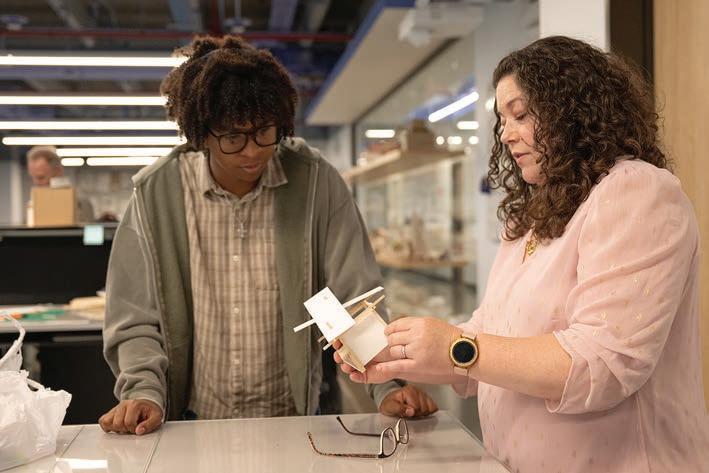
Laura Wright Bienek (right), mentoring a Del Mar College student, will lead the new joint architecture program between TAMU-CC and Del Mar College.
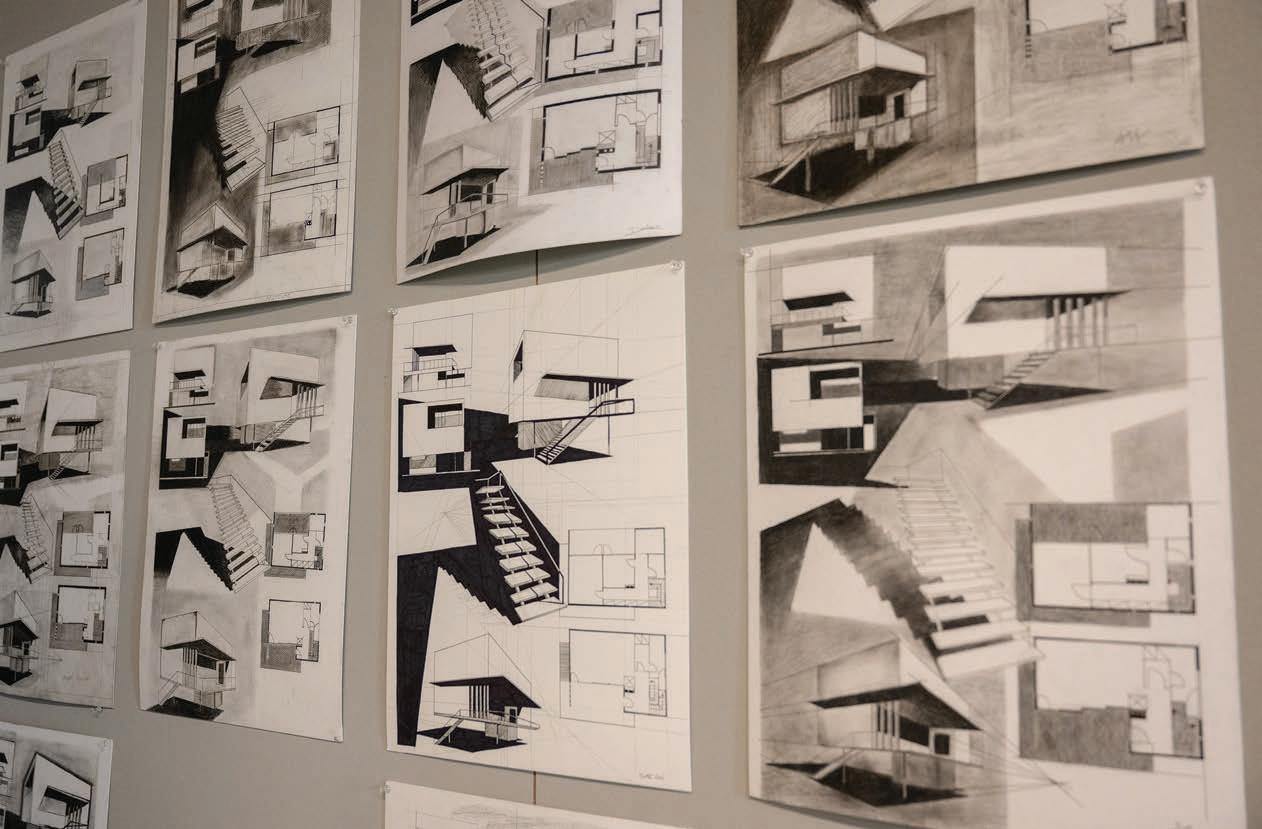
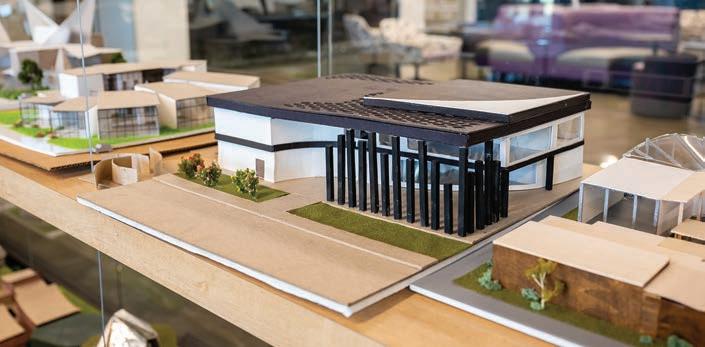
Architecture students bring ideas to life through hands-on design projects that showcase innovative and sustainable concepts.
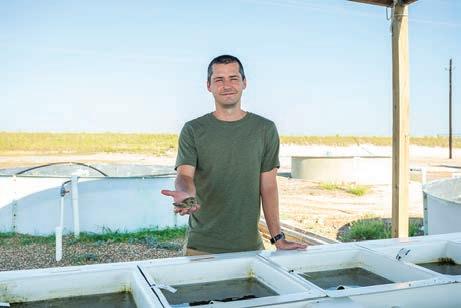
Agriculture has always been part of life for Dr. Chris Hollenbeck. He grew up on an ostrich farm and cattle ranch in Central Texas, learning early that with care and hard work, something small — like a seed or hatchling — could grow to feed many. Today, that same mindset drives his work in an entirely different kind of farming: one that takes place in the ocean.
“I ended up in the fish world because I took a genetics class at Texas A&M in College Station,” Hollenbeck said. “My professor, Dr. John Gold, was a renowned fish geneticist. I interned in his lab, and he eventually became my graduate advisor. I realized how new and exciting aquaculture was and how much room there is to innovate.”
Hollenbeck, who is an Associate Professor of Fisheries and Mariculture at Texas A&M-Corpus Christi and Texas A&M AgriLife Research, now has a new role as the director of the newly launched Center for Marine Aquaculture (CMA), and is doing just as he imagined — growing, innovating and developing a more sustainable future for Texas’ coastal communities and beyond.
Approved by the Texas A&M University
System Board of Regents this fall, the CMA is a joint effort between TAMU-CC and Texas A&M AgriLife Research, with support from AgriLife Extension Service. It is housed at TAMU-CC and the Texas A&M AgriLife Mariculture Research Facility in the Flour Bluff area of Corpus Christi.
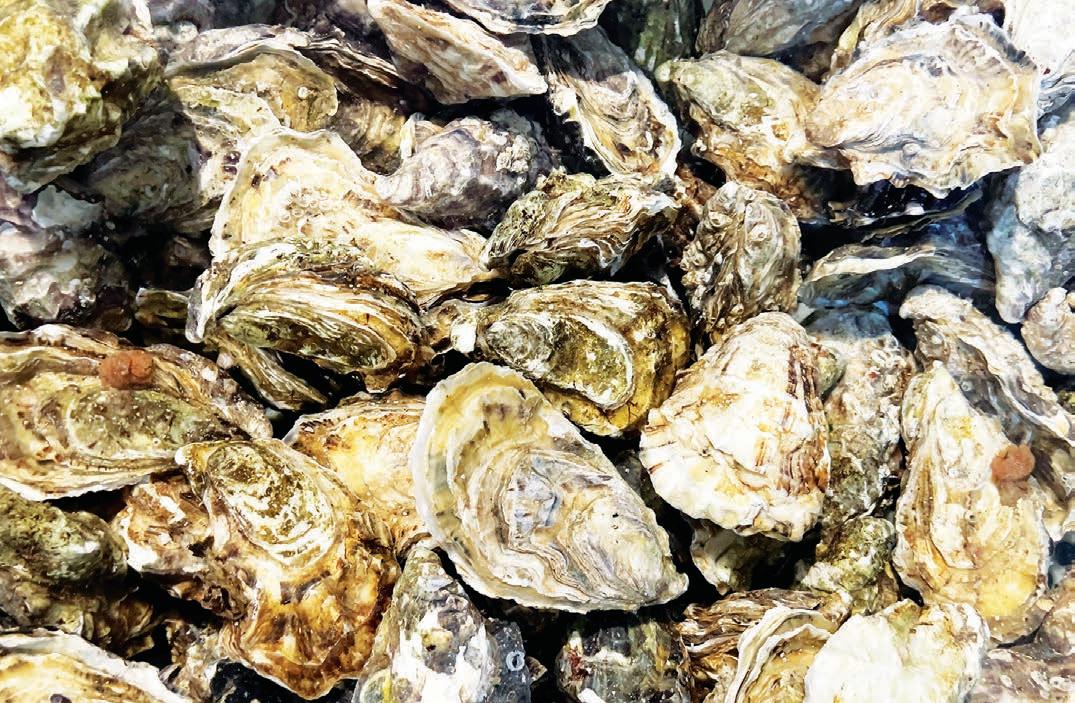
The center’s goal is bold — to make Texas a national leader in sustainable marine aquaculture, starting with oyster farming and ideally expanding into other aquatic species like scallops, clams, and seaweed.
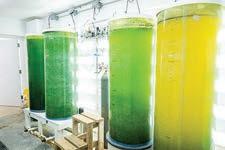
“Right now, much of our research focuses on the domestication and selective breeding of oysters to improve traits like growth rate and salinity tolerance,” Hollenbeck said. “These are key factors in building a productive and profitable oyster aquaculture industry in Texas.”
With rising global demand for seafood and declining wild fish stocks, marine aquaculture — farming aquatic organisms in the marine environment — is emerging as one of the most sustainable and flexible solutions for food production.
And in Texas, the timing couldn’t be better. Recent legislative changes have
opened the door for commercial oyster farming in state waters, making it possible for researchers and industry leaders to move from concept to commercialization.
“The center will leverage the unique potential of the Texas coastline to expand production while ensuring environmentally responsible food systems,” said Dr. Ahmed Mahdy, TAMU-CC Executive Vice President for Research and Innovation.
The CMA will support the entire marine aquaculture industry through research, education, and technology development. It will focus on four key areas: breeding and genetics, sustainable production systems, aquacultureenvironment interactions, and development of marine bioproducts.
“We’re excited to explore the different species we can work with here — like seaweed,” Hollenbeck said. “Seaweed is a source of products such as pharmaceuticals, cosmetics, and biostimulants that can improve crop yields. It also has benefits to the environment.”
To ensure the long-term success of marine aquaculture in Texas, the CMA is also prioritizing workforce development.
NEW CENTER FOR MARINE AQUACULTURE STRENGTHENS COAST, BUILDS WORKFORCE
The center will offer hands-on training in marine biology, fisheries, and aquacultures as it prepares students and professionals to enter a fast-growing industry with a vast global impact.
“We’re preparing the next generation of aquaculture experts through immersive research and industry partnerships,” said Dr. Juan Landivar-Bowles, Director of the Texas A&M AgriLife Research and Extension Center at Corpus Christi.
“In Texas, we are just at the beginning of ocean-based farming.”
DR.
“That investment in people is as important as the research itself.”
Over the next two years, the CMA will recruit top scientists and technical experts, secure private and federal funding, and establish sustainable revenue streams. A key part of that plan involves commercializing high-quality seed and improved germplasm — genetically refined stocks that boost yield and resilience in farmed aquatic species.
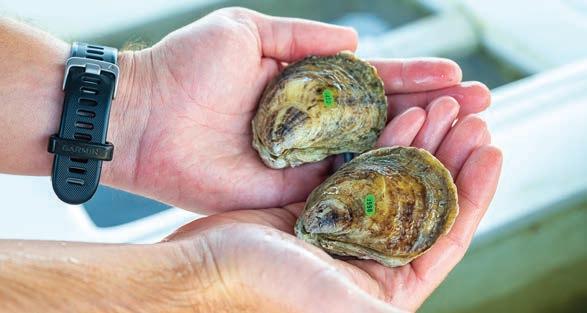
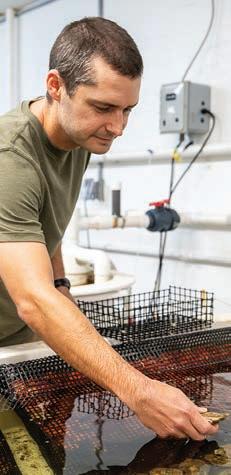
“We’ve made a lot of progress in the last few years with the oyster seed we are developing here,” Hollenbeck said. “The growth rate, resilience, and consistency are getting better and better each year. If we can keep improving the oysters that are available to farmers, that is a big win for oyster farmers and the product they take to market.”
The environmental benefits of marine aquaculture are as significant as the economic ones. Farming oysters, for example, helps clean the water column and creates habitat for other marine life. When done responsibly, aquaculture reduces pressure on wild fisheries and supports coastal restoration efforts.
As the first major center of its kind in Texas, the CMA will help expand the state’s food systems, bring new life to the coast, and turn the Gulf into a hotbed of aquaculture innovation.
“In Texas, we are just at the beginning of ocean-based farming,” Hollenbeck said. “We can learn a lot from what has been developed in other states and around the world, but we can also take things in new and interesting directions. That’s the most exciting part.” •
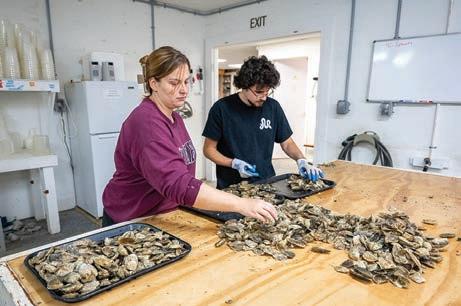
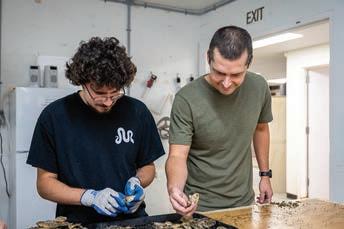
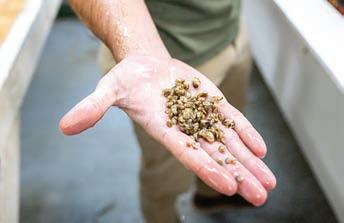
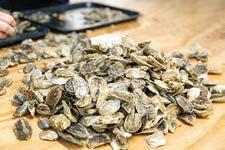
Michaela Rust ’20, ’27, a master's student in the Fisheries and Mariculture program and Center for Marine Aquaculture (CMA) research technician, and Christian Harvey ’26, a biology major, sort oysters for the center’s breeding program. The CMA is led by Dr. Chris Hollenbeck, Associate Professor of Fisheries and Mariculture.
CHRIS HOLLENBECK, Center for Marine Aquaculture Director
ADVOCACY INTO BEAUTY QUEEN PLATFORM
MADISON HICKMAN ’26 TURNS DYSLEXIA
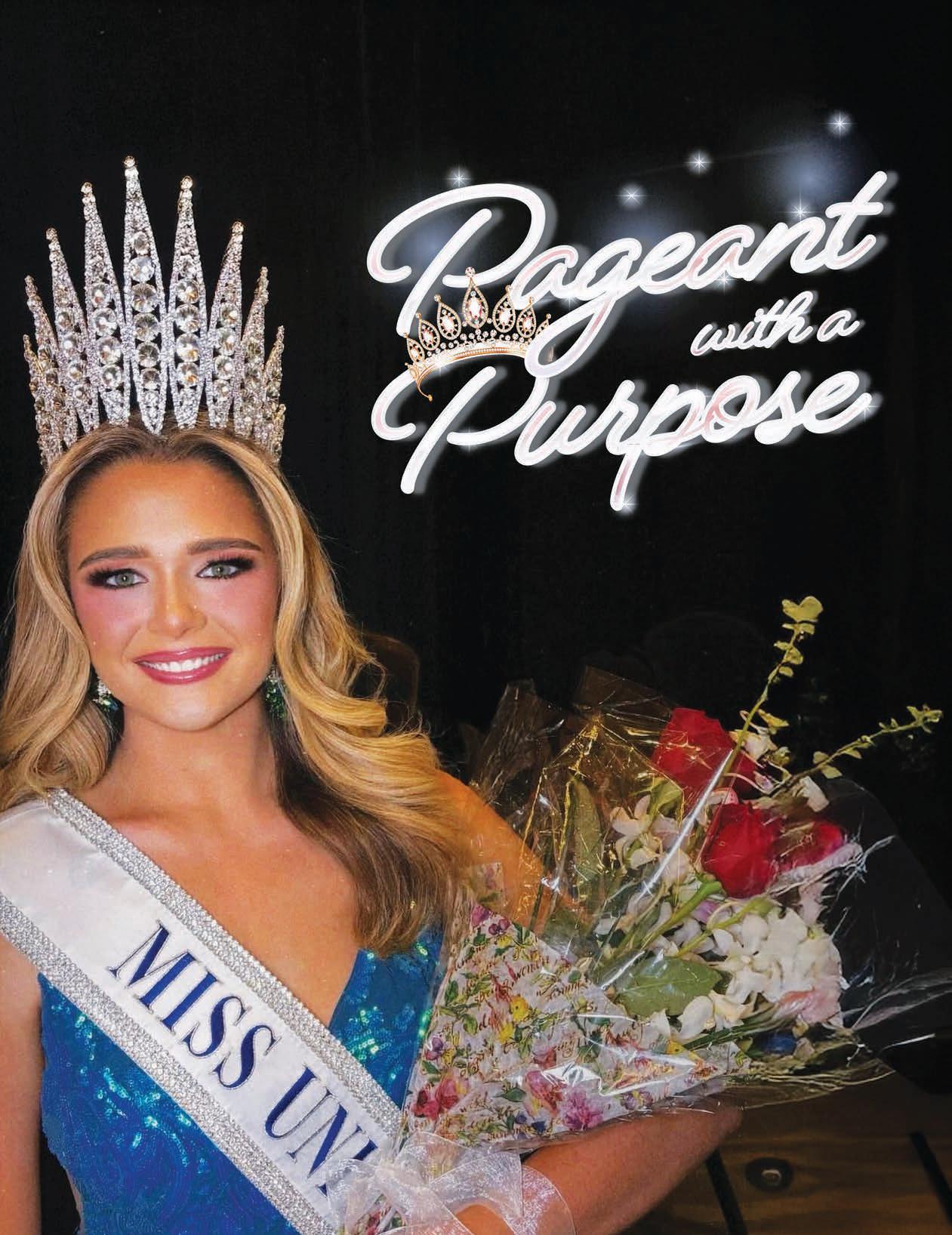
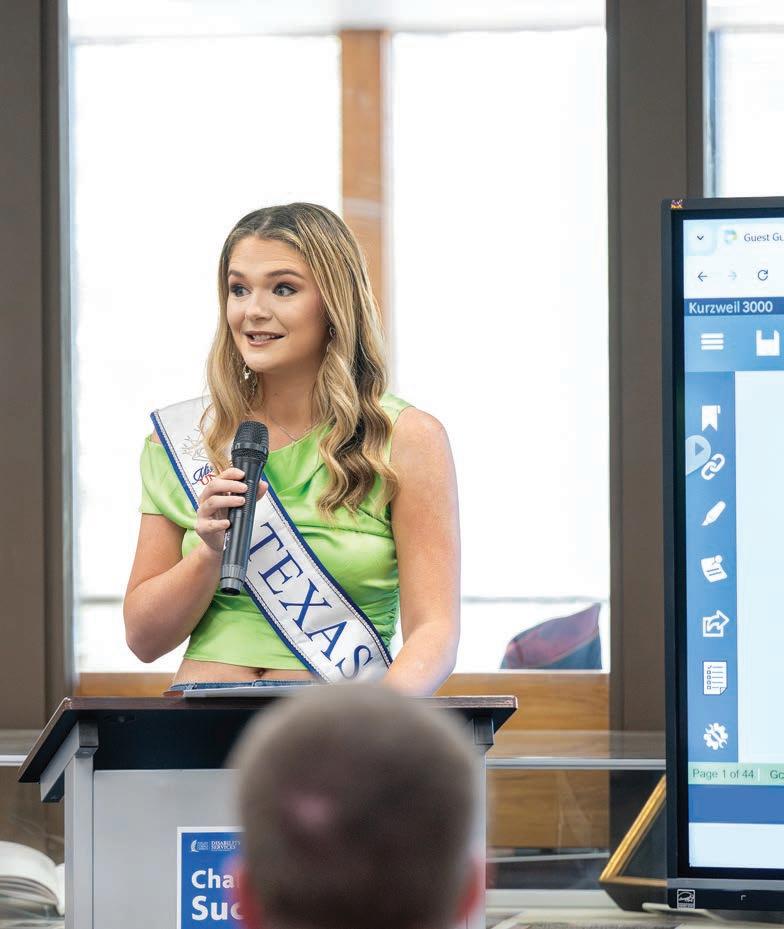
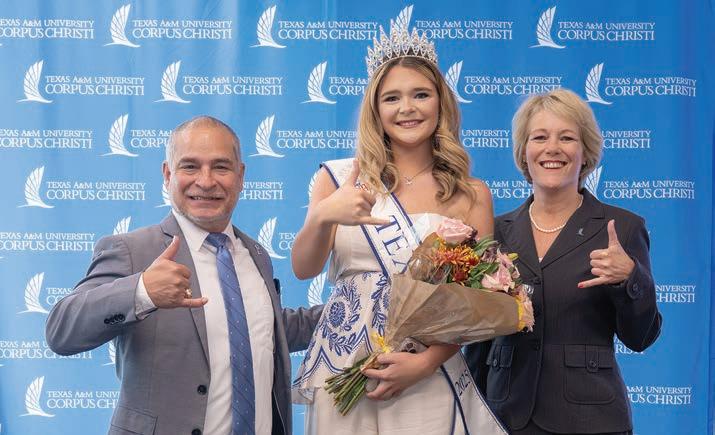
Madison Hickman ’26 is crowned Miss United States 2025 in Las Vegas.
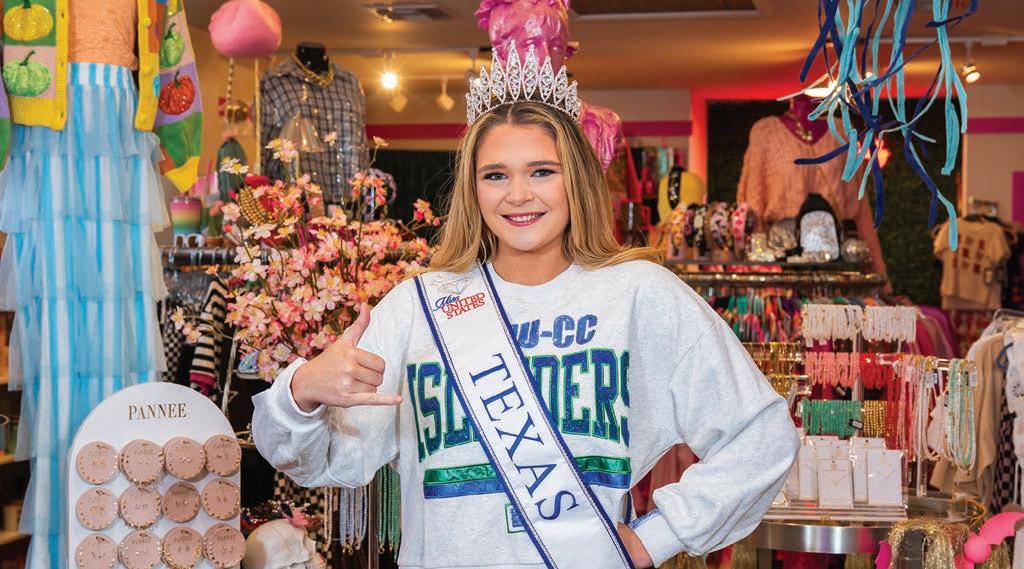
Madison Hickman ’26, who first represented the Lone Star State as Miss Texas United States 2025, carried her Islander spirit onto the national stage in Las Vegas, and now wears the title of Miss United States 2025.
“My feelings range from awe to gratitude to pride. I spent a lot of time preparing for this pageant,” said Hickman, a psychology major at TAMU-CC. “I was feeling very confident, and it all paid off. I even got to thank the university on the stage after winning the People’s Choice Award, which I was really happy to do!”
Hickman, whose pageant platform centers on dyslexia awareness, first began her journey with dyslexia in third grade when she struggled with spelling.
“My mom told my teachers that she thought I might be dyslexic,” Hickman said. “Their response was basically, ‘If we haven’t caught it by now, the damage is already done.’”
Raised in San Antonio by a single mother, Hickman spent countless evenings at the kitchen table, memorizing spelling words through songs her mom created. Even when she could sing the words correctly, writing them down was nearly impossible. Her mother became her greatest champion, pushing for better support. What followed were years of determination and late nights that shaped Hickman into the student, author, advocate, and pageant titleholder that she is today.
Eventually, Hickman transferred to a more accommodating grade school, and with additional help from her grandparents, began working with a private tutor who specialized in dyslexia. She graduated from high school in 2022.
At first, TAMU-CC wasn’t part of Hickman’s permanent plan. She arrived at the Island University through the Program for System Admission, an initiative that meant she only planned to stay at TAMU-CC for one year before transferring to Texas A&M in College Station.
“I ended up loving it here and decided to stay,” Hickman said. “At TAMU-CC, students have everything they need right here to achieve at the highest level.”
Hickman’s dyslexia awareness campaign began to take shape in her English 1301 class, where a simple assignment evolved into a passion project. With guidance from Instructor of English Kristen Ruggles
Sanders, she created a series of 10 lesson plans to help parents and teachers better support students with dyslexia.
“Madison not only shows passion for her work, but an excitement about the topic, and I can easily see her doing world-changing work both currently and in her future,” Sanders said.
That class project eventually became a published children’s workbook, now available nationwide at Barnes & Noble.
“My plan is to share the workbook with parents and educators across Texas, especially for families like mine who struggled to find help for dyslexia,” Hickman said. “No one wants to see their child struggle, so I wanted to create an affordable tool that could make a difference.”
In the weeks leading up to the national competition, Hickman advanced her mission as the keynote speaker during a Dyslexia Awareness event, hosted by the university’s Disability Services office.
Continued on next page.
“At TAMU-CC, students have everything they need right here to achieve at the highest level.”
MADISON HICKMAN ’26
Madison Hickman ’26 was the keynote speaker at the Dyslexia Awareness event in Bell Library.
“We were so inspired by how bravely she spoke about her experiences growing up with dyslexia,” said Jennifer Bradley, Director of Disability Services. “She’s turned those challenges into practical advice for other students and is now using her platform to raise awareness and advocate for others.”
In addition, A&M-Corpus Christi held an “Island U Honors U” ceremony for Hickman, wishing her luck before the big competition.
“The support I’ve received from my hometown community and from the university that became my second home means more to me than words can express,” Hickman said.
As reigning Miss United States 2025, Hickman plans to visit all 50 states to host book signings, emphasizing the need for greater research funding and early interventions for dyslexia. She recently completed her second writing project, a children’s book, and is seeking an illustrator to bring her story to life.
“I am also in the process of launching
a nonprofit organization focused on supporting dyslexia research and creating a scholarship fund to help high school students access the resources they need to thrive in college,” Hickman said. “I hope
to continue to inspire others to believe in themselves and realize that they are so much more than their disability.” •
EM POW ER STU D ENT S ENRICH YOUR LEGACY
Leaving a legacy at Texas A&M University–Corpus Christi means investing in the bright futures of students and the continued growth of our Islander community.
By including TAMU-CC as a beneficiary in your will, retirement account, or life insurance policy, you create lasting opportunities that empower scholarship recipients, fuel innovative research, and strengthen programs for years to come, all while benefiting from potential tax advantages.
Planned giving is a meaningful way to make an enduring impact, ensuring that your values and commitment continue to inspire long after today.
To learn how your thoughtful gift can build a stronger future, please contact the 361.825.2639 or visit plannedgiving.tamucc.edu.
Vice President for Student Engagement and Success & Intercollegiate Athletics Adrian Rodriguez, Madison Hickman ’26, and TAMU-CC President and CEO Dr. Kelly M. Miller at the "Island U Honors U" ceremony in the University Center.
From groundbreaking cancer detection to cleaner air for children and stronger classrooms for all, Islander researchers are driving innovation that changes lives. These three stories spotlight Island University faculty who are tackling some of today’s most pressing challenges. Together, their work exemplifies the Island University’s commitment to research with real-world impact.
PATENT POWER
The fight against cancer continues to evolve, and two researchers are helping lead the charge. Dr. Jian Sheng, Professor of Engineering, and Dr. Maryam JalaliMousavi, Assistant Research Professor of Engineering, were recently awarded two U.S. patents for a groundbreaking cancer detection system.
Developed through a Cancer Prevention and Research Institute of
BREATHE EASY
Play time is often pure joy for young children, but for some, it can prove to be terrifying when they struggle to catch their breath. For kids in Corpus Christi, where data shows the pediatric asthma rate is notably high, that can be especially true.
EMPOWERING EDUCATORS, TRANSFORMING CLASSROOMS
From preparing special education teachers to improving behavioral support, Island University faculty are helping schools across Texas create better learning environments for every student.
Dr. Rajesh Melaram, Assistant Professor of Public Health, leads BREATHE-CC, a study examining how air pollution affects respiratory health in Hispanic children from birth to age 10. The research tracks ozone and fine particulate matter in Corpus Christi from 2019 to 2023.
Recently, TAMU-CC received a $400,000 grant from the Texas Higher Education Coordinating Board’s Minority Health Research and Education Grant Program, one of only 15 Texas institutions awarded. With student involvement, community-engagement practices, and a partnership with Driscoll Children’s Hospital, the study aims to reveal how environment, household conditions, and social factors contribute to asthma, bringing hope for healthier futures along the Gulf Coast.
Through a $1.25 million Texas Education Agency grant, Project SEASIDE is expanding the pipeline of skilled educators prepared to teach students with disabilities. Led by Dr. Ashley Voggt, Assistant Professor of Special Education, with collaborator Dr. Phyllis Robertson, Professor of Special Education, the project connects university faculty, school districts, and community partners to prepare the next generation of teachers through research-based training and mentorship.
Voggt also leads Project INSPIRE, a $1 million TEA-funded initiative reimagining how schools approach student behavior. Along with Robertson and Dr. Adrienne Backer, Assistant Professor of Special Education, Voggt’s team is helping educators replace exclusionary discipline practices and implement strategies that promote equity and connection.
DERRIK HIATT
Dean, Mary and Jeff
DR. ROBERT MCKALLIP Dean, College of Science
DR. JOSHUA WATSON Dean, College of Education and Human Development
EDUCATION
The morning starts like any other — the shuffle of papers, the click of a keyboard, a lesson on the screen. But for A.C. Jones High School junior Mia Aguilar, it’s also a step towards something greater. Through the Islander Academy Dual Credit Program at Texas A&M-Corpus Christi, the Beeville ISD student is earning college credit and building a foundation for what comes next — all of it, from the convenience of her high school classroom.
“I’ve been doing engineering programs since sixth grade, and it’s really exciting to now do college-level work,” Aguilar said.
This opportunity for Aguilar comes through a new partnership between Beeville ISD and TAMU-CC, making Beeville the first district in the Coastal Bend to offer Geospatial Engineering and Land Surveying (GELS) courses. Designed to connect students with high-demand DUAL CREDIT PROGRAM OFFERS HEAD START TO HIGHER
career fields, the pathway introduces real-world applications of mapping, data collection, and land surveying to students, giving them a head start on college-level STEM pathways while still in high school.
“The GELS Pathway allows students to gain experience with necessary tools,
“I’m glad to get some courses done while I’m still in high school, plus my family and I save money.”
JULIANA GONZALEZ, Gregory-Portland ISD
connect with professors and industry professionals, and see opportunities they might not have until college,” said Matthew Esqueda, Beeville ISD Director of Career and Technical Education. “It’s a win-win for our students, our district, and the university.”
For Seneca Holland, TAMU-CC instructor and undergraduate program coordinator for Geospatial Science, as well as program lead for the GELS Career and Technical Education Pathway, the focus goes beyond preparing students for college. It’s about equipping them with the skills and confidence to step directly into meaningful, high-paying careers.
“Our hope is that these students continue in the GELS Pathway, whether that means entering the workforce directly or pursuing degrees at TAMU-CC,” Holland said. “In either case, they’ll
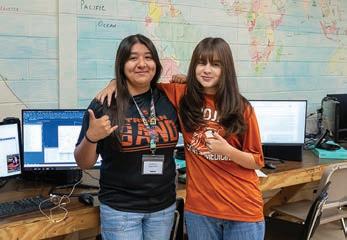
Students from around the Coastal Bend, along with students from Klein ISD, near Houston, benefit from the Islander Academy Dual Credit Program.
be ready to enter rewarding careers that benefit both themselves and the communities they live in.”
The GELS Pathway builds on the proven success of Klein ISD near Houston, where dual credit enrollment is thriving, and graduates have gone on to pursue GELS-related careers and degree programs at TAMU-CC.
Islander Academy opens the door to higher education in three unique ways. Some students join classes virtually — connecting in real time with TAMU-CC professors. Others take university-level courses right in their own high schools, taught by local teachers certified to deliver the Islander curriculum. A third path blends both approaches, offering the flexibility to fit seamlessly into a student’s schedule. In many cases, tuition and fees come at no cost to the students.
“Our program also equips students with essential skills, such as critical thinking and effective communication, setting them up for success in their future endeavors,” said Dr. Brenda Harms, TAMU-CC Vice President for Enrollment Management. “Our dual-credit students are Islanders, through and through. We welcome Islander Academy students to immerse themselves in our vibrant campus life — everything from attending events to
cheering on Islanders Athletics.”
Across the Coastal Bend and beyond, Islander Academy is reaching more students than ever before. Currently, the university also partners with Flour Bluff ISD, Gregory-Portland ISD, Incarnate Word Academy, Rockport-Fulton ISD, and Tuloso-Midway ISD, while also welcoming homeschool students from across Texas.
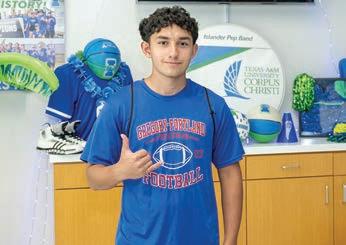
At Gregory-Portland High School, senior Juliana Gonzalez sees Islander Academy as both a personal opportunity and a continuation of family tradition. With parents who are proud TAMU-CC alumni, and a father who once played basketball for the Islanders, her future at the university feels like a natural next step.
“I’ve always wanted to be an Islander, and I plan on continuing my education here,” Gonzalez said. “I’m glad to get some courses done while I’m still in high school, plus my family and I save money.”
When high school graduation day arrives, students like Aguilar and Gonzalez will cross the stage with not only a diploma in hand — they’ll carry with them college credits, hands-on experience, and the confidence to take their next big step. •
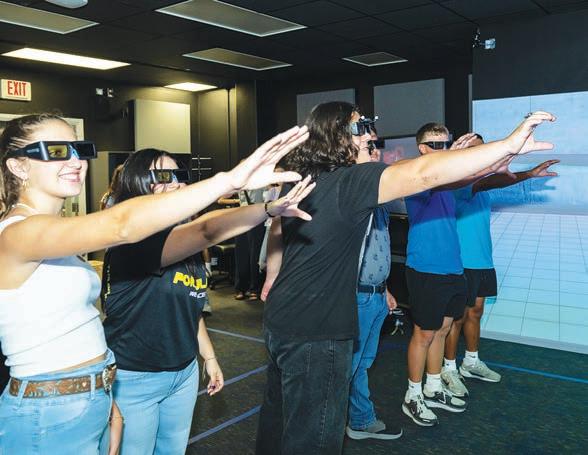
Gregory-Portland ISD students visit the university's Immersive Reality Lab, located on the second floor of the Mary and Jeff Bell Library.
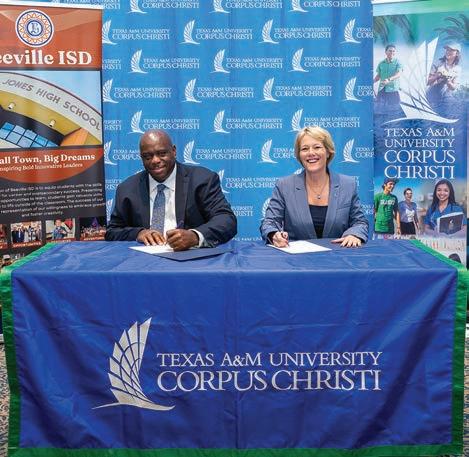
Travis Fannin, Beeville ISD Superintendent of Schools, and Dr. Kelly M. Miller, TAMU-CC President and CEO, sign an agreement welcoming Beeville ISD into the Islander Academy.
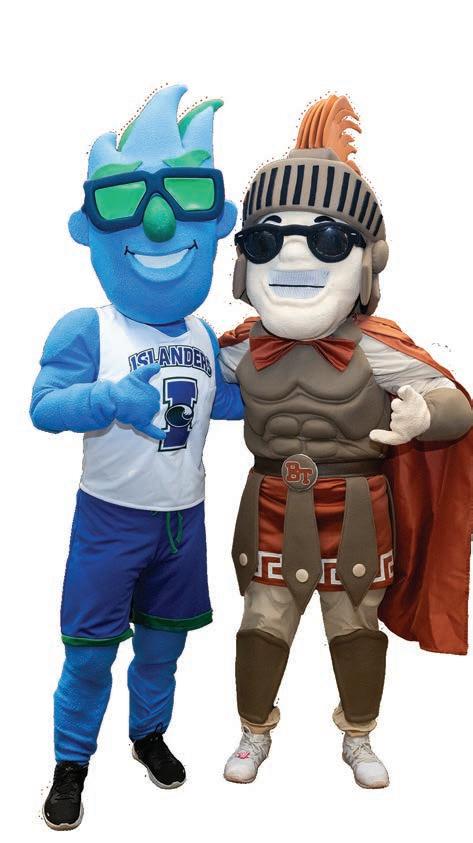
Izzy the Islander with the Beeville Trojan.
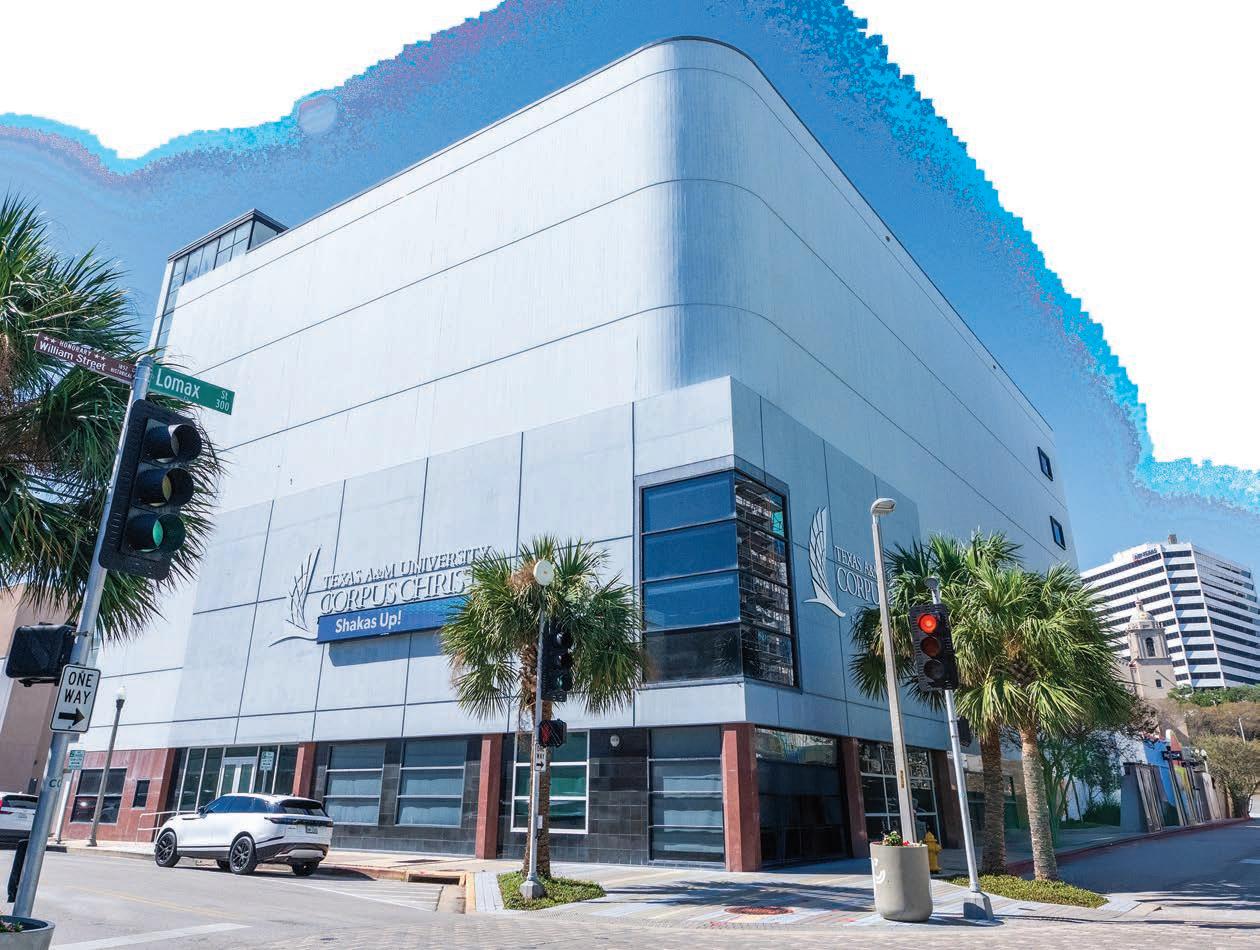
The university's Downtown Building is located at 223 N. Chaparral St.
FROM CIVIL RIGHTS TO SURF CULTURE, TAMU-CC PRESERVES STORIES THAT SHAPED SOUTH TEXAS
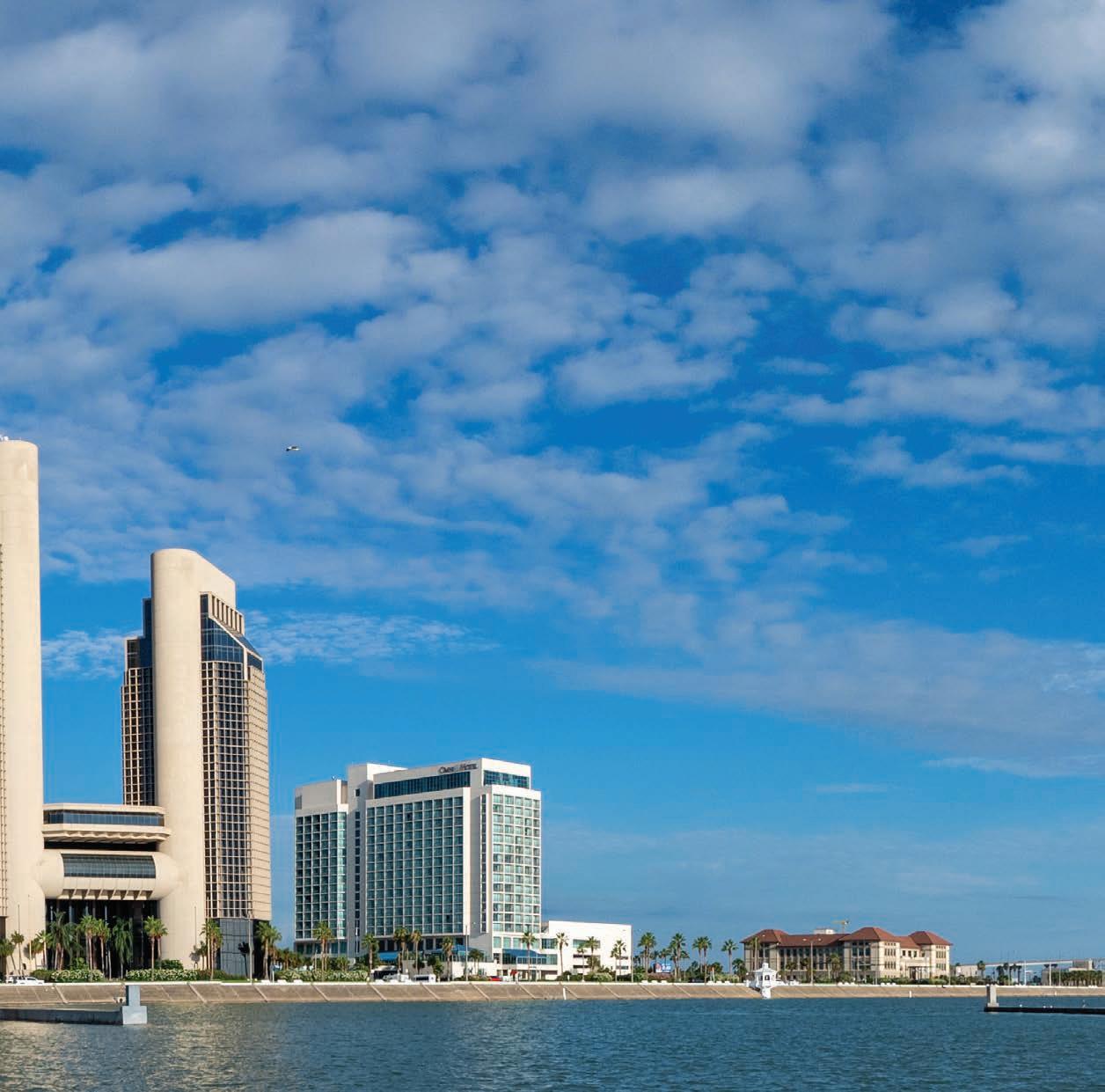
As downtown Corpus Christi continues its revitalization, Texas A&M-Corpus Christi is evolving right alongside it. The university’s Downtown Building ser ves as both a symbol of renewal and a bridge between the Coastal Bend’s rich history and its forward-looking vision for research, community engagement, and culture.
Purchased in 2019 from Janet and Ernest “Buz” Maxwell, the Downtown Building will house an art gallery, a second operations center for the university’s Autonomy Research Institute, iPORTS, the Office of Economic Development and Industry Partnerships, and various reception and meeting spaces. It will also be home to the university’s Special Collections and Archives, currently on the Island in the Mary and Jeff Bell Library. The archive space will offer cold storage,
a digitization lab, and public exhibition areas, providing more space and advanced tools to preserve the region’s history.
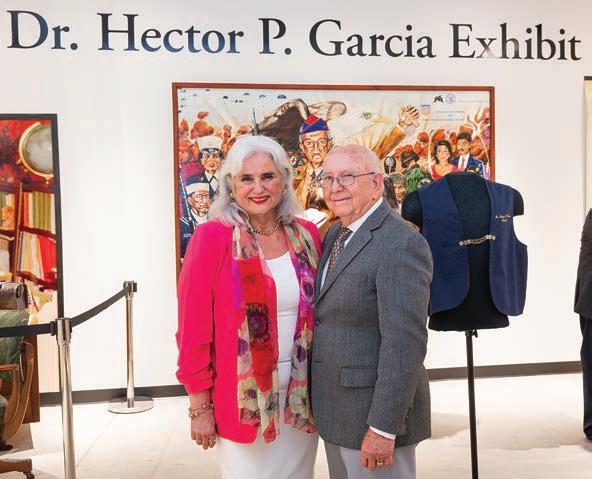
Although the Downtown Building will officially open in spring 2026, construction was briefly paused this fall to unveil the Dr. Hector P. Garcia Exhibit, honoring the influential civil rights leader. The event, held on Dr. Garcia Recognition Day, drew a standing-room-only crowd of students, alumni, community members, and family representatives.
“There was quite a bit of competition over who should have my father’s collection,” said Cecilia Garcia Akers, president of the Dr. Hector P. Garcia Memorial Foundation. “There was an inquiry from Yale and the University of Texas, but my father made the decision to donate his collection to this university.”
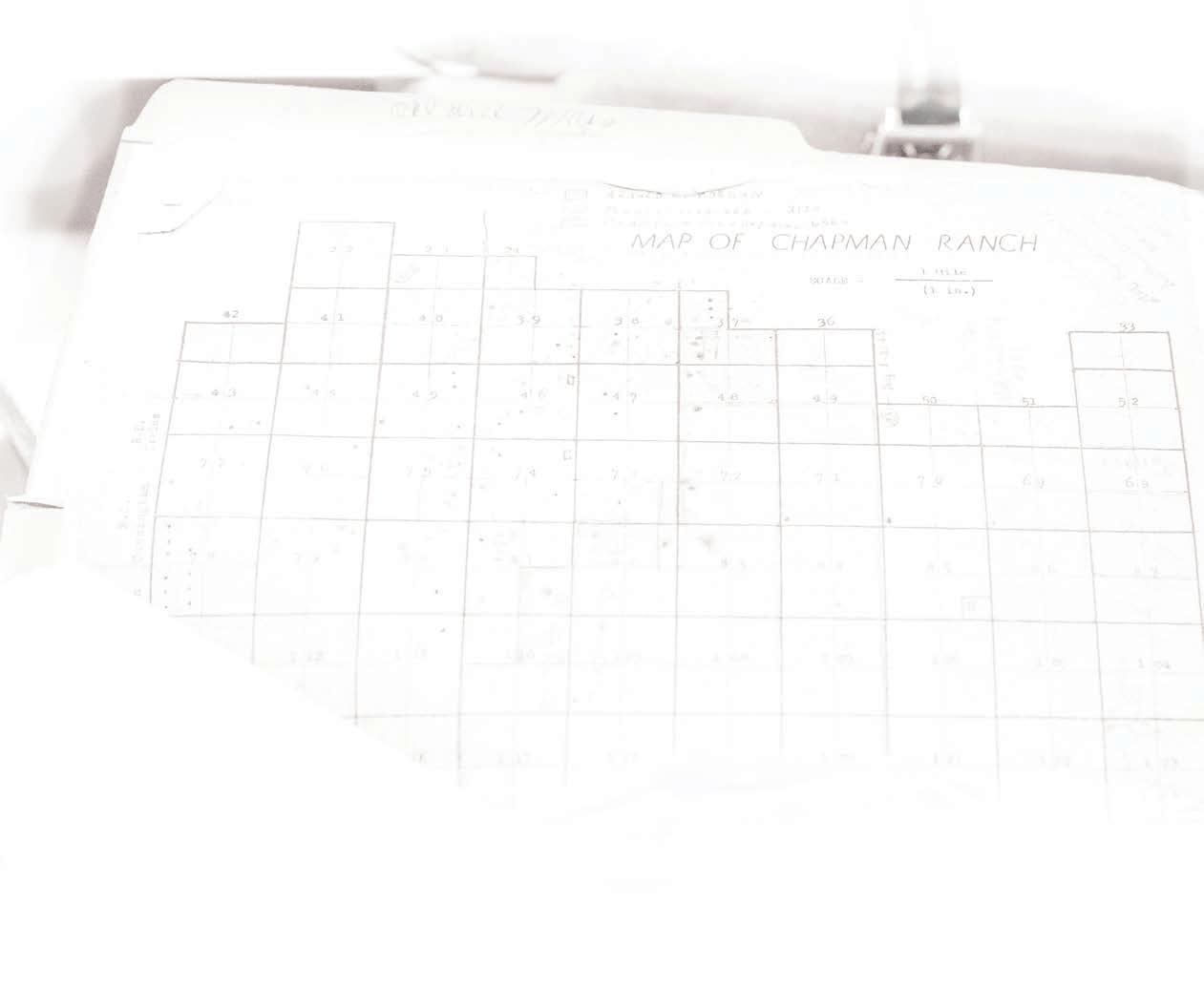
Texas A&M-Corpus Christi’s connection to Dr. Garcia dates back to 1982, when the physician, soldier, and founder of the American GI Forum donated the first portion of his papers to what was then Corpus Christi State University. His widow, Wanda Garcia, completed the gift in 1999. Today, the full collection spans 360 linear feet — the length of a football field — documenting a lifetime of leadership and advocacy. Special Collections and Archives will also house a portion of the Chapman Ranch Collection, a recently acquired archive chronicling a century of agricultural and community life in South Texas. While the materials focus on the records of a single descendant of the Chapman family, they provide invaluable insight into the operation and legacy of this historic property. Comprising more
than 160 boxes of materials dating back to the 1920s, the collection chronicles a once self-contained community that influenced everything from cotton production to the development of the Port of Corpus Christi. Last fall, the university began processing the collection in partnership with the Corpus Christi Museum of Science and History.
“This collection fills major gaps in the agricultural and cultural history of the Coastal Bend,” said Lori Podolsky, TAMU-CC Director of Special Collections and Archives. “They will be a valuable resource in adding to our understanding of the history of cattle ranching, and cotton and grain development as well as being a source for storytelling and helping communities understand their cultural roots.”
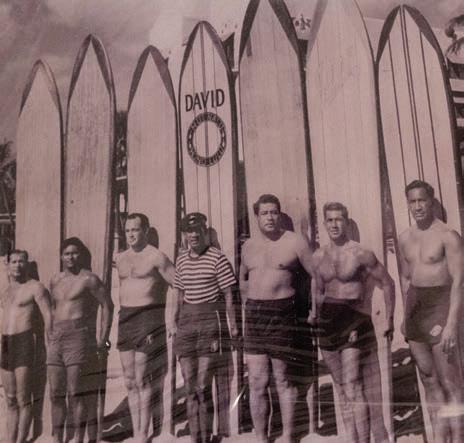
The Texas Surf Museum Collection, a
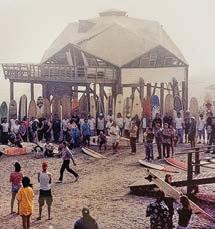
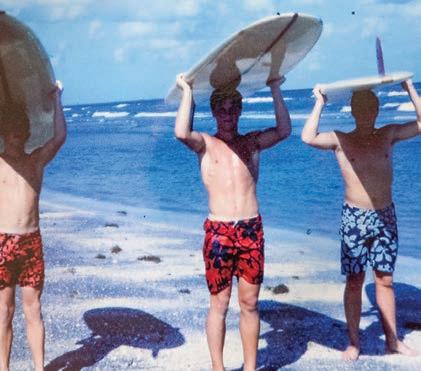
vibrant record of the state’s surf culture, is also awaiting its new home in the Downtown Building. The museum, which shuttered in 2022, has entrusted the university with more than 70 boxes of materials, including vintage surfboards, photographs, magazines, and memorabilia that trace the evolution of surfing along the Texas coast. These items capture not only the sport itself but also the people, music, and community gatherings that turned surfing into a local way of life. The collection is being stored in a climatecontrolled storage facility while it awaits its new downtown home, which is steps from where the museum was once located.
Longtime surfer and entrepreneur Brad Lomax is thrilled that the Texas Surf Museum Collection will remain accessible to the public. Lomax, who co-founded
the museum with Pat Magee and later donated its collection to TAMU-CC, views the relocation as a vital step in preserving the region’s surfing heritage and the community it has inspired.
“You put the words Texas and surf in a sentence, and people perk up,” Lomax said. “Surfing is part of our Coastal Bend identity, and with the university preserving this collection, people can keep learning from it for years.”
Together, these collections and many others form a living record of the Coastal Bend. Their move to the Downtown Building marks a new chapter for Texas A&M-Corpus Christi — one that ensures these stories are preserved, studied, and shared with the community for generations to come. •
Right: Cecilia Garcia Akers and Jimmy Akers, of the Dr. Hector P. Garcia Memorial Foundation, at the unveiling of the exhibit honoring the influential civil rights leader located in the university's Downtown Building.
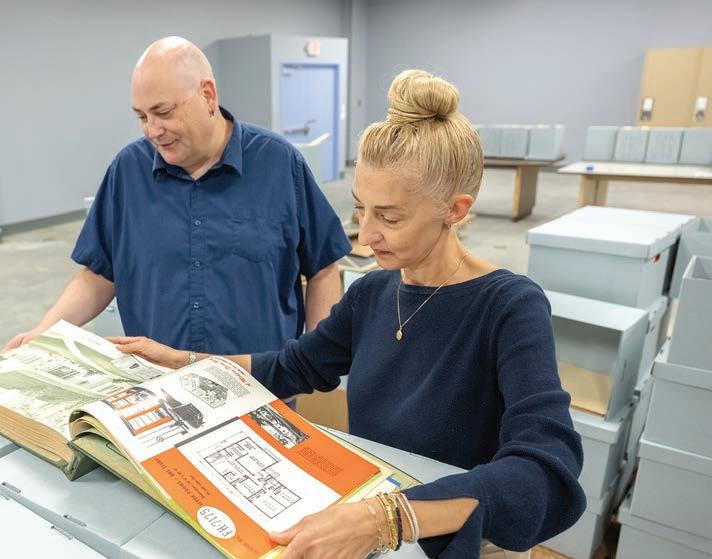
Bottom: Eric Christensen, Archivist and Book Collections Librarian, and Lori Podolsky, Director of Special Collections and Archives, examine a historical catalogue from the Chapman Ranch Papers.
Left and above: Various photos from the Texas Surf Museum Collection.
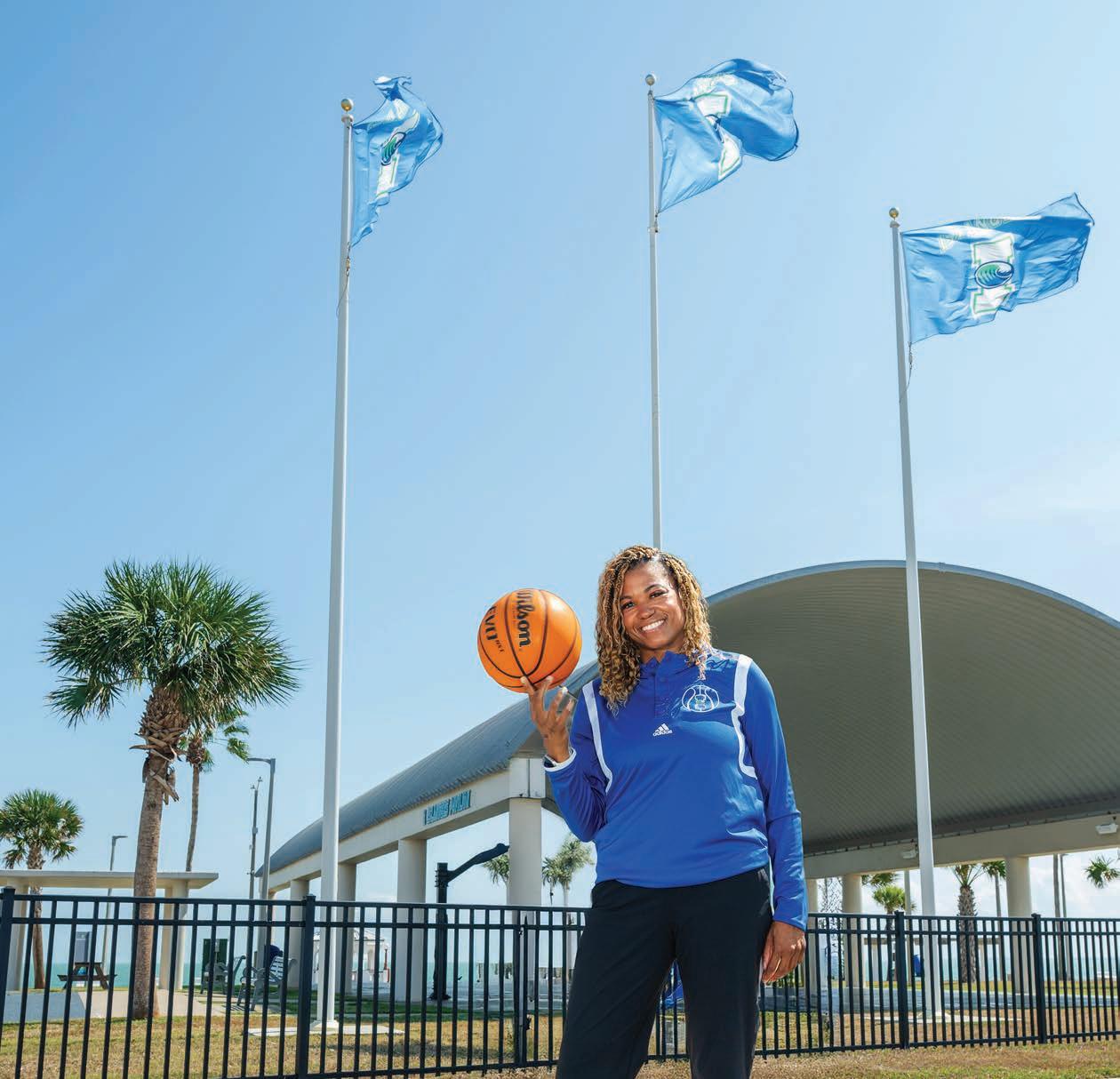
It's t-time
COACH TOYELLE WILSON LEADS ISLANDERS WOMEN’S BASKETBALL WITH LOVE, DEMANDS GREATNESS
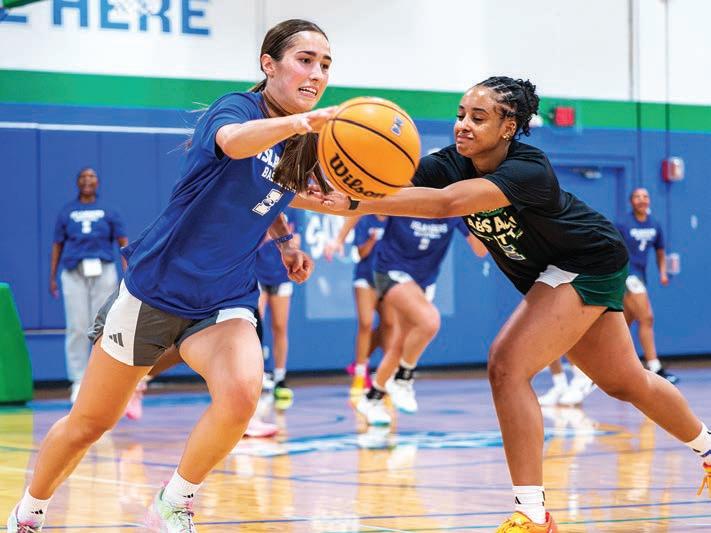
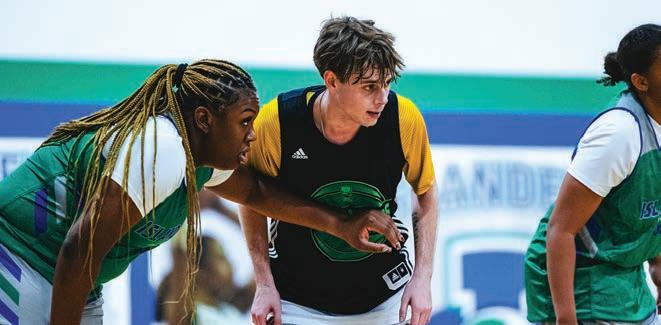
A quiet September afternoon quickly erupted with cheers inside the Fieldhouse at Texas A&M-Corpus Christi. As one of the campus’s oldest buildings, it has seen countless moments of triumph and teamwork. But today, it was a simple tipped ball and quick steal during practice that ignited a thunderous roar — a small moment marking the start of a new era for an Islanders Women’s Basketball team experiencing a wave of change.
“Very good! That’s what happens when you talk to each other on defense — you have to direct each other,” a very pleased Toyelle Wilson tells her players.
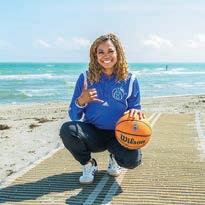
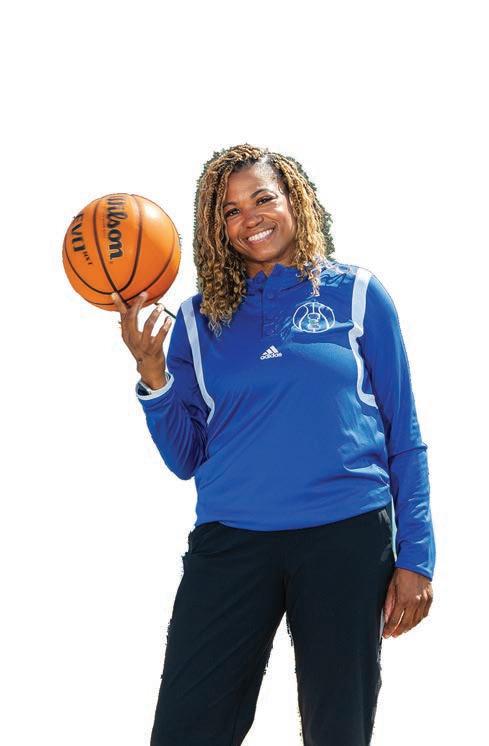
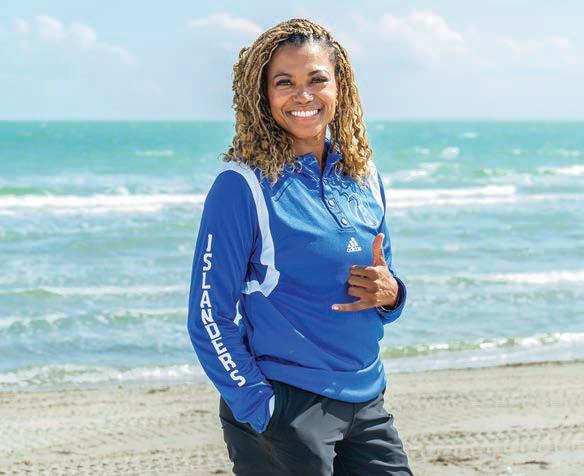
Passion and connection are the trademarks of a team coached by Wilson, or “Coach T,” as she is affectionately known as by her players.
“I love to love on our players, but I also love to push them to places they don’t even know they can go,” said Wilson, the
fifth head coach in Islanders Women’s Basketball history. “I always say, ‘A kid doesn’t care how much you know until they know how much you care.’ I want our players to know that I care about them as people first, then as basketball players.”
Wilson credits her mother with showing her how important a family atmosphere can be when building a team. Her home was a tight knit one filled with love, laughs, and gratitude. Coach Wilson is
one of three children — including her older brother James, who is a lawyer, and an older twin sister, by one minute, named Tawana, who works for the state of New Jersey. Coach Wilson says her mother taught her the importance of helping people grow not just on the court but off it.
“Communication and a family atmosphere are big with me,” Wilson said. “I also have non-negotiables. Be 10 minutes early for everything you do. I call it T-time. And be where your feet are, be locked into what you are doing, whether that’s on the court or in the classroom.”
Wilson grew up in South Jersey, in Vorhees, about 20 minutes from Philadelphia. It’s a place where hard work
“When you match talent with culture and expectations, there’s no limit to what this team can accomplish.”
TOYELLE WILSON, Islanders Women’s Basketball Head Coach
Senior Guard Marissa Shelton ’26 puts in some hard work against Alyssa Andrews ’27, a graduate assistant, during practice.
and grit are celebrated, she said. It’s those traits she took to her first court — the tennis court.
“My brother and my dad played tennis, so that became my first sport,” Wilson said. “Then a coach told me, ‘You are really quick. You should play basketball.’ So, I started playing basketball in fifth grade and I loved it. The team camaraderie and getting to run the court and play defense were my favorite parts. The lateral
movement I had from playing tennis really helped me make the transition.”
The transition to basketball would take Wilson far, both literally and figuratively. Wilson played four years at Manhattan College in New York, where she was team captain under Coach Sal Buscaglia. He planted a seed that would change her path.
Continued on next page.
PROFESSIONAL COACHING BACKGROUND
2025-Present
Texas A&M-Corpus Christi – Head Coach 2021-2025
Southern Methodist University – Head Coach 2019-2021
University of Michigan – Assistant Coach/Recruiting Coordinator 2013-2019
Baylor University – Assistant Coach 2010-2013
Prairie View A&M – Head Coach 2006-2010
Prairie View A&M – Assistant Coach 2003-2006
Robert Morris University – Assistant Coach
“After college, I thought I was going to get a regular job or play overseas,” Wilson said. “Then Coach Sal called me and said ‘Hey, you are such a great leader. Would you want to come be an assistant coach for me?’ He had just taken over at Robert Morris University. So, I drove my car to Pittsburgh and started coaching at 21 years old.”
That opportunity would lead to another and soon she found herself on the phone with Cynthia Cooper, the Basketball Hall of Famer and four-time WNBA champion, being presented with an offer she couldn’t refuse. For three years, she would serve as an assistant coach on Cooper’s staff at Prairie View A&M, her first job in the Lone Star State.
“It was a no brainer for me,” Wilson said. “Why wouldn’t I want to learn and grow from someone like Cynthia Cooper?”
Wilson was a fast learner who impressed the president and athletic director of Prairie View A&M so much, she was offered the head coaching job when Cooper left to become the head coach at UNC Wilmington. At 27 years old,
Under her leadership, the Lady Panthers captured three straight SWAC
Year twice. “She has a brilliant basketball mind,”
Associate Head Coach Tron Griffin brings 20 years of coaching experience to Coach Wilson’s squad, including two stints as a head coach at other institutions.
contagious, and her teams play with high energy.”
Wilson’s resume also includes assistant coaching roles at Baylor — where she won a national title as part of Basketball Hall of Famer’s Kim Mulkey’s staff — and Michigan, where she was recruiting coordinator for back-to-back NCAA tournament teams. Most recently, she led SMU to a remarkable turnaround, finishing tied for fourth in the American Athletic Conference in her first season.
She comes to the Island University knowing she has large shoes to fill. Wilson is replacing the legendary Royce Chadwick, the winningest coach in Southland Conference history, who retired last season after 13 years with the Islanders.
“The expectations for me are to come in here and win,” Wilson said. “The foundation has already been laid. And we want to continue that tradition of winning.”
PRACTICE MAKES PERFECT
Behind every Islanders Women’s Basketball win is a secret weapon, a group of dedicated students who help the team shine long before game day, also known as the practice squad.
These volunteer athletes — all men — bring the hustle every day. They run plays, mimic opponents, and push the Islanders to be their best. It’s hard work with a big payoff.
Wilson isn’t the only new face for Islanders Women’s Basketball. In addition to a new coaching staff, this year’s squad consists of 10 new players, many of whom were inspired to make the leap to Corpus Christi because of Wilson’s infectious personality and drive to win. The goal, of course, is to make it to March Madness, a feat the Islanders Women’s team accomplished for the first time during the 2023-2024 season.
t was the coaches, the culture, and the family atmosphere that really made me want to come here,” said senior guard Marissa Shelton ’26, who transferred from Saint Francis University in Pennsylvania.
“I love the intensity and passion the coaches bring to practice every day. It’s a great environment.”
After each practice, the team huddles in a circle for “shoutouts” — moments of recognition for standout efforts. A slick pass, a tough rebound, a clutch threepointer, even a hustle play on defense — it all gets celebrated.
Those little moments, Wilson believes, are what create something lasting.
“There’s a standard you have to meet to compete at the highest level,” she said.
“When you match talent with culture and expectations, there’s no limit to what this team can accomplish.” •
For senior Thomas Granado ’26, a sport management major in his second year with the squad, the job is all about teamwork and pride.
“In practice, the coaches encourage us to be part of the huddles and film breakdown,” Granado said. “I really feel like we are helping this team get better every day.”
The squad is made up of students with all kinds of basketball backgrounds — from former high school stars to lifelong pickup players — but they all share one thing: a drive to help the Islanders win.
Assistant Coach Austin Gunnell oversees the practice squad.
“Without them, we can’t do what we do,” Gunnell explained. “They give us the competition and energy we need. They have to be mentally sharp. They have to know the different personnel and defenses of our opponents. It’s a crucial role.”
In return, practice players score some solid perks like early class registration, Islanders gear, free tickets to games, plus front-row access to the inner workings of Division I basketball.
“They’re not just helping, they’re part of the team,” Gunnell said. “Their impact shows up every time we step on the court.” •
EMBEDDED DEGREES SUPPORT STUDENT SUCCESS
Pending approval from the Texas Higher Education Coordinating Board, the Island University will offer three embedded associate degrees to support student progress toward bachelor’s degrees:
• Associate of Arts in Humanities
• Associate of Business Administration in General Business
• Associate of Science in Social Sciences These embedded degrees are not standalone programs. They provide a meaningful credential for students who have completed substantial coursework, offering flexibility for those who may need to pause their studies. Recipients will have finished the core curriculum and at least three additional semesters, making it easier to return and complete their bachelor’s degree when ready.
ENGINEERING EXCELLENCE
This fall, the College of Engineering earned full six-year ABET accreditation for all four of its engineering programs — civil, electrical, industrial, and mechanical — as well as its Geographic Information Science program, with no deficiencies or concerns. The college also announced plans, pending final approval by the Texas Higher Education Coordinating Board, to launch its first-ever Ph.D. in Engineering in fall 2026. The program is designed to meet the growing demand for highly skilled professionals, particularly within the state’s coastal and industrial regions, and will prepare experts in advanced manufacturing, energy innovation, AI, process safety, and smart infrastructure. Students will choose from four specialized concentration areas: civil and environmental engineering, electrical and advanced manufacturing, industrial and process engineering, and mechanical and energy engineering.
HITTING A HIGH NOTE
A round of applause for Dr. Susan de Ghizé, Professor of Music Theory, who was named a 2025 Minnie Stevens Piper Professor — one of the highest honors in Texas higher education, awarded to just 10 exceptional faculty members statewide each year for their dedication to teaching. This marks the first time since 2010 that a TAMU-CC professor has received this award, and the first time a music theorist has been honored since the award’s inception in 1958.
THE ISLAND UNIVERSITY FALL 2025
ISLANDER FOREVER
Shakas Up to Dr. Collin Webster, Interim Chair of Curriculum, Instruction, and Learning Sciences and Associate Professor of Kinesiology, who’s making global waves as a U.S. Fulbright Scholar. This summer, he traveled to Ecuador to kick off a twoyear project promoting physical activity in schools through community collaboration. He’ll return to Ecuador in 2026 to continue his workshops. Webster joins an elite group as one of only 10 TAMU-CC Fulbright Scholars since 1985.
A new height, both symbolic and literal, was reached with the topping out of the university’s highly anticipated Arts and Media Building. This fall, Islanders, community partners, and supporters gathered to celebrate the placement of a signature-covered beam, marking a major construction milestone.
Set for completion in 2027, the 85,000-square-foot facility will become home to TAMU-CC’s nationally accredited music and theatre programs, as well as the dance program. It will serve as a cornerstone for cultural engagement, expanding access to the arts and enriching campus life and the Coastal Bend community.
This fall, the Bachelor of Arts in Graphic Design became the Bachelor of Fine Arts in Communication Design, a careerfocused program offering expanded creative and industry opportunities. The four-year degree combines upper-division coursework and extended studio time to prepare students as versatile visual communicators across branding, print, digital, motion graphics, packaging, and design strategy. A signature feature is the internship program, with more than 25 placements each year, mostly paid, and many leading to full-time jobs. Plus, students receive two formal portfolio reviews to ensure continuous growth.
REACHING NEW HEIGHTS
ON THE RUN
Islander alumni hit the pavement with the Downtown CC Run Club, racing through the heart of the Sparkling City by the Sea.
TOPGOLF SOCIAL
The Dallas-Fort Worth Islander Alumni Chapter reconnected with an afternoon of swings, laughs, and memories at Topgolf Dallas.
NIGHT AT THE HOOKS
Nothing beats a night at the ballpark, and Islander alumni brought the blue and green to Whataburger Field as they cheered on the Corpus Christi Hooks against the Frisco RoughRiders.
NFL SUNDAY
Islander pride filled stands as the Houston Islander Alumni Chapter rooted for the Texans as they took on the Tennessee Titans at NRG Stadium.
ISLANDER MENTOR PROGRAM
Through the Islander Mentor Program, Islander alumni and community leaders share experiences, advice, and encouragement with the next generation of Islander alumni.
STAY INVOLVED
Visit islanderalumni.org to stay connected, join an event, or pay it forward.
CLASS NOTES
1970 s
Richard Tracy ’71 was honored as the namesake of the Richard Tracy Leadership Award by the Columbia County Youth Bureau in Hudson, NY. A permanent plaque in the county office highlights each year’s winners.
1980 s
William (Bill) Thompson ’86 , in his 35th year of teaching art and 29th year at Ursuline Academy of Dallas, recently exhibited photographs and prints in “Beauty is Not Always Pretty” at the Irving Arts Center. He earned his BA in Art from the Island University and holds an MA and MFA from the University of Dallas.
David “Randy” Williams ’89 of Phoenix, Arizona, retired in February 2025 after nearly 29 years with Honeywell International. Beginning at Corpus Christi Army Depot, he joined Allied Signal (now Honeywell) in 1986 and most recently served as Principal Account Manager for the AGT1500 turbine engine powering the Abrams Main Battle Tank. The U.S. Army recognized his service with the Noble Patron of Armor award.
1990 s
Eddie Hesseltine ’97 , military veteran, was selected as a state finalist for 2025 Superintendent of the Year. He has been praised for his resourcefulness as a superintendent of Orange Grove ISD since 2022.
2000 s
Dr. Elsa Soto Leggett ’01, ’04 , President-Elect of the American Counseling Association for 2024-2025, will assume the presidency in 20252026. She is the association’s 74th president and fourth Latinx president. A founding member of the Association for Child and Adolescent Counseling, she also served as president of the Texas Counseling Association.
Dr. Fred Fuentes ’05 celebrated surpassing 11,000 subscribers on his weekly YouTube podcast, “Our Last 30.” Dr. Fred and Cesar, his co-host, discuss life, death, and everything in between following their parents’ passing.
Frank Trevino ’92 released the single “I Haven’t Been Feeling Like Myself Lately” through his company, Love Sick Dog Publishing. Written and produced by Trevino, the track is part of his fourth album, “Planning My Escape, Plotting My Revenge,” recorded by Steven Garcia and available on all streaming platforms.
Helen Hays ’95 was elected Mayor of Bulverde, Texas. She was sworn in on May 13, 2025.
Stacy (Muniz) Gullett ’08 returned to Corpus Christi as the King High School Choir Director after 14 years away. She looks forward to attending PAC concerts and Islanders Athletics events with her husband, Kenn, and their sons, Killian and Liam. Previously, while at San Antonio’s NISD, she led choirs to sweepstakes and superior ratings and produced numerous All-Region, All-State, and UIL State medalists.
Matthew Trevino ’08 received the 2025 H-E-B Excellence in Education-Leadership Elementary Award. In his 17th year teaching elementary music at Roan Forest Elementary in San Antonio’s NEISD, Trevino is also a two-time Country Music Award Foundation Music Teacher of Excellence and a three-time GRAMMY Music Educator semifinalist.
Danelle Flores ’09 is an assistant professor and school counselor coordinator at Texas A&M UniversitySan Antonio.
2010 s RJ and Amanda Sanchez ’10 recently celebrated their 15th wedding anniversary in Paris. RJ was promoted to major in the U.S. Army, and Amanda was recognized as a master teacher for the second consecutive year.
Chantel Eubanks ’12 has been named Community Relations Coordinator at Universal Orlando Resort in Florida.
Casey Sanchez ’12, ’20 was promoted to Associate Registrar at TAMU-CC. In her new role, she oversees customer service, daily operations, special programs, and cross-divisional initiatives that enhance the student experience. She also supports academic compliance and key registration processes.
Dr. Celeste Brizzee ’14, ’24 joined the Summerville Medical Center this fall as their Chief Nursing Officer. She is a board-certified nurse executive by the American Nurses Credentialing Center.
Amy Montez Frye ’14 continues to serve as a local public address announcer for multiple sports in the Coastal Bend and now serves as the Strategic Initiatives Director with the Corpus Christi Museum of Science and History.
Tiffany (Alcala) Hector ’16 was promoted to Assistant Director for the Office for Youth Engagement at Texas A&M University. She now oversees statewide youth initiatives, supervises regional staff in Houston, Dallas, and the Brazos Valley, and supports strategic planning and partnerships to expand access to impactful college readiness programs across Texas.
Ilaria Reyes ’16 received the Texas Nurse Practitioners (TNP) Leadership Award, with the Texas flag flown in her honor courtesy of Senator Juan “Chuy” Hinojosa. The award recognizes faithful and diligent service to TNP, where Reyes serves on the Board of Directors as Member At Large. She cares for patients at Mission of Mercy and QC Clinic and Labs and contributes to her community through the Coastal Bend Advanced Practice Nurses group.
Illi-Anna Martinez ’18, an Emmywinning journalist, is Executive Producer at KRIS 6 News and Telemundo Corpus Christi and is the youngest manager in the station’s history. With nearly a decade of experience covering major events, she also serves as a founding board member of the National Hispanic Association of Journalists, South Texas chapter.
Stephenie Decker ’17 has been promoted to Senior Administrator and Director of Nursing for White Orchid Hospice in Sugar Land, Texas.
Dr. Jerry Orondo ’17 recently earned his Ph.D. in Nursing Science. He now serves in the Veterans Affairs healthcare system, applying his clinical, informatics, and research expertise to advance veteran-centered care and healthcare innovation.
Ricardo Zavala ’17 was named Teacher of the Year for Tuloso Midway ISD in Corpus Christi.
2020 s
Rachel Clow ’20 , KRIS 6 News award-winning investigative producer, earned two Carole Kneeland Awards for exposing systemic issues in Taft and investigating Harbor Bridge wrong-way drivers. Her team’s 30-story probe into the Nueces County Medical Examiner’s Office, which led to criminal charges, garnered Lone Star Emmy and Texas Broadcast News Award nominations, alongside KRIS 6 News 2024 TAB Best Investigative Report and 2023 Nancy Monson Spirit of FOI Award. She also currently serves on the TAB Legislative Affairs Committee.
Jonathan Perez ’20 graduated from St. Philip’s College with an Associate of Applied Science and now works as a physical therapist assistant.
Jackson Gray ’21 was recognized for achieving the 500-hour service milestone for the Texas Master Naturalist program.
Vanessa Perez ’23 recently began the Doctor of Education program in Educational Sciences at the University of Miami.
Matthew Prentiss ’23 was invited to be an official content creator at the 2025 Dream Con Convention, hosted in Houston.
Shreyash Chede ’25 has joined the TAMU-CC Coastal Bend Business Innovation Center as a project manager. A former CBBIC intern and graduate assistant, he now leads technology and entrepreneurship initiatives that support small business growth, university partnerships, and digital transformation across the Coastal Bend.
ISLANDER FOREVER
TOOL KIT
If you love being an Islander and want to stay involved with the university, here’s how to get started.
HOW DO I JOIN THE ISLANDER ALUMNI ASSOCIATION?
You already have! The minute you crossed the stage at commencement, you became a member and gained access to our 65,000-member network of Islander Alumni.
STAY CONNECTED
Keep up with your Island University by updating your contact information at islanderalumni.org, following our social media channels, and reading Currents, our e-newsletter.
SHARE BIG NEWS
We always want to know what you are up to! Tell us about your new promotion, engagement, or bundle of joy at islanderalumni.org/classnotes.
We have Islander Alumni Association chapters in Austin, Dallas/Fort Worth, Houston, and San Antonio.
JOIN A CHAPTER WEAR YOUR PRIDE!
We want to see Islander shirts and hats everywhere! Need an updated Islander alumni T-shirt? Get a new shirt at islanderalumni.org/store.
Donate to the Islander Forever Endowed Scholarship fund to give back to current Islander students. Make a gift at giving.tamucc.edu.
Join the award-winning Islander Mentor Program. Tell us how you want to get involved at islanderalumni.org/getinvolved.
KEEP UP WITH US!
SHARE YOUR NEWS & UPDATES Contact us at islanderalumni.org/update to submit your stories or update your contact information.
FROM PAPER TO PORTAL
THE EVOLUTION OF ISLANDER REGISTRATION
From paper forms to digital dashboards, the way Islanders register for classes has come a long way — but the excitement of a new semester never gets old.
In the 1950s, students at what was then the University of Corpus Christi braved long lines and coastal heat as they gathered in person to complete the process by hand. The scene was bustling and “old school,” reflecting a campus community still in its formative years.
Today, Islanders breeze through registration via the SAIL online portal, charting their course for the semester with just a few clicks — no sunburn required. What once required hours of waiting now takes minutes, yet the promise of new opportunities ahead remains just as strong as it did nearly 70 years ago. •