
Course Descriptions Guide 2026-27

Page 1


Course Description Guide

A PLACE TO:

think

Where a rigorous grounding in skills and knowledge is just the beginning – where teachers and students share inquiry, reflection and analysis on the path to personal understanding.

create

Where people celebrate the imagination in geometric proofs and formal essays, on canvas, computer and stage, in poetry readings and morning assemblies.

be yourself

Where people respect differences and can find their place in a diverse community.

aspire to excellence

Where students develop winning attitudes in academics, athletics and arts.

go beyond

Where Florida Keys, North Carolina mountains, museums, concert halls and community service become classrooms that foster deeper understandings of one’s self, others and the world.

MORE THAN JUST A COLLEGE PREPARATORY SCHOOL… A PREPARATION FOR LIFE WITH A HIGHER PURPOSE THAN SELF

2026-2027 COURSE DESCRIPTIONS & GRADUATION REQUIREMENTS

Tampa Preparatory School

727 WEST CASS STREET

TAMPA, F LORIDA 33606

www.tampaprep.org

813.251.8481 • FAX 813.254.2106 CEEB SCHOOL CODE 101729

THE SCHOOL’S PHILOSOPHY

Founded in 1974, Tampa Preparatory School is a private, independent, coeducational college preparatory school enrolling more than 700 students. It exists to provide students in grades six through 12 with rigorous intellectual training and to instill values of fairness, decency, honor, diligence and academic curiosity with an orderly, encouraging and kind environment. The size of Tampa Prep allows for the development of close, personal relationships.

The School is a diverse community of people, including the highest caliber of faculty members who are committed to helping students achieve great personal growth and academic success. Faculty members have enthusiasm for their fields of expertise and an abiding interest in educating young people. The opportunity for students and teachers to know and respect one another as individuals is one of the greatest strengths of independent education.

Classes are taught as seminars, labs and lectures in which students form and express ideas rather than merely receive and dispense information. Classes are frequently taught using the Harkness Method, to encourage maximum participation. The School stresses the development of self-confidence, a sense of worth & responsibility and the importance of a sense of humor and having fun in the pursuit of achieving goals. This approach provides a successful learning environment for the growth of academic excellence and encourages students to develop life-long habits of intellectual curiosity through the discovery of new interests.

In an age that demands instant answers, liberal education cannot demonstrate immediate results but can stress the values and standards that provide structure for a purposeful life. The School’s goals are to develop the academic, intellectual, moral, emotional and physical potential of each individual student and to prepare each student to live a creative, productive, humane and compassionate life.

Tampa Preparatory School is accredited by the Southern Association of Colleges and Schools and the Florida Council of Independent Schools. Additionally, the School is a member of the National Association of Independent Schools, the College Board, the Secondary School Admissions Test Board, the National Association of College Admissions Counseling, the Southern Association of College Admissions Counseling, and the Educational Records Bureau.

While the School will attempt to provide students every year with a wide variety of course selections, we prioritize the offering of graduation-required courses. Therefore, please note that not all of the courses listed in the Guide are available for students on a yearly basis

 9TH GRADE TRANSITIONS

Transitions (9)

The Transitions course is taught in the first semester to all 9th grade students. Students learn essential skills for success in high school and beyond. Students also engage in thematic units addressing study skills, note-taking strategies, self-advocacy, school history, health and wellness, character education, community service, civics, navigating social situations, ethics, financial literacy, and digital citizenship. These topics connect with additional programming completed during advising and 9th Grade Class Seminar sessions. This is a required course for all 9th Grade students beginning with the Class of 2023.

ARTS

Unless otherwise indicated, all courses listed below are one semester in length. Students enrolled in performance courses are expected to participate in all class events. Performances are considered final exams.

Beginning with the Class of 2023, all students must complete at least one Arts credit in non-cross-listed Arts classes.

DANCE

Middle School Dance Styles (7,8)

In this semester-long course, students explore the fundamentals of dance technique through movement analysis, class discussion and video, skill development, and choreography. Students examine current choreographers and/or dance icons and analyze how movement is altered for screen development in social trends such as Tik Tok, YouTube, and film. Students create their own dance films and learn movement and technology skills to enhance their artistic vision. This course is an introduction to dance; all experience levels are welcome. Participation in the end of semester showcase is required.

Dare to Dance (9-12)

In this semester-long course, students learn and develop upon the fundamentals of dance technique through multiple genres. Stretching, mobility training, skill development, and choreography are regularly

included in classwork. Students will be introduced to notable dance works and choreographers via video and/ or live performances. This course is an introduction to dance; all experience levels are welcome. Participation in the end of semester showcase is required.

Advanced Dance Studies (10-12)

Advanced Dance Studies is an intermediate/advanced course for students to further develop their dance technique and artistry. In this semester-long course, students will explore multiple dance genres with an emphasis on movement quality and performance. Students will build on prior knowledge through movement analysis, class discussion, and choreography. Participation in the end of semester showcase is required. Prerequisite: Instructor's approval.

DIGITAL ARTS

Introduction to Journalism (9-12)

This year-long course serves as a foundation for students with an interest in journalism, mass media, and multimedia. This is a prerequisite for students who are interested in joining Journalism or Yearbook. The first semester of the course focuses on writing for mass media and the ethics that come with it, while the second semester focuses on design for multimedia platforms as well as photography and digital design and editing software.

Introduction to Digital Media (9-12)

This semester-long course utilizes industry-standard software, Autodesk Maya, to create digital character animation rooted in the fundamental principles of animation. Built on the professional insights of veteran feature film animator Jamy Wheless, the curriculum moves from foundational keyframing to polished, multi-camera rendered sequences. Students will curate a final animation reel of their semester’s work to be showcased at our premier year-end Gallery Night. There is no prerequisite for this course.

Journalism (10-12)

Students in this year-long course produce the School’s student news site, the TP Current. The course focuses on journalistic writing styles, interview techniques, layout and design and production mechanics using computers and desktop publishing software. Students must apply to enter the course, meet certain criteria, and complete an interview. The course requires additional extracurricular time.

Prerequisite: Instructor’s approval

Yearbook (10-12)

Students in this year-long course produce the School’s yearbook. The course teaches the latest trends in

journalism, design, and graphics. To enter the course, students must complete an application, meet certain criteria, and receive the instructor’s permission. The course requires additional extracurricular time. Prerequisite: Instructor’s approval

Unreal Engine 1 (9-12)

In this one semester course, students will be introduced to the Unreal Engine Development environment. Students will learn how to navigate the Unreal Engine IDE, curate, import and manipulate assets, and learn the basics of lighting, camera placement, scripting, and environment creation. Students will understand how to create custom materials and apply them to objects and how to do basic character animations. There are no prerequisites for this course. Previous programming experience is not necessary. Students will be responsible for customized, individual projects and must be highly motivated.

Film Studies (8)

This one-semester course introduces 8th grade students to the fundamentals of film language, aesthetics, and techniques by working through the phases of pre-production, production, and post-production in a series of digital filmmaking projects. Students work together in production groups and learn the basics of cinematic storytelling and genres, camera compositions, and editing.

Filmmaking 1 (9-12)

This one-semester course provides a hands-on introduction to the basics of film language, aesthetics, and techniques through a series of digital filmmaking projects. In workshop sessions, lectures on film historical contexts, and by working in collaborative production groups through the phases of pre-production, production, and post-production, students learn about cinematic storytelling and genres, screenplays, pre-visualization, cinematography, sound design, and editing.

Filmmaking 2 (9-12)

This one-semester course builds upon the foundation of knowledge and skills from Filmmaking 1, placing greater emphasis on essential production roles during each stage of pre-production, production, and post-production. Students will learn about new filmmaking tools and how to work efficiently in production crews in order to adapt short screenplays into complete films. Prerequisites: Filmmaking 1 or instructor approval following a review of previous works.

Filmmaking Workshop (10-12)

In this one-semester course, students apply their

knowledge and skills learned in previous filmmaking courses and work collectively in a series of innovative filmmaking projects. In this workshop setting, students can expect to experiment with filmmaking technology and work in various crew positions at each stage of pre-production, production, and post-production. Prerequisites: Filmmaking 1, Filmmaking 2, and instructor approval following a review of previous works.

Advanced Filmmaking (10-12)

In this one-semester course, students draw upon their skills and experience in previous filmmaking courses to complete more sophisticated productions off-campus using a wider array of filmmaking tools. Students produce a portfolio of three original short films during the semester and assist each other as crew members on additional projects. Prerequisites: Filmmaking 1, Filmmaking 2, Film Workshop, and instructor approval following a review of previous works.

MUSIC

Beginning Chorus (6)

This elective is designed for sixth grade students who have had little to no background with singing in a choral setting. During the course, students sing a variety of repertoire. The students learn basic musical skills in theory, history, and reading notation. Students also participate in a group project making their own music video. Students have the opportunity to sing solos at the end of semester concert.

Chorus (7,8)

This performing vocal ensemble meets four hours each week and is offered as an Arts semester elective in the seventh and eighth grades. Students are not auditioned; the course is open to all interested students. Students learn standard choral literature. Emphasis is placed on ear training, proper breathing, diction, tone color, developing a sense of ensemble and blend, musicality, dynamics, line, et al. The class musicians perform in Arts concerts, various school functions and in the larger community, at the discretion of the instructor. Participation in all ensemble rehearsals and performances is an expectation of the course and is required.

Introduction to Instrumental Music (6)

This course is designed for the sixth grade students with no previous experience playing wind instruments. Students will choose one of the following instruments: flute, clarinet, alto saxophone, trumpet, or trombone. During the semester students will be introduced to some of the fundamentals of music through their instrument of choice, such as: rhythm, music/notes

reading, assembling, maintenance and the history of their instrument. Students will take their instruments home over the weekends.

Contemporary Instrumental Ensemble (7,8)

This performing ensemble is a one-semester course with a re-registering option for an additional semester, and is intended for grades seven and eight. The ensemble plays contemporary pop and jazz tunes and focuses on rhythm, playing together, improvising, comfortably following a ‘lead sheet,’ vocabulary, and assorted musical styles/dynamics/feels. The ensemble will perform their repertoire in art concerts and various school events. Instrumentation is usually guitar, bass, drums, percussion, keyboard/piano, and wind instrument, but is open to any kind of additional instrument.

Piano Lab (9-12)

Students in this year-long course learn to read music and play piano by chord charts. A traditional piano curriculum is supplemented with additional repertoire supplied by the instructor. All participants perform each semester at a recital. One need not have any piano experience to take the class. Students move individually through curriculum chosen as collaboration between instructor and student. This class will be offered every other year.

Guitar Lab (9-12)

This year-long course is intended for students (grades nine through twelve) from beginners to advanced. The course will cover open/bar/power chords (triads and four part chords) notation and rhythm reading, scales, playing duets and trios, using a capo, tuning and basic maintenance of the guitar, guitar history and repertoire, pick and fingerpick playing, to name a few. The students will be quizzed periodically (mid and end of the semester) for progress monitoring. *students enrolled in this class will be required to purchase or rent their own instrument (acoustic or electric guitar to the student’s choice)

Music Production (9-12)

This year-long course is intended to become the flagship for the instrumental music department. The students will learn some basic sound engineering skills, mixing, mastering, songwriting, composing, and arranging songs on the computer. As well as learning how to comfortably operate a DAW (Logic Pro X). In addition, the students will learn and experience how to manipulate sound to its kind - physics terms (harmonic series, sound waves and lengths, frequencies, and sound pressure), history of electronic sounds, and practical examples from contemporary music. Among six exciting projects through the school year, the students will have the option to publish their music

online (Bandcamp, Apple music, Spotify etc.) Students will be encouraged to collaborate among themselves, with other musicians in our school, and with the video department where they’ll receive the basic experience of film scoring. *Spots are limited *Basic musical instrument playing is highly encouraged

Pop Rock Ensemble (9-12)

The pop/rock ensemble is a semester course and is in high demand! The musicians will play contemporary rock/pop tunes of their choice and will perform in front of the school's students and staff in assorted school events as well as outside of school locations. The musicians are coached through the creative process, and will focus on tightness, pocket, sound, playing together and friendship. Once a week the young musicians are introduced to a new/old artist/band that have made a difference in the music world, and also each musician will have the opportunity to share their own musical passion/hero by presenting it to the class weekly on rotation (all musical styles are welcomed). *This course is intended for students who are currently playing an instrument and/or singers. Private tutoring is highly recommended. *Participation is determined by the instructor.

Treble A Capella Group (9-12)

Over this year-long class, students will study a variety of vocal music with a focus on contemporary a capella style. Students will study choral music in pop/broadway style participating in the opening Fall Showcase and Disney Candlelight Auditions. Students will study vocal technique and music literacy throughout the year. Students will have opportunities to participate in Florida Vocal Association sanctioned events and competitions. Students will perform at school concerts and in the community. Students will study vocal technique and music literacy throughout the year. This group has an informal audition but beginners who love to sing are welcomed to this group.

Chamber Chorus (9-12)

The Chamber Chorus is open to all interested students by audition. In this year-long course, students learn standard sacred and secular choral literature . Emphasis is placed on ear training, sight singing, proper breathing, diction, tone color, developing a sense of ensemble and blend, musicality, dynamics, line, et al. Attention is paid to the historical context in which the music was composed, and students become familiar with choral composers. Members of this chorus learn the same literature as the Concert Chorus, and perform with them; in addition they learn more difficult works that they perform as a group - a fair number of these are unaccompanied, and sung from memory. Several concerts are presented, the Chorus may enter the District and State All-State

Choral festivals, and there is a performing tour outside of Florida each year. Participation in all ensemble rehearsals and performances is an expectation of the course and is required. Students may participate in an out of state performance trip, every other year, at the discretion of the instructor.

VISUAL ARTS

Sixth Grade Art

In this foundational course, 6th-grade students explore the intersection of creativity and technique through a hands-on introduction to the visual arts. Over the course of the quarter, students experiment with a variety of mediums—such as drawing, painting, and 3D design—while learning to apply the basic elements and principles of art. This course emphasizes the "Tampa Prep Mission Statement" by encouraging students to take creative risks, develop their unique visual voice, and begin building a digital portfolio of their work. Projects are designed to foster both individual expression and a collaborative appreciation for the creative process.

Middle School 2D Art (7,8)

This introductory course provides a comprehensive foundation in the visual arts, emphasizing both technical skill and creative expression. Students explore a variety of two- and three-dimensional media while learning the core principles of design. In alignment with Tampa Prep’s commitment to independent thinking, and problem solving through going through the process, students are encouraged to move beyond imitation to develop original concepts. The curriculum includes an introduction to art history, peer critique, and the development of a digital portfolio, preparing students for more advanced studio work in the Upper School.

Middle School 3D Art (7,8)

Students design and construct realistic and abstract sculptural forms using a variety of materials, tools and techniques. They examine, analyze, and interpret traditional and contemporary works of art and artifacts while their understanding of the elements and principles of design are reinforced. Individual and group experiences promote problem-solving, creative thinking, and formal expression.

Middle School Design Thinking (7,8)

In this semester-long course, students explore the concepts of Design Thinking and the Design Process and how they can use these frameworks to ideate creative solutions to problems. Students create projects in our makerspace using a variety of materials based on design challenges. These projects help them to understand how the frameworks are applied. Students also learn the history of design and how design ideas can be applied in real world situations

and careers. Materials and techniques in this course include but are not limited to: 3D printing, cardboard, recycled materials and LEGOs.

Studio Art 2-D: Levels 1-4 (9-12)

The Studio Art 2D sequence offers a progressive journey that transforms students from visual learners into independent artistic researchers, with a focus on 2D artistic skills such as painting, drawing and printmaking. The experience begins with Visual Literacy, where students master the foundational language of art through creative problem-solving and spatial reasoning. This evolves into a focus on Craft, where technical execution and intentional storytelling become the primary drivers of the work. As students enter Advanced Inquiry, they dive deep into specialized media to develop a cohesive body of work situated within a contemporary context. The sequence culminates in an Independent Thesis, a capstone experience where students curate a comprehensive portfolio that reflects a unique, self-directed artistic identity. Whether building a foundational toolkit or managing an exhibition-ready collection, students in this track graduate with the conceptual depth and technical mastery required for collegiate-level study and a lifelong engagement with the arts. Each Studio Art level is a one semester course. Advancement beyond level 1 requires successful completion of the previous level course and instructor’s approval.

Studio Art 3-D: Levels 1-4 (9-12)

The Studio Art 3D sequence offers a progressive journey that transforms students from visual learners into independent artistic researchers, with a focus on 3D artistic skills such as crafts and design, mixed media and sculpture. The experience begins with Visual Literacy, where students master the foundational language of art through creative problem-solving and spatial reasoning. This evolves into a focus on Craft, where technical execution and intentional storytelling become the primary drivers of the work. As students enter Advanced Inquiry, they dive deep into specialized media to develop a cohesive body of work situated within a contemporary context. The sequence culminates in an Independent Thesis, a capstone experience where students curate a comprehensive portfolio that reflects a unique, self-directed artistic identity. Whether building a foundational toolkit or managing an exhibition-ready collection, students in this track graduate with the conceptual depth and technical mastery required for collegiate-level study and a lifelong engagement with the arts. Each Studio Art level is a one semester course. Advancement beyond level 1 requires successful completion of the previous level course and instructor’s approval.

COURSE DESCRIPTIONS - ARTS

Ceramics 1 (9-12)

This one-semester course provides an introduction to various methods of fabrication in clay. Students are exposed to the history of clay within various cultures and eras. They learn handbuilding techniques (such as pinch, coil, slab and drape), surface designs, and glazing methods. Unique works of three-dimensional art are designed and produced through technical research samples and final projects. Prerequisite: instructor’s approval

Ceramics 2 (9-12)

Students in this one-semester course increase their knowledge of clay history and handbuilding skills, while also learning to throw on the wheel. Participants explore the sculptural form and the functional form of clay. This class further introduces glaze techniques and surface designs for the body of work produced. Prerequisite: Ceramics 1 and instructor's approval

Ceramics 3 and Ceramics 4 (10-12)

Backed by historical research, these one-semester courses allow students to begin to mold and adapt to the method of construction that most interests them. Students concentrate on concept, form, shape, and surface for each piece created. Students immerse themselves in technical research samples and ideation development. The collection fabricated in these classes can be applied towards an AP Studio Art 3-D Design portfolio. Prerequisites: Ceramics 1 and Ceramics 2 and instructor's approval

Cultural Art Studies 1, 2,3, and 4 (9-12)

In these one-semester courses, students explore the history of different cultures and societies to learn about the functionality of their art, the belief systems behind the products, and the tools used to craft them. This process deepens the understanding of how and why art was produced throughout human history. Once students have researched the artistic practices of the culture selected by the class, they begin to create art using the methods of that culture. Student projects can either reproduce what other cultures have developed, or lead to new works inspired by the arts under investigation.

Advanced Art Studies (9-12)

This advanced semester course is designed for the student who wishes to continue with problems in visual art in which there is no existing advanced class. A student may enroll in Advanced Art Studies following a successfully completed semester of the beginning class in that particular area of art, such as Painting, Printmaking or Sculpture, or art medium, such as Ceramics. The student will attend class with the beginning class. Prerequisite: One semester of the beginning level course in which the student will work

Honors Thinking About Art (11,12)

This semester-long course is not a traditional world art history survey class. Instead, students explore different works of art and architecture from a wide variety of cultures and periods through themes, including: function, theory, realism, abstraction, social commentary, politics, and religion. Readings, class discussions, and student presentations are supplemented with trips to local art institutions. Prerequisite: Topics in Global History

The Chemistry of Art (11,12)

In this one-semester course, students experience the interaction between science, technology and art as they investigate chemical interactions involved in the creation, authentication, restoration, and conservation of works of art. By creating works of art, students practice techniques such as fresco, Egyptian paste, and metal etching. By conducting chemical experiments, students explore fireworks, paints and alloys. Class discussions and lectures connect chemical concepts with the students’ experiences in the lab and art room. After studying about forgery detection techniques and art restoration, students write a research paper to analyze the authenticity of an infamously debated work of art. Prerequisite: Any year-long Chemistry or Physics course

AP Studio Art 2-D Design (11,12)

The Studio Art 2D sequence offers a progressive journey that transforms students from visual learners into independent artistic researchers, with a focus on 2D artistic skills such as painting, drawing and printmaking. The experience begins with Visual Literacy, where students master the foundational language of art through creative problem-solving and spatial reasoning. This evolves into a focus on Craft, where technical execution and intentional storytelling become the primary drivers of the work. As students enter Advanced Inquiry, they dive deep into specialized media to develop a cohesive body of work situated within a contemporary context. The sequence culminates in an Independent Thesis, a capstone experience where students curate a comprehensive portfolio that reflects a unique, self-directed artistic identity. Whether building a foundational toolkit or managing an exhibition-ready collection, students in this track graduate with the conceptual depth and technical mastery required for collegiate-level study and a lifelong engagement with the arts. Each Studio Art level is a one semester course. Advancement beyond level 1 requires successful completion of the previous level course and instructor’s approval.

AP Studio Art 3-D Design - Levels 1-4 (11,12)

The Studio Art 3D sequence offers a progressive

journey that transforms students from visual learners into independent artistic researchers, with a focus on 3D artistic skills such as crafts and design, mixed media and sculpture. The experience begins with Visual Literacy, where students master the foundational language of art through creative problem-solving and spatial reasoning. This evolves into a focus on Craft, where technical execution and intentional storytelling become the primary drivers of the work. As students enter Advanced Inquiry, they dive deep into specialized media to develop a cohesive body of work situated within a contemporary context. The sequence culminates in an Independent Thesis, a capstone experience where students curate a comprehensive portfolio that reflects a unique, self-directed artistic identity. Whether building a foundational toolkit or managing an exhibition-ready collection, students in this track graduate with the conceptual depth and technical mastery required for collegiate-level study and a lifelong engagement with the arts. Each Studio Art level is a one semester course. Advancement beyond level 1 requires successful completion of the previous level course and instructor’s approval.

THEATRE ARTS

Middle School Theatre Arts (7,8)

This semester course focuses on the fundamentals of acting and the theatrical process. Students explore creativity through scene development, script writing, character building, monologue work, ensemble acting, and improvisational exercises. The course concludes with a performance at the end of the semester.

Introduction to Theatre (9-12)

This one-semester course covers the basics of theatre that are non-performance related. Costumes, props, dramaturgy and marketing are areas that may be covered. There is no prerequisite for this course.

Theatre Performance 1 (9-12)

This course is intended for students who are interested in performing on stage. In this one-semester, introductory course, students are exposed to foundational elements such as collaboration, creativity, mind-body connectivity, and emotional awareness using improvisation and theatre games. The basics of vocal production are explored through warm-ups and vocal projection development. Students study plays and musicals together as a class, in addition to working on scenes, monologue solos, duets, and small group numbers from a variety of sources. Solo work is not a necessity, as the class emphasizes working with each student’s comfort level. Depending on the semester, each play, musical or theatrical event such as a cabaret is a part of the curriculum, with students required to attend.

Theatre Performance 2 (9-12)

This year-long course emphasizes advanced vocal production, with students expected to sing from a wide range of the musical theatre canon. More sophisticated plays with more challenging roles are also studied. Solo work is a major element in this class. Acting work is also covered in depth. Regular cabarets for the public are performed. Dance is also explored in depth and complexity. Other areas covered may be stage combat, acting on film, mask and clowning, Shakespeare, or others. Prerequisites: Theatre Performance 1 or an audition.

Middle School Technical Theatre (7-8)

This semester-long course focuses on the fundamentals of technical theatre and the theatrical process. As students are introduced to all aspects of technical theatre, they develop skills in scenic painting, lighting and construction with a strong emphasis on hands-on learning. Students build scenic elements and help execute student performances.

Technical Theatre 1 (9-12)

In this year-long course, students are introduced to all aspects of technical theater through a study and practice of the art. By assisting in the production of Tampa Prep plays and musicals, students learn about scenic, lighting and sound elements. A strong emphasis is placed on hands-on learning: using tools to create sets, hanging and focusing lights, and efficiently using sound equipment. Students are required to participate as tech crew for Tampa Prep Performing Arts Productions (Music, Dance and Theatre).

Advanced Technical Theatre (10-12)

This semester-long course builds on the skills gained in Technical Theatre 1, while continuing to develop a deeper understanding and application of technical theatre knowledge. The curriculum has a strong connection to the production season, as students use classroom skills to work and manage student productions and events outside of the classroom. Students are required to participate as tech crew for Tampa Prep Performing Arts Productions (Music, Dance and Theatre). Prerequisite: Technical Theatre 1 or instructor's approval.

Design for Live Entertainment (10-12)

This is a semester-long art course in which students learn the art and practice of design for live entertainment. Utilizing hands-on projects, students have the opportunity to learn the art of scenic, lighting, sound and projection design. Focus is on who, what and (specifically) how practicing designers use these skills in all aspects of live entertainment, including the performing arts, concerts, theme park and event marketing.

COURSE DESCRIPTIONS -

English 6

Sixth grade English lays the foundation for language arts skills that build as students progress in the English program. The course strives to develop an appreciation of reading, skills in writing for a variety of purposes, and an understanding of the structure, vocabulary, and grammar of the English language. Students read adolescent literature appropriate in content and level of difficulty for their age. The course literature gives students a wider understanding of the world around them, as well as a way to reflect on their own personal experiences as adolescents. Students begin a digital platform for vocabulary study that continues through their senior year.

English 7

This course is guided by the following principles: writing is a means of discovering and examining thoughts, feelings, experiences, and ideas; reading allows us to explore our own humanity and the depth and breadth of the human heart, mind, and spirit; and the study of grammar, vocabulary and style provides insight into the art and craft of written expression. The course literature includes a novel, a play, short stories, and a collection of poetry. Writing instruction emphasizes writing as a process. Students are introduced to analytical writing for a specific purpose.

English 8

Building on the foundation from the sixth and seventh grade English courses, the eighth grade English course reinforces and further develops students’ skills of comprehending and interpreting literature through discussions and various activities. The course literature ranges from Shakespeare to contemporary works, and includes poetry, plays, and fiction. The study of grammar, vocabulary, and style enhances students’ growing awareness of the English language. Students continue to work on the writing process through both creative and analytical writing.

Honors English 9: Genres of Literature and Composition (9)

Through the study of various genres of literature, this course focuses on the skills of literary interpretation, analytical and creative thinking, and clear and well-organized oral and written expression. English 9 students study vocabulary and effective use of language through a variety of mentor texts. Students work through a range of written assignments, including analytical essays and creative writing. Students learn about the research process and are given multiple tasks to implement and hone these skills. Various genres are covered in this course, including short stories, novels and poetry.

Honors English 10: World Literature and Composition (10)

This course provides students with a broad, historical survey of world literature ranging from authors such as Sophocles and Shakespeare to Mathabane, Tsukiyama and Hosseini. The study of these authors, ancient and contemporary - and of other thinkers and artistsserves as a springboard for seminar-style discussions, for extensive reflective and expository writing, and for further development of critical and creative thinking skills. Ongoing study of vocabulary and grammar is also emphasized.

Honors English 11: American Literature and Composition (11)

This course provides students with a general survey of American literature, including works from both the classic canon and contemporary selections. The course focuses on students’ active reading skills by requiring seminar-style discussions, and develops their critical and analytical writing and thinking skills with a series of essay assignments. The Decade Synthesis Project requires students to research a decade in American life and write a major paper that focuses on a specific feature within that period. Ongoing study of vocabulary and grammar is also emphasized.

AP English Language and Composition (11)

This college-level course emphasizes the skills of analytical reading, critical thinking, and persuasive writing. Students’ daily responsibilities include text annotation, the preparation of reading response journals, and participation in seminar-style discussions of literature. Writing instruction focuses on the process of composition and revision as a means of thinking critically and communicating effectively. Research skills are honed with the Decade Synthesis Project, for which students research a decade in American life and write a major paper that focuses on a specific feature within that period. Weekly vocabulary quizzes reinforce SAT preparation and rhetorical terms. Students' study of rhetoric and their practice with timed writing and multiple-choice exercises supplement their preparation for the AP Language and Composition exam. Prerequisites: English 10 and instructor’s approval

AP English Literature and Composition (12)

This college-level course emphasizes the critical reading and analysis of some of the great works of classical and modern literature. Students develop critical thinking and writing skills while cultivating a love for literature and an appreciation for the writer's craft. The Biography Project (a creative narrative about a family member) showcases students' understanding of the writing process. Students are provided space to explore their own literary interests with independent reading and small group reading discussions. These

texts, timed writings, and multiple-choice exercises aid students in preparing for the required AP Literature and Composition exam. Prerequisite: English 11 and instructor's approval.

SEMESTER ENGLISH ELECTIVES

The following one-semester courses are offered to students in grades 11 and 12. Priority for all of these electives is given to Seniors - Juniors may only enroll in a course if a space is available after Senior schedules have been assigned. Seniors may elect one of these courses for their second semester, if it is offered in their English or Study Hall period, to fulfill their English 12 requirement.

Honors Creative Writing (12)

Students in the semester-long course will write imaginative and expressive pieces, including poetry, short fiction, and drama. Students will analyze models by both professional and student writers to determine the elements of effective writing.

Honors English 11: Contemporary American Literature 1951-present (11)

This second semester course is a continuation of the first semester class English 11: American Literature and Composition. This course provides students with a general survey of recent American literature, including works from both the classic canon and contemporary selections.

Honors English 11: Introduction to Public Speaking (11)

This course is designed for students new to public speaking and oral communications. Thus, the first half of the course is a scaffolded approach, giving students a foundation in oral communications principles and successful experiences with quick speeches in front of the class or in small groups.

Honors English 12: Mysteries, Thrillers, and Killers (11)

In this semester-long English course, students will read classic mystery tales and novels, detective novels, thrillers, horror, and true crime narratives. The course analyzes the conventions of character, narration, and plot in these subgenres. Students will also write our own stories inspired by these genres.

Honors English 12: Literature in Film (12)

This semester-long course explores how texts can change when they leave the page and jump onto the big screen. This class will analyze and discuss films in a variety of genres and we will particularly focus on how stories change through different mediums. Expect to read novels and analyze their adaptations. The writing for the course will focus on analysis and creative writing.

Honors English 12: Storytelling in Music and Film (12)

This second-semester course focuses on applying analysis across three distinct layers. Students study how words, images and sounds are layered in order to create more depth of purpose and understanding. This course challenges participants to transition their skills from the analysis of words on paper in a theoretical setting to the analysis of a more dynamic, three-dimensional world. Students practice thinking through multiple perspectives and multiple dimensions in the hopes of developing into more effective global thinkers. Music videos, short films and film clips are the media that students use to complete their study in this course. Grades are comprised of daily participation in Harkness discussions, participation in digital forums, reading quizzes, and writing. Prerequisite: English 10

Honors English 12: Contemporary Writing and Analysis (12)

This semester-long English elective explores contemporary texts across a range of media, including music, film, visual storytelling, and other modern forms. The course is structured around multiple analytical writing projects in which students examine how meaning is created within and across texts. Students will practice close reading, interpretation, and evidence-based writing as they develop original analytical insights.

 HISTORY AND THE SOCIAL SCIENCES 

World Geography and History (6)

This course encourages students to develop a global perspective and an understanding of the fundamental themes important to geography. Students study physical features and culture aspects from around the world. The course focuses on the following questions: Where is it? What is it like? What is the relationship between people and their environment? How and why do people, ideas, and goods move from place to place? In what ways do areas of the world share similar characteristics? Basic note taking, research techniques, map skills, and class discussion are constant focal points throughout the course.

Civics (7)

This course emphasizes the importance of good citizenship. Students explore the structure and functions of state and national government while examining the roots and principles of the Constitution. They also study rights and responsibilities outline in this living document. Throughout the year, students refine their communication skills through discussions and collaborative activites.

United States History (8)

This course investigates major events, turning points, and people who have impacted American history. Periods of study include the establishment of the United States through the early twenty-first century. Students will analyze history through different perspectives to develop a better understanding of what happened. A strong emphasis is placed on developing historical thinking skills: sourcing, contextualization, corroboration, and close reading. Much of the class is centered around inquiry-based learning which helps students develop critical thinking, problem-solving, and research skills. Class discussion, collaborative activities, map skills, and writing will also form a regular part of the course throughout the year.

Honors Foundations of Historical Thinking: A Big History Approach (9)

This course uses an inquiry-based, multidisciplinary approach to explore the history of the universe from the early evolution of humans through the post-classical era of civilizations. The Big History perspective challenges students to think critically and broadly. Students practice critical reading and writing skills through investigations, projects, and engagement in class discussions, and gain a strong interdisciplinary foundation, which provides a useful context for understanding world events in the past and present. This work serves as a foundation for AP World History.

Honors Topics in Global History (10,11)

This course explores the great ideas, events, art, and movements of the world. Through this study, students have the opportunity to think deeply about such ideas as identity, government, religion, art, culture, and ethics. This course emphasizes the historian’s most important tools: inquiry, research, analysis, synthesis, and persuasive prose. Other skills fostered within the course include reflective writing, constructive critiquing, effective dialogue, map skills, and oral communication. This course is designed to complement English 10.

AP World History: Modern (10)

This year-long course examines major transitions over time and their impact on a variety of regions throughout the world. The course is shaped by the six themes of world history and the ‘habits of mind’ as outlined by the College Board. Using a periodization approach to analyzing events and interactions from the foundations of history to the present, the course is designed to challenge students to develop independent ideas using Harkness methodology. A strong emphasis is placed on the improvement of analytical abilities and critical thinking skills in order to understand historical and geographical context, make comparisons across cultures, use documents and other

primary sources, and recognize and discuss different interpretations and historical frameworks. The course necessitates a significant reading and writing load equivalent to a full-year introductory college course. Prerequisites: World History I and instructor’s approval

Honors United States History (11,12)

Honors United States History examines the main currents of American political, social, cultural, and economic life in the context of the country’s historical evolution, with particular focus on the Civil War and Reconstruction, America’s emergence as a world power, and its pivotal role in the global affairs of the 20th and 21st centuries. Students will explore this content through in-depth historical, political, and literary analysis of a diverse array of both secondary and primary sources. Through discussions, projects and writing, this course will challenge students to better understand America’s place in the world, and their own role within it, while developing written and verbal communication skills, critical thinking, and most importantly, empathy.

AP United States History (11,12)

This college-level course is designed to prepare students both for the Advanced Placement United States History examination and for some of the skills and knowledge they will need in other academic classes and life experiences. The intensive curriculum surveys the history of the United States from before the arrival of Europeans to the early twenty-first century. A discussion format used in class is fueled by students’ responses to assigned readings and daily primary sources. A strong emphasis is placed on the instruction, training, and practice in the composition of college-level essays. Writing objectives include the formulation and development of thesis statements in response to questions based upon the analysis, understanding, interpretation, and reconciliation of historical documents. Political, social, economic, literary, and artistic aspects of American history are integrated to the greatest extent possible throughout the course. Prerequisites: AP World History, and instructor’s approval

Honors Government and Civics (11,12)

This semester-long course exposes students to the foundations of government, the rights and liberties that are guaranteed under the American system of government, and a host of other topics and issues related to American politics. Through an emphasis on current events, students create and implement a political action project. Classes are taught in a discussion-based environment. Students should leave this course as more knowledgeable citizens who possess a practical understanding of their rights, liberties, and responsibilities under the law.

AP United States Government and Politics (11,12)

This course gives students, in line with the AP specifications, an “analytical perspective on government and politics in the United States. It includes both the studies of general concepts used to interpret United States politics and the analysis of specific examples. The course requires familiarity with the various institutions, groups, beliefs and ideas that constitute United States politics. The following themes are examined: Constitutional Underpinnings of United States Government; Political Beliefs and Behaviors; Political Parties, Interest Groups and Mass Media; Institutions of National Government; Public Policy; Civil Rights and Civil Liberties. Skills expected of the students are: knowledge of facts, concepts, and theories; understanding of typical patterns of political processes and behavior and their consequences; analysis and interpretation of data and relationships in government and politics; written analysis and interpretation of the subject matter; careful attention to the specific free-response question posed; and ability to stay on task.” Prerequisite: Instructor’s approval

HISTORY ELECTIVES

Honors Mock Trial (10-12)

In this spring semester course, students play the roles of attorneys and / or witnesses in fictitious civil and criminal trials. This project-based course is designed to help students cultivate skills related to trial advocacy, legal reasoning, legal argumentation, and witness examination. Students in the class may compete in an interscholastic mock trial competition based on a case packet that is disseminated each year by the Florida High School Mock Trial governing body. Over the course of the semester, students will have participated in several mock trials and will have served as both witnesses and attorneys in those trials.

Honors Introduction to Social Justice (11,12)

In this introductory, semester-long survey course, social justice is loosely defined as “promoting a just society by challenging injustice and valuing diversity.” Social justice is generally equated with notions of equality. This course encourages students to think critically and expansively about the world and the conditions of humanity. Through guided readings, videos, and discussions, students come away with an understanding of the present moment in the country’s history and a better understanding of how they want to interact with the world. The course examines identity, belonging, citizenship, and civic engagement. Students examine their own beliefs and those with opposing views. Compassion, respect, and methods to effectively engage with the world is fostered in order to better understand the way studentscan live their

values.

Honors Co ntemporary World Affairs (11,12)

This one-semester course introduces students to contemporary issues in global affairs. The course examines problems facing the global community, as well as the prospects for governments, individuals, and international groups to address those problems. Issues include population and demographics, natural resources and the environment, the globalization of the economy, terrorism and threats to security, development and technology, global security, ethics, human rights, and the role of the United States and other regional powers in world affairs. Students research topics in current periodicals and other source materials, deliver oral reports on assigned topics, and write comprehensive reports that examine the roots and ramifications of these issues. The course is conducted as a Harkness Seminar.

Honors Cultural Anthropology (11,12)

This semester course introduces students to a selection of world cultures and examines some of the various and integrated ways in which humans respond to their environment. Through essays, reflective writing, tests, projects, field trips, and guest lecturers, students are encouraged to seek a deeper awareness of others in order to better understand themselves and the cultures in which they reside.

Honors African American History (10-12)

This one-semester course explores the history of African Americans in the United States. Students will explore these topics through non-fiction readings as well as engagement in novels, films, art, and music. Classes are conducted in a Harkness seminar format. Students are expected to write two to three short essays and regularly reflect on their learning. In addition, students will complete one end-of-semester project focused on a personal area of interest in African American history.

Honors Economics (10-12)

This semester-long course provides an introduction to the study of economics. Topics include a brief history of economics, an overview of the contemporary global economy, and an exploration of entrepreneurship. This curriculum will provide exposure to major economic events, types of economic systems, monetary and fiscal policy, ethics and economics, as well as the use of economics in business decision-making. Through reading, writing, analysis, and discussion, students will develop a foundation for understanding the most prevalent economic challenges and opportunities facing society today. This course is also recommended as a helpful introduction for AP Macroeconomics and AP Microeconomics.

AP Macroeconomics

(11,12)

As stated by the College Board, "AP Macroeconomics is a college-level course that introduces students to the principles that apply to an economic system as a whole. The course places particular emphasis on the study of national income and price-level determination. It also develops students’ familiarity with economic performance measures, the financial sector, stabilization policies, economic growth, and international economics. Students learn to use graphs, charts, and data to analyze, describe, and explain economic concepts. AP Macroeconomics is equivalent to a one-semester introductory college course in economics."

AP Microeconomics

(11,12)

As stated by the College Board, "AP Microeconomics is a college-level course that introduces students to the principles of economics that apply to the functions of individual economic decision-makers. The course also develops students’ familiarity with the operation of product and factor markets, distributions of income, market failure, and the role of government in promoting greater efficiency and equity in the economy. Students learn to use graphs, charts, and data to analyze, describe, and explain economic concepts. AP Microeconomics is equivalent to a one-semester introductory college course in economics."

AP European History (12)

This intensive, college-level course is intended to provide preparation for the AP European History exam. Students read and write extensively and are responsible for comprehending, analyzing, and discussing the major political, economic, social, and religious events of the entire European continent from the formative era of the Renaissance to contemporary Europe. Excerpt reviews and Document Based Questions provide additional writing practice. Prerequisite: Topics in Global History or AP World History, United States History and instructor’s approval

AP Comparative Government and Politics (11,12)

AP Comparative Government and Politics introduces students to the rich diversity of political life outside the United States. The yearlong course uses a comparative approach to study the political structures and policies of six selected countries: China, Iran, Mexico, Nigeria, Russia, and the United Kingdom. Students analyze various political, economic, and social challenges, examine how different governments solve similar problems, and compare the effectiveness of approaches. They will also engage in disciplinary practices that require them to read and interpret data, make comparisons and applications, and develop evidence-based arguments. Prerequisite: Instructor approval

Honors Latin American Studies/Estudios Latinoamericanos (11,12)

This one-semester course provides an overview of Latin America, including its history from the pre-Colombian era to the present. Latin America’s past and present can be understood as a series of struggles or “culture wars” along a set of fault lines that center around the concepts of race, class, culture, development, and social justice. Course objectives include an understanding of the causes behind these struggles and how they have shaped modern Latin America. By studying Latin America’s history, students frequently draw parallels to the present in order to understand how a particular issue continues to find relevance in contemporary times. This course is taught in English for one semester, and in Spanish (as Estudios Latinoamericanos) for one semester. Prerequisite for Estudios Latinoamericanos: Advanced Spanish 3, Spanish 4 or AP Spanish and instructor’s approval

Honors Psychology (11,12)

Students in this semester course are presented with an introduction to psychology. The course is designed to explore the systematic and scientific study of the behavior and mental processes of human beings and other animals. Students are exposed to the psychological facts, principles, and phenomena associated with each of the major sub fields within psychology. The course also addresses the ethics and methods psychologists use in their science and practice. Class consists of lectures, discussion, readings, videos, guest speakers, writing, and research and group projects. Critical thinking skills are enhanced as students analyze personal and social implications of psychological findings.

Advanced Psychological Research (11,12)

Advanced Psychological Research is a research-focused course designed to give students the opportunity to explore various human behaviors and mental processes in depth. Students are required to comprehend, summarize, analyze, and evaluate psychological research. Students will have a say in the topics of study, which may include the psychology of human relationships, abnormal psychology, health psychology, developmental psychology, and sports psychology. Assessments will come in the form of written responses, a research paper, and, at minimum, one complete replication with a full lab report. Prerequisite: AP Psychology

AP Psychology (11-12)

This college-level course is designed to introduce students to the systematic and scientific study of human behavior and mental processes. Students learn about psychologists who have made profound contributions to their discipline with theories, concepts

and observed phenomena of cases. Along with the historical development of the psychological field, students also learn about topics including behavior, sensation, perception, learning, cognition, motivation and development. Students also employ aspects of the scientific method with respect to contemporary research and studies, as they analyze bias and evaluate claims and evidence.

Honors History of the Holocaust (11,12)

This semester long upper-level elective designed for students to more closely examine the collective actions of Hitler’s Third Reich and the resulting human tragedies and horrors suffered by the many millions of its victims, especially Europe’s Jews. In this class students will analyze anti-Semitism throughout history, the chronological developments that led to the Holocaust, and numerous personal accounts of survivors and of those who died at the hands of the Nazis; other groups persecuted by the Nazis apart from Jews; the importance of upstanders and resistance during the Holocaust; and other genocides that have occurred in modern history.

Honors Introduction to Law (11,12)

This one-semester course is designed to allow students to acquire a greater understanding of constitutional law, criminal law, traffic law, civil law (including torts and contract law) and a host of other legal topics and issues that may be of particular interest to young adults. Students learn the curriculum primarily through an examination of legal opinions (or other primary sources) in a discussion-based classroom environment. Moreover, students learn how to properly "brief" a legal case, engage in legal research, and participate in mock trials. Students should leave this course with a greater understanding of their rights, liberties, and responsibilities under the law.

Honors United States Politics: Presidential Elections (11,12)

Offered every four years

This one-semester course considers various aspects of the American electoral system with emphasis on the candidates and issues of the United States presidential elections. In addition, students learn about American government and political culture more broadly. Political institutions and the election process is studied from a political science perspective. Conducted as a Harkness Seminar, students are expected to produce several short position papers on the dominant issues as well as one final research paper (in lieu of an exam) that analyzes the outcomes of the election. Prerequisite: Topics in Global History or AP World History

Honors World Religions (11,12)

This semester course is designed to give students an

understanding of the history, doctrines, meanings, rituals and possible future developments of the world’s major religions. Daily discussions and reflective writings are supplemented with guest lecturers, oral presentations, and field trips to local religious centers.

Honors Thinking About Art (11,12)

This semester-long course is not a traditional world art history survey class. Instead, students explore different works of art from a wide variety of cultures and periods through themes, including: function, theory, realism, abstraction, social commentary and politics. Readings, class discussions, and student presentations are supplemented with trips to local art institutions. Prerequisite: Topics in Global History

World Mythology Course (10,11,12)

This semester course that revolves around challenging students to participate in the comprehensive analysis of the ancient world, and specifically the stories and beliefs found within the various cultures of antiquity that ultimately shaped, molded, and produced the modernity we find ourselves in today. This course hopes to delve into primary sources and literary minutiae of myriad cultures including, but not limited to the ancient Greek, Roman, Egyptian, Persian, Indic, Chinese, Japanese, Korean, Nordic, Celtic, Native American, Polynesian peoples and more. Ultimately, the course will introduce students to a wide variety of worldviews, both ancient and modern counterparts, and come to a greater understanding of how stories and their portrayal can impact belief and affect change in the world they live in. This course will be taught in translation (not in the original languages of the myths), and it assumes that prospective students possess no prior knowledge of the respective cultures or literature.

AP African American Studies (11,12)

This college-level course “examines the diversity of African American experiences through direct encounters with rich and varied sources.” This interdisciplinary course encompasses African kingdoms before European colonization to enduring contemporary challenges and achievements. Students will explore this history through source reading, reflective writing, and Harkness discussions. Students are expected to take the AP exam in May as well as complete a culminating research presentation. Prerequisites: Instructor approval

MATHEMATICS

MATHEMATICS COURSE SEQUENCES

For a diagram of the possible course sequences in middle school and upper school mathematics courses, please refer to the Mathematics Course Flow Chart in

the Appendix.

Middle School students wishing to accelerate in mathematics should refer to Academic Information and Policies - Opportunities for Accelerated Study in the Guide for Academics and Student Life.

Mathematics (6)

Designed as a preparation for Pre-Algebra, sixth grade mathematics focuses on mastery of computation skills and the four basic operations. This course of continuous review includes fractions, decimals, integers, percents, and ratios. Concepts, procedures, and vocabulary that students need to succeed in Upper School mathematics courses are introduced and developed incrementally. Additionally, fundamental geometry, data analysis, and probability are included in this course.

Pre-Algebra

(6,7)

This course lays the foundation for the studies of algebra, geometry, and statistics. Students are provided continual opportunities to review operations with rational numbers. Using these skills, students then learn to solve and graph linear equations and inequalities, and word problems. Additional topics include number theory, slope, probability, geometry concepts and calculations, and statistics.

Algebra Concepts

(8)

This course is designed for students who have experienced some challenges in Pre-Algebra, while still introducing most concepts taught in the Algebra 1 course. This course allows for more flexible pacing and individualized instruction. Topics covered include: integer operations, solving of linear equations, proportions, graphing linear equations, slope of a line, powers and exponents, systems of equations. Students who complete this class have all of the tools necessary to excel in Algebra 1 as a 9th grader.

Algebra 1 (7-10)

Algebra 1 provides the foundation for more advanced mathematics courses. This course features the use of a graphing utility to develop an understanding of the concepts behind mathematics, and to prepare students for the graphical nature of higher-level mathematical analysis. Topics studied include: solving and graphing linear equations and functions, solving and graphing inequalities, exponents, operations with polynomials, and solving and graphing quadratic equations and functions using a variety of techniques. Prerequisite: Pre-Algebra

Geometry (8-10)

Geometry is designed to develop reasoning and logic skills, along with spatial acuity, which are useful in critical thinking and problem solving. Exploration

and inductive reasoning are used throughout, with an emphasis on real world situations. Deductive reasoning is used to learn fact-based thinking and necessary conditions, through formal and informal proofs. Topics studied include: lines and the angles they form, polygons and circles, polyhedrons, congruence and similarity, area, and volume. Algebra I concepts are reviewed throughout the course. Prerequisite: Algebra I

Honors Algebra 2 (8-11)

This course is designed for the student who is interested in forming a firm mathematical foundation before pursuing higher-level mathematics. Affording students a solid background while moving at a relatively measured pace, the course begins with a thorough review of Algebra 1 before covering most of the traditional topics in Algebra 2. Students study functions and graphs while focusing on the traditional study of number systems, including imaginary and complex numbers, inequalities, systems of equations and inequalities, radical functions and other topics as time allows. This course continues to develop students’ understanding of Algebra through both traditional learning methods and through interactive applications and exploratory lessons created for iPads. Prerequisite: Geometry.

Advanced Honors Algebra 2 (8-11)

This course is designed for the student who demonstrates a higher aptitude and passion for mathematics and who will be pursuing advanced courses, including AP Calculus. Moving at an accelerated pace with in-depth analysis, and through the use of graphing applications, students study functions and graphs in depth while still focusing on the traditional study of number systems, including complex numbers, inequalities and equations of the first and second degree, exponents, polynomial and rational expressions, radicals, logarithms, and conic sections. Throughout the course, students focus on demonstrating their understanding through application. Prerequisites: Algebra 1, Geometry and current instructor’s approval

Honors Financial Literacy (11,12)

This one-semester course is an introduction to the complicated financial world that students will inhabit throughout their adult lives. Topics include, but are not limited to: checking vs. saving accounts, taxes, types of credit and ways to manage them, investing, and budgeting. In addition to regular class discussions, students gain a better understanding of these topics through google docs, videos, activities, and case studies.

Honors Statistics and Probability (11-12)

This year-long course focuses on the underlying

COURSE DESCRIPTIONS

concepts of statistics and statistical analysis. Students take an in-depth look at issues involved in gathering data from surveys to experiments, including data ethics. Other topics include exploring gathered data, and an introduction to statistical inference. The probability portion of the course is centered on understanding the theory that connects data-gathering and statistical inference. Course concepts are applied in a culminating project. Prerequisite: Algebra 2

Honors Precalculus (10-12)

This course is designed for students who are interested in forming a firm mathematical foundation before pursuing higher-level mathematics. Affording students a solid background while moving at a relatively measured pace, the course covers most of the traditional topics in advanced algebra and trigonometry. This course continues to develop students’ understanding of algebraic concepts through both traditional learning methods and through interactive applications and exploratory lessons created for iPads. Prerequisites: Algebra 2

AP Precalculus (10-12)

This course is designed for students who demonstrate a higher aptitude and passion for mathematics and who will be pursuing advanced courses, including AP Calculus. AP Precalculus centers on functions modeling dynamic phenomena. This research-based exploration of functions is designed to better prepare students for college-level calculus and provide grounding for other mathematics and science courses. In this course, students study a broad spectrum of function types that are foundational for careers in mathematics, physics, biology, health science, social science, and data science. Moving at an accelerated pace and with deeper analysis, students study advanced algebraic concepts such as polynomial, rational, exponential, and logarithmic functions; also analytic geometry, and trigonometric functions and identities. The formal study of a function type through multiple representations (e.g., graphical, numerical, verbal, analytical), coupled with the application of the function type to a variety of contexts, provides students with a rich study of precalculus. Prerequisite: Advanced Honors Algebra 2 and current instructor’s approval.

Advanced Honors Calculus (11-12)

This introductory calculus course is designed to introduce high school students to the fundamental concepts of calculus. Emphasis is given to notation, mechanics, and the clear communication of mathematical ideas. Topics covered are limits and continuity, derivatives and their applications, including optimization and related rates problems, integration and its applications, including area problems, and The Fundamental Theorem of Calculus. By the end of the

course, students will have a solid understanding of the foundational concepts and skills necessary for success in Calculus 1. Prerequisite: Precalculus

AP Calculus AB (10-12)

AP Calculus AB is an introductory, college-level calculus course. Students cultivate their understanding of differential and integral calculus through engaging with real-world problems represented graphically, numerically, analytically, and verbally, and using definitions and theorems to build arguments and justify conclusions as they explore concepts like change, limits, and the analysis of functions. Prerequisites: A grade of B or higher in AP Precalculus

AP Statistics (11,12)

The AP Statistics course is a secondary school equivalent to a one-semester, introductory, non-calculus based, college course in statistics. This year-long course introduces students to the major concepts and tools for collecting, analyzing and drawing conclusions from data. Exploring data, planning a study, anticipating patterns and statistical inference are the four major topics that are studied. Emphasis is placed on the communication of ideas based on statistical analysis. Prerequisites: Precalculus or Statistics and the instructor’s approval

AP Calculus BC (10-12)

Designed to follow AP Calculus AB, the course includes the study of vector and polar topics, more advanced techniques of integration, arc length, surfaces of revolution, work, improper integrals, and sequences and series. This course prepares students for the BC level of the Advanced Placement Examination. Prerequisites: satisfactory completion of the AP Calculus AB course and instructor’s approval

Advanced Honors Calculus III with Analytical Geometry (12)

This is a college-level math course that challenges outstanding mathematics students. Topics include: vectors and the geometry of space, vector–valued functions, functions of several variables, multiple integration, and vector analysis. The course provides a strong foundation in multivariable and vector calculus that will be useful in future college mathematics courses. Prerequisites: AP Calculus BC, or concurrently taking AP Calculus BC with instructor’s approval.

PHYSICAL EDUCATION

Middle School Athletic Requirement

All Middle School students are required to participate in athletics during the school year. Students are allowed to select from a list of options each athletic

season to fulfill this requirement. Please keep in mind the following when making selections:

1. Each student must participate in at least one team during the school year.

2. A student may choose the Study Hall option only once per school year.

Middle School Athletic Options:

1. Athletic Team

• Options

▫ Fall - Cross-Country, Diving, Golf, Rowing (Club), Boys Soccer, Swimming, Girls Volleyball

▫ Winter - Bowling, Basketball, Girls Soccer, Wrestling

▫ Spring - Boys Baseball, Boys Lacrosse, Rowing, Tennis, Track & Field

• When participating in an athletic team, studentathletes are expected to do the following:

▫ Attend and participate in all team practices during seventh period

▫ Attend each contest for which their team is scheduled

2. Physical Education

• This option ends at the end of each academic school day

3. Study Hall Athletic Conditioning (SHAC)

• Space is limited to 30 students

• This option ends at the end of each academic school day

4. Study Hall

• A student may choose the Study Hall option only once per school year

• This option ends at the end of each academic school day

Physical Education/Personal Fitness & Health (9-12)

This required course encourages students to pursue a healthy, physically-active lifestyle through a combination of team and lifetime sports, personal fitness training, and health education. The physical education component includes engaging in various sports such as volleyball, hockey, soccer, flag football, frisbee, and pickleball, all of which foster teamwork, sportsmanship, and skill development. Students also participate in strength, cardiovascular, and flexibility training to enhance overall fitness. The health component of the course focuses on personal wellness, decision-making, and community health. Students complete a health journal, exploring topics such as nutrition, mental health, stress management, and disease prevention. Learning extends beyond the classroom through field trips throughout Tampa, allowing students to engage with real-world health and wellness initiatives. This course provides students with the knowledge and habits

necessary to lead a balanced and active lifestyle.

Athletic Conditioning (10-12)

This course offers students a guided weight training program for the casual or the serious athlete. Participants learn a wide variety of appropriate weight training techniques and study basic nutrition, anatomy, and exercise physiology. Participating in a regular program of health enhancing exercise, students learn the benefits of exercise first-hand. Students are assessed through quizzes, participation and improvement. Athletic Conditioning is taught as a one-semester course but is open to students as a year-long course.

Honors Introduction to Sports Medicine and Athletic Training (10-12)

This one-semester course provides students with an introduction to the care and prevention of athletic injuries and to the duties of an athletic trainer. The course emphasizes anatomy as it relates to physical activity and sports. Students learn how to demonstrate a knowledge of injury assessment and rehabilitation techniques. Anatomical terminology, as well as the documentation process for evaluating injuries, is also taught within the class. Some knowledge of anatomy is preferred but not required. Prerequisite: Biology

Honors Emergency Medical Response (10-12)

This semester-long course provides students with the knowledge and skills necessary to help sustain life, reduce pain, and minimize the consequences of injury or sudden illness during out-of-hospital medical and traumatic emergencies—while either awaiting or assisting higher-level personnel at the scene. Through this class students earn CPR certification. Some of the core skills include: performing a primary assessment, CPR, using an AED, airway ventilation, medical and trauma emergencies, and EMS operations. Prerequisite: Biology

Fitness for Life (10-12)

Fitness for Life is a semester-long course that teaches students how to maximize their health through fitness games and healthy life strategies. Half of each week is dedicated to learning how to design workout programs, arrange weekly workouts, and improve a student’s fitness for the rest of her/his life. The other half of each week concentrates on basic and advanced life strategies to avoid common pitfalls and to work toward the student’s own personal goals. The overall goal of this class is to promote lifestyle education while having fun with a variety of aerobic and non-aerobic activities.

Introduction to Physiological Performance (10-12)

This semester-long course is aimed towards those who want to improve their physiological performance

through training and data. Students learn how to gather important fitness information, such as VO2 max and body fat percentage. This data is then interpreted and applied to the training process, taking consideration different approaches due to personal health and injury. Students ultimately learn how to apply this information towards their everyday lives.

 SCIENCE 

Earth Science (6)

The sixth grade science curriculum begins with a trip to Kennedy Space Center and the Space Coast. Starting from the cosmos, students explore the complex nature of Earth and the environment, focusing on humans and their interactions with the world around them. Students engage in regular independent-thinking, design-oriented experiences. Sixth grade Earth Science complements the content taught in other sixth grade courses, creating a web of interdisciplinary thinking and problem solving. Topics covered in 6th grade science include: the nature of science, plate tectonics, geologic activity, atmospheric processes, weather and climate. The end of the course concludes with an introduction to life and physical science covering the topics of human systems and physics.

Life Science (7)

The science curriculum in the seventh grade builds upon the themes introduced in the sixth grade, but within the context of the life sciences. Students explore essential questions like: What is Life?; How are living things classified?; Why is diversity of living things important? Additional topics covered in 7th grade science include: the structure and function of cells, bacteria/viruses, evolution, genetics, and ecology. Students learn in a dynamic classroom with discussions, cooperative learning, hands-on activities, projects, and lab activities. Students apply their knowledge on a grade level trip to the Florida Keys.

Physical Science (8)

The eighth grade science course builds upon the scientific knowledge and literacy skills introduced in the middle school. The course focuses on the physical sciences and their applications, including chemistry, physics, the environment, and astronomy. Students demonstrate their knowledge of the scientific method, and design and execute scientific experiments. Topics covered in 8th grade science include Properties of Matter, Atomic Theory, Physical and Chemical Changes, Chemistry of the Environment, Laws of Motion, Energy, Our Universe, Stars and Galaxies, Ancient and Modern Astronomy, and Our Solar System.

Beginning

Robotics (6)

Sixth graders gain an understanding of simple

machines including the lever, wheel and axle, and pulleys. Students gain an understanding of the problem-solving process and are required to document their findings. A second unit will focus on robots using the LEGO MINDSTORMS system. Problem-solving skills are applied to robots allowing them to find solutions to specific missions. A systematic approach and quantitative solutions is utilized for robot missions. Students gain an understanding of the use of light and ultrasonic sensors to solve mission problems.

Fall Semester Intro to Python Robotics (7,8)

In the Fall semester, we will be working with Python programming and understanding how the coding works with basic Python coding. The first part is to apply Python to turtle graphics. Then we will use a Circuit Express medallion which has built in LEDs and sensors. This will require NO wiring so we will be concentrating on understanding coding with loops and if statements eventually ending with a large project involving the Circuit Express board. The final part is to use LEGO Spike robots and introducing problem-solving with missions and coding in Python. We will also use sensors with LEGO Spike robots to solve missions. There are no prerequisites for this class but this class is a prerequisite for the Intermediate Python class.

Fall Semester Programming in Processing C (7,8)

The Fall introduction to programming course is designed to teach students the basics of computer programming. Students are responsible for program design and implementation, and for writing, compiling and debugging programs of varying levels of complexity in the Processing C programming language. Students employ commonly used data structures and algorithms in their program. They end the semester coding their own version of the classic arcade game Galaga. This course is an introductory level course and does not require any previous knowledge of or experience with programming.

Spring Semester Intermediate Python Programming (7,8)

Intermediate Python Programming is a one-semester elective course designed to build on the basic structures and functions learned in Introduction to Python Programming. Students will be introduced to programming using the Gpiozero libraries and will also learn how to interface devices to the functions to make them work. They will work with Python control and data structures including for loops, if statements, and lists. Project-based programs will be explored as students learn how to deploy programs using Raspberry Pi, breadboards, and external sensors. The final project will use TinkerCAD and 3D printing along

COURSE DESCRIPTIONS - SCIENCE

with Python coding to create an autonomous system. Prerequisite: Successful completion of Introduction to Python Programming or comparable class at another school to be approved by the instructor on a case by case basis. (The instructor will speak with the new student and determine if the course is a good fit.)

Spring Semester Arduino Programming (7,8)

This class is all about wiring circuits and learning how to control those electronics with Arduino C++ Programming. We will have a lot of projects with LED lights and buzzers and twist knobs. We will also build an Arduino controlled robot and make it move around. Programming will cover the basics of Arduino syntax and eventually move through loops and selection statements (if-then-else) and finally writing user defined functions for projects. You will also participate in applying the concepts learned to make a “household “device using Arduino sensors. There are no prerequisites for this class.

Discovery Lab (7,8)

Discovery Lab offers students an exciting opportunity to engage with STEM concepts through hands-on, project-based challenges. Students will apply creative thinking, communication skills, and scientific knowledge as they design, build, and test solutions to a variety of engineering and teamwork-based tasks. Students will explore the science behind design, systems, and problem-solving, applying real-world concepts across different scientific fields to tackle challenges and compete in friendly classroom competitions. Through collaboration, testing, and improvement, students will develop critical skills in innovation, perseverance, and scientific thinking.

UPPER SCHOOL SCIENCE OPTIONS

For a table of the possible course options in the Upper School science curriculum, please refer to the Science Options table in the Appendix.

Honors Biology 1 (9,10)

In this one semester introductory course, students study living things and the processes that sustain them by investigating the world around them. Typical biology concepts such as characteristics of life, cell structure and function, and ecology are introduced and reinforced through real-world questions, activities, and labs. The goal of this class is to introduce and develop the key science skills of investigation, analyzing data, interpreting information, and scientific communication and reasoning, while also providing students with a strong foundation in biology.

Honors Biology 2 (9,10)

This second-semester Honors Biology course deepens foundational knowledge through a focus on conceptual understanding and scientific skill-building. Students

refine their data analysis and written communication skills while exploring real-world biological questions. Key topics include the cell cycle and cancer; the molecular basis of inheritance from DNA to protein synthesis; the principles of evolution and natural selection; and organismal biology, including a functional approach to organ systems.

Advanced Honors Biology

2 (9,10)

The second-semester Advanced Honors Biology course is designed for students with strong foundational skills in data analysis, scientific reasoning, and written communication. The curriculum requires high-level reading comprehension and the discipline to work independently within a collaborative, laboratory-focused environment. Students are exposed to more open inquiry and required to synthesize complex data while investigating the regulation of the cell cycle; molecular mechanisms of gene expression and inheritance; the principles of evolution and natural selection; and organismal biology, including comparative physiology of organ systems.

AP Biology (11,12)

This college-level course offers an in-depth exploration of the key principles of biology, from the molecular foundations of life to the sustainability of ecosystems. Designed to be the equivalent of two semesters of introductory college biology, this fast-paced course prepares students for the AP Biology exam. A large portion of the course time is dedicated to hands-on labs, interactive activities, and class discussions, all aimed at enhancing students’ analytical, problem-solving, and scientific communication skills. Assessments, including tests and quizzes, challenge students not only to understand concepts but to apply them to new situations and synthesize complex information. Prerequisites: Biology and Chemistry; instructor's approval. Strong language skills are also recommended to succeed in this rigorous course.

Honors Chemistry (10-12)

This year-long course provides students with an overview of chemistry principles and their real-world applications. Students learn new vocabulary, chemical concepts, research skills, and scientific argumentation. This problem-based course allows students to engage with interesting and relevant science questions through inquiry, laboratory activities, group work, and individual research. There is a balance between hands-on activities and class discussions to broaden students’ general science abilities and problem-solving skills. Topics learned through these questions include: scientific inquiry, particle theory, properties of matter, changes to matter and its associated energy changes, mixtures and pure substances, equilibrium, and acid-base chemistry. Prerequisite: Algebra 1.

Advanced Honors Chemistry (10-12)

This course develops a student’s critical and analytical thinking by stressing the concepts, that explain atomic and molecular interactions. The course emphasizes understanding chemistry both mathematically and conceptually and features extensive qualitative laboratory experiments. Topics studied include: elements, compounds, the physical phases, solutions, bonding, thermodynamics, reaction rates and equilibrium, electrochemistry, acids and bases, and organic chemistry. Students are required to use a graphing calculator during class and on homework assignments. Prerequisites: Algebra 2 concurrently; instructor’s approval

AP Chemistry (10-12)

This college-level course emphasizes an extensive mathematical appreciation of chemical phenomena and a quantitative laboratory experience. Following the demands of the AP curriculum, the course includes rigorous study of atomic theory, chemical bonding, gases, liquids and solids, thermodynamics, kinetics and equilibrium, electrochemistry, and descriptive chemistry. Each student is expected to take the AP Chemistry exam in May. Students are required to use a graphing calculator during class and on homework assignments. Prerequisites: Advanced Chemistry; Precalculus (concurrently); instructor’s approval

Honors Physics (11,12)

Honors Physics is a hands-on, lab and project-based course that applies algebra-based mathematics to the principles and concepts of physics. Students learn both the theory and application of the core physics curriculum, including motion, forces, momentum, energy and work, waves and sound, light, and electricity. During the year, students are challenged to design, build, and test objects such as parachutes and automobile bumpers. Inquiry and problem solving skills are developed and reinforced through both group and independent work. Assessments include unit tests, projects, and labs, that measures students ability to apply the concepts. Prerequisite: Algebra 2 (concurrently)

Advanced Honors Physics (11,12)

This course attempts to make mathematical sense of the universe and to pique the student's curiosity about our surroundings. The class combines lectures, problem solving, laboratory work, computer simulations, and various projects. Students explore topics of classical mechanics, including vector math, kinematics, Newton's Laws, momentum, conservation of energy, projectile motion, and rotational inertia. Additional topics include: wave phenomena, oscillatory motion, electricity, light, and magnetism. Prerequisites: Precalculus (concurrently); instructor’s approval

AP Physics 1 (11,12)

This algebra-based, introductory college-level physics course explores topics such as Newtonian mechanics (including rotational motion); work, energy, and power; mechanical waves and sound; and introductory, simple circuits. Through inquiry-based learning, students develop scientific critical thinking and reasoning skills. Lectures are supplemented with laboratory experiments, demonstrations, and computer simulations. This course requires that 25 percent of the instructional time be spent in hands-on laboratory work, with an emphasis on inquiry-based investigations that provide students with opportunities to apply scientific principles. Prerequisites: Advanced Precalculus (concurrently) or Honors Precalculus (concurrently) and instructor’s approval.

AP Physics 2 (11,12)

This algebra-based, introductory college-level physics course explores topics such as fluid statics and dynamics; thermodynamics with kinetic theory; PV diagrams and probability; electrostatics; electrical circuits with capacitors; magnetic fields; electromagnetism; physical and geometric optics; and quantum, atomic, and nuclear physics. Through inquiry-based learning, students develop scientific critical thinking and reasoning skills. This course requires that 25 percent of the instructional time be spent in hands-on laboratory work, with an emphasis on inquiry-based investigations that provide students with opportunities to apply scientific principles. Prerequisites: AP Physics 1 and instructor’s approval.

AP Physics C: Mechanics (11,12)

This course is a calculus-based, college-level physics class that focuses on Newtonian mechanics. Introductory differential and integral calculus are used throughout the course. This course is designed for students planning to specialize or major in physical science or engineering in college. Topics covered include: vectors, laws of motion, work and energy, momentum, circular motion, and oscillations. Assessments include conceptual, numerical, algebraic, and graphical questions. Students spend a minimum of 20 percent of instructional time engaged in hands-on laboratory work. They ask questions, make observations and predictions, design experiments, analyze data, and construct arguments in a collaborative setting. Each student completes a lab notebook or portfolio of lab reports. This course is a year-long AP Physics C course. Prerequisites: AP Calculus AB, or concurrently taking AP Calculus AB with instructor's approval.

AP Physics C: Electricity and Magnetism (11,12)

This course is a calculus-based, college-level physics class that focuses on electricity and magnetism. Introductory differential and integral calculus are used throughout the course. This course is designed for students planning to specialize or major in physical

science or engineering in college. Topics covered include: electrostatics, conductors, capacitors and dielectrics, electric circuits, magnetostatics, and electromagnetism. Assessments include conceptual, numerical, algebraic, and graphical questions. Students spend a minimum of 20 percent of instructional time engaged in hands-on laboratory work. They ask questions, make observations and predictions, design experiments, analyze data, and construct arguments in a collaborative setting. Each student completes a lab notebook or portfolio of lab reports. This course is a year-long AP Physics C course. Prerequisites: AP Calculus BC, AP Physics C: Mechanics; instructor’s approval.

AP Environmental Science (11,12)

This college-level course provides an interdisciplinary look at the complex factors that interact in the environment. Concepts from Biology, Chemistry, Geology, Engineering and the Social Sciences are used to identify and evaluate both natural and human-made environmental concerns. Additionally, students create solutions to resolve or prevent these problems, and use technology to communicate their ideas. Current events and literature reviews supplement the course material. Laboratory experiences also comprise a significant component of the course. Topics include: Earth systems and resources, the living world, populations, land and water use, energy resources and consumption, global change and pollution. Prerequisites: Biology and Chemistry; instructor’s approval.

Advanced Honors College-Level Human Anatomy and Physiology (11,12)

Advanced Honors College-Level (AHCL) Human Anatomy and Physiology course is a year-long introduction to normal human anatomy and physiologic systems, as well as selected illustrative pathological conditions. The themes of Structure and Function, Homeostasis, and Integration of Systems will be explored. The course includes active, hands-on learning and a laboratory component. It is designed for students interested in the life sciences, nursing, and allied health careers, and is comparable in sequence and scope to the college-level, two-semester Anatomy and Physiology sequence. Prerequisites: Biology and Chemistry.

Honors Introduction to Engineering Design (10,11)

This year-long elective course focuses on the design process and its application. Students learn AutoDesk Inventor and use it to design solutions to proposed problems, document their work using an engineer’s notebook, and communicate solutions to peers and members of the professional community. Please note: This course is the first of a three-year engineering sequence. In order to enroll in these successive classes, students must first complete Introduction

to Engineering Design. Prerequisites: Algebra 2 (concurrently) and instructor’s approval

Honors Principles of Engineering (11)

This year-long course exposes students to major concepts that they will encounter in a post-secondary engineering course of study. Topics include: mechanisms, energy, statics, materials, and kinematics. Students develop problem-solving skills, and apply their knowledge of research and design to create solutions to various challenges, to document their work, and to communicate solutions. Prerequisite: Introduction to Engineering Design

Honors AI-Enhanced Aerospace Engineering (12)

This year-long course propels students' learning in the fundamentals of atmospheric and space flight. As they explore the physics of flight, students bring the concepts to life by designing a wind turbine blade, a wooden glider, and rockets. Students learn basic orbital mechanics and and use software for rocket design. They also work on other projects that use CNC machines, 3D printers and laser cutters. We will be incorporating AI and AI projects into this curriculum. This class serves as one of two capstone courses in the three-year STEM Concentration sequence. Prerequisites: Introduction to Engineering Design and Principles of Engineering.

Honors Computer Science Principles (11,12)

Using Python® as a primary tool, and incorporating multiple platforms and languages for computation, this year-long class develops computational thinking, generates excitement about career paths that utilize computing, and introduces professional tools that foster creativity and collaboration. This course can be a student’s first course in computer science. The class helps students develop programming expertise and explore the workings of the Internet. Projects and problems include: app development, visualization of data, cybersecurity, and simulation. This class may constitute either the capstone course in the three-year STEM Concentration sequence, or it may be taken independently of the STEM Concentration. Priority is given to STEM Concentration students who use this as their capstone course. Prerequisite: Algebra 1 and any year-long chemistry or physics course

SCIENCE ELECTIVES

Honors Organic Chemistry (11,12)

This semester-long course provides a fundamental overview of organic chemistry to students interested in pursuing science in college. Through this class, students understand the relationship between the structure and function of molecules, the major classes of reactions, reaction energetics and mechanisms, and synthesis of organic compounds. Several themes are prevalent

in each unit of study: nomenclature, chemical and physical properties, structures, mechanisms, common molecules, and the diversity of organic molecules in plants, bacteria, and animals. Class discussion, lecture, and in-depth laboratory experiments form the basis for student conceptual mastery, culminating with the presentation and analysis of a peer-reviewed article from a recent Organic Chemistry journal. Prerequisite: Advanced Chemistry.

Honors Food Chemistry

(11,12)

In this semester-long course, students learn about issues in nutrition and health through the behavior of the substances in food. This is accomplished through class discussions, lectures, and projects. Students use the scientific method to explore the chemical makeup of the macromolecules found in food and how the structure of the compound affects human biology. Practical and inquiry-based research is a major theme for the course, culminating in the presentation of a complete recipe through the complex chemical reactions and processes that are responsible for the creation of the food. Prerequisites: Biology and any year-long chemistry course

Honors The Chemistry of Art (11,12)

In this one-semester course, students experience the interaction between science, technology and art as they investigate chemical interactions involved in the creation, authentication, restoration, and conservation of works of art. By creating works of art, students practice techniques such as fresco, Egyptian paste, and metal etching. By conducting chemical experiments, students explore fireworks, paints and alloys. Class discussions and lectures connect chemical concepts with the students’ experiences in the lab and art room. After studying about forgery detection techniques and art restoration, students write a research paper to analyze the authenticity of an infamously debated work of art. Prerequisite: any year-long chemistry or physics course

Honors Environmental Science (11,12)

This one-semester course is an introduction to the principles of ecology with an emphasis on the ecosystems of Florida. Students learn about the biological, chemical, and physical features that make Florida unique. Students examine how humans have impacted Florida’s environment and discuss many of the environmental issues that affect the state's ecosystems. Lectures are supplemented with labs and field trips in which students learn basic ecological sampling methods. Prerequisites: Biology and Chemistry

Honors Forensic Science (10-12)

Forensic Science is the application of science to matters

of law. This one-semester course is multidisciplinary and encompasses concepts in biology, chemistry, and physics. The history of forensic science as well as various techniques and procedures used in crime scene investigations are examined. Topics covered include: physical and chemical analysis of evidence, serology, bloodstain pattern analysis, fingerprint analysis, forensic entomology, hair and fiber analysis, and careers in forensic science. This course utilizes class discussion, lecture, laboratory investigations, and case study analysis. Prerequisites: Biology; and any year-long chemistry or physics course

Honors Introduction to Sports Medicine and Athletic Training (10-12)

This one-semester course provides students with an introduction to the care and prevention of athletic injuries and to the duties of an athletic trainer. The course emphasizes anatomy as it relates to physical activity and sports, and requires some out-of-class assistance to the athletic trainer at home sports events. Students demonstrate knowledge of injury prevention, assessment and rehabilitation techniques. Some knowledge of anatomy is preferred but not required. Prerequisite: Biology

Honors Emergency Medical Response (10-12)

This semester-long course provides students with the knowledge and skills necessary to help sustain life, reduce pain, and minimize the consequences of injury or sudden illness during out-of-hospital medical and traumatic emergencies—while either awaiting or assisting higher-level personnel at the scene. Some of the core skills include: performing a primary assessment, CPR, using an AED, airway ventilation, medical and trauma emergencies, EMS operations, and pharmacological intervention. Prerequisite: Biology

Honors Marine Biology (11,12)

This one semester course is a fast-paced introduction to marine biology. The start of the course focuses on the physical and chemical features of the oceans before progressing into the structural, functional, and behavioral characteristics of marine flora and fauna. The course includes class discussion, projects, lab and field work, and assessments. Prerequisites: Biology; any year-long chemistry course

Honors Introduction to Python Programming (9-12)

This one-semester elective is designed to teach students the basics of computer programming using the Python language. Students design and implement solutions to problems by writing, running, and debugging computer programs, and use and implement commonly used algorithms and data structures to solve problems. Students use basic functions including print and input commands,

operators, if and for statements, as well as loops. Students who have successfully completed the 8th-grade computer science program at Tampa Prep should opt for the Honors Intermediate Python Programming class. Students who either have considerable Python or similar language knowledge should meet with the teacher to discuss taking the intermediate course.

Honors Intermediate Python Programming (9-12)

Intermediate Python Programming is a one-semester elective course designed to build on the basic structures and functions learned in Introduction to Python Programming. Students are introduced to programming using the GPIO Zero libraries, and they also learn how to interface devices to the functions to make them work. They learn programming of all key Python control structures, including for loops and if statements, as well as data structures lists, tuples, and dictionaries. Project-based programs are explored as students learn how to deploy programs using Raspberry Pi, breadboards, and external sensors. The final project uses TinkerCAD and 3D printing along with Python coding to create an autonomous system. This is the stepping stone course for students who wish to progress from the Introductory Python class to the Advanced Python course. Prerequisite: Successful completion of Honors Introduction to Python Programming, or completion of Tampa Prep’s 8th grade Python Programming class, or a comparable class at another school to be approved after consultations with the instructor on a case-by-case basis.

Honors Advanced Python Programming (10-12)

Advanced Python Programming is a one-semester elective designed to build on the structures and functions learned in Honors Intermediate Python Programming. Students also work with Python libraries Numpy, Pandas, Sci-kit Learn, and Seaborn. There are projects on Structured Query Language, how to interact with databases through code, and a short unit on Artificial Intelligence applications. Students explore real-world software development and project management by collaborating on a project through the cloud. The class culminates in a project-based programs involving user-interface design and PyQt libraries. Prerequisite: Honors Intermediate Python Programming.

Honors Web Design with HTML5 and CSS3 (9-12)

This semester class teaches the basics of designing and creating attractive websites using modern technologies. Students learn principles of graphic design including color theory, font choice and typography, and proper layout of design elements. Students also learn the basics of HTML5 and CSS3 as they design and build their own website. Participants

should expect a very hands-on class. This course can count as either a science credit or an art credit; as such, the focus is more on design, layout and content than on abstract programming. Prerequisite: Algebra 1

Unreal Engine 1 (9-12)

In this one semester course, students are introduced to the Unreal Engine Development environment. Students learn how to navigate the Unreal Engine IDE, curate, import and manipulate assets, and learn the basics of lighting, camera placement, scripting, and environment creation. Students learn how to create custom materials and apply them to objects, and how to do basic character animations. There are no prerequisites for this course. Previous programming experience is not necessary. Students are responsible for customized, individual projects and must be highly motivated.

Unreal Engine 2 (10-12)

In this one semester course, students learn to develop content for various applications using the Unreal Engine Development environment. Students further their exploration of Unreal Engine by creating advanced scenes and learning about asset creation, Blueprints, environment creation, sequencing and animations, volumetric effects, particle systems, lighting, camera placement, and motion capture. Students refine the skills they learned in Unreal Engine 1 while diving deeper into the interface. Students are responsible for customized, individual projects and must be highly motivated. Prerequisite: successful completion of App Development 1 with a grade of B or higher.

Honors Human Medical Disorders (10-12)

The purpose of this course is to expand students' knowledge of medical disorders and inspire a deeper interest in the fields of health and medicine. Each unit is project-based and designed to explore the terminology, presentation, diagnosis, tools, and treatments associated with a variety of disorders. The course includes discussions on the basic anatomy and physiology of the affected organ systems. Students actively engage in learning through hands-on activities, readings, case studies, lectures, and projects. By the end of the course, students have a greater understanding of human disorders and career options in medicine and public health. Prerequisite: Biology

Honors Biotechnology (10-12)

Modern applications of biotechnology range from novelties like DNA testing for dogs, to genetically modified organisms, life-saving gene therapy, and pandemic mitigating tests and vaccines. How do these things work? Are they safe? What is the science behind them? This one-semester elective is designed to give students a broad overview and hands-on introduction

to modern biotechnology laboratory techniques and applications, such as micropipetting, gel electrophoresis, DNA fingerprinting, PCR, and creating transgenic bacteria. Throughout the course students also explore real-world examples, current events, and bioethics issues related to the use of biotechnology. Prerequisite: Biology

Honors Astronomy (11,12)

Astronomy is the study of celestial objects and cosmological phenomena. This one-semester course covers astronomy in ancient times, human space travel, our solar system, the life cycle of a star, the Milky Way and other galaxies (far, far away), and the origin and theoretical ends of the universe. Students engage with history and modern-day developments, astronomical application (moon navigation, parallax), and theories regarding the unknowns (dark matter, Fermi paradox). This course utilizes class discussion, lecture, laboratory investigations, and inquiry-based research projects. Prerequisites: Biology; any year-long chemistry course.

 WORLD AND CLASSICAL LANGUAGES 

Students who earn lower than a B in the first semester of language study and lower than a C in the second semester are at risk of decreasing success if they move on to the next level. As such, all at-risk students, but most especially those in level 1, are strongly encouraged to follow teacher recommendations regarding retaking the course prior to moving ahead.

Prima Lingua (6)

Prima Lingua is a course designed for students who are about to begin their first year of world language study. Prima Lingua familiarizes students with key concepts that English shares with other languages, and introduces elements that are not present in English but that students will encounter when they begin studying world languages. Prima Lingua also gives students an in-depth understanding of the development of language, its spread across our world and its lasting impact on the human species still felt to this day. Students also encounter a swath of useful linguistic terms, a strong foundation of derivatives across many languages, an appreciation of the cultural aspect of language, and knowledge of the historical development of language families and branches, particularly those from the Indo-European speaking world.”

Introduction to French (7)

This course provides a formal introduction to the Francophone world. The curriculum is structured into two intentional phases. The first phase focuses on the study of French-speaking cultures through their history and geography, providing the necessary context to understand the language’s global impact. Once this foundation is established, the course transitions into

primary language instruction. Students then develop fundamental vocabulary in French. This course is intended to prepare students for French 1 in the eighth grade. Students who take Introduction to French in the seventh grade are expected to take French 1 in the eighth grade.

Honors French 1 (8-12)

This introductory course is designed for Novice-Mid Proficiency students who prioritize communication. Using the Nous Sommes curriculum, students acquire French naturally through high-frequency structures, personalized class discussions, and interactive storytelling (TPRS). By focusing on Comprehensible Input (CI), students develop strong listening and reading foundations before moving into spoken production. The key themes for Honors French I are identity, family, and school life. Honors French I students can understand the main idea of short stories and identify high-frequency structures used in class. The main objective for students is to understand and participate in simple conversations and interpret short, authentic texts in the present tense.

Honors French 2 (9-12)

Honor French II is a course focused on Novice-High to Intermediate-Low Proficiency students. The main objective for students is to narrate stories, express personal opinions, and handle basic social interactions with increased spontaneity. Building on the foundation of French I, with an emphasis on comprehensible input, this course shifts toward more complex narration. Students transition from describing their immediate world to sharing experiences in the past.There is an increased focus on reading "learner novels" and exploring the diverse cultures of the Francophone world (Africa, the Caribbean, and Canada). Honors French II grammar focus is the distinction between passé composé and imparfait, and introduction of future tense. Honors French II students can narrate a series of events in the past and describe people, places, and objects in detail. Prerequisites: Honors French I or Teacher’s Recommendation

Honors French 3 (9-12)

The Honors French III course is designed for Intermediate - Low to Mid - Proficiency students whose goals are to refine their linguistic precision and begin to tackle abstract concepts through comprehensible input. The course emphasizes "bridge-building" by connecting simple sentences into cohesive paragraphs. Students engage with authentic media, including short films, news clips, and podcasts, to develop a more nuanced ear for regional accents and cultural idioms. Honors French III students are introduced to the conditional mood, the subjunctive, and relative pronouns. Honors French III students are expected to sustain conversation on familiar topics and write multi-paragraph compositions with varied vocabulary. Honors French III students can express their opinion on familiar topics and give reasons to support their viewpoint.

Prerequisites: Honors French II or Teacher recommendation

Advanced Honors French 4 (9-12)

Advanced Honors French IV serves as a "Pre-AP" course, immersing students entirely in the target language. The course's main goals are to express complex ideas, hypothesize about the future, and demonstrate a high level of cultural competency. It targets students in Intermediate-Mid to High Proficiency level. The curriculum moves away from traditional textbooks and toward authentic literature and contemporary media. Tooled with strong comprehensible input skills, students analyze current events in France and French-speaking nations, practicing the persuasive speaking and writing skills necessary for advanced university-level work.They explore the AP six themes that require them skills in analyzing short literary texts or news articles and discuss its cultural significance or relevancy. Students in the Advanced Honors French IV are expected to have strong skills in literary analysis of short stories, debating ethical issues, and synthesizing information from multiple sources.

Prerequisites: Honors French III or Teacher Recommendation

Honors French Language and Culture (11,12)

This year-long class is designed for students who want to continue their study of the French language and French and francophone cultures, but who do not want to continue to French 4 or AP French and/or for students who have completed French 4 or AP French and wish to pursue further linguistic and cultural study. In this class students are exposed to a variety of linguistic and cultural experiences via different types of media and topics such as film, music, cuisine. Students participate in daily discussions, expecting to speak French to their teacher and their peers, and weekly written reflections throughout the semester. Students also hear from occasional guest speakers with French or francophone backgrounds. Field trips are also a part of the curriculum. The course culminates with a group cultural project centered around one of the themes/ topics from the semester.

Prerequisite: French 3

AP French Language (11,12)

This course that focuses on Intermediate-High to Advanced-Low Proficiency students follows the College Board’s six global themes: Global Challenges, Science and Technology, Contemporary Life, Personal and Public Identities, Families and Communities, and Beauty and Aesthetics. Students refine their ability to communicate across the three modes: Interpretive, Interpersonal, and Presentational. AP French Language and Culture is an intensive practice in formal email writing, persuasive essays, and simulated oral conversations. The main objective is to achieve the level of proficiency required to pass the AP Examination and to function comfortably in a French-speaking professional or academic environment. Students in the

AP French course can deliver a structured presentation on a global issue, comparing their own community to a Francophone culture.

Prerequisites: Advanced Honors French IV or teacher recommendation.

Introduction to Latin (7)

This course is designed to acclimate students to the Ancient Roman world, its beliefs, peoples, and legacy. It is divided into two distinct portions with separate focal points. Firstly, students will be introduced to the Ancient Romans through the lenses of geography, culture, and history.

Possessing background knowledge in these facets of learning will adequately prepare oneself for embracing a world that has long since been left behind. Secondly, once we have established and scaffolded the requisite historical and cultural background, we will begin exploring how the ancient Romans would have communicated. This journey will take us into the realms of reading, writing, listening, and speaking in basic, beginning-level Classical Latin all done by means of comprehensible input and acquisition-based learning.

Honors Latin 1 (8-12)

In Honors Latin 1, students begin their journey into what, until recent times, was the "lingua franca" of the western world. The class is taught in a mix of Latin and English, but as the year progresses Latin becomes the primary language of instruction. Students will develop a solid foundational vocabulary and will begin to understand the various architectures of the Latin language. The focus of the class is on meaningful, comprehensible acts of communication in read, written, spoken, and heard forms. The forms of instruction are diverse: students read stories, write stories, and listen to stories; act out and draw scenes; watch and discuss short movie clips; engage in basic Socratic dialogue; describe an image; etc. Emphasis is not on translating Latin into English, but on developing real proficiency in Latin as a language of communication. While the focus of the course is firmly set on developing proficiency in Latin, students will also be exposed to diverse aspects of ancient Roman life.

Honors Latin 2 (9-12)

In Honors Latin 2, students build on their communicative foundation established in Latin 1 or Latin 1b. The year begins with some basic review, but the course quickly turns to new material. The language of instruction is primarily Latin. During this year, students continue to increase their working vocabulary and their proficiency in reading, writing, speaking, and listening to Latin. Emphasis is not on translating Latin into English, but on understanding Latin directly. As in Latin 1, class time is spent in reading, writing, and discussing stories in Latin; acting out or drawing scenes; watching short clips of movies; describing images; responding to commands; in short, activities that help students acquire and retain Latin. While the focus of the course is firmly set on developing communicative proficiency in Latin, students will also be exposed to diverse aspects of

ancient Roman life.

Honors Latin 3 (9-12)

In Honors Latin 3, the year begins with a review of the material learned in Latin 2. The course then introduces more advanced elements of the Latin language, which students master by scaffolded reading, writing, listening, and speaking exercises. The emphasis of the class remains meaningful acts of comprehensible communication and not on translating Latin into English. The primary language of instruction is Latin. Students may be asked to give short presentations on interesting subjects, in Latin. Toward the end of the year - and depending on the progress of the class as a whole - students may start to read short selections of Latin texts from ancient, medieval, or renaissance authors. While the focus of the course is on learning Latin, students will also be exposed to aspects of ancient Roman life.

Honors Latin 4 (9-12)

Honors Latin 4 is intended for the dedicated Latin student. Students continue developing their proficiency in reading, writing, speaking, and listening to Latin. The emphasis of the class is two-fold: first, to identify and fill any remaining gaps in each student's knowledge of Latin syntax and morphology; and secondly, to develop greater proficiency in reading, writing, and speaking Latin. This class is thus an essential stepping stone for the student intending to take AP Latin, but it serves equally well as a capstone course for the non-AP Latin student who nevertheless wants to continue learning this storied language. Prerequisite: instructor's approval.

AP Latin

(11,12)

Only the most committed Latin students should consider undertaking AP Latin. This is a very demanding class; students should expect an average of an hour of homework for every hour of class. The emphasis of the class is to read through the selections of Latin literature established by the College Board. In addition to reading the primary sources in Latin, students are introduced to larger questions of genre, canon, the politics of writing, national identity, origin stories, the hero, the art of rhetoric, metrical analysis, as well as many other aspects of ancient Roman life. Prerequisite: instructor's approval.

Advanced Honors Readings in Latin Literature (12)

This year-long, half-credit course is intended as a bridge year for students who have completed AP Latin at the end of their junior year. It meets twice weekly. The curriculum is drawn from the extant Latin literature based on student interest and focuses on translation and discussion at the higher level as both literature and as a lens on Romanitas and humanity. Prerequisite: instructor's approval

Introduction to Spanish (7)

This course provides a formal introduction to the Hispanic world. The curriculum is structured into two intentional phases. The first phase focuses on the study of Spanish-speaking cultures through their history and geography, providing the necessary context to understand the language’s global impact. Once this foundation is established, the course transitions into primary language instruction. Students then develop fundamental vocabulary in Spanish. This course is intended to prepare students for Spanish 1 in the eighth grade. Students who take Introduction to Spanish in the seventh grade are expected to take Spanish 1 in the eighth grade.

Honors Spanish 1 (8-12)

This introductory course is designed for Novice-Mid Proficiency students who prioritize communication. Using the Somos curriculum, students acquire Spanish naturally through high-frequency structures, personalized class discussions, and interactive storytelling (TPRS). By focusing on Comprehensible Input (CI), students develop strong listening and reading foundations before moving into spoken production. The key themes for Honors Spanish I are identity, family, and school life. Honors Spanish I students can understand the main idea of short stories and identify high-frequency structures used in class. The main objective for students is to understand and participate in simple conversations and interpret short, authentic texts in the present tense.

Honors Spanish 2 (9-12)

Honor Spanish II is a course focused on Novice-High to Intermediate-Low Proficiency students. The main objective for students is to narrate stories, express personal opinions, and handle basic social interactions with increased spontaneity. Building on the foundation of Spanish I, with an emphasis on comprehensible input, this course shifts toward more complex narration. Students begin to use more complex grammatical structures as well as transitional vocabulary to express themselves with more detail. Emphasis is placed on meaningful communication in real-life contexts. Through guided interaction, personalized responses, and culturally relevant topics, students use Spanish to interpret information, express ideas and opinions, and interact with others in a supportive environment where communication is prioritized over grammatical perfection.

Prerequisite: Spanish I and/or Teacher Recommendation

Honors Spanish 3 (9-12)

This course builds on the foundation of Spanish 2 through an acquisition-driven, communicative approach aligned with the SOMOS curriculum. Students expand their vocabulary and grammatical

structures by engaging with comprehensible input and authentic source materials. Emphasis is placed on meaningful communication in real-life contexts. Through guided interaction, personalized responses, and culturally relevant topics, students use Spanish to interpret information, express ideas and opinions, and interact with others in a supportive environment where communication is prioritized over grammatical perfection.

Prerequisites: Spanish 2

Advanced Honors Spanish 4 (9-12)

This year-long, pre-AP level class focuses strongly on developing the vocabulary necessary to be successful in an AP Spanish course. This class is typically the continuation of study for students who plan to take the AP course and exam the following year, and who need to continue to develop proficiency in interpersonal, interpretive, and presentational skills. This is an immersion course in which students are expected to speak Spanish with the teacher and their peers. Students who have excelled in Spanish 3 Advanced Honors may proceed directly to this class with the recommendation of the current teacher. Prerequisites: Spanish 3 Advanced Honors and teacher recommendation

Honors Spanish for Heritage Speakers 1 (9-12)

This course is designed for high school students who have learned Spanish informally by being exposed to it at home and are already familiar with the language. The primary goal is to strengthen their proficiency in speaking, reading, writing, and listening in Spanish, with a focus on building academic and formal language skills. Through discussions, reading, and writing assignments, students deepen their understanding of Hispanic cultures and literature, and explore the differences and similarities between their own experiences and those of other Spanish-speaking communities. This course also provides opportunities for students to expand their vocabulary and refine their grammatical knowledge to enable them to communicate more effectively in different settings. Students are expected to engage in class discussions, individual activities, and projects, and are assessed on their ability to communicate effectively in Spanish.

Honors Spanish for Heritage Speakers 2 (10-12)

This course is designed for high school students who have completed Spanish for Heritage Speakers 1 or demonstrate an advanced proficiency in Spanish due to their home and community experience. It continues to develop students’ speaking, reading, writing, and listening skills with a stronger emphasis on academic and professional language use. Students analyze more complex literary and nonfiction texts, engage in structured debates, and refine their formal writing through essays and research projects. The course also deepens their understanding of linguistic variations,

history, and contemporary issues in Spanish-speaking communities. Through discussions, presentations, and collaborative projects, students enhance their ability to communicate effectively and confidently in diverse settings.

AP Spanish Language & Culture (11,12)

This course prepares students to take the Advanced Placement Spanish Language and Culture Exam. This course focuses on refining speaking, writing, reading and listening skills at an advanced level. Students have the opportunity to develop their level of Spanish proficiency in three different ways: interpersonal, interpretive, and presentational. The course is one of total immersion in Spanish. Students take the AAPPL Diagnostic examination and the Advanced Placement Spanish Language and Culture Exam in the spring. Prerequisite: instructor’s approval

AP Spanish Literature & Culture (11,12)

This course is designed to prepare students for the Advanced Placement Spanish Language and Culture Examination by developing advanced-level proficiency in speaking, writing, reading, and listening. Emphasis is placed on the integrated use of language skills through the three modes of communication: interpersonal, interpretive, and presentational. Students engage in rigorous study and critical analysis of six thematic units: Families and Communities; Personal and Public Identities; Beauty and Aesthetics; Science and Technology; Contemporary Life; and Global Challenges. Prerequisite: Spanish 4 or Heritage, and/or Instructor's Aproval

Honors Estudios Latinoamericanos (11,12)

This one-semester Spanish-immersion course provides an overview of Latin America, including its history from the pre-Colombian era to the present. Latin America’s past and present can be understood as a series of struggles or “culture wars” along a set of fault lines that center around the concepts of race, class, culture, development, and social justice. Course objectives include an understanding of the causes behind these struggles and how they have shaped modern Latin America. By studying Latin America’s history, students frequently draw parallels to the present in order to understand how a particular issue continues to find relevance in contemporary times. This course is taught in English for one semester, and in Spanish (as Estudios Latinoamericanos) for one semester. Prerequisites: Spanish 3, Spanish 4 or AP Spanish, and instructor’s approval

MIDDLE SCHOOL THREE-YEAR PLAN SHEET

Sixth graders take a set curriculum consisting of six classes (English, Prima Lingua, history, mathematics, science, and an elective) plus sports or PE. Seventh and eighth graders take a set curriculum consisting of six classes (English, foreign language, history, mathematics, science and an elective) plus sports or PE. Those students who have shown the proficiency to accelerate in mathematics and foreign language will be afforded the opportunity to accelerate on a case by case basis.

SUBJECT

ENGLISH

English 6

English 7

English 8

MATHEMATICS

Mathematics

Pre-Algebra

Algebra Concepts

Algebra 1

SCIENCE

Earth Life

Physical

HISTORY

World Geography & History

Civics

American History

WORLD AND CLASSICAL LANGUAGES

Prima Lingua

French 1A, 1B

Latin 1A, 1B

Spanish 1A, 1B

6TH GRADE WHEEL:

Art, Band, Chorus, Robotics

ELECTIVES GRADES 7&8

Art (2D & 3D)

Instrumental Ensemble, Dance Styles: Dance for Film and Social Media

Theater Arts

Technical Theater

Film Studies

Chorus

Middle School Design

Thinking (7,8)

Fall Semester Intro to Python Robotics (7,8)

Fall Semester Programming in Processing C (7,8)

Spring Semester Intermediate Python Programming (7,8)

Spring Semester Arduino Programming (7,8)

SPORTS & PHYSICAL EDUCATION

GRADE 6

GRADE 7

GRADE 8

UPPER SCHOOL FOUR-YEAR PLAN SHEET

Ninth graders typically have six classes, including PE. In grades 10, 11, and 12, the minimum course load is 5 nonPE classes; many students take 5 1/2 or 6 courses. List all courses you already have received credit for and those you likely will receive credit for this spring. In pencil, fill in the courses you plan to take during your remaining year(s) at Tampa Prep. Be sure your Plan fulfills the School’s graduation requirements, and consider the impact your courses will have on your applications to colleges. Discuss your Plan with your parents/guardians and your advisor before signing up for classes.

SUBJECT / CREDITS

ENGLISH 4

English 9-11; English 12 or AP English

MATHEMATICS 4

One Full year beyond Algebra 2

SCIENCE 3

Three years of core natural science (biology, chemistry, physics or an AP Science

HISTORY 3

One semester of Big History, full year of World History, full year of U.S. History, one semester of Civics or a full year of AP Government and Politics (in grades 11 or 12)

WORLD & CLASSICAL LANGUAGES 3

Levels 1-3 of French,Spanish, or Latin

ARTS 2

At least one Arts credit must be completed in non-cross-listed Arts classes

PHYSICAL EDUCATION 1.5

Phys. Ed. (grade 9 or 10), & other semester Phys. Ed. course

OTHER 2

9th Grade Transitions (.5) Student’s Choice (1.5)

TOTAL CREDITS REQUIRED 22.5

#INSPIRENEXT

Turn static files into dynamic content formats.
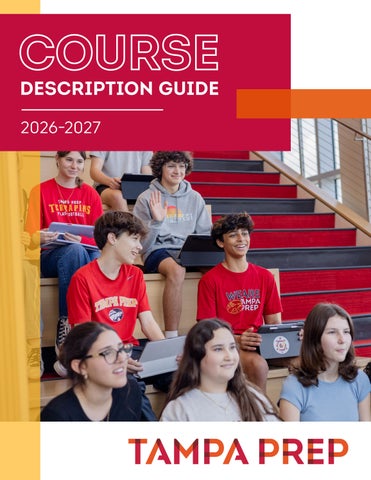
Create a flipbook