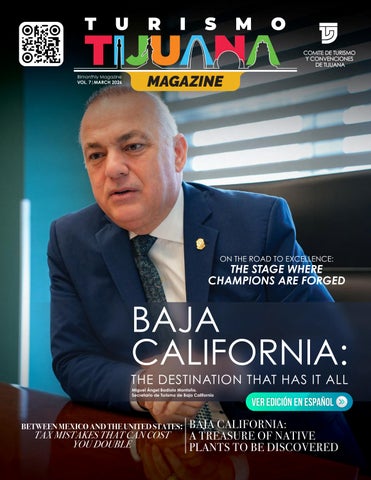
TIJUANA MAGAZINE 7 ENGLISH EDITION

Page 1


CRÉDITOS

EDITORIAL COMMITTEE:

Mtra. Melissa Pacheco Silveyra Ana Alicia Meneses Martínez

Lic. Gabriel Camarena Salinas

EDITORIAL SOURCE:

Lic. Alma Sofía Villalobos Ruiz.

EDITORIAL DESIGN AND EDITING: David Carrizales Hernández

WRITING AND PROOFREADING: Myrna Sánchez

PHOTOGRAPH: Cristian Cruz Brian Rosales

Bimonthly Magazine Volumen 7

© Derechos Reservados Comité de Turismo y Convenciones del Municipio de Tijuana, Estado de Baja California.

The original articles were translated into English using AI

CONTENIDO

Background of the Hotel Industry in Tijuana

.................................................................... pg. 6

Tijuana: The border that became a destination

.................................................................... pg. 8

Between Mexico and The United States: Tax mistakes that can cost you double.

.................................................................. pg. 10

Buying or renting in Baja California: Keys to doing it safely.

pg. 14

Tijuana of my flavors

.................................................................. pg. 16

From the ocean to the heart of baja: When the cruise ship becomes an experience.

.................................................................. pg. 22

Puerto Nuevo: Flavors bornfrom the sea

.................................................................. pg. 24

Metabolic syndrome and obesity: The silent epidemic

.................................................................. pg. 26

Integral well-being: What your mouth reveals about your health.

.................................................................. pg. 28

Tijuana improvises: Urban culture in motion. pg. 30

Tijuana with paw prints: A pet-friendly destination pg. 32

Tijuana without hunger: Solidarity that unites borders.

pg. 34

Nights that sound like Tijuana pg. 36

Upcoming Events

BAJA CALIFORNIA: THE DESTINATION THAT HAS IT ALL

Baja California: A treasure of native plants to be discovered

pg. 38

On the road to excellence: The stage where champions are forged

Passion, discipline, and cause: The moving legacy of an ultramarathon runner pg. 4 pg.

12 pg.

18 pg.

DEAR READERS

Spring not only transforms the landscape; it also renews the spirit of those of us who live in this extraordinary region. With great enthusiasm, we welcome you to the seventh edition of Tijuana Travel Magazine, a publication that celebrates the dynamism, diversity and international projection of Baja California as one of the most vibrant destinations in Mexico.

This season, our land is filled with light, color, and experiences that invite you to enjoy tourism from a holistic perspective. Spring marks the beginning of a busy schedule of cultural, gastronomic, sporting, and business events that solidify Tijuana and Baja California as a meeting point for cultures, markets, and opportunities.

Today more than ever, tourism represents a strategic engine for the economic and social development of our region. It’s not just about receiving visitors; it’s about creating memorable experiences, strengthening our identity, and showcasing to the world the natural, historical, and human richness that distinguishes us.

In this edition, we are pleased to have the valuable collaboration of the State Secretary of Tourism, Miguel Ángel Badiola, who shares an in-depth analysis of Baja California’s main tourism offerings. His perspective confirms that our state is a mosaic of experiences: from nature tourism to medical, meetings, and maritime tourism—all fundamental pillars of our competitiveness.

One of the most iconic natural spectacles highlighted by our participation is whale watching. Every year, during migration season, our coasts become the stage for one of the most impressive phenomena on the planet. The majesty of these marine mammals not only captivate our visitors but also reaffirms our commitment to responsible and sustainable tourism. Preserving our ecosystems is essential to ensure that future generations can continue to marvel at this unique experience.

But Baja California is more than just nature; it’s also innovative, hospitality, and leadership. In this issue, we present an analysis by Andrés Martínez Bremer, president of Proturismo Ensenada, who addresses the growing impact of the cruise industry on our port. The constant arrival of international ships not only boosts the local economy but also strengthens cultural exchange and projects our region into the world’s leading tourism markets. Each cruise ship that arrives represents new stories, new connections, and new opportunities for our community.

In the business sphere, Elisa Ibáñez Aldana, president of

COPARMEX Tijuana, offers a clear and timely perspective on considerations regarding double taxation. In a border region as dynamic as ours, understanding the tax environment between Mexico and the United States is fundamental for competitiveness and attracting investment. Her analysis provides key insights for business owners, entrepreneurs, and professionals who are part of this cross-border economic ecosystem.

Likewise, historian Araceli Almaraz invites us to look back to our roots. Her article on the history of the hotel industry in Tijuana-Rosarito reminds us that tourism is not a recent phenomenon, but rather a constant evolution. From the first establishments that welcomed visitors drawn by the energy of the border, to the contemporary hotel complexes that meet international standards, our tourism infrastructure has grown alongside the city, adapting to new trends and global demands.

Tijuana is today a city that blends tradition and innovation. It boasts internationally renowned cuisine, urban creativity, a world-class medical industry, authentic border culture, and genuine hospitality. We are a gateway to Mexico and, at the same time, a destination with its own distinct identity.

This seventh edition of Tijuana Travel Magazine It’s not just a collection of articles; it’s a declaration of confidence in our potential. It’s an invitation to rediscover who we are and to proudly project what we can become. Every page has been designed to inspire, inform, and connect the reader with the many facets of Baja California.

I invite you to explore these stories with a curious eye and an open mind. Beyond the facts and figures, you will find testimonials, analyses, and reflections that confirm tourism is a tool for social transformation. When we promote our destination, we also promote opportunities for thousands of families who depend directly or indirectly on this activity.

Welcome to this new edition. Welcome to a Baja California that is flourishing, innovating, and welcoming the world with open arms.
Dr. Karim Chalita Rodríguez President

BAJA CALIFORNIA: THE DESTINATION THAT HAS IT ALL

To speak of Baja California is to speak of a place that combines nature, gastronomy, culture, and connectivity in a single destination. A state that, in addition to consolidating its position as a national tourism powerhouse, still holds hidden gems waiting to be discovered.

Its strategic location next to the United States, the constant growth of its air connectivity, the diversity of its landscapes, and an internationally renowned cuisine are some of the attractions that position it as one of the most dynamic destinations in the country.

Miguel Ángel Badiola Montaño, Secretary of Tourism for Baja California, emphasizes that the state maintains competitive advantages over other destinations. Among these are the strengthening of international air routes from Tijuana to cities such as Phoenix, Vancouver, Shenzhen, and Beijing, as well as the constant flow of passengers at its airports and seaports.

The proximity to the United States also represents a key advantage: millions of border crossings per year solidify Baja California as a strategic point for binational tourism.

Diversifying the Experience

The state’s tourism offerings are broad and diverse. This year, the Ministry of Tourism is focused on strengthening high-growth

segments such as health and wellness tourism, meetings and events tourism, maritime tourism, adventure and ecotourism, as well as real estate and investment tourism.

Religious tourism is also gaining momentum, driven by new sites that are beginning to attract visitors, particularly from Southern California.

Hidden Gems

While destinations like Tijuana, Ensenada, and Rosarito are widely known, the state harbors less-explored treasures.

San Quintín, for example, surprises visitors with volcanic landscapes, wetlands, and nature reserves ideal for hiking and wildlife viewing. Its cuisine, based on seafood and local agriculture, complements the experience. Tours can be taken with certified guides, available through the Ministry of Tourism.

Another highlight is the artificial reef in Popotla, formed after a shipwreck and now a popular attraction for underwater tourism.

The Cataviña area, with its cave paintings; the Lobera (Sea Lion) sanctuary in San Quintín; gray whale watching in Ensenada; and the historic La Chinesca district in Mexicali are part of the diverse range of experiences that enrich a visit.

Miguel Ángel Badiola Montaño, Secretario de Turismo de Baja California

Communities that are also destinations

Tourism development also seeks to integrate indigenous communities, especially the Yuman peoples, recognizing their cultural and historical value. Among the projects promoted are the strengthening of the Kumiai ecotourism center in San Antonio Necua, led by women from the community, as well as the network of trails in San José de la Zorra, integrated into nature and wine tourism circuits.

Whales and Responsible Tourism

From December 15 to April 15, Baja California offers one of the most impressive natural spectacles: gray whale watching, as these whales migrate from the north to the lagoons of the southern peninsula.

Authorities encourage visitors to enjoy this activity with service providers certified by SEMARNAT (the Mexican Ministry of Environment and Natural Resources), guaranteeing a safe and environmentally responsible experience.

A Commitment to Sustainability

Sustainability is a central pillar of the state’s tourism strategy. The goal is to promote the sector’s growth under criteria of environmental responsibility, in coordination with the various levels of government.

The objective: to ensure that future generations can enjoy these landscapes in optimal conditions and to consolidate long-term tourism development.

For those visiting Baja California for the first time, the list can be extensive:

• Strolling down Avenida Revolución in Tijuana and visiting César’s Restaurant, the birthplace of the Caesar salad.

• Admiring La Bufadora in Ensenada.

• Exploring the craft beer route in Mexicali. Enjoy the lobster in Puerto Nuevo, Rosarito.

• Explore the Vallecito archaeological site and sample the traditional bread of Tecate.

• Take in the breathtaking views of the Gulf of California in San Felipe.

In a single trip, you can explore deserts, mountains, valleys, and beaches, all accompanied by the warm hospitality that distinguishes the people of Baja California.

Baja California is not just a destination: it’s a diverse, dynamic, and constantly evolving experience.

BACKGROUND OF THE HOTEL INDUSTRY IN TIJUANA

Due to its geographic location, Tijuana became, by the late nineteenth century, a destination for tourists arriving from California, drawn primarily by the healing waters of the Agua Caliente hot springs, located in the area known as Agua Caliente and owned by the heirs of Santiago Argüello.

Dr. David B. Hoffman, a physician based in San Diego, was the one who initiated this activity, seeking to treat his patients through the therapeutic use of the thermal waters on the Mexican side of the border.

Hoffman enjoyed a strong professional reputation. He had participated in the formation of the San Diego County

Medical Society in July of 1870 and was elected its first president. In fact, the First Annual Report of the San Diego County Hospital, submitted to the Board of Supervisors for the period from July 1888 to 1889, noted:

“The sulphur hot springs of Tía Juana may be classed among the mineral springs of the county, since they are located just across the line in Mexico, and the increasing use of their waters by residents and tourists is ample testimony to their sanitary value” (Michael Kelly, M.D., 2002, 48[4]).

During this period, the enjoyment of thermal waters became widespread throughout San Diego County, as mineral springs were highly valued not only in California but internationally as well.

It remains unknown how Dr. Hoffman first discovered these waters on Mexico’s northern border or how he established contact with Alejandro Argüello to obtain authorization to promote the site as Agua Caliente Sulphur Hot Springs, where a modest complex of only six bathing facilities was initially developed. What is known is that

newspapers of the time, such as the San Diego Daily Bee, advertised excursions to Mexico as early as 1887, offering departures at 9:00 a.m. and returns at 5:00 p.m.

After Hoffman’s death in 1888, Argüello took over management of the business and transformed it into the Hotel Hidalgo, maintaining the site’s appeal as a tourist destination (image 1). As the saying goes, childhood shapes destiny, and the Agua Caliente area still had many paths ahead in the development of tourism.

That same year, carriage routes were also promoted from the Hotel del Coronado to “Old Mexico,” as the Mexican town of Tijuana was then commonly referred to.

With the beginning of the twentieth century, important steps were taken in local tourism, particularly in the hospitality sector. One example was the Hotel St. Francis, whose structure—according to various testimonies, including those of the local chamber of commerce—was transported from San Diego and reassembled in Tijuana in 1904 by Miguel González Quiroz (image 2).

Other establishments, such as the Hotel París, were already operating by 1911 along Tijuana’s main street, offering lodging and various commercial services. In 1915, local tourism received a major boost with the inauguration of the Panama-California Exposition, held in San Diego from January 1, 1915, and continuing until late 1917. This event attracted thousands of visitors to California, while Tijuana joined the momentum by organizing its own fair as a complementary attraction.

South of Tijuana, in the coastal settlement of Playas de Rosarito, a small leisure area known as Shore Acres Country Club was established in the early 1920s, promoted by its main developer, Jake Morris Danziger. In 1924, the Sonoran

Image 1. Hotel Hidalgo. Arreglo de David Marrón.

entrepreneur Juan Ortiz Velarde arrived at the site to promote a new tourism project under the name Rosarito Beach, offering various seaside activities for foreign visitors.

Two years later, through a private agreement, the land was transferred to Manuel P. Barbachano, who launched the ambitious Rosarito Beach Hotel project (image 3). Notably, the hotel has now surpassed 100 years of

continuous operation and was represented by Mariano Escobedo at the founding assembly of the Cámara Nacional de Comercio de Tijuana on July 26, 1926.

Also in 1926, Alejandro Argüello transferred, through a purchase agreement, part of the Agua Caliente area and the concession for the use of its thermal waters to General Abelardo L. Rodríguez, through Marco B. Cicourel. Although Cicourel had held rights to the site since 1921, he had been

hectares, along with the concession “to utilize the waters of the Agua Caliente spring for spa and hotel services in Tijuana, Baja California.” The agreement was approved in August 1926 and published in the Diario Oficial de la Federación on November 8 of that year, while the property titles were formally signed in Mexico City in January 1927.

General Rodríguez then partnered with prominent California businessmen—Wirt G. Bowman, Baron Long, and James N. Crofton—to develop what would become the Agua Caliente Tourist Complex, the largest and most luxurious resort of its time (image 4). The project was designed to accommodate an estimated 300,000 visitors per month. It partially opened its doors in July 1927, with its formal inauguration taking place in June of the following year. The complex’s major golf tournaments were launched in 1930.

Beyond its casino, the resort featured a spa, horse and greyhound racing, restaurants and cafés, as well as numerous leisure amenities and recreational excursions.

From that point on, numerous hotels began to appear throughout the city. A representative timeline by decade includes the following establishments: Hotel Comercial (1929), Hotel Savoy (1931), Caesar’s Restaurant Hotel Caesar’s (1931), Hotel Nelson (1944), Hotel Misión del Sol (1949), Hotel Palacio Azteca (1956), Hotel El Conquistador (1959), Hotel Lucerna (1980), Fiesta Americana (1985)— today the Grand Hotel Tijuana—Hotel Centenario Plaza (1990), California Hotel Supply Internacional (1994), Hotel Real Inn (2015), Quartz Hotel & Spa (2019), and Hotel Hacienda Agua Caliente (2025).

Image 4. IIH-ALR, Correspondencia personal, 1925.
Image 3. Rosarito Beach Hotel.

TIJUANA: THE BORDER THAT BECAME A DESTINATION

In the far northwest of Mexico, where two countries meet and engage in dialogue every day, Tijuana is establishing itself as a vibrant, creative, and constantly evolving city. More than just a border crossing, it is a binational cultural epicenter where art, gastronomy, history, tourism, and innovation converge to offer unique experiences. Discovering Tijuana means immersing yourself in an authentic and contemporary face that breaks the mold and captivates all who visit.

Art that engages with the world

In Playas de Tijuana, the iconic Friendship Wall has become a symbol of encounter and a canvas that transcends borders. The artwork

“Mutual Embrace,” by Tijuana artist Alfredo “Libre” Gutiérrez, depicts an eagle and a condor flying together, a symbol of unity between the north and south of the continent. Spanning over 300 square meters, the mural conveys a powerful message of peace and dignity in a context marked by migration and shared history. It is a must-see for those seeking a meaningful experience overlooking the Pacific Ocean.

The cultural journey continues at the Tijuana Cultural Center (CECUT), one of the most important venues in northwestern Mexico. Its offerings include contemporary works,

socially impactful exhibitions, and distinctive architectural spaces such as El Cubo, which houses exhibitions by established and emerging artists. Tijuana thus demonstrates that its cultural identity is constantly evolving.

In the heart of the Historic Center, the Pasaje Rodríguez—formerly home to the legendary Foreign Club, a casino and nightclub popular between 1915 and 1940—is now a creative corridor where galleries, murals, independent design, and cultural ventures coexist in a dynamic environment that blends past and present.

Spaces like the HETA Gallery also reflect the city’s collaborative spirit. Here, the artistic community not only exhibits works but also intervenes in and revitalizes the urban environment, generating social cohesion and new centers of cultural attraction.

Gastronomy with Identity

To speak of Tijuana is to speak of an internationally renowned gastronomy. In the emblematic Plaza Santa Cecilia, one of the city’s oldest spots, restaurants like “La Tradición” reaffirm the value of Mexican cuisine as a living heritage. Under the direction of chef Martín Muñoz, traditional flavors are presented with respect for history and a contemporary vision.

The city is part of one of the most important gastronomic regions in the country, where Baja Med cuisine, seafood, and the creativity of local chefs have positioned Tijuana as an international culinary benchmark.

Innovation and Creative Economy

The craft beer scene is another major attraction. Cervecería Norte, which recently celebrated its tenth anniversary, exemplifies local talent and the growth of a sector that has achieved national and international recognition.

More than just breweries, these spaces function as cultural forums where emerging artists find platforms to share their talent, boosting the local economy and a nightlife with its own distinct identity.

Much More Than a Border

Tijuana is today a strategic destination for cultural, gastronomic, and health and wellness tourism. Its privileged location makes it a natural connection point with California, strengthening a unique binational dynamic.

It is also the only border city with three teams in professional leagues: Xoloitzcuintles (soccer), Toros (baseball), and Zonkeys

(basketball), consolidating a sports offering that complements its tourism offerings.

With solid infrastructure for medical and wellness tourism, an active cultural agenda year-round, and a creative community that transforms urban spaces into memorable experiences, Tijuana invites you to discover it beyond the stereotypes.

Here, the border doesn’t divide, it inspires.

And every visit becomes an opportunity to understand why Tijuana is one of the most dynamic and surprising cities in Mexico.

Tijuana awaits you with art that inspires, flavors that conquer, and experiences that last.

BETWEEN MEXICO AND THE UNITED STATES: TAX MISTAKES THAT CAN COST YOU DOUBLE

Elisa Ibáñez Aldana, Presidenta de la Confederación Patronal de la República Mexicana (COPARMEX) Tijuana.

In recent years, traveling, working, or investing between Mexico and the United States has become very common; however, the current binational dynamic, especially in the country’s border states, can have tax consequences if the guidelines for regulating tax payments between the two nations are not understood. Double taxation is the most common mistake.

What is double taxation?

Elisa Ibáñez Aldana, President of the Employers’ Confederation of the Mexican Republic (COPARMEX) Tijuana, explained that double taxation occurs when a person or company pays taxes in two different countries on the same income. This can happen even though Mexico and the United States have a treaty to avoid double taxation and tax evasion, whose objective is precisely to prevent income from being taxed twice.

Currently, Mexico has double taxation agreements (DTAs) with more than 60 countries; however, the one with the United States is one of the most used due to geographical proximity, as well as the labor and economic relationship between both nations.

Not applying the treaty: a common mistake

As a certified public accountant, Elisa Ibáñez explained that the most common mistake among those engaged in binational activities is not applying the treaty. The treaty clearly establishes the rules for determining which country should be considered a tax resident, based on a person’s center of vital interests; that is, where their permanent residence is located, the location of their family, retirement plans, and their strongest personal and economic ties. If a person is domiciled in both countries, these elements are key to determining their primary tax residence and thus avoiding paying taxes in both.

Filing in both countries doesn’t mean paying double taxes

Another frequent mistake is thinking that filing in one country automatically exempts one from filing in the other.

When a treaty exists, one can file in both, but not in the same way. If the center of vital interests is in the United States, for example, in Mexico one must pay taxes as a foreign resident, not as a national resident. In that case, the tax paid in Mexico is credited in the United States. The same applies in reverse. In this scenario, it is common for people who work for companies with operations on both sides of the border, or who receive income from more than one country, to face problems when filing their tax returns.

THE “NOS” THAT CAN MAKE YOU PAY MORE

ƒ Not filing correctly.

ƒ Not having binational tax advice.

ƒ Not requesting statements or receipts for withheld taxes.

ƒ Not claiming credit for taxes paid in the other country.

In this regard, Ibáñez Aldana emphasized the importance of verifying that you have the corresponding documentation, since without it, the tax paid simply cannot be credited.

CAN IT BE DONE WITHOUT ADVICE?

Although, in theory, a person can file their tax returns on their own in both countries, in practice the process is often confusing. A lack of knowledge about tax credits, types of tax residency, and treaty rules is one of the main reasons for double taxation. The most important recommendation is to consult with an international tax expert and ensure that you pay taxes according to your actual tax residency and center of vital interests. This allows you to comply with the law and, above all, avoid paying more taxes than necessary. Ibáñez Aldana asserted that, for those who live, work, or travel frequently between Mexico and the United States, understanding these rules is not only a tax matter, but also a way to travel and do business with greater peace of mind.

he vegetation covering the hills of Tijuana—the vegetation that defines the city’s silhouette—is made up of native plants that, although sometimes overlooked, hold enormous ecological and cultural value. Learning to appreciate them, whether for their beauty or their benefits, can transform our relationship with the environment. Baja California is one of the most biodiverse regions in the world.

In fact, it is classified as a hotspot, that is, an area with a high concentration of species, explains Octavio López, director and founder of Nación Verde.

This richness is due to the convergence of different ecotones in the state: areas where ecosystems such as marine and terrestrial environments meet, arid areas, deserts, forests, and coastal scrubland. The result is an extraordinary variety of species, many of them unique.

A simple trip through mountain ranges like the San Pedro Mártir or the Sierra de Juárez

reveals differences in their vegetation, the result of evolution, geographic isolation, and unique climatic conditions. Among the native flora, the California plane tree, the Fremont poplar, willows, blue elderberry, various sages and the Encelia cenicienta (Centricella) stand out.

Plants with a Story

Beyond their environmental value, many species maintain a deep connection with Indigenous peoples. The Kumiai people, for example, have historically had a close relationship with plants such as oak trees and sages, some of which are considered sacred.

In the case of sages, their growing popularity in ceremonies and spiritual practices has led to a worrying overexploitation. While the Kumiai community practices sustainable management through pruning that allows the plant to continue living, much of the current trade occurs without permits, causing damage to the ecosystem.

Octavio López, Director y fundador de Nación Verde.

BAJA CALIFORNIA: A TREASURE OF NATIVE PLANTS TO BE DISCOVERED

Therefore, the specialist recommends choosing products from harvests authorized by the National Forestry Commission, through non-timber forest product extraction permits. Consuming responsibly is also a way to protect culture and biodiversity.

What can we do?

The recommendation is simple: start using them. Invest in green infrastructure, infiltrate and reuse water, and demand that new developments integrate sustainable solutions: “In Tijuana, there are more than two million people. If each one planted a tree or shrub a year, the city could be reforested quickly,” López pointed out.

Nación Verde works on the restoration and reforestation of ecosystems, seeking to balance urban growth with environmental compensation. At their Community Center, they produce and sell around 40 native species, including some fruit trees, as well as mulch made from recycled Christmas trees.

A visible example of this effort is Esperanto Park, where the “Sun Slope” brings together diverse native species that regenerate the soil, promote water retention, and create habitats for local fauna. In addition to being a recreational space, it has become an ideal spot to learn about the region’s rich plant life.

The invitation is simple but powerful: plant life. Give a tree instead of a gift, celebrate important moments by planting nature, and think about future generations.

Because discovering Baja California also means seeing its hills with new eyes and recognizing that a unique natural heritage flourishes within them.

BUYING OR RENTING IN BAJA CALIFORNIA KEYS TO DOING IT SAFELY

Baja California is not only captivating for its tourism offerings. In recent years, the purchase and rental of real estate has increased throughout the region, especially in cities near the border and in beach and wine destinations.

Its extensive coastlines, natural landscapes, wine route, and renowned gastronomy motivate many visitors— both domestic and international—to seek their own place to vacation, invest, or even settle permanently.

However, before taking the plunge, it is essential to understand certain legal aspects that provide certainty and protect your assets.

Víctor Javier Agüero Solís, president of the Tijuana Association of Real Estate Professionals (APIT), points out

that anyone interested in buying or renting a property should verify key elements that guarantee legal security.

First: Confirm Ownership

One of the most important points is to ensure you are dealing with the legitimate owner. The buyer must verify that the deed is duly registered with the Public Registry of Property and Commerce (RPPC) and that it matches the identity of the person carrying out the transaction.

“It is not enough to rely on private contracts or unvalidated documents,” warns Agüero Solís. In cases of inheritance or estate, it must also be verified that the person selling the property has the legal authority to do so, either as an executor or representative.

Víctor Javier Agüero Solís, Presidente de la Asociación de Profesionales Inmobiliarios de Tijuana A.C.

Are private contracts secure?

In purchase or rental transactions, private contracts can be used; that is, agreements signed between the parties without notarization. Although legal, they don’t always offer the necessary protection.

If the transaction isn’t formalized with a public deed before a notary, there’s a risk that the property could be sold to a third party or that subsequent disputes could arise. Therefore, experts recommend starting the deed registration process as soon as possible, even if the purchase is made in installments. It’s possible to formalize the deed by leaving a reservation of title until the full amount is paid.

The Importance of Seeking Advice

Having a professional real estate agent is key. Ideally, they should be affiliated with organizations such as the Tijuana Association of Real Estate Professionals (APIT) or the Baja California State Council of Real Estate Professionals (CEPIBC) and hold a current license.

For foreign buyers, especially in tourist areas, it is recommended that contracts be written in both Spanish and the buyer’s language to avoid misunderstandings.

Another option that provides security is an escrow service, whereby an authorized third party holds the money until the transaction is finalized and the property is delivered.

Likewise, it is essential to avoid making any advance payments without a clear contract that details commitments, conditions, and penalties.

If you’re renting for vacation

For short-term or vacation rentals, it’s essential to confirm that the person offering the property is the owner or has authorization to sublet.

SOME BASIC CLAUSES THAT THE CONTRACT SHOULD INCLUDE ARE:

ƒ Clear identification of the parties.

ƒ Agreed price and payment dates.

ƒ Detailed inventory of the property.

ƒ Photographs of the property’s condition upon delivery.

ƒ Penalties for breach of contract.

ƒ Jurisdiction for resolving disputes.

ƒ Specification of maintenance fees and who is responsible for them.

BEFORE SAYING “YES”

If you plan to buy, check:

ƒ Deed registered with the Public Registry.

ƒ Owner’s identity according to official documentation.

ƒ Legal authority in case of inheritance.

ƒ Clear property boundaries (plans and surveys, if it’s land).

ƒ That it’s free of liens or be aware of any existing encumbrances.

ƒ Amounts, methods, and location of payment.

ƒ Commitments and penalties for breach of contract.

Buying or renting property in Baja California can be an excellent decision for living, investing, or vacationing. The key is to do so with information, professional advice, and a careful review of the documentation. Because enjoying the destination also means investing with peace of mind.

TIJUANA OF MY FLAVORS

“If it crawls, runs, or flies… into the pot it goes”.

Iborrow this phrase, so typical of the state of Hidalgo, because, in my opinion, it perfectly defines the gastronomic richness of our country. And if there is one city where that diversity comes to life every day, it is Tijuana. With nearly two million inhabitants—and where six out of ten residents are from elsewhere— people born in practically every corner of Mexico converge. Each one brings with them their culture, their knowledge, and, of course, their flavors. Many of them dedicate themselves to cooking and have created spaces that, regardless of culinary trends or passing fads, survive year after year, far from the spotlight and the lists. Today they are part of the urban landscape;

because, let’s be honest, you notice when a food cart is missing from the corner.

They are in markets, on sidewalks, and in modest shops; We find them in almost every neighborhood, and they are, without a doubt, the main guardians and promoters of Mexican food culture.

Everyday Flavors That Tell Stories

For Tijuana’s, this richness is part of everyday life: having beef birria for breakfast with corn tortillas fried in the same broth, flavored with chilies and spices. Food carts abound on every sidewalk. And how about some fried masa quesadillas, topped with lettuce, cream, mild red salsa, and dry cheese? There’s the iconic stand “Las 3 Hermanas,” located for almost four decades in Teniente Guerrero Park, in the heart of the city. Or the sopes, enchiladas, and pambazos from the traditional Cenaduría Los Muñecos, in the Tomás Aquino neighborhood, a few steps from the Tijuana Institute of Technology.

These dishes may seem humble. They’re served on disposable plates and without the glamour of a tablecloth. But their preparation is far from simple. In them survive ancestral techniques such as nixtamalization, roasting, grinding in a volcanic stone molcajete, and the use of the comal—knowledge inherited from ancient Mexico, a time before it was even called Mexico.

In Tijuana, these gastro-cultural temples coexist harmoniously, feeding thousands of people every day. Those who cross over to work in California don’t hesitate to bring flour tortilla burritos filled with homemade stews. The busy local finds refuge in fish tacos or dishes with fresh seafood that evoke the proximity of the Pacific.

For those with more time—whether to close a business deal or simply enjoy the pleasure of a good meal—there are restaurants that honor Mexican cuisine in all its expressions. From traditional chains like Menudería Guadalajara or Restaurante San Marcos, to beloved spots for Tijuana residents like La Diferencia, Cien Años, La Macha, La Tradición or Casa Bonita, to mention just a few of the many places that enrich the city’s culinary offerings.

A Mosaic on the Rise

There’s no doubt about it: Mexican cuisine is comforting, democratic, and accessible to all budgets. Tijuana, generous by nature, embraces all who arrive, and as a result, a vibrant gastronomic mosaic has formed, one that is projecting itself with increasing force.

Last February 1st, for example, the Purépecha community settled in this border city celebrated the “Lighting of the New Fire” on the esplanade of the Tijuana Cultural Center (CECUT), a ceremony intended to preserve and revitalize their traditions. During the event, atoles, churipo, and corundas were offered.

The Oaxacan community also organizes various food fairs throughout the year where the public can enjoy tlayudas with tasajo, tlacoyos, hot chocolate, and pan de yema (egg yolk bread).

Likewise, the Tijuana History Museum, located on Second Street in the city center, hosts the annual Gathering of Traditional Cooks. This space not only showcases culinary expressions from central and southern Mexico, but also features indigenous communities from Baja California. Peoples like the Kumiai, Kiliwa, Cucapá, Paipai, and Cochimí share dishes made with ingredients such as biznaga cactus, rabbit, and acorns, celebrating the ancestral richness of northwestern Mexico.

An invitation to savor the city

If you want to discover the vast cuisine of Mexico, simply visit Tijuana. Just open your eyes—and your appetite—let yourself go, and wander at a leisurely pace. On every corner, in every neighborhood, every kilometer you travel, a different cuisine appears, a different story, a surprising flavor.

This is my city: a land of opportunity, a land that embraces. Tijuana of my flavors.

This is my city: a land of opportunity, a land that embraces. Tijuana of my flavors.

ON THE ROAD TO EXCELLENCE: THE STAGE WHERE CHAMPIONS ARE FORGED

To speak of high-performance athletes is to speak of discipline, preparation, and perseverance: the pillars of those who seek to transform their dreams into medals. Baja California has not only been the cradle of nationally and internationally recognized athletes; it is also home to one of the most important complexes for sports development in Mexico.

Inaugurated in 2004, the Tijuana High-Performance Center (CAR) has established itself as a benchmark for talent development in the state. It has the endorsement of the Mexican Olympic Committee and specialized infrastructure for practicing disciplines such as archery, swimming, and fencing, among many others.

Under the coordination of José Reyes Ronfini—a former high-performance athlete and basketball referee at three Olympic Games—this complex welcomes young people from all over Baja California with the goal of propelling them toward athletic excellence.

From Talent to Development

According to Reyes Ronfini, “as long as you have talent, discipline, and potential,” the High-Performance Center (CAR) can guide children and young people toward high performance: “We are not a beginner’s school or a training camp; our work consists of honing skills and perfecting talent,” he emphasized.

The future stars of sports are part of a state-level talent identification process carried out in coordination with educational institutions, shelters, and sports associations; some talents are even identified in parks and community spaces. Subsequently, they are invited to join a formal sports development program.

Social background is not a determining factor: talent can emerge in any context. What is essential is the ability and the willingness to develop it.

José Reyes Ronfini Coordinadir del Centro de Alto Rendimiento de Tijuana
We are not a beginner’s school or a training camp; our work consists of honing skills and perfecting talent

and archery, disciplines in which it excels nationally.

The Center directs athletes with various physical or visual disabilities to specialized programs, providing them with infrastructure, technical support, and institutional backing. Although not all disciplines have an adapted version—due to logistical reasons or demand— the promotion of inclusive sports is constant.

This comprehensive structure allows talent not only to be identified but also to be nurtured.

Talent Cultivated

Since its founding, the Tijuana High-Performance Center (CAR Tijuana) was established with the mission of developing athletes for peak performance. Today, that goal remains unchanged: world champions, Pan American medalists, and Olympic athletes train at its facilities.

The key, Reyes Ronfini asserts, is discipline: “An athlete who respects the rules of the game will always be successful in life,” he affirms. For him, sports not only create champions on the podium, but also responsible and resilient citizens, capable of facing both everyday challenges and the demands of elite competition. This philosophy gives meaning to the space that many athletes consider their second home.

The Temple of Athletes

Those who are part of the Center not only have access to top-notch facilities but also to housing. Middle and high school students can continue their academic studies while completing their technical training programs.

Currently, about 40 athletes reside permanently at the facilities, which facilitates training sessions that, depending on the sport, can be held two to three times a day. However, the total number of athletes actively training at the High-Performance Center (CAR) exceeds 1,200, including those who make up the delegations representing the state in national competitions.

Beyond the numbers, the Center stands out for the diversity of disciplines it offers and for its robust technical structure.

What distinguishes the High-Performance Center (CAR)?

The complex has the capacity to accommodate approximately 46 disciplines, including swimming, fencing, judo, volleyball, basketball, archery, rowing, canoeing, athletics, soccer, and rugby.

One of the most significant advancements has been the creation of the Adapted Sports Directorate, which trains between 40 and 60 athletes who make up the state Paralympic delegation.

Baja California maintains a strong presence in swimming, powerlifting, athletics,

Although it is a public facility, access is restricted: it is exclusively dedicated to high-performance training. Its purpose is not recreational, but competitive: “For athletes, CAR Tijuana is our temple,” its coordinator stated. This sense of belonging leads young people to care for every space as if it were their own, aware that the condition of the facilities also reflects their aspirations.

Today, under state management and with a vision of modernization, the goal is to renovate and strengthen the infrastructure to solidify it as the premier facility for elite athletes.

Reyes Ronfini, as a former athlete, knows that in this “temple” not only are bodies trained, but character, discipline, and life plans forged. Every day confirms the fundamental role the Center plays in promoting Baja Californian sports and in building dreams that, one day, could translate into medals and the most coveted title: champions of the future.

PASSION, DISCIPLINE, AND CAUSE: THE MOVING LEGACY OF AN ULTRAMARATHON RUNNER

Tijuana boasts one of its greatest representatives in the world of international ultramarathons: the legendary María Luisa Madueño Ríos. A beloved physical education teacher and International Liaison Director for the Binational Network of Hearts, she has found in this cause the driving force that propels her to keep running at almost 70 years old. The thousands of kilometers she has covered around the world have been linked, for the past 21 years, to a charitable mission. It all began when she was invited to her first ultramarathon on Catalina Island, in the United States. There she met an Austrian athlete who encouraged her to compete in Germany, in the famous crossing of the Alps, a race she has completed 13 times, becoming the Mexican with the most participations in that event. Simultaneously, she received an invitation to visit the Binational Network of Hearts’ children’s home, which provides refuge for children rescued from human trafficking. That’s when the idea of running for them, for their freedom, was born. She understood that sport—especially athletics—could be a powerful tool for raising funds and supporting their social reintegration process.

With the backing of sponsorships, she ventured into ultradistance stage races and continued competing relentlessly. She has run primarily in the United States, where she receives most of her support and scholarships, but she has also competed in Europe, proudly representing Baja California.

“It’s a commitment and a responsibility to carry that flag and the voice of our children, which has been silenced. My personal commitment is to finish every race, because those children are waiting for me to cross the finish line, and that finish line means freedom for them,” she said.

Limits Are in the Mind

One of the main lessons she teaches the children at the group home—to whom she provides physical education through play—is that physical exertion is temporary: the body recovers, but mental strength remains. Limits, she affirms, are in the mind: “I’ve never thought about giving up. Having completed thirteen crossings of between 300 and 425 kilometers for thirteen consecutive years is something I still can’t quite grasp; I simply did it because I knew I had the ability,” she shared.

She has also participated in international competitions in Geneva, Brasilia, Scotland, and Norway, in addition to prestigious marathons such as the Boston Marathon and the New York City Marathon. The most challenging, she confesses, was the Cape Wrath Ultra in Scotland: 425 kilometers in five days, without showers for a week, on a vegan diet, sharing minimal space with seven other women, and navigating solely with a compass and GPS. “Even today I wonder how I did it,” she reflects.

Over the years, far from diminishing her performance, she has managed to remain competitive and qualify for higherlevel challenges, frequently placing among the top five and ten overall, which has opened the door to new sponsorships.

Rigorous Training, Solid Support

Achieving these feats requires discipline and a meticulously structured routine. It all begins the night before, when she goes to bed at 8:00 p.m. to wake up at 3:30 a.m.

María Luisa Madueño Ríos

After preparing her first meal, she starts her training at 4:00 a.m. with two or three hours of running. In total, she dedicates six hours a day to exercise, distributed between morning and afternoon, and includes swimming, Pilates, yoga, spinning, and gym workouts.

“These six hours have been part of my routine for approximately 23 years. It’s a habit I adopted that has worked for me; it has allowed me to continue without suffering any injuries. I think it’s because I’ve known how to manage my energy and take care of my body to achieve better performance.”

Family support has been fundamental. Her husband, with whom she shares 47 years of marriage, and her two children have managed to balance home, finances, and sports.

“He still asks me what dates are available on my schedule so we can plan our vacations. I thank God for that; I believe love can conquer all. It hasn’t been easy, it isn’t for anyone, but we’ve maintained harmony and coordination. Thanks to that, today we’re celebrating 47 years of marriage and 70 years of life each,” she commented.

Her grandchildren are also great allies. Although she never made exercise a requirement, they share physical activities and games that have made them close friends. “They know they can go for a run or hike with their grandma, and they enjoy it as much as I enjoy them,” she added.

Sports Calendar: An Annual Fundraising Project

Her calendar kicks off in January in the United States and extends throughout the year as a permanent fundraising project destined entirely for the Binational Network of Hearts.

In February, she competed in Portugal and later in Guanajuato. She dedicates March and April to intensive training. In May, she will run the Martín Fiz Marathon in Spain, considered one of the best in the Basque Country, where she will debut in a new age category.

Three days later, she will travel to Austria; later, she will participate in the San Diego Marathon, the Trail de la Mística in Oaxaca, and the Málaga Desert, where

she will celebrate her 70th birthday during the final stage.

Afterward, she will tackle the UTMR, a replica of the Mont Blanc circuit between Switzerland and Italy. Later, she will run the San Diego 100 and the Volcano Challenge in Puebla. With these competitions, she will conclude her annual project in November, making way for a well-deserved rest in December: “As long as my body allows me, I will continue running for this cause,” he states with determination.

“Those who do not live to serve, do not deserve to live.”

The Tijuana headquarters of the Binational Network of Hearts, a civil association founded by Alma Tucker, serves children rescued from human trafficking. For 27 years, they have provided care to more than 260 minors and have housed over 40 simultaneously. They also coordinate with a shelter in San Diego.

Those interested can support the organization through donations or volunteering. The resources are allocated to teachers, caregivers, psychologists, psychiatrists, and operating expenses, with the goal of ensuring that the children grow up in a safe and dignified environment: “I taught physical education for 32 years in preschool, elementary, and high school, both here and in the United States. When I decided to leave the schools to dedicate myself fully to them, I knew I could offer all the necessary volunteer work and that I would never tire. Just seeing the smiles on those little faces that have been damaged and that will hardly ever fully heal; for them, the effort is worthwhile, and being a role model in their recovery is worthwhile,” she affirmed.

Before saying goodbye, she called on society to confront the reality of children who are victims of violence and trafficking. She reminded everyone that “the same world that harmed them can be transformed into a source of hope if we choose to see them, acknowledge them, and accept that this reality also concerns us”.

To those who believe it is too late to pursue a dream, she left a clear message: when there is a cause worthwhile enough, limits cease to exist. The essential thing is knowing how to manage physical and emotional strength to achieve the goal.

He sums up his mission in a phrase that guides every step he takes: “Success is achieved by working for it; but when you have a reason to help others, you simply act. He who does not live to serve, is not fit to live.”

FROM THE OCEAN TO THE HEART OF BAJA:

WHEN THE CRUISE SHIP BECOMES AN EXPERIENCE

The sea always arrives first. It touches the pier like someone gently knocking on an ancient door, and with each cruise ship that appears on the horizon, it brings with its thousands of stories yet to begin. Ensenada responds with its breeze and its light, with that silent embrace between ocean and land that only happens here. Because in this port, the journey doesn’t begin when you step off the ship: it begins the moment the visitor looks toward the city and understands that they are about to enter a living, breathing place.

Each maritime arrival is much more than port logistics; it is a catalyst for experiences. The cruise ship becomes the gateway to a journey that connects sea, city, and countryside, taking the traveler from the ocean to the heart of Baja California. From the boardwalk to the valleys, from the local cuisine to the open landscapes, Ensenada unfolds a narrative that invites you to discover, savor, and feel.

Here, the cruise is not the destination, but the

beginning of a transformative experience. An experience that integrates territory, community, and hospitality, projecting Ensenada to the world.

Sensory and Inclusive Tourism

Under this vision, the municipality’s first Sensory Tourism Route was created, designed so that people with disabilities can also fully experience the destination. It’s not just about physical accessibility, but about experiences conceived through the senses: listening to the waves, touching the earth, perceiving the aromas of the surroundings, savoring the regional cuisine, and feeling truly welcome.

The route integrates lodging, food and beverages, recreation, and nature into a single journey. For many cruise passengers, it represents a deep emotional connection with the place; for Ensenada, it’s a firm step toward a more humane, inclusive, and innovative tourism.

Southward: Territory and Community

From the port, the experience extends southward through the municipality. The Southern Route is established as a strategic corridor that connects the maritime journey to rural communities, conservation centers, and local businesses.

Here, visitors discover a more relaxed Ensenada, closer to the land, where each stop reflects identity, collective work, and resilience. This natural extension of the route allows you to explore open landscapes, connect with local producers, and experience authentic tourism that generates direct value in the host communities.

The Valley: Creativity and Flavor

In this narrative of territorial connectivity, the Wine Route is experiencing a powerful resurgence in the Guadalupe Valley. More than just vineyards, it’s a creative ecosystem where winemaking, gastronomy, architecture, and world-class hospitality converge.

For those arriving by sea, the valley represents a natural extension of the port; for those returning by land or air, a compelling reason to come back. It exemplifies how a region can transform a visit into a lasting memory.

Beyond the Pier

Everything unfolds under a clear conviction: the cruise doesn’t end at the pier. It’s the beginning of a journey that activates tourist corridors, boosts local economies, and strengthens the destination’s international reputation.

Each visitor who sets foot on Baja Californian soil takes away a story that will continue to grow beyond the port: they will recommend the destination, return with family or friends, or even establish permanent ties with the region.

Thus, Ensenada consolidates a model where the sea is the gateway, and the land is the soul of the journey. A destination where ocean and countryside converse, where inclusivity enriches the experience, and where every visit is designed to leave a lasting impression.

Because today, more than ever, we are ready to welcome the world from the water and bring it to the heart of our land.

And that experience—profound, sensory, and transformative—is just beginning.

PUERTO NUEVO: FLAVORS BORNFROM THE SEA

There are aromas that have the power to stop time. For many, the smell of lobster fried in lard, accompanied by rice, beans, and monumental flour tortillas, heralds a gastronomic feast in the heart of Baja California. For me, that aroma is the embrace of my grandparents; the echo of waves crashing against the rocks and the sound of hands that, with love and effort, founded an empire of flavor in Puerto Nuevo.

Growing up in Puerto Nuevo wasn’t just growing up in a fishing village; it was witnessing how necessity and creativity merged to create an emblem that today transcends borders. My story, like that of this corner of Playas de Rosarito, cannot be explained without the figure of my grandparents: José Plascencia Casillas, a man of the sea, and Susana Díaz de Plascencia, a woman whose seasoning brought from the kitchens of the San Antonio coffee hacienda in her native Colima ended up conquering the palates of the world.

Roots of Fresh and Salt Water: 1954

According to the records of its first inhabitants, Puerto Nuevo was officially established in 1954. However, its essence began much earlier, as a fishing settlement from Chapala, Jalisco. From there, from the lake’s shores, came my grandfather José and his brothers, bringing with them the ancestral knowledge of fishing they had learned from their parents and grandparents. They traded fresh water for salt water, but kept intact their skill with nets and fishing traps.

On sleepless nights, my grandmother Susy would

lovingly tell me her story and my grandfather’s story of returning from fishing trips. In those days, lobster wasn’t the luxury we know today; it was the daily sustenance, consumed either at home or sold to the tourist resorts of the time, such as the Rosarito Beach Hotel and the Riviera del Pacifico in Ensenada. It was there that my grandmother Susana’s magic came into play. As a traditional cook, she applied her wisdom to the bounty of the ocean. The recipe was honest: the lobster was split in half and fried in lard—the secret to that crispy and juicy texture— served with refried beans, red rice, and hand-stretched flour tortillas so large they resembled maps of our own history.

An Invitation to tradition

To our friends in Tijuana, throughout Mexico, and in Southern California: we invite you to visit us and experience this tradition that has spanned seven decades. We await you with open arms at the restaurants that keep alive the legacy of my grandparents and my family: Puerto Nuevo II and La Casa de la Langosta, where every dish is prepared with the same respect for the original 1954 recipe. Returning to Puerto Nuevo is returning to our roots. It is remembering that gastronomy is not just about ingredients, but about the people with whom we share the table. It is the fishermen’s hands and the warmth of our grandmothers’ stoves.

“The sea gave us sustenance, our grandparents’ hands the seasoning and creativity, but it is our will that will keep the tradition of Puerto Nuevo alive for future generations.”

In memory of my grandparents, the pioneering fishermen and cooks of 1954.

METABOLIC SYNDROME AND OBESITY:

THE SILENT EPIDEMIC

Metabolic syndrome (MS) is not a single disease, but rather a cluster of risk factors that, when present simultaneously, significantly increase the likelihood of developing cardiovascular disease, stroke, and type 2 diabetes.

How is it defined?

According to the consensus of the International Diabetes Federation (IDF) and other international organizations, metabolic syndrome is diagnosed when at least three of the following five criteria are present:

 Abdominal obesity: elevated waist circumference (cut-off points vary according to ethnicity; in Latin/European populations, generally >94 cm in men and >80 cm in women).

 Elevated triglycerides: ≥150 mg/dL or being under treatment for their control.

 Low HDL cholesterol: <40 mg/dL in men or <50 mg/dL in women.

 Elevated blood pressure: ≥130/85 mmHg or treatment for hypertension.

 Elevated fasting glucose: ≥100 mg/dL (includes prediabetes or type 2 diabetes).

A Global Perspective

Metabolic syndrome is considered a silent pandemic. Its prevalence has increased in parallel with obesity and sedentary lifestyles.

 Global prevalence: It is estimated that between 25% and 30% of the world’s adult population suffers from it.

 Mexico and the United States: These countries have some of the highest rates, exceeding 40–50% in adults over 40 years of age.

 South America: Countries such as Brazil and Colombia report prevalences between 30% and 35%.Asia and the Middle East: The accelerated shift toward urban diets has significantly increased its incidence.

 Economic impact: The global market for its treatment exceeded $65 billion in 2025, reflecting the enormous burden on healthcare systems.

Symptoms: The Silent Enemy

Most of its components do not produce immediate symptoms. However, physical signs may be observed, such as:

 Increased waist circumference.

 Acanthosis nigricans (darkening of the skin on the neck or armpits, associated with insulin resistance).

 Fatigue or blurred vision when blood glucose is elevated.

 Xanthomas (fatty deposits in the skin) in severe cases.

Complications

Ignoring metabolic syndrome can lead to:

 Type 2 diabetes: five times greater risk.

 Cardiovascular disease: three times greater risk of heart attack or stroke.

 Non-alcoholic fatty liver disease: with possible progression to cirrhosis.

 Sleep apnea: common in central obesity.

 Polycystic ovary syndrome: closely related in women.

The Relationship Between Metabolic Syndrome and Obesity

The connection between obesity and metabolic syndrome is so close that today they are considered two sides of the same coin. Visceral obesity (deep abdominal fat) is not just an energy reserve: it functions as an endocrine organ that, when disrupted, triggers inflammatory processes responsible for the components of metabolic syndrome.

It is estimated that more than 60% of adults with clinical obesity meet the criteria for metabolic syndrome. Furthermore, the increase in cases among children and adolescents is concerning, as childhood obesity is leading to the onset of hypertension and prediabetes at increasingly younger ages.

Why does obesity cause this?

The key is not just how much fat you have, but where it’s located and how it functions:

1 Adipose tissue dysfunction (adiposopathy): Enlarged fat cells release inflammatory substances (cytokines such as TNF-alpha and IL-6).

2 Insulin resistance: Chronic inflammation blocks insulin action, leading to hyperinsulinemia, elevated blood pressure, and lipid abnormalities.

3 Ectopic fat: Excess fat is deposited in organs such as the liver and pancreas, affecting glucose metabolism.

Treatment: A comprehensive approach

The main goal is to reduce cardiovascular and metabolic risk.

1. Lifestyle changes (cornerstone of treatment)

 Diet: DASH or Mediterranean-style diets, low in refined sugars and trans fats.

 Physical activity: At least 150 minutes of moderate-intensity aerobic exercise per week.

 Weight loss: Reducing body weight by 5% to 10% can significantly improve all markers.

2. Pharmacological treatment

When lifestyle changes are insufficient:

Statins (cholesterol).

Antihypertensives (blood pressure).

Metformin or GLP-1 agonists (such as semaglutide) for glycemic control and weight loss support.

SGLT2 inhibitors, with cardiovascular and renal benefits.

3. Metabolic Surgery

Currently, it is no longer considered a last resort. In patients with significant obesity and severe metabolic syndrome, it can offer significant remission of insulin resistance and overall improvement.

Prevention: The True Strategy

Metabolic syndrome can be prevented. The foundation is a pyramid in which a healthy lifestyle occupies the top spot: a balanced diet, regular physical activity, and timely medical checkups. When these measures are insufficient, there are wellindicated pharmacological options. And in selected cases, metabolic surgery can be an effective tool. The key is recognizing risk factors early. Because beyond figures and statistics, metabolic syndrome is a wake-up call to adopt a holistic approach to health.

WHAT YOUR MOUTH REVEALS ABOUT YOUR HEALTH

After more than twenty years dedicated to the treatment of periodontal disease, I have learned something fundamental: the mouth does not act in isolation. Frequently, the signs that appear in the gums are a reflection—or even a trigger—of processes occurring in the rest of the body. One of the strongest and best-documented links in current medicine is the one that connects periodontal disease with diabetes mellitus. This is not a coincidence or a recent hypothesis, but a clear biological relationship, supported by scientific evidence accumulated over decades.

Understanding this connection can change the way we understand our health.

Understanding Periodontal Disease

Periodontal disease is a chronic infection caused by bacteria that accumulate below the gum line, around the Teeth. In its initial stages, it causes inflammation and bleeding (gingivitis). When it progresses to periodontitis, the destruction of the bone that supports the teeth begins.

But here’s the key point: periodontitis is not just a local infection, but a chronic inflammatory disease. The immune system, in trying to fight the bacteria, releases inflammatory substances that can enter the bloodstream.

In simple terms, persistently inflamed gums become a constant source of systemic inflammation.

The Metabolic Context of Diabetes

Herein lies the bidirectional relationship.

Inflammation as a Bridge

The profound connection between diabetes and periodontal disease is explained by a common mechanism: inflammation.

When periodontitis is present, inflamed tissue releases molecules called inflammatory cytokines, such as interleukin-6 and tumor necrosis factor-alpha (TNF-α). These substances travel through the bloodstream and can interfere with the action of insulin in organs such as the liver, muscle, and adipose tissue.

The result is increased insulin resistance and, consequently, higher blood glucose levels.

In other words, a chronic gum infection can make diabetes management more difficult.

Several clinical studies have shown that treating periodontal disease can reduce glycated hemoglobin (HbA1c) levels, a marker that reflects average blood glucose levels over the past three months. While periodontal treatment does not replace medical therapy, it serves as a valuable complement to the comprehensive management of diabetic patients.

Type 2 diabetes is a metabolic disorder characterized by high blood glucose levels and a condition called insulin resistance, in which the body does not respond properly to this hormone.

Beyond elevated blood sugar, diabetes involves a state of chronic, low-grade inflammation. Excess glucose impairs the function of immune cells, affects circulation in small blood vessels, and hinders healing. This means that the gums of a person with diabetes are more vulnerable to infection and less efficient at recovering from damage. Therefore, diabetic patients have a higher prevalence and severity of periodontal disease.

A Holistic View of the Patient

Modern medicine can no longer fragment the body into isolated compartments. Dentists and physicians must work as part of the same team. Evaluating gum health in patients with diabetes is not optional; it is a preventive measure based on scientific evidence. Similarly, detecting signs of periodontitis can represent an opportunity to identify undiagnosed metabolic disorders.

The holistic approach is the present— and the future—of healthcare.

SIGNS THAT REQUIRE ATTENTION:

ƒ Frequent bleeding when brushing

ƒ Persistent gum inflammation

ƒ Gingival recession (teeth appear longer)

ƒ Persistent bad breath

ƒ Sensation of loose teeth

These signs indicate active inflammation and should be professionally evaluated, especially in people with diabetes or a family history of the condition.

Tijuana and the Holistic Approach to Healthcare

In cities like Tijuana, where medical tourism has grown significantly in recent years, more and more international patients are seeking advanced dental treatments, including periodontal therapies and implantology.

The appeal isn’t just economic. Many patients value the possibility of receiving comprehensive care in clinics that understand the relationship between oral and systemic health. In the context of medical tourism, integrating periodontal evaluation and metabolic counseling represents a real clinical advantage and an opportunity to educate patients about the importance of a holistic approach.

The border no longer divides health: it integrates it..

TIJUANA IMPROVISES

URBAN CULTURE IN MOTION

Freestyle rap—or improvised rap—is a discipline that tests the creativity, mental agility, and verbal dexterity of its practitioners. What began in the streets as a spontaneous way to express ideas, critiques, and personal experiences has transformed into a cultural movement that goes far beyond a confrontation between two competitors. It is, above all, about collectively building rhymes in the heat of the moment, fueled by the energy of the audience and the ingenuity of each participant.

This dynamic consists of rhyming over an instrumental track without prior preparation, creating instant verses that narrate anecdotes, emotions, and experiences. More than memory, it demands concentration, a broad vocabulary, and composure to respond to both environmental stimuli and the

lyrical attacks of other freestylers during the so-called “battles” or exhibitions.

A Growing Urban Voice

What began in parks, plazas, trucks, and street corners has evolved into a genuine cultural expression, giving voice to countless young people. For some, freestyle is a cry of protest; for others, a way to tell their story. In any case, it’s a space where styles, rhythms, and perspectives converge, reflecting the diversity of its practitioners.

In recent years, more communities have emerged, finding in improvised verse a way to narrate life on the border. Freestylers appear in different corners of the city, sharing their own stories and expressing opinions that can sometimes be raw or shocking, but always honest.

The Border as Inspiration

Tijuana, marked by migration, cultural diversity, and social contrasts, is the ideal setting for these kinds of expressions to flourish. Freestyle fits naturally into this context: it’s immediate, direct, and reflects complex realities without filters.

The border not only divides territories; it also blends languages, accents, and references. All these elements manifest in improvised rhymes, where Spanish and English coexist, clash, and reinvent themselves.

From the Plaza to the International Circuit

Over time, those spontaneous gatherings in public spaces evolved into organized events, leagues, tournaments, and local competitions, and even participation in international championships. Thus, Tijuana has become a venue for events that have given greater visibility to this cultural movement.

Within this subculture, derived from hip hop and rap, the creation of the Red Bull Batalla de los Gallos (Battle of the Roosters), launched in 2005, stands out. This competition brought together freestylers from different countries in a professional format, marking a turning point in the international scene. From then on, the movement grew exponentially, establishing itself as an art form with increasingly wider audiences.

Although the rise of freestyle began in the interior of the country, Tijuana has positioned itself as a key hub for this culture. A recent example was the Freestyle Master Series Mexico, held in the city in 2025 as part of the official competitive freestyle circuit. These types of events bring together top-level national talent and spark interest in urban culture in a structured format, positioning the city as a benchmark for future events.

Local initiatives such as the battles at the October Festival “Territories of Peace”

are also noteworthy, where amateurs and established artists share the stage. These activities foster interaction between professionals and beginners, strengthening the community beyond the competition itself. Although the topics are often confrontational and intense, the audience finds charm in the energy of each exchange, celebrating the creativity and versatility of the participants with shouts and applause.

Much More Than Rhymes

Year after year, different freestyle communities participate in leagues and tournaments with the goal of reaching more people. Each improvisation tells a story, expresses an opinion, or delivers a critique that seeks to be heard.

Today, freestyle is much more than a rhyme competition: it’s a form of cultural expression that gives voice to social realities, emotions, and the dreams of new generations. Through words and creativity, it fosters mental agility, strengthens identity, and demonstrates that talent depends not on origin, but on authenticity.

From plazas to grand stages, freestyle continues to move people, unite cultures, and promote urban art. In a city like Tijuana, where stories intersect every day, improvisation found its home: a place where each verse is a border, a bridge, and freedom all at once.

TIJUANA WITH PAW PRINTS: A PET-FRIENDLY DESTINATION

Traveling no longer means leaving your best friend at home. Today, pets are part of the family and, increasingly, part of our adventures. In this context, pet-friendly spaces have gone from being a novelty to a true necessity. A pet-friendly place is any establishment or area that allows pets and offers suitable conditions for their well-being. These places not only welcome animals but also integrate services and spaces designed for their comfort, while promoting responsible pet ownership. This way of traveling has grown exponentially in recent years. More and more people want to share experiences with their dogs and cats, strengthening their emotional bond with them. As a result, the city has begun to adapt, integrating pets into different aspects of tourism.

A City That Embraces Pets

Tijuana is distinguished by its urban dynamism and its intense cross-border and tourist activity. Many people travel, go for walks, or use services without wanting to be separated from their furry companions. This reality has generated a specific demand for petfriendly hotels, restaurants, and recreational spaces.

Furthermore, the increase in households with pets, the decline in traditional families, and new lifestyles have driven the search for more flexible and inclusive options. Today, the city understands that tourism must also adapt to them.

K9 Baja Resort Dog Hotel

If you need a safe and fun place for your dog during your stay, this dog hotel is an excellent option. It features play areas, spacious rooms, and personalized attention.

Their approach is based on well-being and socialization, with a cage-free environment and a home-like atmosphere that prioritizes the safety and enjoyment of each guest.

More than a fad: a growing trend

Pet-friendly tourism is no longer a passing trend. It’s a cultural shift. More and more travelers are planning their trips considering restaurants, cafes, parks, and hotels that welcome pets.

Currently, Tijuana has more than 15 petfriendly hotels available for reservation. Many of them allow pets in the rooms and even offer additional services, such as special beds or walking areas.

Technology at the Service of Travelers

Apps like Dog Pack make the experience easier. This digital tool allows you to:

• Explore dog-friendly places in the city

• Read reviews from other owners

• Suggest new pet-friendly spots

• Better plan each outing

This makes finding suitable options quick and convenient.

Veterinary Tourism: Health Without Borders

Another growing segment is veterinary tourism. More and more residents of the United States are crossing the border to access treatments, surgeries, and medical services for their pets at more affordable costs.

This phenomenon has increased the demand for veterinary services in the city by approximately 40%, especially surgical procedures such as orthopedic surgeries and ligament repairs. In addition to strengthening the local economy, it boosts hotel occupancy and the consumption of tourist activities.

Veterinary Tourism: Health Without Borders

Another growing segment is veterinary tourism. Increasingly, U.S. residents are crossing the border to access treatments, surgeries, and medical services for their pets at more affordable costs.

This phenomenon has increased the demand for veterinary services in the city by approximately 40%, especially surgical procedures such as orthopedic surgeries and ligament repairs. In addition to strengthening the local economy, it boosts hotel occupancy and the consumption of tourist activities.

Tijuana, a Pet-Friendly Destination

Tijuana is evolving alongside its visitors. Today, it is a more empathetic, inclusive city, prepared to welcome travelers accompanied by their pets. Because, in the end, travel is better when no one is left behind.

TIJUANA WITHOUT HUNGER: SOLIDARITY THAT UNITES BORDERS

In Tijuana, a border city where hope and food go far beyond fulfilling a basic need, eating means resisting, healing, and starting over. Under this premise, the Tijuana Without Hunger Foundation was born, an organization that, through love and solidarity, has transformed the everyday act of serving a plate of food into a gesture of dignity and humanity.

The foundation emerged in March 2020, amidst the uncertainty brought on by the COVID-19 pandemic. While the global message was “stay home,” there were thousands of people for whom that wasn’t an option: they lived hand to mouth, depended on informal work, and suddenly found themselves without income and without access to food. In that context, determined to make a difference, Maru Riqué, the

organization’s founder, set out with her husband with 20 food baskets to a community living in extreme poverty. What they found was a cry impossible to ignore: people fighting over food. That day they understood that hunger doesn’t just hurt the stomach, but also one’s dignity.

Since then, that initial impulse of solidarity has transformed into one of the most robust projects against food insecurity on the northern border. Currently, the foundation provides around 3,500 meals daily, distributed among 40 shelters in the city. It serves a population as diverse as it is vulnerable: babies as young as two months old, children, single mothers, migrants, the elderly, and people experiencing homelessness. The approach is clear: to feed without asking questions, without labeling, and without judging.

A Life-Changing Approach

Thanks to her vision, Maru Riqué met Verónica Alvarado, who lost her food business and her only source of income after the pandemic. Alone, with a father to care for and a heart full of hope, she began volunteering with the foundation. Today, she dedicates her days to cooking with passion and dedication.

With organization and commitment, the team prepares a variety of dishes, considering the specific needs of those who receive them. Cooking for a children’s shelter is not the same as cooking for senior citizens: the texture, ingredients, and nutritional value are carefully adjusted. Because feeding with dignity also implies respect.

For its founder, stories like that of “Verito”—as she affectionately calls her—are a reminder of the importance of this work. Like that of Don José, a deported, lonely, and ill elderly man who, thanks to a plate of food and collective support, was able to reunite with his family and regain hope. Today, he remains involved with the foundation, sharing his story. Stories like these remind volunteers that feeding people is not just about providing food, but about restoring identity, belonging, and a future.

Riqué sums up his commitment with a phrase displayed on one of the organization’s walls: “Don’t let them tell you the sky’s the limit when there are footprints on the moon.” His model, she explained, acts as an “umbrella” supporting other civil associations, guaranteeing continuous food for populations in diverse contexts. Supporting this foundation is strengthening dozens of organizations that work daily for the well-being of the most vulnerable.

Solidarity that Unites Borders

Community participation has been key. More than 2,500 volunteers—including students, businesses, families, and corporate volunteers—constantly join the kitchen efforts. Even the youngest have a place: Tijuana Sin Hambre Kids, a

program that engages children as young as five, instilling empathy and social responsibility from an early age.

The foundation has also built a binational bridge of solidarity. Much of the operational support comes from individual and corporate donors in the United States, while in Tijuana, food in excellent condition is rescued. Thus, every donation is transformed into a real and measurable impact.

Today, the main challenge is to expand the infrastructure with a functional industrial kitchen that will optimize resources and allow them to serve more people. In the long term, the vision is to replicate this model along the northern border and demonstrate that hunger can be confronted with organization, commitment, and humanity.

Visiting Tijuana: A Solidarity Experience

For those visiting Tijuana, learning about initiatives like this offers a different perspective on the destination. Beyond its renowned gastronomy, cultural life, and vibrant character, the city is also defined by its capacity to care for the most vulnerable. Participating as a volunteer, donating, or simply engaging with these stories allows visitors to connect with the more human side of the border.

In this city, a plate of food can be the beginning of a new story. And those who visit can discover a different way to travel with purpose.

If you visit the city and want to make a positive impact, here are some easy ways to get involved:

ƒ Volunteer for a day: Participate in food preparation alongside other volunteers. No prior experience is required.

ƒ In-kind donations: Non-perishable food items, kitchen supplies, or necessities are always welcome.

ƒ Financial support: Donations help cover operating expenses such as rent, utilities, and kitchen staff salaries.

ƒ Family or group experience: Companies, schools, and families can enjoy a day of volunteering as part of a meaningful experience.

ƒ Spread the word: Following and sharing the foundation’s work on social media amplifies its impact.

Fundación Tijuana Sin Hambre

NIGHTS THAT SOUND LIKE TIJUANA

usic is the ultimate expression of passion, and its notes are an important part of our history, like the songs we heartbroken folks have dedicated without thinking during a moment of loneliness, those that transport us to simpler times, or those that accompany us during a party night we wish would never end.

Music allows us to express what we keep silent and feel what we sometimes forget. It is a universal language, without age or borders, as diverse as those who listen to it and experience it. There are as many ways to appreciate it as there are ways to feel it: through movement, contemplation, or the silence that arises between notes. For those who prefer to appreciate music from the comfort of their seat, accompanied by a good wine, we bring you a list of emblematic places where you can appreciate the diverse sounds that Tijuana offers.

Jazz

In the heart of the city, hidden between the famous Avenida Revolución and 4th Street, lies the Tijuana Jazz Club. There, the lights dim, and the instruments take control of your senses in an intense battle to keep the rhythm amidst the chaos of the free-flowing improvisation that so characterizes this genre.

Singer-songwriter music and folk songs

You’ll find rhythmic poetry at El Place del Nopal, with its nights of stories brimming with emotion and pain that move even the coldest hearts. Between soft guitars and gentle voices, stories of love, loss, and hope unfold without artifice, slipping into the deepest recesses to touch sensitive chords. Each performance feels intimate and authentic, like a private conversation between the performer and the audience, reminding us of that folk songs and singer-songwriter music remain a refuge for those seeking to feel without haste.

Blues

The legendary Mike’s A Go-Go Bar, home to the best afternoon parties of the 70s, has been reborn in a space dedicated to nostalgia and melancholy, enveloped by the slow rhythms of the Blues under a new name, Tijuana Rock Bar. Within its gentle strains, this place becomes a meeting point for those seeking raw sounds and real emotions.

Classical Music

The Candlelight Concerts at IMAC offer one of the most immersive experiences in the city. By the light of hundreds of candles, string quartets and ensembles perform classical works and arrangements of contemporary artists (such as José José, Adele, Queen, Taylor Swift, among others), transforming the space into a true night under the stars.

Versatile Music

Nothing represents Tijuana better than its variety, and the unmissable trifecta that has taken over this category is made up of three sister venues that have established themselves as hubs of community and artistic expression in the city: Manhattan Lounge Bar, Tía Juana Tilly’s, and Bohème. The eldest is elegant and sophisticated; the middle one is traditional and colorful; and the youngest is expressive and intimate. Each connects with people in its own way, adding more rhythm to the world.

Music is more than just a group of people bringing their trumpets, violins, guitars, or drums and getting together to play a song; it’s about expression, and that comes from within us as individuals. A single instrument is enough to fill an entire stadium because when the world falls silent, hearts listen, and souls connect. That’s why we’ve set aside a special section for those who appreciate the intimacy of compositions with a single instrument:

Piano

With an unusual aesthetic that exudes mystery and sensuality, Malbouche is the piano bar that leaves more than one person surprised. It contrasts the instrument’s refinement with an unusual and rebellious atmosphere, a timeless place that captivates you from the moment you step inside. It’s ideal for lovers of the alternative and innovative.

Saxophone

The most romantic instrument of all is, without a doubt, the saxophone. Star of great songs like the love anthem “Careless Whisper,” it’s perfect for souls in love, and Old Souls restaurant knows this well. Every Wednesday, they move audiences with their live saxophone nights, attracting diehard romantics. Each space, each instrument, and each performer build a soundscape that reflects the city’s evolving identity. From the intensity of jazz to the intimacy of a single instrument, music becomes a meeting point, a refuge, and a collective memory. Exploring these places is also a way to get to know ourselves, to pause the daily noise of the big city, and allow emotions to find their way. Because in the end, the music is always there, waiting to be heard.

Tijuana opens itself to those who dare to explore, and now that you know some of the spaces where its music comes alive, all that’s left is to choose which one you’ll visit first.

MARCH

Date: march 14

Event: Dragon Ball Sinfónico Type of Event: Place: Antiguo Cine Bujazán Hour: 8:00 pm

Date: march 14

Event: ChingTourMadre

Type of Event: Concert Place: Pasaje Revolución, Zona Centro Hour: 8:30 pm

Date: march 19

Event: Front Line Assembly

Place: Black Box Hour: 7:00 pm

Date: march 20

Event: Tributo Soda Stereo + Cerati por 3 de ellos

Type of Event: Tribute concert

Place: Black Box Hour: 7:00 pm

Date: march 20

Event: Tributo a The Beatles

Type of Event: Tribute concert

Place: El Foro Antiguo Palacio Jai Alai Hour: 7:00 pm

Date: march 20

Event: El de la guitarra Type of Event: Concert

Place: Casa Blanca Centro de Espectáculos Hour: 8:00 pm

Date: march 21

Event: DisneyFest

Type of Event: Musical Place: Foro Ah Mun Hour: 8:00 pm

Date: march 21

Event: Desafío de campeones: Rodeo y baile

Type of Event: Rodeo Place: Hipódromo Caliente Hour: 5:00 pm

Date: march 21

Event: Ivanna Valadez

Type of Event: Concert Place: Restaurante República Malta Hour: 5:00 pm

Date: march 26

Event: Mikel Erentxun- Gira Duncan Dhu Tour

Type of Event: Concert

Place: El Foro Antiguo Palacio Jai Alai Hour: 9:00 pm

Date: march 27

Event: Pink Turns Blue

Type of Event: Concert Place: Black Box Hour: 7:00 pm

Date: march 27

Event: Cohuich

Type of Event: Concert

Place: Casa Blanca Centro de Espectáculos Hour: 8:00 pm

Date: march 28

Event: Mentidrags

Type of Event: Concert

Place: El Foro Antiguo Palacio Jai Alai Hour: 9:00 pm

Date: march 28

Event: Ysrael Barajas

Type of Event: Concert Place: Parque Morelos Hour: 5:00 pm

Date: march 28

Event: 5ta. Fiesta del Arte Tradicional

Type of Event: Concert Place: Parque Morelos Hour: 5:00 pm

Date: march 31

Event: Una Noche con

Ed Maverick: La nube en el jardín

Type of Event: Concert

Place: Centro Cultural Tijuana CECUT Hour: 9:00 pm

APRIL

Date: April 04

Event: Jorge Cuellar

Type of Event: Concert Place: Foro Ah Mun Hour: 8:00 pm

Date: April 04

Event: Despechados y Migajeros Grand Coliseo

Type of Event: Rodeo Place: Nuevo Toreo Tijuana Hour: 5:00 pm

Date: April 04

Event: Maldita Vecindad

Type of Event: Concert Place: Audiorama El Trompo Hour: 9:00 pm

Date: April 04

Event: A veces los perros sonríen

Type of Event: Theater Place: Theater Las Tablas Hour: 7:30 pm

Date: April 04

Event: Joan Page

Type of Event: Concert Place: Black Box Hour: 7:00 pm

Date: April 09 ?

Event: C.R.O Otra Vez en tus Ruinas Tour

Place: El Foro Antiguo Palacio Jai Alai Hour: 9:00 pm

Date: April 10

Event: Natalia Doco

Type of Event: Concert Place: Black Box Hour: 7:00 pm

Date: April 14

Event: 31 minutos: Radio Guaripolo Tour

Type of Event: Theater Place: El Foro Antiguo Palacio Jai Alai Hour: 8:30 pm

Date: April 15

Event: Ricardo Montaner: Concert de despedida “El Último Regreso” Type of Event: Concert Place: Plaza de Toros Hour: 9:00 pm

Date: April 17

Event: Angelica María y Enrique Guzmán: La Despedida Type of Event: Concert Place: El Foro Antiguo Palacio Jai Alai Hour: 8:00 pm

Date: April 17

Event: Confesiones de asesinos

Type of Event: Obra de Theater Place: Theater del IMSS Hour: 7:00 pm y 9:00 pm

Date: April 18

Event: Los Espíritus Type of Event: Concert Place: Black Box Hour: 7:00 pm

Date: April 18

Event: Remy Valenzuela Type of Event: Concert Place: Estadio Chevron

Date: April 18 a April 26

Event: Vote por el León Type of Event: Theater Place: Theater Las Tablas Hour: 7:00 pm

Date: April 23 a April 26

Event: Fair Internacional del libro UABC Type of Event: Fair Place: UABC Campus Otay Hour: Pendiente Entrada Libre

Date: April 24

Event: Serbia: Suéltame Tour Type of Event: Concert Place: Black Box Hour: 7: 00 pm

Date: April 24

Event: Grupo La Kaña Type of Event: Concert Place: Casa Blanca- Centro de Espectáculos Hour: 8:00 pm

Date: April 24

Event: Es Show live con Ernesto Chavana Type of Event: Comedia Place: El Foro Antiguo Palacio Jai Alai Hour: 9:00 pm

Date: April 25

Event: The Great British Tribute Type of Event: Concert Tributo Place: Black Box Hour: 7:00 pm

Date: April 26

Event: El Cadáver de la novia Sinfónico Type of Event: Concert Place: El Foro Antiguo Palacio Jai Alai Hour: 6:00 pm

Date: April 26

Event: Día del Niño en El Trompo

Type of Event: Children’s Place: Museo Interactivo El Trompo Hour: 11:00 – 5:00 pm Entrada Gratis

MAY

Date: may 01

Event: Charles Ans

Type of Event: Concert Place: Theater Zaragoza Hour: 7: 30 pm

Date: may 02

Event: El Malilla: Tour Tu Maliante Bebé

Type of Event: Concert Place: Estadio Caliente Hour: 9:00 pm

Date: may 02

Event: Lago de los cisnes Ballet de San Petersburgo

Type of Event: Dance Place: El Foro Antiguo Jai Alai Hour: 7:00 pm

Date: may 02

Event: Vacíos cuerpos

Type of Event: Concert Place: Black Box Hour: 7:00 pm

Date: may 07

Event: Alex Ubago: Gira ¿Qué pides tú?

El Foro Antiguo Palacio Jai Alai Hour: 9:00 pm

Date: may 07

Event: Jazztick: Tour Undertale Determination

Type of Event: Concert

Place: Av. Revolución Zona Centro Hour: 7:00 pm

Date: may 08

Event: Star Wars Episodio III Sinfónico

Type of Event: Concert Place: El Foro Antiguo Jai Alai Hour: 7:00 pm

Date: may 09

Event: La Parranda Tour

Type of Event: Concert Tour Place: Estadio Mobile Park Hour: 7:00 pm

Date: may 14

Event: Expo Artesanal 2026 Tijuana Type of Event: Expo Place: Centro Cultural Tijuana Hour: 12:00 pm

Entrada libre

Date: may 16

Event: Caloncho El tiempo es mi casa Tour

Type of Event: Concert Place: Foro Jai Alai Hour: 9:00 pm

Date: may 17 y may 24

Event: Torneo BajaBot

Type of Event: Technology Tournament

Place: Museo Interactivo El Trompo Hour: 9:00 am – 3:00 pm

Entrada libre

Date: may 22

Event: La pensión

Type of Event: Comedie Place: Theater Zaragoza Hour: 7:00 pm

Date: may 22

Event: Julieta Venegas: Norteña Tour

Type of Event: Concert Place: Audiorama El Trompo Hour: 8:00 pm

Date: may 23

Event: Te vi en el planetario

Type of Event: Concert Place: Black Box Hour: 7:00 pm

Date: may 23

Event: Glow Run

Type of Event: Festival Place: Foro Playas de Tijuana Hour: 6:00 pm

Date: may 23

Event: Debajo del promedio: Tijuana Punck Rock

Type of Event: Concert Place: Foro Ah Mun Hour: 8:00 pm

Date: may 23

Event: Miguel Bose

Type of Event: Concert Place: Plaza Monumental Playas de Tijuana Hour: 10:00 pm

Date: may 29

Event: Raúl Di Blasio

Type of Event: Concert

Place: El Foro Antiguo Palacio Jai Alai Hour: 9:00 pm

Date: may 30

Event: Intocables Tour

Type of Event: Concert

Plaza de Toros Monumental Hour: 9:00 pm

Date: may 31

Event: Grupo Frontera: Triste pero bien C*abrón Tour

Type of Event: Concert Place: Plaza de Toros Monumental

JUNE

Date: June 05

Event: Kalimba Hits Tour

Type of Event: Concert Place: El Foro Antiguo Palacio Jai Alai Hour: 8:00 pm

Date: June 06

Event: La Gusana ciega

Type of Event: Concert Place: Theater Zaragoza

Date: June 06

Event: Pancho Barraza: Los Bandidos de Amores Tour

Type of Event: Concert Place: Plaza Monumental Hour: 8:00 am

Date: Del 18 al 20 de June del 2026

Event: Event Internacional de Paranatación Type of Event: Sports

JULY

Date: july 18

Event: Elías Medina

Type of Event: Concert Place: Audiorama El Trompo Hour: 8:00 pm

Date: july 26

Event: 31° Medio Maratón Internacional de Tijuana Type of Event: Sports

AUGUST

Date: august 22

Event: Humbe: Air Supply

Type of Event: Concert Place: El Foro Antiguo Palacio Jai Alai Hour: 9:00 pm

SEPTEMBER

Date: September 05

Event: Humbe: Dueño del Cielo Tour

Type of Event: Concert Place: Plaza de Toros Monumental Hour: 9:00 pm

Date: September 25

Event: Arath Herce: Musas en Tour

Type of Event: Concert Place: Black Box Hour: 7:00 pm

OCTOBER

Date: October 23

Event: Milla Internacional Tijuana

Type of Event: Sports Place: Unidad Deportiva CREA

Date: October 16

Event: Elefante: Celebración de 30 aniversario

Type of Event: Concert Place: El Foro Antiguo Palacio Jai Alai Hour: 9:00 pm

NOVEMBER

Date: November 28

Event: Mago de Oz

Type of Event: Concert Place: Audiorama El Trompo Hour: 9:00 pm

DECEMBER

Date: December 06

Event: Aniversario #18 de El Trompo

Type of Event: Aniversario Place: Museo Interactivo El Trompo Hour: 11: 00 am – 5:00 pm

Date: December 06

Event: Carrera Jingle Bell

Type of Event: Sports

Turn static files into dynamic content formats.

Create a flipbook