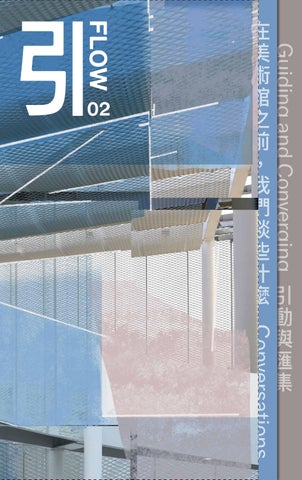
Guiding and Converging


訊 息 流
Information flow
在美術館之前, 我們談些什麼
今年7月起,臺中市立美 術館陸續推出六場「在 美術館之前,我們談些 什麼?」系列講座,期 待在開館前藉由不同專 業者的分享,一起探索 美術館的可能性。
藝聚點 Spotlights
引動與匯集
臺中市立美術館的刊物 計畫,包括8月起推出的 雙月訊,及預計年底發 行的半年刊,希望在分 享美術館資訊的同時, 也爲讀者開啟更多想像 與討論空間。
臺中市立美術館
Conversations before an art museum opening
Starting from July of this year, the Taichung Art Museum has launched “Conversations before an art museum opening,” which is a talk series consisting of six talks that feature professionals from various fields and explore the possibilities of the art museum.
Guiding and Converging
The Taichung Art Museum’s publications include a bimonthly that was launched in August, and a semi-annual publication expected to be published at the end of the year. These publications aim to share information from the art museum and create a more expansive space for imagination and discussion for the readers.
在美術館之前,我們談些什麼
— 臺中市立美術館2024年系列講座啟動
文・林怡秀

臺中市立美術館(以下簡 稱中美館)於今年度啟動 一系列開館前的暖身活 動,其中包括自 7 月起至
11 月陸續舉辦的六場「在 美術館之前,我們談些什 麼?」系列講座,分別邀 請美術館館長、建築師、 藝術史研究者、文學家、 藝術教育工作者等眾多領 域的專業人士分享,由不同角度回應臺中綠美圖這座複合型館舍所具 備的多元面向,亦期待中美館在這樣的討論中,與民眾一起探索美術 館的可能性。
TCC ↔ 臺中綠美圖 ↔ TCC ↔ 臺中綠美圖
2013 年,臺中市政府舉辦「臺中城市文化館」( TCC )國際競圖, 內容包括市立圖書館及市立美術館兩大部分,此案基地位於都市重 劃下的水湳經貿園區內,並結合不同領域的文化建築標的。獨特的 需求組合與基地條件,吸引了全球 39 個國家、共 225 組建築團隊 參與,創下當時臺灣國際競圖參賽數量最高的紀錄。經兩階段評選 後,由日本建築師妹島和世、西澤立衛組成的 SANAA 事務所的作品 提案拿下首獎。
臺中城市文化館自 2013 年決選後,歷經長時間與設計團隊、市府相 關單位討論後,更名為「 臺中綠美圖」,並自 2019 年正式開工至今。
「在美術館之前,我們談些什麼?」講座首場即以「 TCC ↔ 臺中綠美 圖↔ TCC ↔ 臺中綠美圖」為題,從對綠美圖空間的設計想像開始,啟 動本系列講座的討論。本場講座邀請三位來自 SANAA 事務所的駐地 建築設計師,透過他們的分享,帶領民眾走入 2013 年起綠美圖自設計 階段至施工期間的過程。
以空間創造嶄新的文化體驗
面對這樣一個座落於大型公園中, 結合美術館與圖書館功能的複合館 舍,SANAA 事務所的首要任務便 是理解與拆解兩種館舍的需求與內 容,同時嘗試降低大型建築量體常 有的壓迫感,讓鄰近公園的居民與 使用者都感受到這個文化場館的親 近與友善。SANAA 事務所在此將 建物拆解為八棟,除了大幅壓低建 築整體高度、創造多元量體層次,

也以鋼構、玻璃、擴張網帷幕牆等元素,使建物在結構穩定的前提下,也能產生 輕盈且具視覺穿透性的效果。而經計算過的擴張網角度,除了使外部光線與公園 景觀能在館內流動,同時也能遮蔽過度的陽光曝曬,導入綠建築的設計概念,溫 和調節人們從公園走入綠美圖大廳時所感受到的內外溫差。
位在整個建築量體中央的「文化之森」,連通了美術館與圖書館的主要展廳與閱 覽室,未來將成為融合兩館的重要空間。兩館使用者在離開原本動線後可以在此 稍作休息,再選擇往外欣賞公園景緻,或由環形天橋走入另一館的主要空間,除 了美術館、圖書館各自的核心場域外,SANAA 事務所 也透過高低錯落的樓層、 銜接各棟之間的空橋,以及介於兩館的等候區、休憩場域等設計,使民眾能在此 感受到更流暢且連續的空間體驗。
在講座最後,講者們談到對建築師來說,一座空間的完成即是想像與思考的落地, 雖然最後被看見的成果可能非常精簡,空間細節被收束得很乾淨,卻都是經歷過 繁複的討論過程。在設計階段中,建築團隊必須進行諸多研究,仔細推敲所有設 計,甚至是每個材質、顏色和人的使用方式等環節所帶來的影響。面對結合兩種 類型文化館舍的綠美圖,團隊最關心的是在最終呈現時,這樣的 1+1 是否能大於 2,以及在所有材料相互疊加後,這個空間是否還能呈現出一個整體的狀態。藉 由建築設計的思考創造,原本不同性格與功能的館舍得以相互融合,而新的文化 體驗與使用習慣也將隨著空間的引導慢慢成形,為這座城市帶來新的面貌。
[01] [02]
講座現場。(臺中市立美術館提供) 「在美術館之前,我們談些什麼?」 系列講座主視覺。(臺中市立美術館提供)
Visual design of the Talks Program "Conversations before an art museum opening."(courtesy of Taichung Art Museum)
A view of the Talk.(courtesy of Taichung Art Museum)
Conversations before an art museum opening
Introducing the 2024 Taichung Art Museum Talks Program
Text ・ Lin Yi-Hsiu
Information flow
The Taichung Art Museum has launched a series of pre-inaugural activities and events this year, including the “Conversations before an art museum opening” program comprising six talks starting from July to November. In addition to the art museum’s director, these talks feature professionals from diverse fields, such as architects, art history researchers, writers, and art educators. The aim of these conversations is to respond to the Taichung Green Museumbrary’s multiple facets, hoping to engage the public in discussing and exploring the possibilities of the Taichung Art Museum.
TCC ↔ Taichung Green Museumbrary ↔ TCC ↔ Taichung Green Museumbrary
In 2013, the Taichung City Government organized an international architecture competition for the Taichung Cultural Center (TCC), which included the library and the art museum of Taichung City. The TCC was planned to be located in the Shuinan

Economic and Trade Park, and it was expected to combine buildings intended for different cultural purposes. This unique combination of requirements and site conditions attracted the attention of 225 architectural firms from 39 countries worldwide, setting a record for receiving the highest number of entries in an international architecture competition in Taiwan at the time. After two stages of selection, SANAA, founded by Kazuyo Sejima and Ryue Nishizawa, won the first prize for their proposal.
After the final selection in 2013, the architectural design team and related departments of the city government engaged in extensive discussions about the TCC and renamed it the Tai-chung Green Museumbrary, and the construction began in 2019. Consequently, the first Talk of the “Conversations before an art museum opening” program has been themed on “TCC ↔ Taichung Green Museumbrary ↔ TCC ↔ Taichung Green Museumbrary,” launching the discussions of the program starting with the design envisioned for the Taichung Green Museumbrary. The Talk featured three on-site architects from SANAA, who shared with the public the process from the design stage of the Taichung Green Museumbrary in 2013 to the construction period.

Creating New Cultural Experience through Space
To create such an architectural complex combining an art museum and a library in a mega park, the priority of SANAA was to understand and separate the needs and contents of the two institutions. They also aimed to reduce the imposing nature often associated with large architectural structures, making the cultural institutions more inviting to both local residents living around the park and their users. To achieve this, SANAA divided the architecture into eight buildings, largely lowering the overall height and creating diverse architectural layers. Additionally, the design incorporated architectural components such as steel structures,

glass, and expanded metal mesh curtain walls to promote visual lightness and transparency while ensuring structural stability. The angles of the expanded metal meshes were calculated to allow in external light and views of the park while regulating sun exposure, contributing to the concept of green architecture and gently modulating the temperature differences between the buildings and the park, a feature to be perceived by people upon entering the Taichung Green Museumbrary’s lobby.
The “Forest of Culture,” situated at the heart of the entire architectural complex, serves as a connecting space between the main galleries of the museum and the reading rooms of the library. It will soon become an essential space uniting the two institutions. Furthermore, upon exiting the main traffic routes, visitors of both institutions can take a break in this area before entering the park to enjoy its beautiful scenery or accessing the main space of either institution via the circular overpass. In addition to the main spaces of the art museum and the library, SANAA also incorporates skybridges connecting different floors and buildings, as well as the waiting and recreational areas between the two institutions to foster a more boundless and continuous spatial experience.
At the end of the Talk, the speakers emphasized that for architects, the completion of a space signifies the realization of their visions and ideas. Despite the final results appearing highly simplified and the spatial details looking professionally tidied up, they have undergone extensive discussions and debates. During the design stage,
the architectural team must conduct thorough research to meticulously consider every aspect of the design, including the impact of materials, colors, user experience, and so on. In the case of the Taichung Green Museumbrary, which combines two types of cultural institutions, the architectural team is primarily concerned with the overall outcome, hoping that the whole will be greater than the sum of its parts. They also consider whether the space can be fully integrated as a cohesive whole after all the materials are added. Through innovative and wellthought-out architectural design, institutions of dissimilar characters and functions can be unified, resulting in shaping new cultural experiences and usage habits through spatial guidance and exploration, thereby injecting a sense of freshness into the city.
[03]
位於臺中中央公園北側,鄰近中科路的綠 美圖。(©SANAA)
[04] [05]
「 TCC ↔ 臺中綠美圖 ↔ TCC ↔ 臺中綠美圖」
講座主視覺。(臺中市立美術館提供)
綠美圖室內空間一景。(©SANAA)
+
「在美術館之前,我們談些什麼?」
臺中市立美術館 2024 年講座資訊
Conversations before an art museum opening 2024 Taichung Art Museum Talks Program
The Taichung Green Museumbrary is located in the northern part of the Taichung Central Park, near Zhongke Road. (©SANAA)
Visual design of the Talk "TCC ↔ Taichung Green Museumbrary ↔ TCC ↔ Taichung Green Museumbrary."(courtesy of Tai-chung Art Museum)
A view from inside the Taichung Green Museumbrary. (©SANAA)
— 臺中市立美術館刊物的發行和想像
受訪者・臺中市立美術館館長 賴依欣 採訪撰稿・王瑀
歷經多年籌備,臺中市立美術館(以下簡稱中美館)預計於 2025 年底正式 開館。為迎接開館時刻,館方已陸續啟動多面向推廣工作,逐步與大眾建立 連結,其中包括紙本和線上刊物的規劃與發行。作為傳播美術館資訊的重要 媒介,刊物承擔著藝術內涵的探討與專業知識的傳遞,也期望能夠讓大眾輕 鬆接觸到相關訊息,將藝術融入日常生活與休憩時光。


刊物名稱的意義與性格
中美館刊物計畫包括從今年 8 月起推 出的雙月訊《引 Flow》,以及預計年 底發行的半年刊《集 Aggregate》。
《引 Flow》以輕巧小冊加上中英雙語 呈現,內容以資訊、報導類型文章為 主,藉由短篇文章和圖像編排,使美 術館資訊能更親近、融入生活。《集
引動與匯集
Aggregate》則以書冊刊物形式發行, 關注美術館焦點主題、展覽、典藏、 教育等內容,以專題單元和研究型文 章為主,另嘗試結合圖像與創意,以 紙上作為策展媒介,呈現展覽及藝術 作品。兩者協同運作,前者廣泛發送 至全臺各藝文地點,觸及更多大眾, 後者則聚焦累積美術館論述,成為藝 術知識平台的重要載體。
《引 Flow》和《集 Aggregate》名稱簡潔地結合了中英文單字。「 引」包含引導、 索引與引發等字義聯想,象徵刊物作為了解美術館的入口,引導讀者閱讀並激 發想像與期待。 「 Flow」涵蓋資訊傳遞和流動意象,也包含美術館建築中空氣 與光線流通,穿越其中的感知及思想流動等各種形式的移動。「 引」+ 「 Flow」
反映了中美館在雙月訊中期待的資訊擴散,並展示美術館與外界連結及知識索引的意象。 「集」象徵集結與匯集,展現出館刊匯聚知識內容的功能。英文刊名「Aggregate」原意 為聚合體,在此則用於描述多元內容的集聚。「 集」+「Aggregate」共同表達了半年刊期 望成為多元觀察與對話的平台,在深入理解藝術作品與美術館的同時,也爲讀者開啟更 多想像與討論空間。
賴依欣館長分享了刊物規劃的歷程,除了分析臺灣各美術館館刊與市售主題刊物,團隊 也反覆討論命名邏輯。她試圖從過去擔任嘉義市立美術館館長的經驗出發,希望透過刊 物命名凸顯臺中城市或地方性格。臺中作為大量資訊與南北人流的匯集點,其城市性格 都會性高、中性而多元複雜。因此,希望透過名稱創造與形塑中美館的氛圍,讓刊物回 應美術館自身定位,傳遞中美館的藝術性格。
館刊風格的設計及表達
《引 Flow》的裝幀特色在於長短錯落的頁邊,形成資料索引式的視覺效果,同時也劃分 了不同文章的閱讀區域。側邊部分露出文章篇名,吸引讀者翻閱,每期的封面及封底則 擷取內文的亮點圖片,引發民眾對內容的期待。《集 Aggregate》的封面設計則將透過聚 集圖片的效果呈現當期重點的內容圖像,象徵美術館作為多種可能性匯集的狀態,並以 hashtag 或關鍵字形式提供當期內容的提示和引導。
賴館長指出,在與設計團隊溝通和嘗試的過程中,首先從《引 Flow》和《集 Aggregate》 的名稱及其代表意義開始,探索如何以視覺風格回應美術館的特色,並使設計與刊物功 能相互呼應。設計方向除了基於對美術館建築的理解和詮釋外,還包括對城市性格的思 考,以及期待呈現給大眾的形象。
此外,賴館長特別強調視覺呈現如何表達「在這個時代透過紙本與大眾溝通」的重 要性。例如,《引 Flow》以帶有索引感的設計,回應刊物具備的資訊傳遞功能;《集 Aggregate》的視覺元素則反映出當代接收和傳遞訊息的方式。這些設計除了展現當代 資訊流動的特質,也試著提升資訊的可讀性,凸顯紙本媒介在數位時代下的獨特之處。
[01] [02]
《引 Flow》雙月訊創刊號。
《集 Aggregate》半年刊創刊號。
The inaugural issue of the bimonthly Flow
The inaugural issue of the semi-annual publication Aggregate
Guiding and Converging
Issuing and Envisioning the Publications of the Taichung Art Museum
Interviewee ・ Lai Yi-Hsin, Director of Taichung Art Museum
Interview
and writing ・ Wang Yu
Spotlights
After years of preparation, the Taichung Art Museum is set to open by the end of 2025. In anticipation of inauguration, the museum’s teams have launched multifaceted outreach projects to gradually build connections with the public. These initiatives include creating and issuing the museum’s printed and online publications. A museum’s publication plays a vital role in sharing and disseminating information from and about the museum. Through these channels, it aims to explore artistic contents, convey professional knowledge, and make related information easier to access for the general public. Ultimately, the goal is to integrate art into everyday life and people’s leisure hours.
The Taichung Art Museum’s publication project includes two publications. The first is the bimonthly Flow, which debuted in August this year,

and the other is Aggregate , which will be published semi-annually towards the end of 2024. The former, which is bilingual in Chinese and English, adopts a light booklet format and features informative and journalistic content designed to make information from the museum more accessible in everyday life through articles and images arrangements. The latter will be a book featuring the museum’s highlighted themes, exhibitions, collections, and educational programs with a focus on featured topics and research-based essays. Combining images with creativity, it will apply the printed publication with a curatorial concept to showcase exhibitions and artworks. Both publications will work in tandem, with Flow being distributed to art and cultural venues throughout Taiwan to reach a wider audience while Aggregate will compile the museum’s discourses into a vital vehicle and platform of artistic knowledge.

Meanings and Characteristics of the Publications
Flow and Aggregate have concise titles, each named with one Chinese and English word. The Chinese title of Flow is “Yin”( 引 ), which suggests guiding, indexing, and triggering, symbolizing that the publication serves as an entry to museum to guide readers and spark their imagination. “Flow ” represents various forms of movement in and throughout the museum, including the delivery and flow of information, the movement of space and light through the museum’s architecture, as well as the perceptual and intellectual flow. The combinative title conveys the museum’s goal to spread information via the bimonthly, serving as imagery that visualizes the museum’s external connection and an index of knowledge. As for the semi-annual publication, the Chinese title “Ji”( 集 ) suggests gathering and converging, communicating the publication’s function of amassing knowledge and converging different knowledge resources. “Aggregate,” on the other hand, indicates a whole formed by combining various elements and symbolizes the con-
vergence of diverse content. The combination of the Chinese and English titles conveys the hope of transforming the semi-annual publication into a platform of diverse observations and dialogues to enable readers to gain an understanding of artworks and the museum, offering them a more expansive space of imagination and discussion.
Director Lai Yi-Hsin shared the process of planning the publications. In addition to analyzing publications of various art museums in Taiwan and thematic art publications in the market, the Taichung Art Museum’s team constantly discussed the naming logic. Drawing inspiration from her experience as the previous director of the Chiayi Art Museum, she hopes that the publication titles could highlight Taichung’s character as a city or place. Taichung is a hub of information and a meeting point for people from northern and southern Taiwan, so the city is highly metropolitan, neutral, diverse, and complex. Therefore, the titles of both publications should contribute to shaping the atmosphere to reflect its position and exemplify its artistic character.
Designs and Expression of the Publication Style
The design of Flow includes pages of various widths that create the visual effect of an index while marking different sections of the articles. The titles

of these articles are revealed on the edges to capture readers’ attention. Also, each issue ’ s front and back covers showcase visual highlights from the content to build the public’s anticipation of the content. On the other hand, the cover design of Aggregate will be an ensemble of various images from the issue, representing the museum as a fusion of different possibilities. Additionally, hashtags or keywords will be used to provide clues about the issue’s content.
Director Lai mentioned that, during the brainstorming process with the design team to experiment with different approaches, they began by focusing on the titles and their meanings to explore how visual styles could echo the museum ’ s characteristics. They aimed to create connections between the design and the functions of the publications. Therefore, the design approach is not solely based on an understanding and interpretation of the museum ’ s architecture, but also reflects the thinking and perception of the city’s character and the image that the city aims to present to the public.
Lai emphasized how the visual design highlight the importance of “communicating with the public via print material in this era.” For instance, Flow adopts an indexical design to reflect the publication ’ s goal of disseminating information. In contrast, the design elements of Aggregate visualize the methods of receiving and communicating messages in the contemporary era. Apart from showcasing the fluid qualities of contemporary information, these designs also aim to enhance the readability of information, underlining the unique presence of print media in the digital age.
[03]
《引 Flow》雙月訊創刊號,印刷工作 過程紀錄。
[04]
《引 Flow》雙月訊創刊號。
[05] The printing process of the inaugural issue of the bimonthly Flow.
《集 Aggregate》半年刊創刊號。
The inaugural issue of the bimonthly Flow
The inaugural issue of the semi-annual publication Aggregate.
指導單位|臺中市政府文化局 發行單位|臺中市立美術館
地 址|407610臺中市西屯區臺灣大道三段99號 惠中樓8樓
電 話|04-2222-0653
信 箱|TaichungArtMuseum@taichung.gov.tw
Supervisor|Cultural Affairs Bureau, Taichung City Government
Publisher|Taichung Art Museum
Address|8F, Huizhong Building, No. 99, Sec. 3, Taiwan Blvd., Xitun Dist., Taichung City Tel|+886 (0) 4 2222-0653
Email|TaichungArtMuseum@taichung.gov.tw
企劃製作|沃時文化有限公司 美術設計|理式意象設計有限公司 印 刷|崎威彩藝有限公司 出版日期|2024年10月
Executive Editor|Cultime.co. Ltd.
Layout Designer|Idealform Co.
Printer|Qiwei Color Arts Co.
Date of Publishing|October, 2024