



Foreword
Dr Adrian Johnston
Innovation Commissioner, Innovation City Belfast
Belfast’s strength does not lie in the size of its economy, but in the way we connect our anchor institutions, organisations and people. At the heart of this is Innovation City Belfast (ICB). Innovation City Belfast is not a programme or a brand—it is a placebased system where universities, councils, entrepreneurs and industry operate as one. No other UK city has this level of deep integration. This is our superpower.
That level of alignment matters more than ever. The UK Government’s Modern Industrial Strategy is increasingly focused on delivery at pace, place-based impact, and clear lines of accountability between national priorities and regional execution. Regions that can demonstrate strategic coherence, shared leadership and the ability to mobilise quickly will be best positioned to compete for investment and influence policy and investment direction. Belfast is structurally designed to do exactly that.
We are already seeing this advantage play out. The Enhanced Investment Zone and Local Innovation Partnership funding both require deep alignment across local government, universities, industry and delivery partners. These are not funding models that reward fragmented initiatives or disconnected strategies. They favour regions that can speak with one voice, align around common outcomes, and translate national priorities into locally deliverable programmes. The Belfast Innovation landscape provides that capability by default.
The region already excels at developing and delivering complex innovation projects across government, industry and academia. Flagship initiatives such as the National Digital Twin Centre (Digital Catapult), Harlander (Belfast Harbour), AICC, Smart Nano NI, and the Belfast Region City Deal demonstrate what is possible when we act with cohesion and shared purpose. Our next challenge is to apply that same discipline and unity to innovation strategy.
What has been missing is a clear, shared regional narrative. If we get this right, we can articulate what Belfast truly excels at—whether that is a distinctive technological or sectoral strength, or an unrivalled ability to take innovations from idea to market faster than any other UK region. That clarity, combined with the agility of Innovation City Belfast and partners, will give us a decisive time-to-market advantage. While others struggle with complexity, Belfast will provide an aligned ecosystem for translation of research excellence.
With the Belfast Region City Deal investing £350m in five world-class Centres of Excellence including Momentum One Zero, our focus must now shift to commercialisation— supporting entrepreneurs, scaling innovation, and exporting Belfast’s ideas to the world. When we collaborate on both action and strategy, Belfast will deliver not just excellent research, but lasting economic and social transformation.
About Sync NI
Sync NI is proud to be the voice of Northern Ireland’s vibrant technology and business sector.
The Sync NI website and magazine brings readers the latest tech and business news, views, jobs and events in Belfast and beyond.
Sync NI Contacts
Editorial Phone: 028 9082 0947 Email: team@syncni.com
Advertising & Partnerships
Louis Kingston Phone: 028 9082 0947
Email: louis@syncni.com
Digital Content
Patricia Rodrigues
Email: patricia@syncni.com
General Enquiries
Sync NI
Rochester Building 28 Adelaide street
Belfast BT2 8GD Phone: 028 9082 0947
Email: team@syncni.com
Online: www.syncni.com
Copyright No part of this publication may be reproduced without the written permission of the copyholder and publisher. Sync NI accepts no responsibility for the accuracy of contributed articles or statements appearing in this magazine and any views or opinions expressed are not necessarily those of Sync NI, unless otherwise indicated. No responsibility for loss or distress associated to any person acting or refraining from acting as a result of the material in this magazine can be accepted by the authors, contributors, editors or publishers. Sync NI does not endorse any goods or services advertised, nor any claims or representations made in any advertisement in this magazine.
Northern Ireland forges unified front to capitalise on global AI opportunities
Cyber security frontiers: 2026 outlook
From chatbots to agents: Why Northern Ireland's AI future starts here Innovation Week at Aflac Northern Ireland: Turning ideas into impact
Breaking barriers: Deirbhile Leonard’s journey from placement student to Tech Trailblazer and building technology that protects customers when it matters most
ONEHEALTH: Turning cross-border research into real-world impact
A day in the life – Hannah Fitzpatrick, Security Operations Analyst at Apex Fintech Solutions
Northern Ireland’s next AI leap: From experimentation to maturity
AI as a people strategy: what we’ve learned from rolling out generative AI at scale
The benefits of spec-driven development with Claude Code
Engineering trust: Why product leadership in fintech demands more than tech skills
Laying the foundations: Why most AI projects fail before they start
Victoria Sloan on leading the Financial Empowerment Engineering Team at DailyPay



Deep tech spin-outs and the path from research to real-world impact
Legal tech, AI and the future of justice: Why Northern Ireland has a global opportunity
Beyond the code: Inside Rapid7's cybersecurity evolution in Northern Ireland
Cybersecurity in 2026: From protection to resilience
Q&A With Beverly Noye: Head of Belfast & EMEA Head of Operations at TP ICAP


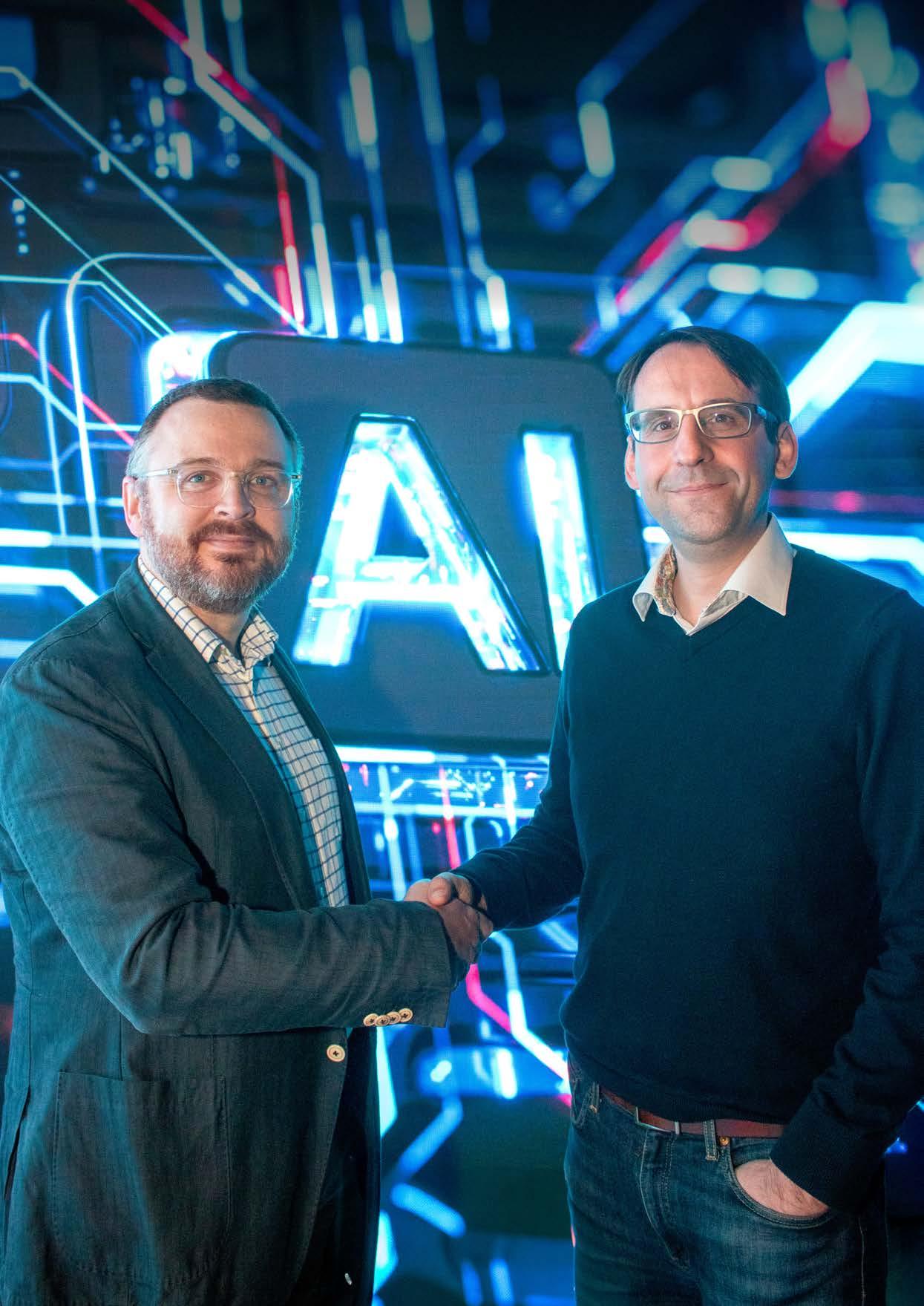
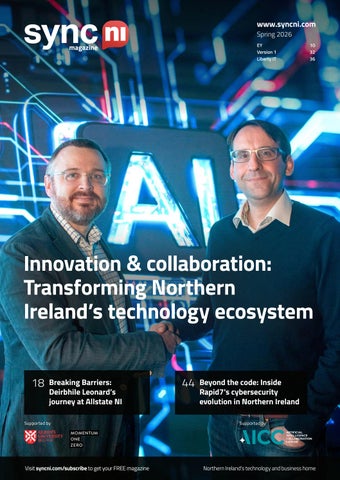
Strategic partnership between academic and business-led innovation centres promises to transform the region's technology ecosystem through seamless collaboration
Northern Ireland's ambitions to become a global leader in artificial intelligence have taken a significant leap forward with a groundbreaking partnership that demonstrates how coordinated action between educational institutions and public sector bodies can accelerate technological advancement.
The Artificial Intelligence Collaboration Centre and Momentum One Zero have formalised a strategic alliance through a Memorandum of Understanding creating a "joinedup system" that addresses a critical challenge facing innovation ecosystems worldwide: the gap between academic research and commercial deployment.
At its core, the partnership represents a pragmatic solution to a problem that has long hampered regional innovation efforts. Too often, businesses struggle to navigate fragmented support structures, unsure where to turn for help at different stages of their AI journey. This new framework promises to change that by creating clear pathways and eliminating duplication across Northern Ireland's technology landscape.
The collaboration brings together two organisations with distinctly complementary strengths. The AICC, a partnership led by Ulster University alongside Queen's


University Belfast, focuses on grassroots support for small and medium-sized enterprises across key sectors. Its mission centres on helping organisations understand, adopt and implement AI technologies, with particular emphasis on building the skilled workforce the sector desperately needs.
Momentum One Zero, meanwhile, concentrates on research translation, advanced development work, and driving innovation-led solutions at scale. Backed by Belfast Region City Deal investment and Queen's University Belfast's internationally recognised expertise in cyber security, AI and wireless technologies, it operates at the cutting edge of technological possibility.
Together, they span the full innovation lifecycle. Any company with an idea can access world-leading research and technology development, then move seamlessly through to practical adoption, talent recruitment and commercial deployment all within a coordinated ecosystem that knows how to signpost businesses to the right expertise at the right moment.
Perhaps nowhere is the partnership's potential more evident than in addressing Northern Ireland's skills challenge. The AICC is constructing a robust talent pipeline through 390 postgraduate
scholarships while upskilling more than 3,000 professionals through its training programmes. This represents a substantial investment in human capital that will underpin the region's technological competitiveness for years to come.
The skills dimension is crucial, with both universities exploring more agile and flexible approaches to skills provision in a drive to meet industry need. Even the most sophisticated technology infrastructure means little without people capable of developing, deploying and managing it. By combining the AICC's educational focus with Momentum One Zero's advanced research capabilities, the partnership creates a virtuous cycle: companies can access both the innovation they need and the skilled workforce to implement it.
David Crozier, Director of the AICC, emphasises that this alignment ensures businesses can access the right expertise at the right time, whether they're early-stage enterprises or scaling companies ready for rapid growth. The system is designed to be responsive, recognising that a startup's needs differ vastly from those of an established firm looking to transform its operations through AI.
The pathway from academic research to commercial reality has traditionally been fraught with obstacles. Brilliant innovations can
sometimes languish in university laboratories while businesses struggle with practical implementation challenges. This partnership explicitly targets that friction point.
Stephen McCabe, Executive Director of Momentum One Zero, describes the organisation's commitment to translating world-class research into solutions that deliver genuine economic and societal impact. The formalised partnership with the AICC creates what he calls "a powerful, unified pipeline from research to deployment" precisely the kind of integrated approach that transforms regional innovation from aspiration to reality.
The model is deliberately designed to be practical and accessible. Businesses will be guided toward minimal viable products, supported through implementation phases, and helped to achieve commercial growth. Crucially, companies will be directed to whichever organisation is best positioned to meet their specific needs, rather than facing bureaucratic confusion or territorial competition between institutions.
The partnership has garnered strong support from business leaders who understand the commercial imperative for clarity and coordination. Kathryn Harkin, Head of AI at FinTrU and Chair of the AICC Advisory Board, points to collaboration as Northern
Ireland's fundamental innovation strength. She sees the agreement as evidence of a shared commitment to working strategically, transparently and purposefully.
Paul Murnaghan, representing BT Business in NI and chairing the Momentum One Zero Advisory Board, emphasises that businesses need a clear and coordinated innovation offer. The partnership delivers exactly that, creating what he describes as "a stronger, more connected pathway for industry engagement" that bridges cutting-edge research and practical implementation. His assertion that "the whole will be much richer than the sum of the parts" captures the multiplicative effect of genuine collaboration.
While the partnership concentrates on supporting Northern Ireland businesses, its architects have global ambitions. The agreement enables joint representation at international trade missions, showcasing the region's complete AI capability: research excellence, innovation support for business transformation, and a strong talent pipeline.
This international dimension is strategic. Northern Ireland competes on a global stage for investment, talent and recognition. By presenting a unified, coherent story about its AI capabilities, from fundamental research
through commercial deployment, the region can differentiate itself in an increasingly crowded marketplace.
The partnership also offers a scalable and replicable model. Other UK regions facing similar coordination challenges could adapt this framework, while international partnerships become more feasible when there's clear understanding of who does what within Northern Ireland's innovation ecosystem.
One of the MoU's most significant contributions is the market clarity it provides. By clearly defining roles and responsibilities, the partnership eliminates the duplication that wastes resources and confuses potential users of innovation support. Businesses no longer need to navigate competing claims or overlapping services; they can focus on their core challenges while the ecosystem guides them efficiently.
This clarity extends beyond individual transactions. The partnership positions Northern Ireland to be more competitive internationally by demonstrating sophisticated coordination between educational institutions and businessfocused innovation centres. In an era when regions compete for mobile investment and talent, the ability to offer seamless, joined-up support becomes a genuine differentiator.
While the Memorandum of Understanding is non-binding, it signals serious intent by both organisations to work collaboratively and in good faith. The framework it establishes, combining research excellence, practical business support, talent development and clear pathways through the innovation journey, offers a template for how educational and public sector bodies can work together effectively.
The partnership's success will ultimately be measured not in agreements signed but in companies supported, innovations deployed, jobs created and Northern Ireland's enhanced reputation as a hub for responsible, impactful AI development. Early indications suggest both organisations understand this accountability and are committed to making collaboration work in practice, not just principle.
As artificial intelligence continues reshaping economies worldwide, Northern Ireland's deliberate choice to advance through coordinated action rather than competitive fragmentation may prove to be its smartest strategic move. The partnership demonstrates that when educational excellence meets business-focused innovation support, backed by substantial investment and clear leadership, regions can punch above their weight on the global technology stage.
As we enter 2026, cyber security is undergoing a fundamental transformation from technical IT function to critical business imperative. Organisations that fail to recognise this shift risk breaches, regulatory penalties and lost stakeholder confidence.
The incoming Cyber Security and Resilience Bill marks a watershed moment for UK organisations. For Operators of Essential Services, cyber readiness is becoming legally enforceable. Organisations must evidence tested disaster recovery, maintain oversight of suppliers and report clearly on risk and supply-chain dependencies.
After years of experimentation, 2026 represents a maturation point for AI in security operations. Organisations now demand tangible returns on their AI investments. The focus is sharpening toward targeted use cases including alert correlation, dependency scanning, and automated response workflows while less defined AI experiments face rigorous cost-benefit scrutiny.
This pragmatic approach reflects an industry shift from Tactical AI as a buzzword to business utility. AI will continue transforming security operations, but only where it demonstrably improves outcomes. This will result in greater scrutiny on cost vs benefit, especially as compute and licensing costs rise and a shift toward efficient, outcome-driven AI adoption, rather than broad experimentation.
The threat landscape will continue to evolve. Adversaries are leveraging AI to enhance phishing campaigns, create convincing deepfakes, and orchestrate complex supply-chain attacks. Prompt injection attacks against AI systems are rapidly rising, exposing vulnerabilities in

hastily deployed systems.
This arms race demands that defensive tooling evolve accordingly. Contextaware threat detection, real-time dependency evaluation, and behaviourdriven monitoring are becoming essential. Security teams must also manage increased variability as AI lowers the barrier to development, demanding robust code review and governance mechanisms.
Due to increasing interconnectivity, supply-chain risk will become proactively quantified, not just assessed. Organisations will begin shifting from questionnaire-based supplier assessments to data-driven, continuous monitoring. Supplier risk scorecards and real-time visibility tools will increasingly be used to manage exposure. The focus will be on modelling and minimising risk through data-informed decisions, rather than attempting to eliminate supplier dependencies.
Post-Quantum Cryptography (PQC) is moving from theory to practice. Earlyadopter industries including Finance, Defence, and Telecommunications are beginning full-scale PQC migrations. Integration complexity, especially across legacy infrastructure, will emerge as the
challenge. Planning for PQC will become a critical strategic project. Organisations that delay PQC planning risk finding themselves unprepared when quantum computing capabilities advance.
Vulnerability management will become continuous, automated and boardvisible as traditional patch cycles and ad-hoc assessments will no longer be deemed sufficient. As such continuous scanning and AI-led prioritisation of vulnerabilities will replace monthly patching and reporting methods. There will also be increased automated regression testing and remediation orchestration to be used to reduce manual overheads. Dashboards will summarise technical exposure and business risk, bridging the gap between security teams and executive leadership that boards can understand and act upon
For boardrooms, the message is clear: cyber security must be treated as a strategic business enabler, and no longer a back-office concern. This requires demanding evidence of resilience rather than compliance paperwork and check box exercises. Organisations at the most senior level must ensure budgets reflect actual risk including supply-chain dependencies, AI deployment costs, and PQC migration. It will become incumbent to embed security thinking into all aspects of operations, from procurement, to development, to third-party management. Ultimately senior leaders must accept that cyber resilience is an ongoing endeavor, not a one-off effort and plan accordingly.
The path forward in 2026 is one of intentionality and integration. By combining targeted AI adoption, continuous risk visibility, regulatory compliance, and strategic planning, organisations can build defences as dynamic as the threats they face.
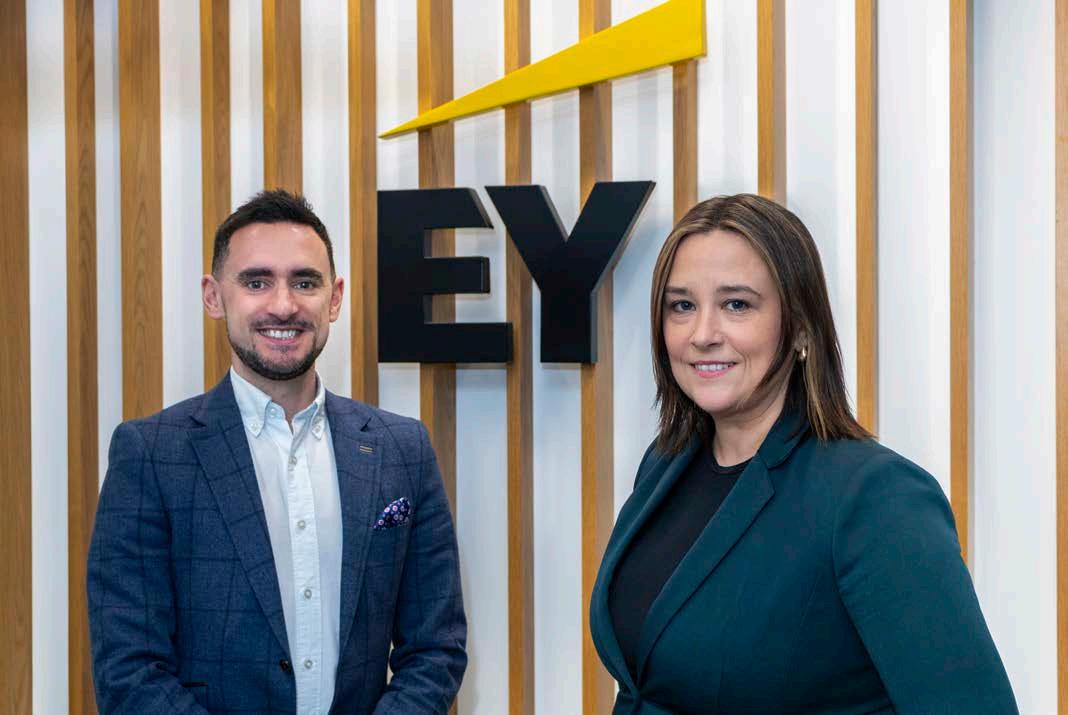
As global AI investment grew by 62% in 2025, for businesses in Northern Ireland, the question is no longer whether to embrace AI, but how quickly they can move from experimentation to transformation.
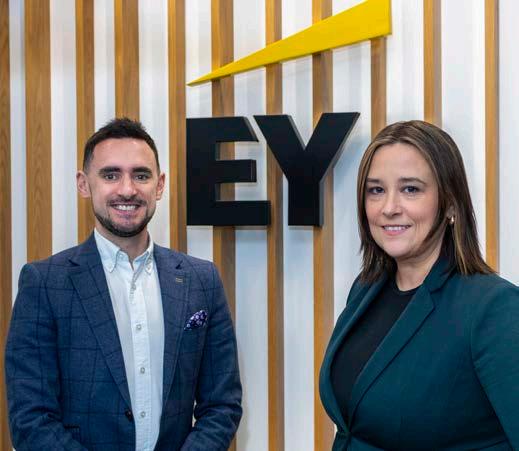
Sync NI sat down with Tim Cush, Partner at EY, and Rose Kane-Quinn, Senior Manager in Data, Analytics & AI, to discuss how AI transformation is reshaping business - moving from pilot projects into the core infrastructure of modern organisations.
"The biggest shift we're seeing is the transition from experimental AI projects to strategic integration into core business processes," explains Tim. "Companies are now prioritising AI not just as a tool for efficiency, but as a driver of innovation and competitive advantage."
If 2024 was the year of Generative AI, 2025 marked the arrival of agentic AI - intelligent systems capable of carrying out complex, multi-step actions autonomously.
“What we’re seeing is the productisation of AI,” Rose explains. “It’s becoming part of the underlying business infrastructure.”
The practical applications are transformative. Imagine a customer contacting a company about a delayed order. Instead of being passed between departments, they interact with a single AI agent that can access order management systems, check shipping status, identify weather related delays and provide a comprehensive response - all in seconds.
Behind the scenes, multiple specialised agents may be working in concert, but for the customer the experience is seamless.
“That’s where we’re starting to see real transformation within organisations,” Tim notes. “The tools available on the market now make it easier than ever for businesses to start investing - often at relatively low-cost points.”
The barriers to adoption
For all AI's promise, the path to successful adoption is not
without challenges. Tim points to what he calls "the data puzzle"legacy systems, siloed platforms and fragmented data spread across multiple repositories.
There is also a widening skills gap. Organisations don’t just need technically strong data scientists; they need people who understand business processes, industry context and how AI can be applied to real-world problems.
“It's not just about hiring a really sharp data scientist,” Tim explains. “They need to understand how the business works and where AI can genuinely add value.”
Governance presents another hurdle. With increased focus on ethics, policies and regulation - particularly the EU AI Act - organisations must tread carefully. However, Rose warns against allowing governance concerns to stall progress entirely.
“You can't wait until everything is totally perfect,” she says. “You have to start assessing your infrastructure and data estate, and taking practical steps towards using AI within your organisation.”
The message is clear: AI adoption should be approached like any other major transformation - moving forward in a controlled way while governance frameworks evolve in parallel.
Some sectors are moving faster than others. Utilities companies, for example, are finding significant value in backoffice operations such as document management and data governance - areas traditionally dominated by manual, time-consuming processes.
“Agentic AI can take over very manual, complex tasks in a sophisticated way,” Rose explains, drawing on recent work with a large utilities provider. “These processes often aren’t being addressed effectively, and AI is becoming the
solution to what’s now a growing operational challenge.”
Financial services are continuing to evolve rapidly, but nowhere is the transformational impact of AI more profound than in the healthcare sector. AI is already transforming diagnostics, supporting personalised treatment pathways and helping reduce waiting times.
In healthcare, efficiency gains can mean far more than cost savings - they can represent the difference between timely intervention and dangerous delay.
With great capability comes great responsibility. EY's approach to AI is firmly grounded in ethics, trust and transparency.
While regulation such as the EU AI Act provides important guardrails, Rose highlights the principle of “human in the loop” as critical.
“Users must always know when they’re interacting with AI,” she explains. “Transparency is fundamental and there are important ethical considerations we have to remain conscious of at every stage.”
Tim agrees, noting that while governance is essential, fear can become a blocker.
“There’s been a degree of hesitation in the market around beginning the AI journey,” he says. “But it’s possible to balance governance, ethics and policy with real momentum, if you take a controlled, pragmatic approach.”
Northern Ireland’s opportunity
So where does Northern Ireland fit into this rapidly evolving AI landscape?
“Northern Ireland has a genuinely exciting opportunity,” Tim says. “The ecosystem here - between startups, universities and investment through government and Invest NI - creates
an environment where innovation can thrive.”
The region's universities are producing exceptional talent, but there is a risk that too much of it is lost overseas.
“We’re missing a trick,” Tim continues. “We should be nurturing that talent locally and creating opportunities right here.”
EY is taking concrete steps to address this through Skills Academies and graduate programmes, many of which are open to people from non-traditional backgrounds.
“You don’t need a computer science degree to start,” Rose explains. “Our academies allow people to learn the fundamentals, apply their transferable skills and move into data and AI roles. It’s a brilliant way to widen access to these careers.”
This inclusive approach recognises that the AI revolution needs more than technical expertise alone - it requires business insight, creativity and the ability to connect technology with strategic value.
As 2026 unfolds, one thing is certain: agentic AI will dominate the conversation. AI is no longer experimental - it is becoming professionalised, scalable and embedded within business processes.
For organisations considering their next move, the window of opportunity is now. The tools are accessible, the talent pipeline is growing, and early movers will build advantages that compound over time.
The AI revolution isn’t coming. It’s already here.
For more information about career opportunities with EY's data analytics team in Northern Ireland, including upcoming Skills Academies visit the EY careers portal.
In December, teams across Aflac Northern Ireland came together for an immersive Innovation Week — an energising opportunity to explore innovation at scale and harness the power of artificial intelligence to solve real business challenges.
With executive leaders joining us from Aflac headquarters in Columbus, GA, the week provided a powerful platform to showcase what’s possible when creativity, collaboration and emerging technology come together.
Why Innovation Week?
Innovation Week was designed with clear goals in mind:
• Explore AI adoption to address real-world business challenges
• Rapidly test the feasibility, viability and desirability of new ideas
• Reduce time-to-value for high-impact use cases
• Enable teams to learn, experiment and innovate with AI
• Create a collaborative, engaging and enjoyable experience
Setting the mindset: A culture of innovation
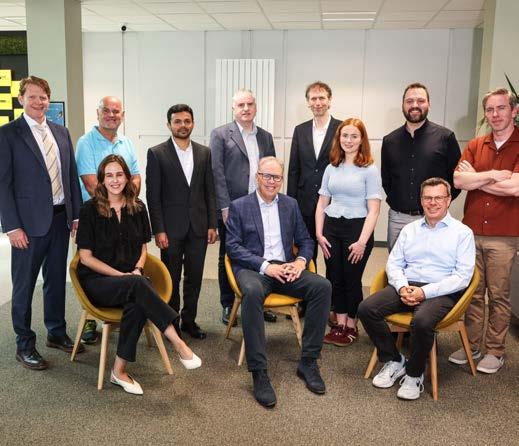
The week kicked off with a Culture of Innovation session hosted by our partners, AWS Pictured David Carson; Senior Enterprise Account Manager, AWS, Jonny Bradley, Director of Innovation, Aflac NI & Peter Trimble, Head of Technology NI, AWS Rather than a technical deep dive, this session focused on how Amazon approaches innovation at scale — helping our teams think bigger and adopt an innovation-first mindset.
AWS shared best practices that have underpinned Amazon’s long-term approach to innovation, centred on one key principle: starting with the customer and working backwards. Their approach was explored through four interconnected elements that enable organisations to innovate quickly, consistently and at scale:
• Culture – Building a highly distributable culture supported by strong mental models, highquality decision-making and a “Day 1” mindset that encourages constant experimentation and iteration.
• Mechanisms – Customer-centric processes


that turn good intentions into action, democratise innovation, challenge assumptions and sharpen ideas.
• Architecture – A journey towards microservices that enabled rapid growth, reduced dependencies and empowered builders with greater access to technology.
• Organisation – Small, autonomous teams with clear ownership, the right resources, and a single-threaded focus on delivering end-to-end customer value.
At the end of the session, AWS used Generative AI to capture insights and produce artefacts, which were later shared as briefing documents with our visiting US stakeholders.
Measuring success
Innovation Week delivered strong outcomes, and we measured success across the following areas:
• Participation: Over 100 colleagues engaged directly with Executive Leadership
• Learning: Hands-on AI experience aligned to real business needs
• Prototypes: More than 10 solutions mapped to strategic priorities
• Business impact: At least two shortlisted solutions identified for scaling, with clear ROI potential
• Speed: Working demos delivered in just three days
Key principles guided the week throughout:
• Learn fast
• Deliver value
• Collaborate openly
• Have fun!
From ideas to prototypes
More than 100 employees were divided into cross-functional innovation pods, bringing together a mix of technical and non-technical roles — often
people who wouldn’t normally work together. Each pod was given a problem statement and encouraged to explore solutions using Generative AI and proven innovation methodologies.
The energy and enthusiasm were clear from the outset, with teams rapidly ideating, experimenting and building tangible solutions.
At the end of Day 2, each team pitched their proof of concept to a “Dragons’ Den”-style executive panel featuring our US visitors and members of Aflac NI leadership team. Following feedback and Q&A, teams refined their ideas on Day 3 before pitching again. From 19 proof-of-concepts, executives selected six finalists.
On Day 4, the shortlisted teams delivered their final presentations to both Executive Leadership and the wider organisation, before a winning solution was announced.
A glimpse of what’s possible
Reflecting on the week, Mark McCormack, CTO of Aflac and MD of Aflac Northern Ireland shared: “I was genuinely blown away by Innovation Week. The calibre of ideas, the energy in the room, and the way people challenged assumptions showed just how innovative this organisation really is. It was a great reminder of the capability we have when we give people the space to think differently and it gives me real confidence in what we can deliver going forward.”
Innovation Week at Aflac Northern Ireland was more than an event — it was a powerful demonstration of what can be achieved when people are empowered, technology is accessible, and innovation is part of the culture.

Every year in Davos, leaders make powerful statements about inclusion. We hear commitments, pledges, and promises to build workplaces that work for everyone.
But when it comes to neuroinclusion, words are not the hard part. Systems are.
If there’s one thing I’ve learned after decades working in education and workplace sectors, it’s this: real commitment only becomes credible when it shows up in budgets, plans, and delivery. Without those signals, neuroinclusion stays
symbolic. Well-meaning, but still optional.
When companies tell me they care about neurodivergent talent, my first question is simple. Where is it funded? How is it being done? And who is accountable? If there is no answer, then it's unlikely that there is any strategy in place.
Education shows us what works
Education is far from perfect, but it has taught us an important lesson. Change at scale does not happen because people are kind or well-intentioned. It happens because policy and law make it unavoidable.
Legislation has driven access to support, assistive technology, and adjustments for millions of learners. As a result, many young people entering the workforce today have had better support than any generation before them. Then they graduate. And that support often disappears overnight.
Too many people move from structured systems in education into workplaces where neuroinclusion is treated as discretionary. The message, even if unintentional, is clear. You were supported then. You’re on your own now. That drop-off is not a personal failure. It’s a huge systemic gap.
The hidden cost of disclosure
In most workplaces, support often depends on personal disclosure. If you ask for help, you might get it. If you do not, you likely won’t. This places the burden on individuals, not employers.
Around 80 percent of neurodivergent employees do not disclose at work. That is not because they do not need support. It is because disclosure carries risk. Fear of bias, stigma, or being seen as less capable is still very real.
The result is a silent loss of talent, performance, and wellbeing. People struggle in private, underperform in public, and often leave. We should not design systems that only work for those
who feel safe enough to speak up.
Yes, leaders ask about Return on Investment
In large businesses, every change conversation eventually comes back to return on investment. Neuroinclusion is no exception.
As someone who leads a 500+ person company. I understand that reality. Economic arguments matter.
But we also need to be honest about the limits of short-term metrics. The real value of neuroinclusive workplaces shows up over time, in retention, engagement, performance, and culture. These outcomes are harder to measure quickly, but they are no less real. For some solutions, like Everway tools, the productivity ROI is easy to measure, but other policy changes that will influence engagement and retention the return takes longer.
If we only fund what pays back within a quarter, we will always underinvest in our current and future people.
Change works best when systems connect
One of the most effective ways we’ve seen progress is through a geographic, ecosystem approachaligning education, public sector initiatives, and employers within the same regions.
When assistive technology is available to every student across a state for example, the results are clear. The same tools should then be available when those students enter work in that state. That requires employers, educators, and public bodies to align, rather than operate in isolation.
When support is consistent across transition points, people do not fall through the cracks. Employers benefit too, because they are not reinventing or seeking out solutions that already exist. This is what systemic change looks like. Less fragmentation. More continuity.
Why visible leadership matters
Leadership behaviour sets the tone long before policies do.
I’m dyslexic. That shapes how I work and how I lead. It also shapes the standards I expect. When my marketing team brings me copy or content to review, clarity and readability matter. This is not as a favour to me, but because they make communication better for everyone. They make our content more accessible to a wider audience.
When I first spoke openly about my dyslexia at work, something very unexpected happened. Thirty people reached out to tell me they were neurodivergent and had never disclosed that information before at work. That is the quiet power of visibility. It does not force
disclosure. It makes safety possible.
There is research suggesting that a significant share of CEOs are dyslexic. Neurodivergence is already present at senior levels. It is just not always public knowledge.
beyond disclosure
If we’re serious about progress, we need to move past the disclosure-led model that dominates most workplaces today.
Large businesses should think about neuroinclusion by default, not by exception. Providing support, tools, adjustments, and flexible ways of working should be available to all employees, without requiring a label or a personal explanation why.
This is not about lowering standards. It’s about removing barriers. I do not see my dyslexia as a disability to be fixed. It’s a difference. It’s a difference that requires social and organizational change. The real challenge is whether our systems are designed to handle it.
Neuroinclusion shouldn’t be a side project. It’s a test of whether our workplaces are fit for the future. The question is no longer whether we believe in it. The question is whether we are willing to create it? And that starts with moving from statements to systemic change.
When I was asked to write for Sync NI on the topic of innovation and collaboration, my initial reaction was, “haven’t I done this before? shouldn’t I do something different?”. Then I wondered, what did I actually say over the years? What holds true and what is different?
The TLDR; on some of the things I said or wrote were around the importance of the environment, both physically and psychologically. I talked about creating physical spaces that were deliberately designed around the employee experience. How to ensure people have natural light, green spaces and separate spaces fostering collaboration independent of spaces that were calm and noise reducing/ dampening so that creative and innovative thought can flow.
The crux of this is that research shows when we are threatened we get tunnel vision and move towards the fight/flight/freeze/fawn/flop response (turns out there are an increasing amount of fs). This causes us to be highly focused and prevents creativity. We’ve all experienced this and in a world where technology is more and more ambient and interwoven into everyday life. We process more information in a day than (allegedly) someone in the 15th century. Even if that’s not true, we can agree we consume a lot. It can be completely overwhelming and debilitating. Stress is also cumulative. It is like a bank account or credit card; the deeper into debt you get, the harder it is to get out. This is rarely the time where we go, “you know what, wouldn’t it be great if…?”
At the same time, however, we have a (sympathetic and parasympathetic) nervous system that is bidirectionally regulated. When we get stressed, our breathing increases, our vision narrows. When we regulate our breathing or soften our focus, though, the converse is also true and helps us to destress. Imagine standing on a hill or mountain top looking out, able to see far, taking deep breaths and you can almost feel the relaxation. When we get our environment right, when we sleep, rest well and are relaxed then our memory, alertness, emotional regulation and cognitive ability all improve. That said, being overly relaxed leads to inertia. We need to be both relaxed and mildly stressed/ engaged/excited to be at our best.
So, what on earth does any of this have to do with innovation and collaboration!? Mindset matters. Environment matters. If the foundations are unsound, innovation and collaboration is not possible or at best extremely suboptimal.
This makes me think of the macro environment. Everyone can probably agree that from a geopolitical and financial perspective it certainly feels like we’re in strange and unstable times.
Just this week I heard an anecdote where a highly respected technology and business leader asked an elderly neighbour for confirmation that we are living in the craziest of times (and to be fair it does feel that way). Her response; “I lived through the Cuban missile crisis”. She and I also regaled how COVID wasn’t that long ago and was certainly generationally crazy. Only a few years on, though, and it’s no longer at the front of our minds. I also wonder whether our local history here continues to have a residual impact. I don’t know. And we need to be careful of explanations becoming excuses.
My challenge to us all then is, are we unwittingly victims of our environment? What is in our control and not in our control? How do we respond rather than react?
I’ve noted some environmental tools to help already such as getting out into nature. Incidentally, ever notice how Victorian hospitals were placed beside parks? They knew there was a connection to wellbeing even if they may not have known precisely why. The things that help our physical health (sleep, diet, exercise), help our mental health. Mindfulness and meditation are the things that help differentiate elite athletes. Archimedes' eureka moment came when he got in a bath - something that helps with relaxation. In a crazy, chaotic, changing world if we want to innovate, frankly, we need a bit of self-care. Then we can have the right mindset to innovate and collaborate.
If we zoom out from those personal foundations, what does innovation and collaboration here look like? In some respects we appear to have lots of it. Looking at software and AI, there are bodies (communities) like SoftwareNI and the AICC (and several others). They both have bold and extremely admirable missions. Missions that aim to take our business ecosystem

to great places. They have memberships that are growing and there are no shortage of events. It is clear a lot is happening. These are just two examples. There are several more.
At the same time, however, we need to be careful of unintentionally slipping into echo chambers and group think. The risk is in looking inward rather than outward. This week kicked off the Catalyst AI Hackathon in the Deloitte offices. What struck me was how diverse
and excited the participants were. I am encouraged that we have diversity slowly building here because diversity of people leads to diversity of thought which leads to real innovation. The simple ideas that are only obvious in hindsight.
Therefore, to me, if the first step is self-care, then the second is related; recognising when we’re looking inward instead of outward, then engaging in the right, deep, challenging conversations about what
he started his first company at the turn of the millennium. He was a trained accountant and wanted to build a new tech business. He reached out to the MD of a well-known, successful, indigenous software company. The MD connected him to his team of experts and they helped him bootstrap his fledgling company that became a successful company. Open collaboration - without the WIIFM (“what’s in it for me?”) - can lead to wonderful, exponential growth. Mindset matters. Environment matters.
Northern Ireland has the highest percentage of workers working in the public sector and the highest public spending per capita in the UK. Several of our successful private sector companies have revenue income coming from the public sector too. That is a huge opportunity for us to look outward and think differently about our place on a global stage.
we’re trying to solve and how we’re trying to solve it. That’s hard when we’re all extremely busy doing the day job. I have no doubt some may read this and disagree. But pushing through that difficulty is where I believe the greatest rewards are to be found. Otherwise we’ll only ever make superficial change and impact.
I recently heard a fellow Springboard mentor tell me how he had no idea what he was doing when
On this island, great inventions have been borne and more can be. We have had an outsized impact globally and the world, as always, is changing radically and quickly around us. We need to recognise that, embrace that and adapt. We can have an even bigger outsized impact. But only if we hear that call and work together to make an impact that is larger than ourselves and truly make a difference. Innovation and deep collaboration is the key.

when it matters most
From building AI-powered education tools to inspiring thousands of schoolchildren through hands-on coding projects, Deirbhile Leonard is making waves in Northern Ireland’s tech scene.
Starting as a placement student at Allstate in 2022, she has quickly become a full-stack developer, an advocate for women in tech, and a role model for aspiring innovators. Deirbhile’s work on Allstate’s systems connects directly to the company’s mission: protecting people from life uncertainties through affordable, simple and connected products. The code Deirbhile ships helps power rating, pricing, and service experiences that determine accuracy, speed, and clarity for real people filing claims or seeking protection at critical moments.
q Deirbhile, tell us about your journey into tech and how you started at Allstate Northern Ireland?
My journey began at Ulster University, where I studied Computer Science and graduated with First Class Honours in 2025. I joined Allstate as a placement student in 2022, and that experience was transformative.
I worked on modernizing a rating platform, diving into full-stack development across front-end, back-end, and databases. It was a steep learning curve, but I loved every minute of it. That placement confirmed that tech was where I wanted to build my career. Crucially, I learned how rating services underpin insurance decisions, getting an accurate rate quickly isn’t just a performance metric; it is how customers get fair cover and confidence when they need it. That sense of customer impact shaped how I approach every technical decision.
q What were some of your biggest achievements during your placement and early career?
During my placement, I was recognized at the Ulster University Placement Awards for my work on an API modernization project. I proposed improvements to system transparency, like delivering clearer error messages and escalation instructions, which reduced downtime and empowered users to resolve issues themselves.
After graduating, I joined Allstate full-time and helped lead a
large product transformation. Keeping the customer experience at the heart of everything was key. Those transparency improvements mattered beyond the codebase, they helped frontline teams and customers understand what was happening, why, and what to do next. In insurance, clarity and speed are vital; our changes meant fewer delays and faster paths to protection.
q You have been involved in some really innovative projects—tell us about those?
At University, one highlight was winning the AI for Personalized Learning prize at the GenAIEdu 5 Conference for my project AIExam. It’s an AI-powered tool that generates tailored exam questions for educators and learners. I am passionate about applying emerging tech to real-world problems, and education is an area where AI can make a huge difference.
Another project I loved was building a Rubik’s Cube-solving LEGO robot for the launch of the Northwest Digital Hub. It scans the cube, calculates the moves, and physically solves it. In my day job, that same spirit of experimentation translates to safer, more reliable systems, using automation and intelligent checks to reduce defects, accelerate updates, and protect the integrity of rating and pricing flows that directly affect customers.
q You are clearly passionate about inspiring the next generation. Why is that important to you?
Representation matters. When young women see someone like them thriving in tech, it makes the path feel possible. That’s why I volunteer at recruitment events and support initiatives like the Northwest Digital Hub, which brings coding into schools. Over 3,500 pupils took part in projects like ‘Code for the Road,’ which teaches digital skills while promoting road safety.
And there is a direct line to Allstate’s purpose: safer roads, safer
communities, and smarter decisions reduce risk, the very outcomes insurance exists to support. Helping young people build these skills contributes to a brighter future.
q What challenges have you faced as a woman in tech, and how have you overcome them?
Tech is still a male-dominated industry, and early on, it can feel intimidating. But I have been lucky to have supportive mentors and colleagues who value diversity. My advice is to speak up, ask questions, and never underestimate your ability to contribute.
Diverse teams build better products, especially in insurance because different perspectives help us spot edge cases, reduce bias in decisioning, and design journeys that are fair and accessible. That ultimately benefits customers.
q How do you connect your day-today engineering work to Allstate’s mission?
Every outcome we produce affects a customer’s experience. Rating APIs determine affordability and accuracy; robust promotion workflows reduce errors when new rates are deployed; and clear diagnostics mean faster recoveries if issues arise. Our job is to ensure people get protection with confidence.
q What advice would you give to women considering a career in technology?
Don’t be afraid to fail fast and learn quickly. Tech moves fast, and adaptability is just as important as technical skill. Seek out mentors, collaborate, and never stop learning, there is a place for everyone in this industry, and diversity makes tech stronger.
Also, anchor your work to a clear purpose. For me, it is knowing our systems help people through difficult moments, whether that’s pricing a new policy accurately or ensuring service
continuity during a claim. Purpose turns growth into impact.
q What is next for you?
I really enjoyed speaking at the inaugural Tech Tides Conference in Derry, so I would like to present at more events. Beyond that, I want to keep pushing boundaries, whether that’s through AI innovation, community outreach, or helping shape the future of tech at Allstate.
I am particularly focused on resilient engineering, tooling, tests, and deployment practices that reduce customer disruptions. In insurance, resilience is not just a technical adjective; it’s how we uphold trust.
Top tips from Deirbhile
Tie Your Work to Impact: Ask, “How does this help a customer?” If you can answer that clearly, you will build better systems, and a stronger career.
Stay Curious: Technology evolves quickly—embrace lifelong learning.
Find Mentors: Seek guidance from experienced professionals.
Fail Fast, Learn Faster: Mistakes are stepping stones to growth.
Get Involved: Volunteer for projects and initiatives beyond your day job.
Champion Diversity: Support others and help create an inclusive tech culture.
Why Deirbhile Leonard is one to watch
From her technical expertise to her leadership and advocacy for women in tech, Deirbhile is helping shape a more inclusive and innovative future. Her story is proof that with curiosity, resilience, and passion, the possibilities in tech are limitless.

Complex challenges rarely respect sectoral or geographic boundaries. Health outcomes are shaped not only by human factors but also by food systems and environmental conditions. Agricultural productivity is increasingly influenced by climate, data, and digital technologies. Environmental sustainability, in turn, depends on how societies design, deploy, and govern innovation at scale. The ONEHEALTH project is built on this understanding.
ONEHEALTH is supported by PEACEPLUS, a programme managed by the Special EU Programmes Body (SEUPB) and delivered through a partnership between Queen’s University Belfast, Catalyst, Atlantic Technological University (ATU), University of Galway, Tyndall National Institute, and Health Innovation Research Alliance Northern Ireland. It brings together expertise from across health, agri-food, environmental science, and digital innovation to address challenges that no single organisation, sector, or region can solve alone.
Rather than treating innovation as a series of disconnected
projects, ONEHEALTH takes a systems-level approach, combining research excellence with applied engineering, commercial insights, and cross-border collaboration to ensure ideas move beyond theory and into real-world application.
At the centre of this delivery model sits Momentum One Zero, Queen’s University Belfast’s business-led innovation centre for cybersecurity, AI, and wireless technologies. Momentum One Zero plays a critical role in translating ONEHEALTH’s ambition into practical outcomes — providing the engineering capability, secure infrastructure, and commercial pathways required to turn research into deployable solutions.
Defining the ONEHEALTH vision
ONEHEALTH is founded on a simple but powerful premise: complex societal challenges cannot be solved in isolation. Health, food security, and environmental sustainability are deeply interconnected, and effective solutions must reflect those interdependencies.
The programme focuses on applying AI, data-driven technologies, and secure digital systems to challenges such
as disease prevention, early detection and treatment, sustainable food production, environmental monitoring, and public health resilience. Crucially, ONEHEALTH is not about technology for its own sake. Its goal is to create usable, scalable outputs that can be adopted by industry, public services, and policymakers.
These outputs include:
• Applied AI tools and decision-support systems
• New data-sharing frameworks and governance models
• Patented technologies and validated methodologies
• Digital platforms designed for real operational environments
• Internationally recognised excellence in health, agrifood and environmental research and innovation
Momentum One Zero contributes to this vision by ensuring that innovation is designed with delivery in mind. Its engineering teams work alongside researchers and partners to embed security, interoperability, and scalability from the outset, reducing the risk that promising ideas stall at the pilot stage.
Is being small an advantage?
Northern Ireland is often described as a small region in a global context. Within ONEHEALTH, that scale is viewed as a strength rather than a limitation.
A compact ecosystem enables faster collaboration, shorter feedback loops, and closer working relationships between universities, industry, and government. When combined with cross-border partnerships through ATU and wider European networks supported by PEACEPLUS, this agility allows solutions to be tested, refined, and deployed more quickly than in larger, more fragmented systems.
Momentum One Zero acts as a connector within this ecosystem — aligning academic research with industry needs and ensuring that
innovations are not developed in silos. Its role is not to replace existing expertise, but to join the dots, helping partners speak the same language across disciplines, sectors, and borders.
Is the digital infrastructure ready? Applying AI to complex domains such as health, agri-food, and environmental systems requires more than algorithms. It demands:
• Secure and compliant compute environments
• Trusted data pipelines
• Clear governance and ethical frameworks
• Engineering capability to integrate solutions into existing systems
ONEHEALTH benefits directly from the infrastructure and expertise available through Momentum One Zero. The centre provides secure compute environments, specialist engineering expertise, health, agrifood and environmental leadership and vast experience working in regulated and data-sensitive contexts.
This foundation is essential for moving AI from experimentation to production. It ensures that innovations developed through ONEHEALTH are not only technically impressive but also safe, trustworthy, and ready for real-world deployment.
Moving beyond the pilot trap Across the innovation landscape,
one challenge consistently emerges: promising pilots that never scale. The reasons are well known — lack of integration planning, unclear ownership, insufficient security, or no commercial pathway.
ONEHEALTH addresses this challenge by embedding delivery thinking from day one. Projects are designed with deployment in mind, considering how solutions will integrate into operational environments, how they will be maintained, and how value will be realised over time.
Momentum One Zero reinforces this approach by bringing engineering and commercial expertise directly into project teams. Rather than handing over solutions at the end of a research phase, delivery is continuous, increasing the likelihood that innovations move seamlessly from concept to adoption.
ONEHEALTH’s ambition to deliver 32 major outputs reflects a focus on quality and impact rather than volume. These outputs are expected to include:
• Patented technologies with clear application pathways
• AI frameworks validated in real operational settings
• Secure data-sharing models that balance innovation and trust
• Digital tools designed for adoption by industry and public services
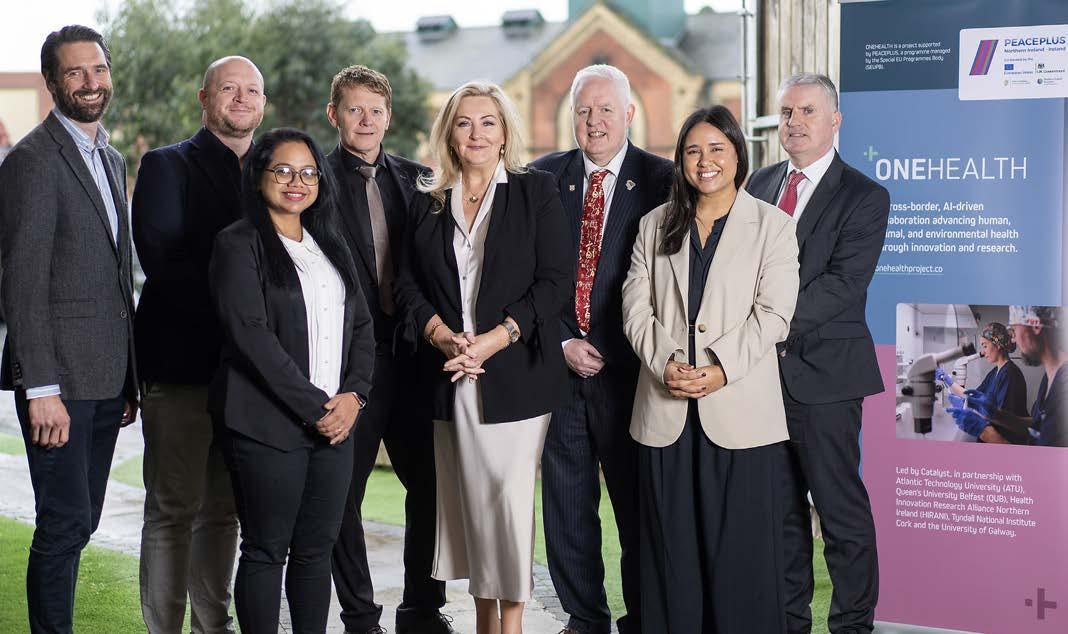
• Solutions to health, agrifood and environmental challenges
Momentum One Zero plays a crucial role in ensuring these outputs are industryready — translating research outcomes into solutions that businesses can adopt, adapt, and scale.
The value of cross-border collaboration
ONEHEALTH demonstrates the power of cross-border collaboration when it is anchored in shared challenges and practical delivery. By bringing together partners from Northern Ireland and the Republic of Ireland (RoI) led by ATU, the programme strengthens the region’s reputation as a place where complex innovation can be delivered responsibly and effectively
For Northern Ireland, this has tangible benefits:
• Enhanced international visibility as a hub for applied innovation
• Stronger pipelines for inward investment and partnerships
• New jobs creation, with expanded opportunities to attract and retain
Momentum One Zero supports this by acting as a visible platform for industry engagement, helping position Northern Ireland not just as an ecosystem of research excellence, but as a place where innovation can be implemented at scale.
The long-term value of ONEHEALTH extends beyond individual projects. By demonstrating how research, engineering, and industry can work together seamlessly across borders, the programme contributes to Northern Ireland’s growing reputation as a region capable of tackling complex global challenges.
Momentum One Zero’s role is central to this narrative. By linking research excellence with delivery capability, building sustainable collaborative research networks with our RoI academic partners, it helps ensure that ONEHEALTH’s impact is lasting, measurable, and relevant to the real economy.
A platform for sustainable impact
ONEHEALTH is not intended as a oneoff initiative. It is a platform designed to support ongoing collaboration, encourage continuous learning, and deliver long-term impact across health, agri-food, and environmental systems.
As the programme evolves,
Momentum One Zero will continue to support partners by providing:
• Research excellence to address complex problems
• Engineering expertise to move ideas into practice
• Secure infrastructure to support sensitive innovation
• Commercial pathways to help solutions reach market
Through the ONEHEALTH project, Momentum One Zero demonstrates what is possible when research ambition is matched with delivery capability, — turning cross-border collaboration into real-world impact for Northern Ireland and beyond. Innovation knows no borders – neither should we.
I’ve always had a creative, curious streak. After working in both the Architecture and Hospitality industry while studying my first degree. I decided to change it up a little and complete my master's in software development at the University of Ulster, which led me into the weird and wonderful world of Cyber Security. 5 years later and it’s the best decision I’ve ever made!
q What does your typical day look like?
A morning handover with our colleagues in Manila, then triage using our security information and event management system that collects logs and alerts from servers, devices, networks and cloud services, followed by deep dives on high-signal alerts, and tuning detections.
q What are you currently working on? Creating and tuning alerts and conducting threat hunts that give us visibility into our security posture and help counter the latest attacker trends and TTPs (tactics, techniques, and procedures).
q What inspired you to join this company in particular? A genuinely supportive company

that motivates me to stay consistent in my development and gives me room to grow.
q Did you always want to work in this industry (tech)?
Good question, Yes & No. I started out my career with an interest in Architectural design and thought I would be happy to continue in that industry, but things changed and I always thought it would be interesting to get into tech and I haven’t looked back since! I do still love Architecture, but it's nice to enjoy it as a hobby now.
q What’s your favourite part about your work?
Being constantly challenged every day and collaborating with a dynamic team that learns together. Knowledge sharing at Apex is something I absolutely love and don’t take for granted.
q What would you say to other people considering a job in this industry (tech)? Go for it, even if you don’t feel ready or experienced. Cybersecurity moves fast with endless ways to learn and grow. Once you find your rhythm, it’s the best industry to be in and an amazing place to build a career.
q How do you see this technology impacting our lives?
Security that just works, easy logins without fuss, early heads-up/detection when something seems off. Fast and reliable fixes in the background so we can stay focused on what matters.
q Who inspired you to work in this field?
I’ve been really lucky to have great mentors who sparked my curiosity across Cyber. Those people have helped turn investigations into creative problem-solving and sharing openly, are the reason I keep wanting to push myself further. They make challenging work fun and enjoyable, which motivates me to work harder.
q What do you consider to be the most important tech innovation or development in recent years?
Since joining Apex, it has to be security automation (SOAR) turning repeatable steps into reliable playbooks so we can respond faster and more consistently, and I can spend more time hunting complex threats with the team.
q What tech gadget could you not live without?
It would have to be my own personal MacBook. It’s been on a journey with me, and I don’t think I can part with it after all these years!






As 2026 gets underway, Northern Ireland stands at a pivotal point in its artificial intelligence (AI) journey. Early experimentation and growing awareness have laid important foundations, but the next challenge is moving from isolated pilots to widespread, responsible adoption. This next phase will determine whether AI becomes a true driver of productivity, competitiveness and long-term economic resilience.
The Artificial Intelligence Collaboration Centre (AICC), a £16.3m initiative funded by Invest Northern Ireland and the Department for the Economy, is supporting this transition. Led by Ulster University in partnership with Queen’s University Belfast, the AICC brings together research, business support, training, education and policy expertise to accelerate AI adoption across the region.
Here, AICC’s experts share their outlook for AI in Northern Ireland in 2026, exploring the barriers that must be overcome, the technologies shaping the next wave of innovation and the skills and governance needed to support a thriving AI ecosystem.
Structural barriers and the innovation imperative David Crozier CBE, Director The recently published Anthropic Economic Index Report offers the most detailed insight yet into how AI is being deployed in practice. By analysing real-world usage, task complexity and productivity impacts, it provides the clearest picture of where AI is delivering value and where barriers persist.
Applying this methodology locally, AICC analysis suggests Northern Ireland could unlock between £370 million and £640 million in additional Gross Value Added over the next decade. Realising that potential, however, depends on addressing several structural challenges.
Data readiness remains one of the most significant barriers. Many organisations lack the data quality, governance and infrastructure required to deploy AI effectively. This is often compounded by a leadership maturity gap, where boards underestimate the scale of investment needed or expect immediate returns without sustained capability-building.
The strongest signal from the data is that organisations succeed with AI when their people know how to use it well. This insight underpins the AICC’s focus on education, skills development and the creation of practical resources.
The shift now required is from experimentation to transformation. That means honest assessments of data readiness, sustained investment in people, and governance frameworks that enable innovation rather than restrict it. AI’s future in Northern Ireland will be defined not by access to tools alone, but by the systems, skills and mindsets built around them.
Agentic AI and the rise of human imagination
Donnacha Kirk, Deputy Director, AI Technology & Research Services
Looking ahead, 2026 could be the year Northern Ireland’s innovation ecosystem truly comes together, not as isolated organisations, but as a connected research and development community.
For SMEs in particular, collaborative R&D is essential. It provides access to cutting-edge expertise, spreads risk and accelerates the journey from pilot to productive deployment. The scale of AI’s economic impact will depend on how effectively organisations collaborate.
One of the most significant developments last year was the emergence of agentic AI. Tools such as Anthropic’s Claude Code and new AI assistant interfaces now go far beyond conversational chatbots. These systems can autonomously complete complex tasks over extended periods, from writing
code and drafting reports to organising files and extracting insights, before returning to humans for oversight.
This shift has profound implications. Knowing how to do the work is becoming less critical than knowing what work is worth doing. Human judgement, creativity and experience remain essential, particularly when validating outputs and correcting course.
We are also seeing organisations question traditional software models. Rather than paying for broad SaaS platforms, some businesses are exploring whether AI agents can replicate only the functionality they need. That shift demands internal capability, clear governance and a realistic understanding of risk.
Through the AICC’s Transformer Programme, we’re working directly with over 100 SMEs who are actively exploring these questions, building the confidence and capability needed to adopt AI imaginatively and responsibly. Those investing now will be the organisations shaping their sectors in the years ahead.
Responsible AI: Moving from awareness to assurance
Tadhg Hickey,
Head of AI & Digital Ethics Policy
Northern Ireland’s AI journey is entering a phase where assurance must match ambition.
Early excitement around AI has been valuable in building awareness and stimulating debate. But as more organisations deploy AI in live environments, the focus must shift to ensuring systems are safe, accountable and fit for purpose over time.
This is particularly important given Northern Ireland’s dual market context. Many businesses operate across both UK and EU jurisdictions, each with different governance expectations. The UK’s principles-based approach contrasts with the EU AI Act’s phased regulatory obligations, affecting compliance, procurement and product development.
For SMEs, trust will become a key differentiator. Customers, partners and regulators increasingly expect evidence that AI systems are ethical, explainable and legally compliant. In this context, assurance becomes the bridge between innovation and market access.
The AICC’s Responsible AI Hub was created to support this shift, offering openaccess tools including risk assessments, governance frameworks and policy templates. The next challenge is embedding these principles into everyday practice, ensuring responsible AI is not a tick-box exercise but a core organisational capability.
If Northern Ireland invests in assurance now, it has the
opportunity to lead not just in AI adoption, but in trusted, responsible innovation.
Bridging the AI skills divide Geraldine Doherty, Training & Academic Coordinator
For Northern Ireland to fully realise AI’s potential, skills gaps must be addressed at every level.
The first is foundational AI literacy. Many professionals use generative tools such as ChatGPT or Copilot, but lack understanding of data fundamentals, workflow redesign or verification techniques. Imagination is critical, but it must be grounded in practical knowledge.
The second gap sits at middle management level. While senior leaders set strategy and technical teams explore implementation, team leads and managers are often responsible for embedding AI into operations. They play a vital role in maintaining human oversight and ensuring AI augments, rather than replaces, human judgement.
The third gap relates to responsible implementation. Strong uptake of the Responsible AI Hub shows appetite for guidance, but ethical principles must now be embedded across all learning pathways.
The AICC is addressing these challenges through its AI Learning Lab, launched in February 2026 with online learning pathways to support training for more than 3,000 individuals.
Alongside this, 390 funded postgraduate scholarships are building a long-term talent pipeline, including new programmes such as the MSc in Ethical & Responsible AI at Ulster University and the MSc in Robotics & AI at Queen’s University Belfast.
These investments are already delivering impact, with over 60 graduates in-market and many more to follow, developing not just technical skills, but the leadership and judgement needed to guide AI adoption responsibly.
Time to scale with purpose As Northern Ireland enters its next chapter of AI adoption, the time for small-scale experimentation is giving way to strategic, evidenceled implementation.
This means investing in data readiness, developing internal capability, embedding ethical assurance and, above all, collaborating across the ecosystem. The risks of inaction are real, but the opportunities for those who lead responsibly are greater still.
In 2026 and beyond, AI will not only reshape how we work, but redefine what success looks like. With the right ecosystem in place, Northern Ireland is well positioned to lead that transformation.
Discover more about the AICC at aicc.co and follow them on LinkedIn for updates.
Generative AI is usually discussed in the language of productivity, risk, or job disruption. But what if, handled responsibly, it could also reduce stress, build confidence, and make work feel more manageable?
That question was front of mind when I was asked to lead CGI’s AI transformation programme. We wanted to move at pace, but not at the expense of people. Our starting principle was simple: equip colleagues first and let adoption follow.
Voluntary by design, supported in practice
Over the last 18 months, as part of a wider transformation effort, we’ve made generative AI available to all our teams, including deploying the enterprise version of ChatGPT. This week we passed 18,000 active users of that one tool alone. Importantly, adopting AI has been entirely voluntary for our people.
There have been no targets, no “AI mandates”, and no sense that people need to use the tools to prove they’re keeping up. Instead, we focused on positive encouragement and practical support: training, coaching, peer communities and clear (but enabling) guardrails. The aim was to help people experiment safely and confidently, without turning AI into another compliance burden.
In very short order, we could see material productivity gains. We could measure big return on investment both subjectively, through user surveys, and objectively, in our business metrics. But productivity is only half the story. A transformation that makes work faster,

but more stressful, is a poor trade.
So we ran research focused on the human impact of generative AI. We wanted to understand what was really happening day to day: did AI simply squeeze more output from the same people, or did it genuinely improve working lives?
The results were reassuring and, in some areas, striking.
Nine in ten employees reported a positive impact on their health and wellbeing. Many described feeling less stressed and more confident, with noticeable improvements in work/life balance.
We also saw a strong link to motivation and satisfaction:
• 71 per cent of users reported a positive impact on their sense of achievement at work
• 65 per cent reported a positive benefit to their happiness at work
A number of neurodiverse colleagues shared that AI tools reduced anxiety
and helped them work more effectively, for example by supporting structured thinking, reducing the friction of writing, and lowering the cognitive load of repetitive tasks.
Perhaps most interestingly, the strongest reported benefit was an enhanced ability to manage and complete workload. This is a non-trivial outcome in CGI, a company that prides itself on handling complexity. And the benefits weren’t confined to a narrow set of roles: colleagues across job families reported positive impacts.
A lesson for tech and business leaders For leaders, it’s easy to treat generative AI as purely a potential efficiency play, adopting another tool to shave minutes off tasks and reduce cost.
Our experience suggests a broader opportunity. Used responsibly, AI can help remove friction, eliminate low-value admin, reduce pressure, and create more space for creativity, problem-solving and deeper client relationships. In other words, it can improve performance by improving the human experience.
That’s why I increasingly see AI as a people strategy as much as a technology strategy. A healthier, more confident and more diverse workforce is also a more engaged and productive one. In a competitive labour market, wellbeing and retention can be just as strategically important as operational efficiency.
The takeaway is simple: don’t relegate AI to your efficiency agenda. Put it on your wellbeing and talent agenda too. Invest in the right guardrails and support, and you may find the biggest wins are not only in output but in how work feels.

As AI coding assistants become part of everyday engineering workflows, the teams getting the most value aren’t simply asking for code, they’re being intentional about how they ask.
One approach, that we’re adopting on the Billing Engineering team here at Apex Fintech Solutions, is spec-driven development, where we define a clear, written context and specification before any code is generated. When paired with Claude Code, and a tool like SpecKit, this approach can dramatically improve code quality, team alignment, and development velocity. Steven Garvin, Engineering Manager from the Apex Belfast Office explains.
q What Is spec-driven development?
At its core, spec-driven development treats the specification as a detailed contract between intent and implementation. This spec describes:
• The problem being solved
• Functional and non-functional requirements
• Inputs, outputs, and edge cases
• Constraints, assumptions, and success criteria
This specification becomes the source of truth for the entire development process. When working with AI tools like Claude Code, this is particularly powerful: you're grounding the AI in explicit intent and well-defined boundaries, not asking it to infer requirements from vague prompts.
The key difference is deliberate upfront clarity. Rather than refining requirements through trial and error during implementation, the spec captures that thinking first. This ensures that both human developers and AI assistants are working from the same shared understanding of what "done" looks like.
Better code starts with better thinking
One of the biggest benefits of spec-driven development is that it forces clarity before execution. Writing a spec requires you to think through edge cases, trade-offs, and

constraints upfront. That thinking alone often surfaces ambiguities or flawed assumptions.
When Claude Code works from a welldefined spec, it produces code that is more coherent, structured, and aligned with the actual problem. You spend less time correcting misunderstandings and more time refining a solid baseline.
In practice, this means fewer rewrites, fewer “that’s not what I meant” moments, and far less prompt churn.
Higher signal, less noise for AI
AI models are extremely sensitive to context. Vague prompts lead to generic solutions. A detailed spec dramatically increases the signal-to-noise ratio.
Instead of saying “create a new billing calculation for X,” our spec can describe:
• Expected endpoints
• Error handling behaviour
• Performance considerations
• Security constraints
• Integration boundaries
Claude Code can then reason within those constraints, producing code that fits naturally into your system rather than something that looks good in isolation but, often fails.
Faster iteration without losing control
A common fear with AI-assisted development is loss of control. Specdriven development solves this by anchoring every iteration to the same foundation.
Want to refactor? Update the spec and regenerate.
Need an alternative approach? Ask Claude Code to propose one within the same spec.
Scaling the system? Extend the spec and evolve the implementation deliberately.
This allows rapid experimentation without the chaos of uncontrolled code generation.
Better collaboration across roles
Specs are a shared language.
Product managers, designers, QA, and engineers can all engage with a specification in ways they can’t with raw code.
Claude Code amplifies this benefit by acting as a bridge:
• Turning specs into working prototypes
• Explaining implementation decisions in plain language
• Generating documentation directly from the spec
This tightens alignment across disciplines and reduces the translation errors that plague complex teams.
A foundation for sustainable AIassisted development
Spec-driven development isn’t just a productivity hack — it’s a discipline.
As AI tools like Claude Code become more capable, the differentiator won’t be who uses AI, but who uses it well.
Clear specifications create leverage. They make AI more accurate, teams more aligned, and systems more resilient over time.
If you want AI to act like a genuine engineer instead of guessing at requirements, start with a spec. Claude Code will do the rest!
q How would you describe your pathway into fintech, and what's kept you passionate about this sector?
I took a circuitous route into fintech and I certainly didn’t see myself in a role like this while I was doing my English Literature degree! After I completed a Masters in Marketing from Ulster University, I was lucky enough to land a job in Bank of Ireland and from then I’ve always worked at the intersection of business, data and technology. Fintech is one of the few sectors where those three sectors constantly collide in very real, high-impact ways.
What drew me in initially was the scale and complexity of the problems. Financial markets provide critical infrastructure and when they work well most people never notice them, but they underpin global economies. Being able to work on markets platforms that need to be resilient, secure and performant at
all times, such as market data systems, is both challenging and incredibly motivating.
What’s kept me passionate is how quickly the sector, and the technology that drives it, continues to evolve. Over the last few years we’ve seen an acceleration in cloud adoption, data-driven decision making and now, of course, AI. Fintech forces you to think long term about trust and stability while still innovating at pace. That balance between innovation and responsibility, is what keeps the work meaningful to me
q As Senior Director of product management working on infrastructure that moves billions in trades daily, how do you prioritise your day?
Prioritisation at the scale required at CME Group is less about task lists and more about judgement. When you’re responsible
for systems that operate at a global scale, the most important questions are around where your attention can add the most value today.
I usually anchor my day around three things.
First strategic clarity, and making sure that my teams understand the “why” behind what we’re building, that it’s solving a genuine pain point and isn’t just ‘tech for tech’s sake’ and how all of that connects to business outcomes.
Second is delivery and risk. A big part of my role is removing blockers, solving ambiguity and ensuring we’re making sound trade-offs between speed, resilience and quality.
And thirdly, and most importantly, people. I invest time in my teams because strong products come from strong, empowered people.
q What technologies or methodologies are making the greatest impact on your role at the moment?
Without question, data and AI are having the biggest impact right now and not just as technologies, but as capabilities that change how decisions are being made across the organisation.
On the technology side, modern data platforms, real-time analytics and large language models are opening up new ways to understand customer behaviour, operational risk and system performance. This shift means that we’re
moving more towards embedding intelligence directly into workflows
From a methodology perspective, productled thinking has been key. Moving away from static roadmaps towards outcome-driven delivery allows teams to respond more quickly to change. Strong discovery practices, close collaboration between product, engineering and stakeholders and a relentless focus on value all matter much more than rigid processes.
q How would you describe CME Group as a place to work in terms of personal support and career development?
CME Group has been a place where I’ve been encouraged to grow, not just vertically, but in terms of breadth and impact too. There’s a strong culture of trust and accountability, which gives people the space to take on complex challenges and learn from them.
From a career development perspective, what’s stood out to me is the emphasis on long-term capability building. Whether that’s leadership development, technical depth or exposure to different parts of the business, there’s real support for people who are curious and proactive about their growth.
On a personal level, flexibility and understanding matter too. CME Group is currently supporting me through a PhD, but I also have a
busy family life with three young girls and a very needy bulldog! Being able to balance demanding work with life outside is essential, and that support makes a tangible difference.
q What are the core technical skills and personal characteristics that CME Group currently wish to attract into the business?
Technically, we look for strong foundations. We want people who understand data, distributed systems, cloud technologies and modern engineering practices, but of course, technical skills alone aren’t enough.
Equally important are curiosity, judgement and the ability to work through ambiguity. The problems we’re solving don’t come with neat answers, so we value people who ask good questions, challenge assumptions and think holistically.
Communication skills matter enormously as well. Being able to translate complex technical concepts into clear, meaningful insights is critical in a global organisation where technology, business and customers are tightly connected.
q As a senior female leader working in tech, what advice would you offer younger women seeking to forge a career in the sector?
My biggest piece of advice is not to wait until you feel “ready”. Confidence often
comes after you take the step, not before it. So say yes to opportunities that will stretch you, even if you don’t tick every box.
Your network is also crucial, so build it early and build it far-reaching. Seek out mentors who will give you advice and sponsors who will mention your name in rooms you’re not in. Seek out those leaders, male or female, who are willing to put their social capital behind your talent. Seek out environments where your voice is genuinely heard- you shouldn’t have to change who you are to succeed.
Finally, remember that leadership doesn’t have to look one particular way. There’s room in tech for different styles, perspectives and paths. The industry is stronger for that diversity, and we need more women helping to shape what comes next.
As the world’s leading derivatives marketplace, CME Group is where the world comes to manage risk. We enable clients to trade futures, options, cash and OTC markets, optimize portfolios, and analyze data – empowering market participants worldwide to efficiently manage risk and capture opportunities.
CME Group exchanges offer the widest range of global benchmark products across all major asset classes based on interest rates, equity indexes foreign exchange energy agricultural products and metals. We meet uncertainty and volatility with confidence and clarity, across the trading lifecycle and around the world.
There’s a startling statistic that only 6% of AI proofof-concepts ever make it to production. That means for every AI initiative that becomes part of how government actually works, 15 others stall, fade, or get quietly shelved. That’s not a technology problem; it’s a foundations problem.
Across the public sector, departments are experimenting with AI tools at pace. Yet despite promising pilots and executive enthusiasm, most initiatives stall before delivering real value. The issue isn’t the sophistication of the models or the size of the budget. It’s that organisations skip the basics: the unglamorous groundwork that determines whether AI becomes part of daily work or another abandoned experiment.
If you’re serious about moving from pilot to production in your own department, here’s where I’d suggest starting:
Put users first: Enablement that actually enables AI tools won’t deliver value if people don’t use them, or worse, use them incorrectly. Yet many rollouts assume that simply granting access is enough. It isn’t.
Start with “good enough” governance. Here’s the governance paradox: if you wait for perfect policies, you’ll never start. Launch without any guardrails, and you’ll create risk, confusion, and ultimately resistance.
Start with clarity on the basics. Which tools can staff use? How do you ensure sensitive data stays secure? What requires human oversight? What’s acceptable risk versus a showstopper? A simple, well-communicated framework beats a comprehensive policy that sits in draft for months whilst teams find workarounds.

The best governance structures we’ve seen are dynamic, not static. They include lightweight approval processes for common updates, regular reviews that reflect what’s actually happening, and clear escalation paths for the edge cases that will inevitably emerge. The objective isn’t to eliminate all risk, it’s to create guardrails that enable progress rather than bureaucracy that blocks it.
And perhaps most importantly, governance needs to build trust. People need to understand not just what they can do, but why certain boundaries exist. Clear ownership, documented decisions, and straightforward explanations work far better than lengthy policy documents that nobody reads.
Role-specific guidance matters
A caseworker needs different prompts and workflows than a policy analyst. Generic training sessions aren’t going to
cut it. Instead, build practical resources tailored to how different teams actually work: prompt libraries for common tasks, step-by-step guides for specific use cases, and clear examples that demonstrate value immediately.
Make learning continuous, not one-off AI tools evolve rapidly. What worked last month might have better alternatives today. Create accessible channels, whether that’s regular drop-in sessions, internal champions, or easily updated guidance—where teams can ask questions, share what works, and learn from each other. The goal isn’t just to train people once; it’s to build lasting capability across your organisation.
Don’t forget the other essentials
• Data readiness remains the most common blocker. If your data is siloed, inconsistent, or inaccessible, even the best AI tools will underdeliver. Invest in data quality early, it’s less exciting than

experimenting with new models, but it’s far more important.
• Senior sponsorship isn’t optional. Without visible executive support – i.e someone who can unblock issues, secure resources, and champion adoption – initiatives drift. Identify your senior sponsor early and keep them actively engaged.
• Measurement frameworks matter from day one. Define what success looks like before you launch: time saved, processes improved, user satisfaction increased. Without clear metrics, you can’t demonstrate value, secure ongoing funding, or know when to pivot.
The foundations aren’t glamorous. They won’t feature in conference presentations or strategy documents. But they’re what separates the 6% of AI initiatives that succeed from the 94%
that don’t.
Get the basics right, user enablement that builds capability, pragmatic governance that protects without paralysing, and infrastructure that supports sustainable delivery, and you create the conditions for AI to move from promising pilot to everyday reality.
We’ve supported departments through this journey, from establishing governance frameworks that enable rather than block, to building user enablement programmes that create lasting capability. The focus is always the same: solving real problems for real people in ways that stick, not flashy pilots that gather dust.
Because at the end of the day, success isn’t measured in models deployed or tools rolled out. It’s measured in services improved, time freed up, and teams empowered to do their best work.

A true global leader in business transformation, for nearly three decades, Version 1 have been strategically partnering with customers to go beyond expectations through the power of cutting-edge technology and expert teams. With deep expertise in cloud, data and AI, application modernisation, and service delivery management Version 1 has redefined businesses globally, helping shape the future for large public sector organisations and major global, private brands.
Version 1 helps customers to accelerate their journey to their digital future with deep expertise and an innovative approach. Global technology partners including Oracle, Microsoft, AWS, Red Hat, and Snowflake help tackle any challenge by leveraging a technologydriven approach.
To learn more about Version 1’s deep cross-sector experience, global reach and transformation expertise plus career opportunities visit www.version1.com

Working in the tech sector, we often hear stories about non-linear career pathways and Victoria (Tori) Sloan is a prime example.
As a young girl Tori confesses she spent more time watching property renovation shows than cartoons. Tori was glued to renovation shows like Property Ladder. Her passion grew from hours spent designing homes on The Sims game, all while dreaming of a career as an architect. Fast forward to today, and she's building something entirely different as Software Engineering Manager at DailyPay, yet her passion for transformation remains the same.
"I loved taking something neglected and unloved and turning it into something beautiful," Tori recalls. "Now I'm doing the same thing, just in a different medium. We're transforming people's financial lives."
Tori's path into software engineering was anything but linear. Despite her architectural dreams, she pivoted to pursuing midwifery, even completing work experience in the maternity ward at Ulster Hospital. Her plan was set until an A-level timetable slot changed everything.
With one column left to fill and limited options, she chose computing, despite never having studied it at GCSE level. She had to plead her case to the school to be allowed to take the course. It was a gamble that paid off, thanks in large part to an inspirational teacher, Mr. McCready, who saw potential she hadn't yet recognized in herself.
"He showed me that tech wasn't just about boys in dark rooms working on spreadsheets, it was a creative outlet. It had that same Sims energy I loved as a kid, where you could design and build things, but it was creative and logicbased at once."
After a placement year at a big four consultancy, upon graduating Tori spent the next eight years working her way from junior to senior developer. Her transition into engineering management wasn't a calculated career move, it was an evolution born from curiosity and restlessness. During lockdown she began experimenting with different disciplines, teaching kids to code outside of work hours and teaching herself product design.
"I was trying on different hats to see what fitted," she says. "I didn't realize at the time that I was interested in how products were built for the user, not just the code behind it."
This exploration led to an 18-month stint in a product design role. That experience proved to be the perfect bridge when given the opportunity to found and lead a design system team, a role that required speaking both the language of engineers and designers.
"Building that design system was the perfect intersection of everything I'd learned," she reflects. "I had to grow the team, create business cases, and lead people through change. By the end of my time there, I was leading full product development teams, both back end and front end."

The transition to leadership came with surprises. "I always thought management looked fun with lots of one-on-one conversations, not doing as much of the actual work," she admits with a laugh. "What I didn't realize was the invisible labour of leadership. Getting everyone swimming in the same direction, especially when there's ambiguity, providing clarity, the constant communication and recalibration as well as the mental load. As an engineer, you can sometimes leave a bug at your desk. As a leader, you sometimes take your work home with you and think about it in the evening."
Today, Tori leads the Financial Empowerment team at DailyPay, a New York headquartered fintech company, addressing a massive systemic issue: the paycheck-to-paycheck cycle that traps millions of workers. While DailyPay's core product allows users to access their earned wages early, Tori's team focuses on what comes next by building tools that help users take fuller control of their financial futures.
In 2025 the team launched a Marketplace of Perks, where users
can save on essential everyday costs like car and health insurance, making hard-earned dollars stretch further. Just before Christmas, they released Bill Manager, a feature that helps users track upcoming expenses and, crucially, identify and cancel recurring subscriptions that drain their accounts.
"By helping users reclaim that cash, we're enabling them to put those funds towards savings or other essential needs is incredibly rewarding"
Tori's approach to building highperforming teams is built on autonomy and trust, principles shaped by her own experiences. "I don't like being micromanaged myself, and I've never believed that a leader should be the smartest person in the room or the one making every technical decision. In fact, I think it's the opposite."
She leans heavily on her team to drive technical excellence. Her job, as she sees it, is to explain the why and what they're building. While team members, the true experts in code and architecture, determine the how. "My role isn't to dictate their moves. It's to provide the framework and safety net so they can do their best work."
Tori describes herself as a facilitator and dot connector, constantly scanning across the business to align company goals with her team's personal growth. Her role is to provide the right environment for the team to flourish by deeply understanding and communicating the why. She does this by scanning for potential issues six months to a year down the line, and asking the right questions to get them thinking differently.
"I see myself as a shield," she explains. "Engineering at a high level requires deep, uninterrupted work. I need to protect their time from shifting priorities, noise, or anything else that might come their way."
Tori's typical week looks vastly different from her days as an engineer, when a good day meant eight uninterrupted hours writing code. "My code now is my team's environment. My IDE is my calendar," she quips.
Her weeks start heavy on alignment involving meetings with product, design, and stakeholders to ensure everyone's priorities are synchronized. Mornings are dedicated to one-onone conversations with every team member each week, checking in on how they're feeling and connecting individual goals with business opportunities. She spends time reading product and design documentation to stay ahead of what's coming, and reserves deep work blocks toward the end of the week for reflection on processes and documentation.
What energizes her most has also evolved. "A few years ago, it would have been a successful release, seeing something daunting go out the door with good metrics," she reflects. "Now it's more about watching the team achieve something they didn't think was possible, or seeing someone who's hit a plateau in their career overcome that and progress."
DailyPay's mission to break the paycheck-to-paycheck cycle resonates deeply with Tori, and the company's growth trajectory offers significant opportunities for engineers and technologists looking to make an impact.
For women considering a career in technology, Tori has clear advice: "Don't worry about it being a male-dominated industry. I think that's what holds a lot of people back, thinking that if there's only men in it, maybe women aren't good at it. That's absolutely not the case."
"There are so many different roles in tech, as you can see from my journey. I've experimented with a few, and now I've found where I want to be."

q Can you talk us through your career journey and the moment you realised you wanted to move into technology?
I graduated university as an Architectural Technologist in 2004 – this path was a passion of mine until the financial crash of 2008 when I was made redundant. From that point I made a more conscious effort to plan my career and development. I got chartered, secured a public sector job and completed a part-time masters course in Project Management - all while holding down a full-time job, having two young children and starting my own house build where I acted as the client, designer and main contractor!
The masters course presented an opportunity to progress
into technology. Another local tech company was seeking traditional project managers with no previous IT experience, so I made the jump to managing IT projects, which was daunting at first but soon became interesting. Six months after that there was an industry shift into agile methodology, which sent me on a whole new path of scrum and agile coaching – then in 2021 I joined Liberty IT as an Engineering Manager.
q What motivated your move to Engineering Manager and how would you describe the role to someone unfamiliar with it?
I have always had a passion for tech, being an early adopter of many aspects which helped me being neurodiverse
with dyslexia. In the architecture industry, I needed to customise PCs to optimise performance for 3D visualisations, so this became a hobby, which led me into networking and learning about how the technology worked.
I led the introduction of CAD into the firm I worked for at the time, planning the networking install, procuring the hardware and software needed to run a busy practice. Jumping into the IT sector has been very rewarding, no two days are the same as the sector has changed dramatically over the past 11 years.
q What does a typical week look like for you as an Engineering Manager?
I manage three teamsaround 15 people - so it’s busy! A typical week will include agile ceremonies at the team and platform level, running the tech leads calls, 1:1 check-ins with team members on goals and career growth, meeting with the employee group I’m a member of (more on this below!), checking in with my own mentor, and attending our weekly leadership meeting where we discuss resourcing, issues and any company-wide updates.
q How is AI changing your role as an engineering manager, and how is it influencing the way your team designs, builds and delivers software?
AI is having an impact in terms of the wide array of tasks that it has the potential to help with -
everything from researching complex problems in our space to creating agents which can manage the more mundane, day to day tasks.
So much is changing so quickly, I feel I’ve only scratched the surface - but being the first person on my team to create an agent and lead the way felt good. It’s also really important to be open and honest about the process, ensuring transparency when AI is used to add value.
q Looking ahead, where do you expect AI to have the most meaningful impact on insurance technology over the next 12 months?
Getting involved in our Ignite global hackathon gave me an opportunity to see the ideas teams have at first hand –they’re using AI to monitor things like the condition of insurance customers’ roofs or overhanging trees, so they can reduce their premiums.
At the company level, AI helps us improve response times in natural disasters, while here at Liberty IT it frees engineers from repetitive and research heavy tasks, and helps us get new products out to market quicker.
q You mentioned hackathons as an important part of how your teams innovate - how do they support learning, experimentation and collaboration, and why are they valuable for Engineering Managers? I facilitate hackathons for my teams twice a year and
I’ve created a playbook for this so anyone at Liberty IT can run their own event. Innovation time is vital for me and across our business – so we protect this time in our teams, knowing we can then demonstrate that innovation to senior leaders.
This has led to some great success stories, whether that’s specific tech advancements or furthering other engineers' knowledge of the tools available and the breath of application available to them. Over the past two years, I’ve also led out on the Belfast location for Liberty Mutual’s global Ignite hackathon. I had a great team supporting me in the planning and during the three days, with employees attending from Belfast, Dublin and Galway. We’ve had great successes from the events too – last year our teams came away with three of the top prizes!
q As a member of Liberty IT's ABLE employee group, who has spoken publicly about dyslexia, how do your own experiences inform the way you lead teams and advocate for inclusive, accessible ways of working?
I get to work with some amazing and diverse people - this is key to putting together a high performing team as we have different perspectives on complex issues and ways of working. It’s my job to harness these ideas, ensure everyone has a voice and that we arrive at the best solution for Liberty IT.
Being in the ABLE group helps me provide resources to both leaders and our engineers, to help them with their day-to-day tasks - this could be extra time, delivery or interacting with information, highlighting accessibility options, tool and resources.
q What advice would you give to someone considering a career change into technology, particularly those who may not see themselves reflected in traditional tech career paths?
I didn’t follow a traditional technology career path and my previous experience has shaped my leadership style, allowing me to focus on empowering strong engineers and trusting their expertise.
My skill set as an Engineering Manager is to assemble high performing teams which deliver complex solutions, ensuring the best impact for our customers. Whether I am building a shopping centre or a new feature for our insurance offerings, the process remains the same: get the team together, break down the project into small deliverables that we can release incrementally, and learn on the way.
I would encourage anyone considering a career change into technology to do it, particularly now AI is proving to be the most impactful development of our time! It’s creating opportunities across a wide range of roles across the industry and it’s exciting to be part of it.
Northern Ireland has long been recognised for its strength in cybersecurity, software engineering, and data-driven innovation. What is changing now is the pace at which deep research is being translated into real companies, real products, and real economic value.
At the centre of this shift is Queen’s University Belfast’s growing role as a global research powerhouse — and Momentum One Zero’s role in turning that research into commercial opportunity.
From research excellence to commercial opportunity
Queen’s University Belfast has built international credibility across cybersecurity, artificial intelligence, wireless systems, and trusted data — disciplines that underpin many of today’s most pressing industrial challenges. But successful innovation ecosystems do not thrive on research strength alone.
The real challenge lies in translation: moving from a research breakthrough to something a customer can deploy, trust, and
bring to market.
This is where Momentum One Zero plays a critical role. Operating as a business-led innovation centre within Queen’s and delivered through the Belfast Region City Deal, Momentum One Zero brings researchers, engineers, founders, and industry partners into a shared delivery environment. The focus is not theory, but execution.
Speaking the same language across sectors
One of the defining challenges in deep tech commercialisation is alignment of different stakeholders. Academic researchers, clinicians, entrepreneurs, policymakers, and enterprise buyers often approach innovation from fundamentally different perspectives.
Momentum One Zero addresses this by acting as a translation layer. Commercial staff, Engineers, and delivery leads work alongside academic teams to frame research in terms of real-world problems, regulatory constraints, integration requirements, and market demand.
This approach has proven particularly effective in cross-sector contexts, such as digital health, sustainability, and secure AI – areas where innovation must satisfy technical, ethical, and commercial requirements simultaneously.
Rather than forcing all parties into a single model, Momentum One Zero creates structured collaboration environments where each stakeholder contributes expertise while working toward a shared outcome.
From breakthrough to product: What the pathway looks like There is no single timeline for commercialisation. Some technologies move from lab to market in under two years; others require five or more. What matters is having a clear pathway.
Typically, the journey begins with proofof-principle research, followed by early validation with industry partners. From there, technologies may progress through prototyping, pilot deployments, and eventually into spin-out companies or licensed products.
Momentum One Zero supports this journey by providing engineering capability, secure compute infrastructure, and access to commercial expertise — reducing the risk and friction that often stall promising research.
Upper Bound: Securing the next generation of autonomous AI
Upper Bound represents a new class of deeptech spin-out emerging from Queen’s University Belfast’s cybersecurity and AI research ecosystem.
What differentiates Upper Bound is the depth of research underpinning the technology. Years of academic work in adversarial AI, secure systems, and trusted autonomy have been translated into a platform built for real-world

Originating from the Centre for Secure Information Technologies (CSIT), the company addresses a fast-evolving and globally significant challenge: how to secure autonomous AI systems operating beyond direct human control.
As organisations increasingly deploy AI agents to make decisions, automate workflows, and interact with other systems, traditional cybersecurity tools fall short. Upper Bound’s platform, AIDR (AI Detection & Response), is designed to monitor AI agents from within; detecting threats such as prompt injection, manipulation of reasoning chains, and adversarial behaviour that standard perimeter-based security simply cannot see.
deployment. However, making that leap from research excellence to enterprise-ready product requires more than technical insight alone.
This is where Momentum One Zero plays a critical role. Through access to engineering expertise, secure compute environments, and industry-facing delivery support, Momentum One Zero enables Upper Bound to validate its technology in realistic operational contexts. The centre helps bridge the gap between theoretical robustness and practical usability, supporting everything from system integration to engagement with early adopters across regulated sectors.
The result is a spin-out positioned not just as an
academic success story, but as a globally relevant company operating at the frontier of AI security. As autonomous systems become more widespread, the work being done by Upper Bound, supported and accelerated through Momentum One Zero’s ecosystem, has the potential to shape international best practice in AI assurance and resilience.
Know more about Upper Bound at upperbound.org
Sourcing Lens: Turning net-zero ambition into actionable insight
Sourcing Lens demonstrates how deep research can be applied to one of the most pressing challenges facing organisations today: how to deliver credible, transparent progress towards net-zero commitments.

Emerging from research within Queen’s School of Electronics, Electrical Engineering and Computer Science, Sourcing Lens combines agentic AI, trusted data architectures, and blockchain-enabled traceability to address gaps in sustainability reporting and procurement
decision-making. The platform is designed to help organisations understand not just what they are buying, but the environmental and ethical implications embedded within complex supply chains.
Through Momentum One Zero, the Sourcing Lens team can move beyond conceptual modelling into structured market engagement. Working with engineers, innovation leads, and commercial specialists, the company tested its assumptions against real procurement workflows and ESG reporting requirements.
Engagement with more than 30 organisations — spanning SMEs, corporates, and public-sector bodies — provided critical insight into customer needs, regulatory pressures, and operational constraints. This feedback informed the evolution of the platform, ensuring it addressed real-world pain points rather than abstract sustainability metrics.
Momentum One Zero’s role in this journey was not to dictate direction, but to reduce friction. By providing access to secure infrastructure, engineering capability, and a collaborative environment, the centre enabled Sourcing Lens to iterate rapidly while maintaining technical and commercial credibility.
Today, Sourcing Lens stands as an example of how research-led innovation can be shaped by industry reality
— turning sustainability ambition into actionable, data-driven decisionmaking. The company’s progress highlights Momentum One Zero’s ability to support ventures operating at the intersection of AI, data, and policy-driven markets.
Know more about Sourcing Lens at sourcing-lens.com
Antennaware: Amplifying wireless research into realworld deployment Antennaware is a Queen’s University Belfast spin-out specialising in advanced antenna and wireless sensing technologies, and founded in 2020. Its research-driven technology addresses challenges in areas such as sensing, connectivity, and data capture — capabilities that are increasingly critical across sectors including healthcare, smart infrastructure, and advanced manufacturing.
founder Dr. Conway will transition from academia into AntennaWare on a fulltime basis as CEO, with a goal to grow the commercial potential of the business and realise the true impact potential for the technology over the next two years.
Momentum One Zero can support Antennaware in a variety of ways going forward – for example, through engaging with engineers, cybersecurity specialists, and industry partners to explore how its wireless innovations integrate into larger digital systems.
Momentum One Zero can act to connect companies like Antennaware to a broader innovation ecosystem. By facilitating collaboration with companies working in AI, data analytics, and secure systems, the centre helps extend the relevance of Antennaware’s research into new domains and use cases.
Translating this research into deployable systems, however, requires access to specialist environments, cross-disciplinary expertise, and pathways into industry collaboration. In 2026,
This relationship illustrates a key principle underpinning Momentum One Zero: not every innovation needs to start inside the centre to benefit from it. By supporting Queen’s spin-
outs like Antennaware, Momentum One Zero strengthens the overall pipeline of deep-tech innovation, de-risking technology development and ensuring that research excellence is not only preserved, but scaled and applied in ways that generate real economic and societal value.
Know more about Antennaware at antennaware.com
What comes next: The next 3–5 years Over the next three to five years, Momentum One Zero expects to see a steady pipeline of spin-outs, licensed technologies, and industry-led collaborations emerge from its ecosystem.
Outputs will include patents, secure AI platforms, digital health tools, sustainability systems, and new venture formation — alongside a growing pool of industryready graduates and researchers with hands-on delivery experience.
The long-term ambition is not volume for its own sake, but quality: fewer, stronger companies built on research that can compete internationally while remaining rooted in Northern Ireland.



From improving access to justice to modernising court systems, legal technology is reshaping how justice is delivered around the world. As AI adoption accelerates, Northern Ireland has an opportunity not only to benefit from this transformation, but to help shape how it happens responsibly. The challenge now is turning innovation into real public value, economic growth and global leadership.
Artificial intelligence is no longer a future concept for the legal sector. It is already reshaping how disputes are resolved, how advice is delivered, and how legal systems manage rising demand. The question is no longer whether legal technology will transform the profession and the judiciary, because that transformation is already underway globally. Instead, the real challenge is how regions like Northern Ireland can harness this shift to improve access to justice, support legal practitioners and courts, and ensure that people benefit from responsible innovation.
As Director of the Centre for Legal Technology at Ulster University, I see both the extraordinary potential and the very real risks of this moment. Used well, legal technology can modernise public services, reduce backlogs and widen access to affordable legal support. Used poorly, it risks deepening inequality by widening digital access gaps, embedding bias into systems that guide legal and judicial decision making, and creating a two-tier legal landscape in which some users benefit from advanced tools while others are left behind.
Getting this balance right will define the next phase of justice reform.
Access to justice is the biggest opportunity Justice systems across the UK and beyond are under sustained pressure. Courts face historic backlogs, legal aid resources remain stretched, and many individuals and small businesses struggle to obtain timely advice. This is where legal technology can deliver its greatest public benefit.
At the Centre, we are working with partners including the Labour Relations Agency, and the Northern Ireland start up TalkTerms on practical AI driven pilots designed to address these challenges. This collaboration, which represents TalkTerms’ first partnership with both a university and a public sector body, shows how connected innovation across academia, government and industry can deliver real impact. Developed in response to mass case backlogs following the Agnew decision, the pilot uses digital tools to streamline triage, document handling and early-stage dispute resolution. Rather than replacing legal professionals, this approach removes friction from the process and allows expertise to be focused where human judgement matters most, helping individuals navigate procedures more efficiently and reach earlier resolution. When implemented responsibly, this represents a meaningful improvement in access to justice.
However, unlocking this potential depends on how responsibly these technologies are designed, deployed and governed.
One of the most immediate risks is the growing use of generic AI tools by members of the public seeking legal advice. These systems can hallucinate information, reproduce hidden bias and present outputs with unwarranted confidence. In high stakes contexts such as family law, employment disputes, immigration and housing, misinformation can have serious consequences.
For legal professionals there is also a challenge where tools become more embedded in everyday practice, that there is a danger of over reliance on them. This could endanger core skills such as legal reasoning, evidential assessment and ethical judgement being lost to automated systems, with the possibility professions could risk deskilling themselves over time.
This is why governance, standards and education must evolve alongside technology. Responsible development of legal tech depends on transparency, rigorous testing, domain specific design and clear professional guidance. Northern Ireland has an opportunity to be at the centre of how these advanced legal technologies are developed and adopted.
Moving from experimentation to infrastructure
A key frontier for legal technology is the modernisation of our court systems and judicial workflows. To date much attention has focused on tools for legal practitioners, however the greatest impact of AI will be how justice institutions manage cases and deliver services at scale. Working in close collaboration with judicial stakeholders, our Centre’s research is helping to shape how AI can be responsibly integrated into judicial decision making, within the courts of England and Wales. This demonstrates how innovation emerging from Northern Ireland’s legal tech community can have impact
beyond the region.
This though is not about replacing humans from judicial decision making, where there are high stakes. Rather it is about developing advanced digital assistants that support our judges by processing large volumes of information, generating draft decision outputs, whilst also ensuring that authority and accountability remain firmly with the judge. Indeed, this approach has the potential to improve consistency, reduce systemic delay and strengthen institutional capacity.
It also sends a clear signal about where innovation can come from and by bringing together universities, public bodies and industry partners, Northern Ireland can actually develop local solutions that respond to operational needs whilst positioning the region as an exporter of legal technology expertise.
Building skills through collaboration Universities can play a pivotal role in this transformation as was exemplified by initiatives such as the Legal AI Roadshow, delivered in partnership with Factor Law and the Law Society of Northern Ireland. With the aim of supporting practitioners to engage with emerging tools, regulatory challenges and ethical frameworks, it was a good example of how our work spans research, industry collaboration, policy engagement and skills development, helping to bridge the gap between technological innovation and legal practice.
This collaborative approach is essential to sustainable innovation. Progress depends on strong partnerships between academia, industry, government and professional bodies, as well as on developing graduates who combine legal expertise with digital literacy, data awareness and ethical competence. To this last point, Northern Ireland’s universities are well placed to continue to develop talent capable of working confidently across law and technology.
Northern Ireland’s strategic advantage
It can be confidently argued that Northern Ireland is uniquely positioned to lead in legal technology, combining a strong legal profession, growing digital capability, respected universities and an emerging reputation for responsible AI innovation. Its size is a strategic advantage, enabling agile collaboration, pilot projects and rapid iteration in ways that larger jurisdictions often struggle to achieve.
Legal technology also represents a significant economic opportunity. Rather than being a niche sector, it brings together AI, cyber security, public service reform, professional services and digital exports in a way that creates real commercial potential. With the right conditions in place, this can support the growth of internationally focused companies, attract partnerships, create high value jobs and strengthen Northern Ireland’s reputation as a centre for innovation.
Turning this potential into reality will however require deliberate action. Sustained government investment, targeted support for applied research, stronger pathways for start-ups and scale ups, and regulatory frameworks that encourage responsible experimentation will all be essential.
If Northern Ireland wants to compete globally, legal technology must form part of its long-term strategy. That means investing in people, governance frameworks and institutional capacity, while strengthening pathways between education, research and industry.
By combining technological innovation with strong ethical foundations and public interest design, we have the opportunity not just to adapt to change, but to lead it.
That is a future worth building.

How one of the world's leading cybersecurity firms is redefining engineering excellence in an AI-driven threat landscape
In the high-stakes world of cybersecurity, where artificial intelligence has transformed both attack and defence strategies, the role of software engineering has fundamentally shifted. Paul Hunter, Principal Software Engineer at global cybersecurity leader Rapid7, offers a compelling glimpse into this evolution and why Northern Ireland's tech talent should be paying attention.
Paul's journey from senior to principal engineer mirrors the broader transformation occurring across the cybersecurity sector. His role has evolved from building automated frameworks to designing entire ecosystems that determine how Rapid7 validates security at scale across multiple products. The distinction is significant: whilst senior engineers execute solutions for individual teams, principal engineers own the strategic vision, looking six to twelve months ahead and re-architecting frameworks ensuring they support future quality demands while simultaneously reducing risk profiles.
"My output is less about writing code and more about axial enablement," Paul explains. "It's about multiplying the impact of engineers across all levels and aligning engineering goals with business risk." This shift represents a crucial evolution in software engineering, one where technical excellence alone is no longer sufficient at senior levels.
For more senior and experienced engineers, Paul identifies a critical non-technical skill that often catches professionals by surprise: consensus engineering. In his principal role, technical brilliance must be aligned with organizational influence.
"A perfect technical solution that no one adopts is an expensive hobby," Paul notes candidly. "I can't simply mandate new tools. You have to engineer an agreement between teams to ensure adoption." This requires understanding the conflicting goals and priorities of diverse stakeholders. While product teams are seeking innovation, security teams demanding robustness, and operations teams requiring stability my role therefore involves crafting solutions that satisfy enough of everyone's needs to gain momentum.
This revelation challenges conventional assumptions about senior technical roles. "I used to think the hard part was building the frameworks," Paul reflects. "But the hard part is actually aligning people to get behind those frameworks."
Perhaps nowhere is transformation more evident than in how artificial intelligence has reshaped engineering workflows. The most unexpected shift hasn't been simply building frameworks faster. AI has fundamentally altered the cognitive load facing engineering teams and the burden has shifted to verification of the components and solutions they create.
Junior and mid-level engineers now generate code at unprecedented speeds using tools like Copilot. However, this acceleration has introduced what Paul terms "implementation amnesia" where engineers understand what code is doing but not necessarily how and why it works that way.
"I treat AI-generated code like a third-party integration," Paul explains. "I trust it, but we verify it aggressively against edge cases." AI is trained on the happy pass, therefore it misses a lot
of things, particularly around security. Unlike traditional vendors bound by contracts, AI bears no accountability, making verification the most expensive stage in modern development.
Paul draws a sharp distinction between AI as tactician and principal engineers as strategists. A mid-level engineer skilled at prompting AI represents an efficient tactician, capable of building components rapidly. Principal engineers, however, provide irreplaceable contextual awareness, addressing problems never explicitly mentioned.
Consider a seemingly straightforward task: crafting a Python script to parse log files. Whilst AI might deliver functional code quickly, a principal engineer asks the critical questions: What happens when log files exceed 50 terabytes? Does parsing potentially include personally identifiable information that violates GDPR? How does this affect cloud egress costs? Most importantly—should this solution exist at all?
"The value isn't just in the syntax," Paul emphasizes. "It's understanding how the system will break outside that code." Principal engineers provide guardrails around security, compliance, and architectural wisdom that prevent working features from becoming production incidents. In an age where AI can generate functional code at scale, this strategic oversight becomes increasingly valuable.
The adversarial nature of AI in cybersecurity has transformed the sector into what Paul describes as "hyper-speed chess." Attackers now leverage AI to generate polymorphic malware that changes signatures faster than traditional definitions can adapt. Large language models craft spearphishing campaigns indistinguishable from legitimate communications.
However, the advantage cuts both ways. Rapid7 and similar organizations
employ identical tools to build predictive defenses, analysing vast telemetry datasets to identify pattern anomalies humans would miss. The challenge has evolved from merely identifying threats to automating responses, because by the time human analysts review alerts, AI-driven attacks have already moved laterally through networks. "We're entering an era where it's automation fighting automation," Paul observes. "Which is terrifying, but also quite interesting."
Looking ahead, Paul believes AI will have greater short-term impact than quantum computing on cybersecurity. Whilst quantum computing represents a looming threat, particularly for "harvest now, decrypt later" attacks where threat actors collect encrypted data for future decryption, it remains an infrastructure migration problem that can be planned for strategically. AI, by contrast, represents a chaotic, evolving adversary requiring immediate daily adaptation.
"AI is the fire; quantum computing is the earthquake that's going to hit later," Paul explains, capturing the distinction between urgent and impending threats.
For technology professionals in Northern Ireland considering their next career move, Paul's message is unequivocal: there has never been a better time to enter cybersecurity.
The global attack surface is expanding at unprecedented rates. AI tools enable individuals without engineering backgrounds to deploy websites and services within minutes. Whilst these tools generate functional code, they rarely produce secure code by default creating a flood of applications riddled with vulnerabilities.
Cybersecurity has evolved from an IT concern to a board-level business priority. The sector faces a structural global shortage, with industry data revealing a gap of nearly five million cybersecurity professionals
worldwide. Unlike other areas facing budget constraints, security spending remains protected—companies simply cannot afford to reduce investment in protecting critical infrastructure and personal data.
For Rapid7's growing team in Northern Ireland, this translates into exceptional opportunities. The company needs engineers who can think strategically, navigate consensus across teams, and design systems resilient against rapidly evolving threats. The work directly impacts how organizations worldwide defend against attacks that evolve faster than ever before.
Paul's career trajectory demonstrates the possibilities available to those willing to grow beyond pure technical execution into strategic technical leadership. As Rapid7 scales its operations and expands its cloud infrastructure, the challenge isn't simply maintaining security, it's ensuring the risk profile doesn't increase alongside growth.
The cybersecurity landscape that Rapid7 navigates represents the future of software engineering more broadly.
As AI democratizes code generation, human expertise increasingly centres on strategy, context, and judgment, qualities that cannot be automated.
For Northern Ireland's technology community, Rapid7's expansion offers more than employment opportunities. It represents a chance to work at the intersection of emerging technologies, tackle problems of genuine global consequence, and develop skills that will define engineering excellence for decades to come.
In Paul's words: "You're helping defend critical infrastructure and personal data against a threat landscape changing faster than ever before." For engineers seeking meaningful work at the cutting edge of technology, there are increasing opportunities within the sector and the timing couldn't be better.

Industry experts at Integrity360 outline the evolving threat landscape and strategic shifts organisations must embrace in the year ahead
s 2025 drew to a close, cybersecurity professionals were confronting a sobering reality: traditional defence strategies were no longer sufficient. Seasoned experts at Integrity360 reveal the challenges awaiting organisations in 2026, revealing a fundamental shift in how businesses must approach digital security.
The cyber sector will ultimately face a critical evolution, moving beyond cybersecurity to embrace cyber resilience. Richard Ford, Chief Technology Officer at Integrity360, frames this transition as essential for modern organisations facing an increasingly hostile digital environment.
Brian Martin, Director of Product Management at Integrity360, explained the concept using the National Institute of Standards and Technology definition: the ability to anticipate, withstand, recover from, and adapt to adverse conditions, stresses, attacks, or compromises on systems.
"Cyber resilience acknowledges there's an inevitability about breaches happening," Brian said. "It emphasises the ability to recover and continue operating after an attack, minimising the downtime and damage."
This shift isn't merely theoretical. Recent regulatory developments, including the Digital Operational Resilience Act and the Cyber Resilience Act, are embedding these principles into legal requirements. Organisations must now consider metrics like maximum tolerable downtime, recovery time objectives, and recovery point objectives as core components of their security posture.
The UK's National Cyber Security Centre reinforced this message in its recent annual report, which focused heavily on resilience and hardening. The report featured an open letter from a retail executive describing their company's experience repelling an attack, success that stemmed directly from advance preparation, including maintaining paper-based backup procedures for critical operations.
There are growing concerns throughout the sector about the increasingly powerful impact that Artificial Intelligence will
have on cybersecurity in 2026.
Martin Potgieter, Regional Chief Technology Officer for South Africa and the African region at Integrity360, emphasised the technology's real-world impact on threat actor capabilities. Social engineering campaigns have reached unprecedented sophistication, with poorly crafted phishing attempts becoming artifacts of the past.
"You actually don't come across a bad social engineering campaign nowadays," Potgieter observed. "The campaigns are very convincing. There's AI doing voice now, and we all know about the video stuff."
Ahmed, a technical product manager at Integrity360 specialising in cloud and network security, drew parallels between AI adoption and early cloud computing. Both technologies present unavoidable challenges: organisations cannot simply opt out, as AI is already embedded in countless tools and services.
The threats are multifaceted. Attackers are weaponizing AI through tools like "Bad GPT," which help develop malicious payloads that evade traditional detection. Simultaneously, AI systems themselves face novel attacks, including prompt injection and data poisoning.
Yet rushing into AI adoption without proper safeguards mirrors the security failures of early cloud implementations. Experts at Integrity360 stress the vital importance of establishing clear AI usage policies as a foundational step, followed by implementing visibility and governance tools that can monitor shadow AI usage and provide inline guidance to users.
In a fast evolving world, Geopolitics has also emerged as a major concern, reflecting how international tensions are increasingly manifesting in the digital realm and reshaping the threat landscape.
Nation-state threat actors from Russia, Iran, China, and North Korea continue refining their methods, with particular focus on trusted software and hardware ecosystems. The compromise of supply chains has become a hallmark of sophisticated
state-backed operations, with vulnerabilities discovered by nationstate actors often trickling down into the broader cybercriminal ecosystem.
Trade tensions between major economic powers are driving intensified espionage and intellectual property theft. The weaponization of supply chains, particularly in critical sectors like semiconductors creates new vulnerabilities for organisations caught in the geopolitical crosshairs.
Hacktivist groups aligned with ideological or nationalist causes add another dimension to the threat landscape. These groups increasingly target private enterprises based on symbolic associations, meaning companies can find themselves under attack simply due to their supply chain relationships or office locations.
Potgieter noted that the African region, once perceived as somewhat insulated from geopolitical cyber conflict, now finds itself "in the thick of things" as various nations compete for influence and access to the continent's resources.
This in turn will continue to fuel the debate about data sovereignty and infrastructure dependencies, particularly given the fact that much of the world's technology and security infrastructure remains concentrated in specific regions, creating strategic vulnerabilities as international relationships shift.
2026 is also expected to see national critical infrastructure coming under increasingly sustained and sophisticated new levels of attack.
Industrial organisations and operational technology environments face mounting pressure, with research showing a 60 percent increase in threat actors targeting the industrial sector and approximately 80 percent growth in ransomware attacks against these organisations during 2025.
Brian identified several factors making OT (Operational Technology) particularly attractive to threat actors. Cyber investment in these environments typically lags behind traditional IT infrastructure, while the stakes remain extraordinarily high. Just a few hours of downtime in an industrial setting can cost more than a typical ransomware payment, creating strong incentives for victims to simply pay up.
Common vulnerabilities include lack of network segmentation, obsolete and unpatched components, insufficient visibility and monitoring, and embedded assets unprotected against malware.
Critically, over 70 percent of breaches in operational technology environments originate in connected IT systems. This statistic underscores the importance of proper segmentation following established frameworks. Effective segmentation alone could eliminate approximately three-quarters of operational technology breach risk.
Attackers increasingly bypass traditional endpoint defences entirely by targeting cloud identities directly. Sophisticated phishing campaigns steal credentials and execute attacks without ever touching protected endpoints.
"We spend all this time on protecting the endpoint and getting visibility on the endpoint," Potgieter explained. "We've had cloud for many years now, and we're still seeing attacks against cloud."
This reality demands expanded visibility across the entire technology landscape, not just endpoints, but also cloud environments, applications, identity systems, networks, and data repositories. Each area requires specialised detection capabilities tuned to its unique characteristics.
To be fully prepared in 2026, organisations will need to move beyond threat detection toward proactive security measures, identifying
weak points and exposures before they manifest as active breaches. Integrity360 has laid out the following recommendations:-
Elevate cyber resilience to boardlevel responsibility, ensuring executive leadership takes ownership of risk. Organisations should define and regularly test metrics including maximum tolerable downtime and recovery objectives.
Establish clear AI usage policies before implementing technical controls, balancing productivity benefits against security risks. Deploy visibility tools that can detect shadow AI usage and provide governance oversight.
Develop intelligence-led defences that account for geopolitical developments and nation-state threat actor tactics. Organisations should understand where their data resides and which regulations apply to their operations.
Implement robust network segmentation, particularly between IT and operational technology environments, following established frameworks and standards.
Expand detection and response capabilities beyond endpoints to encompass cloud environments, identity systems, and the full technology estate.
Perhaps most importantly organisations must abandon the notion that perfect prevention is achievable. In recent years the question has not been if a breach will occur, but when, but now that questions has become how impactful a breach will be, whether the organisation can withstand, recover from, and adapt to that inevitable event. Survival depends not on avoiding every attack, but on being thoroughly prepared when attacks succeed. In 2026, that preparation must extend well beyond traditional cybersecurity measures to embrace genuine resilience across people, processes, and technology.

q As TP ICAP celebrates 10 years in Belfast with 500 employees, what can you tell us about the immediate plans for the future?
It couldn’t be a more exciting time: we’re marking a decade of TP ICAP in Belfast as well as celebrating the milestone of 500 employees and our planning is now turning to how we can support the substantial growth of our Technology team.
There are a couple of really big developments. Firstly, we’re on the move, having outgrown our current office we’re relocating to a new, purpose-built space in City Quays 3, designed very specifically to help foster collaboration and innovation at every level. It’s an important new chapter in our story and testament to the growth and ambition of the business in Belfast.
Secondly, we are continuing to build out the strategic partnership we established with AWS at the end of 2024. It’s a collaboration that’s allowing us to accelerate our technological transformation, and embedding AI at the core of our platforms and services.
It’s a fascinating and game-changing project: by leveraging AWS’s advanced cloud and AI capabilities, positioning the business to pivot its technology into its future state, driving efficiency, deeper insights, and new value for our clients.
Belfast is now a true strategic hub for TP ICAP and we’re building exceptionally talented teams who are making an even greater impact on the company’s worldwide operations and future success.
q In terms of Technology & Innovation what makes TP ICAP a uniquely exciting proposition for software engineers and data scientists?
At TP ICAP, our commitment to building the majority of our technology in-house sets us apart. For ambitious software engineers and data scientists a career at TP ICAP in Belfast is therefore a unique offer.
We are not a back office. In developing bespoke platforms and tools to support the world’s largest global brokerage house, our teams are deeply involved in solving complex, real-world challenges with direct impact on global markets. This approach empowers our teams to work on cutting-edge projects, from advanced trading systems to innovative data analytics solutions and there is a real culture here of of technical ownership and continuous innovation.
The scale and ambition of our in-house technology not only drive the business forward but also provide unrivalled, truly hands-on opportunities for growth and creative problemsolving.
q As Belfast site lead, what makes working at TP ICAP distinct in terms of culture and team dynamics? What really sets TP ICAP apart in Belfast is the unique balance we’ve struck with our size and culture. We’re large enough to offer the stability, resources, and breadth of opportunities you’d expect from a global leader, but not so big that you become just another face in the crowd. This means our teams are close-knit and everyone has the chance to really make a difference.
Collaboration is at the heart of our approach. Whether you’re working alongside colleagues in technology, operations, or support functions, there’s a genuine spirit of teamwork and shared success. We regularly run cross-functional projects, so you get to work with and learn from people with all sorts of expertise.

Our flat structure is one of the things I’m most proud of. Leadership is genuinely accessible; doors are always open, and good ideas can come from anyone, regardless of role or title. We actively encourage creativity, and if you have an idea, you’ll find plenty of support to help you bring it to life. Minimal bureaucracy means things move quickly as we want to empower people to turn ideas into action.
It’s not all work, though. We foster a vibrant balance between dedication and enjoyment, with regular social events, from team nights out to charity fundraisers, that help build friendships and keep things fun. Our commitment to corporate social responsibility is also a big part of who we are. We’re proud to support local charities and community initiatives, and our people are always keen to get involved and give back.
All of this makes for a dynamic, inclusive environment where you can learn, grow, and enjoy coming to work every day.
q How would you describe the opportunities for learning and development in the organisation and how do you invest in your people to support career progression paths?
At TP ICAP, we are deeply committed
to fostering a culture of continuous learning and development, ensuring that every individual has the opportunity to thrive and progress in their career.
That may sound like what every large company says but we really walk the walk. For example, the integration of AI across all functions and levels of the organisation is a cornerstone of our learning strategy, with regular drop-in workshops and hackathons designed to empower our people to explore new technologies, collaborate on innovative solutions, and develop practical skills in a supportive environment. These hands-on initiatives not only accelerate the adoption of AI but also encourage creative problemsolving and cross-team collaboration, nurturing both technical and soft skills essential for the future of work.
We also place significant value on our people, with a clear focus on supporting their development from day one. Our Enhanced Career Pathway programme provides our new joiners with a structured roadmap for growth, equipping them with the tools, knowledge, and mentorship needed to quickly build confidence and capability.
As our employees’ careers progresses, we actively encourage and invest in internal mobility—not as a mere buzzword, but as a tangible commitment. We ensure that our people are regularly exposed to new challenges and diverse experiences across the business, preparing them for future leadership roles and broadening their professional horizons.
Our open-door leadership style and collaborative team dynamics mean that employees are supported in pursuing new learning avenues and career goals. Whether they are taking part in a hackathon, leading a cross-functional initiative, or stepping into a new role, they will find that their aspirations for growth are genuinely backed by accessible resources, personalised development plans, and a culture that celebrates ambition and achievement.
q What are your growth plans for 2026, what types of roles are you looking to fill, and what kind of person thrives in these positions?
We’ve got really ambitious plans. 2026’s focus will be on expanding our technology teams, with a particular emphasis on recruiting software developers across all asset classes
who are eager to make a real impact in a fast-paced, challenging, yet highly rewarding environment.
The roles we are looking to fill span a range of experience levels and technical specialisations, from front-end and backend development to cloud engineering and data analytics. Our aim is to build versatile teams that can move quickly to tackle the complex needs of a global financial services organisation.
At the heart of our recruitment strategy is a desire to find people who are not only technically proficient but also creative and curious by nature. We know that those who thrive here are those that relish tackling new challenges, embrace continual learning, and enjoy collaborating with colleagues to bring innovative ideas to life. Our culture is built on supporting and embracing good ideas, so if you are someone who questions the status quo, seeks out solutions, and is open to exploring new technologies, you will find plenty of support and encouragement.
Ultimately, TP ICAP offers a working environment where ambition is celebrated, creativity is fostered, and your contributions are recognised. If you are looking for a place where your curiosity and drive will be matched by opportunities for growth and the chance to work on projects that shape the future of finance, then
you will fit right in with our team.
q How would you describe your Personal Leadership Philosophy and what pivotal moments in your career have most shaped your leadership approach?
My personal leadership philosophy is grounded in the belief that, with the right support and guidance, everyone has the potential to achieve great things. I’m passionate about leading with integrity and unwavering commitment, two qualities I see as essential for building trust and fostering a culture of excellence.
What continues to make this journey particularly inspiring is witnessing the strength and diversity of the leadership team I have the privilege to work alongside. Across seven different functional groups, I see a variety of leaders who bring unique perspectives and skillsets to the table. The breadth of leadership across our site is a real source of motivation. Their ability to champion their teams and drive success in their respective domains exemplifies how embracing diverse backgrounds and approaches elevates our collective performance.
I firmly believe that culture outweighs strategy. Yes strategy provides direction, but it is the strength of an organisation’s culture that determines whether it achieves its ambitions. That’s why I’m absolutely committed to supporting
a strong, positive culture where people feel safe, valued, and empowered to contribute ideas, challenge the status quo, and strive for excellence together.
My own leadership style has been shaped by a diverse career journey: I began as a qualified Management Accountant, then served as a military officer, setting up operations from scratch and adapting to challenging, austere environments. These experiences instilled in me discipline, resilience, and the value of clear, decisive action under pressure.
Transitioning into the financial sector, I’ve had the privilege of working across multiple functions in leading investment banks and at the London Stock Exchange, each role offering unique challenges and opportunities to learn and grow. Throughout my career, I have lived by the principle of never getting too comfortable, which in my view, signals stagnation.
Growth only occurs when we step outside our comfort zones, embrace new challenges, and remain open to change. I encourage my teams to seek out opportunities that stretch their abilities and to view discomfort as a sign of progress.
Ultimately, I believe that when you combine a strong, positive culture with a commitment to personal growth and integrity, you create a workplace where collective and individual
success go hand in hand.
q What advice would you give to women considering leadership roles in fintech and technology?
If you’re considering a leadership role in fintech or technology, approach it with a willingness to learn, with curiosity and a straightforward confidence in your abilities. At TP ICAP, we value leaders who are keen to work with cuttingedge technology and who thrive in a fast-paced, dynamic environment. Diversity, in experience, background and perspective, is essential for effective problem-solving and innovation, so we’re focused on building an environment where everyone’s input matters.
Progress happens when people with different viewpoints can challenge, collaborate and shape outcomes. If you’re motivated to lead and develop your skills, you’ll find support here.
Throughout my career, I’ve learnt the necessity of taking on new challenges and not shying away from discomfort. The fintech and technology sectors are constantly changing, and there’s a demand for leaders who are flexible, resourceful and ready to adapt. Use your strengths, pursue what interests you, and don’t hesitate to define your own path. With the right mindset, you’ll have the opportunity to make a real contribution to your team and the industry at large.