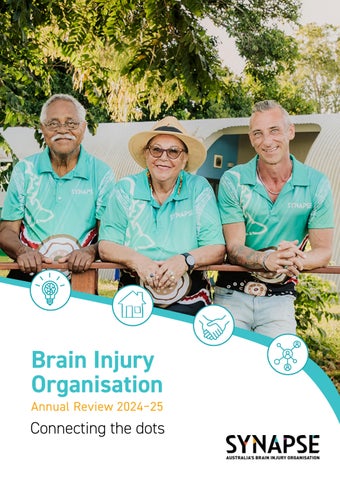
As Australia’s national organisation for brain injury, Synapse is committed to ensuring this annual review has been designed with brain injury-friendly and accessibility principles as a priority.
Information and referral line
Our Information & Referral service provides specialist information and advice to help manage the impacts of brain injury and better navigate the systems of available care and support.
Freecall 1800 673 074
Synapse’s mission is to ensure the rights of people impacted by brain injury, connecting knowledge, policy, services, and systems. Synapse focuses on both government and public support to realise funding for the development of specialist services nationally.
Synapse’s commitment to reducing the massive unmet need for services and support in Australia is unwavering. The team at Synapse are resolute in seeing specialist and individualised services available to all in need, no matter where they live or which culture they belong to.
Our contact details:
National office: Level 1/262 Montague Road, West End QLD 4101.
Postal address: PO Box 3356 South Brisbane Qld 4101
Phone: 07 3137 7400
Email: info@synapse.org.au
ABN: 75 631 135 125
Find us online at synapse.org.au
Our story
Our story
From our beginnings in 1984 as a small grassroots organisation, Synapse has grown into Australia’s voice for brain injury.
Over the decades, we’ve adapted to meet changing needs, expanding services, building housing solutions, partnering with researchers, and amplifying the voices of those with lived experience.
Our journey reflects resilience and innovation. Today, Synapse remains collaborative and future-focused, working to ensure every person impacted by brain injury is recognised, supported, and connected.
1984
Headway founded by Alwyn Ricci, offering counselling, vocational services, research, and family support.
2013
Formed research partnerships (Hopkins Centre, Mission Australia, Quigley St, Cairns).
1990
Delivered first major research report on brain injury services in QLD.
2010
Rebranded as Synapse.
1996
Became the Brain Injury Association of QLD, expanding into housing and direct support.
2007
Secured first capital grant (Lawnton).
2016
Merged with Stroke Association of QLD & Brain Injury Association of NSW.
2017
Opened Cairns Community Living Initiative (culturally safe housing for Aboriginal & Torres Strait Islander peoples).
2018
Merged with Headwest WA, cementing Synapse as Australia’s Brain Injury Organisation with national reach.
CEO’s message
This year’s Annual Review theme is Connecting the Dots. This theme examines the different aspects of living with brain injury from health, housing, relationships, financial resources and culture, from young to old age. We remain committed to our mission to “Rethink Brain Injury. Change Society”. Our focus on pursuit of this impact continues to shape Synapse, ensuring our systems, capability, size and complexity reflect the impact we seek to make, and importantly the composition and diversity of funder support now and into the future. Synapse exists to operate in community, not within a disability sector context alone. Our impact proudly and necessarily spans social systems and parts of community that are removed from a disability specific response or indeed the funded disability system more broadly. People impacted by brain injury, diagnosed or not, live outside the disability service system, not within it. This presents challenges for Syanpse’s continued transition to an organisation that reflects our community, not the disability system. Over 2025, Synapse has undergone changes which will help us deliver better for present and future challenges and a sustainable financial footing. We remain an organisation that reflects the voice of people impacted by brain injury across the complexity and diversity of life experience.
With continued funding from the Paul Ramsay Foundation, we have grown the integration of the Guddi Way Screen into Indigenous and mainstream courts in Queensland, Western Australia and New South Wales. This critical work surfaces unequivocal data showing that of those screened, 88% had experienced a prior head injury, with 87% identifying cognitive functioning difficulties that were previously unidentified. Seventy three percent had lifelong impacts because of that injury and 53% had sustained their first head injury by the age of 20. Understanding this data is critical to ensure the right support and opportunities for people otherwise criminalised without access to the right supports to avoid contact with the justice system, or assist change and rehabilitation success.
We continue to advocate at both a systematic level and for individuals. Our individual advocates support the needs of those with brain injury and their carers and families to ensure their rights are realised and not lost in complex government systems. We so often see the need for brain injuries to be far better understood, acknowledged and identified in systems relating to justice, domestic and family violence (DFV), mental health and homelessness, to name a few. People living with brain injury get shunted about from system to system and expected to live life and meet expectations that often are frustrated due to their injury, invisible to others and so often not even identified. Providing individual and systematic advocacy programs allows for greater self-determination of every person while respecting the uniqueness of every person’s story.
As we look at brain injury from all angles, we’ve grown our contributions in the area of Family and Domestic Violence – a leading cause of brain injury in survivors of violence and an often-unidentified concern for those that use violence. Through the Queensland State Government, we have developed and run two pilots, in Brisbane and Townsville, called Step Up. This aims to turn perpetrator behaviour change programs on their head. These programs are tailored to look at the cognitive difficulties which can occur and can lead to heightened violence and impulsivity. Importantly, the design of learning programs that utilise evidence-based approaches to learning, memory retention and recall are critical to improve behaviour change and safety for survivors of violence. By looking at the intersection of brain injury and violence these pilots look to develop meaningful ways to prevent violence.
Our people are the backbone of what we do. Our impact is the result of our people and their leadership on issues impacting those we serve. I want to say a big thank you to them for all their commitment and trust this year and for rising to the challenges that confront us in our pursuit of having a real impact in our communities.
We are incredibly thankful to our Synapse Board, which continues to support the work we do. We also thank the many friends of Synapse, including our partners, donors, and advocacy organisations, for the significant part they play in helping us achieve our vision.
Adam Schickerling Synapse CEO
Our board
Paul Watson
Non-Executive Director
Paul is a Director of Berrill & Watson Lawyers and an expert in superannuation and life insurance. For the past decade, Paul has delivered seminars and workshops for disability support groups, financial counsellors, and consumers with the aim of improving the lives of people with a disability, injury, or chronic illness. Paul is a member of the Consumer Law Committee of the Law Council of Australia and was awarded an Honorary Life Membership with Palliative Care Queensland for the support he provided to the organisation.
Hannah
Hiscox
Non-Executive Director
Hannah is a chartered accountant and registered company auditor with more than 20 years’ professional experience. Currently a partner in the Audit and Assurance team at Grant Thornton Australia, Hannah audits a portfolio of charities registered with the Australian Charities and Not-For-Profits Commission. Hannah has a Bachelor of Business (Accounting) and a Graduate Certificate in Business (Philanthropy and Non-profit Studies).
Paul
Raciborski
Non-Executive Director
Paul experienced a severe brain injury as the result of a fall in 2003. Since then, he has strived to make a difference for others who have lived through similar experiences. Paul is the Rehabilitation Tradesperson at Liverpool Hospital Brain Injury Rehabilitation Unit. In teaching woodworking to clients with a brain injury, he is part of a team providing cognitive, physical and behavioural therapy. Paul previously enjoyed a successful corporate career in manufacturing and project management.
Greg Luck Non-Executive Director
Greg is an entrepreneurial and purpose-driven leader with a global footprint of C-Suite experience across Australia/NZ, Asia Pacific, North & South America, Europe, the Middle East, and Africa. Greg has worked in public, private, and non-profit organisations spanning Professional, Human and Commercial Services. He holds a Masters Degree in Business Administration, a Bachelor’s Degree in Vocational Education and Training, and an Engineering qualification. He is a Fellow of the CEO Institute and a Member of the Australian Institute of Company Directors.
Ian Wilson Non-Executive Director
Ian is a qualified accountant (CPA Fellow), a chartered company secretary, and has been a director of commercial and not-for-profit companies in Australia and overseas for over 30 years. Ian’s early career was mainly in the technology and finance industries before moving to senior management positions within the notfor-profit sector. Ian currently holds a finance role with The Florey, the largest brain research centre in the Southern Hemisphere, with teams of researchers dedicated to building knowledge on a range of neurological and psychiatric conditions.
Frances Quan Farrant Non-Executive Director
Frances has worked in the community and disability sectors for two decades. As a social scientist and social worker, Frances has an extensive background in advocacy, policy, and disability rights, including expertise on the United Nations Convention on the Rights of Persons with Disabilities. Frances has represented disabled people at the United Nations in both Geneva and New York on many occasions. With a Bachelor of Arts from Macquarie University and a Master of Social Work from QUT, Frances is presently enrolled in a PhD at The University of Queensland researching the implementation of The Convention of the Rights of Persons with Disabilities in Australia and internationally.
Joe Capozza Non-Executive Director
Joe has over 25 years of leadership experience in the not-for-profit sector, offering a strategic business perspective and practical expertise. His roles include CEO of a community housing association for women escaping violence, National Volunteer Manager for a children’s charity, and Director of Volunteer Services in a public hospital. Joe has served over 10 years on the board of Volunteering SA&NT Inc. He has held various positions, including Deputy Chair of the Property Council of Australia (SA Division) Residential Committee, Treasurer for Rostrum Club 18, and multiple social housing committees. His recent role involved working with a disability housing provider and managing housing strategy at Believe Housing Australia Ltd.
Brain injury facts and figures
The figures we have on brain injury impact in Australia don’t quite tell the whole story. There’s a significant number of Australians whose experiences aren’t represented in these statistics. It’s crucial that we shed light on this, giving voice to those who are often overlooked.
1 in 45 Australians live with a brain injury.
More men than women are diagnosed with brain injuries.
Over 450,000 Australians live with a brain injury.
Almost 3 in 4 people with a brain injury are under 65.
What is a brain injury?
Brain injury is not always visible, but its impact can be life-changing. It can result from many causes; accidents, stroke, illness, or trauma, and no two brain injuries are the same.
The effects depend on where in the brain the injury occurs, meaning it can change how a person feels, moves, behaves, thinks, and connects with others. Too often, these challenges are misunderstood or overlooked.
While statistics help us understand the scale of brain injury in Australia, they don’t tell the full story. Many people remain unseen in data, and the true number of Australians living with brain injury is likely far higher than reported.
At Synapse, we know that behind every figure is a person, a family, and a community navigating the complex realities of brain injury, and that’s why awareness, support, and understanding matter.
Behaves
Moves
Thinks
More information about the sources of these statistics is available online. Scan this QR code for a direct link to our web page: synapse.org.au/key-facts-figures-sources/
Services snapshot Connecting the dots
Life after brain injury is shaped by many factors; health, housing, relationships, financial resources and culture. At Synapse, we aim to connect these dots so people can live with confidence, purpose, self-determination, and choice.
We work nationally, helping all Australians to navigate complex service systems, access safe housing and supports, and build meaningful connections. We listen deeply and draw on research, culture, and lived experience to guide practice, working in partnership with communities, governments, and organisations
to influence change. Synapse exists to make those connections real.
Our services are designed to meet people where they are, with flexibility, respect, and understanding that every person’s story is unique, as is the impact of their brain injury.
Connecting knowledge
Knowledge brings clarity. Life is full of ups and downs, and a brain injury can amplify the complexity. In those moments, the right knowledge and guidance can make all the difference.
Connecting home
A home is more than housing. We help people create safe, meaningful places that foster identity, independence, and belonging.
Connecting people
Independence grows through connection, it doesn’t mean going it alone. Shared experiences and relationships that provide strength, comfort, and community.
Connecting systems and services
Systems can create barriers or opportunities. We work to transform them through training, advocacy, and partnerships that put people first.
The whole is greater than the sum of its parts. Connecting these dots can create real change.
• Knowledge and understanding create clarity
• Home creates belonging
• Relationships create communities
• Working systems create opportunities.
Together, these connections create better outcomes for people with brain injury.
Top-requested areas through our Information and Referral Services
Each day, our Information and Referral team answer many different enquiries relating to brain injury. Here is a breakdown of their top requested enquiries.
Finding information and services
Connecting knowledge
Life doesn’t follow a straight path. Sometimes it’s full of joy; other times it feels heavy, complicated, or overwhelming. Some people have strong networks and resources to lean on, while others walk their path with far less support.
A brain injury adds another layer to this reality, amplifying challenges, changing how someone experiences the world, and how the world responds to them. It can make daily life harder, from managing at home to navigating relationships, parenting, working, or simply getting through the day.
At Synapse, we meet people in these moments, wherever they are on their journey. We know that individuals understand their own needs best, what feels right, and what support is needed, when it’s needed. But sometimes navigating systems like
housing, health, the NDIS, employment or ageing services can feel overwhelming. This is where we step in, through our services including information, referrals, advocacy and peer support. We’re often the first point of connection: a listening ear and a steady guide, helping to make things clearer and easier to manage. Whether someone is newly impacted, adapting to change, or living with long-term impacts, we provide information, resources, and support that fit their life, not just their diagnosis.
Very relieved to speak with people that understand TBI and are so patient, listening attentively and finding the best way that you can assist me. Particularly that I am not receiving any support and have no family. — Participant
The importance of lived experience
Lived experience is at the heart of our workforce and approach. It brings understanding of the highs, lows, frustrations and challenges that people with brain injury often face. This insight shapes how we listen, respond, and support, fostering empathy, respect and meaningful connection in everything we do.
My brain injury is historic, over 20 years old, and there was no support back then. I had to navigate it on my own, it helps when calls come in. I know the gaps in the system and referral pathways that might be helpful. I can understand their journeys, especially if they aren’t getting that support. This is how my role helps me to refer and provide information.
Housing, criminal justice, and advocacy are the areas that aren’t even talked about when leaving hospital with a brain injury. Though these can be realities, sometimes people can lose their jobs the day they get their brain injury, so engagement with housing services, criminal justice and DV are areas that can arise that might not have been in a person’s life prior to a brain injury. — Information & referral team member
We also work with organisations, service providers, and systems to build stronger understanding of brain injury and its impacts. By offering tailored advice and practical guidance, we help shape programs, policies, and supports that genuinely respond to individual needs, from inclusive services to navigating justice, disability, and health systems.
Authentic relationships are at the heart of this. We collaborate across the sector to share knowledge and co-design support, mentor volunteers, and empower people with lived experience to share their stories. This includes service support for people after release from prison, strengthened by using the Guddi Way Screen. This culturally safe tool helps identify cognitive impairment and connect Aboriginal and/or Torres Strait Islanders with services for a successful transition back into community.
Our partnerships extend further, to hospital brain injury units, and community organisations through initiatives such as BeStreetSmart and leading the national conversation through Brain Injury Awareness Week. Collaborations with the
Stroke Recovery Association of NSW, interagency networks across regions and states, and tailored training for Allied Health and support providers all help drive better practice. Our active involvement in groups like the Guardianship Working Group and the Accessible Transport Advisory Committee reflects our commitment to advocacy, access, and improved opportunities for people impacted by brain injury.
At Synapse, connection is at the centre of everything we do: connecting people to knowledge, housing, community, and systems. These connections don’t just make life easier to navigate, they open the way to confidence, purpose, and possibility.
Connecting organisations and local communities
We know urgent change is needed for Aboriginal and/or Torres Strait Islander people, who are disproportionately impacted by incarceration, homelessness, a lack of access to quality health care, unemployment, and greater exposure to violence, drugs and alcohol. We know that many people impacted by brain injury are much more vulnerable to these same experiences after injury.
Synapse’s social enterprise programs exist to deliver impact nationally, generating revenue to invest back into First Nations Communities. With a strong cultural lens and led by Aboriginal and/or Torres Strait Islander people, Synapse delivers training and engagement programs for community organisations and government agencies across Australia.
With partnerships and initiatives spanning the court system, corrections, domestic violence, housing, drug and alcohol, disability and mental health. Synapse exists as a change agent at the intersection of these systems and the experience of brain injury. Better and fairer outcomes for Aboriginal and Torres Strait Islander people can be achieved only when our systems respect and acknowledge these needs.
National scaling and application of the Guddi Way Screen to affect this change is the driving force behind creating the necessary awareness
and evidence to change systems; to change outcomes. This is done through connecting with partner organisations and community, helping to build the capability of First Nations workforce nationally to conduct Guddi Way Screen in their own communities.
We build partnerships across Australia with governments and corporations, supporting them to engage respectfully with First Nations communities by valuing local knowledge and leadership. Through cultural awareness programs and First Nations leadership, we help ensure an understanding of culture and history remains central to how services and local projects are designed and delivered. We provide a link for governments and corporations, to improve relationships and outcomes for Aboriginal and Torres Strait Islander peoples.
Connecting home
Every Australian has the right to safe and secure housing, yet too many people with a brain injury experience homelessness, or need extra support to manage at home. Home is more than just a roof over your head. It is the foundation for stability, making it possible to find work, access services, and stay connected to friends, family, and community.
Recovery after a brain injury can be unpredictable, and not everyone is able to return to their previous home. For many, memory and cognitive challenges make it harder to manage tenancy or ownership responsibilities - like paying rent or bills on time or relationships with others at home - which can quickly place housing at risk. Without a stable address, securing or keeping a job becomes even more difficult.
That’s why appropriate housing and support is so important. Beyond bricks and mortar, home is often where we feel a sense of belonging, autonomy, control, choice, and independence.
We work alongside people with brain injury to explore housing options and provide guidance through transitions. We advocate for housing that not only meets immediate needs but also connects people to ongoing supports and services, helping to reduce pressure on health, justice, and social systems. Our goal is to create pathways to homes that empower people to live a safe, meaningful, and connected life.
29% of people experiencing homelessness have a history of brain injury.
39% of all Specialist Homelessness Services clients are people who have experienced family and domestic violence.
61% of prison entrants aged 18-24 had been homeless in the four weeks before entering prison.
Community Living Initiative
This initiative represents just one of the housing strategies employed by Synapse, which recognises that safety and connection can vary greatly for every person, much like their brain injury.
This recognition is more than simply considering culture in the way a service is delivered. A mainstream service superficially adapted to cultural considerations is not only inadequate, but often harmful.
The first and only of its kind nationally, our Community Living Initiative, has culture and connection at its heart. Culture underpins every aspect of how we understand, relate and support Aboriginal and Torres Strait Islander people.
Culture and identity can’t be separated from housing and support; they are the foundation. Family and community is the foundation. Since 2017, the Community Living Initiative has not wavered in commitment to connect community, cultural knowledge and family to the way support is provided. Under the wisdom of Elders and a strong First Nations team, support is delivered in a way that respects Culture and connection as being the basis of strength and healing.
SOURCES:
Australian Institute of Health and Welfare (AIHW). Family, Domestic and Sexual Violence in Australia: Continuing the National Story 2023. Accessed October 2025: https://www.aihw.gov.au/reports/domestic-violence/family-domestic-sexual-violence-australia-2023 (39% of all Specialist Homelessness Services clients are people who have experienced family and domestic violence.)
• Australian Institute of Health and Welfare (AIHW). The Health of Australia’s Prisoners 2022. Accessed October 2025: https://www.aihw. gov.au/reports/prisoners/health-of-australias-prisoners/contents/summary (61% of prison entrants aged 18–24 had been homeless in the four weeks before entering prison.)
• Flatau, P., et al. (2018). The State of Homelessness in Australia’s Cities: A Health and Social Cost Too High. Centre for Social Impact, University of Western Australia. Accessed October 2025: https://www.csi.edu.au (29% of people experiencing homelessness have a history of brain injury.)
Connecting people
Life after brain injury can bring ups and downs, times when we need others to hold us up, and times when we find our own strength to move forward. We believe that the greatest reflection of independence is not doing things alone, but the confidence to lean on others when things may be tough.
Support and connection are lifelines for people living with brain injury and their families. At Synapse, we create spaces where people can come together, share experiences, and feel less alone. Across Australia, our Reconnections groups and other peer support such as BrainBank offer welcoming places to connect, celebrate successes, and access practical support.
In Dubbo, the Koori Wellbeing Support Group brings older Aboriginal people together to talk
about health and wellbeing in a culturally safe environment. Monthly guest speakers, from doctors to paramedics, not only build confidence in seeking medical care, but also help medical students learn the importance of culturally sensitive practice.
By fostering connection and improving access to services, Synapse helps communities thrive.
Peer support groups
Having a space to connect, share, learn, and find support from people who truly understand is invaluable. Peer support creates safe spaces where individuals feel understood and accepted, which reduces isolation.
Our Reconnections support groups give people living with brain injury, and those caring for someone with a brain injury, the opportunity to come together with others who share similar experiences. Hearing stories, learning from one another, and talking about issues that matter is a key reason these groups continue to grow.
Many of these groups are facilitated by volunteers with lived experience, creating meaningful opportunities for peer mentoring, skill development, and a supported pathway back into employment. This layered approach not only strengthens community connection but also builds confidence and capacity among those leading the way.
We also provide an online carers forum, giving carers across Australia the chance to connect, share experiences, and ask questions in a
supportive environment. Alongside this, our online groups allow individuals to build friendships and share their journeys with others living similar lives.
In Queensland’s Far North, our Wurri-Wurri Outreach is about respecting and supporting Elders. Run by Elders, the program helps keep Elders strong, mentally and physically, by listening to what matters most for their health and wellbeing. Gatherings bring people together for a yarn and a meal, while also sharing information and exploring what extra support may be needed from community or services.
There’s all sorts of people and they have all sorts of symptoms. But they are in the same boat … there is nothing that can’t be talked about … you talk to people that know what you’re talking about’
— Reconnections
participant
In 2021, 1 in 5 (19%) of people with disability aged 15–64 experienced social isolation, compared with 9.5% without disability.
Court Link
Court Link is a transformative support program in Cairns, Queensland, designed to assist individuals navigating the court system. It provides comprehensive services such as transportation, outreach, and culturally informed support to improve outcomes over a 12-week period.
The Court Link Community Support Service (CLCS) exemplifies how focused support can change outcomes. For many participants, attending court or community appointments can be daunting, especially when facing multiple complexities including living with a disability or impacted by domestic violence. They may be homeless, as well as living with mental health concerns or drug and alcohol difficulties.
The CLCS addresses these barriers by offering essential transportation and moral support, ensuring individuals can fulfil their obligations without the added stress of logistics.
Court Link Community Support Services
• Transporting participants to court and community appointments
• Attending court with participants
• Checking in with participants
• Connecting participants with relevant services in the area to meet goals
• Providing advice, information, and general support to participants.
• Cultural support
The presence of CLCS team members in court helps participants feel more at ease and informed about the processes they are navigating. Synapse emphasises the importance of culturally informed practices to enhance engagement with the program, ultimately fostering a positive impact on sentencing.
A person, family, culture and communitycentred approach is vital in helping individuals meet court requirements prior to sentencing decisions. This means connecting participants with CLCS team members based on cultural and language preferences, gender, age, and personal experiences.
Step-Up
Men’s Behaviour Change Program
This year, we launched the pilot of Step Up, a Men’s Behaviour Change Program designed for men who have used violence and may be living with cognitive difficulties.
The free program, funded by the Queensland State Government, supports men who want to strengthen their relationships and make lasting, positive changes in their lives.
Traditional behaviour change programs often overlook the role that brain injury and cognitive challenges can play in cycles of violence. Step Up bridges this gap by combining specialist brain injury knowledge with trauma-informed practice, creating a program that is both safe and effective.
By tailoring support to the realities of living with cognitive difficulties, Step Up aims to reduce family violence, improve accountability and build stronger outcomes for partners, families and communities. The pilot marks an important first step in developing new ways to prevent violence and support behaviour change. With two pilots running in Brisbane and Townsville, and including
both Non-Indigenous and First Nations developed and delivered programs. Synapse is leading the way in addressing the complex intersection between brain injury and family violence.
All of the content delivered is evidence based and focuses on learning outcomes.
Feeling respected and empowered it’s critical for participants to make real and positive change.
Individual advocacy in NSW
At times, people may need support to connect when there are roadblocks, conflict or decisions they do not agree with.
Synapse Advocacy helps bridge these gaps. The service assists individuals to engage positively with systems and services, whether working with the NDIA to challenge a decision, helping courts or tribunals understand a person’s circumstances, ensuring hospitals and doctors listen, or supporting families to reconnect after brain injury.
Everyone’s voice deserves to be heard. The Individual Advocacy service supports people with brain injury or a neurocognitive disorder, as well as their carers and guardians, to ensure their rights are recognised, and their voices are not lost within complex systems.
Case study
A statewide service for eligible people in New South Wales, the service assists with navigating the NDIS, housing, health, justice and community supports. Advocates walk alongside individuals through important meetings, service concerns and complaints, helping them make informed choices and find fair outcomes.
Through this work, voices are amplified, barriers are broken down and people are empowered to live with independence, confidence and connection.
When Claire was in her twenties, life was full of momentum. She was married, had just bought a home, and was building her future. But a serious workplace accident changed everything. After sustaining a severe traumatic brain injury, Claire was left with significant mobility, cognitive and communication challenges. Her marriage ended, and she moved into her mother’s home, living in the downstairs garage.
Despite strong support from allied health professionals, Claire struggled to take the next step toward living independently. Her family, deeply protective, feared for her safety. With the help of a Synapse advocate, Claire began navigating these difficult conversations, slowly building confidence and trust over 18 months.
At first, the advocate led many of the discussions, helping mediate family concerns and overcome barriers such as home maintenance issues and staffing challenges. Over time, Claire took the lead, with the advocate stepping back to provide reassurance and encouragement as she found her voice.
Today, Claire lives independently in her own home. Her family visit regularly, and her confidence and quality of life have grown enormously. Synapse’s advocacy service was the bridge between professional support and personal empowerment, helping Claire move from dependence to choice, and from uncertainty to confidence.
*Namechangedtoprotectidentity.
Connecting systems and services
Real change begins when systems connect, creating opportunities for collaboration, understanding and better outcomes for people with brain injury. Health, justice, housing, disability, and community services are often fragmented, leaving people with brain injury to navigate gaps and barriers on their own.
Our role is to bring these systems together, linking knowledge, research, training, and lived experience, so responses become more coordinated, fair, and effective.
We partner with governments, universities, and community organisations to translate lived experience and research into better practice. These collaborations focus on the real-world impact of brain injury, turning insights into evidence that strengthens services, shapes policy, and drives systemic reform.
Through projects with partners such as The Hopkins Centre, Griffith University, and others across Australia, we explore issues including housing and homelessness, justice involvement, and culturally safe approaches like the Guddi
Way Screen. By centering the voices of people with lived experience, we ensure that research reflects the realities of brain injury and leads to practical, meaningful change.
Our partnership with the Queensland Brain Institute builds on this commitment, contributing to brain injury research that informs better outcomes for people with brain injury.
By investing in Indigenous education pathways, we aim to help grow a future workforce that can deliver culturally informed responses and lead change within the field of brain injury.
Guddi Way Screen
For more than a decade, Synapse has led the development of the Guddi Way Screen (GWS) a culturally informed and validated tool to identify cognitive difficulties in Aboriginal and/or Torres Strait Islander people. Last year, the Brain Impairment Journal by CSIRO Publishing released a paper validating its impact and supporting broader implementation across justice systems nationwide.
GWS is not only a screener for cognitive impairment but, importantly, it’s a way to hear, understand, and respect a person’s story and experiences. Recognising the diversity of life experiences that influence what is important to each of us to stay well and live well. Not focussing on diagnosis, but instead on what a person needs to be connected in a way that holds meaning for and to them.
Designed with an accessible online interface, GWS can be used by non-clinicians in communities across Australia, Today, it is being applied in courts, prisons, and domestic violence, mental health, and disability services. Changing how
systems respond to Aboriginal and/or Torres Strait Islander people impacted by brain injury, in remote, regional and metropolitan locations nationwide.
Guddi Way Screen is the only culturally validated screen for cognitive impairment in Aboriginal and/or Torres Strait Islander people.
Cognitive difficulties identified from people who completed a Guddi Way Screening.
Cognitive difficulties identified:
Training and education
Sustaining change depends on people, the professionals who meet someone with brain injury in a hospital ward, a homeless shelter, a police station, or a community service. That’s why Synapse delivers training and education that builds knowledge, confidence, and understanding across sectors.
Our training includes professional development for carers, community organisations, and service providers, as well as tailored programs for systems such as corrections staff, domestic violence first responders, and justice or health professionals. Training is available both online and in person and is strengthened through our Brain Injury Network (BIN), which fosters connection, shared learning, and collaboration across sectors.
In 2024, we launched the new interactive eLearning modules - Understanding the Brain and Impacts of Brain Injury - helping people see beyond assumptions. But the training goes further: our in-person workshops and webinars are shaped by more than 40 years of experience, and by what people with brain injury, families, carers, and services tell us is needed most.
What makes our approach unique is its reach across multiple systems. We work with domestic and family violence services, homelessness and housing providers, child protection, disability and mental health services, drug and alcohol rehabilitation, and legal and corrections systems.
By equipping these workforces with the right knowledge, we help break cycles of misunderstanding and vulnerability that too often hold people with brain injury back.
Based on participant feedback we have seen a sharp increase of knowledge and awareness of brain injury. Before training, over 54% of participants rated their knowledge as average or lower. After training, over 94% of participants said they had a high to very high understanding of brain injury. The skills and confidence to support people living with a brain injury increased by 30% after training.
Moving forward, Synapse will continue to connect the dots across systems. Whether through research, advocacy, culturally safe tools like the Guddi Way Screen, or sector-wide training, our work ensures that governments, services, and communities have the tools, evidence, and insight they need to respond better.
When systems are better connected, people with brain injury don’t fall through the cracks, they are seen, heard, and supported to live meaningful lives.
Brain injury across the lifespan
Brain injury can occur at any stage of life, from birth through to older adulthood. Its impacts are shaped not only by the injury itself, but also by a person’s environment, culture, access to support, and the systems around them.
When these factors don’t connect as they should, the realities of living with brain injury can intensify, leaving many people at greater risk of disadvantage across health, housing, justice, and community life.
At Synapse, we work to change this by connecting the dots between people, services, and systems.
We exist to ensure every person affected by brain injury has access to connection, culturally safe services, and tailored support, wherever they are in life. By strengthening systems and growing community understanding, we create opportunities for people to be seen, heard, and supported to thrive.
Birth & early childhood Childhood & teens
Birth and early childhood
The earliest years of life are critical for brain development, but they can also be when the brain is most vulnerable to injury. Brain injury in infancy and childhood may arise from a range of factors; from prenatal alcohol exposure, birth complications, or illness to accidents or violence in the home.
When a child experiences brain injury, the effects can be far-reaching. Developmental delays, challenges at school, and difficulties in social environments often follow, yet brain injury in children is frequently missed, misunderstood, or diagnosed too late.
For families, this can mean navigating stigma, limited access to early supports, and a lack of specialist services, especially in rural and remote areas.
Risk factors
At Synapse, we know that early intervention and family-focused support can make a profound difference. By raising awareness, improving education, and strengthening systems of care, we can ensure children with brain injury, and their families, have the best chance to thrive.
• Prenatal alcohol and drug exposure can cause Fetal Alcohol Spectrum Disorder (FASD), a lifelong disability that affects learning, behaviour, and development.
• Birth trauma, hypoxia, or early-life illness may interrupt healthy brain development in the first crucial moments and years of life.
• Accidents in infancy and early childhood are a common cause of acquired brain injury, from falls at home to playground or road accidents.
• Domestic and family violence can cause inflicted injuries and trauma in very young children.
What Synapse is doing
• Partnering with community organisations to deliver culturally responsive support for families.
• Raising awareness of brain injury through advocacy and training for frontline services.
• Providing information and referral support to connect families with the right advice, resources, and care.
• Synapse is part of the Acquired Brain Injury Flagship, Murdoch Children’s Research Institute.
Key issues
• Missed or delayed diagnosis means children often go without the early supports that could change their development pathway.
• Limited access to paediatric specialists, especially in rural and remote areas, leaves many families isolated and unsupported.
• Systemic inequities mean Aboriginal and Torres Strait Islander children are more likely to experience brain injury but less likely to receive appropriate care.
• Stigma and lack of understanding create additional pressure for families already coping with complex needs.
• Developmental delays can quickly flow into difficulties at school and in social settings, shaping a child’s opportunities into adulthood.
• Disconnection from family, community, or culture increases vulnerability and reduces the protective factors that help children thrive.
What needs to change
• Better family education so parents and carers can recognise the signs of brain injury and know how to seek help.
• Early intervention therapies that are supportive, compassionate, and evidence based.
• Universal, culturally safe screening to identify developmental and cognitive concerns early, regardless of where a child grows up.
• Investment in community-led, family-focused programs that strengthen families and build resilience from the start.
Recognising FASD early: Giving children the best start
Fetal Alcohol Spectrum Disorder (FASD) is one of the most common yet under-recognised causes of brain injury in children. It occurs when a developing baby is exposed to alcohol during pregnancy, and its impacts can include developmental delays, learning difficulties, and behavioural challenges.
Too often, children with FASD go undiagnosed or are misdiagnosed, leaving families without the support they need. This is particularly true in rural and remote areas, where access to specialist paediatric services is limited. Stigma around alcohol use in pregnancy also prevents families from seeking help, meaning many children miss out on vital early intervention.
Early identification and family-focused support can change the trajectory of a child’s life. With the right therapies and understanding, children with FASD can thrive at home, at school, and in their communities.
At Synapse, we are working to improve awareness of FASD across health, education, and justice systems. Through our Information & Referral Service, we support families with resources and
SOURCES:
guidance, and we advocate for better screening, earlier diagnosis, and culturally responsive services. Every child deserves the best start in life, and for children with FASD, that begins with recognition and support.
In Australia the estimated FASD prevalence in the general population is 3.64% and is expected to be higher in certain vulnerable populations (e.g., in youth detention, foster care and remote Indigenous communities).
Drug and Alcohol Review: Tsang, T., Rosenblatt, D., Parta, I., Elliott, E. (2025). Estimating the Prevalence of Fetal Alcohol Spectrum Disorder in Australia.
Childhood and teens
Brain injury in childhood and adolescence can stem from many causes, including falls, sports-related concussions, motor vehicle accidents, exposure to family violence, and non-fatal strangulation.
Some young people are also living with brain injury present from birth, such as Fetal Alcohol Spectrum Disorder (FASD). At this stage of life, the brain is still developing, and injury or impairment can affect memory, learning, behaviour, and emotional regulation in ways that shape a young person’s future. Too often, these impacts are misunderstood as defiance or poor behaviour, leading to stigma, exclusion, and missed opportunities for support.
At Synapse, we’re working to connect the dots between families, schools, and communities: building understanding, strengthening responses,
and advocating for safer systems. From improving concussion awareness in sport to providing education for teachers and frontline services, we’re helping to create the right supports early on. By making these connections, young people can stay supported, build resilience, and thrive.
Risk factors
• Falls are one of the most common causes of brain injury in children and teens.
• Sports-related concussions that involve repeated knocks on the field or playground can have lasting impacts if not managed properly.
• Motor vehicle accidents, serious crashes, can leave lifelong effects on a developing brain.
• Exposure to family violence for children and teens that may sustain injuries as a result of violence at home.
• Fetal Alcohol Spectrum Disorder (FASD), an ongoing, lifelong brain injury caused by prenatal alcohol exposure.
• Non-fatal strangulation in teens is a dangerous and often hidden risk that can cause brain injury.
Childhood and teens
Key issues
• Cognitive impacts occur as brain injury can affect memory, behaviour, emotional regulation, and learning.
• Misunderstood behaviours - when a child is labelled “naughty” or “defiant” rather than recognising them as living with a brain injury.
• Social exclusion occurs for young people with brain injury as they are more likely to experience bullying and isolation.
• Disconnection from family, community, or culture increases vulnerability and reduces protective supports.
• Schools are unprepared due to a lack of training and awareness of brain injury in education systems that leave students unsupported.
• Family strain occurs as mental health challenges and disconnection from family often follow when supports are missing.
• Inconsistent leadership responses to concussion, mean that many young people don’t get the care they need.
What needs to change?
• Teacher and coaches training and support is needed, so schools can adapt learning and create environments that work for students with brain injury.
• Positive connections should be made early, so young people are linked with cultural, social, and health supports that build resilience and keep them engaged.
• Rehabilitation access must be timely, as early intervention can greatly improve recovery and long-term wellbeing.
• Family education is essential so parents and carers have clear guidance and resources to confidently support their children.
• Concussion management needs consistent guidelines across schools and sports programs to ensure young people receive the right care after injury.
• Awareness of strangulation risks must be strengthened through greater education on the dangers of non-fatal strangulation during adolescence.
What Synapse is doing
• Advocating for recognition by highlighting the prevalence of FASD in the youth justice system and pushing for systemic change.
• Creating resources that give teachers and families practical tools to better understand and support students with brain injury.
• Offering information and referral support through our specialist team who provide advice, resources, and guidance to families and young people.
• Providing community education to raise awareness about motor vehicle safety and the impacts of brain injury.
FASD and the justice system
Connecting the dots between understanding, response, and reform.
For many young people with Fetal Alcohol Spectrum Disorder (FASD), life is shaped less by their disability and more by how systems respond to it.
Too often, behaviours driven by cognitive and emotional difficulties are misunderstood, met with punishment instead of support. As a result, young people with FASD are significantly overrepresented in the justice system.
FASD is a lifelong disability caused by prenatal alcohol exposure. It is the most common preventable cause of developmental disability in Australia and affects memory, impulse control, emotional regulation, and learning from consequences. These challenges can lead to difficulties in school and social environments, where behaviours are misread as defiance and, in the justice system, as resistance or reoffending.
A Western Australia study found that 36% of youth in detention met the criteria for FASD, yet most had never been diagnosed before entering custody. The consequences are stark: up to 96% of young people released from detention
in Queensland reoffend within 12 months, and nationally, around 85% return to supervision within a year. These figures highlight the urgent need to connect the dots between early diagnosis, trauma-informed care, and system reform.
At Synapse, we’re working to build understanding across education, health and justice, creating systems that recognise FASD as a disability, not a disciplinary issue. With recognition, compassion and the right supports, young people with FASD can be guided toward stability, not punishment.
Up to 96% of young people released from youth detention in QLD reoffend within 12 months.
SOURCES:
• Australian Broadcasting Corporation (ABC). Hopes Australia-first FASD clinical guidelines will increase diagnosis rates. Accessed May 2025: https://www.abc.net.au/news/2025-05-13/new-national-fasd-clinical-guidelines/105267916 Australian Government, FASD Hub. What is FASD? Accessed June 2025: https://www.fasdhub.org.au/fasd-information/what-is-fasd/
• Bower, C., Watkins, R. E., et al. (2024). Estimating the Prevalence of Fetal Alcohol Spectrum Disorder in Australia. Drug and Alcohol Review. Accessed May 2025: https://doi.org/10.1111/dar.14082
• Queensland Family and Child Commission (QFCC). Exiting Youth Detention Report. 24 May 2024. Accessed September 2025: https:// www.qfcc.qld.gov.au/sites/default/files/2024-06/Exiting%20youth%20detention%20report%20June%202024.pdf
• Research and Practice in Intellectual and Developmental Disabilities. Fetal Alcohol Spectrum Disorder (FASD) and the Criminal Justice System: A Guide for Legal Professionals. Accessed June 2025: https://www.sciencedirect.com/science/article/abs/pii/ S0160252724000785
Bower, C., Elliott, E. J., et al. (2018). Fetal Alcohol Spectrum Disorder and Youth Justice: A Prevalence Study Among Young People Sentenced to Detention in Western Australia. BMJ Open, 8(2), e019605. Accessed June 2025: https://bmjopen.bmj.com/content/8/2/ e019605
Concussion in young Australians
Connecting the dots between injury, awareness, and action.
Concussion is one of the most common brain injuries affecting young Australians. For many, it happens in sport, at school, or during everyday play, often unnoticed or misunderstood. The effects can be subtle at first, but they can impact how a young person learns, socialises and participates in life.
In 2021–22, there were more than 17,700 emergency department visits and 10,800 hospitalisations for concussion across Australia. Among children aged 10 to 15, over 60 per cent of concussion hospitalisations occurred during sport or recreation, most often in AFL and cycling. Concussion rates continue to rise each year, with many cases still unreported or untreated.
Despite growing awareness, concussion is often minimised. Young athletes may be told to “tough it out” or return to play too soon, especially when they see professional role models do the same. These mixed messages can lead to serious longterm impacts. For developing brains, even a mild concussion can affect memory, behaviour and emotional regulation. Research shows that young people hospitalised with concussion experience
SOURCES:
lower academic achievement and are more likely to sustain further injuries.
Australia’s updated Concussion and Brain Health Guidelines (2024) now recommend at least 14 symptom-free days before contact training and 21 days before returning to full competition. A proposed National Sports Injury Database will also help connect the dots between prevention, data and care.
At Synapse, we are working to change the culture around concussion. By building understanding across families, schools and sporting communities, and promoting safer practices through education and advocacy, we can ensure young people are supported to recover fully and return to life safely.
• Australian Institute of Health and Welfare (AIHW). Concussions in Australia. Accessed October 2025: https://www.aihw.gov.au/ reports/australias-health/concussions
• Australian Institute of Health and Welfare (AIHW). Injuries in children and adolescents 2021–22. Accessed October 2025: https://www. aihw.gov.au/reports/injury/injuries-in-children-and-adolescents-2021-22/contents/summary
• Australian Institute of Sport (AIS). Concussion and Brain Health Position Statement 2024. Accessed October 2025: https://www. ausport.gov.au/concussion/__data/assets/pdf_file/0004/1133545/37382_Concussion-and-Brain-Health-Position-Statement-2024-FA
• Australian Sports Commission. Concussions in Sport. Accessed October 2025: https://www.ausport.gov.au/concussion McLellan, C. P., et al. (2023). Sports concussions increase risk of subsequent injury in junior Australian rules footballers. University of South Australia. Accessed October 2025: https://www.unisa.edu.au/media-centre/Releases/2023/sports-concussions-increase-injury-risk/ O’Connor, A. E., Catroppa, C., et al. (2022). Academic outcomes following hospitalisation for concussion in children and adolescents: A population-based record linkage study. Journal of Science and Medicine in Sport (JSAMS). https://www.jsams.org/article/S14402440(22)00271-7/fulltext
Young adults
Brain injury can occur at any stage of life, and in young adulthood the risks often include road trauma, contact sports, substance misuse and exposure to violence. For those already living with brain injury, this stage can bring new challenges as they transition from school into study, work and greater independence.
Without the right recognition and supports, young people may experience difficulties with employment or education, poor mental health, unstable housing and greater risk of involvement with the justice system, particularly when their brain injury is undiagnosed or misunderstood.
Through embedding screening in youth justice and community programs, delivering culturally
Risk factors
safe tools such as the Guddi Way Screen, and advocating for tailored pathways into education, employment, housing and rehabilitation, we are creating stronger foundations for young adults to succeed. By improving recognition and coordination across systems, we can ensure young people with brain injury are not left behind at this important stage of life.
• Risk-taking behaviour in young adulthood, including contact sports, can increase the likelihood of brain injury.
• Road accidents are a leading cause of brain injury for young people and can have lifelong impacts.
• Substance misuse during this stage of life heightens vulnerability to accidents and injury.
• Family violence remains a significant risk factor for brain injury in young adults.
• Sexual violence, including non-fatal strangulation, poses serious risks of brain injury that are often hidden or unrecognised.
What Synapse is doing
• Delivering the Guddi Way Screen as a culturally safe tool for the early identification of brain injury and unmet needs.
• Partnering with justice agencies to embed brain injury screening and provide training for frontline staff.
• Sharing lived experience stories, to challenge stigma and inspire change.
• Advocating for recognition of brain injury within sentencing and rehabilitation frameworks to ensure fairer outcomes.
Key issues
• Lack of support during the transition from school to work or study leaves many young adults without the tools they need to succeed.
• Involvement with the justice system is more likely when brain injury is undiagnosed or misunderstood.
• Poor mental health and social isolation are common outcomes when support is missing.
• Barriers to employment and housing make it harder for young adults with brain injury to achieve independence.
• Vulnerability to substance use and homelessness increases when young people are left without consistent services or pathways.
What needs to change
• Universal screening for brain injury in youth justice and support services is critical to early identification and intervention.
• Employment programs must be tailored to meet the cognitive and behavioural needs of young adults with brain injury.
• Mental health supports need to be strengthened to address the emotional impacts of brain injury.
• Access to higher education and vocational pathways must be improved so young people have genuine opportunities to thrive.
• Housing and legal supports are essential to protect young people at risk of instability.
• Education about non-fatal strangulation and brain injury is needed to build awareness and reduce harm.
Non-fatal strangulation and brain injury
Connecting the dots between awareness, prevention and support.
Non-fatal strangulation is a serious and often hidden cause of brain injury. It can occur in the context of assault, sexual violence or intimate partner violence, and its effects can be devastating. Even a brief interruption to oxygen or blood flow to the brain can cause long-term cognitive, emotional and physical changes.
Across Australia, one in four women and one in ten men report experiencing violence by an intimate partner in their lifetime. Among these, non-fatal strangulation is reported in up to 68 per cent of intimate partner homicides and between 25 and 50 per cent of domestic violence cases. Yet, it often goes unrecognised as a cause of brain injury, and many survivors never receive appropriate medical assessment.
Young adults are particularly at risk, with emerging reports showing rising rates of sexual non-fatal strangulation in intimate relationships. For young people whose brains are still developing, the impacts can be even more damaging, increasing vulnerability to mental health challenges, disengagement from education or work, and unsafe relationships later in life. Education, early intervention and clear community awareness are key to prevention.
SOURCES:
At Synapse, we are connecting the dots between health, justice and community systems to ensure non-fatal strangulation is recognised as a major cause of brain injury. We deliver awareness training to frontline services, advocate for better screening and data collection, and support individuals and families. With recognition and coordinated response, lives can be protected and recovery made possible.
Non-fatal strangulation
was identified in up to 68% of female intimate partner homicide cases examined between 2000 and 2018.*
• Synapse. Non-Fatal Strangulation and Its Link to Brain Injury. Accessed October 2025: https://synapse.org.au/news/non-fatalstrangulation-and-its-link-to-brain-injury/
• Australian Institute of Health and Welfare (AIHW). Family, Domestic and Sexual Violence in Australia: Continuing the National Story 2023. Accessed October 2025: https://www.aihw.gov.au/reports/domestic-violence/family-domestic-sexual-violence-australia-2023
Queensland Government. Criminalising Non-Fatal Strangulation: Policy and Practice Overview. Accessed October 2025: https://www. qld.gov.au/law/crime-and-police/types-of-crime/domestic-violence/strangulation
Australian Institute of Criminology (AIC). Non-Fatal Strangulation in Sexual and Domestic Violence: Key Findings and Responses. Accessed October 2025: https://www.aic.gov.au/publications
Bricknell, S. (2020). Strangulation in Intimate Partner Homicide: Prevalence and Characteristics (Statistical Report 52). Australian Institute of Criminology, Canberra.
* AIC, Strangulation in Intimate Partner Homicide: Prevalence and Characteristics, 2020, p. 2–3
Midlife adults
Brain injury can occur at any stage of life, but in midlife the risks often include workplace and motor accidents, stroke, and family or domestic violence. For some, this period also brings the long-term effects of injuries sustained earlier in life that were never properly diagnosed or supported.
The impacts can be wide-reaching, affecting employment, housing, relationships and wellbeing. And can increase vulnerability to isolation, substance use or involvement with the justice system.
At Synapse, we are creating coordinated responses for people in midlife. We provide specialist housing and support, develop programs
Risk factors
such as Step Up, and partner with embedded organisations such as Sisters for Change, courts, prisons and service providers to ensure brain injury is recognised and addressed appropriately. Through advocacy, education and community connection, we are building pathways that help people stay safe, engaged and supported to live with dignity.
• Road accidents as a pedestrian, driver, passenger or a cyclist on the road.
• Workplace accidents are a leading cause of brain injury for people in midlife, often resulting in long-term impacts on employment and independence.
• Stroke and other acquired brain injuries are common in this stage of life and can bring sudden, life-changing challenges.
• Assault and family or domestic violence continue to place many adults at risk of brain injury.
• Substance misuse during this stage of life heightens vulnerability to accidents and injury.
Midlife adults
Key issues
• Long-term impacts of earlier injuries can emerge in midlife, particularly when there was little or no early intervention.
• Difficulty sustaining employment and housing is common, as the effects of brain injury can disrupt stability and independence.
• Relationship breakdowns and social isolation are frequent when changes in behaviour or cognition go unrecognised.
• Family and domestic violence can affect people both as survivors and, in some cases, as those using violence due to injury-related behavioural changes.
• Drug and alcohol misuse can increase when people do not receive the support they need.
What needs to change?
• Training and upskilling around brain injury must be prioritised so health, justice, and community professionals can recognise and respond appropriately.
• Frontline professionals including police, lawyers, health workers, and family violence specialists need the tools to screen for and understand brain injury in metro, regional, and remote areas.
• Support for people who use violence must include screening, identification, and tailored services that enable behaviour change.
• Family violence services should screen all clients for brain injury and ensure referral to specialised assessment and support when required.
• Consistent intake processes are needed across services to screen for cognitive impairment using culturally appropriate methods.
• Therapies and supports within prisons should be made available, alongside brain injury–informed discharge planning for safer transitions back into the community.
• Long-term rehabilitation and community-based support must be accessible to address ongoing needs.
• Screening in legal and correctional systems is essential for fairer outcomes.
• Community connection and peer support should be expanded to reduce isolation and build resilience.
• Safe and appropriate housing is a critical foundation for recovery and stability.
• Legal advice and advocacy must be available to protect the rights of people with brain injury.
• Employment supports and inclusive workplaces are needed so people can find and keep meaningful work with reasonable accommodations.
What Synapse is doing
• Operating specialist housing services and support to provide safe, supportive living environments.
• Delivering the Step Up Program, which helps men with cognitive impairment who have used violence to change their behaviours and build healthier relationships.
• Using the Guddi Way Screen as a culturally developed tool to identify cognitive impairment from brain injury in Aboriginal and Torres Strait Islander people.
• Partnering with correctional facilities and other pre and post release services to identify cognitive difficulties in men and women who are or have been incarcerated. These partners include Sisters for Change, Justice Our Way and Guthrie House.
• Partnering with the Paul Ramsay Foundation to bring a culturally safe process to better recognise and respond to brain injury across the Australian court system including Murri Courts.
• Providing brain injury training to professionals across sectors, including health, justice, and disability, through workshops, webinars, and online learning.
• Advocating for rights and inclusion through our specialist brain injury and disability advocacy service, provided free of charge.
• Facilitating peer support groups where people with brain injury and their families can connect and share experiences.
• Building an evidence base through research to inform policy and develop tools that improve recognition and responses.
• Offering direct advice and support through the Synapse Information and Referral line, connecting people to the information and services they need.
• Involvement in the Head, Healing and Health Project in Alice Springs, which empowers Indigenous women and the healthcare workforce to respond to violence-related concussion through co-designed training and education.
Rethinking justice: Understanding brain injury and behaviour
Connecting the dots between recognition, rehabilitation and reform.
For many adults in midlife, brain injury remains invisible, until it intersects with the justice system. Research shows that brain injury is significantly overrepresented in the justice system, affecting around half of all people in custody, and often going undiagnosed and unsupported. The effects of cognitive impairment can influence memory, decision-making, impulse control and behaviour, often leading to repeated contact with police and courts.
Without recognition, these individuals are frequently punished for symptoms of their injury rather than supported through rehabilitation. For some, the cycle of incarceration, homelessness and substance misuse continues for decades, reinforcing disadvantage and isolation.
At Synapse, we are connecting the dots between courts, post release prison support and community to create fairer and safer outcomes. Through partnerships with Sisters for Change, Murri Courts, Community Justice Groups and Elders
SOURCES:
groups, Court Link and Guthrie House, we support gender-informed, culturally safe and trauma-aware responses. By embedding tools like the Guddi Way Screen to identify cognitive impairment, Synapse is helping transform how justice systems respond to brain injury, shifting the focus from punishment to understanding and recovery.
Recognising brain injury within the justice system isn’t about excusing behaviour
- it’s about ensuring fair and effective responses.
— Dr Damian Mellifont, The Hopkins Centre
• Australian Institute of Criminology (AIC). Cognitive Impairment, Brain Injury and the Criminal Justice System. Accessed October 2025: https://www.aic.gov.au/publications
• Australian Institute of Health and Welfare (AIHW). The Health of Australia’s Prisoners 2022. Accessed October 2025: https://www. aihw.gov.au/reports/prisoners/health-of-australias-prisoners/contents/summary
• Jackson, M., Hardy, G., Holland, S., Cameron, I., & Tate, R. (2017). Acquired Brain Injury and the Criminal Justice System. Brain and Mind Centre, The University of Sydney. Mellifont, D. (2023). We need to do more to recognise brain injury in the justice system. The Conversation. Accessed October 2025: https://theconversation.com/we-need-to-do-more-to-recognise-brain-injury-in-the-justice-system-213181 Synapse. Step Up Program: Creating Pathways for Behaviour Change. Accessed October 2025: https://synapse.org.au/creating-realchange/our-research-work/programs-initiatives/step-up-mens-behaviour-change-program/ Synapse. Sisters for Change: Supporting Women at Townsville Correctional Centre. Accessed October 2025: https://synapse.org.au/ creating-real-change/our-research-work/programs-initiatives/sisters-for-change/ The Hopkins Centre & Synapse. Brain Injury and Justice Research Collaboration: Insights and Impact. Accessed October 2025.
Older adults
Brain injury for older adults often intersects with age-related changes such as cognitive decline, reduced mobility, and greater social isolation. Too often, brain injury in later life is misdiagnosed as dementia or overlooked entirely, leaving people without the supports they need.
Gaps in training across the aged care sector and weak links between disability, health and aged care systems make it harder to recognise brain injury and respond appropriately.
As a result, many older Australians risk losing independence, housing or their right to make decisions about their own lives.
At Synapse, we advocate for brain injury to be recognised in aged care reforms, provide specialist information and referral for older Australians and their carers, and build awareness through community education. With stronger connections and tailored support, older people can maintain dignity, choice and quality of life at every stage of ageing.
Risk factors
• Falls are a leading cause of brain injury in older adults.
• Stroke, dementia and other acquired brain injuries are common in this stage of life and can bring sudden, life-changing challenges.
• Degenerative conditions increase vulnerability to brain injury.
• Assault and family or domestic violence continue to place many adults at risk of brain injury.
What Synapse is doing
• Providing tailored support for older Australians and their carers through our Information & Referral Service.
• Advocating for inclusion of brain injury in aged care reforms to improve recognition and services.
• Building awareness in the community through education and outreach to ensure older adults with brain injury are seen, heard, and supported.
Key issues
• Age-related cognitive decline can overlap with an existing brain injury, making it harder to recognise and respond to changing needs.
• Brain injury is often misdiagnosed as dementia, leading to people missing out on appropriate supports.
• Social isolation and reduced mobility are common, leaving many older adults disconnected from their communities.
• Aged care staff often lack training to identify and support residents with brain injury.
• Drug and alcohol misuse can compound health risks and increase vulnerability, including alcohol related dementia.
• Rights to decision-making and self-determination are frequently impacted when brain injury goes unrecognised.
• Safe and stable housing remains a challenge for some older adults with brain injury.
What needs to change?
• Brain injury must be recognised in aged care policy and workforce training, so staff can better understand and support older Australians.
• Tailored supports are needed for people living with long-term or historical brain injuries as they age.
• Stronger pathways between disability and aged care systems are essential to prevent people from falling through the cracks.
Not just dementia: Understanding brain injury in older adults
Connecting the dots between ageing, awareness and support.
For many older Australians, brain injury remains hidden behind other health or age-related conditions. Symptoms such as memory loss, changes in mood or difficulty managing daily tasks are often attributed to dementia or ageing, rather than a past injury or recent trauma such as a fall or stroke.
This misunderstanding can mean older people miss out on the supports and rehabilitation that could maintain their independence and wellbeing.
Falls are one of the leading causes of brain injury in older adults, but stroke, degenerative conditions, and even family violence also play a role. When the effects of brain injury are overlooked or misdiagnosed, people can lose confidence, connection and control over their own lives.
We connect the dots between aged care, health and disability systems to make sure older adults with brain injury are recognised and supported. We are working to ensure no one is left behind by advocating for inclusion in aged care reforms, education for care providers, and direct support for older Australians and their carers through our
Information and Referral Service, With the right recognition and tailored support, older people with brain injury can continue to live safely, make their own choices and remain connected to the communities that matter most.
Falls are the leading cause of brain injury in Australians aged 65 and over.*
SOURCES:
• Australian Institute of Health and Welfare (AIHW). Injury in Australia: Falls. Accessed October 2025: https://www.aihw.gov.au/reports/ injury/injury-in-australia-falls
Australian Institute of Health and Welfare (AIHW). Dementia and Chronic Conditions in Australia 2023. Accessed October 2025: https:// www.aihw.gov.au/reports/dementia/dementia-and-chronic-conditions-in-australia Synapse. Not Just Dementia: Understanding Brain Injury in Older Adults. Accessed October 2025: https://synapse.org.au/news/notjust-dementia-understanding-brain-injury-in-older-adults/
Our team
The heart of Synapse
At Synapse, our people are the heart of what we do. Every day, they connect the dots between knowledge, empathy and action to support people living with brain injury to create meaningful and independent lives. Our team reflects the diversity of the communities we serve, the lived experiences we honour and the environments in which we work. Together, we create understanding, build connection and make lasting change.
In a tight and evolving sector, Synapse remains committed to our workforce focusing on building a skilled, engaged, and resilient team, who are aligned with our values and mission. Despite sector pressures, our people have demonstrated adaptability, leadership, and innovation, driving impact at every level.
Female leadership flourishes across Synapse, demonstrating that knowledge, capability, and courage, not tenure or age define success. Aboriginal and/or Torres Strait Islander employees representation remains strong at 22% across our workforce, with lower turnover than our broader workforce, reflecting our commitment to inclusion and culturally safe practices.
Age breakdown of staff for 2025:
Gender breakdown of staff for 2025:
Reconciliation Week 2025
Our ambassadors
Over the past year, we’ve continued to bring the dots together, linking people, services and systems in ways that create stronger pathways of understanding and support. Every connection, whether through advocacy, research or community, helps close the gaps that too often leave people with brain injury unseen or unheard.
A highlight of the year was the launch of our Ambassadors Program, created to elevate lived experience and amplify the voices of people impacted by brain injury. These ambassadors share their stories with honesty and courage, helping others feel recognised and understood while shaping awareness and change across the community.
Through these connections, we continue to build a stronger, more inclusive future where every person impacted by brain injury is seen, valued and supported to live with dignity and choice.
Elizabeth Ambrose Public Health Researcher
Elizabeth’s life changed at age 12 when she experienced a traumatic brain injury. Rather than letting it define her, she transformed it into a mission to combine research, advocacy and healing into one purposeful path. As a public health researcher and Synapse Ambassador, she explores the longterm outcomes of brain injury and offers hope, insight and connection to others on similar journeys.
Jasmine Greenwood
Australian Paralympic Swimmer
Jasmine’s journey began when she was just six years old and experienced septic shock and two strokes. Swimming became more than sport; it was recovery, reclamation and triumph. From the pool to the podium, she has earned medals at the Paralympics and Commonwealth Games and now uses her platform as a Synapse Ambassador to champion inclusion and elevate the voices of people with brain injury.
Bec Jones
Former Paramatilda Soccer Player
Bec brings an upbeat, positive attitude to everything she does, and her lived experience with brain injury gives her perspective, strength and authenticity. A former ParaMatilda, she now uses her story to remind others that brain injury doesn’t mark an end, but a new beginning. As a Synapse Ambassador, she helps create understanding, connection and hope for people living with brain injury and their families.
Our partners
We are only one piece of a larger puzzle.
Synapse partners with philanthropists, medical institutions, government agencies and academic organisations across Australia to connect the dots between research, policy and practice. Through these partnerships, we share knowledge, evidence and lived experience that shape how services are delivered and influence national and global conversations about brain injury. Together, we create stronger pathways for recognition, recovery, and inclusion.
Partners in delivery
We would not be able to provide our range of support services to people living with brain injury without the belief and support from our funding and industry partners, including:
• Australian Government Department of Social Services
• Australian Government Department of Health (My Aged Care)
• NSW Government Department of Health
• NSW Government Department of Community & Justice
• NSW Government Insurance & Care (iCare)
• National Injury Insurance Scheme Queensland (NiiSQ)
• National Disability Insurance Agency (NDIA)
• Paul Ramsay Foundation
• Queensland Brain Institute
• Department of Families, Seniors, Disability Services and Child Safety (Previously Department of Child Safety, Seniors and Disability Services)
• Queensland Government Department of Justice and Attorney-General
Partners in research
• Western Sydney University
• James Cook University
• Griffith University – The Hopkins Centre
• Flinders University
• Monash University
• Perron Institute for Neurological and Translational Science