A R C H I T E C T U R E 2023 SYIFA ANINDYA SATHYAVIRA
P O R T F O L I O

I'm a Bachelor Degree of Architecture who have a keen interest in creativity of designing a building and willing to learn more things about architecture.
This portfolio presents some of my experience in architectural project

+62 81311334870
syifasathyavira751@gmailcom
Syifa Anindya Sathyavira
Jakarta, 12430
2016 – 2019 SMAN 70 Jakarta Science
2019 – 2023 Universitas Trisakti
Architecture (GPA : 3,58)
April 2022 – July 2022
PSA Studio
Architectural Internship
Analyze the existing site as a design guidelines to answer solutions using building schematics design that matches the client's brief to the existing problems on the site also analyzing the function of the use of building materials in the existing building design.
Study the Detail Engineering Design (DED) drawing of the building.
Create a maquette of a residential project and an architectural poster for a residential project
Programs used during the internship period: SketchUp, Enscape, AutoCAD, MS PowerPoint, MS Word, Adobe Photoshop.
2020
2020 - 2021
Language
Indonesia (Native)
English (Advance - TOEFL 510)
Interest
Architecture
DesignInterior
Design Planning
Graphic Design
AutoCad
SketchUp
Encsape
Ms. Office
Adobe Photoshop
3Ds Max
LKMM-TD
Participants of Basic Student Management Leadership Training
Study and Introduction Program Committee
Field
New Student Academic Mentors
BPHMA Adhisthana
Member of the Academic and Professional Division
LOKAMASA
Member of Material Division
Student Executive Board of Civil Engineering and Planning
Member of Graphics and Media Bureau
Usage Frequency
Soft Skill
Team Work
Adaptable
Responsibly
Communicate Well Creative
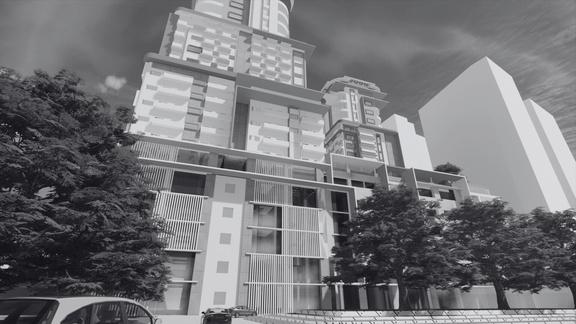
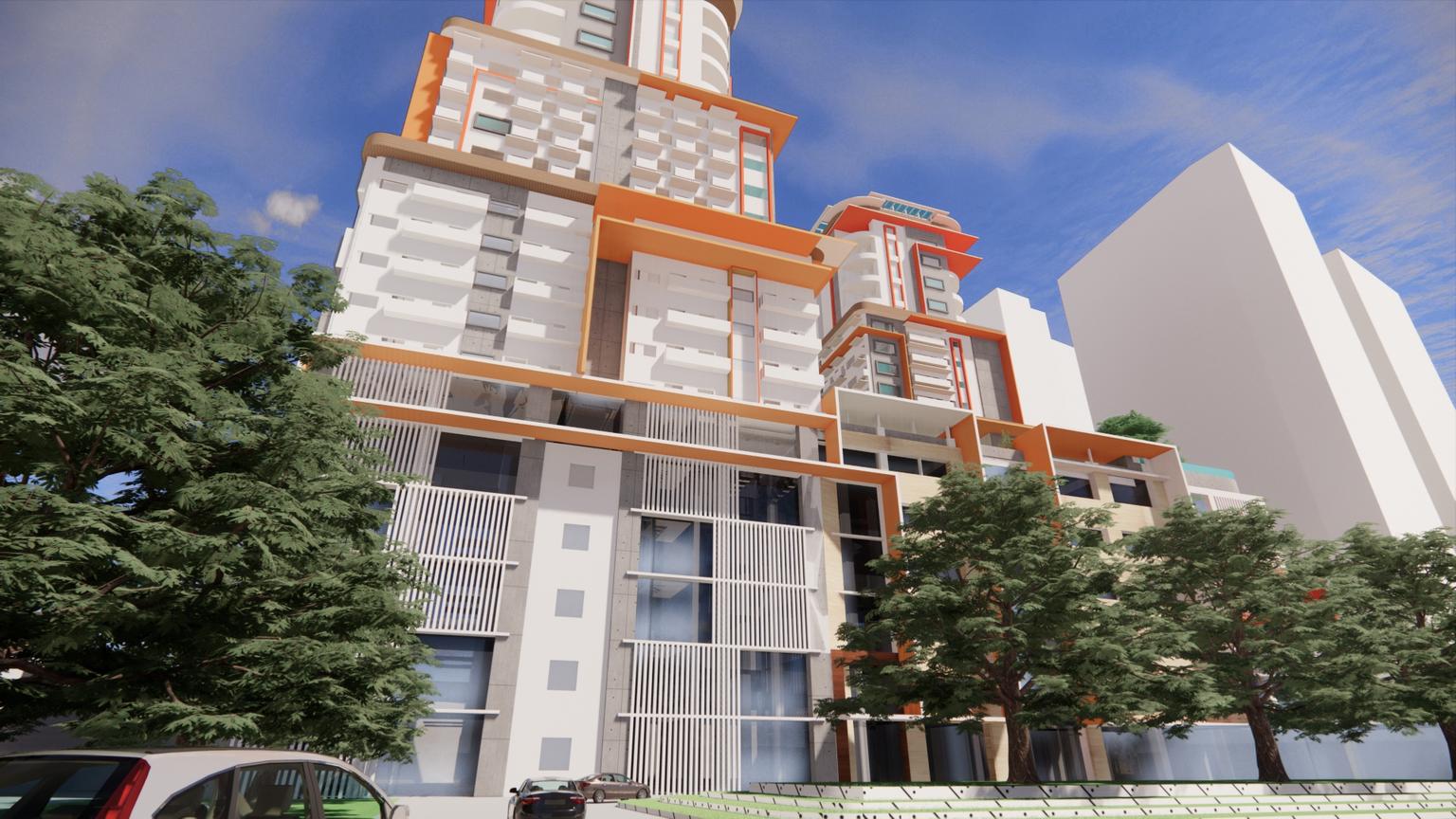
DA Office and Residence is a mixed-use building located in Dukuh Atas, Central Jakarta, with rental office and apartment functions. This mixed-use concept prioritizes the relationship between humans and the environment, prioritizing user comfort when inside the building.
Zonasi : Perkantoran, Perdagangan, dan Jasa
Tempat : Jl. Sudirman (Dukuh Atas)
Provinsi : DKI Jakarta
Wilayah : Jakarta Selatan
Kecamatan : Setia Budi
Kelurahan : Setia Budi
Site Area : 20.000m
KDB : 30%
KLB : 5
KB : 40
KDH : 45%
KTB : 40%
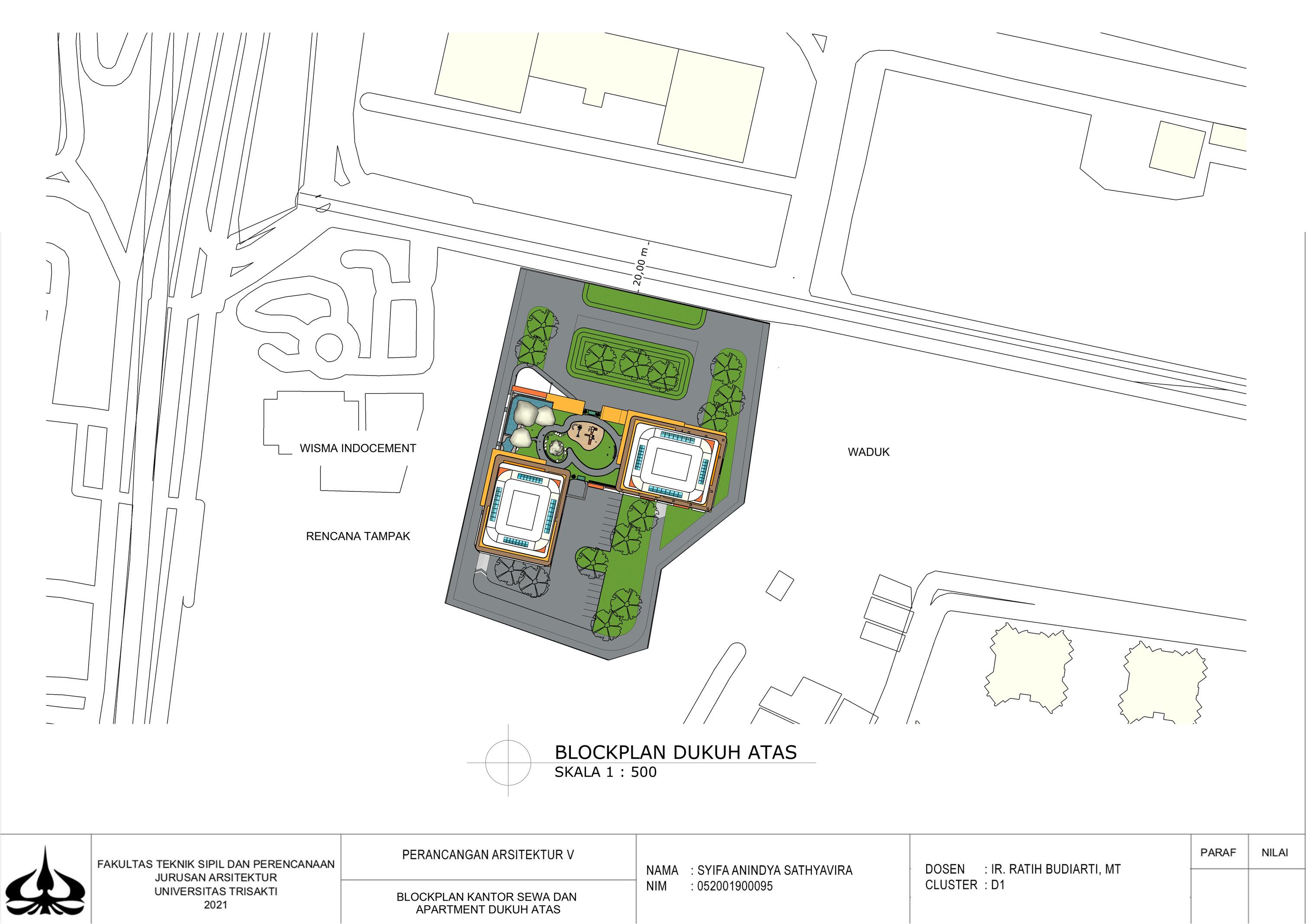
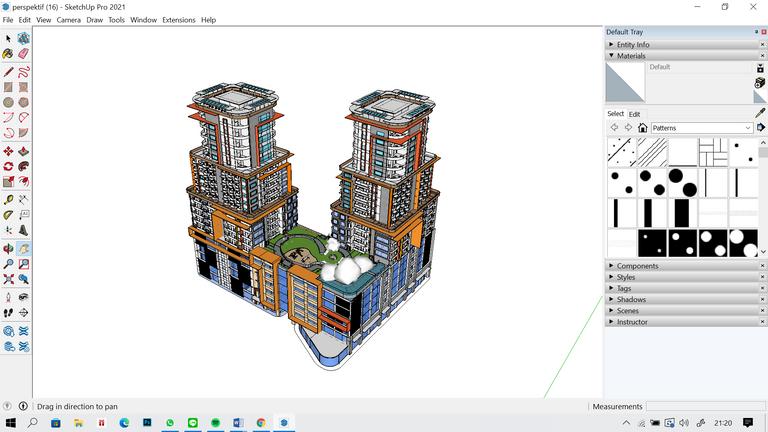
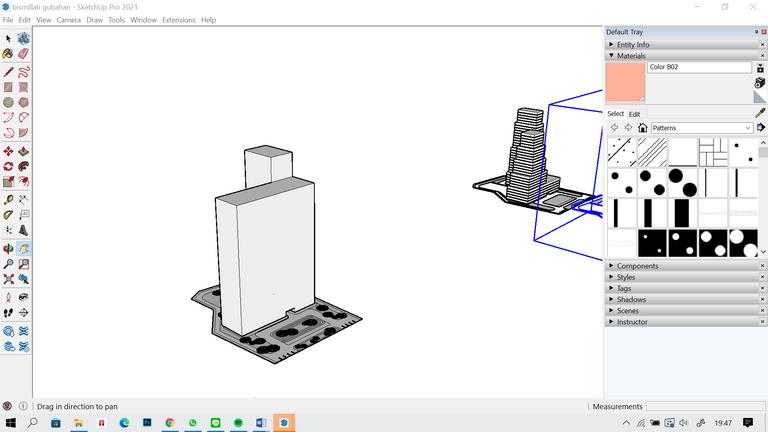
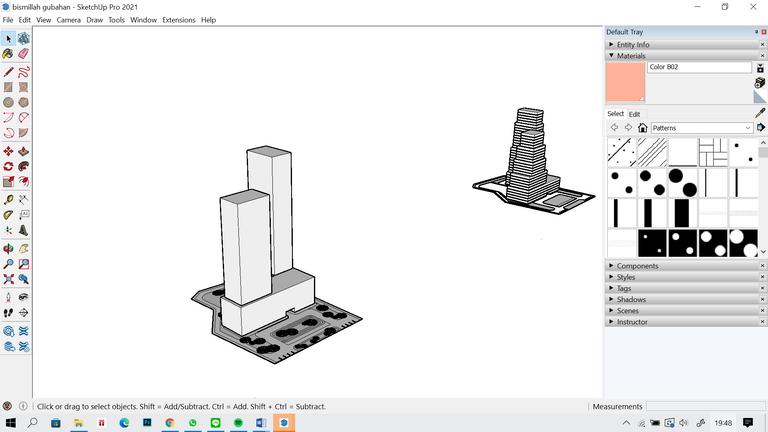
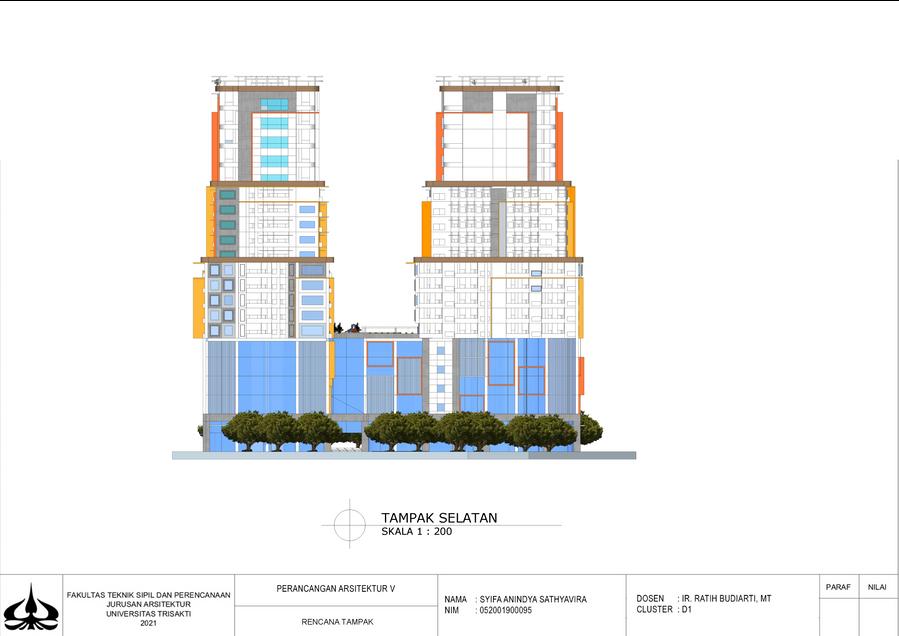
The building has a basic shape of two rectangles that rise upwards
2 4
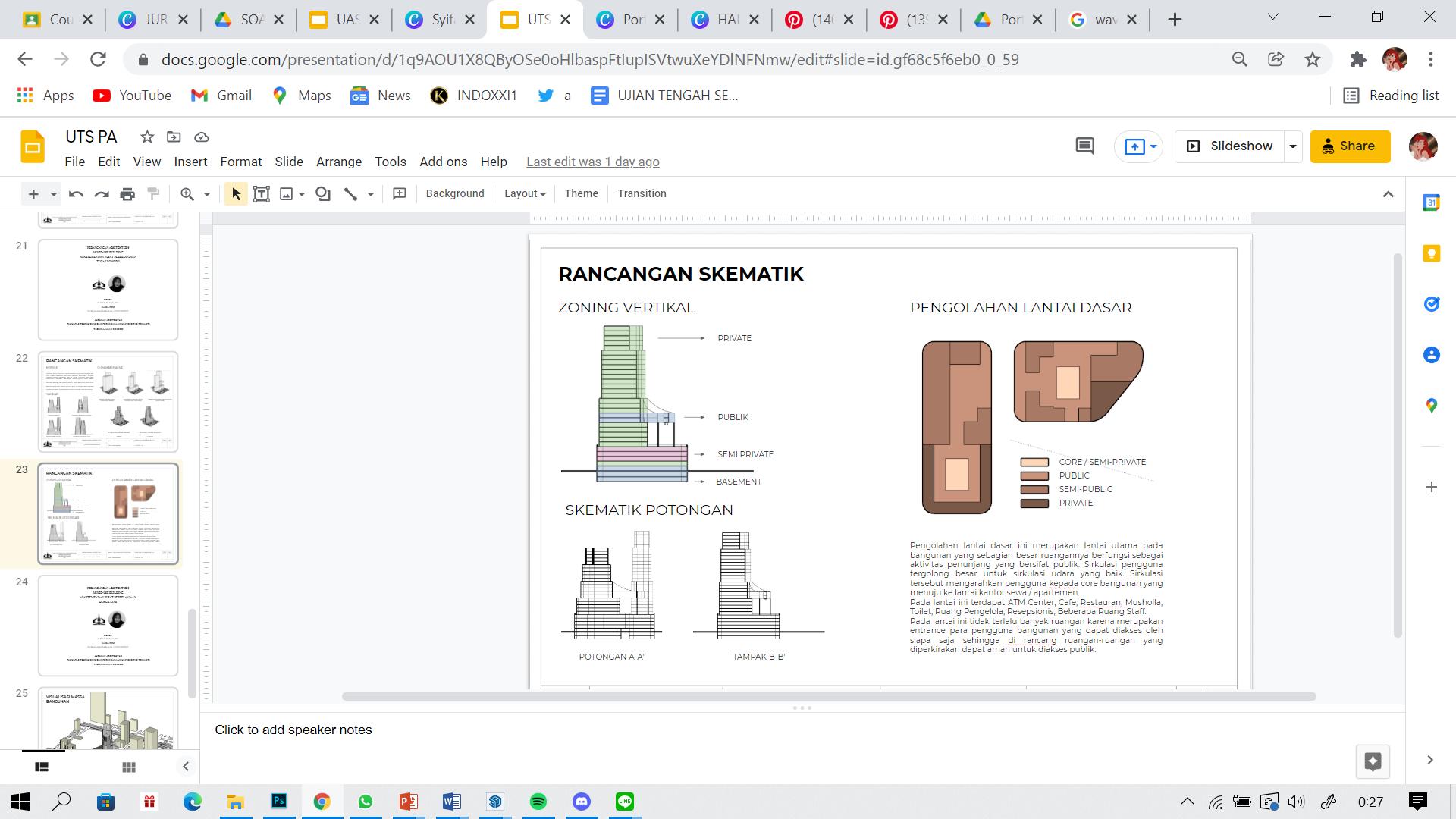
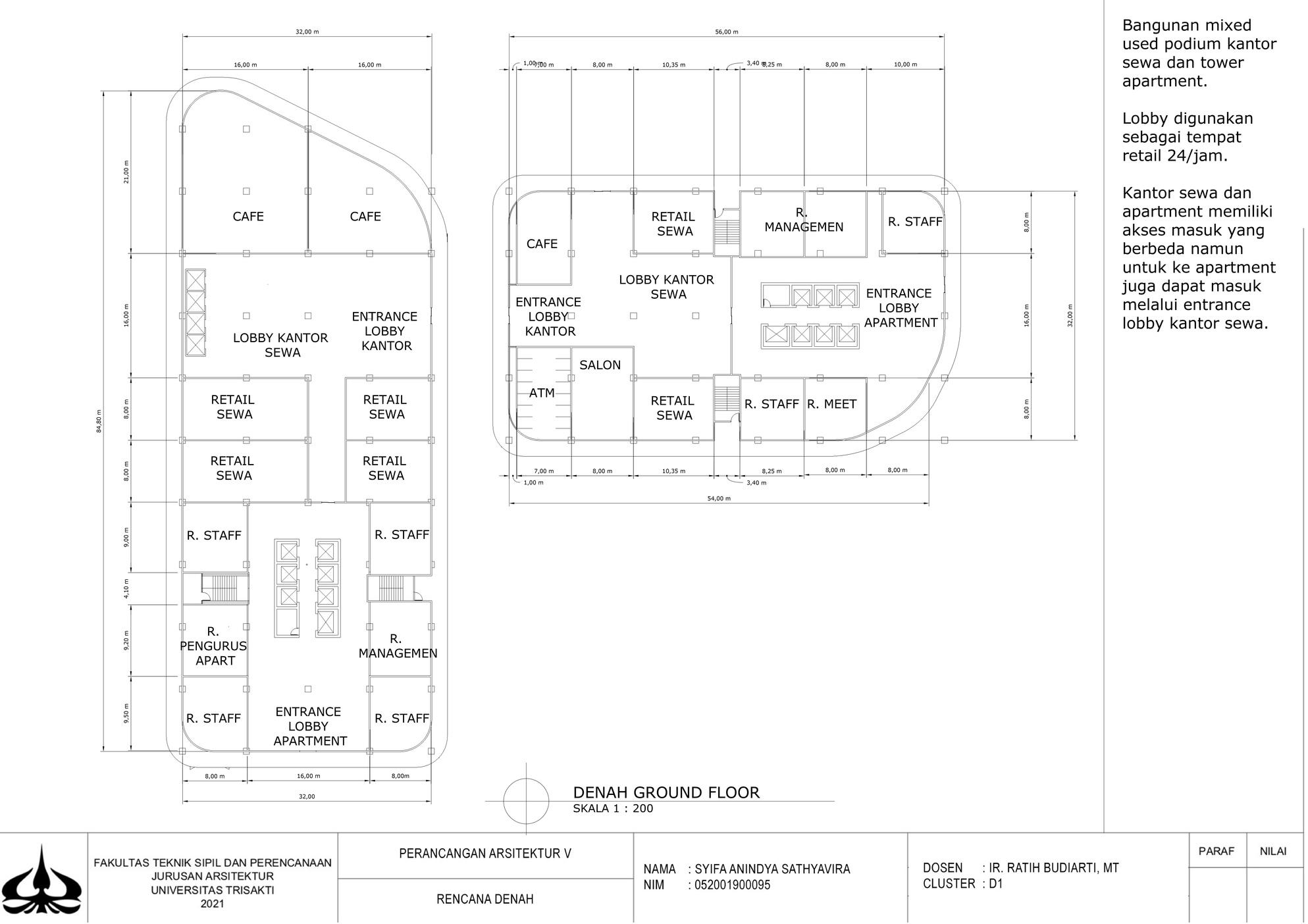
This ground floor processing is the main floor of the building where most of the rooms function as public support activities. User circulation is relatively large for good air circulation. This circulation directs users to the core of the building which leads to the rental office/apartment floor.
On this floor there is an ATM Center, Cafe, Restaurant, Prayer Room, Toilet, Management Room, Receptionist, Several Staff Rooms.
The shape of the building per 5 floors is subtracted again with a shape that gets smaller upwards
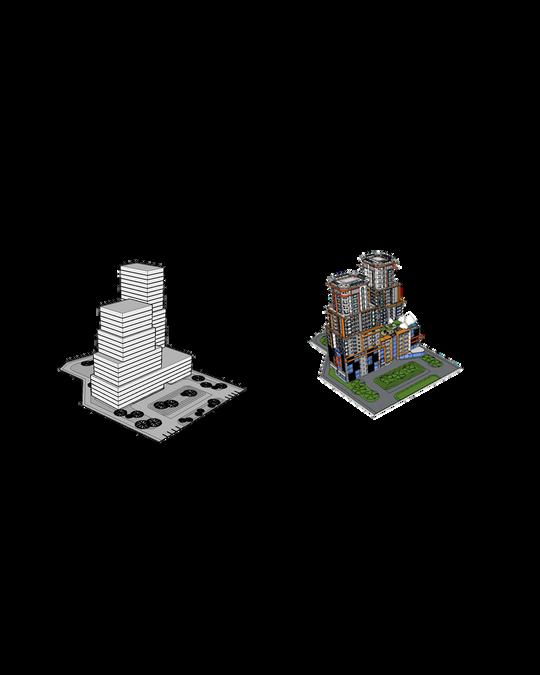
The building is subtracted to be divided into a podium floor and two towers
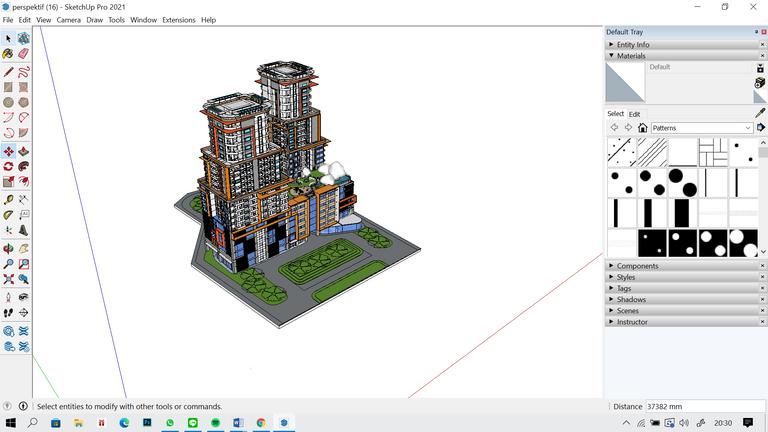
Additive process on the facade to create a building that is distinctive and not monotonous
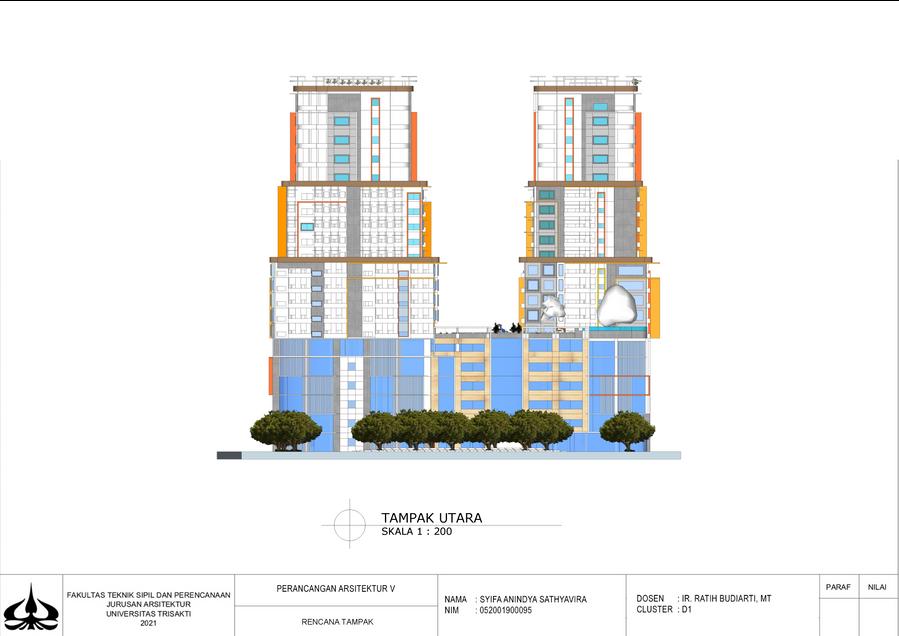
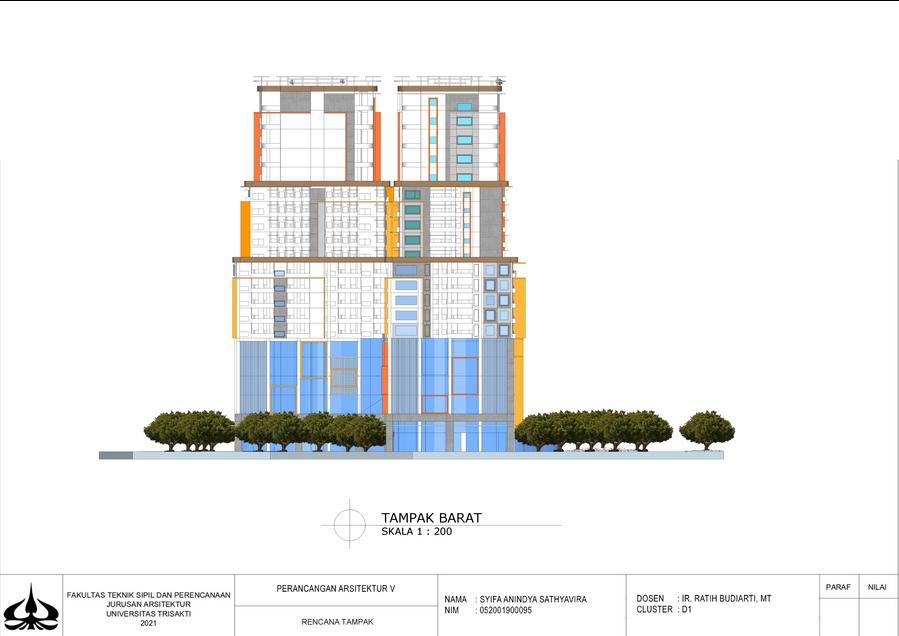
The facade of this building uses brightly colored alucobond material to provide a dynamic and non-monotonous accent to the building. The use of the facade is not only an aesthetic element but also functions as sun shading. It appears that the building is designed to 'stand out' more than other buildings in the area around the site. Bright and bold colors are also symbolized as the icon of this building to make it more eye-catching.

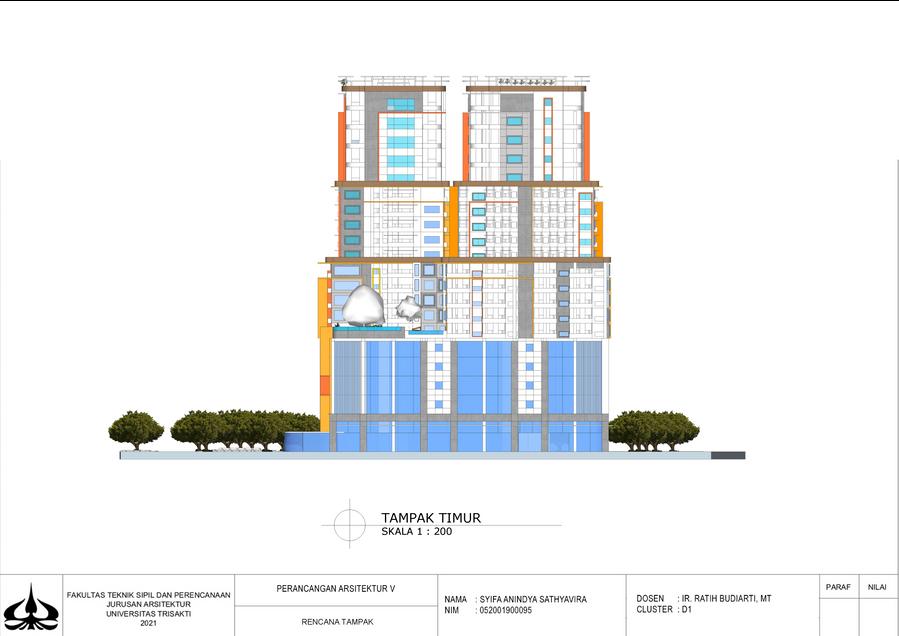
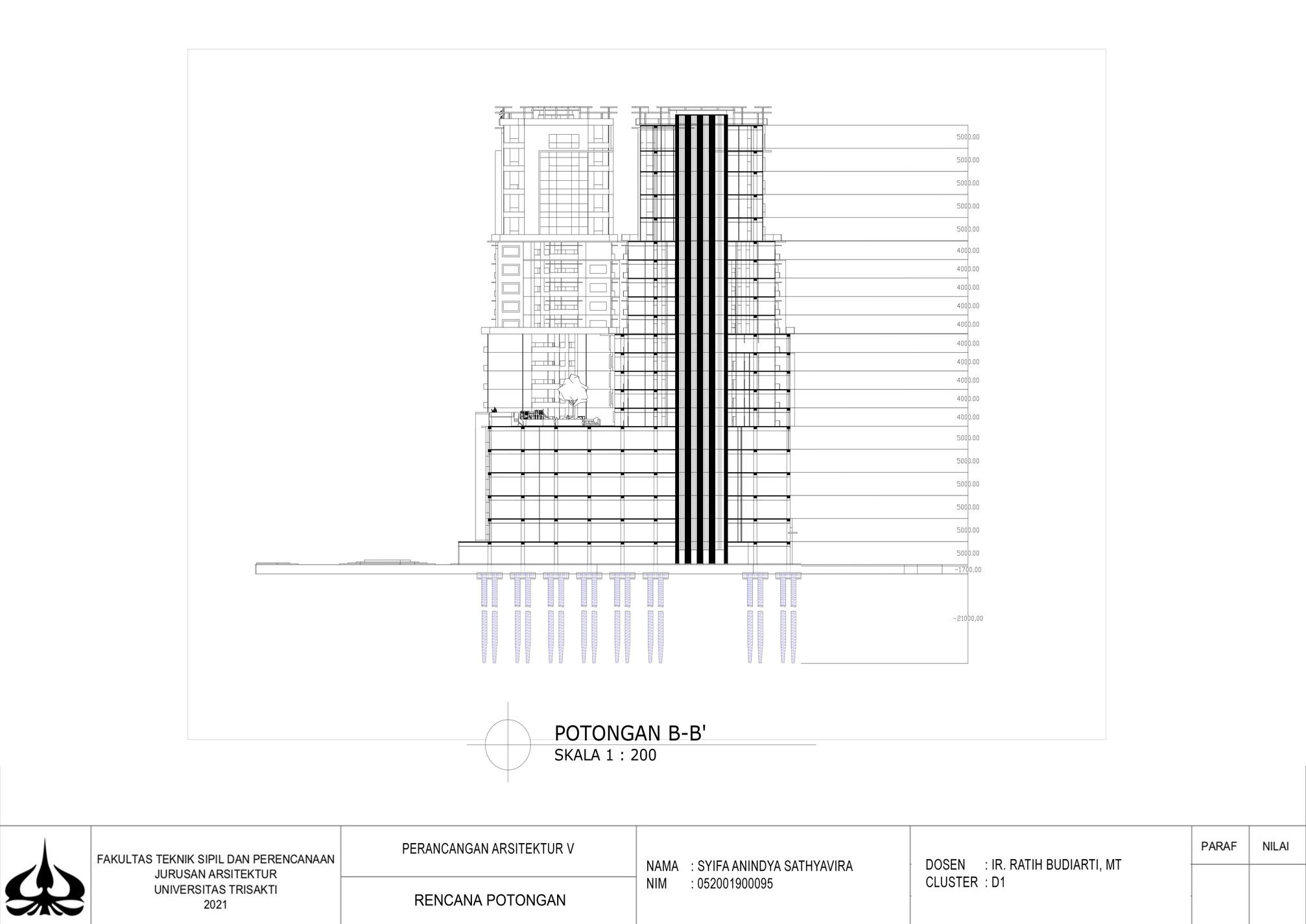
The building uses a column structure system measuring 8x8 and a pile foundation. There are two cores to facilitate two towers.
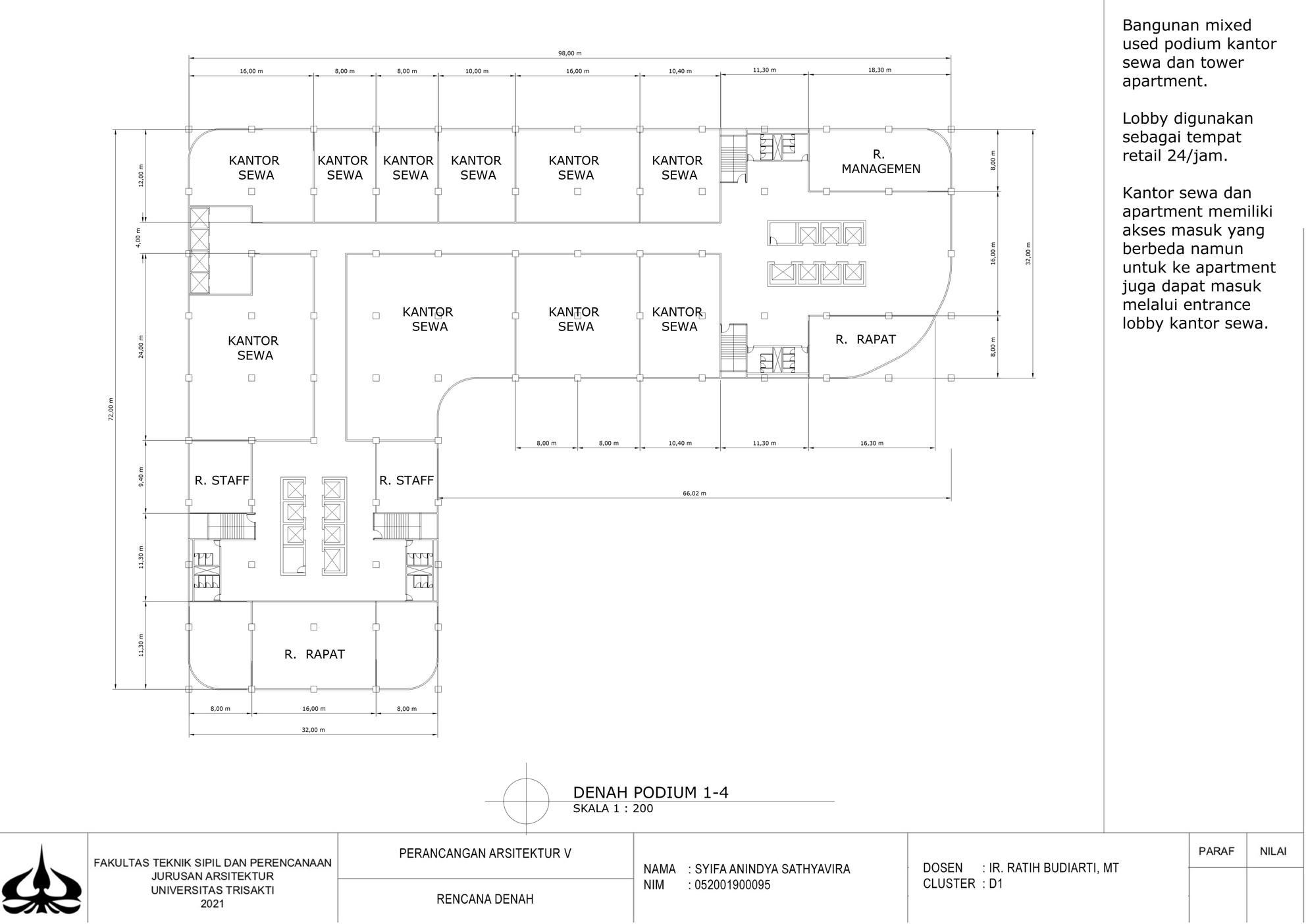
entrance users. Rental office passenger lifts and apartment occupant lifts are differentiated to maintain occupant privacy. The office uses a capsule lift while the building core is used as a lift for apartment residents. A typical podium floor plan for floors 1-4 is a floor for a rental office along with a building management room.
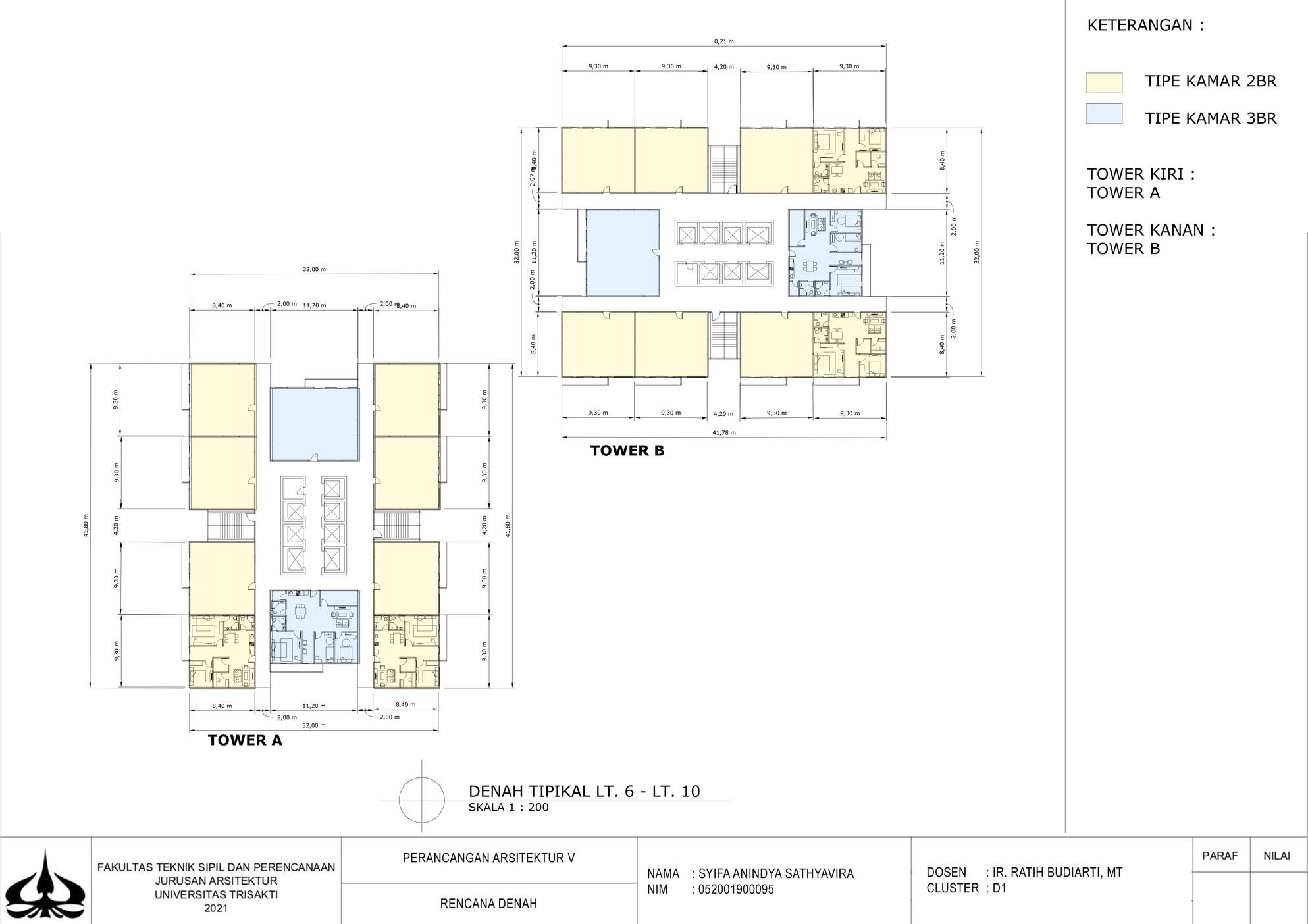
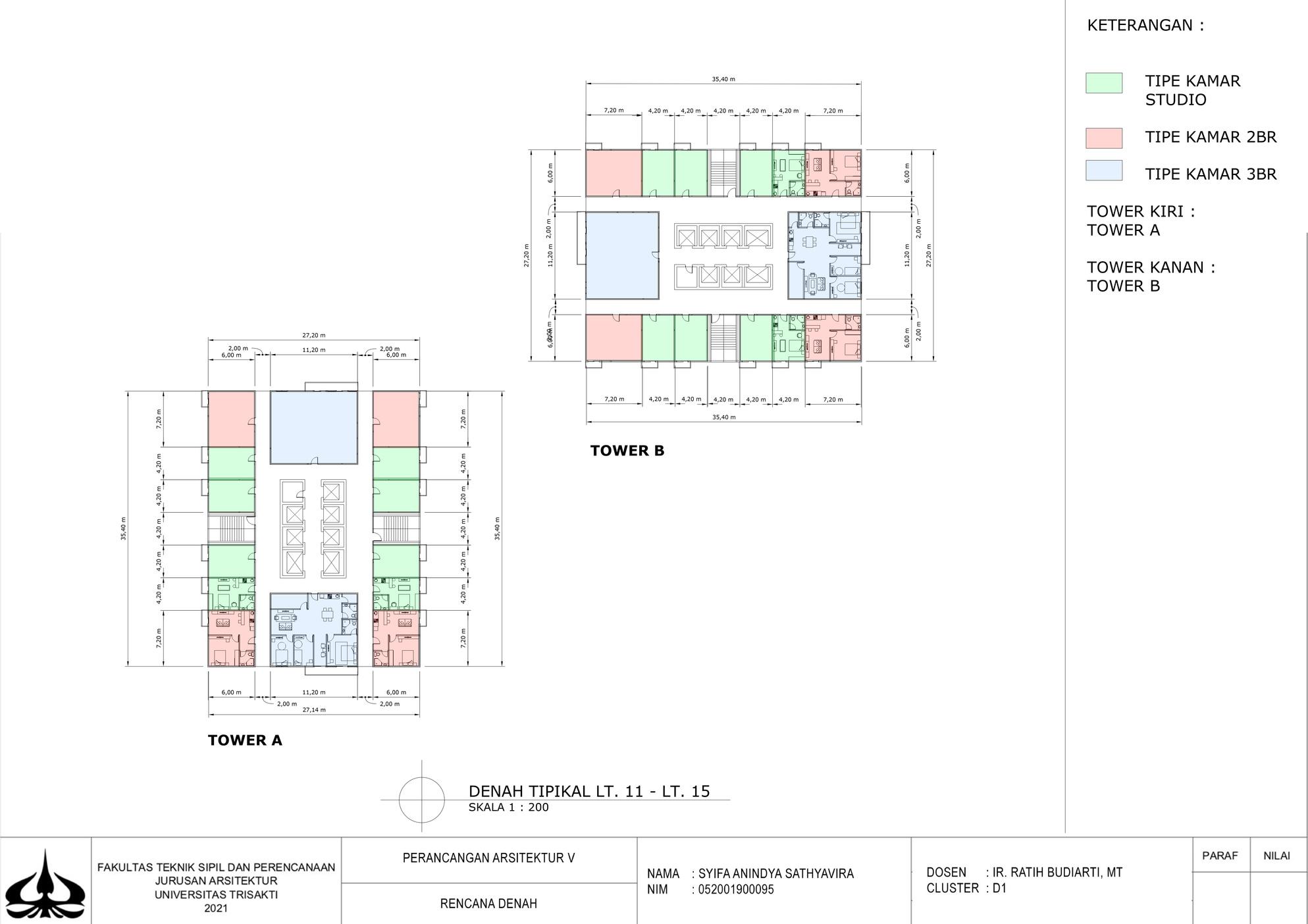
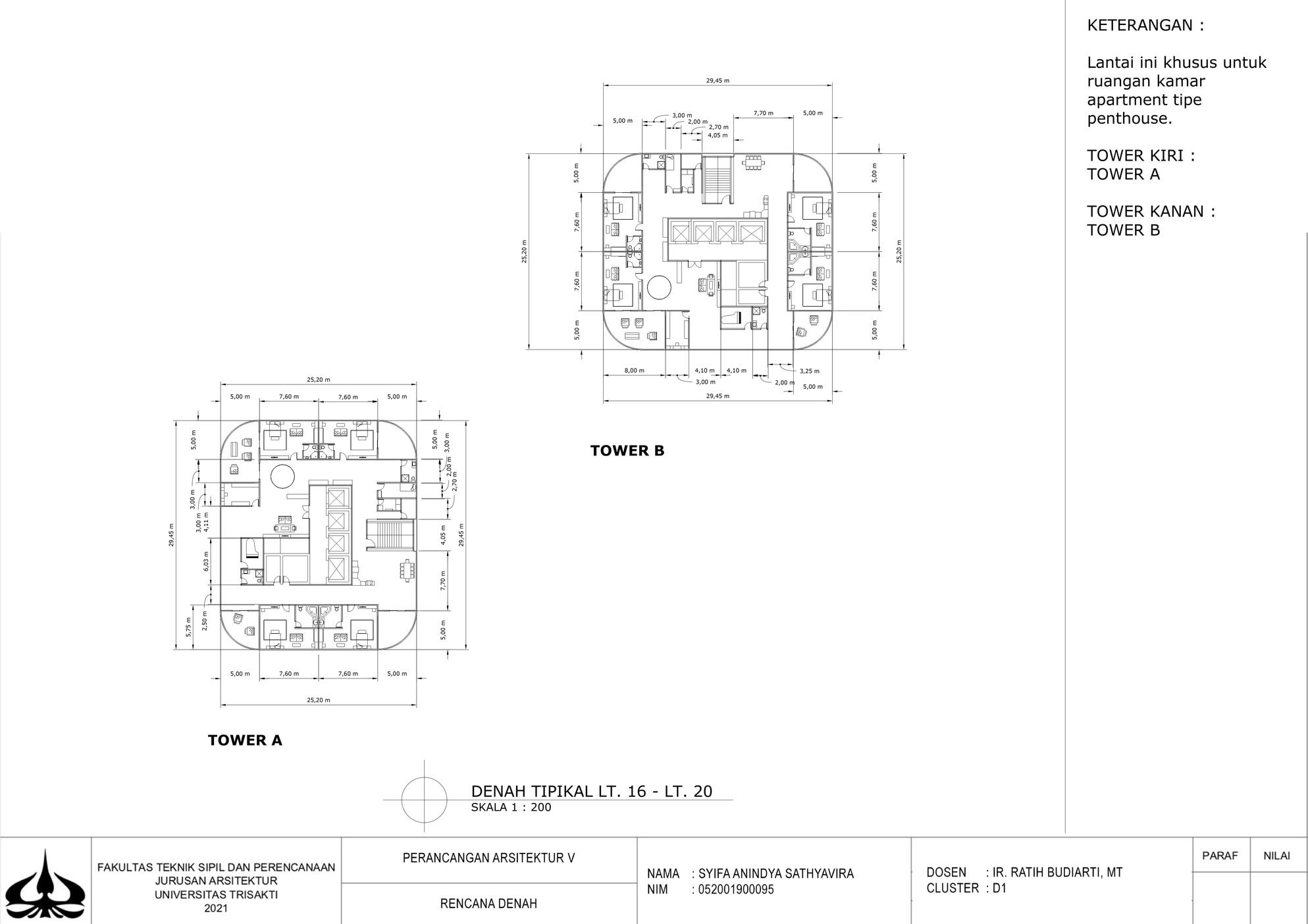
The use of typical floor plans in buildings simplifies and speeds up the design process. The apartment consists of two towers, tower A and tower B, where each tower has the same number of floors and room placement. Floors 6 - 7 are floors for 2BR and 3BR type rooms. Floors 11 - 15 are floors for studio, 2BR and 3BR rooms. And on floors 16-20 are the floors for penthouse rooms, where one floor consists of one room.
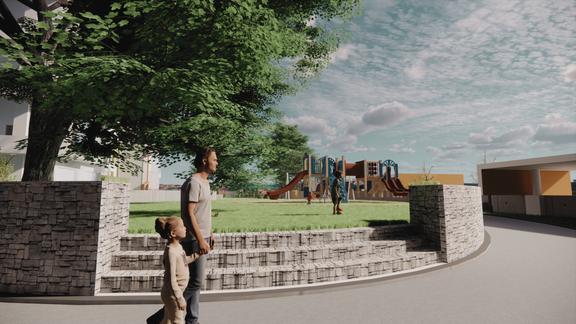
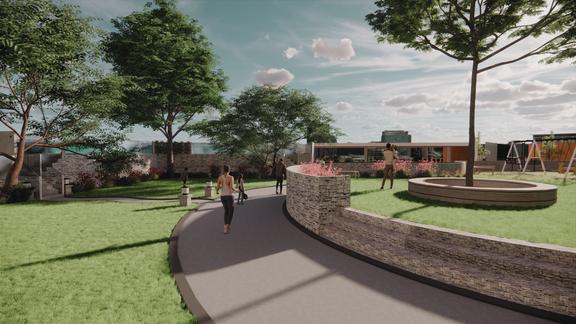
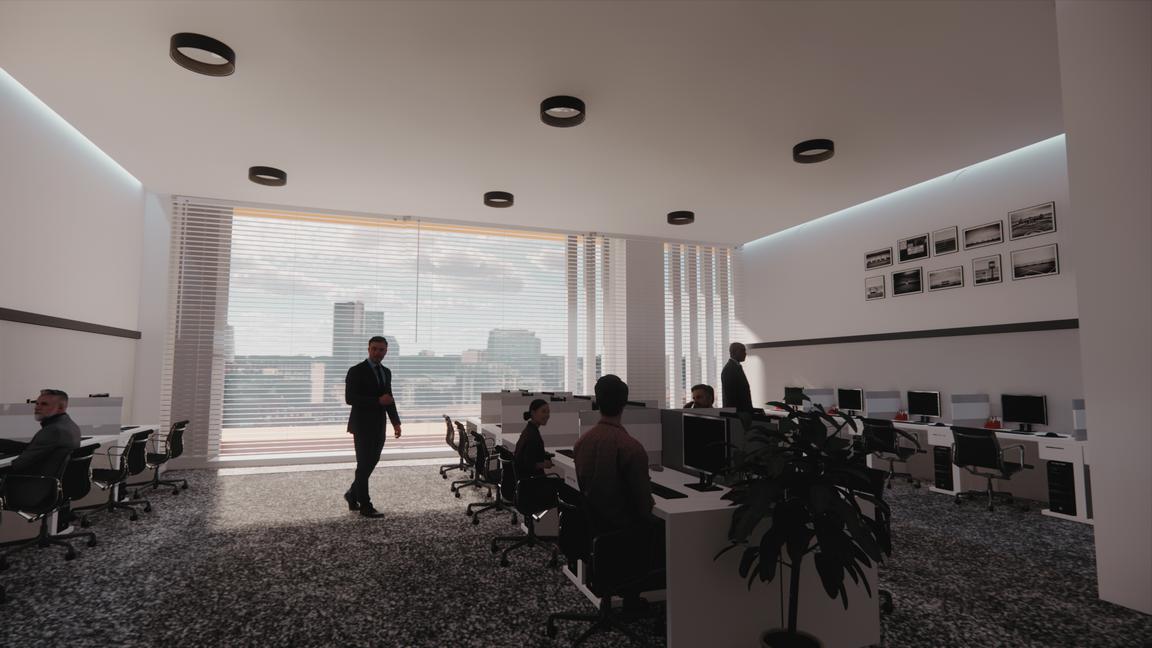
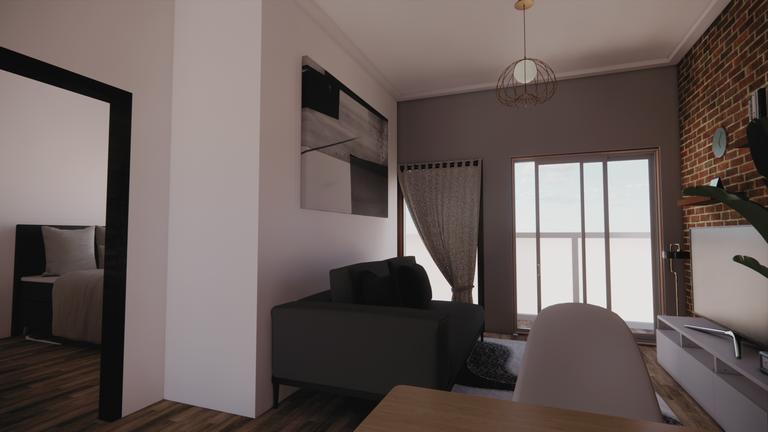
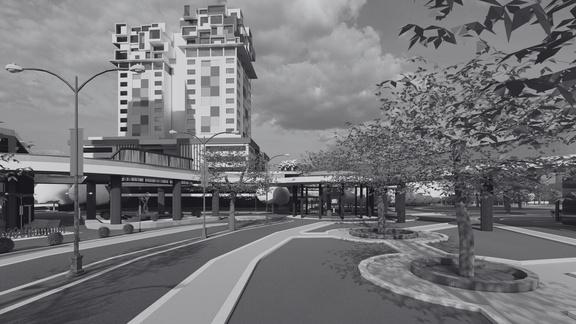
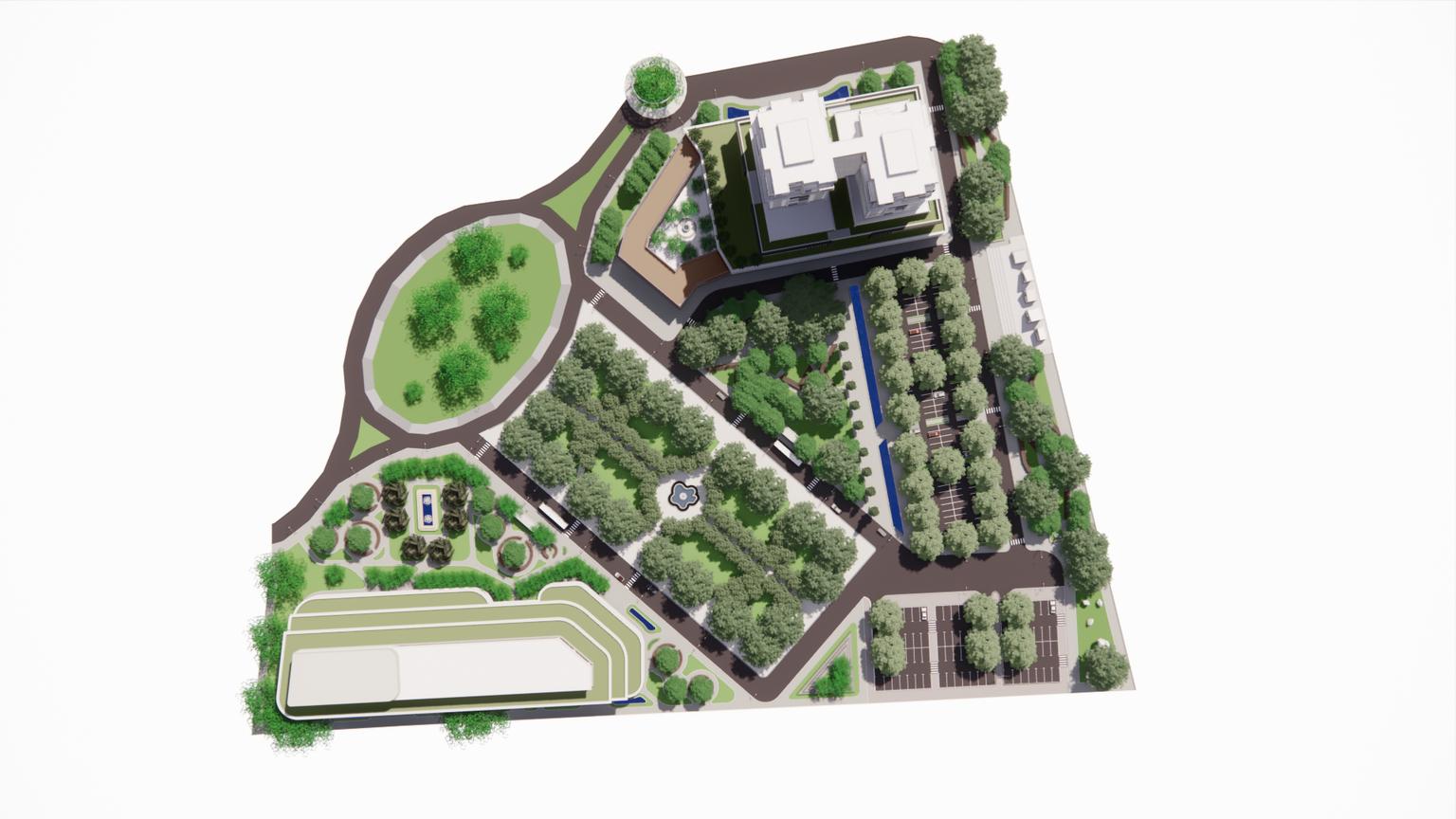
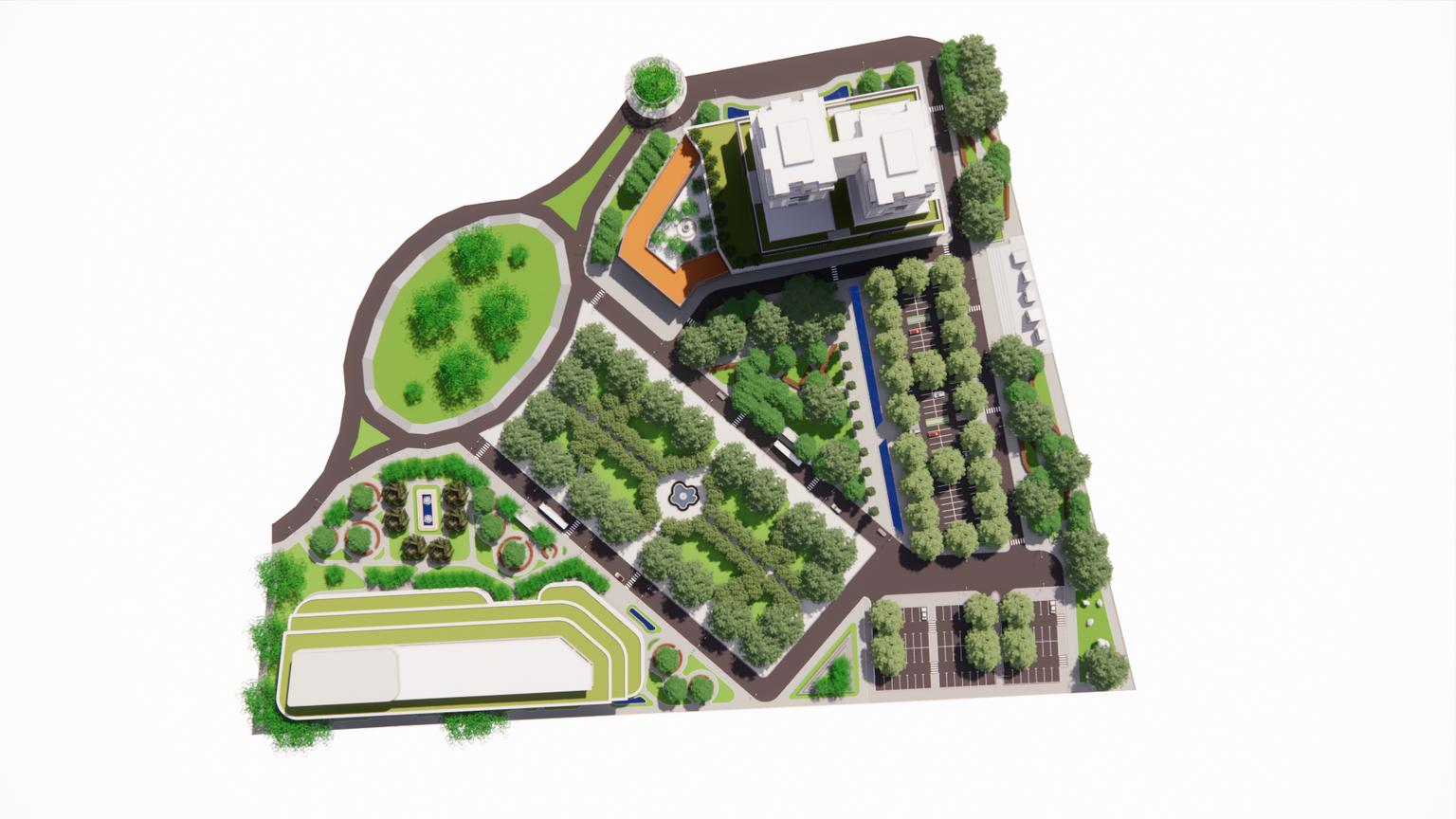
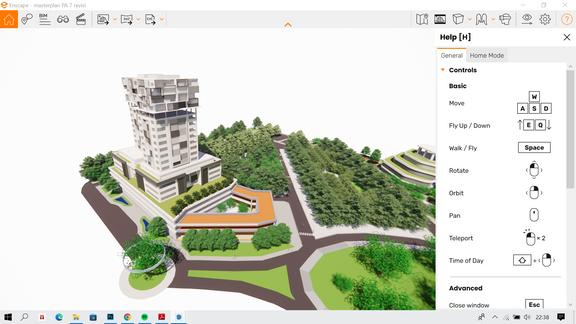
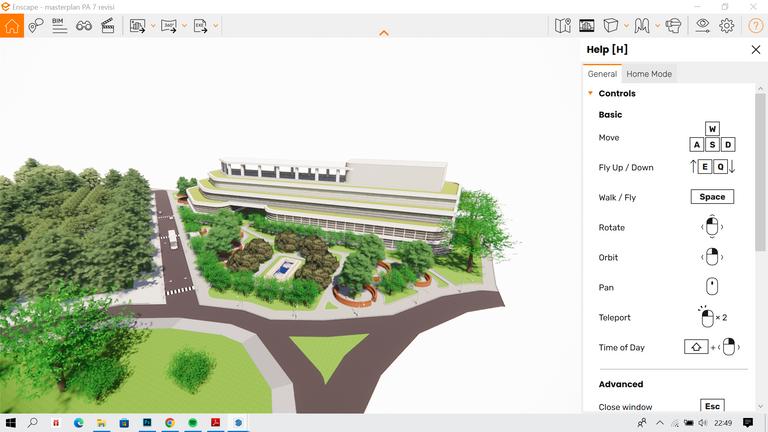
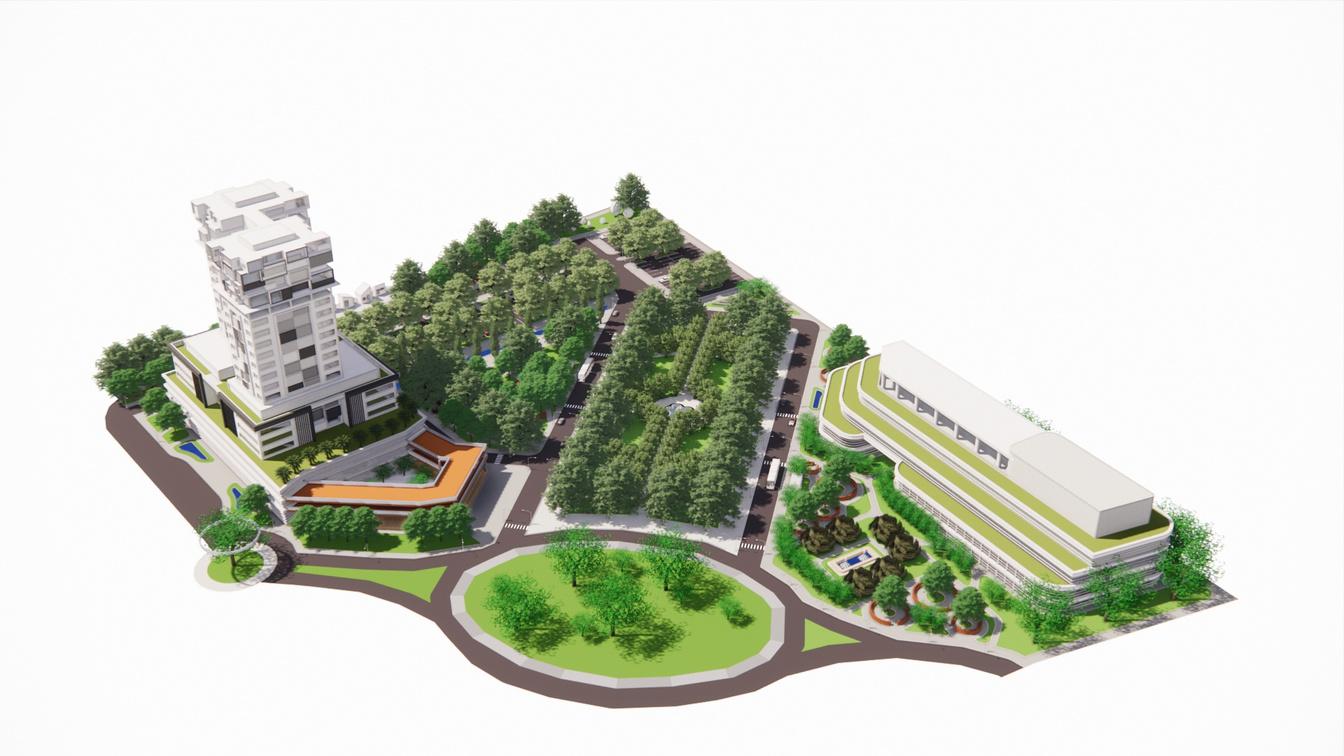
Land use is designed based on regional needs and implementing the park city and walkable metropolis concepts in the area creates lots of green open space and pedestrian access around the building which can support pedestrian paths from one area to another.
Site Area = 29.980 m²
KDB = 55%
KLB = 4.6 =
A.Micro-PublicLibrary
&CreativeSpace
B.PublicPark
C.ParkingArea
D.ParkingArea
E.Publicspaces/ CommunitySpace
F.MenaraSutet
G.Publicspaces
H.Retail&Apartment
I.Outdoorbridge (CrossingBridge)
J.Publicspaces/ CommunitySpace
K.Publicspaces/ CommunitySpace
LArtSculptureArea
M.Creativecompund
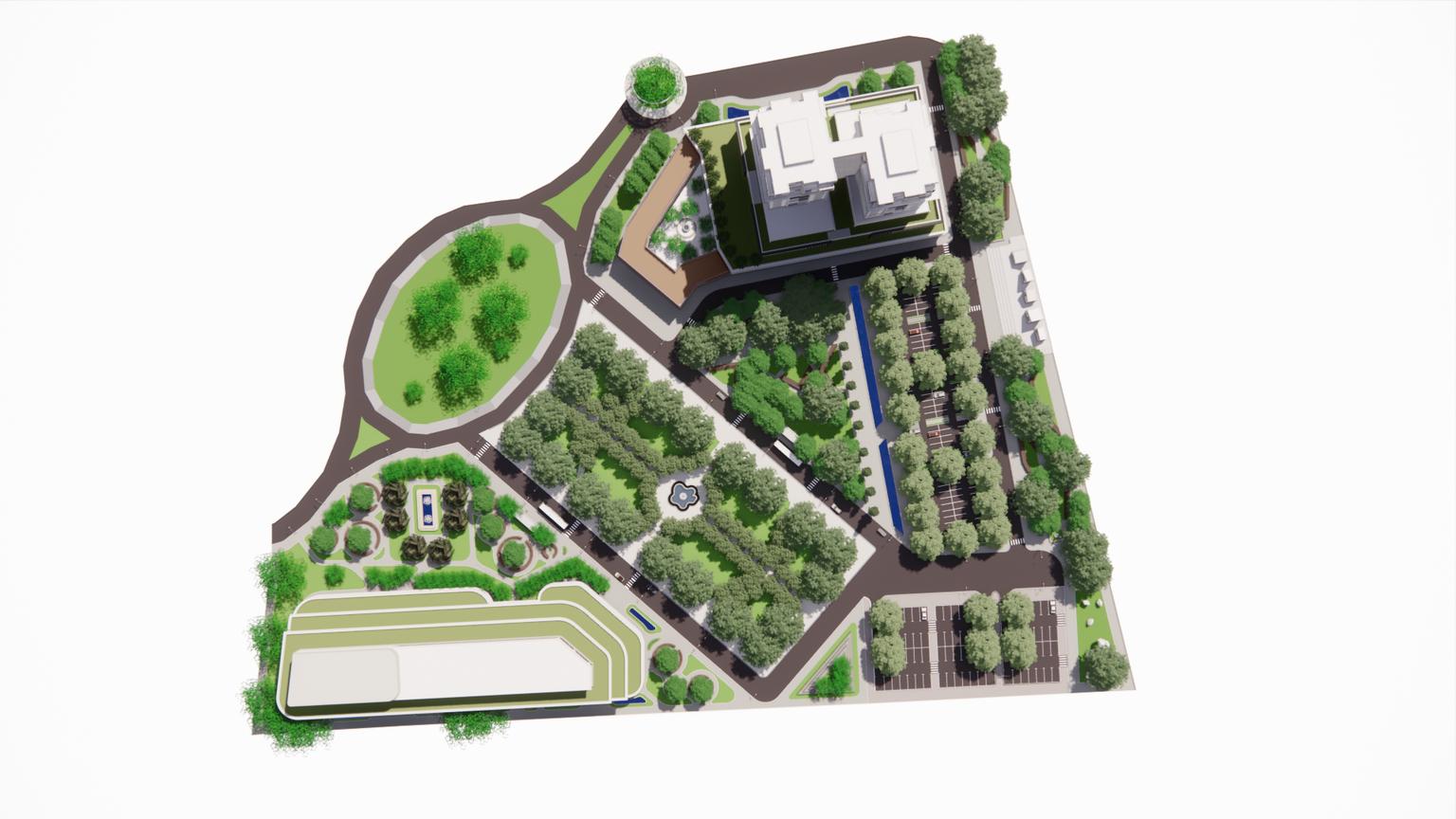
In this area design, we are using the concept of an area that focuses on transit orientation (TOD) because it can be seen that the site area is located in the BSD intermodal area which has great potential if utilized properly. Apart from that, we are also developing the concept into a compact, smart and sustainable area.
Park city is a green, efficient and low-carbon operating mode of urban life. The park city concept presents a perfect combination of green cities and ecology that can make cities more lively, thereby increasing people's happiness. One of the important characteristics of garden city development is to improve people's welfare and increase people's sense of happiness in life.
Connectivity Walkability SmartCity
Walkable Metropol, this concept aims to encourage people to prefer walking rather than using private vehicles by integrating public spaces such as parks and plazas throughout the area. This concept supports the development vision of BSD City which wants to create an integrated area and provide convenience for residents and the surrounding community.
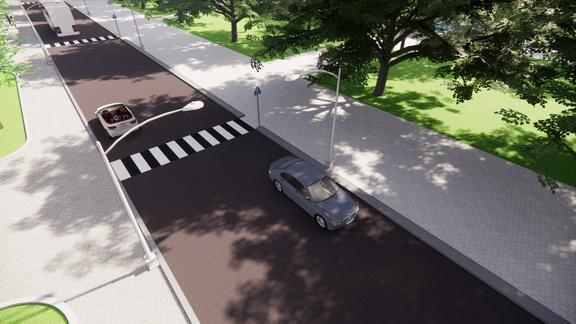
Walkability is an innovative concept in creating pedestrian path facilities that prioritize pedestrian comfort and minimize air pollution levels.
VEHICLECIRCULATION
Onewaymotorzedvehicecircuation
Twowaymotorizedvehcecirculaton
Twowaymotorizedvehcecirculaton
Accessinandoutofsubareas
Accessinandoutoftheparkingarea
PEDESTRIANCIRCULATION
PedestrianCrcuaton
Retail&Apartment
Podium1:Retail 3Lantai(6000m²/Lantai)
Podium2:Retail 3Lantai(3.360m²/Lantai)
Tower:Apartment 14Lantai(1000m²/Lantai)
Podium:MicroLibrary 2Lantai(4924m²/Lantai)
Lantai 3:MicroLibrary 4.900m²/Lantai
Lantai4:CommunalSpace 1706m²/Lantai
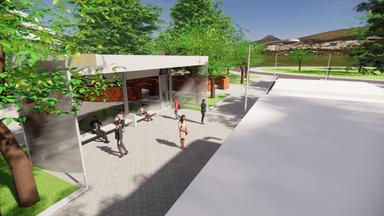
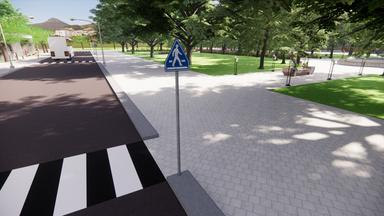
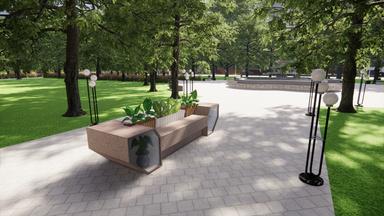
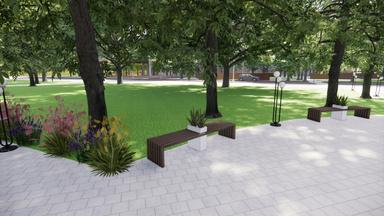
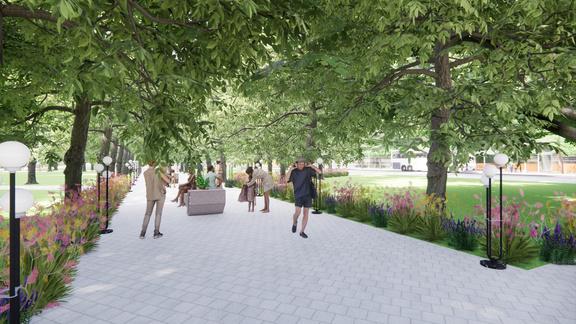
Salahsaturuangterbukayangdapatmemfasltas kebutuhansosal parapenggunasertamencptakansuasanayangrimbundantenang ditengahhiruk-pikukkegiatankota Dfasiltasioehpepohonanyang rimbunsertaareadudukbag parapenggunadanjugalamputaman disepanjangalurpedestransebagaipeneranganpadamaamhar
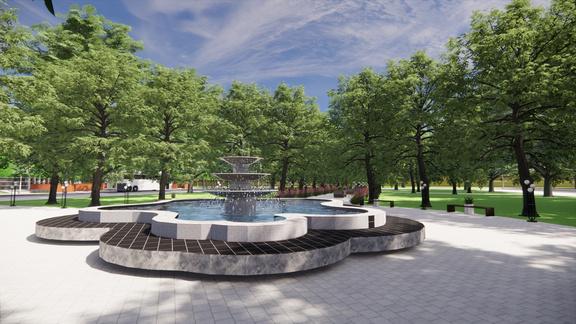
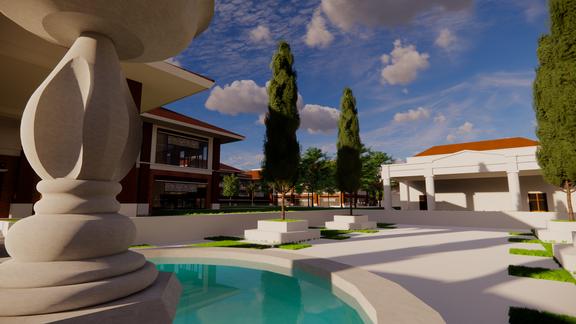
Area tengah pada publc park memilki fasiitas air mancur serta merupakanttiktemudar alurpedestrianpadaPublcPark Memiik fasiitasbangkududukserta amputamandisekeliingnya
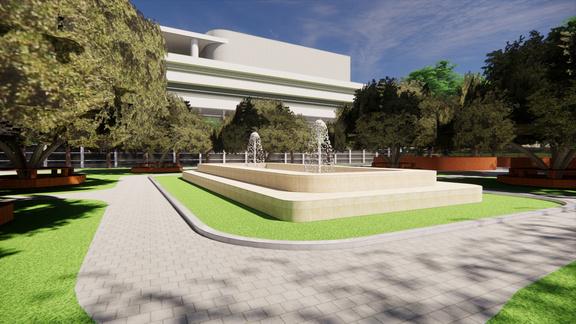
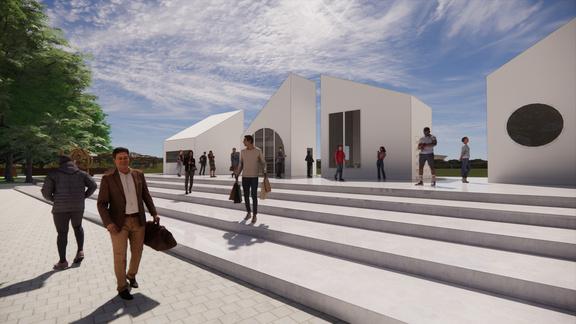
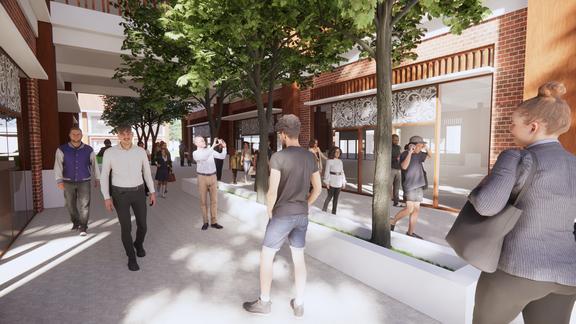
creativecompoundspaceadalahsebuahruangkreatifyangterbuka luas dan dis oeh kumpulan dari beberapa toko atau tenant yang ung di satu area Memilki tujuan untuk memberikan patan masyarakat untuk mengembangkan kemampuan dan tasmereka
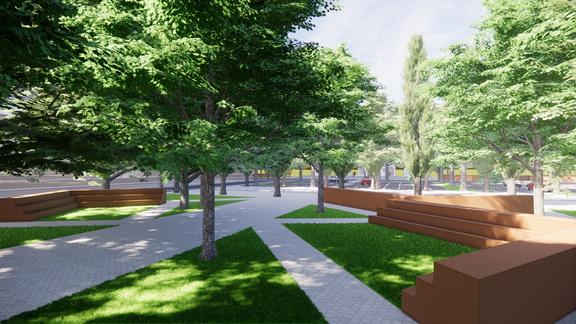
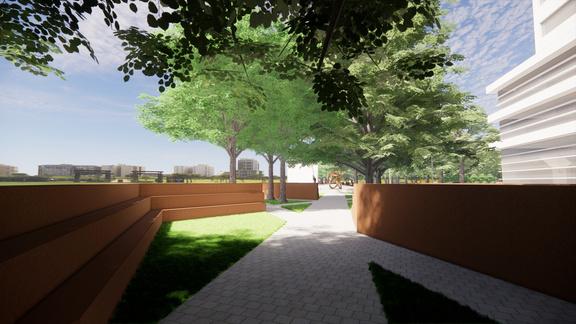
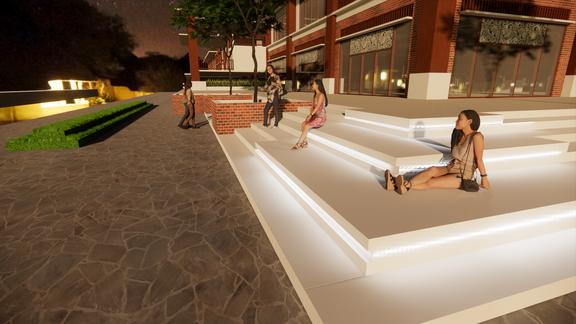
Ruangterbukayangdipenuh pepohonandanterdapatfaslitasarea dudukdenganbentukyangdnamissebagaicommunityspaceuntuk para pengguna bersosialsasi dan berdiskusi diteman sejuknya suasanayangtercptadaripenghiauanpadaareaterbukaini
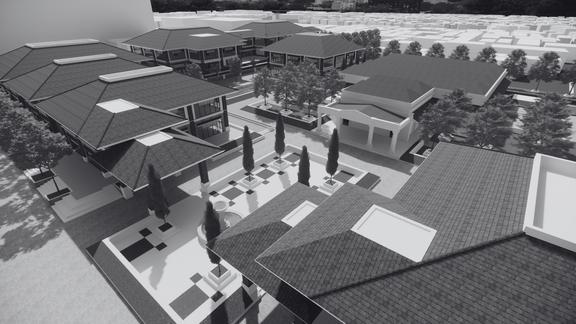
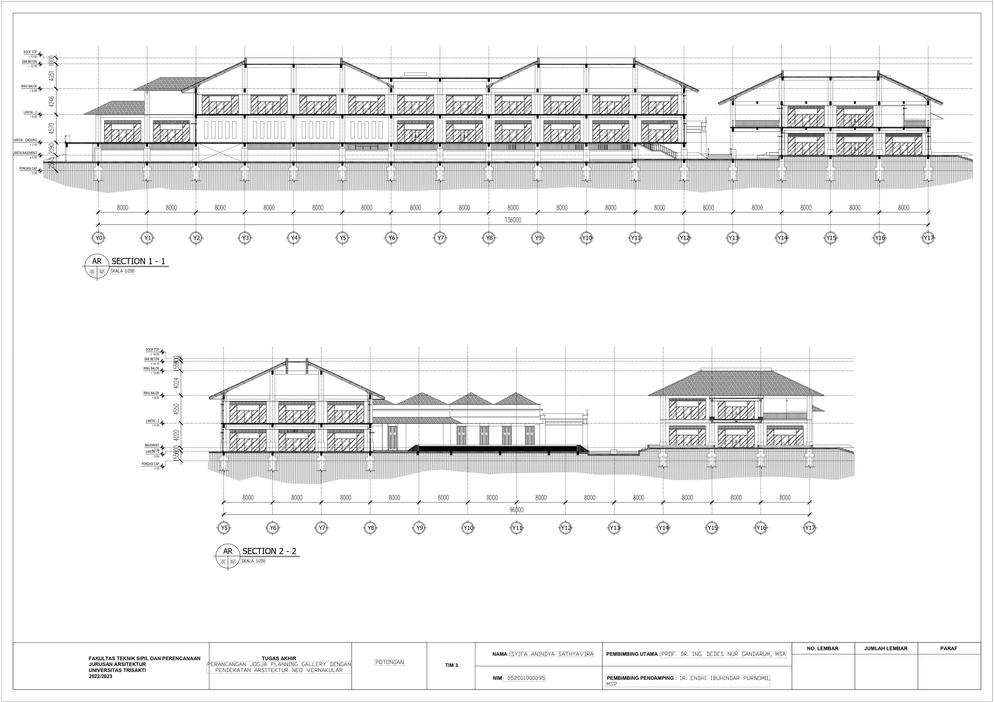
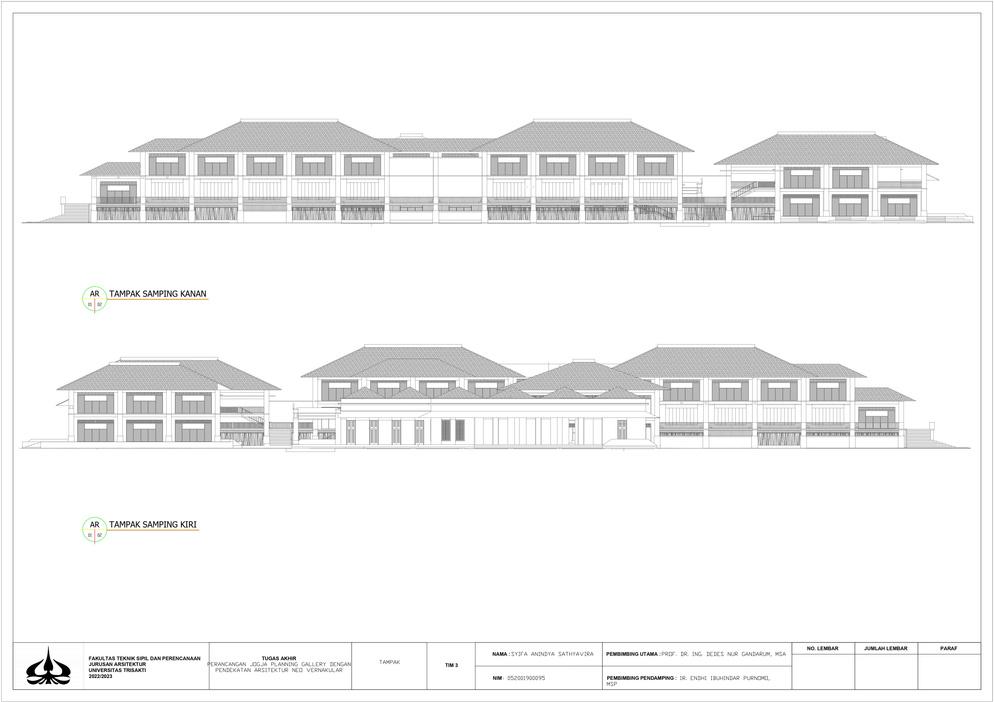
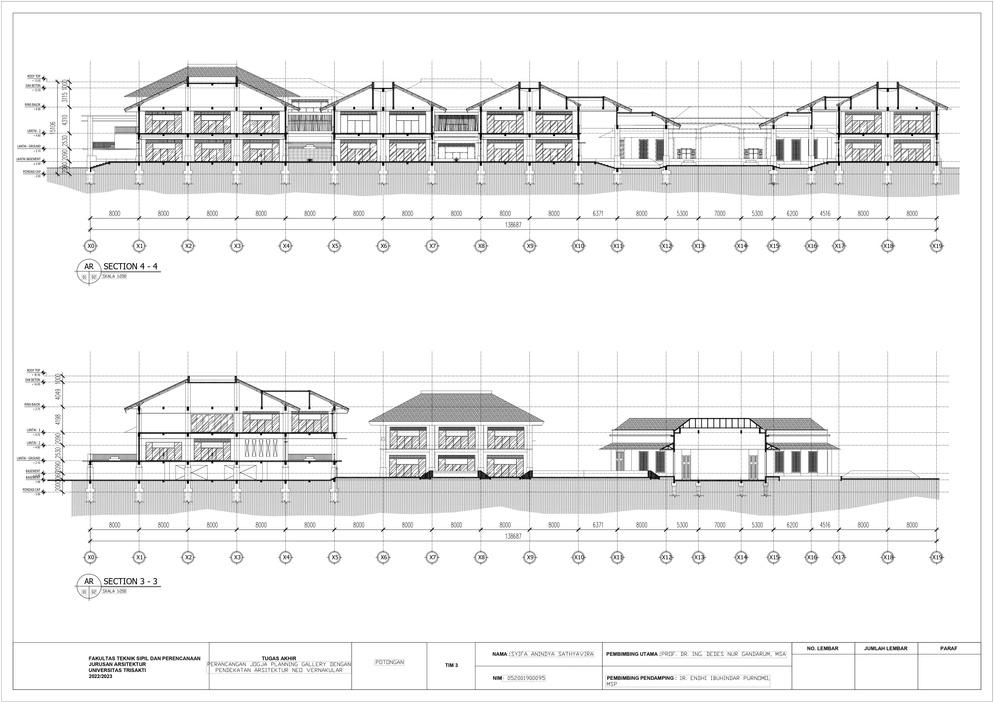
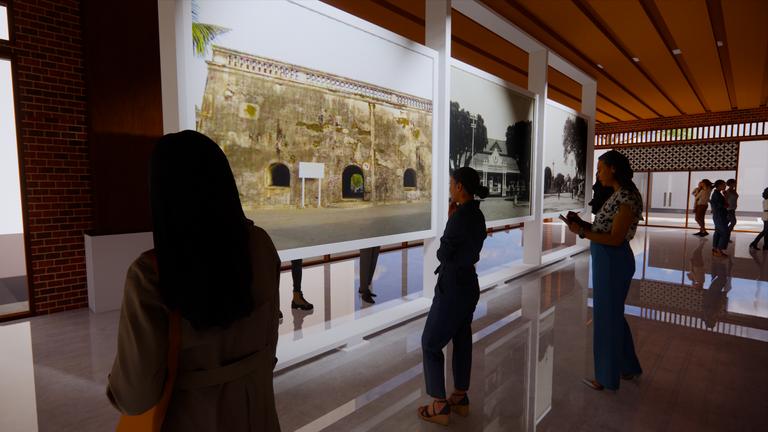
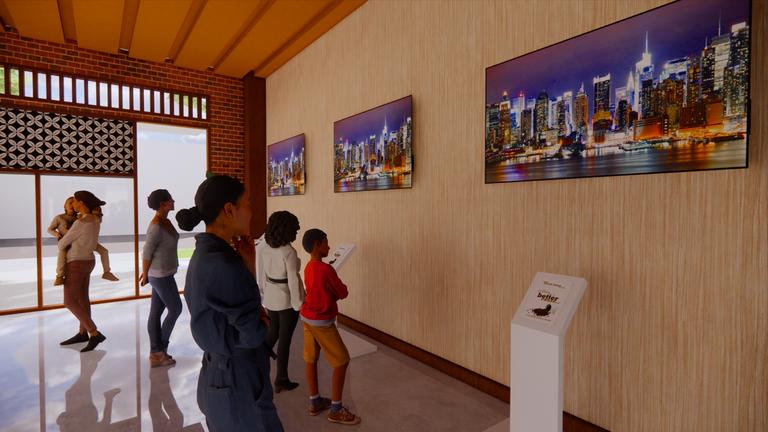
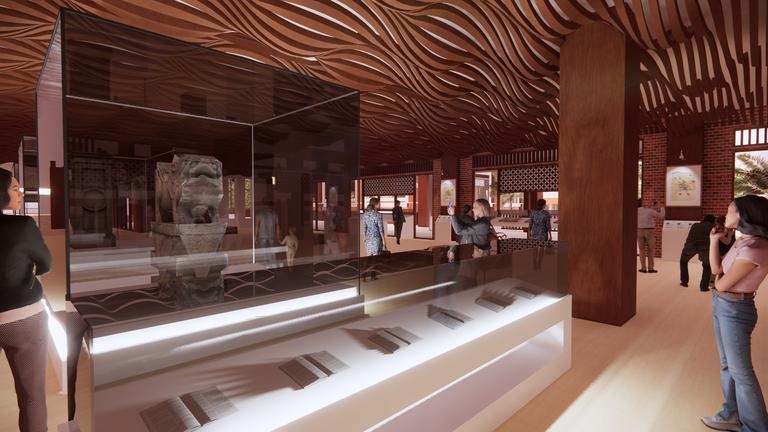
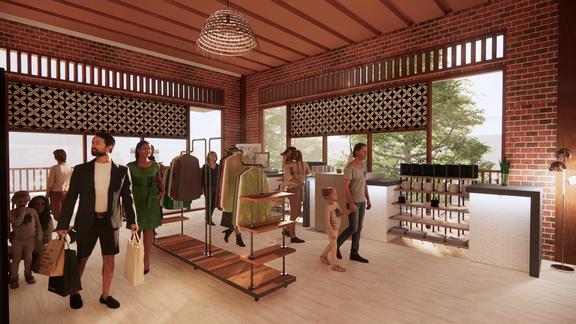
Jogja Planning Gallery is located in a cultural heritage area and is on the philosophical axis which stipulates that regulations in the construction of new buildings must be in harmony with the surrounding environment. Therefore, the concept of applying Neo-Vernacular architecture emerged in the design of the Jogja Planning Gallery Building to respond to the author's concerns regarding current developments.
The design of the Jogja Planning Gallery building supports the concept that will be implemented by the City of Yogyakarta in the future, namely regarding Jl. Malioboro will be implemented as semi-pedestrian, so the Jogja Planning Gallery building must be designed so that it can respond optimally to pedestrians. Vehicle entry is also designed via Jl. Representatives are located to the south of the site and vehicle exit via Jl. Mataram is to the west of the site. The road circulation axis is designed to be linear in response to the ease of pedestrians entering the building area and is designed to connect Jl. Malioboro is the main pedestrian access to the buildings and open spaces in the area
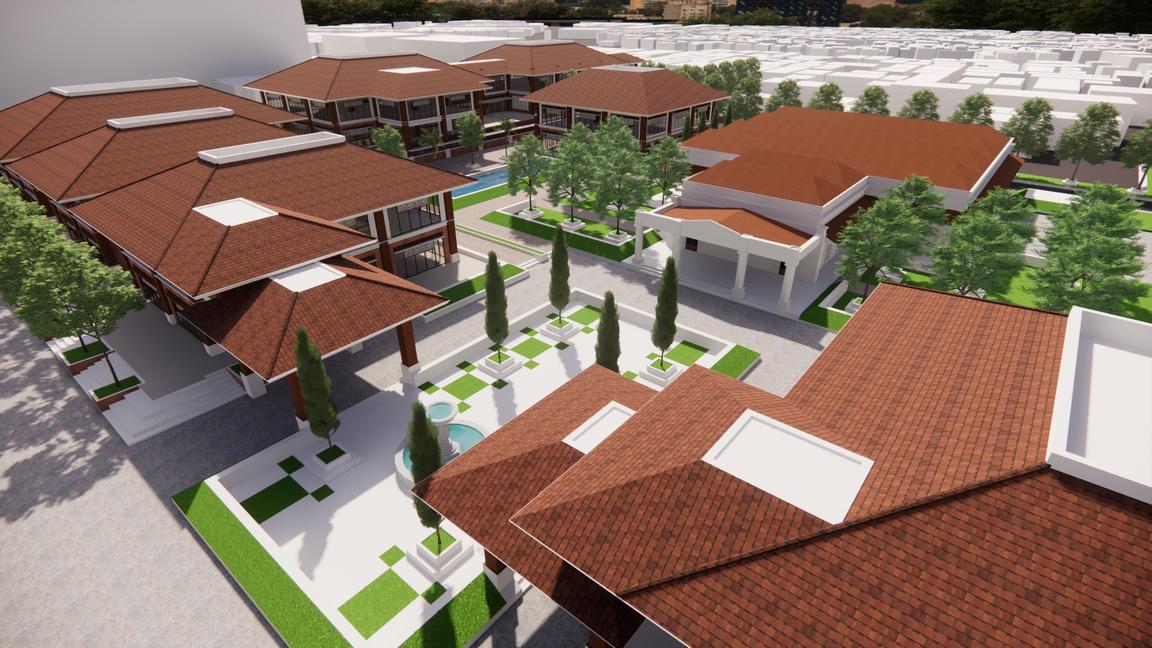
The design of the Jogja Planning Gallery building supports the concept that will be implemented by the City of Yogyakarta in the future, namely regarding Jl. Malioboro will be implemented as semipedestrian, so the Jogja Planning Gallery building must be designed so that it can respond optimally to pedestrians. Vehicle entry is also designed via Jl. Representatives are located to the south of the site and vehicle exit via Jl. Mataram is to the west of the site. The road circulation axis is designed to be linear in response to the ease of pedestrians entering the building area and is designed to connect Jl. Malioboro is the main pedestrian access to the buildings and open spaces in the area
Era transitions have a lot of influence on various aspects, one of which is the cultural aspect. This raises concerns about a shift in cultural values which could lead to a crisis in the nation's cultural identity. To avoid these problems, one thing that can be done is to apply the NeoVernacular architectural building theme which is expected to provide a response to save culture from extinction, especially in traditional building culture that is harmonized with the modern era.
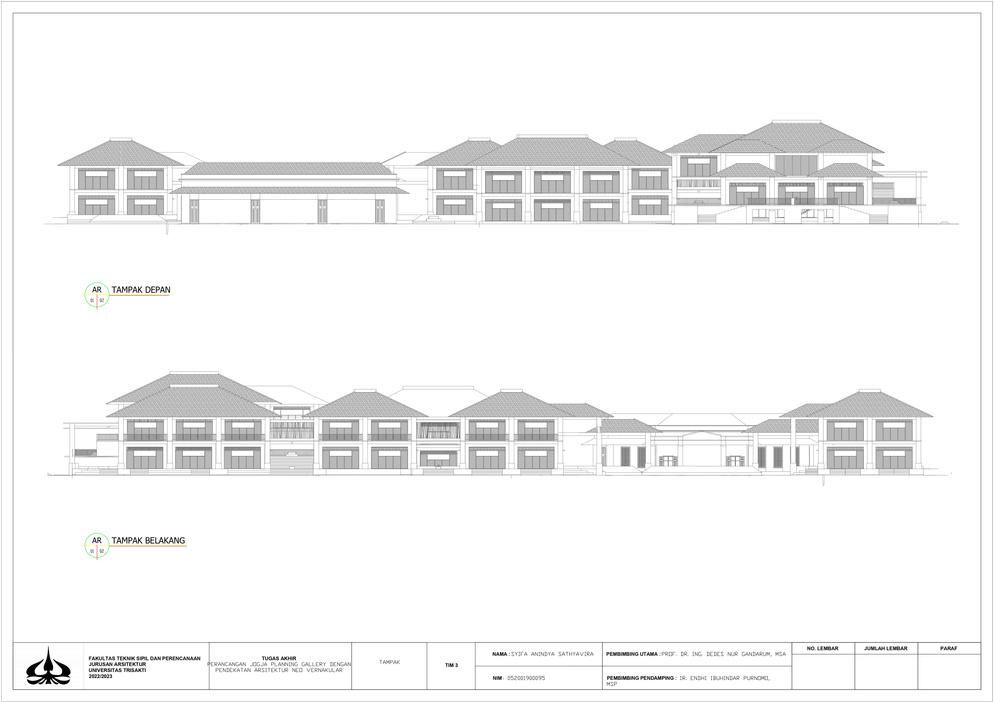
The building is designed with a harmonious shape so that the Yogyakarta DPRD building can be seen more clearly and more prominently but still prioritizes harmony between the buildings The orientation of the building surrounds the cultural heritage building which allows visitors to see the cultural heritage building from various angles and in various directions It looks in harmony with the DPRD building and applies a Neo-Vernacular architectural theme but still makes the DPRD building the main building and highlights cultural heritage buildings
building's
and ground shifts
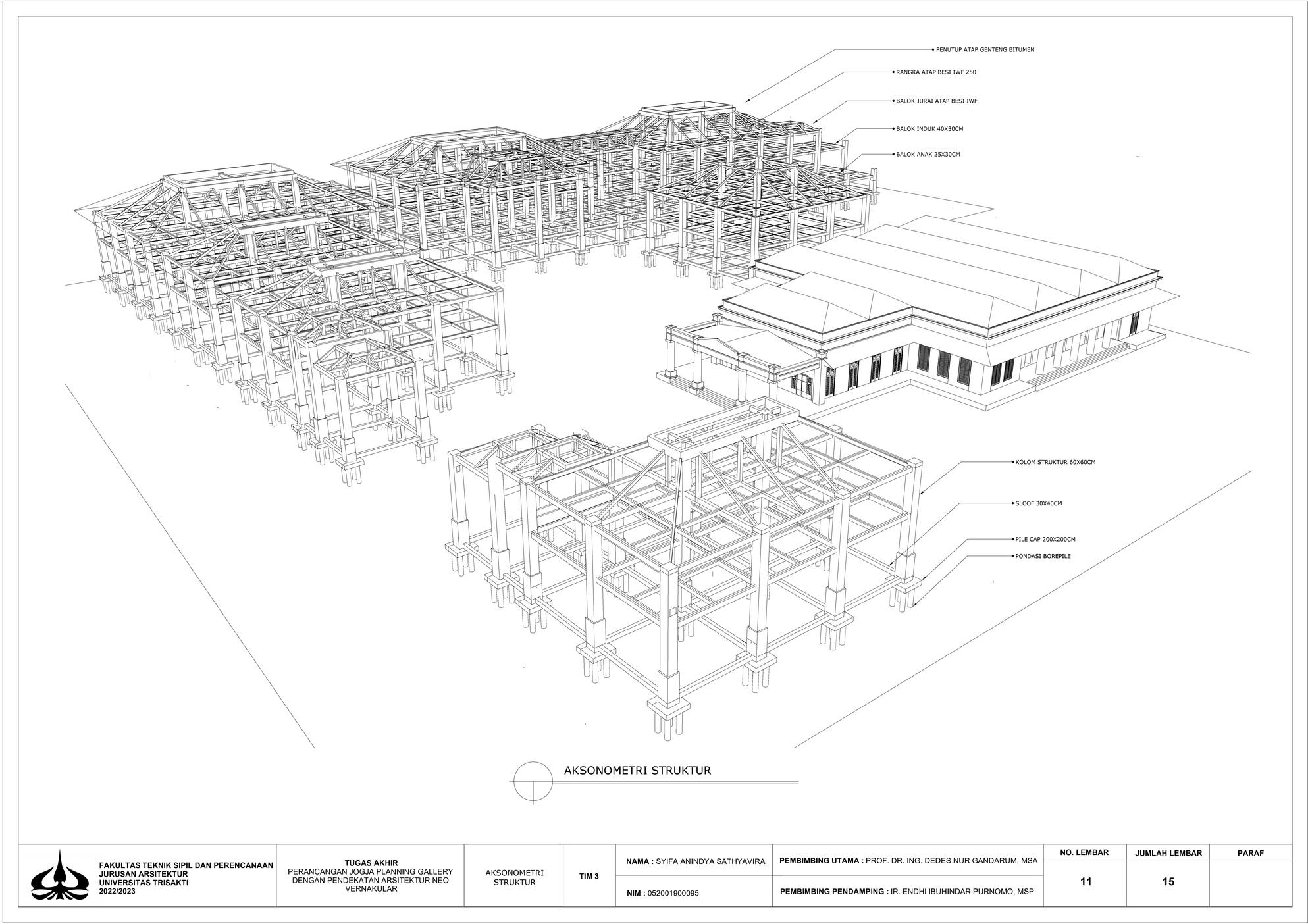
The roof structure uses an IWF 250 iron roof frame with IWF iron roof beams The building structure uses main beams measuring 40x30cm and subsidiary beams measuring 25x30cm The structural columns measure 60x60cm with a sloof measuring 30x40cm and a pile cap measuring 200x200cm For the foundation of the Jogja Planning Gallery, a bore pile foundation is used which is effective in withstanding earthquakes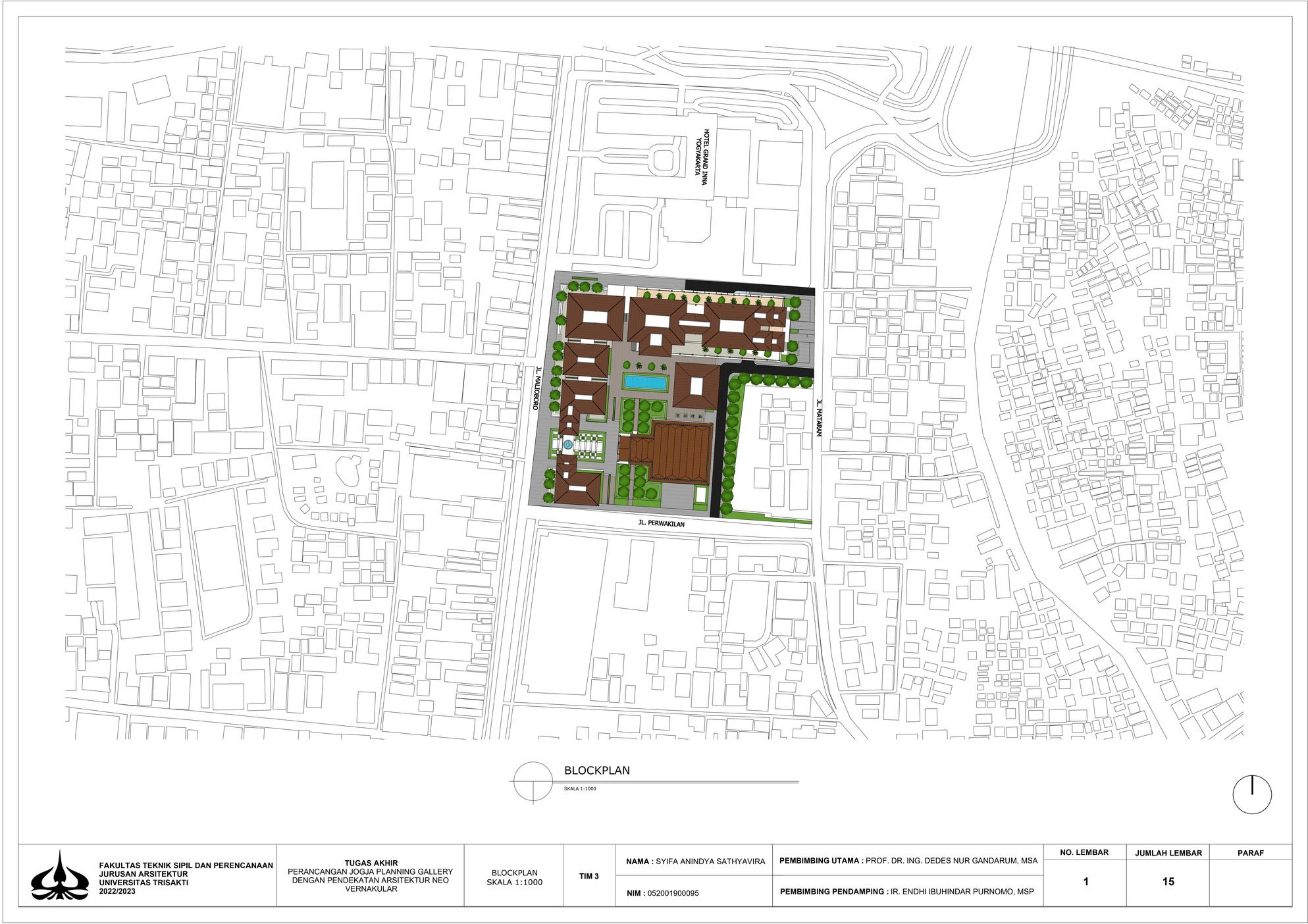
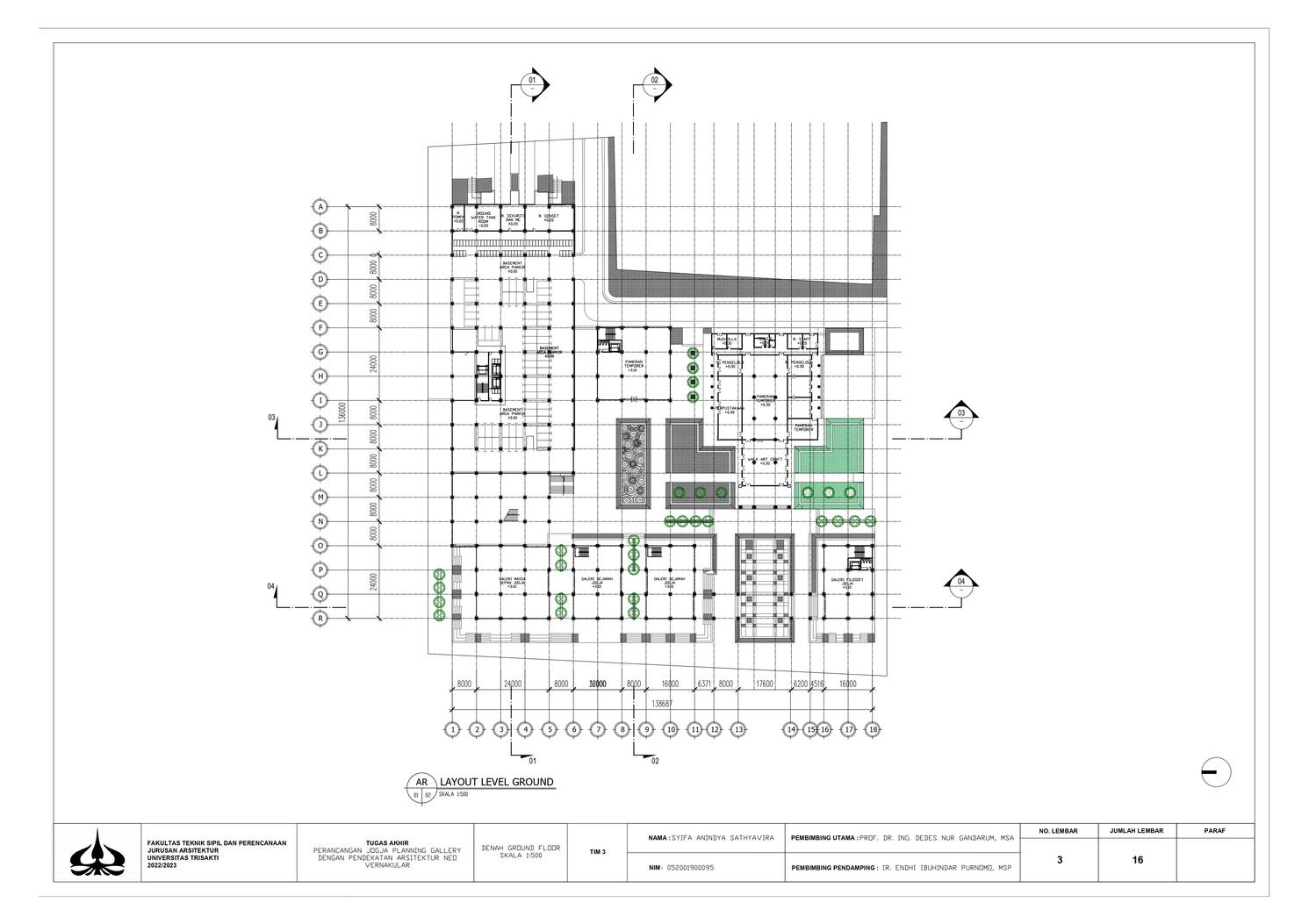
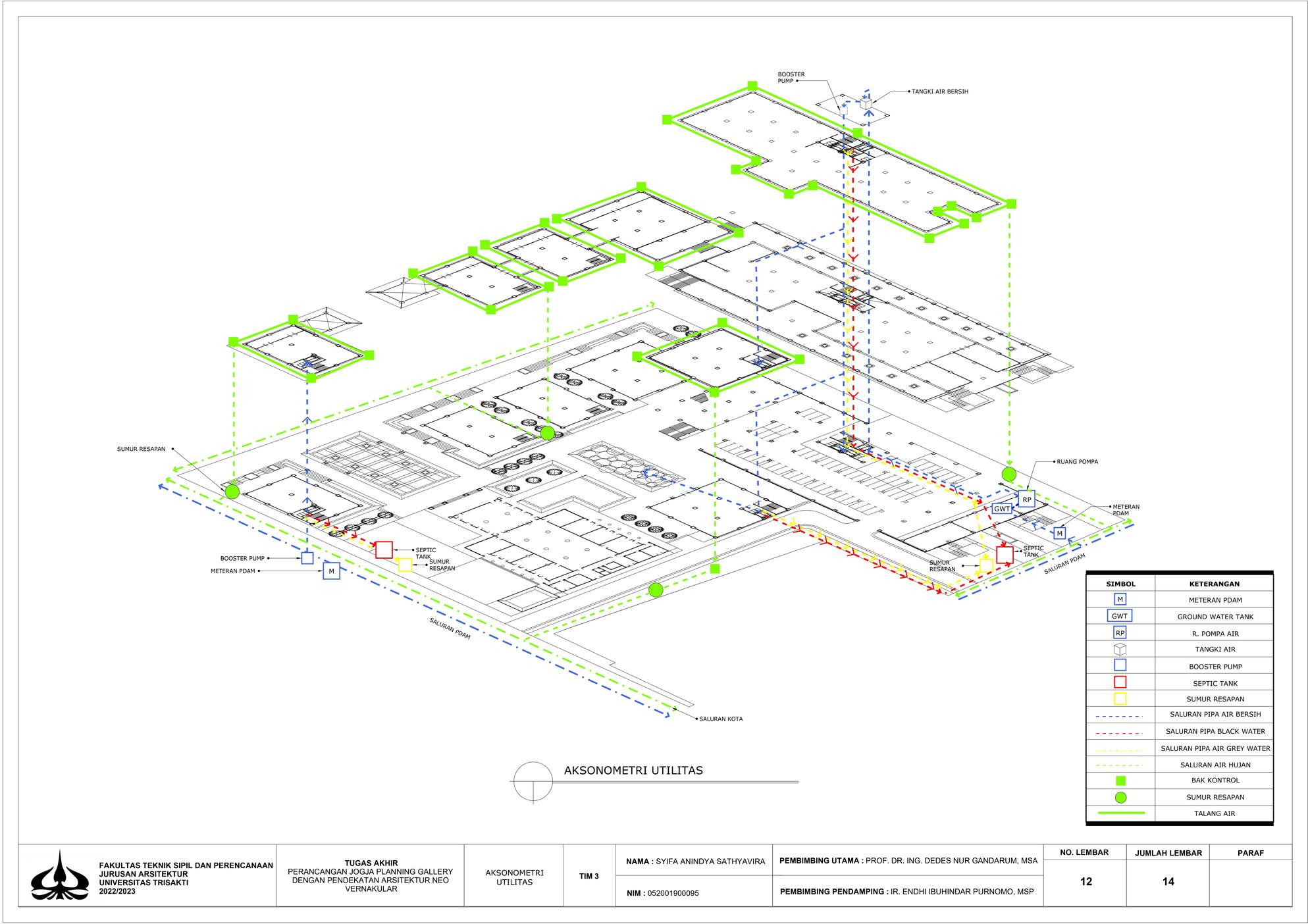
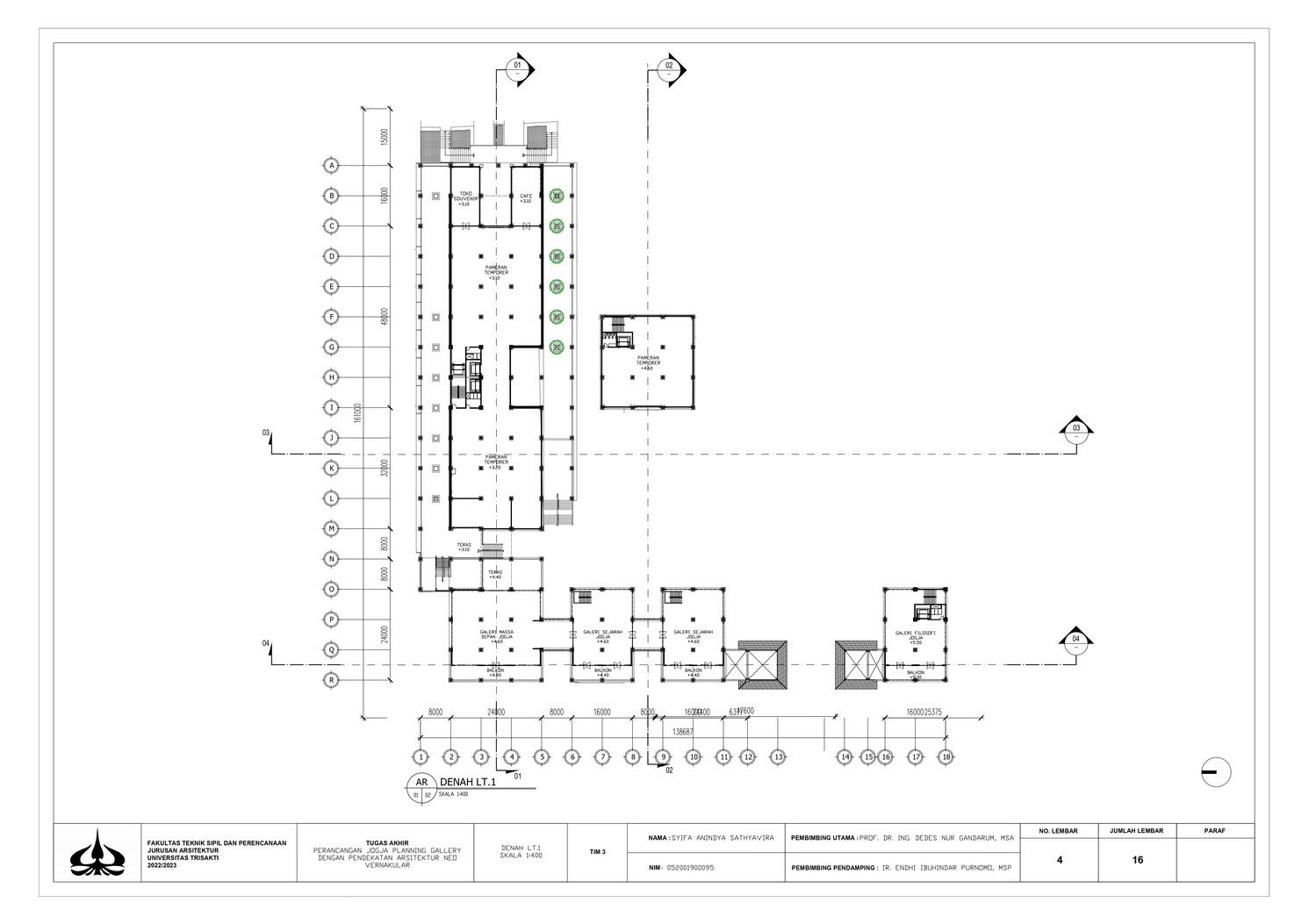
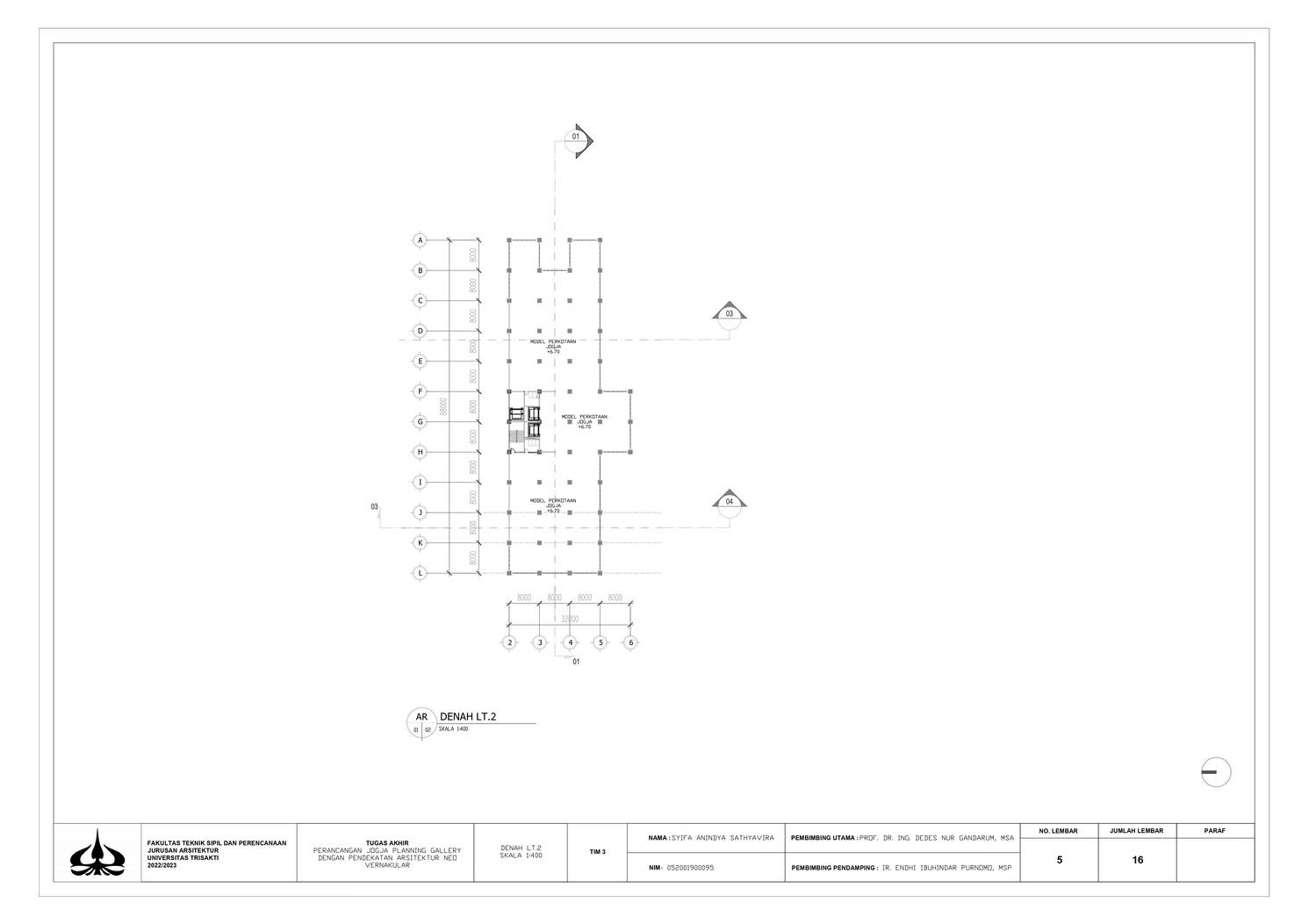 BLOCKPLAN
STRUCTURAL AXONOMETRY
UTILITY AXONOMETRY
FLOORPLAN
BLOCKPLAN
STRUCTURAL AXONOMETRY
UTILITY AXONOMETRY
FLOORPLAN
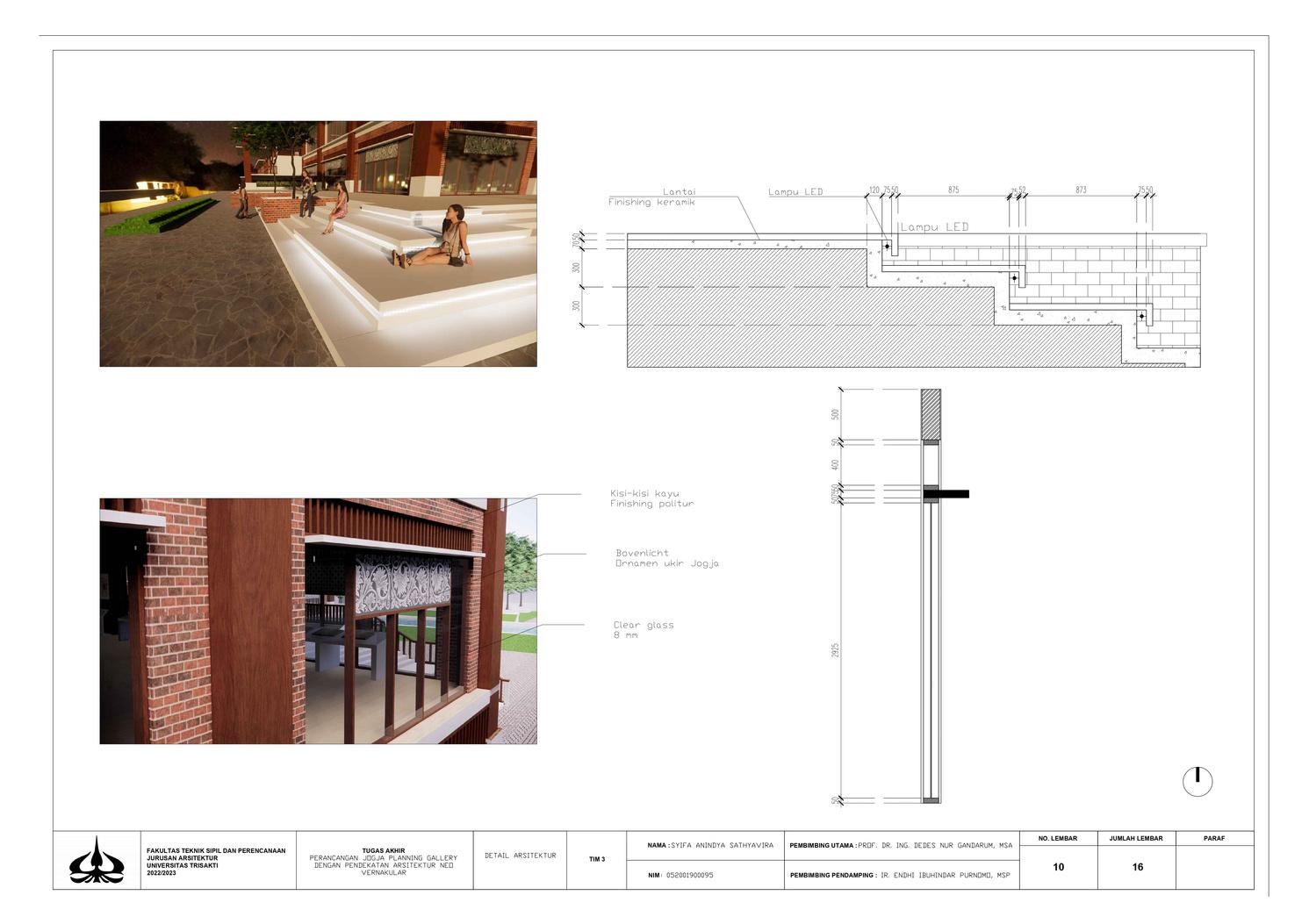
PERSPECTIVE
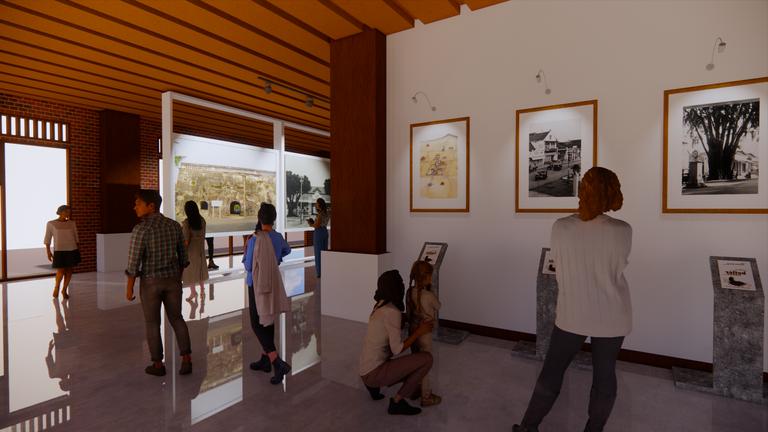
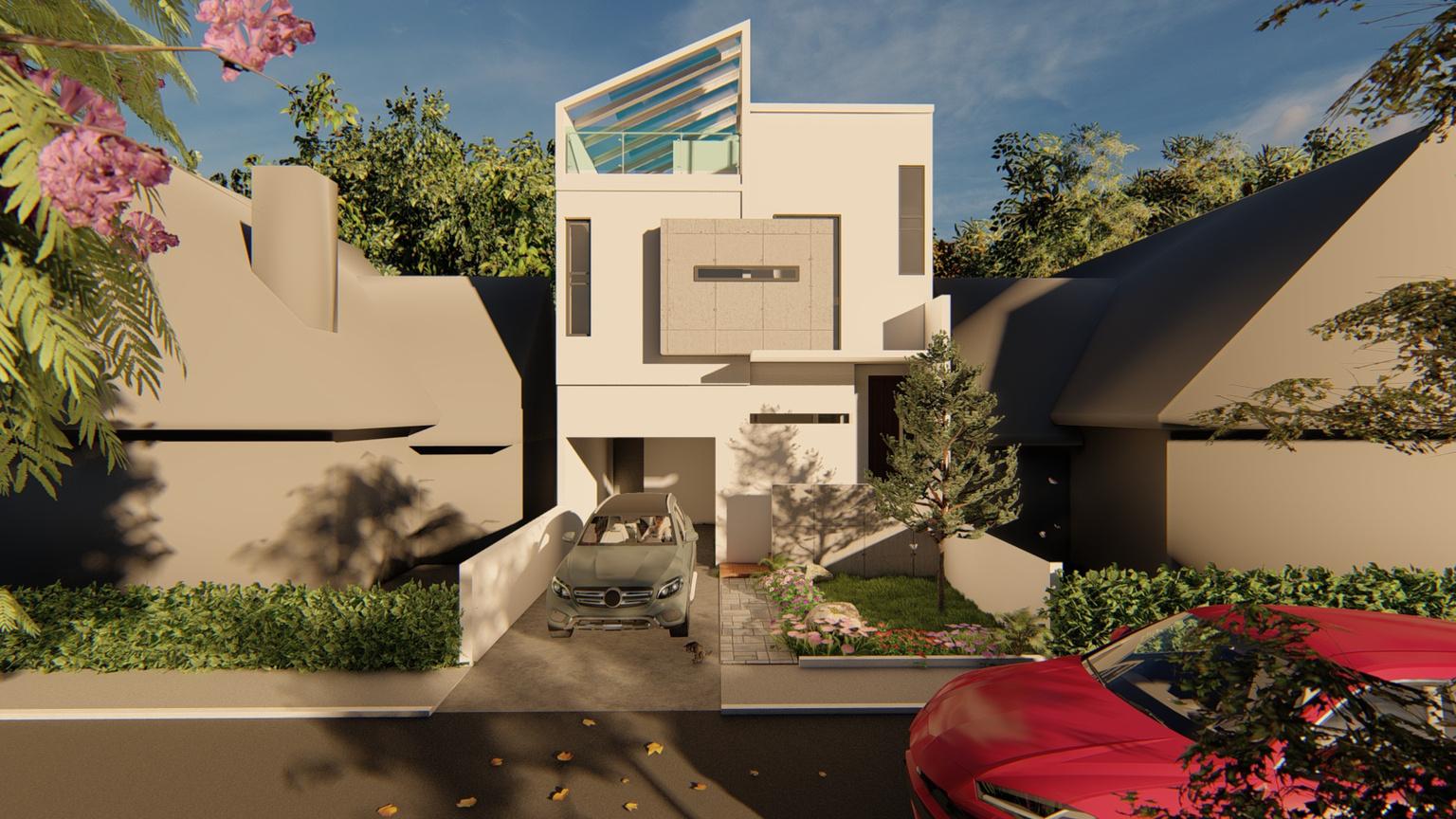
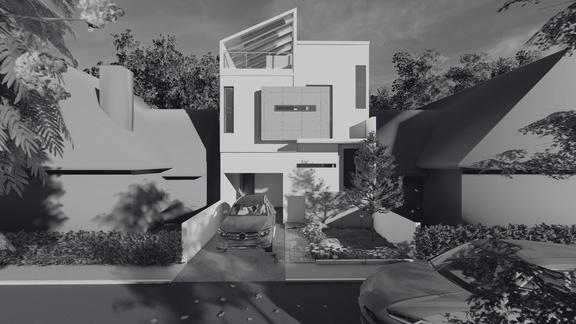
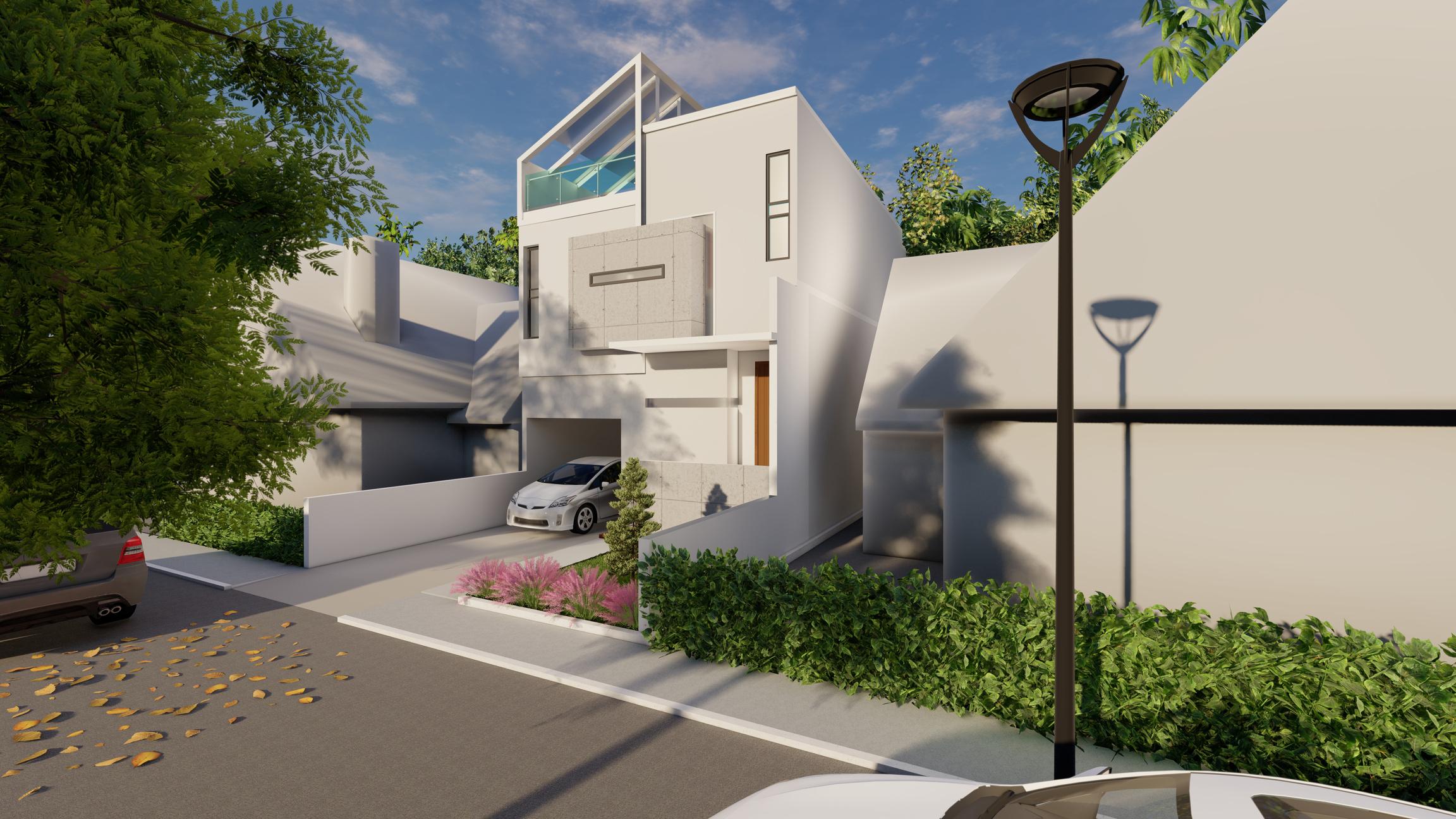 Millennial houses are residences designed specifically for the Millennial generation to live in, who generally have fewer needs inside the house because the majority to do activities outside the home Millennials generally have a taste for houses that are small and minimalist but still comfortable to live in
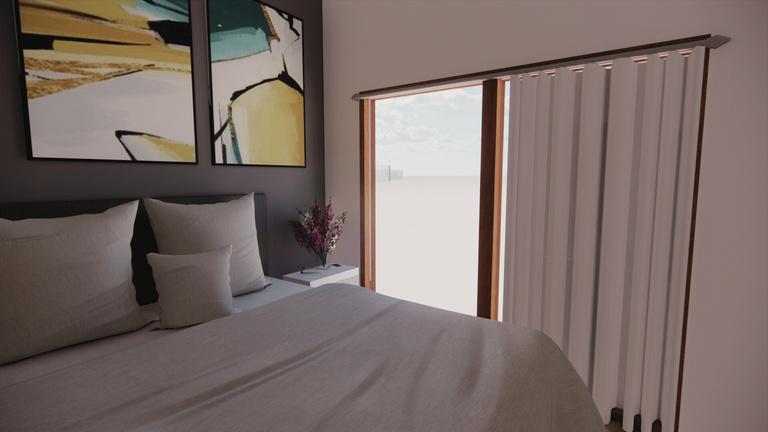
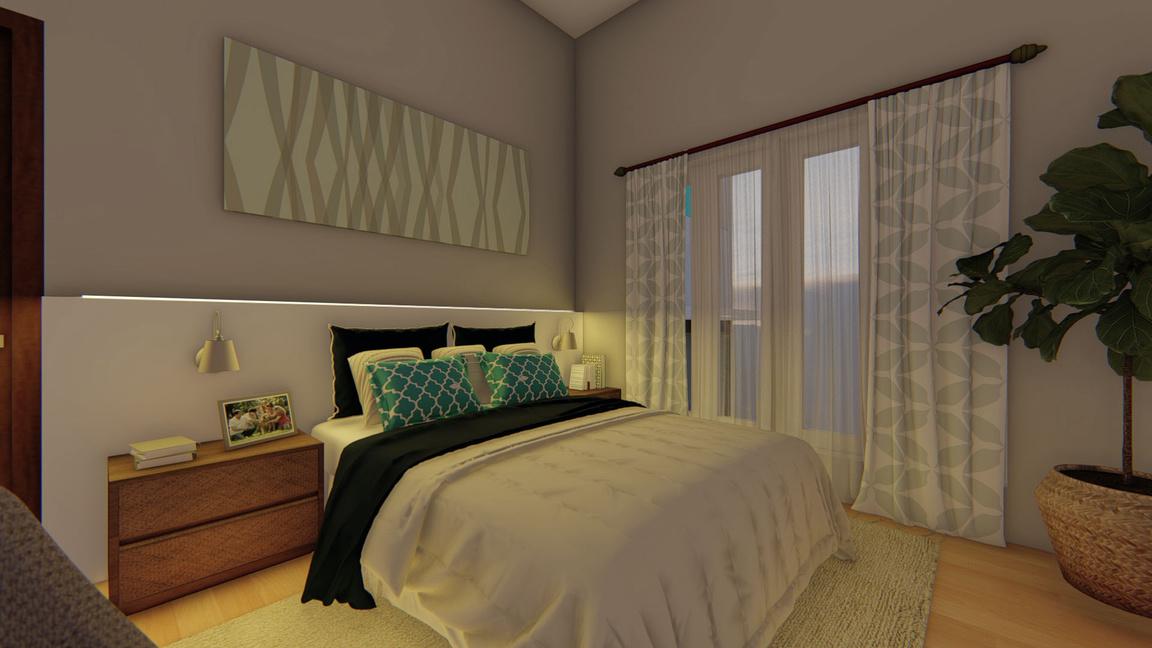 Main Bedroom
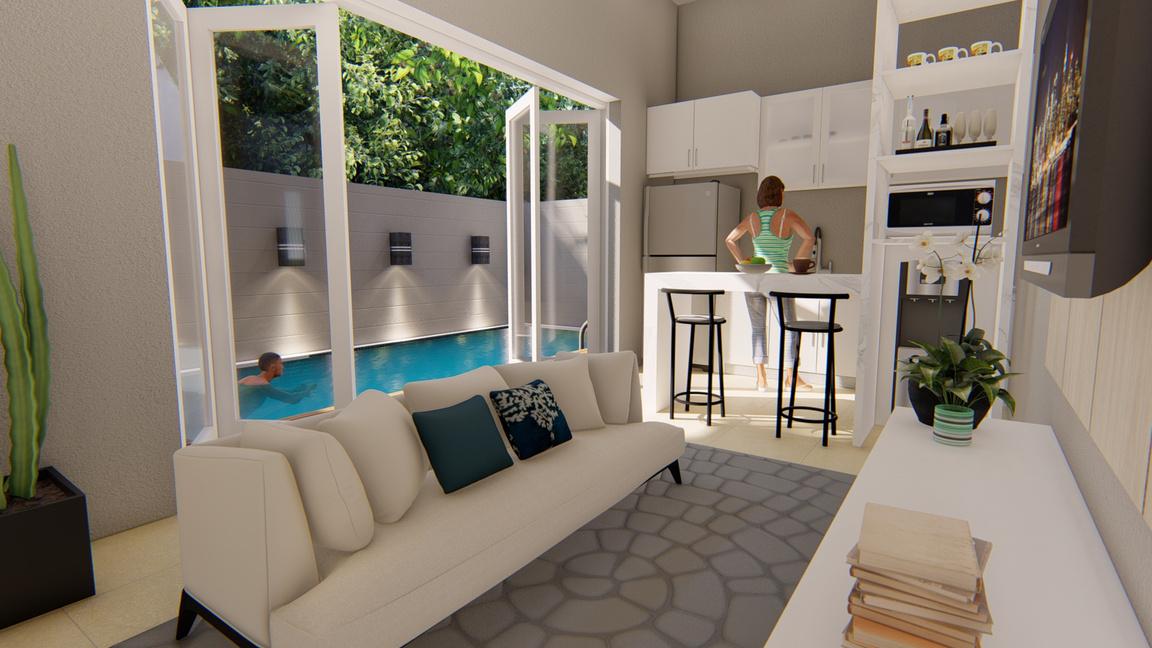 Kitchen - Living Room
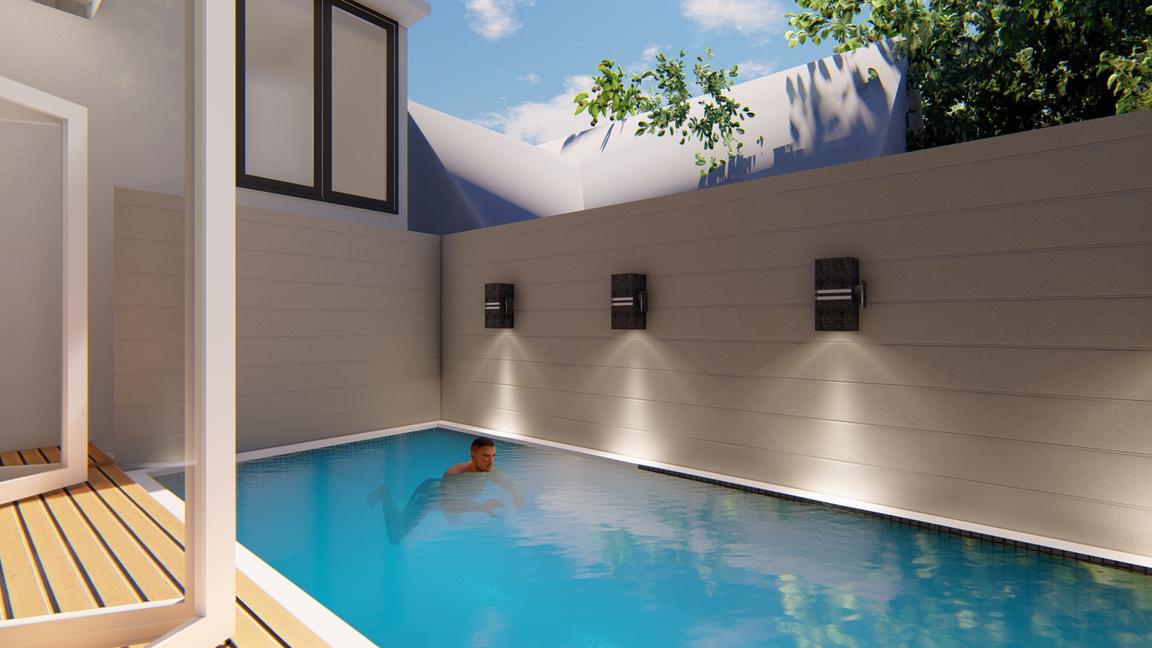 Swimming Pool - Backdoor Entrance