






















































































































































































































































































































SYDNEY SINCLAIR


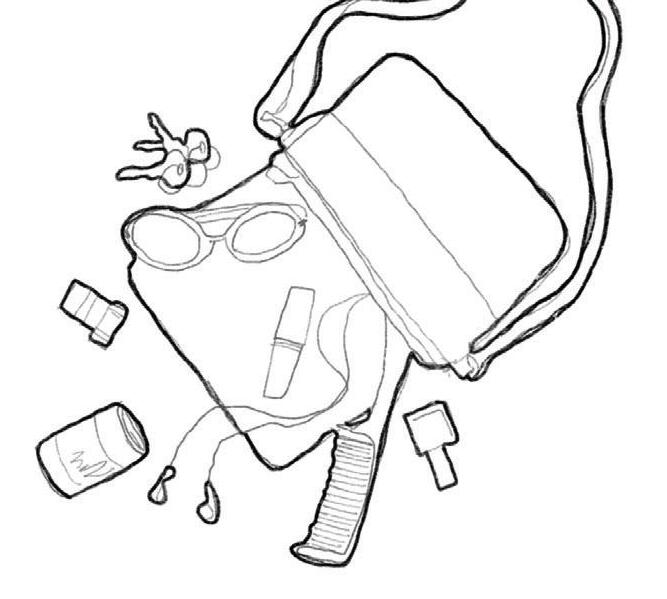


Multidisciplinary exhibition surrounding the creation and satirization of women’s workwear and their experiences
Archtiectural Student Research Grant
Taubman College @ University of Michigan
Collaborators - Sophie Nguyentran | Sabrina
Ramsay | Sydney Sinclair | Caroline Stahl | Zephaniah Romualdo | Sahr Qureishi | Valeria Velazquez
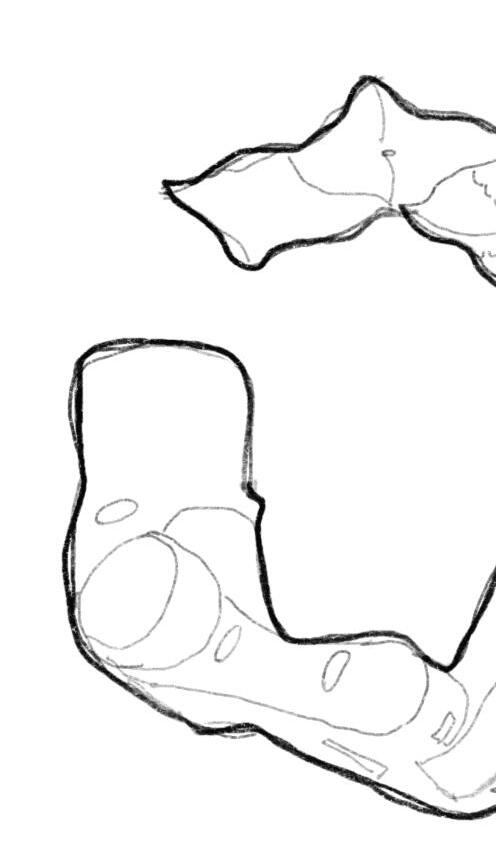
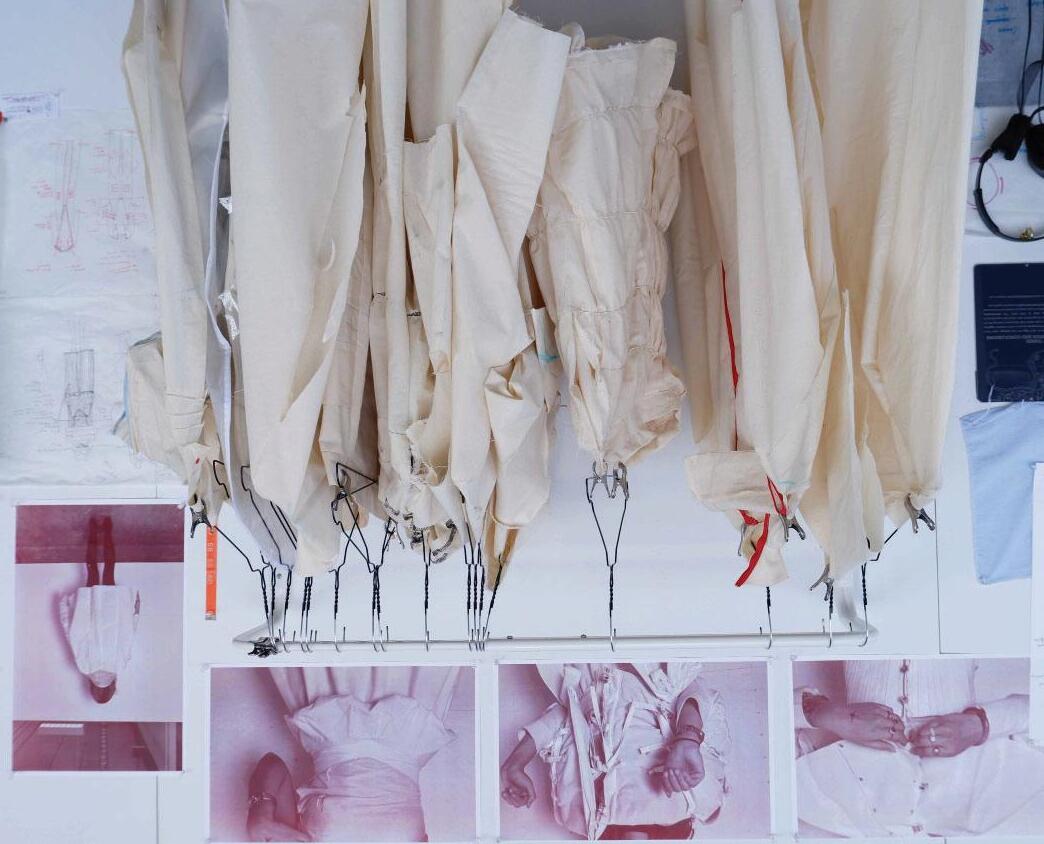
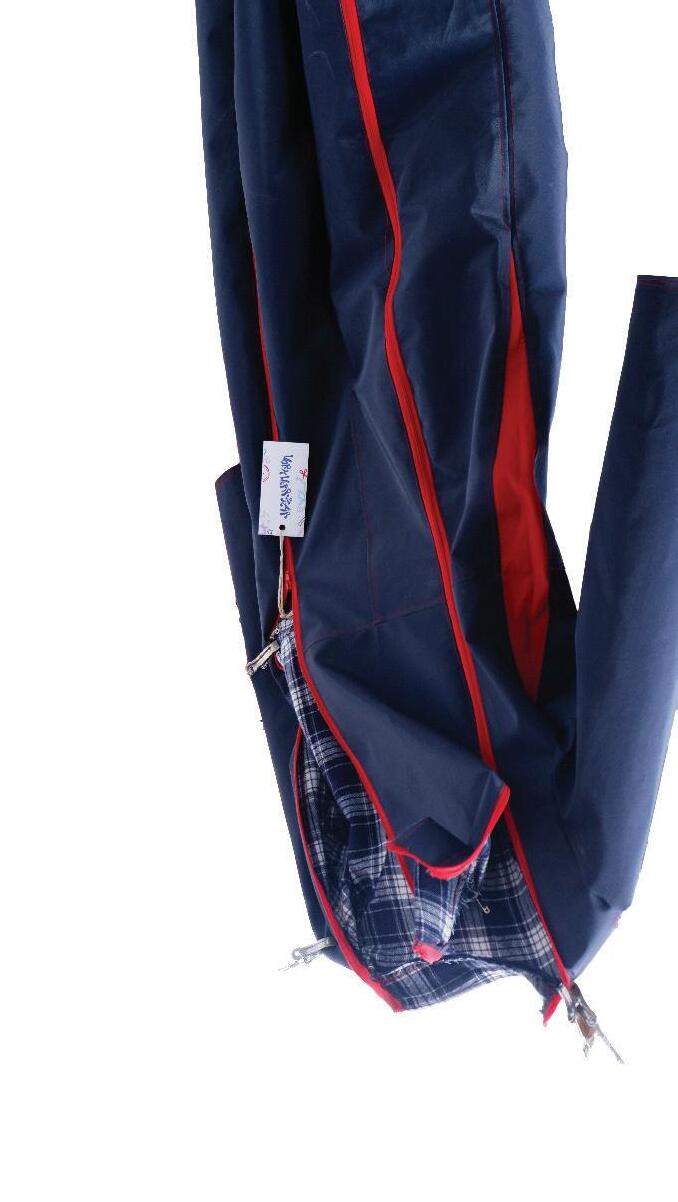
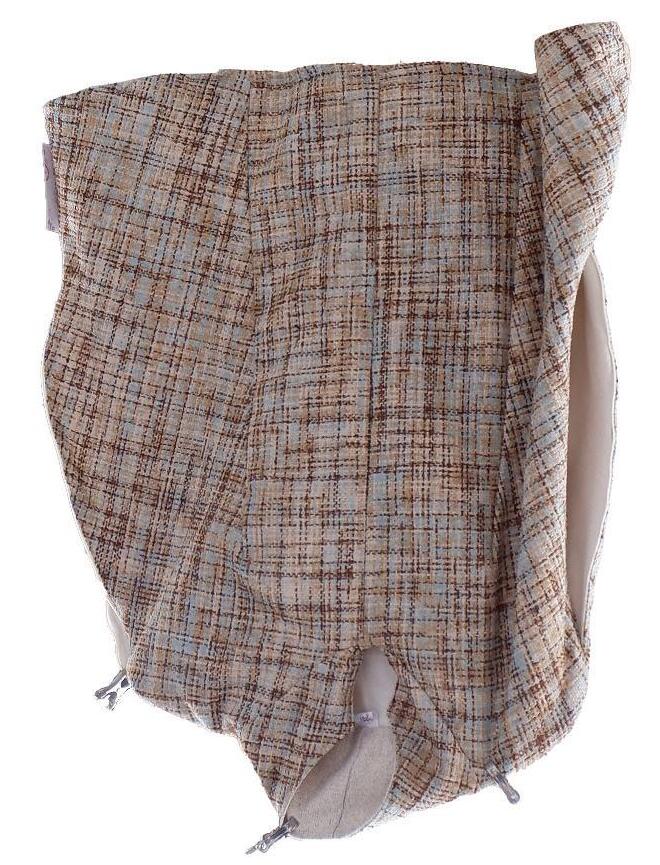
Workplace architecture overtly favors the male body. This is observed in all non-domestic workplaces, from the construction site to high income offices. The worker is envisioned as a man in a full length suit at a corner office, or a man performing hard labor in rigid cotton work wear. When gender separations within the workplace began to disintegrate, women’s workwear manifested as iterations of the accepted male work uniform. It failed to recognize and accommodate the differing needs of the non-male body in space. This research project aims to investigate the shortcomings of architecture in meeting the needs of all workers, and to counter these failures through a range of modifiable workwear pieces that return bodily agency to the non-male worker.
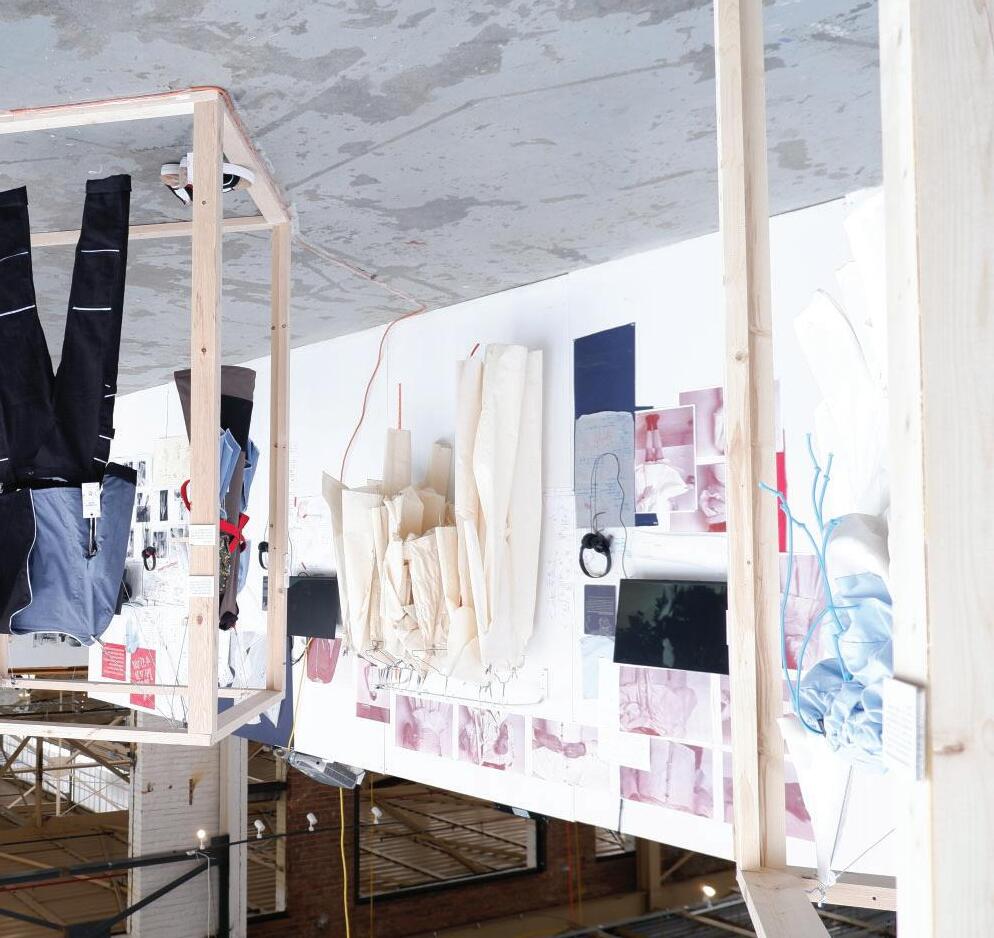
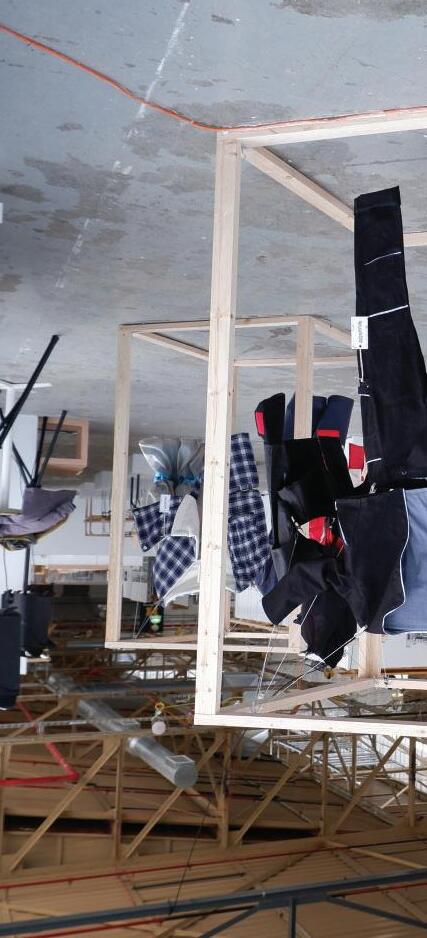
The research takes place across three realms. The first realm, the unreal, simulates actual or likely workplace scenarios through character vignettes created in Unreal Engine to collect and synthesize speculative data on the needs of the wearer in different work environments. In this phase of the process, qualitative data through recorded interviews with various female faculty at Taubman College are conducted to assist and catalyze the garment design---these are published in the exhibition book.
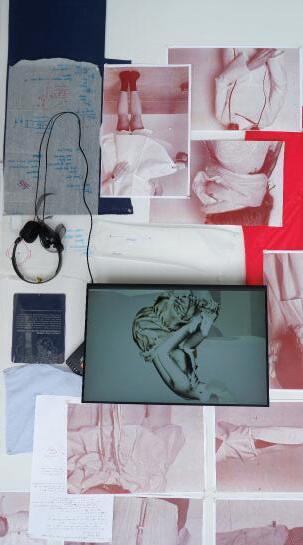
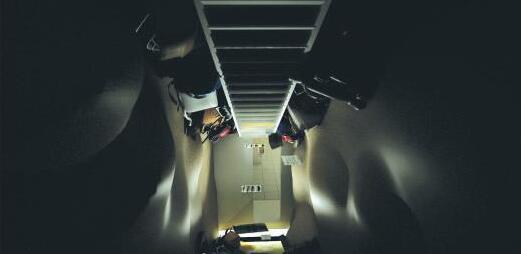
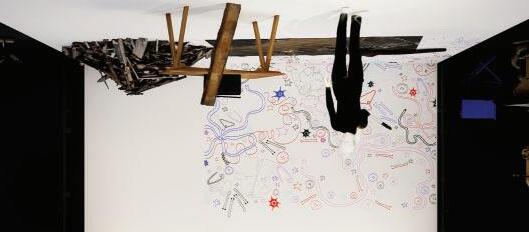
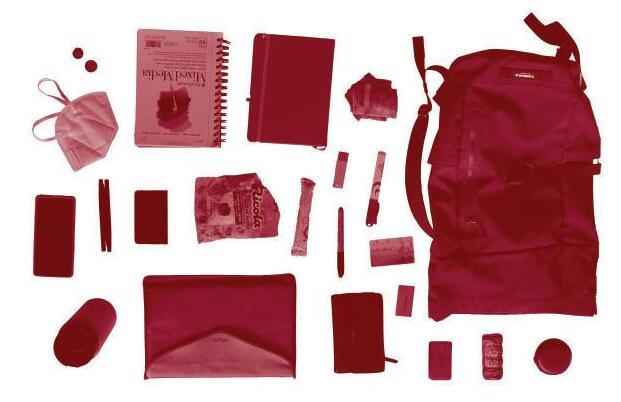
The project tested adaptable, agency-granting wearables countering architecture that ignored non-male body needs. Garment performance was evaluated in the physical workspace and the “workplace” constructed in Unreal Engine, using VR/motion capture capabilities via the MIDEN in the at the University of Michigan’s Duderstadt Library.
In the gathering and design phases, the Unreal world was built through animation detailing and photogrammetry of physical settings to construct a narrative. Settings were deconstructed, combined, and reconstructed to create speculative scenarios requiring adaptable wearables. Simultaneously, physical scrap materials, photographs of possible subjects, and physical artifacts like magazines and advertisements were collected to create a base for the production phase, which involved prototyping and constructing the wearables. The prototypes were then reconstructed in Unreal Engine to test their effectiveness in the constructed environments. This effort was summa-
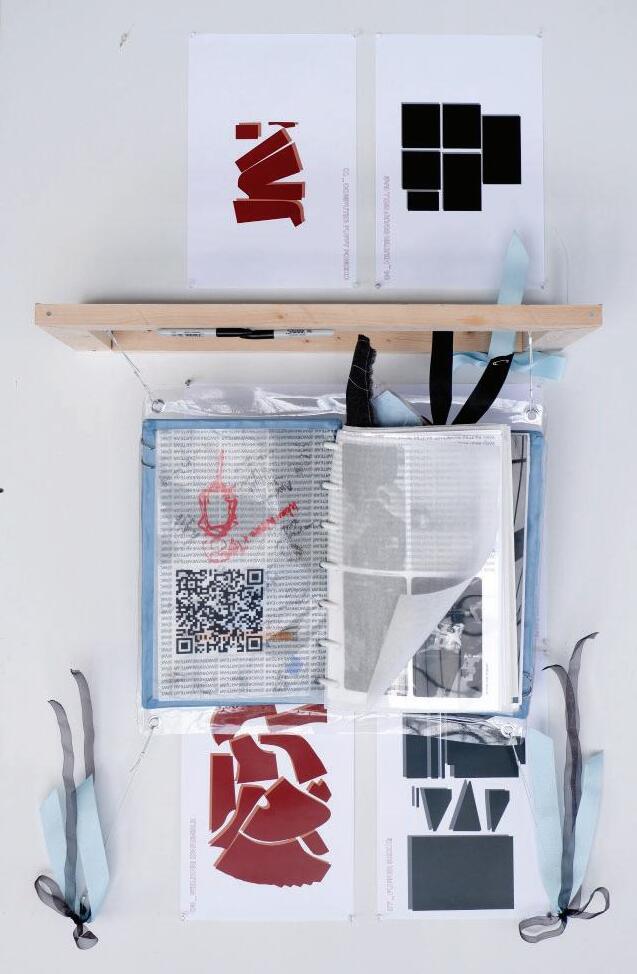
rized in “Digi-Physical Hunting and Gathering.”
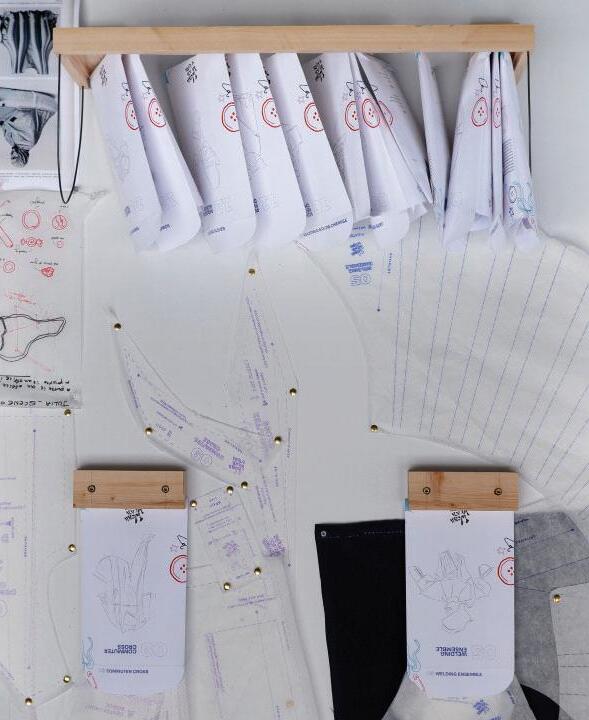
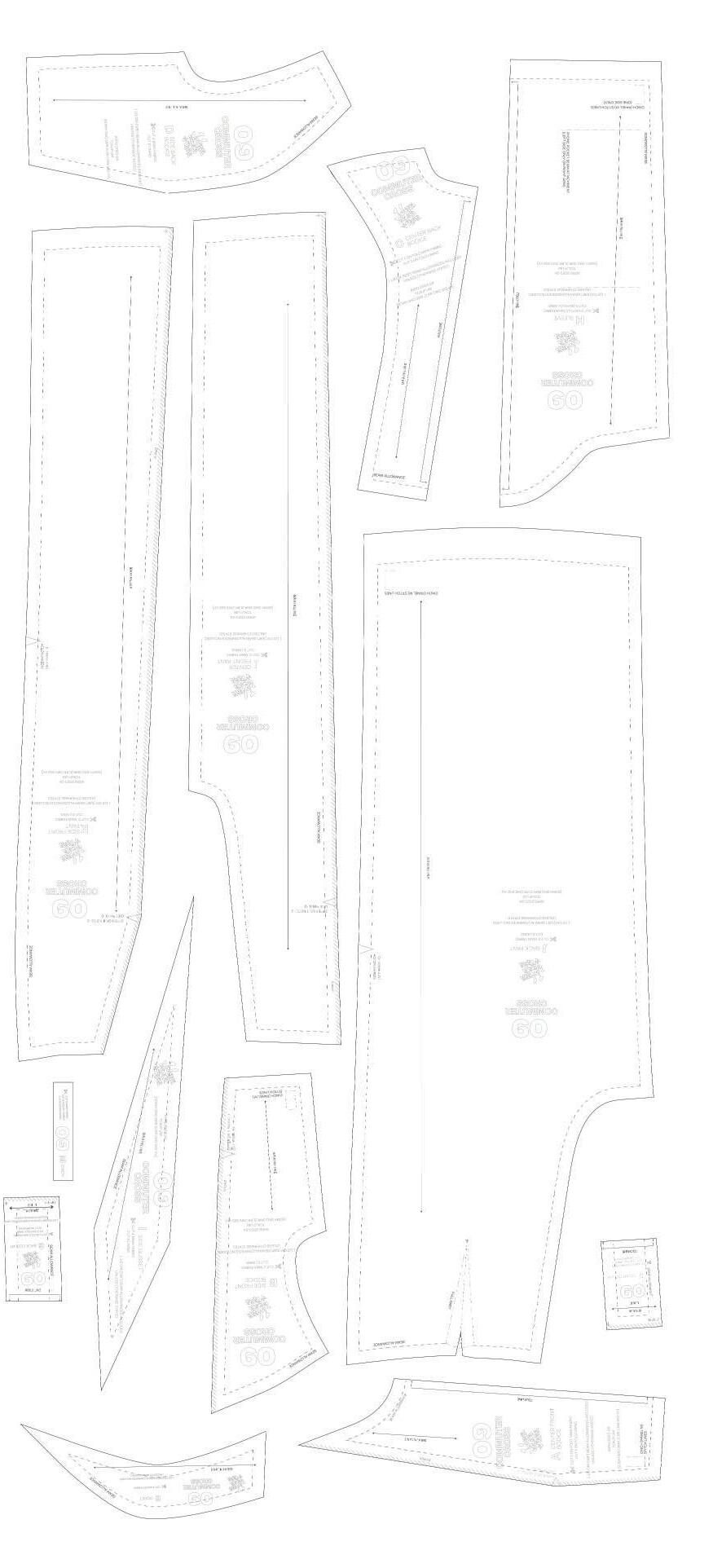
In the final phases of exhibition, publication, and distribution, the focus was on publication details, accessibility, and distribution through the creation of sewable patterns. This ensured WORKWEARandTEAR could be a resource, guiding wearers to gain agency over their bodily comfort in the workplace. The final exhibition at the Liberty Research Annex in Ann Arbor displayed the garments and publication.
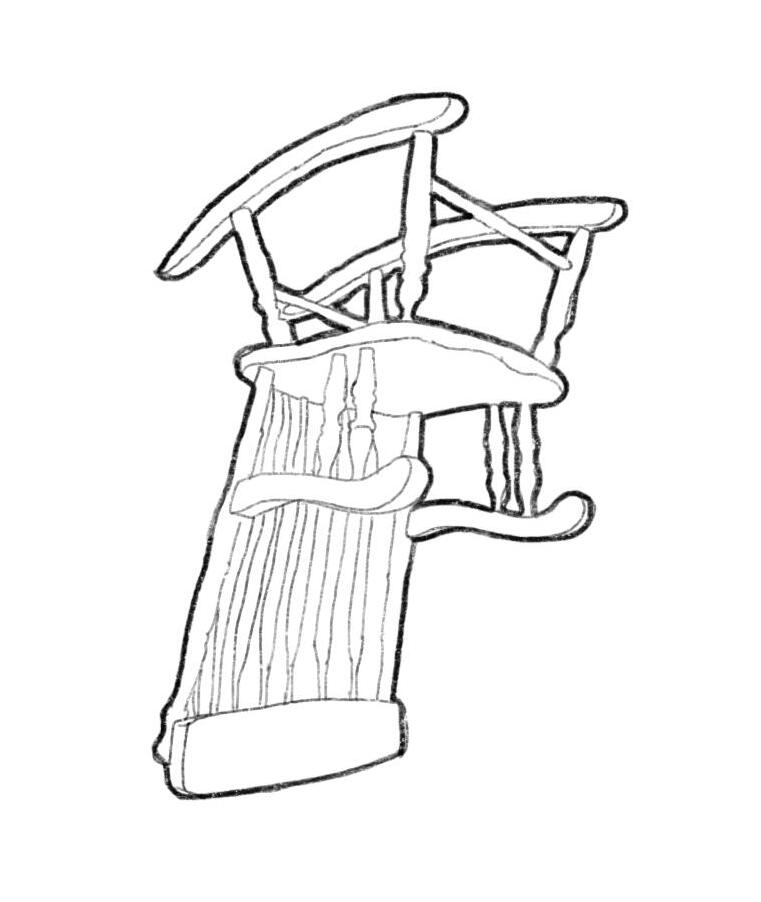
A modular home, prefabricated to bring
A modular home, prefabricated to into any holler where needed into any holler where needed
Competition - Modular Home 2021
Collaborators - Marla Stephens | Ann Nguyen
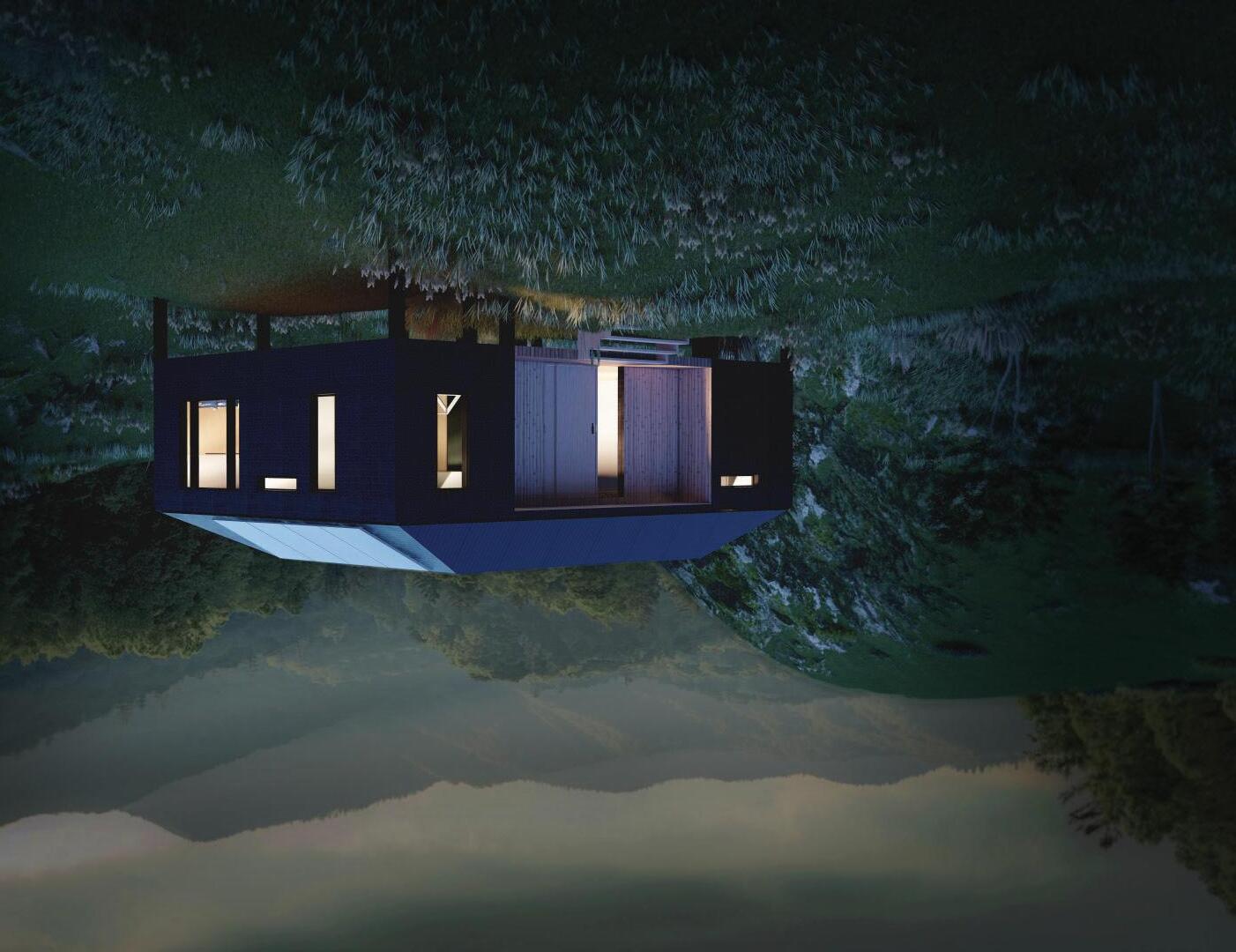
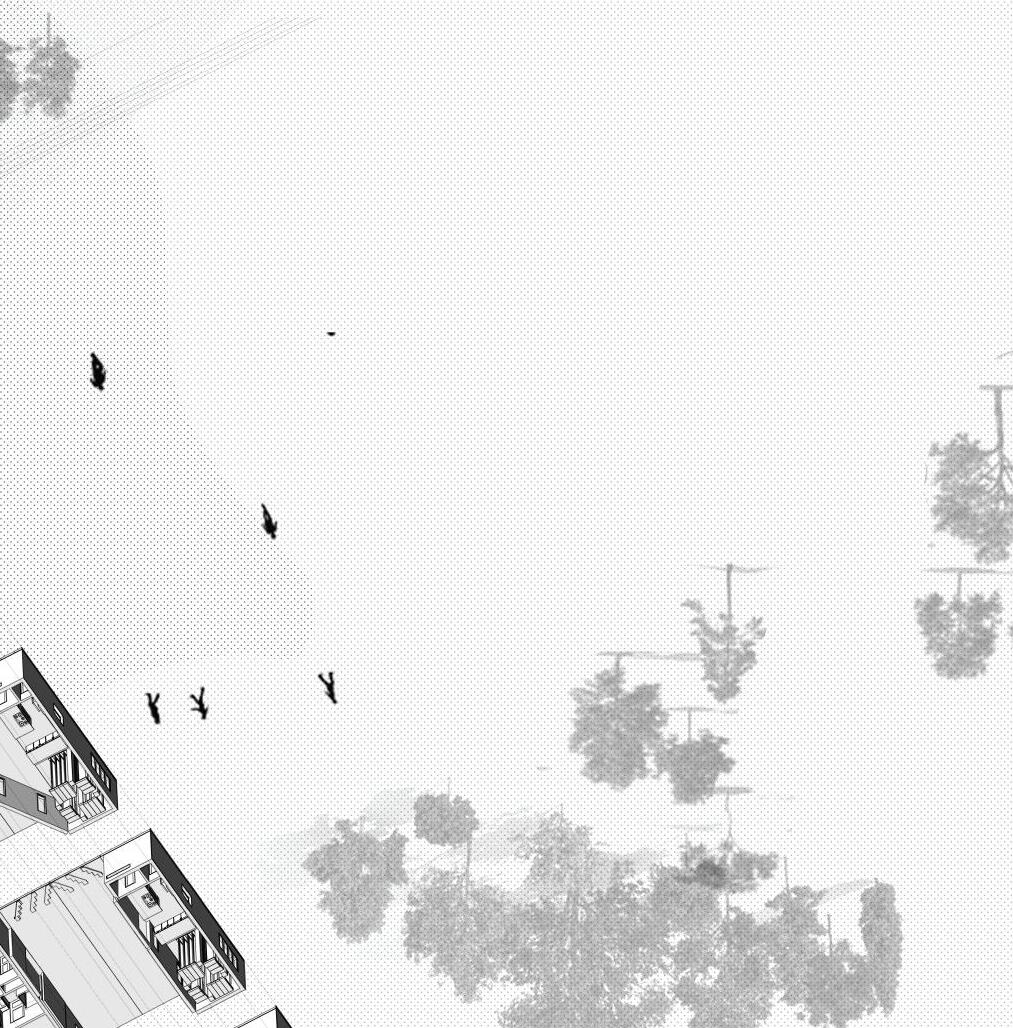
Hollerhaus responds to the extreme housing need in the remote parts of the Appalachian Mountains in the United States. Quality housing in these areas is scarce due to resource deserts and difficult roads. To address these challenges, Hollerhaus was designed to be prefabricated and placed on a single trailer, making it easier to navigate mountain roads. This innovative design ensures that even the most remote communities can access durable and comfortable housing, improving living conditions and stability for residents.
The design also features an impluvium centrally located in the home, providing a natural water collection system and a focal point for communal activities. Additionally, the inclusion of a porch not only preserves the architectural heritage of the region’s close-knit communities but also enhances social interaction and outdoor living, fostering a stronger sense of community.
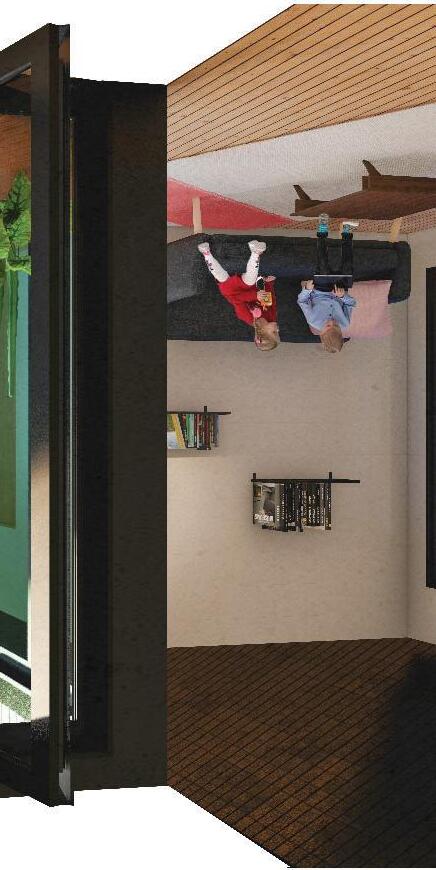
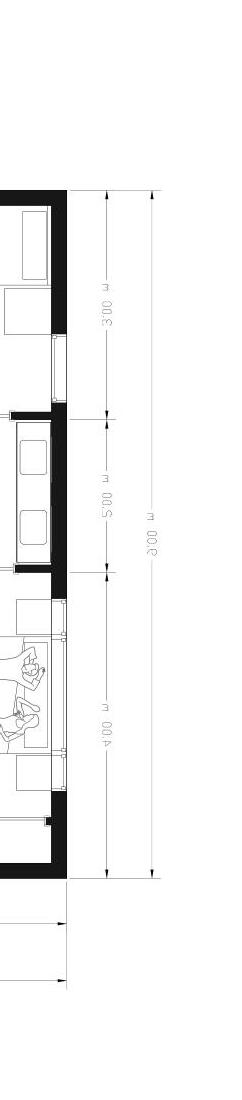

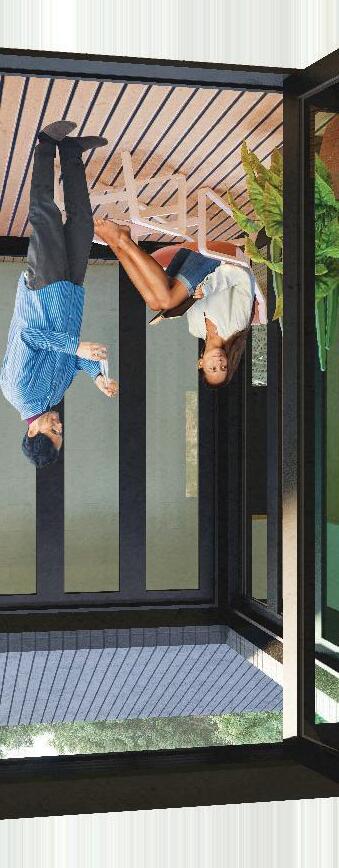
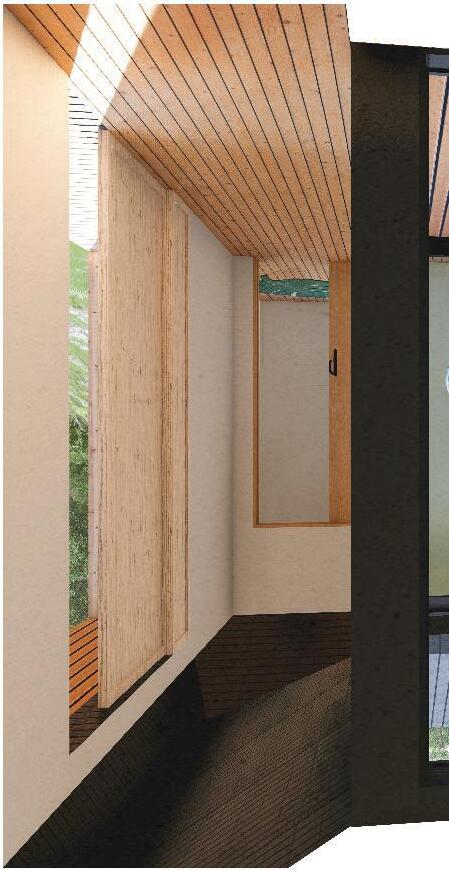
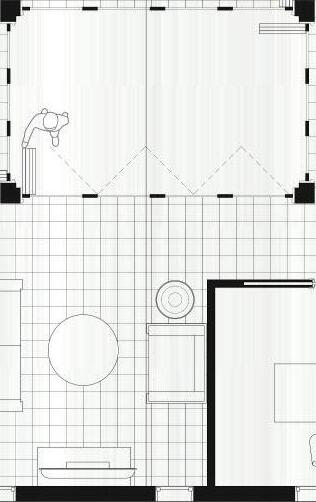
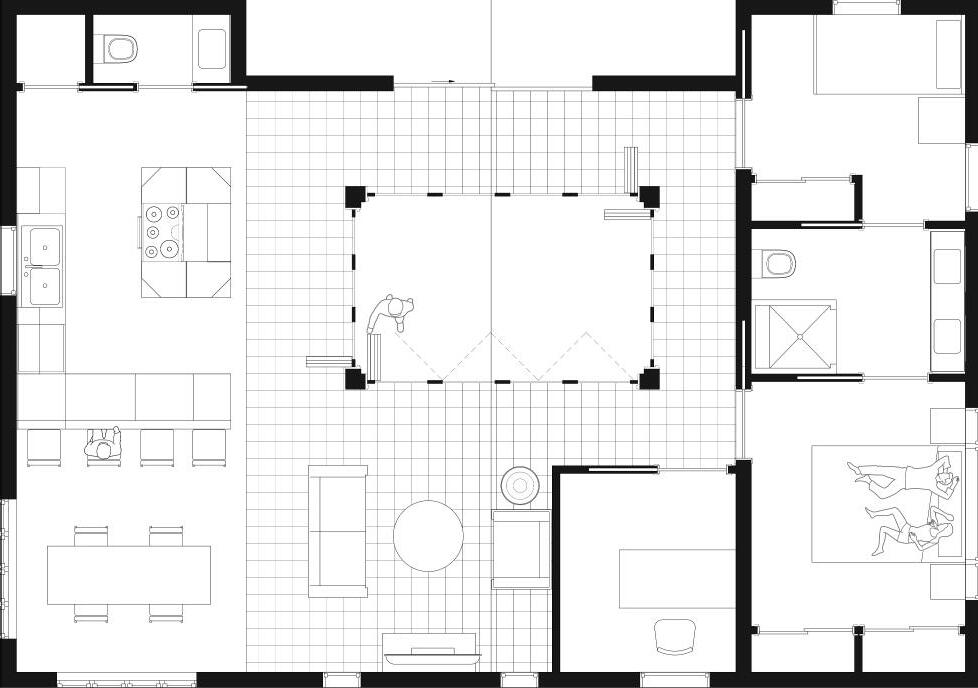



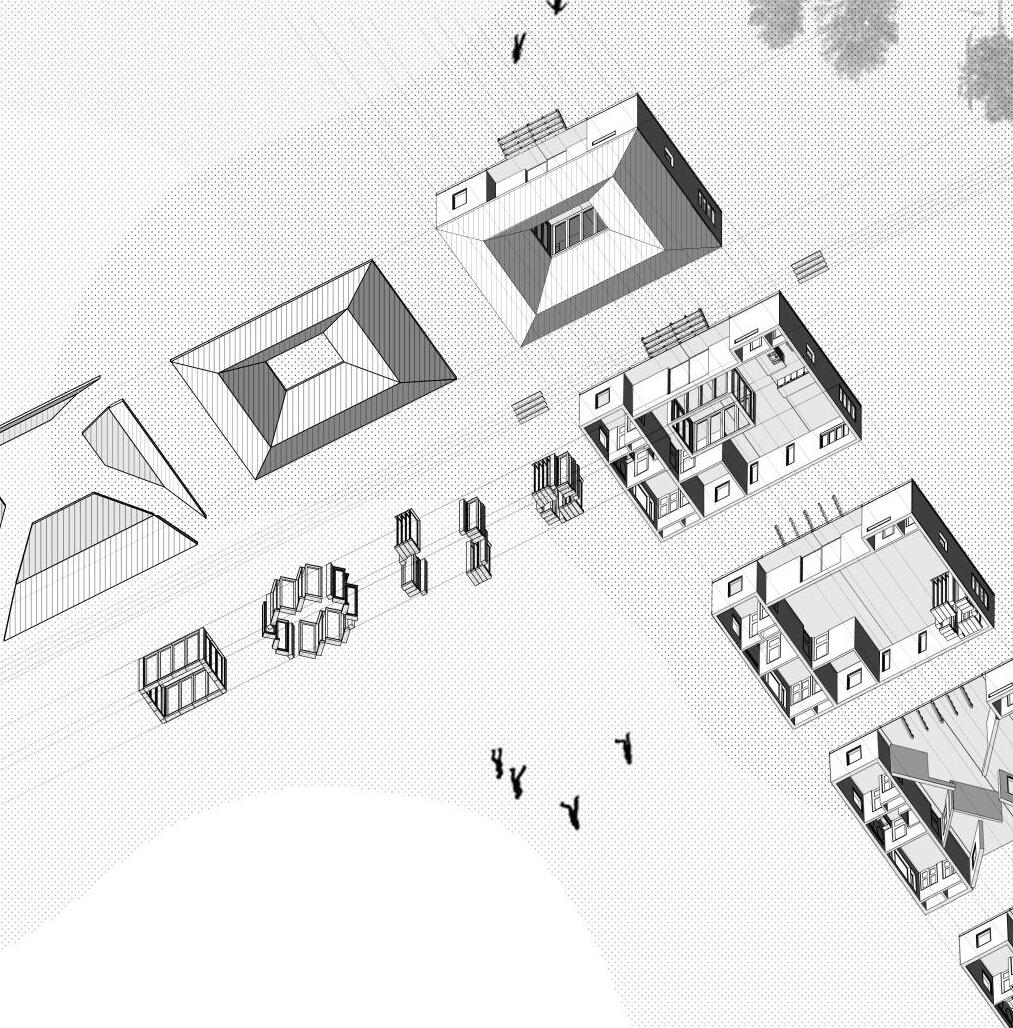
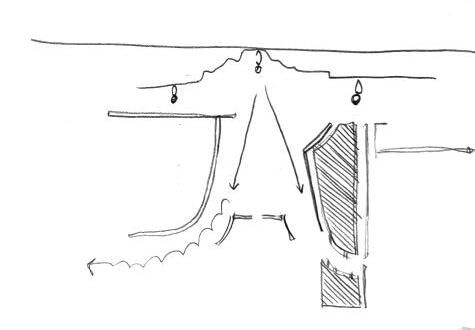
The HollerHaus is crafted from the Appalachian idea that the porch is the central place of gathering within a home. The HollerHaus seeks to modernize this notion, transforming the idea of the porch into being the ‘hearth of the home’. All spaces unfold off of this central porch in a modular fashion. This central porch connects the HollerHaus to the sky and ground by the funneling of water and light.
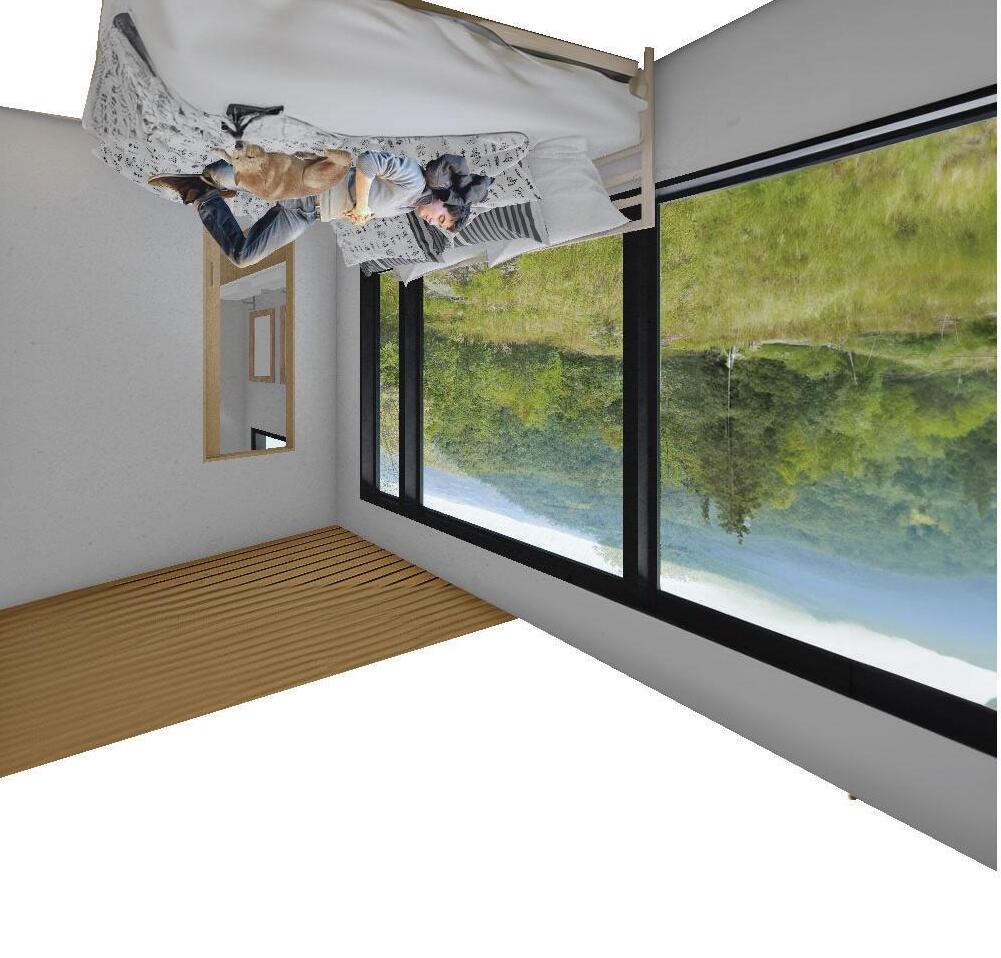

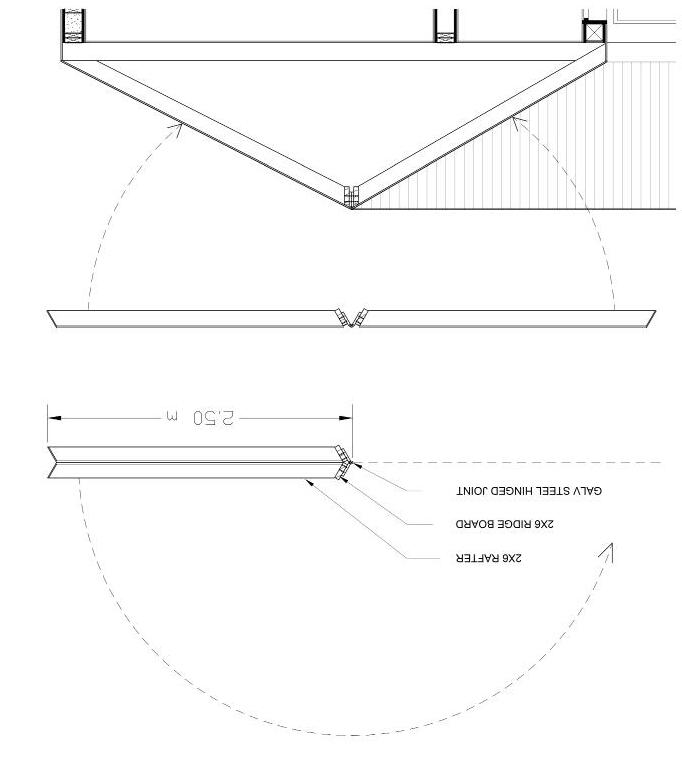

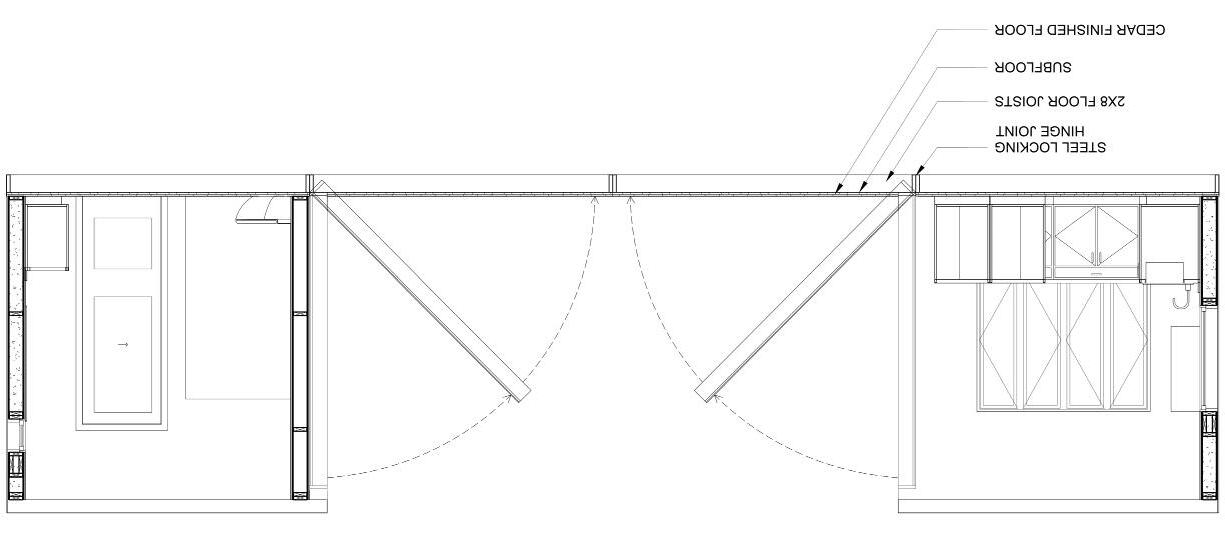
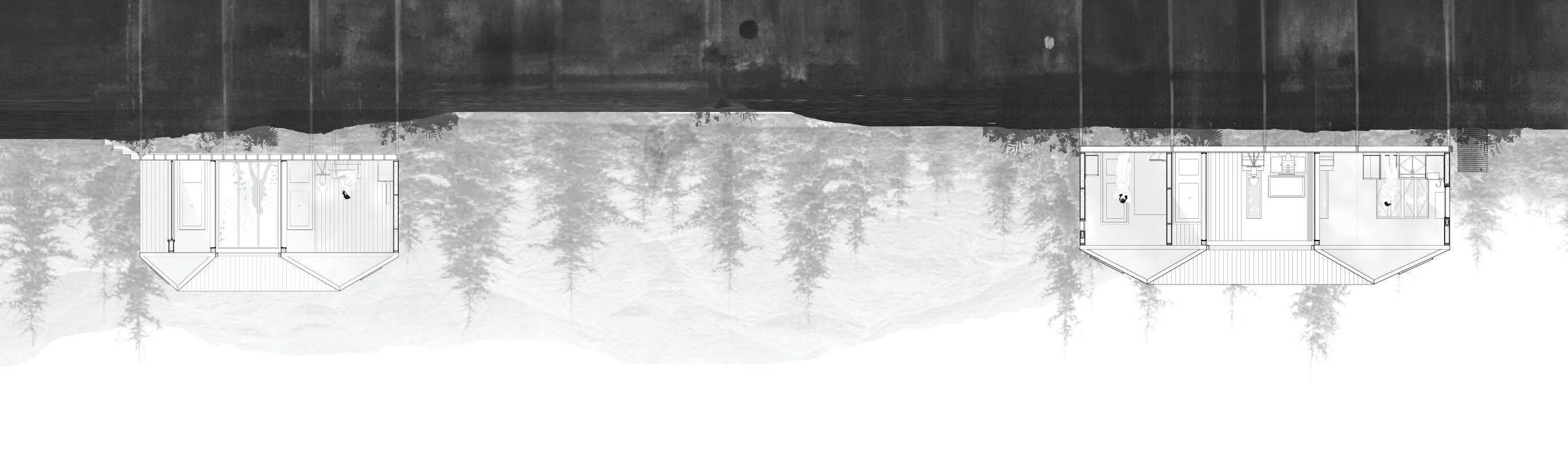
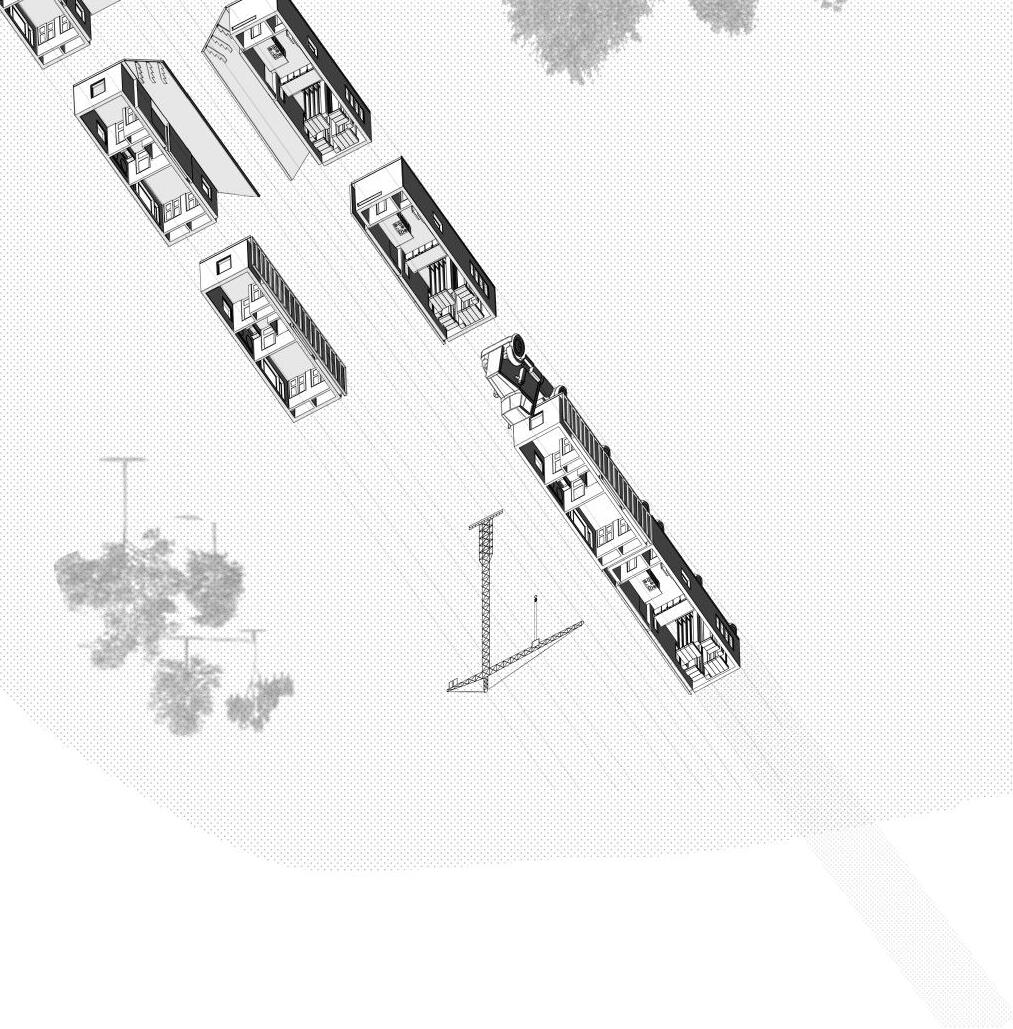

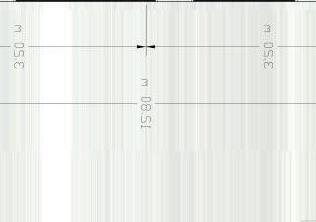
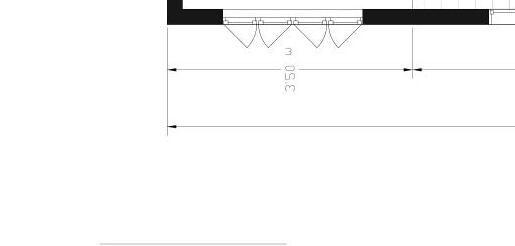
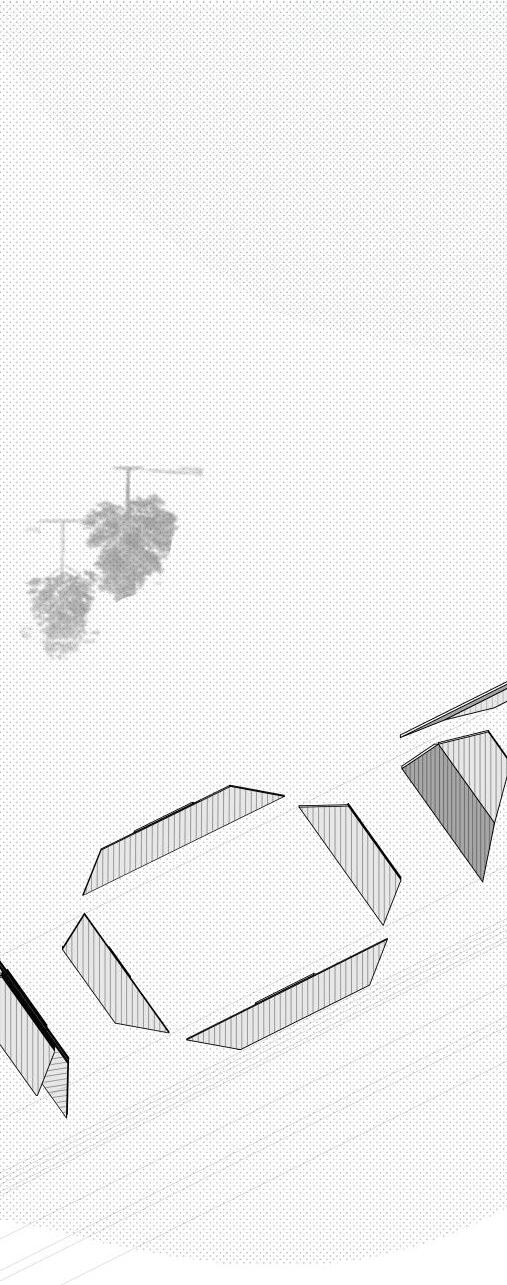
The design includes two prefabricated modules with secondary floors and walls in a folded assembly on the exterior facade. Once situated on site, one facade from each module unfolds to double the floor space, then unfolds again to position the secondary walls. This design allows the four folding floors to maximize floor space while remaining compact during transportation. The rectangular porch acts as a flexible threshold, activating and deactivating various spaces within the home. The roof, divided into four components, folds in half and transports atop the two main modules.



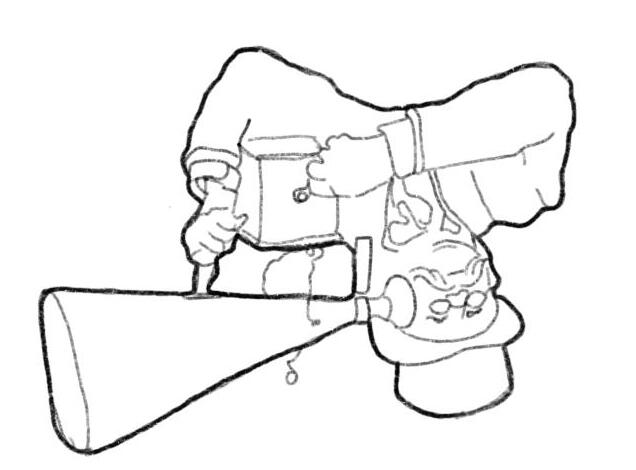
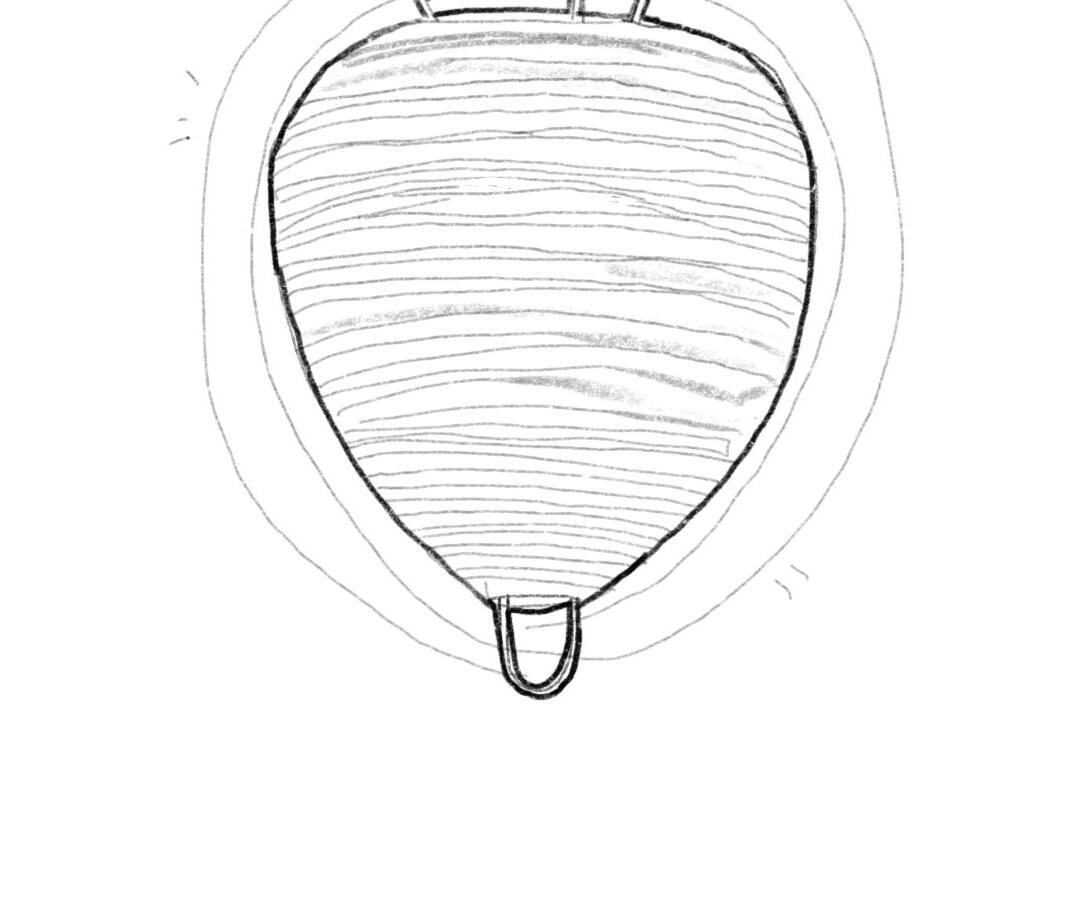
The Auditory Archive contains a repository of sounds from the Space Coast, including recordings of the Columbia Shuttle disaster, local ska concerts, and the calls of endangered spoonbill herons. The trumpet-like recording space allows visitors to listen to these sounds. Locals and industry transplants can use this shared resource to understand the embedded history of this storied area. Sounds serve as tools for remembering and creating shared memories in a place at risk of losing its true narrative to industrial and military interests. This initiative aims to preserve the Space Coast’s authentic cultural and historical essence for future generations.
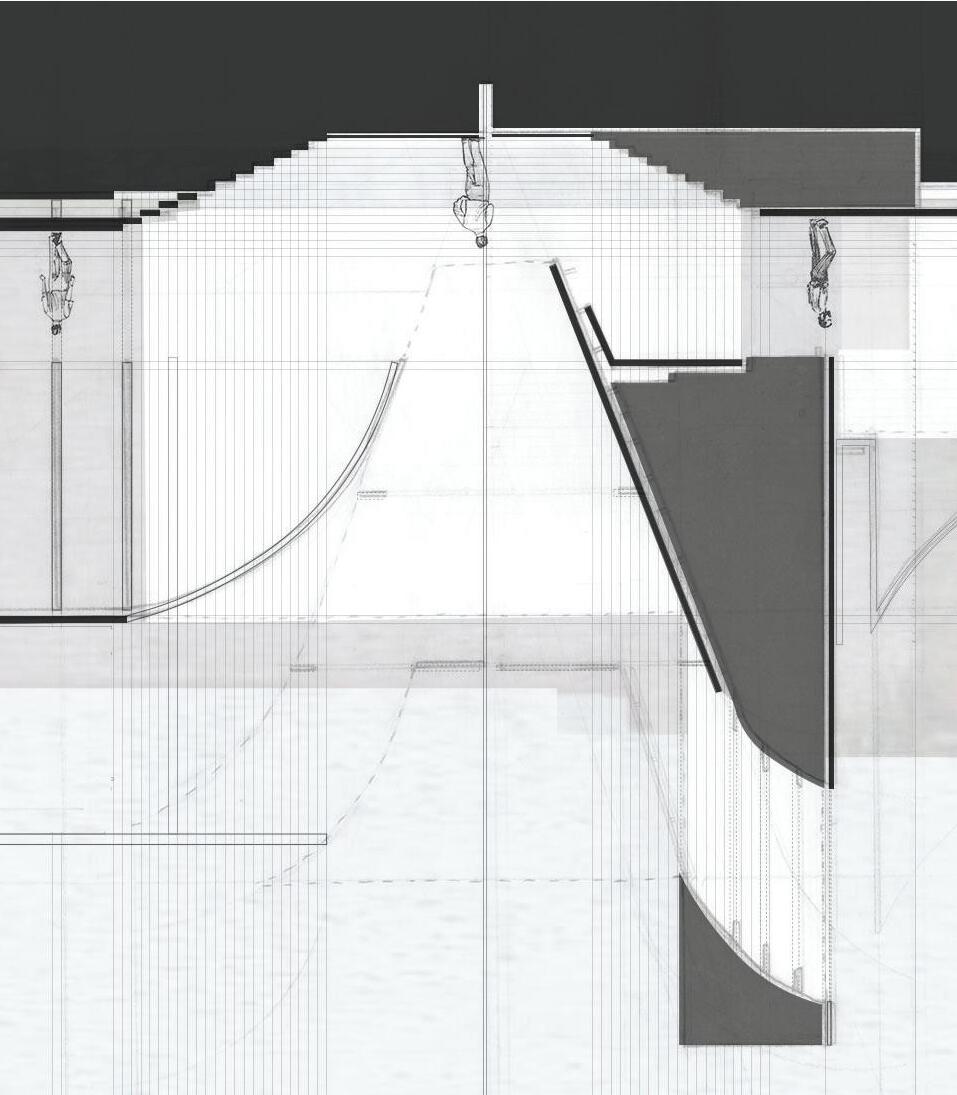


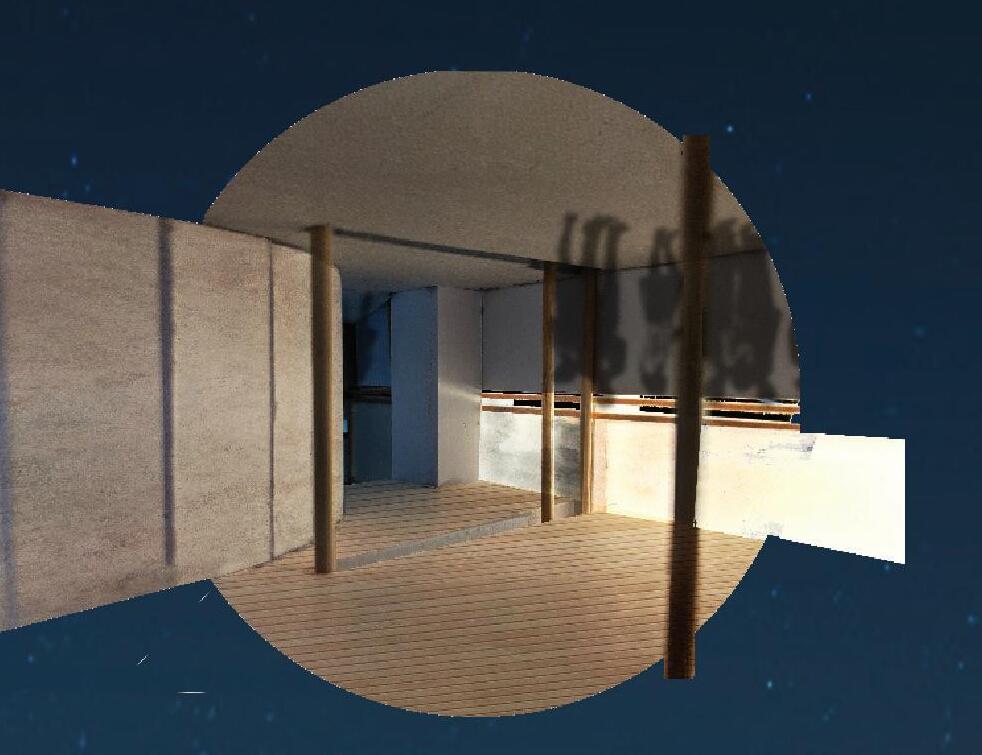
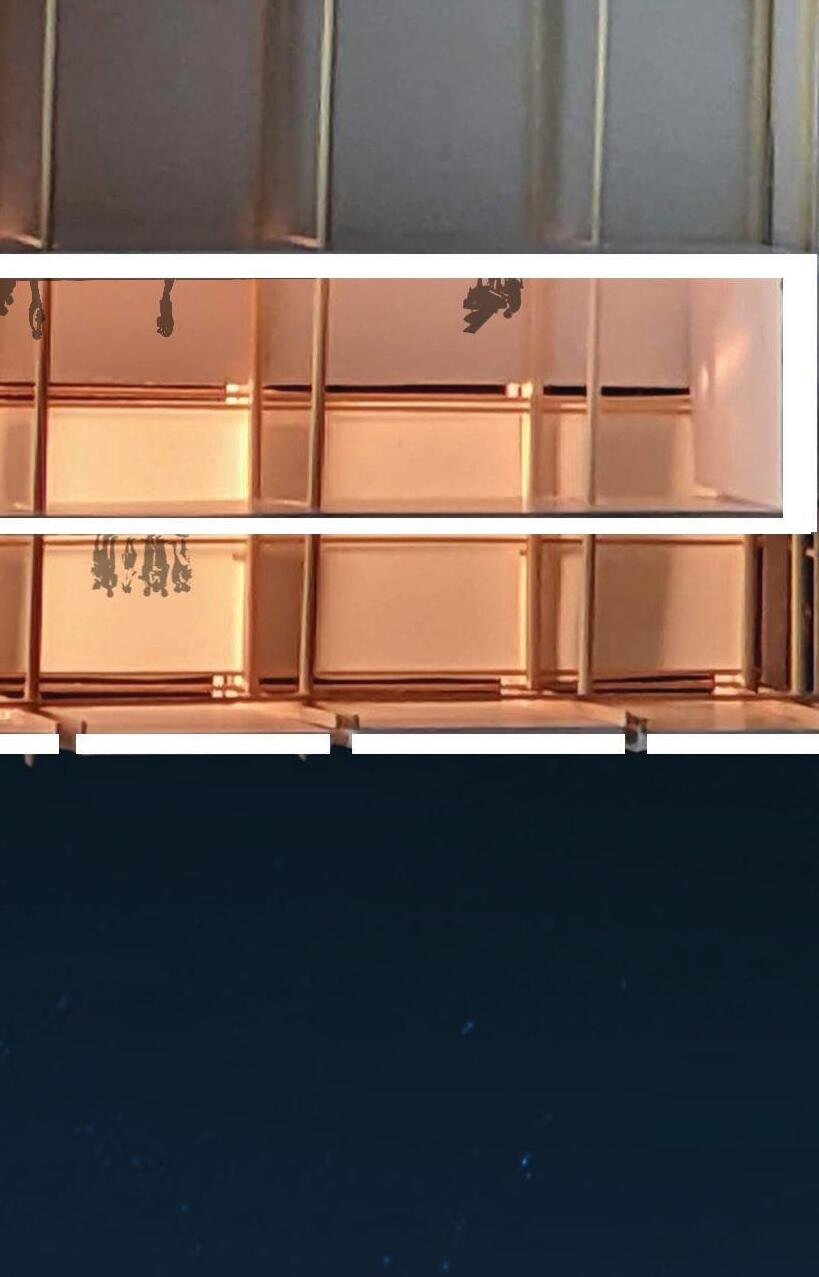



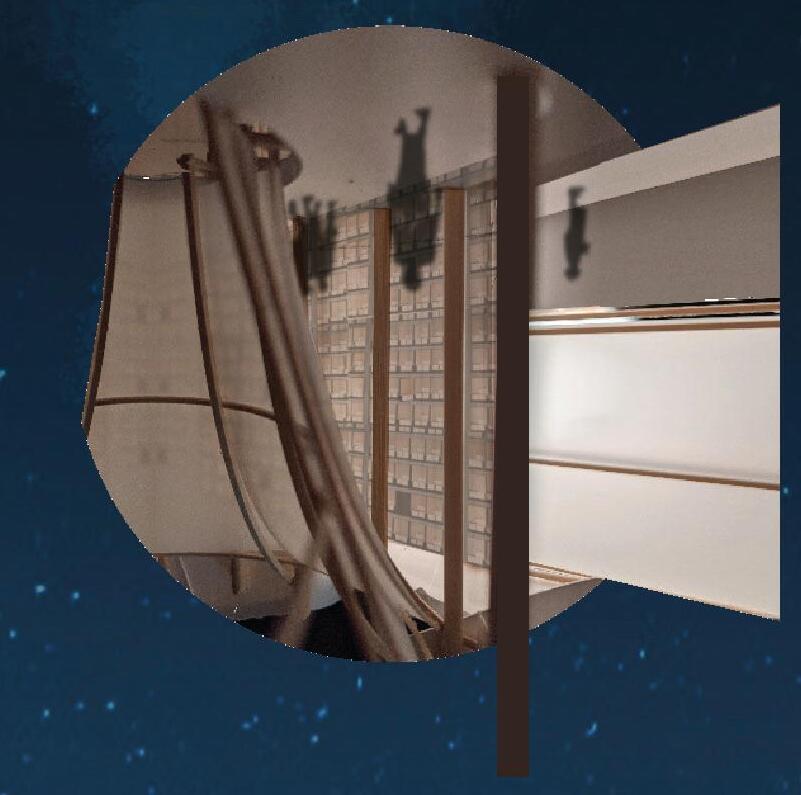
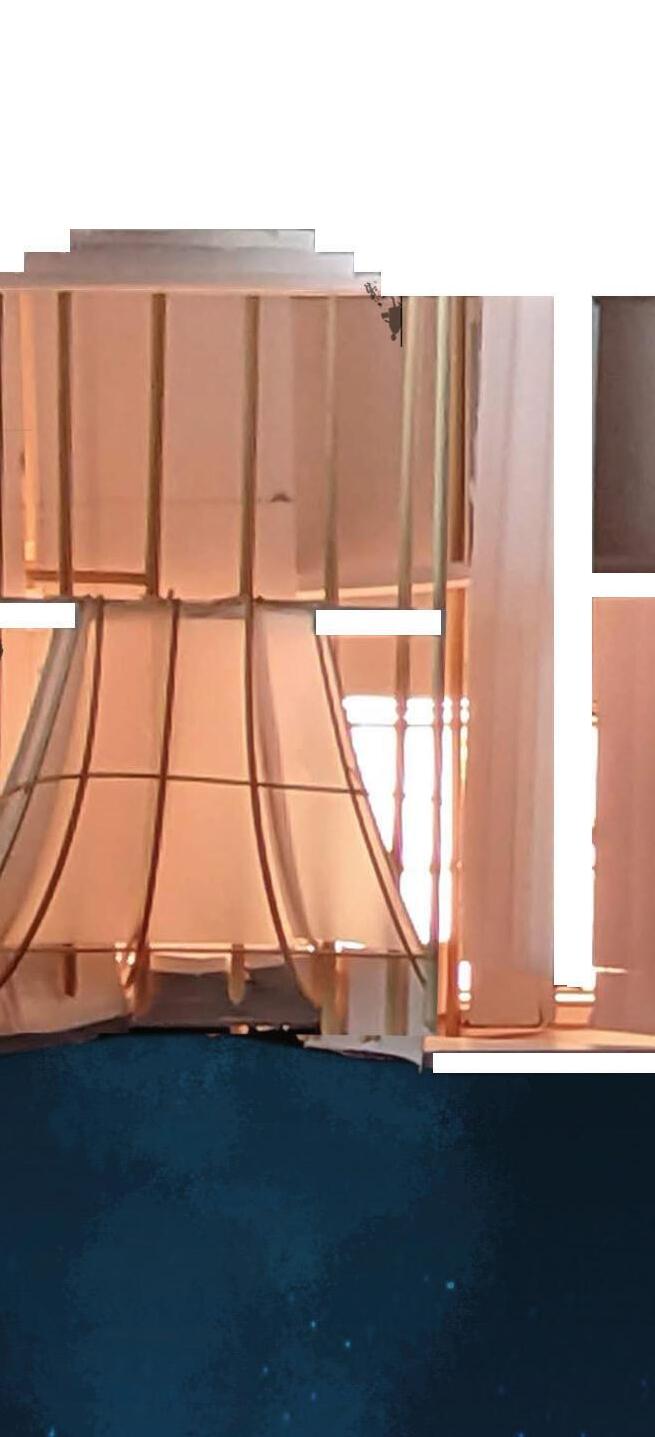
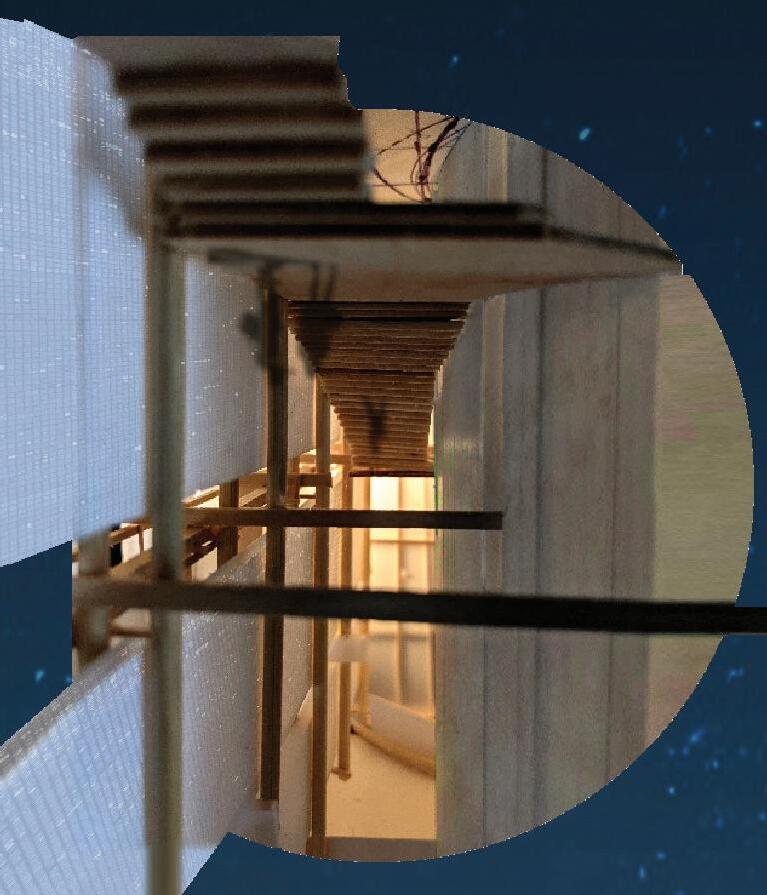
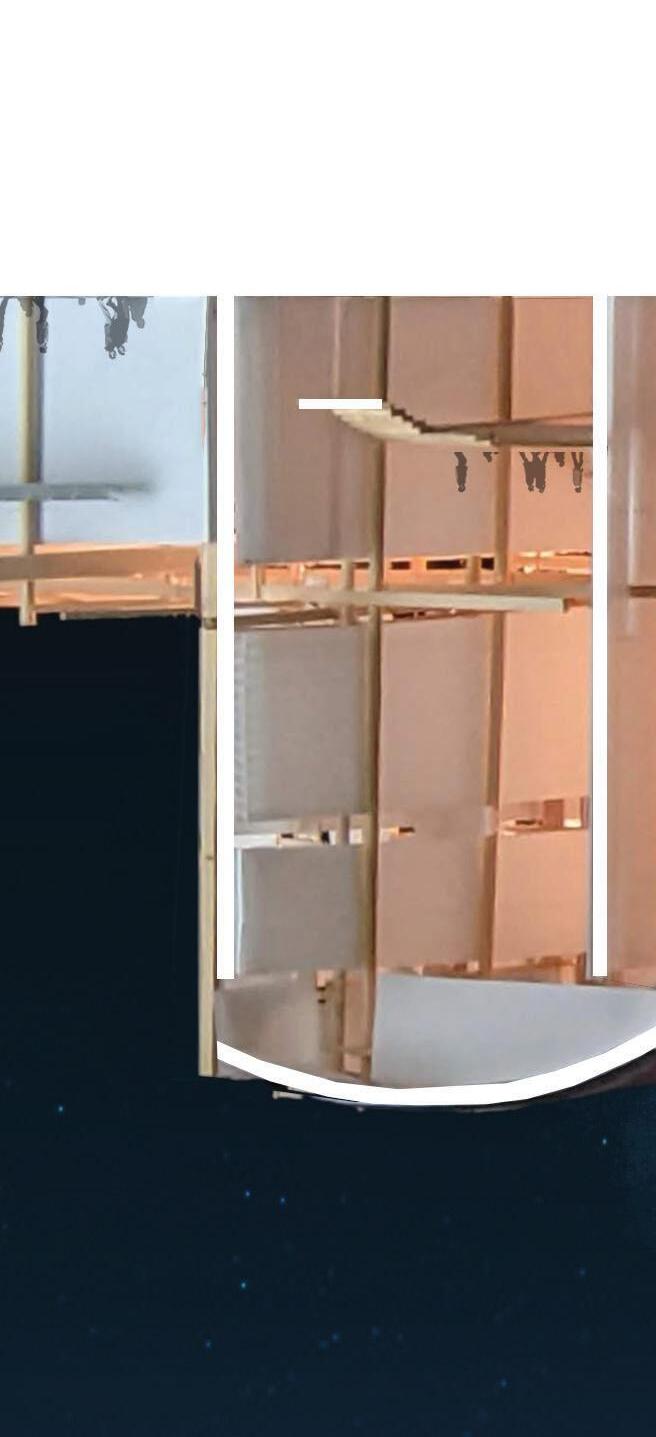
The intervention, placed in Brevard County, Florida, is home to one of the most bio diverse estuaries and the Kennedy Space Center. This unique conglomeration of rocket rumbling and ambient vocalizations from nature make a soundscape so unique that it inspired the search to preserve it.



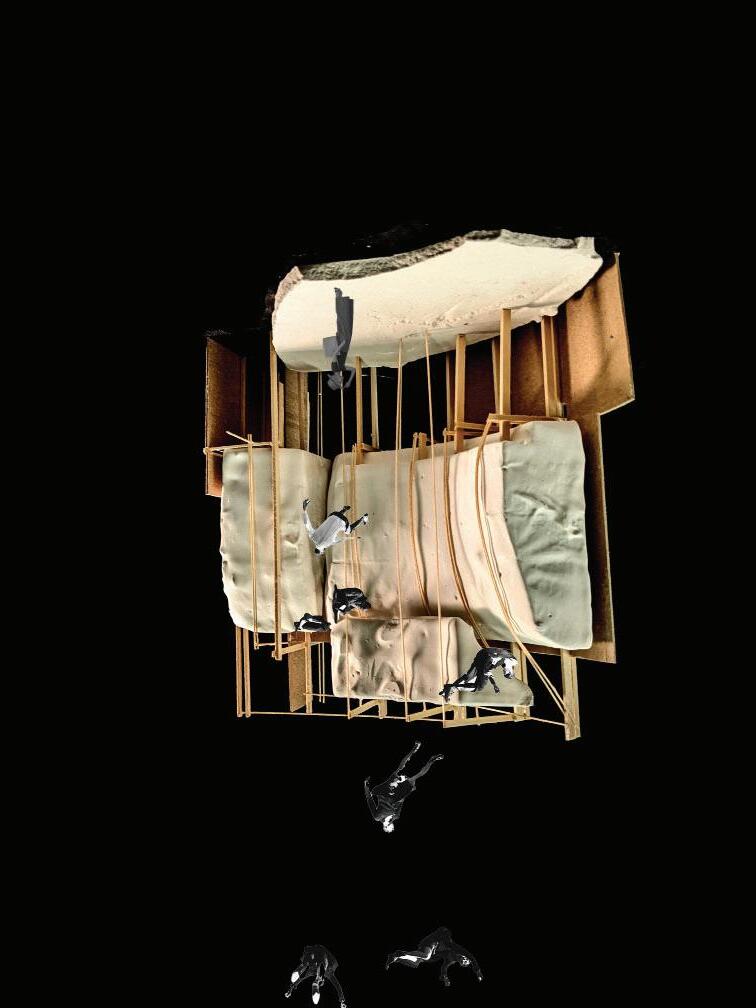

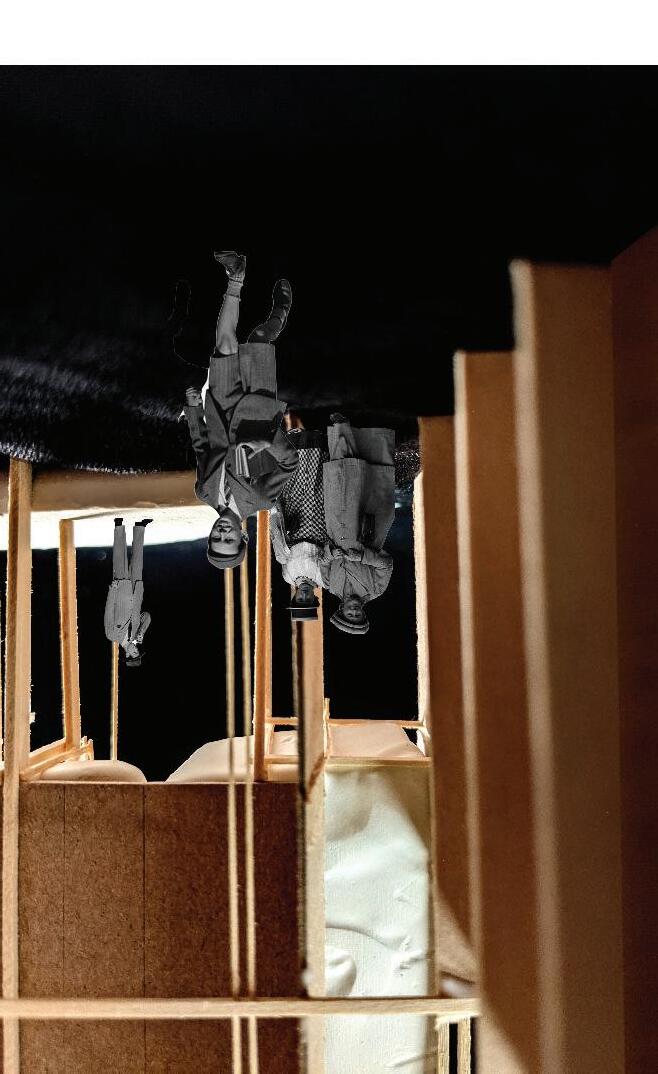
The monolithic construction of the trumpet throws sounds into the atmosphere from the auditory library.
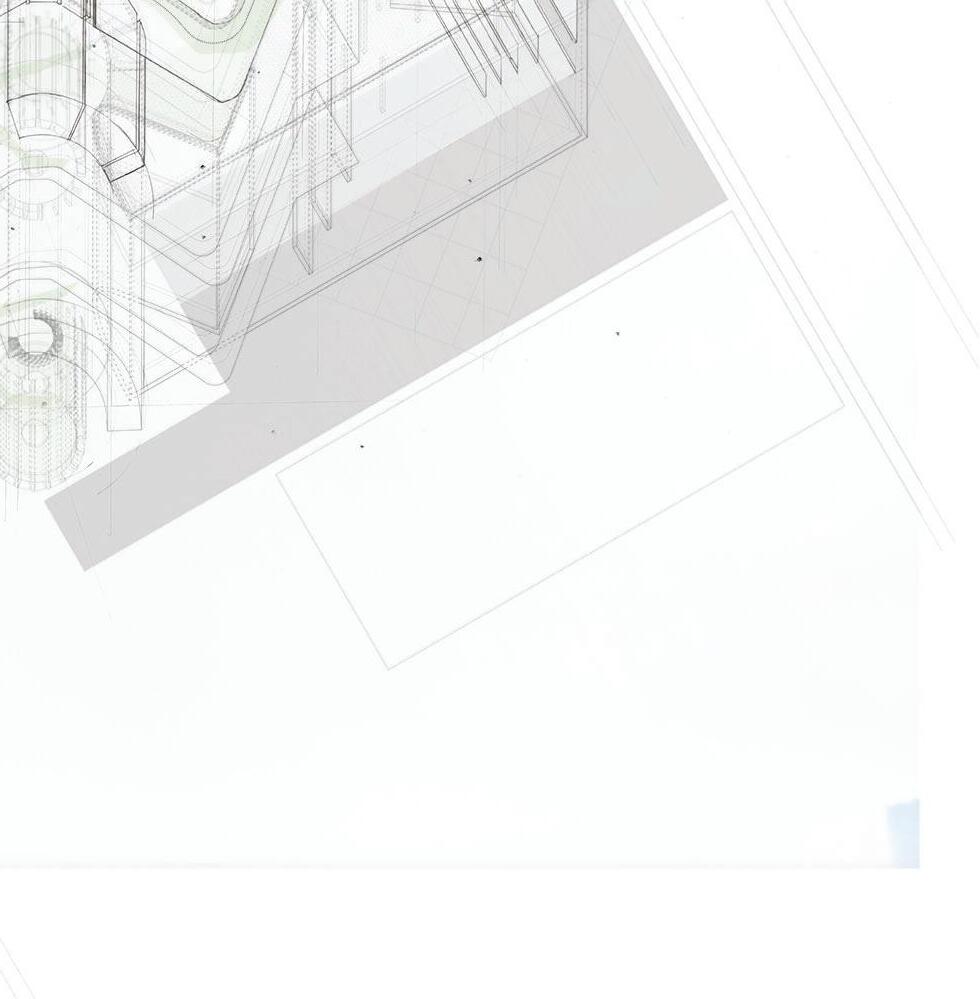
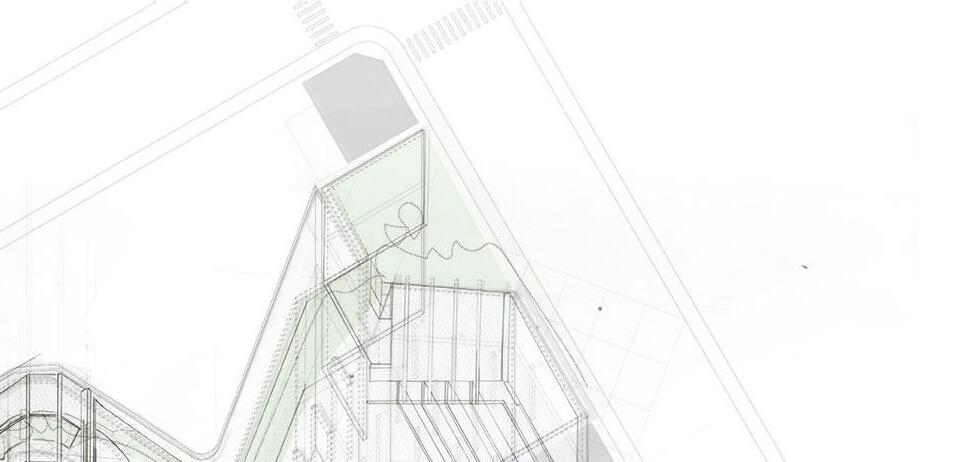
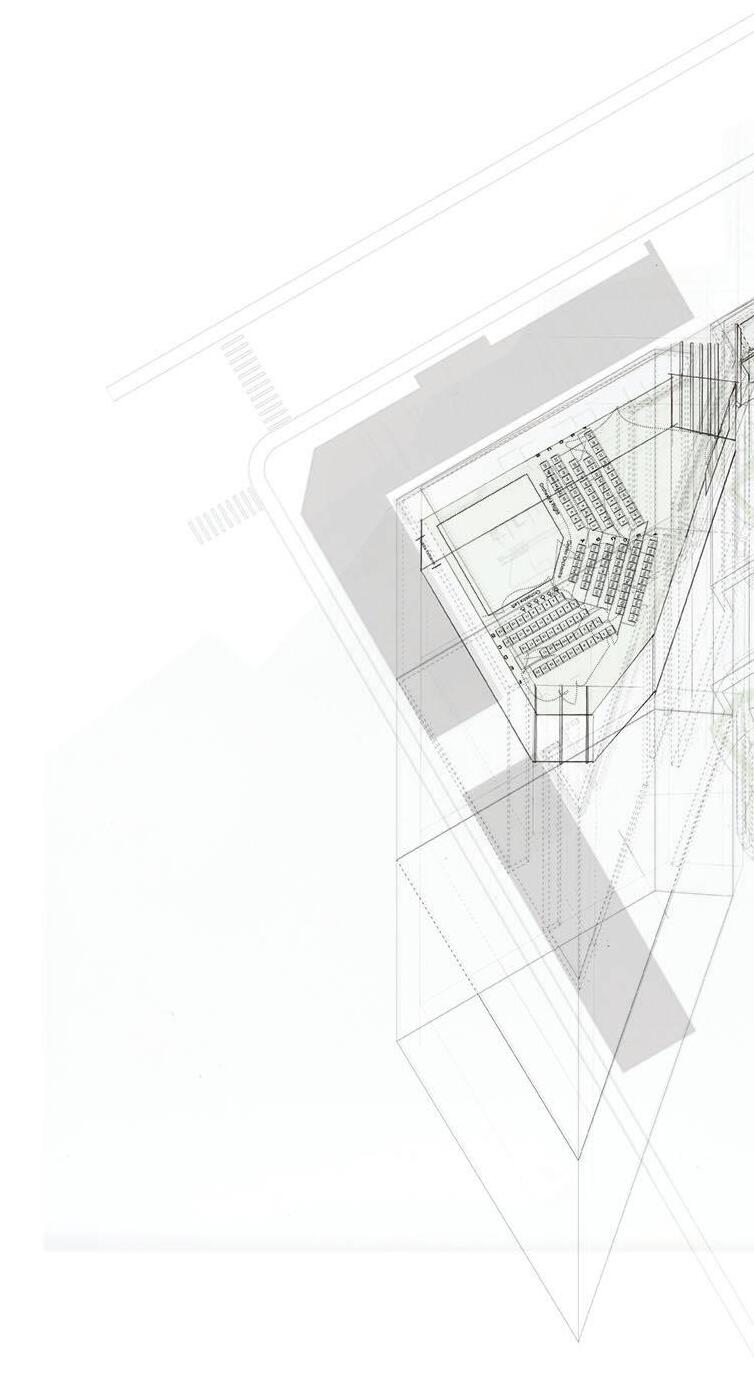
A study in the hard, the soft, and the repairable vernacular
Rain-screen composed of segmented aluminum and nominal lumber to aid in partial, localized repair
Independent Study
Taubman College @ University of Michigan
Collaborator - Valeria Velazquez
Advisor - Chris Humphreys
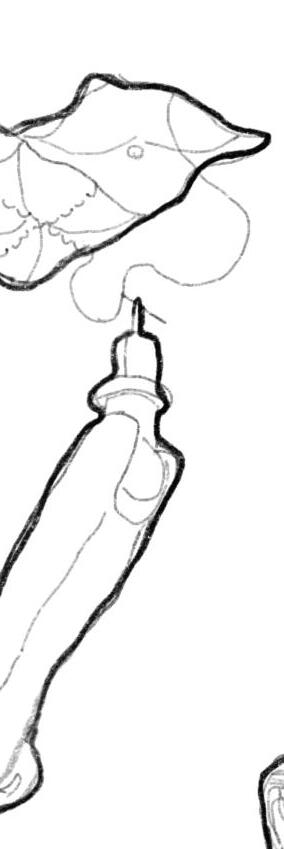
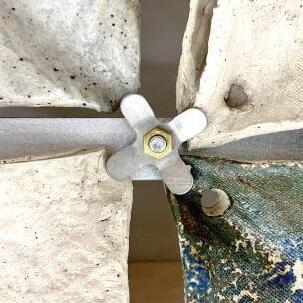
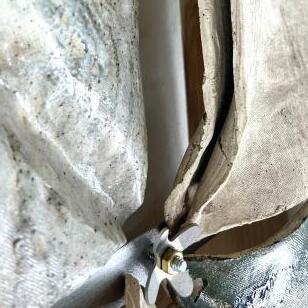
Using the conventions and proportions of quilting, Ceramic Quilting explores ways to improve the repairability of current ceramic rain screens by placing the bolt or button of the pillow on the accessible side. This design allows for easy replacement of ceramic tiles using a smartly placed wrench. This system enhances the aesthetics and repair of aging rain screens or broken ceramic tiles, enabling owners to switch out and update designs easily.
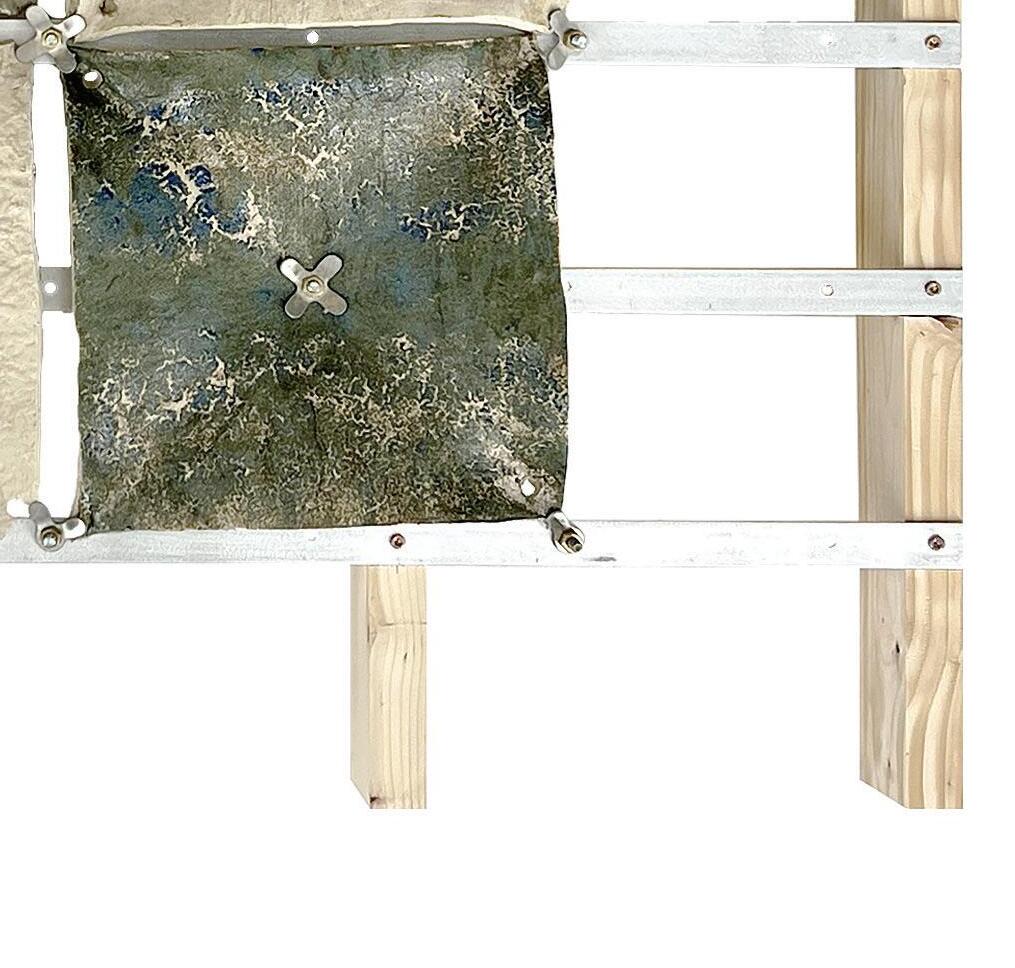
Modifiable butterfly clips to fasten misshapen, broken, or variable clay bodies
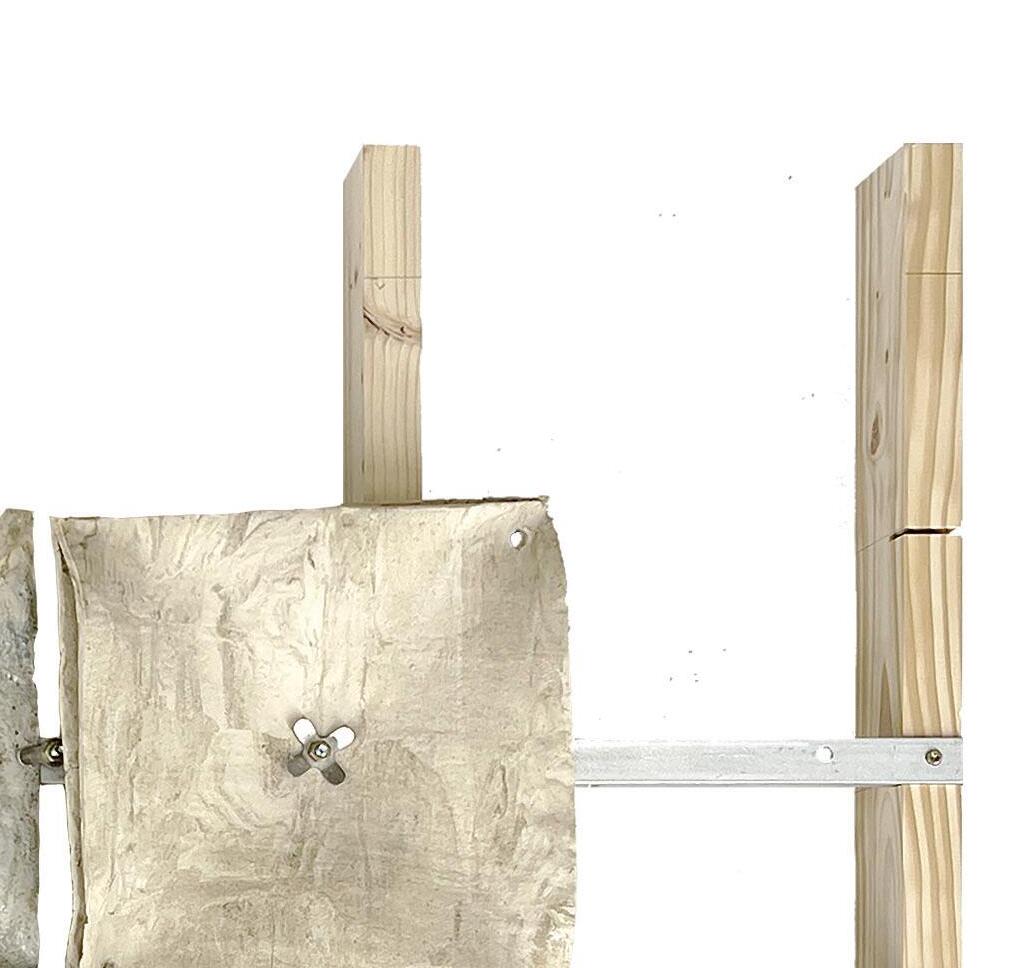
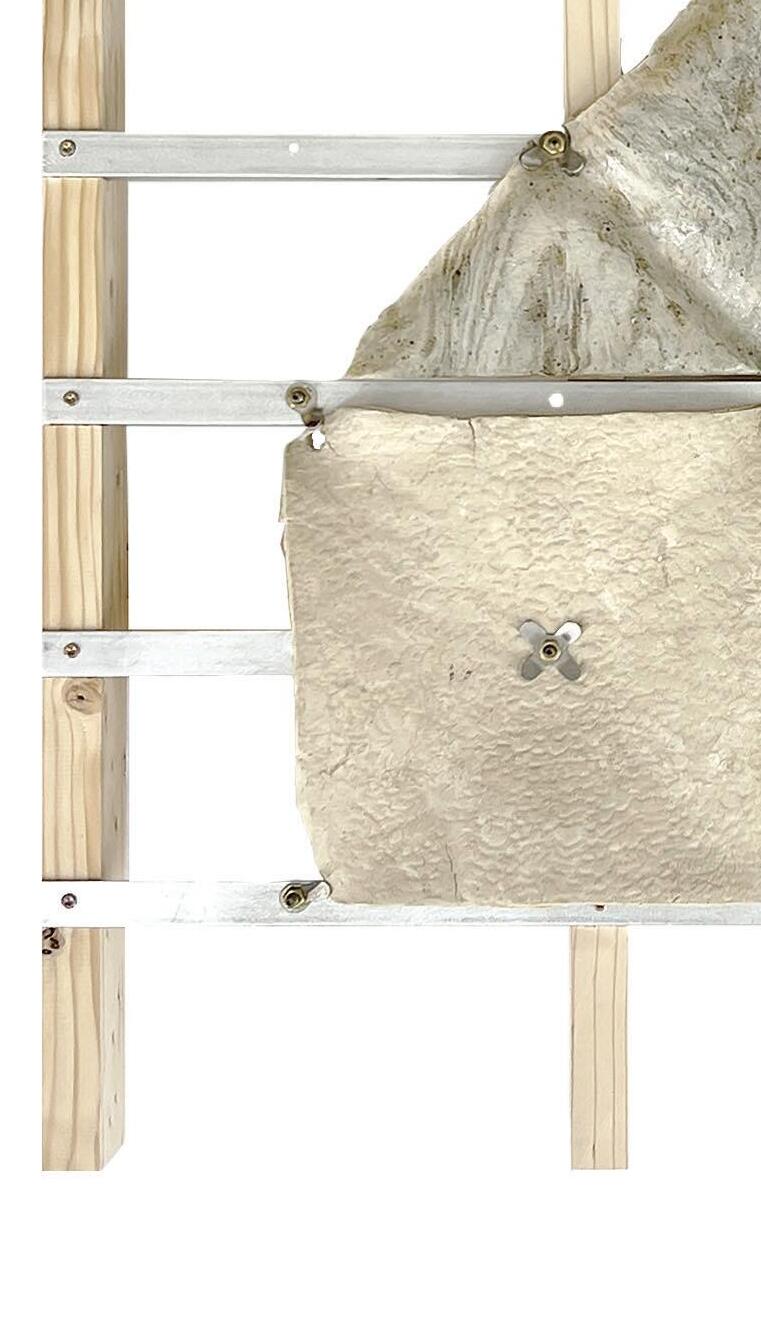
tiles can be re-fastened or replaced easily
















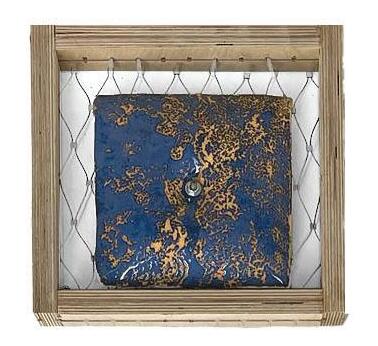
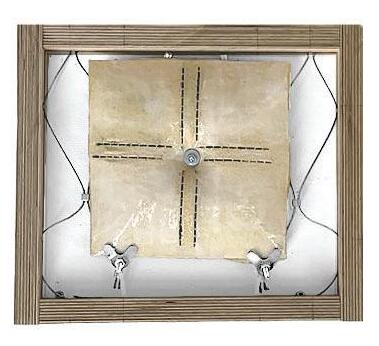
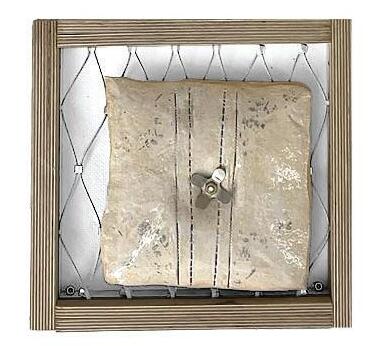
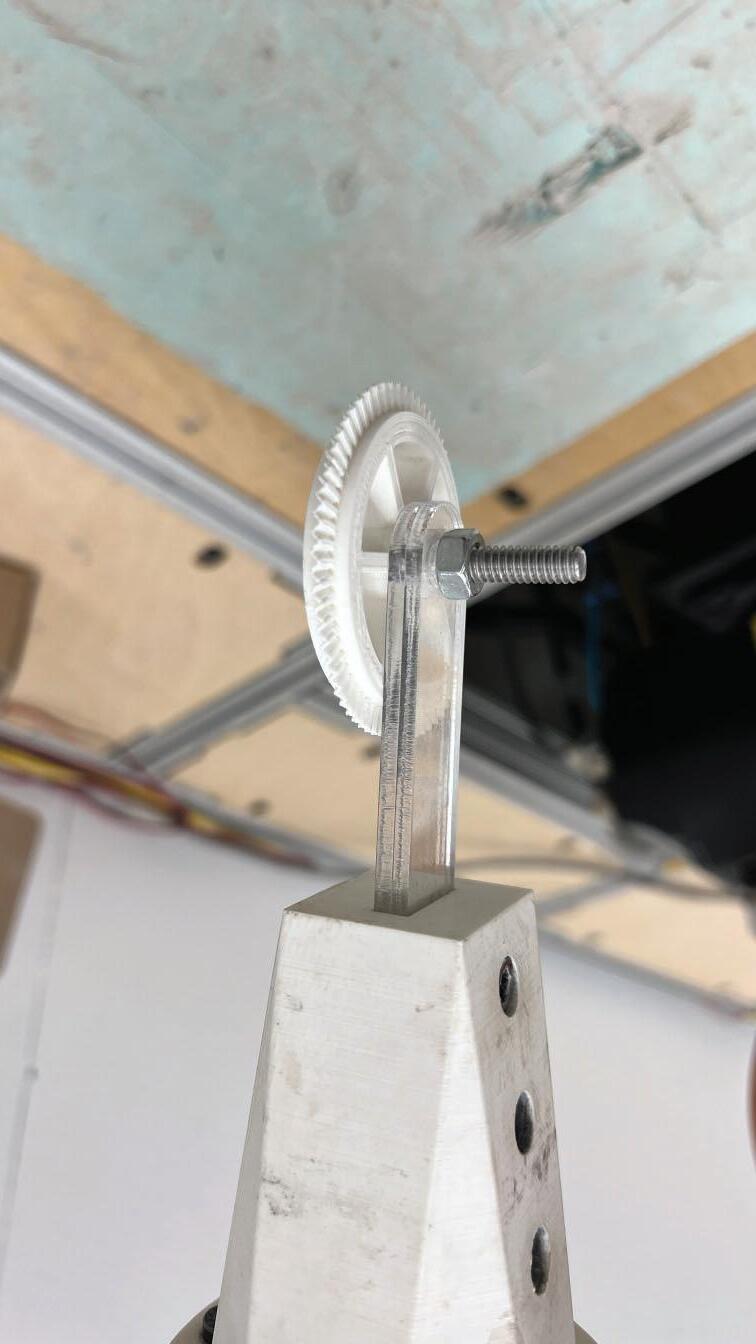


Kuka robot used to automate and control precision of the quilting pattern on the clay tiles. The robot used fabricated rolling tools to simulate the patterning of stitches.
New York City, New York

Collaborators - Alexa Lapid | Marla Stephens
Instructor - Professor Judy Monk
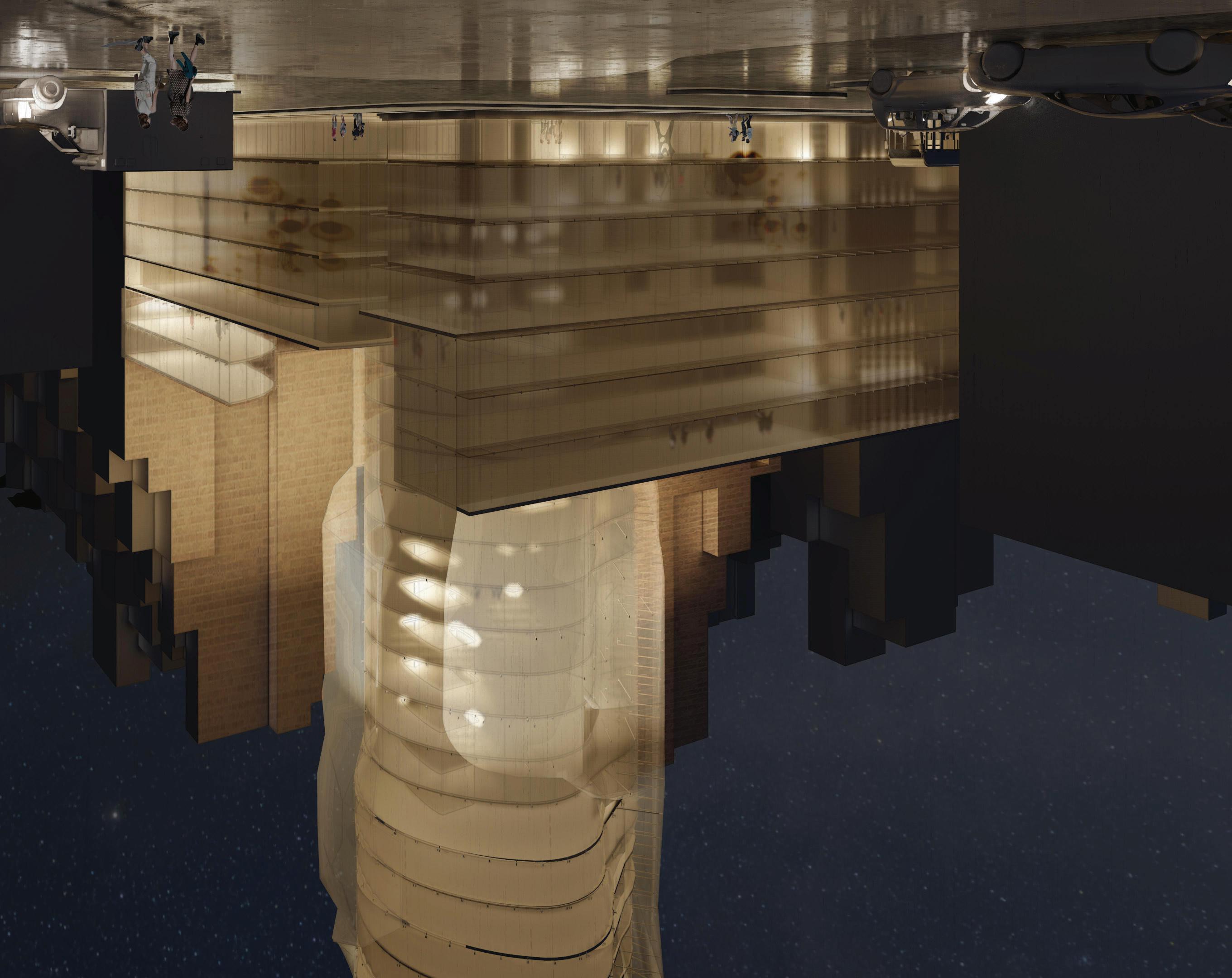
This project explores how Isamu Noguchi’s biophilic shapes can be applied at an urban scale. Located at the corner of 8th Ave and 29th Street in NYC, the 300,000-square-foot intervention is designed to be a center for sculptural
arts. It includes housing, amenities, artist studios, museum space, and a community market. The program aims to balance public and private spaces by examining different scales.
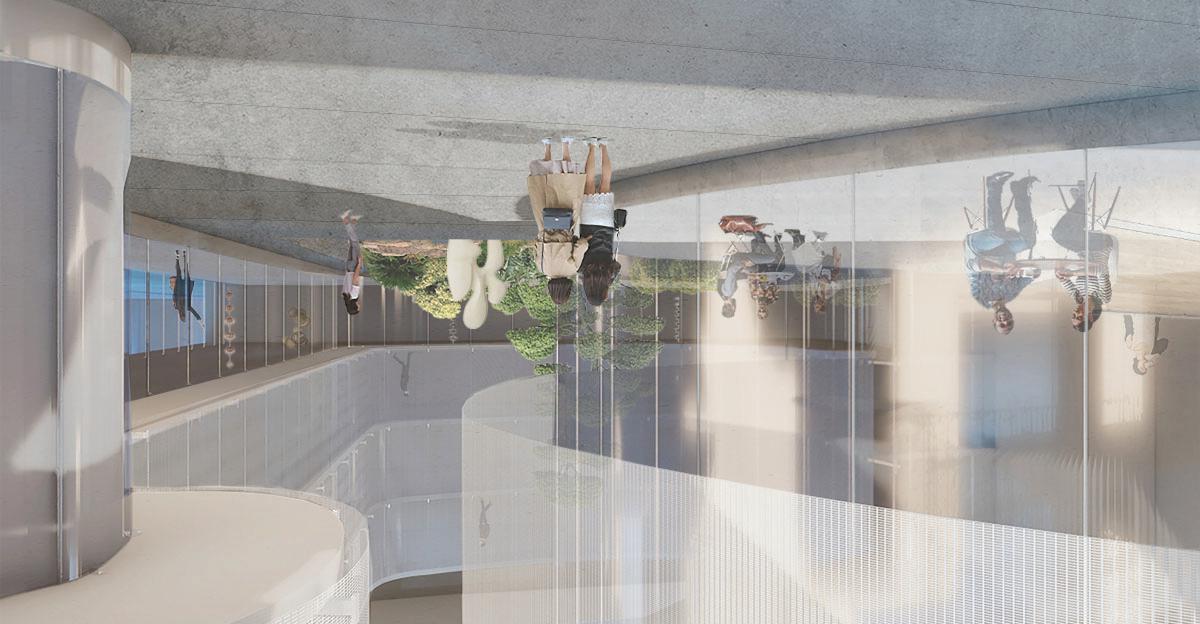
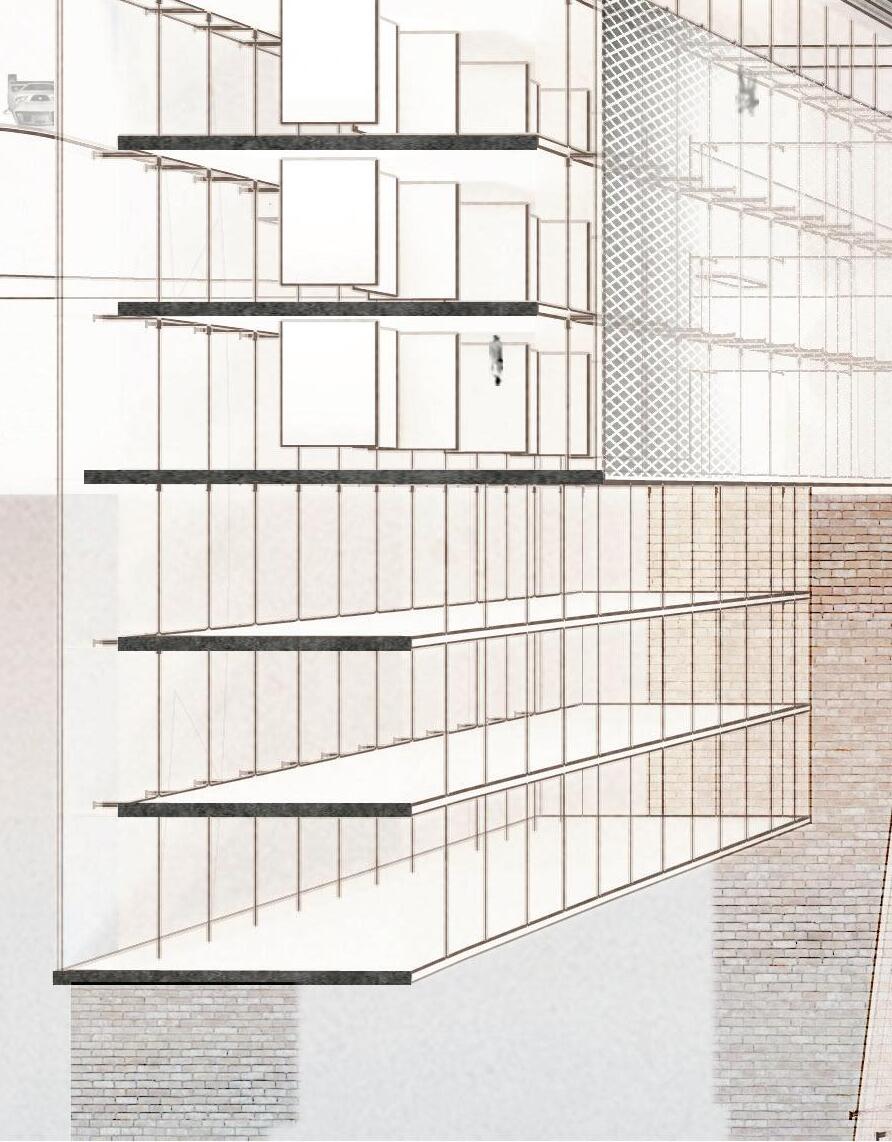
As the occupant experiences the liminal, their form permeates through the screen, becoming a symbol for scale.
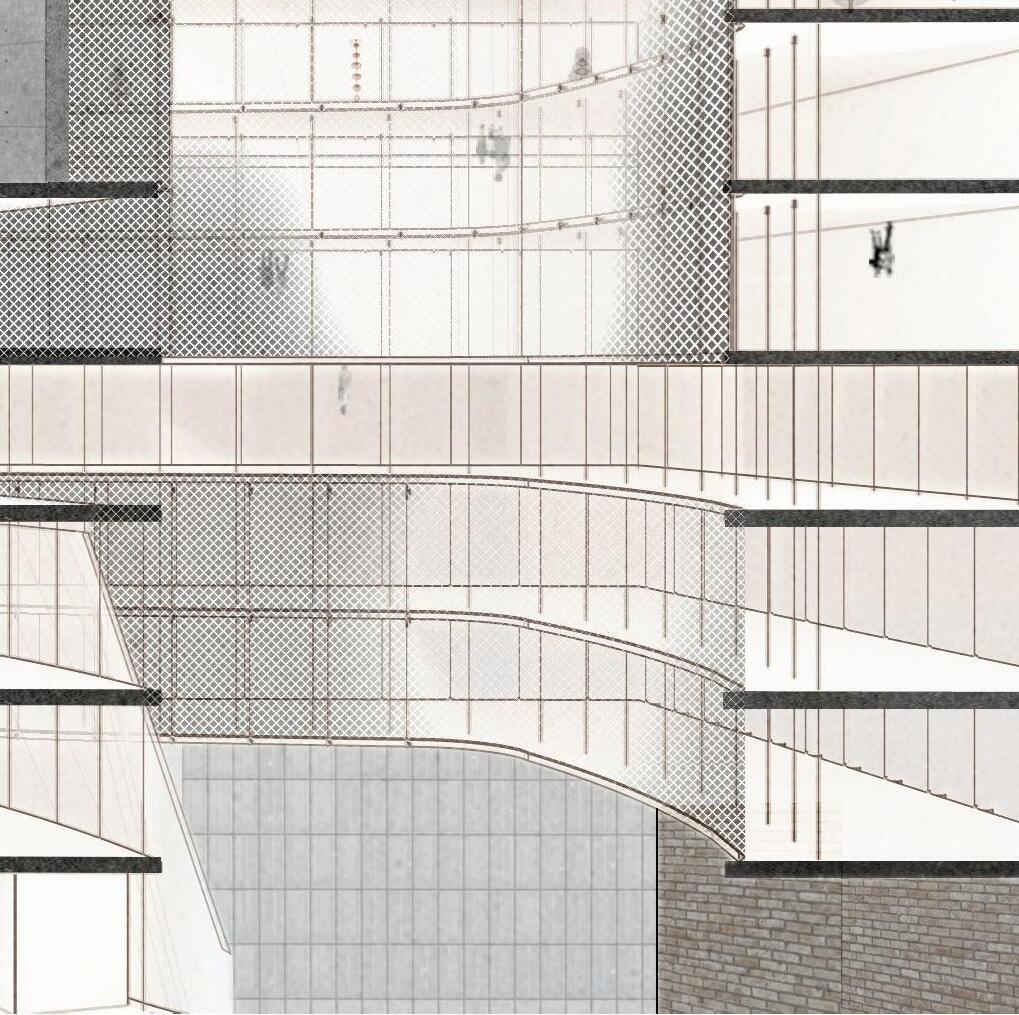
In the occupiable walkway, the individual signals the scale of the interior.
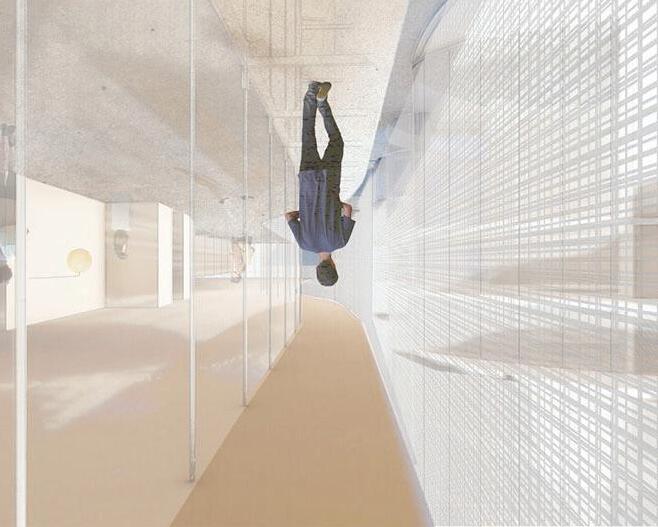
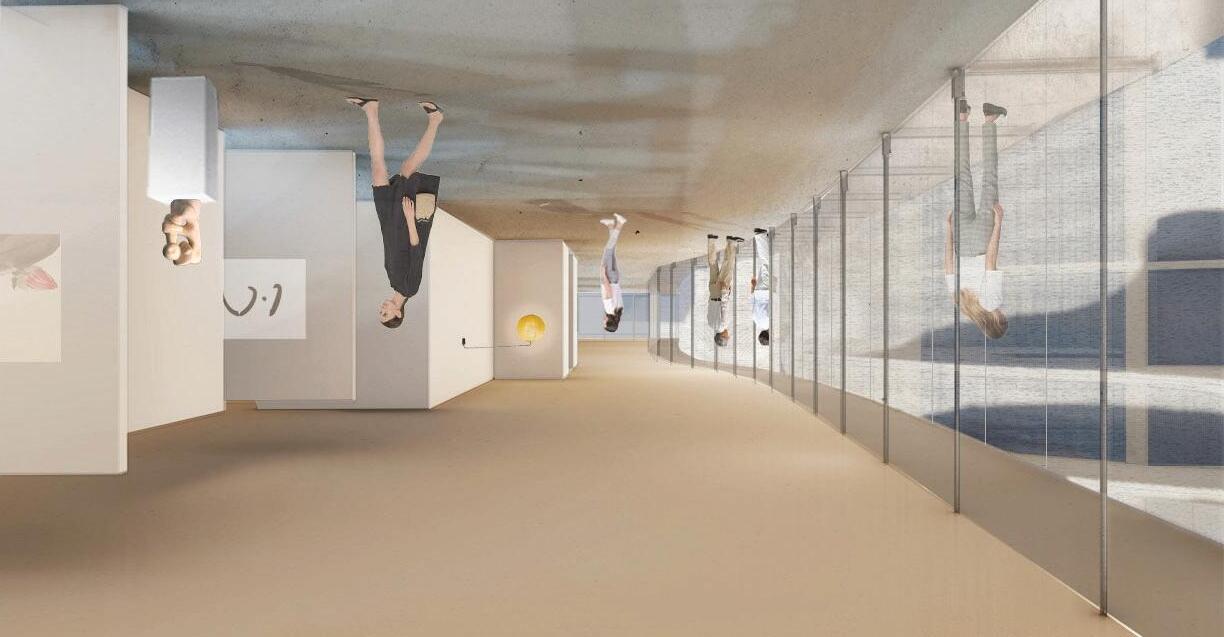
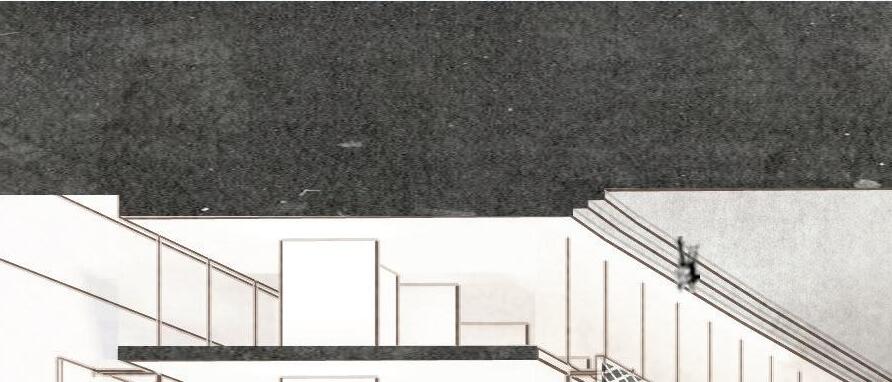
Strolling in the Noguchi Gallery, gaze penetrates the occupiable facade.
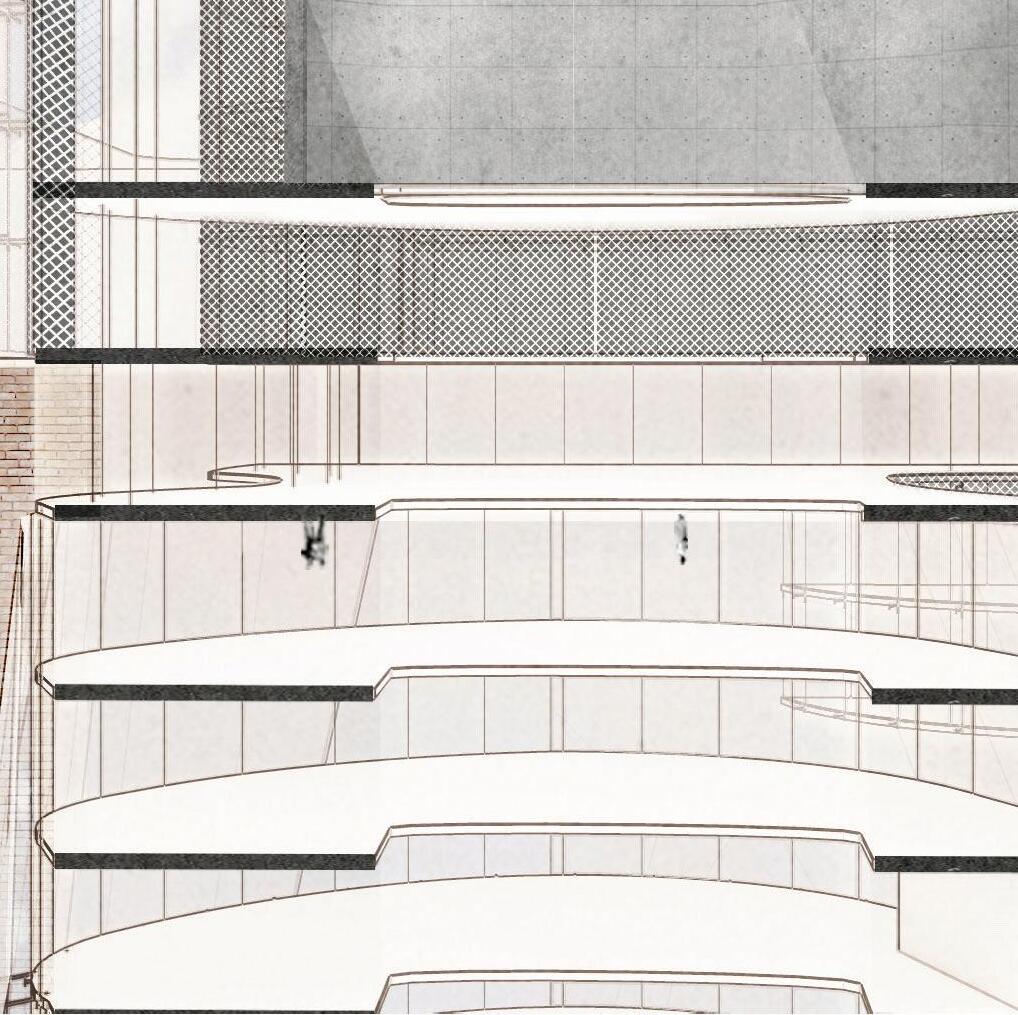
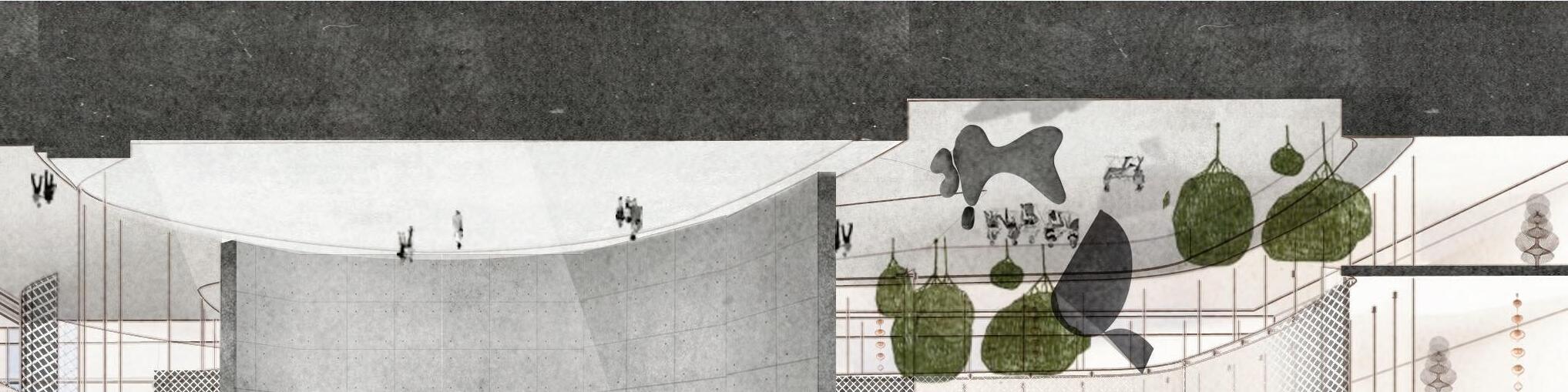
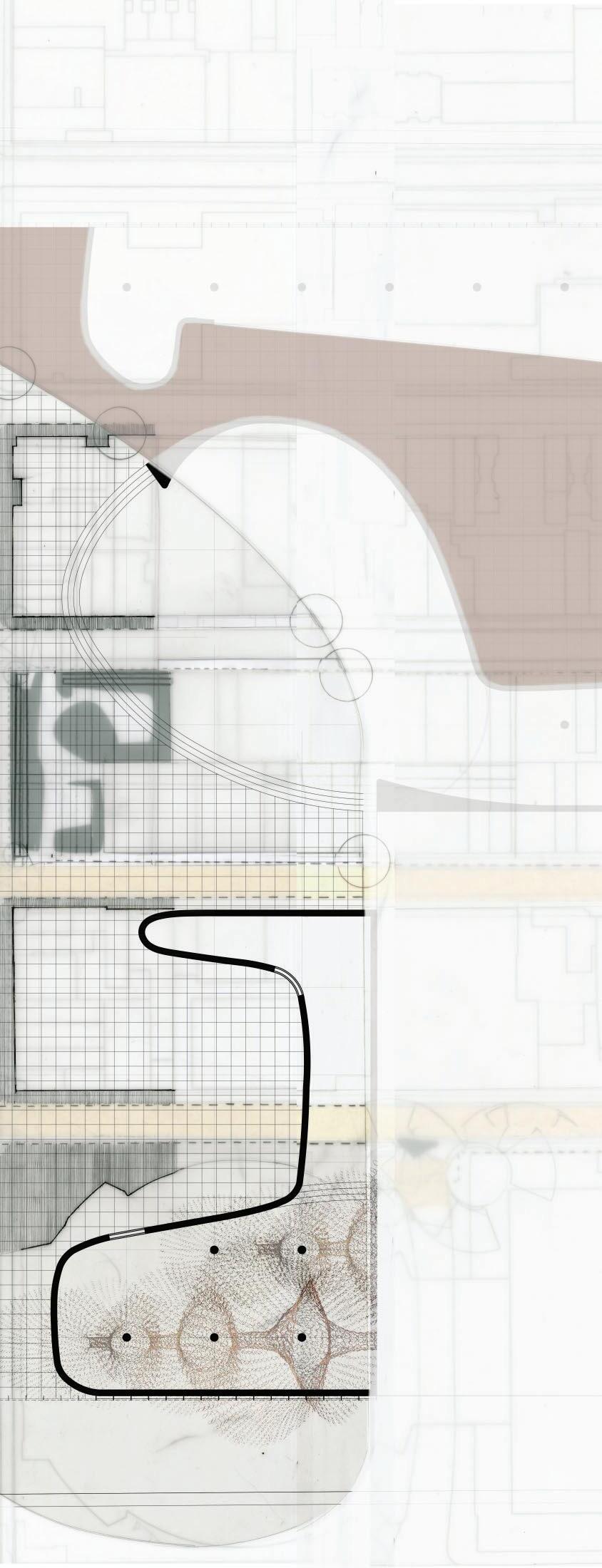
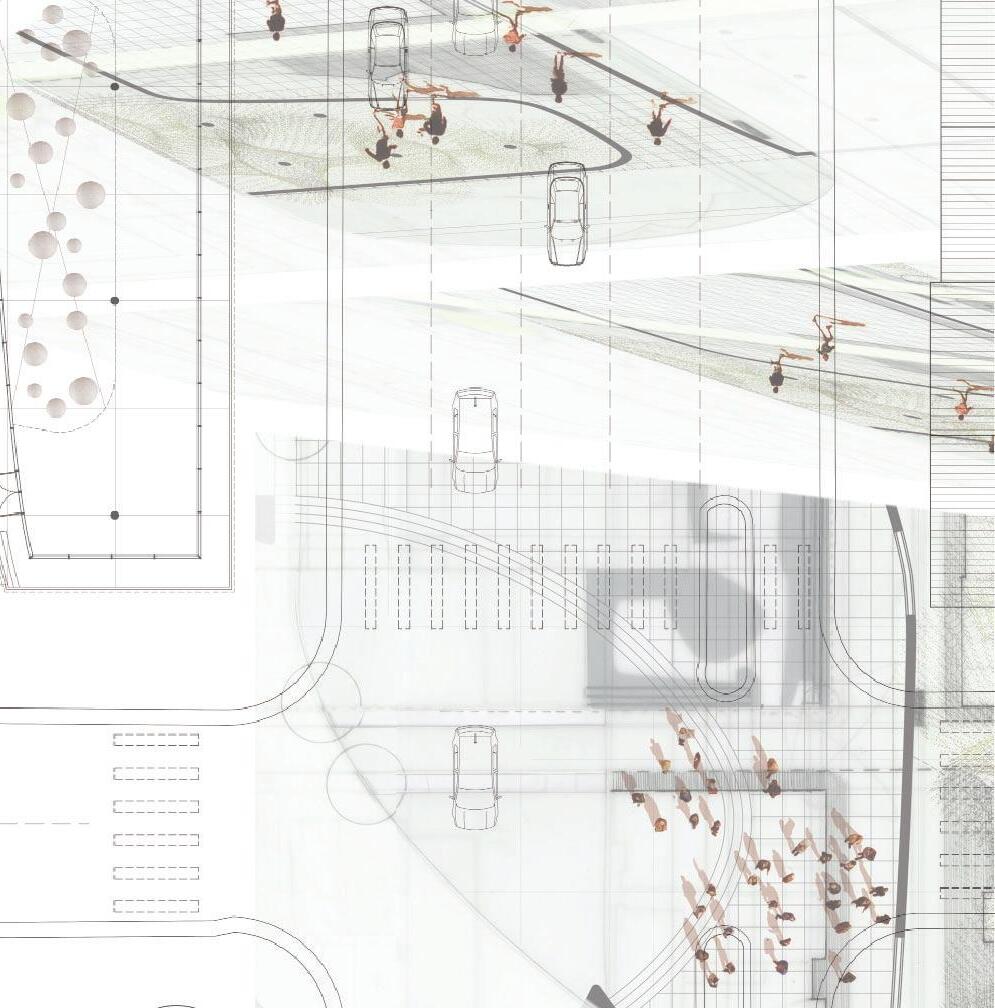
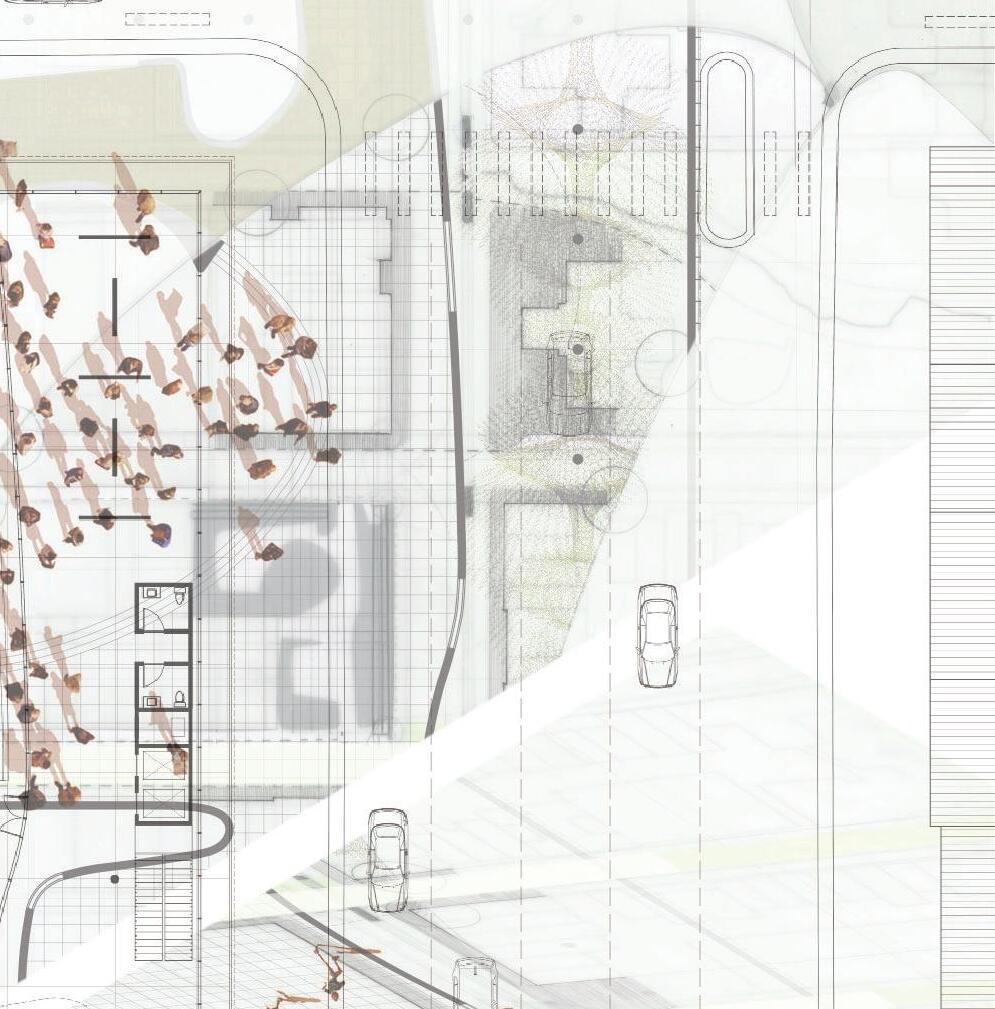
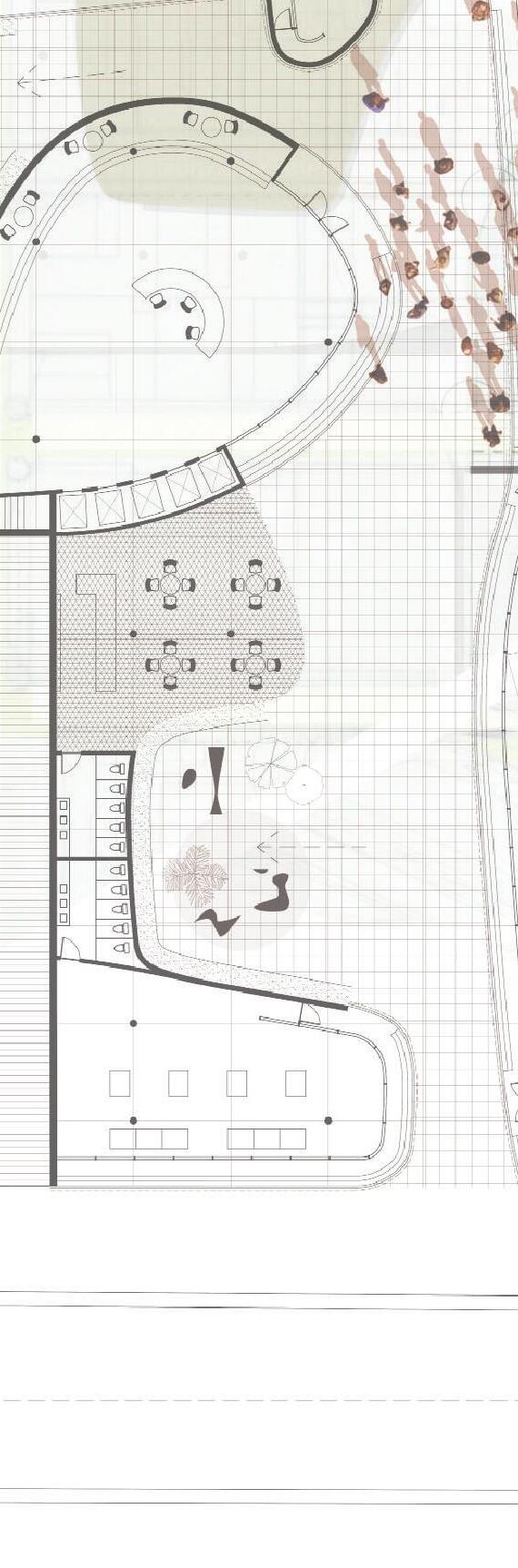
The plan parti uses shapes from Noguchi’s Biophilic workbook. These forms envelope public space into the semi-private leaving spaces for people to escape the streets.
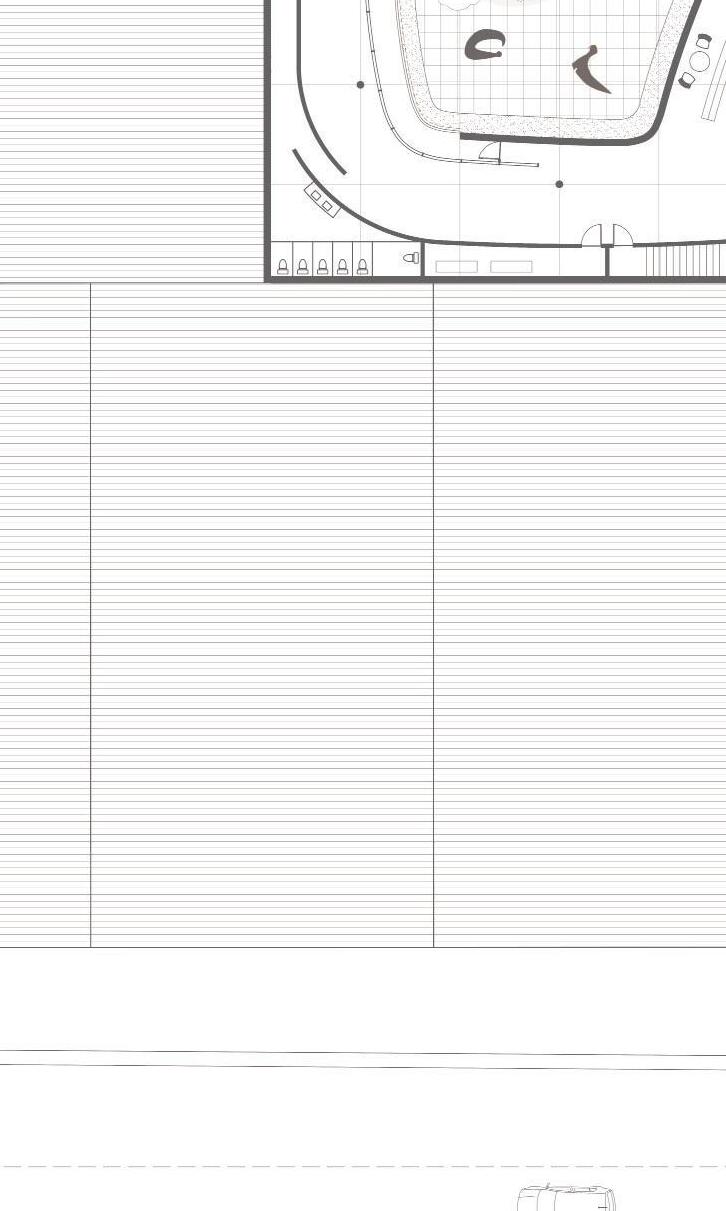
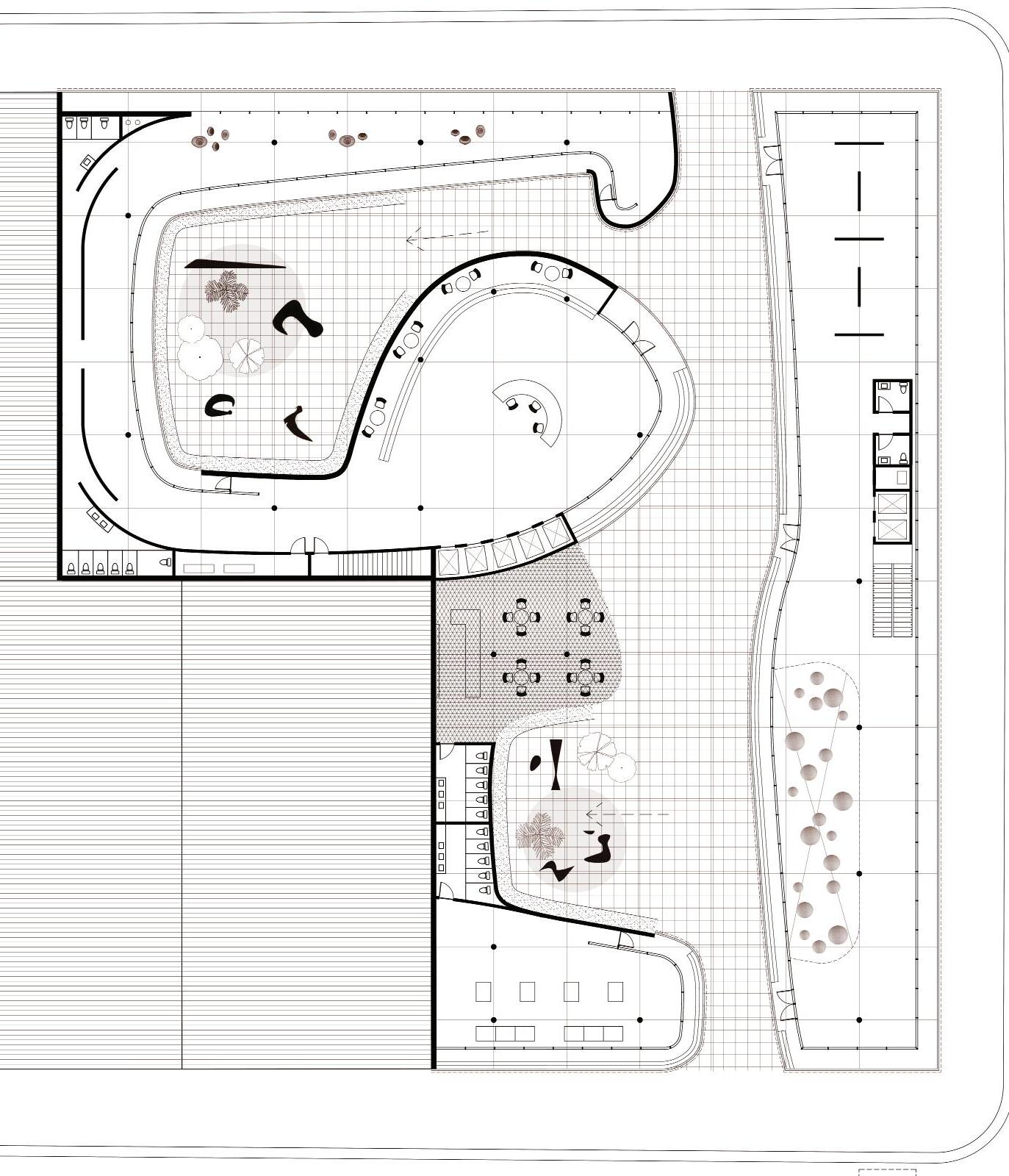
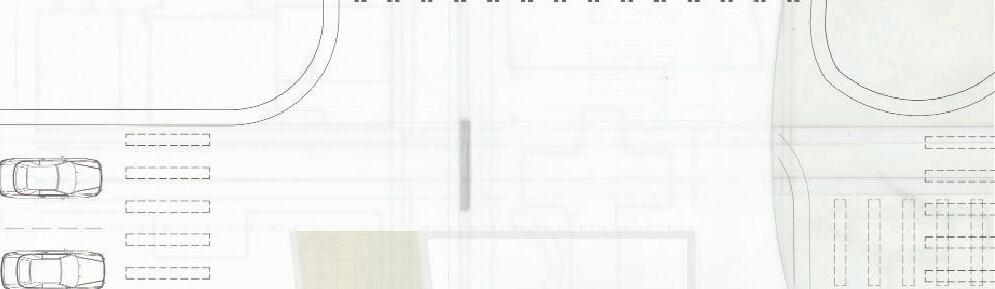
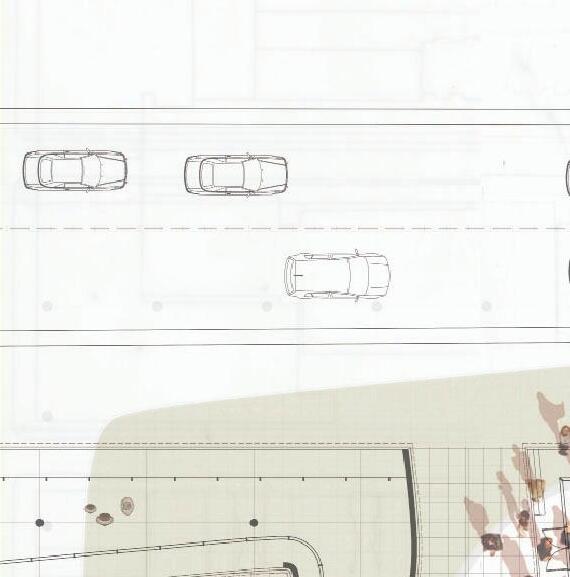
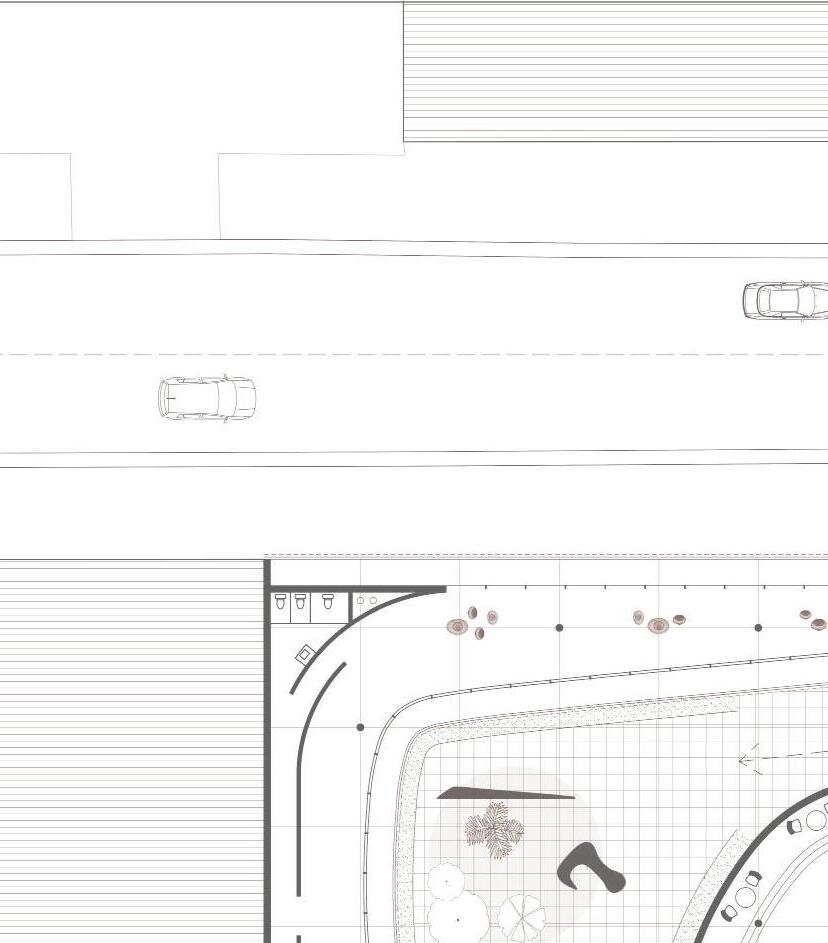
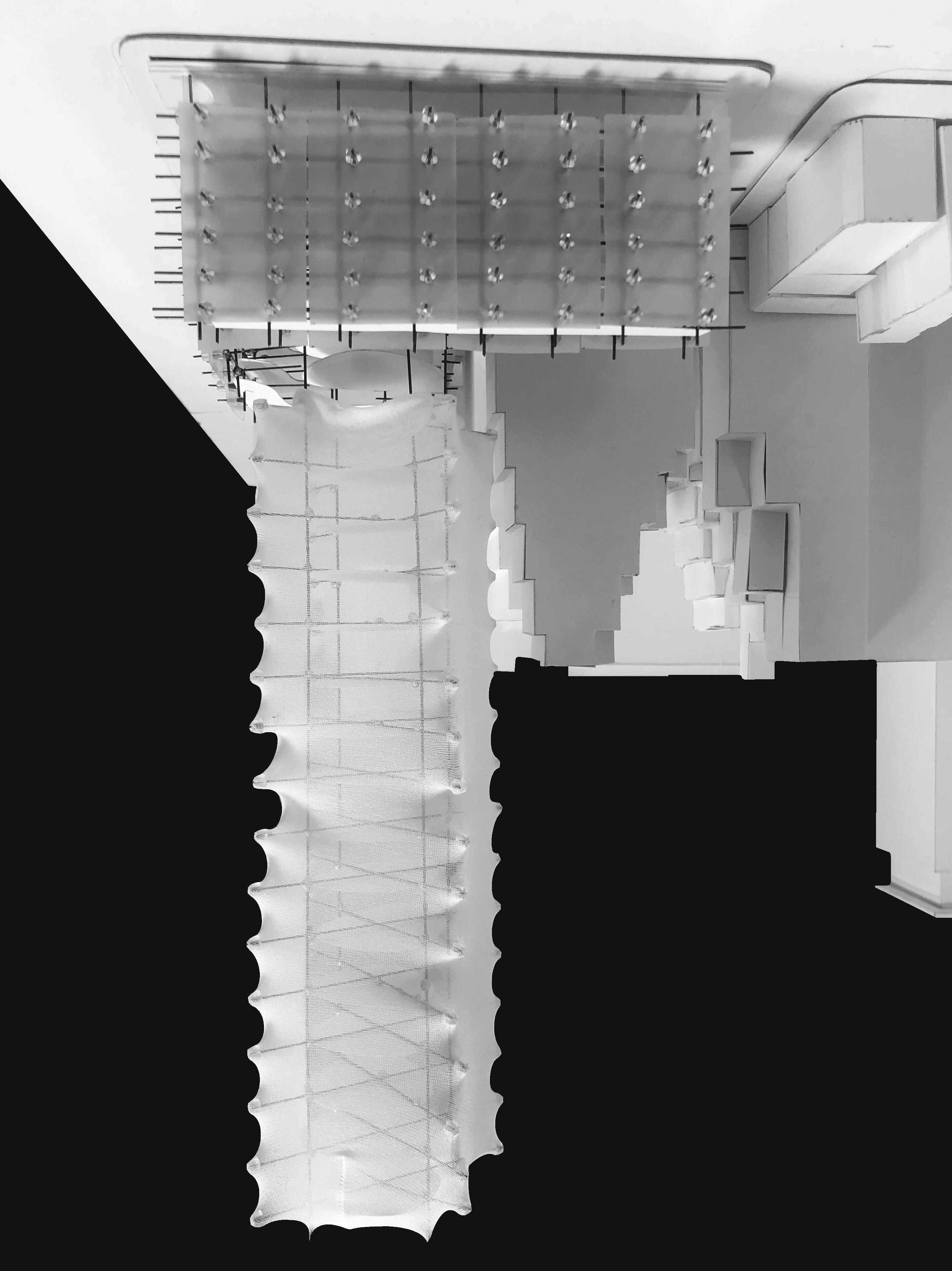
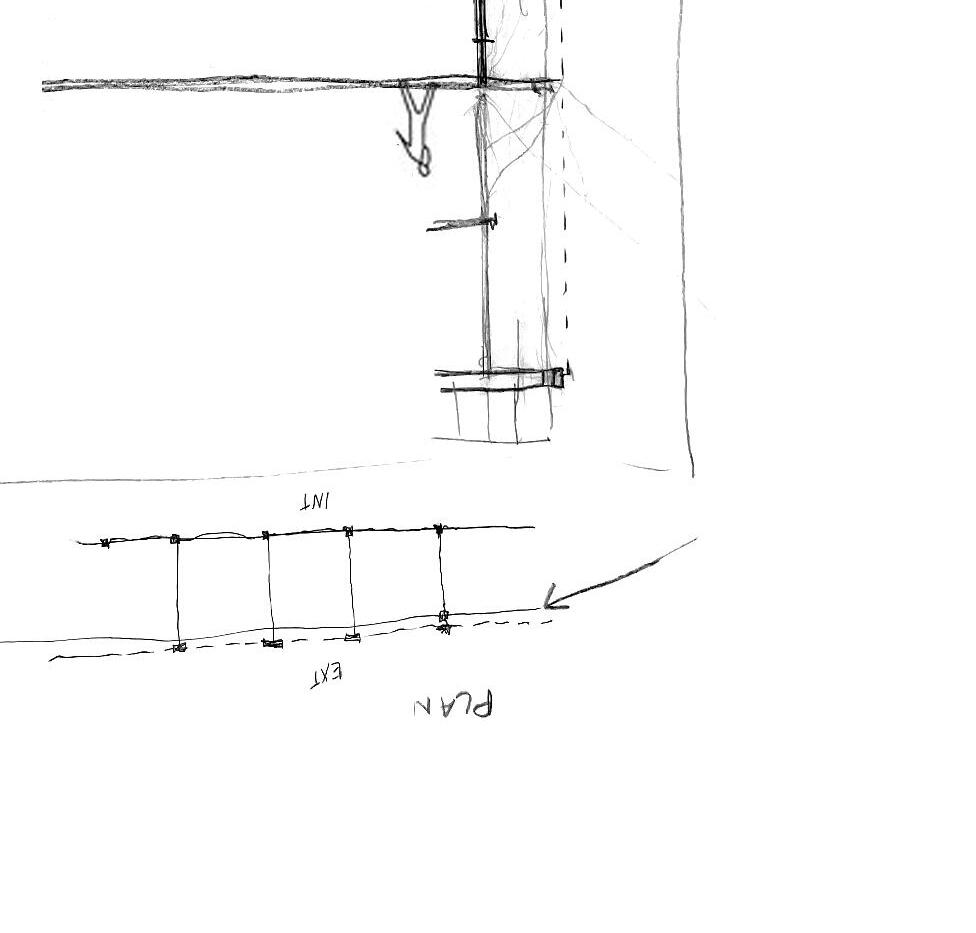
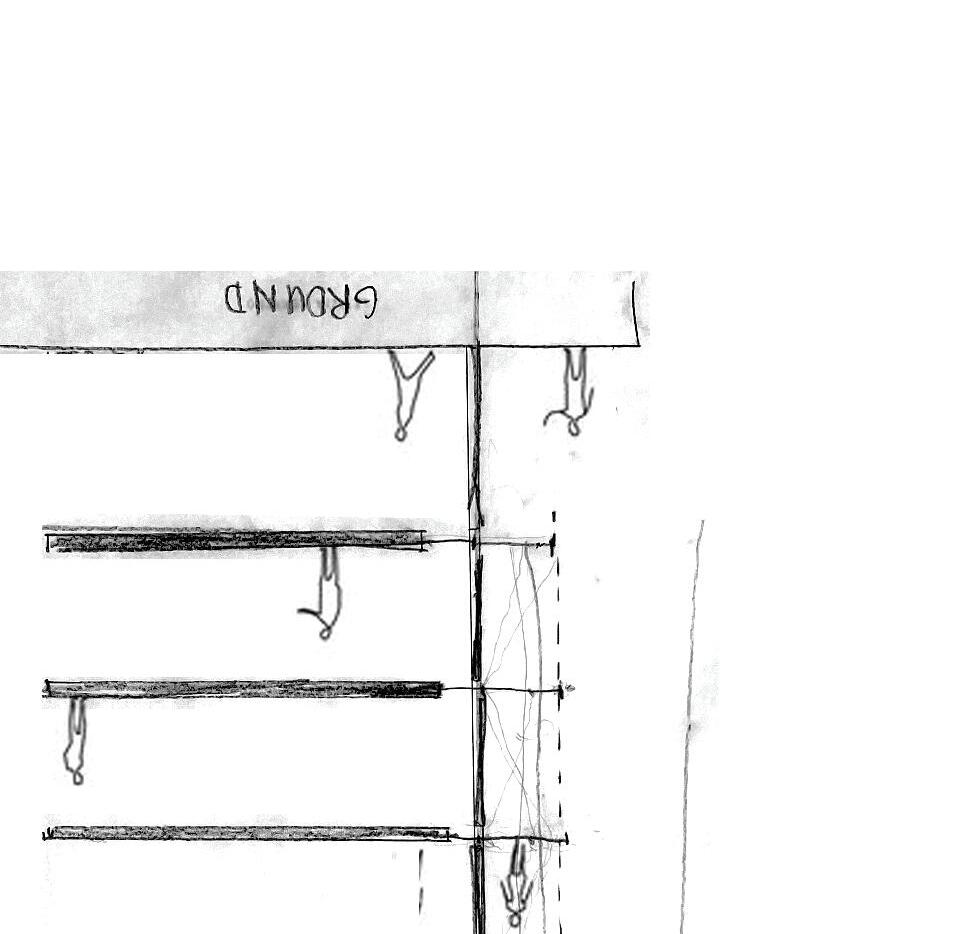

The occupied walls translate the program and scale to the scale of the city. The facade harnesses diaphanous nature, showing the existence of the interior.
Understanding Critical Decay, Accretion, and the Oyster in Architectural Practice
Graduate Thesis - Prof. Steven Mankouche
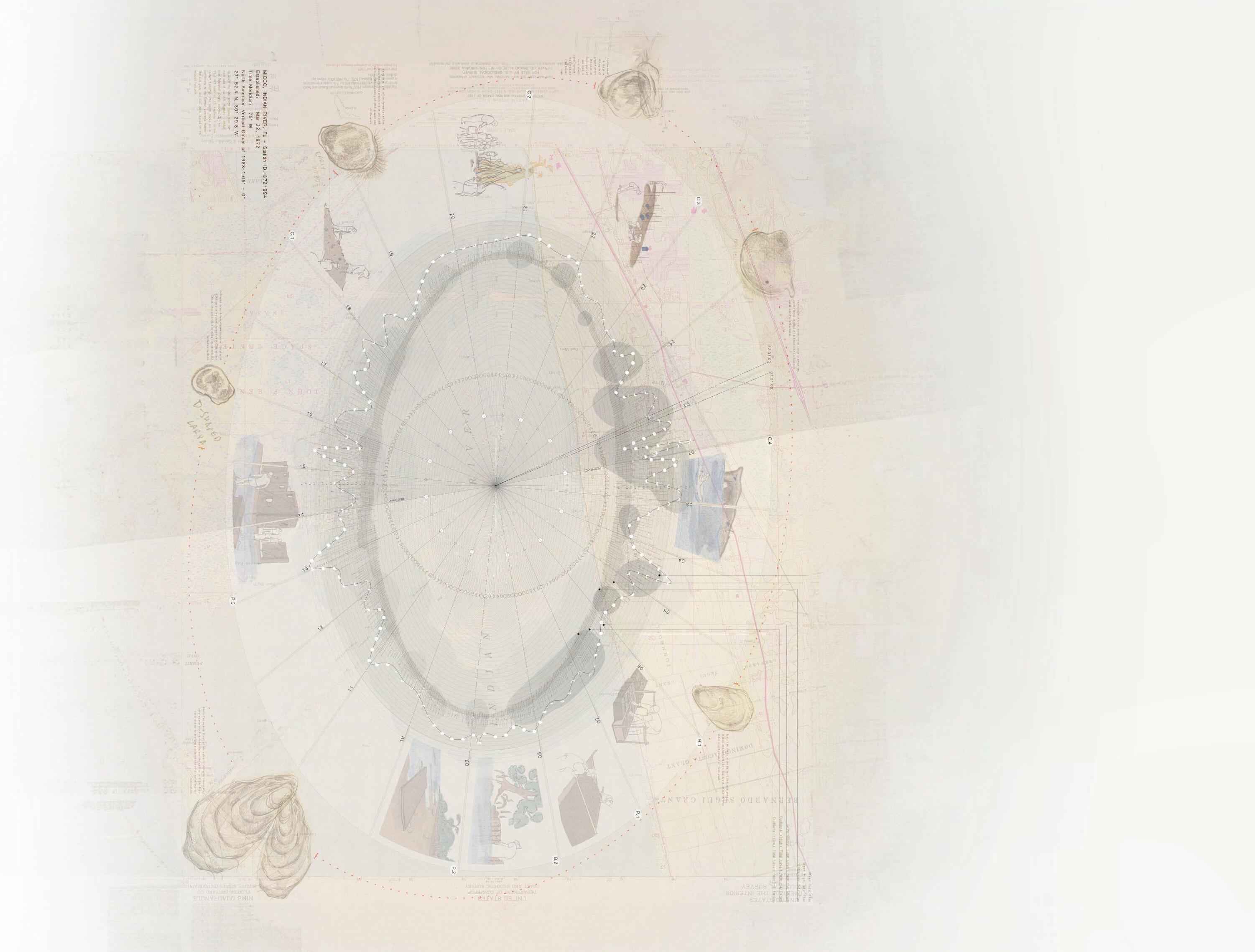
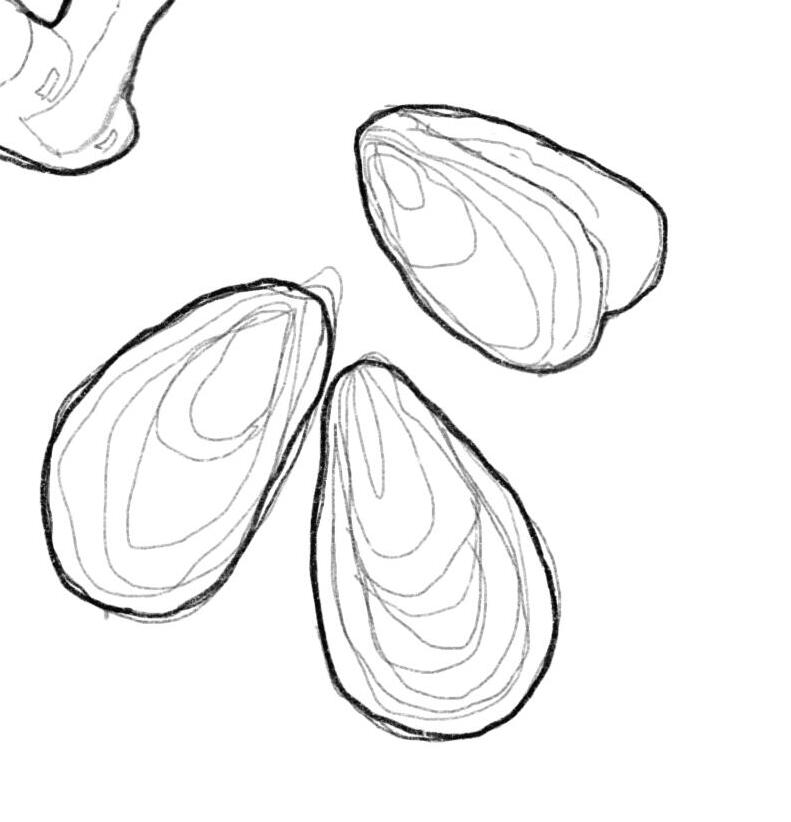
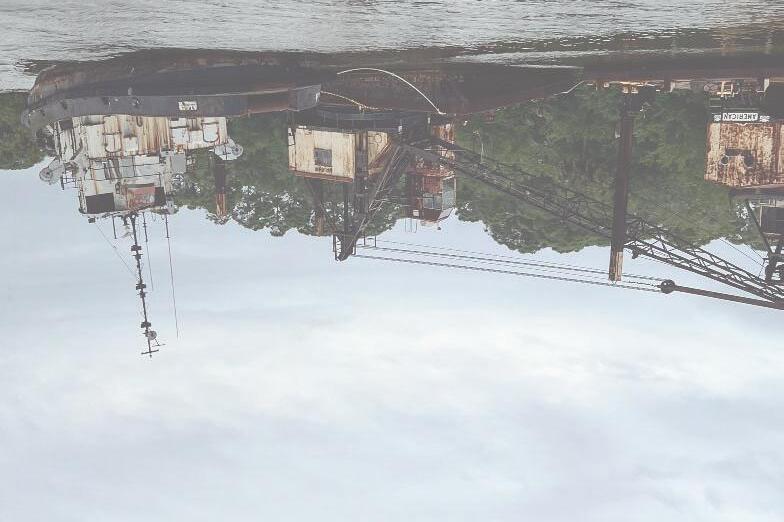
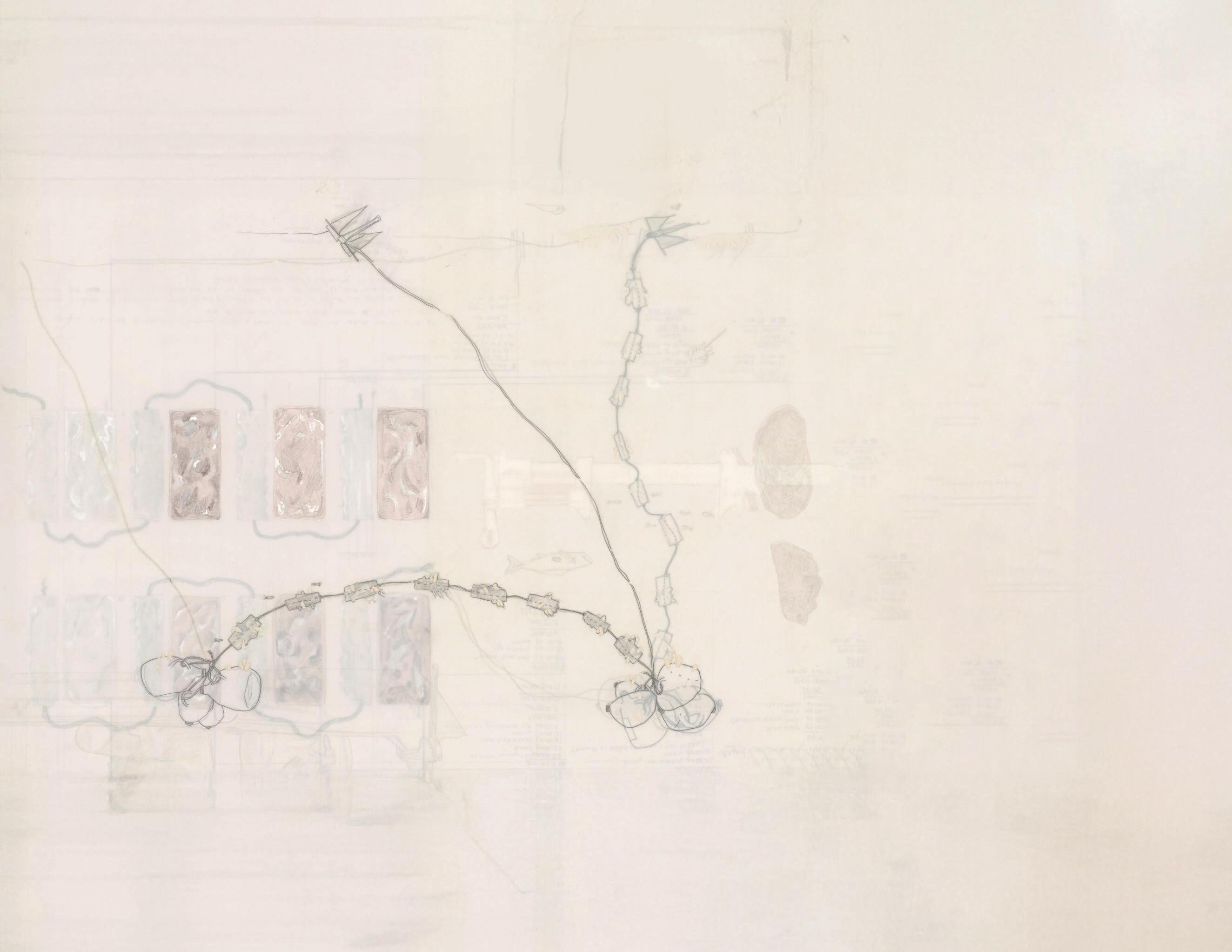
The Antifragile Almanac manifests a practice centered around understanding Oysters and climate crises through decay, unpredictability, spectacle, accumulation, and planned obliteration. Like architects, Oysters build with calcium carbonate, an essential ingredient in cement. Oysters, however, have a different attitude towards the lasting effect of their shells. Through three experimentations of material process on typical cement building component typologies, Antifragile Almanac asks how these extractive methods could start to harness seasonal environmental energy, weathering, and geological processes to reduce labor and anthropological impact.

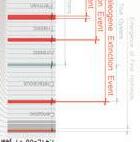
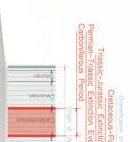









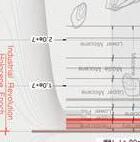
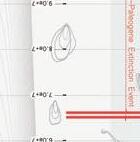

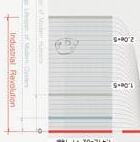




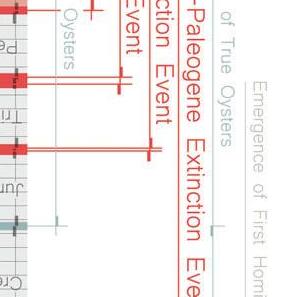
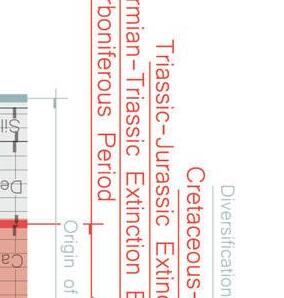

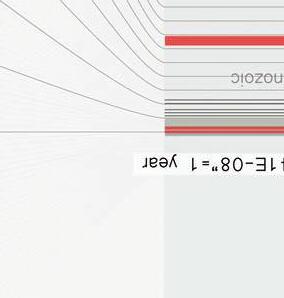
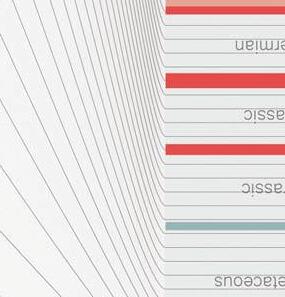
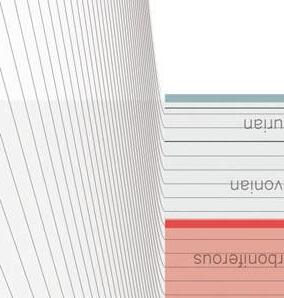

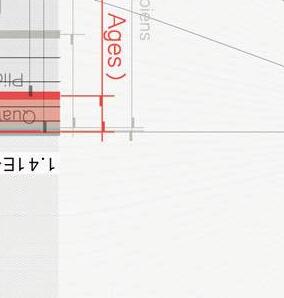
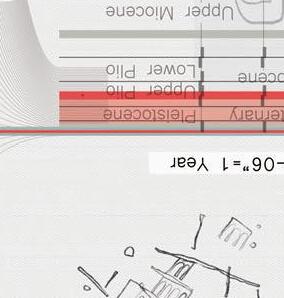
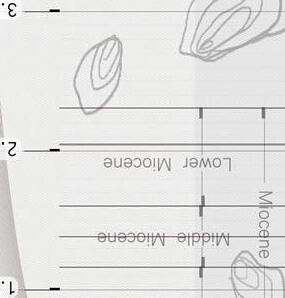
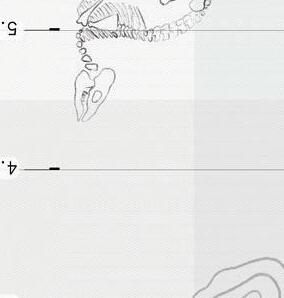
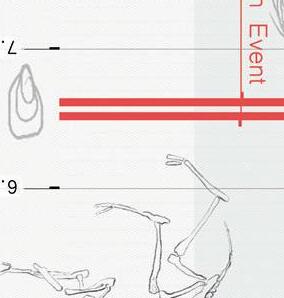
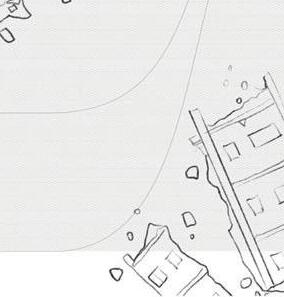
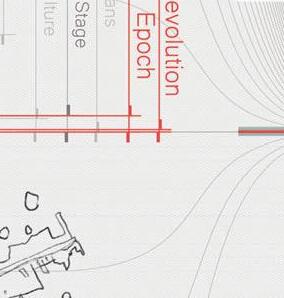
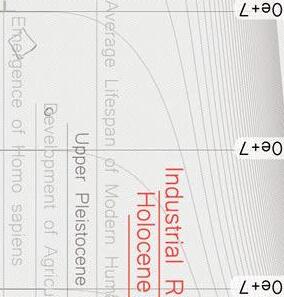
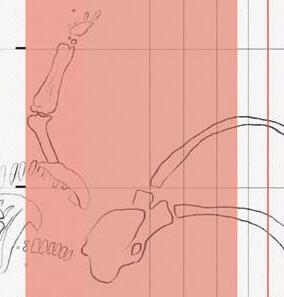
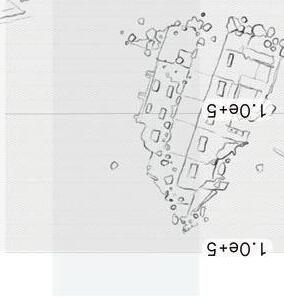
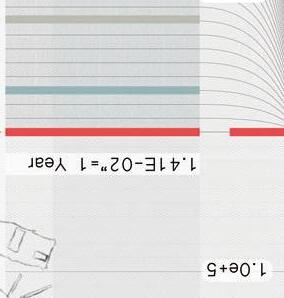



By bending to unpredictable forces, the Oyster can use the shell to integrate itself into many forms over a geological timescale. By dying, they participate in the material cycle they relied on. Through millennia of trial and survival, these small, highly vulnerable animals have nestled themselves into an ecological material niche. As humans grapple with a similar vulnerability during this climate crisis, how could architects learn from the planned obliteration of the cementitious Oyster?
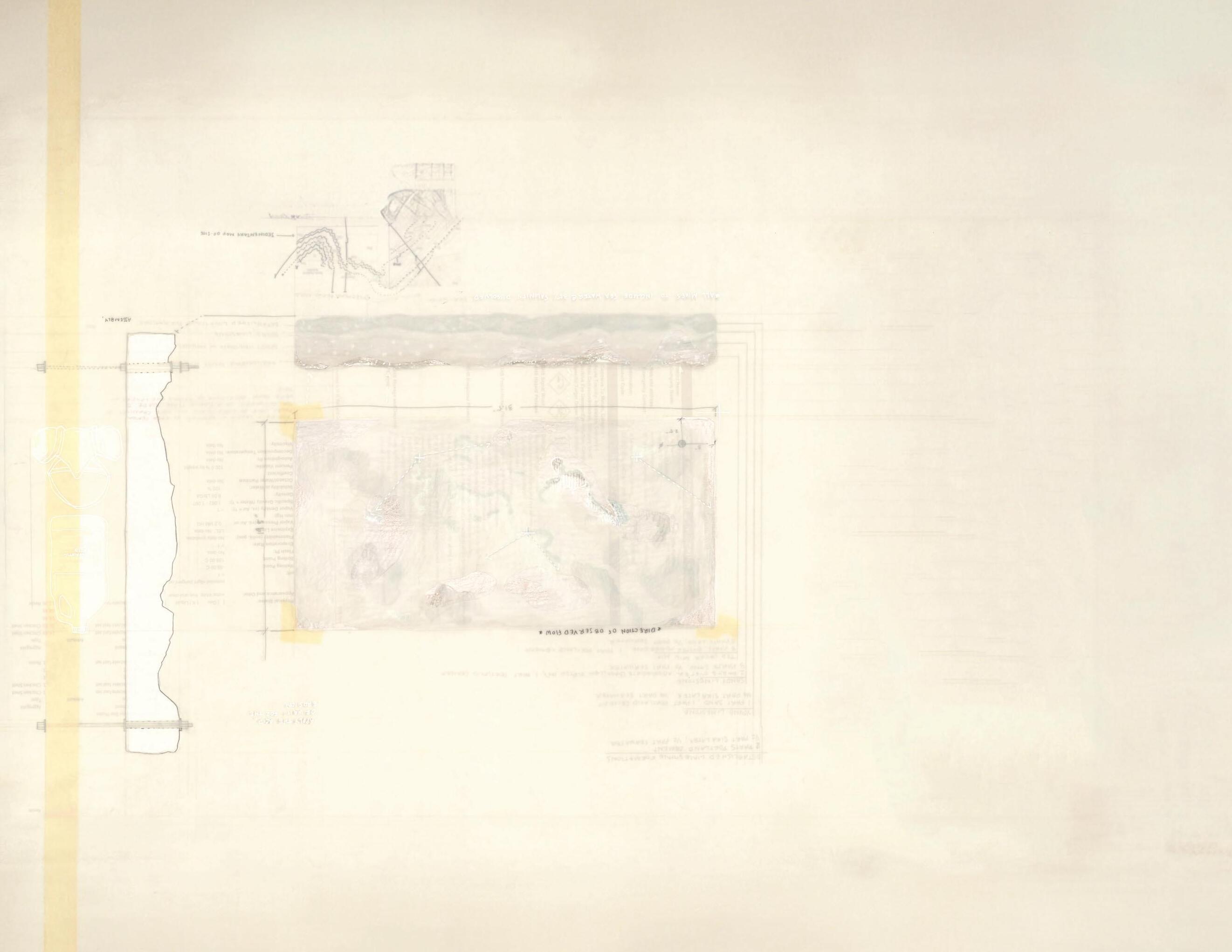
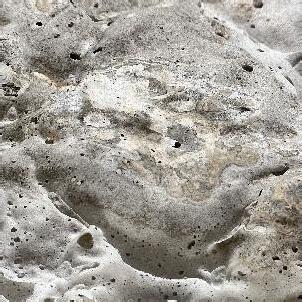
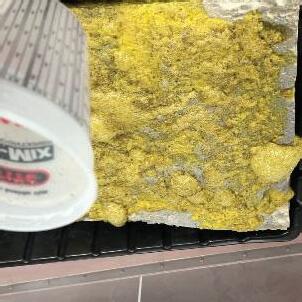
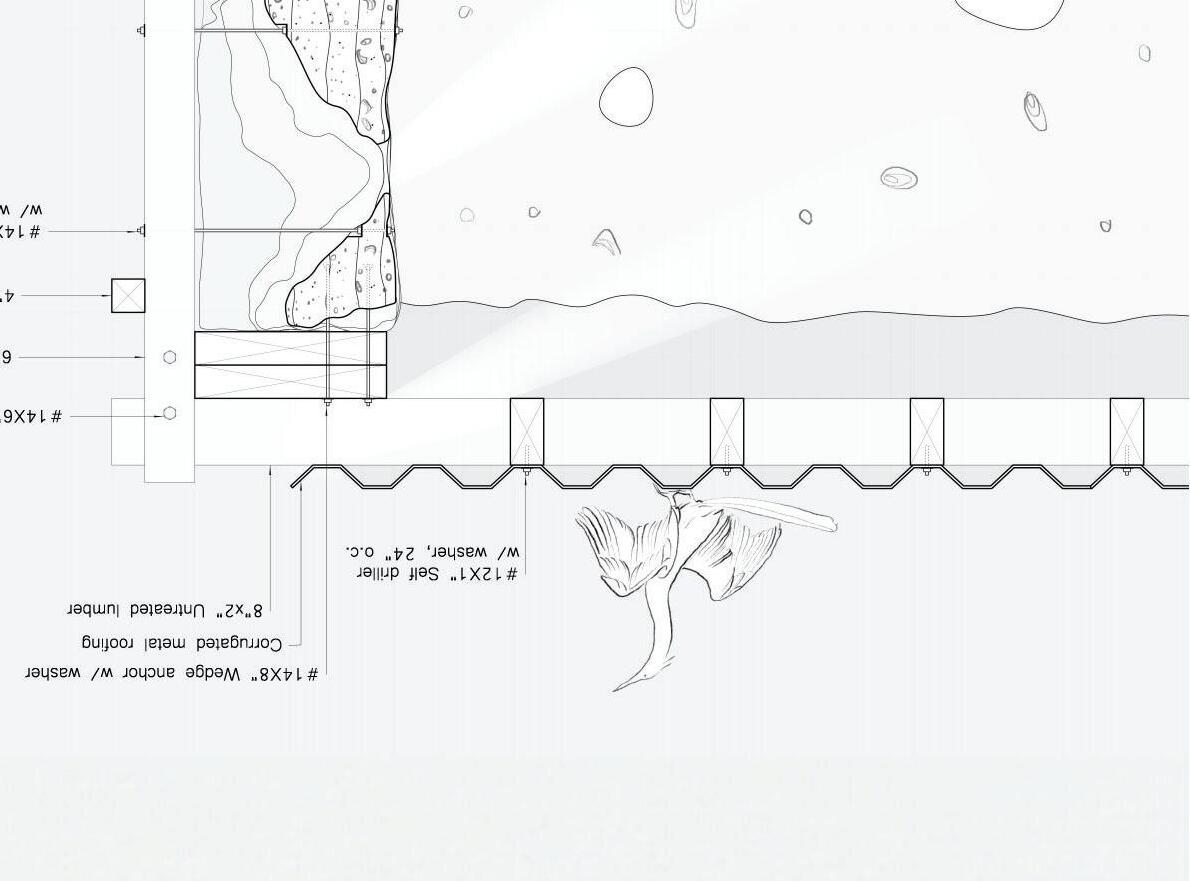
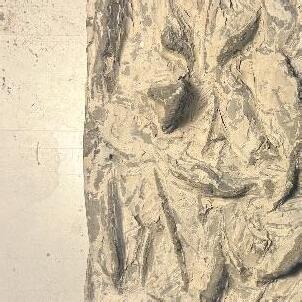
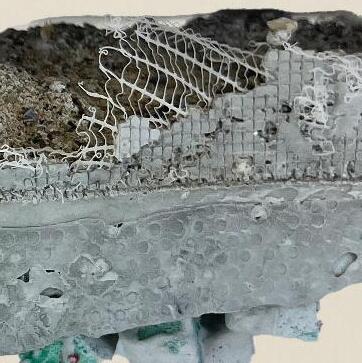
The concept behind the Precast Panel involves casting it in layers and subjecting it to chemical weathering. This approach prompts consideration of how building facades can be intentionally designed to allow for decay, achieved through layering and adaptable mounting systems.
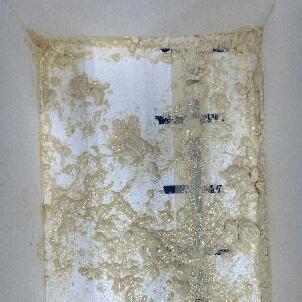
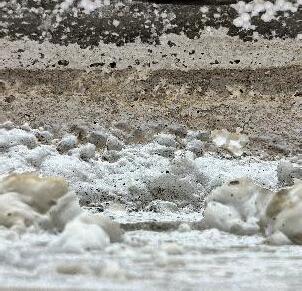
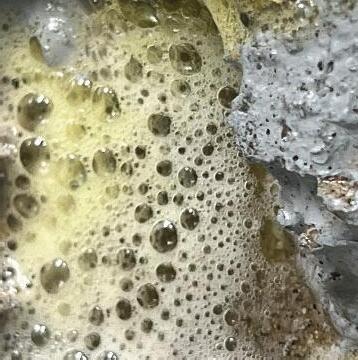
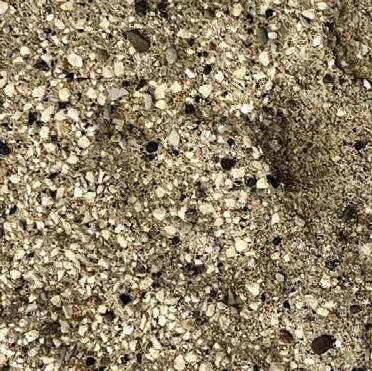


Panel, cast in 5 layers to reflect the strata of Florida’s geology. Each layer is mixed with Seawater and includes varying levels of oyster shell aggregate, sand, and plastisizer for strength.
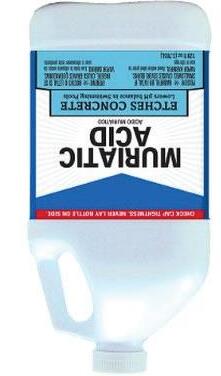
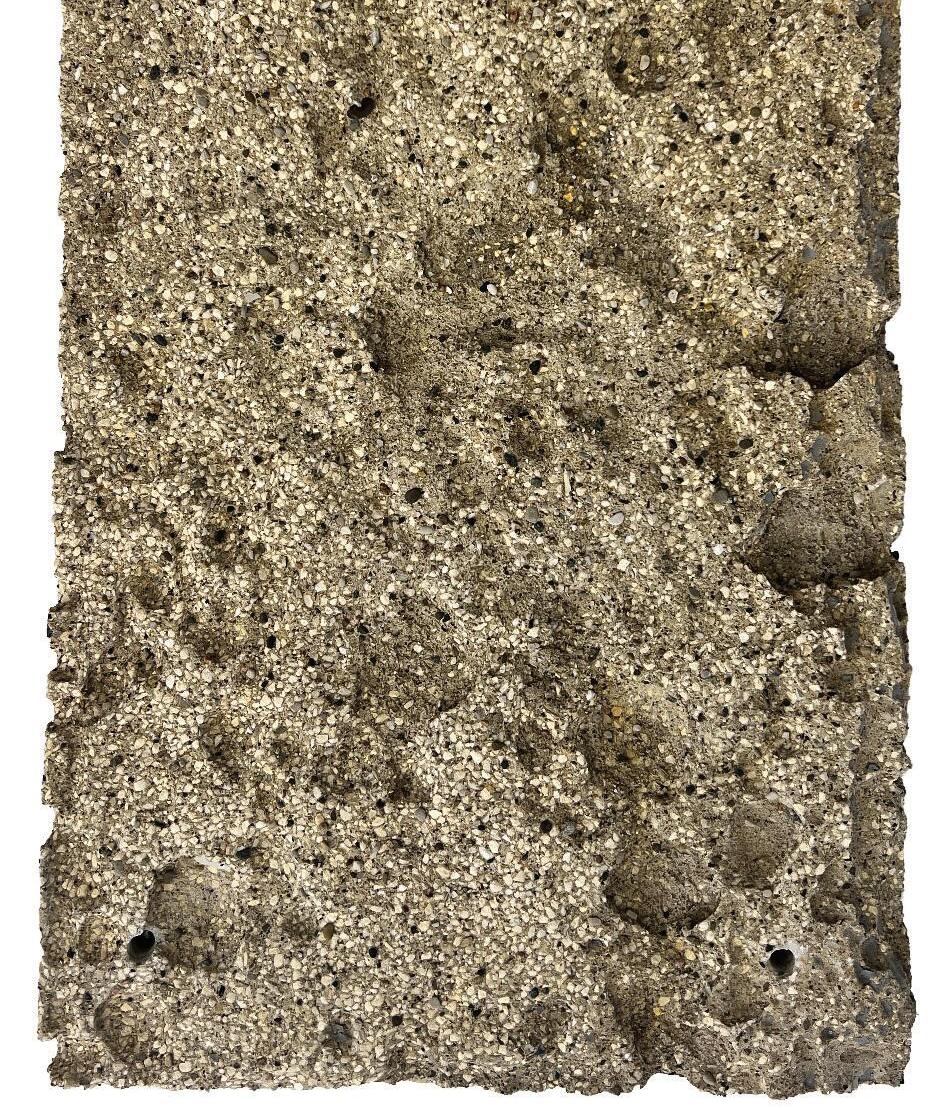
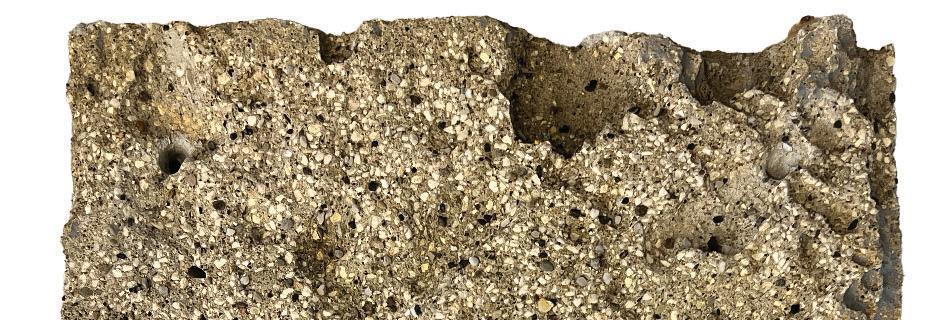

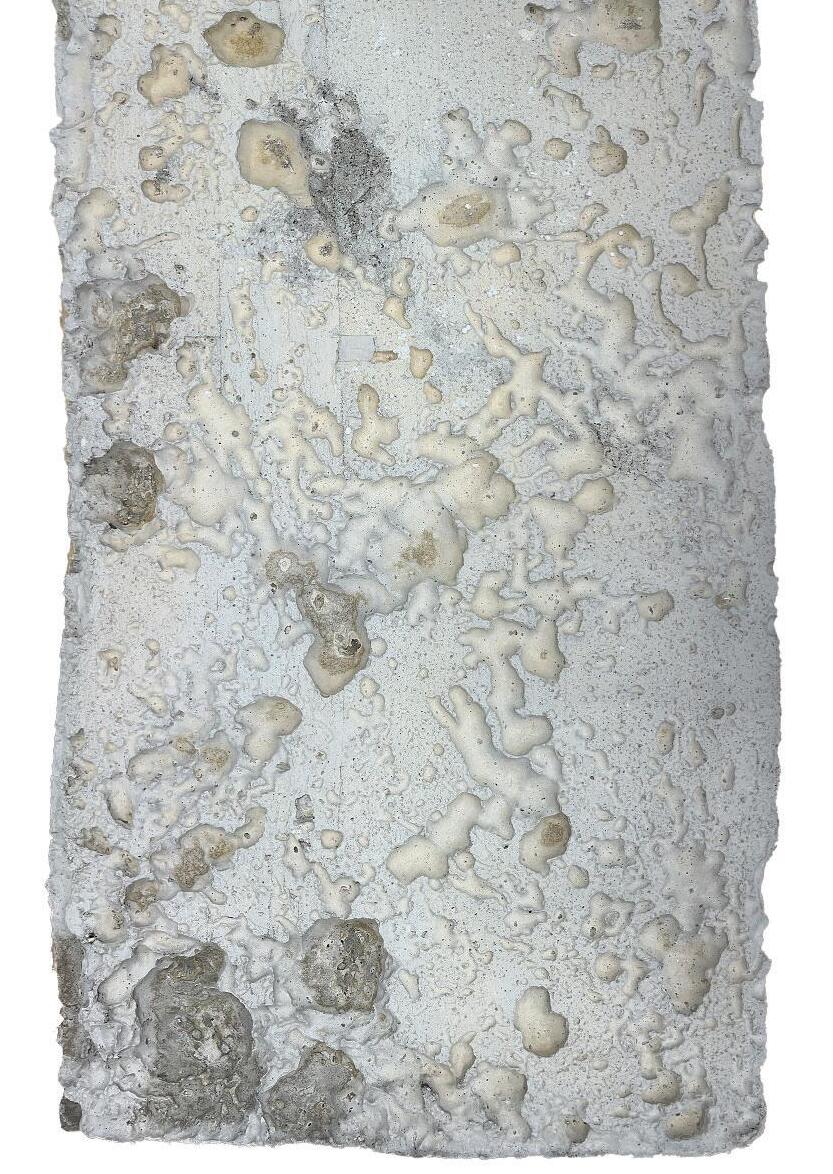
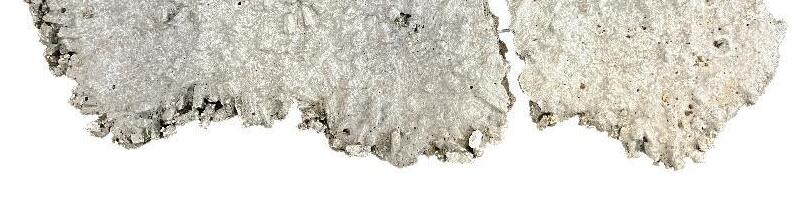
Panel, weathered artificially with 2 gallons of muriatic acid at a 30% dilution to achieve a quickened decay. The weathering exposes different levels of each strata.
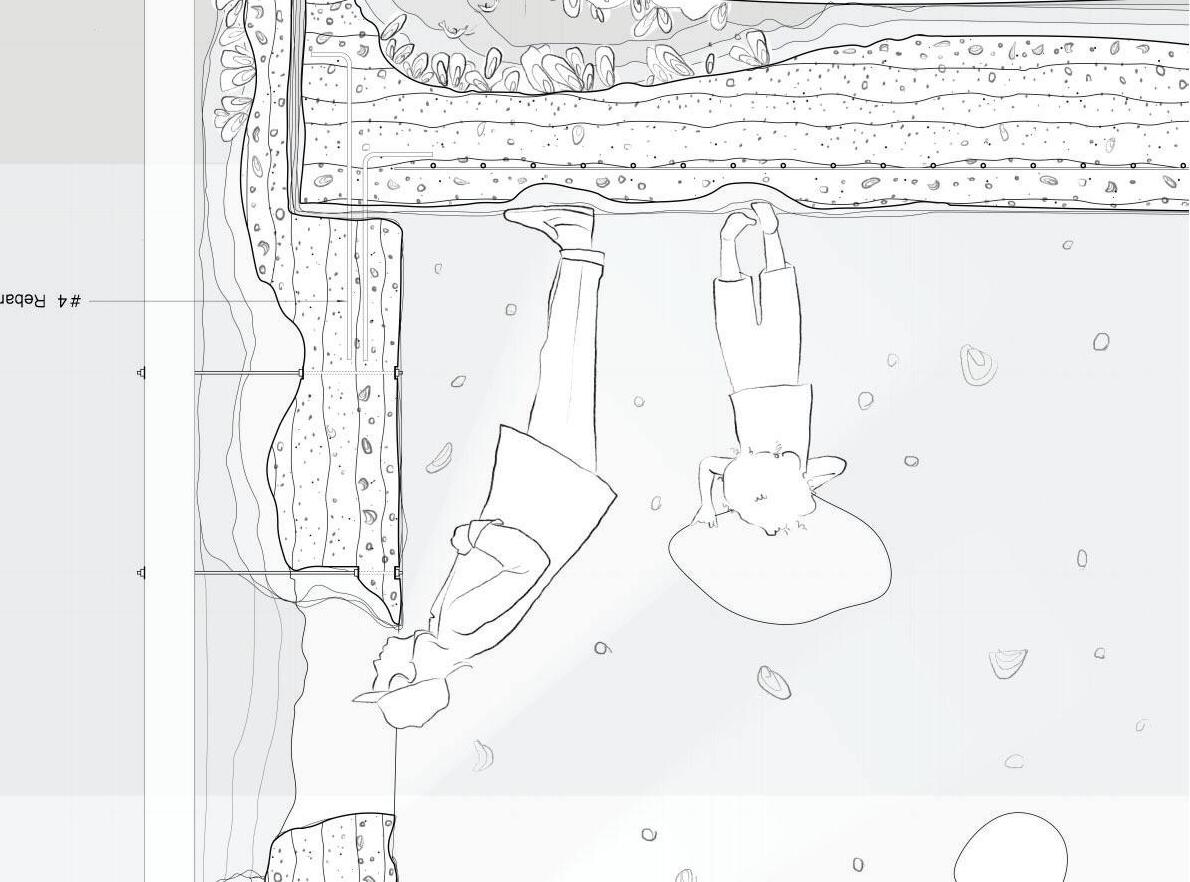
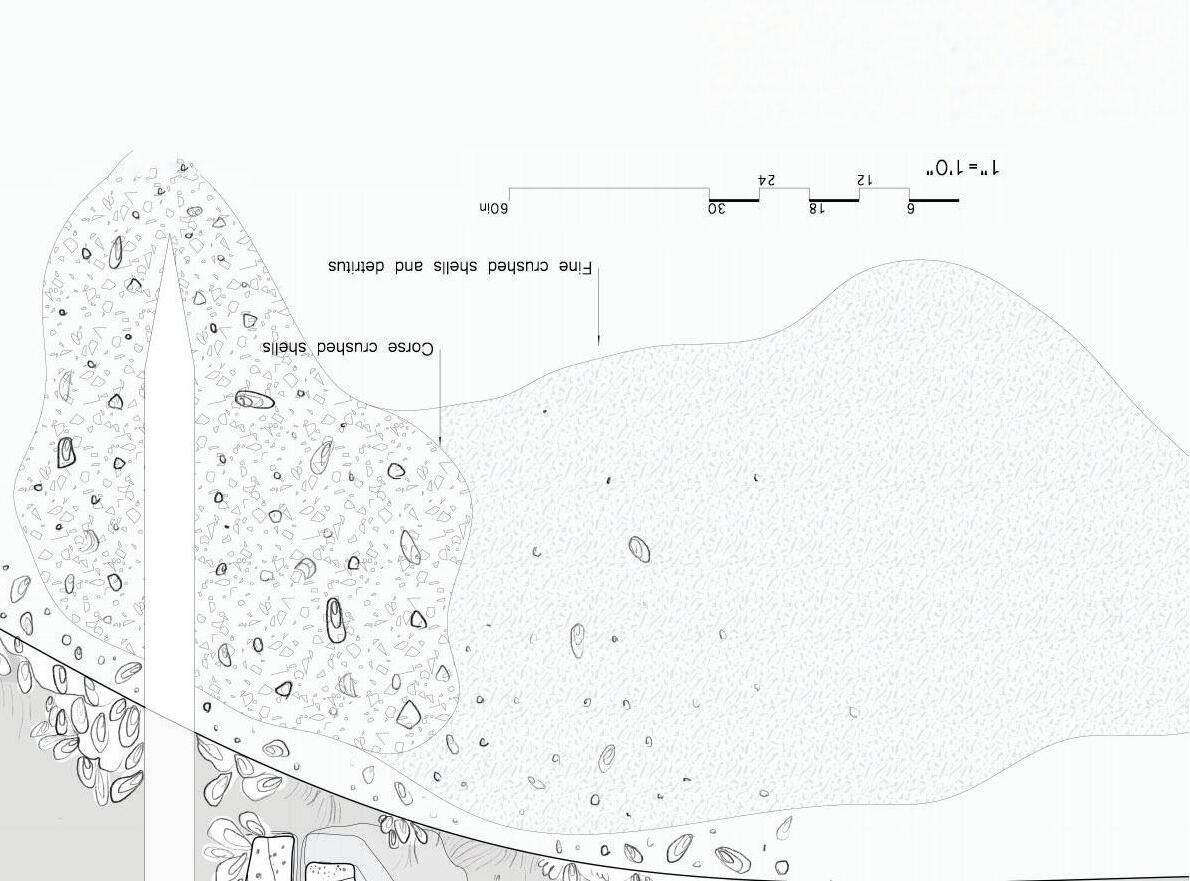
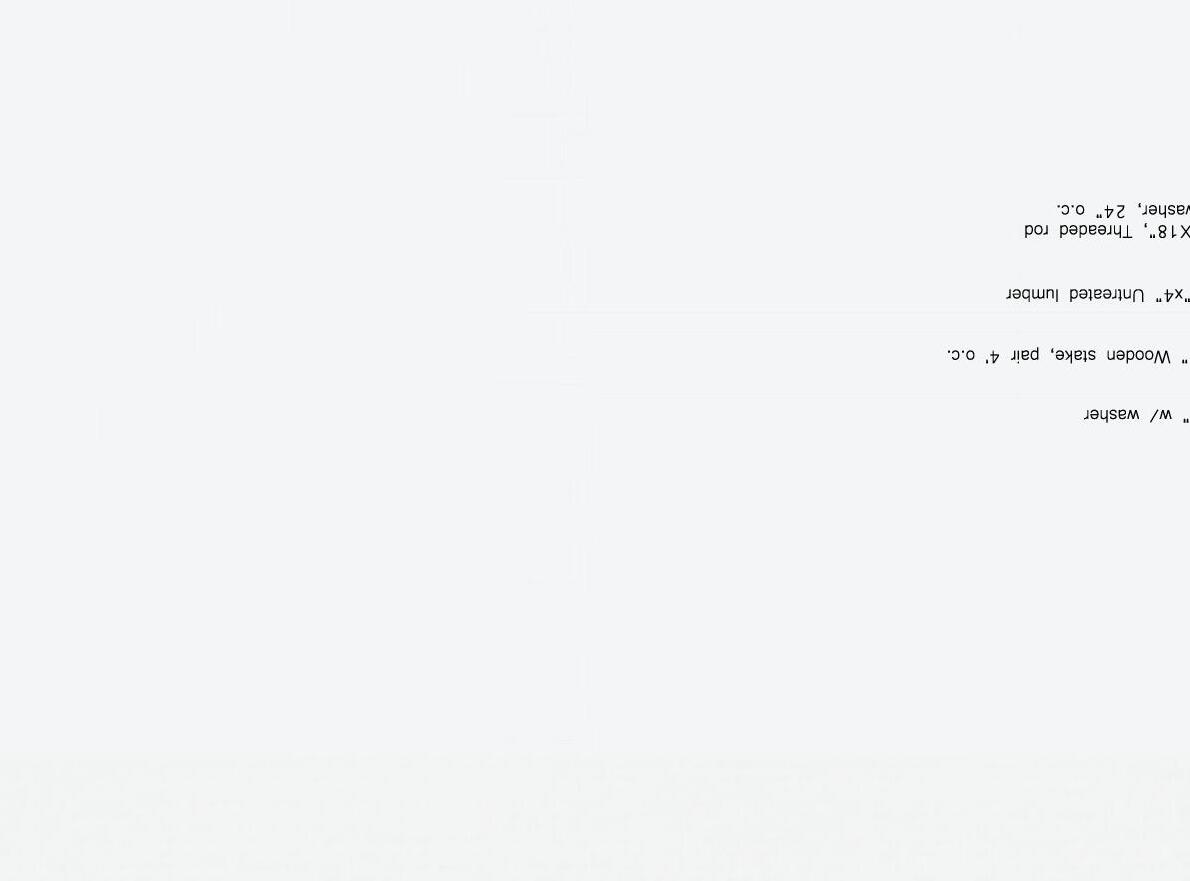

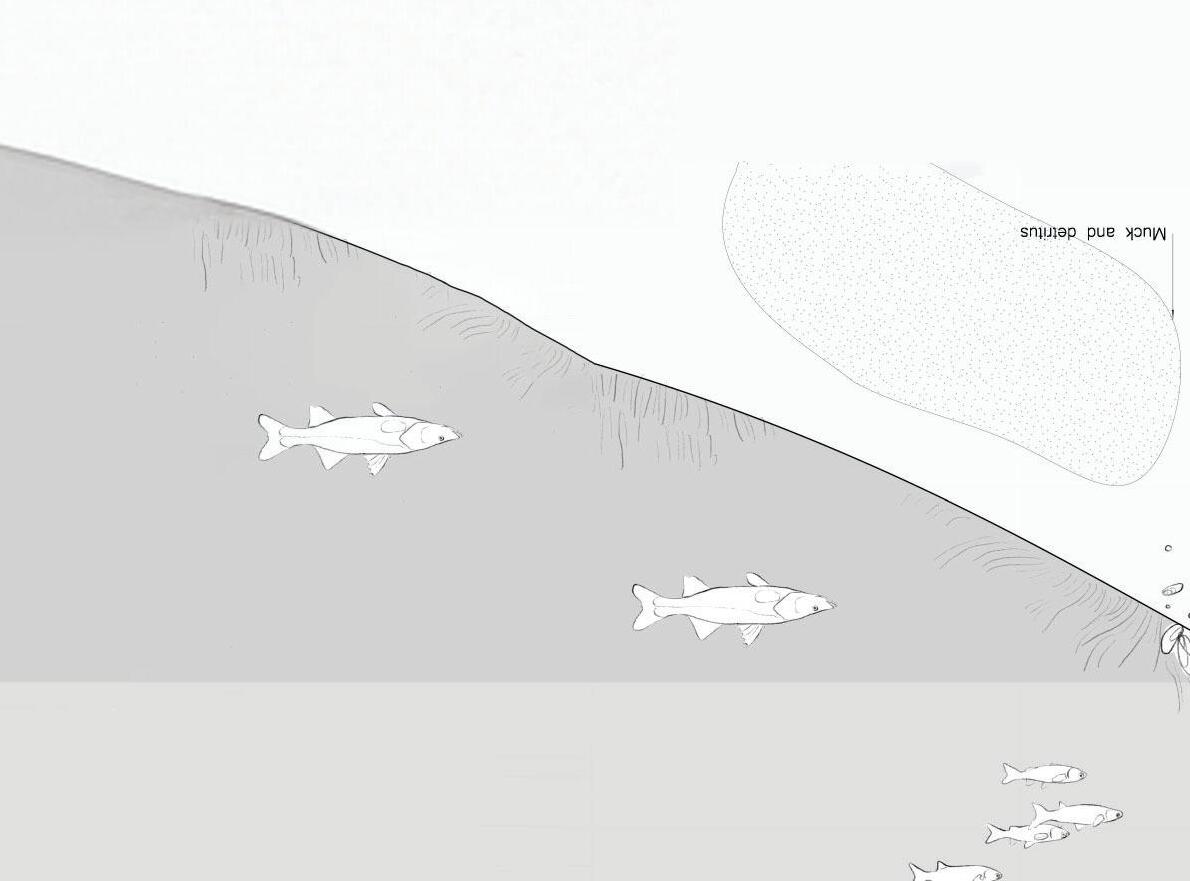





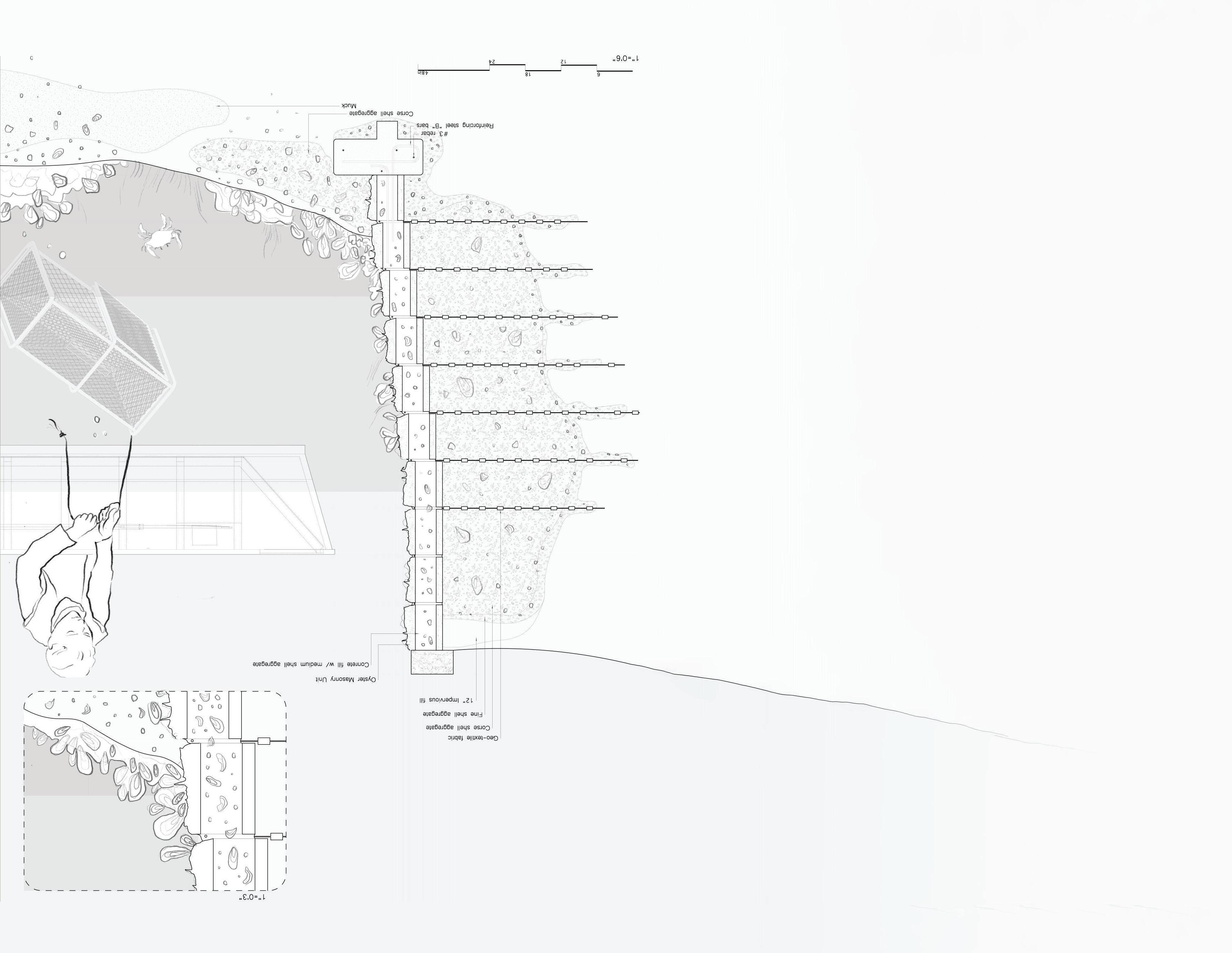
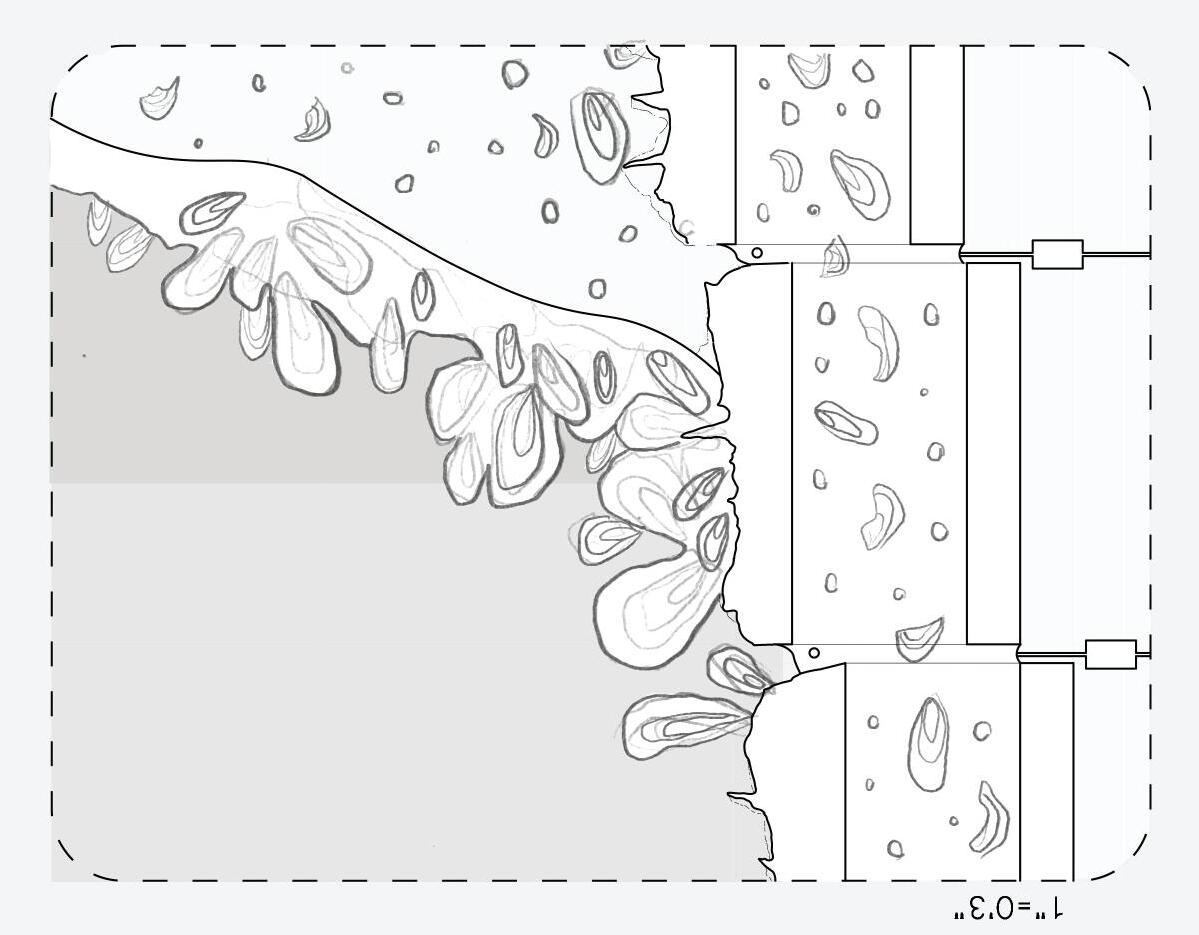
Oyster reefs act as natural barriers against storm surges and erosion, in contrast to sea walls. The Oyster Masonry Unit is exploring ways to integrate oysters with sea walls by adding a textured surface that promotes the adhesion of oyster colonies, helping to mitigate erosion.
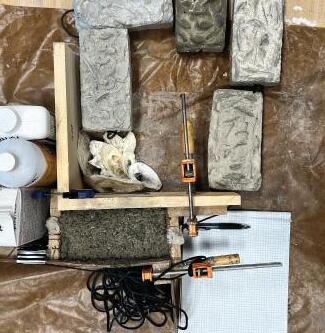
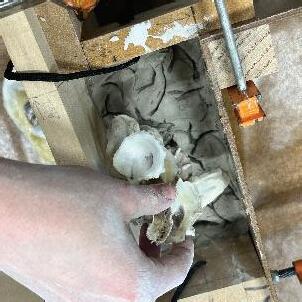
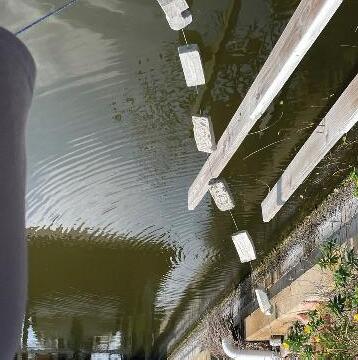
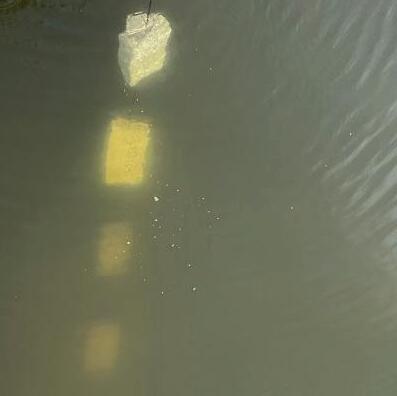
Oyster Masonry Unit (O.M.U.)before before environmental weathering
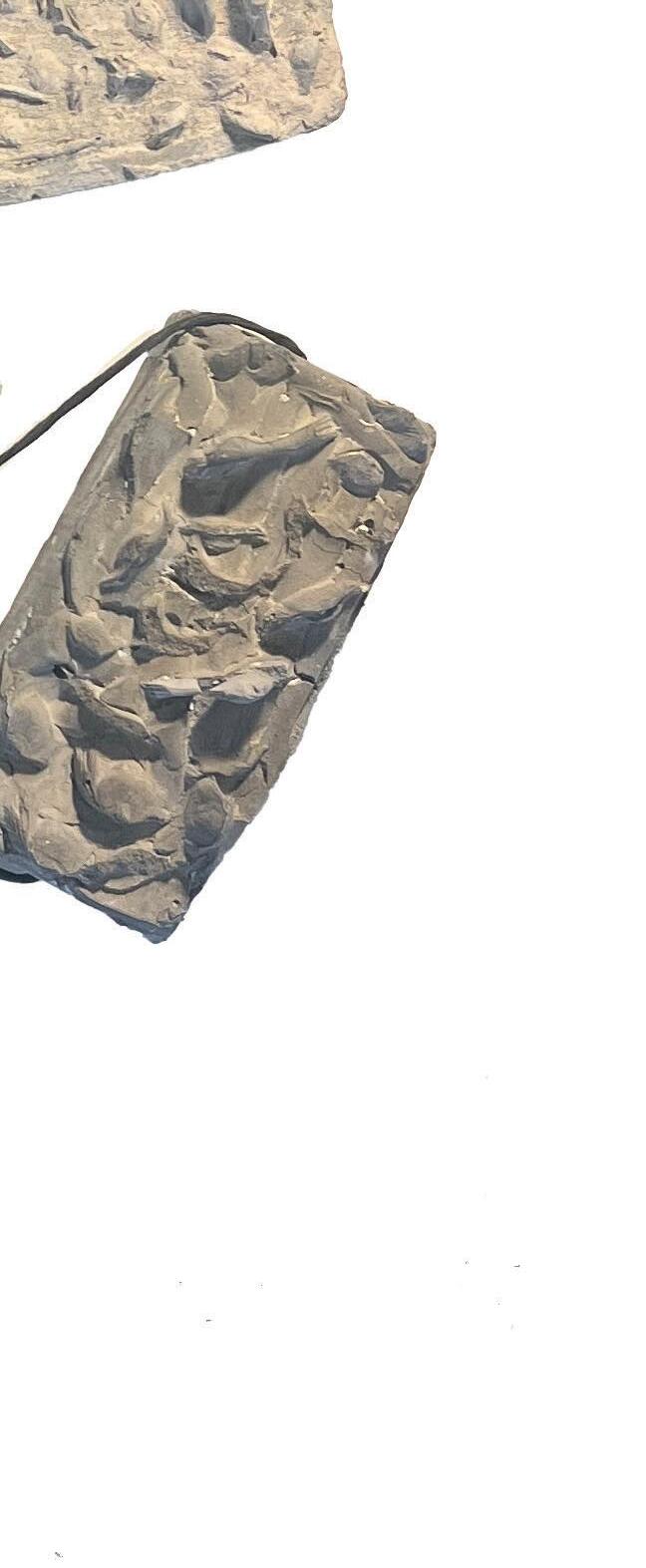
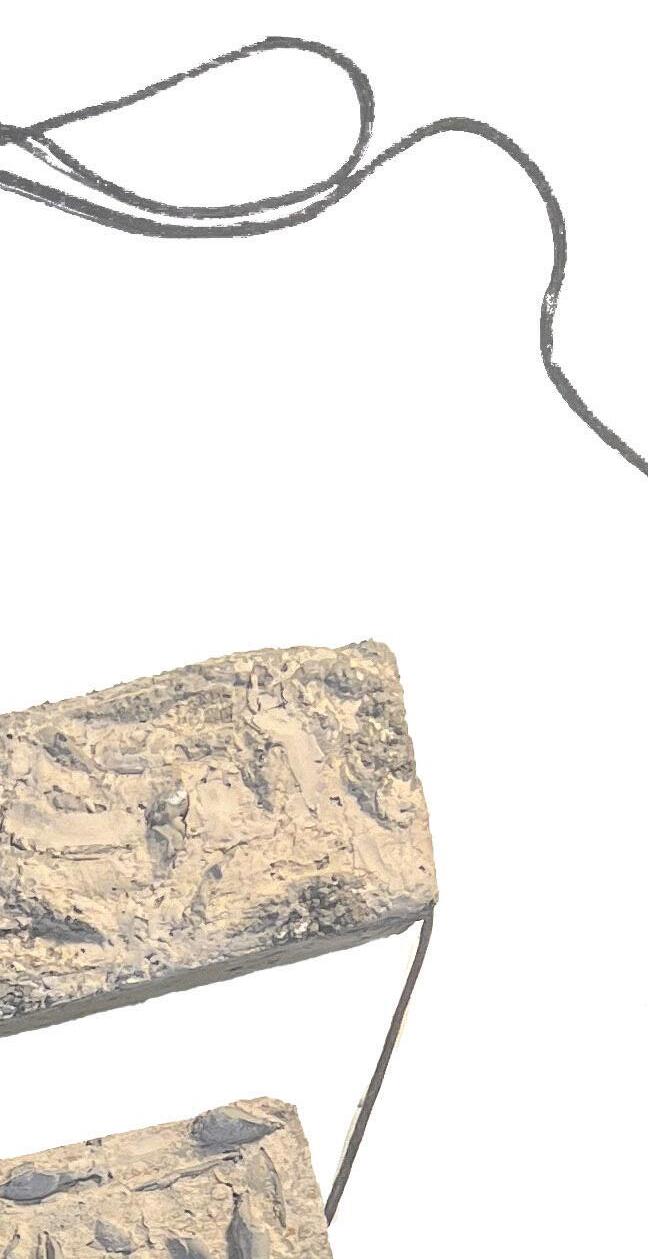
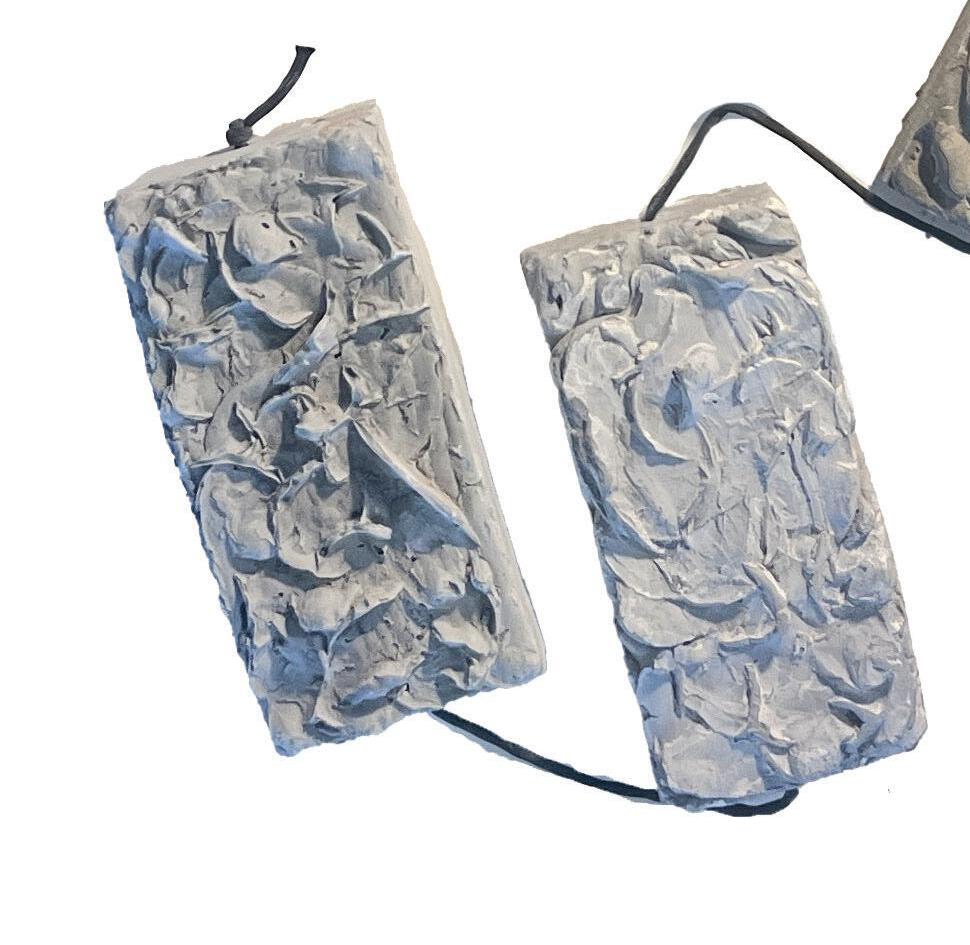
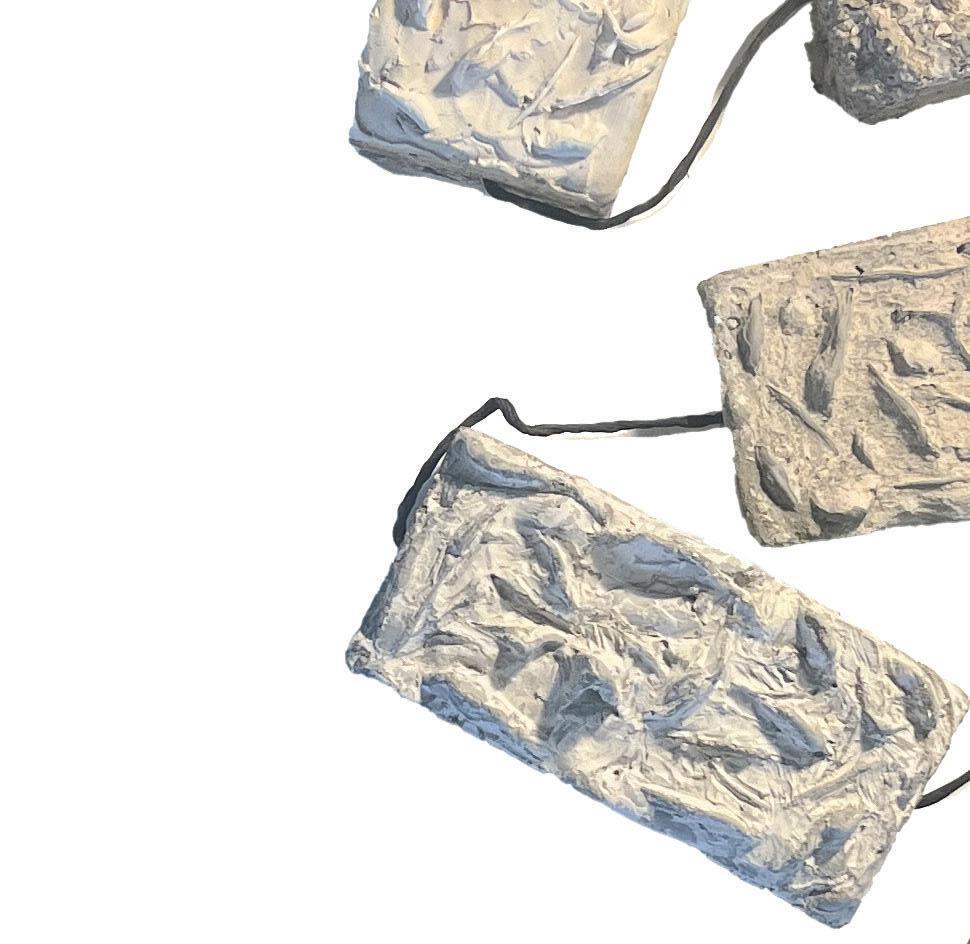
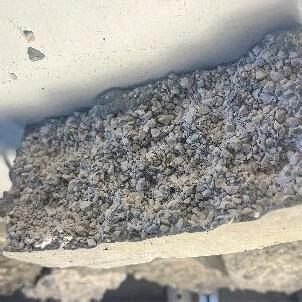
After placing the bricks in the brackish of the Indian River Lagoon, animals such as barnacles, snails, and algae flourished and ate away at the cement .
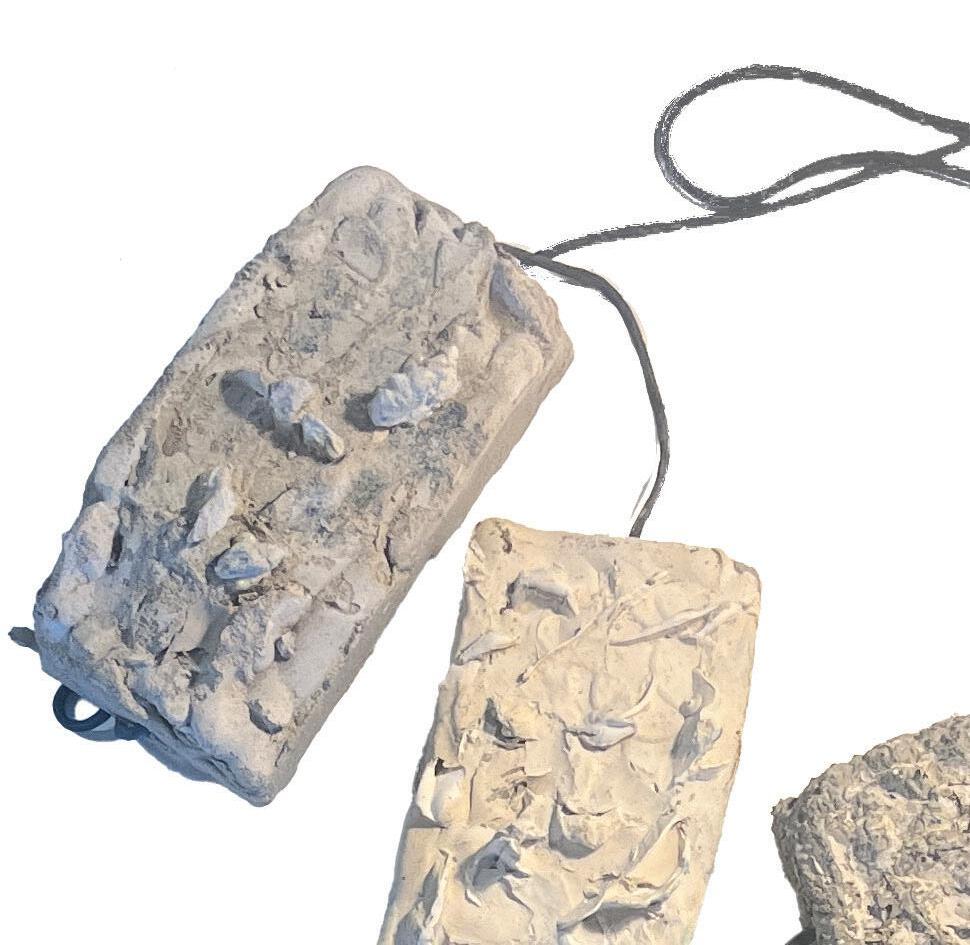
Oyster Masonry Unit (O.M.U.)after after environmental weathering




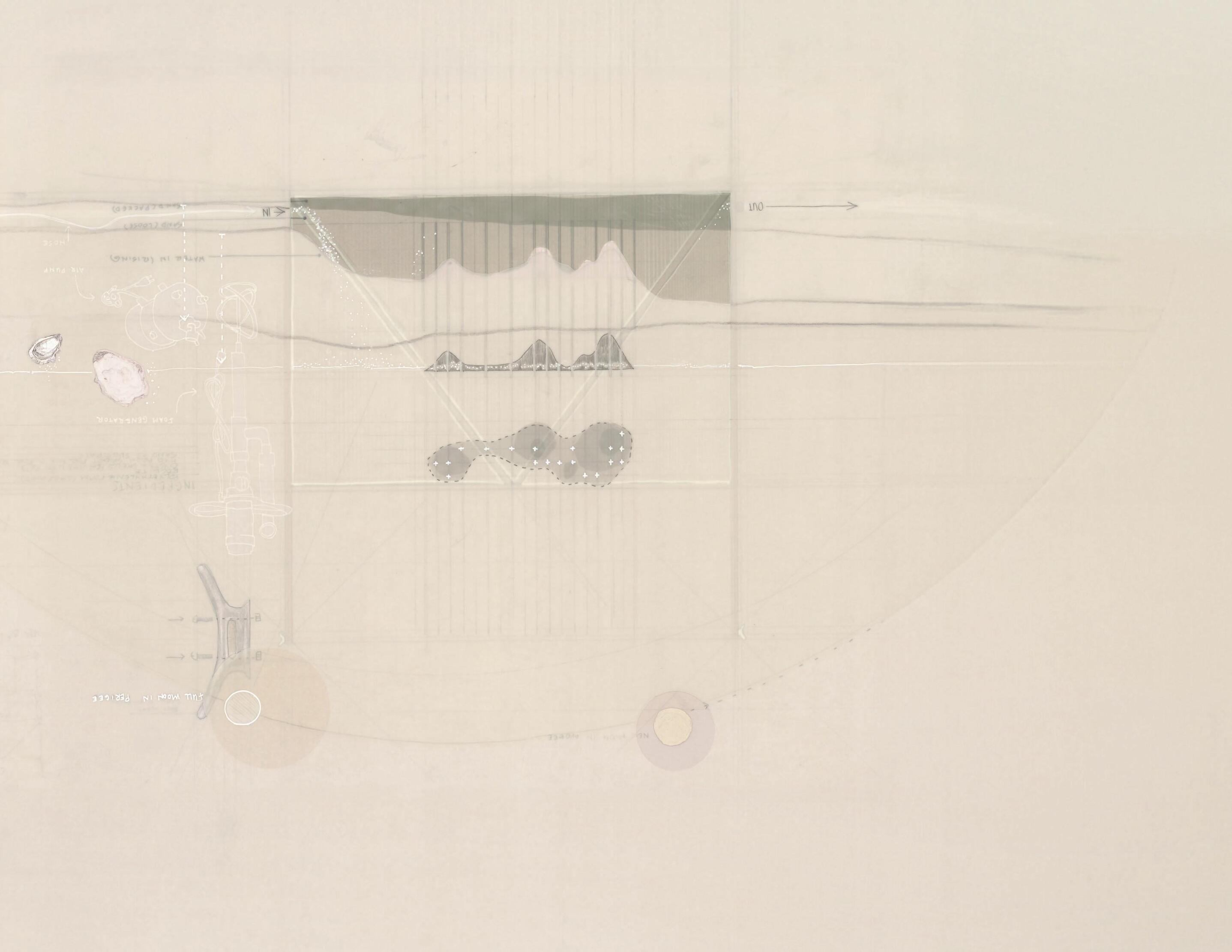
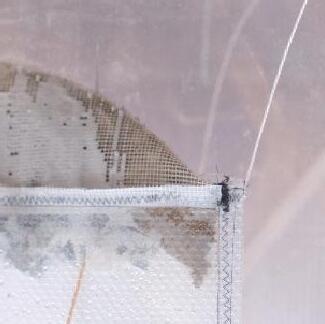
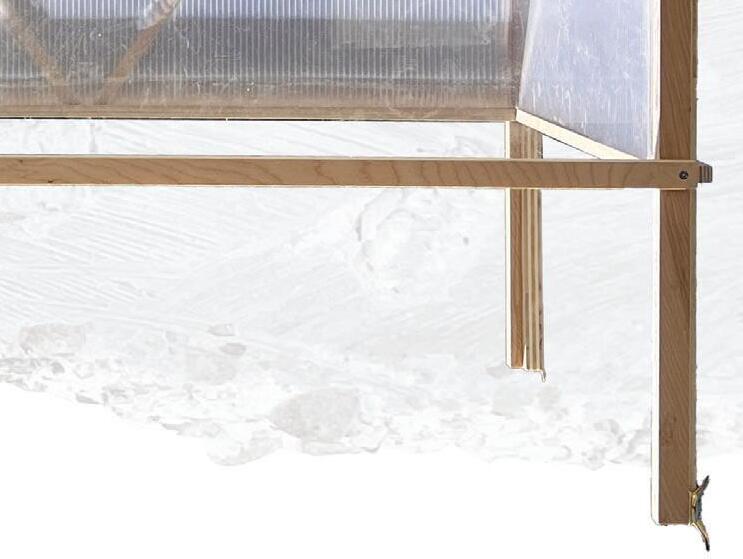
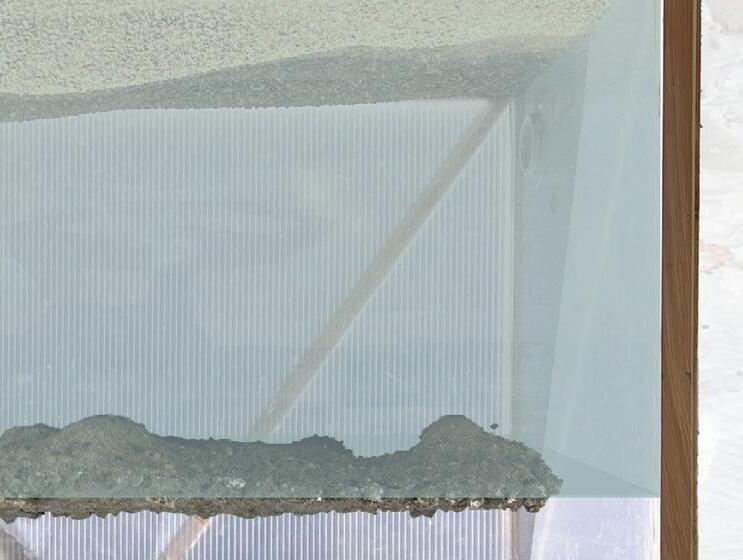
Traditionally, cement casting involves extensive form work and significant labor. The concept of site-casting a floating structure aims to minimize both the labor and material, while creating an architectural spectacle. In this approach, airinfused cement is cast in an earthen form during the highest tide changes of the season. As the tide rises, the structure is released to float until it naturally settles and becomes ready for occupation.
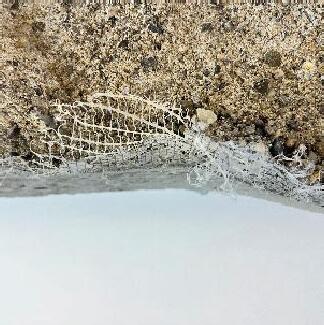
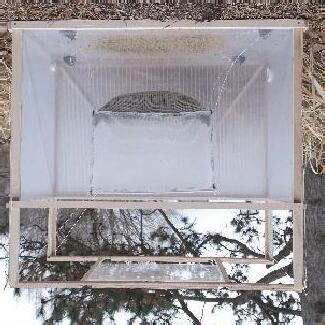
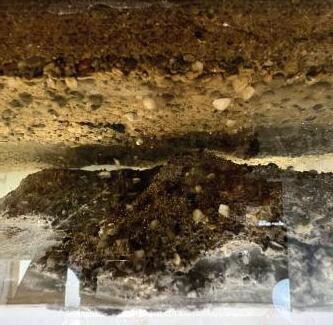
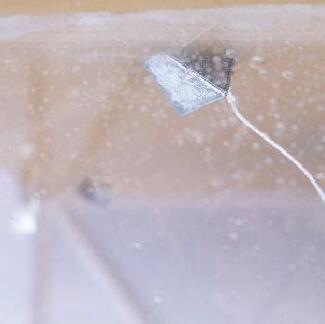




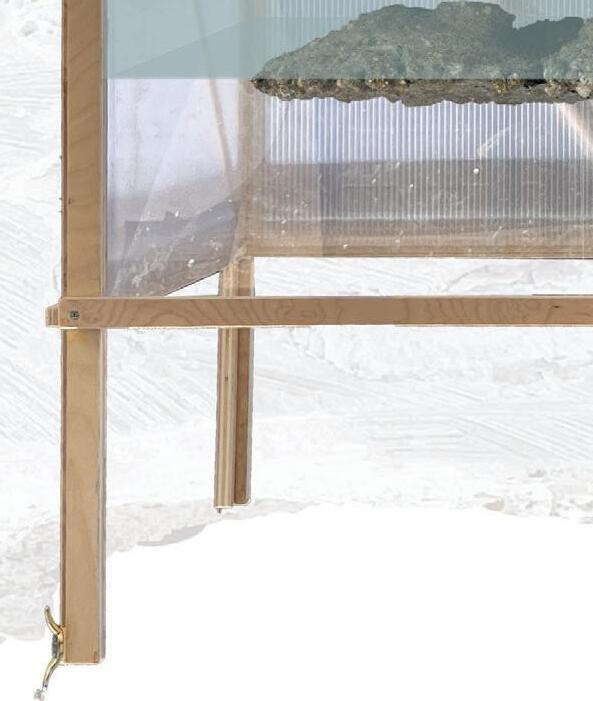
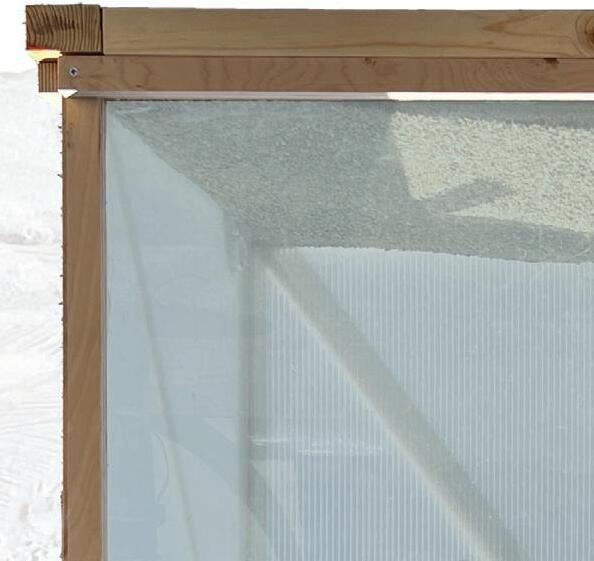

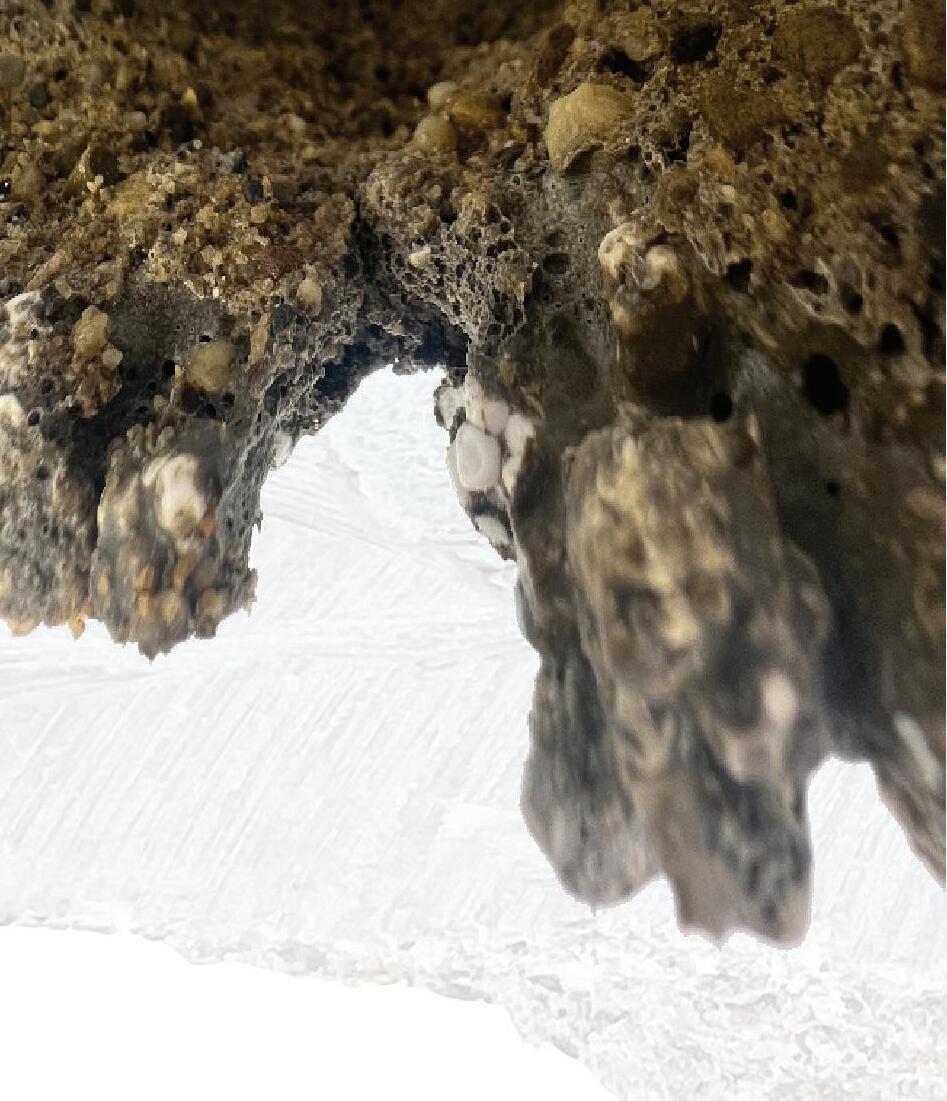
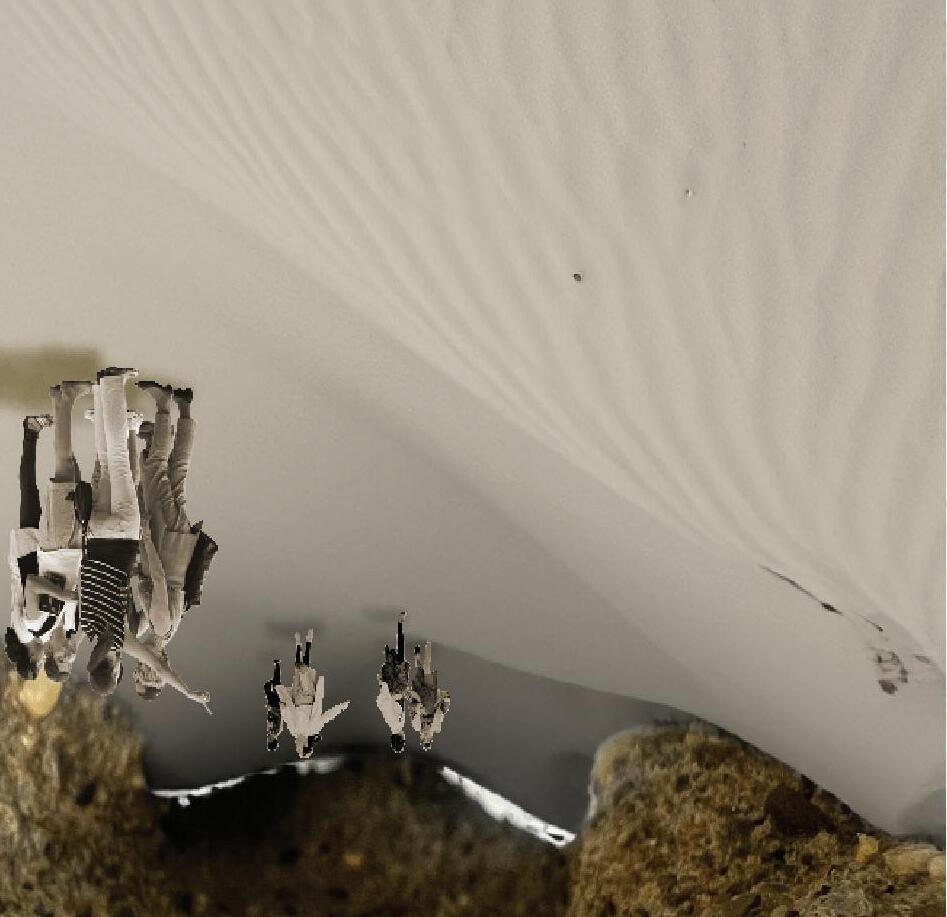
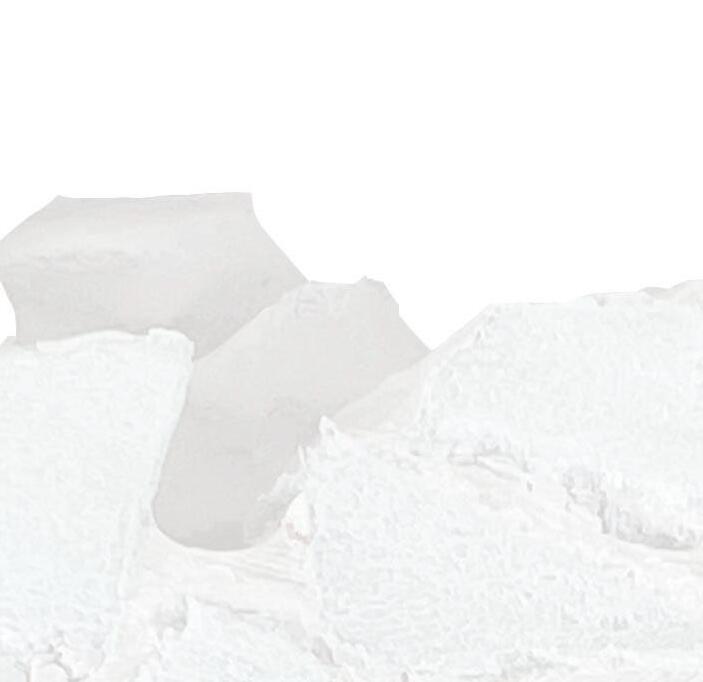


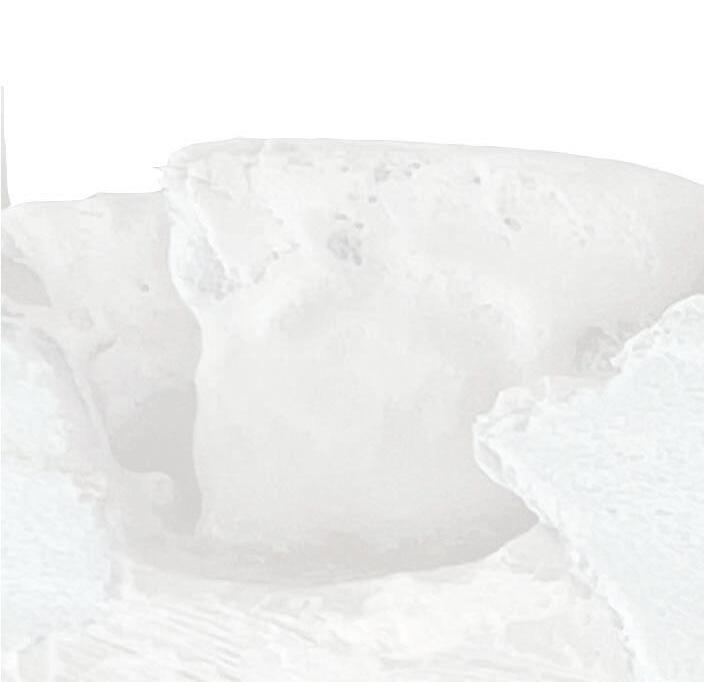

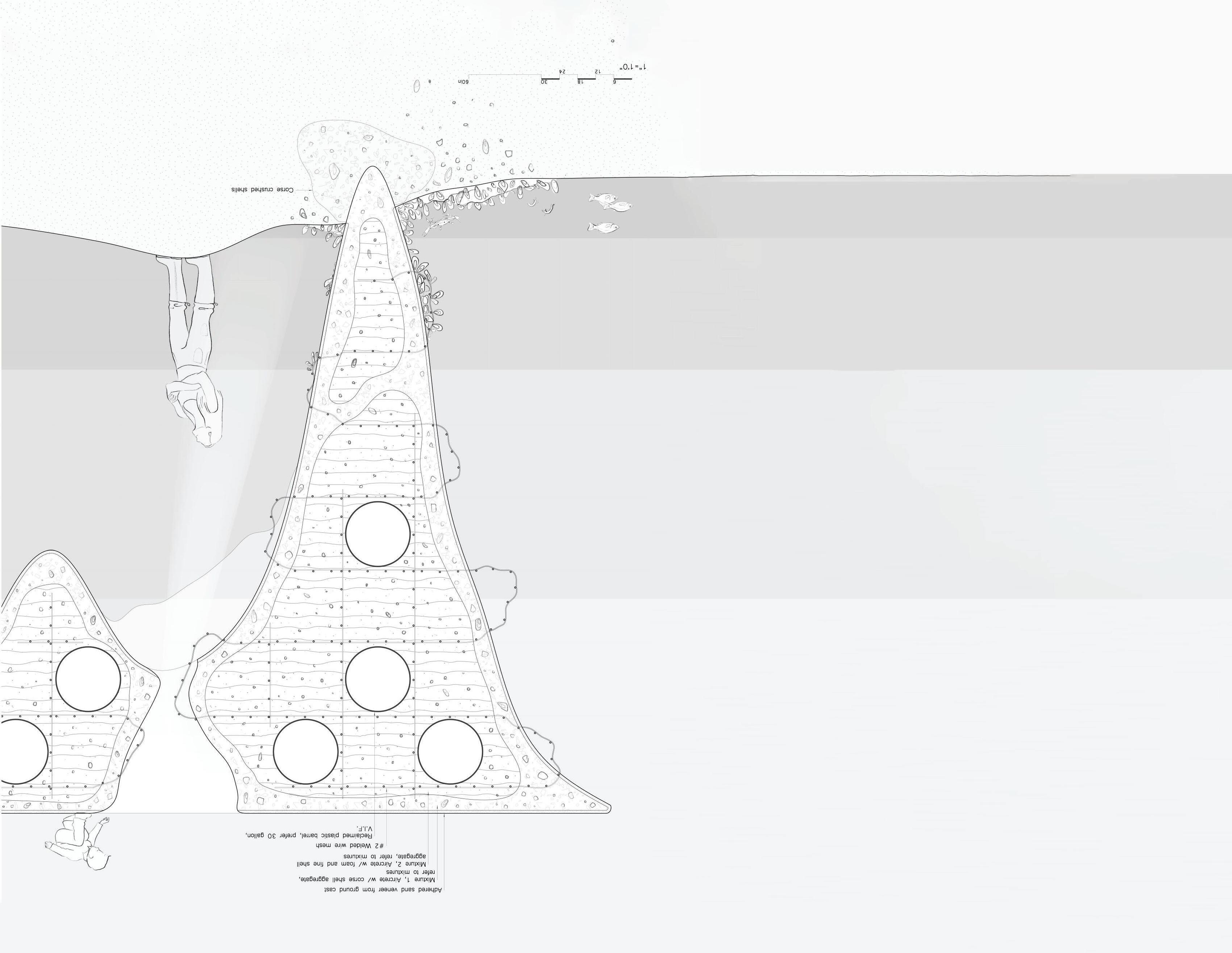
Living in a time of extreme unpredictability in the built environment, our profession is drawn towards resilience, durability, and the building of fortifications to preserve capital. If lucky, architectural discourse will imbue elasticity, adaptability, or buoyancy into building and material systems. When confronting a crisis spurred by deliberate systemic action, working with humility to gather tacit knowledge on and in systems outside our creation can create a more harmonious, chaotic built environment.



Multi-family housing development in Dexter, Michigan
O|X Studio - Architectural Associate
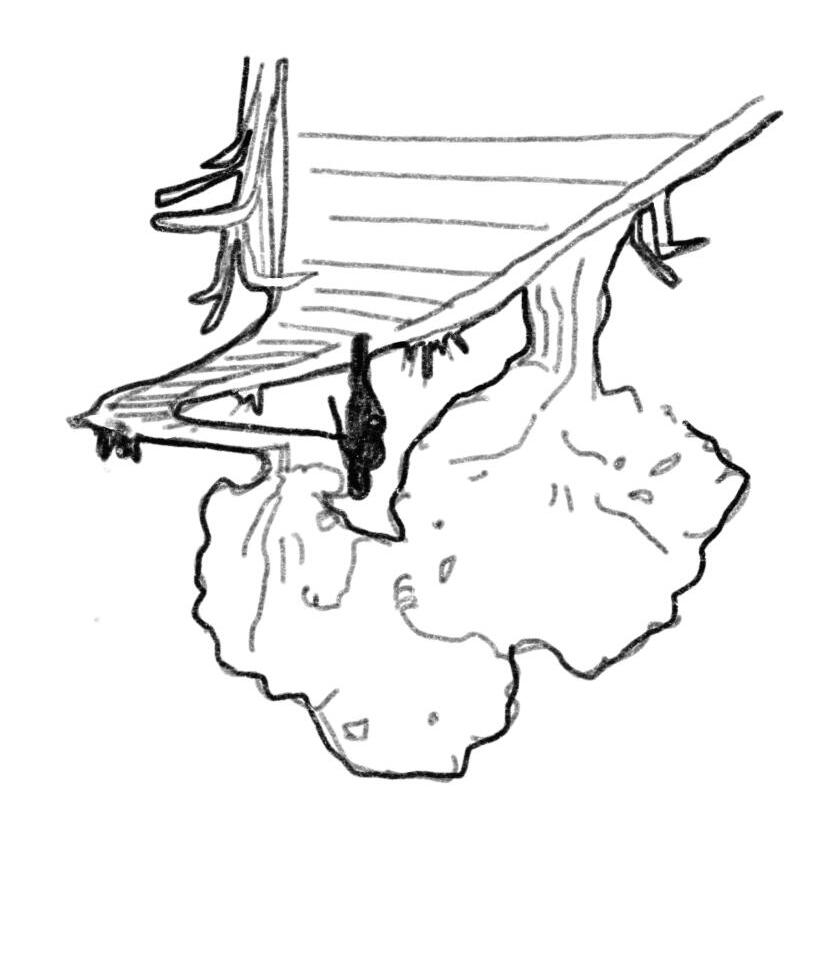
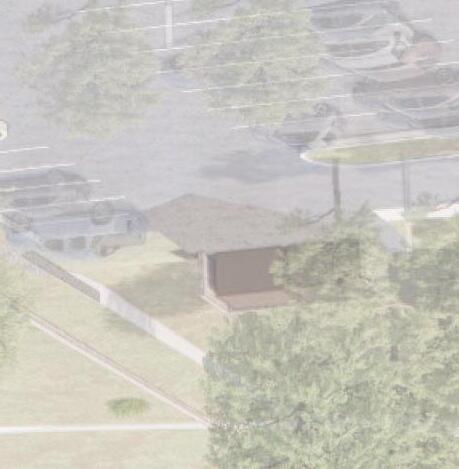
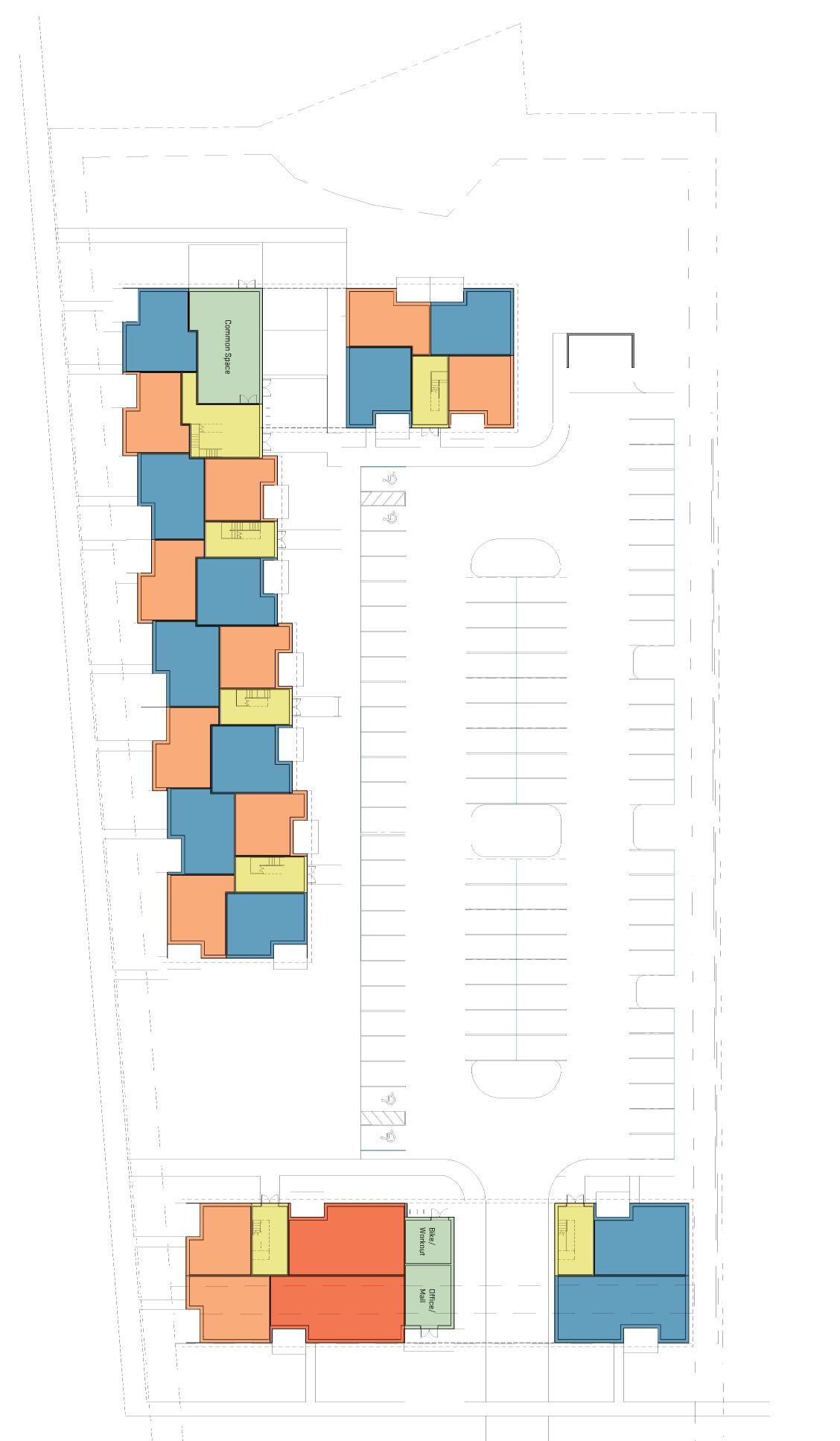
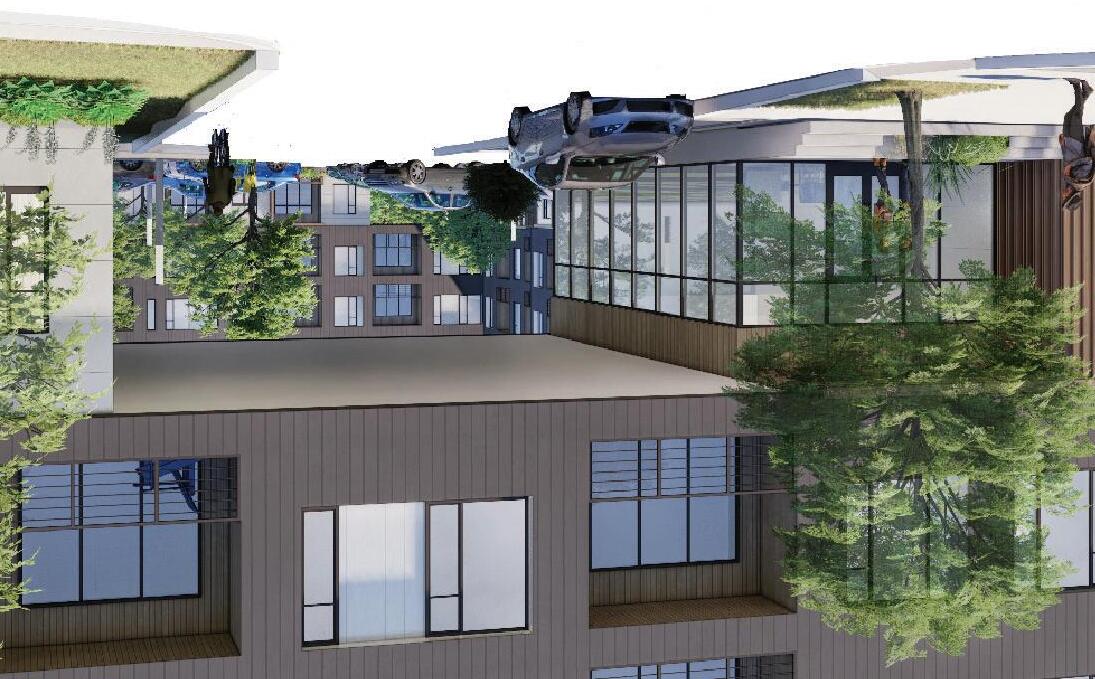
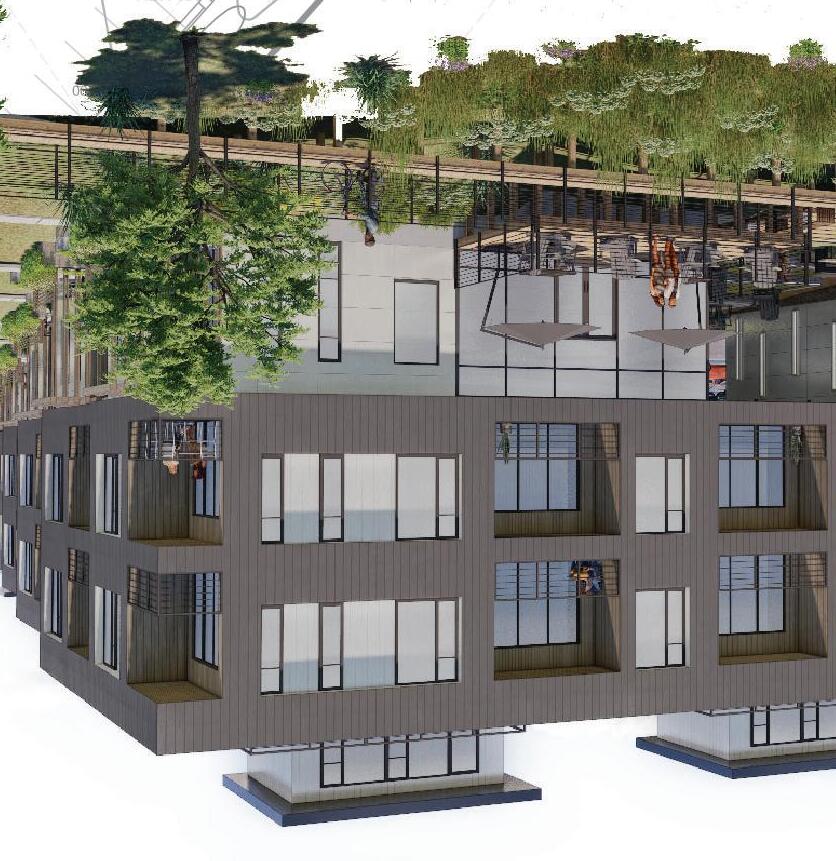
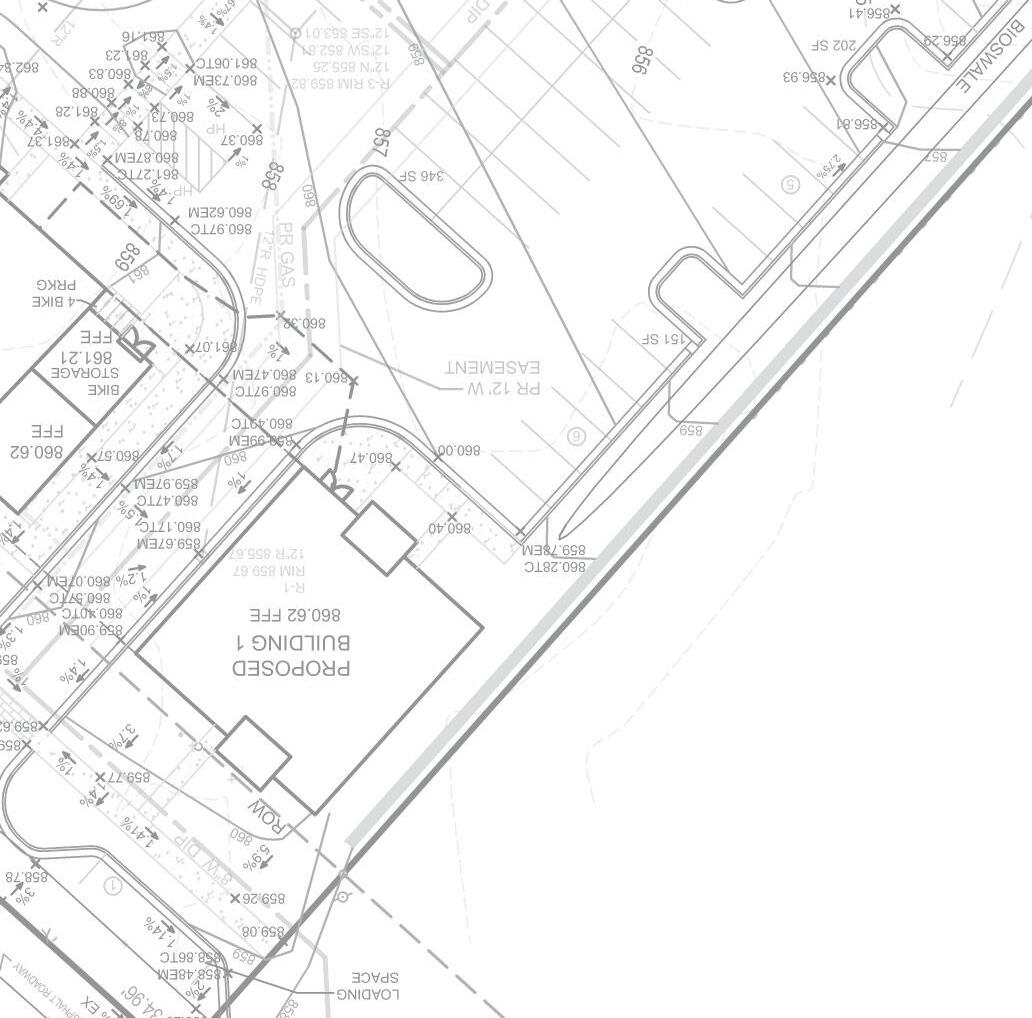
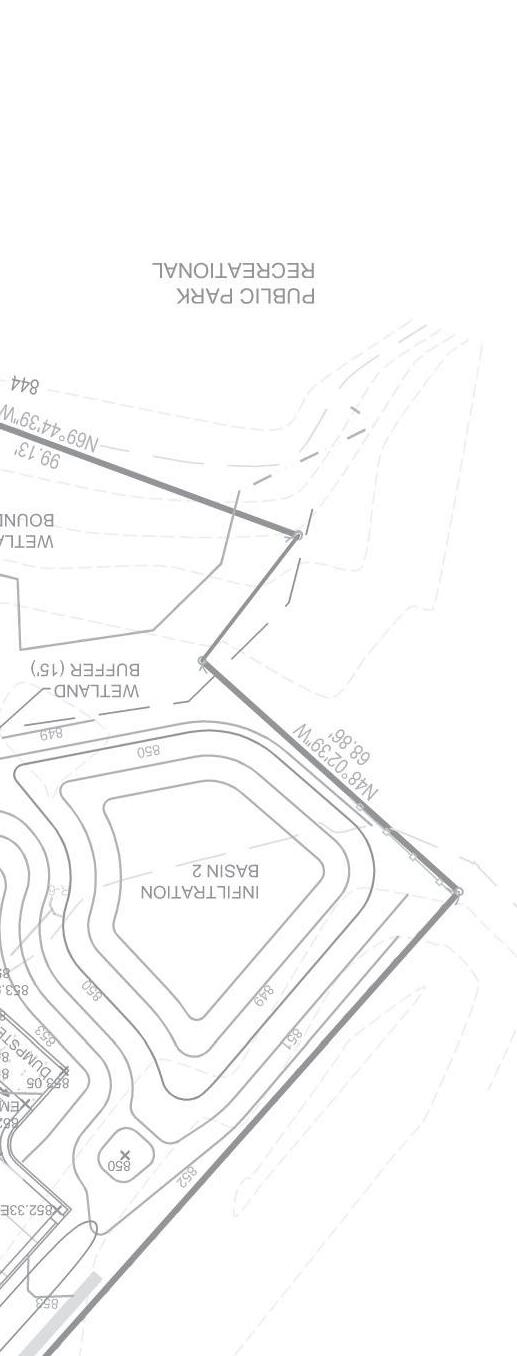
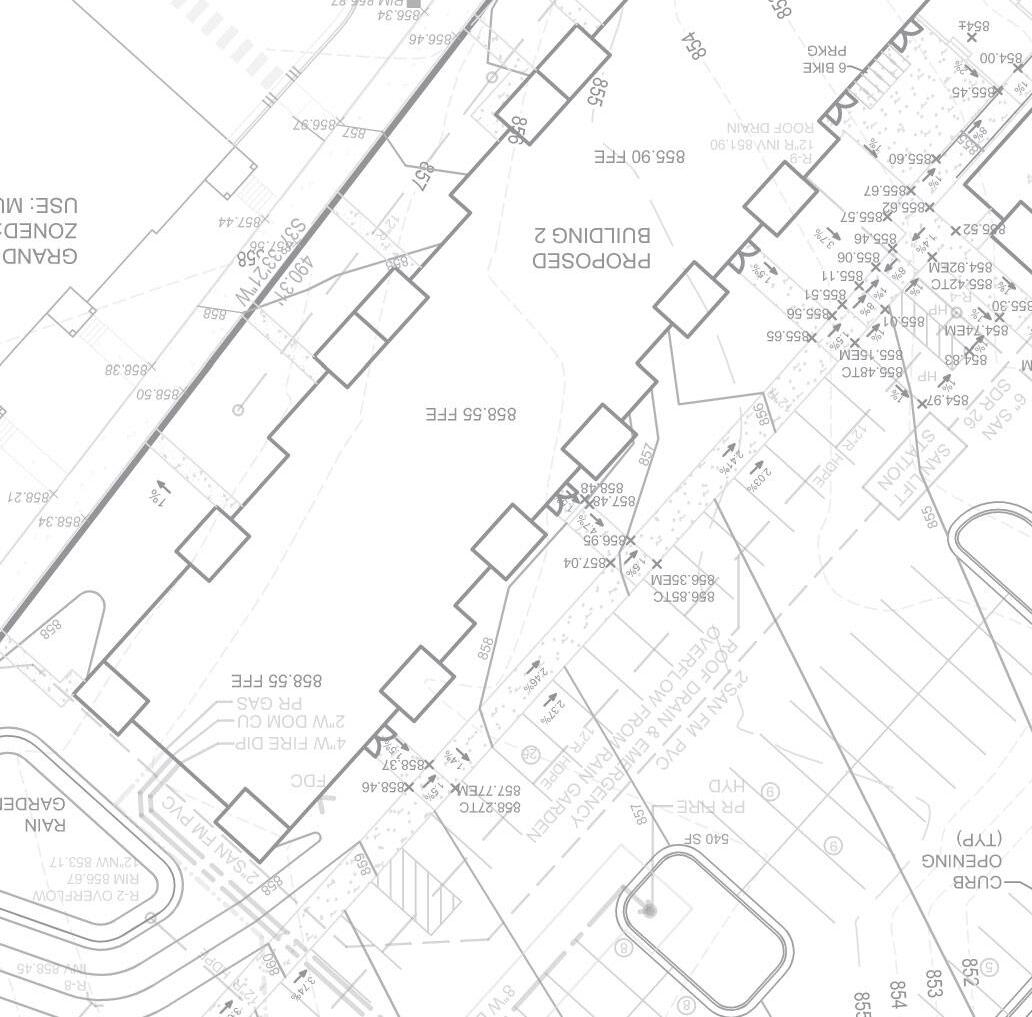
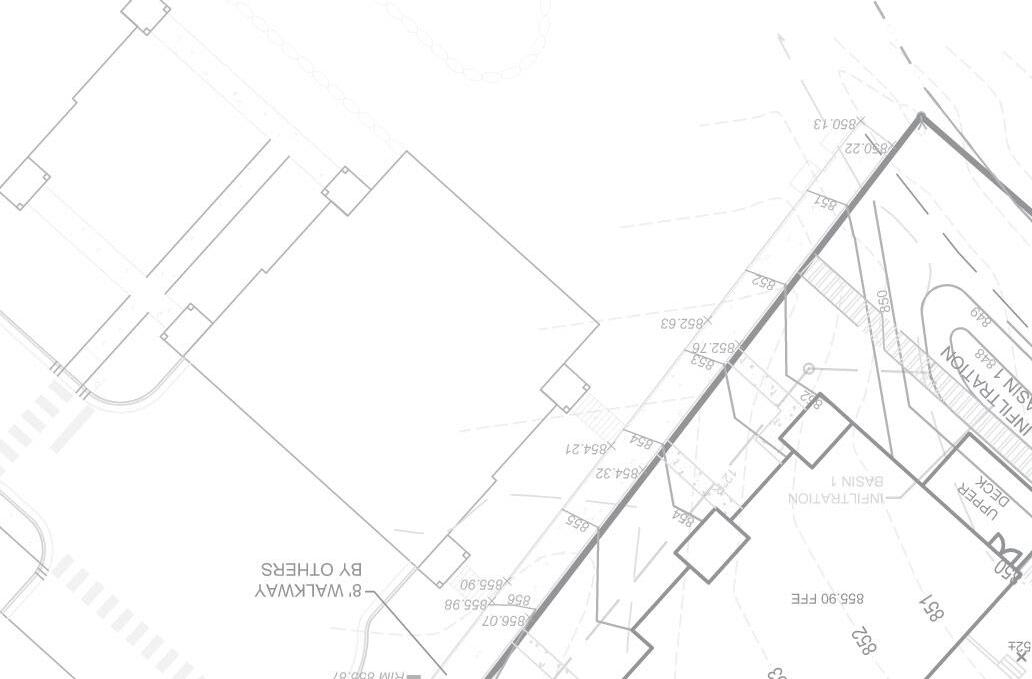
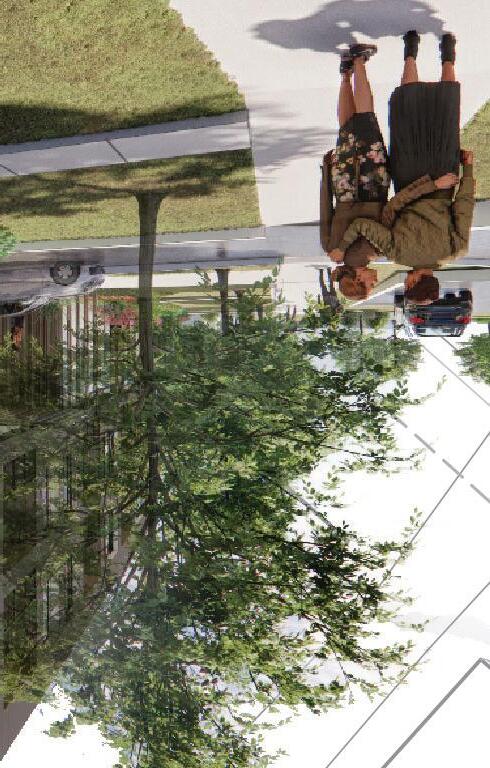
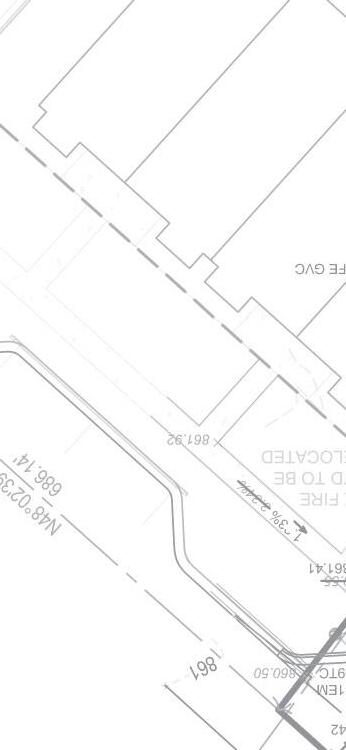
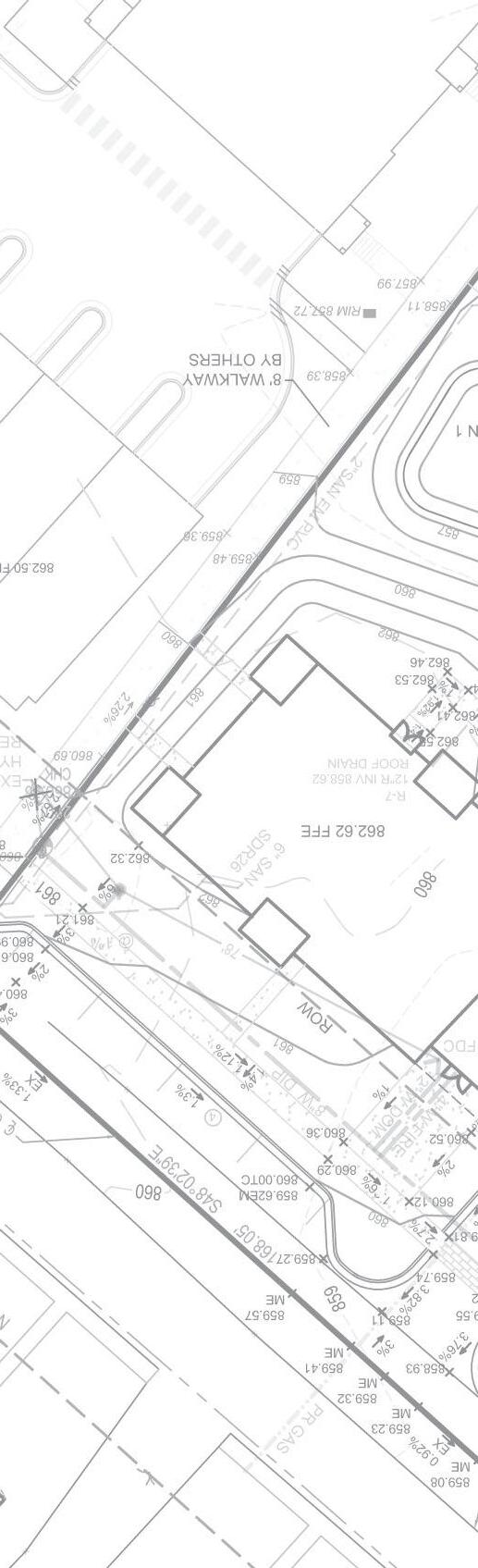
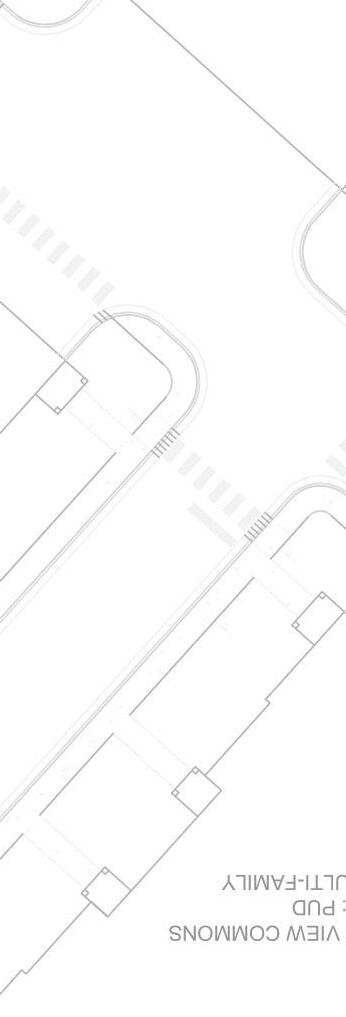
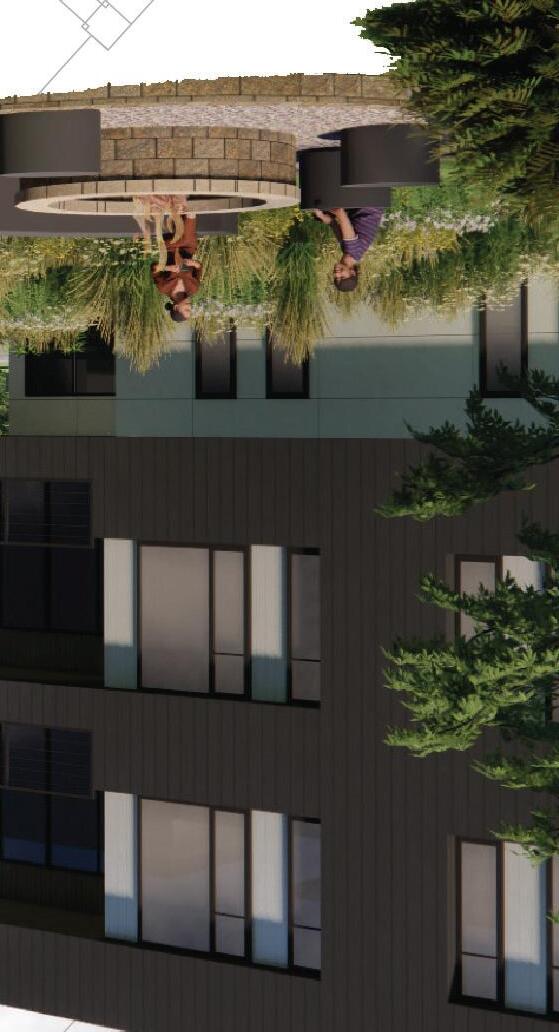
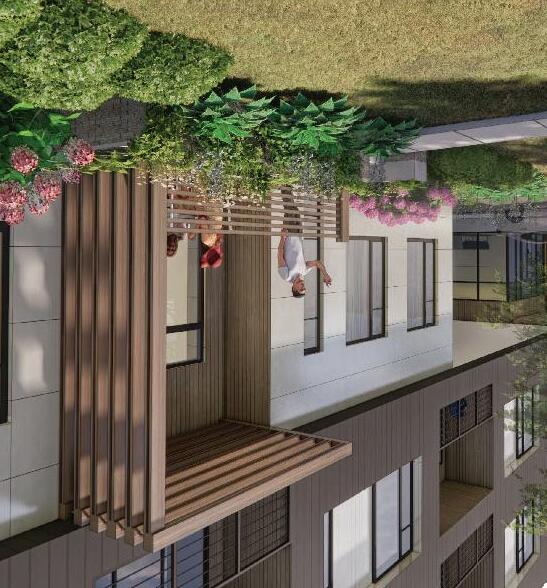
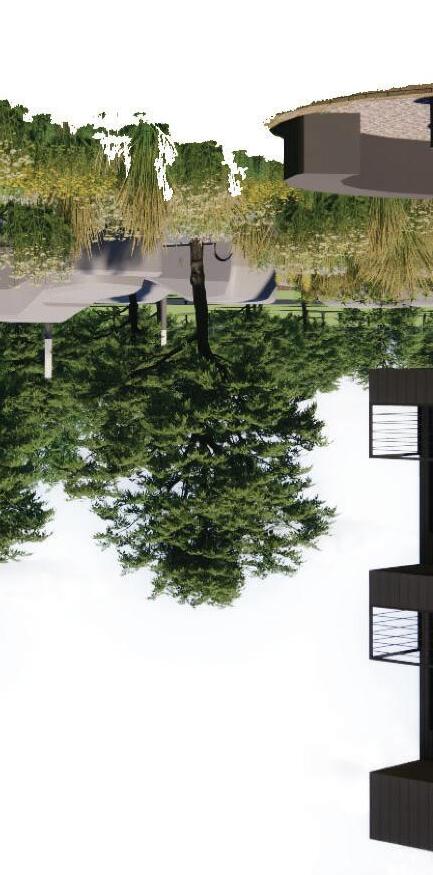
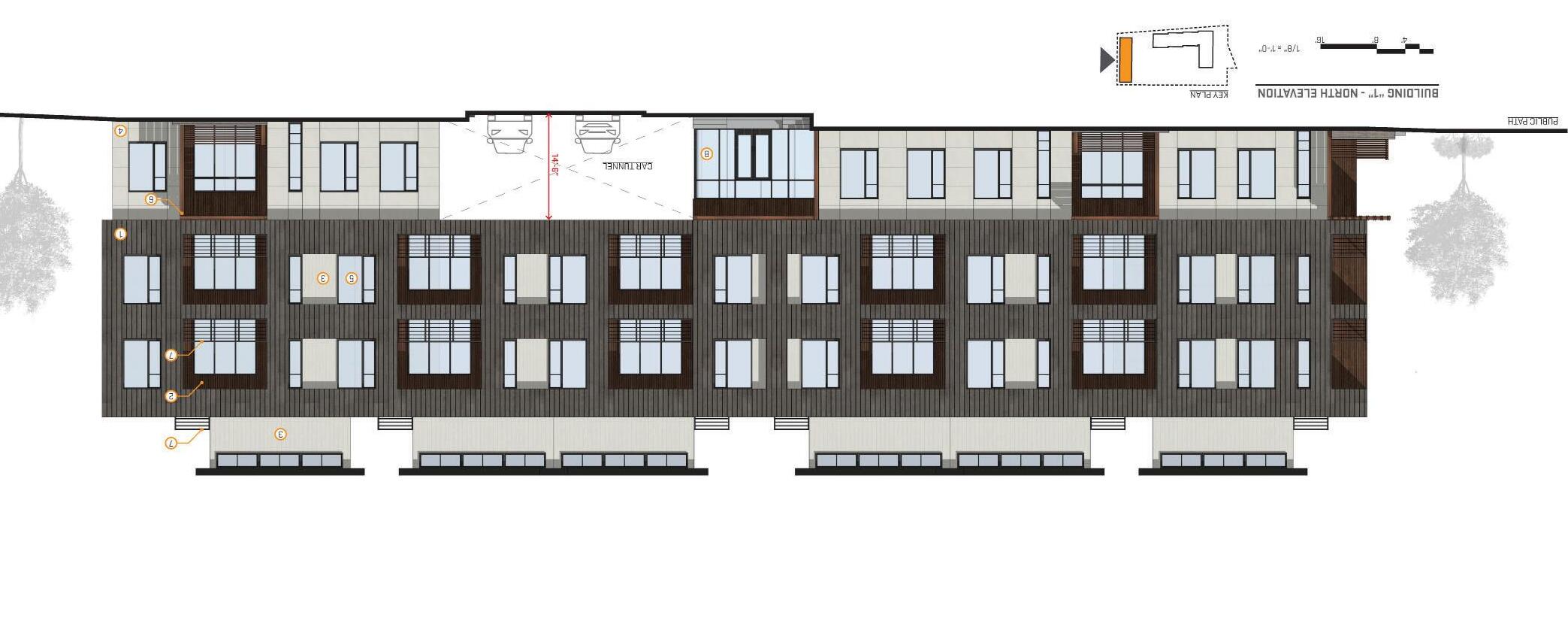
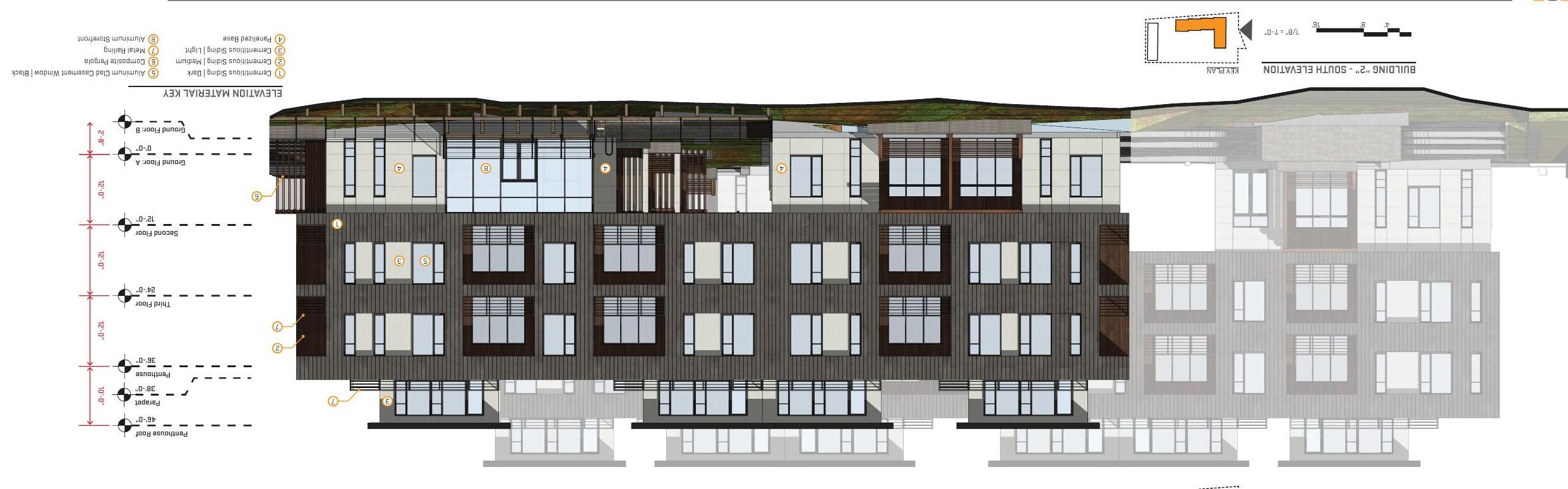
The Dexter Multi-family development aims to serve as a vital link between the bustling urban street front at the front of the site and the valuable ecological wetland resource at the rear of the site. To achieve this, two thoroughfares were created. One connection runs along the side of the building, linking existing housing and new development with the wetlands. Another connection splits through the development by incorporating a transportation underpass alongside a deck and walking path overlooking the wetlands.
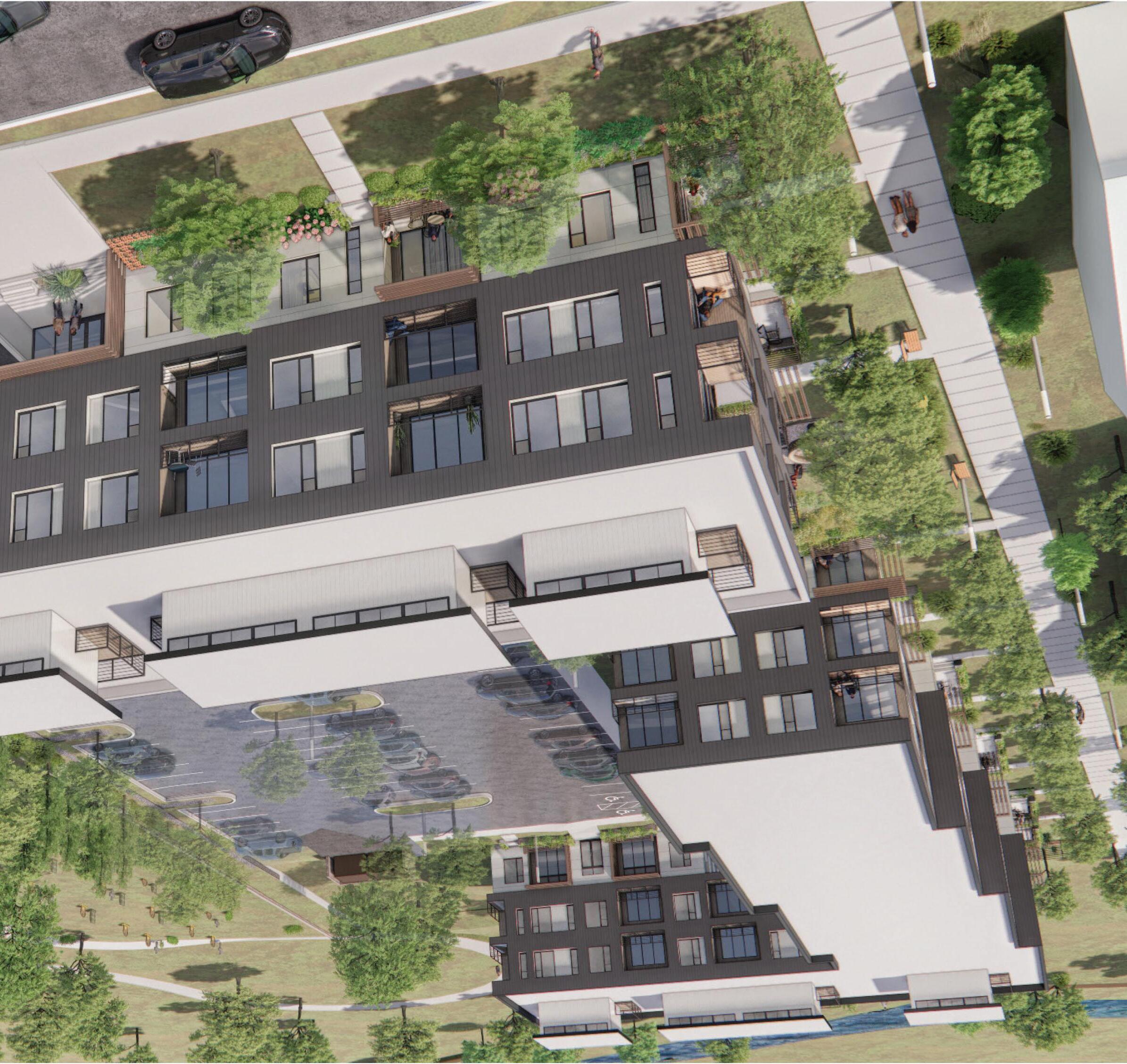


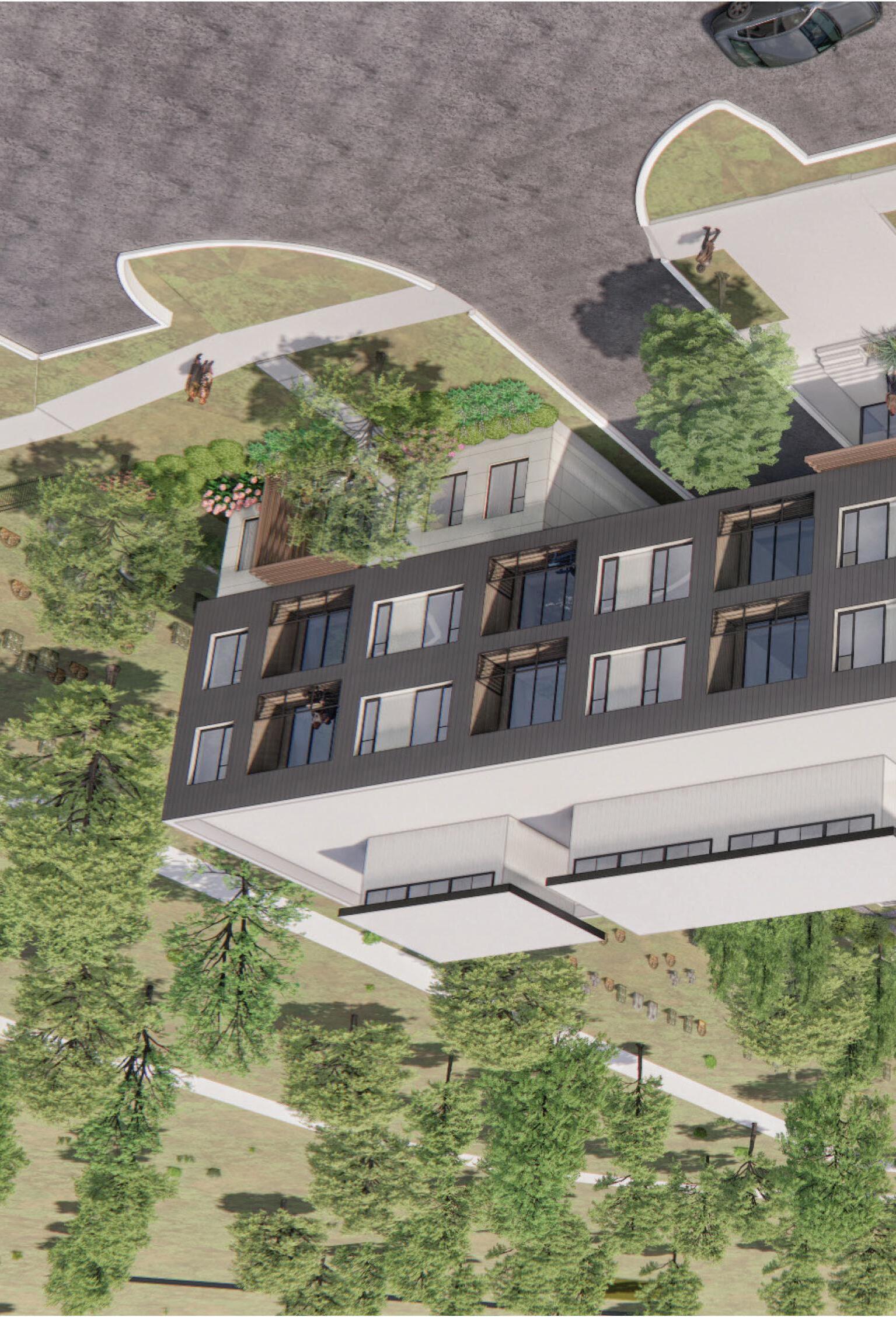




Transportation datum leading to the






thank you