
ARCHITECTURE PORTFOLIO
SYDNEY WINKLER
FAY JONES SCHOOL OF ARCHITECTURE
3RD YEAR B.ARCH
MINORS: SUSTAINABILITY AND HISTORY OF ARCHITECTURE
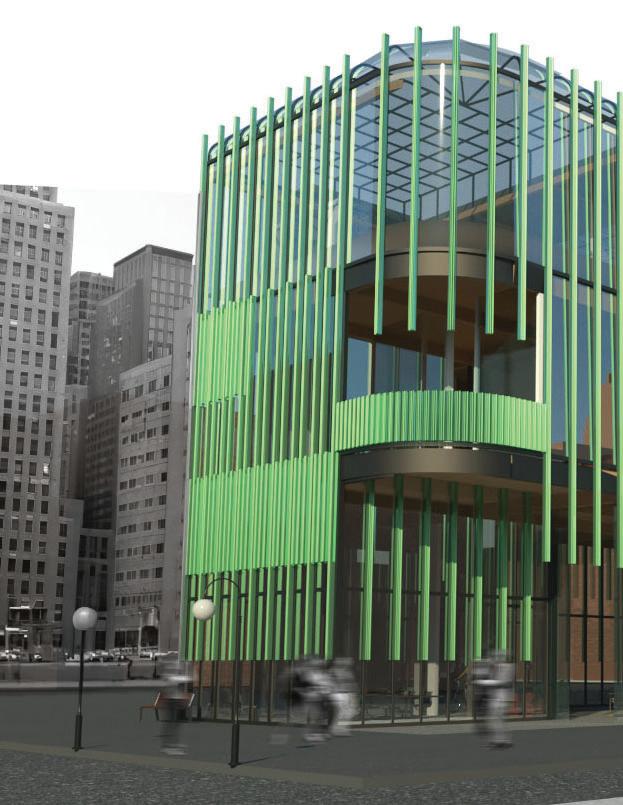
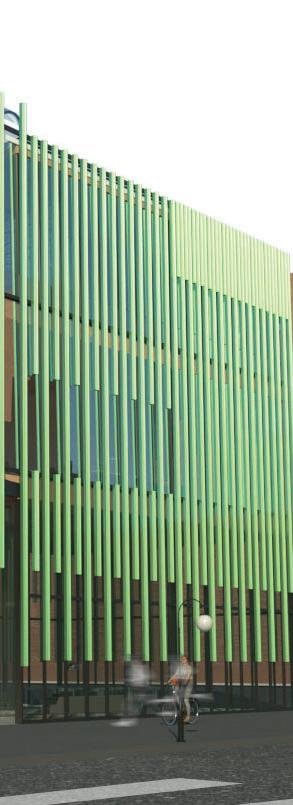
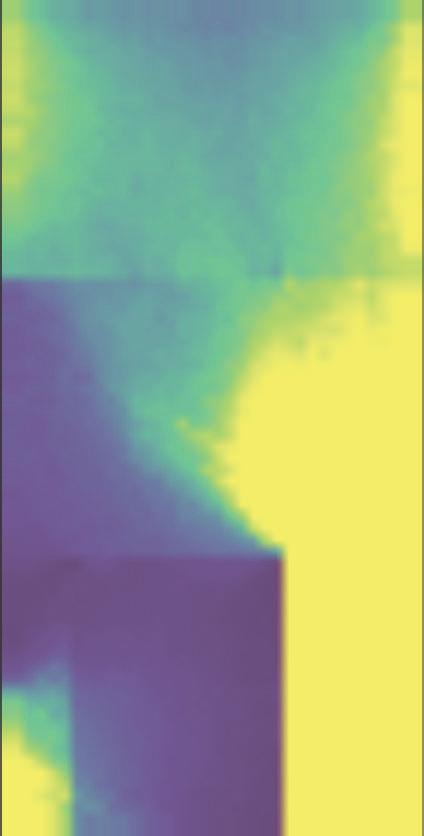
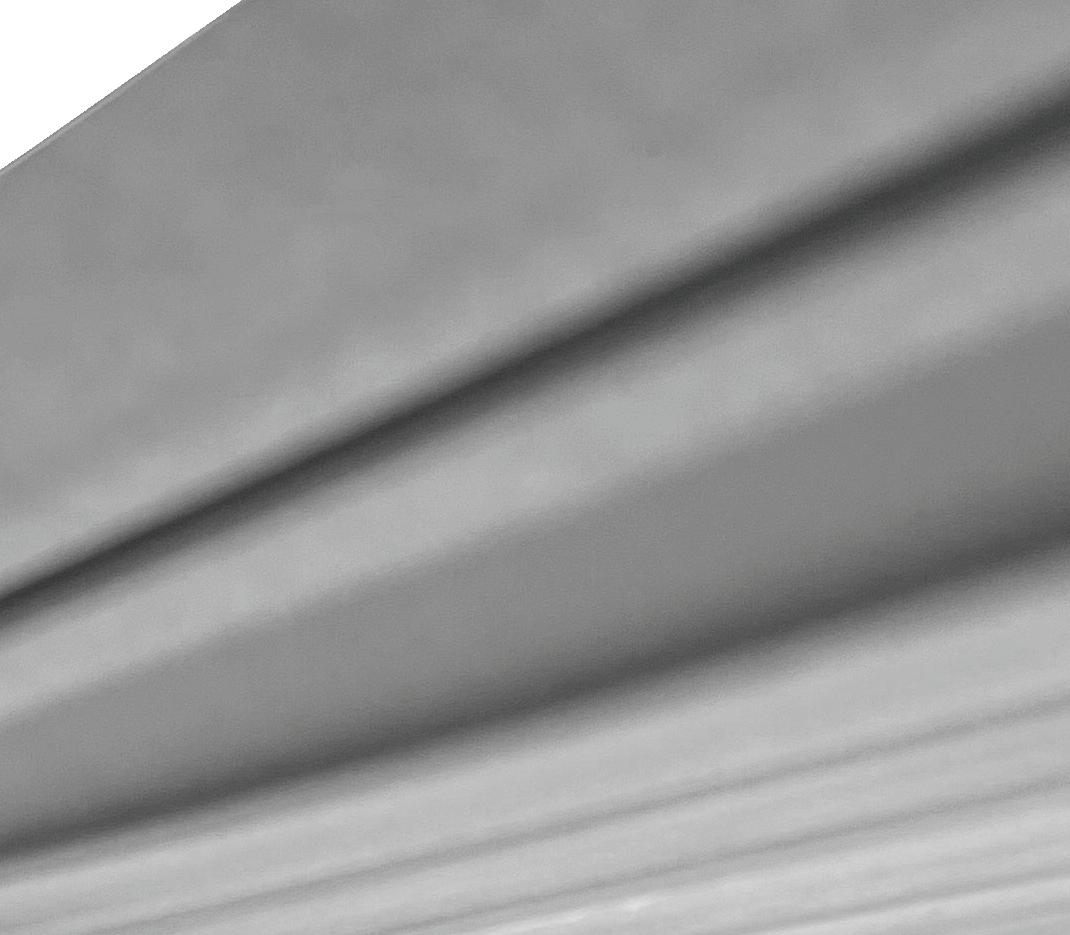
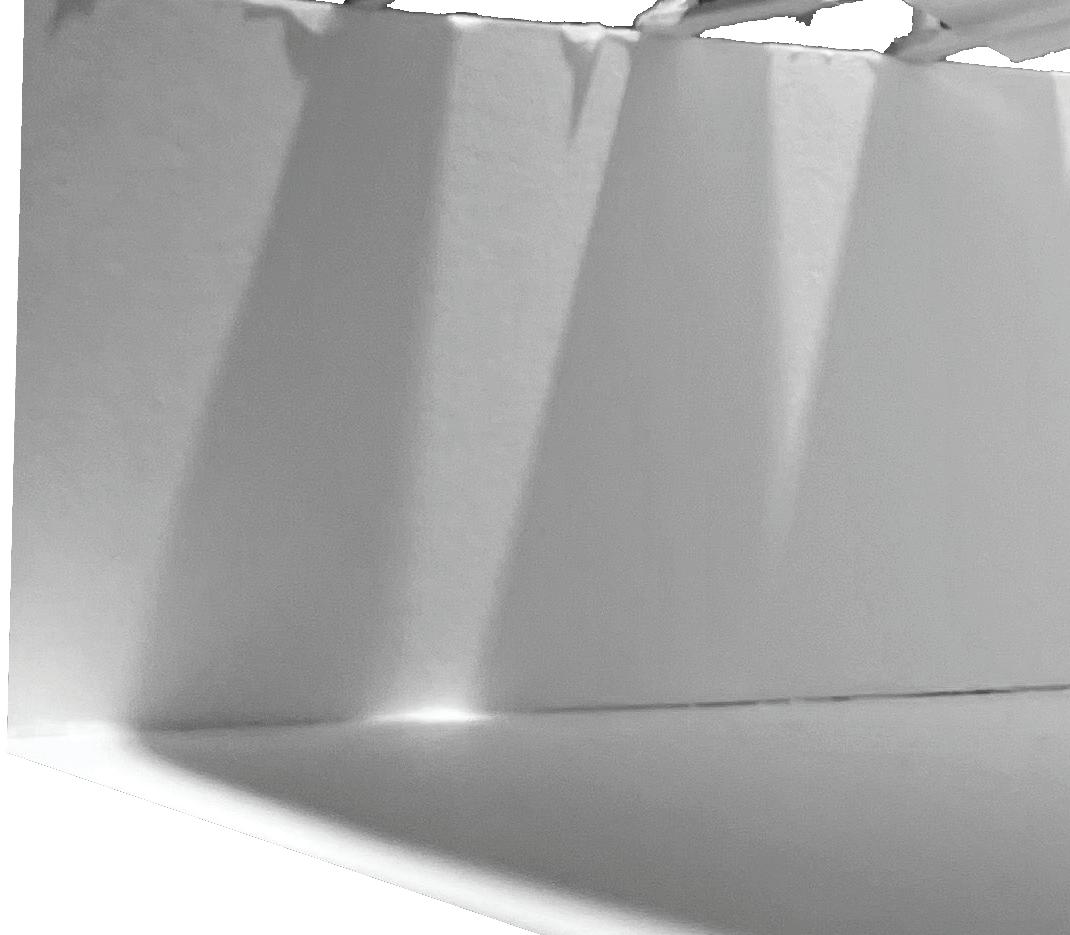
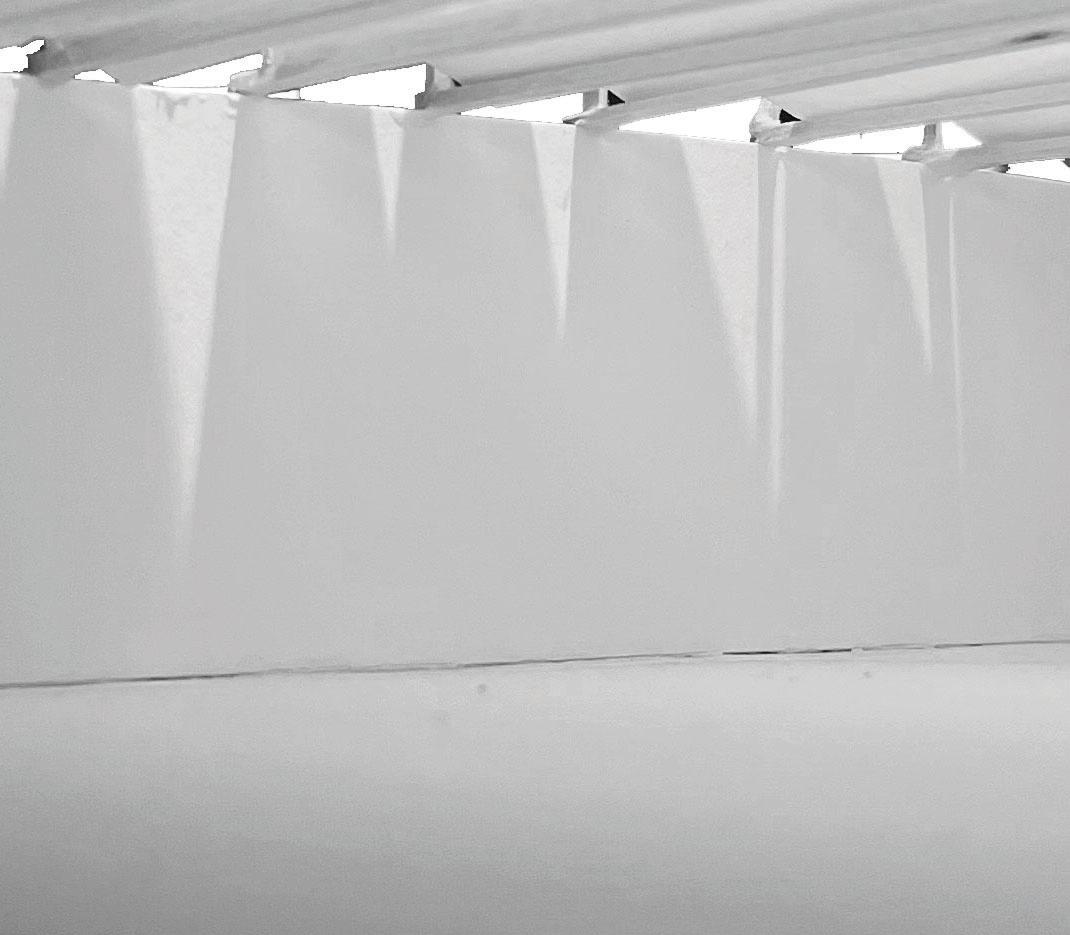
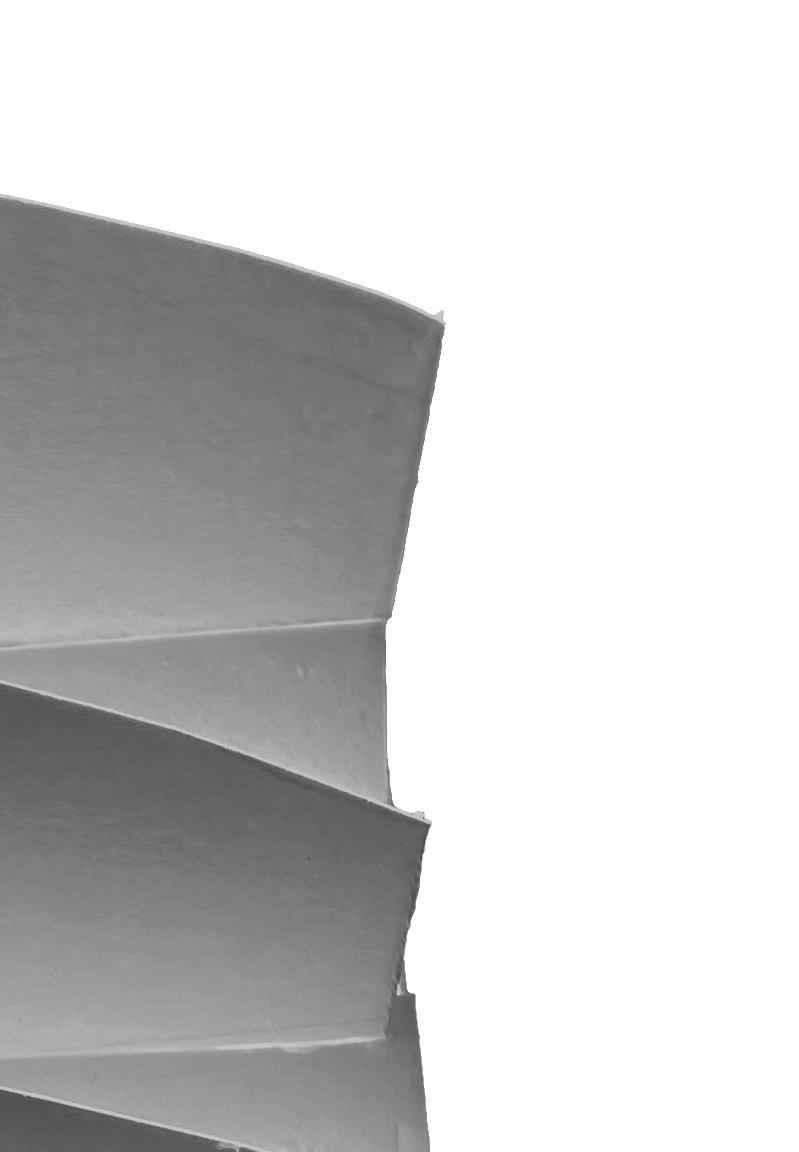
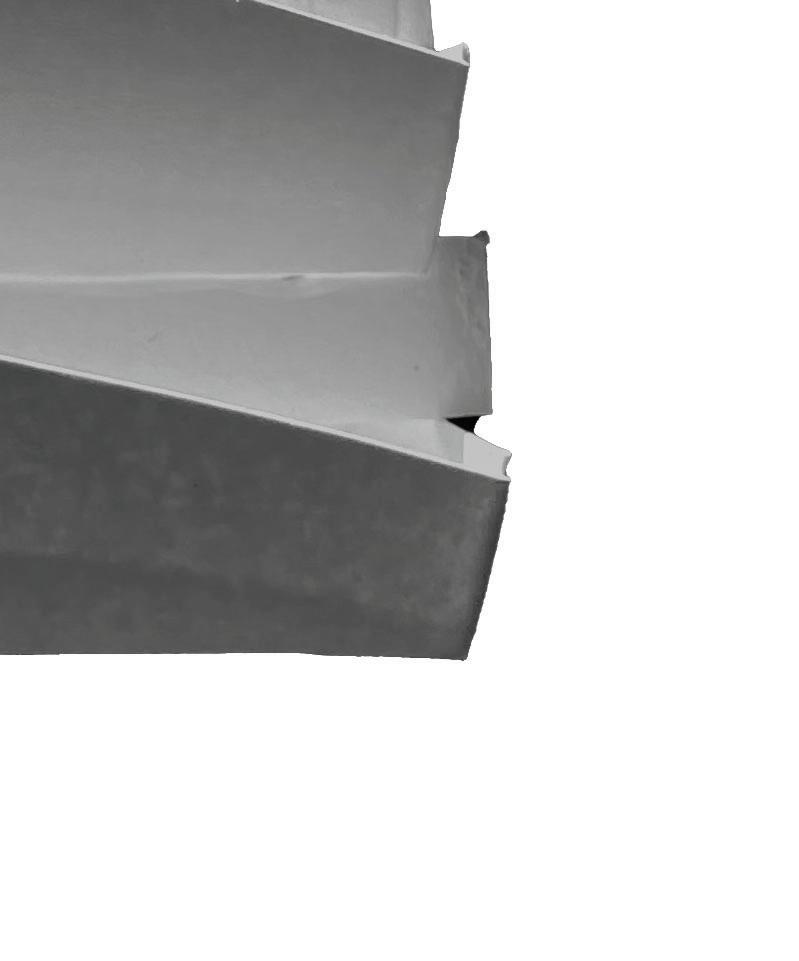
Set in Hell’s Kitchen in New York City, this occupiable school mockup is a design driven by its thermal and luminous qualities created by a two-layer facade system: a glass curtain wall and glazed terracotta rainscreen. Through iterative processes involving facade design and the use of Climate Studio, the project achieves maximum efficiency in its thermal and luminous qualities that creates a plethora of different lighting and heating conditions to provide for enhanced personal experience. The program also calls for different lighting and heating conditions. The building consists of desking areas, meeting rooms, social spaces, a reading room, a rare botanical book collection, and a tropical plant greenhouse
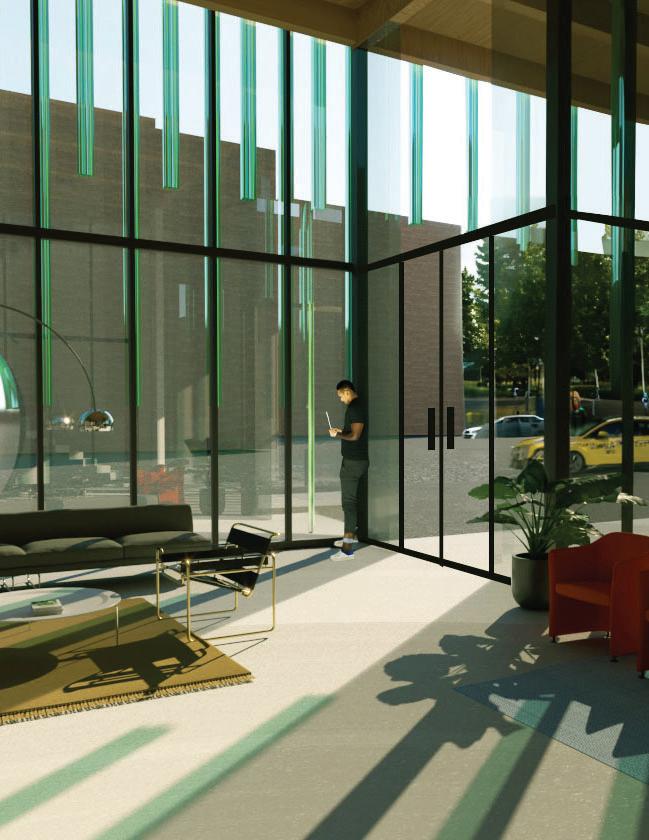 Lobby View of Mock-up


The prescribed structural system consists of a steel/CLT hybrid. 5-layer CLT slabs extend 6 feet in width and 24 feet in length to optimize the structural capacity of the material. In addition, CLT beams and girders are used. HSS steel columns are placed throughout the structural grid.












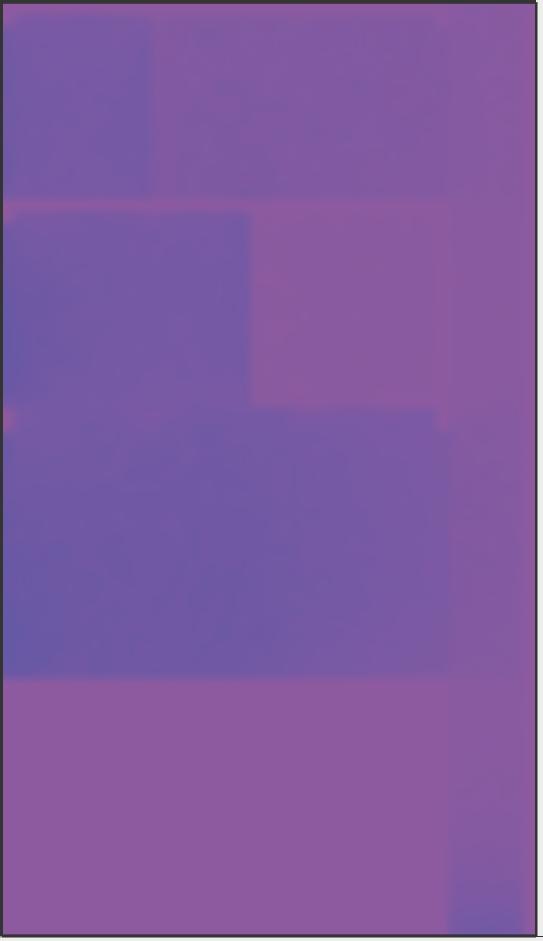

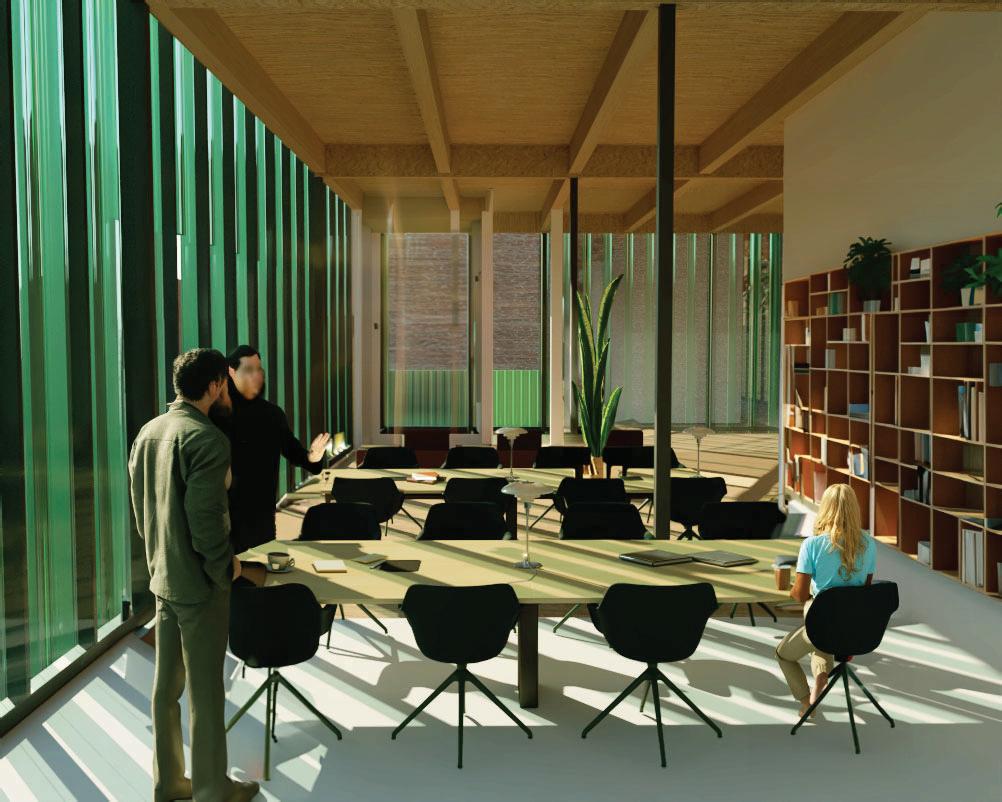 View of Reading Room with Eastern light interacting with facade
HOUSE+
A SOLUTION TO THE HOUSING CRISIS USING CALIFORNIA
SENATE BILL 9 TO CATALYST THE CONSTRUCTION OF ADUs IN SUBURBAN NEIGHBORHOODS
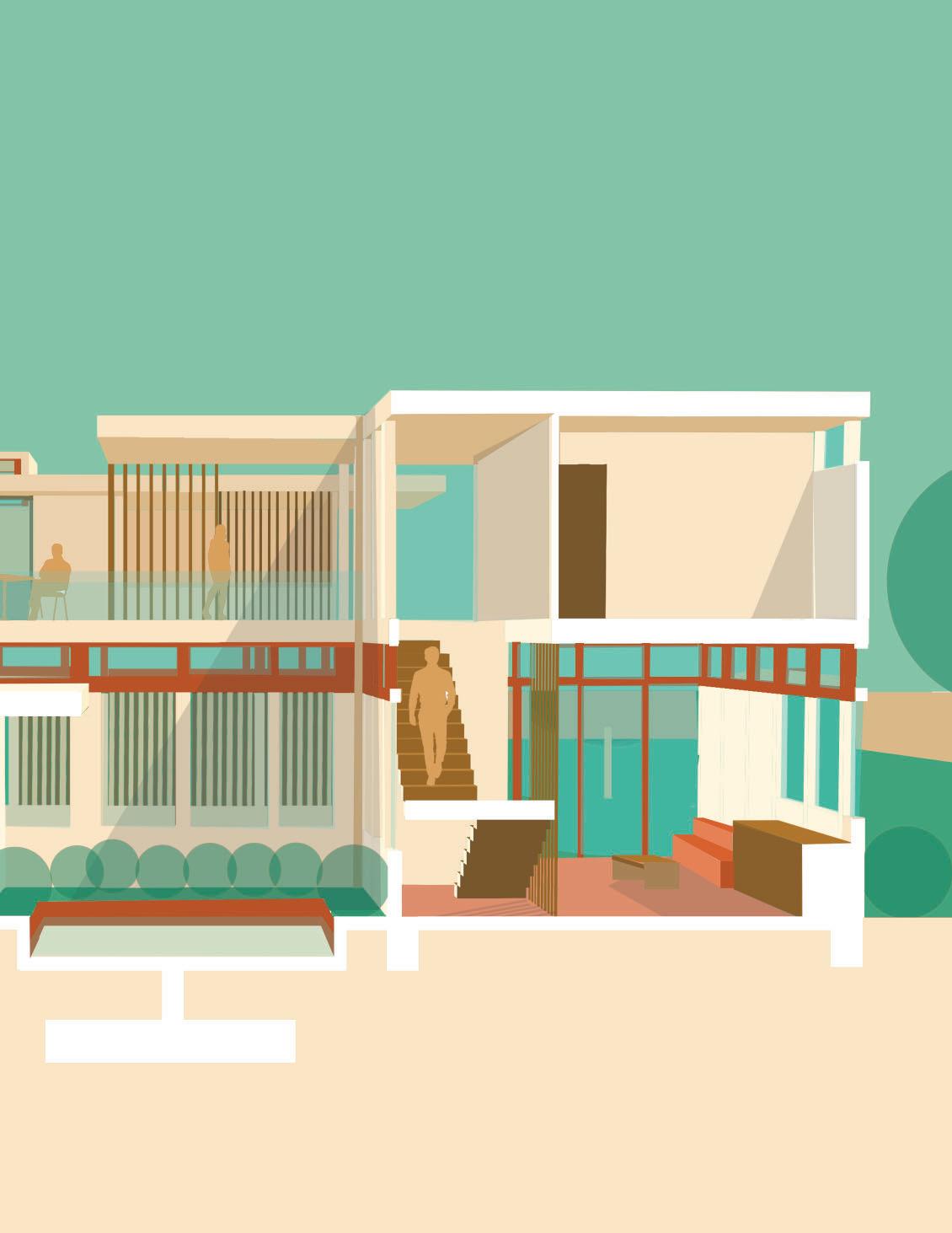
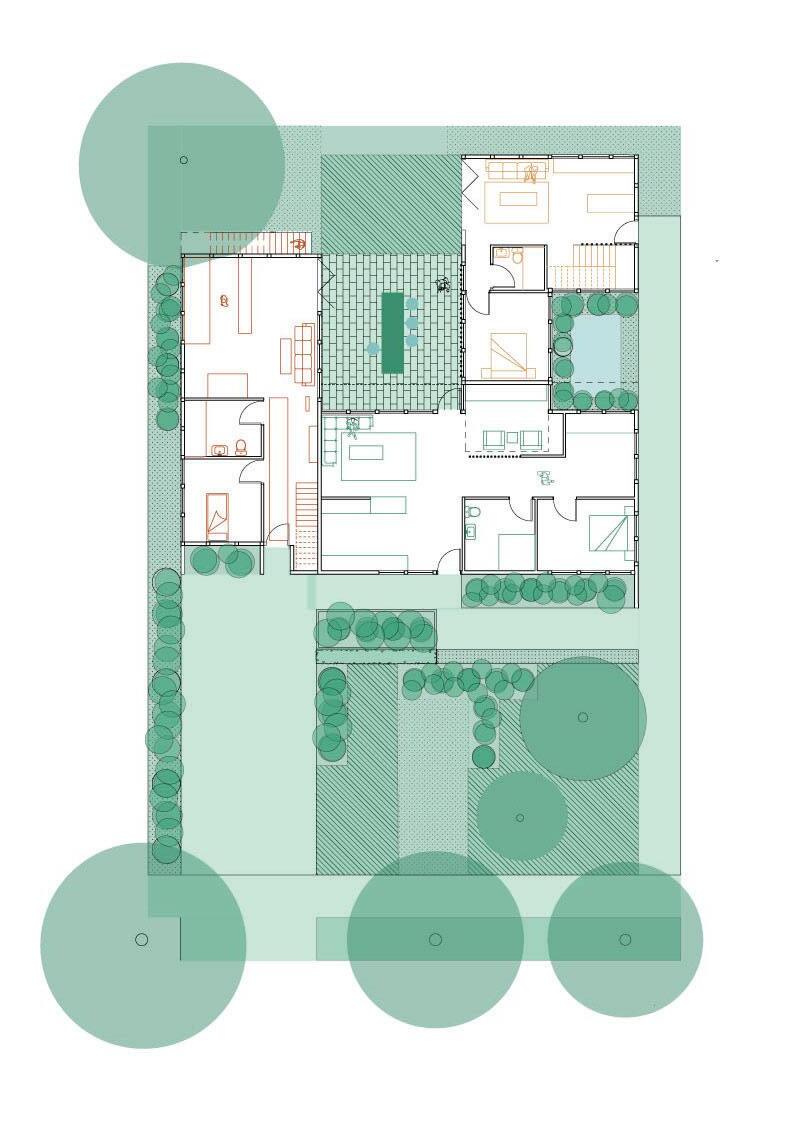
In the Fall 2023 studio led by Brian Holland, we explored residential design at various scales, all while investigating the 20th-century Modernist movement that significantly influenced American residential architecture. Focused on Los Angeles, with a closer look at the Mar Vista neighborhood designed by Gregory Ain in the 1940s, we examined Ain’s response to the World War era, creating iconic, cost-effective single-family homes with a modern aesthetic. Simultaneously, our History of Architecture III class delved into in-depth studies of Modernist Architecture.
Considering the historical context of Mar Vista, we addressed the contemporary housing crisis’s profound impacts on social, economic, and environmental issues. Our intense scrutiny explored how architecture can respond to these challenges, with a personal focus on the intersection of architecture and government policy. Notably, I studied solutions such as California Senate Bill 9, allowing lot splitting for increased density and more affordable living through additional housing units.
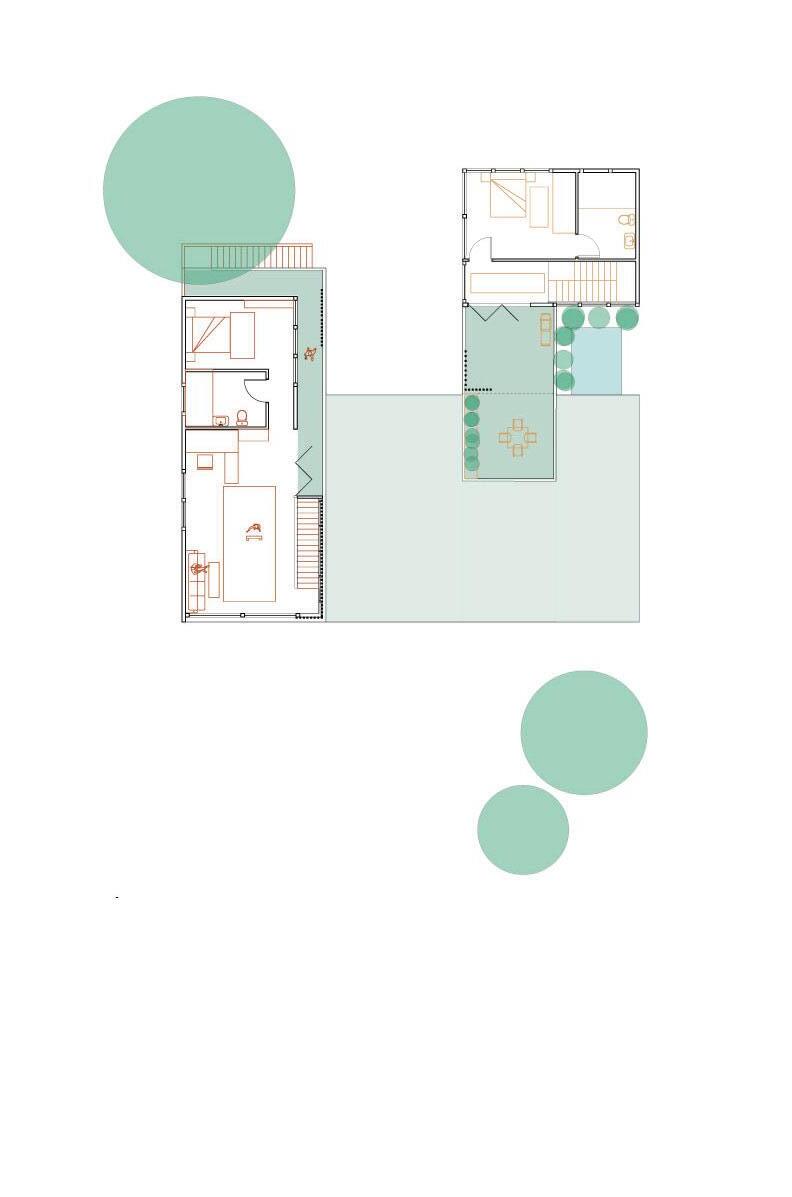
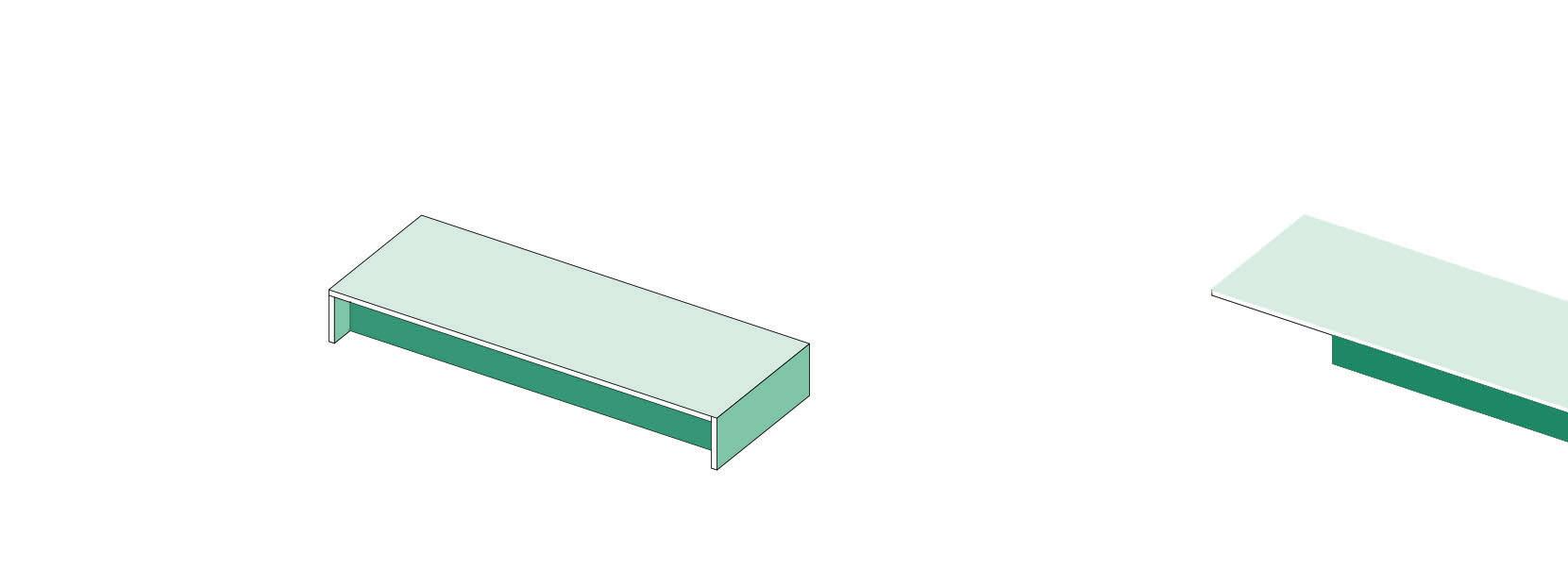
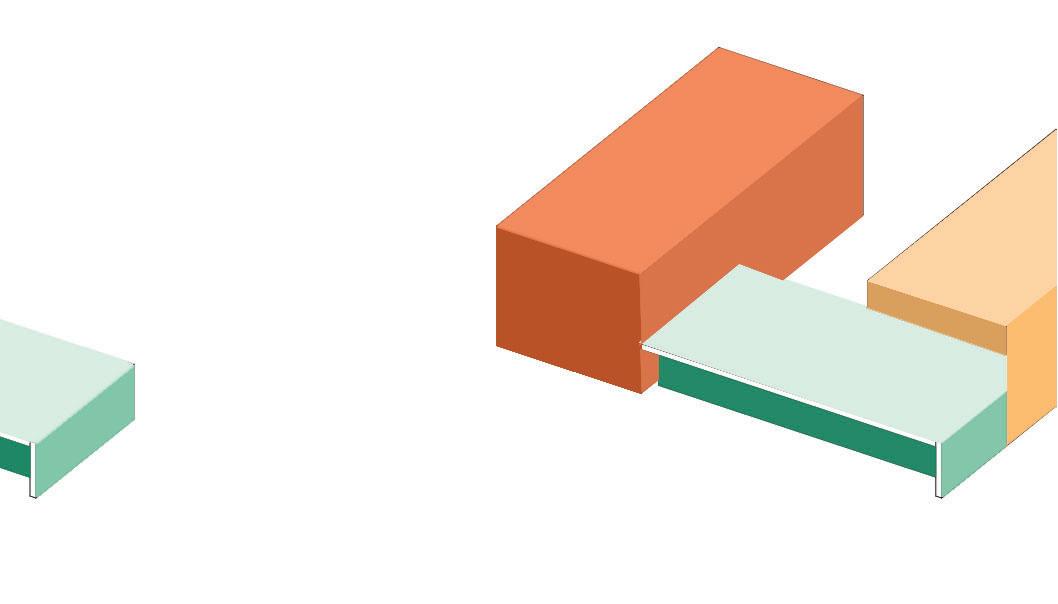
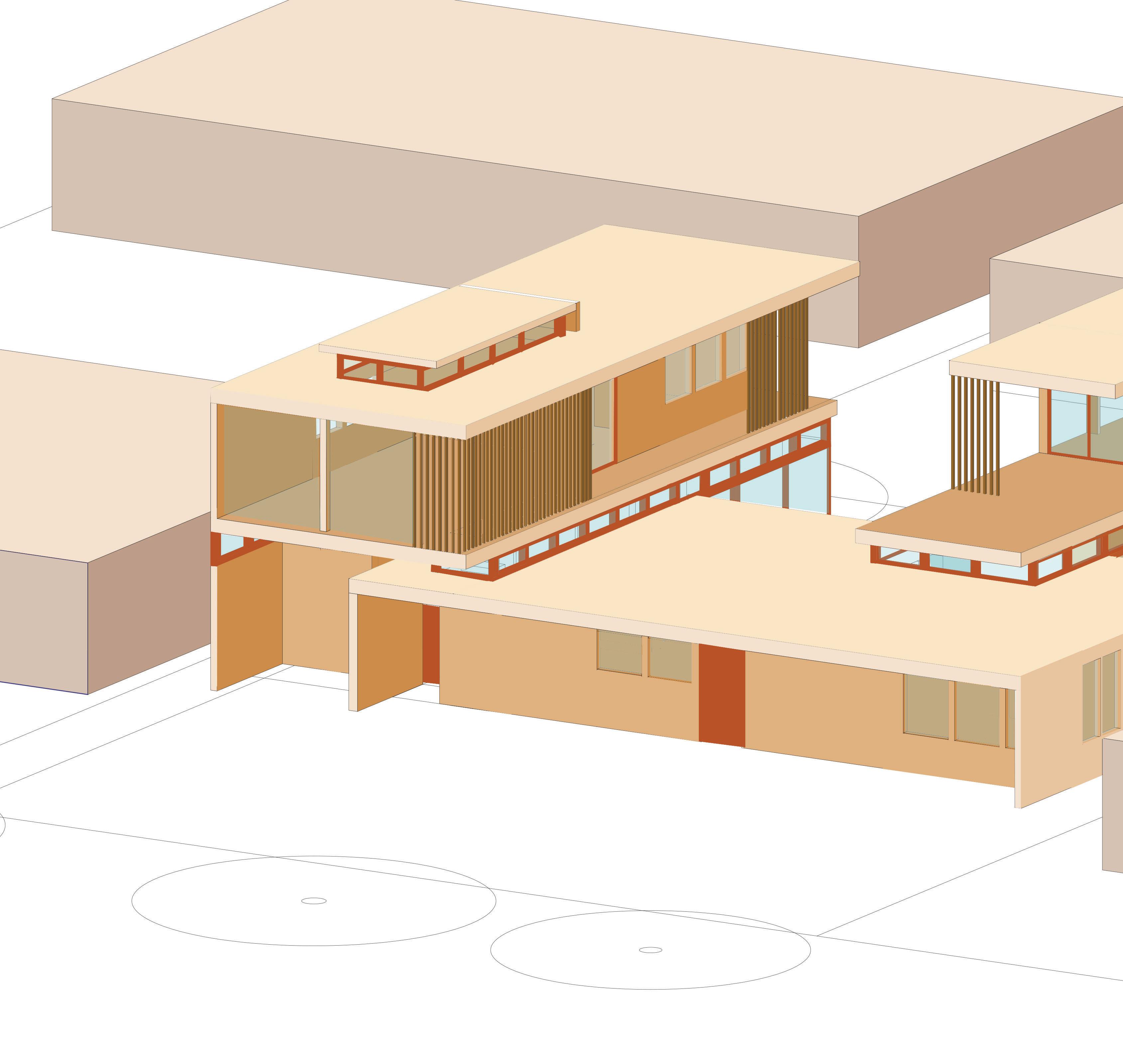
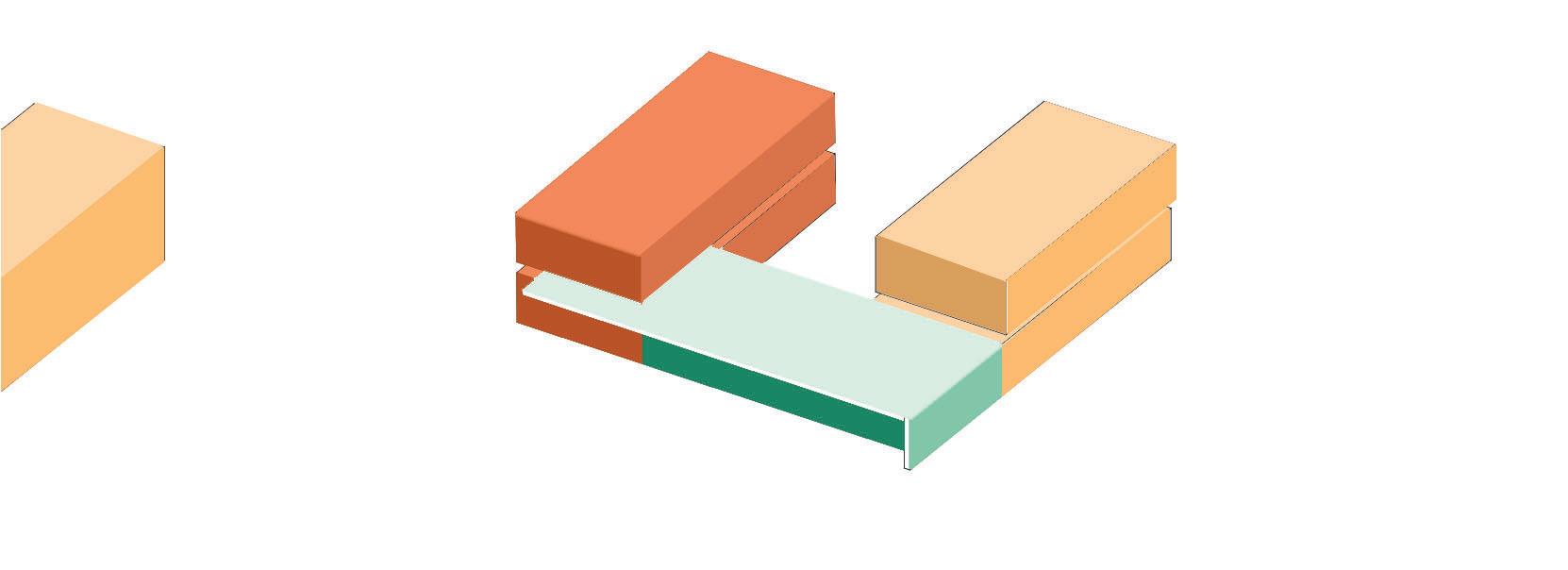
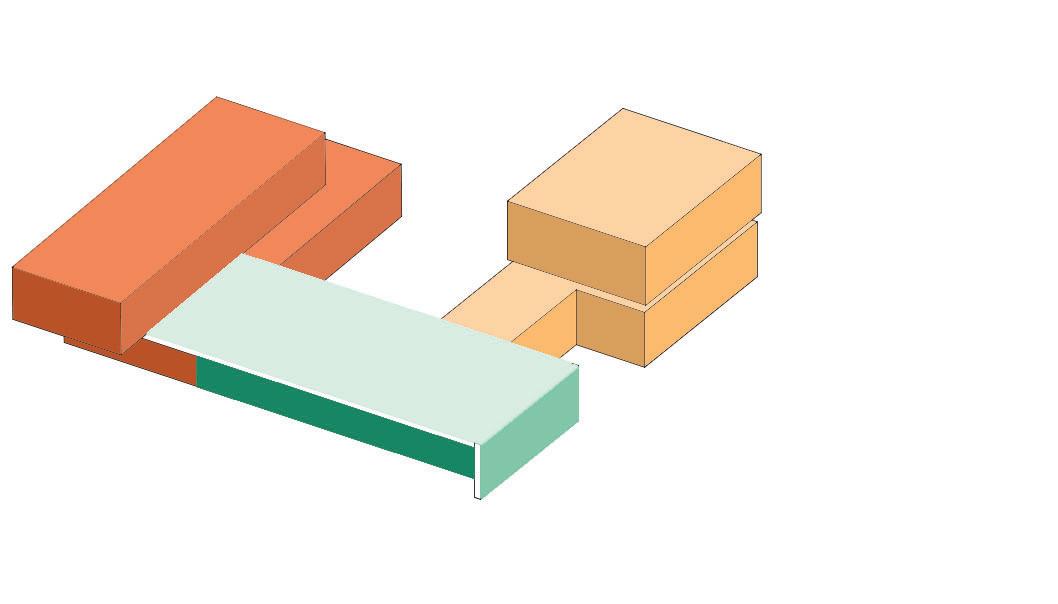
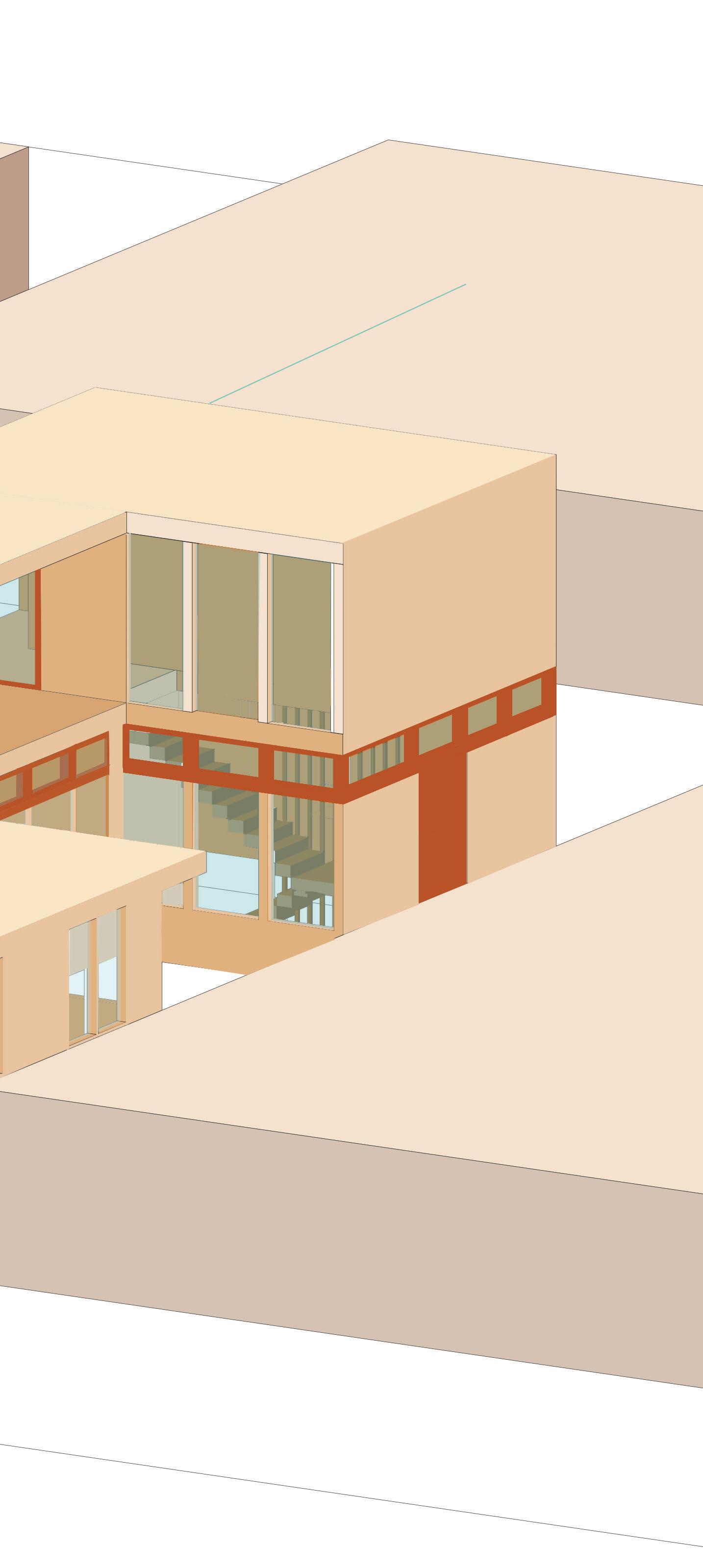
The design process was intricately woven with a commitment to preserving the essence of Gregory Ain’s Mar Vista Tract and architectural style. Amidst numerous approaches to expand upon this property, my focus centered on a deep study of modernism and Ain’s style.
To achieve a harmonious aesthetic, I incorporated flat roofing systems, drawing inspiration from Ain’s work. Additionally, I emulated the shell-like casing present in the left unit by crafting a niche for plantings and outdoor seating, and integrated trellis work reminiscent of Ain’s signature designs. To distinguish between the original and the new elements, I strategically employed a section approach, introducing a band of ribbon windows that not only elevated the ceiling height but also facilitated a seamless and unifying transition between the units.
Furthermore, the section analysis delved into the nuances of creating privacy and fostering moments of connection across spaces, adding a layer of thoughtful consideration to the overall design.
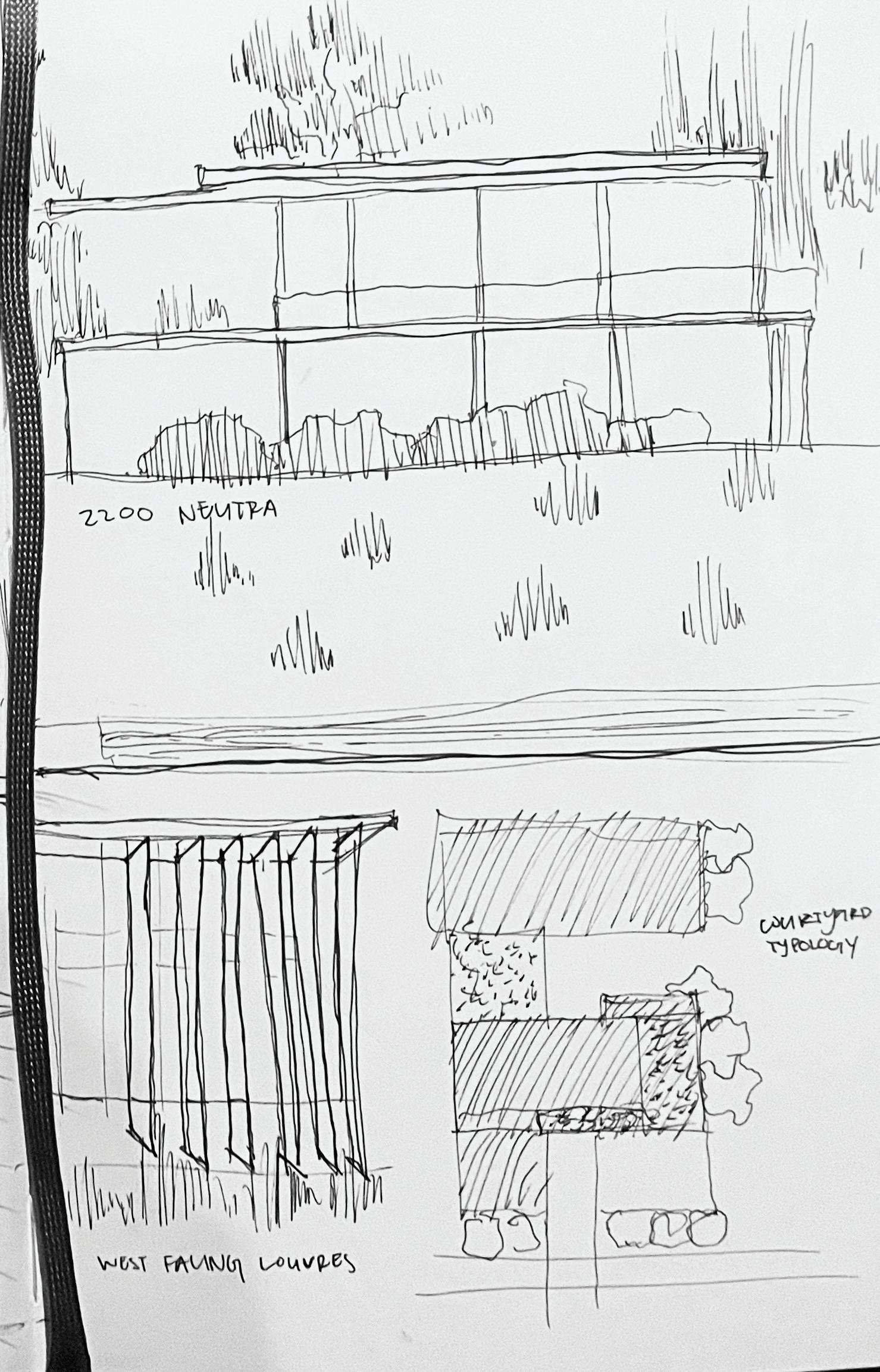
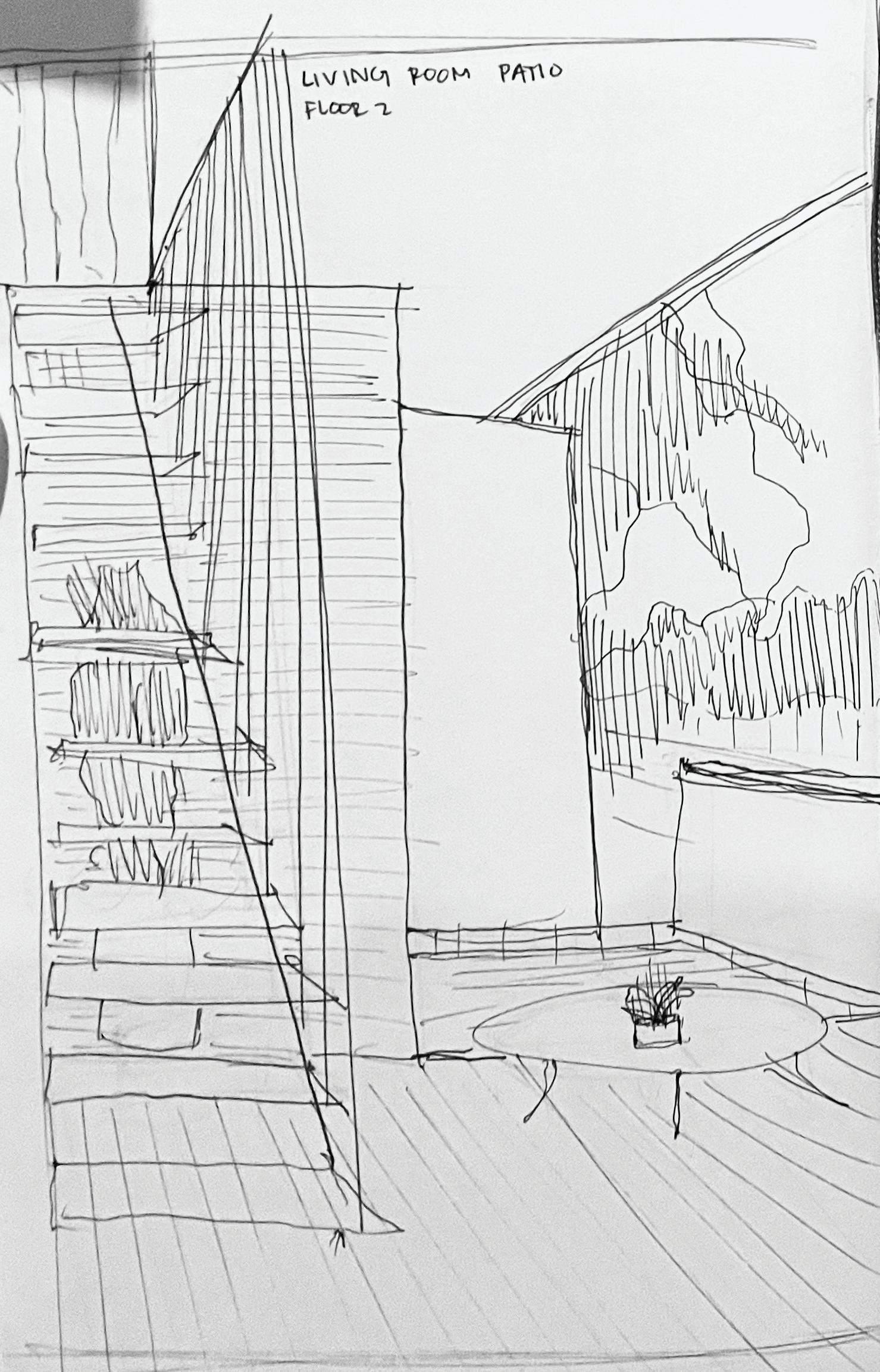 On-Site studies of LA Modernism through the lens of Gregory Ain and Richard Nuetra
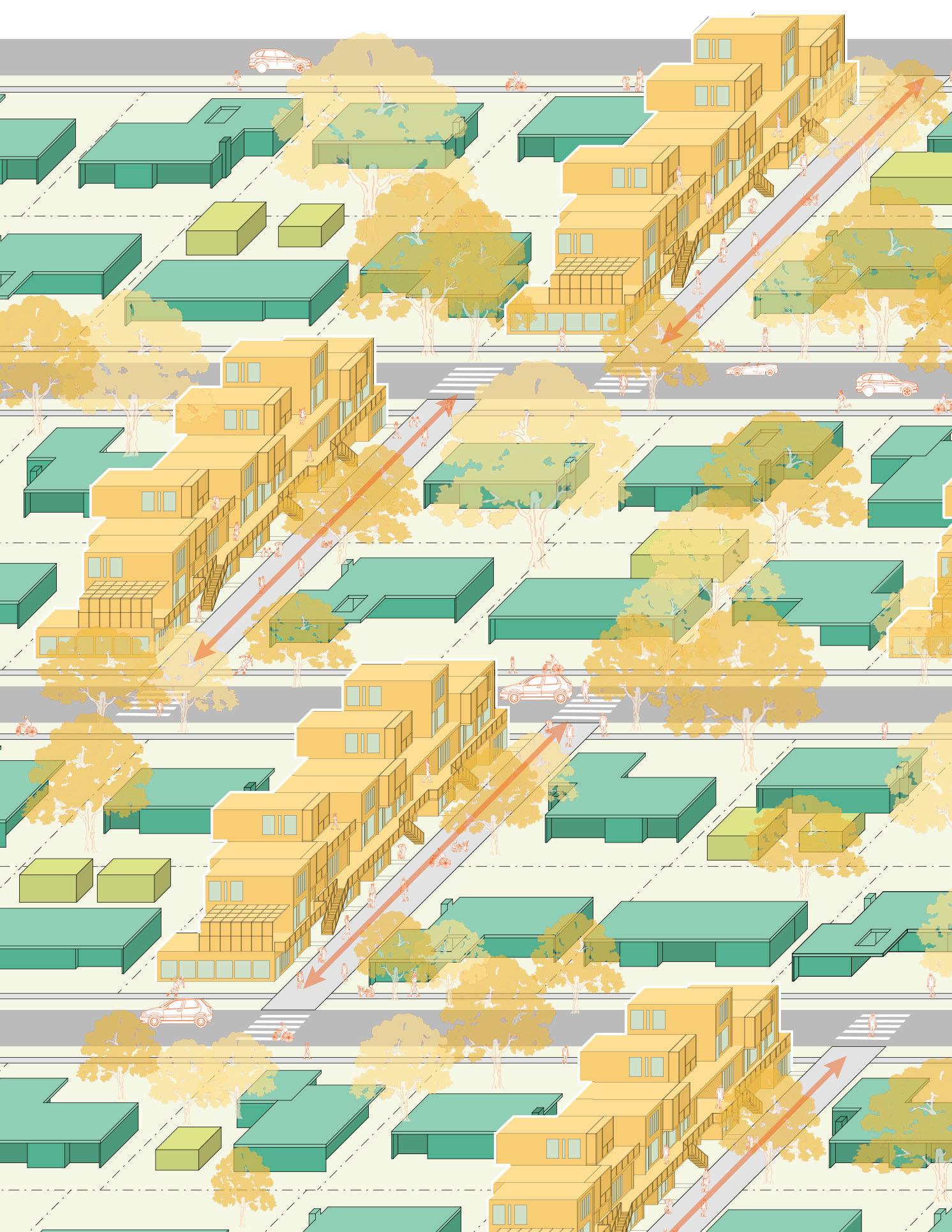
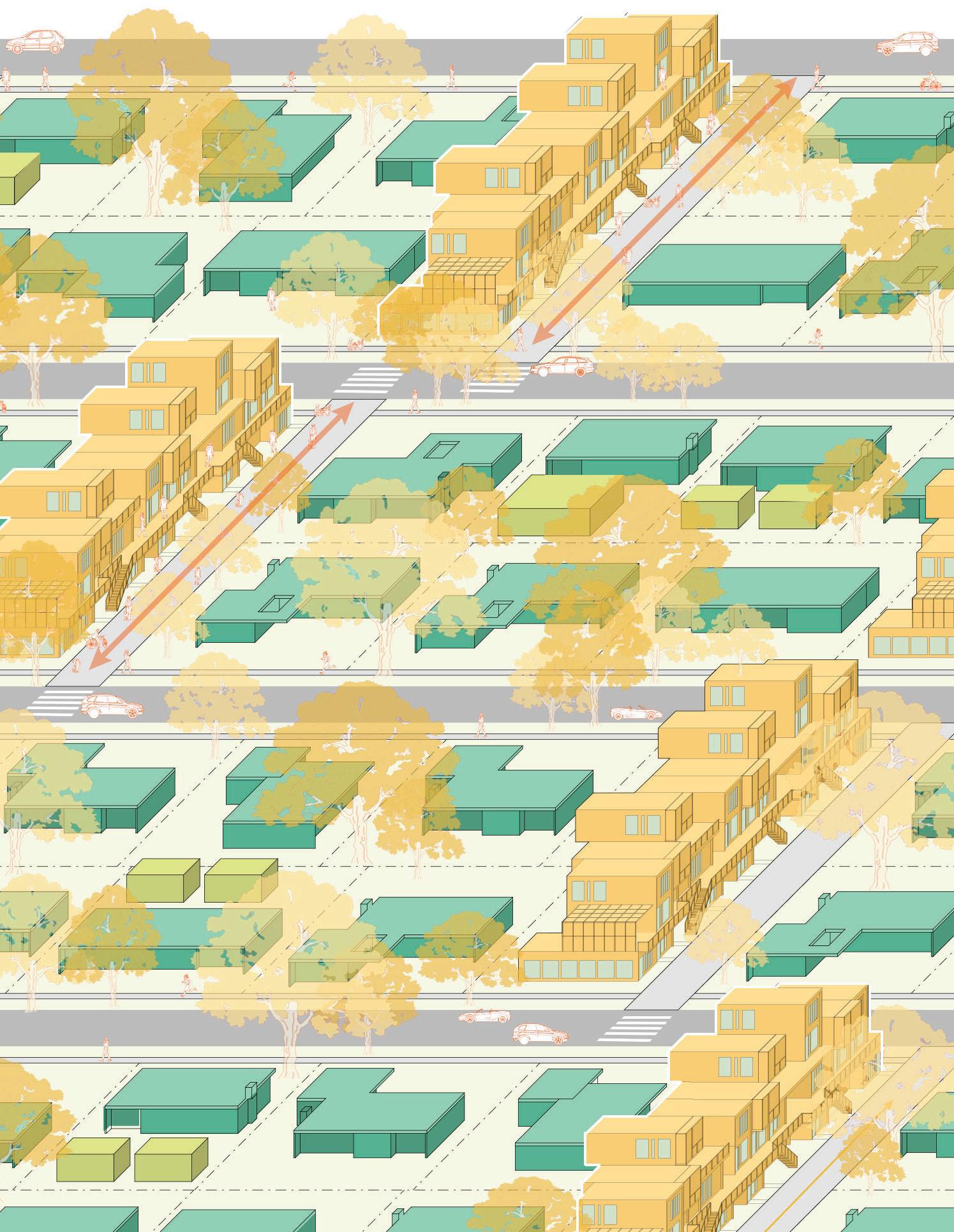
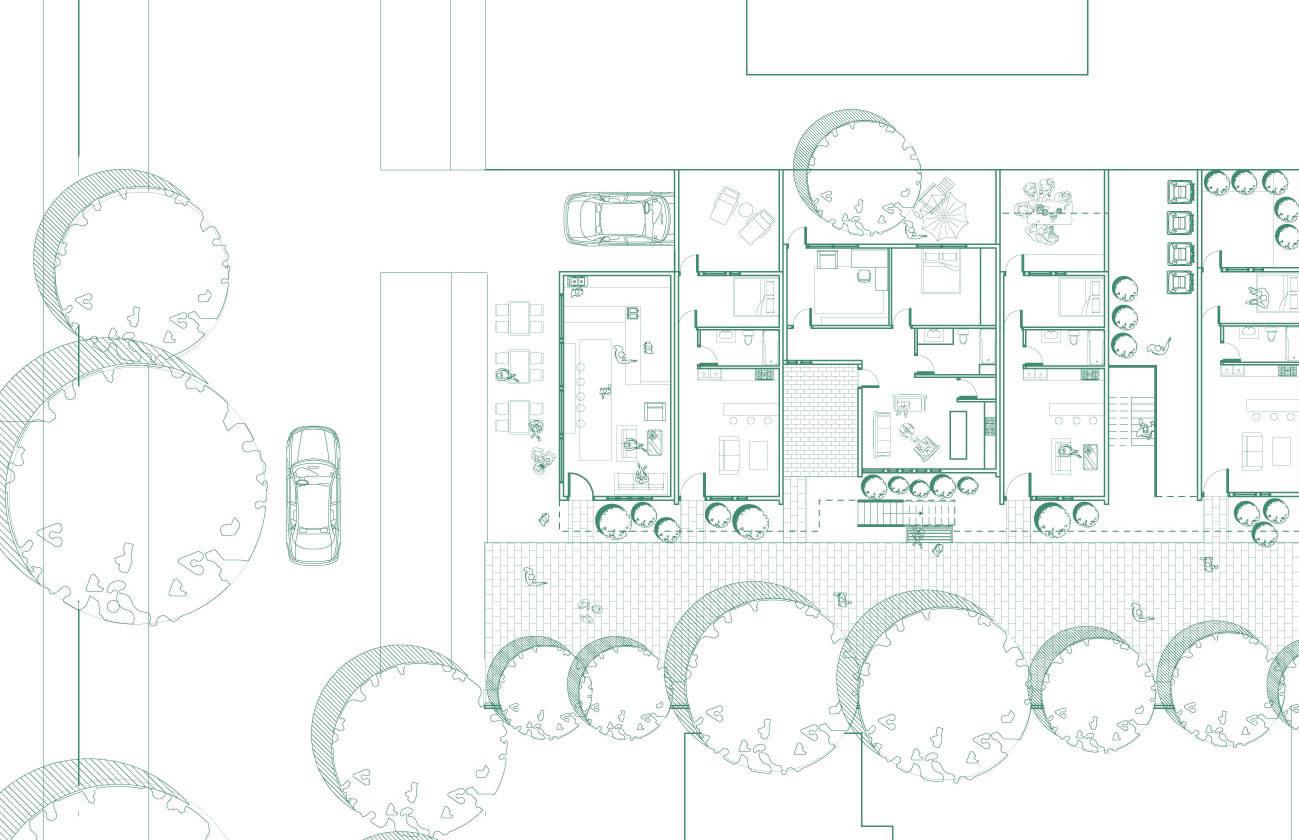
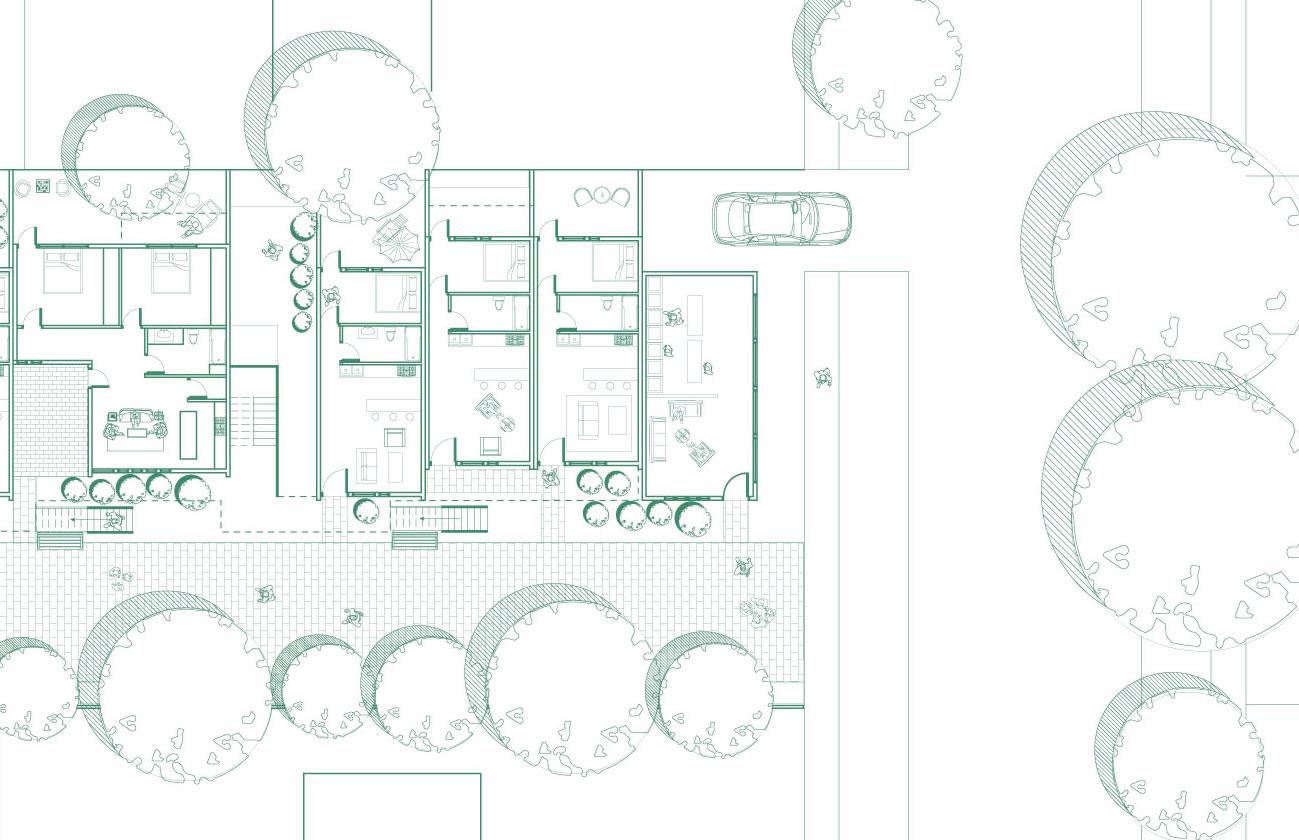
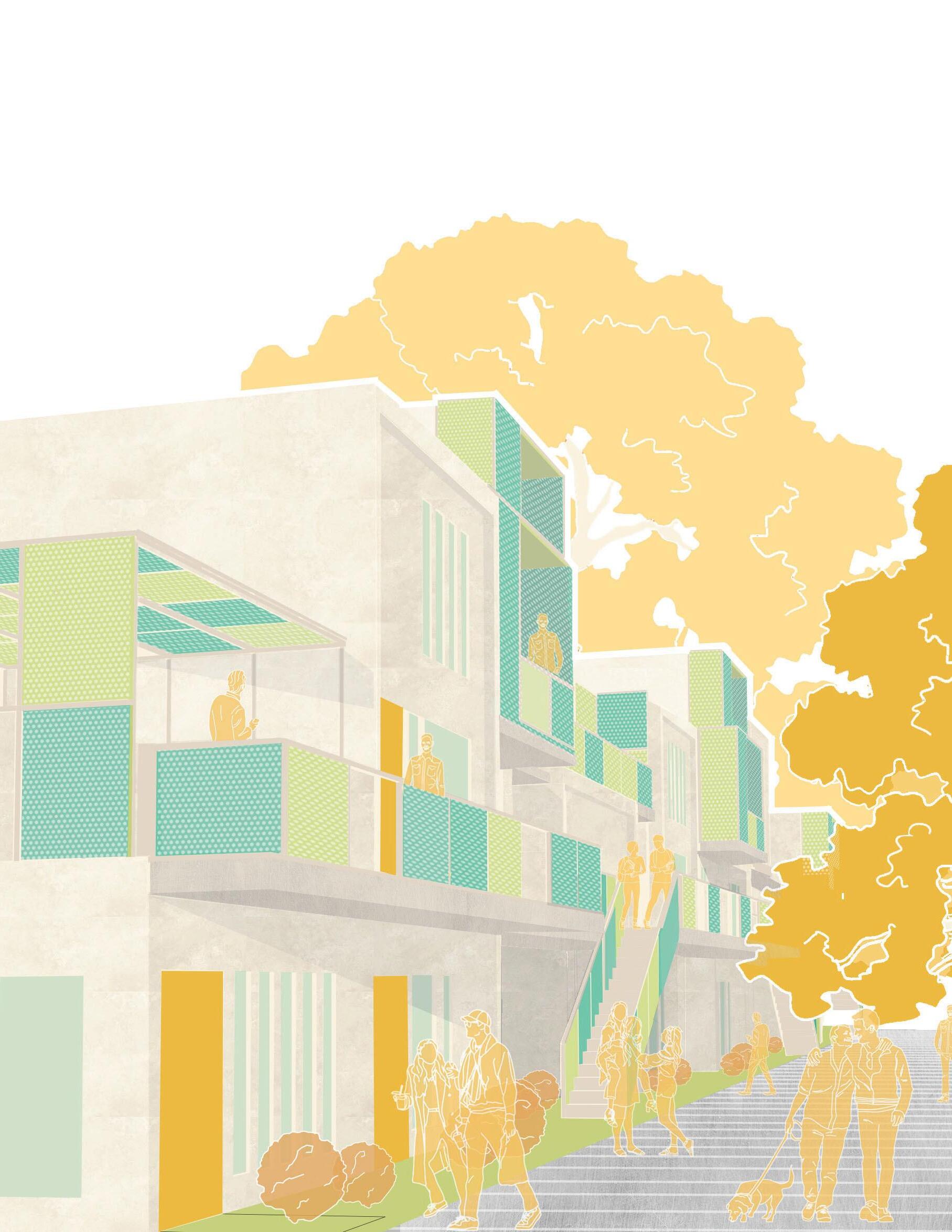
HOUSING + A HIGH DENSITY SOLUTION INSPIRED BY MEWS INTRODUCING MIXED USE AND INCOME
CALIFORNIA SENATE BILL 09
CALIFORNIA AFFORDABLE HOUSING INCENTIVE ACT
The final project of the Fall 2023 semester immersed us in the challenge of crafting a compelling proposal for the Buildner Los Angeles Affordable Housing Competition. Tasked with addressing the pressing housing crisis in Los Angeles, we were challenged to condense our innovative solutions onto a single A4-sized sheet—a departure from my accustomed format of verbal presentations and expansive display boards.
My collaborator and I began to conceptualize a project with a clear narrative. Leveraging insights gained from our previous project we strategically devised a design aligned with a policy framework akin to Senate Bill 09. Over several weeks, our efforts resulted into the California Affordable Housing Incentive Act, an augmentation to the existing bill. This tailored act aimed at providing tangible strides towards mitigating the escalating challenges posed by the affordable housing crisis and to create a flexible design suitable for multiple sites.
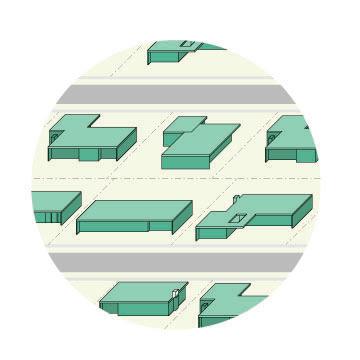
1950: CALIFORNIA SUBURBIA 6 UNITS PER ACRE
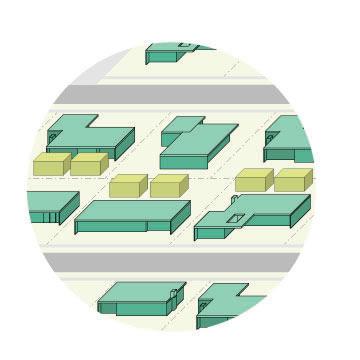
2019: SENATE BILL 9 24 UNITS PER ACRE
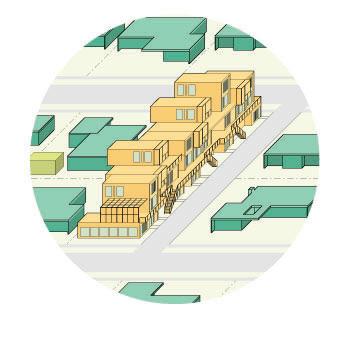
2023: AFFORDABLE HOUSING INCENTIVE ACT 60 UNITS PER ACRE
Inspired by European walkable cities, the mews is the cental aspect of the design and urban strategy.The mews configuration provides the opportunity for integration into a neighborhood.
By offsetting the position of the units to one side of the lot, a large walkway is created for pedestrian use. This creates a new grain to a neighborhood whose circulation is primarily vehicular that runs parallel to lots.
The mews also have the opportunity to be capped off on each end by amenities. The amenity spaces are flexible, allowing for them to be developed in a way that best serves the community.

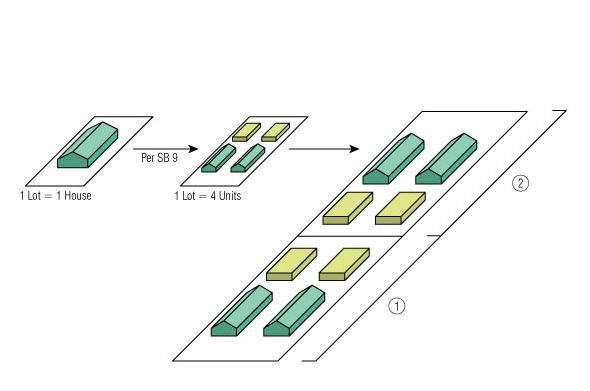
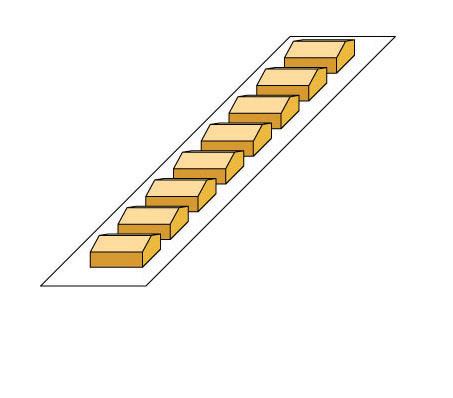
Per California government policy Senate Bill 9, one single-family home lot can be divided into 2 separate lots, each with an ADU.
The double lot configuration allows for 8 units under SB 9. We propose an incentive structure that requires these 8 units to be affordable.
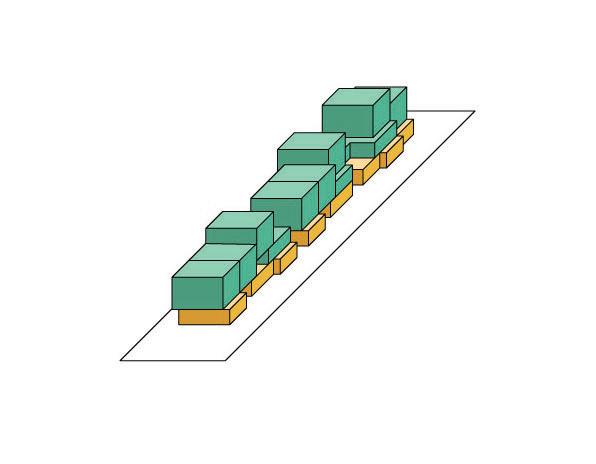
In exchange for building those 8 affordable units, 10-12 more market rate units can be built in addition.
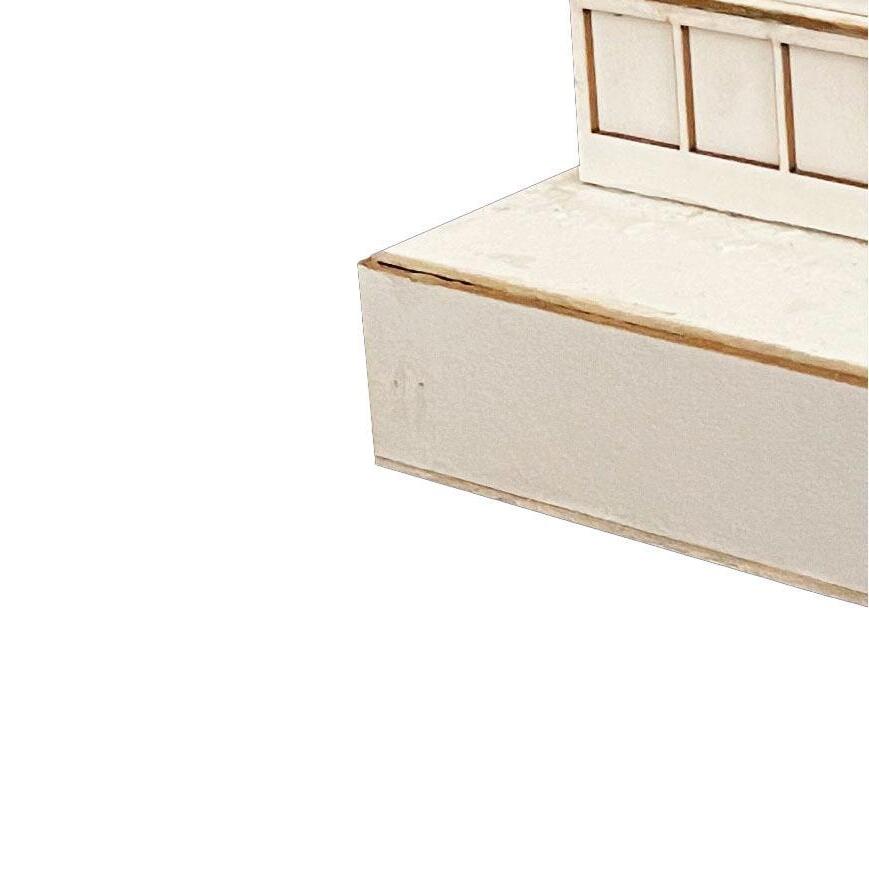

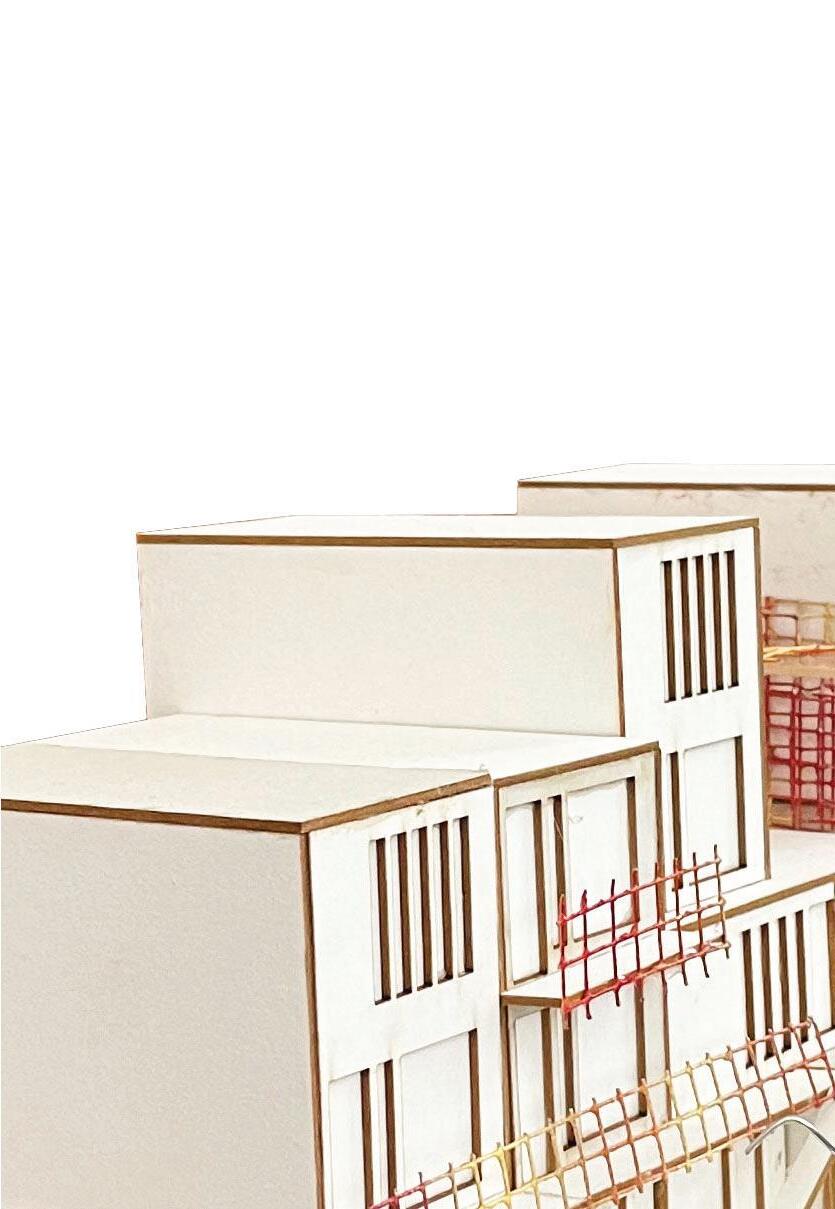
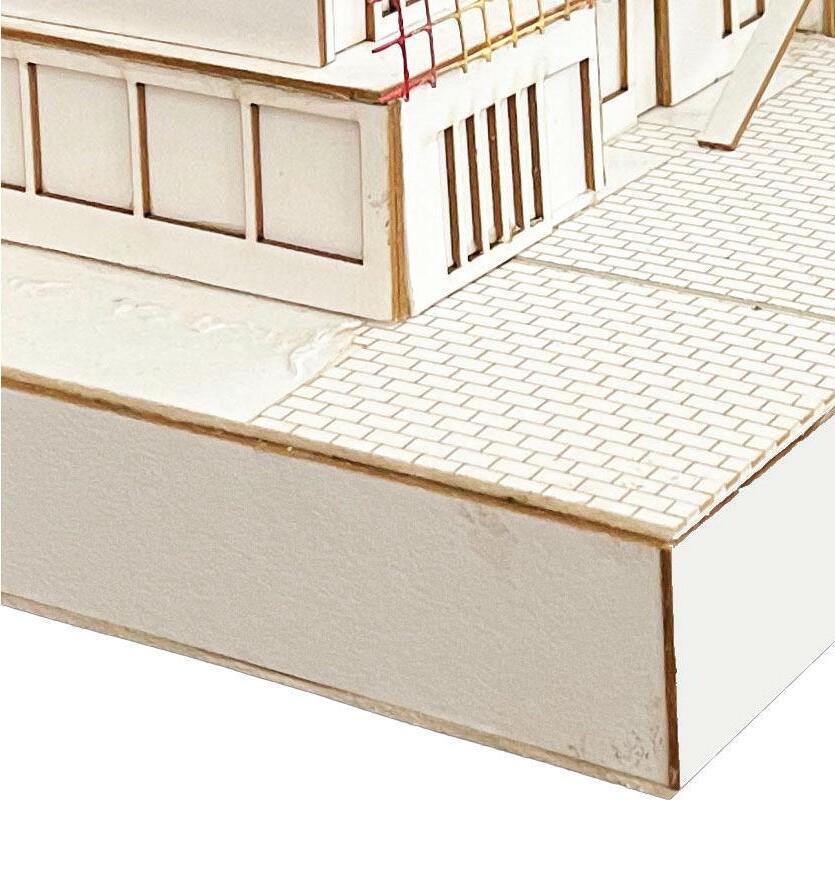
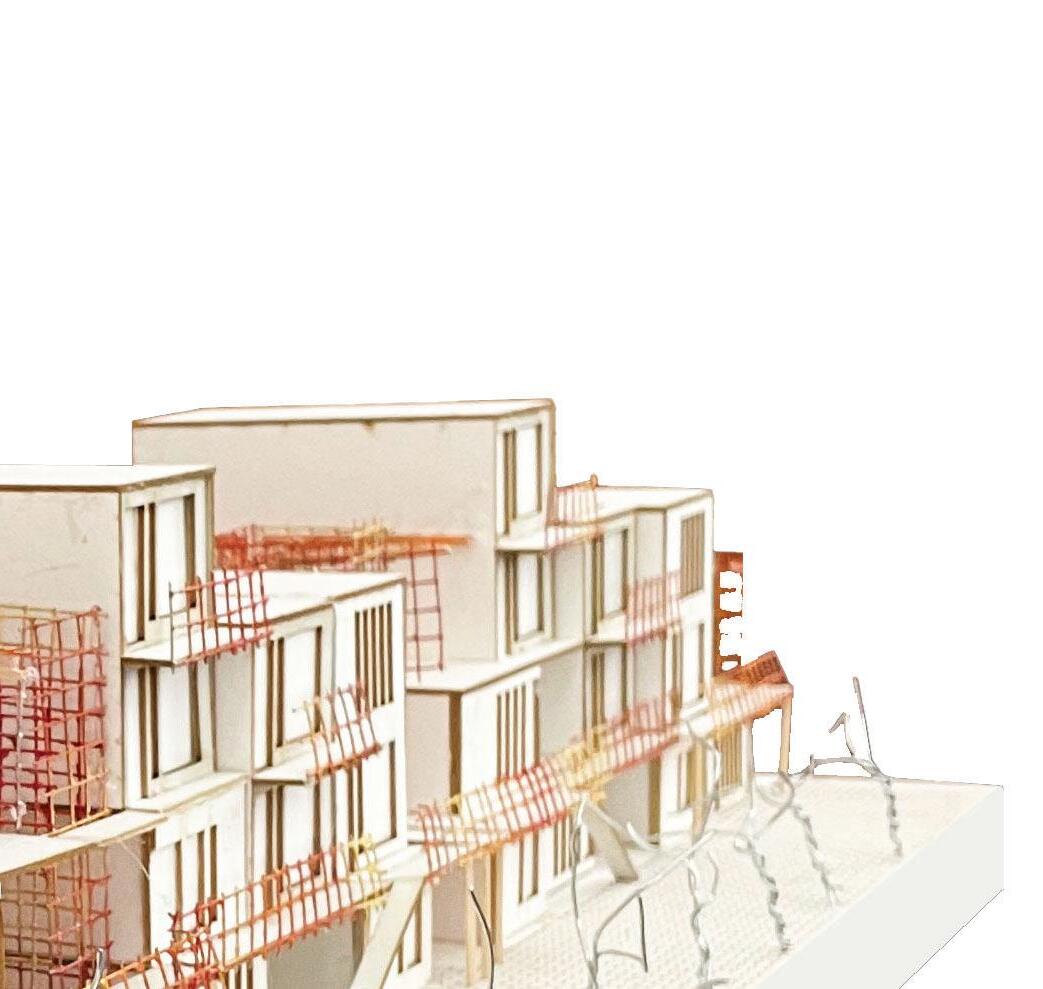
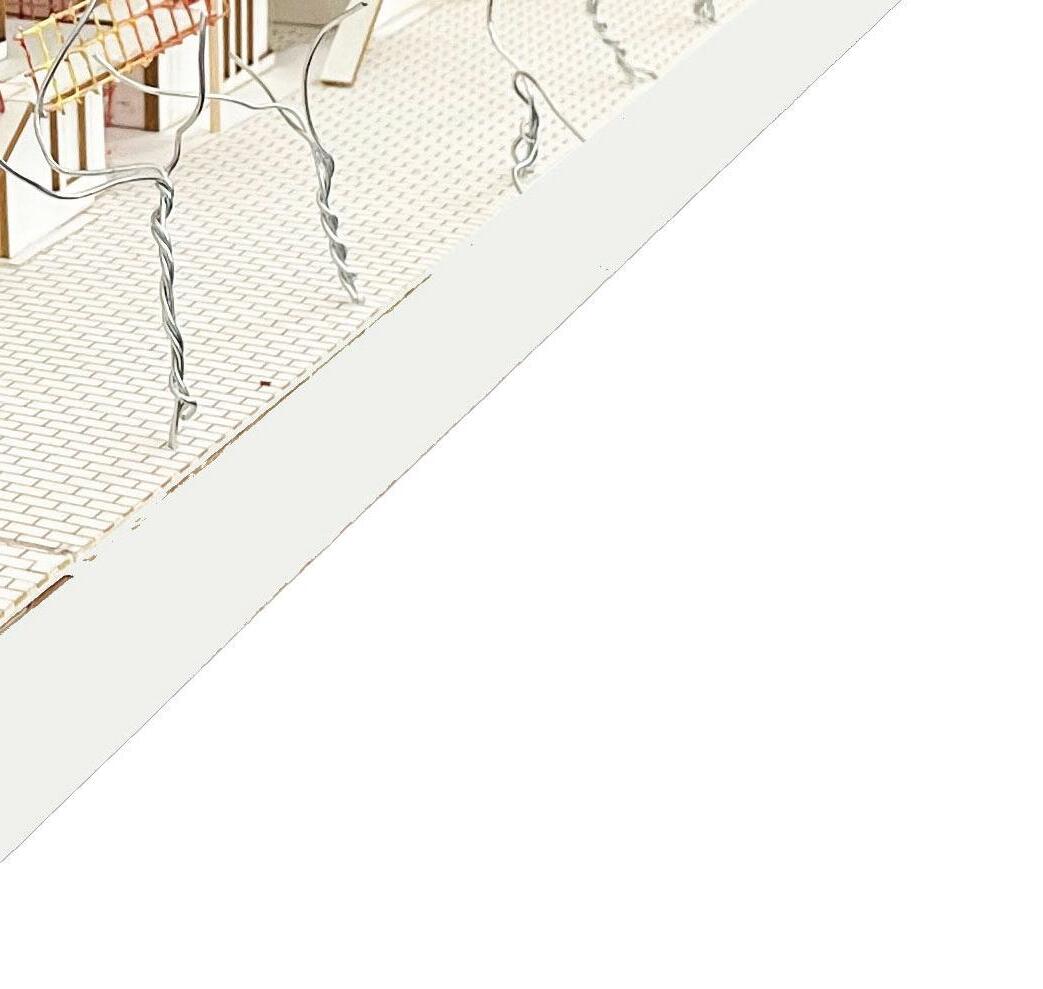 Scaled Model of Mews Design
FAMILIAR ROOFS
A STRUCTURAL STUDY OF COMMON ROOFING SYSTEMS
Under the guidance of Professor Emily Baker during the Fall 2021 semester, our exploration delved into the intricacies of structural systems and their diverse types. Being assigned the common structure of an airplan hangar, I began by meticulously documenting construction drawings, conducting force diagram analyses, studying light dynamics, and strategizing water runoff systems.
To bring this theoretical knowledge into practical application, I crafted highly detailed structural models of the airplane hangar in Rhino. The efficiency of the design process was enhanced through the integration of Grasshopper, which facilitated the streamlined generation of appropriately sized structural members for the overall framework.
In parallel with our studio work, I took Architecture Structures I. This additional academic pursuit provided a more profound exploration of the math and physics underlying the design and engineering of long-spanning structures.
PLAN OBLIQUE
WORM’S EYE
PLAN OBLIQUE
WORM’S EYE VIEW
STRUCTURAL SYSYTEM DIAGRAM
STRUCTURAL DIAGRAM
TERTIARY TERTIARY
PRIMARY
SECONDARY
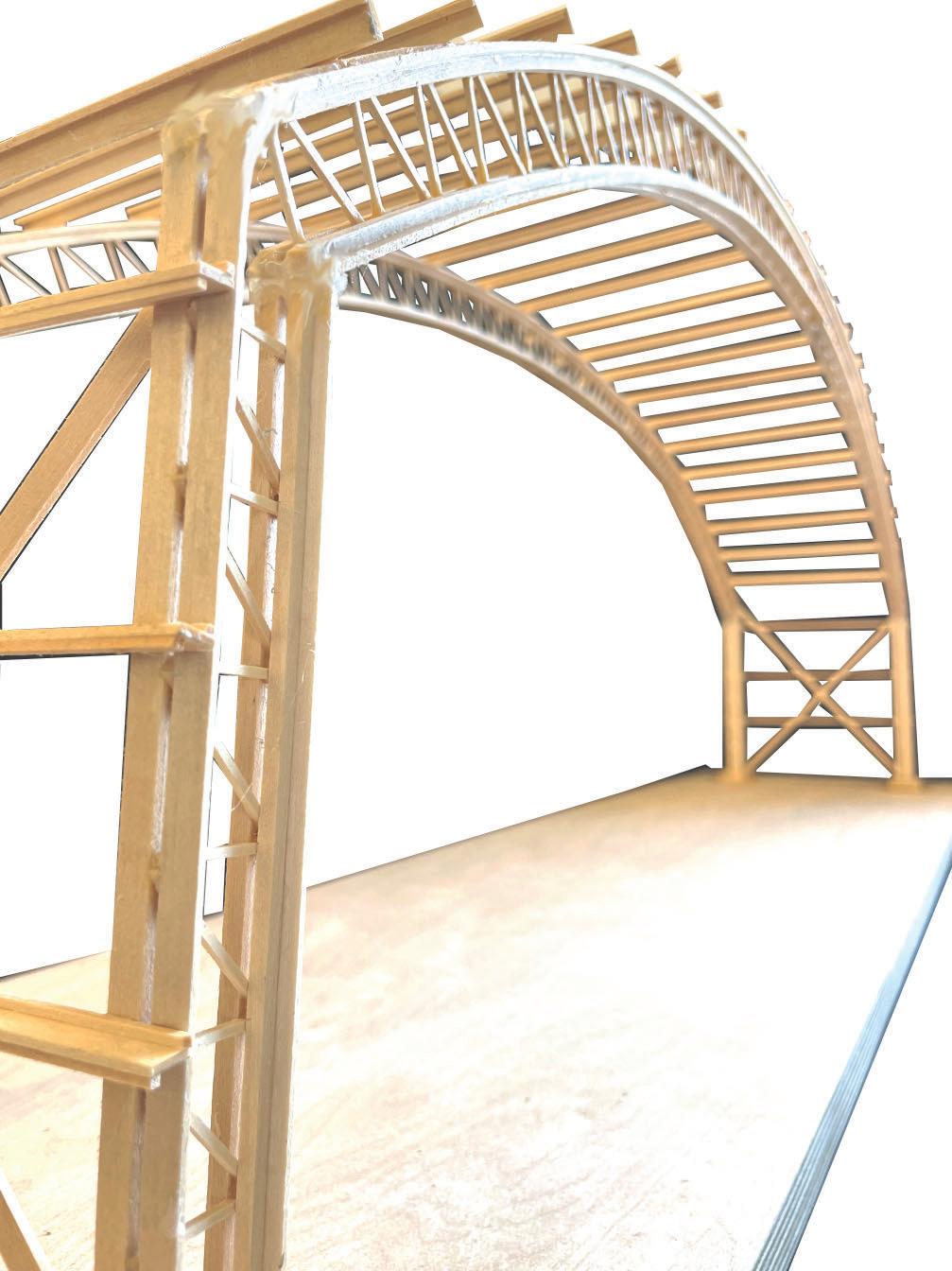
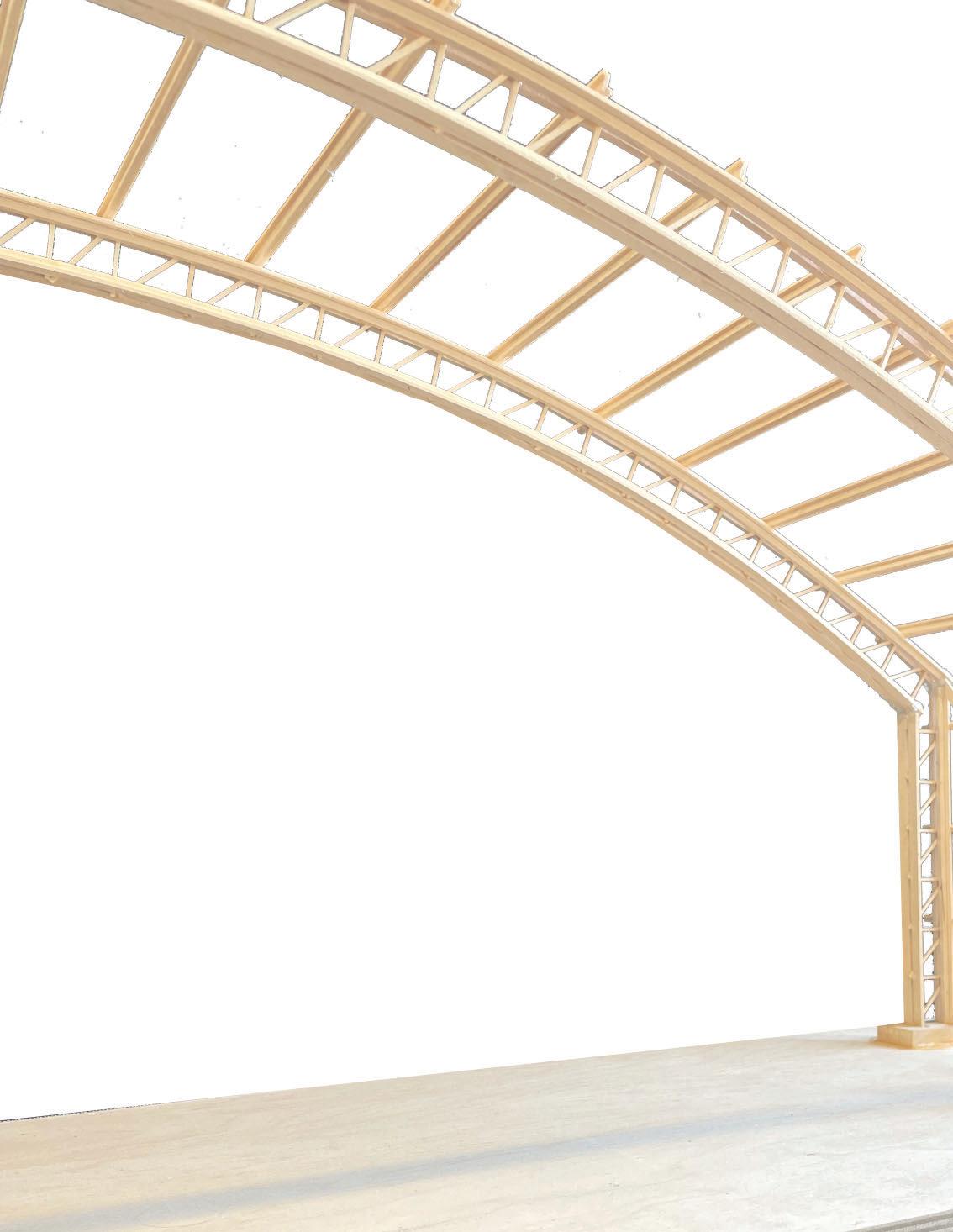
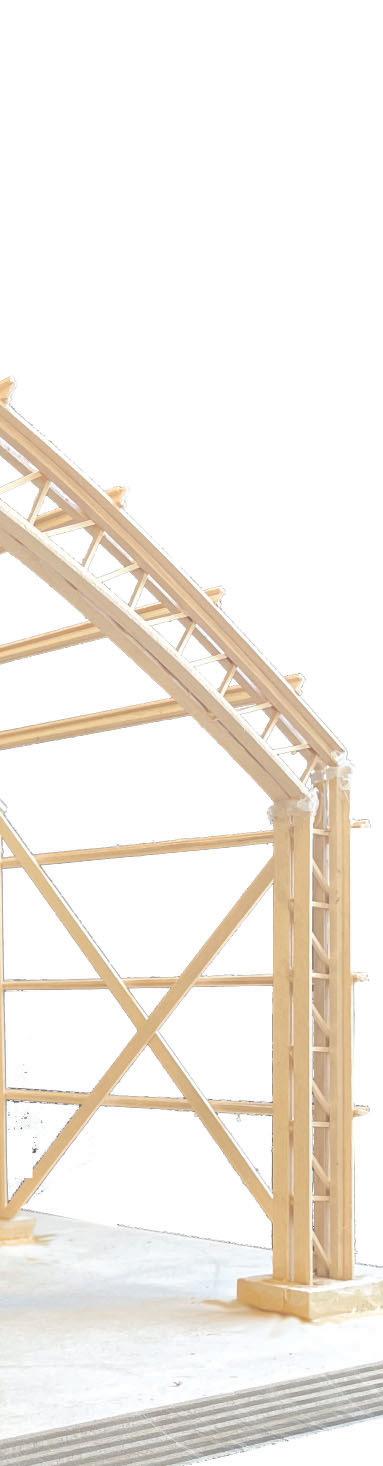
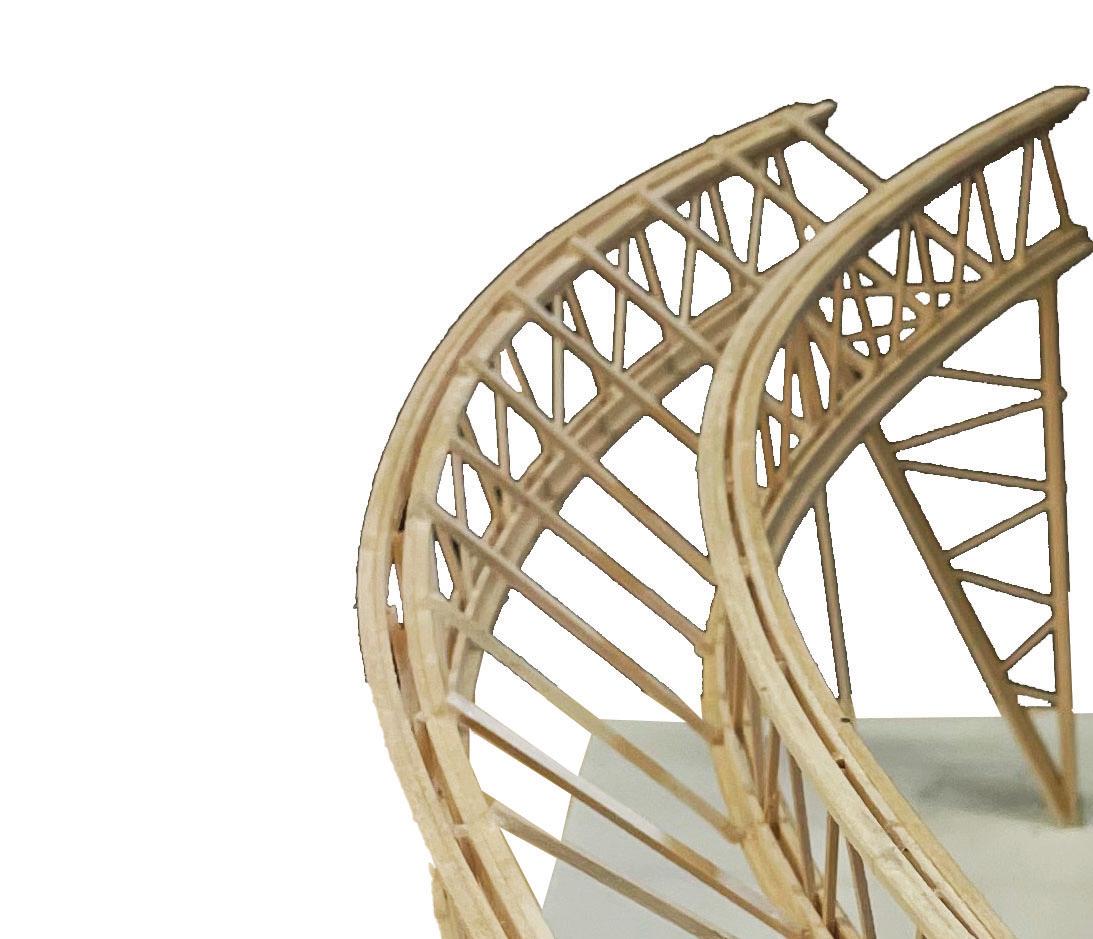
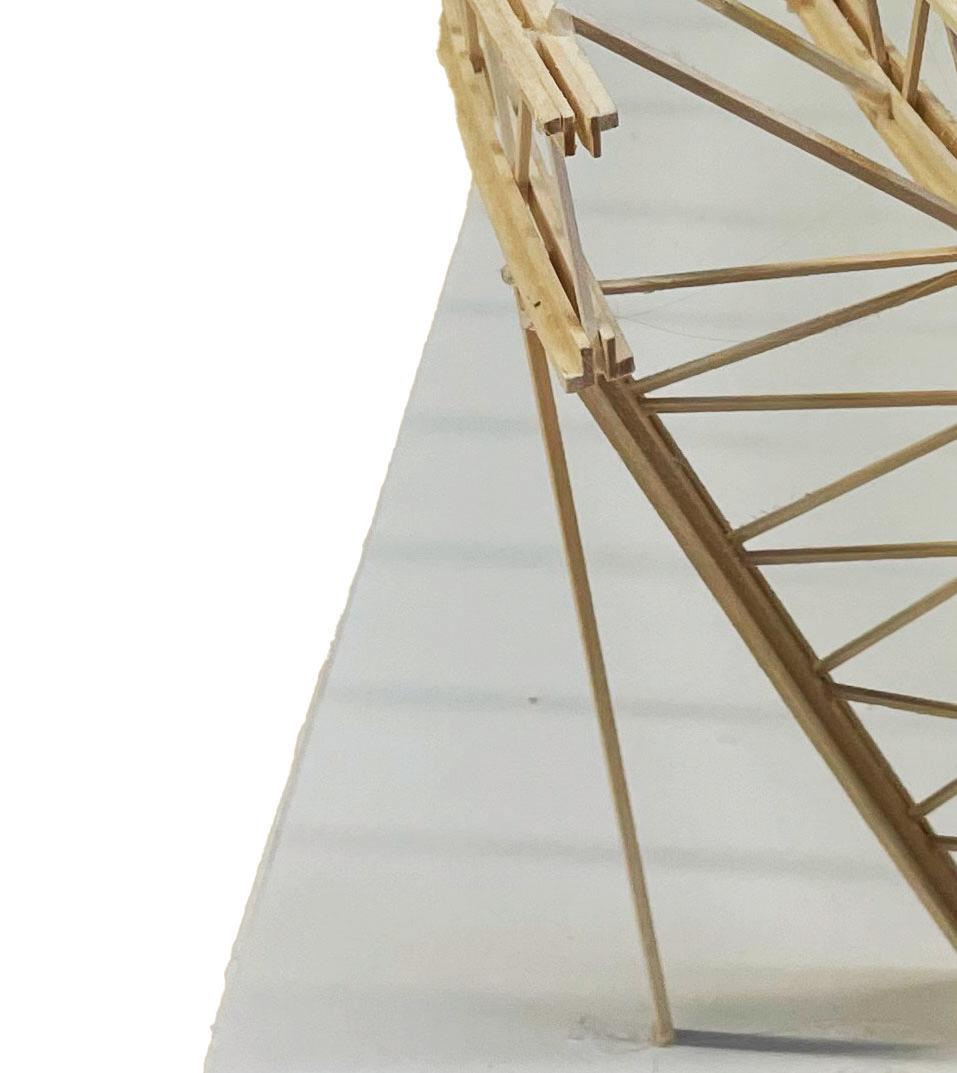
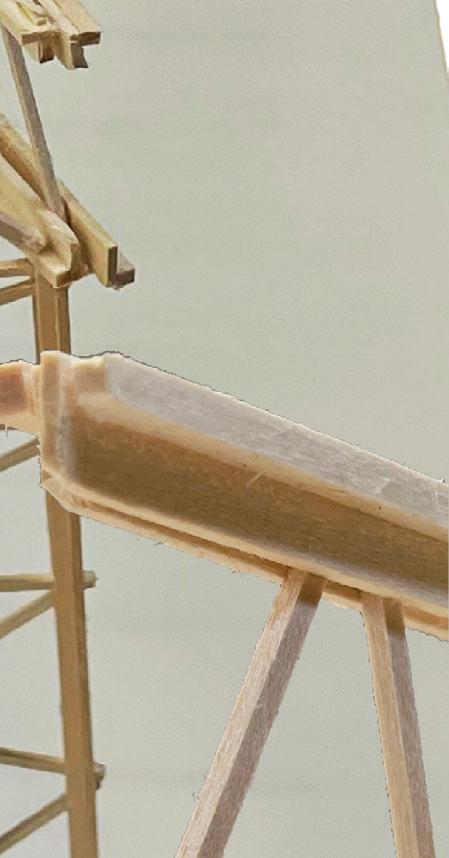
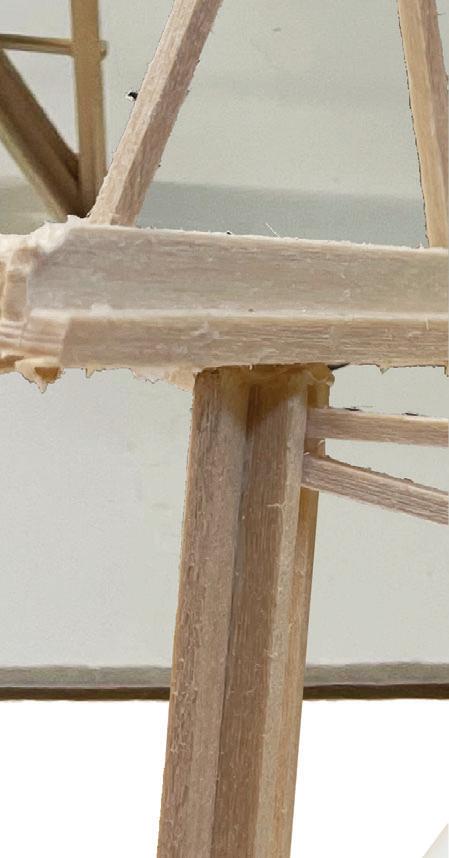
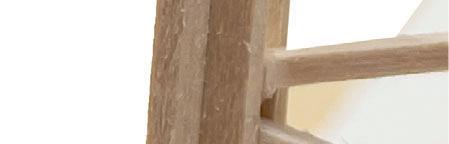
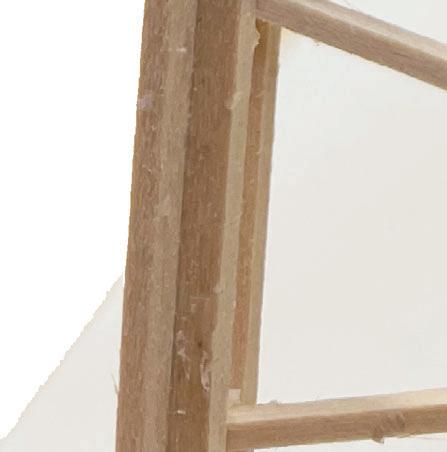
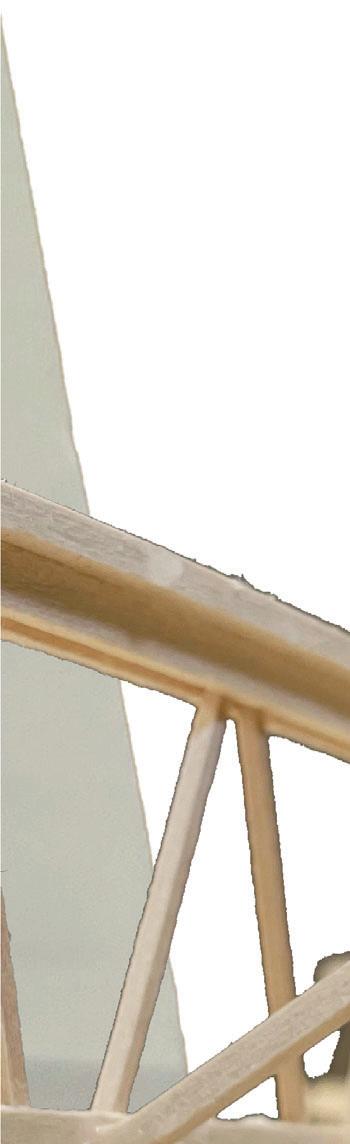
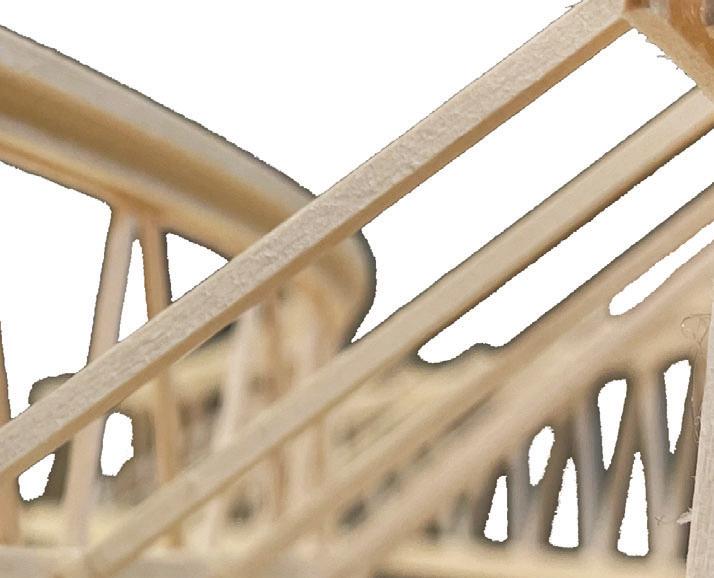
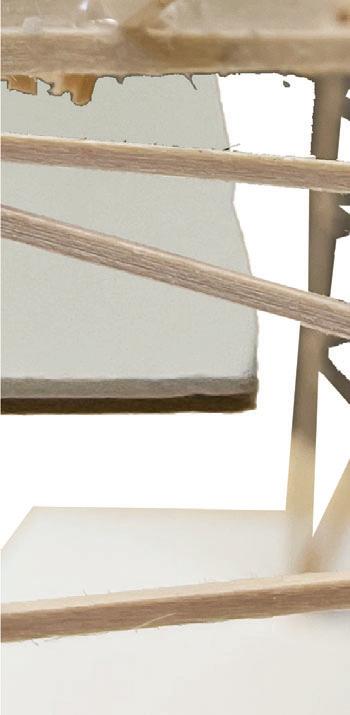
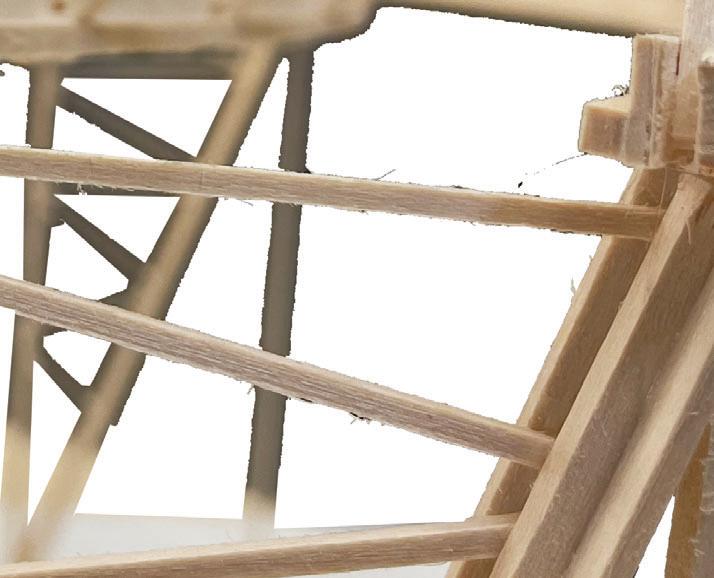
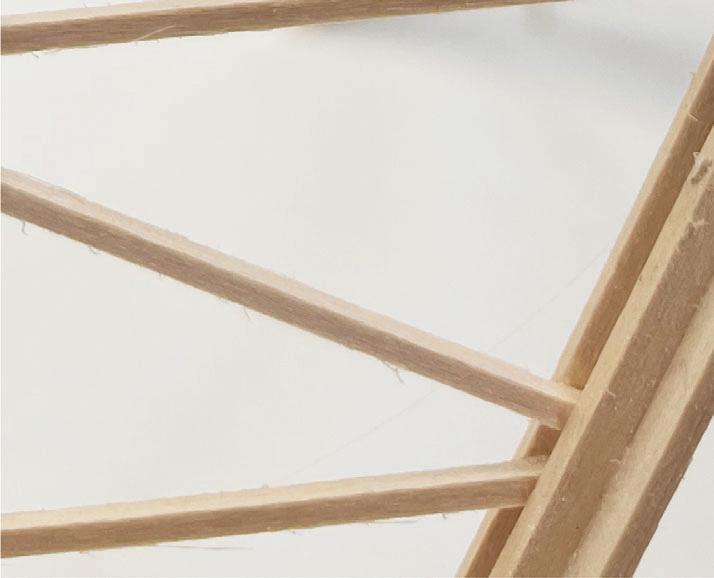
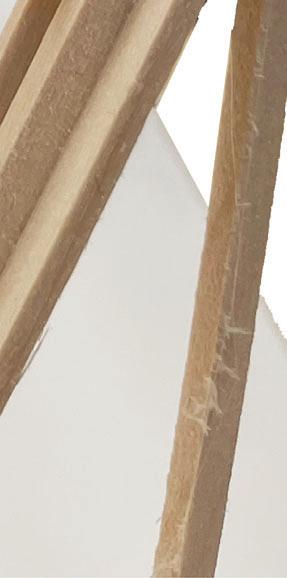
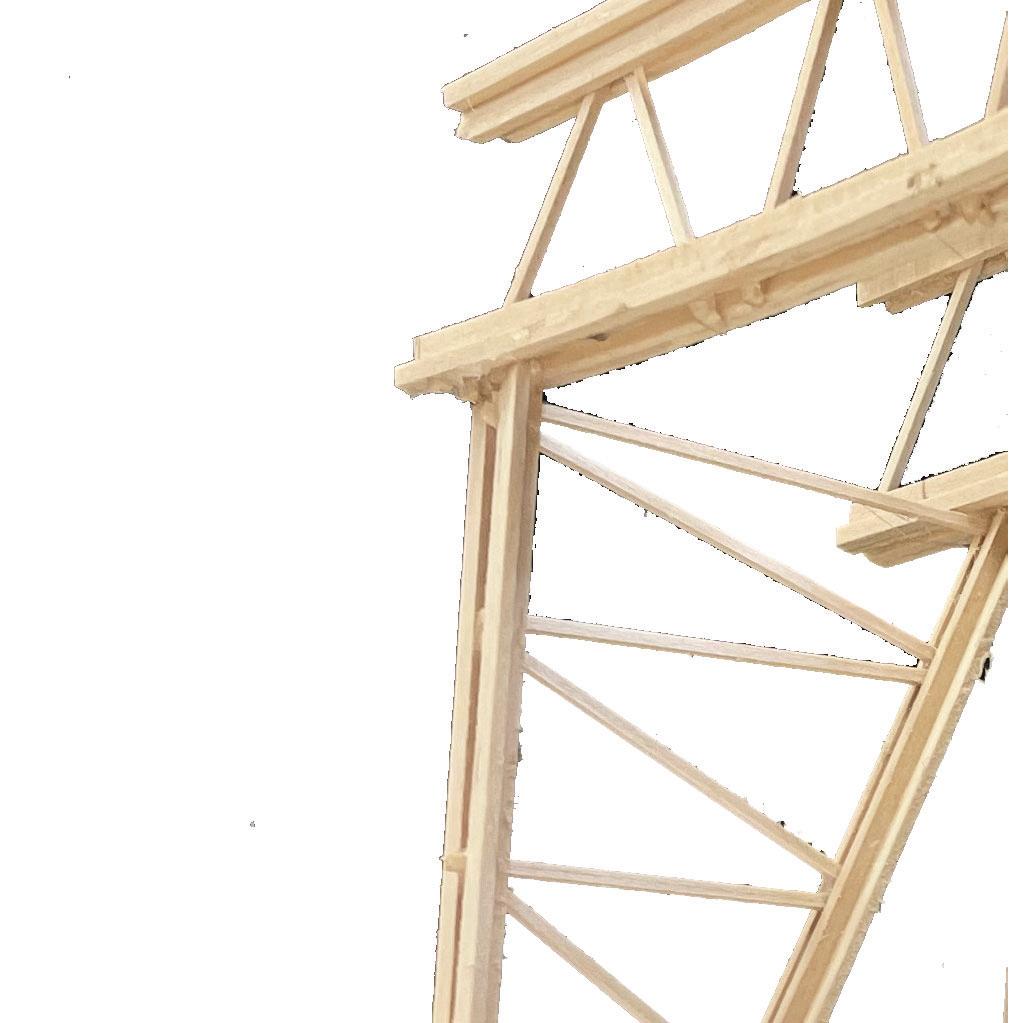
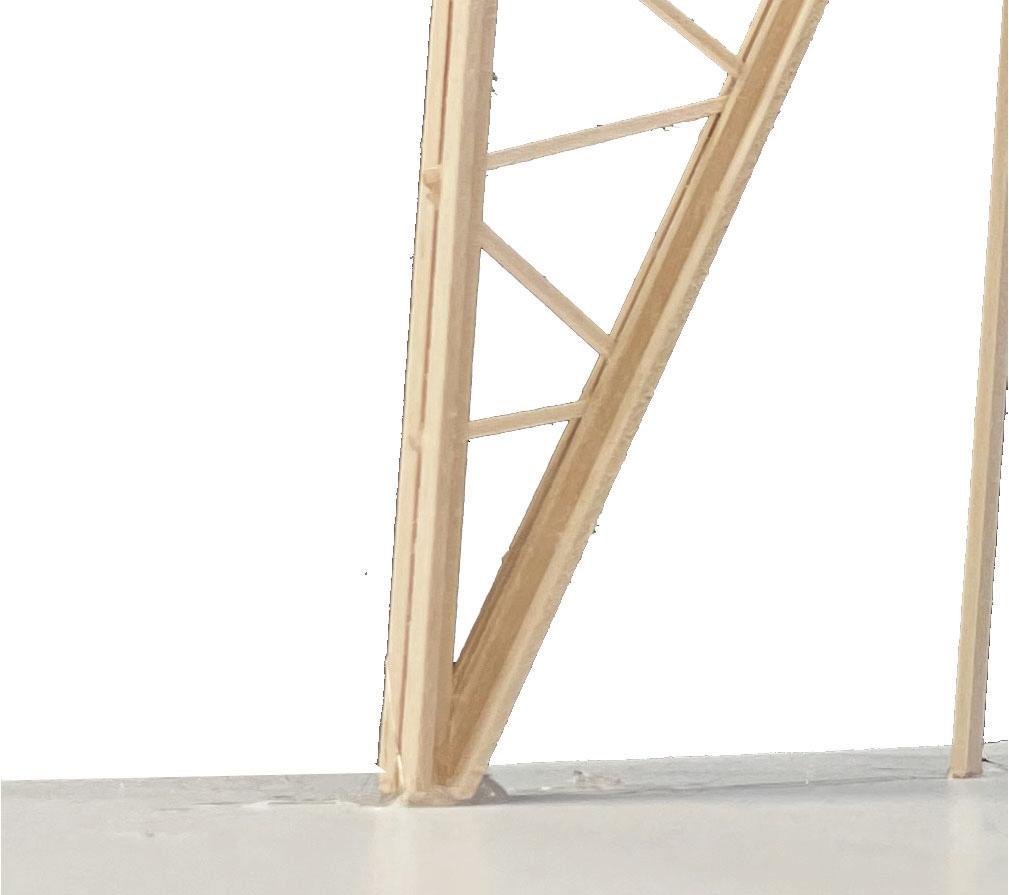
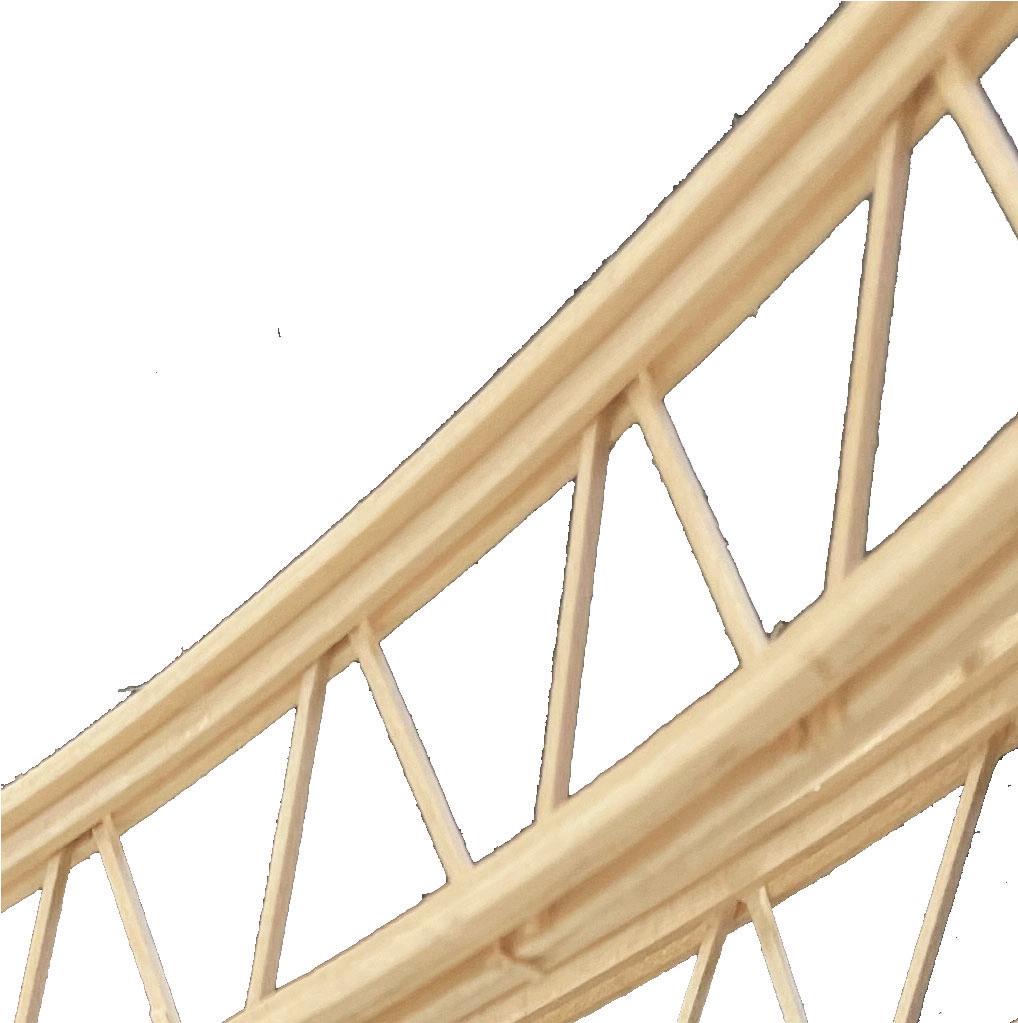
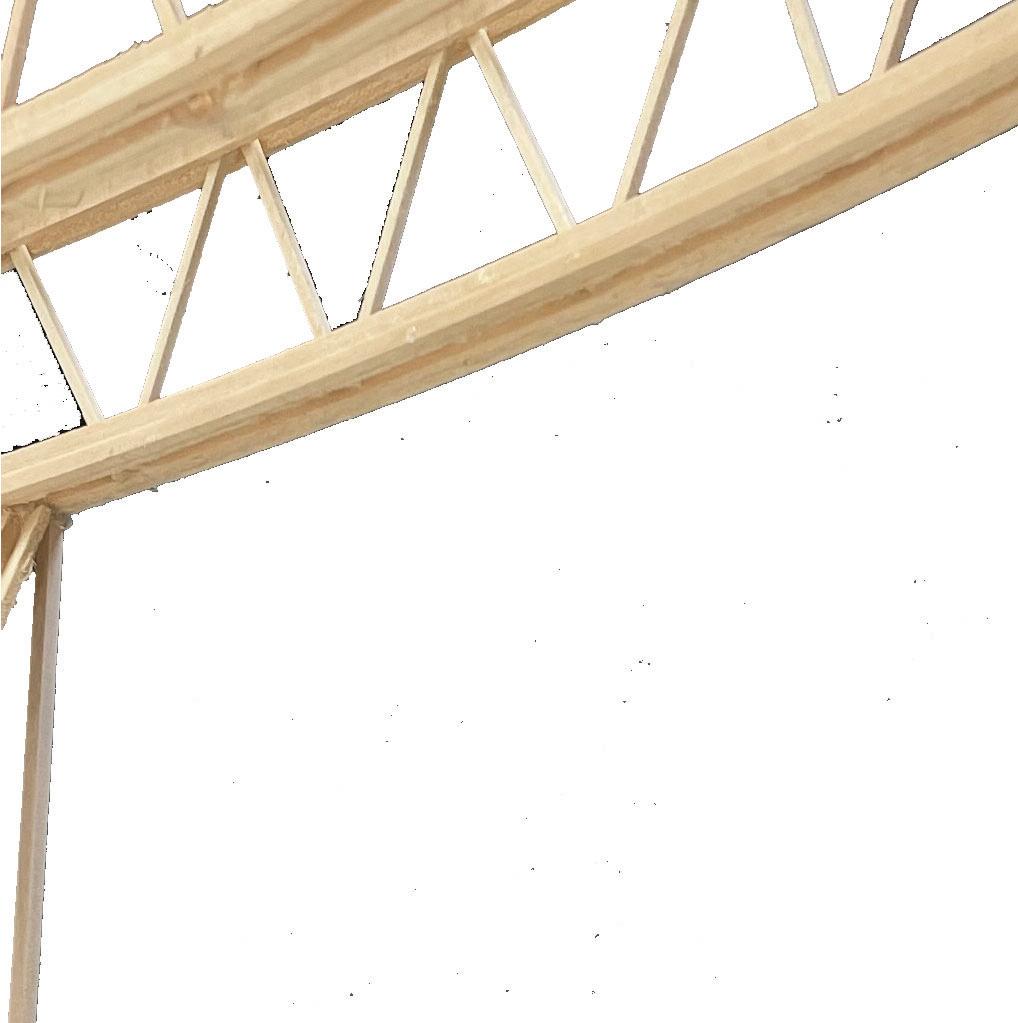
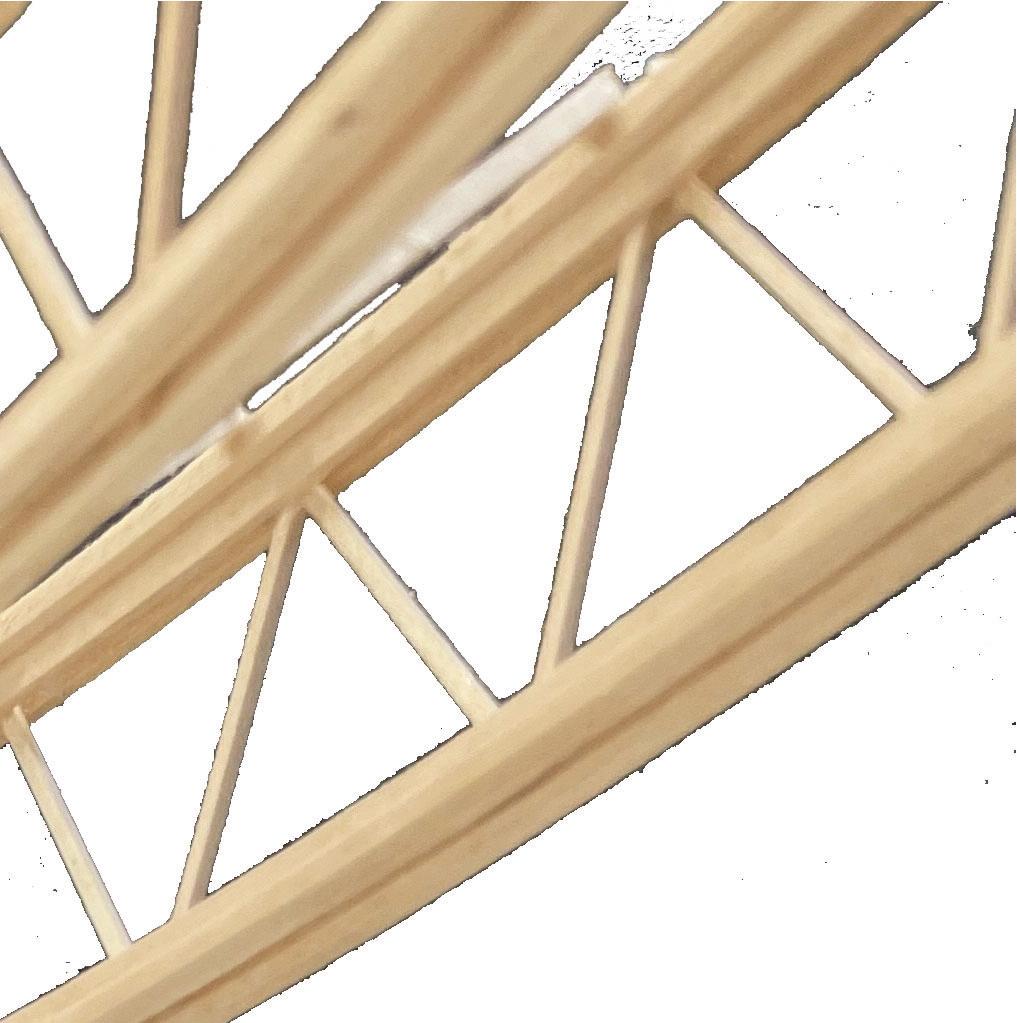
Beyond the creation of digital models, I embarked on the hands-on construction of a 1/4th scaled structural bay model of an airplane hangar. I personally bent each cord of the truss by using hot water to mold the wood into its designated form. The trusses’ webbing fortified the strength of the three foot spanning model.
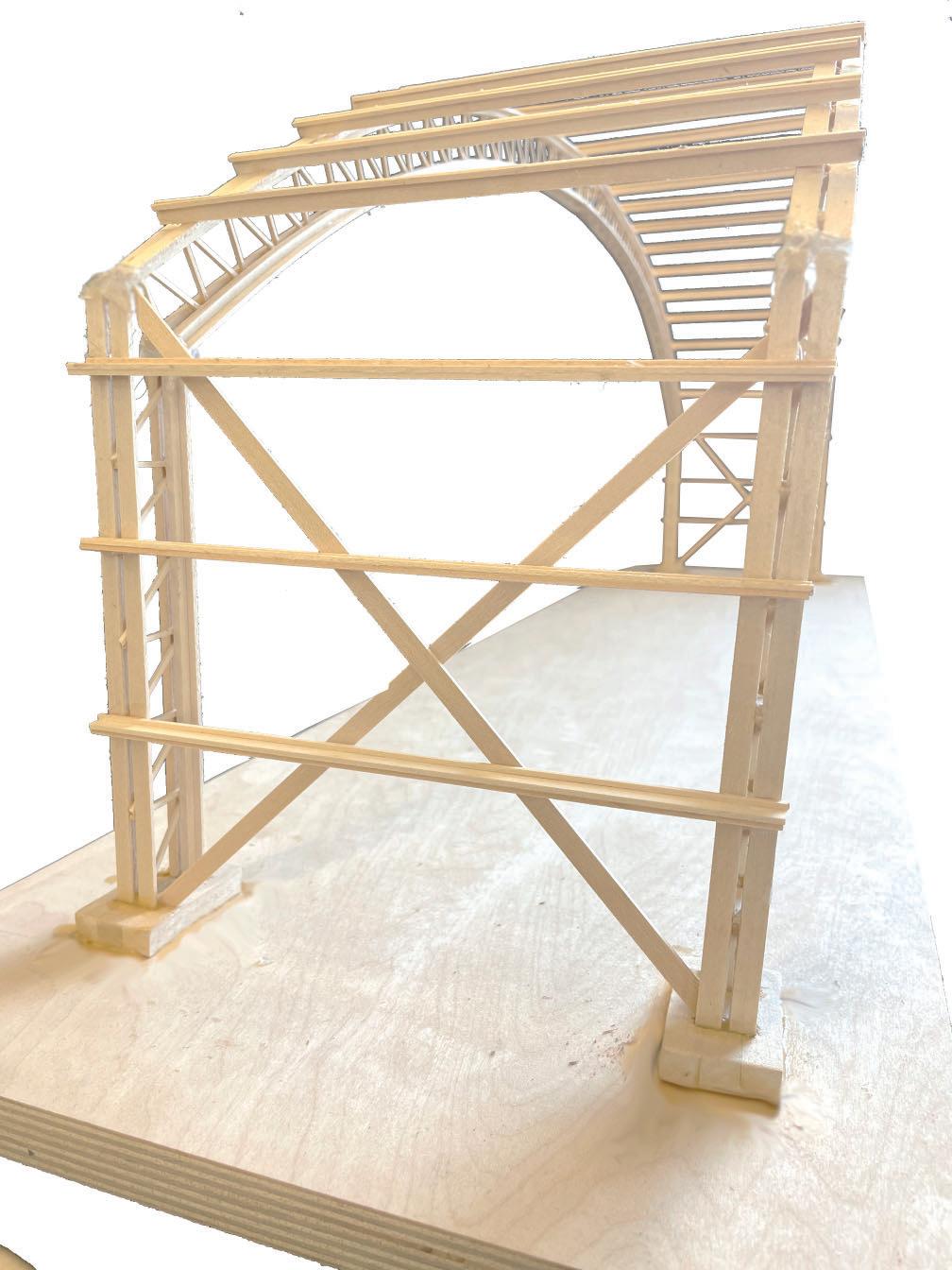





Building on the foundation laid by the airplane hangar project, I undertook a new design endeavor that called for iterative explorations focusing on environmental considerations and lighting schemes. This project challenged me to evolve the structural system of the hangar by integrating innovative approaches to enhance sustainability and optimize the impact of natural and artificial lighting.

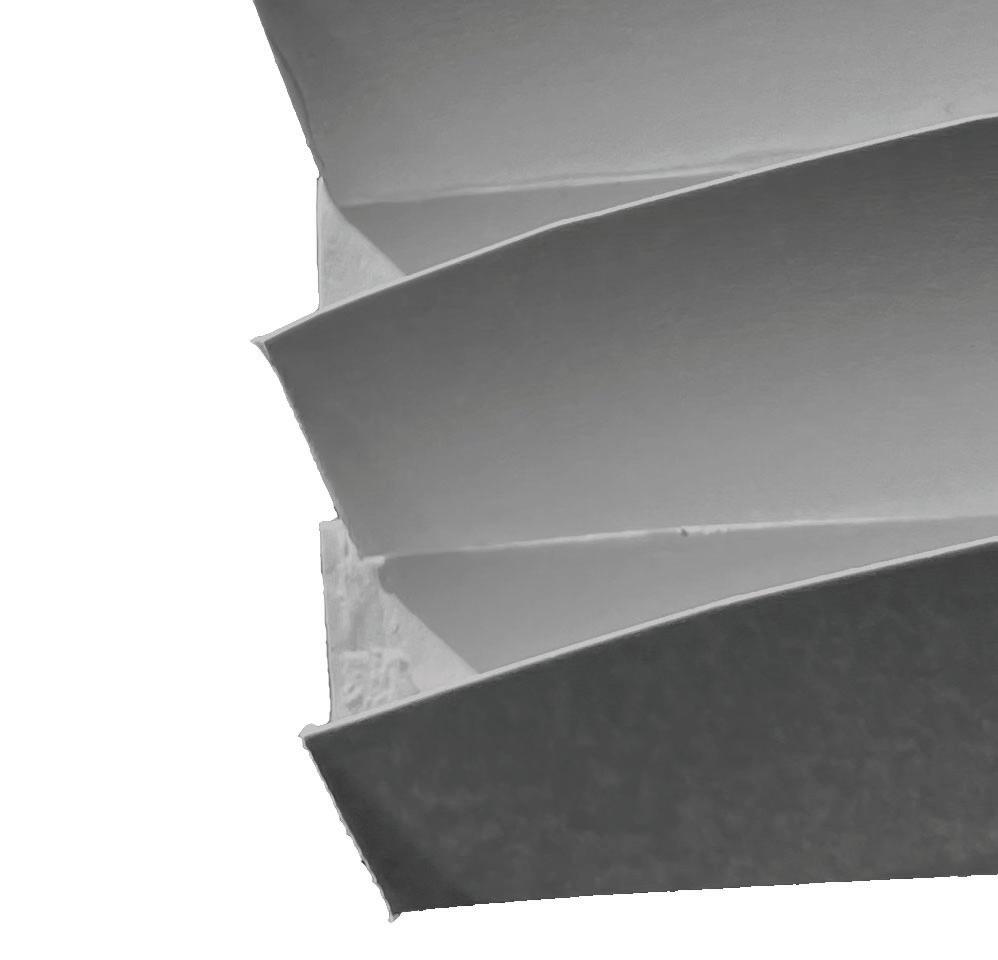
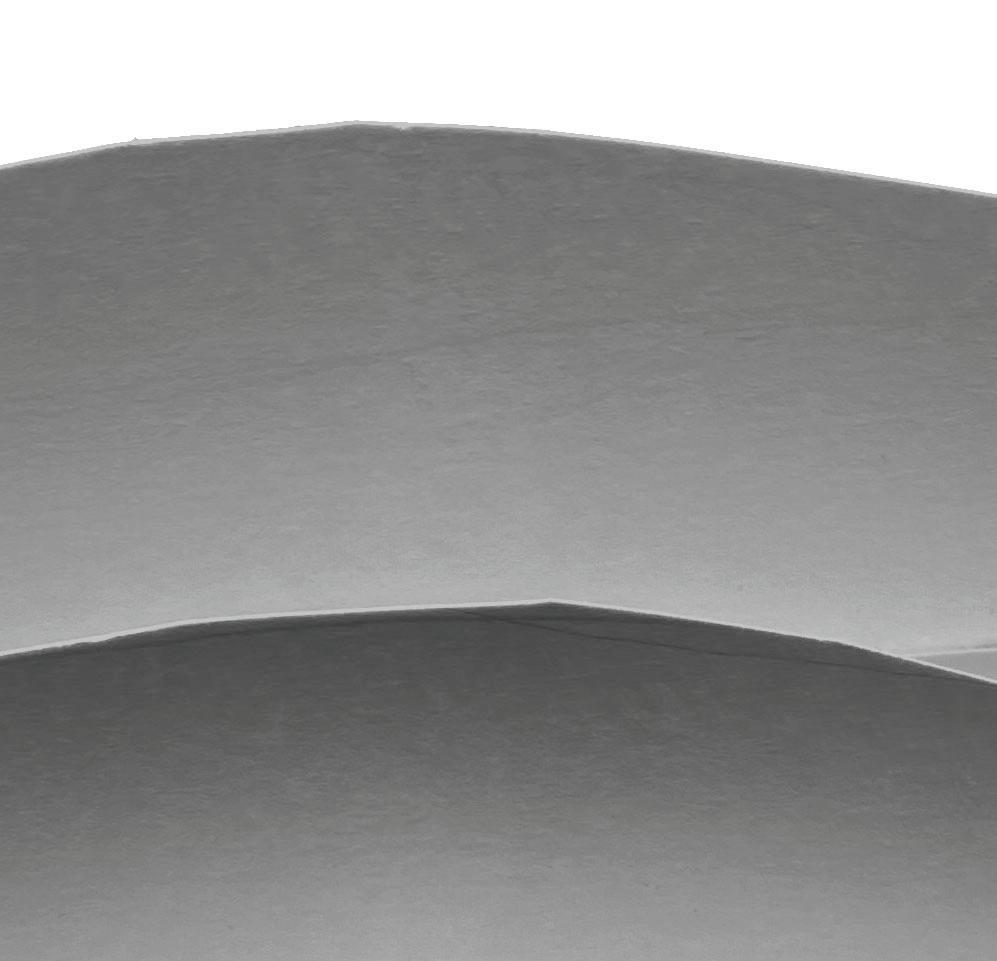
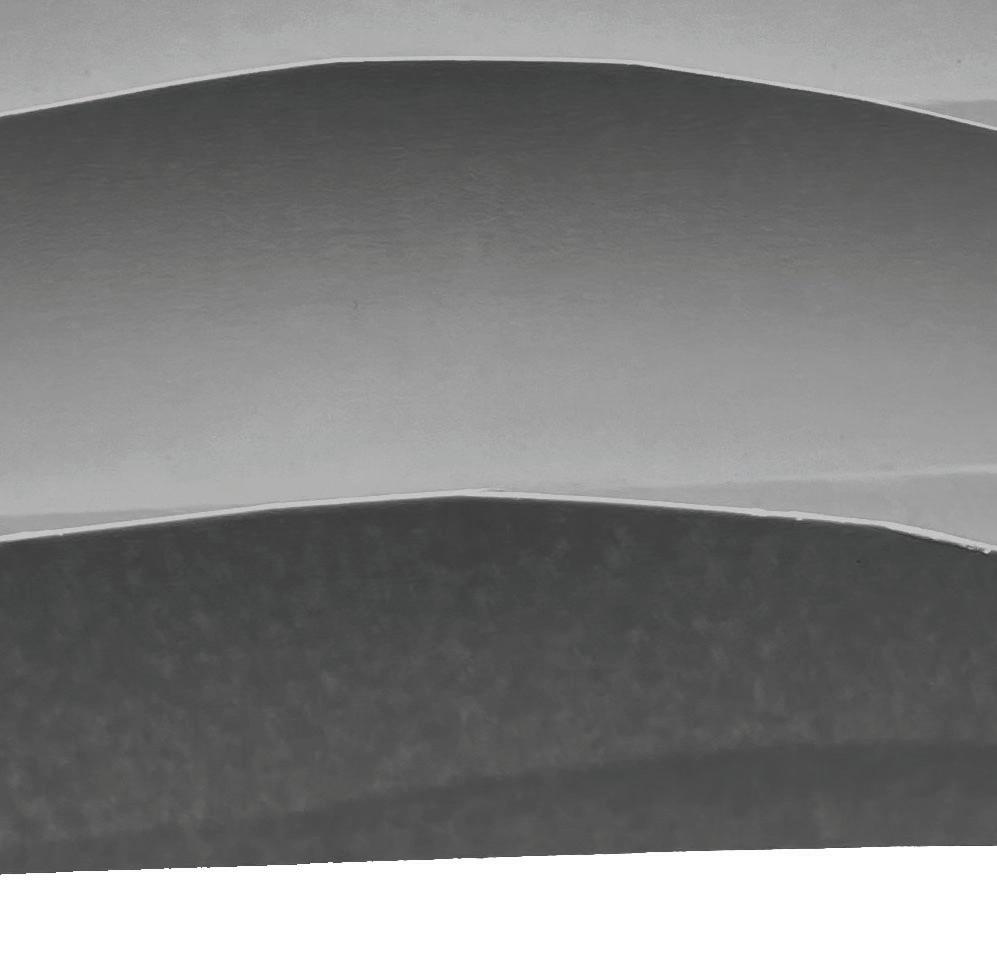
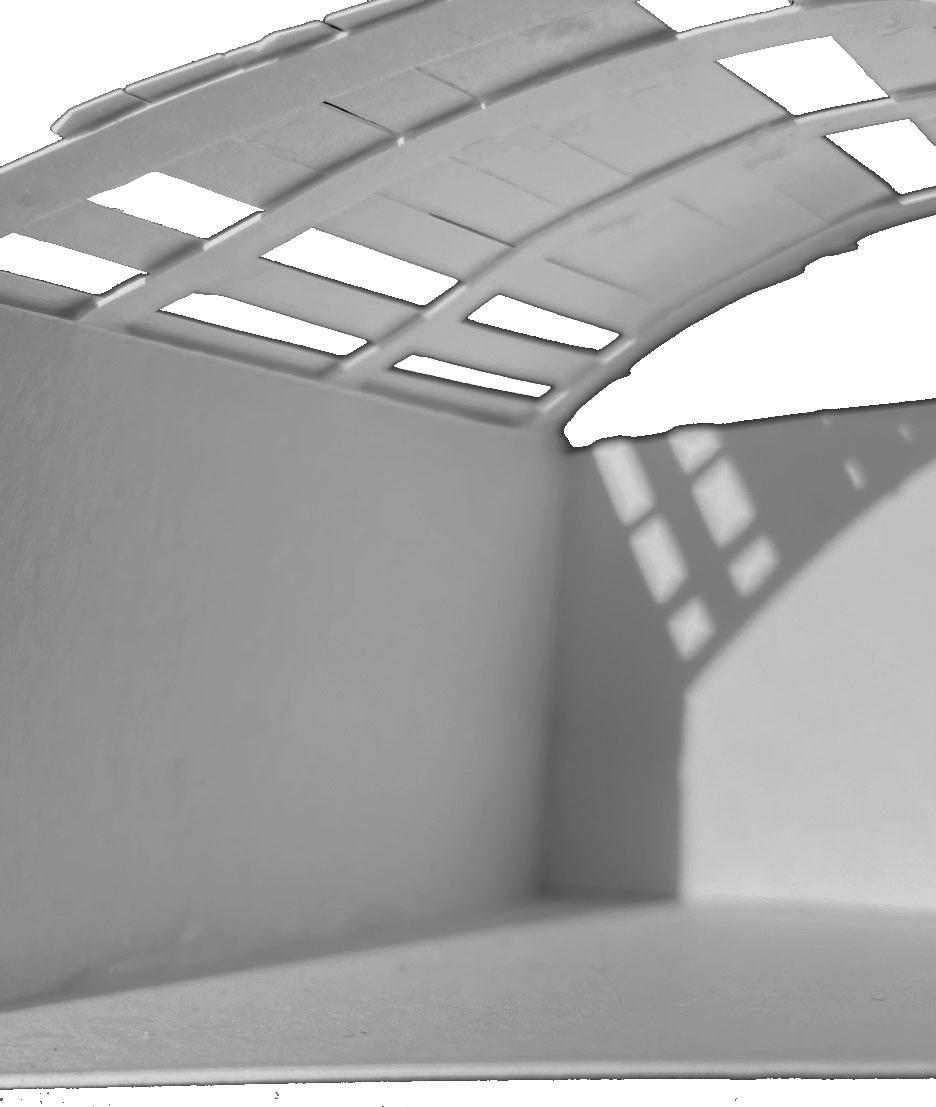
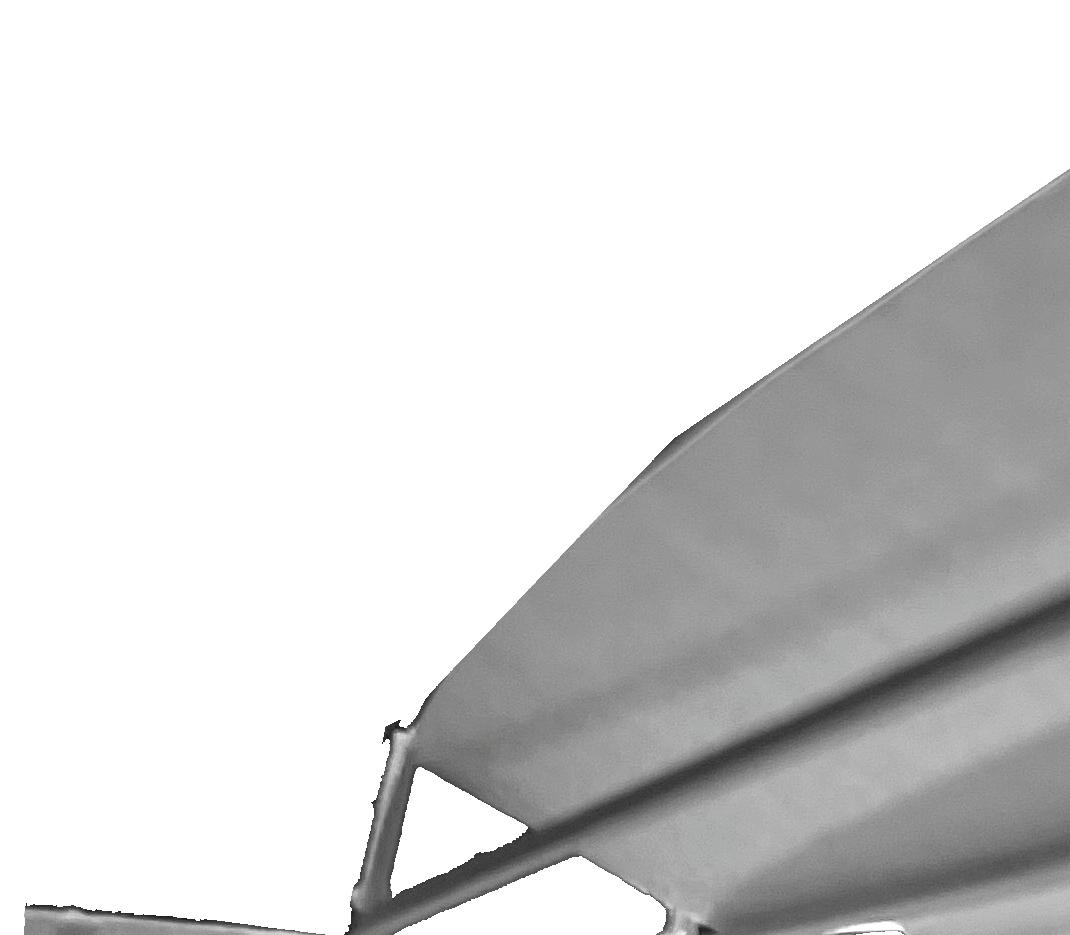
Through the iterative design process, I conceived a dynamic roof structure that not only harmonizes with the curves inherent in the airplane hangar but also introduces innovative dimensions to the architectural form. The meticulous construction of each truss involved a precision-driven approach, wherein both the top and bottom cords underwent a careful bending process. This method ensured the creation of structurally accurate and appropriately sized members, contributing to the overall integrity of the roof system.
Notably, particular attention was given to the construction of the truss web, a critical element in fortifying the structure and maintaining the graceful curve of the roof. The construction of the web was approached with a commitment to both structural robustness and design cohesion, reinforcing the synergy between form and function in the development of the roof structure.

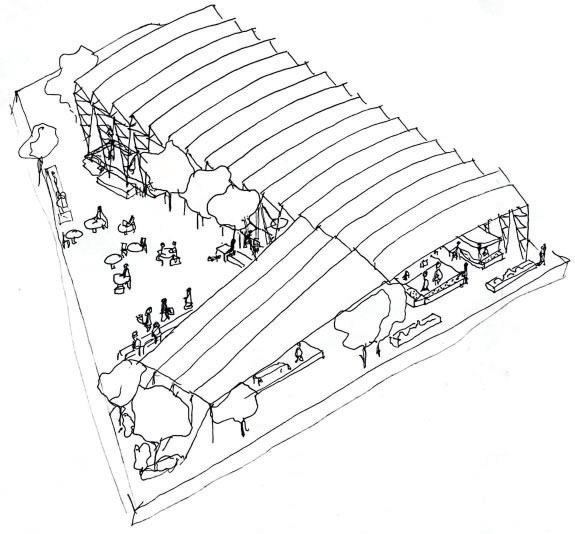
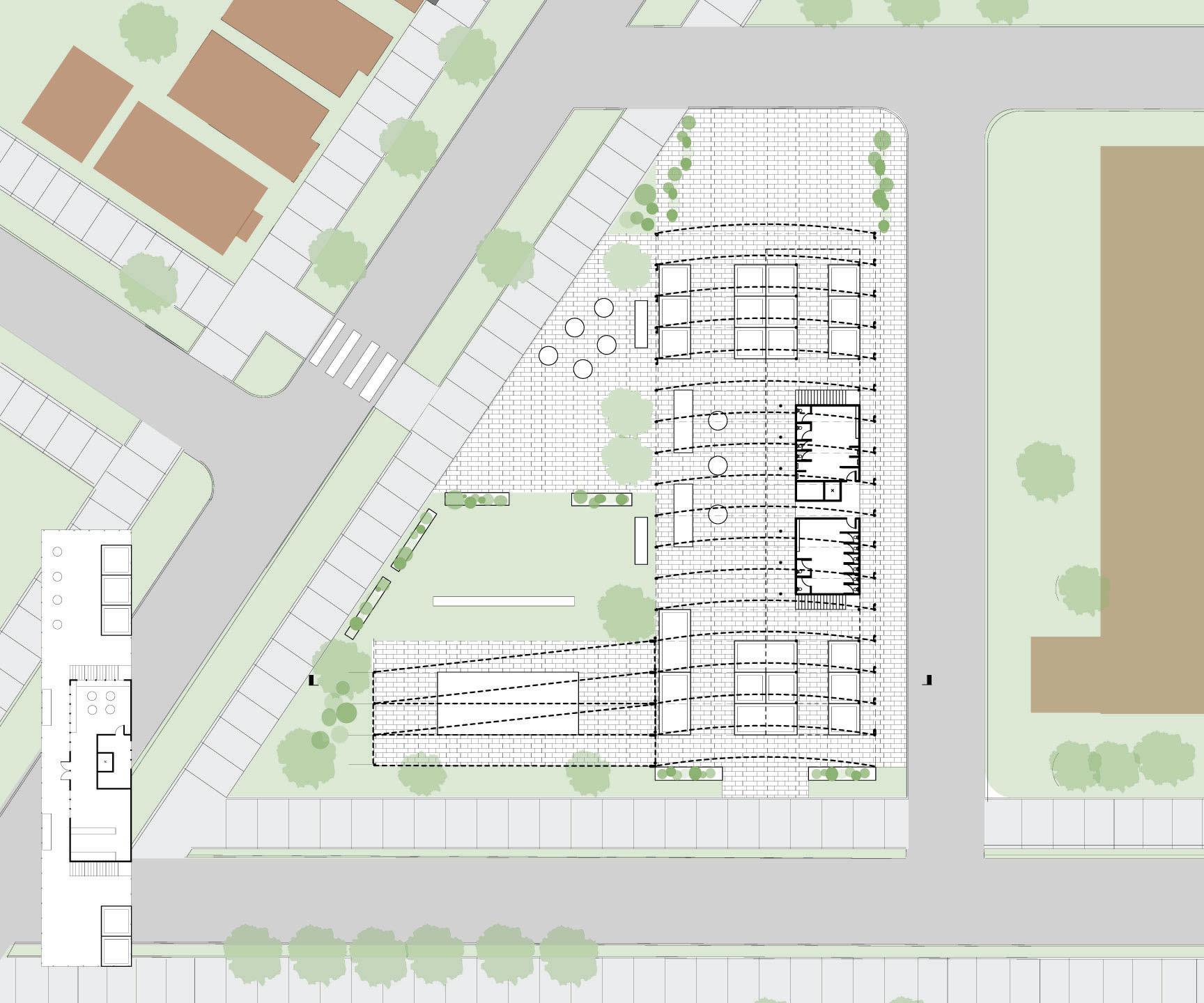
In my final project of the semester, I transformed my innovative roof design into a community-centric outdoor market in Chicago. The adaptable roof structure was tailored for engaging with the community, featuring purposeful market stalls and an outdoor performance space. Inspired by an airplane hangar, the design seamlessly integrated into the urban fabric, with carefully crafted trusses serving both functional and aesthetic purposes. Prioritizing functionality and unity, the market stalls were designed for local vendors. The additional outdoor space enhanced cultural vibrancy, hosting community events. This project exemplifies my commitment to pushing architectural boundaries for real-world challenges, show-