Agility Plus
REVOLUTIONIZING PERSONAL FLOATATION
DEVICE TECHNOLOGY
3 Contents Introduction 4 Product Development Overview 6 Product Research and Analysis 10 User Insights . . . . . . . . . . . . . . . . . . . . . . . . . 16 Concept Development . . . . . . . . . . . . . . . . . . . .20 Concept Refinement . . . . . . . . . . . . . . . . . . . . .26 Conclusion . . . . . . . . . . . . . . . . . . . . . . . . . . 31 Appendices . . . . . . . . . . . . . . . . . . . . . . . . . .32
Introduction
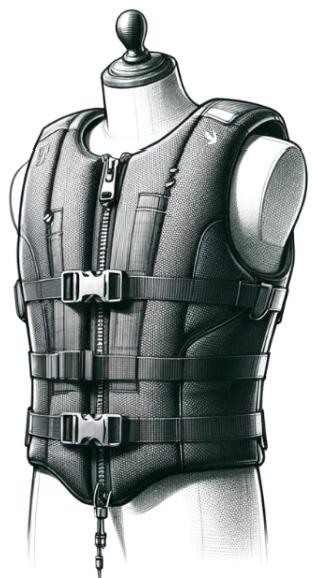
Our innovation journey began with an ambitious charter: to create a physical product in the Personal Flotation Device (PFD) industry, poised for launch within two years via an online store While many items in this industry already exist, they often stand alone in their function . The potential combination of various features presents an intriguing opportunity, one that demands further exploration Each individual innovation carries practical utility within specific contexts, yet our focus lies in merging these disparate elements into a cohesive whole . By identifying realistic innovations where existing materials can be integrated in
4
novel ways, we embarked on a journey to redefine the capabilities of PFDs
Our decision-making process was guided by the principles of realism, innovation, and feasibility We scrutinized each potential innovation against the RWW (Real, Win, Worth It) test, considering market size, pricing, and availability . Through consultation with our group and the support of our school organization, we honed in on a particularly compelling vision: the creation of a more flexible and agile PFD . This endeavor presents unique challenges, yet it aligns with our desire to push the boundaries of our skills and knowledge in this domain
A verbal agreement with the sailing team affirmed the relevance and urgency of our endeavor . This partnership underscores the importance of our mission: to enhance safety and comfort for water enthusiasts through groundbreaking advancements in PFD technology . As we delve into each section of our journey, from market analysis to product development, we invite you to join us in exploring the intricacies of our thought process and the evolution of our vision
5
Product Development Overview
In our journey to create innovative solutions within the Personal Flotation Device (PFD) industry, our initial outreach involved engaging with various organizations to understand their needs and challenges . From climbing and cycling teams to distance clubs and industrial technology societies, each group offered unique insights into the demands of their respective activities
As we delved deeper into the innovation charter, we recognized the need for thorough research and analysis to identify exceptional opportunities within the PFD industry Our approach involved scrutinizing each potential innovation against the Real, Win, Worth It (RWW) test, ensuring viability and potential for success
The process of generating and sensing opportunities led us to explore a wide range of concepts, from inflatable airbags
and GPS tracking integration to sustainable materials and adjustable buoyancy Through careful consideration and evaluation, we selected three exceptional opportunities: heat retention lining for cold water use, a combination of more buoyant filling, more flexible exterior material, and more straps for better fit, and reflective strips to aid in water visibility
Our team’s diverse skills and interests, ranging from design and materials expertise to marketing and research, equipped us to tackle these opportunities effectively After thorough analysis, we decided to focus on creating a more flexible and agile PFD, leveraging innovations in buoyant materials and strap design . This decision aligns with our team’s passion for water-related activities and presents an exciting opportunity to push the boundaries of PFD technology .
6
Mission Statement: Life Jacket
Opportunity Description
We aim to develop a Personal Flotation Device (PFD) that offers increased flexibility without compromising safety By incorporating advanced buoyancy mechanisms and flexible materials, our goal is to create a life jacket that provides both comfort and security for water enthusiasts .
Benefit Proposition
Our product will offer a more flexible life jacket, enhancing comfort during water activities Additionally, advanced buoyancy mechanisms will ensure optimal safety, providing users with peace of mind in any water environment
Key Business Goals
» Launch by the first quarter of 2026
» Obtain Letter(s) of Intent (LOI) by the third quarter of 2025
Primary Market
Our primary market includes semi-professional and competitive water sports athletes who require high-performance gear to excel in their activities .
7
Secondary Market
We also target individuals who spend recreational time on bodies of water, catering to their safety and comfort needs
Assumptions and Constraints
» Our product will serve as a replacement for existing life jackets, offering superior features and functionality
» We anticipate that certain materials will be readily available for integration into our design, facilitating the development process .
Stakeholders:
Our stakeholders include employees and corporations with high-risk jobs involving potential falls into water, such as those in the maritime, construction, and maintenance industries . Their input and feedback will be instrumental in ensuring the effectiveness and usability of our product
8
The product development process entails empathizing with users to understand their needs and challenges, defining clear objectives based on gathered insights, ideating creative solutions to address identified problems, prototyping tangible representations of proposed ideas, and testing these prototypes with users to gather feedback and refine the concepts iteratively. This iterative and collaborative approach ensures that the final product meets user needs and expectations while delivering value.
9
Product Research & Analysis
Our product research and analysis delved deep into the landscape of personal flotation devices (PFDs) by examining popular life jackets offered by key competitors in the market, including Zhik, NRS, and O’Neill . We meticulously scrutinized each competitor’s offerings, meticulously dissecting their purchase and product lifecycles to gain a comprehensive understanding of their strategies, target markets, and product features For instance, we analyzed Zhik’s sailing-focused PFD, NRS’s paddler-centric Ninja PFD, and O’Neill’s versatile SuperLite USCG Life Vest, uncovering unique selling points, design features, and target demographics
Furthermore, our ethnographic guide outline provided invaluable insights into the real-world usage of life jackets . We meticulously observed users’ interactions with their PFDs, focusing on basic movements such as donning and adjusting, as well as more nuanced aspects like mobility and comfort By conducting interviews with a diverse range of users, we gained firsthand perspectives on their preferences, pain points, and desired features in a PFD
10
The ethnographic guide seamlessly transitioned into interview translation tables, where we documented interview findings and complemented them with visual representations captured through photographs . This holistic approach allowed us to capture the essence of user experiences and distill them into actionable insights for product development
In the translation table section, we compared old annexes with new translation tables, ensuring clarity and coherence in our documentation process This meticulous attention to detail enabled us to streamline our research findings and make them more accessible to stakeholders and team members alike
Our hierarchical list of needs, derived from user interviews and survey responses, provided a structured framework for prioritizing product features and requirements By categorizing needs into primary and latent categories and assigning scores based on importance and frequency of mention, we identified critical areas for product improvement and innovation
Finally, the target specifications section outlined key metrics and performance criteria for evaluating PFDs, leveraging subjective ratings and competitor analysis to inform our product development strategy . By benchmarking our target specifications against competitors like Zhik, NRS, and O’Neill, we gained valuable insights into areas of differentiation and potential areas for improvement .
In summary, our product research and analysis process was characterized by attention to detail, a comprehensive understanding of user needs, and a datadriven approach to decision-making . By leveraging a diverse array of research methodologies and tools, we were able to uncover valuable insights that will inform our product development journey moving forward
11
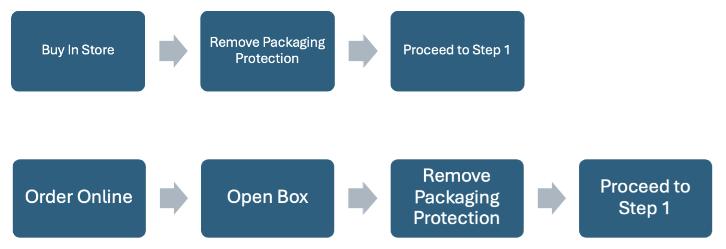
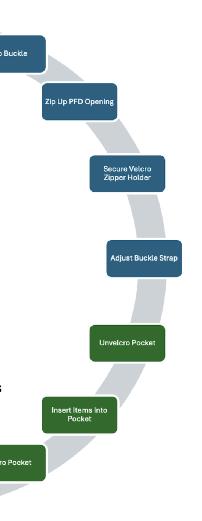
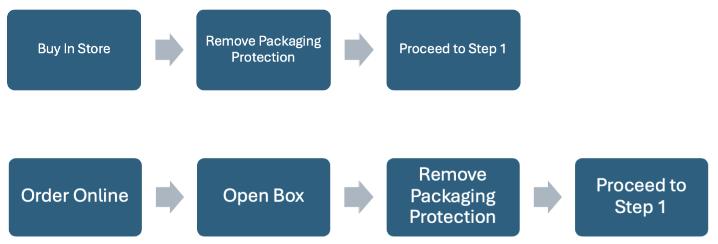
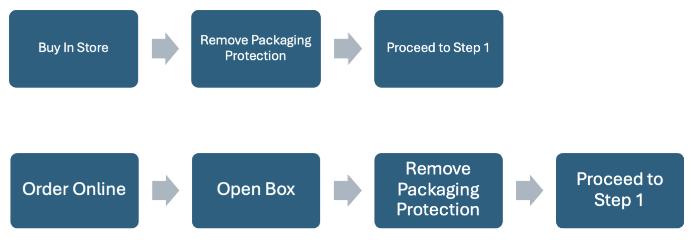
Use Lifecycle Schematics
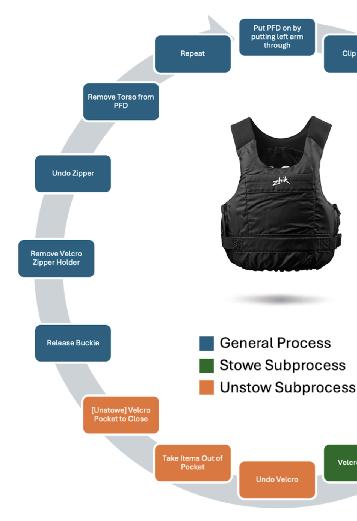
Competitor #1 - Zhik PFD: Zhik’s PFD is tailored for high-performance use by US sailors, boasting a USCG-approved design that prioritizes functionality and style Its low-profile construction, accentuated by beveled edges, minimizes the risk of snagging during active water sports . The inclusion of a single concealed waist strap not only enhances the jacket’s sleek appearance but also ensures a secure fit, complemented by a non-slip waist grip to prevent riding up A side zipper entry facilitates quick and easy donning, catering to the demands of competitive sailing . Additionally, the PFD features a spacious front pocket, providing convenient storage for essential items during maritime activities .
12
Competitor #2 - NRS PFD:
NRS’s Ninja PFD is engineered with paddlers in mind, offering a low-profile design that maximizes freedom of movement without compromising on flotation Crafted with PVC-free foam panels, the jacket prioritizes comfort and sustainability, while AirMesh fabric enhances breathability and ventilation during extended wear The redesigned front clamshell pocket incorporates internal organization, ensuring easy access to gear while on the water With six adjustment points and Type III certification providing 16 3 pounds of flotation, the Ninja PFD is tailored to adults with shorter torsos or those transitioning from youth jackets, delivering a tailored fit and reliable buoyancy for various water activities
13
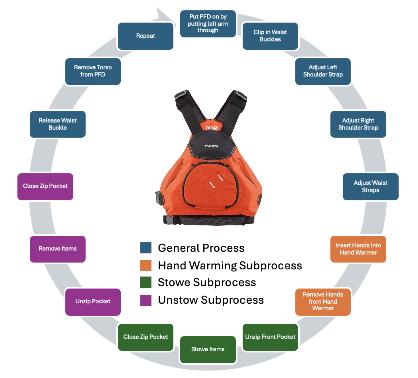
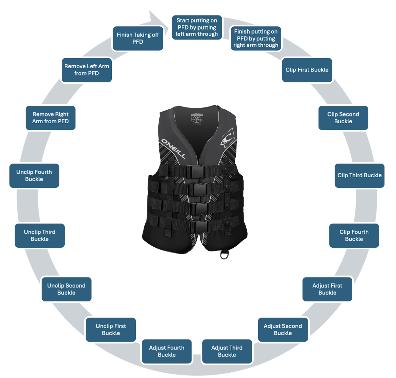
Competitor #3 - O’Neill SuperLite USCG Life Vest: O’Neill’s SuperLite USCG Life Vest is optimized for wake sports, waterskiing, tubing, and swimming, catering to individuals seeking safety, mobility, and comfort
Designed with a snug yet unobtrusive fit, the PFD offers full range of motion with minimal bulk, facilitating unrestricted movement during dynamic water sports . Lightweight polyethylene foam flotation ensures buoyancy without added bulk, complemented by durable coated polyester construction for enhanced strength and comfort . Heavy-duty webbing belts with quick-release buckles enable adjustable sizing, with a recommendation to size up for a relaxed fit With its USCG approval and versatile design, the SuperLite Life Vest is a reliable choice for a wide range of water-based activities
14
15
User Insights
Ethnographic Research Process Summary
Ethnographic research involved engaging with users across different age groups, genders, and levels of water sports activity . A total of 10 users were interviewed, with a focus on individuals aged 20 to 30, representing the most active segment of water sports enthusiasts The research aimed to capture user experiences, preferences, and pain points related to life jacket usage .
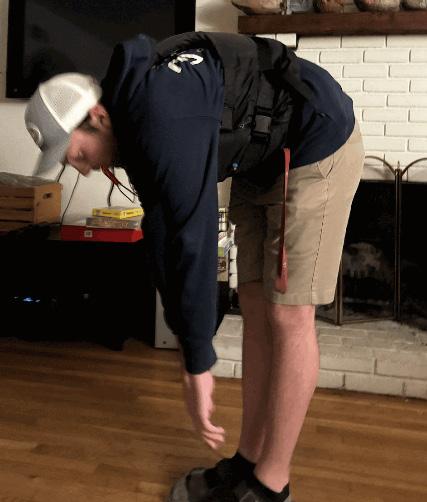
A structured ethnographic guide was utilized during user visits, facilitating the observation of key movements and interactions with life jackets Basic movements, such as donning and adjusting the PFD, were observed and analyzed . Interviews with users also included questions about their water sports activities, PFD preferences, and desired features in an ideal life jacket
16
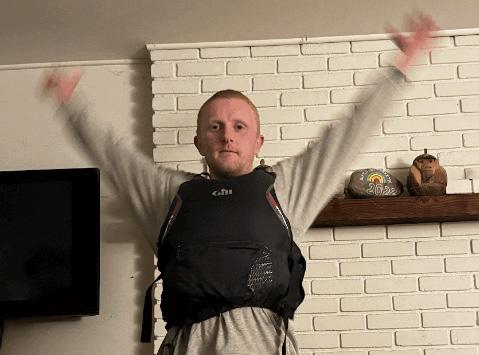
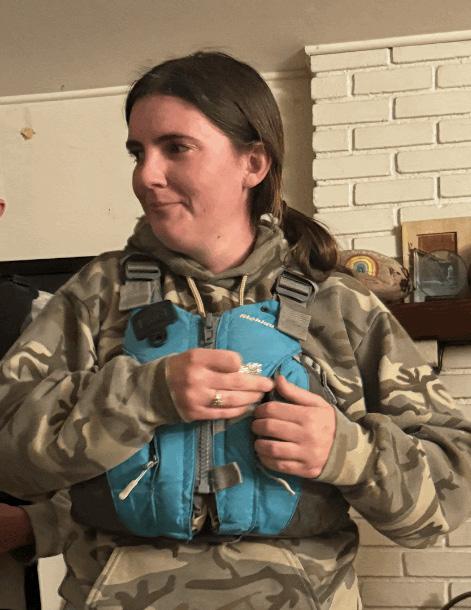
Photographs taken during the interviews provided visual insights into users’ interactions with life jackets. Key observations included the ease of adjustment, mobility while wearing the PFD, and overall comfort. These images served as valuable references to validate user feedback and identify areas for improvement in existing designs.
17
Hierarchical List of Needs:
Based on user interviews and observations, a hierarchical list of needs was developed to prioritize essential features in a life jacket . Primary needs, such as safety, flexibility, and storage, emerged as top priorities, reflecting users’ fundamental requirements Secondary needs, including adjustability and versatility, further enriched the understanding of user preferences
Primary Needs:
» Safety
» Comfort
» Durability
» Mobility
» Aesthetics
Secondary Needs:
» Innovative Technologies
» Performance in Adverse Conditions
18
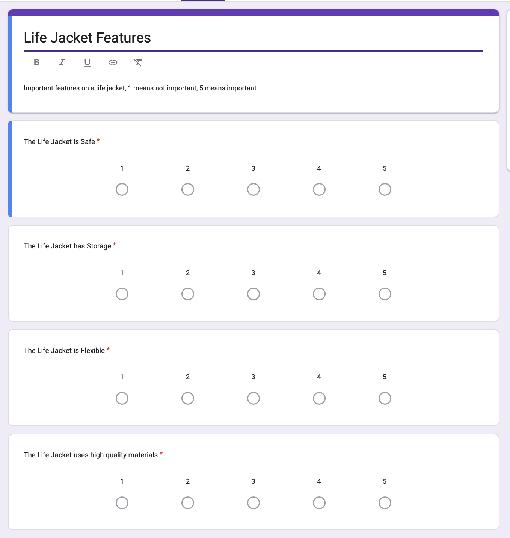
Target Specifications:
A comprehensive list of target specifications was established to guide the design and development process . Key metrics, such as buoyancy rating, storage capacity, and material quality, were defined to meet users’ expectations for comfort, functionality, and durability . These specifications served as benchmarks for evaluating concept designs and ensuring alignment with user needs
19
Concept Development
Problem Decomposition Schematics
Two problem decomposition schematics were created to break down the core problem of enhancing mobility in life vests . One schematic focused on identifying specific needs related to safety regulations and functions, while the other highlighted sub-functions within safety equipment design, sensing and detection, and communication and alert systems
Market Research
Market research was conducted to understand the landscape of Coast Guard-approved PFDs and non-approved alternatives Competitors such as Onyx, Mustang Survival, and Bass Pro Shops were analyzed, along with non-approved options like Zhik’s Breathable PFD . Insights into market dynamics and intellectual property considerations were also gathered to inform product development strategies
Problem Decomposition by Needs:
Strict Adherence to Safety Regulations:
» Sub-problem: Ensure that the improved mobility of the life vests does not compromise their primary function of keeping wearers safe and afloat . All designs must comply with existing safety regulations

20
Problem Decomposition by Function:
Safety Equipment Design:
» Sub-function: Focus on designing life vests that offer enhanced mobility This involves innovating in areas such as material flexibility, vest cut and fit, and weight distribution to ensure users can move freely without feeling constricted
» Sub-function: Incorporate durable, lightweight, and flexible materials in life vest construction . These materials must support not only the vest’s buoyancy and ergonomic features but also its environmental sustainability by being reusable and long-lasting .

Sensing and Detection:
» Sub-function: Seamlessly integrate lightweight GPS technology without compromising the vest’s comfort and mobility features This ensures precise location tracking of individuals overboard (MOB) without adding unnecessary bulk or hindrance
Communication and Alert Systems:
» Sub-function: Develop compact and efficient communication systems to alert crew members and authorities immediately upon detecting an MOB incident These systems should be designed to be unobtrusive and not impede wearer mobility
» Sub-function: Implement an automatic distress signal transmission feature that is both lightweight and does not interfere with the vest’s mobility-enhancing properties This system should enable rapid response from nearby vessels and maritime authorities .
21
Sketches and Product Concepts
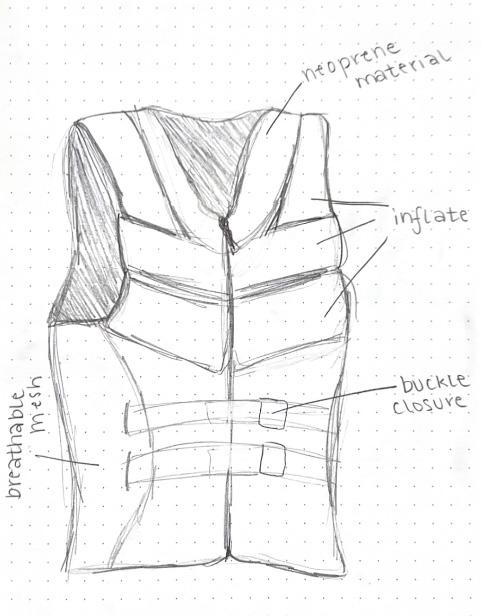
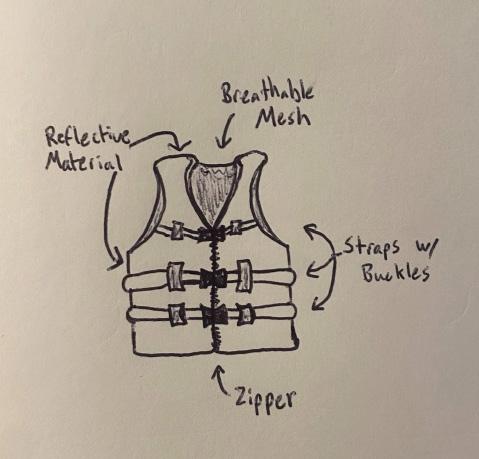
A series of drawing sessions and sketching workshops yielded 16 to 20 initial product concepts, each exploring innovative materials, designs, buoyancy mechanisms, closure systems, and additional features These concepts were visualized through sketches, showcasing diverse approaches to enhancing mobility, safety, and user experience in life vests From neoprene slimline designs to lightweight fabric minimalist vests, each concept offered unique solutions to the core problem
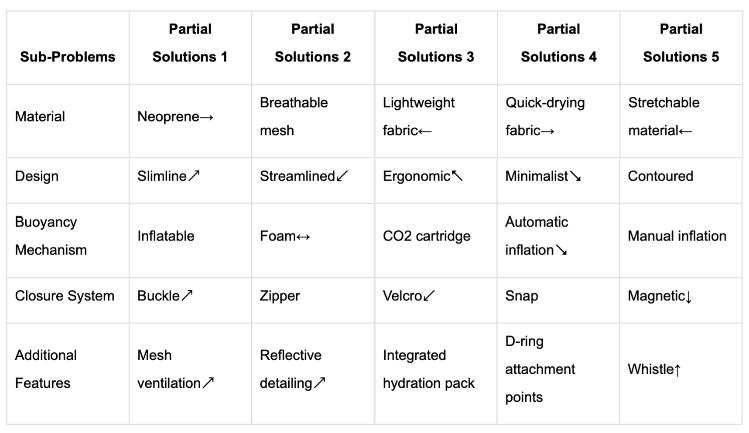
Concept Combination Table:
A concept combination table was created to facilitate the selection process by categorizing key elements such as material, design, buoyancy mechanism, closure system, and additional features . This table allowed for easy comparison and evaluation of different combinations, ensuring a comprehensive exploration of design possibilities .
22
Concept Screening/Scoring Matrix:
A concept screening/scoring matrix was developed to assess each concept based on criteria such as comfort, functionality, safety, aesthetics, and feasibility Scores were assigned to each concept, with Concept 1 emerging as the top choice due to its balanced performance across multiple criteria The rationale behind the scores highlighted the strengths and weaknesses of each concept, guiding the selection process towards the most promising solutions .
23
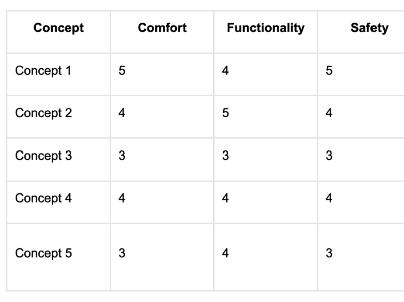
Concept 1 excelled in safety while also offering decent comfort and functionality, indicating robust safety features with comfortable wearability However, it scored lower in aesthetics, suggesting a functional but less visually appealing design . Feasibility was moderately confident . Concept 2 performed exceptionally well in functionality, possibly due to optimal buoyancy distribution, but safety and feasibility scores were lower, indicating potential challenges in execution or compliance Concept 3
24
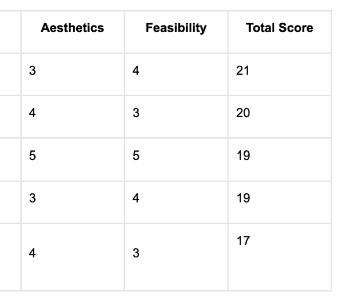
In this matrix:
Comfort: Evaluates how comfortable the life jacket is to wear for extended periods.
Functionality: Assesses how well the life jacket performs its intended functions.
Safety: Considers the level of safety provided by the life jacket.
Aesthetics: Rates the visual appeal and design of the life jacket.
Feasibility: Considers the practicality and ease of implementation of the concept.
stood out in aesthetics and feasibility, with a visually striking design, but scored lower in comfort, functionality, and safety, implying trade-offs Concept 4 demonstrated a balanced design across criteria, making it a safe choice . Concept 5 showed innovation but scored lowest in safety and feasibility, reflecting concerns about reliability . Concept 1 emerged as the top choice, offering a balanced blend of safety, functionality, and comfort, making it the most promising option
25
Concept Refinement
Product Architecture Explorations:
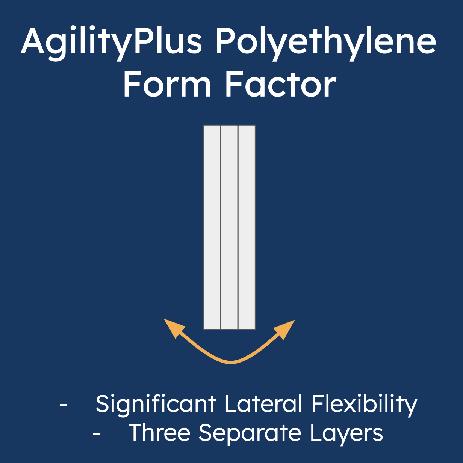
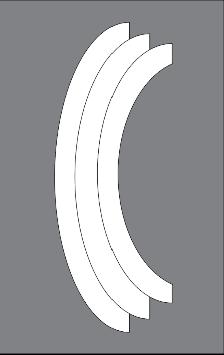
The life jacket was decomposed into functional chunks, exploring different configurations through sketches to ensure optimal functionality and usability .
26
Design Language Explorations:
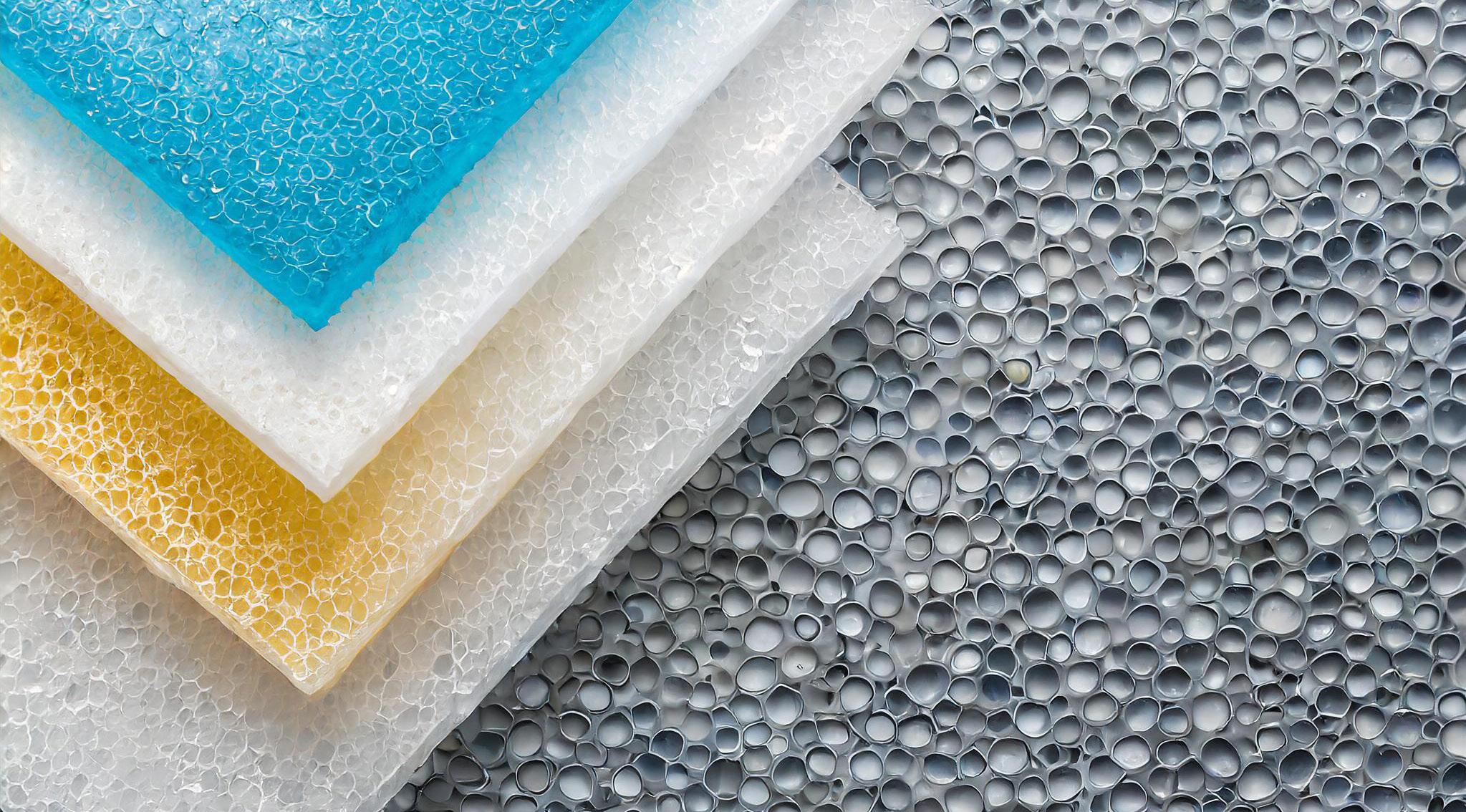
During the exploration phase, we delved into aesthetic considerations encompassing diverse forms, color palettes, textures, and materials . Our vision for the jacket entailed a sleek design, offering vibrant, eye-catching hues to ensure optimal visibility . We integrated contoured panels and striking contrasts to elevate both comfort and visual appeal Additionally, as we transitioned towards our goal of creating an improved PFD for all, the prospect of integrating our polyethylene technology into existing life jackets sparked excitement and innovation .
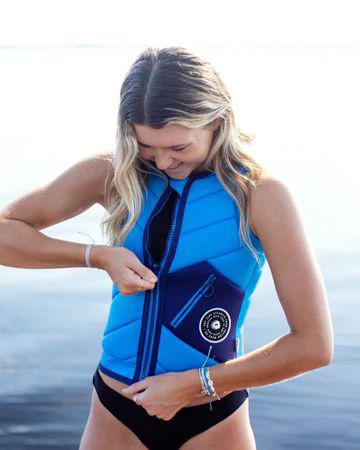
Ergonomics:
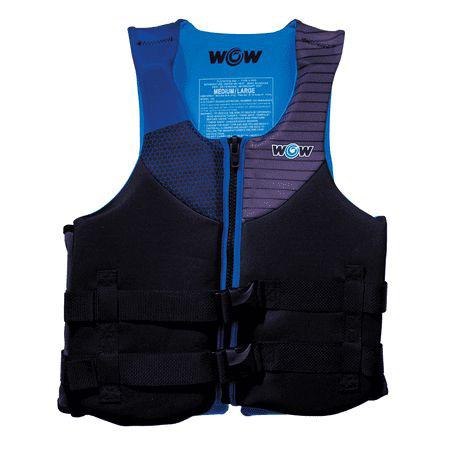
Our design prioritizes ergonomics to ensure maximum usability and comfort for users . Through extensive user observations and human factors evaluations, we identified key areas for improvement The integration of adjustable features enhances the life jacket’s adaptability to different body types and preferences, promoting a personalized fit for each wearer . Additionally, ergonomic considerations guided the placement of fastening mechanisms, ensuring ease of use and quick deployment, even in stressful situations . By optimizing mobility and reducing bulkiness, our design enables users to move freely and perform activities with minimal hindrance, enhancing overall safety on the water .
27
Sustainability:
In our commitment to sustainability, we have implemented special considerations to minimize environmental impact throughout the life cycle of our product From the selection of raw materials to the manufacturing process and end-of-life disposal, sustainability principles are embedded in every aspect of our design . We prioritize the use of eco-friendly materials, such as recycled plastics and biodegradable components, to reduce resource consumption and minimize waste . Furthermore, our streamlined production process minimizes energy consumption and emissions, contributing to a lower carbon footprint Additionally, our life jacket is designed for disassembly, facilitating efficient recycling and reuse of components By incorporating post-consumer content and promoting recyclability, we aim to create a product that not only protects users but also safeguards the environment for future generations .
28
Manufacturability Considerations:
Polyethylene Layers:
» Material: Polyethylene, known for its buoyancy and flexibility .
» Manufacturing Process: Injection molding or thermoforming to create separate polyethylene layers with precise geometries . These layers can be produced in bulk with high accuracy and consistency
» Geometry: The geometry of the polyethylene layers should be designed to optimize buoyancy and flexibility, allowing for various form factors to accommodate different body shapes and sizes
Elastic Binding:
» Material: Elastic material, such as rubber or silicone .
» Manufacturing Process: Extrusion or injection molding to produce elastic bands or strips with the desired elasticity and strength
» Connection: The polyethylene layers can be bound together using elastic bands, providing flexibility and allowing the life jacket to conform to the
wearer’s body comfortably . Loose connections between layers can also be achieved through a latex band or by omitting connecting parts altogether, enhancing agility and mobility .
Integration into Existing Manufacturing Lines:
» Approach: Business-to-business (B2B) transaction to integrate the new polyethylene technology into existing life vest manufacturing processes .
» Adaptation: The new technology will be seamlessly integrated into the production lines of life vest manufacturers, leveraging their expertise and infrastructure to scale production efficiently .
» Compatibility: The geometry and specifications of the polyethylene layers will be optimized to align with existing manufacturing processes, ensuring smooth integration without significant modifications to the production lines
» Collaboration: Close collaboration between our company and life vest manufacturers will facilitate the adoption of the new technology, allowing for seamless transition and minimal disruption to existing operations
29
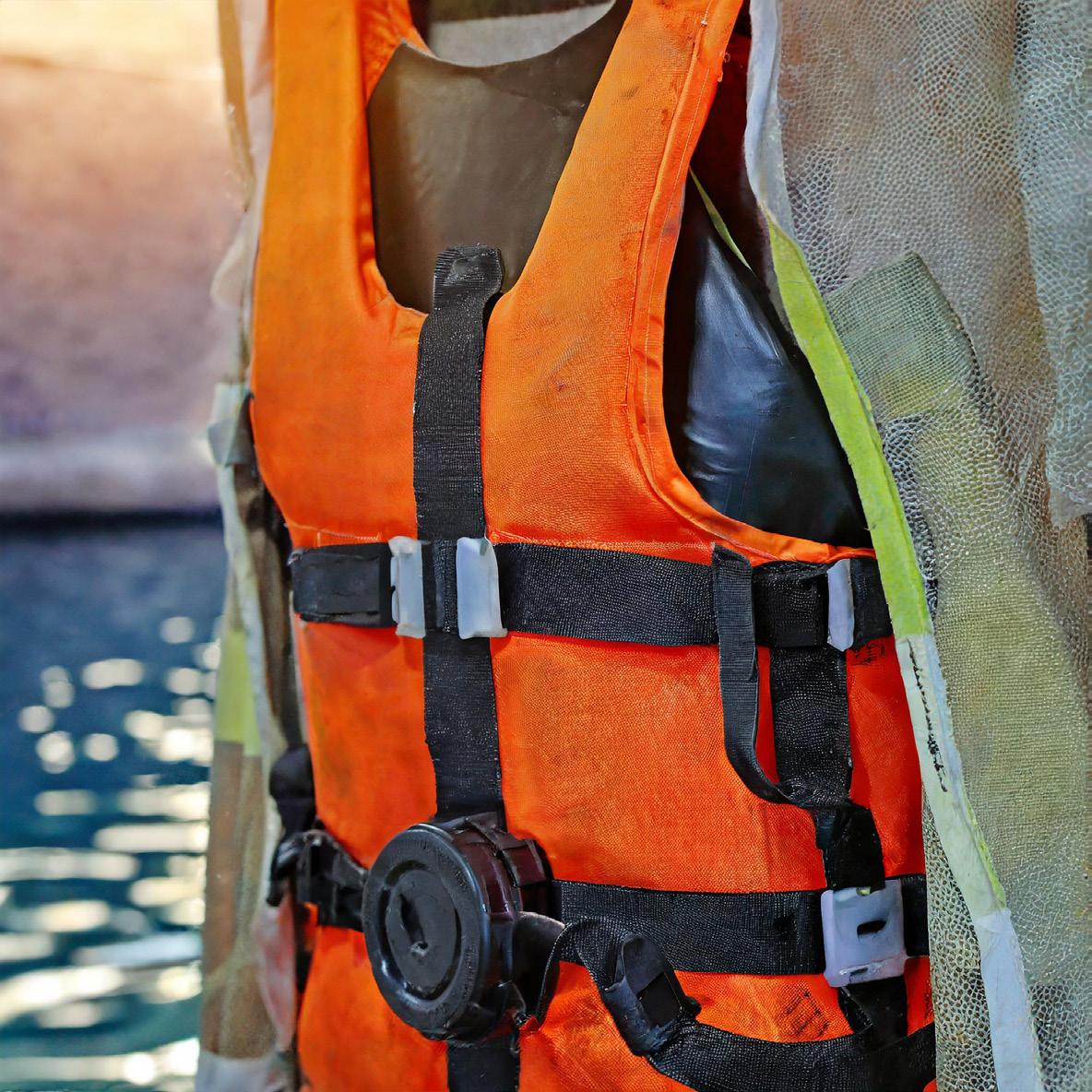
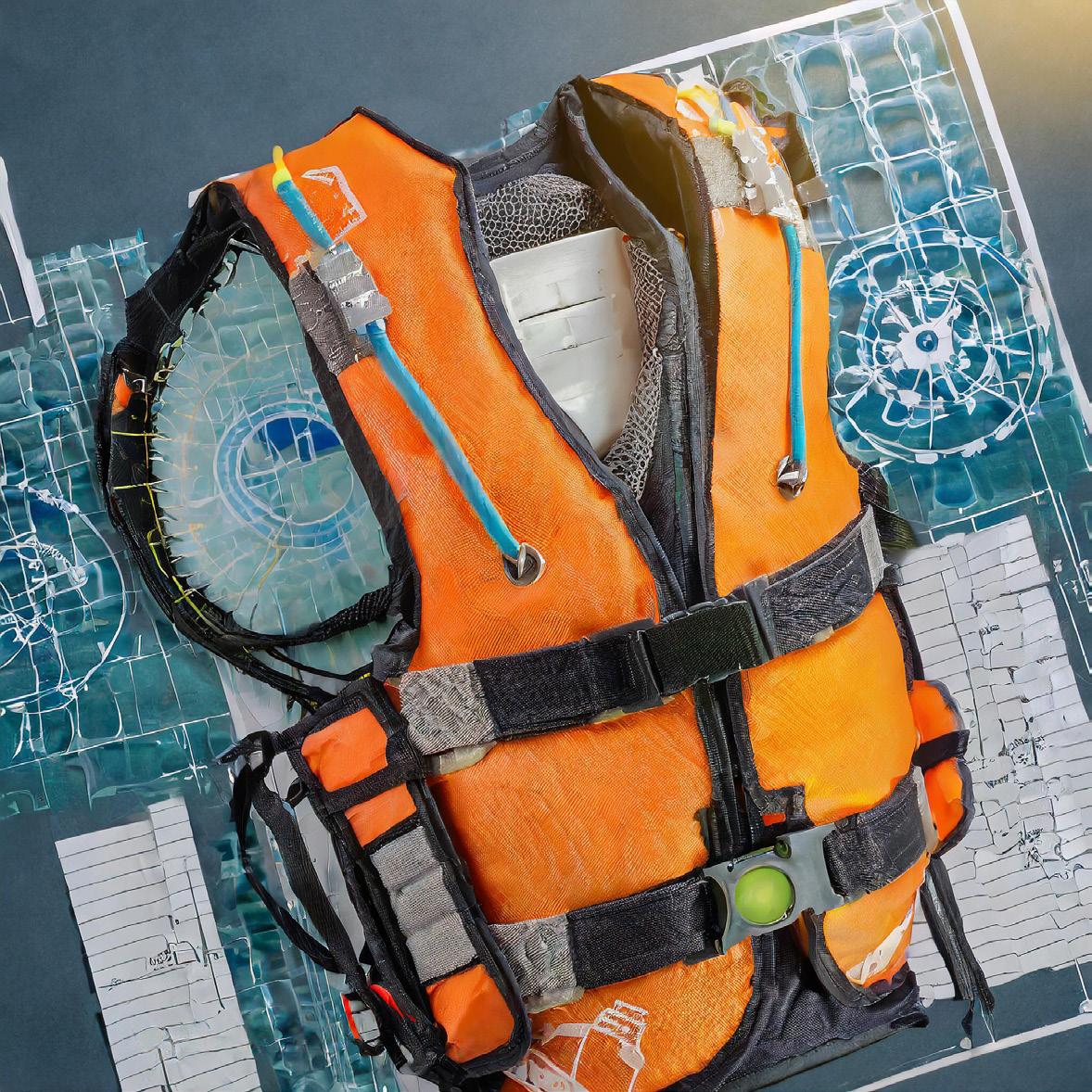
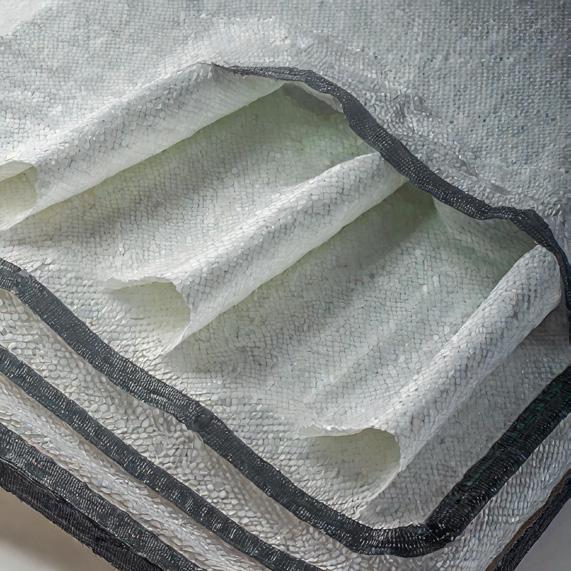
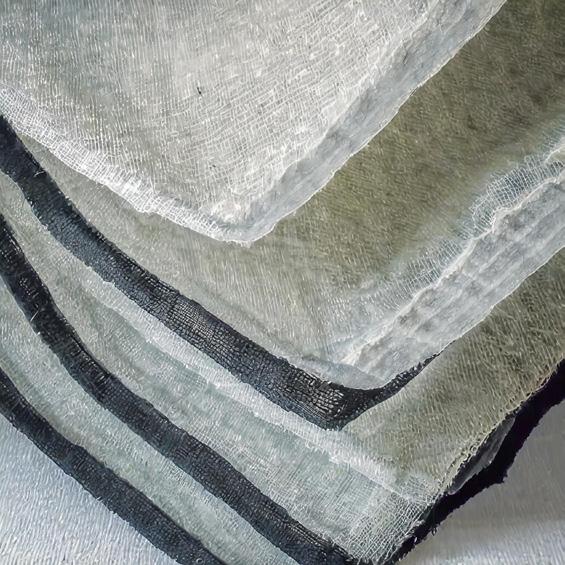
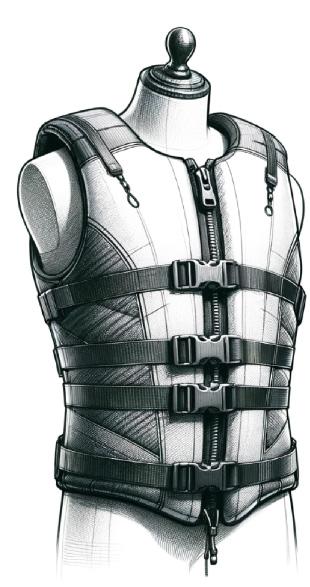
Our final concept renderings embody our vision of creating a life jacket that sets new standards for safety, comfort, and sustainability in the PFD market. With a focus on innovation, usability, and environmental consciousness, we are confident that our concept has the potential to make a significant impact and improve the lives of water enthusiasts everywhere.
30
Conclusion
In conclusion, our final concept renderings represent the culmination of extensive research, exploration, and refinement aimed at creating an innovative and impactful product in the personal flotation device (PFD) market . Through meticulous attention to detail and a deep understanding of user needs, we have developed a life jacket concept that not only prioritizes safety but also enhances comfort, functionality, and sustainability
The renderings showcase our commitment to excellence in product design, with sleek and eye-catching aesthetics that ensure visibility and appeal Each element, from the contoured panels to the contrasting detailing, has been carefully considered to maximize both form and function . Moreover, our incorporation of advanced materials, such as recycled neoprene and high-quality plastics, underscores our dedication to sustainability and environmental responsibility
Furthermore, our ergonomic considerations, including the use of neoprene for a snug yet comfortable fit, and the integration of an inflatable buoyancy mechanism for optimal flotation, highlight our commitment to enhancing usability and user experience These features, combined with quick and easy-to-use buckle closures and mesh ventilation for temperature regulation, ensure that our life jacket is not only effective in emergency situations but also comfortable for extended wear during water activities .
Finally, our strategy of integrating our innovative polyethylene technology into existing life vest manufacturing lines through B2B transactions demonstrates our forward-thinking approach to market penetration and scalability By collaborating closely with industry partners, we aim to make our life jacket concept accessible and widely adopted, thereby contributing to the overall safety and enjoyment of water activities for users worldwide
31
Appendices
Translation tables and survey
Team number and names
32
Made in China
Group 3
» SYDNEY SCHULTZ
» KANYA MISRA
» CHARLIE SMILES
» DYLAN TRAN
» JACKSON PAVITT
33