Happy Holidays!
Happy Holidays!
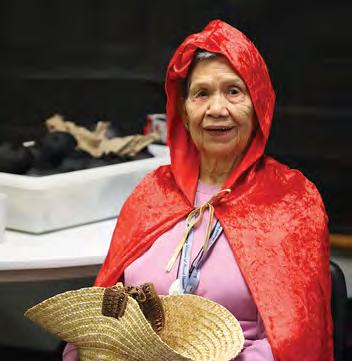
The winter issue of qyuuqs News is here! It features some great stories. To name a few: Native American Heritage Month: Traditions of our Ancestors – “Winnie”; and Merla Martin Retires; Donna Charles Retires; Swinomish Police Offer Jakob Reik Honored for Saving a Life, and so many more!
In recent news, the Swinomish Tribe announced the resolution of litigation with BNSF. You can read more on PAGE 8-9.
The Swinomish Election Board published the list of Senate candidates! Learn who is running on PAGE 12.
Also, the qyuuqs News Facebook page is closing. We are still here though! Follow the Swinomish Senate to get qyuuqs News and all your community updates! Facebook.com/SwinomishTribalCommunity
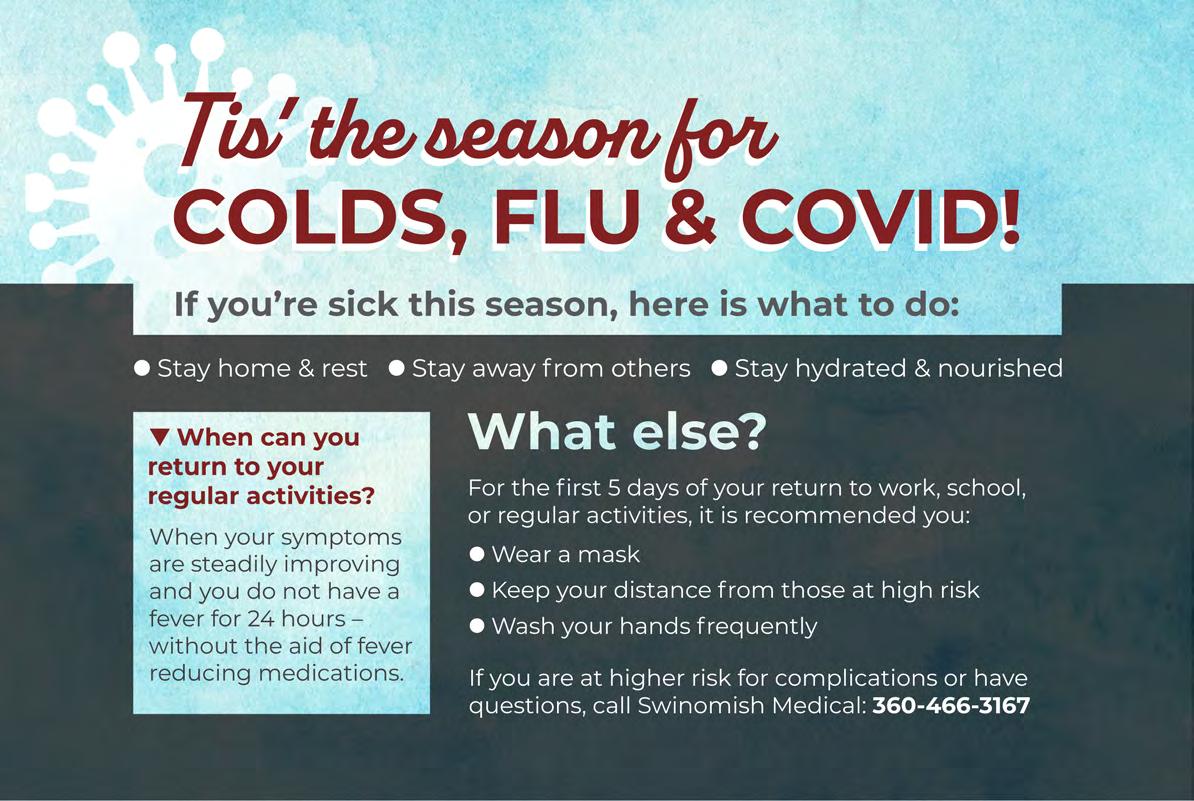
It is the season for colds, flu, and COVID-19! Remember, if you’re sick, stay home and rest, stay away from others, and stay hydrated and nourished!
Take care of yourself this winter and be sure to read the Supporting Your Mental Health During The Holiday Season submitted by Swinomish Behavioral Health on PAGE 38.
Merry Christmas!
Caroline Ammons, goliahlitza

The qyuuqs News Facebook page is closing. Follow Swinomish Senate to get all your community updates!
facebook.com/SwinomishTribalCommunity/
TRIBAL SENATE
ya l ka but
Steve Edwards, Chairman (360) 840-5768 | sedwards@swinomish.nsn.us
ya qua l us
Brian Porter, Vice Chairman (360) 840-4186 | bporter@swinomish.nsn.us
kuts bat s t
Jeremy Wilbur, Treasurer (360) 770-7447 | jjwilbur@swinomish.nsn.us
sa-ba-shal-g d
Rodney John, Secretary (360) 708-1387 | rjohn@swinomish.nsn.us
spi sta yup t n
Greg Edwards (360) 854-8612 | gedwards@swinomish.nsn.us
kaniʔtəd
Tandy Wilbur (360) 770-3050 | tandywilbur@swinomish.nsn.us
qws stania
Aurelia Bailey (360) 853-6376 | awashington@swinomish.nsn.us
t̕alə q talə II
Barbara James (360) 391-3958 | bjames@swinomish.nsn.us
y llakab l
Bruce James Jr. (360) 708-5779 | brucejames@swinomish.nsn.us
siwəlcəʔ
Alana Quintasket (360) 302-0971 | aquintasket@swinomish.nsn.us
nu-was-k -luk
Fred Cayou (360) 708-2401 | fcayou@swinomish.nsn.us
The mission of qyuuqs News is to provide monthly communication to Swinomish Indian Tribal Community Members near and far. We are committed to serving as an apolitical forum for the Swinomish governing officials and all Community Members. qyuuqs News is not intended to reflect the official position of the governing body at Swinomish Indian Tribal Community but rather reflects the ideas, events, and thoughts of individual Community Members and Tribal staff. As such, the Swinomish Tribe makes no claim as to the accuracy or content of any of the articles contained therein.
11406 Moorage Wa, La Conner, WA 98257
Phone (360) 466.7258
*SUBMISSIONS
Send your news tips, stories, and photos to: qyuuqs@swinomish.nsn.us
Submission deadline: 10th day of the month
QYUUQS NEWS
Caroline Ammons, Editor qyuuqs@swinomish.nsn.us
SWINOMISH COMMUNICATIONS
Heather Mills, Communications Manager
Sarah Kellogg, Content Journalist
Katie Bassford, Staff Photographer
Jordan Ekdahl, Graphic Designer LaVonne Long, Social Media Specialist communications@swinomish.nsn.us
This issue is available online at swinomish-nsn.gov/who-we-are/page/ qyuuqs-news
Photos credits: qyuuqs News Staff or as credited. All rights reserved.
Facebook: Swinomish qyuuqs News
Linkedin: Swinomish Indian Tribal Community
*qyuuqs News is made available for viewing on the Internet
Website: swinomish-nsn.gov
@SwinomishSenate
When submitting information, stories, and/or photos, please be aware everything published in the print version of qyuuqs News is also published on the Internet and is available to the world. Please consider carefully whether your submissions contain anything you feel may not be suitable or appropriate for the Internet. By submitting your information, stories, and/or photos to qyuuqs News, you agree to publishing your submission in both the print and online versions of qyuuqs News. qyuuqs News is a publication of the Swinomish Indian Tribal Community produced by Swinomish Communications.
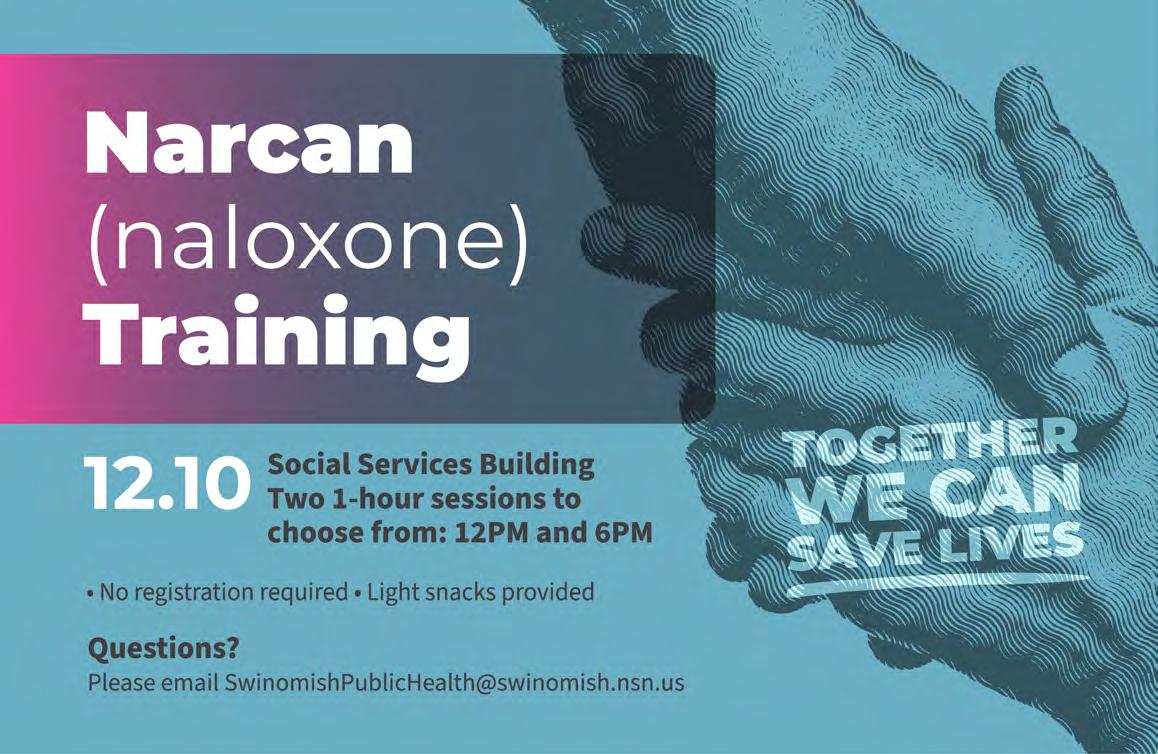
WARNING: The potency of the illicit drugs being distributed in and around our community is unpredictable and they may contain unexpected and extremely harmful additives that can cause sudden death.
1) K now the signs of an overdose. These signs include: small “pinpoint” pupils; losing consciousness or not responding to voice or touch; slow, weak, or no breathing; cold or clammy skin; choking or gurgling sounds; blue or greyish skin, especially around the lips and fingers.
2) Carry Narcan (naloxone) and keep extra in your home. Self-serve stations are located at Swinomish Medical, Wellness Program, Village gas station, Smokehouse, Family House, NWIC, the bus stops at Housing Authority and Swinomish Ave./Kee-Ah Rd., Boys & Girls Club, and Social Services.
3) Whether it’s for you or someone you care about, help and ongoing support are available. ♦ didgʷálič Wellness Center: (360) 588-2800 ♦ S winomish Wellness Program: (360) 466-1024 ♦ S winomish Medical: (360) 466-3167 ♦ S winomish Behavioral Health: (360) 466-3167 ♦ Fire District 13 CARES: (360) 391-4554
♦ Washington Recovery Help Line: (866) 789-1511
BRIANA PORTER, OFFICE OF THE TRIBAL ATTORNEY
The Swinomish Senate, the governing body of the Swinomish Indian Tribal Community, recently enacted the following code amendments:
At the August 2025 Senate meeting, the Senate made revisions to the Tribe’s Hunting and Gathering Code. The amendments update and address gaps in the code. Key changes include: tribal members under the age of 18 are eligible to hunt if they have completed a firearms safety course, and those under the age of 16 must be accompanied by a tribal hunter aged 16 or over; gathering by non-members is generally not allowed unless gathering on private land or as a tribal member’s guest; certain hunting infractions may be charged as criminal offenses if there is evidence that a violation is intentional; and deferral to regulations for most technical requirements. The Swinomish Fish and Game Commission recommended the amendments, which the Senate enacted on August 5, 2025.
At the September 2025 Senate meeting, the Senate made revisions to the Tribe’s Port Authority Code. The amendments add certain waterfront properties to the Port’s Jurisdictional Area, to include the La Conner dock and North Swinomish Channel moorage dock, and expands the Village waterfront area; increases Board membership from five to six and otherwise amends appointment terms to reflect current practice; delegates to the Port the power to adopt and to Port staff to enforce civil regulations to further the purposes of the Port; specifies that use of Port facilities is a privilege; delegates authority to Harbormaster and Port staff to enforce Port regulations; defines certain civil infractions and empowers the Port to establish additional civil infractions by regulation; establishes a penalty structure for civil infractions to include fine, impoundment, and suspension of Port use privileges; establishes civil enforcement and review procedures to include notice and right to administrative hearing before the Board and appeal to Tribal Court. The Port Authority Board recommended the amendments with input from the Fish and Game Commission, which the Senate enacted on September 2, 2025.
At the September 2025 Senate meeting, the Senate made revisions to the Tribe’s Fishing, Enforcement, and Commercial Float Dock Codes. The amendments will make conforming changes to reflect the Port’s authority to regulate activity within its Jurisdictional Area by modifying the Unattended Gear fisheries infraction and enforcement of said infraction and repealing the Floating Dock chapter. The Port Authority Board recommended
the amendments with input from the Fish and Game Commission, which the Senate enacted on September 2, 2025.
At the September 2025 Senate meeting, the Senate made revisions to the Tribe’s Junk Vehicles and Abandoned Property Code. The amendments make conforming changes to reflect the Port’s authority to impound unattended property left within its Jurisdictional Area pursuant to Port procedures as laid out in the amended Port Authority Code. The Port Authority Board recommended the amendments with input from the Fish and Game Commission, which the Senate enacted on September 2, 2025.
At the September 2025 Senate meeting, the Senate made revisions to the Tribe’s Adoption and Membership Code. The amendment: expands membership eligibility for, and restricts eligibility to, descendants of an individual belonging to one or more of four aboriginal bands: Swinomish, Kikiallus, Samish, or Lower Skagit; eliminates the General Counsel vote on applicants for provisional membership by adoption; changes the process for provisional members by adoption to become members by adoption as recommended by the Enrollment Committee; and updates language in the code. The Enrollment Committee recommended the amendment, which the Senate enacted on September 18, 2025, and became effective on November 11, 2025.
At the October 2025 Senate meeting, the Senate adopted revisions to the Tribe’s Election Code. The amendment adds a definition for “Tribal Building” which prohibits solicitation of Petition Signatures within Tribal Buildings at all times, and amends candidate qualifications. The Election Board recommended the amendments, which the Senate enacted on October 7, 2025.
At the October 2025 Senate meeting, the Senate adopted revisions to the Tribe’s Adoption and Membership Code. The amendment clarifies that biological genealogical information includes results of DNA genetic testing, to define DNA genetic testing, and to clarify that the Enrollment Committee may request additional biological genealogical information from applicants for provisional membership by adoption as it may from applicants for automatic membership. The Enrollment Committee recommended the amendments, which the Senate enacted on October 22, 2025, and became effective on November 11, 2025.

Title 17, Chapter 11 – Trust Improvement Use and Occupancy Tax
At the October 2025 Senate meeting, the Senate adopted revisions to the Tribe’s Trust Improvement Use and Occupancy Tax Code. The amendment updates STC 1711.140 Administrative Procedures for Payment of Taxes and STC 17-11.220 Penalties for Late Payment. The Tax Committee recommended the amendments, which the Senate enacted on October 22, 2025.
The amended code and constitution are available for review on our website at http://swinomish-nsn.gov. Paper copies are available for review at the Tribal Court Clerk office or the Office of the Tribal Attorney.
November 4, Fidalgo Island – The Swinomish Indian Tribal Community today announced the resolution of the Tribe’s long-running Federal Court trespass litigation with BNSF Railway. The Tribe also announced it had established a new business relationship with BNSF. Together, the new agreements chart a cooperative path forward that affirms Swinomish sovereignty and delivers benefits for the Tribe, BNSF, the Salish Sea, local industry and the region.
For more than a year after the Federal Court in Seattle entered judgment in the Tribe’s favor, BNSF and the Tribe have litigated BNSF’s appeal. At the same time, the parties participated in confidential mediation overseen by the Ninth Circuit Federal Court of Appeals. Today the Tribe and BNSF filed a joint stipulation informing the Court of Appeals that the mediation resulted in a confidential resolution of the litigation.
Swinomish Chairman Steve Edwards stated on behalf of the Swinomish Senate: “These agreements create new opportunities for future Tribal investment in housing, healthcare, and education for our Tribal members, and in natural resources stewardship. We are a service tribe, and like many Native communities across the country, the Swinomish community faces disparities in housing for its members, health care and health outcomes, and educational opportunities. These agreements will give us tools to help address those issues while also protecting what is central to who we are: our land and waters, our sovereignty, and our Treaty fisheries.”
An easement agreement signed in 1991 requires the Tribe’s consent for any BNSF operations over the Reservation that exceed one train of no more than 25 cars in each direction per day. Swinomish and BNSF have now agreed that one unit train -- a train made up entirely of cars carrying a single type of commodity -may be operated across the easement per day. This includes unit trains transporting crude oil across the easement. Swinomish and BNSF have also agreed that in order to provide greater flexibility to rail shippers, a limited number of additional rail cars may cross the easement as part of BNSF’s daily manifest or local train.
The exercise of Treaty fishing rights is central to Swinomish culture, economy, and identity. Swinomish’s consent to allow unit trains to cross its Reservation will decrease the volume of marine tanker vessels delivering crude oil to March Point, providing a direct benefit to Tribal Treaty fishers, whose work on the water is disrupted and at times harmed by those vessels. Specifically, reduced marine vessel traffic is expected to result in decreased
interference with Tribal Treaty fishing activities, reduced damage to or destruction of Tribal Treaty fishing gear, and reduced risk of potentially catastrophic marine vessel incidents, oil spills and harm to marine habitats.
In reaching their agreements, Swinomish and BNSF have also developed new lines of communication to minimize interference by BNSF trains with the Tribe’s access to its Treaty fishing areas. They have also cooperated to address and reduce Swinomish concerns about the safety of the rail line and swing-bridge on the easement.
Finally, today’s agreements will promote employment, local business growth and the long-term stability and predictability of the Swinomish, Anacortes and Skagit County economies.
Swinomish Chairman Steve Edwards stated on behalf of the Swinomish Senate:
“From the beginning, our goal has been to protect our homeland – and our sovereign right to control how our land is used – as well as to ensure that the promises made to our ancestors in the Treaty of Point Elliott and in BNSF’s easement agreement were honored. We filed this lawsuit in 2015 to stop the trains that were running across Swinomish land without the Tribe’s required consent.
“Tribes have always been the best stewards of their lands and resources, and these agreements reflect that. By reducing vessel traffic and improving rail coordination, we are protecting our ability to exercise our Treaty fishing rights and reducing the risks marine tankers pose to our Treaty resources. These measures ensure our culture and traditions endure long into the future while also supporting long-term economic viability. Everyone prospers when Tribal sovereignty is respected and industry works in true partnership with Tribes.”
The Swinomish Indian Tribal Community is a federally recognized Indian Tribe with more than 1,000 members. Swinomish is a legal successor to the signatories of the 1855 Treaty of Point Elliott. Its Reservation is located 65 miles north of Seattle, Washington, on Fidalgo Island.
For further information, contact: John Grandy - grandyadvisory@gmail.com (202) 236-9903
The Tribe filed suit against BNSF in April 2015 for violating the terms of an easement agreement it signed in 1991 allowing a limited number of trains and rail cars to cross the Swinomish Reservation in Skagit County.
Train tracks were laid across the northern portion of the Reservation in the late 1800’s, over the objection of the Swinomish Tribe and Federal government officials. In 1991, the Tribe and BNSF signed an agreement settling a lawsuit filed by the Tribe and the United States in 1976 for nearly a century of trespass. The agreement granted BNSF an easement but with important conditions: only one train of no more than 25 railcars would cross the Reservation in each direction daily, and BNSF would regularly update the Tribe on the type of cargo. In return, the Tribe agreed not to “arbitrarily withhold permission” if there should be a future BNSF request to increase the number of trains or cars.
BNSF never provided notice to the Tribe of its intention to run unit trains of Bakken crude oil across the Reservation. In September 2012, the Tribe learned from media reports that “unit trains” of 100 railcars or more were beginning to cross the Reservation. By April 2015, BNSF was reportedly running six 100-car “unit trains” per week across the Reservation, more than four times as many railcars daily as permitted by the easement. The tracks are adjacent to the Tribe’s economic center, including a hotel and casino and other facilities. The intended development of this economic center was one of the primary reasons for the limitation of the number of trains and cars incorporated into the easement.
The United States District Court in Seattle ruled early in the Tribe’s 2015 lawsuit that there was no dispute that BNSF had breached the easement agreement when “BNSF neither apprised the Tribe of its cargo nor obtained the Tribe’s written agreement to an increase in the number of trains and the number of cars in those trains.”
But BNSF argued that its obligations to its rail shippers – in this instance, two refineries located on March Point near Anacortes – superseded its obligation to the Tribe under the easement agreement. After the District Court issued an order upholding the Tribe’s rights in 2017, BNSF filed an appeal to the United States Court of Appeals for the Ninth Circuit. In a 2020 decision, the Court of Appeals rejected BNSF’s argument:
We hold that the Interstate Commerce Commission Termination Act does not repeal the Indian Right of Way Act and does not defeat the Tribe’s right to enforce conditions in a right-ofway easement agreement issued pursuant to the Right of Way Act. We hold further that the ICCTA does not abrogate the Treaty of Point Elliott and the Tribe’s treaty-based federal common law right to exclude and condition a third-party’s presence on, and use of, Reservation lands. Finally, we hold that the Tribe has the right to pursue injunctive relief to enforce the terms of the Easement Agreement.
Following the decision of the Court of Appeals, the District Court ruled in 2022 that the trespass was intentional and conducted a trial in March 2023 to determine whether BNSF’s trespass over the Swinomish Reservation between September 2012 and May 2021 was also willful, conscious, and knowing, which would allow the Tribe to seek disgorgement of BNSF’s ill-gotten gains. Following the three-day trial, the Court found that BNSF’s trespass on the Reservation was indeed willful, conscious, and knowing.
The District Court then scheduled a trial that began June 3, 2024 to determine the amount of BNSF’s wrongful financial gain from its trespass on the Swinomish Reservation that could be disgorged to the Tribe. On June 17, 2024, Judge Robert Lasnik ordered BNSF to disgorge $394.5 million in trespass profits to the Tribe — one of the largest awards of its kind in Indian Country.
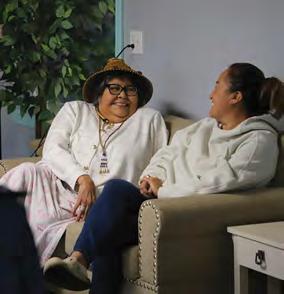
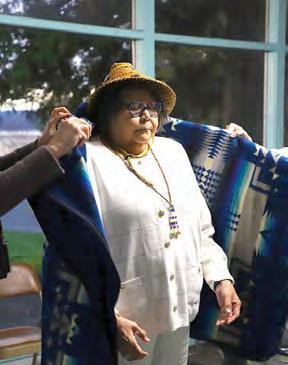
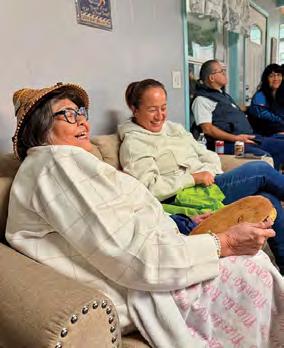
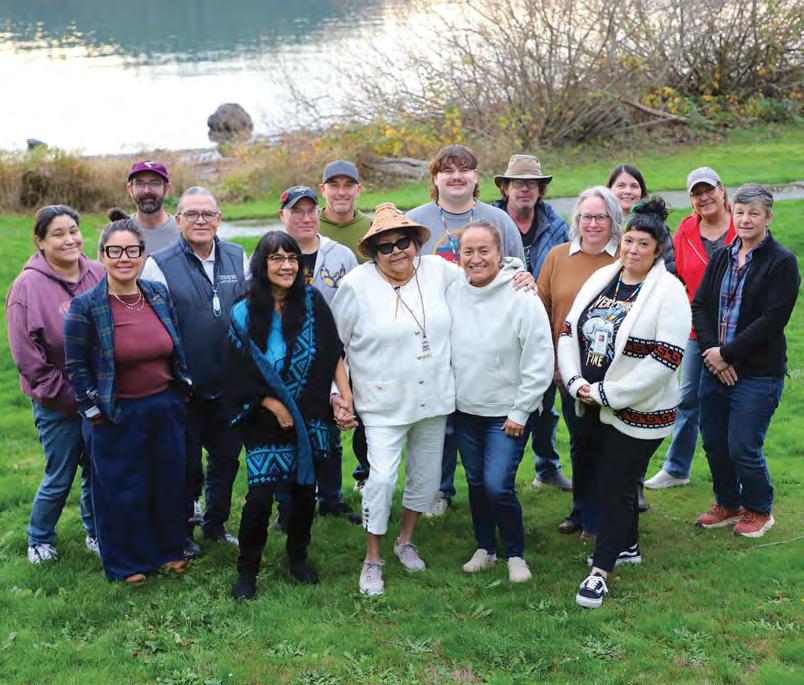
November 12 ― Though it has been almost a year since Merla Martin officially retired from Swinomish, her many years of service were celebrated recently with a party at Thousand Trails.
After almost 40 years of working for her Swinomish people, Merla retired from the Swinomish Land Management Realty Office.
Merla earned multiple awards in Indian Country for her work, including the National Indian Realty Award from Indian Country Consultants (ICC) – in fact, she placed fourth in the nation for that one!
Merla says, “Don’t be afraid to fail, and be confident in yourself.” When asked what she misses most about her realty work at the Tribe, she said it is “working with her landowners.”
Land Management Department Director Elissa Kalla, said, “You were the perfect fit for the community. You had the landowners' best interests at heart. You made the realty program what it is.”
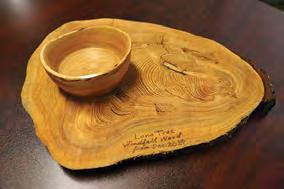
Merla’s retirement party concluded with the delivery of several meaningful gifts, including a wooden board and bowl made from a 250-year-old fallen Lone Tree branch from fellow tribal member and Environmental Protection Director Todd Mitchell.
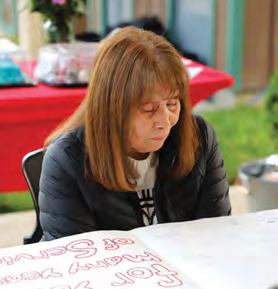
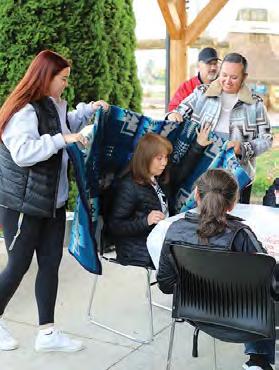
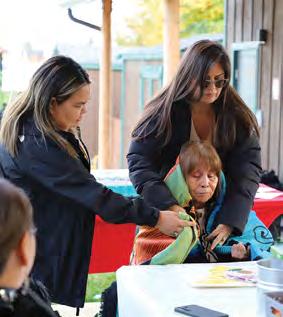
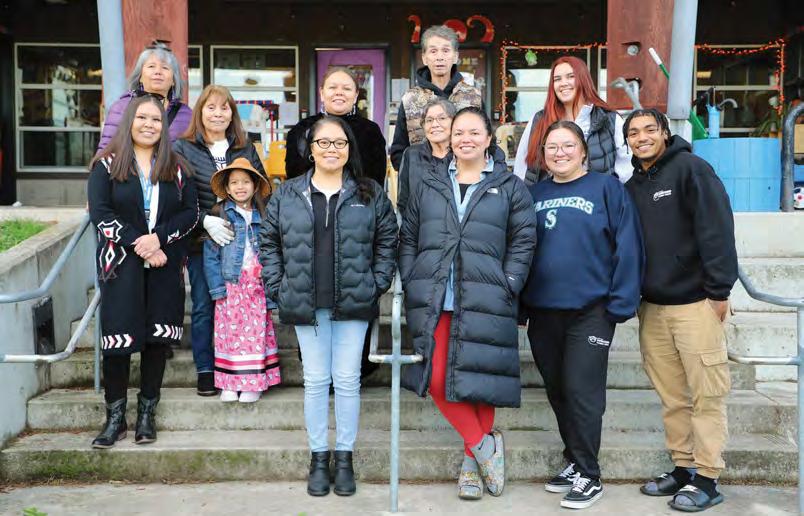
October 30 – Education Director, Loran James started the retirement celebration by giving Donna Charles greeting cards from some of our Swinomish youth. He opened the floor for anyone to share a story or offer some well wishes. Swinomish Senators: Steve Edwards, Aurelia Bailey, Alana Quintasket, Tandy Wilbur, each said a few words about Donna honoring her for the years of service and teaching our children. John Haley shared a few cowork stories.
Donna Charles was covered with two beautiful blankets: one from the Swinomish Tribe and one from the family of Brenda Williams.

ATTENTION: AFTER-HOURS
HOUSING & UTILITY EMERGENCIES


She has has worked at the SWEEC Child Care since September 1996.
When asked about retirement she responded:
“I’m going to miss the daily uplifts from the kids; and watching the kids grow up.”
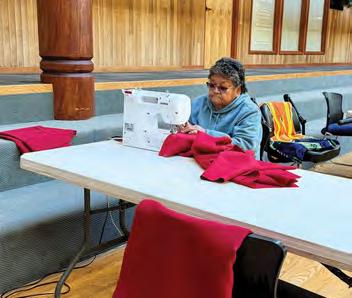
In her retirement, Donna is going to get back into sewing, and work on her home.
DECEMBER 1, 2025
Senate Seat #3
Brian Porter, Incumbent
Senate Seat #4
Greg Edwards, Incumbent
Kevin Paul
Dave Johnston
Jesse Edwards
Senate Seat #5
Tandy Wilbur, Incumbent
Lena Joe
James Bobb
Joseph Williams
Pursuant to STC 2-01.130, a Primary Election is required for Seats 4 and 5.
The Primary will be held on January 17, 2026.
Pursuant to STC 2-01.230(A), the Election Board shall certify the first and second place finishers for each Senate Position subject to the Primary as candidates for the General Election.
The General Election is scheduled for February 14, 2026.
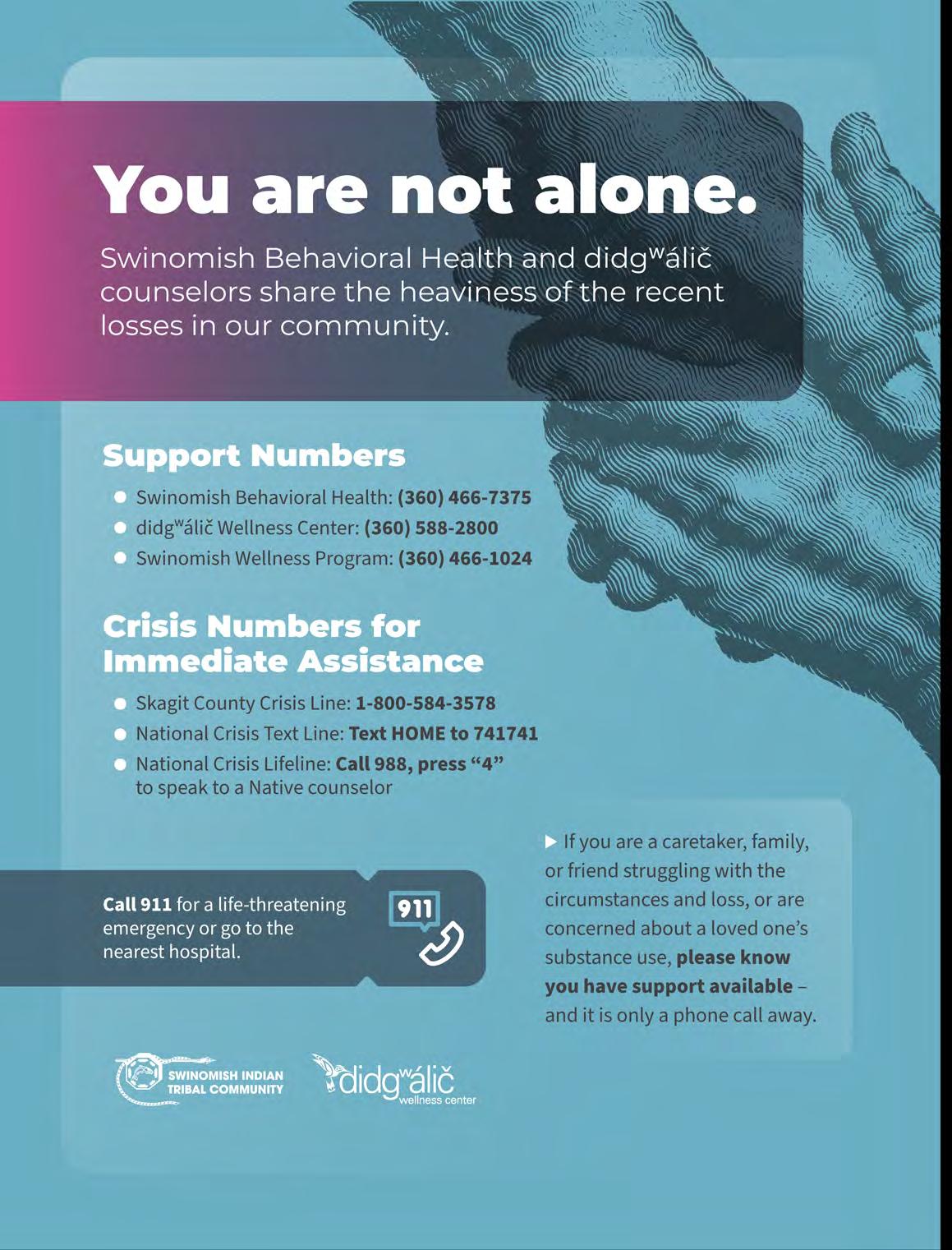
The holidays can be joyful, but they can also bring stress, loneliness, grief, and anxiety. You're not alone, and it's okay to feel what you're feeling.
Here are a few ways to care for your mental health during the holidays:
‣ Acknowledge your emotions - it's okay not to feel festive all the time
‣ Create a plan for tough moments: call a friend, take a walk, or enjoy music
‣ Lean into cultural traditions and healing practices that nourish your spirit
‣ Connect with community
‣ Support others, especially elders or those who may be struggling.
‣ Set boundaries, rest well, eat nourishing food, and stay hydrated.
‣ Avoid alcohol and drugs.
‣ Seek help when you need it.
You are not alone. Reach out if you need support.
♦ S winomish Behavioral Health: (360) 466-3167
♦ Fire District 13 CARES: (360) 391-4554
♦ 988 (call or text 24/7)
♦ SAMHSA Helpline: 1-800-622-HELP
♦ Native & Strong Lifeline: Dial 988, then press 4
♦ 24-Hour Crisis Hotline: 1-800-584-3578
Let’s take care of ourselves and each other this season, and always.
SARAH KELLOGG, SWINOMISH COMMUNICATIONS
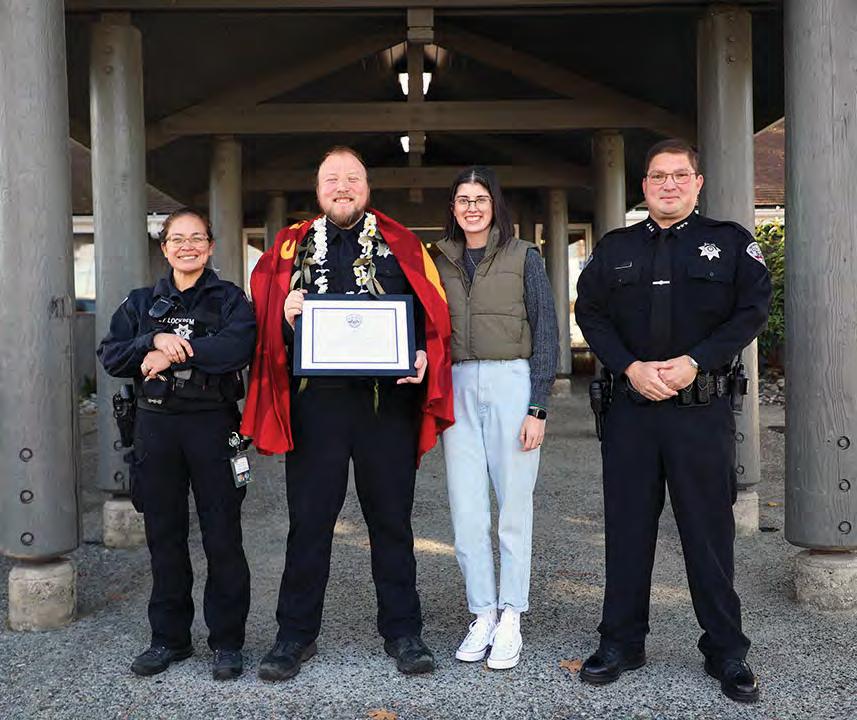
November 4 - Officer Jakob Reik was honored with a Life Saving Award by the Swinomish Senate for his actions on the evening of October 17. He stopped to investigate a parked car on the Rainbow Bridge and found the driver was unconscious inside. Officer Reik began CPR with the assistance of a CPR-certified bystander, and was able to move the woman to safety and continue resuscitation efforts until medics arrived.
Receiving his award, Officer Reik shared his belief that any Swinomish Police officer would have taken the same actions. He also shared his gratitude for the support of the Swinomish community, saying, “I’m pleased to say that I love every single day coming to work, and I hope it reflects in the work we do.”
The woman’s husband, Jesse, was also present to share heartfelt gratitude on behalf of their family. He said, “You didn’t hesitate. You stepped in with courage and calm when every second mattered. Because of you, Cheryl is here for one more beat, by the grace of God.”
Senator Aurelia Bailey blanketed Officer Reik, and gifted a blanket to Jesse.
In a Facebook post, the Swinomish Police Department extended their thanks and gratitude to the community member who assisted with CPR, Fire District 13, La Conner Fire Department, Anacortes Fire Department, Anacortes Towing, and the medical professionals at Skagit Valley Hospital.

The High School Student of the Month for November is Jadee Dan. Jadee’s grandmother is Janice Joe. Jadee is a senior at La Conner High School and enjoys his strength and conditioning class, English, and photography. He likes all his teachers.
Outside of school, Jadee enjoys hanging out with friends or playing games. He is considering college or working for the Tribe after he graduates. Jadee would like to be a photographer.
Congratulations, Jadee! Keep it up, Swinomish is proud of you!
DEPARTMENT OF ENVIRONMENTAL PROTECTION
The Swinomish Senate approved participation in the Washington State Department of Ecology’s High-Resolution Mobile Monitoring (HRMM) air pollution study. The goal of the study is to better understand how air pollution impacts the Swinomish Reservation community, and will help the Tribe protect our people and environmental health.
Mobile air monitoring uses specialized vehicles equipped with air monitoring equipment, which continuously collect air pollution data along a designated route. Data collection will occur the summer of 2026 and continue through summer 2027. The units will monitor air pollutants from many sources including those from humans (refineries, car idling, and wood burning) and naturally occurring (wildfires).
Questions that the HRMM study will help us answer:
♦ What are the major sources of air pollution on the reservation?
♦ What gaps currently exist in Swinomish’s air quality monitoring efforts?
♦ How can we improve air quality on the reservation?
♦ Do areas where traditional foods are cultivated and places where children and elders frequent experience poor air quality?
What the HRMM study will not do:
♦ It will not take away wood stoves. However, results may indicate that wood burning is a source of pollution on reservation. This could help support the need for funding to replace old stoves with more efficient ones, as was done in 2004.
♦ We do not have to share any protected health information about tribal members for this project.
The Department of Environmental Protection (DEP) will help the Department of Ecology determine the monitoring route. DEP staff want to include potential sources of air pollution such as the refineries on March Point, and places where air pollution presence is concerning – like near the Boys & Girls Club.
We need your input! Where else should the mobile monitors travel to monitor air pollution on the reservation? Contact us at dep@swinomish.nsn. us with your feedback or questions.
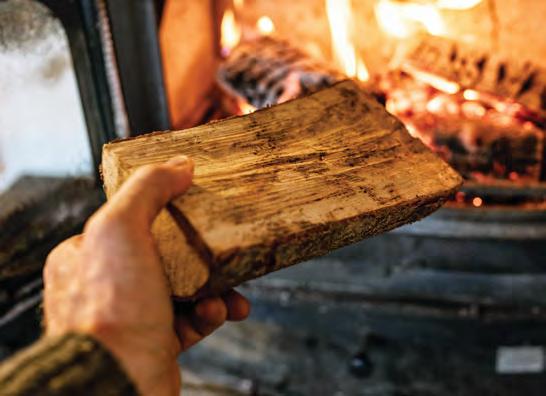
Those cold and clear winter nights that we all know well can trap pollution close to the ground, especially in our valley regions.
One major culprit? Smoke from burning firewood.
Burning wet (unseasoned) firewood releases harmful pollutants that affect our lungs and heart. The good news is dry (seasoned) firewood burns cleaner and hotter, helping protect our health and environment.
Seasoned wood = less than 20% moisture!
Here are steps you can take to build a cleaner and hotter fire:
‣ Look for wood that is lighter weight, dull in color, and has loose bark and deep cracks
‣ Use a moisture meter if possible
‣ S tore wood off the ground, covered, and 20+ feet from your home
Benefits of burning dry wood:
‣Hotter, cleaner fires
‣ Less smoke and air pollution
‣Lowered risk of chimney fires
Let’s stay warm this winter in a way that keeps our air clean and our community healthy!
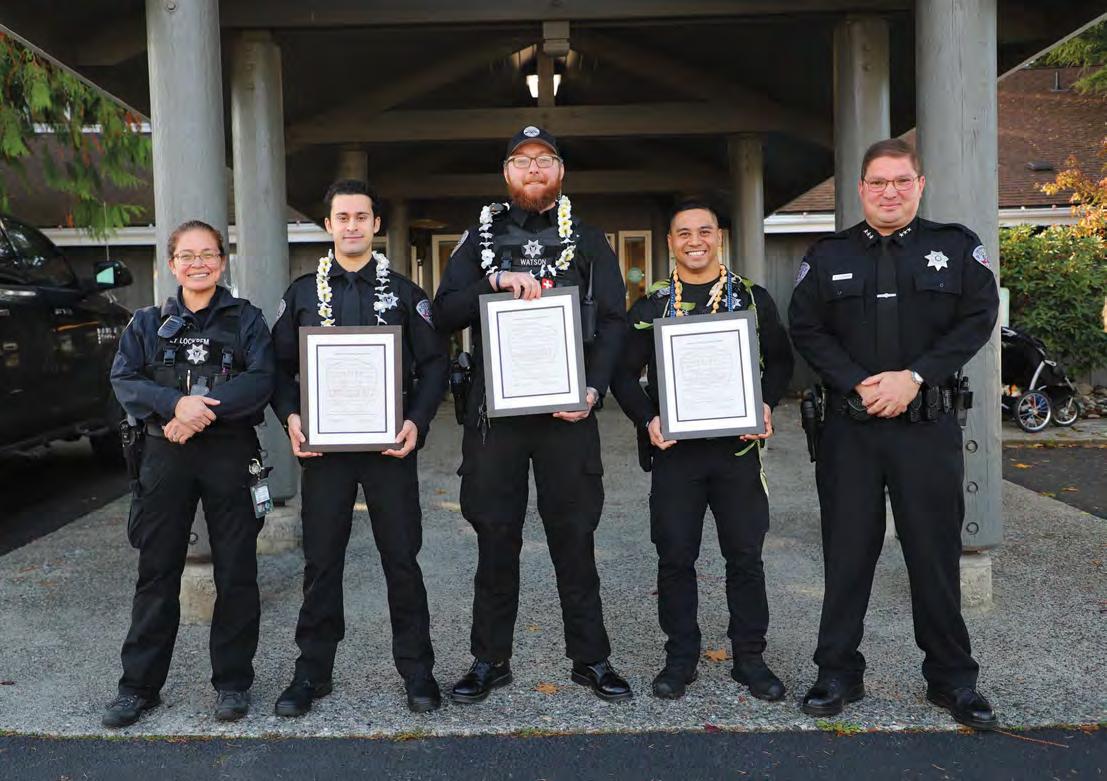
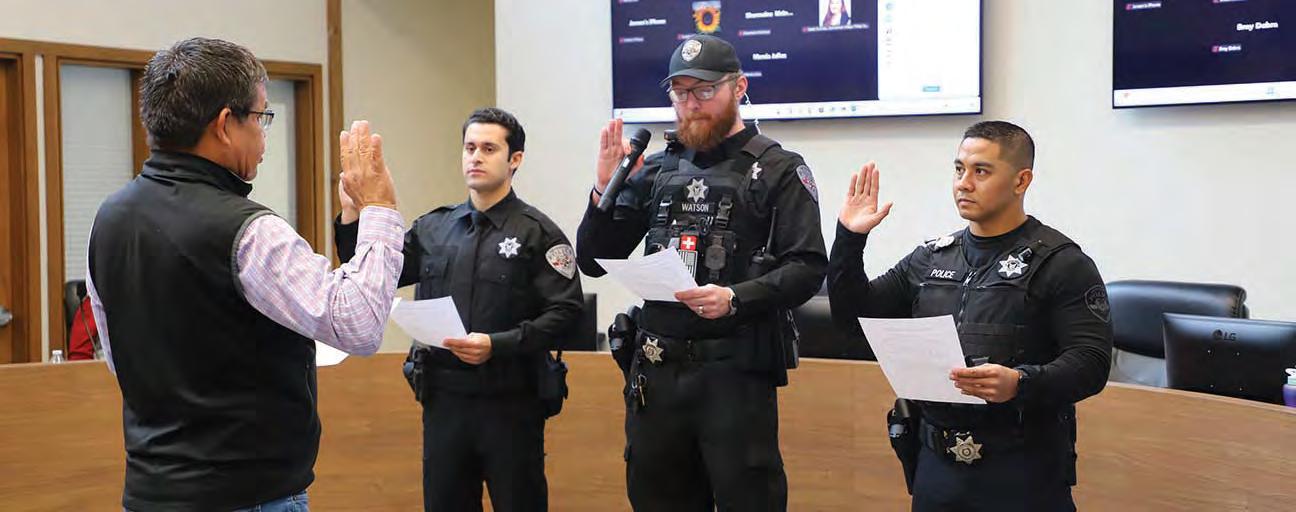
November 4 – Officers Kaimi Andres-Kamakau, Darmon Ghanbari, and William Watson were sworn in by the Tribal Senate with raised hands as the latest additions to the Swinomish family and Police Department. All three come to the Tribe with prior patrol experience.
Senator Rodney John thanked them for “taking the time out of your life to be in service to our community.”
These new hires help resolve a staffing shortage in the department. Senator Aurelia Bailey shared, “We’ve been waiting a long time.”
Tipped off by the discovery of an empty shell in Similk Bay, Swinomish Fisheries started intensively trapping for non-native European green crab. Efforts this fall included over 200 set traps which resulted in the removal of 12 invasive crabs from Similk Bay, Turners Bay, and Kiket Lagoon.
With winter upon us, these invaders will hunker down and burrow into the shoreline, lying in wait for spring. So, for now, trapping efforts are paused, but with plans and preparations in motion for continued attack in spring.
European green crabs are bad news for many reasons. Mostly because they like to pick on, steal food from, and eat baby Dungeness crab. But it’s not just native crabs that green crab bully – they also feed on clams, oysters, and other juvenile crabs and shellfish. Furthermore, they rip up and destroy shoreline habitats that many other species rely on.
On the east coast of North America, and throughout many other places in the world, this species has destroyed extremely profitable fisheries and priceless ecosystems. But all is not lost! Trapping early and often has been shown to be an effective defense strategy against this destructive predator.
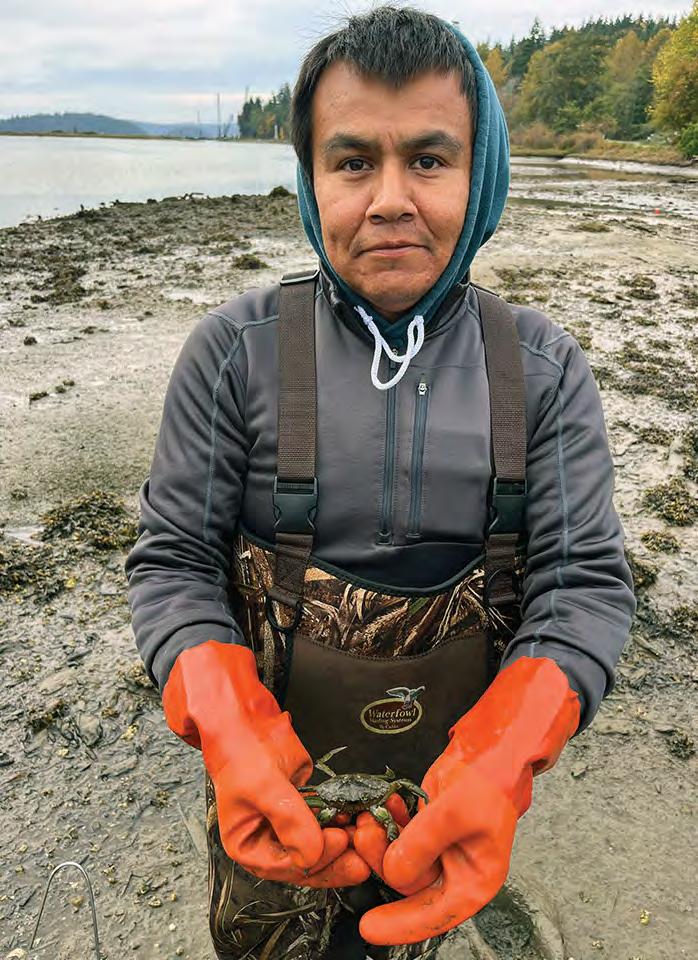
Our recent captures are not the first European green crab to show up in the area. In 2021, two individuals were found in the Swinomish Casino marsh. Additionally, removal of invasive crabs has been an ongoing effort in Padilla Bay since 2016.
Regardless of these recent green crab captures, there is still much to do, and we can all do our part to prevent their spread and reduce their population.
Tribal fishers, beach walkers, and tideland treasure hunters – keep an eye out for this invasive nuisance, but please be sure to learn how to identify green crab correctly. Many native shore crabs can easily be mistaken for this destructive invader. A visual resource with identification details can be found at sitcgov.us/ GreenCrab.
If you think you’ve seen one, please don’t kill it! Try to catch it, take a photo, and contact Swinomish Fisheries as soon as you can at (360) 499-4719.
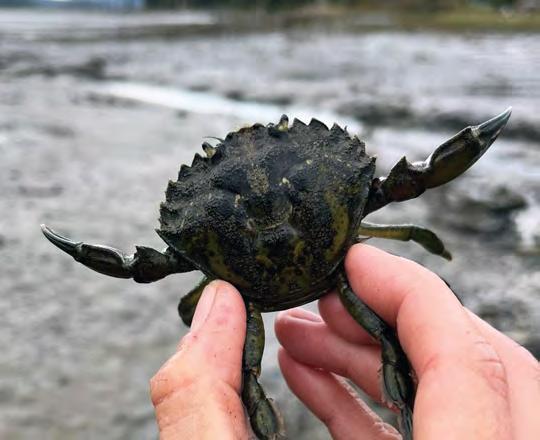
European green crab can be identified by five spikes outside of the eyes, and three in between
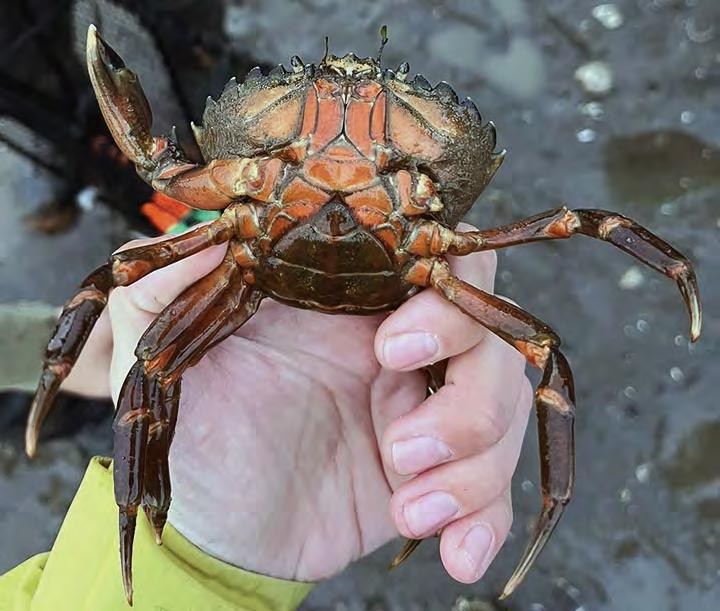
Invasive European green crab are not always green
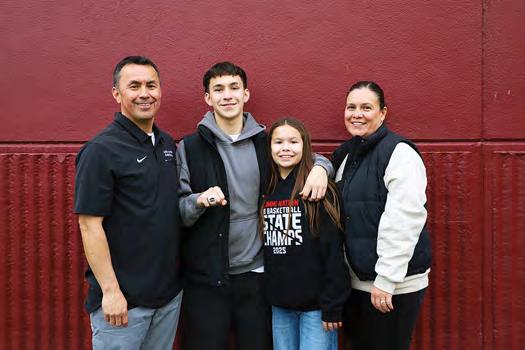
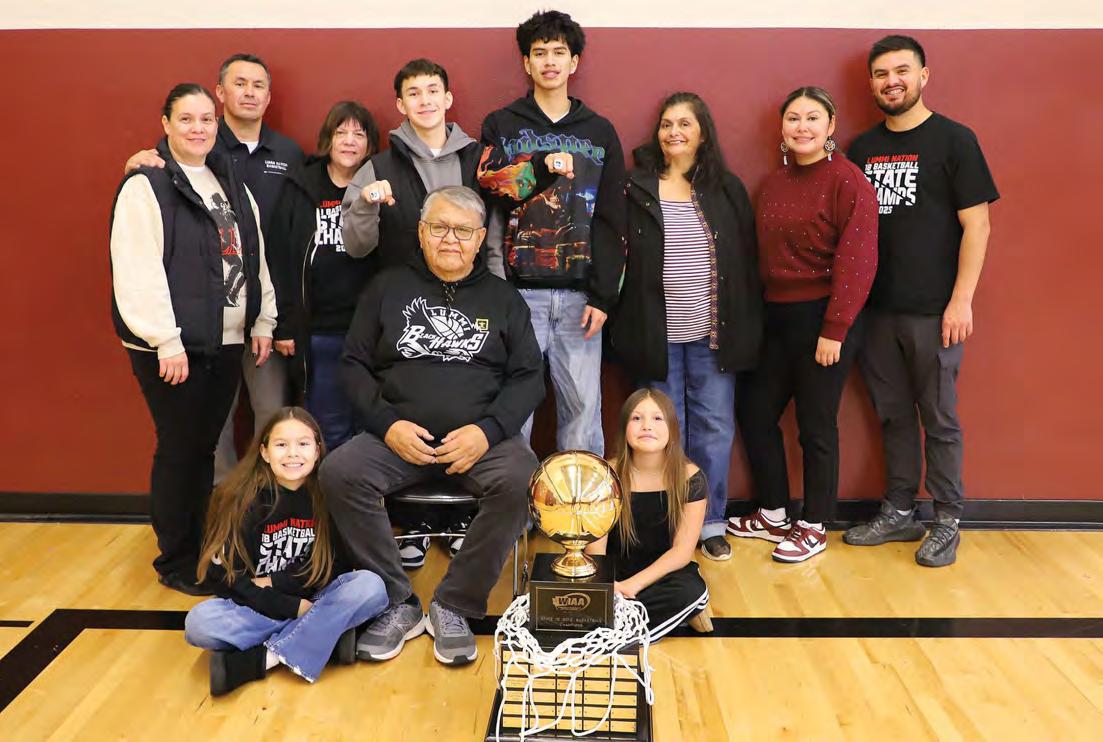
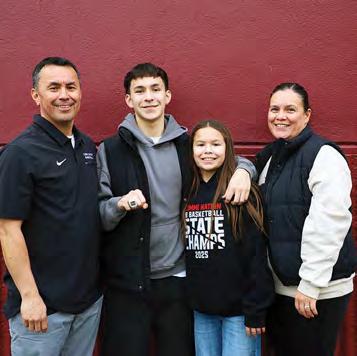
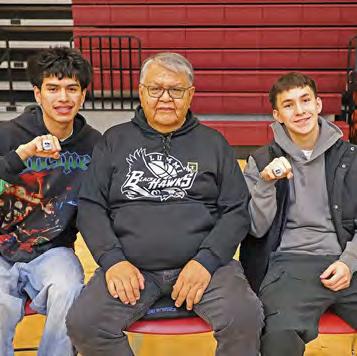
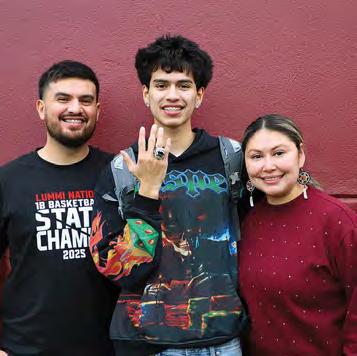
November 20 – First cousins, friends, and lifelong basketball mates, Jerome and Dyson shared a goal: to win a state championship. In March, their goal became reality when the Lummi Blackhawks claimed the 2025 State 1B Championship title in Spokane!
Last season, Jerome led Whatcom County in points, steals, and assists, while Dyson ranked among leaders in both points and steals.
At the end of November, the team received their championship rings – a great start to their 2025-26 season. Congratulations, Jerome and Dyson! Your hard work, team mentality, and dedication are inspiring.
Jerome, Dyson, and their families extend their gratitude to the Tribe and appreciate the support of the Swinomish Youth Activities Fund, which covered training and opportunity costs, including participation on AAU travel teams.
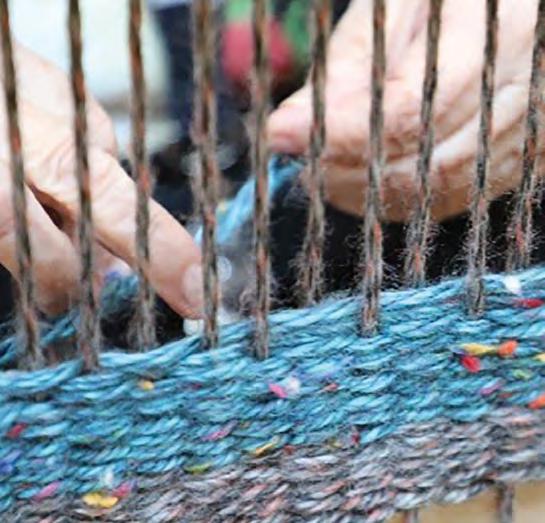
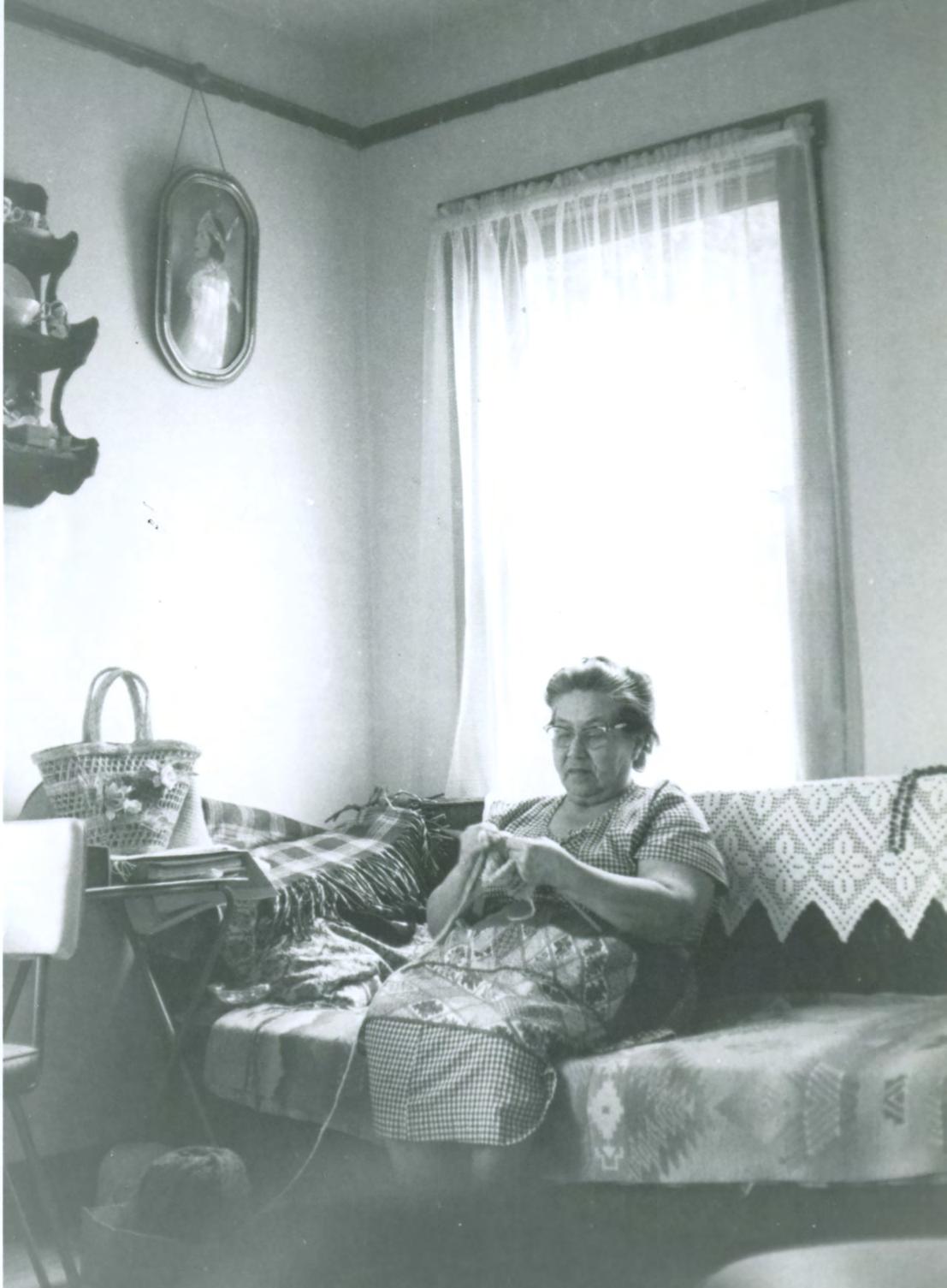
Winifred “Winnie” Mitchell was born in Tulalip in 1899. She married Dewey Mitchell of the Swinomish Reservation in 1921. The couple moved to Swinomish in 1935, where Winnie spent much of her time as a fish cook and became well-known for her knitting.
Winnie’s son, Ray Mitchell, brought family photos to the Tribal Archive, where they were scanned for the collection along with a ball of his mom’s wool and a pair of socks she knitted. Ray shared, “She got the wool from a local farmer. She would wash the wool, dry it, card it, and spin it. It was a lot of work. My mother took her knitting very seriously.”
According to Ray, Winnie knit about 50 to 75 pairs of socks per year. She passed away in 1996, but her story lives on in the shared memories of her loved ones and through the items preserved in the Tribal Archive.
Stories like these are important to preserve for our current and future generations alike. If you have stories, photos, or items you would like scanned, photographed, or donated, please contact the Swinomish Tribal Archive at (360) 466-7382, or email khamburg@swinomish.nsn.us
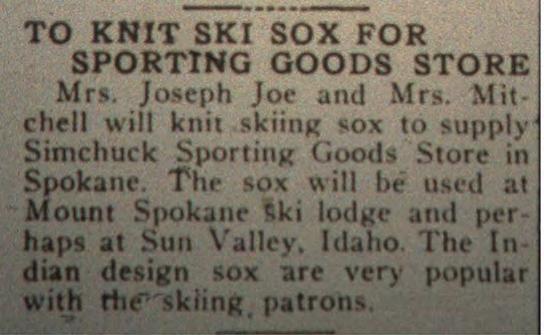
Puget Sound Mail Article August 4, 1949
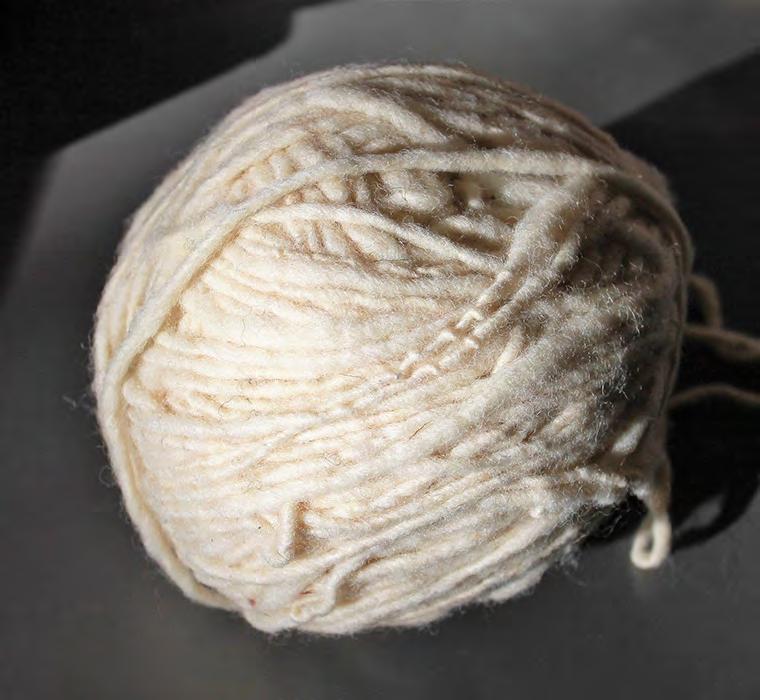
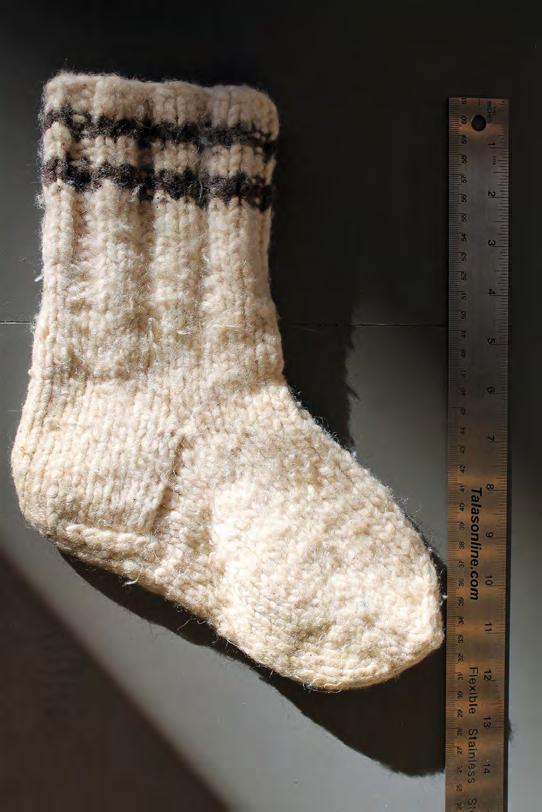
SARAH KELLOGG, COMMUNICATIONS DEPARTMENT
Mayfield Renewables employees visited for a tour of Swinomish solar projects on October 14. The Corvallis, Oregon, based company provides solar and energy design services as well as education and training.
Mayfield Renewables designed of many of the projects installed around the reservation this year.
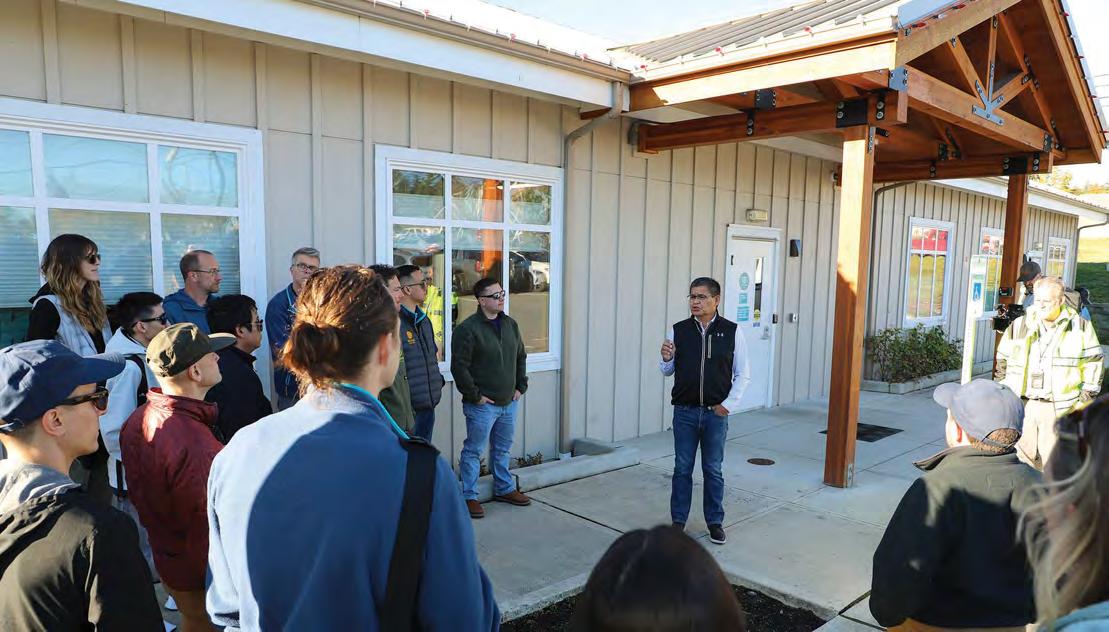
Chairman Steve Edwards, a driving force behind Swinomish’s solar projects, welcomes visitors from Mayfield Renewables
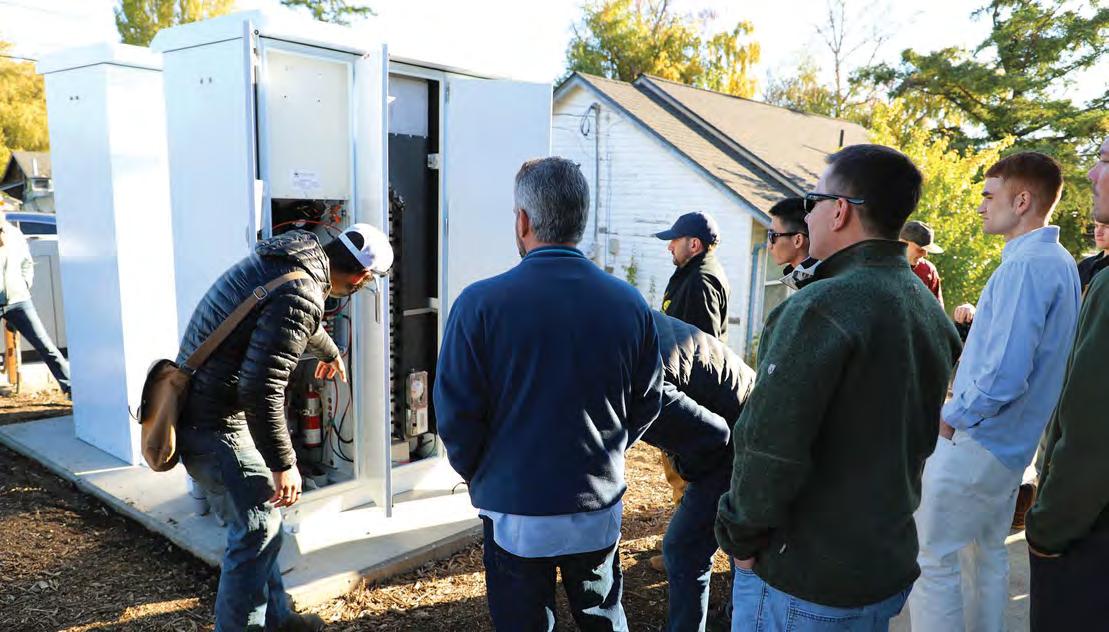
Mayfield Renewables visitors viewing an energy storage system




We're keeping our Thursday afternoons open for our beloved elders! Come in for your x-rays, exams, and cleanings.
Call now for an appointment: (360) 466-3900 (press 1)
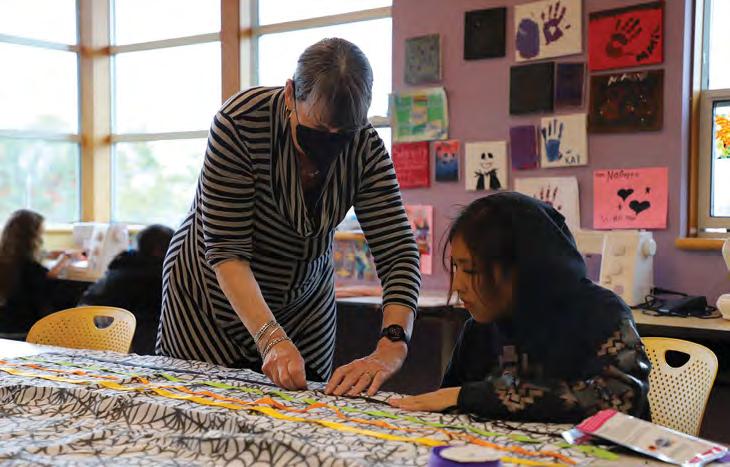
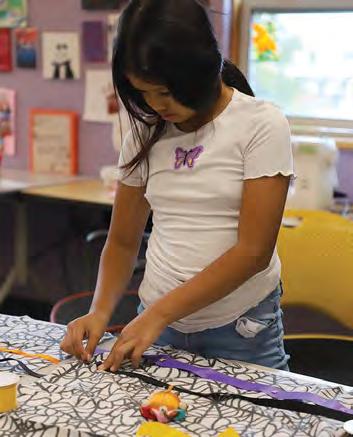
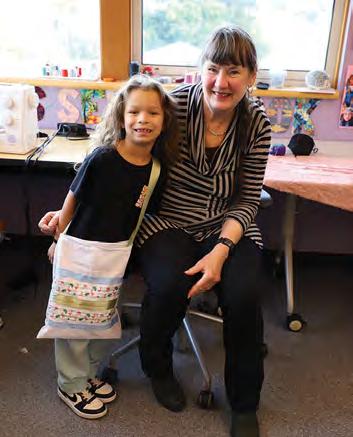
The Boys & Girls Club offers a variety of afterschool activities, including classes. Sewing with Lynn Beebe is one long-standing class option for the kids.
After a long career as a teacher, Lynn started volunteering at Swinomish in 2008. It began as simply homework help after school, but in 2010, she started a sewing club on a cart.
Now, Lynn hosts the sewing club one day a week for two hours. Fabric is purchased or donated for the sewing club. The kids’ first project is pillows, next is a tote bag, and then ribbon skirts.
Evah is sewing satin ribbon on cotton to make her own ribbon bag. She said her favorite thing to sew is pillows. Meanwhile, her sister Olive is making a cat toy for her cat, Newfie.
Zoe and Maci are working on Halloween ribbon skirts made from spiderweb print fabric. Maci carefully picks out the ribbon and is equally careful about how she lays it down on the fabric.
Lynn helped with all the sewing for vests, dresses, and skirts on the first Canoe Journey that the Tribe participated in. “It makes me cry to see how many people are making their own regalia today.” Lynn is so proud.
In talking about all the kids who have come through the sewing class, Lynn says, “It’s gone so fast.” Lynn also teaches science at preschool and sewing at the Youth Spirit program.
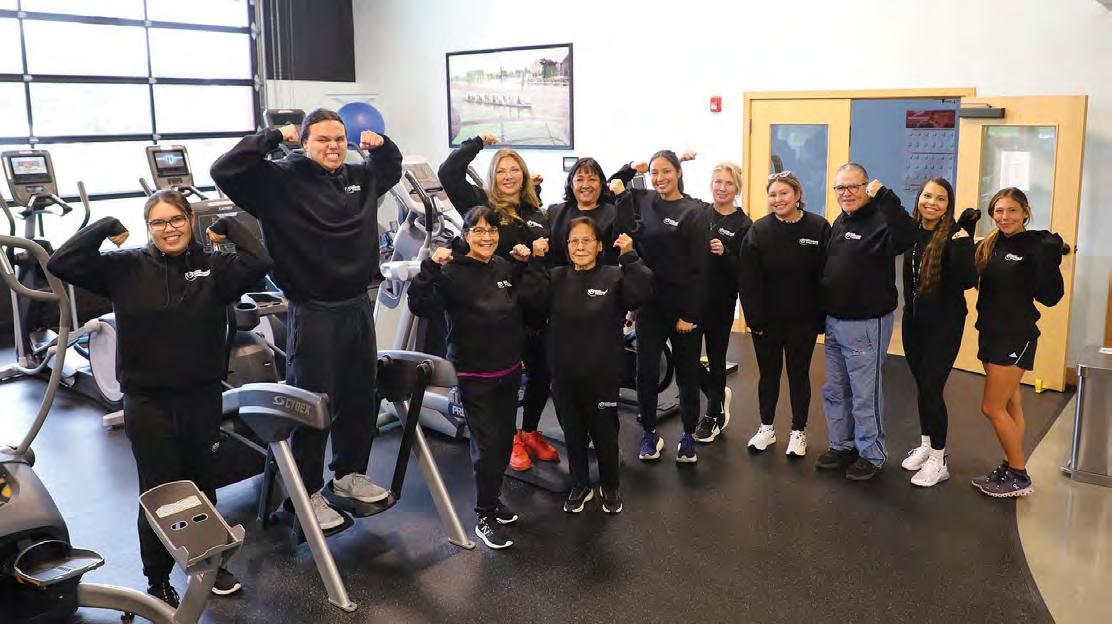
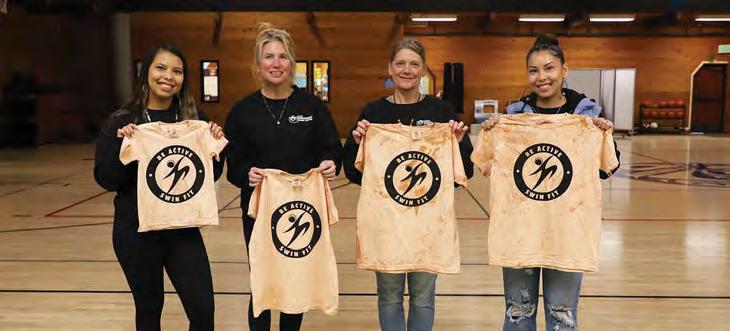
NB3 Fit
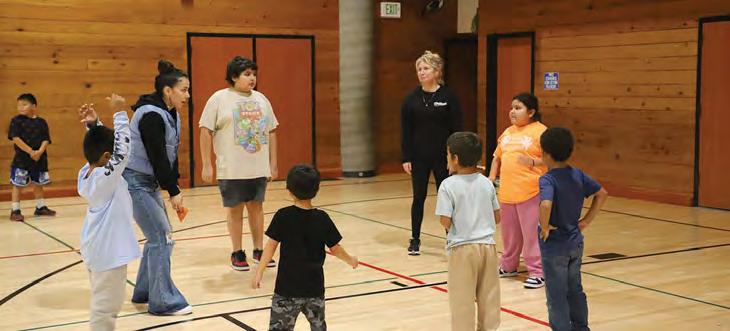
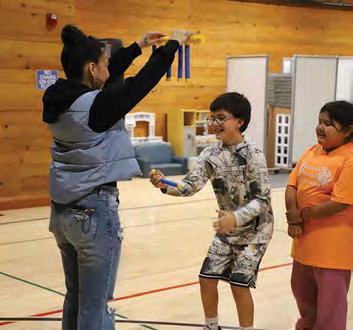









SWINOMISH PUBLIC HEALTH
Enjoy your holiday meals safely this season! Here are six food safety tips from Swinomish Public Health to follow this holiday season.
Before you start cooking, wash your hands, utensils, and kitchen surfaces with hot, soapy water.
Safely thaw foods by using either the refrigerator (thaw on lowest shelf), cold water (submerge and change every 30 minutes), or microwave (use the defrost setting)
Prevent cross-contamination by using separate cutting boards and utensils for raw meat and fruits, and vegetables. Wash anything that touches raw meat with hot, soapy water.
Use a meat thermometer to make sure food is cooked to a safe internal temperature
Beef, lamb, or pork at 145 ° F
Ground meat at 160° F
Poultry at 165°
Serve
Hot foods using warming trays. Cold food using an ice bath. Use a separate utensil for each dish.
Store
Refrigerate leftovers right away and use them within 3-4 days. Freeze leftovers if you want to keep them longer. Reheat all leftovers to 165° F before eating.
CHRISTINE VALDEZ, LA CONNER SCHOOL DISTRICT PREVENTION SPECIALIST
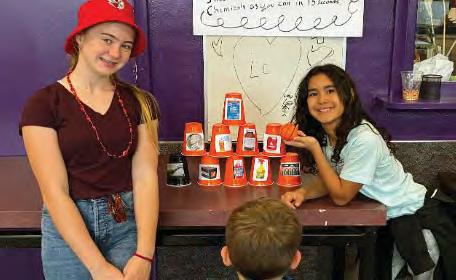
Sixth graders Harper Voorhees and Tatum Wilbur run one of the many games at the Braves Hub health carnival
October 28 – Members of the Youth Spirit Program (YSP), middle school ABC Club (Acceptance, Belonging, and Connection), and high school Varsity in Volunteerism Club worked together to host a health carnival for Braves Hub youth.
The event was part of Red Ribbon Week, a celebration of middle and high school youth making healthy choices. Participants included sixth grader Tatum Wilbur, and Ruby Billy, 10th grade. Kellie Cayou-Lockrem, 11th grade, and sixth graders Katie Seward-Perry and Jaxson were part of the school day activities. A big part of addiction prevention is delaying the age of substance use, and tribal youth are doing their part to help prevent underage use of alcohol, tobacco, and other drugs.
The middle and high schoolers created their own games, posters, and fun, age-appropriate scenarios to help the younger children learn about healthy choices and refusal skills. People of all ages listen and respect the youth when they do this work.
Students also drew pictures of their healthy activities, which will be displayed in Braves Hub.
“What impressed me most was how patient, supportive, and flexible they were,” said Sabrina James, the tribal school social worker who helped at the Braves Hub event. “Our students adjusted their questions and activities for each child, from kindergarten all the way to fifth grade. They truly supported one another from start to finish.”
These kids are rock stars, and the support of YSP and Jennifer Peters helped make it possible.
Future goals include working with the Swinomish Youth Council on mental health promotions and activities at community dinners and health fairs.
Want to know more? Contact Christine Valdez, (360) 708-2479
The Swinomish Education Department proudly announces the recent college degree and certification completions of these individuals:
Gabrielle Weightman
Associate of Arts, General Direct Transfer – Northwest Indian College
Krista Hamburg
Master of Library and Information Science, with a Graduate Certificate in Archival Studies – University of Oklahoma
Dolly-Jean Bill
Medical Office Administration Certificate — Sprott Shaw
Congratulations to each of you on the success of your hard work and accomplishments. Your dedication and commitment are an inspiration to our community.
Are you interested in furthering your education?
Tribal members interested in earning a degree or pursuing a vocational program can contact Swinomish Scholarship Manager Lisa James at ljames@swinomish. nsn.us or (360) 333-9947.
Those interested in earning their high school diploma or diploma equivalency, please contact Sally Schroeder at sschroeder@swinomish.nsn.us or (360) 630-3723.
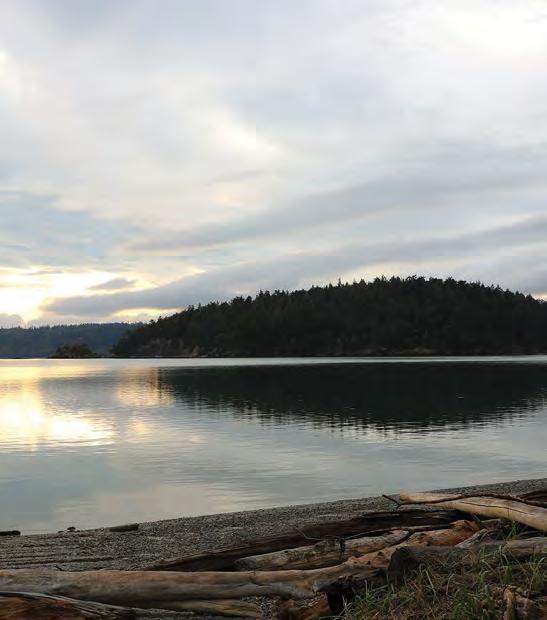
November 6 – Teens were given $40,000 (in fake money) and charged with making informed spending decisions to pay taxes, buy a house, a car, insurance, groceries, and more!
Spending Frenzy, a regular event hosted by Workforce Development, helps Native American youth prepare for the future by helping them understand life’s bigger expenses and manage their money wisely.
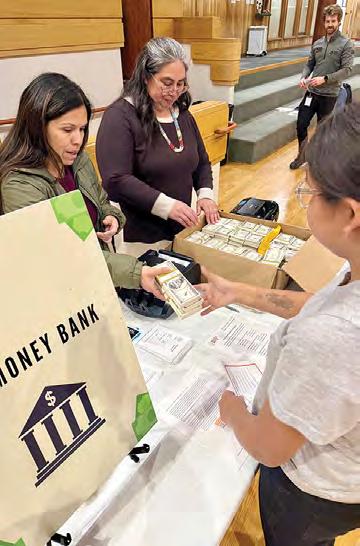
Youth are given $40,000 (fake money) to manage. They decide at this table if they want to invest and save money.
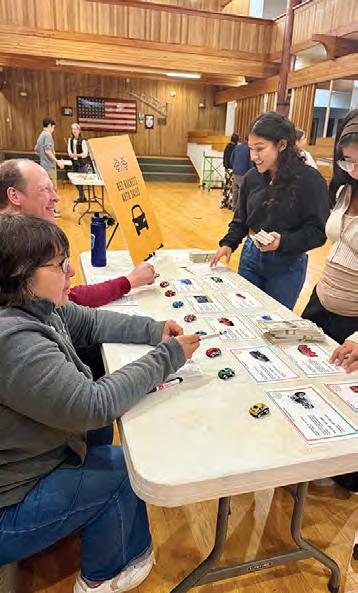
Students get to pick a car. There are lots of choices.
The evening event proved financial skills learning is rewarding and fun! Students quickly learned that after paying income tax, buying a vehicle, renting an apartment, paying for insurance, and buying food, money doesn’t go as far as one might think.
Learning to handle money wisely is important for the success of our youth, and all the rest of us, too!
Learn more about Spending Frenzy here: firstnations. org/projects/pending-frenzy-kits-have-arrived
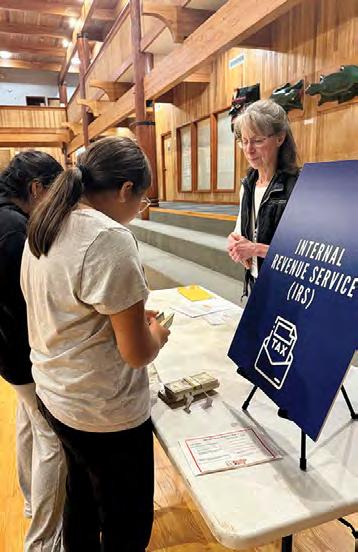
First stop after getting their money is the IRS.
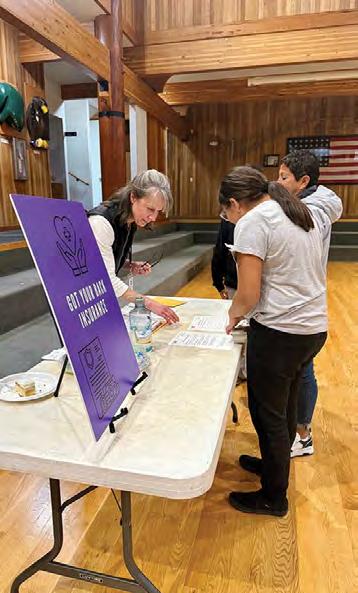
Next stop, insurance! Their home and car must be insured!
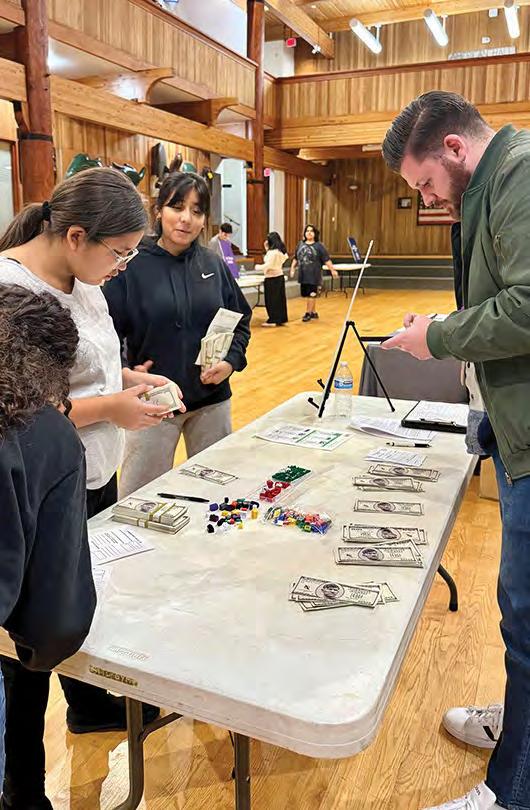
Youth make decisions about their housing.
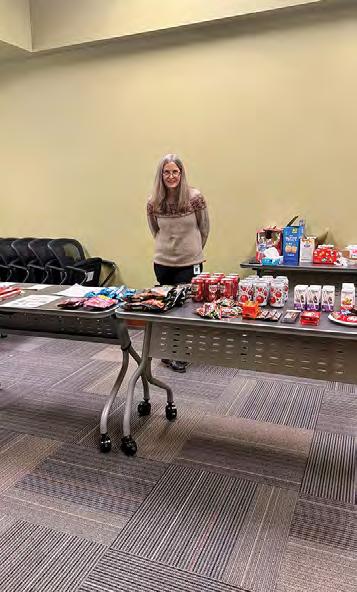
Time for the kids to pick their grocery plan and shop at the "mall" to buy clothes, furniture, and entertainment.

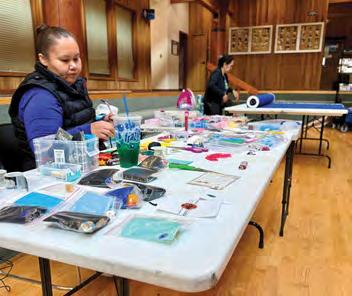
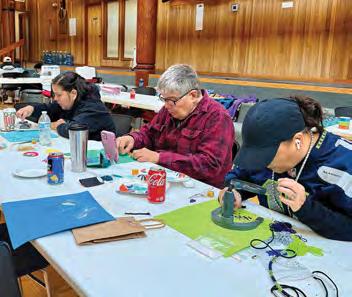
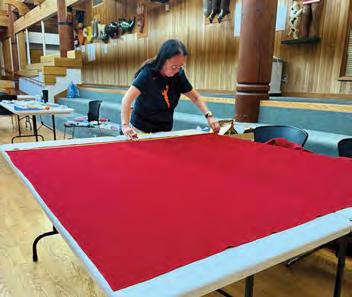
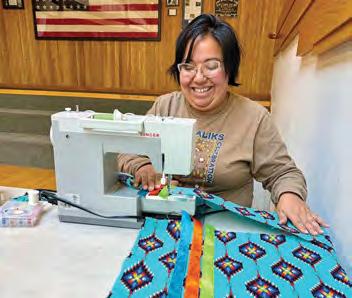
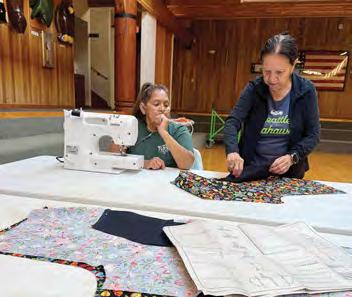
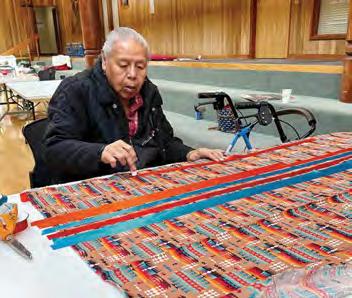
November 7-9 – A crafting weekend full of beading, sewing, conversation, and laughter was just what this fall season needed. Makers of all ages came together to create shawls, ribbon skirts, and beaded accessories.
Bonnie Fornsby, who learned to bead at age 18 from Gaylene Gobert, led the beading projects and taught many beading newcomers to make earrings, lanyards, wristlets, and decorative feather pieces.
Tashina Villaluz helped participants make ribbon skirts and pants using patterns from Gwen Cayou – now that’s teamwork!
Janet Wilbur, who has been sewing since she was a young girl, shared her knowledge with other crafters,
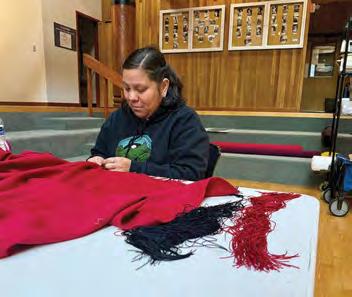
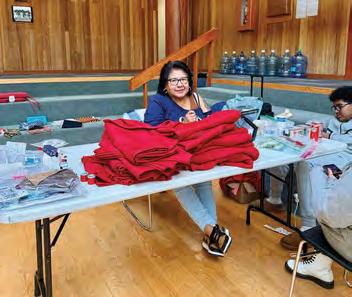
resulting in the creation of even more shawls for #MMIWP ceremony. There are already more than 90 shawls ready for wearing in 2026!
The feeling of completing a traditional Native project? Learning a new craft? That’s true value, true wealth. But the joy of sitting together, telling stories, giving family updates, and sharing jokes – these are the memories that stay for life.
Thank you to the Swinomish Domestic Violence and Elders programs for hosting and catering this traditional crafting community event!
The holidays are a time of joy and celebration, but can also be a time of stress or trigger us into states of anxiety, shame, loneliness, grief, and sadness. Some people are impacted by seasonal affective disorder, a condition in which people experience symptoms of depression triggered by seasonal changes as the days get shorter. While this form of depression often improves in the spring and summer, it can be helpful to talk to your health care professional and/or seek out spiritual cultural healing and teachings.
Some tips to help during this season:
Pay attention to your feelings. Remember that it is okay to feel unhappy during the holidays. Recognizing your feelings is the first step to addressing and nurturing them.
Develop a plan for when you are feeling stressed, sad, or lonely. This plan may include calling a friend or family member, going for a walk, engaging in an activity that brings joy, listening to music, or watching a favorite movie. Having a plan ahead of time can help ensure the difficult moments are more manageable. Cultural traditions, activities, and healing have long helped people during these times. Beading, weaving, powwow, prayer, stories, songs, gathering seasonal foods and storing for winter nurture the spirit, mind, and body.
Connect with community and with the land. If you can’t be near loved ones during the holidays look to gatherings, meals, and other community activities. Consider scheduling a regular phone call with family, friends, and other helpers as well.
Support others. During this time of year feelings of grief and loss can amplify. Check in on loved ones who may be alone or struggling during the holiday season. This includes elders or others who are isolated, vulnerable, or mobility challenged. Helping a friend or neighbor not only gives joy to others, but it can improve your own happiness and well-being.
Set limits and boundaries. It’s OK to say no. Give yourself compassion. Practice daily self-care. Stay hydrated. Eat healthy meals. And get your rest, sleep is important.
Avoid alcohol and drugs. For people in recovery, the holiday season presents challenges that can trigger the use of alcohol and drugs. Having a plan for navigating social events and feelings of loneliness can reduce the risk of substance use.
Know when to seek help. If you feel that your mental health struggles are becoming overwhelming and difficult to handle, it is important to seek help and know that treatment is available. Below are free and confidential resources that can connect you with effective treatment and support.
You are not alone. Here’s how to seek help:
24-HOUR toll-free crisis hotline: 1(800) 584-3578 and free Mobile Crisis Outreach Teams.
National Helpline: 1(800) 622-HELP (4357)
988: Text or call 24/7 to support those thinking about suicide, concerned about substance use, worried about a loved one, in need of emotional support, and more. Extension 1 is the Veterans Crisis Line, 2 for support in Spanish, 3 for the LGBTQ1+ Youth Line, and 4 for the Native and Strong Lifeline. For all other callers, stay on the line or dial 0 to be connected to a crisis counselor.
Swinomish Behavioral Health is dedicated to supporting individual, family, as well as community healing and growth by providing high quality accessible and culturally appropriate services.

11406 Moorage Way La Conner, WA 98257
qyuuqs@swinomish.nsn.us
@qyuuqsNews