
Proper ventilation and cool environment are quite necessary for industrial spaces. Looking for a custom industrial fan that meets your specific needs?
Many manufacturing and industrial processes depend on industrial fans to provide ventilation, cooling, and air circulation. However, picking the ideal fan for your application might be difficult. Consideration must be given to several crucial elements in order to design an industrial fan specifically for your individual requirements.
It is important to take the right considerations into account. In this blog post, we will discuss the 5 key factors you should keep in mind when designing a custom industrial fan. By understanding these considerations, you will be able to create a fan that performs at its best while also meeting your unique requirements.
So,let us dive in! Application
The type of fan to employ in any industrial process will depend on the application. Examples include axial, centrifugal, mixed flow, or turbo, incline-backward, incline-forward, and incline-flatblade fans.
Fan specifications can become challenging because the majority of high-temperature applications have particular needs. Finding the system information, a fan maker needs to create and provide a product that is best suited for the application is the key. Furthermore, it is critical to comprehend the variables affecting fan design and construction in order to specify a fan for optimal service life.
How Important Location Is
It is crucial that you describe the surroundings and the space where the fan will be put. Not all fans are made for corrosive applications, thus equipment needs to be suitable for the environment. The location of the fan will have a significant impact on both installation and choosing in many ways.
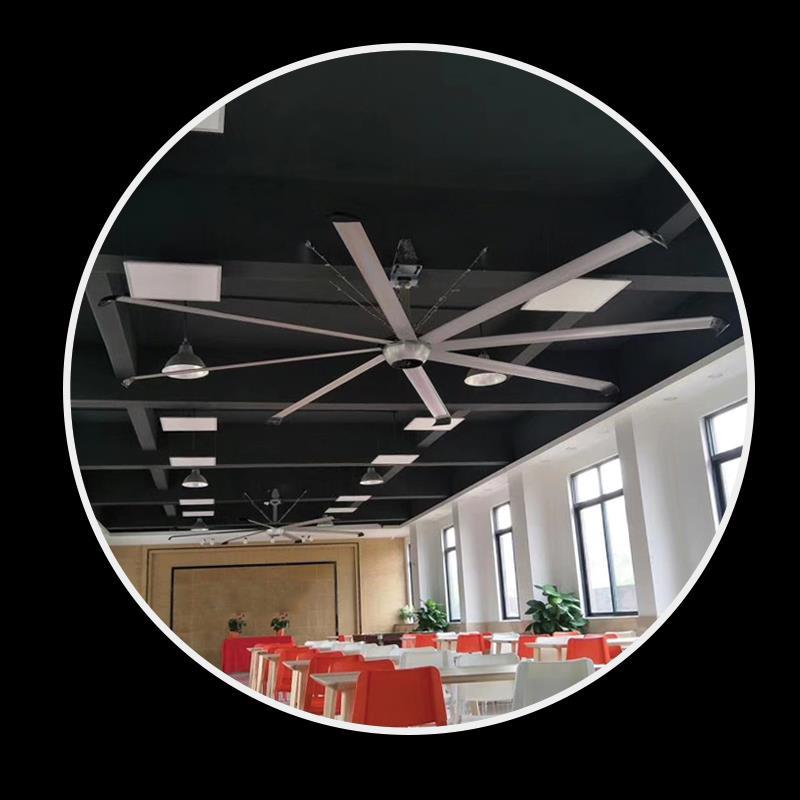
The following are significant location factors:
Location's height above sea level
Density
Humidity
temperature at the fan's inlet
the situation at the fan
Ground covered in concrete
The shaft, bearings, and coupling designs are all directly influenced by the type of foundation used at the location.
Many manufacturing and industrial processes depend on industrial fans to provide ventilation, cooling, and air circulation. But picking the ideal fan for your application might be challenging.
Engineering Assistance
Choose a high-temperature fans supplier who can provide you with the engineering help to develop a custom high-temperature industrial fan that addresses your specific application requirements rather than a standard, one-size-fits-all/ready-made high temperature industrial fan.
A high temperature industrial fan may eventually require service or repair even under ideal operating conditions because of mechanical wear over time.
Additionally, during the lifespan of a high temperature industrial fan, preventive maintenance (PM) of the fan and its components is crucial.
Bearing
The choice of bearings for high-temperature fans depends on the load and fan speed, and can be either self-aligning ball bearings or spherical roller bearings.
The main difference is that most high-temperature fans use bearings with sufficient lubrication and internal clearance of C3. Bearing temperature affects the type and amount of lubrication.
The lubricant will lose viscosity and result in bearing failure if the bearing temperature is higher than the specified temperature for the lubricant. Always check with the fan or bearing vendor before replacing the lubricant.
Installation
All industrial fans require extremely precise installation techniques, although there are some general installation best practices that must be adhered to. It is crucial to properly read and comprehend the manufacturer's instructions before beginning any installations.
Any issues should be rectified before beginning the installation.
All equipment installation must be done by professionals with the necessary training and expertise. Protective devices are standard on some types of fans, however depending on the system type, fan position, and plant operating practices, these same features are optional extras on other types of fans.
The customer is responsible for determining the proper safety equipment needed to adhere to corporate and regulatory regulations and making sure that the fan is not used without it.
Conclusion
Providing a lot of information is necessary when choosing an industrial fan. There is nothing that can replace working with a qualified and experienced partner like Swifter Fans that can help users make the best choice for the Custom Industrial Fan at hand.