

NYA SVENSKA PRESSEN EST.1929 Swed sh Pre s s [ ] i Norse Gods | The Vikings – Pagans or Christians? | Grattis Kungen! www.SwedishPress.com October-November 2023 Vol 94:05 $9.95 The World of the Vikings 05 2023

The world of Norse mythology is a captivating universe populated by gods and giants, heroes and monsters. These myths offer a glimpse into the beliefs and cosmology of the Norse people, as well as their concept
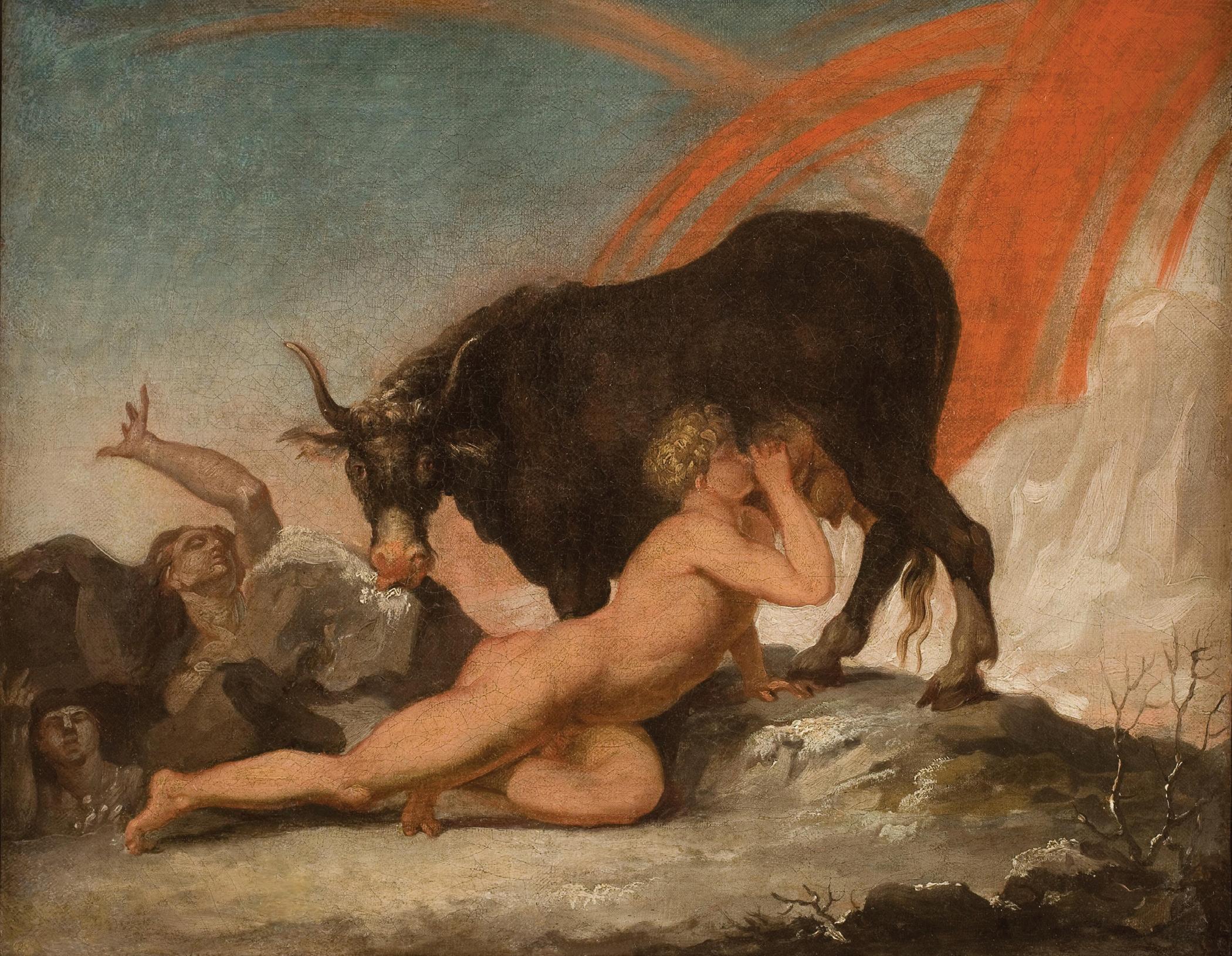
where heroic warriors find eternal glory in the majestic halls of Valhalla.
By Noelle NormanIn Norse cosmology, the universe forms a vast and interconnected web of realms, each with its distinct characteristics and inhabitants. It all began with the existence of Niflheim and Muspelheim, two realms characterized by fog and ice, and heat and fire, respectively. These realms existed side by side in an infinite void
known as Ginnungagap. Over time, Muspelheim and Niflheim gradually drew closer to each other, leading to the merging of the intense fires of Muspelheim with the icy conditions of Niflheim. This interaction, particularly the meeting of their contrasting elements, led to the creation of Ymir, an enormous frost giant. Ymir was
later slain by Odin and his brothers, subsequently allowing the sacred world tree, Yggdrasil, to grow from Ymir’s remains. The rest of his body transformed into the substance of which the universe consists, creating a total of nine realms.
Yggdrasil’s mighty trunk rises at the geographical center of the Norse
spiritual cosmos and its branches and roots connect the various realms to one another. Asgard is the realm of the gods, a place of splendor and power with towering halls such as Valaskjalf and Gladsheim dotting the landscape. Midgard, known as Middle Earth, represents the realm of humans, a world brimming with life, struggles, and adventures. It is within Midgard that mortals interact with gods and contend with the forces of nature and destiny. Beyond Midgard lies the other realms, such as Jotunheim (“the land of giants”) which is often at odds with the gods of Asgard. The enigmatic and secretive realm of Svartalfheim is the homeland of dwarves, master craftsmen renowned for their skill in forging weapons and treasures. Alfheim, the realm of the elves, bathes in ethereal beauty and serves as a harmonious sanctuary. Eventually, however, all these worlds are destined to perish in Ragnarök, the destruction of the universe.
At the core of Norse mythology lies a pantheon of powerful and enigmatic gods and goddesses. These divine beings, with their unique attributes and characteristics, shape the fabric of the Norse mythological universe. Odin, the Allfather, reigns supreme as the chief god, associated with wisdom, war, and magic. His relentless pursuit of knowledge leads him to sacrifice an eye in exchange for a sip from the Well of Wisdom. Thor, the mighty god of thunder, safeguards the realms with his enchanted hammer, Mjölnir, battling giants and protecting both gods and mortals alike. Loki, the cunning trickster, plays a pivotal role, weaving mischief and causing chaos, yet occasionally aiding the gods with his shapeshifting abilities. Each deity possesses their own domain and influ-
ence, making the Norse pantheon a rich mosaic of divine personalities.
The Vikings believed that certain events and outcomes were woven into the fabric of existence, and that these threads of fate were controlled by powerful beings of time known as the Norns, living under the world tree Yggdrasil. The Norns were three sisters who personified the past, the present, and the future, respectively.
While the Norns spun the threads of fate, the Vikings also believed in the importance of personal agency, free will, and actions. They recognized that certain aspects of fate were predetermined, such as events woven by the Norns before birth. However, while the Norns could have an impact on the length of an individual’s life, they had no power over what would follow after an individual’s death. Once the thread of fate had been cut, the time of death had been determined. However, the circumstances of one's death and the manner in which one had lived one’s life played a significant role in determining one’s ultimate fate after death. For fallen warriors, an honorable fate awaited in Valhalla, a majestic hall ruled by Odin. Valhalla, meaning “hall of the slain,” is the realm of eternal feasting and glorious battles. Supernatural warrior maidens known as Valkyries were sent by Odin to the battlefields to choose the most valiant and worthy warriors among the slain and guide them to their place in Odin's realm. Here, they would enjoy a never-ending supply of meat from the huge boar Saehrimnir, who is resurrected every day, as well as endless supplies of mead served by beautiful maidens. When they were not eating or drinking, the warriors would be fighting, honing their skills for the final cataclysmic event, Ragnarök,
where they would fight in support of Odin against the giants. Those slain in the practice battles of Valhalla were soon resurrected as all wounds would heal overnight allowing warriors to start afresh the following morning. Valhalla symbolizes the ultimate reward for those who displayed courage, skill, and honor in their mortal lives. For those who died in battle but were not considered worthy of Valhalla, the goddess Freya awaited with her chariot, drawn by two cats, to transport them to her domain, Folkvangr. Should you not attain the honor of Valhalla or Folkvangr but pass away from illness or old age, you’d likely end up in Helheim, the realm ruled by the fearsome goddess Hel. Like a physical grave, Hel was thought to be located underground, hence why it is sometimes referred to as the underworld. Although being considered a somber place, Helheim, unlike the Christian understanding of the word ‘hell’, does not denote eternal torment, but rather a continuation of life in a more limited capacity in a realm of reflection and rest for mortals.
Traditionally, myths and legends were conveyed orally. They were first recorded in the 13th-century Poetic Edda, translated into prose by the Icelandic historian, poet, and politician Snorri Sturluson in his Prose Edda.
Exploring this rich heritage allows one to immerse oneself in a world where gods and mortals intertwine, where legends come to life, and where the echoes of ancient beliefs still resonate today. Ultimately, these myths provided inspiration, guidance, and a connection to one’s heritage, encouraging the Norse peoples to navigate their world with bravery, honor, and purpose.
It takes a while for them all to get up to the front of the room, and to get organized. Tall ones in the back, short ones in front. Shy ones edging behind the ones with the big smiles. The organizers among them pass out sheets of paper with the words printed on them, and then they shush themselves into order and begin. Disorganized at first, but by the end of the first couple of lines, they are in the spirit. They are not a choir; they are a family. Today, there are more than thirty of them, a large contingent but by no means the whole family. The oldest is maybe late seventies, the youngest maybe seven. Most have no business singing, but it's a rite of passage at a family wedding.
The lyrics are customized with the newlyweds' names and inside jokes about them and sung acapella to a pop tune. The words are funny, warm, delivered with many smiles and much laughter, and are the official welcome to the Olson family.
This time a man is marrying a female of the family. An older man who did the same thirty years ago has toasted him:
“Your bride has taken your last name, but don't kid yourself. You're an Olson now.”

The core of the group are the nine siblings. All of them as Canadian as you can be, but Swedish to the core. Their parents, children of Swedish immigrants, said “I do” eighty years ago and set about living their lives. This included nine children in twenty years. Blonde, blueeyed, hardworking, strapping boys. Blonde, blue-eyed, hardworking, pretty girls.
He was a carpenter; she stayed home and made a home. How do you raise nine kids and stay happy? It must take a lot of love, a lot of respect for each other, and a lot of potatoes. Also maybe some discipline, patience, and understanding. They have both passed, but their legacy is their family, and their mark on it is indelible.
The singers are in full swing now. One or two in back, and a couple of small ones up front, don’t look like they are singing. They look like they would rather be watching, but the influence of wife/sister/mother/aunt is strong, and besides, they are part of the family, so they belong up there, and they know it. Sometimes, singing or not, big or small, some of them will look at the group around them with a look of amazement tinged with pride.
They have quite a diaspora. All nine kids had kids, and some of those kids had kids, so there are Olsons from Montreal to Vancouver. A wedding is of course a call for all of the family to attend. Spare bedrooms and couches are full. The wedding event itself is far too short for the amount of visiting needed, so a big family dinner is held a day or two before, and another a day or two after.
They finish with a flourish, holding the last note in music hall style, then they dissolve into smiles and laughter. Many surround the newlyweds with good wishes and more laughter. The rest fan out to their tables in the hall, many looking a little sheepish but smiling happily.
Somewhere on another astral plane an old Swedish couple are sitting side by side. The man is humming quietly, the woman is knitting, and they are both smiling.
Craig Sidwall is a recently retired Vasa member from Winnipeg. In the early 1900s, Craig’s maternal and paternal grandparents emigrated from Sweden to settle in Eriksdale, rural Manitoba, where Craig grew up.
Attempting to preserve the memory of the pioneer Swedes who settled the surrounding farm communities, Craig has written a collection of short stories, warmly portraying their spirit, their character, and the legacy of family and community that they left. These stories are based on Craig’s memories of the old Swedes who populated his childhood.
Swedish Press is pleased to publish them in this new heritage series – Stories From the Olden Days

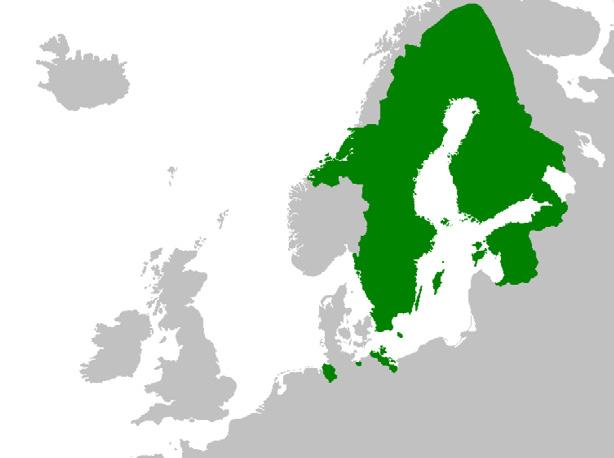
Did you know that, long ago, Sweden occupied most of the lands around the Baltic Sea, making it one of Europe’s superpowers? Unfortunately, it all came unglued over time, but at least Sweden managed to hang on to the counties of Skåne, Blekinge and Halland taken from Denmark, as well as Bohuslän from Norway. You can read all about it in Byron J. Nordstrom’s new book, an update of the 2000 edition of the author’s history of Scandinavia over the past five centuries.
Following a brief summary of Scandinavia before the year 1500, the content is structured into three parts: The Early Modern, 1500 – 1800; The Long Nineteenth Century, 1800 – 1914; and The Twentieth Century.
There is some ambiguity in the definition of Scandinavia. For geographical purists it consists of Sweden, Norway, and Denmark, while the term Norden (the Nordic countries) encompasses Scandinavia plus Finland and Iceland. In the English-speaking world, Scandinavia and Norden are often used interchangeably, as Professor Nordstrom does in this book. He also includes the Faroe Islands as part of Scandinavia/Norden, even though it is actually a semi-autonomous Danish region whose status is similar to that of Greenland.
Having grown up and been
educated in Sweden, I find that the book provides a fascinating social, economic, and cultural context to my hitherto fragmented knowledge of Scandinavian history. For example, I knew that the union between Sweden and Norway was dissolved in 1905, but I had no idea how the union came to be in the first place. I also had a hunch that the Danes largely collaborated with the occupying German forces during World War II, in contrast to the fierce ambushes by the Norwegian resistance movement. The book has taught me that, in reality, the causes and effects of their respective behaviours were far more complex, and it also changed over time as the war progressed.
I was taught that, in 1632, King Gustav II died on the battlefield in Germany, and that King Karl XII was killed by a bullet in Norway in 1718, but I never found out what put them on the war path, and
against whom. I have long been confused about Finland’s delicate political balancing act between Russia, Germany, and Sweden. Now I understand.
I warmly recommend the book for Scandinavians and non-Scandinavians alike. The prose is easy to read and avoids the constant interruptions by cross-references and footnotes so common in similar academic works. The author questions and discusses common historical anecdotes and myths.
Readers of Swedish Press may be interested to learn more about the changing role of Sweden in the Scandinavian context across the centuries, and also why so many Swedes emigrated to North America between 1830 and 1930.
Byron J. Nordstrom is professor emeritus in history and Scandinavian studies at Gustavus Adolphus College in St. Peter, Minnesota. He is author of Culture and Customs in Sweden and The History of Sweden.
Scandinavia Since 1500: Second Edition, Byron J. Nordstrom

Published by University of Minnesota Press (2023), 405 pages.
ISBN 978-0-8166-2098-2.
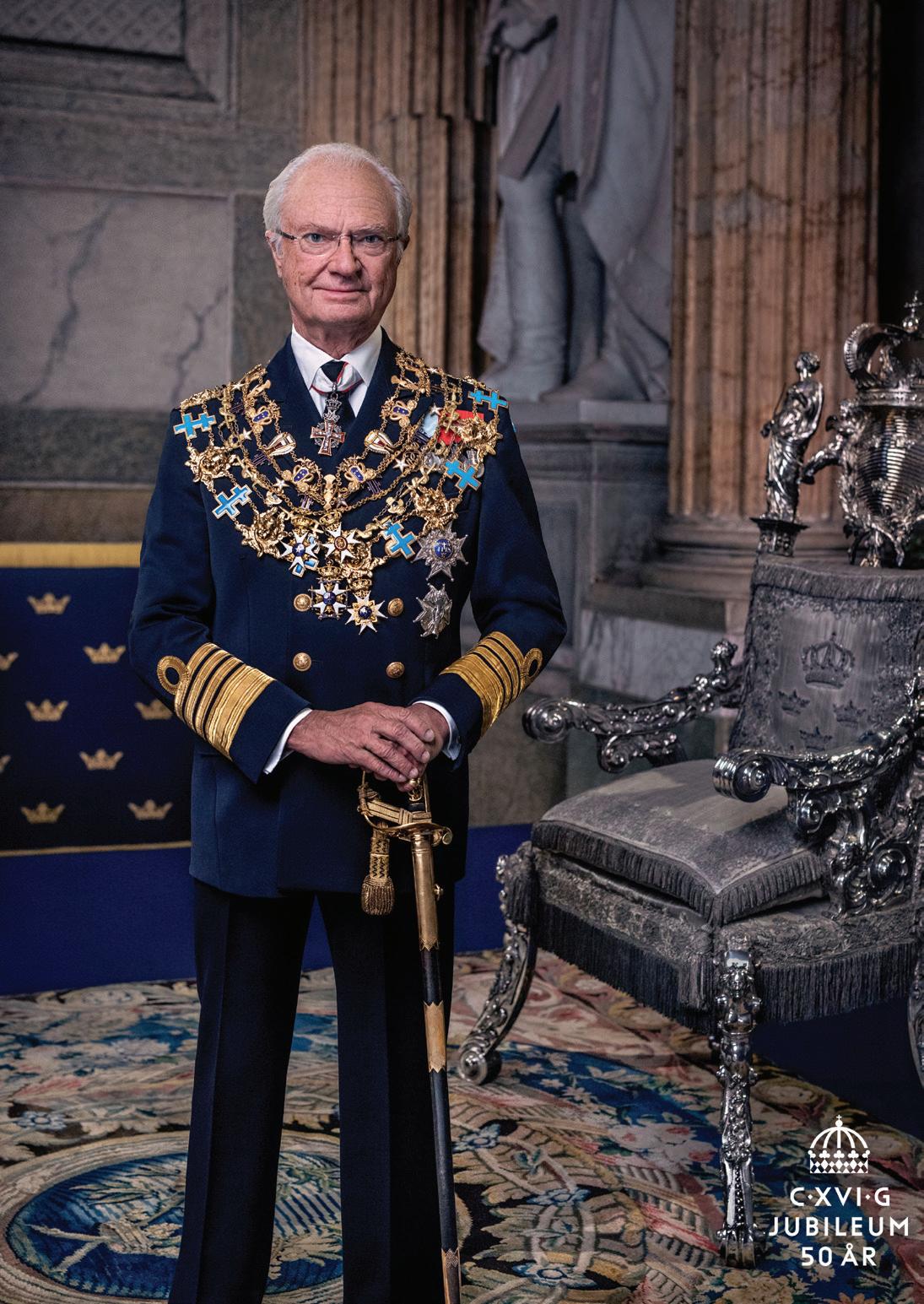
I år firar H.M. Konungen 50 år som Sveriges statschef. Redan den 15 september 1973 steg Kung Carl XVI Gustaf upp på tronen, vilket gör honom till Sveriges längst regerande monark. Detta firas förstås runtom i Sverige med besök till samtliga residensstäder i Sverige och stora jubileumsfestligheter i Stockholm.
Av Noelle NormanKung Carl den sextonde Gustaf föddes den sista april 1946 på Haga slott. Eftersom manlig tronföljd rådde på den tiden blev Carl Gustaf arvprins trots att han hade fyra äldre systrar. Kungen var bara nio månader gammal när hans far Gustaf Adolf omkom i samband med en flygolycka i Danmark. Hans mamma, prinsessan Sibylla, flyttade då med de fem barnen till Stockholms slott. När kung Gustaf
V dog den 29 oktober 1950 steg Carl Gustafs farfar Gustaf VI Adolf upp på tronen och Carl Gustaf blev därmed
Sveriges kronprins vid fyra års ålder. Kungen tog studenten från Sigtunastiftelsens Humanistiska Läroverk
år 1966 och genomförde sedan sin militärtjänstgöring. Efter sjöofficersexamen 1968 studerade han sociologi, statskunskap och finansrätt vid Uppsala universitet. När Carl Gustaf var 27 år gammal avled hans farfar och han klev upp på tronen. Han antog då valspråket “För Sverige – i tiden”, med vilket kungen menade att han vill arbeta för Sverige på det sätt som bäst passar samtiden.
Under OS i München 1972 förälskade han sig i tyskan Silvia Sommerlath, som då var värdinna för den svenska tronföljaren. Den 12 mars 1976 tillkännagav de sin förlovning och de gifte sig den 19 juni samma år. Kungafamiljen började snart växa. År 1977 föddes prinsessan Victoria,
Carl Philip år 1979 och prinsessan Madeleine år 1982. Carl Philip var först kronprins, men 1980 ändrades grundlagen så att kvinnlig tronföljd tilläts. Detta gjorde retroaktivt Victoria till kronprinsessa. Kungen har inte någon politisk samhörighet eller formella befogenheter och hans (samt monarkins) arbetsuppgifter är huvudsakligen av ceremoniell och representativ karaktär. Ändå betraktas han av många som en viktig symbol för Sverige och landets stabilitet, enhet och sammanhållning. En viktig uppgift för kungen, enligt 1974 års grundlag, är att
“visa vad Sverige är och gör”. Under de senaste fem decennierna har Kung Carl XVI Gustaf präglat Sverige och bilden av Sverige utomlands. Under åren har han representerat Sverige
vid otaliga evenemang och genomfört statsbesök i många länder för att stärka diplomatiska relationer och främja svensk kultur och näringsliv. Hans resor har varit en möjlighet att visa upp Sverige som en modern och innovativ nation, men kungen har också fått utstå sin beskärda del av kritik.
År 2004 drabbades hovet av en publicitetskris efter att kungen uttryckt positiva omdömen om sultanen av Brunei efter en statsresa dit. Kungen sa bland annat att Brunei är mer öppet än något annat land man kan tänka sig, trots att Brunei är en diktatur som kritiserats av den svenska regeringen för bristen på mänskliga rättigheter. Kungens uttalande orsakade starka reaktioner, men stormen blåste snabbt över. Bara några månader senare återvann kungen folkets förtroende genom att vara en samlande kraft under sorgeperioden efter den tragiska tsunamin i Sydostasien som dödade 543 svenskar. I Stockholms stadshus höll kungen ett av sina mest berömda tal, då han inför överlevande och anhöriga till offren för första gången öppet pratade om att förlora sin pappa:
“Många barn har förlorat en eller båda föräldrar. Jag tror… Jag vet vad det vill säga. Jag har själv varit ett sådant barn. Min pappa omkom i en flygolycka när jag var mycket liten. Så jag vet vad det betyder att växa upp utan en pappa. Jämfört med andra barn hade jag det säkert bra, men för ett barn är en förlorad förälder alltid oersättlig.”
År 2010 hamnade kungens personliga liv återigen i fokus då boken “Carl XIV Gustaf, den motvillige monarken” släpptes. Den skildrade kungens partyliv med påstådda besök på sexklubbar och otrohetsaffärer mot drottning Sylvia. Ordet “kaffeflicka” myntades i boken för att beskriva unga
kvinnor som bjöds in som sällskapsdamer, “som något sött till kaffet” på herrmiddagar där kungen medverkat. Uttrycket blev så populärt att det togs med i Språkrådets nyordlista för 2010. Boken gjorde stor skandal och ledde till stark kritik mot monarkin. Röster höjdes om att kungen borde abdikera och lämna över till Victoria. Men även denna storm bedarrade.
Motståndare mot monarkin hävdar ofta att de skattepengar som går till kungafamiljens apanage skulle behövas bättre inom områden som vård och omsorg, utbildning, polis och rättsväsende. År 2021 fick det svenska kungahuset anslag på 149,3 miljoner kronor. Utöver det fick kung Carl Gustaf och drottning Silvia ytterligare drygt åtta miljoner kronor, Victoria och Daniel drygt 4,5 miljoner kronor och Carl Philip och Sofia drygt 1 miljon kronor. En jämförelse i The Guardian visar dock att kostnaderna för det svenska kungahuset är små jämfört med övriga Europa. Det brittiska kungahuset toppar föga förvånande listan, med anslag på över en miljard kronor, men även Norges och Danmarks kungahus får betydligt mer än det svenska. Ifjol mottog det norska kungahuset 311 miljoner kronor och det danska närmare 182 miljoner.
Inför jubileumsåret 2023 var stödet för den svenska monarkin starkare än på 20 år. 44 procent av svenska folket har ganska mycket eller mycket stort förtroende för hur kungahuset sköter sitt arbete, att jämföras med 20 procent som har ganska lite eller mycket litet förtroende. Detta enligt en enkät utförd av det oberoende undersökningsinstitutet SOM, vid Göteborgs universitet.
På sistone är det kungafamiljen som helhet som stått i fokus och kun-
gen är numera stolt morfar och farfar till åtta barnbarn.
Med sina 50 år på tronen har kung Carl XVI Gustaf etsat in sitt namn i historieböckerna som Sveriges längst regerande monark. Det tidigare rekordet var 44 år och hölls av Magnus Eriksson som valdes till kung redan som treåring år 1319.
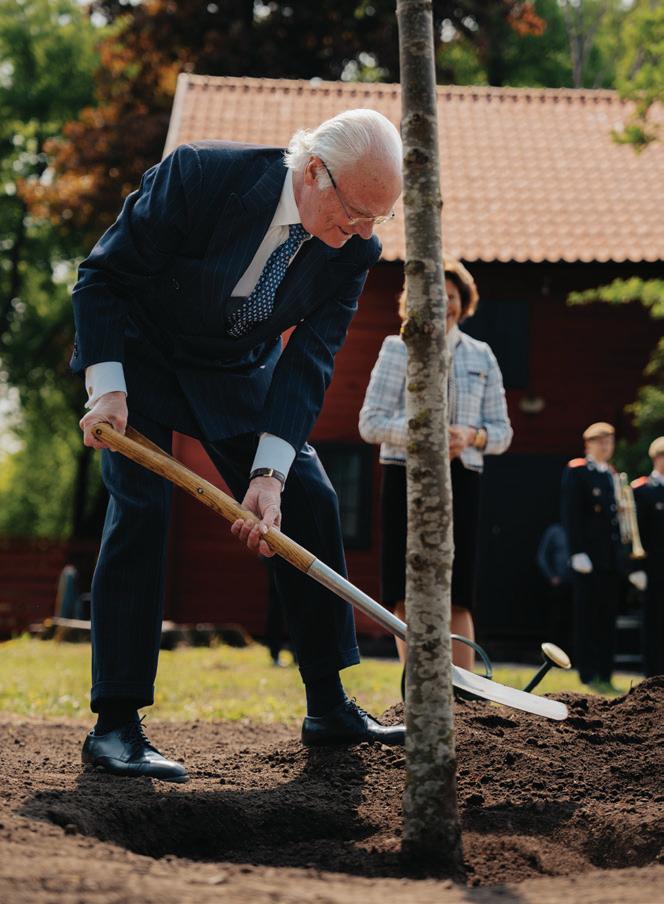
Under året har kungens 50 år på tronen firats stort runt om i landet. Kungaparet har bland annat besökt samtliga residensstäder i Sveriges alla 21 län. Den 15 september kulminerade firandet i en stor jubileumsmiddag i Rikssalen, där kungliga utländska gäster, statschefer, samt representanter från hela Sverige närvarade. Höjdpunkten för dem som inte var inbjudna till jubileumsmiddagen blev festkonserten på Lejonbacken den 16 september, där allmänheten var välkommen att delta och fira tillsammans med kungafamiljen.
Summary in English: King Carl XVI Gustaf celebrates 50 years on the throne this year, making him the longest reigning Swedish monarch in history. Celebrations included visits to all 21 counties of Sweden and culminated with big festivities in Stockholm in mid-September.