Processing of Agro-food animal products in the Sahel and West Africa: essential for strengthening intra and extra-regional trade
Trade Systems incongruous with food consumption habits of the urban population
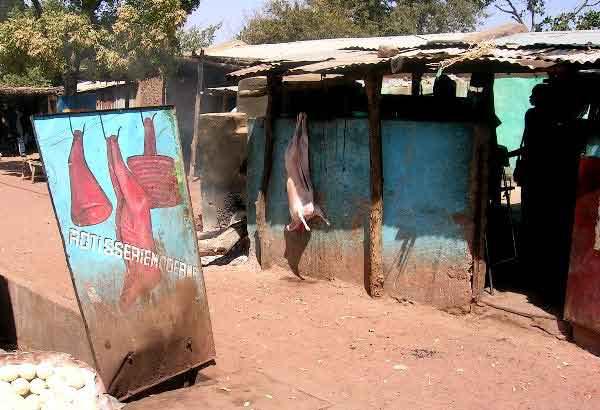
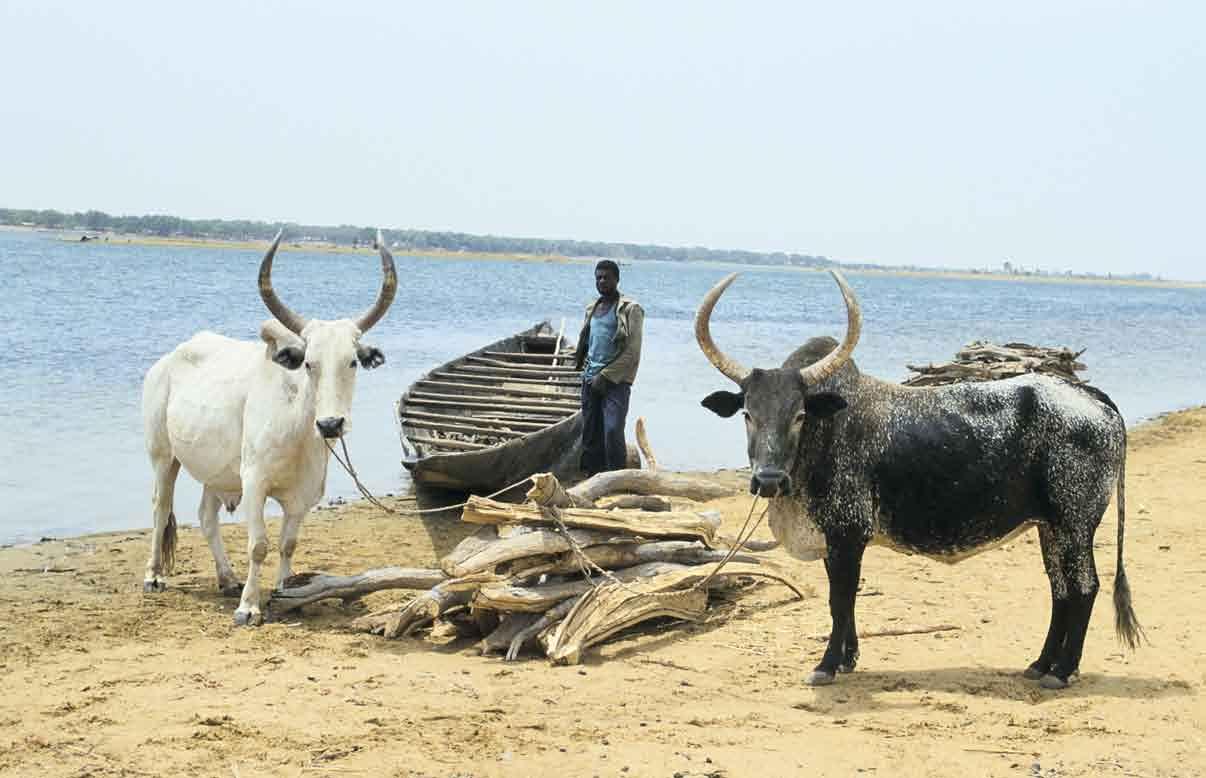
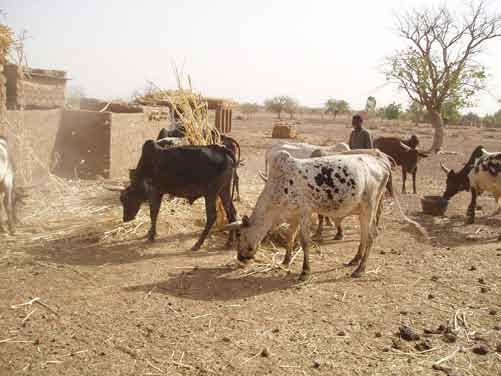
In West Africa, currently almost all cattle meat is traded using live animals. This form of trade poses difficulties in terms of administrative problems (Box 1) and creates high costs for handling and transporting live animals. Transportation and handling costs can represent 40% to 60% of all cross-border trade costs involving live cattle, excluding the purchase price of the animals. Current policies do not encourage the development of the animal products processing sector which has contributed to maintaining intra-regional trade of live animals. In 2003, the share of intra-regional trade exports of live animals from the Sahel were 95% for cattle, 79% for small ruminants, 3% for poultry and 33% for pigs..
However, statistics indicate a strong demand for processed animal products. In Senegal, poultry meat imports have risen from 1,000 tonnes in 1999 to 12,000 tonnes in 2003, an increase of 110% in 5 years. Accordingly, local modern chicken production decreased from 8,000 tonnes in 2001 to 6,000 tonnes, a drop of 25% in 3 years.
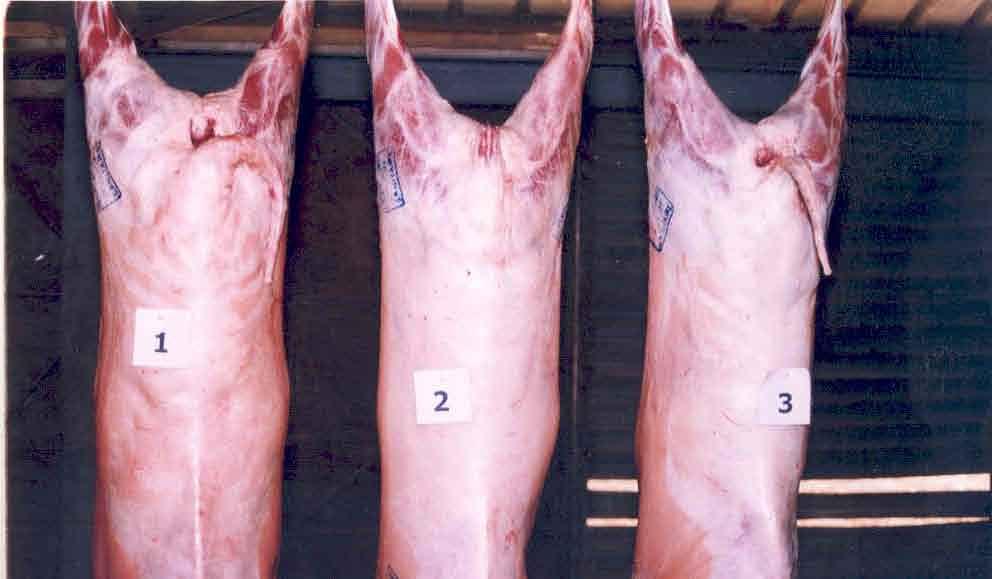
The fact that urban West African consumers are increasingly geared towards processed foods has often been neglected in the analysis of the evolution of the African food system. As West African trade is based on raw materials, the market segment is increasingly open to processed food products from the North. Promoting the processing of animal products, in particularly meat, will increase the value added of animal products. The product’s sensory quality is a marketing criterion for animal products from the Sahel and West Africa. There is a gap that needs to be bridged between food consumption patterns and animal product marketing systems.
Box 1: Obstacles to Cattle Trade
The cost of illegal taxes linked to road-related harassment using the acronym “PCG” (Police – Customs – Gendarmerie) which fluctuates between 2,000 and 5,000 CFA francs per animal
Despite the enactment of ECOWAS and UEMOA regional community policies regarding communityorigin products, illegal payments are still rampant.
In addition, illegal escort or convoy costs must be added which vary between 100, 000 and 450,000 CFA francs per convoy according to destination.
Live animals on the market in importing countries have thus a high cost price (at least 300,000 CFA francs/zebu head) to which is added the slaughtering cost.
This situation leads consumers to fall back on cuts of meat coming from Europe, America and Argentina, often of poor nutritional quality.
Obstacles to Cattle Trade in the Sahel and West Africa (SWA)
SWA countries must respond to the urgent need to improve the agro-food environment to encourage the processing of animal products for two key reasons:
Increase the veritable supply of animal products in the region to better partake in international trade;
Improve the value added of animal products while improving competitiveness with regard to Northern imports.
The Cattle-Meat Industry
Burkina Faso
The Office National d’Exploitation des Ressources Animales (ONERA) created at the end of the 1970s rapidly foundered and was aided in its decline by poor management. Indeed, with the establishment of a refrigerated slaughterhouse in Ouagadougou, ONERA was created and provided a logistical cold chain to promote the exportation of meat to the West African coast. Unfortunately, due to lack of professionalism, the office operated without the in-depth understanding of market sub-segments which led to considerable financial loss with regard to product shipments. Furthermore, some project mishandling attributed to ONERA (notably the management of the dissemination of rock salt project) contributed to ONERA’s failure.
Niger
The Société Nigerienne d’Exploitation des Ressources Animales (SONERAN), created in 1967, was in its growth period (1976-1983) a successful model in animal stockpiling, slaughtering and trading: cattle export (Nigeria), meat (Côte d’Ivoire) and offal (local market and Nigeria). The SONERAN’s capacity reached 250 slaughtered animals per day with an average live weight of 500 kg.
Poor financial and trade management led to SONERAN’s bankruptcy and liquidation following Niger’s adoption of the Structural Adjustment Programme (SAP) in the 1990s. This situation led to a significant loss of market share in Nigeria and Côte d’Ivoire.
Aware of the significant loss, the Government of Niger began to increasingly involve the private sector in the processing of animal products with a view to regaining the West and Central African markets. Thus, the creation of the Slaughterhouse Management Company is envisaged with its formalization by contract with some companies in Central Africa, notably Gabon and Equatorial Guinea.
Botswana: An
example for the SWA ….
The Botswana Meat Commission (BMC) was created by the Government in 1966 in order to coordinate cattle meat production. BMC’s headquarters are located in Lobatse, 75km south of the capital city of Gaborone. The Lobatse complex is an integrated installation comprised of a slaughterhouse (slaughtering 800 cattle daily and 500 small ruminants), a canning factory, tanning and other by-products. In 1983, another modern slaughterhouse was built in Maun (slaughtering 115 cattle/day) and in 1989 in Francistown (slaughtering 400 cattle and 115 small ruminants/day). The abattoir in Maun closed in 1996 following a lung disease epidemic requiring the elimination of all animals on the Ngamiland ranch. The BMC is the only African company exporting fresh meat which is in great demand on the European market due to its high quality.
With limited potential as regards the SWA, Botswana has …
Small livestock herd: 2 to 3 millions cattle as compared to more than 7 million in Burkina Faso and Niger.
Small pasture area: 580,000 km2
… created advantages…
Maintaining a very offensive trade policy with trade representatives in South Africa, Germany, Greece and the United Kingdom;
Investment in order to comply with international standards (ISO 9001 :2000) and adopting the HAACP process throughout the entire production chain to distribution;
Bi-lateral integration of animal and animal by-products processing activities.
…. In order to supply the European markets with competitive products …
The Milk Industry
The promotion of milk processing in the SWA is governed by the product’s limited shelf life and takes into account the seasonal nature of its production. Significant quantities of milk are produced during the rainy season and losses can reach 10% according to FAO statistics. On the other hand, during the dry season, quantities produced are insufficient. Up to now, processing options consist of the
Box 2 – Trade Policies Harmful to Local Production and Local Milk Processing
European Union subsidies for milk production are estimated at close to US $2/dairy cow/ day (16 billion euros per year). Among the tools used are direct price support measures, production quotas, import restrictions and export subsidies. These could have detrimental effects:
West African markets are overrun: for example, in Senegal, in 2002 the import value of dairy products represented close to 211,000 tonnes. Powdered milk consisted of 75% of the imports whereas liquid milk represented 10% of these imports. 80% of powdered milk comes from the European Union.

A significant amount of foreign currency outflow: In 2002, Senegal paid close to 22 billion CFA francs (33.5 million euros) for imported milk and dairy products. Undermining development of the processing factories: In Koudougou (Burkina Faso), for example, women produce milk foods (from small millet flour diluted in curd cheese) with imported powdered milk. A kilogram of powdered milk retails for up to 1.700 CFA francs (approximately 2.59 euros), from which one litre of milk could be reconstituted for 200 CFA francs (0.30 euro). A litre of fresh local milk would cost 300 CFA francs (0.46 euro). Obviously, local milk is less competitive (price) than imported milk which is supported by the exporting countries, in particular, European countries. Processors cannot compete with the imported products.

Producers pushed aside: A livestock breeder from Burkina Faso’s Koudougou region attests: “When I was young, my father and I supplied the French Government. Today we can produce milk all year long if it is worthwhile (which would mean being sold at around 300 CFA francs, or 0.46 euros per litre of milk delivered).But we can’t afford to feed our cows if we can’t sell our milk “.
implementation of pasteurization and sterilization techniques. These techniques have the advantage of preserving the quality of milk products and prolonging their shelf life. Some dairies were built during colonialism in French West Africa (FWA) to process local milk. There were small milk processing factories in Filingué (Niger) and in Sotuba (Mali), small butter manufacturing factories in Zinder and Niamey (Niger); in Gao (Mali), in Labé (Guinée), and two small dairies in Bobo-Dioulasso (Burkina Faso). Local milk processing was then slowly replaced by reconstituted milk during the decades of drought in 1970 and 1980, under the guise of food aid. This situation still continues due to lack of national and/or regional policies encouraging investment in the agro-food industry, upheavals caused by Northern countries’ agricultural policies as well as those policies related to trade liberalisation (Box 2).
The industries’ competitiveness through the processing of products
Competitiveness in order to build the Central African and Middle East markets… But West African processed products must be able to compete
The SWA’s main competitors on the international market are:
For fresh, frozen or refrigerated cattle meat: Botswana, Namibia, South Africa;
For fresh, frozen or refrigerated sheep/goat meat: Sudan, Ethiopia, South Africa;
For mineral, chemical or synthetic pre-tanned sheep hides: Algeria;
For mineral, chemical or synthetic pre-tanned goat hides: Kenya, Egypt.
Source: Joint Integrated Programme ITC/UNCTAD/WTO
But what are the competitive benefits for processing: meat
Natural quality competitiveness: Meat from the Sahel is considered to taste better compared to frozen meat, and should command a higher price due to superior quality;
In 2003, a kilo of imported Spanish meat sold in Abidjan for 1,200 CFA francs (1.83 euro) whereas the price for local Sahelian meat sold for between 1,600 and 1,800 CFA francs (2.44 to 2.74 euros): more thorough understanding of the market segment and a better cost-benefit would strengthen the competitiveness of SWA meat.
Some major obstacles to overcome through processing in order to promote the animal industry
Insufficient control and management of animal supply
Insufficient scope of private operators, notably in Sahelian countries
Little understanding of the regional market
Lack of an export promotion strategy
Little profitability if competition continues from meats coming from outside Africa.
At
the State level
Synergise National Policies and Regional Investment: Sahel and West African countries should develop strategies combining national and regional approaches in order to promote the processing of animal products. The promotion of private investment by facilitating access to financing is one strategy. The second strategy should take into consideration the need to capitalise on comparative advantages in countries or zones. Thus, setting up regional processing factories could depend on the availability and proximity of raw materials to process. To set up these factories, the following scenarios are envisaged:
Pork and chicken meat in some coastal countries (Cote d’Ivoire, Ghana, Nigeria, for example);
Milk in large cattle-producing Sahelian countries (Mali, Niger, Burkina Faso) or some coastal countries (Côte d’Ivoire, Nigeria notably);
Ruminant meat, in Mali, Niger, Burkina Faso, Mauritania, Chad and northern Nigeria; “bicycle” chicken and local guinea-hen in Burkina Faso and Mali.
Strengthening research capacities: Innovation is an important factor in quality and competitiveness. SWA countries should establish policies aiming to build human, institutional and infrastructure capacities. Valorisation of comparative advantages will be examined in the innovation sector. Establishing institutions, research centres and laboratories should enable research-development to be developed that is adapted to the processing factories in terms of accreditation for animal products to comply with international standards.
How to proceed at the national and regional levels?
Set up a more incentive-based environment to facilitate and strengthen private initiatives in the agro-food animal products industry:
Review of tax policies and energy costs;
Creation of a fund (credit facility with subsidised interest rates, etc.) to support private initiatives; More coherent national trade policies favorable to the development of the local production sector.
Promote and strengthen professionalism in the agro-food animal products sector:
Support the establishment of professional organisations in the agro-food animal products sector; Contribute to strengthening actors’ capacities in promoting Good Processing Practices (GPP) and respecting quality standards;
Promote training and research in agro-food animal products technology in order for processing factories to better comply with accreditation criteria while respecting international standards.
Photos: Jean S. Zoundi.
At the regional level
Promote the development of regional initiatives in agro-food animal products processing:
Create a more incentive-based regional environment for foreign investment in the sector – “Joint Venture”; South-South or North-South Cooperation, etc.;
Set up Regional Investment Programmes in support of regional agro-food animal products processing initiatives – Involve regional economic organisations (UEMOA, ECOWAS, etc.) in order to develop and implement such programmes.
Promote regional laboratory expertise and accreditation in compliance with international standards (ex: EU Standards) in order to certify processed animal products:
Promote the establishment of scientific analysis and certification mechanisms;
Support the development and promotion of labeling West African processed animal products;
Support Centres of expertise or professional training centres in the processing sector.
May 2007 –
Layout:
Marie Moncet