
Americas WOMEN

Founder & Publisher Rich
Borell
CONTENTS
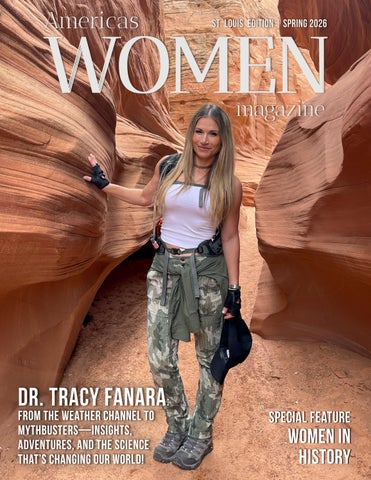
DR. TRACY FANARA
From The Weather Channel to Mythbusters-lnsights, Adventures, and the Science That's Changing Our World!
EMPOWERING WOMENIN GOVERNMENT
Meet Pamela H. Richards, Newly Elected Presidentof Federally Employed Women
WOMEN IN HISTORY
Americas Women Magazine LLCpublishescityeditions in selectcitiesthroughoutthe UnitedStates. Reproduction in whole or in part of anytextorphotographs withoutthe writtenpermission fromthe Publisher isstrictlyprohibited.The Americas Women MagazineLLCCity Editionsare not responsible forunsolicitedmanuscripts, artwork, or photographs.The opinionsexpressed in Americas Women Magazine LLCCity Editions areof the authorsanddo notnecessarilyreflect the viewsof Managementor Owners.The Americas Women Magazine LLCCity Editions assumesno responsibility orliabilityforclaims madebyadvertisers in anycityedition magazine.All rightsreserved. Publishersand/or Advertiser shall beheldblameless foranyandallpricing errors, along withanyexpireddates, typingerrorsor trademark infringements.If anyerrorsare found, we will correctthem whenbrought along withanyexpireddates, typingerrorsor trademark infringements. If anyerrors are found, we will correctthem whenbrought to our attention within 72 hours. For advertisingandeditorialinquires, contactusat info@americaswomenmagazine.
www.traveldestinations.me

Hello Everyone,
I’m excited to announce the launch of my travel blog titled … TravelDestinations.Me
For those of you who know me, you’re already aware that, along with my bucket list, there are experiences in life that are especially important to me. These are things my wife and I enjoy doing together, like our weekly volunteer work, trying different fine dining restaurants, attending concerts, and checking out headliner comedians.
Personally, as a lifelong musician, I have always enjoyed doing benefit performances. During the holidays, I’m honored and privileged to perform for the elderly and young children who cannot be home for the holidays.
One bucket list item that my wife and I just can’t get enough of is travel. After many years of traveling, I thought it was time to start a blog. Our goal is to visit a minimum of 50 countries (we’re almost there). We’ve had some awesome experiences in countries like Australia, New Zealand, Ireland, Russia, India, Israel, Jordan, Egypt, Cuba, and many others.
Our other travel goal is to tour the USA twice! Our first tour of the US that we have finished has included famous attractions in each state along with Hall of Fames (Football, Baseball, Basketball, Rock n Roll, etc.), attending a Supreme Court session, glacier landing in Alaska, and visiting presidential libraries. In our second go around, we look forward to seeing more of the USA.
So, I thought it would be appropriate to share a series of blogs of my past experiences I have had over the years with you, titled Best Travel Memories
Rich Borell Founder & Publisher
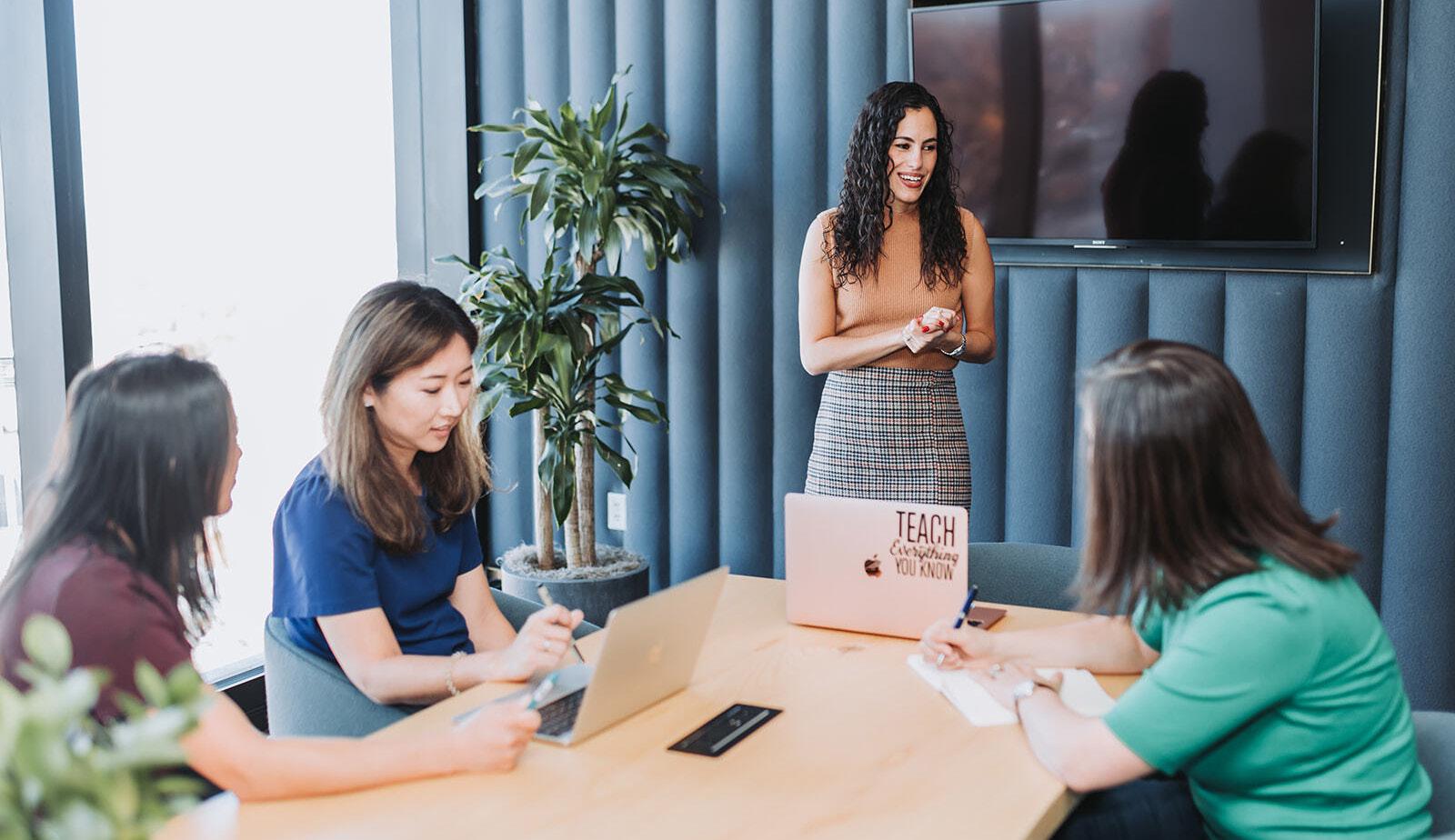
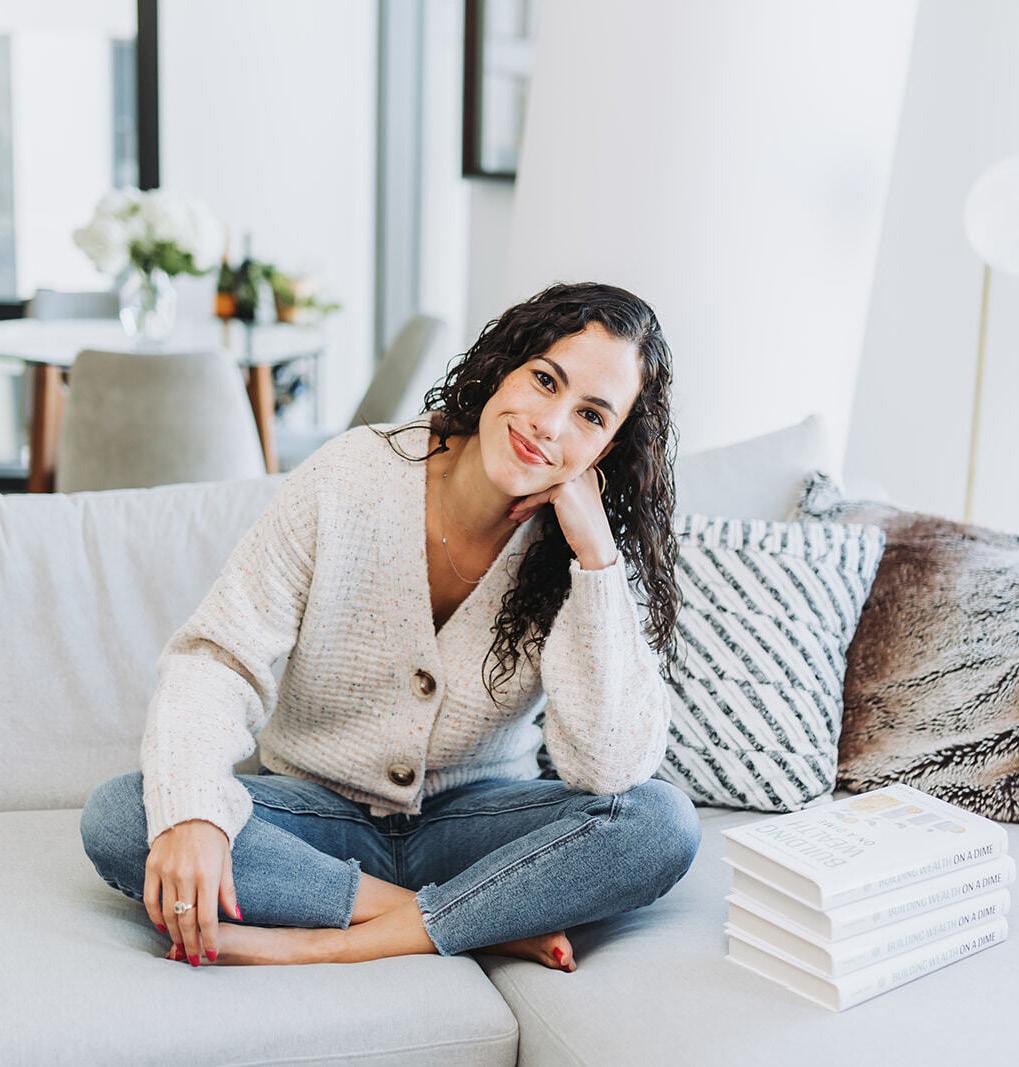
Kimberly Hamilton Founder of Beworth Finance
Empowering Women with Financial Education and Freedom Through Every Stage of Life
Q:When you look back at your early relationship with money, what beliefs or habits did you have to unlearn as you stepped into leadership and entrepreneurship?
KH: I grew up believing that success came from “outworking” everyone else in the room; equating time with effort. But in my experience, success in my career and finances hasn’t been about time spent, but how I’ve used it. Technology and financial tools helped me shift from constant hustle to strategy. Especially since I’ve become a mother, I’ve had to rethink what productivity really looks like, doubling down on automation to help me invest and sell products, sometimes even in my sleep. Time is still my most valuable currency, but in a different way than I was taught, and learning to maximize it has helped me as a mother, wife, educator and leader.
Q: Beworth Finance centers on financial confidence, not just numbers. When did you realize confidence was the missing piece for so many women and families?
KH: I first noticed the confidence gap talking to friends in Washington, DC – lawyers, doctors, policy experts; women who are undeniably confident in their fields. But when it came to money, that confidence faded. Not because they lacked intelligence, but because money

wasn’t taught, isn’t talked about, or they didn’t have approachable resources. One friend, a lawyer, admitted she had never discussed her compensation package with any employer. That surprised me. If accomplished women still hesitated with money conversations, the issue clearly wasn’t ability or confidence, it was access to relatable, actionable guidance. That insight inspired the name for my company “Beworth Finance”: how could I help women, so their bank accounts more closely reflect how incredible and powerful they are as people.
Q: You work with people at many life stages. What financial fears tend to resurface for women even after they’ve “done everything right”?
KH: This is so common, myself included. After earning my Master’s degree, I originally worked in international development and realized my student debt exceeded my annual salary. That level of anxiety is all-consuming. I hear similar fears from coaching clients all the time: Will I ever pay off this debt? How will I afford a family? And the rising costs of everything from housing to childcare
only make it worse. But I’m also a firm believer that the same drive and determination that got them to a “I did everything right” place can move them forward financially, too. With the right tools and support, I truly believe that most people can solve those fears over time.
Q: How has building Beworth Finance changed your own definition of success—financially and personally—over time?
KH: Building Beworth Finance has certainly changed how I’ve defined success over the years. In the beginning, it was just getting people to join my coaching program: no business background, no scripts, just a desire to help others where I saw a true gap. Today, success means two things for me. First, as an Accredited Financial Counselor, I want impact: 100% of my client’s report reduced financial anxiety or increased confidence. Second, I want growth: even when a new business idea doesn’t land, if I’ve learned something, it’s a win. Obviously, the numbers matter, but it’s purpose that drives me in most areas of my life.
Q: What’s a commonly praised financial habit that you believe can quietly hold women back if followed without reflection?
KH: Frugality. Yes, it can be helpful and is sometimes a necessity. I leaned into it hard while paying off student debt because I had no other choice (aside from working multiple jobs, which I also did). But you can’t cut your way to financial freedom. Real growth comes from dreaming bigger and building systems that have staying power. The goal isn’t just to spend less, it’s to live life in a way that gives you more choice and freedom.
Q: In your experience, how do emotional experiences—like scarcity, guilt, or comparison—shape financial decisions more than income or education ever do?
KH: A study from the University of Cambridge found that kids can form financial habits by age 7, and I see that play out in adults all the time. Often the negative experiences tie back to how family members dealt with money, spoke about it, or maybe didn’t speak about it at all. The good news is, those beliefs can often be unlearned by coming up with a plan to see the real possibilities or setting boundaries for how money shows up in your relationships with others. It’s not easy work, but it’s possible; like therapy for your money.
Q: As conversations around money become more public on social media, what do you think we’re getting right—and where do you worry, we’re oversimplifying women’s financial realities?
KH: I think social media has opened up money conversations in a powerful way to normalize financial struggles, inspire action, and showcase both challenges and possibilities. I also love that it’s making financial education and investing more accessible than ever, but we do risk oversimplifying the barriers women and families face. Rising costs of living, shrinking safety nets, and caregiving responsibilities for children and adults are real. While I firmly believe most people can grow financially with the right systems, we have to acknowledge the unequal starting lines.
Q: What’s a question about money or your work that you wish more interviewers would ask—but rarely do?
KH: I wish more interviewers asked what are 3 quick actions a person can take to improve their finances today. My answer would be:
1. Learn 1 new thing about money: Set aside a certain amount of time every week to spend 15 minutes learning more about money. There are plenty of free and lowcost resources to help you, and once you’re motivated, come up with a plan.
2. Automate one part of your financial life: Automation in various forms (a minimum debt payment, a savings transfer, bill pay, etc.) can drastically reduce mental load. If you can, try increasing your savings or investing rate by 1% your income for 2026.
3. Start a money conversation: This could be with a friend, a partner, a family member or financial professional; whoever it is, the more you start talking about money, the less scary it becomes to talk about and drive more action.
Q: Looking ahead, what does a truly empowered financial future for women look like to you—and what still needs to change to make it accessible?
KH: A truly empowered financial future for women is one where confidence and knowledge go hand in hand; where women understand their options and feel equipped to make impactful financial decisions, no matter their income. I’ve worked with clients earning $30K up to $200k+ and their challenges often look similar, just on different scales. What matters most is knowing how to make the next right move. If you don’t know where to start, check out my book Building Wealth on a Dime or free tools at BeworthFinance.com. I’d love to help.
A Special Conversation With Empowerment Author & Speaker, Zeeda Michele
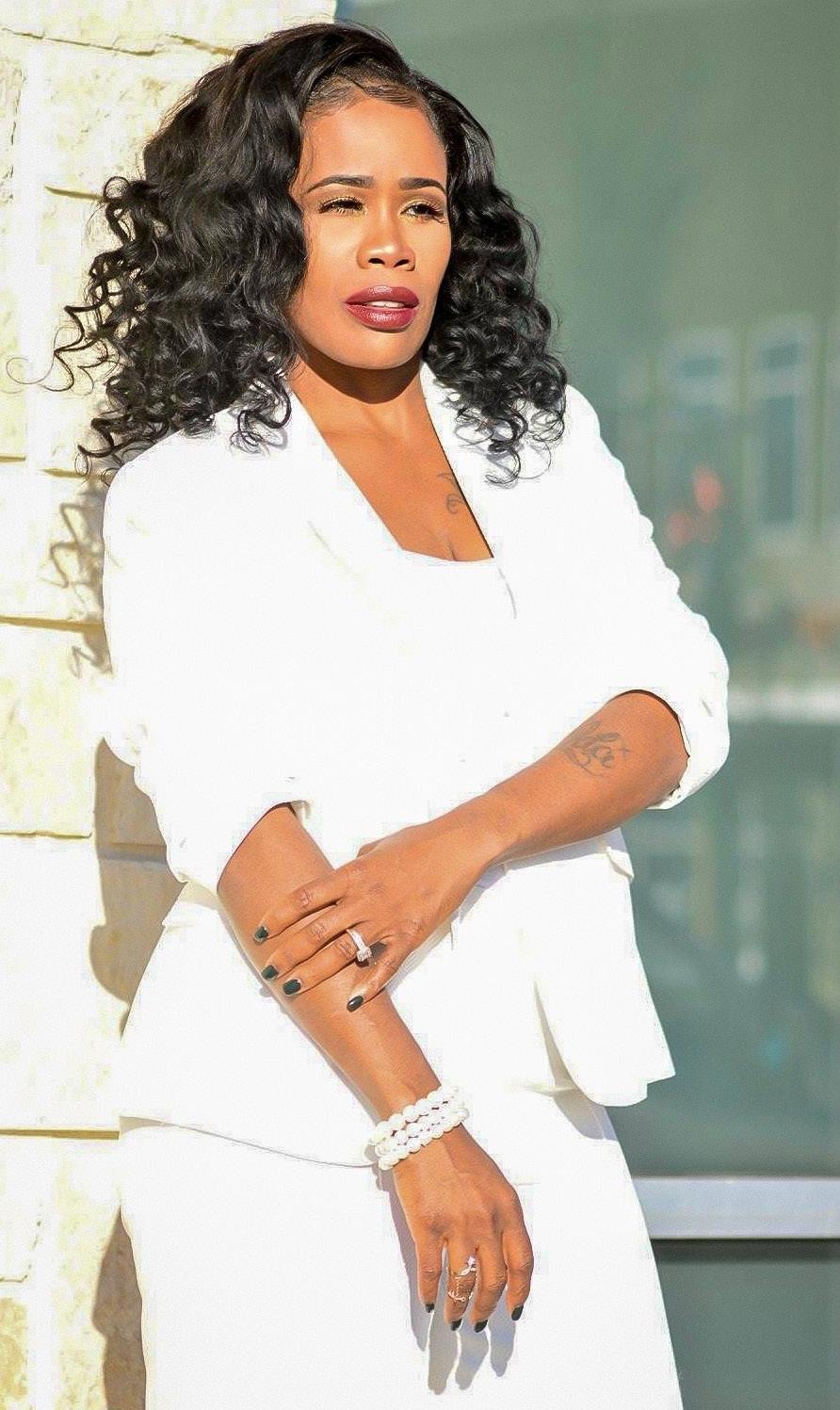
Q: Why did you decide to become an entrepreneur?
ZM: I don’t believe it was something that I set out to do I just knew I had a creative force in me that was supposed to be doing something independently, and opposite of what everyone else was doing, and with that being said I needed to be able to control the narrative of my creativity without restriction. And just like that Making Power Moves was born!
Q: Can you share with our audience more about your career and your brand Making Power Moves?
ZM: Making power moves is a women’s empowerment movement that consist of books, apparel, empowerment events, interior design, event planning, and décor. There are so many intricate details to MPM that it can’t just be summed up in a title or a few sentences, it’s about empowering women and even men on levels that are not mediocre on levels that are super creative! And some in different areas as I mentioned above.
Q: Tell us about what inspired you to write the book “From Pain to Power”
ZM: Growing up I had an extremely rough life that consisted of me being molested as a child, being a high school dropout, teen pregnancy, mental, physical, and sexual abuse, also selling drugs in so much criminal activity which led to my incarceration, and also even being a negligent parent… a young negligent parent, and even being suicidal. There were so many layers of pain that I experienced but through God, my husband and writing, the book From Pain to Power was where my healing begin. Not to mention being a Christian hip-hop artist that shared her testimony before performing on stage, after each performance I was often told why you don’t write a book, so one day I picked up a pen and I begin to write!
Q: Tell us more about the meaning behind “I am not what I’ve been through … I am who I was called to be?
ZM: Often society labels us… you know Zeeda?! Ida’s daughter the one that always gets in trouble lol, Or the little girl that got pregnant at 16, the thief, drug dealer… the drop out, who was molested as a little girl. All those things I just named above yeah all that happened to me, and people like to label you! yes, I did that, I’ve been through that, but let me enlighten you I also came out of all that! So, honey I’m not what I’ve been through! I was called to be something greater, and the greater call is Everything that I’ve been through all the bad was working for my good, it enables me to share with someone else …that yeah… all that happened but look who I am now I’m not what I’ve been through! I was called to be who I was created to be. When things are being created, we never know what the outcome is, but when we begin to pay attention to the intricate details of what’s being molded and shaped.…the end process is stunning, that’s the kind of God we serve, and though we start out one way, mushy, lumpy, ugly, scarred… in the hands of the Potter, we are created to be something extraordinary!
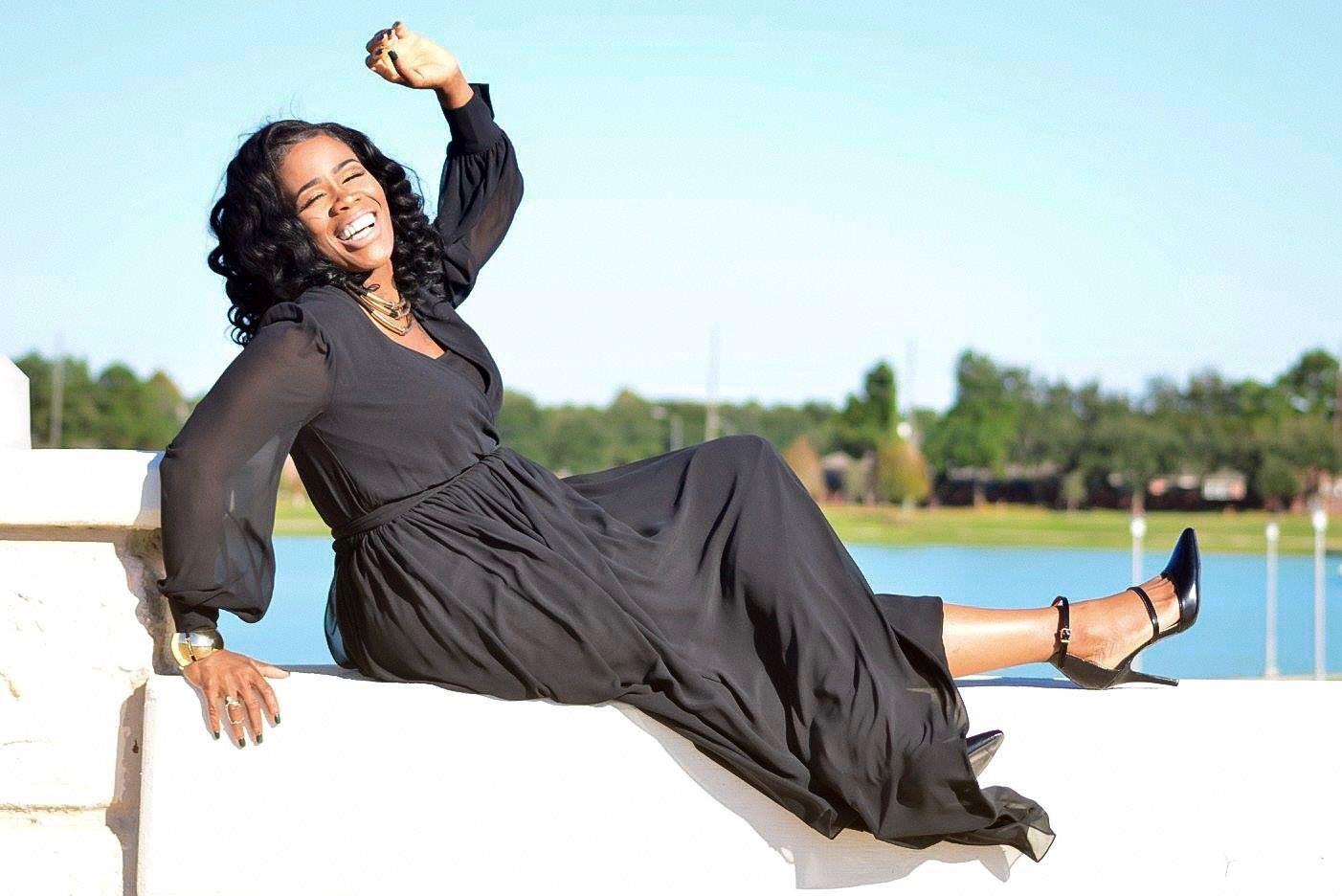
Q: What would you say was your lowest point in life and why then did you decide to make a change?
ZM: My lowest point in life was after a big fight with my sons’ father, who was very abusive, and who was abusing me physically and sexually for so long, behind closed doors… no one knew what I was going through, I was so tired of fighting and not just with him but with life, my life was in shams… and then one day the police knocked on my door and arrested me in front of my kids. I found myself locked up and pregnant… with no direction for my life, a single young black mom That just found out that I was pregnant again for a third time… pregnant and in jail!!!!. And right before my incarceration I had a failed suicide attempt… come on! Low couldn’t get no lower, I couldn’t even accomplish killing myself! And as I sat on my prison bunk bed, I thought to myself there has to be more to life than this. I was not designed to live a mediocre life; my kids were not supposed to have a mediocre mom. So, when they see me! and they see me! In so many different lights … on so many different levels. Nevertheless, the beautiful, amazing thing about all of that is my lowest moment proved to my family that you don’t have to stay down anything is possible with God.
What advice would you give to young women who want to purse their dream and start a business?
ZM: Never share your dreams with people that don’t have vision, never allow anyone to put restrictions on the way you dream. Dream in HD on a movie screen! Your dream will definitely try to intimidate you whether that is with finances, resources, or manpower. But no matter what you keep pushing and you keep trying, and you step out on all the faith that you have even if that’s only the size of a mustard seed … believe God! you also have to invest in yourself, often time entrepreneurs start out working for others it’s called seed money. You need seed to grow anything! Also be mindful how you invest your seed. If you give me a dollar the average thinker would say “Oh I have a dollar” whereas I would say I have 4 quarters! I’m going to invest a quarter here a quarter their quarter here etc. scared money doesn’t make money!
Q: Can you tell our audience one of your most memorable moments of your career?
ZM: The most memorable moment was when God first gave me the vision and the guts to give my first power gala. I remember standing on stage in front of 300 people, Yup the Power gala is what he told me to call it! This Power gala included a three-course dinner, Crystal awards, a live New Orleans style brass band, Stilt walkers, and a live DJ… all that at the time on a Zumba instructors’ salary, making only $27 a class at the time!!!! True story! On that night I stood before the people that night September 2016 and I said wow y’all came lol that was one of my proudest moments!
Q: What’s one lesson you’ve learned in your career that you can share with our audience?
ZM: Presentation is everything! How you present yourself how you present your product what you represent and what you stand for is important! I don’t care what you think they see you! even when you’re trying to pretend or cover up, they see you! Presentation is everything, be honest with yourself and who you are, but don’t ever allow the lines of communication to be blurred, never let anyone control the narrative of what it is that you are called to do. Listening to the voice of others put fear in me, and it also put doubt in me as well. There were things That I not only allow people to talk me out of it, but I talked myself out of opportunities, experiences, and potential deals. I’ve learned to be fearless and to take calculated risk! never start building without A blueprint! And make God the CEO…because he is!
Q: Which woman inspires you and why?
ZM: I honestly would have to say there are so many, but at this stage in my life the very young but powerful Sarah Jakes Roberts is the one that truly inspires me! she is fearless, and she does not care what people think of her, and she Gives you the good. News in a way that’s full of innovation and swag!!! I Absolutely love it!! empowering women, preaching the gospel and with style and fashion that isn’t the norm! woman evolve woman evolve!!!
Q: What are some of the challenges you feel women face today?
ZM: Being heard … I mean being really heard and being taken seriously by our male counterparts! in my 2nd book PowHerful … there is a chapter called the Oprah Stedman syndrome! It talks about how with the right man standing alongside of the right woman, not being intimidated by who she is but embracing the qualities of all God created her to be, that’s power! as the head he has the ability to ignite greatness in one of the most intricate beautiful complex but very strong creatures that God has created! And although people talked about Stedman He knew, and he knows what he has in Oprah Winfrey… that’s power!
Q: Can you tell us how you manage your work life balance?
ZM: God, Time, and discipline. God has given us all an allotted time here on earth! There are a lot of things you can get back, you can get a refund, you can exchange a pair of shoes. but you see time, you can’t get that back, so I’m very detailed when it comes to time… my schedule is planned, from the time I get up in in the morning. I know I need at least 15 minutes of worship and just meditating. I know I have to take 30 minutes to walk and feed my dog, I have 45 minutes to work out, I have 30 minutes to shower and get ready. I have 15 minutes to get my coffee and pumpkin. Bread (guilty pleasure). And another 18 minutes to drive to work. If you are going to be successful at anything time is a resource that you are going to have to pay close attention to! And discipline is not something you’re born with it’s something you create!
Actress
Julie Slack
Opens up About Her Journey, Inspirations, and What Drives Her Passion
for Performing in
this
Exclusive Interview
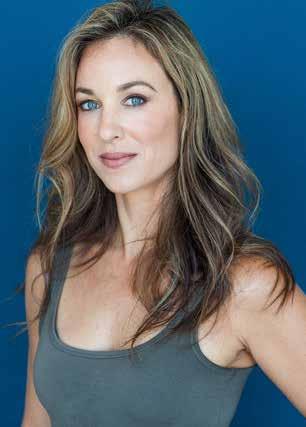
Q: Was there a specific performance or actor who made you think, “That’s what I want to do”?
JS: Not a specific actor or performance, but rather, I knew that I wanted to be onstage (which is how I started out) because my parents would take me to the local community playhouse to see everything that they produced. From a very early age, I was absolutely dying to be up there. I truly thought every person on that stage was a star, and to me, they were celebrities. My mom told me that I had to be 8 in order to be in shows at the Playhouse, so on the morning of my 8th birthday, I woke up and asked if I could go audition! (By the way, I found out many years later that she’d made it up that I had to be 8!
Apparently, she felt that 8 was a good age for me to be able to handle all of that). I did theater for many years, and then once I discovered film and tv work, I knew that that was my passion because I really enjoy small, realistic acting, (whereas theater is more broad, elevated acting).
Q: Can you tell us about a role that challenged you the most, and why?
JS: It wasn’t so much the role as it was the situation. I worked on a show on Fox called “The Resident,” and by the time I got there, it was an absolutely well-oiled machine (in its 5th
season). On my first day, I got there very early in the morning, and right away it was a total whirlwind. I remember someone brought me something to eat, but right as I got it, we had to report to set, so I didn’t get to eat! And then I was driven to the set and escorted by a production assistant to the specific location on set where I would first be filming. Everything was just so fast! (And I had to go to the bathroom so badly!) And then all of the sudden we were directed to rehearse, which meant that I was meeting my scene partner (which, for me, was the amazing lead of the show), the director, and the crew, all for the first time, and I needed to quickly switch into performance mode. And then shortly after that, we began filming that first scene. So, all in all, when I say that the situation was challenging, I mean that when you are on a network show like that, it is expected that you are extremely prepared, efficient, calm, and able to execute seamlessly, no matter what the circumstances. For me it’s always magical because it is everything I’ve trained and worked so hard for! But I think that’s where a lot of actors can let the intensity of the situation get the better of them. But I absolutely love that challenge!
Q: What’s something surprising about working on set that audiences might not realize?
JS: Just how many crew members are working behind the
scenes, and also, how much harder they work than the actors. Oftentimes there are two to three times as many crew members as actors, and sometimes, like on a network show, there can be like 100 plus people working behind the scenes! They are there earlier than the actors and stay much later. And with that, I think that audiences probably don’t always think about how collaborative a production is among all of the players. The actors are just cogs in the proverbial wheels!
Q: How do you bring your personal identity or experiences into your work?
JS: Oh, I love this question! Because my approach to acting is all about how I can use my own personality, my own past, my own inner thoughts to flesh out the character I’m playing (or auditioning for). I think that’s what creates authenticity in acting, because if you’re just “playing” a character, and not “infusing” a character with your own personality, then I think a performance will look like acting. So, I think it’s important to create a character through one’s own lens. That’s what makes each performance so specific! For me, I tend to bring in elements of humor and quirkiness because I generally see the world as being very humorous!
Q: What advice would you give to aspiring actors navigating today’s entertainment landscape?
JS: I think it’s important to try as many types of acting as you can! I now do a ton of voiceover work (personally- I do a lot of commercials), and I never would have even thought to try voiceover, but it sort of fell into my lap. But I feel so lucky that I was open to it, because it has become a huge part of my career. So, I would encourage aspiring actors to be open to whatever
they can try- each type of acting informs another.
Q: What’s a role you’ve always dreamed of playing?
JS: I would LOVE to work on a mockumentary. I’m putting that out into the universe!
Q: What do you do to unwind or stay grounded outside of work?
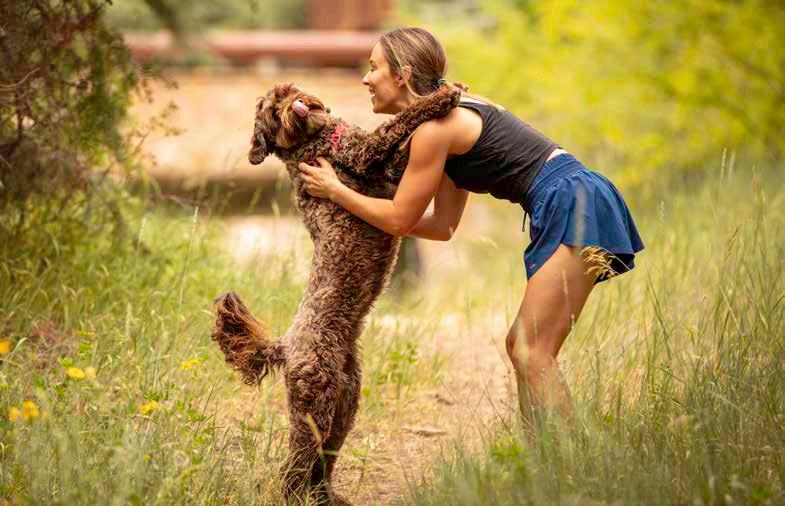
JS: I’m a mother of two and a wife, and I have two dogs, so I’m really busy with that part of my life! I spend a lot of time with my family, and truly just enjoy them! I love watching my children’s personalities blossom, and I’m incredibly proud of my husband and myself for the family we’ve created. My favorite nights are when my kids have friends sleep over because it means that I have them all under my roof, and it makes me happy to have a houseful! And I’m so lucky because my husband works from home, so not only is he my helper for auditions when I need someone to read with me, but I get to see him all the time.
Oh, and I love to hike, and trail run with my puppy who has a LOT of energy to expend (my other guy is now too old to hike)! These days my dates with friends revolve around taking our dogs somewhere. But I love seeing friends that way- it fills my cup! This business has so many ups and downs, and it requires a lot of resilience, so when I feel both the downs AND the ups, I try to make a conscious effort to remind myself to focus on gratitude. And humor. I’d be remiss if I didn’t mention that I love to people watch and make up funny stories about them –hey, they’ll never know!
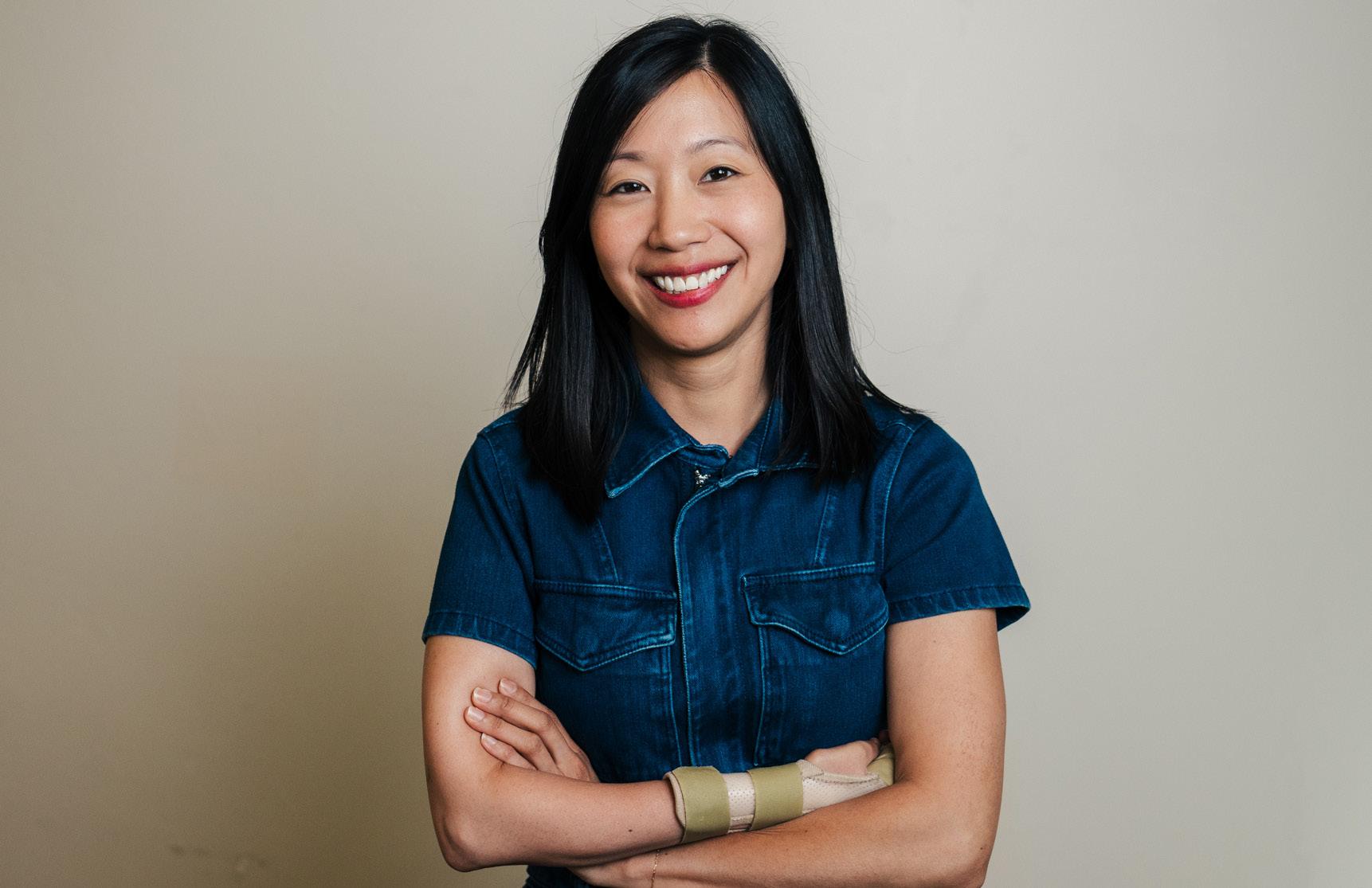
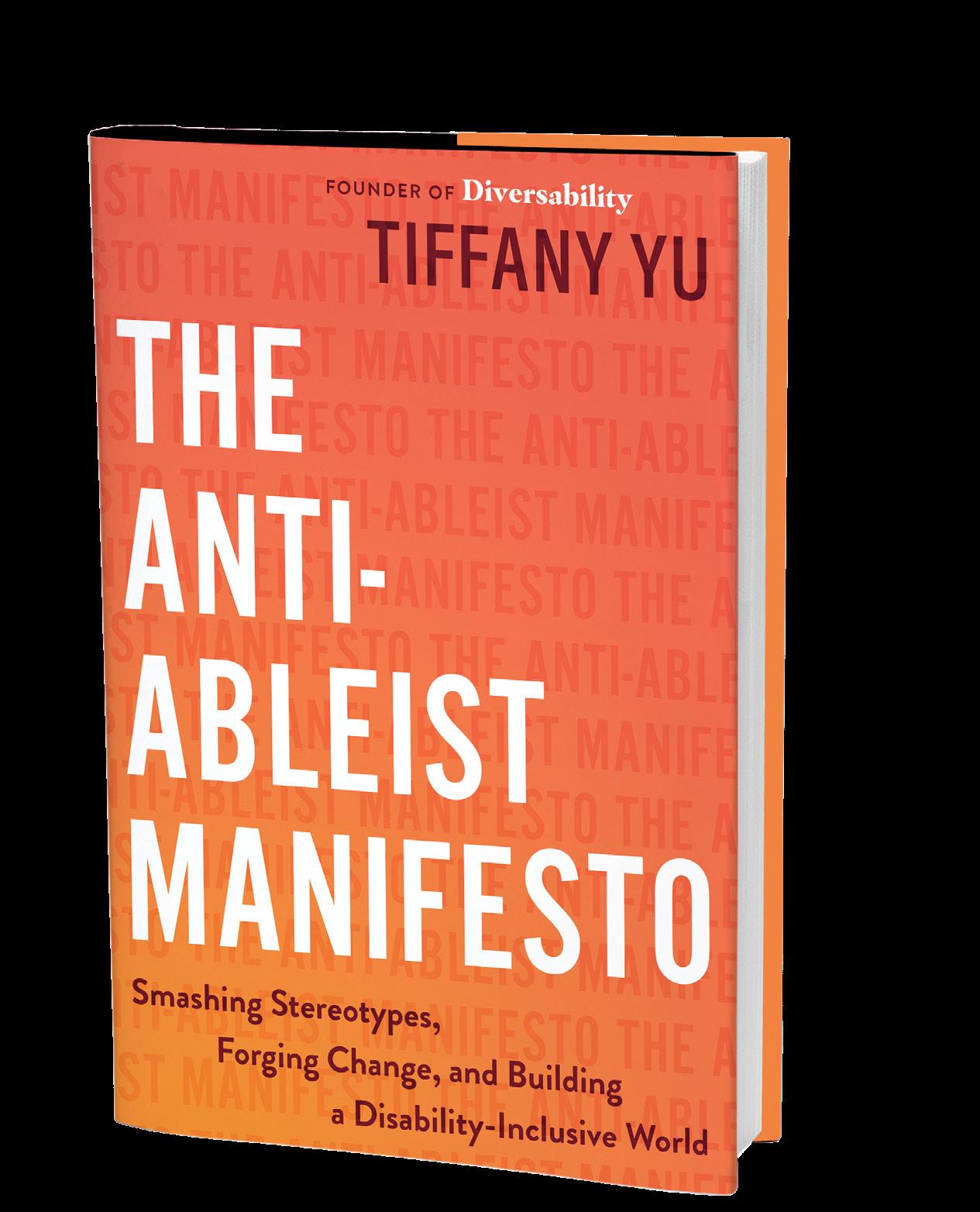
Tiffany Yu is the CEO & Founder of Diversability, a 3x TEDx Speaker, and the Author of The Anti-Ableist Manifesto: Smashing Stereotypes, Forging Change, and Building a Disability-Inclusive World.
Q: You’re a Speaker, Content Creator, Social impact entrepreneur Diversity & inclusion community builder Inclusion & empowerment advocate. Tell us when and how it all came together for you.
TY: My journey into advocacy and inclusion work started from a deeply personal place. At the age of nine, I was in a car accident that resulted in a permanent disability. For years, I struggled with internalized ableism and the societal stigma surrounding disability. It wasn’t until I was in college that I started exploring disability advocacy and building community with other disabled people. That experience led me to create Diversability, a community focused on elevating disability, pride and leadership. Over the years, my work has ex-
panded to public speaking, content creation, and entrepreneurship, all centered around making the world more inclusive. Disability is an important part of diversity, and I wanted to ensure it was included in conversations about equity and justice.
Q: For those in our audience not familiar with Diversability, can you tell us more about it along with your duties as Founder and CEO?
TY: Diversability is a community business dedicated to elevating disability, pride, leadership, and power. We create spaces where disabled people can connect, share their stories, and find their voice to advocate for the issues they care about. Over the years, we’ve
grown our community to over 80,000, hosted over 100 events, and organize an annual list honoring 30 disabled leaders globally. Our team is entirely disabled-run and disabled-led, and we’ve been proud to have partners with Walmart, Gauge, Blend, AAPD, and the Aerie Real Foundation supporting and sustaining our work.
Q: You’re also the founder of the Awesome Foundation Disability Chapter. Can you share with us the work this organization does.
TY: The Awesome Foundation Disability Chapter is an entirely disabled-led economic justice initiative that awards monthly microgrants to disability projects making an impact in their community. All our trustees are disabled and help fund our $1,000 grants every month. In 2025, we will surpass $100,000 in grants awarded and we have already awarded grants to projects in 14 countries around the world. The goal is to empower those who have awesome ideas that will benefit the disability community to turn their ideas into reality with financial barriers. Diversability started back in 2009 after we received a $500 grant at my alma mater called the Reimagine Georgetown Grant.
Q: Do you anticipate writing another book, if so, can you share the topic?
TY: The Anti-Ableist Manifesto came out in October 2024, and in March 2025, it will be launching in paperback in the UK. While I may write another book, I’m savoring having this first book out in the world and acknowledging how important conversations around disability inclusion, accessibility, and equity efforts will continue to be as they become more threatened.
Q: Which woman inspires you and why?
TY: One person who has had a lasting impact on my journey is Alice Wong, the found-
er of the Disability Visibility Project. I first met Alice in 2017, and she cofounded the Awesome Foundation Disability Chapter with me a few months after that. She has been a trailblazer in the disability advocacy space, using storytelling and media to elevate disabled voices.
Q: What’s the greatest fear you’ve had to overcome to get where you are today?
TY: One of my biggest fears was believing that my voice didn’t matter. For a long time, I felt like my experiences and perspective weren’t important enough to share, and I doubted whether I could make a real impact. In fact, I didn’t really use my voice at all for 10+ years after I became disabled. Over time, I realized that everyone has a story worth telling, and the more I spoke up, the more I saw how my words resonated with others. Seeing how my advocacy helped others feel seen and empowered gave me the confidence to continue speaking out. Now, I encourage others to embrace their voices and know that they, too, have the power to create change.
Leah Zeger
Her musical success story is anything but conventional. With an eclectic range and professional experience spanning every imaginable musical style, she has carved a unique path in the industry.
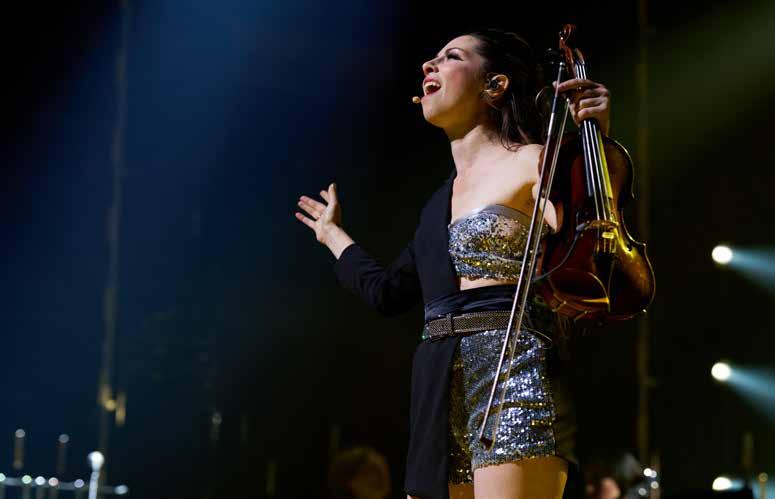
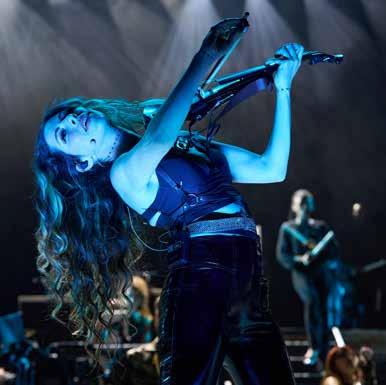
Houston-native, Leah Zeger is from a family of professional classical string players. She studied violin seriously with her mother , but always had a deep love for singing, especially in the style of Ella Fitzgerald. At 15, she took a 4-year hiatus from violin due to carpel tunnel, during which she focused heavily on developing her voice as well as delving into literally every style outside of classical music. This deviation from the rigors of classical concerti set the stage for Zeger’s transformation into musical chameleon.
The next year, she resumed violin and won a tenured position in the Austin Symphony. Meanwhile, she got her BA in opera from University of Texas , all while performing at jazz clubs and festivals with her band Leah and the Moonlighters.
Zeger began her LA music career in 2010 quickly winning a position in the Hollywood Bowl Orchestra and film and tv scoring sessions. In 2014, she became an official Yamaha Artist. She has appeared and toured as a solo violinist with Miley Cyrus, Willie Nelson, Kristen Chenoweth, Charlie Daniels, Post Modern Jukebox, Electric Light
Orchestra, Annie Lennox, Rhye, Cee Lo Green, Stevie Wonder, and began touring and recording as a solo violinist/vocalist for Hans Zimmer in 2017.
Zeger is a member of the prestigious Vitamin String Quartet and has recorded on over 80 songs for the ensemble that have been placed in tv shows most recently including Bridgerton.
Zeger is also a songwriter with several solo albums to date.
Her album Pour Moi is a perfect demonstration of her virtuosity on the violin, her unique and sophisticated vocal technique, and her multi-cultural approach to music.
Her latest album, Plans Change, features a guest appearance by David Grisman and a duo performance between her and Steve Vai.
She performs regularly with her jazz quartet as well as with her husband-wife duo project “Leah and I” in the greater Los Angeles area where she currently resides.
Q:What initially inspired you to start playing music?
LZ: My mom is a professional violinist who played in the Houston Symphony for 35 years and my dad is a cellist in the Houston Ballet Orchestra. We used to play weddings every weekend as a family string trio. I started getting serious on violin at 6 years old and my mom made me into a prodigy. I sang for fun but eventually when I got tendinitis at 15, I started studying opera.
Q:Which artists or genres have influenced you most?
LZ: Johnny Guitar Watson, The Police, Bob Marley, Michael Jackson, Stevie Wonder, Jill Scott, Erykah Badu, D’Angelo, Frank Sinatra, Ella Fitzgerald, Bill Evans, Stephanne Grapelli, Steely Dan, Brahms, Prokofiev, Beatles.
I love all genres and have been influenced by all of them. Because I started as a classical musician, I had the technique to do anything after that.
Q:How would you describe your songwriting process?
LZ: I come up with chord progressions first and then lay down melody and lyrics. My latest album “Plans Change” was written one song at a time over the course of 2 years.
Q: Are there any collaborations you dream of doing?
LZ: I’d love to work with Sting and/or Paul McCartney
Q: What’s your favorite song to perform, and why?
LZ: I love performing jazz ballads because I believe it’s what I do best. I also love performing Hans’ music in Hans Zimmer Live because it is immensely powerful to perform with a 20-piece band, orchestra, and choir.
Q: How do you balance personal life with the demands of being a musician?
LZ: I have 3 kids under 7 with my musician husband, Ira Gonzalez. My mother and father live a mile away here in Los Angeles and my cousin lives with us and helps with the kids too. It’s hard but we make it work.
Q: What would you be doing if you weren’t making music?
LZ: I would be a stay-at-home mom. Being a musician is all I’ve ever known. I would also probably get better at cooking, gardening, and all the fun things, and I would surf more often.
Q: What advice would you give to young girls aspiring to enter the music industry?
LZ: Know your worth, do the work, be personable but professional, and if something feels wrong, it probably is, so move on to the next opportunity. If you want to have a family and a career, make sure you have the means to do it, whether that be a team of people in your family or ample finances to pay for childcare. Three kids was ambitious for me, but I am lucky, and I have incredible support. But anything is possible if you want it badly enough!
Raquel Eatmon
Raquel is a dynamic communications leader who understands the importance of being bold and taking risks. She is a high demand speaker for keynote events and executive coaching.
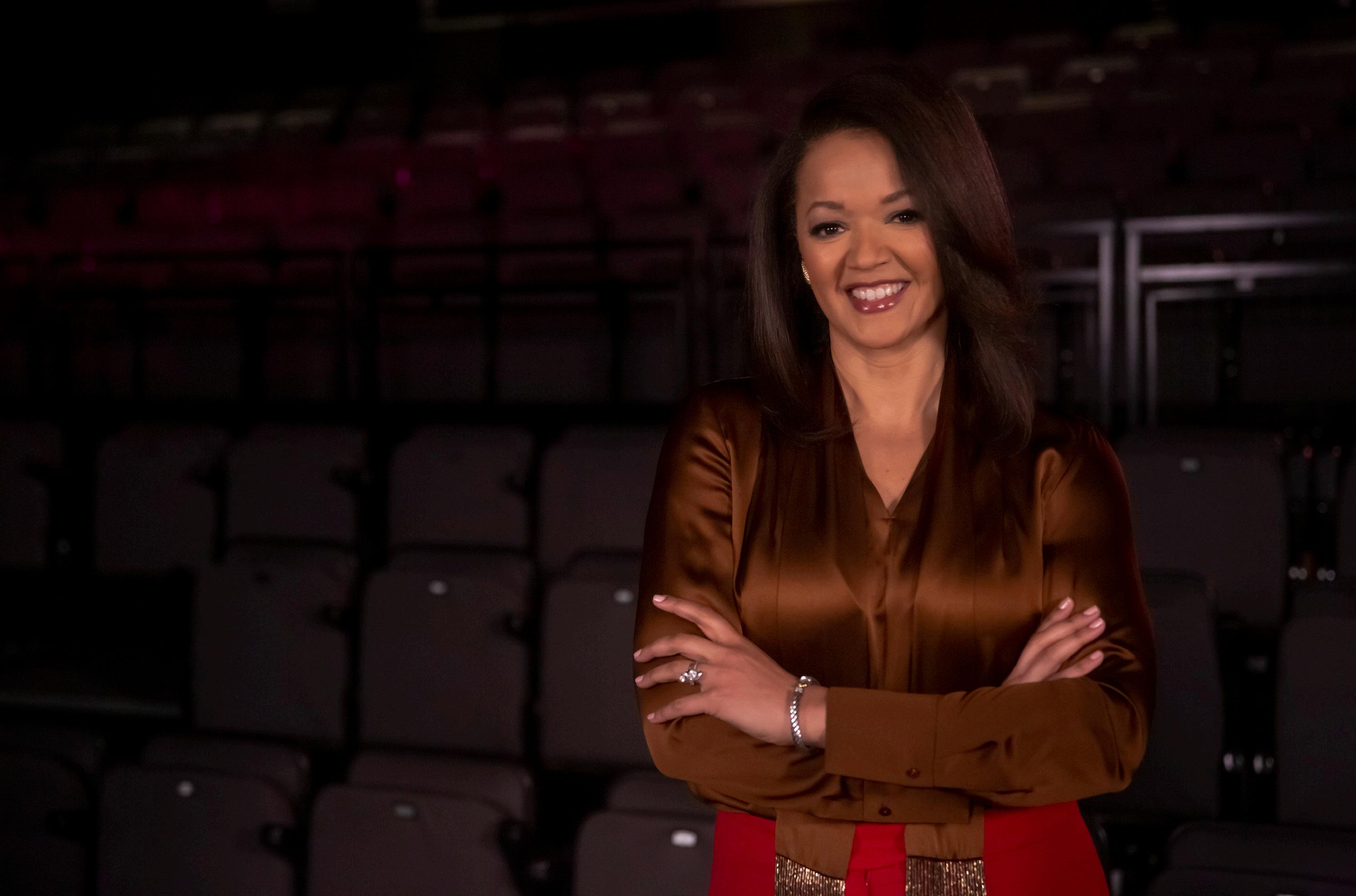
Raquel Eatmon is a restauranteur, CEO of Rising Media LLC (a communications company), author of two books, founder of the Woman of Power Conference, and a national keynote speaker.
Starting out with a promising career in television news, she quickly climbed the ranks as an anchor/reporter in top markets such as CBS in Dallas, Texas. She longed to create deeper connections with viewers. Over time, she grew disillusioned with the broadcast news business and left her high-profile position in search of a deeper purpose.
Raquel is a serial entrepreneur. She started a communications company, Rising Media LLC, and built a portfolio for women’s empowerment and social change. Today, she owns and runs a boutique restaurant right in
the heart of downtown Cleveland, Ohio, called Osteria Italian.
Q: What was the support system that you had in the back of your mind when you left the TV news industry?
RE: When I decided to leave my post as a television news anchor, I didn’t have a support system. Just about everyone in my family and social circle advised me against it. People considered the job a major position, one that is difficult to achieve, and one that would likely set me up for greater success in the international news media circuit. So, no, there wasn’t a support system, but there was a belief system.
I believed that I could do more good elsewhere. I believed that I could contribute to a greater cause. I want-
ed to assist others as well as help myself. I desired a different life, and I believed I could do it.
Q: As a former news anchor, what are your thoughts regarding the current integrity in the media?
RE: I don’t watch any local news. I cringe at the storytelling, or lack thereof. This isn’t the reporters’ fault though. Often, in today’s newsrooms, reporters don’t have much opportunity to slow down and hone their skills. They are on a constant grind to research, gather the story, and often shoot the video. Then there is a run to edit, to go live, and to craft a copy of the story for social media.
I enjoy some national news shows. Integrity in the industry really starts and ends in the morning and afternoon meetings. It starts at the top. If the leaders aren’t asking the right questions, the whole shop is off track. Although I’m not privy to the discussions behind the doors of those meetings, I can tell a lot about what’s being discussed based on the delivery of the newscast.
Q: What sort of challenges has WoPC faced since the pandemic?
RE: The Woman of Power Conference (a leadership forum for high potential women) had a marvelous run for eleven years. In 2019, a gentle nudge told me to sit 2020 out. Everyone suggested I move forward because the production had gained tremendous momentum. There was a lot of pride around WoPC. Many women (and men) supported the initiative. But I listened to my inner voice. We didn’t produce
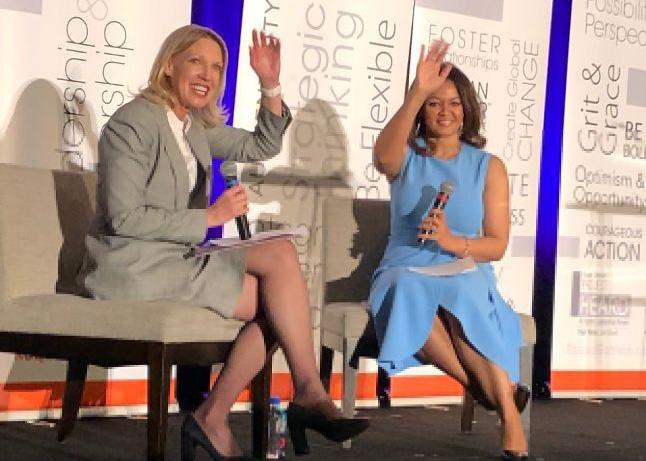
another event in 2020. I made an executive decision to close the chapter on that book.
Q: What other high-achieving women do you point to at your conference?
RE: There were so many great high-achieving women and men involved in the conference. There are too many to name, but they hold a wide range of titles at companies like KeyBank, Sherwin Williams, VitaMix, and Moen just to name a few.
Q: When you’re offline, what sort of activities do you engage in to re-charge your batteries?
RE: I surround myself with as much love as I can find. Family and friends are important. I absolutely find joy in being with my dog. When I need time alone, I hike in the mountains. I enjoy reading NY Times newspaper—the actual paper, the one when you turn the page, a little ink might be on your fingertips. Whatever I’m doing, there is always a cup of tea nearby.
Q: How hard is it to deliver a message of the Path of Grace and Kindness (from your blog) and outdo the notion that success is defined by massive wealth?
RE: Health outweighs wealth. Practicing meditation and gratitude can have a major impact in and on our lives.
Today, I am a restauranteur. I am, along with my partners, operating a boutique-style Italian restaurant in the heart of downtown Cleveland, Osteria Italian. It’s a popular place, and for the those of us behind the scenes, it can be quite stressful. Stress is damaging; it interferes with our ability to think clearly.
Those are the moments when it’s urgent to go within. People treat gratitude as an always sunny side up. When things are going good, give thanks! I have learned the power in this: Give thanks when things aren’t going good; that’s where we really strengthen ourselves.

Advisory Board Members
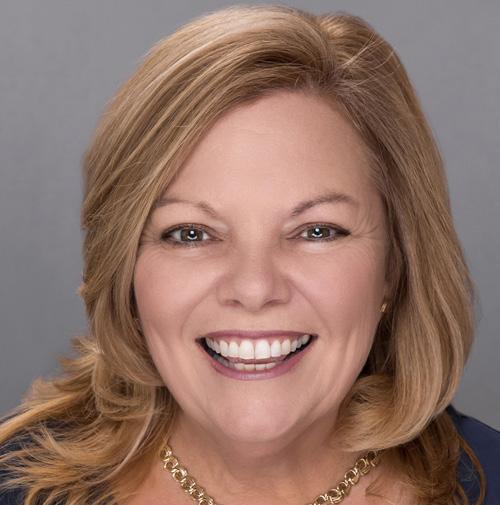
Kate Delaney
Kate is a speaker, author, and Emmy Award winning talk show host. Kate’s interviewed over 16,000 people, including U.S. Presidents, Fortune 500 CEOs, and Hall of Fame athletes.
Elinor Stutz
Elinor is the CEO of Smooth Sale. She’s also an International Best-Selling and Evergreen Author, Top 1% Influencer, Inspirational Speaker.
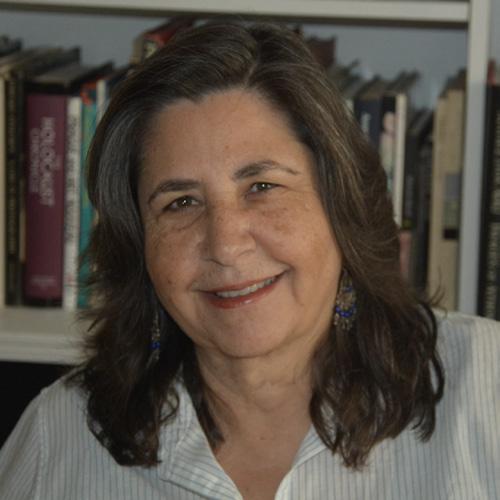
Andrea Simon
Andrea Simon is a writer and photographer based in New York City. She has worked as an editor, writer, and manager on diverse projects, and was the co-owner of an editorial/production company that specialized in health-related educational materials.
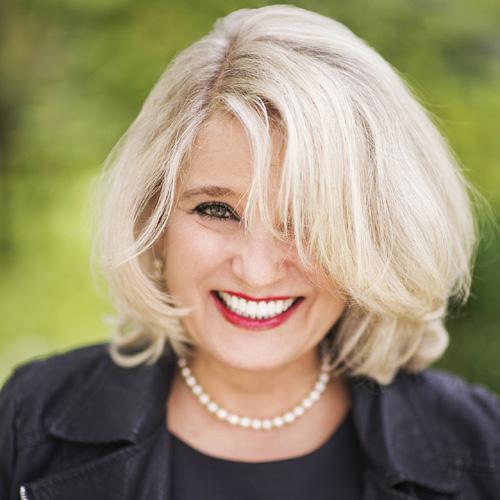
Millen Livis
MILLEN LIVIS is International Holistic Financial Independence mentor, International best-selling author, investor, and entrepreneur.
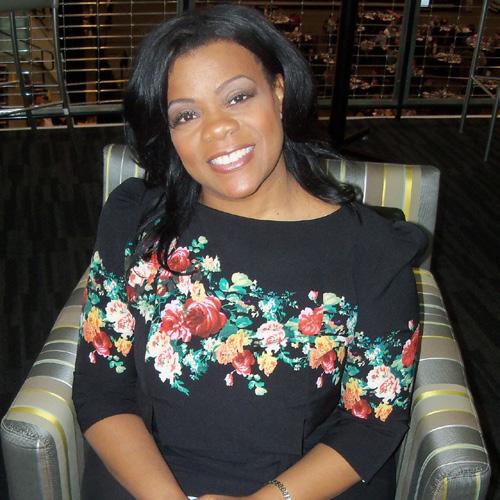
Janice McLean DeLoatch
Dr. Janice McLean DeLoatch is a passionate advocate for entrepreneurs and women in the entertainment industry. She created the Women Songwriters Hall of Fame to honor women whose work represents the heritage and legacy of the world’s music songbook. She serves as the Founder, Chief Executive Officer, and Chairman. Janice is also a Tv Host, Radio Personality, Entrepreneur and Author.

Awarded The Presidential Early Career Award For Scientist & Engineers. It’s a Pleasure To Introduce, Professor Of Engineering At Purdue University, Haiyan Wang.
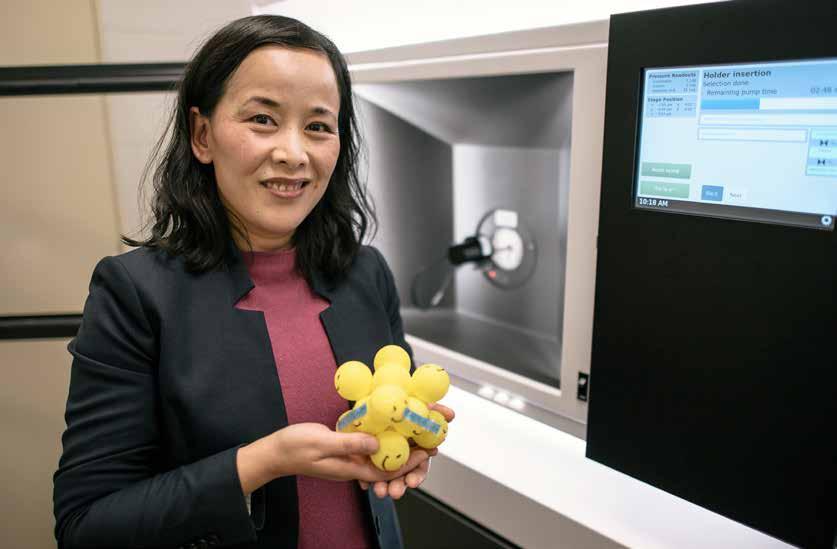
Q: Can you share with our audience a little on your life story and how you became interested in Engineering?
HW: I was born and raised in China and moved to the US for a Ph.D. study in the field of materials science and engineering in 2000. I was fascinated by the field of materials research and its ability to fuel new discoveries and technology innovations and thus decided to pursue my career in materials research. Taking an example, all the integrated circuits that enable versatile personal devices and computing power we have today, are based on silicon, an earth abundant material and a semiconductor, as well as our ability to grow it well in thin layers and dope it with other elements to change its conductivity in different parts of the devices. I am currently focusing on new materials design and processing for microelectronics and photonics, and energy applications.
Q: When did you know you wanted your career to include teaching along with research?
HW: I have always dreamed to be a teacher as many of my teachers throughout my study are my role models. The dream
become much closer to me when I joined Los Alamos National Lab as a postdoc research fellow. I got to mentor multiple graduates and undergraduates through research. I very much enjoyed the teaching/learning process with them and thus applied to faculty positions after my postdoc work.
Q: Tell us about some of the patents you hold and how they are used.
HW: I currently hold 12 US patents. One of the earlier ones developed in 2005 was on the designs of multilayer stack for the high quality growth of high temperature superconductors coated conductors for superconducting cables and generators. This patent has been licensed by multiple superconductor companies and generated great industry interests in the field. These superconductors coated conductors are very important components for energy efficient generators, motors and electrical transmission lines that transmit electricity or convert energy without energy loss in electrical resistance.
Q: Can you tell us about the research your currently doing? What do you hope it will accomplish?
HW: My research group is currently working on many research directions in the areas of new ceramic and ceramic-based composite materials for more compactable microelectronic devices, new photonic structures, thin film Li-ion batteries, and efficient fuel cells. Another interesting and fundamental direction is to design and processing ductile ceramics through defect engineering. Usually, ceramics will break into pieces easily under high impacts, i.e., poor toughness, despite the fact that they are very hard, much harder than most of the metals. They behave very different from metallic materials, where metals generate various defects to accommodate the external high impacts, and then deform without breaking into pieces. We are designing ceramics with those defects to mimic “metals” and making them “tough” and unbreakable.
Q: In 2008, you received the Presidential Early Career Award for Scientist and Engineers. Can you tell us more about this along with the presentation of your award?
HW: That was one of my most memorable moments in my career. I was among the top 60 early career scientists and engineers in the U.S. to receive this award. The awardees were selected and recommended from various federal agencies. I was invited to the White House and met with President Bush. Luckily, I was standing right next to him and had a short discussion with him during the group photo session.
Q: During Covid-19 you developed a hybrid plasmonic thin-film. Can you tell us what led to this design and how it’s being used?
HW: The COVID time was challenging for all the researchers as all the labs had restricted access with only one researcher allowed at any given time. We were able to design and process a range of hybrid plasmonic thin films. These are a group of hybrid materials with two or more materials combined as one material. At least one of the phases possesses plasmonic properties and the other phase(s) presents other functionalities. Typical processing methods involve processing one material first, then etch and integrate the second phase in. Our method is to directly grow two materials simultaneously and self-assembled into nanostructured hybrid materials. This poses great challenges to the growth process as the deposition parameters are vastly different for the different phases and finding a common processing window to effectively grow two or more phases requires deep understanding on the self-assembly process, i.e., materials science of self-assembly.
Q: What’s the greatest fear you’ve had to overcome to get where you are today?
HW: Materials science and engineering as a relatively new and cross-disciplinary area is filled with talented researchers from Chemistry, physics, biology, and nearly all the engineering fields. How to distinguish my research from others and identify critical research topics that are unique and impactful, have been a constant question I am asking throughout my career. Instead of fear, I consider this as the motivation to innovate continuously. Luckily, I am never alone by working with a group of talented graduate students and postdocs in my research group, and many collaborators at Purdue and other institutions, nationally and internationally!
Q: Can you tell our audience one of your most memorable moments your career?
HW: I recall many memorable moments in my career. But the most memorable ones are the Ph.D. graduation ceremonies where I grant the Ph.D. regalia on the shoulder of my Ph.D. students on stage. In the past 16 years, I have graduated 38 Ph.D. students and they are now working as professors in universities, researchers at national labs and senior processing engineers at semiconductor industries, such as Intel, Micron, IBM, Applied Materials. I am so proud of their achievements and witnessing their growth!
Q: What are some of the challenges you feel women face today?
HW: One of the major challenges is simply so few of women in science, technology, engineering, and mathematics (STEM) field. For instance, there are eight women faculty out of thirty-five faculty members in my home school of Purdue MSE. In the undergraduate classes I am teaching, typically there are 5-8 female students among the total of 30-40 student. The ratio of 1:4.5 is of concern but it is comparably better than many other engineering fields. There are a lot of work we have to do to slowly make the changes. I am hiring 1-2 female Ph.D. candidates each year to ensure my group diversity and gender balance. Another challenge is that the stereotype on “the boys are better than girls in STEM” continues to influence our young generations. My 13-years-old daughter always doubts about her ability in math and science despite she has excellent scores in all her classes. More work is needed to help girls gain their confidence. Such efforts can initiate from every one of us. For all the women in workplace, career-family balance is another major challenge. Because of the extensive periods of childbirth, breast-feeding, and raising family, many of the working women have to quit or temporarily quit jobs at the very early stage of their careers, which influences their long-term career. There shall be effective work and employment policies to protect women in workplace.
Q: What advice would you give to young women who want to succeed in the workplace?
HW: We women engineers and scientists have strength in multi-tasking, soft inter-personal skills, and very detailed thinking. Utilizing the strengths, you will excel! Everyone is made differently. Use your own expertise and strengths to distinguish yourself, among others. Do not let any stereotype influence your career decisions and never limit your own potential! When you are deciding between family and career, do remember that these two are always coupled together and you can make them well balanced! A supportive family is also very key to such balance.
Q: After high school, where did you feel your career path would take you?
HW: I have always wanted to do something impactful and useful to the society. After high school, I had a vague picture of my career working in an engineering field but was not very sure on what exactly I would work on. After my bachelor and graduate studies, the picture became clear, i.e., a scientist in the areas of materials discovery.
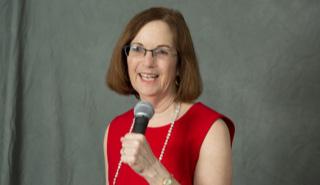
Committed
to Help Her Audience Communicate Well to Empower Their Business Growth & Future Sales. Read Our Exclusive Interview With International Best-Selling Evergreen Author & CEO of Smooth Sale,
Elinor Stutz
Q: What was your first job? How did it shape or impact you?
ES: Upon graduating college, a friend and I began a party planning business named, Details Details. Our first client was KFWB, the premier rock ‘n’ roll station in Los Angeles, CA. We arranged a party at Universal Studios for the station, which proved highly successful. Shortly afterward, we were featured on the cover of Mademoiselle Magazine. But then the stock market tumbled, KFWB became a news station, and I needed to find a job.
My first job was secretarial for a marketing agency in Los Angeles, and the CEO was a genius from my perspective. He realized my creativity to ask me for an idea for a billboard. My advice was to showcase skydivers, and he did – the billboard was visible on the Sunset Strip!
Shortly afterward, I asked why he believed he was so successful, as the client roster was impressive. His advice was repeated throughout the years by marketing and speaking professionals. It rang true for the remainder of my career: “Share your story with clients as if you were having coffee with them in your kitchen.” The conversation becomes enjoyable and advances from there. His words of wisdom helped me advance through my sales career and later entrepreneurial endeavors.
Q: As the CEO of Smooth Sale, tell us about what you all do along with your role as CEO?
ES: I enjoy learning about new trends and applying them to business development. As an earlier adapter of social media, Kred named me a Top 1% Influencer. I’m still active today, providing new content almost daily and growing followers. Next, no one understood my work or why I was still attempting it, so I began blogging to allow my thoughts to roam free.
The blog became another form of community service work as leaders from varying fields provide stories about how they overcame hardships to achieve
success. The purpose is to help readers find their way more readily and reach new heights.
Before COVID, I enjoyed delivering inspirational keynotes at conferences as they apply to business. Les Brown heard my talk early on, tweaked it, and the delivery unanimously received standing ovations. Also, in the past, I created an entire product line and workshops to train teams of professional salespeople plus entrepreneurs to advance to new heights. On the side, I always provided talks on how to sell oneself in interviews for job seekers to help move their careers forward.
Q: You are also an International Best-Selling Author. Can you share with our audience some of the topics you’ve written about?
ES: Book Background Story: In my hometown, I was successful as a sales trainer, familiar with the area’s companies. However, humiliation took over upon moving and attending a significant networking event. Upon announcing that I was a sales trainer, the crowd laughed me off the stage, believing it was absurd that a woman would know enough about sales to train others. Humiliating is the word! But thankfully, someone approached me to say, ‘to establish credibility, you have to write a book!’
My phone wasn’t ringing, so I diligently wrote a corporate tell-all (all names were changed to protect the guilty) about the horrific corporate treatment directed at me to get me to quit – in order as the events occurred. Each month as I was at the top of the sales scoreboard, the treatment got nastier. The high spot was enjoying my clientele. Yearly, my accounts were given to the men and my quota tripled for the following year. Accordingly, I became an expert at interviewing upon experiencing eleven years of the same.
Nice Girls DO Get The Sale: Relationship Building That Gets Results details:
The stories included how I innocently built relationships with gatekeepers,
secretaries, and a guard with a gun threatening me never to return (I never listen) and how they all got me into the C-Suite.
Topics included:
Story-sharing with clientele
Building relationships and enjoying laughter together
Treating prospects and clients to snacks and meals
How to influence a returning and referring clientele – the essence of The Smooth Sale!
Vs.
Sales On the backend
Probing questions asked in the sales arena upon hearing demeaning commentary or pronouncements
How to get your point across with questions Business development strategies
Successful sales strategies
HIRED How to Use Sales Techniques to Sell Yourself On Interviews:
After I quit corporate sales to become an entrepreneur, my community service work became speaking to audiences on how to sell themselves in interviews. The hundreds of thank you notes that poured in thanking me for helping them acquire their desired job encouraged me to write the book after the market decline in 2008 and people needing to return to work.
Becoming the chosen candidate includes: Familiarity with the sales cycle
Doing the necessary research upfront
Begin the interview with a direct question.
Questions to ask and how to respond if something is unfamiliar. Handling ‘ridiculous questions’ to pique interest. Ending the conversation, aka ‘trial close.’
Arranging 2-3 interviews within a short timeframe to negotiate a better salary.
My lesson learned: Our worst experiences are our ‘gifts in disguise’ when we are willing to learn from the hardships to advance.
The next phase was to begin blogging, and I still do today. My previous experiences led to a well-received blog, contributing authors, and clients. And due to the ill-treatment in the corporate environment, I agreed to join the social media committee for Inclusion Allies Coalition devoted to Diversity, Equity, and Inclusion. My fondest hope is that we may correct the previous wrongs for younger generations to benefit.
Q: Were there moments in your career that were pivotal to getting where you are today?
ES: Although prospective clients welcomed me into their offices beginning on day one, I was very nervous about selling. My nerves suggested I register for a three-month-long Dale Carnegie public speaking class. I could barely state my name to the group on the first night in the classroom. Without training or knowing what to do or say, I ‘winged it’ by sharing stories with the people I visited.
Two strategies emphasized in class were: I would exercise to be enthusiastic-energetic when speaking and in meetings - before appointments.
Share stories, the good and bad showcasing the lessons learned. My horrific corporate stories earned much laughter.
By the end of the three months, I was proclaimed the Grand Prize winner! The book How to Win Friends and Influence People by Dale Carnegie became the springboard for my success.
Q: Can you tell us how you manage your work-life balance?
ES: I adhere to my laser goal-setting system. With my long-term goal in mind, I work backward to set goals aligning with my ultimate vision—for example, annual, quarterly, monthly, and daily goals. And a running task list is always at hand.
The advantage is that there is no forgetting of what needs to complete, and it eliminates wasted time. The personal commitments align with the business goals of the day, so it is all completed on time.
Q: What’s your advice for women in male-dominated fields?

ES: First and foremost, remain true to your principles and ideals. My pinned tweet states, ‘Trust is the Soul of Sales and All Else that You Do.’ The qualifier is to remain calm, speak in a respectful tone of voice, and provide alternative ideas when possible. If something sounds concerning, ask for the reasoning behind the suggestion. Listen carefully for oversights in the other person’s logic and ask pointed questions to achieve a better outcome.
The business phrase, ‘personal branding,’ is an excellent reason not to follow suit. People identify with what we portray; consistency is essential for everything we do. Most of all, stand your ground and prove ‘Yes, You Can!’ The way to do so is to always adhere to the 3 P’s: Purpose, Passion, and Perseverance.
Q: What behavior or personality trait do you most attribute to your success?
ES: I’m observant, listen well to everyone in my presence, and ask many questions, and then I mull over situations privately to come up with a better solution. Adding creativity to the mix, some people enjoy my unique ideas.
For the highly negative moments, I learned to environ myself wearing a ‘Wonder Woman’ cape well-oiled for the darts to fall to the ground behind me. I use the negativity pointed at me as a green light to walk away and work my way.
Q: As a woman, what is the most significant barrier to becoming a leader?
ES: Returning to the thought that our worst experiences can be our gifts in disguise, I’m thankful for my near-death experience due to an ‘irreparable broken neck.’ Two visions came to me while on a stretcher waiting for admission. In the moment, I pledged to begin giving back to communities however I may. But being a sales professional, I negotiated complete healing to do my best in assisting communities at large. Miracles happened that night in preparing me for surgery. The entire medical staff was in disbelief that I had survived the operation. They all visited my room after surgery, referring to me as ‘the walking miracle.’
Accordingly, my motto became ‘Believe, Become, Empower’ ~ Believe you can do it, Become that person, and then Empower others to do the same.
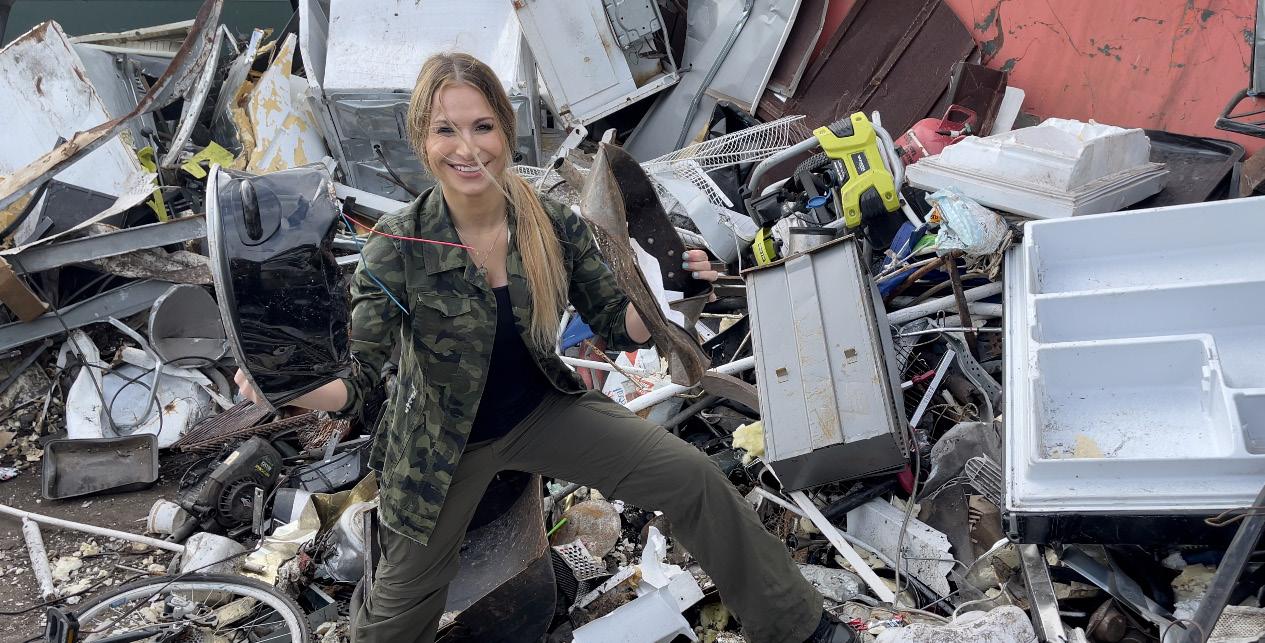
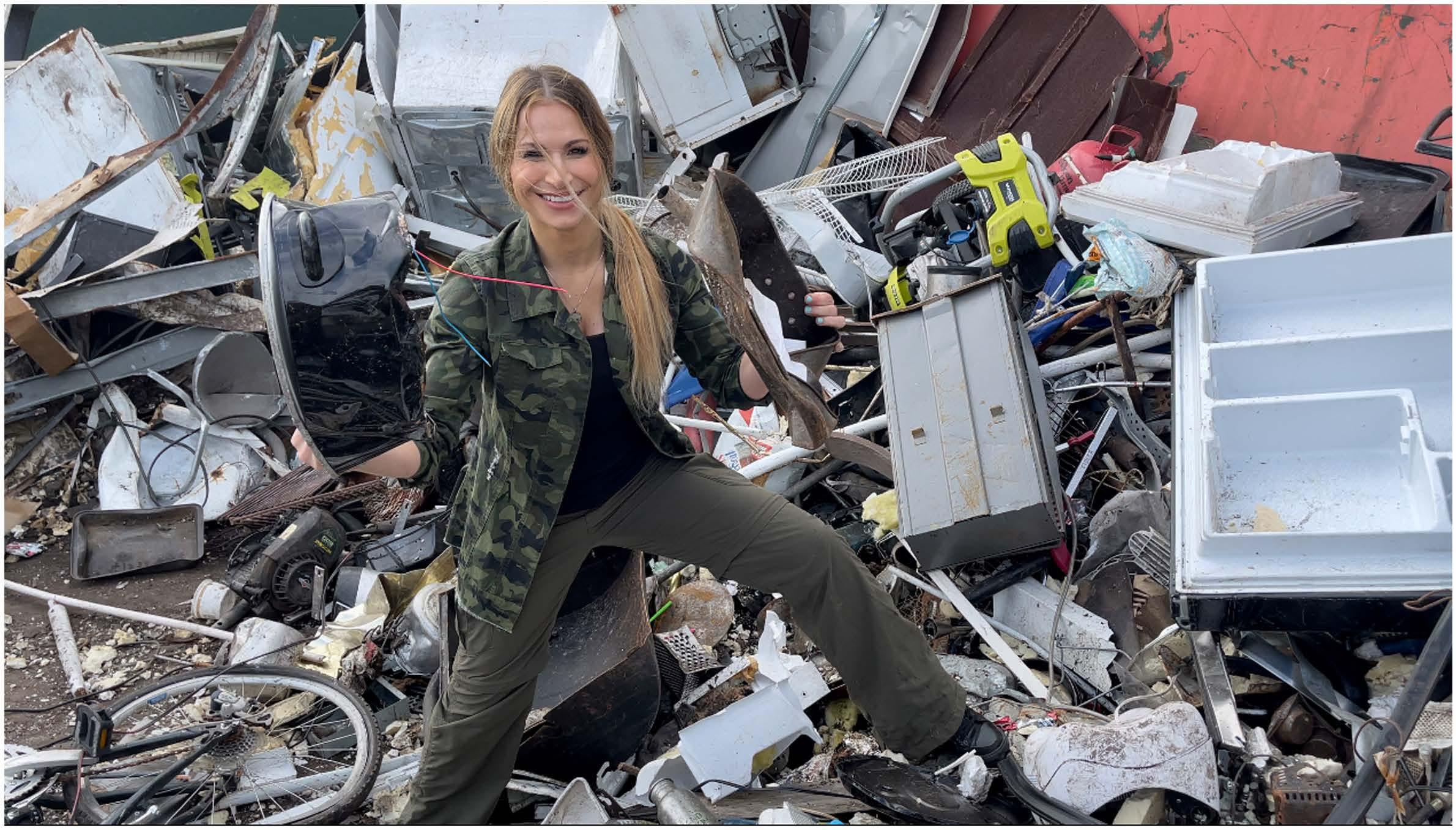
You May Have Seen Her on The Weather Channel as an Expert or on the Show Weird Earth or on the Science Channel’s Mythbusters and What On Earth? An Exclusive Interview with
Dr. Tracy
Q: When did you know you wanted to become an environmental engineer and research scientist?
TF: From the time I was a little girl, I loved animals. After it would rain, I would go to the abandoned train tracks behind my house to catch tadpoles. I was amazed that these creatures could find life in a temporary pool of water, and I was obsessed with watching them grow into frogs. I would have a number of blue cups on my dresser next to my bed, filled with a couple tadpoles each. My mom didn’t love the fact that I was always bringing random animals inside, but she let me do it anyway. One
Fanara
night while I was sleeping, she came into my dark room to clean while drinking a glass of water. She put the water down on my dresser, picked up my clothes on the floor, then grabbed her water from my dresser and drank it. She walked out of the room, to the hallway, looked down, and saw the blue cup. She started screaming. I started crying because she had eaten my pets. After that, my mom started to go to the doctor a lot, and I felt horrible because I was sure it was from drinking tadpoles, but it wasn’t. I didn’t understand what was going on, so a teacher told me a story to give me some insight. She told me how, before I was born, there was an abandoned ca-
nal that a chemical company used as a hazardous waste dump site for decades located near where I lived. Once full, they covered it up with soil and sold it to the county for a dollar. The toxic chemicals traveled through the soil and groundwater after every rainfall and snowmelt. There was toxic sludge seeping through basement walls. There were birth defects and a myriad of other illnesses. To protect the local economy that was tied to the chemical company, the people were told by the county that everything was fine while problems escalated. The relentless efforts of one woman led to one of the most important federal programs that exists. The incident at Love Canal inspired the US Environmental Protection Agency’s Superfund Program (a program to clean up hazardous waste sites), and it led to my understanding of how everything is connected. What we put into the environment always comes back to affect our health. My mom’s cancer diagnosis in her twen-
ties may or may not have been connected to environmental disaster, but I quickly realized that there were incidents like this all over the world and many more right in my hometown. The more I learned, the more I focused on the compound that dictates the health and safety of wildlife and humans; I focused on water.
How I became an engineer is a strange story. It started with a cold day at Hobart and William Smith Colleges and a voice message from my parents who had moved to Florida. I was so sick of walking uphill through the snow to get to lacrosse practice that I applied to the University of Florida. That summer, I was a camp counselor in Maine when I got a message from my mother that I had received a rejection letter from the University of Florida. I took my transcripts down to UF and knocked on every door that sounded sciencey, and the one person who was there was the chair of the Environmental Engineering Department. I had never heard of the major and engineering sounded boring, but the chair, Dr. Paul Chadik, explained that environmental engineers were responsible for protecting and providing water to humans and wildlife, they protected people from natural disasters, and they designed and built solutions to the world’s most pressing issues. Everything came full circle, Dr. Chadik admitted me, and I signed up to be a superhero. I would be rejected by UF two more times. I received all three of my degrees from UF, ranked third in the world at the time I graduated.
Q: Can you share with our audience what you’re currently working on at the National Oceanic and Atmospheric Administration?
TF: After years of water and stormwater design, pollutant transport and stormwater research, and running a research program at Mote Marine Laboratory, my full-time job is working for the United States National Oceanic and Atmospheric Agency (NOAA) as the manager for coastal and ocean models. Let me tell you a little bit about why I took this job, which will help explain what I do. I was the program manager of environmental health at Mote Marine Laboratory researching a toxic microalgae, commonly called Florida red tide, and developing technology for detection of the species. The species is unique because the blooms start offshore at the ocean bottom and can release a toxin that causes wildlife fatalities, but the toxin can also aerosolize (meaning that it can attach to salt particles in the air and travel onshore). We get a bloom every year, and the blooms are normally patchy and impact an area for a few weeks at a time. These blooms can be exacerbated (or intensified) nearshore with nutrients from natural and human activity (biogenic material like leaves, wastewater overflows, fertilizer, development, etc.). In late 2017, Hurricane Irma caused an upwelling event that likely was the cause of a bloom, which we saw about three weeks later. That bloom persisted all winter, as a toxic freshwater al-
gae that had bloomed on a big lake in the middle of the state continued to grow. This persisted into the summer of 2018 during an El Nino year where we got a lot of rainfall, causing the lake to be released, and in addition to other sources of nutrients, fueled the existing Florida red tide bloom. There were mass wildlife fatalities and toxic aerosols traveling at least twenty miles inland, and the economy crumbled in the state, which was dependent on tourism and water recreation. Florida declared a state of emergency. The public wanted answers we didn’t have. After seventy years of research, we still had so many questions, and I realized that it was because we were trying to understand a microscopic algae through a microscope. Nothing exists in nature alone; everything is connected. Blooms were impacted by hurricanes, currents, perhaps even ancient sink holes (blue holes) bringing nutrients from land, and even Saharan dust coming over from Africa into the Gulf of Mexico and feeding a precursor species offshore that, when they die, feed red tide. I jumped at the chance to work with NOAA to
“connect the dots” of earth systems through modeling efforts to better predict threats to lives and livelihoods. At NOAA, my portfolio at the National Ocean Service includes all our United States operational models from the bottom of the ocean to storm surge, including models for ecologic systems and incidents like oil spills and other hazardous threats. These models are coupled with or influenced by output from weather and hydrology models and are also informed by observations.
Q: Tell us about your position with the Weather Channel.
TF: In 2012, my cousin was obsessed with the Kardashians and their Instagram account. I didn’t have Instagram at the time but told her to also check out some cool women on TV making discoveries and inventing things. She asked for an example, and I realized that I couldn’t give her one. So, I decided that I would be that example. I started filming myself every day in order to be a better communicator and presenter. I was awful
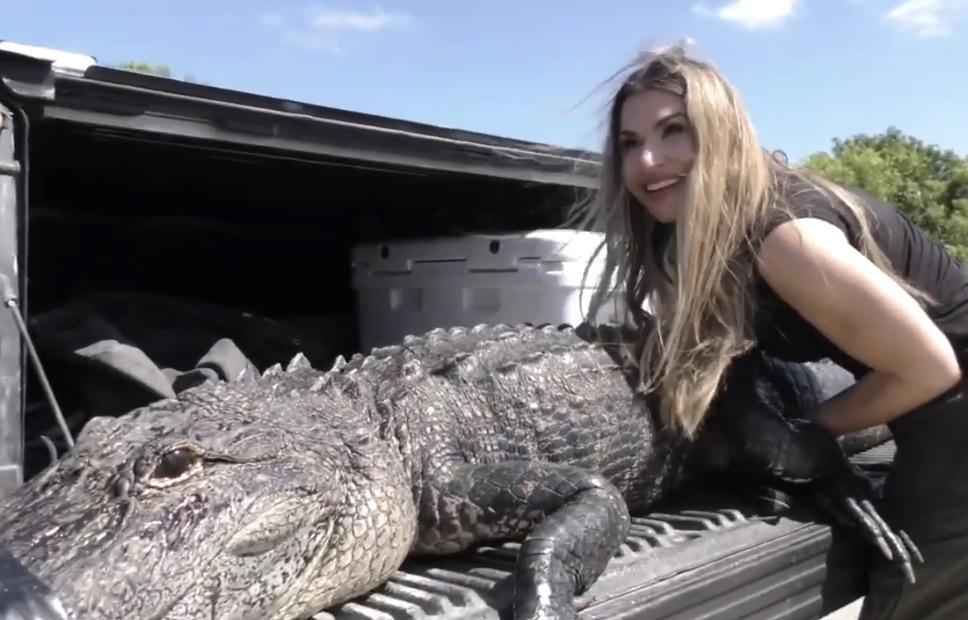
when I started; I was even awful for years. But then I started to get better. I made a video about my Ph.D. research and put it on YouTube where Discovery Channel found it. I began developing potential shows with them until I was picked up for the reboot of the series MythBusters, which aired in 2017. In 2018, Florida declared a state of emergency as the west coast of the state was plagued by two toxic algae blooms causing mass wildlife fatalities, threats to public health, and the economy to crumble. As an expert on the event, I was asked to interview with The Weather Channel. I was a huge fan of The Weather Channel—they have the best science communicators on the planet. I figured it was an interview with some local affiliate for the network, but I was excited anyway. Then I connected into the virtual video interview and the producer said, “You’ll be on with Steph and Jim today,” I was trying to stay calm as I was freaking out. He was talking about Jim Cantore, the most iconic personality on TV, and Stephanie Abrams, a legendary University of Florida graduate. I
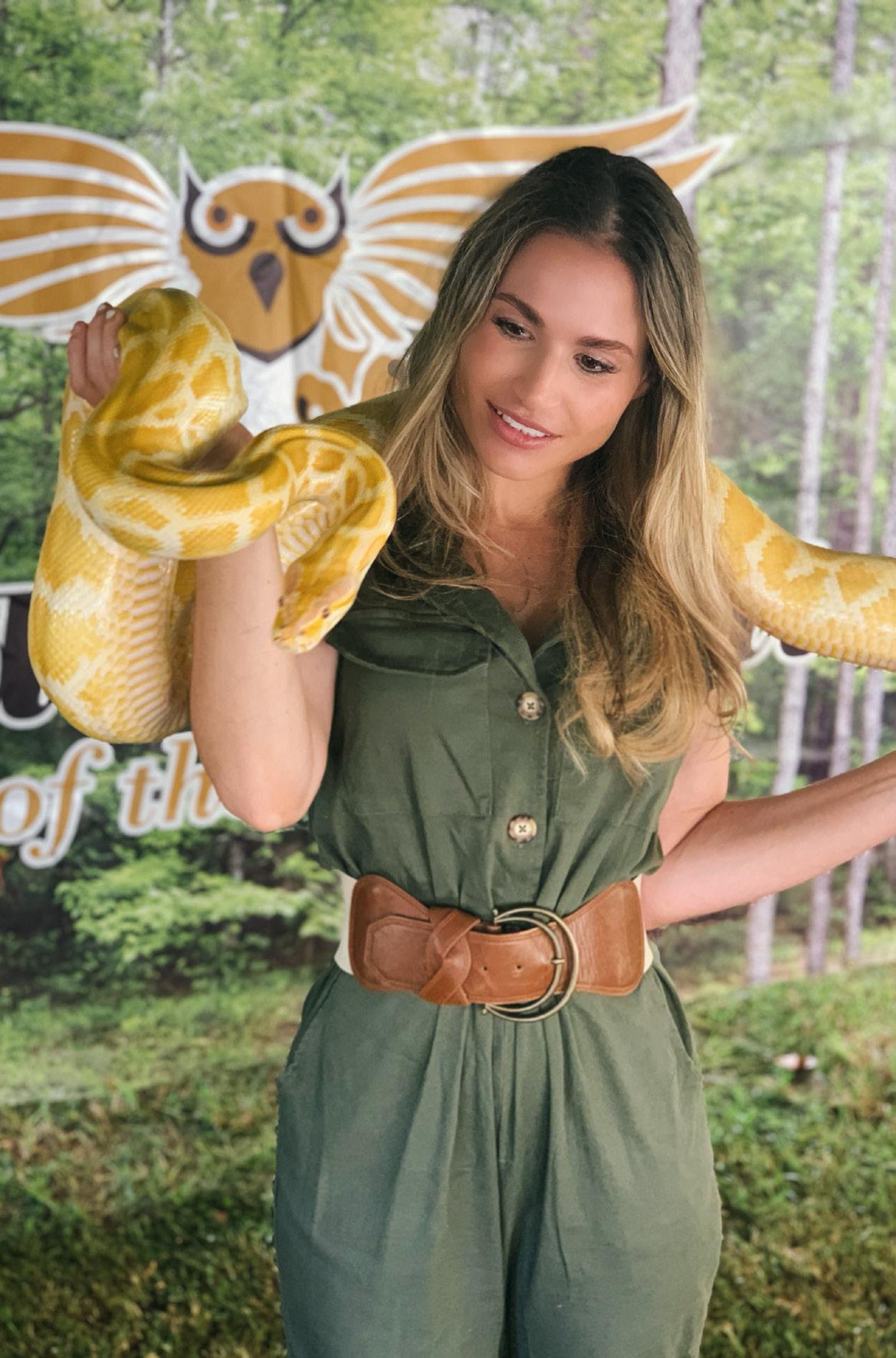
remember making fun of the Alabama mascot wanting to be named after this toxic algae when really they were elephants, and that began a chain of interviews about everything from algae blooms to birds flying in a V, including one interview highlighting inspirational women in science. I started doing a show called Weird Earth with the network. Hopefully, I’ll be doing more longform shows with them.
I work with many other networks including National Geographic, ABC, CBS, and HBO. I also went on to do more shows with Discovery and Science Channels, eventually leading to an opportunity to co-host a show during Shark Week.
Representation matters, and a young girl seeing a practicing female scientist may inspire them to be a scientist (which we need many more of). That was the reason I started doing TV, but it also turns out that I love it. I get to investigate something exciting enough to grab the
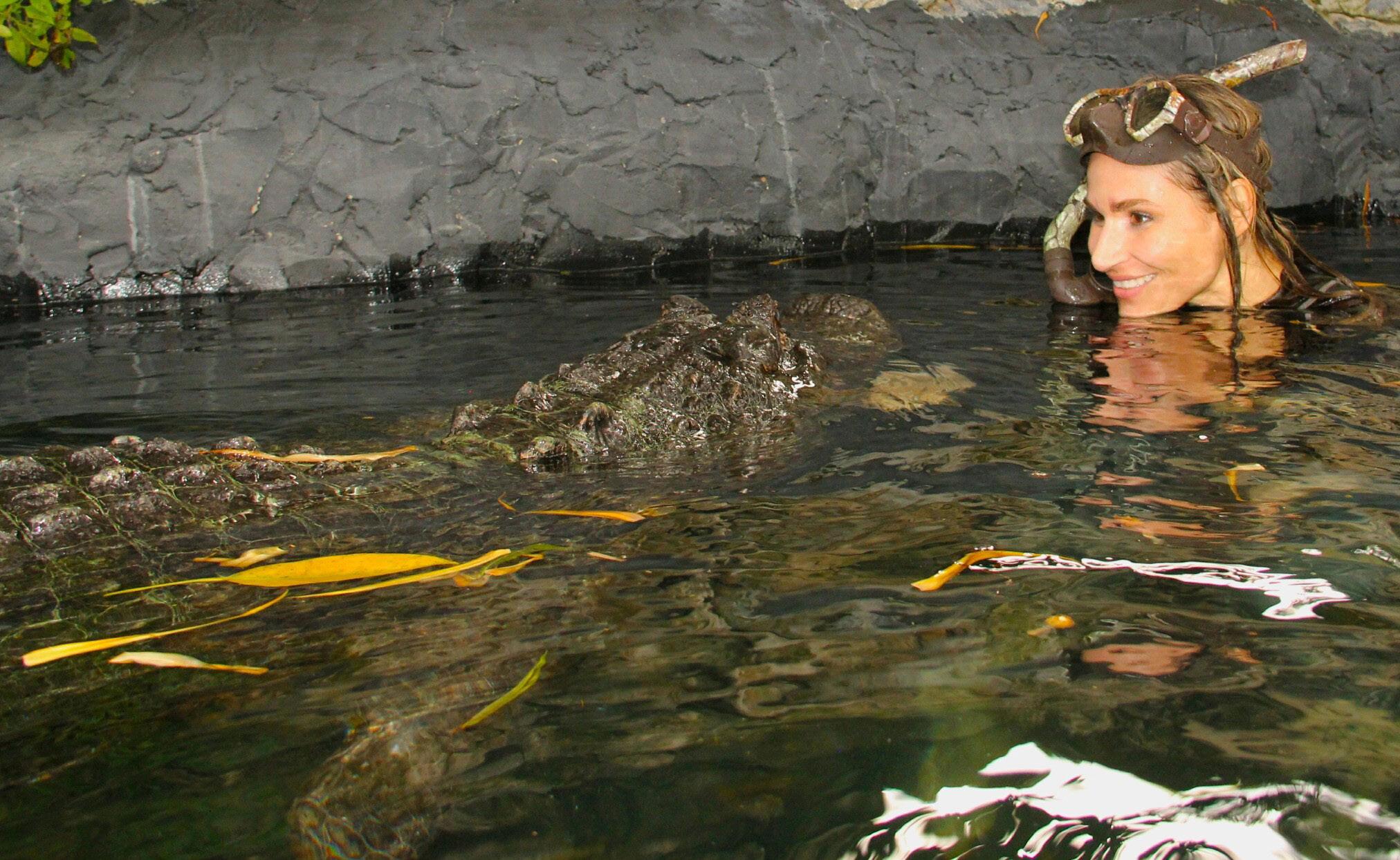
attention of the general public then figure out how to tell a story to subtly educate while entertaining. While I’m filming, I forget about everything else in the world. It’s just me and the scientific mystery at hand.
Q: How did you get the nickname Inspector Planet?
TF: “Dr. Earth” was taken, and I was a poor Ph.D. student that couldn’t afford the 5K that the owner of “Dr. Earth” demanded. Then I went to everyone I knew and explained to them what I was doing and asked for suggestions. I wanted to create a mission that inspires curiosity and action by bringing together innovation and sustainability. The more I talked about it, the more it started to sound like earth protecting Captain Planet with the innovative tools of Inspector Gadget. Inspector Planet was born… and it was available.
Q: What kind of information is available to us on InspectorPlanet.com?
TF: Every platform I use has different information, but I will admit that I need to do better with prioritizing the online presence of the Inspector Planet mission. On the website you can find some
information on weather and water, some educational videos, and links to other platforms where information on camps that I run, public speaking events, workshops, Science Fairs and Festivals I am involved with and Inspector Planet beach cleanups, are posted. Each platform has different information: Facebook is where environmental news is posted daily, Instagram is where environmental phenomena are explained and events are socialized, my YouTube page has some educational videos and also my first and only rap single called “Polar Ice Ice Baby”, and Twitter ... which I mainly just use to retweet warnings and information from the National Weather Service and The Weather Channel.
Q: Which woman inspires you and why?
TF: There are so many women that inspire me in different ways. Stephanie Abrams and Jenn Carfagno at The Weather Channel, Dr. Dana Wetzel at Mote Marine Laboratory, Marie Colton, Marian Westley and Rachael Dempsy at NOAA, Kandis Boyd at the EPA, my friends that have kids and work full time, and any adversaries/ competitors I’ve had along the way that have pushed me to do and be better. The woman that
inspired me most was my mom. She had me very young, didn’t get to go to college after high school and dominated every field she randomly entered from being an incredible artist and hairdresser to leading events for the National Cancer Society, then convincing a newspaper to hire her as the Publisher at a newspaper where she turned the paper into a success story. Her expectations of me were high because she truly thought I was brilliant. I wanted to be brilliant because of it, I made sure to work as hard as possible to prove her right. She ended up getting her college degree in her 40s and starting a non-profit after my father passed to provide instruments to kids in underserved communities.
Q: Can you tell us how you manage your work life balance?
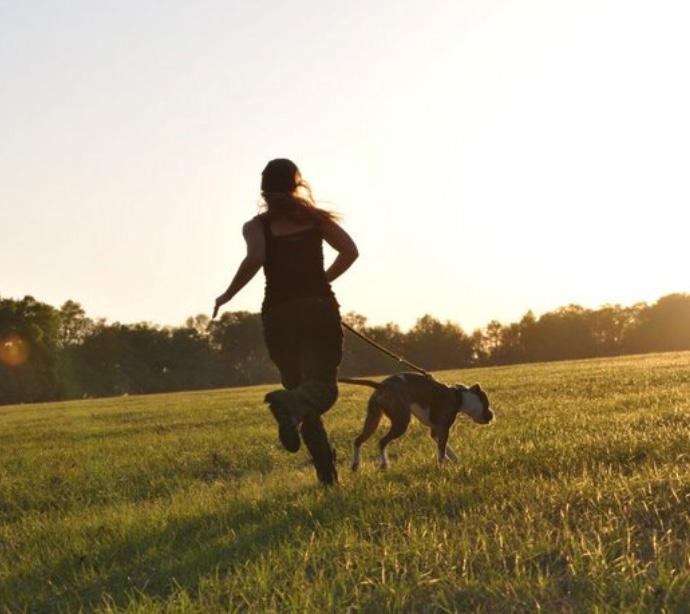
TF: Having a routine is key for me, and running after work, outside, before dark, breaks up the day between work and life. Running in areas with a lot of trees and having non-science friends are key pieces to staying mentally healthy for me. Although some of my best ideas have come from my runs and the best lessons in science communication have come from explaining scientific topics to my friends, running and being around people that make me laugh give me the balance I need. Sometimes I manage work life balance better than other times. For example, right now it’s 11:30 on a Monday night and I’m writing this paragraph because this weekend was packed with running a beach cleanup, editing the next comic book issue in the series that I co-produce, and editing documents for my work at NOAA. When things get out of control, like they are
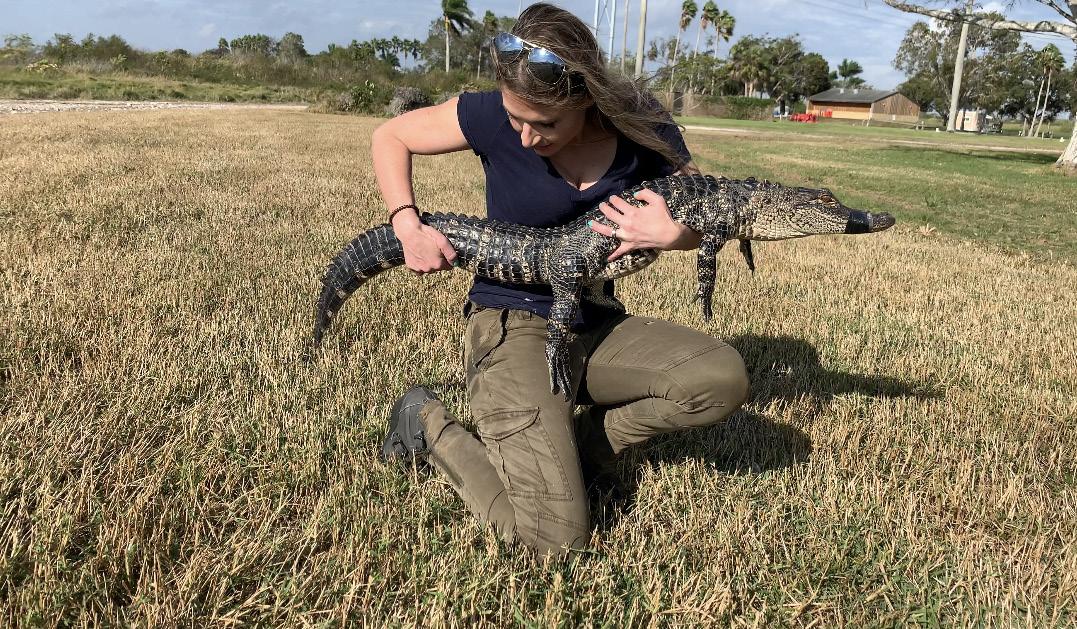
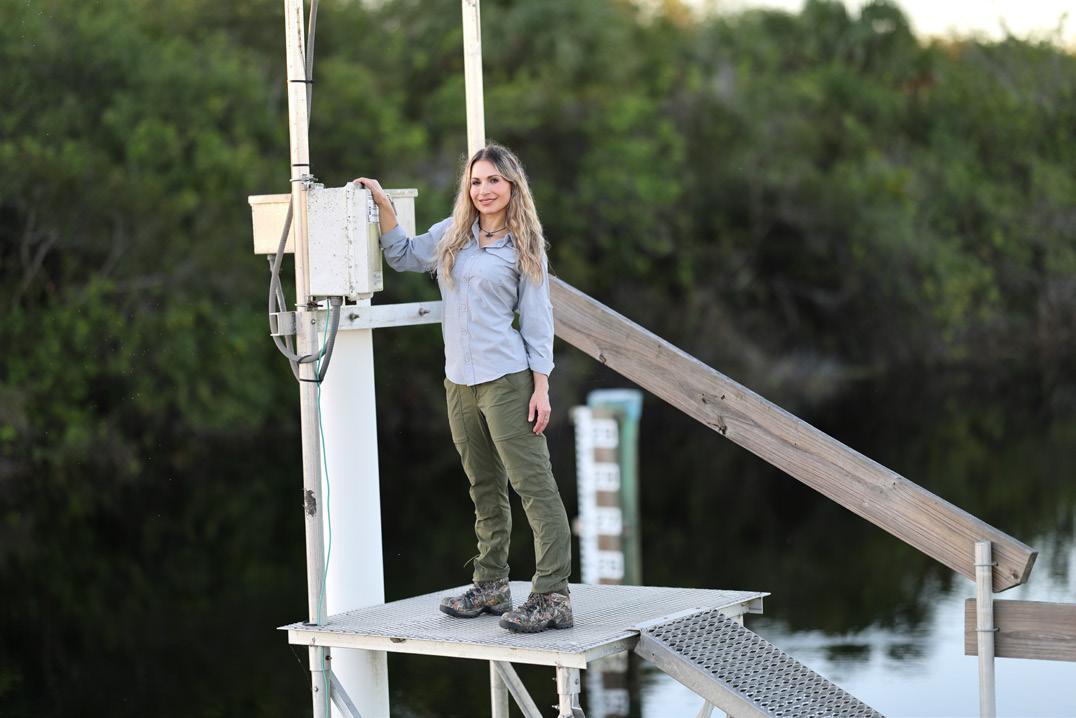
now, I need to reset. I go somewhere where there is no internet or phone service, and I live like it’s 1999. It does wonders.
Q: What is your advice for women in male-dominated fields? `
TF: Unfortunately, in some places you will have to work twice as hard as your male counterparts to be respected and heard. You may voice an idea that is shot down, only for that exact same idea to be praised five minutes later when it’s presented by a man. You may be ignored at meetings or told your design won’t work just because your male coworker would do it differently. You may not be invited to baseball games that all the guys in the office are going to with clients… maybe I’m getting a little too specific. Here is my ad-
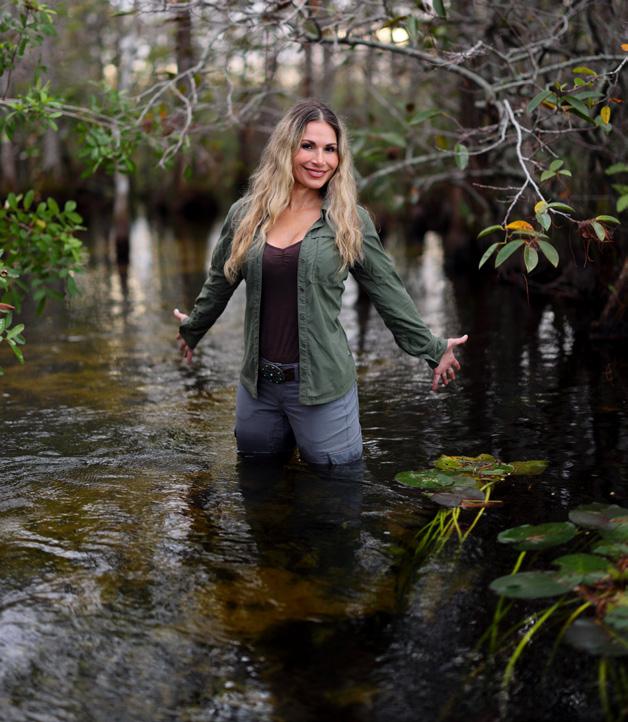
vice- you can’t change people. You can work harder and harder and maybe it eventually works, but if it doesn’t, go somewhere where you are valued. You bring unique skills that will be praised and seen as an asset in the right place. The most important thing that women can do in the workplace is mentor and bring other women up with them… like men have done throughout history. I’ve heard so many people say “it was hard for me, it should be hard for them”; when it comes to equal opportunity, this mindset needs to be abolished. Our professional legacy is stronger with every student we mentor and every early career colleague we help. Especially in science- if those you coach, teach or supervise end up going farther than you, you did it right.
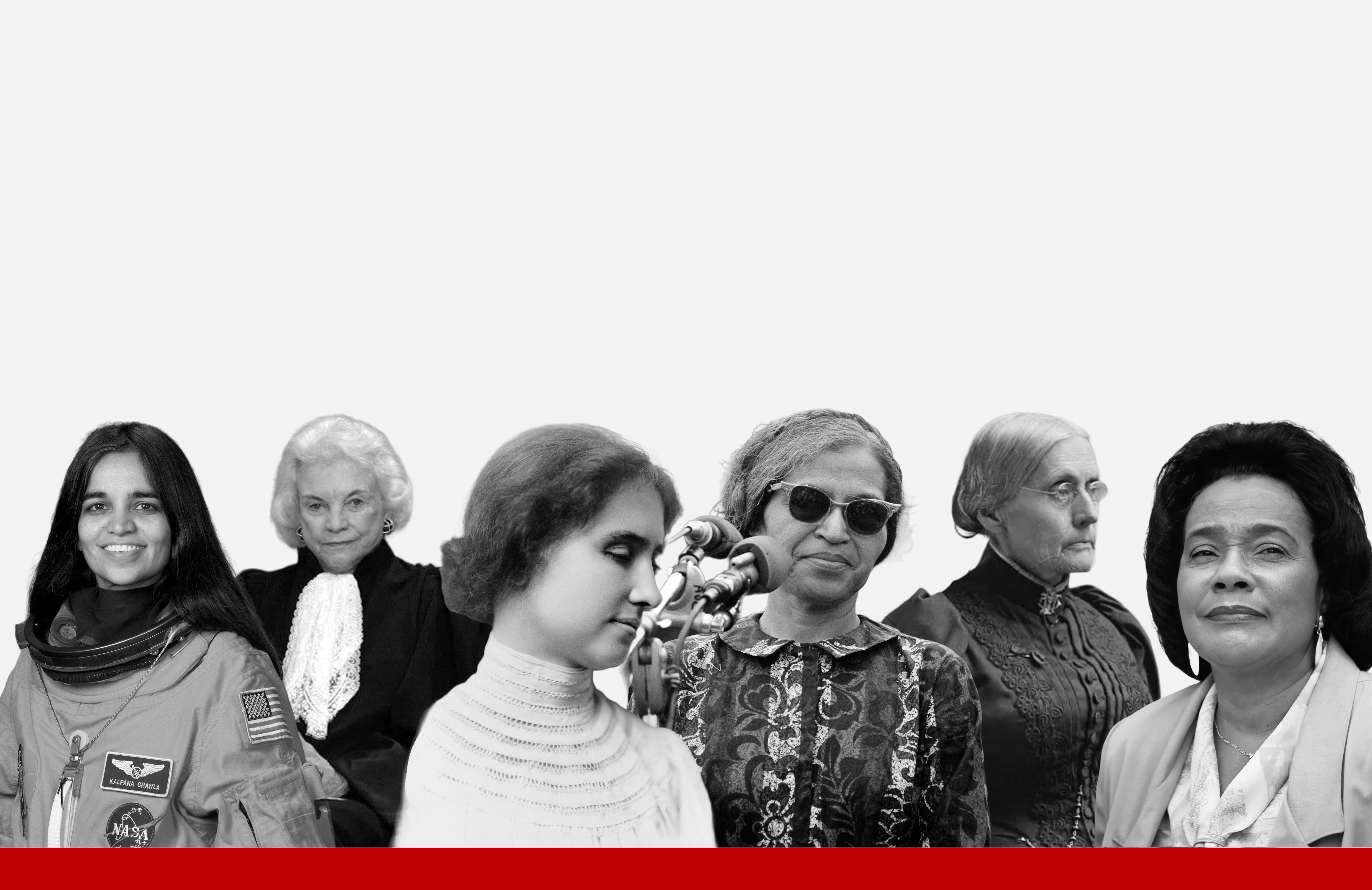
Women in History Who Changed The World!
Women have been at the forefront of history, creating change they want to see, in ways both big and small. Empowering women is essential to the health and social development of families, businesses, communities, and countries.
There are millions of Americans who have women in their lives they count on and rely on. Women who, no matter what, always seem to balance unimaginable pressure, yet still make sure they’re that they’re there for others. Women see the potential of this country and donate their time, money, and energy to fight for it.
Over time women have fought tirelessly to find a place for themselves as equal partners, experts and leaders in their workplace, culture, and society. Whether championed by others or empowering others, women in history like Sandra Day O’Connor, Coretta Scott King, Kalpana Chawla, Helen Keller, Rosa Parks, and Susan B. Anthony have served as inspiration for generations. Women like these and many others demonstrate the significance of securing agency for one’s future.
Along with celebrating Women in History month this March, let’s celebrate those in our daily lives. Let us take a moment to celebrate those women who may not have their names in the history books, but deserve a space, nonetheless.
Presenting Sponsors


Women in History Who Changed The World!
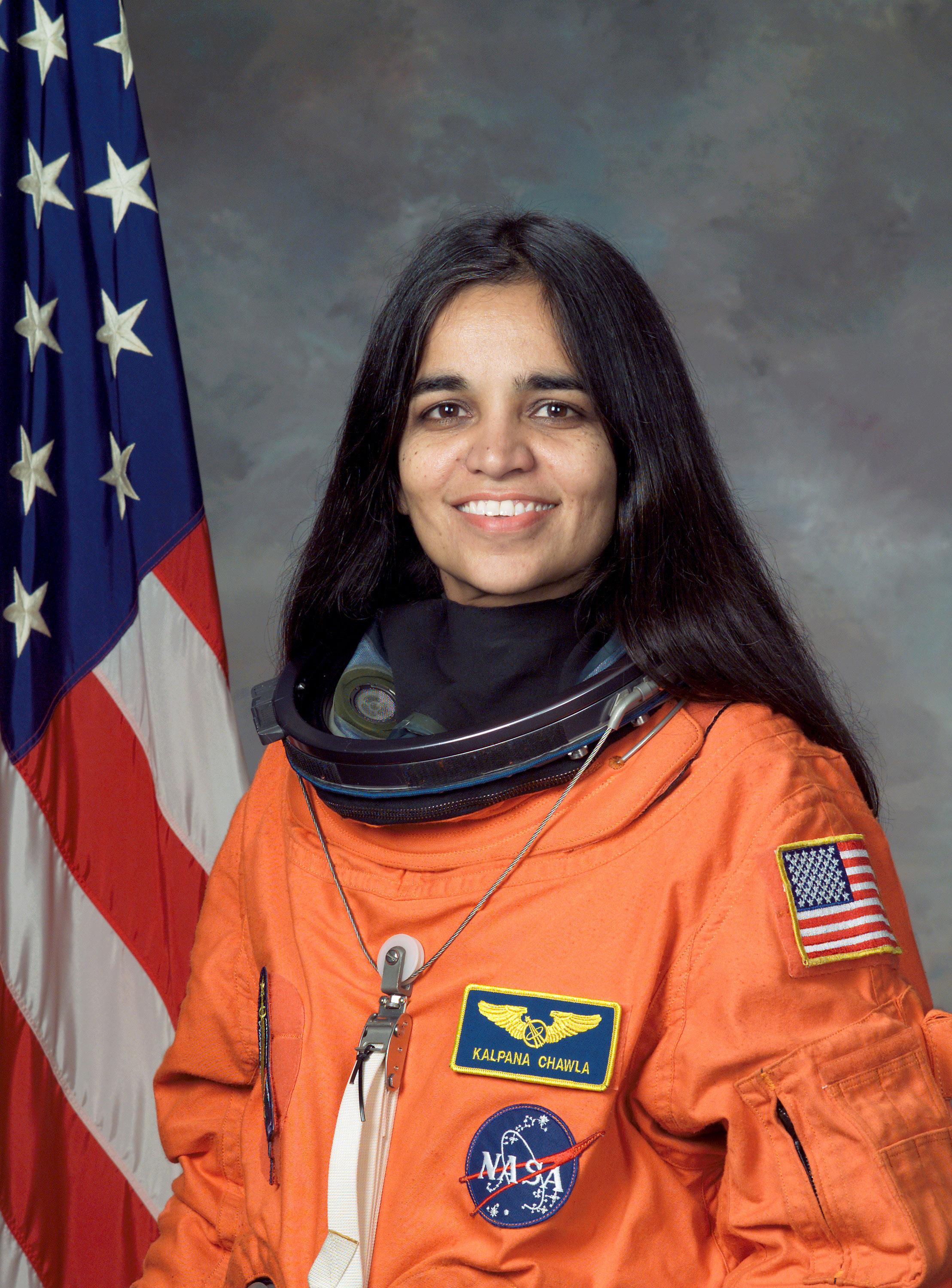
Kalpana Chawla
Kalpana Chawla was an Indian-born American Astronaut and Mechanical Engineer, who was the first woman of Indian origin to go to space. She first flew on Space Shuttle Columbia in 1997.
Chawla was one of the seven crew members who died in the Space Shuttle Columbia disaster when the spacecraft broke during its re-entry into the Earth’s atmosphere, killing all seven astronauts on board. on February 1, 2003.
Between her two missions, Kalpana logged a total of 30 days, 14 hours, and 54 minutes in space.
Soon after, scientists named seven asteroids after each crew member as a celestial moment.
After her death, Kalpana Chawla was awarded the Congressional Medal of Honor and the NASA Distinguished Service Medal for her history-shaping contributions to the field of aeronautics.
Women in History Who Changed The World!
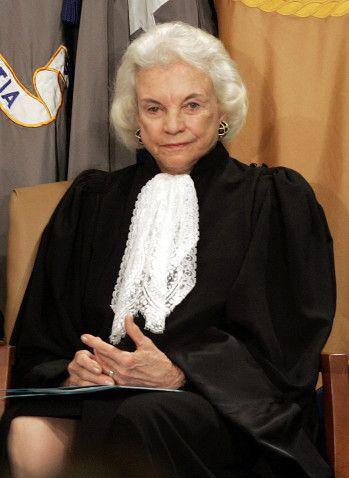
Sandra Day O’ Connor
At sixteen, she was admitted to Stanford University, where she earned a bachelor’s degree in Economics. In 1950 she was admitted to Stanford Law. During her time at Stanford Law, she worked on the board of editors for the Stanford Law Review. She completed law school in just two years as opposed to the usual three years.
After her receiving her law degree from Stanford University, Unable to find employment in a law firm because she was a woman—despite her academic achievements, one firm offered her a job as a secre-
tary she became a deputy district attorney in San Mateo California.
Soon after she served as Assistant Attorney General in Arizona from 1965-1969.
On September 25, 1981, O’Connor was confirmed unanimously by the Senate and was sworn in as the first female justice to serve on the Supreme Court.
In 2006 O’Connor retired from the Supreme Court.
O’Connor has said she felt a responsibility to demonstrate women could do the job of justice.
Helen Keller Women in History Who Changed The World!
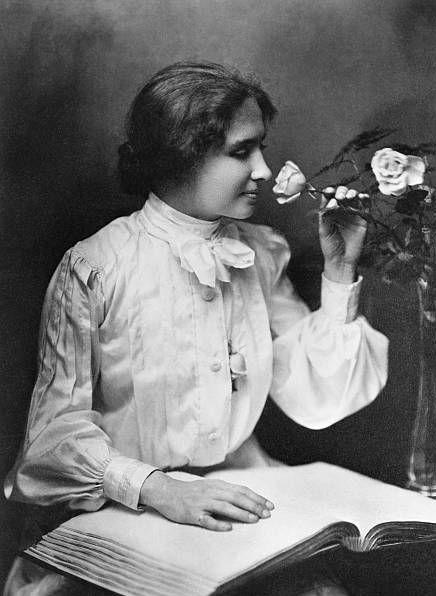
American educator Helen Keller overcame the adversity of being blind and deaf at just 19 months old to become one of the 20th century’s leading humanitarians, as well as co-founder of the ACLU. Throughout the first half of the 20th century, Keller tackled social and political issues, including women’s suffrage, pacifism, birth control and socialism. In 1915, along with renowned city planner George Kessler, she co-founded Helen Keller International to combat the causes and consequences of blindness and malnutrition. In 1920, she helped found the American
Civil Liberties Union. In 1955, at age 75, Keller embarked on the longest and most grueling trip of her life: a 40,000-mile, five-month trek across Asia. Through her many speeches and appearances, she brought inspiration and encouragement to millions of people.
During her remarkable life, Keller stood as a powerful example of how determination, challenging work, and imagination can allow an individual to triumph over adversity. By overcoming difficult conditions with a great deal of persistence, she grew into a respected and world-renowned activist who labored for the betterment of others.
Rosa Parks Women in History Who Changed The World!
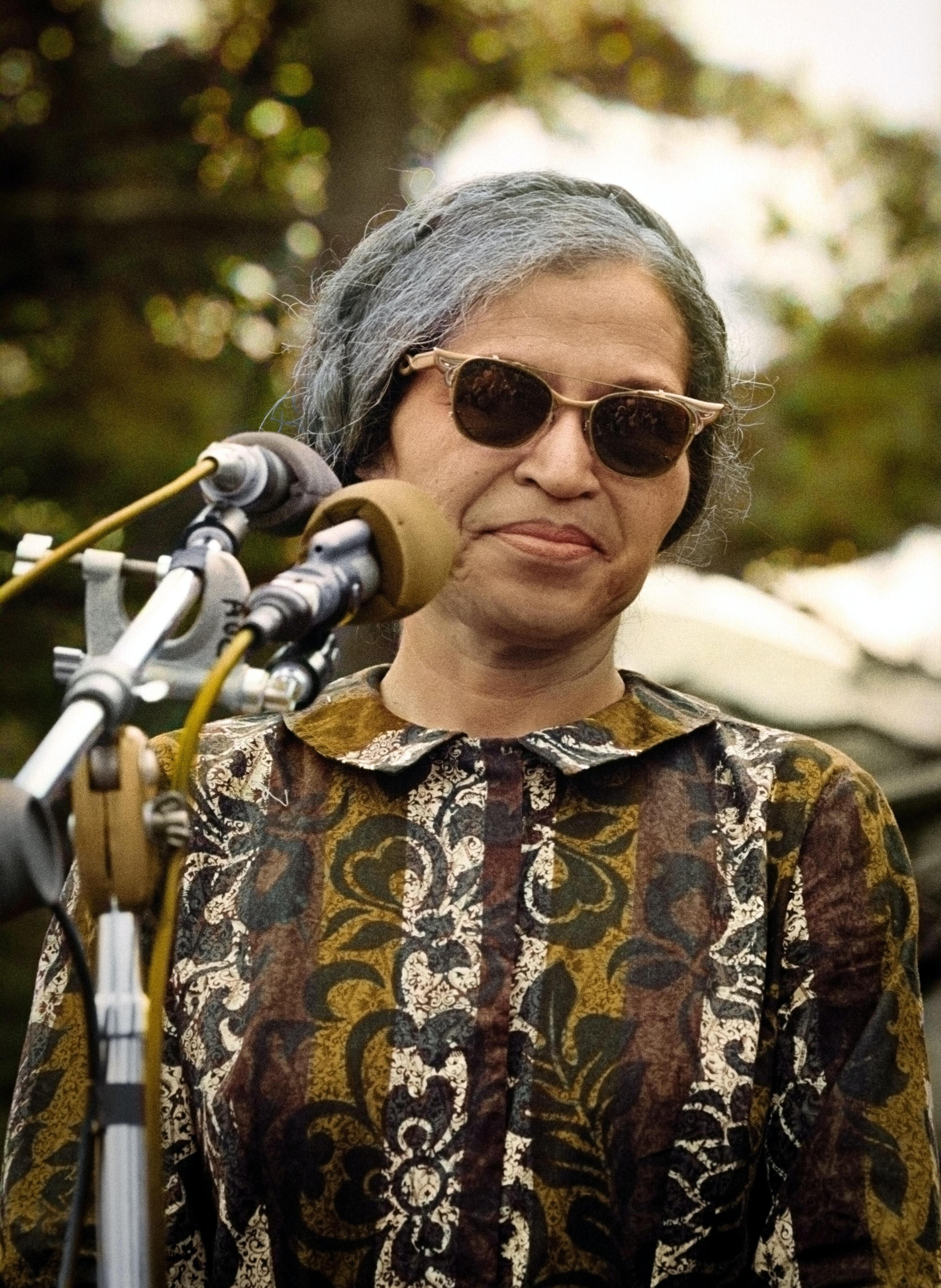
Called “the mother of the civil rights movement,” Rosa Parks invigorated the struggle for racial equality when she refused to give up her bus seat to a white man in Montgomery, Alabama.
On December 1, 1955, Parks was riding a crowded Montgomery city bus when the driver, upon noticing that there were white passengers standing in the aisle, asked Parks and other Black passengers to surrender their seats and stand. Three of the passengers left their seats, but Parks refused. She was subsequently arrested and fined $10 for the offense and $4 for court costs, neither of which she paid. Instead, she accepted Montgomery NAACP chapter president E.D. Nixon’s offer to help her appeal the conviction and challenge legal segregation in Alabama.
After Parks died in 2005, her body lay in state in the rotunda of the U.S. Capitol, an honor reserved for private citizens who performed a great service for their country. For two days mourners visited her casket and gave thanks for her dedication to civil rights. Parks was the first woman and only the second Black person to receive the distinction.
Women in History Who Changed The World!
Susan B. Anthony
Susan B. Anthony was an American social reformer and women’s rights activist who played a pivotal role in the women’s suffrage movement.
Following the Civil War, Anthony began to concentrate exclusively on woman’s issues and, especially, the campaign for suffrage.
Anthony spent her life working for women’s rights. She was a champion of temperance, abolition, the rights of labor, and equal pay for equal work, Susan Brownell Anthony became one of the
most visible leaders of the women’s suffrage movement.
Anthony died in 1906, 14 years before women were given the right to vote with the passage of the 19th Amendment in 1920.
On October 10, 1978, President Jimmy Carter signed the Susan B. Anthony Dollar Coin Act into law, known as the Public Law 95-447. This law did not only make a woman’s face appear on a circulated coin but also added some changes to the size and look of coins.
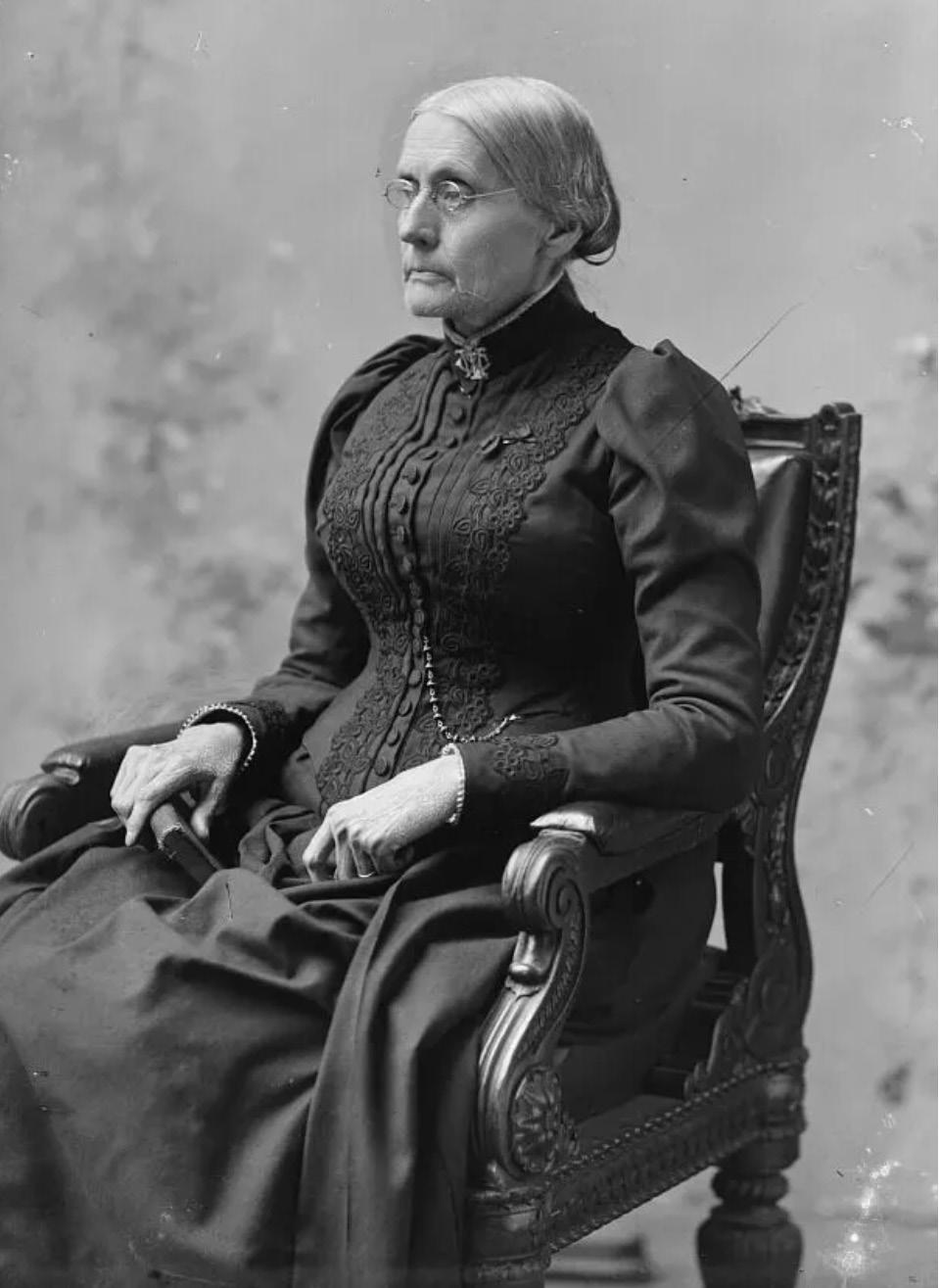
Coretta Scott King Women in History Who Changed The World!
Coretta Scott King was the wife of the famous civil rights leader, Martin Luther King Jr., and was a civil rights activist known for her advocacy in ending injustice within the country. Her known passion was to work for peace and justice organizations within America.
After the assassination of her husband, she continued her work to be active in the civil rights movement.
Coretta Scott King joined her husband in civil rights activism, taking part in the Montgomery Alabama bus boycott, along with efforts to pass the 1964 Civil Rights Act.
In addition, she created her own legacy in the movement to end injustice. She was the founder of the Martin Luther King jr., center for nonviolent social change. Throughout her life, she dedicated most of it to empowering women to play a significant role in shaping society, and to fight for the unheard and the voiceless.
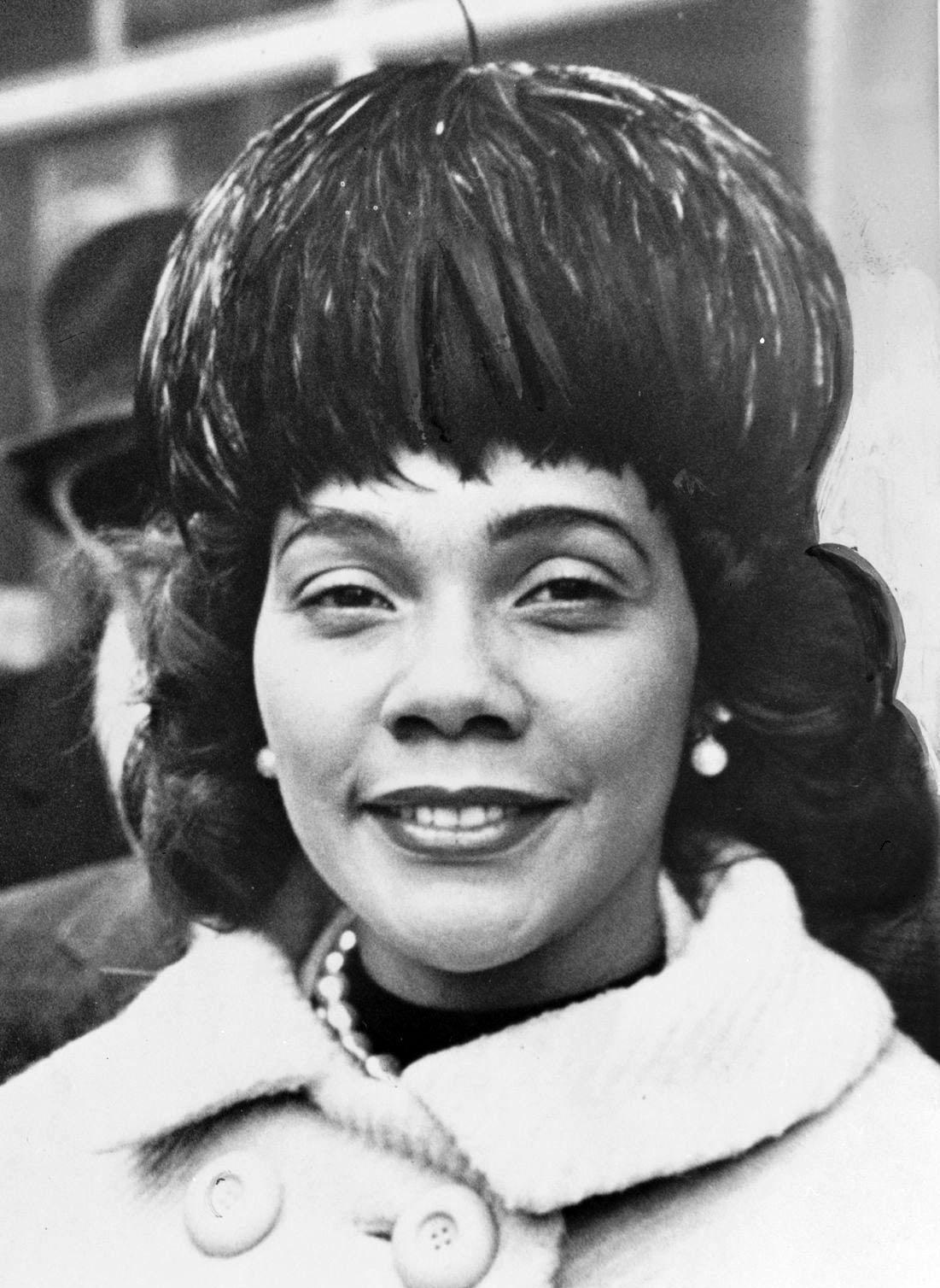
www.traveldestinations.me
Hello Everyone,
I’m excited to announce the launch of my travel blog titled … TravelDestinations.Me
For those of you who know me, you’re already aware that, along with my bucket list, there are experiences in life that are especially important to me. These are things my wife and I enjoy doing together, like our weekly volunteer work, trying different fine dining restaurants, attending concerts, and checking out headliner comedians.
Personally, as a lifelong musician, I have always enjoyed doing benefit performances. During the holidays, I’m honored and privileged to perform for the elderly and young children who cannot be home for the holidays.
One bucket list item that my wife and I just can’t get enough of is travel. After many years of traveling, I thought it was time to start a blog. Our goal is to visit a minimum of 50 countries (we’re almost there). We’ve had some awesome experiences in countries like Australia, New Zealand, Ireland, Russia, India, Israel, Jordan, Egypt, Cuba, and many others.
Our other travel goal is to tour the USA twice! Our first tour of the US that we have finished has included famous attractions in each state along with Hall of Fames (Football, Baseball, Basketball, Rock n Roll, etc.), attending a Supreme Court session, glacier landing in Alaska, and visiting presidential libraries. In our second go around, we look forward to seeing more of the USA.
So, I thought it would be appropriate to share a series of blogs of my past experiences I have had over the years with you, titled Best Travel Memories
Rich Borell Founder & Publisher

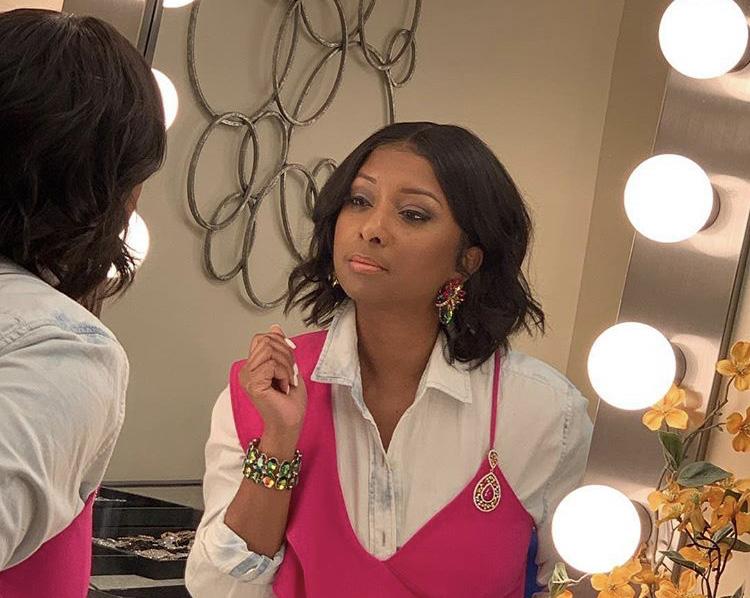
Kim Ford
Kim Ford Is A Keynote Speaker, TV Host & Media Consultant. She Has Appeared On CNN As An Entertainment Correspondent Where She Shares Her Take on What’s Relevant in Film, Television, & Celebrity News.
Q: After college, where did you feel your career path would take you?
KF: Honestly, I wasn’t really sure. All I knew was I wanted to live in Atlanta. I knew I’d figure it out when I got there. It took a while, but I finally figured it out.
Q: What was your first job? And how did it shape or impact you?
KF: My jobs after college were random and all over the place. I first worked at Macy’s in the handbag department
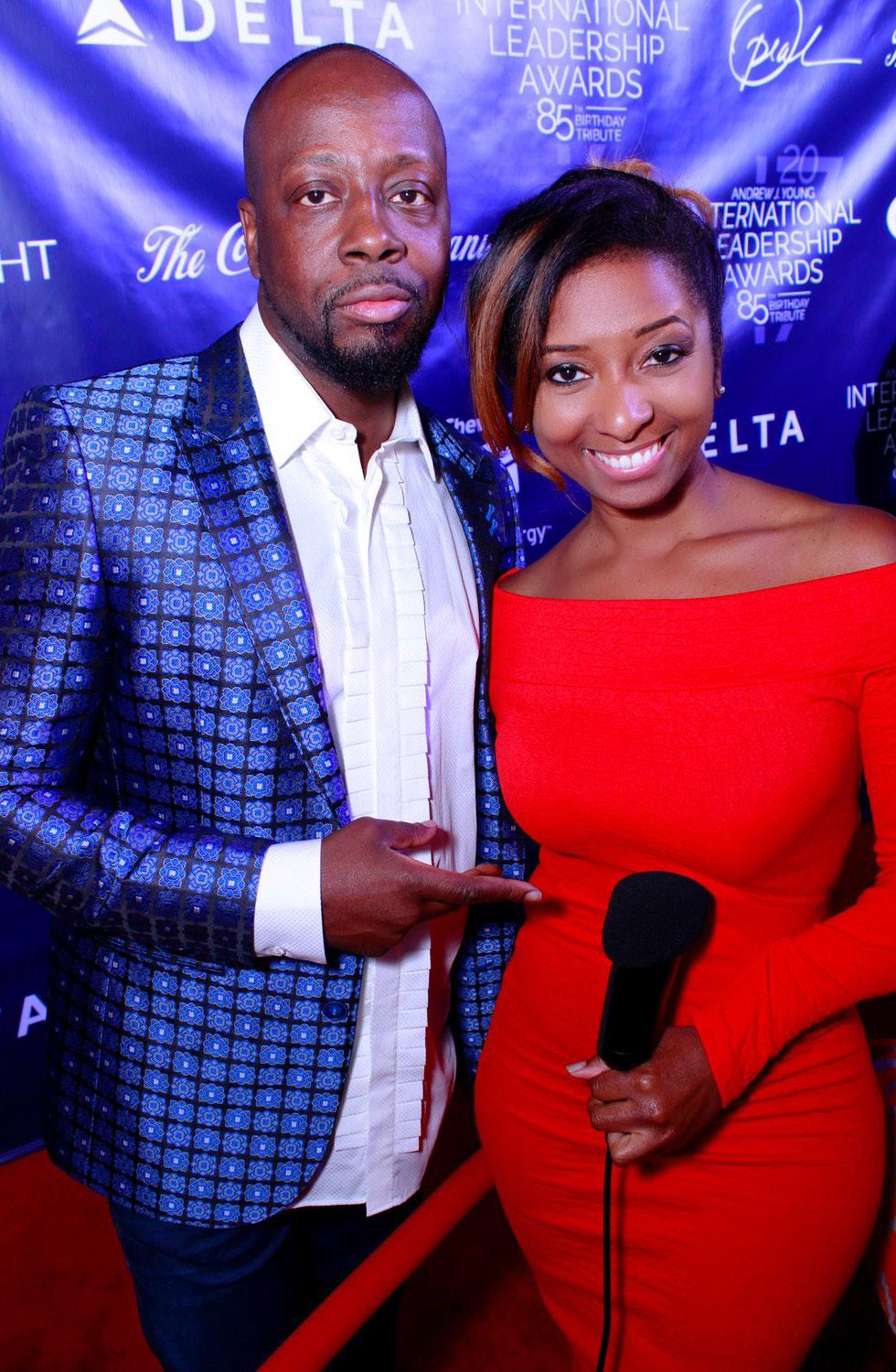
until I locked in a “real” job after college. After Macy’s I entered the Management Trainee program at Enterprise Car Rental. Working there taught me a lot about owning a business, sales calls, and teamwork. The hours were long and sometimes I had to wash cars in my suit. I hated it back then. Now I understand the lesson was to get the job done no matter how uncomfortable I was. That’s a skill I use today.
Q: Can you share with our audience some details about your role as a CNN/Headline News entertainment contributor?
KF: I appear as a guest Entertainment Contributor on CNN/HLN to give my take on what is relevant regarding film and television. Typically, when there is a special segment.
Q: In March 2019 you were accepted into AAFCA (African American Film Critics Association). Can you tell us what it meant to you?
KF: AAFCA isn’t an award. It’s the world’s largest organization of
African American film critics. Being accepted as a member meant a lot because we get access to the team and talent behind films that mean the most to our culture.
Q: Tell us about Jubilee Mag, how it started and where you see it going.
KF: Jubilee Mag was an online mag I started in 2007 that covered faith, culture, and style. I created it because I saw a void in the industry for positive media. I built my own website and gained access to events like the BET Awards, Essence Fest and countless press junkets affiliated with NBC, CBS, Sony, Warner Bros, and many others.
In March 2020, the growth of my audience led to me to leave Jubilee Mag behind and evolve from just an online magazine. My audience wanted more of me as a personal brand instead of a magazine. As a result, I launched iamkimford.com covering entertainment, personal development, and lifestyle.
Q: You must keep a hectic schedule between speaking engagements and TV commitments. How do you maintain a healthy work life balance?
KF: It’s all about prioritizing. The commitments my children have come first. I schedule everything else around that. My kids are older, so that makes it a lot easier.
Q: What’s the greatest fear you’ve had to overcome to get where you are today?
KF: Since I didn’t study media in college, I was concerned about what I didn’t know that should know. I’m in grad school now, but for many years it was a concern in the back of my mind. It’s definitely possible to do it without grad school, but it was a personal goal of mine.
Q: Which woman inspires you and why?
KF: It’s hard to narrow it down to one woman. There’s definitely a village of women I admire for various reasons. A few are: Oprah, for obvious reasons. Myleik Teel for her entrepreneurial journey. J Lo because she’s been timeless for decades.
Q: What are some of the challenges you feel women face today?
KF: I’m actually writing a book about that right now. It’s called “It’s Never Too Late”, releasing late summer 2020. A lot of women think just because they’ve had major setbacks, it’s too late to pursue their dream life. If God called you to it, “It’s Never Too Late”.
Q: What is one word of advice you can offer to young women who want to reach your level of success?
KF: Do your research. Pay attention to the greats. Find your lane and dominate.
Wycleff Jean interview at Andrew Young Leadership Awards.
NBC press dinner for ‘This Is Us’.
An Exclusive Interview With Former President of The American Society of Plastic Surgeons, Dr. Lynn Jeffers
Q: You recently served as President of the American Society of Plastic Surgeons. Can you tell us what this meant to you and did you accomplish what you set out to do?
LJ: Being President of the American Society of Plastic Surgeons was an honor and a privilege. Despite the COVID pandemic, we were able to accomplish what we set out to do.
At the beginning of my presidency, I wanted to focus on technology/innovation/disruption and on valuing our physician members. I created a presidential task force on technology that will build an infrastructure within ASPS that will not only address technology used by the society in our work, but also support our members interested in technology, innovation, and entrepreneurship. We are also looking at the big ideas such as artificial intelligence, biosensors, block chain, etc. and making sure that we keep our society well-positioned to address potential opportunities and threats. In addition, we had a deliberate focus on making sure to recognize and engage our volunteer physician leaders. At the end of the day, this is a member organization, and we are thankful for their dedication and time that they give to ASPS and our specialty. Of course, we could not have anticipated COVID-19 and I am very proud of ASPS’s response to this pandemic. We were able to set up a COVID resource page for our members with regular webinars. We set up a clearinghouse for members to offer PPE and ventilators to other facilities in need. This caught the attention of the White House COVID Task Force which ultimately led us to help source over 6 million masks to New York alone as well as working with FEMA and other governor’s offices. When it was time to consider reopening, we responded to our members’ needs for access to PPE by having ASPS buy PPE in bulk and thus allowing our members access to PPE. Ultimately, I am so proud of the response of our physicians and our staff in coming together, being proactive, and responding effectively to the COVID pandemic.
initiatives such as our clinical registries, task forces, and research endeavors that will lead to data that we need to better address topics such as implant safety, surgical safety, proper training, and best practices. ASPS is here also for our members to provide resources for their everyday practices both operationally as well as clinically and also helps to facilitate communication, networking and camaraderie among our members.
Q: Can you tell us about your current positions as Chief Medical Officer at St John’s Pleasant Valley Hospital, and Medical Director of the Integrated Breast Center at St. John’s?
LJ: I currently serve as the Chief Medical Officer at Dignity Health St. John’s Pleasant Valley Hospital which is a part of CommonSpirit Health. During the COVID crisis, I covered an additional hospital while their CMO was out. The Integrated Breast Center offers a community-based team-based approach to breast cancer care. The Center is nationally accredited and has been the recipient of a number of national grants. For the last 11 years, we have held a Breast Symposium that has grown from 30 attendees to 300 attendees last year. This year, of course, we will host a virtual symposium, but we look forward to being hold one in person next year (hopefully!).
Q: Tell us about your private practice you have as a plastic surgeon in Ventura County, Calif, and why you chose to become a plastic surgeon.
Q: Why is it important for a plastic surgeon to be a member of ASPS?
LJ: The American Society of Plastic Surgeons is the largest plastic surgery organization in the world. We are here not only for our plastic surgeon members but also our patients. Our advocacy, research, education efforts (of the public as well as plastic surgeons) promote patient safety, ethics, and excellence in plastic surgery. We continue to promote collaboration and science not only in the US but globally with our global partners. We continue to support important
LJ: I am in solo private practice and share the office with my husband who is an Orthopaedic surgeon . I specialize in breast surgery, as well as non-invasive and minimally-invasive procedures such as injectables (Botox/fillers). I was drawn to plastic surgery because in plastic surgery, you create and rebuild. That really appealed to me. One of my first exposures to plastic surgery was watching one of my research mentors in the operating room build an ear for a patient who was born without one, using the cartilage from her rib. It was fascinating and I was hooked. Today, I am so grateful to be able to help people every day. Many of my breast cancer reconstruction patients, I have known for years and there really is no comparison to the satisfaction you get, knowing that you make a difference in people’s lives.
Q: Most of your medical education was done in Michigan … how did you end up in Southern California?
LJ: I grew up in southern California. I went to Michigan because I was accepted into medical school out of high school
and thus did my undergraduate education, medical school education, and residency training in Michigan. I returned to California after finishing my training, and I now live in the same community in which I grew up.
Q: Can you tell us how you manage your work life balance?
LJ: It is definitely a day-by-day, even hour-by-hour, adjustment. I am fortunate to have a very supportive family including having my parents living nearby. My husband and I joke that our children did ok, DESPITE us. For better or worse, we were too busy to helicopter parent our kids and they had to learn independence and resourcefulness early in life. I have many stories that we laugh about now. Balance is a moving target, but I would say that it starts with self-assessment and being aware of what is really meaningful--what are your real priorities. I don’t sleep much, but even so, more recently, I find that I have had to set limits and recognize that you can’t do all things all of the time.
Q: What’s one lesson you’ve learned in your career that you can share with our audience?
LJ: Never underestimate the importance of relationships. It is the personal connections that not only make the work we do meaningful but also, I believe, personal connections are the key to success. I also believe in the importance of leaving things better than you found them both in terms of the organization itself but the people. I have certainly benefited from the mentorship of many people and I hope to be that for others.
Q: Can you tell our audience one of your most memorable moments in your career?
LJ: Some of the most meaningful milestones in my career
were starting my own practice, spearheading the Integrated Breast Center, assuming my Chief Medical Officer (in addition to my practice), being elected as one of 11 members of the American Medical Association’s Council on Medical Service, and most recently, my term as president of the American Society of Plastic Surgeons. In fact, at the end of my presidency, I was chosen for two awards: the ASPS Patients of Courage and the Young At Heart award that really meant so much to me as it really reminded me why I do what I do -advocating for my patients and mentoring those after me.
Q: What are some of the challenges you feel women face today?
LJ: Sometimes, women may have a difficult time finding mentors and seeing role models in leadership, depending on the arena. Also, it can take some work to understand how to navigate a particular environment and finding ways to be heard that are effective. Studies have shown that women cannot employ the same tactics in the boardroom as men do, as they are not as effective for women. With more recognition of these differences, more work is being done as to effective strategies specifically for women, we can promote better functioning teams and organizations.
Q: What advice would you give to young women who want to pursue a career as a Doctor?
LJ: Being a physician is such a rewarding profession. Every day you can look in the mirror and know that you can help people directly. However, know that the number of years of education, training, and sacrifices can be daunting, so find your mentors and find your “why”. Make sure to pay attention to self-care and to not neglect the other portions of your life as those are just as crucial to a whole, meaningful life.
AMA meeting during her first campaign for a seat on the AMA Council on Medical Service
Brings History Alive with Passion and Purpose Keisha N. Blain, Ph.D.
Q: You’ve been called one of the most innovative historians of your generation. How do you define innovation in historical scholarship?
KB: I think innovation in historical scholarship is the willingness to explore topics that others might not have considered—or the willingness to grapple with familiar topics in new ways. Part of what I have tried to do in my work is not to simply replicate past approaches. I ask new questions, consider new voices that might have been previously overlooked in historical narratives, and experiment with different kinds of research methods to find answers to the questions I am asking. My latest book, Without Fear: Black Women and the Making of Human Rights, for example, came out of my desire to tell the history of human rights in a novel way.
Q: In Until I Am Free, you bring Fannie Lou Hamer’s voice to life. What do you hope readers carry forward from her story?
KB: There are so many lessons I hope readers learn from Fannie Lou Hamer’s example. I think the most immediate is the impact that one person—guided by a deep, moral conviction and a commitment to truth-telling—can have on society. There were few indicators from Hamer’s early life that she would rise to the national stage and leave a lasting political influence. But she left an indelible mark on the nation, starting at the grassroots and organizing in her community and throughout Mississippi to address the problems facing her family and her neighbors. Until I Am Free demonstrates how Hamer’s ideas and the
broader lessons of the civil rights movement are still applicable to today’s struggle. Beyond the many practical examples, I also found Hamer’s words and deeds deeply moving, and I wanted to share them with a wider audience. Love and empathy for others guided her politics, and I think we can all learn from her example.
Q: As a historian, how do you balance academic rigor with the need to make history accessible and impactful for a wider public audience?
KB: I do not think rigor and accessibility are incompatible in historical writing, but I do think a lot of work goes into writing a book that is accessible for public audiences. Part of the challenge for academics is we tend to be insular and only talk to each other. And so we have to move beyond our comfort zones when we try to make our work accessible to those outside academia. I approach each project in the same way—I start with the research, and I focus on uncovering as much as I can on a topic. I spend a lot of time reading to make sure that I have command of the subject and that I know what others have said on the topic as I sketch out my own contribution. I leave the writing for the last stage, and that process involves multiple drafts of a chapter before I am satisfied that the writing is clear and crisp. This also requires allowing others to read my work then paying close attention to their reactions, comments, and questions. This tells me what I have done well and where I still need to strive for greater clarity. These steps ensure that I produce work that others can understand and engage, regardless of their educational background.
Q: You’ve worked on major collaborations like Four Hundred Souls. How does working collectively with other scholars and writers influence your own perspective?
KB: Collaboration is essential to the process of producing scholarship—and knowledge broadly. As an intellectual historian, I study the flow of ideas, and it’s simply impossible for me to ignore other thinkers. I like the biblical mantra, “Iron sharpens iron,” and it’s applicable to writing and thinking. I believe I am a better scholar and intellectual because I have been in dialogue with other brilliant scholars and intellectuals. I have learned so much from others—their methods and questions have pushed me to consider new approaches. This is also one of the reasons I have loved being an editor for an academic journal as well as serving on several boards for academic presses and as a series editor. In these roles, other scholars look to me to help them refine their work, and I certainly offer critical feedback to move those projects forward. But I also benefit from these exchanges— every draft book or article that crosses my desk teaches me something new.
Q: How do you make history accessible and engaging for readers who might not typically pick up an academic text?
KB: I try to write clearly and in a straightforward manner. I also try to imagine myself as the reader, and I grapple with a number of questions as I am writing: What would readers want to know about a subject? What would catch their attention? What would resonate with them? Ultimately, I am telling the stories of ordinary men and women, and I try to bring their stories to life in vivid and compelling ways.
Q: Much of your work involves archives. Was there ever a single document, letter, or speech that changed the entire direction of your research?
KB: Archival research is challenging but exciting, and I am always uncovering new information that moves me in directions I did not initially plan to go. In many cases, I have uncovered materials that have sparked
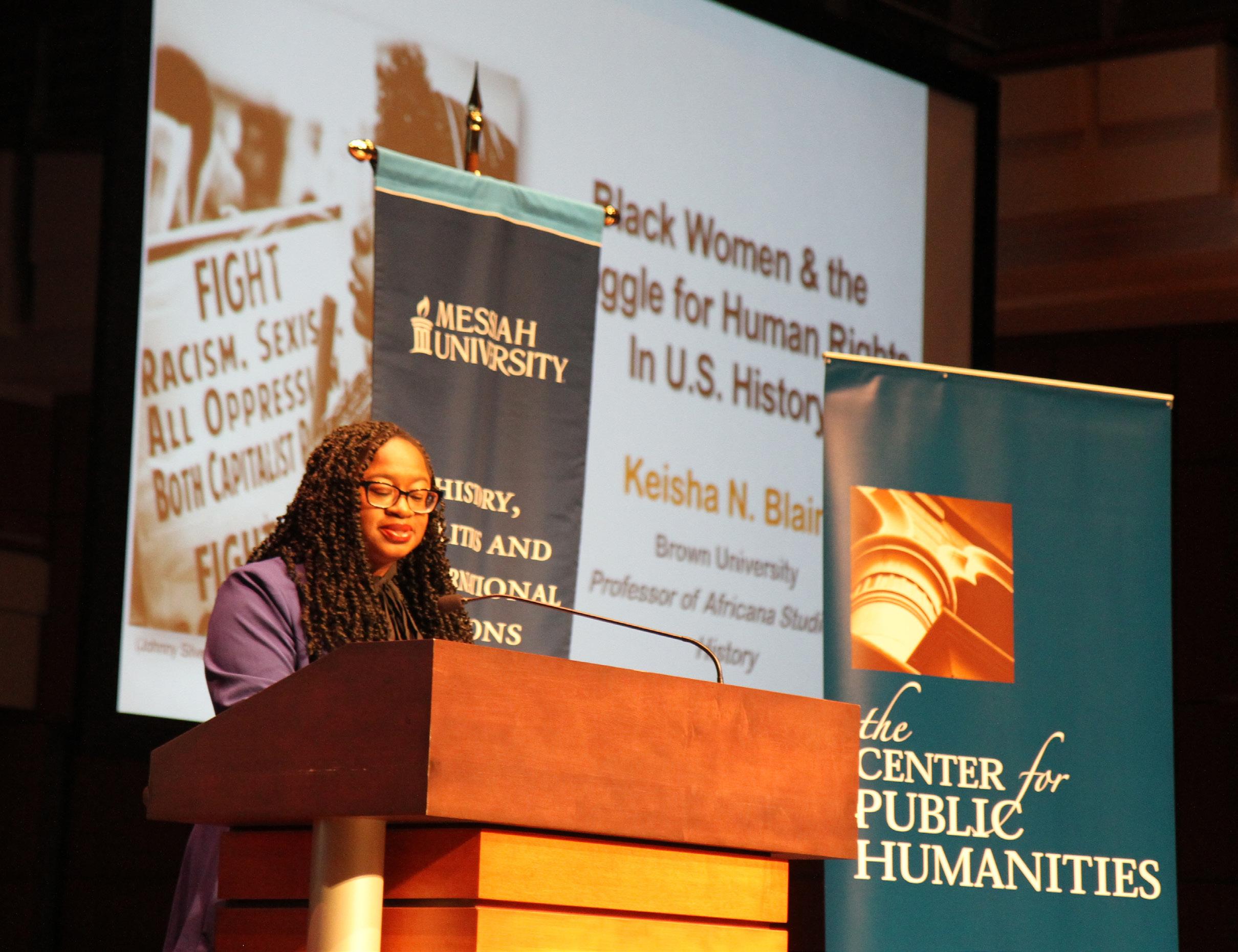
ideas for new books and articles. For example, while writing my first book, Set the World on Fire (2018), I came across a letter from a working-class Black woman during the Great Depression who expressed her interest in Japan, and that letter led me on a path to find out more about Black women’s conceptions of Japan as a global power and their connections to Japanese people in the mid-twentieth century. I ended up writing several articles and book chapters on the subject.
Q: Four Hundred Souls, which you co-edited with Ibram X. Kendi, became a #1 New York Times Bestseller. What do you think made that collective history resonate so deeply with the public?
KB: The volume’s commemoration of the first enslaved Africans brought to Virginia in 1619—as well as the public furor over Nikole Hannah-Jones’s 1619 Project at The New York Times—certainly helped to raise
public awareness. It’s also important to mention that Four Hundred Souls came out a year after the 2020 protests. These were the largest protests for racial justice in decades. In many ways, the book’s release helped to contextualize the moment, and I think people embraced it because it answered so many lingering questions about the ongoing legacies of slavery in the United States.
Q: You’ve earned both Guggenheim and Carnegie fellowships in the same year—a remarkable achievement. Beyond the research support, how did those awards personally shift the way you see yourself as a historian?
KB: The fellowships are very meaningful, but I will admit that I try not to dwell too much on them. I never want to lose sight of the reasons I set out to do this work in the first place. It’s my desire to write books that leave a lasting impact on others—books that challenge,
clarify, and inspire. Winning the fellowships has made it possible for me to reach new audiences, and the resources have allowed me to make progress on several projects. That is truly a gift, and I don’t take it for granted. But I don’t think the accolades have shifted the way I see myself as a historian. If anything, I feel a greater sense of responsibility to deliver my best work because so many people and institutions have invested in me.
Q: What advice would you give to young scholars of color who want to pursue historical research but may feel discouraged by structural barriers in academia?
KB: I would tell them to connect with others who are on this journey and not attempt to do this alone. Being a part of several groups, including the African American Intellectual History Society (AAIHS)—an organization I established with two other scholars in 2015—has helped me find my way in the academy. I surrounded myself with people who value my voice and my contributions. I think community is important as a buffer of protection in a space that can be very hostile to people of color.
Q: Looking ahead, what stories or themes are you most excited to explore in your next projects?
KB: I am now writing a book that celebrates the historical contributions of Black intellectuals throughout the globe. I bring together a cadre of Black thinkers whose ideas about rights and liberty fundamentally transformed the world. I am hoping to finish it in the next year or so. I am also interested in exploring several other themes in future book projects, including Black women’s international travel and Afro-Asian solidarity.
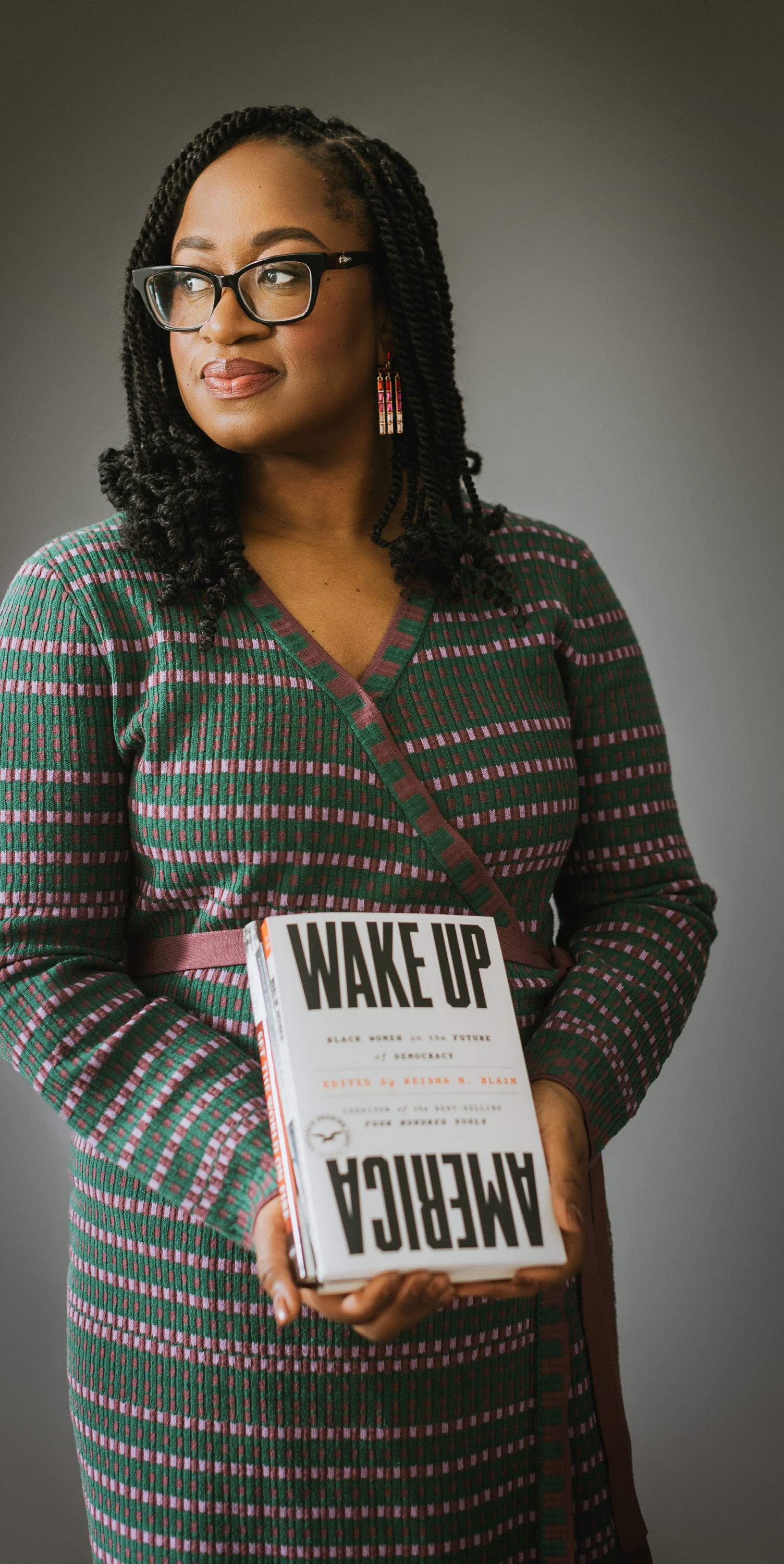
Sharon Gai An Exclusive Interview with Author, Speaker and Futurist,
Sharon Gai is a culture fluid expert in AI, ecommerce and innovation. She helps organizations become agile disruptors in their industries so they can increase revenue and retain users. In her tenure at Alibaba, she advised brands and heads of state in crafting their digital strategy with programmatic marketing and AI. She has worked with TEDx, Singularity University, UBS, Deloitte, Walmart, LVMH, Nestle, Tetra Pak, Twilio and many others. She is in the AAE list of Top Keynote Speakers in 2023. She is a RETHINK Retail’s Top Retail Expert and a LinkedIn Community Top Voice in 2024. She has appeared on Bloomberg, Reuters, ABC, CBC, CCTV, TechCrunch, Retail Asia, Wired, and The Next Web. She is the author of the book, Ecommerce Reimagined. Sharon has an Honors Bachelor’s degree in International Development from McGill and a Masters in Information Management from Columbia University. When she is not globetrotting (thank you, speaking gigs!), she is jamming on the electric keyboards or entertaining in New York’s stand-up comedy scene.
Q: Can you share with our audience your career story?
SG: I’ve always had a passion for bridging gaps—whether that’s between brands and consumers, or between different cultural markets. Early in my career, I worked with international businesses wanting to expand into China, helping them understand consumer behavior and digital strategies in one of the most advanced ecommerce ecosystems in the world. Eventually, I joined Alibaba, where I was deeply involved in global ecommerce projects. That experience gave me the chance to see firsthand the immense power of technology, data, and culture in shaping how people shop and connect online. Over time, I moved toward consulting and speaking, focusing on retail innovation and digital transformation. The driving force behind all of this has been my fascination with how technology can rewrite the rules of consumer engagement and create opportunities for businesses across the globe.
Q: Tell us more about your involvement with AI.
SG: I remember the night I was called into the Alibaba office. It was in 2017, around 11 pm and I was told that internally we were going to launch this powerful photo tool. During sales campaign season, we work with billions of SKU’s to ensure they are represented well for the sales period. This also means that there is high touch between merchants and designers in ensuring that all products would be design ready. That night, I was shown a tool that would eliminate the back and forth with thousands of designers. I was in charge of rolling out this product to the wider Tmall category teams, including training them in how to use it. We no longer needed to have lengthy back-and-forths with designers.
With the click of a button, millions of banners would created that included certain designs. Fast forward 7 years later, this internal tool is now branded as an external tool that any merchant can use. I later became increasingly interested in how AI can enhance the consumer experience—think smarter search functions, proactive customer service, and automated inventory management. More recently, I’ve been consulting on the intersection of AI and ecommerce—how businesses can leverage AI-driven insights to anticipate trends, better serve customers, and optimize supply chains. Essentially, AI is a cornerstone in any digital strategy today, and I’m passionate about showing companies how to harness it effectively and ethically.
Q: How are AI technologies being integrated into educational settings?
SG: We’re seeing AI tools emerge in the form of adaptive learning platforms that tailor coursework and resources to individual students’ needs. Imagine a system that identifies a student’s strengths and weaknesses in real time, then immediately modifies the curriculum or suggests supplementary materials. It’s not just about streamlining grading or administrative tasks; it’s about creating a highly personalized learning environment that can cater to each student’s pace and style of learning. Additionally, AI-driven analytics can help educators track progress more accurately and intervene when students need additional support. This blend of real-time feedback and customization is transforming how we think about education’s future.
in China’s dynamic ecommerce landscape. I wanted to distill the key lessons Western retailers and entrepreneurs could learn from that market—how customer-centricity, digital payment systems, live streaming, and social commerce converge to create these incredibly engaging shopping journeys. China’s retail ecosystem is unique, but it also provides insight into what the global future of retail might look like. As for a second book, I’m considering it. I’m fascinated by how technology, culture, and commerce intersect. There’s so much more to uncover about emerging markets, the role of AI, and the ongoing evolution of global consumer behaviors. I’d love to dive deeper into these topics.
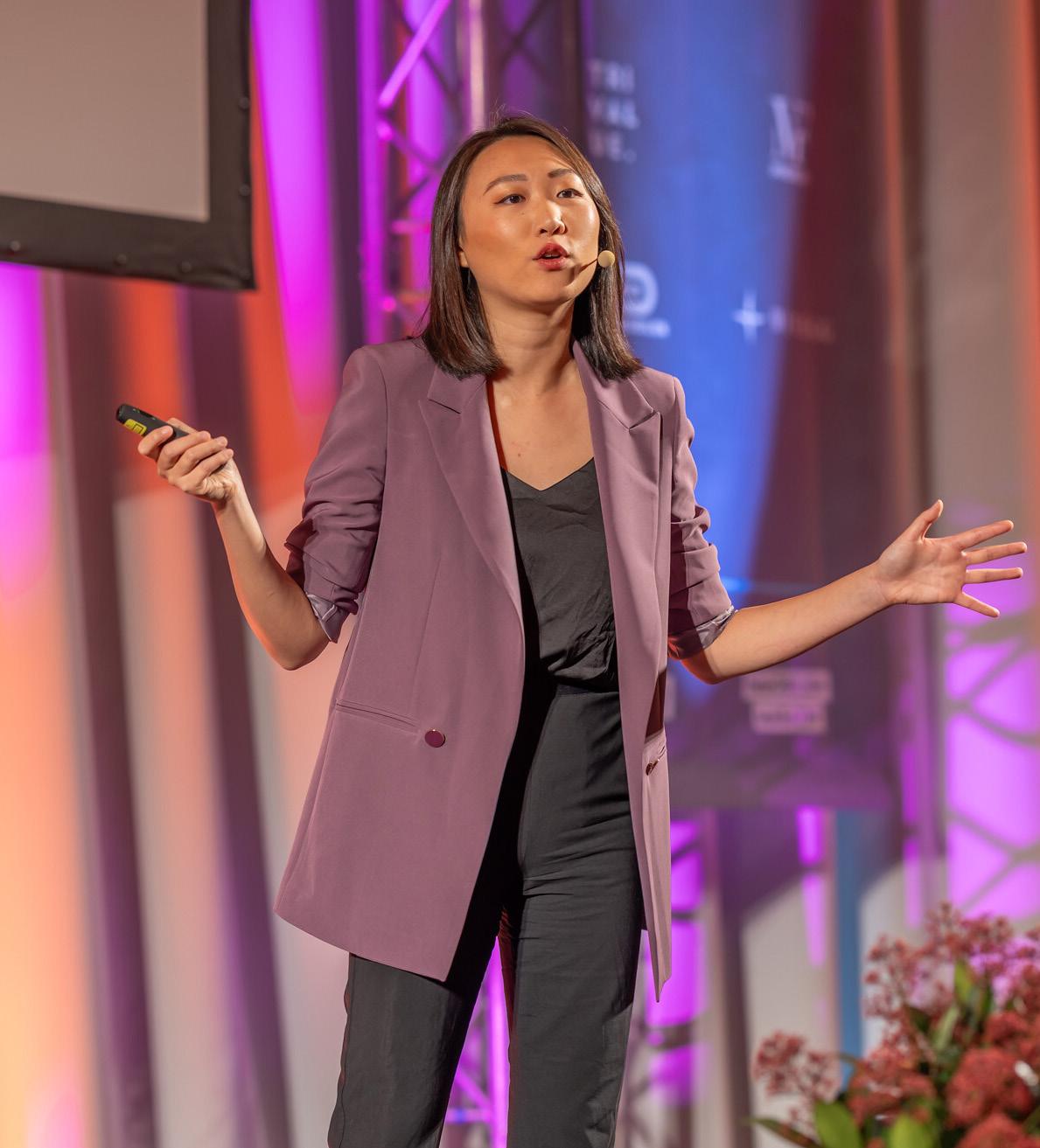
Q: You say we’re living in a VUCA (Volatility, Uncertain, Complicated, Ambiguous) time. Can you explain to our audience what this means?
SG: VUCA stands for Volatility, Uncertainty, Complexity, and Ambiguity. In simpler terms, it captures the intense speed of change and the unpredictability we face in today’s world, especially in technology and global markets. For businesses, it means that traditional long-term planning might not be enough, and agility becomes paramount. Companies need to be ready to adapt quickly as new market dynamics emerge, consumer tastes evolve, and competitors pivot. In a VUCA environment, we’re challenged to be more flexible, more creative, and more prepared for scenarios that might not fit neatly into past business models.
Q: Tell us about your book, Ecommerce Reimagined: what we can learn in retail and ecommerce from China. Do you see another book on the horizon?
SG: Ecommerce Reimagined was born out of my experiences
Q: You coined the term “Culture Fluid.” Can you explain what this means and how it applies to businesses?
SG: “Culture Fluid” describes a state where individuals, brands, and societies move seamlessly between different cultural contexts without losing their identity. It’s about being adaptable, open-minded, and receptive to diverse influences—think of it as cultural agility. This concept is incredibly relevant for businesses operating on a global stage. Consumers today are exposed to trends and lifestyles from all over the world, and they expect brands to understand these shifting tastes. A “Culture Fluid” organization is one that can absorb external cultural signals, integrate them authentically, and communicate in a way that resonates with local audiences—no matter where in the world they’re based. It’s about honoring local nuances while maintaining a cohesive brand identity.
Q: AI is changing very rapidly; do you have an idea where it’s taking us?
SG: AI is moving toward more intuitive, human-centric applications. Generative AI and large language models are already transforming how we create content, design products, and even interact socially—ChatGPT, for instance, has given a glimpse of that potential. In commerce, it’ll reshape the online experience to be more conversational, personalized, and frictionless. In broader society, AI has the power to revolutionize everything from healthcare diagnostics to city planning. Of course, with these advances come new challenges around privacy, data governance, and ethics. But if we address those responsibly, AI will continue to unlock creative possibilities and efficiency improvements that were unimaginable just a few years ago. We’re entering an era where human creativity and machine intelligence will collaborate far more seamlessly shaping a future that’s both exciting and, yes, a little unpredictable.
Advisory Board Members
Kate Delaney
Kate is a speaker, author, and Emmy Award winning talk show host. Kate’s interviewed over 16,000 people, including U.S. Presidents, Fortune 500 CEOs, and Hall of Fame athletes.
Elinor Stutz
Elinor is the CEO of Smooth Sale. She’s also an International Best-Selling and Evergreen Author, Top 1% Influencer, Inspirational Speaker.
Andrea Simon
Andrea Simon is a writer and photographer based in New York City. She has worked as an editor, writer, and manager on diverse projects, and was the co-owner of an editorial/production company that specialized in health-related educational materials.
Millen Livis
MILLEN LIVIS is International Holistic Financial Independence mentor, International best-selling author, investor, and entrepreneur.
Janice McLean DeLoatch
Dr. Janice McLean DeLoatch is a passionate advocate for entrepreneurs and women in the entertainment industry. She created the Women Songwriters Hall of Fame to honor women whose work represents the heritage and legacy of the world’s music songbook. She serves as the Founder, Chief Executive Officer, and Chairman. Janice is also a Tv Host, Radio Personality, Entrepreneur and Author.
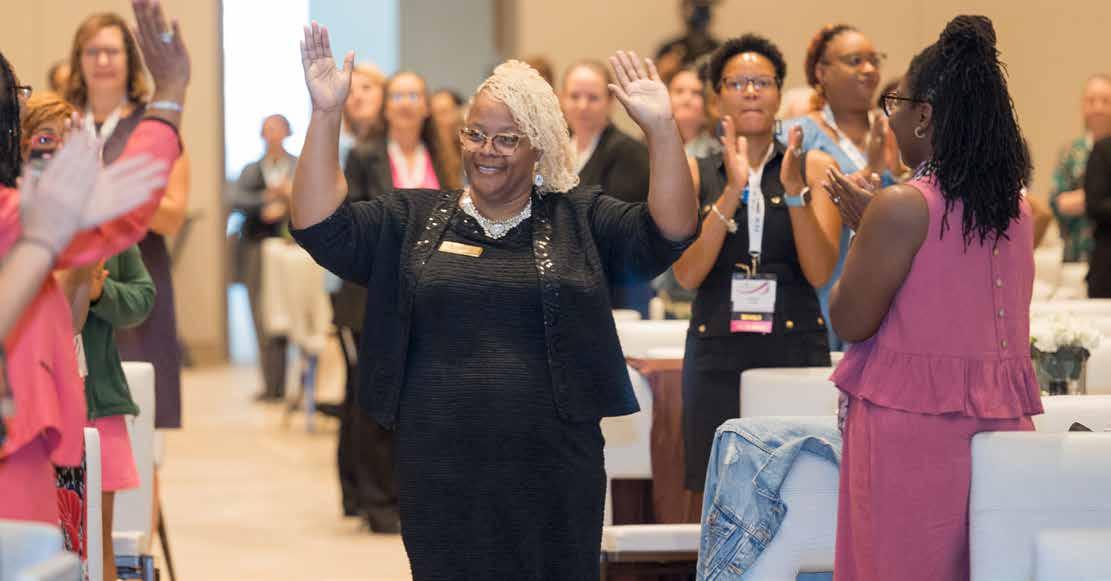
Empowering Women in Government
Meet Pamela H. Richards, Newly Elected President of Federally Employed Women
Q: First, congratulations on being elected President of FEW. For those in our audience not familiar with Federally Employed Women, can you tell us about the organization?
PR: Thanks to you and Americas Woman Magazine for the congratulations and allowing me to share.
FEW is a private non-profit advocacy organization working for the advancement of women in the government. FEW was founded in 1968 shortly after the government issued Executive Order 11375 which added sex-discrimination to the list of prohibited discrimination within the Federal Government.
Q: Can you share with us some of the accomplishments FEW has made over the years?
PR: FEW recently enacted a new membership category:
Associate Membership for college students and young professionals just getting started in their careers. It allows them to access many of the member benefits and learn what it means to be a Federal employee in the U.S.
FEW has championed several pieces of legislation benefitting the American people:
The Speak Out Act which prevents the enforcement of non-disclosure agreements in cases of sexual assault and harassment, the Pregnant Worker’s Fairness Act allowing reasonable accommodations for pregnant women, and the Fair Labor Standards Act enabling breast feeding protections for nursing mothers. FEW’s Legislative Scorecard informs our members about recently passed or pending legislation affecting us as Federal workers or as women; we also provide tools for anyone to access and communicate with their elected members of Congress. Our legislative
advocate represents us and our interests on Capitol Hill.
While we are committed to fighting for Equal Rights, Pay Equity, and universal Paid Parental leave there is still a lot of work to do in those areas.
We recently encouraged Congress to create a permanent bipartisan solution to the yearly threat of government shutdowns.
Our monthly webinars and annual National Training Program give stakeholders the tools they need to be empowered and advocate for themselves, while also building skills in critical executive core qualifications.
We are also proud of our annual STEM Day Program to support
the next generation of leaders and the FEW Mentoring Program, supporting aspiring leaders.
Q: Is FEW open to the public and are you accepting you members?
PR: Yes, we welcome anyone who believes in the mission and vision of FEW. Diversity is important to us; the more inclusive we can be, the stronger our organization will become.
Q: Tell us why you decided to pursue a degree in Criminal Justice.
PR: I had two uncles who served in the military; from a young child I dreamed of being a police officer and a soldier. I did both when I enlisted in the U.S. Army as a military police officer. A strong network of other women in the military encouraged me to get my college degree while I was serving overseas in Europe. Criminal justice was a natural fit for me.
Q: At the start of your career, what do you wish you had known?
PR: I wish I had known about Federally Employed Women sooner. I also wish I had understood the importance of having both a mentor and a career champion. It is helpful to have someone coach you and help boost you to the next level.
Q: What is one word of advice you can offer to young women who want to reach your level of success?
PR: Be a woman of your word so your reputation and work ethic create a path for you.
Q: What’s your advice for women in male-dominated fields?
PR: Roll up your sleeves and get to work. Do not shy away from leadership opportunities and take up enough space to make your presence known. Speak up for yourself and others; sometimes you will be given opportunities to do so. Other times, you will have to create those opportunities for yourself. Mirror alpha energy with alpha energy; do not back down, especially when you know you are right.
Q: Which woman inspires you and why?
PR: There are women in almost every historical era who inspire me. However, Sojourner Truth, a former slave, abolitionist, and suffragist greatly inspires me. Her strong personality and charisma stole the show at the Women’s Convention of 1851. She wasn’t on the agenda to speak but was given a platform; she ended up wowing the crowd with her passionate “Ain’t I A Woman?” speech. Her words still ring true today.
Q: Can you tell us how you manage your work life balance?
PR: I have a strong team; I delegate projects in their areas of expertise and allow them to shine in those areas. This frees me up to focus on more of the strategic thinking and planning. Although my team is a high performing one, we work hard to build a family atmosphere where we care for and support one another. When I need time to handle personal matters, I know I can rely on the team; likewise, each of them knows I am here for them and support them when they need time away from the work. It is also important to love what you do and remember the reasons why you signed up for the job. Keeping my personal mission and sense of purpose in the forefront helps me prioritize what is important.
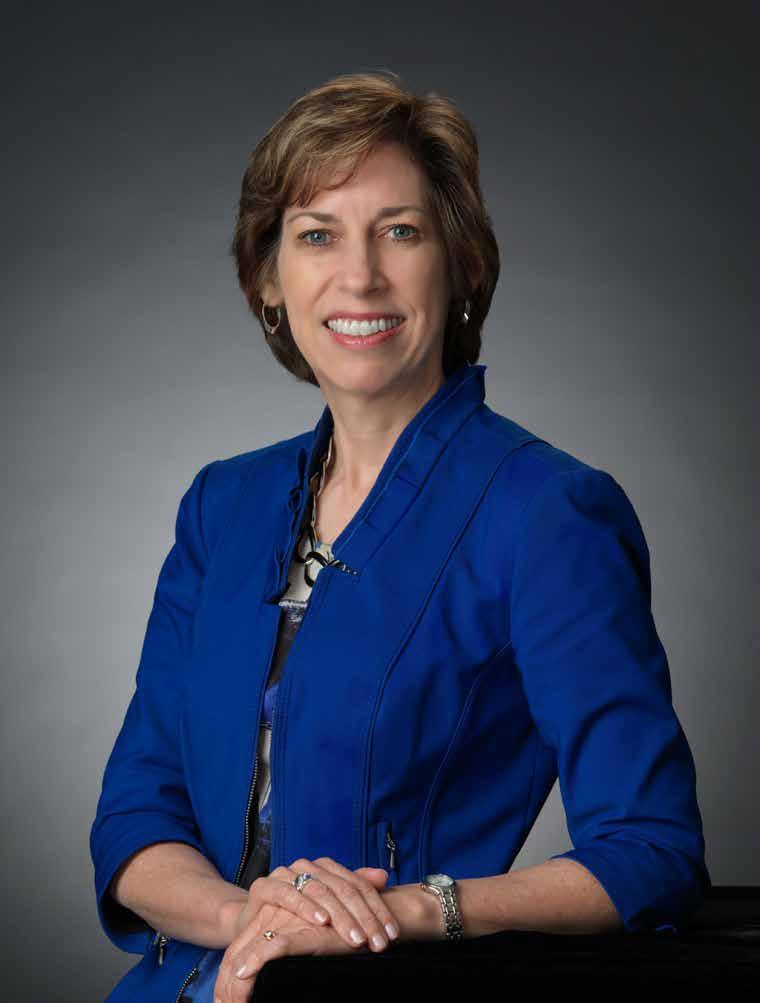
An Exclusive Interview with Former NASA Astronaut and First Hispanic Woman in Space,
Ellen Ochoa
Q: With nearly 1000 hours in space over four missions, did you ever feel that your presence on board was undervalued because you were a woman or a Latina?
EO: Our crews needed to work closely together to accomplish our missions. I spent about a year in training for each of my flights, so the crew got to know each other and our roles well.
I felt my crew mates appreciated what I brought to the team, just as I did with them. On my first two flights, I was in charge of the science instruments on my shift (in fact, I was in charge of the science payload overall as payload commander on my second flight), as well as the prime robotic arm operator. During both of those missions, we used the arm to deploy a science satellite into space as a free flyer, then we rendezvoused with it a few days later and used the arm to grapple it and berth it back in the payload bay.
My second two flights were part of assembling the International Space Station; I was again the prime robotic arm operator (shuttle arm in one case, station arm on my final flight), moving spacewalking crew members around and attaching the first piece of the truss structure to the station. I also served as the flight engineer, working with the commander and pilot on all the dynamic phases of flight, including launch, rendezvous and docking with ISS, and landing. All these roles were incredibly interesting and challenging tasks that I enjoyed working on with my crew mates to accomplish successfully.
Q: Of those four missions, is there one that you feel was especially important, and why?
EO: They all had important objectives. My first two flights were studying the problem of the ozone hole and ozone depletion — a global issue with important health ramifications for people on Earth. The understanding of the chemistry behind ozone depletion, especially by the byproducts of chlorofluorocarbons, had recently won scientists the Nobel Prize, and now we were part of monitoring those constituents in the
atmosphere as well as measuring the amount of light coming from the sun in different wavelengths. Even today, more than 30 years later, the atmosphere is still recovering, and the size of the ozone hole is tracked every year.
One of the scientists who had an instrument on board said that he wished we could stay up longer (all my flights were 9, 10, or 11 days, which was pretty typical for shuttle flights then), and as it turned out, NASA was working on an International Space Station (ISS) to do just that. I worked on the ground with our international partners in developing crew operational concepts, as well as on protocols about assigning and training multinational crews. I then got to be part of the first shuttle crew to dock to the new station, prior to any crews living on board, and to return three years later to initiate the second phase of assembly by starting to build the truss on which the four large solar arrays are attached.
Today, the ISS has been continuously inhabited for over 23 years, and more than 1500 scientific investigations have been carried out.
Q: Tell us about some of the challenges you faced in preparation for your mission.
EO: The biggest challenge is just the amount of information to be learned to support all the mission objectives as well as the operation of the space shuttle and related equipment, like the robotic arm. Of course, we learn all the procedures needed to carry out our mission, but the majority of our training time is spent in learning what to do when things don’t go right or when the equipment doesn’t work. We have to be prepared for all different kinds of scenarios, and the last few months of training involve working with the ground team so that our combined knowledge and communications are tested and honed. I really enjoyed training because it challenged me to become an expert in many different areas as well as to take advantage of the expertise of the other members of my team — both my crew mates and the systems experts on the ground.
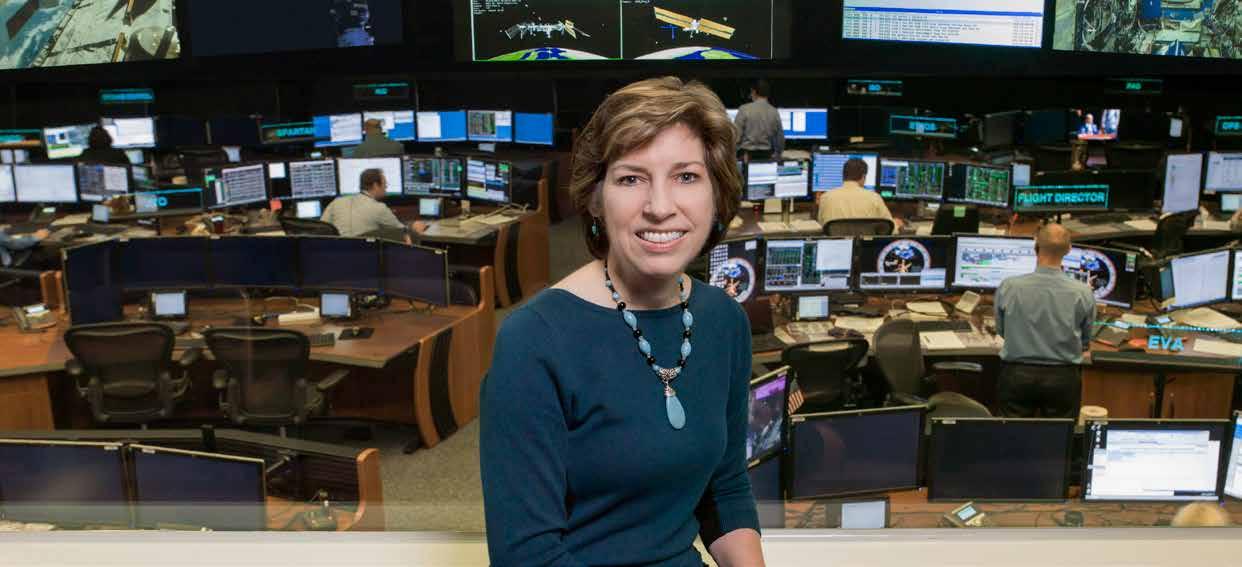
Q: As the second woman and first Latina head of the Johnson Space Center, do you feel that your management approach was distinctive from your predecessors?
EO: It’s the job of every leader to accomplish the mission and take care of your people. If you do the second well, that goes a long way toward accomplishing the first. I followed a center director who really started a focus on inclusion and innovation at Johnson Space Center. Even though he was a white male military test pilot before becoming an astronaut and later center director, he had a great appreciation for the power of a diverse team as well as an awareness of the uneven opportunities available to others. So, I built on that foundation to continue to make our culture more inclusive. It was also imperative, given both budget challenges and the rapidly changing space flight industry, to become more lean, agile, and adaptive to change through new/evolved processes, procedures, partners, and technology.
Q: What was the initial reaction to your bilingual children’s book, We Are All Scientists?
EO: It’s been so gratifying to hear from people who talk about reading the book with their kids or grandkids. Often these families are bilingual, if not multilingual, so they are building a vocabulary together in both English and Spanish that I hope will lead to continued conversations about science and related fields. I now have 4 of the 5 planned books published on science, technology, engineering, and arts, with the fifth one, on math, coming out in fall 2024.
Q: How do continue you to advocate for Latinos to explore studies and careers in STEM?
EO: As I’ve been doing for 30 years, I continue to speak with audiences. Outreach takes many other forms these days, too, including articles (like this one), websites, podcasts, social media, and now the bilingual children’s books that I’ve written.
Q: As a speaker, one of your topics is the importance of minorities in STEM. Can you give us a snapshot of your reason?
EO: We need all the best minds solving challenges and making new discoveries. Talent exists every-
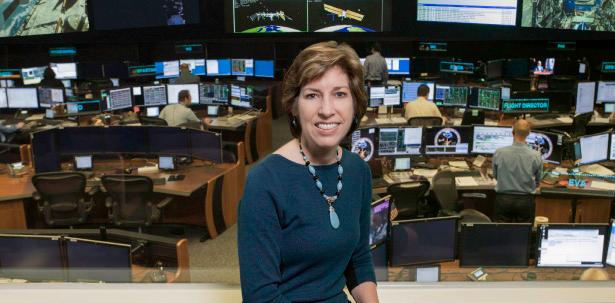
where but opportunity doesn’t. Clearly, our STEM workforce doesn’t mirror the demographics of our population, so we’re missing out on so much talent. When I was a member of the National Science Board, we gathered a lot of information about the “missing millions” in order to bring more attention to it and to highlight the importance of reaching out to underrepresented groups. Research has shown that role models, hands-on activities, and mentors are all needed to encourage students to study (and stay in) STEM.
Q: Was your mother supportive of your interest in science and your interest in obtaining science degrees?
EO: She loved learning herself, in all different kinds of fields, and she definitely encouraged me and my siblings to get a good education. She didn’t get a chance to go to college when she was young, so she took 1 or 2 college classes a semester while raising 5 kids. After 20 years or so, she finally graduated, a couple of years after I did! She didn’t push me in a particular path, but she certainly enjoyed science
herself, biology in particular, and was happy to see me find a field that I was interested in and that could provide a good career path. She had a great time seeing me launch into space four times and following along with each of my missions.
Q: It took two attempts to be accepted into the astronaut corps. How did you resist giving up after initially not being selected?
EO: I always knew it would be a long shot to get selected, given how many thousands of people apply. Although I was disappointed that I wasn’t selected after my first interview, I was encouraged to keep my application updated so I could be considered again during the next interview cycle. Meanwhile, I had a career as a research engineer, working in a lab, writing papers, and presenting results. I also decided I wanted to work for NASA, whether or not I was ever selected to be an astronaut, so I moved to a position at one of NASA’s research centers. In addition, I got a private pilot’s license so that I would be more familiar with an operational environment. I didn’t have anything to lose by continuing to apply so I never thought about giving up!
Q: You are a classical flutist. Do you still find time to play?
EO: Yes, I always hoped to go back to playing with other people at some point when I had more time, so after I retired from NASA, I started taking lessons again. I now play with a couple of community groups in Boise — a flute orchestra and a concert band.
Q: What is one word of advice you can offer to young women who want to reach your level of success?
EO: I suggest finding your supporters and listening to them. You will likely run into people who either discourage you or aren’t welcoming; they are usually people who don’t know you at all and are just mirroring the culture they grew up in. So, look to the people — be it family members, fellow students, professors, colleagues, or supervisors — who know what you can bring to an endeavor. Hard work, an ability to ask questions and to learn, motivation, and enthusiasm are the qualities that lead to success.
Speaker, Author, and Disruptive Leadership Expert Charlene Li
Q: You’ve worked with a wide variety of industries. Do you have a soft spot for one, or is there a field that gives you particular pleasure?
CL: I do — health care. It’s something that touches every person, and the stakes are incredibly high. When I work with leaders in health care, there’s a real sense of purpose and often a deep personal connection to the work. What excites me is the opportunity for technology to help deliver better outcomes more equitably and to improve not just treatment, but overall wellness and quality of life. That potential to make a meaningful impact is why I gravitate toward this space again and again.
Q: Your recent newsletter speaks to “starting with the end in mind,” an interview technique to establish career development expectations. Have you found that more companies are utilizing this approach?
CL: Yes, and I’m encouraged by the shift. More organizations are moving beyond traditional job interviews and taking a “whole career” approach. They’re asking, “How does this role fit into your long-term goals?” That kind of clarity benefits both sides — candidates feel seen and valued, and organizations build stronger, more engaged teams. It’s a small change in how interviews are conducted, but it reflects a much bigger change in how we think about talent and leadership development.
Q; Would you expand on “skipping the third shift,” which speaks to the work/life balance?
CL: The third shift is that invisible work — usually late at night — where we feel pressure to do just one more thing: answer emails, prep for the next day, or simply worry that we didn’t do enough. It’s especially common among women, who often carry the emotional labor of caregiving or team cohesion on top of their formal jobs. I first heard the term years ago, and it helped me release a lot of guilt. Balance isn’t about perfection — it’s about prioritization and compassion. Some days will be wildly off-kilter. That’s okay. What matters is giving yourself the grace to say, “This is enough for today.”

Q: You mentioned feeling like a fish out of water as an Asian-American when you worked in Amsterdam. Do those feelings ever resurface today?
CL: Yes, they do. When I walk into a room and I’m the only woman, or the only person of color, I feel it. It’s not about feeling uncomfortable — it’s about being aware. I ask myself: Why isn’t there more representation here? What does this say about the company’s values or culture? It’s not just about numbers; it’s about whether people feel truly included, empowered, and heard. My experiences have made me more attuned to those dynamics, and I do my best to raise them thoughtfully when I see them.
Q: You say that “diversity is not a compromise.” How does one adhere to that value in today’s environment?
CL: It starts with a belief that talent is equally distributed but opportunity is not. That’s the injustice we’re working against. If you’re serious about excellence, then you’re also serious about casting a wider net — looking beyond traditional resumes and credentials and tapping into new pipelines. At the same time, we must ensure internal systems aren’t just rewarding those with the loudest voices or the most connections. That’s not merit — that’s bias. I’m saddened when I hear someone question whether a woman or person of color “got the
job because of diversity.” More often than not, they had to outperform to even get noticed. We need to flip that narrative and recognize that diversity strengthens teams and sharpens decision-making. It’s not a feel-good initiative. It’s a strategic imperative.
Q: How quickly are business leaders embracing the need to pursue AI expertise?
CL: Not nearly quickly enough. Many leaders are still treating AI as optional — as something technical or futuristic. But it’s neither. AI is already shaping business decisions, customer experiences, and team dynamics. The greatest risk is not having a strategy. You don’t need to be an expert, but you do need to understand how AI could impact your industry and what your organization’s approach should be. Even choosing to go slow is fine, as long as it’s intentional. What’s not acceptable is ignoring it altogether. That’s not caution — that’s negligence.
Q: Can you share some of your favorite Exponential Leadership Coaching experiences?
CL: One of the most fulfilling experiences I’ve had was coaching a CEO who was leading a century-old organization through a cultural transformation. This wasn’t a “turnaround” case — the leader was already respected and effective. But culture change is different. It’s personal. It’s emotional. And it’s hard. We worked together to clarify their vision, communicate it with courage,
and model the new behaviors. What stood out was how quickly things started to shift — not because of mandates, but because of alignment and trust. Coaching in those moments isn’t about giving answers; it’s about helping someone unlock their own power to lead change.
Q: Your 2014 TED Talk speaks to the challenges of the mid-level manager. Have companies transformed this position to produce more effective leaders?
CL: Some have, but too many haven’t. Mid-level managers are the connective tissue of any organization, yet we often undervalue or under-resource them. They’re expected to implement strategy, manage teams, and report up — all without real decision-making authority. That’s a recipe for frustration. What we need is to reframe their role and give them clear boundaries, access to information, and permission to lead. When mid-level managers feel trusted and empowered, they become one of the most agile and innovative parts of an organization. They’re the ones closest to the problems and the potential.
Q: Of your childhood mentors, are there many that you stay in touch with? Would you share a particularly transforming lesson?
CL: I recently returned to my high school to give the commencement address and saw Mr. Connor, my biology teacher. In my junior year, I noticed our textbook was the same as the AP Biology version, but the class wasn’t offered at my school. I asked if I could study the material myself and take the AP test. He said yes and helped me prepare. I passed the test, and the next year, the school added AP Biology to the curriculum. That moment taught me to ask, “Why not?” instead of accepting, “That’s just how it is.” It also taught me the value of someone who believes in you, even when you’re asking for more than what’s expected. That mindset has shaped everything from how I approached my education at Harvard to how I built disruptive businesses later in my career.
Q: How do your teachings manifest themselves at home?
CL: I often talk about letting go of control, and parenting gives me daily opportunities to practice that. You can’t control your kids, your partner, or even your cat. You can only control how you show up: with presence, consistency, and love. I try to lead at home the same way I encourage leaders to show up in the workplace — by listening,
by setting clear expectations, and by allowing space for growth. Sometimes that means stepping back so others can step up. When I stop trying to control outcomes and instead focus on how I show up, everything gets easier. Not perfect, but easier.
Q: What other high-achieving women do you point to as examples for other women?
CL: Helen Keller—a deaf and blind woman who graduated from Radcliffe College—has long inspired me, not only for overcoming extraordinary barriers, but for using her voice to fight for others. She lived at the intersection of adversity and advocacy, co-founding the ACLU and challenging injustice wherever she saw it. In the present, I admire Jacinda Ardern for leading with compassion and conviction, and doing so while also showing vulnerability and balance. I also point to Alexandria Ocasio-Cortez, not just for her boldness, but for her evolution. She listens, learns, adapts, and leads — that’s what real leadership looks like.
Q: When you’re offline, what sort of activities do you engage in to re-charge your batteries?
CL: I’ve trained my cat to do about a dozen tricks, including jumping through a hoop I make with my arms. It’s playful and surprisingly satisfying. I also take a long, deep breath in between meetings to reset my mind and intentions so that I’m focused and fresh for the task at hand. And lastly, I love to dance, especially with my friends. There’s nothing quite like losing myself in a deep bass and looking around to see my friends just as joyful and free. It’s pure energy, pure connection.
She Serves as Founder, Chief Executive Officer, and Chairman of The Women’s Songwriters Hall of Fame. Read Our Exclusive Interview With
Dr. Janice McLean DeLoatch
Q: What was your first job? How did it shape or impact you?
JMD: My first job was working at my family’s restaurant - McLean’s Carry Out & Restaurant. My job was to fill the potato chip and soda racks. My niece and I did this every summer from about 7-11 years of age. I watched my mother, father, grandmother, aunts, cousins, and neighbors in the community come together to support this local community restaurant and store.
Our restaurant was the only neighborhood restaurant, carry out and store within a 20 mile radius. My mother, father and cousins always felt it was important to invest in the community and people. There were days when this was not easy and there were many moments where you can never imagine the impact and difference you can make in your community if you just try. When no one else wanted to support the community, my family did. They would give people food on credit (as this was not a very wealthy area), donate dinners to local churches and businesses and give some of the kids in the neighborhood summer jobs.
I learned first-hand about role models that looked like me. I learned that we don’t have to always wait for someone to fix our situation, that we can also help fix our lives too!
My mother and father were my first role models. They showed me that if you work hard, strive for your dreams and goals even when you get knocked down that if you are persistent you will achieve your dream and you can make a difference for yourselves and others right where you are.
To this day, every now and then when I see old neighbors, friends of my family and our family business they always tell me how much my family meant to their lives.
Nothing to me can replace this feeling of meaningful relationships and making a difference for the good of others. This has been the impact.
Q: For those in our audience not familiar with your TV show, “The Entrepreneurs Edge” tell us about it.
JMD: Entrepreneurs Edge Tv was a tv show that was started in 2000 out of my search to find answers to help support and grow my pantyhose vending machine. I was looking for funding to pay for having the vending machines made, manufacturing products, etc. and never could really find resources or funding that could help business startups really starting up from the ground floor with no money, team, etc.
I started doing interviews with businesspeople who would share their stories about overcoming obstacles and becoming really good at it. So, my ex-husband and I created a television show that would address some of the hurdles and obstacles that entrepreneurs and small business owners faced. This was before The Apprentice, Shark Tank, Undercover Boss and The Profit.
Do I believe my television show along with a handful of other small business shows that were around at the time set precedent for what we see today in television programming related to business? ABSOLUTELY! At least that is what I like to think anyway. Smile here
Q: What are some of the topics you cover on your radio show Its Janice?
JMD: Some topics include Business Basics for Startups, Tools for Entrepreneurs (Accountants, Attorneys, Bank Relationships), Navigating Social Media to promote your business, B2B Relationships and how they can help your business succeed and Import/Exporting through departments of commerce, to name a few.
Q: How did the Women Songwriters Hall of Fame start?
JMD: Women Songwriters Hall of Fame began with research for Its Janice Radio. Its Janice Radio Show focuses on women, business, and community. In 2020, I was working with my segment coordinator on statistics for the women in music. When review-

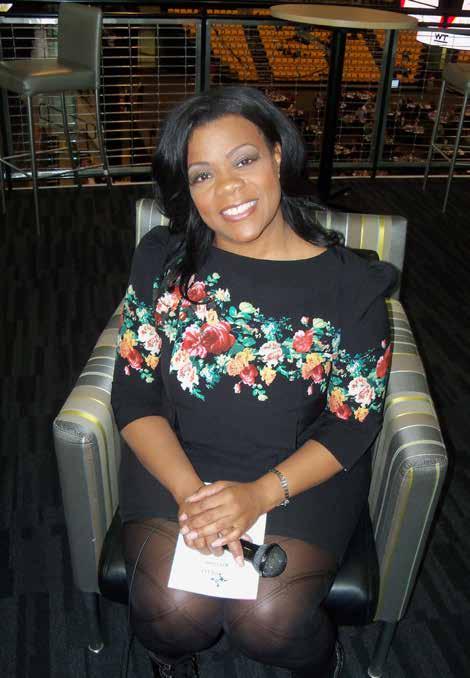
ing the statistics for how women fare in several areas of the music business and after looking at some of The Annenberg Center report about women in business it seems we both came up with the same conclusion.
Women have lagged behind their male counterparts in almost every area within the music industry ranking at 7.7%. within the music industry. In some instances, the women who have been acknowledged for their work were acknowledged twice. Not really sure about the logic behind those who have been acknowledged twice in some areas, but the more I thought on this, the more it became clear there should be a way to acknowledge Women in Music.
Partnering with women who understand why supporting and healing women in one area helps women and communities in other areas and a way to raise funding for scholarships that will enable women to pursue education and career goals through music.
One main point to clarify is that the mission of Women Songwriters Hall of Fame is not to bash men, music industry or other organizations. Solely our purpose is to be of help to women, music, and the world as a whole.
Q: Can the general public become a member of the Women Songwriters Hall of Fame? What are some of the member benefits?
JMD: Yes - Women Songwriters Hall of Fame is open to the general public and seeking new members. You can select membership at our websitewww.womensongwritershalloffame. org
Women Songwriters Hall of Fame is new, exciting, and building what we hope will be the next great organization in music. Currently, there are three levels of membership, Basic
$50, Premium $100 and Platinum $250.
When asked why some of our membership options may cost more than other organizations. Simply the answer is we have not had 50 years to grow and WSHOF memberships WILL include some or all of the following types of benefits that other organizations may/may not offer such as: (see below), but in addition - Women Songwriters Hall of Fame is working to bring back FUN in creating and celebrating music and women!!!
Discounted/Free Tickets to Award Show
Discounted/Free Master Classes with Industry Professionals
Discounted Instruments
Discounted Music Lessons
Travel Club - AAA
Complimentary Breakfast
Discounted Hotel Fees
Swag Bags T-Shirts
Hats
Q: You’re also an Author. Can you share with our audience some of the topics you’ve written about?
JMD: So far - I have written one book - “The Autobiography of an Entrepreneur.” This book is a combination of personal business experience learned from my family and other entrepreneurs. Personal hurdles made in pursuit of fulfilling my dreams and even tribulations because of my dream. Tips and advice from Business thought leaders such as Magic Johnson, Ariana Huffington, Vint Cerf, Daymond John, Marcus Lemonis, and Bethenny Frenkel to name a few. As well as other celebrities and entertainers.
Q: What advice would you give to young women who want to pursue their dream and start a business?
JMD: I would tell them to TOTALLY GO FOR IT!!! We all have something to offer in different areas. But first, find mentors who can give you important guidance from the start. It may save time, money, and mental exhaustion from reinventing the wheel when someone who already has the roadmap can give you a head start.
Q: Were there moments in your career that were pivotal to getting where you are today?
JMD: Sure - Meeting Deloris Jordan (Yes - that
one), mother to basketball great - Michael Jordan and Donda West (Yes - that one), mother to well depends on which day it is and how we feelKanye West.
I was going through divorce and was really at a low point when I met Deloris Jordan on Capitol Hill where I was doing the Entrepreneurs Edge Tv Show. The love she showed me and inspiring words of wisdom to go after my dreams and goals and never quit until I get where I want to go despite all obstacles always stuck with me. Donda West really was an amazing woman and she too showed me such kindness and love and also imparted words of wisdom to always strive for what makes me happy. It is easy to understand how Kanye can feel out of sorts with her absence. She truly was a remarkable lady! Both of these women I always say are the surrogate mothers sent to help me find my way and continue the journey of allowing me to give back to young women and older women. To let them know that no matter what age we areNEVER FORGET TO KEEP DREAMING AND STRIVING FOR YOUR GOALS.
Q: Can you tell us how you manage your work life balance?
JMD: Yes - I answer my emails, voicemails, regular mail, and phone calls at crazy times of the night and early morning. It is one of the ways I keep up. But I am also really good at strategy planning (so I can have balance in my life) and delegating to the few volunteers that help me currently.
Q: What behavior or personality trait do you most attribute to your success?
JMD: LOVE!
I just recently realized through the pandemic - era ughhhh! that Love drives everything I have ever done. Either because I don’t want to be inconvenienced or anyone else to be inconvenienced. Love is what inspires me to create businesses and resolutions that help me and others.
Q: Which woman inspires you and why?
JMD: ALL WOMEN. But In particular - My mom who is deceased nowFannie Bell McLean.
My mother embodied and exemplified a woman of such depth. So many lessons, so little time with her. She is always in my heart! I love you Mom!

Cat Cora Made Television and Culinary History When She Became the First Female Iron Chef on Food Network’s Hit Show Iron Chef America.
Cover image courtesy of Jacqueline Patton Photography
Cat Cora is a celebrated, world-renowned chef, author, restaurateur, television host, philanthropist, and proud mother of six. Hailing from Jackson, Mississippi, Cat’s passion for food was ignited by her Greek and Southern roots, which inspired her to pursue a groundbreaking culinary career. A graduate of the prestigious Culinary Institute of America, Cat honed her skills in France, training at two three-star Michelin restaurants—an achievement that exemplifies her dedication to mastering her craft.
In 2005, Cat Cora shattered industry norms by becoming the first female Iron Chef on the Food Network’s hit series Iron Chef America. Her success in this male-dominated arena cemented her as a trailblazer in the culinary world. Cat’s influence extended even further when she became the first female chef inducted into the Culinary Hall of Fame, solidifying her place among the greats of the industry.
Over the years, Cat has opened more than eighteen restaurants across the United States and internationally, with venues in locations ranging from airports to resorts and cruise ships. Each restaurant reflects her dedication to health, wellness, and sustainability, with Mediterranean-inspired menus that showcase her innovative approach to global cuisine. Highlights include the critically acclaimed Ocean Restaurant by Cat Cora, which was located inside the world-renowned S.E.A. Aquarium in Singapore, and Cat Cora’s Kitchen, a favorite among travelers in airport terminals worldwide.
Beyond her restaurant empire, Cat has authored three highly praised cookbooks: Cat Cora’s Kitchen: Favorite Meals for Family and Friends; Cooking as Fast as You Can: A Memoir of Food, Family, and Forgiveness; and Classics with a Twist: Fresh Takes on Favorite Dishes. These books blend her personal journey with practical recipes, inspiring readers to embrace bold flavors and wholesome cooking. Her memoir, in particular, resonated deeply
with fans, offering an unflinching look at her upbringing, career challenges, and personal triumphs.
Cat’s television presence has been as impactful as her culinary achievements. From her early days on Melting Pot, a Food Network show that celebrated multicultural cuisine, to her role as a judge on Food Network’s Tournament of Champions, Cat has consistently used her platform to promote inclusivity and innovation in the kitchen. Most recently, Cat added another accolade to her list by winning Fox Network’s competition show The Real Dirty Dancing, showcasing her versatility and willingness to step out of her comfort zone.
Her contributions to the culinary world go far beyond cooking and entertainment. Cat is deeply committed to philanthropy and education, founding the non-profit organization Chefs for Humanity in 2004. This initiative mobilizes culinary professionals to provide nutrition education, disaster relief, and hunger relief across the globe. Under her leadership, Chefs for Humanity has partnered with organizations such as UNICEF and the World Food Programme to make a tangible difference in the fight against food insecurity.
In addition, Cat serves as an ambassador for Little Kitchen Academy, a Montessori-inspired culinary school for children aged 3 through their teenage years. By encouraging young people to develop a love for cooking and healthy eating, Cat helps lay the foundation for a healthier and more sustainable future.
Her dedication to health and wellness extends into her professional expertise; Cat holds a degree in nutrition and physiology. She was an early advocate for the Mediterranean lifestyle in the United States, championing its emphasis on fresh, plant-based ingredients and heart-healthy fats. Through her work, she has inspired countless people to adopt healthier eating habits without sacrificing flavor.
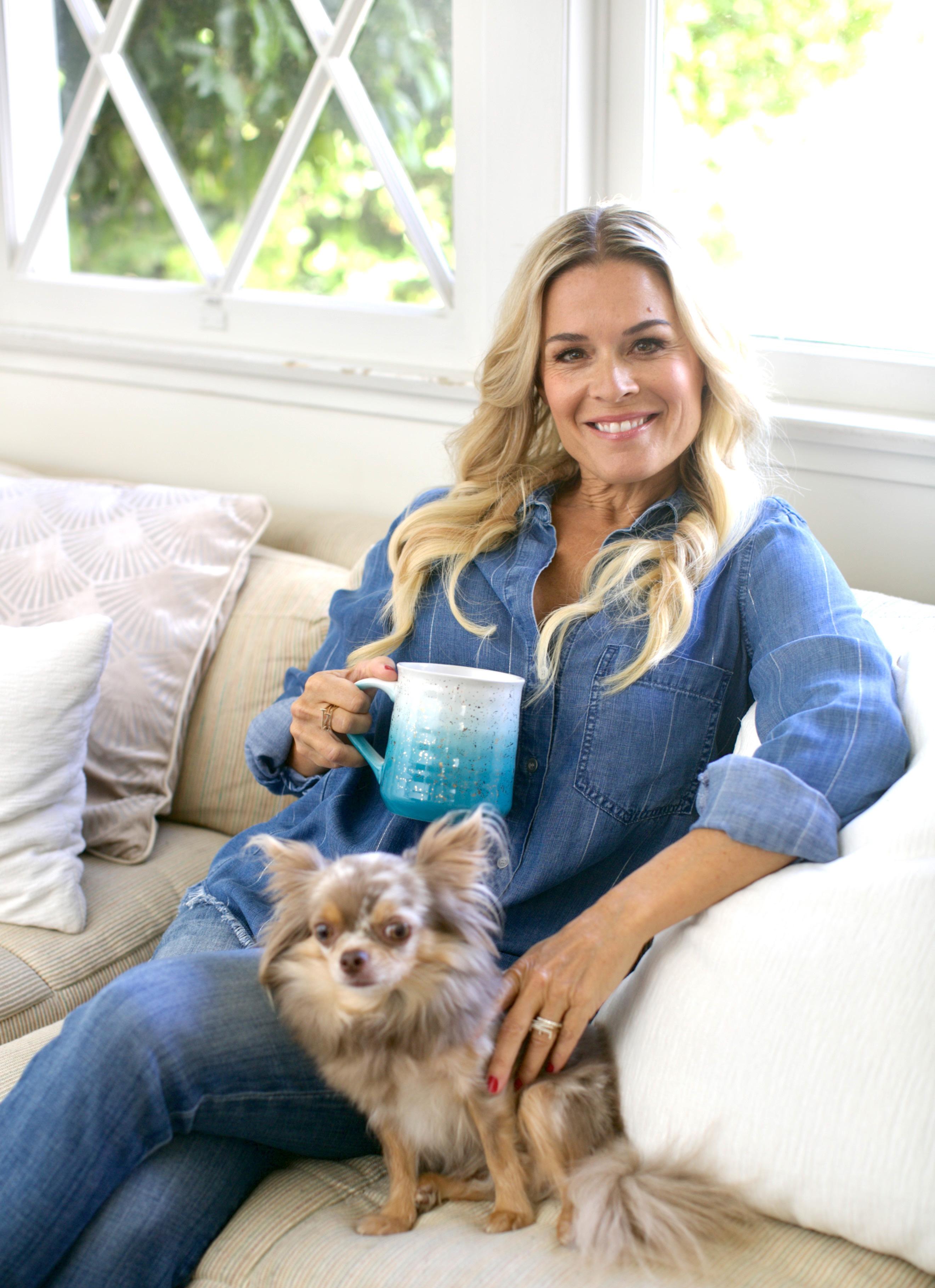

Cat’s contributions have earned her numerous accolades, including the President’s Volunteer Service Award and the Lifetime Achievement Award, both presented by President Barack Obama. These honors recognize her decades-long commitment to philanthropy, leadership, and culinary excellence.
In addition to her professional and charitable work, Cat is a devoted mother to six children, whom she credits as a driving force behind her relentless energy and creativity. Balancing her family life with her demanding career, Cat embodies the ethos of resilience and determination that defines her legacy.
Throughout her career, Cat Cora has consistently broken barriers, whether as a female chef, entrepreneur, or philanthropist. She continues to inspire future generations of culinary professionals while leaving an indelible mark on the worlds of food, television, and social impact. With her dynamic blend of talent, passion, and vision, Cat’s legacy is one of innovation, empowerment, and excellence.
Q: As a child of the South, you’ve opened numerous restaurants, including several in California, and you have ties to the West Coast as well. Where and how do you describe home today?
CC: Home for me is a blend of my roots and my journey. Growing up in Mississippi, I was deeply influenced by the flavors and traditions of the South, but as a Greek American, the Mediterranean diet and lifestyle have always been at the heart of who I am. Today, living in Santa Barbara, I feel so connected to the fresh, healthy, coastal way of life that perfectly embodies that Mediterranean spirit. Whether I’m cooking with local ingredients, enjoying the ocean breeze, or spending time with family, California has truly become my home. It’s where my Southern heritage, Greek soul, and love for fresh, seasonal cuisine all come together.”
Q: Would you like to expand your Little Kitchen Academy for young people? And, if so, how would you reach a broader audience?
CC: Absolutely. Expanding Little Kitchen Academy is a dream that aligns perfectly with my mission to inspire healthier lifestyles and to empower future generations. Teaching kids practical life skills through cooking is such a powerful way to instill confidence, mindfulness, and healthy hab-
its that last a lifetime. To reach a broader audience, we’re always focused on accessibility and partnerships. Cooking isn’t just about food—it’s about connection, creativity, and empowerment. Little Kitchen Academy is a place where kids can discover their potential, and I’d love to see that impact grow worldwide.”
Q: Tell us how you feel about competitive cooking shows versus instructional cooking programming.
Of your childhood mentors, are there many that you stay in touch with, and would you like to give them a shout-out?
CC: I’ve always loved the energy and excitement of competitive cooking shows—they challenge chefs to think creatively, work under pressure, and push the limits of what’s possible in the kitchen. As the first female Iron Chef, I have a special place in my heart for that kind of culinary battle. At the same time, instructional cooking programs are where it all started for me, and I still think they’re incredibly important. They’re where we pass on knowledge, inspire people to get into the kitchen, and make cooking approachable for everyone. I secretly unwind by watching baking shows before bed—I love seeing the artistry and precision that goes into them! As for my mentors, I’m so grateful for the influence of legends like Julia Child, Jacques Pépin, Larry Forgione, and Ann Rosenzweig. They each taught me invaluable lessons about technique, flavor, and passion for food. I’m still in touch with Jacques Pépin, and it’s always a joy to connect with someone whose wisdom has shaped me so deeply. These mentors paved the way for me, and I hope I’m doing the same for the next generation of chefs.
Q: What other high-achieving women do you point to as examples for other women?
CC: There are so many incredible women who inspire me and set powerful examples for others. In the culinary world, Julia Child and Ruth Reichl have shaped how we think about food, while Alice Waters has led the farm-to-table movement. Outside the kitchen, I deeply admire Diane von Fürstenberg for empowering women through fashion, Sheryl Sandberg and Sara Blakely for their leadership and entrepreneurial spirit, and Zoe Saldana for using her platform to celebrate diversity and strength. Icons like Ruth Bader Ginsburg remind us of the power of justice and resilience. These women show what’s possible when we lift each other up and push boundaries.
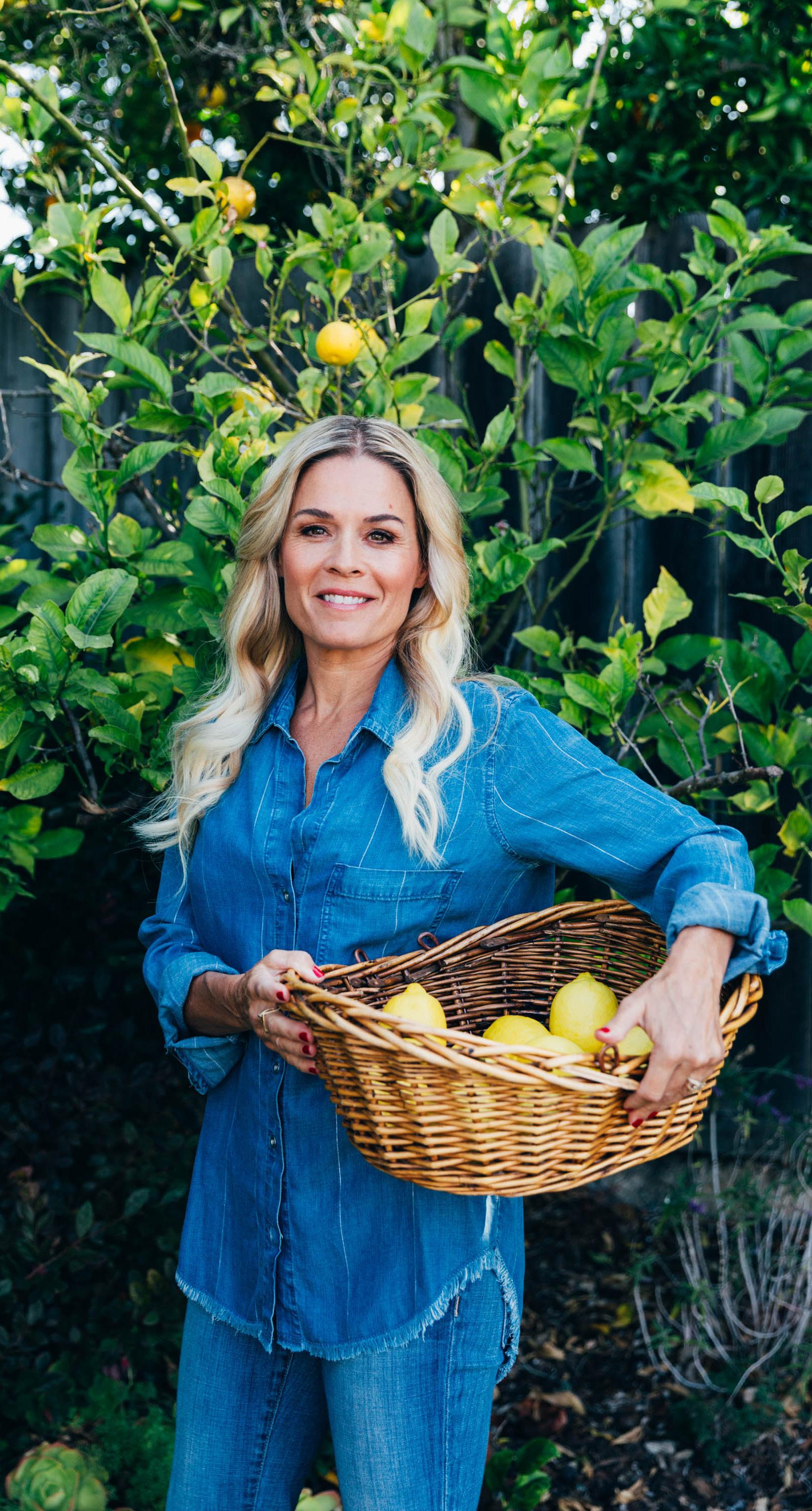
Q: To your admirers who may not have access to or cannot afford gourmet ingredients, what do suggest as the best way to achieve a healthy diet?
CC: You don’t need expensive or gourmet ingredients to achieve a healthy, balanced diet. Start with fresh, seasonal, and locally available produce—they’re often more affordable and packed with nutrients. Staples like beans, lentils, whole grains, and eggs are budget-friendly, versatile, and full of protein. Cooking at home is also key—it allows you to control what goes into your meals and avoid unnecessary additives. I always tell people to focus on simple, wholesome ingredients and to flavor them with herbs, spices, and olive oil, which can elevate any dish. The Mediterranean diet, which I’ve championed throughout my career, is built on accessible, humble ingredients like fresh vegetables, fruits, legumes, and whole grains. And now, thanks to the internet, there are countless free recipes, meal plans, and grocery lists available to help you create healthy, affordable meals. A little creativity and these tools can turn even the simplest pantry items into something delicious and nourishing.
Q: You’ve been recognized at the White House level for your advocacy on healthy diets and lifestyles. What do you feel is the role of our elected officials to drive this agenda forward?
CC: It was an incredible honor to receive the Lifetime Achievement Award and the Presidential Service Award from President Obama, and to work with First Lady Michelle Obama on the Chefs Move to Schools program. These experiences showed me just how powerful elected officials can be in driving change. I believe their role is to prioritize policies that make healthy food accessible and affordable for everyone, especially in underserved communities. This includes supporting programs that improve school nutrition, encourage physical activity, and educate families about healthy living. Officials can also champion initiatives that promote sustainable farming and food equity, ensuring that fresh, wholesome ingredients are within reach for all. When leaders advocate for healthier lifestyles, they inspire a cultural shift, creating opportunities for education, wellness, and better health outcomes across the country. It’s a collaborative effort, and I’m proud to have contributed to this mission alongside such incredible leadership.
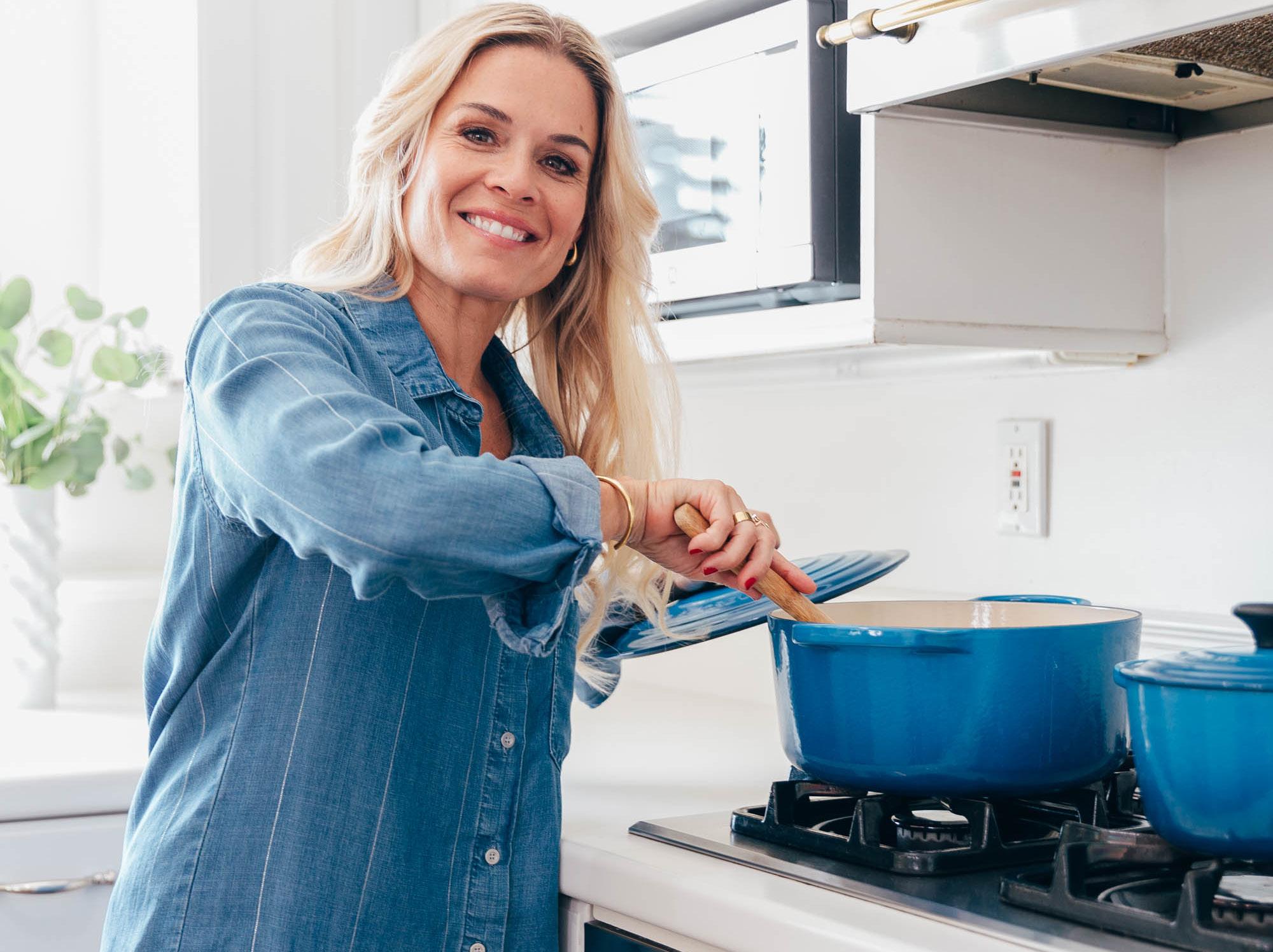
Q: When you’re offline, what sort of activities do you engage in to re-charge your batteries?
CC: When I’m offline, I love to recharge by engaging in a variety of activities that bring me joy and fulfillment. I truly love exercising and make it a point to do some sort of workout every day. Cycling is one of my favorite ways to stay active while enjoying the outdoors, whether I’m cruising along the beach or exploring new towns. I also love reading, especially thrillers and mystery books—they’re a great escape for me. Cooking, believe it or not, is a hobby I cherish; it allows me to be creative, experiment with flavors, and share happiness with friends and family. I enjoy dancing whenever I can, as it’s a fun way to express myself and stay energized. Traveling is another passion of mine; discovering new cultures and cuisines always inspires me. Above all, spending quality time with my family is the best way for me to recharge. Whether we’re boating or just enjoying each other’s company, those moments are what I cherish the most.
Q: What is next for the first female Iron Chef?
CC: What’s next for me is an exciting mix of projects! I have a knife line and various kitchen products coming out with Cutlery Pro on Amazon, including kitchen textiles like towels, potholders, chef coats, and aprons. I’m also expanding my restaurant ventures and love developing new recipes to share. My partnership with CookUnity allows me to offer a line of fresh food delivery, making healthy eating easy and affordable for everyone, and I’m grateful to my dear friend Chef José Garces for
bringing me into this delicious venture. Additionally, I have a new show coming out, and I look forward to judging Guy Fieri’s Tournament of Champions every year. I also love supporting my friends’ shows, like Alex Guarnaschelli’s Alex vs America. On a personal note, I’ve been pursuing acting. I’ve studied theater since high school, and I’m eager to find someone who believes in me for a role—it just takes one person to open that door! I’m excited about all these opportunities and can’t wait to see where they lead!
Q: No interview is complete without a question about your firsts, including being the first woman on Iron Chef. For the few unacquainted, what do you want our audience to know?
CC: Being the first female Iron Chef for over ten seasons on Food Network was a monumental moment for me, and it represented so much more than just a personal achievement. It was a chance to break barriers and show that women belong in every corner of the culinary world, including competitive cooking. I was inspired by my mom, my grandmother, and those who continue to fight for equality in all fields. More generally, I hope people see cooking as a way to connect, whether with family, friends, or cultures. I believe everyone can find joy in the kitchen, and I encourage people to experiment, embrace their own culinary journeys, and remember that there are no limits to what they can achieve.
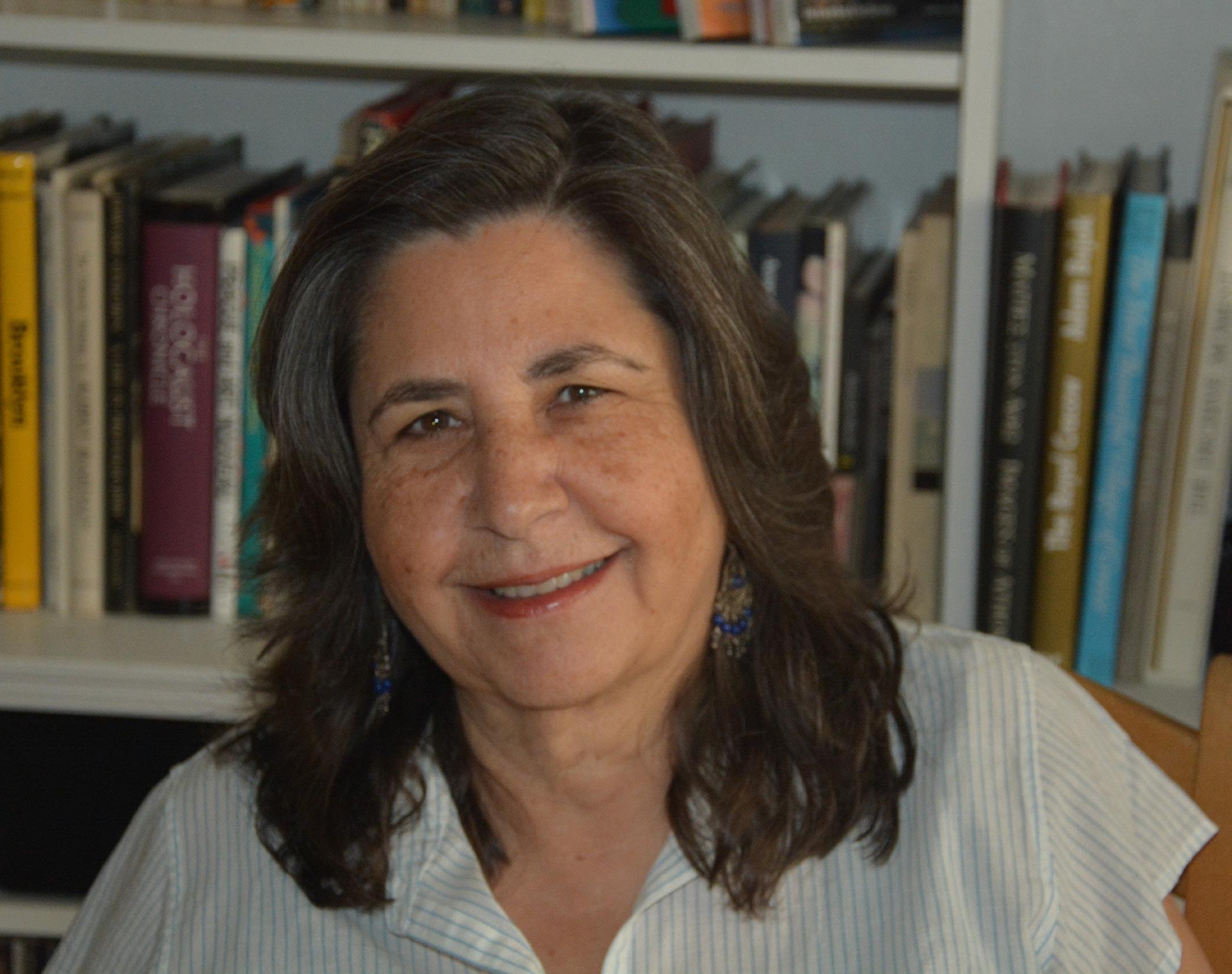
She Has Devoted Her Writing Efforts to Fiction & Literary Nonfiction. Meet Author & Photographer,
Andrea Simon
Q: After high school, where did you feel your career path would take you?
AS: When I graduated from high school, I did not have a career path. I only knew that I would go to college. After I completed two years, the guidance counselor contacted me to discuss selecting a major. He asked me what I enjoyed. I answered, “writing and art.” He said, “As a woman, you have two options: teaching or social work.” So, I majored in sociology, which had nothing to do with social work, but was the recommended course of study.
Q: When did you first realize you wanted to be a writer?
AS: Even as a young child, I made up stories with distinct plots and roles that my friends and I enacted. As I grew, I composed poems and designed greeting cards for my friends and relatives. I also dabbled in short stories and essays. I was always creative and
tried to include a visual aspect to my writing. But I never considered writing as a career. It was part of me as a means of expression.
Q: Can you share with our audience about the books you have written? Which is your favorite?
AS: I have written several books, three of which were published and won awards. They include: Bashert: A Granddaughter’s Holocaust Quest, a memoir/history about my trip to my family’s ancestral village in Eastern Europe and the fate of our murdered relatives in the Holocaust; Esfir Is Alive, a historical novel, based on a true story of the only recorded survivor of a massacre of 50,000 Jews; and Floating in the Neversink, a novel-in-stories about a young girl’s coming-of-age in the Catskill Mountains and Brooklyn in the 1950s to 1960s.
It is impossible to choose a favorite. Each book is like my child, reflecting a distinct and significant theme at a particular time. I still feel very “maternal,” and wish them a long and fruitful life, with unrelenting affection and love.
Q: What is your work schedule like when you’re writing?
AS: It all depends on what I am writing. If it involves a lot of research, I may read reference material and take notes. If it is fiction, I normally have a rough outline of my overall theme, plot, and structure. I might write a scene or edit. Whatever the form of writing, I usually begin my day after finishing my breakfast and reading the newspaper. I take my coffee into my study and open the computer file from the previous day. I go over the notes or composed work and then plunge in.
Q: What is the most difficult part of writing a book?
AS: There are so many difficult aspects to writing a book. Of course, the hardest is coming up with a concept or overall arch, an idea or set of circumstances that can sustain a larger work, something that has heft and literary merit. Then comes the perseverance to stick with the project and work at it even when discouraged. This involves a certain amount of self-confidence and resilience, which are often very difficult to sustain.
Q: What important advice would you give a first-time author?
AS: It’s such a cliché to say that to be a writer, one must write. It’s like saying a worker must work, or a doctor must doctor. There is a difference between a writer and an author in that a person can write advertising copy, instructions on a cereal box, a play, a letter to the editor, or just about anything. Normally, this would require a specific assignment and hopefully some monetary reward. But once a writer tackles a long piece, whether it’s a short story, a novel, or a nonfiction subject, he or she becomes an “author,” a professional. If this undertaking is self-motivating, it often means a great deal of rejection and financial sacrifice. I would ask the first-time “writer” if he or she is certain that the ambition is essential, if he or she can put up with sacrifice and debt. I wouldn’t discourage the desire but stress the awareness of potential pitfalls ahead—and emphasize the benefit of maintaining a day job!
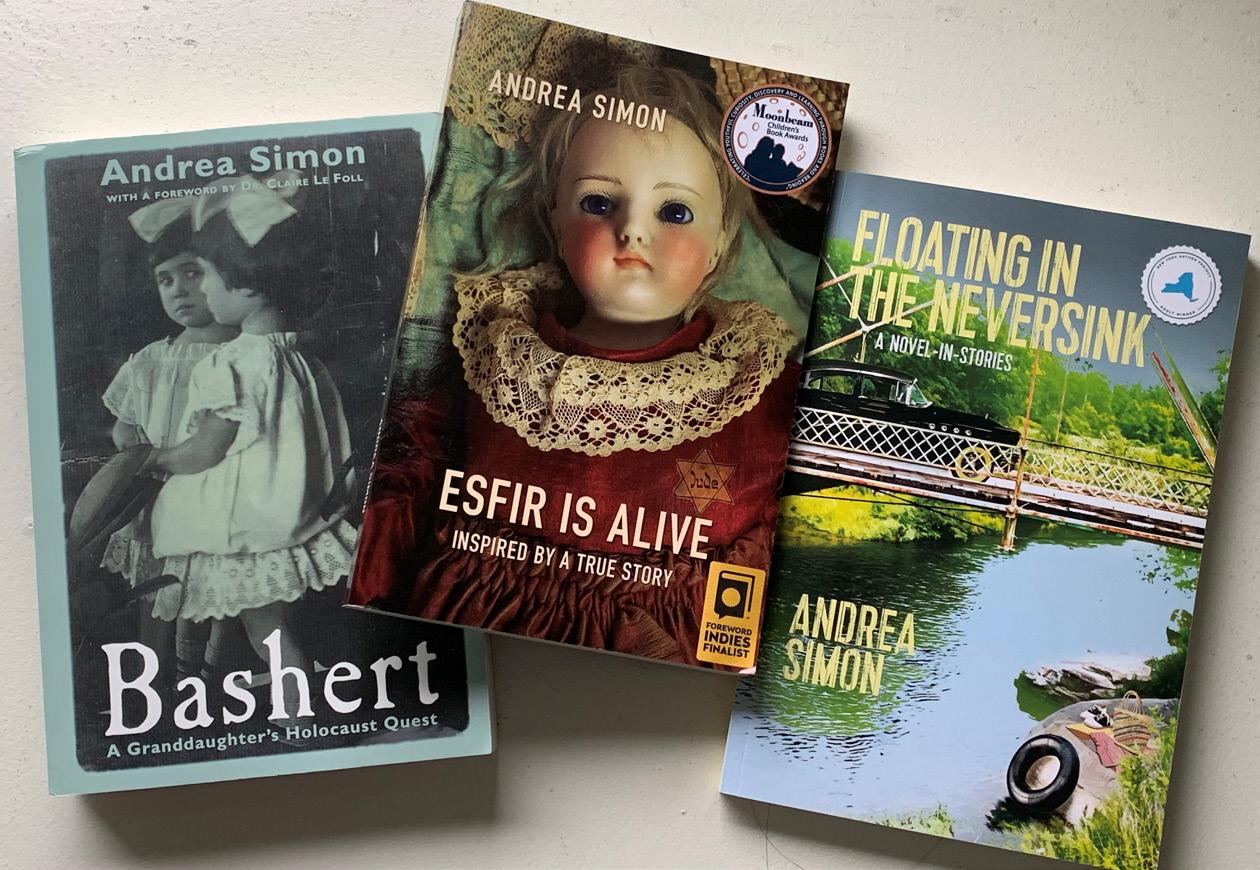
Q: What do you like to do when you’re not writing?
AS: I am a very creative person and enjoy photography and art. I used to have a darkroom and was a serious black-and-white practitioner. Lately, I have been taking art courses and am now into abstract painting. No surprise that as a writer/author, I love to read. Before COVID, I enjoyed traveling and visiting friends and family.
Q: Which woman inspires you and why?
AS: This is a tough question to answer as there are so many women I respect. In general, women who have accomplished something significant in the arts or science are on my admirable list. I am awed by women who succeed in heavily masculine professions. On a personal level, I have always been inspired by my grandmothers, both immigrants from Eastern Europe who escaped religious persecution and restarted their lives under difficult conditions.
Q: What would be the title of your autobiography?
AS: I have been working on a book of personal essays for at least thirty years. It contains humorous and serious observations of lived events, including everything from verbal tics to not having a gifted child to shopping for a wig during chemotherapy. I entitled this book, Nobody Sprays Me in Bloomingdale’s, after one of my essays. Though tongue in cheek, the title encapsulates something about me. If I am lucky, it will be my next published book.
Having Been Inducted into the World Golf Hall of Fame as One of the Greatest Winners in LPGA History, Our Exclusive Interview with Golf Legend, Annika Sorenstam

Annika is often regarded as the greatest female golfer of all-time. During her 15-year, Hall-of-Fame career, she rewrote the LPGA and Ladies European Tour record books, won countless awards, and changed the way women’s golf was played, viewed and covered.
She amassed over 90 worldwide victories, including 72 on the LPGA and 10 Major Championships. Annika holds a record number of Rolex Player of the Year awards (eight) and Vare Trophies for the lowest scoring average in a season (six). As the only female to break 60 in an official event, she has been nicknamed “Ms. 59.” Perhaps most notably, Annika received worldwide media attention
when she became the first woman in 58 years to play in a PGA TOUR event at the 2003 Colonial Invitational. Annika stepped away from professional golf after the 2008 season to focus on her family and the ANNIKA brand of businesses, which include the ANNIKA Collection of high-end women’s golf apparel and ANNIKA Course Design. In 2007, she created the ANNIKA Foundation, which provides golf opportunities at the junior, collegiate and professional levels while teaching young people the importance of living a healthy, active lifestyle through fitness and nutrition.
The Foundation annually conducts six major tourna-
ments in the United States, Sweden (2), China, Argentina and New Zealand for aspiring junior girls along with the ANNIKA Intercollegiate presented by 3M, a college tournament featuring 12 top Division I schools. It has annually enjoyed the strongest field in all of college golf since its inception. With the support of Stifel and the Haskins Commission, the Foundation created the ANNIKA Award presented by Stifel in 2014, which is given annually to the best collegiate female golfer.
Her global success in golf and knowledge of business has enabled her to become the first and only female golfer to create a successful brand of businesses, as featured in Duane Knapp’s book BrandStrategy, Inc. Annika’s brand has also been featured in Brandweek, the New York Times, Fortune Magazine, SportsBusiness Journal, Success Magazine, USA Today, and Wine Spectator to name a few non-golf publications.
Annika still tops the LPGA’s All Time Money List despite not competing since the 2008 season. She represented Europe as a player in eight Solheim Cups, as a vice-captain three times and captained the European team in 2017. Annika has received many accolades throughout her life. She was the recipient of the Patty Berg Award in 2003 for her contributions to women’s
golf. She was the Associated Press Female Athlete of the Year from 2003-2005, and the Golf Writers Association of America Female Athlete of the Year in 1995, 1997 and from 2000-2005. In 2008, Annika joined Arnold Palmer as only the second Ambassador of the United States Golf Association. She and Jack Nicklaus were named Global Ambassadors by the International Golf Federation to help with golf’s successful bid for inclusion in the 2016 Olympic Games. Annika won the USGA’s prestigious Bob Jones Award in 2011, which is presented annually to someone with distinct character on and off the course. In 2013, she was named the First Lady of Golf by the PGA of America. The following year the LPGA, in partnership with Rolex, created the Rolex ANNIKA Major Award. It recognizes the player who, during a current LPGA season, has the most outstanding record in all five major championships. In 2015, Annika was named the top female athlete of all-time in her home country of Sweden. In 2016 Annika received the KPMG Inspire Greatness Award from the KPMG Women’s Leadership Summit advisory council, with the support of the PGA of America and the LPGA. In 2016 Annika received the Lifetime Achievement Award for her contributions to the business of golf at the HSBC Golf Business Summit. She is also the
Annika and players at the gala dinner to kick off the ANNIKA Invitational USA presented by Rolex hosted at the World Golf Hall of Fame.
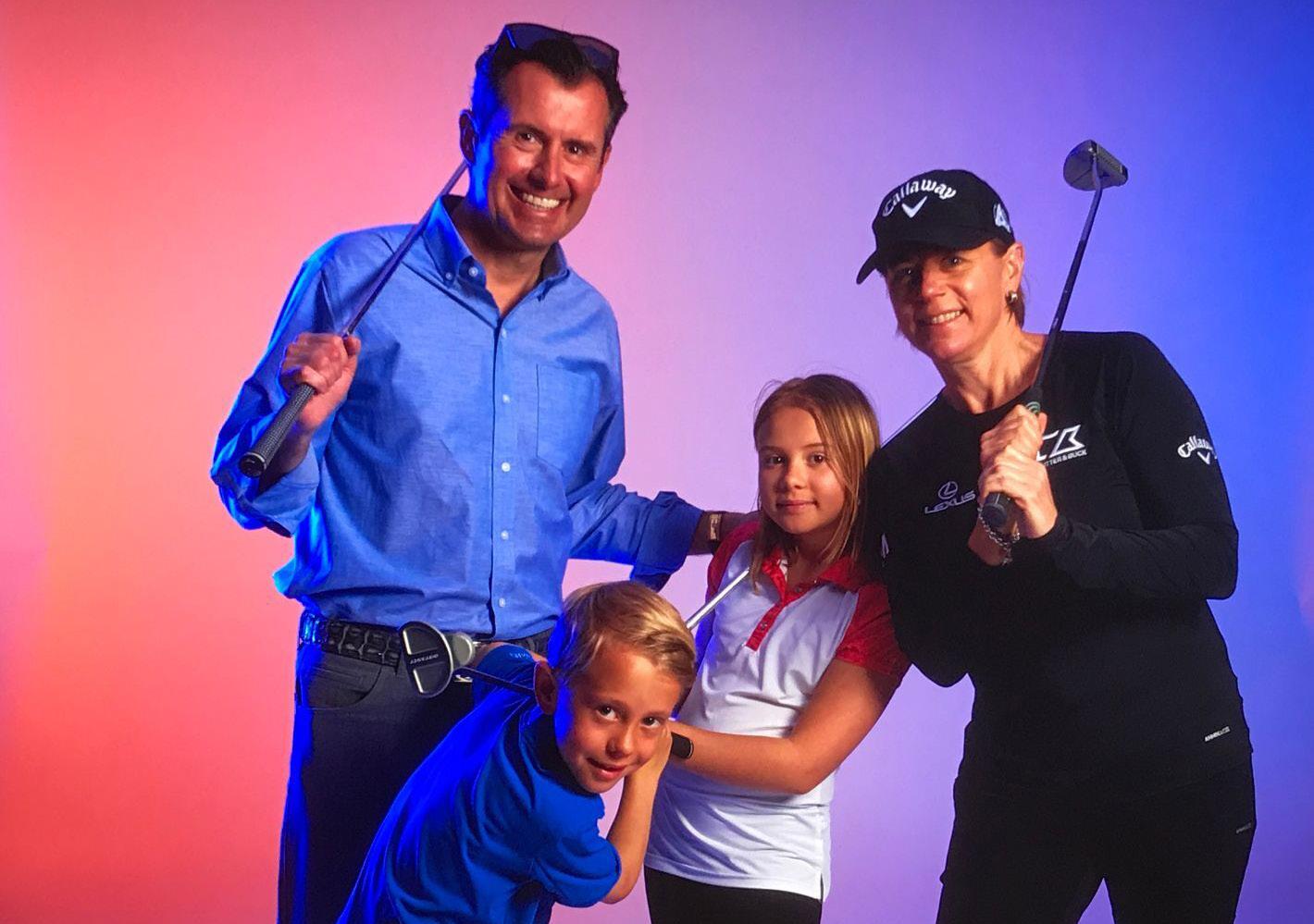
first female golfer and only the third female in sport to receive the Presidential Medal of Freedom.
Annika is a very popular motivational speaker and many corporate executives, CEOs and meeting planners utilize her talents to entertain important clients, reward top performing employees, and build camaraderie amongst their teams. Annika is a driven, leader with a vast network of contacts throughout the world of business, sports, and entertainment.
In addition to expanding her brand and growing the game, Annika and her husband, Mike McGee, have two children, Ava (9/1/09) and Will (3/21/11). Annika represents world-class companies like 3M, AHEAD, Callaway, Cutter & Buck, Cabot Saint Lucia, Golfing World, Lexus, Mastercard and Rolex. Her Twitter handle is @ Annika59 and Instagram handle is @annikas59. For more information: www.annikafoundation.org.
Q: You started playing Golf at a young age, what
inspired you to pursue it professionally?
AS: As a kid, I loved all sports. I played soccer, badminton, did downhill skiing and my first love was tennis. I didn’t start playing golf until the age of 12 and was introduced to it because my parents played a lot. My sister, Charlotta and I would ride my parents’ pull carts like a horse and get ice cream at the turn. I didn’t take it seriously until the age of 16. That’s when I focused on golf, rather than tennis.
Fellow Swede, Liselotte Neumann won the US Women’s Open in 1988 and that really inspired me. If she could do it from our small country, why couldn’t I? I continued to work hard and went to the University of Arizona on a golf scholarship and after two years there I decided it was time to turn professional and give it a shot.
Q: For those in our audience not familiar with the Annika Foundation, tell us what kind of opportunities it provides for young women.
AS: We started the ANNIKA Foundation in 2007 to
Annika and her family having fun at a photo shoot.
provide golf opportunities at the junior, collegiate and professional levels while teaching young people the importance of living a healthy, active lifestyle through fitness and nutrition. It has partnered with key organizations to promote healthy, active lifestyles for children. Some initiatives are SPARK, the Florida Hospital for Children in support of its Healthy 100 Kids initiative and The First Tee in development of the Nine Healthy Habits curriculum for children.
The Foundation annually conducts six major golf events for aspiring junior girls. They are the award-winning AJGA tournament, the ANNIKA Invitational presented by Rolex at the World Golf Village in St. Augustine, Fla.; the ANNIKA Invitational at Mission Hills, the first all-girls junior tournament in China; the ANNIKA Invitational in Europe; and the ANNIKA Cup, a team event for the top juniors in Sweden. In partnership with The R&A, the Women’s Amateur Latin America, and the ANNIKA Invitational Australasia at the famed Royal Wellington Golf Club in Wellington, New Zealand.
With the support of Stifel, the Haskins Commission and Golfweek, the Foundation created the ANNIKA Award Presented By Stifel in 2014. It is given annually to the best collegiate female golfer. In concert with the award, the Foundation launched the ANNIKA Intercollegiate Presented By 3M, a college tournament featuring 12 of the top Division I schools. This tournament takes place at Royal Golf Club and has had the strongest field in all of college golf since its inception.
Q: Have any of your alumnae gone on to pursue a professional career in Golf?
AS: Each year we have over 600 girls from over 50 different countries compete in our global events. We have had over 60 of our alumnae play on the LPGA Tour, and over 150 on the Symetra Tour.
Q: You’ve accomplished so much as a Professional Golfer, Businesswoman, and mentor to many young women. Has it been a smooth road?
AS: I think the lessons I have learned from golf certainly
apply to life. It teaches you integrity, how to overcome adversity, how to make goals and accomplish them. There are a lot of correlations. Each day brings you new challenges. Some days you get good breaks and some days bad ones. I stepped away in 2008, which in hindsight was a difficult time to start businesses. There have been ups and downs and we have learned a lot. I enjoy working with my husband, Mike on all of our businesses. We have a great team around us, and we have narrowed our focus to the foundation, the ANNIKA Collection of clothing with Cutter & Buck, and golf course design.
Q: What’s one lesson you’ve learned in your career that you can share with our audience?
AS: My dad taught me when I was a young girl that there are no shortcuts to success. It was raining and I didn’t feel like practicing, so I called my Dad to pick me up. As we drove out of the course, we passed the driving range, and there were still kids hitting balls in the rain. My dad turned to me and said that to me. I will never forget that, and it still drives me to this day.
Q: Can you tell us one of your most memorable moments in your career?
AS: I have been fortunate to have a lot of very memorable events of which I’m proud. I would say shooting a 59 in 2001, playing against the men on the PGA TOUR in 2003 at Colonial, and being inducted into the World Golf Hall of Fame.
Q: What advice would you give to young women who want to succeed in the workplace?
AS: I would tell young ladies in the workforce to find their passion. Life is too short to do something you don’t love. Work hard and put in the time. Again, there are no shortcuts to success. Surround yourselves with good people and network as much as possible.
Q: What’s the most interesting thing about you that we wouldn’t learn from your resume alone?
AS: I am a normal Mom and wife. I love to hang with our family and kids. I cook probably six nights a week and love it. I enjoy housework and chores and am constantly busy.

Jessica Cox
The World’s First Licensed Armless Pilot, and First Armless Black-Belt in The American Taekwondo Association
Cover photo by Jessica Korff | Feature images Amy Haskell
Jessica is best known for becoming the first armless pilot in aviation history. Her achievement earned her a Guinness World Record medal, invitations from six continents, and featured on TV programs like Ellen, Inside Edition, Fox and Friends, Oprah Winfrey Network, CNN, CBS Evening News, and the BBC.
Described as a speaker “no one will ever forget,” she shows audiences around the globe how to inspire enthusiasm and build authentic confidence. With the goal of showing people how to go home from work every day feeling excited for tomorrow, she teaches how to courageously tackle new challenges with creativity and unrelenting drive. Since she was born without arms, she became fascinated by the limitless ways the human body can adjust to a variety of circumstances. As she learned to conquer physical barriers, she developed mental skills that allowed her to go on to achieve the seemingly impossible in her own, unique way.
Q: Flying a plane, walking a tightrope – when do you first remember challenging yourself to do things the typical person never attempts?
JC: I don’t see myself as someone who does things because other people don’t do it. My mom overcame extreme poverty to graduate from college, immigrate to the United States, she traveled the country as a nurse and she never sat still for very long. In my mind, my drive to try new things and go on adventures comes more from her spirit.
Q: How often have you encountered naysayers in your abilities to accomplish your goals and what has been your response?
JC: Every day. While it’s not always blatant, it’s obvious in how people react to me. It challenges me to try to prove them wrong. It fuels me. You only need to look as far as some of the comments on my YouTube videos to see the pushback people give for me flying or being a black belt.
Q: Describe how you encourage your audience to find their motivation to achieve their goals?
JC: I find that most people are well motivated, but they allow excuses, over-complication, and habits to get in the way. Normally, motivation isn’t the problem, it’s the perceived limitations that often aren’t as difficult as we make them out to be.
Q: Have you ever had to modify a goal and how do you address this subject to your audiences?
JC: Every goal was modified at one point. As long as you get the job done, it doesn’t matter which way you attack it. In my speeches, I talk about “thinking outside the shoe.” It’s a metaphor for when I learned to first tie my shoelaces. I remember watching my Kindergarten teacher show us how to tie our shoes with her foot inside her shoe and using her hands to tie her laces. Since my feet have become my hands, I couldn’t simultaneously have my foot inside the shoe and tie the laces. I could have given up, but who said your foot has to be inside the shoe when you tie them? I eventually figured out how to tie my shoelaces with my toes and then slip my foot inside the shoe. The goal shifted from tying my foot inside the shoe to simply tie the laces loose enough for me to later slip my foot in.
Q: One aspect of your motivational speaking addresses diversity, can you tell us more about that?
JC: Diversity has become a regular part of social justice conversations and those conversations have become more common, which is great. The problem is that while we talk about race, gender, or orientation, disability is often forgot-
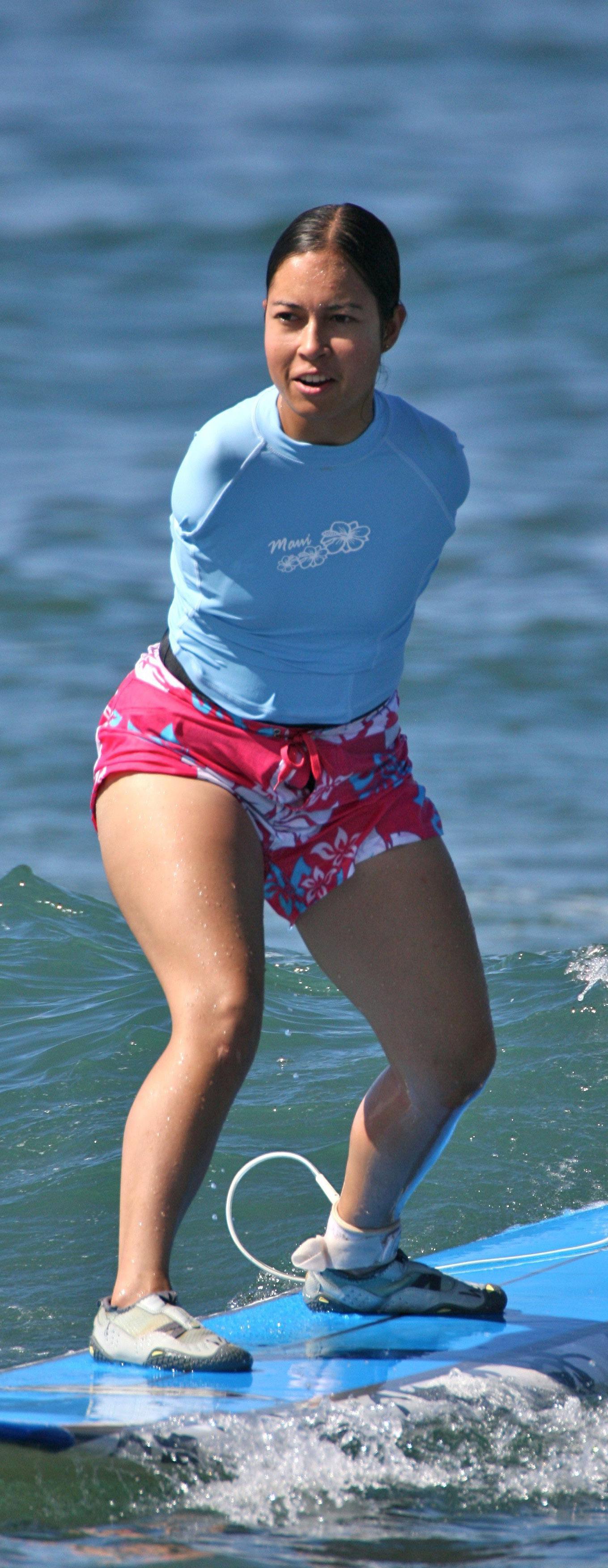

ten or diminished in the conversation. I often remind people that the disability community is the only minority that you could join, not everyone is born into it like me. We also make up 25% of the US population and more than 1 billion people globally will experience a disability in their lifetime. That is a lot of people that need to be in more conversations.
Q: The obvious question, have you and your team done anything unique to adapt to the COVID videoconference environment?
JC: Everything has switched to Zoom and other platforms, so I did too. I think I had a head start because I was already recording video content. We upgraded some equipment and our bandwidth to make sure my clients received the best possible stream. Not traveling meant that I had a little more time on my hands - or feet - so I’ve been expanding my coaching services. I’ve worked with amputees in the past to be a mentor for them but now I’ve opened up my one-onone time to the general public.
Q: You write an occasional blog, including one on inspirational porn, probably not a subject that a lot of people have studied. What would you like to say about it and how has it evolved?
JC: I’m more than happy to inspire someone because I fly an airplane, earned a black belt, surf, scuba dive, and slack-
line. Inspiration porn is when someone’s inspired because I can function as a human being. I once had a woman in the checkout line at the grocery store say, “It’s inspiring to see you, people, out and about.” People shouldn’t be inspired because someone with a disability eats food and needs to buy toilet paper. I think it comes from an assumption that people with disabilities are inherently unable to do regular things or the person without a disability assumes they couldn’t cope with the disability they see. In reality, the disability community is the only minority you can join and represents about twenty percent of the global population. Inspiration porn only exists because we as a society haven’t a normalized disability.
Q: Do you ever give in to asking someone to do something that’s somewhat difficult for you – difficult, but something that you’re capable of doing? How does that feel?
JC: Yes, I do. For example, with my husband, but I think it further perpetuates laziness and is a disservice to me because then my ability to do something can be impacted. I’ve been asking my husband to reach for things that were at the edge of my flexibility. Unfortunately, as a result, I’m not stretching my limits and therefore my flexibility has lessened.
Q: You’re a Third Degree Blackbelt – without it would you ever feel physically vulnerable?
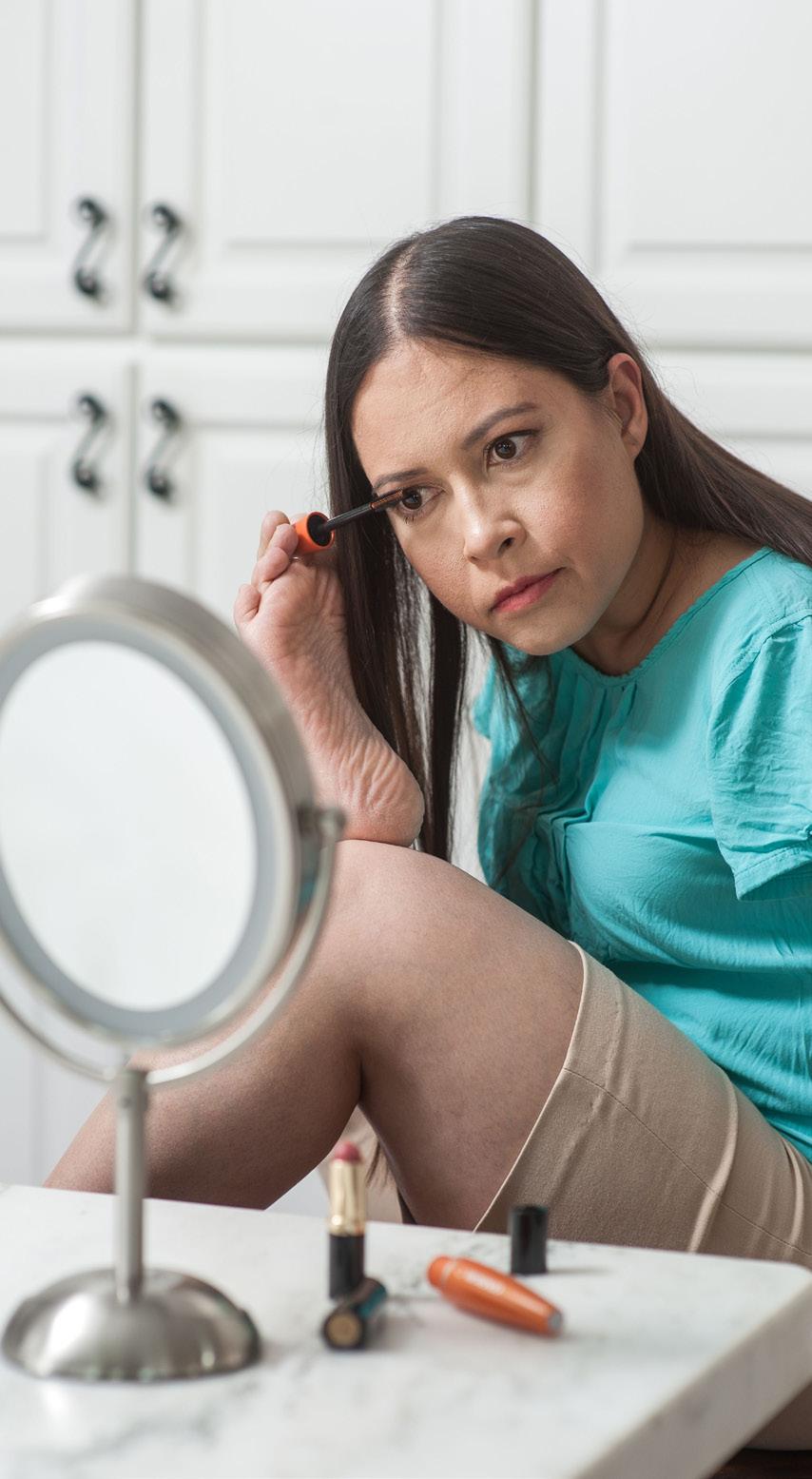

JC: It’s sometimes hard for even me to believe but I’m a fourth-degree black belt. I started training when I was 10 because I had some anger issues as a kid and sometimes kicked my siblings or my bedroom door. Channeling that energy certainly helped. I think without a black belt I would feel vulnerable because people would see my armlessness as a vulnerability. Despite being a black belt, though, I naturally maintain a higher awareness of my surroundings and try not to present myself as an easy target.
Q: Of your many avocations, which are your most enjoyable and which are you most proud of, and why?
JC: My most enjoyable activity is cycling because it’s a sport where I can just relax and enjoy the breeze on my face. I usually find myself always moving so it’s an activity that matches my personality, I think. I’m most proud of learning to fly. It not only challenged me physically but also emotionally. It represented one of my greatest fears and I had to overcome that to fly solo. I’ve been a certified pilot for 12 years now and no one can say I didn’t earn it, and no one can take that achievement away from me.
Q: Aside from martial arts, is there a particular activity that you and your husband enjoy most together?
JC: We both love to travel and unique experiences. I’ve visited 26 countries so far and he’s been with me for most of them. We’ve had ginseng chicken in Korea, flown in small planes all over Alaska, had fish and chips outside the Tower of London, been invited by princes, had breakfast with a baboon in Kenya, and even fed hyenas in Ethiopia.
Q: In the trailer for your documentary, Right Foot, you mention that you wouldn’t have chosen to have arms because of the many people you’ve met and whose lives you’ve touched. If you had been born with arms, how do you feel that your life would have been different? Do you think you would have been equally motivated and had the same interests?
JC: Nick Spark deserves the credit for the documentary. It was his vision; I was just the one in front of the camera. I think there would have been some things that would have stayed the same, like the sense of adventure in me. But whether I would be equally motivated is something I question. Those naysayers fueled a certain level of motivation. My mom was the youngest of thirteen kids in an impoverished family in the Philippines. She beat the odds and immigrated to the United States as a nurse. Even after her cancer diagnosis, it was hard to slow her down. I’d like to think I got a lot of my drive from her.

She’s Known For Her Quick Wit, Humor, & Insightful Rockstar Interviews. An Exclusive Interview With Television Host, Executive Producer & VP of Programming at AXS TV
KatieDaryl
Katie Daryl is the Vice President of Programming for AXS TV, a title she has held since September 2022. As one of the network’s longest-tenured employees, Daryl initially joined AXS TV (formerly HDNET) in 2001 and has thrived in a wide range of roles. In addition to her duties as vice president of programming, she continues to serve as both an executive producer and on-air host, overseeing some of AXS TV’s most popular original series.
Аs vice president of programming, Daryl is responsible for all aspects of AXS TV’s programming, development, and content spanning across the network’s linear and digital platforms. This includes guiding the daily operations of AXS TV’s original productions and overseeing scheduling, acquisitions, on-camera talent development, and content strategy.
Under her leadership, AXS TV has evolved from a linear-only channel into a major player in the digital content arena. Developing effective strategies with an emphasis on original programming that appeals to a wide and diverse audience, Daryl has successfully introduced and implemented dynamic, fresh, and unique formats, topics, and themes that have paved the way for AXS TV’s direct-to-consumer platforms, social platforms, and first-ever FAST channel AXS TV NOW.
Utilizing almost two decades of experience in music and advertising, Daryl has forged vital partnerships with some of the industry’s top stars and most recognizable brands. This has resulted in the development and production of a slate of acclaimed programs and specials, headlined by the award-winning At Home
Photo Credits: Sal Gomez & Renee Silverman
And Social interview series. Highlights include exclusive moments by Mick Fleetwood, Finneas, Nancy Wilson, Lady A, and Dionne Warwick, to name only a few. Daryl’s impressive credits also include network favorites such as The Top Ten Revealed; The Very, Very Best of the ‘70s; The Very, Very Best of the ‘80s; and Stranded, all of which feature Daryl as executive producer and on-air talent.
Daryl first entered the media landscape at the age of 15 as a part-time radio DJ. She parlayed this experience into a role as a morning show producer for Clear Channel Radio while attending Arizona State University on a Scripps Scholarship. Following this, Daryl worked as a reporter for MTV’s Choose Or Lose –covering the 2000 presidential election and providing updates for the channel’s iconic TRL program – before moving to Dallas to co-host an FM radio show. This led to her co-hosting The Mark Cuban Show for two seasons.
Building on her successful partnership with Cuban, Daryl was brought aboard the entrepreneur’s burgeoning HDNET team as host, producer, and creator of the weekly True Music series, which aired from 20022007. During this time, Daryl produced and hosted more than 250 episodes of Deadline! for HDNET as well. In addition to her roles with AXS TV and HDNET, Daryl has worked as a producer and host with some of the industry’s leading networks and brands, including VH1, CBS, REELZ, and Anheuser-Busch — the latter of which found her touring with racing icon Dale Earnhardt Jr. for Budweiser. She was also instrumental in the launch of TMZ On TV in 2007, where she served as a producer and voiceover talent managing daily radio call-ins and fulfilling live flash cam needs for the show’s national affiliates.
Q: You seemed destined for a career in media. Were there other career paths that you ever considered?
KD: You figured out my master plan! There were a variety of media avenues I considered, from radio to news reporter, but the end goal was always the same: having a voice in the media.
Q: Do you consider mentorship a contributing factor to your success?
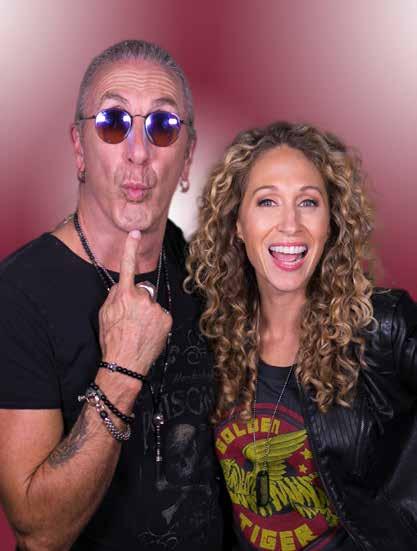
KD: Yes! I’ve had some really great people in my corner from the start. My parents and sisters were early champions for me. My dad helped me get my first gig on the radio, while my big sister told me MTV was hiring! Within the industry itself, I’d have to say my favorite mentor has been Mark Cuban. I’m not sure he ever saw himself as a mentor to me, but I truly studied him, asked questions, and took every note he gave me straight to heart.
Q: What areas of study would you emphasize to a young person who is just entering college with hopes for a career in media? Do you recommend anything different or supplementary for a young woman?
KD: I was lucky enough to go to Arizona State University, where they have the Walter Cronkite School Of Broadcasting (and Hugh Downs School Of Journalism). I highly suggest you find a great program. But, even more than that, don’t be afraid to think bigger. Make yourself slightly uncomfortable. I could have easily stuck with Broadcast
Dee Snider/Front Man, Twisted Sister, Katie Daryl
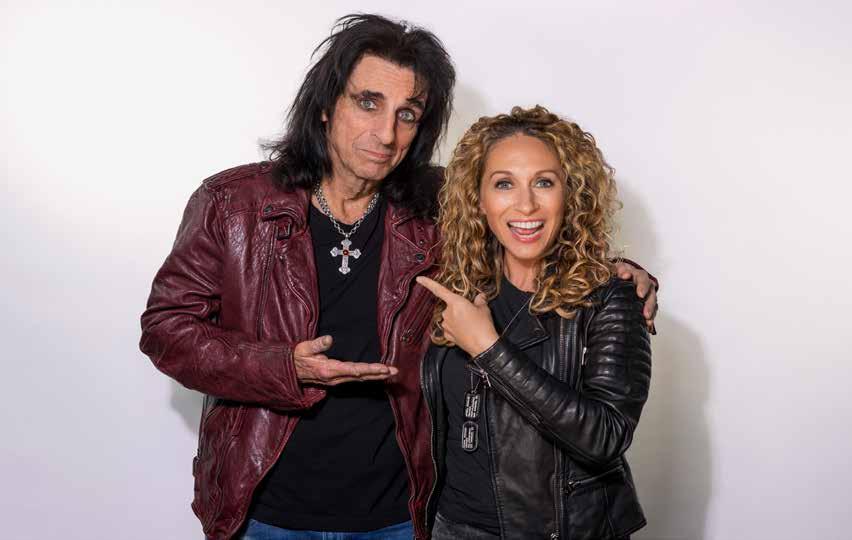
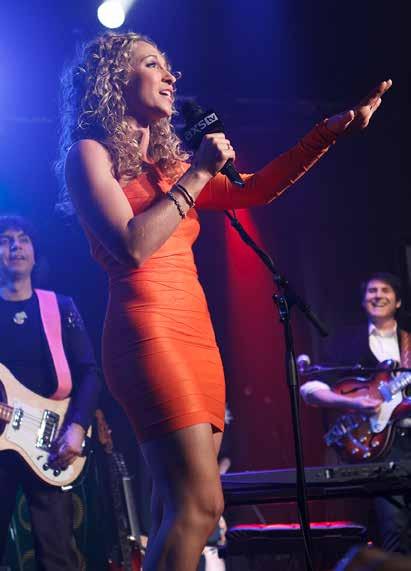
Journalism as my major, but I tweaked it a bit and did Broadcast Management. Writing and storytelling have always come easy for me, so I figured it was best that I learned what was going on in the corner office… just in case someone ever tried to get in my way.
Q: One of your early jobs was as a reporter for MTV’s Choose or Lose, covering the 2000 presidential election. Does that kind of work provide future intrigue?
KD: I loved this experience! Getting to have a voice — especially a young voice — in the political field was amazing. Traveling with the candidates, being with the press corps, feeling the cold of New Hampshire! It was a job that helped me realize there really are a lot of broadcasting avenues to explore. That being said, I found the rock ‘n’ roll stuff — like what I’m doing now — to be slightly more intriguing. (Although, McCain did throw quite the rock ‘n’ roll party, complete with confetti cannons, when he landed in South Carolina!)
Alice Cooper, Katie Daryl
Q: You’ve held a number of positions within AXS TV and are now the vice president of programming. What kind of entertainment do you think will captivate your audiences in the near future?
KD: Classic Rock is once again exploding in popularity — just watch any of the Marvel Movies! I think AXS TV will continue to highlight the artists that shaped rock ‘n’ roll, creating programs and experiences that are truly multi-generational. The “Classic Rock onion” can be peeled in so many different ways and AXS TV plans to hit every angle.
Q: Can you recall a live interview that went awry and how you pivoted to bring it back into focus?
KD: I’ve had more than my fair share of interviews that went awry or simply felt boring. For me, the key is doing my homework in advance and knowing my facts before sitting down. I also like to dig up some fun tidbits about my guest, so when something starts to feel “off” I can lean into a lighthearted question or bring up a subject that might feel off-topic but, in reality, is helping to put us back on track.
Q: What notable people do you hope to feature in the future on your various series?
KD: This is the part of the interview where I shout Dolly Parton as loud as I can! DOLLY!!! But in all seriousness, I want guests that helped shape the Classic Rock world, or artists that have created timeless music. There is an open invitation to Tommy Lee and Mick Jagger — I’m ready to hear some of their wild road stories! And, of course, I’d drop everything for a chat with Sir Paul McCartney.
Q: What would you like to share about AXS TV’s Band Together program that provides grants to music education programs and how the schools are chosen?
KD: I really love this program! It’s so important, because it gives grants to exemplary music education programs across the country — vital funds that they can then use to buy new instruments, make improvements to the classroom, or do anything else they need to build up their programs and really help these talented kids develop crucial skills and a lasting love for mu-
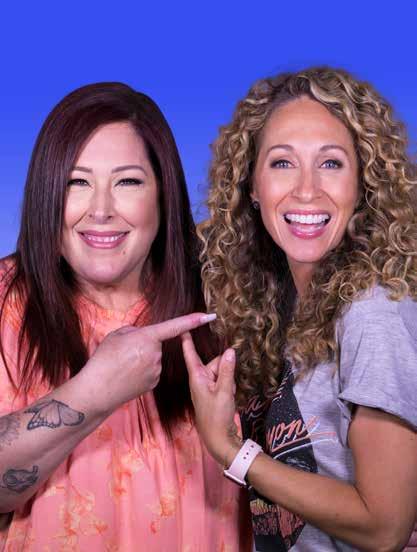
sic. Thank goodness Spectrum chose the schools and markets for us… I couldn’t have done that. I would have picked everyone that applied!
Q: Tell us about the process to select the theme for The Top Ten Revealed.
KD: In the beginning, I didn’t think I would be able to come up with 20 episode themes. Now, here we are at over 120! I keep a running list that I continue to add to – and it’s huge! Inspiration comes from so many places. When I’m driving, a song might come on with a great sax solo and I think, “Wow! What other songs have great sax solos?” Boom! List! Or I hear a song with a girl’s name in the title… Boom! List! My favorite is when other AXS TV co-workers suggest ideas to me, or when fans send in tweets and emails with ideas. Although, I do have to say that my husband is the list-making king. He’s come up with some really good ones!
Carnie Wilson/Singer, Wilson Phillips, Katie Daryl
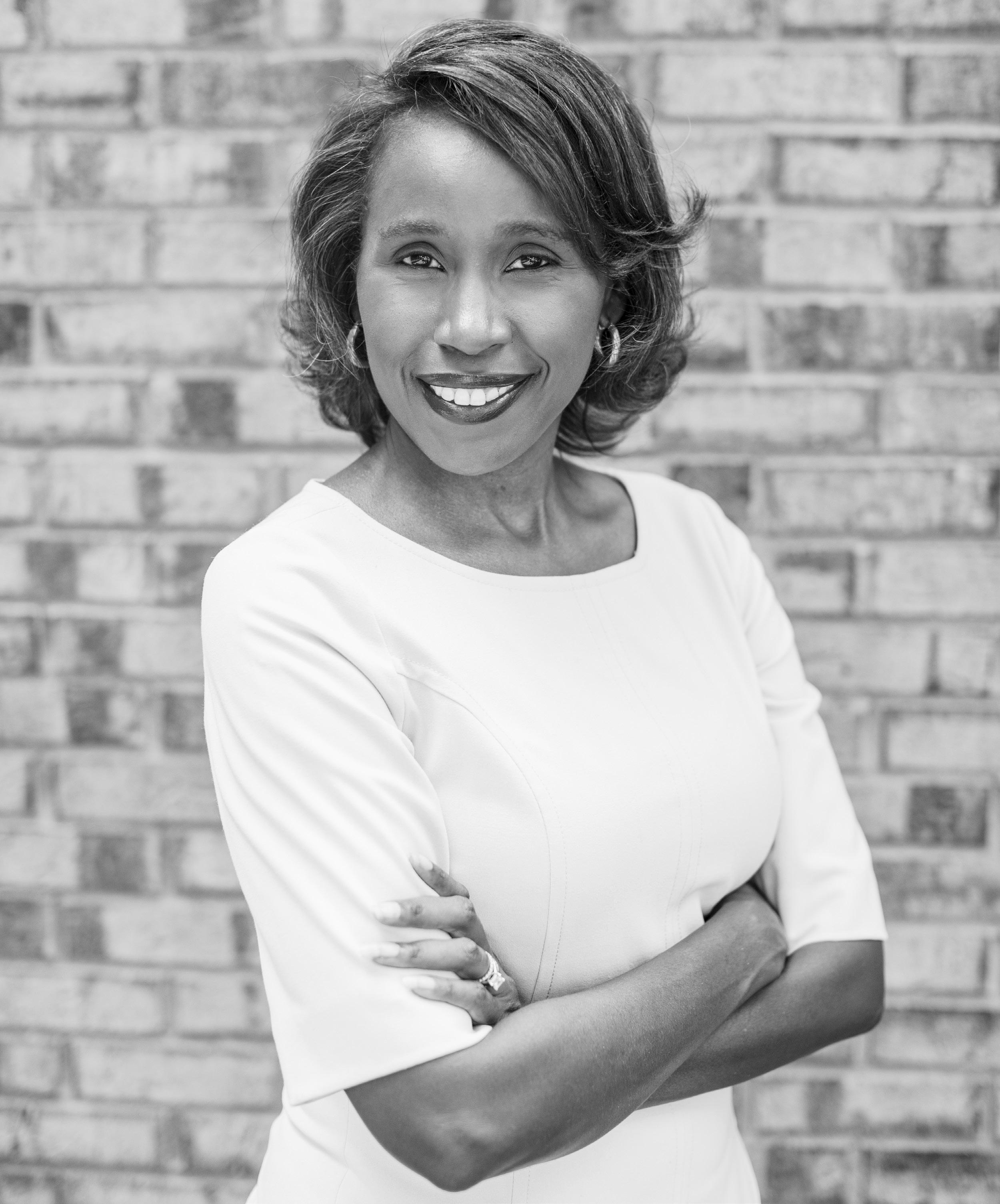
A Special Conversation With Dana Brownlee,
A
Dynamic, Energetic, Results-Oriented Corporate Trainer & Speaker, Ms. Brownlee Provides Thought Leadership in The Areas of Antiracism, Leadership, And Individual & Organizational Effectiveness.
Q: Can you share with our audience about your Fortune 500 corporate experience in project management and business strategy consulting?
DB: I started my career in the telecom industry and transitioned into management consulting after obtaining my MBA. As a business strategy consultant, I managed and supported large IT projects primarily in the media and entertainment sector. These roles were a natural fit for my academic and professional training (math, industrial engineering, business, project management) and provided invaluable real-life experience (and tons of hilarious anecdotes) for my next chapter – speaking, writing, and training.
Q: Why did you decide to become an entrepreneur?
DB: After about a decade of traditional corporate experience, I gravitated to the role of trainer/facilitator. This new role would afford me the opportunity to leverage my subject matter expertise but now instead of doing the work, I’d be teaching and guiding others. At this point in my career, I’d developed enough expertise to now consciously choose the type of work that I wanted to do, and I truly loved facilitating and training (which I’d done frequently during my work as a business strategy consultant), so I dove in headfirst. I’d also grown accustomed to a significant level of autonomy working with a high performing consulting team, so I wasn’t eager to transition back into a traditional, highly structured corporate setting. I knew I was an amazing trainer, so I decided to hang my own shingle and give it a shot. 18 years later I’m so glad I did.
Q: Tell us about what led to the writing of your book “Unwritten Rules About Managing Up”
DB: Most people tell me that it’s so hard to find a publisher. In my case, my publisher (Berrett-Koehler) found me. I’d been speaking on the general topic of “managing difficult bosses/personalities” for nearly a decade when a publisher reached out to me to tell me they wanted to attend my talk at an upcoming conference. I wrote the book pulling on many years of experience as a project manager having to satisfy and navigate many different senior leader personalities. I conducted a survey as part of my book research and was shocked to receive over 1100 responses in a few short weeks. There was a ton of interest in the topic. I definitely feel that managing up/managing challenging stakeholders is a real problem that doesn’t get discussed enough in public settings.
Q: What led to your decision to become an executive speaker?
DB: After focusing most of my entrepreneurial career in training, about five years ago I decided to pivot to focus more so on speaking. It was a slight pivot with tremendous upside. I’d essentially be taking some of the most exciting parts of my training session (usually the stories and anecdotes) and just repurpose them into a 1-2 hour talk (instead of a 5-6 hour training event). It made the events more exciting and less labor intensive. With two small kids at home, that slight shift in my business model made it easier for me to conduct an event out of town in the morning and still make it back for afternoon carpool.
Q: What is it about your job that most excites you?
DB: In the past few years, I’ve become much more of a writer. While
I’ve been published in many outlets over the years, I’ve been a Forbes Careers Senior Contributor for more than two years now, and it’s been quite thrilling actually. It’s such an honor to be able to participate in the national discourse on current events, trends, etc. as well as interview many leading voices and thought leaders on such a wide range of topics.
Q: What advice would you give to young women who want to purse their dream and start a business?
DB: I think that starting a business can sound glamorous, but it’s often harder than you think so I’d advise one to definitely pursue your passions but also be strategic and practical. Save at least enough to support yourself while the business is getting off the ground for the first year. Optimize your business model to maximize profitability (e.g., targeting corporations vs. individuals or developing offerings for groups vs. individuals, etc.). Remember that just because you’re great at something doesn’t mean that you can run a successful business doing it. Monetizing a skill or hobby isn’t the easiest thing in the world. That said, there are often great ways to turn a unique skill or talent into a profitable business. You just have to be methodical and strategic in determining what that business model should look like.
Q: Can you tell our audience one of your most memorable moments your career?
DB: I think that the first time I was quoted in The Wall Street Journal back in 2012 was pivotal for me. My business is focused around my subject matter expertise and credibility as a thought leader so my bio is everything. While I’d conducted training events and talks in several countries and I certainly knew my stuff, there’s a certain confidence that develops when you begin to be cited in major, well-respected publications. That specific article led to an appearance on CNN. Then over the years, I received citations in many publications like FastCompany, the Economist, Redbook, etc. and published articles in Working Mother, Entrepreneur, HuffPost and Forbes. In many ways it was my very first citation in The Wall Street Journal that boosted my confidence and allowed me to begin to truly view myself as a thought leader.
Q: Can you tell us how you manage your work life balance?
DB: I think that one of the biggest mistakes people make is allowing everyone else to dictate their calendar (then trying to find time for our personal priorities with what is left over). Instead, I try to flip the script and focus on my key commitments, then work everything else around those. One of my best moves though was deciding to work for myself. While entrepreneurship can be all consuming (particularly in the early years), it does typically offer tremendous autonomy and flexibility. I think that if one parent has tons of flexibility, it makes running a household (with children in particular) much easier. While I was single with no kids when I started my business in 2003, years later with a family I was really grateful to have the flexibility that entrepreneurship provides.
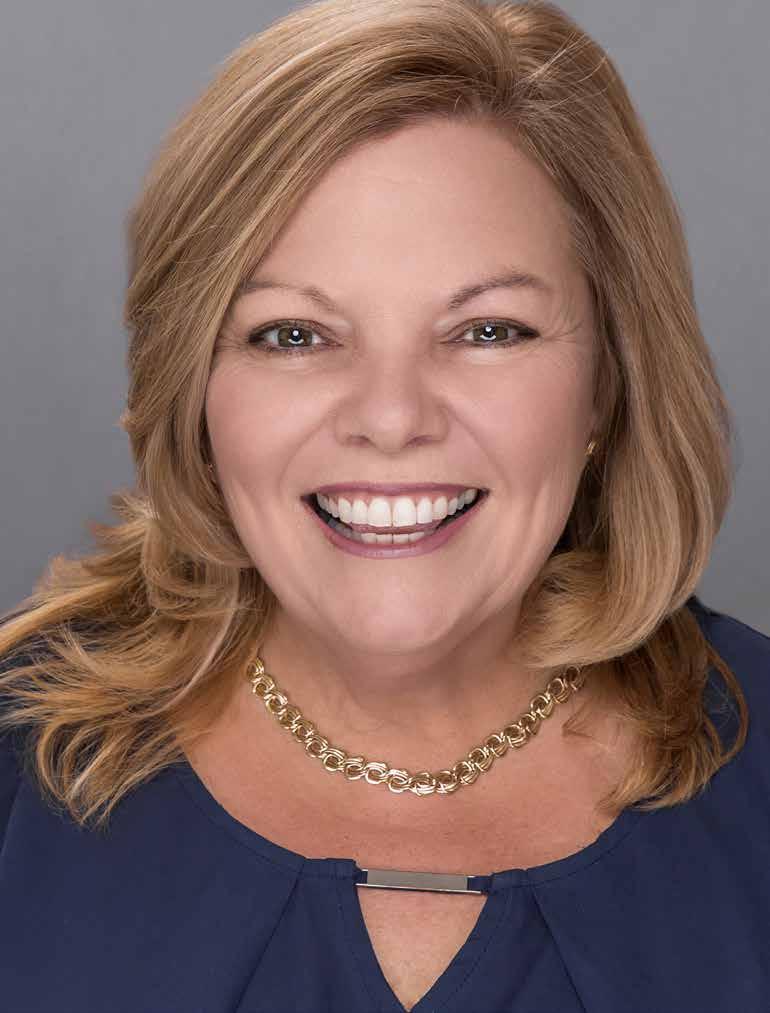
Kate Delaney
An Emmy-Award Winning Journalist and Speaker Who Has Interviewed More Than 16,000 People, Including U.S. Presidents, Top CEOs and Hall of Fame Athletes
Q: As an award winning talk show host, can you share with our audience what it was like the moment you became one of the first woman to ever host a solo syndicated sports talk show?
KD: After being rejected 500 times in five years it was overwhelming. So many well-meaning friends wanted me to give up and stick with television news. I heard it over and over again. Tune out the negative and believe was my mantra. The perseverance and patience paid off. Cracking the mic open the first day at a huge all sports station in Dallas with the backing of all the male hosts was exciting.
Q: You have done over 16,000 interviews thus far. Between U.S. Presidents, CEOs, and Hall of Fame athletes, who is your most memorable interview with and why?
KD: This is an impossible question for me as I have so many. I’ll go with self-made billionaire John Paul DeJoria, cofounder of the Paul Mitchell line of hair products and Patron Spirits. He grew up destitute, was in a gang and had very little in the way of a future. However, he believed he could pull himself out of it and find his way to success. Part of what fueled his fire was a teacher who said he would never succeed at anything in life. He set out to prove him wrong.
He’s now involved in too many companies to mention, has a net worth of $3.1 billion and in 2008 became a partner with Nelson Mandela in his Food4Africa program which feeds more than 17,000 orphaned children in Africa.
Q: Why did you choose to become an Author?
KD: There is nothing more gratifying than sharing your experiences and knowledge to help others on their journey. Especially with my Forbes book, Deal Your Own Destiny. Increase your odds, win big and become extraordinary. I hope that people who read it will be inspired and use the tools I’ve included to chase their dreams and shut out the critics.
Q: Can you tell us about the work you’ve done with Children International?
KD: I liked the mission of Children International and decided to get involved. The non-profit that’s supported more than one million children to date has medical, dental services, homemade food, libraries, computer labs, tutoring programs and scholarships for children in communities who desperately need the help.
I talked about it on air and sponsored a young boy, Mathew Alexander in Guayaquil, Ecuador. The hope was to raise awareness about these kids and families and how cheap it was to sponsor and help. I had the opportunity to visit and see the community. We brought all kinds of necessities. I still remember how proud he was to take me into his small thatched roof house to meet his brother and mother.
We climbed up the wooden ladder and he pulled out his report cards to show me how well he was doing. I saw how they lived; just one giant drum of water filled twice a week to use for baths, cooking and drinking. CI had a video crew following me capturing many of the moments. The community centers were amazing and I saw the impact that what is now $39 bucks a month has on these people’s lives.
Q: After graduating from College, where did you think your career path would take you?
KD: My goal at the time was to be the next Jessica Savitch. A popular television news host in the Philadelphia area that I watched as a kid. I wanted to cover stories that impacted people’s lives or were just fun to do. I started to head in that direction and then took a big turn by jumping onto talk radio.
Q: What is one word of advice you can offer to young women who want to reach your level of success?
KD: I mentioned it earlier. There is no overnight success, it’s a myth. Patience and perseverance are critical. Shut out the critics and remind yourself there is no ladder. Careers are like jungle gyms. You may have to climb in a lot of different directions so hang on and believe in yourself.
Q: Which woman inspires you and why?
KD: There are so many but one of my favorites is Judy Guido. She is the Chairwoman and founder of Guido & Associates and the former CMO of Landcare USA. I met Judy through Susan Packard, the Co-Founder of HGTV. We were both Speakers at Leadercast a few years ago.
Judy is one smart cookie, who is always willing to share her expertise on a myriad of topics from culture to strategy to team building. There is a reason Judy is one of the most sought after experts in the green industry. She calls herself a ‘learnaholic,’ meaning she’s curious and always asking questions. We are kindred spirits as I am the same way. She also has a great sense of humor.
Q: What’s your advice for women in male-dominated fields?
KD: It can be very lonely, find role models. Look to the women who created their own path. How did they get there? What can you learn from their journey? Join a group or association if that’s possible in your field or in the career you want to pursue. Look for podcasts and blogs that inspire you and offer tips to help you deal with obstacles. Find a mentor. It might be a male ally who can be a sounding board and advocate for you. Believe in yourself, skills and talent and never be afraid to ask for what you want.
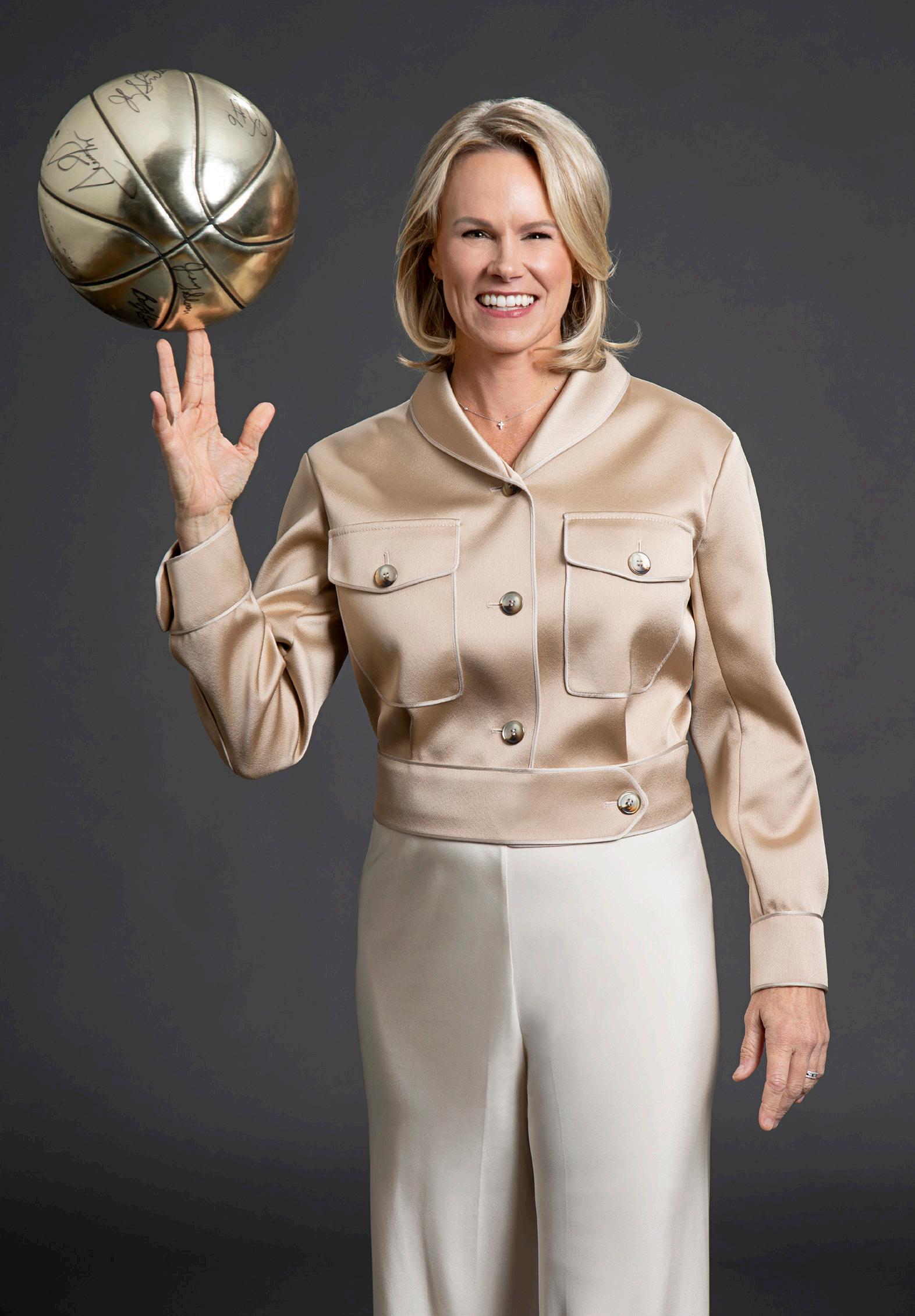
Q: You acknowledge that you’re a trailblazer. For women entering the sports agent field, do you feel that there are any fewer hurdles to overcome than when you started? If so, what are they?
MF: I would say there are fewer hurdles, but they still exist. Visibility matters and I think seeing other women thrive in the space has opened the doors for others and broken down some of the barriers. Overall, I think people are starting to understand the business value of diversity. Sports has been slow to evolve, but now we are seeing women in the front office and on coaching staffs. That’s important, because for today’s athletes that’s now the norm not the exception. We still have a ways to go, but there is a powerful shift happening!
Q: Your website mentions working with big egos. What is the most powerful skill to possess when guiding a talent toward what’s most beneficial in the long run versus what might provide immediate gratification?
Joins Us To Talk About Her Career as a Sports Agent & Motivational Professional
MF: It all starts with the ability to connect with people, and I think you do that by showing up, adding value and shooting straight. In the world of pro sports, it’s easy for athletes to get surrounded by “yes” people. As an agent, you have to be able to tell your clients what they need to hear, not just what they want to hear. Storytelling is a powerful vehicle because it helps show them why it’s important to play the long game. If you give them real examples of the “one and done” who focused on the short-term gain or made bad decisions in the moment, they connect with that. Most athletes made it to this level because of their discipline, so helping them understand they might have to make short term sacrifices for long term gain is something they understand.
Q: If you were still a sports agent today, what do you think you would miss most about the way business was done when you first entered the field?
MF: When I started in the space, there was no social media. It obviously has tremendous advantages in terms of being able to tell your story, connect with your fans, and get deals—but I think most of us can relate to having days where we wish it didn’t exist! It’s definitely an added pressure for them to navigate.
Q: How many of your athlete clients are still your clients today?
MF: I no longer represent clients as a sports agent; however, I am grateful to stay connected with most personally as friends. Today I spend the majority of my time as a speaker, author, podcast host, and founder of the Game Changer Training company.
Q: 60+ keynotes a year! Tell us about your time management, i.e., your Energy Clock–how you balance your personal and work lives?
MF: I don’t love the word “balance” because I think it creates a lot of unrealistic expectations and guilt for people. I am big on energy management more so than time management. Energy management starts with clarity around what matters most to you, and then having the discipline to say “yes” or no” based on the clarity you have created. In my book, The Energy Clock, I walk people through an energy audit to help you get clear on what gives you energy and what drains your energy and how to make the adjustments you need to make. The book was a result of my own experiences being overscheduled, working 24/7, and feeling at times like I wasn’t my best self with the people in my life who mattered most. If you don’t decide where your energy goes, the world decides for you.
Q: Has there been a client with whom you just couldn’t connect? How did you negotiate your separation and what might you have done differently?
MF: Yes, earlier in my career there was one or two but not many thankfully. Whenever you feel disconnected, I see that as a signal to shift from defensive-
Molly Fletcher speaking at Leadercast 2017. She will be speaking again this year at Leadercast 2022.”
ness to curiosity. It’s easy to get defensive in those moments; it’s much more productive to get curious. Curiosity creates connection. You also have to be willing to embrace difficult conversations so that you can attempt to align on expectations and move forward. And know that sometimes, it’s OK to walk away.
Q: Do you expect your online training to continue post pandemic?
MF: Absolutely. Nothing is more important to me than meeting people where they are and the demand for learning is higher than ever. For individuals, we will continue to offer our virtual group coaching program, Game Changer Leadership Huddles, and we will be launching our first on demand course in 2022! For organizations, we’ll continue to offer both our Game Changer Negotiation Training and The Energized Leader Training virtually and in person.
Q: Who have been a few of your favorite guests on your podcast, Game Changers with Molly Fletcher, and why?
MF: Now this is a tough one! We’ve been blessed with so many amazing guests and there’s nothing better than getting the emails, texts, and comments from listeners about how a conversation impacted them personally. But to answer your question, Matthew McConaughey was special, because he was so engaged, so present and so real. The conversations I’ve had with coaches like Dabo Swinney (Clemson), Tom Izzo (Michigan State) and Geno Auriemma (University of Connecticut) were so enlightening from a leadership perspective—just their authenticity and willingness to share, you really see why they are so successful. I always love getting inside the mindset of world class athletes, like soccer star Carli Lloyd, WNBA champion Candace Parker, NFL Hall of Famer Tony Gonzalez, and World Series champion Dansby Swanson. And given the amount of
Molly Fletcher coaching clients on how to up their leadership game.
“Molly Fletcher leading a Game Changer Negotiation Training™ workshop based off of her experience negotiating over $500 Million in contracts a sports agent.”
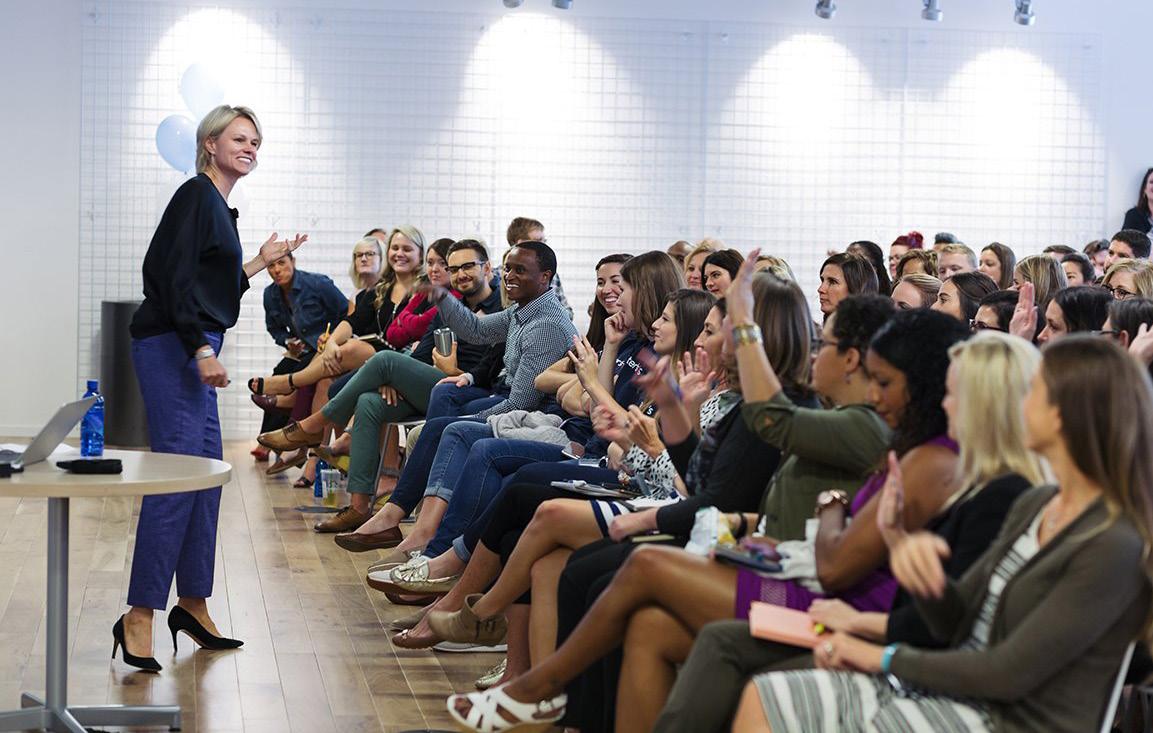
resilience needed in our world right now, I’d also recommend my conversations with Angela Duckworth on grit and Inky Johnson on overcoming adversity. It’s almost like the last one is my favorite because the insight, inspiration, perspective from all our guests is just awesome and to share these conversations with the world is what it is all about! I guess you have to listen to them all!
Q: You have addressed some very noteworthy big businesses. What’s the best way for an individual or small company to access your skills and knowledge?
MF: We work with organizations of all sizes! Beyond keynote speaking and training, there are lots of ways to engage. My podcast, Game Changers with Molly Fletcher, is a great free resource for anyone who wants to up their game. I’ve written five books, most recently The Energy Clock, and we’ll be launching our first on-demand digital courses in 2022. My website mollyfletcher.com is
the best place to start and you can follow me on all the social media channels @MollyFletcher for more free content!
Q: How do you keep your own delivery sharp and which of your programs trains others how to stay on top of their game?
MF: I take the athlete mindset to preparation! I do a lot of reps and spend a lot of time preparing on the front end. Every keynote is customized to address the behavior change we are driving for with the audience—that’s important to me. All of our programs at the core are about helping people up their game—whether that’s a keynote, a digital course, or our negotiation and energy management training. Stay tuned for our first on demand course, coming out in 2022!


www.traveldestinations.me
Hello Everyone,
I’m excited to announce the launch of my travel blog titled … TravelDestinations.Me
For those of you who know me, you’re already aware that, along with my bucket list, there are experiences in life that are especially important to me. These are things my wife and I enjoy doing together, like our weekly volunteer work, trying different fine dining restaurants, attending concerts, and checking out headliner comedians.
Personally, as a lifelong musician, I have always enjoyed doing benefit performances. During the holidays, I’m honored and privileged to perform for the elderly and young children who cannot be home for the holidays.
One bucket list item that my wife and I just can’t get enough of is travel. After many years of traveling, I thought it was time to start a blog. Our goal is to visit a minimum of 50 countries (we’re almost there). We’ve had some awesome experiences in countries like Australia, New Zealand, Ireland, Russia, India, Israel, Jordan, Egypt, Cuba, and many others.
Our other travel goal is to tour the USA twice! Our first tour of the US that we have finished has included famous attractions in each state along with Hall of Fames (Football, Baseball, Basketball, Rock n Roll, etc.), attending a Supreme Court session, glacier landing in Alaska, and visiting presidential libraries. In our second go around, we look forward to seeing more of the USA.
So, I thought it would be appropriate to share a series of blogs of my past experiences I have had over the years with you, titled Best Travel Memories
Rich Borell Founder & Publisher