When the dust finally settles after a long and exciting academic year, it’s time to take stock, to debrief, and to tackle this publication
Assessing and curating senior work, evaluating what was produced, and actively reflecting on it, allows for not only a bird’s-eye view of our graduates’ accomplishments but also of ours. This perspective not only affects our teaching plan for the next academic year but also allows us to leverage vertical and horizontal opportunities towards growth in multiple directions. Like Janus, the Roman god of beginnings and endings who simultaneously looks forward and backward, we, too, use a double perspective to constantly evolve. Punctuated by exhibitions, portfolio reviews, and unique opportunities (like our collaboration with NASA, a new show in Korea, and the MoCCA and Pictoplasma festivals), our industry-minded philosophy proves itself in the field, year after year.
In a profession where change is the only constant, focusing on solid fundamentals, development of great ideas, and powerful storytelling, all give our graduates an advantage so that they can excel in a number of exciting industries while also creatively adapting to
Illustration is the art of expert communication, collaboration, expression, and unique artistic language.
As such, illustration organically absorbs and utilizes the full gamut of techniques and technologies ranging from pigments to pixels.
evolving technologies and modes. Illustration is the art of expert communication, collaboration, expression, and unique artistic language. As such, illustration organically absorbs and utilizes the full gamut of techniques and technologies ranging from pigments to pixels. Brilliant use of such skills can only stem from strong critical thinking, honed visual perception, an effective personal process, and paper and pencil.
Now that our seniors have ventured beyond the academy, their instincts, training, and work ethic are kicking in to help them navigate these open waters. When dreams come face to face with industry, they have to find or carve their own way towards audiences that will respond to the images they make. In order to establish a personal balance between art and commerce, illustrators have several options, including promoting their personal voices or conforming to the trends, expressing or impressing, creating digitally or traditionally, making work that matters or that delights.
This introductory note would be incomplete without recognizing the many talents going into this publication—from our gifted students to our long list of outstanding faculty and the department team. Thank you to SVA President David Rhodes for his trust, meaningful guidance, and ongoing support. I am deeply grateful to the tireless Carolyn Hinkson-Jenkins, Matthew Bustamonte, Jason Little, Kelsey Short, and Heaven Boles, and their passion for this project, their ideas, and their care in introducing our brilliant graduating class of 2025 to industries they are about to deeply transform. Challenging as it is to crystallize the spirit of this department and provide a tangible memento of the work, the thinking and spark that make it tick, this publication will come very close to accomplishing that.
See you at school, Viktor
Koen Chair
BFA
Comics
BFA Illustration
SENIORS
Ada Shen 22
Mingyi Gan 24
Flora Tao 26
Allen Zhang 28
Katie Lin 30
Peter Schoenfeld 32
Shan Xue 34
Shitong Zhang 36
Rainy Tang 38
Michael Fiore 40
Devon Delcastillo 42
Lina Chai 44
Wenxin Gu 46
Isabella Lee 48
Junor Xu 50
Catherine Tsui 51
Ming Cheng 52
Angela Wei 53
Andy Kim 54
Heming Gao 55
Maxfield Favreau 56
Jiawen Liu 57
Xiaoyan Sun 58
Yeijin Lee 59
Lillian Lu 60
Carol Jiang 61
Feiyang Yin 62
Seungyeon Nam 63
Bernice Ng 64
Julia Ma 65
Wentao Sun 66
Angie Guo 67
Paige Cota 68
Hanbit Yang 69
Trang Hoang 70
Qingqing Wang 7 1
Changmao Wu 72
Cecily Su 73
Annabel Zhang 74
Jack Dong 75
Arrushi Chakraborty 76
Tim Li 77
Daisy Jiang 78
Yifei Li 79
Peiyin Zhong 80
Amoee Zhu 81
Xinyue Zhang 82
Nikita Pospolyta 83
Erika Bauer 84
Bella Han 85
BFA Illustration
Senior Thesis Faculty
MARCOS CHIN
JOSH COCHRAN
JENSINE ECKWALL
LISK FENG
KATHRYN HUMPHRIES
VIKTOR KOEN
ELIOTT LILLY
ANTHONY MACBAIN
AVIVA MICHAELOV
LILY PADULA
JONATHON ROSEN
MATT ROTA
DOUG SALATI
SARAH VACCARIELLO
SAM WEBER
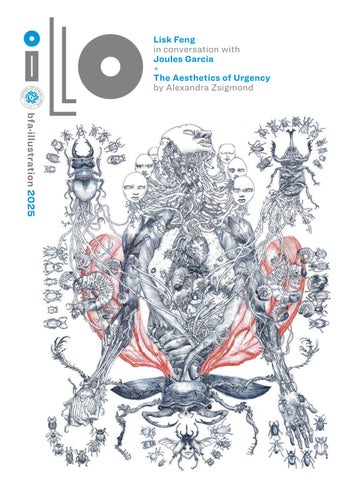
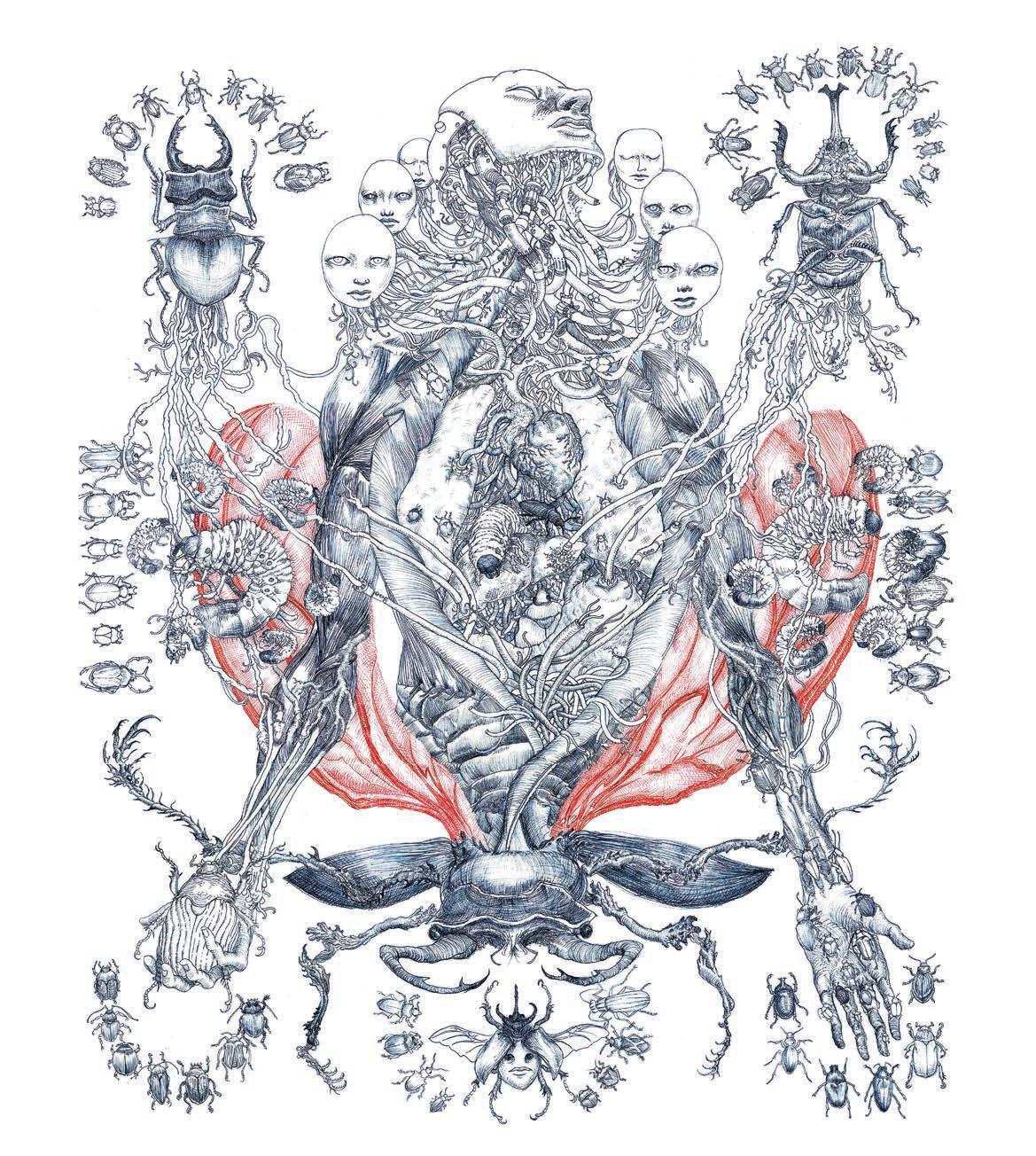
Cover: Maxfield Favreau
Life After Graduation: A Dialogue Between Lisk Feng and Joules Garcia
Lisk Feng is an award-winning illustrator originally from China. She is now a freelance illustrator in New York. She graduated with an MFA in illustration practice from Maryland Institute College of Art in 2014, and she has done many publications and advertising projects for global clients, such as The New Yorker, Apple, Penguin, Airbnb, The New York Times, Chanel, and more. She also published children’s books with Phaeton, Flying Eye Books, Abrams, and Kids Can Press. Alongside professional illustration, Lisk has been teaching at the SVA undergraduate BFA Illustration program since 2019.
Based in Italy, Joules Garcia is an illustrator with a deep love for cultural history, culinary experiences, and cat-related shenanigans. Her art is inspired by her life as an immigrant lesbian of color, and she hopes to connect those experiences with others through vibrant and whimsical narratives. She graduated from the BFA Illustration program in 2020. Currently, she is freelancing for DoorDash, and is part of the visual development team of Studio Stigmata and is exploring concepts for the upcoming animated short Judas Iscariot (2027). Joules aspires to work in publishing for young audiences.
JOULES GARCIA (JG): Right now, I work as a freelance illustrator for DoorDash. I remember going through college, and I really wanted to be an in-house illustrator. I really wanted to work for a company, and now that it’s happening, I mean, I love my job and my coworkers are great, but I realized that I was neglecting my personal art or any freelance work outside of DoorDash.
Ever since I moved to Italy and I have a bit more security, I’ve been able to kind of, like, look back on the past few years and understand that maybe those weren’t supposed to be my years to get really successful, or whatever that means in the industry.
Maybe those were just my years to grow. Your early- to mid-twenties are really tumultuous times. Now that I’m approaching my thirties, I’m feeling so much more myself than I ever did at that time.
LISK FENG (LF): It’s feeling more like true adulthood.
JG: I’m feeling a lot more relaxed. I feel a lot more motivated. And I also feel free… Ever since moving to Italy, I have been thinking maybe I’ll try getting certified to become a tattoo artist. Or maybe I will build a portfolio to get into children’s book publishing…
LF: Yeah, my favorite thing is turning 30, even though I thought I would be scared. I was a little scared at 27, 28, but then I turned 30 during COVID. I think I celebrated by myself with a steak and a beer.
I think in my thirties I’m more mature. My work is more mature. I have learned how to invest and decided to buy an apartment.
JG: I feel like everyone thinks adulthood starts immediately after you graduate, but you have so much time to actually mature, so much time to become an adult. You have so much time to just experience life as it is. And it’s just so much more forgiving if you look at graduation as more of a milestone than a
deadline. I remember thinking when I was in sophomore year, that this was the defining moment for me in college. I was in one of my classes, and it hit me at that moment because I was looking around at my classmates, looking at all their work, their discipline. I thought that they wanted this life more than I did, and that was a really shocking moment for me. I remember thinking, “Am I cut out for this? Do I actually want this?” You know, everyone else was so serious about it. They had lists and projects that they just wanted to do outside of school.
I did not want to do any of that and just wanted to be in the moment, just experiencing life and I don’t think I took what I was experiencing seriously. It’s not that I didn’t have a plan, because I very much wanted to be an illustrator, but a lot of people at the time were telling me I was for sure going to get a job and going to have a stable career after college. Looking back, I completely disagree. I just didn’t have the discipline that I saw in my classmates. But now that I’m a little bit older, with more experience under my belt, I’m looking at where I am in my life as a second chance at being an emerging illustrator, so to speak. I think I stumbled a lot post-graduation. I took a lot of things for granted.
LF: I think you’re very aware of what’s going on around you.
JG: I think for the longest time post-college I was not forgiving of myself. I was making excuses and entertaining the idea that I was not meant to be an illustrator, and is it too late to go to nursing school? [laughs] But the students now, especially seniors, considering their workload, considering their classes, [should] allow themselves the grace to be forgiving post-graduation. You don’t have to get your first New York Times gig within two months of graduating. Lisk, how old were you when you moved to the U.S.?
LF: I was 21, and I had moved to attend MICA (the Maryland Institute College of Art).
JG: I moved to the U.S. when I was eight years old. My dad at the time was already a green card holder, but only him and my two siblings who came a little later. It was during the Obama administration when they passed a law where, if one of the parents becomes naturalized, any children with them in the United States under 18 would also be naturalized, they would automatically become citizens. That law applied to me when I was young. I’m very thankful for that.
LF: The visa situation is very serious to all the students who just graduated because so many of them are international students.
JG: I can’t even imagine it.
LF: I totally understand their pain. My students want me to write letters for them. I am happy to do it, even though I don’t think anyone will actually read them. They need eight total recommendation letters to apply for the O-1 visa.
JG: That many?
LF: To even buy this apartment I had to have something like six recommendation letters and an interview.
JG: Like I said earlier, It’s like a new start for me, career-wise. Having that mindset might come across as naive to some people, but every day I’m finding more illustrations, advance illustration-related opportunities, etc. Markets, even gallery shows.
Just a few weeks ago, there was a gallery show for Tess Smith-Roberts, who is a U.K.–based illustrator and does a lot of cute illustrations. It felt so random for her to have a show in Geneva, someone well-established in their career. She travels a fair amount for her career now. It was so cool. It’s going back to me trying to be more forgiving with how I look at illustration and seeing everything as a new and fun opportunity.
LF: You will find your place in illustration again.
JG: I think that’s what this year is for me, finding that spark again. In the past five years post-graduation up until January of this year, I did one or two personal illustrations a year for myself. Everything else was just for work, you know? I felt so lost.
While I was in Burlington, Vermont, I actually helped organize a monthly get-together for local lesbians and dykeidentifying individuals. It was really fun finding outlets for who I am, the things I identified with outside illustration. Because I remember that, for so much of college, I thought illustration had to be my thing, had to be my number one personality trait.
LF: It actually could be a tool, you know. It could be a communication tool.
JG: I feel less pressured to put my work out there. Before, my mindset was I have to make something to put out into the world. I was prioritizing putting myself out there, attracting clients, attracting wages, attracting work, etc. I stopped prioritizing myself for a while.
LF: You know, some people can do it all at the same time. I completely understand. I post a lot less than I used to.
JG: I can look at illustration almost like a game, so it’s easier to separate myself from it. I’m able to prioritize who I am, what I want to do outside of illustration, outside of my career, and, at the same time, organize the things I want to do for my career. That’s a skill that everyone just kind of has to develop at some point in their life, especially if they want to be a freelancer. Being able to organize and separate your personal self versus your career is so life-changing.
LF: I try to persuade myself to stick with one thing because if I have too much freedom, then I will be too [complacent]. I see illustration and teaching as my job. I take them seriously and take them professionally, and, at the same time, I have my hobbies.
JG: [I have] so many funny memories from your class, Lisk. It was one of my most memorable classes. I loved my classmates. Everybody was so nice. It was, like, the perfect environment. I felt like everyone just, like, really loved what
they were doing and really wanted to do it for the rest of their lives.
LF: It’s also, like, feeling happy about what we do.
JG: I lost contact with so many of my classmates, but a lot of them I’m still mutuals with on Instagram. It was the product design assignment that I remember everybody went all out for. I tried to embroider a tote bag and a hat. When I got my first editorial commission in the middle of the semester, I emailed you immediately after, and said, “Hey, I can’t do this next week’s homework because I got a commission.” And you were so nice about it.
LF: It’s more important than my homework.
JG: I was going through my hard drives, the ones I had when I was still in college.
I mean, I didn’t realize how much work we did in class. It was just like one thing after another. I think I said earlier, recently, I have only done, like, one or two illustrations just for myself a year. I look back on that archive now, and, oh my God, I was making so much work.
LF: You make maybe 20 illustrations in a single semester, but not all of them are good. Some of them you like better, some of them are not great. You have more stuff to pick for a portfolio. You know, during those years, my students tend to do well.
JG: I loved the portfolio class. I’ve been reviving my Instagram. It’s becoming my personal project now because, in a few weeks, I think I’m going to archive all of my art from before 2025. I want to start fresh and build my portfolio again. I feel like I’ve grown as an illustrator and I’ve
changed as a person. Even though I’m really proud of my previous work, I want to break away from it.
I remember when my partner and I first started talking about me moving [to Italy], the first thing I remember thinking, other than us being together, is, I can go to Bologna for the Children’s Book Fair. So that’s my next goal. I want to have a portfolio that I’m proud of that I want to showcase. Once I’m at the Bologna Children’s Book Fair, I want to do the networking that I should have done post-graduation. I feel now that I’m actually prepared for it.
I’m making a five-year plan again. Now that I’m in Italy, I’m going to go to the Children’s Book Fair in Bologna, I’m going to make postcards, I’m going to do it old school. People who have the initiative will always get far ahead, and it’s not just an initiative to work on yourself, it’s also an initiative to just get things done. That kind of mentality doesn’t just apply to the art industry.
The ultimate goal for the next five years is to make at least one picture book. That’s my one goal. I’m still shy about it.
I don’t want to put all my eggs in one basket, you know, but I just feel like I have that motivation again, which I haven’t felt since high school.
LF: Now I believe that. But you need to make some pictures.
JG: I just want to keep making the work. I want a backlog of illustrations and to keep posting regularly because right now where I am, I’m not making enough work to post twice a week, and I don’t think I ever will get to that point. But if I build up a backlog of illustrations, I can. Then it’s just marketing. There’s all of these kids book illustrators who post work with this or that hashtag on Instagram. And I know several people who’ve gotten signed to an agency doing that. They’re people who’ve gotten work through that. It’s really just marketing yourself. I want to debut myself again. I’m just still in my cocoon, hatching a plan, and, then next year, in the spring, that’s when I’m going to break out.
LF: It’s really nice to hear you’re thinking over the years and your attitude towards social media. Maybe you will change again in another two or three years.
JG: Yeah, exactly. If three years from now I think I don’t want to do this anymore, I can just do that. And it’s so forgiving now.
LF: You got me to think that I need to change my own teaching curriculum. There is always the need for changes and adjustments.
JG: And the industry is always changing.
LF: The students are changing as well. Everything’s a moving piece. I see it as an experiment. I always have three or four of them that are really hard on themselves. When I try to talk with them, they are very open with me. One student even called me at midnight because she had a panic attack. Of course, I was going to help, but it was out of the blue. I tried to give her some positive energy then.
JG: I remember David Soman’s class being very popular for both juniors and seniors, and that’s a lot of work because you’re basically building a picture book
not just for exposure, but also to actually pitch. If I remember correctly, he actually invites agents and other professionals to that class. People had so many good things to say about him, and they’re all true. I think if there’s anyone to ask about having a class that really motivates students, David’s definitely the one to talk to. ◆
CAPTIONS
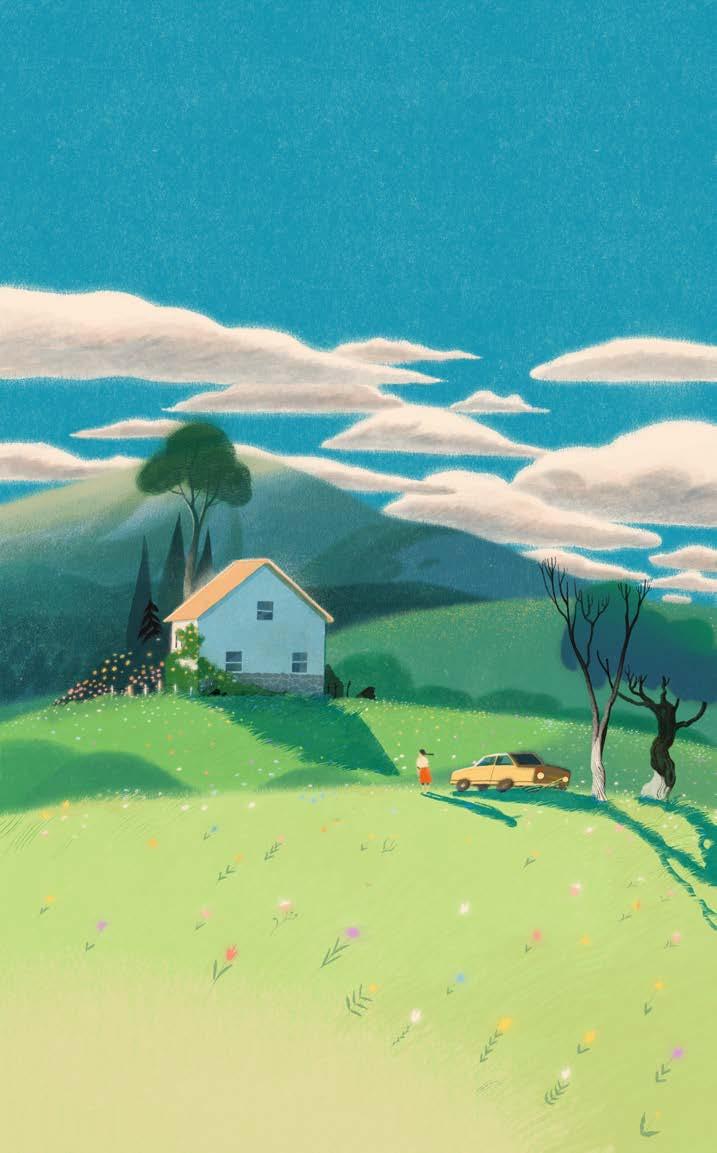
1. Cover illustration for Over The Mountain by Jiangyun. Art by Lisk Feng.
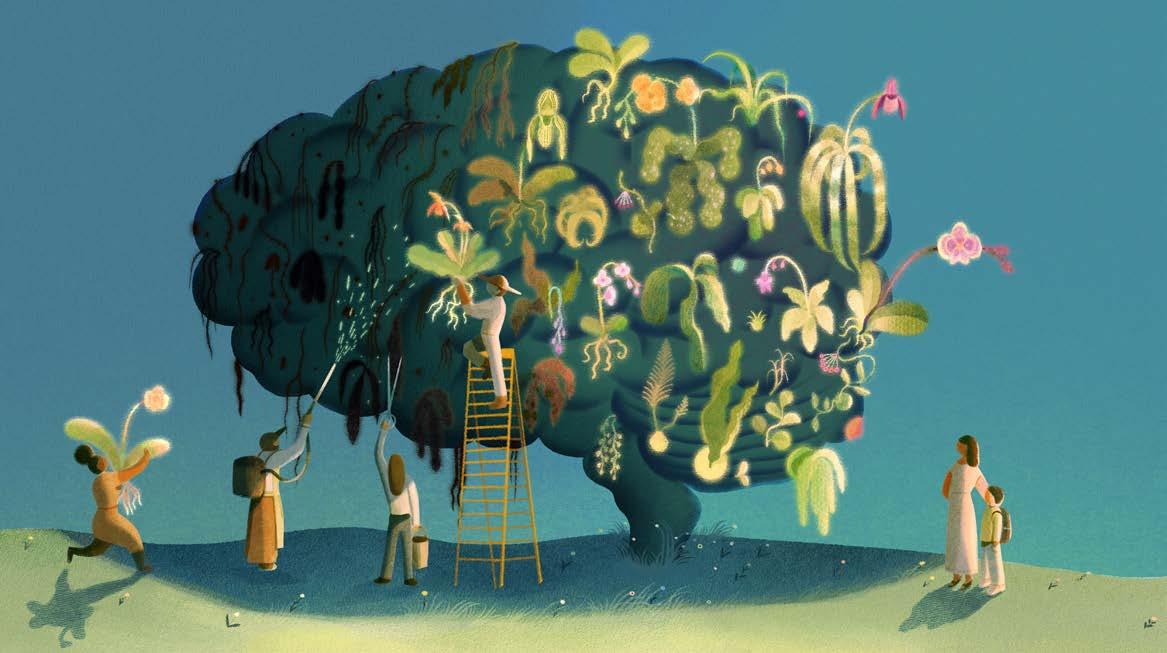
2. For Christianity Today, 2025. Art by Lisk Feng.
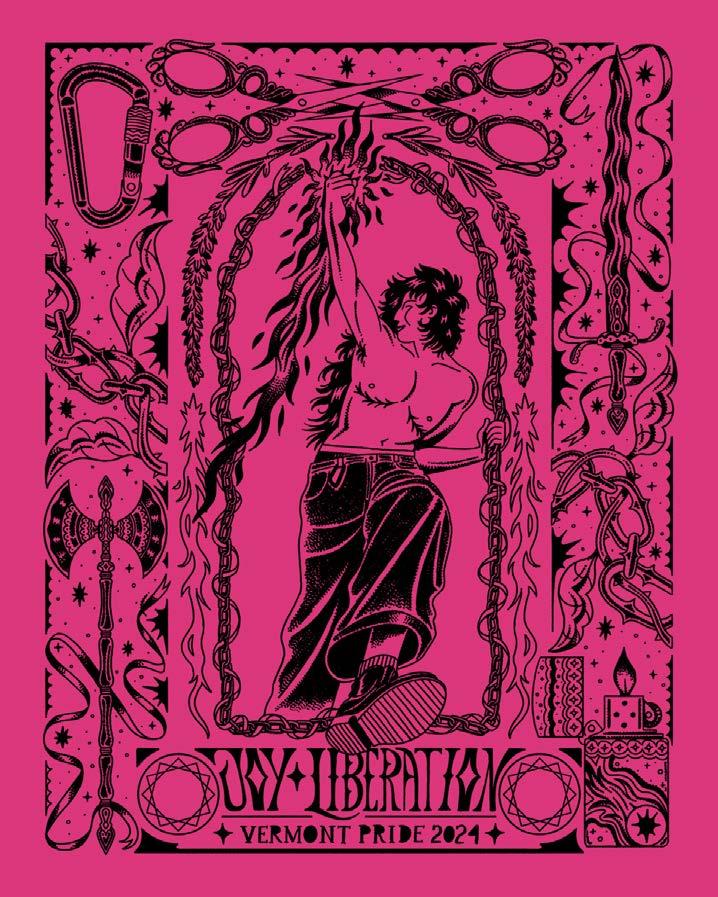
3. Joules Garcia, Vermont Pride, 2024.
4. For Middle School Magazine, 2025. Art by Lisk Feng.
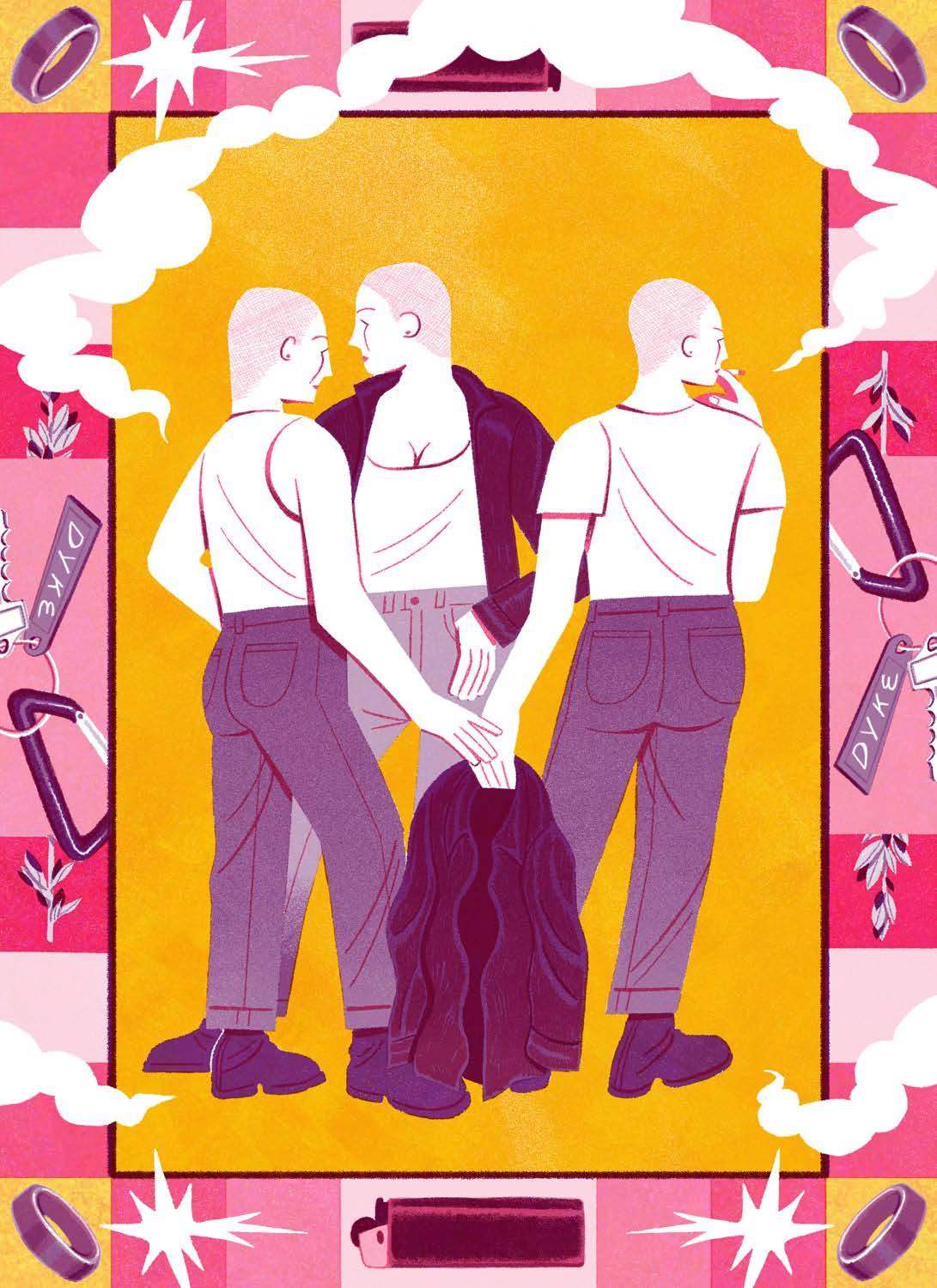
5. Joules Garcia, Dykes, 2024.
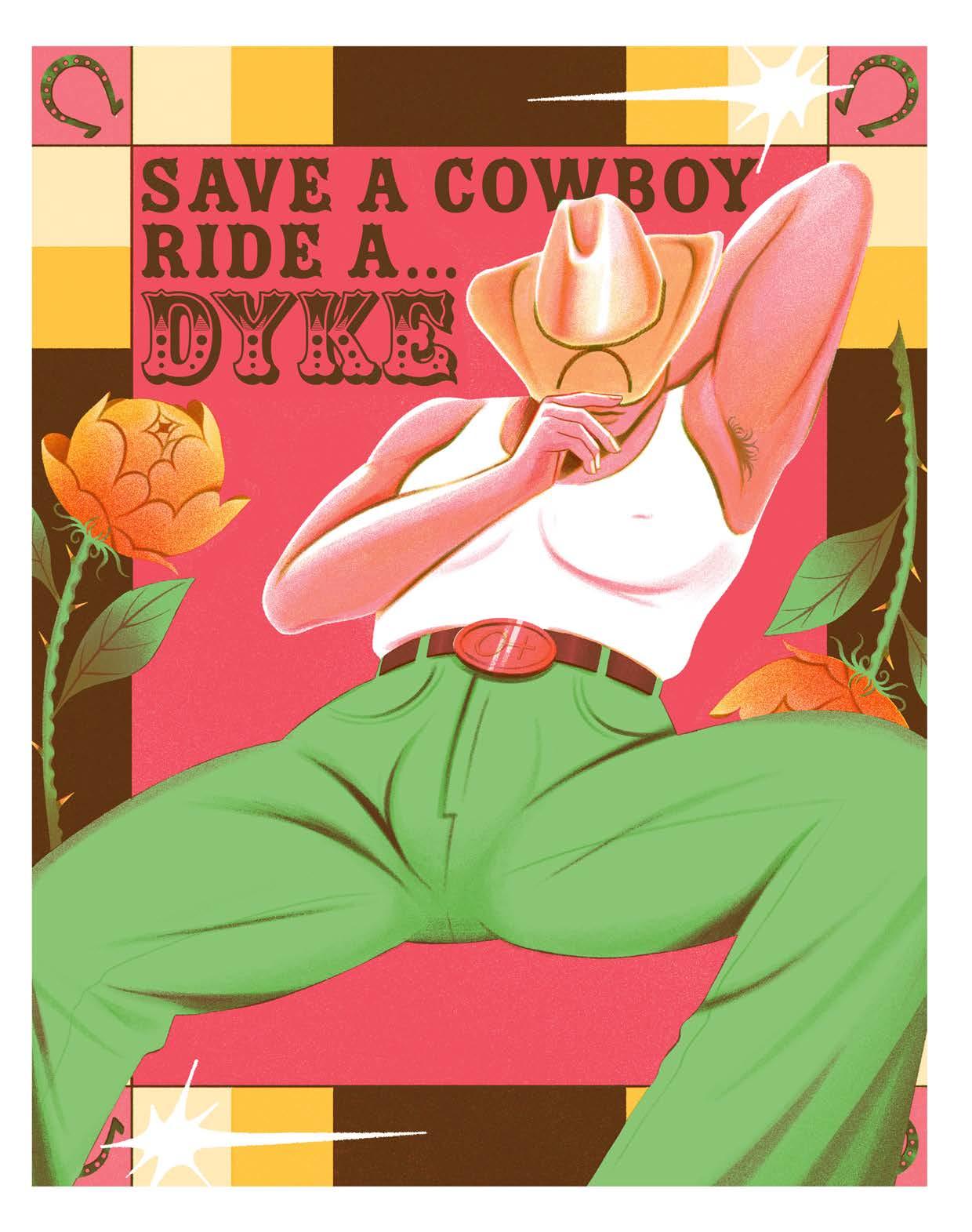
6. Joules Garcia, Save a Cowboy, 2024.
7. Joules Garcia, Anniversario
The Aesthetics of Urgency
On Making Art—and Meaning—Under Pressure by Alexandra Zsigmond
Nothing sharpens creative instincts like a tight deadline and the knowledge that something critical is at stake.
Creative growth often happens in moments of urgency and stress, when one is forced to act quickly, making rapid decisions under pressure. This belief has been proven true across the many roles I inhabit as an editorial art director, an educator, and a visual artist with my own creative practice.
My father, a Hungarian biochemist and surgeon, often reminds me of a key distinction he learned during his postdoctoral work at the Université de Montréal, where he studied under Hans Selye, the Hungarian endocrinologist who pioneered medical research on stress. Selye famously introduced the terms eustress and distress to differentiate between two types of stress, one positive and motivating, the other negative and potentially harmful.
Selye emphasized that the body’s physiological response to stress is the same, regardless of whether the trigger is positive or negative. What matters is how we interpret and adapt to that stress. While distress can lead to anxiety or burnout, eustress can enhance performance, focus, and growth. Both types are cumulative and taxing on the body—but neither is inherently good nor bad. Stress, according to Selye, is the body’s nonspecific reaction to a demand; the outcome depends entirely on how we respond.
I’ve sometimes questioned this binary distinction. Like most people, I find stress deeply unpleasant, and I bristle at the suggestion that it should be reframed as an opportunity—or that failure to do so signals a flaw in mindset. Still, I can see the value in viewing stress as the body’s natural response to a challenge. Interpreted this way, stress is less a matter of moral judgment and more a question of adaptation. This perspective doesn’t
erase the discomfort, but it can make it less overwhelming—and, at times, even constructive.
Especially in professional or creative contexts, I’ve repeatedly seen how the most high-stakes, high-stress moments often produce the most transformative, rewarding, and meaningful results.
Over the past decade, I’ve come to know the emotional nuances of stress intimately through my work in journalism, a field defined by urgency and deadlines. Shortly after moving to New York City to pursue postgraduate graphic design studies at Parsons, I began as an assistant art director for The New York Times Op-Ed section in 2010. Since then, I’ve built a career commissioning editorial illustration at The Times—across sections including Opinion, Sunday Review, Business, and Technology—and at The New Yorker, where I served as senior art director.
Throughout this time, I’ve worked with
more than 1,000 freelance illustrators and commissioned over 4,500 editorial artworks—on topics including neuroscience, education, politics, religion, and climate change. Editorial art serves a powerful purpose: by translating verbal language into a visual one, it gives the reader a more immediate, visceral understanding of a news topic than words alone can provide.
Across my professional roles, I’ve witnessed firsthand the emotionally intense nature of editorial work—from the perspectives of both art director and illustrator. For illustrators, each assignment is a kind of performative sprint: you receive an article, distill it into visual concepts, generate sketches, submit them for review (often facing rejection or requests for revision), and ultimately deliver a final piece, usually under a grueling deadline. Illustration work demands a rare mix of creative endurance, emotional resilience, and resourcefulness.
It’s this blend of visual intelligence and grit that makes me respect editorial illustrators so deeply—perhaps more than any other kind of artist. The cleverness and adaptability represent a side of the job that’s often invisible to the average reader casually flipping through a magazine. To the reader, an illustration may appear effortless, but behind it lies a process that’s equal parts creativity, logistics, pressure, and precision.
Yet it’s precisely this intensity—the high stakes, the looming deadlines—that can make illustration work so motivating. The opportunity to have one’s illustration published in a major, respected platform can jumpstart a career, open new doors, and reshape how an illustrator sees themselves—and how others see them too.
Being an editorial art director also comes with a unique type of stress, shaped by a different set of pressures. As the art director, I’m the one who selects the artist and advocates for them to editors, so I’m deeply invested not only in the beauty of the final image but also in how well it communicates the article’s essence, satisfies editorial expectations, and supports the writer’s intent. Yet much of the process remains outside my control.
An art director becomes a kind of translator and advocate. We negotiate between artist and editor. We defend unconventional visual ideas that might
push what editors initially imagine, while also ensuring the final result meets their standards. It’s a highly diplomatic role, requiring emotional investment and balance—mentorship without micromanagement, vision without overburdening.
Though the fast-paced world of editorial illustration and art direction now feels second nature to me, I came to it through a somewhat unconventional path. As an undergraduate at Stanford, I studied philosophy, psychology, and art history, developing a deep interest in aesthetics—particularly the power of
visual metaphor in fine art. My senior honors thesis explored how Surrealist artists of the 1940s used metaphor in their work, often by juxtaposing unrelated images to spark new meaning, much like poets do with language.
While writing my thesis, I began paying closer attention to the illustrations that accompanied essays on The New York Times Op-Ed page. They were often striking black-and-white images that distilled the complexity of each article into a single, potent visual. What fascinated me was how the artists used the very strategies I had been studying—
employing surrealist visual metaphor to make verbal arguments more visceral.
It was thrilling to see the ideas I had explored in historical artworks come alive in contemporary, real-world context. The serendipity of then landing an interview with The New York Times after graduating from Parsons felt surreal in its own right, and has shaped my creative path ever since.
When I first started at The New York Times, one of my core responsibilities was commissioning daily artwork for the Letters to the Editor page in Opinion. Each illustration was just 1.85 by 2.35
inches; with such limited space, the artwork had to communicate as much as possible with as little as possible, making visual metaphor not just useful but essential.
These assignments were fast and high-pressure. Around 10:30 a.m., I’d receive the topic, brainstorm visual approaches, and start reaching out to illustrators—sometimes contacting four or five before someone accepted the same-day assignment. Sketches were due within two hours, revisions within another two, and the final went into production by 5:30 p.m.
I still remember my first week at The New York Times in September 2010, when my supervisor asked me to commission my very first illustration, due to print that same afternoon. She shared a roster of illustrators and stayed close through the key steps. But she also gave me significant autonomy, which was both terrifying yet essential, letting the daily deadline do much of the teaching and trusting I would rise to the occasion. That method of “immersive responsibility” has stayed with me. It continues to shape how I train junior art directors and mentor students. Being thrown into
real accountability from the start is transformative—it reframes stress not as something to avoid but as a catalyst for professional growth.
I first became interested in working with illustration students during my early years at The Times, when the Opinion art department sometimes assigned a live editorial brief to an entire class rather than a single freelancer. These collaborations gave students the rare opportunity to tackle real assignments under real deadlines. Over time, I extended the model internationally, partnering with schools such as HEAR in Strasbourg,
“By embracing both the discomfort and the opportunity inherent in stress, we can harness it as a tool for growth, insight, and lasting creative achievement.”
PJAIT in Warsaw, and Hochschule Mainz in Germany.
This approach—inviting students into the realities of editorial practice—has shaped my pedagogy ever since. Over the past decade, I’ve taught semester-long courses at Parsons and IED Madrid, as well as intensive workshops throughout the U.S., Latin America, and Europe. I now teach in the MFA Illustration as Visual Essay program at SVA, where I lead a seminar introducing students to the professional ecosystem of illustration and publishing.
This past spring, my MFA students tackled a live editorial assignment: creating a series of 10 spot illustrations and pitching them directly to The New Yorker. Spots are a hallmark of the magazine—small black-and-white drawings woven through each issue to provide a playful counterpoint to the text. In an intensive workshop, students developed their ideas from sketch to final, then presented them live to a New Yorker art director. Two students’ spot series were ultimately published.
As with any live assignment, it was thrilling to see such tangible results, but the value extended far beyond publication. Students gained firsthand insight into the editorial workflow, navigating tight turnarounds, critical feedback, and the prospect of published work—conditions that mirror the professional world they aspire to join. Through this, they discovered how stress can function in two ways: it can feel daunting, yet it also provides a framework that sharpens focus, builds resilience, and sparks creative risk-taking.
Reflecting on these experiences—from commissioning daily illustrations at The New York Times and The New Yorker to mentoring students in live editorial briefs—it becomes clear that not all stress is equal. Deadlines and public presentations
can feel overwhelming, but approached with clarity and purpose, they often generate eustress: a motivating state that fuels decisiveness and momentum.
At the same time, it’s essential to recognize the line between eustress and distress. Too much pressure, inadequate resources, or prolonged uncertainty can tip the balance toward frustration or burnout. As an educator and art director, I aim to design demanding experiences that maximize the benefits of eustress while ensuring students have the mentorship they need to succeed.
Ultimately, these lessons extend beyond the page: they teach us to act with conviction under pressure, adapt to feedback, and find meaning in our work—even when the stakes feel impossibly high. By embracing both the discomfort and the opportunity inherent in stress, we can harness it as a tool for growth, insight, and lasting creative achievement. ◆
CAPTIONS
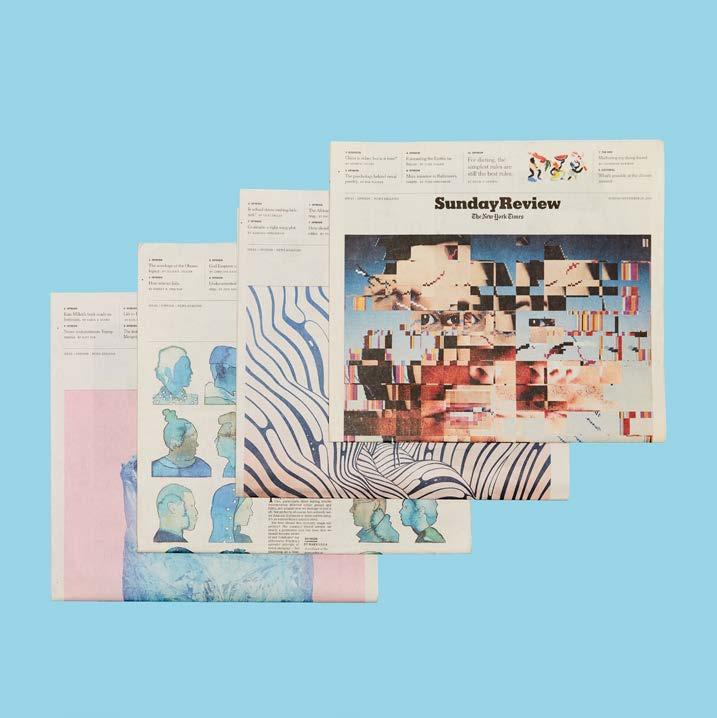
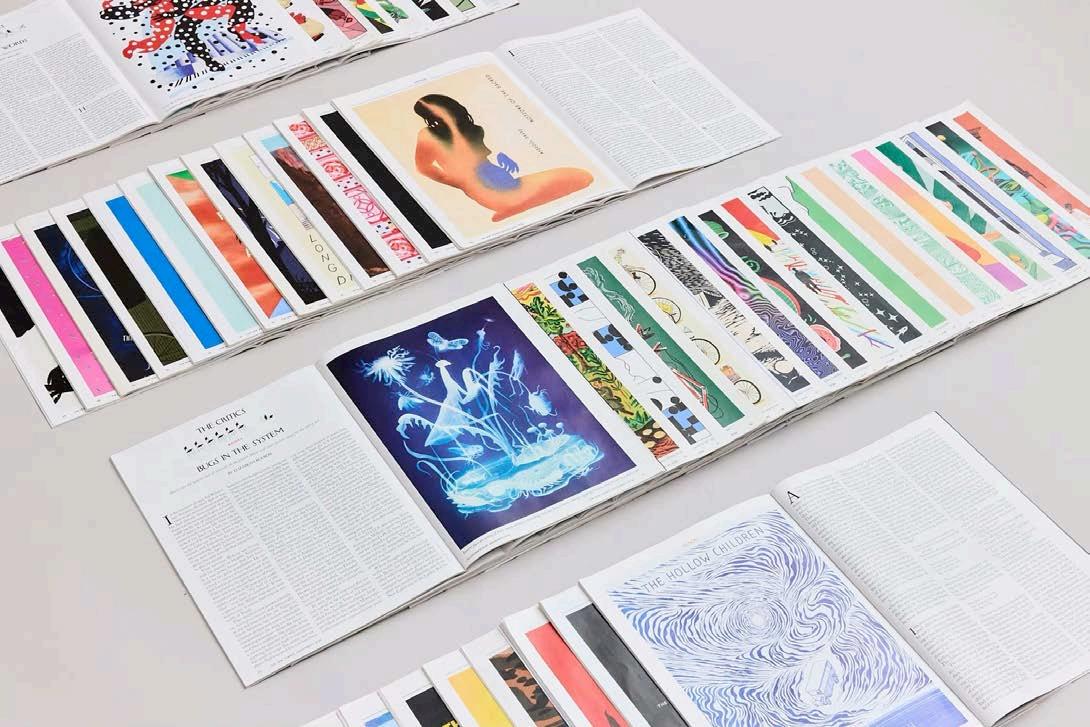
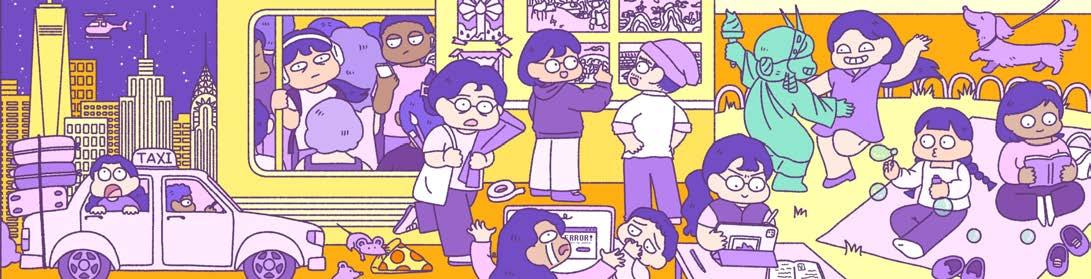
1. The New York Times illustrations art-directed by Alexandra Zsigmond.
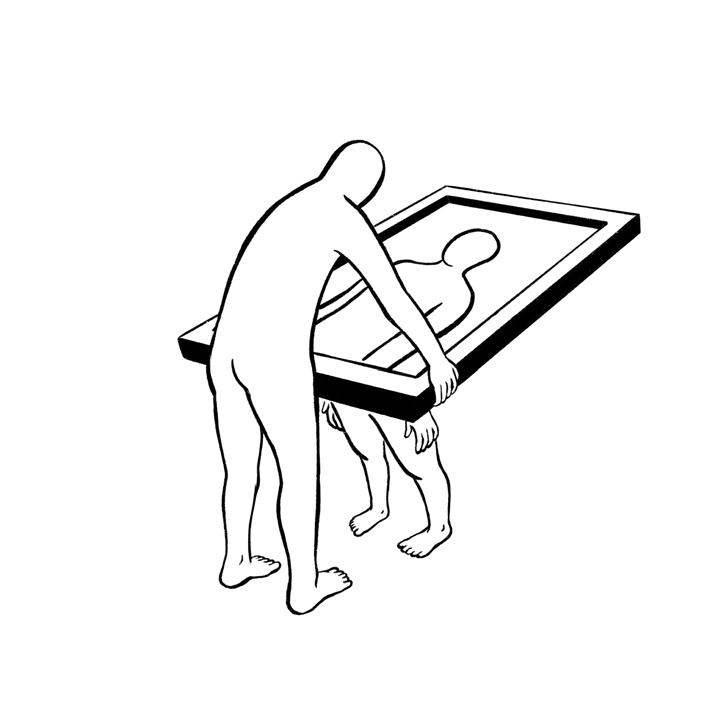
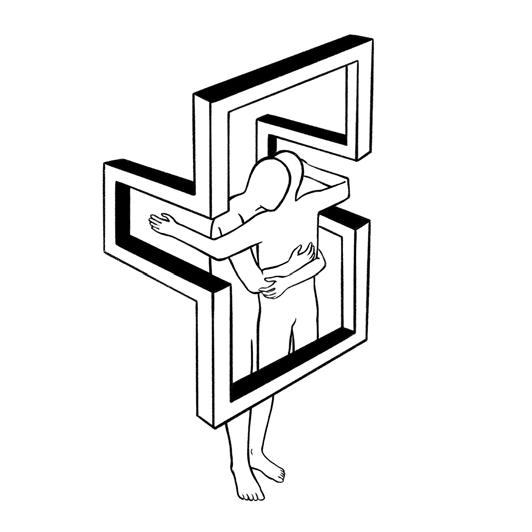
2-6. Spot Illustrations for The New Yorker by Beatrix Zhou.
7-10. Spot Illustrations for The New Yorker by Dan Zhou.
11. New Yorker illustrations art-directed by Alexandra Zsigmond.
Postergalactic NASA’s Artemis II mission launches an extraordinary poster project with SVA.
Space exploration excites the creative mind because of the irresistible appeal of its nebulous aesthetics, sense of mission, cutting edge technology, and the allure of the heroic. Artists are fascinated by the challenge to express the deep, cosmic, and existential issues that arise when we are unhindered by gravity and other earthly restraints.
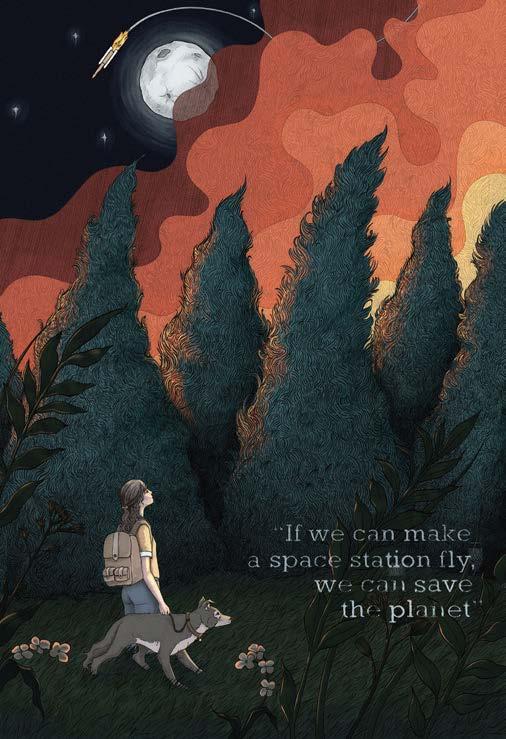
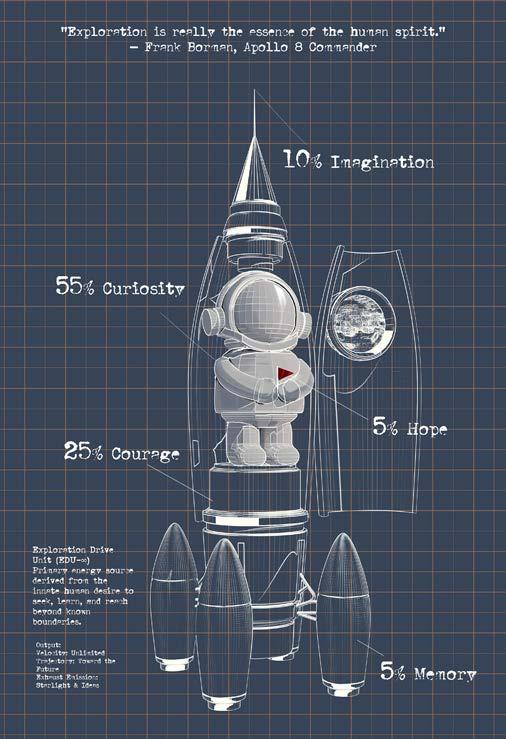
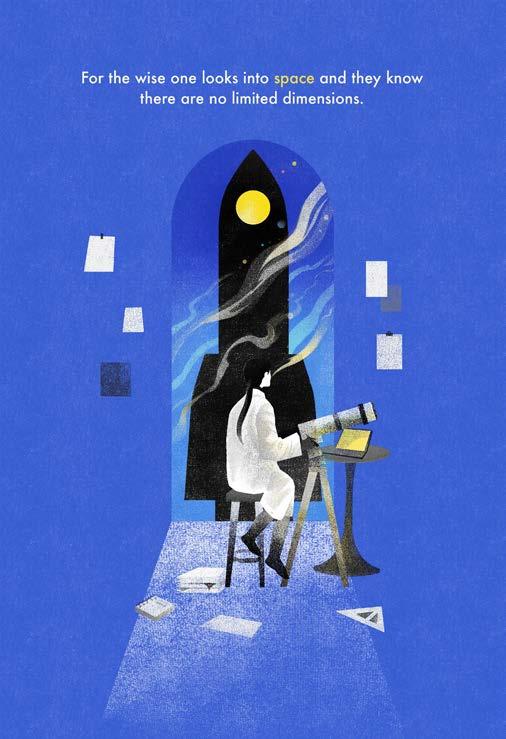
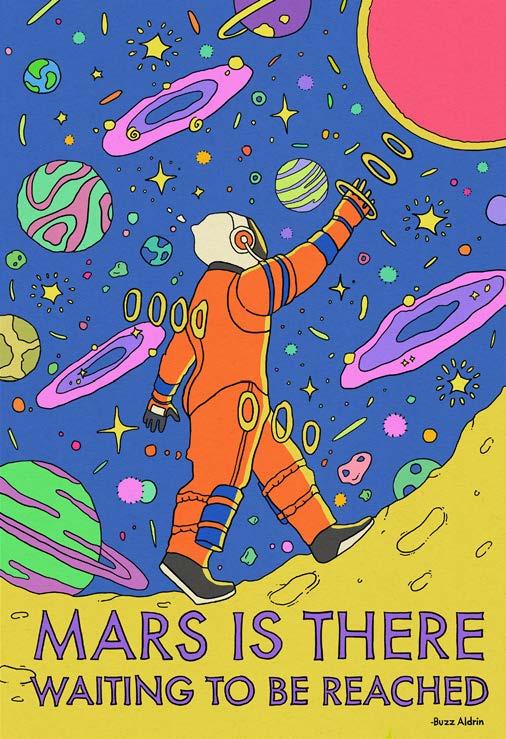
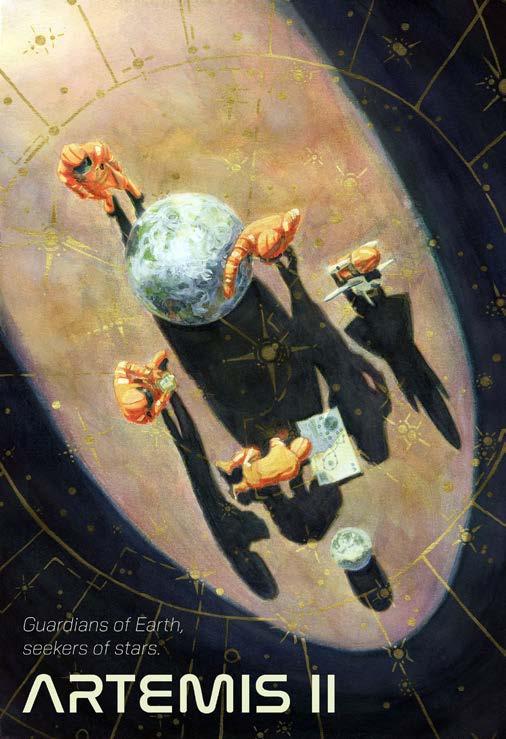
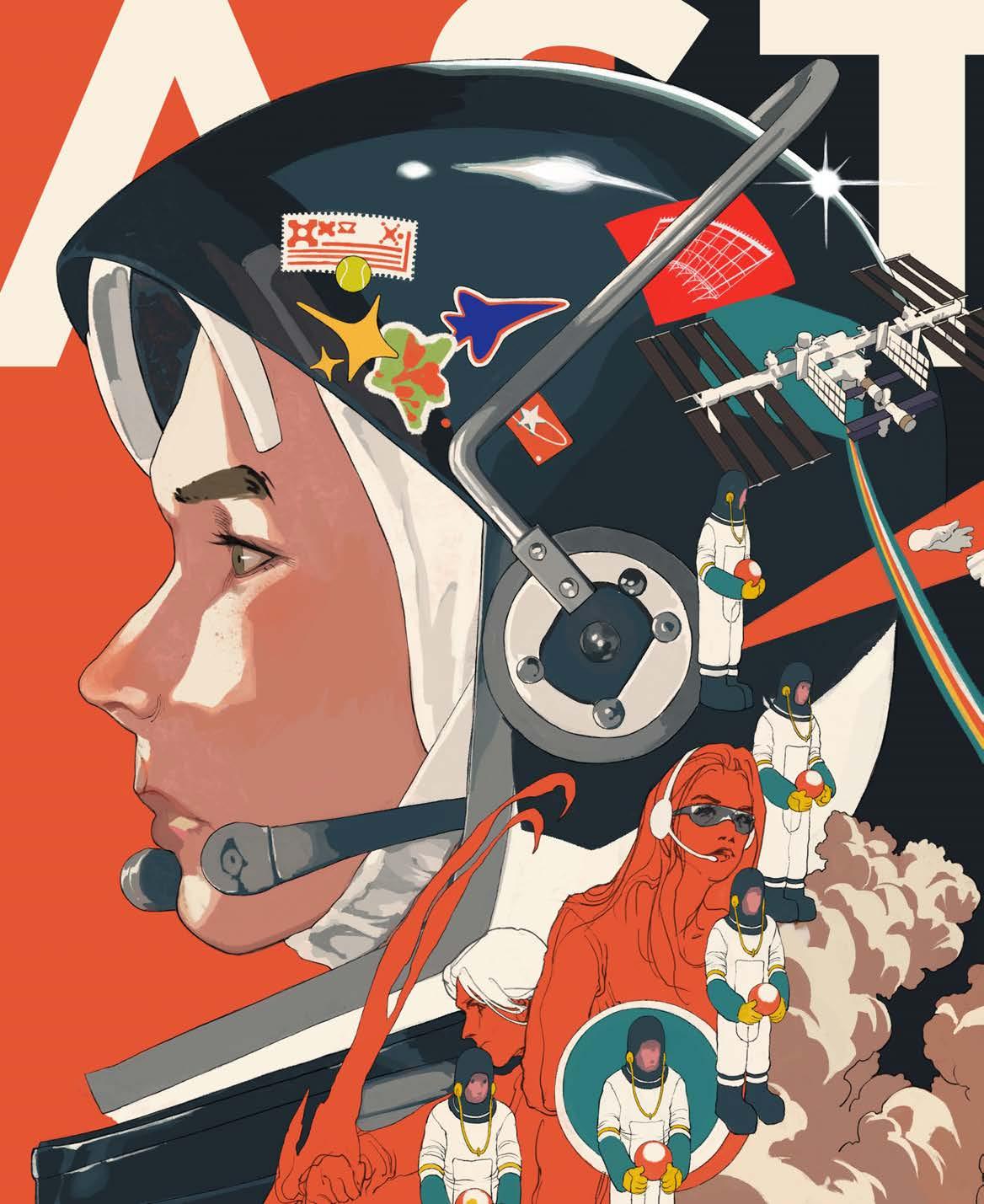
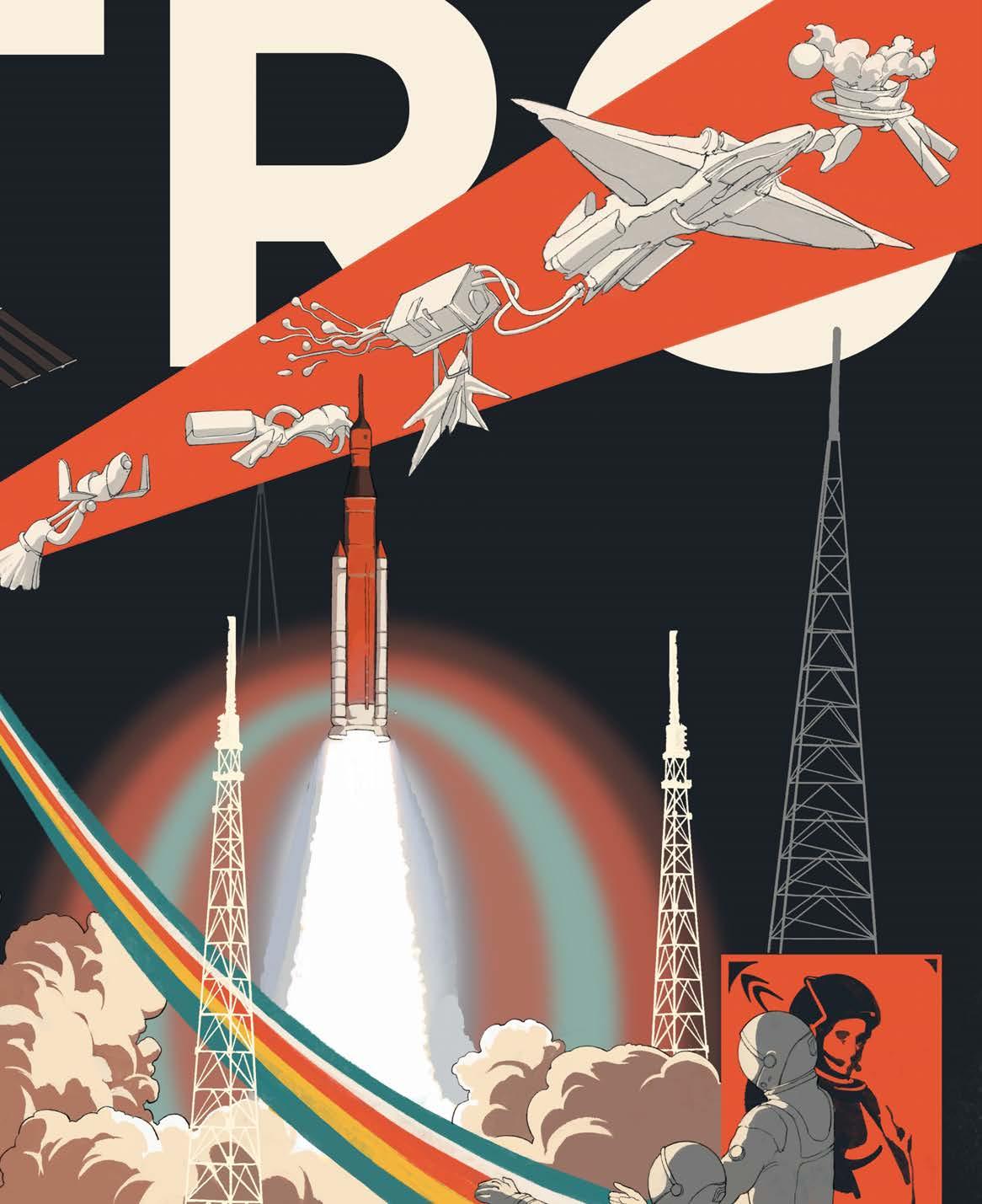
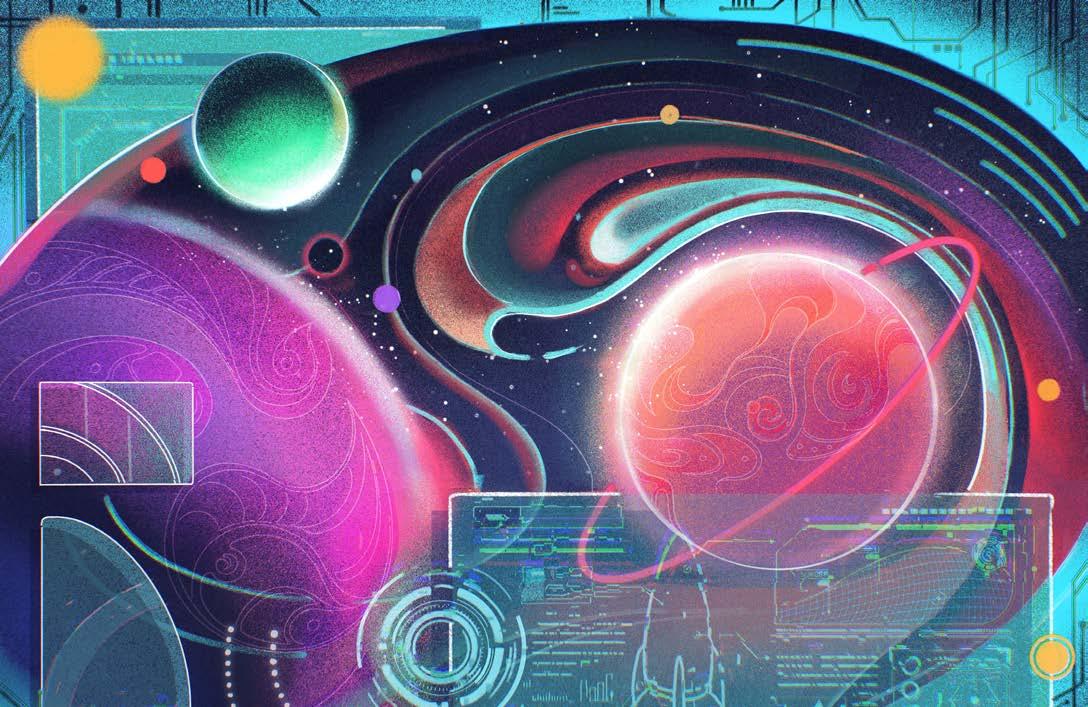
In a collaboration with NASA, SVA BFA Illustration students were tasked with creating posters to celebrate the upcoming Artemis II launch. After structuring the basic project prompt, our fourth year students developed compositions inspired by a list of space exploration–related quotes selected in coordination with NASA.
The assignment was incorporated into our senior year curriculum with faculty commissioning and following the project through brainstorming, initial sketches, color studies, finished renderings, and type treatments. Students interpreted the quotes in figurative and abstract styles, pairing personal and expressive techniques with boldness, subtlety, romance, childlike wonderment, or by highlighting technology at its shiniest.
A panel of experts reviewed the multiple entries and chose 24 finalists. The judges included Matthew Pearce, head of NASA STEM Education; Allegra LeGrande, climate scientist at NASA’s Goddard Institute for Space Studies; Megan McArthur, NASA astronaut; SVA MPS Branding Chair Debbie Millman; Angelina Lippert, director of Poster House in New York City; SVA BFA Design Chair Gail Anderson; and SVA BFA Illustration Chair Viktor Koen.
The final selection of posters premiered as an exhibition at SVA’s flagship Gramercy Gallery in September. The show will travel to a number of museum and institutional venues in the U.S. and abroad. ◆
CAPTIONS
1. Annabelle Davis
2. Angela Wei
3. Lemiao Yang
4. Ggotbyeol Kim
5. Emma Tutty
6. Rainy Tang
I was one of those students who got good grades, but everything I was taught was more like sand in a sieve instead of anything in a steel trap. It took me an embarrassingly long time and a lot of repetition to even realize what commercial illustration was and the variety of work it included. The critical thinking muscle of what makes a “good” versus “bad” illustration developed over time, albeit slowly. Of course the terms “good” and “bad” are objective, but whenever I saw an image I recognized—either because of the delicate line work, use of color, shape, language, etc.—a successful illustration made me feel something. I had to pause to look over the image before moving on to the accompanying text.
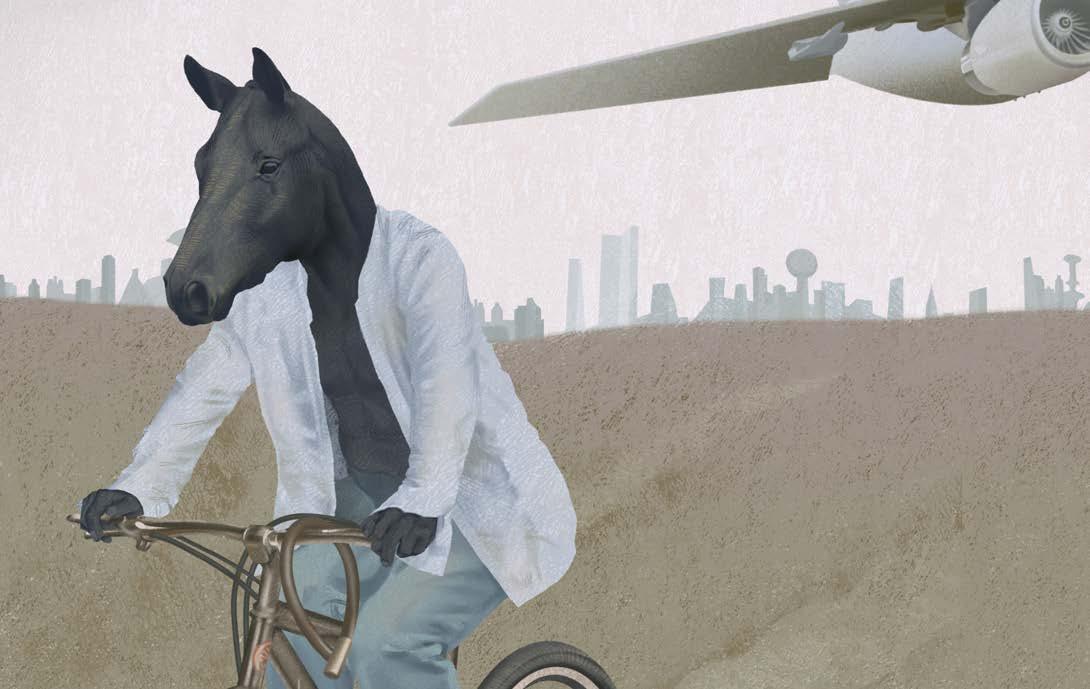
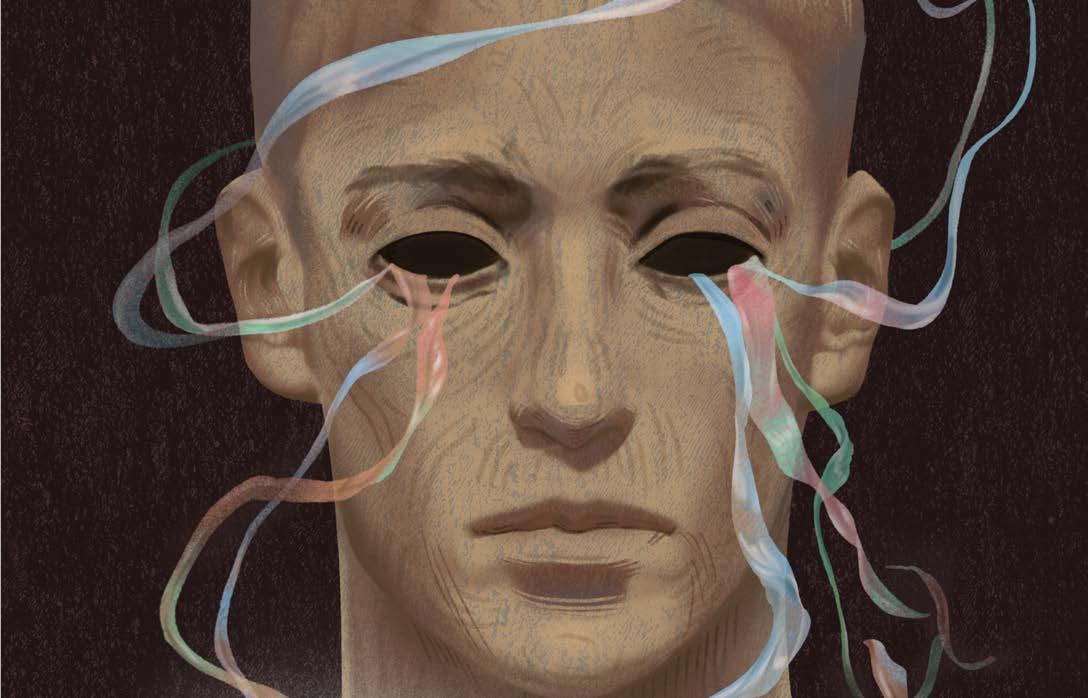
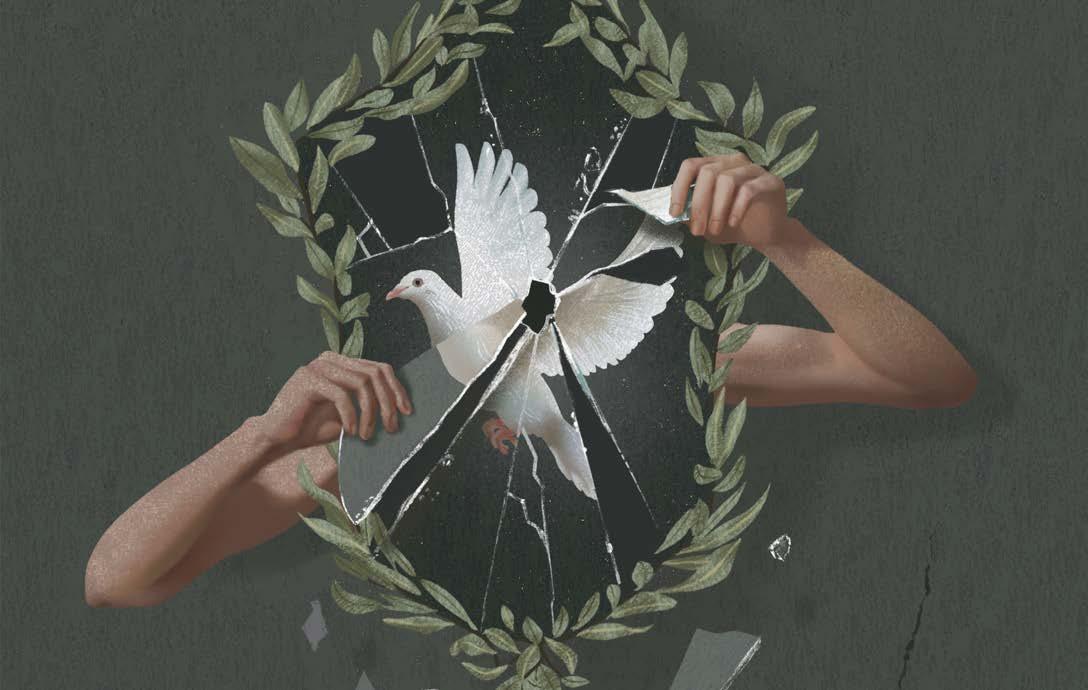
When illustrations go deeper than transcription, they become translation, and that translation has the power to draw a reader into even the blandest magazine article. Regardless of what the brief called for, when that magic happens, the artist has really done their job.
The process of translation provides a good metaphor for this experience. Everyone has their first language, and, for an artist, art making becomes a second language, one that involves the process of transcribing text to image. But transcription is not translation, not interpretation, and there are definitely job briefs that want just that. Transcription is like saying the same thing twice, and, if an artist has the chance to do more, they should seize it. Be it an article, a children’s story, a brief from an ad company—that opportunity for any additional interpretations outside of said text can easily be missed. A uniquely talented artist could create stunning and thought-provoking illustrations, ones that do more than repeat a verbal idea visually, for even the most mundane topic. When illustrations go deeper than transcription, they become translation, and that translation has the power to draw a reader into even the blandest magazine article. Regardless of what the brief called for, when that magic happens, the artist has really done their job.
One part of living in New York that I love is having friends from all over the world. There are several times I’ve read a novel that has been translated from another language into English and enjoyed it, but I can’t help but wonder what my experience of reading the book in its original language would have been like. Some words and phrases simply don’t translate into another language. An illustration takes the words and breaks them down to a fundamental feeling, a core concept that can be experienced by anyone, regardless of language or life experience.