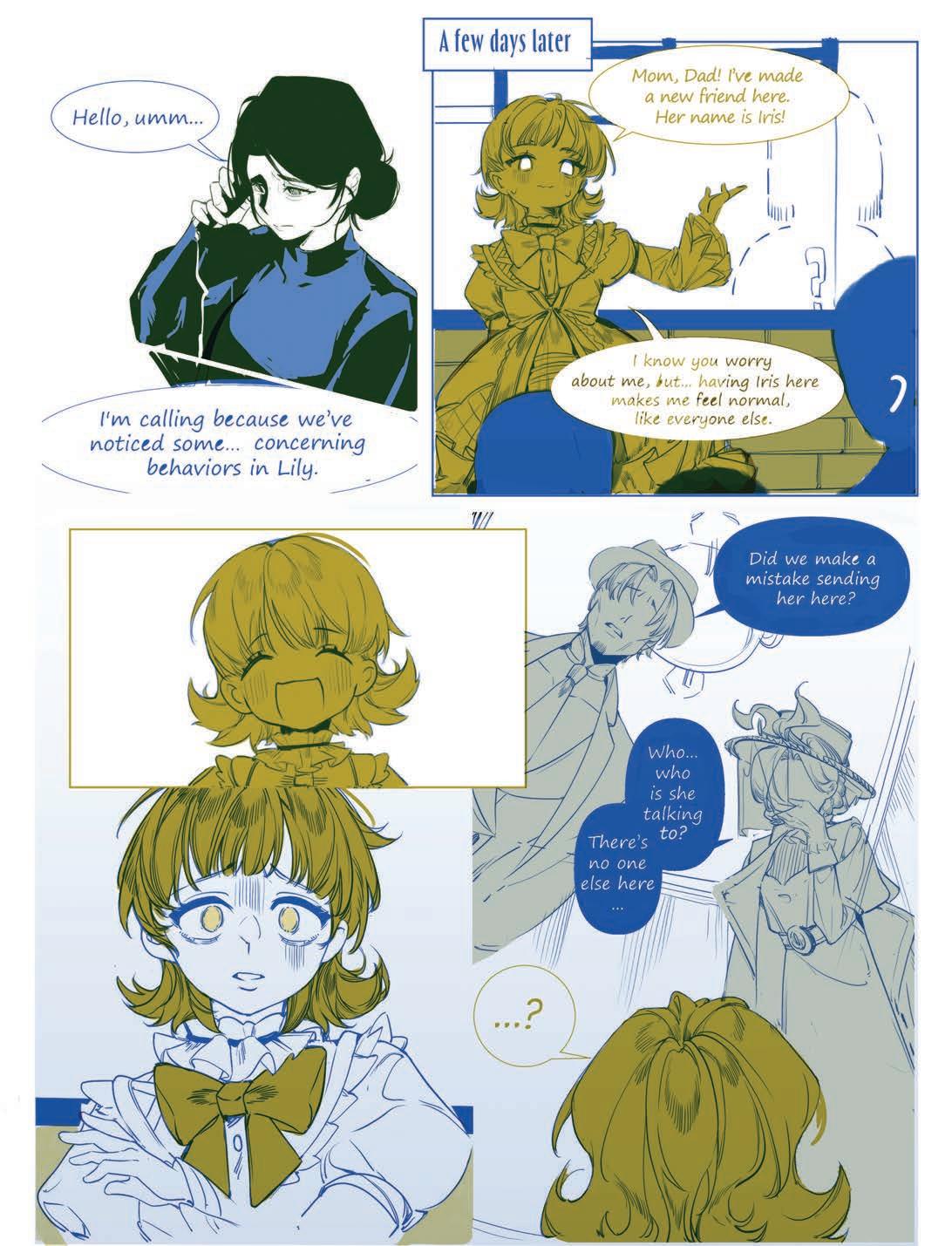
An Interview by Jason Little
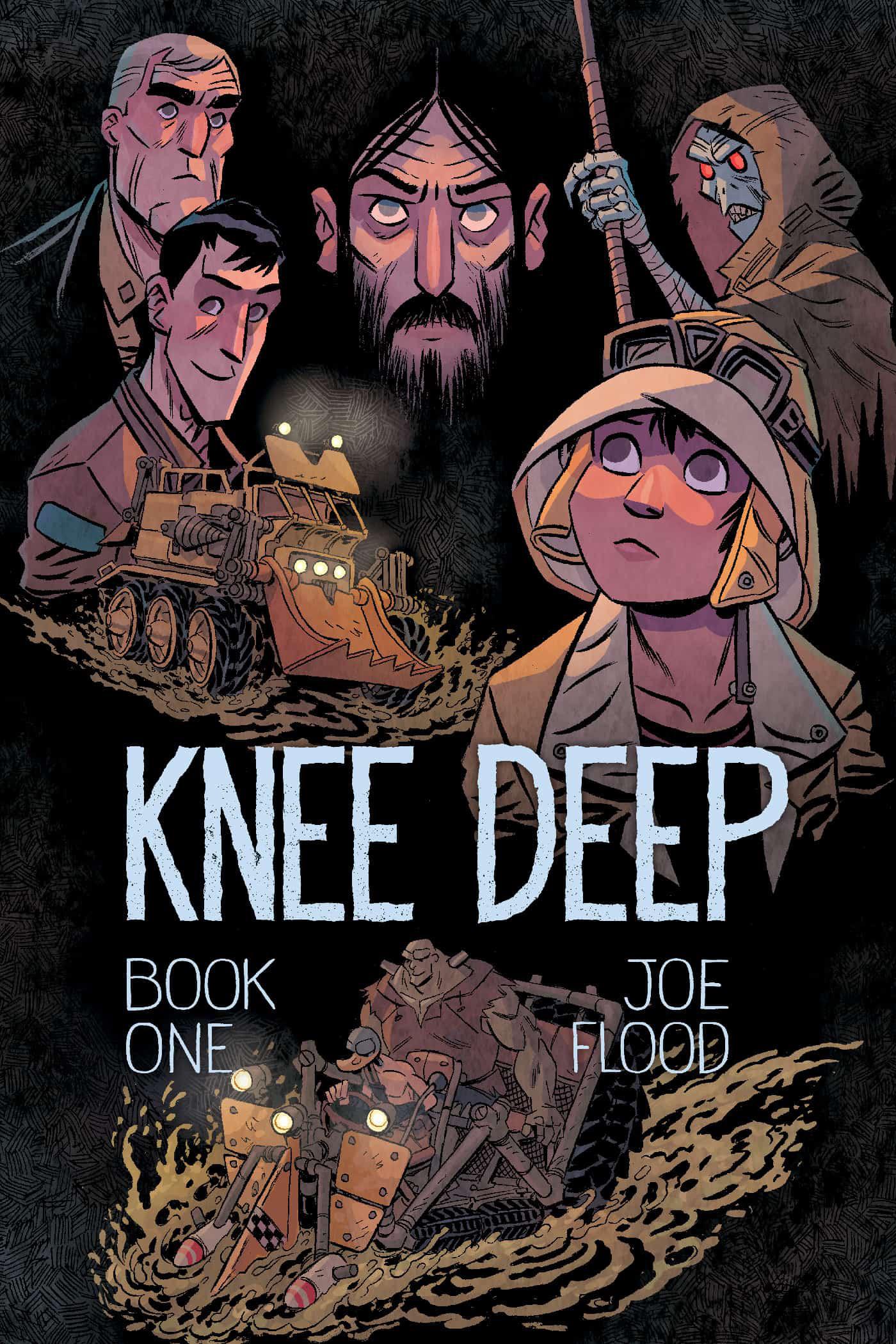
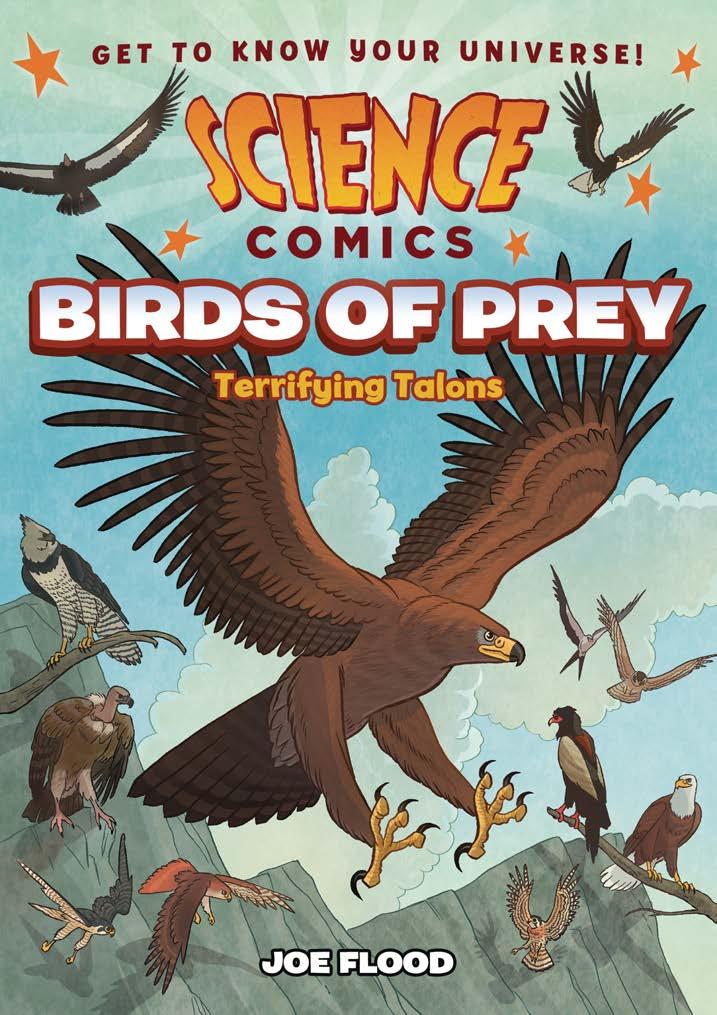
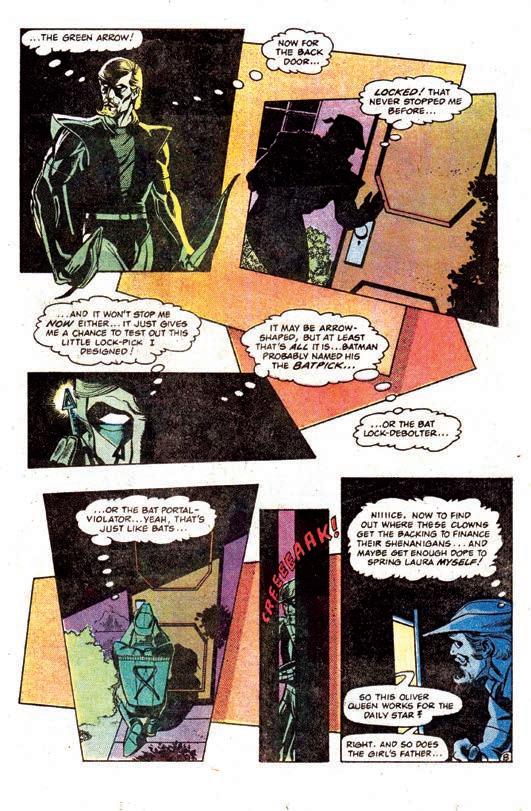
Joey Cavalieri (BFA 1979) is best known for writing Green Arrow and Huntress for DC Comics, and he has been a group editor at Marvel Comics and a senior editor at DC Comics. Joe Flood (BFA 2002) has drawn several graphic novels, including Long Road to Liquor City and Knee Deep for Oni Press, and three volumes on zoology for First Second’s Science Comics series.
Both Joey and Joe have returned to SVA to teach in BFA Comics. Joey has taught for 30 years, and Joe has just completed his first year. They overlapped during the late 90s when Joey was Joe’s teacher.
BFA Comics Coordinator Jason Little had the joy of chatting with Joey and Joe about their lives as comics students, teachers, and professionals.
JASON LITTLE (JL): Joey, after you graduated from SVA, what was your big break?
JOEY CAVALIERI (JC): DC was looking for talent, and they were recruiting from the fan base. Art Spiegelman had a special class at SVA, and he introduced me to Joe Orlando, who was also teaching here. Joe was actively looking for people at DC, and he not only got me started writing for the company, he eventually hired me as an editor a couple of years later. He also introduced me to my wife, and he got me started teaching at SVA. So I tell students that if they want a mentor, that’s the kind of mentor you want.
JL: Joe, what was SVA like when you were a student?
JOE FLOOD (JF): I met all of these great cartoonists at SVA, like Farel Dalrymple. These were people you could meet and pick their brains. They were selfpublishing. And I was like, “Oh! I need to self-publish.” Print comics were still the way to get your stuff seen. I remember Nate Powell’s early mini-comics. Ken Knudtsen did My Monkey’s Name is Jennifer, and he’s still going strong. I ran into him at New York Comic Con; he was there with the complete graphic novel that he had started when he was at SVA. These people were there making comics, doing it on their own terms. It was incredibly inspirational.
But it was incredibly difficult to do. I self-published, and I feel like I crashed and burned. I got, like, six issues in and just couldn’t keep it going.
JC: This was the science fiction thing?
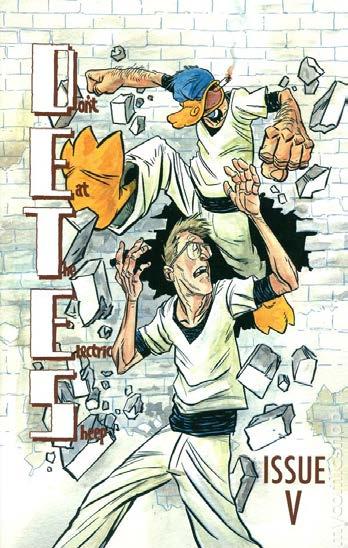
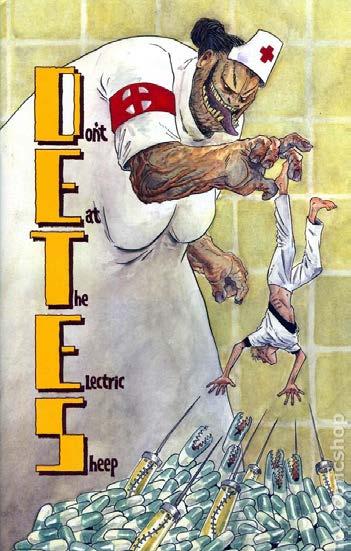
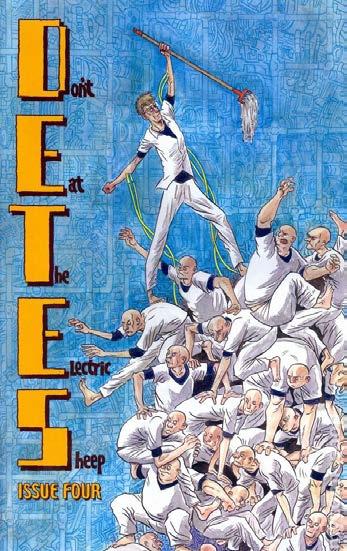
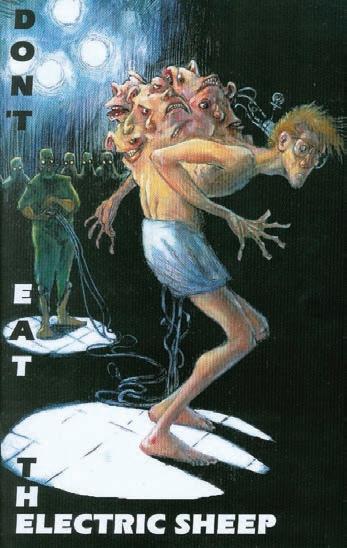
JF: Yeah, Don’t Eat the Electric Sheep. By senior year, I had one issue already self-published and a second issue basically done. It got picked up by Diamond for distribution, which was nice. And then it was like, okay, how do I get these professionally printed?
I showed Bob Schreck my comics. He was an editor over at DC, on Batman, at the time. He was like, “I love this. Your stuff looks so great.” And Schreck was laughing because it was funny, but then he said, “But you’ll never work for DC, not if you draw like this.” He was really straightforward. He’s like, “They’re not gonna get it. I love this. This is amazing. Keep doing what you’re doing.”
JL: Are you able to share that kind of experience with your students?
JF: Oh, yeah. I ask my students, “How many hours did you spend on this page? It looks gorgeous, but how do you scale that up and do two hundred pages?” Everything I do, I do with intention. Once I said to a student, don’t do an overhead panel for no reason. The next student had a panel where someone is stepping on a twig. And then the camera pulls back to reveal that they’re inside a giant dragon footprint. And I go, “There’s a reason. The camera pulled back to show the ground and them standing inside the footprint. That’s the shot that’ll work for that. There’s a reason for it.”
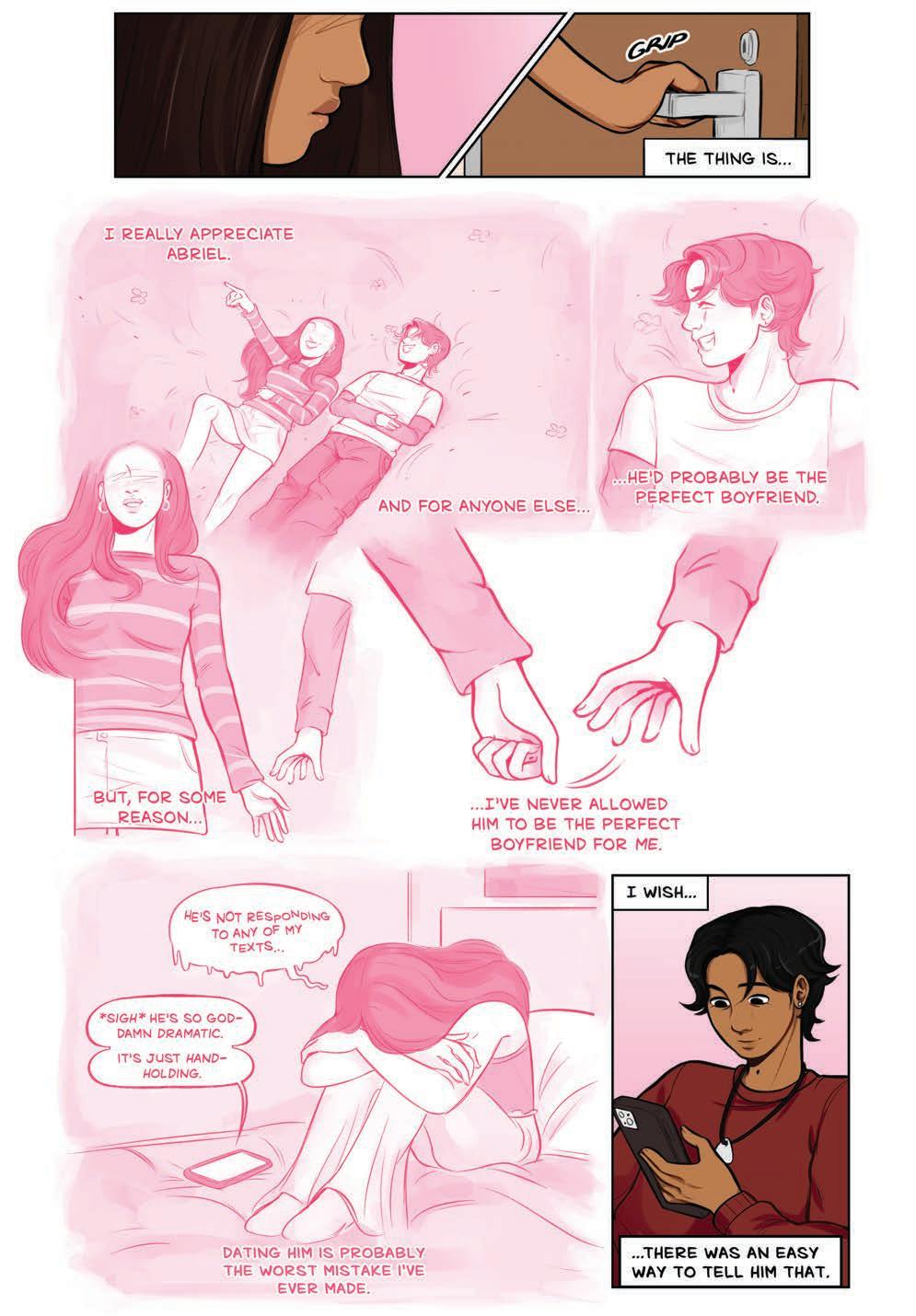
JC: In that thing you did for First Second, The Cute Girl Network, I was really blown away by how accomplished you were, with some of those down-shots of Brooklyn.
JF: I like drawing spaces. I like drawing environments. Every chapter starts with an establishing shot. I was like, this is where I’m really going to shine, this is what I’m bringing to the table.
JL: Joey, what was your experience as an SVA student like?
JC: I went to SVA because Will Eisner and Harvey Kurtzman were here.
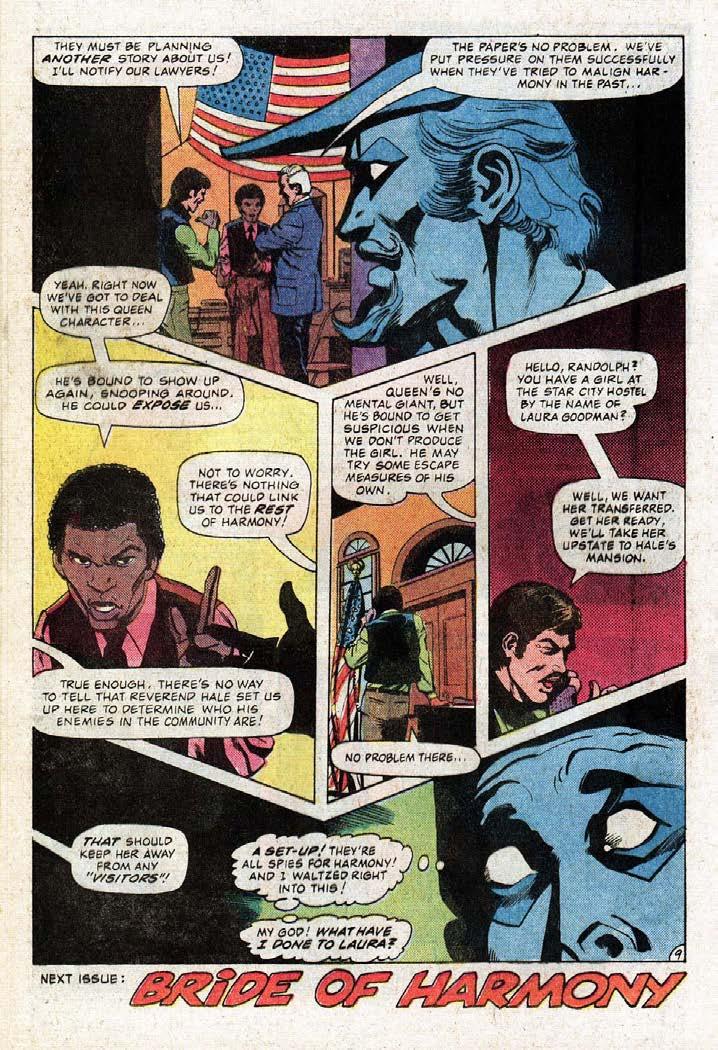
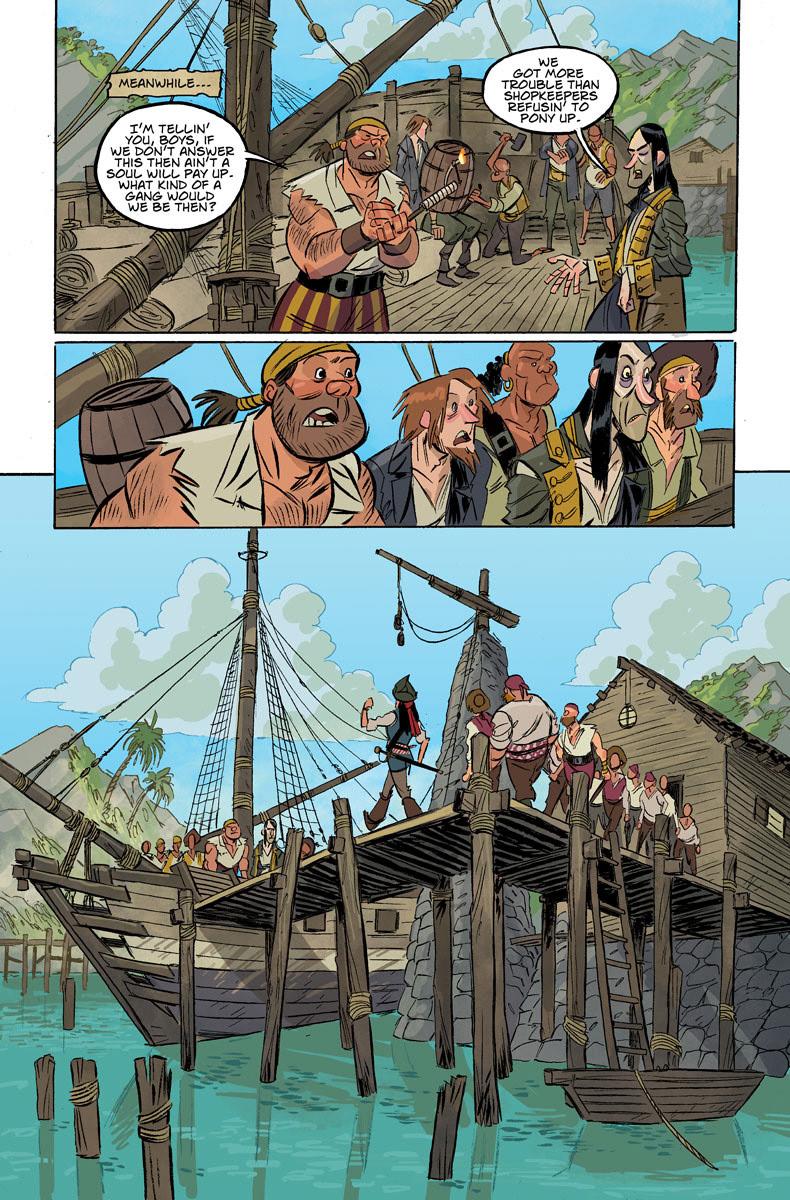
Because I was under the tutelage of Eisner and Kurtzman, I learned everything I know from them. There isn’t a day that goes by where I don’t reference something that I learned from either Will or Harvey, and I was able to make a living because they were my teachers. When I started teaching, I was a little nervous and I called up Will and said, How did you do this? And he gave me an outline of a typical class, and then I [followed] what he did as closely as possible. His class generated a lot of people who wound up in the business very successfully. It was a second golden age of illustration in the 1970s. New York Magazine ran a story called “Tribal Rites of the New Saturday Night,” illustrated in watercolor by James McMullan, who was one of my teachers. That story later became the basis of Saturday Night Fever I was really taken with underground comix. In Penn Station, there was a newsstand there that had tons and tons of underground comix. Art Spiegelman would always talk about how comics could be as important and as self-expressive as painting. And I understood that viscerally, that underground comix weren’t drawn by committee. Even the Marvel comics of that day were more personal. Steve Gerber, in Howard the Duck and Omega the Unknown, was clearly writing from his own experiences. It was like getting a letter from a friend every month. Illustration was king, but now I’m very surprised to see that the situation is reversed, that comics is booming, and that people are genuinely interested in graphic novels. And there has been an explosion of manga, and there’s been an explosion of Marvel in the public consciousness. My mother knows who Thanos is.
JL: Joey, did you want to be in comics when you were a high school student or even earlier?
JC: Oh, absolutely. But nobody around me understood what comics was. If you weren’t doing landscapes or very sensitive portraits in pastel or in charcoal, there was no help. I was doing early comics in my classes. Rather than do a paper, I was more than willing to do a comic book. Even if I had typed a fivepage paper, I’m sure I would have gotten through it faster. As much as I like to write professionally, it was so much
more fun to sit and do a comic book rather than write yet another term paper.
JL: Did you grow up in New York City?
JC: Yes, absolutely. I was born in Manhattan and raised in Astoria.
JL: What I’ve heard from Klaus Janson and Frank Miller was that they elbowed their way into comics by showing up at the Marvel or DC offices, straight out of high school.
JC: They had a lot more guts than I did. Frank was unstoppable, and Klaus too, in his own way. I didn’t want to try and crack it too early because I didn’t think I had the goods. I broke in as a writer, not as an artist.
JL: Joe, tell us why you got into teaching at SVA.
JF: I could be at home for eight hours a day in front of my drafting table, just doing comics and nothing else, but it becomes really insular. So I jumped at the chance to be a part of the SVA faculty. I thought my experiences would be very helpful to young cartoonists. But there’s a kind of a selfish reason to it. It gives me perspective on where I’ve been, where I am, and where I would like to be. It helps me be the teacher that I want to be. I never want to be stale and stuck in the past. My students are going to have experiences that are completely different from my own. This is a way for me to experience different things. It’s really enriching. I had one instructor who was kind of stuck in the past. A student brought in a Miyazaki comic, something that he’d never seen before, and he was like, “I don’t understand what I’m looking at. Why is this compelling? This looks terrible.” The student was astonished, “They’re the Walt Disney of Japan!” And my teacher was like, “I don’t want to live this way.” He couldn’t see the value in drawing or telling a story that way. The student, obviously, was, like, done at that point. They were like, “I don’t think there’s anything I can learn from you.” They just parted ways. The takeaway from that was: Never be either of these people.
JC: It doesn’t mean that you have to always embrace the new thing, but being exposed to it is wonderful.
JF: It’s not like I’m going to start reading Dog Man. My daughter is eleven and is absolutely obsessed with One Piece I was trying to get her to read Smile or Drama or Sisters. I said, “This is made for you! You’re supposed to love this.” And she was like, “No.” Like, oh, you’re the one kid who says “no” to Smile. That’s the other thing all the young kids are reading, Raina Telgemeier.
JL: I remember visiting you, when you and Raina were roommates at that apartment on Franklin Avenue in Brooklyn.
JF: There were a lot of stars coming
through SVA at that time. I had some painting and drawing classes with James Jean. Nate Powell had just graduated, but Raina was there. Dash Shaw came a couple years afterwards and also Becky Cloonan. Amy Kim Ganter was in the same class as me, she has books out with Scholastic Graphix. Tom Herpich and, Phil Rynda, went on to work in animation. Phil went from Cartoon Network to Nickelodeon to Netflix.
SVA was actively trying to expand the Cartooning department, and the pool of talent was there, they just had to uplift them. It was like, “Your comics thesis is going to be exhibited in the [Gramercy] gallery.” That had never been done
before. They had the first Fresh Meat, this little mini comic book convention. The same year that I graduated was the first MoCCA Fest. A lot of stuff was happening all at the same time.
I took Jim McMullan, and I took two years of drawing with Jack Potter. He was the polar opposite of McMullan. It was so incredible. At one point, I was taking them both. I was stacking my classes. I took eighteen credits so I could have two back-to-back drawing and painting classes. It was an incredible thing to have this yin and yang of drawing teachers. McMullan was all about the figure, form, and how the body is put together. Jack Potter was just like, consider 20 things in the room. How do you make them all come together? And the comic book people loved him because he’d have you draw a box around it, to define the composition. It was two very different aspects of drawing coming together. If I heard that an instructor was a real hardass, I would take the class. This person’s going to challenge me, I’ll take the class.
JC: I was too intimidated to do that as a student. I tell students, if I had to do it over again, I would do it that way. I would just take the classes that would be the most challenging and try to get straight Cs, because with a hardass you’re going to get straight Cs anyway. Right? So you might as well do it. Don’t take the path of least resistance.
JL: Joey, after you graduated and wanted to begin your career, did it turn out the way you expected it to? What were the obstacles, and how did you overcome them? What were your solutions?
JC: Art Spiegelman was really good about trying to hook me up with people, and sometimes that worked and sometimes it didn’t. As Jesus said, “Knock, and it shall be opened unto you.” He just didn’t say how many doors you had to knock on. I tried to do writing for various underground publications. They would pay you 50 bucks for an article but then try to screw you out of the 50 bucks. It was tough to pay the rent. Until I hooked up with Joe Orlando, there wasn’t a place for me to work on an ongoing basis and get paid regularly. I started on what they used to call the DC Mystery books. They couldn’t call them horror comics because of the Comics Code. They were various anthology books where you could script a short story, five to seven pages. You’d start by pitching five or six little springboards, little synopses. And the editor, Len Wein, would pick one for you to work up as a script. You would try very hard to come up with a visual hook, either the setting or the situation, that would make good pictures, and each story would have an O. Henry or Rod Serling–type twist ending. If you played your cards right, you could get a steady stream and pay your rent that
way. In those days, I was paying three or four hundred dollars a month for a rent-stabilized apartment. That was phenomenal, there’s nothing like that now. Eventually, if you were good, or if people took notice of your work, the editors were eager to see how you did on a series. The first series they offered me was the Creature Commandos. It’s Frankenstein, the Wolfman, and Dracula fighting World War II. Having spent a lot of time around Spiegelman’s loft while he was drawing Maus, I felt that maybe I was not the guy who was going to show Dracula biting Nazis. So I turned it down. And they were flabbergasted that anybody would turn down an opportunity for a series! Eventually they came back to me with other assignments, and I was far happier.
JL: When you had Spiegelman at SVA, did Art bring the whole class to his loft? Or did you have a special relationship?
JC: We did, for a little while, yeah. I was doing some odd jobs for Art, kind of the way that Paul Karisik did later. We were there at about the same time. Mark Newgarden was also close to Spiegelman at one point. So you could see what Art was working on. I got to hear Vladek’s voice on tape. I got to see Raw in its nascent stages. That was really exciting. Art had a class full of interesting people. I think Wayne White was there, and Drew Friedman, Mark
Newgarden, and Kaz. Despite the fact that I was obsessed with R. Crumb and what the underground could do, I’m the guy who went into the mainstream. It’s very strange that it happened that way. But you don’t have a choice about which doors are going to open when you knock on them, you just know that the door opened. I remember my very nice, polite, encouraging rejection letter from Arcade magazine, from Bill Griffith, which I still have somewhere. But you know, the door that opens is the one you walk through. Joe Orlando got me started.
JL: How did you get into teaching at SVA?
JC: The former head of BFA Illustration, Jack Endewelt, was looking for people to staff the cartooning department. He asked Joe Orlando, and Joe first recommended his more favorite son, and when they found out that there were so many students that they needed somebody else too, then Joe went to me. The other teacher lasted a semester, and I’ve been here for, like, 30 years.
JL: Were you teaching alongside any of the teachers with whom you had been a student? Was Spiegelman still there when you started teaching at SVA?
JC: Not Spiegelman, no. But I was shocked to find that a lot of the teachers that I had when I was a student were still there. It was like, Welcome Back, Kotter. It was like, now I’m being paid back for being such an asshole. I just remember what it was like. That’s my superpower, is that I remember what it was like to be a 20-year-old knucklehead in class. And I try to be understanding when [my students are] behaving like knuckleheads.
JF: When I was Joey’s student, I knew that he was the mainstream guy with an affinity for underground comix. That was really inspirational to me because it was a crossover. The Bizarro Comics anthology came out the year I graduated. I remember seeing it and being like, it’s Joey’s book! And I was taking your class when the book came out. So again, things came together in a really nice way.
JL: Joey, you looked to mentors for hookups to jobs. Joe, it seems like your recipe for success is productivity. But let’s not forget that, Joe, you worked
at New York Central Art Supply before making a full-time living on comics.
JC: I miss that store.
JL: Joey, did you have a low-paying job before finding a foothold in comics?
JC: I was in the university of Barnes & Noble for three years, where I probably read more books than I did at SVA. That was a lot of laughs. I would get requests for things like “Bullwinkle’s Mythology.” Tim Chamberlain is a terrific cartoonist who did a comic about working in a comic book store, called Our Valued Customers. It pretty much sums up the retail experience.
JF: I also used to do caricatures at Great Adventure, the Six Flags theme park. I think that is the worst out of the worst jobs. The art supply store was a walk in the park compared to eight hours at the Meadowlands racetrack and a line of 40, 50 kids and just nonstop caricature drawing in August heat and humidity in New Jersey. One kid gets up out of the seat, and another kid gets into it, and then there’s some parent breathing down my neck. And it was just grueling, drawing for eight hours straight, nonstop. At some point you’re not really even drawing anymore.
JL: Do you feel that your your drawing practice improved from all that—
JF: No. It would make my drawing worse. Because you would have to intentionally draw badly in order to get through the day. Read Dan Clowes, “Caricature,” the short story, he sums it up. Someone brought in a photocopy of that, at Six Flags, multiple copies, and passed it around at one point, because he was like, “This is our experience.” And it was a hundred percent on the nose. I did it to supplement the art supply store stuff. At New York Central I made 10 dollars an hour. Doing caricatures, you can make three hundred dollars in, like, four hours.
JL: Joe, once your comics career had begun, were there mistakes or missteps?
JF: When I was self-publishing, if I could have done print on demand, I could have had books that looked professionally printed but then only as much as I needed for my conventions and what I needed to fill for the orders. Instead, I had an apartment full of books that just were
not selling but that I had paid for. I had not properly budgeted that out. I was so excited to self-publish, I just threw myself into it headlong without realizing what I should actually be doing. Really I just needed to get a few copies of my books into the right editor’s hands to get that next job that actually would pay and get the ball rolling with my career. Students have access to that now at SVA. I tell my students to go to the C.I. Lab and print your book. And they have perfect-bound binding, so there’s no excuse. By the time I graduated as a senior, I had 60 pages of comics ready. I needed to start self-publishing because that was the only way I was going to get people to see my work. That’s the thing: You have to have pages and pages of stuff. That’s what being a cartoonist is like. If you are trying to get work but have drawn only 10 pages of comics, editors are going to be like, “Give me a call when you have 80 pages of comics, because that’s like half a graphic novel, and maybe we can work with that.”
Becky Cloonan showed Don’t Eat the Electric Sheep to Rick Spears. Rick had his own imprint, Gigantic. And Rick said to me, “I’ve got a script, and I need a hundred pages. I can give you a thousand dollars.” I was like, I can make that work. I had a full-time job at an art supply store, and I was drawing in the evening. How soon did he need a hundred pages? Like, a year. I can do a hundred pages. That year, I had drawn two hundred pages, that I tried to self-publish and went nowhere with. So I said, “Let’s do this.”
The reason why it wasn’t successful is because Gigantic’s distributor filed Chapter 13 bankruptcy, held all of Rick’s money, and locked up our books. The court order said that all the assets had to be frozen. Rick was like, “Joe, I’m sorry. I can’t pay you. I don’t even have the money to publish the next two installments of this book.” And I was like, “Well, I finished it!” And he’s like, “Well, let me talk to a guy at Image, and I’ll see what I can do.” And we did it—we ended up shifting it and publishing it through Image.
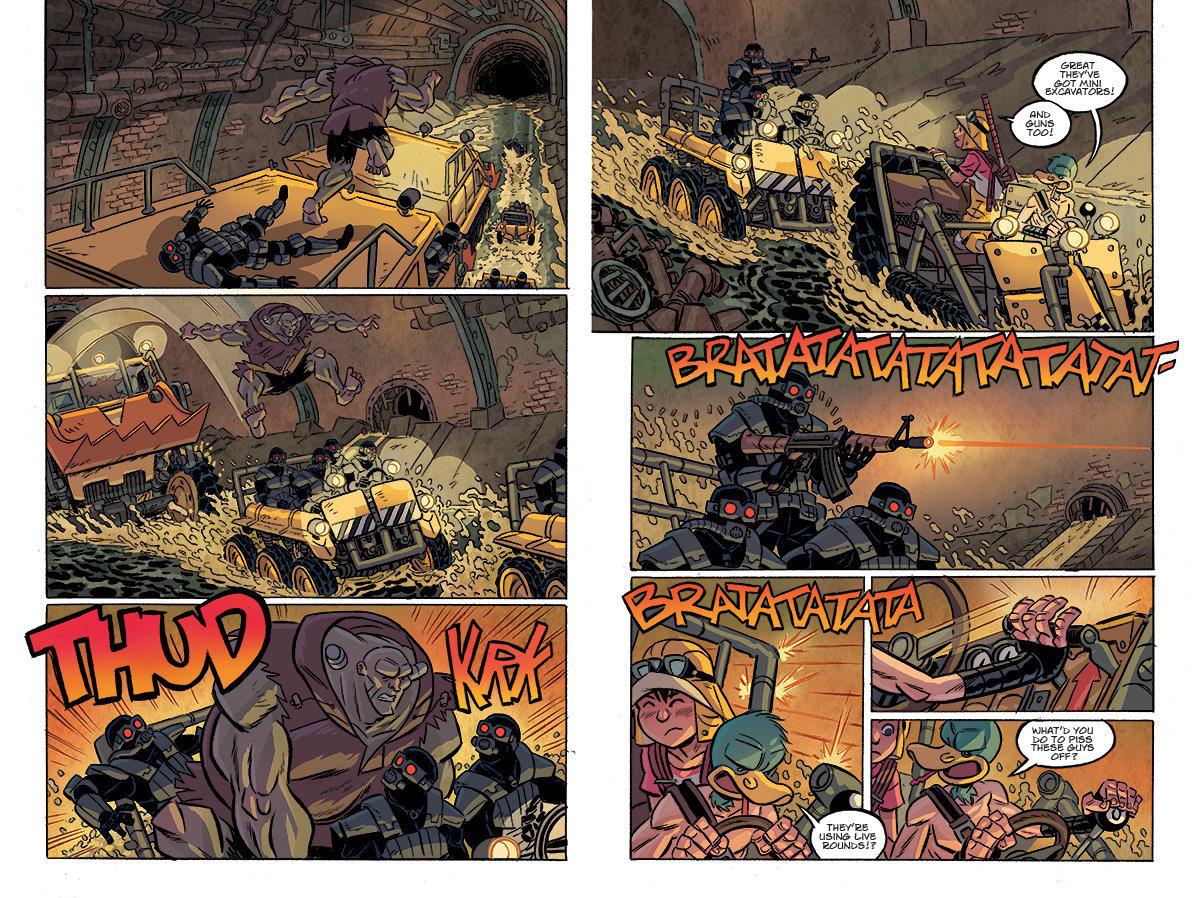
Mark Siegel saw that I did a 300-page graphic novel through Image and said “Hey, you want to do something with me?” So then I started doing books with Mark Siegel and Calista Brill at First Second, starting around 2008. I’ve had a very long-standing relationship with them. They don’t always say yes to every project I bring across to them, it’s still not a sure thing. So even when you have these established connections, you still have to be cautious. You can have these established relationships, and then there’s a corporate merger, or a bankruptcy. I think I’ve had the rug pulled on me four times since then, where there was money and a contract, like, locked in. And then it was like, “We’ve been bought and merged with this other company, and they’re not really interested in doing your project.” You put your eggs in one basket, and then that basket just evaporates in front of your face.
Right now my strategy is, if I’m going to commit a year or two to a graphic novel, I have to own it, lock, stock, and
barrel. I have to know that it is going to sell, that it is going to hit its target audience. With First Second, I know if I do this type of book, like Science Comics, I’m good to go. That’s really important, prioritizing the work that you know is going to be seen, is going to get into people’s hands, and is going to bring you the most return on your time investment. ◆
CAPTIONS
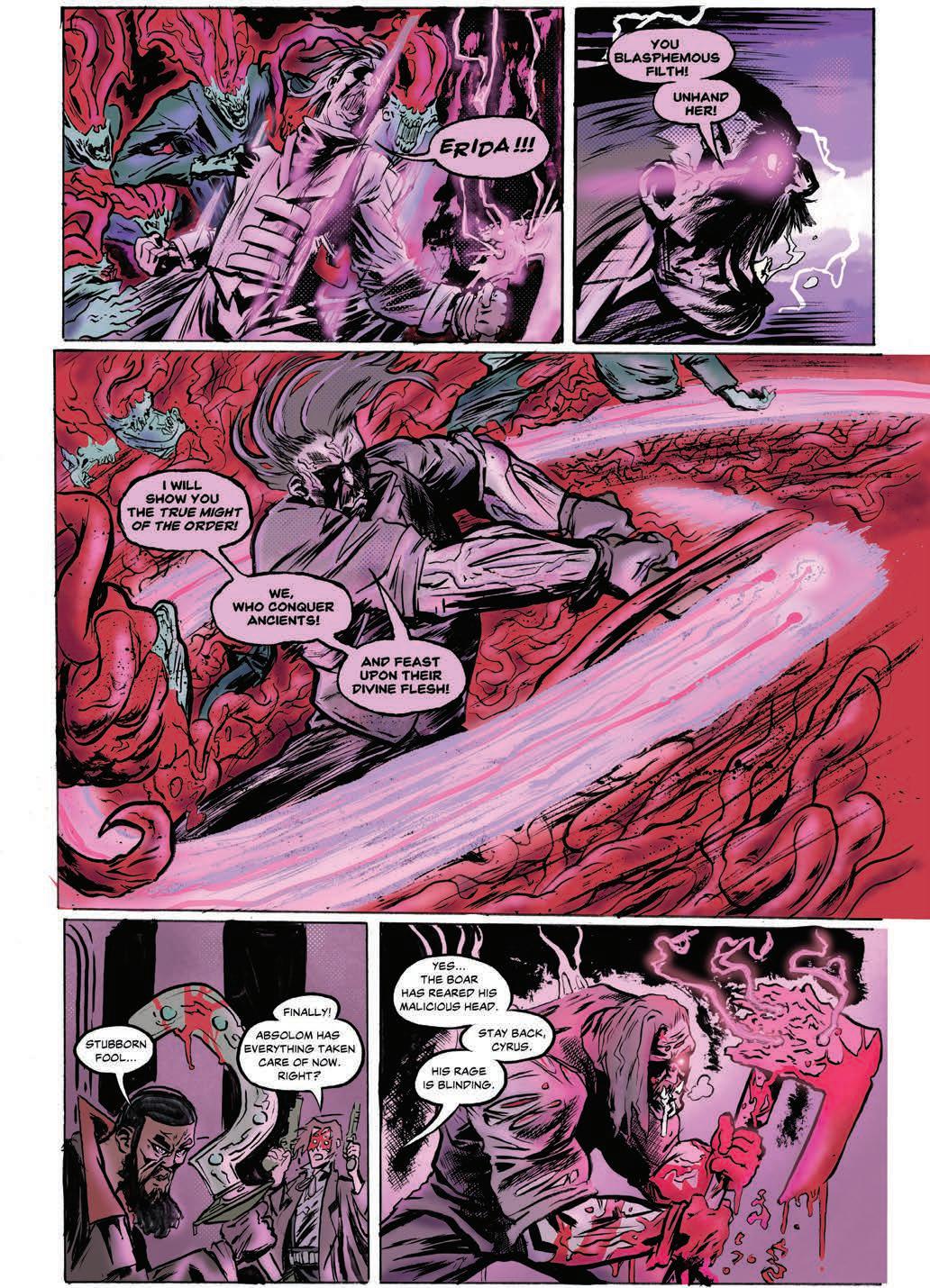
1. ©1986 DC Comics. Art by Ernie Colon and Frank Giacoia.
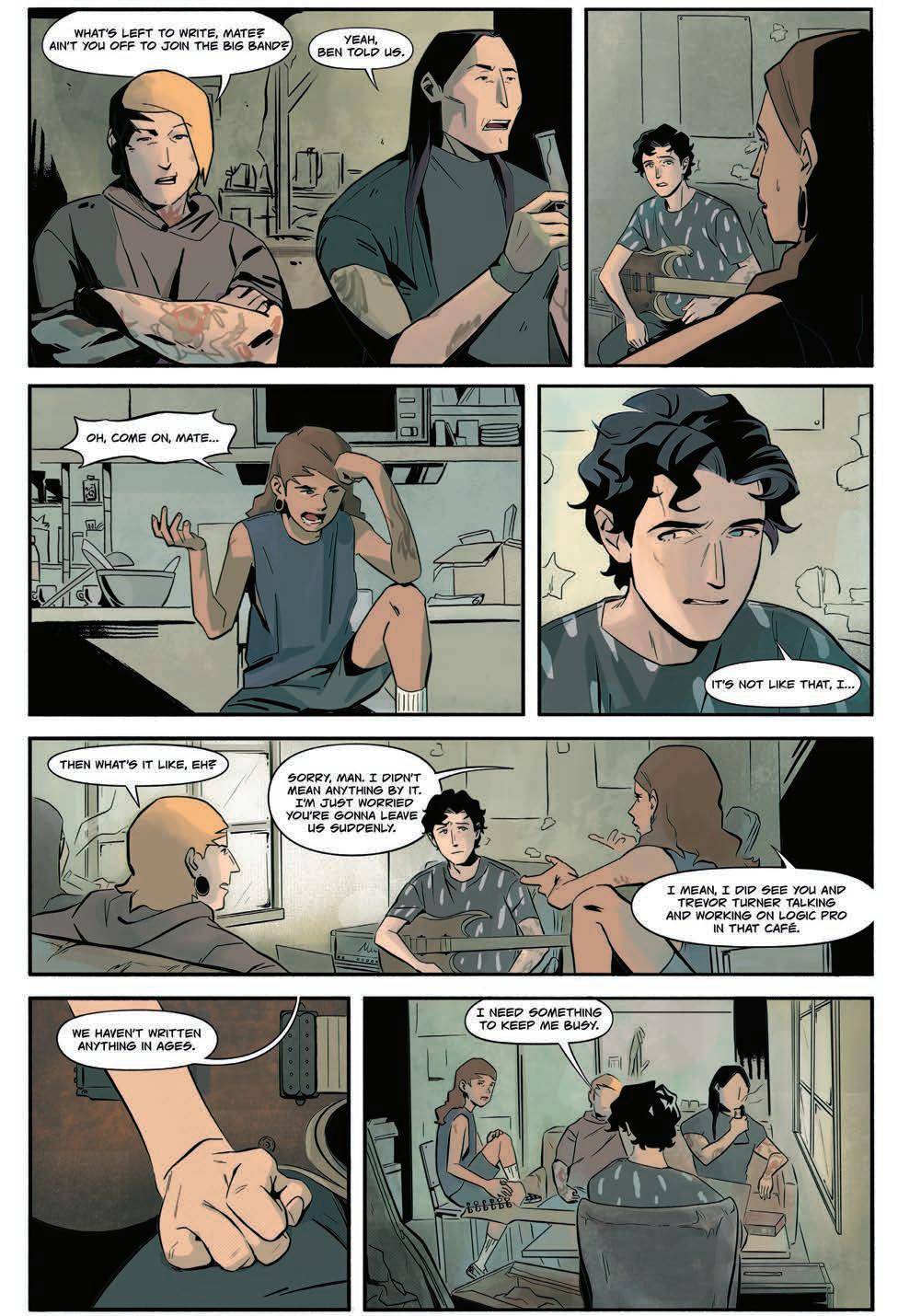
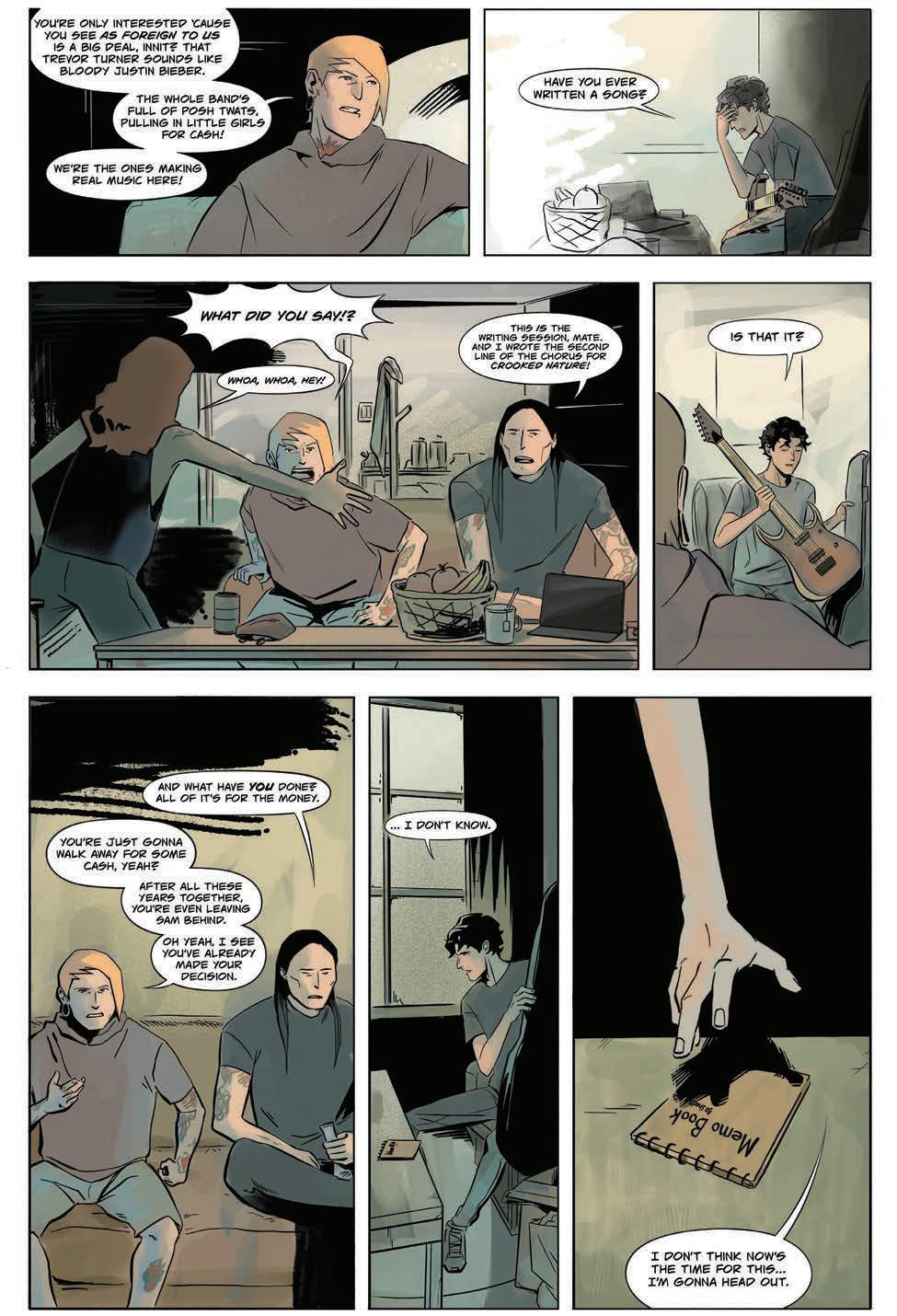
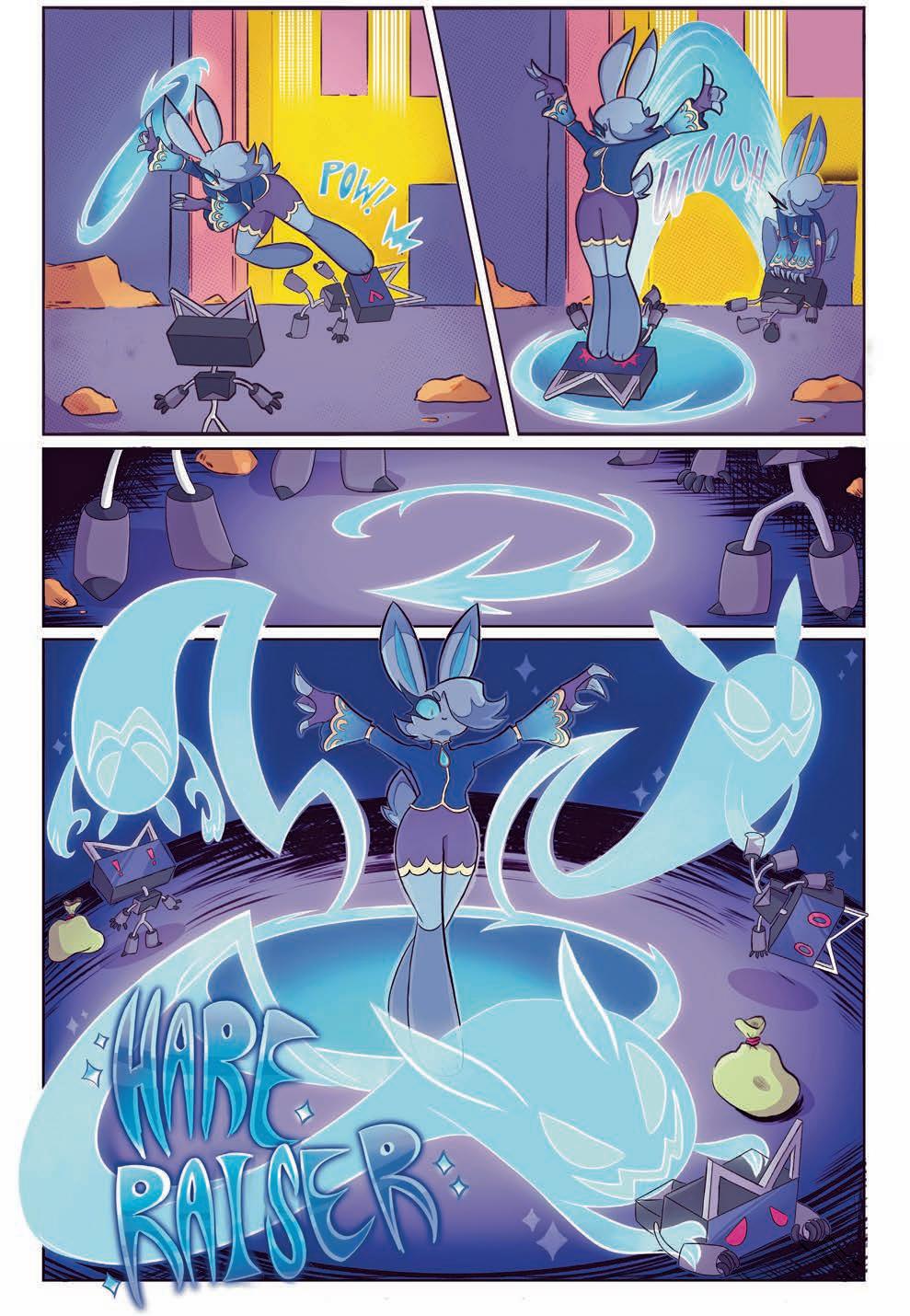
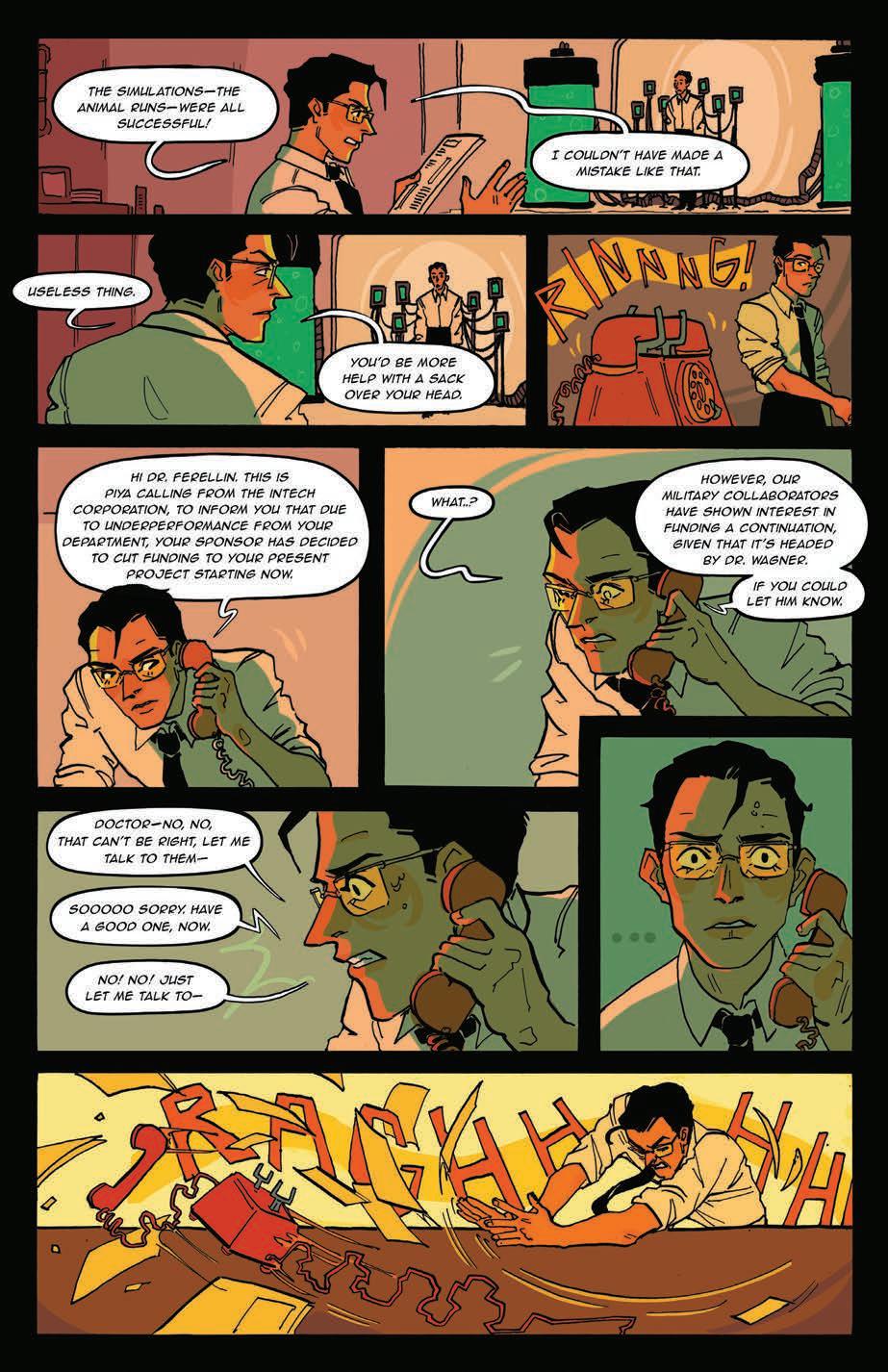
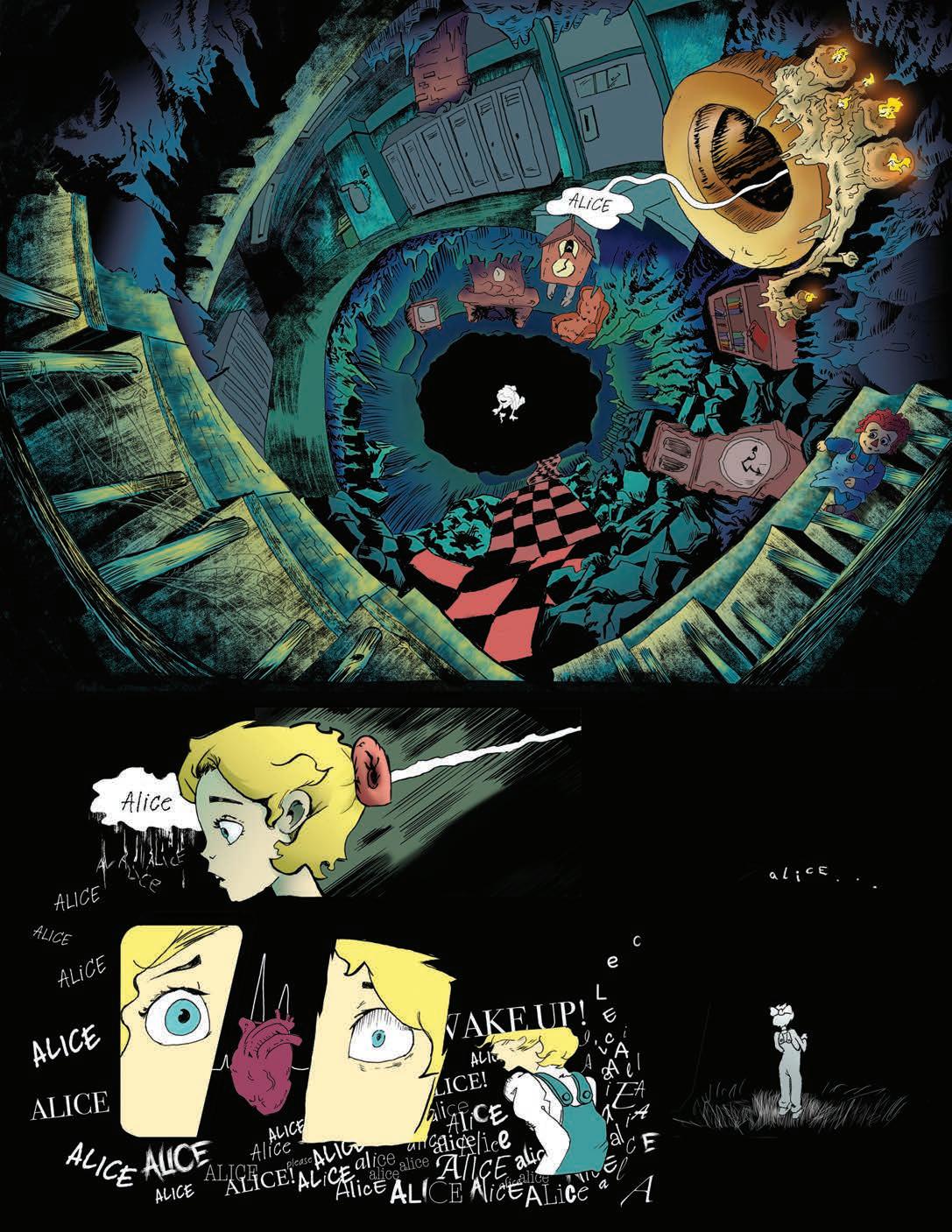
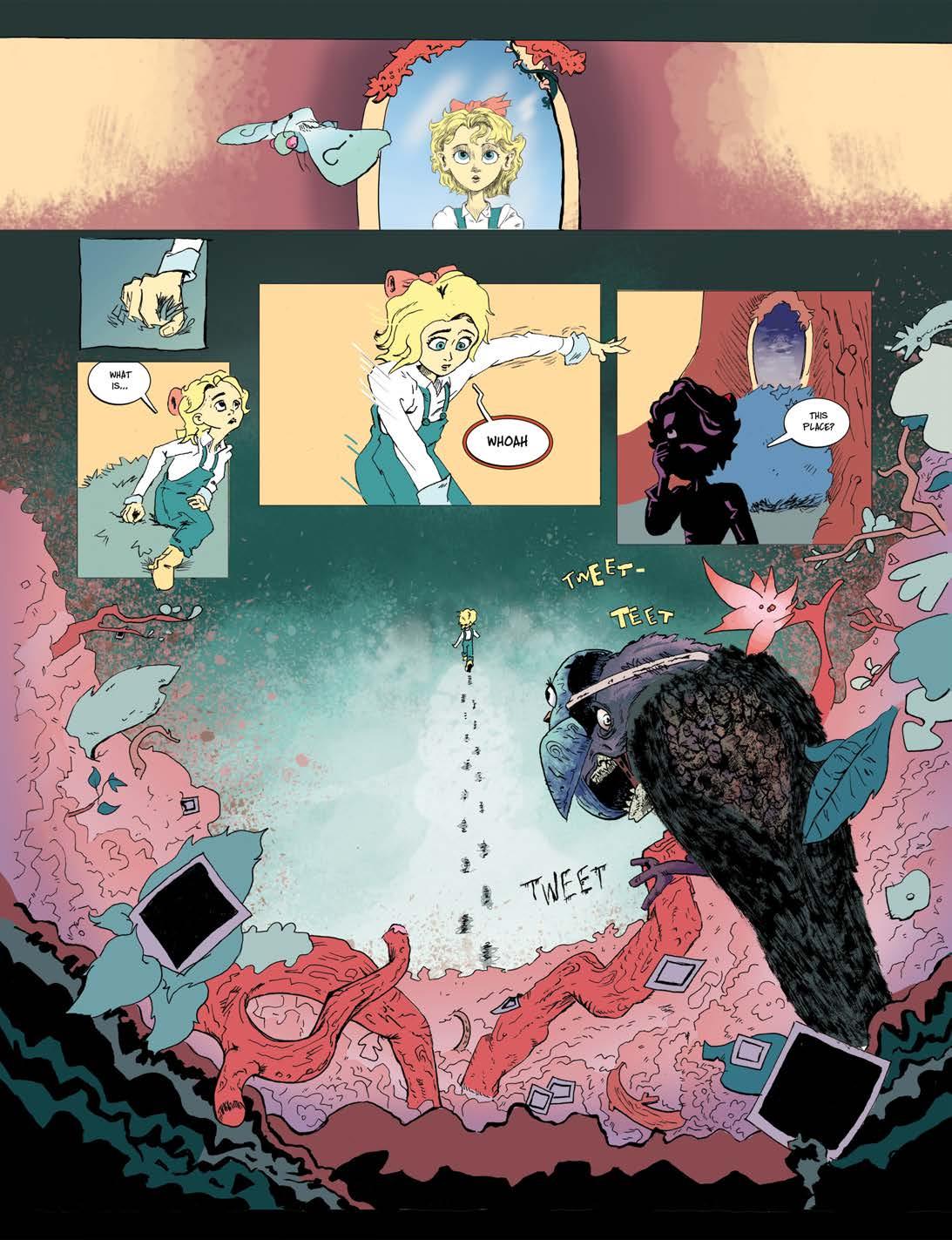
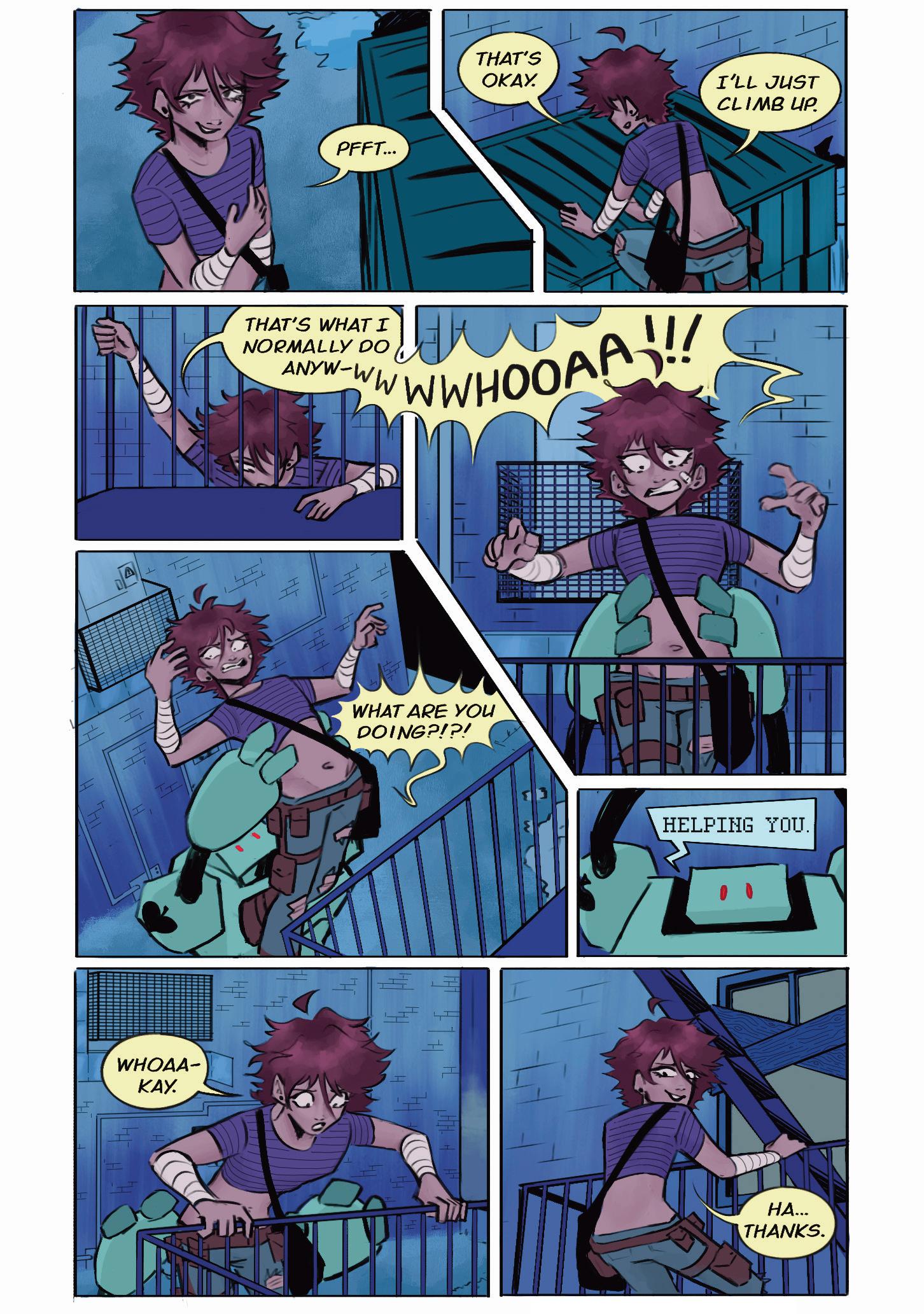
2. ©2023 Oni Press.
3. ©2004 Joe Flood.
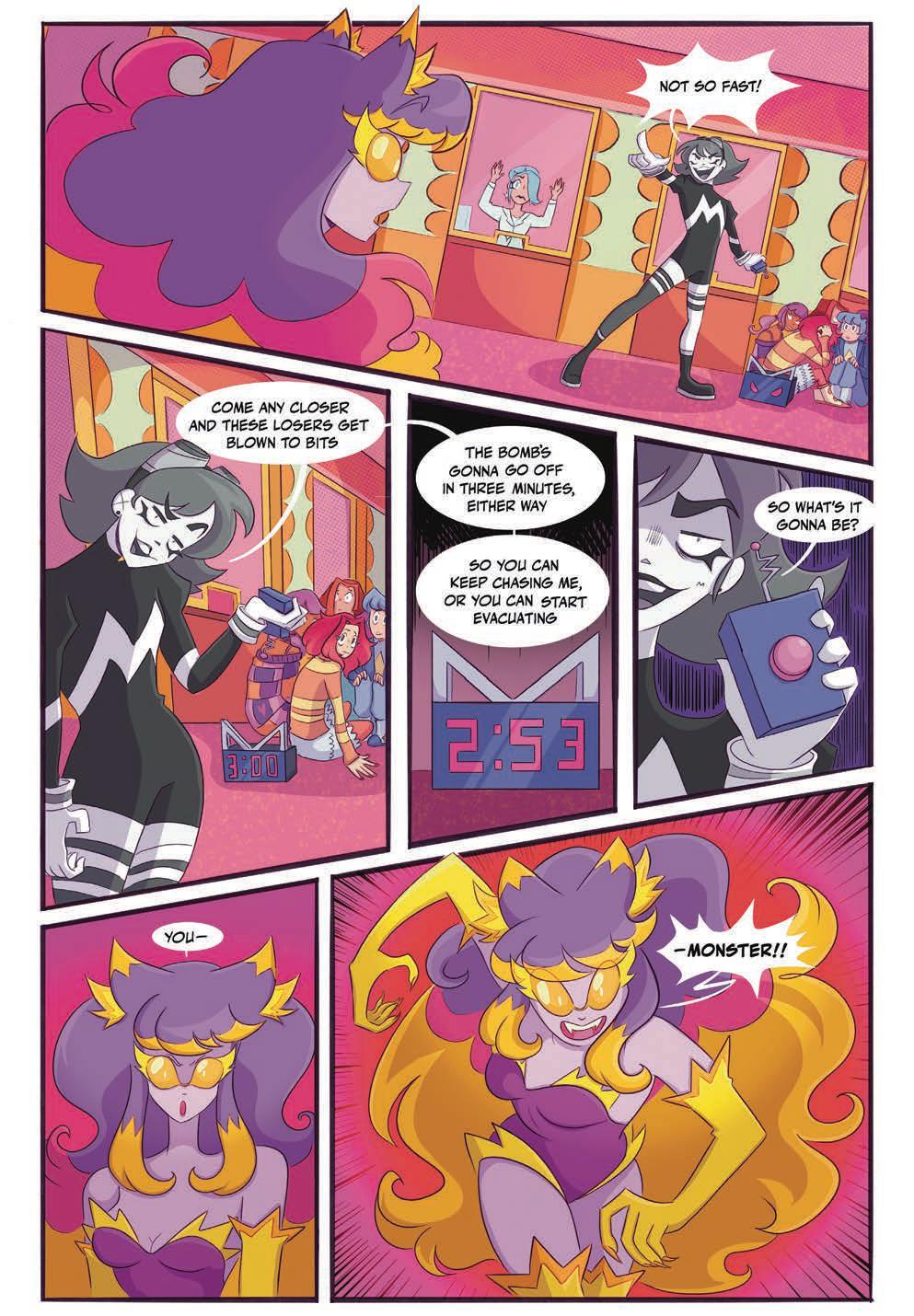
4. ©2023 Oni Press.
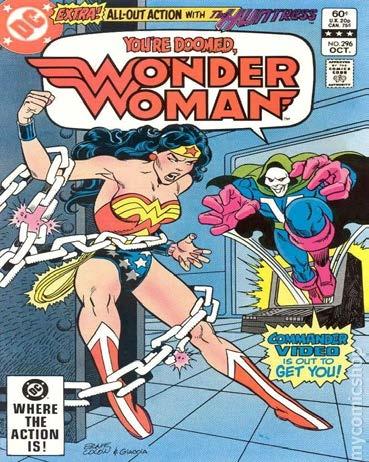
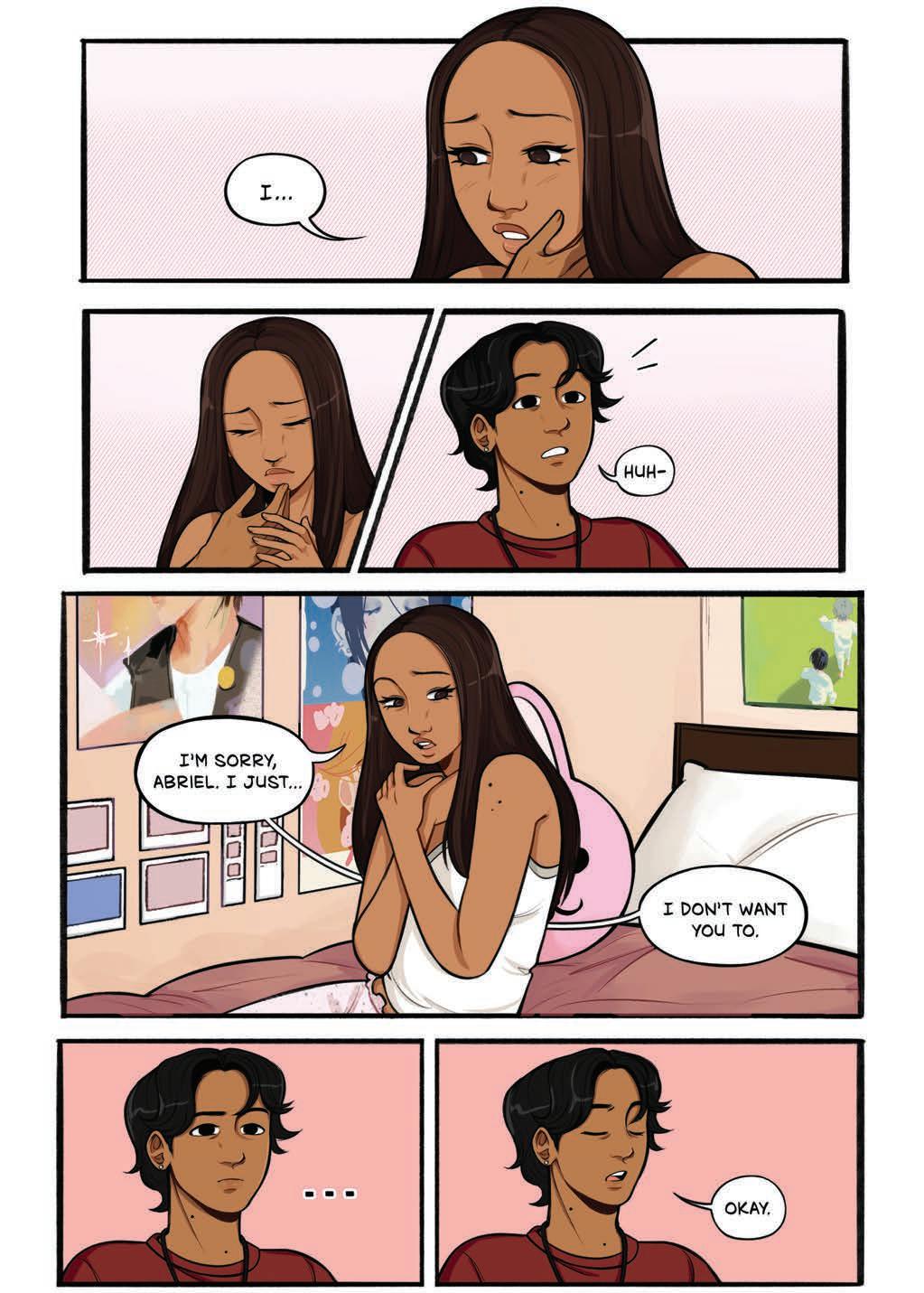
5. ©1982 DC Comics. Art by Trevor von Eeden and Larry Mahlstedt.
6. ©2004 Joe Flood.
7. ©2004 Joe Flood.
8. ©2004 Joe Flood.
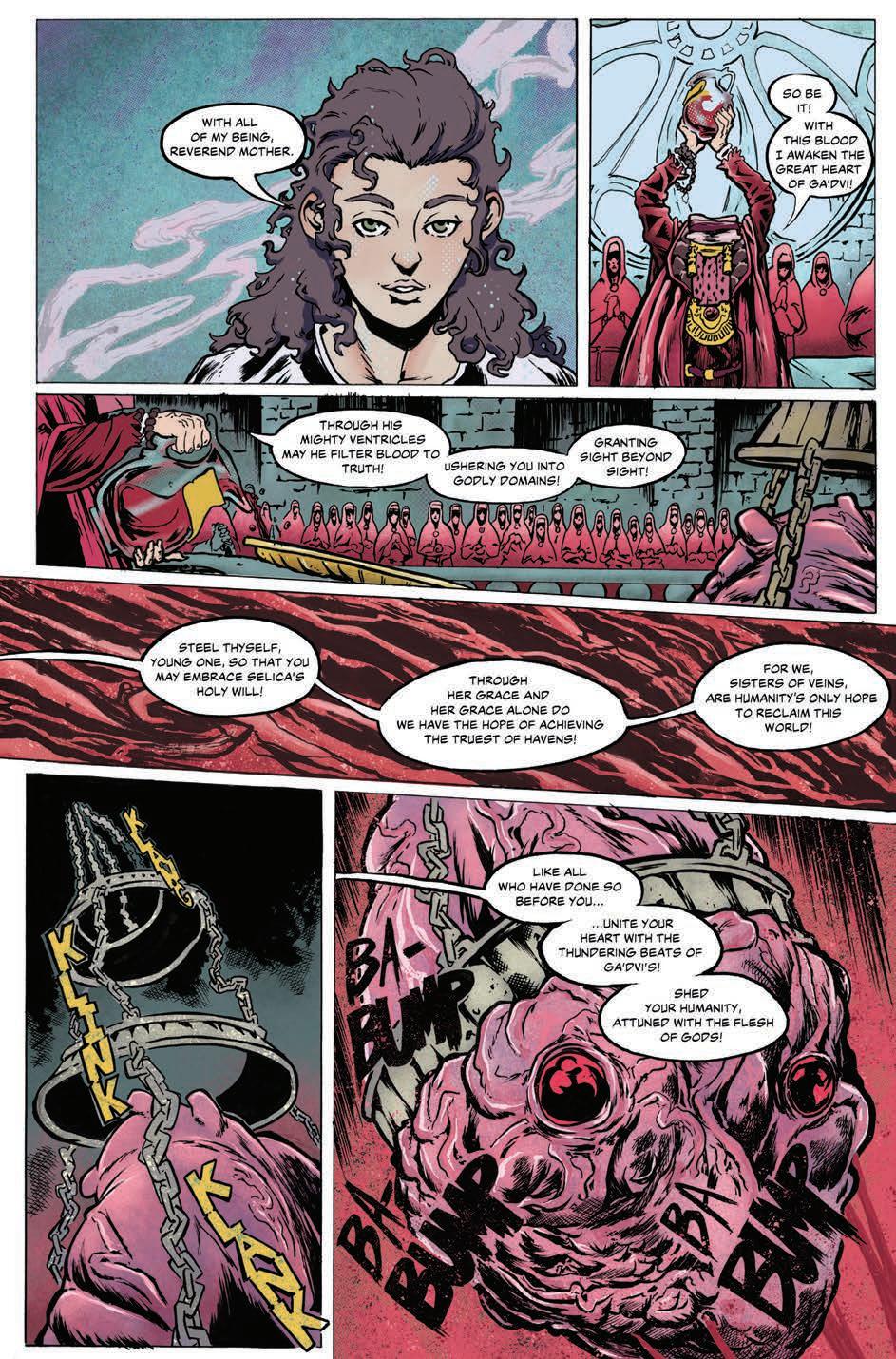
9. ©2022 First Second.
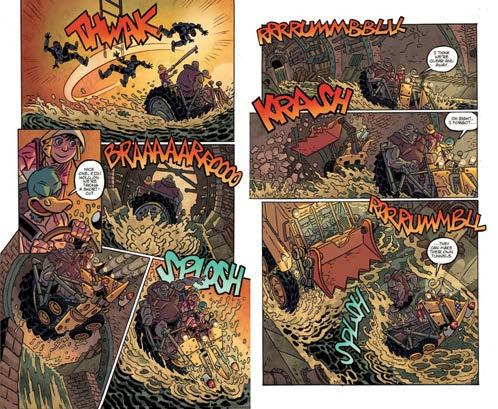
10. ©2016 Joe Books.
11. ©2023 Oni Press.
12. ©1982 DC Comics. Art by Trevor von Eeden and Larry Mahlstedt.
Building Community in Comics by Lydia Nguyen
American cartoonists who are influenced by manga tend to perpetuate a persistent myth about the manga industry. This myth is that the manga industry is better than the U.S. comics publishing world because manga artists have the freedom to draw whatever they want. Looking at the breadth of manga series that you can buy in Japan, you can understand why some U.S. cartoonists may feel this way. While the U.S. graphic novel market is growing, there is nowhere near the broad readership to support the diversity of stories and number of long-form series for every age group that the manga market can support. And while U.S. readers are now more aware of the intensity of an average manga artist’s schedule than they were during the initial manga boom in the early 2000s, creatively speaking, the manga industry still represents a tantalizing glimpse into what U.S. comics could be for many cartoonists hoping to make a living telling stories they’re passionate about, here at home. If we buy into the idea that the manga industry is just “built different,” then it’s easy to point at manga, which is selling well in the U.S.—and even outstripping the sales of most home-grown graphic novels—and ask “Why can’t we just make comics like that?” But publishers like Tokyopop, Seven Seas, and Viz have all tried to crack that nut and publish original
manga from English language creators. They have had mixed success. If it was that easy to change the industry, it would have happened already.
However, if we look at how manga artists and publishers chose to consciously shape their industry over time, then a very different picture emerges, one which provides a fuzzy roadmap to what long-term change could look like at home in the U.S. In fact, there are direct parallels that can be drawn between the push-and-pull of indie comics and the demands of the traditional publishing market at home and the development of the manga industry in Japan. I’m interested in how some of the most famous manga artists of their time—Osamu Tezuka, Sanpei Shirato, and Shigeru Mizuki, amongst others—consciously platformed new voices in their industry.
Osamu Tezuka, considered colloquially to be “the God of Manga,” is cited as a major influence by almost every famous manga artist who followed him. But he did not emerge in a vacuum, and has frequently cited his pre–World War II influences, including Shishido Sako’s Speed Taro (which could be argued to be the real first manga to use cinematic action shots). Tezuka was an avid reader of comics and manga, carefully analyzing and copying what he consumed. So it was perhaps only natural that his first major manga series would
be serialized in a magazine created by Kenichi Kato, former editor of Kodansha’s most successful boys’ magazine, Shonen Club. Kato had discovered many of the manga artists that had inspired Tezuka when he was younger.
Kato had been one of the most influential people in publishing during the lead-up to World War II, but, like many high-level Kodansha employees, he was branded a wartime collaborator during the postwar American occupation. Forbidden from working in publishing, he founded a new company, Gakudosha, in secret, naming his wife and daughter as the public “owners” of the company. From this flimsy ruse, Manga Shonen was born in 1947.
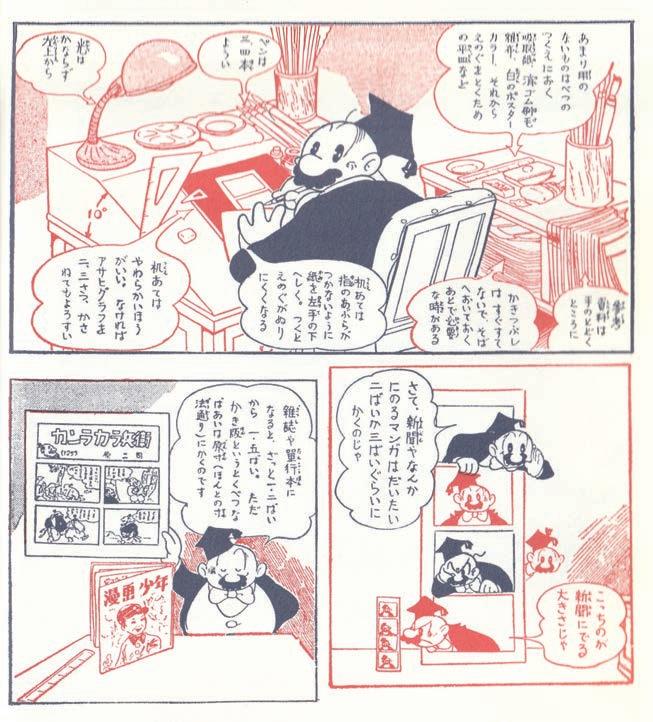
Manga Shonen actively encouraged its young readers to submit manga, drawn on the backs of postcards, to the magazine. The best submissions were published in every issue of the magazine. Once Tezuka’s Kimba the White Lion was picked up for serialization in Manga Shonen in 1950, Tezuka began to illustrate short Manga Classroom comics that taught the readers submitting these postcards how to make manga. Just as he had been influenced by the manga he read as a child, these comics, while simplistic, reinforced the message to readers that they, too, could be the next Tezuka. In A Drifting Life, Yoshihiro Tatsumi illustrates the influence of this direct call to action on readers, using himself and his brother as an anecdotal example. At a young age, Tatsumi and his friends formed a collective to try to increase the rate that their postcards and manga were published. While they submitted to many magazines, and other boys’ magazines
published their work, to be picked by Manga Shonen was considered to be the highest honor an aspiring young manga artist could receive.
By the mid-1960s, many manga magazines had shifted from a monthly to a weekly schedule, as anime programming began to vie for children’s attention. While some artists, like Tezuka—a famous workaholic—were able to adapt, other mangaka couldn’t meet the rigorous deadlines of a weekly magazine, nor could they deliver the polished and carefully curated content demanded by big manga publishers. As manga became more commercial, the kinds of artists that could debut and gain a platform for their work shrank sharply.
However, by the 1960s, the children who grew up reading Manga Shonen were entering adulthood. And while Japan had confidently declared that it had completely recovered from the postwar era, many of those youths who had grown up in the shadow of World War II still struggled to find work or moved to cities to work long hours in factory jobs in order to make ends meet. Still other youths, lucky enough to attend university, balked at the expectation that they become company men with the sole goal of making profit for the nation. These readers, raised on manga, dissatisfied with the status quo and hungry for cheap entertainment, would find community in the pages of a new alternative manga magazine—Garo
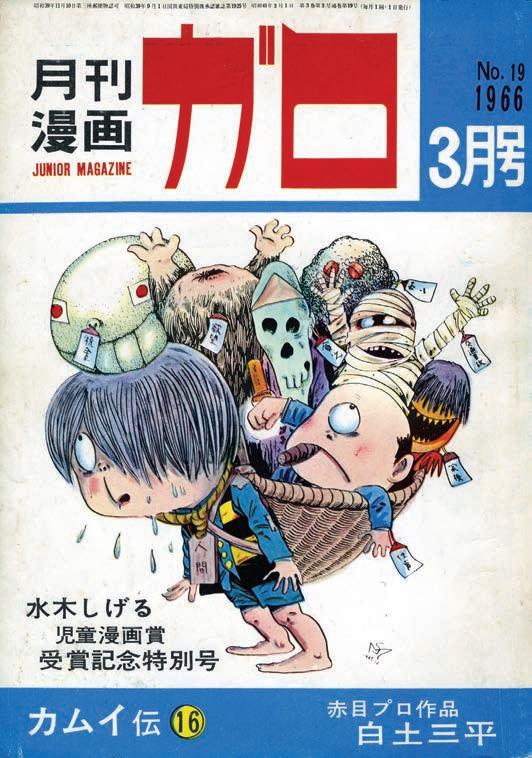
In 1964, the Osaka publisher Seirindo published the first volume of Garo. Co-founded by Katsuichi Nagai and popular manga artist Sanpei Shirato, this magazine started out with the mission to teach left-wing political ideology to children but 1 2
quickly became popular with collegeaged readers. As it reached its true audience, the magazine began to pivot towards featuring the next generation of experimental and avant-garde manga artists of the sort that couldn’t or wouldn’t make it in the commercial Tokyo manga industry.
Garo’s manga were not commercial, and it managed to scrape by financially by paying its authors little to nothing and relying on two commercially successful manga artists to draw an audience. One was Sanpei Shirato, who had stepped down as editor but continued to illustrate covers and to release his popular serial Legend of Kamui through Garo The other was Shigeru Mizuki—whose Kitaro had begun as an adult manga called Kitaro of the Graveyard before it found commercial success in shonen magazines when Kitaro was retooled to be more friendly to a child audience.
Mizuki illustrated covers for Garo and included short comics from Kitaro of the Graveyard in the magazine, even as the series found its legs in mainstream magazines. With Mizuki and Shirato’s support, Garo was able to push the boundaries of manga as an art form and prove there was a niche demand for underground literary manga. Furthermore, as manga readers grew up, magazines like Garo signaled the possibility that manga could grow up with them.
Two years after the first issue of Garo hit the shelves, Osamu Tezuka launched his own adult manga magazine, Com, in 1966. While Tezuka’s commercial success, rigorous work ethic, and undisputed position in the commercial manga industry had a huge impact on what manga had become by the 1960s, he was increasingly dissatisfied with the state of the industry, particularly with what he perceived to be a loss of the kind of
5
community and creativity fostered by magazines like Manga Shonen. Seeing the success of Garo, Tezuka set out to make his own manga magazine to experiment with adult manga and make room for the next generation—a generation he was determined to hand-select.
Com differed greatly from Garo. It was bolstered by Tezuka but also benefited from work contributed by the many commercially successful artists that had trained under Tezuka or his former assistants. Chief among these was Shotaro Ishinomori, whose Fantasy World Jun was an experimental, almost wordless comic that would find an audience of both male and female readers, and eventually inspire the boys’ love genre.
Com was aggressive about encouraging readers to make and submit manga to the magazine, and, very much like Tezuka’s Manga Classroom shorts in Manga Shonen, featured how-to articles about making manga, critique and feedback on submissions, and interviews with well-known manga artists discussing craft.
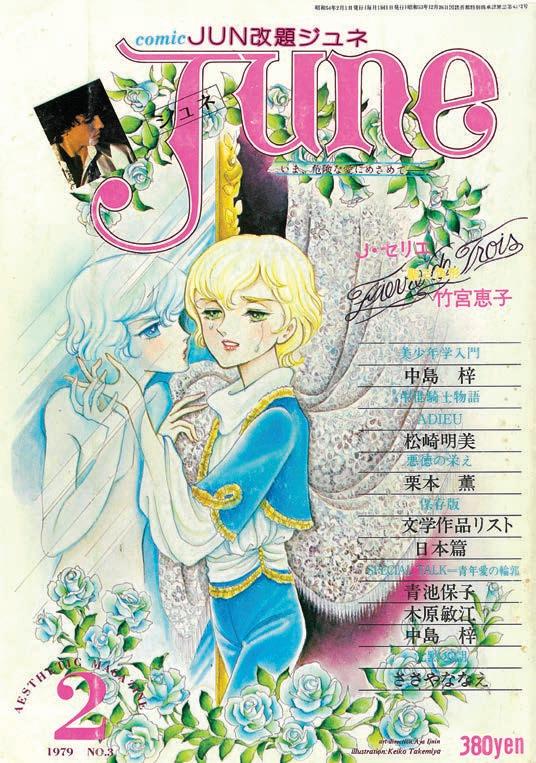
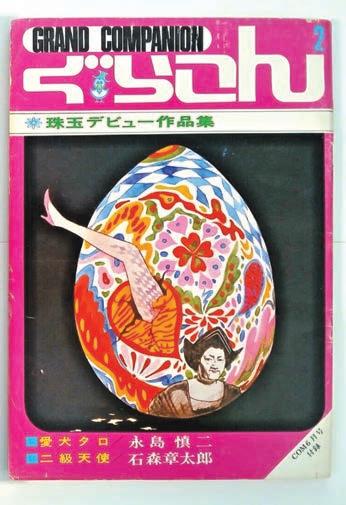
Com inspired manga clubs across the country and published submissions to the magazine in a supplement called Grand Companion, which would feature the early work of future titans of the manga industry like Katsuhiro Otomo (Akira), Monkey Punch (Lupin III), and Keiko Takemiya. Takemiya would go on to revolutionize shojo manga and create space for boys’ love comics (much like Tezuka, Ishinomori, Shirato, and Mizuki) by contributing covers and segments for the first boys’ love manga magazine, June. Long after Com folded, manga clubs across the country, amateur manga magazines, manga criticism circles, and more would carry on developing spaces for manga to exist outside of mainstream publishing. The most conspicuous example is Comiket, the legendary dojinshi (fan art) festival, which saw an estimat-
ed 750,000 attendees in 2019.
Traditional publishers wouldn’t seriously invest in adult manga until the 1980s, and the resulting adult manga was often designed by committee to appeal to the broadest possible adult audience, with content dictated by editors, rather than artists. Thus, the spaces that successful artists carved out for themselves to personally shape the next generation in the manga industry—one of the most rigorously commercial and cutthroat comics industries in the world—are important to study. Here in the U.S., we should not, nor can we, blindly imitate how the manga industry evolved. But by understanding the compromises that mangaka made to shape the future of manga, we can better ask ourselves what we can do and what we are willing to do to build spaces to change the medium at home.
This change can start with creators. While Com and Garo were never profitable enterprises, they created demand for manga that existed outside of the mainstream, a demand that the manga industry could not ignore. Likewise, Comiket and the dojinshi market would
receive criticism in its early years as lowest-common-denominator amateur manga, but as more creators built a platform and community (through venues like Comiket), the mainstream gradually absorbed dojinshi artists and trends.
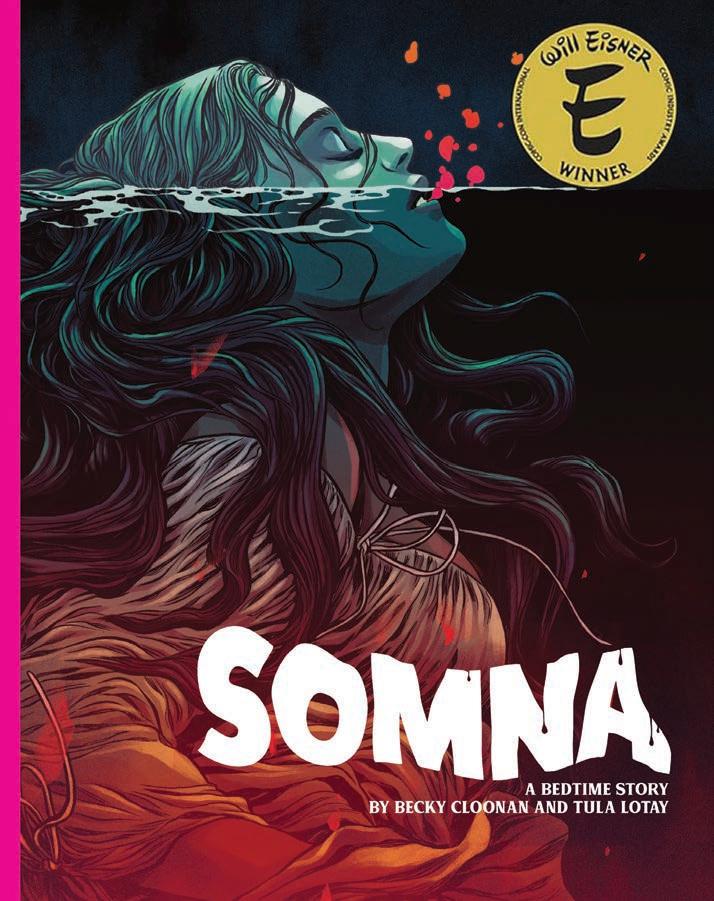
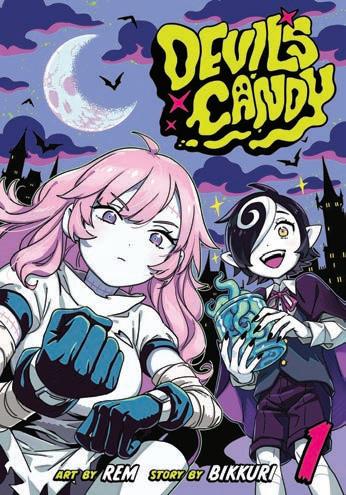
Likewise, when we look at the failed attempts in the U.S. manga market to create homegrown manga, it’s the creators who remain that we remember. Becky Cloonan has moved on from East Coast Rising to become an industry titan in her own right. Rem and Bikkuri’s Devil’s Candy was featured in Tokyopop’s Rising Stars of Manga, but the series continued online as a webcomic for years before becoming a Viz original publication. To consider manga to be fundamentally different from comics is to isolate the young creators inspired by it. Would Tokyopop’s infamously predatory Rising Stars of Manga program have been as successful at convincing people to sign away the rights to their work, if so many young cartoonists didn’t see it as their only path to becoming a “manga artist”?
Mangaka of decades past, even in a cutthroat, deadline-driven industry, actively built spaces and platforms to engage with the future of their medium. Creators must build platforms for critique, for community, to share our work, to showcase the talents we believe have an audience, and, most importantly, build a generation of not just cartoonists, but readers who are willing to engage critically and passionately with a broad variety of comics stories. All these things are crucial for our collective future. To accomplish this, we must understand what has been done before us in every comics industry. To understand the history of manga is to understand the history of comics, and, in understanding the history of comics, we arm ourselves so we can sustain comics’ future. ◆
CAPTIONS
1. Garo no. 19, ©1966 Seirindo. Art by Shigeru Mizuki.
2. June no. 3, ©1979 Sun Publishing. Art by Keiko Takemiya.
3. Somna, ©2024 DSTLRY. Art by Becky Cloonan.
4. Devil’s Candy no. 1, ©2021 Viz Media. Art by Rem.
5. Grand Companion no. 2, ©1968 Mushi Production.
6. Manga Classroom, ©1950 Osamu Tezuka.
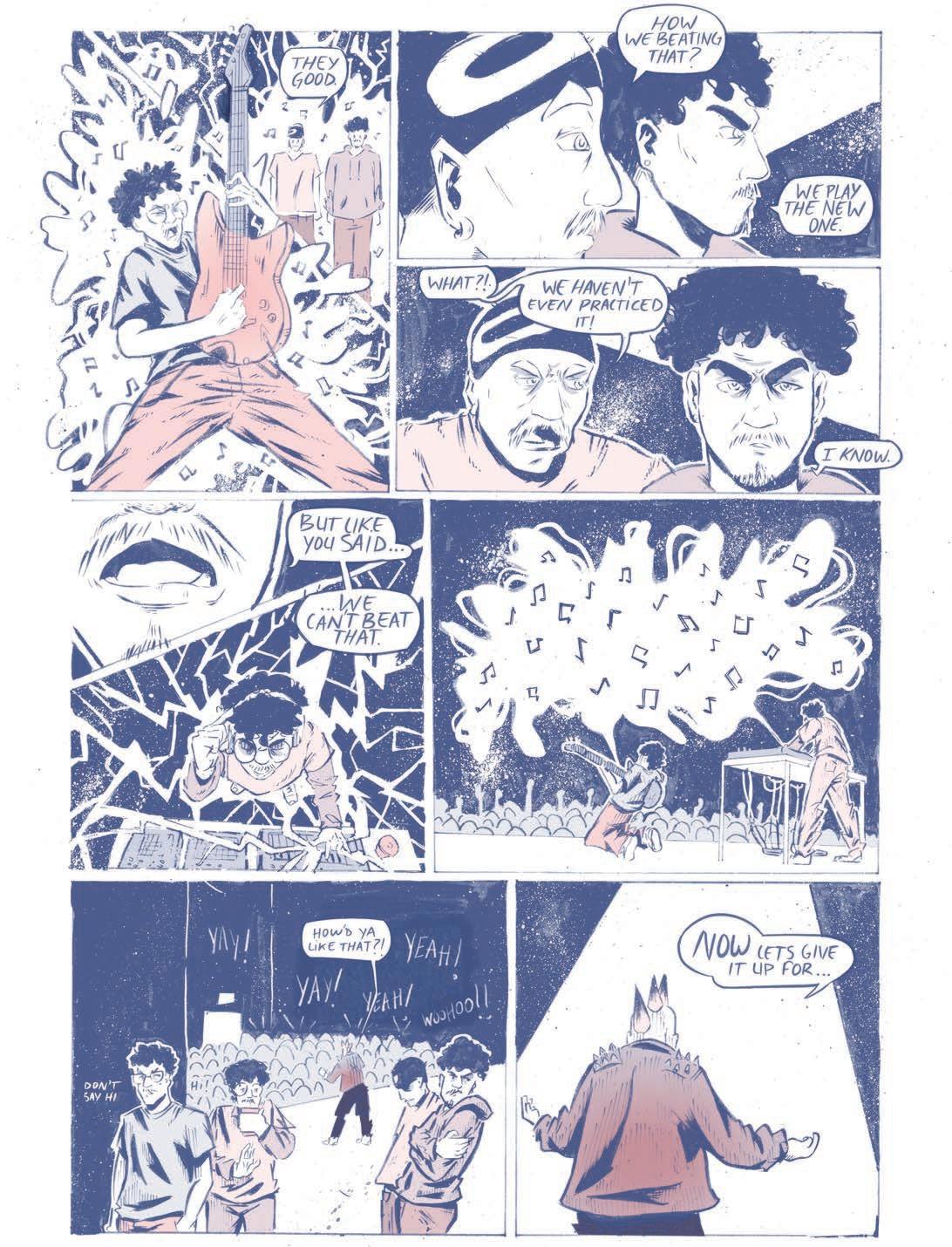
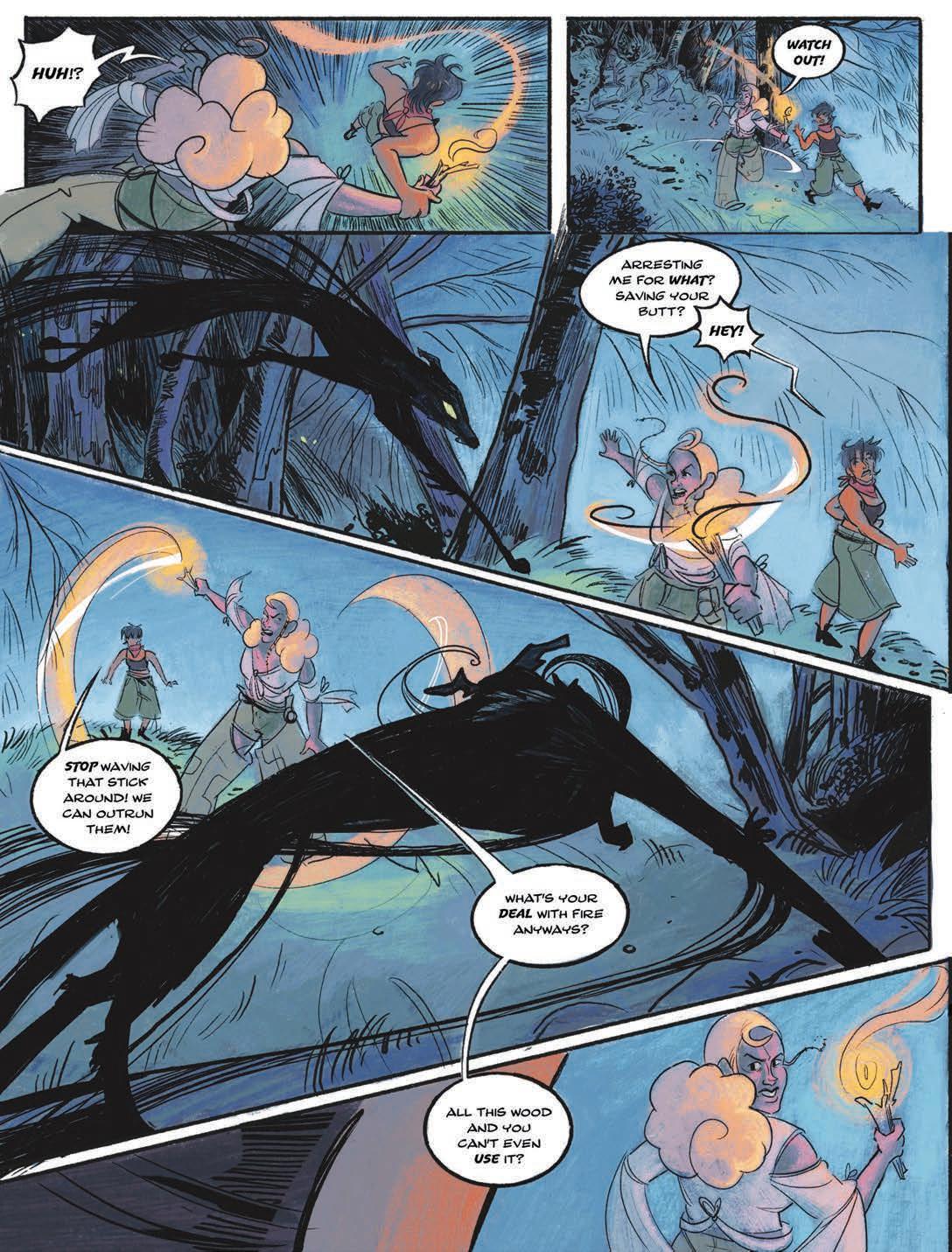
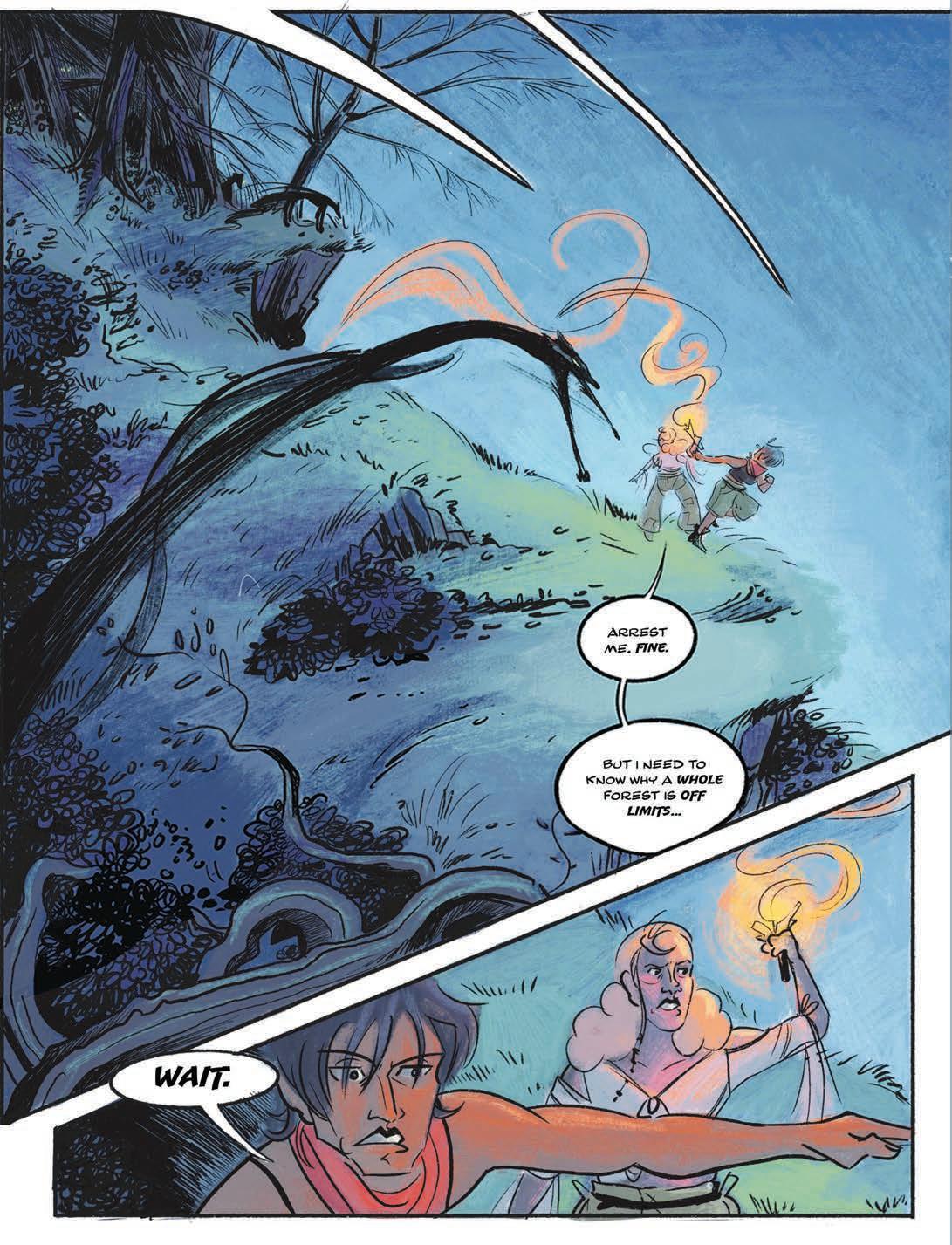
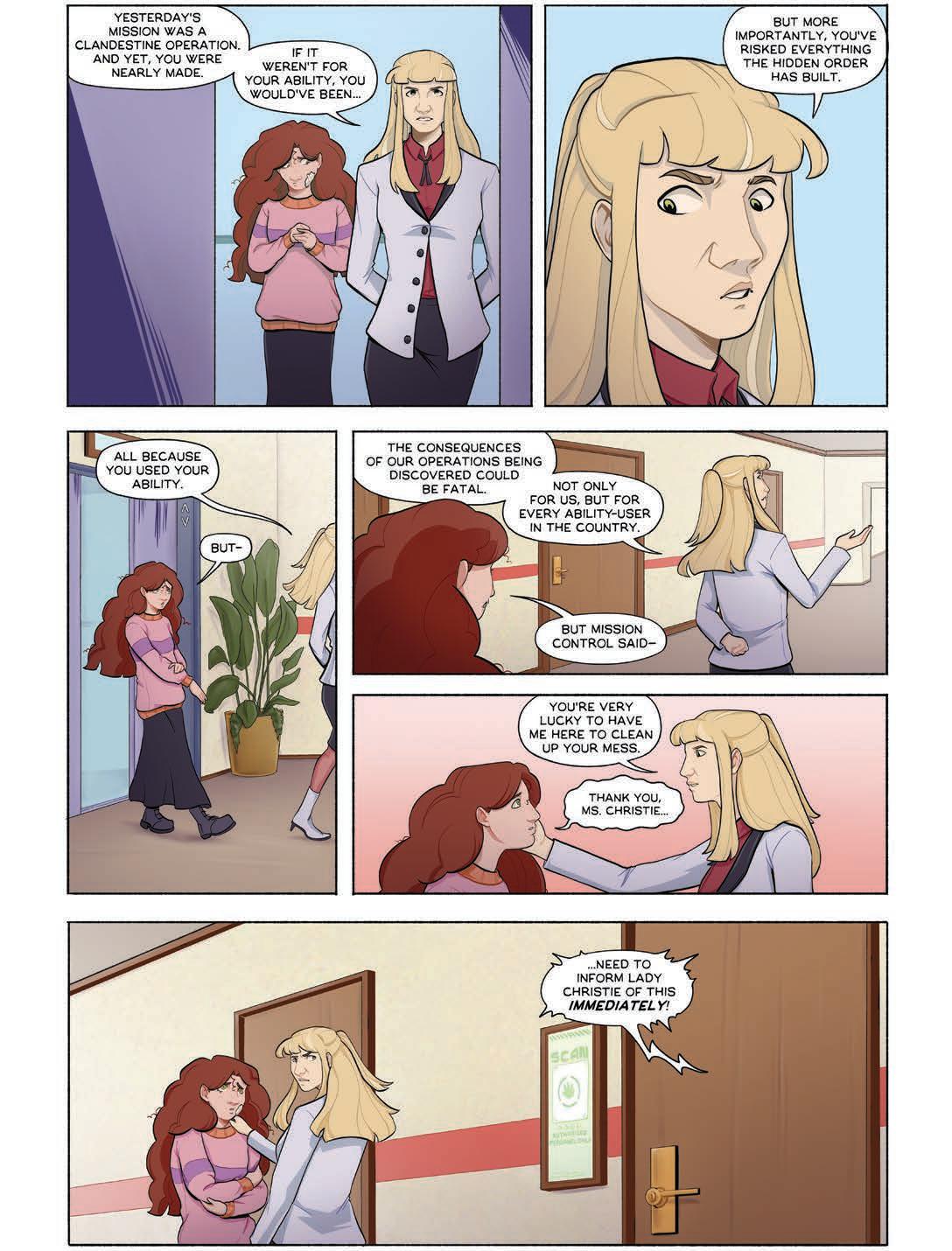
BEST CLASS EVER
This past year, I taught the very best group of students I have ever taught, in 18 years of teaching comics at SVA.
I have heard various opinions about trajectories in education, and in student talent and commitment. So it was extremely gratifying to experience such a powerfully brilliant group of students so deep into my own teaching career and to do so in a way that flies in the face of pessimism.
As I sat gazing in awe at my students’ work, I thought, “What are the factors that made this group so stunning?” Here is my analysis:
Cultural diversity. The class was composed of approximately half international and half domestic students. Each group brought fresh perspectives on writing, drawing, and scholarship that helped open the eyes of the others. The international students came from countries with distinctly different educational philosophies. We had an extremely useful mix of expressiveness and precision and both highly personal and appealingly commercial approaches to making comics.
Mixed career tracks. Half of the group were BFA Comics majors, but the others were BFA Illustration majors. So half the students were accustomed to dividing their time between writing and drawing. For the others, the division was between drawing and painting. The BFA Comics majors helped elevate the general level of writing in the class, and the BFA Illustration majors helped lead the cartoonists to more detailed rendering with form in the drawings.
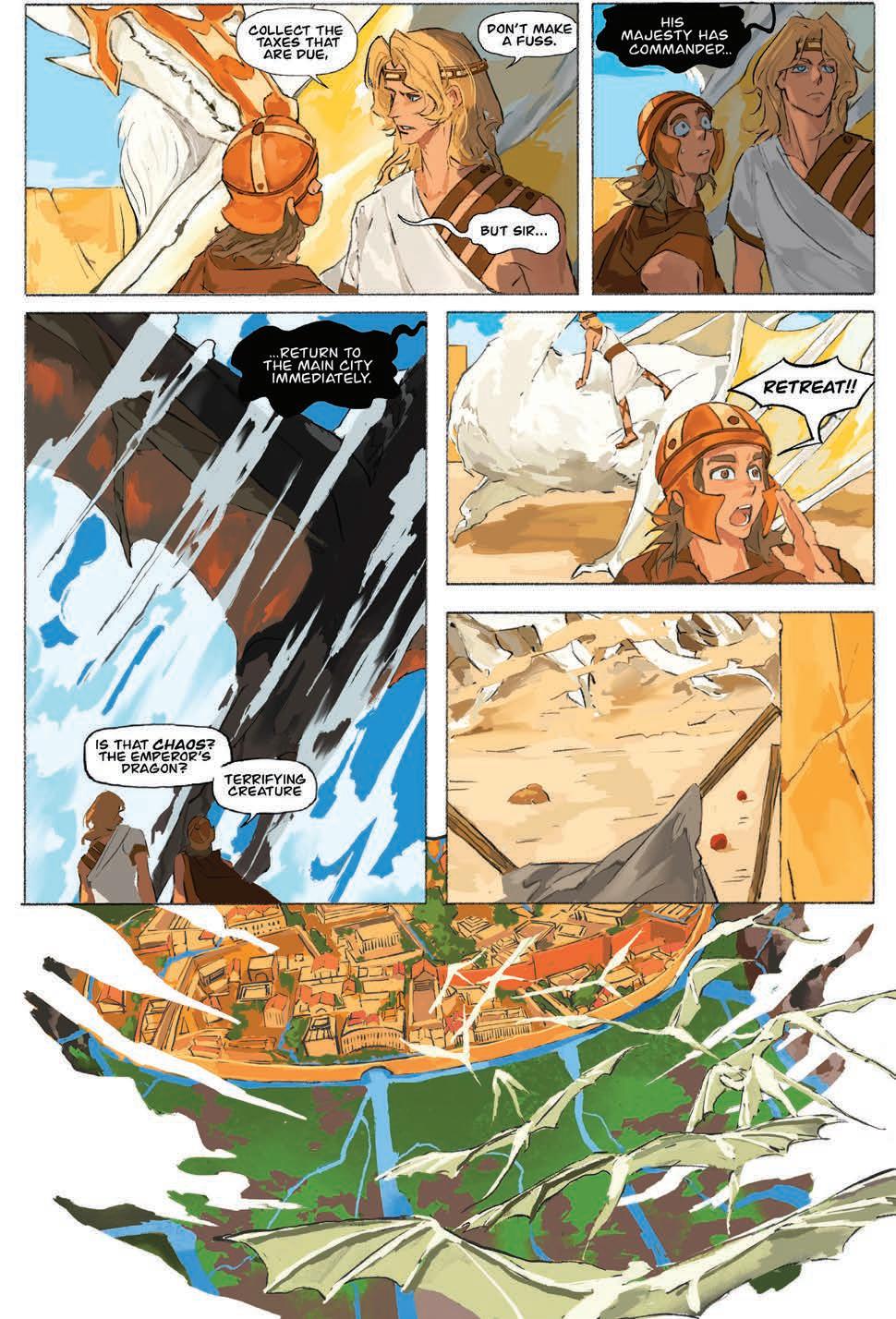
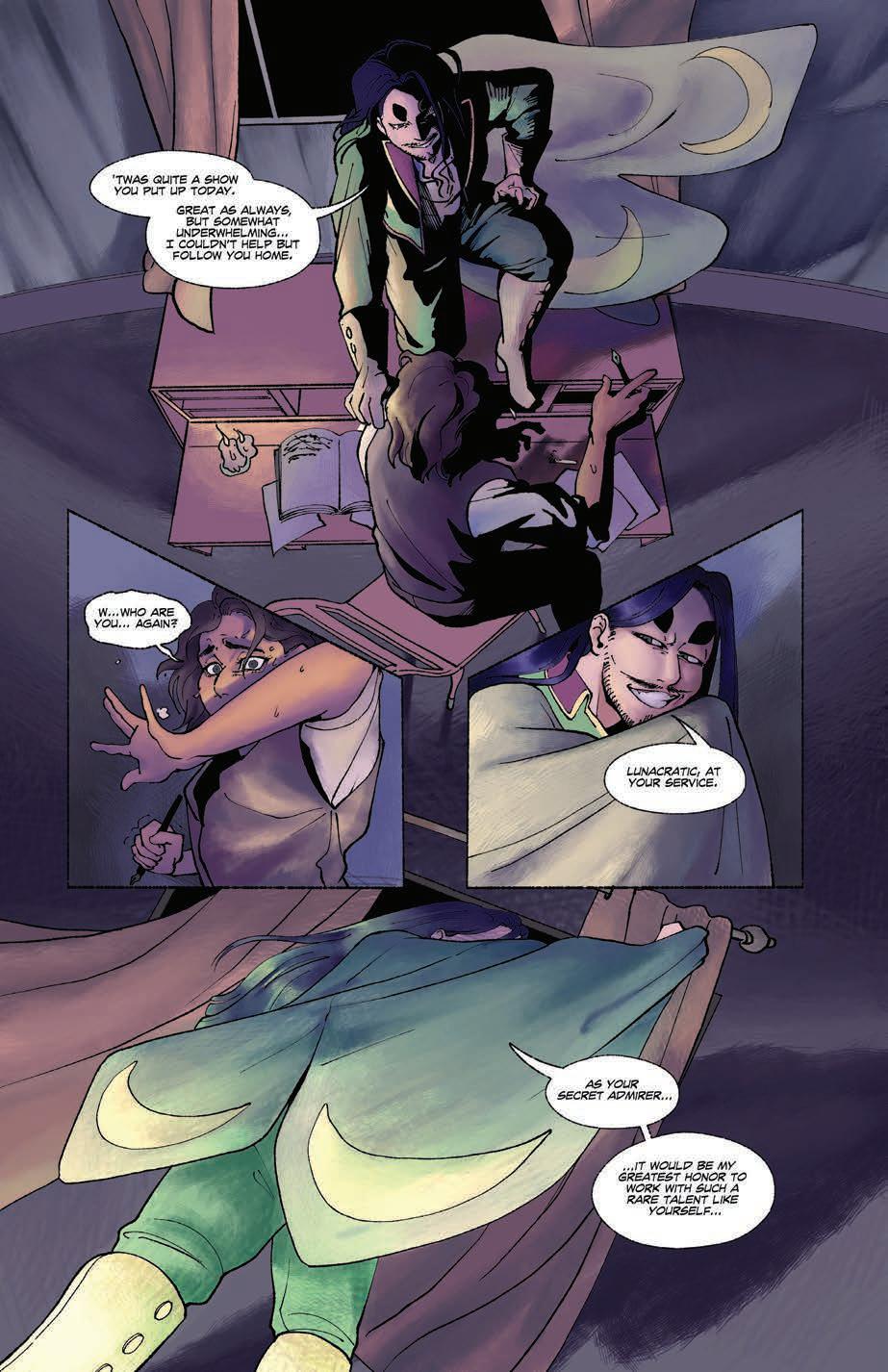
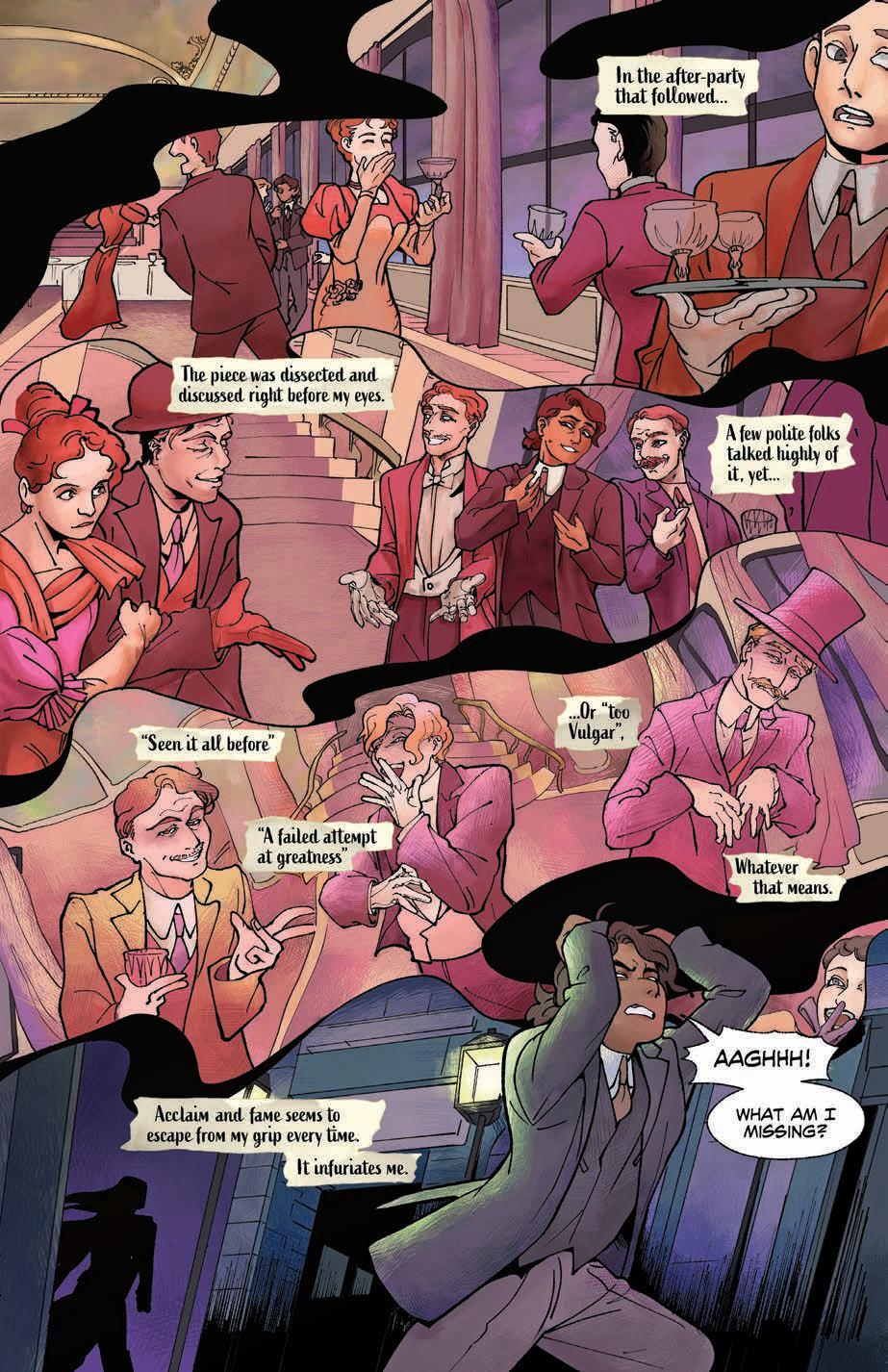
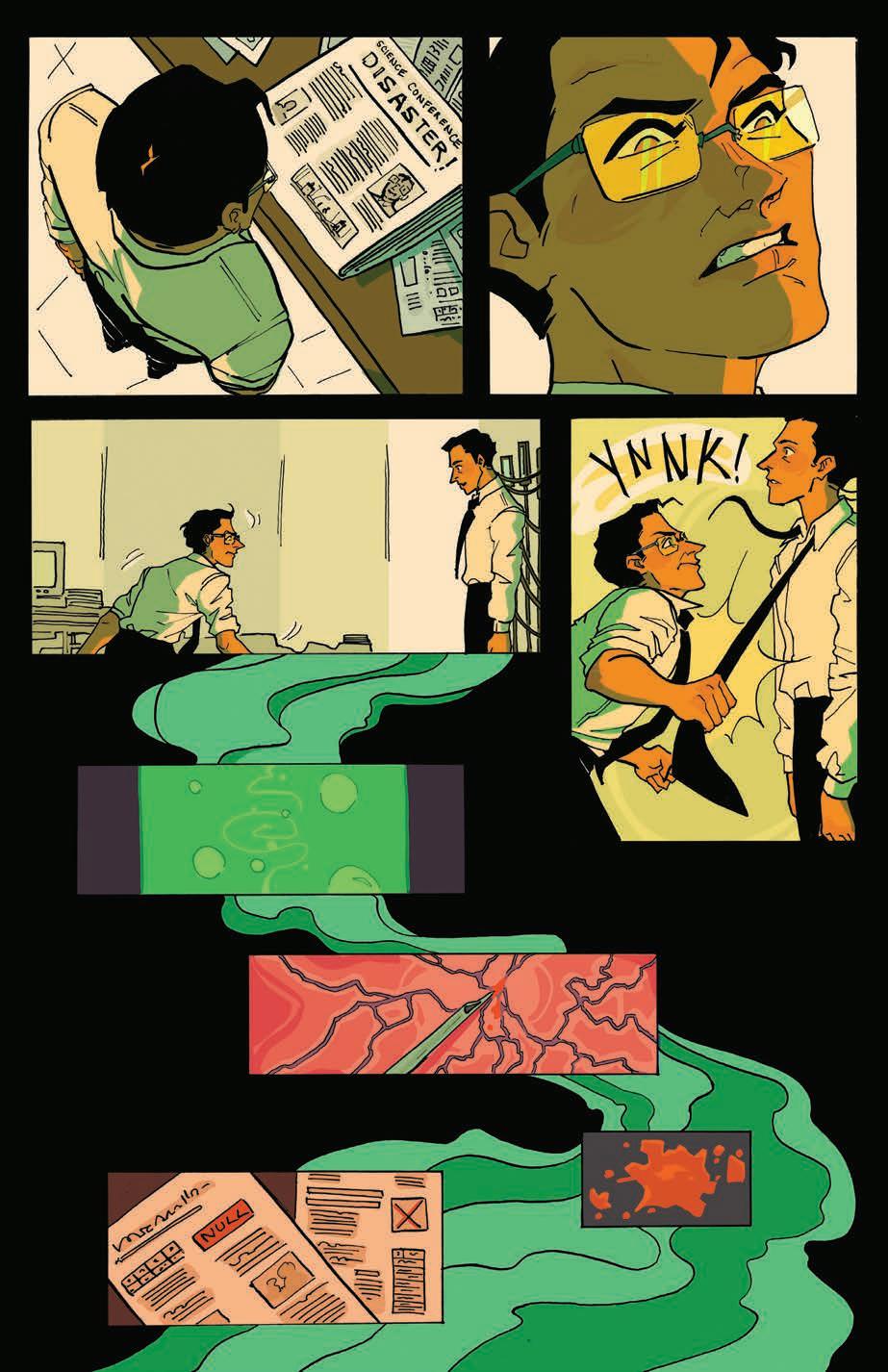
… it was extremely gratifying to experience such a powerfully brilliant group of students so deep into my own teaching career and to do so in a way that flies in the face of pessimism.
Complementary strengths. Some students were naturally brilliant with character expressiveness, while others drew fantastic architectural environments. Others showed excellence in lettering, design, and composition. With a group this capable, my job was to get the students talking to each other so that the strong skills could begin to pass between them.
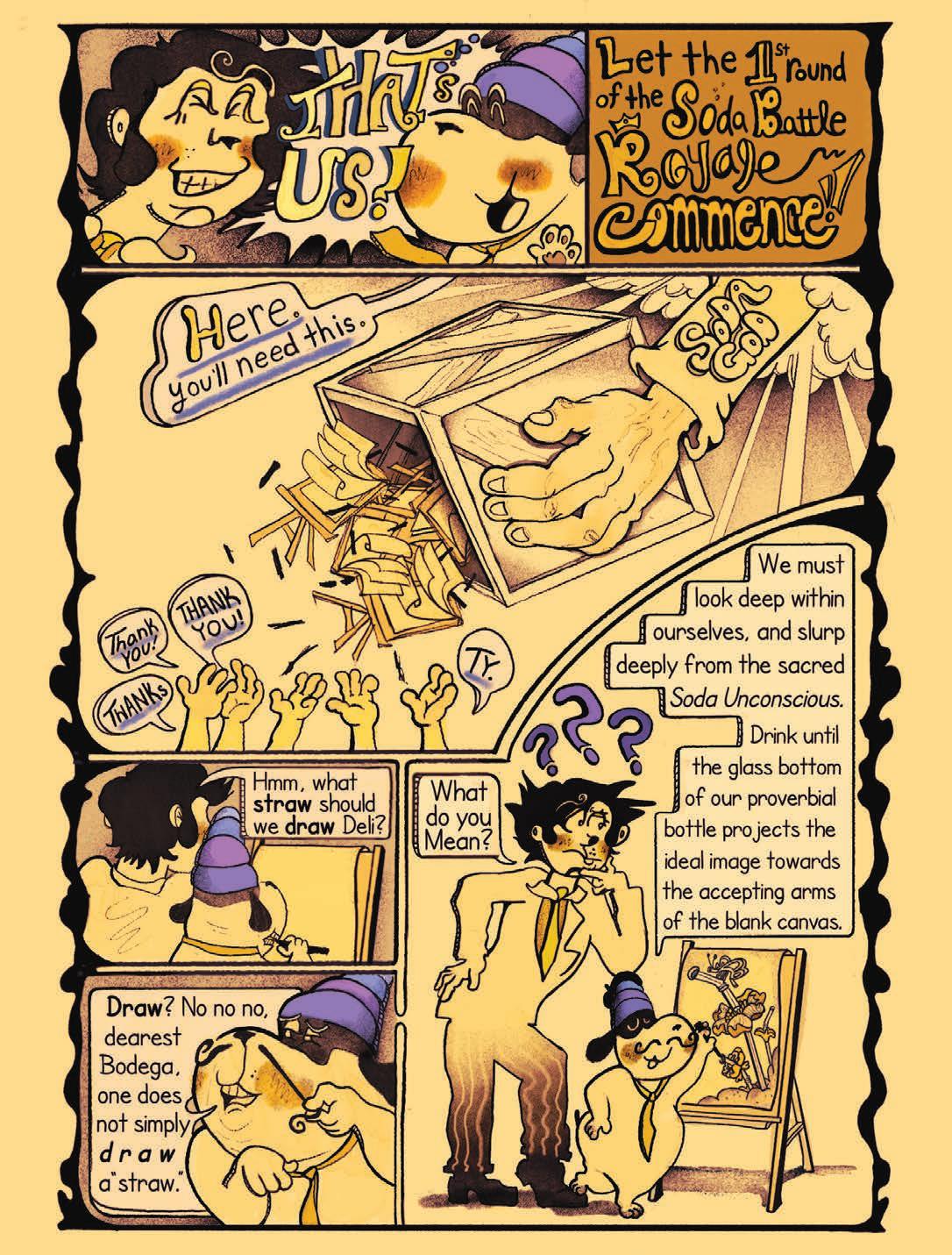
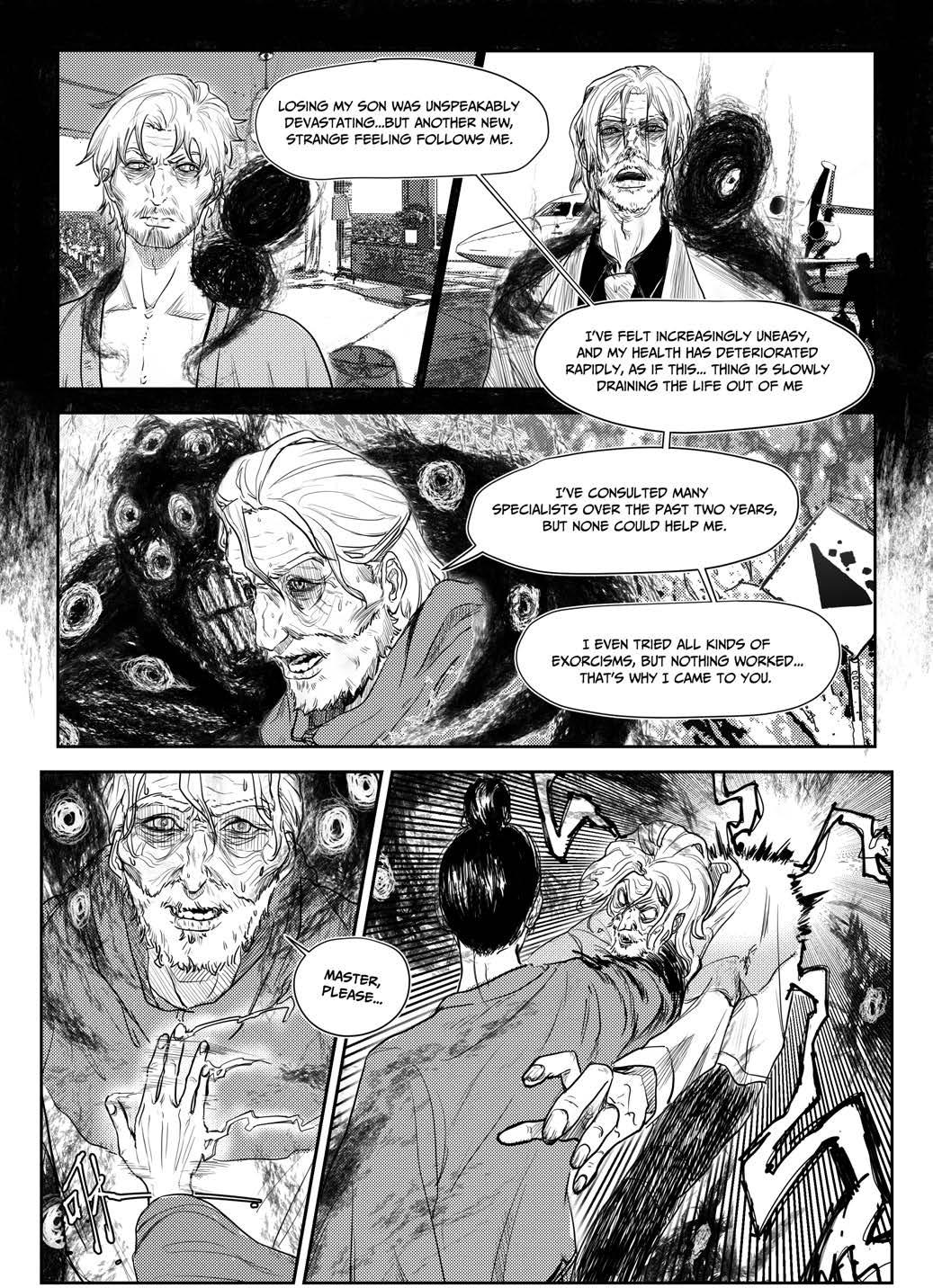
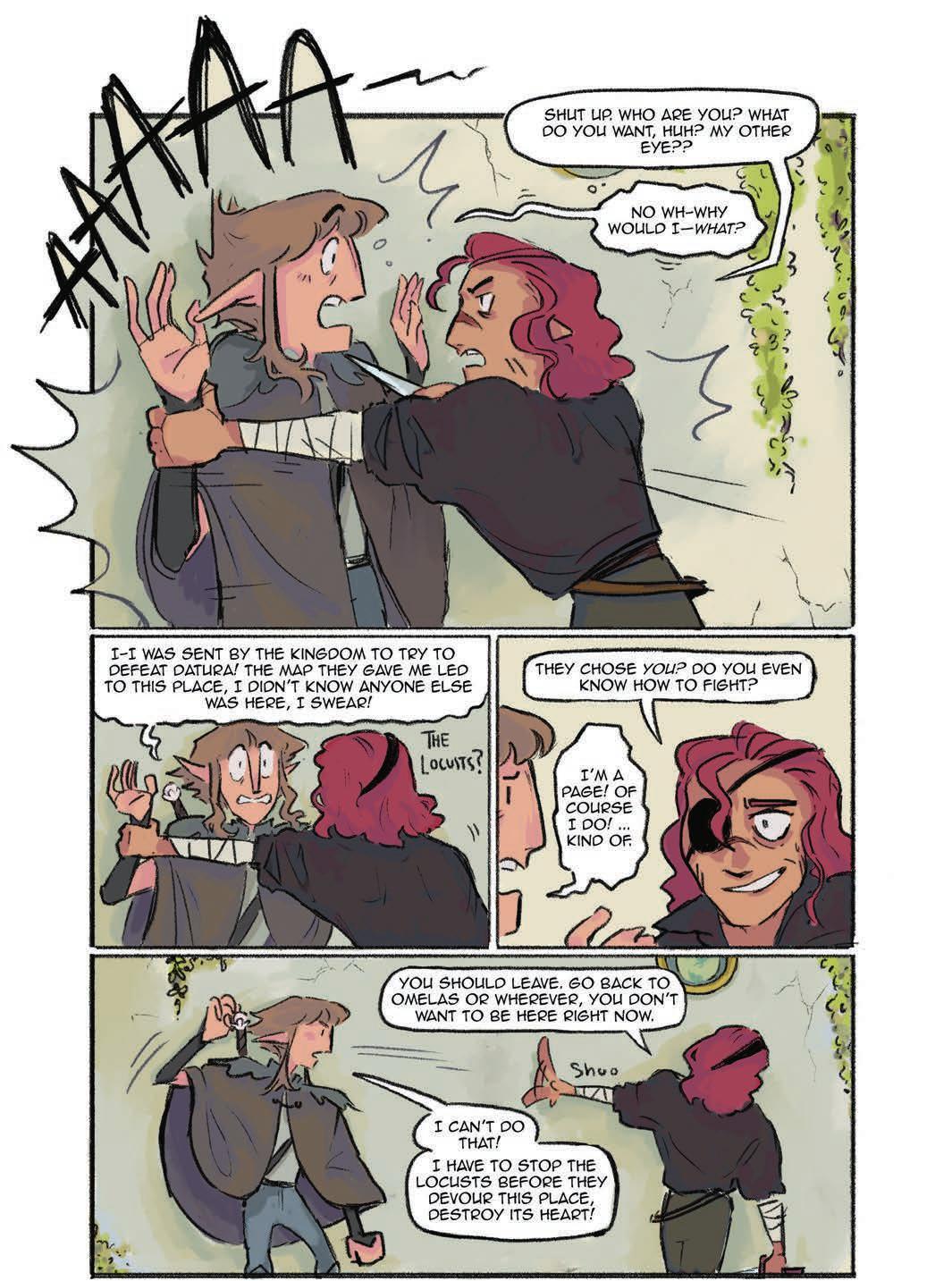
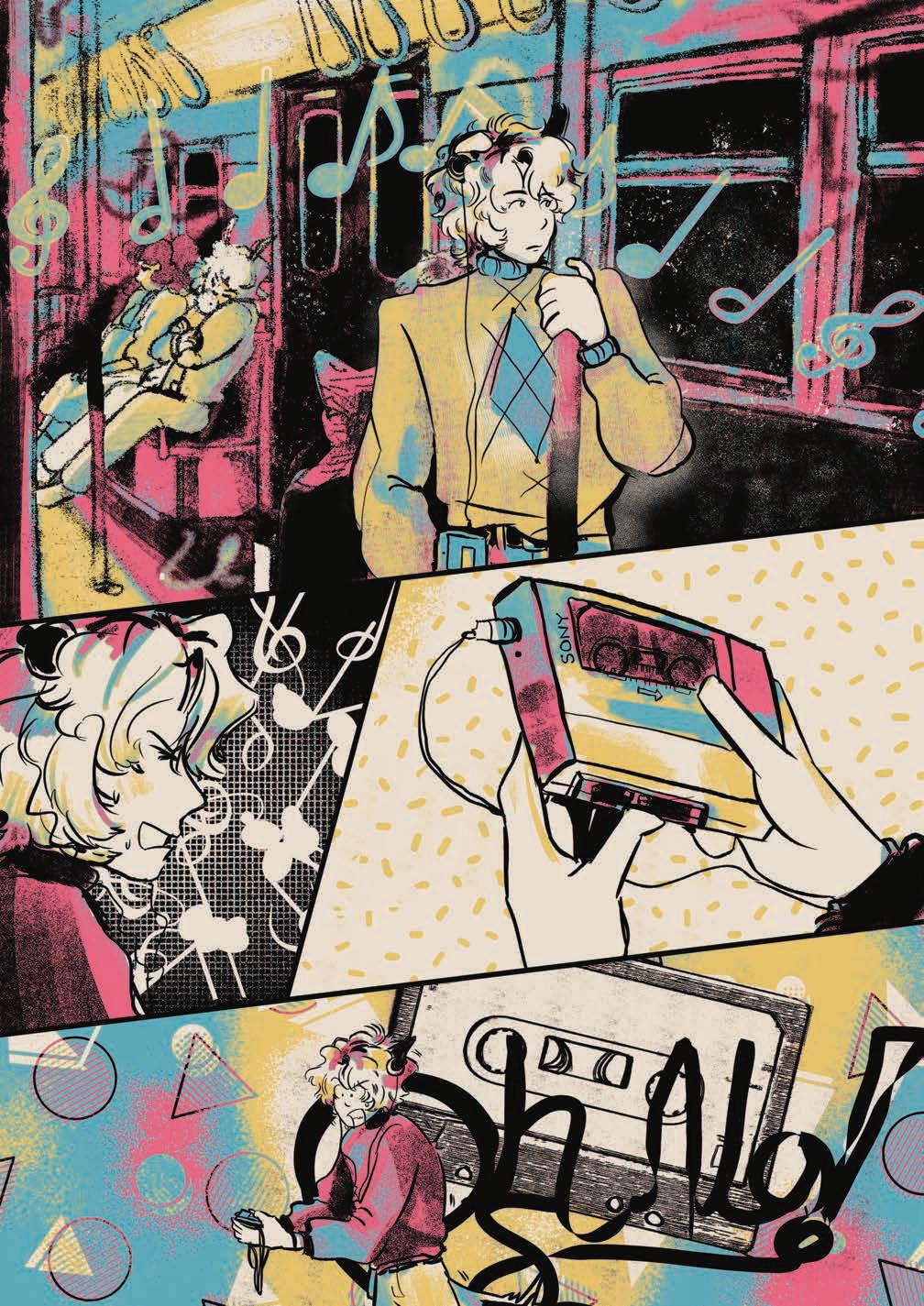
Stylistic variety. Each student began the course with preconceived ideas about how to create comics professionally but in a way that might be overly constrained by conformity. It was very gratifying to see each student let go of these notions, wrestle with the assignments and materials, and embrace their natural tendencies, integrating them into a personal and distinctive style. The variety of styles on the wall on the final day of the course was truly stunning.
Will I ever have another class like this? It is impossible for me to know, but perhaps this group’s beacon of excellence will be eclipsed by the brilliance of a future class. If so, maybe you will be in that class.
Jason Little Comics Coordinator BFA Comics